3 Heat Waves: Effects on Health, Observed Trends, and Climate Change
10
The Río Grande Basin and Climate Change Book presentation in Ciudad Juárez, Chihuahua
5
Forum: «Arsenic in Water: Detection and Treatment»
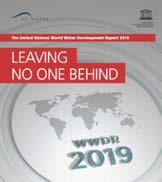
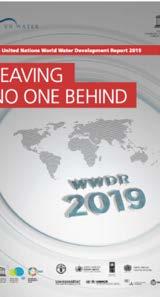
11 United Nations World Water Development Report, 2019
8 XIII Meeting of National Committees and Focal Points of UNESCO’s International Hydrological Programme
http://www.udlap.mx/catedraunesco/
14
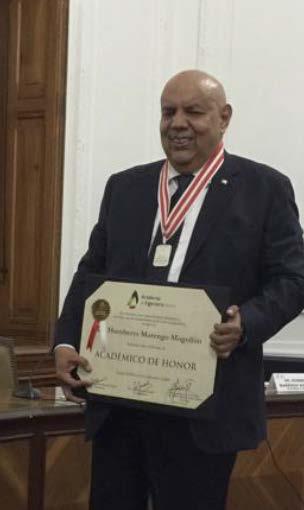
Dr. Humberto Marengo, Honored as Distinguished Scholar at the Mexican Academy of Engineering
HEAT WAVES:
Effects on Health, Observed Trends, and Climate Change
Review. Publication by Chair Members
Heat waves are considerably more dangerous to health than people commonly assume. They are not simply inconvenient or a phenomenon that only affects those suffering from “heat stroke.” In fact, mortality usually substantially increases during heat waves. For example, a heat wave in Chicago, in 1995, caused 514 deaths; in Europe, the 2003 heat wave caused approximately 15,000 deaths; and, in the Russian Federation, a heat wave caused 55,376 deaths in 2010 (D. Guha-Sapir, P. Hoyois, and R. Below, 2016). Unfortunately, the occurrence of heat waves is an increasingly frequent weather condition that is expected to further increase with climate change.
514
15,000
55,376
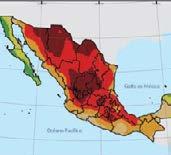
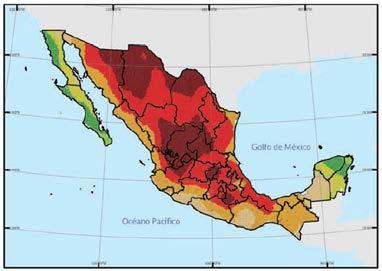
In Mexico, as shown in Figure 1, significant increases are expected for maximum temperatures, particularly in regions where temperatures exceeding 45°C are already reported.
Some of the best measures to help increase resilience and prevent or mitigate the effects of heat waves on health are studying heat waves, their occurrence conditions, their effects on health, and required adaptation methods. To this end, Polioptro Martínez Austria and Erick Bandala (2018), members of the Chair, recently published “Heat Waves: Health Effects, Observed Trends and Climate Change” as chapter 6 of the Extreme Weather publication by IntechOpen.
According to climate change scenarios, average annual temperatures will increase by 4°C if current trends continue. However, higher maximum temperature values have already been reported in different regions of the world, thus increasing the number, duration, and intensity of heat waves. As maximum temperatures increase and heat wave events become more prominent, a higher number of heat-related mortality episodes has also been reported. According to information from the Center for Research on the Epidemiology of Disasters (cred), five of the 20 deadliest disasters between 1996 and 2015 were heat-wave-related disasters. This work discusses heat wave events, the criteria used for determining dangerous temperature thresholds, and current and expected future trends due to climate change. The present
work correlates heat wave events to reported increases in mortality rates and provides recommendations for preventing their effects on human health.
THE CHAPTER CAN BE FREELY DOWNLOADED FROM
https://www.intechopen.com/books/ extreme-weather
REFERENCES
Guha-Sapir, D., Hoyois, P., and Below, R. (2016). Annual Disaster Statistical Review 2015. The Numbers and Trends Brussels: CRED
Martínez-Austria, P. F. and Bandala, E. R. (2018). Heat Waves: Health Effects, Observed Trends and Climate Change, in J.P. Sallis (Ed.), Extreme Weather (pp. 107-123). Intech Open. Doi: dx.doi.org/10.5772/ intechopen.75559
Salinas-Prieto, J. A., Colorado-Ruiz, G., and Maya-Magaña, M. E. (2015). Climate Change Scenarios in Mexico. In The Mexican Water Vulnerability Atlas in the face of Climate Change (pp. 41-70). Jiutepec: Mexican Institute of Water Technology
Forum:
«Arsenic in Water: Detection and Treatment»
DISCUSSION PANEL
ON THE DETECTION AND TREATMENT OF ARSENIC IN WATER, INGESTING A DOSE OF INORGANIC ARSENIC OF 600 milligrams
PER KILOGRAM OF BODY WEIGHT PER DAY IS LETHAL TO HUMANS
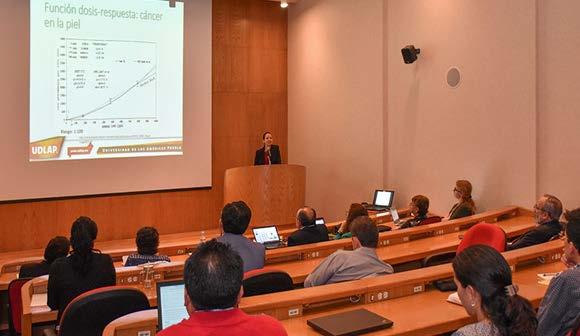
The University of the Americas at Puebla ( udlap ), through the unesco Chair, held this event in which researchers from national and international educational institutions shared their experience and results of works conducted in this area.
“The udlap unesco Chair on Hydrometeorological Risks and the Department of Civil and Environmental Engineering of the University of the Americas at Puebla organized this discussion panel on the detection and treatment of arsenic in water. This is a very important issue for discussion, since, according to toxicological information from the US Environmental Protection Agency, ingesting a dose of inorganic arsenic of 600 milligrams per kilogram of body weight per day
Figure 1. Abnormal maximum spring–summer temperatures expected in Mexico for the 2075–2099 period according to the RCP 8.5 scenario (Salinas-Prieto, Colorado Ruiz, and Maya-Magaña, 2015).
is lethal to humans,” commented Dr. René Alejandro Lara Díaz, Dean of the School of Engineering, udlap, during the reception of the event.
The forum began with the participation of Dr. María Elena Raynal Gutiérrez, professor at the Department of Civil and Environmental Engineering and active member of the PhD in Water Sciences academic core at udlap , who explained the origins of the panel and stated, in general terms, the technical problem concerning the presence of arsenic in water. “Arsenic is a chemical compound observed in different forms and oxidation states in the environment. In nature, it may be found as salt, mineral, or ion. In fact, in 2009, a thousand tons of this compound were extracted in Mexico alone,” she explained as an introduction.
Then, she further detailed how this chemical compound reaches water bodies and why it becomes a problem: “There are natural sources linked to volcanic activity and geological formations as well as anthropogenic sources that correspond to economic activities such as mining, smelting furnaces, and industrial production,” contributed the academic, noting that “products such as wood preservatives, solar cells, and cell phones have high concentrations of arsenic. The consumption of these products and their production will continue to increase.”
ARSENIC IS A CHEMICAL COMPOUND OBSERVED IN DIFFERENT FORMS AND OXIDATION STATES IN THE ENVIRONMENT. IN NATURE, IT MAY BE FOUND AS SALT, MINERAL, OR ION
She stated that arsenic is present in air, soil, and water, thus inserting itself into the human food chain: “Humans are mainly exposed to arsenic through water.” In addition, she commented that this mineral becomes a problem because it may affect humans through ingestion, inhalation, and thermal exposure: “The former two are through which there is the greatest absorption of this compound. We are talking about 90%.” She also stressed that exposure to this element generates carcinogenic and non-carcinogenic effects in men, “among the non-carcinogen effects are skin lesions and cardiovascular complications. However, the first one can cause cancer in the skin, lungs, bladder, liver, and/ or kidneys. There is a risk of one cancer case in every 100 people,” she asserted.
Finally, the doctor said that there are already many people exposed to arsenic, “for example, in Mexico, more or less half a million people are exposed to a higher concentration of arsenic of 10 micrograms per liter.”
The second featured speaker was Dr. Doris Van Halem, from the Delft University of Technology, who presented results of arsenic and drinking water research in the Netherlands, Bangladesh, and Nicaragua. She concluded that “there are low-cost arsenic removal technologies, but they require an understanding of the local water matrix. Demonstration research projects will accelerate adoption by decision-makers, and a multidisciplinary approach is critical for the development of applicable technologies.”
«HUMANS ARE MAINLY EXPOSED TO ARSENIC THROUGH WATER».
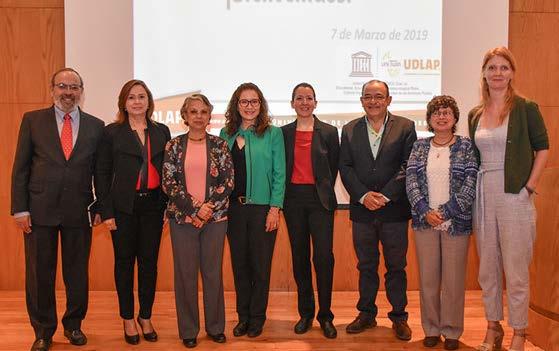
The forum also featured participations from Dr. Pedro Francisco Rodríguez Espinosa, National Polytechnic Institute; Dr. Sofia E. Garrido Hoyos, Mexican Institute of Water Technology; Dr. Estefanía Martínez Tavera, Popular Autonomous University of the State of Puebla; Dr. Gabriela Eleonora Moeller Chávez, Polytechnic University of the State of Morelos, and Dr. María Aurora Armienta Hernández, Autonomous University of Mexico.
*Taken from: the udlap Blog. (2019). The presence of arsenic in drinking water is discussed at UDLAP. Retrieved from http://blog.udlap.mx/blog/2019/03/ analizan-en-la-udlap-la-presencia-de-arsenico-en-agua-potable/
XIII MEETING OF NATIONAL COMMITTEES AND FOCAL POINTS OF UNESCO’S
International Hydrological Programme
DR. PATIÑO ADDRESSED THE CHALLENGES FROM EXTREME EVENTS SUCH AS DROUGHTS AND FLOODS IN MEXICO AND THE COMMITMENT OF THE CHAIR TO THE MOST VULNERABLE SECTORS AGAINST THESE PHENOMENA
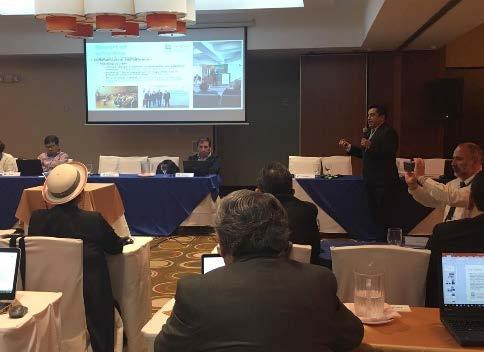
The XIII Meeting of National Committees and Focal Points of the International Hydrological Programme for Latin America and the Caribbean was held in Panama City, Panama on October 22–25, 2018.
Dr. Carlos Patiño Gómez participated as the Mexican representative of the unesco Chair on Hydrometeorological Risks based at the University of the Americas at Puebla, within the framework of the XIII Meeting of National Committees and Focal Points of the International Hydrological Programme (ihp) for Latin America and
the Caribbean, with 30 representatives from member countries and more than 140 ihp members in attendance. The XIII Meeting was an assessment and planning body within the Phase VIII framework of the ihp (2014–2021) based on a series of presentations and strategic proposals presented by the representatives of the member countries and ihp members together with representatives from the unesco Chairs, covering all areas of water resources geared toward the general objective of granting water security through responses to local, regional, and global challenges. During his presentation, Dr. Patiño addressed the challenges from extreme events such as droughts
and floods in Mexico and the commitment of the Chair to the most vulnerable sectors against these phenomena in addition to the activities developed.
Dr. Patiño also highlighted the different newsletters and books issued, and the project conducted with conacyt, within the framework of the Chair, in the Río Bravo/Río Grande binational basin, assessing the impact of climate change on the water resources of this important binational basin.
The results of the National Meeting of unesco Chairs of Mexico held at udlap in October 2018 were also discussed, wherein the most unprotected classes from various disciplines were focused upon.
DR. CARLOS PATIÑO REPORTED ON THE MOST IMPORTANT ACTIVITIES OF THE CHAIR, SUCH AS PUBLICATION OF BOOKS, SCIENTIFIC ARTICLES, MEETINGS AND SEMINARS
THE RÍO GRANDE BASIN AND CLIMATE CHANGE
Book presentation in Ciudad Juárez, Chihuahua
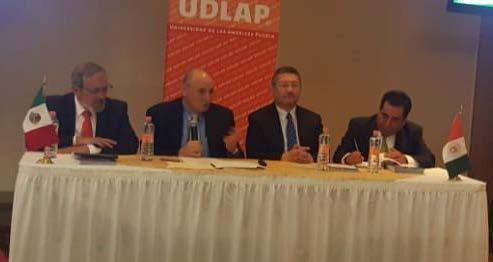
within the framework of the unesco Chair on Hydrometeorological Risks, The Río Grande Basin and Climate Change book, edited by Dr. Polioptro F. Martínez Austria, was presented in Ciudad Juárez, Chihuahua. This presentation was particularly appealing because it was held in one of the most important cities of the basin and was attended by specialists, students, and other people interested in the issues of this important hydrological region.
The presentation was delivered by three authors: Gonzalo Bravo, Carlos Patiño and Polioptro Martínez, and was hosted by Dr. Oscar Ibáñez, Chairman of the Central Water and Sanitation Board of the state of Chihuahua.
The abovementioned book compiles studies and perspectives from leading specialists in water management, who possess both enough theoretical knowledge and expertise to address its issues. In addition, this book offers an integrating approach when assessing the situation from various disciplines: economic, social, hydrological, water management, dynamic system modeling, and geographic information systems.
The book is available for purchase at Profética, University Bookstore and the udlap Store. For more information on udlap Publishing, visit http://www.udlap.mx/arteyculturaudlap/libros-y-publicaciones.aspx.
UNITED NATIONS WORLD
Water Development Report, 2019
THE UNITED NATIONS ORGANIZATION PRESENTED ITS WORLD WATER DEVELOPMENT REPORT ON MARCH 22, 2019, COINCIDING WITH WORLD WATER DAY.
Focused on “Leaving No One Behind,” the United Nations Organization presented its World Water Development Report on March 22, 2019, coinciding with World Water Day. Every three years, the report is eagerly anticipated by the world’s water specialists and other stakeholders, including water managers and large users. The report also usually receives broad coverage from the press. On this occasion, the report focuses on assessing compliance with the sustainable development goals related to drinking water and sanitation.
Someofthereporthighlights,areasfollows:
Estimates suggest that if the degradation of the natural environment and the unsustainable pressures on global water resources continue, 45% of the global gross domestic product (GDP), 52% of the world’s population and 40% of global grain production will be at risk by 2050.
In the world, three out of ten people do not have access to safe drinking water.
Six out of ten people do not have access to safely managed sanitation services, and one out of nine practice open defecation.
The government alone is not able to take on the full responsibility and development challenge of ‘providing’ water supply and sanitation services to all citizens, especially in lowincome settings.
Corruption, excessive regulation and/or rigid conformity to formal rules tend to coincide with bureaucratic inertia, increase transaction costs, discourage investments, and potentially derail or hinder water management reforms.
Water, sanitation and hygiene services differ from many other services in that they are considered a basic right and should be provided to people regardless of cost or ability to pay.
1 2 3 9 10 11 4 5 6 8 7
Water-related natural hazards, such as floods and droughts, can damage water supply and sanitation infrastructure, preventing service to millions of people.
Indirect discrimination occurs when laws, regulations, policies or practices seem neutral at face value, but in practice have the effect of exclusion from the provision of basic services.
Good water governance involves pro-active measures and mechanisms, ensuring guidance towards effective implementation along with sanctions against poor performance, illegal acts and abuses of power.
The human rights to water and sanitation place obligations on states and utilities to regulate payments for services and to ensure that all members of the population can afford access to basic services.
In Latin America and the Caribbean: Millions of people in the region are still without an adequate source of drinking water, while even more suffer the absence of safe and decent facilities for the disposal of excreta. Many people without access to services are concentrated in peri-urban areas, mainly in the poverty belts that exist on the periphery of many of the cities in the region.
HONORED AS DISTINGUISHED SCHOLAR AT THE MEXICAN ACADEMY OF ENGINEERING
n a solemn ceremony, on December 13, 2018, Dr. Humberto Marengo Mogollón, member of the unesco Chair on Hydrometeorological Risks, was honored as a “Distinguished Scholar” at the Mexican Academy of Engineering, an organization integrated by the most outstanding Mexican engineers, both for their professional and academic activities.
Dr. Marengo Mogollón graduated as a Civil Engineer and obtained an Engineering Doctorate specializing in hydraulics from the School of Engineering at the National Autonomous University of Mexico. He worked for 35 years in the Federal Electricity Commission, overseeing the most important hydroelectric projects in Mexico in recent decades. Currently, he is a researcher at the Institute of Engineering at unam and works as an independent consultant in dam building and hydroelectric projects in various countries.
Among other recognitions, he received the Gabino Barreda medal, awarded by unam to its best students. In addition, he is a former president of the Academy of Engineering, he is a current member of the Academy of Sciences, and he has been a member of the National System of Researchers (Mexico) since 1998. The Mexican Hydraulic Association also presented him the national Francisco Torres H. award for distinguished professional practice in hydraulics. In addition, Dr. Marengo is a member of several international associations, including the International Committee of Large Dams (icold), of which he is currently Vice President.
The unesco Chair on Hydrometeorological Risks is honored to include Dr. Humberto Marengo Mogollón among its members and congratulates him for this important recognition by the Mexican Academy of Engineering.
EDITORIAL COORDINATIONS
Editor
Polioptro F. Martínez Austria
Style correction
Aldo Chiquini Zamora
Andrea Garza Carbajal
Editorial design
Andrea Monserrat Flores Santaella
The unesco Chair on Hydrometerological Risks Newsletter is a quarterly publication which reports on the activities of the Chair and its members, unesco news related to it, as well as general information on disasters and hydrometeorological risks. It is elaborated by the Universidad de las Américas Puebla. Ex hacienda Sta. Catarina Martir s/n. C. P. 72810, San Andres Cholula, Mexico.