JOURNAL
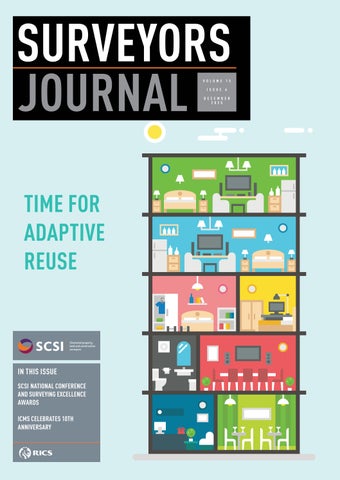
TIME FOR ADAPTIVE REUSE

Streamline your property sales process
Simplifying o昀er management for agents and giving buyers a secure and transparent tool to place o昀ers on their dream home.
Book a 20 minutes MyHome O昀ers
Demo with our team today by emailing property@myhome.ie



Log your CPD
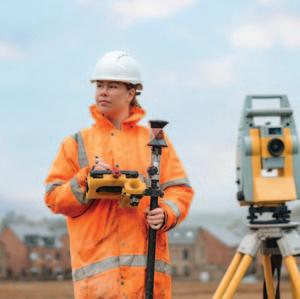
Reading the Surveyors Journal counts towards your informal CPD hours. Scan the QR code to access your CPD log and record your


REVIEWING OUR ACHIEVEMENTS
AS THE YEAR ENDS, WE CA N REFLECT ON OUR SUCCESSES.
December is often a time of rushing to finish up, but it’s also worth pausing to reflect on what we’ve achieved together this year. For me, the SCSI National Conference provided that opportunity, fitting perfectly with the classic A Christmas Carol motif – visiting our future, present, and past.
Embracing innovation
Our future has been a significant focus this year. As you’ll read in this edition, the SCSI has launched our Digital Strategy. This Strategy is designed to futureproof our profession by embracing innovation and enhancing member services. It sets out a clear roadmap for leveraging technology to improve accessibility, streamline processes, and deliver richer learning and collaboration resources, ensuring that the SCSI’s digital transformation delivers real value for every member.
Maintaining our reputation
Our present was clearly demonstrated in the launch of the ‘Real Costs of New Apartment Delivery 2025’ report, which analysed the development costs, affordability, and viability of new apartments. While this important report draws on data from 12,077 apartment units provided by members, it also offers practical insights through its case study of a 48-unit block in south Dublin using build to sell, private rental sector, and cost rental models. I encourage you to read beyond the headlines and broadcast interviews to explore the full report. It is reports like this, which are of an exceptionally high standard, rich in detail, and informed by collaborative
PRESIDENT’S MESSAGE
Gerard O’Toole SCSI President

efforts across surveying disciplines, that maintain the SCSI’s esteemed reputation among key stakeholders.
Outstanding contributions
The Surveying Excellence Awards provided us with an excellent opportunity to celebrate our past achievements. This year’s winners exemplify our collective impact when we work together as a profession. It was a particularly great honour to present the President’s Award for Outstanding Contribution to the SCSI and Surveying Profession to Isobel O’Regan. Isobel has worked tirelessly behind the scenes to benefit both the SCSI and the RICS. In 2021, she took on the role of Chair of the RICS Management Board, assisting during a period of rebuilding. I was moved by her comments on the day: “The support I’ve received from fellow members has made it all possible. I wouldn’t have been involved in the RICS had it not been for the support of my fellow SCSI members. And I’ve never had the opportunity to thank those members for that, because it’s given me great insight into things I never thought I would get to do. No one person can make a change to an organisation, but it has been great to be involved”.
As we look ahead to 2026, I want to sincerely thank everyone who has generously volunteered their time and expertise to make the SCSI so impactful this year. Your dedication is the foundation of our success. We look forward to your continued support, and I warmly encourage others to join us in volunteering next year, so we can keep delivering for our profession, stakeholders and the public.
LEADING THE WAY
THE LAUNCH OF THREE MAJOR REPORTS
SHOWS THE SCSI’S CONTINUED COMMITMENT TO EXCELLENCE.
This edition of the Surveyors Journal includes reports on three major pieces of work carried out by the Society in recent months. The ‘Real Costs of New Apartment Delivery’ report has already garnered much attention in the media with its data-driven approach to measuring viability and affordability in the sector. While there will be understandable concerns at what the report has to say about affordability, the news that Government interventions are improving viability is very positive, and no doubt will be welcomed by the Department as it seeks to solve our housing crisis.
The SCSI’s Digital Strategy is also an important document, seeking to futureproof the profession in a time of rapid technological change. While there is reason to be confident that the human touch will always be needed in our profession, it is imperative that we educate ourselves on the best and most responsible use of these new tools, and I commend the Society for leading the way in this process.
The Society’s research into workplace culture is at times a sobering read. Clearly we have some way to go to make the profession as welcoming as we would like for a diverse range of people. However, “what gets measured gets managed”, and the commitment on the part of the Society to address these issues through working with member organisations is very welcome.
All of these documents are further proof of the SCSI’s commitment to the very best research and education, and are a crucial part of the role of a professional member organisation. No doubt they will further cement the SCSI’s reputation as an organisation committed to maintaining the highest standards.
All three reports were launched at the SCSI’s National Conference, a marvellous event that also hosted the Surveying Excellence Awards. This fantastic initiative is now in its third year, and going from strength to strength. My congratulations to all the winners and nominees – you truly represent the best of our profession. Finally, may I congratulate Shirley Coulter on her new appointment and add my thanks for her valuable contributions to this Journal
EDITORIAL
Tom Dunne Editor

NUMBER OF VACANT DWELLINGS IN IRELAND
HIGHEST LOCAL AUTHORITY VACANCY RATES CONSTRUCTION PERIOD
LOWEST LOCAL AUTHORITY VACANCY RATES
GEOMATICS GROUP HOSTS INTERNATIONAL ASSEMBLY
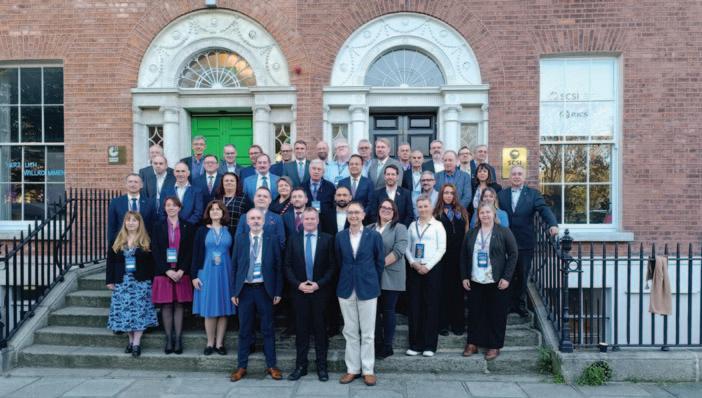
An international gathering of geomatics surveyors from the Council of European Geodetic Surveyors (CLGE) was hosted by the SCSI recently as part of their three-day General Assembly, which included 51 delegates from 18 countries. Alongside the Assembly meeting, the SCSI organised the Geospatial Conference, which was opened by Paddy Prendergast FSCSI FRICS, Chair of the Geomatic Professional Group, followed by an insightful presentation on the history of the profession by Dr Finnian O’Cionnaith. Barry Gleeson then explored ‘The Iceberg Principle and the Truth that Lies Beneath’, addressing surveying in the age of big risk. Further sessions included an overview of TU Dublin’s apprenticeship programme by Eugen Niculae, a national geodesy update from Colin Bray FSCSI FRICS of Tailte Éireann, and a discussion on ‘Open Data: Uses and Benefits’
led by Rob Ovington. The day concluded with Simon Crother’s talk on ‘Virtual Networks’. Delegates also enjoyed networking
opportunities during lunch and coffee breaks, with exhibitors KOREC and LES showcasing their latest innovations.



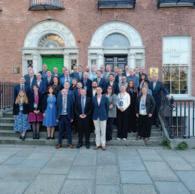
Geomatics surveyors from 18 countries gathered in Dublin for the Council of European Geodetic Surveyors General Assembly.
SCSI CEO SHIRLEY COULTER TO DEPART DATES FOR YOUR 2026 CALENDAR
As you look ahead to 2026, SCSI members have two upcoming conferences for professional and personal development.
On January 29, the Third Act Retirement Conference will host a half-day session on financial planning, governance, and practical steps for those nearing or in retirement. The hybrid event can be attended online or in person at our offices. Full details and registration are available at https://scsi.ie/event/third-act-conference/
On February 12, the focus turns to dispute resolution at the upcoming Alternative Dispute Resolution Seminar at 38 Merrion Square. Attendees will learn about the latest developments in regulation, contract law, procurement, and mediation. Industry speakers and panels will be announced soon. Reserve your spot now at https://scsi.ie/event/adrconference-2026/
And of course, don’t forget to book your Annual Dinner tickets, as this sell-out event is taking place on February 5 in the Clayton Hotel Burlington Road.
HOUSE REBUILD GUIDE AND CALCULATOR 2025/2026
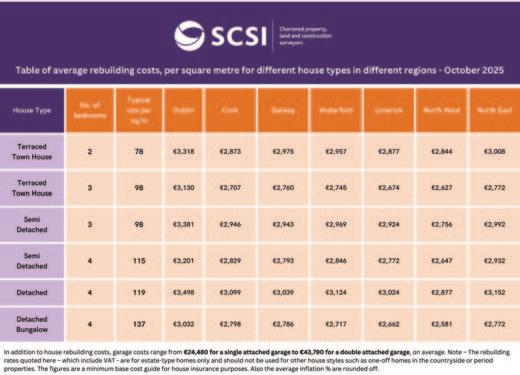
The start of November saw the publication of the annual update to the SCSI’s Guide to Calculating House Rebuilding Costs for Insurance Purposes. The Guide shows that house rebuilding costs have increased by an average of 7% nationally over the last 12 months. Research also found that average rebuild cost increases vary from 3% and 5% in Cork and Dublin, respectively, to 9% in the northwest. The level of increase in rebuild costs is above that generally seen in the construction sector, and is clearly impacted by labour costs and availability. The SCSI emphasises the importance of adequately insuring homes and encourages the use of the updated house rebuild calculator, which is available on the SCSI website at https://scsi.ie/calculator/
Shirley Coulter will leave her role as SCSI CEO in January 2026 to become CEO of The Bar of Ireland (Law Library).

Shirley has served as CEO since 2020. During her tenure, she led a transformative period for the organisation, strengthening governance, operations, and strategic direction. Under her leadership, the SCSI became a trusted, independent voice in the property, construction, and land sectors, influencing policy on issues such as housing viability, apartment defects, and conveyancing reform. Membership grew to 7,200, with increased female representation through initiatives such as school outreach and the ‘Elevate’ mentoring programme. Shirley also championed improvements to member services and regional engagement.
The SCSI Board thanks Shirley for her dedication and vision, and wishes her every success in her new role. The Board has commenced a search for a successor to continue driving the SCSI’s strategic vision.

SHAPING THE FUTURE OF SURVEYING
The SCSI Digital Strategy aims to provide a futureproofing plan for the profession aligned with the “Digital First” ambition of Roadmap 2027. The strategy was developed through a collaborative process involving members from a crossprofessional working group, extensive member surveys, and a series of workshops and interviews. This approach ensured that the Strategy reflects both members’ priorities and practical realities, while learning from successful digital initiatives in Ireland and abroad.
Challenges identified included the need for a common digital language, standardised tools and processes, and the integration of digital skills across every career stage. To address these, the Strategy is underpinned by “Change Tracks” –thematic pathways supported by clear actions, key performance indicators (KPIs), and stakeholder engagement. Action examples include mapping existing standards, driving the adoption of interoperable data structures, influencing policy,

and embedding digitalisation in education and governance. Implementation will be phased and practical.
For members, the Digital Strategy means greater access to resources, streamlined processes, and enhanced opportunities for learning and collaboration. It positions the SCSI as a leader in digital transformation, ensuring that the
profession remains relevant, resilient, and ready to meet the evolving needs of clients, regulators and the public. By embracing this strategy and getting involved in its rollout, members can look forward to a more connected, innovative, and future-ready profession.
Find out more at https://scsi.ie/digital-strategy
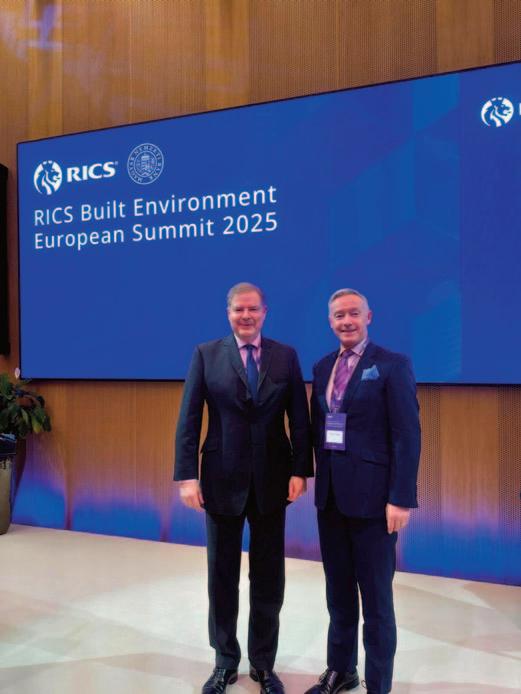
SCSI President Gerard O’Toole FSCSI FRICS (right) and RICS President Elect Nick Maclean FRICS at the RICS Built Environment European Summit 2025, which took place in Budapest in October. Gerard was invited to speak at the Summit to showcase the SCSI’s expertise and shape industry dialogue alongside global leaders.
2025 REMUNERATION SURVEY: INSIGHTS SHAPING THE PROFESSION
The salary results from the 2025 Remuneration & Workplace Survey have been published on our website for members. The results provide a comprehensive view of salary benchmarks and trends across the profession, based on a range of factors affecting salary.
Following member feedback on the 2023 Remuneration Report, we’ve expanded the data to show a broader salary range. In addition to minimum, maximum, and median figures, the report now includes the 25th and 75th percentiles, giving members a clearer view of the typical earnings band for the profession.
The findings confirm that sector and seniority remain the most significant drivers of remuneration. A new interactive salary
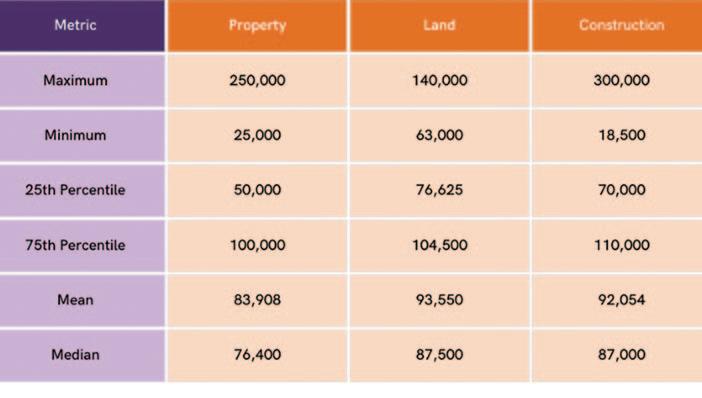
calculator and detailed tables show how factors such as membership category, company size, and professional group


influence earnings. Review the results at https://scsi.ie/remuneration (login required).









JOINT OIREACHTAS COMMITTEES SEEK SCSI INSIGHTS
The SCSI received three separate invitations to contribute expert insights to Joint Oireachtas Committees in October and November.
On October 21, Nick Taaffe MSCSI MRICS and Brigid Browne MSCSI MRICS addressed the Joint Committee on Housing, Local Government and Heritage regarding the challenges of bringing Ireland’s vacant and derelict properties back into productive use. Drawing on the SCSI’s ‘Real Cost of Renovation’ report, they outlined the financial and regulatory barriers facing renovators. They called for measures such as feasibility grants to reduce risk and encourage
revitalisation of our towns and cities.
On November 19, Bryn Griffiths MSCSI MRICS and Eoin Wilcox MSCSI MRICS addressed the Committee on Infrastructure and National Development Plan Delivery to discuss the importance of best practice in architecture, planning, and Chartered Surveying in delivering high-quality national infrastructure. They emphasised the role of professional standards and cost management in ensuring that major projects provide value for money and meet sustainability targets.
Finally, on November 25, Kevin Hollingsworth
FSCSI FRICS and Aisling Keenan AssocSCSI appeared before the Committee on Housing for pre-legislative scrutiny of the Apartment and Duplex Defects Remediation Bill 2024. They emphasised the importance of robust inspection regimes and clear remediation pathways to protect homeowners and maintain confidence in the built environment.
Across these engagements, the SCSI reinforced its position as a trusted authority on housing, infrastructure, and public safety, as all contributors provided evidence-based recommendations to help shape future policies.

JOB SEARCH
PROPERTY

Job description: Three opportunities in the Property Services team at Tuath Housing, with one position based in Galway, and two open to attendance in any of their offices. The roles will focus on building surveying and project management, stock condition surveying and inspection, and delivery of maintenance programmes, respectively.
Contact: Ashley Molloy at a.molloy@tuathhousing.ie. Deadline for applications: February 28, 2026. For further information on the roles, please see https://tuathhousing.ie/careers/.

UPHOLDING THE HIGHEST STANDARDS
THE SCSI’S DISPUTE RESOLUTION SERVICE PROVIDES AN ESSENTIAL SERVICE TO THE PROFESSION AND OTHER STAKEHOLDERS.
The SCSI has long been a cornerstone of professional standards in property and construction. Our Dispute Resolution Service (DRS) is widely recognised for its expertise and impartiality, particularly in rent review disputes and construction adjudications. From developing the next generation of dispute resolvers through our newly launched Pupillage Scheme to supporting today’s industry leaders, the DRS is committed to upholding the highest standards, now and for the future.
The recognised appointing body in dispute resolution
The SCSI’s DRS operates as the primary appointing body for rent review disputes in commercial leases. When a dispute arises, the President of the SCSI can appoint an independent expert or arbitrator. This ensures fairness and impartiality in the appointment process, and enables progress when parties reach an impasse.
In addition to property disputes, the SCSI appoints members to handle construction and boundary disputes, serving as mediators, conciliators, and arbitrators for major infrastructure projects. SCSI members also serve on the State Arbitrator Panel for compulsory purchase order (CPO) disputes and as adjudicators on the Minister’s Panel for
Catherine O’Dwyer Regulatory & Quality Assurance Manager, SCSI NEWS FEATURE

Construction Contract Disputes. The organisation is also a recognised alternative dispute resolution (ADR) provider under schemes such as:
n The Housing Agency;
n First Homes Scheme; and,
n Dublin Airport Authority.
This breadth of responsibility underscores the SCSI’s pivotal role in safeguarding professional integrity and delivering timely dispute resolution across Ireland’s built environment.
The panels: who makes it happen?
The DRS is led by the executive staff of the SCSI’s Regulation Department, and supported by the SCSI President and specialist panellists with expertise in ADR. These panels include:
n property arbitrators and independent experts – rent review and valuation disagreements;
n construction panels – contractual and payment disputes; and,
n specialist panels for public schemes.
Membership of these panels requires demonstrable expertise, adherence to ethical standards, and ongoing professional development.
Pupillage Scheme
Recognising demographic challenges as many experienced practitioners near retirement, the SCSI has launched its Pupillage Scheme to invest in future potential.
Key features of the Pupillage Scheme
n Structured mentorship
Pupils shadow experienced adjudicators and arbitrators in live cases, gaining practical insights into decision-making and case management.
n Diversity and inclusion
The Scheme actively encourages female participation and aims to broaden the talent pool to reflect the diversity of the profession.
n Competency development
Training focuses on analytical skills, drafting determinations, and applying statutory frameworks effectively.
n Limited intake for quality
Places are capped to ensure personalised mentorship and rigorous standards.
Why pupillage matters
Ireland’s dispute resolution landscape is evolving rapidly. With increasing reliance on adjudication for construction disputes and growing complexity in property valuations, the demand for skilled professionals has never been higher. The Pupillage Scheme addresses this by future-proofing expertise, maintaining panel standards, and supporting national infrastructure and schemes.
Next steps for interested professionals
The next intake for applicants to the Pupillage Panel and the Rent Review Panel will be in 2026. For details, visit https://scsi.ie or contact the DRS at drs@scsi.ie
A CHANCE TO ADVANCE
A SURVEYOR’S PERSPECTIVE ON PURSUING THE ADVANCED QS APPRENTICESHIP PATHWAY.
I’m currently working as a Senior Quantity Surveyor with BTY, where I’m part of the Cost Management and Lenders’ Services division. I first joined BTY back in 2019 when I was living in Vancouver, and it’s been a great experience ever since. BTY is an international construction consultancy that provides cost management, project monitoring, assigned certifier and asset management services across a wide range of sectors. Their work in Ireland focuses on giving clients clear, data-driven advice from project concept through to completion, and it’s been great to be part of that.
Balance
I’m now in my second year of the master’s apprenticeship programme at TUS Moylish in Limerick, coming into my final semester after Christmas. The course has been a really good balance between academic study and real-world experience. Being able to work full-time while studying has been challenging at times, but also very rewarding. It’s helped me to make direct connections between what we cover in lectures and the work I do every day. At BTY, my work covers a diverse mix of projects, from largescale infrastructure to social housing schemes. Most of my role centres around project monitoring, preparing value for money reports, and acting as a lenders’ technical advisor. The exposure to this range of work has given me a great understanding of both the technical and financial sides of project delivery.
Great support
One of the biggest benefits of this programme has been the support I’ve received on both sides from TUS and from BTY. The lecturers at TUS are really engaged and understand that most of us are balancing busy workloads. They’ve been a big help, especially in preparing for the APC process and explaining what’s expected as you work towards chartership.
BTY has also been very accommodating with study time, which has made a huge difference.
It hasn’t all been easy, of course. My son was born during my first semester, which made life a bit hectic for a while. Trying to juggle work,
NEWS FEATURE
Garrett O’Connell Senior Quantity Surveyor, BTY Advanced QS Apprentice and Registered Quantity Surveyor

study, and family life was tough, but both my employer and the lecturers were incredibly understanding and supportive. That kind of flexibility is what makes this apprenticeship model work.
In terms of learning, one of the areas I’ve really enjoyed has been alternative dispute resolution and contract law. It’s not something I’ve had a lot of direct experience with before, so being able to study it in more depth has been interesting and has definitely broadened my knowledge base. Overall, I think the best thing about this apprenticeship is that it takes away a lot of the barriers that often stop people from pursuing chartership or further education. You’re earning while you learn, gaining experience, and working towards professional accreditation at the same time. It’s practical, it’s structured, and it keeps you motivated because you can see the progress you’re making in real time.
Demanding and worthwhile
Looking back, I’m really glad I took this path. It’s been demanding, but it’s also been incredibly worthwhile. The combination of on-the-job learning at BTY and the academic side at TUS has given me a new level of confidence and perspective in my career. I’d highly recommend the programme to anyone who wants to take the next step towards chartership while continuing to grow in their role.
Finally, I want to sincerely thank the SCSI, the lecturers at TUS Moylish, and everyone at BTY for their support throughout this journey. The SCSI’s vision in developing this apprenticeship pathway has created real opportunities for people like me to advance professionally while staying fully engaged in the industry. The commitment from the lecturers and my employer has made it possible to balance work, study, and family life, and I’m genuinely grateful for that. Their encouragement and understanding have made this experience both manageable and enjoyable, and I couldn’t have done it without them.
A GOOD NEWS STORY
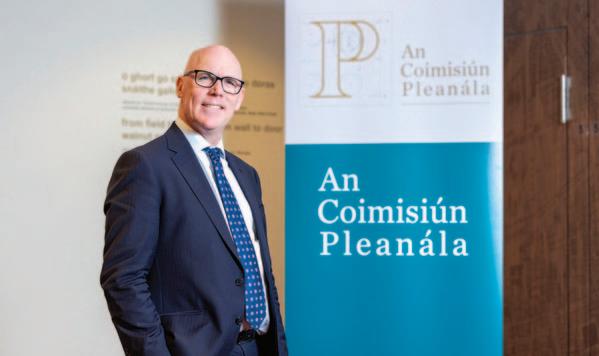
PETER MULLAN, CEO OF AN COIMISIÚN PLEANÁLA, TALKS ABOUT THE MAJOR CHANGES THAT HAVE TRANSFORMED THE ORGANISATION AFTER A DIFFICULT PERIOD.

Peter Mullan began his professional life as a solicitor specialising in criminal law, but after almost 20 years in that role he says he “woke up one morning and I just didn’t want to be in private practice anymore”. He joined the Office of the Director of Public Prosecutions (DPP) in 2012 as Chief Prosecution Solicitor, beginning a career in the public service that took him from the DPP’s office to the Department of Justice, and then to the Courts Service. He joined An Bord Pleanála in January 2023 as a temporary Board member, and was appointed interim Chairperson in September of that year. That role became Chief Executive in June of this year when section 495(4) of the Planning and Development Act 2024 was commenced, bringing An Coimisiún Pleanála into being.
A difficult time
Peter came to An Bord Pleanála at a time of immense turmoil for the organisation, after the resignation in 2022 of Deputy Chairperson Paul Hyde and his subsequent
INTERVIEW
Ann-Marie Hardiman Managing Editor, Think Media Ltd

prosecution. Peter describes it as an “annus horribilis”, as the scandal, coupled with other issues such as a significant backlog of cases, led to immense reputational damage, and severely affected staff morale. Even before the commencement of the Act, however, serious efforts were being made to repair the damage and rebuild the organisation under the stewardship of interim Chair Oonagh Buckley, also formerly of the Department of Justice. The commencement of the Act in June is far more than just a change of name; significant governance changes have also taken place, as Peter explains: “A governing board has been appointed, chaired by Paul Reid, formerly of the HSE. They are responsible for the overall governance and strategic direction of the organisation, and I report to them. Separately, the former Board members became planning commissioners, so their corporate governance responsibility was taken from them and given to the governing board. They became full-time decision-makers, and they are statutorily independent in their function”.
Finally, Peter’s own role underwent a fundamental change from Chairperson to CEO. While he feels some regret about the change in role, as he very much enjoyed being part of the planning decision-making process, he is happy to be able to devote his energies to the day-to-day running of what is now a much larger organisation: “We went from about 180 staff to now close to 300. We’re a more complicated organisation. I also feel that as an independent CEO, I have more latitude to engage around the work of the organisation, and re-establish our reputation for independent decision-making”.
Clearing the backlog
Perhaps the biggest challenge facing An Coimisiún Pleanála, both from an operational perspective and in terms of public perception, has been the backlog of cases, but Peter is delighted to say that huge strides have been made in that regard: “In May 2023 we had our highest caseload in recent years – over 3,600 cases. As a normal functioning organisation, we’d always have about 1,000-1,200 cases, so that was three times our caseload. We’ve gradually been reducing that, and we’re now somewhere around 1,300 cases”.
The 2024 Act sets mandatory timelines –known as statutory objective periods (SOPs) under the 2000 Act – for different types of planning appeals. For normal appeals the timeline is 18 weeks, with 26 weeks for local authority projects, and 48 for major infrastructure projects, for which the Commission has direct responsibility. Peter says that while this portion of the Act has not yet been commenced, they made the decision to operate in accordance with those timelines in anticipation of its commencement, hopefully early next year. These efforts have been very successful: “For normal planning appeals, we’re at 93% compliance as at the end of October. So, we’re now effectively operating within those timelines. We’ve had 16 local authority projects this year so far, and 15 of them were decided within the 26-week period”. Strategic infrastructure developments (SIDs) are a little more complex to measure, as the 48-week period for 2025 is not yet complete, but Peter refers to the Commission’s successes in relation to older projects: “The
Collison controversy
John Collison of Stripe recently stirred some controversy with his article in The Irish Times, where he asked what was stopping Ireland from “building what it needs to have the highest living standards in the world?” Planners came in for their share of criticism in the article, and Peter says that there are some things he agrees with: “He makes a point about shorter county development plans, and I certainly agree with that. The Dublin County Development Plan is hundreds of pages long. They certainly should be shorter in my view”.
In terms of his criticism of the Commission in relation to a number of decisions, Peter paraphrases Mario Cuomo – “campaign in poetry, govern in prose”: “He’s critical of our decisions in soundbites, whereas we make our decisions in reports and reasoned decisions. A soundbite’s brilliant, but go back to what the report says, and I think you’ll see it’s a little more complicated”.
Metro decision, which we were really being criticised about, was in this building for three years. It arrived at exactly the moment when we were going through the crisis. But DART North was decided in just over a year. As we head into 2026, I’m confident that we will meet the timelines that have been set by Government”.
Peter feels it’s important to get this message out, as it’s a huge issue for stakeholders, and for the public: “Certainly from the business side, they will say to us ‘we don’t care how long it takes, but we want predictability around timelines’. And now we’re able to say to people as we enter into 2026, you will have predictability around timelines. If we say 18 weeks or 26 weeks or 48 weeks, whatever the Act says, we are confident we will get you that decision within that period of time”.
Increased resources
Part of the reason for this success is undoubtedly the increased resourcing of the Commission, with more planners, and also more expert advisors. This is particularly important when it comes to SIDs, which make up approximately 30% of the Commission’s work: “In 2022, one of the recommendations from the Office of the Planning Regulator was to have a Director of Planning for Strategic Infrastructure Development, Marine, Environment and Climate. We appointed our colleague, Ciara Kellet, to that role, and she
He also responds to Collison’s remarks about the devolving of responsibility from Ministers to State bodies such as the Commission: “He says ‘the Oireachtas can directly issue planning permissions for major projects, provided it scrutinises environmental impacts in the process’. The point about that is: who does that environmental impact? That’s our job. I think in a way, there’s a contradiction within his argument. But if he’s saying, and I think he is saying, that people are entitled to expect State services, where they’re devolved, to operate efficiently, I’d agree with him”.
now has a team of 30-plus inspectors divided into three. We have a marine team dealing with offshore renewable energy projects, of which there are six in the building. Our renewables team deals primarily with wind, but also solar projects, and then we have a transport, waste and water team. In addition to planners, we have a new environmental and ecological team of three ecologists, two environmental scientists and an environmental engineer. That’s been a huge addition because of the complexity of some of these projects”.
The Commission can also bring in specialist expertise for exceptional projects; Peter mentions consulting with a noise expert for Dublin Airport, and a tunnelling expert for the Metro scheme, as two examples.
Planning for housing
With the country in the grip of what seems like an intractable housing crisis, planning mechanisms and decisions have come in for their fair share of attention, and indeed criticism. Peter acknowledges that there have been issues: “I think it probably was a fair criticism in ‘23 and ‘24. There were planning delays for housing applications within this organisation. There are no longer planning delays. For housing developments of 100 units or more, we must decide appeals within 16 weeks. For the last two years, we have a 100% record of doing that. That 100% record is one of the things we’re most proud of, and that’s not changing”.
Digital developments
An Coimisiún Pleanála is rolling out a range of digital service offerings that will, Peter hopes, improve efficiency and make the appeals process more accessible: “Since June of this year, there is public access to most direct applications online. Historically, if you wished to view the paperwork, you would have had to visit our office. Now you don’t have to do that. We’re also about to trial an online appeal service for normal planning appeals. We’re going to trial that between now and Christmas, and hopefully in January, we’ll introduce the right to appeal a planning decision from a local authority online”.
The caveat to that is in the case of some Large Residential Developments (LRDs), formerly known as Strategic Housing Developments (SHDs), where a number of factors come into play. Some developments are no longer compliant with updated local area development plans. The Commission was also awaiting a decision in Crofton Buildings and anor v An Bord Pleanála. That case was decided in April 2024, clarifying a number of points of law, and Peter says the Commission has moved quickly in response: “We’ve decided over 50 applications since April 2024. We have about 15 or 16 to decide before the end of the year, and we’ll hopefully decide most of those before the end of the year or early in the new year”.
Judicial reviews, such as Crofton, are also a significant issue for the Commission. Peter absolutely agrees with the right to access the legal process where appropriate: “People can challenge a decision of An Coimisiún Pleanála, and I absolutely respect their right to do that. And occasionally, we get it wrong, and where we get it wrong, and it’s brought to our attention as part of the legal proceedings, we generally concede those quite quickly”.
The numbers of judicial reviews had increased significantly in recent years, possibly as a result of another legal decision, Heather Hill, in 2022, which found that if a planning judicial review applicant lists a ground relating to EU environmental protection directives, they will not be liable for an adverse costs order, even if they lose the case on any or all grounds. However, numbers for 2025 seem to indicate a slowdown, and Peter hopes that this is at least in part due to the Commission’s own
Walking in history
In his spare time, Peter loves cooking and gardening, and enjoys holidays in the west of Ireland. He’s also a keen walker, and says his favourite two walks in Dublin are the North Bull Wall and the South Bull Wall, which, from a planning perspective, he has a particular interest in: “The South Bull Wall took 70 years to build. So when the Port Commissioners, as they were then, made a decision to build this out because Dublin Port had been silted over, they were never going to see the results of that within their lifetime. I love that walk, but it’s always struck me how farsighted they were. Dublin has remained an operating port because of their foresight”.
efforts: “We hired a Director of Legal Affairs in 2023, Kevin Baneham, with a small team. That has been an enormous addition to us as an organisation, because every time we either win or lose a judicial review, or we concede a judicial review, the learnings from that feed back to us. We’ve invested a lot of time in looking at the judgments of the courts”. He also hopes the level of detail now included in decisions is a helpful factor: “One of the duties that we have, particularly where we’re refusing a development, is that the applicant or the appellant is entitled to know why. Our decision-making, historically, wouldn’t have been very strong around this. The courts rightly have said that we need to do more. We’ve done a lot of work with our commissioners and our inspectors so that it’s very clear what the rationale is and that you set that out very clearly so the person can have a clear understanding”.
Turning a corner
It’s been a tough few years, but there’s definitely a sense within the Commission that the troubles of the past are behind it: “I think as an organisation we’ve come a very long way. It’s a great place to work. That wasn’t the case in ‘22. We worked hard as a team, all of us together, to try and re-establish the morale within the organisation. As our results have got better and as our caseload has gone down and as we started delivering cases within the timelines, definitely morale has improved”. They also work with a wide variety of stakeholders to get that message out: “We meet all the State agencies that engage with us around planning applications – the National Parks and Wildlife Service, An Taisce, Inland Fisheries Ireland. We meet IBEC, the Construction Industry Federation, Enterprise Ireland, the IDA. We meet environmental NGOs. We invited the housing representatives from all the political parties to come and meet us. We’ve done a huge amount of stakeholder engagement to try and tell them the story that this is a good news story. We’ve turned around the organisation”.
Ultimately it’s about knowing what the job is and getting it done: “We’re not here to consent to housing. We’re not here to consent to large infrastructure projects. We’re here to assess them against the county development plans, planning law, environmental safeguards and regulations, and then make an independent decision”.
FROM INSIGHT TO IMPACT
THE SCSI NATIONAL C ONFERENCE 2025 LAUNCHED TWO SIGNIFICANT REPORTS, AND BROUGHT THE BEST THOUGHT LEADERSHIP TO A PACKED CROKE PARK CONFERENCE CENTRE.
‘F
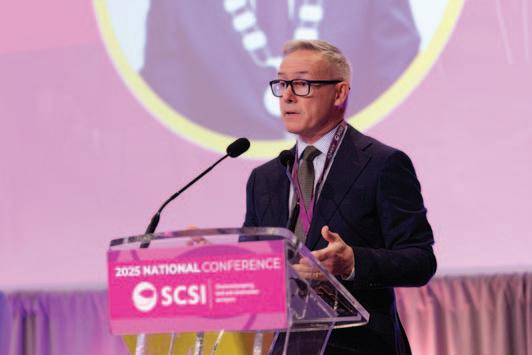
rom Insight to Impact: Futureproofing Your Professional Value’ was the theme of this year’s SCSI National Conference, which took place in Croke Park on December 9. SCSI President Gerard O’Toole welcomed delegates to the Conference, and introduced a video message from Minister for Housing, Local Government and Heritage, James Browne TD.
Minister Browne congratulated the SCSI on the publication of ‘The Real Costs of New Apartment Delivery 2025’, saying that the report was a “significant contribution to
FEATURE
Ann-Marie Hardiman
Managing Editor, and Caoimhe Coolican
Copy editor and journalist, Think Media Ltd


the national discourse on housing policy”. He reiterated his commitment to scaling up home delivery as a national priority, saying that the Government is “setting the direction, providing evidence, and driving solutions”, and that the SCSI is integral to that work.
Deliverability and infrastructure
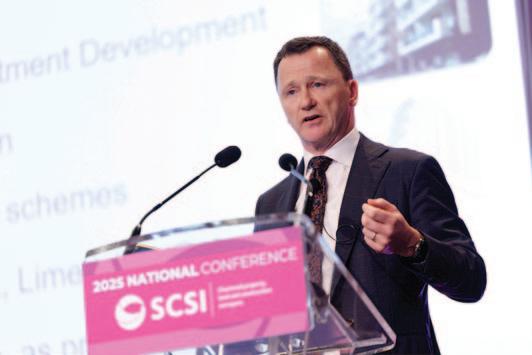
In the first session of the morning, Paul Mitchell of Mitchell McDermott gave a detailed summary of the contents of the SCSI’s ‘Real Costs of New Apartment Delivery 2025’ report, which he co-authored. The report looks at viability and affordability, assessing the impact of Government interventions such as the recent VAT reduction, and Croí Cónaithe. Part II of the report is a case study of a 48-unit apartment block in south Dublin, where viability was
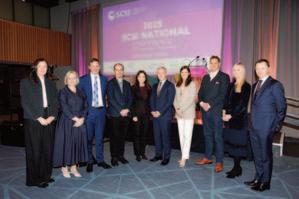
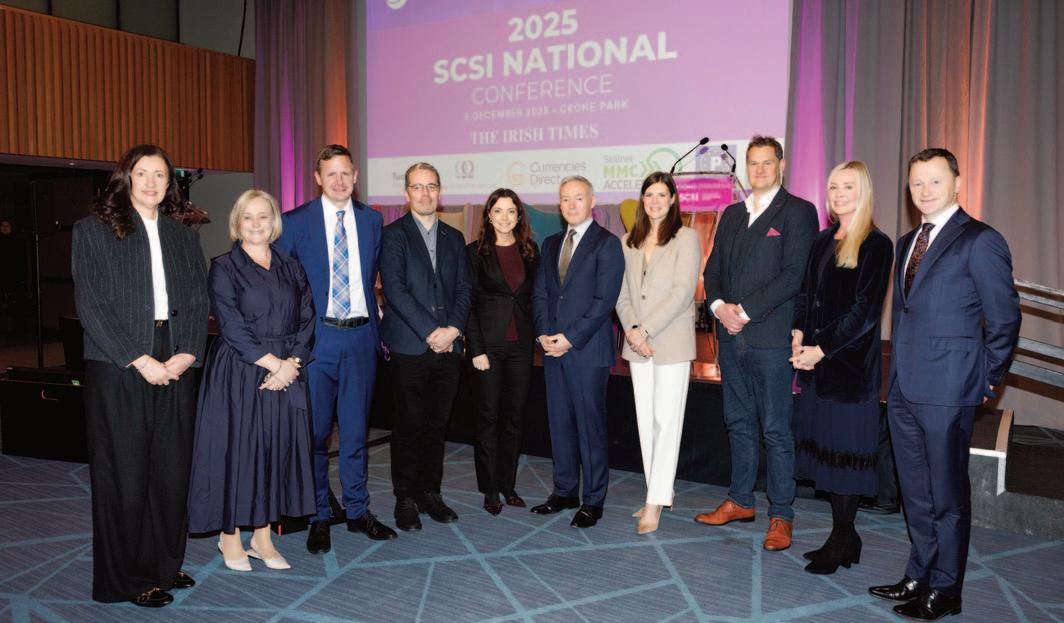
From left: Marion St. John, KSN; Kim Hegarty, Linesight; Nick Talbot, IVSC; James Lonergan, SCSI Director of Education and CPD; Shirley Coulter, SCSI CEO; Gerard O’Toole, SCSI President; Hannah Dwyer, JLL; Dan Hughes, Alpha Property Insight; Fiona Mullally, Linesight; and, Paul Mitchell, Mitchell McDermott.
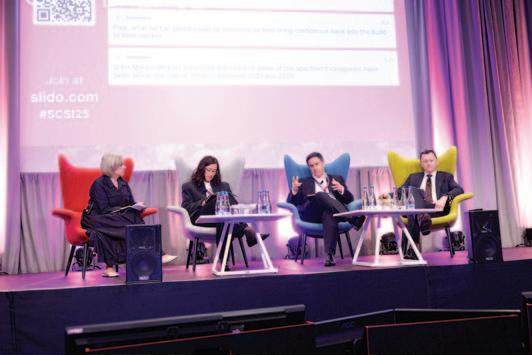
examined across a range of tenure types – build to sell, private rental sector, and cost rental – as well as assessing the potential impact of the Government’s proposed new apartment design guidelines. The results of both analyses show that without Government intervention, the majority of apartments are unviable, but State interventions are having a positive impact on viability, a good news story for the sector. The private rental sector remains an outlier, as Government subvention did not impact on viability in this tenure type. Findings on affordability are also worrying, showing that only the top 20-30% of earners in Ireland can afford to purchase a new apartment. Following Paul’s presentation, Kim Hegarty of Linesight moderated a panel discussion featuring Paul, along with David Martin of EY and Marion St. John of KSN. The potential impact of the report’s findings on international investment in the sector was discussed, as well as the need for certainty in terms of delivery and design, and a stable policy environment. The panel agreed that the report presented vital data to aid the sector, and to counter uninformed views on the housing crisis.
Stephen Seymour, Head of Asset Management at Uisce Éireann, then addressed the conference on that organisation’s plans in relation to vital water infrastructure for housing and other projects. He said that Uisce Éireann has been allocated funding of €10.23bn to 2030 by the Government, with an additional €2bn in the most recent Budget specifically to accelerate housing delivery. This funding will be used for a significant number of vital capital infrastructure projects, such as the Greater Dublin Drainage project. In terms of housing, he described how the organisation uses both the National Development Plan and county development plans, as well as other data from the Land Development Agency and elsewhere, to make sure that servicing of land matches zoning and planned housing delivery. He talked about the challenges of servicing rural areas, where lower populations and higher cost of delivery are factors, and some of the innovations they are applying to these challenges, such as modular treatment plants and nature-based solutions.
Housing affordability: a European lens
After a coffee break, guests heard from former Minister for the Environment, Climate and Communications, and for Transport, Eamon
Ryan, who spoke about his work as the current Chair of the EU Housing Advisory Board. He summarised the Board’s recommendations to the European Commission, which are intended to inform its Affordable Housing Plan (due to be published before the end of the year). He invited attendees to consider housing as a Europe-wide social crisis, and noted that the Irish situation is not exceptional. The Board proposes a shift from viewing housing as purely a market, to framing it as a social good: a shift that he says can ultimately bolster faith in democratic systems and protect against populist attacks on governments. Eamon also underscored a need to expand our definition of affordability to include longer-term factors like maintenance, and the costs of building communities around housing, not forgetting that the green transition is key to maintaining competition. What can Europe do? Share consistent, rapidly available, transparent data, he said, adding that the value of “using information to steer policy can never be underestimated”. Eamon was keen to note that there are reasons to be hopeful, and highlighted the Irish Cost Rental Scheme as an example of an innovative approach.
Digitising the built environment
The fourth session explored how digital technologies are transforming
SCSI President Gerard O’Toole welcomed attendees to this year’s SCSI National Conference in Croke Park.
Paul Mitchell of Mitchell McDermott presented the SCSI’s ‘Real Costs of New Apartment Delivery’ report.
From left: Kim Hegarty, Linesight; Marion St. John, KSN; David Martin, EY; and, Paul Mitchell, Mitchell McDermott.


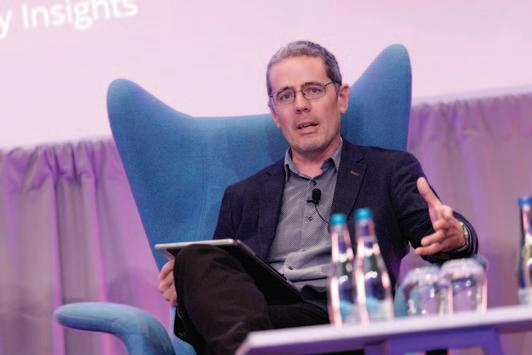
the built environment, from design and construction to asset management and operational efficiency. It began with an engaging presentation from Dan Hughes of Alpha Property Insight, who discussed the role of data and AI in real estate and how organisations can approach their implementation. He displayed a technology adoption curve, stressing the importance for each organisation of knowing where it sits on that curve in order to inform services, risks, and business needs. Five major themes were raised: digital strategy, data, people, trust, and business processes. When it comes to technology for property development, Dan’s vision was positive: everything can be “faster, better, more efficient”. He also identified a challenge in the property sector – a tendency towards working in silos means that there is a need for better data sharing across domains, and for cohesion in terms of the culture around employing technology in real estate. Finally, he underlined the need for agility in business processes, as property development models must be able to react to a changing industry.
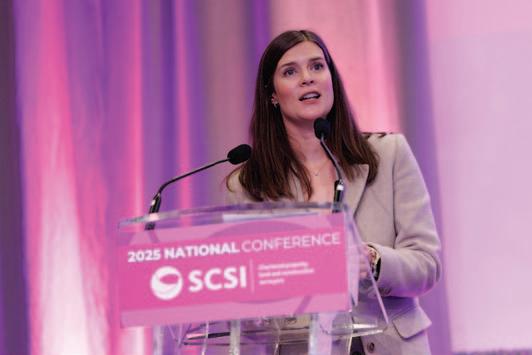
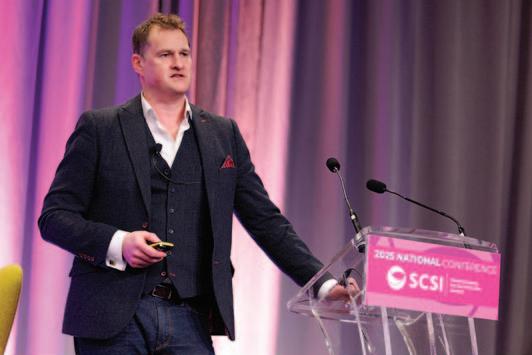
Dan was joined by Hannah Dwyer of JLL and the SCSI’s Director of Education and CPD, James Lonergan, for a panel discussion centred on data technology and innovation. James gave a preview of the SCSI’s newly published Digital Strategy, which aims to promote tech in the industry, and the panel answered questions on where to begin with
upskilling on data and AI. Key takeaways from the speakers were to collaborate and keep learning.
Adding client value
Nick Talbot, CEO of the International Valuation Standards Council (IVSC), began the next session, speaking about the need for a consistent approach to international valuation standards (IVS) around the world. He called on his experience fostering partnerships with financial and market regulators and global standards setters in the public and private sectors to outline how high-quality valuations underpin many areas, from tax to audit to securities regulations. The IVSC’s aim is to bring experience together from across the globe to evolve IVS, while maintaining quality and helping the profession to apply them, said Nick. He singled out the existing challenge in improving recognition of the valuation profession, and emphasised the importance of organisations like the SCSI. Central to Nick’s thesis was that the recognition of one form of valuation is a help to other forms.
Fiona Mullally, Director of Strategic Growth at Linesight, joined Nick for a panel discussion that was moderated by Lily Ellis of NetApp. Fiona spoke about her experience working with customers across cultures, and the importance of delivering consistency and helping clients to
Eamon Ryan, Chair of the EU Housing Advisory Board, spoke on European housing policy development.
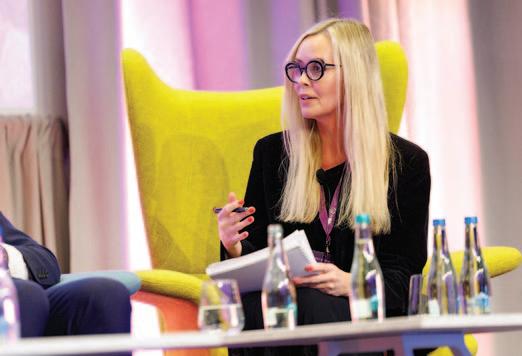
Fiona Mullally of Linesight took part in the panel discussion on adding client value.
Hannah Dwyer of JLL moderated the session on digitising the built environment.
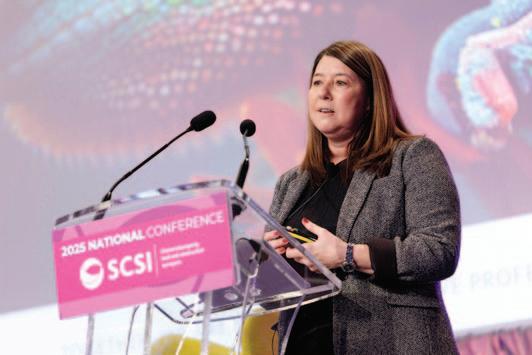
SCSI CEO Shirley Coulter (left), and Siobhán McKenna of the Public Appointments Service discuss the SCSI’s findings on culture in the profession.

achieve clarity around their goals. She said that small and large clients deserve the same respect, and the same level of communication. Questions from the audience covered what good innovation looks like and how to create tangible value for clients. Nick said that providing clients with information to inform their decisions is a measurable benefit. Fiona advised being a strategic advisor, and not just a service provider. A final question from the audience raised the issue of professional indemnity insurance and its validity in circumstances where AI has been used to assist a valuation. The panellists agreed that this is an area that is still evolving, and that learning with a client and maintaining trust are fundamental.
Culture survey results
After lunch, SCSI CEO Shirley Coulter introduced the Society’s culture survey. She handed over to Sandra Healy, founder and CEO of Inclusio, who presented the results of the survey. Over 600 members completed the survey, a 15% response rate, which Sandra said compared positively with other professional member organisations. What followed were interesting and sometimes stark findings. Sandra revealed that 14% of respondents identify as neurodivergent. Participants represent 27 nationalities, and one in 10 describe themselves as immigrants. Some
44% of respondents are the first generation in their family to achieve third-level education. Findings that 20% of women and 11% of men feel marginalised in the profession were more sobering. According to the survey, one in three women have witnessed inappropriate behaviour at work, and one in five have experienced it. Responses repeatedly reflected a desire for supported work–life balance, and for professional events to be more inclusive. In the light of these revelations, Sandra put a strong emphasis on the importance of creating a psychologically safe environment in the workplace. The biggest risk is inaction, and Sandra’s message to employers was unequivocal: “Your people have the answers”. After the presentation, Sandra was joined by Siobhán McKenna, Head of Equality, Diversity & Inclusion at the Public Appointments Service (publicjobs.ie), Shirley Coulter, and Gerard O’Toole for a panel discussion. Siobhán said that while many of the results were startling, there is a lot for employers to work on, and she emphasised that employers need to have aspirations for providing workers with supports and balance in order to attract and retain talent. Shirley concluded the session by asserting the SCSI’s commitment to analysing the responses in detail, and using the survey’s insights to inform action. She said that the SCSI will hold workshops for HR leaders in January, and that a report will be published with recommendations next year.
Sandra Healy of Inclusio outlined the findings of the SCSI survey into culture in the profession.
James Lonergan, SCSI Director of Education and CPD, introduced the SCSI’s new Digital Strategy.
Kingsley Aikins spoke on building your network.
Dan Hughes of Alpha Property Insight gave a presentation on digital innovation in the sector.
Building networks
The final speaker of the conference was Kingsley Aikins, CEO of The Networking Institute. Attendees were entertained and delighted with tales of his experience engaging in philanthropy, diaspora engagement and networking in all corners of the world. Kingsley spoke about his work with IDA Ireland, the Irish Trade Board and the Ireland Funds, and his establishment of The Lansdowne Club. His core message was that cultivating a network is essential. In an increasingly isolationist,
confrontational world, a strong, diverse network can provide the savvy, or ‘cop on’ necessary to handle change. To build a network, Kingsley advised being curious, asking questions, and listening – luck, chance and serendipity can be used to your advantage. He provided considerable food for thought, remarking that “your network allows you to fit in, and allows you to stand out”. To him, a network is like an orchestra: the whole is more than the sum of the parts, and “you conduct it”.
CELEBRATING THE PROFESSION – SURVEYING EXCELLENCE AWARDS 2025
At this year’s Conference, the SCSI Surveying Excellence Awards, which are now in their third year, honoured nominees and winners from
n President’s Award for Outstanding Contribution to the SCSI and Surveying Profession – Isobel O’Regan FSCSI FRICS
n Collaborative Impact Award – the SCSI Working Group on the ‘Real Cost of Renovation’ report
n Undergraduate Dissertation Award
– Tosha Rochowiak
n Academic Impact for Postgraduate Dissertation Award
– John Cogan
n Sustainable Champion Award – Eloise Heron FSCSI FRICS
n Sustainable Champion Award (judges’ commendation)
– Ronan Keogh MSCSI MRICS
n New Practice of the Year Award – Quantex Limited
n Surveyors in the Community Award – The Land Development Agency surveying team
n Elevate Award for Championing Women in Surveying
– Aoife Brennan FSCSI FRICS

across the surveying disciplines. Congratulations to the nominees and winners, all of whom represent the highest standards in surveying.
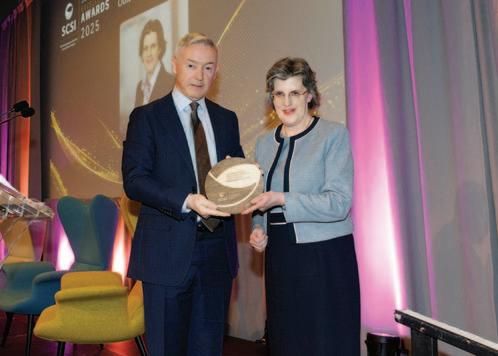

Winner of the President’s Award for Outstanding Contribution to the SCSI and Surveying Profession Isobel O’Regan with SCSI President Gerard O’Toole. The Award recognises Isobel’s significant contribution to both the SCSI and the RICS over many years.
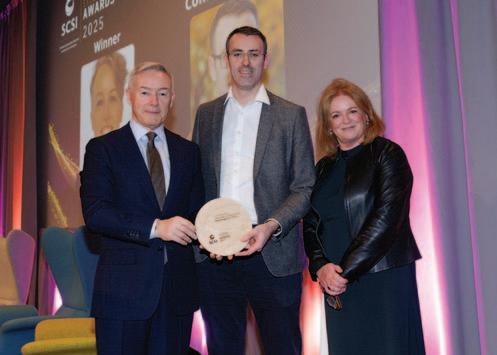
Nick Taaffe represented the winners of the Collaborative Impact Award, the SCSI Working Group on the ‘Real Cost of Renovation’ report. This Award recognises the collaborative work of SCSI members to advance the profession for the benefit of the public and members.
Undergraduate Dissertation Award winner Tosha Rochowiak. Tosha’s dissertation was an evaluation of impractical planning expectations and their impact on development viability in urban areas.
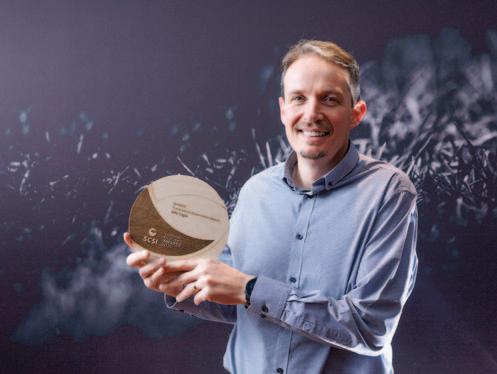

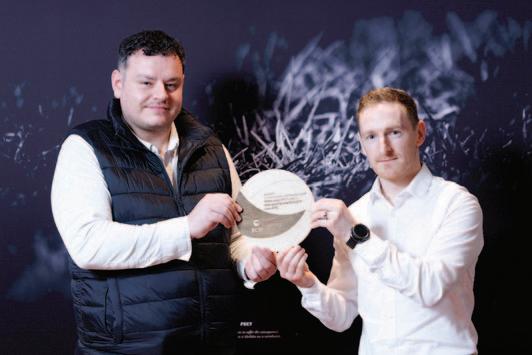

Academic Impact for Postgraduate Dissertation Award winner John Cogan. The insights from John’s work are proving valuable to policymakers and professionals, particularly as we integrate carbon costing into public sector projects.
Sustainable Champion Award winner Eloise Heron. The judges particularly noted Eloise’s leadership in policy development and her influential role in promoting innovation and advocacy for sustainability, both within the SCSI and the wider profession.
Ronan Keogh received a judges’ commendation in the Sustainable Champion Award category. From left: SCSI President Gerard O’Toole; Ronan Keogh; and, Emer Byrne, TU Dublin.
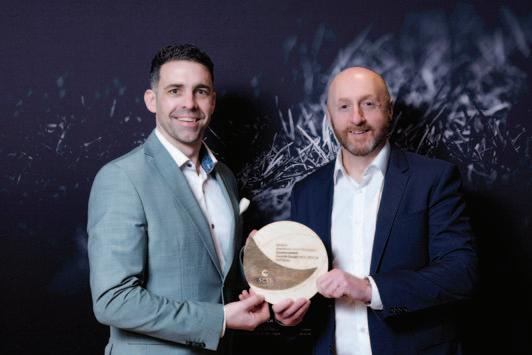
New Practice Award winners David Mc Donagh (left) and Paul Watts of Quantex Limited. Quantex impressed the judges with their journey from garage office, part-time studies and young children, to quickly outgrowing their office space twice in a matter of years.
The Surveyors in the Community Award winners were the Land Development Agency surveying team. Pictured are Walter Leiper (left) and Colin Butterly, who accepted the award on behalf of the team.
Elevate Award for Championing Women in Surveying winner Aoife Brennan. Through her leadership and advocacy, Aoife has championed initiatives that foster equality and representation both within her own organisation – Lisney –and across the wider sector.
TIME FOR ADAPTIVE REUSE
CONVERTING THE UPPER FLOORS OF OLDER BUILDINGS INTO HOUSING WOULD BREATHE NEW LIFE INTO BEAUTIFUL BUILDINGS, AND INTO OUR CITY CENTRES.
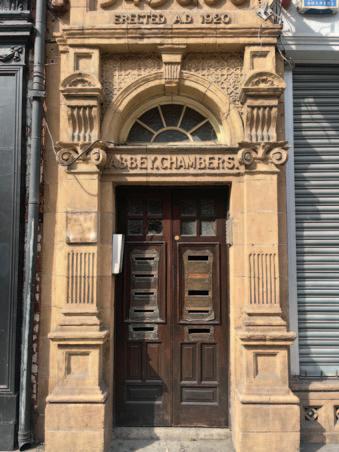
Reading the recent piece by Olivia Kelly in The Irish Times, ‘Danny DeVito’s relatives are among the last residents of Dublin’s O’Connell Street’, I felt deflated for our capital city and nostalgic for the times gone by described in that article. I often feel this way when I look beyond the ground-floor shops and restaurants to the vacant and often decaying first-, second- and third-floor bay windows. The classical stone facades of our city centre stand tall and proud, if somewhat abandoned and neglected. Some of the most beautiful examples can be found on and around O’Connell Street, where the ground floor access and entrance halls are still intact. A notable example is the elegant terracotta door surround of Abbey Chambers on Middle Abbey Street; the individual post boxes are still visible on the timber door. In any other European capital, this would be the proud entrance to many well-proportioned living spaces.
I recall as a young surveyor being tasked with leasing the upper floors of various buildings in this area and sometimes navigating urine-soaked doorways. Even then I was struck by the waste of opportunity and how the city at large did not see the worth in these spaces: rooms with high ceilings, some with decorative plasterwork and most with large picture windows. Occasionally, I would see the remnants of a home with a bathroom or kitchen still intact, or a fireplace with a mirror hanging above. It seemed to me that these handsome rooms could have made very attractive apartments, especially when compared with what was being built at that time. Many years ago, standing on the roof of one such building and admiring the
FEATURE
Patricia Ward MSCSI MRICS Director of Agency & Investment, TWM

majestic view, I could look towards the cranes and sprouting new developments. In later years, one such developer became known in the press as ‘the shoebox king’.
A crying shame
By the mid-1990s most of these upper floors were used as offices and there was little demand for them. The occupiers were mainly service providers such as opticians, dentists, accountants, or travel agents, and the buildings were often in poor condition with the tenants paying relatively low rents. There seemed to be very little, if any, capital expenditure by owners, and landlords were often unwilling or unable to properly maintain the common areas. On a recent stroll through the city centre, I passed many of these buildings on Middle and Lower Abbey Street, and was once again reminded of their architectural merits, and the fact that in any other capital city I have visited, these upper floors would be soughtafter apartments.
The trend of moving to the suburbs has, of course, been happening in Dublin for decades, and many have written about the repurposing of older properties. I strongly believe that leaving the upper floors of city centre buildings vacant for years is a crying shame, especially when those spaces often have the character, proportions and locations that would make them excellent for housing. High ceilings, large picture windows, and proximity to amenities and transport are exactly the qualities that make urban living attractive and, importantly, sustainable. Perhaps the occupants will not have a tiny balcony, but they will walk to work, to school, to shops – they will never need a car.
Addressing the barriers
We know the barriers to reuse are often regulatory (zoning, fire safety regulations, accessibility), financial (converting older buildings is expensive), and institutional (investors often
“
IF THE HOUSING AGENCY AND APPROVED HOUSING BODIES WERE TO EMBRACE THIS MIXED-USE PRINCIPLE, AND CONSIDER LEASING FROM PRIVATE LANDLORDS, IT COULD UNLOCK A LOT OF UNDERUTILISED SPACE IN A WAY THAT BENEFITS RESIDENTS, WORKERS, AND LIFE IN ALL OF OUR CITIES.
prefer the simplicity of a single-use tenancy). However, with the current demand for housing, and the need for one- and two-bedroom units, why are we ignoring the many underused offices, whether they be purpose built or above shops? There should be more finance options and regulatory guidance from the State and the construction industry for adaptation. We have had some good reuse stories for larger projects, such as the fire station turned hotel on Pearse Street, and Dolphin House, built circa 1890, originally a hotel and now a courthouse. One of the largest regeneration projects I am aware of is the successful redevelopment of St Brendan’s Hospital in Grangegorman to a university campus. The hospital closed in 2013 and by 2019 the first students from Technological University Dublin began arriving. The Phoenix Care Centre, a state-of-the-art mental health facility, also opened on a separate part of the site in 2013, thus retaining and improving the original essential service.
I believe mixed-use occupation is a direction worth pursuing, if not vital to pursue. Many European cities thrive on this model with ground floors given over to offices, retail, healthcare or community services, and upper floors to perhaps a mix of apartments and hotels. This layering creates vibrancy, safety (24-hour living) and resilience for the local economy and, in Dublin’s case, for the heart of the city. This is of course just as relevant and viable for all our cities.
Signs of change
Dublin City Council (DCC) established the
Adaptive Reuse Unit in the Housing and Community Services Department. Their website confirms that after assessing 500 properties and completing 15 feasibility studies, five adaptive reuse projects have received funding. It is positive to see this happening and hopefully it will gather pace and make a substantive difference to the city centre, while encouraging investors to seek out these assets and repurpose them.
If the Housing Agency and approved housing bodies were to embrace this mixed-use principle, and consider leasing from private landlords, it could unlock a lot of underutilised space in a way that benefits residents, workers, and life in all of our cities.
Far from upper-floor conversions being the solution to our housing crisis, I see it as releasing quality living stock, therefore helping towards the problem, while having a very positive impact on Dublin and cities across the country. Not to mention breathing new life into historical and culturally significant buildings.
Since writing this article, North Frederick Street and Middle Abbey Street have been selected by DCC for a “bold urban rejuvenation pilot” to provide essential city workers with cost rental homes. I welcome this initiative, which will hopefully lead to an eradication of vacant and derelict buildings on these streets.
I also welcome the recent planning grant by DCC for 316 student accommodation bedspaces at the former Independent House building at 87-93 Middle Abbey Street. Adjacent to Independent House is 9496 Middle Abbey Street, which has just been launched for sale through Colliers asking €3.4m.
Abbey Chambers on Middle Abbey Street retains its elegant terracotta door surround.
A DECADE OF PROGRESS
THE INTERNATIONAL COST MANAGEMENT STANDARD CELEBRATED ITS 10TH ANNIVERSARY RECENTLY WITH A TWO-DAY CONFERENCE IN WASHINGTON DC AND MARYLAND.
Ten years after its formation in 2015, the International Cost Management Standard (ICMS) celebrated a decade of progress by returning to the venue where the first global meeting was held: the historic International Monetary Fund (IMF) HQ in Washington DC.
The ICMS Coalition is a non-governmental, not-for-profit organisation comprising Trustees and Standard Setting Committee (SSC) members, whose purpose is to bring a global structured consistency to cost reporting across the built environment. The ICMS has grown from its original 49 Coalition members to well over 80 members, with adoption continuing to grow across the globe.
The SCSI and the CEEC (European Council of Construction Economists) are both Coalition founding members, and along with other founding members from across the globe, such as the Royal Institution of Chartered Surveyors (RICS), the Canadian Institute of Quantity Surveyors (CIQS), and UNTEC (representing French construction economists), we attended this momentous hybrid event hosted by the IMF on September 24, 2025.
Over the past decade, the ICMS has developed into a truly global international standard. The first edition was published in 2017 and focused on capital costs, while the second edition, published in 2019, covered construction and other life cycle costs. The third edition, published in 2021, concentrated on integrated carbon emissions and sustainability.
Global collaboration
The first day of the Conference showcased collaboration on a global stage, and was an intensive and productive day. The Conference opened with a welcoming speech from David Dent, IMF World Bank
Mary C. Flynn FSCSI
FRICS MAPM MSc BIMM Assistant Chief Quantity Surveyor Quantity Surveyors Division

representative. This was followed by a welcome address from the Chairman of the ICMS Board of Trustees, Philip Kaheru (Institution of Surveyors of Uganda), followed by Mark Zeidan of the American Association of Cost Engineering (AACE) International.
Ken Creighton, ICMS Trustee, spoke on how the ICMS was conceived, explaining its origins and context. Ken spoke about the principles it encompasses, such as shared ownership, open governance, and independent standard setting, as well as the challenges and opportunities, and its strategic importance. Anil Sawhney (RICS) spoke on how the SSC was formed and the journey of standards creation (ICMS 1 to ICMS 3).
This was followed by presentations on the state of the ICMS across the continents. Sheila Lennon, Chief Executive Officer at the CIQS, presented on the ICMS in the Americas. I (Mary Flynn, CEEC ICMS Trustee and SCSI member) presented on the ICMS in Europe, and had the honour and privilege of presenting on the state of the ICMS in Ireland: ‘ICMS: The Irish Mandate: The Irish Experience’. Through its SCSI Coalition membership, and with the Government leading the way, Ireland was the first country to implement the ICMS for both the private and public sector. I spoke on the Government’s building information modelling (BIM) Mandate and ICMS Mandate, both of January 1, 2024, and how they are linked to the Climate Action Plan and the revised Energy Performance of Buildings Directive, emphasising data-driven processes
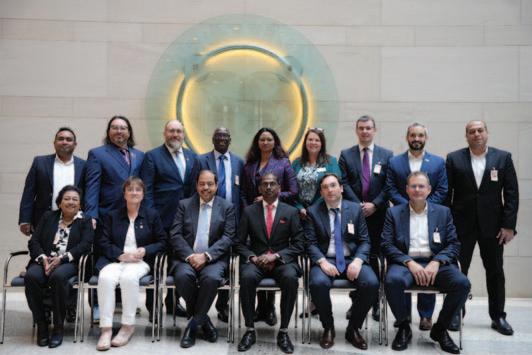
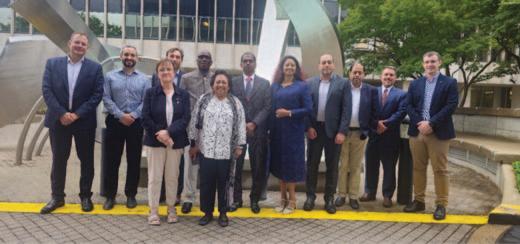
IMF HQ, Washington DC. Front row (from left): Chitra Weddikkara; Mary Flynn; Anil Sawhney; Varughese Mathew; Matthieu Lamy; and, Tolis Chatzisymeon. Back row (from left): Ruwantha Sushan Weddikkara; David Dooks; Brian McBurney; Ruya Fadason; Sinimol Noushad; Sheila Lennon; Kevin Brady; Mark Zeidan; and, Khaled Aziza. (Photograph: Sean Windsor.)
and BIM integration for cost and carbon reporting. I also spoke on how the ICMS is based on ISO standards and international best practice supporting open data, BIM, and Government digitalisation programmes, as well as modern methods of construction (MMC), the EU Circular Economy Act, and whole life carbon assessment (WLCA), which is mandatory for new projects from September 2025.
International perspectives
Matthieu Lamy (UNTEC) presented on ‘ICMS in Europe: Reconciling Ambition and Rigor’, balancing goals with strict cost management standards. Matthieu spoke of France’s shift from resistance to embracing the ICMS, integrating it into training and market practices. He also spoke on cost management evolution, European diversity, the use of universal language, and the vision for unity and the need to accelerate adoption. He concluded by saying that the ICMS is more than just a technical tool – it’s a vision for accountability, transparency and building a better future.
Ruya Fadason (Nigerian Institute of Quantity Surveyors) presented on ‘ICMS in Nigeria: Success Story of Infrastructure in Nigeria’. Ruya spoke about Nigeria’s current administration, as well as the significant progress and successes on major road projects by region, speaking on the adoption of the ICMS in Nigeria and its application to highway projects, and demonstrating its benefits. He concluded with strategic recommendations and a strategic ask for more ICMS training and certification and to embed ICMS in donor-funded projects.
The final presentation before lunch was by Prof. Chitra Weddikkara, speaking on the ICMS in Asia and South Asia. Chitra spoke on the benefits for Asia as well as country-specific adoption, covering the Philippines, Australia, China, Hong Kong, Sri Lanka, Malaysia, and New Zealand. The afternoon sessions concentrated on the way forward for the ICMS in the coming years, on how to progress ICMS adoption further within the other Coalition members, and what lessons can be learned from Ireland. There was a proposal for ICMS adoption into World Bank-funded infrastructure project contracts.
Standards and innovation
Day two was a full-day hybrid event with AACE International, hosted by
K2 Consulting HQ in Bethesda, Maryland. The AACE International is a not-for-profit professional association with a global membership in 100 different countries. The second day of proceedings featured workshops as well as presentations. The first presentation was from Tolis Chatzisymeon, who had been involved in the creation of all three standards as an SSC member from Greece. Tolis discussed how he might standardise software for global usage, and what barriers would need to be overcome to do this.
The second presentation was on a recent RICS report on AI in construction and this was led by Anil Sawhney. The report gives a global snapshot of the current adoption of AI, with 45% of respondents declaring no AI usage, 34% in pilot phase, 12% reporting limited use, and 1% fully embedded. The report looked at the barriers to use, which can be summed up as: lack of skilled personnel (46%); integration issues (37%); and, poor data quality (30%). The report looks at the potential impact of AI as well as the investment outlook. It finishes by stating that 67% of respondents are optimistic that AI will add value, and 38% are concerned about the impact on their role.
“ IRELAND HAS LED THE WAY GLOBALLY AS THE FIRST COUNTRY TO IMPLEMENT AND MANDATE THE ICMS FOR BOTH THE PRIVATE SECTOR THROUGH SCSI COALITION MEMBERSHIP, AND THE PUBLIC SECTOR THROUGH THE GOVERNMENT.
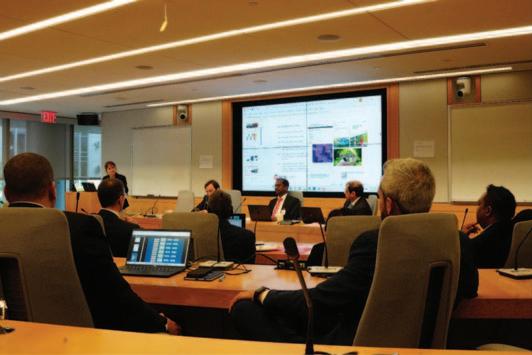
Mary Flynn presenting ‘ICMS : The Irish Mandate: The Irish Experience’ in the IMF Conference Room. (Photograph: Sean Windsor.)
Day two in Bethesda, Maryland. Front row (from left): Mary Flynn; and, Chitra Weddikkara. Back row (from left): Tolis Chatzisymeon; Mark Zeidan; Matthieu Lamy; Ruya Fadason; Varughese Mathew; Sinimol Noushad; Khaled Aziza; Anil Sawhney; Mike Marcell; and, Kevin Brady. (Photograph: Sean Windsor).
PLANNING FOR THE FUTURE – BUILDING
INVESTMENT FUNDS PART 2
PART 2 OF THIS SERIES LOOKS AT MANAGING A BUILDING’S LIFE CYCLE STAGES, AND THE ROLE OF THE BIF REPORT.
The building investment fund (BIF) report is a critical tool for the planning of major renewal projects. It provides both physical and financial analyses of a building’s assets, predicting when they are likely to reach the end of their serviceable life and detailing how much money will be needed in the future to fund renewals. The funding plan will be critical to the successful long-term management of a building’s assets, and will provide a guide to how much money needs to be set aside each year for future projects, helping to avoid unexpected capital costs. Good practice suggests that a BIF report is compiled early in a building’s life cycle, and reviewed or updated every four to five years.
The BIF report is a living document, informing planning and decision-making, and is generated by a suitably qualified professional such as a building surveyor. With so many of a typical building’s assets being considered mid-life assets, the SCSI recommends that a BIF report typically covers a period of 20+ years. This timeframe can be adjusted by the direction of the client and some extend that analysis up as far as 50 years, enabling building owners to anticipate and prepare for most asset replacement projects. There are a series of critical questions that should be asked during the BIF process (including reviews), which are essential to the development of the BIF report, helping to frame many of the decisions around management, planning, and governance of the assets.
FEATURE
Aoife O’Sullivan Property and Asset Management Lead The Land Development Agency

Table 1: Cost template and associated groupings for calculating sinking fund costs.
Group Example of elements included
Structure Substructure (e.g., basement) and
Additional comments
Examples include replacement of metal cladding, superstructure (e.g., external walls) which has a typical economic life of 40-50 years
Roof Roof coverings and rainwater goods
Façade External wall cladding, windows and doors
Internal finishes
Internal walls and partitions of common areas,
Examples include replacement of pressed metal capping (40-50 years’ economic life) and replacement of the bitumen felt waterproof membrane (15-20 years’ economic life)
An example includes the replacement of the waterproofing membranes of balconies (20-year typical economic life)
An example includes replacing all the timber windows and and common areas floor finishes, stairs, internal joinery (windows, external doors in the apartment blocks whereby 100% of the screens, doors, skirtings, etc.) funds are to be collected over a period of years
External areas Access routes and entrance, external
An example includes the replacement of the timber decking, paving and pathways which typically has an economic life of 25-30 years
Services Lifts, HVAC supply and air distribution systems, An example includes the replacement of intercoms, which lighting, electrical services, sanitary, storage tanks, have a typical economic life of 15 years fire and smoke detector systems
Additional items EV chargers and playground maintenance
What assets are owned?
The asset register for a new building will be provided with the building’s safety files on handover. A comprehensive asset register is the bedrock and starting point for the effective long-term management of assets, and is the foundation of a BIF plan, providing a detailed inventory of a building’s physical resources –what they are and where they are. The asset register is an invaluable tool for decisionmaking, allowing for informed choices in respect of resource allocation and utilisation, and replacement of assets.
What is the cost of replacing each asset?
This helps to identify what funds will need to be in place to refurbish or replace individual assets at the end of their serviceable life, and how much money needs to be provided for each year, to fund long-term capital requirements.
What is the lifespan of the assets?
This question identifies how long assets will last before needing significant refurbishments or replacement.
What is the condition of the assets?
Identification of the current condition of
An example includes replacing the EV chargers at the end of their useful life (estimated as 15 years)
Source: SCSI ‘Real Cost of Apartment Block Maintenance’ report.
“ THE BUILDING INVESTMENT FUND (BIF) REPORT PROVIDES BOTH PHYSICAL AND FINANCIAL ANALYSES OF A BUILDING’S ASSETS, PREDICTING WHEN THEY ARE LIKELY TO REACH THE END OF THEIR SERVICEABLE LIFE AND DETAILING HOW MUCH MONEY WILL BE NEEDED IN THE FUTURE TO FUND RENEWALS.
individual assets assists in determining the rate of their deterioration. Conditional inspections and regular maintenance checks also allow for any issues to be addressed proactively, ensuring that equipment operates optimally. The information generated by condition surveys enables understanding as to the likely time frames of when refurbishments and renewals will be necessary.
Is there any deferred maintenance?
Here, work that has not yet been carried out on
assets is identified. It is not uncommon for a building to have some element of deferred maintenance or repair. It is, however, essential that any deferred maintenance does not impact the long-term performance or operation of assets.
Is there sufficient funding?
Addressing this question ensures that there is sufficient annual provision being made for the BIF and that it is adequate for future needs.
“
A COMPREHENSIVE ASSET REGISTER IS THE BEDROCK AND STARTING POINT FOR THE EFFECTIVE LONG-TERM MANAGEMENT OF ASSETS, AND IS THE FOUNDATION OF A BIF PLAN, PROVIDING A DETAILED INVENTORY OF A BUILDING’S PHYSICAL RESOURCES – WHAT THEY ARE AND WHERE THEY ARE.
What if?
It may be possible to space refurbishment and renewal projects across a number of years, e.g., pump and lift upgrades or refurbishments. Alternatively, it may be possible to achieve efficiencies by co-ordinating projects to occur at one time, resulting in economies of scale.
The combined answers to these questions will determine the asset management programme and the level of annual funding required to meet future needs ( Table 1). Thereafter, the BIF report and strategy should be reviewed every three to five years, with updated reports recognising what works have been completed or deferred, or are outstanding, and adjusting the strategy and funding plan as necessary.
Managing assets through the building life cycle
Asset and property management involves the management of a building and its physical assets, encompassing all elements – including delivery, operation, maintenance, inspection, and renewal – with the aim of optimising operational performance and minimising whole-life costs. Core to this is the ability to intervene at strategic points during the building’s life cycle and each asset’s normal operational life. Effective management will rely on the interconnected elements of long-term BIF planning – the asset register, operation and maintenance requirements, the BIF report, and condition surveys throughout each building’s life cycle.
The asset register: providing specific information in respect of each building’s physical assets, the register forms the basis of effective operational and future planning.
Operation and maintenance (O&M) manuals and routine maintenance planning: O&M manuals are critical to informing the routine operational servicing and
maintenance requirements of each asset. Maintenance planning is typically managed and delivered by individual management agents, who rely on the O&M manuals to determine the annual operational maintenance plan of a building’s assets. A comprehensive maintenance plan will ensure that each asset is maintained to its optimum operating efficiency and may extend the serviceable life of many assets.
BIF planning: a long-term approach will support financial planning into the future, to ensure that adequate funds are in place as assets reach the end of their useful lives.
Condition surveys: scheduled condition surveys of assets will inform asset refurbishment and renewal strategies throughout the life cycle of each building. Surveys also support understanding and decision-making around how assets are performing, and if they will require refurbishment or replacement.
Technology: each building has numerous (and sometimes complex) assets, each asset with specific requirements in respect of maintenance, renewal, and serviceable life. Digital platforms can play a central role in managing a building’s life cycle stages, including tracking asset locations, detailing O&M requirements, managing maintenance cycles, and recording asset conditions. Centrally stored information provides an in-depth understanding of all of a building’s assets, their estimated serviceable life, projected timelines for major works and, critically, the level of funding required over the life of the building.
Conclusion
Apartment construction and living are increasingly a focus of sustainable and affordable housing delivery in urban areas across the country, and it is essential that these buildings and their assets are strategically managed throughout their life cycle to ensure their optimum operation in the short, medium and long term. From the perspective of the Land Development Agency (LDA), the sustainable management of cost rental homes (which are designated for 50 years) requires standardised, detailed long-term investment planning to ensure that homes are maintained throughout their life. An additional element of the LDA’s mandate is to develop and support best practice in the built environment. Establishing appropriate development/building-specific BIFs and plans at an early stage in the building life cycle will help to avoid future surprises when assets fail, and unexpected capital expenditure requirements.
CHARTING A PATH
AILSON DOYLE WALSH IS A CHARTERED QUANTITY SURVEYOR (QS) WHO HAS WORKED IN DUBLIN CITY COUNCIL’S HOUSING DIVISION FOR 20 YEARS. SHE IS A MEMBER OF THE SCSI’S QUANTITY SURVEYING PROFESSIONAL GROUP.
Having studied economics at UCD, Ailson Doyle Walsh recognised opportunities emerging in Ireland’s construction sector: “I wanted to focus on the practical application of economic principles rather than working with abstract models. In the late 1990s, the construction industry was really heating up, offering long-term growth prospects – and promising career prospects”. To build on this vision, she completed a construction, economics and management degree at Bolton Street (now TUD). Guided by advice from industry leaders, Ailson spent three years working as a contractor’s QS, gaining invaluable on-site experience: “I was advised to immerse myself in the construction process to gain an in-depth, practical understanding of construction projects. I worked on both civil and building projects, including Dublin Port Tunnel and a mixed-use development at Smithfield Square, Dublin”.
Trailblazing
After a year of travelling, Ailson joined Dublin City Council as the first permanently appointed female QS in the Quantity Surveying Division. This milestone gave her a unique perspective on an industry often perceived to be male centric: “It was somewhat daunting back then, building a career in construction, where the wider perception was that women couldn’t thrive in the industry. In my view, that was a fear-based narrative. Negative stereotyping can exist on both sides of the fence. I
Caoimhe Coolican Copy editor and journalist, Think Media Ltd SURVEYOR PROFILE

would encourage anyone to consider this path because it’s a dynamic and rewarding career for both men and women”.
Ailson credits Dublin City Council as a progressive and supportive workplace, particularly in helping her attain Chartership while balancing parental responsibilities. The fact that she is still there, 20 years on, speaks to her success in the role: “It’s an exciting place to work because the variety of projects is so wide. Even though it’s the Housing Division, there is opportunity to work on all kinds of projects: public realm works, libraries, swimming pools, galleries, along with apartment complexes and housing schemes. Staying with the same employer over time has allowed me to witness and actively contribute to the transition from the old form of contracts (GDLA) to Public Works Contracts (PWC). I consider myself fortunate to have been assigned Dublin City Council’s very first PWC project, and to have participated in some of the earliest conciliations”.
Ailson is currently involved in a housing regeneration scheme: “The project is at pretender stage. The biggest challenge at the moment is ensuring that the bill of quantities is compliant with the International Cost Management Standards (ICMS) and Agreed Rules of Measurement (ARM) 5, which is the first time we’ve implemented them in a bill”.
Separately, Ailson is engaged in an international research project through the European Council of Construction Economists (CEEC), examining different methods of sustainable renovation across a number of European countries: “It’s about working out the most economically advantageous model for retrofitting existing housing stock. This will ensure that our housing stock can be brought up to modern standards for the Climate Action Plan. It’s key to ensure Dublin
City Council achieves optimum value when retrofitting properties as it has 38,000 units under its remit, so scalability and economies of scale are important considerations”.
Working days for Ailson vary greatly, and involve “anything from meetings to reporting to clients, managing staff, site visits, or working with other QSs”. Of all the facets of the job, she finds participation in design meetings the most fulfilling: “That’s when the QS can have the biggest impact on managing the costs. Before the costs grow legs – it’s best to nip it in the bud”.
Ailson has witnessed plenty of change in the industry: “The biggest shift has to be how we have digitally evolved from the traditional 2D QS to where we are now, as 5D BIM (building information modelling) Quantity Surveyors. I think it would be hard to explain to today’s students that we were completing take-off exercises with calculators and dimension sheets in college as recently as 25 years ago. Digitalisation has propelled us into the data age, where accessible real-time refurbishment information underpins life cycle planning and strategic decision-making”.

Beyond work, Ailson likes to spend time with family and friends. She enjoys reading, parenting pursuits, and meditation. Living in Co. Wicklow allows her to nurture her passion for hiking and the great outdoors: “It offers a balance to the busy office environment. It’s nice to be able to retreat to the country”.
THE COURAGE TO SIMPLIFY
THE RECENT VAT CUTS AND OTHER TAX DEDUCTIONS ON DEVELOPMENT ARE WELCOME,
BUT THE MATHS STILL DOESN’T WORK.
In residential development, hope currently arrives in fractions. Budget 2026 cut VAT on the sale of completed apartments from 13.5% to 9% through 2030 and added an enhanced tax deduction on qualifying apartment construction costs (capped at €50,000 per unit), alongside a Corporation Tax exemption for cost rental profits and an extension of the Stamp Duty Refund Scheme. These are real, bankable steps, but they are not enough for drastic uplifts in supply.
Let’s be honest: we are still trying to run a restaurant with a menu priced by politicians, ingredients bought at retail, and the kitchen layout rewritten mid-service. The 9% rate sweetens the exit price, particularly for those who already own land. That narrows but does not close the gap. If the aim is rampant supply, the braver answer would have been 0% VAT. We will see more commencements and completions, but nowhere near what is needed.
Strip out State capital and the output would be laughably low.
Investment and regulation challenges
Now layer in real estate returns expectations. Our investors are not parochial; they are the same global investment committees allocating across Madrid, Amsterdam, Berlin and Dublin,
THE LAST WORD
Miguel Fitzgerald FSCSI FRICS MBS BSc Real Estate Director Greystar Ireland

comparing risk-adjusted returns and money multiples. If Ireland cannot hit the mark, the cheque goes elsewhere. We are failing on this point. A UK developer recently told me that their lenders look for at least 1.25x return on cost. In Ireland, a bank’s minimum is 1.10x; why bother when the average development takes two years? That chimes with conversations with major lenders here, where real client returns often sit around bond yields before leverage. None of that pays for the risk of planning and services, judicial reviews, development delays, contractor or subcontractor insolvency, programme risk, or cost volatility. And there is also a requirement for a large personal equity cheque on day one to make this work. Little wonder you can count the number of developers under 40 in the country on two hands.
Over-regulation is less a villain than an accretion problem. Standards, levies, taxes, and guidelines (none of which are irrational in isolation) have combined into a maze that even veterans struggle to navigate and explain. Young talent looks at that maze and chooses tech or abroad. The next problem is a brain drain from the current residential cohort into
other asset classes just as delivery capacity is needed most.
What’s
needed for real change
So will the VAT cut and its companions spark investment? Yes, at the margin. For-sale blocks where the 9% directly hits the ticket should move. Cost rental gets a nudge via the tax exemption. The 125% deduction will close some smaller gaps on qualifying schemes. But the centre of gravity will not shift until, in my opinion, three things happen:
1. Predictable, faster planning that compresses programme risk.
2. A stable, simplified rule set (tax and design) that cuts soft costs, and delivers internationally accepted levels of returns.
3. A talent pipeline that sees development as purposeful (we are indeed trying to help through supply); we are not a cult of housing profiteers (which is often portrayed).
Policy has moved in the right direction. Now it needs the courage to simplify. Give us a kitchen we can run, not a labyrinth to escape, and we will serve the homes Ireland needs.