[The Stute] November 7, 2025 (Issue 9, Volume CXXIII)
Are you a computer scientist who is secretly an artist? A biomedical engineer with a love for economics? Maybe an accountant with an interest in physics? A mix, or perhaps a completely different combination?
The Minor Fair held on October 30 by the Office of Undergraduate Academics bustled with students who answered yes to those questions. Inside the Bissinger Room (Howe Floor 4), academic representatives exhibited minors from the School of Humanities, Arts and Social Sciences, the School of Business, and the Schaefer School of Engineering and Science.
You may ask, what are minors, and why are students at the Minor Fair interested in learning more about them? A minor represents a coherent program of study in a discipline other than your major degree program. To complete a minor, you would need to take fewer courses than in a major. Students usually take minors to explore their passions and gain valuable skills in an additional field of study without having to go through the time commitment and courseload of a major. If this idea speaks
between students and faculty.
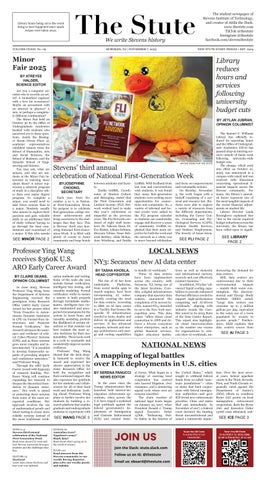
Each year, from November 3 to 7, is National First-Generation Week. Its purpose is to celebrate first-generation college students’ achievements and bring awareness to the challenges that they face. This is Stevens’ third year honoring National First-Generation Week. It is filled with plenty of events to foster community and forge bonds
Emilia Griffith, Coordinator of Student Culture and Belonging, stated that the First Generation and Limited Income (FLI) Network worked hard to make this year’s celebration as impactful as the previous years. The FLI Network consisted of eight staff members: Dr. Takeem Dean, Dr. Eve Riskin, Liliana Delman, Maryam Tobias, Dean Deborah Berkley, Alida McKee, Jane Winthrop, and Emilia
Griffith. With feedback from last year and conversations with students, it was found that many first-generation students were seeking more opportunities for connections and community. So, a variety of informal and formal events were added to the FLI program calendar so students can comfortably engage and discover a sense of community. Griffith explained that their main objective for both the week and the network as a whole was to move beyond celebration
and focus on empowerment and sustainable actions.
On Monday, November 3, the week began with a kickoff consisting of a carnival and resource fair. Students were able to explore a variety of resources from the different departments, including the Career Center, Counseling and Psychological Services (CAPS), Student Health Services, and Student Employment. The Society of Asian Scien-
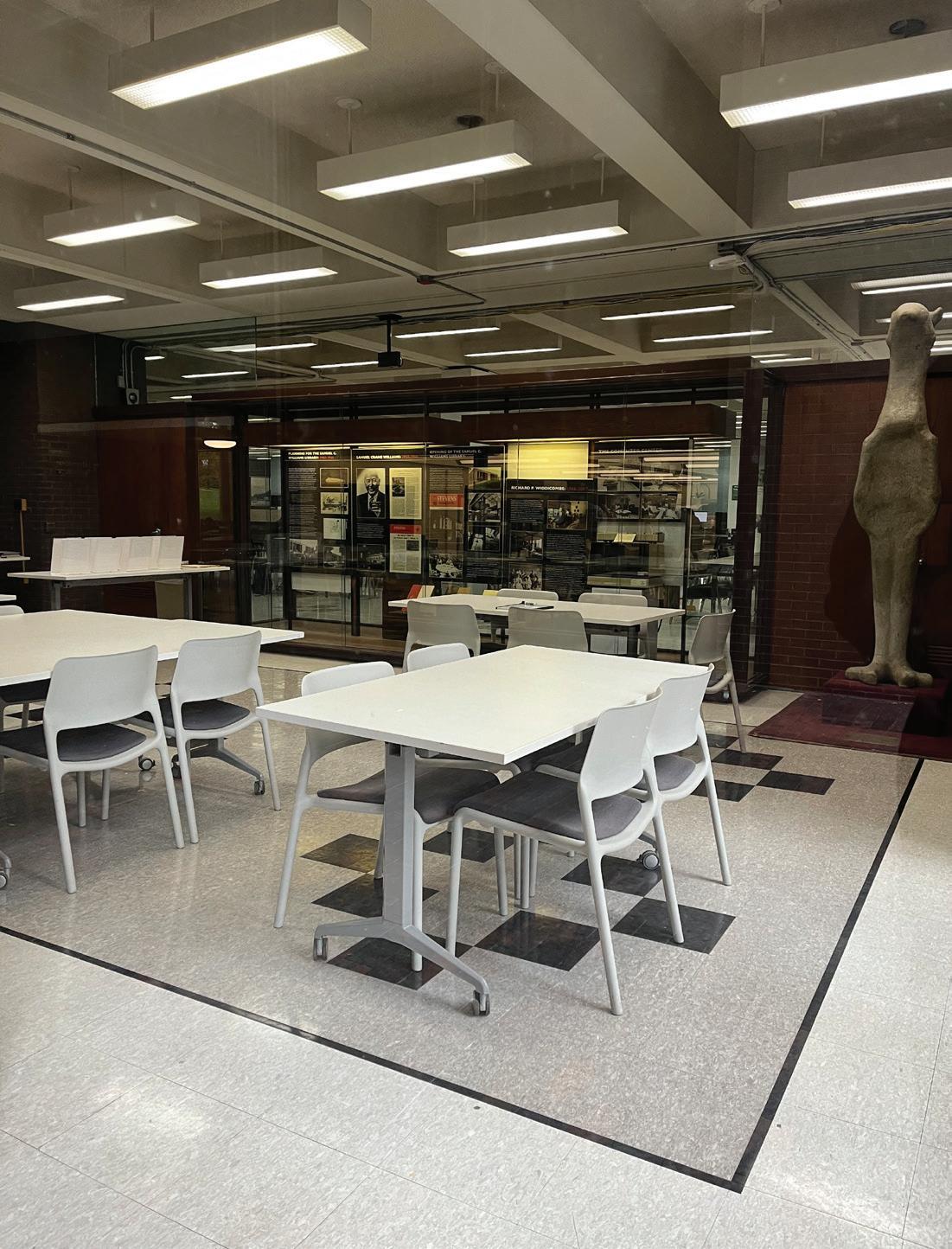
The Samuel C. Williams Library has officially reduced its operating hours and the Office of Undergraduate Academics (OUA) has paused drop-in tutoring services outside of finals week following university-wide budget cuts.
The change, which went into effect on October 10, 2025, was announced in a campus-wide email and was received with discussion concerning operational financial impacts across the Stevens community. For many, the library’s amended hours represent one of the most tangible impacts of the recent financial adjustments on student life.
Library Director Linda Beninghove explained that “due to the recent required budget reductions across the university, the library has been called upon to signifi-
In June 2025, Stevens Professor Ying Wang from the Department of Systems Engineering received the prestigious Army Research Office (ARO) Early Career Award for her project titled “From Proactive to Autonomous: Dynamic Assurance in CPS via Formal-Fuzz Interactions and Posterior Formal Verification.” Her research advances the assurance and resilience of critical Cyber-Physical Systems (CPS), and as these systems grow more complex and interconnected, “it is essential to develop frameworks capable of providing adaptive and continuous assurance,” said Professor Wang. Through the ARO Early Career Award with $359,951 of research funding, Professor Wang will continue expanding her research to deepen the theoretical foundation of dynamic assurance.” Her work is aimed at protecting these systems from some of the most unexpected conditions. Her approach involves the use of mathematical proofs and smart testing to create more reliable systems instead of the more traditional verifi-
cation methods and testing. Some of the tools she uses include formal verification, intelligent fuzz testing, and causality modeling. Formal verification works to ensure a system is built properly through formidable mathematics, intelligent fuzz creates randomized and unexpected circumstances for the system to learn from, and causality modeling predicts the likelihood of certain situations so that systems can best evaluate the most secure decisions for their sustainability. These tools work in a cycle to constantly and consistently improve system resilience.
Professor Ying Wang shared that she feels deeply honored to receive the award and expressed her sincere appreciation to the Army Research Office for both the recognition and their continued support. She also expresses her gratitude for her students and collaborators for all of their hard work and dedication. Looking ahead, Professor Wang plans to further involve her students by building a research platform that enables graduate and undergraduate students to experiment with
The rise of AI has been undeniable. Platforms, from social media apps to search engines, have been incorporating AI, subsequently creating the need for data centers. According to IBM, an AI data center is a “facility that houses the specific IT infrastructure needed to train, deploy and deliver AI applications and services. It has advanced compute, network and storage architectures and energy and cooling capabilities
to handle AI workloads.”
These AI data centers have been implemented across the country, with Secaucus, NJ, being one of the latest locations. CoreSite, a digital infrastructure company that operates data centers, announced the completion of its newest facility, named NY3, intended to serve the New York metropolitan area. This data center “offers direct cloud connection to AWS and delivers a diverse ecosystem where enterprises, such as global financial services, higher education institu-
tions as well as domestic and international carriers, securely and cost effectively conduct business.”
In addition, NY3 has “advanced liquid cooling capabilities to provide enhanced thermal efficiency needed to support high-performance computing and AI-driven workloads,” aligning with industry trends the CoreSite noted in its 2025 State of the Data Center Report. This report also highlighted cloud interconnection as the number one reason for organizations to colocate their AI workloads, un-
derscoring the demand for data centers. Still, data centers are controversial due to their environmental impacts — mainly their water consumption. The Environmental and Energy Study Institute (EESI) noted, “Large data centers can consume up to 5 million gallons per day, equivalent to the water use of a town populated by 10,000 to 50,000 people.” Furthermore, EESI explains that data centers source their
BY SERENA PANUCCI NEWS EDITOR
In the years since the Trump administration first launched bold interior-immigration enforcement operations, cities across the U.S. have staged a sustained legal pushback against the federal government’s deployment of Immigration and Customs Enforcement (ICE) and related feder-
al forces. What began as a strategy of coercing local cooperation has evolved into layered litigation, civic resistance, and a simmering appeal cycle whose next act remains unsettled.
The chain reaction of national legal bouts began on January 25, 2017, when President Donald J. Trump signed Executive Order 13768, “Enhancing Public Safety in the Interior of
the United States,” which sought to withhold federal funds from so-called “sanctuary jurisdictions”— cities or states that limit cooperation with federal immigration authorities—and gave ICE broad new enforcement priorities. Cities and states filed suit immediately. In November of 2017, a federal court declared the funding threat unconstitutional and issued a nationwide injunc-
tion. Over the next several years, federal appellate courts in the Third, Seventh, First, and Ninth Circuits repeatedly ruled against the Department of Justice’s (DOJ) efforts to condition Byrne JAG grants on local immigration enforcement cooperation. Both the Byrne JAG and Executive Order 13768 cases ultimately end-
.................................UNIVERSITY CENTER ROOM 216B NOTICE A MISTAKE? Email us at eboard@thestute.com.
All opinions and editorials reflect the views of their respective author(s). No Part of The Stute may be reproduced in any form, in whole or in part, without the written consent of the Editor-in-Chief. Cited references of The Stute are permitted.
All members of the Stevens community are able to submit a Letter to the Editor to be published in The Stute. Letters must refer either to a piece published in The Stute or to The Stute in general and must be between 400 – 800 words in length. Submit letters to editor@thestute.com with your name and title (when applicable) or using our Google form. For writers who wish to write a Letter to the Editor anonymously, please see our policy on anonymity.
The Editorial Board reserves the right to choose whether or not to publish a submitted Letter to the Editor based on a majority rule vote, and additionally reserves the right to edit letters for clarity or request authors to revise. Provided that the author approves the final version, The Stute reserves the right to edit letters according to our copy editing procedures, defined in our policies.
All members of the Stevens community are able to submit a standalone opinion piece (otherwise known as an Op-Ed) to be published in The Stute. Op-Eds must be between 400 – 800 words, but longer submissions will be considered on a case-by-case basis. To submit an OpEd please email eboard@thestute.com with your name and title (when applicable) or using our Google form (tinyurl.com/submit-t0-stute). For writers who wish to write an Op-Ed anonymously, please see our policy on anonymity.
The Editorial Board reserves the right to choose whether or not to publish a submitted Op-Ed based on a majority rule vote, and additionally reserves the right to edit Op-Eds for clarity or request authors to revise. Provided that the author approves the final version, The Stute reserves the right to edit Op-Eds according to our copy editing procedures, defined in our policies.
MINOR
CONTINUED FROM PAGE 1
to you, consider taking a minor!
As students walked into the Bissinger Room and marveled at the array of minors offered by Stevens, many were curious about what kind of skills they could gain from each type of minor and which one is right for them. Fortunately, academic representatives at the fair had their back and answered any queries, helping them evaluate their options and strategize on which minor is the best fit.
The Schaefer School of Engineering and Science offers various minors from the Departments of Biomedical Engineering, Chemistry and Chemical Biology, Chemical Engineering and Materials Science, Civil, Environmental and Ocean Engineering, Computer Science, Electrical and Computer Engineering, Mathematical Sciences, Physics and Systems Engineering. A minor from this school increases your breadth of technical knowledge and enhances your critical thinking and problem-solving skills. Pursuing one is fulfilling because it gives you an
FLI
CONTINUED FROM PAGE 1
tists and Engineers (SASE) and the Association of Latino Professionals for America (ALPFA) had fun activities like trivia, ring toss, and a bean bag toss game. By playing these activities, students could win raffle tickets for prizes like duck plushies and Legos. One first-generation student, Mirabel Babanawo, enjoyed the carnival and thought that it was a great opportunity to connect with her fellow students.
From then, each day had a different schedule, ranging from educational, social, and networking-based events. The events are as follows:
Tuesday, November 4: FLI Faculty Panel, where first-generation faculty share their stories of success and fostered connections between students and faculty.
Wednesday, November 5: Scavenger Hunt, where students find stickers to win prizes.
Thursday, November 6: Bowling Night, where you can bring your friends for fun and good vibes.
Friday, November 7: 2024 Leadership Conference: Rise and
LIBRARY
CONTINUED FROM PAGE 1
cantly reduce the library budget in all areas: personnel, materials, and supplies, including research resources, and the library hours.”
The library’s new schedule is as follows:
• Monday to Thursday: 8 a.m. to midnight
• Friday: 8 a.m. to 8 p.m.
• Saturday: 1 to 6 p.m.
• Sunday: 1 p.m. to midnight
According to Beninghove, the decision to adjust hours was informed by a review of headcount data and entrance gate records presented as follows:
• Late nights (12–2 a.m.): significantly fewer students.
• 1 a.m. (Sun–Thurs): average 7–18 students.
• Saturdays: average 18–63 students, with peaks 1–5 p.m.
• Higher traffic observed around midterms and finals.
Drop-in tutoring, which previously ran throughout the semester, will now be available only the week before finals and during, though the exact dates have not yet been announced. However, individual tutoring remains operational and can be booked here.
The recent changes have
overview of what happens under the hood of various technologies and the science behind how the world works.
The School of Business offers minors that strengthen your skill of making decisions strategically. Some popular ones are Quantitative Finance, Economics, Finance and Entrepreneurship. Taking a minor from this school helps you understand how businesses work, gain financial literacy and present your ideas to other people effectively. Most importantly, it helps you become a better leader, so it complements any major you are pursuing, business or non-business.
Popular minors from the School of Humanities, Arts and Social Sciences include Science, Technology and Society, Science Communication and Medical Humanities. A minor from this school develops transferable communication skills and creativity, which are crucial for you to think up new ideas, bring fresh perspectives and convey them effectively. Additionally, it prepares you for analyzing social and ethical issues which appear in many aspects of life, and helps you understand different perspectives empathetically.
Redefine, with workshops, inspiring speakers, networking, and free headshots.
After celebration week, the FLI Network remains committed to supporting FLI students year-round. As a student-centered initiative, they have previously collaborated with various student organizations and hope that students and student organizations reach out so they can meet the campus’ needs. Griffith encouraged students to reach out to Maryam Tobias, the Assistant Director for First Generation and Limited Income Students. If you fit into either these categories,
After some worthwhile conversations with the staff, some students left the fair confident about which minor to choose, while some felt a bit unsure. If you are in doubt, you could talk to your faculty and academic advisors to figure out which minors are best suited for your goals at this moment and how you could incorporate minor courses into your schedule. Do not fret, for it is only natural to feel uncertain when you are presented with a lot of options; in fact, it makes you a great student for being excited that there is something new and amazing to learn about in every minor, but you do not know which one to pick! You can add a minor as soon as your first semester grades are in and begin taking classes toward it in your sophomore year. The last date to declare a minor is the Add/ Drop Date of the first semester of your senior year.
If you are unable to complete a minor, nothing bad happens! You can remove it at any time. After all, minors are designed to help you learn new things, and trying one out would surely make you feel fulfilled and enhance your skills regardless of whether or not you finish all requirements.
Tobias serves as an additional academic advisor who can support you in your college journey.
As a first-generation student themselves, Griffith noted how college felt both exciting and intimidating. Their biggest piece of advice was for first-gen students to remember that they belong and they don’t have to hide parts of themselves for “success.”
“I am so proud of each and every one of our brilliant first-generation students. You are innovators and leaders who will push the world to challenge and reimagine what success looks like through your courage and authenticity.”
caused confusion and frustration among both students and tutors.
Tutor Ethan Hagen shared, “The message we received as tutors was very abrupt, as we were notified the morning of the DITC closing. I was initially confused and wanted more of an explanation than what was given.”
Many students and tutors rely on the library’s late-night hours during high-stress periods of the semester, and the reduced access has prompted some to seek alternative study spaces. Tutor Emma
Academic Affairs Chair Emely Vargas, a 2/4 Biomedical Engineering major, said she has been in communication with the Library, Tutoring Center, and the Office of the Provost to find solutions that better address student needs.
Organizations such as APO, RHA, and Greek Life have been in talks of creating a pseudo drop-in tutoring center.
It remains unclear whether the reduced hours for the library and Drop-in Tutoring Center will remain in effect beyond this se mester. Beninghove noted that the library will continue to monitor ture decisions. Students can check the updated library schedule on the library website and will receive a campus-wide email with any
MYCKIE WENG FOR THE STUTE
CONTINUED FROM PAGE 1
adaptive verification pipelines for real-world CPS, such as aerial and robotic systems operating in uncertain environments.
Her research is rooted in her Defense Advanced Research Projects Agency (DARPA) Young Fac-
ICE CONTINUED FROM PAGE 1
ed in the cities’ favor after the DOJ rescinded the policies in 2021. The Supreme Court then dismissed the government’s pending appeals, making those appellate rulings final and effectively closing that chapter of litigation.
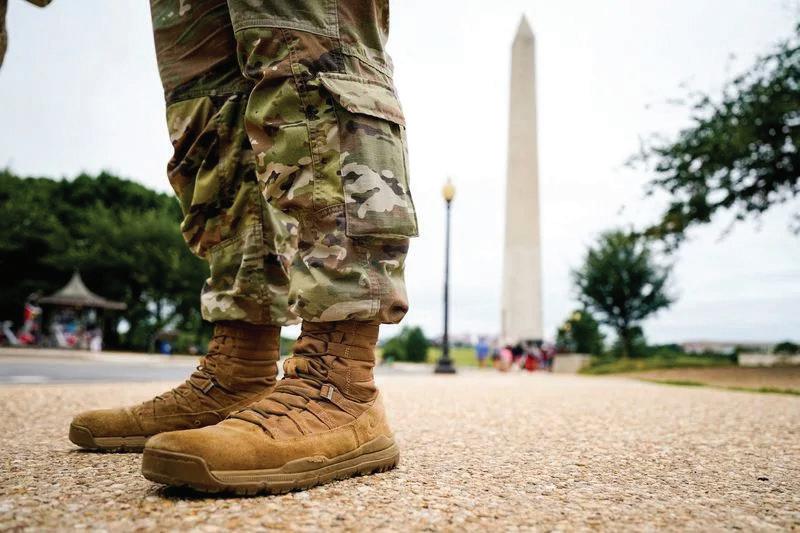
While the grant-coercion cases dominated early years, they were complemented by increased federal presence in large sanctuary cities. In February of 2020, ICE and the Border Patrol’s tactical unit (BORTAC) were sent into cities such as New York, Los Angeles, Chicago, and San Francisco. Local officials decried the deployment as a threat to civil rights. The legal question that followed was: to what extent may the federal government deploy immigration-enforcement forces in states and cities that oppose them, and must
ulty Award (YFA) project “5G Causality, Formal Reasoning and Resilience.” She states that this work had motivated her to “go deeper toward provable assurance,” sparking her research interest in autonomous and complex cyber-physical systems. Similarly, she hopes that her work will inspire more students to pursue research at the intersection of “trust, autonomy, and resilience.”
localities cooperate?
In parallel, places such as New York State and New York City challenged ICE civil arrests at courthouses. In 2020, a federal judge in the Southern District of New York enjoined civil immigration arrests in or around court facilities, forcing the federal government to navigate a new local legal barrier. The state then passed the Protect Our Courts Act to shield state and local proceedings from ICE detainers. While not strictly a deployment case, the courthouse arrests illustrate how localities have used litigation and legislation to resist federal immigration operations. By mid-2025, the legal landscape had evolved yet again. The administration filed a string of new suits: in May, it sued four New Jersey municipalities—Newark, Hoboken, Jersey City, and Paterson—alleging they obstruct federal immigration enforcement.
In July, the Justice Department sued New York City for its sanc-
AI CONTINUED FROM PAGE 1
water from “blue sources (e.g., surface water and groundwater), piped sources such as municipal water, and gray sources (e.g., purified reclaimed water).” This means that these data centers are putting stress on local water supplies, consequently putting com-
munities at risk. AI data centers also demand electricity to power their workloads, increasing operational costs, and this is a cost residents are being forced to pay. Bloomberg News found that “electricity now costs as much as 267% more for a single month than it did five years ago in areas located near significant data center activity [...] wholesale commodity costs are passed on to households and
businesses on their utility bills, which then include other charges to maintain and expand the network. That can affect even customers who aren’t in close proximity to a data center, since their energy relies on the same grid.” As NY3 adds to the growing number of data centers in the United States, it is important to be cognizant of the benefits and detriments these facilities pose to local communities.
tuary policies, claiming violations of the Supremacy Clause and obstructing ICE detainer requests. Meanwhile, in September, the administration turned its sights on Minnesota — suing the state, Minneapolis, St. Paul, and Hennepin County. Still, the courts have pushed back against some of these efforts: in August 2025, a federal judge barred the administration from cutting funding to 34 sanctuary jurisdictions, expanding an earlier ruling that such conditional funding violated the Constitution. What remains unsettled is that many of these new suits are in early stages. The 2025 filings in New Jersey, New York, and Minnesota are still working through district courts, and appeals have yet to definitively resolve the underlying disputes. Historically, cities won key decisions in the courts of appeals, such as Byrne JAG funding cases, but the current phase raises questions about federal deployment powers, local sovereignty,
and the reach of the Supremacy Clause. If the district courts rule against the cities, the cases could move to the Second, Third, and Eighth Circuits, potentially setting up a new Supreme Court test on federal deployment powers.
While sanctuary policies remain constitutional in limiting local cooperation with ICE, the Tenth Amendment prohibits the federal government from forcing localities into federal regulatory programs. At the same time, the federal government is arguing that non-cooperation amounts to obstruction of federal immigra tion enforcement — an argument whose fate will likely be tested in appellate courts and perhaps in the Supreme Court.
As these legal battles contin ue, the struggle between federal authority and local autonomy re mains at the center of America’s immigration debate. From fund ing fights to courthouse arrests and new state lawsuits, each stage
PHOTO COURTESY OF STEVENS.EDU
has tested how far the federal government can push and how firmly cities can resist. Whether the next chapter ends in settlement or a Supreme Court ruling, the outcome will define the boundaries of immigration enforcement and the power of states to chart their own course.
PHOTO COURTESY OF YAHOO.COM
Feature
GOV ELECTION, GO VOTE!
Governor for New Jersey
BY MYCKIE WENG, CONTRIBUTOR
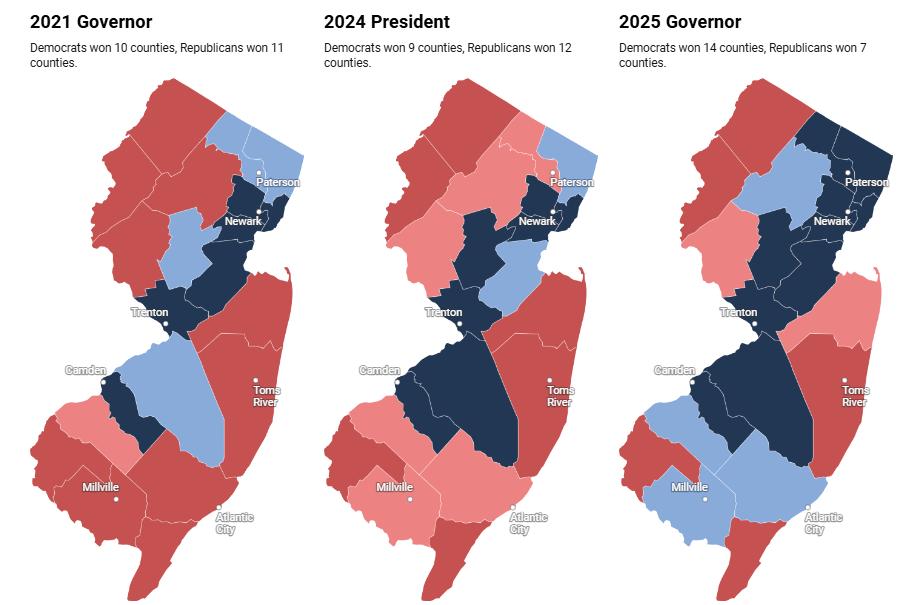
With Election Day, November 4, New Jerseyians are making their final decisions on who should be the new governor.
The democratic candidate Mikie Sherrill, who represents New Jersey’s 11th Congressional District, graduated from the United States Naval Academy in 1994 and then earned a Master’s degree in Global History from the London School of Economics and Political Science. She worked as a lawyer and also joined the U.S. Attorney’s Office in New Jersey after earning a law degree from Georgetown University. She was raised in cities up and down the East Coast but now resides in Montclair, NJ. The Republican candidate, Jack Ciattarelli, has a bachelor’s degree in accounting and a Master’s of Business Administration in Finance from Seton Hall University. He has also been a certified public accountant and grew up in New Jersey. He previously represented the 16th legislative district in the New Jersey General Assembly, and was also the Republican nominee in the 2021 New Jersey gubernatorial election.
Sherrill’s top priorities are affordability, with plans to declare
decrease the cost of rising utility bills by transitioning to solar energy, one of the cheapest kinds of energy, to lower costs while also making New Jersey greener. Sherrill wants to lower income taxes by expanding the state Child Tax Credit and Earned Income Tax Credit, and wants to close tax loopholes for the wealthy and increase resources for the state’s Business Action Center. Another priority for her is to ensure children have a great education and are safe. She plans to make education good for everyone by either evaluating county-based systems that are less efficient or pushing tutoring for certain students. She said she’d increase access to loans and tax credits to provide incentives for the development of new housing to make housing more affordable. She is pro-choice and supports abortion up to 20 weeks and wants to uphold constitutional rights. Regarding immigration, she expressed that criminals should be deported, but she also believes in due process. With her husband being a commuter, she has seen that the transportation system is not as efficient as it could be, urging a push into transit-oriented development. Overall, her policies are more progressive, with her even calling herself a “good old-fashioned Democrat,” with Barack Obama urging New
STAFF WRITER
With another big voting season coming up next November— the midterm elections—voters may be wondering about questions such as: why do they need to vote? Does their vote matter? These questions don’t just apply to these elections, but every election, including primaries and more local elections, like for mayor.
Election day is November 3, 2026, for midterms, and November 4, 2025, for the gubernatorial elections in New Jersey. The biggest race happening in New Jersey this year is the race for governor, with the incumbent governor being term-limited. A local election going on that most people have probably heard about is the mayoral election in Hoboken. Midterm elections are for voting on senators and members of the US House of Representatives, and some states hold elections for different in-state positions during midterms as well.
Voting for the policies you
Ciattarelli also promises to improve affordability primarily through lowering taxes and electricity bills, proposing to cut and cap property taxes. He has a regional approach to affordable housing, with a focus on driving population growth to urban centers, due to overdevelopment concerns. He has pledged to repeal the Immigrant Trust Directive on his first day in office and stop municipalities from declaring themselves “sanctuary cities.” He believes that abortion should not be funded by the state and respects people’s sexual orientations, but believes that education
should have more parental involvement, and believes that gender sexuality should not be in the school curriculum. He promises a better management structure, transparency, and accountability by putting all of the state’s mass transit systems under one roof — the Garden State Transportation Authority. Ciattarelli also promised to restore cost-of-living adjustments for police and fire pensions and suspend the Murphy administration policies that are unrealistic and unaffordable, including the ban on gas-powered vehicles by 2035. He has received the endorsement of President
Donald Trump during the primary and connected with voters by reminding them he was born, raised, and educated in New Jersey. According to New York Times, AtlasIntel showed that the race is close with Sherrill on top with a 50% rating versus Ciattarelli’s 49% rating. With the last day to vote early being Sunday, November 11, 6 p.m., it comes down to on election day, November 4, polls opened from 6 a.m. to 8 p.m. Shortly after polls closed, it was revealed that Mikie Sherrill will be the Governor of New Jersey for the next four years.
Signs you’re the political strategist friend in your group chat
BY JEYLAN JUBRAN, OPINION COLUMNIST
Every friend group has that person — the one who doesn’t just make plans, but runs the group like a miniature government. If that sounds like you, congratulations: you’re the political strategist friend. If you’re not sure, keep reading.
1. You run the calendar like it’s your campaign schedule. You don’t just make plans — you launch initiatives. The brunch reservation isn’t confirmed until it’s color-coded, labeled, and synced on everyone’s Google or Outlook calendar (with reminders, naturally). You’ve got everyone’s birthdays, exam weeks, and travel days stored like state secrets. 2. You’re the fixer. Someone missed their train?
You’re already checking alternate routes. Did someone say something chaotic in the group chat? You’re in DMs, damage-controlling before it escalates. You’ve earned your honorary degree in crisis management.
3. You have an inbox like a battlefield. If you’re constantly switching between Gmail, Outlook, Slack, and Messages, answering everyone from your professor to your roommate’s mom, you might be doing too much. But also, you’re the only reason your group still functions.
4. You can read people like campaign data. You know who’s secretly mad, who’s about to bail, and who just texted “idk maybe” but will definitely show up. You don’t guess — you analyze patterns.
5. You’re lowkey manipula-
tive (but for good).
You’ve mastered the art of persuasion: “No worries if not, but I already made the reservation, so…” You know exactly which friend to pitch an idea to first to get everyone else on board. You don’t twist arms — you steer outcomes. 6. You’re always one crisis away from running for office.
Half your screen time is responding to emails; the other half is plotting how to fix the club’s next event or friend group drama. You might not have seven pending assignments (lucky you), but you do have a detailed plan for everyone else’s lives.
At the end of the day, you’re the one making sure things happen — whether it’s a dinner, a deadline, or a diplomatic peace treaty between two friends who aren’t speaking. It’s not manipulation; it’s leadership.
deem important is showing the government what you care about as a voter and citizen. Voting is like a big group project everyone has to participate in to get the grades (policies) you want. It’s also your chance as a citizen to help make changes to not just the American government, but to your local and state governments as well.
According to the Center for American Progress, from 1976 to January 5, 2021, more than 85 US Senate elections were decided by less than 3% of all votes cast, as well as in the year 2016 alone, more than 340 state office elections were decided by fewer than 500 votes. More than 85 of those were determined by fewer than 100 votes. Just these two statistics show how important every single vote is to determining the future of different parts of the government.
Voting is something that affects you and your community, from the big things to the small, so you should sign up to vote as soon as possible to be able to make a difference.
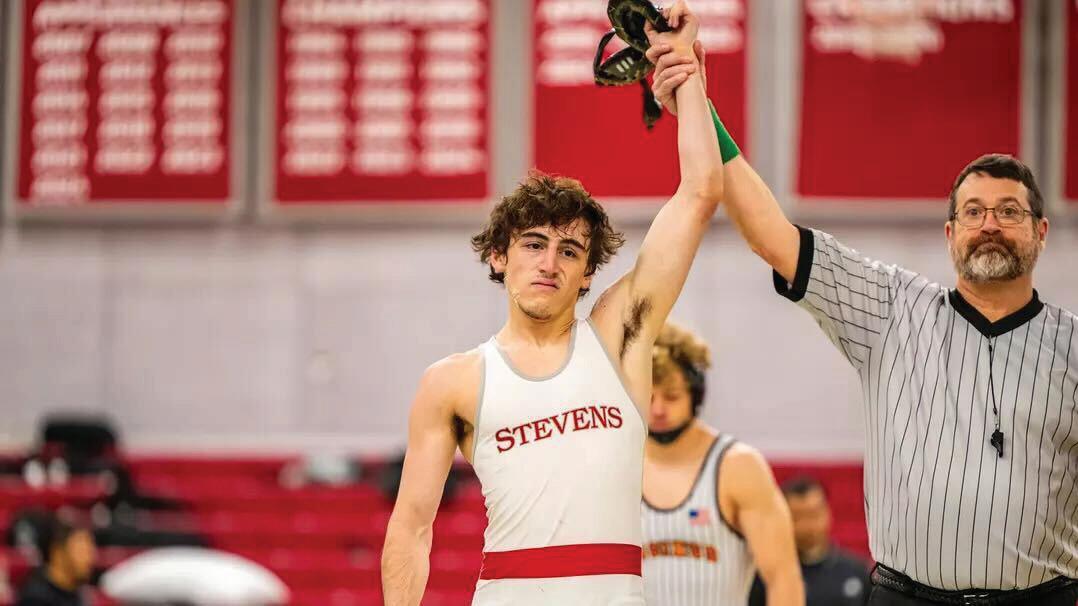
Wrestling finds success during eventful weekend
BY MISAYO IDOWU, SPORTS WRITER
On November 1 and 2, the Stevens Wrestlers took part in both the season-opening Ned McGinley Invitational on Saturday and the Princeton Open on Sunday. The Ducks showed their class and finished third in the Ned McGinley Invitational by having nine different wrestlers finish in the top six in their respective weight classes. Senior Ryan Smith participated in the Princeton Open against Division I competition and placed sixth.
The Ned McGinley Invitational took place in Wilkes-Barre, Pennsylvania, and began at 9 a.m. In terms of points, Stevens’ best performer was senior Vincent Principe. He began the day strong with a 15-0 technical fall and two decision wins, advancing to the semifinals. Although he was pinned
by the top seed, Principe secured third place in the 133-pound category after winning the consolation match by forfeit.
Freshman Charles Piccione’s day began with two technical fall wins, picking up 32 points without conceding any. After a decision win put him in the semifinals, the first year lost via technical fall in the semifinals to the top seed, then by decision in the consolation match. George Pavis, a sophomore, reached the 149-pound semifinals after three straight decision wins, including a 2-0 victory over the bracket’s top seed. He then fell in both the semifinal and consolation matches, finishing his run with two close losses.
Freshman Noah Macllroy’s day started differently from the others with a loss; however, he responded with determination, winning two matches by technical fall. He then earned a pin in
under a minute, followed by another technical fall. To finish the day, he claimed a dominant major decision victory, coming just one point short of earning his fourth technical fall. Tyler Roe, a sophomore, began his day with a decision win followed by a pin. After losing his next match by major decision, Roe closed out the day with an impressive 23-7 technical fall victory.
Sawyer Pugh, a freshman, started the day against the top seed at 174 and lost by major decision. He bounced back impressively, winning five straight matches - two by pin, one by technical fall, and two by major decision. Two more freshmen, Raffaele Fonte and Noah Berlin-Langston, both won four matches and finished in the top six of their respective weight classes. The culmination of these results, among many others, led to Stevens finishing third overall
at the invitational.
On Sunday, starting at 9 a.m., Smith, a three-time All-American Duck, attended the Princeton Open in Princeton, New Jersey. He started his day with a decision loss, falling just one point shy of a technical fall win. Smith bounced back with a dominant 14-0 major decision win. After advancing with a forfeit, Smith earned backto-back 4-1 sudden victory wins. Taking the win count to four.
Smith earned a 4-2 decision win over Rider’s James Farina, thanks to a key second-period takedown, advancing to the fifthplace match against Lock Haven’s Nick Stampoulos. There, he narrowly fell in a 2-1 decision. He finished in the top six and became the 10th Duck to do so that weekend. This was a truly impressive performance all around and shows promise for the wrestling season ahead.
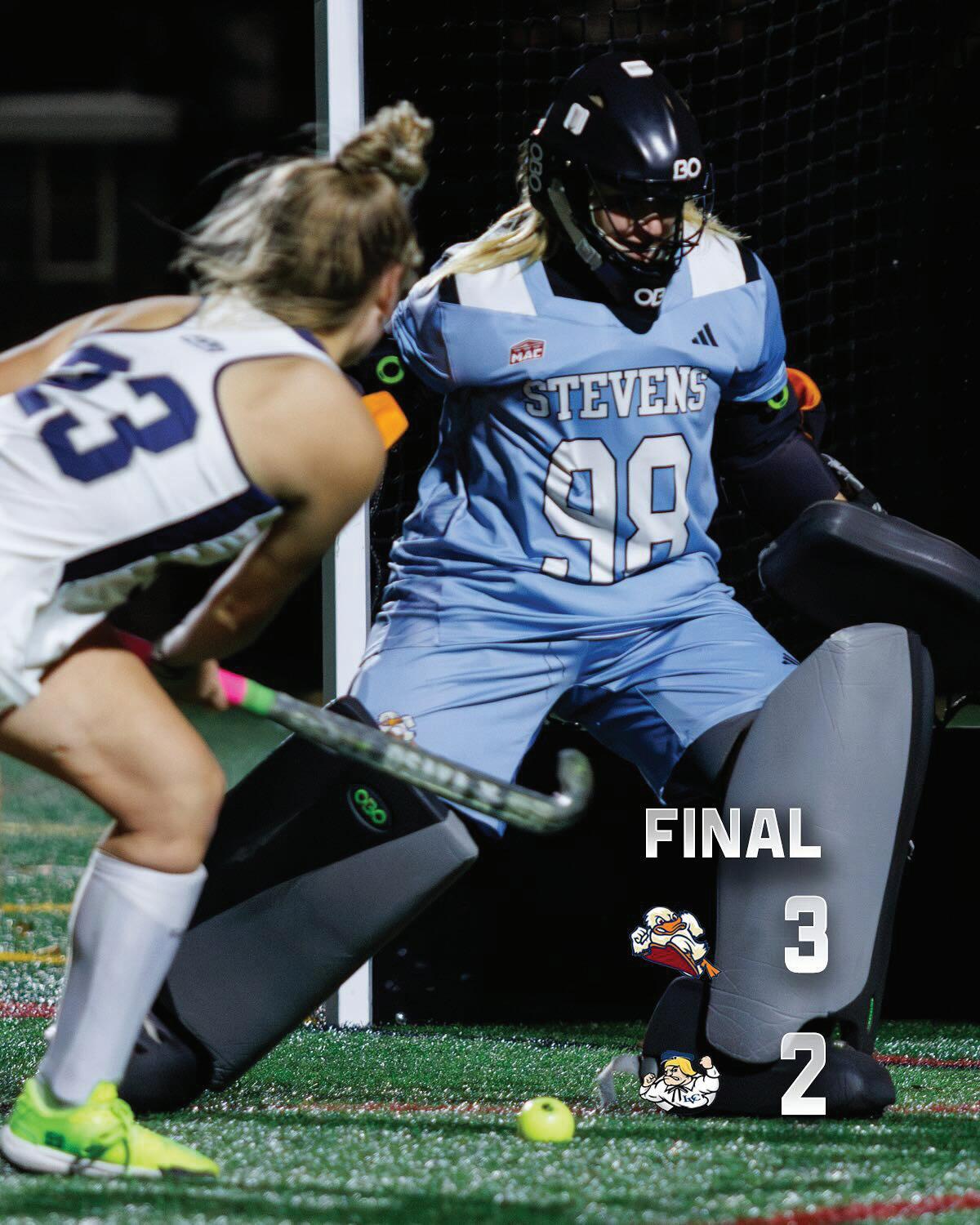
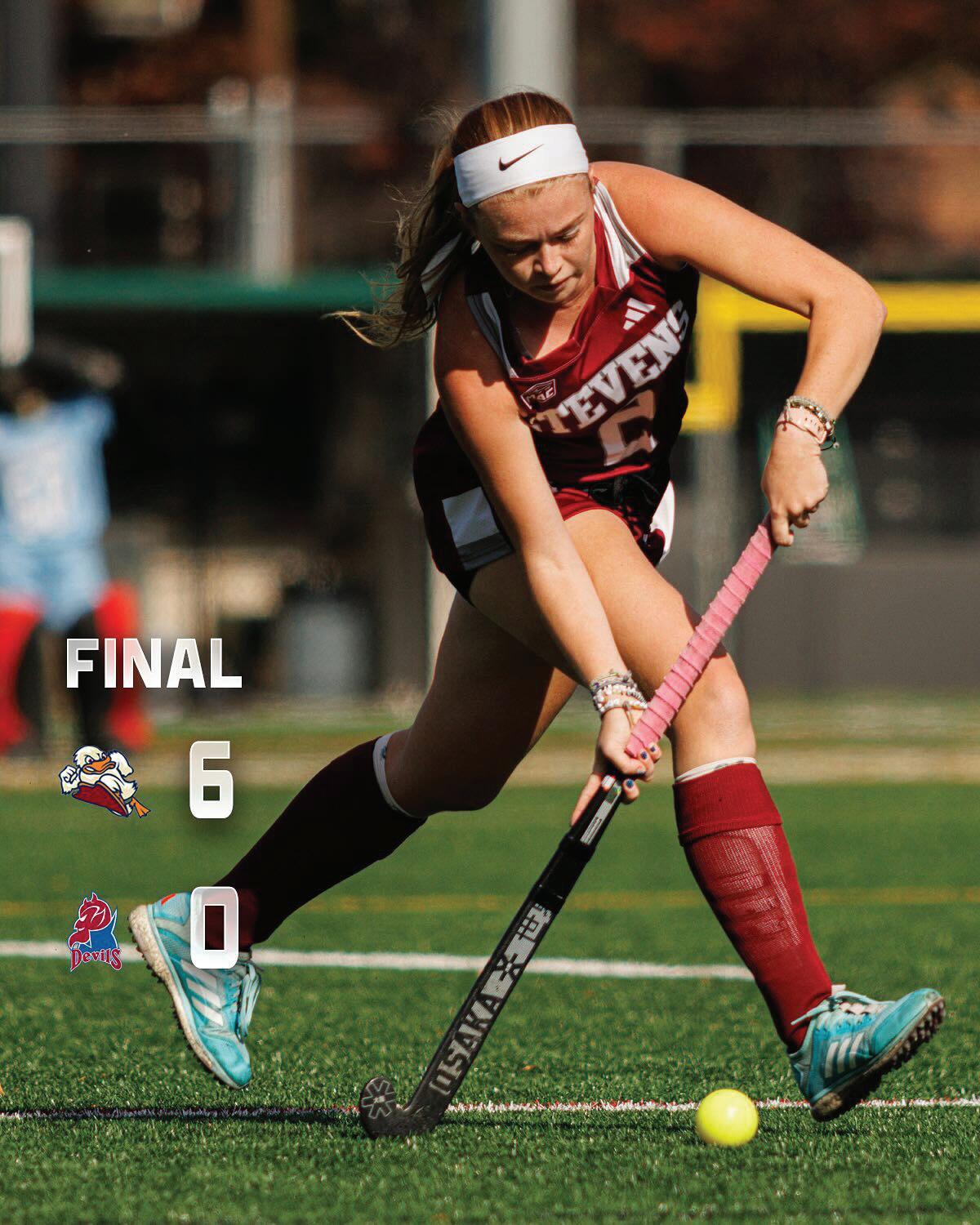
STEVENS SCOREBOARD
Sharks scale according to an old geometric
law: what this reveals about evolutionary limits on animal size
BY MATTHEW SOLTYS, SCIENCE WRITER
Scientists have long wondered if there are physical constraints that limit the possibility of how large an organism can become through evolution. A new study involving 54 species of sharks indicates that they—and other life forms—may follow a centuries-old geometric rule known as the twothirds scaling law.
Introduced for generic 3D objects, the rule relates surface area to volume. As an object increases in length, its surface area will increase with the square of length, while volume will increase with the cube. This becomes biologically important because of the many essential life processes that occur at the surface. One prominent example is the intake and outtake of gas in the lungs or gills, such as carbon dioxide or oxygen. This process is dependent on surface area; however, the amount of oxygen or carbon dioxide required to function is dependent on volume. The two-thirds scaling law says that total surface area is a function of volume to the two-thirds power. Following this law would make it difficult for organisms to exist if they continually increase in size, as surface area would increase too slowly to maintain the necessary ratio with volume.
Prior to sharks, the largest organisms that underwent thorough
A major reason for this was the technical limitations researchers were working with. When it came to measuring surface area, the options were limited to running a measuring wheel across an animal’s hide and marking units in chalk or skinning the creature and measuring it by hand. Finding volume required dropping an animal into a water-filled tub and checking how much water was displaced.
Those methods may seem primitive compared to what Joel Gayford, shark biologist at James Cook University in Australia, who led the study, had access to when working with his team. They used CT scans of top-notch museum exhibits to create high-resolution 3D models. When the sharks were too big to fit in a CT scanner, the use of photogrammetry was employed. This technique allows for approximating a 3D structure using only photographs of that structure’s surface. Using a software originally designed for rendering video games, Blender, they refined the models and were able to garner surface area and volume data on all 54 species of sharks.
Sharks may not seem like the most obvious choice, especially when technology is no longer a limiting factor. However, Gayford claims that they are ideal for studying the scaling rule. They can range in size as far as the sixinch-long dwarf lantern shark to the 40+ foot whale shark. Many
merheads) and lifestyles (Greenland sharks) further qualify them due to the challenges posed for physiology and movement. The ecological importance and endangered nature of many sharks also give further motivation to study their biology in hopes of altering fate.
With the surface area and volume data they gathered, Gayford and his team applied phylogenetic regression—a statistical method that accounts for shared evolutionary history—to determine how closely sharks follow the two-thirds scaling law. This led them to the conclusion that sharks have surface area as a function of volume raised to the power of 0.64, which is almost exactly the theoretical 0.67. One possible explanation for why heavily varying species of sharks all follow the same rule is developmental constraints imposed early in life. Working around these may require rewiring how tissues are allocated during the development of the embryo, which is almost impossible through natural evolution.
More research is needed in other animal groups to determine whether this rule is truly universal. Gayford’s team is acting to further this goal on their end, and he hopes that other scientists will test biological scaling in their own animal studies.
The details of this study were published in Royal Society Open
BY BRYAN MAHONEY, CONTRIBUTOR
Researchers have recently discovered that tropical forests in Australia have become the first of their kind to emit more carbon than they absorb. The analysis found that Australian tropical forests are not taking in enough carbon dioxide to exceed or even match the carbon emissions that occur from their decaying trunks, signaling worrying implications for global ecosystems.
Tropical forests serve an important role as “carbon sinks” for cooling the planet, with their trees absorbing carbon dioxide from the air and storing it within their stems and branches. The fact that one Australian rainforest is doing the opposite has researchers concerned.
“These findings challenge our future reliance on forests as natural absorbers of extra atmospheric carbon,” the study’s authors wrote in The Conversation.
Published in the journal Nature on October 15, the research analyzed data from roughly 11,000 trees in wet tropical rainforests in Australia’s northeast region. Researchers examined woody biomass from the rainforest, which had been tracked for nearly 50 years. From the woody biomass,
which typically contains large amounts of carbon, researchers found that the forest is emitting more carbon than it absorbs, and that this switch actually occurred 25 years ago.
During the process, when trees die and begin to rot, they release stored carbon back into the atmosphere. This shift indicates that the trees in this Australian rainforest are dying faster than they were a few decades ago, lead author Dr. Hannah Carle, a forest ecosystems researcher at Western Sydney University, tells the Australian Broadcasting Corporation’s Peter de Kruijff. It is thought that drier air, higher temperatures, and occurrences of drought might all have played a role in this change.
Each year from 1971 to 2000, the tracked plants absorbed about 553 pounds of carbon per acre.
From 2010 to 2019, they emitted about 830 pounds of carbon per acre, on average, each year. This is the first rainforest that has been recorded as switching from a carbon sink to a carbon source. Carle says this phenomenon could reflect a declining ecosystem across all Australian wet rainforests.
“That’s really significant,” Carle says. “It could be a sort of canary in the coal mine.”
No other rainforests have
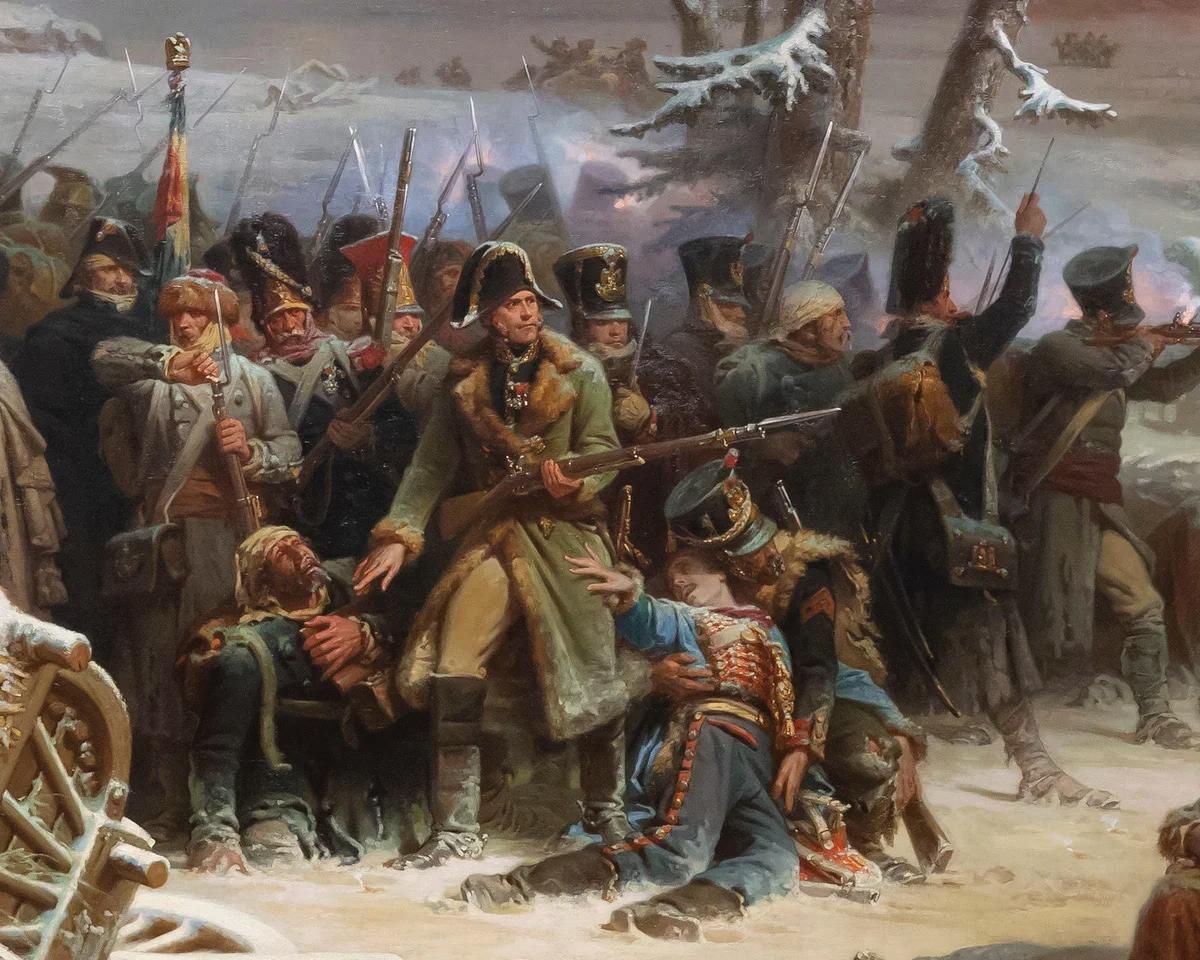
The Invisible Killers of Napoleon’s Great Army of 1812
BY SEAN PALERMO, SCIENCE WRITER
A study published in the scientific journal Current Biology reveals new diagnoses of deceased French soldiers who were a part of Emperor Napoleon Bonaparte I’s invasion of Russia in 1812. New techniques and advancements in DNA sequencing were used to determine the presence of two disease agents previously unknown to have afflicted the fleeing soldiers: Salmonella enterica, which causes paratyphoid fever and Borrelia recurrentis, causes a relapsing fever. These new findings reveal the role these and possibly other diseases had in the downfall of Napoleon’s army as they fled from Russia during the onset of winter. Napoleon Bonaparte, one of the most famous and recognizable military generals in history, had nearly all of Europe under his power and control by 1812. Additionally, he was married to the daughter of the emperor of the at-the-time superpower, Austria: Marie Louise. During this time, he largely succeeded in forbidding the continent from trading with Great Britain in hopes of weakening the island nation and allowing him to conquer it as well. Nonetheless, the Russian Empire resisted these demands to cease trade, which prompted Napoleon to launch a massive invasion consisting of 600,000 men into Russia to end the defiance and further starve Britain. However, as Napoleon’s army reached Moscow, it was completely evacuated, and the crops were burned, with no supplies left that could maintain the army. Eventually, the approach of the harsh Russian winter forced Napoleon to retreat only six months later — ending the invasion in infamy as an estimated only tens of thousands men returned alive to France and eventually contributed to his fall from power only a few years later.
to three thousand men buried soon after they died. This study, which used the polymerase chain reaction (PCR) technique to create millions of copies of short DNA segments in order to detect the DNA sequences of specific pathogens in dental samples of the soldiers, found traces of two disease agents: Rickettsia prowazekii (responsible for typhus) and Bartonella quintana (responsible for trench fever). While the PCR technique used in this study was useful in verifying the presence of microorganisms thought to be present in the remains of the soldiers, it remains largely blind when used for identifying unsuspected diseases. This limitation along with the rise of exponentially more sophisticated DNA sequencing technology present today, prompted this most recent study authored by former postdoctoral fellow at the Institut Pasteur in Paris, Rémi Barbieri, and palaeogenomicist at Pasteur Institute in Paris, Nicolás Rascovan. Using the new technique, high-throughput sequencing, millions of degregated and chemically altered DNA fragments were studied from the teeth of thirteen soldiers through decontamination, grinding into a bone powder, and dissolving it.
shown evidence of emitting more carbon than they absorb, for now.
The Amazon rainforest has shown an overall decline in carbon capacity, partly due to some of the Ama zon becoming a carbon source due to human-caused deforestation and fires. However, at the same time, its trees have responded to increased CO2 in the atmosphere by increasing their own growth.
Australia’s climate has become more extreme due to climate change, along with becoming more prone to severe cyclones and other natural disasters. Tree deaths re sulting from cyclones also reduce the rainforest’s capacity to store carbon, the study found. While it has been known that CO2 in the atmosphere has been consistently increasing as humans burn fossil fuels, previous research suggested that tropical rainforests increased their capacity for carbon storage in response. This almost half-cen tury of data challenges this under standing.
“Looking at these long-term empirical data sets, we find that is not the case,” Dr. Raphael Trouve, who researches forest dynamics at the University of Melbourne in Australia and was not involved in the study, tells The Guardian. Datasets like this one are essential in tracking changes to the climate and environment, Trouve noted.
Historians have long debated what factors led to the collapse of the retreating Napoleonic army from hunger to illness to the extreme cold of the Russian winter, which has contributed to multiple studies focusing on the issue. In 2006, researchers studied samples of DNA from soldier remains of the army that had been found buried in a massive grave site accidentally uncovered in 2001 in Vilnius, Lithuania during a construction project in one of the northern suburbs of the city — containing two
The process identified a wide array of pathogens, four of the thirteen soldiers were shown to have Salmonella enterica (responsible for paratyphoid fever characterized by a loss of appetite and rose-colored spots), and two of the thirteen soldiers were shown to have Borrelia recurrentis (carried by lice and responsible for relapsing fever characterized by recurring episodes of high fevers). Interestingly enough, the originally identified Rickettsia prowazekii and Bartonella quintana in the 2006 study were not found again in these recent tests — leading to speculation that those agents either not spread to the small sample group or had snuck beneath the new sequencing technique due to it being less sensitive than the old PCR method in some manner.
Rascovan has stated that he believes a break from the investigation would be instrumental in furthering the progress of the study, as most of the dental samples have already been analyzed at the Lithuania site and preserving remaining samples to be used when “we have more powerful techniques to do things we cannot even imagine today.”
PHOTO COURTESY OF QUANTAMAGAZINE.ORG
THE STUTE EDITORIAL
Playing catch-up
As mentioned two editorials ago, my sister got married! It was beautiful, and everything went exactly as planned. As the maid of honor, I had to rearrange my schedule to make it to every event and be present. I skipped a quiz, a lab, two classes, numerous homework assignments, and the entirety of Stute production. I prepared everyone as much as I could and referred everyone to Tianna. Tianna and Eiliyah submitted the files that week instead of me, and I was absolutely offline.
I received the most amount of Slack messages from writers, Minorboard, and E-board that I have ever seen. Thankfully, very few needed my immediate attention. It was interesting to say the least. Quite a few family members have photos of me, post-haldi, with my laptop out, working on the newspaper as my sister got her wedding mehndi (henna) done. I felt ridiculous with my laptop in hand and had no way of properly ex-
plaining that if I didn’t lay out the news page or read every article in the drive, there was nobody else who could do it.
My sister, being my sister, laughed about it and loved having me sit with her, even if I was working. Having finished my work that Thursday, the real wedding festivities began and I was officially offline. I didn’t have my Apple Watch or phone with me for three days, and had no idea what time it was whenever someone asked. Looking back on it, that was the best decision that I made. I spent every moment watching, crying, and laughing during the ceremonies and reception. The Stute came out that Friday, and I was watching my best friend get married with zero interruptions.
Let me just say, coming back to my emails and messages was a slap back to reality. I was immediately hit with all the readings, homework, exams, quizzes, lab notebooks, and Stute work I had
MIND OF A FRESHMAN
Old habits die hard
on my makeup and hair and get ready with everyone, but once we are out it’s not always the most fun to me.
One thing I have learned in my time being at Stevens is that at your core you will stay the same person. When I was younger I was really quiet and introverted. I was always worried about the people around me and could never find the words to talk. My parents worked very hard to push me out of my
To an extent, they succeeded. I am now a much more outgoing individual. I will happily and shamelessly ask for a change in my order if it was mistaken. I will openly ask for directions and I will reach out to make plans with people several times a week if not every day that week. These things may appear trivial, but to me, they were big hurdles that I had to overcome. Coming to Stevens, I was told that I was one of the more outgoing students. Now I do not necessarily know that this is true, but it was definitely a win when I could look at my brother and say, “Yes, I did make friends.” He had very little faith in me as he recalls my days in my room, reading, crocheting, or getting lost in a new hobby.
Those times, however, have in no way disappeared. I learn this more and more as each weekend passes. While I am still social and enjoy getting to spend time out with my friends, I really enjoy those cozy nights in. I feel I’m starting to settle into my old habits, the ones that make me, me. Granted, they
this week to bring you an article about how co-op is a reality tv show. Buckle up because no one warns you that “entering the real world” means spending 40 hours a week trying to look like you know what you’re doing while googling “what does KPI mean?” under the desk.
The first week of my coop felt like a live-action simulation called Corporate Survival 101. I was armed with my laptop, a notebook, and blind optimism — none of which helped when my first
to accomplish. I definitely didn’t love coming back to school and jumping right into the madness.
Now that I am free-ish, I am looking back on my time away. Last Editorial, I talked about my fear of the newspaper not coming out on a week it is scheduled to, but watching my team work to gether behind the scenes without me, has slowly diminished that fear. Yes, I still received an un godly amount of Slack messages, but that will never change as long as I am in this position. Like I mentioned previously, there were no pressing questions, and I was left to enjoy my time away.
I know most of my editorials have been me saying, “I am so grateful for my E-board,” but I am! It is so true! They made the newspaper, and now I have come back feeling like there is a slight weight lifted off my shoulders.
The newspaper will always come out when it needs to, be cause the entire Stute production
evolve and adapt, but I am finding my comfy spot. Now I no longer have to be pushed by my parents to make plans and am no longer drained by the activities of the weekend. I found a beau tiful balance where I have cozy nights in with friends and occasionally dress up for a more festive weekend. I am comfortable here, and I think it’s good as I am both well rested and outgoing. So, I have changed in a lot of ways over the course of my life, but I still came back to my nature and that’s okay. I tried to change myself for college, because as they say, it’s the time to reinvent your self. I learned, however, that while I want to push myself out of my comfort zone, there is a very important balance where I don’t lose myself as a person at the root. Don’t be afraid to be yourself, whether that is the you you reinvented, or the one you lost along the way.
hit. You get pulled under the swell of projects and tests and presentations and before you know it you’re a week from Halloween. Nothing you want to order is going to come in time, and the realization hits that your friend group’s strategy of “we’ll figure out our plans as we get closer” is not a good one. Freshman year, I planned three very elaborate friend group costumes, perfectly curated for the frat parties we thought we would go to.
The funny thing about being a freshman fresh out of your goody-two-shoes high school era is you actually have no idea how to get into a frat or even what frats are hosting. My first Halloween at Stevens I lurked on frat row with my friends trying to suss out if there was a freshman-friendly frat. Funnily enough, we got scared and ended up going home because when approaching the freshman frat an upperclassmen yelled, “Yah! Go in there…if you’re a freshman.” We took this as a genuine threat rather than real commentary, and decided to just Sophomore and junior year were basically identical and lazily thrown together. Halloween was a side project in the grand scheme of life. As an initiate of greek life, it was easy to just lurk on frat row and bounce between various social settings, donning flimsily thrown together costumes. Junior year only gets an honorable mention as we were still in the dark ages of the greek life social ban in which the social scene was essentially non-existent.
Now I am a senior, and I swore to put the most effort possible into the last hurrah. I planned my costumes far in advance, bought bar crawl tickets, and planned out my three day escapade. I’m pretty proud of my costumes; for one night my friend custom crocheted me a “very hungry caterpillar scarf” which I wore with a green dress and a bug antenna headband, and the other night I dressed up as the bill from the Schoolhouse Rock! “I’m Just a Bill” song. Execution is alas, still mid. The issue with Hoboken bar crawls is that weekends are busy — you spend way too long waiting in lines for bars, entirely defeating the purpose of paying to go out. Most of my evening was spent waiting in one very very long line in the freezing cold. So, alas I close out my last college Halloweekend knowing that Halloween is more about the anticipation than the result. Perhaps next year I will host a themed party from the comfort of my own home, safe from the packed streets of Hoboken. At least you know that you can gain entry into your own home!
meeting invite read “Touch base with PM on HVAC VAV FPT submittal.” I didn’t even know what half of those letters meant. (Spoiler: I still kind of don’t.)
By week two, I had mastered the art of pretending to type notes while actually trying to decode acronyms. My proudest accomplishment wasn’t a deliverable — it was learning when to nod thoughtfully versus when to look “deep in thought.”
But here’s where the reflection sneaks in: every
awkward Teams call and mistyped email signature became a small lesson in adaptability. You realize professionalism isn’t about being perfect; it’s about recovering gracefully when you’re not.
I remember my first “big” assignment — a spreadsheet that decided to spontaneously delete formulas five minutes before a meeting. I nearly panicked, until a senior engineer calmly said, “You’re not being paid to be right; you’re being paid to
figure it out.” It hit me — the real world isn’t a test you ace, it’s a puzzle you keep adjusting. Then there’s the unspoken rulebook you only learn by doing: “Circle back” means “I forgot about this.”
“Quick question” is never quick. And “work-life balance” sometimes just means remembering to eat lunch.
Somewhere between sending my 100th email and fixing the office coffee
machine (my true legacy), I realized co-op isn’t about surviving the real world — it’s about soft-launching into it. You get to fail safely, ask questions, and grow without the full weight of adulthood’s HR meetings and tax forms. So yes, the real world is messy, confusing, and full of acronyms you’ll never remember — but it’s also where you start seeing yourself as more than “just the intern.” You’re the one making things happen, one “per my last email” at a time.
FROM CUBICLES TO CAMPUS
PHOTO COURTESY OF JIYA JAISINGHANI
Opinion
: autofiction in translation
has the added complication of being an autofiction with prominent magical realism woven into the narrative. If you are unfamiliar with autofiction, I would not blame you. Until this book I had never even heard the term, much less read one. Autofiction is where parts of the story are autobiographical and others are completely made up. This could mean anything from parts of the story are wholly true and others are purely fictional. Or it could be fictional things happening to real people, or real events happening that the author experienced, but fictional people are experiencing them, and everything in between. Magical realism is more commonly known, but in a nutshell, it’s completely fantastical things occurring in a narra-
tive that treats the fantastical the way a reporter treats the weather — sometimes it’s just a gloomy rainy day, and sometimes it’s just a fact of life that people on occasion turn into birds. You just have to get on with it.
Some very important additional context needed to discuss, let alone read, the novel revolves around a word purposefully left untranslated. Sosa Villada uses the word “travesti” to describe herself and other transwomen throughout the entire novel. Travesti is a derogatory word—a slur specifically for trans women— which carries with it an implication of sex work and general class vulnerability. The author insists upon it for the narrative because she believes that by using more medical language, it takes
Effing awesome: Efi’s Gyro
BY PRISHA VAGVALA
best gyros when one shop just opened up in Newport, Jersey City: Efi’s Gyro! Located at 30 Park Lane, Efi’s Gyro is near Newport Park, which is quite the walk from campus, although on a good weekend, it’s worth checking out with your friends. Efi’s prides itself on delivering the best Greek food in NJ, and I can attest to that, at least for Jersey City. They have so many gyro options, including plant based ones, and have their decadently crispy fries inside the gyros. The first gyro we got was the classic Efi’s Gyro with shaved chicken wrapped in handmade pita,
Efi’s sauce, tomato, onion, lettuce, and a couple of fries. It is good if you love spicier food, with the sauce bringing that spicy kick. The chicken in every gyro is perfectly juicy and tender while carrying a smoky grilled flavor. Not to mention, they load up on the chicken; every gyro they serve is overfilled and stuffed to the fullest, yet neatly packaged and easy to not make a mess out of.
For the regular Chicken Gyro, the tzatziki sauce, which is a Greek yogurt sauce, was absolutely perfect and paired so well with the rest of the vegetables and ingredients. This gyro was almost identical to the Efi’s Gyro, except if you aren’t a spice fan and want something more mellow, this would be perfect for you. The yogurt sauce brings a refreshing tang that cuts through the richness of the gyro if you don’t opt for the spicy sauce. My favorite gyro that I’ve tried from them is the authentic chicken souvlaki gyro. The tangy authentic yellow sauce in this gyro is perfectly creamy, sweet, and slightly nutty. The chicken souvlaki is very tender, but still has that kebab-like texture. The veggies create a nice balance from the heaviness of the chicken and give it a fresh taste.
I am a huge fan of Mediterranean fries since they are always so perfectly sea-
away the human elements of what she experienced, such as the love and support she found in other travestis and their shared pain. We used this word in class, and so I shall use it in this article to respect the author’s wishes. Where the novel really shines is with the pacing of the plot, and how it purposefully confuses the timeline. The main plot of the novel spans approximately six to seven years, and begins and ends not with Camilla’s personal story, but the story of an older travesti, Encarna, and her adopted son. Camilla’s experiences unfold surrounding this woman and all the other travesti sex workers she was friends with. Interspersed with events that are happening in the “present” are retellings of the author’s experience
growing up closeted, and how she became who she was, all her loves and losses and regrets. We learn about her while we learn about the lives and deaths of her travesti sisters. And every now and then we have a brief cut-away from future Camilla, adding comments or additional information about what was going on. It makes the story feel alive, like a stream of consciousness that arrives when you just let yourself think, or when you tell a friend a long story. This makes the pain Camilla and her loved ones undergo all the more tragic. When you read you can feel yourself mourn them, both their physical loss of life and the knowledge that they could have been more had the world allowed them to be.
I really enjoyed reading
this book for class, and there are so many things I could discuss about it, but not without giving away massive spoilers to those who are interested in reading it. I highly recommend reading this book to anyone who is interested.
soned. These fries were seasoned with oregano, pa prika, and lemon, and the texture was ultimate heaven. They had a thick, crunchy golden exterior with a soft, pillowy inside that created the best contrast. They re ally give a lot of fries in one box, which are extremely ad dictive, and you have to try them with the tzatziki sauce! If you are a cheese lover, I recommend getting the fries with feta on top.
One thing I recommend about Efi’s is getting one gyro for two people to share because it is so filling. Also, always get the add-on sauces; they offer four dips for the pitas, which are a variety of classic Mediterranean options like tzatziki, red pepper hummus, eggplant, and spicy feta, each served with warm handmade pita. Although I never got to try their dessert menu, Efi’s desserts are just as tempting as their gyros, with classics like baklava and lemon tart, plus unique ones like baklava cheesecake, orange pie, and profiterole jars. They’re the perfect mix of well-loved and authentic, and I might try the baklava cheesecake next time I go. Aside from the desserts and gyros, they also offer salads, platters, bowls, and souvlaki, which are skewers served with different Greek sides. Honestly, nothing beats an Efi’s gyro.
Gossip is female currency
Inspiration on shuffle
Daphne can’t ward him off, and her mother, Lady Violet Bridgerton, understands that she must do everything she can within the confines of their society to protect Daphne. Daphne is practi-
cally convinced that her fate is sealed with the nasty Lord Burbrook, until her mother reveals her plan: to invite Lord Burbrook’s mother, Lady Burbrook, to chat over afternoon tea while the Bridgerton household maids get the inside scoop on the Burbrook household via their maids. It was found in the end that Lord Burbrook had an illegitimate child, which was scandalous enough for Daphne to use to get rid of him. However, when Daphne was doubtful of this whole plan, Violet Bridgerton stated the iconic line, “We shall do what women do. We shall talk.” And with this, word spread — Lady Whistledown, the infamous gossip writer, put it into words, and Lord Burbrook was forced to flee town, leaving Daphne to go and be with her Duke. And at this point, you might be very confused as to why I’m hyperfixating on this scene, and my point is this:
gossip is so much more than nosy chatter — it can be a critical form of communication especially to warn, protect, and pass important information. In simple terms, gossip is female (although not limited to) currency. Historically, women weren’t allowed to have access to the same information men had. While men got to discuss “important” topics such as politics, law, science, and more, women were limited to “trivial” matters such as gossip. While this was considered subpar to men’s discussion, gossip still built influence through networks of information and informal connections. This is depicted quite well in Bridgerton, especially in the aforementioned scene. Daphne’s mother knew she couldn’t do much directly to get Lord Burbrook to back off, but she knew that whatever information she found on him, she could use
suming the mind? Is it when we first realize we are in love with someone and that ethereal, almost scary ache bolts through the heart? Or is it when you finish that one book that has taken you on the adventure of a lifetime? I still struggle to understand how and why I write songs. Like don’t get me wrong, I am so grateful that I have a vehicle for my emotions and a way to describe how I’m feeling, but it always leaves me confused. I have friends who constantly ask me about my writing process. They’re not interested in finding out how I sit in the middle of my bed with my Notes app open on my laptop, a notebook right next to me, and my voice memos recording. What people really mean when they ask about the writing process is how you articulate
how you feel. How can you have the best day of your life and then go home and write a song about it using metaphors and catchy melodies? Or how can you get broken up with out of nowhere and have the brain capacity and heart space to write a song about it? These questions stay unanswered usually. I have toggled between feeling like I need to go through something to write a song about it—like the tortured artist trope—and being able to create a fictional story — like getting inspired by a book or movie. I think my younger self would emphasize the importance of being able to fictionally write songs. I never thought that I needed to have the best first date of my life to write a good love song, and I definitely didn’t think I needed to get my heart broken to write a good breakup song. My earlier songs were based in some truth, but totally fabricated to sound more mature and experienced. I wanted to write songs like my idols, yet I didn’t have their perspective, rendering me incapable of addressing the same topics. Seriously, how much true love can a 17-year-old experience in a small town with the same people she has known for 17 years? So, my songs were inspired by small moments and movies
I’ve loved. I do love the songs I wrote when I was younger. They have such a special place in my heart. However, I have to be totally honest with you, I am most proud of my recent songs. This has a lot to do with my recent experiences and perspective I’ve gained. After having certain moments like an amazing first date when I was 19, or going out to a super cool bar now that I’m 21, I feel myself becoming a more seasoned songwriter. You can write all about falling in love, but to really write from a deeper perspective, I think being totally consumed with someone else and literally feeling yourself fall for someone makes for a great love song. But maybe I’m dramatic. Two things can exist at the same time, and I think both kinds of inspiration can create a great song. I feel that being inspired by books, movies, and other artists can help in writing a detailed and impressive song. I also think that certain feelings and moments can only be articulated by someone who has experienced them. That’s just my two cents, as an actively inspired songwriter.
it against him in society to protect her daughter. In this way, you could argue that gossip was a survival tool. And in many ways, this remains true today. Whenever a friend is talking to a guy or goes on a date, there is always a debrief afterwards. While it can be silly and fun, a lot of the time women are assessing how they felt — if they were comfortable and the actions of the date in question. For many women, discussing things such as red flags or the ick isn’t just a matter of preference; it is also about sharing tales and warnings and processing the experience. On the receiving end, you get to understand how you would’ve reacted to or interpreted a situation, which essentially serves as good “data” for you. Additionally, gossip can be a form of trust. I know for me, if I tell people private information about my life or receive any from theirs,
I understand that there is mutual trust involved. In a way, you could even consider the act of gossiping as networking — you learn more information about others and share bits about yourself. However, like with everything else in life, it is a double-edged sword. While you could argue that gossip can empower women, it can also severely undermine
them, especially based on who controls the narrative. Going back to the currency analogy, some people profit while others face heavy taxes. Overall, this form of female chatter isn’t necessarily a bad thing; it serves a crucial role in our circles as women, and as women have been doing discreetly or loudly for years, we must keep talking.
Bad Girls by Camilla Sosa Villada. It’s a translated autofiction about Camilla’s time as a transwoman and sexworker in Argentina. All works done in translation are difficult in communicating the nuances of words
‘28
A more human medium
rance in this regard had me thinking about how photographic media influences the perception of people and
Opinion
BY ITAI GELLER ‘26
objectively North American but the road signs are in English and French. This is both effective and ineffective, depending on the complexity of the region. For example, most of Eastern Europe looks identical, except for language — understanding the “meta” would help a player make informed decisions about their location. My undeniable igno-
One of the best mediums for portraying the world in the present is photography. While the artistry of this genre is unfortunately diluted by the spontaneity of the digital age and mobile phone usage, there remains a persistent community of digital and film camera enthusiasts who take calculated images of our world. An interesting aspect of photography is intention; photographers inform their practice depending on the individuals, themes, or emotions they intend to capture. Photography is capable of portraying a true, raw feeling that only the subjects behind the camera possess. This quality makes it fairly easy for viewers to characterize and interpret the people and places photographers skillfully portray.
Hiroshi Watanabe is a celebrated photographer based out of Los Angeles who traveled the world extensively in hopes of capturing every intriguing moment and place. My favorite series of his is Ideology in Paradise in which Watanabe—born in Sapporo, Japan—agenda-
lessly visited North Korea, a country commonly framed negatively both in Japanese and Western media. Coverage of North Korea’s hostile and totalitarian nature agrees with this sentiment. Unfortunately, in doing so, the media often neglects to represent the lives of the approximately 26,000,000 people living in the country. Watanabe’s series takes a very human-centered approach, frequently including scenes of citizens wearing colorful traditional clothing and living their day-to-day lives. The colorful and seemingly energetic nature of the North Korean people clashes intensely with the mysteriously expansive backdrop of the Pyongyang cityscape. Despite this human perspective, there is something alarmingly uniform about many of the images that bring forth the isolationism of the state. Regardless, Watanabe’s portrayal is beautifully executed, providing a fresh and colorful perspective that runs deep parallels to the heartwarming scenes from the end of Vice’s The Hermit Kingdom documentary (a watch that I would highly recommend).
Contrasting Watanabe’s Ideology in Paradise series with the works of Bruce Da-
vidson—a New York-based photographer best recognized for depicting American social realities—reveals societies with diametric personalities. Davidson’s Subway series provides a raw depiction of New York City in the 1980s. His pictures effectively capture the mixed social realities of the city’s urban demographic and the disruptive nature of New York’s subway culture at the time. Similarly, in Davidson’s earlier series, Selma depicting the famous Civil
Rights demonstration from the 60s, Davidson portrays an American landscape both united and divided. The intense ideological disconnect is on full display, offering the commendable composure of the civil rights protestors in contrast to the overbearing presence of state troopers. Davidson’s effective framing and human-centered photography illustrate a rebellious American landscape.
Observing the works of Watanabe and Davidson contributes to a distinct
yet complementary way of interpreting the world through photography. While Watanabe’s portraits of North Korea challenge preconceived notions through empathy and restraint, Davidson exposes the tension and resilience of America’s social fabric. Through their work, we are reminded how visual media informs how we picture distant and unfamiliar places. Consciously engaging with these representations helps us paint a better picture of our world.
STEM-centric discussions during a reunion of Stevens alums
BY CHARLES BEALL B.S. ‘23 & PHD STUDENT
became more geographical
Despite the time away, it almost immediately felt like the undergrad days of living with them. This is in large part because we have very similar interests—namely, in mathematics, physics, and computer science—and have continued on career paths in these areas after getting our bachelor’s degrees from Stevens. Coming from similar STEM-focused backgrounds and working on similar areas now, many of our discussions featured technical details of our career pursuits in research, or other interesting things we had learned about these
I absolutely loved this experience. It reminded me of how a shared passion can bring people together and form lasting bonds. It also makes for intellectual-
the protagonists embark on a deeply rooted human story about time slipping away. Interstellar opens in a near possible future where a dying Earth is enveloped in dust due to the neglected climate change problem. On the planet where corn is
ly stimulating interactions, learning about new research topics and questions that piques curiosity and excitement for the work we are all doing. As I traveled home, I began to miss my friends. But I also felt high degrees of motivation and fulfillment as I continue to go about my research work, looking forward to making more progress and thinking of my friends from afar as they progress further too.
Additionally, the meeting place was symbolic — Boston is home to not just a subset of this group of friends (the reason this subset could host is actually why we met up there) but also to some of the leading universities and research institutions in the world. STEM has also come into sharper focus in other aspects of life — for one,
: the weight of time
one of the only crops that hasn’t been hit by blight, humanity struggles, living day by day to its inevitable demise. But Cooper, played by Matthew McConaughey, an ex-pilot, is still hopeful, saying, “Mankind was born on Earth. It was never meant to die here.” When he meets the remaining members of NASA, he’s asked to leave Earth to find humanity a new home. This mission demands more than a few months; it steals decades — years of birthdays, years of watching your children grow into strangers. As the Endurance leaves the atmosphere, Cooper watches Earth shrink in the distance. It’s quiet. There is no triumphant fanfare, only the heavy reality of what is being left behind. Cinematographer Hoyte van Hoytema emphasizes this contrast constantly: infinite space outside the ship, and a father silently grieving inside it.
Then comes one of the most devastating scenes where the crew faces the
crushing reality of losing seven years back on Earth because of relativity. They learn that Dr. Miller died only hours ago on the water planet’s time due to waves the size of skyscrapers. But after their engines get flooded with water, they are stranded on the planet for almost four hours. Knowing that they will be losing decades on Earth, they try everything to get back to the Endurance.
When Cooper and the team do return to the ship, decades of video messages await them. Cooper’s son is much older than he is. His daughter is now a woman who doesn’t believe that he is coming back like he promised. Throughout this scene, McConaughey’s performance is exceptional — he struggles to hold back uncontrollable tears, truly conveying the depth of Cooper’s pain and guilt. After the video messages end, the scene plays in silence, letting us feel the weight of lost time press in.
Dr. Mann is one of the
funding disputes and cuts arising from government attacks on universities, or the federal shutdown leading to delayed experiments, has brought STEM research into the realm of politics. There is also an economic aspect to this, as companies race to develop increasingly powerful AI models. As an interesting aside, I read on my train ride home from Boston a piece on AI data centers in The New Yorker that discussed some of the intricacies of matrix multiplication.
Even this exciting economic story features its darker developments, surrounding the enormous energy consumption of developing large language models, or the ethics of generative AI. And living in a country with a dysfunction-
al government that nonetheless has already greatly harmed the financial stability and academic freedom necessary to support universities, is a deeply anguished state of affairs. Because of all that, it’s especially important to cultivate friendships and community. And having technical discussions about unstable singularities of the Euler equations, or simulating excited states of heavy nuclei and fluid flows around an underwater unmanned vehicle, or requiring a special glue to augment a new detector with photonic crystals (yes, my friend group and I talked about all this stuff!), provides a great source of excitement, motivation, and optimism, even in the most challenging times.
Many of you share this deep passion for STEM, and all of us have deep passions for something. I encourage all of us to find new ways to share these passions for each other, or to keep up the impressive efforts we’ve already made in doing so. This is a radical form of engagement with others, discussing the most exciting and challenging ideas, and the tight bonds a community like this has is massively self-reinforcing, building a whole far greater than the sum of its (already formidable) parts. And even after we graduate, we should maintain this growing community of Stevens students, staff, and alumni, tackling new challenges together, and fulfilling our school motto to muster through adversity and reach the stars.
most fascinating and tragic characters in the movie as he symbolizes both the brilliance and weakness of humanity. Praised by Professor Brand as the “best of us,” he led the Lazarus mission in hopes of saving humankind. Yet, when he learns that his planet is uninhabitable, he is crushed and succumbs to cowardice as he fakes useful data to lure the Endurance crew to his planet. Mann sabotages the mission and nearly dooms the crew, all because of his refusal to die alone. He is a mirror of hu manity’s fragility, reminding us that hope and selfishness coexist in the human heart.
Hans Zimmer’s score el evates every emotional beat and scientific wonder. On Miller’s planet, each clocklike tick reminds us that life is slipping away. Later, during the desperate dock ing sequence after Mann’s sabotage, Zimmer unleash es one of his most powerful organ-driven themes. The music doesn’t just accompa ny the spinning chaos, it be comes the chaos. The score
makes the film feel less like a spectacle and more like a prayer, vibrating with awe, terror, and determination.
Interstellar is about survival, but also the unbearable tension of choosing to save humanity itself or save the people you love. This is exceptionally achieved through sweeping visuals, Zimmer’s thunderous score, and characters torn between survival and love. When the credits roll, the movie leaves us with a challenge to face the unknown with courage, and even in the cold void of space, love remains a powerful force.
ROVING REPORTER
By Isabelle Villanueva and Rachel Choi
exactly once. The clue below the grid designates the lengths of each word.
*Puzzle instructions by Stephen Pachucki
*Puzzle instructions by Stephen Pachucki
Hidden Links
Inspired by the British game show Only Connect, the goal of this puzzle is to find the hidden connection between four seemingly abstract clues. Each answer will use trivia, wordplay, logic, or some combination thereof. The solution is always more specific than “nouns”, “places”, etc. What do the following have in common?
Chain Reaction
Each of the six clues on the right leads to a two-word phrase or compound word. Insert each answer into two of the boxes on the right. At the end, you will have an interlocking chain of six phrases.
*Puzzle instructions by Stephen Pachucki
Clues:
*Puzzle instructions by Stephen Pachucki
Sudoku
Hint: start guessing things in the category and see if any of the letter patterns match up.
Candace Cueto ‘28 “Oh the light rail was late.”
Deanna Gaber ‘27
“Imma be late cuz I was answering this question.”
Adrian da Silva ‘28 “I got stuck in the elevator”
Isabella Pope ‘28 “I spilled coffee all over myself.”
Thiago Andrade ‘27 “I’d say traffic cuz there usually is traffic.”
Alan Dudzinski ‘29
“I tripped because of the strong wind up in Howe and had to go treat the injury.”
Chase Scherer ‘29 “That I woke up pretty late. For my 2pm class.”
Alaina Mohammed ‘29
“Having a sore throat which I literally just said to my HASS professor.”