[The Stute] November 14, 2025 (Issue 10, Volume CXXIII)
SOFIA STOECKEL, STAFF WRITER
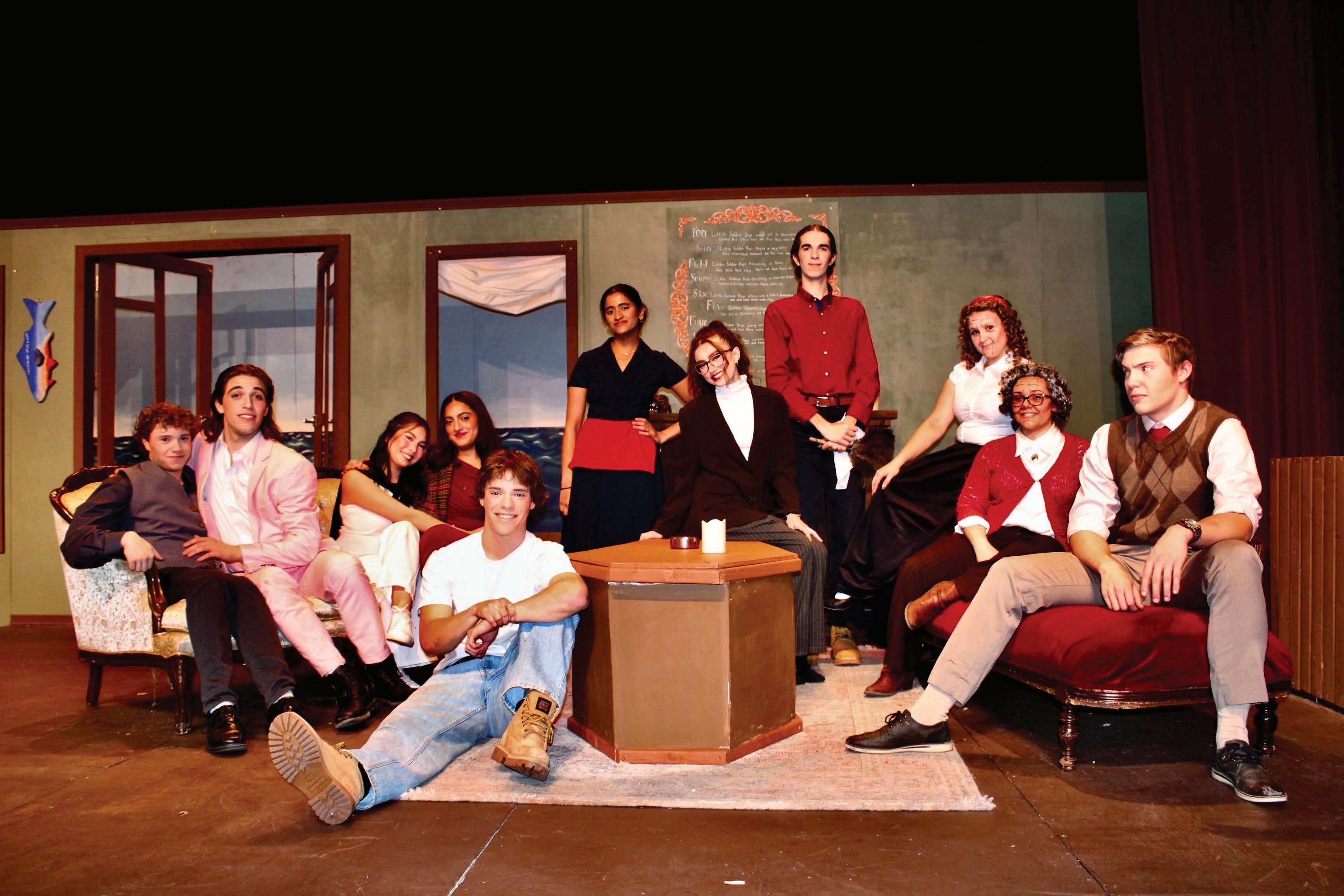
Running from November 6 to 8, Stevens students have put on the play And Then There Were None
This play is based on a book by Agatha Christie, first published in 1939 with over 100 million copies sold worldwide since. It was re-
written for theater later by Christie herself, with the ending changed slightly to be less “grim.” There will be full spoilers for the play and novel ahead, so if you want to see the play or read the book without knowing what happens, stop reading here. And Then There Were None is about 10 people trapped on an island as each of them gets brutally
murdered in different ways for unknown reasons. Each of these people has a secret, though; each of them has murdered someone before arriving on the island. As each person begins to fall they start to turn on each other, wondering who may be the one killing everyone. The tension starts to peak when there are only five of them left, and as they all
sit and stare and suspect each other, it builds a lingering feeling of dread. The cast members of the play portrayed this distrust and anger well, each of them playing their various roles to their extremes.
The title of the play and novel are a reference to a rhyme published in the
BY ITAI GELLER, OPINION EDITOR
With the advent of Stevens’s annual Student Government Association (SGA) election, the time has finally arrived for students to cast their votes! This marks the second consecutive year of contested Student Government elections. Each candidate duo spent the past week campaigning against one another for the positions of President and Vice President of Operations (VPO), culminating in the Vice Presidential debate, which took place on November 13, and the Presidential debate on November 14.
As outlined by the SGA, the responsibilities of the President include serving as a primary representative of the Stevens student body to University administration, interacting with SGA board advisors, appointing and overseeing the SGA cabinet, and setting a strategic vision for the SGA. The Vice President acts in a supporting role, serving as a liaison between the Cabinet members elected by the President and Senate members representing the different schools at Stevens, while also guaranteeing transparency between all branches of the SGA. Additionally, the Vice President meets with committee chairs and works to improve internal operations. In an effort to
learn more about each campaign’s candidate profiles and initiatives, The Stute spoke with the candidates at the Meet and Greet event, which took place prior to the Vice Presidential debate on November 12.
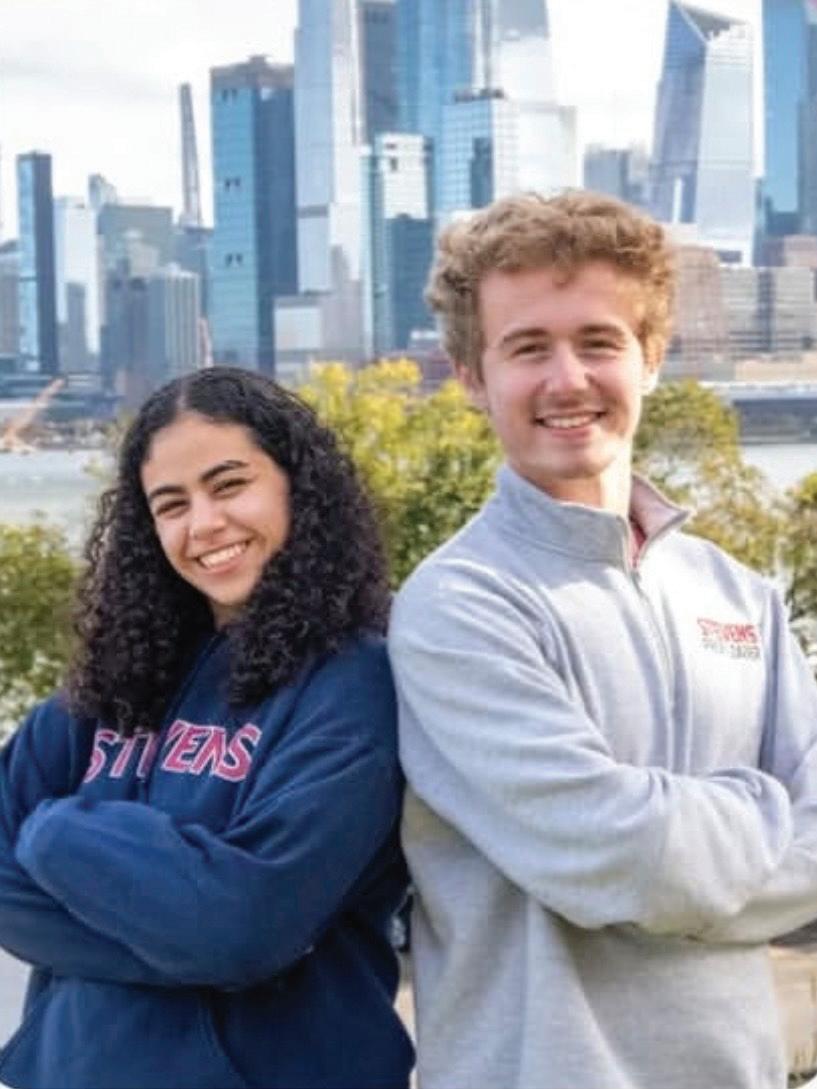
Noah Wachtel (2/4), Presidential candidate, and Thomas Paolillo (2/4), VPO candidate Campaigning under the motto “Students to All,” the duo seeks to connect students to resources on campus that they may not be aware of, such as student discounts, faculty connections, campus organizations, and the Hoboken community. They cited the intimidating aspects of college as a “roadblock” to individual and collective success for students, suggesting new initiatives to alleviate these stresses. This motive is inspired by Wachtel and Paolillo’s shared challenge of seeking involvement on the Stevens campus as firstyear students. If elected as President, Wachtel hopes to combat this issue by “leverag[ing] […] Cabinet members […] to […] run committees or have committees under them that accomplish […] goals,” to improve the campus environment. Paolillo hopes to support this effort by incentivizing open lines between
BY SERENA PANUCCI, NEWS EDITOR
The 2025 Leadership Conference: Rise & Redefine, held on November 7 at Stevens Institute of Technology, brought together students, faculty, staff, alumni, and guests for a day of learning, reflection, and collaboration around modern leadership. The event was organized by the Lore-El Center with support from the Office of Student Culture and Belonging, Graduate Student Life, Undergraduate Student Life, and Development and Alumni Engagement. This year’s theme, “Rise & Redefine”, emphasized the importance of inclusive leadership, coalition-building, and emotional intelligence in an evolving professional landscape. The conference invited attendees to reflect on how leaders can empower others across disciplines and identities while cultivating more equitable communities.
The program featured a full schedule of sessions designed to balance inspiration, skill-building, and networking. Following morning check-in and
opening remarks, participants attended three workshop blocks focused on collaboration, communication, and identity in leadership. A luncheon and networking break allowed for informal connections before the day concluded with a keynote address and reception.
Among the event’s featured speakers were Dr. Connie Mariano and Dr. Victoria Farris, both of whom offered distinct perspectives on leadership through their professional and personal journeys. Dr. Mariano, the conference’s keynote speaker, delivered a powerful talk drawing from her career in medicine and public service. A retired U.S. Navy Rear Admiral, she was the first military woman to serve as White House Physician to the President, the first woman to direct the White House Medical Unit, and the first Filipino American in U.S. history to achieve the rank of Rear Admiral. She is also the author of The White House Doctor: My Patients Were Presidents—A Memoir Throughout her address, Dr. Mariano encouraged attendees to lead with in-
BY NIHIRA PATHAK , CONTRIBUTOR
A key part of politics is creating an individual voice, brand, and affiliation. In the last decade, we have started to see a shift in the methods used to create a politician’s brand. Social media platforms, particularly X (formerly known as Twitter), have to be carefully curated, as they become a reflection of the politician’s stances, supporters, and proponents.
Most political strategies take social media into account, and political moves are also hosted on social media platforms. With these advancements in mind, Benjamin Leinwand, Assistant Professor of Mathematical Science at Stevens, was able to use social media politics as an
application of a new model.
The researchers analyzed 475 members of Congress. The members analyzed had at least 10 tweets between the dates of February 9 and June 9, 2022. The model was not given any information on the members’ political affiliations, status, or party. All members were organized into three groups by the model, all of which fell along familiar political affiliations. The three groups can be defined as the following categories: (1) Senators, (2) Democratic Congresspeople, and (3) Republican Congresspeople. Person A and Person B were defined as connected if one tweeted at the other or retweeted the other person.
BY JOSH BODENSTEIN, STAFF WRITER
You weave through campus after a late library session, your mind still buzzing with formulas and deadlines, when downtown voters are turning over something big — something with echoes right here in your life between Newark, Hoboken, and the Hudson’s edge.
On November 4, the ballot boxes in both New York City and New Jersey clicked shut, and the map shifted in ways that could affect your rent, your commute, and your weekend skyline view.
In New York, the name on everyone’s lips is Zohran Mamdani. The 34-year-old state assemblyman overtook former Governor Andrew Cuomo’s well-funded campaign, which focused on the safety and security of schools and the city overall, as well as Republican Curtis Sliwa, who campaigned on lowering taxes and ensuring equal housing. Mamdani won the mayor’s seat with just over 50% of the vote, compared to Cuomo’s roughly 42%. He will be the city’s first Muslim mayor and the youngest in over a
century. His platform centered on rent freezes, free buses, and affordable housing.
New Jersey didn’t stay quiet either. Across the river, Mikie Sherrill, a former Navy pilot and congresswoman, clinched the governorship against Jack Ciattarelli, keeping the Democratic line intact in the state house. Sherrill’s campaign focused on continuing Governor Phil Murphy’s transit and housing initiatives — expanding NJ Transit reliability programs, introducing targeted property tax relief, and creating incentives for affordable housing near college hubs like Hoboken and Newark. On the trail, she visited North Jersey campuses and small businesses, framing her platform around ensuring the state remains “livable for the next generation”. Ciattarelli, by contrast, emphasized fiscal restraint and school choice, arguing for a return to balance in the state. For students, these competing visions address issues that directly affect campus life
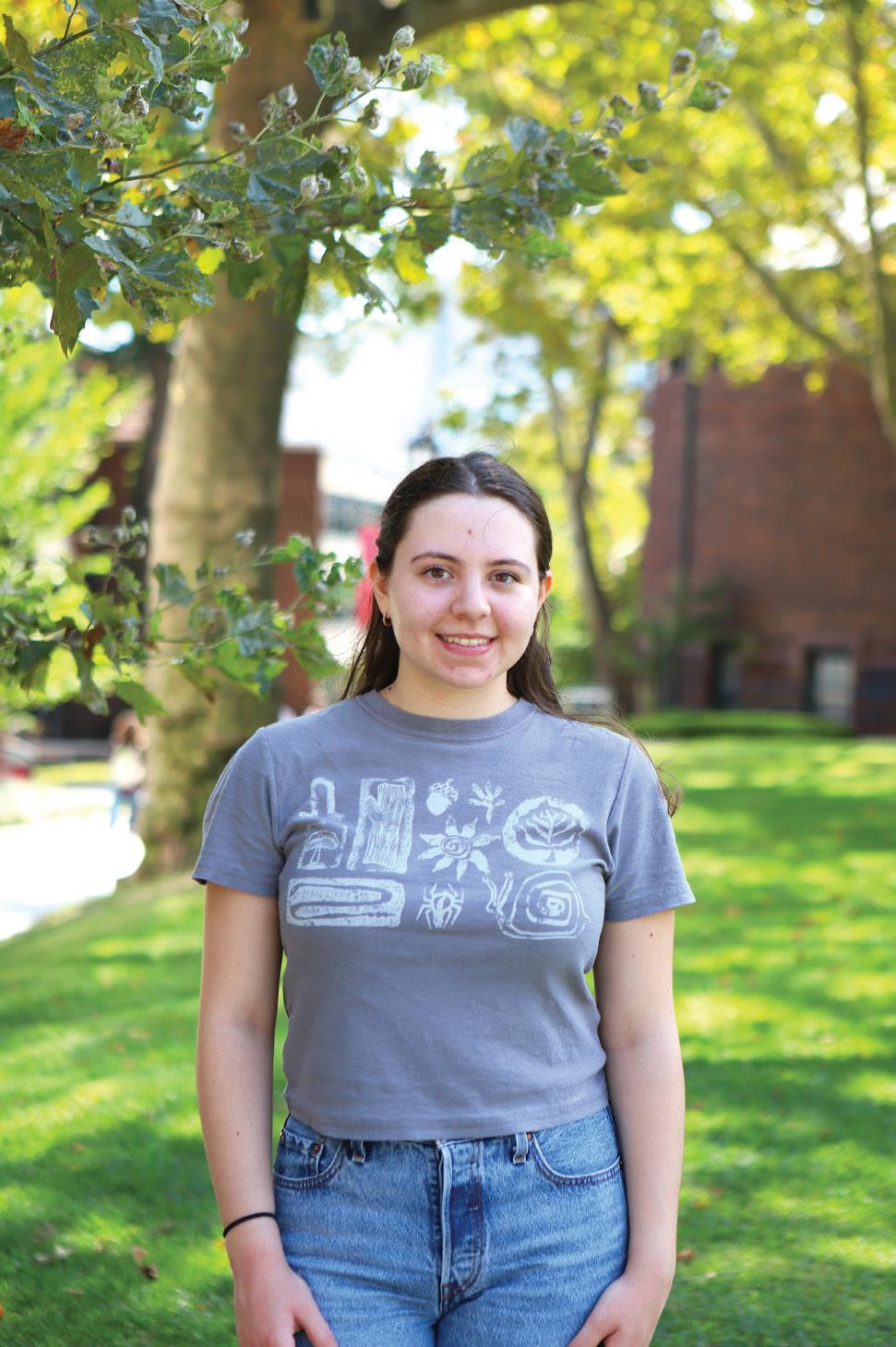
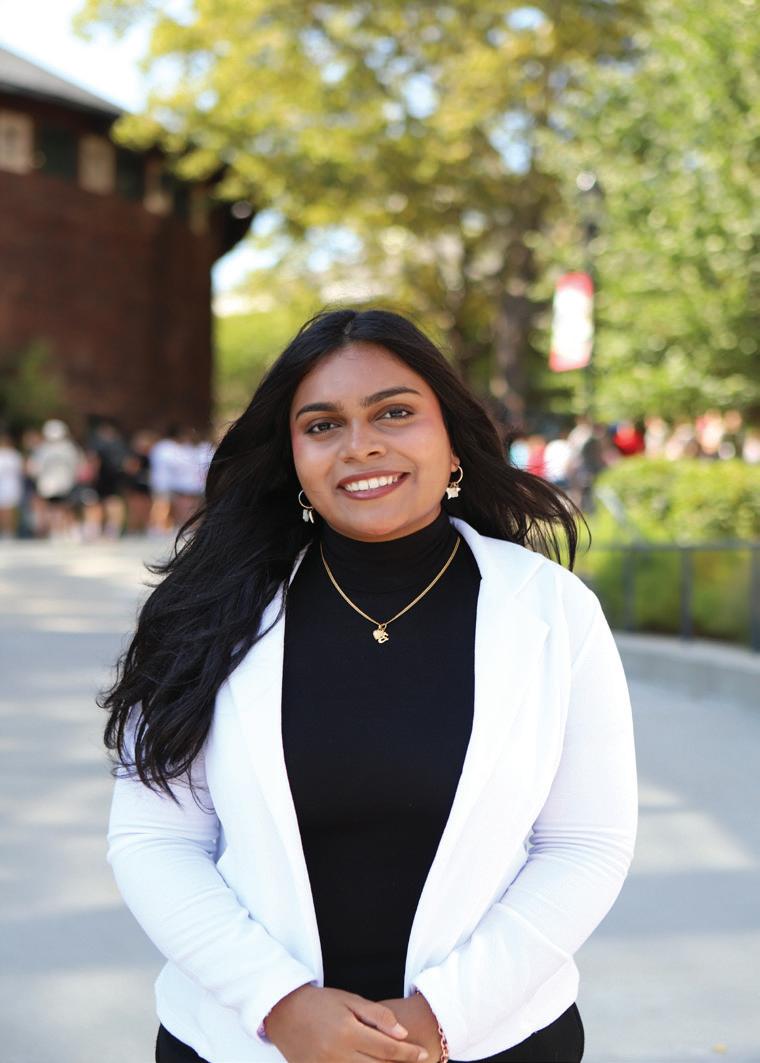
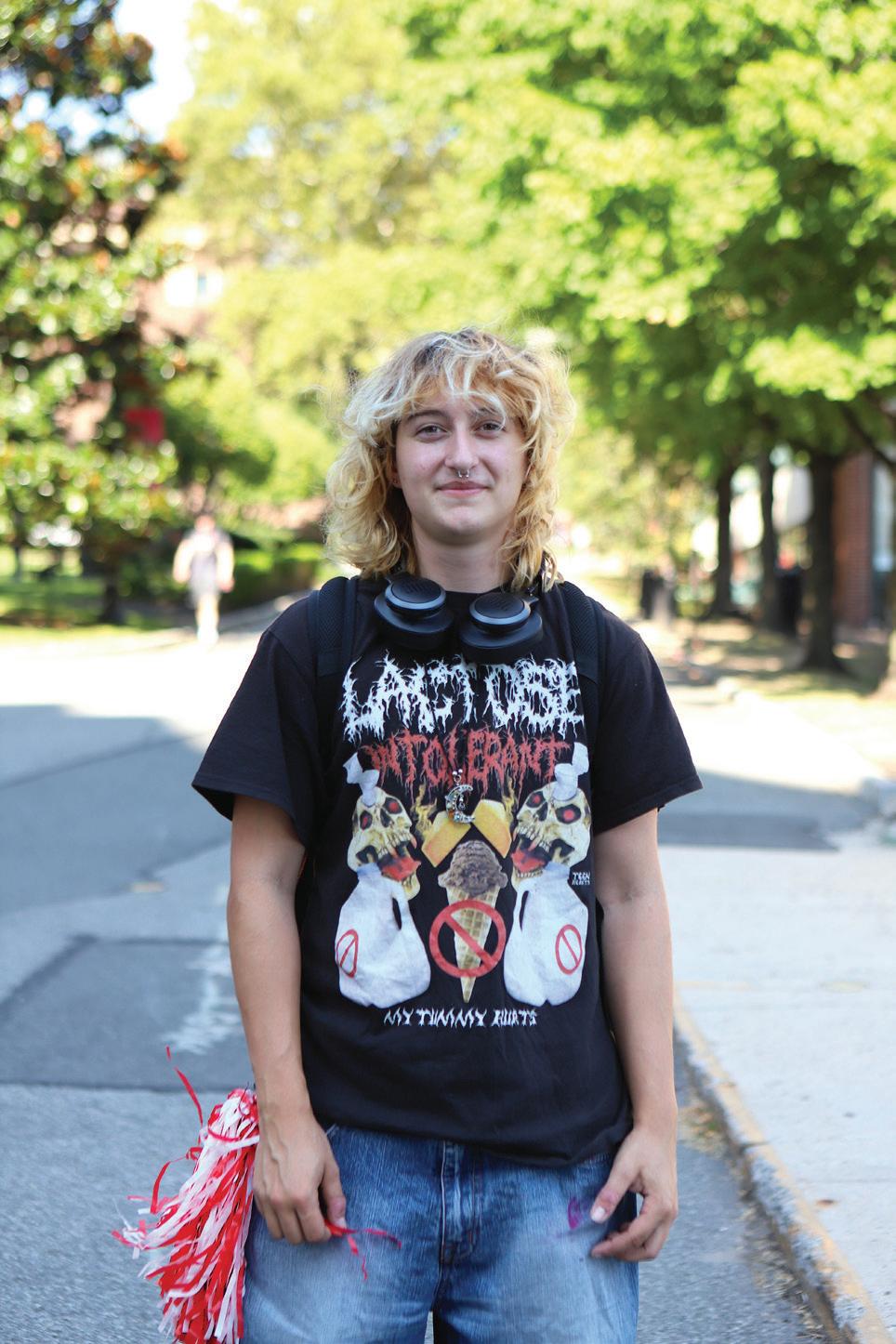
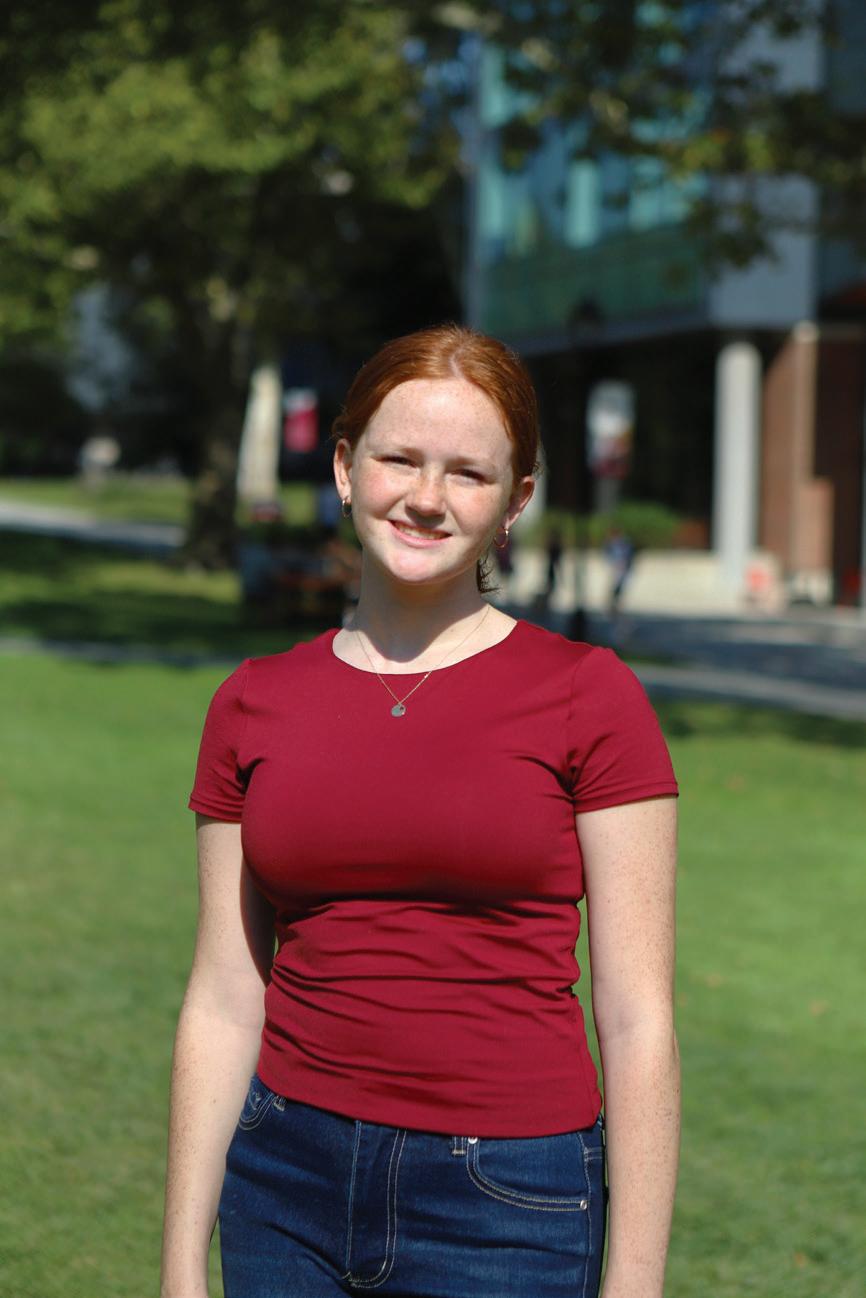
Abigail Thomas Milagros Carbajal Vedhesh A. Kamaraj
Claire Deans
Breona Pizzuta
Christina Thomas
Viktor Palmer
Disha Rana
Gavin Ruby
Isabella Gabay
Dominic Souza
Chris Kalish
Sydney Leung
Kailey Supan
Wesley Yu
Nicole Cheung
CONTINUED FROM PAGE 1
1800s, later renamed to “Ten Little Soldier Boys.” As the characters die, it follows the rhyme almost perfectly, leaving them afraid as they can almost see what comes next and how each of them will die. In the original novel, one more person dies—an agent who helped put everything into play— but this detail is outside of the storyline and not part of the rhyme. In the play, the poem would glow red as each person died to really point it out to the audience. As well as the poem glowing, there
SGA
CONTINUED FROM PAGE 1
each SGA branch, allowing issues to be resolved sooner rather than later. Collectively, the campaign duo guarantees effective communication with the student body through anonymous feedback forms, improving the SGA public forum, and reinforcing feedback-driven leadership. Finally, like many of the other campaign groups, Wachtel and Paolillo expressed optimism about finances, citing an increase in the Student Activity Fund. Despite this, they still commit to advocating for students financially by leveraging the SGA and university leadership to restore or replace lost programs.
were little soldier toys positioned on the stand below it, and as a new person died, a soldier would either disappear or break.
The play differs from the original novel in that the play was rewritten to have a better ending, with the final two characters, Lombard and Vera, being innocent of their crimes, surviving, and later falling in love. In the original novel, Vera shot Lombard, then hanged herself; a much darker ending that Christie changed to be lighter. There is also a bit of exposition that was skipped, with the death of the agent that the judge caused, and the judge’s written confession at the end of the novel. Even with
those differences, the play is still very enjoyable, and the cast members did a phenomenal job portraying their characters, making it a riveting watch. And Then There Were None is a play filled with suspense and thrills at every turn, making you suspect everyone as much as the characters suspect each other. The singular setting really makes the entire play feel very claustrophobic, and that feeling of enclosedness can grip any audience member. There’s a reason it has sold so well, and it is perfect for anyone who wants a big mystery to draw them in and try to figure out themselves as they experience it.
.................................UNIVERSITY CENTER ROOM 216B
A MISTAKE? Email us at eboard@thestute.com.
All opinions and editorials reflect the views of their respective author(s). No Part of The Stute may be reproduced in any form, in whole or in part, without the written consent of the Editor-in-Chief. Cited references of The Stute are permitted.
All members of the Stevens community are able to submit a Letter to the Editor to be published in The Stute. Letters must refer either to a piece published in The Stute or to The Stute in general and must be between 400 – 800 words in length. Submit letters to editor@thestute.com with your name and title (when applicable) or using our Google form. For writers who wish to write a Letter to the Editor anonymously, please see our policy on anonymity.
The Editorial Board reserves the right to choose whether or not to publish a submitted Letter to the Editor based on a majority rule vote, and additionally reserves the right to edit letters for clarity or request authors to revise. Provided that the author approves the final version, The Stute reserves the right to edit letters according to our copy editing procedures, defined in our policies.
All members of the Stevens community are able to submit a standalone opinion piece (otherwise known as an Op-Ed) to be published in The Stute. Op-Eds must be between 400 – 800 words, but longer submissions will be considered on a case-by-case basis. To submit an OpEd please email eboard@thestute.com with your name and title (when applicable) or using our Google form (tinyurl.com/submit-t0-stute). For writers who wish to write an Op-Ed anonymously, please see our policy on anonymity.
The Editorial Board reserves the right to choose whether or not to publish a submitted Op-Ed based on a majority rule vote, and additionally reserves the right to edit Op-Eds for clarity or request authors to revise. Provided that the author approves the final version, The Stute reserves the right to edit Op-Eds according to our copy editing procedures, defined in our policies.
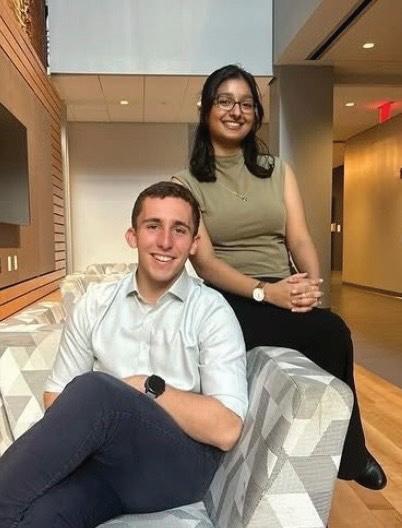
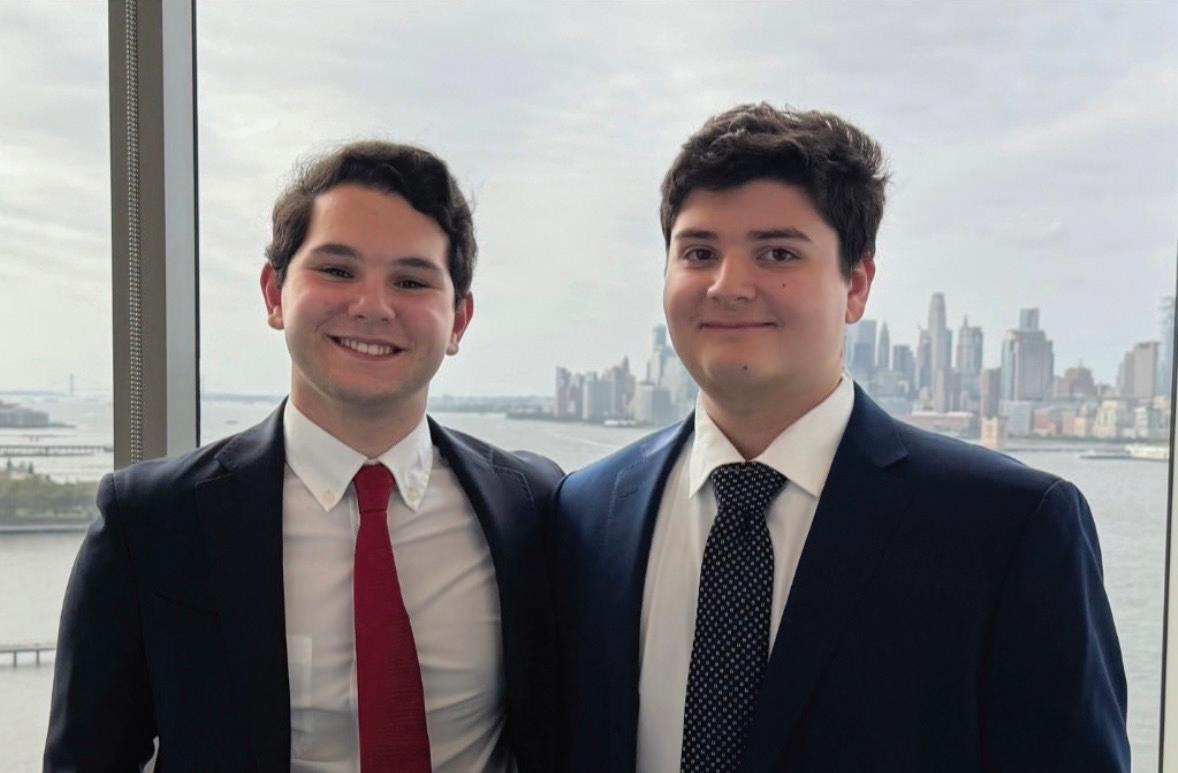
Arthur Serra (3/4), Presidential candidate, and Anushka Pathak (2/5), VPO candidate Campaigning under the motto “A Range of Views, A Wealth of Experience,” the duo highlighted their experience within the SGA’s finance committee and their differing backgrounds, with Pathak studying Quantitative Finance and Serra studying Mechanical Engineering. They believe this will allow them to reach a broader audience of students while upholding their promises by leveraging trial-tested leadership experience. Running under the shared values of “Accountability, Transparency, Empowerment,” they hope to uphold accountability through initiatives such as monthly meetings with club organizations, transparency through the creation of a public SGA website followed by a monthly financial newsletter, and empowerment through active engagement of SGA senators and facilitation of student-alumni connections. As for the candidates
CONTINUED FROM PAGE 1
tegrity, resilience, and empathy — values that guided her through decades of service in high-pressure, high-responsibility roles. “It is the journey that defines us,” she reminded the audience, urging them to embrace setbacks and “not be afraid of failure.” She also shared a personal message about authenticity, telling students, “They will never forget you because you are different.” Her story illustrated how leadership can transcend boundaries of profession and identity, inspiring students to pursue impact beyond traditional paths and, as she put it, to “lead by love.” When asked about the role of skepticism in her career, Dr. Mariano reflected on the challenges she faced as a woman in the military and medical fields.
individually, Serra attributed his interest in the presidential position to his longtime SGA involvement and returning executive priorities to the cabinet. He expressed frustration with the lack of focus on the student body, stating, “The most the cabinet really should be doing in terms of legislation is occasionally rewriting an addendum, like whether it be financial or from your process. The key part of the cabinet is focusing on executive stuff, getting stuff done. I think legislation has taken up a lot of our time.” If elected as VPO, Anushka hopes to focus on encouraging collaboration between SGA committees through weekly meetings with all committee chairs. Together, they guarantee student perspectives are fully acknowledged through initiatives such as cabinet office hours or senator engagement with the First Year Experience course. With respect to concerns surrounding budget cuts on campus, similarly to Wachtel and Paolillo, the campaign duo were optimistic about the student budget, but promoted the objective of lessening the pain of budget cuts if they did occur.
Jeylan Jubran (3/4), Presidential candidate, and Sam Strassburger (3/4), VPO candidate Campaigning under the motto “Your Vision, Our Mission,” the duo united over shared concern regarding the frequent complications associated with implementing new policy. Jubran cited the pessimism she often encountered as a student leader on campus as inspiration, asserting the candidate duo’s intentions to “cut the red tape, connect the campus, champion your voice,” and give student initiatives visibility without unnecessary barriers. Jubran sees her move toward Presidential candidacy as an extension of on
going independent efforts to improve the campus community and Hoboken outreach, hoping that a role within the SGA will provide her with a better platform to facilitate meaningful improvements for the student body. Jubran also will reinvigorate former SGA members who left prematurely, stating, “I saw firsthand how the SGA can kind-of drain a person that has such amazing passion to do something. I was so sad […] to see […] mass resignations that happened, because a lot of these [students] have amazing ideas.” Jubran expressed full confidence in Strassburger, who demonstrates a strong interest in incentivizing collaboration within the different branches of the SGA by improving culture. Strassburger highlighted low committee meeting attendance and Senator vacancies as a morale decline, and will bring passion back to the SGA by connecting personally with Senators and aligning their motivations with relevant committee work. Together, Jubran and Strassburger guarantee current feedback channels to enhance student engagement with the SGA, proposing initiatives such as regular town hall meetings where students can express concerns, consistent visibility by holding office hours in student spaces, and improving club outreach to ensure proper funding. Lastly, the duo emphasized that the student budget is sufficient, but requires an adjustment in allocation that recognizes active student organizations.
All three campaigns highlight a unique vision for how the SGA can better serve the student body. Together, their proposals reflect an ongoing commitment to protecting student voices and strengthening student leadership across campus.
“They always underestimated me,” she said, “but I proved them wrong.” She spoke candidly about breaking barriers throughout her career—from becoming the first military woman to serve as White House Physician to the President to being the first Filipino American promoted to Rear Admiral— and emphasized that her achievements were not just personal milestones, but steps forward for those who will come after her. “I may be the first,” she told the audience, “but I won’t be the last.” Mariano’s words underscored her belief in paving the way for future generations and redefining what leadership looks like through courage, compassion, and persistence.
Dr. Victoria Farris, a leadership strategist and executive coach, led a workshop titled “The Future of STEM Leadership: Why EQ Matters as Much as IQ.” Drawing on her THINK-THRIVE framework— which centers on trust, collabora-
tion, inclusion, and psychological safety—Farris highlighted the growing need for emotional intelligence in science and technology fields, and that “emotional intelligence and effective communication are critical qualities.” Her session challenged participants to view leadership not only as technical proficiency but as the ability to foster connection and belonging within diverse teams.
Together, Mariano’s keynote and Farris’s workshop and multiple other speakers captured the essence of the Rise & Redefine theme: leadership that balances confidence with compassion, and ambition with authenticity.
The 2025 Leadership Conference ultimately served as both a celebration and a call to action. By creating space for dialogue, learning, and community, Stevens reaffirmed its commitment to developing leaders who think critically, act ethically, and uplift those around them.
ARTHUR AND ANUSHKA
JEYLAN AND SAM NOAH AND THOMAS
TWITTER
CONTINUED FROM PAGE 1
The researchers needed a method to map out the vast and complex web of online connections. Typically, researchers use methods developed for sparse and unweighted networks. A sparse network, in the context of social media, is one in which most users are not connected — users don’t often follow or interact with each other. An unweighted network only takes into account whether a connection exists — a binary valuation, rather than a strength or frequency of a connection.
This research method varied
from the norm the most in the fact that the model used was conceptually based on a dense and weighted network, which had to then be reworked in order to fit the Twitter dataset. This allowed for more flexibility of the types of data the model can handle as well as its outcomes. The model does not assume that every aspect of the network has the same mathematical value or pattern, therefore allowing the structure and data itself to shape the resulting predictions. Though it may seem trivial, “differences in the underlying process as well as what gets measured can change where the information lives in a network,” as explained by Professor Leinwand, which ultimately impacts
Updates on SNAP benefits
BY TASHA KHOSLA, HEAD COPYEDITOR
On October 1, the government shutdown began, eventually leading to the shutdown of Supplemental Nutrition Assistance Program (SNAP) benefits. SNAP is a federal program funded by the Farm Bill and is administered to qualifying residents by the states. This program provides low-income families with food benefits to assist with paying for food
for SNAP benefits. Judge McConnell noted, “there is no doubt, and it is beyond argument, that irreparable harm will begin to occur if it hasn’t already occurred in the terror it has caused some people about the availability of funding for food for their family.” The following day, in a written version of the previous ruling, Judge McConnell additionally ordered the government to make full SNAP payments by November 3, or partial payments by November 5.
the findings. The foundation of the method used also ensured that all resulting values were probabilities between zero and one.
The members most often tweeted with people within their group (Democratic congresspeople interacted with other Democratic Congresspeople, Senators interacted with other Senators, and similarly with Republican Congresspeople). Democratic Congresspeople were more likely to interact with other groups as compared to their Republican counterparts. An explanation for this could be that Democrats had control of the House at the time, so they may have been more incentivized to branch out.
Interacting within groups was
ened to defy the court order to resume funding, but in response, White House Press Secretary Karoline Leavitt clarified, “the administration is fully complying with the court order. I just spoke to the president about it. The recipients of these SNAP benefits need to understand it’s going to take time to receive this money because the Democrats have forced the administration into a very untenable position.”
On November 6, Judge McCo
the general outcome that 463 out of the 475 followed. However, there were 12 nonconforming individuals. Based on their patterns of interaction, these 12 individuals acted as if they were a part of another group. They were not simply interacting with those within their group, but with Senators as well. Due to their interactions, they were grouped inaccurately, classified as parts of groups they were not a part of. Of the 12 nonconformists, two ended up being elected senators, as in two of the 12 later became a part of the group the model classified them as. A primitive conclusion of this fact is that individuals may appear more senatorial depending on the amount of interactions,
the Supreme Court to intervene. Supreme Court Justice Ketanji Brown Jackson temporarily paused Judge McConnell’s ruling, stating “the pause will remain in effect until the first U.S. Circuit Court of Appeals issues a judgment on the matter.”
As the courts contradicted each other, some states had already begun to pay out SNAP benefits to recipients, adding to the confusion and uncertainty surrounding SNAP. In response, an official from the USDA declared in a memorandum that “States must immediately undo any steps taken to issue full SNAP benefits for November 2025.” This memorandum warned that if states did not comply, there would be financial consequences.
On November 10, the Trump administration returned to the Supreme Court to freeze full payments towards SNAP while the government is shut down.
Amidst the legal battles sur-
ELECTIONS
CONTINUED FROM PAGE 1
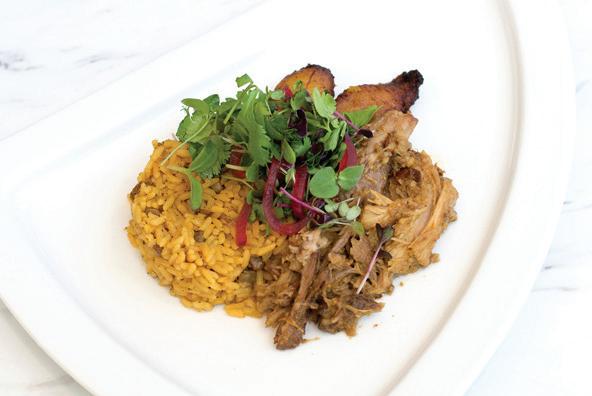
Pi Kitchen is expanding Student Discount Days! Starting this semester, students can enjoy exclusive savings every Monday, through Friday Treat yourself to your favorite dishes at a special student rate, it’s the perfect way to make the start, middle, and end of your week a little more delicious
— housing costs, bus access, and transit funding.
What stands out is not just who won, but why they won. Voters across the region clearly signaled that the cost of living, transit reliability, and day-to-day infrastructure all matter. In New York, early coverage noted that the signal was loud and clear. For students renting in Jersey or commuting to Manhattan, these aren’t distant policy debates — they’re Tuesday night worries, 2 a.m. bus waits, and budget spreadsheets.
And local races followed the script. In New York City, borough president and city council contests still leaned heavily Democratic, though pockets of Republican support emerged, such as Staten Island’s strong Republican showing. In New Jersey, besides the governor’s race, the state Assembly contests also carried weight — suggesting whoever governs won’t just talk about housing and transit, they’ll have the votes.
So what does this mean while you’re sitting in the UCC between recitation and dinner, weighed down by “next semester’s rent” thoughts and “will the bus ever come” dread? It means the policy winds might turn faster than you expect.
though Leinwand says, “if I had to guess, social media positioning is more a symptom than a cause,” and to arrive at a formal conclusion, more research would be needed. The researchers establish that this is a beginning to the research, and to derive more conclusions about political strategy and science, more information will be needed. When asked about next steps in this subject, Professor Leinwand proposed looking at the data through a sentiment analysis, looking at the content of the tweets more than just the interactions. In terms of the model itself, Leinwand hopes to “create and model even more flexible and expressive networks.”
rounding SNAP payments, food banks have been seeing an increase in demand. Recently, the New Jersey Economic Development Authority (NJEDA) provided $900,000 to support New Jersey’s six emergency feeding organizations, highlighting the effort to combat food insecurity during the shutdown.
At this time, the future of SNAP benefits remains uncertain. On November 10, the Senate approved a funding package that would end the government shutdown and extend government funding through January 30, 2026. On November 12, President Trump signed the funding bill to reopen the government but it is still unclear when SNAP benefits will be restored, which could vary from state to state.
For everyone in the Hoboken and Jersey City area, The Hoboken Girl team has compiled a list of local resources for families affected by the changes in SNAP.
Of course, change is not instant. You won’t wake up tomorrow to free buses or rent-be-gone apartments. But what you might see is budget proposals that take your neighborhood into account, transit developments that affect your dorm-to-class route, and housing regulation tweaks that slow the rent creep. And if you’re studying or commuting in this region, that matters.
On campus, you should watch how these new officials show up in your lane. Do they follow through on their pledge for affordability? Do students get a piece of the policy conversation, or are we still passively experiencing the ripples? Will the commuter-student voice be heard in state government, not just drowned in the city-hall echo chamber?
The results mark a potential turning point for regional policy. Local governance changes could influence how cities approach housing, transportation, and affordability in the coming year. For students and commuters in the area, those shifts may shape daily life — from off-campus rent prices to transit options across the Hud-
COMMUNITY SERVICE
Why you should donate to food banks
BY JOSEPHINE CHOONG, SECRETARY
Because of the federal government shutdown, Supplemental Nutrition Assistance Program (SNAP) benefits have been suspended. Without the SNAP benefits, it’s difficult or impossible for many to obtain the necessary nutritional assistance they need. As a result, they may go hungry and experience adverse health outcomes. Now more than ever, it’s important to donate to your local food bank.
In New Jersey, more than 800,000 people rely on SNAP for their basic nutritional needs. Of those people, nearly half are children, one in three are individuals with a disability, and one in five are over the age of 60. As for Hudson County, one in seven residents, or almost 100,000 people, receive SNAP benefits, including 40,000 children.
By donating to food banks, you support individuals and families who are struggling to make ends meet. It helps to reduce hunger and poverty within your local community and makes sure that every-
one has access to basic necessities for a healthy life. There are numerous places in Hoboken where you can donate. For example, you could donate to the Hoboken Community Center (HCC), as they have over 3,000 clients, during their donation hours every Thursday from 9 to 11 a.m. at 1301 Washington St. You could provide a monetary donation, partner with a hygiene or food drive, purchase items from their Amazon Wish List, or sponsor a monthly meal. Recently, they have also hosted their first November food sistribution to prepare for an increase in demand. Another location to donate to is the Hoboken Shelter. Last year, they provided 176,609 meals (a 9,060 increase from 2023) and had over 1,900 unique volunteers supporting them. If you donate $2, you can feed a guest a healthy and nutritious meal. Furthermore, they are always in need of goods, whether it be food, clothing, or hygienic items. Some of their top food needs include instant potatoes, cereal, milk, frozen meat (especially turkey, ham, and meat-
balls), juice, marinara sauce, and soft fruits (especially bananas and oranges). Deliveries and drop-offs can be made daily from 9 a.m. to 9 p.m. at 300 Bloomfield St.
Finally, St. Matthew Trinity Lutheran Church has their Lunchtime Ministry (LTM), where they give 80 to 100 people a warm meal, hospitality, and community. They accept donations from 8:30 a.m. to 12:30 p.m. on Mondays to Thursdays at the Parish Hall. All year long, they need milk, fresh fruits and vegetables, coffee, and sugar. You could also directly write them a check or look at their Amazon wishlist to donate specific items.
To find more local food banks, use the Community FoodBank of New Jersey (CFBNJ)’s website to discover the nearest pantries and meal programs to donate to. You can also donate directly to CFBNJ, as they will double your donation for a monthly pledge until December 31, 2025. There are plenty of ways to donate and help out your local community. So go out there, explore the potential ways to help, and aim to make a difference!
WomenRising supports local families
BY ARACELY CANDELARIA, CONTRIBUTOR
Happy November, Ducks! As we exit Breast Cancer Awareness month, women’s strength remains to be carried with continuous support, empowerment, and recognition. For over a century, WomenRising has been navigating crises to self-sufficiency for women and families. Since 1905, WomenRising
has been an organization serving approximately 11,480 individuals, focusing on supporting women and their families by providing job opportunities, safety from domestic violence, freedom from homelessness, and a safe life for their children. WomenRising serves a role in providing support, with 150 job placements, 170 families sheltered, and counseling services for more than 1,500 women and families. The goal and mission are to “assist women and families to achieve
self-sufficiency and live safe, productive and fulfilling lives, through social services, economic development, and advocacy services.”
They have a big emphasis on donations, which play an essential role in sustaining their programs.
Donating goods and services is a valuable way to support WomenRising programs. Contributions of $50 provide one day of job training for a mother supporting her family, $100 provides resume and interview coaching, and $1,250 allows a
ORGANIZATIONS TO VOLUNTEER AT IN HOBOKEN
Hoboken Family Alliance (Visit hobokenfamily.com for more information)
Hoboken Historical Museum and Cultural Center (Call 201-656-2240 for more information)
Hoboken University Medical Center (Call 201-418-1000 for more information)
The Hoboken Shelter (Visit hobokenshelter.org for more information)
Hoboken Division of Cultural Affairs (Email hoboculturalaffairs@gmail.com for more information)
The Hoboken Volunteer Ambulance Corps (Email info@hobokenems.com for more information)
Hoboken Cove Community Boathouse (Email info@hobokencoveboathouse.org for more information)
Hoboken Community Center (Visit hobokencc.org for more information)
United Synagogue of Hoboken (Email office@hobokensynagogue.org for more information)
mother and her children the ability to stay in a shelter for three weeks with necessities included.
WomenRising provides critical support for domestic violence survivors. Domestic violence is a pattern of abusive behavior in a relationship that is used to control another person by threats of violence, such as pushing, punching, name-calling, isolation, and breaking down someone’s self-esteem. Anyone can be a victim, no matter the age, sex, or race. A reminder: if
you or someone you know is facing this, you are not alone, and help and support are available for you. If you know or suspect someone who could be a victim, ask them directly and gently, listen without judging because they may feel ashamed or they feel a fear of being judged, show support, and explain that it’s not okay, no matter the circumstance. Help is always available. Contact hsheppard@womenrising.org for more information regarding a support group.
PHOTO COURTESY OF LOUISIANA.GOV
Women’s and Men’s Soccer win conference victories with shutouts
BY CAMRYN WINANT, SPORTS EDITOR
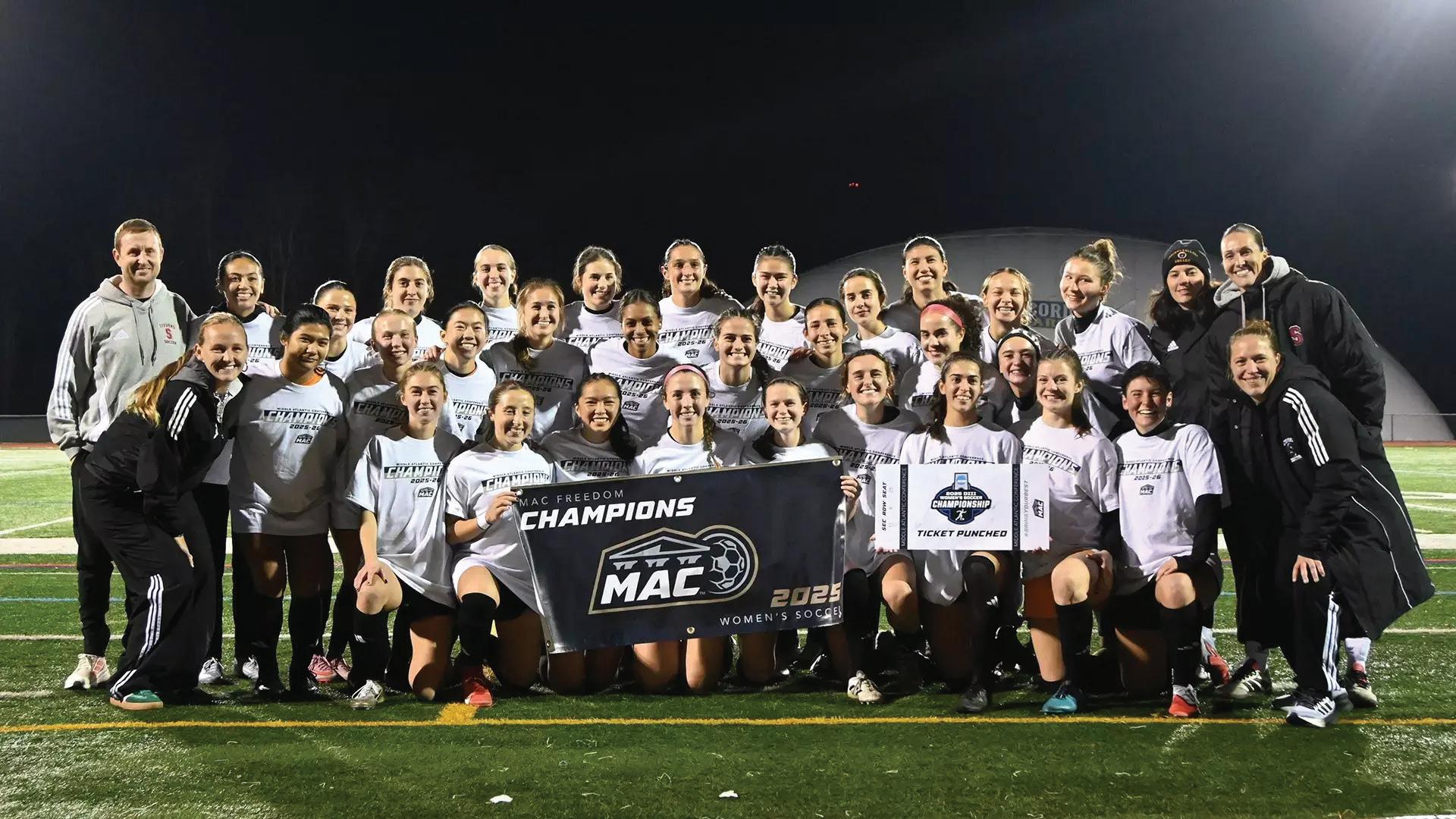
After winning goals from seniors Ben Goldberg on November 5 and Lauren Alley on November 4, both the men’s and women’s soccer teams went on to the Middle Atlantic Conference (MAC) Freedom Championships on November 8, where they won with shutouts. The women’s team travelled to Dallas, PA, where they faced Misericordia University, and the men’s team stayed at home to host their opponent, Lebanon Valley College.
The first goal of the women’s game was scored in the 10th minute, off sophomore Sophia Murphy and to sophomore Malia Chopra, who knocked the ball in, notching Chopra’s first collegiate goal as a
Duck. The game was held scoreless until the 51st minute, with five shots on goal being traded between both sides. At the 51st minute, junior Molly McCann landed a goal off an assist from Alley. They went through another short period with no goals scored, but the Ducks put their all into four attempted shots, with one of them being on goal.
As the game was nearing the end, McCann got one more goal out there with no assist. The Cougars attempted one more shot, but they were off-target, and the Ducks won their eighth conference championship since 2010 with a score of 3-0. Along with the conference win, the game brought many successes to senior goalkeeper Kenny Donley, who marked her fourth shutout in the last five games, where she was on the field for all 90 minutes. She
was also able to lower her goalsagainst average to 0.57, but raise her save percentage to 0.863, and she landed 10 wins in a season for the first time.
The men’s game started up quickly, with both teams trading shots on goal early on. There were shots by Goldberg and senior Thomas Smith, but they were turned away. By halftime, there was still no progress with the score, and Lebanon Valley had three more attempted shots over the Ducks at 8-5, with only three of them being on goal for both sides. The second half started up quickly again, with junior Omar Martinez making a shot on goal in the first few seconds. Sophomores Matthew Murillo and Emerson Kekesi, and graduate student Ryan O’Byrne all saw their shots denied by
Swimmers shine with dual second-place finishes at NYU Invitational
BY MISAYO IDOWU, SPORTS WRITER
On November 7 and 8, both the men’s and women’s swim teams traveled to New York to take part in the NYU Invitational meet. Over the two days, the Ducks finished in second place, ahead of Drew but behind NYU. Stevens swimmers impressed with multiple top-half finishes and strong performances all around, despite the tough competition.
The first day of the meet was Friday, November 7, and despite being shorter than the second day, it was quite eventful. Stevens women opened the meet with a fifthplace finish in the 200-freestyle relay. Junior Ashley Settle, senior Natalia Brunetti, freshman Samantha Gallo, and senior Adriana Bertolotti combined for a 1:45.15 finish. In the 50 freestyle, sophomore Delaney Klaus turned in a strong sprint performance, finishing seventh overall with a 25.12.
In the women’s 500 freestyle,
sophomore Eszter Kiss achieved a fourth-place finish in the 500 freestyle, clocking 5:17.19, which was the Ducks’ top individual result of the session. She was followed closely by teammates sophomore Dora Dvorkin, who placed sixth, and senior Gabby Tyer in seventh. Junior Abby Rosingana rounded out the top eight, as all four Ducks scored in the event’s top half. For the men, senior Will Stibor got a third-place finish in the 50 freestyle, finishing in 21.48 seconds to post Stevens’ top individual result of the night. Freshman Cooper Moffatt delivered a high finish for the Ducks, placing fourth in the 200 individual medley in 1:58.89. Sophomore Ethan Emerton (2:02.15) and senior Angel Velasquez (2:02.43) placed seventh and eighth, respectively, rounding out an impressive Stevens performance. The 200-freestyle relay of freshmen Matthew Beaney and Sebastien Nappi and seniors Velasquez and Stibor placed fourth
in 1:27.20. While the 400-medley relay team of Emerton, Velasquez, senior Deo Bove, and freshman Niall Easton took second overall in 3:33.25. These two remarkable relays, along with the other results, left Stevens in second place, going into day two.
The second session was from 10 a.m. to 4 p.m., and within the sixhour window, the Ducks had many impressive performances. Starting with the men’s 100 breaststroke, Velasquez finished in first place with a 57.98, and just .15 seconds behind him was his fellow senior, Lukas Mikulenas, who finished in second. There were four more runner-up finishes in addition to this one: Bove in the 100 butterfly, Emerton in the 200 backstroke, Stibor in the 100 freestyle, and Velasquez in the 200 breaststroke. Alongside the multitude of runners-up, Moffat took third in the mile freestyle in 16:36.74.
The 200-yard medley relay team of Velasquez, Mikulenas, Bove, and Stibor also took second.
FRI, NOV 14 WOMEN’S
the 75th minute. For nearly eight minutes after that, there was not a single registered shot on goal for either side. With only six minutes left in regulation, the Ducks started feeling the pressure. First-year Lucas Mendes got the ball and passed it to Kekesi, who got it to O’Byrne. The ball found the back of the net, and graduate student goalkeeper Sebastian Montoulieu kept the ball out of Stevens’ net to give the Ducks their fifth straight conference win at 1-0. It was a big marker for the Ducks, with Kekesi tallying 13 points over the last four games, O’Byrne scoring three goals in his last six games after having no career goals, and Montoulieu making four saves. Coming off these amazing wins, both teams will be heading to the NCAA Tournament next.
SAT, NOV 15
WOMEN’S
The 800 (Bove, Stibor, Easton, and Nappi) and 400 (Nappi, Velasquez, Bove, and Stibor) freestyle relay teams each finished fourth, the 800-yard group finishing in 7:15.24 and the 400-yard team in 3:13.11.
In terms of the women, Rosingana registered the lone individual Top-4 finish in the 1,650-yard freestyle, touching in 19:13.91. Sophomore Julia McKinley also finished one spot behind in the 1,650 free, finishing in 19:33.98. The 800yard freestyle relay team of Kiss, McKinley, Gallo, and Klaus finished fifth, less than three seconds off another top-four finish.
The culmination of all the results over the two days led to both the men’s and women’s teams finishing in second place with 256 and 293 points, respectively. This was a wonderful performance by all the Ducks, and they hope to continue the good form as they make a Garden State trip west on November 14, for a 6 p.m. start with Montclair State.
STEVENS SCOREBOARD
United States Coast Guard Academy Providence, RI 1 p.m.
WRESTLING West Liberty University Providence, RI 2:45 p.m.
WRESTLING Johnson & Wales University Providence, RI 4:30 p.m.
MEN’S SOCCER NCAA Division III Championship at Brandeis University Waltham, MA 1:30 p.m.
SAT, NOV 16
WOMEN’S BASKETBALL Emmanuel College Boston, MA Time TBD
Science
Leg shaking: is it just a habit or something more?
BY ATREYEE HALDER, SCIENCE WRITER
Over half of the healthy population exhibits leg shaking, a repetitive and rhythmic movement of the legs while seated. Some brush it off as just a habit, but most of the time, there’s a reason for it, ranging from anxiety to medications. Usually, it is not a cause for concern, but if it is disrupting your daily life or is accompanied by other symptoms, it is best to seek medical advice. Here are some causes of leg shaking:
The “fight-or-flight” response: You may have noticed someone shaking their legs while studying for a difficult upcoming exam. Or maybe that someone is you. During such times, your heart pumps out extra blood to your muscles, readying them to run or engage. As a result, your legs start shaking. This happens when you are in “fightor-flight” mode, and adrenaline is released in your body as a response to something scary (in this case, the exam). For people with anxiety, even non-threatening situations can trigger this response, which is sometimes accompanied by other symptoms like a pounding heart, nausea, and unsteady breathing.
Concentration: When you are
working on something you love, you are giving almost your full attention to it. When you are concentrating on doing something, your legs may start shaking. And that’s a good thing, be cause it helps you focus! It is espe cially useful for people with attention deficit hyperactive disorder (ADHD), a condition that causes a hard time paying attention, being hyperactive, and being impulsive, as leg shaking improves concentration and atten tion.
Boredom: You may have ex perienced leg shaking when you are bored, like when you are waiting for something with nothing to do to pass the time. Boredom is uncomfortable, so to release that tension, your legs start to shake.
Medications: may cause leg shaking as a side ef fect. These include medications for mental health conditions and aller gies.
Parkinson’s Disease: kinson’s is a condition that affects the nervous system. It is caused by damage to nerve cells that produce the chemical dopamine. Dopamine normally keeps movements smooth and coordinated. People who devel op Parkinson’s disease experience uncontrollable movements that pro gressively worsen over time. Shaking
in the hands, arms, legs, or head is one common symptom of Parkinson’s disease. Other symptoms include muscle stiffness or rigidity in
shaking. RLS is an uncontrollable urge to voluntarily move your legs due to tingling, burning, or pain. Simple leg shaking does not include
that leg shaking could also be a form of exercise for people who have to spend long hours sitting in one place. Obesity and related chronic diseases
Long-distance runners may have a higher risk of cancer
BY SEAN PALERMO, SCIENCE WRITER
A recent study presented at the 2025 American Society of Clinical Oncology (ASCO) Annual Meeting in Chicago, involving 100 runners aged 35 to 50 that ran from October 2022 through December 2024 has suggested a link between high-level distance running and colon cancer. The study, which was designed by co-director of the Gastrointestinal Cancer Program at the Inova Schar Cancer Institute, Timothy Cannon, MD, included runners who had completed at least two ultramarathons or five regular marathons that, according to Cannon, “were otherwise healthy and had no known genetic predisposition or inflammatory conditions.” While polyps that have a high chance of turning into cancer range from being about 5-6% in adults in their 40s, a surprising 15% of the athletes that received colonoscopies during the study
turned up with these polyps, and 41% had at least one, intriguing experts, but requiring more examination before definitive conclusions are made.
Cannon was prompted to conduct this study due to a pattern he noticed in his patients — more specifically, that three patients who were young, extremely long-distance athletes all had stage IV colon cancer. Recruitment for the study was made with the assistance of the wives of two of the deceased runners, which ultimately yielded 100 long-distance athletes who had never received a colonoscopy up until that point. Those with hereditary cancer syndromes or inflammatory bowel disease were not included in order to better isolate the potential impact of the endurance exercise by itself. Before undergoing the procedure, the athletes were instructed to complete a questionnaire covering dietary habits, bowel history, and long-distance running patterns to better identify possible links be-
tween the increased rate of polyps in the group. All polyps that were identified during the study were reviewed by a panel of gastroenterologists, pathologists, and oncologists who determined that they met the criteria for advanced adenomas (polyps). Hypotheses have been proposed by Cannon to explain this phenomenon prior to further study, including that ischemic colitis — when blood flow to the colon is temporarily reduced and directed to the muscles during intense activity — could be a cause. It is suggested that this process, although typically not lasting long and self-reforming (though it does cause damage and swelling), could contribute to repeated cycles of cell damage and repair that may allow mutations to occur as a result of faulty cell divisions that can cause cancer. However, there is no current evidence that people with ischemic colitis are at a greater risk of colon cancer, so currently this proposal re-
mains purely speculative. While the study has received Institutional Review Board (IRB) approval, there are some important caveats to be considered. The first is that it has yet to be published in a peer-reviewed journal, and that it was small and specific to endurance athletes with limited information about their other possible cancer risk factors. Additionally, the study failed to provide a comparison group of non-runners, with the rate of polyps in non-runners in the same age range being drawn from other studies performed in the past. In fact, despite findings, a lot of previously published research has suggested that physical activity may, in fact, prevent cancer as well as other chronic diseases and health problems, with people who jog for just 10 minutes a day having a reduced risk of death from dying from causes like heart disease, according to a study from 2014. With this being said, however, what especially stands out from
the studied individuals is that their average age was 42.5 years old, which is two and a half years below the recommended age of 45 years for a first screening of colonoscopy after it had been previously lowered from 50. Currently, further research is underway to analyze dietary factors, training regimens, and other lifestyle habits to better understand the relationship between distance running and cancer. Notwithstanding the current results, Canon claims, “the bigger problem with our health is we don’t exercise enough…people should keep exercising, for sure,” and to stay up to date on colon cancer screenings if you experience unusual symptoms such as stomach cramps or blood in stool, and log a lot of miles. Reflecting on the study, he explains how “if we can identify these cancers earlier in people who otherwise wouldn’t meet current screening criteria, we can save lives.”
The power of protein diversity: fueling health, longevity, and the planet
BY RIYANA PHADKE, SCIENCE EDITOR
Getting enough protein is important, but focusing only on how much one eats misses the real point. What truly makes a difference is not just the amount, but the variety. Mixing different protein sources provides the full range of amino acids the body needs, keeps meals balanced and interesting, and even supports the planet in the process. Protein is built from amino acids, which serve as the body’s construction crew for muscles, skin, enzymes, hormones, and immune function. Out of the twenty amino acids required, nine are considered essential, meaning the body cannot produce them and must obtain them from food. Animal-based foods such as eggs, chicken, dairy, and fish are called “complete proteins” because they contain all nine essential amino acids. Most plant-based proteins, such as beans, lentils, nuts, and grains, are “incomplete,” missing one or more essential amino acids. However, when different foods are combined, such as rice with beans or hummus with whole-grain pita, the missing amino acids complement each other, creating a complete and balanced protein profile. Relying on only one or two protein sources every day can lead to nutritional gaps. It may not only result in missing amino acids but also in a lack of other key nutrients that help the
body function properly. Fish provides omega-3 fatty acids and vitamin D for heart and brain health. Beans supply fiber that supports digestion and lowers cholesterol. Nuts and seeds add healthy fats and essential minerals like magnesium and zinc. Limiting protein intake to a single source, such as meat or protein powders, means missing out on the broad nutritional benefits that come from eating a diverse range of foods. There is also a larger perspective to consider. Choosing a variety of protein sources benefits not only human health but environmental health as well. Plant-based proteins, including beans, lentils, and soy, use fewer natural resources and generate less greenhouse gas emissions compared
to meat production. Research shows that individuals who eat from a wide range of “meat and alternative” foods are more likely to meet their nutritional requirements while also reducing their environmental impact. In addition, variety helps protect against food sensitivities caused by overexposure to the same ingredients and keeps meals enjoyable and diverse. In practice, protein variety can be achieved through simple daily habits. Breakfast might include Greek yogurt topped with nuts or whole-grain toast with nut butter. Lunch could be chicken with quinoa or lentil soup with whole-grain bread. For snacks, options such as hard-boiled eggs or roasted chickpeas add both flavor and nutrition. Dinners can rotate
A new AI technique may aid violent crime forensics
BY GAVIN MCCRARY, CONTRIBUTOR
Researchers are finding new ways to use artificial intelligence in forensic investigations, from identifying insect species at crime scenes to organizing complex evidence in laboratories. These advances could make it faster and more accurate to determine the time of death or analyze data, but experts stress that technology should never replace careful human review.
At Louisiana State University, organic chemist Rabi Musah and her team developed a fast method to identify blowfly species from their puparial casings, the small, hardened shells left behind after maggots mature into adult flies. Because blowflies are often the first insects to colonize a body and different species develop at different rates, knowing
which species is present helps investigators estimate how long a person has been dead.
Identifying species from casings has long been difficult, especially when DNA has degraded. Musah’s group used field desorption–mass spectrometry to map each casing’s unique chemical fingerprint, then applied a machine learning model to identify species in about 90 seconds, the team reported October 1 in Forensic Chemistry.
The model was trained on hundreds of samples from lab-raised blowflies before being tested on 19 unknown casings from around the country, each identified correctly. Musah believes the method could also reveal if a body was moved or if toxins were present. “These molecules are like a language,” she said. “If you’re listening, there’s all this information you can extract.”
The technique might also aid cold cases. Because some chemicals persist for years, mapping how they change could allow scientists to estimate how long remains have been exposed. “Casings will remain with the corpse,” said Falko Drijfhout, an analytical chemist at Keele University in England. “If investigators find casings from species that live far away, that’s a sign the body was relocated.” AI’s expanding role in forensic science extends far beyond insect analysis. At the Harnessing AI for Forensic Science Symposium, hosted by RTI International with support from the National Institute of Standards and Technology (NIST) and Johns Hopkins University, researchers and law enforcement officials discussed how AI might help crime labs work more efficiently.
Predictive modeling could analyze past case data to estimate how
long new cases will take and help labs allocate staff and resources. Machine learning could also prioritize evidence based on complexity or the likelihood that a sample will yield results. But mistakes could have serious consequences. If evidence is wrongly classified as low priority, it might never be tested, potentially affecting justice for both victims and defendants. “Any AI system would need proven reliability and robustness before it is deployed,” said Daniel Katz, director of the Maryland State Police Forensic Sciences Division.
AI could also merge results from different evidence types, such as DNA, fingerprints, and trace materials, to identify patterns and suggest leads. Niki Osborne, of The Forensic AI, called this approach a way to “reduce guesswork and build a more responsive, data-driven case manage-
between baked salmon, tofu stir-fry, and black bean tacos. Incorporating seafood, beans, eggs, nuts, and lean meats throughout the week ensures that the body receives all the amino acids and nutrients it needs. Even fully plant-based diets can provide complete protein by combining a diversity of whole foods.
Ultimately, eating protein is not just about hitting a target number. A balanced diet built on variety delivers all the essential amino acids along with a wide spectrum of vitamins, minerals, and long-term health benefits. It nourishes the body, supports the environment, and keeps meals satisfying and dynamic. When it comes to protein, more is not always better, but better variety always is.
ment system.”
Still, AI in forensics must meet high standards for transparency and accountability. NIST defines trustworthy AI as valid and explainable. Michael Majurski, a NIST research computer scientist, compared AI to a witness with no memory: “What it says now has no bearing on what it said in the past, and there’s no way to trust its track record.”
To maintain trust, experts recommend detailed audit trails showing how AI reaches conclusions and training analysts to recognize when not to rely on automated results.
As forensic science continues to evolve, both researchers and investigators face the challenge of balancing innovation with reliability. Whether identifying fly casings or analyzing digital evidence, the goal remains the same: to make forensic investigation more accurate and dependable.
Reading Instagram promises
does not make an informed vote
Let’s talk about the Student Government Association (SGA).
I know. Forgive me Stuters. It is baffling to me that, upon my arrival at Stevens, The Stute was thought of as a conspirator with the SGA. Students assumed we spread SGA propaganda, and all that we wrote was in support of them and their association.
They could not have been more wrong.
Yes, The Stute has relations with organizations that reach out to them. Naturally, some of us are friends with people in the SGA or other clubs. Beyond the occasional informational meeting, we operate independently. So, to whoever is reading this as an SGA member, you’re welcome for all the free press during elections ��
ciation, the normal student is affected. The worst thing that a student can do is not vote. The second worst thing is to vote without any context on each candidate’s profile and campaign. If you simply vote for the first candidate who slid a QR code under your door, you are making a misinformed decision that will affect us, and soon you.
All organizations are monitored by the SGA. From the budgeting we receive to making constitutional changes in our documentation, it has to be run through them. This is how it has always worked, and hopefully without issue.
You want to choose a candidate who will create a bridge between organizations, not burn them.
ate between candidates who want the position because it looks pretty on a resume or those who genuinely care about you and will deliver on their promises.
Yes, of course, I am more passionate about this subject as I am directly affected. However, I have heard too many people say they won’t vote because “they don’t care” or they will simply vote for the first candidate they see on the form. Realize the truth beyond the Instagram slogan: if student leaders lose their connection to the SGA and each other, you will feel it too. It will be visible in the events we host, the general body meetings we run, and plastered on our faces. It will affect everyone eventually.
working relations within the SGA is a candidate you can trust to keep their promises. Trust me, any SGA member would be happy to share their own thoughts on the election. The second person you should talk to is a student leader, preferably a treasurer. A treasurer has the most connection to the SGA and can share which candidates they be lieve will form the bridge between the SGA and their organization.
We have student elections coming up. The people most affected by these elections are student leaders, specifically those serving on the E-boards of any campus organization. If the student leaders are directly affected, then by asso-
Something as simple as receiving a budget for an event becomes difficult if the people in charge do not put in the effort to create those connections. Do not be fooled, every candidate is one step ahead of you, and that is the first promise they make on their Instagram. It is up to you, the voter, to differenti-
MIND OF A FRESHMAN
The best advice I can give you, if you have no prior SGA knowledge, is to talk to two different kinds of people. The first is a random SGA member, not one of the candidates, but someone who has had to work with all of them separately. A candidate who has good
We have had more than enough elections, so I do not need to tell you to vote. I have faith that you will. But I suggest you do your own research before you attempt to vote. If you are a freshman or sophomore, even if you are in SGA, do your research. Do not assume those Canva Instagram posts show you everything you need to know about the people running.
Voting occurs between Novem ber 14 - 21. The Stute does not for mally support any candidates, but wishes them all the best of luck during their debates! Vote and vote well Stuters. THE STUTE EDITORIAL
The art of the side quest I love my clothes?
limited. The default was usually to go to Sheetz (a gas station chain). If not Sheetz, then we would either walk around the town or go on a drive to nowhere. Opportunities for “side-quests” were few and far between because the area essentially shut down after 11 p.m.
That was my life until this fall when I started at Stevens. Now, if my friends and I get bored past 11 p.m., the options are endless. Take the weekend of November 8, for instance. This weekend, I truly experienced the art of the side-quest.
I enjoy driving, which is unfortunate, as I no longer have a car with me, and driving in this area is
a nightmare. Nonetheless, Friday night, I decided I wanted to go on a road trip to visit an old friend at a different college. A few small issues with this plan. One, I didn’t have a car. Two, none of my friends had their cars with them. Three, I had this idea at 7:58 p.m. on a Friday night, and the drive I wanted to make was about four hours. Clearly, the one friend who did have his car did not want to go on a road trip with an ETA at midnight. So the remainder of my Friday night was spent trying to convince anyone to let me borrow their car and researching alternative methods of transportation that wouldn’t drain my bank account. Sadly, my efforts came to nothing, and I fell asleep with the U-Haul website open on my iPad.
The next day, I woke up around noon and met up with the same friends from the previous night. Again, I tried convincing them to go on a road trip. No luck. Eventually, to shut me up, they suggested we go to a jazz club in the city. Realizing this road trip wasn’t in the cards for this weekend, I agreed. After sitting in traffic in midtown for hours, we finally made it to the club. We walk up and the line is almost around the block.
Having no other plans for the night, we waited. I filled the time in line by having a great conversation with an other college student I met while my friend’s bridal car ried a random dude down the street.
The rest of the night was a blur after that. We listened to the performing trio till one in the morning. We start heading back to campus around two. We stop for a bathroom in Hell’s Kitchen around three, where we get separated. After relieving ourselves, we start searching for our car. In the process, we get pizza at this random spot none of us had ever seen before. Finally, by 3:30 a.m., we are back on campus and the night is concluded.
So, what started as a mission to convince my friend to let me drive their car 235 miles ended in a night at a jazz club, a search through Hell’s Kitchen for a bathroom, one bass conversation with a bassist, one order of wasabi octopus, and watching my friend drink 16 glasses of water.
When I was hanging out with friends in Pennsylvania, a side quest meant driving to the Snappy’s (another gas station chain) instead of the Sheetz. Now, there are no limits to what a side quest can have in store.
said something to you that stuck with you. Maybe this was a bully who gifted you a new insecurity that you can’t unsee, or maybe it was a “friend” who gave unsolicited advice that was a disguise for a sneaky insult out of nowhere. I know you have these moments, I sure do. For some reason, these moments stay with us and quietly rot in the back of our minds. It’s in the quiet moments that these small attacks become violent warfare and make us question if we have any redeeming qualities. These insults say more about the person delivering them than they do us, but it doesn’t make it hurt or stick less.
I can recall a recent occurrence of this from last spring. I found myself very excited to spend time with a friend as we were going to grab a coffee or something basic like that. I considered them to be a close friend, someone I spent a lot of time with and whom I trusted. Emphasis on “spent” and “trusted,” past tense. I was stoked to notice we were wearing similar shades of pink paired with similar dark wash jeans. I thrillingly shared how I thought it was so cute that we were match-
COMIC CORNER
ing, and I was excited to go through our day with a twinning outfit. Out of nowhere, this person uttered out something like, “Well, duh. You wear the same thing every day. Like do you have any other clothes?” Guys… I wasn’t expecting that. Especially since I was so excited to spend time with this person, I was kind of speechless. I mean, what do you say to someone who totally blows out your candle of joy with a snarky comment? So, as any respectable human being would do, I harbored those feelings and pretended to ignore them. Yay, handling hard situations! But seriously, what do you even say to a person who suddenly says something out of pocket? When I was in that moment, I convinced myself that I didn’t care about what they said. I brushed it off and settled on the idea that they were just being funny, despite the lack of laughter and any indication of humor. I knew deep down that they weren’t joking.
Fast forward to this fall when I came back to campus. I found myself pacing around my room contemplating my outfits. I critical ly thought about what I wore already that week and how I can create a new combi nation that I’ve never worn before. I tried to think back to the previous weeks and reconstruct a new version of my wardrobe. I found my self strategically formulat ing outfits all to make sure nobody notices if I’d worn them the previous week or at all. What was I doing!?
It took me a little while to figure out the origin of this sort of hyperfixation rit ual I experienced whenever I looked in my closet. I was acting like I was about to be on stage or walking in a fashion show. I realized this
came from that one comment someone made about me seven months prior. The power of words. Since I targeted where this insecurity stemmed from, I became invincible. First of all, I’ll have everyone know that I don’t wear the same outfit all the time. And second, even if I did, best believe it’s the best outfit you’ve ever seen. All jokes aside, I love my clothes. I remember the exact outfit I was wearing, and it has become my staple ever since. I promised myself that I would not harp on the rude comments people made about me, even if they came from a friend. I promised myself that I wouldn’t worry too much about what others think about what I wear or about really anything I do. This whole circumstance taught me an invaluable lesson of staying true to myself and not worrying about the meanness many people desire to spread. Anyway, all this to say, the best jeans come from The Gap, and I recommend heading over to their store, especially during Black Friday. They have the best deals.
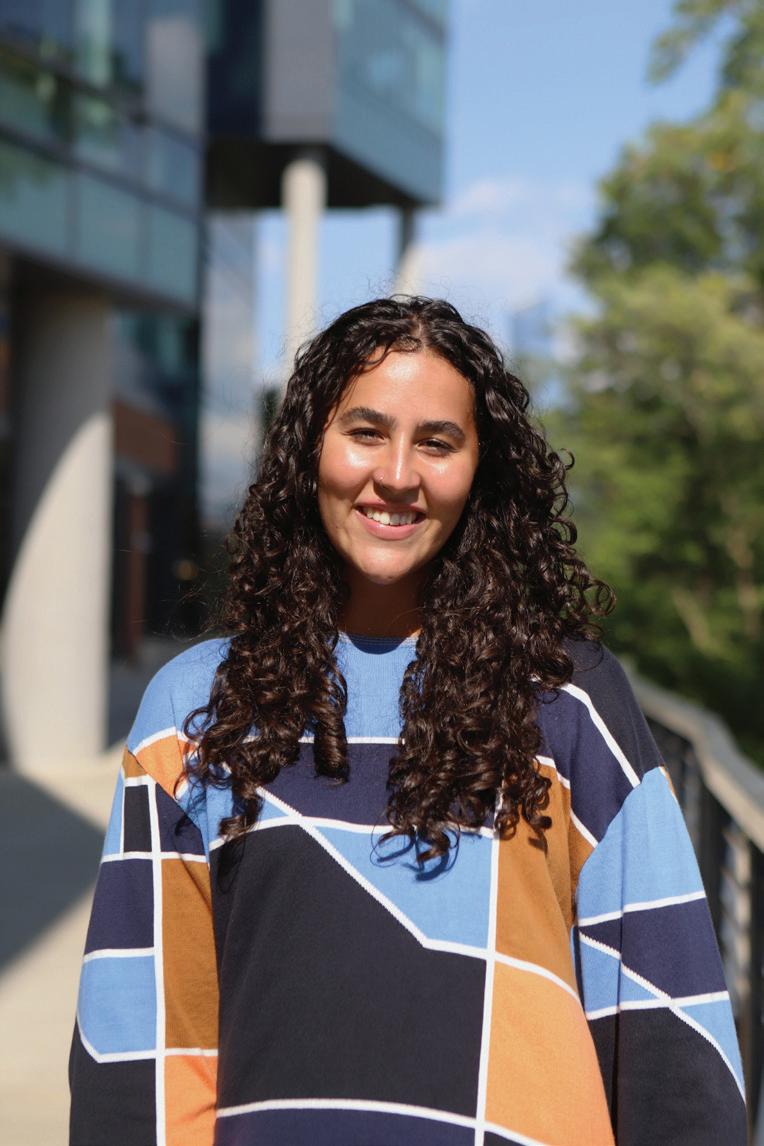
Jiya Jaisinghani ‘27 Editor-in-Chief
Opinion
A haunted house with Brat
weird occurrences. He finds manuscripts that belong to his demented mother that change every time you read them, strange people appearing outside, and an obsessive need to pick at his skin, which has begun to peel off in massive pieces. Our narrator, Gabriel (after the author), attempts to explore the new oddities in his life while attempting to grieve over the loss of his beloved father.
The novel is written in a mixed style composition. While narrating his life to us, Gabriel stumbles upon multiple manuscripts, screenplays, and journal articles written by the people in his life, and they are presented to us in the same way that Ga-
BEYOND THE PLATE
Breaking bread, breaking stereotypes
food to your mouth with your hands is said to harmonize these elements, grounding your body and enhancing the eating experience. Even outside spirituality, research shows that tactile interaction with food encourages mindful eating, helping people feel full sooner and enjoy meals more consciously.
briel reads them. Later on in the novel, Gabriel discovers a mysterious, haunting manuscript written by his late father about a cryptic television episode that changes every time he watches it. However, when you read this in the novel, it is set up in screenplay format, breaking up the monotonous nature of the narrative. In my opinion, it works very well.
While I do see this work and its primary language very divisive (along with its contents), the way that Smith intertwines different writing formats proves that it was intentional. The way he is able to expertly change tone and voice between the different characters’ written works
shows that if you are not a fan of his style for the main part of the novel, it is an artistic disagreement rather than his ability as a writer. In fact, even though I thought the way that he wrote throughout the main narrative was slightly repetitive and vague, the mixed styles were interesting enough for me to understand the choice.
While not necessarily scary, the novel leans heavily into horror themes and motifs. This is absolutely the most interesting and compelling part of the novel. The story itself is enjoyable and thought provoking, but the inclusion of horror mixed into the text elevates the story. Instead of a typical
THE
of course) to enjoy the meal as it’s traditionally eaten. Here are some great foods to try by hand:
- Indian curries with naan or rice: Tear a piece of naan, scoop a bit of curry, and savor the warmth and texture together.
spoons, and knives. Yet across the world, using one’s hands to eat isn’t just normal — it’s cultural, scientific, and deeply human. From Indian thalis and Ethiopian injera to Middle Eastern mezze and Filipino kamayan feasts, eating with your hands is a centuries-old tradition rooted in mindfulness, connection, and even better digestion.
When you eat with your hands, your fingers act as sensory guides. The moment you touch your food, your brain receives signals that prepare your stomach for digestion — saliva production increases, and enzymes start activating. This process makes digestion smoother and more efficient. It’s a kind of “pre-digestion” that utensils can’t replicate.
In Ayurveda, an ancient Indian health system, each finger represents one of the five elements — earth, water, fire, air, and space. Bringing
Unfortunately, Western dining norms have long stigmatized eating with hands as “unsanitary” or “uncivilized.” These stereotypes often stem from cultural bias rather than fact. In reality, eating with your hands is no less hygienic than using utensils — what matters is washing your hands, just as you would clean a fork before eating.
At Stevens, where our community thrives on diversity, it’s important to challenge these misconceptions.
Many students from South Asian, African, or Middle Eastern backgrounds may hesitate to eat traditional meals in public for fear of judgment. Yet campus dining spaces should be places of comfort, not conformity. Eating with your hands isn’t something to hide; it’s something to embrace.
Imagine a “Cultural Eats” day at Pierce Dining Hall — tables lined with banana leaves, fresh naan, soft injera, or steaming dumplings, inviting students to experience the authenticity of different cultures through touch and taste. Instead of forks, students could use their hands (after washing,
- Ethiopian injera platters: Use pieces of the soft, spongy bread to pick up lentils, vegetables, or meats.
- Middle Eastern mezze: Hummus, falafel, and pita are perfect finger foods for shared meals.
- Filipino kamayan (boodle fight) feasts: A communal dining style where rice, meats, and vegetables are laid on banana leaves, encouraging everyone to eat together — no utensils required.
story of grief and loss, Smith explores those feelings in a surrealist way to fully encapsulate what it is like to lose someone you adore.
The novel itself is just under three hundred pages, and it reads even quicker. Because of the mixed writing format, there are a lot of page breaks and empty spaces that take up a lot more room than the story actually does. It is incredibly feasible to read this novel in one sitting, and I may even recommend it. The constant flow between chapters works really well on a never-ending read throughout the book. I highly recommend this book to anyone who wants to branch out more in the horror genre and
BIG QUESTIONS OF EVERYDAY
Invisible flowers
ter; we opened up because he treated us like equals, not just students. The class became its own little world. We joked, teased, and learned like old friends sitting around a café table. One of the books we read was The Little Prince, which still stands out to me more than any other.
doesn’t want to particularly read something scary, but rather uncomfortable. I do want to give a minor warning to those who are uncomfortable with body horror, as there is quite a bit in Brat
- Caribbean doubles or roti wraps: Soft, handheld foods that are best enjoyed without the interruption of metal cutlery. Eating with your hands is about more than just food — it’s about connection. It encourages conversation, community, and appreciation for culture. It invites us to slow down, feel the warmth of freshly cooked food, and share it openly with others.
At Stevens, where innovation meets humanity, embracing such cultural practices can make our campus more inclusive and globally aware. Next time you grab a meal, skip the fork — let your hands do the work. You might just find that food tastes a little better that way.
I just couldn’t keep pace with the course. Everything felt like it was moving too fast — college applications, choosing majors, and trying to enjoy (survive) my last year of high school. I tried desperately to find control in the middle of the chaos, which, as I think most of us have experienced, often leads to the opposite result. Eventually, I transferred out of the AP classroom and into French Honors.
I’ll admit, my pride was a little bruised walking into that class. It was a small class of seven students, and I’m sure it wasn’t hard for everyone to guess why there was a sudden new addition a month into the school year. But when I walked out of class that day, I felt better than I did when I entered, a feeling I hadn’t really had in a while. Dr. Houston had a rare ability to bring back curiosity, mischief, and laugh-
The Little Prince tells the story of a little boy traveling from planet to planet in search of understanding. He appears before a pilot who has crash-landed in the Sahara Desert and tells him about the people he has met along the way — each one a reflection of who we become when we grow up: a king obsessed with control, a vain man desperate for admiration, a businessman who counts stars but never sees their beauty, and a geographer who records the world without ever exploring it.
The Little Prince also tells the pilot about his rose, vain, and sometimes difficult, yet he still loves it deeply. When he arrives on Earth and finds a field of roses just like hers, he’s heartbroken. His rose isn’t unique after all. Then he meets a fox who teaches him one of life’s simplest, most beautiful lessons:
“It is the time you have wasted for your rose that makes your rose so important.”
Through this, the Little Prince realizes that love and meaning come from care, time, and connection, not rarity or perfection. Later, as he prepares to leave Earth, he says, “The stars are beautiful, because of a flower that
cannot be seen.” He understands that the love we give to others changes how we see the world, even after they’re gone. By the end, a pilot who had forgotten how to imagine learns his most valuable lessons from the Little Prince who is only a child, but whose innocence and wonder allowed him to see the world with his heart rather than his thoughts. While Dr. Houston wasn’t a little boy like the Prince, he might have once been a pilot stranded in the desert, like I was that year, and as many of us are at one point. In that small classroom, he became the Little Prince for all of us. Sometimes we forget how to see the world with wonder until someone reminds us. That’s what Dr. Houston did for me. His class taught me that love lives in the moments we tend to — the patience of a teacher, the laughter of friends, the comfort of belonging. In a time of need, the planet he created, one filled with laughter, curiosity, and quiet understanding, was a place I will always treasure. It taught me to value love not as something that lasts forever in a physical sense, but as something that changes the way you see a starry night. Although that class had to end, I’ll always carry parts of it with me, like the pilot carries his memories of the Little Prince. And when I look out of my dorm window on a cloudless night, that class, Dr. Houston, and my classmates are some of the flowers that make up my view.
BY BREONA PIZZUTA ‘27
The modern woman is often celebrated for her ability to juggle: a successful career, a demanding home life, community involvement, and the emotional labor of maintaining relationships. We are taught from a very young age to wear the “superwoman” cape proudly, viewing constant endurance and giving until exhaustion as the benchmark of success. But what if this expectation of tireless sacrifice is not a badge of honor, but a silent form of oppression? The truth is, self-care is not a luxury or a selfish indulgence; it is a fundamental and radical form of women’s empowerment, a critical prerequisite for sustained leadership and
meaningful change. The cultural mandate for women to be ceaseless caretakers creates a debilitating trap. From a young age, many women internalize the idea that their worth is tied to their usefulness to others. This creates the martyrdom mandate, pressuring us to put our own needs last, resulting in chronic stress, mental fatigue, and profound physical burnout. When a woman is running on empty, her ability to show up powerfully—negotiating for a raise, speaking up against injustice, or even sustaining her own ambitions—is severely compromised. Exhaustion is the opposite of empowerment, effectively silencing our voices and diminishing our capacity for action. No one can dismantle systemic
inequalities when they are struggling just to get out of bed.
This is where the power of setting boundaries becomes our greatest tool. To say “no” to an additional task, to dedicate an hour to quiet reflection, or to seek professional mental health support is not a sign of weakness. It is a strategic choice that preserves the precious resources necessary to fight battles, both personal and political. Boundaries are acts of self-respect that tell the world, and more importantly, ourselves: “My well-being is non-negotiable.” When a woman commits to protecting her own energy, she makes a profound statement about her own value.
Furthermore, viewing mental well-being as a ne-
cessity challenges the toxic ideal that strength means being emotionally impenetrable. True power is not found in suppressing pain or ignoring stress, but in acknowledging human limitations and actively addressing them. Prioritizing rest, therapy, or simply personal space is an essential practice that protects our clarity. An empowered woman is one who is whole, healthy, and alert, ready to engage with the world without the drag of preventable fatigue. By normalizing self-care, we set a powerful example for other women, shifting the narrative from endurance to sustainability. We show that stepping back is not quitting, but a strategic pause to reload and prepare for the next effort.
The radical nature of self-care is not just about individual relief — it has a profound collective impact. When women openly prioritize their mental health, they dismantle the long-standing myth that powerful leaders must be constantly accessible and emotionally impervious. This normalization is crucial for younger generations, offering them a healthier model of leadership built on integrity and sustainability, rather than self-sacrifice. Furthermore, by addressing our own needs, we become better advocates for the systemic changes necessary to support all women — changes like paid family leave, affordable mental healthcare, and equitable workplace policies. The fight against inequality is a marathon,
not a sprint, and every act of self-preservation ensures that we are present, sharp, and effective for the long haul. Ultimately, the fight for women’s equality requires us to be resilient, not brittle. If we are to effectively challenge the status quo, we must recognize that the most impactful act we can perform is ensuring our own longevity and well-being. Embracing self-care is a revolutionary political act because it reclaims a woman’s time, energy, and mind for herself. It is the foundation that allows women to not just survive the pressures of the world, but to thrive and lead the charge for a better one. Your self-care is an essential contribution, so treat it as such.
PHOTO COURTESY
The Man from Earth: Weight of Immortality
lithic Era, moving every 10 years to avoid suspicion of not aging. What follows is the rest of the group prying and investigating his story.
What unfolds is not proving or disproving John’s claim, but more about what his existence means. If John’s story is true, then everything they believe about religion, history, and science starts to crumble. The biologist pokes and prods about his physiology. The anthropologist tries to trip him about ancient civilizations. The theologian faces something more personal. What if religion, the foundation of her work and life, was only but myths and misunderstandings that John lived
play on his deathbed — a rare work of fiction that needs no spectacle. It’s all talk, making the dialogue the centerpiece of the film.
The film begins with John Oldman, a history professor, packing his belongings and preparing to move. His colleagues drop by for a farewell, wine and food in hand, questioning him on his departure. After being pressured, John offers an explanation that stuns the room. He says that
When John’s story touches on religion, specifically when he suggests that he might have inspired the tale of Christ, the film reaches its most pivotal moment. The reaction of the group, especially the theologian, is explosive and life-changing. For her, John doesn’t reveal something profound. For her, he has just said something unspeakable and unholy. John’s claim shakes her foundations and the idea itself is enough to question her beliefs.
After realizing that John might have gone too far, he
calls it off and says that this is all an experiment, a thought exercise. With a room full of experts in various fields like anthropology, biology, and history, he was intrigued to see how they would handle a situation like this. His colleagues are frustrated, slightly embarrassed, to believe their friend’s lie for all this time.
But in the film’s last minutes, the audience finds out that John Oldman was telling the truth of being alive for 14,000 years. A professor called in earlier to assess John’s mental state realizes that John had been his long estranged father. And in that moment John’s story becomes real. He is the immortal man that he claimed to be.
After thousands of years, John had learned to understand that no can truly accept what he is. To reveal his truth is to destroy the lives of those who believed in him. So he packs his things, countless times as he had before and leaves once again. A new identity, a new decade, and new existence among another set of mortals who will never learn his truth.
Director Richard Schenkman stages the film almost like a play. The camera rarely moves and the lighting
stays simple. The minimal ism may have been a budget constraint, but it also serves as a strong narrative weapon. By removing the visual spec tacle, we are forced to listen and confront the ideas posed by John Oldman. Every word uttered crafts another sto ry the audience sees in their mind. The tension comes from what’s being said. Every line has the potential to ig nite belief or disbelief in each of the characters.
100 Bloomfield St , Hoboken littlecitybooks com Books journals planners cards games 10% off instore and online* for Stevens students, faculty and staff
*include note in online orders follow us @littlecitybooks
The Man from Earth leaves us not with answers, but with a quiet ache. The truth about immortality isn’t freedom, its isolation. To live forever is to live alone, see ing your close ones pass by. John’s story stays with us not because we believe him but because we understand why he must keep lying. In the
Spotify introduces lossless formatting
er platforms that pride themselves on lossless audio.
payment of artists. This new lossless formatting for premium users enables further monopolization of the platform, making users stick to it instead of using Tidal or oth-
Lossless audio is the most high-fidelity way to stream. It allows listeners to hear what is closest to the original version of the song without compression on any of the frequencies. The audio is left uncompromised, which is a big deal for audio engineers or music fans. Most streaming services use audio that can be listened to with poor internet, so the audio gets compromised. Lossless audio is primarily concerned with the sample rate. Explained simply, the sample rate is half of the sample rate and also the highest frequency the sample rate can produce. The most common sample rate is 44.1khz, and the human range of hearing is up to 20hz, so a sample rate of 44.1khz covers it. However, lossless audio is more complex than just the sample rate.
So if a sample rate of 44.1kHz just about covers our range of hearing, what
THE LANGUAGE OF FLOWERS
is the point of this “lossless format”? Lossless audio can also be determined by the hardware being used by the listener, and most of the time, it is hard to tell the difference between real lossless audio and high-resolution audio. Sometimes the difference between 44.1k and anything greater than 44.1k is nearly indistinguishable to the ear. This depends on how developed your hearing is, or the capabilities of your devices. For example, an iPhone typically can only play audio up to 48kHz, while high-resolution masters can exceed up to 192kHz. The point of lossless audio is hearing it accurately, even if the difference isn’t super noticeable. As an aspiring audio engineer, training my ears to listen to specific frequencies is really important to me. Learning about these different frequencies by comparing lossy to lossless audio is another interesting way to explore this format.
In summary, don’t let
streaming services take the cheap way out, especially Spotify. As a consumer, you deserve to purchase and listen to music at its original and best quality. You deserve every intended frequency in the music you consume. Spotify has, in many instances, taken the cheap way out, especially regarding the payment of artists, contributing a measly rate per stream of $0.003. The Spotify CEO is also unnecessarily fascinated with the promotion of AI-generated fake artists to continue to monopolize and generate revenue, which detracts from the work of real creatives. Spotify, only now introducing lossless formatting, showcases that their focus isn’t really on the consumer, but it also can’t be the artists, with the monetary choices made by the company. If you are a Spotify user, consider these things and don’t let a company like this, which is so commonly used, set a standard for what is acceptable.
UNDERGROUND WORLD OF FASHION Anok’s reign
BY GAVIN RUBY ‘27
flower
will be looking
love, innocence, and purity.
It is also highly poisonous to cats. In the Victorian Language of Flowers, the White lily symbolizes purity. Sometimes I feel like the only thing I ever do is mess up. I try to be there for everyone and anyone, but I can never be there in the way everyone wishes me to be. I try to divide up my time so that I can focus on each of my loved ones and devote my attention to them. I try to make those closest to me know that I care for them and that I prioritize them. I thought that when I went to college, I would do my best to keep in contact with everyone from home while becoming friends with as many people as I could. With only 24 hours in the day and seven days in the week, I realize that there simply is not enough time to be everything for everyone. That was a really tough pill for me to swallow. I wound up being distanced from some
home friends and missing my scheduled plans from my own sheer exhaustion. I tried and had the purest of intentions, but in turn wound up hurting people.
This past weekend, I had planned a visit home. The whole week prior, I was trying to finish all of my work so that I could simply enjoy my weekend. I was in pretty good shape until Thursday night, when I saw seven more assignments appear on my Canvas page. I had so much work and so little time. It feels like that’s all I experience sometimes — so much to do and so little time to do it. Over the weekend, I had intended to visit my boyfriend, and then I learned that my brother had a soccer game that he wanted me to attend, my best friends were coming home from school, and my Poppy was making one of my favorite home-cooked dinners. I did my best to plan out
everything. I planned by the minute, trying to make sure I got time with everyone. Instead of bringing peace, my jam-packed schedule brought chaos. By the end of it, I had only done two out of the five things I had planned. I did not get to have dinner with my Poppy, and I did not get to see my best friends. I intended to see everyone and be in as many places as I could, but it simply did not work.
I constructed such a cha otic weekend to try and “ap pease” all of my friends and family. In reality, the one I was trying to “appease” was myself. I wanted to do ev erything, and it failed. I felt horrendous, and by the time I got back to my dorm, I was exhausted. When I spoke with my loved ones about how I wouldn’t be able to show up for them in the way I had planned, they simply said that there was no issue. They
the global impact of a model who over the last 12 months has dominated the industry. With an influence that transcends the catwalk, the Model of The Year has made an outstanding contribution to the industry, garnering numerous editorial and advertising campaigns throughout the year.” Previous winners of the award include Alex Consani in 2024, Paloma Elsesser in 2023, Bella Hadid in 2022, and Naomi Campbell in 2017. In 2023 and 2024, most people believed her to be snubbed of the award. Finally, she has been recognized for her hard work. In 2023, Yai walked more than 60 shows during the span of multiple fashion weeks, adding to a career total of 310 shows. Notable moments from her career so far include Mugler SS24, Vetements SS25, Versace 2025, and her British Vogue February 2022 cover. Keep in mind the average model
walks about 25 to 30 shows on average in a year — Anok doubled that. She has proven herself time and time again to be a marketable and talented figure in fashion, a modern-day super in the industry. In an industry where nonwhite, especially Black models have to work harder than their white counterparts, this moment feels more bittersweet than anything. She deserves this award in general. However, I feel as though Yai has been constantly overlooked and believe she deserved this award last year or the year prior because she has become such a staple in the fashion world, whilst also creating a global impact that the BFC is looking for. This isn’t to take away from the previous winners as their wins are notable for various reasons; Elsesser became the first full figure model to win, and Consani would become the first trans-model to hold the title. Despite this, you can’t help but feel for Yai — in 2024, she would make a post to Twitter in which she expressed her frustration to the British Fashion Council, stating, “Thank you, but I don’t want it anymore.”
Apart from this, Yai has become more vocal in addressing her discomfort with the fashion industry as it frequently exoticizes Black women and takes from Black culture whilst trafficking in career-crushing racism, colorism, and discrimination. So when taken from this viewpoint, Yai’s disappointment should not be taken at face value, but rather be viewed as much deeper than what it seems.
Overall, I am happy for Yai for finally winning this achievement, but I can’t help but look deeper into this after paying attention for so long.
showed me that while they all love me, they understand that life is chaotic and stressful, and it was expected that I wouldn’t be able to spend as much time with them once I made it to college. It made me realize that sometimes even the “purest” intentions can fail. At the end of the day, when you make plans, you is only so much a single person can do. That there are only so many responsibilities a person can have. Pure intentions can lead to pure moments, but it will only happen if you give yourself the grace to make it happen. So, remember to give yourself and those around you grace. After all, everyone is just trying
we
at today is the White lily. With six large petals splayed and a gorgeous center of yellow stamens, the lily symbolizes
PHOTO COURTESY OF AMAZON
Jake Santos ‘28
“We took a thermo exam last week and I overheard a group talking about the lowest score they got.”
Claude Dallemand ‘27
“I
ROVING REPORTER
By Isabelle Villanueva & Rachel Choi
“What’s the funniest overheard conversation on campus?”
“I overheard some mech e majors talking about how they left two question blank on thermo but still got over a 90.”
Puzzle Page
Abigail Rosingana ‘27
was in the bathroom and overheard two guys asking ‘Do you got a
heard someone trying to figure out how to use a Labubu.”
Mini Crossword Cryptolist
Hidden Links
Inspired by the British game show Only Connect, the goal of this puzzle is to find the hidden connection between four seemingly abstract clues. Each answer will use trivia, wordplay, logic, or some combination thereof. The solution is always more specific than “nouns”, “places”, etc. What do the following have in common?
Red Black Coral Caribbean
Shark Lily King Woods
Swimming Skiing Chemistry VR Gaming
*Puzzle instructions by Stephen Pachucki
Difficulty: Moderate
The following list has been translated using a basic substitution cipher. For example, if E represents T in one word/phrase, it will represent T in all the words/phrases in the list. No letter maps to itself. The list is alphabetized. Hint: start guessing things in the category and see if any of the letter patterns match up.
Broadway Shows
*Puzzle instructions by Stephen Pachucki ZTLTSGK PTUQDKBR LGGKDGXIQZG
Chain Reaction
Each of the six clues on the right leads to a two-word phrase or compound word. Insert each answer into two of the boxes on the right. At the end, you will have an interlocking chain of six phrases.
*Puzzle instructions by Stephen Pachucki
Clues: 1-2. New Jersey meat product with a hotly debated name (I chose the right one) 2-3. A beef patty on brioche buns 3-4. Fast food chain 4-5. Ruler of Great Britain during the American Revolution 5-6. U.S. president in the early 2000s
Kieron Ampaw ‘26
“This little girl screamed 6 7… and I laughed.”
Chris Kalish
Byron Manuel ‘29
Terrence Thomas ‘29
bush?’”
Tanishka Kapoor ‘26
heard men trying to explain how a woman’s period works.”