[The Stute] November 21, 2025 (Issue 11, Volume CXXIII)
Due to recent budget cuts, Stevens’ drop-in tutoring has been cut. The Stute recently shed light on this, and in that piece, a new supreme has come into the picture to substitute what was recently taken.
tial Hall Association (RHA) members came together to discuss the possibility of implementing a newer drop-in tutoring to step in.
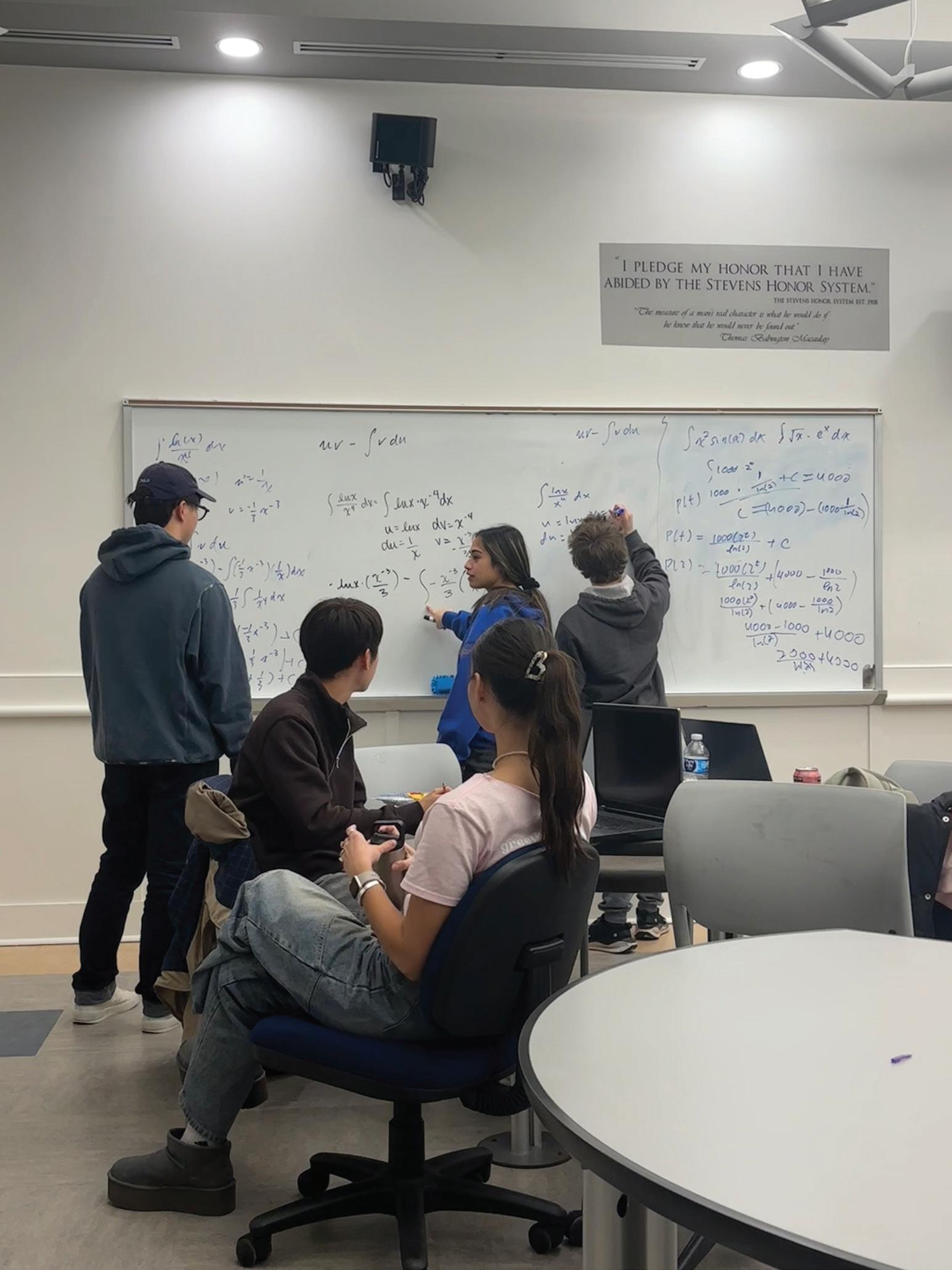
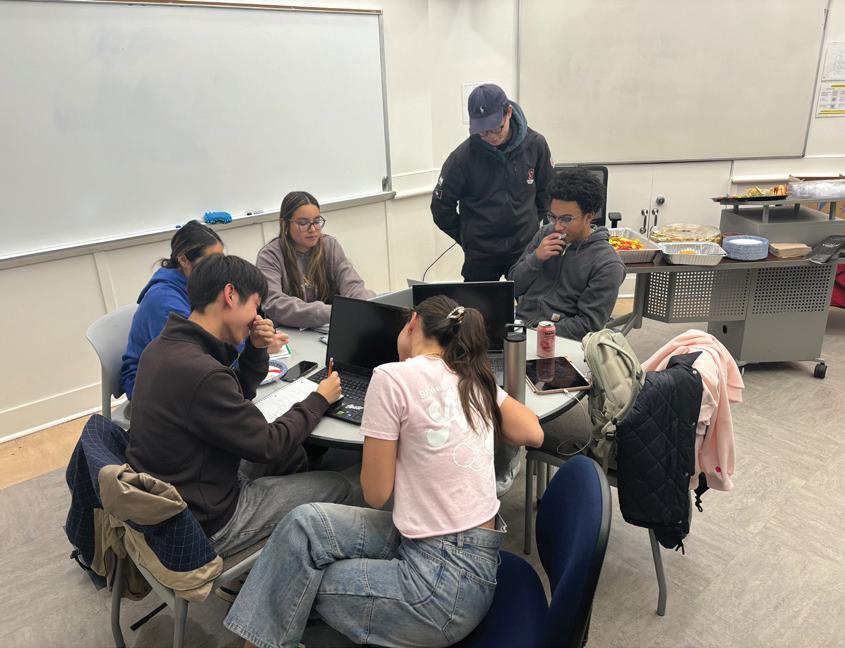
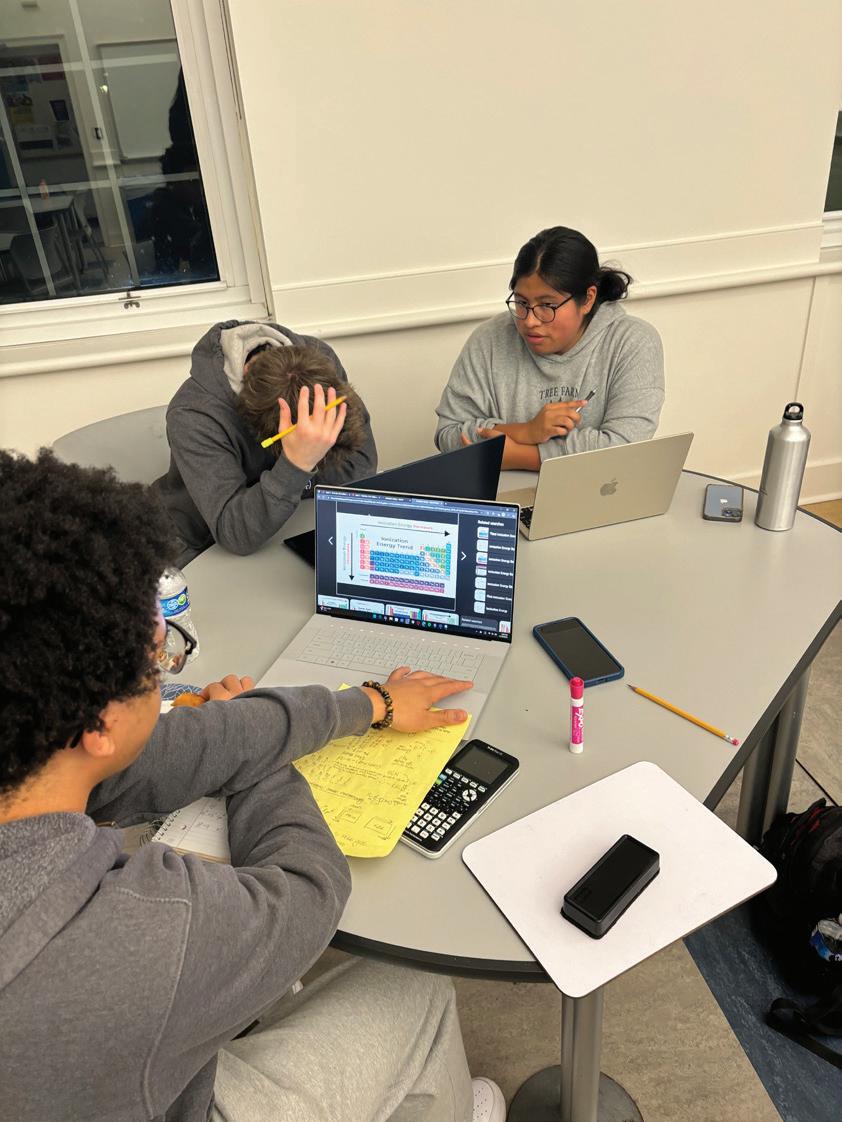
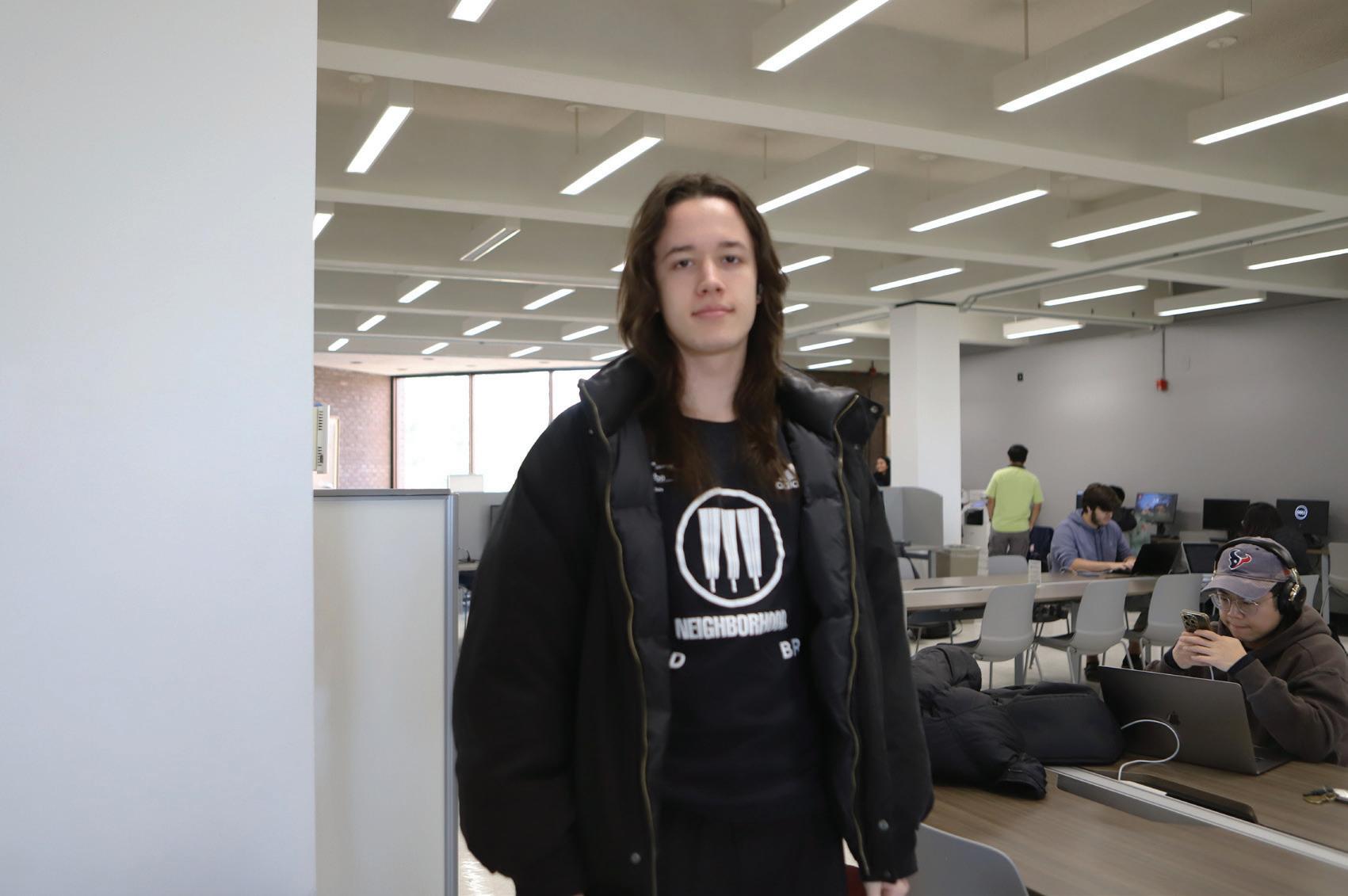
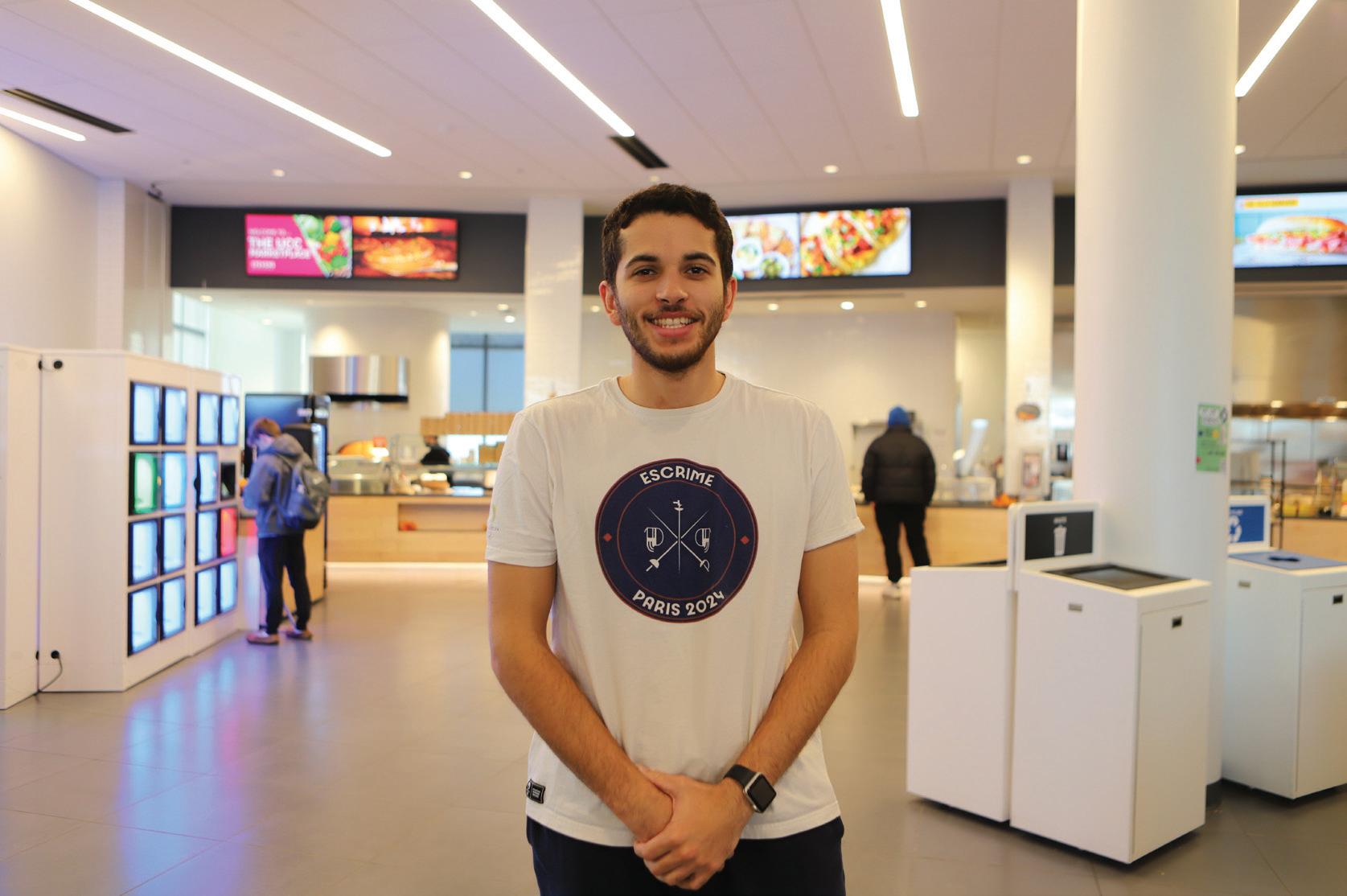
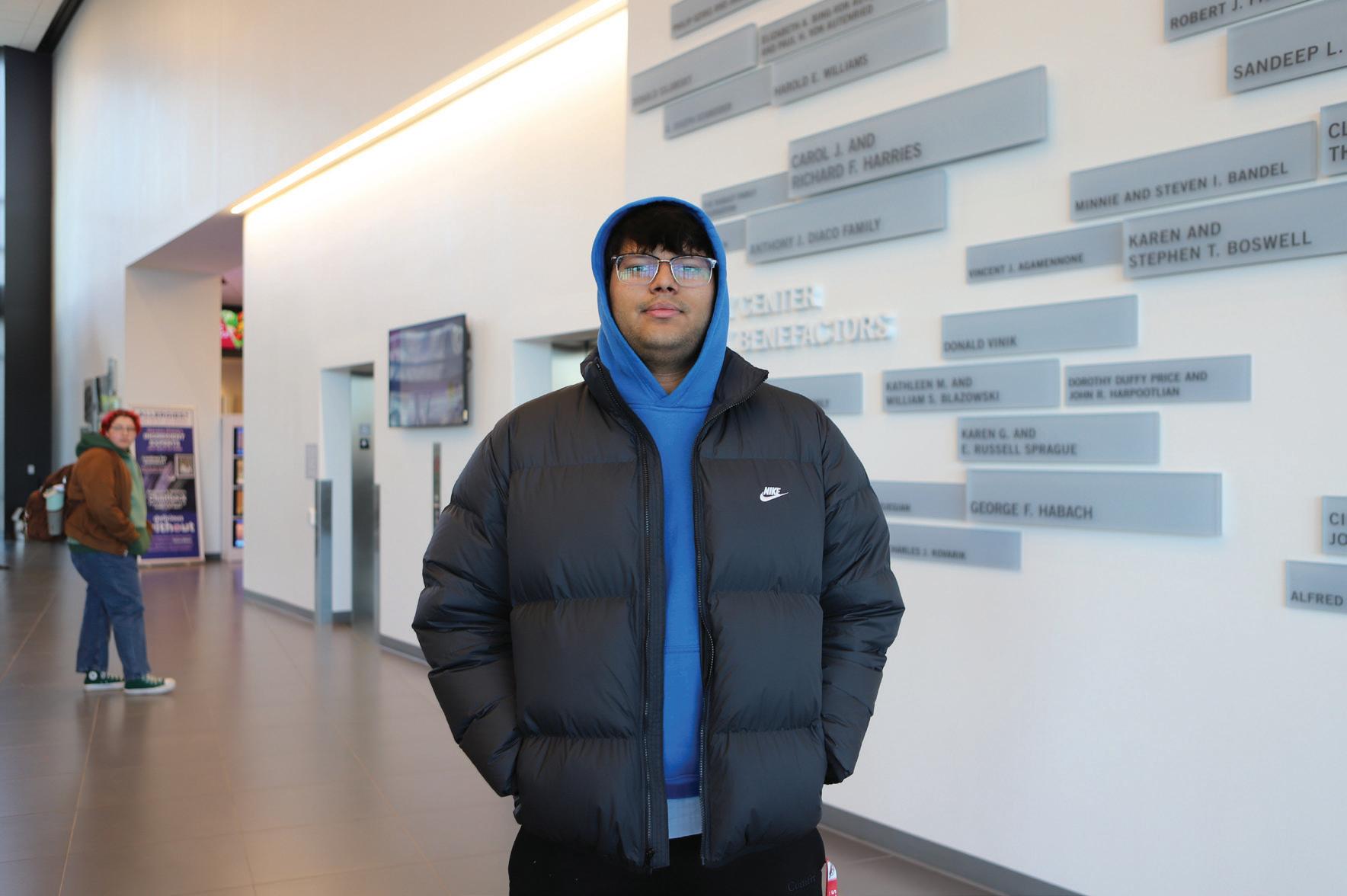
After a month of planning, RHA had the opportunity to host the new tutoring center. The first day was met with a great turnout, 2/4 Civil Engineering stu dent. It isn’t certain that drop-in tutoring by the Academic Support Center (ASC) will be back anytime soon, but what is certain is that RHA will be hosting more sessions. Here, Chen answered some questions that students may have
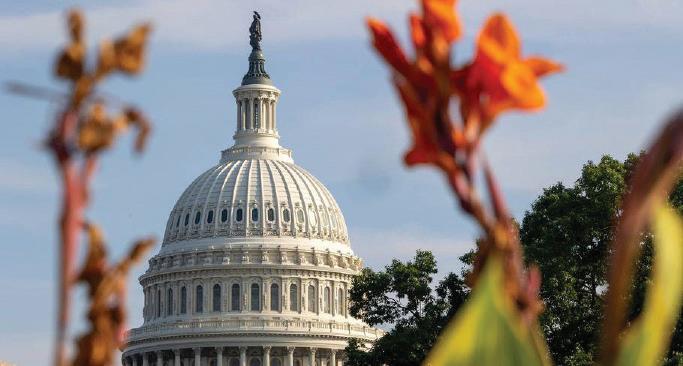
The longest government shutdown in U.S. history has finally come to an end after the Senate approved a contentious spending package in a 60–40 vote. The agreement, reached in November 2025, reopens the federal government and offers much-needed relief to millions of Americans who endured missed paychecks, stalled food assistance, and widespread disruptions to public services. Still, it has deeply divided Democrats because it entirely excludes their top priority: extending Affordable Care Act
(ACA) insurance subsidies. What the Deal Includes The package funds most federal agencies through January 30, 2026, and separately approves spending for agriculture, military construction, and legislative offices. Importantly, it reverses shutdown-related layoffs and guarantees retroactive pay for hundreds of thousands of furloughed federal workers — an urgent step after weeks of financial strain.
Nutrition programs like the Supplemental Nutrition Assistance Program (SNAP) will also regain funding, although certain
court rulings mean some benefits may not restart immediately for all recipients.
On the ACA subsidies, Democrats’ major sticking point, the deal offers no renewal. Republicans refused to negotiate on health care while the government remained shut down. Instead, Senate Majority Leader John Thune pledged that the Senate would hold a vote on the issue in December. With the House—controlled by Republicans—making no such promise, Democrats fear
about the new program. What is RHA’s purpose in its decision to bring back drop-in tutoring?
“Part of RHA’s purpose is to support students on campus, and when we heard about the Drop-in tutoring’s hours being cut, we knew this decision,
Professor Eric Ramos awarded NSF Grant for advances in Computational Algebra
BY MATT SOLTYS, SCIENCE WRITER
Mathematical journeys begin in unorthodox ways. This was the case for Eric Ramos, assistant professor in the Department of Mathematical Sciences at Stevens, who gained an affection for mathematics in high school through a TV show. Numb3rs is a typical police drama with the added twist of one of the main characters being a math genius who uses his talents to solve crimes. Referring to this as his “supervillain origin story,” Ramos’ curiosity from the show would lead him to explore the field of mathematics and become a professional mathematician, earning his second grant from the National Science Foundation (NSF).
Ramos began his graduate-level studies in the field of number theory, the study of integers, citing that it was “the oldest field and theoretically rich.” This took him to the University of Wisconsin-Madison, where he completed his Ph.D. under Jordan Ellenberg, professor of mathematics and accomplished author of titles such as How Not to Be Wrong: The
Power of Mathematical Thinking. Serendipitously, Ellenberg was the math consultant for the first season of Numb3rs , a fact that Ramos did not discover until later.
Combinatorics, the branch of mathematics concerned with counting, is where Ramos would take his talents next. “It might sound simple, but there are still deep questions about counting,” he said. This would largely intersect with the research he was doing as an assistant professor at Bowdoin College in 2021 to earn his first grant from the NSF, LEAPS-MPS: The representation theory of combinatorial categories. The funding backed studies of networks of connected points to see their use in understanding how large groups of points with no direct connections can exist, and how information can be efficiently spread through these networks. The other major project involved looking at the complex patterns that emerge when multiple robots move randomly along these network tracks without crashing into each other. His newly earned NSF SEE RAMOS PAGE 2
JOSEPHINE CHOONG, SECRETARY
On October 31, New Jersey’s Governor Phil Murphy declared a state of emergency (effective November 1 at 12 a.m.) because of the suspension of federal Supplemental Nutrition Assistance Program (SNAP) benefits.
Murphy issued Executive Order No. 402, which established a coordinated statewide effort to provide food assistance by empowering state agencies to help vulnerable residents and protect public health and safety. More than 800,000
Because of the pause on SNAP benefits, many may go hungry and are at risk of experiencing adverse health outcomes.
This came into fruition on November 3, when the National Guard was deployed to deliver three refrigerated storage containers to the Community Foodbank of New Jersey (CFBNJ) in Hillside and Fulfill in Neptune, to increase cold storage capacity at critical emergency hubs. In Hillside, the National Guard is also supporting on-site distribution as families are lining
up for food. This is a joint operation between the Air National Guard, the Department of Health, the Office of Emergency Management, and the South Jersey Transportation Authority, working together to figure out logistics, storage, and transportation for perishable goods and food banks.
“With more than 800,000 New Jerseyans relying on SNAP to put food on the table, the Trump Administration’s decision to suspend benefits has created a clear and present threat to the health and safety of our
while understandable, would take away an integral part of the support system that should be available to all students. We decided to organize a 2-day event the week before Thanksgiving break, a popular and busy time for exams.”
What are you guys looking for in tutors so that the students are getting an adequate learning experience?
“We are seeking upperclassmen who are interested in and eager to assist their peers. We reached out to many organizations to help out as tutors for our event. We have support from members of APO, ASCE, Gear and Triangle, RHA, and a few friends.”
How does your program differ from what was created by the Academic Support Center (ASC)
“Our program is less like formal tutoring and more of an event where people can come to tutor and get tutored. We had some food, a raffle for the volunteers, and tried to offer students a chance to get help in classes they need! Many students found the event helpful as they prepared for their upcoming exams.”
For the future, what are RHA’s plans for new possible initiatives to enhance
RAMOS CONTINUED FROM PAGE 1
216B
NOTICE A MISTAKE?
Email us at eboard@thestute.com.
All opinions and editorials reflect the views of their respective author(s). No Part of The Stute may be reproduced in any form, in whole or in part, without the written consent of the Editor-in-Chief. Cited references of The Stute are permitted.
All members of the Stevens community are able to submit a Letter to the Editor to be published in The Stute. Letters must refer either to a piece published in The Stute or to The Stute in general and must be between 400 – 800 words in length. Submit letters to editor@thestute.com with your name and title (when applicable) or using our Google form. For writers who wish to write a Letter to the Editor anonymously, please see our policy on anonymity.
The Editorial Board reserves the right to choose whether or not to publish a submitted Letter to the Editor based on a majority rule vote, and additionally reserves the right to edit letters for clarity or request authors to revise. Provided that the author approves the final version, The Stute reserves the right to edit letters according to our copy editing procedures, defined in our policies.
All members of the Stevens community are able to submit a standalone opinion piece (otherwise known as an Op-Ed) to be published in The Stute. Op-Eds must be between 400 – 800 words, but longer submissions will be considered on a case-by-case basis. To submit an OpEd please email eboard@thestute.com with your name and title (when applicable) or using our Google form (tinyurl.com/submit-t0-stute). For writers who wish to write an Op-Ed anonymously, please see our policy on anonymity.
The Editorial Board reserves the right to choose whether or not to publish a submitted Op-Ed based on a majority rule vote, and additionally reserves the right to edit Op-Eds for clarity or request authors to revise. Provided that the author approves the final version, The Stute reserves the right to edit Op-Eds according to our copy editing procedures, defined in our policies.
the program?
“RHA is always looking for more opportunities to help out students! We are currently launching a laundry donation program and continuing to collect feedback from students on all sorts of things. In the future, we plan to continue offering service opportunities and plan events that support students’ needs.”
In all, this new program is a stepping stone in something that many students felt was a necessity to their academic career. Drop-in tutoring was a place for many students to obtain insight into classes, to learn from those
who have already taken a course, and even for friends to come together and do school work together. It was more than a place to get tutored, but a foundational incentive for students to do well in school, especially when it was crunch-time and last-minute for midterms or finals. As previously mentioned, the probability of ASC bringing back drop-in tutoring doesn’t seem likely, so take advantage of RHA’s while we still have them. Moreover, to make sure that this program continues to prosper and that more students have the opportunity to regain what was lost, below is a QR code to join and become a tutor.
research grant, The Computational Algebra of Representations of Categories, focuses on making certain mathematical theories computationally amenable. The importance of this notion comes from the existential nature of most results in abstract math. Ramos explains that “making a theory ‘computationally amenable’ means finding ways to actually compute those objects. That shift from ‘it exists’ to ‘here’s how to find it’ makes the theory more useful, especially for applied fields like physics or robotics.”
One project he will be working on under this grant centers on the categorical Graph Minor Theorem, which Ramos considers one of the greatest achievements in combinatorics. Alongside the 20-year-long monumental effort of 20 papers to prove the theorem, he explains that it has significant mathematical implications. “A graph is a set of vertices (dots) connected by edges (lines).
The Graph Minor Theorem says that in any infinite collection of graphs, one graph will always be ‘contained’ within another. That’s remarkable because you’d expect infinite graphs to grow infinitely complex and unique. But the theorem shows that no matter how different you try to make them, there’s always some overlap — one fits within another.”
Ever active, Ramos also plans to host an interdisciplinary conference to further work on the
aforementioned robot traversal problem. Focusing on motion planning and topological robotics, he says this will “connect robotics, mechanical engineering, and mathematics, especially topology, which studies the properties of space. Understanding the topology can help design better movement algorithms.” On November 17, he presented research on one of the many conjectures of famous mathematician Paul Erdos to Stevens’ Algebra and Cryptography Center. This project used an Artificial Intelligence (AI) enhanced approach to attempt to find counterexamples to a proposed property of trees, a specific type of graph.
With more than a decade of experience teaching mathematics at both the undergraduate and graduate levels, Ramos is committed to improving access
to mathematical education. His work on the Erdos conjecture was done with a student he mentored as part of the NYC Discrete Math REU, a summer research program for undergraduate students. He also has and plans to continue using his own grant funding to help students in summer research. “I realized that the old belief that ‘real mathematicians don’t care about money’ excludes talented students from less privileged backgrounds. So now I always budget for paid student research positions. Access matters. Students shouldn’t have to choose between pursuing math and earning an income.” He gives one final message: “I want to show students that while not everyone will be a great mathematician, a great mathematician can come from anywhere.”
PHOTO COURTESY
SENATE
CONTINUED FROM PAGE 1
the delay will allow premiums to spike for millions later this year. Democrats Who Broke with Their Party Eight Democrats and Democratic-aligned senators voted for the package despite party leaders urging them to hold firm. The group included moderates, a retiring senator, and others not facing reelection. Their reasoning was straightforward: Republicans would not discuss health-care policy during the shutdown, and everyday Americans were bearing the
brunt of the standoff. Continuing the impasse, they argued, would do more harm than good.
Senator Tim Kaine (D-VA) put it plainly: “We had no path forward on health care because the Republicans said, ‘We will not talk about health care with the government shut down.’”
Similarly, Senator Angus King (I-ME) argued that prolonging the shutdown would not make an ACA extension more likely, adding, “What there is evidence of is the harm that the shutdown is doing to the country.”
Fierce Backlash Inside the Democratic Party
The vote sparked intense criticism from Democratic leaders
and activists. Minority Leader Chuck Schumer (NY) condemned the deal, saying it “fails to do anything of substance to fix America’s health care crisis.” Senator Ed Markey (MA) accused the defectors of boosting former President Trump’s policy agenda and weakening essential safety-net programs. House Minority Leader Hakeem Jeffries (NY) added that the eight senators “would have to explain themselves to their constituents and the American people.”
No major national Democratic figure stepped in to defend the compromise. While a few Democratic governors, such as Wisconsin’s Tony Evers, expressed sympathy for the difficult position
SNAP
CONTINUED FROM PAGE 1
residents,” said Murphy. “We will not stand by while families face hunger. That is why our state will mobilize every available resource to strengthen our food access networks banks, protect vulnerable communities, and ensure that every resident has access to the meals they need.”
However, on November 7, New Jersey’s Human Services Commissioner Sarah Adelman announced that SNAP funding was issued for November. This funding was previously withheld because of the government shutdown. Now, due to a federal judge’s ruling on November 6, the delayed benefits were made available as soon as possible. While the program is federally funded, the states are responsible for executing. Governor Murphy, Assembly Speaker Craig Coughlin, and Senate President
the senators faced, outspoken leaders like California Governor Gavin Newsom strongly criticized their decision.
What Happens Next
Although the Senate’s vote marks a major turning point, the bill must still clear the Republican-controlled House, where both Democrats and some Republicans remain wary. If it passes, President Trump has indicated he will sign it.
Once enacted, federal agencies will begin ramping up operations, processing back pay, and restoring programs — but the restart could take several days.
The central fight over ACA subsidies, however, is far from
Nicholas Scutari said that they would be “accelerating the delivery of food and hunger grants” to food banks. Murphy claimed that there shouldn’t be any upcoming disruptions in SNAP’s availability, and SNAP recipients should check their Families First EBT cards to confirm their balances.
Regarding New Jersey’s future, Governor-elect Mikie Sherrill recently appeared at West Side Park Community Center,
over. The December vote promised by Senate leadership could fail, leaving millions at risk of higher premiums and reduced coverage options.
The Senate’s agreement ends a historic shutdown and provides immediate relief to workers and families, but it postpones a major policy battle over health-care affordability. The deal has also exposed sharp internal divides within the Democratic Party, leaving leaders to navigate fallout from within and pressure from the public. As Congress prepares for the next round of negotiations, the future of ACA subsidies—and the stability of Americans’ health coverage—remains uncertain.
pack bags of food. Sherrill stated she was here to bring awareness to the issue. She noted that the president is trying to stop SNAP funding and, despite being ordered by the court, “is kind of slow-walking the whole thing.” She told reporters that the federal government has enough resources to fully fund SNAP through the United States Department of Agriculture (USDA) funds, and at the minimum, should do what’s
THANKSGIVING BREAK HOURS OF OPERATION
TUESDAY, NOVEMBER 25, 2025
WEDNESDAY, NOVEMBER 26, 2025 - SATURDAY, NOVEMBER 29, 2025
-
SUNDAY, NOVEMBER 30, 2025
10:00 am to 6:00 pm
11:30
TUESDAY NOVEMBER 25 2025
WEDNESDAY NOVEMBER 26 2025 - SATURDAY NOVEMBER 29 2025
RESTAURANTS CLOSED
SUNDAY, NOVEMBER 30, 2025 Yellas: 11:00am - 12:00am Tu Taco: 11:00am – 10:00pm
DECEMBER 1,
NOVEMBER 25
DECEMBER 1, 2025
NOVEMBER 25, 2025 8:00 am – 3:00 pm
WEDNESDAY, NOVEMBER 26, 2025 – SUNDAY, NOVEMBER 30, 2025 CLOSED MONDAY DECEMBER 1 2025 Regular Hours Resume
THANKSGIVING EDITION
A very Stevens Thanksgiving: if campus hosted a holiday dinner
BY JEYLAN JUBRAN, OPINION COLUMNIST
If Stevens ever hosted a campus-wide Thanksgiving dinner, it would start normally — tables set up in Canavan Arena, fairy lights, and a suspiciously fancy carving knife we definitely did not have the budget for. But the second the doors opened, every major would turn a simple holiday meal into an over-engineered, interdisciplinary spectacle none of us asked for… yet all of us would absolutely attend.
Mechanical Engineers arrive early to install a turkey-rotating device made of 311 scrap metal. It works perfectly until guests show up, then it immediately spins at 500 RPM. They call this “character.”
Electrical & Computer Engineers bring mashed potatoes warmed by a handmade circuit that causes the arena lights to flicker every time someone takes a scoop.
Computer Science students show up with a store-bought pie because they spent all night debugging. They mention time complexity while cutting it. No one follows.
Cybersecurity hacks the Spotify playlist and adds two-factor authentication to the gravy boat “for safety.”
Software Engineers bring a casserole with version history and
a README no one reads.
Civil Engineers build a gingerbread truss-tower that collapses due to “unforeseen load conditions,” otherwise known as someone breathing near it.
Environmental Engineers shame everyone using plastic forks before passing out biodegradable ones that snap instantly.
Chemical Engineers bring cranberry sauce and a 10-minute lecture on viscosity. Regrets are felt.
Chemical Biology takes micro-samples of every sauce to “measure sugar gradients.” It is concerning.
Biomedical Engineers bring a chart about the biomechanics of chewing. Again, no one asked.
Physics argues about the thermodynamics of turkey cooling until everyone leaves the table.
Math brings Platonic solid dinner rolls and insists the turkey be carved in radians.
Data Science generates a live buffet heat map to stop the lines from clogging.
Quantitative Finance brings a literal pie chart and tries to short the mashed potatoes.
Music & Technology brings the speaker, equalizes the room acoustics, and turns dinner into a concert.
Visual Arts & Technology brings cupcakes so artistic that no
Tuition took my wallet, Black Friday gave it back
BY CLAIRE DEANS, OPINION COLUMNIST
As college students, we all know the stress that comes with the high cost of tuition and budgeting. Thankfully, there are opportunities like Black Friday to help soften the blow of these high costs. I will be including some of my favorite Black Friday deals and some of my favorite couponing tricks!
• Sweat Sets: Keep a lookout for the Comfrt sweat sets. They almost always have a 15% off coupon that will stack on top of preexisting deals. The regular retail price for most of the sweatshirts is $120; however, they typically have markdowns on certain colors, and they will be even cheaper if you pre-order them. I pre-ordered four sets in June and got them just in time for the cold months. I paid $46.24 for each set, $26.52 for the hoodie, and $19.72 for the sweatpants. For the quality of the item, it was a really nice deal.
• CVS: In my opinion, CVS is a wonderful untapped resource. Typical retail prices are not as forgiving as other locations; however, if you do it right, you can pay a fraction of the price.
Get a free ExtraCare account that will give you rewards and coupons. I like to get most of my toiletries here because there are always coupons that pair with rewards. For instance, there was recently a toothpaste coupon that would save 20% on each tube and give you 63% of your purchase back in credit. Making a five-dollar tube of toothpaste costs only $1.35.
• Noise Cancelling Headphones: I personally am a big fan of Sony’s noise-cancelling headphones, but they can be really expensive. Amazon has a deal for the Sony WH-CH720N headphones; they are initially $179.99, but they are marked down by 45% and are selling for $99.00. While that price is not perfect, it is still very handy for drowning out noisy roommates.
• iPad: Sales on Apple products are few and far between, but if you’re looking for an iPad for notetaking, I would recommend the standard model iPad and ordering an Apple pencil dupe from Amazon. I had one a few years ago, and it was honestly great. It was from the company Mixoo on Amazon, the charge would last three days, and it replaced my Apple
one touches them.
Humanities brings ethically sourced vegan stuffing and sparks a debate about whether Thanksgiving is a social construct.
ISE & Systems Engineering brings no food but reorganizes the buffet, optimizes table flow, and creates a Gantt chart for dishwashing. Dinner ends 19 minutes early. We call this “value-add.”
Business & Technology circulates the room while networking and tries to connect Atilla with a consulting recruiter.
Special Guests: Atilla & Tillie Atilla the Duck arrives fashionably late, quacking like a celebrity making an entrance.
Tillie spends the night collecting turkey scraps and ultimately consuming all leftovers when no one volunteers to clean.
By the end of the night, the carving machine is still spinning, the dessert tower has become a structural failure case study, and Tillie makes Atilla forget to waddle around like he owns the place because she has now taken over. And somehow, amidst all the chaos, the room feels warm, familiar, and very much like Stevens.
If this university ever hosted a Thanksgiving dinner, one thing is certain: We’d absolutely overengineer it — and somehow still make it feel like home.
Pencil that died.
• Rain Coats: It has not taken long at Stevens to learn that Hoboken is not an umbrella-friendly place. More often than not, I’ve seen people get soaked as they try to fix their inside-out umbrella. Macy’s has some good deals on raincoats for both men and women. Most of the raincoats are marked down anywhere from 40-65% with the best belonging to Levi’s and Dockers.
• Marshall’s and such: When it comes to clothes, do not discount stores like Marshalls, TJ Maxx, or JCPenny. They tend to have really nice clothing and coat selections; you just need to find them in person. In addition to this, if you know someone who has a BJ’s, Sam’s, or Costco membership, be sure to go and take a look at some coats there.
Overall, couponing is not only for Black Friday, so if there is something you want to buy, sign up with an email, keep a look out for incoming coupons, and markdowns on the item. If you really want it, it will be worth the little bit of extra work, and the money saved will make it that much better. Happy shopping!
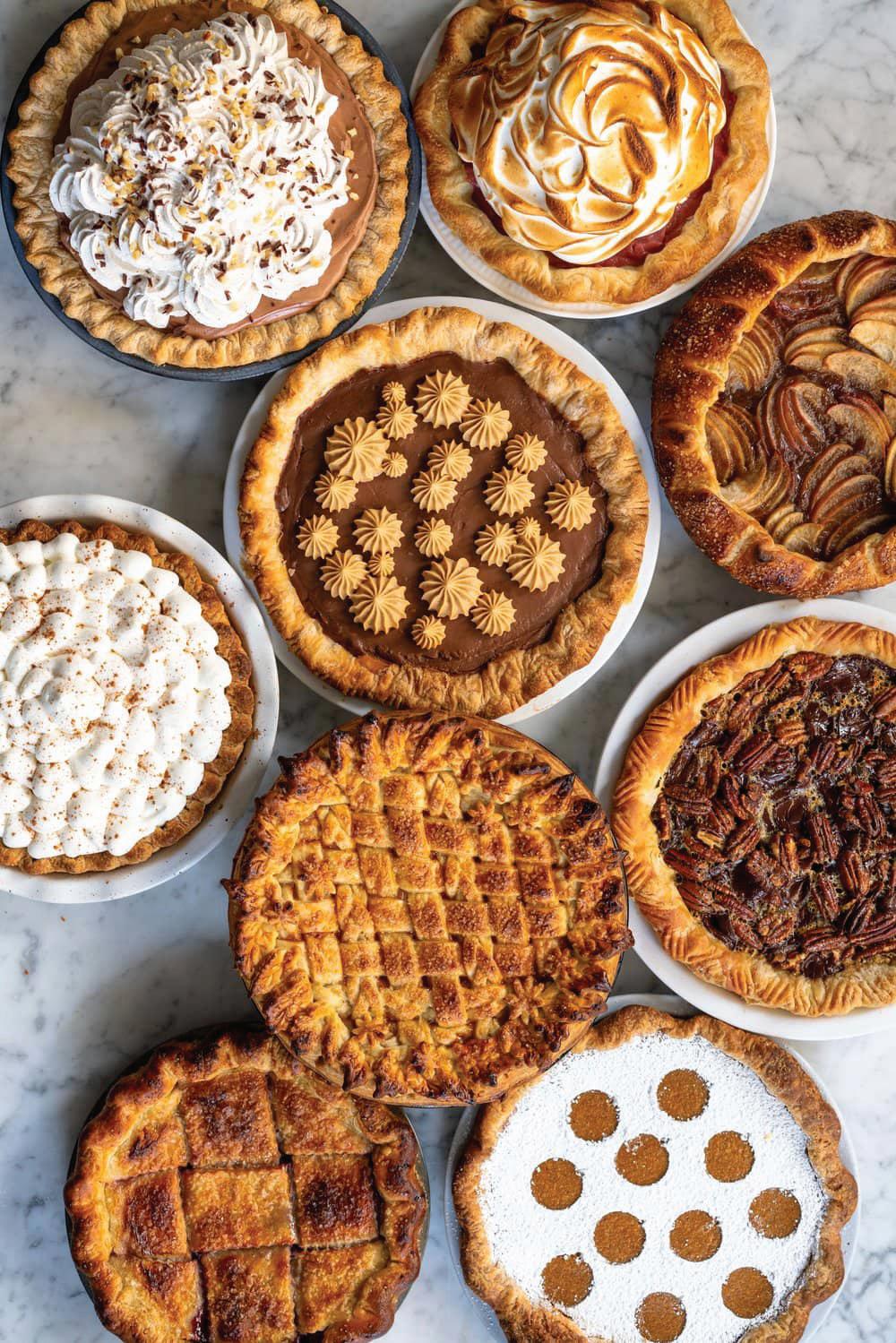
Pumpkin pie, apple pie,
Baja Blast pie, & more
BY JOSHUA BODENSTEIN, STAFF WRITER
You don’t choose to be born on Pi Day — March 14 chooses you. That’s my official explanation, at least, for why I’ve somehow become The Stute’s resident authority on all things pie. And with Thanksgiving approaching, campus debate has resurfaced in full force: which pies match which Stevens student archetypes? Because if there’s one thing I’ve learned from late-night study lounges and Pierce chatter, it’s that personality assessment is best done through dessert.
Apple Pie — The Overachiever Classic. Reliable. Perfectly put together. Apple Pie tastes like a 4.0 GPA and a planner that has never once slipped behind. This student is as iconic as the pie itself: endlessly involved, perpetually busy, and capable of making you feel both lesser and strangely inspired just by walking into a study room at 7 a.m. They’re the friends who “didn’t study” and then somehow set the curve.
Pumpkin Pie — The Cozy, Perpetually Tired Friend Pumpkin Pie strolls into class wearing a hoodie big enough to qualify as portable housing. Their aura is warm; their sleep schedule is “experimental.” They carry emotional support tea. They’re the glue of their friend group — the one you end up talking to for an hour outside Babbio about how your calc exam “just felt hostile.”
Pecan Pie — The Chaos Strategist Pecan Pie looks messy— crunchy, sticky, unpredictable— but underneath that cracked surface is pure, calculated brilliance. This is the kid who juggles robotics, debate, two research labs, and a part-time job, yet remembers every birthday and still beats you in Super Smash Bros. Chaotic? Yes. But always with a plan.
Key Lime Pie — The STEM Kid Who Secretly Wants to Transfer to HASS Crunches numbers by day,
writes poetry by night. Their Canvas dashboard is a mix of circuits, algorithms, and one rogue ethics elective that changed their life. Tart, surprising, and full of existential flavor.
Blueberry Pie — The Homesick Freshman Blueberry Pie is pure nostalgia: sweet, soft, and a little messy when under pressure (just like their laundry schedule). This student calls home twice a week and still hasn’t emotionally recovered from missing their dog. They cling to familiar flavors — hometown pizza, their childhood sports team, the one hoodie they’ve worn since move-in.
Baja Blast Pie — The Friend You Should Never Give a Megaphone To No one asked for this pie. No one dreamed of this pie. And yet, like the Baja-Blast-devoted student it represents, it bursts into your life with neon-flavored confidence. This is the kid who hosts dorm-wide Mario Kart tournaments, screams at Stevens hockey games, and has a Mountain Dew fridge in their room “for emergencies.”
At the end of the day, Stevens students—like pies—are chaotic, comforting, and occasionally questionable. But that’s the beauty of campus: whether you’re an Apple or a Baja Blast, there’s a slice for everyone.
Giving back this Thanksgiving: where can I donate
BY ARACELY CANDELARIA, STAFF WRITER
Thanksgiving is around the corner; it is time to take a break from our fast-paced lives and spend time with loved ones. Whether you are in the kitchen making a delicious meal, chopping vegetables, setting the table, or simply taste-testing the meal before the food is served. Everyone deserves to return to their families and share this enjoyable experience that we have a special day dedicated to while watching the Thanksgiving parade, of course.
Many families, such as mine, have a lot of canned goods lying around that could be put to good use and make a difference for other families to help with their Thanksgiving success. What may seem small to us can help others more than we can even imagine. Small efforts truly lead to a big impact. Here are a few places to donate in Jersey City and Hoboken this holiday season: Heights Orthodontics Food Drive collects food items such as canned goods, non-perishable items such as flour, sugar, pasta, etc. Partnering with Triangle Park Community Center (TPCC), these two organizations are hosting a coat drive on December 6, 2025. They are collecting coats, gloves, hats, and blankets for the community.
After Thanksgiving would be a great opportunity to swap out your fall wardrobe for your winter wardrobe and get rid of anything
that will not be used this season, not only to create space for you but also to give to someone who could utilize the item more than we could this season. Their location is 343 Central Ave., Jersey City, NJ 07307
The Sharing Place is one of Hudson County’s oldest food pantries. They give back to low-income families and individuals by providing fresh produce, meats, proteins, dairy, and non-perishable items monthly. They are located at 440 Hoboken Ave., Jersey City, NJ, and their phone number is (201) 963-5518.
West Side Community Fridge is a local 24/7 community Fridge. The purpose is you take what you need, leave what you can! They accept food daily, even on Thanksgiving. They are located on 214 Delaware Ave., Jersey City, NJ, at the cemetery dead-end off of Duncan Ave. Hoboken Shelter transforms lives by providing meals for the hungry, shelter for the homeless, and services to people to help them become housed. They are always open and looking for donations of money, goods, and simply your time! The shelter is located at 300 Bloomfield St., Hoboken, NJ. Their phone number is (201) 6565069.
As we embrace the spirit of gratitude this holiday, it is important to remember that the smallest acts of kindness can leave a lasting impact on someone’s family. Wishing everyone a safe, healthy, and happy Thanksgiving surrounded by loved ones and good company.
PHOTO COURTESY OF CLOUDYKITCHEN.COM
remarkable wins in busy three-game weekend
BY MISAYO IDOWU, SPORTS WRITER
Basketball had a jam-packed three-game weekend, one game played each day. On Friday, November 14, the men’s team played in a home game against Chapman University. On the other hand, the women’s team travelled to Boston to play in a two-game tournament against Rochester Institute of Technology and Medgar Evers College on Saturday and Sunday, respectively. Both teams picked up one win, as the men won their only game, while the women bounced back for an astonishing win after losing their first.
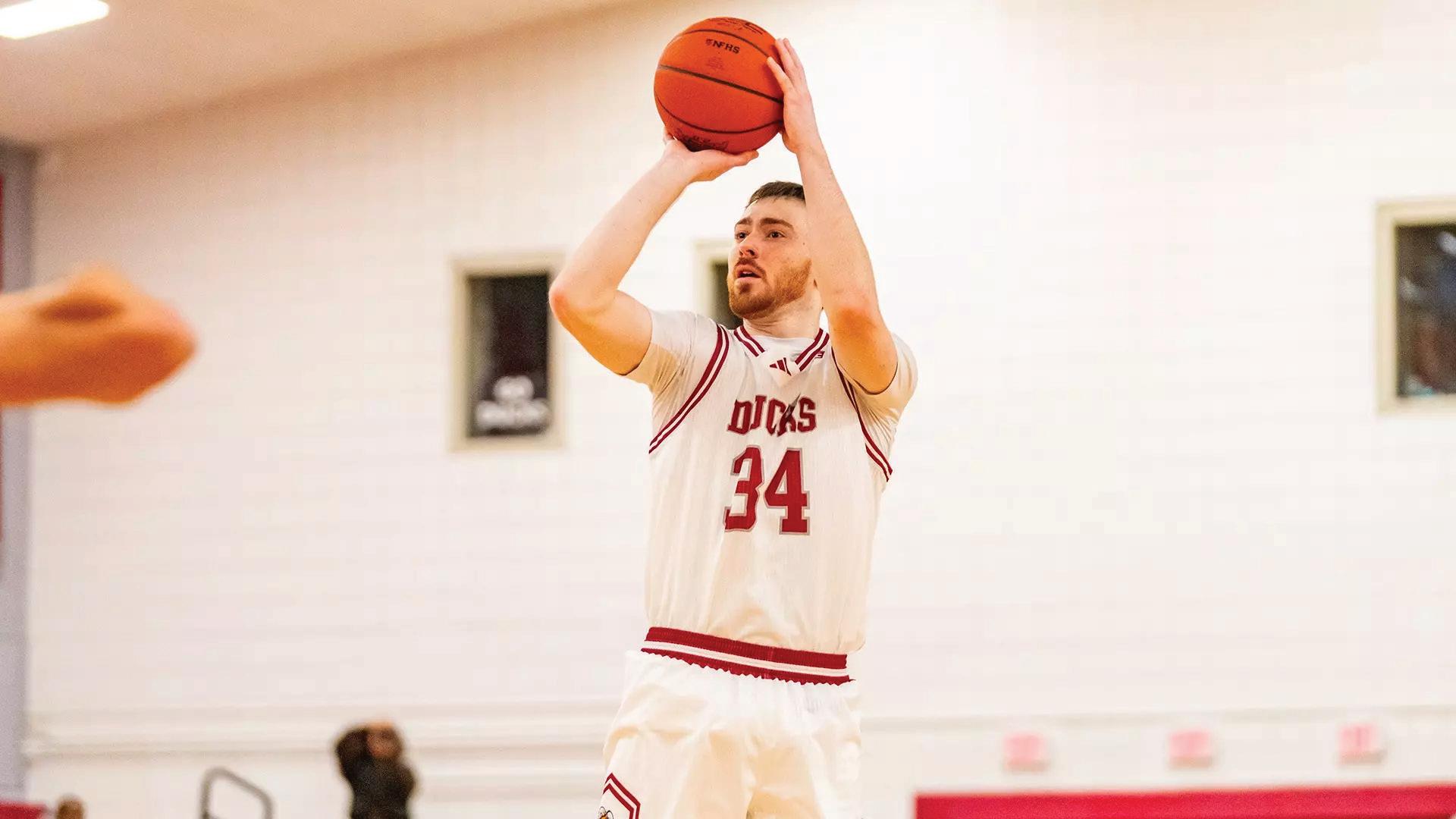
The men’s game against Chapman took place in the Canavan Arena and started at 7 p.m. The Ducks were looking to continue their positive start to the season after beating Rutgers 90-79 on the same court just three days before. Stevens started the first half strong with four different goal scorers for their first 10 points. Junior Anthony Loscalzo opened the scoring with a three-point-
er before being joined by fellow junior Harmehar Chhabra, who scored a layup. A third junior, Tommy Scholl, converted a three-point play before graduate student Evan Gutkowski added another layup to make the score 10-5. The Ducks continued to dominate until they were up 19-5, then even 36-14. Chapman then worked hard to bring the margin back down to 13 points as the first half ended with Stevens leading 42-29. Interestingly, the Ducks ended the half with a scoring percentage of exactly 50%.
The second half started with Stevens keeping Chapman at bay, but not being able to increase their lead. The margin fluctuated between six and 13 points. Scholl had nine of the Ducks’ first 12 points of the half. With the score at 53-45, junior Kyle Maddison managed five points on consecutive possessions, and Chhabra added three straight layups, as Stevens widened the lead to 6449. As the game reached its conclusion, the lead narrowed as both teams continued to score, but Ste-
vens still comfortably took home the win. Notably, Chhabra scored the most points in this game and finished with a career-high 22 points.
The next day in Boston, the women’s team faced RIT in a very close game. The game started with both teams showing their defensive prowess. Senior Dorothy Loffredo opened the scoring for the Ducks with a two-point basket. It took until the six-minute mark for Rochester to tie up the game 2-2. The scoring then picked up as Stevens scored 9 points to end the quarter 11-2. The second quarter featured a lot more baskets as the Ducks’ lead dwindled to 20-17.
After making just six shots and four free throws in the first half, the Tigers hit seven field goals and all eight of their free throws in the third quarter, seizing a 4126 lead. Senior Olivia Schubiger had all six points for the Ducks in the quarter. Unfortunately, in the fourth quarter, the Ducks could not close the margin, and the game ended 39-59. Instead of being disheartened,
Field Hockey falls to Amherst College to close out their 2025 season
BY ABBY JACOBS, CONTRIBUTOR
Stevens Field Hockey fell 1-2 to Amherst College on November 12 in the first round of the NCAA Division III Championship to officially close out their 2025 season. The team stands at a final record of 18-3 and went undefeated in all seven of their conference matches.
The Middle Atlantic Conference (MAC) Freedom Final took place on the Saturday before, where the Ducks went 3-0 against Misericordia University. This is the third consecutive MAC Freedom championship win for the team, and their seventh all-time victory against the Cougars. Their
first goal of the game was scored nine minutes into the second quarter, followed by two more in the third, just three and a half minutes apart from one another.
In the ceremony immediately following, the team officially punched its ticket to the NCAA DIII Championship, and junior No. 28 Aleah Dinmore was named Tournament MVP. Dinmore, a defender from Odenton, Md., saw personal season highs of seven goals and two assists, totalling 16 points across 1,165 minutes played.
On November 12, the Ducks hosted Amherst’s Mammoths (99) for round one of the NCAA DIII Championship. The Ducks saw their first goal just under three
minutes into the second quarter, when senior forward Gabi Moroney took a shot off an assist from junior defender Lauren Flynn. Moroney, the lead goal scorer for the Ducks this year, has made 17 throughout this season and reached 38 points. Flynn is second on the team in assists (12), following junior forward/midfielder Taylor Brooks’s 16. The Mammoths fired back just 10 minutes later, marking the final goal scored in regulation. The Ducks were taken into double overtime, where the score remained tied at 1-1, sending the game into a shootout. After six rounds, the teams tied 3-3, before first-year midfielder Emma Zhang took a goal of her own, winning
Stevens woke up the next day invigorated. In their game against Medgar Evers on Sunday afternoon, all 17 Ducks played for at least five minutes, and 10 scored at least six points. Two minutes into the game, Stevens went on a 15-0 run that spanned less than two and a half minutes. Loffredo scored nine of those points. Freshmen Maya Abramson and Ceejay Thomas, and sophomore Fiona O’Boyle all had four points for Stevens in the first 10 minutes. The scoring continued and the margin widened as the first half reached an end of 64-14. Freshman Grace Love knocked down her first two three-point attempts of the second half to continue the Ducks’ rampage. At the end of the half, another freshman, Camryn Kinne, scored the final three-pointer to put the Ducks over the century and end the game 101-36. This is a truly impressive feat, and if this is how they respond to a loss, we can all look forward to what the women’s basketball team has to offer this season.
the game for Amherst. Stevens Field Hockey ends their 2025 season at a 0.857 win rate, with their only regular-season losses being non-conference matches. They took 438 shots this season, with 282 landing on target, and 84 making it in. Of the goals saved, senior goalkeeper Lily Wierzbicki stood between 97.1% of them with a total of 67. The Ducks achieved national recognition throughout the entire season, notably being ranked No. 9 by the National Field Hockey Coaches Association (NFHCA) in both the September 30 and October 7 polls. The team held their position and took on Amherst as No. 10 in the country.
STEVENS SCOREBOARD
WOMEN’S AND MEN’S SWIMMING TCNJ Invitational - Day 3 Ewing, NJ Time TBD
A foundation of trust
BY GAVIN MCCRARY, SCIENCE WRITER
Archaeological work in the Xingu territory of Brazil is rewriting assumptions about civilization in the Amazon. Through decades of partnership between the Kuikuro people and Western researchers, evidence of a large, complex civilization in the Brazilian territory has emerged. This collaboration is considered to be one of the most effective models of community-led archaeology in the world.
The partnership began in the 1990s with Michael Heckenberger from the University of Florida. Heckenberger not only worked with the Kuikuro people but also published with them, which was considered a rarity. Since the beginning of the partnership, they have been exploring the Upper Xingu region of the Amazon, which is home to many indigenous groups.
Initially, indigenous groups were skeptical of Heckenberger’s intentions. “They saw the holes in the ground and thought he was a foreigner who came here to exploit our resources,” says local school teacher
and political leader Sepe Kuikuro. Later on, when Heckenberger’s team collaborated with some Kuikuro people to publish a paper in the journal Science, describing the complexity and beauty of ancient Upper Xingu, the work began attracting international attention, and the Kuikuro people began to see the value in the work.
The research has uncovered a vast, prosperous civilization that occupied the region for more than 1500 years. Interestingly, the outlines of the ancient cities are very similar to the Kuikuro villages of today, only much larger. It is estimated that at least 50,000 people lived in the towns at the peak of the region. The complexity and populations of these sites disprove commonly held beliefs about the sophistication of pre-colonial societies.
A defining feature of this research is the Kuikuro’s role in it. From the very beginning, the community has aided the archaeologists with oral histories, labor, cultural knowledge, and potential site locations. Villagers now train with the researchers in excavation methods, sensing technology, and cartography. The technology is allowing young Kuikuro to map
their territory and understand their history. Archaeologist Helena Lima says, “We decide together where to look and what to map […] Our goal is to share these technologies and give them control over them.” All of the geolocated data is managed both in part by the Geoldi museum and the Kuikuro Indigenous Association. This intentional involvement is a shift from the general relationship between the indigenous people and scientific research. The dynamic hasn’t involved much input or collaboration with people native to the land being researched.
Efforts to expand the program continue, and other indigenous groups have followed suit. It is the way to ensure that the research is more ethical and accurate. Lima is working with nearby villages to create new educational pathways. Through partnerships with universities, young Kuikuro are given the power to conduct the research themselves. The drone pilot on the project, Viola, was awarded a scholarship created to prepare him for a degree in indigenous archaeology at the University of Brasília. One step closer to the indigenous communities taking charge of research efforts.
A trail of light found in the M61 galaxy could illuminate its history
BY SEAN PALERMO, SCIENCE WRITER
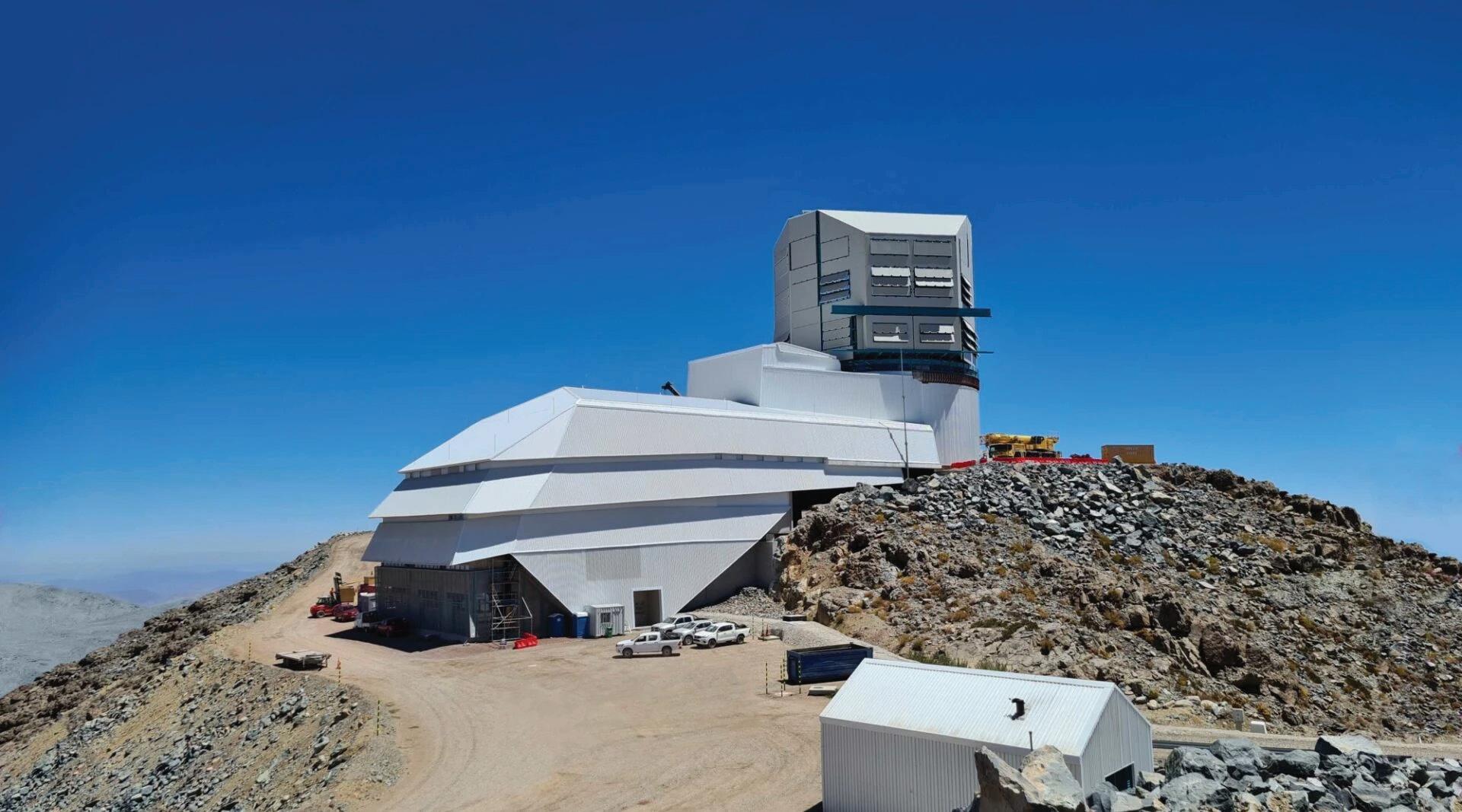
The first test image from the telescope in the Vera C. Rubin Observatory has revealed a previously unnoticed trail of light that could give insight into both the history and abnormalities of the M61 galaxy. The image, captured by the colossal camera—in fact, the largest digital camera ever—of the observatory perched upon a mountain in Chile has suggested to scientists that the galaxy had, at some point, torn off from a smaller one. Originally spotted in 1779 in the Virgo Cluster of galaxies, the M61 galaxy became well-known for hosting a large number of supernovae and producing stars at a surprisingly high rate— becoming known as a
axy has been unraveled and documented through the use of both the James Webb Space Telescope and the Hubble Space Telescope, though this tail has not been identified until now. While some amateur astronomers had reportedly caught glimpses of the stream prior to this recent discovery, it was not professionally confirmed until the Rubin image was taken and analyzed by filtering out excess light to reveal a trail of stars (referred to as a stellar stream) 55 kiloparsecs or 180,000 light-years long. Being one of the longest of these streams discovered, the team responsible for taking and analyzing the photo proposed it as indicative of a dwarf galaxy that had been shredded apart by M61’s gravity— potentially boosting star formation and explaining the mys
Peru’s Serpent Mountain sheds its mysterious past
BY DISHA GOHIL, SCIENCE WRITER
Monte Sierpe, translated as the “serpent mountain,” is located in the Pisco Valley of Southern Peru. The “Serpent Mountain” is known for its thousands of precisely aligned holes to resemble the look of a snake. The purpose of the holes are unknown, which has given way to many different hypotheses of what its functions are. To investigate this, a research team from the University of Sydney analyzed the holes to uncover the truth behind its function.
“Hypotheses regarding Monte Sierpe’s purpose range from defense, storage, and accounting to water collection, fog capture, and gardening,” says digital archeologist and lead author Dr. Jacob Bongers from the University of Sydney. Monte Sierpe has also inspired interesting claims that aliens creat-
ed this impressive array of holes.
The research team analyzed the site using drone technology and was able to determine numerical patterns in the layout, which hint at an underlying intention in the site’s organization. They also discovered that the arrangement of the holes that form Monte Sierpe is similar to a structure of an ancient knotted-string accounting device (known as an Inca khipu) that was recovered from the same valley.
Several analyses of soil from the holes found ancient pollens of corn, which was one of the most important staple crops in the Andes, as well as wild plants that have traditionally been used for making baskets. These findings indicate that people used these holes to add plants and used woven baskets for transportation. Furthermore, Monte Sierpe is located between two Inca administrative sites and near the intersec-
The legacy of James D. Watson
BY RIYANA PHADKE, SCIENCE EDITOR
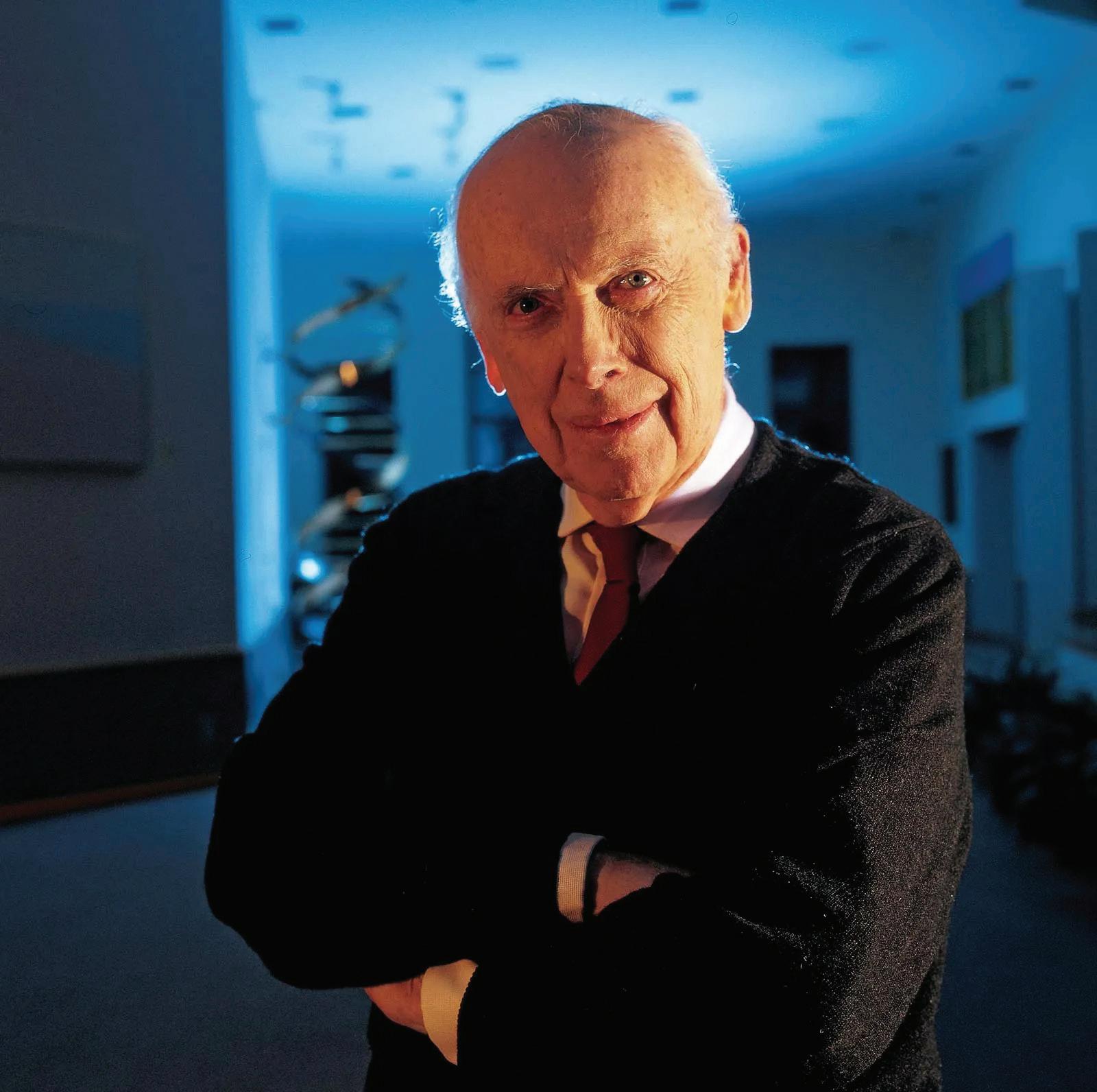
James D. Watson’s death at 97 closes a chapter on one of the most influential and troubling lives in modern science. Researchers, institutions, and the public are now forced to weigh Watson’s towering scientific achievements against deep ethical and personal failures.
Watson’s fame can primarily be attributed to the 1953 discovery of the double-helix structure of DNA, work carried out with Francis Crick at the University of Cambridge when Watson was just 25. Their Nature paper, “A Structure for Deoxyribose Nucleic Acid,” transformed biology by revealing how genetic information could be stored, copied, and passed between generations, helping to place DNA alongside Darwin’s evolution and Mendel’s laws of inheritance as a foundational pillar of the life sciences. The double helix birthed a newfound understanding of how DNA encodes and directs the synthesis of proteins, resulting in a multitude of advancements within the fields of genetics and molecular biology.
ment. His popular textbook, Molecular Biology of the Gene, trained generations of students, further amplifying his influence on how biology was taught and imagined.
the Research Notes of the American Astronomical Society— a non-peerreviewed index and secure online record. While the first image captured from the Vera C. Rubin observatory captured ten million galaxies, over the next decade, it will capture light from 20 billion galaxies (more than any other observatory so far) due to its telescope being designed to survey the sky in a previously unprecedented detail and reveal new objects and phenomena such as this.
Aaron Romanowsky, an astronomer at San Jose State University in California and an author of the study, comments on how “the expectation is that every single galaxy should be surrounded by these streams. It’s a fundamental part of how the galaxies are made […] We just need to look fainter, and that’s
tion of a network of pre-Hispanic roads. It is “positioned in a tran sitional ecological zone (chaupi yunga) between the highlands and lower coastal plain, a space where groups from both regions would have met and exchanged goods.”
All these findings suggest that Mon te Sierpe was initially constructed by the pre-Inca Chincha Kingdom and used for regulated barter and exchange, but it later developed into an accounting location during Inca rule.
“This study contributes an im portant Andean case study on how past communities modified past landscapes to bring people togeth er and promote interaction,” Dr. Bongers concludes. “Our findings expand our understanding of barter marketplaces and the origins and diversity of Indigenous accounting practices within and beyond the an cient Andes.”
From the moment of discovery, the story of the double helix was entangled with ethical controversy over credit and consent. Watson and Crick’s model drew crucially on X‑ray diffraction data and interpretive insights produced by Rosalind Franklin and Maurice Wilkins at King’s College London, some of which were shared with them without Franklin’s knowledge or permission. Franklin died in 1958 and was ineligible when the 1962 Nobel Prize in Physiology or Medicine was awarded to Watson, Crick, and Wilkins, leaving her role in the discovery largely unrecognized. Historians have since argued that Watson and Crick could and should have been explicit about their dependence on Franklin’s data, first to her and Wilkins and then publicly, a failure that continues to shape debates about credit, sexism, and power in science.
Beyond his early scientific work, Watson spent decades as an institution builder and strategist for molecular biology. At Cold Spring Harbor Laboratory in Long Island, NY, he served in multiple leadership roles, transforming a small research station into a powerhouse in cancer genetics and molecular biology, recruiting talent, expanding programs, and turning the campus into a global hub for DNA science. He also played a pivotal role in launching the Human Genome Project in 1990, using his prestige and political instincts to persuade scientists and lawmakers that sequencing the
Alongside these accomplishments was an unfortunate pattern of sexist, racist, and anti-semitic remarks that gradually overshadowed his scientific legacy. In his bestselling account of the double helix, Watson caricatured Rosalind Franklin’s appearance and dismissed women’s place in science. He even wrote that “the best home for a feminist was in another person’s lab,” a line symbolic of his casual misogyny. A 2001 lecture at the University of California, Berkeley, in which he linked skin colour with sexual libido and thinness with ambition, marked a turning point for many colleagues, who saw these views as not just provocative but deeply prejudiced. In 2007, he publicly suggested that Black people were inherently less intelligent than white people and later remarked that “some anti-semitism is justified,” comments that led Cold Spring Harbor to strip him of leadership roles. After he reiterated similar views years later, Cold Spring Harbor severed its ties with Watson entirely.
For those who knew him, Watson’s death doesn’t resolve the question of how to remember him; instead, it sharpens it. Some scientists, such as MIT molecular biologist Nancy Hopkins, recall a mentor who pushed young researchers, especially women, to persevere in hostile environments, even as his public statements on gender and race felt like a betrayal of those same commitments. Others emphasize his repeated, unrepentant remarks on race, gender, and genetics damaged not only his reputation but also public trust in science, reinforcing stereotypes at odds with the genetic complexity that his work helped reveal. As one Nobel laureate recounted, few individuals have shaped modern molecular biology as much as Watson, yet his prejudices now stand as a stark warning about how brilliance can coexist with, and even enable, profound moral blindness. Watson liked to say that after his death, he would only become more famous, because DNA itself would grow ever more central to science and society. The double helix has indeed outlived its co-discoverer, a symbol of both the extraordinary promise of molecular biology and the ethical complexities of the people and institutions that drive it. In the end, the story of James Watson is less a simple tale of hero or villain than a case study in how scientific greatness and personal failure can be tightly intertwined, and in how
THE STUTE EDITORIAL
Just when the ground levels, there is an earthquake
Some things in life you just remember. Like it happened yesterday. But the moment means nothing until it means something.
Even two years ago, the E-board knew how passionate I was about The Stute. I remember exactly where I was sitting in The Stute office. I wasn’t even on the minorboard; I was a Layout Assistant who was just happy to be there. Eventually, the Editor-in-Chief (EIC) topic came up, and me being me, I had no idea how to navigate that conversation. I knew I wanted to be EIC, and so did the E-board, but somehow speaking about it out loud made me terribly uncomfortable. At the end of that conversation came a line that lodged itself in my brain, for no reason other than that it simply did: “Just when you finally figure it out, another E-board comes along.”
I get it. I feel it. It makes so much sense now.
This past week, I was riding a high. I was organized and unusually at peace. Picture this: I am at the SGA Presidential Election Debate,
supporting some friends of mine. I submitted the newspaper an hour earlier than scheduled, my school assignments were completed, no exams, and I was simply free of any responsibilities.
Then, an hour into the debate, I received a text from a writer who was unhappy about the final edits made to their article. I rarely make noteworthy changes to articles, but this week was different — I felt final edits were necessary. Typically, when I do major edits, I have an extra set of eyes to review them in case there is something I may have missed. Unfortunately, no one was available to double-check this week, so I added the edits, reviewed the article four times, and submitted When reviewing the writer’s feedback, I understood their concerns and double-checked with two other E-board members. We all agreed the edits were not incorrect, but I had overlooked a few sentences that should have been adjusted for consistency.
I spoke with the writer, we cor-
MIND OF A FRESHMAN I hate cold showers
two siblings, someone always got stuck with the cold water. This was exactly what I thought was going on here. I began to hate and dread when I showered. Each day after I got out of the shower, I was freezing and wouldn’t regain any warmth until the next morning. I thought that I was just showering at the wrong times, so I began to experiment with it. I kept a mental note of when I showered and when it was coldest. I tried every time you could
think of. I showered before everyone woke up at seven, after most people were asleep at two, and every hour in between them. Whenever everyone was likely eating dinner, or when people were likely in class, I was showering. I tried so hard, and the water just kept getting colder. It eventually got to the point where I was so cold that my skin turned red, and any scars or marks I had turned purple. I would come back into my room and bundle myself in blankets on top of blankets as I spoke to my roommate about how cold the water was. To be quite frank, some tears were in fact shed. After a bad day and one particularly cold shower, I called my mom, who is—for lack of better words—a Karen. She was up in arms because I had yet to say anything, but the whole time I had thought that it was just me and my roommate who favor really hot showers. A quick discussion with my teammates in my ENGR 111 lab made me realize that it was not just me. Turns out it had happened in Humphreys Hall a few months ago, and it
rected the article, and I decided to also change the print issue. I have never called the printer post-submission, so this was a struggle in itself, but after reaching them, I resubmitted the pages I needed and closed my laptop. I smiled and began packing my things. But no, that was not the end. Just when the ground leveled, an earthquake hit.
I received a call from the printers. At 5 p.m. earlier that day, I had finished reviewing all of the files and was ready to submit. I PDF’d the files, submitted them, shut my laptop, and went to dinner.
Turns out, I did not change the folder I was submitting files from. One tiny button, one little detail, changed everything. I had submitted the wrong week’s files, November 7. The printers had begun prepping the November 7 issue instead of the November 14 set to release the next morning. Normally, the printer catches these mistakes, but because I requested a page change, they only then realized something was wrong.
Let me tell you, Brad, the print ing guy, and I both had a heart at tack.
I am happy to say, the Novem ber 14 issue came out on schedule, though a bit of my pride went with it. I write this not just for the Stuters this week, but as a reminder to my self.
Every week brings its own strug gle, and some I can control, others, not at all. I was so sure of myself this past week. And yet, almost ten months in, and I am still learning.
I didn’t know how to contact the printers post-submission or how to handle certain niche situations with my writers until they happened. I’m sure there are still more things I can’t anticipate that will test me in this position. This epiphany is something I can only assume every E-board member has gone through. This safe ground, this consistency I so badly crave, likely won’t be achieved. And if it does, my term will be over before I can recognize it. Lesson learned,
was fixed in a matter of days after they said something. The residents of the second floor of Davis Hall were not so lucky. It took two weeks for me to finally realize that the wa ter hitting my skin was not meant to be nearly as cold as it was. After hearing about what my groupmates had said and feeling slightly embarrassed about how long it took for me to say something, I messaged my RA. Turns out RAs have their own bathrooms. I’m not sure why, but this had never occurred to me. She said that her water had been cold a few times but never anything se rious. She then posted in our floor’s Slack channel that ev eryone had been having the same issue.
Two days later, I went for my shower, dreading the cold water to come, when it actually got so hot that there was steam. That was one of the best showers I have had purely because of the wonderful warm water. Please take my story as a precautionary tale, and just tell your RA if there’s any issue. It will be better than weeks of cold water, trust me.
to pursue internship opportunities. Of course, this is not the same as a real co-op, as I still have to attend 12 credits worth of courses on my class days, but these experiences have been crucial to my personal and professional development.
As a Quantitative Social Science major, my career trajectory is broader and less clear. For much of my time at Stevens, I was confused as to what internships to pursue as someone who can kind of do math and can kind of code in two languages, but also has a deep understanding of the American government and public policy. It has been im-
portant for me to explore a wide variety of research projects and internships to identify my niche.
Last year, I spent two semesters working for the NYC Parks Department. Reporting directly to the Manhattan Commissioner, I spent my time researching solutions to problems various communities and parks faced, which was a perfect combination of my quantitative and qualitative skill set. I wrote an indepth report on methods of needle-use deterrents, which was essentially a strategic plan to reduce needle usage and litter in public parks. This report was eventually reviewed by the city-wide commissioner, and one of my strategies was piloted. This experience was incredibly helpful because I learned that I would like to pursue a career that combines research with public interest work, and I wrote about this experience in my grad school personal statements.
Additionally, I have been working on a Hoboken mayoral campaign since last April. On the campaign, I have worked in social media, finance, strategy, and constituent outreach. It has been incredibly helpful to explore all of the different disciplines within campaign management, as it helped me
recognize my love for directly interacting with people and helping to solve their problems.
The culmination of these extensive experiences has led me to pursue public interest law. Lawyers need to have extensive research skills—which I certainly have at this point— but public interest lawyers in particular have to have the ability to communicate and assess the problems that everyday people face. I always thought that being a lawyer would mean selling my soul to corporate overlords, but because I have taken the time to explore various careers, I was able to find a potential path that may fit multiple disciplines that I enjoy. My advice is to seek “off cycle” internships. It is far easier to find opportunities, especially opportunities under experienced leadership, in the fall and spring semesters. The summer becomes extremely competitive as tons of students across the country hope to land a NYC metro area internship. Plenty of companies have opportunities to just work two days a week or 15 hours during the semester, and the best way to take advantage of our location in Hoboken is to engineer our class schedules so that we can take advantage of these opportunities.
PHOTO COURTESY OF THE NEW YORK TIMES
BY PRISHA
white walls, and orchids on every table. I remember Akihi going all out for Halloween with a huge spider web, giant spiders wrapped around the hanging lights, and bats across the wall.
The first time I tried their “Brown Sugar Brulee” milk tea, it felt like I was ascending past the clouds. The caramelized brown sugar on top, torched over the crème brûlée, made every sip insanely delectable. The base was a milk tea, and I was genuinely sad when I finished my drink because I wanted to have as many of those bobas as I could. On top of that, Akihi has the cutest cups, with tiny stars and a simple, charming design. They even had a little cup sleeve with a duck and the Lackawanna Terminal Clock Tower, which was incredibly cute and captured Hoboken’s essence perfectly. Although the Brown Sugar Brulee is a limited-time drink, I highly recommend grabbing it while you can. I haven’t tried the other limited drinks yet, but they include “My Crush,” which Akihi describes as a strawberry shortcake in a cup. I can only imagine it’s velvety and rich with strawberry flavor while still having a sweet vanilla taste. There’s also “Black Knight,” which is probably really refresh-
ing since it has fresh grapes blended with jasmine green tea and grape jelly. The first drink I had from them was the Royal Blueberry Peach Tea, and the blueberry flavor was stronger, while the peach was very subtle. Besides drinks, they offer a lot of snacks, including crispy chicken that a friend said was really good. The snack that stands out to me the most is the Cheese Waffle Fries. It is the best of both worlds since the cheese and crispy waffle fries come together to make the perfect savory snack. As for their ice cream, I don’t even know where to start. They have multiple egg waffle cone selections like a Boba Waffle, where they add boba inside the waffle, the Ice Cream Brûlée option, and ice cream choices. Somehow, egg waffles feel way better than regular waffles. I think it’s the pillowy, fluffy pockets of egg waffle dough that make them superior.
And if you choose from the ice cream options, the Ice Cream Brûlée is amazing. They have a vanilla ice cream base with a crème brûlée top for just $4.75. For that price, getting a
Best New Artist
my playlists, but I haven’t started seriously listening to her until recently. Her unmatched vocals paired with effortless lyrics are always sure to set the mood.
The next artist is a girl group, Katseye. One day, I heard this insane song called “Gnarly,” and everything changed. Katseye is a group of girls from different parts of the world who came together on a reality show to form their group. Their music is fun, exciting, and so easy to dance to.
2026 Grammy Nominations were released, and it’s one of the best line-ups I’ve seen in a while. This past year was a very interesting time for music. A new generation of sound and soul has been on the come-up, and it’s been cool to watch smaller artists get their moment. My personal favorite category of the Grammys is the Best New Artist. I love it because when I know who the artists are, I feel all cool and niche, and when I don’t know who they are, I get to learn about new music!
This year, eight amazing artists have been nominated.The first artist is Olivia Dean. I love her! I had the privilege of watching her open for Sabrina Carpenter at the Short ‘N Sweet Tour this past Halloween. There are a few of her songs
The Marías are the next nominee. They are an indie pop band from LA. I really don’t know much about them, but they seem to be really great. They perform songs in English and Spanish, so their audience is pretty wide. Their music is a mix of pop with indie. I’m excited to learn more.
The next artist we are all familiar with: Addison Rae. If you told me five years ago that the girl from Hype House would be a Recording Academy nominee, I would be shocked. Rae gained popularity throughout the years and finally made it to the Grammys. Her music is fun and dynamic. She has a similar style to Charli XCX and Brittany Spears. Watching her shift genres and vibes throughout the years has been fascinating. Next up is Sombr. He is a 20-year-old artist from
whole crème brûlée that can make my entire day is pret ty amazing. The Chocolate Oreo Ice Cream is also de licious, topped with vanilla ice cream drizzled in choc olate sauce and dusted with crushed Oreos. This combo is impossible to resist, es pecially if you are a cookies and cream fan. Remember the brown sugar boba? They have that as an ice cream too! Let that sink in. A rich and creamy caramel-like ice cream with brown sugar syrup drizzled on it. If you can’t make up your mind between selecting an ice cream or crafting a waffle and ice cream combo, they have options like the Car amel Marshmallow Waffle or the Oreo Deluxe Waffle. I remember my friend got the Caramel Marshmallow Waffle, and it was loaded with marshmallows, sprin kles, two Biscoff cookies, and strawberry Pocky sticks with a huge soft-serve ice cream on top that was hon estly hard to finish. They have so many good food items, and I’m confident this place will become a regular hangout spot for me. If they ever drop anything else crème brûlée themed, I’ll be the first in line.
NYC. I’ve been a huge fan of his because his music is unlike any other genre. He has this mysterious demeanor paired with yearning lyrics. His songs are mainly about experiencing love and loss. He has a good chance at winning this award.
Leon Thomas was nominated for this prestigious award. Kids who grew up watching Nickelodeon know Thomas from his days as Andre on the show Victorious. He had one song blow up, and I’m glad he is receiving praise. He’s credited on many other award-winning albums as a songwriter, so it’s exciting he’s getting recognized for his solo work. Second to last is Alex Warren. Another TikTok guy! But seriously, he’s talented. His transition from silly social media guy to serious musician was effortless. His music is meaningful and impactful. I hope he feels the love, with the award or without.
Finally is Lola Young. She’s one of the coolest rising stars. She’s so talented that people called her an industry plant! Her music is edgy, honest, and thoughtful. Her song “Messy” topped charts and lived on radio. I look forward to seeing where she goes.
Whether you watch the Grammys or not, it’s always a cool way to find new music and learn about new artists!
Grave of the Fireflies: the quietest, loudest war film made
One of the strongest symbols in the film is the fireflies. Fireflies glow brightly but briefly, their light soft and fragile. Setsuko’s happiest moment comes from fireflies. She catches fireflies, letting them dance in their shelter, becoming a symbol of joy. But soon enough, the fireflies die. Setsuko makes them a grave, asking why “fireflies have to die so soon”. The metaphor is clear but painful. Innocence, like fireflies, is fleeting during the dark times of war.
help. Even programs designed to help the children are shown as cold and cruel. When even normal people like farmers and neighbors turn away from the duo, the film reveals the true consequences of war. War not only destroys infrastructure but also instills apathy in otherwise well-meaning people. The world around Seita and Setsuko is collapsing, and in the end, what kills them is not the war but the absence of compassion.
struggling to survive in wartorn Japan in the presence of air raids, starvation, and social negligence. The film forces us to confront the cost of conflict on humans, specifically those who are least protected by it. Through fireflies, hunger, and acts of innocence, Grave of the Fireflies reveals that the true tragedy of war is not only on battlefields but also in the quiet suffering of ordinary people.
The film follows the bond between Seita, the older brother, and his younger sister, Setsuko. After losing their mother to burns from an air raid, the siblings are left alone to fend for themselves in a world that has neither space nor sympathy to take care of them. Seita, still a child himself, must take on the responsibility of becoming Setsuko’s sole provider and protector. Setsuko, far too young to even comprehend her mother’s passing, looks to her brother for comfort and direction. Tragically, the war slowly chips away at their unconditional love for each other as the film pro-
Another underlying tragedy that persists throughout the film is Seita’s pride, which becomes his strength and his downfall. After facing neglect and ignorance from their aunt, Seita decides to take Setsuko and live on their own. His decision comes from dignity and love, but it seals their fate. In a failing country where food is scarce and adults are consumed by their own survival, orphaned children like Seita must make complicated decisions that threaten their principles. His choices are a result of desperation for con trol in a society that is active ly crumbling.
nearly every adult that the siblings encounter are ei ther too overwhelmed by the war or too stubborn to
Setsuko’s slow decline from malnutrition and starvation is one of the most devastating sequences in animation or live-action cinema. When Seita finally finds food for her, it’s too late. The small girl that one danced joyously with fireflies fades away. Her death represents the tiny bit of hope and flicker of light left in the darkness of war.
Grave of the Fireflies doesn’t make us choose sides or debate the politics of war, but forces us to look directly at the often overlooked innocent lives affected by it. It is a film that reminds us that behind every historical event are individuals like children,
quences. Most importantly, the film emphasizes that empathy, not conflict, makes
VAGVALA ‘28
PHOTO
The anatomy of the girls’ group chat
Toks, rants, plans, thera py, crashouts, advice, and so much more. Under all
rect reflection of the depth of a friendship. Personally, group chats are practically a part of my daily life, and I honestly live for the random updates. Group chats warm my heart because even when things get busy, it’s a great way to maintain friendships. But how exactly are the friendships preserved? Let’s start our lesson of the anatomy of a girl’s group chat: Late-night therapy : The group chat never sleeps, and be it through voice notes, long paragraphs, or screenshots of the notes app at 2 a.m., the group chat serves as a 24/7 mental health checkpoint. Some of the most deep, perspective-altering conversations occur through these late-night conversations. As the person going through it, someone will always come
to your rescue and be your therapist with no credentials. As someone who has been on both sides of this situation, I would describe these heart-to-heart chats as the essence of the group chat. These moments really foster connections, even if you’re across time zones, and go to show that you will always have a shoulder to cry on, even if it’s a virtual one.
Comedy Central : The group chat is nothing if not the funniest thing you’ll come across. Like, I can’t explain it, somehow it’s a shame your friends aren’t stand-up comedians. Through fiery responses, sarcastic remarks, funny edits, and random TikToks or dark humor, the group chat can really have you laughing your %$# off. For this reason, I’d equate this as the mouth of the group
chat; it never shuts up and always has the next joke ready to roll off its tongue.
The Board of Directors(Emergency Session: Boy edition) : Just like the board of directors in real life closely monitors the actions of their company leaders and the company performance, the group chat acts as your board of directors for all matters of the heart. They are a scary group to deal with. Whoever it is you’re talking to or talking about, they will be judged via a 360-degree performance review. Every text sent, every action taken (or not taken), everything will go through rounds and rounds of review by a group of people who follow the principle of the person in question being guilty until proven innocent. As a member of this board myself, it’s so fun, and on the
flip side, nothing is more nerve-racking than bringing up your new beau to the group chat. Overall, I compare this function of the group chat to the face being the facial expression of the group chat on all boy matters is very easy to read.
Celebrations and rants : For ups and downs, wins and falls, the group chat comes through. It’s so joyous to be able to celebrate your wins and congratulate others on theirs, especially if you can’t be there in person for these happy moments. On the other hand, when life is causing you to go through it, nothing holds you up more than being able to have those serious, vulnerable, and advice-filled discussions. For this reason, I’d assign this part to be the hands of the group chat; it can applaud for you and yet
some new mathematical discoveries in fluid dynamics
computational techniques to simulate it. Even for those of us who don’t have fluids in the curriculum, they nevertheless show up all around us, from the air we breathe and the water we drink, to the blustery winds that make walking to class in the winter no small feat.
BY CHARLES BEALL B.S. ‘23 & PHD STUDENT
Many of us at Stevens have taken, are taking, or will take a course that involves fluid dynamics. These courses tend to be on the more challenging end, because fluids can behave in immensely complex ways, and it’s difficult even experimentally to understand this behavior, let alone build mathemat -
To that end, I thought it would be fun to write about two recent advances in the study of fluid dynamics: the first, a body of work on instabilities of ocean waves, and the second, a machine-learning assisted discovery of new types of singularities in several equations that model fluids.
I’ll explain what I mean by instabilities and singularities in a moment, but first, I want to emphasize that we still don’t really
FROM CUBICLES TO CAMPUS
know whether the fluid models we use are correct all the time. Indeed, a famous mathematical problem asks whether the Navier-Stokes equations—seen as the most general model of fluid dynamics—have physically realistic solutions in three-dimensional space and for all times. If you are able to rigorously answer this question, you would win $1 million from the Clay Mathematics Institute (and lots of mathematical glory)! Neither of the works I just mentioned have reached the pinnacle of Navier-Stokes in the setting of the Clay Millennium Problem, but their findings are sure to make waves, not just model them. Regarding the ocean waves, researchers use the Euler equations, a (slight)
don’t teach you in class
. In fact, one suspicious when someone has a perfect 4.0 with no internships or experience. (Of course, this varies by industry — med school kids, please don’t sue me — but for a lot of fields, it’s something worth math
I hate to break it to your Differential Equations professor, but I have not once had to pull out wave and heat equations or the Laplace transform on the job. Half the math I’ve learned is still sitting somewhere in a dusty corner of my brain, untouched and unbothered. But here’s the key difference: in the real world, you
that used to haunt me: grades. In school, a bad exam score feels like the end of the world. But in the workplace? No one is checking your Linear Algebra midterm. Some of the most brilliant co-workers I met casually mentioned they had GPAs between 2.5 and 2.9 — and guess what? They were absolute rockstars at their jobs. I even spoke to a few recruiters at my company who said they don’t even consider GPA as a
Calculators. Spreadsheets. ChatGPT (shhh). You have teammates you can ask for second opinions. You’re not expected to remember every equation or derive every formula from scratch. What matters more is whether you know what you’re trying to solve and whether you have a clear and logical approach to get there.
And then there’s communication — the underrated skill no one truly talks about.
I think everyone has heard the “ask questions”
and “check in with your team,” but what no one teaches you is how to communicate effectively. It’s not just about being proactive — it’s about wording things carefully in client emails, using the right tone in reports, and understanding how to navigate the weird world of legalese and technical writing. One wrong sentence can turn into a liability. One too-casual phrase in a client email can make you sound unprofessional. And no, your group project emails didn’t prepare you for that, it all comes with time.
Employers care about your logic, not your memorization.
Can you break down a problem? Can you communicate a solution? Can you adapt when something doesn’t go to plan? That’s the stuff that sticks — not your ability to recall the ideal gas law under pressure.
If you’re deep in midterms or staring at a C+ wondering if you’re doomed forever, take a breath. Your GPA is one part of your story, not the whole thing. What they don’t teach you in class is that being coachable, curious, and a good team player will get you a whole lot farther than any exam ever will.
simplification of Navier-Stokes, where the term modeling viscosity is not included. The inviscid flow of the oceans is nonetheless vastly complex, as the “free” top boundary and interactions with wind, boats, and other disturbances lead to a variety of ocean waves that seem to mysteriously pop into and out of existence.
Now, the mystery is better understood. A few research groups studying this have found that the persistence of ocean waves depends on the frequency of disturbances. More precisely, there are certain bands of frequencies that will “destroy” ocean waves, disturbing in a way that cancels out the propaga
disturbing frequencies that still allow for the ocean waves to propagate.
As for the singularity paper, a team of researchers at Google DeepMind, collaborating with several universities, developed a specialized “physics-informed neural network,” or PINN (pronounced “pin”), to probe certain instabilities in a few different models describing fluids. They discovered a family of new solutions to these models that depend very precisely on the initial conditions, and exhibit “blow-up” behaviors such as the formation of infinite gradients, leading to unphysical dynamics.
The first body of work on the ocean waves shows how
hold your hand when you need the extra support.
The daily updates : Even on the grind or on mundane days, it’s fun to chat about what others are up to and share what you’re doing. Be it a story about something you heard or saw, or classic updates like “ok, just grabbed my coffee now I gotta walk to class,” they keep you engaged. Daily updates are like the eyes; you get glimpses into everyone’s lives in the most human way possible.
With this, we conclude the lesson on the anatomy of girls’ group chats. Group chats serve many purposes, and I’m so grateful that technology has advanced to enable such a feat. The final thing to remember is that, whatever happens in the group chat ABSOLUTELY stays in the group chat.
icists can yield huge breakthroughs in a challenging area of research: this kind of multidisciplinary work is, I think, crucial to solving the increasingly complex problems we seek to tackle in the world today. And the usage of PINNs here is a great example of machine learning being developed for a specific use case, which, in my opinion, produces much more solid results than a general-purpose AI can (at least for the moment — advances in large AI models also continue to make waves). In sum, fluids are very challenging to understand, and there’s still a lot we don’t know. This makes the subject a very exciting one in my view, and allows us all to give ourselves some
Ava
“Wifi being down for 45 mins out of my 50 min class.”
“Waking
Will Hojegian ‘27 “The water main breaks.”
ROVING REPORTER
By Isabelle Villanueva & Rachel Choi
“What’s your most “only at our school” experience?”
Puzzle Page
Kathryn Flannery ‘28 “Taking a bunch of unnecessary 1 credit courses.”
Crossword Kings Tour
Hidden Links
Inspired by the British game show Only Connect, the goal of this puzzle is to find the hidden connection between four seemingly abstract clues. Each answer will use trivia, wordplay, logic, or some combination thereof. The solution is always more specific than “nouns”, “places”, etc. What do the following have in common?
Torque Monkey Pipe Allen
Traverse each square one by one in any of the eight directions (like a king in chess) to spell out the answer. The starting and ending squares are bolded. Every letter will be used exactly once. The clue below the grid designates the lengths of each word.
*Puzzle instructions by Stephen Pachucki
Cryptolist
The following list has been translated using a basic substitution cipher. For example, if E represents T in one word/phrase, it will represent T in all the words/phrases in the list. No letter maps to itself. The list is alphabetized. Hint: start guessing things in the category and see if any of the letter patterns match up.
ANSWERS TO LAST WEEK’S PUZZLES
Wyman ‘27
Nihal Duggineni ‘29
up to the nice NYC view everyday.”
Alex Switaj ‘27 “Just the entertainment committee.”
Riley Parker ‘27 “Taking statics as a computer engineering.”