





On page 5 On page 7 On page 12
Off-campus roommates 101
Places to live outside campus housing
How to handle recent snow
Reegan Davis and Lauren Savitsky Lantern Reporters
Before the sun rose, a blaring siren from Taylor Tower’s fire alarm awoke Evan Updegraff around 5 a.m. on Jan. 10, two days before the spring semester began.
After waiting outside for an hour, Updegraff, a first-year in mechanical engineering, along with his friend, left to get food as they waited for updates on their dorm’s fate.
When they came back to assess the damage, the duo quickly realized their living situation would be permanently changing for the rest of the semester, and they had to figure it out as soon as possible.
“When we walked back in, there was water all over the floor in the lobby,” Updegraff said. “There were puddles of water on my floor — I was only on the second floor.”
Three weeks after the flooding incident at Taylor Tower, former residents of the dorm reflect on their housing and displacement experiences as they continue adjusting to their new living situations.
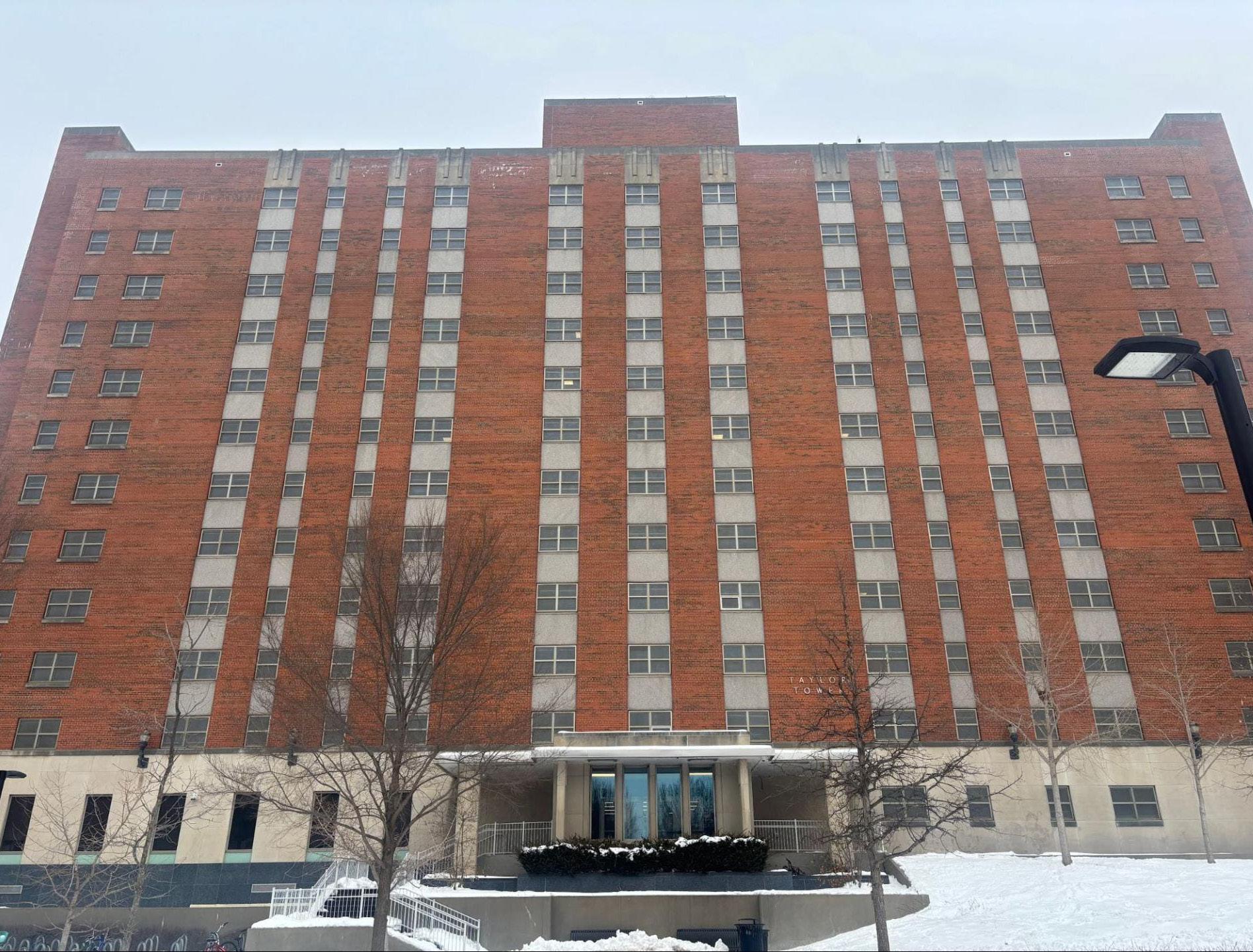
Taylor Tower sits empty after shutting down for the semester. Former residents were placed in different residence halls on campus or had the option to move off-campus.
Delaney Joyce, a first-year in finance and a former Taylor resident, said the incident flipped her first-year experience upside down only days before starting her second semester.
“The inconvenience is a huge thing,” Joyce said. “This is all while I’m going through the first couple days of class, moving in, meeting my new roommates and trying to help other people on my floor.”
Joyce said she was fortunate to have a connection who helped her secure off-campus housing. She now lives with three thirdyear students north of Lane Avenue but is no longer steps away from the friends she made on her floor.
“I was someone who opted to live off-campus almost immediately but I know people who got relocated all over the place and still have to adjust,” Joyce said.
Updegraff said that he was also able to find an apartment off campus with help from his parents. He said that he was lucky to find an apartment so soon, but the location is not ideal.
“I was originally on north campus, where a lot of my classes are,” Updegraff said. “Now I am on Chittenden Avenue. It’s a 20-minute walk to my classes. It’s not that bad if I bike, but it’s a bit hard to bike in all of the snow.”
One of the off-campus locations that Taylor students chose to relocate to was the Rambler Columbus at 222 W. Lane Ave., a large apartment complex touching the north section of Ohio State’s campus.
Rambler declined to comment on its role in housing displaced students.
TAYLOR TOWER continues on page 4.
Trevor Voigt Campus Senior Writer
Renting an off-campus apartment or house brings various challenges, from finding a decent location to deciding roommate arrangements and figuring out transportation.
It can be a lot to keep track of.
In addition to base rent, smaller monthly costs can add up, causing new renters’ budgets to fluctuate from month-to-month.
For students who may be wary of going through the process of renting for the first time, the Office of Student Life and Student Legal Services offers support for navigating the costs of moving off campus.
Jacob Glorioso, off-campus specialist for Off-Campus and Commuter Student Engagement, said that first and foremost, students looking to make the switch to off-campus living should consider their budget.
“We really recommend [to] students, before they start the off-campus housing process, before they even look for a roommate, know what they’re comfortable affording,” Glorioso said. “We don’t want students to live outside of their means. It’s not a fun experience to not know how you’re going to pay that next month’s rent or that next utility bill.”
From there, students can look at the Off-Campus Housing Network, a well-vetted resource of property owners and management companies that partner with Ohio State and adhere to a list of criteria that includes regular communication with Off-Campus and Commuter Student Engagement. The office asks management companies if leases clearly state terms regarding different issues including parking availability, costs and fees, as well as specification of holding fees, utility rates and renters insurance requirements.
Reading a lease for the first time can cause no small amount of head-scratching, and Student Legal Services can help with that, too. By providing lease reviews as part of their off-campus housing resources,
students can know exactly what they are going into before they sign.
Lauren Statzen, senior relationship manager with Off-Campus and Commuter Student Engagement, said that students should also consider reaching out to property owners directly.
“I would think especially our companies within the Off-Campus Housing Network [would be] more than happy to talk to a student and would rather the student ask questions,” Statzen said.
When finding a roommate, Statzen said that finding someone who is on the same page financially is crucial, especially when it comes to splitting costs like utility and grocery bills.
“A roommate agreement can be a really great tool that they can utilize,” Statzen said. “This is separate from the lease, just students themselves agreeing upon, ‘Okay, we’re going to split water. We’re going to split whatever it might be.’”
The off-campus roommate search
page, and a sample roommate agreement can be found on the Off-Campus and Commuter Student Engagement website.
Other factors Glorioso said students moving off campus should consider is transportation and parking, not just at their apartment, but also if they require transportation to get to campus, which factors in costs of gas and CampusParc fees.
“[Students] have access to COTA. So [if they] take the COTA bus, [they’re] good there,” Glorioso said. “Are [they] going to drive? [That’s] something to consider.”
Groceries are another consideration if students are leaving a university dining plan. Glorioso said students should think about what a normal grocery budget should look like ahead of time so that they can plan that into their monthly expenses.
Protecting valuables can be an up front expense that can save a lot of financial stress in the event of catastro-
phe. Renter’s insurance, though not required by Ohio law, is often required by landlords and will be outlined in a lease agreement — this is another area that the Off-Campus Housing Network takes into consideration in its criteria.
Prior Lantern reporting has shown that winter break-ins nearly doubled since last year, and suggests that renters insurance may be a smart investment.
Some leases will automatically enroll a tenant into a basic insurance policy unless it is waived by the tenant presenting proof of an outside renters insurance policy.
More information about off-campus living can be found at offcampus.osu. edu, Student Legal Services housing information can be found on its website.
Off-Campus and Commuter Student Engagement is also hosting the Off-Campus Living Expo on March 24 from 11 a.m. to 3 p.m. in the Performance Hall of the Ohio Union.

DANIEL
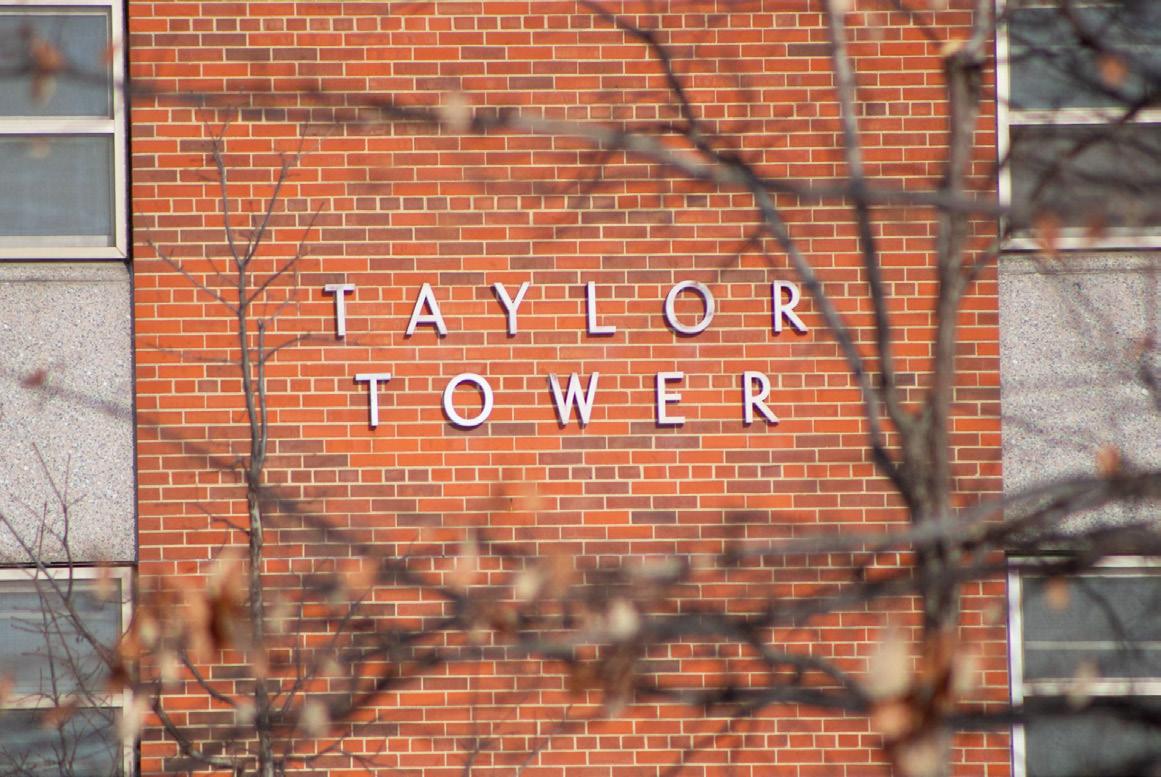
The sign for Taylor Tower on Wednesday. The residence hall closed for the semester after a major pipe burst and caused flooding.
Continued from page 2.
Despite the residence hall closing, students and previous residents of Taylor Tower, such as Deepa Manikandan, a third-year in psychology, reflect on their time with nostalgia and sympathize with the students that will not get to have the same positive experience they fondly look back on.
“It was honestly so sad seeing Taylor get shut down and go through all of this,” Manikandan said. “The people there were really nice, the community was nice, and the building itself had so many options for you.”
Manikandan said she was placed in Taylor Tower as a first-year and lived in a quad-style room with her three other roommates. She decided to live there again the following year and serve on the residence hall’s community council.
“I’m just so sad they didn’t get to have the same experience that I did,” Manikandan said. “Coming home after class you have the courtyard, there’s always people playing there, the lounge or someone cooking in the kitchen. It’s just so special.”
Dave Isaacs, a university spokesperson, said that this was a frustrating and disrupting experience, especially for the students, but is pleased with
how students responded to the situation.
“I’ve been very impressed with student’s patience and their acceptance and willingness to be attentive,” Isaacs said. “We’ve bombarded them with messages as this thing has unfolded, but students have been really good about it. They have been good at understanding that there have been elements beyond anyone’s control and we just need to get through it.”

Audrey van Schagen Campus Senior Writer
When students reach their second year, they start to consider where they are going to live off-campus — and who they are going to live with.
Although it can be an overwhelming process, Ohio State provides various resources to alleviate the stress of finding an off-campus roommate. The Off-Campus and Commuter Student Engagement Office at Ohio State provides resources to students who are not only looking to find a roommate, but seeking an overall successful off-campus roommate experience.
Its website has a Roommate Search resource where students can browse roommate options. By posting a roommate ad, students can share information like their housing status, specific roommate preferences, major and rent to find a roommate that matches based on their criteria.
Aubrie Belinger, administrative associate and social media lead in the off-campus office and a fourth-year in strategic communications, recommends students add a photo to a posted ad profile and provide details on themselves, their living styles and characteristics they’re searching for in a roommate in order to find their best fit.
With the built-in message feature, students can reach out to other students they may be interested in rooming with, without having to send personal contact information, said Jacob Glorioso, off-campus specialist.
The roommate search is only available to students with an Ohio State email, reassuring students that their potential roommate also attends the university, Belinger said.
Students seeking a place to connect with a potential match in person or meet others who are also searching for

a roommate can do so at roommate fairs hosted by the off-campus office throughout the semester, Glorioso said.
OFF-CAMPUS ROOMMATES continues on page 9.




Julia Hart Arts & Life Senior Writer
This article was originally published in the 2025 Fall Housing Edition and has been updated for publication.
Ohio State students have plenty of choices when it comes to off-campus living. Each neighborhood offers its own personality and perks. From artfilled streets to historic charm, different areas around campus have varying convenience, culture and community.
Known as the heart of Columbus’ art scene, the Short North Arts District south of campus is filled with creative energy. According to the Short North’s website, galleries line High Street, and the monthly Gallery Hop draws crowds to see local artists, musicians and performers.
Beyond the art, the neighborhood has become one of the city’s top dining destinations, with everything from upscale restaurants and cocktail lounges to late-night pizza spots and coffee shops.
For Kiara Corona, a fourth-year in human development and family science, living in Short North made sense both financially and logistically when she transferred to Ohio State.
“Short North is gorgeous, especially the closer you get to Neil Avenue,” Corona said. “It’s very lively and is only a slightly older crowd than who you’d see on campus, so it’s an amazing neighborhood for upperclassmen.”
Corona said she enjoys how safe and peaceful her area feels but noted that transportation can be tricky at times.
“It does get way more difficult to get to campus when there’s lots of traffic, especially on game days,” Corona said. “Lyfts get very expensive, and parking can also be tricky whenever I have visitors.”
Corona said she drives to class but that there are several transportation
options available for students who don’t have a car.
“I usually drive to campus, which takes me five to 10 minutes depending on where I’m going and traffic,” Corona said. “But if someone doesn’t have a car, the walk to campus is about 45 minutes and truly isn’t bad at all. I’ve made the walk several times. There are also so many [public bus] stops in Short North for people who use public transportation, as well as Lime scooters and bikes to rent.”
Stretching north of Lane Avenue and just beyond the University District, Old North Columbus offers a more laid-back, and often more affordable, living option for students. The area is known for its mix of longtime residents, artists and students, creating a diverse and welcoming neighborhood.
According to Old North’s website, the area’s walkability makes it easy to get around without a car, with plen ty of local restaurants, coffee shops and music venues along High Street. Spots like Hounddog’s Pizza, the Old North Arcade and Ace of Cups are very popular, while nearby parks and historic homes give the area a cozy, community feel that’s just far enough from campus to feel separate but still close to the action.
to creativity and connection, according to the University District website.

say ‘gentrified.’ ” Though she likes the location, Dougan said there’s room for improvement when it comes to safety and parking.
The Short North is a Columbus neighborhood that extends from downtown to just south of Ohio State’s campus along High Street.
As the heart of Ohio State’s off-campus community, the University District is full of energy, creativity and student life. The area’s mix of longterm residents, students and artists gives it a diverse, expressive atmosphere that reflects Ohio State’s spirit.
Local projects and initiatives, such as community art programs and live events like the Pearl Alley Jam, showcase the district’s commitment
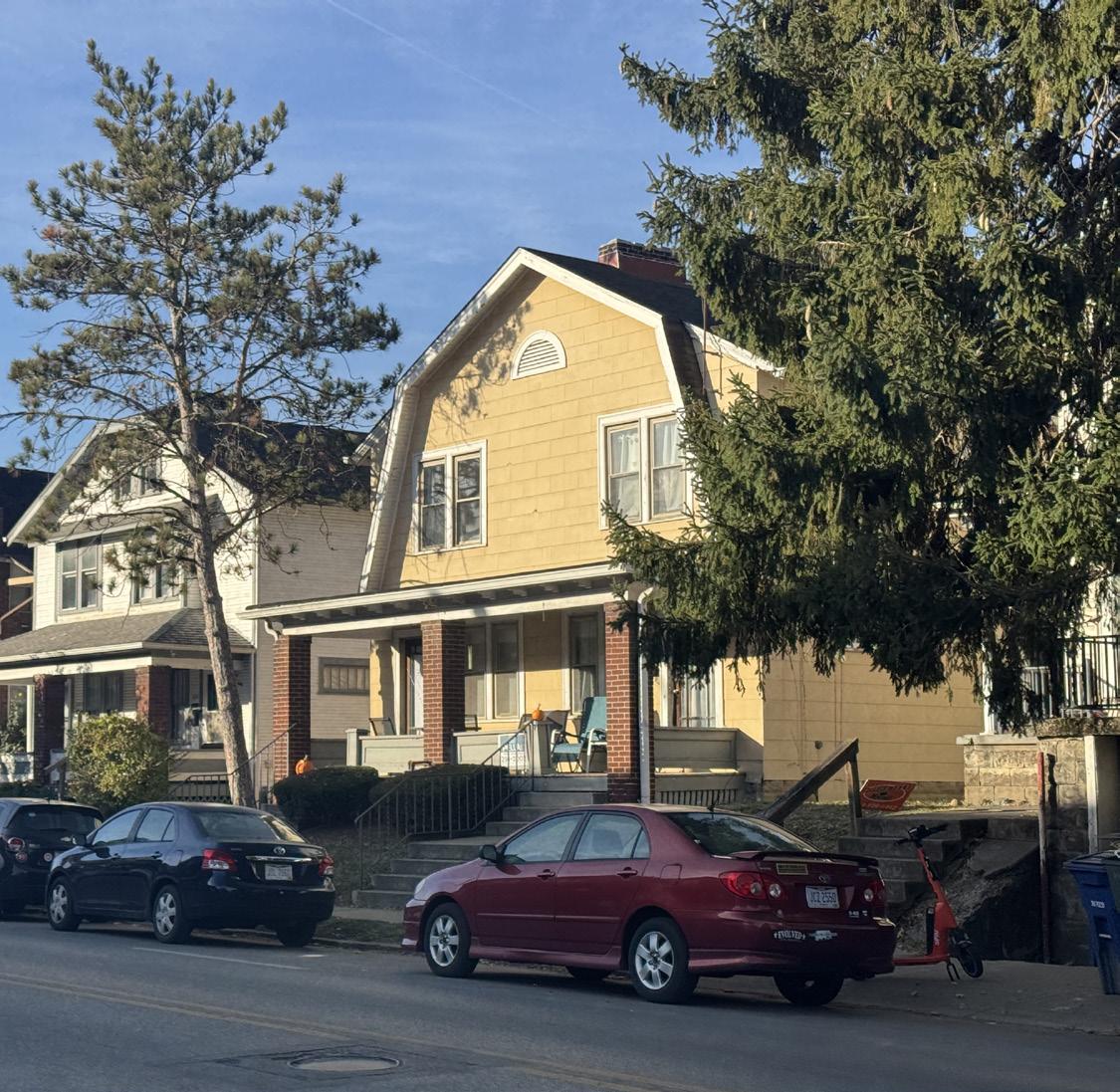
Lydia Dougan, a year in health and rehabilitation sciences, said she chose to live in this district because of its accessibility and housing availability.
“I knew a majority of my classes would be located close to South Campus,” Dougan said. “As I would have preferred to live toward North Campus, I had a difficult time finding available housing along with affordable options.”
She described the area as busy and tight, with old and new buildings mixed together.
“One street you feel safe and the next you don’t,” Dougan said. “If I had to describe the area in one word, I’d
“I don’t always feel safe, the parking and one-way streets are a nuisance, and it doesn’t feel homey,” Dougan said. “I think there could be a better presence of streetlights, security, police or cameras.”
Despite those drawbacks, Dougan said transportation and access to stores are convenient.
“I have great options regarding transportation, I can walk, bike, drive, take a COTA bus or even a campus bus,” Dougan said. “There are numerous grocery stores within a mile, so thankfully I don’t live in a food desert.”
COLUMBUS DISTRICTS continue on page 10.

Continued from page 5.
“It really acts as one, just a great place to get in-time, real answers on the housing search process, but also it gives them that in-person connection with other potential roommates,” Glorioso said.
The next roommate fair is Feb. 19 from 3-4:30 p.m. in the Student Alumni Council room at the Ohio Union. Students must have a valid Buck ID to attend and can pre-register via the office’s website. Students can follow the office’s Instagram for updates on roommate fairs.
The off-campus staff are there to assist students with housing resources and breaking the ice to help match potential roommates throughout the fair, Glorioso said.
At the fairs, there are cue cards containing random questions for students, such as “what’s your favorite season?” or “what’s your favorite class?” to facilitate those conversations between attendees, as starting them independently may be awkward to do, Glorioso said.
Students from all points of the housing and roommate process attend, whether they’re just starting the overall search process and seeing what it’s like or specifically seeking a roommate, Belinger said.
The in-person element of these fairs is something students should value, Belinger said.
“I think as a student, you want to make sure you’re living with people you’re compatible with, and that’s not always possible online,” Belinger said. “So this in-person opportunity is a great experience for students that I think people should be taking advantage of.”
When discussing preferences with a potential roommate, it is important for students to
ask questions about each other’s living style and setting boundaries, as it is better to get on the same page quickly after meeting, instead of addressing issues later, Glorioso said.
“If there’s things they really want to see in a roommate, like that they need that quiet study time from 7 o’clock to 8 o’clock at night, maybe that’s something to bring up and say, ‘Hey are you okay with maybe setting some quiet hours?’” Glorioso said.
The department provides sample roommate agreement forms on its website for roommates to set clear expectations with each other, Glorioso said. These agreements allow students to address specifics about living together such as utilities, unpaid rent, subleasing, quiet time, food or having guests over.
“I think those can be somewhat awkward conversations sometimes to bring up with your peers or fellow roommates and this document really forces you to do it,” Glorioso said.
Belinger said that since most of the students searching for roommates have never lived on their own before, as they are transitioning from living in dorms, it is almost impossible to expect them to know how to have these conversations, especially the difficult ones. The office’s resources — like the roommate agreements — help with smoothing that transition and get the ball rolling for students.
Additionally, Glorioso said budget is an important component students should know when considering roommates to ensure a smoother house search.
Glorioso said that sometimes friends do not always make the best roommates, as their living expectations may vary. He recommends students consider their roommate preferences and use the office’s resources to have that iconic off-campus experience.
Belinger said students should be patient with the search and ask themselves what they really want in a roommate.
“It’s easy to just find, ‘oh this person somewhat fits what I need,’ but really taking the time to meet these people and try to see if you’re actually compatible,” Belinger said. “Because obviously a good roommate helps you be successful in your everyday college life.”


Continued from page 7.
German Village and Brewery District
Just south of downtown, German Village offers one of Columbus’ most picturesque neighborhoods. The neighborhood’s cobblestone streets, brick homes and cozy coffee shops give it a small-town feel just minutes from campus.
restaurants and Shadowbox Live, the nation’s largest resident theater company.
Together, the two neighborhoods offer a mix of history, entertainment and culture for students looking to experience Columbus beyond the University District, according to the Experience Columbus website.
No matter what students are looking for, arts and nightlife, historic charm or easy access to campus, Columbus’
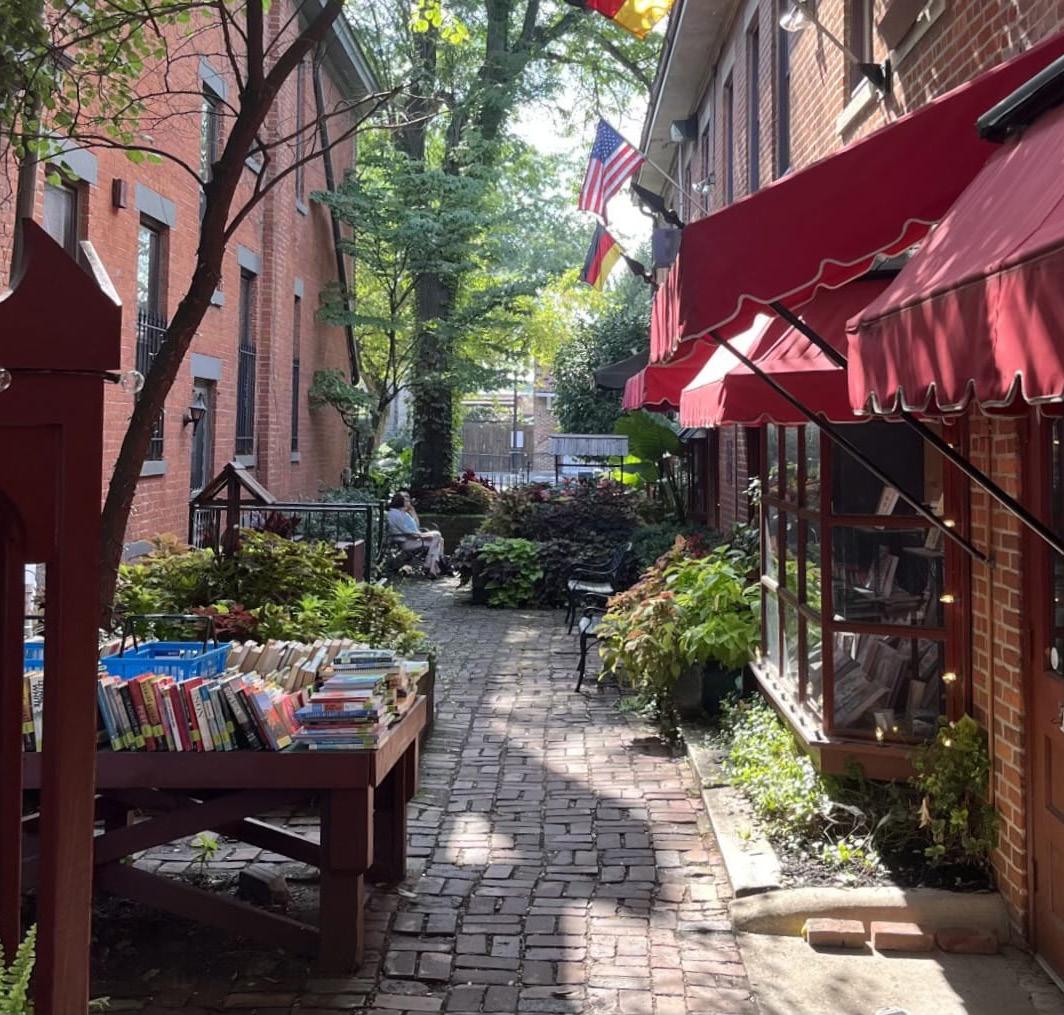
The Book Loft in German Village remains a local favorite for students to visit.
Students who choose to live here can enjoy local favorites like The Book Loft, free summer performances at Schiller Park and quiet afternoons at neighborhood cafés.
Nearby, the Brewery District blends that old-world charm with modern nightlife, featuring popular bars,
off-campus neighborhoods provide something for everyone. Choosing the right district can make a student’s college experience feel a little more like home.






Davis Beatty Managing Campus Editor
This article was originally published in the 2025 Spring Housing Edition and has been updated for publication.
The snow is here to stay.
After Columbus saw a foot of snow during the second weekend of the semester, the average temperature has not been higher than 26 degrees and the National Weather Service predicts similar temperatures for the next week.
Ohio State cleared 130 miles of sidewalks and 40 miles of roads on campus, per prior Lantern reporting. For off-campus roads, the city of Columbus announced that it had plowed all streets by Jan. 28. There was so much snow downtown, city workers had to haul much of it away, using a snow-haul removal plan that hasn’t been enacted since 2008.
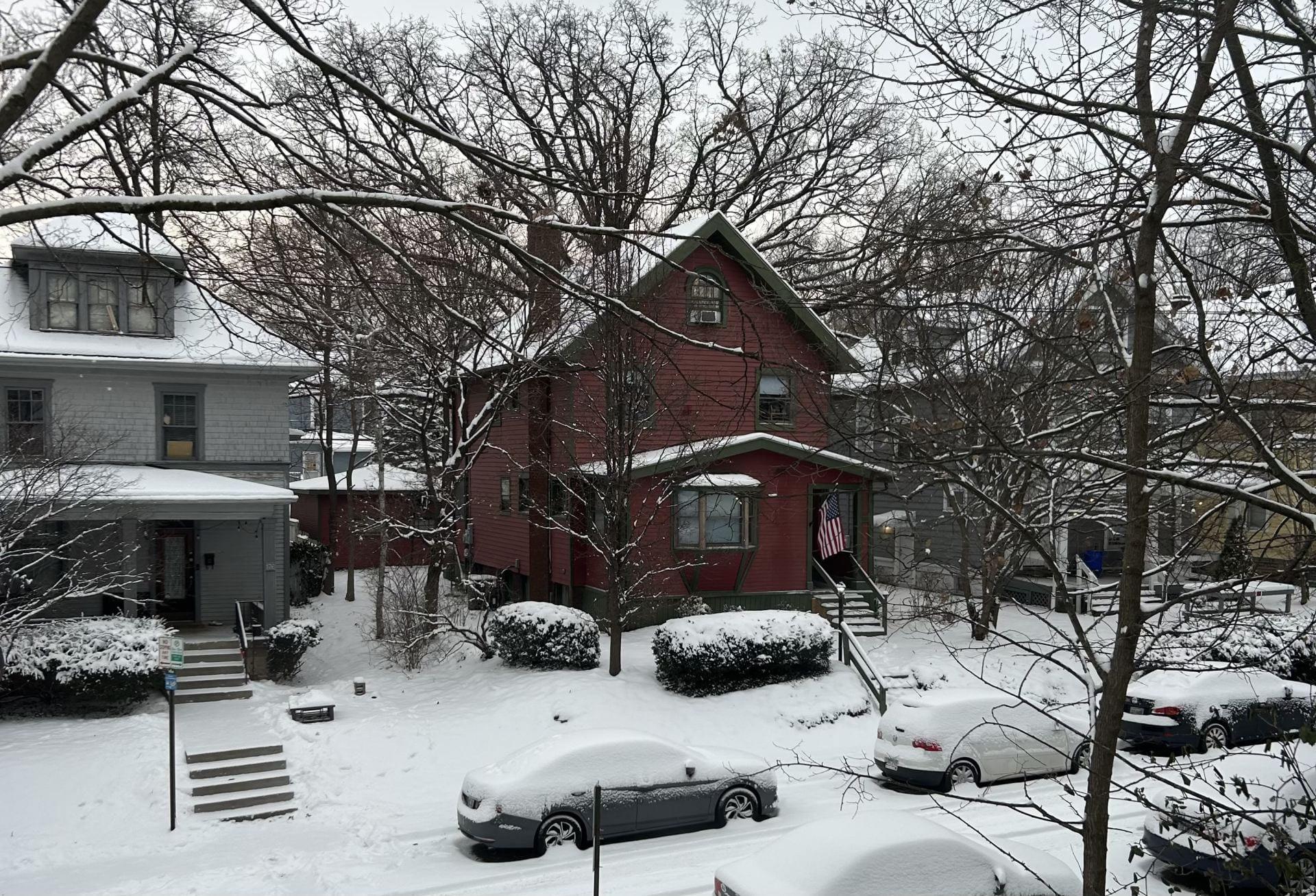
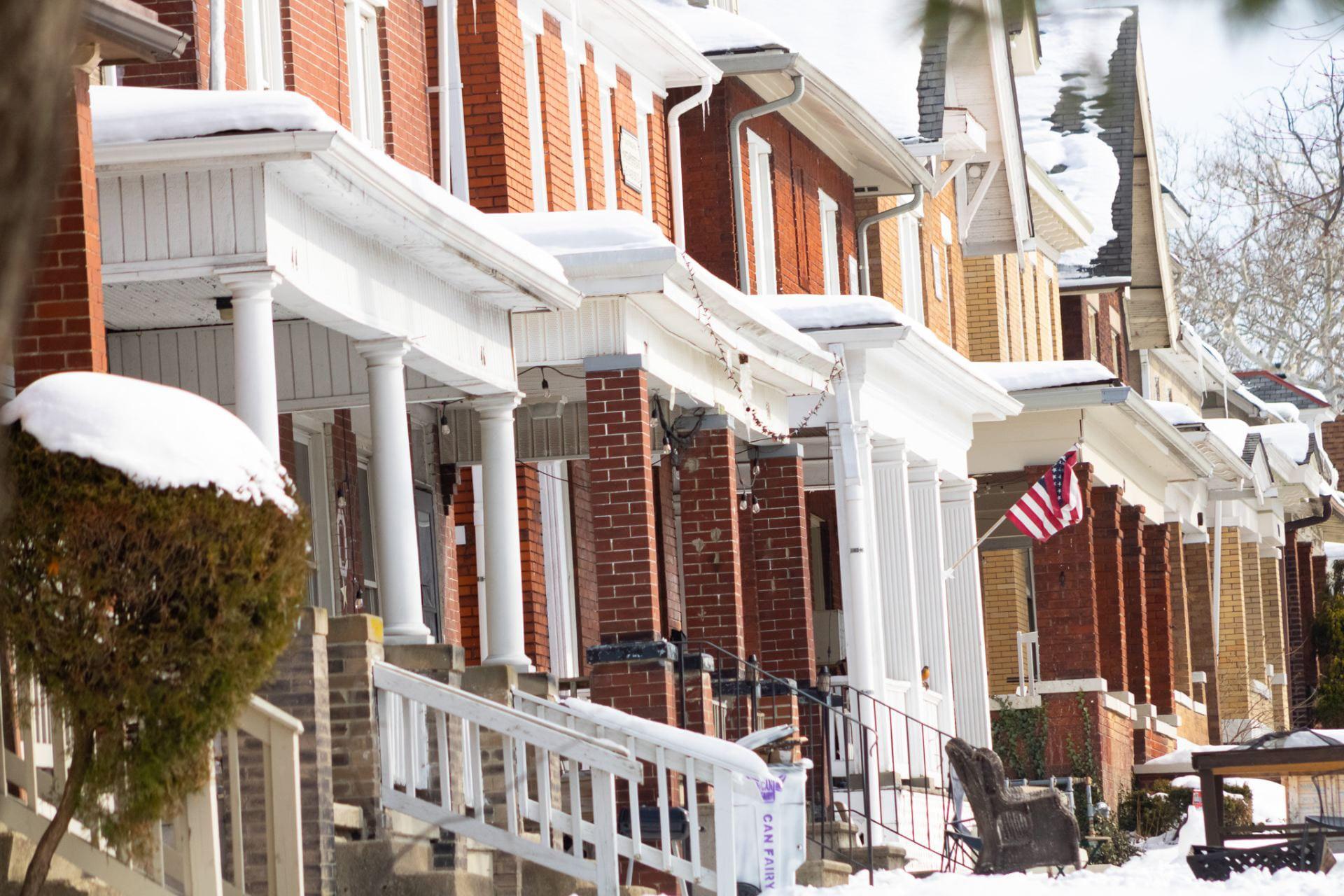
Houses on East Northwood Avenue, commonly used by students for off-campus housing, were covered in snow and ice in January 2025, raising questions over who is responsible for winter maintenance.
So, who is responsible for off-campus homes and apartments? It depends.
When dealing with snow and ice on sidewalks, as well as steps and stoops, students who live off-campus might face confusion about where their clean-up responsibilities lie.
Lauren Hawkinson, a former fourthyear in biomedical engineering discovered her lease stated that her landlord is not liable for any injuries that occur
on the property due to ice or snow. That’s after she broke her ankle in an apartment parking lot, a year ago, in January 2025. It also was not clear who was responsible for the maintenance of the sidewalk around the apartment and the shared parking lot behind the building, according to the document.
Frank Kremer, chief counsel for the Civil Team at the Ohio State Student Legal Services said the liability of snow and ice incidents is determined on a case-by-case basis, using many
factors such as the type of property, the location of the snow and ice, the terms of the lease and local municipality laws.
Kremer weighed in on how to navigate one’s liability.
To ensure students know what to expect, Kremer said there are steps they can take to adequately prepare for working with a leasing company for the first time.
Before signing a lease, Kremer said to research different landlords online using the Undergraduate Student
Government Renter’s Guide.
Students can also learn which landlords are in network with the Off-Campus Community Engagement Office, Kremer said. An in-network landlord must meet certain criteria to be part of the university’s network, according to the office’s website.
Student Legal Services also offers review sessions for students to assess a lease with a legal expert before signing, allowing students to receive an overview of what their rights and responsibilities are, Kremer said.
“Because these things can be so fact-specific, we can then ask [students] the questions to get all the necessary, relevant facts that we need to then analyze it from a legal perspective and give them the best advice that we can,” Kremer said.
Students can make a general advising appointment through the Student Legal Services webform, according to its website.