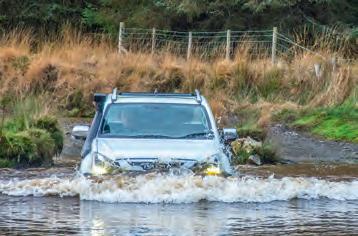
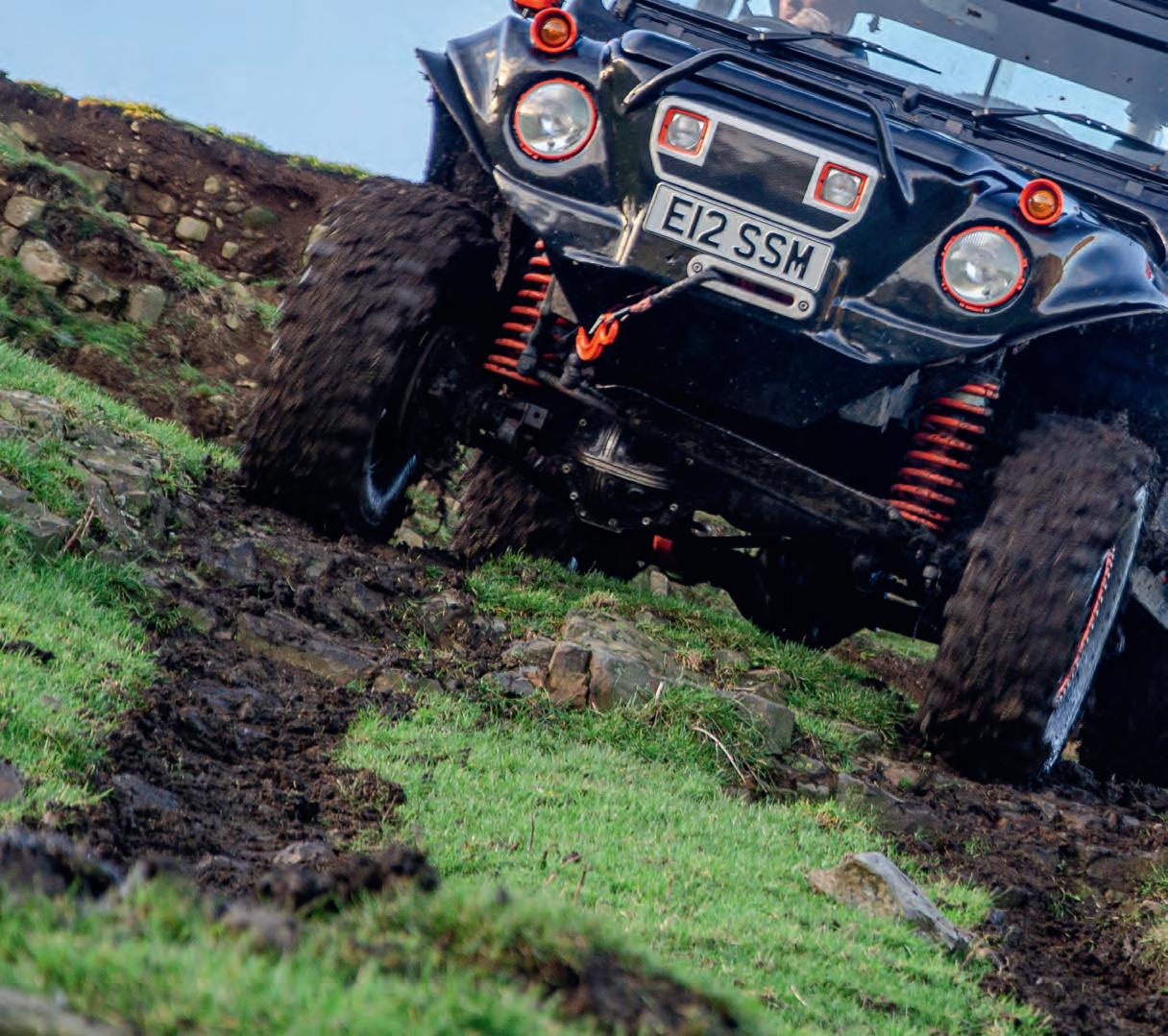
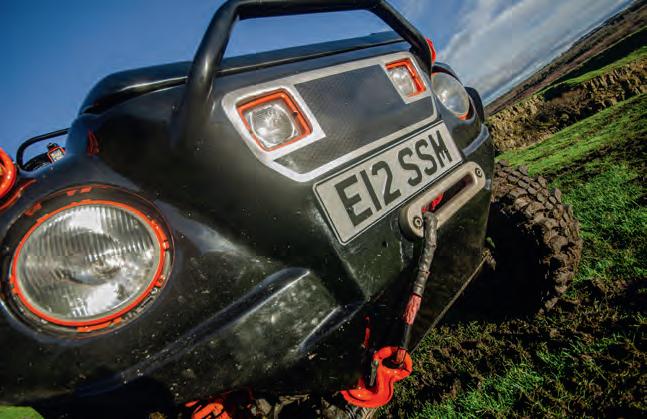
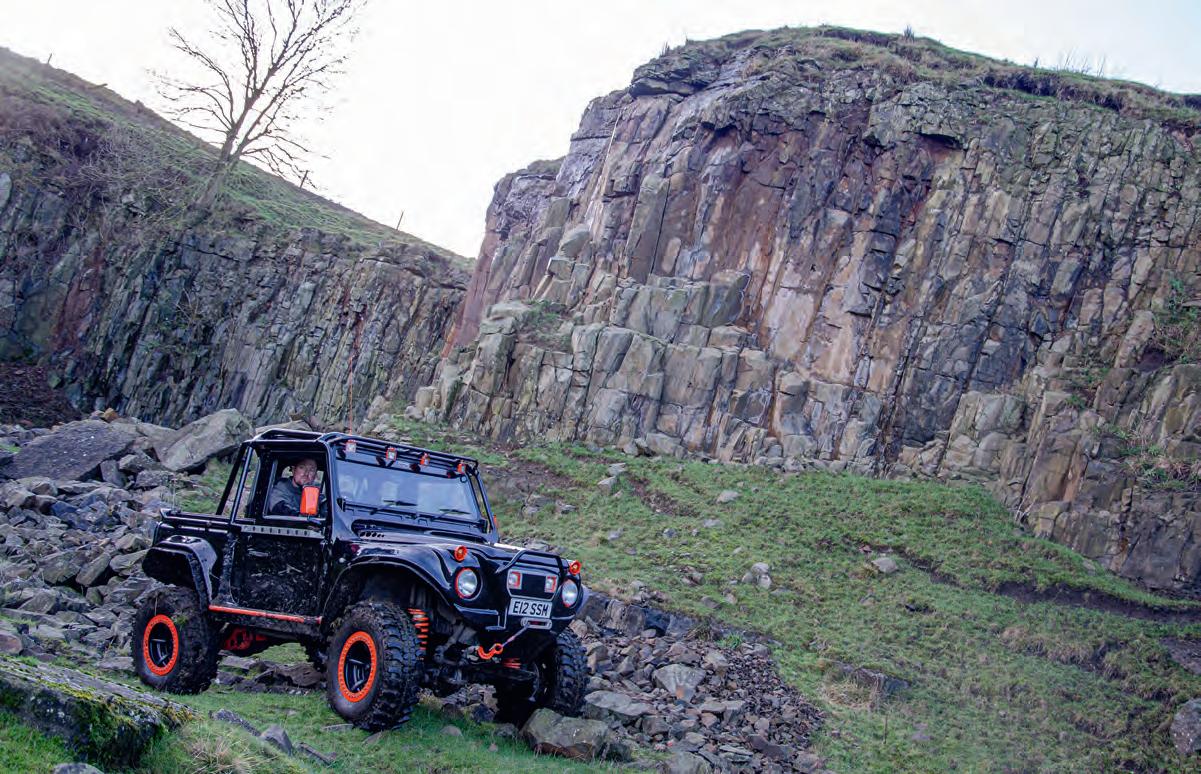
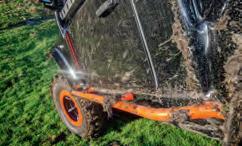
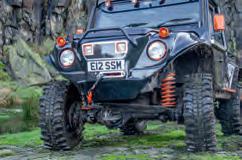
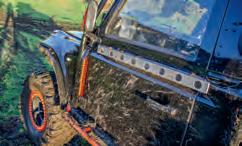
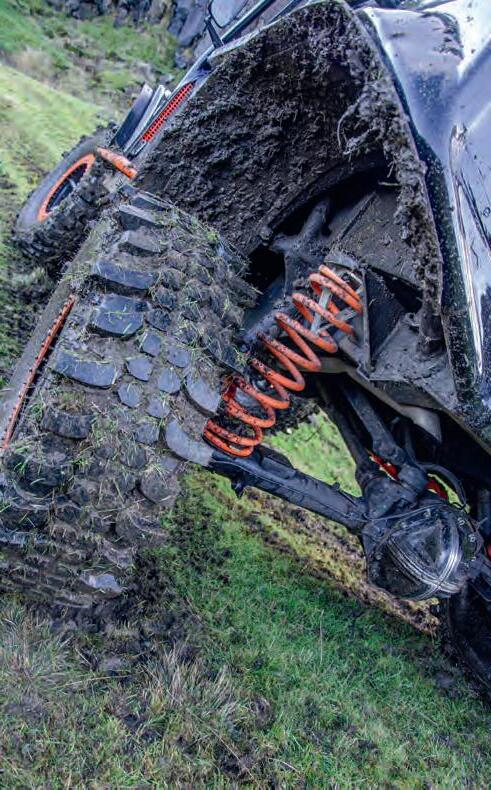
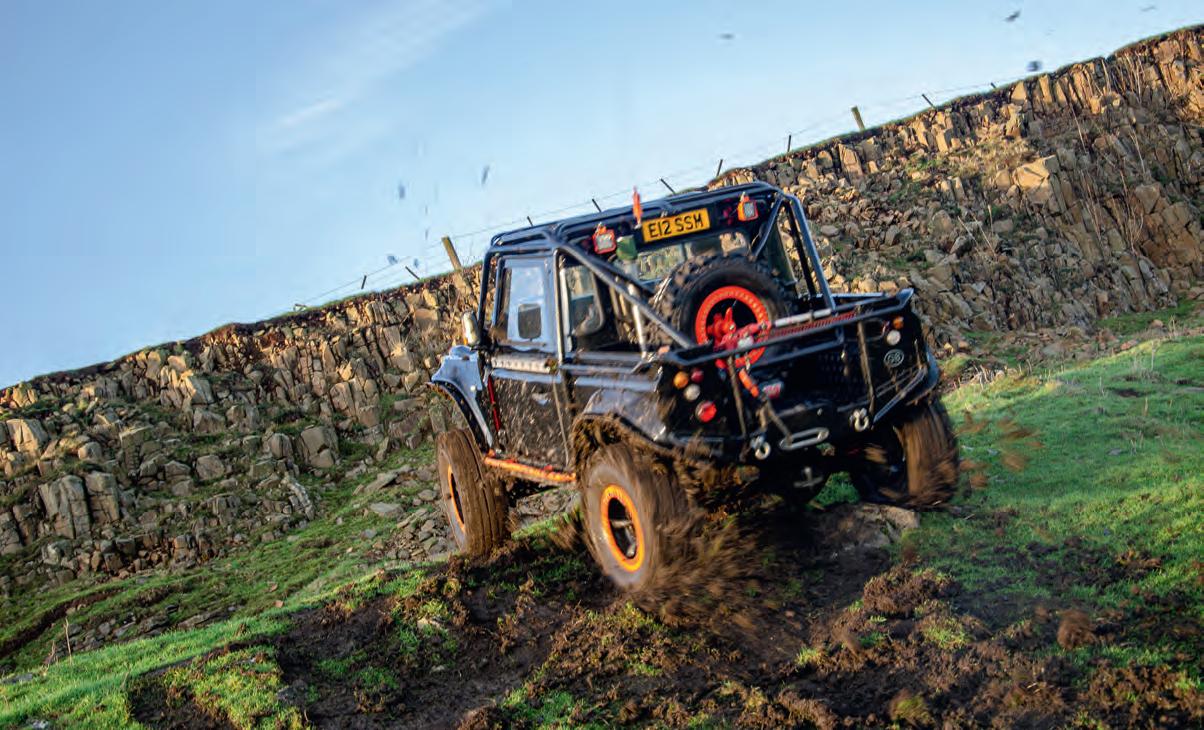
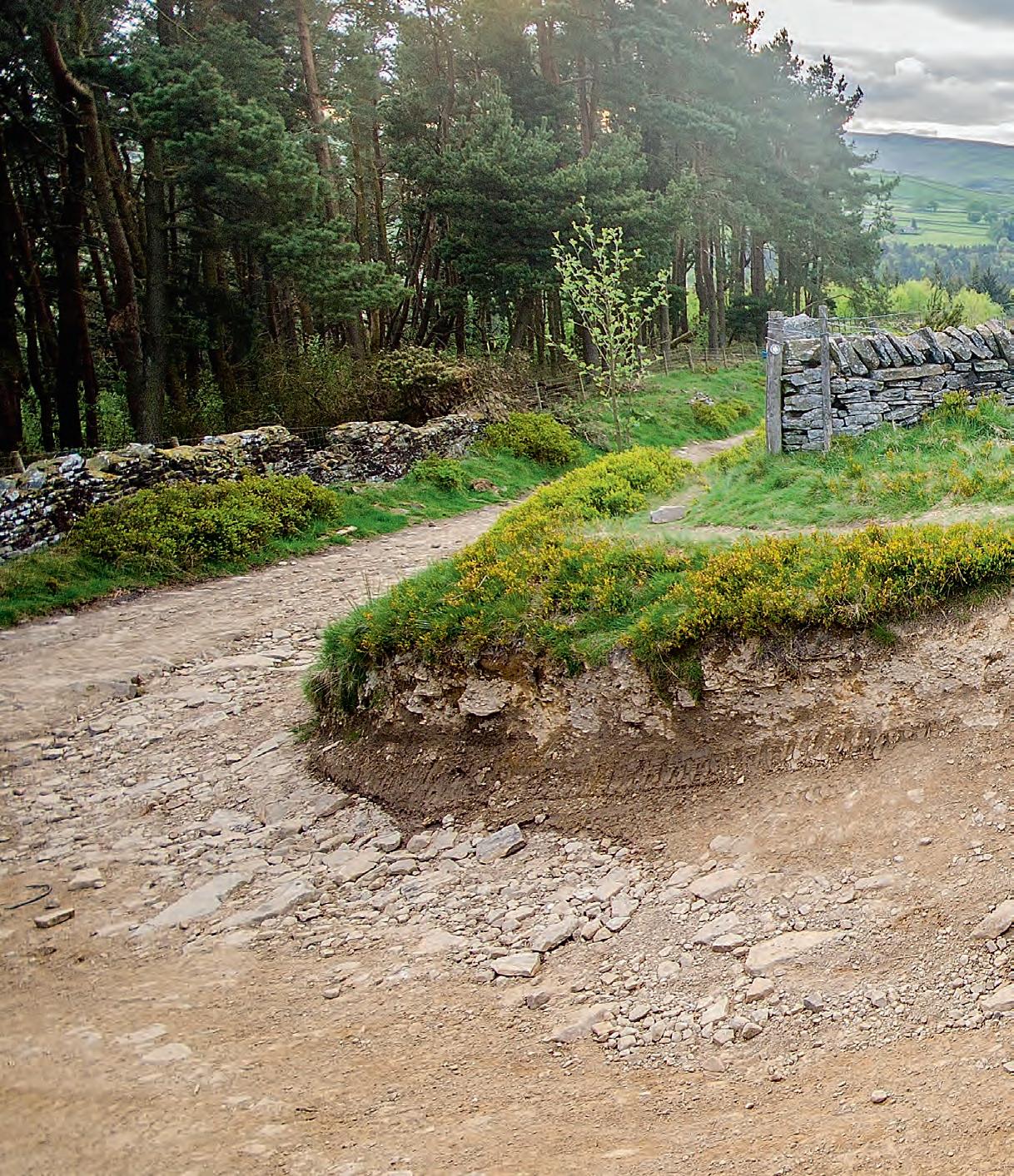
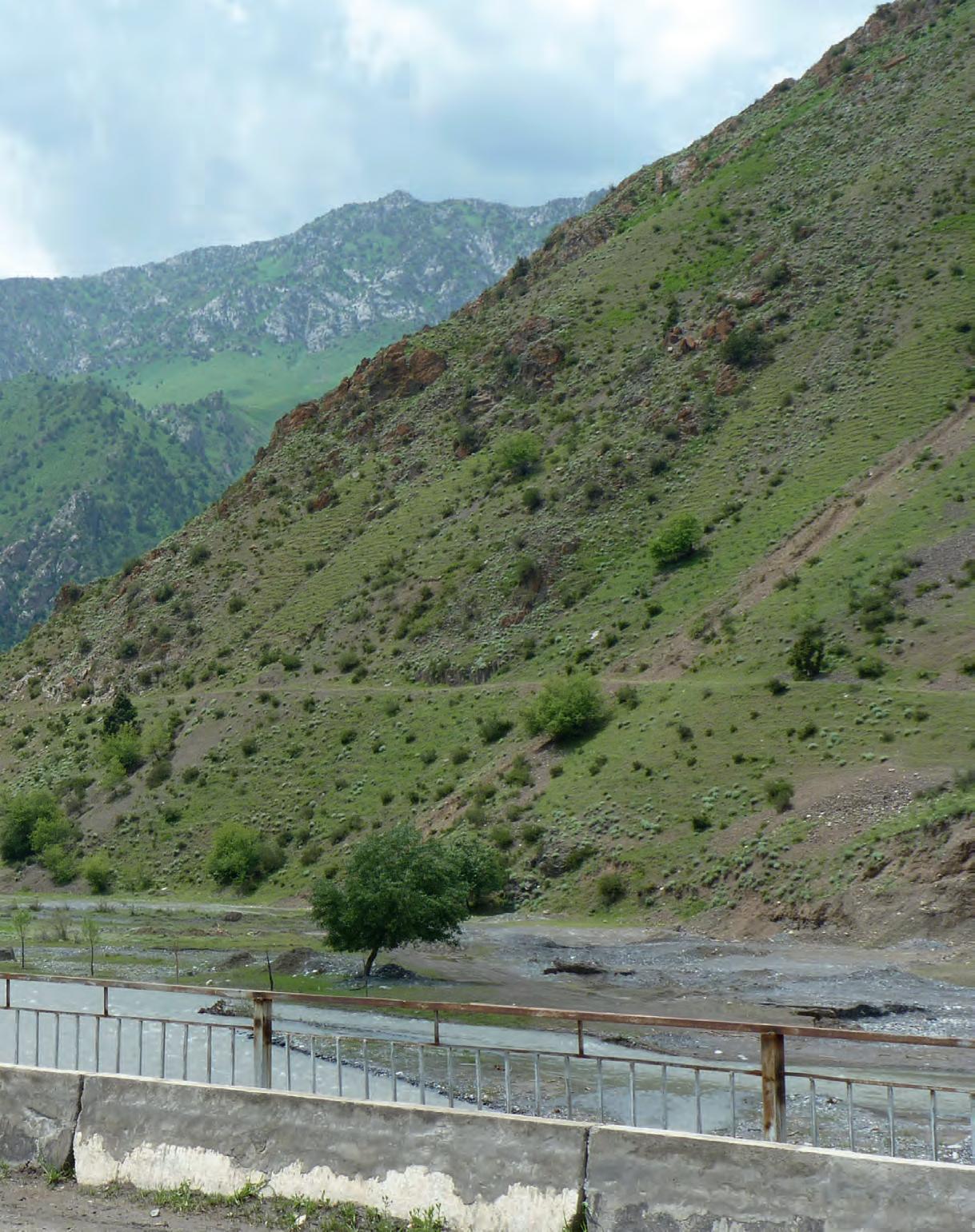
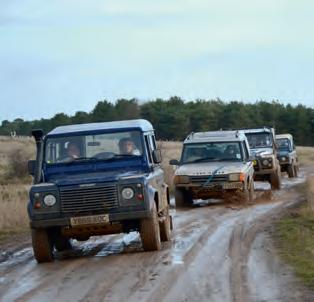
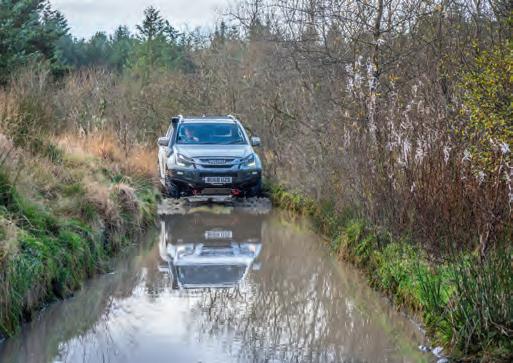
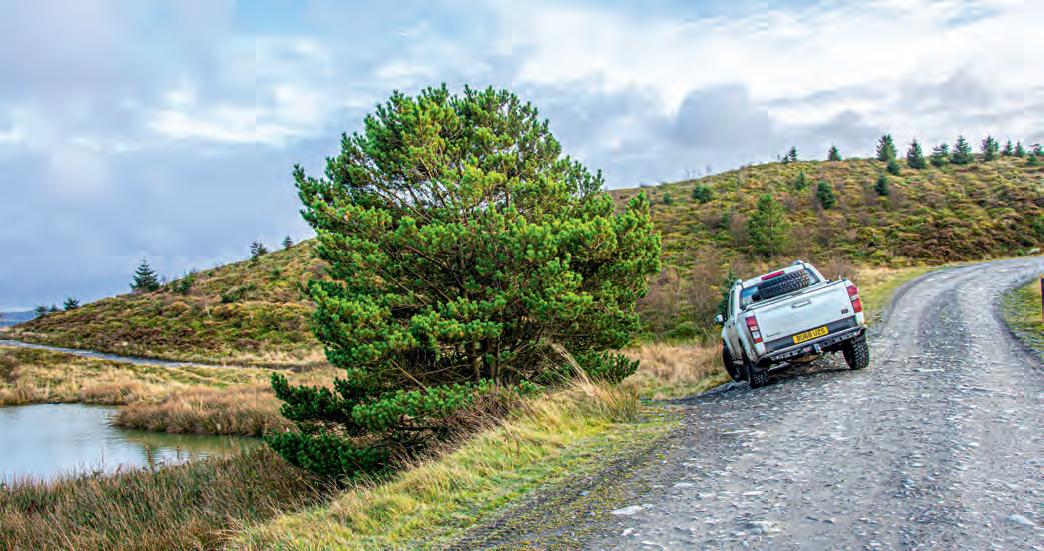
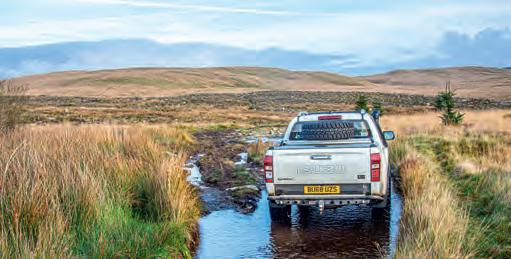
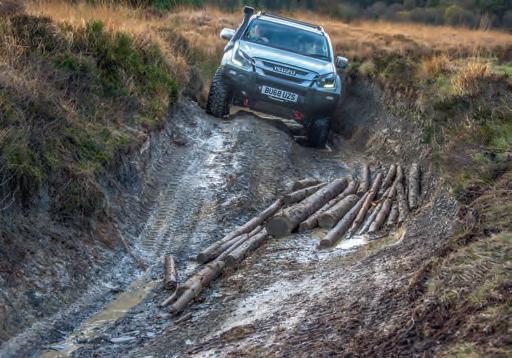
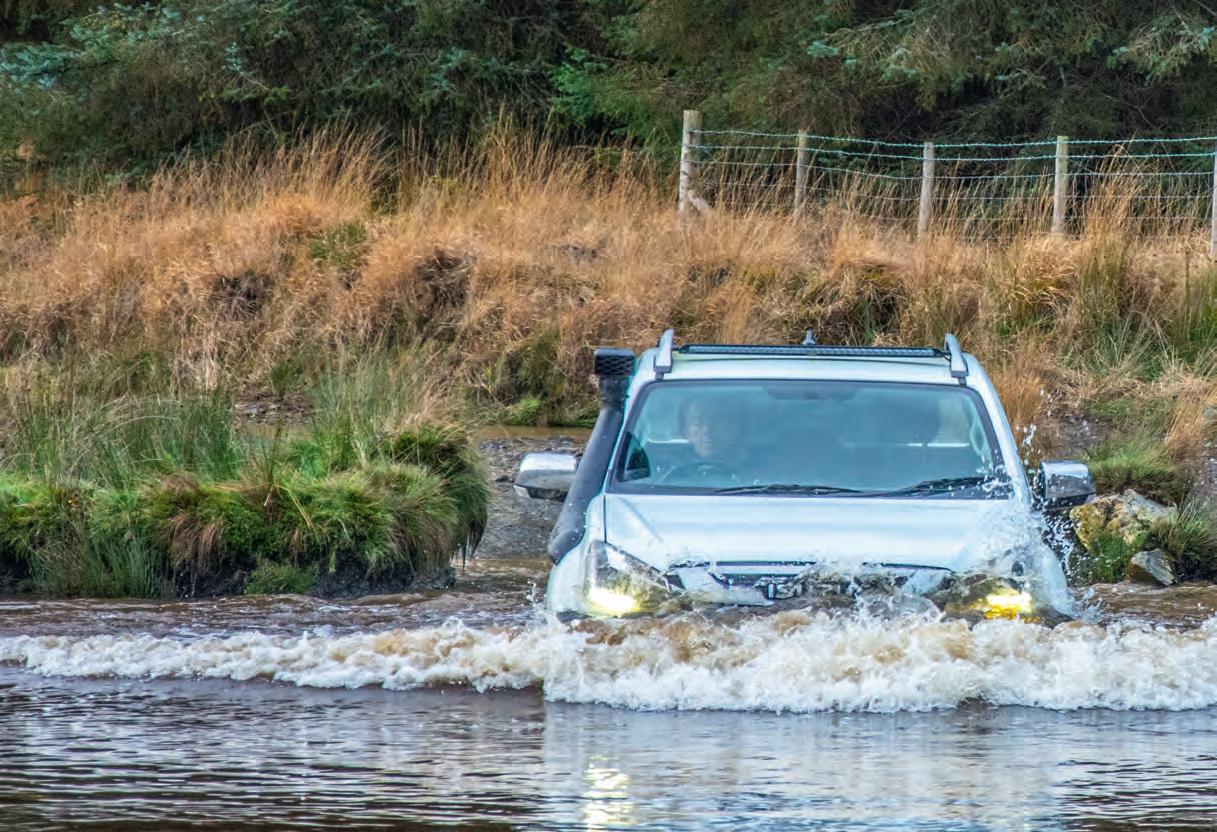
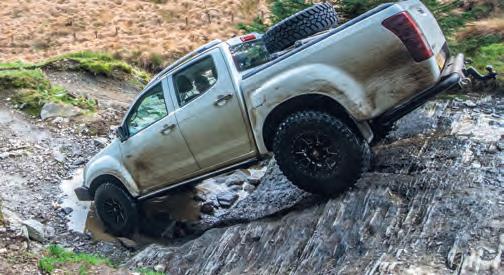
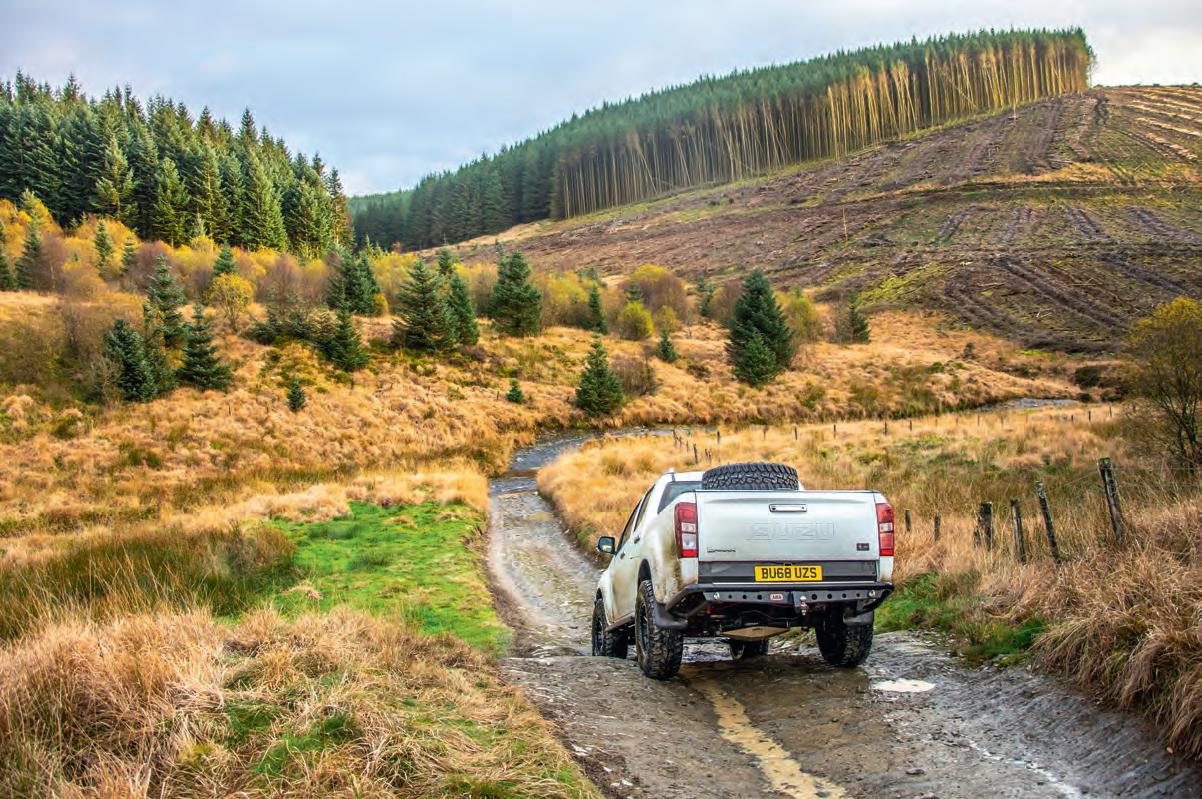
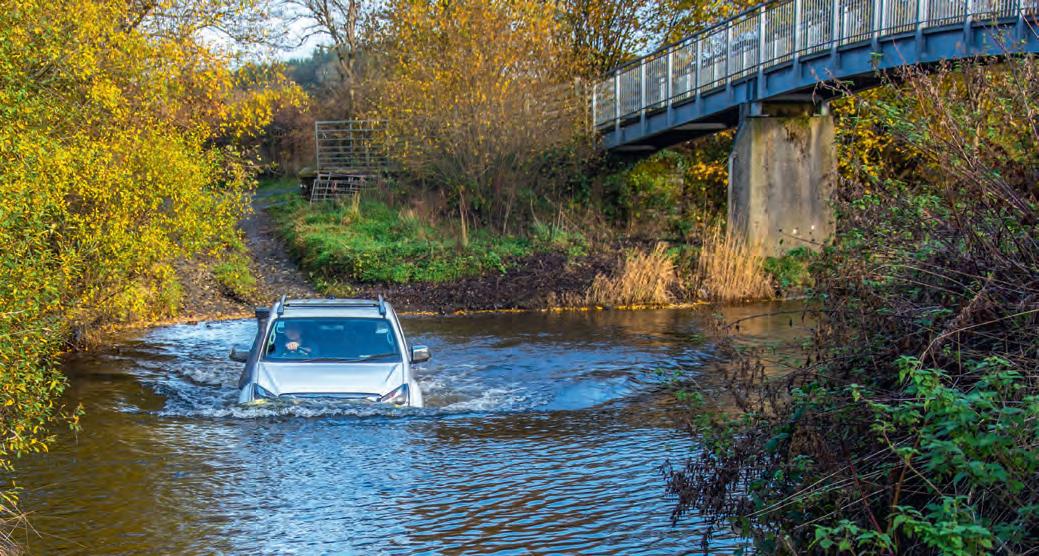
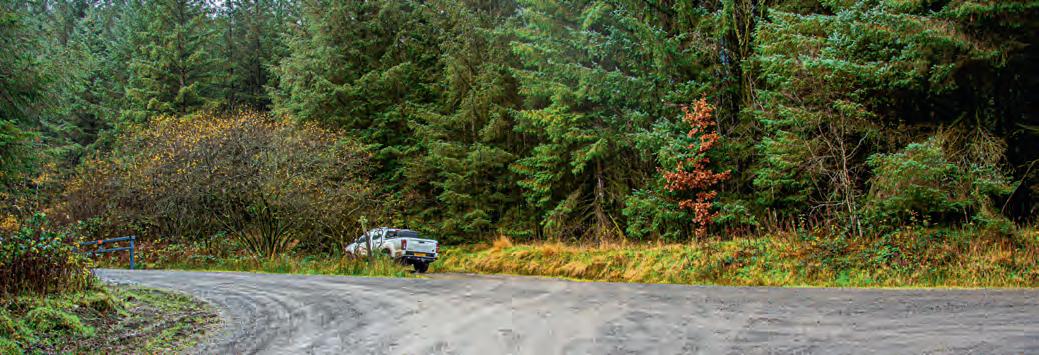
ROADBOOK Epic landscapes, monster lanes and a fiesta of fords in Mid-Wales
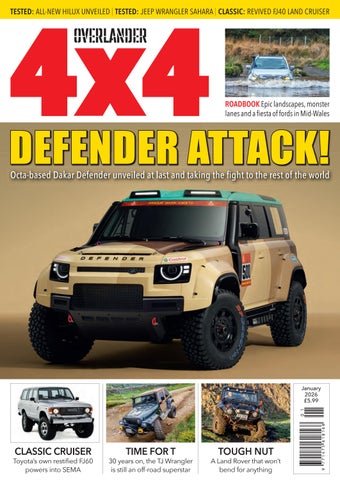
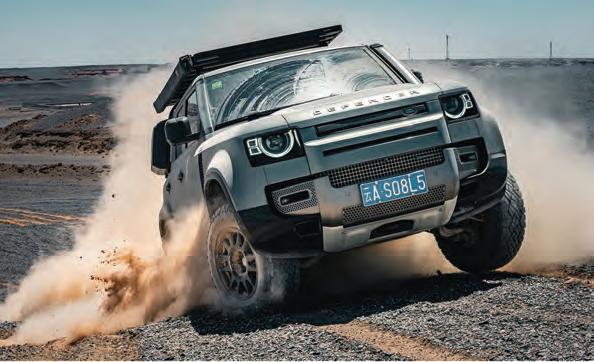
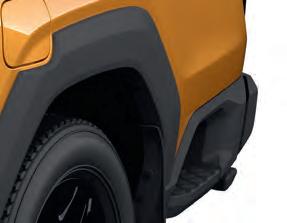
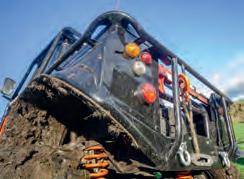
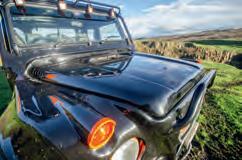
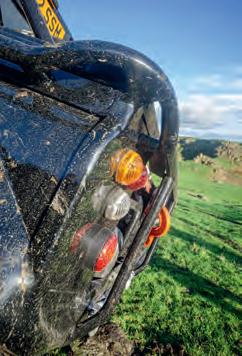
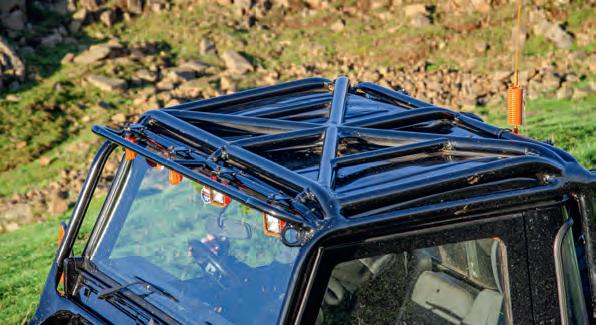
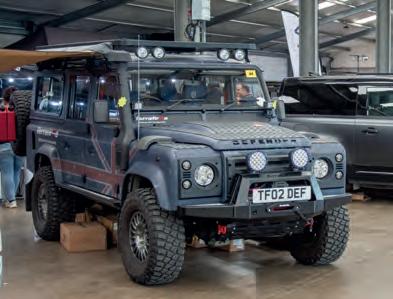
Octa-based Dakar Defender unveiled at last and taking the fi ght to the rest of the world
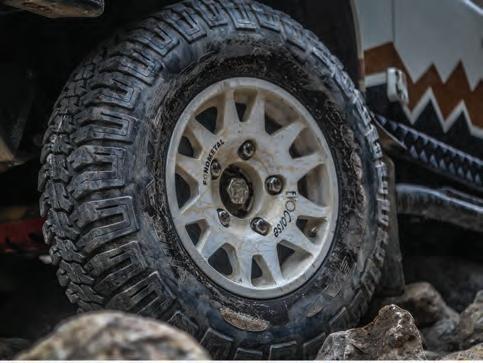
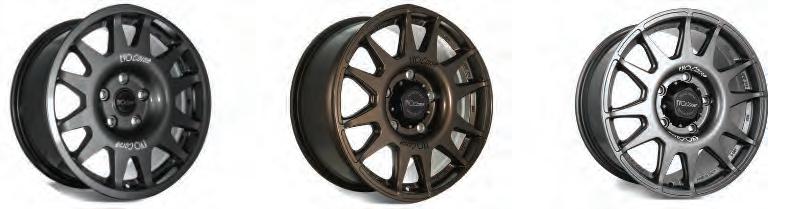
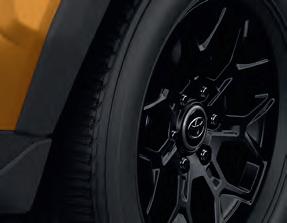
Discover the range of alloy wheels for extreme off-road by EvoCorse. The Dakar line, constantly evolving, has made us protagonists in major international competitions like the Dakar Rally and the W2RC World Championship our Off-road range offers wheels from 16” to 20”, providing everything you need for your off-road adventures.
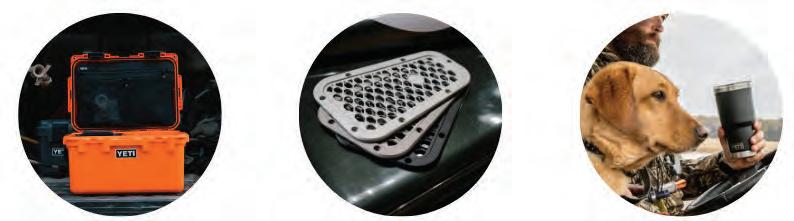
We’re excited to announce that Exmoor Trim is stocking YETI, the ultimate brand for rugged, high-performance outdoor gear. Whether you’re heading out on a Land Rover adventure, tackling the great outdoors, or just looking for the toughest drinkware and coolers around, YETI has you covered.
Upgrade your Land Rover with our premium Wing Top Vents, designed and manufactured in the UK at our factory on the edge of Exmoor.
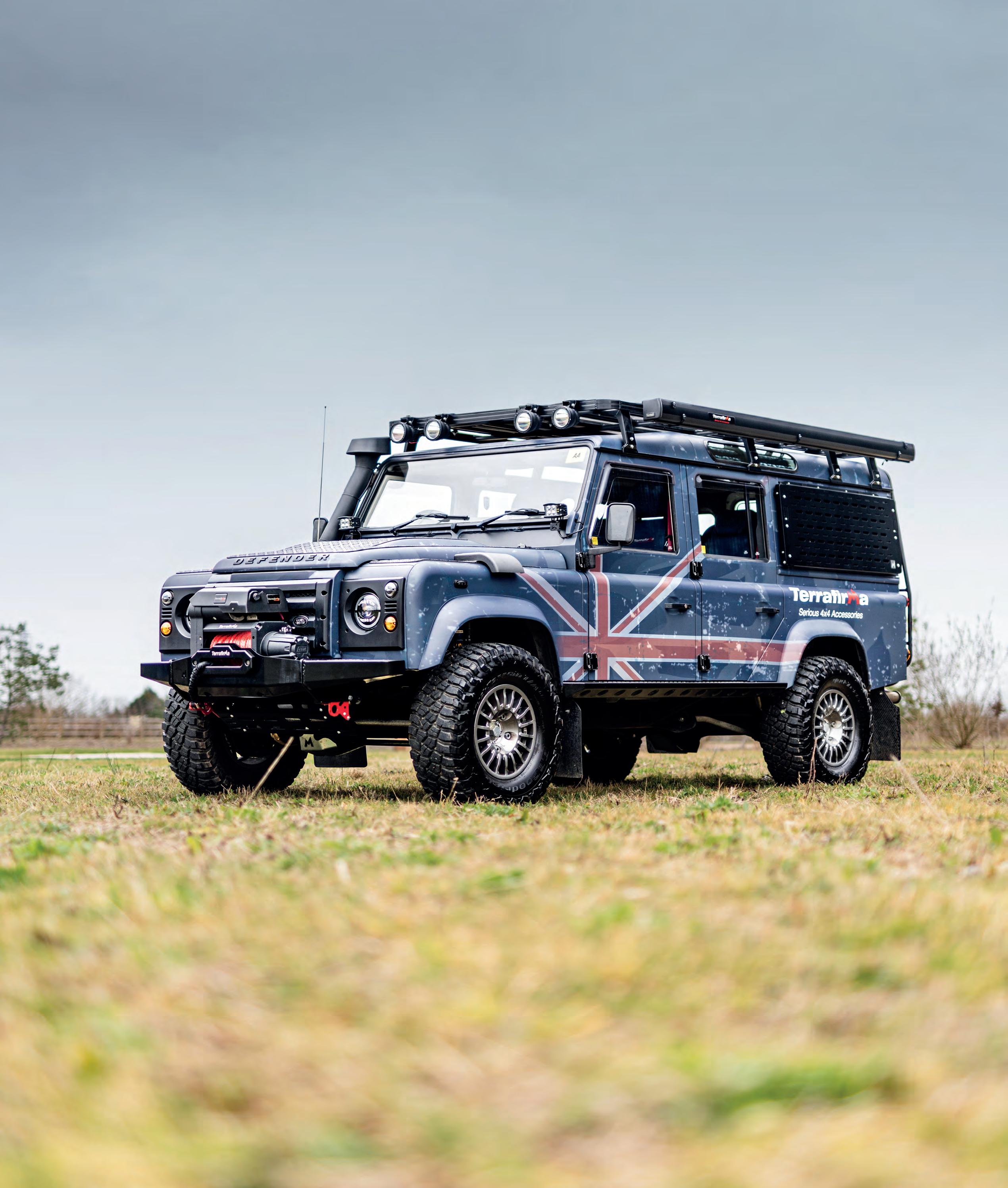
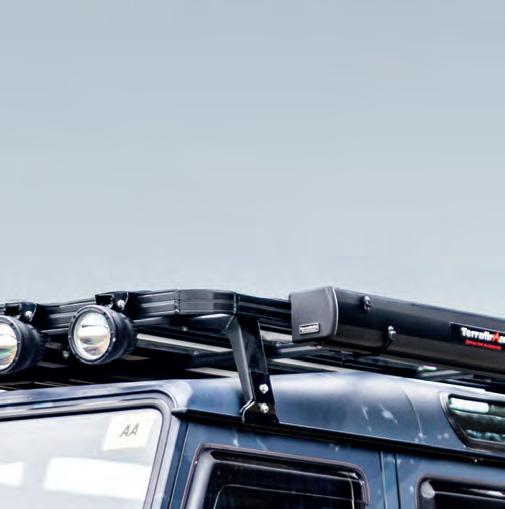
TF975 Roof Rack
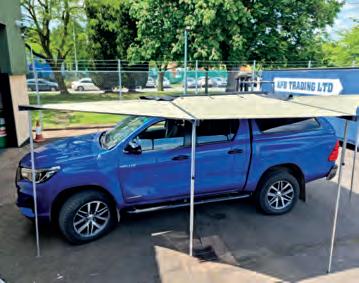
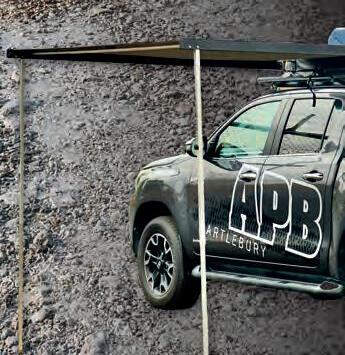
TF1707 2.5m Hard Case LED Awning
TF1731 LED Shower Awning
TF705 Spot Lights
TF1038 Raised Air Intake
TF7220 Bulk Head Light Brackets
TF7116 Lights
TF31038 Halo & Bar Indicator & Side Light
TF7112 Halo & Bar LED Headlights
TF31011 Dynamic Side Repeaters
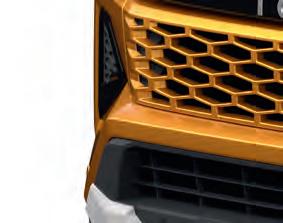
TF270 Grille & Headlight Surround
TF0028 TRED Winch Bumper
TF3360 12,500lb Twin Motor Winch with 50m Synthetic Rope
WW Magazines, 151 Station Street, Burton on Trent, DE14 1BG Tel: 01283 742970
Publisher Alan Kidd
Email: editorial@pistonpublications.co.uk
To subscribe to 4x4, or renew a subscription, call 01283 742970. Prices for 12 issues: UK £42 (24 issues £76); Europe Airmail/ROW Surface £54; ROW Airmail £78
Distributed by Marketforce; www.marketforce.co.uk
Every effort is made to ensure the contents of 4x4 are accurate, but Piston Publications accepts no responsibility for errors or omissions nor the consequences of actions made as a result of these. When responding to any advert in 4x4, you should make appropriate enquiries before sending money or entering into a contract. The publishers take reasonable care to ensure advertisers’ probity, but will not be liable for loss or damage incurred from responding to adverts
Where a photo credit includes the note ‘CC BY 2.0’ or similar, the image is made available under that Creative Commons licence: details at www.creativecommons.org
Pay quarterly by direct debit and you can get Britain’s only all-marques 4x4 magazine delivered to your door – for less than half the price on the front cover!
overlander4x4.co.uk
CONTENTS JANUARY 2026
4x4 Scene
4 News
Toyota introduces the new Hilux – now double-cab only, 4wd across the range and moved significantly upmarket. And on that subject, you can now get the new Defender as a double-cab, sort-of…
8 Motorsport
With the Dakar just around the corner, Land Rover lifts the wraps on the Octa-based 110 race truck aiming for glory in the desert
12 Products
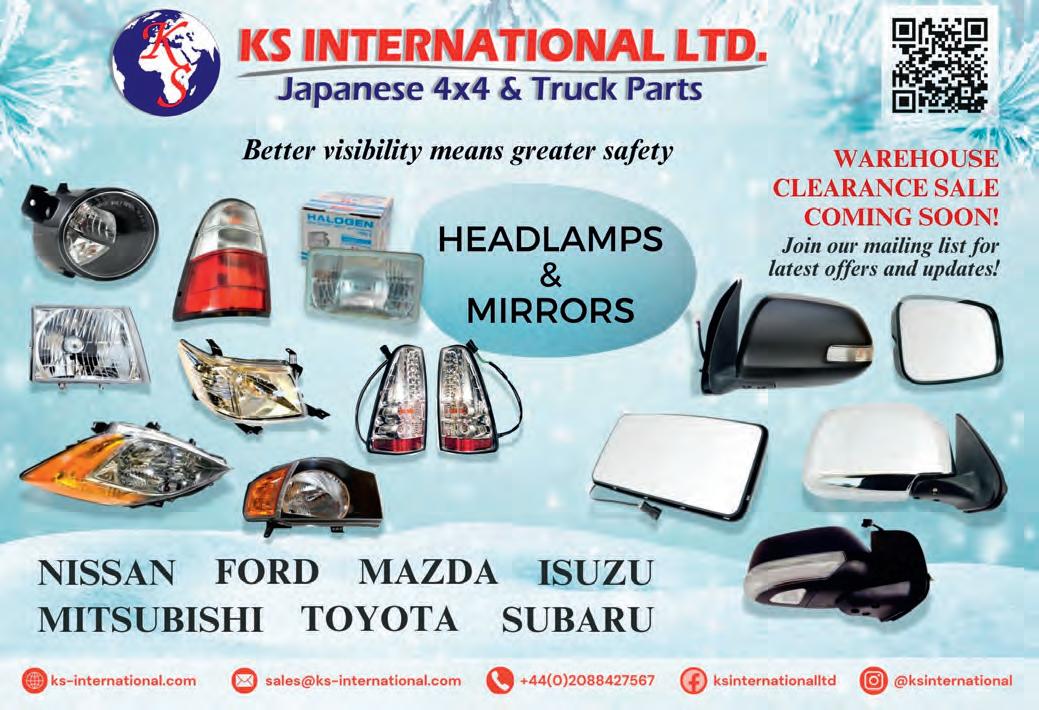
Great value prices on Molle panels from Exmoor Trim, power packs from APB and LED bars from KS International
Every Month
40 Subscribe
Get Overlander 4x4 delivered for a fraction of the cover price
64 Next Month
Everything from a budget-busting Discovery 2 and an old-school Chevy-engined 90 to a winched-up Volvo XC90 and a Grenadier for game parks
Tested
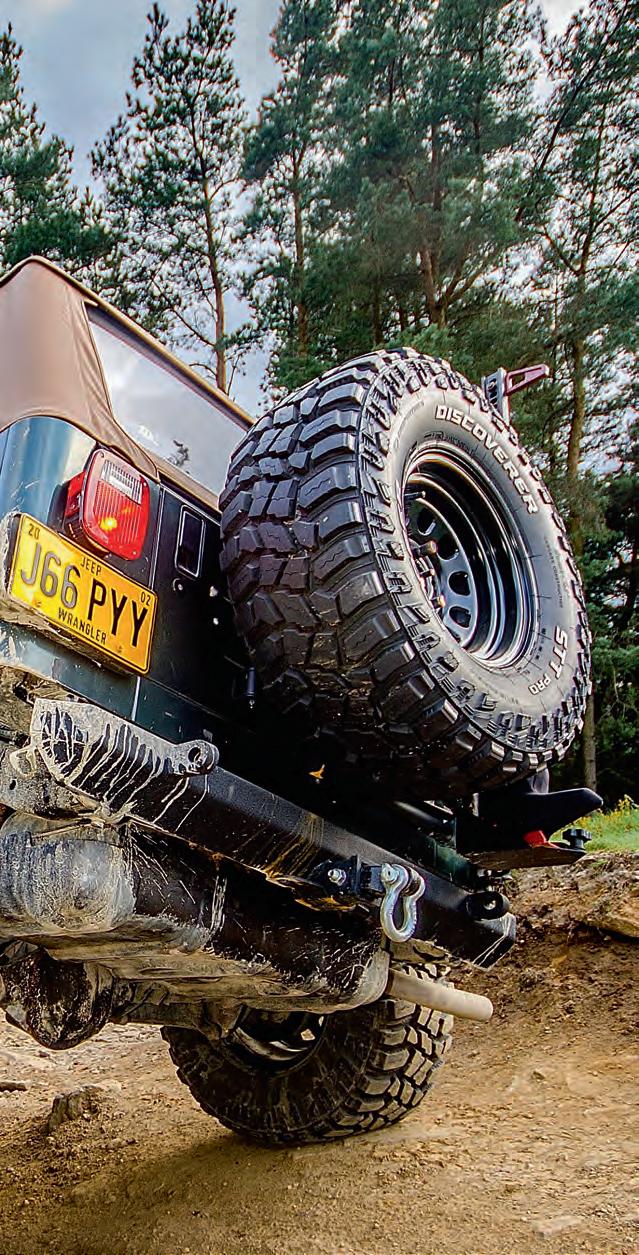
18 Jeep Wrangler Sahara
We’re always going on about the Rubicon, but the more modest Wrangler is a proper tool too
Vehicles
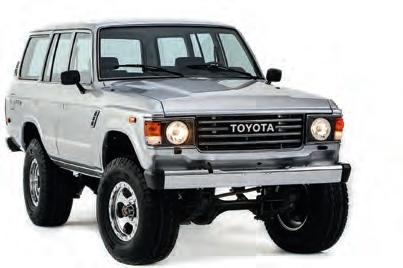
14 Mighty FJ60
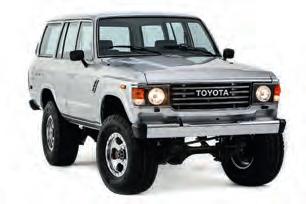
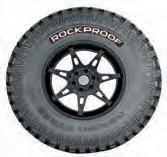
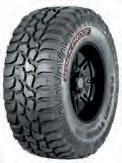
Toyota’s motorsport works in America creates a stunning 60-Series Land Cruiser with tyres that mean business and the heart of a modern pick-up
22 Stop-at-Nothing 90
Imagine being able to hit any part of your vehicle against the ground without bending it…
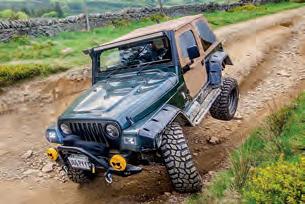
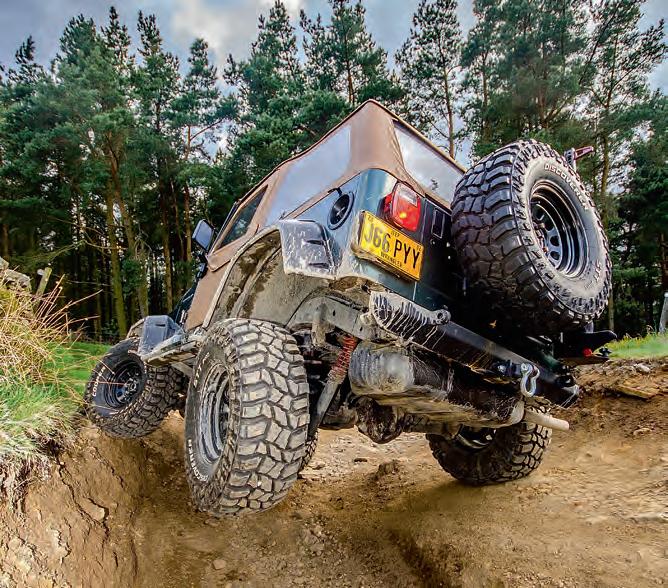
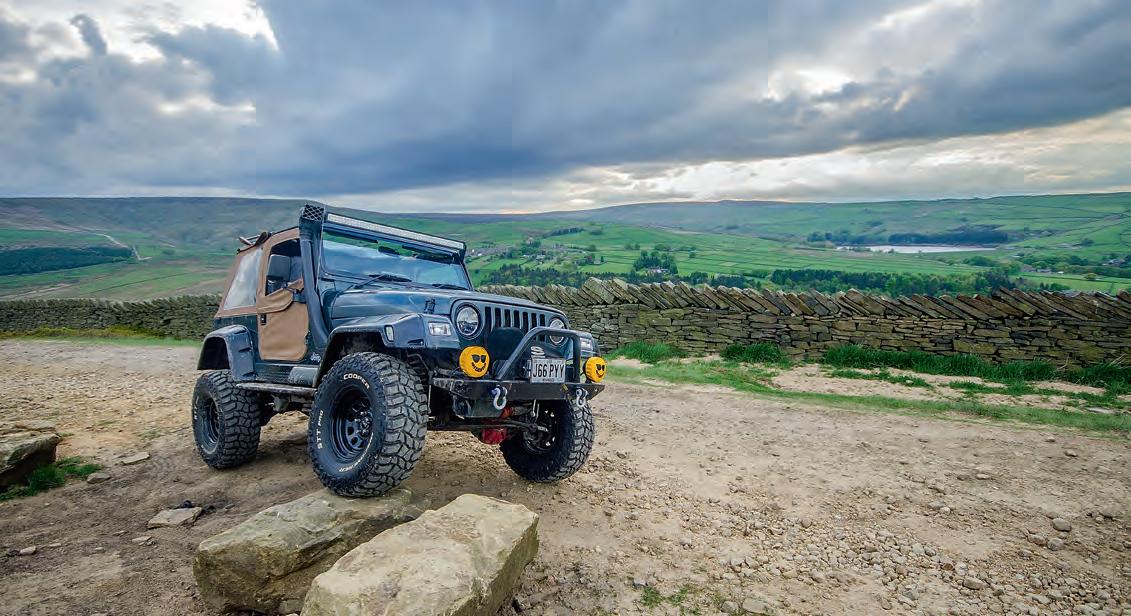
30 Old-School Wrangler
Everyone’s all about the big-budget modern stuff these days, but a nicely modified old TJ can still get you places almost nothing else can
36 Fab 40
An FJ40 Land Cruiser restored to perfection with the lightest of touches
Adventure
42 Overland to India: Part 2
That moment when the sat-nav coverage runs out and you know you’re on your own… until you turn out to be a celebrity with the locals
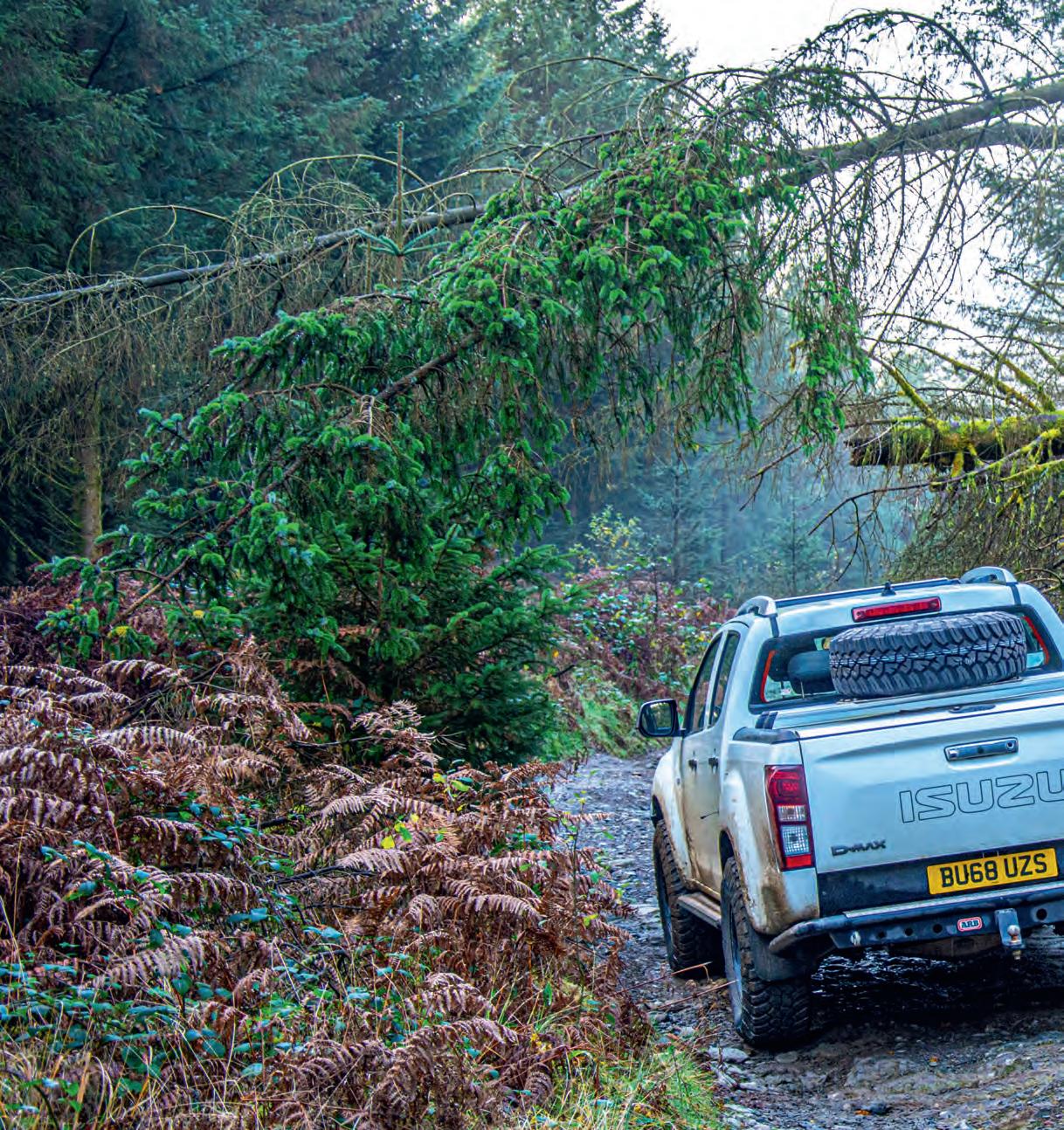
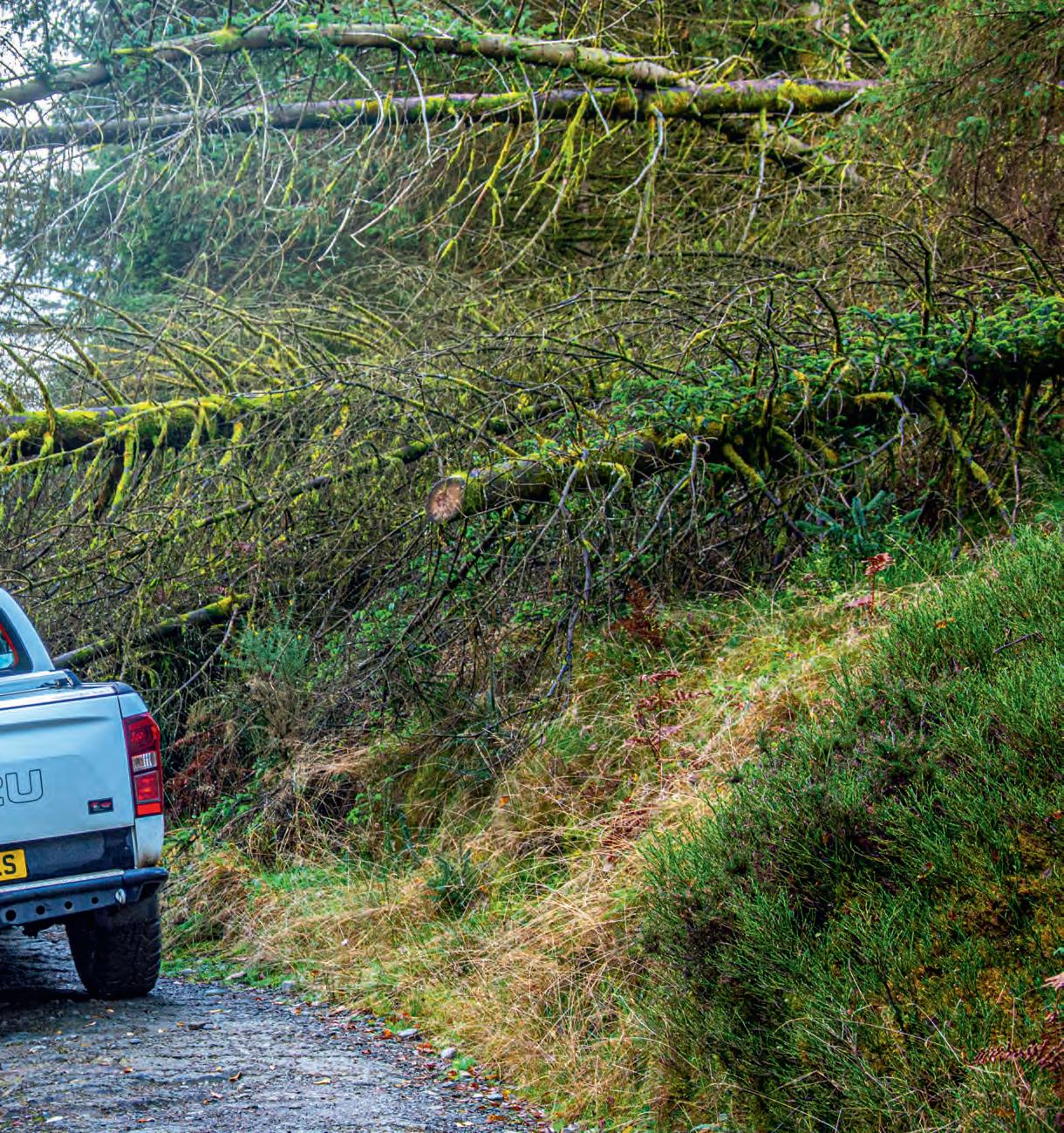
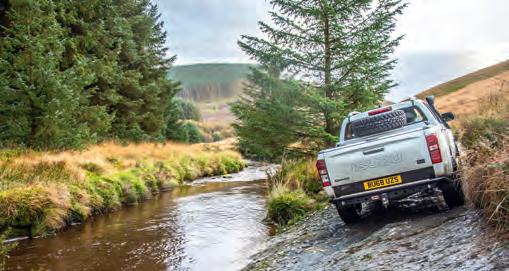
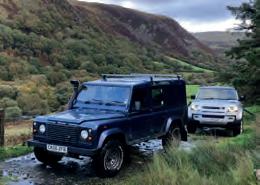
54 ROADBOOK Mid-Wales
An epic lane run on some of the very best rights of way the country has to offer
UPMARKET
ALL-NEW TOYOTA HILUX MOVES
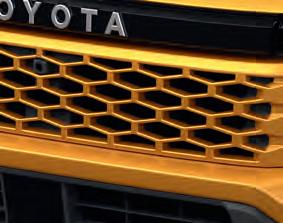
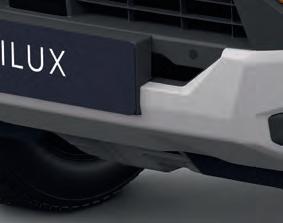
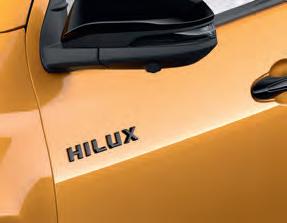
Toyota has unveiled the all-new. ninth-generation Hilux, which will go on sale in the UK in June. Taking a further leap upmarket compared even to the existing version, which Toyota said at launch was its most SUV-like Hilux ever, the iconic pick-up gains ‘new tough-agile exterior design and allround elevation of sensory quality, inspired by the new Land Cruiser.’
AND ADDS ELECTRIC AND FUEL CELL OPTIONS
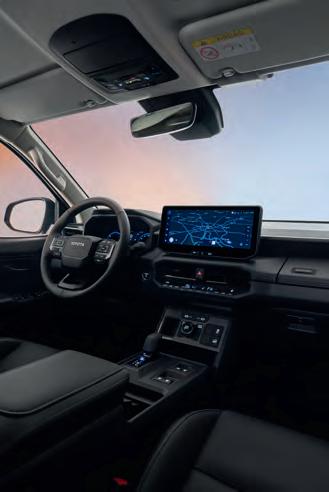
In an apparent move away from its utilitarian roots, the new Hilux will only be available in double-cab form. Four-wheel drive will be standard across the range and West European markets, including the UK, will get their vehicles with electric power steering. Toyota also promises a ‘fully digital user experience’ as well as what it says will be a ‘significant’ expansion of the vehicle’s safety and driver assistance features.
Perhaps the biggest news, however, comes in the powertrain department. Here, it’s been diesel or nothing for several generations – however the new Hilux will offer a choice of options to suit its customers’ varying needs. The volume seller will continue to be powered by a 48V hybrid system featuring a 2.8-litre diesel engine, however the vehicle will also be available in pure EV form from early in its life. Then in 2028, Toyota plans to introduce it with a hydrogen fuel cell –technology which it has been among the very few manufacturers to market thus far in the UK.
Introduced in the Mk8 model during the last year, the 2.8D 48V powertrain combines a 48V lithium-ion battery, an electric motor-generator and a DC-DC converter with a 2.8-litre diesel engine, promising smooth, quiet and refined performance both on and off-road. This version of the vehicle will retain the all-important 1000kg payload and
3500kg towing capacities – as well as the strong off-road potential for which the Hilux has long been renowned, with a wading depth of 700mm and a suite of driver assist features including MultiTerrain Select, Multi-Terrain Monitor and Panoramic View Monitor.
Multi-Terrain Select also features on the Hilux BEV, adapting the vehicle’s performance to suit different off-road terrains using brake and torque control to mimic driving in low range. This model too has a 700mm wading limit, with Toyota stressing that the introduction of zero-
emissions batteryelectric propulsion has been achieved ‘without sacrificing any of the model’s renowned quality, durability and reliability.’
With a 59.2kWh lithium-ion battery and front and rear eAxles providing permanent all-wheel drive, the electric Hilux generates 151lbf.ft at the front and 198lb.ft at the
rear.
Final figures are some way from being confirmed but Toyota estimates that it will have a payload and towing capacity of approximately 715kg and 1600kg respectively, along with a range of around 150 miles. The company says that while developing the vehicle, it has targeted best-in-class charging capabilities that will minimise down-time.
Prices for the new Hilux remain to be confirmed, as is a model line-up for the UK. With what we do know about the vehicle, however, the step up in market positioning is set to redefine what it represents for many buyers in this country.
From the launch of the originalshape Land Rover 110 in 1983, it took Solihull around a decade and a half before it finally got round to introducing a Double-Cab model. With an almost comically short rear bed, it was an awkward looking thing with ungainly proportions – but it was an instant hit and with some sort of loadbay cover in place it managed to get back the jaunty appearance for which Defenders had become known.
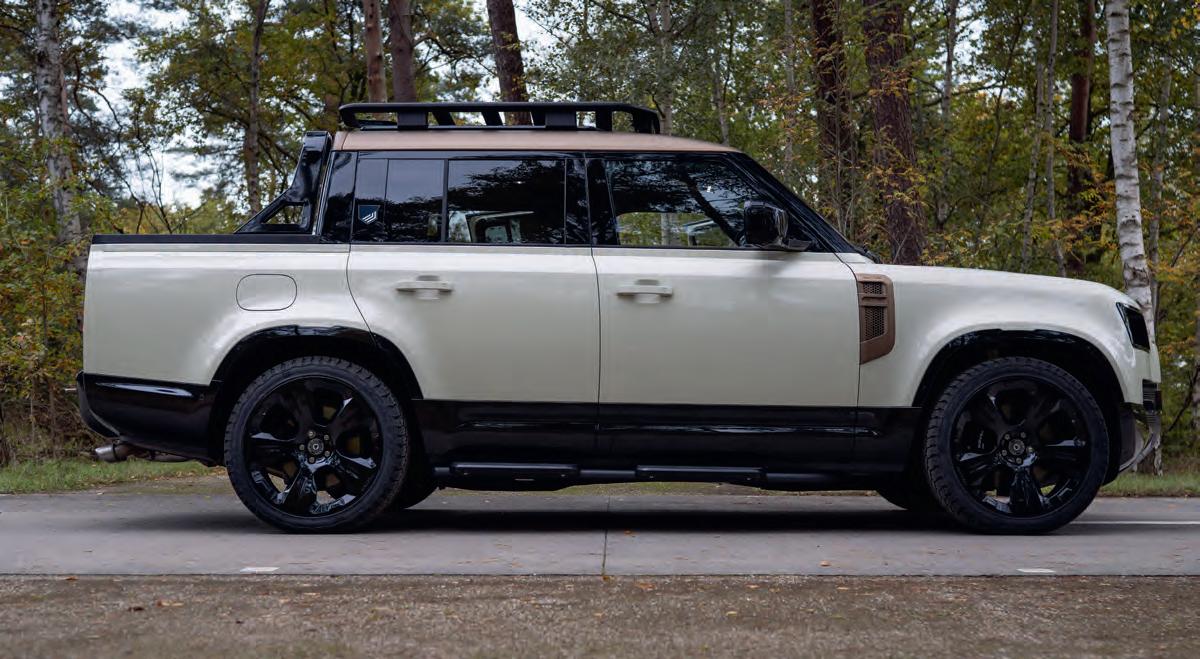
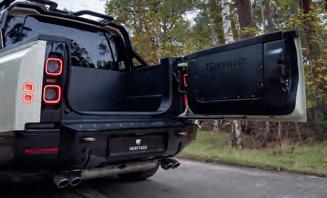
This time, it’s only taken five years. But thanks to Heritage Customs and Urban Automotive, you can now have a newshape Defender double-cab.
It’s actually based on a Defender 130 rather than a 110, which renders all the above kind of redundant as the old 127 was a double-cab from the word go. Safe to say it wasn’t much like this, though.
For one thing, the vehicles built by Heritage and Urban, both of which are part of the AM Group, are powered by a 425bhp V8 engine. For another, they’re posh. Big alloys, low-profile tyres, metallic paint, fancy interiors – you know the kind of thing. It could indeed be said that just as the original 130 was a Defender only more so, this one is too: back then, it was all about being able to carry a six-man
DUTCH COACHBUILDER CREATES DOUBLE-CAB VERSION OF NEW SHAPE DEFENDER
work crew and all the tools and equipment they were going to need, while today it’s showing everyone how much money you’ve got by driving something they almost certainly won’t see anywhere else.
Heritage Customs is a traditional coachbuilder, while Urban Automotive concentrates on enhancing vehicles’ presence via the way they appear. With the two companies working together on the Defender, it seems pretty natural that it’s available in a choice of Heritage and Urban editions.
The former is ‘refined, elegant and authentically classic – staying true to (Heritage Customs’) coachbuilding heritage with sophisticated styling and timeless design cues. The latter on the other hand is ‘powerful, contemporary and unmistakably commanding – showcasing bold lines and a modern edge that define Urban Automotive’s signature OEM+ design ethos.’
So there you are. In each case, the pick-ups are very much about making an impression rather than being used off-road, far less for anything as vulgar as work. The coachbuilt body doesn’t have an extended rear bed, so it looks kind of short and stubby at the back – a little like the original 110 DC, indeed – and the coachbuilding
didn’t extend to replacing the side-hinged rear door with a drop-down tailgate. The figures say that the bed measures 100cm in length and 140 in width, with 120 between the arches.
The other figure is €65,000, for which you get the pick-up conversion (including Raptor coating in the bed), a premium leather interior with alcantara headlining, exterior paint and your choice of wheels, tyres and decals from the Heritage Customs collection. Obviously, you need to supply your own Defender.
Truth to tell, we’re struggling not to look at it and see a 130 with the best part of its practicality taken away. Certainly, we can’t think of what you’d actually want to carry in that diddy little pick-up bed. None of which, however, changes the fact that this is the first new-shape Defender pick-up on the market. And if you see the value in driving a vehicle with the word ‘Urban’ on its bonnet, you’ll sure see the value in that.
Performance Springs
The right choice when replacing the old sagging original springs!
Britpart performance springs are high quality, versatile and competitively priced - the right choice when replacing the old sagging original springs.
Developed by one of the world’s top spring manufacturers these high quality, powder coated yellow springs have been designed with the needs of today’s Land Rover owners in mind. Britpart performance lifted springs have the added benefit of improving your vehicles approach and departure angles which in turn allows you to overcome more obstacles when offroading.
As Land Rovers are often working vehicles as well as the family car, uprated springs must offer the ability to carry loads, handle off-road terrain and provide a good ride on road. The progressive springs offer a compliant ride when lightly loaded, but firm up as the load increases.
After Lowering
“Britpart performance springs are high quality, versatile and competitively priced...”
Britpart Performance - 1” Lower Springs
Note - Spring quantity
Britpart yellow springs are designed for the enthusiast who wants a performance spring without having to raise the vehicle. They offer a firmer ride with less body roll, ideal for a vehicle with uprated performance or one used for carrying heavy loads. The springs are designed to offer full articulation off-road with a compliant ride. Developed by one of the world’s top spring manufacturers these high quality, powder coated yellow springs have been designed with the needs of today’s Land Rover owners in mind.
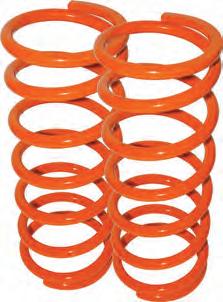
Reduce the ride height of your Land Rover by 1” (25mm) by fitting these lowered springs. By lowering your vehicle it will help reduce body roll as well as giving your vehicle a more sporty squat stance. The springs are designed in line with the standard spring rate specification. Finished in powered coated orange paint.
DA1234 XD Handling Kit for Defender 90/Discovery 1/Range Rover Classic Kit contains lower springs, shock absorbers, anti-roll bars, turret rings and more...
Motorsport
LAND ROVER SETS OUT CROSS-COUNTRY CHALLENGE
WITH FULL UNVEILING OF D7X-R
DAKAR RACE TRUCK
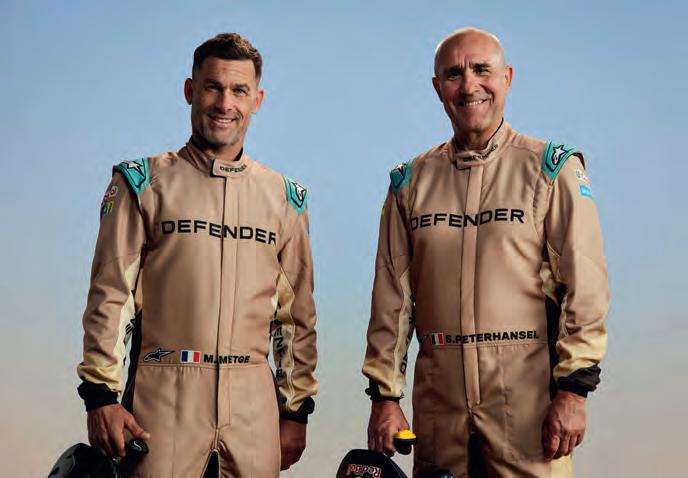
Defender’s assault will be led by Stéphane Peterhansel – the most successful competitor in the rally’s history. Navigated by Mika Metge, the French ace will be aiming for his 15th title. ‘Experience doesn’t make Dakar easier,’ he comments. ‘It just helps you understand how hard it really is’
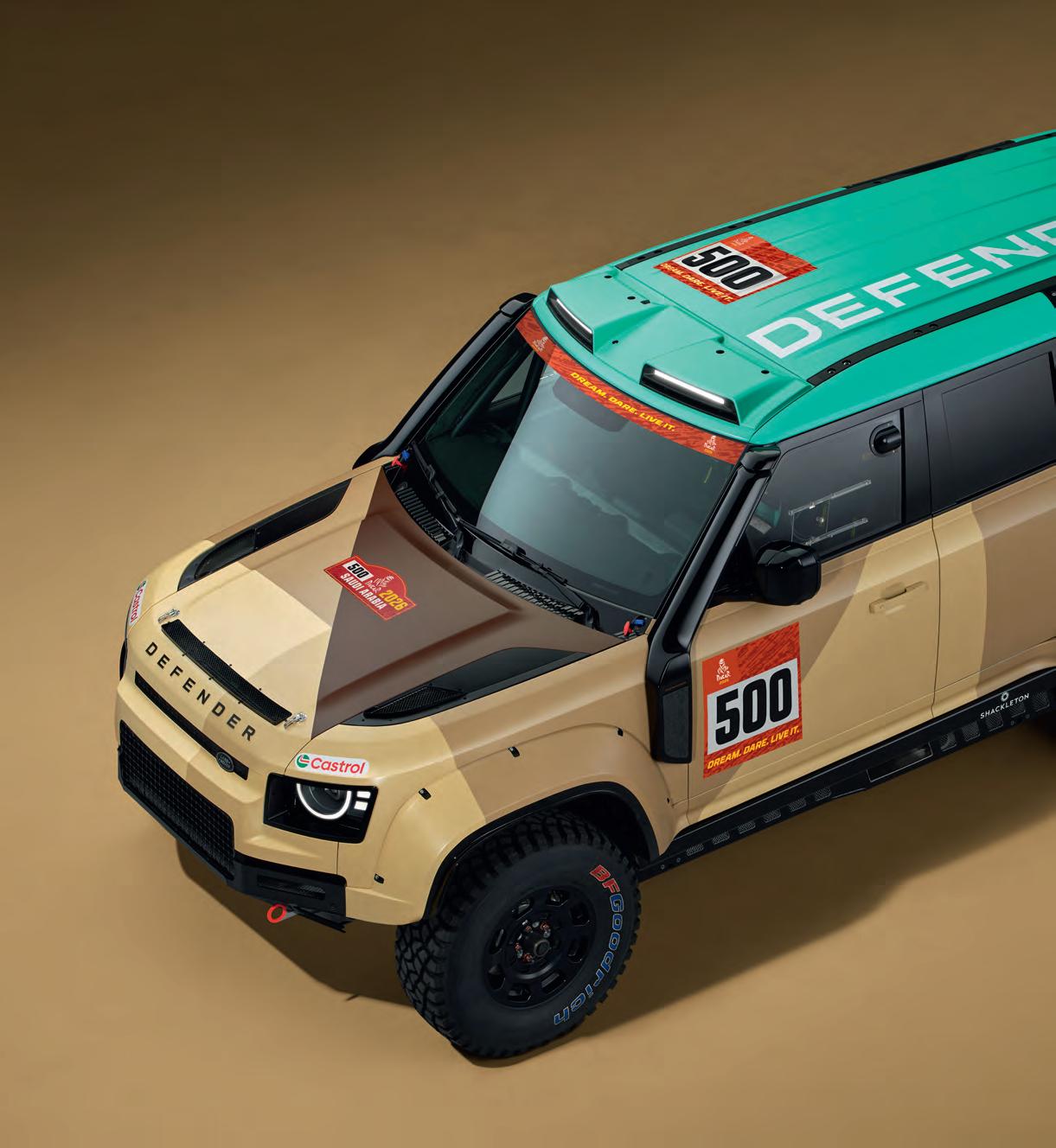
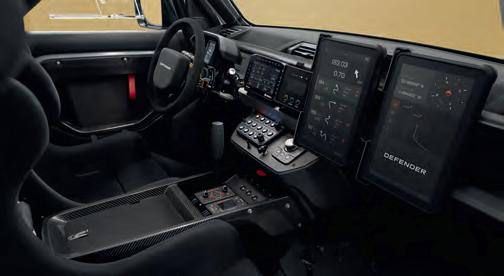
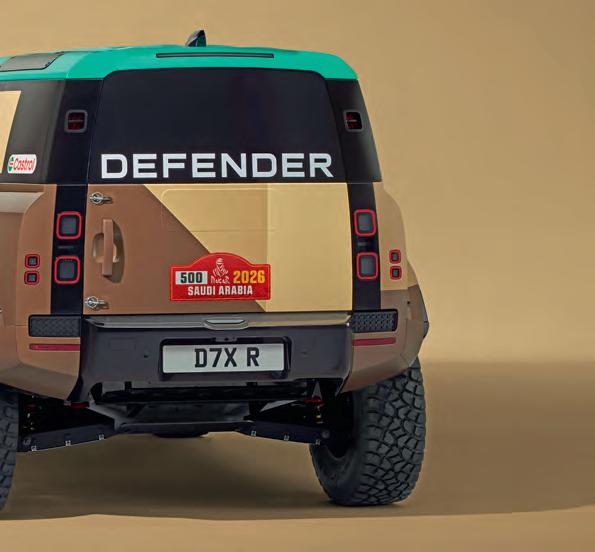
Land Rover has revealed full details of the Defender Dakar D7X-R, along with the livery in which a trio of the vehicles will compete in the new Stock class when the legendary endurance rally gets underway on 3 January. Driven by Stéphane Peterhansel, Sara Price and Rokas Baciuška, the three 110s will take on more than 80 hours and 5000 kilometres of timed special stages during the course of two weeks in the deserts of Saudi Arabia.
Designed for the modern breed of high-performance SUVs and introduced for the start of the 2026 season, Dakar’s new Stock class mandates that vehicles must retain their standard production engine, transmission, driveline layout and bodyshell. The D7X-R is thus closely related to Defenders available from Land Rover dealers – albeit the base model is the Octa, a kind of super-Defender powered by a 635bhp 4.4-litre twin-turbo V8 engine and costing from £148,045.
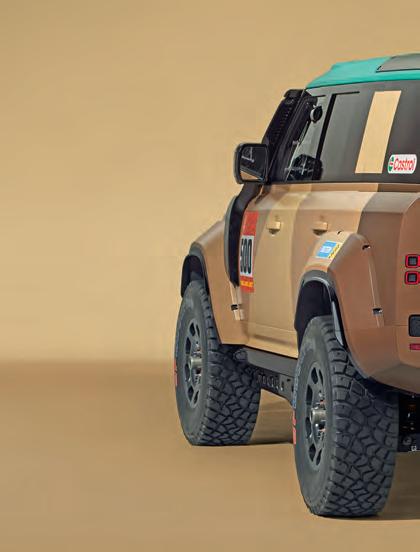
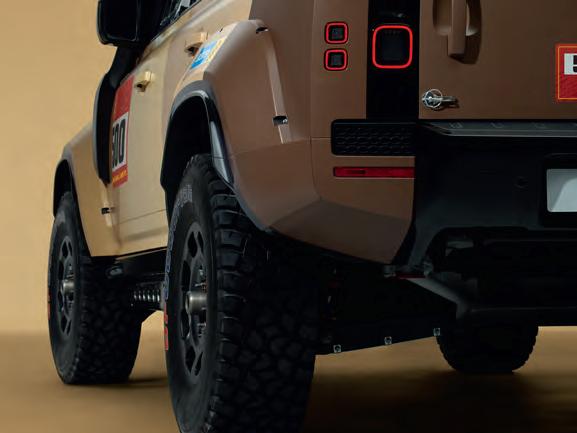
While the Defender’s shell is standard, its bodywork has been modified at both ends to enhance its already businesslike approach and departure angles. At the sides, the door panels have been trimmed to make room for heavy-duty rock sliders which form part of an extended underfloor protection system.
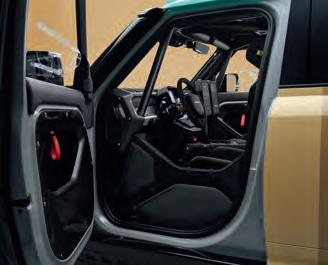
Raised ride height and 35” tyres improve the vehicle’s ground clearance, the latter also enlarging its track by 60mm – something for which the Octa’s wheelarches, which are already wider than those on everyday Defenders, have been made more prominent still by the addition of a secondary lip. Inside, there’s an FIAspec roll cage and a bespoke 550-litre fuel tank, the latter built in to the rear of the vehicle, while the cabin is fully fitted out with a regulation FIA navigation system and driver head-up display for speed and heading, along with a driver‑configurable motorsport dashboard.
Also inside the cabin, the vehicles will carry three spare wheels mounted to the roll cage where the rear seats would be. On-board air, a tool kit and a stock of essential spare parts complete the inventory; there’s no need to carry a jack, as a pair of integrated hydraulic jacks are capable of lifting either side of the vehicle. Finally, with dehydration being a serious concern on such long stages, the crews carry eight litres of drinking water.
Going back to that fuel tank, it will carry sustainable petrol as defined by the FIA’s Energy Regulations. Just as well in this day and age because, while its capacity is designed for the Dakar’s infamous marathon sections, which can
In addition to Peterhansel and Metge, the Defenders will be in the hands of two other top crews. To the left, Lithuania’s Rokas Baciuška had already won the World Rally-Raid Championship in the T4 class at the age of 22; he’s navigated by Oriol Vidal. And on the right, Sara Price brings a wealth of experience in Trophy Trucks and Extreme E among many other racing disciplines. In 2019, she became the first ever Baja 1000 IronWoman after driving the entire race solo, however for the Dakar she’ll be navigated by South Africa’s Sean Berriman
extend to more than 800 kilometres in length, when you crunch the numbers they suggest that the D7X-R will be running at something like 4.2mpg on special stages.
That’s with an air intake restrictor in place to limit power in accordance with FIA Stock category regulations. The 4.4-litre V8 engine is otherwise unchanged, though it also runs enhanced cooling with an increased frontal area and modified bonnet to allow greater flow of ram air and four fans to keep it flowing at lower speeds. The Octa’s eight-speed automatic gearbox also remains in place, with a lower final drive ratio in place to maximise low-speed torque and better suit classic rally-raid conditions.
Areas in which significant mods are allowed include the brakes, where the D7X-R runs a bespoke rally-spec system with vented discs, six‑pot front and four-pot rear calipers. Suspension is required to use the same ‘kinematic principle’ as the standard vehicle (no leaf springs, then) but may be enhanced within that – and Land Rover has taken full advantage of this by partnering with Bilstein to develop a performance system featuring single coil‑overs up front and parallel twin dampers at the rear. As well as improving the vehicle’s high speed ability over punishing terrain, the system is designed to cope with the extra weight of all that fuel – potentially more than 400kg at full capacity.
With so much weight being propelled at huge speeds over extremely rough
terrain, wheels will constantly be leaving the ground and coming back down again, hard. The potential for breakages is similarly immense and to help manage it, Land Rover’s Defender Rally team has developed a new ‘Flight Mode’ for the vehicle. This automatically adjusts torque delivery from the engine to the wheels whenever the D7X‑R is airborne, helping to provide a smooth landing and protecting the driveline from shock loads. This and the rest of the vehicle’s electronics are managed by a single motorsport control unit to provide them with the most robust possible protection against the brutal conditions in which they’ll be operating.
On the Dakar, the trio of Defenders will be maintained by a team of mechanics and engineers whose experience matches that of the crews inside the vehicles. With Peterhansel, Price and Baciuška behind the wheel, Land Rover has put together an incredibly strong set of drivers – backed up by Mika Metge, Sean Berriman and Oriol Vidal respectively to give them quality in every position.
‘Defender is driving into the unknown – to overcome the dunes, handle the heat and race flat‑out against the clock,’ said recently appointed Team Principal Ian James. ‘We know Dakar represents one of the toughest challenges in motorsport –but that’s exactly why we are entering.
‘Following an intense testing programme, the team are ready for the adventure ahead and the Defender Dakar D7X-R has been built to take it on. With
world-class partners and some of the best rally‑raid drivers on the planet, we’ll give it our all.’
PRODUCTS
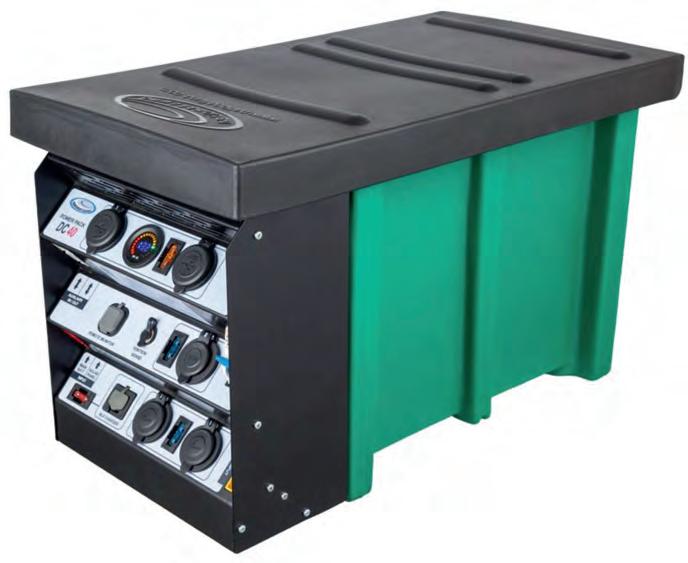
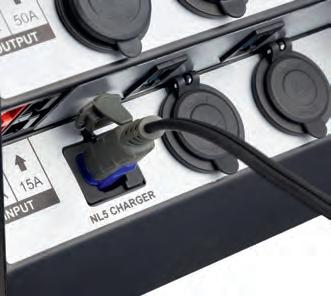
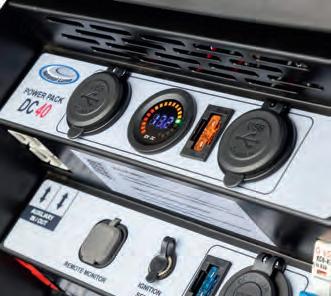
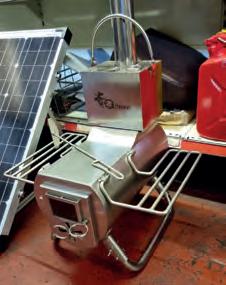
The DC40 portable power pack is at the top of the National Luna range available in the UK from APB Trading at www.expeditionequipment.com. With a true 40A charge current, 600W solar regulator and additional DC input source, it features a range of outputs including four quick-charge USB ports, standard 12V automotive sockets and 50A heavy-duty couplers.
The super-sized unit can be charged from your vehicle’s alternator, solar panels, DC sources such as wind generator or an AC-DC power supply, as well as external battery chargers. It comes complete with cables and a monitor, and you can also connect an optional remote display to keep an eye on battery voltage, charge current, battery temperature and charge state.
The power pack measures 498mm x 280mm x 306mm and cam take a battery measuring up to 325mm x 180mm x 280mm – a battery is not included, so that’ll be your next stop after buying one. It has 12v and 24v inputs and supports solar panels up to 42v, and its six-stage intelligent charge algorithm allows it to be used with AGM, gel, wet, calcium and lithiumion/LiFePO4 batteries. It’s compatible with smart alternators, too, and features protection against overheating, short circuits, reversed polarity and over-voltage.
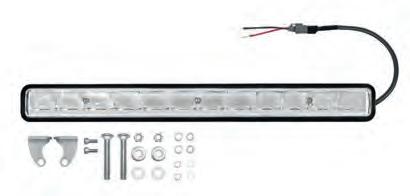
LED BARS CAN BE PRICEY THINGS if you go for a well known brand name. But if you don’t go for a well known brand name, how do you know you’re not going to end up with a piece of box-to-bin garbage from You Know Where?
The good news is that you can get a light bar with a very well known brand name indeed, and it won’t cost you the Earth. In fact it’ll cost you even less than not-the-Earth right now, thanks to a raging clearance offer from KS International.
The brand in question is Osram, and the bar is its LEDriving SX300-SP. This measures in at about 14” from end to end, so chances are you’ll be wanting a couple, but even then there’ll have been times when you’ve done more on a night out.
Each bar contains 12 individual LEDs and has a 2600 lumen flux, illuminating the road or track ahead to a range of up to 270 metres. It’s all encased in a heavy-duty body fronted with a hard-wearing polycarbonate lens, boasting IP69K protection and covered by a 5-year guarantee.
With over and under voltage protection, an integrated driver and thermal management system and a lifespan of 5000 hours, the LEDriving SX300-SP is the sort of light bar you get from a well known brand. And with a normal price of £102 including VAT currently knocked down to £84, thanks to KS International you’re getting it for the sort of price that makes you wonder why anyone would risk shelling out for any box-to-bin stuff.
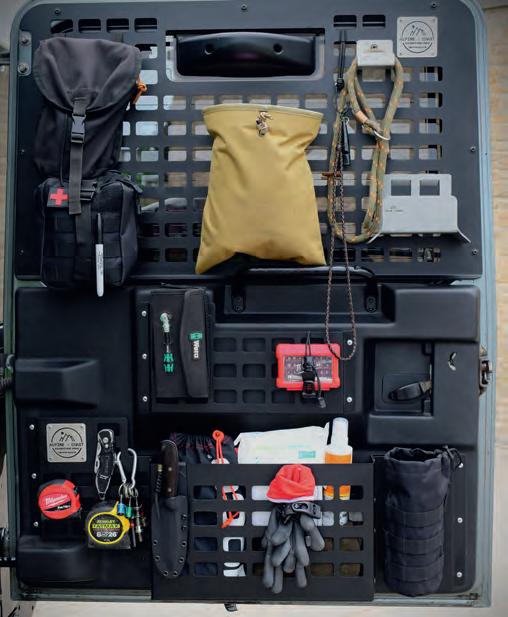
EXMOOR TRIM IS KNOWN FOR MANY THINGS, but Molle panels are probably not what you’d think of first. You might now, though.
The Devon-based company offers a range of panels to suit various areas inside the Land Rover 90 and 110. And at the time of writing, it had special offers on the go on several of them.
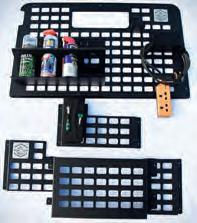
These include the Defender 90 Side Molle Panels kit, which protects the vehicle’s side panels as well as providing plenty of flexible stowage options by being compatible with all standard Molle pouches. These would normally cost you £349.99 for the pair, but get in there soon and you’ll get your hands on them for the special price of £314.99.
Moving back through the vehicle, Exmoor also has a complete kit of Defender 90/110 Rear Door Molle Panels. This includes upper and lower panels for the door itself plus one for the window, with the latter also available on its own.
The racking system was designed specifically for Defenders dating from 2002 onwards, however Exmoor also offers RDX New Style Rear Door Cards to fit Defenders and pre-Defenders from 19832001, allowing these to become compatible too. Once again, the panels will accept any standard Molle pouches, allowing you to make the most of the stowage capacity around your Land Rover’s cabin.
The window panel is priced at £100 on its own, or £90 while the current offers are on. For the full kit, it’s £252.00 – reduced to £210.00 if you don’t hang about. All prices include VAT.
Free UK Delivery on orders over £15.00 + VAT
BIG NUMBERS
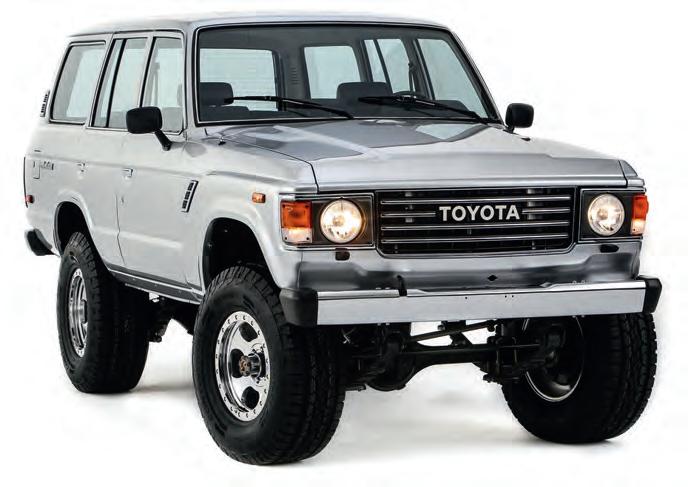
This Land Cruiser 60 dates from the 80s and had an engine from the 70s… until a team from Toyota Motorsports Garage decided to bring it up to date with a little help from something more modern
Everybody has their own favourite version of the Toyota Land Cruiser. The 70-Series has become renowned as the definitive tough truck; the 40-Series wins the heart of every classic 4x4 fan who sees it; and the 80-Series was possibly the greatest allrounder of all time.
Few people would choose the 80’s predecessor, the FJ60, as their favourite Land Cruiser. But by the same token, nobody would name it as the one they’d pass by. It’s a big, leaf-sprung station wagon from a bygone era, the first of the comfy Cruisers that spawned not just the 80 but the 100-Series (known as the
Words
Amazon in the UK) and the epic 200-Series (simply called the V8 here) that followed it.
Nonetheless, the 60-Series has become a much loved historic vehicle in its own right. And not just in the traditional classic car sense, either. Like every Land Cruiser, it lends itself to being improved, enhanced, modified and equipped for particular
Kaziyoshi Sasazaki Pictures Toyota
purposes – the ideal four-wheeled blank canvas, to use that well-turned phrase.
Perhaps that’s why the recent SEMA show in Las Vegas featured a unique FJ60 described by its builder as ‘part resto, part hot rod’. And the identity of that builder? Toyota itself.
It’s not the first time the company’s US arm has modded an old Land Cruiser for SEMA. A couple of years ago, we featured the FJ Bruiser – an FJ45 pick-up with Currie axles, 42” BFG Krawlers and a 725bhp NASCAR engine. It was as if they had seen the sort of thing Jeep does for the Easter Safari and decided to one-up it.
The Turbo Trail Cruiser is not quite as radical as the FJ Bruiser. But it too packs the sort of engine people could only have
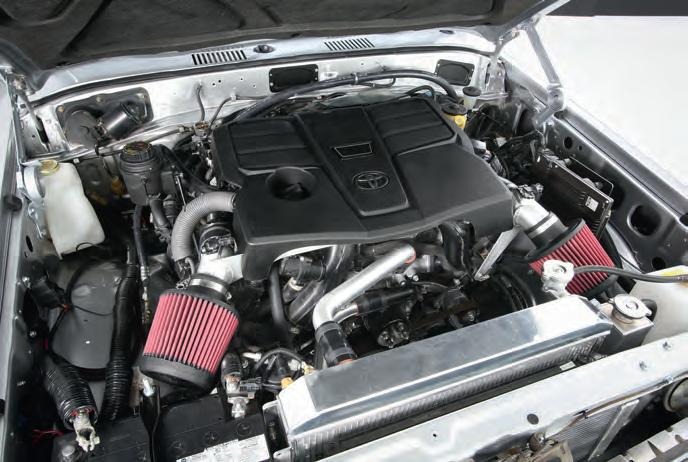
dreamed of back when it was new. It started life with Toyota’s 2F unit, a willing but dated 4.2-litre straight six that first saw service aboard the 40 and 50-Series in 1975 – but that’s gone, to be replaced by the 3.4-litre i-FORCE twin-turbo V6 found from the current Tundra full-size pick-up. This packs 389hp and 479lbf.ft, giving the vehicle around double what it once had.
Smooth with the rough
The result is a 60-Series that’s far faster than any original. But the conversion was about more than just raw pace. The modern engine does its work smoothly and quietly, with greater refinement and better fuel efficiency, as well as the reduced emissions that goes with it. Toyota says
its turbos will spool up instantly, too, giving it a steep but linear torque curve which makes it ‘more modern, streetable and capable than ever.’
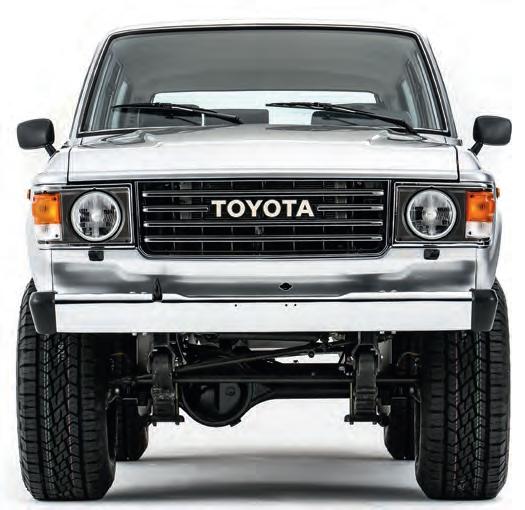
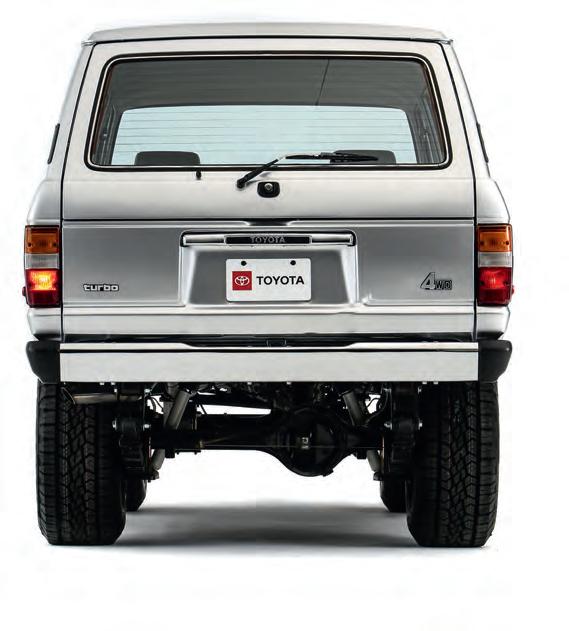
But while the team at Toyota Motorsports Garage was tasked with creating a restified 60, unlike with the FJ Cruiser they wanted to keep it as subtle as possible. More than that, says Toyota, the vehicle ‘was built with a singular philosophy: to appear factory-original.’ This meant installing the new engine without making any alterations to its structure, cutting into its bulkhead or relocating its engine mounts.
Starting with the latter, these were replaced by new units to suit the more modern engine. The original, factory-
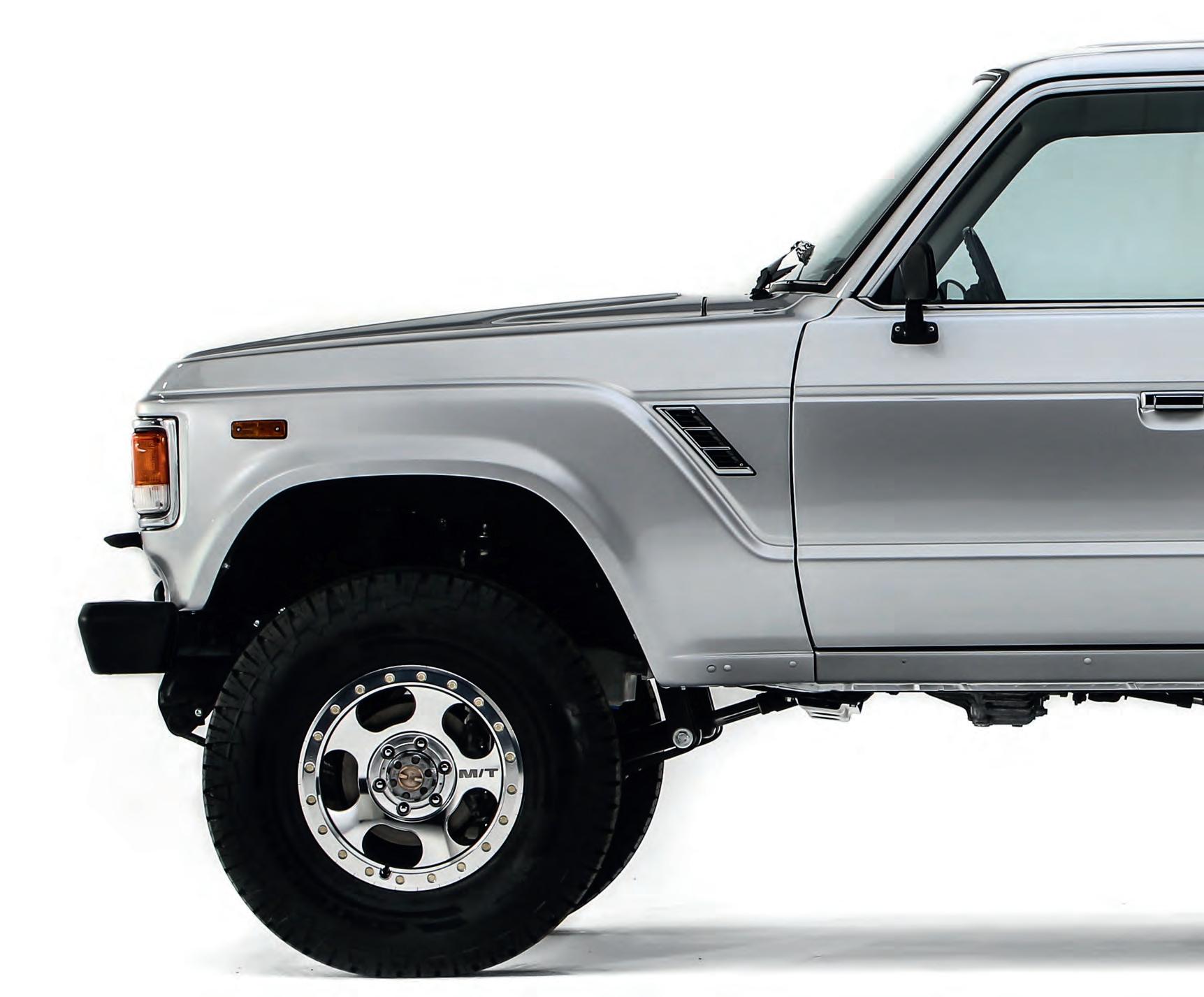
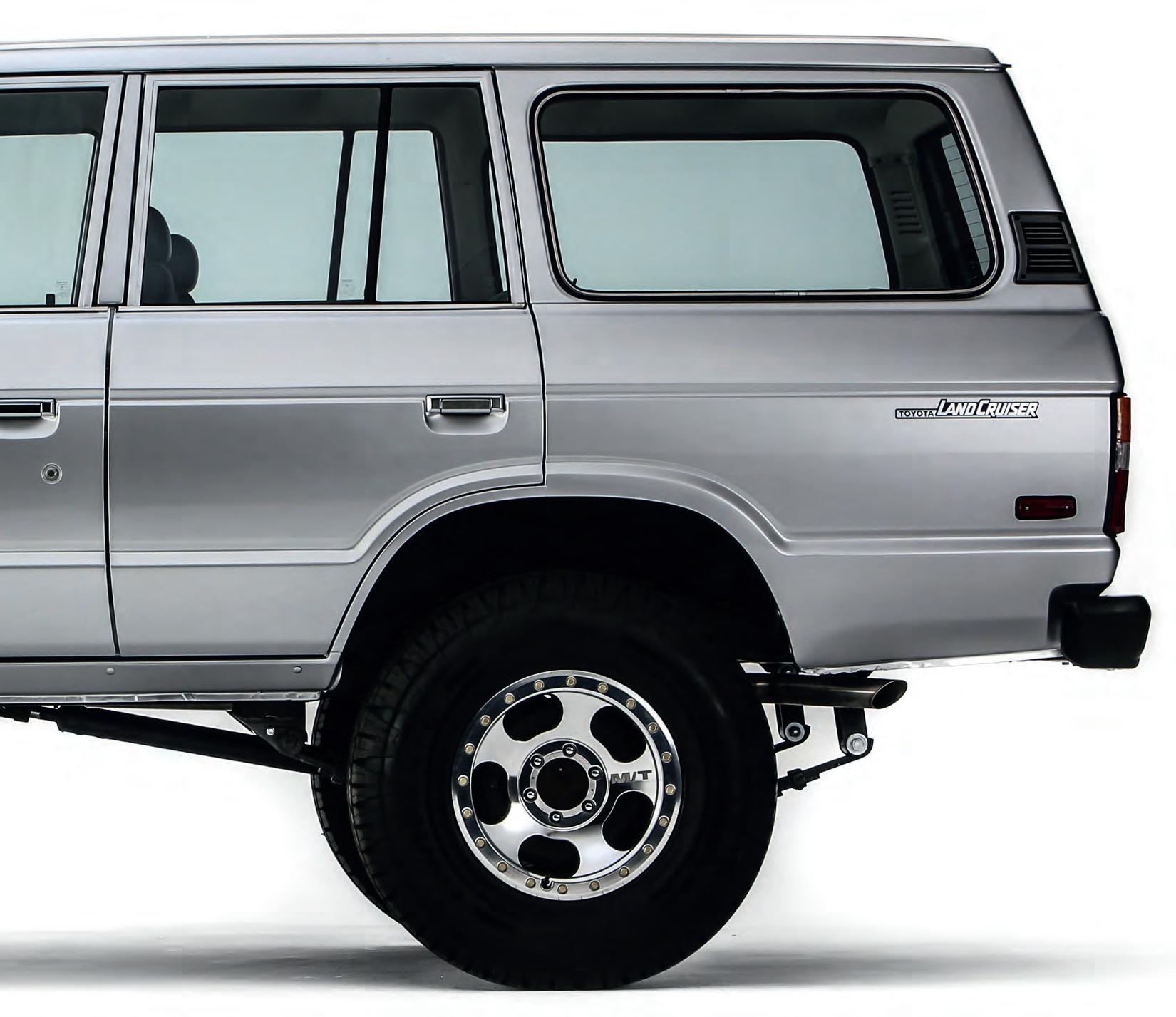
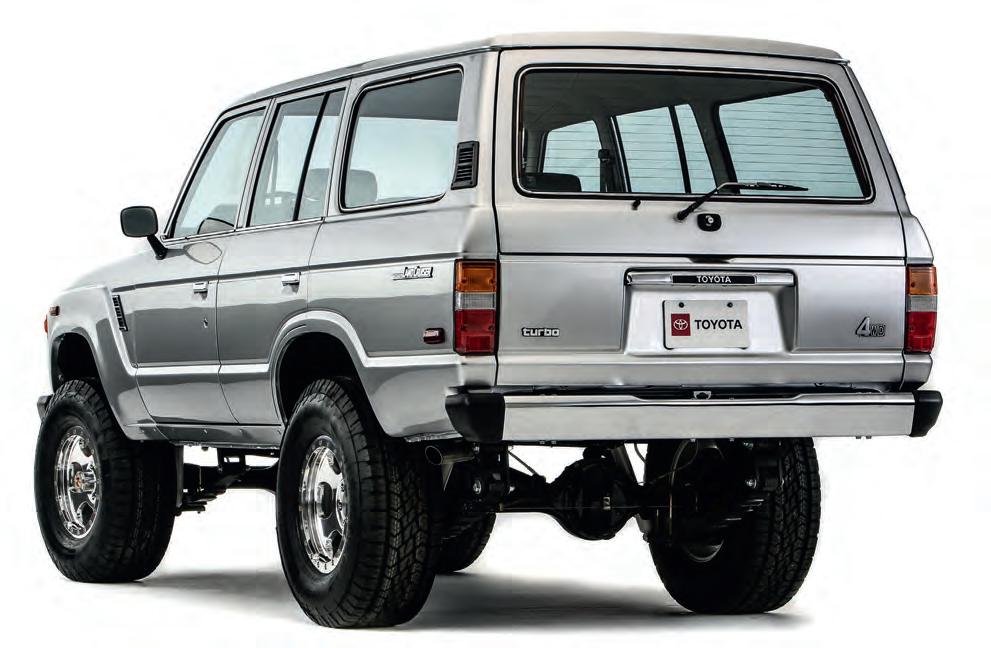
It looks from the outside like a standard FJ60 with a small lift and big tyres, but that’s exactly what Toyota was going for. It’s meant to be subtle – to the point of being hidden – and without hearing the fruity sound of its exhaust you’d never know there was a modern V6 in there. The new engine was fitted without recourse to cutting the bulkhead or relocating the engine mounts; Toyota machined a custom adaptor to mate it to the original gearbox, fitted a custom rad, reshaped the sump and replaced the wiring loom with a bespoke one that’ll talk to the engine’s ECU. The 389bhp, 479lbf.ft twin-turbo unit looks like it’s been there all its life
standard HF55 5-speed manual box was retained, with a custom adaptor plate machined up to mate the engine to its bellhousing. Further bespoke work came in the sump, which was reshaped to suit the FJ60 chassis, and the exhaust – whose note, if you were to see the vehicle on the street, would be about your only clue to its true nature.
The Toyota team also built and fitted a new radiator, again using the original mounting points, to keep the turbocharged engine cool. And, marking this out as a professional build, they made a custom wiring loom which connects in to the i-FORCE unit’s management system to keep it as drivable as it would be straight from the showroom.
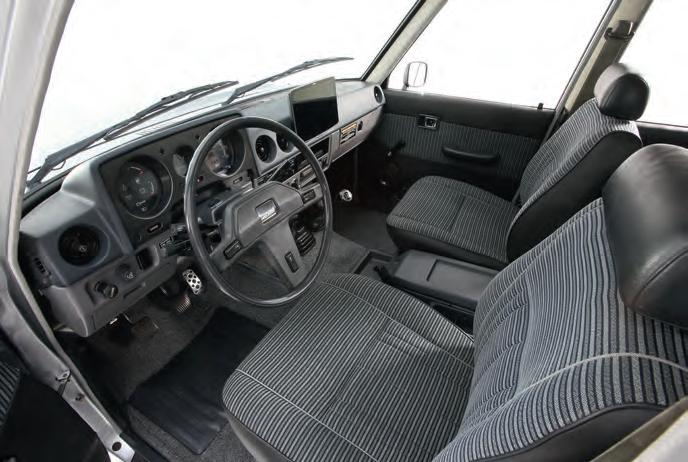
We’re not sure how the cabin looked before Toyota got its hands on it, but with totally immaculate carpets, seat trims and dash plastics there’s clearly been a decent bit of restoration work going on. There’s also been a bit of upgrading, albeit only to the infotainment system – which now features a JBL stereo operated via the Alpine touchscreen interface that somehow manages not to look out of keeping among such fabulously retro surroundings
‘The Turbo Trail Cruiser is about showing what happens when Toyota’s modern performance technology is integrated into one of our most iconic classics,’ says Marty Schwerter, Director of Operations at Toyota Motorsports Garage and lead builder of the project. ‘It’s a hotrod approach with Toyota DNA – power, drivability and reliability in a package that still feels true to the original Land Cruiser.’
Upwardly mobile
This is not to say that it’s completely standard in every other sense. The vehicle retains its original leaf-sprung suspension but runs new springs and shocks, along with a front shackle reverse kit, giving it a 1.5” lift. This makes room for a set of 35” Continental TerrainContact A/Ts, adding further lift and giving the truck a stance that’s jauntily purposeful without being over-aggressive. In Toyota’s own words, these upgrades ‘preserve its timeless character while giving the impression it could have spent the past 40 years tucked away in a garage, ageing gracefully yet refreshed for today.’
To help with this, once the heavy work was done the 60 was finished in
a period-correct reproduction of Toyota’s original 1986 silver colour created by paint specialist PPG. Even the graphics were recreated to help maintain the vehicle’s character as a heritage sleeper, while inside the cabin a modern JBL stereo and Alpine media system are the only clues that you’ve not been transported back to the days of the Reagan government. They’re quite big clues, to be fair, with a full-size infotainment screen looming out of the very, very 1980s’ plastics of the 60-Series dash. The seat fabrics are very much of their time, too – though their condition certainly isn’t.
The same could be said of the carpets and the dash itself, all of which now look good as new.
‘For Toyota fans, the Turbo Trail Cruiser is about more than just horsepower,’ explains marketing boss Mike Tripp. ‘It’s about preserving the character of a vehicle enthusiasts love, while showing how seamlessly Toyota’s technology can elevate the driving experience. It’s a concept build but it demonstrates the passion we share with our customers for keeping these classics alive – in new and exciting ways.’
JEEP WRANGLER SAHARA
For a long time now, the Wrangler range has been a movable feast.
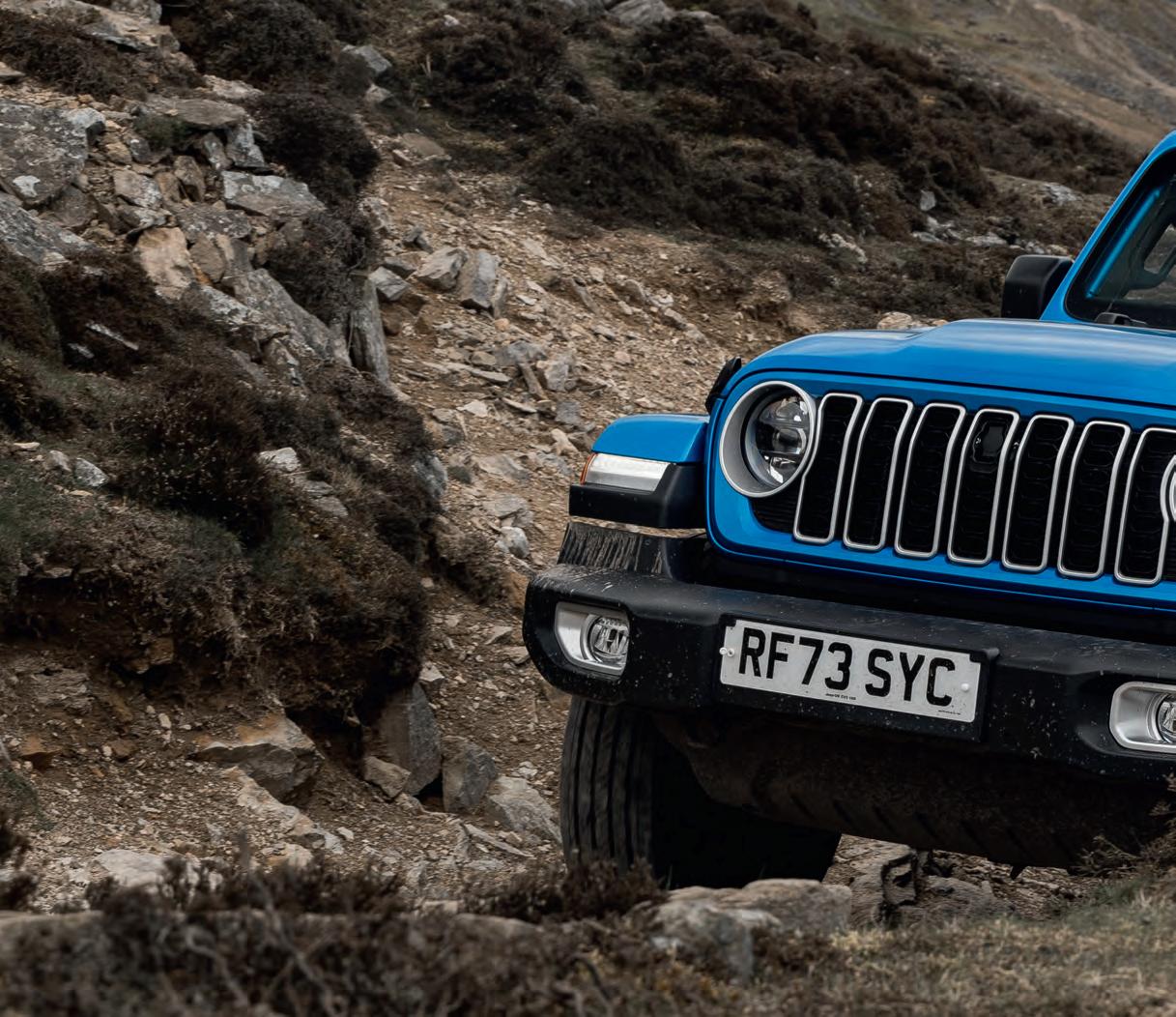
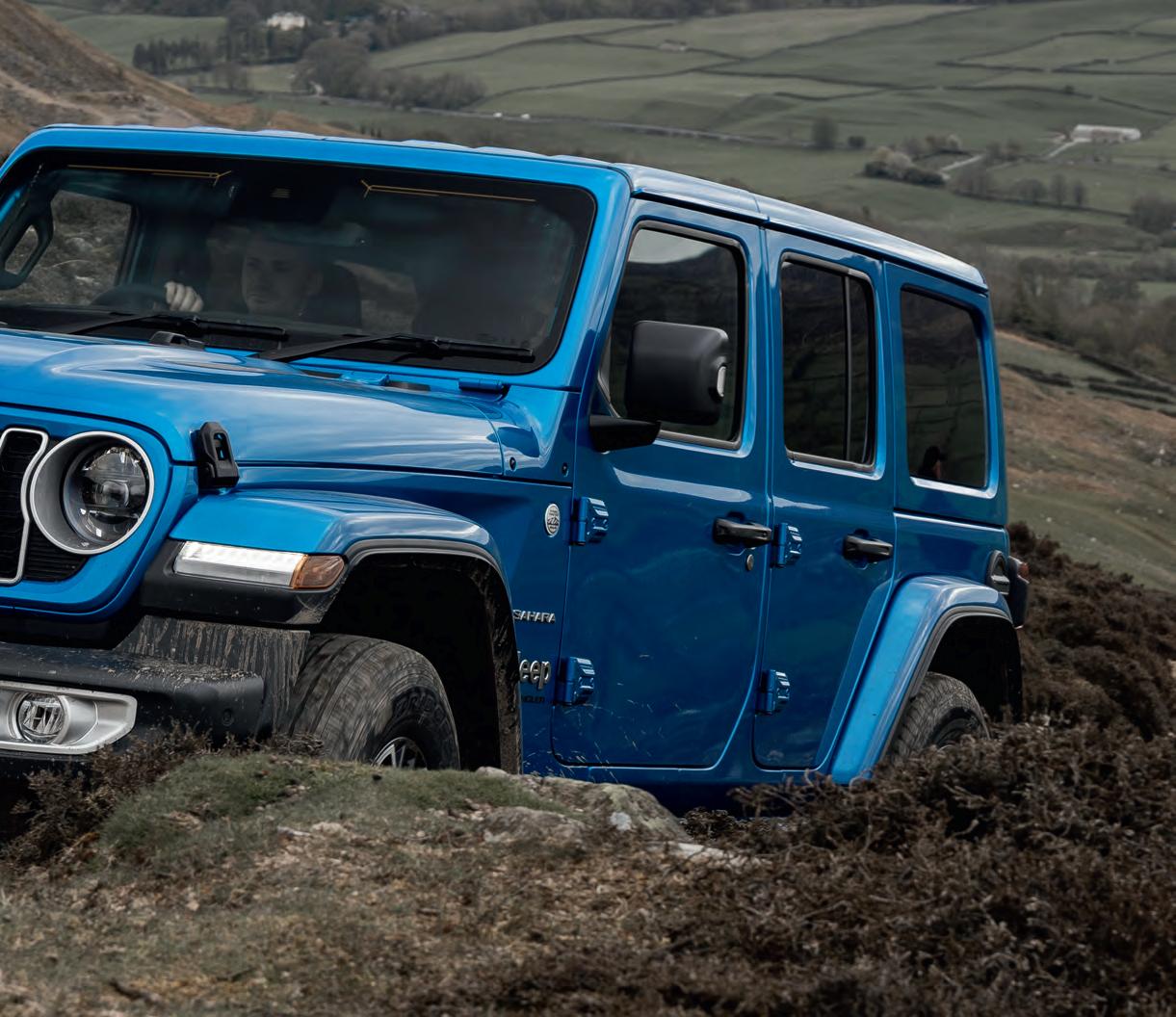
The current JL model went into production way back in 2017 and it was launched in Britain with a petrol and diesel engines, short and long wheelbases, a range of trim levels and the promise of a plug-in hybrid to come; now here it is down to one wheelbase, one engine and two trims, and the plug-in hybrid never happened.
It was much the same in the latter stages of the previous JK model’s production run, when we found it hard to escape the uneasy feeling that Jeep’s UK importer had been reduced to selling whatever it could get its hands on from the factory. At the time of writing, for example, Jeep’s website says that if you want a Rubicon, you can choose from eight paint colours, whereas if you
want the other available model, the Sahara, it’s just five.
It’s just the five-door model you can have now, and the 2.0-litre turbocharged petrol engine has been the only option since way before the facelift that came our way in the spring of 2024.
Lots of choice, then. To be fair, for most Wrangler owners the fun only starts once the vehicle has been delivered and they can start getting into it with the aftermarket, so perhaps it’s all the choice we need.
It’s the Sahara model we’re looking at here, anyway. This is the one without the locking diffs and fully floating back axle, so not necessarily what you’d choose for off-roading (though there’s a school of thought that says you’re better off getting your lockers on the aftermarket too) and
it’s currently listed at £63,465. That’s £3370 less than the Rubicon; we’d pay the extra and go the whole hog but with what that money could buy you there’s certainly more than one way to skin a cat.
It’s also worth noting that as we’ve been saying since the JL was launched, it’s stratospherically more expensive than the JK before it. This reflects the desirability the Wrangler has gained since then, but also the direction the off-road market has taken. Hilariously, £63,465 makes the Sahara just about the cheapest off-road vehicle you can buy now, pick-ups aside. The Grenadier starts a little lower in basic mode but climbs like a leopard going up a tree with a tiger on its tail, the Land Cruiser is just crazy money now and the Defender… well, if you’re in the market for a Wrangler you probably
don’t even consider the Defender to be an off-roader.
Old-school
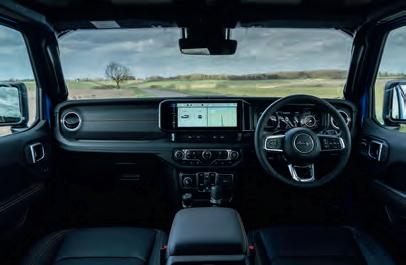
This, on the other hand, certainly is. The Wrangler is an old-school truck with a ladder chassis, live beam axles and a dual-range transfer case. Just like the Wrangler has always been and always will be, if Jeep doesn’t want an open revolt on its hands. It’s higher-tech these days, however, with loads of modern toys and creature comforts to go with its deep-down off-road engineering. These include a big old 12.3” media screen, introduced as part of the aforementioned facelift, which runs wireless Apple CarPlay and Android Auto. Not exactly epoch-making for a sixty grand vehicle but the screen is a lot bigger than the previous
one and that’s one of the most significant ways in which the Wrangler now feels like a bigger, better deal.
Behind the headline stuff, the Wrangler also gained a variety of new safety tech –which, as well as clever stuff like Drowsy Driver Alert and Traffic Sign Information also included side curtain airbags and structural improvements designed to bring the vehicle’s side-impact performance up to scratch. These aren’t the sort of things you notice when you’re driving, obviously, but they go together to mean you can do so without fearing for the consequences of someone else failing to notice you. Not that there’s much chance of that when you’re in one of these.
And anyway, driving a Wrangler is plenty engaging enough on its own. You might
have your music playing in the background but the in-car entertainment very much comes from the car itself. It’s a lot of fun, in a big, brawling sort of a way – you drive it and it makes you smile, so you don’t mind the sort of compromises that would make the typical SUV driver blanch with horror. If you’re going to own a Wrangler, what you need to do is change your thinking about those compromises; they have to stop being drawbacks and become the things you love most. It’s not hard. The seating position is like driving a block of flats – if you live for Golf GTIs, you’ll hate it, but if you understand 4x4s you’ll cherish the view. Ride and refinement are rugged at best and at times comical – in a good way, because you actually find yourself laughing out loud as your wheels beat the
road surface into submission. You might prefer, say, an S-Class Merc for an eighthour motorway journey up the M6. But take a Wrangler instead and having come off at Junction 40 for a detour on the Old Coach Road, you’ve turned it into a ten-hour journey – which you’ll remember for years to come. Meaningless, if you don’t get what it’s all about, but if you’re reading this you know exactly what we’re on about.
Elemental
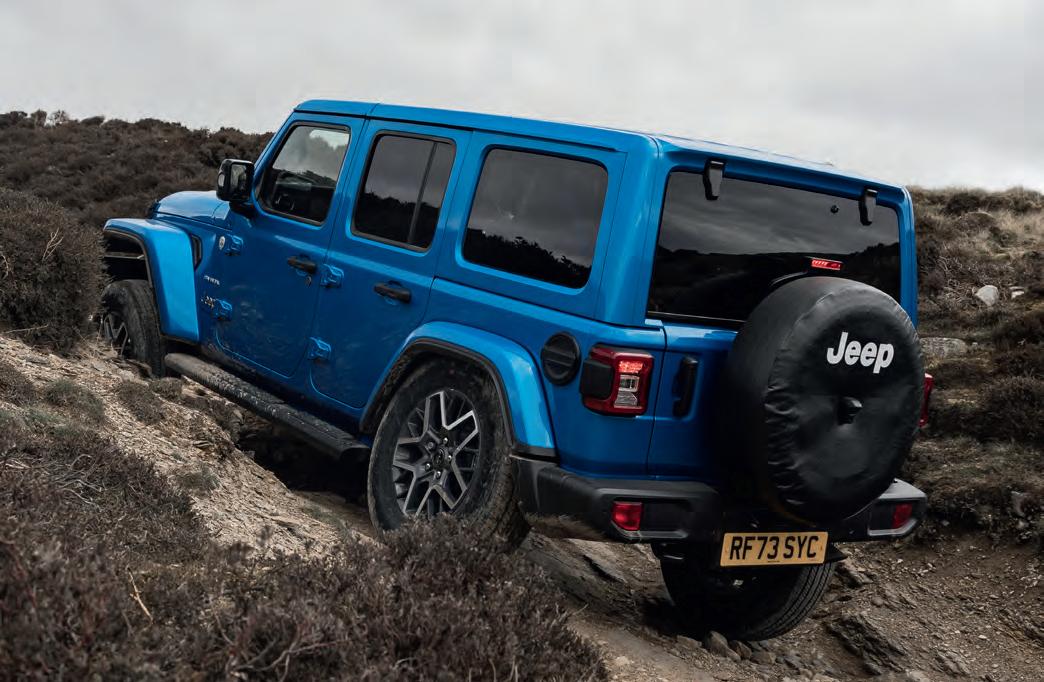
Safe to say, the Wrangler is in its element on green lanes like the Coach Road. The Rubicon is the hardcore one but you could drive 99% of Britain’s rights of way without ever using its lockers. The 17” BFG MudTerrains it comes on as standard will make a difference far more often, but of course that’s the easiest of things to change on a Sahara – which, even on its 18” standard road rubber, will stroll over almost anything, lavish ground clearance helping it on its way. The Rubicon also has deeper low-range
gearing and push-button front anti-roll bar disconnects, but you need to go a long way to find ground that will show up the difference these make. The turbocharged 2.0-litre petrol engine puts out a revvy 272bhp and 296lbf.ft, which sounds like it might be a handful on terrain requiring precise throttle control, but actually with a standard eight-speed auto box between you and the transfer case it’s an easy vehicle to drive slowly. The Rubicon might be easier but no way is the Sahara awkward.
It can get lively on the road, however, if you’ve got the transfer case in 4x2 mode and find yourself giving it a bootful when emerging from a T-junction. It can lay down a line in the dry if you’re not careful, and in the wet you might try it once before going scurrying off to the transfer lever to put it into high four. There’s a position with the centre diff open, similar to the arrangement on the old XJ Cherokee, and as with that vehicle it’s a lot more reassuring to drive with the front wheels helping out. You might choose rear-wheel drive for the motorway, but that’s about it.
Back on the lanes again, we took the Wrangler on a long, rocky climb which gave us the chance to try out another feature. Select-Speed Control lets you choose a target speed, using the gear shifter to raise and lower it by 1mph at a time, and the vehicle will stick to it. We set it to 3mph and from the bottom to the top of a very long hill, all we had to do was steer. Whether it would
still work on really extreme terrain, the kind where you might only want to travel at about a tenth of a mile per hour, is a different matter, but for general trail work we found it a very worthwhile tool to have in your box.
As this demonstrates, the Wrangler these days is high-tech in ways which, just a model generation ago, you would never have imagined. To some extent, were you to compare it to the equivalent model from the JK range, this explains the huge price bump, but the truth is that Jeep’s halo model has gone from being a plucky alternative to the Defender to a blessed relief from the Defender – and with its biggest rival gone, it has moved upwards into the off-road lifestyle gap Land Rover abandoned.
There are a few others trying to plug that gap. But the Wrangler is a vehicle whose engineering know-how is time-served like no other – and whether in Sahara or Rubicon form, even with its price climbing steadily upwards it still undercuts anything comparable by a long way.
That price, in the case of the Sahara, has gone up by £2340 in the year and a half since the facelift was introduced. Make of that what you will, but the Wrangler is a very complete off-roader now – and one whose capacity for being modified sets it aside from literally everything else on four wheels. It’s the biggest of big boys’ toys – and if you can afford the investment, few things can match the way it takes off-roading from a hobby to a way of life.
STEELING A MARCH
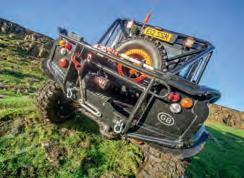
Shaun Myerscough rebuilt his Defender 90 so that no part of its body could contact the ground without there being a run of steel tube there first. But it’s much more than just a hard nut – it’s a hard nut with loads going on up there
Words and Pics Mike Trott
Iwas green laning in North Wales once, as the passenger of a cheery chap in a Discovery, when the byway we were on run past the top of a downhill mountain bike course. You know the sort of thing – a near vertical trials course from hell that madmen in carbon fibre body armour hurtle down on two wheels in the name of getting us to drink more Red Bull.
When I say near-vertical, I’m barely even joking. We stopped, peered over the edge at this crazy challenge that disappeared downwards into a murky abyss of swirling fog and scuttled back to the safety of our Disco, agreeing that you would need to be a lunatic to even consider it.
be to do these things is bloody good at it. You need to learn exactly how it’s done then practise relentlessly until it comes naturally. You need to hone your technical skills until you’ve truly mastered the art, and your physical condition until you can use those skills to their fullest. No-one is born an extreme athlete: many could become one but are put off by the dedication and hard work it takes to be the best in the business.
Which brings me neatly to Shaun Myerscough’s Defender 90.
Of course, while it might indeed help to be at least a little bit touched by madness, what you really need to
Now, I’m not saying Land Rovers have always been blessed with the most athletic of attributes. They’re not built to be thrown around the endless hairpins of the Stelvio Pass, but rather to take the direct line straight up and over the top. They are the tortoise to the sportscar’s hare, the unflappable steeplechase champion to its
mercurial sprinter or the hammer thrower to its gymnast.
Like your typical hammer thrower, Shaun’s Defender is pretty burly looking customer. Shaun says his aim was ‘to be able to kick it off a cliff and jump back in it at the bottom.’ I don’t think you’d want to actually kick it, though: you’d lose.
That’s because virtually every mod on the vehicle is a work of home fabrication. There are hundreds of hours of work in the vehicle, and you can see where they’ve gone.
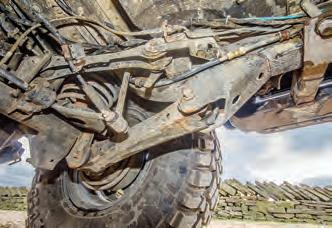
The trailing arms, for instance, are home made. So too are the engine mounts, which have helped lower the 90’s 200Tdi engine by a couple of inches. And that’s before you check out the tubular framework protecting every corner. If you’re going to crash into something, don’t crash into this.
Driving force
For Shaun, the story of his 90 actually started with another kind of Land Rover altogether. ‘I had a Discovery on a 6” lift
with Detroit lockers and reinforced bumpers which I sold to fund a challenge truck project,’ he explains. ‘Inevitably, though, I started to miss the driving. So I got this 90 just so I could get out there and actually use a Land Rover again.’
So he bought one he could just jump in and drive, right? Oh dear no. He bought, in his words, ‘an absolute pig.’ It was on 80,000 miles, which is nothing, and it was still on its original chassis and bulkhead, both of which were in good condition and not covered in
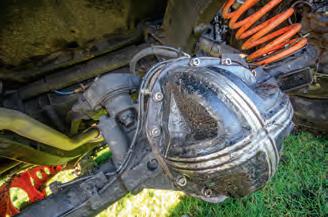
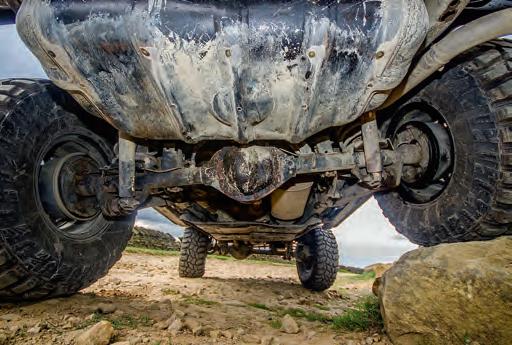
Left: Salisbury front axles are as rare as they are strong – and Shaun’s is stronger still thanks to the reinforcement work he’s done on its case. The steering guard you see here is home-made too – and colour-matched to the vehicle’s body using the same paint code. These are the things that matter…
Right: It’s a Salisbury at the back, too. With a 6mm steel diff cover, as there is up front, it’s not going to get knocked about by much either. Good thinking when there’s a very valuable ARB Air-Locker in there
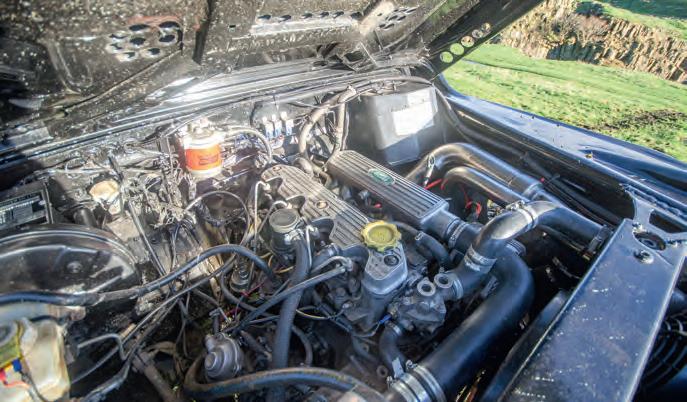
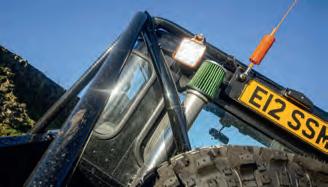
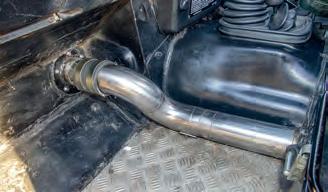
Above: Shaun made his own engine mounts so as to position the 200Tdi unit a couple of inches lower than standard. The snorkel is routed through the passenger’s footwell and up the back of the cab so it won’t suffer any damage if the truck goes over
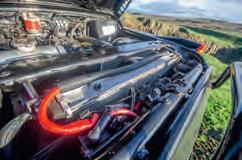
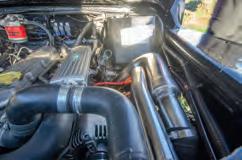
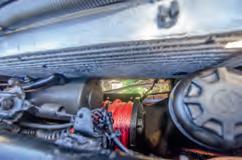
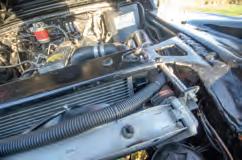
Below: An unusual arrangement up front sees a Td5 intercooler mounted ahead of the engine’s radiator, with a total of three electric fans hauling air through them. Considering there’s a winch in there as well, and the front overhang was trimmed back by four inches, that sounds like a classic case of trying to fit a quart into a pint pot, but the rads and pipework alike look as tidy as anything
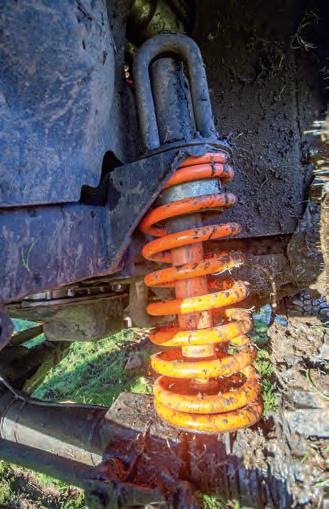
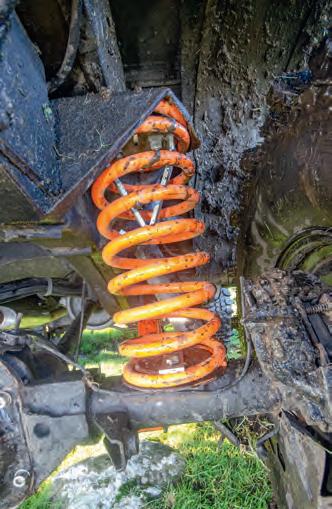
Left: Front suspension uses +3” Extreme 4x4 springs with long-travel shocks in tubular towers. The springs themselves are higher-rate up front to hold up the greater weight of the engine. The axle is located using the original combination of panhard rod and radius arms, though the latter are mounted using home-made mounts with six degrees of castor correction
Centre: Taller springs from Extreme 4x4 add 3” of suspension height at the back, too. Here, dislocation cones allow them to make the most of the axle’s potential for articulation
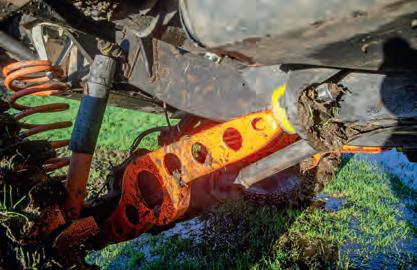
Right: The three-link rear suspension is retained, with the central A-frame providing the pivot and Shaun’s own fabricated trailing links providing loads of droop and enormous strength
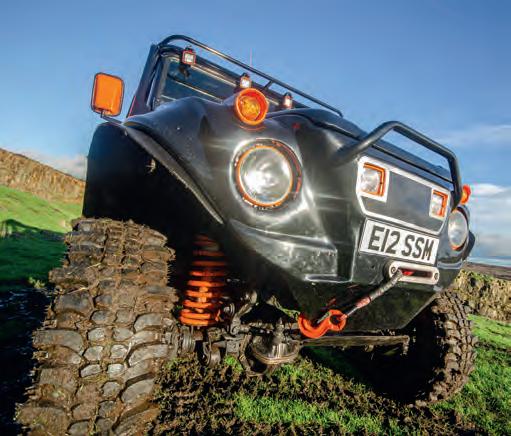
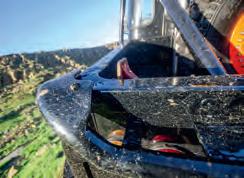
There’s exo cages and there’s exo cages. This structure needs quite a lot of examination to get your head around it – the idea is that absolutely anything can happen to the 90 and its bodywork will never hit the ground, because there’ll always be tube there first. The way the tube is skinned over by the body it protects is particularly elegant – and up front, if Shaun wants to use it as a battering ram it can simply push its way through anything
patches, so it sounds more like a nice bacon sandwich rather than an actual pig in that sense, but as we all know there are plenty of other ways in which a Land Rover can contrive to ruin your life.
Still, as Shaun also points out, if you know what you’re doing then you needn’t fear any vehicle.
He clearly does know what he’s doing, and two years later the 90 emerged from his workshop ready to stand out in a crowd of Land Rovers. Or pigs.
‘The plan was to make it as strong as possible,’ says Shaun. ‘So that if it rolled, the shape would remain the same – hence the snorkel being positioned at the rear.’
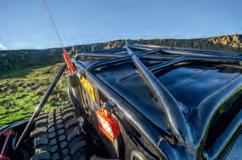
To achieve this, there’s a substantial amount of tubular framing around the body – no part of which can make contact with the ground before the steel exoskeleton. The wings, cage and front end all use tube to create maximum protection, with the likes of a trellis roof just one example of how thorough the work has been.
Left: Ever seen a roll cage braced like this up top? It’s not going to do anything for the truck’s centre of gravity, but the rigidity in it is there for all to see. Shaun’s aim was ‘to be able to kick it off a cliff and jump back in it at the bottom,’ and that’s where all this steel comes in
Right: Tubular wheelarches, made from 6mm steel, flare out to cover the highly offset rims
Below far left: Given the amount of home-fabbed bodywork you can see all around the 90, you won’t be surprised that Shaun’s rock and tree sliders are his own work too
Below left: Yet more DIY metalwork comes in the shape of these dimple-died door sliders. The distinctive orange grilles at the leading edge of the doors help hot air exit the engine compartment
‘It is over-engineered in many ways,’ admits Shaun. ‘But I would rather do it all once and have it done properly.’
The theme of steroid-level strength is all around the vehicle. It has Salisbury axles at both ends and 6mm steel guards protecting the diffs and steering. All Shaun’s own work – there are no bolt-on bits here.
Dad’s armour
Well, when I say it’s Shaun’s own work, I’m missing out a very important source of help he got. ‘My dad is from an engineering and machining background and helped with the majority of the fabrications, while I focused more on the mechanics,’ explains Shaun. ‘It was built by us, for me and no one else. It was a very personalised project and we never wanted it to look like a challenge truck. We’ve tried to keep everyday truck elements in, like the three seats in the front, so that my wife and daughter can still come along for the ride.’
As well as strengthening the 90 in every conceivable way, Shaun and his dad, Alan, chopped eight inches out of the back of the chassis and four from the front. These
probably actually count as relative drops in the ocean of fabricating work, and they were certainly worth the effort for the effect they had on centralising the vehicle’s weight as much as possible.
This takes us back to those home-made engine mounts. A lower engine is a lower centre of gravity and a lower centre of gravity means all that steel is less likely ever to be called upon to protect the vehicle in a roll.
Up front, the 200Tdi uses a Td5 intercooler with two electric fans just for itself. Another electric fan focuses its attention solely on the radiator – making for one very tightly packaged front end. Obviously electric fans need wiring, too, and Shaun redid the entire vehicle, installing a system with three individual fuse boxes. Clearly, many hours of labour have been spent on this Land Rover.
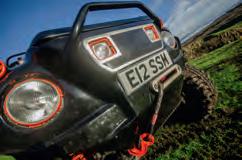
There is no greater illustration of this than the front end, which now resembles more of a battering ram. The winch is tucked away, unlike on most other offroaders, so the mud can’t reach the mechanism as easily and there is nothing to
pierce. Instead you just have a big black wall of metal. Don’t be fooled, though, that Warn 8274 winch can still be accessed and it can still freespool with the best of them.
It’s like assuming professional footballers are all thick, but then you meet one and discover he’s got an MA in fine art, speaks four languages and is a cordon bleu chef. Or, to put it another way, going on a date with a beautiful woman and finding out that she has her welding and chainsaw tickets and can arm-wrestle like a bear.
You get the idea. You look at Shaun’s 90 and think you’ve got it sussed, but in fact there’s so much more to it than meets the eye. And wherever you stand, it has attitude in abundance.
It’s the attitude of those elite athletes who get to the very top of their game. Shaun was determined that his 90 would become an unyielding force – and however much work it took, he was going to get it there. Hammer thrower? Maybe. But the sort of hammer thrower who’s likely to jump on a mountain bike and set off down hill at a pace that leaves you gasping for your next fix of Red Bull.
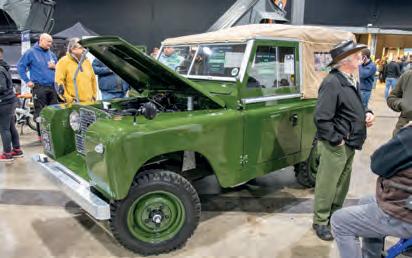
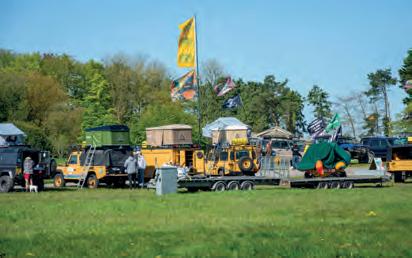
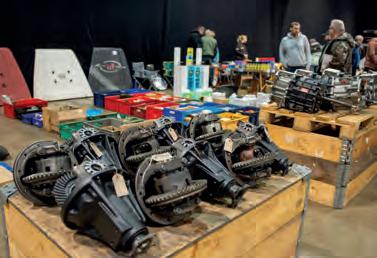
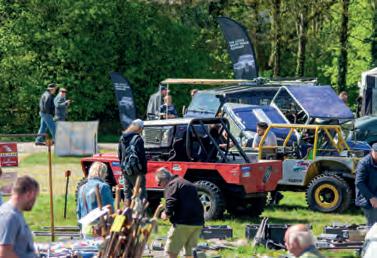
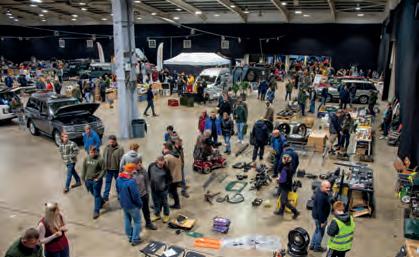
Land Rovers are returning to Bath & West this April for a weekend filled with Land Rovers!
Exhibitors old and new will join us, selling everything from parts & accessories to tyres, clothing and toys Talk to overland adventure specialists about your next trip, discuss modification options with companies with the know-how and other experienced Land Rover owners.
RUNNINGS COOL
Buying someone else’s modded 4x4 can be risky, but Jason Pettit has never been scared of getting on the spanners. And the result is that you’re looking at one of the coolest TJ Wranglers ever to hit the lanes
Words: Paul Looe Pictures: Harry Hamm
What’s better than having a cool Jeep? Having two cool Jeeps, obviously.
That’s what Jason Pettit had when we met him. One of them was a TJ on long-arm suspension which he described as an ongoing project. And this is the other.
It was actually for sale at the time (long gone, settle down) so he wasn’t fixing to have two cool Jeeps for long. But he’s not one for keeping hold of trucks just for the sake of it, having previously comped a Chenowth with the AWDC and owned among others, a Mk2 Hi-Lux, a Toyota Surf on 33” tyres and, would you believe, a 1971 International Scout converted to coil springs.
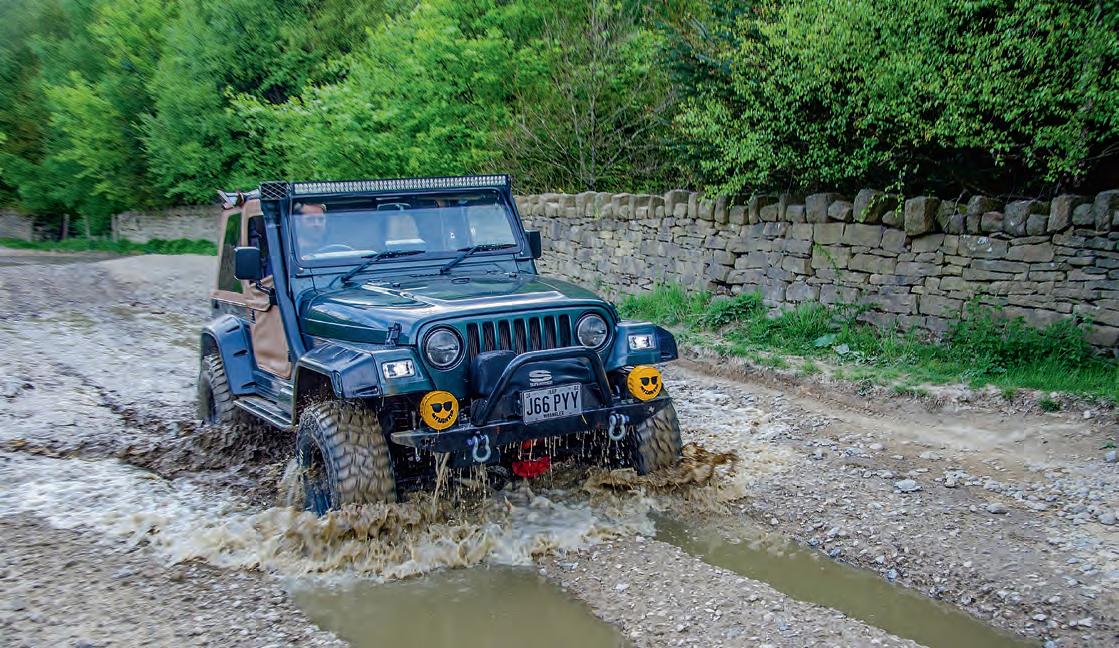
Compared to that, a 2002 4.0-litre Wrangler Sahara sounds quite mundane. It’s not, though; it was already far from standard when he bought it and as you see it here, it’s further still.
Jason is a mechanical engineer by trade, so he’s not scared of buying someone else’s modded motor. Nor indeed of turning it into his own modded motor.
He’s owned a 1989 YJ Wrangler, also converted to coils, and was one of the first people in Britain to put a JK on 35” tyres. So the TJ you see here represents a step
backwards in time – though certainly not in quality.
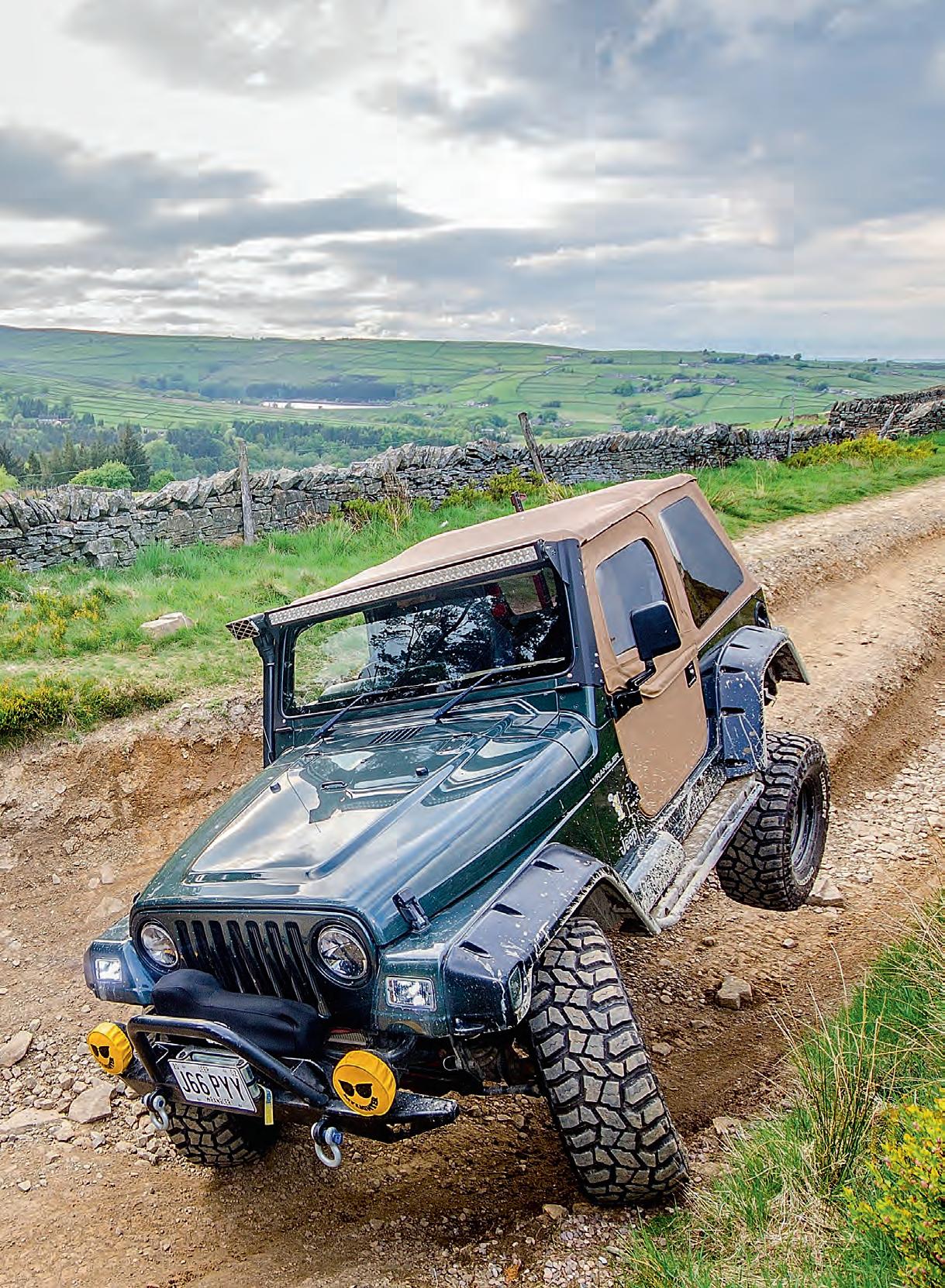
Most of all, it’s a fine example of how far you can take a truck without going over the top. It runs 2.5” of suspension lift and 1.5” body spacers, creating enough room for some fairly life-changing tyres – yet
instead of maxing out on either the size or the tread, Jason fitted it with a set of 33x12.50R15 Cooper Discoverer STT Pros.
Wide boy
Wrapped around offset steel modulars mounted on 1.25” spacers, these give
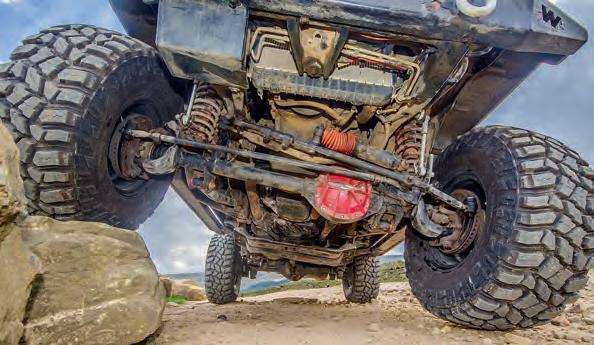
Left: The front axle is just your standard ordinary Dana 30. Standard and ordinary, that is, but for the ARB Air-Locker and 4.56:1 ring and pinion tucked up safely behind that Ranchero diff cover. These run along with heavy-duty halfshafts. Note the extended panhard rod and Skyjacker steering damper; and while we’re on the subject of steering, the PAS box is protected by a guard Jason fabricated for it
Right: Like the front axle, the Dana 44 at the back contains heavy-duty halfshafts turned by 4.56 gears in a diff containing an ARB locker. The brakes are standard all round, and there’s an armoured guard protecting the fuel tank
the Wrangler a distinctly wide-shouldered stance. They live below a set of 6” Bushwacker wheelarch extensions, which do no harm in this regard – hard as it is to believe, this TJ is a full foot wider than when it left the factory.
That probably won’t have been the first thing you noticed when you looked at the pictures, though. At least, not if you’re used to Wranglers the way we have them in the UK. That’s because when we met Jason,
the truck was running in summer mode –meaning it was sporting a set of US-style half doors made up of canvas stretched over a frame.
Campfire fairytales
There’s something about this look that evokes images of Rubicon campfires and trail rides in the High Sierras the way not even a Wrangler with its doors off and its windscreen folded down can manage. In
the case of Jason’s TJ, it’s augmented by a Bestop NX bowless soft-top as well, and it really looks the part – even when, as is the case with our photos, the trail you’re riding overlooks Brownhill Reservoir rather than Lake Tahoe.
In the winter, all this goes in the garage and the Jeep gets back its hard top and standard-issue steel doors. You can’t help but feel that it must be a pretty sombre couple of hours’ work doing that – kind of
like finally admitting that summer really is over now. Though Jason isn’t one for letting a bit of wintry weather get in the way of his off-road fun. Indeed, he tells the story of a snowy outing with a few mates in Land Rovers who were quick with the banter first time he needed a couple of goes to get over an obstacle – until he pointed out that he was still in two-wheel drive…
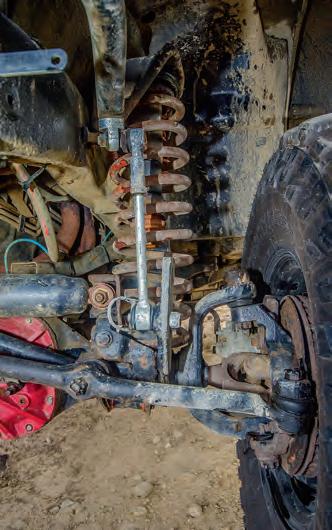
Left: As Jason says, one of the great things about the Wrangler is that you don’t need to lift it too much to get properly meaty tyres underneath it. The springs and shocks you see here are from a +2.5” Skyjacker kit, with quick disconnects on the front anti-roll bar allowing them to flex they way they’re meant to
Above: Compare the tubular lower front links with the pressed upper units (the offside one is just visible here) and you know which one you’d be backing in a fight. The links are cranked to aid articulation and mounted up using heavy-duty bushes
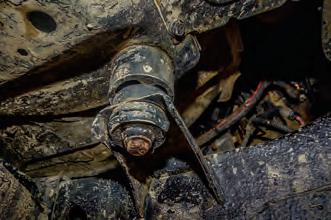
Above right: The suspension retains its standard lower arms at the back. Made originally from pressed channel, these are strong enough for general off-road fun – but Jason has boxed them to stand up to more hardcore action
As for the other kind of 4x4 fun, the kind you do with spanners and an angle grinder, once the workshop door closes behind him Jason is up for more or less anything. ‘I do all my own work,’ he confirms, ‘and I’m quite proud of how it’s turned out. But like all off-road vehicles it’s ongoing and there’s always something to change or improve. ‘So I’d like to thank EG Wright Motor Engineering
for the great job they did on reworking an axle for me, and also Terraclean Denton for the fuel system and engine cleaning.’ Sometimes it’s not just what you know, it’s who you know.
What he doesn’t know much about, on the other hand, is what was done to the Jeep before it fell into his hands, and by whom. ‘It had a fortune spent on it before
A few mates in Land Rovers were quick with the banter first time he needed a couple of goes to get over an obstacle – until he pointed out that he was still in two-wheel drive
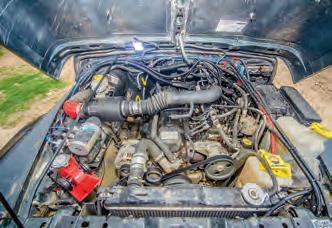
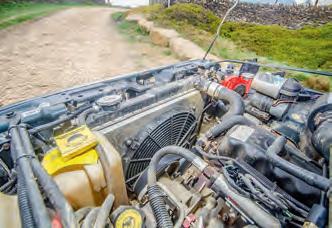
Above left: Jeep’s 4.0 HO straight six isn’t the most sophisticated of engines, but it’s not half reliable. This particular example has a little more power, thanks to a Stage 1 chip, and a lot more economy, thanks to a BCR multi-point LPG conversion. It also runs a modified induction pipe and sealed cone-style air filter, fed directly from the Safari Snorkel air intake
Above centre: Something you do notice about the 4.0-litre engine is that whether in a Wrangler or a Cherokee, it tends to run hot. To help counter this, Jason uses a 16” Spal electric fan housed in a custom alloy shroud
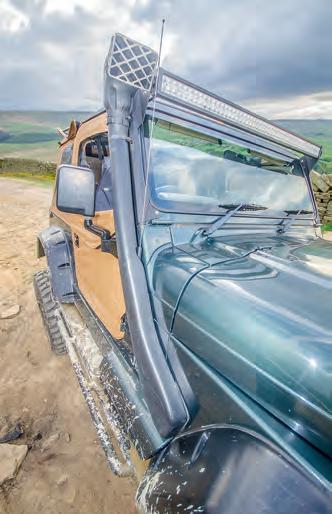
Right: You know that thing you’ve heard about snorkels and LPG? Here’s evidence that a modern system can work just fine while taking its air through a raised intake. In the background, a 50” LED bar sits waiting to provide 380 Watts’ worth of illumination
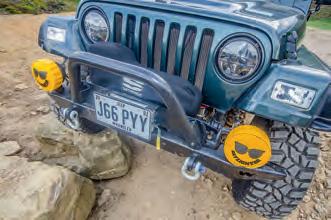
Left: Up front is a Warn rock-crawling front bumper, complete with D-bar and winch mount. The winch itself is a 9.5-ton Superwinch, and the D-bar… well, it’s not quite a stinger, but it would at least slow things down in your average endo
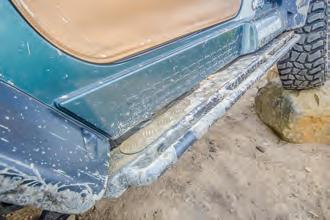
Centre: It would take a bit to call these rock sliders into action, but then this Jeep was built for doing a bit. They were fabricated using the normal design, with a box section main body and tubular extensions for rubbing on tree stumps. Less usual, but a sign of a belt and braces job, is the anti-slip chequer-plate surface on top
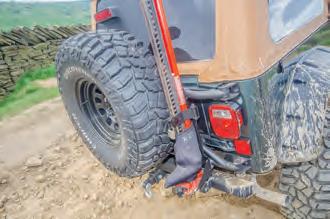
Right: All the best lifted vehicles gain extra height from a variety of sources. Jason’s TJ is no exception – in addition to 2.5” from the suspension, it has an extra 1.5” of clearance from a body lift
I got it. It’s had a few owners and it’s been to many events in the UK’ is all he can tell us.
‘I bought it already partly modified and it’s just improved as I’ve wanted to do more with it,’ Jason continues. ‘A different lift kit is the only thing I can think of that I’d have done differently – it does quite well, but my next change would be to replace it with one with more flex.’
Note the word ‘would’. As we mentioned earlier on, the Wrangler was for sale when we took these pictures, the reason being that Jason had his eye on a Ford Bronco that had previously finished no less an event than King of the Hammers. We all know how things go, though, and he had a list of plans for the TJ should the deal fall through.
‘The next step would be to change the lift kit for one with more flex. Although the kit it has already does quite well. Also a slip yoke eliminator and double-cardon rear propshaft, and a tummy tuck transfer tray – which would allow much better ground clearance in the middle of the Jeep.’
See, normally when people start talking about what they want to do next they turn back into toddlers. ‘Me want bigger tyres! Me want bigger engine! Me want flexy flexy!’ Far better to refine what you’ve already got until it’s working to its full potential – take it from there if you want, but most people who think More Bigger is the way forward just haven’t made the most of what they’ve already got.
Obviously, if what you’ve already got is a cool Jeep, you’re most of the way there. There’s literally nothing you can’t do to enhance a Wrangler, after all, so what could be better than that? Having two, of course.
BLUE
HEAVEN
This 40-Series Land Cruiser looks for all the world like it’s just had a major restoration, but all it’s had is a gentle refresh. It just so happens that the gentle refresh was by some of the best people in the restoration business
Words Tom Alderney Pictures Legacy Overland
Restoring old classics is a noble pursuit. Modifying 4x4s is a noble pursuit, too. Which makes modifying restored classic 4x4s a doubly noble pursuit.
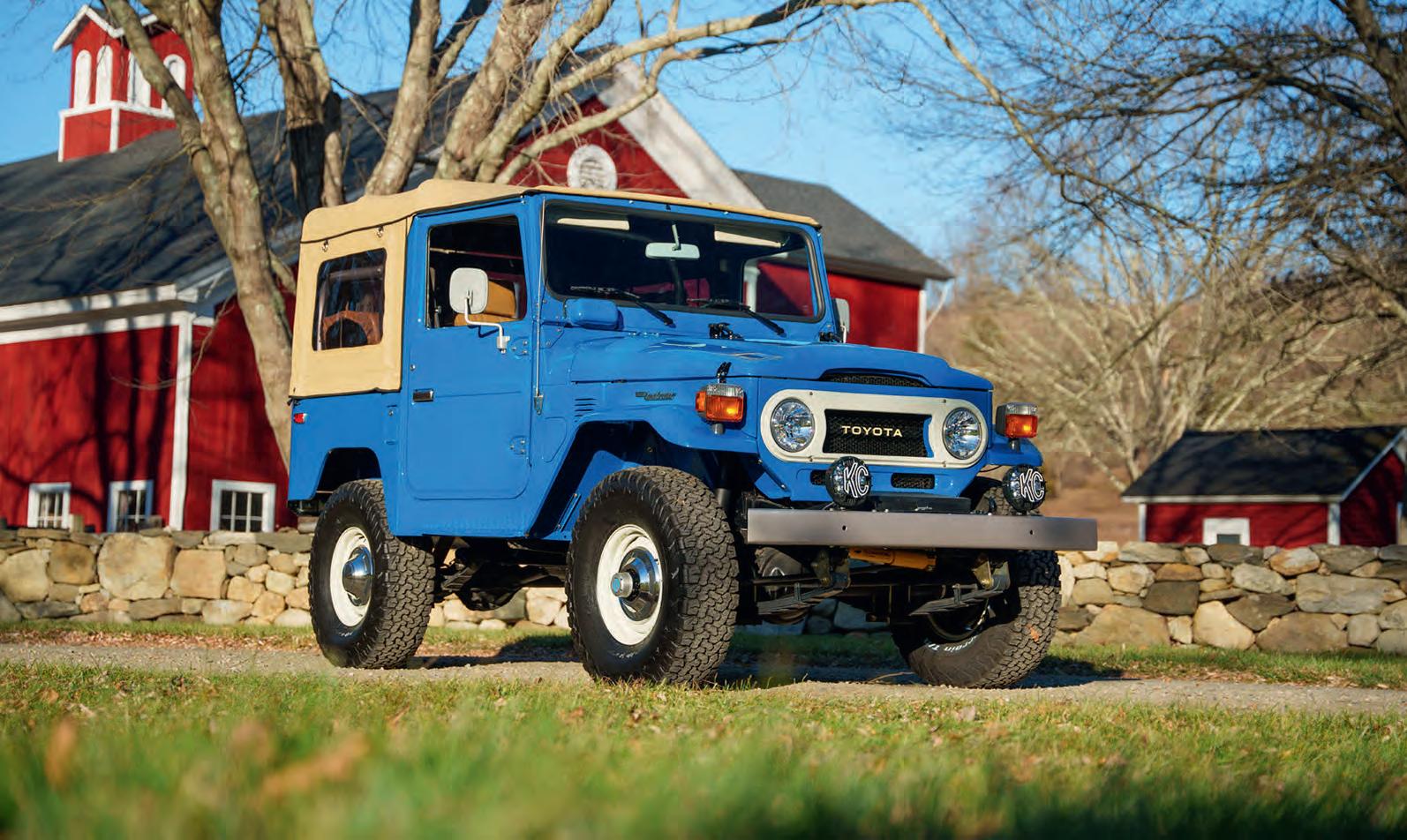
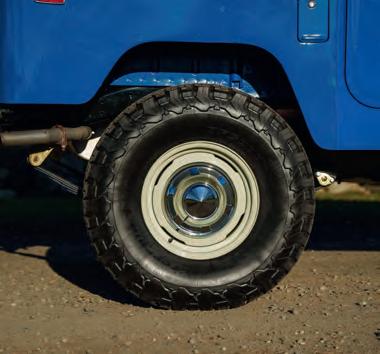
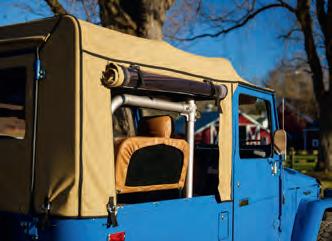
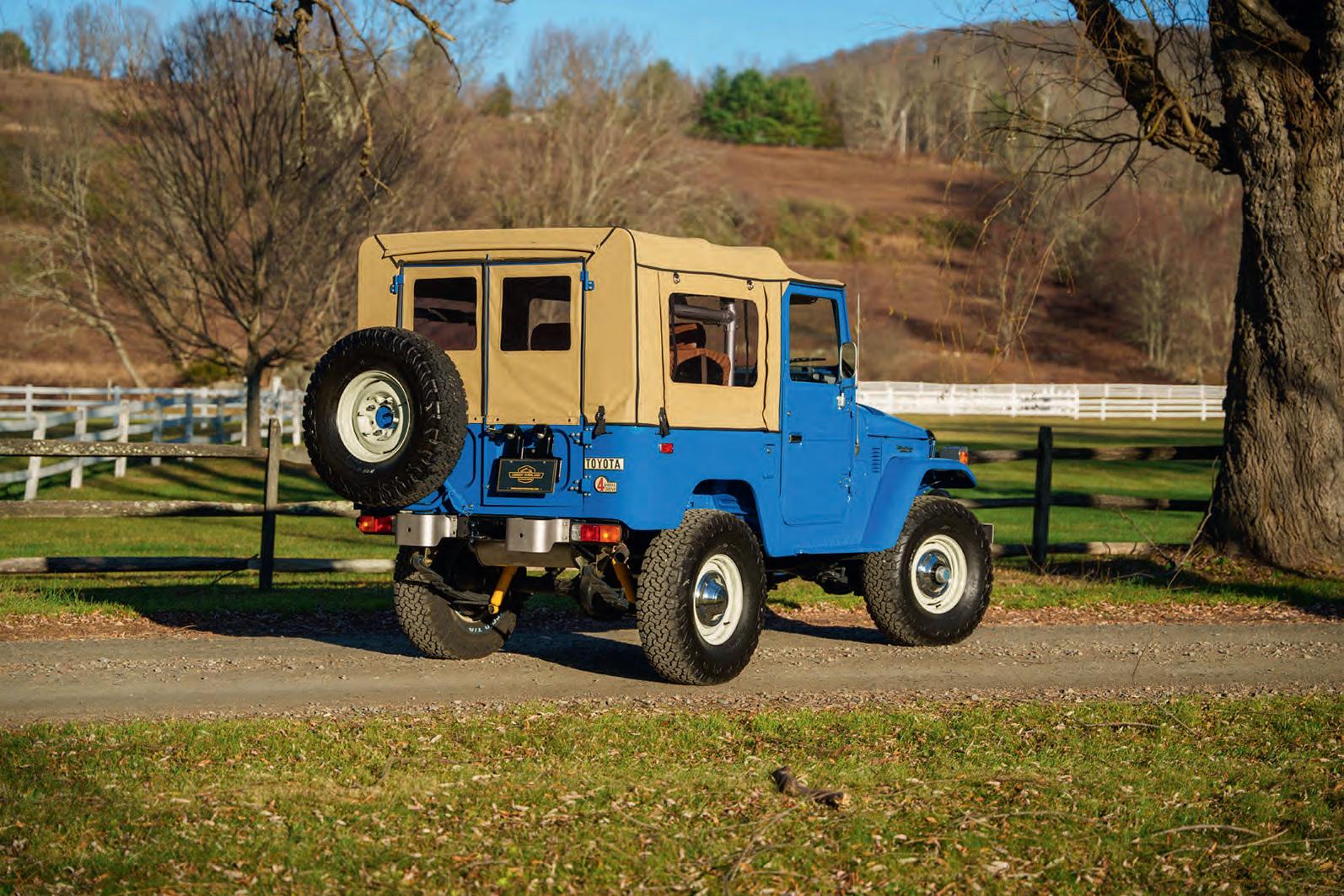
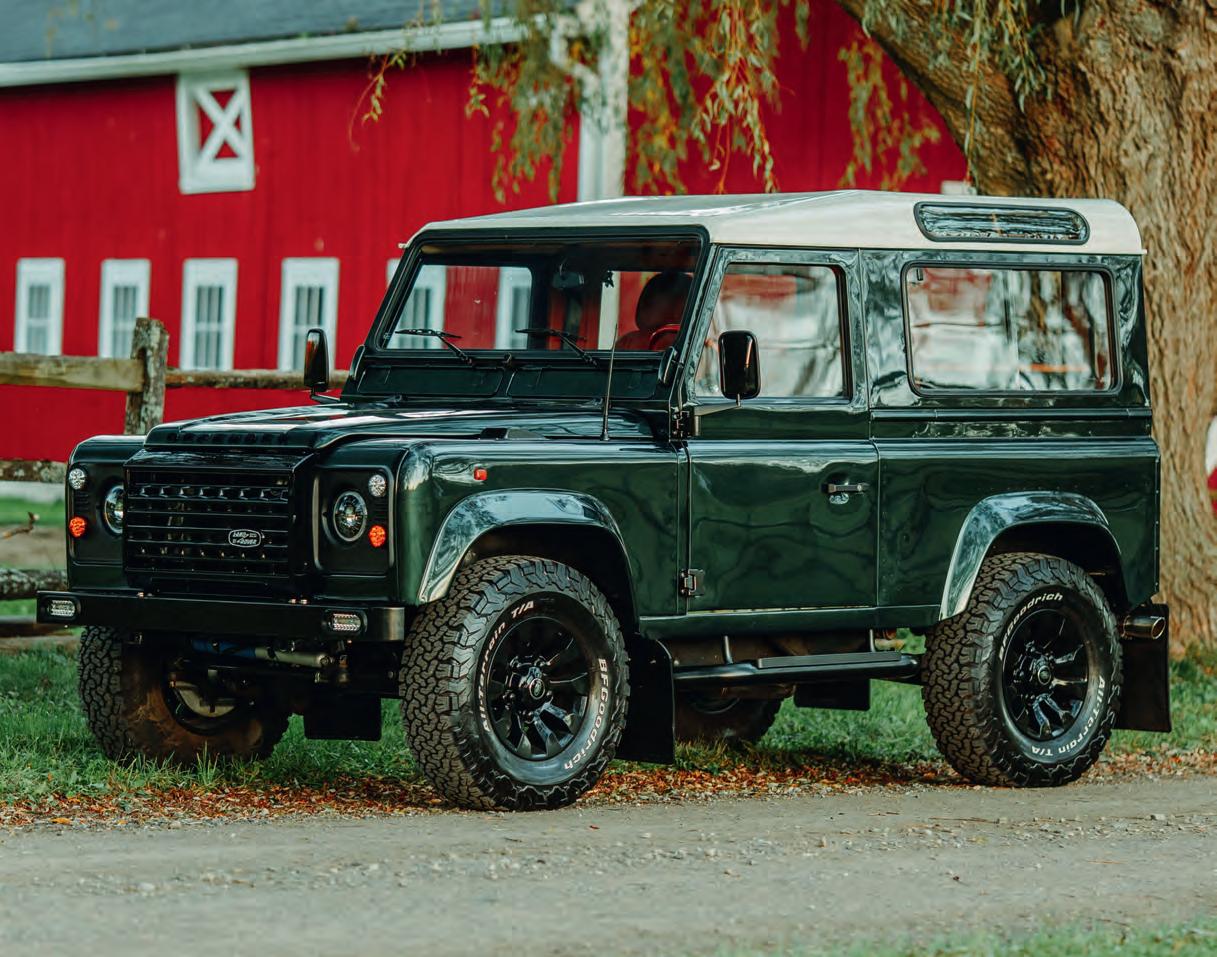
That’s what they do at Legacy Overland. But it’s not all they do, as this 1978 Toyota Land Cruiser illustrates. It’s beautifully presented, with its glorious Horizon Blue paint and contrasting tan canvas, and
with 33x10.50R16 tyres on its factory steel wheels it has a touch of off-road attitude to send it on its way. But actually, this is as standard a vehicle as we’ve ever seen emerging from the workshop of the Connecticut specialist.
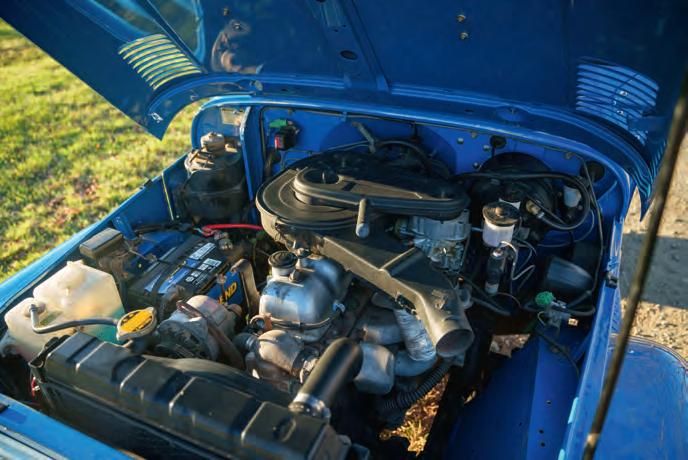
For starters, they’re big fans of LS engine swaps over at Legacy Overland. And why not? But in this case, they’ve simply gone through the carburetted 2F engine and kept
as close as possible to new, along with the four-speed manual gearbox behind it.
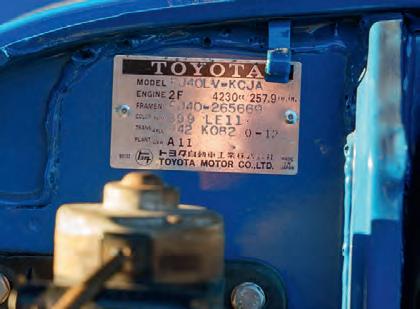
Produced from 1975 to 1988, the 2F is a 4230cc straight six petrol engine with a 94mm bore, 101.6mm stroke and 7.8:1 compression ratio. Its nominal output when new was 135bhp and 200lbf.ft. It replaced the even longer running 3.9-litre F engine, which had been in production since 1948, retaining the same cast iron block and head,
gear-driven camshaft and overhead valve and pushrod layout. Most of all, like that engine (and indeed the rest of the F series), it was known for its deep, stump-pulling grunt at low revs – and most of all for its colossal reliability.
The F series had already been going for several years before the J40 Land Cruiser was introduced, and the two weren’t discontinued at quite the same time, but they will forever be associated with each other. Both are, after all, known for their longevity – the Cruiser is prone to rust, of course, but it’s one of the most mechanically indestructible vehicles of all time, and the engine will happily plug its way through a
quarter of a million miles on little more than oil changes.
Looking under the bonnet of Project Cascade, as this Cruiser was named, you can’t help but be struck by how clean it is. Clean and, in particular, wonderfully simple. This is technology from an age when trail-fixfriendly was something manufacturers strove to achieve rather than avoid. Legacy Overland does suggest that ‘if you’re a fan of customisation, (the vehicle) provides an exceptional base for upgrades, including potentially swapping in
Toyota’s F series engine is legendary for its honest slugging power and spectacular longevity. They’ll do a quarter of a million miles on little more than oil changes – they played a big part in building the Land Cruiser’s unbustable reputation
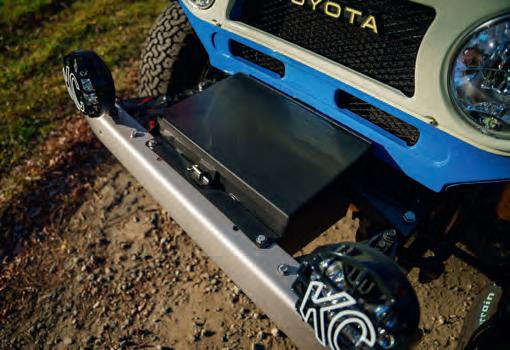
a modern engine and gearbox’; we’re fans of customisation alright, but in this case we’d content ourselves with maybe adding a winch and some protection underneath and
“You can picture it looking as good with mud or trail dust all over it as it does clean”
around the body’s extremities. Having said that, there’s a tool box fixed in place behind the front bumper, which you could argue is even more important if you’re not planning to go solo on gnarly off-road adventures.
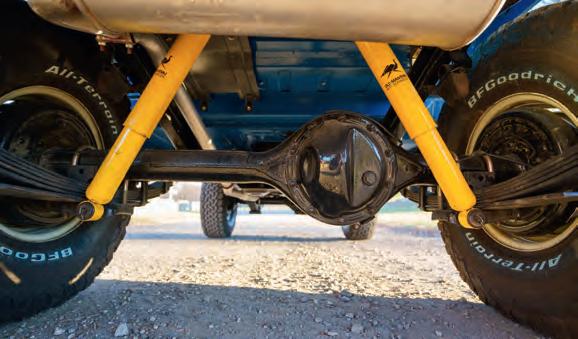
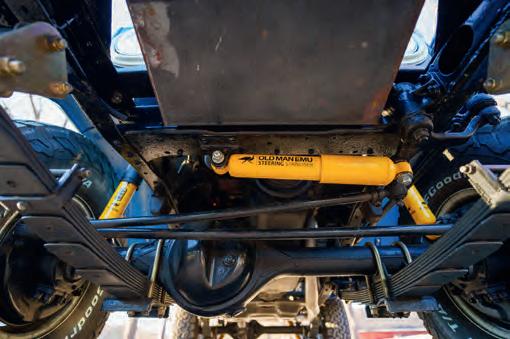
The Cruiser’s 33” tyres make it look more modified than it actually is, but while it’s largely standard there is a moderate suspension lift to be found. Legacy Overland swapped out the stock springs and shocks for an Old Man Emu kit hiking the vehicle upwards by 1.5” – not extreme but enough to add a little more ability and a lot more attitude. The tyres are 33x10.50R16 BFGoodrich All-Terrains, which are known for their grip in all sorts of conditions and, in particular, for their hard-wearing longevity. To help combat kickback through the truck’s manual steering, the OME kit also went on with the same company’s steering damper
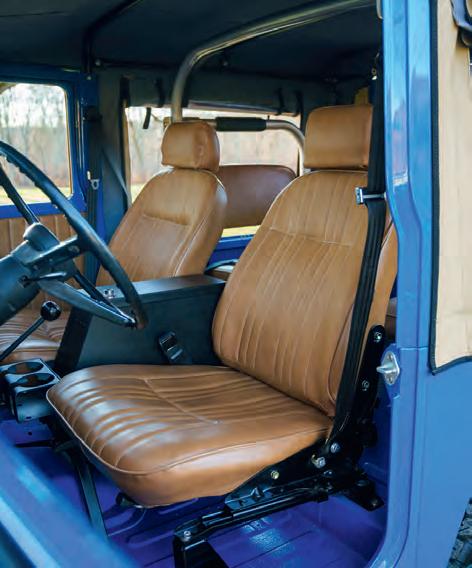
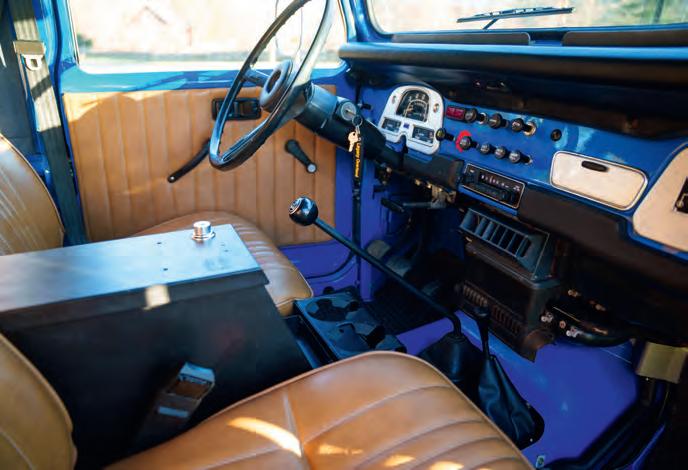
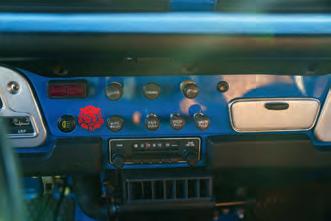
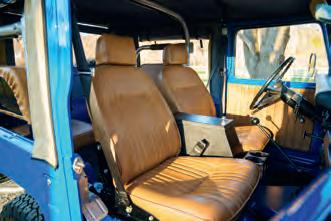
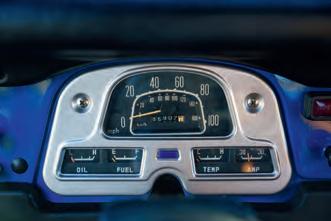
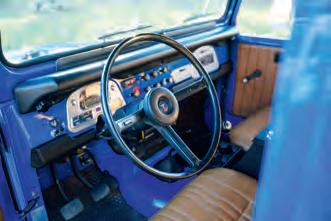
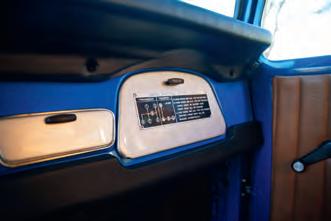
Legacy Overland normally deals in vehicles with all sorts of modern accoutrements and creature comforts. Project Cascade is not exactly sparse and spartan inside, with high-quality leather trim on the seats and doors, but with a period radio and its original heater you won’t be listening to your favourite tunes on CarPlay while relaxing in climate-controlled comfort. Instead, you’ll be enjoying the authentic experience of driving a totally analogue vehicle from an age when everything wasn’t done for you
As it is, there’s a cheeky little 1.5” lift from a set of Old Man Emu leaf springs and shocks which went on while the vehicle was being refreshed. This makes enough room for those 33” tyres; they’re BFGoodrich AllTerrains, an aggressive enough pattern for what 99% of people would ever want to do
in a classic 4x4 like this and a brand which, like the J40 itself, is famous for its hardwearing longevity.
It’s not all workmanlike doughtiness, though. The seats and doors have been trimmed out in high-grade cognac leather to go with the soft-top, there’s a period
pair of
correct radio and, a definite luxury, rear-seat passengers are kept warm by their own hot air blower. No carpets, though, so despite its beautiful presentation this is still a proper hose-out off-roader.
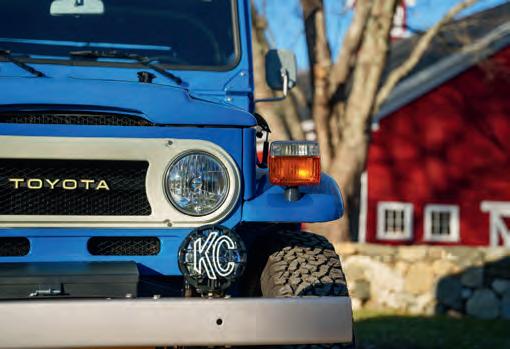
There’s a bit more in the way of period charm in the shape of two KC auxiliary
A
KC driving lights add period charm, and lots of it, up front. They also add light (and lots of it, etc) – as do the original headlamps, whose 1970s-era OE bulbs have given way to a halogen upgrade once again from KC
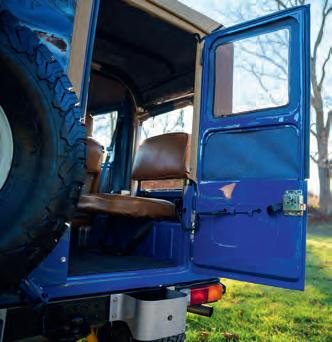
Venture in through the rear barn doors and you’ll find a pair of inward-facing jump seats – with their own dedicated hot air blower between them. Who said 1970s’ off-road trucks couldn’t be luxurious? Safe to say the seats are trimmed in a nicer material now than they were back then, though. Beneath the canvas hoop, a four-point roll hoop is mounted down to the rear body – which, and this is relevant because they normally aren’t on Land Cruisers of this age, remains completely untroubled by rust
driving lights up front, and the same company’s halogen upgrade improves the actual headlamps. Then there’s a set of freewheeling hubs, with their manual dials colour-coded to the vehicle’s body, and the Toyota steels have been finished off with a set of polished chrome hub caps. The overall effect is to make it look like it’s just emerged from a full rest, even if by Legacy’s Overland’s standards all it’s had is just a freshen up.
The good thing is that it’s absolutely rock solid underneath, without a scrap of rust to
be seen anywhere. And even though it looks good enough to eat, it doesn’t look too good to use. You could certainly imagine it with a winch up front and a set of rock sliders beneath its sills, and you could picture it looking as good with mud or trail dust all over it as it does clean.
Which is of course the mark of a true offroader. It gets down and dirty but it scrubs up well too. And, of course, it lasts. Which this Land Cruiser has done very well indeed – and is now very well set to keep on doing for decades to come.
HOME IT’S A LONG WAY part
Setting out on a long journey, things get gradually less familiar as you travel across Europe. By the time you reach the edge of former Soviet Asia, you might feel acclimatised – but in reality, only now are you starting to face the unknown
Words and pictures: Tushar and Pooja Agarwal
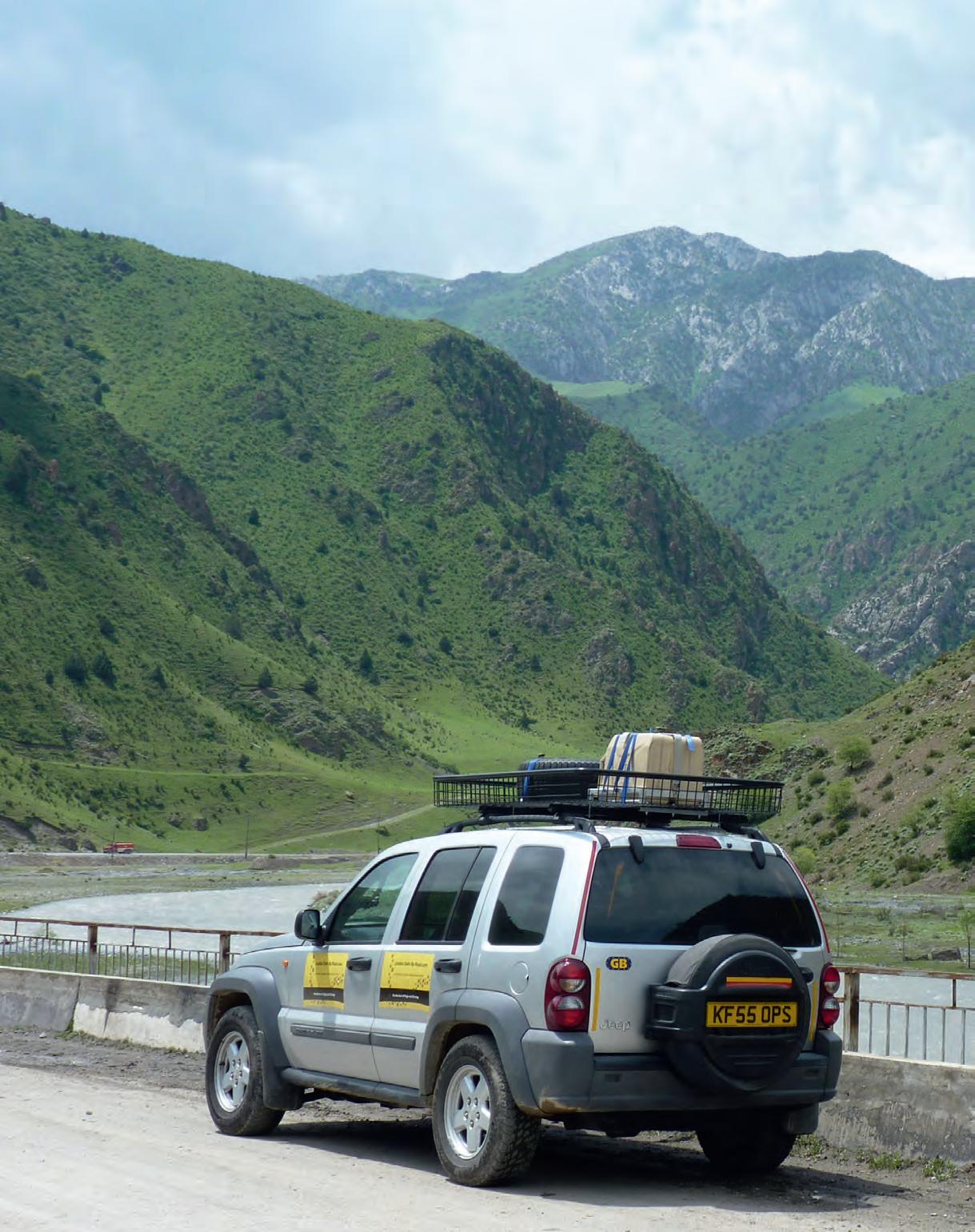
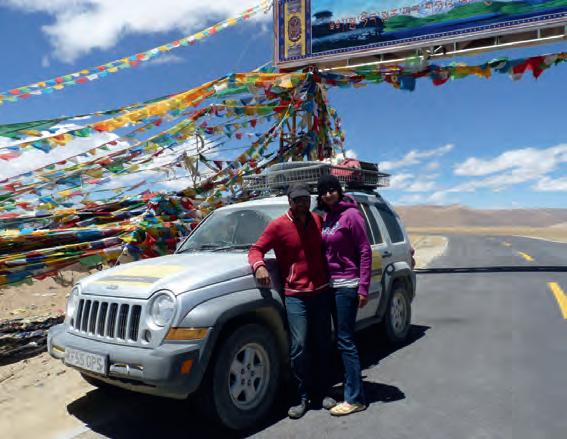
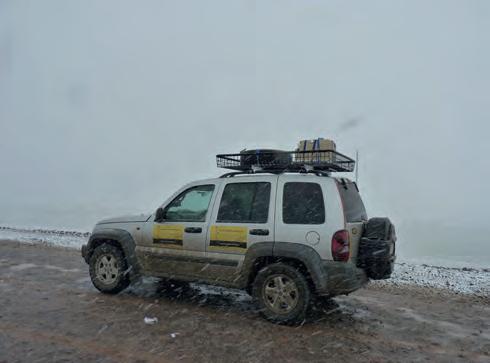
When we reached the Kazakh border, two weeks into our epic road trip from London to Delhi, we knew things were about to change. Up to that point, we’d been in Europe, where even the relatively unknown countries like Ukraine and the tract of Russia between Volgograd and Astrakhan were basically familiar. Now, however, we were entering Asia, and a part of it that was totally unknown to us.
Having spent five hours getting across the border and into Kazakhstan, we were feeling quite euphoric as we hit the road towards Atyrau. Euphoric but pretty apprehensive, too.
We were around 3000 miles in, a little more than a third of the way, but most of it had been done with the help of our sat-nav. We hadn’t had to worry about getting lost, or pay any attention to our maps. But now the sat-nav coverage was gone – and all the road signs were in Russian. Time to start paying attention.
It started off feeling very daunting, but in fact it turned out to be very easy to pick up. Enough of the letters in the Russian alphabet are the same as in English, and we both learnt quickly to identify the others so we could read the road signs. When you know that the only people who will be able to help you are yourselves, you learn faster!
Nonetheless, we figured that while getting from town to town shouldn’t be beyond us, the best way to navigate within them would be to hire taxis to pilot us.
That’s how we managed to find our hotel in Atyrau, using some basic phrases we’d written down in advance.
We were amazed that Kazakhstan, which is the ninth largest country in the world and covers more land than the whole of western Europe, still remains unexplored. People warned us about it not being safe for foreigners, but they couldn’t have been more wrong. Even the cops and custom officers smile here!
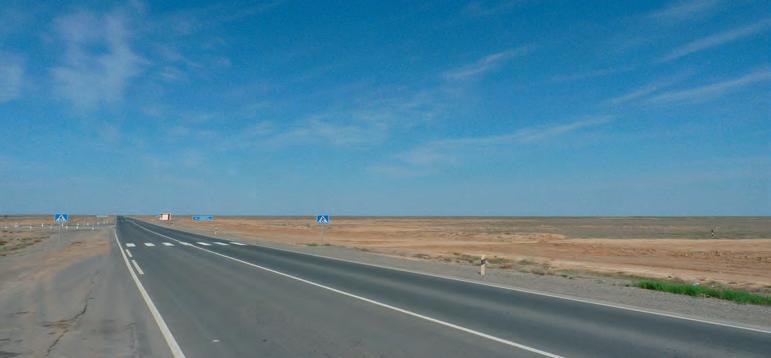
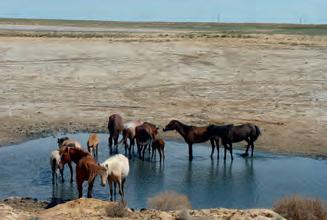
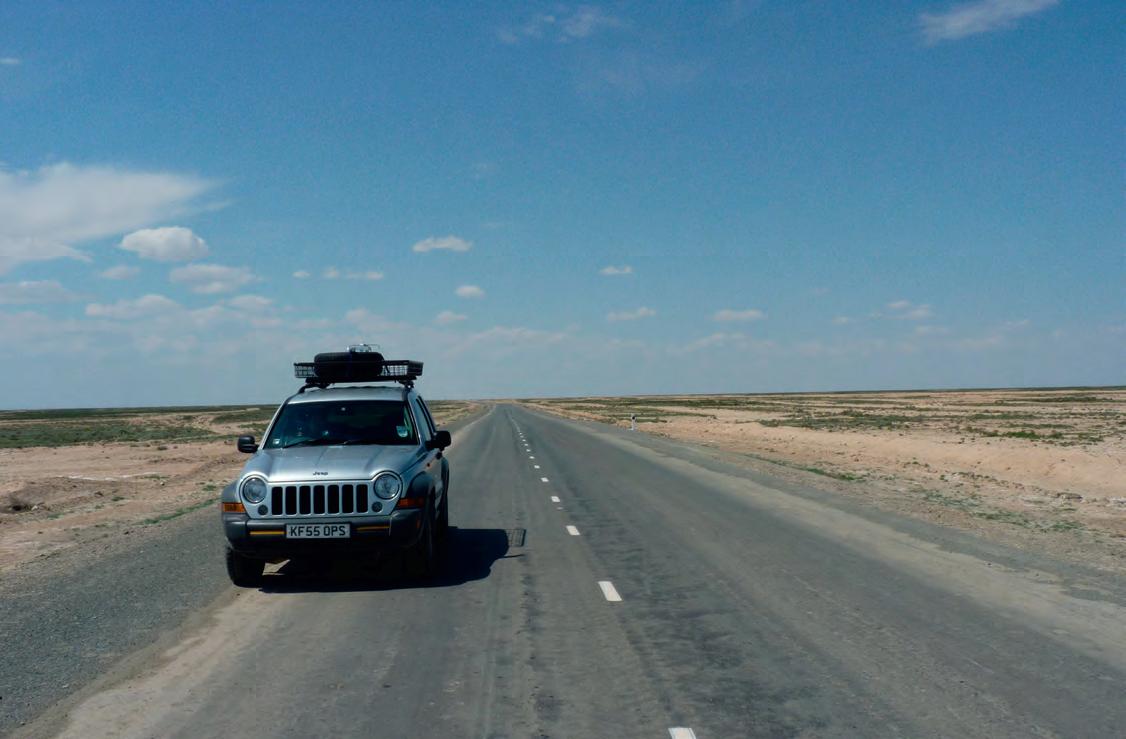
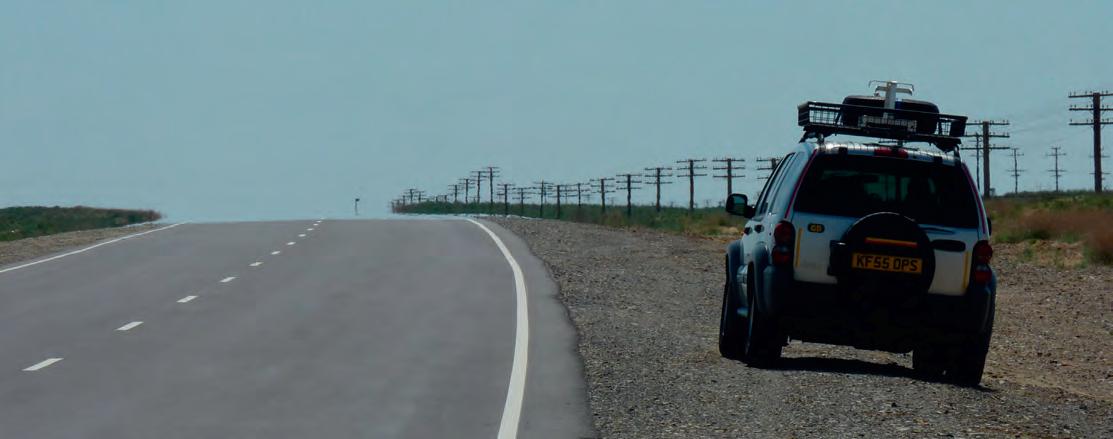
Our route only nibbled off a tiny chunk of Kazakhstan’s south-western tip, but in spite of this the road from Atyrau to Beyneu was still frighteningly deserted. It was in superb condition, a smooth tarmac ribbon stretching as far as the eye could see across a featureless, barren desert. For mile after mile, our only companions on the road were the wild camels and horses we saw silhouetted against the shimmering heat haze of a far-distant horizon.
Well well well
Beyneu was a little village until the 1970s, when oil was discovered in the area.
Now, it’s an important frontier town a few miles from the border with Uzbekistan –which is where we had one of the most extraordinary experiences of our whole trip.
We were waiting patiently at the control post, trying to cover our eyes from the desert sand, which was blowing in all directions, when one of the border officers saw our passports. ‘Indian?’ he asked.
‘Tourist India? Come with me!’
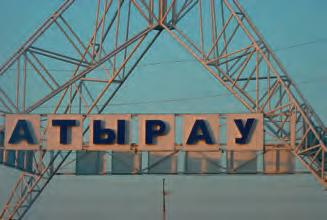
Left: Learning to read road signs in Russian is easier than you might think. If you were looking for Atyrau, you’d soon be able to work out what this one says…
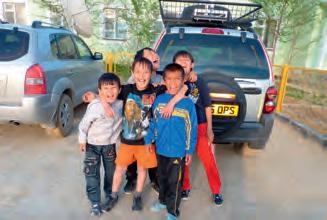
Centre: Beyneu was once an isolated village a few miles from the Uzbek border. Then one day someone discovered oil under the desert, and next thing you know it’s all you can do to keep the local kids from shooting gang signs while you’re trying to take their picture
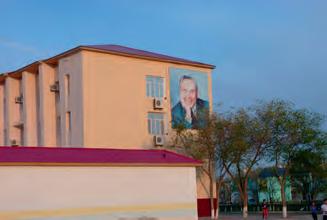
Right: One thing you don’t discover about Kazakhstan until you get there is that everybody loves Bob Monkhouse
Next thing we knew, we had jumped three different queues. Each time someone started to object to the VIP treatment we were getting, the guard just said ‘tourist India,’ and their growls turned to smiles. Even the customs officer greeted us with a ‘namaste.’ Amazing!
from Samarkand to Tashkent when we were stopped four times for speeding but managed to get out of each without paying a fine.
You could say luck was with us throughout Uzbekistan, in fact. No sooner had we entered the country than we were
“On the same stretch of road, a couple of Russians had run out of petrol and, by the time help arrived, they were drinking water from their car’s radiator”
What was going on? We didn’t know it at the time but Bollywood is very popular in Uzbekistan, where it’s dubbed into Russian. Whether this had anything to do with our free ride at the border, we don’t know, but it certainly helped on the road
faced with a huge expanse of desert to cross with no other cars to be seen. Assuming we’d be able to fill up with petrol after the border, we were low on supplies – and when the Jeep’s onboard computer told us we didn’t have enough in the tank to
Below: Pedestrians crossing, we get that. But… from where to where, exactly?
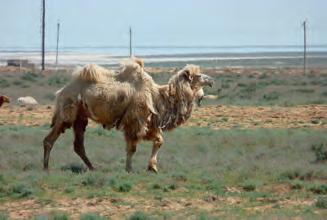
Right: For mile after mile, the only signs of life on the road to Beyneu were animals like this camel, which was trying not to wilt in the desert sun, and these feral horses which had somehow managed to find the only water for miles around to cool down in
get to Nukus, the first town on our road, we knew we were in serious trouble.
The air-con was the first casualty, and that wasn’t the only reason for getting hot and bothered. We hadn’t filled our jerry cans, again because we’d assumed we’d have the chance to do so at the border.
Later, someone was to tell us that on the same stretch of road, a couple of Russians had run out of petrol here and, by the time help arrived, they were drinking water from their car’s radiator!
A chilling tale
Question: What sort of person hasn’t heard that anti-freeze is poisonous? Answer: The sort of person who sets off across a desert without enough petrol…
Possibly also the sort of person who doesn’t ever bother putting anti-freeze in their radiator. Either way, they were very, very lucky.
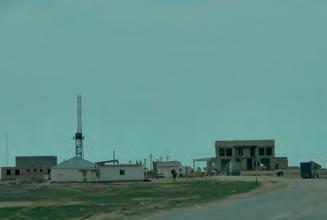
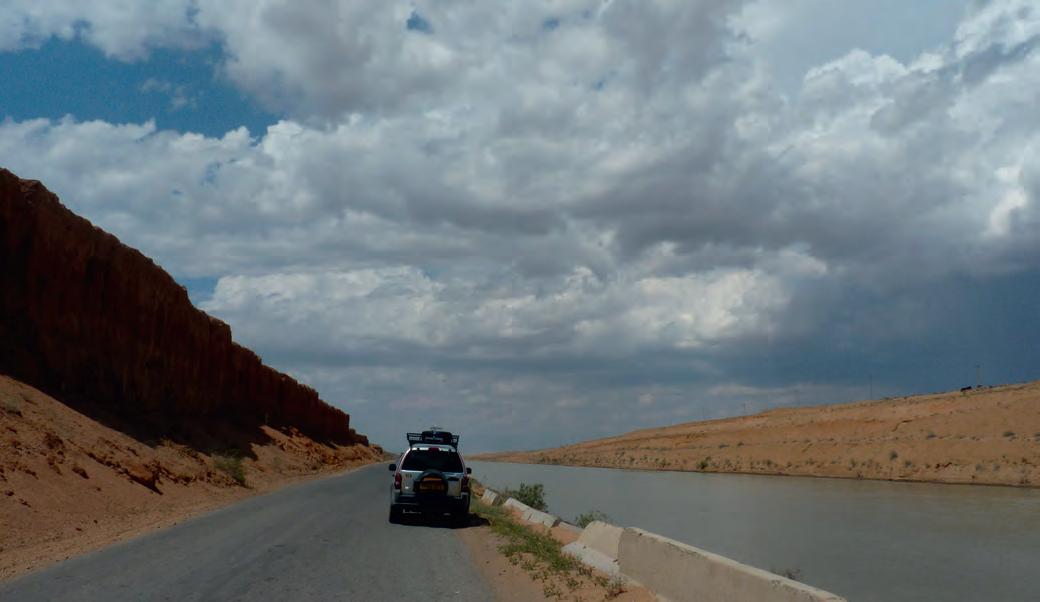
This is the sort of landscape you’re into immediately after crossing into Uzbekistan. Not a good place to realise you should have filled up with fuel while you still had the chance… Right: This is the sight that greets you as you approach the Uzbek border. Promising, isn’t it?
And so were we. In this empty desert, we spotted someone. He understood our frantic gestures, and showed us to a village with a pump in it. We’d been saved… and taught a very valuable lesson.
We stayed the night in Nukus before continuing across the desert towards Khiva. This is a much smaller city, but whereas Nukus was home to the Red
Army’s chemical warfare research establishment, Khiva is known for the altogether more inviting reason that the Itchan Qala, its 10th Century walled citadel, is a World Heritage Site.
After the hardcore desert crossings of the previous days, it was nice to spend some time taking things at a gentler pace. Well, it’s still a good distance from Khiva to
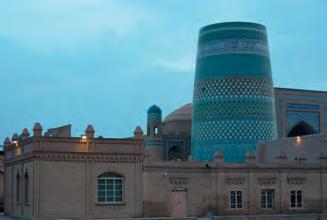
The oddly shaped blue tower in the centre of Khiva was originally going to be a minaret –until the khan realised that it would overlook his harem, allowing the muezzin to check out his wives, and ordered it to remain unfinished
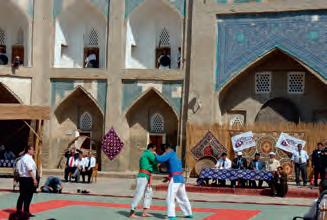
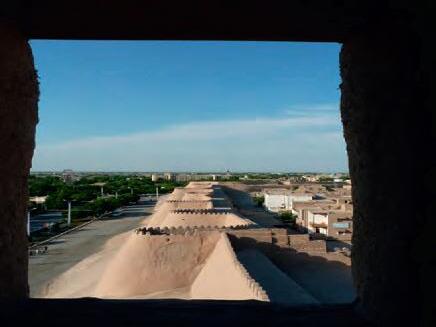
Seeing a bout of traditional Tatar-style ‘kurash’ wrestling in a millennium-old city square, it’s easy to forget that this is a serious sport with its own world championships Khiva’s walled inner city of Itchan Qala was Uzbekistan’s first World Heritage Site. Its foundations date back to the 10th Century, though the crenellated walls seen here were built in the late 1600s
Bukhara but, with stops at Samarkand and Tashkent also on the agenda, this section of the trip felt more like a driving holiday than a full-on expedition.
Well, a bit, at least. Holidaymakers tend not to get the kind of unconditional help we were offered by a chap called Jahangir
The road from Khiva to Bukhara runs alongside the mighty Amu Darya river. Around 1500 miles in length, this used to drain into the Aral Sea but is now lost in a desert delta. During the Soviet era, it was massively over-used for irrigation – one of the main reasons behind the environmental catastrophe now enveloping the Aral basin
shortly after arriving in Bukhara. He said he could show us to our hotel, then found us a safe place to park the Jeep, helped us exchange some money and even managed to sniff out a petrol pump that was working.
This wasn’t cheap, and the petrol itself was very poor grade, but after trying at least eight different pumps without
left:
success it was a relief just to be able to fill up. It’s hard to imagine what would have happened if we hadn’t had Jahangir there to help; he scored us a much better rate of exchange, too, by knowing that you get 30% more soms per dollar in the bazaars than in a bank!
Our next stop was in the ancient Silk Road city of Samarkand, another of
Uzbekistan’s World Heritage Sites, whose history dates all the way back to 700 BC. Arriving at our hotel, first thing we saw was 13 BMW motorbikes. As it turned out, these belonged to a bunch of Brits who were riding from London to Beijing, having set off on the same day as us. Their leader, Kevin, who has a Guinness World Record for the fastest round the
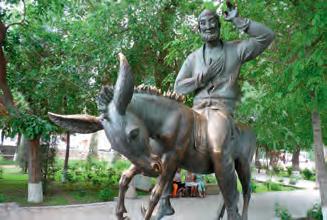
Nasreddin. A character from history and folklore, he’s the Uzbek equivalent of
Above left: This constitutes The Awful Truth when you’re on an expedition. Especially when, as was the case in Bukhara, you visit eight petrol stations and none of them have any petrol to sell you
Right: The whole of Samarkand is a UNESCO World Heritage Site. Dating from around 700 BC, it prospered thanks to its position on the Silk Route and has become renowned as a centre for Islamic study
Top
Meet Khodja
Robin Hood
• Escape Gear
• ...and many more!
• Aluminium canopies
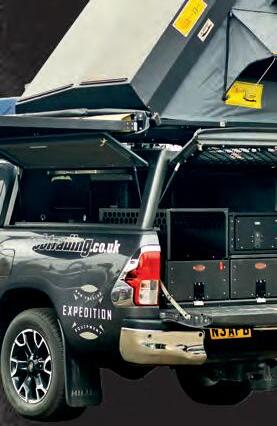
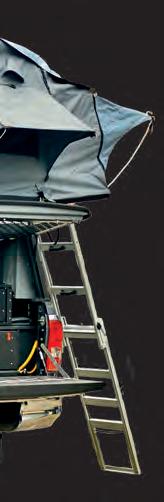
• Roof tents and roof racks
• Off-road fridges and 12v gear
• Drawer systems and slides
• Bumpers, side steps and vehicle protection
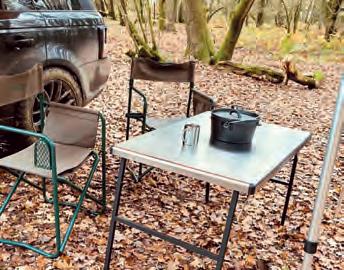
• Campsite essentials, tables and chairs
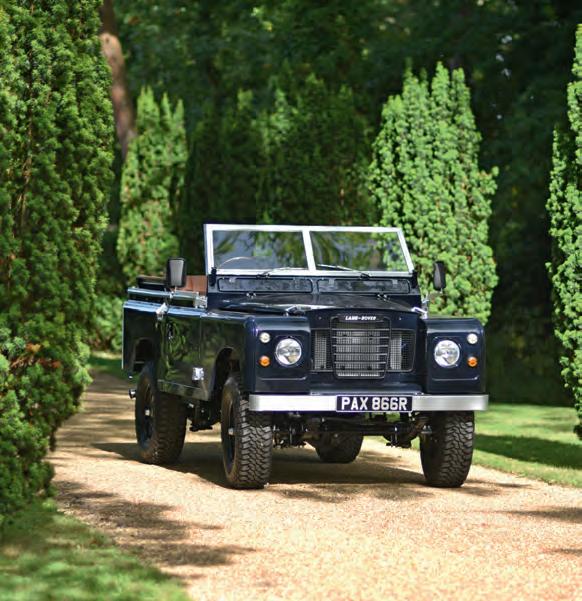
Kent Heritage Works introduces The Admiral – a 1976 Series III rebuilt as a unique best-of-everything classic
Remember the good old days, when magazines were big and thick and there was loads and loads of great stuff in them to keep you reading for hours? Remember when there were no fake pictures… no AI nonsense… no comments sections full of people ranting at each other about VAR, small boats and which toilet you should use if you’re transsexual?
Well, the 2026 Land Rover Yearbook is a good old magazine, just like they used to be back then. It’s 132 pages long, printed on good quality paper and packed full of great stuff to read. It’s a compilation of the best stories from the last year and in some cases beyond – great vehicle builds in detail, overland expeditions to dream of, a huge 10-page products round-up and the news from behind the news coming out of the factory and around the Land Rover scene.
The 2026 Land Rover Yearbook makes a perfect Christmas present for the Land Rover fan in your life – especially if that Land Rover fan is yourself! It’s a great read – all year round!
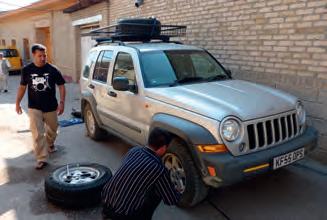
Left: When you’re constantly driving on dodgy roads through the middle of nowhere, you’d settle for it taking the thick end of 5000 miles before you get your first puncture
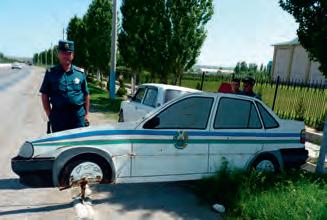
Centre: This man has a badge, a gun and a tin cut-out of a police car. However laughable it might all look, the annoying thing is that from a distance, it really works to slow you down
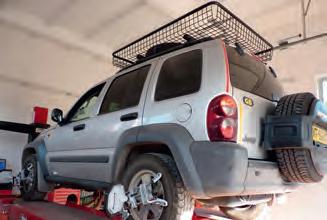
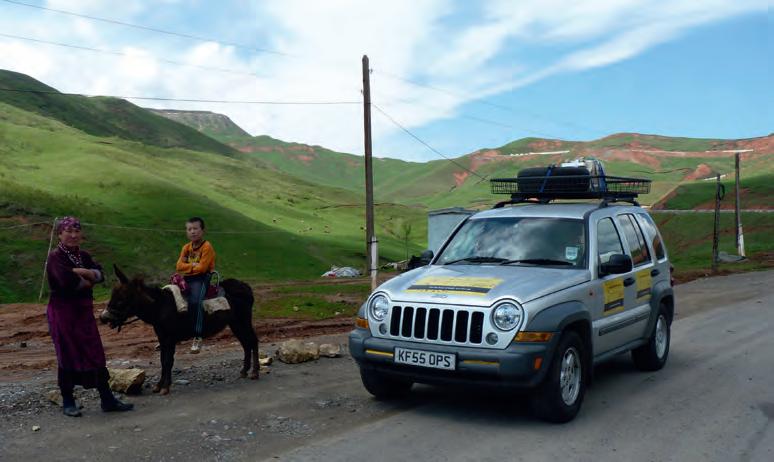
Right: Thanks to a local contact in Tashkent, the Jeep got a thorough looking-at before the journey continued into Kyrgyzstan. Nice timing, as it turned out, because this was where the going got decidedly tougher
world bike trip, shared his experiences and gave us some very useful advice for the road ahead in China.
Wood you believe it
From Samarkand, we struck out north-east towards Tashkent. This was where the Uzbeks’ love of Bollywood kept coming to our aid, and we also noticed that the authorities like to place wooden cut-outs of cop cars at the side of the highway to deter speeding. These look ridiculous close up but appear real from a distance; we were also stopped every hundred miles or so for routine security checks, which thankfully involved nothing more invasive than a quick glance at us and the Jeep before we were waved on.
In Tashkent, which was to be our last stop before crossing into Kyrgyzstan, we met a Mr Kataria, boss of Indian investment company Spentex. He took care of us like family and arranged a service for the Jeep – definitely very welcome after all these miles!
It was nice to know, too, that our vehicle was in tip-top condition. Because we knew that the really hard going was still ahead of us. Crossing the border into Kyrgyzstan was a piece of cake compared to what we’d been put through on the way in and out of Russia, but this may have been something to do with the fact that it was closed to locals at the time, in the wake of rioting in the town of Osh which had caused the president to flee the country.
And here we were crossing the border and heading into… Osh. Marvellous. Nothing can possibly go wrong.
We might possibly have decided to call a raincheck on Kyrgyzstan if we’d
had the choice, but our visas meant it was the only country through which we could enter China. The city was perfectly quiet, as it turned out, but we kept a pretty low profile nonetheless.
We weren’t unhappy to be leaving Osh behind the next morning, but equally we knew that the next hundred miles was going to be the toughest we’d get faced. We were heading towards the village of Sary-Tash, a crossroads on the Pamir Highway from which we’d turn east towards the Irkeshtam Pass into China. But between us was a series of mountains whose beauty is matched only by their treacherous nature.
Perfect storm
Now, imagine this little scenario. You are driving up a scenic mountain road in your Jeep. It is sunny and the temperature outside is a pleasant 15 degrees. The
roads are good enough; you are listening to music and enjoying magnificent views: snow-capped mountains all around, children riding donkeys and horses, a herd of sheep walking to one side, villagers working in the fields, a babbling river flowing gently under a bridge. You stop to take pictures every now and then. It’s a perfect setting.
But then suddenly, someone up there turns off the switch. The temperature plummets to zero. The sun is lost behind dark clouds. And then it starts snowing. The road disappears under a sheet of wet, slippery mud.
Perfect conditions for a Jeep, eh? Well, our Cherokee was sliding all over the place as we pushed on, ever upwards in the driving snow. Keeping it under control was a battle – but then at last, there we were, gazing down on the world from 10,500 feet. Reaching the top of the mountain in
these conditions was a massive high (boom boom).
We’d been looking at Sary-Tash on the map for months and honestly, it scared us. We wondered how we were ever going to drive in these mountains – never for a moment thinking that when we got there, we would be hit by a snowstorm!
Warming up
Yes, it was risky and dangerous. But the road from Osh had been our most exciting drive on the whole trip to date. Arriving in Sary-Tash, it felt as it we had won a gold medal at some sort of competition. Little did we know that this was just the warm-up event…
The following morning, we left at six for the 50-mile run to the Chinese border. We drove through the Pamir mountain range, which was completely covered
You wouldn’t think so to look at it, but the Kyrgyz border town of Osh was enveloped by riots a day or two before this picture was taken. The president had fled the country and the border was closed – except to foreigners, as it (somewhat ominously) turned out
You can see why the Pamir Highway attracts adventurers from all over the world. It really is a ‘high’ way, too – this is pretty much the view of where it’s going to take you as you head towards Sary-Tash from Osh
with permanent snow and glaciers. The views were just spectacular.
The road was spectacular, too. Spectacularly bad. The surface was completely broken and whatever was left was covered in snow. The only hint was
the tyre tracks left by trucks. Slowly and steadily we moved forward, but the terrain got tougher by the minute.
All around us was nothing but snow. No cars or trucks. Just us. The Jeep started sliding and couldn’t find any grip on the
road. And then it happened. Our nightmare came true. We got stuck in snow.
We were trying to drive on a track left by a truck, but there was very thick snow under it and our tyres just sank in and wouldn’t come out. To make matters
Left: The road starts to both climb and deteriorate. Adventure enough for most, but it’ll all be fine so long as the sun keeps shining...
Centre: The road’s still climbing, but the sun’s been replaced by snow and the surface is turning into sludgy mud. Not a good time to find that you can’t engage four-wheel drive
Right: Welcome to Sary-Tash. Note the very appealing looking outside wash stand – just what you want in falling snow
worse, for some reason the Jeep didn’t seem to want to engage four-wheel drive. We couldn’t move forward or backward. It was minus five degrees, but we were almost sweating.
Suddenly, just as it had back in the Uzbek desert, a miracle happened. A truck approached from the opposite direction. The driver helped us move the Jeep out of the snow and we were back on track. The relief was enormous.
But we weren’t out of the fire yet. The road ahead didn’t get any simpler. We were
constantly driving into potholes, sliding, skidding and secretly saying our prayers. Pooja went a step further; she put our passports, a bottle of water and some food in a bag, tightly held on to it and said: ‘In case the car gets out of control and falls down the mountain, just jump as soon as you can. I will jump with this bag so that we have some food and our passports with us to get back home… if we survive.’
Well, we’re here to tell the tale. But hopefully you’ll forgive us for not stopping to take pictures! We were very happy just to have made it to the border safe and sound, having travelled the whole way from Sary-Tash at an average of just over 10mph.
And then there it was, in front of us: China. The border crossing at
Irkeshtam stands at an altitude of 3200 metres, and to get there we had crossed five time zones, covered 5000 miles and spent 34 days of our lives aboard our faithful Jeep.
Arriving at the border, it wouldn’t have felt like any less of an achievement if all we’d done was drive through the morning from Sary-Tash. But looking at the map, we felt tremendously proud of our progress so far.
Still, we knew that the real challenge was just beginning. The journey from Sary-Tash was our most exciting, adventurous, risky, scenic and dangerous drive so far. But from here on, the altitudes would keep getting higher, the terrain wilder and the roads more treacherous. We’d set out in search of adventure – and boy had we found it!
Next month: The final part of the trip –and the action begins in earnest as the Himalayas beckon. It’s Delhi or bust…
ROADBOOK MID-WALES
A
superb day’s green laning – kicked off by Britain’s greatest 4x4 trail
USING OUR ROADBOOKS
Our roadbooks guide you through the countryside on a mixture of surfaced and unsurfaced roads. The tracks we use are public rights of way, either Byways Open to All Traffic or Unclassified County Roads, all commonly referred to as green lanes.
NAVIGATION
We’ve deliberately made it as easy as possible to follow the route, using a mixture of instructions, tulip diagrams and grid references. We normally only include junctions at which you have to make a turning or don’t have right of way, so stay on the main road or continue straight ahead unless we tell you otherwise.
Elsewhere, let common sense and courtesy prevail. Keep your speed down, be ready to pull over for others and show the world that we are decent people just like them.
ANTIS
Anti-4x4 bigotry does exist, but it’s less common than you’d think. By and large, it’s limited to organisations which just want to get the countryside all to themselves.
You’ll find a guide to using grid references on the legend of any OS map. Our aim is for you to be able to do the route without maps, whether paper or online, but you should certainly take a set with you.
SAFETY
These organisations are beyond being reasoned with, but it’s rare to encounter real hostility even from their rank-and-file members. If you’re friendly towards the people with whom you share the countryside, the vast majority will respond in kind. There are always bad apples, but no more so than anywhere else.
Likewise, most local residents will accept your presence if you’re driving sensibly. What suspicion you do encounter is likely to be from farmers worried that you’re there to steal from them, so be ready to offer a word of reassurance. Once satisfied that you’re not after their quad bikes, their mood will lighten.
The notes on thee pages advise you of how suitable the route is for your vehicle. These are just guidelines, however. We’ll warn you of any hazards or difficult sections, but the nature of any green lane can change quickly. Wet weather can make a huge difference to the conditions underfoot, and what’s wide open in winter can be tightly enclosed and scratchy in summer. The responsibility is yours! Our roadbooks are designed to be safe to drive in a solo vehicle. We do recommend travelling in tandem wherever possible, however. The risk of getting stuck can be greater than it appears – and even the most capable of vehicles can break down miles from anywhere.
DO…
• Keep your speed right down
• Pull over to let walkers, bikers and horse riders pass
• Leave gates as you found them
• Scrupulously obey all closure and voluntary restraint notices
• Ensure you have a right to be there. We research the routes on our roadbooks very carefully, but the status of any route can change without notice
• Be prepared to turn back if the route is blocked, even illegally
• If you find an illegal obstruction, notify the local authority
RESPONSIBILITY
Irresponsible driving is a big and serious issue on green lanes. In particular, you must always stay on the right of way. Never drive off it to ‘play’ on the verges or surrounding land, even if you can see that someone else has; doing so is illegal and can be tremendously damaging.
• Stick scrupulously to the right of way
• Always remember that you are an ambassador for all 4x4 drivers
DON’T…
This kind of illegal off-roading is a key reason why green lanes get closed. If you see others doing this, they are NOT your friends. They’re criminals, and you are their victim. If it’s safe to do so, film them in the act and pass it to the police.
• Go in large convoys: instead, split into smaller groups
• Drop litter. Why not carry a bin bag pick up other people’s instead?
• Go back to drive the fun bits, such as mud or fords, again
• Cause a noise nuisance, particularly after dark
• Get riled up if someone challenges you. Be firm but polite, stay calm and don’t let them turn it into a fight
The region surrounding Llandrindod Wells is home to many of the very best rights of way anywhere in Britain. The mixture of glorious scenery and splendid isolation makes for an unforgettable experience – and the driving can be pretty memorable too. This route explores some long lanes in the mountains and forests surrounding the Elan Valley; it contains a lot of road mileage and only a few individual lanes, but each one of them is a classic in its own right. Make no mistake, this is a monster of a roadbook!
WARNING
, This roadbook includes several water crossings which can get extremely deep and fast-flowing. These are a matter for your own judgement – just because it’s in the route doesn’t mean it’ll be safe for you to drive on the day. Your phone will be out of signal, too, for much of the first couple of hours.
As always, it’s essential to stick to the correct right of way. You’ll see evidence in places of where 4x4s have been used as tools with which to vandalise the countryside next to the lanes; if you see others doing this, act as you would if you witnessed a burglary in progress, because that’s the sort of people you’re looking at.
START Pontrhydfendigaid (SN 731 665)
FINISH Beulah (SN 972 680)
HOW LONG? 46.2 miles / 5-6 hours
TERRAIN Mountains and forests
HAZARDS Very deep water, potentially fast-flowing; isolation; side slopes; axle-twisters; risk of grounding out on rocks; other users
OS MAPS
Landranger 146 (Lampeter & Llandovery)
Landranger 147 (Elan Valley & Builth Wells)
TYRES Tall profile necessary, at least an all-terrain tread strongly advised WEATHER
LOW BOX
SOFT-ROADERS
SCRATCHING
SN 731 665
Start outside the Red Lion Hotel, on the B4343 Bridge Street in Pontrhydfendigaid, which would make a perfect place to stay the night before your laning adventure. Zero your trip with the hotel to your right and set off heading more or less south Step
1 0.0
Step
2 0.1
The village shop, which is on the right immediately before the junction, would be the perfect place to stock up as you head out on to the lanes
Step 3: The right of way runs alongside a forestry track – not for the last time in the next few miles, you’re literally taking the road less travelled
Essential
Totally unsuitable
Avoid when foggy or icy. Potentially lethal after heavy rain
Only on one lane, but it’ll be heavy DRIVING
General off-roading skills and driving discipine required DAMAGE
Possible ground clearance issues.
Potential for water damage
3 2.25
5 3.15
6 3.65
The track here has recently been repaired after becoming eroded and uneven – thanks in part to the action of vandals. You’ve no excuse for not sticking to the right of way
Strata Florida Abbey
Take the rocky track to the left of the main Cat A track
You might find some standing water around here, though it’ll be nothing compared to what’s waiting for you further on
Drop off the main track immediately before the gate and into yet another water trough
There’s a couple of huge water troughs after the junction
It’s a steep, sharp climb up and over a bigger track – you can’t see ahead over your bonnet to start with
Step 13: You’ll find yourself driving along a river bed for a while, followed at the next step (right) by a sharply washed-out erosion gully
You may find yourself driving along a river bed for a while…
14 5.05
As you pass through a short gully, the track has been washed out into a set of side slopes, first to the left (a big one) and then the right, with a fairly serious axle-twister in between
Head through the ford then fork right to stay on the track rather than following the river bed
5.35 And now you join the stream bed…
This is normally the deepest of the many water crossings on this lane. On the day, it was nothing like as high as we’ve seen it, but don’t make any assumptions – approach with extreme caution!
Caution – there’s a short side slope on bare rock that leads straight into the river. Take it dead slow – and in icy conditions, just say no
Family run guest house and self catering cottages with spectacular views, en-suite bedrooms, comfortable lounge bar and excellent home cooked food.
A very popular venue for both individuals and groups of 4x4 enthusiasts
Step 38: The junction isn’t signed, and you come upon it quite suddenly, but there’s no mistaking it for anything else
920 478
Turn left into Glancamddwr Farm
Take it easy through the farmyard after the ford – as the sign says, there are animals about
There’s a fuel station and shop on the left just after this junction
Llanfair-Ym-Muallt Builth Wells A483
The junction is tricky to identify until you’re on it. It’s not long after a road on the left. Turn right across a track running parallel to the road; the track you’re taking can be identified by the ‘Unsuitable for Motors’ sign as you go through the first of about a dozen gates
The track becomes quite washed out for a short spell as you descend, but you can steer clear of the worst of it. After this, a V-gully joins you from the right and you’re driving along a stream bed… then the vegetation on both sides starts to close in and claw at your bodywork
This ford is a monster – it’s wide, deep and may be fast-moving. Approach with great caution
SN 881 435 Bear right on the Cat A track into Crychan Forest – look out for the ‘Y Mynegbost’ sign a little way beyond the junction
Step 46: Having made it through Strata Florida in all its fearsome glory, you might be forgiven for thinking that would be all your water crossings for the day. But no: and this one is deeper by far than anything else you’ll have waded through today
Step 49 9.15
Cross
a
Step 50 9.75
Step 51 10.0
Join a bigger track then immediately carry on ahead as it swings right
You may see the remnats of some ‘detours’ to the right and left that were caused in the past by people leaving the right of way to ‘play’ on the adjoining land. A great deal has been done to repair the damage they did in the process; hidden CCTV is known to have been used in a bid to catch anyone who still thinks it’s okay to do this…
Step 53 13.6 Step 52 11.2
Caution – this is a main road ZERO TRIP
Step 54 11.0
Pull into the fuel station on the left just before the junction with the B4358 towards Newbridge-on-Wye for the end of the route
Step 49: You’ve been following Cat A forestry tracks until now, but as the junction opens out in front of you the right of way is a much smaller trail into the woods. It’s actually nothing like as tight as it first appears
over
bigger track and strike left ahead into the trees. The going immediately gets rougher
JOLLY GOOD
Project Jolly is Legacy Overland’s name for this 5.7-litre Chevy-engined 90. And if LS engines leave you cold, it’s perfect for putting a smile on your face
PLUS
Fully off-road prepared Volvo XC90. Yes, really…
Blowing the budget on the ultimate Discovery 2 Grenadier ups its game for Africa