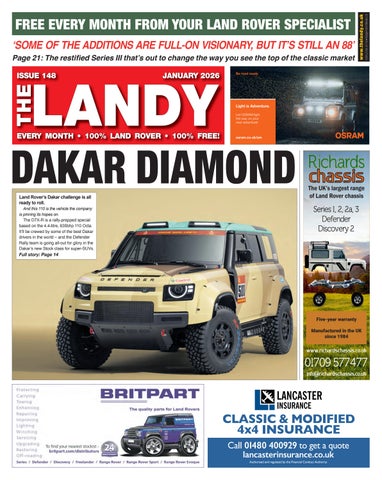
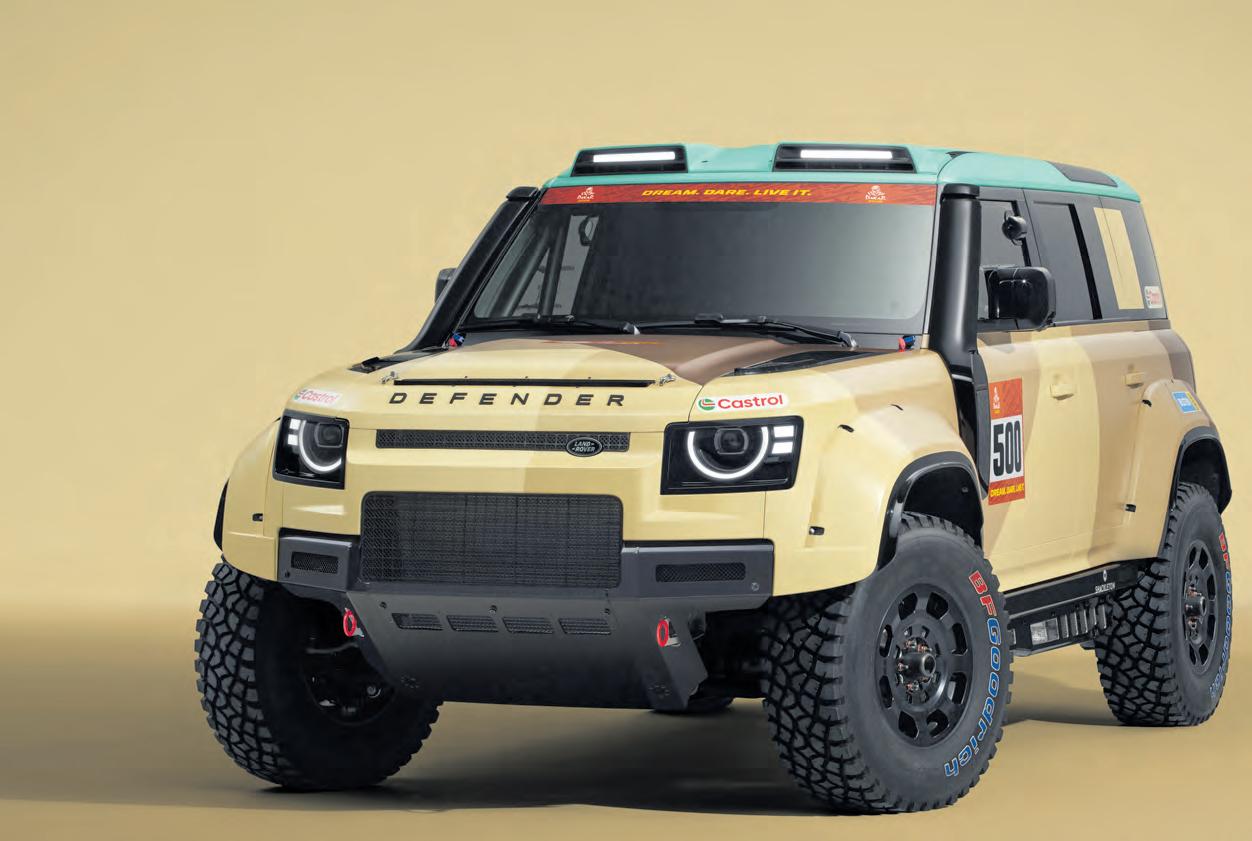
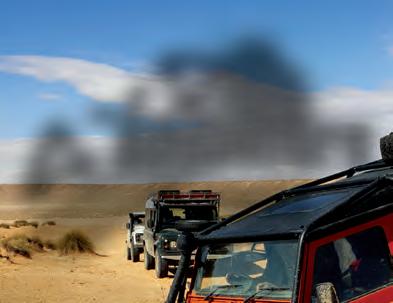
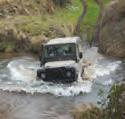
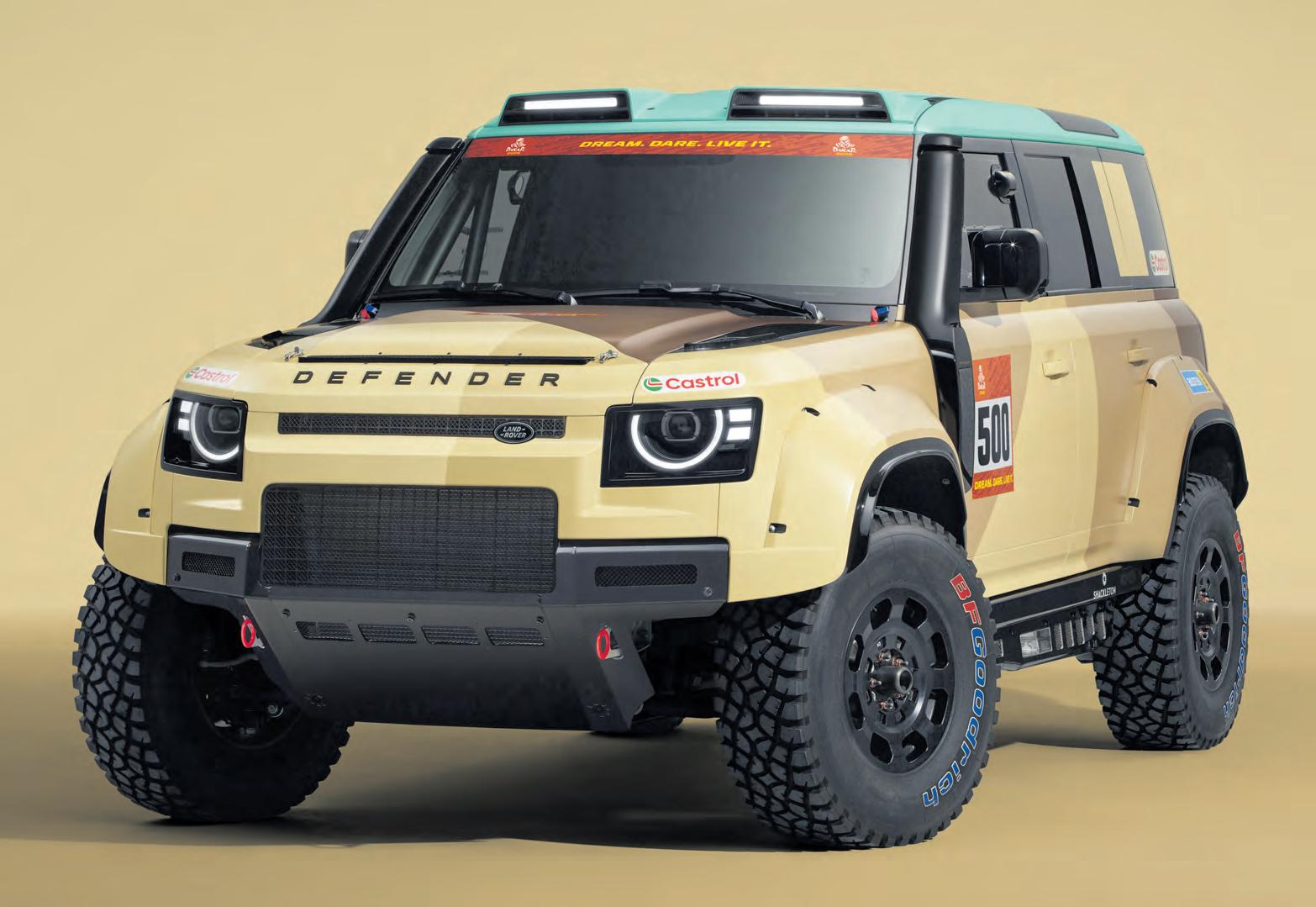
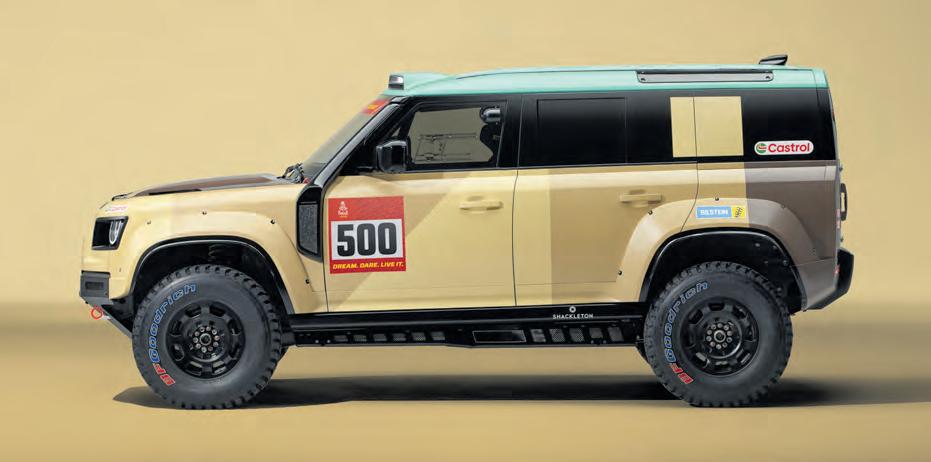
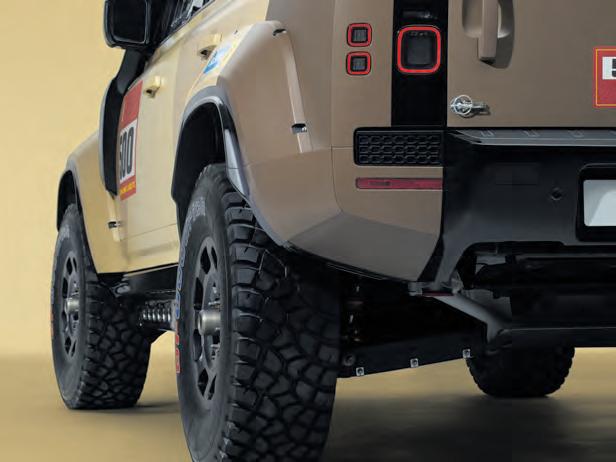
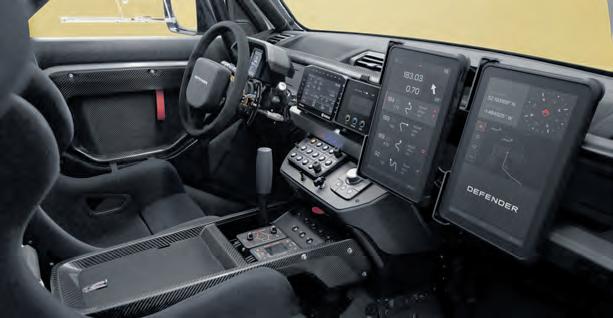
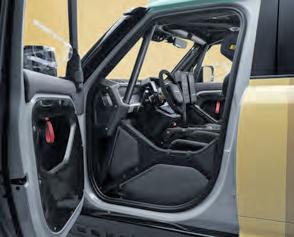
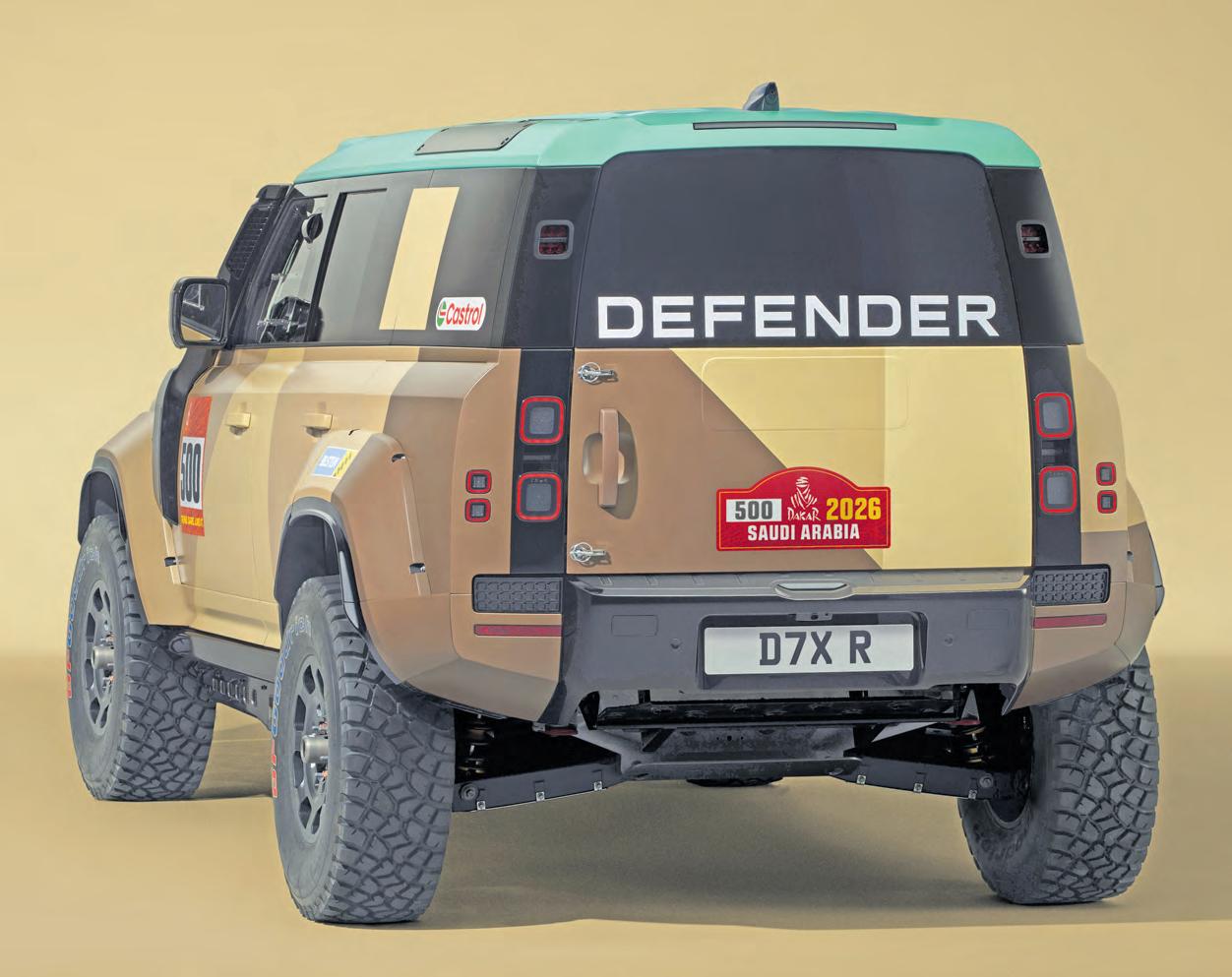
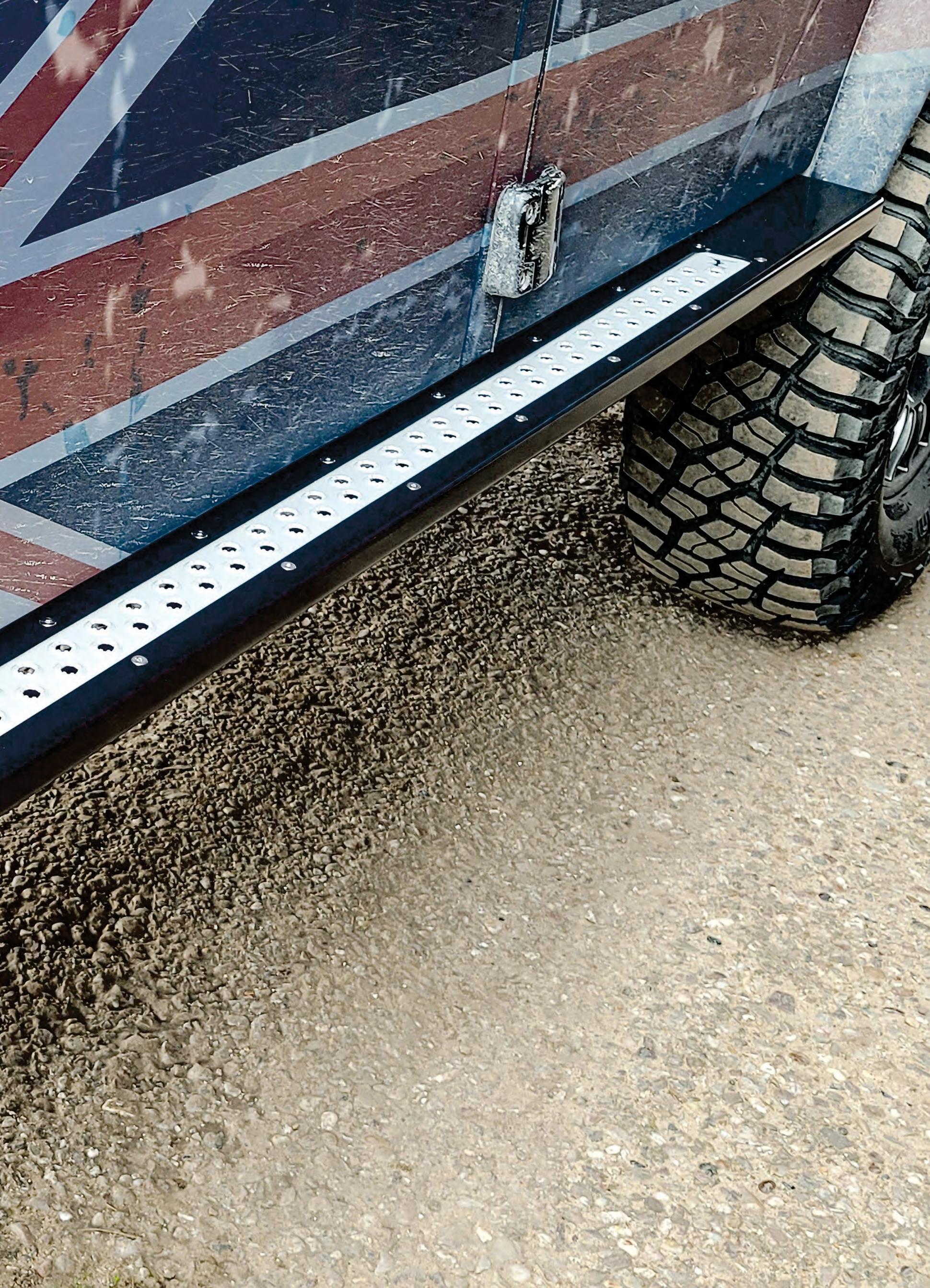
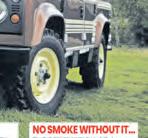
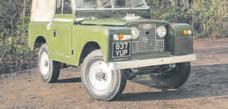
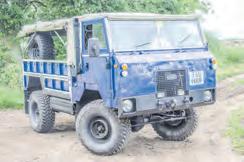
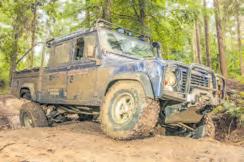
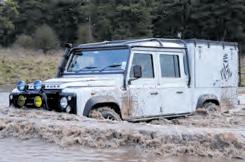
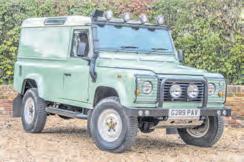
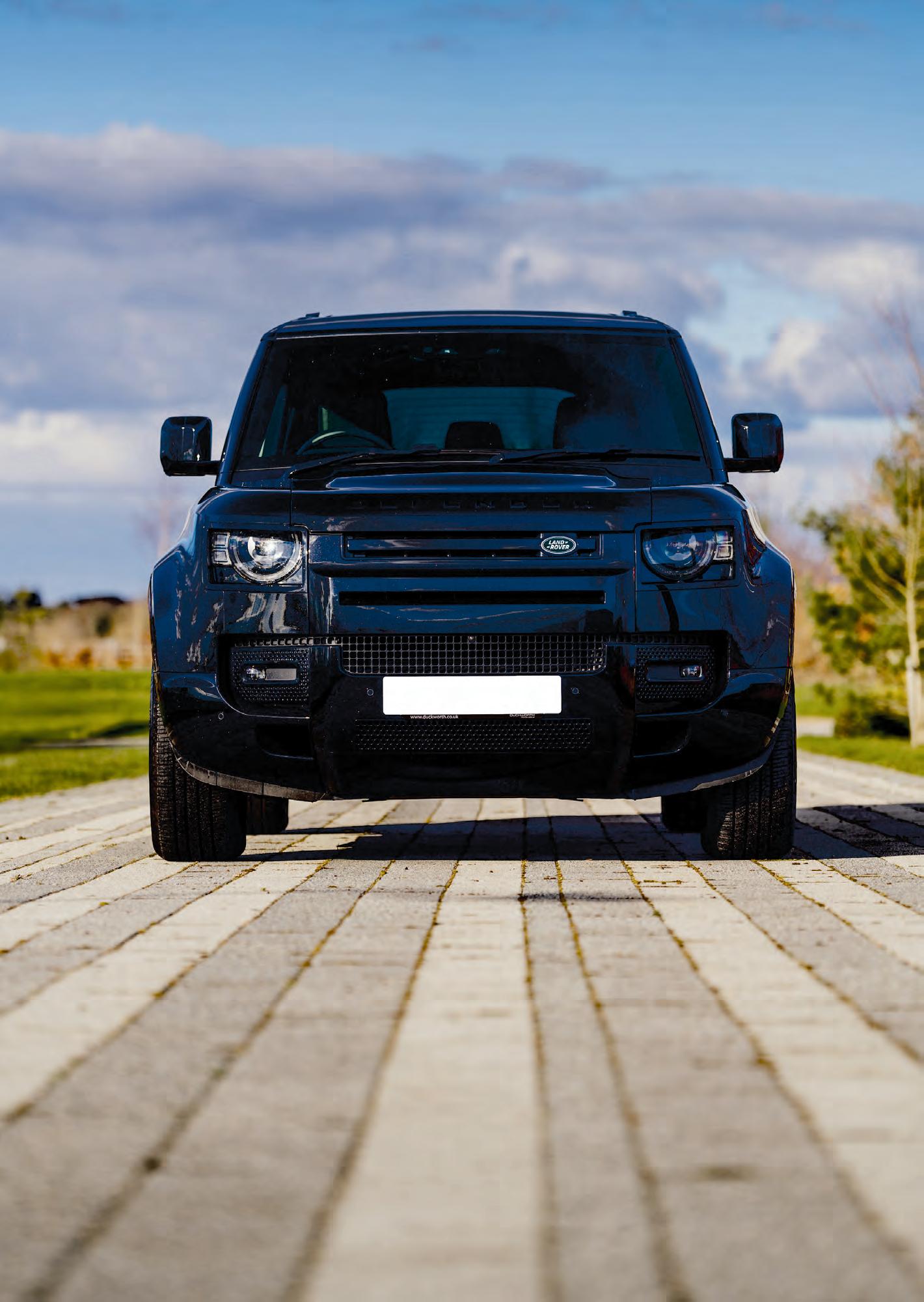
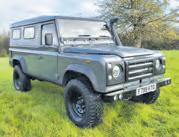
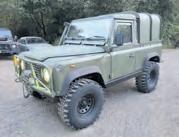
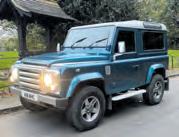
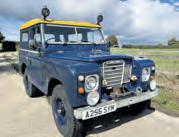
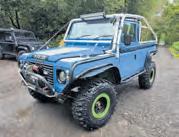
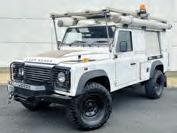
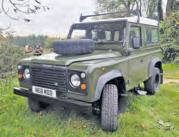
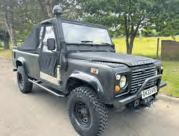
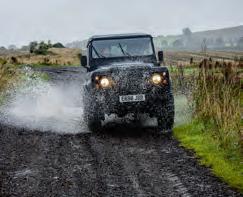
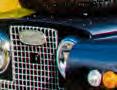
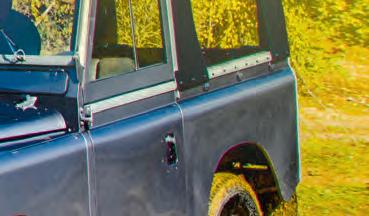
The D7X-R is a rally-prepped special based on the 4.4-litre, 635bhp 110 Octa. It’ll be crewed by some of the best Dakar drivers in the world – and the Defender Rally team is going all-out for glory in the Dakar’s new Stock class for super-SUVs. Full story: Page 14
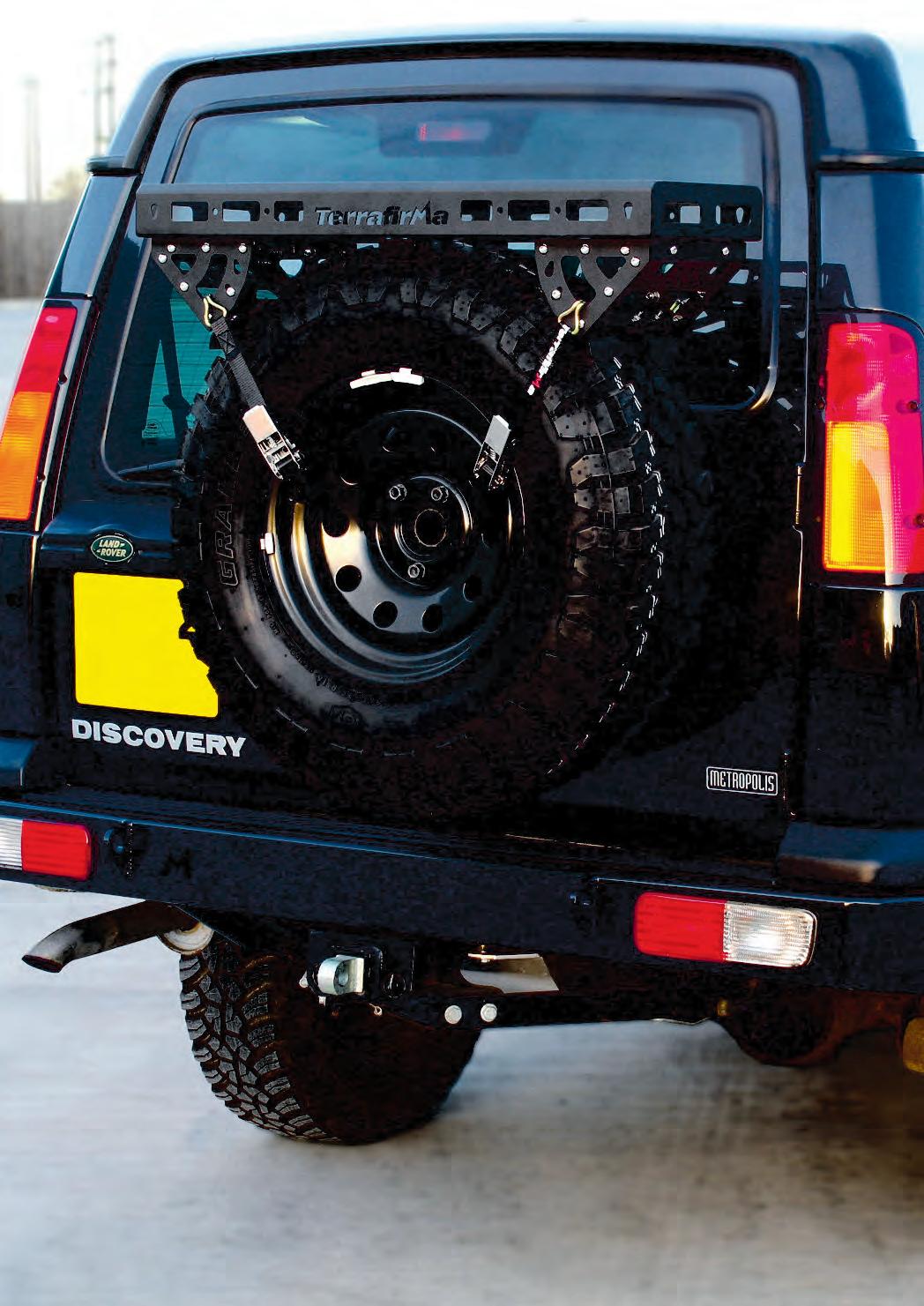
SPARE WHEEL MOUNTED
LUGGAGE RACK
www.terrafirma4x4.com
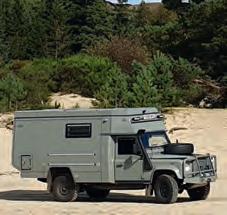
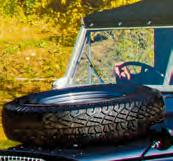
Terrafirma’s black powder coated aluminium storage basket with adjustable mounts, is ideal for camping, recovery kit & much more. Securely strapped to the spare wheel using 2 ratchet straps, the strong, perforated basket provides ample capacity with plenty of lashing points. Measuring 850x310x75mm it is designed to suit all vehicles with the spare wheel mounted to the back door, such as the classic Defender, as well as spare wheel carriers and vehicles with lift up tailgates. Part Number: TF065
To advertise in The Landy, call our team on 01283 742969
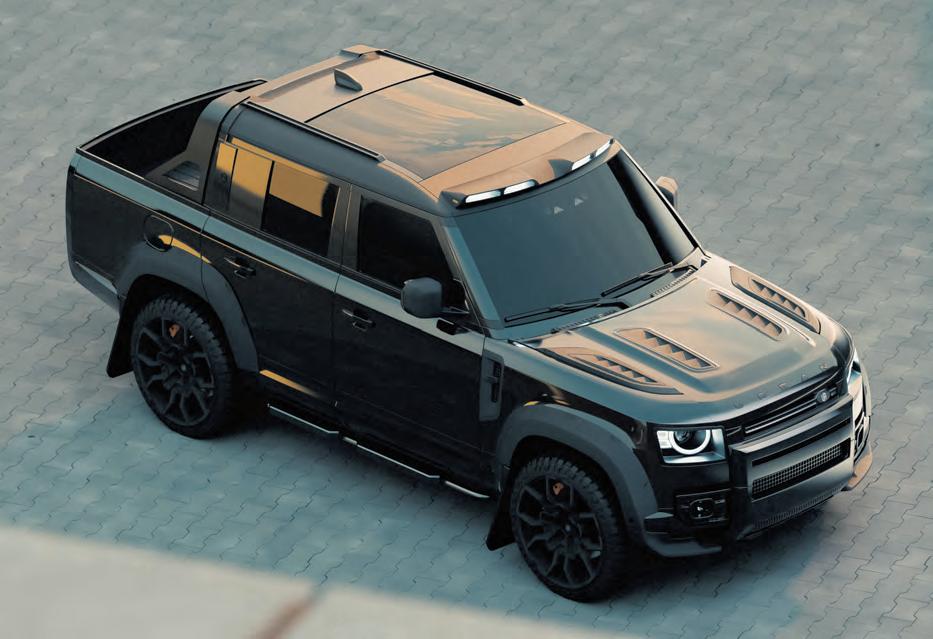
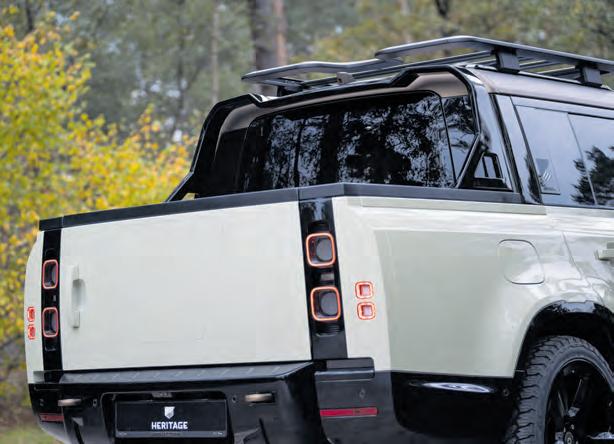
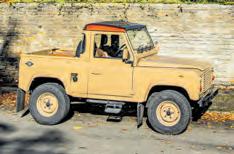
110 IN 1983, it took Solihull around a decade and a half before the company finally introduced a Double-Cab model. With an almost comically short rear bed, it was an awkward looking thing with ungainly proportions – but it was an instant hit and with some sort of loadbay cover in place it managed to get back the jaunty appearance for which Defenders were known.
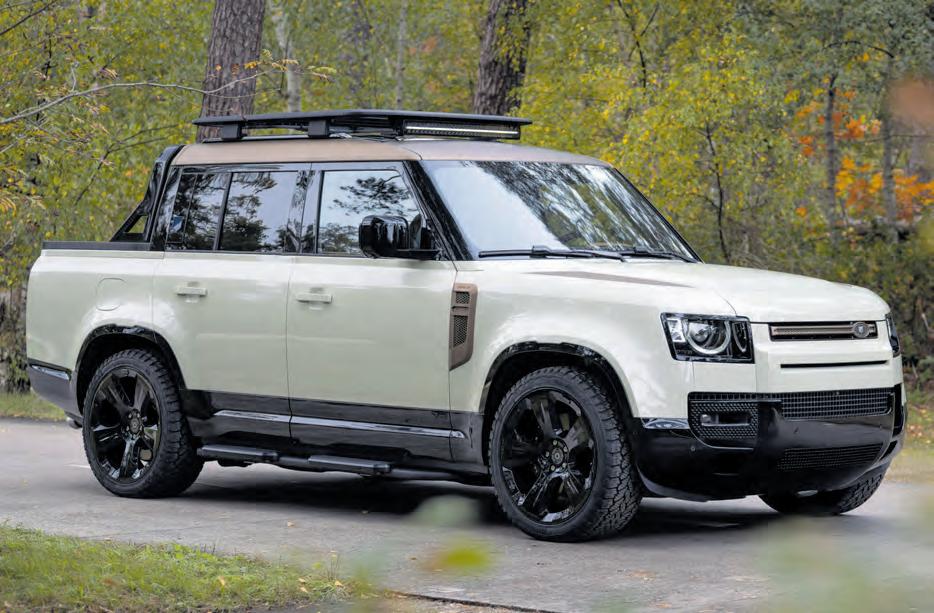
This time, it’s only taken five years. But thanks to Heritage Customs and
Urban Automotive, you can now have a new-shape Defender double-cab.
It’s actually based on a Defender 130 rather than a 110, which renders all the above more or less redundant as the old 127 was a double-cab from the word go. Safe to say it wasn’t much like this, though.
For one thing, the vehicles built by Heritage and Urban, both of which are part of the AM Group, are powered by a 425bhp V8 engine. For another, they’re posh. Big alloys, low-profile tyres, metallic paint, fancy interiors – you know
the kind of thing. It could indeed be said that just as the original 130 was a Defender only more so, this one is too: back then, it was all about being able to carry a six-man work crew and all the tools and equipment they were going to need, while today it’s showing everyone how much money you’ve got by driving something they almost certainly won’t see anywhere else.
Heritage Customs is a traditional coachbuilder, while Urban Automotive concentrates on enhancing vehicles’ presence via the way they appear. With the two companies working together on the Defender, it seems pretty natural that it’s available in a choice of Heritage and Urban editions.
The former is ‘refined, elegant and authentically classic – staying true to (Heritage Customs’) coachbuilding heritage with sophisticated styling and timeless design cues. The latter on the other hand is ‘powerful, contemporary and unmistakably commanding –showcasing bold lines and a modern edge that define Urban Automotive’s signature OEM+ design ethos.’
So there you have it. In each case, the pick-ups are very much about
rue de l’ecole 95420 OMERVILLE
Paris
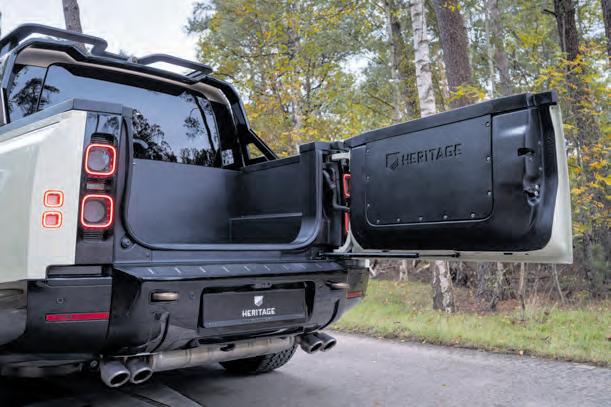
kind of short and stubby at the back – a little like the original 110 DC, indeed –and the coachbuilding didn’t extend to replacing the side-hinged rear door with a drop-down tailgate. The figures
say that the bed measures 100cm in length and 140 in width, with 120 between the arches.
The other figure is €65,000, for which you get the pick-up conversion (including Raptor coating in the bed), a premium leather interior with alcantara headlining, exterior paint and your choice of wheels, tyres and decals from the Heritage Customs collection. Obviously, you need to supply your own Defender for them to cut up.
Truth to tell, while we love the vehicle’s innovation we’re struggling not to look at it and see a 130 with the best part of its practicality taken away. Certainly, we can’t think of what you’d actually want to carry in that little pick-up bed. None of which, however, changes the fact that this is the first new-shape Defender pick-up on the market. And if you see the value in driving a vehicle with the word ‘Urban’ on its bonnet, you’ll sure see the value in that.
Issue 148: Jan 2026
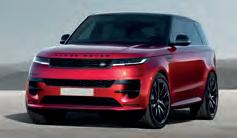
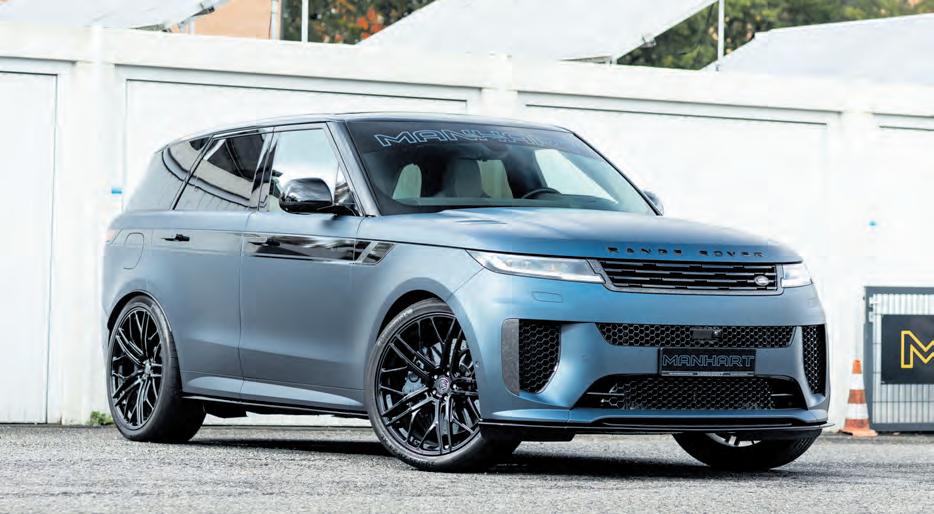
THE RANGE ROVER SPORT SV IS THE ULTIMATE PERFORMANCE MODEL IN THE CURRENT LAND ROVER LINE-UP. With 635bhp and 553lbf.ft from its twin-turbocharged 4.4-litre engine, the £139,995 super-SUV can smash the 0-62 sprint in 3.9 seconds and keep going all the way to 180. And then you can take it off-roading.
You probably wouldn’t want to take this one off-roading, on account of it’s been lowered. But since the number of people who actually do that with their own vehicles can probably be counted on the fingers of one foot, chances are it doesn’t matter very much.
Why has it been lowered? Because it’s the Manhart SV 800. Why’s it called the SV 800? Because the German tuning house has fitted its MHtronik Powerbox to boost the engine’s output to 805bhp and 708lbf.ft. Much more sensible figures.
Helping it do this is another Manhart goody in the shape of a stainless steel exhaust culminating in four 4.5” tailpipes. Four and a half inches: for reference, a standard can of baked beans is just under three. The eight-speed automatic gearbox remains standard, however, as does the SV’s carbon ceramic brakes. Performance? They don’t say what it is but it has some.
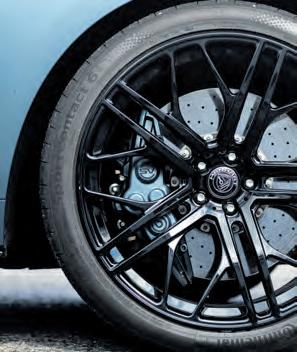
It also has some tyres, which measure 295/35R24 in size and engulf a set of 10x24” Manhart Concave One forged alloy wheels. All for the handling, obviously, and absolutely not for the rap videos – but just in case, Manhart has added a set of gloss black decorative strips along the side of the vehicle to complement the various carbon body parts with which it’s adorned.
The rest of the Rangey’s styling has been left standard, an approach which also applies to the cabin – where a set of branded floor mats is the only sign of this being a Manhart built. The company does offer a range of upgrades here, needless to say, as well as various finishes for the alloys for customers to whom the gloss black seen here is just too damn tasteful.
The Range Rover Sport is of course a vehicle synonymous with good taste, and not at all with lottery winners. And in SV form it’s synonymous with being outrageously fast (and expensive). Get Manhart to turn it into an SV 800 and it’ll even more of both.
‘Because it’s there’ is reason enough
I’ve spent a good portion of my life asking people why they did their Land Rovers this or that way. Why did you go for a Perkins, why did you want so much lift, why did you paint it pink – you know the sort of stuff. The same sort of questions you might ask if you met the guy at a show; my job is to ask them on behalf of everyone who wasn’t there to ask him themselves.
Obviously, sometimes the questions are easy. What’s with the zebra stripes? You know it’s going to be something to do with watching Daktari when he was a kid. Sometimes, the question is easy but the answer seems hard to reach. Why the tuned-to-death Td5? Why the 37” tyres? In each case, nobody wants to say ‘because I’m a big kid who likes to show off’ – they’ll give you some old bunny about how much better it is at towing or whatever, but we all know why we really do these things. And nothing at all to be ashamed of, I hasten to add. But then there are vehicles you look at and you’ve just got to ask why. Why did you do that? What for? What made you think it was a good idea…?
The answer is always the same, and it’s always a good one too. ‘Why not?’
Or to put it another way, ‘because I can.’ I’ve seen some weird and wonderful builds in my time, as I’m sure have you. The new-shape Defender pick-up in this issue is among them; it’s unusual in being a big-budget commercial build, of course, but while that will turn some of you against it from the start you’ve got to admire the vision and the skills of anyone who can create such a thing.
I’d put it in the same category the Land-Jag, which I came across about 30 years ago. The builders based it on a Jag V12 and went from there, ending up with a bulbous front end that looked pretty gross but, they said, it made a great tow motor. From memory, I think it even had a recovery crane on the back.
That was one of those ‘because I can’ builds. And they proved that they could, too. As did the guys behind the new pick-up. The purpose might be different, but the result was the same: a Landy worth looking at.You might not want it, but you can still admire what went into it.
Alan Kidd, Group Editor alan.kidd@assignment-media.co.uk
Keeping a Legend in trim Croytec are dedicated to developing products with style and quality
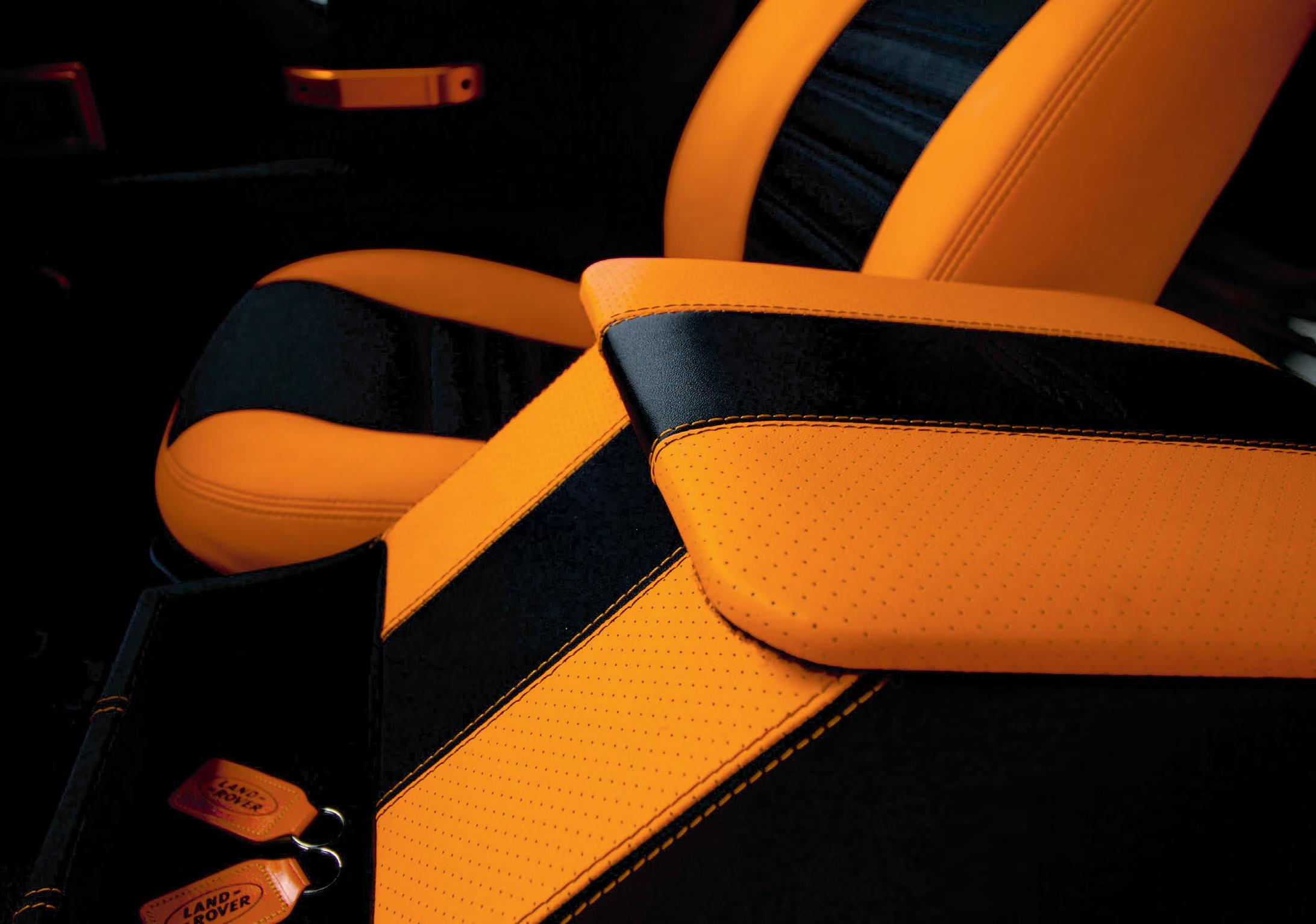
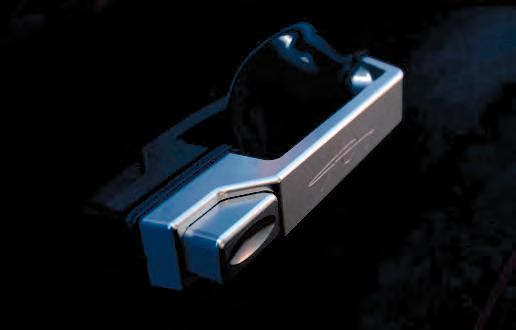
We give form to our components by machining detail into them with chamfered edges and rounded corners, under cuts, engraving and much more. We take time with care and attention to detail to ensure we deliver quality products. Our products have become a feature to many Land Rovers worldwide.
Alongside our aluminium interior and exterior trim range, our Special Order Service offers leather trim which can be designed to your requirements incorporating our colour anodised parts, to give you the ultimate Enhanced by Croytec Defender.
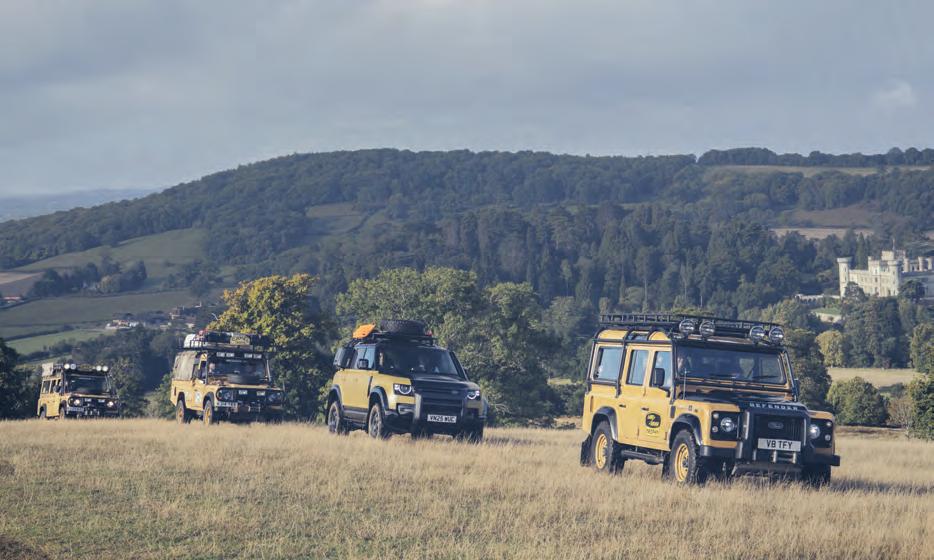
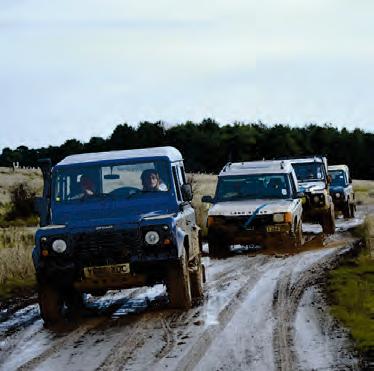
Eastnor Castle was the venue recently as Defender and Land Rover Classic hosted the Camel Trophy Club’s 45th Anniversary celebrations. The inaugural running of the legendary off-road challenge. was held in 1980, with Land Rover taking over as vehicle supplier the following year, and the Eastnor event brought Camel veterans (both twolegged and four-wheeled) together with examples of the new Defender 110 Trophy Edition. Along with a Classic Defender Works V8 Trophy, this led a convoy of the distinctively coloured vehicles on a parade through the Eastnor estate. A total of 38 past participants and more than 200 enthusiasts were on hand to witness what Land Rover describes as a ‘historic moment’ before going on to list the backpacks, tents, clothing, golf umbrellas, soft toys and other Defender Trophy merchandise that’s now available to ‘fans of epic adventure.’ And at £62.10 for a T-shirt and £43.20 for a beanie hat, what an adventure it promises to be.
JLR back on track after cyber incident impacts second quarter financial performance
Following the much-publicised cyber attack on JLR, Land Rover’s parent company has now resumed full operations with production back to normal levels. But the incident made an inevitable dent in business, as its report for the second quarter of the financial year illustrates.
This shows that revenue for Q2 was £4.9bn, down 24% year-on-year. This period was also impacted by £238 million in exceptional costs – the bulk of this relating to the cyber attack, though £42 million also arose from a voluntary redundancy programme. A profit for the quarter of £398 million in 2024 turned into a loss of £485 million this year – JLR says this was caused by the cyber incident as well as the ongoing impact of US tariffs and the wind-down of Jaguar ahead of its relaunch as an electric brand.
In response to the cyber attack, in addition to getting production back on track JLR has restarted its wholesaling operation and Global Parts
Logistics Centre. The company has also fast-tracked the introduction of a financing scheme for qualifying suppliers, paying upfront to help them keep trading during the factory’s production restart phase.
In addition, JLR says it used the pause in production to accelerate development and testing work for electrification. This included underbody build validation and the implementation of an ADAS testing rig at Solihull, as well as EMA readiness at Halewood.
‘JLR has made strong progress in recovering its operations safely and at pace following the cyber incident,’ said outgoing Chief Exec Adrian Mardell. ‘The speed of recovery is testament to the resilience and hard work of our colleagues. I am extremely grateful to all our people who have shown enormous commitment during this difficult time, and I want to thank our clients, retailers, suppliers and everyone in the communities connected with JLR for their support through this disruption.’
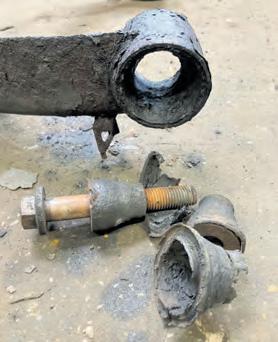
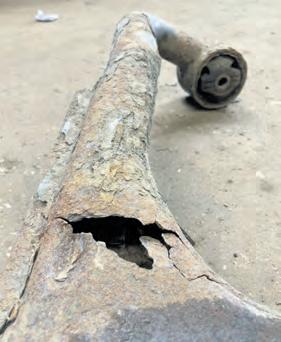
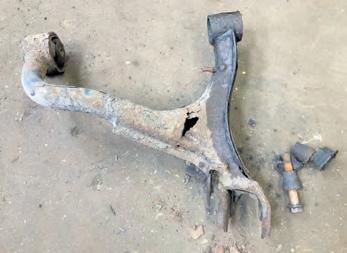
EVER SEEN A SUSPENSION ARM LOOKING LIKE THIS BEFORE?
Poole-based Independent Landy specialist AL Services was recently asked to address a suspension bush on a Discovery 3 that had been flagged up by the MOT test – only to discover that the damage ran far deeper than that.
‘We haven’t seen a suspension arm this badly corroded and structurally compromised in a while,’ comments the company. The gaping rust holes only appeared after the flaking rust was knocked off.’ Proof positive that more modern Land Rovers can rust for England too – what might have happened without the tester’s intervention doesn’t bear thinking about.
THE FIRST ENTRANT HAS BEEN SELECTED FOR THE INAUGURAL DEFENDER TROPHY. Following the qualification event in Japan, Naoki Imamura has been chosen to represent the country at the global final in Africa in 2026. With more than 10,000 people worldwide having applied to take part in the Trophy, with six months of training and selection events in seven countries still to run, being given the nod is an achievement of enormous note. To be the first might be an accident of the qualifying schedule – but that doesn’t make it any less remarkable, not least because only 34 people in total will be selected to participate.
During the first qualifying session to be held in Japan, 24 hopefuls competed over two days, testing their intellectual prowess, physical strength and communication skills. The challenges included physical tasks with obstacles, transporting and setting up equipment, constructing bridges using logs and ropes, night driving missions and ascending and descending steep slopes. Sounds not unlike the M62 on a winter morning – but safe to say the finals, which will be held in tandem with Land Rover’s conservation charity partner Tusk, will be rather warmer than that. And with a much more worthwhile purpose.
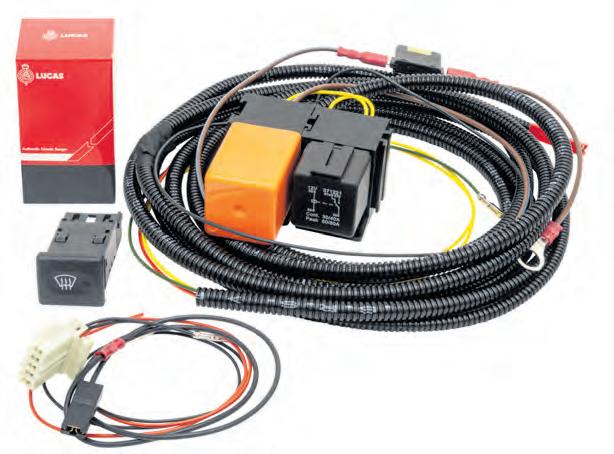
ONE OF THE MOST POPULAR UPGRADES YOU SEE on old-shape Defenders is the addition of a heated windscreen. It might do the same as a diesel-burning pre-heater but in the absence of such a thing, it means you can have a clear screen in the morning after a couple of minutes rather than the if-ever-at-all you get from relying on what comes out of the vehicle’s heater. This is the season when that gets critical, so Britpart has timed it perfectly by ranging a Mobile Centre heated screen wiring kit. Supplied with a Lucas Classic OEM-style switch, this is suitable for use with the screen with two tabs or wires, one in each corner, as used in the Defender from 2002 onwards. Requiring minimal connections (positive and negative power, ignition live and illumination live), the kit is rated to 20A and has an ‘on’ time of around 10 minutes. It has a 500mm power cable from the relay set to battery, terminated with M8 rings, a 3000mm supply cable from the relay to the screen, terminated in an insulated female spade, and a 500mm screen earth cable terminated with a female spade and M8 ring.
Agreeing on things is something the human species is getting worse and worse at all the time. But when it comes to simplicity being good, we’re all singing from the same song sheet on that.
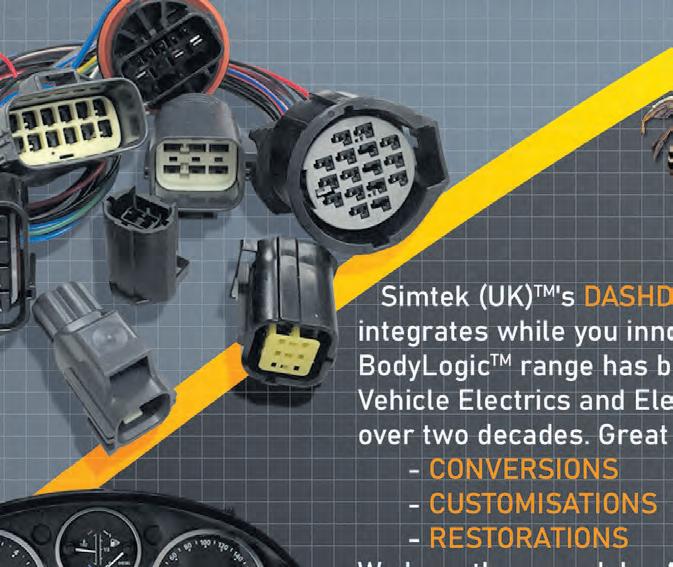
Now, a ‘smart transmission shifter replacement’ that can ‘directly replace the XYZ switch in all applications’ doesn’t sound like the simplest thing in the world. But when its job is to simplify everything around it, you can forgive that.
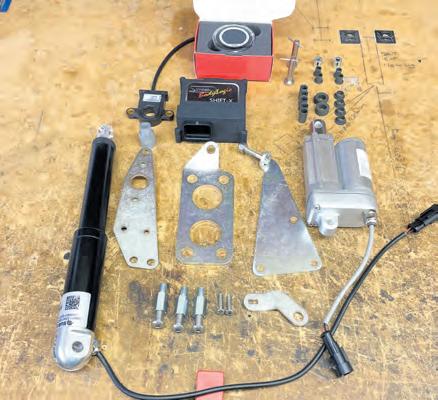
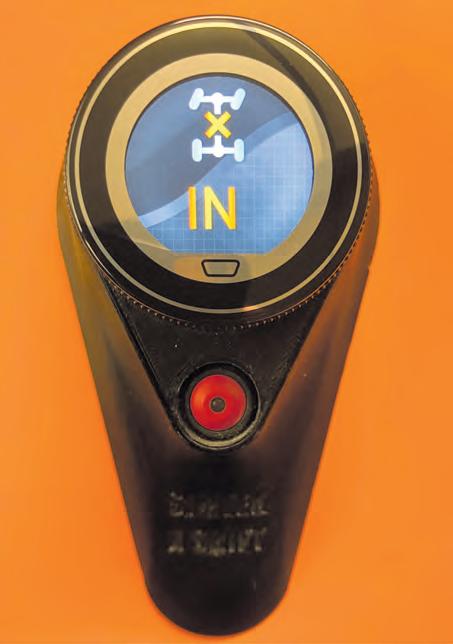
The not particularly simple thing in question is what you see here, the BodyLogic Shift-X kit from Rochdale company Simtek UK. Developed for bespoke conversions, upgrades and special vehicles featuring automatic transmissions, it replaces the mechanical levers and linkages involved, simplifying the gearbox control in the process while also allowing the addition of further functionality.
It also frees up extra space in the cabin by deleting all the levers and linkages –something that can be very relevant in vehicles like expedition trucks which carry a lot of incidental kit.
The Shift-X system brings the gearbox controls up to a modern standard, which would be enough on its own for many of us. However there’s more to it than that, too: in addition, it can interface with other vehicle systems, such as electronic hand brake controls, where required. Further features it brings include security lockout; start, inhibit and reverse lights and dash and warning displays. It allows active control of modified gearboxes, diff locks and high/low range shifting, and for special applications it allows control of PTOs and sub power systems.
Simtek offers the BodyLogic Shift-X in kits of various levels – which include the bracketry for certain models.
It probably won’t surprise you that fitting one is not a job for your average DIY spanner man. Simtek describes it as being ‘moderately’ difficult and recommends that the conversion is done by ‘an experienced vehicle technician with the appropriate experience and equipment.’ Something we can probably all agree on: after all, simple is good.
Kent Heritage Works introduces The Admiral – a 1976 Series III rebuilt as a unique best-of-everything classic
Remember the good old days, when magazines were big and thick and there was loads and loads of great stuff in them to keep you reading for hours? Remember when there were no fake pictures… no AI nonsense… no comments sections full of people ranting at each other about VAR, small boats and which toilet you should use if you’re transsexual?
Well, the 2026 Land Rover Yearbook is a good old magazine, just like they used to be back then. It’s 132 pages long, printed on good quality paper and packed full of great stuff to read. It’s a compilation of the best stories from the last year and in some cases beyond – great vehicle builds in detail, overland expeditions to dream of, a huge 10-page products round-up and the news from behind the news coming out of the factory and around the Land Rover scene.
The 2026 Land Rover Yearbook makes a perfect Christmas present for the Land Rover fan in your life – especially
148: Jan 2026 www.thelandy.co.uk
Octa-based Defender D7X-R revealed ahead of Dakar campaign
Land Rover’s Defender Rally team unveils full livery and technical details of 110 built to spearhead assault on new Stock category when 2026 Dakar Rally commences on 3 January
Words Tom Alderney
Pictures Defender Rally
Land Rover has revealed full details of the Defender Dakar
D7X-R, along with the livery in which a trio of the vehicles will compete in the new Stock class when the legendary endurance rally gets underway on 3 January. Driven by Stéphane Peterhansel, Sara Price and Rokas Baciuška, the three 110s will take on more than 80 hours and 5000 kilometres of timed special stages during the
course of two weeks in the deserts of Saudi Arabia.
Designed for the modern breed of high-performance SUVs and introduced for the start of the 2026 season, Dakar’s new Stock class mandates that vehicles must retain their standard production engine, transmission, driveline layout and bodyshell. The D7X-R is thus closely related to Defenders available from
Land Rover dealers – albeit the base model is the Octa, a kind of superDefender powered by a 635bhp 4.4-litre twin-turbocharged V8 engine and costing from £148,045. While the Defender’s shell is standard, its bodywork has been modified at both ends to enhance its already businesslike approach and departure angles. At the sides, the door panels have been trimmed to make
room for heavy-duty rock sliders which form part of an extended underfloor protection system.
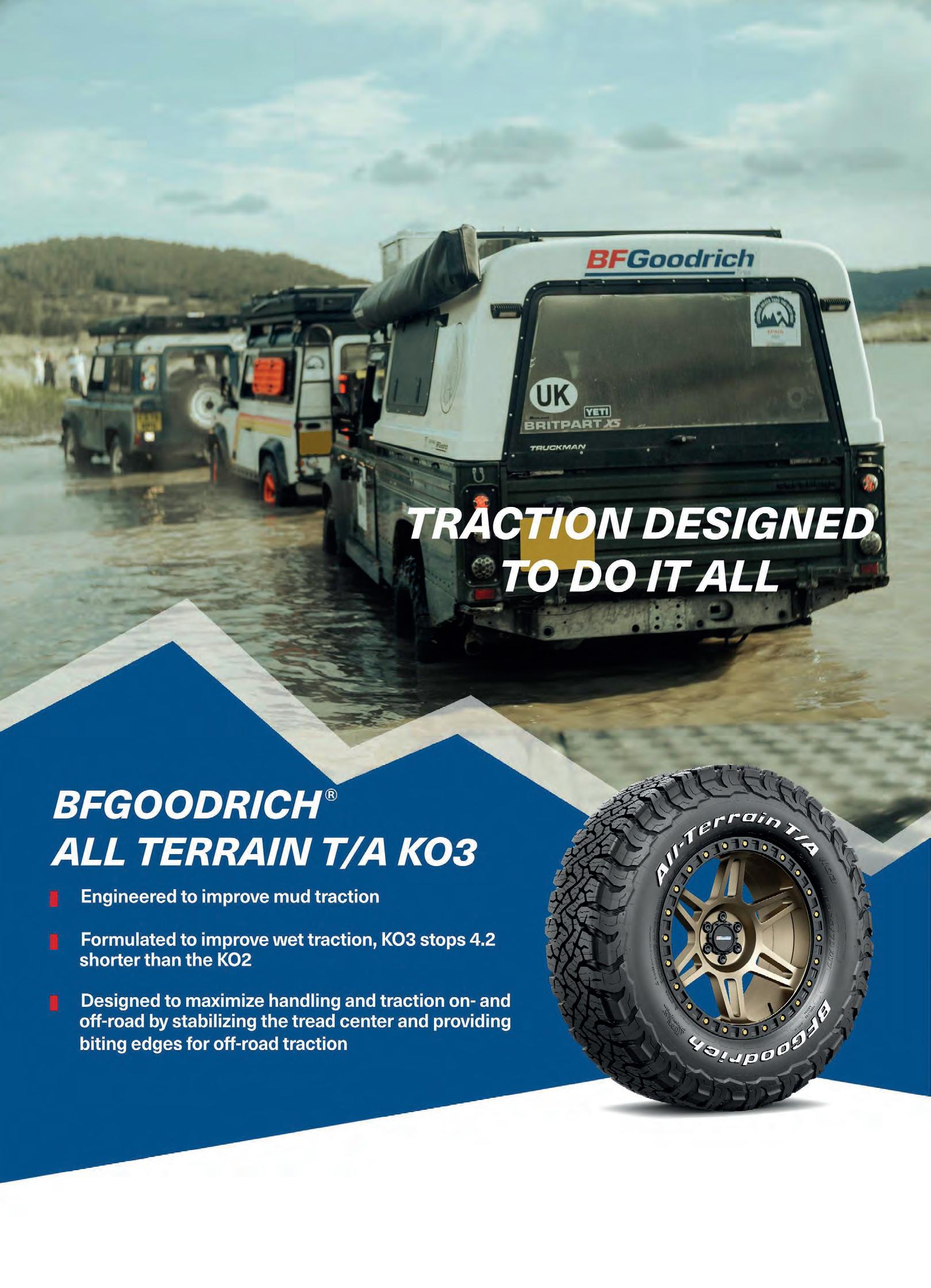
Raised ride height and 35” tyres from BFG improve the vehicle’s ground clearance, the latter also enlarging its track by 60mm – something for which the Octa’s wheelarches, which are already significantly wider than those on everyday Defenders, have been made more prominent still.
Inside, there’s an FIA‑spec roll cage and a bespoke 550-litre fuel tank, the latter built in to the rear of the vehicle, while the cabin is fully fitted out with a regulation FIA navigation system and driver head-up display for speed and heading, along with a driver‑configurable rally dashboard. Also inside the cabin, the vehicles will carry three spare wheels mounted to the roll cage where the rear seats
To advertise in The Landy, call our team on 01283 742969
We’re on Facebook: www.facebook.com/thelandyuk
We can’t improve on Land Rover’s own description of its colour scheme for the vehicle, so here goes: ‘Defender Dakar D7X‑R will compete in a raw, elemental and powerful livery inspired by the tones and textures of the desert. The all‑new “Geopalette” design takes its cues from the arid landscapes that characterise the Dakar. It combines sand, stone and earth tones with a hint of Aqua, drawn from the rare desert waters that bring contrast and clarity.’ the standard doors have been trimmed along the bottom to allow heavy duty sills to be added as part of its underbody protection stucture, while in the cabin it’s equipped with FIA spec navigation equipment and other crew aids, as well of course as the obligatory roll cage
would be. On-board air, a tool kit and a stock of essential spare parts complete the inventory; there’s no need to carry a jack, as a pair of integrated hydraulic jacks are capable of lifting either side of the vehicle. Finally, with dehydration
being a serious concern on such long stages, the crews carry eight litres of drinking water.
Going back to that fuel tank, it will carry sustainable petrol as defined by the FIA’s Energy Regulations. Just as
well in this day and age because, while its capacity is designed for the Dakar’s infamous marathon sections, which can extend to more than 800 kilometres in length, when you crunch the numbers they suggest that the D7X-R will be
Land Rover has put together one of the strongest ever line ups to crew the three Defenders competing
all time – the legendary Stéphane Peterhansel is going out in search of his 15th overall
class at the age of 22; he’s navigated by Oriol Vidal. And to the right, former Miss California contestant Sara
other racing disciplines, will be navigated by South Africa’s Sean Berriman running at something like 4.2mpg on special stages.
That’s with an air intake restrictor in place to limit power in accordance with FIA Stock category regulations.
The 4.4-litre V8 engine is otherwise unchanged, though it also runs enhanced cooling with an increased frontal area and modified bonnet to allow greater flow of ram air and four fans to keep it flowing at lower speeds. The Octa’s eight‑speed automatic gearbox also remains in place, with a lower final drive ratio in place to maximise low-speed torque and better suit classic rally-raid conditions. Areas in which significant modifications are allowed include the brakes, where the D7X-R runs a bespoke rally-spec system with vented discs, six-pot front and four-pot rear calipers. Suspension is required to use the same ‘kinematic principle’ as the standard vehicle (no leaf springs, then) but may be enhanced within that – and Land Rover has taken full advantage of this by partnering with Bilstein to develop a performance system featuring single coil-overs up front and parallel twin dampers at the rear. As well as improving the vehicle’s high speed ability over punishing terrain, the system is designed to cope with the extra weight of all that fuel – potentially more than 400kg at full capacity.
With so much weight being propelled at huge speeds over extremely rough terrain, wheels will constantly be leaving the ground and coming back down again, hard. The potential for breakages is similarly immense and to help manage it, Land Rover’s
Defender Rally team has developed a new ‘Flight Mode’ for the vehicle. This automatically adjusts torque delivery from the engine to the wheels whenever the D7X-R is airborne, helping to provide a smooth landing and protecting the driveline from shock loads. This and the rest of the vehicle’s electronics are managed by a single motorsport control unit to provide them
with the most robust possible protection against the brutal conditions in which they’ll be operating.
On the Dakar, the trio of D7X-R Defenders will be maintained by a team of mechanics and engineers whose abilities and experience matches that of the crews inside the vehicles. With Peterhansel, Price and Baciuška behind the wheel, Land Rover has
put together an incredibly strong set of drivers – backed up by Mika Metge, Sean Berriman and Oriol Vidal respectively to give them quality in every position.
‘Defender is driving into the unknown – to overcome the dunes, handle the heat and race flat‑out against the clock,’ said recently appointed Team Principal Ian James. ‘We know
Dakar represents one of the toughest challenges in motorsport – but that’s exactly why we are entering.
‘Following an intense testing programme, the team are ready for the adventure ahead and the Defender Dakar D7X-R has been built to take it on. With world-class partners and some of the best rally-raid drivers on the planet, we’ll give it our all.’
in the Dakar. On the left, Mika Metge navigates for the most successful Dakar participant of
win. In the centre, Lithuania’s Rokas Baciuška had already won the World Rally Raid Championship in the T4
Price, who brings a wealth of experience in Trophy Trucks and Extreme E among many
TRED ROCK SLIDERS
The ultimate in styling and side protection.
Cleverly folded triangulated steel eliminates the need for tree bars. Punched and swagged holes add to the appearance and reduces unnecessary weight.
The TRED range provides the perfect combination of strength and clean lines. Also in the TRED range are rear step tow bars and winch bumpers.
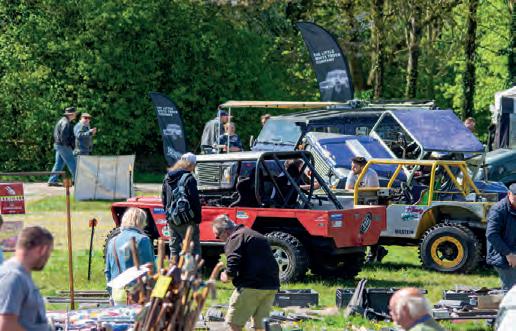
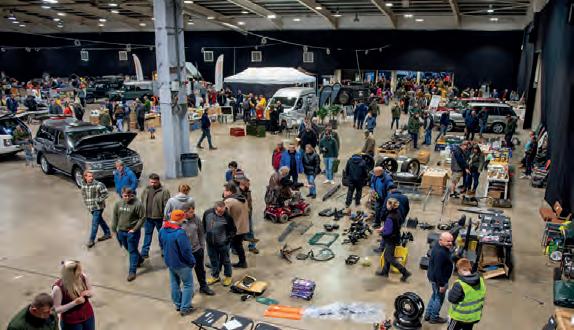
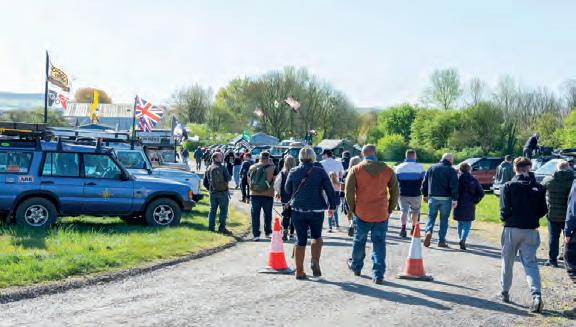
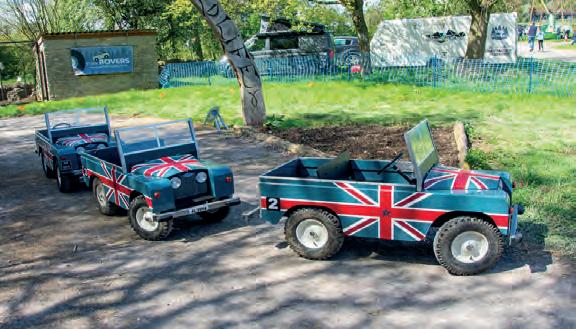
Land Rovers are returning to Bath & West this April for a weekend filled with Land Rovers!
Exhibitors old and new will join us, selling everything from parts & accessories to tyres, clothing and toys. Talk to overland adventure specialists about your next trip, discuss modification options with companies with the know-how and other experienced Land Rover owners.
PARTS SPECIALIST
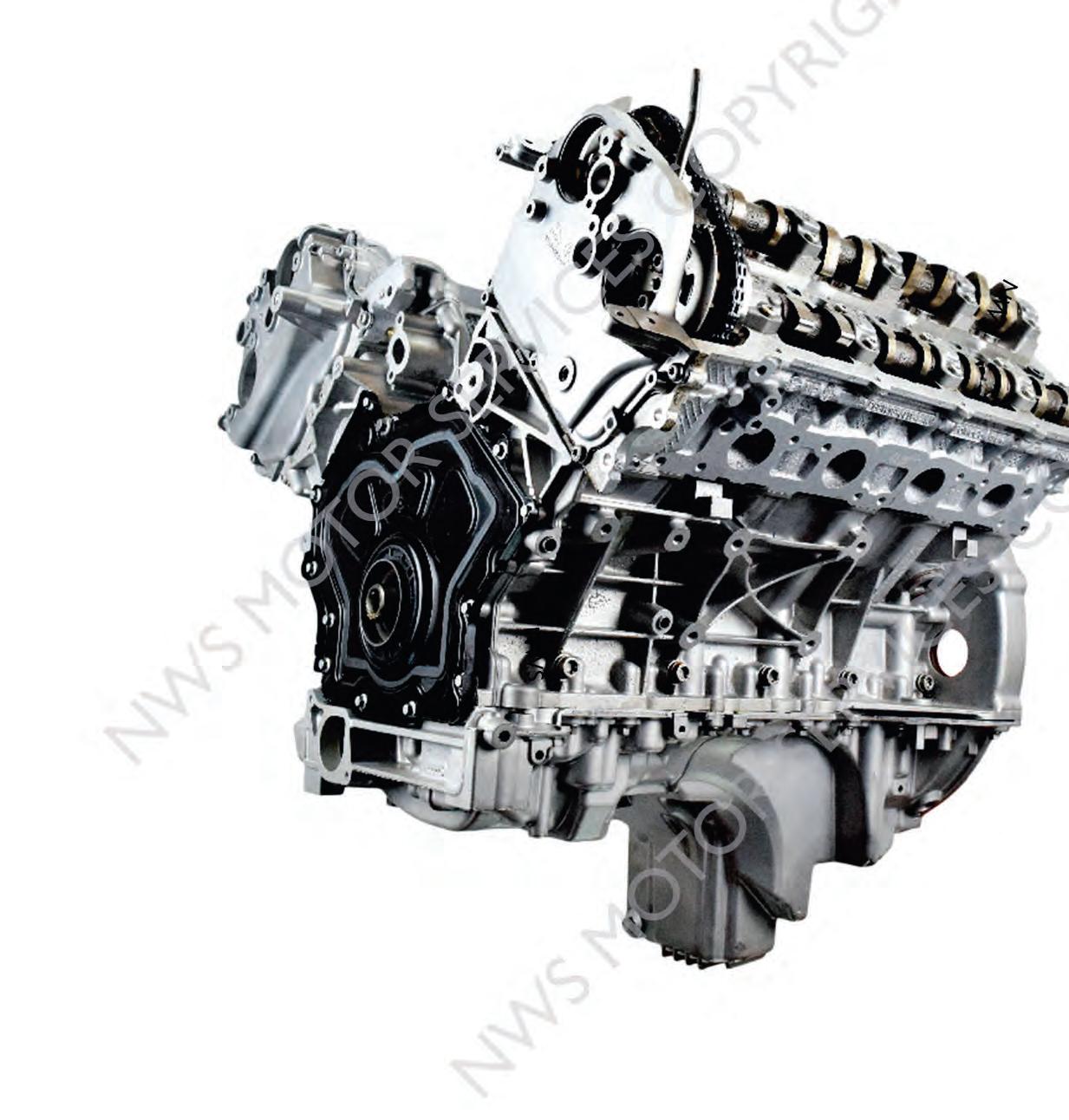
ENGINES START AT £2000
To advertise in The Landy, call our team on 01283 742969
We’re on Facebook: www.facebook.com/thelandyuk
Kent Heritage Works makes big entrance in Land Rover resto market
Boutique restifi cation specialist founded by former Apple executive unveils The Admiral
88” Series III restored to a long way beyond showroom spec with a range of
IWords Gary Martin
Pictures Kent Heritage Works
f there’s one eternal debate in the world of historic Land Rovers, it’s whether you should keep the vehicle’s patina or return it to original. For some years, the company’s own Classic Works operation has very much specialised in the latter, and a healthy supply of Series Is being repatriated from Australia has flooded the market for old ‘uns that look like they’ve just come out of the showroom. That might be why there’s so much buzz around patina restoration now.
If you’re talking Range Rovers, however, patina has never really been
a thing. They either look right or they look wrong, and when they look wrong my God do they look wrong. Here, the debate is all about whether to restore them back to standard or to resto-mod them into a classic that drives like a new one.
The latter is where the big money seems to have gone. And it makes sense. Just as Land Rover itself has learned that you make more money by building vehicles with lots of toys on them, because each toy comes with a mark-up, the restoration business has found that while you can charge
so much for taking a vehicle back to standard, you can charge more for doing the same job while also modernising it and adding a load of high-tech and luxuries.
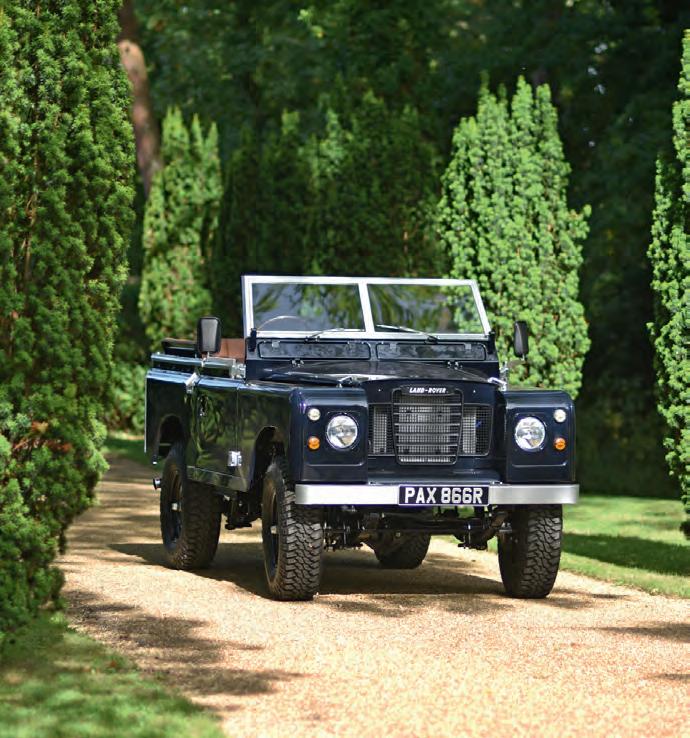
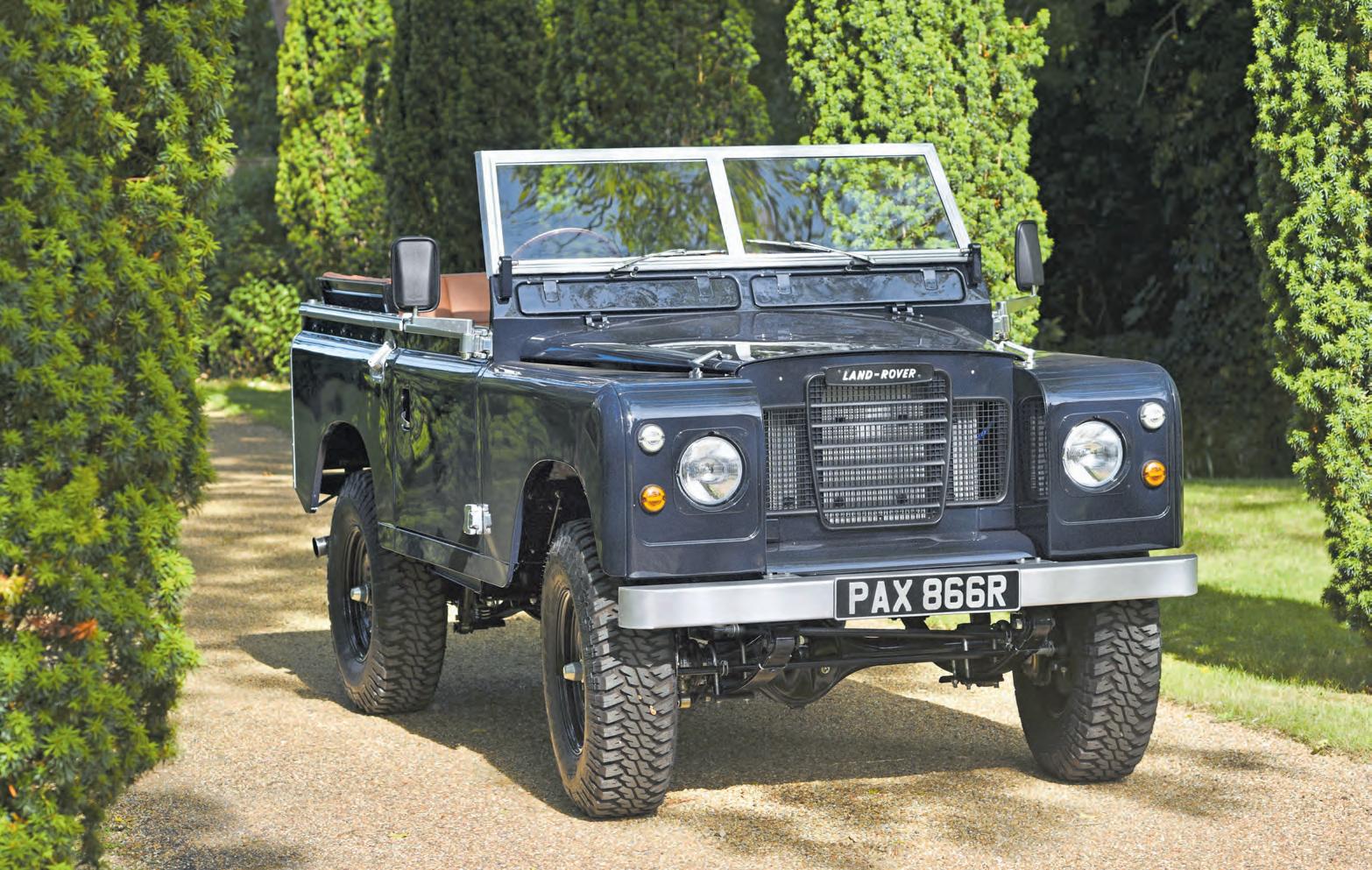
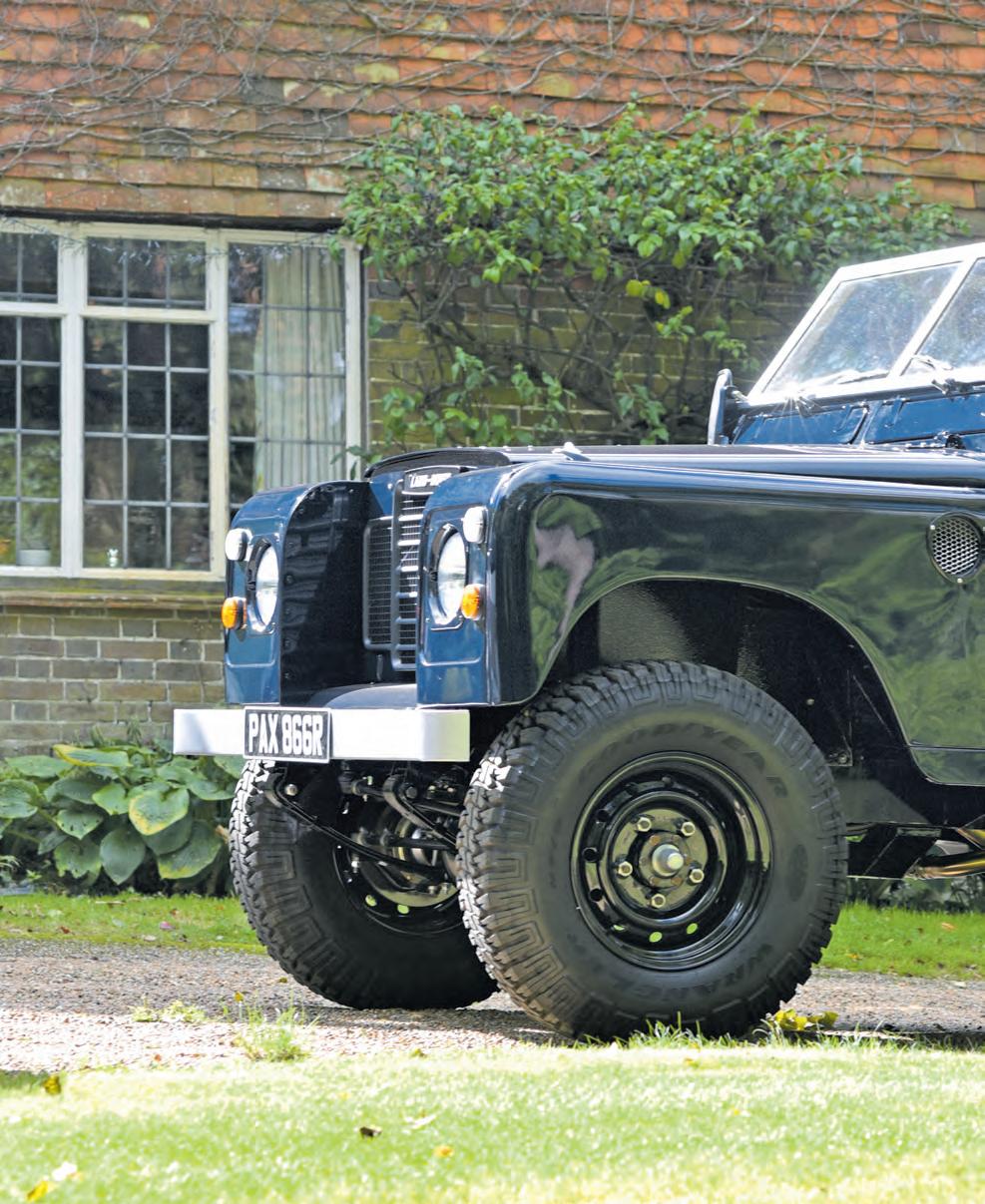
There are some absolutely magnificent vehicles out there as a result. And now there’s another. Only this one’s not a Range Rover – it’s an 88” Series III.
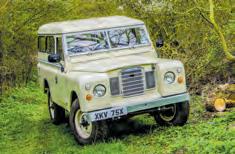
It’s not the very first boutique leafer we’ve ever seen. But it’s unique, it’s clever, it’s British and it’s stunningly gorgeous. And it serves as an introduction to Kent Heritage Works
22
Issue 148: Jan 2026
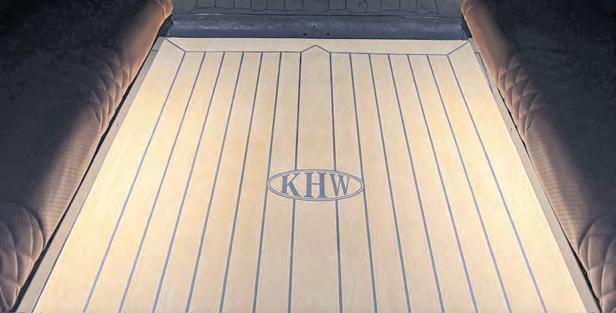
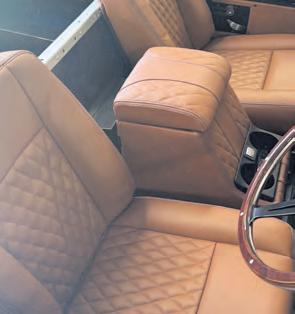
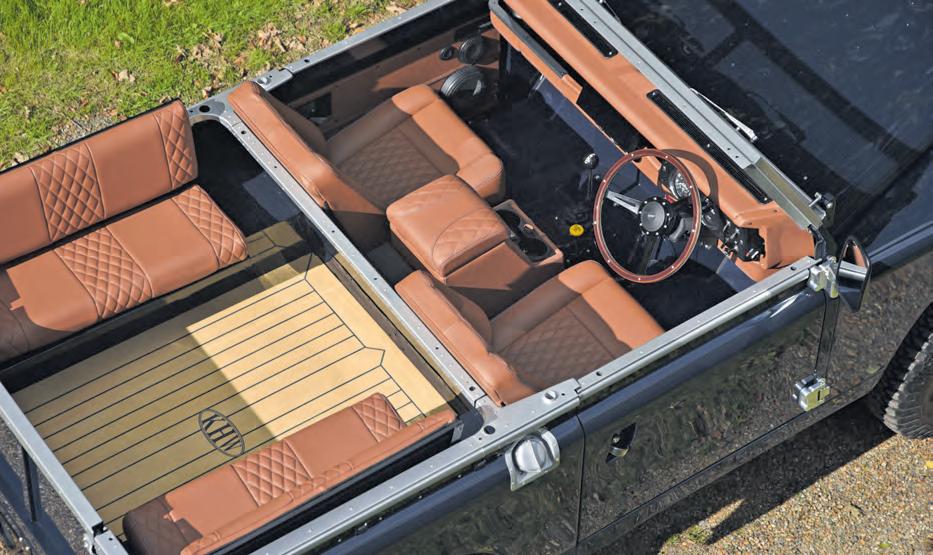
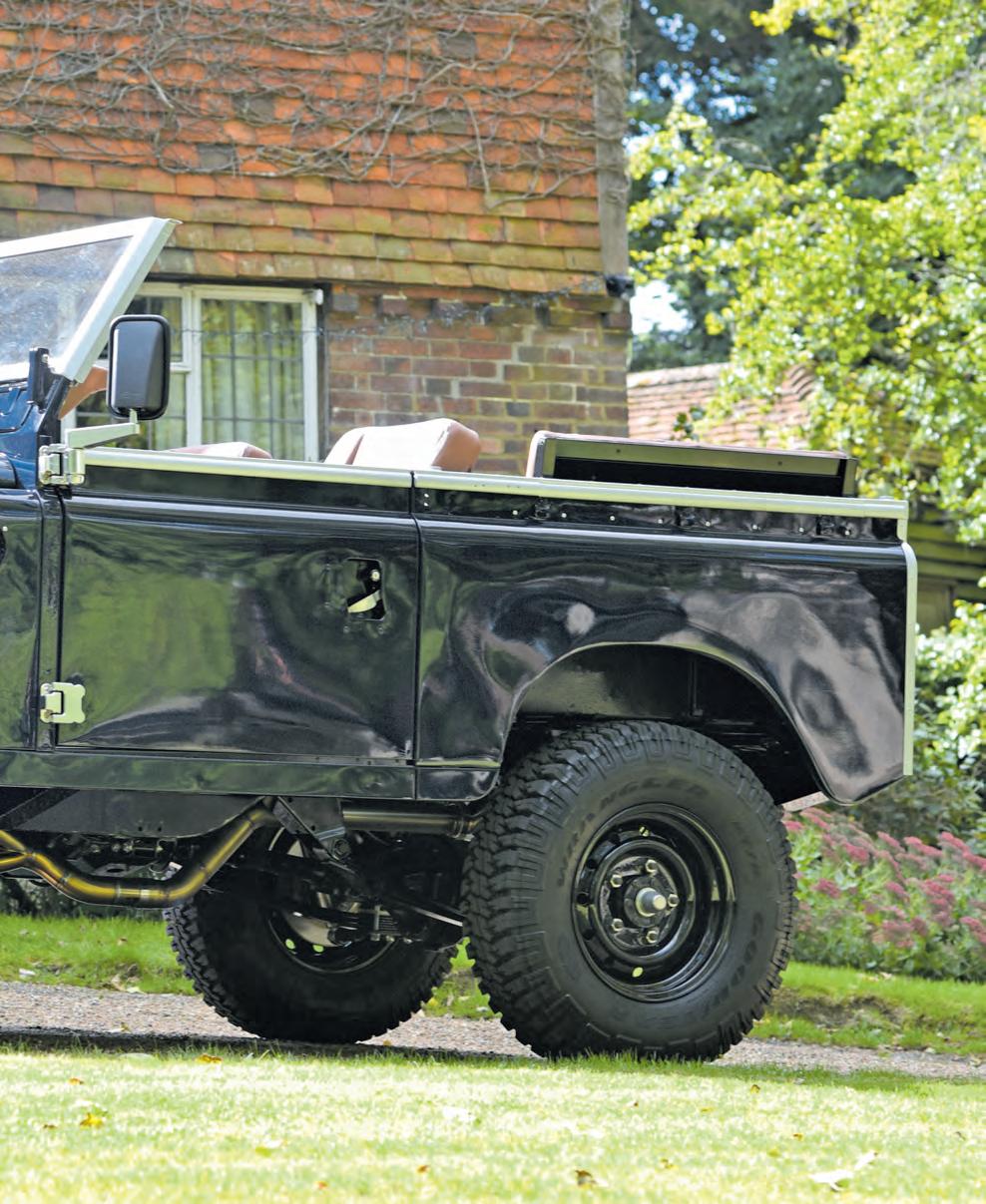
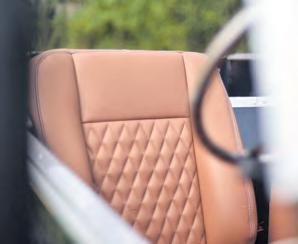
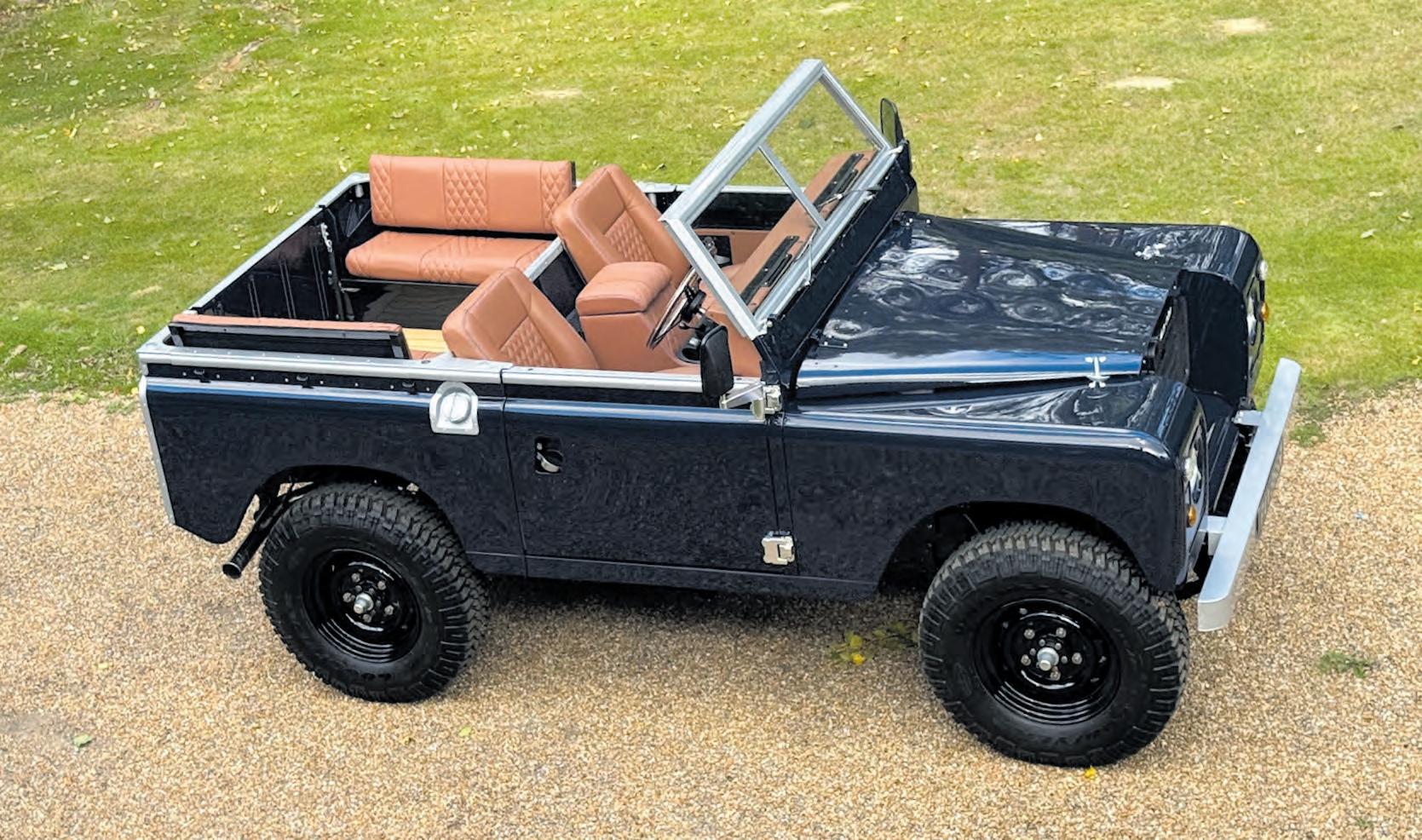
Tan leather by Lucari sets off the interior a treat, with diamond quilting picked out by Admiralty Blue thread to match the bodywork. The teak effect flooring in the back is made using Flexiteek, a sustainable material whose manufacture doesn’t require any hardwood to be harvested
(KHW), in whose hands it has spent the last two years undergoing a particularly extensive programme of development and re-engineering.
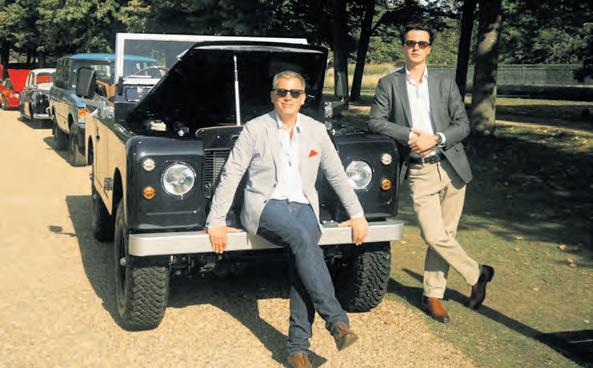
You might not have heard of Kent Heritage Works until now, but you’ve heard of the company its founder used to work for, on account of it’s Apple. Cliff Smith was a senior executive there, which doesn’t sound like something you get to be without knowing what you’re doing, but then in April 2024 he set up shop in the Landy game and next thing you know, The Admiral is making its debut at the Concours of Elegance in no less a venue than Hampton Court Palace.
One of the things we like most about The Admiral (and there are many) is that it remains a Land Rover. It’s been modified in a whole lot of ways but while it would be so easy to base a project like this on an LS engine, Tremec gearbox, Toyota axles and so on, where it’s no longer standard it’s still Solihull.
Take the name; where do you suppose that comes from? To find the answer, we have to travel back more than half a century: in the 1960s, Admiralty Blue was a paint colour used by the Royal Navy on cars designated to transport VIPs. Ideal for a vehicle priced at £180,000 plus VAT.
You could of course get a brand new Defender or Range Rover for that money (or one of each, if you don’t want to get too fancy with the spec on either). And of course each will start to depreciate the moment you sign on the line. Whether The Admiral will continue to be worth quite this much beyond its first owner is questionable, however the point of a vehicle like this is that it’s unique – part of the company’s ‘1-of-1 Collection’ – so it’s better seen as an artwork than a car. Should KHW’s reputation grow in the coming years, the way Twisted’s and Kingsley Cars’ have, an early example of its work may even come to gain value over time. This is important as it doesn’t apply to every company operating in a high price bracket. The product must speak for itself; top-quality artistic innovation and engineering are critical, while cynical design and any suggestion of cost-cutting will send your reputation into a downward spiral. We’ve seen
builds before which claim to be bestof-the-best and are certainly priced that way – but are sitting on budget suspension and even remould tyres.
The Admiral is not like that. In Smith’s worlds, ‘we have worked with our in-house team and some of the UK’s best artisan companies in the historic engineering and Land Rover industry.’ And, as we’ve said, even where the 88 is no longer as it was in 1976, it’s still Land Rover throughout.
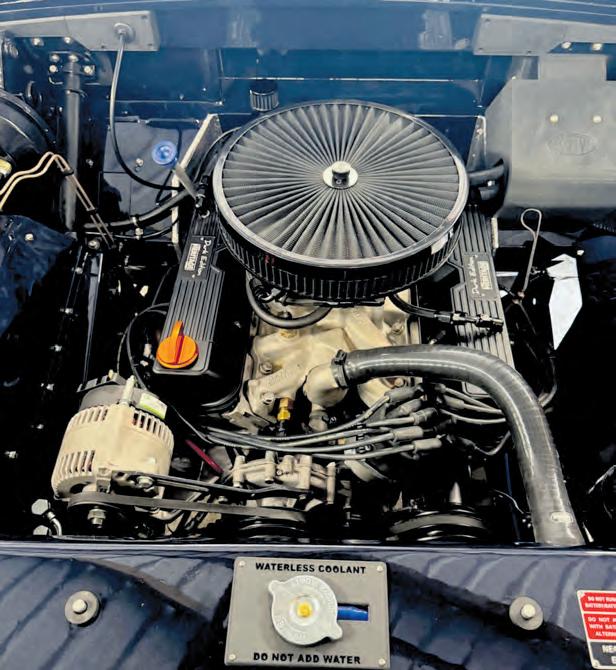
Take the engine, for example. We’ve already mentioned General Motors’ LS unit, which has found its way into many a restified Land Rover and Range Rover – providing proof along the way that a sports car engine does not a sports car make. The Admiral is a V8, for sure – but it’s a proper one. KHW settled on a 3.5-litre Rover V8 – but while they settled ON it, they didn’t settle FOR it. Instead, they took it to a recognised expert in the shape of V8 Developments of Spalding, which created what will henceforth be known as the Dark Edition – a tuned version of the old favourite developed specifically to KHW’s brief.
The process started with the original engine being acid dipped and chemically cleaned. Its block faces were skimmed then bored and line honed, with all new bearings and pistons used in the rebuild. This should give you confidence that Kent Heritage Works is not one of the aforementioned cost-cutting artists – line honing is all about longevity, over the sort of lifespan that goes way beyond what any warranty will cover.
It does become more important in tuned engines, however, especially when their heads have been bored, and the Dark Edition also features pocketed pistons, custom CNC heads with ultra big valves, roller rockers and V8 Developments’ own Torque Master camshaft. This promises a useable range from 1000-5000rpm. A Holley Hyperspark distributor looks after the high-tension side, with the same company’s Sniper EFI system fired by an MSD electronic ignition set-up. Keeping it cool is a waterless system featuring a custom rad with integrated transmission oil cooler.
As this suggests, it’s an automatic. Something that’s been done before
in Land Rovers of a certain age, with tremendously varied results, but once again KHW have kept it original and used the kind of box you’d have found in the majority of Range Rovers and Discoverys over a long period. The ZF 4HP22 was known for being smoothshifting and reliable, even if it did sometimes get used in applications where the engine wasn’t gutsy enough to keep it on song; with the Admiral’s light weight compared to, say, a P38 Range Rover, and the extra torque of its engine, there’s little danger of anything like that happening here. The original transfer box is retained behind the ZF unit, then beyond that you’ll find something from the upper echelons of the hardcore off-roading game – custom wide-angle propshafts made by none other than Gwyn Lewis
4x4. These turn the original axles via a set of Range Rover Classic diffs, whose 3.54:1 ratio makes for quieter, more relaxed and less thirsty progress at cruising speeds.
Staying with the axles, the old drum brakes have been replaced by servo-assisted Defender discs all round – along with an intriguing addition in the shape of an electronic handbrake from the Freelander 2. Definitely not something you see on many Series trucks. P38 Range Rover power steering is hardly common either, though it has been used before; in this case, it’s adjusted to be a bit livelier, speeding the wheel up from four to three turns lock-to-lock.
Plenty here from more modern Land Rovers, then – though one thing KHW didn’t do was convert the
We’re on Facebook: www.facebook.com/thelandyuk To advertise in The Landy, call our team on 01283 553244
24
Issue 148: Jan 2026
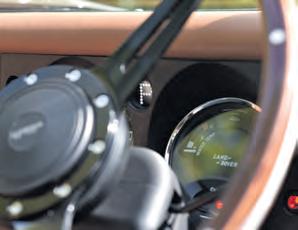
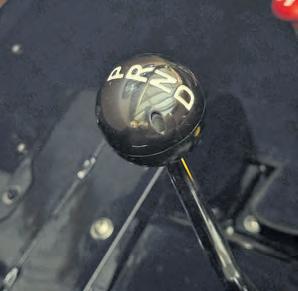
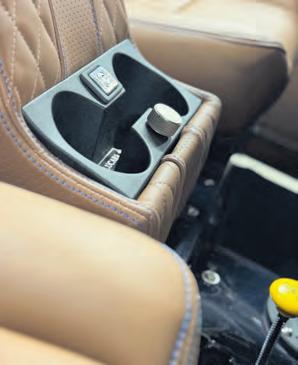
The Dark Edition Rover V8 has been extensively reworked by Lincolnshirebased V8 Developments to produce greater torque at deeper revs. It’s mated to a 4-speed ZF gearbox – whose shifter has been neatly adapted to suit a long stick topped with a retro golf-ball knob. An extraordinary mechanical highlight in the transmission is a Freelander 2 electronic handbrake operated by a button on the centre console
suspension to coil springs. There are many good reasons for this: you strip the vehicle of its character, you turn it into a fully fledged bitsa, the IVA man starts reaching for his favourite box of Kleenex and, most importantly of all, these days you can use parabolic springs instead.
Are these as flexible as coils? Not quite. Are they as soft and comfortable? Not quite? Do they get so close, you’d need to be almost obsessively fixated to want to do away with your vehicle’s old leaf-sprung system? Sounds like it to us, yes. The tyres beneath the arches are LT235/85R16 Goodyear Wrangler M/Ts, which will go on without a lift though it looks to us as if the new springs have added a touch of height to the vehicle’s stance.
So what we have here is a Series III that’s not radical in that sense. One of our favourite phrases with classic restorations is when we say they ‘didn’t try and turn it into something it’s not’ and, while no 88 was ever quite like this, it’s been enhanced rather than remade. Some of the additions, like that handbrake, are full-house visionary, but it’s still a Series III and hurrah for that.
Inside, as befits a company owned by a former Apple bigwig, KHW developed its own infotainment control unit with a 10” touch-screen supporting Android Auto and Apple CarPlay. This turns into a rear-view camera when reverse is engaged and, should the sound of a smoothly tuned V8 under load not be enough to satisfy your ears, the stereo side of the system also features a 320w digital power amp and 6-speaker, 3-way Focal speaker setup complete with a sub. The volume control is on the cubby box; given the system’s capacity to get loud, and the complete lack of any kind of bodywork enclosing the cabin, you need to concentrate on honing your taste in music to avoid any embarrassments. £180,000 plus VAT buys you a lot of cool points, but it would only take a split second of the Crazy Frog to scatter them to the four winds.
Further cool things include tan leather trim on the dash and seats, with diamond stitching in the case of the latter picked out in contrasting
Admiralty Blue thread. The rear floor is finished in Flexiteek, a sustainable non-hardwood material that’s becoming ever-more popular in the boat-building sector and had already found its way on to a few Land Rovers before this one. The cubby box, meanwhile, carries a set of USB outlets and, best of all, contains a fridge as fitted to the Range Rover Sport. This too is trimmed in the same tan leather, once again diamond-stitched like the seat-backs.
What we haven’t mentioned above, however, is possibly the key modification to the 88’s cabin – and one which is the kind of touch that sorts the men from the boys in the restification game. The bulkhead behind the front seats has been modified to provide an extra 5cm of legroom – which doesn’t sound massive but is an amount capable of making a huge difference. It’s not unusual to find an OEM boasting about adding half as much when launching the replacement for an old model, after all.
The cabin also contains a custom heating system, which possibly sounds optimistic when you’re out in the open. It’s not built for January on Blackpool prom, though – and when all’s said and done, there’s no harm in taking the edge off the evening air when you’re heading back to your Port Vauban mooring after a chic dinner at L’Arazur.
This is of course the level at which Kent Heritage Works is operating. As
we established earlier, going beyond mere restoration is the way to make old Landies pay – and The Admiral certainly does that. Looking into the future, the company has two further builds currently in progress, both Range Rovers – of which it currently has eight donors in stock, including an original 1981 Wood and Pickett.
The company also offers a full bespoke design and build service with which ‘everything is literally possible’ including engine, drivetrain and suspension options as well as integrated vehicle electronics, unique
interior packages and custom lighting and entertainment systems. Just don’t ask them to do you one like the Admiral, though, because you’ll either get the Admiral itself or not at all – it’s part of a build programme called 1-of-1, ‘the worlds finest collection of unique, exclusive and individual classic Land Rovers and Range Rovers,’ and it’s never to be repeated.
As we’re forever reminding you, when Land Rover launched the special vehicle side of its business it said it was going to shut down the entire aftermarket. We’ve all seen the rebuilt
90s and 110s it has taken to making since then, with their 5.0-litre V8s and price tags that make this one look cheap – and I suspect most of us would choose it over them. It’s more than a classic resto, more than a boutique build – it’s both, and yet still greater than the sum of its parts.
So maybe there is more than one great debate to be had after all. You can’t fake patina, and they haven’t tried to – but you can’t fake class either, and this is a Series III with more of it than a whole garage full of modern vehicles will ever achieve.
HERITAGE LAND ROVER magazine is produced by Land Rover experts and enthusiasts and covers the era of the Series I, II and III as well as the original Range Rover, and more modern classics such as the early Discovery and Defender. Published 4 times a year, Heritage Land Rover is a premium magazine combining great stories with top-quality print and paper, making it a publication you’ll want to keep hold of and treasure.
• Get each issue delivered swiftly to your door
• £25 per year by Direct Debit or by card or cheque £27.96
The Landy Buyer
all Land Rovers. Its engineering and design give it real charisma, but parts aren’t readily available. Restoration projects require deep pockets, but see it through and the result will be worth mega bucks.
The Series I, particularly in its 80” guise, is the most sought-after of
Gone are the days where you could use a Series I as an actual Land Rover. Because with restored examples changing hands
£5000-£85,000
for millionaire money, preservation is the aim of the game.
The earlier the vehicle, the more it will be worth. The sky’s the limit – but can you really put a price on such an icon?
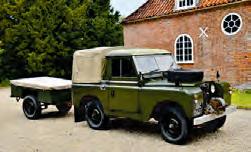
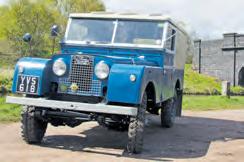
Pros: Heritage, charm, a true classic, the original Land Rover Cons: Availability of parts, price tag on early 80s Series I (1948-1958)
Cons: Not yet as desirable as the earlier Series models Series III (1971-1985)
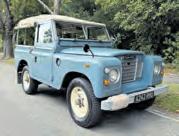
terms, keeping the same 2.25-litre engines throughout the length of its production run. In 1980, the engines switched to a more durable five-bearing crank rather than the old threebearing setup. The transmission also received syncromesh on all forward gears to make it easier to live with.
£2500-£35,000
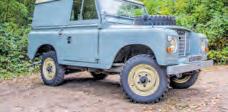
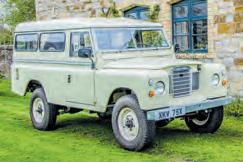
They still carry the simplicity of earlier Land Rovers, but the Series III remains the most affordable way into owning a leafer.
Pros: Most affordable route into Series ownership. Still has the Series pedigree. Parts still widely available
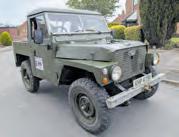
Lightweight (1968-1984) £3500-£22,000
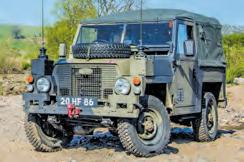
These military vehicles can easily be distinguished from regular
Land Rovers. To mimic the civvy Series machines, the Series III model built from 1972 onwards, also had its headlights switched out to the wings.
Lightweights add an extra dimension to owning a Land Rover. Their military history and details mean you get a truck with more stories to tell – and that stands
Early
These
Rovers
coilsprung suspension, new engines and a world-beating level of rugged off-road capability.
out from the crowd. They’re a rare breed, though – so if you’ve got one, it’s worth keeping hold of.
Pros: Not like all the other Land Rovers out there. Military background. Lovely 2.25 petrol Cons: Appearance isn’t to everyone’s taste. Exclusivity over regular models means they command a price premium
Don’t be fooled by high prices. Values have dropped in the last two years, and only a real rarity in pristine nick is worth the money that used to be commonplace.
Pros: Excellent parts availability. Easy to work on. Unlimited potential for mods and restos
much of that early charm. Prices seem to have peaked now, however they still remain strong for good examples.
A 2.25 petrol 88” would be our pick, as the diesel engines were underpowered and rather noisy.
refinement. While the engines have excellent longevity, they need to have been maintained properly. Be thorough in your checks, both under the bonnet and underneath the body.
refinement, but this is seen by many experts as the best Defender of them all.
The LT77 gearbox in the 200 Tdi is more truck-like than the later R380, and these vehicles didn’t come with bling. Just be sure it’s an original Tdi you’re getting, not an old Discovery conversion.
Pros: The perfect combination of tradition and modernity
Cons: Lots of horrible and/or deceptive ones around
Cons: Bulkheads and chassis rot, springs prone to seizing Series
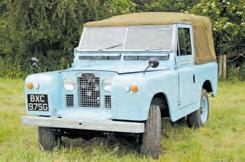
The Series II/IIA has a wider stance than its predecessor and adds an extra (thin) layer of
rarity – with all the cachet, pride and immense awkwardness that comes with this status.
By ‘rare’, we’re talking about less than 2500 Series IIA FCs in total. And they tended to have a very hard life, so not many have survived to tell the tale.
Pros: A sound investment to restore – and enjoy
Pros: A Land Rover like no other, if that’s what you want Cons: Especially brutal to drive, and to find parts Series IIA/IIB FC (1962-1971) £2500-£15,000
Forward-Control models differed from everyday Series IIs by
Only ever
the time came for demob. They were flogged off at very low prices and turned into off-road toys –not something you’d do with one today, given the rarity and classic value they’ve taken on.
having heavy-duty ENV axles, but engine-wise they had the familiar 2.25 petrol and diesel lumps. So, don’t expect performance – but do expect to be given an ‘interesting’ time in the workshop…
£7500-£26,000
Compared to the IIA/IIB FC, the 101 is more fun thanks to its V8 engine. It’s still a military tool, though – some still have fixtures and fittings from their Army life, which adds interest. This is a vehicle for enthusiasts, though, with costs that are sky-high even by Land Rover standards. Pros: Master of the road. Lovely V8 soundtrack. Everybody who sees one loves it Cons: Monumental running costs. Expensive to buy, too
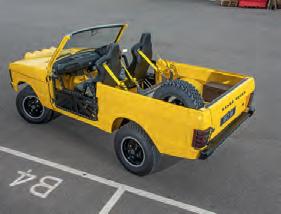
The 127
motor. It’s popular for homebrewed overland conversions, too. Almost all 127s have had an engine conversion by now, too. Lots to be wary of, then – but it’s a hell of a lot for your money. Pros: Enormous size means
work truck tend to go for a later 130, so the 127 is more of an enthusiast’s
The Series III wasn’t too dissimilar to the Series IIA in mechanical
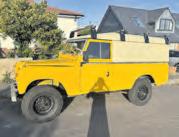
Forward Control Land Rovers are a cult within a cult. They’re a real
The Tdi engine, which arrived with the Defender name, can
was built on a special production line in Solihull which
Defender 300 Tdi (1994-1998)
The 300 Tdi engine is very different to the 200 unit it replaced, though
the two are related. It’s much more refined and smoother to drive, though there are more electronics involved so later versions in particular are less of a DIY fix.
The arrival of the 300 Tdi also brought with it the R380 gearbox. This used to have a terrible reputation for relability, but most have been put right by now and they’ve
£3500-£40,000
become sought after for their light clutch and better shift action.
It was during the Tdi era that Defenders started getting things like alloys, too. You might even find one that’s not been off-road… Pros: Strength and simplicity. Perhaps the definitive Defender Cons: Sure to be very different to when it left the factory
TDCi (2007-2016) £6500-£275,000
The last Defenders gained modern 2.4 and 2.2 TDCi engines and
smooth six-speed gearboxes, They still had phenomenal off-road ability and were even okay to sit in. Famously, this was the Defender that actually had a dashboard You can find special editions and boutique conversions to TDCi models that cost obscene amounts of money. You will pay a premium for any these late
It’s also a notable classic in its own way, as it heralded the start of the company’s modern era. It has its issues, though. The viscous coupling is expensive to replace and can be upset simply by running mismatched tyres. The 1.8 petrol used to be notorious for head gasket failures. Today’s replacements are much
are people who do just that, preferring to invest new-car money in a restoration than spending it on a current model.
It’s a smart policy, too. An early two-door can cost mega money, but any Classic will appreciate in value if kept in good condition –and sought-after rarities like the CSK and LSE can be a gold mine.
a strong performer. It does lend itself to being tuned though, so watch out for abused ones and knackered examples that have been pushed beyond the limit.
As with all Defenders, you’ll need a rear crossmember sooner or later – or even a new chassis.
still be a DIY machine. Parts are in plentiful supply, as is specialist knowledge – and it’s one of the best Land Rovers ever.
Defenders, however the era of skyrocketing prices seems to be over and TDCis have dropped further in value than the Td5. So a good 2.2. could now be quite a shrewd investment
more robust, but a late diesel is your best bet. Even these can go calamitously wrong, though. This was a more complex car than it needed to be, and buying one for sweeties now doesn’t change that.
Pros: Cheap to buy, no big rust issues, surprisingly able off-road Cons: All sorts of things can go wrong, some very expensively
An awful lot of Rangeys have been neglected and/or abused, and you can still buy they cheap. But if you’ve got the skills, and access to parts, restoring one would be the ultimate hobby that pays.
Pros: Most usable classic Land Rover, V8 power, ride quality
Cons: Rust, availability of parts for early models
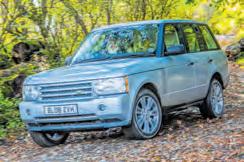
Range Rover (2002-12) £2200-£24,000
The Mk3 Range Rover hit new
of luxury and was more reliable than the P38. It’ll still cost a lot to run, however, and drivetrain faults and underbody corrosion are not unknown.
The TDV8 engine is sublime, but you’ll pay more to get one –especially the 4.4, though the 3.6 has all the power you need. The V8 petrol, on the other hand, is temptingly cheap. Guess why…
This isn’t a DIY motor, but it certainly is a Range Rover, with brilliant off-road and towing skills. It relies a lot on electronics, but they work wonders – and the deepdown engineering is very robust.
Pros: Great off-road, luxury, image, TDV8 powerplants
Cons: Very complex. Huge running costs
The Td5 engine is arguably Land Rover’s most reliable unit and it’s
Despite having more electronics than the Tdi, a Td5 Defender can
(2020-on)
If the subject of the new Defender comes up in enthusiast circles, try
The fourth-gen Range Rover is a majestic 4x4. All the engines in the
to steer it away on to something safer. Like Brexit, for example.
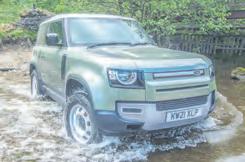
Much as it may infuriate purists, however, the Defender is actually a very wonderful thing. It’s kind of like an old one, only with space, comfort and equipment.
The big difference is that you can’t work on it yourself. This goes for maintenance and, crucially,
it replaced. It’s a refined and affordable SUV with a strong engine, good equipment and a decent level of practicality.
It’s become one of the most reliable Land Rovers out there, too.
But do be aware of the rear diff and Haldex unit for costly outlays.
The 2.2-litre diesel engine is a strong performer, though for a
own, even today. The problem is that they’re very complex and very, very good at going wrong. Air suspension failure is the norm. Head gaskets can let go. Electronics are laughably flaky. And parts can cost the earth – as will the labour bills. Perhaps worst of all, nowadays it’s very hard to find one you can be sure hasn’t
range supply copious amounts of power, and its road manners are absolutely impeccable.
It’s startlingly capable off-road, too, even if getting one muddy would feel like bad form. Most that leave the tarmac probably do so only when their owners are in the mood to blow some grouse out of the sky.
a supreme off-roader as well as
Pros: Off-road capability, power, overall reliability. Very well suited to being modified
Cons: Rear chassis, premium prices, monstrous road tax on later vehicles Defender Td5 (1998-2007) £3000-£35,000
£45,000-£185,000
making modifications – a market Land Rover wants to take back and have for itself. It won’t hold its value long-term the way an original-shaper does, either. But this is still a superb vehicle.
Pros: Comfort, capability, rugged fitness for purpose
Cons: Not cheap to buy. Lacks the old one’s basic charm
bargain search out one with the unpopular 3.2 petrol unit. Either way, it’s a fine SUV to drive. Prices have fallen since the production ended, too – £15,000 now gets you a late one on tiny miles.
Pros: Reliability, refinement, economy of diesel engine
Cons: Transmissions can wear quickly if used for towing
spent at least part of its life being worked on by idiots Still, you’ll get a classy motor with proper off-road and towing skills. It’s becoming a classic, too, and prices are still tiny considering everything you get.
Pros: Luxury, price, a Land Rover that doesn’t rust Cons: Electrics. Be very afraid
Inside, the Range Rover’s cabin is superb, with sumptuous trim and cutting-edge equipment. Prices are, of course, as immense as the vehicle itself. But if you can afford it, so too is the presence a Rangey will give you.
The Freelander 1 is a cheap gateway into Land Rover ownership.
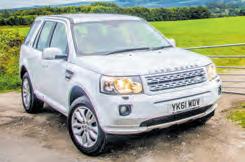
The Freelander 2 was a massive improvement on the model
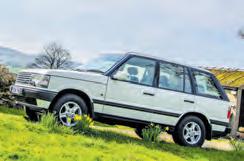
The original Rangey is a classic you can use everyday – and there
A Mk2 Rangey in good working order is still a sensational car to
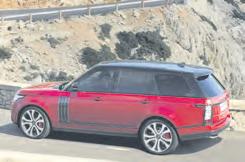
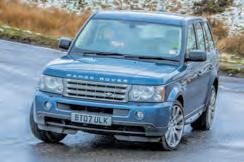
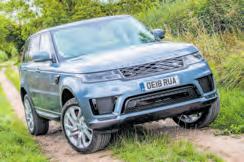
Range Rover Sport (2013-22)
The second-generation Range Rover Sport is 400kg lighter than
the original, meaning it’s almost economical to run. It feels really nimble and agile on the road, too, and it comes with a range of engines giving it a brisk turn of pace.
Some won’t like the flamboyant posture, while others will love it. Either way, inside the cabin it’s very nearly as luxurious as the full-house Range Rover.
£13,500-£65,000
If you can afford the SVR model, you’ve got a super-SUV with rap star image. In every case, though, running costs will be vast. Parts don’t get any cheaper because you bought it second-hand…
Hilariously, this is what counts as the affordable way in to owning a
new Range Rover. The Sport is less about being chauffeur driven and more about lording it over other aspirational school runners, but once again it’ll be lovely to drive.
Like the full fat Range Rover (a phrase which has never felt more appropriate), the Sport is available with an old-school V8 engine that gives you racecar performance in
£80,500-£145,000
return for NASA-level emissions. Most UK customers with opt for an altogether healthier plug-in hybrid, but they’ll still get a vehicle that’s brutally fast a well as being able to do the normal Range Rover stuff.
Pros: Smooth, refined, comfy… and game for a laugh, too
Cons: Still hasn’t quite shed its proceeds-of-crime image
When the Evoque was launched, it signalled JLR’s intent on hitting
and
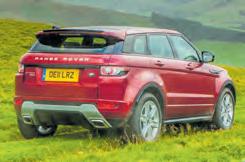
Evoque (2011-19) £4500-£31,000
the masses. Given that it was the company’s fastest-selling vehicle, they clearly hit the brief, even if it wasn’t for the traditional Land Rover owner.
It’s actually still a capable thing off-tarmac – but it’s definitely more at home on the road. Nevertheless, it is economical by Land Rover standards and
because of its particularly handsome exterior. It’s based upon the same architecture as the Jaguar F-Pace but has greater off-road ability and is available with a wide choice of engines, most of which combine good economy with usable everyday performance.
because there are so many out there, used prices are tempting. There’s a Convertible model, too, as well as three and five-door tin-tops. We say stick to the latter, and be sure to get one with 4WD.
Cons: Cramped rear seats, not as practical as a Disco Sport Range
Pros: Economy, handling, iconic concept-car image
Evoque has adopted a similiar back end to the larger Velar. It’s not just the exterior that mimics the looks of the larger vehicle, however, as the Evoque has gained the latest Touch Pro Duo tech and a hike in quality.
The main highlight of the new Evoque is the fact the majority of the range is made up of mild
hybrids, available with diesel and petrol engines combining to an electric motor. Only the base D150 Evoque escapes the electrification, and we’d avoid it as it doesn’t have four-wheel drive.
Pros: Feels like a proper Range Rover inside
Cons: Petrol engine is poor on fuel economy, even as a hybrid
it came out. It was very much designed to be a trend setter. But is there a whiff of style over substance? Well, it’s a very good SUV. But you don’t half pay a premium for those suave looks...
Pros: Stylish design, chic cabin, excellent tech features
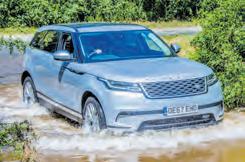
Cons: Feels like an indulgence, especially at such a high price Range Rover Velar (2017-on) £22,500-£85,000
The interior was Land Rover’s most advanced cabin yet when
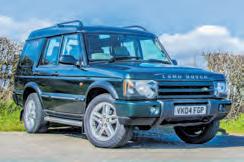
most most reliable units ever. It drives well, too – mated to a manual box it has more guts even than the V8 option, which is surprisingly bland but predictably thirsty. Whereas the Disco 1 was prone to body rust, the D2 is fine here. Instead, its chassis rots like a carrot, especially towards the back end. Also at the back, seven-seat
a Discovery in name only.
It’s a more practical proposition than the closely related Evoque, and you won’t need to live with the fear of Posh Spice jokes.
models had air-suspension, with all the horrors that brings.
Mainly, D2 owners will tell you about rogue electronics. And leaky sunroofs. They still love their trucks, though, which says a lot.
Pros: Td5 power and reliability, great all-rounder, lots of choice Cons: Chassis rust, electronics, leaky sunroofs, air suspension
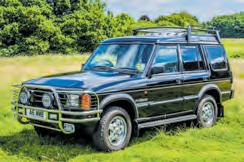
with the same 100” wheelbase and a slick body containing a spacious, flexible cabin. It was well equipped and refined, and it came with the wonderful Tdi engine.
There are some tidy deals to be had on late high-spec examples now – though if you do a
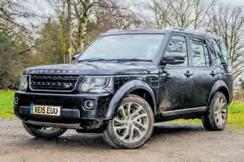
The Disco 3 is an astonishing allround vehicle.
Over time, the Disco’s epic ability meant almost all of them were hammered at playdays. Lower body rust is a big killer, too. So it’s rare to find a good one now,
and capable off-road, genuinely luxurious and a giant of a tow truck, and as well as being able to seat seven adults it can be turned into a van with a totally flat rear load area.
But it was also astonishingly complex, and these days it has a reputation as a money pit. Air suspension and electronic
and when you do they tend to be priced with a lot of optimism. Very early ones in tip-top condition are full-on classics, too. For a sound one to own, we’d look for a tidy 300Tdi.
Pros: Price, practicality, parts availability. Epic off-road ability
Cons: The body rusts like it’s been doused in sea water Discovery (1989-1998) £800-£15,000
handbrakes are big sources of woe, cam belts are a body-off job to change and rust is becoming more of an issue. Get a good one, though, and it’s all the car you’ll ever need.
Pros: Good at everything. Lots of accessories available now
Cons: The phrase ‘money pit’ crops up time after time
after the first. That’s because once again, it’s related to the Evoque, which was ready for a full new model in 2019.
The Sport is a premium midsized SUV with seven seats and a decent level of off-road ability. It’s a massively popular choice for the school run – and, with the arrival
Most Range Rovers all look the same at the front now, but the new
The Velar a competent cruiser
has received numerous accolades
The original Discovery was based on the Range Rover of the time,
The Disco 2 is powered by the Td5 engine, one of Land Rover’s
It’s
Disco Sport came along only four years
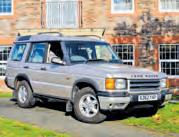
Series III 88” 2.25 petrol CSW (1982). 72,000 miles. Very original. Clean underside, Dinitrol treated. Factory interior. Original engine bay stickers in place. New carb, HT system, brakes and pipes. £17,995. Fareham. 07972 787915 12/25/002
88” Series I HT (1957). 2.5 petrol with rebuilt carb, new
Defender 90 300Tdi ST (1998). 35,500 miles. £27k professional recommissioning inc major engine rebuild and new clutch and master cylinder. 18” alloys. MOT expired. Excellent condition. £17,500. Pevensey. 07840 473763 01/26/004
Defender 110 2.5 n/a (1991). 47,000 miles. Military ‘Helistart’ truck used for servicing choppers. Full body-off restoration in 2019. Recent water pump, cam belt, head gasket. £11,995. Winchelsea. 07823 890891 13/25/003
Series III 88” 3.5 V8 ST (1979). 88,594 miles. Restored 2018. Galv chassis, rebuilt engine and axles, parabolics, alloy rad, new hood and sticks. Edelbrock carb. Good bulkhead and doors. £10,995. Consett. 07968 176213 12/25/003
Series II 88” petrol SW (1960). New Autosparks wiring loom. Lead tablets in fuel tank. Freewheeling hubs. Roof rack. Some spares included. New project forces sale. £10,500. Doncaster. 07570 598261 12/25/004
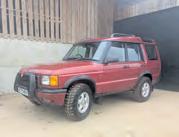
Snorkel, leather, Stage 1 map, air-con, cruise. MOT Aug. £27,500. Pershore. 07736 649077 01/26/011
12-volt. New rear halfshafts. Defender seats and cab. £6500. Buckingham. 07506 991889 12/25/007
Range Rover Vogue 3.9 EFI (1993). 125,600 miles. ABS, air-con, sunroof, air springs. TWR alloys. Suspension, upholstery and headlining done. Solid underneath. FSH. MOT Nov 26. £11,995. Telford. 07855 490174 01/26/003
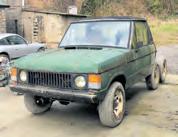
Range Rover 6x4 (1974). 200 Tdi (I think), manual. Sills and pillars welded but still a project. Clutch not working. Starts and run in 1st low. Believed to have been owned by a circus. £2950. Swansea. 07866 618267 12/25/005 110 beach truck (1987). 217,000 miles. 200 Tdi. 2” lift, custom half-doors and rear fabric, snorkel, winch, upgraded diffs, bull bar, rock sliders, new exhaust, leather seats, good tyres. MOT May. £5395. Ipswich. 07572 069013 12/25/001
Series III 88” diesel ST (1983). 78,000 miles. Perfect chassis, bulkhead and body. Overdrive. New hood and sticks.
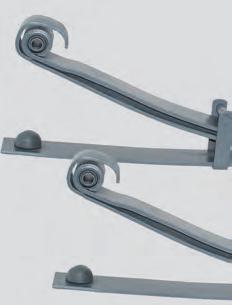
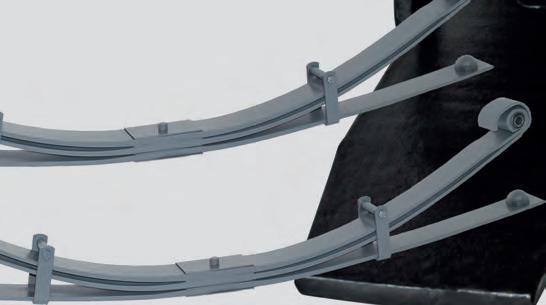
OEM Spec Springs
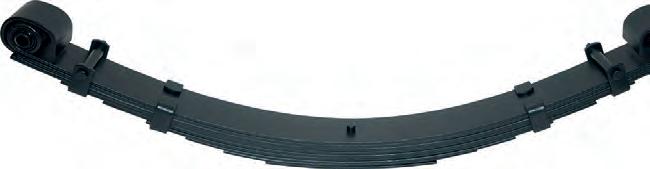
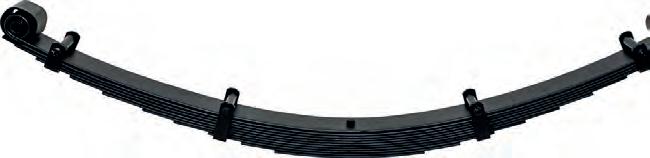
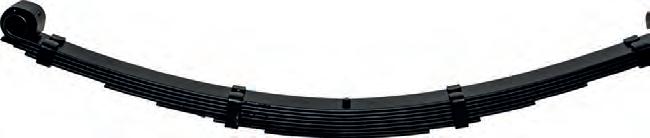
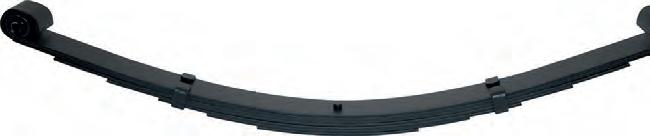
Leaf Springs
241283G SWB Petrol Front 9 Leaf RHS
242863G SWB Petrol Front 9 Leaf LHS
265627G SWB Diesel Front 11 Leaf RHS
264563G SWB & LWB Diesel Front 11 Leaf LHS
517588G SWB Rear 11 Leaf RHS
517589G SWB Rear 11 Leaf LHS
276034G LWB Front 11 Leaf RHS
265627G LWB Diesel & Petrol Front 11 Leaf RHS
279678G LWB Rear 10 Leaf RHS
279679G LWB Rear 10 Leaf LHS
272967G LWB Heavy-duty Rear 8 Leaf RHS
272968G LWB Heavy-duty Rear 8 Leaf LHS
535173G LWB - 1 Ton Rear 9 Leaf RHS & LHS
562631G Lightweight Rear 7 Leaf RHS
562632G Lightweight Rear 7 Leaf LHS
Parabolic Springs
The Britpart range of high quality parabolic springs are made to the exacting specifications as fitted to Santana specification vehicles. Manufactured to an OEM standard and quality by using the correct grade alloy steel - 60SiCr8. Heat treated consisting of hardening & tempering and springs are shot peened before painting. These parabolic springs will bring a comfortable ride and improved handling to your Series vehicle. Note - Includes ‘U’ bolts and nuts.
DA4106 Series - SWB/LWB 2 Leaf Front kit pair
DA4107 Series - SWB 3 Leaf Rear kit pair
DA2003 Series - LWB 4 Leaf Rear kit pair
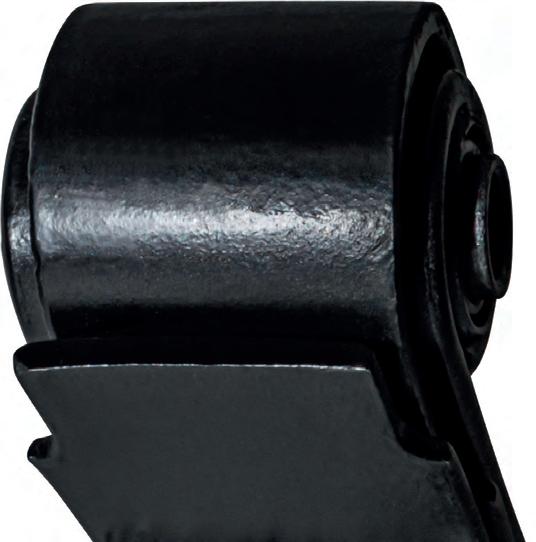
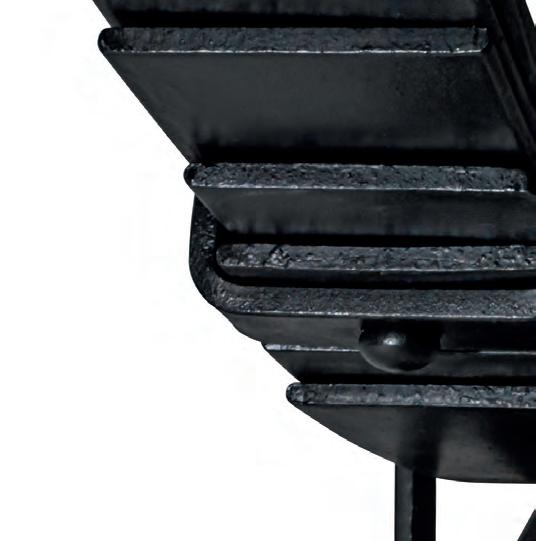
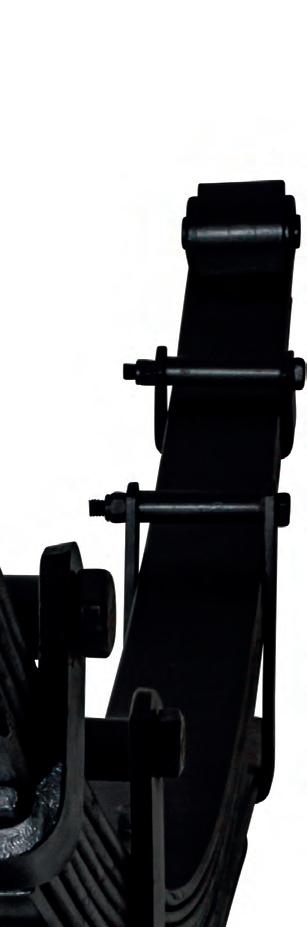
These springs are manufactured to the original OEM specification and constructed from the correct grade alloy steel - 60SiCr8. Each leaf is heat treated consisting of hardening & tempering as the Land Rover engineers specified. Fitted with OEM bushes, these leaf springs will therefore give you years of service with the correct ride comfort for your Series vehicle.
“Years of service with the correct ride comfort...”