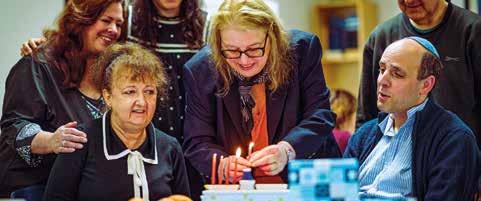
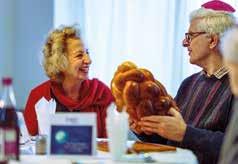
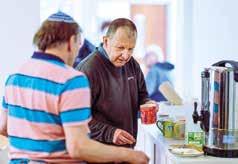
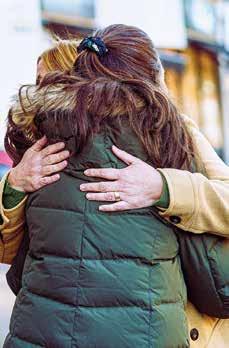
2025 has been a difficult year for our community. The unease, the tension on the streets, the brutal moments we’ve witnessed, none of this has left us untouched. Many Jews have found themselves instinctively stepping back a little, lowering their profile, wondering whether visibility still carries a cost.
Yet if there is one time of year that speaks directly to this moment, it is
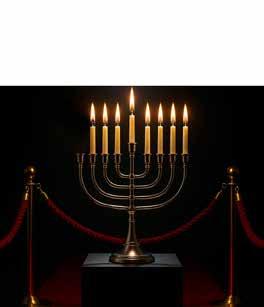
The mitzvah of the menorah runs on one simple idea: be visible. Place the lights where they can be seen. Let them speak. Let them shine. Jews have been doing this for more than two thousand years, through calm periods and turbulent ones alike, because the message of the menorah is timeless: even when the world feels uncertain, we do not disappear.
This is the spirit behind ‘Chanukah Presence’, Aish’s call this year for every Jewish home to bring its light to the forefront. Not as a statement of defiance, not as a political gesture, but as an expression of Jewish confidence and continuity. Presence is not noise. Presence is not provocation. It is simply the quiet courage of being who we are with warmth, dignity, and pride.
The miracle of Chanukah was not just that the oil burned eight times longer than it should have. The first part of the miracle was the actual decision to light the menorah in the first place. The Temple had been desecrated. The atmosphere was fragile. The future was unclear. And yet, the Maccabees chose to begin again, with small pure flames when there wasn’t even enough fuel in the tank. That choice is what changed everything.
Their message is as relevant today as it was then: We rebuild a shaken world by adding light, not by withdrawing from it.
At Aish, our mission throughout the year is to nurture that inner light, to help Jews reconnect with their heritage, deepen their learning, ask big questions, and find meaning that lasts. But this year demands more than private inspiration. It calls for visible confidence.
Chanukah Presence: Why This Year, Light Matters More
For a community that stands tall, even in a time that pushes people to shrink.
A menorah is a powerful symbol. It tells a story of continuity that no headlines can erase. It reminds us that we have been here before, many times, and yet the Jewish flame has never failed. It reassures our children that their identity is something to cherish, not to manage or mute. And it sends a message to the wider world that Jewish life is vibrant, contributing, and here to stay.
Chanukah presence begins in the home, singing the blessings and songs with family and friends, sharing the story of the Maccabees, creating moments of warmth around the candles. But its impact goes far beyond our living rooms. It creates lasting connections, inspiration and a confident message for generations to come.
Our #chanukahpresence social media campaign involves taking a selfie with your unlit menorah in a public place and submitting it to us to be entered into our competition for a chance of winning amazing Chanukah presents!
We’re looking for photos from the kind of places where we would like to shine a bit more light to make a statement of presence this year. The more creative the better! To find out more go to – https// www.instagram.com/aishukonline/ This Chanukah, let’s fill our homes with light and our world with confidence. Let’s remind ourselves, that all it takes is a little bit of light to dispel a huge amount of darkness.
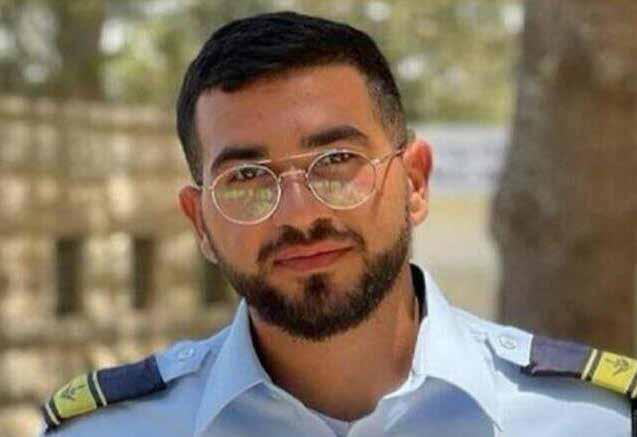
Staff Sgt. Ran Gvili, the last Israeli hostage held captive in Gaza, will be released for burial ahead of Chanukah on Sunday night.
The opening night of the ‘festival of lights’ marks 800 days since the worst atrocity against Jews worldwide since the Holocaust.
Tragically, Hamas claims it does not know the whereabouts of Gvili’s body.
According to the ceasefire agreement, Hamas were meant to release all hostages within 72 hours.
Gvili, 24, a Yasam counter-terror unit police officer from Meitar, eliminated 14 terrorists and rescued around 100 people who fled the Nova music festival, before being murdered. His body was taken from Kibbutz Alumim to Gaza.
Gvili was due to have surgery for a broken
shoulder when he defended his country as the massacre began near Alumim. An IDF panel ruled that Gvili was dead in January 2024.
Gvili’s mother, Talik, says Israel cannot heal until her son or remains are returned. She reportedly said: “We’re at the last stretch… without Ran, our country can’t heal.”
“We’re not alone,” Talik added, due to ongoing support for her family across Israel.
“We’re happy everyone has returned, except for Ran. We have become one big family, so every hostage who returned brought relief, closure. But somebody had to be last, and it looks like that was our fate. But that was his thing, to make sure everyone else was okay first.”
Talik continued: “We really hope that all people in the world... want to end this situation and go to the second phase, so Hamas must bring Ran home… He saved Kibbutz Alumim... and he saved Israel, so Israel has to save him now and bring him back home.”
Continued on page 4
Ran Gvili was last seen at 10:50 a.m. October 7, 2023 near Kibbutz Alumim PHOTO: COURTESY
Continued from page 1
Speaking about the ordeal when hostages return, Talik said: “My wish is that no mother will feel what I feel in the whole world. We are strong people, but what is inside, you cannot imagine… They stole my child and I can do nothing, just pray and come to visit people and beg for help… We don’t have night. We don’t have day. We have nothing.”
She added: “All the families are together with us and all Israeli people are with
us. It (the support) is bigger than before because all Israeli people are now focused on one thing, bring Ran home and then do the second phase (of the ceasefire deal).”
Talik concluded: “We are very proud of Ran. He’s a hero in Israel... We want him back and to try to sleep well and breathe well again.”
Ran’s father, Itzik, has reportedly expressed concern Israel will not recover him.
“We pray that there won’t be another Ron Arad, another Goldin, and that we won’t carry this around for many, many years,” he told Israeli media. “Just as Ran didn’t forget the country that day (October 7), so I don’t want the country to forget him.”
Gvili fears the Hostages and Missing Families Forum will close because there is “no justification” for the organisation focused on one person.
Prime Minister Benjamin Netanyahu
described Ran as an Israeli hero. “We are determined to bring Ran back for a proper Jewish burial and we will spare no effort to do so,” he promised. Arad, an Air Force navigator who ejected over Lebanon in 1986, was captured and handed to Hezbollah. He is still missing.
Lt Hadar Goldin was killed by Hamas in
TOWS-R-US
Spend your retirement doing what you love - not worrying about money
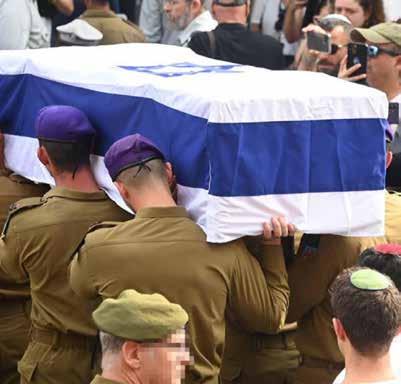
The funeral of Lt. Hadar Goldin
PHOTO: YAIR SAGI
Herzog warns of rising antisemitism
BY DAVID SAFFER
President Isaac Herzog condemned extremist rhetoric and global antisemitism at the 101st annual Chanukah dinner of Yeshiva University in New York.
Awarded an honorary doctorate, Herzog acknowledged the American Jewish community and called for the release of Israel’s final remaining hostage, Ran Gvili, a police officer who fell heroically on October 7th 2023.
Herzog also thanked President Donald Trump for his leadership in securing the
return of hostages from Gaza and advancing a new regional diplomatic vision.
Herzog said Yeshiva University for over a century has been a “bastion of Jewish leadership, Jewish thought and Jewish pride”.
Regarding global antisemitism Herzog warned: “Here in New York, and all across America, the turbulence is unnerving, and the challenges facing our people, the Jewish people, are growing.
“Institutional antisemitism, Holocaust inversion, conspiracies left and right, Jew-hatred platformed on social media,
and moral bankruptcy masquerading as social justice have all disturbingly increased. Where Jews were once ‘Yids’ in America, Zionists are now called ‘Zios.’ Jews are always the first, but never the last, to be demonized, targeted, ‘other-ized’.”
Herzog expressed concern over New York mayor-elect Zohran Mamdani.
“Recent developments in New York City have raised a red flag,” he observed. “Here, we see the rise of a new mayor-elect who makes no effort to conceal his contempt for the Jewish democratic
State of Israel, the only nation state of the Jewish people.”
Referring to protests outside an aliyah event at a Manhattan synagogue, he added, “The incoming mayor’s response was to suggest that Jews who consider fulfilling the ultimate Zionist dream of making Aliyah are violating international law and the sanctity of the synagogue. This rhetoric is outrageous.”
Rehovot
Tel
Zichron Yaakov
Matthew Lachs matthew@theroundtree com
Saul Fagelson saul@theroundtree com
Martin Frydenson martin@theroundtree com
Contined from page 6
Herzog continued: “Returning to Zion and connecting to Israel have been cornerstones of Jewish faith and Jewish tradition for thousands of years. Delegitimising the Jewish people’s right to their ancient homeland and their age-old dream of Jerusalem legitimises violence and undermines freedom of religion. This is both anti-Jewish and anti-American.”
Calling for action against antisemitism, Herzog told delegates: “We must use any legal means at our disposal, advocacy, education, leadership, civic engagement, media, social network, to combat this surge of hate and antisemitism.”
Addressing extremists, he added, “To the haters and bullies, the vile influencers and violent protesters I say: you will never succeed.”
Regarding Israel’s trauma following the 10/7 terror attack, Herzog called for the immediate release of Gvili and said he and his wife Michal had made over 1,500 bereavement and shiva visits during the war.
“Never have Michal and I wept over so many people we never knew,” he noted.
As for the US’ support since 10/7, he commented: “From the very first hours, America stood firmly by Israel’s side, demonstrating friendship and moral clarity, and since assuming office, President Trump’s personal involvement propelled the return from captivity of all but one of our precious sisters and brothers.”
Herzog added: “President Trump outlined his plan for the Day After the
War, demonstrating immense diplomatic craftsmanship. His plan includes uprooting Hamas militants from Gaza and deterring our enemies, forming a basis for renewed dialogue across the Middle East, including with Syria, Lebanon, and Saudi Arabia, and outlining a tangible, concrete path towards partnership, collaboration, and future peace throughout the region.”
Herzog thanked Trump for his leadership, courage and steadfast support of Israel.
“I pray that he will succeed in realising his vision for a new horizon in the Middle East,” he noted.
He concluded: “Our people have been to hell and back, yet we are here and we shall overcome. We are an eternal people and that there will always be hope for our future.
Herzog also addressed the Biennial National Assembly of the American Zionist Movement, again addressing antisemitism, challenges affecting New York and Israel including the Iranian regime.
Regarding antisemitism, he said: “No Jew should be harassed anywhere in the world because of his or her faith. We have to fight together with all the legal tools we have to combat antisemitism and explain our case that the only nation state of the Jewish people is protecting the free world.”
Herzog rejected genocide
claims made against Israel.
“Israel is a law-abiding nation, the law is part of our DNA,” he said. “Our guidelines are the rules of international humanitarian law. Our sons and daughters went to fight in order to defend our people and operate according to the rules.”
Herzog added: “If we make mistakes, we also expose them and deal with them. Israel has never operated in any genocidal form. We supplied humanitarian aid from day one. We care for the pain of the people in Gaza. We care, and I still care very much, for their future.”
He continued: “We’re a very strong, resilient nation which carries a scar of
agony from generation to generation, in this generation, we are carrying the scar of pain and agony of October 7th and onwards.”
Noting the Iranian threat against Israel, Herzog warned: “Iran is trying to regroup and continue the battle against Israel big time with all of their capabilities. They want to get to the bomb. They want to advance their terror agencies. We follow this closely. We see what they’re trying to do in Lebanon. We see what they’re trying to do elsewhere. We should not be naive for a moment.”
CAA call for police chief to quit
BY ADAM MOSES
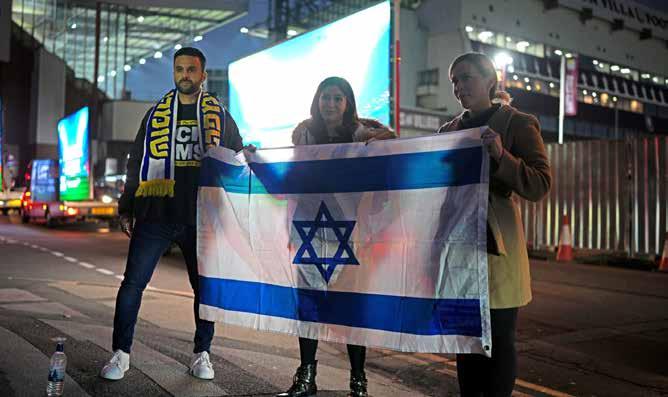
West Midlands Police have been condemned by Jewish leaders over its handling of a Europa League tie between Aston Villa and Maccabi Tel Aviv at Villa Park last month.
Maccabi declined to accept tickets after toxic media coverage followed local police classifying the game “high risk” based on intelligence and the Safety Advisory Group’ advice to Villa.
Israel’s Foreign Minister Gideon Sa’ar labelled the decision “shameful” as Maccabi received messages of support across the footballing community after days of speculation.
Jewish organisations reacted with anger at the ban of Maccabi fans.
Campaign Against Antisemitism sought a judicial review and have continued to follow the fiasco.
As disturbing news continues to emerge, they have called for West Midlands police chiefs to quit.
Assistant Chief Constable Mike O’Hara has apologised after reportedly misleading Parliamentarians that local Jewish community leaders agreed to the ban.
Questioned by the Home Affairs Committee, O’Hara told MPs that Jewish community representatives in Birmingham said they did not want Maccabi fans attending the match.
Asked for confirmation by Conservative MP Karen Bradley, chair of the committee, O’Hara noted that a number of “faiths, backgrounds and ethnicities”
were concerned.
Pressed further if this included Jewish people, O’Hara stated it was documented in the risk analysis.
O’Hara has since reportedly written to the Jewish community to apologise as it was not his intention to imply Jewish community members “explicitly expressed support for the exclusion of Maccabi fans”.
Chief Constable Craig Guildford told the committee police evaluation was based on information from Dutch police commanders before the game.
Ruth Jacobs, Birmingham and West Midlands Jewish Community chair, reportedly said she was horrified at the comments.
“We in the Jewish community could not imagine who from our community would have said such a thing, to have agreed to the ban,” she noted, adding that trust was now undermined.
“Police chiefs have betrayed the Jewish community,” raged a CAA spokesman.
“Claiming that Birmingham Jews supported the ban on Israeli fans at the Aston Villa match was false and the excuse that it was ‘not intended’ is unacceptable.
Both the Chief Constable and Assistant Chief Constable have defended a process built on fabricated and misleading intelligence and minimal consultation.
The full evidence must be published, the parliamentary record corrected and those responsible for this whole terrible debacle must resign immediately.”
Jonathan Metliss, Action Against
ISRAEL LEGACY MISSION
A celebration of JNF UK’s vital work both in the North and South of Israel
9TH-16TH MARCH 2026
Walk in the footsteps of history Celebrate Israel’s amazing achievements Enjoy the trip of
PRICE £1800 PER PERSON EXCLUDING FLIGHTS
For more information and to secure your place, please contact the JNF UK legacy department T: 020 8732 6121 E: legacymission@jnf.co.uk
JNF UK • CHARITY NUMBER - 225910
Discrimination chairman, added: “The saga continues. O’Hara’s apology is totally inadequate. O’Hara, the Chief Constable and all those connected with this iniquitous decision should resign or be removed from office by the relevant authorities.”
He added: “This confirms the wholly and clear antisemitic nature of the ban and degree of two-tier policing in the UK to the detriment of the Jewish community.
“This follows police actions outside St John’s Wood Synagogue and failure to deal with provocative anti-Israel and pro-Palestinian marches as other examples.
“West Midlands Police and those associated with banning Maccabi Tel Aviv fans should be ashamed of themselves as should all those in Government and local MPs who deliberately disrespected
not only the Maccabi fans but the whole Jewish community. When will heads roll? We wait with baited breath.”
Michael Rowe, Young NJA chair, commented: “Yet again, West Midlands Police have created a false narrative on this issue and have now had to apologise for misleading MPs.
“Let’s be clear, West Midlands Police have given in to mob rule who demanded that Jews and Israelis be banned from attending a football match. It is disgraceful that West Midlands Police have still not apologised for taking this step in the first place, based on false information.
“Jews in Britain must be able to trust the police. Urgent action is needed to instil this confidence which is currently non-existent.”
A police spokesperson said: “It was never the intention of the officer to imply that there were members of the Jewish community who had explicitly expressed support for the exclusion of Maccabi fans.”
“We recognise that this has been a difficult time for our local Jewish community, we therefore have and continue to actively engage,” they added.
The match was policed by 700 officers with a handful of arrests. Before the game pro-Palestinian supporters and a small group of pro-Israeli protesters gathered outside the ground.
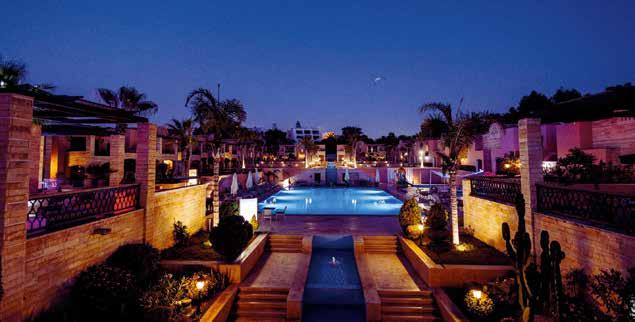
A Slice Of Heaven Pesach 2026
Rhodes, Greek Isles
5 Star Exclusive Pesach Package Includes:
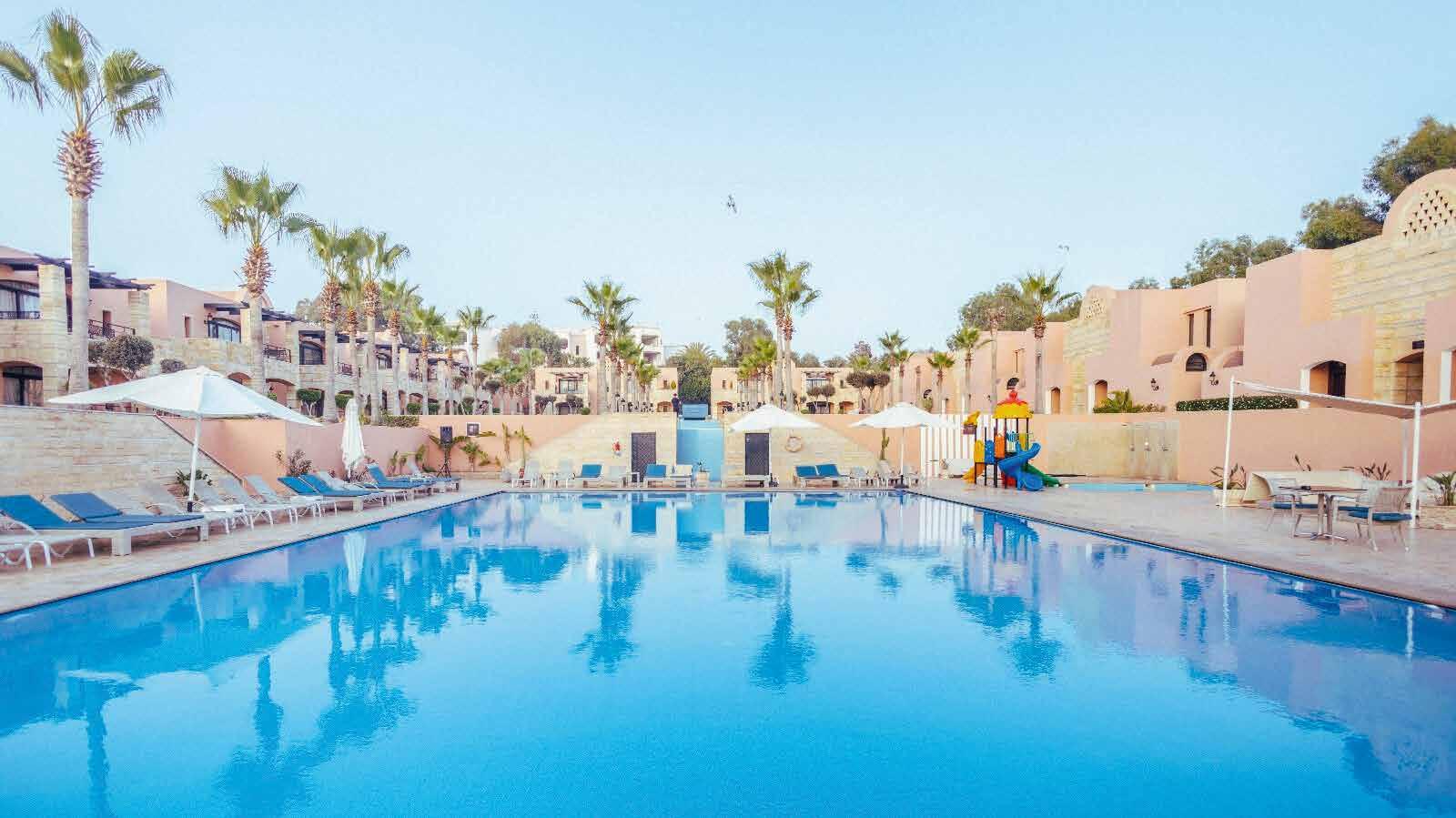
Luxury Beachfront Resort: Exclusive use for 650 guests, featuring a Spa and wellness centre, lagoon and heated pools, 20 minutes from Rhodes Airport.
Premium Accommodation: 10 or 12-night stay in a stunning, fully kosher, Chag friendly environment.
Elegant & Gourmet Dining: 3 daily meals, table wines, soft drinks, early kids’ dinners, grand Shabbat & Chag kiddush, plus all day lobby refreshments, snacks & beach bar happy hour.
Pesach Sedarim: Private, family, and communal seder options in a warm Chag atmosphere
Inspiring Program: World-renowned scholars, guest speakers, uplifting tefillot, and engaging learning sessions for English speakers.
Family-Friendly Fun: Exceptional kids’ club, teen chill zone, and tailored entertainment for all ages.
Optional Excursions: Day trips and attractions to explore Rhodes and its surroundings.
Peace of Mind: Professional security team and expert hosting by David & Chana Walles.
Scholars, Guest Speakers, Entertainers: R’ David Lapin, R’ Laibl Wolf, Meira K, Effi Kolatch, R’ Yossi Fachler, Maestro Yossi Shwartz, Shay Barak, Shlomi Lanyado, Daniel Harel, & more!
10 nights Tues. 31 March to Friday 10 April
12 nights Tues. 31 March to Sunday 12 April
PRICE STARTS from 3450€ Per Person *double occupancy
David & Chana Walles Hosts
Arik Porat Executive Chef
Kosher supervision of
Rabbi Shmuel Bornstein
Glatt Mehadrin, Non-Gebrochts Non - Kitniyot, Gluten Free
Young professionals Shabbaton for LSJS’ flagship Rabbi Sacks Fellowship programme
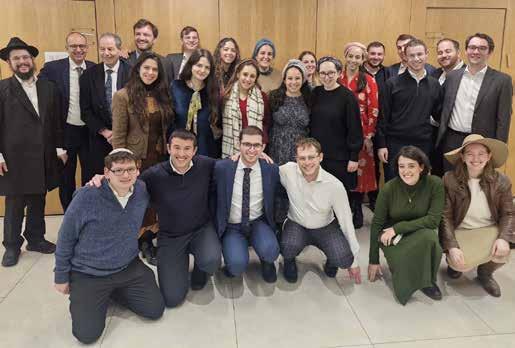
The LSJS (London School of Jewish Studies) Rabbi Sacks Learning Fellows gathered recently for a Shabbaton at South Hampstead Synagogue. This year’s fourth cohort of 24 exceptional young professionals came from across the UK, with some travelling from as far as Mexico and Israel.
The fellowship explores key areas of Jewish thought, such as covenant, free will and the nature of evil, through an honest and authentic discussion of traditional and modern sources. The core curriculum is based on a syllabus originally devised by Rabbi Sacks in 1978 for students, and updated by LSJS, to include Jewish approaches to contemporary issues, such as sustainability, social justice and AI. The Fellowship is taught by Rabbi Sacks’ key students, many of whom teach regularly for LSJS, and is led by Rabbi Dr Raphael Zarum, Joanne Greenaway and Michael Rainsbury.
“There is such a thirst for authentic, meaningful and outward-looking Jewish learning. Our Fellows are talented and lead busy lives - yet make time to invest in their Jewish learning journey, and that is truly inspiring,” said Michael Rainsbury, Head of Adult Education at LSJS. As well as the learning, the fellowship
encourages community activism. Each fellow undertakes a project to address an issue in their community, workplace or sphere of influence. Rabbi Eli Levin of South Hampstead Synagogue invited three fellows to address the community on Shabbat morning to share their ideas for addressing issues in their communities.
Galia Daniel spoke about the absence of Modern Orthodoxy and female role models in her home community of Mexico City and her decision to be a teacher. Nessya Kamhi discussed navigating Sephardi identity within predominantly Ashkenazi UK environments and advocated for the importance of including different traditions in our Jewish life. Shirly Piperno, from Italy, now living in Zurich, described the lasting impact of WWII on Italian Jewry and how to think about the challenge of disappearing traditions in many small communities in Italy.
“Attending the Shabbaton was truly incredible. I got to meet so many brilliant people; both the participants and the teachers, all united by the same goal: to live and share a more meaningful, more alive Torah. It was deeply inspiring to see people so committed to their learning and personal growth,” said Galia Daniel.
“I joined the programme because I’ve always been a huge admirer of Rabbi Sacks’ Torah — his teachings are so profound, meaningful, and truly life-changing. I hope to continue learning from his ideas and, hopefully, become an ambassador of his Torah within my community in Mexico.”
“The Shabbaton set the tone for the year ahead, combining engaging sessions and inspiring speakers with the chance to connect with other Fellows. Hearing from Gila Sacks was a particular highlight; it
was so special to hear a more personal side of Rabbi Sacks. I’m looking forward to learning from outstanding educators and contributing a project that gives back to the wider community,” said Sacks Fellow, Natalie Lang.
As well as a talk from Gila Sacks on her father’s life and legacy, other highlights included a Q&A session with Rabbi Dweck as well as talks with Rabbi Dr Raphael Zarum and Michael Rainsbury.
LSJS Rabbi Sacks Fellows with Michael Rainsbury and Rabbi Dr Raphael Zarum
Don’t Judge A Pesach Program By Its Cover
BY EVEY JOSEPH LEIBOW
Before writing a previous article, I posed a question on social media: What words come to mind when you think of Pesach Programs?” The spectrum of answers was more vast and polarized than I had anticipated. Many were positive, including: freedom, excitement, relaxing and good food. Some were comical: I wish, weight gain, yes please! And then some were rough: indulgent, too much money, gluttony, wasteful and a few more. The truth is that I know very few people whom, if offered a low or no-cost program, wouldn’t run so fast you could actually see cartoon-like skid marks behind them. I wondered if the people who responded had experienced programs first-hand, or whether the mirage-like fantasy of Pesach programs or their Jewish urban legends had informed their answers. Having attended a number of programs in different cities, states and countries, I feel comfortable sharing that the reality may surprise you.
“Pesach programs are indulgent.” The kosher-observant community is vast. We have a broad crowd from Satmar chassidim to Conservative Jews and beyond. When many in our community struggle to pay for tuition, these programs can seem unnecessary and “ridiculous” even to some. So bear with me when I say that there are a number of situations that I can personally describe, where maybe we could substitute the word “indulgent” with “supportive” or “unifying.”
I was once on a program in California. I hadn’t been on a program in some time, and having been absent from “the scene” for a while, I forgot what they were like. As such, I had internalized some of the stereotypes of what Pesach programs were like- including indulgent. However, what I saw just wasn’t that. I observed a long, extended table at a communal seder, with a multi-generational family who had traveled from all over and even outside of the country to be together. They were dressed in what you might expect a traditionally religious, yet not necessarily observant family to wear. They weren’t dripping in designer labels or diamonds. They were just a family who realized that it made more sense to gather together and eat at a hotel for the holiday, where members could stay for the whole or part of the chag. Another family had flown in from New York, including a handful of adult siblings and their older mother. They had wanted to spend the holiday together, but didn’t want to burden their aging mother with having to do the extensive amount of preparations that the holiday entails, nor did any of them have the space to host the whole family in any one of their homes. They each paid for their own portion and this was their vacation for the year. Not quite the indulgence I had heard about.
One of the words mentioned was “gluttony.” Interesting. Just like with going
to a restaurant, you can have your pick of Pesach programs, ranging in price and luxury. Just like with restaurants, you can choose the type you want to go to, as well as how much you want to eat. You can stuff your face like it’s the last meal you’ll ever eat, or you can choose whatever suits you and your preferences from salads, fish, poultry, meat, sides, desserts and beyond. I personally have never been to a program where anyone was force fed ( not including some Sephardic savtas but that happens everywhere). While it’s true that some programs offer more frequent and bountiful offerings, that’s what makes choosing a program great. Passoverlistings.com showcases all types of programs, and you can see firsthand reviews from actual past participants. Look at pictures and descriptions. Read reviews. Some programs have over the top tea rooms. Some are more simple. European programs typically embody a more restrained elegance. Like European culture itself, they tend to favor refinement and elegant simplicity over quantity and overflow. You’re more likely to find a tea and coffee station and or bar with fruit and light refreshments versus a 24/7 smoothie bar or a carving station in one of their tea rooms.
and price points, rendering them more affordable than ever before.
Pesach programs can run tens of thousands of dollars or more. They can also run a fraction of that. It just depends where you want to go, what type of program you want to experience and what amenities are important to you. With the availability of kosher for Passover rental homes, generally lower in price European programs and varying levels of luxury, you can choose the option that meets your budget.
Different programs offer different types of arrangements, on different scales and at different price points. At the end of the day, it’s up to each person to decide which type of program they want and what they want to eat, and while gluttony may be the stereotype, the hype and reality don’t match up. I will say, that like when food looks amazing at any simcha or seuda, it doesn’t hurt to pace yourself, especially when it’s a marathon and not a sprint.
“Pesach programs cost too much and are a waste of money.” I think I can count on one hand, and not a full one, the number of women who actually have the option of going away or making Pesach who have said this to me. It’s true that some people would opt to be home instead of spending chag at a hotel program, but in actuality, most people, if money were not a factor, would jump at the chance to bypass Pesach prep and relax while others do the heavy lifting.
There are two points here that need addressing. The first is that Pesach programs cost too much. No one is saying that Pesach programs are the least expensive way to enjoy Pesach. That being said, nowadays, the Pesach program landscape is wide and diverse, including new and different locations
On passoverlistings.com, users can utilize a pricing tool by typing in how many people and rooms they would require, and then narrow down their search based on price. So, to test it out myself, I used the tool, inputting 2 rooms with 2 adults and 3 kids. The pricing tool populated a list of programs with a wide range of prices. One of the first programs on the list was Olam Holidays in Barcelona. Even though this was one of the most budget-friendly options on the list, I personally know people who have attended in past years and have read a number of extremely positive reviews of Olam’s Spain and Croatian programs. One would think that the affordability of these programs would mean that they were basic or simple. Not true at all. It’s easy to see that people love them from the countless positive reviews both on passoverlistings.com and their Facebook Passover program Reviews group. Regardless of what end of the pricing spectrum you are looking for, the tool can be very helpful in comparing apples to apples in determining the cost of programs and which one will work best for each family.
When it comes to “wasting money“ — let’s unpack that. There are offerings
where large extended families can stay in either very large, Pesach-ready homes, or where families can each stay in their own on the same block. Do families spending chag together, bonding and making memories count as wasting money? At A Perfect Pesach,in Orlando, Florida, families or friends can rent villas with private pools and have meals delivered, while still being a part of a larger community with minyanim and kiddushes. Is that wasteful or practical? When larger families get together, one of the toughest challenges is finding a place for everyone to stay. I’m not sure that filing families spending chag together away as wasteful is necessarily accurate. If anything, spending time with loved ones and deepening relationships is one of the most valuable experiences we can give our children.
But, back to money. The truth is that Passover, at home or otherwise, is a costly holiday. It just is. That being the case, some families choose to have Pesach be their one vacation of the year; to throw their holiday and vacation eggs into one basket and consolidate their costs into one vacation. Some families choose to go away for just the first days of Yom Tov, just Chol Hamoed, last days or some sort of combination. Nowadays, because of the number, type, location and style of Pesach program, there are a number of ways to experience Passover programs for those who are looking for more budget-friendly options.
As easy and tempting as it is to label Pesach programs as being excessive, indulgent and gluttonous, with the current landscape of options in programs, it really isn’t fair nor is it accurate to do so. People go on programs, from all different backgrounds, with different budgets and for different reasons. There isn’t one “type” anymore. More and more people are realizing that Pesach programs are more than what they used to be; the “type” of person who attends a Pesach program has grown to include a much larger set of people, all coming to take part in a kosher, relaxing holiday.
Hasmonean Primary Ranked Top Jewish School
Hasmonean Primary School is celebrating a major milestone after being named the highest-ranked Jewish primary school in the prestigious Sunday Times Top 1000 Schools list. The recognition marks a significant achievement for the small, community-centred school, which continues to excel academically while upholding strong Jewish values and an exceptionally nurturing ethos.
The Sunday Times ranking is one of the UK’s most respected measures of school performance, assessing consistent academic strength and educational quality. Hasmonean Primary School’s placement reflects its continued focus on literacy, numeracy, and whole-child development.
Mrs Gross, Head Teacher, says “We are deeply honoured to be recognised as the highest-ranked Jewish school in this year’s Sunday Times top 1000 schools. This achievement reflects the dedication of our staff, the curiosity and resilience of our pupils, and the unwavering support of our community. As a small school, we take immense pride in nurturing both academic excellence and strong Jewish values, and we are delighted to see our school’s hard work celebrated in this way”
Beyond academic achievement, Hasmonean Primary School is known for
its strong pastoral care, vibrant Jewish curriculum, and commitment to develop ing pupils’ character and confidence. The school also offers a broad enrichment programme, including music, art, sport, and community initiatives that strength en students’ personal growth.
We are an Orthodox Jewish primary school seamlessly combining a proud tradition and distinguished history with a modern, vibrant outlook.
Guided by the key principle of Torah Im Derech Eretz (Torah and worldly engage ment through its prism), and rooted in the teachings of British values, we aim to inspire our children with a deep love for both their Jewish heritage, the land of Israel, and the country in which they live.
We strive to ensure every child flourishes, reaching their full potential and developing the confidence and self-worth that will empower them to contribute meaningfully to their communities, to our diverse society, and to the wider world.
This is underpinned by our three core values: Belong, Inspire, Grow!
Looking ahead, the school plans to continue building on its success by investing in innovative teaching strategies, enhancing facilities, and expanding opportunities that support each child’s unique potential.
JCommerce inaugural Business Expo
The first ever JCommerce Networking Business Expo held last week was a resounding success, marking a defining moment for Jewish business, community collaboration, and business support in Greater Manchester and beyond. Over 800 people attended the event in The Hilton Suite, including business owners, professionals, service providers, and consumers. With almost sixty businesses and professional support services under one roof, The Expo had a brilliant atmosphere, with one attendee remarking there was a real ‘buzz in the room’. Businesses who took stands reported that they had made vital and valuable new business contacts and the response from both business and visitors has been overwhelming, with many describing it as “truly impressive” “well organised and packed” with a “great range of exhibitors.” Workshops ran throughout the day, providing experts insights, such as Alex McCann, social media strategist, Mitchell Levy, Property and Conveyancing Specialist and MD Strom a Branding and Design Expert. There was also plenty of opportunities for Networking with Will Kintish a Networking Coach remarking “In twenty years of attending such events I have never seen one so beneficial and friendly.”
In the words of one attendee “It was an excellent initiative, very well run, and
a real credit to the work you and JCommerce are doing for the community. The atmosphere was positive, focused, and productive”
The Greater Manchester Business Growth Hub provided guidance in the Networking area, led by Loide Costa stakeholder account manager, who remarked “Certainly this is the busiest business Expo Networking Event I have ever been to - and the most responsive community and set of businesses.” Indeed, what stood out most was the spirit of the community coming together to strengthen Jewish business infrastructure and financial sustainability.
Norman Younger, CEO and Founder of JCommerce agreed “As a community-focused charity, we are dedicated to supporting Jewish Entrepreneurs and the go-to address for business support in the North West, providing year round workshops, mentoring and support”
Having been established in Greater Manchester for almost 30 years, JCommerce is the leading platform for practical business help, guidance and business loans, with plans underway for future initiatives and the next JCommerce Expo in 2026.
For more information about, visit: info@jcommerce.org.uk.
FREE CHANUKAH SUPPLEMENT
Chanukah Sameach
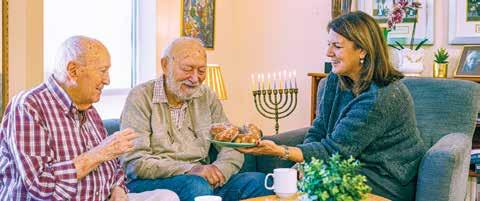
Every smile, every moment of comfort, every life transformed, happens because someone like you cared enough to give. Our services, many of which receive no government funding, touch the lives of 12,000 people every week.
But the need is growing, and the cost of care is rising faster than ever. This year, Jewish Care must raise over £20 million, plus an additional £1.1 million, to meet the impact of the National Insurance increase, simply to continue providing the care we already offer.
Please, if you can, make a donation today. Thank you.
The Secret of Chanukah
BY RABBI BENJI BAMBERGER
The festival of Chanukah is an isolated island in the cold sea of winter.
Two months from the final strains of Simchas Torah; even further away from the vivacity of Purim and the joyful lead up to Pesach.
Chanukah is also isolated with regards to what is being celebrated.
On Pesach we commemorate the Exodus, the beginnings of Mamleches Kohanim V’Goy Kadosh (a Kingdom of Priests, and a Holy Nation), and our journey to the Promised Land.
On Shavuos, we celebrate the giving of the Holy Torah, our Eternal Blueprint to This World and beyond.
On Rosh Hashana and Yom Kippur, the beginning of the year, the awesome Days of Judgement.
On Sukkos, we rejoice over the elevation that the High Holy Days have given us, and G-ds protection from the times we wandered in the desert, to this present day.
Purim is a universe of its own; significant in that it heralded the rebuilding of the Second Temple, and deeply profound in the fundamentals of Judaism found
in the festival: seeing Hashem’s Hand in the seemingly mundane, understanding that our notions and actions are often a ‘costume’, and being able to recognise the lofty ideals that our true self longs for.
Chanukah. We celebrate the miracle of the oil lasting for eight days, the victory of the Maccabi’im over the Greeks, and the rededication of the Temple.
The Miracle of Lights is remarkable, but so were many other miracles that we don’t mark our calendars or menus with:
In the siege of Jerusalem, 185,000 soldiers from Sancherev’s army were killed overnight by Angels.
The mighty fortifications of Yericho reduced to rubble by Yehoshua and Bnei Yisrael marching around them whilst blowing ram horns.
Daniel being saved from lions.
The splitting of the Jordan River. Shimshon decimating the Pelishtim with one push of a pillar.
So many beautifully clear miracles; so many battles won astonishingly, with undeniable Divine Presence.
Why Chanukah?
The question is even more pressing when you look at the events in the wake of the Maccabean victory.
It took roughly 22 years for things to start falling apart. Shimon (the brother of
Yehuda Hamaccabee) was appointed as Kohen Gadol (High Priest) and Ruler of Judea by the Seleucid king. Ensuing years saw assimilation to the Greek/Saducee culture, persecution of Rabbinic leaders, even executions and civil war. Less than 100 years later, the Civil war between factions of the Chashmonaim lead to Rome entering Jerusalem and the end of Jewish independence over Judea.
And yet, for eight days, we light up our nights, lovingly kindling the flames of the holy menorah - for thousands of years.
Perhaps this is the secret of Chanukah. Some events are noteworthy because of the result, the long term impact.
Chanukah gently reminds us that sometimes all we can do is light a small flame, to search for our last drop of oil.
This Golus (exile) can bring darkness that seems to be so persistent. Our efforts to overcome habits, to make clear decisions, to find ourselves, can feel so feeble and frustrating. The darkness of hatred from nations of the world.
But still, we light the menorah.
We find a way to pick ourselves up after a mistake.
We sanctify the moment by recognising that the Avoda (job) is of the here and now- and that is all Hashem wants from
us.
We ‘invite’ Hashem into the darkness. Perhaps the Miracle of Light is our recognition that darkness is just a Divine illusion.
When it would not seem thinkable that G-d is present with us in our darkest days, painful mistakes, and millenia of torment in exile, the Jewish People say Hashem is right here with us. He never left. Through embracing the impossible. Through having the chutzpah to bring up more generations of Jews steadfast to their heritage. Through knowing that we have the ability to rise far above the noise, statistics and the numbness of habituations.
We continue to declare Mi LaHashem Elai.
Rabbi Benji Bamberger is one of Aish UK’s newest Educators for London Schools and Campus. He joins the team from the University of Florida, where he and his wife were a campus couple, successfully running classes, Friday night socials and full Shabbat programmes. Originally from Manchester, he is excited to be back in the UK and passionate about inspiring and connecting young Jews with Jewish life.
bring light
Rebbe’s Chanukah menorah campaign endures
BY DAVID SAFFER
Chabad-Lubavitch have swung into action with a host of activities to ensure every Jew enjoys the wonderment of Chanukah.
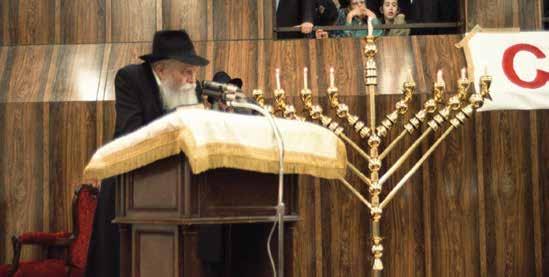
The Rebbe, Rabbi Menachem M. Schneerson, was renowned for welcoming Jews of all backgrounds to Judaism and Chanukah was a time that sentiment burned brightly.
The Rebbe called for every Jewish home to be filled with the light of a menorah and flames to illuminate the wider world.
“We should listen attentively to what the Chanukah lights are telling us,” the Rebbe wrote in 1982. “The mitzvah of the Chanukah lights symbolises in a tangible and visible way all the mitzvot of the Torah, all of which are defined in terms of light.”
which illuminates the outside and the environment.”
In 1975, less than two years after his famous public letter, Independence Hall in Philadelphia had a 25-foot menorah in Union Square, San Franciso. By the end
Australia, design an improved car menorah.
In 1998, the website carmenorah.com started supplying menorahs for every type of car.
of the decade, public menorahs were in New York City, outside the White House Washington DC and on Hollywood streets in Los Angeles.
“Over the years, more and more orders were being made from outside the Chabad community,” he told Chabad.
Whilst the car menorah is among the most recognisable of the Rebbe’s festival initiatives, a ‘Happy Chanukah’ and ‘Chabad wishes you a Happy Chanukah’ sign are now equally well known.
Thanksgiving was celebrated in US recently and in the coming days at certain stadia ‘Maoz Tzur’ will be played over the
speakers for Jewish sports fans.
Back in 1987, Rabbi Raphael Tennenhaus, co-director of Chabad South Broward County, Florida was in at the start of the boom when he lit a menorah at the Joe Robbie Stadium in Miami before 80,000 fans.
Days before Chanukah, Rabbi Pinny Andrusier, co-director of Chabad Southwest Broward, was attending a farbrengen in Brooklyn and told the Rebbe of the pending lighting at the Miami Dolphins game.
“L’chaim,” the smiling Rebbe acknowledged, knowing the significance of a vast live and TV audience.
It is now the norm for Chabad to host a ‘Jewish Heritage Night’ at games.
The Rebbe’s Chanukah wish to light up the world is still growing, so, the final word must go to him.
The Rebbe concluded in his famed letter: “May G d grant that everyone of us be truly inspired by the teachings of Chanukah and of the Chanukah Lights, and translate this inspiration into actual deeds, in our everyday life and conduct.”
“Living Yiddishkeit”, he said, required a “continuous growth” to enrich one’s “spiritual life”.
For the Rebbe, it was essential that menorah candles could be seen outside to “publicise the miracle of Chanukah”. It would symbolically convey a message that everyone who lights the candles must not forget those “unaware of Chanukah” or their “Jewish identity”.
It is our duty, he observed, for us to reach out and bring the “light of living Yiddishkeit” into their hearts and homes in the “spirit of Chanukah in a growing measure”.
The Rebbe’s global Chanukah campaign started in 1973 to share the light of Chanukah with families and friends.
Over 50 years on the age-old Chanukah story will be retold and Chabad emissaries on six continents will share the beauty with some eight million Jews through 15,000 public menorahs erected in public spaces with thousands of menorah-topped cars taking over streets.
Online over 10 million visitors will utilise Chabad’s Chanukah ‘how-to’ guides.
Chabad will distribute 64 million Chanukah candles, over 700,000 menorah kits and 2.5 million holiday guides in 17 languages. It is a monumental effort.
“There is a pre-eminence in the mitzvot connected with lighting candles, in that the effect of the action, the appearance of light, is immediately visible,” the Rebbe explained in his ’73 letter.
“The mitzvah of kindling the Chanukah light is unique in that it is required to be displayed to the outside. Thus, every by-passer, including non-Jews, immediately notices the effect of the light,
Chabad emissaries distributed tin menorah and candle kits.
The uptake was huge alongside Chanukah on Ice and olive-oil press workshops around the world.
Creative thinking was essential on different continents. Indeed, a boomerang-themed menorah was available in Northern Queensland, Australia!
Central to many communities was a car menorah parade that started in the US as part of the Rebbe’s Chanukah-awareness campaign.
Millions of cars of all shapes and sizes have hit since the roads. But how did it start?
As the Rebbe’s fledgling Chanukah initiative built rabbinic students, newlyweds and veteran rabbis knocked on doors to distribute fliers and portable menorah kits.
Rabbi Shmuel Lipsker was a student at Lubavitch World Headquarters in the Crown Heights, Brooklyn. A regular on 47th Street in Midtown Manhattan, to attract New Yorkers he recalled building a homemade menorah and placing on top of a station wagon, stopping to pick up flares to light it.
“This was before public menorah-lightings, the concept didn’t exist,” he told Chabad. “It was a huge attraction. We were giving out menorahs, more and more people were gathering around us. By the time we lit our menorahs with the flares, we had a huge crowd. It was unbelievable, just a knockout.”
Throughout the late ‘70s the car parade gained strength and continued into the 1980s.
The mid-90s saw Nochum Goldschmidt, a yeshivah student in Sydney,
WHAT3WORDS/// JUST KEEP ADDING!
BY RABBI NAFTALI SCHIFF
There is something quietly countercultural about Chanukah. It arrives not in the brightness of spring or the optimism of summer, but at the darkest moment of the year. The days are short, the nights long, and the temptation toward gloom- personal, communal, even civilisational, can feel overwhelming.
And yet Judaism insists that precisely here, of all moments, we light candles.
Not to curse the darkness.
Not to rage against it.
Simply to add light.
One candle on the first night. Then two. Then more. A steady refusal to despair. An almost mischievous optimism built deep into Jewish ritual itself.
Chanukah quietly teaches that darkness is real, but it is not absolute. And that light, however small it begins, is cumulative.
This is why Chanukah feels like the right time to reflect on how Jewish identity is framed, lived and passed on, especially in an age when it can feel as though fear and worry are doing far too much of the heavy lifting.
We do live in anxious times. Jewish history has trained us to be vigilant, sometimes painfully so. There are good reasons for that vigilance, and no one should underestimate the challenges Jewish communities face today. But there is a subtle danger when vigilance becomes the dominant story we tell about ourselves.
After the battle, they returned to the Temple, relit the Menorah and recommitted themselves to higher purpose.
The Talmud (Shabbat 21b) focuses not on military prowess but on light. The
night we increase the light, always moving forwards, always ascending. Judaism never says, “Things feel bleak, pull back.” It says rather- “Add another candle.”
This message matters enormously when
miracle that endured was not the sword, but the flame. Light, allegorical to Torah, to the soul, itself became the answer.
Judaism was never meant to be sustained by fear alone.
Chanukah offers a different model, one that is deeply rooted in our tradition and sources.
The Maccabees did not overcome Hellenism by issuing pamphlets against Greek culture. They did not defeat their enemies by constantly telling themselves how threatened they were. They asserted Jewish values by living them. They taught Torah. They observed mitzvot. They strengthened Jewish life from the inside out. Only then did they prevail.
That emphasis tells us something profound. Judaism does not believe darkness is best addressed through endless confrontation. It believes darkness is displaced through illumination.
The prophet Yishayahu frames the Jewish mission in a single, stunning phrase:
“I will make you a light unto the nations” (Isaiah 49:6). Not a battering ram. Not crusade nor jihad. Not a civilisation obsessed with proving others wrong. Light does not argue. It shines. It warms. It draws people in. Its influence is quiet but enduring.
That is why Chanukah is the festival of addition. Beit Hillel teaches that each
we think about the next generation. No young person wants to inherit an identity framed primarily around threat. “Everyone hates us” is not a vision. It is a warning. It might generate anxiety, but it rarely generates commitment.
Our tradition offers something far richer. The Torah describes the Jewish people as “a wise and understanding nation” (Deuteronomy 4:6). King David insists that service of G-d is meant to be infused with joy: “Serve G-d with gladness” (Psalm 100:2). Jewish life, at its best, is meant to be alive, with learning that sharpens the mind, values that deepen the soul, festivals filled with song, community, meaning and purpose.
Even the word Chanukah itself points us in this direction. Rooted in chinuch,
education and dedication, it reminds us that Judaism survives not only through vigilance, but through that which we invest in and pass on.
This does not mean we turn away from antisemitism. Ignoring hatred does not make it vanish. But when fear of other becomes the dominant narrative of Jewish life, something vital is lost. Rabbi Jonathan Sacks cautioned that defining Judaism primarily by antisemitism risks allowing our enemies to shape our story. Our tradition is too ancient, too textured and too hopeful for that.
There is a beautiful halachic detail about the Chanukah candles. Ideally, they are lit at the doorway or the window. They face outward. Jewish light is not hidden, but neither is it aggressive. It is offered. Confident. Present. Unapologetic. That posture feels particularly resonant now.
Imagine a Jewish identity that our young people lean toward rather than recoil from. One rooted in goodness, truth, generosity and meaning. One that offers moral clarity without bitterness, strength without paranoia, confidence without arrogance. An identity that feels ancient yet relevant, demanding yet life-giving. Darkness will always exist. Chanukah does not deny that. It relativises it. One candle can light up the corner of a room. Another expands the glow. Eight candles can transform a home.
Perhaps that is the ancient wisdom Chanukah asks us to recover.
Not less awareness, but more light. Not less realism, but more hope. Jewish positivity is not naïveté; it is faith in the power of who we are at our core. Chanukah challenges us to stop narrating Jewish life primarily through fear and anxiety, and instead to illuminate it, patiently, confidently, joyfully- by always adding just one more candle.
Shabbat Shalom
///What3Words is a geocoding system.
In this column, Rabbi Schiff reflects upon 3 key words each week, relating to issues of the day.
All feedback is welcome. Nschiff@ jfutures.org
Rabbi Schiff is the Founder and CEO of the Family of Jewish Futures educational organisations
Every moment of hope, every step towards recovery, every life rebuilt, happens because someone like you cared enough to give.
Right now, we’re facing an unprecedented mental health crisis. More people than ever are struggling with anxiety, depression and loneliness, and turning to Jami for help.
Your support brings light in people’s darkest days — and we need that light to keep shining. With rising costs to provide Jami’s mental health services and the increase in the National Insurance expenses, pressure on funding is greater than ever before.
We receive no government funding and rely entirely on our community’s generosity to keep our vital lifeline running.
Please, if you can, make a donation today. Thank you.
you
Doughnuts in Halacha
18 million. That’s the number of doughnuts Israelis eat each year. Whether you refer to them as Doughnuts, Donuts, Sufganiyot, or Spanj (if you’re reading this in Libya), the custom - whether its ancestor noted by the Rambam’s father as being one of kadmonim, or its descendant “cronuts”has definitely conquered the hearts (and more) of a very significant portion of Am Yisrael.
There are several interesting halachos to bear in mind whilst preparing and consuming the cherished jelly (chocolate, custard, vanilla, apple, caramel, meat, and more) filled goody. Before we launch into those, it is worth pointing out that whereas the dough is prepared similarly to that of bread, it is subsequently fried and not (usually) baked. This is a point relevant to several issues considered below.
1. DOUGHNUTS MUST BE KOSHER
Even if all the ingredients are kosher, there are several restrictions relating to the food preparation of a non-Jew. Of the two restrictions relevant to our discussion, there are pas akum (baked goods) and bishul akum (cooked foods). One may eat bread baked in the bakery or factory of a non-Jew (provided a recognised Kashrus expert confirms it does not contain any forbidden ingredients); however, food cooked by a non-Jew carries the often stricter laws of bishul akum. The question arises whether doughnuts have the halacha of a baked or cooked food, which boils down to whether we follow the way the dough is prepared or how it is subsequently finished, as referred to above. Although for Sephardic Jews, one usually requires a greater level of Jewish involvement in cooked foods, Rav Ovadia Yosef held that in this case, one can apply the leniencies applied to baked goods. Therefore, it may be sufficient for a Jew to kindle the fire.
2. THE CORRECT BRACHA
As we all know, the correct bracha on bread is Hamotzi. However, where a bread dough has an unusual characteristic, it earns the status of “Pas Haba Bekisnin”, and the correct bracha becomes Borei Minei Mezonos. There are several opinions regarding what constitutes a qualifying characteristic to convert the bracha on the dough from Hamotzi to Mezonos. Briefly, either: (1) The dough has a recognisably sweet filling, or: (2)
It is mixed with a fruit juice, honey, oil, milk, or spices, which alters its taste, or (3) It has a hard crust, such as a cracker or pretzel.
Although it is usually prohibited to knead bread dough with milk (though there are exceptions and much detail regarding this halacha) this does not apply to cakes or other food items that are not usually eaten together with meat.
As doughnuts cover some of the above criteria, the correct first bracha is Borei Minei Mezonos, similar to biscuits and cakes. This is provided one does not eat an entire meal of an item. What constitutes a meal is what other people of similar physical properties normally eat for a main meal. If one eats more than this amount, the usual requirements associated with a bread meal (hand washing, Birchas Hamotzi, and Birkas Hamazon) apply. Between 216-280 grams is the quantity that may constitute a fixed meal for these purposes.
The first bracha on doughnuts will remain mezonos, even if the bracha for afterwards is upgraded to Birkas Hamazon.
If one wishes to eat a questionable quantity of doughnuts, a solution may well be to eat them during a meal, with the first and after brachos covered by the Hamotzi and Birchas Hamotzi.
Strictly speaking, however, doughnuts do not fall into the category of baked goods, given that they are fried after the dough is prepared, not baked, and therefore there would be no limit (at least halachically speaking) on the amount of doughnuts one may eat. However, the poskim write that one ought to be stringent in this matter and not consume the larger quantities outside of a meal. (There may even be cause to be stringent and only eat even a small amount of doughnuts within a meal.)
3. DAIRY DOUGHNUTS
These must be clearly marked as dairy.
be consulted.
4. CHALLA SEPARATION
When one bakes a certain quantity of dough, there is usually a requirement to separate a portion of the dough and to burn it. The minimum amount of flour to take challah without a bracha is 1.2 kg. The minimum amount of flour to take challah and make a bracha is 2.25kg. Whether this applies to doughnuts or not is relevant to the above discussion as to whether doughnuts are considered bread or not, given that they are fried, not baked. Even if one applies the lenient opinion, if part of the dough is baked and the rest fried, there may be an obligation to separate challah from the entire dough. A competent Rabbi should
We shall conclude with a valuable list of life lessons Bukharan Jews dutifully derived from the doughnut: 1. Like the wheel of fortune, it is round, so one who is on “bottom” in life today might be on “top” of life tomorrow 2. The inside is more interesting than the outside, so don’t judge people by their appearance 3. You never know what kind you are getting until you take a bite, so don’t try to predict the future.
Chanukah is a festival filled with light, courage, and, perhaps unexpectedly, dairy. If I told you to visualise a latke, you’d most likely think of crispy shredded potato cakes sizzling in oil, or the dense, deli-style potato cakes so often served with salt beef on rye. But there’s a lesser-know history, and a deeper story behind these foods, reaching back to moments of quiet heroism and sacred resistance.
And if I told you to think of a heroic Chanukah character, you’d probably think of Yehuda (Judah) HaMacabee. But it is the story of Yehudit (Judith) which gave us our classic Chanukah dish!
Long before the latke took its familiar potato form, earlier generations celebrated Chanukah with cheese-based dishes. As noted by the Rema (Rabbi Moshe Isserles), this custom traces back to the story of Yehudit, a brave Jewish woman living during the era of Hellenist Greek oppression.
While her city was under siege, Yehudit devised a daring plan to save her people. She caused the enemy general, Holofernes, to drink wine until he fell into a deep sleep. According to tradition, she did this by feeding him salty cheeses. Seizing the moment, she lopped his head off with a broadsword, and so inspired the
Jews to victory.
Her act of courage, rooted in ingenuity rather than force, became an enduring symbol of feminine strength and divine partnership. In her honour, many communities adopted the practice of eating dairy foods during Chanukah as a reminder that salvation can emerge in unexpected forms.
The latke, too, tells a story of adaptation and resilience. Food historians such as Gil Marks note that originally, latkes were made from cheese or from simple flour-and-ricotta fritters fried in oil. Only later, in Eastern Europe, did the humble potato - cheap, abundant, and accessible, - become the star ingredient.
Today’s potato latkes are the result of Jewish creativity through exile and shifting circumstances, turning whatever we had into something glowing and celebratory.
Both cheese and latkes carry the imprint of our history: Yehudit’s courage, the miracle of the oil, and the Jewish instinct to transform the ordinary into something sacred. When we eat dairy or fry up a pan full of golden latkes, we’re not just enjoying holiday treats: We’re participating in a chain of memory, resilience and light stretching back thousands of years.
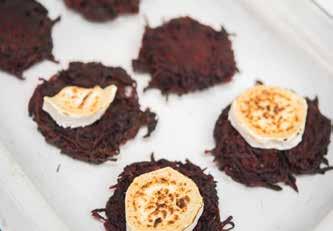
In honour of Yehudit and the humble latke, we are delighted to share this recipe for delicious, crispy, cheesy latkes.
Images by Blake Ezra Photography
Beetroot Latkes
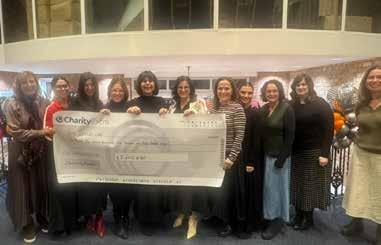
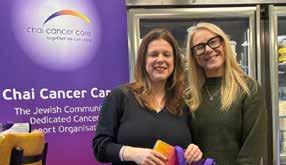
£2.68m Raised to Support Thousands Through Chai’s For All to ‘C’ Campaign
Chai Cancer Care’s For All To ‘C’ Campaign has achieved a remarkable £2.68million towards its £4.1 million annual running costs, made possible by an unforgettable weekend of community events and an extraordinary 36-hour matched funding effort.
This year’s campaign gathered pace quickly on Thursday with 15,000 newly designed ‘Bags for Chai’, including a mini version which flooded kosher supermarkets, restaurants and shops. On Thursday night, a packed-out Whisky Evening set the tone for the days ahead. With a high-energy dinner, tastings, raffle and
auction, supporters filled central London for a high-spirited night of ‘Chai Spirits’. Momentum continued to build in vibrant fashion on Friday 5th December, as thousands of children in primary schools across the UK took part in ‘Mad Hair Day’ to champion Chai’s work.
Alongside this, Chai Shabbat was held in 200 synagogues, where specially branded ‘L’Chaim’ kiddush cups helped spotlight the organisation’s extraordinary impact.
Over the weekend Street Lane Bakery in Leeds put a delicious twist on the campaign with a special purple Chai-themed doughnut, with proceeds donated to support Chai’s vital work.
A full calendar of crowd-pulling events kept the energy high throughout the weekend, from Chai’s Young Professionals Ministry of Sound Challah Bake and the 5K Run Club, to a show-stopping Swinging Sixties evening, hosted by much-admired
London premiere of Levi sheds light on mental health challenges among orthodox Jewish youth
The London premiere of Levi, a powerful new short film exploring the mental health struggles faced by many young orthodox Jews, highlighted how listening to people without judgement and signposting to services can help save lives. The screening, at JW3 last week (Thursday 4 December), was followed by a panel discussion and live audience Q&A featuring the film’s producer, Manchester-based political podcaster Eli Hassell, alongside Philippa Carr, Senior Education and Suicide Prevention Manager at Jami; Ben Ingber, CEO of The Listening Place; and Dr Stuart Linke, a Consultant Clinical Psychologist who chaired the discussion. Levi tells the story of a young Jewish man returning home from Yeshiva feeling overwhelmed and unable to communicate his emotional distress to his family. Although Levi dreams of becoming an architect, he feels trapped by expectations and fears he will disappoint those closest to him by pursuing a different future. As his isolation grows, he becomes increasingly despairing and begins to lose hope. The event aimed to open up honest conversations about wellbeing within the orthodox community and highlight the importance of early support and understanding.
Eli Hassell said, “The most important lesson is the importance of talking, sharing, opening up. The character Levi takes
volunteers Lynne Silver and Andee Roback, alongside a Bingo afternoon in Glasgow, Poker night in Manchester and lively challah bakes in Manchester and Leeds.
Sunday morning saw the launch of the 36-hour matched funding campaign, with an incredible £1 million raised by 1:30pm. At the heart of the action, more than 100 children and their families supported by Chai filled the Hendon centre for the annual ‘Chai Kids Family Fun Day’. The centre buzzed with face painting, cookie decorating, hair braiding and football tricks, alongside a much-loved visit from Chai’s pet therapy dogs – Danny and Monty, highlighting just one of the many services available to Chai clients.
those first steps to help. The film carries a message of hope.”
Philippa Carr shared the words of a survivor supported by Jami: “There is no pain like psychological pain.” She continued, “The people around those who are struggling are vital. Families, friends, carers – they advocate, they can support, they can help someone take the first step to getting help.”
Audience members praised the film’s sensitive storytelling and the opportunity to hear directly from experts about the importance of recognising signs of emotional struggle and signposting appropriate support.
Jami will be launching a new community suicide-prevention programme for communal, lay and spiritual leaders and community members in early 2026. The initiative is being designed to reflect the community’s sensitivities and needs and will also include postvention – the support Jami provides to the community after a suicide.
Anyone affected by the themes of the film is encouraged to reach out for help:
Mental health support for the Jewish community
Call: 020 8458 2223
Text ‘Jami’ to 85258 for 24/7 confidential support.
The campaign reached a powerful finale at 10pm on Monday night, with 224 dedicated team hosts having galvanised the community into action. More than 8,000 donations, beginning at just £5, helped propel the total beyond £2.68 million. These funds will go towards Chai’s 70 vital specialised services, supporting individuals and their families through every stage of the cancer journey.
Chai Chairman, Louise Hager MBE, commented: “We have been incredibly moved and energised by the
extraordinary response from our community, especially in this challenging financial climate. The passion, generosity and unity shown throughout this campaign has been truly remarkable. It powerfully reflects both how vital Chai’s services are and how strongly our community recognises the specialised care we provide. We feel so blessed to have such wonderful team hosts, many of whom are clients themselves, our loyal supporters and our generous matchers, whose collective efforts have made this campaign such a success. As we receive no statutory funding, every single donation makes a real difference and ensures that Chai can continue to be there for each person who needs to turn to us.
Chai Cancer Care relies on donations to meet its £4.1m annual running costs and does not charge for any of its services.
JDoc Medical Opens First Anglo Private Clinic in Israel, Linking Care Between London and Jerusalem
A landmark moment for the Anglo community took place yesterday as JDoc Medical officially opened its new private clinic in Jerusalem. The ceremony, attended by community leaders and local dignitaries, included the formal inauguration by the Medical Director of JDoc London, marking the establishment of the first Anglo focused medical
practice operating seamlessly across two countries.
CROSS BORDER MEDICAL PARTNERSHIP
The Jerusalem practice will work closely with JDoc Medical’s well known clinic in Golders Green, London, offering a reciprocal membership programme that enables patients to move effortlessly between the two locations. Patients may be seen in London on Monday and continue their care in Jerusalem on Tuesday, a model warmly welcomed by Anglos, students, travellers, and frequent visitors.
SERVING TOURISTS AND RESIDENTS ALIKE
JDoc Medical Jerusalem offers care to tourists, travellers, students, insured visitors, and those without Kupat Cholim cover. Operating fully outside the Israeli national health funds, the clinic places no restrictions on care or benefits, ensuring unrestricted access to consultations, treatment, and follow up support.
FAST ACCESS TO TESTS AND IMAGING
The clinic also provides rapid arrangement of diagnostic services including scans, laboratory testing, and MRI imaging. This quick and efficient pathway aims to reduce delays and give patients timely clarity on their medical needs.
LED BY AN EXPERIENCED ANGLO PRATITIONER
The clinic is headed by Sylvia Abramov, fluent in English, Ivrit, and French. Dr Abramov brings specialist gynaecology training alongside broad experience treating patients from newborns to elderly individuals requiring frail care. She also offers specialist pregnancy services, with particular expertise in managing hyperemesis gravidarum.
CENTRAL LOCATION IN JERUSALEM
Situated on the second floor of Sha’arei Ha’ir at 216 Jaffa Street, directly opposite Jerusalem’s main train station, the clinic benefits from strong transport links and access to leading local services. Its
CLOSING DOWN SALE!!!
• Suits now from £50
• Overcoats from £69.50
• Knitwear from £10
• Casual Jackets from £29.50
• Sports Jackets and Blazers from £39.50
• Trousers £20 each 2 pair for £30 28-48 inch waist
• Shirts from £10
• Shoes from £15
10 Golders Green Road London, NW11 8LL
Open weekdays until 6pm & Sundays til 5pm
opening marks a major development in private healthcare for the Anglo community, offering reassurance to those seeking dependable English speaking medical support abroad.
A FIRST OF ITS KIND
With practices now established in both London and Jerusalem, JDoc Medical becomes the first private Anglo clinic to provide fully integrated, cross border continuity of care. Its arrival in Israel has been hailed as a significant step forward for residents, tourists, and the broader expatriate community.
Are you building up surplus cash in your business? Too much cash just sitting there and feeling like you might be leaving money on the table? Fortunately, we can help.
As a long-established and renowned financial advisory practice, we advise on tax -efficient ways to grow your surplus cash or even extract it with less tax using our smarter dividend strategy all through the use of fully regulated investment solutions.
We provide comprehensive financial advice on all aspects and can also work closely with your accountant to ensure everything is coordinated, so that your cash works harder for you, not HMRC.
If you’ve ever asked, “How can I get more from my business while paying less tax?” then you’ll want to watch our pre-recorded webinar. Get access by emailing: webinar@arnoldaaron.co.uk or WhatsApp 07957 440 724.
how we help our clients
to our newsletter: newsletter@arnoldaaron.co.uk
Just say No!
BY RABBI JONATHAN TAWIL
Imagine one of those typical days in London. The clouds are heavy, the wind is strong and the rain doesn’t stop falling. You come into work after having fought with the wind, your umbrella broken and your coat drenched. Just then the door opens and a colleague of yours walks in. “What an awesome day it is today, the weather is great don’t you think?”
What is your response? Two quick replies strike my mind.
The calm approach; “Interesting, I kind of thought it was raining and quite murky out there”.
Alternatively you offer a more definitive response - “No!” you exclaim. “Its not great weather!” Then you begin to explain yourself. “Have you seen the weather? It’s raining and cloudy and I was drenched this morning! How can you call this good weather?”
Which would you chose?
Let us take a look into the Parasha for some clues as to what you might be correct in answering. Yosef was sold as a slave to Potiphar - a great and mighty minister in Pharaohs regime. Potiphar was married to a beautiful wife, but as soon as she set eyes on Yosef, she desired him. She approached Yosef constantly and tried to coerce him. Each time Yosef would resist. One day Potiphar and all the people in the house were out; the only two people left were Yosef and Potiphars wife. She took the opportunity to make her move.
Yosef, a single young lad sold into slavery, was being severely tested. He passed with flying colours. He first refused, and then went on to explain how he could
never do such a thing to his trusted master. Finally after she moved in on him, he ran away.
When reading this episode from the Torah one comes across an unusual cantillation over the word Vayema’en – he refused (Bereishit 39:8). This cantillation is called a Shalshelet and appears only three times in the book of Bereishit. Why is this cantillation used here? Furthermore there is a line representing a stop after the word Vayema’en, implying a pause. Why is this necessary?
Rabbi Yerucham Levovitz zts’l explains that Yosef was in no doubt that succumbing to her desires would be immoral. He was being severely tested, it was difficult, but his response to such a test was an emphatic NO!
The statement, “Vayema’en” (with a Shalshelet and a Psik) implies that Yosef needed no process of logical deduction or calculation in reaching his decision.
The separation indicates that for himself, Yosef needed no explanation. Only in his response to Potiphars wife did he feel the need to explain. For Yosef, the very fact that a given action is forbidden was sufficient reason to abstain.
The way of the Yetser Harah is to try and convince us to sway to his side of thought. He uses manipulation, conviction and coercion to try and make us sin. Our answer, explains Rabbi Yerucham must be an emphatic NO!
If possible, in our war against our Yetser we should not try to get into a debate, we should be quick and certain to refuse at first. For once we open the door to doubt and debate with the Yester, and then we are playing on his ground and will find it harder to make a stand.
We find a similar idea when it came to burying Yaakov. The body of Yaakov was brought up from Egypt by all his sons. They came to the cave of Machpela to bury him and they were met by Eisav. He contested the fact that Yaakov should be buried there. The Tribes opened conversation trying to convince him that it was rightfully theirs. In the end they decided to send Naphtali (who was fast) to Egypt to bring the document that showed it belonged to Yaakov.
Chushim the son of Dan was also present at the time. He was deaf and couldn’t follow the conversation. He asked what all the fuss was about; why were they not burying Yaakov? They explained to him the situation. He was very zealous for his grandfather Yaakov and couldn’t bear to see his body lie without burial for so long. He took action into his own hands and simply went and killed Eisav.
Rabbi Chaim Shmulevits zts’l asks didn’t the others feel for Yaakov. Why was it only Chushim that acted? He explains that once they entered into a debate with Eisav, then they were opening themselves up to manipulation. Eisav was able to buy time and try and conceive another way to cheat Yaakov out of being buried. Chushim on the other hand was deaf. He didn’t hear the whole conversation. He still had that initial conviction and acted on it straight away. It was due to his conviction that Yaakov merited a quick and honourable burial.
Every day we say in our prayers En Kelokenu En Kadonenu – there is no one like our G-d, no one like our Master. We continue and say Mi Kelokenu Mi Kadonenu – Who is like our G-d, who is like
our Master?
Our sages ask why the prayer is in this order. Surely we should first state who is like G-d and then state there is none like G-d. Why do we say it the other way round?
Our Sages explain that a Jew has to build him/herself up so strong that their first reaction in life is En Kelokenu – there is none like Hashem. He is our Father, He is our Leader and He is the Creator of the Universe. There is none like Him. It is only once we have this understanding that we can then go on and ask who is like Him. So when your friend walks in the room and says what a nice day it is outside, and it clearly isn’t, then by choosing to answer with a clear no, might not be such a bad response. It shows your sincere belief in what you are stating.
Our first point in life is to build up our belief in Hashem. Our response when faced with tough tests must be swift and clear. We must state emphatically –“Everything is Min Hashamayim”. It is the strength and clarity in our belief that will lead us through all of life’s tests.
A free valuation from our in house gemmologist and gold experts on anything you may wish to sell. If you are thinking of selling, we purchase all Diamonds in any shape, size, clarity or colour. WE PAY MORE than all our competitors. Try us, and you will not be disappointed!
Expert Real Estate & Services Providers
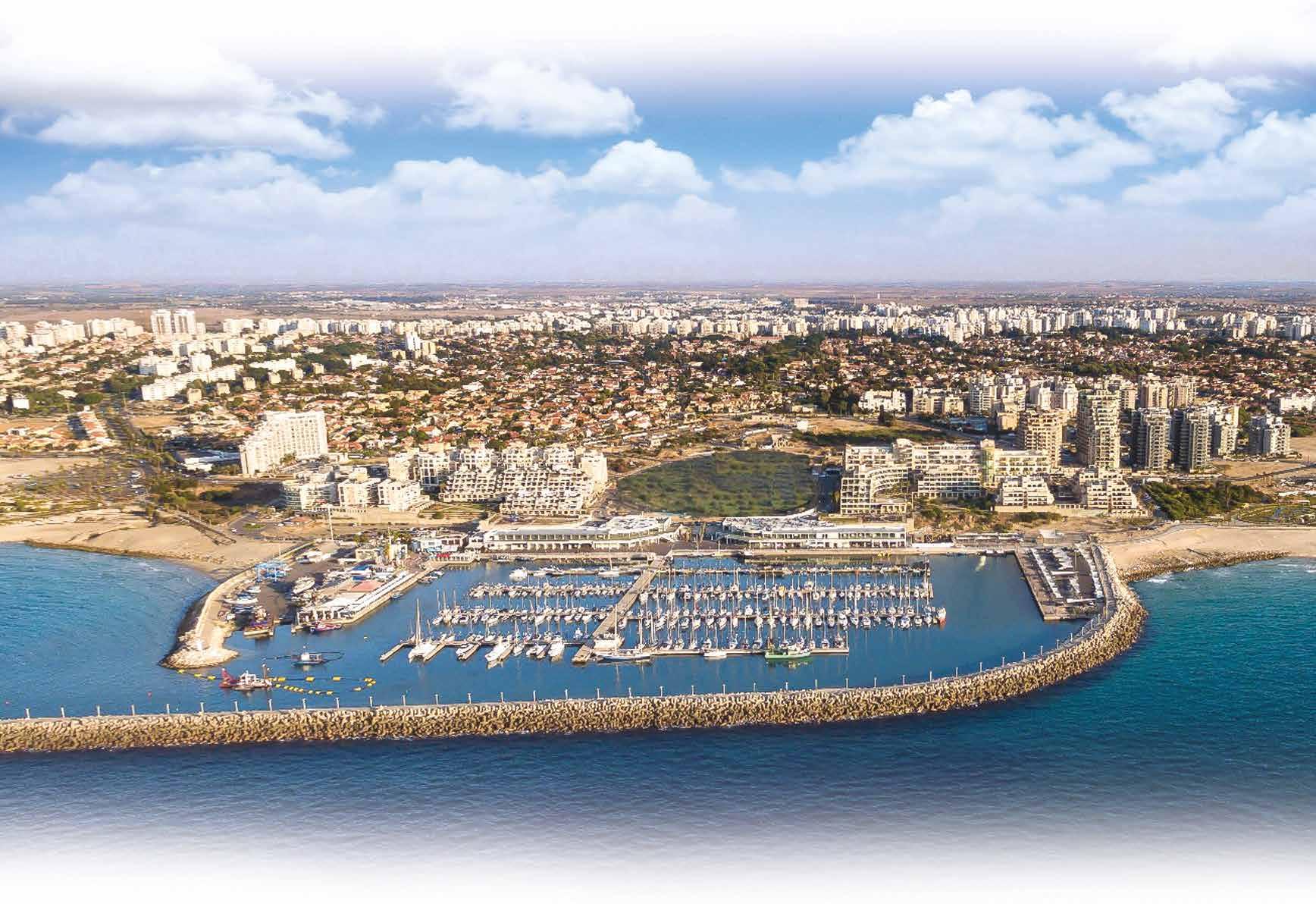
ASHKELON
NP-ASHK02
Options Marina & New Ir Hayayin Areas, 10min to beach, ideal for investment. Options from 1,950,000NIS for 3 rooms 2 beds, no linkage 20/80. 3, 4, 5 Rooms
NETANYA IR YAMIM
NP-NET09
Luxury projects, Shirat Hayam, sea views, walking distance to the beach, with pools, gym and so much more. 5 Rooms plus,
RAMAT BEIT SHEMESH
NP-RBSA04
Limited pre sale options and terms From only 2,500,000 NIS 15% now and 85% at end. No Linkage. 3, 4, 5, 6 Rooms
TIBERIAS
NP-TIB05
High end investment options, to live or rent out. Sea views and all amenities. 3 rooms option from 1 790.000 NIS. 1 to 3 Rooms
Find your perfect property, home, place where you belong. We help and guide you every step of the way.
CARMEI GAT
NP-CARMG01
Now includes new North Carmei Gat, New projects in new Anglo Central areas, ideal to live & invest 20/80. 2 to 5 Rooms, Garden, Penthouses & Villas
NETANYA SHIRAT HAYAM
NP-NET13
Spacious apartments, open views, premium design, meticulous specifications and close to the beach - perfect quality of life. 5 Rooms
MISHKAFAYIM
Last few options. 20% now 80% at end. Excellent location Mishkafayim Ramat Beit Shemesh. 4 rooms option from 2 650.000 NIS. 4 to 5 Rooms NP-RBSA01
NETANYA NORTH
Exciting new neighbourhood, close to beautiful coastlines, access to major transportation routes and innovative architectural design. 4 to 5 Rooms
New projects, Limited pre sale options with 15% now 85% at end. No Madad (not linked), Excellent locations. 3, 4, 5 Rooms NP-JERU17
NP-RBSH11
New projects, Excellent location from 2.4 Million NIS. No Madad, limited options, 20% secures. 2 to 5 Rooms, Garden & Penthouses
Perfectly connected to the city, no reliance on a private car. Vibrant, creative, family-friendly urban centre. Up to 45% below market prices. 2 to 5 Rooms NP-TEL15
Individual Purchase: Full ownership, max control, direct future appreciation. Syndicate: Lower entry cost per investor, shared risk, equal share in returns. Partnership: Co-own with agreed terms. OPTIONS FOR ALL
DAF TOPICS: THE MYSTERY OF KETORES ZEVACHIM 88b
BY RABBI YAKOV SCHONBERG
THE ESSENCE OF THE INCENSE
Rav Chananyah taught in a Baraisa, cited in Zevachim 88b: “From where do we know that the burning of the incense atones? For it is stated (Bamidbar 17:12):
, Aharon placed the incense and provided atonement for the people. It was taught in a Baraisa in the Yeshiva of Rabbi Yishmael: For what sin does the burning of the incense atone? It atones for the sin of Lashon Hara. Let something that is offered in private come and atone for that sin which is committed in private”. After the crushing of Korach’s rebellion, the entire assembly of Yisrael accused Moshe and Aharon of causing Korach and his followers to die. In reaction to this sin of slander, HaShem sent a deadly plague upon the nation, which killed over 14,000 people. Moshe instructed Aharon to burn ketores and the plague was halted. This teaches that ketores, whose offering is performed by the Kohen in complete privacy, atones for slander, which is generally spoken in private. What is special about ketores that it can act as an antidote to death by plague and also atone for slander? The Kaf HaChaim (132:23) writes that recital of Pitum HaKetores from a text written on parchment in Sefer Torah script is a segulah for wealth and success in life. What is so special about ketores?
PITUM HAKETORES ON PARCHMENT
Before we discuss the deep concepts behind ketores, let us note briefly the ruling of Rav Ovadia Yosef that it is forbidden to write the Torah verses relating to Pitum HaKetores on parchment in Ashuris lettering (Yabia Omer, vol.9, Yoreh De’ah 23). This is because of the rule:
, one may not write sections of the Torah separately. In order to circumvent this, Sefardim who follow his ruling, write these pesukim in three columns, with just two or three words per line, called sirugin, which is permitted. Rav Moshe Sternbuch disagreed and argued that the inclusion of the Talmudic texts indicates that there was no intention to write kisvei hakodesh. The leniency of eis laasos applies, as it is required for the acknowledged segulah and is therefore permitted to write it regularly (Teshuvos VeHanhagos 4:18).
PLACEMENT OF THE INCENSE ALTAR
When the Torah introduces the instruction to make the incense altar, it describes its position as opposite the Holy of Holies, in between the shulchan on the right, on the north side and the menorah on the left, on the south side (Shemos 30:6). The Ramban poses the question
that the incense altar was among the inner vessels. Befittingly, the Torah should have mentioned it together with the shulchan and the menorah, which are discussed in parshas Terumah (Shemos 25:23-40), as indeed the Torah mentions them together by the actual construction in parshas Vayakhel (Shemos 37:25). The Ramban answers that the reason for mentioning the incense altar after the Mishkan and all its vessels and offerings, is because of what the Torah says at the completion of everything: “It shall be sanctified with My glory … and I will dwell among the Bnei Yisrael (Shemos 29:43-45). It is now stated that He would yet be dedicated to them, for they would make an altar for the burning of incense, to burn it for the “glory of HaShem,” and this was the “secret” that was transmitted to Moshe Rabbeinu – that the incense inhibits the plague.
THE ULTIMATE PURPOSE OF THE MISHKAN
Why does all the work of the Mishkan culminate with the altar for the burning of the incense? The Ramban explains that ending with the incense altar reveals it as the ultimate purpose to which the entire erecting of the Mishkan was intended to reach, to serve as a dwelling place for the Divine Presence among the Bnei Yisrael. However, that very presence created the possibility for dishonoring that Presence (i.e., Hashem’s “glory”) and thereby becoming subject to Midas HaDin, the Attribute of Strict Justice. Such was the fate of Nadav and Avihu. HaShem therefore provided the nation with a shield against this danger: the incense altar and its service which have the power to quell HaShem becoming incensed (angered). The incense altar instruction comes at the conclusion of the entire passage concerning building the Mishkan precisely because it is a consequence of the Mishkan’s role as the Shechniah’s earthly abode. The incense altar stood opposite the Shechinah’s resting place in the Mishkan, thus intimating that it is the Shechinah’s dwelling place that created the need for an incense service. Ramban explains the significance of this “glory” filling the Mishkan in his introduction to Parshas Terumah. He writes that the significance of the Mishkan is that the glory that rested upon Har Sinai at the time of Matan Torah should rest on the Mishkan, but unlike at Sinai, in a concealed manner. Thus, the glory that originally appeared to the people at Sinai, remained constantly with Yisrael in the Mishkan. The golden Keruvim represented the fire of Har Sinai, and the Voice of HaShem originating in Heaven was heard by Moishe as though it was emanating from between the two Keruvim.
THE TORAH BELONGS ON HIGH
Rav Moshe Shapiro delves into the meaning of the “glory of HaShem” in relation to the incense altar (Reflections
and Introspection on the Torah, Tetzaveh). The Ramban concluded that this was the secret revealed to Moshe Rabbeinu, referring to a passage in Shabbos 88b. The Ministering Angels had opposed Matan Torah on the basis that the Torah would become degraded by non-compliance because of the strong temptations that exist in this world. The Torah was holy and belonged in spiritual spheres. Moshe Rabbeinu answered: “Have you descended to Egypt? Were you enslaved to Pharaoh? Do you have a father and mother?” In other words, these things written in the Torah do not apply to you. The angels accepted his answer, and each gave a gift to Moshe. Among them was the Angel of Death, who also gave him a gift – the mystery of the incense. Moshe Rabbeinu employed it during the plague that threatened the nation during the incident of Korach. At the behest of Moshe, Aharon took the incense and stood between the dead and the living, and the plague ceased (Bamidbar 17:11-13, Rashi).
THE TORAH
OF DOWN BELOW
The angels seem justified in their claim that the Torah, as words of HaShem, belongs on high. They realized that the Torah referred to earthly matters, but their intent was the internal aspect of Torah, the depth and spirituality of Torah. The external meaning is merely a cloak; words of Torah refer only to the underlying meaning. Moshe Rabbeinu revealed to them that these matters are the Torah itself. The subject of Pharaoh, the enslavement to Egypt, the honoring of father and mother, all of which relate only to life in this world, are the essence of Torah. All the words of Torah have the same sanctity. The angels only viewed the Torah in its pure spiritual form as it was in Heaven. The earthly world was created to give man an opportunity to achieve even greater spiritual heights than angels. HaShem created the world with freedom of choice, between good and evil, and the earthly form of Torah reflects that challenge. After, the angels realized that the Torah of the earthly world was another dimension where even greater spirituality could be achieved.
THE ANGEL’S GIFT
This explains another point. Every intelligent person understands that the angels do not have savings from which to distribute gifts. They are what they are, and they have only themselves. From where can they give gifts? Rather, their gifts are themselves. When they gave gifts to Moshe, they gave to him part of their very being, because they understood that in the same way as Torah exists below, part of themselves inevitably exists below with those who accept the Torah. The gift of the Angel of Death was the mystery of the incense, which in essence is the mystery of how to overpower him. The Angel of Death symbolizes HaShem’s
agent in the exercise of free choice. The purpose of the Angel of Death’s creation was to seduce, but no one should listen to him. The intent was for the seduction to exist, and for man not to accept it. The Talmud states: “He is the Evil Inclination, he is the Prosecutor, and he is the Angel of Death” (Bava Basra 16a). Thus, the Angel of Death was created not to actualize himself, but to remain unrealized potential, a quashed option. He attains actualization as the Angel of Death only through sin. That angel as the nachash, enticed man and thereby brought death to the world. His true inner will is for man not to listen to him, and in essence, then, his actual task is to bring life – this was the purpose of his creation. In this lies the mystery of life, which is what the Angel of Death conveyed to Moshe Rabbeinu by revealing to him the mystery of the incense.
OVERPOWERING THE SEDUCTION
When HaShem created man, the breath of life that the Creator blew into the nostrils, is what transformed the dust of the ground into a living being. Every pleasant aroma emanates from life, and conversely, every foul odor emanates from death and decay. The breath of life in man’s nostrils is what enables him to detect good smells whose source is life and bad smells whose source is death. Man is constantly challenged by his free choice in the conflict between the physical and spiritual, between good and evil. The Angel of Death, the Yetzer Hara, internalizes himself and becomes part of our very lives. The sweet aroma from ketores helps us overpower his seduction. Ketores also contains the foul-smelling chelbanah, galbanum, which has to be ground down finely and mixed with the ten other ingredients. It then loses its own vile odor and strengthens the overall fragrance. Yalkut Me’am Lo’ez writes (Shemos 30:34): Ketores was an enlightened remedy to purify people from sin. Whoever smelled the fragrance of the incense when it was being burned on the altar would have thoughts of teshuvah. He would learn to appreciate the finer sweet-smelling things in true life and thereby overpower the lure of the Yetzer Hara. His heart would be purified of all evil thoughts and from the defilement of the Evil Urge. This is why the incense altar was referred to as a mizbe’ach, which denotes slaughter, even though no sacrifice was slaughtered on it. This was the place where the Yetzer Hara was slaughtered, because the incense had the power to break and subjugate the power of the evil inclination (Zohar Chadash, Shir HaShirim 12, Zohar, Vayakhel).
To contact Rabbi Schonberg, please email, yschonberg@gmail.com
To find out more, you can sign up at mercazdafyomi.com and receive a free gemoroh.
ASK THE RABBI
Looking
IS THE UNITED SYNAGOGUE IN JEOPARDY?
Dear Rabbi
The other night there was a dinner to formally mark the merger of the Reform and Liberal movements. Does this pose a threat to the United Synagogue?
Anzia
Dear Anzia
If anything, the merger tells you far more about the state of those two movements than it does about the United Synagogue.
Let’s be honest: it took them years to finalise this merger because each side had to compromise core principles in order to find a palatable middle ground. When two ideologies spend that long negotiating their own beliefs just to coexist under one banner, that already speaks volumes. If you have to dilute your theology to make it acceptable to your partner, it suggests the foundations weren’t all that steady to begin with.
And let’s not avoid the obvious: they didn’t merge because things were going brilliantly on either side. They merged because, independently, their numbers were haemorrhaging. They believe that joining forces will somehow reverse the decline. But this completely misses the fundamental issue: the decline is not
logistical, it’s ideological. People are voting with their feet because they see through the façade. When a Judaism drifts far enough from its historical, halachic, and textual origins, eventually the public recognises it for what it is – an unavoidable consequence of a system built on constant reinvention rather than continuity. You can modernise, rebrand, and merge to your heart’s content, but if the core product lacks authenticity, people will eventually drift toward the real thing. No merger can fix an identity crisis.
Their own leadership in America admitted as much. When confronted with their demographic crisis, they didn’t say, “Let’s double down on our theology.” They said, “Let’s study Chabad.” Why? Because Chabad grows precisely by being unapologetically authentic - offering substance, not slogans. Their recent promotional video, kicks off with: Imagine a world where a mother couldn’t stand
on the bimah next to her daughter for her call-up to the Torah.” Quite an interesting marketing strategy: begin with something no Orthodox synagogue has ever claimed as its raison d’être. Negative self-promotion at its finest.
Well, if we’re imagining worlds, allow me to help:
Imagine a world where conversions last longer than assembling IKEA furniture.
Imagine a world where Halachah isn’t optional, subject to the weather, or whatever the committee voted for last Thursday.
Imagine a world where the Torah isn’t updated like an iPhone.
Imagine a world where Jewish continuity does not depend on the latest PR video.
Now that would be revolutionary. So, does their merger threaten the United Synagogue? Only in the way a re-painted sign threatens a historic building.
The United Synagogue’s strength has never depended on what others do. Its
strength comes from clarity of mission, fidelity to Halachah, and the fact that people - especially younger Jews - are increasingly drawn to the real thing rather than a diluted alternative. Authenticity doesn’t need to merge with anything to survive. It just needs to remain authentic.
Looking for best value for Private Health Insurance? Ask The Expert!
To get the best value from your private medical insurance, you should speak to an expert who is qualified to advise you on the right policy for you, and recommend the providers who offer the most competitive premiums.
This advice covers individual, family and company policies, and is always FREE.
As an independent health insurance expert, I work with the healthcare insurers to provide you with the appropriate and most affordable level of cover. So whether you have an existing policy or not, let’s have a chat.
You can contact me at 020 3146 3444 or 07956
Family Fun Vayeishev
Brothers fighting – sadly this has been the case throughout the book of Bereishit although this week we are talking about brothers who were all tzaddikim.
Yaakov had made a nice coloured cloak for his son Yosef, and Yosef had dreams which upset his brothers. In the first dream the brothers all have a sheaf of straw and
the sheaf’s bow down to Yosef’s sheaf.
In the second dream, the sun, moons and stars all bow down to Yosef.
The brothers sell Yosef as a slave and after a long journey he ends up in Potiphar’s house. He is so successful there and very popular, but Potiphar’s wife is a troublemaker and Yosef
ParashaStats
Jokes
Q: Why did the menorah go to school?
A: It wanted to be a little brighter!
Q: How do you know a candle is a good friend?
A: It always sticks with you and melts your heart!
Q: Why was the menorah so good at maths? A: It knew how to light up the numbers!
leaves. Sadly, he is put into jail.
Hashem is running this story though, like He directs all our lives, and not long after Yosef is thrown in jail, Pharaoh finds a fly in his wine! Horror of all horrors!
And then he finds a stone in his bread! Wow! Both baker and butler end up in the same prison as Yosef and, after they
both have disturbing dreams, they ask Yosef to explain them to him.
He explains that Pharaoh will let the butler back on the job, but poor baker will not be allowed back.
Indeed, three days later, its Pharaoh’s birthday and in a good mood, he places the butler back into his position, and baker is sent to his death.
Facts about Parashat Vayeishev
Number of Lines in the Sefer Torah - 190
Number of Verses - 112
Number of Words - 1,558
Number of Letters - 5,972
Jewish Riddle
Last week’s question: If a tree falls in a forest and there’s nobody around to hear it, does it make a noise?
The answer is:
Yes, it makes a noise. The verse says, “There is no speaker, and no words, without their voice being heard.” (Psalms 19:4) Even if no creature hears the noise, Hashem hears it.
If you know this weeks answer, email design@thejewishweekly to get a shout out next week!
This week’s Question:
You are one of the judges in a Jewish court in a capital case. It is your turn to state your opinion. If you say, “I find the defendant innocent,” then the defendant receives the death penalty. But if you say, “I find the defendant guilty,” he goes ‘scot-free.’ What is the case?
L E T Y O U R J O U R N E Y
H O M E B E G I N W I T H U S
N E T A N Y A
R a m a t P o l e g n e i g h b o r h o o d
2 6 0 S Q M p l o t
3 2 0 S Q M b u i l t
5 b e d r o o m s
P r i v a t e s w i m m i n g p o o l
R e a d y i n 8 m o n t h s
Asking Price: ₪ 1 0 M / £ 2 . 3 1 M
N E T A N Y A
L u x u r y P r o j e c t L a s t r e m a i n i n g P e n t h o u s e & m i n i p e n t h o u s e s
4 b e d r o o m s P r i v a t e p o o l T u r n K e y