









































Change your thoughts, so your emotions don’t control you.
Shefa isn’t just about money. But it starts there, because money brings up everything. Then it goes deeper.
Join




- Luxury Office Space for Lease
- Starting at 1000 SQ FT
There’s a new presence on the Brooklyn skyline, and it’s more than just a building. It’s a symbol of how far our business community has come — from side streets to boardrooms, from quiet growth to wellearned recognition.
QFS Tower is for those who’ve built something real and are ready to take their success even further. Fourteen floors of private offices and soaring glass walls, designed for presence, privacy, and pride. This is where leadership lives. This is where vision gets its view. This is how you stand taller… in Williamsburg and beyond.
- Just off the BQE FOR INQUIRIES: 718.247.8277 // qfstower@qfs.net


"I always exercise… If running late counts."
Jokes










Chumie did not get checked into class


If a child isn’t scanned into class within 5 minutes from bus arrival, our entire team is alerted at once, eliminating any chance of negligence.
Introducing Tendi:
Our exclusive, state-of-the-art tracking system keeps tab on everything that transpires throughout the day.
Tracking from the moment they get on the bus
Detailed end-of-day reports for parent review
Breakdown of meals, bathroom breaks, progress etc.
Oversight and control of every child throughout


Real Experience:









(Re: In Session, Issue 025)
Thank you so much for the new column by Mordechai Weinberger, LCSW. The answers he provides are so simple to understand and enjoyable to read. I look forward to seeing the questions people ask, and how he answers them with such wisdom and integrity.
P. Kahan
(Re: We the People, Issue 025)
I’m reaching out to say how much I’m enjoying the serial We the People by Brochy Ganeles. Her writing is so strong, each chapter is a treat to read! It’s like a literary adventure. Her historical accuracy and vivid depiction of the era is also a joy, and is the reason her serial is the first thing I turn to each week.
A Reader

(Re: Cheers for Chicken Nuggets, Issue 024)
I want to thank you for the amazing Shake ‘n Bake chicken recipe. I don’t usually try recipes from magazines, but this one was so tempting. It’s already part of my regular rotation!


As the cold weather sets in, please take a moment to check that your elderly parents and neighbors have warm gloves for the season (and whatever else they need for the winter). Last winter, I couldn’t help but notice elderly men walking home from shul in the morning with bare hands in the freezing air — some of them even pushing walkers. While most of us rush home in the biting cold, they cannot do the same. It’s a small detail that can make a big difference.
Anonymous
Recently, I needed a guest room for a family member staying over Shabbos, so I began calling people I know who have designated guest rooms they typically lend out. A few of them asked if it was for a simcha. When I said no, the tone shifted; suddenly, the room wasn’t available.
I hung up feeling uneasy. I needed the room for a reason I couldn’t share, but it left me wondering: Have we forgotten what the mitzvah of hachnasas orchim means? One woman even told me she thinks it’s not as big a mitzvah if it’s not for a simcha. Her words stayed with me. Since when does kindness come with conditions?
Hachnasas orchim is about opening our homes and hearts to someone who needs a place to stay, no matter the reason. Of course, everyone has limits, and not every week is the right time to host. But deciding who is “worthy” of hospitality feels far from the spirit of this mitzvah.
I share this to raise awareness and to remind us all what hachnasas orchim really means — kindness without judgment, and hospitality without conditions.
May we continue to strengthen the beautiful mitzvah of hachnasas orchim in our community with warmth and understanding for all.
Anonymous
Now that we’re finally back to routine, I have a moment to thank all those who put water stations outside their homes during the hot weeks of summer. They were a lifesaver. No doubt this most thoughtful gesture gives the Ribbono Shel Olam a nachas ruach
Each time I said a Shehakol and then Borei Nefashos, I took the opportunity to bentsch the host and master-
mind behind this chesed. I said the brochos aloud and then blessed the family. Birkas hedyot, they say, carries weight. With heartfelt sentiments of appreciation and wishes that all of Klal Yisroel enjoy a gezunte winter with many simchos,
Many new fridges (such as Samsung) come with a light, or lighted keypad, near the filter. This is in addition to the main light that goes on and off as you open the door and also needs to be deactivated before Shabbos. For Samsung, hold the center and right button for about ten seconds. When you hear a beep, press the right one again.
Please spread word to avoid chillul Shabbos Name Withheld
There was a time not so long ago — perhaps 75 or 100 years ago — when the founders of our yeshivos went door to door, pleading with parents to send their children to learn Torah. They believed every neshamah was precious and that no child should be left behind. Parents had to be convinced that their sons belonged in yeshiva
Today, the situation is reversed. Parents want their children in yeshiva and beg for a spot. Yet even when a child is “accepted,” he may not feel welcome. He senses hesitation, hears whispers of labels, and feels that he doesn’t quite belong. That feeling is devastating for a young person.
Many children present themselves as not wanting to be in yeshiva. They say, “It’s not for me,” or appear indifferent. But often that’s a shield — a way to protect themselves from rejection. In truth, if someone looked at them with warmth and said, “We want you here,” many would respond differently.
I recall the story of the Ponovezher Rav, zt”l, who once delivered a speech to raise funds for his own yeshiva. Another collector was present, raising for a different institution. When the Rav realized his words might overshadow the other fundraiser, he redirected his entire speech to support that yeshiva instead. His concern was never for prestige or exclusivity; it was for Torah and Klal Yisroel. We must rekindle that spirit today. Every child deserves to feel wanted and included. Every neshamah deserves the chance to grow in Torah without shame, labels or fear of rejection. Let us, as a community, ensure that every child knows he belongs — not just in theory, but in truth.
Name Withheld



HERE IS A BREAKDOWN OF THE RESPONSES:
I like to give a small desktop trinket to my hostess along with a gift receipt. I always add something they can enjoy right away, like chocolate or flowers.
A toy or book for the family. We get a lot of wine from guests, but we don’t drink wine.
Chocolates! It’s easy to purchase and it’s usually pareve, so it fits into any meal. Plus, kids and adults both enjoy it.
I like gifting hostesses with a diffuser: It’s pretty, functional, and it eventually gets used up, so it doesn’t matter if they already have one.
Ask them what they want. They might want something for the seudah or the house. For some hostesses, another platter of goodies is neither needed nor appreciated.
I like to get a candy platter or bottle of wine, but if I know the family will appreciate something else, such as a toy for the kids or a sushi platter, I would get that instead.
If I’m a guest for a meal, I like to bring dessert.
Buy something returnable, then let it go. Whether it’s an upsherin present, a baby gift or a gift for someone hosting my kids, it’s all the same. I buy something from a store with a good return policy, spend what I’m comfortable with, and that’s it. They can keep it or exchange it. This approach takes all the pressure out of gift-giving.

Learn the how and the why of photography.
There is an art and a science to every photo and Chaya Kaufman, intuitive photo storyteller, is teaching it to student photographers.

Advanced photography course
Hands on practice
Classes located in Williamsburg
Homework assignments
Learn the art and science of a photo
Learn how to leverage natural light
When you learn more, you edit less.
SIGN UP TODAY!
718.306.9421 acedamy@chayakaufmanphoto.com www.chayakaufmanphoto.com
For Shabbos hosts, I get a small personal gift for each child in the family. I buy little gifts on sale and store them away for when needed. For teen girls, I like to give a makeup bag or a portable speaker. For teen boys, I like to give a nice pen or wallet. For younger kids, I try to bring a game they could play on Shabbos or a small craft (if it’s a longer Friday).
I think most people enjoy getting a book, which is a nice gift and isn’t super expensive.
Fresh flowers or a beautifully arranged nuts-and-sweets platter is always well-received.
If the hostess has recently moved or had a baby, a gift card to a local store is a thoughtful, practical option, letting them choose something they need.
I usually end up sticking to chocolates and candy; I don’t bother with major gifts. If I need to give more than just a platter, I prefer to give gift certificates so the receiver can choose what they like. If I’m giving an actual gift, I usually give faux flowers in a vase for the table, or nice bentchers

A new game or toy for the kids. Otherwise, expensive chocolate for the hostess is always a safe option, since she can enjoy it whenever she wants.
Not a gift card, because I have a few cards that are a few years old, and I still haven’t decided what to use them for.
Fruit — it never goes to waste. Fruit is healthy and delicious, and there are hardly any food allergies to worry about. I buy a ready-made platter or, in a pinch, a bunch of grapes and some in-season fruit.
I like to give my hosts something homemade, like a bundt cake or a wafer cake.
I like gifting hostesses with pretty home decor.
I am a sewist/quilter. I sew decorated hand towels and trivets to give as hostess gifts.
We love showing appreciation to the hostesses with a platter or treat to enjoy on Shabbos, as well as a book for the hostess or her children.



Due to overwhelming demand from hundreds of men and women eager to benefit from the renowned Binyan BeDaas Chasson Madrichem and Kallah Teacher programs, Binyan BeDaas is now opening its doors to the general public for the first time!
The Shalom Bayis course you’ve been waiting for!

I speak, be heard, and be understood?
How can I enrich a healthy relationship, revitalize a tired one, or rescue one gone awry?
How can I feel the joy of receiving?
A comprehensive series of 20 hours of exceptional lessons rich in valuable insights, along with 2 hours of private instruction.
Presented by the successful and experienced marriage experts, delivered with tremendous wisdom, depth, and clarity.

This is a program that will touch your heart, stimulate your mind, and give you practical strategies to improve your marriage. In the same unique way that our Chasson Madrichem and Kallah Teachers have learned and already guided hundreds of others.
The first and only program from the biggest experts in this field with תומכסה from
Take part in this revolutionary program that will help you build a healthy and happy home, with healthy children.
Nearly 1,000 successful ,םילהנמ ,תובישי
,םיכנחמ and Kallah Teachers have gone through our chinuch and Shalom Bayis hadracha. FOR MORE INFORMATION, TO LISTEN TO A PREVIEW AND TESTIMONIALS, OR TO REGISTER CALL:
Limited
Due to the 2 hour private consultation for each participant.
100% Money Back Guarantee
If you're not happy after listening to 3 lessons, we'll give you your money back, no questions asked.



Y. Levenstein
Avraham Avinu davened to Hashem to save Sedom. He said, “ V’anochi afar v’efer — I have begun to speak to Hashem, although I am dust and ashes ” (Bereishis 18:27). In this state of humility, he presented his tefillah to the Ribbono Shel Olam.
The Beis Halevi explains the difference between afar (dust) and efer (ashes).
Dust has no shape or form, but it has the ability to take on a form. It can be formed into something. One can create vessels from it, or seed it and grow vegetation in it. It has no useful past, but it does have a future.
Ashes, on the other hand, once had a form. There was a piece of matter that was burned and turned into ash. It no longer has a form, and there is nothing to use it for. It had a past, but no future.
Avraham Avinu, in his outstanding humility, told Hashem: Until now, I was like afar, I was nothing. And in the future, I will be efer, a nobody. He wouldn’t take credit for all the great things he had accomplished until this point, and believed that whatever he would do in the future wouldn’t earn him praise either.
According to this Beis Halevi, this explains what we say daily in Shemoneh Esrei, in the tefillah of Elokai Netzor. We ask Hashem, “ V’nafshi k’afar lakol tehiyeh.” Here, only the expression of afar, dust, is used. Why do we not say it the way Avraham did, using the terms for both dust and ashes?
While the attribute of humility is one we all strive for, we aren’t expected to be on the madreigah of Avraham Avinu, who could say he is like efer, ashes, expecting no accolades in the future. We do want to be zoche to accomplish, to achieve, to grow into “something.” The level of efer is reserved for great tzaddikim such as Avraham Avinu. Only they could reach high levels, yet still harbor within such deep humility that they can honestly say they are in a state of efer
THE CHOFETZ CHAIM, ZT”L, was in his twilight years when he was asked to visit the city of Grodno to be mechazek Yiddishkeit. For several days, the people of Grodno merited having the tzaddik in their midst. The Chofetz Chaim exhorted them to strengthen their adherence to shemiras Shabbos and kevias itim l’Torah, among other matters.
The main event was to take place one evening in the large Grodno shul. Since he was weak and feeble, several talmidim carried the Chofetz Chaim to the beis medrash on a chair. The streets were crowded with curious onlookers, all excited to catch a glimpse of the tzaddik hador. On the way, they needed to pass through a narrow path. With the thick crowd lining the sides, it was nearly impossible to get the Chofetz Chaim to the other side, and it seemed they wouldn’t make it to shul. But the men carrying the chair pushed and pressed and, with effort, managed to get to a side door of the shul.
Rav Zeidel Epstein, zt”l, Mashgiach of RJJ, NY, and later of Torah Ore in Yerushalayim, was zoche to be among the people standing beside the
Hearts of Palm Rice is light, gentle, and ready to take on whatever you bring to the table. Think of it as your blank canvas, mild enough to blend in yet versatile enough to carry bold flavors. From crisp morning salads to hearty pasta night, it is a healthier side you can make your own. Gluten free, as low as 7g carbs, keto friendly. Serve it your way.
Also try Heaven & Earth Heart of Palm Spaghetti

Enjoy!

Rav Shlomo Zalman reddened, pain evident on his face. “Have I ever done anything wrong to you? Why did you embarrass me”
Chofetz Chaim’s chair. He noticed that the Chofetz Chaim was mumbling to himself. He bent closer to hear what it was that the gadol was saying to himself and heard the Chofetz Chaim repeat, again and again, “Yisrael Meir! Here you are, among lots of friends and supporters who think highly of you, and it’s so hard for you to pass through. What’s going to be in the Next World when you won’t have enough Torah and mitzvos to get you through to Gan Eden? What will you do then?”
Rav Shlomo Zalman Auerbach, zt”l, was famous for his broad smile and outstanding humility. He lived a simple and unassuming life, devoting himself wholly to his learning — and to providing a listening ear to any Yid in need. Rav Shlomo Zalman shied away from public acclaim. In his tzava’ah, he wrote, “Throughout my life, I was pained by the honor and titles given to me, and especially by the exaggerations they wrote about me in my later years.”
In the final year of Rav Shlomo Zalman’s life, his nephew, Reb Avraham Yosef Leizerson, an askan, was invited to attend a kinnus chizuk in the United States. He asked Rav Shlomo Zalman to send a letter in honor of the event.
At the kinnus, he read Rav Shlomo Zalman’s words to the audience.
When Rabbi Leizerson returned to Eretz Yisroel, he encountered a strange thing: His uncle seemed upset with him. “I noticed right away that Rav Shlomo Zalman wasn’t looking at me the way he used to,” Rabbi Leizerson recounted. “His ever-present smile disappeared, and his overflowing warmth seemed to have cooled somewhat toward me.”
Before he could figure out the reason for the change, Rav Shlomo Zalman turned to him and asked, “Do you have a few minutes now?”
Rabbi Leizerson nodded, and Rav Shlomo Zalman got straight to the
point. He opened a newspaper and pointed at an article that detailed the event in New York. The paper wrote that a letter from the posek hador, the gaon Rav Shlomo Zalman Auerbach, had been read aloud by Rabbi Avraham Yosef Leizerson.
“Did you say that?” Rav Shlomo Zalman asked. His displeasure came through loud and clear.
Rabbi Leizerson hesitated for a moment and replied, “I read the letter, but I didn’t write the newspaper report.”
“But did you call me by these titles?” Rav Shlomo Zalman repeated his question.
Rabbi Leizerson was forced to admit that he had indeed prefaced the letter with these titles.
Rav Shlomo Zalman reddened, pain evident on his face. “Have I ever done anything wrong to you? Why did you embarrass me in front of thousands of Yidden?”
“But that’s the way of the world!” Rabbi Leizerson protested. “I didn’t make up any titles; I just said it the way everyone does.”
Rav Shlomo Zalman refused to accept the explanation. “I can’t fight the whole world, but I never thought my own family members would embarrass me like that!” Then he concluded, “You won’t receive letters from me for any occasions anymore.”
That very year, Rav Shlomo Zalman passed away. Rabbi Leizerson once again stepped up to the podium, this time to eulogize his special uncle.
“I didn’t read a letter from Rav Shlomo Zalman,” he later recounted, “but I told all the listeners about the kabbalas panim I got when I returned from the prior event, and about the praises that were not meant to be shared with the public…”
There wasn’t a dry eye in the audience.
What great lessons in greatness we can learn from our gedolim!
Adapted from the teachings of Rav Yisrael Liush, shlit”a.











Therapist,
My twelve-year-old son is a sensitive boy who had a warm and understanding rebbi last year. This year, however, his rebbi has a much tougher and more authoritative style. I’m concerned about how he’ll manage. I feel like a tough rebbi can totally break a kid who needs a more delicate touch. I know kids who have had rebbeim who were a poor match, and it really affected them long term. How can I help my son have a successful year?
Sincerely, A Caring Parent

You bring up an important point, and I deeply appreciate how attuned you are to your son. You’ve described a young boy who is sensitive and had a successful year with last year’s rebbi. That’s a huge strength and a sign that he has a supportive home environment that allows him to thrive. Now, as we settle in for the long haul after the Yomim Tovim with this new rebbi — who is known to be more assertive and tough — your concern is valid. You worry that this year will be a difficult one, and as we all hear too often today, one difficult year can sometimes lead to a child refusing to go to school altogether.
Your concern touches on something many parents today are grappling with. There has been a growing movement in our communities where parents, sometimes out of deep love and sometimes out of fear, respond to any friction or misalignment in the classroom by blaming the teacher or the rebbi. They may say, “He’s too harsh,” or, “He doesn’t understand my child,” or, “He’s going to ruin my son.” In many cases, that might be a valid concern, especially when we’re talking about a sensitive child. And of course, if there is abuse or demeaning treatment, that needs to be addressed immediately and decisively.
But I’d like to suggest something a little different — not in opposition to your concern, but as an expansion of it. What if we looked at this as an opportunity not just to protect your son, but to build him?
In our generation, we’re seeing a decline in something essential for emotional well-being and long-term success: resilience. Resilience means the ability to work through difficulties and succeed. Resilience doesn’t mean pushing down feelings or pretending everything is okay. Rather, it means teaching a child that even when life is difficult, even when things don’t go their way, even when someone’s tone or approach feels different or uncomfortable, they can still carry on. They
don’t have to fall apart. They can bend, adapt and ultimately grow. Anyone who has ever succeeded in anything had to develop resilience. Your son is sensitive — and that’s a gift. Sensitive children are often bright, perceptive, emotionally intelligent and deeply spiritual. But sensitivity without resilience can become fragility. The goal is not to “toughen him up,” but to help him build an emotional toolbox so he can face discomfort without shutting down. The ability to manage uncomfortable or less than ideal situations will mean he’ll be able to successfully manage with friends, hanhalah, parnassah and even marriage.
I wonder if we can begin to frame this year differently. Instead of thinking, “This rebbi is too tough and my son won’t survive it,” you can say, “This rebbi is a new experience, and we’re going to use this challenge to help my son grow.”
You can tell your son, “We’re an open family. We value your feelings. You’re allowed to say what you feel. And you’re strong enough to live in a world where some people are different from what you’re used to.”
You can prepare him for some of the common things that might trigger his sensitivity:
“This rebbi speaks loudly or might sound angry or tense — not because he’s angry at you, but because that’s just his voice. It’s a very strong leadership voice.”
“If he says something strong, like, ‘Whoever doesn’t know this will be kicked out of class for the rest of the year,’ just know — he doesn’t mean it literally. He might be frustrated, and he might send someone out for a few
minutes, but it’s not a real threat.”
“When you feel that wave of emotion come up — when your heart beats fast or your stomach feels tight — remind yourself, ‘I’m safe. It’s just a feeling. I can handle it.’”
I love the metaphor of a turtle. A turtle doesn’t fight every threat. Sometimes it pulls into its shell. Other times it walks forward. You can teach your son to do the same. There will be moments when he needs to self-soothe, moments when he needs to express himself and share with you and share with the rebbi, and moments when he simply listens and lets things go.
This can become a daily practice. You can role-play at home. Pretend to be the rebbi and say something in a firm tone. Then pause and ask your son, “What did you hear? What did you feel? What else could that mean? How else can you respond?” You’re teaching him not just how to cope with this rebbi, but how to navigate life, friendships, future jobs, marriage and all relationships and situations where people are not going to work everything around accommodating his sensitivities.
When you do this, you’re teaching him that he has power. That he is strong and can handle that someone else has a different personality. That being uncomfortable is not dangerous; it’s part of growth.
If you go through this school year with that mindset, and help your son view it the same way, he may surprise you. He might come home and say, “It wasn’t easy, but I handled it.” And that is a win far greater than an easy year. That is a child who is ready for life.
Wishing you and your son a powerful, strengthening year ahead.
Mordechai Weinberger, LCSW is the Executive Director of Serenity Center Clinic in Monsey, where he leads a team of 40+ therapists treating children, teenagers and adults. The clinic provides care for depression, anxiety, OCD, marriage challenges, addiction and more. For more information, call 845286-2210 or visit serenityctr.com.

Serene Villa in peaceful surroundings, located in Bloomingrove, NY
Featuring 9 couple bedrooms + 1 kids bedroom, 6 bathrooms, kosher kitchen, beautiful lounge areas, private in-ground heated pool, hot-tub, grill, fresh linen and towels, mikvah, walking distance to shul or option to have private minyan in lower level. Catering options available.
Visit www.hotelfifteen.com to view more pictures.















It’s hard to hear that some people think Malky is a dispensable part of our family, but Hersh and I get chizuk from each other and the Pele Yoetz.
The entire world seemed to be adorned in flowers and foliage. Shuls, tables, dresses and cheesecakes were all covered in blooms and blossoms. The universe was smiling, and we were grinning right back.
“Git yuntiff! Git yuntiff!”
Our annual neighborhood ladies kiddush was in full swing when I arrived with Tillie and Malky. Bruchie Paskez, our talented hostess, had once again outdone herself. Mint green tablecloths, bamboo garden chairs with matching cutlery and plates, and delicate vases of tiny white flowers all just breathed spring.
I deposited my humble garden salad on the buffet table and started working the crowd.
It was my first formal outing with Malky, and the reactions were varied and memorable. The Lang twins kept running over, peeking and running away. Faigy Brauner magically disappeared every time I was in her vicinity. Chava’la Reingold was on a mission to compliment everything but the child. From Malky’s earrings to her blanket to the design on the hood of the Doona, everything was cute, sweet, adorable, petite, with zero

mention of the baby at the center of it all.
But the top prize went to Bluma Feldstein. Never one to mince words, she marched over to the stroller, stared Malky in the face and exclaimed, “I cannot believe this. Why didn’t you tell me?! This is your baby? She’s a —”
“Baby,” I interrupted, smiling sweetly and refusing to let her complete her sentence with the word “Downy.” I had my speech down pat by this point. “She’s a baby. Her name is Malky.” My eyes searched out the Lang twins hovering nearby. I looked them each in the eye, inviting them to join me on this journey of joy and acceptance. “She has Down syndrome, and we love her just the way she is.”
In the easy manner of children, the twins accepted the facts right away. They came over to the stroller, engaging Malky in some form of finger play. They tickled her and enjoyed her throaty laughter in response. My biggest reward was hearing one whisper to the other, “They’re so lucky. I wish Mommy would have a baby just like Malky.”
The adults were harder to win over. I continued piling my plate with food, giving Malky tiny tastes of velvety cheesecake to her absolute delight.
“We’re so grateful,” I commented to no one in particular. “So many babies with Downs are on feeding tubes.”
My candid comment finally broke the barrier. After an initial rush of questions and clarifications, the conversation moved on to other topics. Malky was just another child in the neighborhood.
The davening wound down, and the men came to pick up their families. We were walking home with full stomachs and fuller hearts when we passed the Goldenkrantz residence.
The gleaming mahogany door opened to reveal the one and only Mrs. Ethel Goldenkrantz. European and middle-aged, Ethel was an anomaly in our neighbor-

I STOOD THERE FOR A FEW SECONDS, TRYING TO MAKE SENSE OF HER WORDS, WHEN ETHEL GESTURED FOR ME TO COME INSIDE
hood of mostly young, growing families who traversed the streets in Doonas, double strollers and push bikes. When we sat and schmoozed in each other’s backyards, dressed in mommy-friendly Shabbos robes and slippers, Ethel always hung back, balancing her stiffly curled sheitel on rigid shoulders, a wall of reserve cutting her off from the easy ebb and flow of our conversations. She always seemed to be in a hurry, her stormy grey eyes avoiding human contact and any possible intrusion into her very private life.
I watched as Ethel — still in her heels — clicked her way down the pathway to deposit a grape juice bottle in the recycling bin. I smiled and waved.
“Mrs. Goldenkrantz, come meet our princess.”
She blinked. She hesitated. And then, visibly against her will, she came close.
Malky chose that moment to show off her diagnosis in all its glory. She crinkled her eyes, hung her tongue out and waved her stubby little fingers in front of Ethel’s face.
I watched Ethel closely, wondering how she would react.
Ethel stared at Malky. At first, she drew back. Then, for the first time since I’d known her, I saw a relaxing of those tense shoulders.
Malky had this quality that drew people out of their self-imposed walls.
Another long look at Malky. “So, I see you also have a boo-boo.”
I stood there for a few seconds, trying to make sense of her words, when Ethel gestured for me to come inside.
We headed up the immaculate stone path and stepped into a gleaming entryway. Solid mirror formed the entry wall, polished marble gleamed on the floor. Lustrous mahogany furniture with gilded handles hugged the walls, which were adorned with gold picture frames. Everything shone.
And on the couch, decidedly un-shiny and unpolished, sat a young woman hunched over, seemingly disappearing into an oversized, faded bathrobe. As soon as we walked in, the figure melted off the couch and faded ghostlike into the deep recesses of the immaculate and expansive home.
Mrs. Goldenkrantz snuck one more glance into the Doona and a gurgling Malky and said it again, only this time her voice quivered. “So I see, you also have a boo-boo.” Then she jerked her thumb clumsily in the direction of the vanished phantom. “Social anxiety, depression, eating disorders. That’s Simi. My booboo.”
My boo-boo.
Words of protest and rebuke swelled in my chest. I
bit my lips, desperately holding back the torrent. My internal gavel pounded judgementally down right onto her gleaming mahogany coffee table.
I smothered the words, keeping them inside me instead. It hurt, but I held back. Later, in the company of unbiased, unhurt humans, I could say what I thought. For now, I nodded my head in commiseration. From a place of sympathy and compassion, I understood her. My seemingly perfect life had been painful for her to watch: cute, healthy children enjoying an open and loving relationship with their parents. No wonder she was so aloof. She couldn’t allow herself to come too close to the scene she wanted so badly for herself. But now that we also had an obvious challenge, she could allow herself to come a bit closer, hoping I could share in her pain. So as much as I despised her choice of words, I said nothing.
But when I rejoined my husband and kids outside, I couldn’t hold back. “Boo-boo? Boo-boos are bloody scrapes and garish black and blue marks. Sure, we all have boo-boos, but a boo-boo is on the person, not the person himself! How dare she call her child a booboo?”
My husband smiled slightly. “Our challenges are not boo-boos. The word ‘nisayon’ is related to the word ‘nes,’ a banner — a flag raised high for all to see. A nisayon displays the qualities of the one who is being tested. We don’t get to choose what life brings us. All we can choose is how to respond.”
A banner. I compared that image to all the metaphors I’d heard until now. Skeleton in the closet. Elephant in the room. Such misleading metaphors. Our lichtige children are not skeletons, elephants or booboos. They are our children. We are a family, navigating challenges together, facing our nisyonos with courage and dignity.
That message was like my own personal Matan Torah, a bas kol yotzeis meHar Choirev
Many challenges were around the corner, and we would need every drop of that clarity and strength to keep the banner high.
COMING NEXT WEEK: WAS I JUST IN DENIAL AFTER ALL?
Names and identifying details have been changed. This serial reflects the author’s personal experiences. Every child with Down syndrome is unique, and so are their families. Halacha, hashkafah, developmental and medical decisions should be referred to the appropriate rabbanim and professionals.







BY BROCHY GANELES

Jacob learns that the members of his mess keep kosher while at camp, and he is relieved. He is determined to take Israel under his wing and look after him.
Gabriel favors the nurse. With his own mother his back is arched, his little eyes and forehead drawn with angry lines. But in the woman’s dark arms he is at peace. Rebecca watches them, her baby, her child, cooing softly in the arms of another, and the pain is enough to rip her in two.
She sits stiffly as she watches them from across the room, her hands clasped in her lap, fighting the urge to grab her child from the woman’s arms and hold him in her own. It wouldn’t help anything. Gabriel’s little chin would quiver, his mouth would open, and then he would let out a wail that would tell her firmly whose embrace he preferred.
She is not angry with Betsy. How could she be, when the woman has shown her nothing but kindness and patience? But the room is hot, and Gabriel had wailed for most of the hour. He paid no heed to her rocking and shushing and bouncing, only getting more agitated as
the moments passed. And she grew agitated with him, the heat and the cries mixing together to form a thunderstorm within her. And now he lies calmly in the arms of another. Peaceful, content. As if the last hour had been only her imaginings.
“I can care for the child, miss, if you have something else to attend to.” Betsy has noticed her staring. “I will let you know when he is hungry.”
Rebecca stands too quickly. “Yes. Thank you, Betsy.” She turns to leave the room, but looks back once more at Gabriel’s calm face.
“He will be alright, miss.” Betsy smiles. The woman thinks she’s worried about her baby, worried to leave him. But it is more a lacking, a yearning, to be able to do what Betsy does with ease, that troubles her.
“I don’t have a mother.” The words are blurted out from Rebecca’s mouth, and she feels the burning of her cheeks immediately. “I mean — that is —”
“But Gabriel does, miss.” Betsy’s voice is soft. “He is but two months old, miss. Most babies are irritable at this age. You are not doing anything wrong.”




“But he hates me!” Rebecca knows it isn’t so, but it feels good to say it. “I hold him and he squirms and squeals and then he lets out a pain-filled wail that pierces my heart.”
“They cry, miss. It is their way. You will learn each other; I am sure of it.” Betsy turns Gabriel so he faces Rebecca, stroking his cheek. “There, child. You must be kind to your poor mother.” She gestures to Rebecca to take the baby, murmuring softly to the little one. “Go on, now.”
Rebecca holds him stiffly, waiting for the baby’s body to tense under her touch.
Betsy sighs. “He can feel your fear, miss. He must feel comfortable, safe.” Betsy’s voice is a whisper. “Let him know with your touch that it’s alright if he cries, that you will hold him tightly even if he wails through the night.”
Rebecca breathes in deeply, trying to send a feeling of warmth and safety to the little one in her arms. She relaxes her arms, allowing her fingertips to loosen their grip. Gabriel looks at her, his gaze still and clear, and the moment is as perfect as she could have hoped it to be, until his dimpled chin starts quivering. Rebecca tenses, waiting for the mouth to open wide, for his little tongue to lash out with an ear-splitting wail. But it doesn’t. Gabriel gives a little sigh, then his chin quivers again.
Betsy chuckles. “They do that sometimes, miss. Little shakes in their chin. Don’t think anything of it.” She stands, giving a smile at the sight of the baby in the arms of his mother. “I think the mistress will be needing me soon in the kitchen, but don’t be hesitant to call if you need help.”
With a curtsy, she is gone, leaving Rebecca and Gabriel alone.
She is almost through. The stew is bubbling on the stovetop, the bread cooling on the table, and it is only two o’clock. The staff will take over with the setting and serving of the meal; all that is left for her to do is wash and dress for dinner. She removes her apron, walking quickly on the stone-tiled hall toward the front of the house.
She can hear Rebecca in the parlor, talking softly, and she quickens her pace through the foyer, hoping to reach the staircase without notice. It is not that she is afraid of her sister-in-law. No, she is not afraid. Only tired. The day has been too hot for another quarrelsome conversation. Head bent low, she rushes past the parlor, glancing only for a moment into the room.
But the scene before her eyes causes her to recoil: Rebecca, sitting on the sofa, with Gabriel in her arms. She is smiling at the baby, cooing, and the sweet sound of the baby’s gurgles fills the room.
Judith cannot help herself. She is frozen in the hall, heart racing, knuckles white as they grasp the banister of the staircase. It is her sofa. It is her house. But it is not her child.
She can see them now, right there in the parlor: Abigail’s sweet dimpled chin, just like her father’s; Joseph’s soft curls that would wrap around her finger. And Leah.
Sweet, little Leah. So small. Forever small. Her loves, her lights, they are with her. She is with them in the parlor, too. She is singing to them, she is holding them, she is stroking their soft cheeks. Whispers and giggles, a baby nestled in the crook of her arm, while the sun streams in softly from the windows. She can see it, touch it, feel it, the fullness of the moment, the happiness that was once hers. It is there, just beyond the doorway.
“Abraham? Is that you in the foyer?” Rebecca’s voice calls out. “Come to the parlor. I am sure that Gabriel just smiled.”
No. It is not hers. Her happiness is gone, her children but memories. That is all. Memories. She closes her eyes tightly, willing her mind to stop its teasing and taunting. It is Rebecca. It is Gabriel. Her children are —
“Judith?” Rebecca stands in the doorway. “Is everything alright?”
She opens her eyes slowly, ruing the silent tear that has escaped.
“Yes.” Her voice comes out like jagged glass, a raspy whisper that burns her throat.
“You do not look well, Judith.” Rebecca looks at her with eyes that ooze with concern and pity, but she does not care, does not notice what the child in her arms does to her. “Should I send for the doctor?”
“No!” She has spoken too loudly, her words echoing about the house, and Rebecca takes a step back. “I am quite well. I thank you for your concern.”
She turns quickly, hurrying up the stairs. She must get away from Rebecca, away from the baby. She cannot trust her heart, her eyes, her mouth. Everything is swimming around her, and she does not know what is real and what is gone.
“What have I ever done to you?” Rebecca’s voice calls after her. “Perhaps it would be better if I had not paid you any heed at all.”
Judith does not stop. Up the stairs, to the landing, into the hall, where at last she is safe. She leans against the wall, panting softly. Rebecca cannot see her now. She closes her eyes, inhaling deeply. She cannot face her, not now. Not when the girl will flare her nostrils and smile with an evil gleam in her eye, not when the girl holds everything she yearns for.
“I understand perfectly.” Rebecca’s voice travels up the stairwell, sending a coldness with it. “You wish me gone.”
Judith clamps a hand over her mouth, desperately trying to keep her cries silent. She will not let Rebecca hear her pain. She will not answer her. She is a heaving mess of tears and shudders, and it is all the girl’s doing.
But Rebecca does not move. She waits at the bottom of the stairs, waits for Judith to send down a retort that will breathe the fire back to life.
At last, Judith can hear Gabriel stir, and Rebecca sighs. With a swish of cotton, she is gone, leaving Judith in peace at last.
But it is not peace that she feels. There is an aching, gaping wound within her that will never be whole again.
























Warm your kids’ hearts from the inside out with this afternoon snack.


For those cozy after-school moments when you want that perfect fix using pantry staples.
½ cup brown sugar, firmly packed
¼ cup cocoa
Pinch of salt
4 cups milk, divided
1 tsp. vanilla extract
DIRECTIONS
1. Place the brown sugar, cocoa and salt in a pot over medium heat.
2. Add ½ cup of milk, and stir until combined and the sugar has melted.
3. Add the remaining milk, stirring occasionally until it is steaming.
4. Remove from heat. Add vanilla extract, and mix.
5. Pour into heat-proof mugs. Allow to cool slightly before serving.

subscribe@einyyeshuah.org

These cookies are effortlessly, classically addictive.
7 oz. oil
2 eggs
¾ cup brown sugar
¼ cup sugar
1 box vanilla pudding
1 tsp. vanilla extract
1 tsp. baking soda
⅛ tsp. salt
1 cup chocolate chips

1. Preheat the oven to 375°.

2¼ cups Wondermills flour
In a large bowl, mix all ingredients besides flour.
3. Add the flour last, and mix until just incorporated.
4. Drop dough by tablespoonfuls, 2 inches apart, onto a baking sheet, and bake for 9 minutes.




Gourmet and good for you, the olive oil creates that depth of flavor without the cookie tasting like olive oil.
1¾ cups + 3 T. Wondermills flour
1 tsp. baking soda
½ tsp. kosher salt
½ cup extra virgin olive oil
¾ cup light brown sugar
¼ cup sugar
1 egg
1 egg yolk
1 tsp. vanilla extract
1 cup chocolate chunks
1. Preheat the oven to 350°.
2. Whisk together the first three ingredients, and set aside.
3. Beat the olive oil with sugars until fluffy.
4. Add the egg, egg yolk and vanilla, and mix.
5. Slowly add the dry ingredients along with the chocolate chunks, and mix until just combined.
6. Drop the dough by tablespoonfuls, 2 inches apart, onto a cookie sheet, and bake for 9 to 11 minutes.


A perfect blondie can hit the spot just as much as individual cookies — with minimal effort.
¾ stick margarine, melted
¾ cup brown sugar
¼ cup sugar
⅔ cup peanut butter
2 eggs
1 tsp. vanilla extract
1 cup Wondermills flour
½ tsp. salt
1½ cups chocolate chips

1. Preheat the oven to 350°. Line a 9x13” pan with parchment paper.
2. In a medium-sized bowl, mix the melted margarine, sugars and peanut butter until smooth.
3. Add the eggs and vanilla, and mix.
4. Whisk the flour and salt, then add to the batter along with the chocolate chips (reserving some to sprinkle on top, if desired), mixing until just incorporated.
5. Spoon the batter into the prepared pan.
6. Bake for 30 minutes or until a toothpick inserted comes out clean. Allow to cool, and cut into squares.




Think “prefab,” and your mind might jump to Playmobil extravaganzas or slapped together dorm rooms. But in today’s housing world, prefabricated — or more precisely, modular — can mean full-size, full-quality and often, fully installed between one Shabbos and the next.

Modular homes are no longer the schlocky quick-fixes of the past. They’re architect-designed, code-compliant and gaining popularity for good reason: They offer affordability, speed and surprising customization — all without compromising on quality or looks.
So how does it work? Is it really as pashut as picking your floor plan, signing a contract, and waiting for your house to show up like a UPS delivery?
Let’s explore how modular homes take shape.
Effortless style for Shabbos and every day in-between.

Teens: 30–50% OFF FW25 Maxis: Up To 50% OFF
THE W MALL
The process begins much like any traditional build: You sit down with a builder — or modular home provider — and choose the layout, room count, finishes, and even the pitch of the roof. Some companies offer online design tools, but many buyers still prefer the panim el panim walk-through of staged models or 3D renderings.
Modular doesn’t mean cookiecutter. From open-plan kitchens to built-in seforim shelves, customizations are possible — though you’ll need to work within the limitations of transport and factorybuilt construction. Each section of the home (called a “module,” as in “modular”) must fit onto a flatbed truck and survive the schlep to your property. This means that most single modules max out at around 60 to 76 feet long, 14 to 16 feet wide, and 11 to 13 feet tall. But the magic happens when multiple modules are combined like puzzle pieces onsite.
From design to permit can take anywhere from two to six months, depending on your location, zoning and level of customization (and protektzia). Modular construction itself moves fast, but unfortunately, they still haven’t invented modular bureaucrats.











While your house is being built offsite in a climate-controlled facility, work begins onsite. This stage mirrors a traditional foundation job, with excavation, pouring of footings, and possibly a crawl space or full basement depending on what you’ve selected.
In most cases, this happens at the same time as factory production of the modules, shaving weeks or even months off the construction timeline. Utilities like water, sewer, gas and electricity are installed, and the contractor makes sure to keep everything code compliant.
The site prep stage can take from two to six weeks depending on weather, soil and location — longer in hilly or rocky terrain. Still, compared to the endless delays of standard construction, it’s k’heref ayin









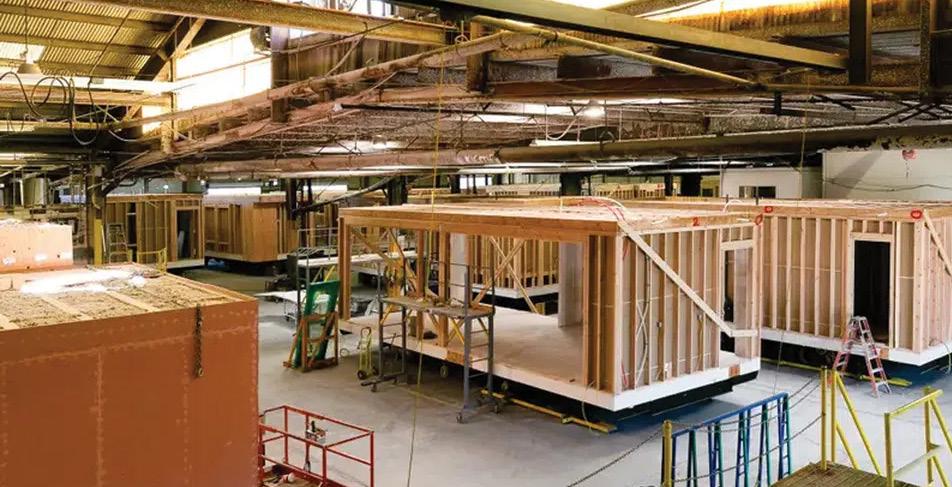


Now here’s where the chiddush of modular homes really comes through.
In a sprawling warehouse hundreds of miles from your address, skilled workers begin building your future living room. This includes not only framing the room, but also plumbing, insulation and electrical wiring, as well as the installation of windows, sheetrock, flooring, and even cabinetry and appliances. Because it all happens indoors, weather isn’t a factor, and delays are rare. Factory precision means fewer mistakes, less waste and consistent quality.
Every module is built to comply with the International Residential Code (IRC) or applicable state standards. Once complete, each unit is inspected, labeled and wrapped for delivery. It’s not unusual for 80 to 90% of the home — including finished interiors — to be complete before it ever leaves the facility.
Total build time in the factory? Just 4 to 12 weeks.







STEP 4
Remember: These homes aren’t delivered in cardboard boxes. Each module is an oversized load — some stretching nearly the full width of the road — and they may need to travel hundreds of miles to your property. This means permits, pilot vehicles and precision planning. Transport crews carefully map routes in advance, avoiding low bridges, tight turns, and weight-restricted roads. Delivery usually happens early in the morning to avoid traffic, and police escorts are required for especially large shipments. The trucks may move slowly, but when the entire second floor of your house is in tow, slow is a maaleh

Here’s where it gets exciting.
You wake up early, coffee in hand, and stand outside with your builder (and half the neighborhood), watching. A flatbed truck pulls in. Then another. And another. Each carries a module of your new home, plasticwrapped like a massive mishloach manos. A crane arrives next, and with practiced choreography, the modules are hoisted and placed onto the waiting foundation.
Alignment has to be perfect. Workers then bolt the sections together, seal the seams, and weatherproof the shell. If the house has a second story, the crane lifts it atop the first, just like Lego.
The full crane set typically takes one to three days, depending on complexity and weather. Yes, you can literally go to sleep in an empty lot and wake up to a two-story house the next morning (that is, if you can sleep like I can).






Even after the modules are placed, there’s still work to do.
Interior trim must be completed where walls join, stairs must be installed (if applicable), siding applied, and plumbing/electrical connections finalized. Seam work, roofing joints, HVAC hookups and inspections are all wrapped up in this phase.
If your builder is organized — and the weather behaves — this can all happen in under three weeks. Then it’s keys in hand. Bruchim ha’ba’im!

One of the biggest misconceptions about modular homes is that they’re somehow more flimsy than traditional homes. In truth, they often exceed code requirements. Because modules must withstand the rigors of transport, they’re built with reinforced framing and additional structural integrity.
Most modular homes use 2×6 framing instead of 2×4, and are insulated beyond code minimums. Once assembled and finished, they’re nearly indistinguishable from site-built homes.


It’s the question people are too polite to ask, but you can see it on their faces.
The truth is, modular homes can be absolutely beautiful. Some resemble classic Colonials. Others lean modern. You can get shingled exteriors, granite countertops, arched ceilings, and crown molding. And if you’re not into these chumros? No problem. Basic models offer clean lines, durable materials, and a simplicity that befits our lifestyle.

For Yidden, there are unique considerations that come into play. Will the house allow for mezuzah placement on inner doorposts? Is the kitchen layout suited for kosher use? Can the builder accommodate a Shabbos-friendly fridge or space for a sukkah deck?
The answer is usually yes — if you ask early enough. Modular homes are surprisingly flexible, but only within the scope of preplanning. Want a double oven, extra dining space for Shabbos and Yom Tov guests, or a room that can double as a Pesach kitchen? Those decisions must be made before the module goes into production, and not as the delivery trucks pull up onto your lot.
Zoning is another key factor. Local rules may or may not permit modular homes on every lot, and each town has its own take on setbacks, accessory units and lot coverage. A good modular builder should be familiar with the region and help guide the approvals process.

Factory build time: 4–12 WEEKS
Total time from design to move-in:
3–9 MONTHS

(versus 12–24 months for traditional builds)
Onsite setup and finish:
2–6 WEEKS
Cost per square foot: $100–$200
base price, depending on location and finishes

Savings when compared to a traditional build: 10–25% ON AVERAGE

Most common size:
1,200–3,000 square feet, boasting 2–4 bedrooms
FINANCING: STANDARD MORTGAGE OPTIONS OFTEN AVAILABLE
Popularity: In some states (like North Carolina, Michigan and Pennsylva nia), modular homes account for UP TO 10% of new single-family builds

While still more common in out-of-town communities, modular homes are catching on in more established neighborhoods too, especially among:
Young couples priced out of the market
Retirees building in-law suites near family
Developers creating yeshiva housing
Families expanding on inherited land
Modular is not about compromise. It’s about choosing a smarter way to build, without the months-long delays and budget creep of a typical project.


THOUGHTS
If you have land and want to build quickly — and if you like the idea of a home that’s 90% complete before the first hammer swings on your lot — modular could be the eitzah
Just make sure you’re working with a builder who understands both the technical process and the values of our community. Ask to tour a factory if possible. Meet other families who’ve built modular. And always read the fine print.
No, modular isn’t for everyone — but it’s definitely for more people than you’d think. And if you’ve ever dreamed of watching your house roll in on a truck like you just got an Amazon Prime delivery… you might just be one of them.
Nesanel Yoel Safran is a writer, chef and student of Torah and life. You can read about all of this and more on his blog Soul Foodie (soulfoodiecom.wordpress.com) and contact him at soulfoodie613@gmail.com.














































New Square, Kiryas Yoel, Lakewood. Dotted across the Tristate area are modernday shtetls that have experienced exponential growth in a relatively short time. They’ve been spurred by the dream of Yidden to live in a place where they feel a sense of community and where it’s safe for their children to play in the streets. But while shtetls were diligently being replanted in the foreign soil of America, across the nation, the general population was busy pursuing what they saw as the American dream: a cottage surrounded by a white picket fence, fronted by an immaculate green lawn.

One of the most cherished ideals of the modern era is the right to privacy and individuality. “Good fences make good neighbors,” said poet Robert Frost. Suburbs emerged across America one by one during the mid-20th century, with families sealing themselves inside large suburban homes, leaving for work in cars that drove out of garages and returned the same way at the end of the day, never stepping outside to meet their neighbors.
But in the heady pursuit of the dream of privacy and home ownership, something very precious was lost: a sense of community. This has given rise to what social scientists are calling the loneliness epidemic. It’s a problem that has received much recognition since COVID, as the pandemic revealed what many had long overlooked: Man is not an island, and loneliness could be deadly.
Across the world, new communities that embrace the joy of living and interacting with neighbors have sprung up over time. Some have been built intentionally, while others have grown organically. But all of them are unique in that, instead of boxing people in, they bring them together. These communities, whether built intentionally or not, spark innovation and make people think: What’s the healthiest way for people to live in the age of modernity, and how can we bring people together instead of pushing them apart?


bringing ease and pleasure to the process.
Now, the women behind the popular lifestyle site Between Carpools bring you Dinner Done 2, with:
Over 140 fresh recipes for every taste and every picky eater. Time-saving kitchen hacks and shortcuts.

And — YES! — many more of the 9 x 13-pan recipes that simplify your kitchen life. OF DINNER




Frum developers take note: if you build a place like Serenbe for the heimish community, I’ll be the first to sign up. Serenbe is an unusual place, likely the only town of its kind in America. It was purpose-built from the ground up and aims to be a serene, healthy place for families to live while remaining close to the city. As its founder puts it: “It’s designed to connect people to nature and to each other.”
Serenbe is the brainchild of Atlanta businessman Steven Nygren. His wife came up with the name, combining “serenity” and “to be.” While raising their family in Atlanta, he noticed how much his children benefited from spending time on weekends on a farm and horse ranch outside the city. He eventually bought the property, and his children loved riding the horses and tending to the farm. When he discovered that the nearby forest in Chattahoochee Hills was going to be developed and the trees cut down, he had an epiphany: What if he could save those acres of woodland, while allowing families to enjoy the serenity of living within nature?
Serenbe follows the principles of New Urbanism: People live close together, yet never too far from nature. The design is closely patterned after the typical English countryside village: a high street lined with shops, with most houses clustered around it, while acres of forest and fields are just steps away. Houses in Serenbe are built with front porches to encourage neighborliness, but without backyards, since the forest is everybody’s backyard.
Serenbe is only a half hour away from Atlanta, where most of the residents work, so it’s not quite the country. But it isn’t quite the city, either. The streets of Serenbe are designed to be highly walkable, with nothing too far from anything. As a matter of fact, after walking and biking, the most common mode of transportation is the golf cart. Serenbe spans 1,200 acres, of which 70% is designated as preserved forest and meadows. There are over fifteen miles of walking trails, winding around waterfalls and creeks. There are also charming blueberry bushes on almost every corner.
The genius of Serenbe is that it doesn’t







look like a planned community. This is not a town of straight lines and identical row houses. The curvilinear streets wind through the town in organic loops, and there are no cookie-cutter houses. Buyers can choose from cottages, larger homes or apartments in multi-family buildings designed with courtyards and gardens for neighborly mingling.
Most of all, Serenbe residents pride themselves with their very own farm. The 25-acre organic farm produces over three hundred varieties of fruits, vegetables, herbs and flowers. Many residents and their children volunteer at the farm, and the entire community can enjoy the organic bounty at Serenbe’s weekly farmers’ market.

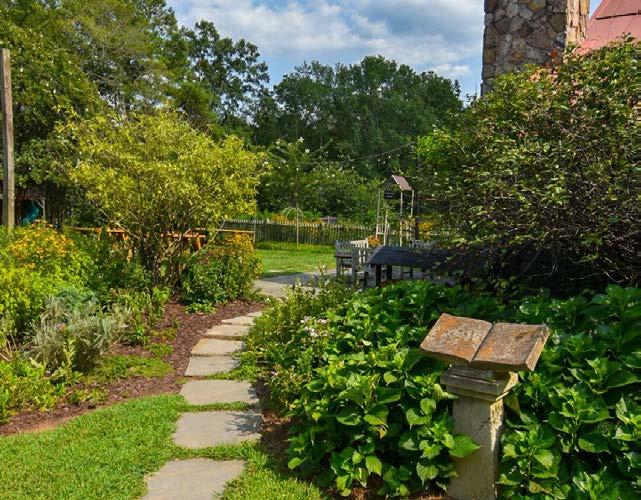
Much of Serenbe is designed to work with the earth, not against it. The plants used for landscaping are primarily local, native plants, which need much less watering. Additionally, there are no water- and fertilizer-gobbling lawns in Serenbe, and similarly, residents can choose to heat their homes with geothermal heating, which pulls warmth from deep underground. Even the exterior lighting is designed with thoughtful intention: all outdoor lighting is downward-facing to avoid illuminating the sky and obstructing the view of the stars.
The entire structure of Serenbe is designed around the concept of community and neighborliness. Neighbors get together at the farmers’ market, at classes and at plays put on by residents. As its founder, Steven Nygren, says, “It’s not complicated at all. It’s just common sense.”
THIS IS NOT A TOWN OF STRAIGHT LINES AND IDENTICAL ROW HOUSES. THE CURVILINEAR STREETS WIND THROUGH THE TOWN IN ORGANIC LOOPS, AND THERE ARE NO COOKIE-CUTTER HOUSES

If your idea of paradise is a lonely, bare spot in the desert, with no electricity, no running water, no police presence and no rules, then get yourself an RV and hitch it to a concrete slab in Slab City, California. A Social Security pension is highly recommended, since that would possibly be your only source of income, unless you enjoy scavenging, repurposing and selling trash.
The population swells in the winter, mostly with migrating “snowbirds,” or retirees looking for a warm place to spend the winter. Permanent residents proudly call themselves “Slabbies,” while referring to the fluctuating tourist and temporary population as “Normies.” With summer temperatures soaring to over 120°, only the hardiest of “Slabbies” remain during the brutal summer months.
It’s called Slab City because of the concrete



SUNDAY
Ladies/Working Girls
10:45 am Hiit Workout Aerobics Weights Pilates Combo
GIRLS - 15 week program
11:30 1st-5th Ballet class with recital
12:30 Pre-1A- 5th Yoga Gymnastics
1:30 Pre-1A - 5th Kangoo dance/ Yoga Gymnastics combo
2:30 5th-8th grade Kangoo dance/Yoga Gymnastics combo
3:30 Ballet dance with recital- 5th- 8th grade
TUESDAY
9:15 am Power Hour (Aerobics / Sculpting) 10:05 am Yogalatis
11:05 am Dancefit class with Malky
8:30 pm Dancefit class- new class opening upon request
WEDNESSDAY
10:00 am Piyo - Pilates Yoga Fusion (Total Body Sculpting)
7:30 pm Grade School Kangoo Dance Class with Yoga Gymnastics
8:30 pm Dancercize Pilates Combo


6:30- Boys fitness - Class opening upon request
8:30 -Dancefit Class Teens plus - New class opening
Yogalatis class - opening upon request
g / Total Body Workout ht, Pilates Combo] Yoga Combo ts / Yoga Combo
THURSDAY
9:15 am Yoga Class - Opening Upon Request
10:05 am Kangoo Dancing / Sculpting Class
7:30 pm Kangoo dance/yoga Gymnastics combo
8:30 pm Dancefit class
FRIDAY
10:00 am Power Yoga Flow Routine (Stretching, Tightening & Strengthening)
Emsculpt Special
Lose
slabs left at the site after the U.S. Army abandoned the former WWII training camp. It was first settled by a few veterans who had formerly worked there, and then began attracting drifters and outcasts on the periphery of polite society. Some were simply retirees looking for a nice, warm and free spot to park their RVs. Others were society’s misfits who were too creative and “out of the box” to fit into the constraints of regular, tax-paying life.
It takes a tough hide to survive in Slab City. In the winter, the population swells to about 4,000, but during the summer, only a diehard, leathered 150 remain. With a combination of ingenuity and the kindness of neighbors, Slabbies manage by hooking up solar panels and trucking in water from a nearby town. Their homes are a motley combination of RVs, repurposed junk, tents or selfbuilt tiny homes.
If you think “Slabbies” are a miserable, down-on-theirluck bunch, then you haven’t scratched the surface of what residents call “the last free place in America.” Slab City is home to an astonishingly creative art scene. With abundant free material (trash), abundant free time and abundantly unleashed creativity with zero


boundaries, local artists have made Slab City into a wild and colorful living art exhibit. Artist Leonard Knight spent 30 years of his life digging, building and painting what he called “Salvation Mountain,” a landmark that Slabbies take great pride in. The “mountain” is covered in layers of colorful painted murals, with slogans exhorting people to just be good.
Of course, living in a place without rules has its downside. Slab City is divided into neighborhoods, some of which are more neighborly than others. Some neighborhoods are populated by an older crowd whose members look out for each other. However, some other neighborhoods have attracted a darker element that finds the lack of rules very attractive. But regular Slabbies shrug off the occasional crime as the price of living there. Says one longtime resident, “The price of freedom isn’t always free.”











The word Chernobyl may evoke stories of miracle-working rebbes and droves of chassidim traveling the roads to spend Yom Tov with their rebbe. Nowadays, Chernobyl, a city in Ukraine, is an abandoned, toxic wasteland, surrounded by miles of fencing lined with frightening signs warning of possible death if one dares to enter.
In April of 1986, the world watched in horror as the Soviet Union’s largest nuclear reactor caught fire and exploded, releasing a plume of toxic radiation that drifted over much of Europe. Traces of radiation were detected even as far as the east coast of the United States. It was the beginning of the end for the teetering Communist dictatorship, as their usual pattern of denial and obfuscation wasn’t enough to hide their sheer incompetence and lack of care for their citizens. Officials quickly moved to evacuate Chernobyl and the nearby city of Pripyat, fencing off a “Dead Zone” of 30 kilometers around the blown reactor.
In the city of Pripyat, rows of drab Sovietera apartment buildings sit eerily empty, tattered curtains still waving in some windows, while wolves and other feral animals wander through the crumbling, abandoned city. Most hauntingly, an amusement park that was set to open on May 1, 1986, never heard the delighted shrieks of children. Its bumper cars and roller coasters lie rusting in place, while an occasional breeze sets the Ferris Wheel into a creaky turn.
Entry into the exclusion zone is strictly forbidden, although numerous thrill seekers have sneaked through the fence and past the guards to explore the abandoned ghost town, Geiger counters in hand. But when a film crew reporting on the 25th anniversary of the disaster entered the zone in full decontamination gear, what they saw shocked them. They saw smoke rising from a chimney in the distance, and they set out to investigate.
To their utter shock, they discovered that wolves, moose and deer were not the only





















inhabitants of the contaminated and forbidden exclusion zone. A hardy group of babushkas had sneaked back into their ancestral villages, living on their own and managing with what they could grow or raise. Their husbands had long since died, whether from alcohol, lifelong cigarette addiction, radiation or a combination of these ailments. But these hardy babushkas remained, not only surviving, but also thriving.

“Radiation doesn’t scare me; starvation does,” says Hannah Zavorotyna, the unelected mayor of her “village,” population six. The babushkas claim that it is better to stay and brave the risk of radiation than to suffer a fate they saw happen to many of the evacuees who died of sadness. Although the rates of cancer have soared among the evacuees and inhabitants of nearby Belarus and Ukraine, these hardy babushkas remain healthy, despite eating food foraged from contaminated ground, and living in an area that has the highest radiation levels in the world. They have formed their own sisterhood, visiting each other for sips of homemade vodka and sharing the produce they grow.
The return of the wolves was the first indicator that all was not as bad as the scientists had warned. For centuries, wolves had kept to the forests and stayed away from populated areas. Now, with so few humans around, the wolves have made themselves at home in what was once a Soviet model city. Despite warnings of two-headed animals and blue frogs being born, the wildlife in Pripyat and Chernobyl is thriving, with predators having a lush variety of rabbits, fish and small animals to choose from on their menu.
The babushkas have seen more than their share of suffering, and the forced evacuation was one last injustice that they couldn’t bear. They lived through the Holodomor, the famine that Stalin forced on
Ukraine in the 1930s. They witnessed the Nazi invasion and then lived through the brutal Communist regime. It’s an incredible story of the power of home and community, and is a testament to the fact that life isn’t a numbers game of scientific facts. These women continue to live and thrive, shooing deer and moose away from their crops and picking radioactive mushrooms, defying scientists’ dire predictions every day. They’ve even outlived many of their counterparts who were evacuated, many who were felled by cancer or consumed with depression.
“This is where my mother is buried, my father is buried. This is where I buried my babies. This is my home, and I’m not leaving it.”

Schoonship is an eco-conscious community built on a canal in Amsterdam. The houses float on the canal and are connected by a jetty. Their goal is to be completely self-sustaining. Warmth is drawn from the water to heat the homes, while an extensive array of solar panels enables community members to share electricity. Schoonship is made up of 46 households living on 30 “arks.” During the summer months, the children jump out of their bedroom windows directly into the canal to swim!

Loma Linda is an unintentional community that has fascinated longevity scientists because of its disproportionately large number of “superagers.” Superagers are people who not only live much longer than their counterparts, but also remain relatively healthy and sharp into old age.
Scientists say that these superagers live longer because of their unique lifestyles. Most Loma Linda residents belong to the Seventh-day Adventist religious group. This group observes their Sabbath on the actual Shabbos and follows a healthy lifestyle that prioritizes a plant-based diet, no alcohol and very little, if any, meat. In addition, they have a strong sense of community and meet regularly with friends to share meals.

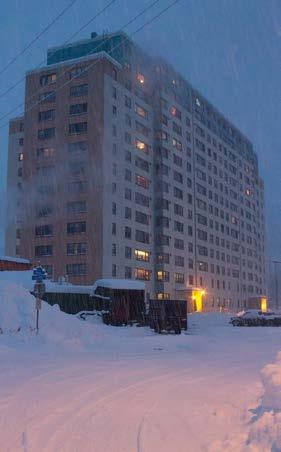
There is only one way into the town of Whittier, Alaska: through a one-way tunnel that changes direction every 30 minutes. There is also only one destination in Whittier: the fourteen-story Begich Towers, where the entire town lives. The former army base living quarters is home to about two hundred residents. An apartment on the first floor serves as Whittier’s only grocery store, as overpriced as any bungalow colony grocery. Rush hour in Whittier means waiting a looooong time for the elevator as it makes stops on every floor. Whittier’s school is accessed by going to the basement, then taking a long tunnel to reach Whittier’s only educational center. This way, there’s no risk of your children having any polar bear encounters. And on the way home, you’d better make sure you get to that tunnel before 10:30 p.m., when it closes. If you’re too late, you can get yourself a special t-shirt: POW (Prisoner Of Whittier).
In 1962, three out-of-work hotel workers parked their trailer in the sands of Moray Beach, Scotland. They started planting vegetables, something they were told would never take hold in the sandy soil. Eileen Caddy started gardening by listening to her “inner voice,” and soon succeeded in growing giant vegetables,


including a famous 40-pound cabbage. Slowly, the community started attracting similarly spiritual-minded people, and the idealistic ecocommunity of Findhorn was born.
Findhorn isn’t just a friendly, eco-conscious place to live. The village subscribes to a vague, undefined spiritual ethos. Residents are encouraged to connect with their “inner wisdom” and to work in tandem with the natural world. Its aim is to foster harmony between “self, others and the planet.”
Living in Findhorn is not only about hippy-dippy philosophy. The village is a quaint medley of whimsically built eco-houses, made of natural materials such as recycled wood and stone, and naturally insulated with straw bales and sheep’s wool. The community has its own
SO WHAT COULD GO WRONG? HUMAN NATURE, IT SEEMS. A STRING OF DISASTERS THAT STARTED ABOUT FIVE YEARS AGO HAS LEFT THE COMMUNITY IN PERIL

ESSENTIAL: / It’s All You Need / .
The perfect upscale sweatshirt: fur inside, sleek outside, easy to layer.

price
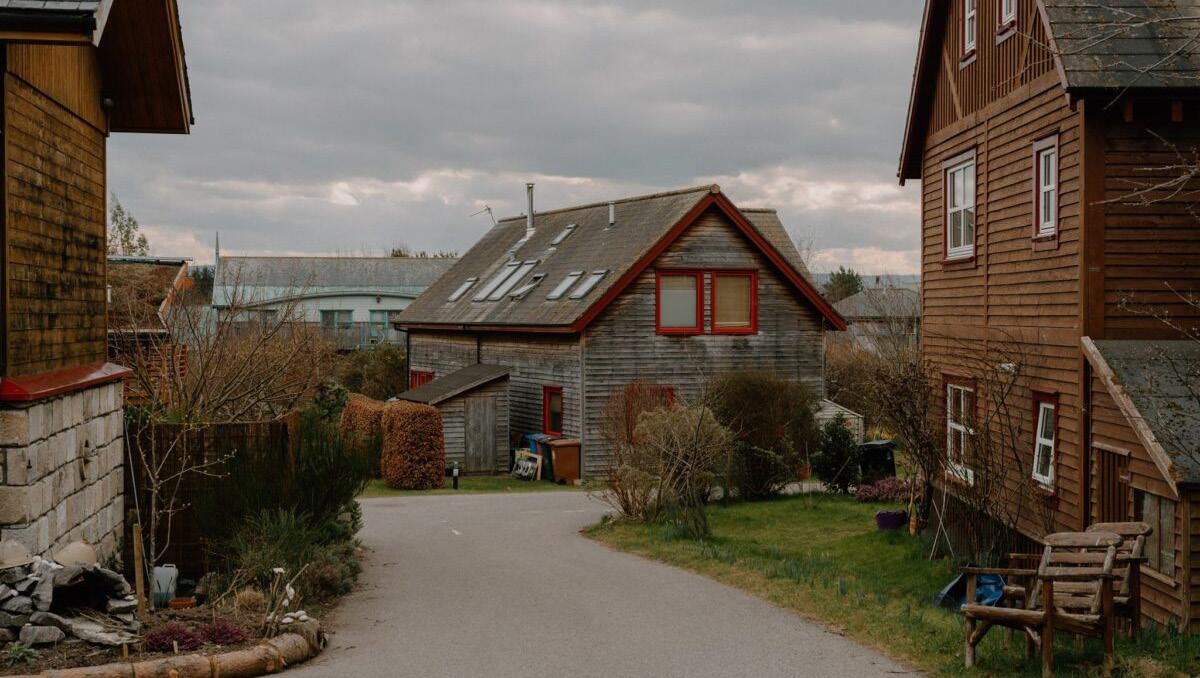
wind turbine to generate energy, and all wastewater is recycled and used.
Some of the quirkier houses are built with more unconventional methods. Five houses in the community are made out of giant whiskey barrels culled from a local distillery (this is Scotland, home of Johnnie Walker and Glenfiddich, after all). Another innovative house is insulated with wine corks (one has to wonder — did they drink all that wine themselves?).
Important decisions in the community are made by gathering the community members to reach a consensus. Everyone in the community contributes in some way — some by cooking and maintenance, and others by gardening, teaching or administration. The community fosters togetherness and collaboration with its frequent meetings and group therapy sessions. They still grow and sell a healthy assortment of vegetables, which provides income for Findhorn Village.


So what could go wrong? Human nature, it seems. A string of disasters that started about five years ago has left the community in peril, and its future seems uncertain. A worker in the community was told he was being let go after fifteen years of employment. Disgruntled, he set fire to two main buildings before he left. (Where did fifteen years of spiritual work and listening to his inner voice go?) The main community center and a few outbuildings were completely destroyed, leaving the community reeling. Then, along with the rest of the world, they were hit by a double whammy. First came Brexit, which limited the number of foreign students and volunteers. Then came COVID-19, which brought an end to their eco-tourism, which was — and remains — one of the primary income sources for the village. Rising costs, a result of the current economic conditions, have also affected Findhorn’s ability to finance itself.
For now, Findhorn continues to exist as an eco-village. But the Findhorn Foundation, their education program, has been closed. They
continue to struggle as they attempt to rebuild, aligning their utopian visions with the harsh reality of the modern-day economy.

Tuesday Dec. 2


Boost your kid’s immunity for a healthy winter and flu season with nature’s most powerful immune protection.
Chewable Immune O Max™ No More Skipping School This Winter.
Easy to chew for an easy winter with a boosted immune system




MOST MAJOR INSURANCES
ACCEPTED

PHYSICAL AND OCCUPATIONAL THERAPY CENTER
Professional Care with a Personal Touch
We are committed to providing each patient with the highest quality physical and occupational therapy services, customized to their individual needs.
• Arthritis
• Back Pain
• Carpal Tunnel Syndrome
• Gait Disorders
• Muscle Weakness
• Neck Injuries
• Neurological Impairments
• Orthopedic Conditions
• Parkinsons Disease
• Postural Dysfunction
• Rotator Cuff Injuries
• Stroke
• Trigger Fingers

WE ARE PLEASED TO ANNOUNCE THE REOPENING OF OUR POSTURE CLASSES FOR GIRLS






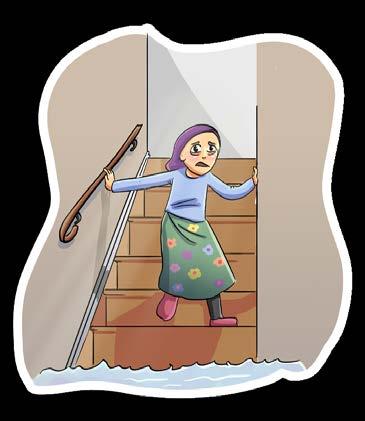


ILLUSTRATIONS BY BRACHA LISSAUER
Ever found yourself in a bit of a pickle and called in the professionals only to realize the situation was more comedic than catastrophic?
From phantom leaks to mysteriously malfunctioning light bulbs, calling a repairman for absurd reasons can lead to some laugh-out-loud moments. Here are six accounts
My husband and I are normal, capable people. Maybe we need a handyman’s help to hang a mirror, and perhaps we need to say “righty tighty, lefty loosey” before turning a screwdriver, but we get by.
When we bought our first home, tiny and old notwithstanding, we were so grateful to be homeowners, and we felt like real adults! But houses don’t come along with manuals, and there was quite the learning curve after moving in. But still, we kind of figured things out as time went on.
The second summer we lived in that house, we began suspecting that the central air conditioning — which wasn’t in tip-top shape to begin with — wasn’t working all that well. The house was staying uncomfortably warm, even though the A/C was working really hard to keep up, and when we put our hands near the vents, we felt only a lazy puff of lukewarm air.

Time to call the A/C guy, we decided glumly. We were living on a shoestring budget, and repair expenses were never fun, but what could we do? We couldn’t spend the summer in a 78° house.
The A/C repair guy was duly called, he showed up a few hours later, and I directed him to the intimidating A/C unit in the boiler room. I retreated upstairs, all the while worrying about unfixable A/C systems and parts that were too big to fit through the front door.
A few minutes later, the repairman called me downstairs. He was wearing a big grin and holding a huge, dusty, dirty thing in his hand that looked like it was hoarding all the dust that could possibly have been created since the house was built.
“This is a filter,” he said kindly. “It needs to be washed every few months, and in the summer, every month.”
“Oh,” I said sheepishly. “I — we didn’t know.”
“How long have you been living in this house?” he asked.
“This is our second summer here.”
“Well, you just need to change the filter!” he said. “No repair necessary.”
Of course, we had to pay for the service visit, and this one cost just a little bit of ego, too.

When I moved into my new house, I knew I was getting a property that boasted incredible landscaping. The manicured front garden was lined with bushes, plants and flowers (whose names I would have to learn), complete with garden spotlights that worked with a timer and glowed beautifully at night.
The previous owners were retirees who had cared for this garden as if it were their baby — mowing every weekend, replacing mulch, fertilizing the ground and meticulously pulling weeds. I, however, had my own children to care for and knew I wouldn’t have time for such tedious upkeep. My monthly mowing couldn’t compete with their weekly routine, and I figured it wouldn’t be long before the flowers, bushes and grass lost their lush, vibrant green.
But it wasn’t just the upkeep. My rambunctious bunch quickly learned that the garden doubled as a playground. My kids had a heyday with the mulch, biked across the lawn, and played kugelach
with the decorative stones. Even my neighbors and I would set chairs on the grass, bungalow-colony style, while we watched our kids enjoying the outdoors. I learned to close my mouth and bite my tongue, reminding myself that the outside wasn’t only for scenic views; it was meant for kids to play and enjoy. And that’s what they did.
That is, until they pulled out the garden lights. Now, with no streetlights on my block, night plunged our property into literal darkness. Of course, I tried fixing them. I stuck them back in the ground, jiggled the wires and tapped the fixtures, but... nothing. They simply would not turn on.
The next time the previous owner came to pick up his mail, I sheepishly asked him where to buy more of these lights.
“They’re LED,” he said. “They’re unbreakable. They don’t burn out.”
“I know,” I said. “But with my kids around, things tend to break. I tried everything, and they won’t light up. I’ll just get new ones.”
He shrugged and started tinkering with the lights and wires. I watched awkwardly, hoping he wouldn’t notice the current state of the lawn.
It took just a minute. A small flicker, and then the lights blazed to life. “The wires were simply not plugged into the outlet on the wall,” he said with a grin. He hopped into his car, yelling, “I told you they weren’t broken! Enjoy your kiddies!”
Yeah, I felt pretty dumb. But it also turns out my kids aren’t the little devils I thought they were.
MALKA KATZMAN
As a proud newlywed in our brand-new kitchen, I was excited to whip up gourmet meals from the cookbooks lined up on the counter. There was a sense of endlessness to the adventures of cooking — the never-ending options, variations and combinations. My fingers tingled with anticipation.
I started my soup by frying the onions, as any balabuste worth her salt would. I put some oil in the frying pan and tossed in the finely diced onions I had been crying over for the last ten minutes. Then I turned on the flame. A flame flickered and died. I tried again — a few sparks, then darkness.
My mind went to the worst-case scenario too quickly. My husband would walk through the door to a pot of cold, raw onions! I forced myself to think rationally. Maybe there was a problem with the flame. I tried the other flame, and hurray! It worked. I almost broke into a dance.
But throughout the weeks of dic ing, frying, cooking and then win ing and dining my new husband, one or two flames on the gas range annoyingly sputtered and died al most every time I cooked.
It was time to call the company. Why, this en tire kitchen, including the gas range, was just months old! The service was surprisingly good, and a few days later, a technician was at my door.
“The flames sometimes just don’t work,” I told him. I demonstrated by turning on the last recalcitrant flame, which in-
deed flickered and died.
The technician didn’t even reach into his toolbox. He used his fingers to push the metal plates into place and turned on the flame. It worked.
“You’ve got to keep these exactly in place,” the guy said. Then he threw his bag over his shoulder and made his way out the door without looking back.
I watched him leave, my mouth hanging open. Wait, I had questions! Maybe it had to do with water getting into the crevices! I didn’t believe it was a matter of straightening the plates.
Then I decided to try it out first. I straightened all of the plates that I had always shifted around when I cleaned the gas range. I turned on one flame, then another. Another, and another. The flames burned bright.
My face felt a little hot, too. It was all a matter of putting things into place.

Having a basement is a joy in itself. The children play downstairs. There’s another bathroom downstairs. There’s a freezer downstairs. There are shelves of seforim downstairs. There are toy closets downstairs.
But there are other things downstairs as well. Creepy crawlies. A faint smell of mustiness when it rains. Lightbulbs that need to be changed twice as often as those upstairs. And closets that hold secret mechanisms that make the house run, like electricity panels and… pumps.
For the basement-less folks out there, a pump, my contractor explained, sends all the water that runs downstairs to the pipes uptown. Since a basement is low down, the pump helps with gravity issues when remov ing water from the house. That’s the maximum my brain under stands.
And I, luckily, have two pumps downstairs. One is for the bathroom and shower located toward the back of the basement, and the second one is for the sink and washing machine located in the center of the basement. Each one also has a floor drain connected to it; in the event of a flood, the water that flows into the drain is pumped out and then goes with the flow, I guess. I’ve learned all this information slowly, and not during dry, calm times. Think waterfalls and tears, screaming and hysteria.
My pumps, a trusted plumber told me, need maintenance. Every so often, they need to be cleaned as a preventive measure. So when my teenage daughter told me she had seen a little water running from the toilet floor drain one Sunday in June, I knew what to do. I called the plumber.
downstairs, and water was running all over my basement floor. Flood
I swallowed and turned back up, laundry still in my hands. Oh-kay. I knew what to do. I called the plumber I had just used.
“What the problem is?” I repeated. “I don’t know. The pump — something. There’s water all over. Can you just come?”
He wanted a picture first. Of what? The water? The pump, he said. I was almost surprised — didn’t he remember my pumps? Turns out he has more customers, not just me. No, he didn’t remember. Could I send a picture? I guess. Of which pump? Both, he said. But the pumps are underground. Okay, of the pump covers. I put bags over my shoes, bravely ventured downstairs, then snapped pictures of the waterlogged pump covers.
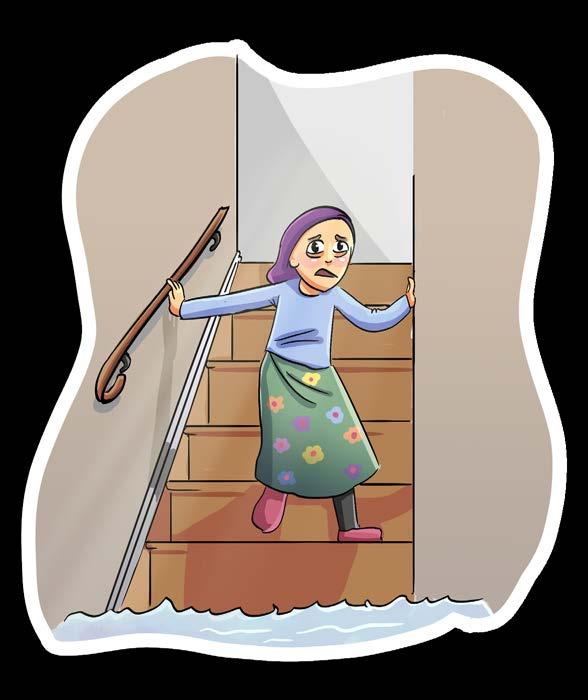
Kindly, the plumber hurried over. When he arrived, he looked around for a minute, then called me down.
“See, your pumps are fine. There’s no problem here. There’s water seeping in from that door.” He pointed to a door that connects my basement to my neighbor’s basement. My neighbor was in the country for the summer. Permission procured, we ventured into her basement to find the boiler leaking.
“It’s probably been leaking for days. You need a boiler company; it’s not a plumbing issue.”
He was kind enough to charge only for the house call, since he hadn’t done any actual work. My loss; if I had looked where the water was coming from in the first place, I would have been able to call the boiler people right away!
He came, he checked, he fixed, and I paid. And all was calm again.
The morning after the plumber’s visit, I went downstairs to throw a load of laundry into the washing machine. Mid-stairs, I stopped. There was a whooshing movement
The cleanup was a big deal. I washed the basement and a million towels, then re-washed everything again. And again. The closet doors blew up from the water. The dust ruffles needed to be changed. It was a lot of work. I may have kvetched about it, too.
And it’s not over until it’s over.
Three days later, boiler safely replaced, I came downstairs to find another flood. (Luckily, I wash a lot of laundry. Otherwise, it could have been a while before I visited the basement again.) Informed consumer that I now was, I traced the water. Where was it coming from? The back pump’s closet. The plumber’s number was still in my phone’s redial memory. But before I called, I opened the closet to take a picture, just in case the plumber wouldn’t remember my house. When I opened the closet door, I saw the water coming from on TOP of the pump, as opposed to the pump itself. What now? I snapped pictures and sent them to the nice man I’d paid just a few days earlier. I was really keeping him busy.
“It’s the filter, not the pump,” he wrote back.
“What filter?” I asked.
He called me. The water was leaking from the filter on top of the pump. I was mystified. Why did I have a filter there? Was it filtering the sewage from the shower? He couldn’t answer me; he just reiterated that the filter was leaking and said I could just shut off the water and he would come over later to replace the filter.
Just shut the water. Right. How? My husband didn’t answer the phone, so I called my brother, who lives close by, and he came over to shut off the water. He also showed me that the water pipes were coming from my Pesach kitchen, which was next to the plumbing closet. Ohhh, that’s why I have a filter there! I decided to be a mature, responsible adult and not even mention the entire issue to my husband; he had heard me complain enough about the first leak. This time, the plumber would fix it, I would mop up the water, and the cleaning lady would take care of the rest. But I wondered: Why would my Pesach kitchen, only used in Nissan, suddenly start leaking in August? I still don’t know. I couldn’t understand the plumber’s explanation, but he helpfully replaced the leaky filter for me. For a hefty fee, in case you were wondering. And later, both my husband and my brother laughed at me for calling a plumber to change a filter. We could’ve easily taken care of it for you... It’s not a big deal to change a small filter like that! Okay, so now I know! So much for being a responsible adult.
We moved into our new home with three tiny kids. Moving day was a freezing, overcast January day, along with some light, sleety rain. By the time the movers finished traipsing in and out, no evidence of the freshly sanded floors or freshly cleaned house remained. The floors were wet and gritty, with a fine mix of salt and mud everywhere.
We somehow got everyone to sleep, and I assumed the house would warm up once the doors finally stayed closed after we were in for the night. It was such an unusually freezing week that the local stores, including Home Depot, were out of salt. My husband valiantly chipped away at the black ice on the front steps with a shovel, and eleven years later, the top step still proudly bears the pockmarks the shovel left behind.
The first morning in our new home dawned — and we woke up freezing cold. After I got the kids out to school (using the front steps heroically cleared by my husband the previous night), the first call I made was to find out who to call to look at the heating system, and the second call was to a local HVAC company. I didn’t even have to pretend to be desperate; I was, and they agreed to fit us in that morning despite having a packed schedule due to the weather.
To my immense relief, the HVAC guy showed up as promised. He poked around the boiler room and then asked to go see the (cold) heating units. Five minutes later, he was back with a diagnosis.
“Everything is work ing just fine,” he pro claimed. “Let me show you something.” He led me upstairs to the living room and opened the cover of the nearest radiator. Our previous home had central heat, and this was our first experience with baseboard heating. “The painters closed the vent covers when they were painting,” he explained. “Everything is working perfectly, but the heat can’t get into the rooms like this. Just open the covers, and you’ll be fine!”

Five minutes and $180 later, he was on his way — and the house was beginning to warm up. It was the best (and maybe silliest) $180 we ever spent, but when things break now, we take a step back and try not to look for zebras.


A few months ago, I went into my laundry room to deal with a mound of dirty clothes and flicked on the light. There was an electric buzz, a flash, and the lightbulb went dark.

I may or may not have yelled out.
“What happened?” my husband called from downstairs.
“I don’t know,” I said. “There was this flash and buzzing noise, and now the light isn’t working.” I flicked some other switches. “Actually, the lights in the hallway aren’t working either.”
We know to try simple fixes first, because we’re smart like that. Was it possible that a problematic bulb was affecting the circuit? But changing the lightbulb didn’t help.
Could it be the fuse? My husband went to the fuse box to check. The fuse box, however, was located in the dark (and windowless) laundry room, so he had to peer at the fuse box with the weak light of his flip phone to find the fuse titled “Laundry Room.” He found it, flicked it back and forth, and the home phone base plugged into the laundry room gave a little beep. (This should have been a hint that we weren’t on the right track, but we don’t always get hints.)
Simple fixes covered, we called an electrician. He came by the following day, assistant in tow. I showed him the fuse box and the general area in the house that had lost electricity. He flicked a fuse switch, and all the lights went back on.
I blinked. What?
“It was the fuse,” the electrician explained patiently.
“We checked the fuse!” I said. “I know we did!”
But now that there was a light on in the laundry room, I was able to see that there were two fuses for the laundry room in the fuse box. We had flicked the wrong one.
I thanked him sheepishly, nodded to his very quiet assistant, and sent them on their way.
























STORE HOURS: SUNDAY - THURSDAY 11:30 AM - 7 PM
FRIDAY (WINTER) 11:30 AM - 1:30 PM | (SUMMER) 11:30 AM - 2 PM






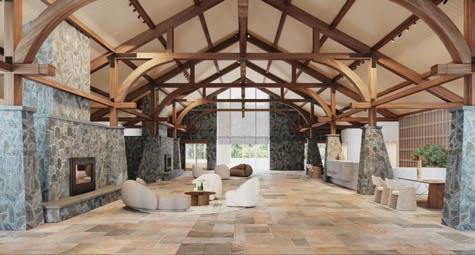



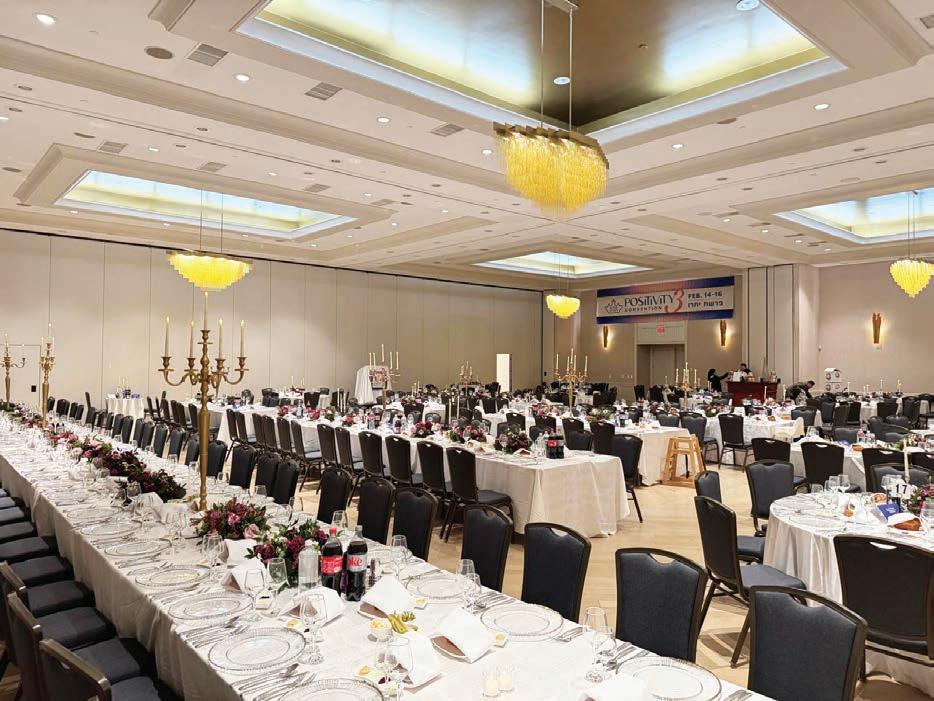






“There’s nothing to do!” something

Long, unstructured Sundays can be so hard to fill — but not anymore! Take your Sundays from “endless” to “amazing” with these great activities.
These easy, fun and original activities will turn Sundays into your favorite day of the week.
Air-dry clay is a great choice when looking for a Sunday activity. It’s fun to work with, and you can use it to make almost anything. You can choose to use colored clay, use white clay and then color it yourself with markers, or make your own from scratch!
2 cups baking soda
1 cup cornstarch
1¼ cups cold water

Take a look at this adorable plate of treats. See what you can create with your own air-dry clay!
This clay dries white. Use markers to color it.
Store unused clay in an airtight container.
It usually takes 24 to 48 hours for clay to dry completely.
Step 1: Place all ingredients into a pot on the stove. Stir everything together until the mixture is smooth.
Step 2: Ask an adult for help turning on the flame, and adjust it to medium heat. Keep stirring the mixture as it heats up.
Step 3: The mixture will start to get thick and look like mashed potatoes. Keep stirring for about 5 to 10 minutes.
Step 4: When the mixture forms a ball and pulls away from the sides of the pot, turn off the flame.
Step 5: Carefully spoon the clay onto a plate or tray. Let it cool down completely before touching it!
Step 6: When the clay is cool, knead it with your hands. This will make it smooth and ready to use. (If you won’t be using it right away, wrap it in a damp cloth or plastic wrap, and keep it in a sealed container so it doesn’t dry out.)


Step 1: Roll the turquoise clay into a short, curved log for legs.
Step 2: Roll the wine clay into a thick log for arms. Gently press the centers of the turquoise and wine pieces of clay together, and let the arms hang loose.
Step 3: Form two mini beige balls for the hands. Gently press onto the ends of the arms.
Step 4: Form two mini orange circles, flatten them a little, and gently press onto the bottom of the legs for shoes.
Step 5: For the collar, form a long orange log, and position above the arms.
Step 6: With light beige clay, form a smooth ball for the head.
Step 7: Form three mini light beige balls for the ears and nose. Gently press them onto the face. With black marker, add two eyes. Optional: Add some blush for the cheeks.
Step 8: For the hat, roll purple and wine clay each into two logs. Stack the four logs, and place onto the head.
Step 9: For the bow, form two mini circles of orange clay, and connect them. Gently pinch in the center to form the bow. Place a mini turquoise ball in the center.
Step 10: Allow the clay to dry completely. When dry, glue it onto a pencil.













Step 1: Take a piece of blue clay and roll it into a ball. Then press it down and shape it into a bird with a tail, as shown.
Step 2: Form a small ball using dark blue clay. Pinch one side to form a tear drop shape for the wing.

Step 3: Repeat with yellow clay to create a smaller teardrop for the upper layer of the wing.
Step 4: Use a tiny piece of dark blue clay to form a triangle for the beak. With a tiny piece of white clay, form a ball for the eye. Add an even tinier black ball for the pupil.
Step 5: Allow the clay to dry completely. When dry, glue it onto a pencil.
Step 1: Roll each color clay into a small ball. The red balls should be slightly larger than the rest of the balls.
Step 2: Line up the orange, yellow, green, blue and light blue balls in an arc shape, and press them together gently so they stick.
Step 3: Add the red clay ball for the head on top of the first ball.

Step 4: With a black marker, make two small dots for eyes. Add a mini yellow ball for the nose.
Step 5: Roll two very tiny pieces of blue clay into thin strings for the antennae. Press them on top of the head.
Step 6: Allow the clay to dry completely. When dry, glue it onto a pencil.


Yom Tov’s over, the weather’s cool
For real this time, we’re back to school
So settle in and try your best
To make this school year a success
The greatest help, we know for sure
Is to start each day the night before
If you need a boost, we’ll help you start
All students welcome to take part
And while only two will win the prize
You will find to your great surprise
That this small change will spawn much more And help you to succeed and soar!
I WASN’T AIMING AT YOU. I WAS AIMING AT THE CABINET.

JOAQUÍN’S GOING TO BE FURIOUS. THIS IS THE SECOND TIME HE’S SLIPPED AWAY WITHOUT A TRACE.
WHAT’S THAT? LET’S SEE.
NO TRACE — EXCEPT FOR THIS PAGE.
WHAT COULD BE THE REASON BEHIND THOSE DECISIONS, MADE SO MANY YEARS BEFORE THE RUBINOV FAMILY EVER ARRIVED? IF ONLY WE COULD PEEK INTO THE PAST AND DISCOVER THE REASON BEHIND HIS ACTIONS… STOP HIM!
LET’S SHOW IT TO JOAQUÍN. MAYBE HE’LL KNOW WHAT IT MEANS.
THIS WHOLE THING IS VERY MYSTERIOUS. IT SEEMS THAT PEDRO FOUND AN OLD LAND MAP OF ARGENTINA HIDDEN AMONG THE PAGES OF HIS GREAT-GREAT-GRANDFATHER ELIAS’S JOURNAL. THAT SAME MYSTERIOUS GREATGREAT-GRANDFATHER WHO WROTE A JOURNAL FILLED WITH RIDDLES AND CODES, WHO HID SECRET TREASURES BEHIND THE FIREPLACE IN HIS HOUSE AND THEN LEFT, NEVER TO RETURN, LEAVING THE JOURNAL TO GATHER DUST IN THE SHUL OF THE LOST CITY.
RECAP: PEDRO REALIZES THE TREASURE THEY FOUND WASN’T THE FULL STORY. A FINAL CLUE IN HIS GRANDFATHER’S JOURNAL POINTS TO SURINAME… AND A SECRET ABOUT THE LAND JOAQUÍN NOW CONTROLS. JUST AS THE TRUTH CLICKS, JOAQUÍN’S MEN CATCH UP TO HIM.
PORT OF RÍO DE LA PLATA (NEAR PRESENT-DAY BUENOS AIRES, ARGENTINA). THE YEAR IS 1703.

SO, DON MORENO, WILL WE BE SEEING YOU AND THE SEÑORA AT MASS?
THAT’LL BE TWO PESOS FOR THE LETTUCE, SEÑOR MORENO.
I’M AFRAID NOT. THE SEÑORA HASN’T BEEN FEELING WELL FOR SEVERAL DAYS. I’LL HAVE TO STAY HOME AND CARE FOR HER.
STRANGE… WASN’T SHE SICK AROUND EASTER LAST YEAR TOO?

1. Gather round the table to play a family game of Boggle, using this Boggle board.
2. Once you have a winner, fill out the form below in its entirety
3. Email the form to comments@ thewview.com or fax to 718-2478881 by Sunday at midnight.
4. Two winners will be drawn each week, each of whom will receive by mail a $10 gift card at Sprinkles!
Find words on the board containing four letters or more. Letters of a word must be connected in a chain (each letter should be adjacent to the next either vertically, horizontally or diagonally), and each letter can only be used once in a given word. The following are not allowed in Boggle: Adding “s” to a word • Proper nouns • Abbreviations • Contractions • Acronyms
4-letter words: 2 points | 5-letter words: 3 points | 6-letter words: 5 points | 7-letter words: 7 points | 8-letter words: 9 points | 9+ letters: 12 points
Each Boggle board hides a word of nine letters or more!
L E V N C A D T R E
R S E F M V I H O Z
G B A E P

Family name: ___________________________________________________________________ Phone: ___________________________________________________________________________
Full mailing address: _________________________________________________________
Full name of winner: _________________________________________________________
Amount of points: ____________________________________________________________
Full names of competing players:
List some words only the winner found:




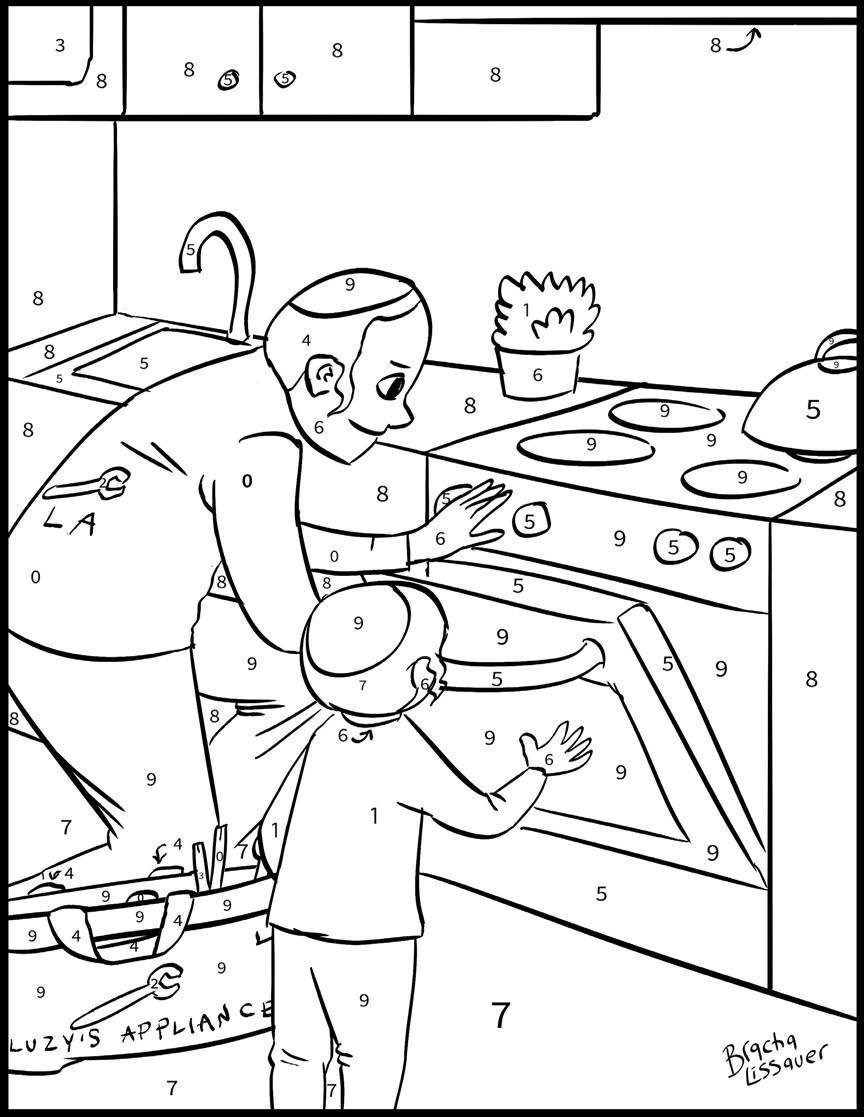










DOONA CAR SEAT BASE
Brand new, never used. Price $125. Please call: 929.214.7721
MONSEY LARGE 5 BEDROOM HOUSE
Close to Rav Schlessinger’s, 3 bath bi-level. Updates: roof, driveway, HVAC, deck $1,325,000. Deera Homes, Sarah Schwab, Broker 914261-6432. Call/Text.
WESTPALM FLCENTURY VILLAGE
WestPalm Century-Village apt for sale. 2 Bedroom 2 baths. Furnished/Movie-in condition. Close to all Shuls! (Norwich-H) call/text 917685-0928 or 347-309-8873
WEST PALM BEACH FLORIDA
APT. FOR SALE Century Village-Golf Edge. 1 ½ bedroom apt. 2 baths, Brand new appliances, Ready to move in now. Price $200K or best offer. Call: 845.325.0500
WEST PALM BEACH FLORIDA
Century Village, Willington M, 2 Bedroom apt. Ground floor FOR SALE. Call: 347.760.0639
WEST PALM BEACH FLORIDA
For the best Real Estate deals, contact Mrs. Debby Schwartz 203.667.2785
NORTH MIAMI FL RENTAL
A beautiful 3 bedrooms, 3 bath villa in North Miami, with private inground heated pool & spa. Price/night $339. Pictures available. 845.327.7153
MIAMI BEACH FLORIDA
Carriage Club North, Beautiful 2 bedroom, 2 bath, Ground floor. Call: 347.499.0031
MIAMI BEACH FLORIDA
Collins Ave. Beautiful ocean view. 1 bedroom apt. Call: 347.760.0570
MIDWEEK/WEEKEND
VACATION GETAWAY!
Escape to a stunning 3-bedroom, 2-bath villa in serene Mountaindale! Relax in the heated outdoor jacuzzi and enjoy peace and quiet, just minutes from shuls. Perfect for a rejuvenating retreat. Price: $239/night (Pics avail) Call/Text: 845327-7153
EAST BOCA RATONLUXURY RENTAL
Completely renovated private villa w/private heated pool, STRICTLY KOSHER, 2-Bedrooms, 2-full Bathrooms, walking distance to shul and beach. For reservations Email Bocapalmsvilla@gmail.com or call 929-784-8472
NORTH MIAMI
VACATION RENTAL
Beautiful, modern 4 Bdrm 3 Bthrm house for rent. Private Heated pool with spa. Pergola and covered dining area in backyard. Quiet, private neighborhood. For more info, please call or text 646-926-1260
VACATION PROPERTIES
Luxurious vacation properties for short-term rentals in the Monsey area. Some with POOLS. can accommodate 18 to 150 guests, ideal for large families, Shabbatons, and more.. ASK US ABOUT OUR WINTER SPECIAL Great Minds 845-520-3250.
HOTEL 15
Big villa in serene area outside Monroe. 8 couple bedrooms, Teen bedroom 8 beds plus 20 kids beds. For Pictures hotelfifteen.com Call to book 845-837-5662
MIAMI VILLA
Brand new kosher villa in Miami . Heated pool and jacuzzi near shuls. for more info call/text 347-852-5154.
NORTH MIAMI FL RENTAL
Vacation villa with a private heated pool and spa. Call/ Text: 917-382-4810, email: 1752nmb@gmail.com www. themangotreat.com
MIAMI BEACH
2 bedroom 2 bath apt to rent Indian Creek & 34 st 5th floor. Fully equipped. 2 wk min. 917-848-6851
Are you passionate about health? Nutrition by Tanya is looking for a part time male nutrition counselor. Training provided. Must be available one night a week. Yiddish speaking a plus. To Apply email, tanya@ nutritionbytanya.com Subject line: Brooklyn nutrition counselor
WORK FROM HOME
Great opportunity to manage your own business from home. No experience needed, no computer necessary. Huge potential to grow big. Call: 438.529.1216
SEIT P3
Excellent SEIT P3 opening in Williamsburg full time, excellent pay potential. Email: scaplan@yeled.org Or call: 917.968.2292
WORK FROM HOME
Let your extra time bring you some extra cash. You’ll absolutely enjoy it and feel fulfilled! For more about this wonderful business and how it works Call 845-920-ALOE (2563) Hatzlucha!
For Electrical & lighting supplies co. No car necessary, commission only. Top $$ paid, male or female, work from home, partnership opportunities available. Call: 212.662.1300
INSURANCE OPPORTUNITY!
We’re looking for anyone who possesses a minimum to mid level insurance experience to join our team. Great benefits and pay. F/T preferred. Email rikki@hiresolutionsny.com
GREAT OPPORTUNITY
Have HR/recruiting experience? Earn $65K+ parttime & $100k+ for full-time! Email ProRecruiterNY@ gmail.com to apply.
1:1 PROVIDER
Seeking a male provider to work with a 17-year-old boy with additional needs once a week in the evening. BA preferred. Call: 718-500-3765 ext. 103 or email hr@naaseh. org.
Seeking a P3 provider to work with a young boy after school hours. Excellent support and curriculum provided. Call: 718-500-3765 ext. 103 or email hr@naaseh.org.





2ND & 3RD FLOOR UNIT:
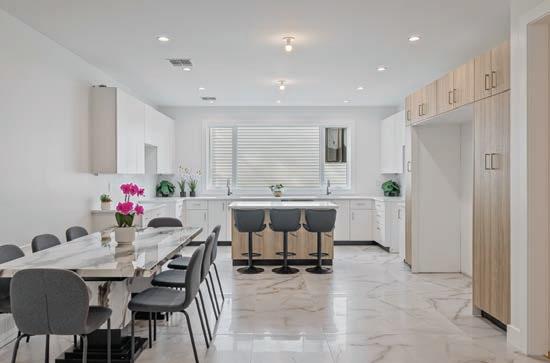
LIGHT ALTERATIONS
Please Call: 718.450.4700
MAKEUP ARTIST
Certified makeup artist for all your special occasions. Call: Yides Neuwirth 917.309.6000 718.858.0815
AYIN HORAH
The renowned Rebetzin Aidel Miller from Yerushalayim Is always available to remove Ayin Horah over the phone. Call: 718.689.1902 or 516.300.1490
GARTLECH
We fix knitted & crochet Gartlech & make beautiful professional fringes. We also teach how to knit & crochet. Please call: 917-414-3281
GARTLECH
Beautiful HANDMADE
GARTLECH, Hand crochet, Hand knit, Silks & more with beautiful Gartel bag. Text or call: 718.283.4589 Wholesale orders available.
CONSTRUCTION
Bathrooms, kitchens, closets, decks, extensions, additions, Basements, all electrical, plumbing, Carpentry. Lowest prices, fastest service. Call:718.951.0090
ELECTRICIAN
All Electrical work, outlets, switches, fixtures, new lines for washer/dryer or air conditions, shabbos clocks, circut breakers. Call:718.951.0090
HANDYMAN & PAINTING
Experienced & Reliable handyman. Small jobs our specialty! Plumbing, Electric, construction, Locksmith, painting, plastering. Shabbos clocks, outlets/switches, call: 347.275.5408
REMOVE EYIN HORA
A baby, a simcha, a new lease in town? Call Ayin BeAyin so things dont chalila go down! Call Today 718-400-AYIN (2946) www.ayinbeayin. com
Kitchen cabinet hinges, tracks, drawer boxes, garbage pull outs replaced at reasonable prices. Call Mr. Likht 917-817-6981
VAN FOR RENT
Refrigerated van for rent daily or weekly with or without a driver. Call or Text: Eli 516.270.6755
NEW WEBSITE?
Get your new beautiful website done hassle free!
Affordable pricing! Satisfaction guaranteed! Email: sales@ stratadigitalgroup.com
PROFESSIONAL COACH
Heal your life. Heal your body. Heal your past. Experienced. Successful. Personable. Expertise in anxiety, panic and trauma. Mrs. Esty Frank 7188518636
WOOD REPAIR
Professional transformation to ur kitchen cabinets thru design & color chg. Also revamp, repair estate furn, drm chairs, bdrms, libraries, & ext wood doors. Best price, svc & decorators consult txt or call 212-991-8548.
NUTRITION
Prenatal nutrition including fertility; infant/pediatric medical nutrition therapy. Complimentary 10-minute phone consultation 718-8774439. Registered Dietitian Malki Zentman, MS/RDN, CSP, CNSC
REAL ESTATE
Need help renting or managing your property — without the stress? I’m an independent real estate agent who’s reliable, easy to work with, and results-driven. Let’s get your property rented and your time back! Call/Text/ WhatsApp: 347-278-5660
AYIN BEAYIN
A baby, a simcha, a new lease in town? Call Ayin BeAyin so things don’t chalila go down! Call Today 718-400-AYIN (2946) www. ayinbeayin.com
Professional photo editing, many years of experience. Special rates for photographers. Also specializing in Custom photo albums Chosson, wedding, etc. Photo Dreams 347.563.5153
CUSTOM PHOTO ALBUMS
Specializing in Custom Photo Albums, Chosson, Wedding, etc. Also professional Photo Editing, many years of experience. Special rate for photographers. Photo Dreams 347.563.5153
WHOLESALE FISH
Buy by the case & save. Baby & Regular Salmon. Hashgucha Volove Rav. Free delivery to your home. Call Eli: 516.270.6755
WHOLESALE SPOTLIGHTS
We sell Spotlights, twice as bright for half the price. We also sell Smoke & Carbon Monoxide detectors with 10 year battery suitable for Section 8. Free Delivery. Call: 718.951.0061
Yossi`s Van Service, 15 Passenger van, Local & long distance, Airports & delivery. Call: 718.962.4664






THE CRACKER DIET
Since 2004. $200 includes 2 months follow up. 732.886.0954 We accept credit cards.
GOITA SHADCHUNIS HOTLINE
Are you looking to place your cleaning lady or are you in need of one? Call the Goita Shadchunis Hotline free of charge 716-623-4762



Looking to buy your extra
Diabetic Test Strips, strictly confidential. 347.871.7574
BLACK BEADED DRESS
Beautiful black beaded dress for sale (worn once) for Mother or Bobby of the bride. Size 18. Please call 347-451-1178
Introducing for the first time in Williamsburg! New designer gowns & brand name Simcha wear at great prices. We are also offering designer fashion & timeless pieces that redefine elegance, in our beautiful luxurios salon located conveniently on Kent Ave. Ready sis of bride & groom & Mechitaniste gown for fabulous prices. Please join us & elevate your style. For an appointment 347-701-8061
Seat of buggyboard on Kent Ave 11/2, 929-630-0045
Green baby lace shoe on Marcy 347-623-0512
gold and diamond necklace on the corner of wallabout & lee this week shabbos please call 718-413-8906
Heart shaped earring by Chol Hamoed slides “Just Go” 718302-3688


















































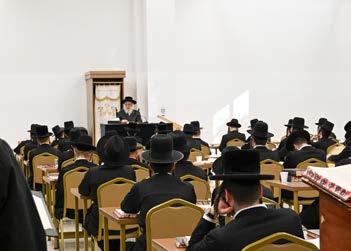


























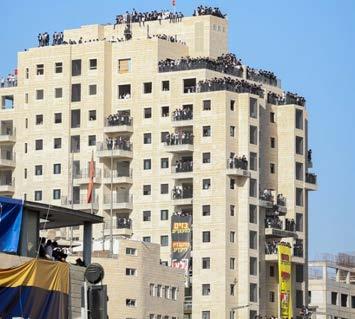




















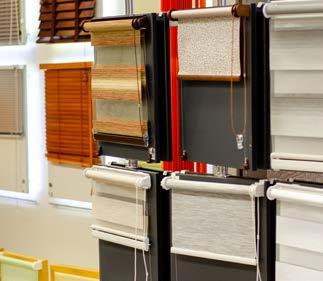








Taught by master teacher
Chava Schneider

Go from zero to kumzitz!

718.855.0466 MADANIM0466@GMAIL.COM
























םעד
זיא רעטנעגעג יד טיול טלייטוצ
עטסקרעטש יד ןעגנאגעג ןילקורב
םיא ראפ גידנבעג ,ינאדמאמ ראפ
ןעמוקעג זיא ךאנרעד ,טנעצארפ 58
ראפ טמיטשעג טאה עכלעוו ןטעהנאמ
זיא ךאנרעד .טנעצארפ 53 טימ םיא
ןעגנאגעג זיא עכלעוו ,סקנארב יד ןעוועג
ןוא ,טנעצארפ 51 טימ ינאדמאמ ראפ
יד ןופ טרא טרובעג רעד ,סניווק ןיא
ןגיוצעגנא רע טאה החפשמ אמואק .אמואק ראפ טנעצארפ 42 ןגעק ,47.3
ראפ פאלק רעכילנעזרעפ א זיא ןלאוו יד
רעכלעוו רענרעוואג רענעזעוועג םעד
ןייז ןבעלפיוא-רעדיוו וצ טפאהעג טאה טאה רע סאוו ךאנ ערעיראק עשיטילאפ


םאזוצ ךיז ןעמוק ךאווטימ ןגיטנייה
םוצ טאטש ןיא אד שדוק יאבג רעטרעדנוה טנייה ראפ טמוק סאוו 'שדוק יאבג תפיסא' עכיירסטלאהניא ראג א טימ טכאנרעדפיוא
םוצ גנוטיירבראפעב ןיא םארגארפ
יד תבוטל "תורשקתה ליל" דמעמ ןגיזיר
םילשורי תבח ללוכ" ןופ הקדצ עגילייה
טעוו סָאוו "סנה לעב ריאמ יבר תקדצל
יד ןיא רדהו ראפ בורב ןרעוו ןטכָארעגפא
ייח ק"שצומ "לַאטנעניטנָאק" ןופ ןלַאז 'שדוק יאבג תפיסא' םייב .ט"לעבה הרש ןרעה וצ 'יכז יד ןבאה שדוק יאבג יד ןלעוו
ןרמ ק"כ ם"ירומדאה ןקז םענופ הכרב ירבד
טעוו עכלעוו א"טילש ץילעממ ר"ומדא
ןייז ליצאמ טעוו ןוא הפיסא םעד ןעניישאב .םיפסאנ עלא ראפ ויתוכרבמ ןוא טניורקעג טרעוו ראי ייה
ןיא 'שדוק יאבג' עשירפ טגנערבעגניירא
טימרעד ןוא יימרא עגילייה ס'ריאמ יבר
סאוו ןעגנורהעַאב ייר א ןבעגעג טרעוו
ןסיורג םייב ןרעוו ןבעגעגרעביא ןלעוו
טיצ טסבלעז סאד סָאוו ,רדהנ דמעמ
םייב עסערעטניא רעקרַאטש א רָאג
תואבג" רזנ טימ ןביוהעגנָא ,רוביצ
ןרעוו ןבעגעגרעביא טעוו סָאוו "שדוק
ק"שנב רוביצ יכרצב קסוע ח"הרה רַאפ
יוזא .ו"יה רעצנימדלאג ןרהא קחצי 'ר
תואבג" רזנ א ןבעגעגרעביא טרעוו ךיוא
ןועמש ברה םישודק לש ןנב ראפ "שדוק
שדוק יאבג א"טילש קאללאפ לארשי
הרות ץיברמ אטנאלאג ק"קב וניללוכד
טעוו "תובא תלחנ" רזנ םעד .וניריעב
םיבושחה םיחאה ראפ ןבעגעגרעביא ןרעוו 'ר ,ו"יה סחניפ 'ר ,ו"יה לאוי 'ר ,ח"הרה


םערוטש םעטיס רעד זא ןוא ןפורעגפא ןרעוו ןלאז ןענאב יד
ערעווש ןופ טייצ יד ןיא טסניד ןופ ןייגסיורא לאז
ראי םענעפאלראפ םעד .ןעגנוציילפראפ


ןעק ןאפעלעט
יד טאה ןיימעגלא ןיא זא ןגאז עטמאאב יטיס
קיפארט ןופ לאצ ערענעלק א ראי ייה ןעזעג יטיס זיא דניצא זא ןגאז ייז רעבא ,ל"חר ןטעטילאטאפ .םאזכאוו

ןפראד וצ
ןעמ לאפ ןיא טגערפ רעשטעפסיד ייצילאפ

ןפיהרעביא רעבא
ייצילאפ יד ןלעוו ,ןרעוו טריזיוויטקא טעוו סע יסנעשזדריומע ןקישסיורא דלאב סרעשטעפסיד

ןופ טקורעגפא סיפ גיצנאווצ שטאכ
טגייצ םעק-שעד יד ןופ ןעגנורידראקער ערעמאק .ןטסילקיציב ךרוד טריראנגיא טרעוו סאד זא רעבא עכילטראווטנאראפ ןוא ןרעטלע עטגראזאב
ןפורעג ןבאה רעוויירד
יטיס קראי וינ יד ףיוא טנעמטראפעד ייצילאפ
עיצאטראפסנארט יד ןוא ייז זא טנעמטראפעד ריא ןרעקרעטשראפ ןלאז ,רעטנגעג יד






















.סטינוי
לאמנייק זיא טעברא יד רעבא ,סטיזאפעד .ןראוועג




EDITOR
Esther Malky Neiman
ASSOCIATE
Zivi Reischer
MANAGING
Tescher
FOOD
M.P. Wercberger
CREATIVE
Wachsman




E-MAIL: ads@thewview.com
WEBSITE: www.thewview.com