The Howard County FREE


By Elias M. Taye
When Chef Alba Carbonaro Johnson steps into a kitchen, she’s not just preparing food. She’s inviting her students into a story that stretches from the markets of Tunisia to the kitchens of Howard County.
Johnson’s cooking classes awaken the senses: the soft sizzle of butter hitting a warm pan, the bright snap of chopped herbs, and the earthy perfume of cumin rising from a simmering sauce.
At 75, the longtime cooking instructor radiates the warmth of a family matriarch and the curiosity of a lifelong traveler, creating dishes that combine her Italian roots with North African and Mediterranean flavors.
“Most of my recipes come from growing up with my parents and grandparents,” said Johnson, whose Italian family lived in Tunisia.
Every Sunday, her extended family gathered for long, noisy meals where everyone brought a dish.
“We’d share recipes with neighbors from other countries and religions. It became a mosaic of dishes, and that stayed with me.”
When Johnson’s family left Tunisia, she was only 14. They arrived in Washington, D.C., in 1962 without speaking a word of English. Her mother worked long hours, so young Alba took over the stove.
“My mother would call me and tell me what to do over the phone,” she said. “I learned early, using my own taste buds to make things work with the ingredients we could find.”
Couscous, for example, wasn’t easy to locate then, so her mother persuaded a neighborhood deli to import it.
“Now it’s everywhere,” Johnson said. “Back then, it felt like a miracle.”
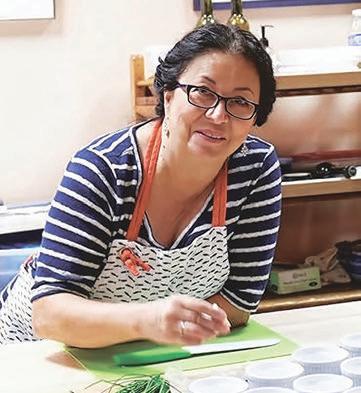
For years Johnson built a corporate career at Verizon, reserving her culinary passion for holidays and family gatherings.
But after she retired in 2003, her husband made a suggestion that changed everything: Why not teach cooking?
“I told him, ‘Who’s going to come to my classes?’” she remembered with a grin.
After she interviewed with Howard County Recreation & Parks, she said, “five minutes later they signed me up.”
That was nearly two decades ago. Today, Johnson teaches people of all ages.
Her in-person and virtual classes through Howard County and at Mary’s Land Farm

A thrilling trip through the Panama Canal isn’t the only highlight of the country page 10

&
Heartwarming shenanigans take the stage at Toby’s in Elf page 19 LEISURE & TRAVEL



I am thrilled to share with you the kudos the Beacon received last fall at the annual conference of the North American Mature Publishers Association, whose journalism competition we enter every year.
We like to submit articles written by our staff as well as our regular freelancers to help them get the national recognition they deserve for their high-quality writing. That, in turn, gives me the opportunity to praise them in my column each year.
was Robert’s last for us before he retired, was praised for “excellent writing and narrative.”

By Stuart P. Rosenthal
Each of our editions is entered into a different division, based on circulation. And this year, all three reaped some top honors.
The Howard County Beacon won two first places along with a third-place award. Barbara Ruben, a past managing editor of the Beacon, won first place for her September 2024 cover story, “Both dog and trainer are fast.” The judges called it “thoroughly enjoyable and adorable.”
Robert Friedman, who retired recently at age 90 but had been writing for us for almost 15 years, also won first place for what the judges called a “phenomenal profile” titled “Poet teaches the art of healing.” That October 2024 cover story, which
An arts story written by our editorial assistant, Tori Cleveland, took third place for “Writer uses fiction to express what’s true.” Judges especially appreciated the story’s “great opening sentence and hook.”
The Baltimore Beacon also brought home two firstplace awards as well as one each for second and third place.
In the Profile category, freelance writer Laura Melamed won first place for her March cover story, “Local twins are soup meisters.” She also won a third-place award for last November’s cover story, “In style, thrifty and over 50.” The judges found both articles “wellwritten, engaging and fun.”
Cathy Habas, another freelance writer, won first place for her cover story, “Oriole Advocates change lives,” while our editor Margaret Foster, won second place for her October 2024 cover feature, “Free advice for entrepreneurs.”
We were especially thrilled that our flagship edition, the Greater Washington Beacon, won Best of Show overall and

The Beacon is a monthly newspaper dedicated to inform, serve, and entertain the citizens of the Howard County area, and is privately owned. Other editions serve Greater Baltimore, Md. and Greater Washington, D.C.
Subscriptions are available via third-class mail ($20), prepaid with order. Maryland residents add 6 percent for sales tax. Send subscription order to the office listed below.
Publication of advertising contained herein does not necessarily constitute endorsement. Signed columns represent the opinions of the writers, and not necessarily the opinion of the publisher.
Publisher/Editor Emeritus – Stuart P. Rosenthal
President/Associate Publisher – Judith K. Rosenthal
Executive Vice President – Gordon Hasenei
Editor – Margaret Foster
Art Director – Kyle Gregory
Vice President of Operations – Roger King
Advertising Representatives
Jill Joseph, Steve Levin, M.K. Phillips, Alan Spiegel
Assistant Editor – Ana Preger Hart
Editorial Assistant – Tori Cleveland
first place in the General Excellence category for the largest-circulation publications (66,000+). That edition took home 20 awards in total, including the following:
In the Profile category, Barbara Ruben won another first-place award with her cover story, “A life of music and adventure,” while freelancer Laura Sturza won second place for “Our own Golden Bachelorette.”
In the Features category, which like our profiles appear on our cover pages, our editor, Margaret Foster, won first place for her story on family-run camps, while regular contributor Glenda Booth won second- and third-place honors for her stories on car enthusiasts and summer camps for grownups. In all three awards, the judges noted the “great interviews” the writers elicited from their subjects.
Another category featuring cover stories is Topical Issues. Margaret Foster swept that whole category, with first, second and third place awards for cover stories about exchange student hosts, the story of AA, and “Searching for new love mid-life.”
In the Do It Yourself category, Cathy Habas won another first place award for her story, “Who you gonna call? How ‘solo agers’ do it.”
In the Travel Column category, regular contributor Don Mankin won first place for his stories that “perfectly paint the
scene” for travelers.
We have been proud to feature Bob Levey and his monthly column for many years now, and not surprisingly, he won first place in the Senior Issues category for his “enjoyable and entertaining” columns. He also earned second place for his Personal Essay titled, “It’s not so easy to play Cupid anymore.”
In the Editorial/Opinion category, my From the Publisher columns won first and second place for being “extremely topical, interesting and well-researched.” Another of my columns, entered in the Personal Essay category, won first place for “vulnerable writing [that] makes readers feel, perhaps, not so alone about fears.”
Of course, the most important honor we receive is from you, our readers, who pick up your copy of the Beacon each month from one of our thousands of free distribution sites, subscribe by mail, or read us online at thebeaconnewspapers.com.
However you choose to do it, we thank you for reading the Beacon! By the way, you can look up and read any of the articles mentioned above on our website, thebeaconnewspapers.com.
Wishing you a happy and healthy New Year!

Readers are encouraged to share their opinions on any matter addressed in the Beacon as well as on political and social issues of the day. Mail your Letter to the Editor to The Beacon, P.O. Box 2227, Silver Spring, MD 20915, or email info@thebeaconnewspapers.com. Please include your name, address and telephone number for verification.


Dear Editor:
First things first. I want to tell you how much I enjoy your newspaper. It is a real service to the community. Occasionally when I read an article in a paper the thought will cross my mind, “This deserves my response,” but inertia takes over, and I let the moment pass.
However, your request for responses to your editorial, “How we learn to be afraid” (November 2026), I could not ignore.
This past September I went on a poorly planned trip to Lisbon. I should have gone on a tour. But based on my past experiences, I thought I would do fine.
However, I never felt like I had a firm footing on those glazed-tiled floors. Well, the first full day I was there, I slipped on stairs in the metro. I went down about
four steps and injured my left hand and knee. I got treatment at a private hospital and did not go out again until returning home.
Wobbling slowly around with a cast on my hand, I entered into “the land of the infirm.” People looked at me differently. Many would open doors for me. I looked at them with caution. Fearing collisions, I gave others a wide berth.
I’ve started noticing other people with limps, thinking to myself, “behind every limp is a story.”
Now I’m cautious and afraid. Traveling no longer entices me. Like Dorothy from The Wizard of Oz, I’m going to stay in my own back yard.
Marian
Criswell via email

Eating colorful veggies, almonds, olive oil, grapes, soy and salmon can improve and protect your skin
MEMORY CHECK
A free online memory test, taken every few months, can help flag any cognitive changes
DRUG MUGGERS
Some common medications, including statins, cholesterol pills and antibiotics, can deplete your body’s minerals
By Lauran Neergaard
Scientists are trying a revolutionary new approach to treat rheumatoid arthritis, multiple sclerosis, lupus and other devastating autoimmune diseases — by reprogramming patients’ out-of-whack immune systems.
When your body’s immune cells attack you instead of protecting you, today’s treatments tamp down the friendly fire, but they don’t fix what’s causing it. Patients face a lifetime of pricey pills, shots or infusions with serious side effects — and too often the drugs aren’t enough to keep their disease in check.
“We’re entering a new era,” said Dr. Maximilian Konig, a rheumatologist at Johns Hopkins University who’s studying some of the possible new treatments. They offer “the chance to control disease in a way we’ve never seen before.”
How? Researchers are altering dysfunctional immune systems, not just suppressing them, in a variety of ways that aim to be more potent and more precise than current therapies.
They’re highly experimental and, because of potential side effects, so far largely restricted to patients who’ve exhausted today’s treatments. But people entering early studies are grasping for hope.
“What the heck is wrong with my body?” Mileydy Gonzalez, 35, of New York remembers thinking, frustrated that nothing was helping her daily lupus pain.
Diagnosed at 24, her disease was worsening, attacking her lungs and kidneys.
Gonzalez had trouble breathing, needed help to stand and walk and couldn’t pick up her 3-year-old son when last July, her doctor at NYU Langone Health suggested the hospital’s study using a treatment adapted from cancer: chimeric antigen receptor Tcell therapy, or CAR-T.
Over several months, Gonzalez slowly regained energy and strength.
“I can actually run. I can chase my kid,” said Gonzalez, who now is pain- and pill-free. “I had forgotten what it was like to be me.”
‘Living drugs’ reset systems
CAR-T therapy was developed to wipe out hard-to-treat blood cancers. But the cells that go bad in leukemias and lymphomas — immune cells called B cells — go awry in a different way in many autoimmune diseases.
Some U.S. studies in mice suggested CART therapy might help with those diseases. Then in Germany, Dr. Georg Schett at the University of Erlangen-Nuremberg tried it with a severely ill young woman with lupus. After one infusion, she’s been in remission — with no other medicine — since March 2021.
Last month, Schett told a meeting of the American College of Rheumatology how his team treated a few dozen more patients with additional diseases such as myositis and scleroderma — with few relapses so far.
Those early results were “shocking,” Hopkins’ Konig recalled.
They led to an explosion of clinical trials testing CAR-T therapy in the U.S. and abroad for a growing list of autoimmune diseases. How it works: Immune soldiers called T cells are filtered out of a patient’s blood and sent to a lab, where they’re programmed to destroy their B cell relatives. After some chemotherapy to wipe out additional immune cells, millions of copies of those “living drugs” are infused back into the patient.
While autoimmune drugs can target certain B cells, experts say they can’t get rid of those hidden deep in the body. CAR-T therapy targets both the problem B cells and healthy ones that might eventually run amok.
Other approaches
CAR-T is grueling, time-consuming and costly, in part because it is customized. Now some companies are testing off-theshelf versions, made in advance using cells from healthy donors.
Another approach uses “peacekeeper” cells, whose discoverers won this year’s Nobel Prize. Regulatory T cells are a rare subset of T cells that tamp down inflammation and help hold back other cells that mistakenly attack healthy tissue.
Rather than wiping out swaths of the immune system, Hopkins’ Konig aims to get more precise, targeting “only that very small population of rogue cells that really causes the damage,” he said.
Researchers in his lab are trying to en-
gineer T cell engagers that would only mark “bad” B cells for destruction, leaving healthy ones in place to fight infection.
Stop it before it starts
Could we predict autoimmune diseases — and delay or prevent them?
A drug for Type 1 diabetes “is forging the path,” said Dr. Kevin Deane at the University of Colorado Anschutz. The drug teplizumab is approved to delay the first symptoms of diabetes, modulating rogue T cells and prolonging insulin production.
Deane studies rheumatoid arthritis (RA) and hopes to find a similar way to block the joint-destroying disease.
About 30% of people with a certain selfreactive antibody in their blood will eventually develop RA. A new study tracked some of those people for seven years, mapping immune changes leading to the disease long before joints become swollen or painful. Those changes are potential drug targets, Deane said.
On all these fronts, there’s a tremendous amount of research left to do — and no guarantees. So far, CAR-T is furthest along in testing.
“We’ve never been closer to getting to — and we don’t like to say it — a potential cure,” said Hopkins’ Konig. “I think the next 10 years will dramatically change our field forever.”
© 2025 The Associated Press. All rights reserved.
By Heidi Godman
We all know that an occasional night of little sleep makes for a difficult day of grogginess, fuzzy thinking, and mood swings. You might also know that regularly skimping on sleep makes symptoms worse and leads to stress and weight gain.
But many people are unaware that insufficient sleep also poses dangerous health risks, especially for your heart.
How much sleep is too little?
Research shows the average person needs seven to nine hours of sleep per night. That can be difficult to achieve as we age, when it’s common to sleep a little less than seven hours per night. But if
you’re getting less than six hours per night, your health is in jeopardy.
For example, an analysis published May 27, 2025, by the American Journal of Lifestyle Medicine, tied chronic sleep deficiency to high blood pressure, coronary artery disease, stroke, diabetes, obesity, mental health disorders and even premature death.
Other studies have linked chronic sleep deficiency to nearly three times the risk of heart disease (if you have several sleep problems) and a 20% higher incidence of heart attacks.
Why does it hurt the heart?
Insufficient sleep isn’t necessarily a direct cause of heart and vascular problems.
It triggers a long list of physiological and hormonal changes — such as increases in blood pressure, blood sugar and inflammation — that contribute to heart problems.
A lack of sleep also disrupts hormones that control hunger and appetite, often causing people to overindulge in foods rich in fat and carbohydrates — a quick path to weight gain.
Nationwide health surveys have found that people who average less than seven hours of sleep per night have higher rates of obesity, compared with those who get adequate amounts of sleep. Obesity is a major contributor to heart disease, chronic inflammation and diabetes.
If you’re not getting at least seven hours of uninterrupted sleep on most nights, consider your sleep habits. Are you waking up at the same time every morning? That’s essential to help anchor your sleepwake schedule.
You should also try to go to bed at the same time every night (hopefully that’s at least seven hours before your wake-up time). If you have a hard time falling or staying asleep, try these strategies: Create a healthy sleep environment. You need comfy bedding and a dark, cool room (68° F or a little higher is ideal).
By Howard LeWine, M.D.
Q: Why do some people maintain mental prowess well into their 90s? What do they do differently from most of us?
A: While the general thinking is that memory declines and brain functions slow as we age no matter what, studies on super-agers suggest this is not inevitable. There may be ways to maintain high levels of cognitive function for much longer in life.
Studies have found that genetics is the greatest component in the state of aging brains. If you are born with the right genes, you have a good chance of becoming a super-ager. But what if you don’t?
Super-agers also tend to follow a healthy lifestyle, which is tightly linked to maintaining cognitive function. In addition, their healthier choices make them more likely to avoid chronic conditions that can contribute to more rapid decline in memory and thinking.
Here’s a look at the healthy daily
From page 4
Turn off electronic devices. Shut them down at least an hour before bedtime to reduce your exposure to blue light (which might delay sleep) and remove the temptation to keep watching TV or scrolling on your phone.
Turn the lights low. Switch off bright overhead lights in your home a few hours before bedtime. That alerts the brain that it’s time to wind down. Try wearing a sleep mask.
Avoid late-night exercise. Exercise is stimulating, and it raises your body temperature (which makes it hard to fall sleep). Avoid vigorous activity in the two hours before bedtime.
Skip a nightcap. Alcohol’s sedating effects can help you nod off. But over the next couple of hours, alcohol becomes a stimulant: you’re less likely to have deep, restorative sleep.
Cut down on caffeine. Avoid caffeinated drinks after midday. Caffeine blocks a brain chemical that helps you fall asleep. Caffeine and alcohol also increase the need to get up to go to the bathroom during the night, which interrupts your sleep.
habits of many super-agers and how they may help protect your brain.
• Eat more superfoods : Many super-agers follow diets rich in foods high in antioxidants, polyphenols and omega-3 fatty acids. These nutrients have been shown to fight inflammation and help protect the body from diseasecausing cell damage.
Examples include berries, whole grains (oatmeal, barley, quinoa), fatty fish (salmon, trout), nuts (walnuts, almonds), olive oil, cruciferous vegetables (broccoli, brussels sprouts, cauliflower), avocados and green tea.
• Be more active: Super-agers tend to engage in more physical activity. Regular exercise helps maintain brain volume and cognitive function, even if you begin later in life.
Exercise sparks physiological changes in the body, such as the production of growth factors — chemicals that enhance communication between brain cells and can actually form new brain cells.
Many health problems can disturb sleep, such as chronic pain, restless legs syndrome, sleep apnea, heartburn, incontinence, medication side effects, stress, anxiety and others. Talk to your doctor to identify and treat underlying conditions or change a troublesome medication.
If your doctor suspects that you have chronic insomnia, it might be time to try cognitive behavioral therapy for insomnia (CBT-i).
This is a safe and effective non-drug approach to treat chronic insomnia. To find a therapist, check the Society for Behavioral Sleep Medicine website at behavioralsleep.org, and click “Providers.”
Another option is an app called CBT-i Coach, developed by the Department of Veterans Affairs. While it was designed for people suffering from insomnia and posttraumatic stress disorder, anyone can download it for free.
Prioritize your sleep. Your health — especially your heart health — and longevity are at stake.
Heidi Godman is the executive editor of the Harvard Health Letter.
© 2025 Harvard University. Distributed by Tribune Content Agency, LLC.
• Be more social: Most super-agers tend to have more social interactions. Studies have shown that regular social engagement is associated with healthier brains. The opposite is also true: Social isolation is linked to lower volume of gray matter in brain regions related to cognition.
• Challenge yourself : Super-agers challenge their brains, and studies have shown that learning new things as you age aids memory. For instance, study a second language, learn a musical instrument or adopt a new hobby.
• Get quality sleep: Super-agers also prioritize sleep. During sleep, the brain
clears away metabolic waste that builds up early in the development of Alzheimer’s disease.
A study in the November 2022 issue of the journal Sleep found that trouble falling or staying asleep three or more nights per week for three months boosted the risk for worsening memory in older adults.
Howard LeWine, M.D., is an internist at Brigham and Women’s Hospital in Boston and assistant professor at Harvard Medical School. For additional consumer health information, see health.harvard.edu. © 2025 Harvard University. Distributed by Tribune Content Agency, LLC.
For free materials about area housing communities, just complete and clip this coupon and mail, or take a picture and email, to the Beacon.
o Brooke Grove (see ad on page 24)
o Charlestown (see ad on page 6)
o Park View at Colonial Landing (see ad on page 17)
o Park View at Columbia (see ad on page 17)
o Park View at Ellicott City (see ad on page 17)
o Park View at Emerson (see ad on page 17)
o Residences at Vantage Point (see ad on page 1)
o Alzheimer’s Prevention Trials Memory Study (see article on page 8)
o Smell Test Study (see ad on page 8)
Check the boxes you’re interested in and return this form to: The Beacon, P.O. Box 2227, Silver Spring, MD 20915 or take a picture and email to housing@thebeaconnewspapers.com.

By Matthew Kadey
The old axiom “you are what you eat” holds true. What we eat can play a huge role in the health of our bodies, including the brain, heart and skin. Certain foods can turn around tired-looking skin and even offer some natural protection from the sun.
“Skin health starts from the inside and is dependent on how well we nourish it through our dietary choices,” said Cindi Lockhart, a nutritionist and dietician.
Our skin takes a beating daily from envi-
ronmental stressors, so it’s important to feed it what it needs.
Eat the rainbow
Think of colorful veggies as an edible fountain of youth.
British researchers found that an increased intake of carotenoids, found in bright vegetables like sweet potatoes, tomatoes, leafy greens and bell peppers, over six weeks can have a beneficial impact on reducing reddening and other skin discoloration


that impacts appearance. The beauty benefits were witnessed with just three servings a day of carotenoid-rich veggies and fruits.
“Carotenoids act as potent antioxidants, protecting our skin against environmental stressors including the sun’s UV rays,” Lockhart said.
Case in point: The antioxidant betacarotene has been shown to offer some protection against sunburn (but you should still wear sunscreen).
If you want to save face, go easy on fast food and other overly processed stuff. A 2020 study in the Journal of Investigative Dermatology discovered that a typical Western diet that is rich in fat and sugar may lead to inflammatory skin conditions such as psoriasis.
“The standard diet is very inflammatory and lacking in the phytonutrients, antioxidants and nutrients that protect our skin,” Lockhart said.
Here’s more proof to support a “beauty from the inside out” approach to skin health: An investigation from the University of California, Davis, suggests that a daily almond habit might improve measures of wrinkle width and severity. Women who consumed
about two ounces daily for four months showed a 10% reduction in wrinkle size. Almonds, along with sunflower seeds and hazelnuts, are rich in vitamin E.
The Mediterranean diet isn’t just good for your heart; it may prevent skin cancer.
A report in the American Journal of Clinical Nutrition discovered that women who adhered most closely to the Mediterranean diet over 15 years benefited from a lower risk of skin cancer, particularly melanoma and basal cell carcinomas.
This eating style, which emphasizes vegetables, fruits, olive oil and whole grains can provide a potpourri of nutrients, anti-inflammatory omega-3 fats and phytonutrients that may help shield you from skin cancer.
For instance, greater intakes of the Med-favorite tomato, which is rich in the potent antioxidant lycopene, have been shown to confer protection from UV-induced skin cancer tumors.
If you like to regularly venture into the great outdoors, popping a few grapes could help you keep premature skin aging at bay via some sunburn-protective effects.




e ve Business Dev v
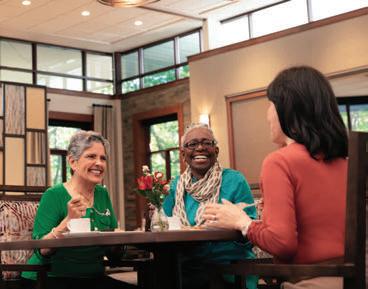
Lu Y Yeear ’ s resol tion? Why not hf i start w t foostering deeper social s, w connection whhich can lead to longerliffee, better health, and improved well-being!

o f g f okin foor an impactfuul New ’l?Wh 2. Enact pro lG
a On the heels of a holiday y season , f y en f oft foocused on family, frriends, and y f a n camaraderie, many y of us may feeel df lier i a b tlone r, , an foor valid reasons.
a e U In 2023, th Unnited Stattes Surgeon i . V General Dr Viivvek Murthy issued en g a an Addvvisory callin att ntion to the l public hea th crisis of loneliness, isolation, and lack of connection in a w Americ whhich has a particularly outsizedeffffeect on older adults. f h f ld
In fact, the rate of older Americans facing social isolation has increased every year since a 1976, and today y senior loneliness accountsffoor $6.7 billion in excess Medicare spending each year. The q q health consequuences are equually i alarming, w th a 29% increased risk of heart disease, 32% increased risk of stroke, and a 50% increased risk of developing dementia.
dvisory A The A Ad Att-a-Glance Advisories are reserved f foor significant public health challenges that need people’s immediateaattention. In addition to examining the epidemic of loneliness and isolation in a — w Americ which increases the k f ris foor premature death to levels comparable to smoking daily — esaf the Advisory outlin frramework to enhance social connection
o-connection public G ll and appointments, Caregivers blfid the start of a bh
ts a policies. Governmen at all a levels play y a role in creating policies like accessible a transportation th tcan enable more connections.
3. Mobilize the health sector. Because loneliness and isolation a sf are risk factor foor majjor health ’ conditions, it sincumbent on healthcare providers to recognize the signs and intervene. ef
4. R foorm digital environments. Evaluate the role of technology tf to ensure it doesn’t detrac frrom connection with others.
w urk
5.Deepen o knnowlledge. More h d d d d
research is needed to understand u the risks, causes and outtcomes of social disconnection, as well as en theeffffeectiveness of implem nting effffoorts to enhance connection.
6. Cultivate a culture of connection. Societal norms significantly impact people’s relationships, and it’s critical f foor connection to be embedded y’ in the fabric of the countr s culture.
y & N Famil Nuursing Care is one of the oldest and most well-respected private duty home care businesses y a in the gre ter Mar ylland and a. W W Waashington, D.C. are We e pride ff ourselves on offeering access to empathetic, personal companion tsf care that helps clien feeel valued, secure, and connected to the
can become close confidants and provide older adults with an outlet and space to share f feeelings, thoughts, and stories. Loneliness can be curbed with something as simple as sharing a meal or having regular conversations. Caregivers and clients often develop a faf connection like that o frriend or family member.
• Social Access: Mobility and transportation issues can inhibit u social interaction, b t you can leave those woes behind!
f A profeessional Caregiver can accompany clients to social events and get-togethers, including senior clubs, knitting ff circles, and more, offeering tons of opportunities to connect with wf potential ne frriends.
“There’s no better time than
a new year to hf
embrace the companionship of a , V Caregiver,”said Kelly Salb Vice icesf President of Client Serv foor Family & Nursing Care. “Human connection has both mental and physical health benefits, and our team is passionate about providing our clients access to customized personal care services in order to help with health needs but also create a better quality of liffe e through social interaction.”
Living independently doesn’t nf haavve to mea feeeling alone, and a 2025 is a gre t year to decide to spend more time in the communityy. . Family & Nursing ff Care offeers access to a range of care services to help with this and ensure human connection.
T Toolearn more, call us at (410) urw 697-8200 or visit o weebsite at r f faamilynursingcaree.com.

based on six pillars: l inf 1. Strengthen socia frrastructure. Creaatte communities and institutions — including parks, libraries, playgrounds, and a programs — thattbring people together. communityy. . r me wa So ayys the Ca egivers l e w w we woork with can help p combat f feeeling isolated or lonely include:


• i m General Comppanionshipp: In addition to helping with meeting nutritional needs, personal care,

By Margaret Foster
Have you ever worried if your everyday forgetfulness could indicate something worse, like dementia?
A free 20-minute test, repeated every six months, may be a good way to track your cognitive health over time.
The Alzheimer Prevention Trials (APT) Webstudy offers such a test to anyone ages 50 to 85 without dementia.
Sponsored by the University of Southern California (USC) with funding from the National Institute on Aging, Brigham and Women’s Hospital and the Cleveland Clinic, the study can be conducted entirely online.
“The purpose of this study is to engage with older individuals who may be con-
From page 6
According to a study by scientists in Spain, the flavonoids found in grapes, especially darker varieties, can act as natural photoprotection by lessening UV-ray-activated reactive oxygen species from forming and causing skin cell death.
cerned with brain health,” said Dr. Paul Aisen, principal investigator of the APT Webstudy and professor at USC.
Aisen, who has been conducting research on Alzheimer’s disease for 40 years, founded the USC Alzheimer’s Therapeutic Research Institute in 2015.
The Webstudy is only an observational study, so no medications, scans or bloodwork are required.
“It’s not burdensome to participate. We hope it’s engaging and may even be enjoyable,” Aisen said.
“We think people will value what they learn from participating, and they will
It looks like there might be a gut-skin axis. Preliminary research suggests that exposure to higher amounts of the probiotic Lactobacillus rhamnosus can impact the expression of certain genes in the skin involved in adult acne.
Other science published in the journal Nutrition Research found that higher intakes of fermented foods may reduce the
value the ability to monitor their own brain health.”
After you sign up, you complete a 15minute cognitive test. This test, known as the Boston Remote Assessment for Neurocognitive Health (BRANCH), is given for five consecutive days every six months.
Every three months, you will complete a five-minute test called the Cognitive Function Index (CFI).
Participants will receive the results of these tests. If the results are concerning, Aisen’s team may contact you to recommend clinical trials for you to consider joining.
In the meantime, his researchers send out up-to-date information about the latest research on Alzheimer’s and dementia.
risk of developing eczema. (Of note, eating more meat and processed foods caused higher rates of eczema.)
“The gut and skin are innervated organs, and each affects the other,” Lockhart said.
Research is still in its infancy, but she says you can try eating more fermented foods like kimchi, kefir, miso and sauerkraut.
Better known as a great source of heartbenefiting omega-3 fats, salmon also serves up an important compound to help stamp out photoaging.
Data presented in the journal PLOS One suggest that astaxanthin, an antioxidant pigment found in pinkish fish like salmon and arctic char, can accumulate in the skin, where it protects against the harmful effects of UV exposure, including the skin
Launched seven years ago, the APT Webstudy has about 60,000 participants so far. Aisen’s team hopes to gather 200,000 people so they can identify participants for clinical trials related to Alzheimer’s.
“We provide information about multiple studies, and we pre-screen individuals that are in the Webstudy to see if they may be candidates for our clinical trials,” Aisen explained.
Of course, participants can take part in the program without volunteering for any clinical trials, and they can drop out at any time.
To join the APT Webstudy, see aptwebstudy.org.
water loss that contributes to wrinkles.
Joy for soy
One study found that increasing the amount of soy-derived isoflavones in the diets of postmenopausal women improved skin thickness and boosted concentrations of collagen and elastic fibers for a more youthful appearance. Find isoflavones in tofu, tempeh and edamame.
As a bonus, the amino acids in soybased foods can supply our bodies with the essential building blocks to support collagen production, the protein responsible for helping promote skin firmness.
Reprinted with permission from Environmental Nutrition, a monthly publication of Belvoir Media Group, LLC, 1-800829-5384, EnvironmentalNutrition.com. © Belvoir Media Group. Distributed by Tribune Content Agency LLC.






In our fast-paced world, medications help us manage chronic conditions, ease pain and stay functional.
But there’s something most people don’t realize: Some of the very same medications that are helping you can also deplete vital nutrients, slowly and silently. I call these “drug muggers,” and I wrote a whole book about them because this side effect is wildly under-recognized.

When nutrient levels fall, your symptoms might creep back even while your lab work looks “normal.” Worse, those symptoms can look like new diseases, and suddenly you’re prescribed more medications. It becomes a frustrating cycle of prescriptions, side effects and new diagnoses.
By Suzy Cohen
contraceptives, statins and blood pressure meds. For example, a cholesterol drug called cholestyramine binds fat-soluble vitamins A, D, E and K in your intestines, which makes them harder to absorb. Medications that include furosemide (Lasix) will cause you to urinate more. That’s good for fluid retention or blood pressure, but they also wash out magnesium, potassium, calcium and sodium. That’s why people on these drugs often deal with leg cramps, insomnia or even rising blood pressure again. These symptoms are not always a new disease; it could be nutrient depletion.
drug muggers. I’ve made it easy for you with a new tool at DrugMuggers.com where you can input your medications and see what nutrients they may be depleting.
Then, support your body. That could mean eating more leafy greens, nuts and seeds or taking targeted dietary supplements.
My Drug Muggers app is updated to 2025, so it has all the new medications, plus it lists foods rich in the exact nutrients your medications may be robbing.
Don’t forget to talk to your doctor. Bring a list of your medications and symptoms to
your next visit and ask about checking levels of nutrients.
Finally, monitor over time. Nutrient levels don’t crash overnight and they don’t bounce back overnight either.
I know as a pharmacist that medications can be helpful, even life-saving. But when they slowly drain your nutrient reserves, the fix might be simpler than you think. To search your medication, visit drugmuggers.com.
Read the expanded version of this column at suzycohen.com.
A “drug mugger” is any medication that robs your body of nutrients. It might block absorption, increase nutrient loss, or interfere with how your body uses or stores vitamins and minerals.
This doesn’t mean you should stop your meds. Many are life-saving. But it does mean we need to be more proactive, supporting your body with the nutrients it’s losing along the way.
A lot of medications are drug muggers, including acid blockers, antibiotics, oral
Then there are drugs like metformin, widely used for type 2 diabetes. Metformin interferes with your ability to absorb vitamin B12.
Because the process of nutrient depletion is gradual, you may not realize what’s happening until you’re already dealing with symptoms like fatigue, brain fog, leg cramps, anxiety or brittle nails. These look like new issues, but they’re often your body’s way of whispering, “Help me!”
So what can you do? First, identify your

and allow families to make arrangements online or over the phone; we work on your schedule and in your budget.



By Glenda C. Booth
I felt like a Lilliputian as I stared up at the imposing oil tanker immediately ahead of our cruiser, the Pacific Queen. The ship was aptly named the STI Magnetic Majura, a mammoth 600-foot oil tanker from the Marshall Islands that can carry 47,500 tons. This floating behemoth was likely eight football fields long, one football field wide and two football fields tall.
Thankfully, it was empty. Our bow was so close I could almost touch it as we inched into the Panama Canal and tailed it all day.
This was the exciting, 7 a.m. start of my all-day transit through the 51-mile Panama Canal, one of the seven wonders of the modern world, an engineering marvel slicing through the Isthmus of Panama and connecting the Pacific and Atlantic Oceans.
While transiting the canal is a bucketlist wish for many tourists, Panama offers much more to see: tropical forests, beaches and some of the best birdwatching in the world. During a Road Scholar trip to the country, our group also spent time exploring historic Panama City and an indigenous village nearby.
The main attraction
The Panama Canal is a strategic waterway that cuts almost 10,000 nautical miles off a ship’s voyage around Cape Horn, South America. So far this year, it has served 170 countries and serviced more than 13,000 transits, which take about eight to 10 hours each.
From my hotel window the day before, I was gobsmacked watching the steady, slow procession of humongous, multi-story ships carrying the world’s commerce in containers stacked 20 high, hauling trinkets made in China, cars from Japan, oil, grain and other vast miscellany.
Historian Jaime Robleto told my group, “You can ship corn through here, and two days later it’s cornflakes.”
One of my fellow travelers, Caroline St. Clair from Orlando, noted the irony: “The structure is mankind at its most audacious and its worst because of American consumerism, hauling cheap tchotchkes to the landfill.”
To squeeze through the canal’s locks — with two feet or less to spare on each side — and to keep boats centered, tugboats guide every vessel through the locks,
rectangular compartments with entrance and exit gates.
For operational efficiency, smaller boats like ours usually sail behind a large vessel and must be scheduled ahead of time. A canal pilot boards and guides every ship. Every vessel pays a toll based on its size and cargo volume. Some tolls can reach $450,000. Our boat owner paid $3,700.
Here’s how the lock system works: Water from the manmade Gatun Lake in the middle of the canal flows to the locks by gravity and raises vessels from sea level to that of the lake, 85 feet above sea level, and then back down to sea level. Each lock gate, eight stories high, has two “leaves,” which emerge from the lock walls and close like elevator doors. Easing through a lock can take up to two hours, but in Gatun Lake, ships can speed up a bit.
During our journey, we were captivated by plenty of canal-side sightseeing, from tropical birds to capybara, the world’s largest rodents, which resemble big guinea pigs. Going through the nine-mile Culebra Cut, I studied rock layers and tried to imagine the 6,000 workers who blasted out this section with drills, dynamite and steam shovels, while combating landslides and mosquitoes.
Two places for landlubbers to get their canal facts straight are the Canal Museum in Panama City and the Miraflores Locks Visitor Center. The museum highlights how Americans lived there during the canal’s U.S. ownership until 1999, with displays on furniture, commissaries, sports and entertainment of that era.
At the Miraflores Visitor Center, we watched massive ships crawl by. A film there narrated by Morgan Freeman recounts that the French tried to build a canal but gave up in 1889; the U.S. Corps of Engineers then completed it in 1914.
During these two combined construction projects, workers excavated 262 million cubic yards of earth and rock, and 25,000 people died in the process. In 1999, the U.S. turned it over to the Panamanians.
Panama City is a cosmopolitan metropolis of modern skyscrapers, home to many international corporations. On a walk along the narrow, brick-paved streets through

old town, Casco Viejo, a UNESCO World Heritage site, however, my mind went to 1519, the year of the city’s founding.
Amid the ironwork balconies and redtile roofs are monuments to Simón Bolívar and the French canal builders. I explored the cathedral, a museum, some small churches and historic homes. I chatted with indigenous people selling crafts in the plaza, like Guna molas exquisitely stitched on four layers of fabric.
In Panama City, the stunning Frank Gehry-designed Biomuseo seems like a haphazard jumble of red, blue, yellow and orange curved squares. Inside, surroundsound brings Panama’s natural resources to life, including fish under a glass floor. Exhibits trace the country’s history from the first modern humans in 11,500 B.C. to the Spanish peoples’ arrival in the 1500s to American astronauts who trained in the Panamanian jungle and learned survival tactics from people who lived there.
Panama is a melting pot of 4.6 million people of Spanish, French, Mestizo and other backgrounds. Some indigenous communities sustain their traditions while also welcoming tourists.
In the Embera village of 30 or so families, we enjoyed a lunch of local tilapia, plantains and fruit, then watched women perform a dance with moves that mimic flying macaws,
set to music by five men playing a bamboo flute, a deerskin drum, bongos and maracas. We reciprocated by buying crafts, such as figurines carved from cocobolo wood and colorful masks made from palm fibers and other rainforest materials.
A country with two oceans, rainforests, beaches, coral reefs and rugged backcountry does not disappoint the adventurer.
I did not have to go far to marvel at nature’s wonders. Outside our hotel in Panama City, we watched a shaggy mother sloth in a tree with her clinging baby. Purple martins swooped over the hotel pool and dipped down for sips.
Steps away from the Gamboa Rainforest Resort, an eco-lodge in the rainforest, I was dazzled by 20 big-billed toucans “playing chase” and perching. Lucky travelers might see a howler monkey and the harpy eagle, the national bird with a two-meter wingspan, one of the country’s 1,026 bird species. For my group, the canal was the biggest draw.
“Nearly every single person on earth has been affected and entire cultures shaped by this waterway,” St. Clair said. “I had to see it in person. It’s been one of my favorite trips so far.”
To book a day trip through the canal, visit panamacanaltrips.com. For more information, see tourismpanama.com.
By María Teresa Hernández
Amid the constant blare of car horns in southern Mexico City, it’s hard to imagine that Cuicuilco was once the heart of a thriving ancient civilization. Yet atop its circular pyramid, now surrounded by buildings and a shopping center, worshippers once revered a pre-Hispanic fire god.
“This is incredible,” said Evangelina Báez, who spent a recent morning at Cuicuilco with her daughters. “In the midst of so much urbanization, there’s still this haven of peace.”
Her visit was part of a monthly tour program organized by the National Institute of Anthropology and History, known by its Spanish initials as INAH.
Aside from overseeing Mexico’s archaeological sites and museums, the institute safeguards the country’s cultural heritage, from restoring damaged monuments and artworks to reviewing construction projects to ensure they don’t harm artifacts or remains.
Its historians and archeologists also lead excursions like the one to Cuicuilco. Each academic expert picks a location, proposes a walking itinerary to the INAH and, once approved, it’s offered to the public for about $15.
According to Mónica de Alba, who oversees the tours, the INAH excursions date

back to 1957, when an archaeologist decided to share the institute’s research with colleagues and students.
“People are beginning to realize how much the city has to offer,” said De Alba, explaining that the INAH offers around 130 tours per year in downtown Mexico City alone. “There are even travel agents who pretend to be participants to copy our routes.”
María Luisa Maya, 77, often joins these tours as a solo visitor. Her favorite so far was one to an archaeological site in Guerrero, a southern Mexican state along the Pacific coast.
“I’ve been doing this for about eight years,” she said. “But that’s nothing. I’ve met people who have come for 20 or 25.”
Traces of a lost city
Cuicuilco means “the place where songs and dances are made” in the Nahua language.
Still, the precise name of its people is unknown, given that the city’s splendor dates back to the pre-Classic era from 400 to 200 B.C., and few clues are left to dig deeper into its history.
“The Nahuas gave them that name, which reveals that this area was never forgotten,” said archaeologist Pablo Martínez, who coleads visits to Cuicuilco.
“It was always remembered, and even


after its decline, the Teotihuacan people came here to make offerings,” he said.
The archaeological site is a quiet corner nestled between two of Mexico City’s busiest avenues. Yet according to Martínez, the settlements extended far beyond the vicinity, and Cuicuilco’s population reached 40,000.
“What we see today is just a small part of the city,” he said. “Merely its pyramidal base.”
Now covered in grass and resembling a truncated cone, the pyramid was used for ritual purposes. The details of the ceremonies are unknown, but female figurines preserved at the site’s museum suggest that offerings were related to fertility.
“We think they offered perishable objects such as corn, flowers and seeds,” explained archaeologist Denisse Gómez. “They were feeding the gods.”
According to official records, Mexico’s most visited archaeological sites today are Teotihuacán and Chichén Itzá. The first is a pre-Aztec city northeast of the capital known for its monumental sun and moon pyramids. The latter is a major Mayan site near Cancún famed for its 12th-century Temple of Kukulkán.
The INAH oversees both. But its tours
also focus on shedding light on Mexico’s hidden gems.
During one excursion, visitors walked through a neighborhood in Ecatepec, on the outskirts of Mexico City, where openair markets, street food and religious festivals keep local traditions alive.
A few days prior, another tour focused on La Merced market, where flowers, prayers and music filled the aisles during the feast of Our Lady of Mercy.
October’s schedule takes into account Day of the Dead traditions. Other tours will cover a variety of places in Mexico City like Xochimilco, where visitors can take a moonlit boat tour through its canals and floating gardens, and Templo Mayor, the Aztec empire’s main religious and social center in ancient Tenochtitlán.
“These tours allow the general public to get closer to societies that are distant in time and space,” said historian Jesús López del Río, who led a tour on human sacrifices.
“Approaching the pre-Hispanic past is not only about how the Maya used zero in their calculations or how the Mexica built a city on a lake,” he added. “It’s about understanding how those societies worked — their way of seeing and relating to the world.” © 2025 The Associated Press. All rights reserved.









































Join a community of dreamers and supporters to set your intentions for 2026! Enjoy music, games, snacks, and fun for the entire family. Preregistration encouraged but not required. (Poster board and crafting materials only provided to those who preregister.) Info: 410-313-0860 or www.howardcountymd.gov/htcc.
All agesHarriet Tubman Ctr
RP4467.601Jan 105:30-8pmSaFree
Dive into wellness with interactive demonstrations in our pool, gym and dance studio. Learn how staying active enhances both the body and mind. Receive a complimentary pool pass, healthy snack, and giveaway. Preregistration is not required, but is recommended for event updates. Info: www.howardcountymd.gov/50-health.
50 yrs +Roger Carter CC Jan 14 11am-2pm W Free
Shake, rock and roll the winter blues away. Children and their favorite adult(s) can enjoy refreshments, DJ, dancing, crafts, and a photo of each couple to take home. Preregistration required. Info: 410-313-4840.
4-12 yrs$45, ctr member (child & adult); $25, add’l child
4-12 yrs$55, nonmember (child & adult); $25, add’l child
RP4165.601Gary J Arthur CC Jan 16 6-8pm F
Follow along with the classic winter storybook, “The Mitten,” to learn how creatures big and small prepare for winter. Make a mitten-themed craft. Enjoy a read-aloud of “The Mitten.” Embark on a nature walk to discover the magic of the winter woods. Then warm up with new friends and enjoy tea and treats catered by local Touche Touchet bakery. All children must be accompanied by a registered adult.
Info/Registration: 410-313-0400.
4 yrs +Robinson Nature Ctr
RP4828.601Jan 2510am-noonSu$29
RP4828.602Jan 252-4pm Su$29
Celebrate the power and passion of girls and women in sports at the third annual HCRP National Girls and Women in Sports Day event! This event is part of a national movement celebrating the achievements and contributions of girls and women in sports. Participate in a multi-sport clinic led by expert coaches; try your hand at a variety of sports; and discover your hidden talents. All levels (and ages) welcome. Info/ registration: Jamie Ponton, 410-313-1691 or jponton@howardcountymd.gov or www.hcrpsports.org/ngwsd.
All agesN Laurel CC
Sports Clinic Feb 111am-2pmSu Free





• Info: Tessa Hurd, 410-313-7311 or thurd@howardcountymd.gov.
Beginner/Intermediate
Make a 6-8-piece stained-glass window hanging using the copper foil technique.
Beginners: Particular emphasis is placed on learning the challenging skills needed to score and break glass, foil, and solder the pieces into a window hanging. This workshop focuses on straight-line cuts and work from patterns such as snowflakes, stars, and Mondrian squares. Intermediate: Learn to cut curves in this intermediate workshop. Emphasis is on techniques to score, break, and foil more complex shapes. Patterns contain curved lines (flowers, birds, and seasonal designs). Improve cutting and foiling skills with more challenging designs. It is recommended to take both the beginner and intermediate workshops.
50 yrs +N Laurel Instructor: Maureen Stone
RP3536.601BeginnerJan 610am-2pmTu$99
RP3536.602IntermediateJan 810am-2pmTh$99
With today’s digital cameras, anyone can take great pictures! Learn the elements and techniques that produce compelling photos by focusing on the fundamentals, then practice your new skills while photographing Belmont’s historic manor and grounds. Digital camera required (DSLR, mirrorless, or point-and-shoot with manual controls).
50 yrs +Classes: 4
RP3521.601Belmont ManorJan 139:30-11:30amTu$95
This class explores dance steps inspired by current and long-time Broadway musicals! Learn musical theater choreography that challenges your mind and body while you get a workout! Appropriate for all levels. Wear clothing you can move in and bring a water bottle. No shoes are required, but a jazz shoe/ sneaker may be worn for ankle support.
50 yrs +Classes: 9
RP3504.601Kinetics Dance ThtrJan 511am-noonM$119
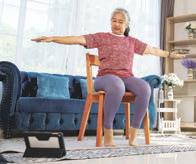
NEW! Chair Fitness Boxing
This beginner-friendly chair fitness boxing series introduces the fundamentals of boxing, including how to execute punches using the numbered system. The program is designed to enhance cardiovascular health, build muscle strength, improve balance and core stability (even while seated), relieve stress, and support cognitive function.
50 yrs +Classes: 10
RP3502.601Roger Carter CCJan 1410:30-11:30amW$99
Beginner’s Guide to Genealogy
Learn about the world of genealogy! Participants gain an understanding of the basics of family history research, important tools needed to research, how to navigate the information, and strategies to organize their research. Participants should have computer literacy and bring their laptop or tablet with them to each class as there will be hands-on activities that require using their devices for research.
50 yrs +Instructor: Karen GieseClasses: 3
RP3500.601Gary J Arthur CCJan 291-2:30pmTh$72



• Info: Tracy Adkins, 410-313-7279 or tadkins@howardcountymd.gov.
Smithsonian National Gallery of Art –Washington, D.C.
Founded as a gift to the nation, this treasure serves as a center of visual art, education, and culture. The collection includes over 150,000 paintings, sculptures, decorative arts, photographs, prints, and drawings that span the history of Western art and showcases some of the triumphs of human creativity. Lunch is on your own at one of the four onsite café restaurants (including espresso and gelato). Moderate walking required.
18 yrs +Bus provided RP4557.601Jan 89am-4pmTh$89
Dutch Apple Theater: “Clue – The Musical”
A fun-filled whodunit brings this popular board game to life! Through an interactive comedy, six guests, each with a secret, are invited to a dinner party. The audience is invited to help solve the mystery of who killed Mr. Boddy, in what room, and with what weapon. A delicious and plentiful buffet is included with the show!
18 yrs +Bus provided RP4543.601Jan 149am-5pmW$195
Meet You There! ClayGround –Fused Glass Palooza
Create your own priceless keepsake or gift for someone special. With guidance from your instructor, gain an overview about fused glass – its compatibility, history, and physics. Learn about the kiln and other molded formations. Come join the fun! (Light refreshments available.)
18 yrs +ClayGround Studio - Ellicott City RP4571.601Jan 2111am-1pmW$79
Smithsonian National Museum of Natural History
Take a trip to the world’s most famous natural history museum dedicated to understanding the natural world and our place in it. Delve into the fascinating story of our planet, from its fiery beginnings through billions of years of transformation. Explore life on Earth through exhibitions, activities, collection of objects, and research in the lab. The museum is larger than 18 football fields and is home to the most extensive natural history collection in the world. Lunch on your own.
(The Café Natural is onsite.) Moderate walking required.
18 yrs +Bus provided RP4557.602Jan 299:30am-3:30pmTh$89
Meet You There! ClayGround Pottery –
Valentine’s Day Creations
Most people in this class have never used a pottery wheel, so there’s a lot of experimenting, laughing, and encouraging each other. It’s muddy and messy and fun. We guide you step-by-step in turning your clay into a simple piece like a vase, cup, or bowl. Create something to use and some memories too!
18 yrs +ClayGround Studio - Ellicott City
RP4571.602Feb 411am-1pmW$79






CrowaHoud om the desk
Datti e N h o tg t Accordin a l co ocia w s o n hs o o fo f n l a io en em bet im t t erfeec s a ph, i nt f a r! J Yeea e y N Happ wY n
o n t io tce nn ur co, o ging n Ae o t itut tsn l I io u l w ntta ur m o yo ffeec n a io tce onn ff ts y en h a t lt l h hysica d p l k e lin h e t lor o expe t m s Weel en , M y, u y lW cutive nty Exe in Ball, alvk of C
r w o fo ittica s cr s i other i l f

ults lder ad y o any , m ge e a s w et, a Ye well-being. Y n
cli e de ve ni h, cog tlaeh v a llos i ocia ce s ienerexp
he id t o avvo lder ad o tsav g nort g a s inntainin
elp n h a e c g u a o yo k a row et t n rop p up l s cia u s y n.sioes r d dep n e a in roo o tnpad le a h c whic d lo n n a attio s, w
g d lengin lah e c e m b
Waalki Independence’s ’s W ea e w h d t n , a r, rac s s i cer
ing r wa doo s in ffeer e o attive s ini Weel o fo ing f r W a v ff g a gin n A ur Office o . O ld s coer i atth ayyllig en d wh htno er m wiint h g t d ew sw ay s mign. Thi attio llos i ocia f sts o ffeec t at e nega eeff a
ut k o ceh s, c cattion f lot o s r a li o s. F ntter 50+ Cen a
s es a veer a s um l in C e M. Th ing md.gov/wa
v
lder r o o fo a y b lla ci s ess i er h o t outtwit u i lf in r wa doo r in o fo p le s sib , acces e afe g a s f acef
e y n m a d c n ts a adul
o d t it d co n d a atte ito e m l m feee you f va mmi
am in the new ce on Aging and alists to guide
pppg da you. JenniffeerHigdon, base atthe East Columbia 50+ Center, keeps fficef a card in her o frrom Age-Friendly Howard County that states, “My perception of myself is entirely my own.”
d t o ex wh adults w lthi g a h inntainin
o you want to kick off a new exercise progra year, but aren’t sure where to start? The Offi Independence (OAI) can help, with fitness specia g cog veelopin
f dek o sir v
lder t o hat d t fooun dy t e s es ap e J. On feestylle er lif y udy f a
t ut d o ekro o w h wh hos n t t t nt irm e im v itivgni i en e w u wer ad a los h er h o wiit r mk o ice a w twi w e w
t ckout . C y lo gs t hin g t in le do whhiializew u ur r o o fo ion f oy o lent er p ffe s o ntter ur 50+ Cen ff sf
ms. r f pt o s e li mplet r a co o fo t md.go erf
Yeear! New Y
she s ays. “Wit h Vir t Trainers and e quip and Jump St ar t, mem ne e ds and t heir s che
u a l Fitness class es, onsite C er t ifie d Personal dW eW ment room opt ions li k Woomen an Weeig hts mb ers are sure to find s omething t hat fits t heir du le.”
OAI’s fitness staff oft program can benefit a haavve shared th t the density scores, impro strength, boosted men g f f foorged lastin frriends
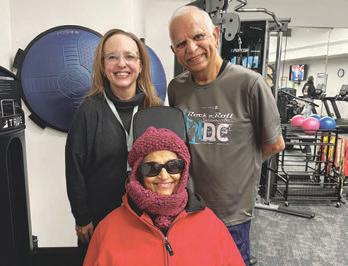
u “Manny y older adults need reminders, encouragement, and suppport to be ennif a y, the best version of themselves, regardless of age or ability,”sayys J feer. dfitf a ksf a “ “AAn approach thattwor foor someone else may y not be a goo fi foor K. ’ a you. And that t s O .” ” She points to the positive example set by Pilip , w ennif a Jhaavveri and Smita Jhavveri, pictured with J feer, above who come to if the East Columbia Fitness Center three mornings a week. “My w fe e . “ ades, r f Smita was a yoga instructo foor many dec ,” ” says Pilip “AAlthough she u is now blind, she still works o t with me so we can maintain an active e a a y liffeestylle. She does gre t; she even made her hat in knitting class her at u er f ennif the center!” Pilip credits J fe foor her suppport, to which she replies, y li “They inspire me! Pi ip and Smita embody the importance of sta ing les. enlif active as you age, even wh fe e gives you obstac ” ies, s f “OAI tailors its older adults fitness option foor all ages and abilit ” hier N ealt o a h s t Here’s ’ wwwww..howardcountym www y oci o s ntst lder r o esiden . O attall o r n e o alon ta
pg . “ enf says Michelle Ros fe eld, fitness specialist at the Bain Center “AAs a fitness specialist, I strive to meet members wherever they are on their fitness journey — absolute beginners, intermediate, advanced y en. or anywhere in betwe ” Sherri Lively, , fitness specialist at the Ellicott City 50+ Fitness Center, agrees. “Our classes are accessible ff and affoordable with quarterly registration options and daily group ff exercise classes offeered through the Group Fitness Class Pass,”
a en point out th t committing to an exercise both physical and mental health. “Members a y’ve come off medic tions, increased bone y ved muscle mass, mobility, , balance, and y ntal health, and, perhaps most importantly, , es, hips with classmat ,”says Michelle.
“ The social connections that our members make during classes and , a on the fitness floor cannot be m tched ” says Sherri. “ The ability to h w make independent decisions to maintain their healt while finding ‘workout buddies’ with the same goals has proven to be beneficial to ts. so many of our fitness center participan .” ” ’ T To o learn more about OAI’s s 50+ Fitness options, visit v/50f w www..howardcountymd.go fiitness.


h





y Holly in Line and W e Winteerrberrr Waash
uesda Ellicott City 50+ Center • T ayys, Januar y 6 - 2
A02527.601
sh Art Class 27, 2 – 4 p.m.
Learn to draw and paint using pen and watercolo d f illustrator Amanda Glover. Designe foor beginn t: $96/f needed! C os foour classes.
arn to Pla Le ay y Chess
Elkridge 50+ Center • January 7, 1 – 3:30 p.m. • A sf
Learn to play chess in this clas foor beginners wi experience. Each class builds on the previous cla einf l 410-313-5192 f class. Cal foor mor foormation.
Impprrov Comedy
r North Laureel 50+ Center • Jan 12, 2026, 10:30 – 1 A06615.601
Learn the basics of comedy improvisation throu collaborative storytelling to increase confidence, improve public speaking skills. No experience re



Howard Countty y P Reception
East Columbia 50+ Cen Joinusffoorareceptiont
Join u r a reception t the Howard County Pu students. The



Public School Partn
nership Art
nter • January 14, 6 – 7 p.m tocelebratethecenter’sn
gistr o r m. • N re e raation newpartnershipwith
to celebrate the centers n ublic School System and t runs January 8 through M
y Se MLK, Jr. Daay er r v Glenwood 50+ Center
vice Project
Beginning January 2, th snacks like granola bar chickensaladkits,beef
chicken salad kits, beef
On January 15, a day o volunteers will pack ba County to distribute to inffoormation, call 410-3
• January 15, 9 – 10 a.m. • he center will accept don s, single serve peanut but fsticks,chips,juiceboxes
f sticks, chips, juice boxes f service in honor of Mar gs f a foor the Street Outreach o those who are homeless 313-5440.
Cultural Intellige
ence
r North Laureel 50+ Cent
new partnership with the creativity of local March 30. • A03700.601 ations of shelf stable , f tter fr ruit cups, tunas/ s,andotheritems.
ter • January 15, 10:30 a.m uman Rights and Equity’s
A05611.601 th little to no ass. Bring a chess set to 11:30 a.m.
gh games and , boost your mood and equired.
Reffllections on Civ orre
The Department of Hu
g q y ff ffe ective intercultural comm our ability to use cultura ons.
T he Fiscal Fox: Sm
or, guided by nature ers, no experience p deepen awareness of eff impact and strengthen fmeaningfu ul conversatio
t T marrt Ta a x Moves
Bain 50+ Center • Janu y Mar y Handley, , public e s f will discus foour key ta
t f abou frree income tax fi helpffu ul services to help
s, and other items. rtin Luther King, Jr., h team of Howard or in need. For more m. – noon • A06685.601 presentation aims to munication, explore its of al intelligence t fooster
Dr. King Celebbrration: In the Compan il Rights and Co
n ny y of Courage -
Bain 50+ Center January 13, 11 a.m. – noon • A01
Jim Karantonis shares a compelling collection of
etta Scott King 15541.600 f stories of his civil-
J pg f rights experiences and reflects on powerfu ul mom conversations and connection with Coretta Scot s lif and vision left a lasting imprint on hi fe e and w
ts f men frrom his t King, whose strength work.
oodsDriveWtuxentaMColumbia
Age Wisely with and the Loan Clos
• A01619.600 he C omptroller of MD, y s in Mar yl land. Learn
uar y 21, 10:30 – 11:30 a.m. • fficer f engagement o foor t ts f ax benefi foor older adults M filing assistance, problem resolution and other y y p Mar yl landers save money.
MAP: Durable Medical Equipment set
Bain 50+ Center • Janu JenniffeerBlevins joins u durablemedicalequipm
durable medical equipm how the use of DME su other assistive devices c erf age and/or recov frrom
uar y 13, 10 – 11 a.m. • A01688.600 usffrrom the Loan Closet, Howard C ounty’s ment(DME)re-useandeducationcenter.Learn
ment (DME) reuse and e uch as wheelchairs, walke can help residents remain m surgery or illness.
education center. Learn ers, shower chairs, and n independent as they
Lives Tw



By Emily Glassman
The end of the year is a time to reflect on the past and make positive changes. It’s also a time when we think about giving back to the causes we care most about.
But amid the holiday season’s crunch, many donors fail to make a thoughtful plan for their philanthropy. They may see a cause their friends and family are supporting and quickly open their wallets. Although any act of generosity is commendable, donors can make the impact of their charitable giving go further by being strategic in their approach.
If you’re considering giving back this holiday season, here are several tips to help you maximize your gift’s impact and ensure that you’re taking every advantage available to you.
Align giving with your core values
It might seem tempting to give to the latest cause du jour, but ask yourself: Does the organization you’re giving to comport with your core values? Sometimes organizations most visible during high-profile
tragedies have a broader mission at odds with your deeply held beliefs.
In the United States, there are 1.97 million nonprofit organizations. With so many options, donors must do their due diligence to ensure they give to highly reputable organizations that effectively serve their causes, not enrich their leadership. Check resources like Charity Navigator, which rates organizations on a scale of one to four across various metrics, such as finance and leadership. You can also use it to connect you to the best charities aligned with your core values.
Consider making a recurring donation
Charities can better use your dollars when they know they have a recurring source of revenue. Consider making a monthly or multi-year donation, which is important for nonprofits looking to fund capital campaigns or other significant endeavors.
We all know it’s better to give than receive, but who wouldn’t want the bonus of writing off some of your tax liability? For 2025, the maximum cash contribution you can deduct is 60% of your gross adjusted income (AGI) and 30% of AGI for appreciated non-cash assets, for taxpayers who itemize deductions on Schedule A.
High earners can consider additional strategies, such as creating a charitable remainder unitrust or charitable remainder annuity trust, either of which allows an individual to receive a tax deduction now for future donations of assets contributed to a charity via an irrevocable trust while also generating income for their own use.
Or they may start a donor-advised fund (DAF), allowing a tax filer to write off donations into the DAF while doling out grants at their convenience later on, which might enable a larger deduction in one tax year.
Though every charity requires funding, donating your time can help strengthen
your commitment to a cause. Do you have a skill that might be of use to the organization?
I’ve known many people, who after starting as a regular volunteer, began to become more involved in the organization, rising to the level of a board member — roles that have had a profoundly positive impact on their lives.
Philanthropy is personal. Everyone has a different reason for giving to a particular charity.
Sometimes, they give to a nonprofit focused on issues that have impacted their lives or those of their loved ones. Other times, though, they may not have a personal connection; they see a problem in their community and are inspired to make a difference.
With some planning and foresight, you can make the holiday season more cheerful for the causes nearest and dearest to your heart.
© 2025 The Kiplinger Washington Editors, Inc. Distributed by Tribune Content Agency, LLC.
Dear Savvy Senior,
Can you recommend some good online resources for writing a simple will? I’m 70 and divorced and want to get my affairs organized, but I hate paying a high-priced attorney fee if I can do it myself.
Don’t Have Much Dear Don’t,
A last will and testament is an important document to have because it ensures that your money and property will be distributed to the people you want to receive it after your death. Yet fewer than one-third of American adults have a will. If you die without a will, your estate will be settled in accordance with state law. Details vary by state, but assets typically are distributed using a hierarchy of survivors. Assets go first to a spouse, then to children, then
your siblings and so on.
Be aware that certain accounts take precedence over a will. If you jointly own a home or a bank account, for example, the house and the funds in the account will go to the joint holder even if your will directs otherwise.

Similarly, retirement accounts and life insurance policies are distributed to the beneficiaries you designate, so it is important to keep them up to date too.
Online will makers
If you have a simple, straightforward estate and an uncomplicated family situation, writing your own will — with the help of a good online will-making program — is a viable, cheaper alternative to hiring an attorney. Like tax software, these online tools
will guide you through a series of questions and insert your answers into a will for you, and it usually takes less than 30 minutes from start to finish.
Some of the highest-rated do-it-yourself options include the Quicken WillMaker & Trust 2025 downloadable software (WillMaker.com) that starts at $109; Trust & Will (TrustandWill.com), which charges $199 for an individual will-based estate plan; and LegalZoom (LegalZoom.com), which offers will-based estate plans for $129 or $149 if you’d like assistance from an independent attorney.
If that’s more than you’re able or willing to pay, two good options that will let you make your will for free are FreeWill.com or DoYourOwnWill.com.
If you have considerable financial assets or a complex family situation, like a blended family or a child with special needs, it would be smart for you to seek professional advice. An experienced lawyer can make sure you cover all your bases, which can
help avoid family confusion and squabbles after you’re gone.
Costs will vary depending on your location and the complexity of your situation, but you can expect to pay somewhere between $200 and $1,000 to get your will made. To help you save, shop around and get price quotes from several different firms. And before you meet with an attorney, make a detailed list of your assets and accounts to help make your visit more efficient.
Once your will is written, the best place to keep it is either in a fireproof safe or file cabinet at home, in a safe deposit box in your bank or online. But make sure your executor knows where it is and has access to it. Or, if a professional prepares your will, keep the original document at your lawyer’s office. Also, be sure to update your will if your family or financial circumstances change, or if you move to another state. Send your questions or comments to questions@savvysenior.org, or to Savvy Senior, P.O. Box 5443, Norman, OK 73070.
By Maurie Backman
Q: I want to help pay for my grandkids’ college. Should I make a large lump-sum 529 plan contribution or spread the funds out evenly over the years?
A: A lot of people experience sticker shock when they sit down to look at college costs today. For the 2025-2026 academic year, U.S. News & World Report puts the average cost of tuition and fees at a four-year, public in-state school at $11,371 per year.
For a public out-of-state school, the average price tag is $25,415, and for private universities, it’s $44,961. Columbia University is at the top of the list of pricey schools, charging $96,000 per year.
Meanwhile, an estimated 425 million people today owe federal student loan debt, according to the Education Data Initiative, which also said the average public university student borrows $31,960 to get a bachelor’s degree.
Owing all that money can take a toll. A late 2023 Bankrate survey found that 59% of student loan borrowers felt forced to delay key financial milestones because of their student debt, including building emergency and retirement savings.
If you’re in a strong enough financial position to help pay for your grandchildren’s education, you might be eager to ease that burden — both for them and your grown children, who might also be struggling to set aside money for college savings.
If so, a 529 plan is a good place to start. These plans offer the benefit of tax-free gains and withdrawals, provided the money is used to cover qualifying educational expenses.
You might wonder if it’s better to make a large lump-sum contribution to a 529 plan now or spread those funds out evenly over the years. You could go either way. It’s important to understand the pros and cons of both options.
If you can afford to fund a 529 plan with a lot of money up front, it could pay to do so, said Jonathan Sparling, director at CollegeWell.
“Contributions to 529 plans are excluded from an individual’s taxable estate, even though the account owner retains control of those funds,” he said.
“529 plans are eligible for the superfunding provision, which allows individuals to front-load five years of contributions in one tax year. A married couple could contribute as much as $190,000 per beneficiary, thereby reducing their taxable estate by that amount of money.”
There’s also the benefit of time to consider from an investing standpoint.
“Contributions made to 529 plans when a child is very young have more time to accumulate growth and weather market fluctuations. The same is true for 529 prepaid plans, like ones provided by certain states and the Private College 529 Plan,” he said. With the Private College 529 Plan, Spar-
ling explained, contributions lock in a percentage of tuition and fees at nearly 300 member colleges across the country.
“Making a lump-sum contribution earlier on locks in more years of tuition at a lower rate, protecting against future tuition inflation,” he said.
If you can afford to front-load 529 plan contributions, not only does it give your money that much more time to grow, it’s also an expense you won’t have to think about year after year.
However, Brian Schmehil, CFP and managing director of Wealth Management at The Mather Group, points out that while you’re generally better off investing a lump sum of money, this approach increases your market-timing risk compared with dollar-cost averaging year after year.
Schmehil also points out that it’s important to consider the tax benefits your state might offer.
“Many states limit the amount you can deduct from your income each year,” he said. “Spreading out your contributions can provide a guaranteed tax benefit to you and your family. In some cases, the value of this guaranteed tax benefit may outweigh the uncertainty of market returns.”
Schmehil also said that making contributions on a yearly basis gives you more flexibility if your circumstances, or those of your beneficiaries, change.
For example, your healthcare costs may increase dramatically. Or your grandchil-
dren might decide they don’t want to attend college.
Even though 529 plans give you some flexibility to switch beneficiaries, ultimately, you’ll get even more flexibility by having your money outside one of these accounts. There’s really no right or wrong approach.
“Regardless of when contributions are made,” Sparling said, “every dollar saved for college can help offset future costs and increase college options for their grandchildren.”
© 2025 The Kiplinger Washington Editors, Inc. Distributed by Tribune Content Agency, LLC.
The Greens at Hammonds Lane: 410-636-1141
Park View at Furnace Branch: 410-761-4150
Park View at Severna Park: 410-544-3411
BALTIMORE CITY
Ednor Apartments I: 410-243-0180
Ednor Apartments II: 410-243-4301
The Greens at Irvington Mews: 227-240-8179
The Greens at Irvington Mews II: 240-209-4809
Park Heights Place: 410-578-3445
Park View at Ashland Terrace: 410-276-6440
Park View at Coldspring: 410-542-4400
Cove Point Apartments I: 410-288-2344
Cove Point Apartments II: 410-288-1660
Evergreen Senior Apartments: 410-780-4888
The Greens at English Consul: 410-789-3000
The Greens at Liberty Road: 410-655-1100
The Greens at Logan Field: 410-288-2000
The Greens at Rolling Road: 410-744-9988
Park View at Catonsville: 410-719-9464
Park View at Dundalk: 410-288-5483 • 55 & Better
Park View at Fullerton: 410-663-0665
Park View at Miramar Landing: 410-391-8375
Park View at Randallstown: 410-655-5673
Park View at Rosedale: 410-866-1886
Park View at Taylor: 410-663-0363
Park View at Towson: 410-828-7185
Park View at Woodlawn: 410-281-1120
Park View at Easton: 410-770-3070
Park View at Bel Air: 410-893-0064
Park View at Box Hill: 410-515-6115
Park View at Colonial Landing: 410-796-4399
Park View at Columbia: 410-381-1118
Park View at Ellicott City: 410-203-9501
Park View at Ellicott City II: 410-203-2096
Park View at Emerson: 301-483-3322
Park View at Snowden River: 410-290-0384
Park View at Bladensburg: 301-699-9785 • 55 & Better
Park View at Laurel: 301-490-1526
Park View at Laurel II: 301-490-9730
By Christine Benz
Older adults likely began their investing careers before exchange-traded funds (ETFs) existed and have stuck with traditional mutual funds.
But as retirement approaches, many investors look at their portfolios with a fresh set of eyes and make adjustments.
The more I work with in-retirement portfolios, the more I like ETFs and traditional index funds for several reasons:
For retirees who are using income distributions from their investments to help cover living expenses, the small fees levied
by index funds and ETFs ensure that more of those payouts flow to them.
For total-return-oriented retirees who are rebalancing (trimming appreciated securities) to meet living expenses, index funds and ETFs also work well. These are typically pure plays on a given asset class, making it simple to identify which assets to scale back to deliver the retiree’s cash flow and restore the portfolio to its target asset allocation.
In addition to making it easy to extract cash flows, index funds and ETFs also do well in limiting a retiree’s oversight obligations. Many retirees have better things to
Do you have questions about Medicare A and B, Medicare
Medicare Supplemental Insurance (Medigap), Medicare Prescription Drug Plans (Part D), Medicaid or Medicare fraud? Call (410) 313-7392 to get answers from trained professionals and be assessed for eligibility for financial assistance to help with Medicare and prescription costs.
If you’re 62 or older, you can enjoy free lifetime entry into any Maryland State Park. With the Golden Age Pass, which costs $10 and is available at any state park, you also get half-price camping during the week (holidays excluded). You can purchase the pass in person or online at shopdnr.com/GoldenAgePass.aspx. For more information, call (410) 260-8186.







do than monitor news about their holdings. Retirees employing index funds do need to watch their total portfolios’ asset-allocation mixes, but most core-type index funds and ETFs change little on an ongoing basis.
Moreover, because index-tracking ETFs and funds track a benchmark rather than trying to beat it, manager changes matter much less than with active funds.
Many retirees prize risk controls, and people sometimes say that active funds “earn their keep” in down markets.
While mild-mannered active equity funds, especially those focused on valuation and quality, might help lower a portfolio’s overall risk, the most dependable way to reduce a portfolio’s loss potential is by adjusting the stock/bond mix, not the underlying holdings.
Taxes are another area where index funds and ETFs shine in retirement. Equity index funds and especially ETFs are incredibly tax-efficient relative to their ac-
Jan. 15+
tively managed counterparts.
Managing for tax efficiency is important at every life stage, but most important in retirement. Investors’ portfolios are often at their largest right before and during retirement; the share of the portfolio parked in taxable accounts is also apt to be highest then.
Holding more cash and bonds tends to lower a portfolio’s return potential; keeping expenses low helps ensure that investors keep more of their returns.
Assume a retirement portfolio consists of a 10% cash position, 40% in bonds, and 50% in stocks and earns 5% on an annualized basis over the next decade. If an investor pays 0.75% in expenses, her return shrivels to 4.25%; she has ceded 15% of her gains. But if she can limit expenses to 0.10% per year, her take-home return is 4.90%; she surrenders just 2% of her return.
Christine Benz is director of personal finance and retirement planning for Morningstar.
This article was provided to The Associated Press by Morningstar. © 2025 The Associated Press. All rights reserved.
FREE WRITING WORKSHOP FOR VETERANS (VIRTUAL)
This virtual creative writing workshop is available to active duty members, veterans and military families. Participants read a short work, discuss what makes it effective, and then use it to create their own stories. It’s free and led by writer and U.S. Army veteran Kevin Basl. Join on the first and third Thursday of each month from 3:30 to 4:30 p.m. No experience required. Register at bit.ly/militaryvoicesworkshop.
FREE MEMORY SCREENING
Olney Assisted Living, located at 16940 Georgia Ave., Olney, offers free memory screenings and can create a personalized memory support plan for you or a loved one. For more information and to schedule an appointment, call (301) 450-8928.



By Mark Dreisonstok
The plot of a mythical character encouraging a cynical Macy’s employee to believe again in the magic of Christmas will likely remind many of the holiday film classic Miracle on 34th Street.
But the story of Buddy the Elf, now playing at Toby’s Dinner Theatre in Columbia, is unique, timeless and adorable.
Over the past two decades, Elf, the 2003 movie starring Will Ferrell, has become part of the holiday film canon. The musical adaptation hit the Broadway stage in 2010, returning in 2012 and 2024.
Both the movie and the stage musical follow a boy, Buddy, who crawled into Santa’s sack and was raised as an elf at the North Pole. As he grows up, Buddy cannot help but feel as if he is out of place. He’s a “misfit,” to borrow the phrase from another elf in a popular Christmas feature, “Rudolf the Red-nosed Reindeer.”
Elf follows Buddy’s travels — often comic, sometimes poignant — from the idealistic world of the North Pole to cynical, modern-day New York City. There he hopes to find his father, his true identity and that simple but hard-to-come-by de-








sire: acceptance.
Buddy the Elf, of course, is not your average elf on the shelf. Toby’s leading man Jeffrey Shankle brings out the naïve and innocent character, who is sheltered but surprisingly wily at the same time. Somehow he is able to bring back a forgotten love of Christmas to his human family.
Along the way, he develops affection for Jovie, a jaded Macy’s worker who is in fact a highly sensitive, vulnerable person — qualities brought out well by MaryKate Brouillet.
A character the audience especially enjoyed was the Macy’s manager, assayed wonderfully by Anwar Thomas. In a subplot, the manager mistakes Buddy for a spy sent by the higher-ups in Macy’s management, and both characters (though for different reasons) comically encourage other employees to get into the Christmas spirit.
As they decorate the store in the bright musical number “Sparklejollytwinklejingley,” displaying the entrancing choreography of Toby’s superb director Mark Minnick, the scene calls to mind “Supercalifragilisticexpialidocious” from Mary Poppins. It is surely the mark of an entertaining holiday production that recalls child-






A favorite moment of this thoroughly delightful show is the comic lament “Nobody Cares About Santa,” with Buddy, the















By Andrew DeMillo and Anita Snow History Matters, by David McCullough, 192 pages, Simon & Schuster, 2025
The late Pulitzer Prize-winning historian David McCullough told an audience in 2012 that writing history was like working on a detective case.
“And once on the case, you want to know more and more and more,” he said in remarks at Dartmouth College. “Follow your
curiosity.”
One thing that’s clear after reading History Matters, a posthumous collection of McCullough’s writings and speeches that include his Dartmouth remarks, is how much the revered historian practiced what he preached.
The book is an enjoyable complement to McCullough’s canon, which includes biographies of John Adams and Theodore
Roosevelt, and a reminder of why he was one of the greatest historians of our time. It also offers a glance into his approaches to reading and writing.
In a tribute to the late novelist Herman Wouk that’s part of the collection, McCullough underscores the importance of feeling and narrative writing for historians. Another tribute to novelist, painter and historian Paul Horgan shows how McCullough approached his writing with a painter’s eye.
road to become “settled.”

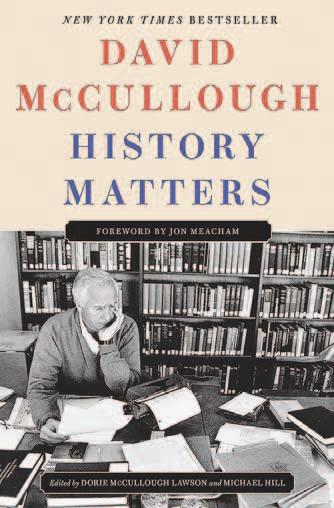
The writings also include a short history of his typewriter, a second-hand Royal Standard that he bought in 1965 and used to write every one of his 12 books. A recommended reading list from McCullough underscores how much he viewed literature as necessary for understanding history.
Throughout the book, McCullough’s remarks display concerns about the consequences of historical illiteracy. His pieces also illustrate the power of helping out younger writers and connecting with them.
In her book, Potter carries us from England, where she currently lives, to Romania, Bulgaria, Hungary, Austria, Germany, France, Spain, the U.S. West Coast and finally to Sweden.
Potter tells of how King Henry VIII passed the “Egyptians Act” in 1530, calling for the Gypsy people to be expelled from England due to their alleged crimes, including “robberies,” “palmistry” and “deceit.”
Believed to have migrated from northern India to Europe some 1,500 years ago, and with a language rooted in Sanskrit, the Roma were once thought to have originated in Egypt.
In Spain, they have been known as Gitanos. During Spain’s 1749 “Gran Redada de Gitanos” (Great Gypsy Roundup), some 10,000 Roma were detained, and families were separated, with the men sent to work in shipyards and the women and children to factories.
Jumbles: RHYME FROND GAMBIT LETTER Answer: To create the Traveling Wilburys, the individual artists needed to — BAND TOGETHER ANSWERS TO JUMBLE
Overall, the collection offers a brief introduction to McCullough for readers not familiar with his work, but it pales in comparison to the value of reading his books. Hopefully, it will inspire readers to delve into McCullough’s writings.
—Andrew DeMillo










The Roma: A Traveling History, by Madeline Potter, 272 pages, Harper, 2025
The Roma: A Travelling History is a fascinating look at a marginalized and misunderstood group of people who have encountered hostility for centuries.





Written by Madeline Potter, a scholar of 19th-century Gothic literature, the new book recounts how members of the group long have been maligned, enslaved, deported and murdered.
In Nazi Germany, the Reich Office for Combating the Gypsy Menace set the scene for the Roma and related Sinti people to be rounded up and sent to concentration camps alongside Jews, members of the LGBTQ+ community and other minorities. As many as 500,000 Roma and Sinti are estimated to have been murdered by the Nazis and their collaborators during that period. Despite continued discrimination, the Roma have made important cultural contributions, Potter writes.

Potter, who grew up Romani in post-communist Romania, weaves together memoir and archival research into what is described as the first contemporary history of the Romani people.
Instead of being raised in an intricately carved horse-drawn “vardo” that traveled from camp to camp, Potter passed her childhood in a towering Soviet-style highrise, a more typical upbringing as the Romani people increasingly leave life on the
From page 19
bluesy and just slightly suggestive of Kurt Weill.
Potter mentions Carmen Amaya, a Spanish Romani who was known in the mid-20th century as the world’s best flamenco dancer. Composer Franz Liszt was so enamored of Hungarian Roma traditions that he absorbed them into his 19 thcentury work.
“There is much sadness in our history, and much pain,” Potter writes. “But importantly it’s not pain that beats at the heart of our story. On each step of my journey, I encountered the wondrous stories of those who have decisively resisted their marginalization, who have refused to be silent and whose stories continue to inspire the Roma today.” —Anita Snow © 2025 The Associated Press. All rights reserved.
Mr. Greenway of Macy’s management. Elf has a vital message in a charming package that is just as timely during the holidays as at any time of year. The warmth and merriment of this story remind both young and old that love, compassion and belief in miracles can prevail over the trials, tribulations and cynicism of this world. The show runs through January 4 at Toby’s. Tickets are available from the box office by calling (410) 730-8311 or online via Ticketmaster (with a service fee). Elf
The song “The Story of Buddy” by Shankle and most of the cast was also a highlight. David Bosley-Reynolds and Janine Sunday come in for high praise in acting their parts as Walter and Emily Hobbs (Buddy’s father and stepmother, respectively), as does David James as the hapless
From page 1
in Ellicott City draw hundreds of students from across the region.
“It’s the most exciting thing I’ve ever done,” she said. “I only wish I’d started sooner.”
A recipe for connection
In Chef Alba’s classes, students chop, stir and taste under her gentle direction. She teaches more than the basics, though.
“It’s not just about recipes,” she reminds them. “It’s about culture and community.”
Her approach resonates deeply with older adults, many of whom are rediscovering joy in the kitchen.
“Most tell me they’re tired of cooking the same meals and want something fresh and healthy,” she said. “Everything we make is from scratch: no jars, no cans. Four courses in two hours, and they leave confident they can do it again.”
She especially enjoys working with people who say they can’t cook. “When someone tells me, ‘I’m terrible in the kitchen,’ I think, ‘That’s who I want in class.’ I want them to see they can do it,” she said. “We cook by hand, no fancy gadgets, so it feels less intimidating.”
Among those converts is Christopher Winslow, 77, who attends classes with his
partner, Karen Phelps, 76, both from Columbia. The pair discovered Chef Alba’s classes years ago in a Howard County Parks & Recreation catalog.
“We saw her name and decided to try it,” Winslow said. “We’ve been signing up ever since.”
At first, Winslow admitted, he wasn’t sure what to expect. “But she’s so welcoming,” he said. “She remembers your name, knows what you like to do, and gets everyone involved. I like to chop, so she puts me to work.”
Over the years, the couple has taken both in-person and online sessions. Winslow describes Chef Alba’s style as a mix of demonstration and participation.
“Other classes were just demonstrations. With her, you cook,” he said.
Phelps appreciates how easy and practical the classes are.
“The dishes she teaches are ones you actually make again at home,” she said. “Other cooking classes are fun in the moment, but you never repeat them. With Alba’s recipes, you do.”
Their favorite recipe? A holiday side dish of broccoli sautéed with golden raisins and breadcrumbs.
“We never would have thought of that combination,” Winslow said, laughing. “But it’s delicious. We’ve made it several times.”
travel and inspiration
Johnson’s teaching extends far beyond
the classroom. Each year, she leads small culinary tours through Italy, most recently to Umbria and Tuscany, with plans to add Puglia.
“Many of my students come along,” she said. “They see the food, the people, the countryside, and suddenly they understand what I mean when I talk about simplicity and passion.”
In Italy, Johnson acts as sous-chef and translator for local cooks who don’t speak English.
“The students come home inspired. One told me he now makes pasta from scratch all the time,” she said proudly.
When the pandemic shuttered community centers, Alba refused to let cooking and connection stop. She set up cameras in her kitchen and taught via Zoom.
“People were bored and isolated,” she recalled. “They cooked in their own homes while I guided them. I could see their pans, their hands, everything.”
Even after returning to in-person sessions, some students prefer virtual classes. “I still have mother-daughter pairs who cook from home,” she said. “It keeps them connected.”
Johnson’s corporate training helps her reach every type of learner. She spends a day or more designing each class to make sure it flows and fits her audience.
Her students range from beginners to
seasoned cooks, but they all leave with a sense of accomplishment — and often, new friendships.
“There’s always chatter and laughter,” she said. “And when it goes quiet, I know they’re eating, and that’s the best sound in the world.”
Even after nearly 20 years of teaching, Johnson is still innovating. She published a cookbook in 2023 and is planning a book on reducing food waste.
“We throw away too much,” she said. “If I have leftover vegetable scraps, I turn them into broth. If herbs look tired, they go in the pot too. I’d say I waste maybe five percent of what I buy.”
For her students, it’s not just what they learn: it’s how they feel. “She’s friendly, engaging, and genuinely cares,” Phelps said. “And she gives you the confidence to try something new.”
Winslow agrees. “Cooking with Alba isn’t just about food,” he said. “It’s about being part of something: learning, laughing and breaking bread together.”
For Chef Alba Johnson, that fellowship is exactly the point. “Food connects us,” she said, smiling. “It’s how we share who we are.”
For a list of Chef Alba’s upcoming classes, visit howardcountymd.gov/rap or call (410) 313-4700. For recipes, see easycookingwithalba.blogspot.com.






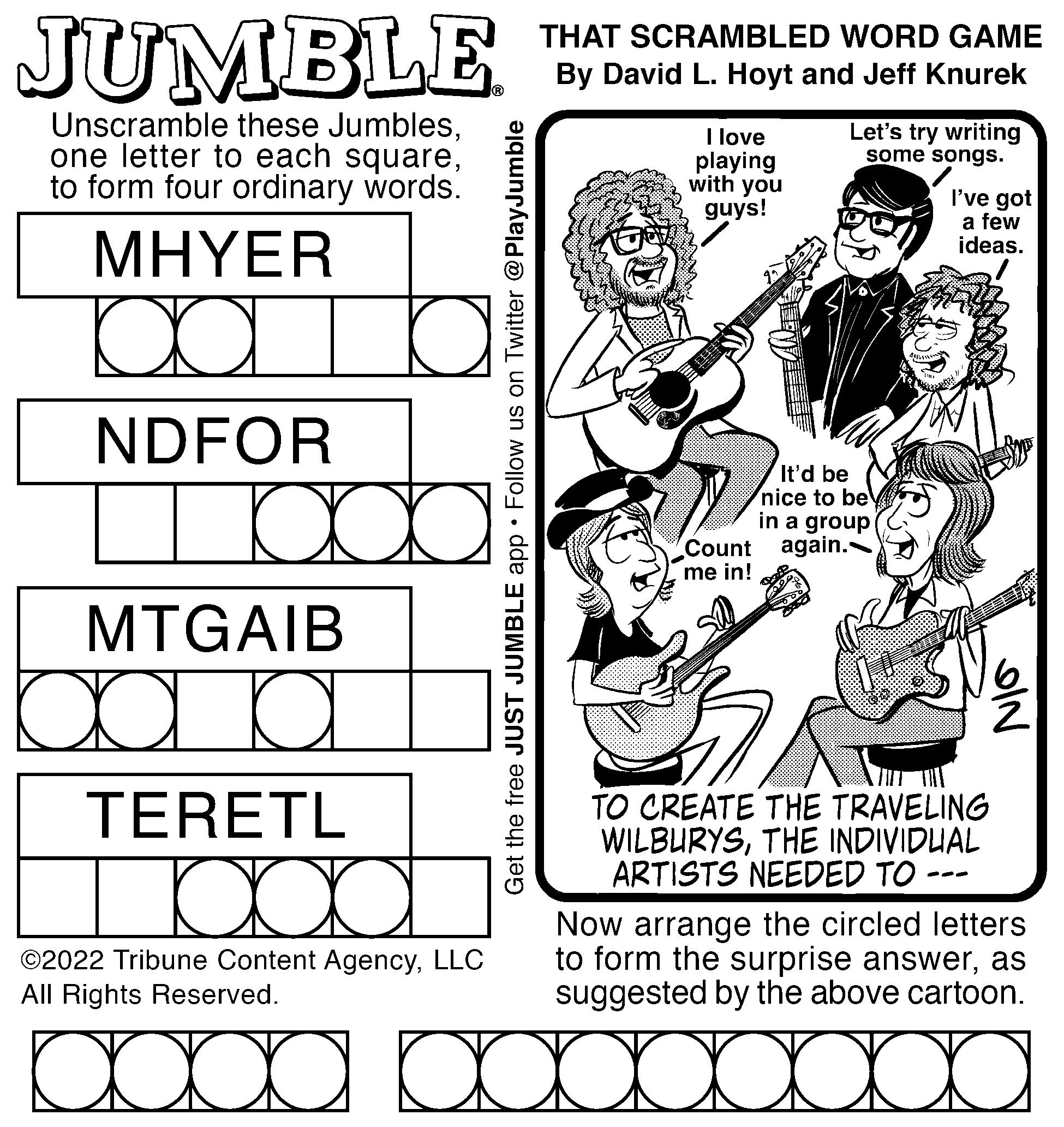
By Stephen Sherr
Across
1. Forehead-obscuring cut
6. Ligament injured 52 times in 2023 NFL games
9. Love handles (described less lovingly)
13. Macaroni shape
14. Regret taking a French street
15. Pro ___
16. Oscar the Grouch, to Big Bird
19. Actor Sharif
20. “It’s ___” (The mission is on!)
21. Introduction
23. Large amount
26. Just a sample of breakfast cereal
28. Recycling bin deposit
29. Nickname for San Luis Obispo
30. Ferris Bueller viewed some on his day off
31. Raggedy doll
32. Prefix after di- and tri-
35. Lunkheads
39. There’s ___ (except, of course, in the answer to this clue)
43. One who previously saw cicadas as a toddler
44. Part of a Big Bad Wolf costume
45. Paycheck deduction
46. Health resort
49. Letters found in a “needle in a haystack”
50. Before, poetically
51. One who makes do with a blurry selfie
56. Got 100% on the final
57. Conduct a Civil War exhibition
58. North Carolina ___ Heals
60. Musk, who changed Twitter to X in 2023
61. The new house is not ready, for example
66. Monthly util. bill
67. Bit of baby babble
68. One who converts English to Pig Latin
69. Some choose to pick their own
70. Column heading on a financial rpt.
71. It’s more than just a suggestion
Down
1. Request table food
2. First letters of an alphabetic state list 3. Last part of an SSN
Exceed the “best before” date
5. Trade show giveaways
6. “We ___ not amused”
7. Serving of tea
8. Become a better AI
9. Everything
10. A ewe usually has two per litter
11. ___ of Two Cities
12. More like a tree in Winter than Spring
17. Classy glass
18. “___ smile be your umbrella”
22. Atmospheric prefix
23. Insufficient
24. Summer Olympics vehicle
25. Grammy Hall’s granddaughter, played by Diane Keaton
27. Tax-advantaged retirement plans
29. Place to board the B&O
33. ___ Tin Tin
34. In unison
36. 15th-century pyramid builder
37. Widen, as jeans legs
38. Determined the gender of chicks
40. One occurrence
41. Rico or Vallarta
42. Ending for comm- or comp-
47. It’s in the middle of the poker table
48. Brain hormone (and anagram of CHAT)
51. Get ready for a hot date
52. Word called out at an unmanned store counter
53. They usually sit in the center, next to the flutes
54. Suffix for type of study
55. Winner of 19% of the popular vote in 1992
56. Bulletproof vest, for example
59. Simplified name for the Atlantic Ritchfield Company
62. One of Ned Flanders’ sons
63. Like the numbers in 7-Eleven and Forever 21
64. Main letter in Vanderbilt and Villanova logos
65. Bark up the wrong tree
The Beacon prints classified advertising under the following headings: Business & Employment Opportunities; Caregivers; Computer Services; Entertainment; For Sale; For Sale/Rent: Real Estate; Free; Health; Home/ Handyman Services; Legal Services; Miscellaneous; Personals; Personal Services; TV/Cable, Vacation Opportunities; and Wanted. For submission guidelines and deadlines, see the box on the right.
CAVEAT EMPTOR!
The Beacon does not knowingly accept obscene, offensive, harmful, or fraudulent advertising. However, we do not investigate any advertisers or their products and cannot accept responsibility for the integrity of either. Respondents to classified advertising should always use caution and their best judgment.
EMPLOYMENT & REAL ESTATE ADS:
We will not knowingly or intentionally accept advertising in violation of federal, state, and local laws prohibiting discrimination based on race, color, national origin, sex, familial status or handicap in connection with employment or the sale or rental of real estate.
DRIVERS WANTED / GREAT FOR RETIREES / Locally 35-year-old family-owned company is looking for dependable people to make delivers to businesses. / Make your own schedule / Call (410) 234-3100 for more information and schedule an appointment to apply.
MOBILE HAIR & NAIL SERVICES - WE COME TO YOU. Professional Licensed Hair Stylist. Women and Men’s Services - All Hair Types. Cuts, Styles, Roller Sets, Color, Perms, Men’s Cuts & Facial Grooming, Manicures & more. Call 410-415-1760.
SAVVY SENIOR TECH HUB - Friendly 1:1 tech support designed for seniors! Learn smartphones, tablets & computers at your own pace. Patient instruction, affordable rates. Don’t let technology intimidate you - master it! Call/text Stefan at 443-281-3638.
UP TO $15,000.00 OF GUARANTEED LIFE INSURANCE! No medical exam or health questions. Cash to help pay funeral and other final expenses. Call Physicians Life Insurance Company866-212-1092 or visit www.Life55plus.info/beacon
CEMETERY PLOTS Fort Lincoln Cemetery. Brentwood, MD. 4 plots Section K-B Lot 30 Sites 1-4. Single depth. Monument privilege. Number of plots and PRICE NEGOTIABLE. Contact Steve Frank. stevefrank22@verizon.net. 301-807-5645.
GARDENS OF FAITH for sale 1 tandem vault asking $10,000 (2 occupants). Burial plot $2,000 each and 10% discount for multiple lots. Call Jim 443-425-4127.
NEW WINDOWS FROM WINDOW NATION. Special money saving offer zero down, zero payments, zero interest for TWO years AND buy 2 windows and get 2 FREE! Offer is valid for select models. Labor not included. Other restrictions apply. Call Window Nation today! 855-909-2278.
DISCOVER NORTH STAR NAVIGATORS: Your Trusted Partner in Elder Support Services. At North Star Navigators, we are dedicated to making a positive impact in the lives of our aging population. We understand the challenges that come with aging and are driven by a personal quest to enhance the well-being of seniors. Our telehealth services include: - Comprehensive Assessments & RecommendationsGolden Years Planning - Healthy Ship (Membership). Get Ready to Set Sail with North Star Navigators! Where YOU remain the Captain, and our Stars guide the way. Visit NorthStarNavigators.net or call 833-735-1983 for more information. Your Trusted Team: Anchored in Compassion, Driven by Passion.
DENTAL INSURANCE from Physicians Mutual Insurance Company. Coverage for 400 plus procedures. Real dental insurance - NOT just a discount plan. Do not wait! Call now! Get your FREE Dental Information Kit with all the details! 1-844366-1003 www.dental50plus.com/320 #6258
MOBILEHELP, America’s Premier Mobile Medical Alert System. Whether You’re Home or Away. For Safety and Peace of Mind. No Long Term Contracts! Free Brochure! Call Today! 1-240-650-9189.
PORTABLE OXYGEN CONCENTRATOR May Be Covered by Medicare! Reclaim independence and mobility with the compact design and long-lasting battery of Inogen One. Free information kit! Call 855-851-0949.
AMERICAN RESIDENTIAL HEATING & COOLING. As temps outside start to climb, the season for savings is now. $49 cooling or heating system tune up. Save up to $2000 on a new heating and cooling system (restrictions apply.) FREE estimates. Many payment options available. Licensed and insured professionals. Call today 1-877-691-0273.
JACUZZI BATH REMODEL can install a new, custom bath or shower in as little as one day. For a limited time, waiving ALL installation costs! (Additional terms apply. Subject to change and vary by dealer. (Offer ends 9/30/25.) Call 1-833-994-0538.
NO MORE CLEANING OUT GUTTERS. Guaranteed! LeafFilter is the most advanced gutter protection for your home, backed by a noclog guarantee and lifetime transferrable warranty. Call today 1-855-977-6078 to schedule a FREE inspection and no obligation estimate. Plus get 20% off! Seniors and military save an additional 10%. Restrictions apply, see representative for warranty and offer details.
All classified ads must be submitted and paid for online, via our website, www.thebeaconnewspapers.com/classifieds
Deadlines and Payments: To appear in the next issue, your ad text and payment must be entered by the 5th of the preceding month (for Baltimore and Howard County editions); by the 20th (for Washington edition).
Cost will be based on the number of characters and spaces in your ad:
• $25 for 1-250 • $35 for 251-500. • $50 for 501-750 (maximum length). The website will calculate this for you.
Note: Maryland contractors must provide a valid MHIC number.
• Each real estate listing qualifies as one ad. • All ads are subject to publisher’s discretion. Payment will be refunded if unacceptable for any reason.
ad,
THE BATHROOM OF YOUR DREAMS in as little as 1 day. Limited Time Offer - $1000 off or No Payments and No Interest for 18 months for customers who qualify. BCI Bath & Shower. Many options available. Quality materials & professional installation. Senior & Military Discounts Available. Call Today! 1-855-653-0087.
DON’T LET THE STAIRS LIMIT YOUR MOBILITY! Discover the ideal solution for anyone who struggles on the stairs, is concerned about a fall or wants to regain access to their entire home. Call AmeriGlide today! 1866-365-5170.
ESTATE PLANNING - FREE CONSULTATION! Understand your options and achieve your goals! Get recommendations for fully customized legal documents —- choose estate managers, beneficiaries to inherit assets and guardians for minor children; avoid probate, family disputes and guardianships; protect assets and preserve public benefits with trusts; make provisions for pets and charities; understand estate tax and inheritance tax implications. Proposal includes asset protection and tax evaluation. Trustee & Beneficiary Representation | Probate | Trust Litigation. Justin M. Ginsburg, Esq., LL.M. | Elville and Associates - Rockville/Columbia/Annapolis | justin@elvilleassociates.com | (443) 393-7696 | Maryland/DC/US Tax Court. Interpreters available.
BECOME A PUBLISHED AUTHOR. We want to Read Your Book! Dorrance PublishingTrusted by Authors Since 1920. Book manuscript submissions currently being reviewed. Comprehensive Services: Consultation, Production, Promotion and Distribution. Call for Your Free Author’s Guide 1-833-992-0110 or visit dorranceinfo.com/beacon
CONSUMER CELLULAR - the same reliable, nationwide coverage as the largest carriers. No long-term contract, no hidden fees and activation is free. All plans feature unlimited talk and text, starting at just $20/month. For more information, call 1-833-742-1303.
DIRECTV - All your entertainment. Nothing on your roof! Sign up for Directv and get your first three months of Max, Paramount+, Showtime, Starz, MGM+ and Cinemax included. Choice package $84.99/mo. Some restrictions apply. Call DIRECTV 1-888-572-4953.
PAYING TOP CASH FOR ANTIQUES AND COLLECTIBLES. House calls made with prompt, courteous service seven days a week and 25 years of experience! Buying toys, trains, militaria, glassware, advertising merchandise, paper items and much more! Contact Mason or Megan at: 443-306-8816.














































































Brook A & Bro o s c e offer e o e Gr k a g a i in v sist s ed Li rmth v & Chhe C Ch ff r e i G i L e s t omfor t eeer e ofom a ed er mon int old w he c w t hrou e t eiv ld t y ac c and socia y emain ph iall o r s ndsdssoci s t s sid esident r r t enc ha le t y est id siden ant li ant lif ibr g v e home alon l eellik t f tha q k abo a s nd on n r de if ified d en en al e h o t d i a im m fi t m o o r i s h tou em c si i n e i o li i ed p m i n i n h 1 i d d. hs n nt h ughout y sic ges coura h a it w all w e a 0 h ouur t 0 ant 0 t i a