
By JORDAN DONEGAN ASST. NEWS EDITOR
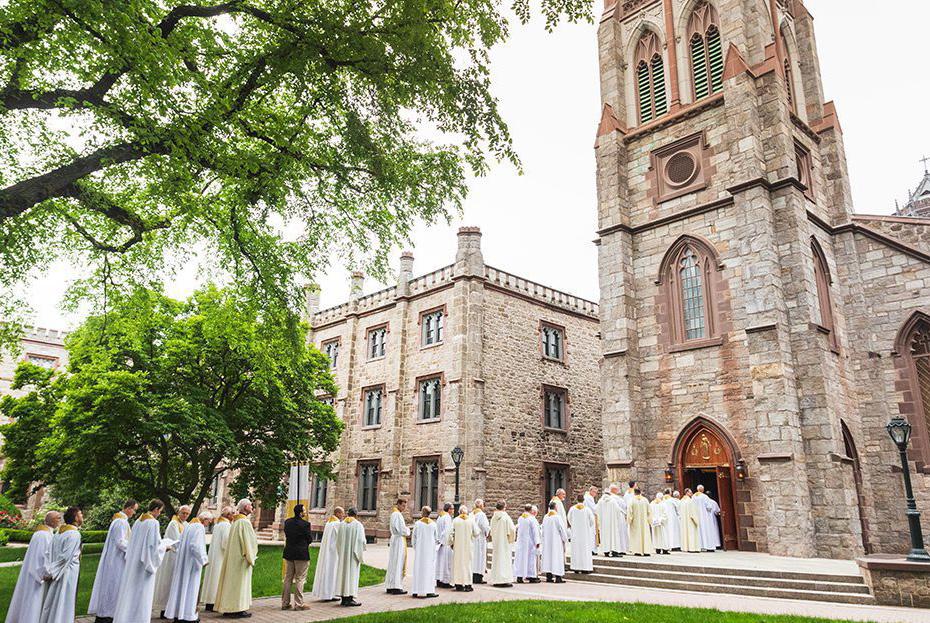
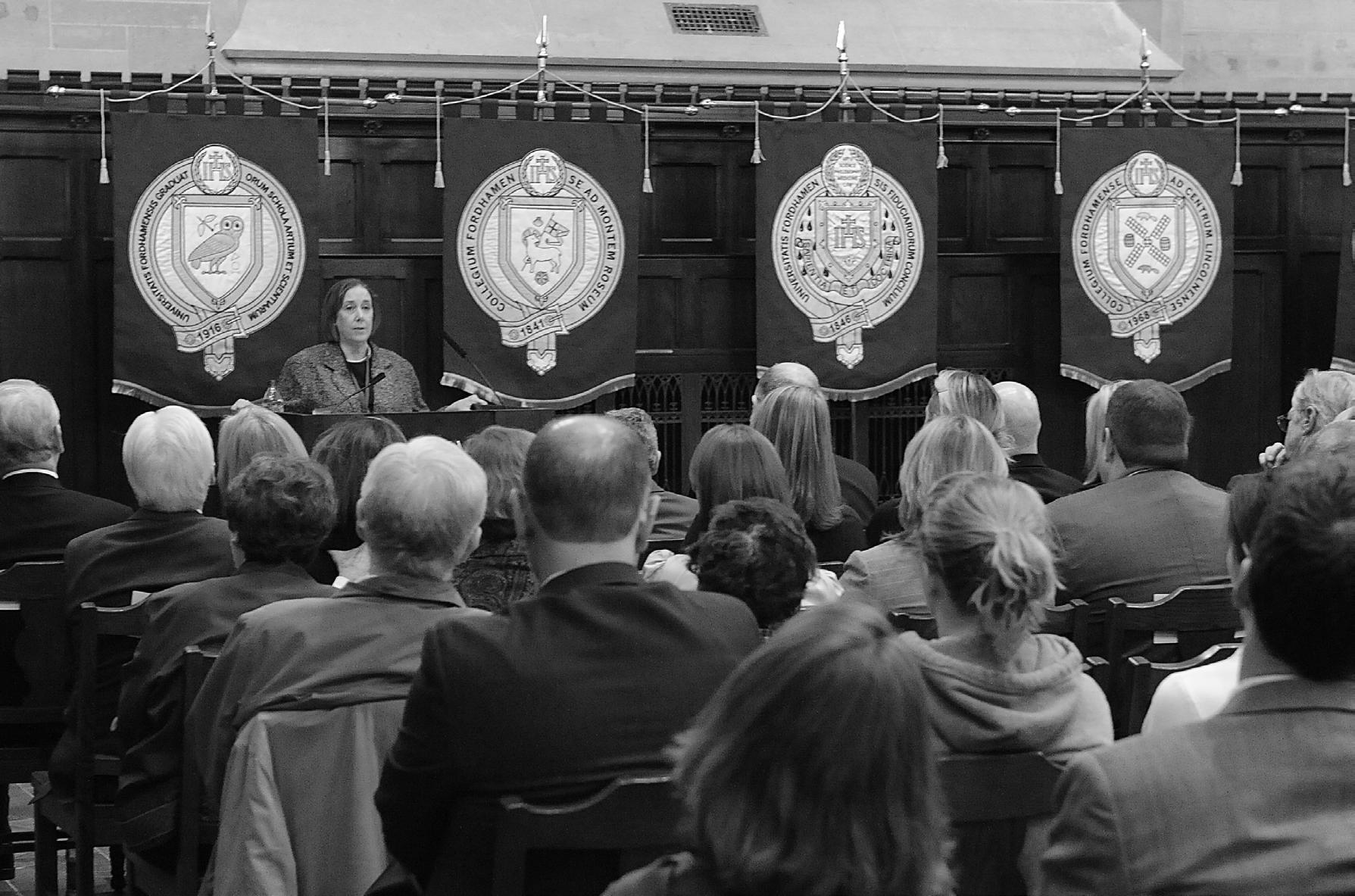
Fordham University, along with all 27 U.S. Jesuit colleges and universities, is joining a collective initiative to highlight the distinctive worth and foundational impact of a Jesuit education called the “We are Jesuit Educated” campaign. The campaign, according to
John Cecero, vice president for Mission Integration and Ministry, was initiated by a perceived public withdrawal of confidence in the general value of higher education.
This led Fordham, along with all other U.S. Jesuit universities, to make a more intentional effort to showcase the value of a Jesuit education to prospective families as well
By JORDAN DONEGAN ASST. NEWS EDITOR
The Fordham University department of theology just launched a new and funded Theology and Earth Initiative, a summer program that will provides graduate and undergraduate students with hands-on experience at the intersection of theology and the environment.
One of the program’s defining characteristics, as according to the Fordham department of theology chair Brenna Moore, is its inclusion of paid experiential learning opportunities, including research-based internships and project positions. Depending on the role, the program also offers stipends ranging from $2,500 to $5,000.
“I am just so thrilled that we have the support to enable our students that it is our priority for our students to have
transformational educational experiences that are deeply rooted in theology and the environment,” Moore said.
The launch of the initiative was made possible by a donor gift from Margaret Sharkey, School of Professional and Continuing Studies (PCS) ’15, according to Moore.
Sharkey’s interest in the intersection of theology and the environment was initiated by former theology professor
Elizabeth Johnson, C.S.J. During her time at Fordham’s Adult Learning Continued Education Program, Sharkey had been enrolled in one of Johnson’s graduate seminars on ecological theology, where she was inspired by what the course taught her about how faith and theology frame peoples’ understanding and knowledge of the natural world.
SEE THEOLOGY, PAGE 5
as various donors.
“Relatively few people know about what [a Jesuit education] is,” Cecero said. “And so there’s this campaign to really educate people about what that means.”
The effort to have Fordham join this campaign came from the University’s Office of Marketing and Communications, according to Cecero. Justin Bell, the vice
February 4, 2026
By EMILY TONNA EXEC. COPY EDITOR EMERITUS
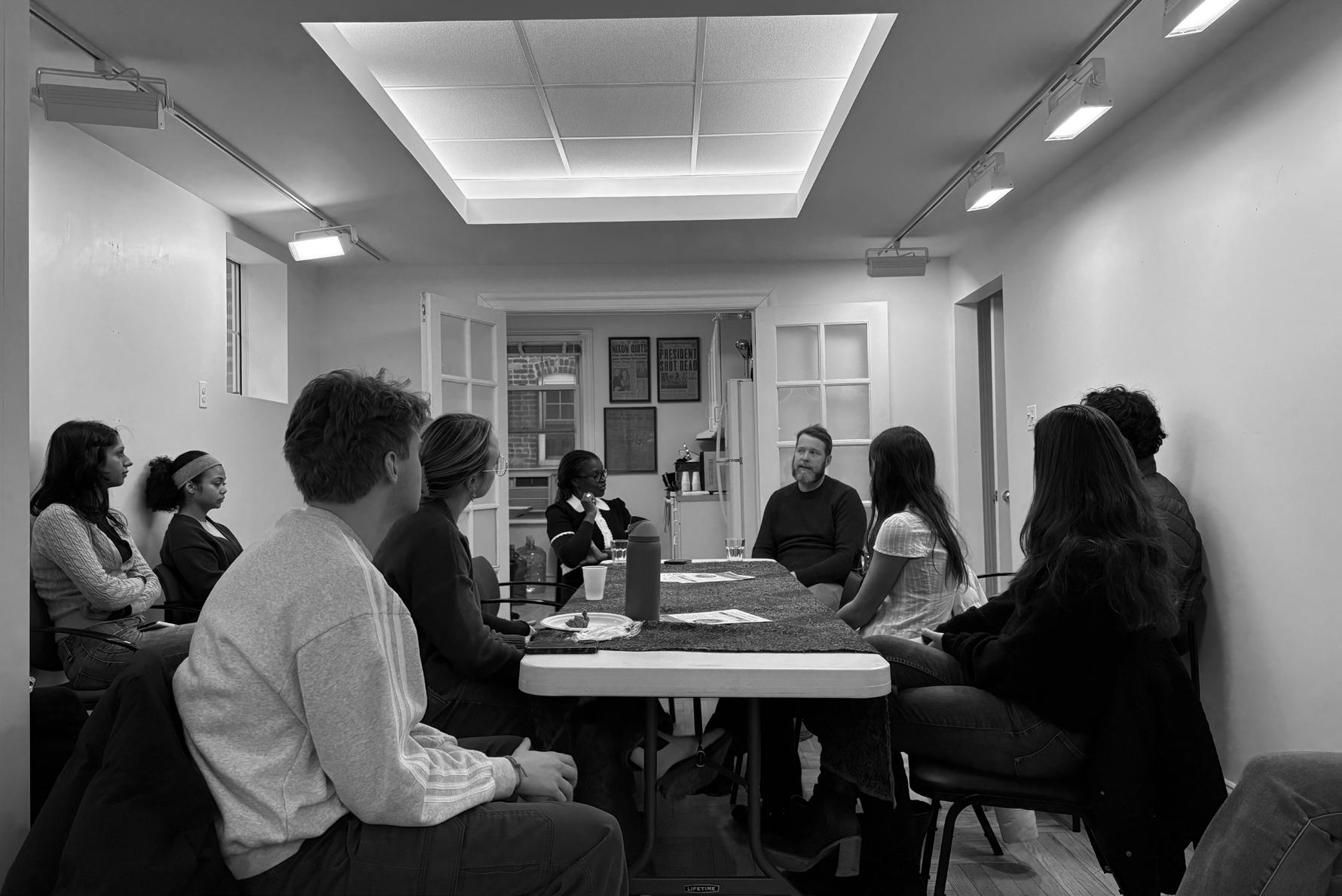
The Fordham University Institute of International Humanitarian Affairs (IIHA) held its monthly “Conversation With Humanitarians” meeting on Wednesday, Jan. 28, in Canisius Hall’s Refuge Gallery. At the event, students asked various questions about funding concerns, as well as ethical dilemmas, international logistics and how these conversations are shaping the future of humanitarian aid worldwide.
The discussion was held with one Fordham professor, Bernard Wiseman, international associative coordinator and former head of mission for Doctors without Borders, also known as Medecins Sans Frontieres (MSF). He has led humanitarian work in several countries, including but not limited to South Sudan, the Democratic Republic of the Congo, Myanmar and, most recently, Ukraine, where he provided aid to refugees affected by the Russia-Ukraine war in 2022.
Wiseman had also reflected
on his career and offered advice to students seeking careers in the humanitarian efforts. He emphasized the importance of maintaining one’s principles in the field — especially during geopolitical and financial adversity.
“I think everyone’s having this conversation right now,” Wiseman said, in reference the pressure funding cuts and geopolitical conflicts put on aid workers.
“We have this really big issue right now in Gaza, in terms of, ‘Is MSF going to be allowed to stay and support the patients in Gaza? Do we provide staff lists to Israel? And do we trust them, and how do we keep our team safe? How do we stick by our principles?’” he asked.
Wiseman advised students interested in humanitarian work to closely examine an organization’s values when ethical dilemmas arise.
“Look at the history of the organization and how it reacts to certain conflicts and contexts, and see if your values align with that
SEE IIHA, PAGE 4
By SIDNEY BLASCO FEATURES EDITOR
Reports indicate that college graduates have been facing an increasingly competitive job market, meaning applicants have to find ways to stand out now more than ever.
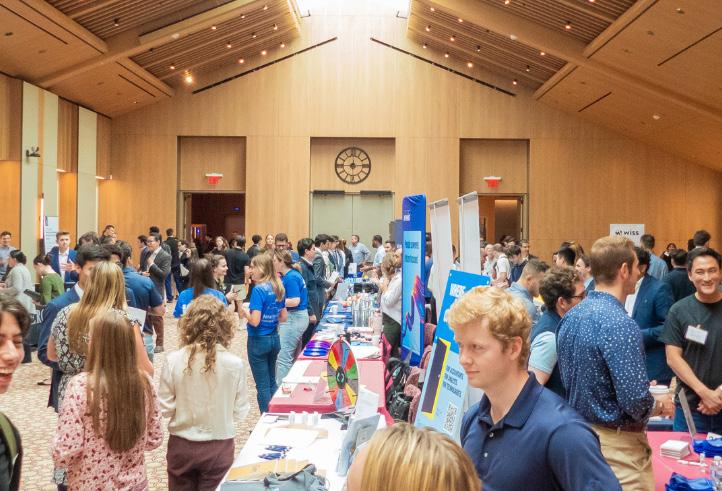
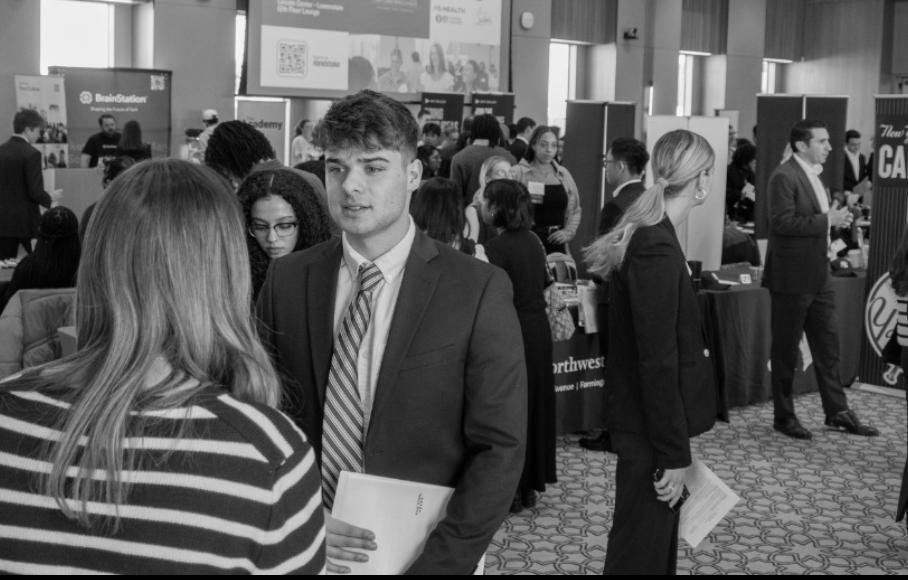
The Ram spoke with faculty within Fordham University’s career center, and employers and recruiters at Fordham’s recent Spring Career Fair and Fordham students to learn how applicants are approaching internships and job applications. From the conversations, four main themes stood out: network, be unique, do not downplay yourself and use the resources available.
One resource that is available to Fordham students are the events held by the Career Center, many of which target different job markets
and give students networking opportunities.
“Last year, we held over 500 employer and student-related career readiness type of events and recruiting events,” said Annette McLaughlin, who is the currently the director of the Office of Career Services.
According to Ryan Reisner, president and founder of The Reisner Group — a national recruiting company that has worked with Fordham students and attended the recent career fair — building your network and net worth is all about
SEE EMPLOYERS PAGE 5
Fire Alarm
Jan. 28
2:03 p.m.
On Wednesday, Jan. 28, at 2:03 p.m., there was a fire alarm in the McShane Campus Center. The supervisor responded. The investigation revealed an Aramark worker cooking food triggered the alarm. The supervisor ventilated the area and reset the alarm panel.
Petit Larceny
Jan. 28
3:15 p.m.
On Wednesday, Jan. 28, at 3:15 p.m., a professor reported the theft of a computer charger from their office in Faber Hall. The supervisor responded and reviewed a video. A suspect was not identified. The reporter declined the NYPD.
Fire Alarm Jan. 30
1:47 p.m.
On Friday, Jan. 30, at 1:47 p.m., there was a fire alarm in the McShane Campus Center. The supervisor responded. The investigation revealed the smoke detector near the freight elevator triggered the alarm. There was no smoke or fire. The supervisor prepared a work order to have the detector inspected and reset the alarm panel.
Water Damage
Feb. 3
8:30 a.m.
On Tuesday, Feb. 3, at 8:30 a.m., there was a report of water damage in John Mulcahy Hall (JMH). The supervisor responded. The investigation revealed a faulty pipe caused water to leak and cause damage to seven rooms across six floors of JMH. Facilities personnel responded to repair the damage.
Follow The Fordham Ram on
Facebook, Tiktok and X @TheFordhamRam
Thursday
By SIDNEY BLASCO FEATURES EDITOR
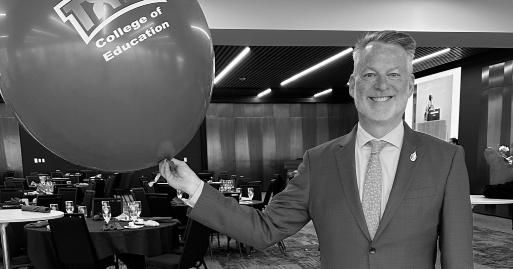
Michael P. O’Malley, Ed.D., current dean of the Texas State University (TXST) College of Education, has been announced to be the next dean of the Fordham Graduate School of Education starting July 2026. His appointment follows the recent integration of the Graduate School of Religion and Religious Education (GRE) into the Graduate School of Education (GSE).
O’Malley has over 20 years of experience working in public universities, beginning his journey at the University of Central Florida as an assistant professor of curriculum studies before becoming the dean of the College of Education at TXST, where he has been for the past 18 years.
The application process to find a new dean for the GSE was extensive, with a search committee being put together in the spring of 2025, according to Elizabeth Stosich, vice chair of the Division of Educational Leadership Administration and Policy. Applications went out in the fall of 2025 and O’Malley sent in a cover letter, resume and other materials. He was then offered an interview over Zoom around Thanksgiving, after which he and the other “finalists” went to Fordham’s campus for “intensive two day interviews in December,” Stosich said.
O’Malley said one of his main attractions to Fordham was that it is a Jesuit institution.
“It’s not about doing any good,” O’Malley said. “But what’s the opportunity for the greatest good that we can do often for our communities, for humanity, for our world.”
Another draw, O’Malley said, is the fact that Fordham’s location in New York City gives him the opportunity to work with the largest public and Catholic school systems in the United States. He said he looks forward to working with faculty and graduate students in continuing to support these school systems.
“The opportunities for continuous improvement, for growth, for evolving are something we’ll all develop together,” O’Malley said.
O’Malley spoke about his research, which has two main focuses: public pedagogies,
which O’Malley described as, “what learning for social justice for equity and inclusion look like outside of schools and outside of universities,” and also “educational leadership specifically for social justice.”
He also discussed some of the impacts and changes he made while at the TXST College of Education. The college works on enrollment, student success and preparing students for continued studies. O’Malley noted that the school engages with various mental health programs and health agencies.
One of his projects at TXST was the creation of Bobcat Rise, which is a four-year college residential program for youth with intellectual disabilities. These disabilities include, but are not limited to, traumatic brain injury, autism, cerebral palsy and down syndrome, according to Tamara Shetron, Ph.D., program director of Bobcat Rise.
“They live in the dorms with the other students in apartment style living,” Shetron said. “The big difference is that they actually won’t get a degree. At the end of four years, they’ll get a certificate.”
Bobcat Rise is in its third year of establishment, with less than 25 students currently enrolled. O’Malley said they are purposefully building it slowly. He also said that he often runs into the Bobcat Rise students at places like the library or sporting events.
“They’re just so involved and it’s really exciting,” O’Malley said.
The funding for the program came from a $400,000 fouryear grant from the Texas
Council for Developmental Disabilities, in addtion to a $300,000 grant from the Smith Charitable Trust. The program also received funding from the students enrolled in the program, as they pay regular tuition, in addition to the $8,500 program fee, according to Shetron.
When O’Malley interviewed for Fordham, Bobcat Rise was discussed, albeit not in depth, he said. Regarding the possibility of bringing Bobcat Rise to Fordham, O’Malley said he would be very open to it.
“I don’t have an exact plan to do that, but if the university and faculty are interested, that would be exciting,” he said.
Elizabeth Stosich, vice chair of the Division of Educational Leadership Administration and Policy said she was not sure if the Bobcat Rise program would translate well to Fordham.
“At Fordham,” Stosich said, “we’re a graduate school of education, so we do have a five-year degree for undergrads who want to become teachers, but we don’t really serve undergraduate students.”
One professor of theology at the GSE, Thomas Beaudoin, commented on O’Malley’s new appointment, saying that he was an outstanding choice. Specifically, he said O’Malley’s portfolio of expertise in LGBT, gender, sexuality, race, class and education is powerful.
“This is a very powerful, and how do I want to say, timely and even urgent kind of portfolio of expertise, research … that he brings in terms of matters that are facing education today,” Beaudoin said. “How to bring people together across
difference, how to respect diverse worldviews, how to try to understand diverse religious perspectives, these are all crucial skills for the marketplace in 2026.”
O’Malley said he is looking to lift up and support people in opportunity gaps, particularly those gaps of race, gender and immigration status.
“Some of that sometimes might be around gaps we see around race and ethnicity or gender or language or income,” O’Malley said. “But also Bobcat Rise is a great example of equity work.”
O’Malley said one of the more immediate challenges facing graduate students is that of financial aid and loans. He said he wants to help the students, faculty and university understand the changes in the financial aid structure for graduate students.
After five years in his new position at Fordham, O’Malley said that when he looks back on the work that he has done at the GSE, he does not have a strict vision of what he wants the GSE to look like for students, but wants changes to encompass collaborative work between faculty and staff.
“Those people are ready to go out into the world and into their careers to help individuals and communities thrive, reach their own learning goals, their own healing and health goals, their own spiritual goals, and that we can look back in confidence and say, ‘wow, our graduates are out there transforming people’s lives and the world,’” O’Malley said.
He said he is excited to take this next step in life.
By JORDAN DONEGAN ASST. NEWS EDITOR
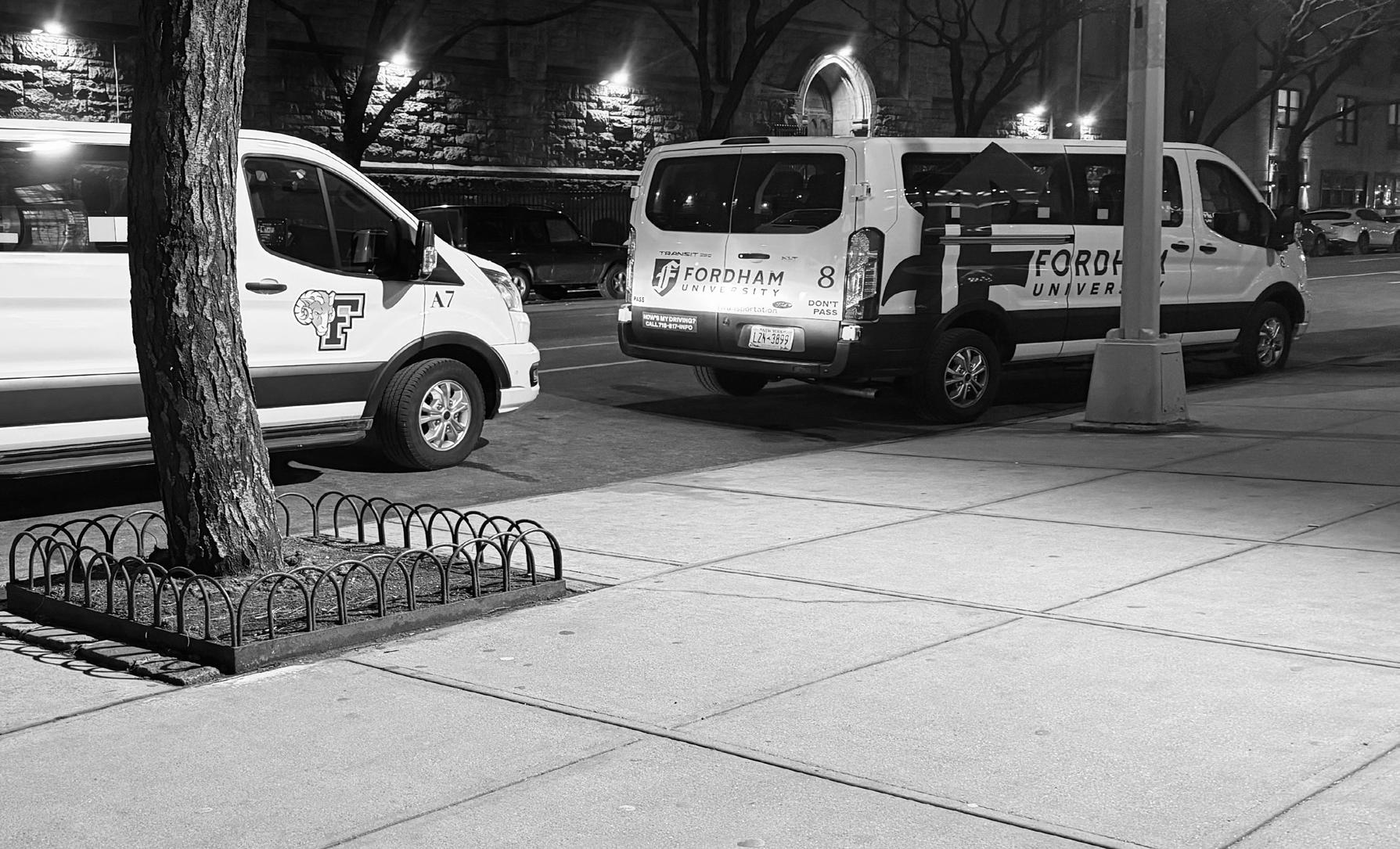
The Fordham University Intercampus Transportation Shuttle, also widely referred to as the “Ram Van,” has officially updated its first vehicle with the new Fordham logo on its exterior, the first step in a roughly four-yearlong process to update the Ram Vans’ logos as part of the University’s recent rebranding initiative.
Plinio Gonzalez, director of University Transportation, told The Ram in an email that this new logo on the Ram Van helps Fordham “modernize the brand, enhance market perception, and build brand awareness,” which he described as the purpose of the rebranding initiative.
“The Ram Vans, which began operating in 1981, are a highly recognizable and visible part of Fordham University and currently transport over 275,000 passengers each year, primarily between our Rose Hill and Lincoln Center campuses,” Gonzalez said. “It is only right to help Fordham in this initiative by beginning to replace the Ram Van’s old Block F logos with Fordham’s new logo.”
According to Gonzalez, the updated logo was created via a collaboration between the Office of Marketing and Communications and the department of University Transportation. He also said the rebranding initiative arose from a need to distill Fordham’s identity in the
higher education marketplace defined by increasing competition whose goal, according to Gonzalez, is to “raise Fordham’s profile across various audiences and improve brand awareness.”
Before being imprinted with Fordham’s updated brand logo, all 36 14-passenger vans and four minivans were decorated with Fordham’s old Block F logo, but, according to Gonzalez, only one Ram Van has officially had its logo replaced. Gonzalez said that once the current vans are retired — each van serves for a specific lease period — they will be replaced by vans that have the new logo.
“The plan is to apply the new logos on new vans on a rolling cycle as new vans are brought into our fleet. It will take about 4 years to roll out the new logo across our entire fleet,” he said.
Student employees for the department of University Transportation said that while they had no part in rebranding the vans themselves, they are excited to be part of one of the key aspects of Fordham’s rebranding initiative. Rose Locke, FCLC ’27, has been a Ram Van driver for almost three years and said the new logos on the vans are an exciting change.
“Ram Vans are such a cornerstone to the Fordham experience, whether you’re at [Rose Hill] or [Lincoln Center], so it makes sense that the vans are becoming a part of the university’s rebranding,”
Locke said in an email to The Ram. “I personally like the
new design,” she said.
Avuh Sharifi, GSB ’29, also works as a Ram Van driver and said the logo change did not come as a surprise.
“I think it was expected,”
Sharifi said in an email to The Ram. “Since Fordham is rebranding, it makes sense that intercampus transportation like Ram Van would also update its logos to align with the university’s new image.”
Locke explained that, based on what she has heard from her fellow Ram Van drivers, they are looking forward to driving the rebranded van.
“I have not heard many complaints from drivers. Most drivers are excited to drive the one van we have in our fleet that has the new logo since it’s a brand new van,”
Locke said. “A few people have said it does stand out from the rest of the fleet since it is the only van with the new logo.”
While Ram Van drivers are enjoying driving the rebranded van, Sharifi said the new logo has also raised some concerns among drivers.
“One major concern is that the new logo covers a significant portion of the window and is not one-way,” Sharifi said. “Many students experience carsickness, and being able to look outside is important for managing those symptoms.”
Sharifi also said that student passengers have expressed their own grievances with the new logo on the Ram Vans.
“In general, students who aren’t affiliated with Ram Van have reacted negatively.
Many have joked that the logo resembles Lord Farquaad’s flag, and overall, they don’t seem to like it,” Sharifi said. “Personally, though, I feel that the new logo gives the university a more prestigious and polished appearance compared to before.”
Gonzalez described the importance of aligning the Ram Van’s appearance with Fordham’s rebranding initiative.
“A strong, consistent brand across the University, particularly on the Ram Van, helps prospective students, alumni, and employers immediately associate the logo with Fordham. Our vans are the equivalent of moving billboards, which drives significant visibility for Fordham,” he said.
By EMMA LEONARDI NEWS EDITOR
Fordham University’s United Student Government (USG) held their third weekly meeting of the semester on Jan. 29, where they opened with an update from the Information Technology (IT) department, elected the Club of the Month and discussed various internal updates.
The meeting commenced with Executive Vice President Andrew McDonald, FCRH ’26, inviting guest speaker Judy Rothschild-Best, assistant director for IT relationship management and training, to update USG on two collaborative initiatives she and her department have been working on with them.
Rothschild-Best discussed the various projects taking place within the IT department. She noted that the IT department is currently in the process of updating Fordham’s mobile app with new features allowing new students to have the tools they need to
succeed at their fingertips.
She continued to state that IT is open and willing to work with USG on these updates via proposals.
IT is also working on upgrading Fordham’s mobile interactive map, according to Rothschild-Best, as part of the initiative to provide a smoother transition for firstyear and transfer students when they first arrive at Fordham’s campus. These updates were proposed by the marketing department, but Rothschild-Best says that IT has also been in communication with various USG members on how to make the resource better for the student body.
In conversation with the marketing department, she noted that they are unable to move forward on the updates proposed to the interactive map at this time. However, she shared that the department will be keeping the most relevant USG committees, such as Facilities and Dining, in the loop going forward.
She then said that there have
been complaints surrounding the lack of Wi-Fi and issues with the signal on campus. The department will be sending out a survey soon, which they send out yearly, that students can fill out to give feedback specifically about the Wi-Fi.
She briefly spoke about Artificial Intelligence (AI) and shared that IT is working on developing potential workshops through the university on how to work with AI and get certified in using it. Rothschild-Best also noted that she is available and open to assisting and hearing about USG’s progress and proposals.
USG then moved on to discuss budget requests. Vice President of Sustainability
Ayden Johnson, FCRH ’27, requested funding for the Valentine’s Day tabling event he and his committee has been workshoping, where students will be able to write a letter to someone at a Bronx rehabilitation or elderly center. The request was unanimously approved.
McDonald then shared that USG had not yet received
any Club of the Month nominations for January. He requested that USG members divide into their class groups and each nominate a club to be voted on. Some nominations included one by the class of 2029 senate for the Fordham University Rose Hill Philippine American Club (FUPAC), one from former senator Joshua Fiorentino, FCRH ’26, who suggested VIVA and another from the class of 2027 senate for Mock Trial, as they placed in an Ivy League tournament at Cornell.
After three rounds of voting were conducted, FUPAC was nominated January’s Club of the Month.
Assistant Dean for Student Involvement Catharine McGlade shared her advisor report. The Office of Student Involvement (OSI) is reportedly looking for student input on how to enhance the aesthetics of the second-floor lounge in the McShane Campus Center. OSI is also working with the Commuter Student Association (CSA) alongside USG, specifically the student
experience committee, to improve the lounge’s aesthetic. McGlade mentioned that senior night will be held on Feb. 5 in the McGinley Ballroom.
Regarding executive board updates, a representative of the committee shared that the art exhibit the committee held was a success and that they are now working to try to open a second art gallery on the second floor of McShane to showcase student artwork.
Johnson shared updates on behalf of the sustainability committee. According to him, they will be having a whole week of programming about eco-friendly practices from Feb. 9 to 13.
Vice President of Health and Security Aidan Costella, FCRH ’27, noted that his committee went over the duties of their various subcommittees at their last meeting. Costella also mentioned that he is currently fine-tuning things for the rescheduled town hall meeting on sexual health and contraceptive policy reform, which is planned to take place later this semester.
president of Marketing and Communications, said that this campaign aims to showcase the value of investing in a Jesuit education. In an email to The Ram, Bell detailed the rich history of Jesuit education in the United States and its importance.
“While each of our institutions has its own distinct character, we are all rooted in a 500- yearold tradition of academic excellence, critical thinking, and a commitment to forming people ‘for and with others,’” Bell shared. “This campaign serves as a unified invitation to prospective students, parents, and counselors to explore what makes our missiondriven approach to higher education so transformative.”
Bell also said that there are several vital elements to this campaign, including outreach to prospective students and families — especially those attending Catholic institutions — and the recounting of firsthand Jesuit alumni stories about their higher education experience. Bell said that these firsthand perspectives aim to showcase how Jesuit values, such as “Cura Personalis,” or care for the whole person,

helped shape them into the individuals they are today.
In addition to outreach, Bell said that the campaign created what he calls a “new, centralized digital gateway where prospective students and families can explore campus profiles, find college fairs, and see the geographic reach of our network,” which is called JesuitEducated.com.
The campaign additionally includes an Anthem Video, which, as according to Bell, serves as a general campaign video, acting as a sort of visual flagship for the mission Jesuit
higher education institutions share.
A final core element of the campaign, according to Bell, is “Data-Driven Messaging,” an effort to communicate the mission of Jesuit higher education in a way that will resonates with today’s student body. This part was built on recently conducted research on how the public perceives Jesuit education.
“At Fordham, we see the impact of being #JesuitEducated every day in the way our students, faculty, and staff engage with New York City and
the world,” Bell said. “We are excited to work alongside our sister schools to share that story on a national stage.”
According to an article printed by Fordham Now, Fordham University’s President Tania Tetlow expressed her support.
“I am pleased that Fordham is joining this campaign,” she said. “With this campaign, we harness the collective power of more than two million Jesuiteducated alumni. The world has never needed the power of Jesuit education more, and we need to spread the word.”
Cecero also explained that he
hopes this campaign not only extends the value of a Jesuit education nationwide, but also serves as a catalyst for unifying the mission across Jesuit institutions.
“I want people to know that it’s not just rhetoric,” Cecero said. “Yes, it has a value in strengthening our brand, but it is really an attempt to unify across Jesuit institutions and to articulate who we are in language and in symbols that people can really understand and appreciate. That’s the value of it, really.”
For Cecero, a Jesuit education is about helping students follow their calling and become the individuals they strive to be.
“We hope the students who come to us have those big, scary dreams that they want to reach and tease. And we hope to help them do that. And we hope to nurture them along the way,” Cecero said.
Cecero also explained what he believes defines a Jesuit education.
“[It is] designed to give you room to explore,” Cecero said. “Room to figure out what matters most to you, and the tools in the process of that exploration to learn as much as you can.”
organization or not,” he said. “They’re not all the same. A lot of them do good work, but I think it’s important for you to really feel involved in these — there’s a lot of dilemmas that come up within humanitarian work.”
Although MSF is primarily a privately funded, neutral institution that doesn’t depend on government grants, other organizations face a greater financial vulnerability.
According to Wiseman, with the 2025 shutdown of the U.S. Agency for International Development (USAID), the U.S. has lost a significant “institutional memory” and expertise in a humanitarian response.
“You’ve lost a lot of knowhow within USAID, and it’s not going to come back very quickly,” Wiseman had said, adding that the loss could contribute to diminished trust in the U.S. as a humanitarian agency.
One of the major concern for humanitarian workers is with negotiating access to victims in conflict zones is a major concern for the humanitarian workers, which becomes even more precarious in unstable political environments that often treat aid workers with hostility. MSF’s funding and political independence have enabled them to treat many patients worldwide, yet it still faces frustration and concerns about compromising ethics to achieve treatment access, according to Wiseman.
“I don’t know how many times I’ve been held at gunpoint while [police] walk into the car and search the material to make sure there’s no, like, weapons that we’re giving to rebels or whatever,” Wiseman said. “It could be about showing up, and being consistent, and making sure that you begin to develop those relationships. It’s about [them] trusting you, and you trusting them.”
In addition to his work in the field, Wiseman teaches an internship seminar and a Humanitarian System course in the IIHA department, where he combines humanitarian studies with strategic thinking on realworld issues. His students have completed internships at the United Nations, International Rescue Committee and MSF.
“I think, sometimes, I feel I get more from the students than they get from me, but it’s been really interesting. I’ve been really happy to teach. It’s a really interesting time in the humanitarian world,” he said in an interview with The Ram.
“The world is kind of up in the air, and it’s interesting to see kind of how the humanitarian system survives...how organizations still try to support those populations most in need. And so, it’s been a really great time for me to teach currently.”
Kaya Parker, FCRH ’29, a biology major on the pre-health track, said she attended the event because of her interest in medical humanitarian work.
“I’m definitely thinking about it now, since hearing them talk,
so this just kind of broadened my perspective,” Parker said. “I’m thinking of working as a nurse in countries with less development.”
Peer-to-peer networking is a value the IIHA department strongly emphasizes, according to Ruth Mukwana, who is the Helen Hamlyn Senior Fellow and also director of Graduate Humanitarian Studies, and who hosts these events.
Mukwana also said students have been seeking opportunities with major organizations from connections made through the previous events.
“A few students, after the guest speakers, some of them get to really learn about an organization that wasn’t on
their radar,” Mukwana said.
“And then some of them have ended up going to look for internships with those organizations.”
She continued by discussing the difficulties faced in the career.
“I mean, jobs are difficult, I think, in any sector, but also more so in the humanitarian sector, with everything that’s going on, so it can feel extremely daunting and disheartening,” she added. “So I find listening to different people’s different journeys can, a little bit, reassure students that it is not impossible, and the students tend to get a little bit more ideas on where they can start to look for jobs,” Mukwana said.
According to Wiseman, the humanitarian organizations seek a wide range of skills for prospective applicants — from doctors to electricians — but above all, the ability to work collaboratively with people of diverse backgrounds.
Despite political roadblocks and cuts to humanitarian funding worldwide, Wiseman remains hopeful about the future of aid work.
“I think we get into this line of work because we have hope,” he said. “Because there’s optimism there — because we see that a small group of people with expertise and training can really do a lot to support people in crisis … I hope that this is just a short-term blip.”
following-up with them.
“There’s an old saying that says your network is your net worth,” Reisner had said. “You can network and build a relationship, but you have to maintain that relationship with follow-up and adding value and the ability to connect the dots on who knows who and how they can help each other out.”
Tomas Vonder Haar, GSB ’28, connected and had calls with 30 alumni through RamConnect which is a platform where students can network, receive career advice and learn of job opportunities from students, parents and alumni. He also highlighted that the Fordham University Personal and Professional Development Center as a good resource for students to get their foot in the door.
On Ram Connect, all Fordham students have access to training modules, such as IBM training, Salesforce artificial intelligence, Handshake courses and free AI training that could lead to paid projects, according to McLaughlin.
However, McLaughlin also said it is important not to be over-reliant on using AI to write your resume, as it can lead to every resume sounding and looking the same.
“Think about what is unique about you and make that come out,” she said. “You have to create a personality on the
resume so that they know what’s unique about you.”
Reisner also noted a similar importance with highlighting your unique qualities and skills, advising students to get involved in various student organizations, leadership organizations and early internships as a way to build their resume.
“Being able to identify [transferable skills] and how they transition to the work world is pretty important,” Reisner said.
The Career Center surveys all seniors in their spring semester in what they call a “first destination survey,” which last year had showed that 6% of students were unemployed six-months postgraduation, down 14% from when McLaughlin first started her position nine years ago.
McLaughlin said students are not experiencing a true job recession, but that entry into the professional world is more difficult than previous generations are used to. She also said the Career Center is doing what they can to help make the job search easier.
“We’re talking to employers and alumni every single day to find out what are the opportunities, where are the openings, how can we help assist our students to understand that strategy and what they need to do to be successful,” McLaughlin said.
There is no shortage of jobs on Handshake, as there are
over 130,000 postings last year, according to McLaughlin. However, for more specific industries, McLaughlin said it is important to know the strict deadlines.
“Being aware and cognizant of when your respective industry recruits is also incredibly important because you don’t want to just be late, and then you have no chance in the beginning,” she said.
Madison Cossaboom, FCRH ’28, applied for internships her first year at Fordham because she wanted to get experience sending out applications and received two internship offers.
“I sort of just wanted to
get myself in the rhythm of what it’s like applying to internships and potential jobs and seeing how I can, through this experience, improve my resume, improve cover letters,” Cossaboom said.
Although Cossaboom has been accepted to the two internships, she had advised students to stay grounded when they are inevitably rejected from somewhere.
“Understand that it is okay to entirely expect rejection letters,” Cossaboom said.
“Keep your sense of self and understand that what you do here at Fordham or outside of campus is still amazing work.”
Cossaboom also encouraged seniors to utilize the Career Center, especially if they have no work or internship experience and no career plan. “You might show up for a resume workshop,” Cossaboom said. “And you might be leaving with an email to a recruiter at a company that you just learned existed, and it actually aligns with your goals perfectly.”
Various information about everything Fordham offers is publicized in two main places — RAM Connect and the Career Center newsletters — as well as Instagram reels and also Youtube videos.
As according to Moore, the program is open to all graduate and undergraduate students, although priority is given to students pursuing either a major or minor in theology. The initiative offers opportunities tailored to the undergraduate and graduate students.
The program has a total of five paid opportunities for undergraduate students. One of the opportunities is at the Bethany Center Hudson Valley, which does involve working with Erin Lothes, Ph.D., a graduate of the Fordham theology department. According to a document detailing the program, participants will support a recently relaunched environmental center and campus in Highland Mills, New York, that is dedicated to be “advancing integral theology.” Interns will be tasked with assisting the center with its “strategic priorities in environmental education, theology, faithbased sustainability advocacy and creative research.” There are two spots available for this internship.
The second opportunity, also available for the two students, is based with LSA
Family Health Service in East Harlem, where students will explore the intersection of environmental justice and public health within urban communities.
“Interns will work with Casa Paso, a summer program for children co-run by LSA Family Health Service, Dr. Cappy Collins [NYC pediatrician], and public health advocate,” the document had outline.
The internship does involve
community-based work that is with the camp and also environmental justice teams. The third opportunity for the undergraduate student, which is open to one student, is an independent summer research project. This project would involve the facultymentored research which is for students who have a “welldeveloped” research idea that is related to the intersection of theology and the environment.
This faculty-mentored research would entail a range of factors, including the production of a roughly 35-page research paper by the end of the summer semester. This position is available only to students returning to campus in the upcoming fall semester. There are three positions for graduate students, which includes research with Lothes, supported graduate research and also a part-time summer
Project Manager role.
Moore had explained the importance with providing students hands-on opportunities.
“We know that the hands-on — getting out there, meeting people, doing the work and reflecting theologically on that work — is the kind of experience that can transform a student’s life,” Moore said.
Moore had noted that she hopes to receive a variety of applications to the initiative and that it is not limited to theology majors, even though they are given preference.
“We hope we get a nice, wide array of interests from interested students,” Moore said. “We are hoping to be able to prioritize students who are majors and minors in theology or are interested in potentially a minor in theology … It’s open to anybody … even if you’re not majoring or minoring in theology.”
Moore explained her goal for the program is to help students figure out their future professional plans.
“I think it is just so excitingly mission central in that we train students to not only be change-makers in the world but to do so from a place of depth and wisdom,” Moore had concluded.
By SIENNA REINDERS EDITOR-IN-CHIEF
The Mentoring and Inspiring NeuroDivergent Students at Fordham (MINDS) program, a new student support program run by Fordham University’s Office of Disabilities Services (ODS), is now in its second semester of implementation. The program aims to provide academic and social support to students with Autism Spectrum Disorder (ASD) through weekly group and one-on-one meetings, as well as periodic social outings.
“A lot of students on the autism spectrum have trouble meeting friends and have trouble putting themselves in social situations, and college is so different than high school,” Brand told the Ram. “I think we’re giving students an opportunity for a social life.”
ODS had been floating the idea of creating a program like MINDS for years in response to Fordham’s growing population of students with ASD, according to Mary Byrnes, director of ODS. During the 2023-2024 school year, Byrnes said she finally had the time to begin developing the idea.
She began during the summer of 2024 by contacting and speaking to schools that had programs for neurodivergent students, such as Mitchell College’s Skills Training, Advancement and Individual Readiness (STAIRS) program. Byrnes said that after speaking to these schools, she was able to get a sense of the sort of characteristics of an ideal program, which included having group meetings, lunches, group chats and providing academic and social support.
By the summer of 2025, they had an outline for the program, and were able to begin conducting interviews to hire a program manager. Byrnes said she knew Brand was the perfect fit right away.
“We wanted to get someone really qualified who knew what they were doing,” Byrnes said. “We so hit the jackpot. We really lucked out. The kids lucked out.”
Brand has a Masters degree in Autism and Intellectual Disabilities from the Teachers College at Columbia University and has spent the past 10 years working in child welfare and program development. She said that her desire to return to working with youth with disabilities and work at a university motivated her in her pursuit of the job position. Once she was hired, Brand took the reins in leading the program.
The program currently has one cohort of seven students who meet weekly. During these meetings, Brand creates a lesson plan and leads the students in activities on topics including academics, social life and life skills. The meeting also serves as a space for the students to have open dialogue with one another. In addition to the weekly group meetings, Brand also meets with most students one-on-one each week to provide them with more individualized support.
“I help a lot of the students stay on track academically and help a lot socially, but every student needs something different,” Brand said. “[I] really … pride myself on giving everybody the attention they need and I really want to be able to help each person.”
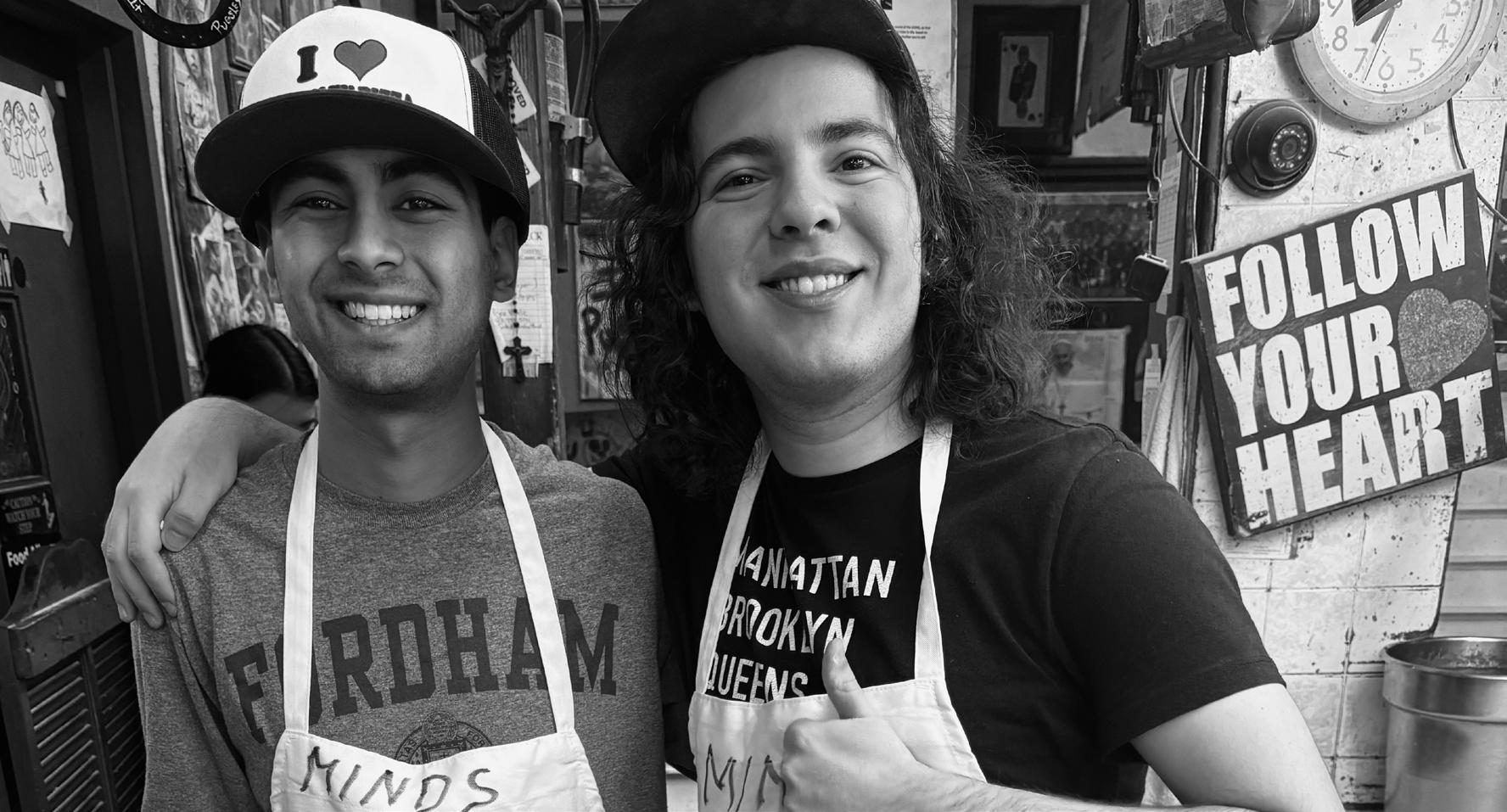
Outside of weekly meetings, the group has monthly lunches. Brand also plans periodic social outings for the group, which have included attending a football game, a school play and participating in a pizzamaking class at Pugsley’s. She has already planned their next outing, which will be seeing a Broadway show.
Brand said she has already seen students benefiting greatly from the program and has heard the same sentiments from other people on campus, including professors and other ODS employees. Byrnes also noted that the program has benefited the students and pointed to a specific student who experienced these benefits.
“There’s one student who’s a senior, and the difference is amazing,” Byrnes said. “We’ve just noticed so many different things, just noticed social skills are better, understanding cues and stuff from us is better … It’s good to see their confidence. It’s good to see their friendship with one
another. It’s good to just hear nonstop talking.”
Faris Amin, GSB ’29, a student in the program, said MINDS has helped him a lot since coming to Fordham last fall. Amin has been in similar programs since he was a kid, all of which were aimed at helping kids with autism to form social connections. He said that MINDS is similar to these programs, but is more tailored to the needs of college students, which has made all the difference for him.
“It really helped my college journey a lot,” Amin said. “I’m better off than I probably would have been had I not been a part of this … My life wouldn’t be a straightforward path as it is right now.”
Aside from helping him navigate college life, Amin said MINDS also gave him a place where he felt like he belonged and didn’t have to worry about feeling different.
“Sometimes I feel like I’m the odd one out. Like when I’m in a large group, I feel like the
one who acts a little different from everyone else,” Amin said. “When I got to MINDS … I knew … who I was, that I was a normal person; I wasn’t gonna make a bad impression on anybody.”
The program costs students $3,900 per semester, which covers all services, including meals and social outings. Byrnes said that the program is funded almost entirely through tuition, although they do also receive some grant money from the state of New York. While the program currently only has seven students, Byrnes and Brand both emphasized that they are always open to more students joining. Brand explained that the small group size is important, but that if enough students joined, they may make additional cohorts. Overall, they emphasized that they want the program to be available to any students who need it.
“MINDS is definitely the first of its kind [...].” Brand said. “It’s a great program.”
By KAT ROSSI ASST. NEWS EDITOR
A national webinar hosted by Georgetown University’s “Hoyas with Pride” brought together Catholic clergy, alumni leaders and LGBTQ+ advocates to examine questions of joy, belonging and institutional change within the Catholic Church. The event, part of a new spiritual dialogue series, highlighted both progress and persistent disparities facing LGBTQ+ Catholics both across the United States and globally.
The conversation featured James Martin, S.J., founder of Outreach, a Catholic ministry which serves LGBTQ+ people and their families, and Chris Lawton, C.S.P., an associate pastor at the Church of St. Paul the Apostle, across 60th Street from Fordham University’s Lincoln Center campus. The program was co-sponsored by alumni organizations from Georgetown, Fordham, Boston College, University of Notre Dame
and College of the Holy Cross.
The event opened with Julian Dellapaz, a Georgetown grad and the co-chair of “Hoyas with Pride,” who framed the series as an effort to create “a faith-centered home for queer Catholics and their allies,” grounded in listening, accompaniment and dignity.
The series, he said, is rooted in the belief that “no one is outside the love of God.”
When asked to reflect on the concept of queer joy, Lawton emphasized that joy in a Christian context is not synonymous with happiness, but rather, reflects a deeper theological reality. Drawing on Pope Francis’s apostolic exhortation in “Evangelii Gaudium,” he described joy as a sustaining force that reminds believers they are “infinitely loved,” even amid struggle.
“For LGBT Catholics, queer joy is not just about being welcomed,” said Lawton in the event. “It’s about being celebrated, [and] about knowing
that your presence and your gifts are helping move the Church forward in its mission.”
Martin situated queer joy at the intersection of LGBTQ+ dignity and Christian faith, describing it as a recognition of one’s identity as a “beloved child of God.” While noting that the term “queer” carries different meanings across generations, he emphasized that contemporary usage reflects a reclaimed sense of dignity.
Both speakers acknowledged that experiences of queer Catholics vary widely depending on geography, despite progress across the Church as a whole. Both priests acknowledged concerns about Catholics in regions where queer affirming parishes or ministries are scarce; while Catholics in major cities may find multiple affirming communities, others may face silence or worse at the parish level.
Lawton added that many LGBTQ+ Catholics experience
challenges of marginalization within religious spaces and skepticism toward religion within the broader LGBTQ+ community. Both priests rejected the premise that queer identity must be hidden in order to belong.
Lawton echoed this, noting that parishes often serve as spiritual anchors not only for LGBTQ+ individuals but also for families seeking assurance that their children are welcome within the Church.
Despite these pressures, Martin identified perseverance as one of the most significant contributions queer Catholics bring to the Church. He described encounters with individuals who, after being made to feel unwelcome in their parishes, sought to find a more affirming community within Catholicism.
“That perseverance is a gift,” Martin said in the event. “It’s something the Church should pay attention to.”
He noted that the late
Pope Francis took steps to engage with queer Catholics, including public language, pastoral meetings and appointments to Vatican agencies. “What may seem incremental in the West is often revolutionary elsewhere,” Martin said, addressing the Vatican declaration “Fiducia Supplicans,” which permits blessings of same-sex couples under specific circumstances. He noted that the declaration is a significant theological shift that should not be underestimated.
Parents of queer Catholics were identified as a critical, yet often overlooked, group for engaging with queer Catholics. Martin noted that Outreach is expanding programming for parents, including dedicated gatherings at its upcoming conference at Georgetown. Lawton noted this as well, observing that affirming parishes can serve as spiritual anchors for entire families, not just LGBTQ+ individuals.

Serving the Fordham University campus and community since 1918
Serving the Fordham University campus and community since 1918
The Fordham Ram is the university journal of record. The mission of The Fordham Ram is to provide a forum for the free and open exchange of ideas in service to the community and to act as a student advocate. The Fordham Ram is published every Wednesday during the academic year to all campuses.
Website
TheFordhamRam.com
Email Address theram@fordham.edu
Editor-in-Chief
Sienna Reinders
Managing Editor
Ian Nelson
Production Editor
Sarah Verrastro
Editorial Director
Molly O’Connor
Multimedia Director
Hannah Sullivan
Business Director
Nishanth Aduma
News Editor
Emma Leonardi
Features Editor
Sidney Blasco
Assistant News Editors
Jordan Donegan
Kat Rossi
Opinion Editor
Loressa Zeqiraj
Assistant Opinion Editors
Erynn Sweeney
Gabriel Capellan
Culture Editors
Lara Ejzak
Makenzie Smith
Assistant Culture Editor
Paolo Liaci
Sports Editor
James Nelson
Assistant Sports Editors
Molly Friedman
Ethan Bess
Copy Chief
Indigo Towers
Executive Copy Editors
Emily Mitton
Uma Petzke
Emma Kelner
Elaina Gibson
Social Media Director
Haniyyah Usmani
Photo/Graphics Editor
Didintle Masie
Digital Producers
Han Le
Marisa House
Advertising Directors
Violet Wallace
Juan-Pablo Valencia
Rishika Lingamdinne
Faculty Advisor
Beth Knobel
Editorial Policy
The Fordham Ram’s editorial reflects the editorial board’s opinions or views.
Opinion Policy
The opinions expressed in this publication are those of the authors. They do not necessarily reflect the opinions or views of The Fordham Ram.
Submission Policy
The Fordham Ram Reserves the right to reject or edit any submission for any reasion, without notice. Submissions become the exclusive property of The Fordham Ram. No part of The Fordham Ram may be reproduced without written consent.
Correction Policy
The Fordham Ram is committed to fair and accurate reporting. If you are aware of an error, please contact us at fordhamramonline@gmail.com.
When deciding on a college, I chose the option farthest from home. For many incoming firstyears who want to stay in their hometown, such a decision is unfathomable. But in retrospect, packing my bags and attending Fordham University, 751 miles from home (according to Google Maps), was the best decision I ever made. A much-appreciated fresh start. Thus, a piece of advice for any prospective college student is to deeply consider spending the next four years far from home. I understand the importance of hometown ties. I grew up with a single mother and two siblings, who were the only family I knew. I attended a small private school, with life revolving around the same group of friends. Truth be told, saying goodbye was not easy. But in a crucial act of self-development, going far from home prevented me from remaining the same person I had been before.
I am not suggesting that you should be ashamed or disown your life’s beginnings. On the contrary, I am quick to defend my upbringing and wear it with pride. High school was an exciting time in my life, yet I understood that once I turned my tassel in late May, the era was truly
over and it was time for me to leave the bubble that had given me so much. The classic metaphor of a bird leaving its nest comes to mind, however cliché it may sound. The effort poured into every assignment, test and extracurricular had given me the opportunity to leave. It would have been disrespectful to myself to choose a “safety school” and stay local with little risk or upside after all my toil.
A piece of street art by artist Benny Cruz aptly sums up my life since choosing Fordham: “New York is the end of your past and place of your rebirth.” Seeing the phrase in person on 14th Street and then again countless times on social media resonated with me. New York, or more specifically, Rose Hill, indeed marked the end of my past and thus became the place of my rebirth. The phrase is universal among college students who live far from home, who have the opportunity of a lifetime to reinvent themselves and become someone new.
My own lived experience is a testament to the upside of attending college on a new frontier, which I preach so heavily. Though I have only been through one of eight semesters at Fordham, I have already

found my place at Rose Hill.
An internship found through Handshake, classes and student organizations like The Ram keep me occupied and excited to start my day. But I also find excitement in more trivial activities, like walks around campus and lounging around with friends. Fordham has now transformed into a second home because I allowed it to.
My advocacy for choosing a college far from home would be incomplete without stressing the importance of guidance. Two of my teachers, Mrs. Barnes and Mr. Goulding, believed more than anyone that I would choose the right school for my future self. I attribute
my happiness with choosing Fordham to their much-needed advice. I put many hours of contemplation into my decision, but ultimately their advice helped me to finalize it. When faced with such a grand decision, the value of a caring mentor is immeasurable.
Choosing a college ultimately requires one to think about the grand scheme of life. The aspirations we hold deep in our minds often require us to make dramatic changes, such as moving far from home. College is an amazing time to do this. Wherever your life endeavors take you, just ensure it ends your past and serves as the place of your rebirth.
Last week, independent journalists Don Lemon and Georgia Fort were arrested shortly after covering an anti-Immigration and Customs Enforcement (ICE) protest at a Minnesota church. Earlier this year, protestors interrupted a religious service at Cities Church in St. Paul, where an ICE official is a pastor. Lemon and Fort have stated they were not there as protestors but were reporting on the event as journalists. Despite their arguments, they are being charged with “conspiracy against right of religious freedom at place of worship” and injury, intimidation and interference “with exercise of right of religious freedom at place of worship.”
The charges against these journalists are a ridiculous attempt to excuse the blatant silencing of their journalistic freedom and a distraction to cover up the atrocities committed by immigration enforcement that are not being investigated. Accusations that Lemon and Fort violated civil rights are an attack on not only the rights of journalists but the rights of Americans to know what is happening in their country.
The government’s actions also mark an attempt to use the First Amendment’s right to freedom of religion to distract from their attack on another First Amendment right: freedom of the press.
Freedom of the press is one of the cornerstone values that our country was built upon. By attacking journalists for delivering news to the people of our country, the Trump administration
is turning the news from a basic right to a terrifying scarcity. It should not be difficult to find a reputable source about a tragic event one has witnessed with their own eyes. Censorship is dictatorship. A threat to our First Amendment rights is a threat to the very fabric of our nation.
The arrests of Lemon and Fort are not the Trump administration’s first attempt to censor the press. Earlier this year, the FBI searched the home of a Washington Post reporter named Hannah Natanson, who covers the federal government, seizing her laptops, phone and smart watch. The Trump administration had mixed explanations for their actions. The Washington Post was first told that Natanson was not the main focus of their investigation, but later, FBI Director Kash Patel made a statement on X contradicting this statement, claiming that Natanson had obtained classified military information that could put the country at risk. These inconsistent claims suggest that the actions against Natanson were far more about silencing her and her reporting, which includes coverage of the mass layoffs of hundreds of thousands of federal employees over the past year.
In addition, President Donald Trump has developed a reputation for suing media outlets if they are not complimentary of his actions. ABC and CBS were some of the first impacted, but controversially settled for several million dollars and seem to be in the clear for now. Ongoing
lawsuits include The Pulitzer Prize Board, The Des Moines Register and pollster Ann Selzer, The Wall Street Journal, The New York Times and The BBC, most being taken up on claims of defamation and manipulation of news against Trump and his actions. Suing news outlets for reporting the truth about the president’s actions is not only childish but also a deeply unconstitutional intimidation tactic against the free press. This censorship cannot come as a surprise, however, as Trump called the media an “enemy of the American people” in a Tweet in 2017, echoing early whispers of his future authoritarianism.
In October 2025, the White House limited reporters’ access by prohibiting them from accessing a slew of offices in the West Wing, known as “Upper Press,” without an appointment. This access previously allowed journalists to ask questions to administrative officials and quickly obtain information for breaking news.
In response, the White House Correspondents’ Association said it “unequivocally opposes any effort to limit journalists from areas within the communications operations of the White House that have long been open for news gathering.” The administration’s defense of this action cited security concerns over sensitive material, but it appears to be just another excuse to uphold the validity of their suppression of the press.
Also last October, the Trump administration cracked down on press rules for the Pentagon, causing a mass walkout by nearly every
news outlet as reporters decided to turn in their press passes instead of agreeing to these new rules. The updated policy prohibits journalists from reporting on anything other than what the department of defense specifically authorizes, entirely dictating what information can and cannot be released to the American public. Reporters emphasized that they would continue to do their jobs from a further distance, getting what information they could from sources who were still willing to speak with them.
In early December, these reporters were replaced by far-right news outlets handpicked by the Trump administration, including bloggers and talk-show hosts inexperienced in this area of reporting. This blatant manipulation should not be tolerated by the media or the American people, but the administration shows no signs of letting up.
As a student newspaper, The Ram is not taking these actions lightly. We understand that a threat to any journalist is a threat to journalism as a whole, and we will not submit to thesew attacks or back down on our reporting. If nationally known journalists like Lemon and news outlets like The Washington Post can be struck down in this manner, every reporter and publication should be on high alert. If we as journalists and consumers of the free press allow incidents like these to slip under the radar, the government will continue to attack our basic rights until the country is stripped of everything that makes it a democratic republic.
By MICHAEL DUKE CONTRIBUTING WRITER
When the United States Immigration and Customs Enforcement (ICE) comes to mind, I’d argue that people these days think about more than two or three things.
When the topic of ICE is brought up to a Republican, they likely think of terms and topics like law and order, protecting borders and ensuring sovereignty and national security. Ask a Democrat what they think of ICE and you’ll hear different ones, including: unjust, overstepping, immoral and aggressive.
Regardless of whether or not you align with one of these major political parties, everyone can agree on one statement: things are a mess.
While it certainly does not help that each new headline seems to outdo the ones from
the day before, the wrong move right now is to let partisan politics bleed into everyday life.
Without straying away from the topic of ICE, ask yourself if you can think of 10 different issues in the last six years that have been blown out of proportion because one political party decided to become outraged and the other decided to respond with critiques.
The Israel-Palestine Conflict, Russian invasion of Ukraine, Social Security, Medicare , Medicaid, legal arguments in the Supreme Court, federal funding for social programs, trade wars, government efficiency, affordability and the cost of living and even mayoral races are all examples of how divides have caused us to part further and further from one another. Some days it seems like we’re even nearing a point of no return.

The bottom line is that we’re letting the issue of ICE become a focal point that is continuing to divide us. We simply cannot let this happen.
Everyone has a take on everything. Takes and opinions from your average American range from firm stances on whether or not ketchup should be on hot dogs, to whether or not our elected leaders have our best interests in mind.
While we should encourage people to be informed and make informed decisions, we cannot continue on this path that has deprived us of our decency, humanity and neighborliness towards one another.
What we need now is less distance. At the end of the day, it doesn’t matter if the guy next to you on the subway voted red or blue. It also doesn’t matter what he thinks about the issues that very well have little-to-no-effect on how you or him go about your day.
What does matter is whether or not he’s about to spill a drink on you, if he’s playing loud music and is bothering you because of how you’re agitated after a long day and if he’s coughing and wheezing in your direction without covering his mouth.
Whether we like to realize it or not, we’ve all had far too much time lost due to politicized issues. COVID-19 is one of the many, but the most severe example of how politics bleeds into everyday life
and widens the gap between us for various reasons.
This is what I’m getting at: we can’t let issues take over our lives every day. There’s some people who do let issues eat them up; and oftentimes they can be draining to others.They let uncontrollable things eat them alive because they can’t fathom why others don’t see things the way they do.
The problem is a lack of civility and understanding, as well as an attempt to see what things are like in another person’s shoes.
More often than not, I find myself wondering if the posts I see on social media, particularly those from people who are upset about political issues, are the best use of our time, efforts, thought and care.
In a survey on Gen Z activism by United Way NCA, the group found that only 32% of Gen Z regularly engaged in activism or social work. While Gen Z has a 8% higher level of engagement when compared to millennials, it’s still a staggeringly low number.
That number is low because, for whatever reason, our generation seems to think that virtue signaling or posting paragraphs on an Instagram story is something that makes an impact in comparison to the other options we have at our disposal.
While there certainly is an
argument that exists for that, it’s fairly safe to say that those things don’t hold a flame to other actions that our generation seems to forget exist.
Whether that means calling or writing to your senators, getting a meeting on the calendar with your member of the U.S. House to discuss your concerns or taking up matters at the local level in your city or town, it seems like we’re not taking advantage of those other devices that can actually make an impact.
Ultimately, when it comes to the recent issue of ICE, we shouldn’t argue whether or not you’re right and someone else is wrong, but rather realize that there are better options to resolving issues than simply fighting.
No one should have to lose a friend because of a disagreement that could be talked out. This is exactly what we need to do: cool the temperature down, look at what’s in front of us, look at what other people are saying and find common ground. Right now, this applies to the conversation about ICE. In the future, it will apply to other conversations that we will all care about and want to see fixed or addressed.
By BRIDGETTE LEAHY STAFF WRITER
It’s possible people like to believe they are at a stage of self-awareness. But what does self-awareness mean? It is a skill in which individuals can see themselves from a third-person perspective, evaluating both their strengths and weaknesses.
Most of us like to believe that we’re self-aware of our actions when we are with others. However, have you ever been with others and one of them said something that affected you negatively? Are their actions well thought-out if they harm you? In that case, it’s essential to recognize self-awareness, especially with the people you surround yourself with.
When people speak about self -awareness, they often categorize it in terms of their strengths and weaknesses; how others perceive them, their emotions and their causes. Do you think that these qualities indicate who you are? Or do you think it is your surroundings that help you recognize things about yourself?
The answer to this question involves recognizing our surroundings and how we operate within them. How did we choose our friends? How did
we choose our career paths?
What are the factors that influence our daily lives? It’s essential to monitor our behavior towards ourselves and others. To me, that is key to being self-aware. When we understand ourselves, it’s easier for us to build perspective and positive self-esteem. Positive self-awareness helps us interact with others positively. However, this self-awareness unfortunately does not develop overnight.
Being self-aware takes time and experience. Throughout childhood, we begin to recognize our emotions, which develop into private and public self-awareness. Private selfawareness is developed through ourselves, so that others might notice, such as internal monologue, anxiety or something else that cannot be heard aloud. Public self-awareness is the ability to see how others perceive us. These self-awareness skills can have a significant positive impact on us in social settings.
Often, self-awareness deepens during moments of discomfort: failure, heartbreak, rejection or unwanted change. These moments force reflection because the old way of seeing yourself
no longer works. There were countless times when I realized that my failures or rejections helped me develop what I was missing. Without these harsh experiences, I would not have developed or changed for the better. With every rejection comes an opportunity to rebrace, rebrand and redirect. Life is not about being perfect and knowing what is right all the time, because most of us have no idea what is necessarily correct. However, one thing we do know is that we try our best to understand what is best and make every moment a new experience. Without being selfaware, you could grow older but still remain at the same maturity level as you were in high school or college. It is best to make mistakes and learn from them rather than trying to be perfect.
Self-awareness feels like that pause. That sudden recognition or realization that you should stop or continue pursuing an action that will positively affect your lifestyle. I’ve seen similar shifts in others. Friends who once described themselves as hesitant or bad communicators later realized they were simply afraid of being misunderstood. Once they
realized this behavior, they gradually opened up. They asked more questions, sought more clarification and became more out-going. It was awareness that led to intentional action.
One’s social environment also plays a role. People are encouraged to reflect on themselves and receive feedback in many different ways. Others may come to it later in life, when they are trying to improve themselves or break the same patterns, wondering why nothing in their lives is progressing. Most importantly, self-awareness isn’t a final destination — it’s an ongoing process. You never stop being self-aware or stop learning; you’re evolving every day, at any age.
Ultimately, self-awareness is not about critical judgment or constant self-analysis. Selfawareness is about understanding yourself. Allow yourself to recognize your needs, desires, strengths and weaknesses without your ego or your flaws taking over. The most self-aware people I know aren’t perfect; they are simply honest. They are willing to own up to their mistakes and their character, and to adjust when needed. They are not afraid of imperfection; they embrace who they are. With that, willingness is what defines self-awareness.

By KELLY BUBAN CONTRIBUTING WRITER
The general consensus among college students is that we’re tired. Not in an “I stayed up all night watching Netflix,” kind of way, but in a “constant exhaustion from juggling classes, jobs, looking for internships, participating in clubs, athletics and having a social life” kind of way. So on the list of important things to think about, politics typically ends up at the bottom It’s not that we don’t know what is happening in the world or that we want to be blissfully ignorant — it’s that we feel like we can’t handle one more big thing. This tendency is understandable, but at what point is political avoidance too normalized — going beyond “self-care” and weakening some of the most influential voices in American democracy?
On college campuses across
the U.S., political disengagement among young people is becoming increasingly evident. Students openly admit they don’t follow the news, as it can be too much to consume at once, and that they don’t vote because they believe their participation won’t change anything. Aeyla Sainsbury-Carter, FCRH ’29, said, “I know how bad it sounds, but politics just stress me out. I’m already anxious, so watching and reading the news about everything just piling up in our country makes it worse.”
Emily Braun, FCRH ’29, added that she “[hadn’t] voted in any previous elections, not for president, and definitely not for my local town elections. [Her] one singular vote wouldn’t make a change, so why bother?”
I have found that these sentiments aren’t rare. A recent Inside Higher Education survey found that more than half
By CAYDENCE JONES CONTRIBUTING WRITER
A new year begins, and with it, the promise of a “new me.” But is change really that simple? Every January, we make the same familiar promises to save money, read more and exercise consistently, placing a surprising amount of faith in the catalytic power of the countdown However, if we want these changes in our lives, why can’t we just decide to be better on a random Wednesday in April? Why do we wait for the clock to strike midnight on Dec. 31?
Personally, I love both the motivation the new year fosters and the shared sense of momentum toward self-improvement that becomes important to us all. Of course, we should look to better ourselves year-round; however, I don’t see anything wrong with using this clean slate as a pivoting point to change bad habits. Whatever it takes to make a positive change in your life shouldn’t be viewed as a negative bandwagoning trend, but rather as a jumping off point for the life you want to live.
To kick off 2025, I began with the following resolutions:
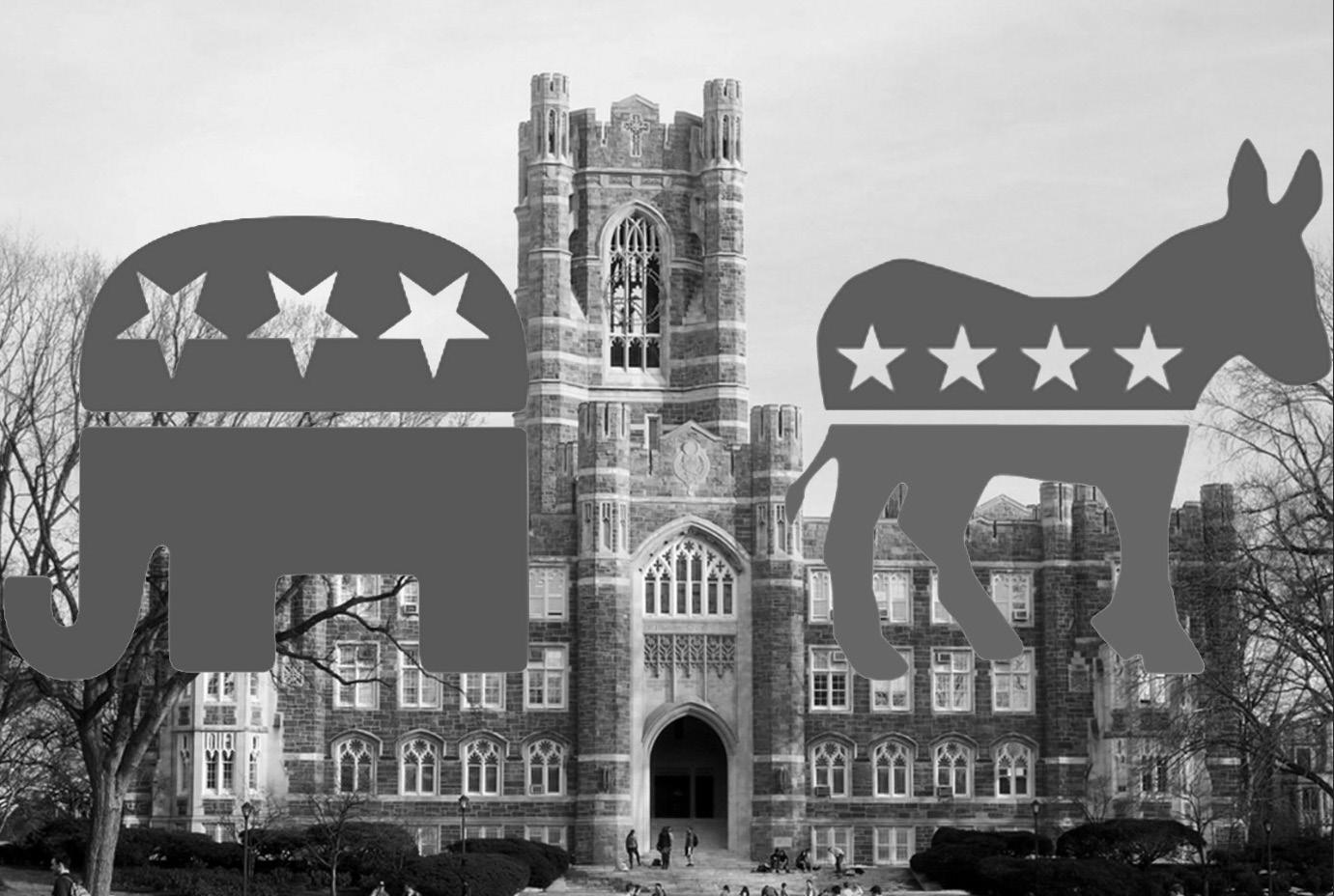
of college students believe that their vote doesn’t make a difference. This sense of political apathy and belief that individual action is meaningless is something that is well-documented amongst young adults. It is easy to criticize college students for being politically disengaged, but in reality, there are a lot of factors that play into it and make it a complex issue.
Mental health plays a big role in creating this political apathy. In a world where the media and talk of politics are “omnipresent,” many college students find it important to “practice media dietary restriction.” For those who are simply trying to make it through the semester, ignoring politics and the news can feel like an act of self-preservation. With this in mind, tuning out makes sense. When the news cycle constantly feels like an endless loop of crises — climate change, gun violence, global conflict, federal invasion and violence within our own country — it is understandable that some students may choose to focus on what they can control in their own lives. Still, there is a clear difference between setting boundaries and completely checking out.
Political apathy doesn’t just affect individual students and their own decisions: it has begun to affect the country as a whole. When young people disengage, their concerns are less likely to be reflected in policy
decisions. A survey completed by the United Way in 2024 highlights issues that Gen Z is most passionate about. The results included topics such as inflation and cost of living, affordable healthcare, affordable housing and LGBTQ+ rights. These issues directly impact college students, but with the lack of voting and political care, decisions are left in the hands of the older voters who are more likely to show up at the polls. Choosing not to participate doesn’t make the political system more fair or less stressful; it gives up power to those who likely already have it.
What makes the situation college students find themselves in right now particularly frustrating is that historically, they have been anything but apathetic. The U.S. has a long history of student-led activism, from the Civil Rights Movement to protests against the Vietnam War and, more recently, movements for gun reform. College campuses have long since been a place where political change begins and not because students felt calm or optimistic, but because they felt a sense of urgency. So what changed?
Social media has made politics louder, but not necessarily more meaningful. Instead of having productive discussions, students feel outrage, hit the repost button and feel a pressure to have the “right” opinion at all times. On top of all of that, surveys show that students are afraid of expressing
their political views on campus due to the fear of being judged or misunderstood, making silence safer than speaking up. However, silence has its own consequences.
Accepting the idea that individual voices don’t matter is one of the most harmful beliefs students can adopt. It discourages participation before it even begins, and it reshapes political culture by normalizing disengagement. This doesn’t mean students constantly need to be arguing about politics online or be glued to daily headlines. Protecting mental health during a busy college lifestyle is important, but disengagement should not be the default.
Civic participation needs to start somewhere: voting, attending a local meeting — on campus or in your hometown community — supporting a particular cause you care about or simply staying informed in intentional ways. Politics will continue to affect students, whether they engage or not. The question is whether college students choose to have a say in political outcomes or are willing to simply let others decide on their behalf. If college students stop believing their voices matter, the country won’t just lose voters — it will lose powerful sources of change.
to photograph my life more, save money, stop trash-talking and kick my phone addiction. I didn’t want my resolutions to be vague promises that would be forgotten by February, so I approached them intentionally. Instead of relying on motivation alone, I focused on building structure into each goal.
This approach is supported by Baylor University psychology experts, who explain that using structured goal-setting methods provides direction, helps measure progress and increases the likelihood that resolutions will succeed long-term.
In order to complete my resolutions, I created a realistic step-by-step plan I knew I could follow to achieve each goal. This structure led to a very successful 2025, ending with the full completion of all my resolutions. I now have a great analog of the life I’ve lived this past year and successfully developed an aversion to doom scrolling. That shift showed up in small, everyday choices: reaching for my camera instead of my phone, setting limits around screen time and becoming more aware of moments of distraction that could have been moments of intention overall ... None of
these changes were drastic, but together, they reshaped my routine and helped me make the changes in my life I’d been striving toward.
As we approach the end of January 2026, I’ve found myself less successful in completing my resolutions. Whether this is due to the stress of a new semester, a lapse in discipline or any number of excuses doesn’t matter. What does matter is understanding how much weight we place on these goals. I feel it’s important to have something to strive for but not to let its success be detrimental to your growth. Many experts say that when people set goals that do not succeed at first, they quickly become discouraged and give up because progress feels too slow or unattainable. According to Psychology Today, “an over-ambitious life plan can also prove to be a trap. This is the case when the goals pursued are unattainable,” which is why most people say that New Year’s resolutions are pointless and have an overall net negative impact on our growth. Although my resolutions are not quite coming to a head yet, I’m still more conscious of how I act, spend
my time and treat the people around me. Progress isn’t always linear, and slipping up doesn’t erase the intention behind setting a goal in the first place. The value of resolutions isn’t only in whether they’re fully achieved by the end of the year but in the awareness they create — and that awareness alone changes us for the better in small but meaningful ways. If your goals don’t always succeed, you’re starting the year mindfully at the very least, with intentional reflection on your actions (a habit that’s always worth practicing).
So, if you haven’t already, take a minute to sit down, grab a pen and start your list. If putting thoughts on paper isn’t your style, try visualizing them instead. A Pinterest board, vision board or even a series of notes on your phone can work just as well. The important part isn’t how you organize your goals, it’s that you start somewhere with intention and give yourself a real chance to make this year different.

By JAYSON MCARDLE CONTRIBUTING WRITER
Trump’s interest in Greenland is primarily real-estate related. The number one factor considered when evaluating a property’s value is always location. On the surface, Greenland appears to be an ice sheet with a population below 60,000; however, Greenland also has a prime strategic location in the Arctic Circle. The island also contains many untapped natural resources, and if China’s interest in this Danish territory tells us anything, it’s that our adversaries know this as well.
Trump has expressed that
gaining control of Greenland is a matter of national security, but realists recognize that this is extremely unlikely. A purchase of Greenland would be the largest real estate deal of all time and a military takeover would cause unprecedented damage to our relationships with allies in Europe. Complicating things further, the idea of Greenlandic independence from Denmark has been gaining traction on the icy island. A 2025 poll found that 84% of Greenlanders want independence, but if achieved, independence would end a 1951 pact between Denmark and the United States that gave the U.S. military

By BRIDGETTE LEAHY STAFF WRITER
How much is too much?
Lately, skincare has been all the rage among Gen Z-ers, especially Korean Skincare and healthy superfoods that help promote skin elasticity and glow. Do the prices of these skincare products speak for the quality, or are they a complete scam?
There are currently YouTube channels in our feeds that review skincare products. You might be familiar with Hyram Yarbro’s channel, which is notorious for reviewing expensive skincare products. Although some of his recommendations are beneficial, how many of them are cost-efficient and realistic for an average college student? Not many. Studies have shown that Americans spend roughly $300 to $500 annually on skincare products alone. That number can climb among consumers who follow a multi-step skincare routine or purchase products from prestigious brands. Walk through T.J.Maxx or scroll online on the TikTok Shop or Amazon and you will find various products that promote “glass skin,” “vitamin C skin” and “hyaluronic acid.” A simple 12-ounce pharmacy bottle of CeraVe Foaming Facial Cleanser costs around $18, while the Youth to the People’s Kale and Green Tea Spinach superfood cleanser costs nearly $40 for just eight ounces. But are these
access to the island to build military bases.
Trump has a goal of bolstering security in the Arctic and gaining access to the island’s untapped resources. Despite the complexity of the situation with Greenland, Trump resorted to old tricks. In his book “The Art of the Deal,” Trump explains that his dealmaking tactics are simple: “I aim very high, and then I just keep pushing and pushing to get what I’m after.”
Trump’s apparent obsession with gaining total control of Greenland, complete with Truth Social posts, trips and other media statements, was the first phase: aim high. By repeatedly expressing his interest in the public sphere, he made it known and credible to world leaders and the public.
Of course, this threat to Greenland’s sovereignty sparked condemnation from people in Greenland, Denmark and their National Atlantic Treaty Organization (NATO) allies alike. Additionally, the successful Operation Resolve to capture Venezuelan dictator Nicolás Maduro, when combined with several statements by Trump, seemed to suggest that obtaining Greenland by using military force was not off the table. Clearly, Trump has a strong position to negotiate from on the global stage, but that does not change the complexities of the situation.
Aiming high is a setup to gain favorable outcomes in deals. In
“The Art of the Deal,” Trump also wrote, “sometimes I settle for less than I sought, but in most cases, I still end up with what I want.” As it pertains to Greenland, the outcome of the deal could be viewed in two ways: Trump settled for less than he sought (complete control of Greenland) but got the things that he wanted (more military bases in Greenland), or Trump aimed high and never intended to fully control Greenland, only using full control as a negotiating strategy to gain favorable terms. I argue that he was only aiming high to secure favorable terms due to the undeniable realities of the situation and the precise objectives of security and resources.
Trump’s strategy has had the effect of causing accelerated action, which is essential for business and national security. Much of the Greenland drama culminated at the Davos summit, where Trump secured a deal — or at least a framework — with NATO. In a speech, he threatened tariffs towards allies who stood in his way, which was the final nail in the coffin. By the evening, Trump announced he had reached a deal with the Secretary General of NATO Mark Rutte.
While nothing is set in stone, the proposal is very favorable to the U.S. and its allies, as well as its shared security interests in the Arctic. The plan would increase
higher-priced skincare products actually worth it?
The simple answer is sometimes — but not always. It’s important to note when certain products are sufficient to spend more, and when it’s necessary to save and spend on cheaper over-the-counter products. We have to understand that what is “high quality” is not about price alone; high-quality skincare products are defined by evidence-based active ingredients, with few ingredients to preserve the natural effects, stability, concentration and skin compatibility. It’s also essential to know which skin texture you have: dry, sensitive, normal, combination or oily. Low-quality products rely more on cute packaging or buzzwords like “best-seller” and “number one rated” than on ingredient-sufficient formulations that have been proven to work.
To ensure a basic yet effective skin care routine, I recommend beginning with a cleanser. Cleansers are rinsed off the skin after a short period of time, and it’s not worth spending an exorbitant amount of money on something that will be rinsed off your face in 30 seconds. As long as the cleanser effectively removes excess dirt, oil and makeup without stripping the skin barrier, it’s functional.
In addition, moisturizers are a simple yet effective skincare product, especially during the cold winter season. The core function of any moisturizer is to hydrate the skin. With proper hydration, you can achieve the “glass skin”
look that many influencers show online. Ingredients usually include hyaluronic acid, shea butter and ceramides. It’s crucial to find a cheap moisturizer because those products don’t contain complex ingredients.
When to spend more can apply in settings where leave-on treatment products are used. Usually, these products contain active ingredients, like vitamin C, retinoids, exfoliating acids or peptides, which require careful formulation to ensure stability. Vitamin C is difficult to formulate because it degrades when exposed to sunlight, air or heat, so higher-end brands often invest more heavily in research to preserve ingredient potency. In this case, a higher price may reflect better formulation rather than just branding.
Speaking of sunlight, sunscreen is another fundamental, thoughtful investment. The sun causes wrinkles; remember that. Always apply sunscreen before leaving your residence, and if you only apply one kind of skincare, I highly recommend sunscreen. Pricing for sunscreen doesn’t matter; what matters most is whether it offers broad-spectrum protection and whether you will actually wear it consistently. Some higher-priced sunscreens can make your skin lighter and leave less of a white cast. Regardless of the price, any sunscreen will do to keep your skin youthful and wrinkle-free!
Not only is skincare prized for
the NATO presence in the Arctic to counter Russia. The 1951 pact with Denmark would be updated, essentially granting the U.S. sovereignty over pockets of land via bases in the territory. Most importantly, Russia and China would be restricted from resource extraction on the island.
If this deal, or anything like it, fully materializes, then Trump will have triumphed once more. Through his negotiation, he will have gained all his national security interests, economic interests and additional territorial interests at no cost.
Of course, some people will criticize his negotiating tactics as being strongman tactics or detrimental to international relations. However, one cannot deny that his tactics are effective. They must be effective so we can counter our adversaries abroad, namely China and Russia. These adversaries are shared with our allies; the deal the president is working on will benefit our allies and promote peace, stability and economic development in Greenland and the world. So, while Greenlanders may not be reciting the pledge of allegiance any time soon, Trump should be happy with the outcome of his negotiations so far.
its cosmetic benefits, but it is also prized for its overall health benefits. Not taking care of your skin in your early years can lead to skin cancer later in life. In addition, your skin can tell you how healthy your gut is. It’s essential to pay attention to all these little factors of your body.
Furthermore, keep an eye on poorly formulated products that may irritate your skin, disrupt the skin barrier or cause any allergic reactions. Fragrances in everyday “high-quality” skin care products do not equate to luxury. Instead, high-quality skincare means well-tested skincare products for your skin.
Social media plays a pivotal role in shaping skincare habits, which often blur the line between health and aesthetics While influencer recommendations might be intriguing, they
are not always unbiased or particularly effective. Just as with any trend, skincare products will move quickly and most of us will realize which are effective, essential and worth the price. Ultimately, the best skincare routine is not the most alluring or expensive one — it’s the most intentional. Investing in high-quality treatment products when needed and saving on basic skincare like sunscreen, cleansers and moisturizers are all that consumers need. We are here to balance effectiveness and affordability, not luxury and debt; I think we have enough of the latter as students anyway. Informed choices matter more than price tags.

By ISABELLA DEROSA CULTURE EDITOR EMERITUS
If you’ve been on campus these past couple of days or in the general tri-state area, you are experiencing what is probably the coldest winter New Yorkers have had in a long time. The bad news is that this means walking outside dressed like you’re preparing for a hike in the Arctic, yet still somehow being cold. The good news is that this also means Fordham students got the rare opportunity to have a snow day. And because this snow does not look like it’s melting anytime soon (even Punxsutawney Phil said we have six extra weeks of winter), I’m going to share some of my perfect snow day activities. First up is going outside. As unappealing as that may sound, I think this is the perfect way to make the most out of the harsh weather. Those students who live on Fordham’s Rose Hill campus don’t have to worry about commuting on the roads and are provided with plenty of large spaces — Martyr’s Lawn and Edward’s Parade — that are perfect for snowball fights, building snowmen or large mountains (as seen last weekend) and sledding.
In previous winters, I have spent my own snow days packing
By EMILY MCCALL CONTRIBUTING WRITER
With New Year’s resolutions, goals being set and the constant commotion of everything else, it is hard to keep track of how one plans to move forward into this new era. It is easy to plan what you want to do, but difficult to remember once you finally get to that point. If only there were a way to plan out your vision through a collage of images, symbols and phrases. A visual guide to map out all of your plans for the future. If you are stuck on how to even
snow onto my friend’s skateboard ramp and sledding over it, which vaguely reminds me of the students who skied down Keating’s steps last weekend. When the snow first fell this winter, my friends and I went outside to Eddie’s to join in on the fun. We spent an hour or two making snow angels and making our own snow mountain to jump into. Once the cold started to get the better of us, we walked to Dunkin’ for hot chocolate — another snow-day must, in my opinion.
However, if you are still against facing the weather headon, there are plenty of other snow day activities that can be done indoors. Baking is my personal go-to. My roommates and I will take any excuse to make chocolate chip cookies, and being snowed in is a pretty good one. When you’re done baking, you can pair your sweet treat with a good movie or start a new TV show. Last weekend, after our snow day, we watched “People We Meet On Vacation” on Netflix, which I strongly recommend if you have not seen it yet.
My last recommendation is to take the time indoors to pick up an old hobby or cross some work off your to-do list. Reading a new book is always a good choice, but you can
always pick up a coloring book or do a craft. I like to write when I have the time, whether that be journaling, creative writing or writing an article for The Ram. Taking the time to get ahead of your classes’ syllabi is advisable as well. Dedicating time to self-care and doing individual activities can be hard in everyday life, but being snowed in gives you the time to do things you have been pushing aside.
While the snow may be a hindrance and is certainly annoying to an extent, it allows us to take more time to enjoy the simple things. This past weekend, I felt the weather had encouraged me to make more of an effort to spend time with my friends and do different activities. Being college students gives us the space to enjoy the colder weather in a unique way. We get to be stuck inside together with our friends and still be kids playing in the snow if we want to. We are not yet rushing to work or shoveling driveways. We are in an inbetween in which we are young enough to be childish but old enough to appreciate it. As a senior heading towards the end of my college experience, I am grateful that this winter has allowed me to have a few more Fordham snow days.
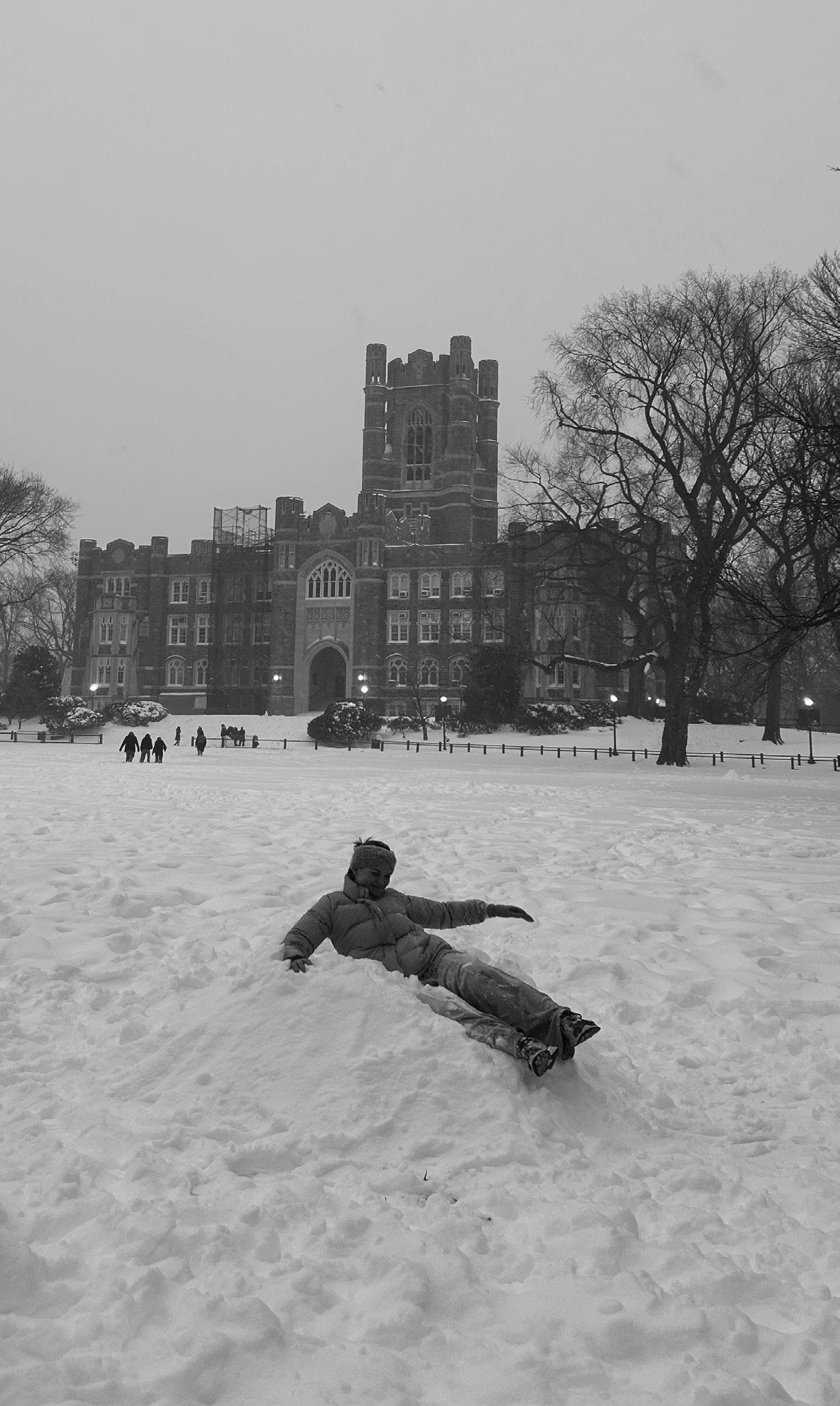
begin this, then it is time to be introduced to the art of the vision board.
The concept of vision imagery has existed since the beginnings of human civilization, but was truly popularized in pop culture trends in the 2000s and 2010s. Through television, the rise of self-help or meditation and the introduction of social media, everything started becoming focused on visual planning. Making a vision board allows a person to relax and truly focus on what exactly they want to do. Additionally, by keeping it available as a
reference point, it acts as a guide to motivate and keep you on the right track. But the question of how to even make one is a thoughtful and challenging task to take on, so consider this your step-bystep guide on how to craft the perfect vision board.
The first step is to plan when you will do this. It is not a simple arts-and-crafts project that you can just spontaneously do from start to finish on any random day. My recommendation is to save it as a weekend plan — a way to take a break from the stress of
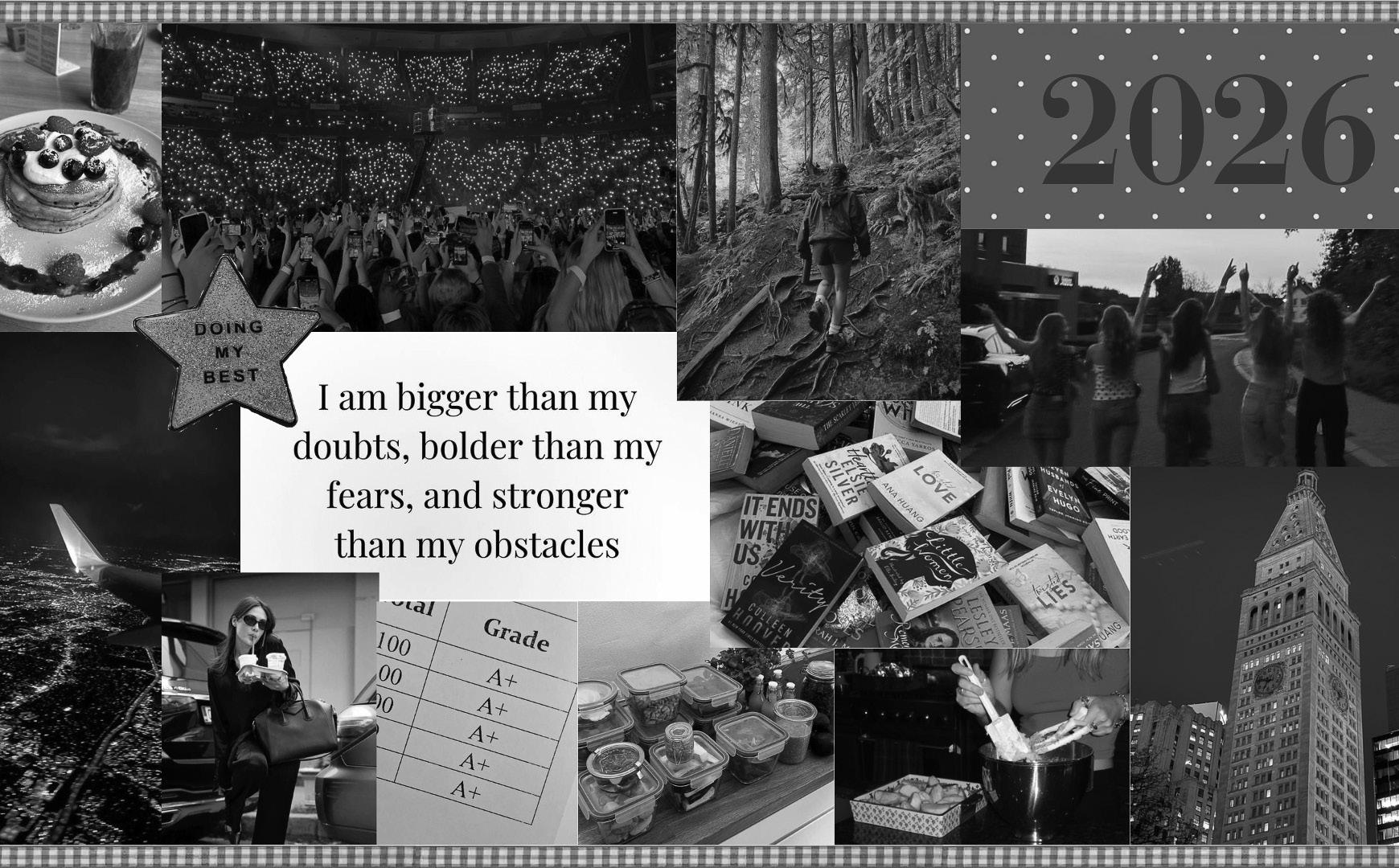
the week and refresh yourself for the next one. It is also a great activity to do with friends so that you can compare and contrast each other’s goals and make new memories together.
Next, you need a list of what is important for you to include. What do you need reminded about? These could be affirmations, photos of people you care about, images of a job you would like in the future or simple words and phrases you would like to be reminded about. For example, I would add photos of my friends and family to remember how much I value them, newspaper clippings to represent the career path I want in the future, concert photos because I would like to go to more concerts in the new year and an affirmational quote that speaks to me. After making these lists, it is time to decide which photos you specifically want to include.
In my opinion, the best place to look for these images is Pinterest. Sure there are other image-based search engines, but Pinterest will know exactly what you are looking for no matter how niche or specific. It is also incredibly important to make sure these photos are as aesthetically pleasing as possible so that once it is done you can hang it up as a reminder of what you would like to do.
After printing out the images
and gathering any additional supplies to make it more eyecatching, it is time to build a collage. The most important part when making a collage, however, is to not immediately glue anything down. It is a meticulous process requiring very careful planning. As someone who prides myself on my ability to craft collages, I speak from experience when I say that you need multiple plans and cannot simply glue everything down at once because you will change your mind. Once you know it has been perfected and there is nothing else to change, you may begin the gluing process. Since this vision board is something you will need to view every day, it needs to be displayed in a central location. it could be above your bed, in your workspace, by an entryway or anywhere else that you often look at. I would personally choose to hang mine above my desk as a reminder of what I am working towards.
No matter what you choose to include in your vision board, each one is individualized to whoever makes it. It is not just a one-and-done craft, but something to keep with you throughout the year as you work to make your vision a reality. Now, after learning how to make one of your own, I encourage you to consider what you would put on yours.
By ARHANA KARSALIYA CONTRIBUTING WRITER
The beginning of the spring semester in New York City brings a special kind of misery: slushy sidewalks, moody gray skies and wind that somehow always finds its way through your coat and layers. It’s not quite winter, not quite spring and definitely not the season for long walks or scenic campus strolls. When the outdoors feels uninviting, city-goers turn inward, and for Fordham students, that usually means finding a coffee shop that feels warm, welcoming and worth braving public transit for.
On gross-weather weekend afternoons, coffee shops become more than caffeine stops; they become refuges, study halls, social hubs and temporary homes away from the cold. Across the city, tucked between transit corridors and side streets, are independent and lesserknown spots that offer exactly that escape.
If you’re willing to trade
a short train ride for a vibe shift, take the Metro-North from Fordham and head toward Grand Central Station. Just outside the station, you walk into the grand main entrance, going past the desk and up the escalators. As you move away from the rush, you’ll stumble into The Clock Coffee Shop. It feels like a secret; the kind of place you wouldn’t expect to find in Midtown. The seating is spacious and genuinely comfortable — a rarity in NYC — and the atmosphere invites you to sit and stay. There’s a library built into the space, free Wi-Fi and the kind of calm that makes you forget you’re mere steps away from one of the busiest transit hubs in the country. Their matcha is especially good, rich and balanced. They also serve food and have a bar, making it perfect for a long afternoon that might accidentally turn into evening. It’s ideal for days when the rain won’t stop and you don’t want to go anywhere. For something with a little
more whimsy, Remi Flower & Coffee near Grand Central feels like entering a soft-focus dream. This café doubles as a floral shop, and the scent alone is enough to lift your mood on a gloomy day. Flowers line the space, creating a cozy, romantic atmosphere that feels almost cinematic. The rose latte is a standout — floral without being overpowering — and the food selection is equally impressive. Seating fills up quickly, so plan your arrival wisely, and it’s definitely on the pricier side. It’s the kind of place where you might spot a famous actor casually grabbing coffee, which adds to the charm. You can even buy flowers on your way out, if you’re feeling indulgent.
Closer to home for Rose Hill students, 787 Coffee in the Bronx offers a completely different kind of warmth. This spot is cozy in the most comforting way, and it carries a deeper story. The coffee beans are sourced directly from the
café’s own farm in Puerto Rico, and it comes through in the drinks, which feel intentional and rich. Their horchata latte and tres leches latte are sweet but perfect for a cold, rainy afternoon when you want something that feels like sunshine in a cup. The bakery items are warm, fresh and impossible to resist. The overall vibe is bright and cheerful, making it an ideal pick-me-up when the weather is doing the opposite.
If you’re coming straight out of the Lincoln Center campus and need a quick but satisfying coffee, Stop By Café near Columbus Circle is an easy win. It’s a seven minute walk from campus, which is a must when it’s pouring. The interior is modern and clean, designed for efficiency without feeling sterile. The coffee itself is solid and a respectable seven out of ten, but the sandwiches are the real highlight. It’s a great place to refuel, catch your breath and maybe do some light reading before heading
back out into the cold. Finally, if you’re looking for a Brooklyn adventure that’s worth the trip, Butler Coffee is a must. It’s a quick stopand-go café, but every detail feels intentional, from the low-hanging lights to the beautifully designed menu. The pastries are genuinely amazing, flaky and fresh, and the mugs and glasses are so cute you’ll probably want to buy one. Butler feels effortlessly cool without trying too hard, making it a perfect Brooklyn staple for a weekend afternoon when you want to feel inspired but not overwhelmed.
Together, these five coffee shops span neighborhoods, boroughs and moods, but they all offer the same thing: shelter from the harsh elements and condition in the city when the weather is at its worst. For any Fordham students navigating long commutes and unpredictable skies, these spaces become havens and transform gloomy weekends to be cozy and memorable.
By MARIAM AHMED CONTRIBUTING WRITER
If you’re looking for a noteworthy Lebanese dining experience, look no further than Balade. Located in the East Village, this cozy establishment is easily one of the best Lebanese restaurants I have tried. Upon entry, you’re greeted and seated by their extremely welcoming and polite staff. The lighting is perfectly dim with a clean, quiet interior filled with pillows and traditional artwork on the walls. Balade’s dark and snug atmosphere is perfect for your next night out, catching up with friends or even an intimate solo dinner.
This traditional Middle Eastern cuisine restaurant truly outdid themselves with their restaurant week. During my visit, my friend and I selected their three-course dinner for $45. From their restaurant week prix fixe menu, we ordered the baba ghandouj and the warak einab for our appetizers. The baba ghandouj is a dip made out of chargrilled eggplant puree with tahini and fresh lemon juice served with warm pita bread. It was insanely flavorful; a beautiful balance of warm and cold when paired with the pita bread for dipping. As someone who enjoys dips, baba ghandouj is my go-to at any Middle Eastern restaurant, and I was certainly not disappointed this time. Our other selection, warak einab, is a homemade style of grape leaves stuffed with chickpeas, tomatoes, parsley and rice. This was my first time trying warak einab, and it lived up to my expectations. Perfectly warm and skillfully wrapped
in grape leaves, the rice was soft and generously seasoned.
Moving on to our entrees, we chose Balade’s beef shawarma platter and their sheikh el shawarma platter. The beef shawarma platter consisted of shredded marinated beef topped with tomatoes, onion and parsley, served with rice, pickles and tahini sauce on the side. The beef was extremely juicy, savory and crispy exactly where it needed to be. The sheikh el shawarma platter, on the other hand, featured shredded marinated chicken with toum served with pickles and fries. This platter came with two sauces, and when paired with the handcut fries, it hit us with a perfect amount of light spice and sauciness. Both of these entrees were a generous size for leftovers after satisfying our hunger.
Of course, I’m sure you’re wondering what we ordered for our sweet treat, so I decided to save the best for last.
As our final course, we ordered two of their traditional desserts: mouhalabie and ashta. Both of these desserts are puddings but prepared and presented in distinct, unique ways. Mouhalabie is a milk pudding topped with ground pistachio and homemade syrup; unlike anything I’ve tasted before, but delectable nonetheless. I would consider it a mix between jello and pudding with the homemade syrup being the best part. This syrup was sweet enough to enjoy in every bite as it was placed under the pudding, so it was the first thing you tasted off the spoon. The pistachio pieces dusted on top added
a perfect amount of nutty flavor to balance out the milk pudding with the syrup. As for ashta, this delectable dessert also incorporated pistachio but with different toppings. Ashta is a homemade white pudding with honey, pistachio and fresh fruits. This pudding was more of a soft consistency and was certainly a little more runny, unlike the mouhalabie, giving it that pudding feel. The combination of fresh honey atop
the bananas and strawberries was a nice surprise. You don’t often see these fruits paired with honey and pistachio, but this dessert brought them together in an unexpectedly pleasant way, balancing flavors of natural sweetness without overpowering each other. My friend and I concluded that the ashta was our favorite of the two desserts. For any dessert lovers who prefer a more balanced, less in-your-face sugar fix, these are the treats for you.
To say I recommend Balade would be an understatement. For a $45 three-course dinner that leaves you utterly satisfied and incorporates so many aspects of Lebanese culture, I would say it’s 100% worth it. The combination of distinct flavors and a homey, tight-knit environment truly allows you to unwind and not only enjoy the food, but also the company of others. If you’re looking to expand your culinary repertoire, Balade is a must.
By OWEN THEBERGE STAFF WRITER
Unfortunately, it’s difficult to find men like Valentino Garavani who truly seem to understand what the women he dressed wanted in regards to their clothing. Famously, he said that “[he knows] what women want. They want to be beautiful.”
Valentino Garavani, a man who just wanted women to feel beautiful in the clothing they wear, tragically passed away on Jan. 19, 2026, at the age of 93. Undoubtedly a fashion mogul and icon, Valentino was known for his glamorous couture clothing that was often paired with his signature “Valentino red” color. He founded the legendary Maison Valentino fashion brand in 1960, a few years after the end of the “golden era of couture,” in which infamous fashion brands such as Balmain, Balenciaga and Dior emerged. He was often cited as the “last emperor of Italian fashion,” being one of the last living legends of this glamorous period up until his recent death. He dressed legendary women like Jackie Kennedy, Audrey Hepburn and Elizabeth Taylor, and was highly respected by the women he dressed.
This respect is best seen in the attendees of his funeral. Anne Hathaway, who starred in the film “The Devil Wears Prada,” attended the service at the Piazza della Repubblica in Rome on Jan. 23, alongside fellow fashion trailblazers Anna Wintour and Donatella Versace, amongst many others. The weather was beautiful, fitting for the man whose life was being honored that day.
Valentino’s passing will be felt deeply by the fashion industry and community. It’s a loss of a man who defied all odds and became a couturier when it seemed impossible for an Italian man in Paris to break through in the way that he did. When honoring his life and legacy, I went back through some of his most iconic looks and wanted to point out a few that have really stuck with me.
The first ever Valentino collection in the ’50s is known for every piece having the exact same fiery red, later coined “Valentino rosso” or “Valentino red.” It was the collection that got Valentino on the map in all its seductive, romantic fashion. I also love his bridal looks, with my favorite being the one from his 1993 spring collection, modeled by Christy Turlington. It’s big and adorned with ruffles and lace;
what more could you possibly want? The look is also topped with a Mary Poppins-esque hat that is wrapped in tulle and ties the look together beautifully.
The gown worn by Julia Roberts at the Oscars in 2001 is also one of my favorites. I love how simple the dress looks at first, but the longer you look, the more effective the simplicity becomes. There’s just a white line that goes down the center of the gown with white lines woven through the train of the gown that ties the look together perfectly. It’s simple, classy and tasteful, and has cemented itself as an
iconic Oscars look.
That’s what Valentino got exceptionally right: simplicity. In many of Valentino’s fashions, there isn’t too much going on, which is what I think makes his artistic vision so interesting. One usually expects fashion houses to put together the most unpredictable outfits possible, like modern trends seen often nowadays. However, Valentino prioritized the look of the model in the outfit, with the pieces acting as a way to accentuate the beauty of the person wearing it, not just the beauty of the garment itself. I highly respect this approach to fashion and design, and
can pinpoint it as the reason Valentino is so beloved and why his funeral was attended by thousands of adoring friends, trusted colleagues and devoted fans.
Valentino, as a human being, was just as beautiful as the clothing he created, the women he uplifted and the fashionable world he curated. Surely, the fashion world would never have been what it has become today without Valentino’s expertise, craft, vision and love for what fashion meant to not only himself, but to the people he created for. I have nothing but the utmost respect for him and the legacy he created with his iconic work.
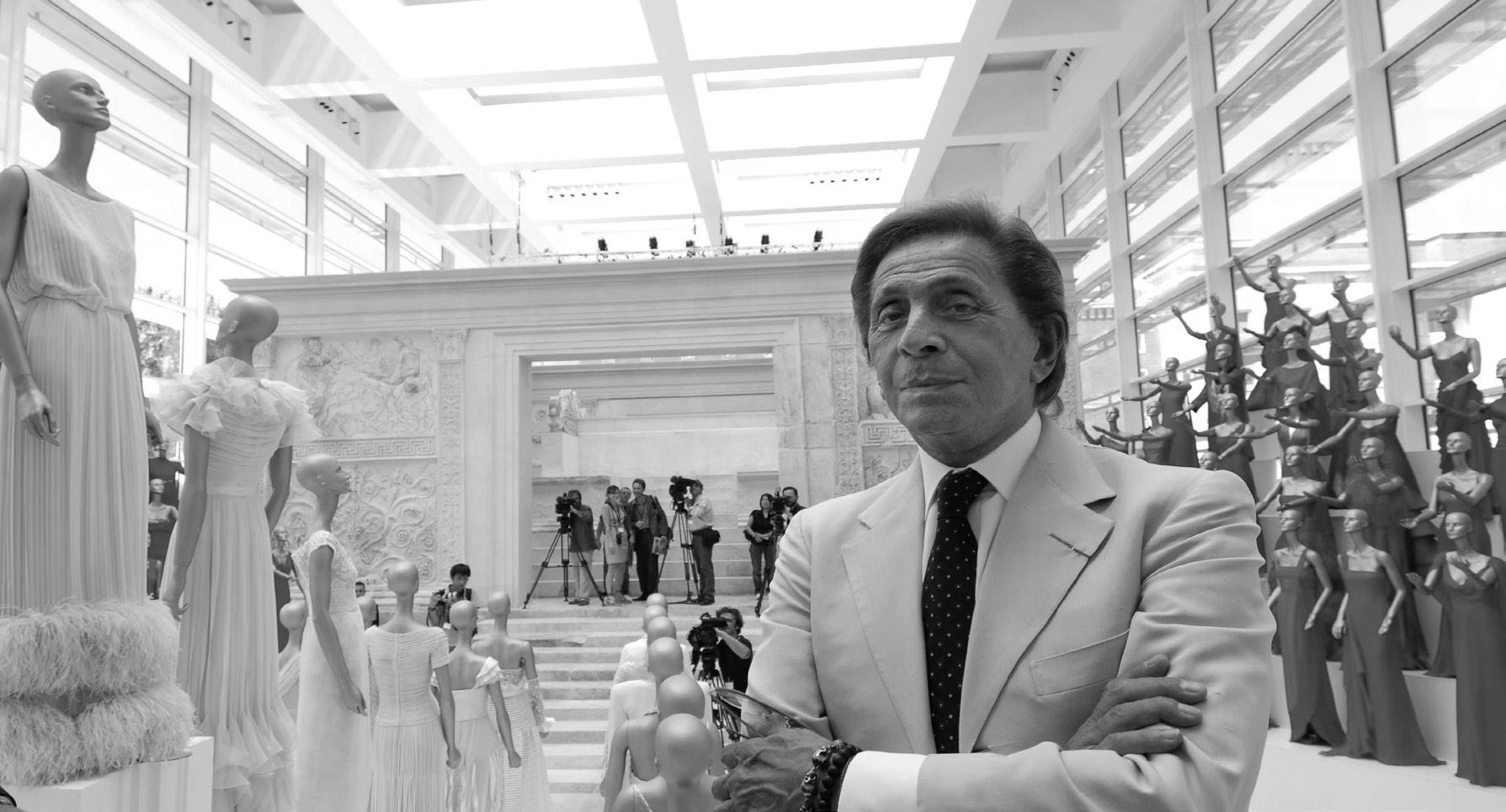
By MOLLY FRIEDMAN ASST. SPORTS EDITOR
While over 60 years have passed since the release of the beloved classic, “The Sound of Music,” I have confidence that the movie continues to draw an audience. This Rodgers and Hammerstein musical — later altered into movie format — not only brought cherished, time-honored songs into our lives but also introduced me to the social and political effects of World War II in a comprehensible fashion.
Taking place in the shadow of the Austrian Alps, the story follows the von Trapp family in the pre-World War II era. The family is introduced to Fräulein Maria, a lost soul who previously served as a nun and now works as a governess
for the von Trapp family. She not only cares for the family but also brings music and light back into their lives, much to the chagrin of Captain Georg von Trapp, head of the household and father to the children. The children eventually learn to trust their governess and form a relationship strengthened by songs sung together on the lush green hillsides of Salzburg. Even Captain von Trapp finds renewed love for music, as well as romantic feelings for Maria, with the two eventually wedding to form a complete family. Being pursued by the Nazi regime for the Captain’s outward disapproval of the Third Reich, the family does not get to relish in their kinship for long before they are forced to flee to Switzerland. The family
ultimately escapes from the clutches of the Nazi’s.
“The Sound of Music” capitalizes on themes of family, love and morality throughout the film, sending the right messages to the viewers. And let’s be honest, everyone loves a love story, and there is no lack of romance in the film.
The appeal of the movie stems from the story’s undeniable emotional accessibility. Everyone can connect to this story in some form, regardless of age, background or prior understanding. The early introduction to the characters and warm environment allow viewers to connect emotionally with the family, investing viewers in the later, darker part of the story. The playful and comforting tone of many of the songs, such as “Do-Re-Mi”

and “My Favorite Things,” invoke timeless representations of bliss in the audience. “The Sound of Music” is the epitome of a film for the whole family.
While the story brings in deeply political aspects, they are rooted in emotional attachments and moral issues.
Captain von Trapp’s refusal to join the Nazi regime is not one of mere ethical and political disagreement, but rather stems from his patriotic desire for his family to live in the Austria he revered so highly. The audience can relate to this moral dilemma, encouraging sympathy rather than detaching themselves from the plot.
Music acts as a political symbol throughout the story.
“Edelweiss,” a song featured in the latter half of the movie, represents national identity and quiet protests for patriotism. Edelweiss is also the national flower of Austria — commonly found in the Alps — that represents loyalty, courage and love, common themes in the movie.
The movie is not riddled with facts of the war but rather allows the audience to emotionally connect to the hurdles the characters are overcoming. Ordinary people were forced to make extraordinary decisions. The predicament of leaving one’s home and all that is familiar for safety is a tragic,
devastating concept. This film gives viewers a representative account of World War II rather than just names and dates. Compassion and sympathy are powerful educational tools, especially for young audiences.
Even though the events of World War II seem distinctly in the past, they are still fairly modern in a historical perspective. It seems so crucial that our generation be educated on the atrocities of the war and of the rippling effects it had globally. The fascist ideals that were being encouraged in that time frame may soon reappear in our modern government: a scary yet not far-fetched reality.
My connection to Austria through my mother’s side of the family has always compelled me to learn my Austrian heritage which is undeniably intertwined with the events of the world wars. “The Sound of Music” was my first exposure to Austrian ideals and culture. As we live in a world that was forever changed by the events of World War II, this film offered me a bridge to better understand the everlasting effects of war. It is not an abstract event far removed from our lives but rather a lived experience shaped by morality, courage, sacrifice and love as depicted in the timeless musical film.
By GRIFFIN STRAUSS CONTRIBUTING WRITER
A student walks into their first 8:30 a.m. class, AirPods blasting and a new MacBook in their backpack. They leave their pens and pencils in their dorm room and forget about packing a notebook… It’s 2026, the digital age! Who needs that old stuff anyway? They take their seat just in time as the professor is already pacing the front of the classroom scribbling words on the chalkboard. Just like the other 20 students in the class, they unpack their laptops, open them and get ready to work. Like clockwork, when the hands hit 8:30 a.m., the professor speaks his first words of the new semester: “Laptops away, please!” Following these three words, a universal wave of dread washes over the classroom.
As technology grows more prominent, university classrooms
seem to be trending towards being anti-tech, banning the use of laptops during class in favor of traditional notetaking, with exceptions for accessibility accommodations. Although frustrating for students who appreciate the convenience (and distraction) of their laptops, this in-class technology ban is not to embitter students, but rather to remove technological diversions. Aside from a professor’s desire for undivided attention, multitasking between technologies has been proven to inhibit classroom learning.
In a study conducted at the California State University, Dominguez Hills, Dr. Larry D. Rosen and his colleagues examined the effects of sending and receiving text messages during in-class lectures. The study participants watched a 30-minute video, during which they received either no/low texting, moderate or high texting, to which they had to respond. On a
post-video recall test, the students who received the most text messages scored on average 10.6% lower than those who received no/low texts.
The study also found that, while many students in the class thought texting was disruptive, 40% saw texting in class as acceptable. Laptops add endless methods of “multitasking” beyond texting, including emails, shopping and other assignments. Because of laptops’ endless opportunities to multitask, professors are in a position in which their best course of action to ensure learning is to ban technology altogether.
Still, Fordham students like Ava Lofromento, FCRH ’29, provide the nuances that scientific studies cannot replicate. She feels a blanket laptop ban ignores the importance of technology in certain classes in which laptops provide benefits that notebooks lack.
“In my STEM classes, [laptops are] a lot more convenient, especially with organization and math equations,” Lofromento said. “In non-STEM classes, the laptop ban is better, but I think using a laptop while being a STEM major is a necessity.”
Without a laptop in class, STEM students like Lofromento would be losing out on the necessary organization technology provides. Despite
this, Lofromento still feels she learns better when writing by hand.
“I’m definitely more distracted when I have my laptop. Playing the NY Times games every day in class definitely impacts my productivity negatively,” Lofromento said. “I do think handwriting helps me retain the information for my non-STEM classes better. I would still choose my laptop over paper, because of how organized it is. It makes notes and studying more efficient.”
For many students, like Lofromento, the efficiency of a laptop trumps their efficacy in learning.
Many professors parrot Lofromento’s point that writing by hand helps student retention. A study conducted by Daniel M. Oppenheimer, Ph.D., and Pam A. Mueller, Ph.D., at Carnegie Mellon University researched the effects of taking notes on laptops instead of handwriting. Their study, titled “The Pen Is Mightier Than the Keyboard: Advantages of Longhand Over Laptop Note Taking,” focused on a group of 67 students, some using laptops and some using notebooks.
A student walks into their 8:30 a.m. class, AirPods blasting. They sit down, open their laptop and the professor promptly tells them to put it away. For an hour and fifteen minutes, that student is focusing on the lesson, engaging with the material, not shopping on SHEIN. They understand the concepts of Emerson, Plato and Locke, writing notes in ink. At 10:00 a.m., they walk into their Physics 1001 course, open their laptop and can reap the benefits of technology’s organization and convenience for their acceleration and velocity formulas.
Technology is not inherently detrimental; Lofromento pointed out its necessity in STEM classes. But, if students cannot exercise discipline with distractions and understand the time and place for pen-and-paper, professors will continue to push inconvenient laptop bans. Until students stop responding to emails and surfing Amazon in class, syllabi will continue to include the clear statement “laptops are prohibited.”
Students watched selected TED Talks and wrote notes on them. Afterwards, they took corresponding memory tests. The study found that, while factual recall was generally the same, laptop users performed significantly worse on conceptual-application questions than notebook users. The study concluded that replacing the process of rewriting information in notebooks with using a laptop creates a lack of conceptual understanding of the information.
By NATALIE KIENE CONTRIBUTING WRITER
I am a strong believer that you should always read the book before watching the movie adaptation. It is much more satisfying to be able to see the words you have already read transformed into a visual story. When I found out that Freida McFadden’s psychological thriller “The Housemaid” was being adapted into a major motion picture, I immediately picked up the book, as I had already heard great things about it. The writing was juvenile, but I did find it very entertaining. With its fast pace and plot twists, I was able to fly through the book in two days. Afterwards, I watched the movie in theaters with my friend. I was pleased to see the story come to life on the screen, but I was also surprised by how much I enjoyed the movie. I’m not sure if it was because I watched it in theaters, but I liked the movie more than the book.
“The Housemaid” follows Millie Calloway, a woman with a troubled past, who is hired to be a housekeeper for the wealthy Winchester family. She works for Nina, her husband Andrew and
their daughter Cecelia. The job seems to be the answer to Millie’s prayers, until she quickly realizes that Nina is prone to emotional outbursts. Tension escalates as Nina begins to play mind games with Millie, leading her to learn of the wife’s history at a mental institution. During this time, Mille grows closer to Andrew, who is the only one that seems to understand Millie. Infidelity and hidden secrets come to the surface, uncovering the Winchesters’ true intentions.
In my opinion, the movie followed the book’s plot fairly well. For example, the house was exactly how I imagined it. The scenes were pretty accurate as well, with some changes that made the movie more appealing than the book. I found some plot points to be unnecessary in the book and I’m happy that the producers changed them or got rid of them completely. Despite this, it felt like it was a cheap attempt at being a psychological thriller and there were still parts of the movie that felt lousy. Some of the dialogue was sub-par as well, but a few lines achieved a couple of laughs.
Another criticism I had of the movie was the casting. For
one, I was not a fan of Sydney Sweeney’s acting, who plays Millie. I wish there was an option for subtitles because I could not understand her mumbling. While reading the book, I imagined Millie to be calm and level-headed, with a fierce edge, but I do not think Sweeney was able to portray Millie’s vengeful streak. Sweeney looked too bored in the film — too preoccupied with trying to win over Nina’s husband. On the other hand, Amanda Seyfried, who played Nina, flawlessly manifested Nina’s eerie demeanor. There is no denying that Seyfried’s performance was incredible, transforming Nina into a terrifying monster. Seyfried carried “The Housemaid”’s shock aspect. I wish someone different had been cast as Millie who could have matched Seyfried’s intensity. Overall, I was pleasantly surprised by the movie. It was exciting and thrilling, leaving my friend and I satisfied as we left the theater. Of course, it wasn’t the best thriller I have watched, and there were definitely some parts of the movie that felt cheesy. Nonetheless, it was entertaining to watch, something where you can relax and watch the story unfold.

By INDIGO TOWERS COPY CHIEF
As a borderline hermit, I realized the best (and perhaps only) person I can dedicate this article to is someone I know very well: my roommate Sabrina Abu-Wishah. Thankfully, my roommate happens to be one of the most diligent, hardworking and impressive people I know.
The first impressive thing I learned about Abu-Wishah was that she never stops working hard. In high school, like many teenagers, she got her first job.
Shortly before her 16th birthday, Abu-Wishah walked into a poke bowl restaurant with her mostly empty resume and assumed her first position. There was a lot about this job she did not enjoy; however, she found joy in it via her interactions with customers.
After almost a year of working at Aloha Poke, Abu-Wishah was looking for something new.
Now, with her resume a little less empty, Abu-Wishah left her job behind the poke counter and found a job working as a swim instructor at Cogua Aquatics. For Abu-Wishah, there were very few things as miserable as working at an indoor pool while living in California. Yet, she was not discouraged — quite the opposite actually, as Abu-Wishah never stops working.
Shortly after becoming a swim instructor, Abu-Wishah decided she wanted more. This time around, she applied for a position as a hostess/busser at an Italian restaurant while maintaining her swim instructing responsibilities. Was that enough? Not for Abu-Wishah.
After almost a year of working as both a swim instructor and hostess, she received a position as a soccer coach at Next Level Soccer Training. Similar to working at Aloha Poke, she loved interacting with clients. She often references memories
with the young athletes she coached, their personalities and songs they enjoyed listening to.
The summer following her first year at Fordham, Abu-Wishah not only maintained her three jobs at an indoor pool, a restaurant and soccer camp; she went on to find even more work. First, as a private swim instructor — using her strengths — and then as a private tutor.
If you’ve been counting, she worked a total of five jobs… at the same time. Forgive me if I am just lazy, but is that not insane? For emphasis, five jobs at once. When I met her she had worked three jobs simultaneously, and I was enamored by her ambition. Only a year later, she added two more to her already impressive and versatile list.
When reflecting on the experience, she shared that “it was liberating, in a way, it really is a different feeling owning money for yourself.” Abu-Wishah
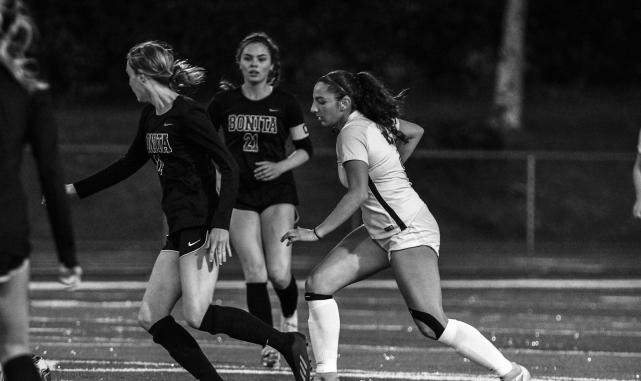
gained a sense of independence, and she yearned for more and more.
I have neglected to mention that while she was working three jobs in high school, she was a competitive soccer player. Abu-Wishah worked to be financially independent; however, she was confident that she was going to have a career as a soccer player. In her junior year of high school, she was committed to a D1 college as a center midfielder. Unfortunately, the summer following her junior year, she tore her hamstring playing in her club league. This injury led her to lose her commitment and reevaluate her life goals.
“It completely changed the way I looked at my future. I really thought I had a future in soccer, and education kind of came secondarily,” she said (while having maintained above a 4.0 in high school). “I always knew, soccer or not, I wanted to be a person who made some kind of impact in the world. After my hamstring, I had to rethink everything, the type of person I wanted to be since soccer wasn’t my outlet anymore.”
The Christmas after her hamstring injury, she received “The Book of Majors” as a gift, and was able to find a major that suited her: psychology.
Initially, she was interested in sports psychology, however, after arriving at Fordham her career path starkly changed.
Within a few months of attending Fordham, Abu-Wishah found a new passion in philosophy and declared a second major.
“After I declared my philosophy major, I wrote a paper about nature versus nurture in serial killers and kind of
By ADISA BALIC CONTRIBUTING WRITER
“Palaces” is a song centered on emotional restraint. Rather than leaning on huge pop production or dramatic storytelling, Louis Tomlinson embraces subtlety, honesty and vulnerability. As a result, the record has a very intimate feel to it, with the song feeling more like a measured admission than a complete confession. It’s a song about seeking connection but not understanding how to maintain it, about allowing others to get near to you while still keeping yourself safe.
Throughout “Palaces,” Tomlinson addresses loneliness, loss and self-reflection with a maturity that feels earned rather than performative. The song doesn’t seek radio success; instead, it stresses emotional coherence. Every part seems to be a piece of a larger mental dialogue in
which Tomlinson is attempting to figure out who he is and what he is ready to contribute to other people. There’s a clear absence of excess — no extraneous flourishes, no overproduction — which allows the emotional weight of the words to remain front and center.
One of the most emotional lyrics in the song is “you can stay for the night in the palaces of my mind.” The essence of “Palaces” is captured in this line: closeness provided with restrictions. Although the phrase “for the night” emphasizes the transient nature of such access, inviting someone inside the “palaces” of one’s mind conveys depth, complexity and emotional richness. Tomlinson recognizes his yearning for connection while also acknowledging his dread of permanency. It’s a vulnerable moment that seems real rather than idealized. In terms of sound, “Palaces”
leans toward alternative poprock, with muted instrumentation that complements its reflective mood. Instead of overpowering the lyrics, the production creates a subdued, poignant background. This choice emphasizes the album’s themes. These songs aren’t intended to be yelled; they’re meant to be sat with. When you listen to “Palaces,” you get a glimpse into someone’s private thoughts.
What makes the record especially captivating is its emotional stability. It develops gradually, reflecting the process of self-reflection itself, rather than having a single track that drastically deviates from the tone. Tomlinson doesn’t come off as resolved or healed. Rather, he permits ambiguity, which contributes to the album’s genuineness.
“Palaces” is ultimately effective because it doesn’t try to be anything other than what it is: a meditative, serene exploration
became immersed in it,” she said. “I don’t necessarily understand it like I could sports psychology, but it was just so fascinating to me. I found myself trying to understand them, even though I could never agree with their actions, I was able to put myself into their shoes”
Abu-Wishah had set her mind to something new: criminal psychology. When imagining a career interviewing infamous serial killers, Abu-Wishah smiled and said, “my excitement to be able to do that is uncanny.”
Currently, Abu-Wishah has five jobs waiting for her when she returns to California, but she is still not satisfied. Therefore, Abu-Wishah applied to be a Ram Van driver. She said that, “I started Ram Van because I missed working. I know people always say working is miserable, but I think you can always find something to enjoy.” This is the type of person Abu-Wishah is; however, she is a realist, so she added “you can always enjoy the money too.”
Abu-Wishah was one of the first people I had met in my life who genuinely had a long-term plan, and truly made it sound like something real and tangible. In part, it was because she is authentic — she is exactly who she says she is and does exactly what she says she is going to do. In other words, watch out for Sabrina Abu-Wishah, because her ambition, along with her ability, is boundless. She is truly a force of nature.
When I asked Abu-Wishah about how she stays so motivated, so ambitious, she shared with me, “I think about the return, I know that what I am doing is what I am meant to be doing.”
of inner life. It’s an album for late evenings, long walks and times of reflection. Instead of providing answers or closure, Tomlinson offers presence, honesty and a
space where listeners may see their own emotional complexity. As a result, “Palaces” becomes more about connection and less about performance.

By SAMANTHA DIAZ CONTRIBUTING WRITER
The time of the year for movie fans to be insufferable has now come around. The Academy of Motion Picture Arts and Sciences (AMPAS) has recently announced the nominations for this year’s awards, spawning debate about who’s deserving of their nomination.
As usual, a few snubs have made people upset that their favorite movies or actors didn’t get the recognition they deserved. There are a few interesting entries for those who did make it and some that can be seen as controversial.
One of the biggest stories to come out of this year’s nominations is for Ryan Coogler’s “Sinners,” which received a record-breaking 16 nominations from Best Director to Best Picture. The film surpasses classic movies such as “Titanic,” “La La Land” and “Gone With The Wind.”
Not only does this make “Sinners” the most nominated film in Oscar history, but it has also broken a new record for the number of Black nominees, including the film’s actors, actresses, costume department, makeup and hairstyling, cinematography and even production design.
In the category for Best Actor in a Supporting Role, the nominees are Benicio Del Toro and

Sean Penn both for “One Battle After Another,” Delroy Lindo for “Sinners,” Stellan Skarsgård for “Sentimental Value” and Jacob Elordi for “Frankenstein.”
Skarsgård won this category at the Golden Globes, but I would love to see Del Toro or Lindo take the win. These are two veteran actors who deserve to be in the spotlight for their performances this season. It is also Lindo’s first ever Oscar nomination.
However, Penn’s appearance in “One Battle After Another” could be seen as somewhat of a comeback role after being gone from the major spotlight for some time. In the category for Best Actress in a Supporting Role, the nominees are Elle Fanning and Inga Ibsdotter Lilleaas for “Sentimental Value,” Amy Madigan for “Weapons,” Wunmi Mosaku for “Sinners” and Teyana Taylor for “One Battle After Another.”
Taylor won this category at the Golden Globes, and, although I did like her performance, I also see her character as being a bit problematic. It continues the dialogue prevalent on social media about how actresses are nominated or win awards for hypersexualization of their characters, despite her character having more development than that.
I could see Taylor going home with the Oscar, but I also feel that Madigan and Mosaku deserve the win as well. Mosaku is a very underrated actress, and her performance in “Sinners” marks her first Oscar nomination.
The nominees for Best Actress in a Leading Role feature Jessie Buckley for “Hamnet,” Rose Byrne for “If I Had Legs I’d Kick You,” Kate Hudson for “Song Sung Blue,” Renate Reinsve for “Sentimental Value” and Emma Stone for “Bugonia.”
One of the most significant
snubs from this list is actress Chase Infiniti, who played Willa in “One Battle After Another,” becoming one of this year’s most rising stars. Although she received a nomination for British Academy Film and Television Awards (BAFTA), I believe she was robbed and highly deserving of an Oscar nomination.
The nominees for Best Actor are Timothée Chalamet for “Marty Supreme,” Leonardo DiCaprio for “One Battle After Another,” Ethan Hawke for “Blue Moon,” Michael B. Jordan for “Sinners” and Wagner Moura for “The Secret Agent.”
There are a lot of big names in this category who are deserving of the win, but I think Michael B. Jordan has the unique case of having to commit to double duty in his performance. However, DiCaprio is a big contender for winning his second Oscar.
Perhaps the most important
award of the night will be going to Best Picture which features “Bugonia,” “F1,” “Frankenstein,” “Hamnet,” “Marty Supreme,” “One Battle After Another,” “The Secret Agent,” “Sentimental Value,” “Sinners” and “Train Dreams.” One of these films is not like the others in this category: “F1.” While it was an enjoyable film for racing and non-racing fans alike, it was not something I believe was an Oscar-worthy performance. “Frankenstein” was a weak film, but even its cinematography places it well in the Best Picture category.
I was not a fan of “One Battle After Another,” but I can see that film or “Sinners” going home with Best Picture. However, I do think a surprise may come out of these nominations with the award possibly going to “Frankenstein,” “Marty Supreme” or “Bugonia.” Fans believe a few snubs made the rounds for many films. “Wicked: For Good” received no nominations in any category, alongside “Weapons” which received one nomination for Best Supporting Actress. James Gunn’s “Superman” was listed in many Oscars predictions but was also completely snubbed, with no nominations. Also, hot take, but movie fans should get an automatic day off to discuss the Oscars nominations online with everyone else. Tune in on March 15 to see if your favorite movies and actors win!
Comedian who hosted this show as his sixth (and final)
Men’s Basketball
La Salle 58
Fordham 64
Fordham 79
George Washington 65
Women’s Basketball Fordham 58 VCU 69
Rhode Island 61
Fordham 47
Squash UPenn 7
By MOLLY FRIEDMAN ASST. SPORTS EDITOR
Ryan Wedding, the former Canadian Olympic snowboarder, hoped his reputation would remain intertwined with his success on the snow. However, his involvement with transnational drug trafficking and further crimes landed him in the news for less than reputable reasons. Wedding was taken into custody on Jan. 22 after turning himself in to the United States embassy in Mexico City, Mexico.
After being taken into custody, Wedding was flown to Southern California. He appeared in Federal court on Jan. 26 in Santa Ana in Orange County. He pleaded not guilty to 17 felony counts tied to drug distribution, witness interference and conspiracy to murder.
The first charge against the former snowboarder dates back to 2024 for a wide range of criminal operations, including drug trafficking and murder. Authorities allege he was involved in the death of two members of a Canadian family in relation to a stolen drug shipment in 2023, saying that he ordered them to be put to death.
The case grew even bigger and more complicated when authorities connected Wedding to the murder of a witness in Colombia, with the hopes of
blocking his extradition to the U.S.
Canadian authorities and communities are rejoicing at the capture of Wedding. Canadian Minister of Public Safety, Gary Anandasangaree, “called it a ‘significant step forward’ in an international fight against illegal drugs,” according to ESPN from the Associated Press. It’s believed that Wedding was working under the protection of the Sinaloa Cartel, based out of Culiacán, Mexico. Wedding had several aliases he went by when participating in illegal drug activity, including “El Jefe,” “Public Enemy” and “James Conrad Kin.”
Back in March of 2025, Wedding was added to FBI’s Ten Most Wanted Fugitives list for channeling large amounts of cocaine into the U.S. and Canada. A $10 million reward was offered for information leading to Wedding’s arrest or conviction, according to the FBI Los Angeles.
Prior to the former Olympian’s arrest, authorities from Mexico, Canada, Colombia and The Dominican Republic worked with the U.S. to track him down. It was later discovered that Wedding moved cocaine between Mexico, Colombia, Canada and California. In 2010, after his snowboarding career had concluded, Wedding had a prior U.S.

conviction for conspiracy to distribute cocaine after he had expanded his operation. He joined up with Iranian and Russian cocaine smugglers. He was released from U.S. custody in 2011. He also faced separate drug charges in his home country of Canada dating back to 2015.
Wedding joined the Canadian National Ski Team at age 15 and found much success competing in snowboarding. He made his Olympic debut in the 2002 Winter Olympics in Salt Lake City. He participated in the Men’s Parallel giant slalom event, where he placed 24th. Prior to the Olympics, he was a World Junior medalist in 1999 and 2001. Following his Olympic debut in 2002, Wedding gave up snowboarding for good.
After leaving professional sports, Wedding returned to Canada to attend university but that was short-lived. He soon
began growing and selling marijuana in a 6,800 plant warehouse in the suburbs, financed by selling real estate. In 2006, the Royal Canadian Mounted Police raided the farm and found a shotgun, ammunition and millions of dollars’ worth of cannabis. Wedding was not on the property at the time of the raid, and the case was dismissed due to lack of evidence.
This case has drawn international attention due to the shocking contrast from Olympic athlete to drug lord. This news has shocked many who knew Wedding from his snowboarding success on the global stage. For the time being, the judge ruled that Wedding must remain in custody, given the possibility he may flee if given the opportunity. He is scheduled to appear in court again on Feb. 11, with a trial set for March 24 to dictate the official charges and sentence.
By GIANNA TETRO STAFF WRITER
On Wednesday, Jan. 28, Fordham Women’s Basketball hit the road for Richmond, Virginia, squaring off against the Virginia Commonwealth University (VCU) Rams in yet another Atlantic 10 (A10) showdown. Entering this match-up, the Fordham Rams sat at 9-12 overall and 1-9 in conference play, eager to add a crucial A-10 win away from home. Facing off against the opposing VCU Rams that fed off relentless pressure and momentum shifting runs, Fordham needed to strike early and play aggressively to disrupt their game plan. Despite their strong 21-point contribution from the bench and two players finishing with double-digit points, the Rams’ effort fell short as they dropped a 69-58 decision to VCU.
Ugne Sirtautaite, a forward player, emphasized the importance of maintaining aggression while improving efficiency — especially against a team like VCU.
“As a forward, the biggest thing is staying aggressive but being smarter with my touches,” Sirtautaite said. “I’m keeping my physicality the same, but I want to be more efficient offensively and defensively. Against a team like VCU, you can’t hesitate.”
That urgency became evident early, as Fordham struggled
out of the gate and found itself trailing 19-7 after the first quarter. VCU continued to apply pressure in the second quarter, building a 26-9 lead before the Rams responded with a 7-0 run to cut the deficit. Still, Fordham entered halftime down 38-25.
In preparation for the matchup, Sirtautaite noted that the team focused heavily on defensive intensity and communication — key elements against VCU’s high-energy style of play.
“[They] thrive off pressure and runs,” she said. “So we’ve really emphasized valuing the ball, getting stops early in possessions ... [and] adjusting ... our spacing offensively to create better driving lanes and post entries.”
That preparation paid off in the second half. Fordham opened the third quarter with renewed focus, cutting that deficit to 44-32 before going on a 6-0 run, capped by a basket from junior guard Alexis Black to narrow the differential to 44-28 late in the quarter. The Rams entered the fourth trailing but within a close margin of 48-42, fueled by improved play in the paint and disciplined defensive stops.
Fordham battled until the final frame, trimming the lead to six once again with under four minutes remaining after a layup from freshman guard Carryn Easley. However, VCU
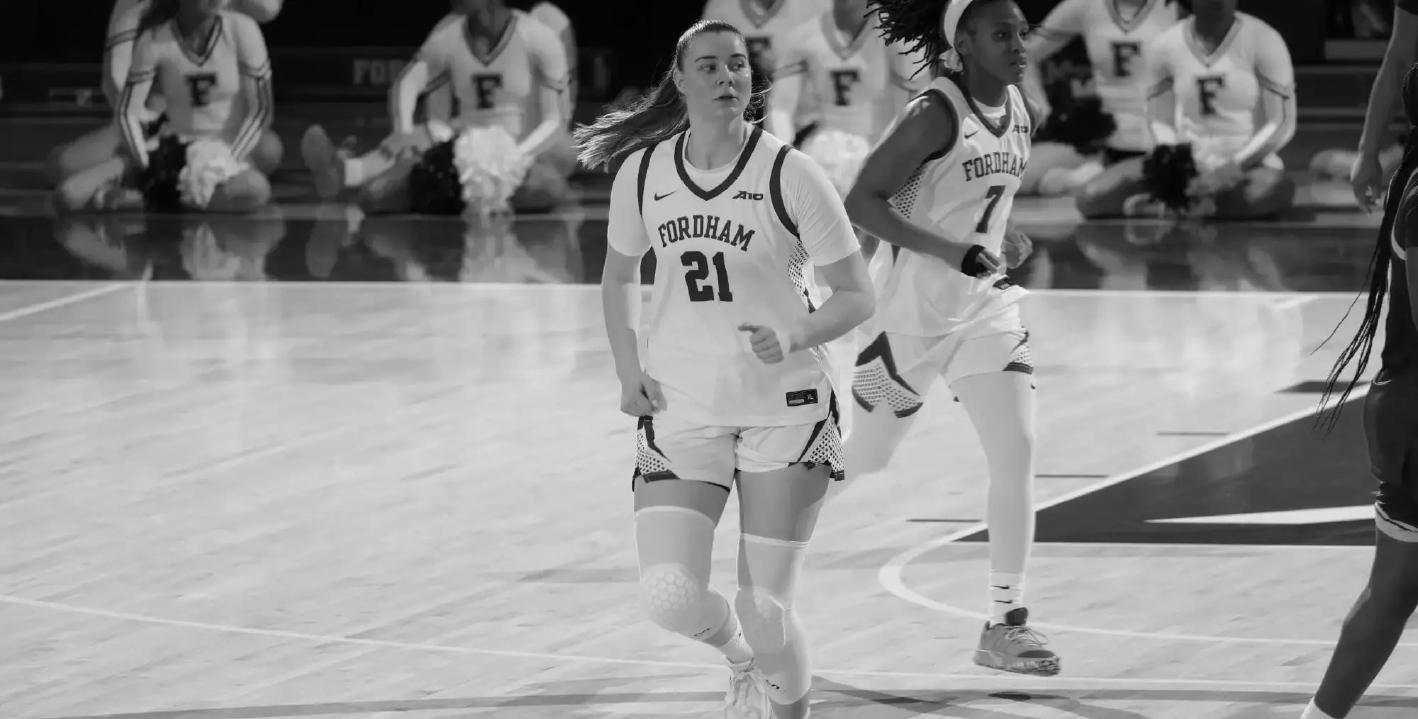
responded with timely scoring down the stretch, sealing their 69-58 win.
Individually, a standout player, junior guard Lakresha Edwards, led Fordham with a game-high 15 points, while Easley added 11 points and two steals. Senior forward Kaila Berry contributed seven points, six rebounds and two steals, while another standout player, sophomore forward Precious Omoshola, anchored Fordham on the glass with a team-high seven rebounds, all being offensive boards, leading to 11 second-chance points. Defensively, Fordham forced 15 turnovers and turned those takeaways into 10 points.
Despite the loss, Sirtautaite emphasized that conference play is about growth and response rather than records.
The Rams’ 1-9 conference record doesn’t define them, rather they “learn early...respon[d].” The game becomes about “one possession at a time, one game at a time.”
Senior Emma Wilson-Saltos echoed a similar sentiment on their game play and reflected on how the team could improve on in their future games. On the defensive side, she noted that they “need to communicate more efficiently on defense and stick to [their] principles” while on the offensive side they “have to continue to share the ball for each other and get second chance points and opportunities with rebounds.”
Both of the players highlighted the importance of recognizing that one game does not define their playing
abilities and that a comeback is always possible. For Wilson-Saltos, “it’s important to remember that each day is a new opportunity to continue to get better and play the sport I love.”
As A-10 play rolls on, the Fordham women’s basketball team is leaning into its resilience and sharpening its second half adjustments, determined to turn hard thought lessons from practice and tight games into momentum down the stretch.
Up next, Fordham plays at home again in the historic Rose Hill Gym to face Loyola University Chicago on Feb. 4, where the Rams will also celebrate Black History Month, helping set the stage for an energized home match-up.
By KATHRYN COX CONTRIBUTING WRITER
When the Pro Football Hall of Fame voting committee announced that legendary head coach Bill Belichick would not be inducted as a first-ballot Hall of Famer, the reaction across the football world was immediate. For a coach widely regarded as the greatest in NFL history, the decision felt like a direct blow to the Hall of Fame’s credibility. According to ESPN, which first reported the news last Tuesday, Belichick failed to reach the required 80% threshold, 40 out of 50 votes, in his first year of eligibility.
Belichick’s coaching resume is unmatched. He won eight Super Bowls, two of them as the defensive mastermind of the New York Giants and six as head coach of the New England Patriots. No head coach in NFL history has more postseason wins, and his 333 overall victories as a head coach are second only to Don Shula (347). Historically, coaches with far fewer accomplishments have been inducted on the first ballot.
Each of the 50 Hall of Fame voters can vote for a limited number of finalists across multiple categories, including modern-era players, coaches, seniors and contributors. Belichick was the only coach finalist in the 2026 class, meaning he competed for space on ballots
alongside players and contributors who had waited years for recognition.
“[Belichick] was one of five competing for three spots,” a Hall of Fame voter said to Sports Illustrated. “He was the coach candidate, Kraft the contributor and Ken Anderson, Roger Craig and L.C. Greenwood the senior candidates. We get to vote for three of the five, so the vote is generally split. Only two of the five got in last year. It’s hard getting 40 when five candidates are splitting the vote.”
The reaction from the sports world was pure shock. Several players, coaches and analysts questioned how a coach universally recognized as one of the greatest NFL coaches of all time could fail to meet the first-ballot standard.
“Insane,” NFL quarterback Patrick Mahomes wrote on X. “Don’t even understand how this is possible.”
“Man there’s no way I read that right!” said NBA alltime leading scorer LeBron James. “Right? Ain’t no WAY Bill Belichick ain’t 1st Ballot HOF!! That’s IMPOSSIBLE, EGREGIOUS, and quite frankly DISRESPECTFUL!”
Despite a strained relationship in recent years following Belichick’s departure from New England, Patriots owner Robert Kraft came out in support of his former head coach.
“He is the greatest coach of all time and he unequivocally deserves to be a unanimous
first-ballot Pro Football Hall of Famer,” said Kraft in a statement, per ESPN’s Mike Reiss.
NFL Hall of Famers stood up for Belichick across social media.
“This is just WRONG… #2 winning ALL TIME… more Super Bowls than anyone unimaginable # of division championships… lot of small jealous voters,” NFL Hall of Fame coach Jimmy Johnson wrote on X.
Multiple Hall of Famer voters spoke publicly, many expressing frustration with the outcome. Several voters said they voted for Belichick and could not understand those who did not.
“I voted for Bill Belichick and I am embarrassed for our 50-member committee that the greatest coach in NFL history is not a first ballot HOFer and some voters apparently felt he deserved to be punished for Spygate,” wrote Hall of Fame voter Gary Myers on X.
The backlash soon prompted a response from the Pro Football Hall of Fame, which released a defensive statement on Wednesday night emphasizing that the voting process followed established bylaws and that no candidate received special treatment. The Hall added that any voter found to have violated the bylaws could be removed from the committee.
As voters spoke up about the vote, the media focused on
why Belichick failed to secure enough votes. Multiple outlets reported that some voters remained uncomfortable with the cheating controversies surrounding Belichick, specifically Spygate and Deflategate.
“The only explanation [for the outcome] was the cheating stuff,” a veteran Hall voter told ESPN. “It really bothered some of the guys.”
It is important to note that the Patriots and Belichick were punished for the 2007 Spygate incident, in which the Patriots were caught illegally filming the New York Jets’ sideline signals. NFL commissioner Roger Goodell fined Belichick $500,000 and the Patriots $250,000, with the Patriots also having to forfeit their first pick in the 2008 NFL Draft.
And after Deflategate, the team was fined $1 million and gave up their first-round (2016) and fourth-round (2017) picks.
Even if voters wanted to punish Belichick for Spygate, the results that followed make the argument hard to justify. After Spygate, Belichick led the Patriots to three more Super Bowl championships, five Super Bowl appearances, six AFC Championships and recorded more regular-season wins (175) than 22 of the 29 coaches already in the Hall of Fame.
If the Hall of Fame is meant to evaluate careers and voters believe he should not be
assessed on his performance before Spygate, Belichick’s postSpygate success should still be more than enough to constitute a first-ballot induction.
Statistically, Belichick’s resume is astounding. His teams captured 17 division titles, and the Patriots did not have any losing seasons from 2001 to 2019.
That is why this snub is enraging what feels like the entire sports world. A Firstballot induction has always been the Hall of Fame’s most apparent acknowledgement of undisputed greatness. By delaying Belichick’s induction, the Hall is contradicting itself. If a coach with six Super Bowl titles and historic success does not meet the first-ballot standard, does anyone?
Belichick will almost certainly be inducted into a future class. But the damage has already been done. This vote reflected a system that failed to reward greatness.
“It’s a disgrace, and they should be ashamed of themselves,” said ESPN analyst Stephen A. Smith on the network’s morning show “First Take.” “Nobody should want to show up to the Hall of Fame if Bill Belichick can’t be in there as a first-ballot.”
If the Pro Football Hall of Fame is unable to recognize the greatest coach in NFL history, then the failure is not Bill Belichick’s: it is the Hall’s.
By KURT SIPPEL STAFF WRITER
For many, 2015 feels like a long time ago, but for Seattle Seahawks and New England Patriots fans, the past seems to be catching up to the present as their teams will once again cross paths in a rematch of Super Bowl XLIX in Super Bowl LX. For the Seahawks, it’s a chance to get vengeance for the outcome of their last Super Bowl appearance 11 years ago. The Patriots, on the other hand, are on a mission to rekindle a dynasty with a new young quarterback directing the plays.
Though both teams have had different routes, they will now meet on the NFL’s biggest stage at Levi’s Stadium in Santa Clara, California.
The Patriots arrive after their battle in the snowy AFC Championship game against a very strong Denver Broncos defense that was missing their starting quarterback Bo Nix. The Patriots relied heavily on their run game when the Broncos defense made it tough for quarterback Drake Maye to operate, sacking him five times for -21 yards.
The Seahawks, along with quarterback Sam Darnold, dominated both sides of the ball in the NFC Championship

game, with Darnold throwing for 346 yards in a thrilling 31-27 victory over the Los Angeles Rams that led the Seahawks to the big game in California.
The improbable story of both of these teams starts with their quarterbacks. Darnold, a journeyman who has been on four teams in the last four years, had an unlikely breakout performance with the Minnesota Vikings last year, allowing him to get a big contract in free agency with Seattle.
Maye, the New England sophomore who just one season ago had a 4-13 record has completely flipped last year’s disappointment on its head. The Patriots went 14-3 this season, their best record in eight years.
But the playoffs have shown some holes in New England’s game. Maye has not been himself all playoffs, only completing about 35% of his passes in his last three games.
That being said, New England has taken out three of the
top 10 defenses in the NFL, though it has not been easy.
Maye was sacked a total of 15 times leading up to Super Bowl LX, and during the regular season he was the fourth most sacked quarterback in the league.
The Patriots have scored 54 points in three games, the lowest total of any team in postseason history that has also made the Super Bowl. Maye has been remarkable under pressure with 232 QB pressures. Maye also had the
most touchdowns under pressure this season with 10.
If the Seahawks want to stop New England, it’s going to start with shutting down the run game that has carried the Patriots through this post season. In the AFC title game, the Patriots’ offense ran for 141 yards compared to 86 passing yards.
During the regular season, Seattle’s defense ranked third in the NFL against the run and first in fewest points allowed. If the Patriots give them the opportunity on empty drives, Seattle will punish them with their offensive attack.
This season, Darnold has completed 67.7% of his passes, throwing for 4,048 yards and 25 touchdowns.
The Seahawks’ deadly onetwo punch on offense is composed of wide receiver Jaxon Smith-Njigba, who has 172 receiving yards this post season and two touchdowns, as well as running back Kenneth Walker III running for 178 yards and four touchdowns.
While Seattle is currently the favorite to win the big game on Feb. 8, we should not forget the run and turn around that Maye had this season. Anyone can win on Sunday and Seattle might be better on paper, but the game is played on grass.
By JOE HENRY ASST. SPORTS EDITOR EMERITUS
No one wants to start conference play 1-6. Factor in injuries, blown leads and the worst kinds of headlines, the plane home from Fordham Men’s Basketball’s Jan. 21 loss to Davidson College felt like rock bottom. For Head Coach Mike Magpayo, it felt like a critical inflection point. His messaging to the team could alter the course of the season.
When the team bus pulled into Rose Hill at 1 a.m., Magpayo called a team meeting. He didn’t vent frustration or flick through film. He told them one thing:
“Carry your heads up high … How you respond to this, how you act, is really important.”
The meeting lasted just five minutes. It was enough. The team had an off day, and the next day, nine players came to the gym to put in work.
After four days of scrimmage-heavy practice, a potent mix of hard work and frustration poured out onto the Rose Hill Gym’s hardwood in a 64-58 victory over red-hot La Salle University.
The Rams’ defense, ranked 15th nationally in points allowed, held the Explorers scoreless for the final 5:52. It was a sweet and fitting finish for a Fordham team that lost to Davidson with a six-minute scoreless stretch.
Once the buzzer sounded, celebration ensued.
It was win 100 for Magpayo, now the first D-I MBB HC of full Asian descent to reach the century-mark. The group scrawled “100” on a Wilt
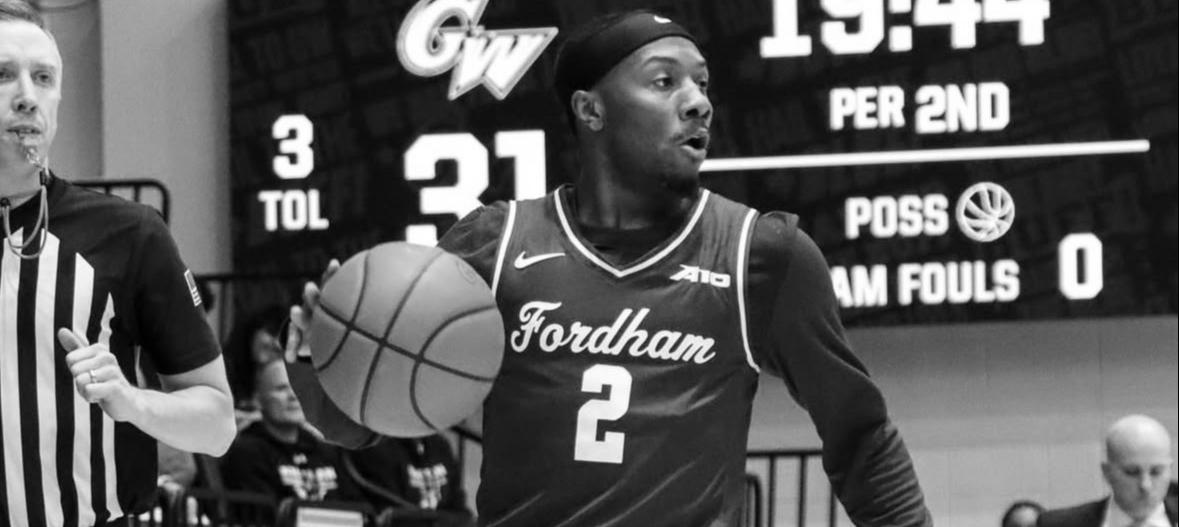
Chamberlain-esque paper, and the team posed for a photo featuring fully-suited coaches, players in bucket hats and one of Magpayo’s sons. An unlikely combination but a fitting representation of the 2025-26 Rams.
“I’m just so proud of the guys,” said Magpayo postgame. The former University of California at Riverside shotcaller had plenty of praise to spread, but keyed in on his backcourt.
That praise started with senior Chris Henry. Recovering from a concussion, Henry has struggled to reestablish himself as one of the conference’s premier guards. While he didn’t light up the stat sheet, he singlehandedly gave the Rams the lead late.
Tied with 2:42 remaining, Henry crashed to the floor, ripped away a loose ball, went the length of the floor and scored through contact to put Fordham up, 60-58.
Each week, The Fordham Ram’s Sports section honors two athletes for their on-field performances as their “Athletes of the Week.”

Darren Croke
Senior Men’s Track & Field
Senior Alexandra Williams had success in multiple events this past friday. First Williams teamed with three other Rams in the 4x200 relay, earning a second place finish with a time of 1:42.13. Then, williams finished second place in the 500 meter event with a ECAC qualifying time of 1:16.19.
Darren Croke, senior and Fordham Prep Alum, contributed to the Ram’s third place finish in their first championship meet of the year. Croke took part in the 4x800 relay in which the Rams placed second. Individually, Croke placed second in the 1,000 meters even with a time of 2:31.06.
Graduate Student Dejour Reaves, meanwhile, did what he’s done all season: take over the game down the stretch.
Drawing constant double teams, Reaves found other ways to impact the game, snatching eight rebounds and dishing four assists. But when it was time to do it himself, he did.
After a crucial rebound from redshirt freshman Abass Bodija, Fordham turned to its closer. Reaves shuffled his feet above the break, knifed inside, stepped back and drilled a left-elbow jumper to put the game away, 62-58, with 13 seconds to play.
“Even when I’m having an off night, [my team] keeps telling me ‘next one going in, next one going in,’” said Reaves postgame. “Just having them in my ear definitely helps me out each and every night.”
Taking its momentum down to D.C., Fordham suited up
to play a George Washington University (GW) team ranked 135 spots higher in KenPom but missing its best player in senior Rafael Castro.
Fast-forward two hours, and Fordham had earned its biggest upset of the year. In a virtually wire-to-wire 79-65 demolition of one of the nation’s highest-scoring offenses, everyone chipped in.
Reaves led the way with 19 points, scoring or assisting on 15 of the team’s final 17 in the first half, giving the Rams a constant edge.
The frontcourt duo of junior Rikus Schulte and sophomore Jack Whitbourn were both contributors, recording double-digit rebounds. Henry added 15 points. Fordham shot just 1-for-15 from three in the first half, but went 5-for-8 in the second, burying 13 of 17 free throws to put the game on ice.
While shooting has been a weakness for Fordham, it
hasn’t been for junior Akira Jacobs. Nailing three triples against GW, Jacobs accounts for 43.4% of the Rams’ made threes over the last four games.
“He understands the scheme and offense both at the three and the four, and he’s becoming a matchup problem for other teams,” said Magpayo of the 6-foot-10 forward.
Health has helped, too. With Bodija and freshman Roor Akhuar back from ankle injuries, Magpayo’s lineup arsenal widens considerably. It helps that neither player is playing like a freshman.
“Just being around them brings me a lot of energy,” said Jacobs of the two Australians, who round out a rotation that’s rounding into form with March just a page-flip away.
Fordham will look to bring the energy back to Rose Hill Saturday, Feb. 7, to host a St. Bonaventure University team that it beat on the road one month ago. Tip is set for 2 p.m.
By ETHAN BESS ASST. SPORTS EDITOR
A few days ago, there were more than 3 million documents related to Jeffrey Epstein released for the world to see. The American public had been waiting a long time for these files, but the new batch released included some names from the sports world. Some prominent people included are New York Giants co-owner Steve Tisch, New York Jets owner Robert Wood Johnson, billionaire rapper and NFL entertainment manager Jay-Z and Washington Commanders owner Josh Harris. Although being named in the files doesn’t imply immediate wrongdoing or guilt, it is still a damaging indictment to one’s public image. As Epstein was a prominent sex trafficker, connections to him in 2026 are seen as taboo and can harm a person’s career or social standing. Epstein had connections to many celebrities, but it now seems his connections spanned the sports world, including owners. NFL owners, however, are
no strangers to controversy. Back in 2017, there was a giant scandal that swept the NFL regarding owners allegedly colluding together to keep Colin Kaepernick out of the league. It arose from Kaepernick taking a knee during the national anthem in an NFL pre-season game against the then San Diego Chargers in 2016. Although the views of the conflict were split among many demographic and racial lines, it did a number on the NFL’s reputation, as it caused some Americans and others to view the NFL with significant suspicion. Add in the fact that the NFL has faced criticism for not prioritizing player health, and this neglection causing players to commit suicide, it can serve as evidence that the NFL and outside corporate influences and interests have subverted the league. As these interests have influenced the league, it can become harder for fans, especially women, to enjoy the game of American football. This concern of outside interests penetrating the game of football has been around for quite some time.
Of course, Dallas Cowboys owner Jerry Jones with his oil companies; but one should also consider Rob Walton who is one of the heads of Walmart, or Stan Kroenke who is invested in real estate and owns the Denver Nuggets of the NBA. I believe that it’s understandable to have outside business ventures; however, when one has outside ventures with the world’s most well-known sex trafficker, it raises more questions about business practices. As per the document that was released, Giants co-owner Tisch was apparently involved with Epstein, as Epstein connected numerous women with him. For Johnson of the Jets, it was the exact same thing. Prominent owners being brought up in the Epstein Files usually raise one question: What else could they be hiding?
From the question above, there are two others that spill from the release: What does this mean for the NFL’s image and how will this translate over to female fans of the NFL? These questions are very complex and can be
answered in many ways, but for the NFL’s image, it will definitely cause a stir. For a league already rattled by numerous scandals in the past, this specific one may have the power to bring down many of the owners. So far, only three have been mentioned but as there have been less than 1% of the files released, it could eventually reveal some more names within the sports world. Nonetheless, for female fans of the NFL, it could be hard for them to continue to support a franchise with connections to Epstein and his endeavors.
Sports fans from all over the world tend to cheer on teams regardless of their winloss record. It’s a worldwide phenomenon, especially in the U.S. But how is one supposed to react to your team if it’s revealed that your owners are in cahoots with a sex trafficker? As some female fans of these teams may have experienced similar situations to what is detailed in the files, it can bring back haunting memories for them. It’s a painful experience to relive, when a sporting event is supposed to be an escape
from the real world. A report from Quanturum shows that women make up almost half of the NFL fanbase. Now, does this mean that all women who are NFL fans think the same? Absolutely not — however, it would not be shocking if these files caused a significant portion of that fanbase to disappear. As past trauma can cause PTSD, learning that powerful owners had relationships with a prominent sex trafficker can trigger that sensation, causing someone to want to either revolt or stop watching.
Although these files are just implications and do not immediately say that someone is guilty of crimes, they can have a damaging impact on the NFL going forward and taint the league’s reputation. The Kaepernick case was one thing, so was the Michael Vick scandal, but owners openly having Epstein scout women for them is another level. Unless the owners want to lose fans and revenue, they should own up to their history and apologize for it.
By GRACE MCCARRON SPORTS EDITOR EMERITUS
This month, world-class athletes from around the globe will take to the slopes and ice for the 2026 Winter Olympics. The Games will take place in Milan and Cortina d’Ampezzo, two Italian cities more than 250 miles apart, in an effort to maximize sustainability by avoiding the need to build many new venues in one area.
Milano Cortina 2026 will mark the first occasion where two cities will jointly host the Olympics, with Milan primarily hosting ice events and alpine and sliding events taking place in and around Cortina. Over 90 countries will have athletic representation present in Italy.
The Games will take place from Feb. 6 to 22, with fan favorite events, including figure skating, alpine skiing and snowboarding on the docket. Alongside the classic events, ski mountaineering will be making its Olympic debut in Milan. “SkiMo,” as it’s sometimes called, involves scaling mountains on skis, combining uphill skiing and mountaineering disciplines. Sprint, individual, vertical and mixed relays will all be part of the Olympic competition.
As per usual, the anticipation surrounding the Olympics is high, but there are several events in particular gaining extra traction in the run-up to the opening ceremonies. The men’s ice hockey competition will feature NHL players for the first time in 12 years after an agreement among the NHL,

the NHL’s Player’s Association, the International Ice Hockey Federation (IIHF) and the International Olympic Committee (IOC) was struck in July.
NHL players have not participated in the last two Winter Olympics due to concerns surrounding disruption of the regular season in 2018 and the COVID-19 pandemic in 2022. While these issues are no longer a major concern, other issues surrounding the hockey competition have arisen. There have been concerns over whether either of Milan’s hockey venues, the Milano Santagiulia and Milano Rho, would be built and ready in time for the competition’s beginning. Ice dimensions are
already wider and shorter than standard NHL dimensions, and the venues are still under construction, but NHL officials have monitored a test event at the site and appeared pleased with the progress of construction. While accommodations have been reported as “less than ideal,” players are still committed to going, and hockey fans can look forward to the tournament truly featuring the best players in the world.
Everyone loves a redemption story, and this Olympics has no shortage of them.
American alpine skier Mikaela Shiffrin, widely considered the greatest alpine skier of all time, had an extremely dis-
appointing performance at the 2022 Games, recording a Did Not Finish (DNF) in two events — the slalom and giant slalom — both in which she was favored to win the gold medal. Unfortunately, she did not bring any medals home, a shocking result for the only person in history with over 100 World Cup race wins. As of Dec. 16, 2025, Shiffrin has won five World Cup races in a row, including four slalom victories thus far in the 2025-26 season.
Another familiar name to skiing fans is American alpine skier Lindsey Vonn. Vonn retired in 2019 at age 35, but announced her return to the slopes in November 2024,
and will partake in her fifth Olympics in Milan, eight years since her last Olympics in Pyeongchang. Injuries have taken her out of competition for parts of several seasons, but she still boasts 84 World Cup wins and held the record for most World Cup wins by a woman until Shiffrin broke her record in 2023. Vonn is widely considered among one of the great skiers of all time, and has recorded two victories in World Cup downhills this season at age 41.
As many around the world are hunkered down in freezing cold weather, fans of the Winter Olympics can watch on NBC and stream the events on Peacock.