
Symposium
By SIDNEY BLASCO STAFF WRITER
Fordham College at Lincoln Center hosted the New York Military Affairs Symposium (NYMAS) in the 12th-floor lounge of the Lowenstein building on Friday, Nov. 7. The main portion of the event was a lecture by David Hamlin, Ph.D., a professor of history at Fordham University.
Audience members included Dean of Arts and Sciences Jessica Lang, Ph.D., members of the NYMAS and faculty from Fordham’s history department.
Hamlin has been at Fordham for over 20 years and has taught several classes during that time.
“I’ve been here since 2004,” Hamlin said in a Zoom interview. “I teach HIST1000, Hitler’s Germany, War and Imperialism, the history of literature and film of World War II and occasionally other history classes as well.”
Hamlin is well known for his expertise in German history and has published several works, including “The
SEE NYMAS, PAGE 5
ReusePass Launches at Marketplace With Plans for Campus-wide Rollout
By SIDNEY BLASCO STAFF WRITER
This past August, Fordham University launched ReusePass, a reusable take-out container program, at its all-you-can-eat dining locations. For the equivalent of one meal swipe, students get a reusable container to fill up with food and take out of the dining hall.
The initiative aims to reduce the use of single-use containers at select dining locations,
with plans to expand to other dining locations such as Urban Kitchen.
To use ReusePass, students must sign up using the website app.reusepass.com. Then, they can go to the Marketplace at the Rose Hill campus and scan their ID card and their unique QR code from their ReusePass account, after which they will receive a green plastic container to fill up with food. The container must be returned within three days or the student will be fined.
Endowed Chair Created to Honor Late Jewish Studies Professor
By SIDNEY BLASCO STAFF WRITER
Fordham University’s Jewish Studies program is working to establish a new endowed chair in the Jewish studies and literature department to honor the late Professor Anne Golomb
Hoffman, Ph.D., a longtime English and Jewish studies faculty member who died in November of 2024.
Hoffman, who joined Fordham in 1979 as a professor of English and modern Hebrew literature, also worked with the Middle East Studies program during her tenure.
According to Magda Teter, Ph.D., the Shvidler Chair in Judaic Studies, Hoffman continued to be very involved in Fordham’s Judaic Studies program even after she retired, remaining part of mentorship programs and working with students. Teter said Hoffman was beloved by the Jewish Studies community and students.
A few days before Hoffman was scheduled to speak at a department event, she suffered a sudden heart attack and died. To honor the work she did while at Fordham, Hoffman’s family created the Anne Golomb Hoffman Endowed Fund, which will support the Jewish studies department. They also pledged
SEE CHAIR, PAGE 5
To return the box, students scan it back in at the entrance desk and place it on the conveyor belt with the dirty dishes. Currently, containers can only be returned to the Marketplace, but there are plans to expand drop-off locations.
An email was sent to students on Nov. 3 with information regarding ReusePass.
“Reusepass will continue to be free as long as you return
SEE REUSEPASS, PAGE 5
December 3, 2025
Robert Hume Discusses New Position as Vice Dean of Faculty Affairs
By EMILY TONNA
Fordham University appointed Robert J. Hume, Ph.D., as vice dean for Faculty Affairs on July 1 — a role responsible for supporting 1,200 faculty members across the Arts and Sciences department.
The vice dean is responsible for coordinating faculty development in tandem with the dean of Arts and Sciences, which includes the hiring, tenure and retention of faculty.
Beyond management, Hume said he intends to foster a sense of community and belonging in his new role through faculty-focused and student-focused initiatives across Fordham’s campuses, including a revamp of student course evaluations and the development of strategies for artificial intelligence (AI) in the classroom.
His work follows 20 years of instructional and administrative positions at Fordham, which Hume said aids him in his new role.
“The work of an administrator
Lincoln Hospital Partners with
Fordham
to Address Public Health Concerns
By JACK MCDONALD ADVERTISING DIRECTOR
Lincoln Hospital, located in the South Bronx, and Fordham University’s Bronx Research Institute for Community Solutions (BRICS) are working together in a study about how air pollution from wildfires can impact the health of Bronx residents. The study aims to increase attention to public health in the Bronx’s urban communities.
“Regarding funding, this project is supported by [BRICS], an initiative of the Center for Community Engaged Learning that was created through a generous gift from Rose DiMartino, GSAS ’77,” said Keisha Shay, Ph.D., director of Academic Development and
Administration at the Center for Community Engaged Learning (CCEL), in an email.
David A. Rosenkranz, Ph.D., an assistant professor of economics, is helping to direct the program alongside Shay. He said the study is currently in its early stages. “We are establishing the administrative infrastructure necessary to begin reviewing and analyzing data,” Rosenkranz said in an email.
Lincoln Hospital has been supportive during this process, according to Rosenkranz. The team has been led by Dr. Vidya Menon, physician in internal medicine and the director of research in the Department of Medicine.
SEE BRICS, PAGE 4
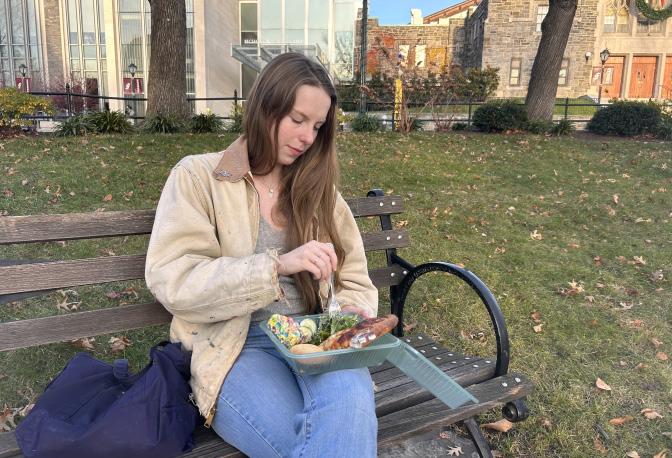
A student eats their food by Edwards Parade after using the ReusePass program to take food to go.
SIDNEY BLASCO FOR THE FORDHAM RAM
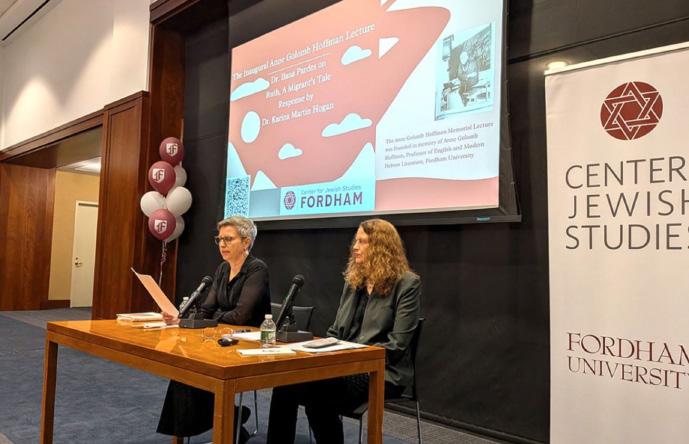
Fordham professor Karina Martin Hogan and Ilana Pardes.
COURTESY OF FORDHAM NOW
PUBLIC SAFETY BRIEFS
Burglary
Dec. 1
10:30 a.m.
On Monday, the Assistant Dean of Fordham Preparatory School reported a burglary. The supervisor responded. The investigation revealed on Saturday Nov. 29, 2025, at 11:40, the offender entered Fordham Prep through the Botany Way side entrance and removed a laptop computer. Video surveillance captured images of the suspect.
Fire Alarm
Nov. 26
10:02 a.m.
On Wednesday, a fire alarm was triggered in the McShane Campus Center. The supervisor and FDNY responded. The investigation revealed an Marketplace worker cooking food triggered the alarm. The supervisor ventilated the area and reset the alarm panel.
NEWS TEAM SIGN-OFF
Dear Readers,
We thank you for reading this year’s final issue of The Fordham Ram.
From all of us on the News team, it’s been a privilege to tell your stories and cover the moments that matter to our campus and community. We’re grateful for your tips, your feedback and most of all, your trust. News is important to us, and we hope it is important to you too.
Have a safe and restful break. We hope you continue to read next volume.
Thank you,
Sienna Reinders News Editor
Andrew Massie Features Editor
Emma Leonardi Asst. News Editor
Lalleyah Camara Asst. News Editor
Follow The Fordham Ram on Instagram, Facebook and X @TheFordhamRam
Wednesday Dec. 3
Student Life Council
Campbell Hall Multipurpose 3 p.m.
Student Life Council invites students to attend and speak with student leaders, staff, administration and faculty on topics set by the Council and its Executive Board. Lunch will be served.
Fordham Sustainability Commitment
By JORDAN DONEGAN STAFF WRITER
The Princeton Review has recognized Fordham University as a school with a commitment to sustainability for two consecutive years, awarding it a 93/99 “green rating.”
The green rating assesses the measures universities take to ensure sustainability within their campuses and facilitate a culture that encourages students to take eco-friendly actions throughout their lives.
According to the Fordham University Deputy University Spokesperson and the Director of Media Relations Jane Kidwell Martinez, Fordham’s commitment to sustainability is rooted in its Jesuit mission, and Fordham has taken several actions in recent years to ensure sustainability within its campus.
“As a Jesuit institution, sustainability is part of our core mission at Fordham,” Kidwell Martinez said in an email to The Fordham Ram. “Addressing ecological crises is a matter of justice that affects both the planet and the most vulnerable populations.”
An article published by Fordham Now explained that Fordham’s name appears on a list called the “Guide to Green Colleges: 2026 Edition,” which highlights the top colleges in the United States committed to sustainability. The article states that the list was curated using statistics from a survey conducted during the 2024-25 academic year, which looked at how a school’s sustainability measures affect its perception by prospective students.
Some of Fordham’s most recent efforts to ensure sustainability include the expansion of renewable energy initiatives, such as the purchase of additional solar energy from the Staten Island solar field, according to Nelida LaBate, grants proposal and funding manager for the Office of Sustainability, who responded to questions from The Ram through Kidwell Martinez.
LaBate noted that Fordham voluntarily reports to the United States Environmental Protection Agency and complies with New York City’s reporting requirements on how much energy it consumes and emits.
“We partnered with NYSERDA
(New York State [Energy] Research and Development Authority) to conduct studies of our buildings, then performed HVAC equipment optimizations, and exceeded its 10% energy reduction goals,” LaBate said to Martinez.
LaBate also said that Fordham’s Office of Sustainability has expressed interest in partnering with NYSERDA to conduct “building feasibility studies” to “identify additional buildings that could be converted from natural gas power to electric.” She also explained the effect that a university’s commitment to sustainability can have on its students.
“Sustainability impacts all aspects of our University, including curriculum, student development and education, faculty and staff involvement and physical plant and campus operations,” LaBate said.
Fordham’s recognition in the Princeton Review was not an easy title to earn, according to university officials. Vice President of Administration Marco Valera said that the biggest challenge of upholding a commitment to sustainability is “the cost of implementing energy-efficient systems into older buildings.”
Despite this significant challenge, Fordham’s Office of Sustainability has facilitated a student internship program, where student interns advocated for Fordham’s involvement in the Sustainability Tracking, Assessment & Rating System (STARS) that “recognizes and measures sustainability performance.” The student interns advocated for Fordham’s involvement in a sustainability program tied to the Princeton Review, according to LaBate.
“Interns advocated for Fordham’s participation, supporting the entire submission process, which resulted in dual achievements: reaching the Bronze level and inclusion in the Princeton Review’s Green Campus Guide,” LaBate said. “STARS is a partner with Princeton Review and uses the STARS data as part of their green rating criteria.”
According to Kidwell Martinez, Fordham’s dedication to upholding sustainability extends beyond the confines of the campus gates.
“Fordham has convened a coalition of community, industry, and higher education partners to launch the Bronx Green



Jobs Center, a new home for a pioneering initiative designed to create career paths for Bronx residents to the expanding green economy,” Kidwell Martinez said. “It will offer job training, employment services, and support for aspiring entrepreneurs in sustainable industries, helping community members access good-paying jobs in innovative and high-demand fields that are shaping the future. Doors will open in the Fall of 2026.”
This Week at Fordham
Thursday - Sunday Dec. 4-7
FET’s “Out Of Tune”
The Blackbox 8 p.m.
Fordham Experimental Theater is putting on “Out of Tune” this weekend. Tickets are free for students, and are on a first come first serve basis. The matinee show is on Dec. 7 at 1 p.m.
Friday Dec. 5
Waterpolo Tailgate
Avery Aquatic Center 12 p.m.
Join the Office of Alumni Relations, the Maroon Club and the Alumni Chapter of Northern California for a tailgate prior to the first-round Friday afternoon match. Sandwiches are provided.
Sunday Dec. 7
Carroling Festival
University Church 3 p.m.
Annual concert celebrating the start of the Christmas season, featuring the Fordham University Choir and The Bronx Arts Ensemble. No tickets are required, but donations are appreciated.
For LaBate, this recognition brings her a sense of pride towards Fordham’s efforts to showcase its commitment to maintaining a sustainable campus to prospective students.
“I feel proud to be part of the team that supports Fordham’s dedication to environmental sustainability,” LaBate said. “These rankings recognize our efforts and help prospective students understand our values, especially with advancing sustainability.”
Thursday Dec. 11
Jane Austen’s 250th Birthday
Campbell Hall Multipurpose 5 p.m.
Celebrate the 250th anniversary of beloved author Jane Austen’s birth with a festive event. There will be tea, cake and entertainment as well as birthday presents for a few lucky attendees.
Flowers planted next to the 9/11 memorial.
MARY HAWTHORN/THE FORDHAM RAM
Fuel Cells outside of Fordham’s Walsh Library.
COURTESY OF FORDHAM NOW
Solar power plant on Staten Island sending energy to Fordham.
COURTESY OF FORDHAM NOW
Vice Dean Ann Gaylin Leads GSAS Into a New Era
By PAOLO LIACI CONTRIBUTING WRITER
The Fordham University’s recent restructuring of the Arts and Sciences department has shifted the responsibilities and titles of several academic leaders, including longtime Graduate School of Arts and Sciences (GSAS) Dean Ann Gaylin.
Previously having served as president of GSAS, Gaylin now holds the position of vice dean of Arts and Sciences. This transition is a part of the broader administrative realignment that is aimed at unifying academic leadership and streamlining operations across campuses.
Under the new structure, one dean now oversees all of Arts and Sciences, bringing together undergraduate and graduate programs under a new single administrative umbrella. While the change marks a significant overhaul for Fordham, Gaylin had said that her own responsibilities have remained consistent.
“Much of my work is the same,” she said, adding that the consolidation has primarily transformed the undergraduate level while creating a more collaborative environment in and among leadership.
Gaylin continues to oversee the day-to-day operations of graduate education, which
By ANNA GAYTON COLUMNIST
The Fordham Rose Hill United Student Government (USG) had met on Thursday, Nov. 21, to review changes to bylaws and discuss a handful of proposals by non-seated cabinet members.
USG Executive President Lucas Hjertberg, FCRH ’26, and Executive Vice President Andrew McDonald, FCRH ’26, had awarded Fordham’s Finance Society as October’s Club of the Month.
The Governing Documents Commission presented their proposed changes to the USG bylaws, which have remained out of date for several years.
USG Senator Katelyn Martins, FCRH ’27, discussed adding facilitation of the cabinet and senate in regards to special elections and also wanted to get feedback on succession. Their proposed succession plan is to keep the president pro tempore position as first in line and vice president of operations as second while shifting the vice president of finance and budgets from fifth to third.
The commission's proposal also included swapping the current eleventh and twelfth successors, the vice president of international integration as well as the vice president of facilities and dining. Both of these changes were made. The next step was to confirm that this succession process, and therefore special elections, only occur within changes to
has encompassed more than 40 degree programs across various disciplines. Gaylin's work alongside her entire team includes admissions, recruitment, commencement, fundraising and professional development for the graduate students.
Gaylin will also partner with faculty to design new programs, explore some future directions for graduate education and respond to the individual needs of students, whether going through academic support or industry partnerships, such as coordinating internships with companies like IBM.
“Every day, I’m doing a different kind of work,” she said, referencing her work.
Gaylin's work also additionally currently involves engagement in several new academic initiatives aimed at the strengthening of the university's graduate offerings. Among initiatives are emerging programs in data humanities and biotechnology. The university's biotechnology program has been designed to approach the field from the molecule to market, integrating scientific, the ethical and entrepreneurial training, as according to Gaylin.
She is also helping develop a certificate in ethics and emerging technologies and overseeing a 10-year alumni employment database that will track salaries, location and career outcomes for the
graduates from 2016 to 2025.
Gaylin added that the continued mission and also that the central focus of GSAS is also to support their international students, a group that makes up between a quarter and a third of GSAS enrollment, which is particularly amid shifting political landscapes.
A very large part of Gaylin’s current work has also been involving some contributions to the broader vision of Dean Jessica Lang, Ph.D., whose tenure as the first dean overseeing all of Arts and Sciences began on July 1.
Gaylin said faculty have also been more active and engaged in the discussions leading up to the new restructuring and described their new leadership model as one that encourages unified progress across the division.
One change that Gaylin hopes to see is expanded flexibility for the advanced undergraduates to take some graduate courses and vice versa.
“Let’s make it happen,” she said.
While reflecting on her whole career, Gaylin said that Fordham’s community has distinguished itself from some other institutions where she has worked, including those in the Ivy League. She
also described Fordham as a place that is characterized by its intellectual generosity, as well as collaboration and shared purpose.
“We work as a community, and it feels like we are in higher [education] for a good reason,” she said, emphasizing her gratitude for her staff and also her colleagues.
Her academic background in comparative literature continues to shape Gaylin's leadership approach, despite the recent shift in her position. The Fordham discipline’s emphasis on the understanding of how as well as why the stories are told across cultures and contexts provides what she calls a set of “tools in the toolkit” for interpersonal, cultural and also on current political awareness.
Before she entered academia,
Gaylin worked in museums and the art world, an experience she credits with helping her respond to a wide range of perspectives and needs.
“Each person matters,” she said.
Even though her title has changed, Gaylin emphasized that her commitment to the work remains the same. She noted that if the restructuring had significantly altered her responsibilities, she would have reconsidered staying.
Instead, Gaylin says she views the change as an opportunity to strengthen collaboration and better support faculty, staff and students. Summing up her philosophy of service, Gaylin referenced a Fordham philosophy, “I had been doing cura personalis before I even knew what cura personalis was.”
USG Discusses Amendments to Bylaws
the Executive ticket. Martins also mentioned changes to delegates, citing that they never show up or use their voting power.
Vice Chair of the Budget Committee Siri Bhat, GSB ’27, added changes to prevent long meetings and revise the impeachment process for the executive vice president.
Senator Domenick Fedele II, FCRH ’29, noted liaison process changes, alongside Senator Anna Wiss, FCRH ’26, added changes to what months would have “Club of the Month” and “Senator of the Month” nominations, mentioning shorter months in the academic calendar may not need them.
Hjertberg said that at the next meeting they will vote on each revision before voting on the revised bylaws in their entirety.
The USG Vice President of Fordham College Rose Hill Mary Hawthorn, FCRH ’26, proposed a budget request for an Undergraduate Research tabling for Dec. 5 and for Student Success Subcommittee Tabling with the Provost's office to share about Knack tutoring on Dec. 1. Both budget requests were approved.
The USG Vice President of International Integration Jenny Hong, FCRH ’28, presented a budget request for Wellness Day that will be on Dec. 5. The budget request was approved.
The USG Vice President of Sustainability Ayden Johnson, FCRH ’27, shared a budget request for the Sustainability
Committee’s Holiday Bingo that will be on Dec. 3. The budget request was approved.
The USG FCRH Dean’s Council Student Wellness Subcommittee Head Megan Ruzicka, FCRH ’27, and Hawthorne shared a proposal that would amend the FCRH Excused Absence Policy to extend to Counseling and Psychological Services (CPS) visits.
With the support from Jefferey Ng, Psy.D., director of CPS, their new proposal aims to address the lack of mental health-related excusals. Vice President of Health and Security Aidan Costella, FCRH ’27, asked if it would cover weekly visits or just crisis visits.
The USG Vice President of Operations Tina Pathak, FCRH ’28, asked, regarding student confidentiality, if CPS would call the dean’s office. Ruzicka had verified that any CPS visit could be excused by submitting a note into the excused absence portal, and no phone calls would be made additionally. Senator Carter Soderberg, GSB ’27, asked if the excuse would apply to any mental health provider. Ruzicka had clarified that under the “Other Healthcare Provider” selection, any and all mental health services would be able to excuse.
Sustainability Committee
Member Peter Xie, GSB ’29, presented a proposal on increasing the usage of E-waste as well as proper
disposal on the campus. Xie said Fordham currently has two unused collection bins in inaccessible locations. He shared a map that would add more locations and suggested a university-wide campaign to encourage students to use it.
Costella had asked why Fordham should increase the number of bins and not just relocate them. Xie cited a study that found more bins led to increased usage. Soderberg asked how much the bins cost, and Xie said they are $800 but that they could get New York City to pay for them.
USG Facilities and Dining Committee Member Lauren Gracia, FCRH ’29, shared a new proposal to create an interactive map on Fordham’s website and app. The map would highlight some building resources, dining locations, hours of operation and ADAaccessible entrances. It would also feature the events across campus, making it a valuable tool for parents and visitors.
USG Vice President of Dining and Facilities Madeleine Ando, FCRH ’27, said that Fordham’s marketing team would fund the costs related to the map software.
Fedele and USG Senator Evie Maravilla, FCRH ’29, shared a proposal to extend Marketplace hours. The two's initial idea is to implement a one-month pilot program in order to expand hours. The two senators discussed some common complaints that
the Marketplace has poor weekend and the nighttime hours. They said extending the hours would be better for students and increase the university’s Niche score. The proposal would start with a 30-day pilot program.
At USG’s day of service on Monday, Nov. 17 at 11:30 a.m., attendees had prepared food boxes in McShane and delivered them to Part of the Solution.
Vice President of Budget Peter Grimes, FCRH ’26, shared a Documents Review presentation on the Budget Guidelines; SLC needs to vote on the guidelines, as it’s a joint committee. Grimes also discussed a preferred vendor list and increasing the gift prize cap for clubs due to inflation.
Ando reminded everyone that Wellness Day, which will be a partnership with the Computer Science Society club, Commuting Students Association as well as Campus Ministry, will be on Dec. 5, from 2 to 5 p.m. in the McShane Campus Center. McDonald said he reached out to The Ram to discuss the Senior Survey.
During open floor, Costella had shared that he thought his mention in The Ram’s recent interview with Hjertberg and McDonald was unfair, and requested that his name be taken off the record.
USG will meet for the last time this semester on Thursday, Dec. 4, 2025, and will be in Bepler Commons.
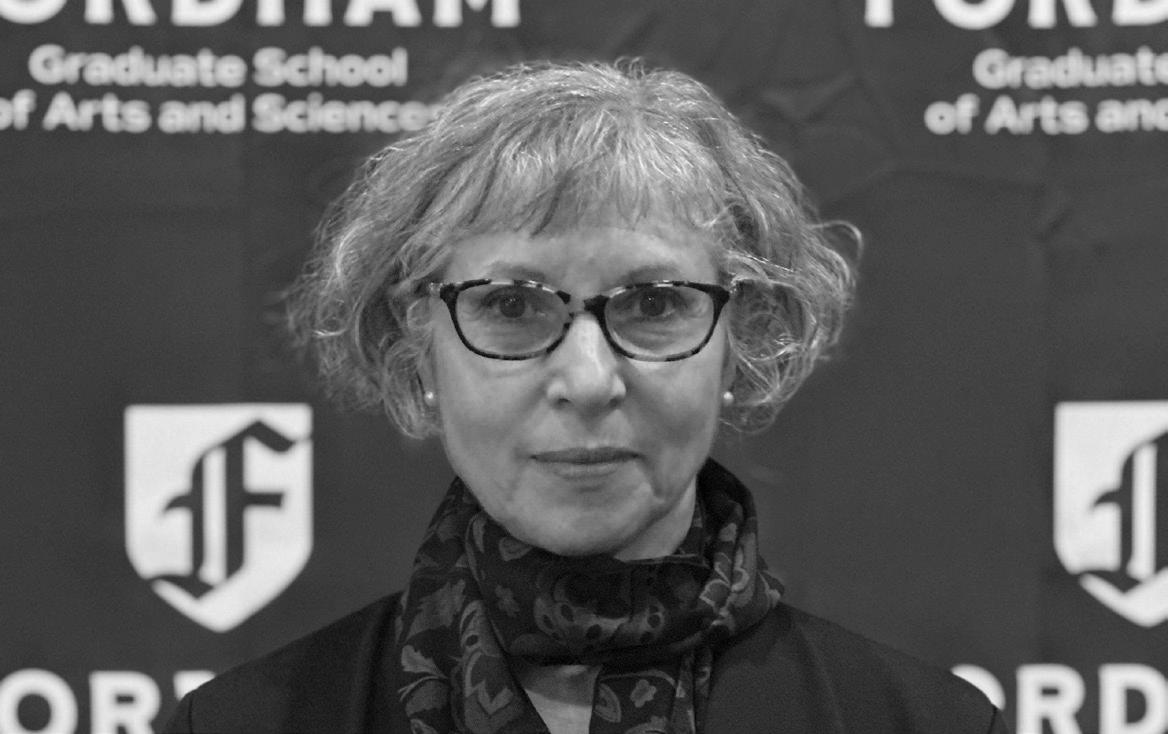
Graduate School Dean Ann Gaylin. ANN GAYLIN FOR THE FORDHAM RAM
BRICS Studies Effects of Wildfires on Bronx Residents
“Together, we have thus far conceptualized the study, discussed patient populations that might be especially vulnerable to wildfire smoke, and identified key data,” Rosenkranz said. “We are in the process of sharing data and beginning our analysis.”
The pilot program is investigating how wildfire smoke, which is projected to affect climate change, impacts residents of New York City, and specifically those in the Bronx.
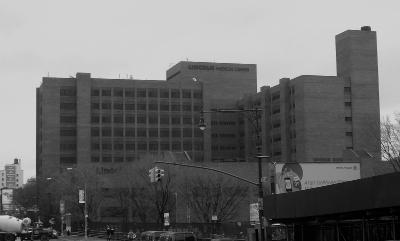
Lincoln Hospital is located in the Mott Haven section of the Bronx, one of the unhealthiest communities in New York
state, according to Rosenkranz. Additionally, one in six residents in Mott Haven live significantly below the poverty line. Hospitalization in Mott Haven is also five times as likely when compared to the New York City average. The project aims to address these issues.
“The ultimate goal of this
project is to equip community members, policymakers, and health professionals with the tools and knowledge necessary to reduce the burden of air pollution in New York City’s most underserved populations,” Rosenkranz said.
Due to high exposure to environmental hazards in the area, Mott Haven residents are particularly vulnerable, according to Rosenkranz.
“In existing work in NYC — Conte et al. 2025 —, it has been shown that members of disadvantaged communities typically view metered-dose inhalers as substitutes for services provided by the healthcare system,” Rosenkranz said. “While that defensive technology is viewed as a complement to the healthcare system by members of non-disadvantaged communities.”
Disadvantaged communities are potentially at a greater risk of exposure to extreme air quality conditions, which can not be avoided by the aforementioned defensive technologies, according to Rosenkranz.
“We will be able to explore this unexpected component
of vulnerability by analyzing the impact of the wildfires on treatments sought across a variety of ailments among patients at Lincoln Hospital to allow for differential effects by treatment and patient history,” Rosenkranz said.
Studies have been published on the health of Bronx residents, particularly as it pertains to environmental concerns, but Fordham’s effort plans to build upon existing research. Much of the research currently published depends on observational data.
“The reported correlations cannot be interpreted as causal effects of exposure to environmental factors,” said Marc Conte, professor of economics at Fordham University. “These extreme events offer different opportunities for individuals to modify their behavior and mitigate their vulnerability to the hazard relative to everyday conditions, and their projected increasing frequency due to climate change makes understanding their impacts of critical importance.”
Robert Hume Promoted to Vice Dean of Faculty Affairs
FROM HUME, PAGE 1
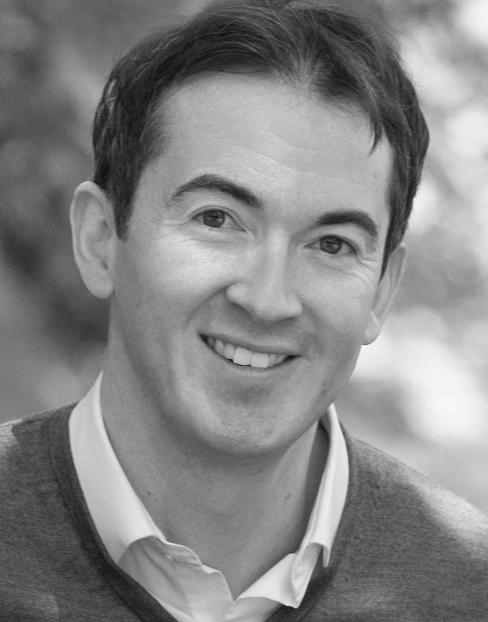
is really very different from the work of a faculty member, even though I think being a faculty member makes me better at being an administrator,” Hume said. “And being able to, like, understand [the faculty’s] needs because you’ve been in their position before.”
Hume holds a Bachelor of Arts. in history from the College of the Holy Cross and a Master of Arts and Doctorate of politics from the University of Virginia. He began his career at Fordham in 2005 as a professor
of political science. Hume was named associate chair of the political science department in 2011 and held the position until 2015 when he became chair of the department. Hume explained how his experience as a faculty member lends to his new role.
“I think it’s difficult to support the work of faculty if you’re not a faculty member yourself,” Hume said. “I’m in the classroom as well, doing senior-level seminars, and trying to think about how to approach AI and what AI policies
should be. And so if you’re doing that work alongside [faculty members], it helps you support that work better.”
As faculty across Fordham navigate emerging pedagogical challenges, Hume noted that several student-facing updates are underway within the Office of Faculty Affairs.
Hume is working to implement a new student course evaluation system, which will include shorter questions that are “designed to focus on the student experience.” He also announced future plans to make student responses public.
With the help of Margaret Konkel, Ph.D., the senior director of the Center for Educational Innovation, Hume’s office is strategizing an AI policy at Fordham, such as workshops intended to provide support for faculty at a “more centralized” level.
“Just as the professors had to adapt when the Internet became widely available, we had to think, all right, how do we adjust our pedagogy?” he said. “Now, I think a lot of faculty are trying to think about how do we adjust our pedagogy now that AI is here?”
Beyond shared experiences, Hume also emphasized the importance of effectively managing a team of faculty members in his administration by striking a balance between management and collaboration as peers. He said his time as chair of the political science department taught him how to find that balance.
“Learning how to do that
effectively, I’ve found to be an important skill,” he said.
Hume served as chair of the Arts and Sciences Core Curriculum Committee from 2013 to 2018. In 2021, he was appointed associate dean of the Faculty, and in 2023, he assumed the position of interim dean of the Faculty of Arts and Sciences, a role he held until this year.
“When you move into administration, you really have to start thinking about being strategic for the institution as a whole,” he said. “And, what are some things you know you can do that might have a broader impact on Fordham?”
In his new role, Hume said he wants to prioritize facilitating a sense of community and encouraging dialogue among faculty members across Fordham’s Rose Hill, Lincoln Center and even Fordham London campuses. He referenced University President Tania Tetlow’s One Fordham strategy, which was launched in fall 2025 to foster connectivity between Fordham’s campuses.
“Among the faculty, we’ve had a version of One Fordham for some time,” Hume said.
As Chair, Hume’s responsibilities encompassed both campuses, an experience he hopes to bring to his new position.
“When we had department meetings … sometimes we’d meet at Rose Hill, and sometimes we’d meet at Lincoln Center,” he said. “So it’s quite natural, as I do in my work in this role, to think about One Fordham.”
Hume also extended the
initiative to the Fordham London Center campus, stating that he’s been working towards “the theme of belonging ” as vice dean. He said he intends to make “the London faculty feel more connected to the[ir] New York-based counterparts” by providing more opportunities for the Fordham London faculty to visit the New York campuses.
Regardless of the campus, Hume said that he’d like his door to always be open to faculty and that he is ready to listen and provide support.
Hume said his faculty-focused initiative is two-fold, describing that he created two new Dean Fellow positions to assist with “special projects” in the office of Faculty Affairs. One position, titled the Dean Fellow for Equity and Inclusion, has been tasked with helping to launch the new program series titled “Coffee and Conversation,” a program intended to “provide a space for faculty to convene and talk about various topics” on a regular basis. The program will launch in spring 2026.
Amid the changing academic landscape in 2025, Hume said he approaches his new role with the same adaptability he has demonstrated throughout his 20 years of service as a Fordham faculty member. He said why he enjoys his career in higher education.
“I think what’s great is, you can really re-invent yourself,” Hume said. “You can set new goals for yourself as well, all while being in the same institution.”
FROM BRICS, PAGE 1
Robert Hume has been promoted to vice dean of Faculty Affairs after 20 years.
ROBERT HUME FOR THE FORDHAM RAM
Lincoln Hospital is located in the Mott Haven neighborhood in the south Bronx.
COURTESY OF WIKIMEDIA COMMONS
Students Can Now Take Marketplace Food To Go
REUSEPASS, PAGE 1
your container within 3 days, and we will be introducing an environmental fee of $2.50 for single-use containers requested in retail locations,” the email said.
The exact date that the environmental fee will be implemented was not stated.
Orla Fitzsimons, director of Dining Business Operations and Contract Management, explained how Fordham is paying for the containers.
“Ram Hospitality is covering the start-up costs associated with purchasing the ReusePass containers,” Fitzsimons said in an email.
Some students believe if they had to pay the extra cost, it would drive students away from eating at certain locations.
“If it was more than [fifty cents],” said Sloane Duys, FCRH ’28, “I feel like I’d honestly just end up going to the [Marketplace] more so that I wouldn’t have to even deal with that.”
United Student Government Vice President of Facilities and Dining Madeleine Ando, FCRH ’27, explained the sustainability motive behind the program.
“Reuse Pass is an initiative by Fordham to reduce the amount of single-use container waste that we currently produce,” Ando said.
Previously, students were not allowed to take food outside of the Marketplace, as it is an all-you-can-eat buffet. While ReusePass changes this by allowing students to take food to go, students are still not allowed to bring their own containers into the Marketplace.
Fitzsimons said they have only received positive feedback from the program so far.
“Many students have said that they have found it easier to use than the previous Green To-Go program and they are pleased that there is no cost,” Fitzsimons said.
Eva Verstegen, FCRH ’28, talked about the inability to use her own container at dining locations across campus in general.
“If they’re worried about sustainability,” she said, “just make it an option to use tupperware.”
Verstegen said that many students probably already have their own reusable containers
at home. She found out about ReusePass when she tried to use her own container at the Marketplace.
“They said no, but you can do ReusePass,” she said. Verstegen explained that she used ReusePass twice and then never again.
Some students are unaware of the take-away containers.
When Natalie Sheehan, GSB ’28 learned about the program, she said she felt like students should be able to take a meal away from the dining hall without using an
extra meal swipe.
“I think if you’re already paying for a meal plan an additional charge, even if it’s from your dining dollars, is silly,” she said.
Ando emphasized that the ReusePass initiative is focused on sustainability by reducing single-use containers, not affordability.
“At Urban Kitchen,” Ando said, “there are so many of the single-use containers that they go through, and they want to reduce the amount of waste of those single-use containers.”
According to Fitzsimons, since fall 2025, as a result of the program, “more than 600 single-use containers have been diverted from the landfill.”
However, there are mixed feelings about the environmental impacts of the program. Some students believe the initiative doesn’t actually help reduce waste because of its use of plastic.
“If we’re talking about sustainability,” said Verstegen, “buying a hundred, two hundred reusable plastic containers … you can’t justify that.”

Jewish Studies Receives Endowment for Chair
FROM CHAIR, PAGE 1
a $1 million gift toward the creation of a new endowed chair in her name.
An endowed chair is a faculty position that is permanently supported by an endowment providing stable funding. The chair will be sustained through the Hoffman family’s contribution as well as donations from the “big, big, big village of alumni and of friends of the center,” Teter said.
Teter hopes the fundraising and official completion of the chair will be done within five years. Fundraising efforts are underway, and spreading the message that donations are needed is a lot of work, according to Teter.
“It’s a lot of personal connections with people who love Fordham,” Teter said.
She said they want future students to be able to take classes with the full-time faculty member who will be in the chair.
“One of the great privileges of teaching, and teaching as a name chair, is that you have resources and opportunity to do really original things with students,” said Jessica Lang, Ph.D., dean of Arts and Sciences.
Endowed chair positions often allow for unique research opportunities, additional funding and ways to engage students that might not be available otherwise.
“I think the university and
alumni should focus on creating these kind of permanent positions for faculty,” Teter said. “So that students are taught by permanent faculty at Fordham and can be assured [of] devoted teachers and scholars who are ready to mentor and work with students.”
Teter said the chair is a step toward providing students with more opportunities in Jewish Studies.
“The chair is named in her honor,” Lang said. “It’s an
opportunity for the holder of the chair to continue her legacy in all of its richness.”
In addition to the chair, the department plans to hold an annual lecture in Hoffman’s memory, with more information to be announced.
Lang said the excitement surrounding the honoring of Hoffman’s legacy makes Lang wish she had known her.
“Clearly, she was so special,” Lang said.
Fordham History Professor Speaks at NYMAS
German Empire in the East: Germans and Romania in an Era of Globalization and Total War” and “Work and Play: The Production and Consumption of Toys in Germany, 18801914,” which were both mentioned in the introduction of the event prior to Hamlin taking the stage.
During his lecture, Hamlin presented on the German occupation of Eastern Europe during World War I. He emphasized the ways in which Germany deviated from, yet still sought to work within, the frameworks of international law at the time.
Hamlin explained how the
event engaged Fordham students and the broader New York City community.
“The event was intended to be for anyone who wanted to come,” he said in an email.
“This included Fordham graduate and undergraduate students, as well as the New York City community at large.”
Hamlin then went on to discuss the importance of the event in relation to Fordham’s mission of veteran and military support.
“The talk was an important element of our continuing support of veterans and our outreach to members of the New York and wider Fordham community,” he said in an
email. “As Fordham says, New York is our campus.”
The event was coordinated in partnership with the NYMAS, whose mission is devoted to increasing public knowledge and understanding about various topics related to military affairs.
Hamlin discussed why the partnership between Fordham and NYMAS is important.
“The history of war and its many consequences are central to the work of many of the historians at Fordham,” he said in an email. “It is obviously something I work on a great deal, but so does Nick Paul, Chris Dietrich, recently Silvana Patriarca and Cooper Wingert.”
FROM
FROM NYMAS, PAGE 1
Fordham professor Karina Martin Hogan and Ilana Pardes, from the Hebrew University of Jerusalem
COURTESY OF FORDHAM NOW
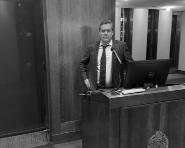
David Hamlin is a history professor at Fordham.
JACOB WOLFER/THE FORDHAM RAM
How Fordham is Revising its Core Curriculum
By SIENNA REINDERS NEWS EDITOR
Fordham University faculty members are currently revising the core curriculum with the hope of voting on the new curriculum early next semester and beginning the implementation process shortly after. The process began because faculty members believed the curriculum was no longer serving its purpose.
Over the past five years, four committees of faculty members have progressed through several phases of the revision process. Last spring, the process was delayed after faculty members were unable to agree on the proposed curriculum, an outcome that was not planned for. Now, the Core Reconciliation Committee is picking up the work of the previous Phase 2 committee and advancing the revision process.
Fordham’s Core Curriculum
Fordham’s core curriculum is central to its Jesuit mission, and its goal is to prepare students to engage in global society by providing a well-rounded education in various disciplines.
“These courses are designed to nurture curiosity, inspire a love of learning and provide you with the foundation needed to engage in lifelong learning,” the university website says.
The current curriculum was implemented in 2008 after a two-year revision process. It is defined by Eloquentia Perfecta (EP) classes, which teach students how to speak and write eloquently and interdisciplinary engagement courses, which span various disciplines.
While the curriculum is central to the university’s Jesuit mission, Fordham believes it has become outdated in the 17 years since its implementation, and needs to be revised.
“Fordham University has undertaken a revision of its core curriculum to reaffirm and renew the significance of liberal arts education and to address the changed world that our students will encounter when they leave Fordham,” the university website says.
The current revision aims to update the core to be in line with political and societal changes. The motivations behind the revision, as well as the goals of the revision process, were created by the PrePlanning Committee, the first faculty committee assigned to the revision process.
Phase 0: Pre-Planning
During the 2020 to 2021 fiscal year, a committee of 10 faculty members, led by Kirsten Swinth, Ph.D., professor of history and Robert Hume, vice dean for Faculty Affairs, was created to complete the first phase of the revision process, now referred to as Phase 0.
Over the course of a year,
the committee assessed the current core, took input from faculty members and students, compared Fordham’s core to other Jesuit, private and public universities then developed a three-phase process for the core revision.
The resulting document was presented on Sept. 15, 2021. It explained the motivations behind the revision, including the need to equip students to be global participants, make the curriculum smaller so that it is accessible to all students and make it more interdisciplinary.
“The decision to revise the core comes out of foundational commitments that the faculty and the University make to our students, some of which have become urgent over the last year and a half with renewed dedication to diversity, equity, and antiracism,” the document said. “Our current core curriculum … no longer fully fulfills those commitments.”
The document outlined three phases, each conducted by a new faculty committee that would be selected based on nominations by faculty members. Phase 1 would define the goals of the core curriculum and create an overall vision for the core. Phase 2 would develop a new curriculum based on the goals outlined in Phase 1 and Phase 3 would create an implementation plan for the new curriculum.
“We recommend that core curriculum revision should be faculty-driven, student-focused, and mission-centered, with appropriate consultation with administrative stakeholders,” the document said.
Based on the pre-planning document, a new faculty committee was created to undergo the Phase 1 process.
Phase 1: Vision and Goals
A committee of 12 faculty members conducted Phase 1 during the 2022 to 2023 fiscal year. The resulting document, which was presented on April 26, 2023, established a vision statement and learning objectives for the core curriculum and outlined the process for Phase 2.
The vision highlighted the core as being built on Jesuit and Catholic traditions. It stated that the core should be humanistic, integrative and ethically aware and should engage students and faculty with interdisciplinary learning that relates to current global issues.
During the process, committee members consulted with students, faculty councils and alumni to determine what aspects of the core were important and what aspects were missing. As a result of input, faculty members determined that the core should fulfill three goals: knowing,
doing and being.
Michael Zampelli, S.J., associate professor of theatre and member of the Phase 1 and Reconciliation committees, explained that these goals lend to the need for the curriculum to be interconnected and involve various disciplines.
“Most every major problem that we have to deal with in the world today, you need more than one discipline to deal with,” Zampelli said. “So how would we position students in terms of giving them an idea of what they are supposed to be, what they should be knowing, what they should be doing, and what kind of person that we presume they should be becoming?”
In addition to providing the goals that the new core curriculum should adhere to, the Phase 1 document provided deliverables that included a need for a smaller core and a list of requirements that can be met by courses in any department.
The document stated that Phase 2 would be completed in the 2023 to 2024 academic year and said that the Phase 2 document, outlining the new curriculum, would require an affirmative vote by the Fordham College Rose Hill (FCRH), Fordham College Lincoln Center (FCLC), School of Professional and Continuing Studies (PCS) and Gabelli School of Business (GSB) councils, as well as the GSB Undergraduate Curriculum Committee.
It did not state, however, what would happen if the Phase 2 document did not pass, an omission that created a roadblock in the revision process.
Phase 2: Creating the Curriculum
While Phase 2 began in 2023, the document outlining the new proposed curriculum was not completed until the end of the 2024 to 2025 fiscal year, a year later than expected. The committee had nine members, some of whom changed between the two academic years.
During that time, committee members used the Phase 1 document, specifically the resulting goals of knowing, doing and being, as a guide to create the new core curriculum. The resulting curriculum involved a reduction from 21 to 14 requirements, with separate pathways for The Ailey School, GSB, PCS, honors and transfer students.
The new curriculum omitted some current requirements, including the Natural Science sequence and EP courses. Some requirements remained relatively unchanged, including philosophy, theology and language requirements.
New requirements included the implementation of a First Year Experience sequence, consisting of a first-year seminar, rhetoric seminar and
New York Experience course, a Natural Foundations sequence, including a quantitative scientific inquiry course and an Interdisciplinary Thematic Sequence, involving at least one course that investigates diversity in the United States, Global Communities or Justice and Ethics.
The new core also provided increased flexibility for completing each requirement, with many requirements able to be fulfilled by courses in various departments.
After the completion of the Phase 2 document in May, faculty members convened in a Zoom meeting to vote on the new curriculum. During the meeting, the FCLC council reported that they had voted down the proposal, with a vote of 20 in favor, 19 against and one neutral.
Since the pre-planning document did not specify what would happen if one of the councils voted down the document, Hume, dean of the Faculty of Arts and Sciences at the time, who was overseeing the meeting, decided that if one council voted down the proposal, it could not go forward, according to Glenn Hendler, Ph.D., professor of English and American studies and a member of the Phase 2 and Reconciliation committees. So, without conducting votes in the other councils, Hume ended the meeting and the document did not pass.
Since it was the end of the academic year, no more action was taken to further the Phase 2 process after the meeting.
When Jessica Lang, Ph.D., dean of Arts and Sciences, began her position in July, she was tasked with advancing the revision process. However, because the Phase 0 document did not say how to proceed if the Phase 2 document did not pass, Lang had to create a new process.
Reconciliation
Committee:
Continuation of Phase 2
This fall, the Core Reconciliation Committee was created to continue the work of the Phase 2 committee. As with the other committees, nominations were submitted by faculty members and a committee of 11 individuals was created.
Lang said that in starting the new phase, she wanted to think about the overall purpose of revising the core curriculum.
“I want the core to be an inspiring document,” Lang said.
“I want incoming students and their parents and prospective students and their parents to read this and be like, that is a place where I want to attend, that’s a place where I want my child to go to. I want it to speak to them. It should be an accessible document. It should be, I hope, inspiring.”
While Lang has been tasked
with leading the Reconciliation committee, she is not involved in creating the new curriculum.
“I’m not trying to influence the process,” Lang said. “I have absolute trust that they’re going to come up with a great document.”
The committee’s first task was to identify individuals’ issues with the proposed core curriculum. According to Zampelli, they first read through the document several times. Then they sent out a survey to tenure and tenure-track faculty, which resulted in 65 single-spaced pages of feedback. They also talked to the various councils to gather input.
Committee members are now looking at the feedback they’ve received to identify the main issues. Zampelli said the difficulty they’ve faced is contradicting input from faculty members. For example, whereas some individuals think the curriculum should be reduced, others want it expanded.
“We’re in the process now of digesting all that information, and then weighing what … are the things that really need to be addressed,” Zampelli said. “We’re not going to be able to play to the ends of the spectrum. We’re going to have to try to figure out where the majority of faculty respondents are.”
Currently, through looking at the input they’ve received, the committee is coming up with alternatives to the curriculum to address the issues they’ve identified. After creating the necessary changes, they will consult faculty and students for feedback before voting on the final document. They hope to finalize the document by the end of this semester and vote early next semester, according to Hendler.
After the new curriculum is approved, they will move on to Phase 3, which will also be charged by Lang and will involve the implementation of the new core. Once implemented, incoming students will adhere to the new curriculum, with current students continuing with the current curriculum.
Hendler said they don’t know how long Phase 3 will take, but the curriculum would likely not be implemented for the class of 2030.
Both Zampelli and Lang highlighted that the entire revision process, though lengthy, is one that faculty members care deeply about because of their investment and passion in their discipline and students. Lang also said that the revision process has given Fordham a great opportunity.
“I think we have an opportunity with this new core to really attract students to Fordham,” Lang said. “The core should be a document that answers the question, what makes Fordham Fordham, and what do Fordham students gain through a Fordham education?”
OPINION

Serving the Fordham University campus and community since 1918
The Fordham Ram is the university journal of record. The mission of The Fordham Ram is to provide a forum for the free and open exchange of ideas in service to the community and to act as a student advocate. The Fordham Ram is published every Wednesday during the academic year to all campuses.
Website
TheFordhamRam.com
Email Address theram@fordham.edu
Editor-in-Chief
Nora Malone
Managing Editor
Jacob Wolfer
Production Editor
Sophie Maselli
Editorial Director
Jonah Ring
Multimedia Director
Mary Hawthorn
Business Director
Nishanth Aduma
News Editor
Sienna Reinders
Features Editor
Andrew Massie
Assistant News Editors
Emma Leonardi
Lalleyah Camara
Opinion Editor
Stuart Cremer
Assistant Opinion Editors
Abigail Adams
Loresa Zeqiraj
Culture Editors
Mia Tero
Isabella DeRosa
Assistant Culture Editor
Erynn Sweeney
Sports Editor
Grace McCarron
Assistant Sports Editors
Ian Nelson
James Nelson
Copy Chief
Sarah Verrastro
Executive Copy Editors
Indigo Towers
Emily Tonna
Caroline Lehman
Julia Cholerton
Photo Editor
Meghan Cattani
Digital Producers
Haniyyah Usmani
Molly O’Connor
Hannah Sullivan
Advertising Directors
Jack McDonald
Violet Wallace
Faculty Advisor
Beth Knobel
Staff Copy Editors
Jordan Donegan
Emily Mitton
Emily McCall
Alana Lewis
Editorial Policy
The Fordham Ram’s editorial reflects the editorial board’s opinions or views.
Opinion Policy
The opinions expressed in this publication are those of the authors. They do not necessarily reflect the opinions or views of The Fordham Ram.
Submissions Policy
The Fordham Ram reserves the right to reject or edit any submission for any reason, without notice. Submissions become the exclusive property of The Fordham Ram. No part of The Fordham Ram may be reproduced without written consent.
Against Pessimism

If you have been an avid reader of The Fordham Ram’s editorials recently, then you may very well think that the world is nothing but a dystopian hellscape: one devoid of everything but doom and gloom. After all, for the better part of Volume 107, our editorial team has made the calculated choice to tackle some of the most depressing, yet prescient, issues in this contentious contemporary moment. From the extrajudicial revocations of student visas to the erosion of free media rights in America, it was our belief that we would be doing a disservice to the greater Fordham University community if we did not actively shine a light on the gross moral decay and sociopolitical rot that we saw festering in and around our world.
However, considering the present article is set to be the last editorial of this volume, The Ram would like to set the record straight and offer up the following thought: the world beyond the greystone confines of Rose Hill is really
not as putrid as it may perhaps seem to our loyal readers. Despite all the (rightful) complaining that The Ram does about the seemingly backwards current state of affairs, reality is really not that bad at the end of the day. Honestly, it might even be, on the whole, a positive place full of love, joy and hope.
Don’t believe us? Then consider the following … The Ram’s Managing Editor, Jacob Wolfer, was recently accepted into law school and has nothing but a wonderful life waiting for him. Our Editor-in-Chief, Nora Malone, has not only accomplished more in her three years at The Ram than most journalists will in a lifetime, but she is also about to live out her study abroad dreams i n the home country (i.e. , Ireland). Our Production Editor, Sophie Maselli, will soon live out every inspiring writer’s fantasy when she publishes her debut novel, “Settle,” to widespread critical acclaim. Our Business Director, Nishanth Aduma, is (and hopefully always will
be) just Nishanth — the man who is just somehow always smiling. Even The Ram’s production meetings — sacred periods of time supposedly meant to be filled with nothing other than grueling labor — have become nights filled with enough laughter, inside jokes and Curtis Sliwa fanfictions to fill a lifetime. I n fact, the very reality that The Ram continues to publish editorials gestures at the fact that there is goodness in this world, that there is genuinely something worth fighting for and saving amidst all the muck. That is, The Ram would not be in the business of publishing well-researched and labored-over calls to action if we were ultimately just shouting into a meaningless void. Rather, we continue to write, continue to publish and continue to distribute our work because we see goodness present in this world. Indeed, we argued against the destruction of foreign aid infrastructure because we saw value in
the human lives that such a thing was meant to protect; we called for the establishment of more ethical artificial intelligence usage guidelines because we thought that human ingenuity and creativity was something worth protecting; and we rallied against vapid capitalistic consumption because we wanted to restore value to that which we hold so dear: human experience.
This is all to say: Do not resign yourself to pessimism. To be sure, the world may certainly seem like a bleak and frightening place, and our constant criticism of its flaws may only serve to amplify this negative perception. Yet, at its core, it is truly anything but. Thus, for the last time in 2025, The Fordham Ram would like to issue a call to action: hold on dear to what you love and fight like hell for it. Nihilism and resignation are simply not the answer in a world with so much to lose.


Since I arrived on Fordham University’s campus in the fall of 2023, The Fordham Ram has published 57 issues. For each of those issues, at least one article has borne my name. The title may have changed, from Contributing Writer to News Editor to Editor-in-Chief, but the passion hasn’t.
It’s hard to express my adoration for The Ram and its staff, but I have to try. I love this paper; I have loved it since I set foot on this campus and found my way to the club fair. I love it when I’m out in the field reporting, I love it when I’m up to my ears in print pages, I love it when I’m changing straight apostrophes to curved ones and I even love it when I’m strategically placing buckets to catch water dripping through our ceiling.
My Fordham experience has been shaped by nights in B-52, by hours spent writing articles and conducting interviews. Every time I walk around campus, I am searching for stories; every conversation I overhear in the elevator is a potential pitch. I don’t know how to be a Fordham student witho ut The Ram, and I wouldn’t want it any other way.
I might be biased, but I think student journalism is some of the most critical journalism happening right now. College campuses have always been the center of change in the world, and
OPINION
Please Keep Reading
there is no one better to report on it than a college newspaper. When encampments broke out across the country, who reported on it best? College papers. When student visas were being revoked, who got that information out? College papers.
The kind of local newspapers that kept this country running are dying out, except on college campuses. College journalists live in a distinct universe, one where everything they report on is in their backyard, where every source they use is their neighbor and where everything they cover also happens to them.
When I was on the ground at the encampments in May 2023, the people around me weren’t nameless protesters; they were my classmates, my professors and my friends. The NYPD officers I photographed weren’t just standing outside any building; they were on my doorstep. That knowledge meant I understood how they got from one entrance to another; it meant I recognized the members of administration handing out letters of suspension. I might have been a student journalist, but I knew more about Fordham than any of the professional journalists standing at my shoulder.
That’s what student journalism is, that is what it is for — telling stories about
what affects college students, from people who know what it means. If you have a question about anything Fordhamrelated, look to The Ram; we might have your answer. If you want to know what changes are coming to your campus, ask a member of our staff; they will know. If you’ve ever looked at our Instagram, all I ask is that you please keep reading — we’re here for you.
The Ram is many things, but first and foremost, it is a Journal of Record. That means it is our job to record what happens on this campus and how the students feel about it. Talk to us; tell us how you feel, what makes you angry, happy or confused. Open our paper if you want to know why the United Student Government sent that email, or what that event at the University Church was. We aren’t a mysterious club publishing into the void every week; we spend hours writing and editing those articles so that students can understand what is happening on their campus. It’s why I love The Ram so much — because if there is one thing the staff of The Ram has in common, we love the Fordham community. We don’t write these articles for ourselves; we write them for our friends, our professors, our advisors — the people that make this university what it is.
It says it right under our
name: “Serving the Fordham University Community Since 1918.” That is who we are, that is what we do. Now, I would be remiss if I didn’t highlight the people who make me love The Ram so much. Our staff is incredible; I’m so proud of everyone involved with Volume 107. We’ve done some incredible work. To the staff of Volume 108, and to Sienna, Ian, Sarah, Molly, Hannah and Nishanth — I’m so excited to see what you do.
To the News Teams of Volumes 106 and 107, being News Editor wouldn’t have been half as fun without you guys. Being on the News Team is such a wacky job, and only the coolest people get to do it.
To Jonah, our herculean editorial director. I still remember the first budget of Volume 106 and being surprised the Sports Editor dressed so well. Reading your articles each week has been a
mirthful, joyous, beguiling, exhilarating experience.
To Jacob, my right-hand man. We’ve come a long way from Dr. Axen’s class, but there’s no one else I’d rather share a desk with. Thank you for your unrelenting support and your knowledge of sports; without it, I would be completely lost.
To Sophie, I cannot believe we spent an entire year on The Ram without ever speaking. I truly could not have done this without you. Who else would sit in B-52 with me until 4 a.m. so I could do my University College Dublin housing application? I hope you find a way to use all the random AP Style knowledge now eternally embedded in your brain.
This newspaper has run for more than 100 years, and I hope it runs for 100 more. So to each and every Fordham student, I just have one message to convey: please keep reading.

OPINION
‘For What Matters’ Falls Short for Fordham
By JAYSON MCARDLE CONTRIBUTING WRITER
If you thought “For What Matters” was another new three-word slogan for a Nike advertising campaign, you would be wrong.
The tagline is part of Fordham’s new, evolved brand strategy, which aims to take the university forward while also honoring its rich history and tradition. Unfortunately, this slogan, along with other aspects of the rebrand, has not been received positively. While some of the criticism is overly harsh, I do believe that there is merit to it.
To be blunt, the new primary slogan is a step backwards from the old tagline, “The Jesuit University of New York.” On the university website, it is acknowledged that Fordham’s identity as the Jesuit University of New York has not and will not change, but the slogan “will no longer be locked up as part of Fordham’s visual identity moving forward.”
Why? This slogan perfectly encapsulated the two defining features of Fordham University: Its Jesuit heritage and location in New York City, the capital of the world. By contrast, “For What Matters” says very little about Fordham’s unique identity as a school.
In fact, the university’s news
press release clearly states that the goal of the updated brand was to focus on the university’s defining features: its impact on students, Jesuit tradition and prime location in New York City.
According to Justin M. Bell, the university’s inaugural vice president for marketing and communications, the slogan “reflects the lasting mark Fordham leaves on its students, on the communities it’s rooted in, and on all of the lives its alumni will touch … that is what sets Fordham apart.”
I agree with Bell that the university has had a profound impact on people. However, this slogan does not correctly represent what sets Fordham apart. A slogan should not need explanation. For example, what makes another three-word tagline, “Just Do It,” so great is that it simply conveys the attitude of an athlete: competition, perseverance and triumph. However, Nike is an athleticwear company, while Fordham is a private university into which people invest incredible amounts of time, money and effort. I may not be a marketing major, but I can tell you that the same strategy is not exactly applicable. However, I must commend the new submotto that appears on the primary page of
the school’s website: “Doing Good That Becomes Greater As The Jesuit University of New York.” In fact, I must ask, why is this not the primary tagline? It is perfect for the new branding. Not only does it clearly communicate the defining features of the university, but it also effectively describes the less tangible aspects of Fordham, including the impact the school has on its community and its effect on the world.
I implore the university to consider elevating the submotto to a primary slogan or lowering the status of the current one. There is so much that matters about Fordham University, but the slogan “For What Matters” fails in every aspect to communicate this message to a broad audience.
The criticism does not end there; to put it lightly, the evolved brand strategy has been divisive. As of writing, a Change.org petition titled “Preserve Fordham’s Emblem” has over 1,900 signatures. The petition raises concerns about the prioritization of brand development over identity, especially given the replacement of the official university seal with a new “corporate minimalist” logo. The petition proposes three solutions: the restoration of the official seal wherever it previously appeared on campus, continued availability of merchandise featuring
the official seal and maintaining the official seal as part of digital communication and media.
On paper, these demands are perfectly reasonable. The university is moving forward with a new image, but that does not mean that its heritage should be disregarded or replaced. A blend of the old and new can work together. Despite the initial harsh criticism, many of my peers and I have grown accustomed to the new Gothic F logo. Yes, it is simpler than the ornate university emblem, but that is intentional and necessary in the digital age. The Gothic F is easily identifiable on a computer screen; the school emblem, however, is utterly unrecognizable, especially when it
appears in a minimized form. However, this does not mean that it should be phased out completely; instead, it should be used when deemed necessary and appropriate.
Whether it is a professional sports team or a university, there are always bound to be disagreements regarding major branding or imagery changes. Let’s all hope that we can navigate this process together, so we can preserve our tradition and represent our university as effectively as possible for the Rams that have come and gone, and the Rams of the future.
Jayson McArdle, GSB ’29, is a finance major from West Orange, New Jersey.
A Penny for Your Thoughts? Not Anymore
By BRIDGETTE LEAHY STAFF WRITER
Our national penny has been looking at us since 1792, originally bearing the face of Lady Liberty before the switch to President Abraham Lincoln in 1909. Who in the world are we going to look up to now that the U.S. penny has been discontinued?
On Wednesday, Nov. 12, the United States Mint in Philadelphia pressed the last penny. The last coin to be discontinued was the half cent in 1857. So, how did we even get to this point?
President Donald Trump ordered the end of penny production after costs climbed to four cents per penny produced. Just before minting the final penny, U.S. Treasury Secretary Brandon Beach said, “God bless America, and we’re going to save the taxpayers $56 million.”
The 4.5 billion pennies made in the Fiscal Year 2023 cost taxpayers more than $179 million. Trump justified his decision to end penny production by citing its high production cost-tovalue ratio and its shrinking purchasing power. Back in February, Trump said in a Truth Social post, “For far too long the United States has minted pennies which literally cost us more than 2 cents. This is so wasteful!”
In the 2024 fiscal year, The U.S. Mint reported a loss of
$83.5 million on the nearly 3.2 billion pennies it produced. This loss is largely due to the fact that one penny costs 3.69 cents to make in the 2024 fiscal year. That’s almost four times its own worth!
Such an abrupt cancellation has caused a shortage of pennies for some retailers. Many stores are now rounding up or down to the nearest nickel. Retailers are lobbying Congress to pass a law allowing all stores across the nation to round to the nearest nickel, given that at least 10 states have laws that ban rounding cash transactions up or down. The 250 billion pennies still in circulation remain legal, but many coin deposit terminals no longer accept pennies, exacerbating the issue.
Many bills have been introduced in Congress to alter penny production, including efforts to temporarily suspend the penny’s production, eliminate it from circulation or even require that prices be rounded to the nearest five cents. Any of these changes would lead to cost savings and speedier checkouts, as demonstrated by other countries that have already eliminated their onecent coins. For instance, in 2012, Canada stopped minting its lowest denomination coin.
Former U.S. Representatives Jim Kolbe of Arizona and James Hayes of Louisiana were the

first to formally suggest eliminating the penny by introducing the Price Rounding Act of 1989. Unfortunately, that bill was not passed. Sheridan said, “I also expect more and more businesses to move to a cashless model in the next 10 years … this would negate the need for businesses to round transactions to the nearest nickel.”
The Trump administration’s efforts to get rid of the penny started with the now-defunct Department of Government Efficiency and its goal to cut $2 trillion from the federal budget. “Let’s rip the waste out of our great nation’s budget, even if it’s a penny at a time,” Trump wrote in his post. But, what message does this send to those who still
value the penny?
The penny has held significant meaning to America for over 200 years. The first pennies, issued in 1792, feature an image of a woman representing liberty. In 1909, in honor of Lincoln’s 100th birthday, he became the face of the penny. “We put mottos on them and self-identifiers, and we decide — in the case of the United States — which dead persons are most important to us and should be commemorated,” Fran Holt, an emeritus professor at the University of Houston studying history of coins, said. “They reflect our politics, our religion, our art, our sense of ourselves, our ideals, our aspirations.”
I do not use cash or change
very often; I use credit or debit everywhere I go. It’s just an easier lifestyle, so this won’t impact me as much as it might for those who cherish the penny’s long history. Depending on their condition, any 1943 Lincoln wheat pennies still circulating could be worth over $100,000. So, before you throw away your loose change, give them a closer look; you might find a rare one. You could win yourself a nice monetary prize at the bank or exchange kiosk. Spend and collect those pennies before it’s too late!
Bridgette Leahy, FCRH ’27, is a journalism major from Basking Ridge, New Jersey.
President Donald Trump recently ordered the U.S. Mint to stop producing new pennies, causing abrupt shortages.
MEGHAN CATTANI/THE FORDHAM RAM
Fordham’s rebranding campaign has been divisive. MEGHAN CATTANI/THE FORDHAM RAM
Catholics Stand for the Dignity of All Persons
By MCKENNA COVENY CONTRIBUTING WRITER
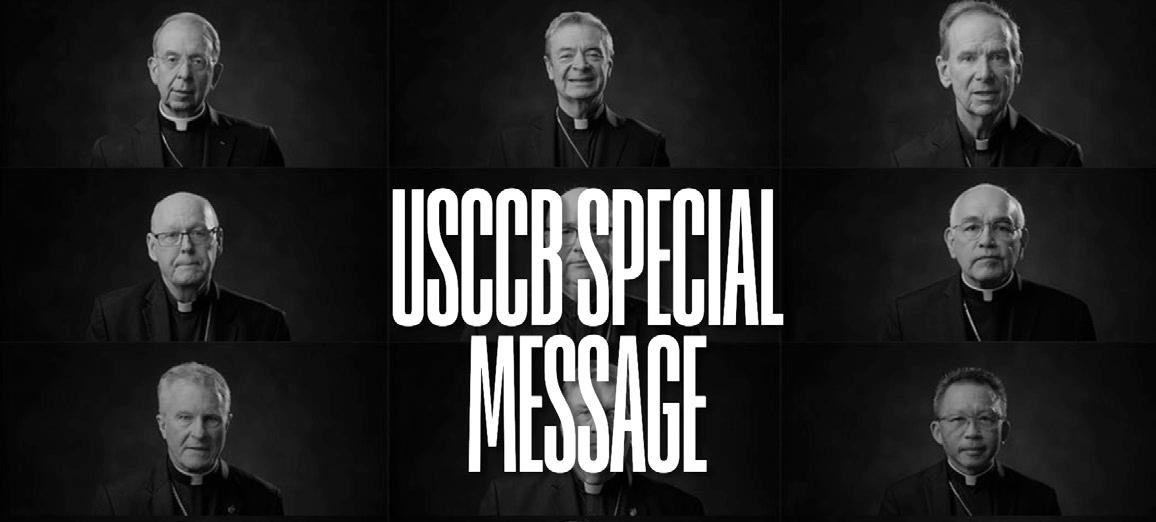
On Wednesday, Nov. 12, the United States Conference of Catholic Bishops (USCCB) released their first “Special Message” to the public in 12 years. The message was concerned primarily with the vilification of immigrants and the state of contemporary debate, highlighting the dire situations that many immigrants and their families have been placed in, particularly in regards to the lack of access to legal help, pastoral care and basic human rights. The group of bishops placed their message within a largely moral framework, calling attention to the dignity of the human person — no matter their background or race — and how every human being has been made within the image and likeness of God, and thus deserves to be treated as such.
In my opinion, the message, through presenting a unified front addressing the inhumane treatment of immigrants within our country, and doing so without directly pointing fingers and causing further political turmoil, has done an admirable job in calling attention to an
incredibly urgent moral issue within the U.S.
These pastoral messages can only be released during the United States Bishops’ annual Fall Plenary Assembly in Baltimore, where the group gathers to pray, discuss and vote on various issues related to the conference. The last message released was in 2013, and was launched in response to former President Barack Obama’s Affordable Care Act (ACA), being particularly aimed at its contraceptive coverage mandate. Until now, no other “Special Message” has been released. The vote to make a statement on the issue was largely unanimous, with 216 anonymous votes in favor, five who voted against, and three abstentions.
The video, in my opinion at least, does not come as a large surprise. Roman Catholic Bishops across the U.S. have been raising objections and expressing their discontent with our country’s treatment of illegal immigrants for a while now. This has become especially true since the beginning of Pope Leo XIV’s papacy, as he has made the issue of immigration central to his mission. In fact, he has been pretty direct about
encouraging other pastoral officials to continue protesting the current administration’s policies on immigration, whether this be through attending court hearings in order to deter U.S. Immigration and Customs Enforcement (ICE) agents, or by continuing to both raise awareness and prioritize the issue in the eyes of the public.
In early October, Pope Leo XIV continued his efforts to hear immigration stories when he met with a large group of Catholics, including the bishop of El Paso, Texas, who had come to Vatican City to discuss the crisis. During the meeting, one pertinent issue highlighted, according to Bishop Mark J. Seitz, was how best to advocate for the group’s beliefs — and to subsequently take action — without having to deal with the looming fear of being persecuted and detained. From the group, Pope Leo XIV also received a stack of over 100 letters from immigrants living in the area, pleading with him to hear their struggles. Bishop Seitz noted the tears in Pope Leo XIV’s eyes. Further moved by the pleas of the community, Pope Leo XIV later made sure to emphasize the central
importance of this issue to the conference in Baltimore in November.
True to Pope Leo XIV’s entreaty, the USCCB did in fact make the issue the forefront of the conference, grabbing the attention of Catholics around the country. I agree with the message released by the bishops, as President Donald Trump’s deportation agenda is in clear violation of Catholicism’s values, particularly in regards to the dignity of the human person and the intrinsic rights that people must be afforded. The Catholic religion, which I am very familiar with having attended Catholic high school and later becoming confirmed within the Catholic Church, does not condone the poor and inhumane treatment of any group of people, regardless of
their race, ethnicity, nationality, background or beliefs. Even more so, it harshly condemns both the stifling of basic human rights and the creation of fear for families who are simply trying to work honestly, support their families and send their children to school. Anyone who believes otherwise, including those within the current administration, needs to repeat, if they ever actually went, a few weekends in a children’s Sunday Bible school.
As the USCCB’s message says, “Human dignity and national security are not in conflict. Both are possible if people of good will work together.”
McKenna Coveny, FCRH ’27 is a comparative literature major from Houston, Texas.
Finding Friends Amongst Fordham’s Faculty
By EMMA KELNER CONTRIBUTING WRITER
Before I began researching colleges in my junior year of high school, I had an image of college classrooms ingrained in my mind: huge lecture halls overfilled with students, and one professor droning on and on. I saw student-to-faculty ratios displayed on each college’s Niche profile. I understood what these numbers meant in theory, but how important could they really be? Apparently, very. While Fordham University’s commitment to smaller class sizes and emphasis on personal growth encourages strong connections between professors and students, it is ultimately up to the students to forge strong connections with their professors.
Fordham places a particular emphasis on the idea of “cura personalis,” or “care for the whole person.” Professors at Fordham truly embrace this approach to teaching.
“My Spanish professor forced us to talk to our classmates at the beginning of the semester, and now we all have friends in the class,” said Addison Featherstone, FCLC ’29. “She pushed all of us to make friends in that class, which was particularly helpful at the beginning of the semester, which was my first semester here at Fordham.” I’ve had an experience similar to Featherstone’s. My English professor, Professor Audry Basch, assigns us to random groups during each class, forcing us to work with different students and meet new people.
Fordham’s class sizes further
underscore this idea of caring for the whole person. Fordham’s student-to-faculty ratio is 13:1. In other words, there is one faculty member for every 13 students attending Fordham. In the United States, the average college or university has a student-tofaculty ratio of approximately 18:1. These smaller-than-average class sizes ensure that Fordham students and professors have the chance to get to know each other.
This semester, I’m enrolled in five classes. In most colleges and universities, professors teach core classes in lecture halls. At Hunter College, my friend’s Biology 101 class is taught in the school’s auditorium. Every seat is filled. On the other hand, my two largest classes have approximately 25 to 30 students, but the rest of my classes have no more than 15 students. My Russian class consists of six students, including myself. Yes, you read that right: six students. Not only does this mean the professor knows all of our names, but it also means she has the time to understand each of us and our level of Russian fluency.
Of course, I understand that my six-person Russian class is the exception, not the rule. That said, Fordham’s small class sizes help foster more intimate class instruction. For example, in my Russian class, we all sit in a semi-circle, and we rarely have to raise our hands. Instead of contributing one after the other, we all contribute together while my Russian professor, Alla Smyslova, helps keep the discussion on track. We discuss
grammar and the Russian language, of course, but we also cover current events, pop culture, television and movies, music and history. I speak for the whole class when I say that I feel comfortable asking her any question, Russian-related or not.
However, to form genuine, lasting relationships with professors, students must do their part. A relationship involves two people, and professors can’t be the only ones doing the heavy lifting. It’s up to the student to establish a bond with a professor. So far, my favorite way to do this has been office hours. I’ve been to two professors’ office hours — Russian and history — and not just because I had pressing questions.
My history professor, Steven Stoll, has made a point of trying to create connections with each of his students. At the end of almost every class, he encourages us to visit his office hours. When I took him up on it, he was genuinely kind and helpful. He wasn’t
distracted by his phone or emails; instead, he listened attentively to my questions and offered thoughtful answers in response. I’ve been six or seven times. We don’t just talk about American history; we’ve also discussed jazz, Substack and what it’s like to be a student at Fordham University.
In fact, all of my professors hold office hours; I just haven’t been to all of them. Clearly, professors are open to forging bonds with students; it’s just up to the students to take them up on their offers.
Of course, I recognize that I’m taking only humanities classes this semester. In other fields, professors may be less open or may focus exclusively on particular topics, such as internship opportunities. However, Olivia Grant, GSB ’29, said, “My Ground Floor professor is always more than happy to talk to us whenever and about anything. She’s very open to any questions at any time, and
all of my professors are like that.” She said, “My professors actually care about their students. A lot of times, the professors want to make sure you’re doing well, and you’re understanding the content, especially because a lot of the business classes piggyback off of the previous ones.”
My experiences at Fordham have profoundly reshaped my perspective on the college environment, and I just got here! As a student, I don’t feel like an anonymous face — I feel like an individual. The relationships I’ve developed with my professors have enriched my academic journey. Most, if not all, the professors at Fordham want to connect with their students. They are passionate about what they teach, they embrace the idea of cura personalis and they are open to any questions, concerns or comments their students may have. The opportunity is there; it is up to the students to take the opportunities that professors offer.
Fordham’s 13-to-1 student to faculty ratio makes it easier for students to make meaningful connections with professors.
MEGHAN CATTANI/THE FORDHAM RAM
The USCCB special message condemned mass deportation. MEGHAN CATTANI/THE FORDHAM RAM
December 3, 2025
OPINION
My Favorite Situationship: Student Working
By GABRIEL CAPELLAN STAFF WRITER
By the time we’re sophomores, many students’ emails will have the “ . s” tag next to our names, indicating we’re student workers. But do we actually enjoy it? When at work, I find myself always thinking whether I actually want to be there. I make posters, write summaries and fetch printer copies. Towards the end of every shift, I ask my boss, “Anything else?” Every time I do, I think “I want to quit this mundane job,” but then I get a Chase notification from my phone with my paycheck. I think, “well, that doesn’t feel bad.” This cycle repeats itself, but it is a necessity for a college student with aspirations.
Looking back on my college experience, I realized I’ve never had a morning in the city to myself or with some friends. No café-hopping, no spontaneous walks, no long talks next to the Hudson River — none of that. Instead, I get the beeping sound of scanning papers over and
over again. Now, don’t get me wrong, I love seeing my paycheck, but I don’t like sacrificing so much time for it.
The biggest issue I have with working is not the fact that I spend about 20 hours per week working, but rather that I lose time I could’ve had to give myself proper rest. My job isn’t difficult, but rather time-consuming. I know I could spend those 20 hours either catching up on schoolwork or taking a well-overdue nap. However, I find myself at work trying to earn money to fuel my hobbies, such as playing new video games, buying clothes or simply going out in the city with some friends. None of these pastimes would be possible if I didn’t work, so I’m grateful for my job.
My grades haven’t taken a real nose-dive, but it’s because I do some schoolwork when I’m at work. I got into the habit of multi-tasking, and it only adds more stress to my life, where I need to balance school, a social life, family and career opportunities for the future. Balancing these demands and the overlapping of time has
been a real learning curve for me since last year. In my first year, I was doing one thing at a time, mainly spending my time on school.
I found that most of my days in my first year were spent hanging out with friends, both from home and at school, and I was still able to stay on top of my schoolwork. Things didn’t feel mundane, and I knew what was expected of me, but I wanted more. I knew that only going to class wasn’t going to cut it for what I wanted to do post-undergrad; I needed to gain some job experience or start spending my time more wisely on campus, besides maintaining a good social life.
Then I realized that I had reached the crossroads that every college student, or every “successful” college student, finds themselves at: a good career or a good experience. I chose the latter, and it’s been apparent this semester. I haven’t had a day to myself besides the few days off we get from school. I’ve been running this whole semester straight, and now I’ve gotten
so drained to the point that every day feels like the same. I know it’s not just me feeling this way, but many people at Fordham University, students and faculty alike. I think we’re all craving the end of the semester so we can recharge for the next one and survive it.
So, to students thinking about working, I say this: go for it. Go for it, but be prepared for the massive time loss you’ll have. Don’t think
about what you could’ve done with it; those thoughts are gonna make you want to push back from the things that’ll ultimately help you later. I’m going to use a phrase my boss used against me when I told him I willingly signed up for everything I’m doing: “You made your bed, so sleep in it.”
Gabriel Capellan, FCRH ’28, is a journalism major from the Bronx, New York.
Congress Is Getting Jacked Again
By PAOLO LIACI CONTRIBUTING WRITER
Often referred to as the American royal family, the Kennedys established themselves as a political dynasty long before former President John F. Kennedy took his seat in the Oval Office. On Nov. 11, Kennedy’s grandson Jack Schlossberg announced his bid for New York’s 12th congressional district, which includes the Upper East Side, Upper West Side and all of Midtown Manhattan. Soon after, it was announced that his sister, Tatiana Schlossberg, is battling a terminal cancer diagnosis. Despite what feels like an infamously plagued family lineage, Caroline Kennedy, the mother of both Schlossbergs, has stood watch over her family’s legacy for decades. With Jack Schlossberg’s entrance into the political arena, it seems she may be ready to pass the torch off to her son. Once again, the Kennedys have given America another Jack, and as a fourth-generation Kennedy Democrat, I couldn’t be more excited.
It’s been 60 years since the assassination of JFK. This marked the end of the “Camelot” era of the 1960s, as dubbed by former First Lady, Jackie Kennedy-Onassis, who reflected on her husband’s three years in office. It was to be a new age for America. A young, handsome, wealthy Irish-Catholic Democrat was in office, and under his leadership, the United States would prosper. Though we never got to see the lasting benefits of the Kennedy administration, there was a young family tragically left behind: a grieving widow and her two small children,
Caroline and Jack.
John F. Kennedy Jr., better known in the press as JFK Jr. or “John John,” was the only son of JFK and Jackie O. He was just three years old when his father was assassinated.
A photo taken of him by TIME magazine, saluting his father’s funeral procession down Pennsylvania Avenue, shaped an entire generation’s view of him. It was an image he was expected to live up to. John F. Kennedy Jr. went on to publish George, a cutting-edge political magazine that reflected the climate of 1990s New York City. Just four years after its launch, at 38 years old, JFK Jr. and his wife, Carolyn Bessette Kennedy, tragically lost their lives when a plane they were aboard, piloted by Kennedy Jr., lost connection and crashed off the coast of their family compound in Hyannis Port, Massachusetts.
And now, eight decades after JFK first entered Congress, the torch has passed once more, this time to his grandson, Jack Schlossberg. At 32, Schlossberg is only a few years older than his grandfather was when he first strode into the Capitol. But what stands out most is not the symmetry of their ages; it’s the sense that, for the first time in a long time, a Kennedy is choosing not just to honor a legacy, but to actively reshape it for a generation that has grown up deeply unsure whether American politics are still capable of inspiring anything at all.
Schlossberg’s announcement, splashed across The New York Times, ABC News, USA Today, Reuters, the BBC and even Fox News, made one thing clear: He is
not running as a relic from a bygone era. He is running as a young Democrat who sees New York’s 12th district not merely as a wealthy Manhattan enclave, but as a proving ground for the future of the party, the future of public service and honestly the future of hope itself.
He speaks not in grand abstractions, but in the language of young New Yorkers, by promising to address the cost-of-living crisis, cuts to childcare and education and the erosion of faith in public institutions. He says outright that he is running to “win back the House” for Democrats and that he will fight for the social programs that built the American middle class. His grandfather advocated those ideas in speeches; Schlossberg posts about them on Instagram at 1 a.m. That is the point: the medium, the moment and the messenger, it has all shifted. But the core belief in a government that protects its people remains intact.
A Fordham University student and organizer of the upcoming Fordham Model United Nations event hosting Schlossberg, Mary Hannah Gallagher, FCRH ’28, explained the story of how Schlossberg ended up agreeing to speak on our campus. Improbably, it started with an Instagram story.
“He posted a story saying, ‘NYU Democrats slide up, I want to meet up.’ As a joke, I slid up and said, ‘You can come hang out with the Fordham’s Democrats!’ I forgot about it until I opened my phone on the Ram Van to a DM from him saying, ‘We’d love to make this happen!’ And the rest is history,” Gallagher shared.
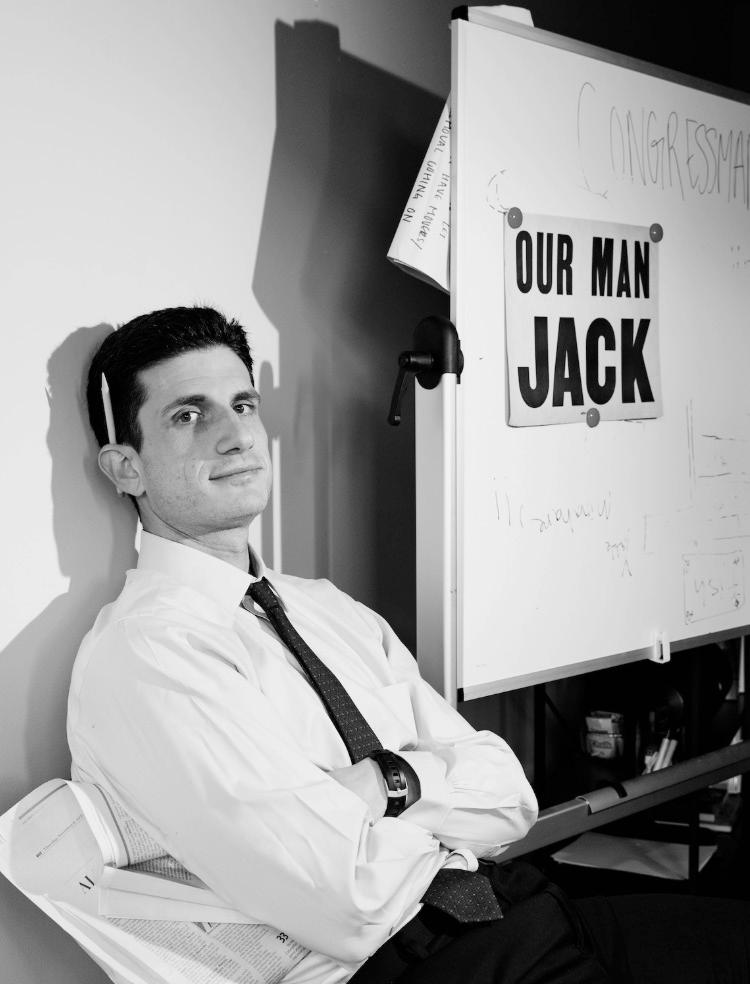
Critics will insist that he is untested or that he is leaning on his last name. But history tells another story. Every Kennedy who stepped into public life, from JFK to RFK to Ted to Caroline, did so under a shadow of a legacy larger than any one person. And yet, time and again, they emerged as devoted public servants whose legacies are measured not by their tragedies but by their impact. Jack Schlossberg is not running away from the burden of his last name. He is running toward the responsibility of it. And I, as a Fordham student and as someone raised on
stories of a better politics, am choosing to believe in what that might mean. Not just for the 12th district, but for the country. Because if our generation is ever going to recover its faith in democracy, it will be because leaders like Schlossberg prove, through action, that idealism isn’t naïve, it’s necessary. For the first time in a long time, America might just be ready for another Jack.
Paolo Liaci, FCRH ’27, is an English major from Montclair, New Jersey.
Jack Schlossberg recently announced his candidacy for Congress.
COURTESY OF JACKFORNEWYORK.COM
Many students are also student-workers, employed by the university.
MEGHAN CATTANI/THE FORDHAM RAM
CULTURE
Five Books to Curl Up With Over Winter Break
By KATE HERBERT CONTRIBUTING WRITER
For many of us, winter break might be the first time since the summer that we don’t have to worry about studying for our next test or writing our next essay. Perhaps you’re planning on catching up on your reading or ending your Goodreads challenge on a strong note. Either way, winter is prime reading time; getting cozy on a comfortable chair in front of a fireplace while the wind whips around outside the window makes for a perfect day. After reading over 50 books this year, here are my winter book recommendations to fill the festive and chilly break.
“Tom Lake”:
Around the holidays, if you crave a heartwarming, familial story, “Tom Lake” by Ann Patchett is exactly that. Set during the early months of the COVID-19 pandemic (don’t worry, details of the actual pandemic are spared), all of the daughters of Lara Kenison are back at home at their orchard in beautiful, upstate Michigan. Suffering from boredom, the daughters beg
for a story. Specifically, the story of their mother’s summer romance with a world famous actor. “Tom Lake” is smoothly and beautifully written, highlighting the importance of family and will have you wishing you could stay in their world forever.
“White Nights”:
It isn’t truly winter until a Russian novel ends up in your hands. However, not everyone has the time to read a 600page Dostoevsky or Tolstoy novel, so the novella “White Nights” is a perfect addition to any reading stack. “White Nights” by Fyodor Dostoevsky follows an unnamed protagonist, often called “the dreamer,” who meets a young woman named Nastenka late at night. The novella, weakly described as a romance, is an exploration of unrequited love along with the complicated emotions and circumstances of love and friendship. It may only be around 70 pages, but the story will haunt you.
“Jazz”:
There’s no need to try to sell a Toni Morrison book. “Jazz,” like her other novels, is a
stunning depiction of complex characters and an exploration of their connections to one another. In the middle of winter, a man kills his teenage lover and then, at the funeral, his wife attacks the girl’s corpse. Magically, Morrison takes a dark story and braids together the generations of this husband and wife, sharing their stories in pieces. The novel examines the lead-up and fallout of the event, with each character taking a momentary lead, just like jazz musicians.
“The Days of Abandonment”: In literature, and perhaps
real life, winter is often described as a time of spiraling and suffering. In “The Days of Abandonment,” author Elena Ferrante captures the emptiness and fear of a woman descending into a breakdown after her husband abandons her and their two young children. She is forced to confront and accept the ghosts of her past in order to keep her identity from slipping away. The novel is short, but intense, dark and impossible to put down.
“High Fidelity”: The winter season can also be a time of reflection and
solitude, especially when the weather forces one inside the walls of their home. Set in London in the mid-’90s, “High Fidelity” by Nick Hornby follows an avoidant man named Rob and his failing record shop while he grieves a recent breakup. Rob’s world revolves around music, and he uses his access to records to dive deep into the reasons why his relationships fail. The structure of the novel is based on a list of Rob’s top five breakups, making it a quick and unique read, allowing us a peek into his pain-filled mind.

The Fordham Ram Crossword
THEME: HOLIDAY MOVIES
DOWN
1. A LITTLE-KNOWN JIM HENSON CLASSIC NAMED AFTER A MUSICAL OTTER
2. THE SLOW MENTAL DECAY OF CLARK GRISWOLD
3. TIM BURTON’S CLAYMATION TAKE ON THE CHRISTMAS SEASON
5. DON’T FEED THEM AFTER MIDNIGHT
9. “HE’S AN ANGRY ELF”
10. CONTEMPORARY NOSTALGIA FLICK STARRING DOMINIC SESSA
ACROSS
4. RALPHIE REALLY WANTS THAT BB GUN
6. PLOT IS MARRED BY BAD EVOLUTIONARY BIOLOGY (WHY DOES THIS REINDEER HAVE A RED NOSE?!?)
7. PRESIDENT TRUMP MADE AN APPEARANCE IN THE SEQUEL
8. A HOLIDAY SPINOFF OF THE TITULAR “AIR BUD”
11. A CLASSROOM FAVORITE AROUND THE NATION

12. IN THE BEST ADAPTATION OF THIS CHARLES DICKENS’ NOVELLA, BOB CRATCHIT IS PERFORMED BY KERMIT THE FROG
13. “EVERY TIME A BELL RINGS, ANGEL GETS HIS WINGS”
14. “IF YOU LOOK FOR IT, I’VE GOT A SNEAKY FEELING YOU’LL FIND THAT LOVE, ACTUALLY IS ALL AROUND”


KATE HERBERT FOR THE FORDHAM RAM Winter break is the perfect time to catch up on pleasure reading after a semester centered around academics.
New York the Old Way: Holiday Edition
By EMILY MCCALL CONTRIBUTING WRITER
During the holiday season, from late November through early January, New York City experiences an influx of tourists and travelers. In the shopping districts alone, they receive over three million daily visitors. Businesses have even reported that as much as 20% of their revenue is from tourism, generated in November and December. But why is it that so many are drawn to this particular city during the holidays? What does it have to offer? The answer is everything and more.
Now that the annual Macy’s Thanksgiving Day Parade has come and gone, the city has made the transition into the upcoming December holidays: Christmas, Hanukkah, Kwanzaa and, of course, the new year. Businesses are putting up new decorations, New Yorkers are prepping for the overcrowdedness and tourists are booking their flights. The most exciting time to be in New York City is upon us, and as Fordham University students, we are right in the middle of it.
New York City has been known for its extravagant celebrations of Christmas, and not just because of “Home Alone 2.” For the past 93 years, New Yorkers and tourists alike have flocked to Rockefeller Center to see the lighting of
their annual Christmas tree. It is definitely a must-see for anyone wanting to get into the Christmas spirit. With the ice rink nestled below the colorful lights of the tree and the neighboring shops equally decked out in Christmas memorabilia, it feels as if you are actually in the North Pole. This year, the tree will be lit on Dec. 3 at 7 p.m., though the event will also be broadcast for those who would like to avoid the cold and crowds.
It is not just large trees that New York City is home to, but the two largest menorahs in the world. These two menorahs, one being 36 feet tall and the other 32 feet, are located at both Manhattan and Brooklyn’s Grand Army Plaza. These will be lit at sundown each night of Hanukkah, beginning on night one, Dec. 14, and lasting until night eight, Dec. 21. At the Brooklyn location, there is also a concert to start the holiday, as well as complimentary hot latkes and gifts given out to children each of the nights. Since this year Hanukkah will fall during a time when Fordham students are finishing up finals, many may be unable to celebrate each night with their families. This is an accessible alternative to still experience a community-wide celebration.
The holiday season, especially in New York City, is always a time that brings people
together, which is precisely what the Brooklyn Children’s Museum focuses on during its annual Kwanzaa celebration. For the 18th year, the museum will host daily Kwanzaa celebrations from Dec. 26 to Dec. 30, five of the seven days of the holiday. Each day there will be a candle lighting ceremony, performances and workshops all focused on celebrating African culture and heritage. The events will last from 10 a.m. to 5 p.m., allowing for a complete day dedicated to celebration. Although Kwanzaa falls during Fordham University’s winter break, students staying nearby can still stop by for a day of celebration.
To close out the winter celebrations, we have the New Year’s Eve ball drop in Times Square. Even those living outside of the city tune in each year to count down the seconds until the new year. It is the most crowded, hectic, sensory and harmonious event of the whole year in New York City. With all of the traffic and craziness it brings, it really does create a community in the city we call our home. For anyone staying around during the break, it is definitely a once-in-a-lifetime experience to see the ball drop in person right from Times Square.
Aside from holidays themselves, winter is an exciting
Editor’s Pick |Movie
time in New York City. There are countless ice skating rinks across the city just waiting to be used, and once it snows the city transforms entirely. As
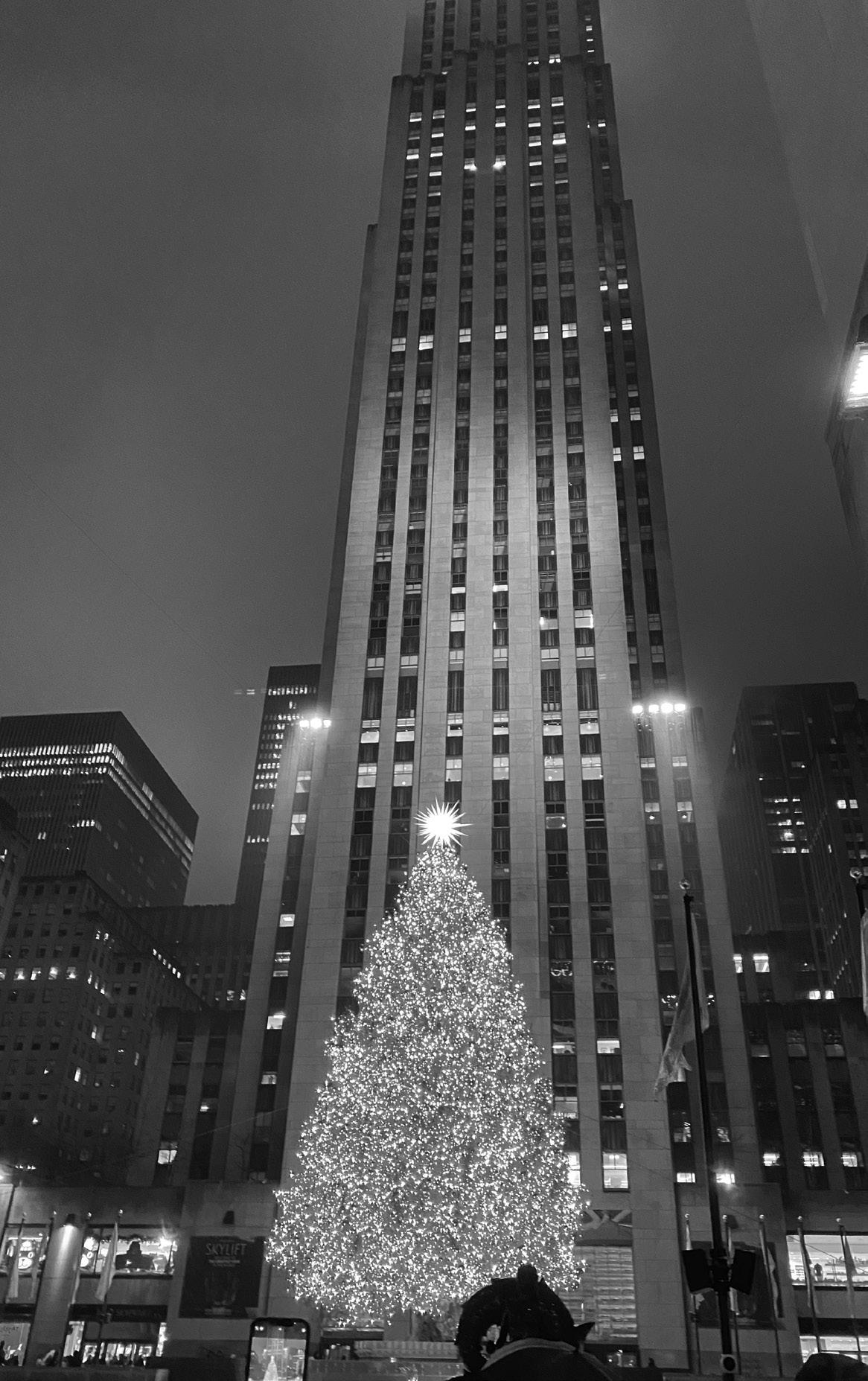
‘Planes, Trains and Automobiles’: A Forgotten Classic
By JAMES NELSON ASST. NEWS EDITOR
As the holidays approach, most people will kick back and enjoy their favorite Christmas movies. However, a select few will turn to a classic Thanksgiving comedy released in 1987: “Planes, Trains and Automobiles.”
Directed by John Hughes, the film focuses on Neal Page (Steve Martin) and Del Griffith (John Candy), who meet each other on their journeys to Chicago. Page, already desperate to get home for Thanksgiving and even more desperate to get away from Griffith, endures a streak of bad luck, including flight cancellations, train malfunctions and car crashes.
Page, a classy corporate man, cannot stand Griffith’s chatty, cheesy jokes and messy lifestyle. The two work together as they make their way to Chicago, arguing the entire time. Page suspects that Griffith is leeching off his money, and cannot ditch him despite his best efforts. The two share hotels, taxi cabs, rental cars and a bed. Griffith, though annoying, is compassionate and empathetic towards Page’s cold personality. Throughout the film, Griffith makes several references to
his wife, Marie. Once the duo finally reaches Chicago on Thanksgiving Day, Griffith reveals to Page that he is homeless, and his wife had passed away eight years prior. In a change of heart, Page invites Griffith to his home for Thanksgiving dinner.
Behind the hilarious bickering between Page and Griffith and countless disasters during the journey, the movie carries a deeper theme. Griffith has no home or family to return to. In fact, Griffith attached himself to Page for company, rather than money. Knowing this, the entire film can be perceived through a different lens. Even the smallest actions or gestures can help develop human connection. Griffith’s actions, such as offering to sit with Page on the train or share a meal, were gestures of someone desperate to feel a human connection. These feelings of alienation and emptiness are often amplified during the holiday season, when friends and family gather. Griffith’s easygoing tone and upbeat humour, despite the loss of his wife and home, make him a tragic character viewers can sympathize with.
On the other hand, Page goes through his own development. His trip of misfortunes forces
him to remain traveling with Griffith. After disliking and scolding Griffith on multiple occasions, Page reflects on his conversations with Griffith and realizes his story doesn’t add up. Once Page learns the truth, the moments of annoyance and over-attachment make painfully perfect sense.
The final scene reveals Page reunited with his family and his wife, as Griffith observes with a tearful smile. While Griffith is glad to see Page’s journey completed, he is reminded of everything he’s lost: the warmth of a home and the love of a family.
The film features a great soundtrack, including Paul Young’s “Every Time You Go Away” and Book of Love’s “Lost in Your Eyes.” Aside from Steve Martin and John Candy, recognizable actors such as Kevin Bacon, Laila Robins, and Edie McClurg make brief appearances.
In a documentary about his career and life titled “STEVE! (Martin),” Steve Martin revealed that several scenes were cut to shorten the runtime, leaving entire subplots and characters out. The final cut runs at a fast pace, clocking in at one hour and 33 minutes.
Director John Hughes has
an extensive catalogue, including “The Breakfast Club,” “Ferris Bueller’s Day Off,” “Sixteen Candles” and “Home Alone.” Though less recognized, “Planes, Trains and Automobiles” has the same humour, emotional depth and nostalgic 1980s charm that audiences associate with Hughes’ other works.
Before slipping into the typical Christmas movie binge, give “Planes, Trains and Automobiles” a watch.
EMILY MCCALL FOR THE FORDHAM RAM
Fordham students living here, it is our duty to make the most of this unique opportunity to be in such a versatile place during this year’s holiday season.
The lighting of the Rockefeller Tree is on Wednesday, Dec. 3.
By KAILEY SIGODA CONTRIBUTING WRITER
After hearing the rumors of an unusually warm New York City winter, Mother Nature decided to pull one over on us, skipping fall and raining in the wintry temperatures overnight.
While this meant a skimp on our days of jacketless outfits and light sweaters, pulling our cold-weather wardrobes from their hibernation is a sign that the (arguably best) season of cozy, bundled outfits has officially returned.
Contrary to popular belief, winter temperatures don’t mean you have to trade style at the expense of warmth. The myth of the puffer being dubbed as an “outfit-ruiner” is only as valid if you choose to make it so. The colder months make styling an outfit all the more critical.
In terms of coats this season, a new option (not the Aritzia Superpuff) takes the cake for trending outerwear. Although this isn’t new to the corporate side of NYC, wool trench coats have flooded campus, replacing many students’ previous years of loyal puffer use.
The wool trench coat is the cooler, older sister of the puffer, bringing a certain level of chic to a New York City winter, especially when paired with a scarf knotted around the neck. Together, they create a look that is effortless, yet seemingly intentional. And honestly, oversized, plush scarves are
CULTURE
The Look of a
a winter savior in themselves — nearly swallowing faces whole — but it’s the ultimate statement piece, and easy to grab on the go.
For college students entering the craze of finals season, the cold weather and stress often mean forgoing a nicer outfit in favor of hoodies for long days at the library. But a classy wool coat thrown on top of a sweat set instantly takes the look from “just rolled out of bed” to something that still feels put-together. Tack on a thick scarf and the comfiest studyday outfit suddenly looks deliberate — proof that warmth and style really can coexist.
Aside from scarves and trench coats, campus winter style has taken its own identity. Dark reds, burgundies and deep plum have become the unofficial color palette of the season, grounding outfits in something rich and moody. Recently, campus style has mixed in pops of pattern. Tortoise-print accessories, such as phone cases, glasses and scarves, appear alongside the still ongoing cheetah-print trend.
Footwear has followed suit, with standard sneakers for class, but also tall, black boots for an elevated, chicer look. While these boots don’t tend to make an appearance in class, as soon as an evening trip to Manhattan is planned, the classic black boot-and-miniskirt uniform is laid out and then seen making the journey
New York Winter
toward the Metro-North station. Something about the combo has a certain touch of “New York-ness.”
Though somewhere along the way, winter dressing has started to feel … grown up. As temperatures drop, campus closets seemingly undergo an “adultification.” Yes, wintertime means clothes naturally fall more modestly, but it’s more than trading in tank tops for sweaters. At the weird transition between being a teenager and a 20-something, our wardrobes teeter on the line between which world of dress we belong in. So when summertime ends, we put away our youthful clothes and experiment with the transition to adulthood. Boots and loafers mix in with sneakers, and clothes increasingly lean minimalistic.
Suddenly, neutral palettes take over, and simple silhouettes feel more appealing than loud pieces. Even accessories follow suit: leather bags instead of backpacks, and dainty jewelry instead of thick bracelet stacks. For young adults in school, and still feeling like kids, it’s a winter nudge toward a quieter, more refined version of themselves.
But even with this newfound sophistication, not every winter trend deserves a revival. The tall Ugg boots, unfortunately, should stay in the closets of our 14-year-old selves where they belong. While cozy, until skinny jeans return, they don’t
make sense to squeeze under wide-leg jeans and sweatpants. Mini Uggs and slippers provide a similar warmth, without the added bulkiness.
In terms of bulkiness … though structured coats are in, puffer jackets are essential for living in a cold city like New York. The Aritzia Superpuff has helped ease the annoyance of building an outfit, only to cover it with a Michelin Man silhouette, but even so, it hasn’t fully solved the problem.
And for many students, this frustration is beyond aesthetics; hereinto the eternal
tote-bag-on-a-puffer struggle.
The slipping, sliding, constantly readjusting, one swing of the shoulder, and the strap is halfway to the floor. Sometimes practicality comes at the cost of sanity, and it’s enough to make a student reach for a wool coat instead.
Winter fashion is a thing in itself, but for Fordham University students, it’s vastly different. We don’t just live on a college campus — we live in NYC. Our winter wardrobes balance the rush of college life while toying with the wonderful world of the New York City fashion scene.
Bodies, Bodies and More Bodies: What The Met Gala 2026 Theme Really Means
By DOVE AJMANI CONTRIBUTING WRITER
Costume Art will be the theme for the 2026 Met Gala. The spring exhibition aims to highlight the closeness between “clothing” and the “body,” offering an intimate appreciation for all body types. As a factor that has been missing in both a sensual and an admirational lens, it’s exciting to see different interpretations and perspectives in the upcoming gallery.
When it comes to The Metropolitan Museum of Art, the institution has showcased a wide range of creative media and fashion themes over the years. The 2025 theme focused on celebrating Black Dandyism, a pivotal statement that introduces new audiences to the historical background of this style and sparks interest in the movement.
Regardless of the lavish outfits and glamour that fill the night, the gala ignites essential discussions that would otherwise be lost without its high media coverage. The weight and influence carried by celebrities are credited for the bold outfits that designers and stylists interpret, conveying a profound
message in relation to the theme.
Earlier this year, global superstar Rihanna took to the red carpet in a Marc Jacobs-tailored outfit. She wore a black, cropped jacket over a grey top, featuring a blue poka-dotted cloth in the pockets and an intricately striped bodysuit, evoking the timeless class of Black Dandyism.
The “Love on the Brain” singer’s attire drew from Zoot Suits, a style born from political and cultural resistance. Once tied to racial profiling and the Zoot Suit Riots, these suits came to represent Black and Brown unity and pride. The Met Gala’s tribute to Black fashion highlights how tailored menswear has evolved into a form of storytelling, empowerment and cultural reclamation.
Last year called attention to an underrepresented group in fashion; this year, Costume Art has the power to reverse the tide of the reemerging ultraskinny phenomenon. With the 2026 Met Gala around the corner, we can hope that the theme of the body will shed light on the conversation surrounding the
theme
celebration of all bodies and the sensual forms they bring to fashion, as it did with Black Dandyism.
Andrew Bolton is to thank for next year’s theme. The Costume Institute Curator said, “fashion has the status of art because of, and not in spite of, its relation to the body,” suggesting that art is all around and part of the statement comes from the body itself.
As society is shifting away from body positivity, which was once prominent, we are
transitioning back to the stereotypical standards of a desired physique. The “Heroin Chic era” is back and thriving more than ever before.
Despite this rebirth, the Met aims to celebrate various stages of the body throughout the life cycle. The exhibit is divided into three sections: “Bodies Omnipresent In Art” (nudity), “Bodies Overlooked” (pregnancy or aging) and “Universal Bodies” (anatomical structures).
When it comes to what we
can anticipate on the carpet next year, it could be anything from naked to anatomical fashion. The dress code, which has not been made public yet, will be announced closer to the May 4 event.
As for predictions, keep an eye out for the following celebrities, all of whom have consistently blown away everyone’s expectations, as well as staying on theme: Zendaya, Lupita Nyong’o, Gigi Hadid, Lewis Hamilton and, of course, Rihanna.
The
of the 2026 Met Gala was recently announced as Costume Art.
MAGHAN CATTANI/ THE FORDHAM RAM
Throwing on a classy wool coat is an easy way to make an outfit feel finished.
By ERYNN SWEENEY ASST. CULTURE EDITOR
Somehow, it is already December, and the calendar year and the semester are already coming to a rapid end. Experience has taught me that this week, having just returned from Thanksgiving break, is a slap in the face. The transition to our final days of class and to the beginning of final exams is by no means gentle. The work, the assignments and the stress all seem to pile higher and higher each day as I eat the chocolates out of my Advent calendar and try to hold onto some semblance of the holiday spirit.
During this trying time, I find myself counting down the days until Christmas break — when my finals are over and when I can go home to a consistently 70 F California December, escaping the due dates and the burden of carrying around my thick winter coat.
But even as I dream of warmer, slower days while walking across campus early in the morning, my senses ground me where my feet are. I notice how the sun shines on the trees that are slowly losing their leaves, and I marvel at the fact that three different colors are visible in a single glance. I see the twinkling lights of the Keating Hall wreath that is finally up for the season. I
CULTURE
AVery Erynn Christmas
think about the beauty of this campus we call our home and how perfectly suited it is for the holiday season.
And then I come back to the apartment that I share with five other girls, and my roommate has brought a tiny Christmas tree from her home in Connecticut, carefully propped up in the corner on top of our extra chair, complete with a garland of lights. I remember how lucky I am to live with my best friends and that I don’t have to struggle through this overly busy time alone.
Then I notice the tour groups meandering around campus, the high school students and their families visiting Fordham University for the first time, and for a moment I see this place through their eyes. I think about the first time that I came to visit — how magical it was, how I fell in love with this place and how much it felt like home. I remember all my hopes for what college in New York City would be like, and I realize that I am now living my 16-year-old self’s dream.
And I remind myself that as long as I have a jacket, the cold isn’t too bad anyway.
When all the stress is piling up, it is more important than ever to pay attention to the little things that capture our imagination, that speak to our spirits and our memories. This is how we can remain
rooted in our “why.” This time in our lives is so formative; we are learning, we are building relationships, we are preparing for the future, for life beyond Fordham, for whatever is coming next. This time in the semester is so stressful precisely because it is a culmination of all of these things, of all that we are learning and of all the things that are forming us.
It is, of course, important to look towards the future. Of course, we would look forward to Christmas Recess as a time of rest in the immediate future. Of course, we want to be organized about whatever our next step looks like in the more distant future. But it is equally essential to root ourselves in the present. Because if we are not here, experiencing what is before us right now, we will not be there, experiencing what our lives may look like in the future. Presence multiplies itself, and so does distraction. So, as the schoolwork piles high and the library study room availability dwindles, take some time to walk around and appreciate the lights and the wreaths and the signs of winter approaching. You don’t have to stop (the world is constantly spinning and will only continue to do so), but consider slowing down just enough so you can feel the magic in the air — it is always there for those who
look for it.
Yes, there is so much that needs to be done. But there is also gratitude that needs to be cultivated, conversations that need to be had and joy that needs to be shared. If we don’t hold onto the point of things, we’ll never get through to the end, or worse, we won’t even realize when we have arrived. To “finish
strong,” we must arrive in the here and now. Maybe what we need is not to “lock in,” but to let go. When we prioritize the point, the rest will follow. When we lean into all that this season of intense stress and intense joy brings, we can watch and see as life opens up around us. And this is the greatest gift we could ask for.
Olivia Dean Takes (Not-So) ‘Baby Steps’ into our Hearts
By LARA EJZACK CONTRIBUTING WRITER
I t is no surprise that the Recording Academy views Olivia Dean as a perfect contender for Best New Artist, as she is not to be messed with. Other nominees should watch out because she will not go down without a fight.
Dean’s sophomore album, “The Art of Loving,” features 12 tracks, each uniquely tackling specific types of love, ranging from romantic to even platonic relationships.
Yet “Baby Steps” stands out, offering an intimate reflection on the art of spending time alone and cherishing it. Dean’s lyrics encourage listeners not to feel ashamed of being alone or their singleness, but to embrace it as a perfect opportunity for self-discovery and self-love.
The British singer opens the song with a low note on the piano, soon accompanied by gentle humming, as the production builds in subtle layers that reflect how Dean is still processing her emotions. As she sings, “Now there’s no one to text when the plane lands / Or to call when it’s taking off,” Dean paints a vivid picture of a scene that we are all familiar with. Even if no one is there at
the airport, that shouldn’t prevent you from buying the ticket and missing the experience.
Among social media trends that aim to “normalize” not caring what others think, such as traveling or attending concerts alone, or even something as simple as going to the movies or grabbing dinner alone. Dean’s music comes at a perfect time. This 26-year-old knows her selfworth. Value doesn’t come from a love of another; it comes from within: “I’ll be my own pair of safe hands.” Fans and listeners are welcome to understand the underlying message that we don’t need anyone to make us feel safe, valued, or even loved. Additionally, no one should miss out on experiences just because of the fear of doing them alone; There’s no reason to let life pass by while being held back by fears. We are all strong enough to buy ourselves flowers.
Yes, that feeling may be hard to grasp at first, which is why Dean eases into a chorus, “I’m taking ba-ba-bababy steps.” The production takes on an echoey effect, almost as if Dean is convincing herself that spending time alone is what she
needs, treating it as a remedy. Even though it can be tricky, at least Dean is making an effort to take the first step.
The second verse highlights the beauty of self-care, “There’ll be roses on the shelf / ’Cause this house gon’ love itself.” Dean’s lyrics beautifully illustrate how love doesn’t always come from others; instead, even the smallest gestures, such as bringing yourself flowers or taking the time to dance carelessly, can turn everyday moments into something meaningful. Gentle acts can evolve into something bigger, becoming a symbol of strength and confidence that unlocks new kinds of love. Her soulful voice takes over the bridge, “If I fall forwards (Mm) / At least I have that (Mm).” The journey to regaining her self-confidence may be long, but it will be worth it. Dean knows that she will emerge stronger, and the self-exploration will enable her to learn to love parts of herself she didn’t know existed. In the era of performativity, where social critics can smell inauthenticity from a mile away, Dean leaves nothing but roses and class
in her midst.
“Baby Steps” is a reminder for us not to get trapped in an endless cycle of external validation, but to embrace ourselves as we are. Dean takes us on a journey of not waiting around for an imaginary lover to sweep her off her feet; she books the flight
Released this September, Dean’s album has been a success despite that absence, as she is not waiting around for a hypothetical someone to fulfill her needs. She knows her time is valuable and she is not wasting it. What may seem like a small “baby step” for Dean is a giant leap for those of us contemplating buying those tickets or flowers.
COURTESY OF @OLIVIADEAN
ERYNN SWEENEY/ THE FORDHAM RAM Holiday decorations deck the halls around campus during finals.
By JACQUI LYSON STAFF WRITER
The contemporary film “Die My Love” is, in short, intense. This psychological thriller/ dark comedy is truly unhinged, and brutally confronts uncomfortable emotions and harrowing themes of motherhood and loss of identity. A young couple, Jackson (Robert Pattinson) and Grace (Jennifer Lawrence), moves to a secluded rural home in Montana, which strikingly juxtaposes their former lives in New York City. They eventually have a child, and in isolation, Grace experiences aggressive postpartum depression and starts to lose her grasp on reality.
There is a confounding dream-like nature to this film. Directed by Lynne Ramsey, the visuals in “Die My Love” have a surreal quality to them. There were multiple instances of Grace walking through rural and forest areas, and encountering people and things almost in a dreamlike manner. The uneasiness of the film was amplified as I was constantly questioning if what I was seeing really existed or if it was actually in Grace’s head. In the mundane, quiet moments with her baby, while Jackson is working, a
CULTURE
‘Die My Love’ is Beautifully Unhinged
blue lighting encompasses the scene, amplifying the depression and isolation Grace is feeling during these moments. Ramsey visually depicts postpartum depression in the moments of isolation, and in turn demonstrates our protagonist’s need for human contact and activity.
Lawrence’s performance was outstanding. As Grace progressively falls deeper into depression, Lawrence brilliantly communicates Grace’s emotions to the audience: isolated, bored, trapped and, at times, full of rage. Her portrayal of Grace was captivating and deeply nuanced, with quiet emotional struggles. I found that the ups and downs of this story beautifully demonstrate the complexities of motherhood and how it can lead to an alteration of one’s identity. Even in the moments that lacked dialogue, Lawrence’s visual performance demonstrated Grace’s mental decline and made the audience feel deeply for her character.
The soundtrack of this film creates chaos and peace. The genres of music vary heavily from the children’s song “Apples and Bananas” to the love song of this film, “In Spite of Ourselves.” During

the times of peace and serenity, Jackson and Grace listen to music, singing along together in a comforting way that brought a smile to my face. These peaceful moments give the audience hope for a happy ending for Grace and her family. However, in moments where Grace’s mental health is on the decline, the music becomes chaotic. For instance, Grace
is seen at one point aimlessly wandering around the house, exuding boredom and unfulfillment while the upbeat song “Hey Mickey!” plays on repeat in an unsettling way. Her irrationality is amplified with the chaotic nature of the music. Grace decides to listen to this song in pure isolation.
“Die My Love” is not for everyone. This film is cinematic, visually pleasing and stars
Who’s That Kid | Kathryn Cox FCRH’27
notable actors. Nonetheless, this film is emotionally heavy and had me leaving the theater feeling moved, but at the same time, heartbroken. Dealing with intense themes like postpartum depression, struggling with motherhood after giving birth and losing one’s identity, will inherently produce a heavy film. So, although beautifully made, it is exceedingly unfiltered, raw and real.
Junior Balances Cheering, Marketing and Broadcasting
By GRACE MCCARRON SPORTS EDITOR
Like many Fordham students, Kathryn Cox, FCRH ’27, has a lot on her plate. Cox has crafted a unique palette of activities at the Rose Hill campus, from being a cheerleader, marketing and talking sports in the WFUV studios. Balancing everything, while also leaving time to unwind, isn’t easy.
“It’s very difficult, I’m not going to lie … Setting time aside for little things, and I would say planning myself out, is really important. I use my calendar a lot,” she said with a laugh.
Cox originally hails from Boston, where she grew up before moving to Vermont at age 10. Like much of her life, she had things planned out when picking a college.
“I’ve always wanted to move back to Boston and settle down and raise my kids there, because I love it there so much, but I thought college would be the best opportunity to go to a different city and explore,” she said. “Growing up, we always visited New York, and I loved it so much, and I decided I really wanted to come here, so I applied to a few different schools, but Fordham really stood out to me on all levels: academicswise, the fact that there are sports, which you can’t really find in New York. As soon as I found out I got in, I basically
knew I was coming here.”
Thus far, during her time at Fordham Cox has dabbled in many sectors of the sports landscape and sports media. Her biggest time commitment is being a student-athlete for Fordham Cheer, which she joined before arriving at Rose Hill her first year. Cox can be found cheering on the sidelines with her fellow cheerleaders for Fordham’s football, men’s basketball and women’s basketball games. The decision to try out for Fordham Cheer came after years spent in the gym as a competitive gymnast.
“I was a competitive gymnast my entire life … When I was 10, we moved to Vermont, and I started at the Regal Gymnastics Academy, which was about a 50-minute drive from my house. I was doing that four to five times a week, four-hour practices, so absolutely a lot from the age of 10 to when I was 17 and stopped doing gymnastics,” she said. “My original plan was to hopefully get recruited for college gymnastics and do gymnastics in college. With Covid, that didn’t really work out. I was out of the gym for almost a year, and my plans changed pretty significantly … Something that stood out to me for cheer was also getting to watch all the games. As a huge fan of football and basketball, I was like, this gives me another opportunity to sit
on the court or to stand on the field and watch the games happen even closer than anybody else would,” Cox said.
When not cheering, Cox can be found at a Student Athlete Advisory Committee (SAAC) meeting, where she advocates for fellow student-athletes.
SAAC serves as a bridge between Fordham’s administration and the student-athlete body, and it’s involved in many community initiatives as well as support for studentathletes, including a Rams Supporting Rams initiative to get student-athletes to go to other teams’ events. She has also been working for Fordham Athletics marketing in an effort to bring more attention to Fordham Athletics on social media.
“It’s just a lot of communication stuff between the people doing the socials for certain teams and me, and then also our student athletes, and kind of figuring out what they want out of their socials,” she said.“I had an internship with [Fordham Athletics’ marketing department] over the summer, and the main idea was that we had to create a project we wanted to either be part of or accomplish this year, or hand off to others to accomplish … My project was this interview series called Ramble On, where we interview student athletes about
their lives outside of sports …
I’ve kind of been spearheading it, and we’re trying to get more people involved to do the interviews, but so far, I’ve done all of them. It’s been great to hear stories from athletes and meet people, meet other athletes that I’ve never spoken to before,” Cox said.
FORDHAM
Kathryn Cox, FCRH ’27, is a member of both the cheer team and WFUV. for to kind of set me up for a career in sports media. It’s all I’ve ever wanted. FUV has really propelled me and given me practical experience where I feel like I’m not going to go into the work world with no idea of what I’m doing,” she said. “I have this dilemma every day of, do I want to go into the sports business and manage teams and such? Or do I want to go into sports broadcasting and do sideline reporting, writing, and such? … We’re going to have to see where that goes.”
After Fordham, Cox wants to go into sports media, a field she credits WFUV for helping her prepare for. Cox is a staff member at WFUV Sports, having joined as a trainee in her sophomore year, and she’s gotten the chance to be on the mic for podcasts and talk shows and report for the National Women’s Soccer League’s Gotham Football Club.
“It is honestly the best experience I could have ever asked
Cox’s devotion to sports has become integral to her life at Fordham, and it’s something she hopes to continue throughout the rest of her life, long after her last game cheering, her last marketing project, or her last time behind the FUV mics.
ATHLETICS FOR THE FORDHAM RAM
COURTESY OF @DIEMYLOVEFILM
“Die My Love” stars Jennifer Lawrence and Robert Pattinson.
Women’s Basketball 6-3 Entering Conference Play
By ANTHONY SMITH CONTRIBUTING WRITER
It was a long Thanksgiving holiday week for the Fordham University Rams. As they enter the holiday season, they will begin preparing for Atlantic 10 (A-10) play. Last year, this team went into conference play with a 6-5 record and a two-game losing streak. This time around, it’s very different, as they are coming off a three-game winning streak and a 6-3 record.
Before that winning streak began, the Rams traveled to New Jersey and played one of their toughest games of the early season. It ended in a 90-83 loss in double overtime against the Seton Hall University Pirates, setting the Rams back to an even .500 record.
Despite junior Alexis Black tallying a program record 42 points, Fordham was unable to come away with their first road victory. Black knocked down seven triples, which tied the fifth most in a single game in program history. Junior Ugne Sirtautaite recorded a double-double with 15 points and 11 rebounds in the loss.
The Rams then traveled back home to play in the Battle of the Bronx against Manhattan University. The Rams got back on track
with a nail-biting 65-62 win over the Jaspers. It was Fordham’s first win over Manhattan since 2022. Black had herself another stellar performance, putting up 20 points, seven assists, four rebounds and four steals. Sirtautaite reached double digits again with 11 points from the bench. Graduate student forward Ornella Niankan scored 10 points and gathered in eight rebounds. Fordham’s defense was a key part of the game, forcing 22 turnovers, which led to 20 points on those opportunities.
Fordham then took a trip up north to Niagara University the day before Thanksgiving, winning in comfortable fashion, 70-47.
Niagara was held to a 2-14
Athletes of the Week
Luca Silvestri was a key piece in Fordham University’s fifth consecutive Mid-Atlantic Water Polo Conference (MAWPC) championship. Silvestri netted three goals to help clinch the win at home. He netted seven goals in the tournament and was named the Championship’s Most Valuable Player. Silvestri was named to the MAWPC Championship First Team, and Fordham earned an automatic bid to the national championship. To open the National Collegiate Men’s Water Polo Championship, Silvestri’s fourth-seeded Rams will face San Jose State University on Dec. 5.
Junior guard Alexis Black has made her mark thus far in her first season as a Ram after transferring from Appalachian State University. Black was named Atlantic 10 CoPlayer of the Week for the week of Nov. 18, where she averaged 31 points per game. In their dominant win over Niagara University on Nov. 26, Black led the team with 18 points and four steals. She contributed another 11 points, seven rebounds and five assists in the Rams’ win over Long Island University on Sunday for their third straight win.
performance from beyond the arc in Fordham’s first road victory.
Black led the Rams in scoring with 18 points to go along with four steals. Niankan notched her first career double-double with 13 points and a career best 10 rebounds. Senior forward Emma WilsonSaltos scored eight points and added eight rebounds. The Rams controlled the offensive glass with 23 offensive boards which led to 25 second chance points. Fordham also had one of their best performances from their bench, adding 22 points.
Fordham was again back at the Rose Hill Gymnasium on Sunday against the Long Island University (LIU) Sharks. The Sharks entered the game 4-1 but were cooled down by a dominant defensive effort from the Rams.
It was a tale of two stories
in the contest, with different games being played in the first and second halves. After the end of the first half it seemed destined to be a battle to the end, but the third quarter was a game changer. Fordham held LIU to four points in that frame, which led to another relaxing win. The Rams beat the Sharks 7251, which extended their winning streak to three and continued their home dominance.
Sirtautaite led the Rams in scoring with 12 points, while Black was limited to 11 after an 0-4 performance from deep. Despite her lowest scoring game, she also notched a season high seven rebounds followed by five assists. Freshman Maysen Hill tallied 11 points in Fordham’s best bench outing this season. The bench provided 46 points to the outcome and it was a crucial asset of Head Coach
Bridgette Mitchell’s game plan. The third-year coach stated, “it’s really important to be able to have multiple scorers and it makes it really challenging to guard.”
Mitchell also mentioned the importance of continuing with their identity. “We made a mark for ourselves as being a really aggressive and strong defensive team,” she said. Mitchell emphasized the focus on creating takeaways, which the Rams did well against LIU by forcing 24 turnovers and defensive pressure for all 40 minutes.
Fordham will be back in action on Wednesday night as they travel south to Virginia for their first A-10 matchup against the George Mason University Patriots. It’s an early look at conference play for the Rams, and it will be a good test for this squad. Fordham then heads into another non-conference matchup against Hofstra University at 2 p.m. Saturday afternoon on the road.
George Mason enters the conference matchup on a two game losing streak after tight losses to Murray State University and #13 University of Mississippi. The Patriots are undefeated at home thus far, so the Rams will attempt to hand them their first home loss of the season on Wednesday. This contest against George Mason is just an ounce of what the A-10 has to offer this season, which could pose some upcoming challenges for the Rams.
Varsity Calendar
Luca Silvestri Graduate Student Water Polo
Alexis Black Junior Basketball
Women’s Basketball has looked strong heading into conference play.
COURTESY OF FORDHAM ATHLETICS
New York Basketball: Opposite Trajectories
By MOSES WILSON CONTRIBUTING WRITER
The New York Knicks and the Brooklyn Nets are like yin and yang. The Knicks are the New York team, and the Nets are just a basketball team that happens to play in New York City. The Knickerbockers have roots in New York dating back to 1946, while the Nets relocated from New Jersey to Brooklyn only 12 years ago. The Knicks consistently sell out the iconic Madison Square Garden (MSG), with ticket prices skyrocketing as celebrities clamor to courtside seats, while the Nets’ Barclays Center is frequented by halfinterested Brooklyn hipsters and families who want to catch a game without spending MSG prices. And perhaps the most notable difference — the Knicks are playing decent basketball this season, while the Nets simply aren’t.
Other than signing veteran guard Jordan Clarkson, the main move the Knicks made this past offseason was bringing on former Sacramento Kings coach Mike Brown to shake up the system, moving on from stagnant Thibs-Ball to Brown’s chaotic, high paced style. With an 11-6 record that puts them fourth in the Eastern Conference, the Knicks are comfortably positioned for another playoff berth come April — but that’s where the real test begins. After making the playoffs in four of their last five seasons yet failing to reach the finals in any of those years, the Knicks must capitalize on their current roster, and soon, before their championship window closes.
A significant concern with this Knicks team is their ability to win games against highcaliber teams; New York is just 5-5 against teams that boast a winning record. Much of this issue stems from the Knicks’ second-worst three-point defense in the NBA, which is allowing opponents to shoot at a 39.4% clip. One change Brown could make to alleviate their defensive
woes is giving Miles McBride more minutes — he’s a great closeout defender who still has room to develop. It’s also worth noting that the Knicks have been without standout defender OG Anunoby for the past six games, which has no doubt played a part in their struggles against the three. Additionally, center Mitchell Robinson has been intermittently available all season, missing seven of the team’s 18 games and playing with a minute restriction when he is active. The Knicks are no doubt a better team when both guys are active, so this softens some concerns (assuming both will be healthy come playoffs). The Knicks have also showcased great offensive rebounding ability, are shooting an elite 18.1 open threes per game and rank third in offensive rating.
New York currently has negative cap space and is hardcapped at the second payroll apron for the 2025-26 season, meaning they have little flexibility when it comes to acquiring new players. For now, the Knicks should focus on adjusting to Brown’s new fast-paced system of play, ideally figuring out how to beat strong teams in the process. The Eastern Conference is as wide open as it’s ever been, and if the Knicks can work out some kinks, their core of Brunson, Towns, Anunoby, Bridges, Hart and Robinson can contend with the best of the best.
The Nets, on the other hand, have been on a downhill spiral. The team has been completely overhauled in recent years, and their current rebuild status places them firmly in the basement of the NBA. Brooklyn is an extremely young team — they took an NBA record five players in the first round of the 2025 draft, and their oldest player, Terance Mann, is only 29 years old. Naturally, growing pains are expected as young players adjust to the NBA, but this Nets team is on another level of bad.
As of Nov. 29, the Nets own a 3-16 record, placing them at 14th in the Eastern Conference, ahead
of only the Washington Wizards. Embarrassingly, they were the last team in the NBA to win a game this season. Their offense has been anemic, ranking dead last in points per game with an average of 109.2 and 23rd of 30 in offensive rating at 112.3. Nic Claxton, the team’s starting center (who isn’t particularly known for his playmaking ability), leads the team in assists per game with 4.1. Among all players, this number ranks 61st. Their defense isn’t any better, conceding an average of 119.7 points per game (22nd of 30) and holding a defensive rating of 122.7 — the worst in the league. The vibes in Brooklyn are extremely poor, and Head Coach Jordi Fernández acknowledged this fact following the Nets’ 24-point loss to the 76ers on Nov. 2: “I’m failing at trying to get my guys to play hard … the effort is not there and the defense is not there.”
Though their record might suggest otherwise, it hasn’t been all bad down in Brooklyn. In Cam Thomas’s absence (he’s been out of action since Nov. 7 with a left hamstring strain), former Denver Nugget Michael Porter Jr. has been thrust into the number one scoring position. With the keys to the offense in his hand, Porter has stepped up, posting career highs in points, rebounds and assists per game with averages of 24.3/7.4/3.0, respectively. The rookies have also shown promise — Egor Demin has a future as a playmaking point guard, and Drake Powell has proven to be a solid 3 and D player. Add in Danny Wolf’s 22-point breakout performance against the Milwaukee Bucks on Nov. 29, and the Nets have some players who could make a serious impact in the coming years.
Brooklyn is in full-on tank mode right now, and their only option is to embrace it. Coach Fernández needs to lean into it, let the young guys play and hope they can develop into leaders or competent depth pieces at the very least. Right now, the Nets will take anything they can get.
Varsity Scores & Stats
Fordham Football Ends Season at 1-11
By LEAH RENSHAW CONTRIBUTING WRITER
Fordham University Football fans can finally let out a major sigh of relief as this wild ride of a season is officially over. The football season was a mix of tough losses, one much-needed rivalry win and consistent star performances from key players, especially graduate linebacker James Conway, who was the highlight of nearly every game. Homecoming weekend was another frustrating outing, as Fordham fell 30-13 to Dartmouth College despite strong crowd support. Conway led the defense with 17 tackles, continuing his streak of doubledigit games. Junior quarterback Gunnar Smith connected with sophomore wide receiver Jack
Freeburg for a touchdown, but Dartmouth pulled away in the fourth quarter with key scores from kicker Owen Zalc and receiver Luke Rives.
The brightest moment of the season came on Sept. 27, when Fordham beat College of the Holy Cross 26-21 in the RamCrusader Cup, their first win of the year. The Rams came out firing with a 45-yard touchdown run by senior Ricky Parks and scores from Smith, building a 20-7 lead. After Holy Cross surged ahead 21–20 at halftime, Fordham responded with stronger defense and two clutch field goals from sophomore Bennett Henderson. Conway made history with 19 tackles, becoming the first Patriot League player ever to record over 500 career tackles. However, Fordham was not
able to maintain the momentum. In a 24-10 loss to Lafayette College, the offense struggled until the fourth quarter. Smith threw for 354 yards and a touchdown, while Freeburg posted a careerbest 113 receiving yards and freshman Troy Worrell added 91 yards and a score. Conway led again with 11 tackles, extending his career total past 520. Despite holding Lafayette’s strong rushing attack to just 83 yards, Fordham couldn’t recover from its slow start. Ending at 1-11 overall, the Rams showed flashes of potential, especially through Smith, Freeburg, Worrell and the record-breaking Conway, but will need more consistent starts and stronger execution to come back stronger next season.
Compiled by Ian Nelson, Asst. Sports Editor
MEGHAN CATTANI/THE FORDHAM RAM New York Knicks center Karl Anthony-Towns duks over Washington Wizards center Alex Sarr.
COURTESY OF FORDHAM ATHLETICS
A group of Fordham defenders tackle the Merrimack ballcarrier.
James Conway Leaves Behind Records and a Blueprint
By GRACE MCCARRON SPORTS EDITOR
The list of accolades for Fordham University Football’s James Conway is long. Just this season, Conway recorded 159 tackles, a new singleseason program record. Along the way in his fifth and final year at Fordham, he broke the Football Championship Subdivision (FCS) career tackle record on Oct. 25 against Lehigh University, and went on to break the Division I (DI) career tackle record on Nov. 15 against Georgetown University, a week before he ended his college football career as the best tackler in DI history with a stunning 595 career tackles. He recorded double-digit tackles in all but three games in 2025, and was named First Team All-Patriot League and the Patriot League Football Scholar-Athlete of the Year.
Hailing from Omaha, Nebraska, Conway arrived at Rose Hill as a freshman in 2021, when the COVID-19 pandemic was still top of mind. The transition from the Midwest to the big city might’ve phased many, but Conway found the adjustment fairly smooth.
“The campus here in Fordham, the Rose Hill campus, is really beautiful and it’s kind of tucked away, so it wasn’t a complete city life experience, so it was kind of nice. It made the transition a little more
smooth,” Conway said.
The recruitment process for Conway was a bit unorthodox, as Fordham Football Head Coach
Joe Conlin shared.
“My defensive coordinator at the time, Paul Rice, came in here and said ‘There’s this linebacker in Omaha, Nebraska, of all places.’ … So I turned on the film, watched him,” he said. “I think we called him that night and offered him. And I think he committed a couple of weeks later and that was kind of it, you know, and probably had a handful of phone conversations with him, then he showed up on campus and became the NCAA Division I all-time lead tackler.”
Ryan Greenhagen, legendary Rams linebacker from 20182022 and the current holder of the DI single-game tackling record, set in the 2021 season opener at the University of Nebraska, now serves as an assistant coach for Fordham, leading the outside linebackers group in 2025. Greenhagen became a role model for Conway during his time as his teammate and as his coach, and the two developed a close friendship.
“The first thing I really remember about Jimmy was after practice, I used to always stay after practice and do extra work, whatever I just felt like we weren’t doing well enough during practice … and he just kind of started one day and just joined. And then after that first day, there was never a time where he didn’t … That’s kind of what foreshadowed his entire
career, is just doing extra, having the maturity to be like, okay well, one of the older guys is doing it, so that’s what I should be doing,” Greenhagen said.
Coincidentally, the game in which Greenhagen set the DI single-game tackle record was Conway’s first collegiate start, returning to his home state and a mere 45-minute drive away from his family home just eight weeks after arriving at Rose Hill. Both Greenhagen and Conlin reflected on this moment as one that stood out to them, beyond simply the extraordinary numbers Conway put up as a Ram. Greenhagen shared the impact of Conway’s emotions on the day on his own mindset.
“In Nebraska, they don’t have a professional football team, you have the University of Nebraska. So that was crazy, I can’t imagine. It was probably the craziest thing in the world for him to go back and do it … And the kid was stonefaced. Like, couldn’t tell he was nervous, couldn’t tell anything,” Greenhagen said. “He’s a very cool, calm, and collected kid. And I just remember seeing that and being like, that calms me down. Like, you know, we’ll be fine. That was one of the most impressive things.”
His numbers will live forever, but perhaps Conway’s biggest impact on the Fordham program came through his character and leadership. Conway was a multi-time captain, and always seemed to care for the success of the team
more than his own individual accomplishments. Reflecting on the day he claimed the FCS career tackle record, Conway first brought up the result of the game: a difficult 27-6 loss against Lehigh at home.
“To be honest, it came after kind of a tough loss. I was a little bummed about that. But I had some family at the game, so it was great to just spend the night with them and kind of enjoy the evening, even though it was a tough loss,” said Conway.
When asked what the team will miss the most about Conway, both Greenhagen and Conlin made mention of Conway’s personality before his accolades.
“He’s someone, I’m sure literally everybody likes him, but the other piece of it is everyone can kind of look at him and be like, that’s the example. That’s the standard. That’s what we preach as coaches,” Greenhagen shared.
“He never does the wrong thing. He’s never in a bad mood. He’s never a jerk. He’s never really human, he’s always just this sweet kid from Nebraska that loves playing the game,” Conlin recalled.
When asked what he would remember the most from his time at Fordham, Conway reflected on the people he was surrounded by throughout his five years at Rose Hill.
“I think I’ll just remember the people here,” Conway said. “The relationships will last a lifetime, and the coaches, my teammates, my classmates are just really good people,
and I just built a lot of good relationships.”
It was a difficult 2025 season for Fordham Football. The team finished 1-11 on the season, coming in last in the Patriot League, but Conway’s character and accolades were a bright spot that kept the team going and fans enticed. Conlin mentioned the larger context of a lackluster Fordham season during Conway’s final year.
“Obviously, you know, it hasn’t been a very positive season for us. But that’s what makes James James, is that he’d trade every single one of those tackles to flip our record right now,” Conlin said.
What’s next for Conway? He’s graduating this December with a master’s degree in artificial intelligence, but hopes to keep football in his life for as long as possible.
“Hopefully I can keep playing football, so I’m gonna try to play as long as I can, and I also really like my degree, so eventually football will be over and I’ll pursue something in that field,” Conway said.
Greenhagen looked towards the future when asked what the team will miss the most about Conway’s presence, both with his dominance on the field and his character in the locker room.
“We’re going to miss him because you have somebody to point to, where it’s like he does everything right … We all know he’s going to go on and do great things, so we’re excited to see that,” Greenhagen said.
Puppets and Payouts at LSU
By MOLLY FRIEDMAN STAFF WRITER
Louisiana Governor Jeff Landry is pulling all the strings possible to make Louisiana State University (LSU) his model school. President Donald Trump’s political puppet, Landry, has his hands deeply involved in decisionmaking behind LSU Athletics, specifically the school’s renowned football team. Through avid criticism, Landry played a role in the release of the head football coach Brian Kelly and the athletic director Scott Woodward. All this commotion took place after a 4925 loss to Texas A&M University. LSU football is closing out a mediocre season, finishing 7-5 overall in the regular season and 3-5 in the SEC. Head Coach Kelly was four years into a 10year, $100 million contract with the Tigers. His run was relatively successful, ensuring the team a top-half finish in the SEC for the past handful of years. According to AP News, Woodward instructed the firing of Kelly on Oct. 26. Immediately following Kelly’s departure, Landry publicly announced
that Woodward would not be involved in the process of choosing the next head football coach. The governor made a comment saying he would let Trump make the choice before Woodward. Days later, on Oct. 30, LSU and Woodward parted ways.
The athletic director’s departure resulted from conversations between Woodward and the LSU board. Nine of the 18 board members were chosen by Landry since his appointment in January of 2024. If the governor handpicked the board, how mutual could the decision be? Those newly appointed
members of the board denied that Landry’s comments had any effect on Woodward’s departure. Alas, Woodward’s guidance led to six national titles across various sports at LSU.
Following a couple of dramatic days at LSU, Landry’s only concern revolved around the buyout of the remainder of Kelly’s contract and the litigation issues that could come into play. In addition to staffing the athletics department, Landry has been adamant about reshaping the school. In the year and a half since he took office, the governor has encouraged discipline against professors who speak out
against Trump and criticized the women’s basketball team for not being present on the court for the national anthem, according to AP News.
The public and pundits have a lot to say about the reshuffling at LSU. Many are worried these events have tarnished LSU’s reputation. According to AP News, “political pundit James Carville is mulling a defamation lawsuit against Landry on Woodward’s behalf” and renouncing LSU. Many of those who have been heavily involved in LSU football are confused as to why.
Landry is dedicating so much time to this effort. One may
think he has more pressing matters to attend to.
The truth is that Louisiana Governors have a long history of asserting authority at LSU. The state school and the state capital are only a few miles apart in Baton Rouge. According to CBS Sports, the governor has had a substantial impact on the success of the head football coach in the past. Many of these political leaders, despite not having attended LSU, are eager to restructure the school to their liking. Politicians feel the success of the school reflects on the success of their administration. “Our standard is excellence, and anything less than excellence we will not stand for in the state of Louisiana,” said Rep. Dixon Wallace McMakin, an LSU graduate, to AP News reporters. Many might be divided as to whether Landry and other politicians should be involved in their beloved school and its success. Nevertheless, there may have been a lack of evidence to support the rash decision that Landry put into motion. In the end, his futile attempt to reconstruct staffing at LSU Athletics may have caused more harm than good.
MEGHAN CATTANI/THE FORDHAM RAM
LSU quarterback Michael Van Buren Jr. pictured above in LSU’s tradition white home uniform.
By ARHANA KARSALIYA CONTRIBUTING WRITER
If you were to look up “underdog comeback” in an NFL dictionary, you might see a picture of the 2025 New England Patriots. A few months ago, most people still saw the Pats as stuck in rebuild mode. Now? They’re sitting atop the standings, and not by accident. What’s fueling their surge is a mix of bold offseason moves, a cultural reset under new leadership and a defense that’s suddenly biting hard. First off, Head Coach Mike Vrabel has flipped a switch. Since being hired as head coach, he’s brought back that “earn your spot” mentality. Players have repeatedly talked about how he’s cut entitlement out of the building and replaced it with sharp accountability. That kind of culture matters in close games, in the grind and in making plays when it counts. Vrabel’s staff helps too: With Josh McDaniels as offensive coordinator, the offense is more balanced and creative.
On defense, New England didn’t just talk big; they spent big. Vrabel said they added “premium players at every level” of defense, and he wasn’t exaggerating. The Patriots improved, grabbing free agents including Milton Williams, Harold Landry,
Patriots Power Play

Robert Spillane, Carlton Davis and K’Lavon Chaisson. The early returns are paying off and they’re generating pressure; they’re taking the ball away, and they’re making life miserable for opposing offenses. Analysts note that this unit is more physical, more disruptive and exactly the kind of defense a coach like Vrabel wants.
Then there’s the offense, which has quietly come together. Quarterback Drake Maye is a big contributor. He’s young, but he’s showing poise under pressure. In a recent game against the Cleveland Browns, even after being sacked six times, he completed 18 of 24 passes for 282 yards and three
touchdowns. That speaks to not just his talent, but how well McDaniels is calling plays: They trust him, and the scheme plays to his strengths.
But it’s not just flashy plays. The Patriots are winning the dirty-work stuff, too. Their defense has been suffocating in key moments, forcing turnovers and making third-down stands. And special teams aren’t a liability. They’ve flipped field position at times, given the team momentum and helped keep tight games within reach.
Depth has also been a real strength. This isn’t s one-trick pony. If someone gets hurt, they’ve got options. The front office built for that,
not just for fake depth, but for real contributors. And that makes a difference when you’re playing in November and December.
Of course, it’s not perfect. One concern that keeps coming up is their slow defensive starts. According to coverage, New England has struggled on an opponent’s first few drives, ranking pretty low in Expected Points Added (EPA) early in games. For a team doing this well, that’s a real red flag, and against top-tier teams in the playoffs those mistakes can cost you serious momentum.
Looking ahead to the playoffs, the Patriots are in a pretty good spot. They have the coaching, the roster and the mindset
to make noise. If build they on what they’re doing, especially on defense, they could absolutely win a round or two. Their biggest risk? Turnovers, penalties and costly early-game breakdowns. If they face a powerhouse offense that forces them to lean on their young quarterback, things could get ugly.
Let’s be clear: this isn’t a fluke. What New England is doing right now feels real. Vrabel’s identity is being built, and the players are buying in. If they stay healthy, stay disciplined and don’t let up, they’re not just playoff hopefuls but a team that could contend. For a franchise that’s been trying to find its way, that’s a big deal.
Overtime: The Best Team In College Sports
By IAN NELSON ASST. SPORTS EDITOR
When I wrote my first Overtime for The Fordham Ram back in February, I chose the retirement of legendary University of Nebraska volleyball coach John Cook for my topic. Cook captured four National Championships with the Huskers in 25 years. His career head coaching record was 883-176 (.834), the fifth-best winning percentage all time for a Division I volleyball coach. In his time at Nebraska, Cook boasted a record of 722-103 (.875), the best winning percentage for any Division I program over that 25-year span. But all good things come to an end. So, for my final Overtime, I would like to see what became of the Huskers under new Head Coach Dani Busboom Kelly in her first season coaching her alma mater.
In my original article, I wrote, “Dani Busboom Kelly is just a fledgling, but she inherits the team that Cook left for her, and it is a strong one.” Sometimes when you write, you say things without giving them much thought. I know I do it frequently, but this wasn’t just hype; it was fact. In Cook’s final year coaching, the Huskers finished with a record of 33-3, won the Big Ten Championship, and made it to the NCAA
Semifinals before being ousted by the soon-to-be National Champion Pennsylvania State University (Penn State). Only one significant graduate, Lexi Rodriguez, won the 95th annual James E. Sullivan award, given to the most outstanding athlete in the U.S. at the collegiate, Olympic or elite level, based on athletic excellence, character, leadership, citizenship and sportsmanship. A tough loss for any team, but not insurmountable.
Flash forward a year, and you wouldn’t even notice a drop off. In fact, they just got better.
After defeating No. 25 Penn State in an absolute thrashing
on Nov. 28, the first ranked Nebraska team moved one step closer to an unbeaten regular season with a 25-14, 25-11, 25-14 sweep. On a night when the Huskers were celebrating their third straight Big Ten Championship, they swept Penn State for the second time in the same season, for the first time. In the six sets played this season, Penn State never passed 15 points.
Then, the Huskers faced off against Ohio State University on Nov. 29 and continued their excellence, sweeping the Buckeyes 25-16, 25-13, 25-20. With that victory, they completed the regular season undefeated for the first time in 25
years and just the third time in school history. Also, this marks the Huskers’ first unbeaten conference season since 2004 and their first since joining the Big Ten. It was a fantastic season, highlighted by an incredible defense and a balanced offense. However, it was also a season marked by impressive individual stories and performances.
Head Coach Dani Busboom Kelly became the first volleyball coach in Big Ten history to win the conference title in the first year as head coach at the school. Three Huskers — Andi Jackson, Harper Murray and Bergen Reilly — are semifinalists for the AVCA Player of
the Year award, with Reilly as the favorite to win. Reilly would be the first setter to win since Madison Lilley of the University of Kentucky in the 2021 spring season. In addition, Jackson put together the most efficient season in Big Ten history, hitting a ridiculous .559.
Nebraska enters the postseason with a 30-0 record and the No. 1 seed in the NCAA tournament. Busboom Kelly matched Cook’s example and led the Huskers to an undefeated regular season in her first season, which Cook did in his first year at Nebraska in 2000.
Now the only thing left to see is if the Huskers can make history once again. The most recent NCAA women’s volleyball team to go undefeated and win the national championship was Penn State in 2009. That year, the Nittany Lions finished with a perfect 38-0 record, a feat they also accomplished in 2008. If Nebraska wins six more games, they will be the third team in history to achieve perfection.
If they go the distance, there is one more record they could chase — Penn State’s consecutive perfect seasons. The Huskers will only graduate four seniors at the end of the season, only one of which is a current starter. With talent to spare, the Huskers have a shot at something incredible.
The Patriots have seized the top seed in the AFC.
The Nebraska Women’s Volleyball team has made history.
MEGHAN CATTANI/THE FORDHAM RAM