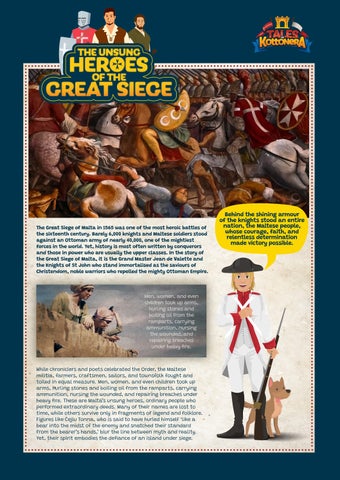
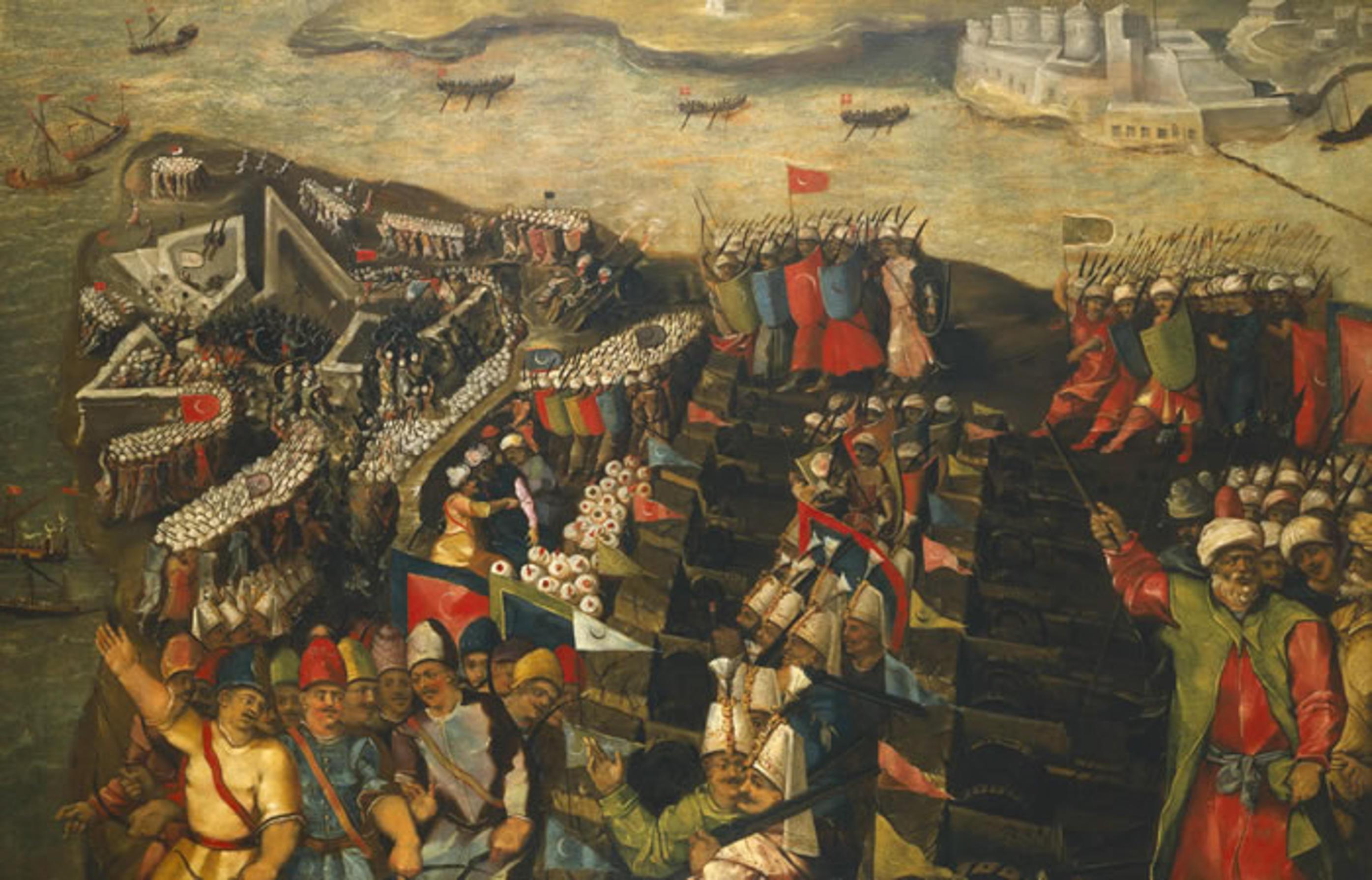
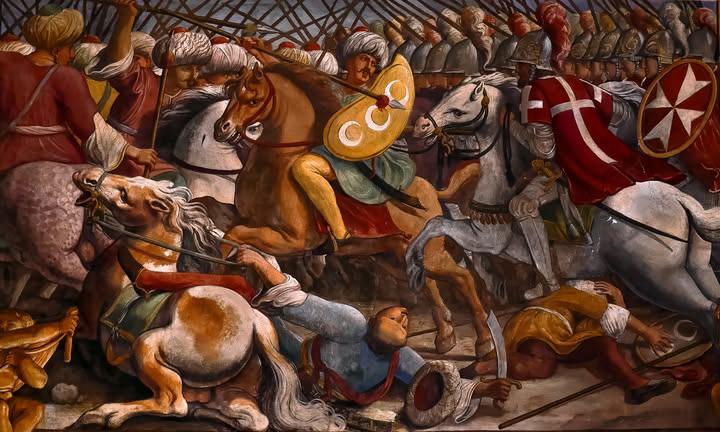
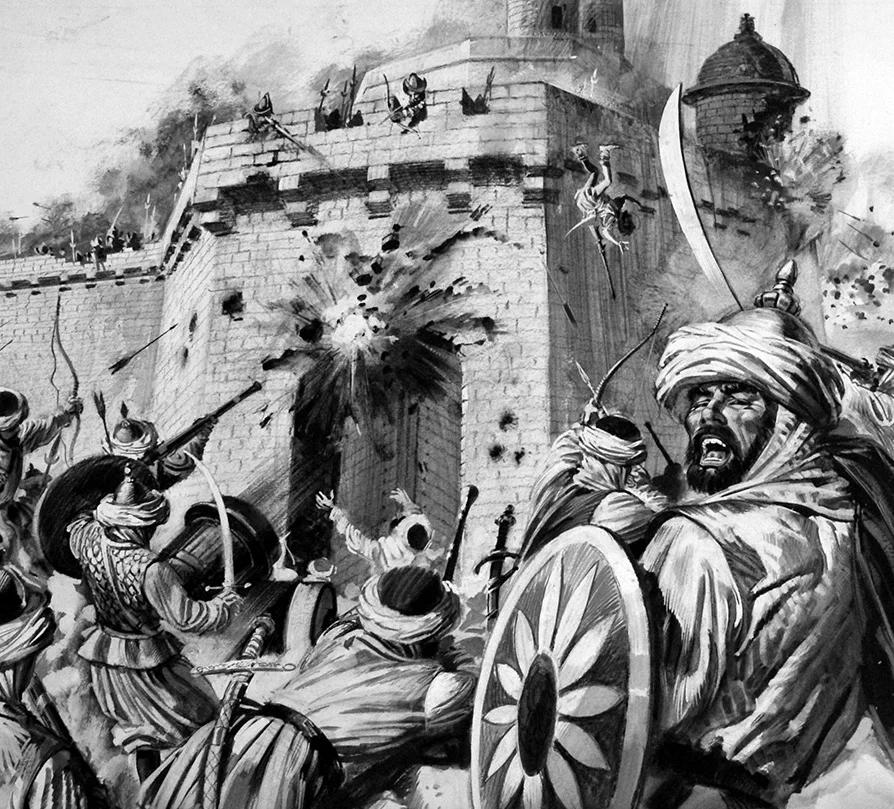
The Great Siege of Malta in 1565 was one of the most heroic battles of the sixteenth century. Barely 6,000 knights and Maltese soldiers stood against an Ottoman army of nearly 40,000, one of the mightiest forces in the world. Yet, history is most often written by conquerors and those in power who are usually the upper classes. In the story of the Great Siege of Malta, it is the Grand Master Jean de Valette and the Knights of St John who stand immortalised as the saviours of Christendom, noble warriors who repelled the mighty Ottoman Empire.
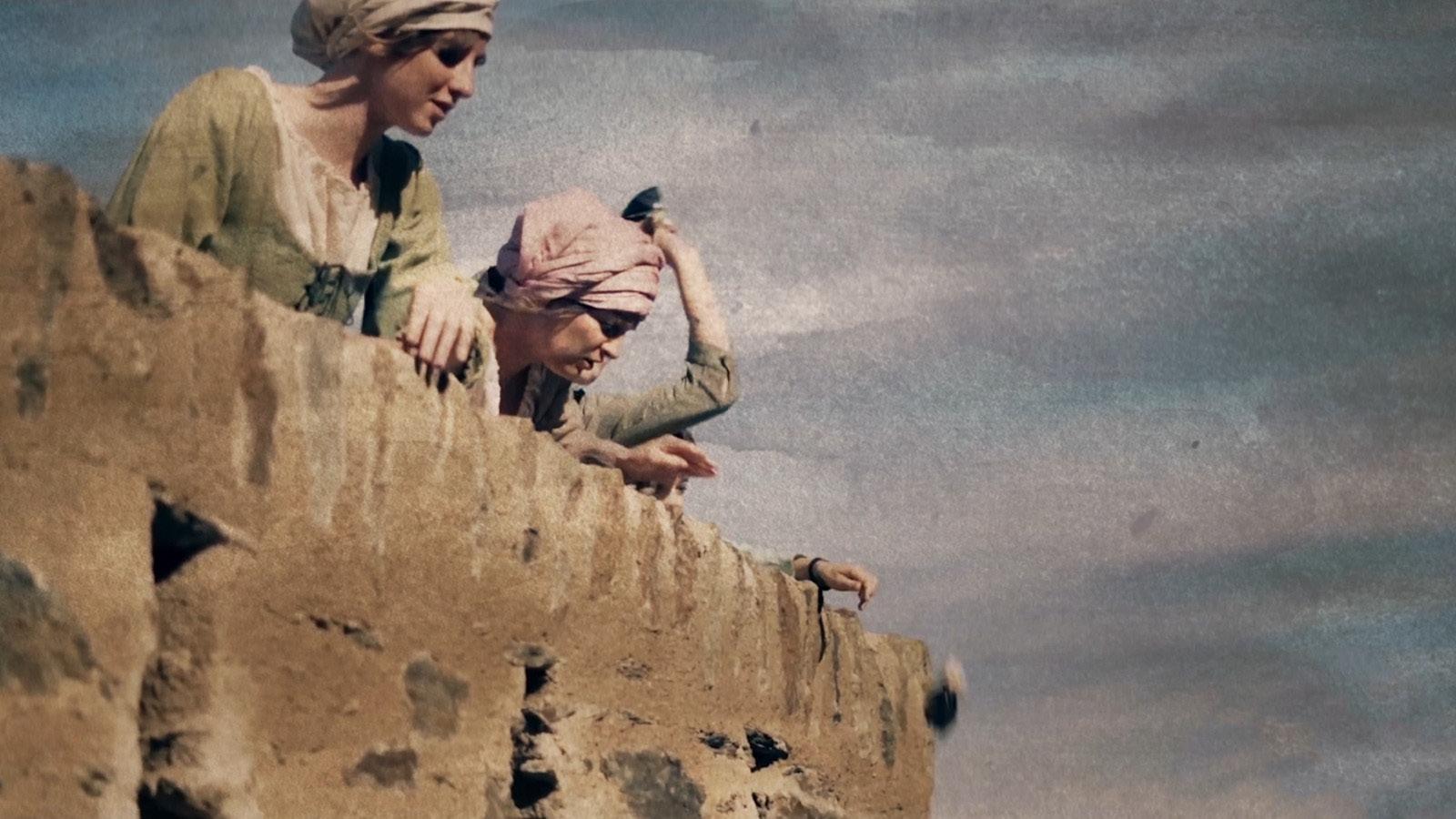
Men, women, and even children took up arms, hurling stones and boiling oil from the ramparts, carrying ammunition, nursing the wounded, and repairing breaches under heavy fire.
Behind the shining armour of the knights stood an entire nation, the Maltese people, whose courage, faith, and relentless determination made victory possible.
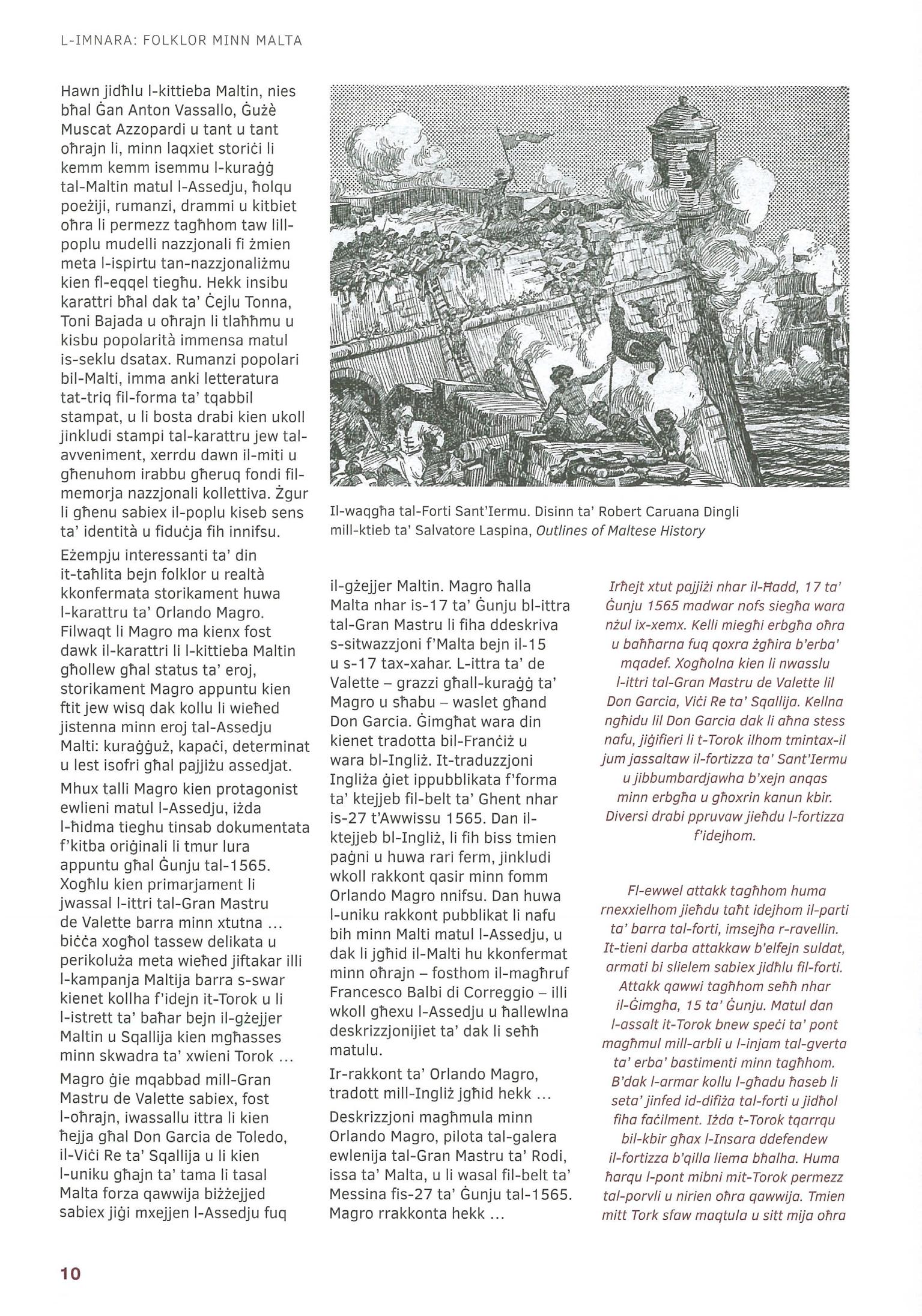
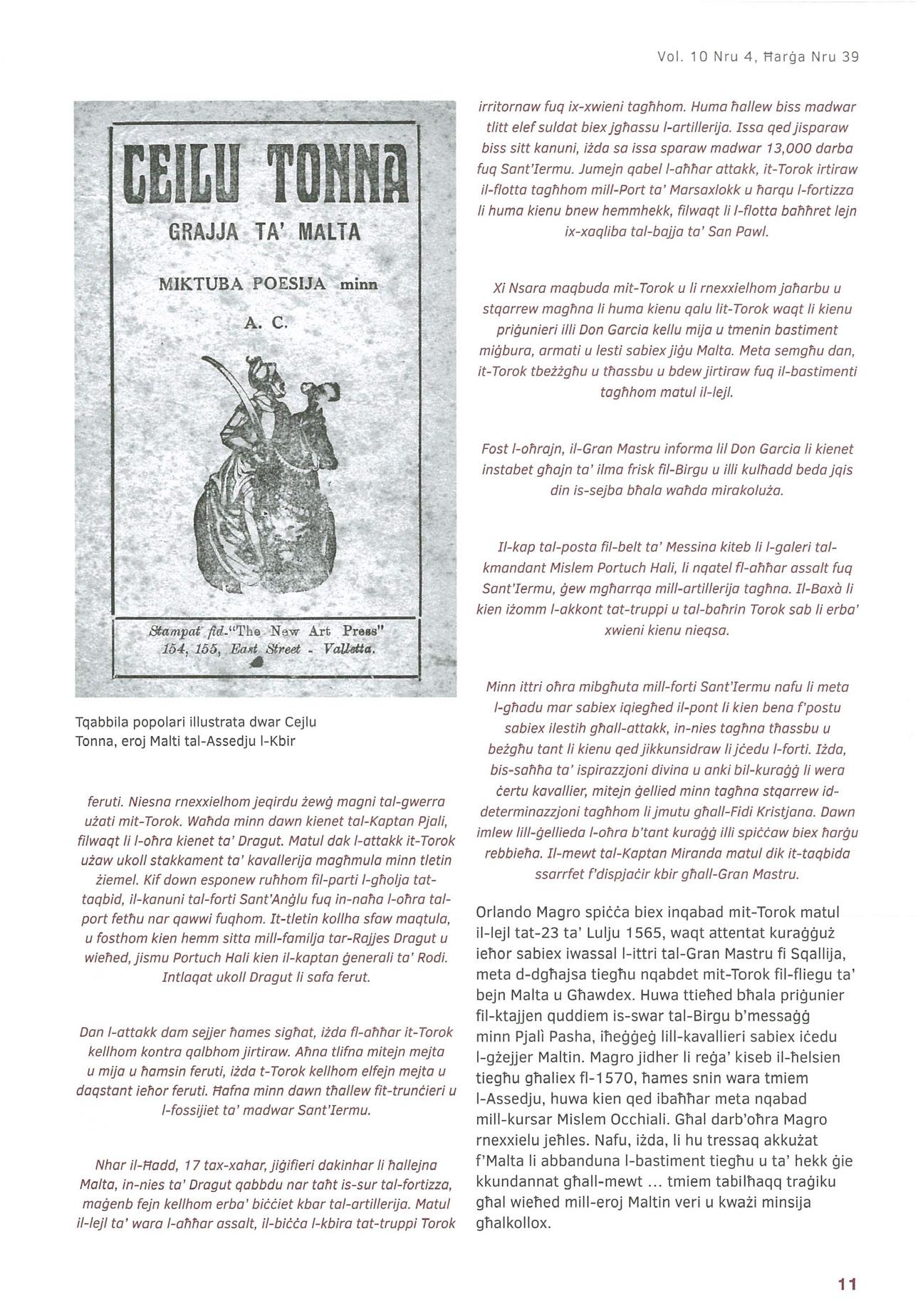
toiled in equal measure. Men, women, and even children took up arms, hurling stones and boiling oil from the ramparts, carrying ammunition, nursing the wounded, and repairing breaches under heavy fire. These are Malta’s unsung heroes, ordinary people who performed extraordinary deeds. Many of their names are lost to time, while others survive only in fragments of legend and folklore. Figures like Ċejlu Tonna, who is said to have hurled himself ‘like a bear into the midst of the enemy and snatched their standard from the bearer’s hands,’ blur the line between myth and reality. Yet, their spirit embodies the defiance of an island under siege.
The Maltese Militia: An Army of Islanders
At the outbreak of the Great Siege, around 3,000 Maltese soldiers formed the backbone of the island’s defence, the largest single group in Grand Master Jean de Valette’s forces.
Drawn from every town and village, the Maltese militia was organised into local companies known as the dejma. Each company gathered men from nearby communities: Mdina and Rabat’s ranks included fighters from Ħaż-Żebbuġ Ħad-Dingli and Ħal Muxi; Ħal Qormi’s company counted men from Birkirkara, Lija, Balzan, and Attard; the Naxxar dejma included men from Mosta, Għargħur, and Mellieħa; Żurrieq’s battalion drew from Qrendi, Ħal Far and Bubaqra; while Żejtun, Bir Miftuħ, Birgu, and Bormla each fielded their own units. Over 300 Maltese horsemen also reinforced the Order’s cavalry, stationed at Mdina to patrol the countryside.
These men were everywhere, on the bastions, in the ditches, and behind the walls, hauling stones, loading cannons, and fighting shoulder to shoulder with the knights. Chroniclers like Balbi di Correggio described them as “dependable, courageous, and tireless”, while others, such as Viperano and Bosio, noted in wonder that no Maltese was ever seen retreating before the enemy.
The Great Siege was not only a triumph of arms, but a triumph of a people. Behind every knight’s banner stood a Maltese hand, a Maltese heart, and a Maltese soul, the true defenders of the island. Though most of their names are lost to history, their deeds remain immortal in the story of a small island that defied an empire.
Unlike the professional knights and mercenaries of the Order, these were ordinary men fighting for their homes, their families, and their faith.
Toni Bajada
Among the many Maltese who risked everything during the Great Siege of 1565, none is more steeped in legend than Toni Bajada, the daring spy and swimmer whose courage helped turn the tide of war.
Born in Naxxar, Bajada was once captured by the Ottomans and enslaved. During his captivity, he learned Turkish, a skill that would later make him invaluable to the Knights of St John. When Grand Master Jean de Valette sought men to infiltrate enemy lines, Bajada was hand-picked, joining four other Maltese spies, Andrew Zahra, James Pace, Anton Cascia, and Francis Xerri.
Disguised as a slave or even as a Turkish soldier, Bajada slipped unnoticed into enemy camps, gathering intelligence about Ottoman movements and plans. His missing ear, a remnant of his time in captivity, added to his disguise. The information he brought back to the Grand Master proved vital in anticipating attacks and defending Malta’s last strongholds.
But it was Bajada’s physical endurance that made him a legend. Under the cover of night, he swam long distances between Birgu and Senglea, carrying secret messages through harbours filled with enemy ships. He even volunteered to swim under heavy fire to deliver de Valette’s letter to the besieged defenders of Fort St Elmo, urging them to hold their ground. Thanks to his message and the knights’ renewed resolve, the fort resisted the Ottoman assault for several more days.
Bajada’s intelligence work continued throughout the siege. He brought reports of Ottoman losses, starvation, and dissent within their camp, news that boosted Maltese morale. Later, when reinforcements from Sicily arrived, Bajada guided them safely to shore, signalling their landing with bonfires in the hills.
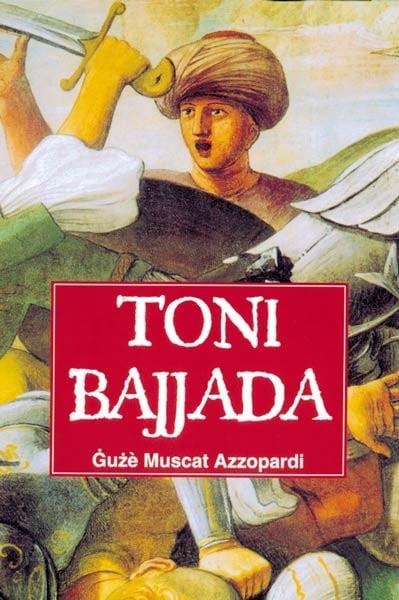
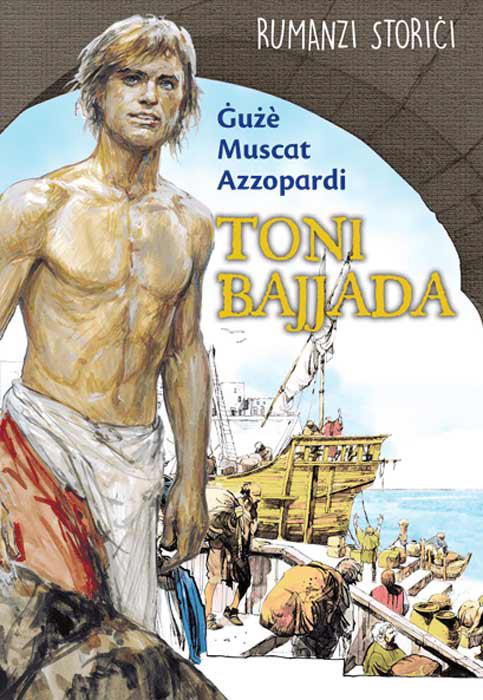
Though much of his life remains shrouded in mystery, Toni Bajada’s courage, cunning, and loyalty earned him a place in Malta’s collective memory. Streets across the islands bear his name, and his legend lives on in Emilio Lombardi’s Toni Bajada: The Maltese Messenger of the Grand Master.
Many books and even novels have been written around the exploits of Toni Bajada
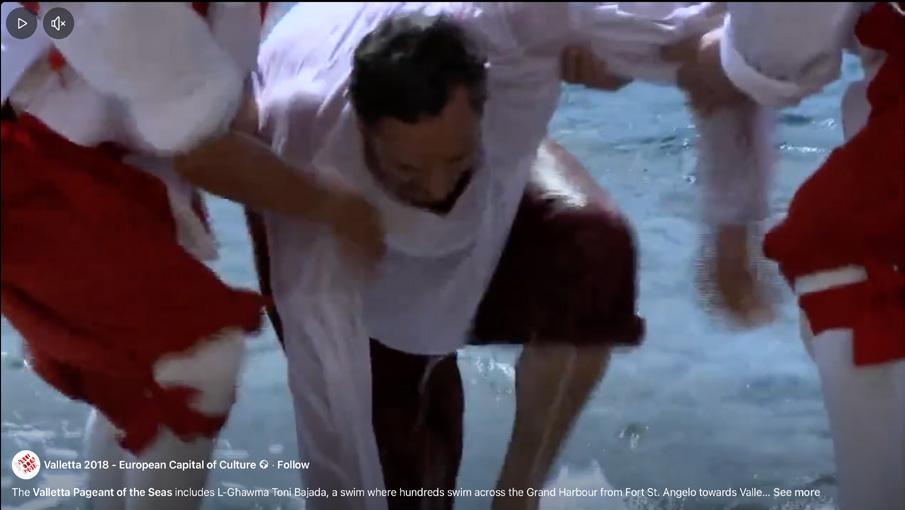
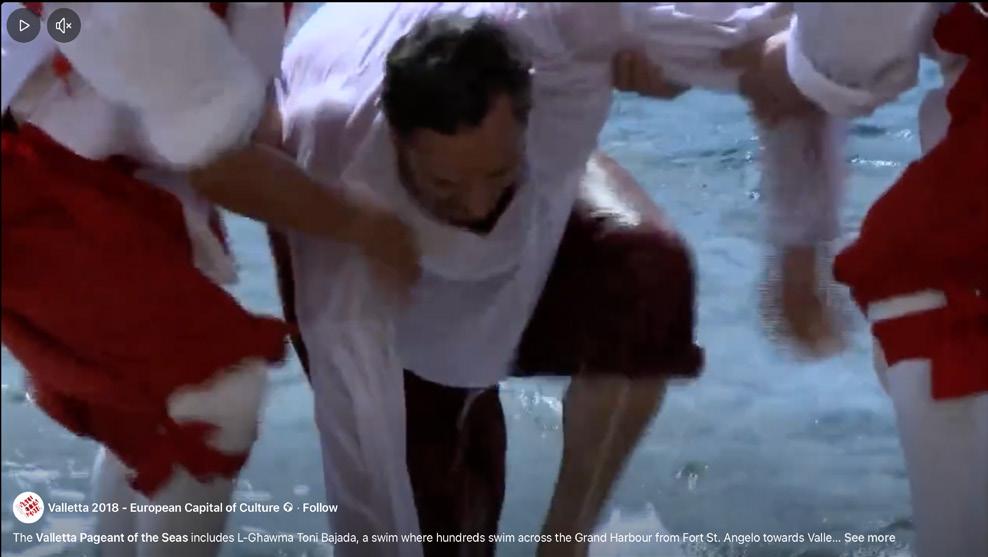
Toni Bajada’s epic swim was also celebrated during “Pageant of the Seas” with hundreds of swimmers crossing the harbour from Fort St. Angelo to Valletta
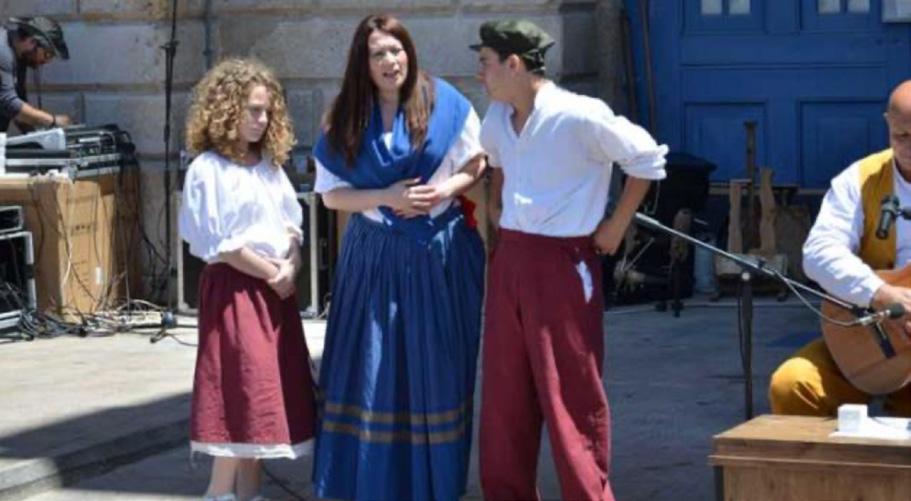
The characted of Toni Bajada regularly features in the numerous historic re-enactments of the Great Siege as the embodiment of Maltese heroism.
Orlando Magro
Among these half-forgotten champions were spies and informants such as Toni Bajada, Franġisk Xerri, Gejtu Tonna, Indri Zahra, Kola Buhagiar, Anton Cascia, and Ġakbu Pace; men who risked their lives to gather and convey intelligence through enemy lines. Seafarers and messengers such as Orlando Magro, Pietru Miraglia, Bertu Abela, Pietru Xewka, Anton Xilla, and Franġisku Bonnici braved Turkish patrols to deliver vital communications to Sicily. At the same time, militia mercenaries, Luqa Briffa, Mikiel Catli, Marku Xuereb, and Karlu t’Avila, fought fiercely on land. Volunteers such as Ġakbu Bonnici, Wistin Tabona, Ġlormu Camensuli, Marku Vosco, Salvu Żabbar, and Tummasu Mizzi stood side by side with knights and soldiers in the island’s
letters beyond the besieged island. With the countryside held by Ottoman forces and the surrounding sea patrolled by their warships, each mission was a near-suicidal act of loyalty.
On the 17th of June 1565, Magro set sail under cover of night with four companions in a small
In his brief report, Magro described the relentless Turkish assaults on Fort St Elmo, the fierce Christian defence that repelled them, and the mortal wounding of the famed Ottoman commander Dragut. His words give us a rare Maltese voice from that desperate summer.
Malta’s last hope for relief. He succeeded in reaching Messina, and de Valette’s letter was delivered safely. That message, later translated into French and English and printed in Ghent on 27 August 1565 includes a few words from Orlando Magro himself and, remains the only known account containing a report by a Maltese eyewitness of the Siege.
Magro’s courage did not end there. In another attempt to carry messages to Sicily, on the night of 23 July 1565, he was captured by the Turks in the channel between Malta and Gozo and paraded in chains before Birgu’s walls with a demand for surrender. Remarkably, he later regained his freedom and returned to the sea.
Yet his life ended tragically. Around 1570, after once more escaping capture by corsairs, Magro was accused in Malta of abandoning his ship and condemned to death. Thus died Orlando Magro, one of Malta’s true yet almost forgotten heroes of the Great Siege. darkest hour. Even in the workshops and
A popular poem about Ceilu Tonna and his heroics during the Great Siege.
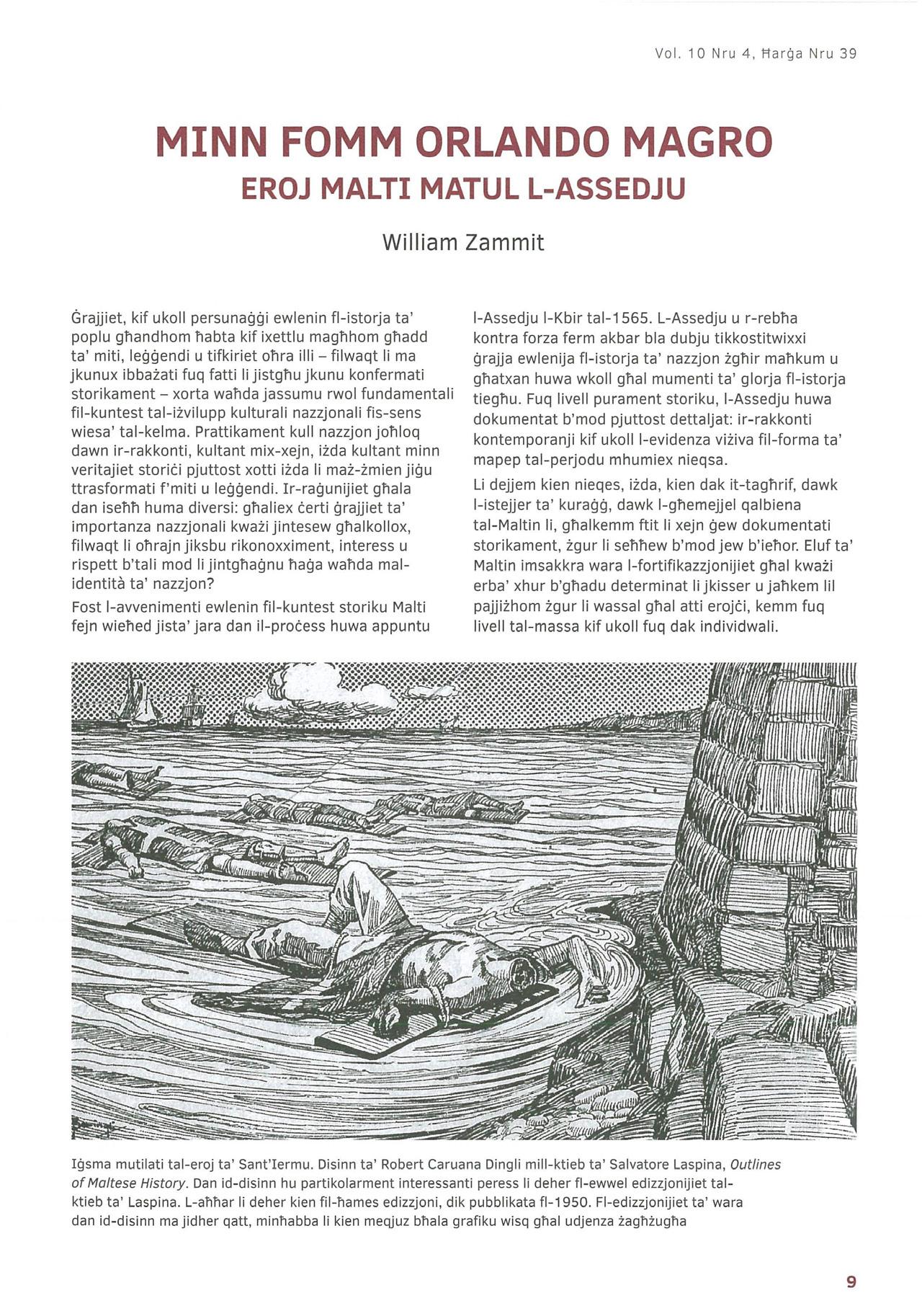
Mutilated bodies of heroes from St.Elmo