SOUND QUALITY Claims Without Data Are Only an Opinion

Empirically Evaluating sound.
By Mark Graham
When I first joined Symetrix I quickly got on the road and set out to meet with integrators and consultants to gain first-hand experience in how they viewed Symetrix’s strengths and weaknesses.
I knew before I joined that Symetrix had an excellent reputation for sound quality but was surprised by how consistent that positive feedback was. One early meeting summed up the feedback nicely. The principal of a respected integrator with national reach described how his team had run an experiment to compare the sonic performance of Symetrix with three other leading signal processing brands. “Everyone said they were VERY impressed with the sound of the Symetrix. The stereo separation and sound field were markedly better (with Symetrix Radius) than the other brands. Based on this, you may want to ask all your dealers to arrange shootouts including Symetrix!”
Well, here we are about four years later, and I am back out on the road in the New York area. Over dinner with a consultant friend the conversation eventually came around to sound quality and he said (to paraphrase): “I tend to believe your claim of higher sound quality, but how do you substantiate it?”
That’s a good question.
Sound quality has been a key component of just about every brand and product I have been a part of over the last 30 years. The natural, and perhaps obvious, questions of what makes one audio product sound better than another, and how can you prove it, have been constants for my entire career. So, after that dinner with my consultant friend I headed back down some personally well-trodden paths to a spec sheet comparison of Symetrix to those published by a variety of competitors. I was looking, not optimistically, to see if I could find in the spec sheets why Symetrix sounds better and wins shootouts. Not surprisingly, Symetrix audio specifications did not appear, on a published specification level, to have the highest-performance. Arguably the best specified performance was from a successful brand that is well known for marginal audio quality.
The topic of how audio specifications are published, and why they are unreliable in terms of predicting audio reproduction fidelity is something to address…at some point. But, what’s on my mind today is exploring what makes for high-performance audio reproduction.
To unpack this, let’s go under the hood of a Symetrix digital signal processor and break down the elements of a high-performance processing system.
FROM THE CEO 3 SYMETRIX SCENE > MARCH 2023
To begin, here’s a simple example: we all know that the quality or fidelity of an audio reproduction system is constrained by the weakest link in the signal path. No one would suggest to their customers that they should invest in the highest performance signal processors, amplifiers, and loudspeakers, only then to deploy a commodity mixer as the front-end. It’s well understood that such a system would sound only as good as the commodity mixer. The lowestperformance element (mixer) in the signal path constrains the system-level performance to be no greater than what it can deliver. This principle also determines the highest level of performance that a digital signal processing system can achieve.
Symetrix achieves high-performance through optimizing (sustained over a 45+ year history) the entire signal path. This optimization includes refining the operation of each stage in the signal path as well as the interaction between each element in the signal path. Let’s break down these key components.
Input/output Preamplifier
Symetrix preamplifiers are carefully designed to deliver very low noise and distortion and, high dynamic range, without compromising frequency and phase response. Incredibly wide bandwidth and fast slew rate are also aspects our engineers obsess over for this stage. Collectively, these characteristics provide for a highly accurate audio signal path.
Low Noise: -134.8 dBu (1 nV/ √Hz) EIN @ 60 dB gain.
Low THD+N: 0.0003% @ 3-to-30 dB gain; 0.0005% @ 40 dB gain.
Wide Bandwidth: 2.7 MHz @ 40 dB gain
High Slew Rate: 53 V/μs.
While these specs may seem overkill, in all signal chains, overall quality is constrained by the lowest performing element. Symetrix’s deliver the best sound by focusing on every component in the circuit.
ADC/DAC
Analog to Digital Converters (ADC) and Digital to Analog Converters (DAC) are often treated as a simple plug-in component and given only minimal thought by the designer. As with all aspects of the DSP signal path, Symetrix meticulously optimizes the interaction between the converters and the stages delivering or accepting their input and output. This includes a focus
on clock jitter, input/output impedance, gain structure, circuit board layout, and more. These efforts deliver superior signal to noise, dynamic range, and accuracy.
Digital Signal Processing
Today, as with most DSP brands, all Symetrix digital signal processing is performed on Analog Devices Sharc processors.* Although Sharc processors are commonly chosen by most brands, Symetrix implementation is far from common.
Symetrix foregos any off-the-shelf operating systems and designs all Sharc functionality “bare metal.” This refers to programming the Sharc without an operating system to enable its function at the highest possible performance levels without compromise of system efficiency or quality. The end result of this deep optimization is increased signal integrity (accuracy), lower processing-induced noise, and faster response times. Think of a production automobile’s engine performance as compared to one that has had its engine control module (computer) replaced with one that tunes the engine operation for racing.
Once the signal processing engine has been built and tuned, the actual processing modules (programming blocks containing the math to perform signal modification) are the next link in the chain that must be optimized. True to Symetrix’s design values, these are not simple cookbook modules. Symetrix 400-plus audio processing modules are individually mathematically modeled to accurately emulate high-performance analog studio and broadcast signal processors.
The net result of this highly tuned processing system (engine + hand-crafted processing modules) is audibly superior sound quality.
*A significant competitor has deployed their processing on the Intel x86 general purpose processor. While this processor enables some excellent features to be realized in firmware, it trades off as a compromise certain aspects of audio signal processing quality and therefore not addressed in these specific comments.
Symetrix’s unblemished shoot-out win record for audio performance is not hard to understand when you lift the hood and get beyond the marketing spin that dominates much of the published audio specifications we see. However, we say in Symlandia, “If you do not have data to back up what you’re saying, it’s just an opinion.” Or, that philosophy’s corollary, “If you can’t explain it and measure it, it’s not real.” So, let’s go to the lab.
on next page)
+ Op-amp DSP ADC OUT IN DAC OUT IN + Op-amp
Input Preamplifier →
to
→
→ Digital to
→
Preamplifier
Analog
Digital Converter
Digital Signal Processing
Analog Converter
Output
(continued
(continued from page 4)
Measuring Signal Processor Audio Performance

Question: Why do you think that THD+N and Crosstalk are generally specified at 1 kHz?
It turns out, not surprisingly, that if you take a deeper look at THD+N, at frequencies other than 1 kHz, you get much different results. In our lab, when analyzing signal processor performance, we measure THD+N across the full audio spectrum. This gives us much greater insight as to how signal processors perform, particularly at higher frequencies where we see the performance of marginal designs deteriorate.
But we can’t stop at full-spectrum THD+N. This measurement provides clues, but not a complete answer in our pursuit of characterizing what makes a signal processor sound better.
From that point, we leap off into a deep dive of the detailed harmonic distortion signatures and output voltage rise times of the signal processors under test. The THD signature test consists of comparing the Fast Fourier Transform (FFT) of the signal processors outputs, at various frequencies
across the audio spectrum. The input is a sine wave, and the FFT of the output delivers this in the frequency domain for analysis–breaking the signal down into its individual frequency components (which theoretically should consist only of the sine wave fundamental, but as we all know real-world electronics create additional frequency components = noise and distortion).
This allows us to see and measure the harmonic artifacts being created by the signal processors, and compare these results across devices. A meaningful difference in audio performance now begins to come into focus.
Under these test conditions, we observe the afore mentioned competitor’s flagship product, when compared to a Symetrix Radius NX delivers these results (see Figure 1):
Internal FFT measurements of a 1 kHz input tone clearly show Symetrix Radius has slightly more pleasant sounding even harmonics at 2 kHz, 4 kHz, etc., and significantly less harsh sounding odd harmonics at 3 kHz, 5 kHz, etc. compared to the competition’s device.
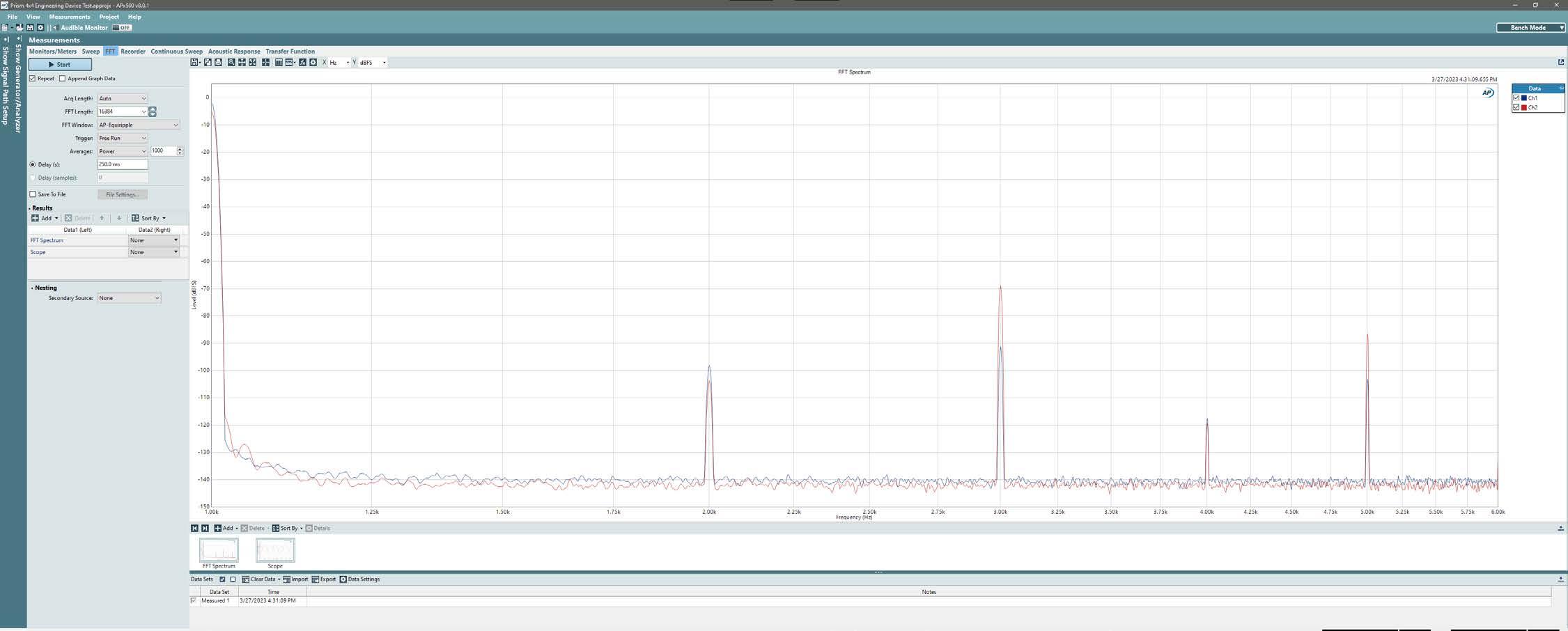 Figure 1. FFT Comparison of Symetrix Radius NX and Competitor’s device THD. A/B comparison of output FFT @ 1 kHz sine wave @ 1 dB below clipping: Blue Line = Symetrix Radius. Red Line = Competitor’s DSP.
5 SYMETRIX SCENE > MARCH 2023
That’s audible. Odd harmonics, in a signal processor designed for transparency, sound unpleasant.
Another aspect we want to explore is Rise Time or Slew Rate. Faster rise times, and higher voltage capabilities improve the reproduction accuracy of higher frequency components (fundamentals and harmonics). We measure the outputs at a 0 dBFS square wave on each unit and measuring the slope of the voltage as it swings from low to high. The results are clear (see Figure 2).
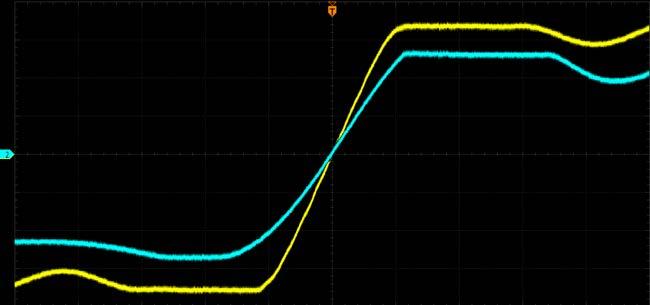
Symetrix Radius’ Rise time ~61% of competitor.

(770 kV/s vs. 470 kV/s).
Finally, a measurable answer to why Symetrix DSPs:
• Win shootouts.
• Are regularly deployed to tune high performance audio systems.
• Are the choice of respected loudspeaker manufactures to develop their tunings on.
 Mark Graham
Symetrix Owner & CEO
Figure 2. Rise Time: Input 0 dbFS, 1 kHz square wave. Yellow = Radius NX. Blue = Competitor’s signal processor. X axis is 10.0 µs/div, Y axis is 2.0 V/div.
Mark Graham
Symetrix Owner & CEO
Figure 2. Rise Time: Input 0 dbFS, 1 kHz square wave. Yellow = Radius NX. Blue = Competitor’s signal processor. X axis is 10.0 µs/div, Y axis is 2.0 V/div.
SYMETRIX SCENE > MARCH 2023 6
CASE STUDY
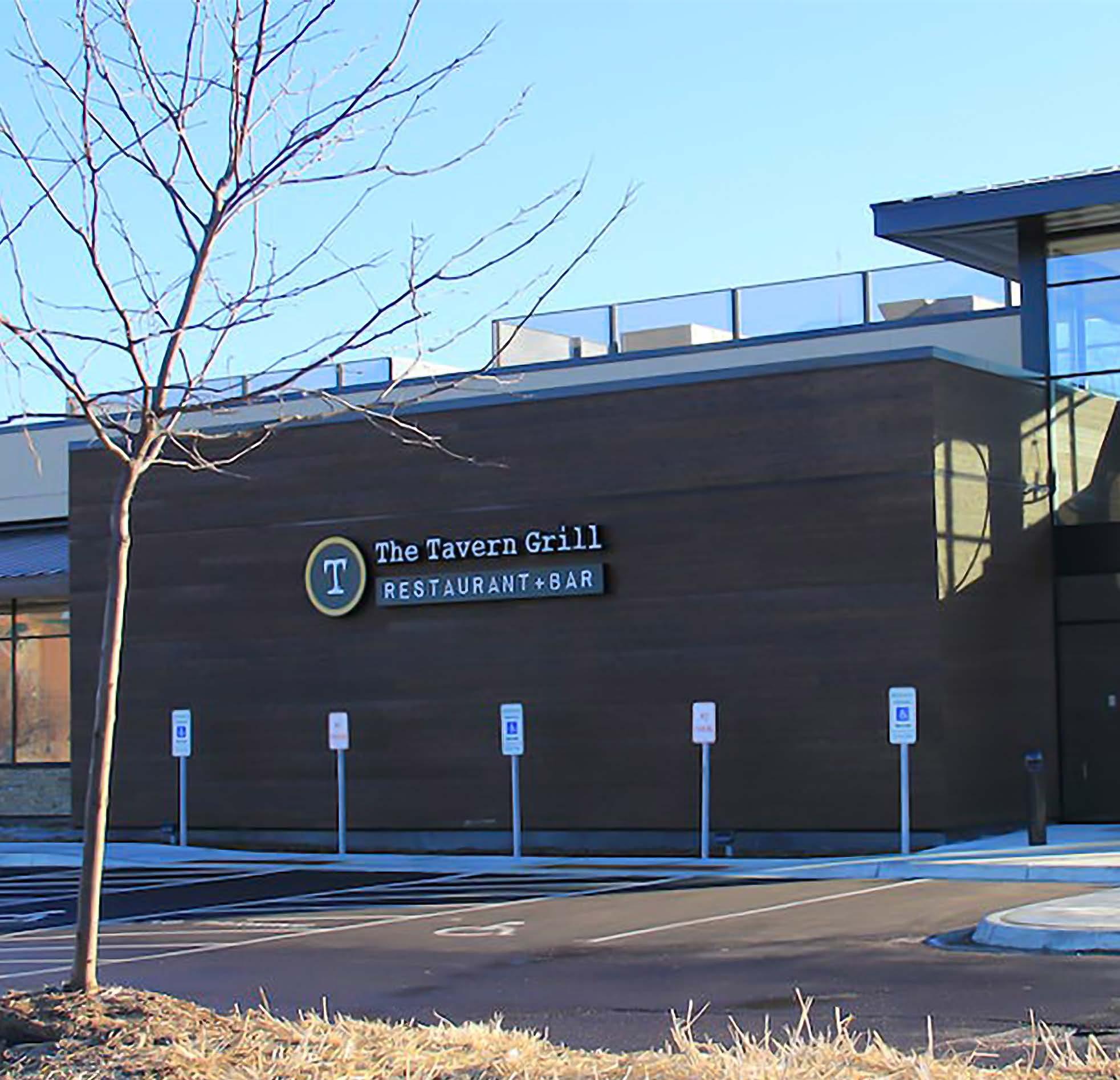
The Tavern Grill Restaurant and Bar in Minnesota.
by James Ling
One of the current trends for systems integrators in the US is the return of bars and restaurants as an important revenue stream. In this kind of environment, AV systems can be mission-critical meaning that there is a greater emphasis on finding the right gear.
In the fast-moving hospitality environment, AV equipment should enhance your venue without getting in the way of your operations. You need technology that you can trust to work when you need it to, while also being simple for your staff to use. Finding that combination can feel like a never-ending task, but when you do, you then want to roll it out across every outlet that you run so you can see the advantages across your whole business.
This is the path that has been followed by The Tavern Grill chain, an upscale casual full-service bar and restaurant with six locations currently open, two more under construction, and several potential locations throughout the Midwest on its radar. Owned by Hemisphere Restaurant Partners, each restaurant is distinct in design, but share a common AV backbone that is fine-tuned to the individual outlet.
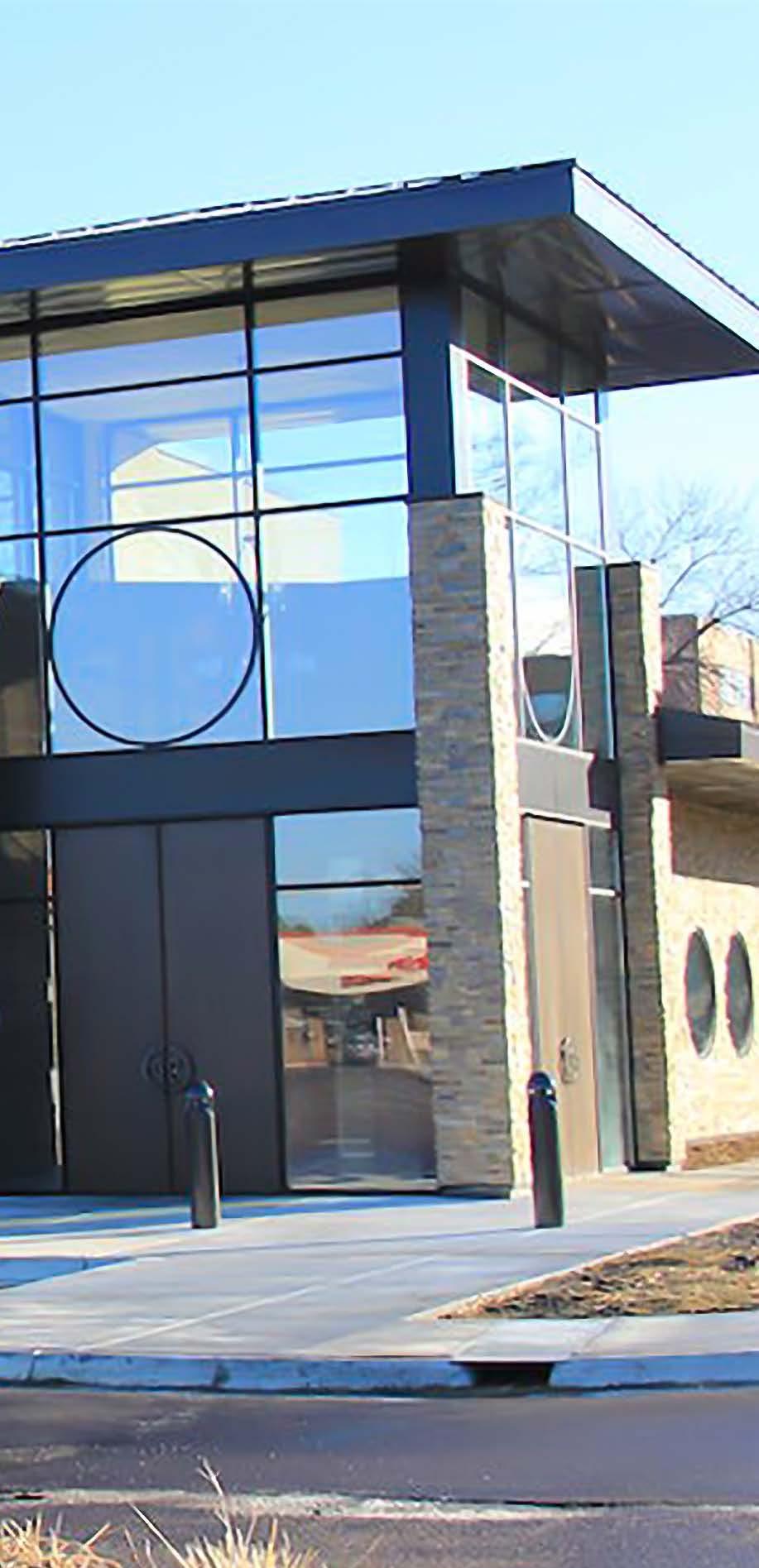
Hemisphere Restaurant Partners has had a long relationship with Minnesota-based Aufderworld Corporation, and once again called upon their skills and knowledge to design and install the AV solution across each of the sites. The Aufderworld team knew that the solution had to be rock-solid with an intuitive user interface, both factors that ensured they turned to Symetrix.
“When Hemisphere came to us and said they were rolling out the new concept, Symetrix processors were an obvious choice for us,” said Brian Chelminiak, President at Aufderworld Corporation. “The reliability is great, you set them up, they work and you forget about them. To my knowledge, I don’t recall ever needing to replace a faulty Symetrix processor.”
(continued on next page)
SYMETRIX SCENE > MARCH 2023 8
(continued from page 8)
Durability like this is a critical factor for any AV installation, as faulty equipment can be one of the biggest hidden costs in ongoing operations.
“Reliability is one of the biggest issues for systems as the cost of system ownership obviously goes up the more you have to tend to it,” Brian said. “We try to keep that cost down for our customers by using parts like Symetrix processors that are easy to program, easy to implement, and just incredibly reliable.”
The Tavern project saw a variety of different spaces with their own needs and characteristics, that each required a slightly modified solution. This meant that either Symetrix Prism or Jupiter DSPs were installed to meet the specific audio requirements of the site, while also looking after some of the simple video requirements in a ‘set and forget’ manner.
“The Symetrix processor is at the core of the audio system, and that allows them the ease of control,” explained Brian. “The system is mainly for Tavern’s management and staff to have full control of every zone–to turn on games, turn the volume up and down and such. We put a couple of the Symetrix ARC-2es and ARC-3s in the dining areas and in a few strategic locations just so their management can deal with that–and of course, we set them up with the web GUI
as well so they can use that.”
This online control feature has proven to be a popular option with the teams who use the system on a daily basis. “They’re just using the web GUI on their phones,” revealed Brian. “We offered it to all of the managers for operation, and then they have a backup controller for the zones. So if for whatever reason there’s a network issue, they still have a backup to control all the zones. We all know network and technology can have its issues, so you do have to have a contingency plan. But fortunately, Symetrix makes that really easy with the solid-state controllers that gives them a nice backup option that’s always there.”
The simplicity of this interface is another important factor that helps to overcome one of the major challenges seen in the hospitality industry–staff turnover.
“That industry traditionally does have a high turnover, so this really does assist the managers when there’s not a lot of time for training,” said Brian. “Symetrix makes it nice and simple to create a shortcut to the web GUI and then it’s very intuitive for them. In general, we don’t have a lot of issues with managers and re-training – it’s the sort of thing where the knowledge is streamlined well enough that it passes down from general manager to other managers. That really helps, and that’s a testament to the good design of the Symetrix system.”
The other area where this helps is with familiarity for staff who move between venues. “Standardization is another important thing from an implementation and an operation standpoint,” explained Brian. “They do have a lot of managers that are regional managers and go from site to site, so that consistency helps you save time not having to re-train the staff on everything.”
Importantly, the standardized approach is something that the chain’s owners are appreciating as well.
“Having a standard solution has given us consistency for our brand as it relates to ambiance, training, and centralized control,” explained Tim Cary, Chief Operating Officer at Hemisphere Restaurant Partners. “It has been very easy to train our staff on the system. Managers pick up the system and its use very quickly. Moreover, it’s afforded us an opportunity to establish property volumes that are consistent and not dependent on individual tastes.”
Reflecting on the system and how it has been used across the chain, Tim is very satisfied with the solution. “It’s been great to use the control system. We’ve found it to be accessible, intuitive, and reliable.”
www.tavernrestaurantgroup.com www.aufderworld.com
…Symetrix processors are easy to program, easy to implement, and just incredibly reliable.”
“ 9 SYMETRIX SCENE > MARCH 2023
Brian Chelminiak, President at Aufderworld Corporation
SYMETRIX SCENE > MARCH 2023 10
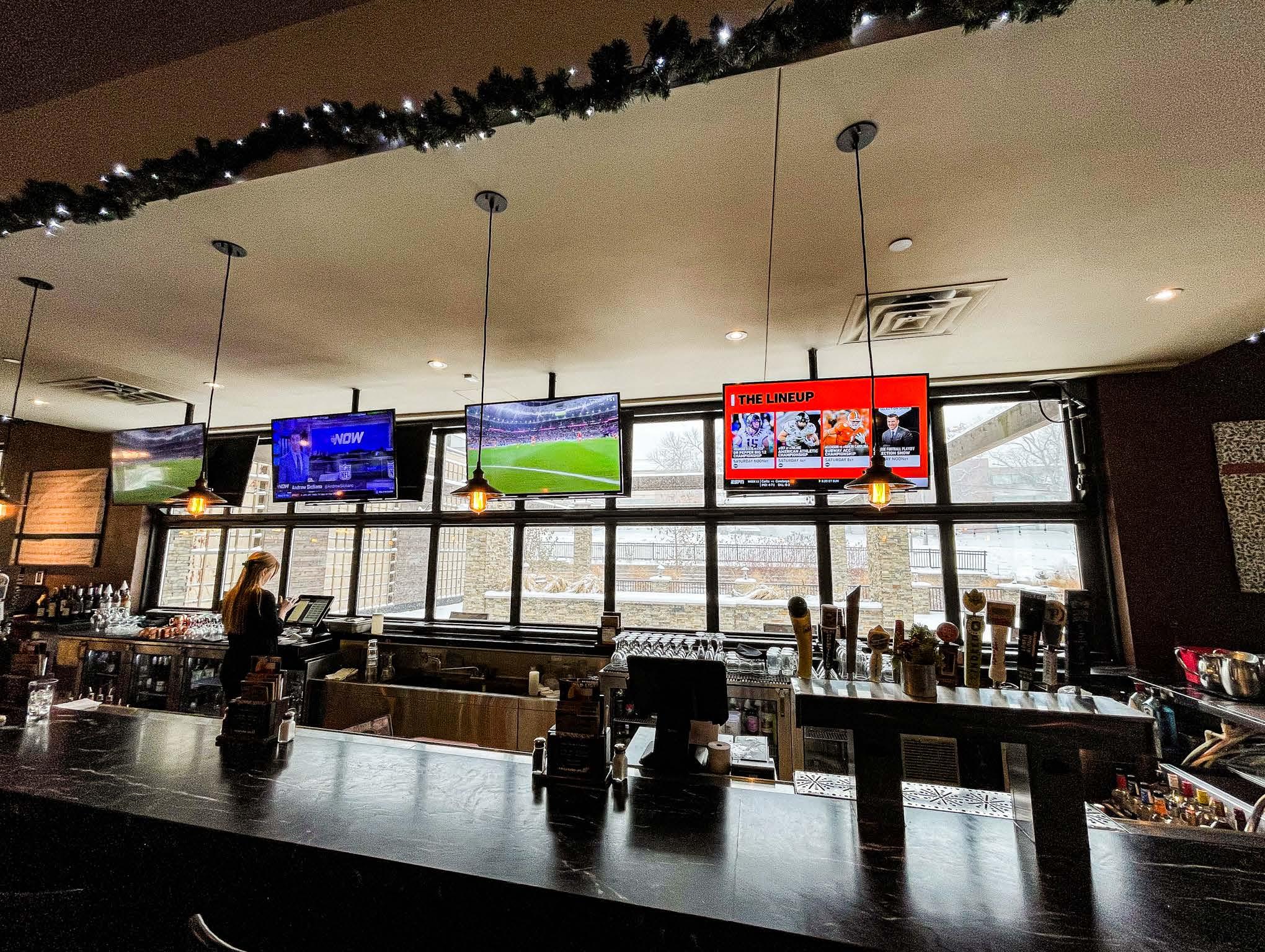
The interior view of the Tavern Grill.



Q&A
Name, Title, Company, Location
Brad Horbal, Principal, Bormann Marketing.
How many years have you been in the industry?
27 years
How do you support the pro-AV industry and what do your customers love about you?
I am an installer, engineer, and programmer at heart. That is how I got my start in the industry. I apply that skill set and product/system knowledge to representing Symetrix to present AV gear from the prospective of someone that has to design, install, program and ultimately train the end user on their new AV System.
What is the nerdiest thing you love about Pro-AV?
The gear, 100% the gear. I love taking a pile of boxes, connecting them together and watching the system come to life. It still gives me a thrill to watch a system come together and perform as designed.
What other hobbies do you have outside of Pro-AV?
Beyond spending time watching my kids grow, Fishing. Year around, whether open water or ice fishing. Any free time is spent on a lake.

How do you feel about Unicorns?
I believe they exist. One of my favorite YouTube videos is about unicorns.
SYMETRIX SCENE > MARCH 2023 12
CASE STUDY 13 SYMETRIX SCENE > MARCH 2023
by James Ling
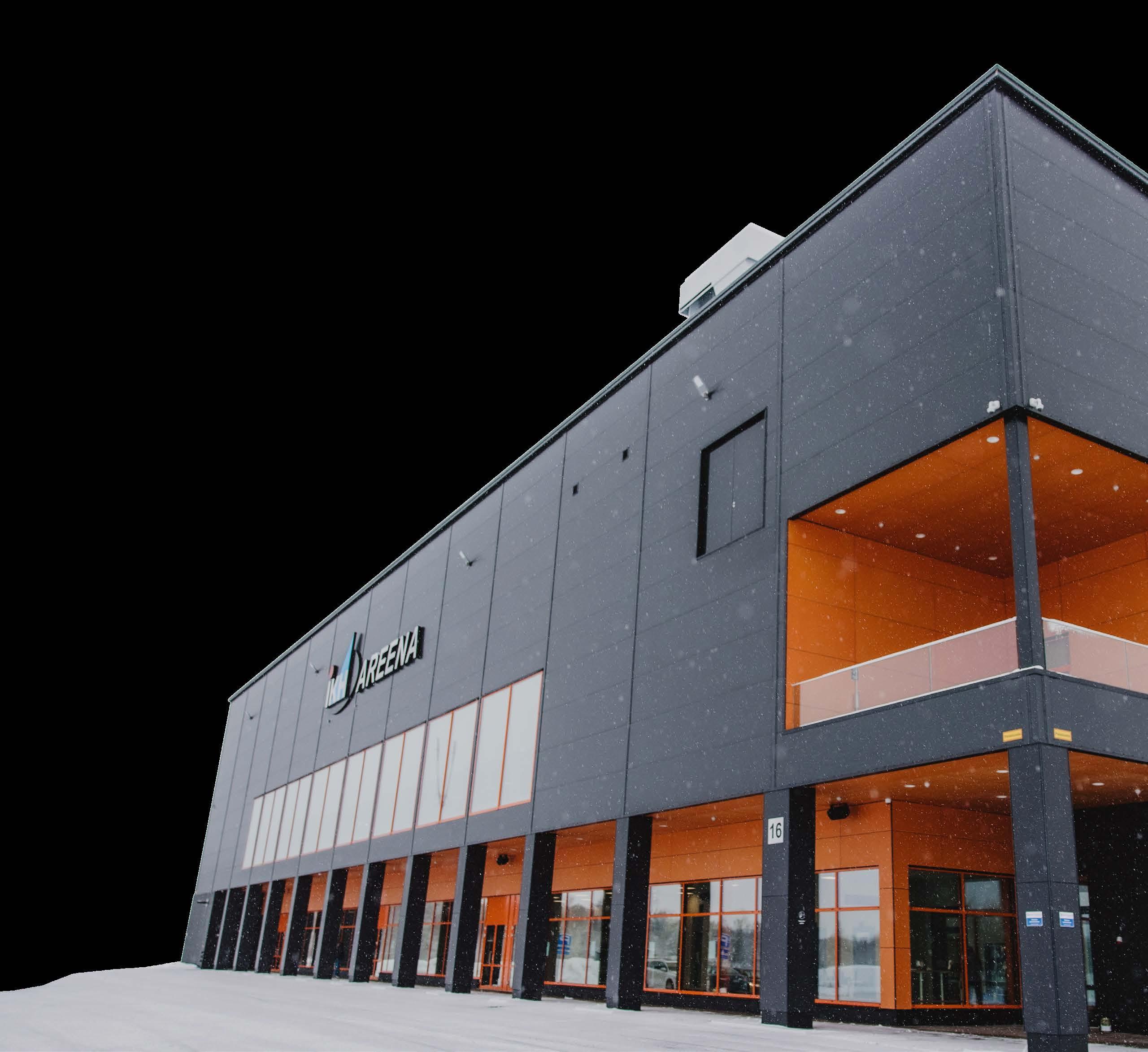
Based in the small town of Kauhajoki in western Finland, Karhu Basket has found instant success in the Korisliiga, the highest tier of Finnish basketball. Founded in 2017, the team won back-to-back championships in the 2017-18 and 2018-19 seasons before backing this up with a third title in the 2021-22 season. This level of success on the court has helped to create a large fan base for the team and fueled the need for a purpose-built arena.
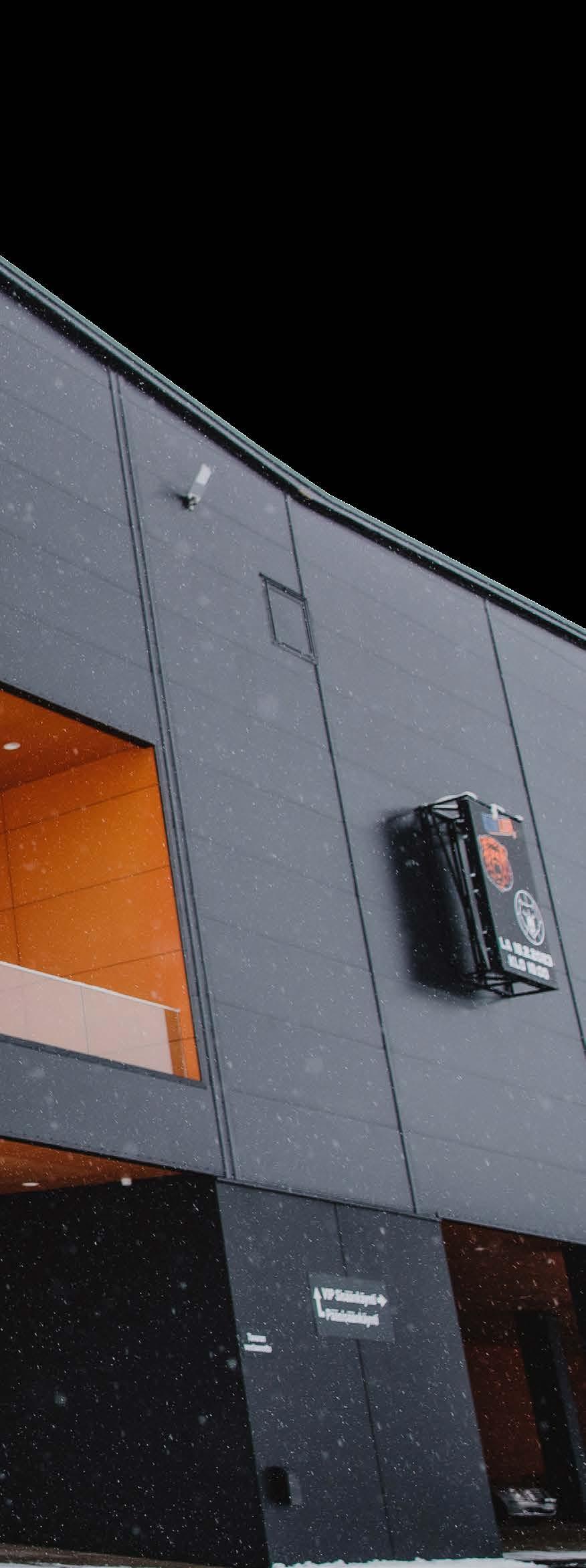
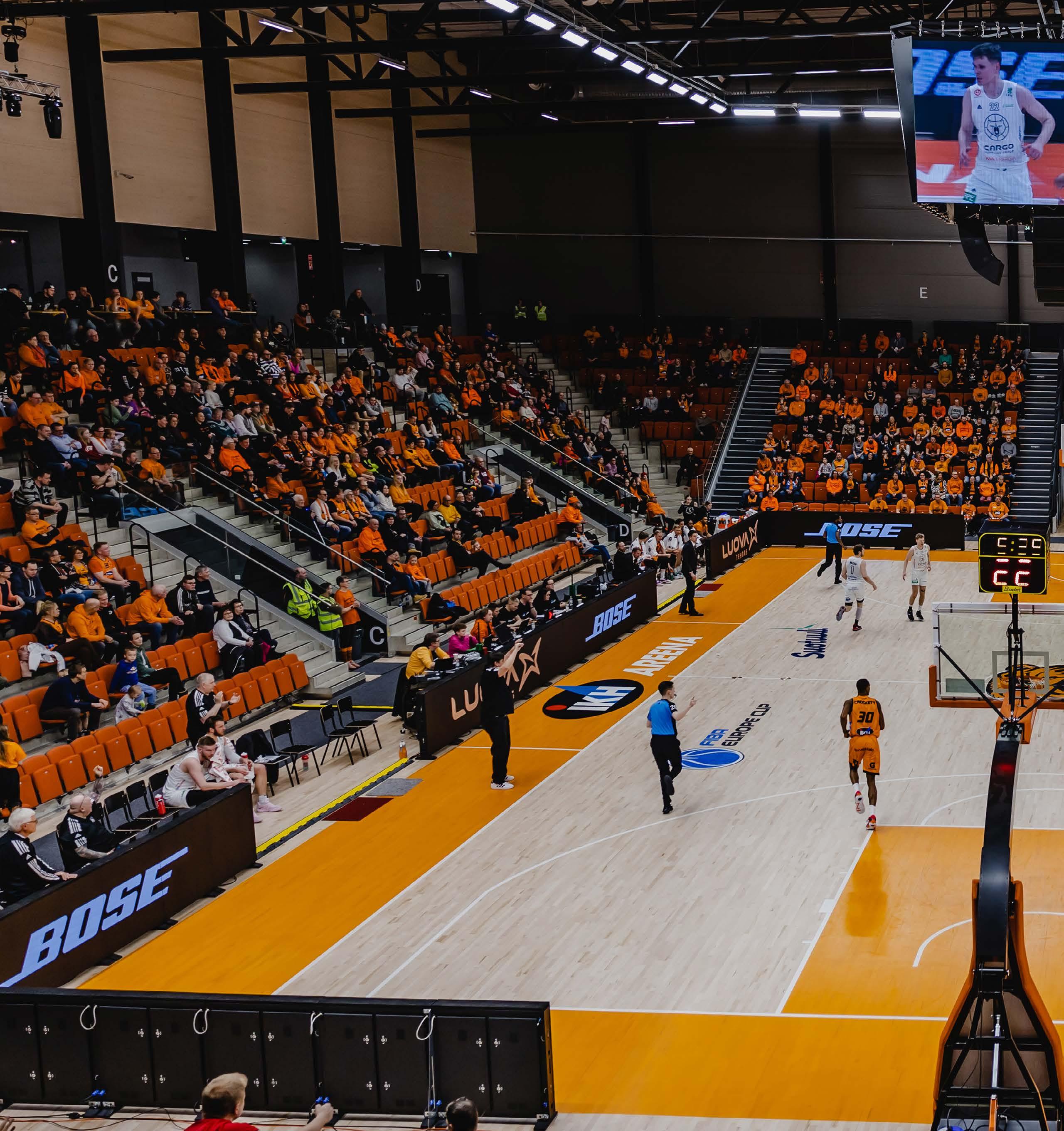
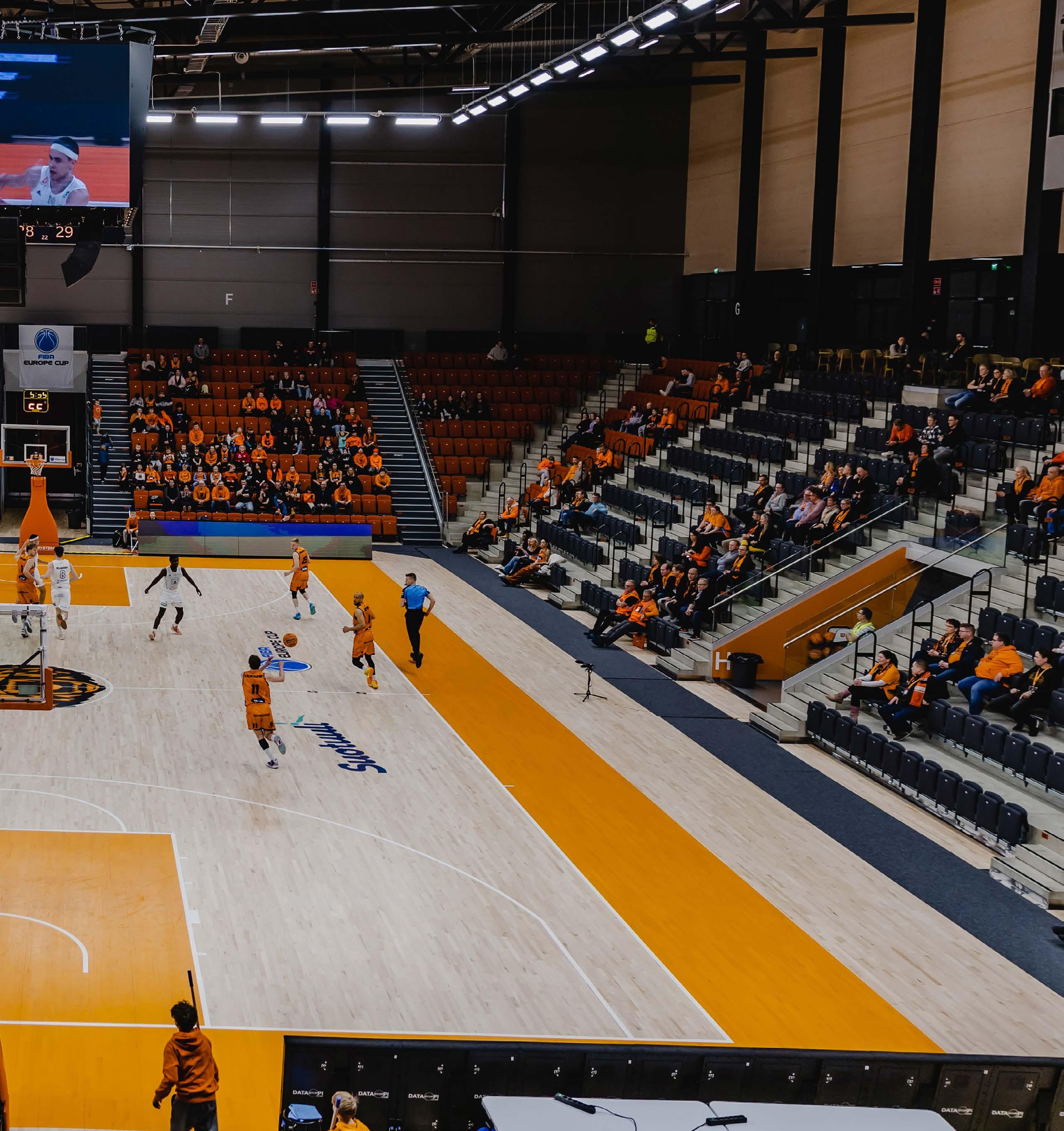
Opening its doors for the first time in 2022, the IKH Areena was conceived to provide this home base. It features 2,362 seats around the court and a total capacity of 3,600, meaning it can accommodate more than a quarter of the population of Kauhaloki. With three restaurants that can seat a combined 1,000 fans plus various hospitality areas and a club shop, the IKH Areena has been built to deliver a world-class game day experience that can be expanded to accommodate wider commercial uses.
While basketball is the main use for the venue, the concept behind the IKH Areena was always larger. It was created as a true multipurpose arena that would be as comfortable hosting everything from international sport to trade shows, and concerts to corporate events. With this broad scope of activities, the arena required advanced AV technology that would be flexible enough to ensure that every type of event went flawlessly. As such, Symetrix was an obvious choice.
As a new build project, the arena was a blank canvas giving its operators the opportunity to ensure every part of the venue was fit for purpose. The operators turned to a variety of local experts to ensure that every aspect of the arena was up to date. When it came to the AV system, it selected Luova Tehdas from the nearby town of Seinäjoki.
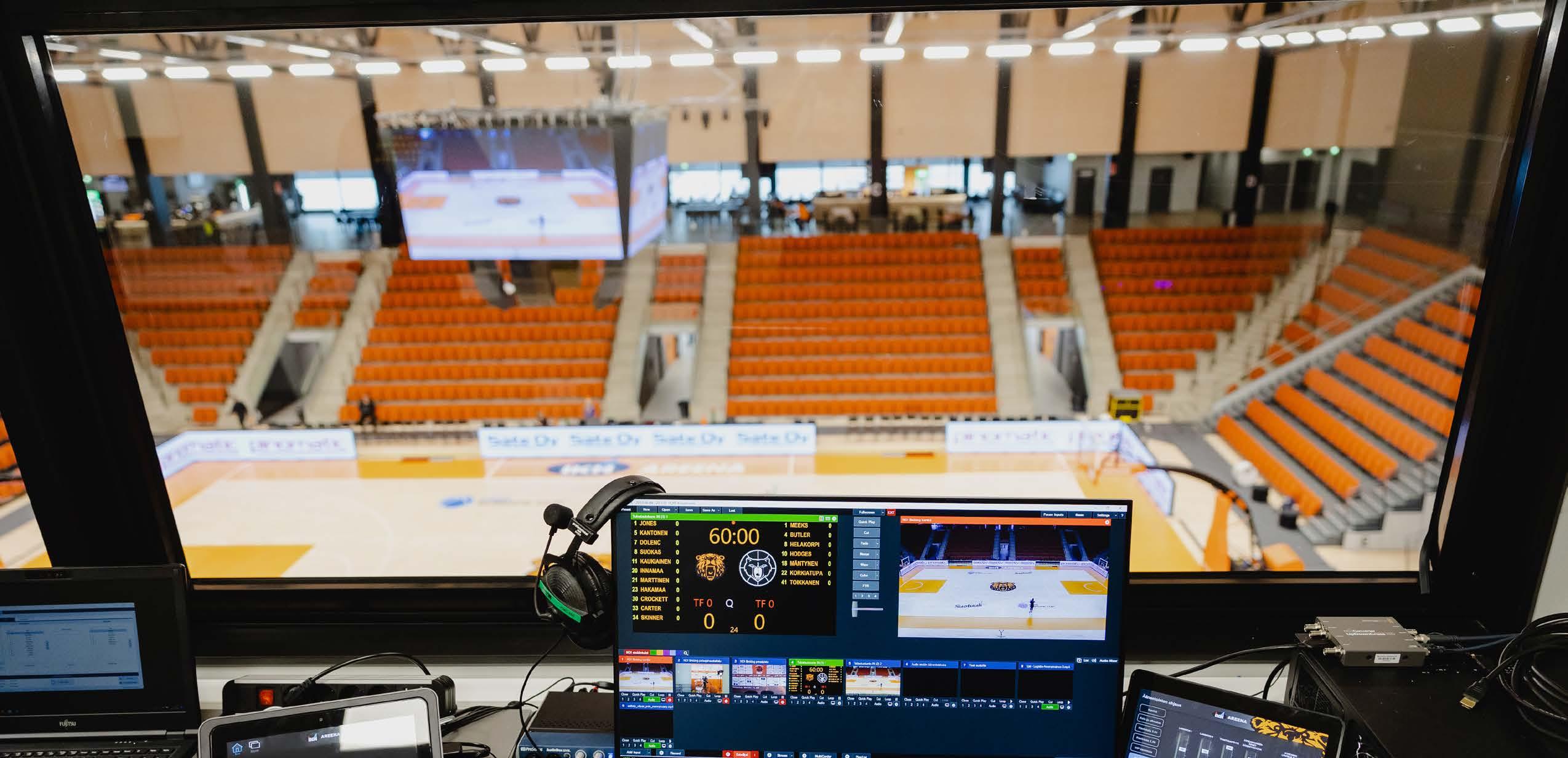
“At the beginning of the project, they were looking for an AV contractor who could do this project from design to final commissioning of the system,” recalled Antti Kivekäs who looks after sales, design and installation for Luova Tehdas. “With our range of local reference projects, we were able to show them that we were the right choice to handle the needs of the arena.”
(continued on next page)
SYMETRIX SCENE > MARCH 2023 14
IKH Areena in Finland.
(continued from page 14)
When it came to the AV solution, the arena’s operators wanted something that would be able to handle the various needs of a multi-purpose venue while also having the capability to adapt as the uses of the building change in the future.
“They wanted a system that would be reliable, easy to use and flexible to handle various use of the Arena, from sport to conferences,” explained Antti. “And of course, superb sound quality. The system had to be easy to modify so that it could be updated and altered to suit the changing needs of the venue in the future.”
To meet these requirements, the Luova Tehdas team opted for a Symetrix backbone to provide control to the building. A Radius NX 12x8 processor featuring 12 analog inputs and eight analog outputs as well as Dante networking has been combined with an xOut 12 audio expander to ensure the arena can capitalize on the surplus DSP power in the Radius and bring overall system costs down.
The T-10 Glass touchscreen provides intuitive front-end control alongside xIO Bluetooth PoE-powered Dante endpoints and ARC-3 control panels.
“The Radius handles all audio processing, routing and control from main speakers to restaurants and
other facilities,” noted Antti. “This means that the third-party Dante equipment is controlled by Symetrix. The main system controller is a T-10 Glass supported with a tablet via Wi-Fi. Finally, the local controls in the restaurants, club shop and other areas around the arena are the ARC-3s.”
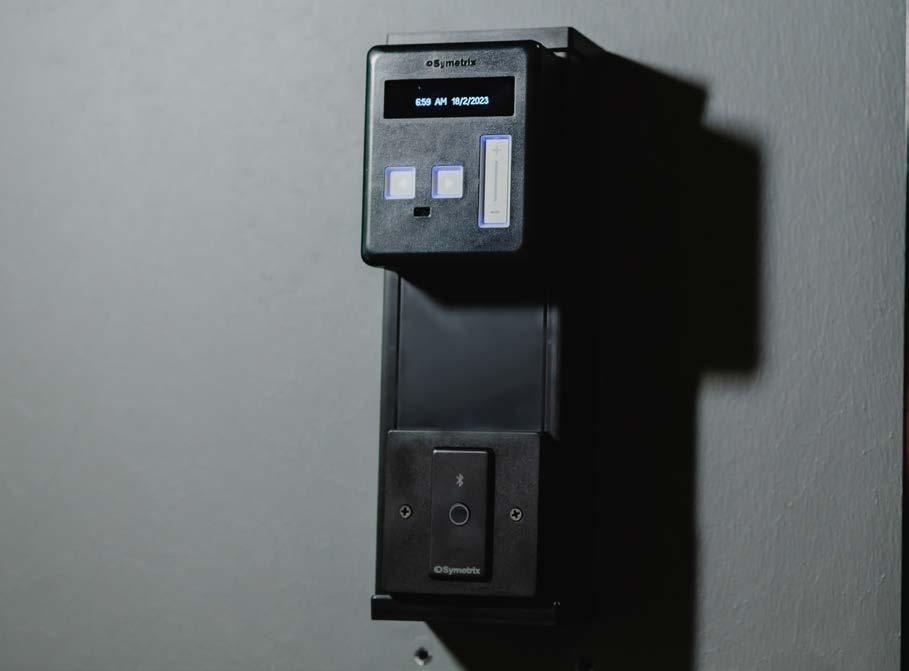
The decision to rely on Symetrix for the control system was a simple one for Antti.
“I have been using Symetrix almost exclusively in AV projects for over ten years so the choice was easy,” he reflected. “The sound quality is great, the reliability is great and you can do some amazing stuff in the
The sound quality is great, the reliability is great and you can do some amazing stuff in the programming of the system.”
“
Antti Kivekäs Sales, Design, Installation Luova Tehdas
From top: Symetrix ARC-3, xIO Bluetooth
15 SYMETRIX SCENE > MARCH 2023
programming of the system. Many times my customers have asked me if this or that is possible with the system and in most cases I can simply answer yes.”
The main challenge faced by the project was the global components shortage which is affecting so many projects around the world. This led to longer lead times for some of the equipment and made sourcing some of the system a real challenge. However, good planning ensured that the expert team at Luova Tehdas was able to get the system up and running in time for the official opening of the IKH Areena.
“Once we had all of the equipment we needed, there were no major challenges,” said Antti. “When the network in the arena was up and running, it was quite easy from there on. The main amplifiers are connected via Dante as are other third-party endpoints so with the Radius sat at the heart of the Dante network, system control is simple, intuitive, and instant.”
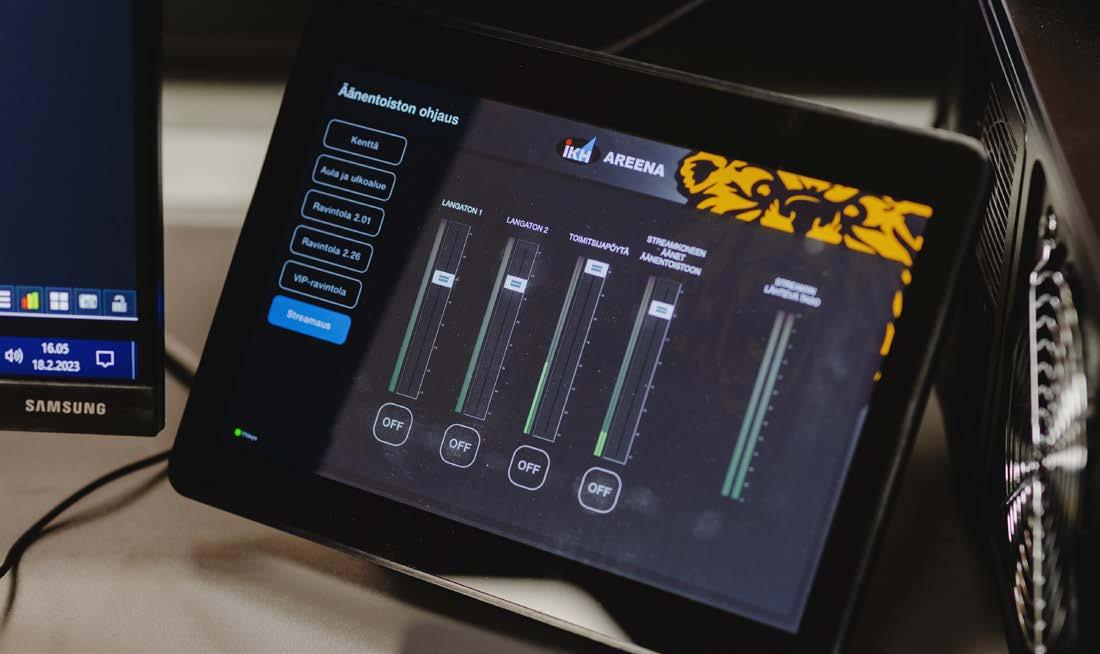
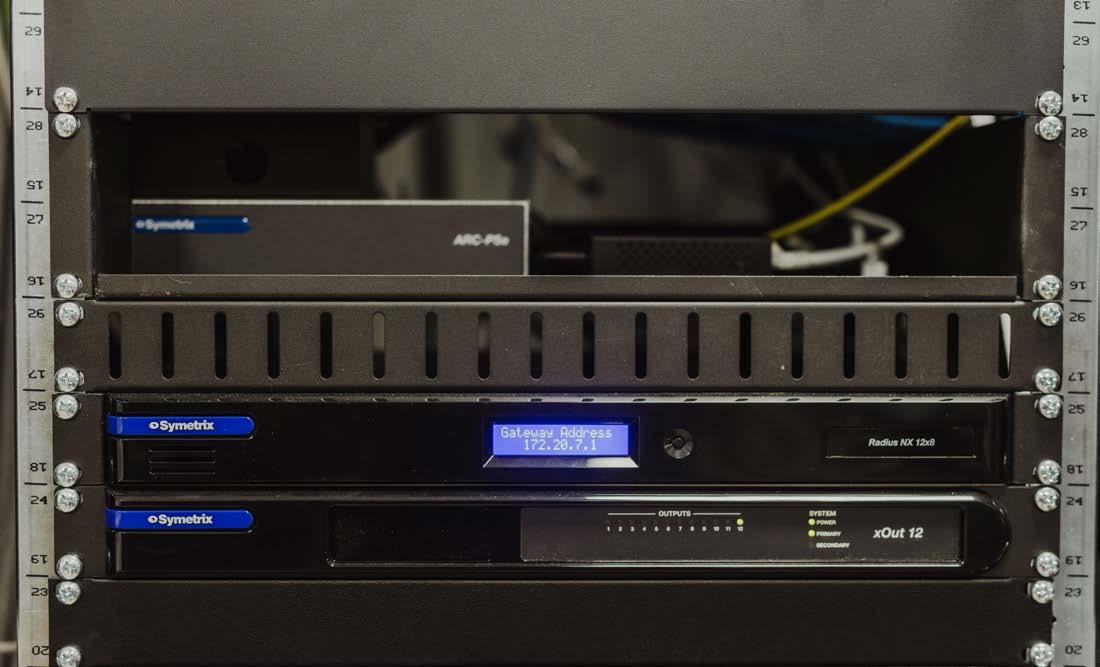
Reflecting on the recently opened arena, Antti is delighted with the work of the installation team.
“We are all very happy with the end results, and importantly so are our clients. Most importantly though, we
have also received good feedback from the fans and audiences who have been to the IKH Areena and experienced what it has to offer.”
With the project complete and the team welcoming its fans to the venue, the IKH Areena has proved to be the new home that Karhu Basket deserves. The facility offers all of its users a world-class experience thanks in part to a powerful AV system that will serve the venue well now and into the future.
luovatehdas.fi
www.karhubasket.fi
From top: Symetrix ARC-PSe, Radius NX 12x8, xOut 12 Symetrix T-10
SYMETRIX SCENE > MARCH 2023 16
by Rachelle Graham
The meaningful things in life start with a vision. What’s really important? What do we want to accomplish in our time here? What truly matters at the end of the day? At Symetrix, our vision is to deliver amazing products, develop people, and be a force for good in the world. That last piece–being a force for good–is how and why we accomplish the first two.
What does it really mean to us to be a force for good in the world? It’s more than just doing the right thing and being generous. It goes a lot further. It’s prioritizing the multitude of ways, large and small, that we can do some good and inviting everyone to join in the fun. It’s in the Symetrix DNA. Over the last few decades, Symetrix has supported community organizations like women’s shelters, homeless camps, and underprivileged children. In the last few years, we’ve taken it even further.
Pre-pandemic, one of the first things Symetrix 2.0 supported was the Congregations for the Homeless program. CFH provides year-round shelter, life skills training, addiction support, and employment support for homeless men. One of the things about this program that is so powerful is that it takes the long approach to helping train and support homeless individuals until they can make it on their own.
Churches provide housing and community members sign up to prepare and serve dinner for the men after they’ve spent the day working, training, or searching for employment. A SymFamily crew of employees, spouses, and kids all got together to

cook and share dinner. The most impactful part of the experience was eating dinner with the men afterward, and hearing their stories, sharing ours, and recognizing them as people who were in a tough spot, but were working hard to make things better. And we got to be a small part of their journey.
Several years ago, we also began a partnership with Vision House, a local charity located just a few minutes from our offices. Vision House helps families in crisis break the cycle of homelessness by providing relationships, resources, and housing.
More than just sending money, although we do that too, we met with Vision House staff to discover ways we could help out personally, involving the SymFamily. A Vision House volunteer came in and spoke to all of us during one of our Town Hall meetings. She explained the purpose of Vision House and how the program works. We were very impressed with Vision House, especially because they accept families, not just individuals, and they teach them how to budget, how to parent, how to cook, etc. Real life skills that people need if they’re going to escape homelessness and build a new life. This is not just a band-aid approach. It’s deep, meaningful help, that results in life change. An astonishing 84% of Vision House families who complete the program transition to permanent housing.
HR NEWS 17 SYMETRIX SCENE > MARCH 2023
SymFamily putting down wood chips for the Vision House playground.
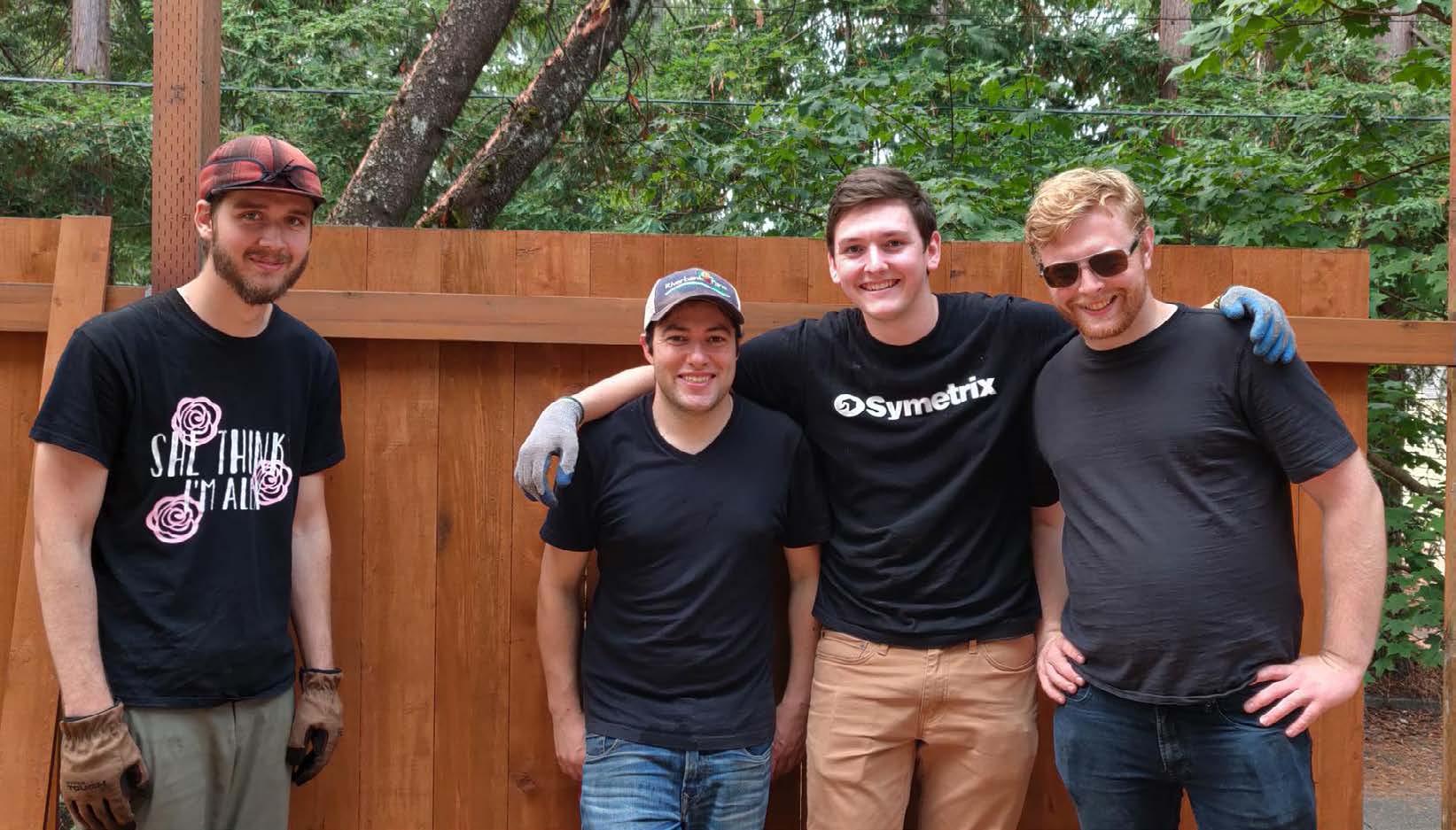
Over the last few years, the SymFamily has gathered teams of employees and family members to do work projects at Vision House. One project was to provide and put down play chips in the Vision House children’s playground. This year, we demolished an old fence and built a new one to provide safety for the playground. We also held a Spring Fundraiser, which was supported by individuals and business associates in the industry.
Part of what makes it meaningful is that we all have a chance to get involved. It’s not just the company making a contribution, it’s bringing everyone along for the ride. In a good way.
I remember when I was about 10 years old, the company my mother worked for held a fundraising campaign for the March of Dimes. They handed out packets to all of the employees to use going door to door asking for donations. Most of the employees weren’t interested and threw the packets away, but my mother had a different idea. She handed the packet to me and told me to head out to our neighbors soliciting donations. The enclosed script started
with “Hi, I’m a marching mother… “ I didn’t love the method, but the sentiment was right. Involving everyone in the process does matter.
Recently, a Symlandian who is a long-time member of a local hockey team asked if we could help with their team’s fundraising event to benefit Ronald McDonald House charities. We were happy to support their Goalie Gauntlet charity event, which took place during a Thunderbirds game and raised over $20,000 for Ronald McDonald House.
These are things that show the heart of the SymFamily. CEO Mark Graham says it well. “A company with a conscience can do a lot of good in the world.”
 Hard-working Symetrix engineers build a new fence for Vision House.
2023 Goalie Gauntlet event to support Ronald McDonald House charity.
Hard-working Symetrix engineers build a new fence for Vision House.
2023 Goalie Gauntlet event to support Ronald McDonald House charity.
Deliver amazing products, develop people and be a force for good in the world.
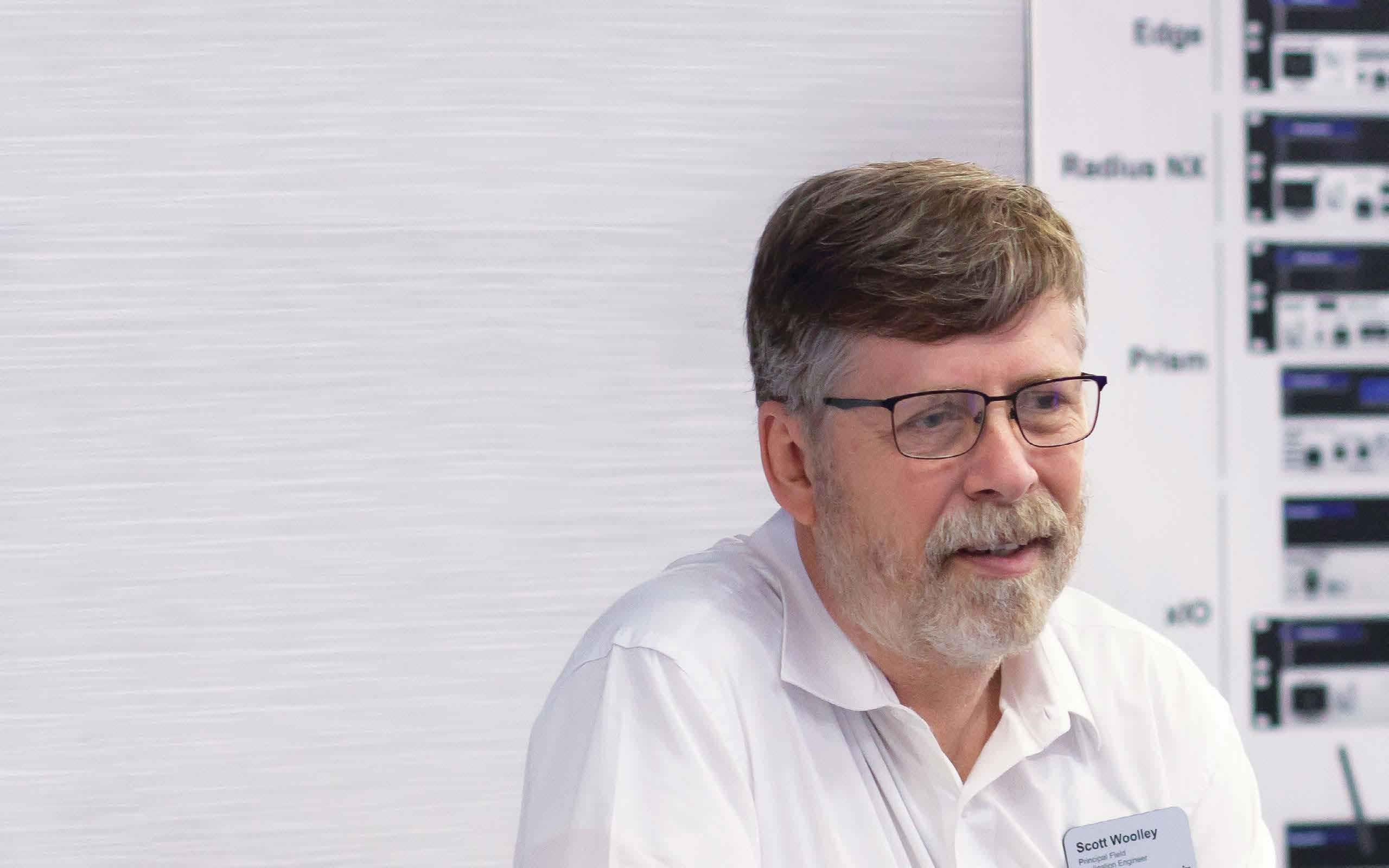
By Scott Woolley, Principal Field Application Engineer
My interest in conservation and sustainability started at an Earth Day event way back in 1974. Still today, I make an effort to honor that passion with my participation in the audiovisual industry. This includes my contribution to the development of the first AVIXA standard on Energy Management. I was given the opportunity by AVIXA to write the “AV Systems Energy Management Handbook” that serves as a guide to help facilitate the use of that first standard, and I continue to stay involved with industry efforts in conservation and sustainability. I also apply principles of conservation and sustainability to my role at Symetrix, a company that I’m proud to say shares my desire to implement sustainability practices at both the product and corporate level. From our packaging choices to the snacks we provide in the kitchen, Symetrix constantly seeks to reduce our carbon footprint while we deliver the highest quality signal processing and control.
The conversations about committing to resource conservation and being sustainable, or “green,” have been all around us in recent years. So many initiatives have been undertaken to identify and manage energy savings at every
level of energy generation and consumption that it can be difficult for people to know exactly how they can participate, or exactly what they should do.
In this age of energy efficiency consciousness, it is remarkable to me how few AV systems offer any type of power control mechanism. A great variety of devices from simple to complex are available for this purpose, including sequential switching devices that provide additional benefits. However, we continue to leave tens of thousands of pieces of equipment on all the time, unnecessarily wasting energy and our clients’ money.
Yes, there are components that need to stay on, such as control system processors, and it has been challenging to find low-cost energy management products that provide a positive ROI. Designing a cost-effective energy-managed AV system requires considerations beyond just turning devices off and on. Probably the most important is achieving the project goals by procuring AV components that deliver energy management monitoring control interfacing capabilities. One reason for this requirement is that people tend to change their behavior when they can view how their choices affect the consumption of resources.
AV INSIGHTS 19 SYMETRIX SCENE > MARCH 2023
Also, the display of quantitative energy utilization allows for analysis of information to determine if efforts to minimize power consumption have been successful or require modification.
A modern energy management system should include the capability to perform automated transitions between system power states based on time and day, such as after business hours, lunchtime, day-of-the-week, or holidays. In systems with time-activated automation controls, organizations may decide to add scheduling capabilities for anticipated irregular use.
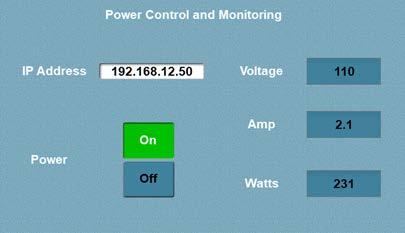
Symetrix provides a convenient means to control and monitor the power of audiovisual components that is cost
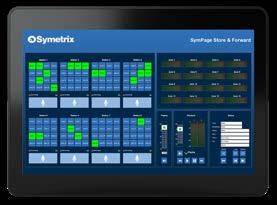
effective and easy to implement. All of this power control and monitoring is possible with our Intelligent Modules running on a Symetrix processor using readily available power-monitoring smart plugs. The following are just a few examples of how a system using Symetrix’s open architecture DSPs can be more cost efficient and reduce the client’s carbon footprint. We’ll be continuing to enhance these capabilities as we push the limits of professional AV control systems and would love to hear how others are doing the same. Please drop me an email to share your examples and we’ll be sure to share the new ones we develop in our tech-specific email newsletters. If you’re not already subscribed for these, please click here and I’ll get you added to the list.
(continued on next page)
It may be prudent to evaluate the space as a compilation of several smaller spaces, and automate the power consumption accordingly.”
“
Scott Woolley, Principal Field Application Engineer at Symetrix
Image 1: Symetrix Power Management System Layout.
Image 2: Symetrix Power Control and Monitoring Intelligent Module.
Symetrix audio and control processor
Symetrix touchscreen control
Power monitoring and control units managed by Symetrix audio and control processor
Network
SYMETRIX SCENE > MARCH 2023 20
Devices with power control and monitoring

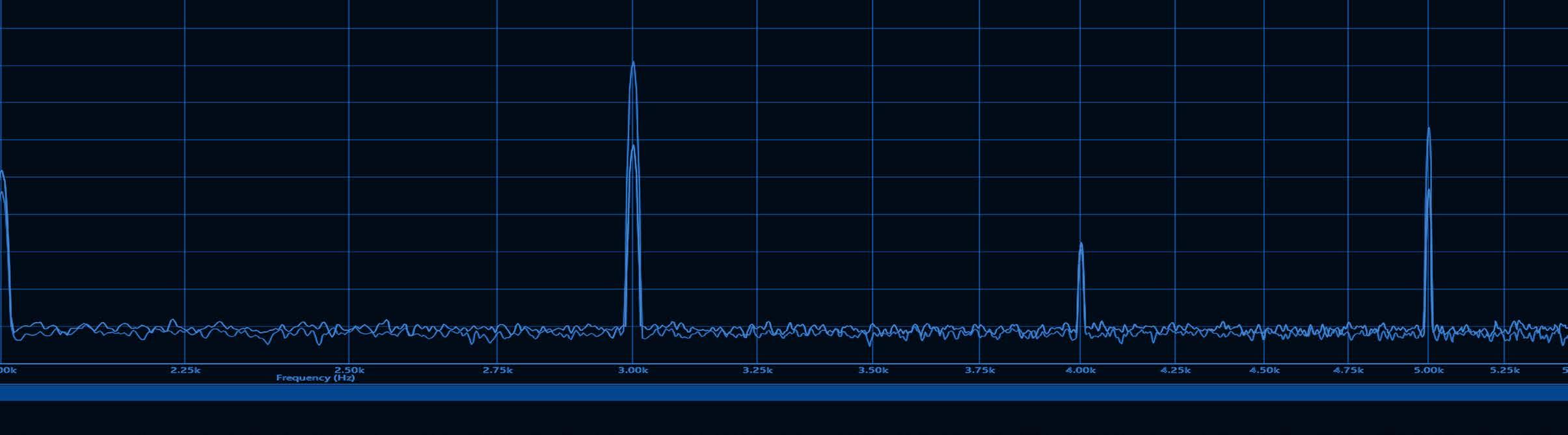

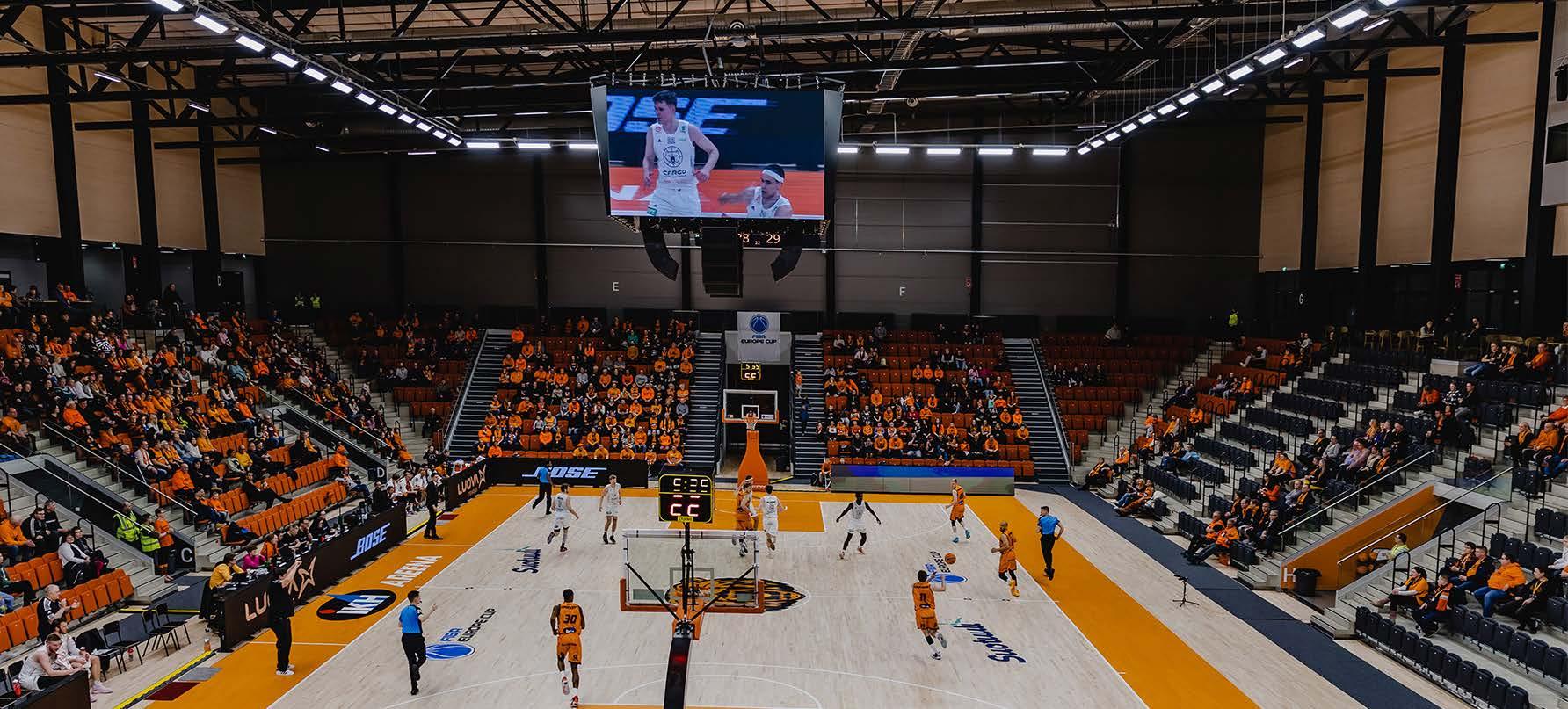


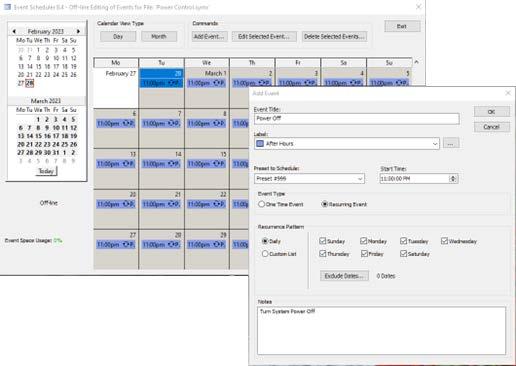
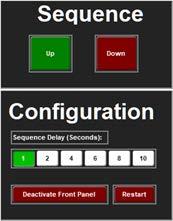 Image 3: Power Sequencing Module.