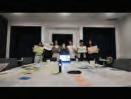
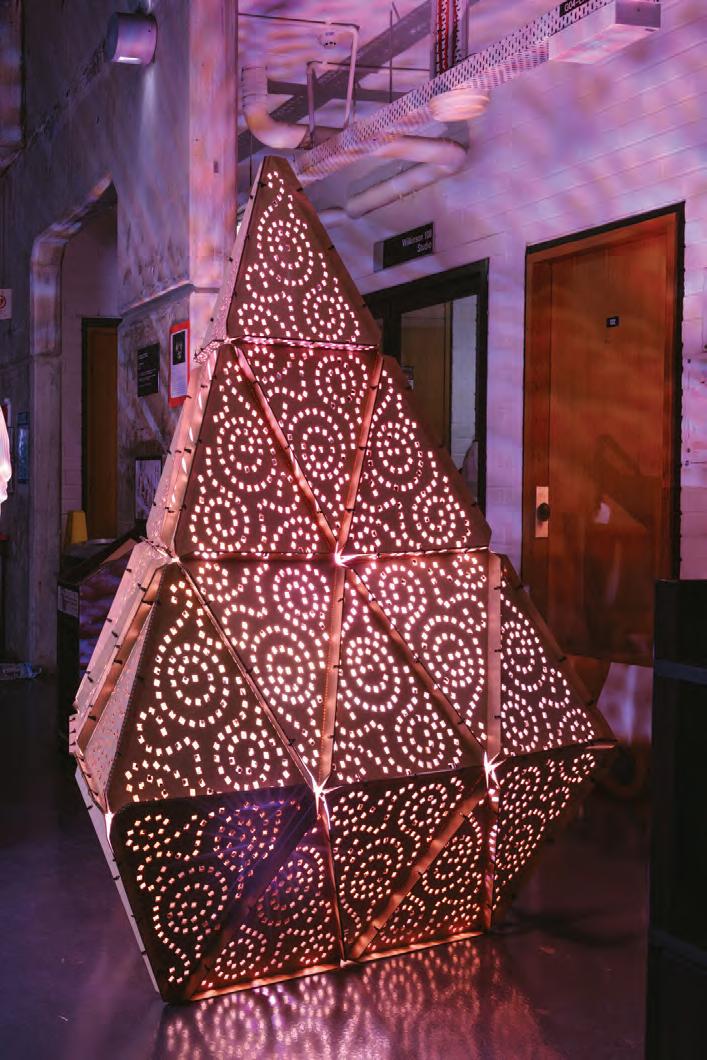
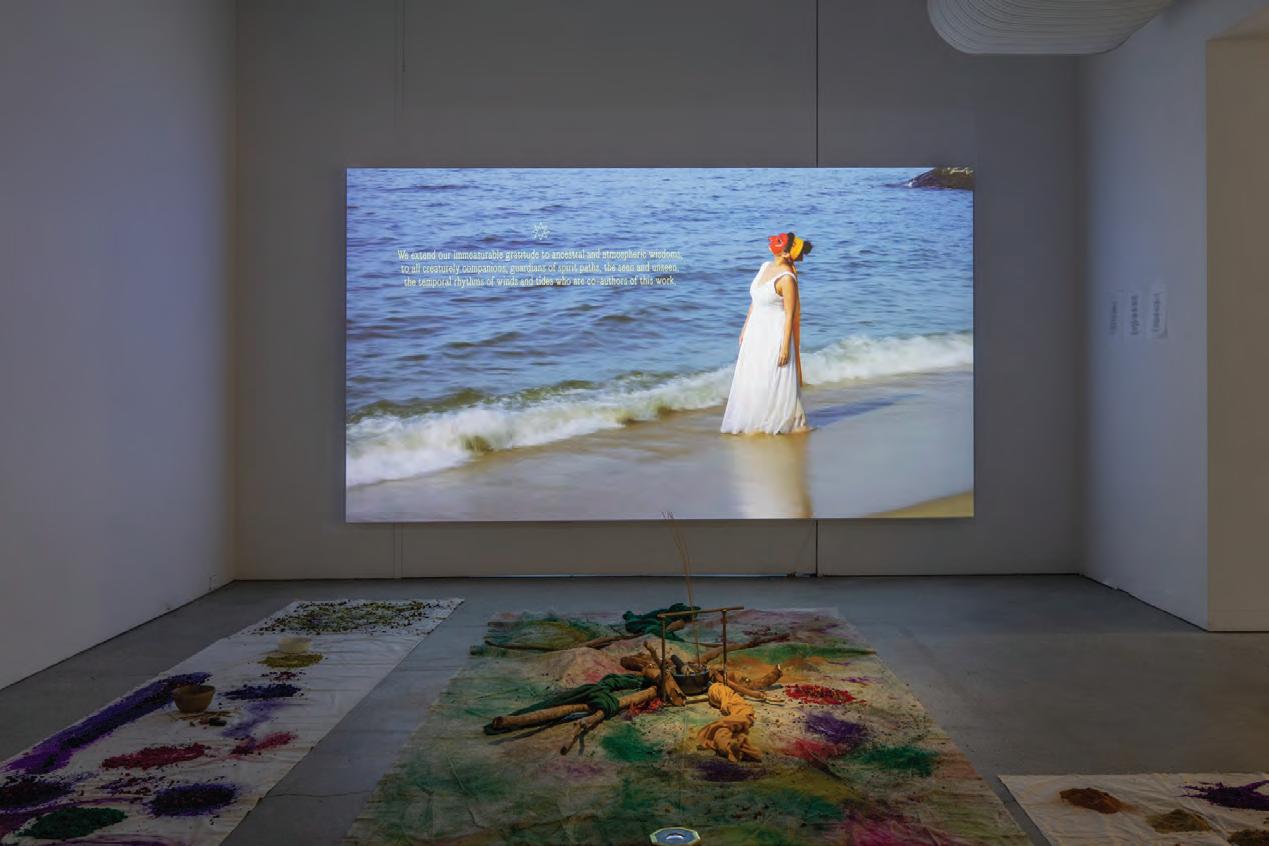
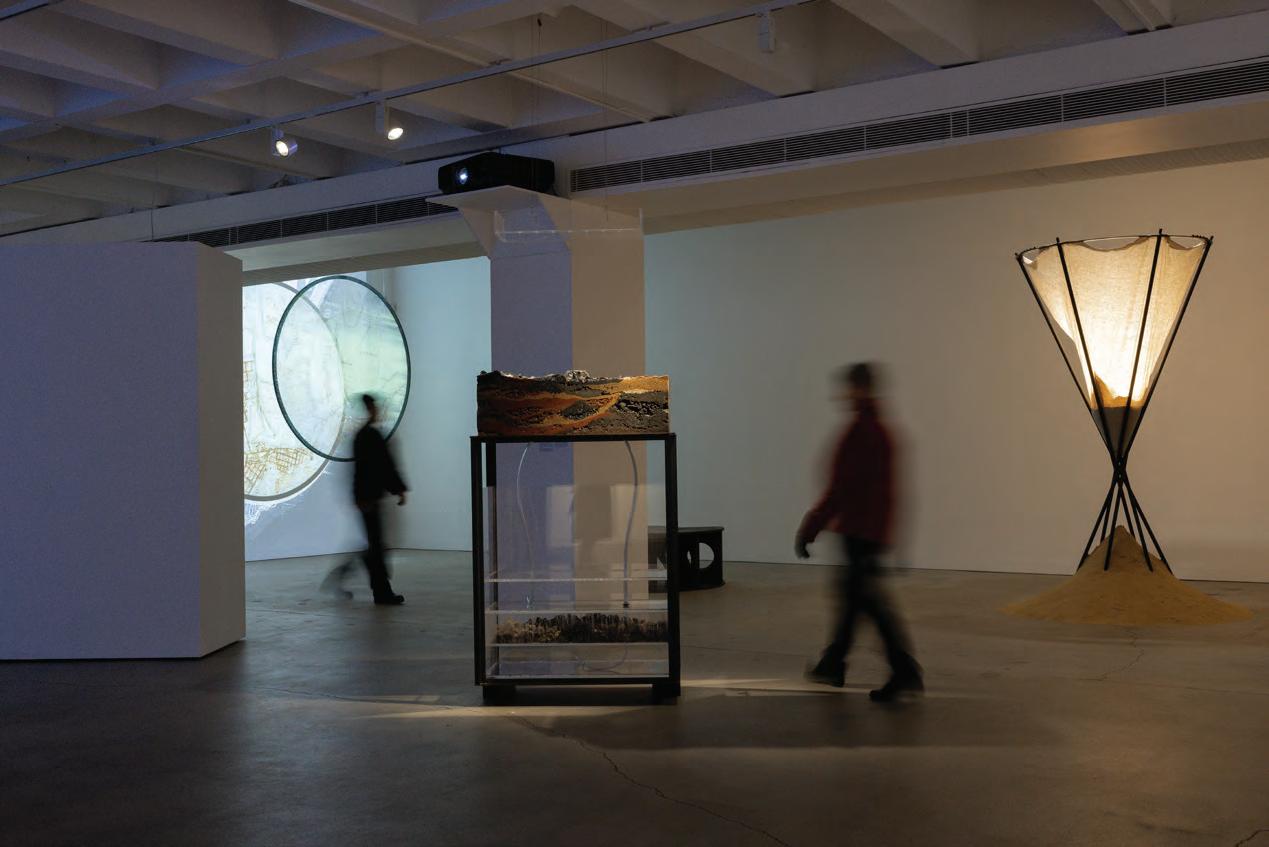
New Ground is a mark of collective departure and arrival for an exhibition once anchored by the Hearth, in Wilkinson.
Students stepping onto new ground as they move from study into practice.
ADP establishing new ground with the exhibition at Carriageworks.
These projects chart fresh territories, staking out possibilities for how we might design, inhabit, and share in the future of contemporary urban and digital practice.
New Ground
ADP Graduate Show 2025
Opening night 4 December 2025, 6pm Carriageworks
Exhibition dates 4–6 December 2025
We acknowledge the tradition of custodianship and law of Country on which the University of Sydney is located.
We pay our respect to those who have cared, and continue to care, for Country.
Dean’s Welcome
Donald McNeill
Foreword
Leigh-Anne
Master of Interaction Design and Electronic Arts
Introduction: Luke Hespanhol Program Director
Master of Design
Introduction: Rodrigo Hernandez Program Director
Student projects
Bachelor
Introduction:
Student
Lighting Lab
Master of Architectural Science
Master of Building Performance and Sustainable Design
Introduction: Chirag Deb Program Director
Student projects
Public Program
Lectures and Events
Tin Sheds Gallery
Donald McNeill Head of School and Dean
In 2025, the School of Architecture, Design and Planning welcomed students from across Australia and around the world. The collective learning across these geographies comes together in the ADP Graduate Show 2025. This catalogue represents a remarkable creative efort and the culmination of countless hours of work.
A major focus for the School’s architecture programs this year was the prominence of staf and student work in the Venice Biennale. In October last year, we received the exciting news that our Associate Dean Indigenous Strateg and Services, Dr Michael Mossman, had been appointed as one of a three-person Creative Director team to design and curate the Australian Pavilion at the Venice Biennale. Along with colleagues Elle Davidson and Bradley Kerr, this achievement marked an outstanding milestone for the School in 2025. The Sydney School of Architecture, Design and Planning sits on Gadigal land, where Aboriginal people have taught, learnt and nurtured since time immemorial. Within these pages you will fnd many designs that work with Country, refecting the depth of engagement by both staf and students.
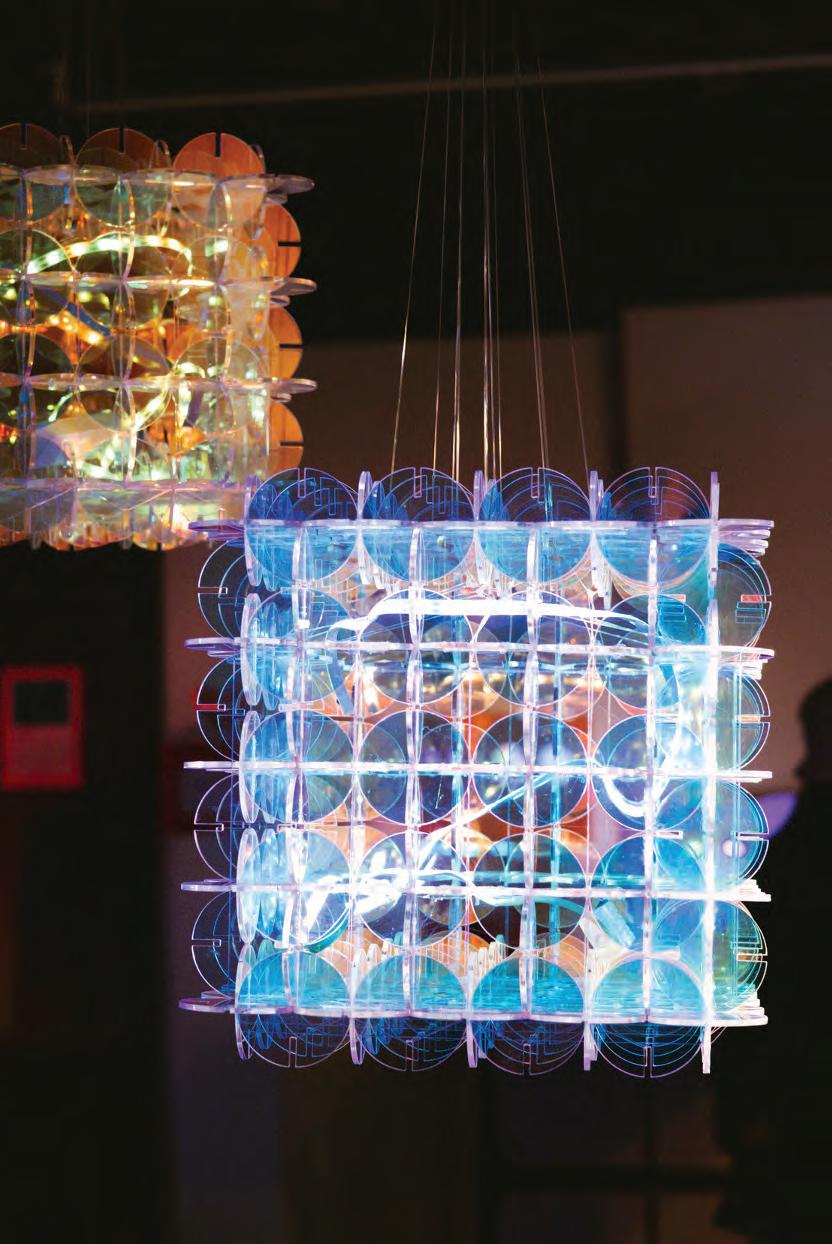
This catalogue captures how our students and educators spent much of their time in 2025. It includes comparative studies of planning systems from Hong Kong to Melbourne and Lane Cove; iridescent acrylic pendants from lighting design; strategies for translating exhibitions between Dublin and Sydney; creative urban form and masterplanning responses to challenges such as the rapidly transforming St Marys district; architectures of subversion, guerrilla tactics and resistance movements from our Master of Architecture students; and zines exploring Sydney’s new Metro and its efects on the urban corridor between Sydenham and Bankstown.
In 2025, we also continued our close collaboration with Rothwell Co-Chairs Atelier Bow-Wow, who spent time in Bourke, Wilcannia, Brewarrina and Cobar with a group of students exploring urban–rural conditions. The Tin Sheds Gallery hosted a full program of events and exhibitions, culminating in WaterTalks, which presented the Hunter River, known as CoquunMyan by the Awabakal, Worimi and Wonnarua Traditional Custodians, and examined the impacts of colonialism and industrialisation on water.
I would like to thank the many educators who guided students through the design process. Behind the carefully crafted models and posters in the exhibition and catalogue lie of-cuts, sweat, crits, laughter, and countless iterations and revisions. This is the creative process we hold central to our work in ADP.
As always, our Engagement team, who brought together both the exhibition and catalogue, deserve enormous praise for their professionalism and dedication in making this collective efort shine. This year we have moved to the impressive backdrop of Eveleigh’s Carriageworks, a new ground that presents a very diferent exhibition context to our usual home in the Wilkinson Building. In the coming months, we will undertake a signifcant refurbishment of key spaces in the Wilkinson, reopening in 2026 with enhanced facilities and renewed character.
I wish our graduating students every success and look forward to welcoming you back to the University throughout your careers.
To chart new ground, we must frst understand where we have been, tracing the places, spaces and experiences that have shaped us. Over the course of their degree, our students have followed some paths time and again, and others only once, yet all have left their mark.
Importantly, new ground is not always about being frst or creating something never seen before. It can mean stepping forward with fresh insight or seeing the familiar from a diferent perspective. These quiet but powerful shifts reshape how we understand ourselves, our work and the world we design for.
This past year has been one of movement and momentum. Within the School, our discipline has grown, enriched by the curiosity of our students and the energ of new colleagues. Beyond the studio, design itself has entered new terrain. We have faced rapid technological change, evolving modes of collaboration and deeper questions about designing with care and purpose. Through conversations, design sprints, expert panels and industry-led studios, we have strengthened our connection to practice. Our students have excelled in national and international competitions, and our academics have shared their research across the globe, from Vietnam and China to the United States, Europe and India. The reach of ADP continues to unfold across ground both known and unknown.
As we look to 2026, another new path begins. After three years as Head of Design, I will be stepping aside. It has been an immense privilege to walk alongside our students, to witness their ideas take root and grow. I wish them every success as they step into the vast and exciting landscape ahead.
MASTER OF INTERACTION DESIGN AND ELECTRONIC ARTS MASTER OF DESIGN
As we draw the curtain on the frst quarter of the 21st century, the feld of Interaction Design and Electronic Arts fnds itself on truly new ground.
It’s not a question of whether algorithms will transform our lives – they have already radically transformed it – or if we as designers should adopt artifcial intelligence – we are already doing so, even if unwillingly, as its machine learning is already deeply embedded in our tools. The key questions are what we may use it for, when, how, and why? And, crucially, when, where and why not?
At the core of interaction design lies an efort to understand the human condition and how it relates to the world. With that knowledge, interaction designers then come up with steps forward capable of shaping better futures. So, when applying our new intelligence extensions to support that efort, the same checks and balances ought to apply. Are we still improving the lives of those using our design solutions? Are we designing them ethically, ensuring consent and creative attribution? And, more importantly: could we, in the process of solving one problem, potentially be creating others elsewhere?
More than ever, Interaction Design in 2025 demands holistic and relational thinking. The notion of “interaction” no longer stops with the engagement between humans and computers, or even human-to-human or human-to-world through algorithms. It is now profoundly stretched in space and time, reinventing the past and rewiring the future, and afecting contexts potentially not directly related to the place and moment where an interaction happens.
The projects presented by our students in 2025 refect this still shaky ground, at once full of uncertainty and potential, with explorations that will help pave not only the way forward, but also its guardrails.
Introduction
Rodrigo Hernandez Master of Design Program Director
The Master of Design prepares its graduates to step onto new ground, shaping futures that are hopeful, equitable and vibrant. In a world unsettled by ecological, social and technological turbulence, designers must become fuent in navigating complexity, gathering diverse strands of knowledge to lay fresh foundations, forge new frameworks and create interventions that truly matter.
Our program is built around two closely linked pathways, each a diferent terrain on the same journey. The frst, Strategic Design, equips students to map uncharted territories and develop long-term, future-oriented visions that rethink business models, organisational structures and functional systems. Through rigorous scenario planning, systems mapping and stakeholder analysis, students learn to anticipate shifting landscapes, articulate strategic intent and guide organisations towards sustainable outcomes. This high-level thinking translates broad ideas into actionable plans, ensuring that every design decision aligns with wider societal and economic goals.
The second pathway, Design Innovation, transforms strategic foresight into tangible solutions, enabling students to develop prototypes of services, products and social interventions. By testing ideas quickly and iteratively, using rapid prototyping methods, user-centred research and co-creation approaches, they translate strategic insights into practical concepts, generating knowledge about how these designs perform in real-world contexts. The result is a range of solutions that not only explore new possibilities but also establish a frm foundation for future practice.
The works displayed in this exhibition embody both strands. They demonstrate not only aesthetic fair but also a disciplined, refective practice that interrogates existing routes, clears away obstacles and reshapes them for contemporary needs through rigorous design processes. Each piece bears its maker’s curiosity, care and commitment to improving lives, marking another confdent step onto new ground.
On behalf of my colleagues, I congratulate our graduates for their professionalism, insight and perseverance. As they move forward as University of Sydney alumni, they join a global network of future-makers ready to apply strategic foresight and innovative design to the challenges ahead. May they continue to venture onto new ground, turning visionary ideas into realities worth striving for.
Reimagining the ABC as a Hub for Young Australian Creativity
The ABC has long been a launchpad for Australian talent through initiatives like triple j Unearthed, yet many young people still see it primarily as a news broadcaster. With global platforms dominating attention, the voices of young Australians in arts, media, and entertainment often remain underrepresented. This brief asks how the ABC might reinvent itself as a springboard for creativity that resonates with younger audiences.
The challenge is to position the ABC not only as a trusted news source but also as a vibrant cultural hub that fosters pride in local talent. Opportunities lie in amplifying diverse voices, building pathways for creative futures, and reshaping perceptions of Australian content as fresh, relevant, and exciting. The project calls for speculative thinking that pushes beyond conventional broadcasting, drawing on digital-frst strategies and personality-led media.
At its heart, the work is about celebrating young Australian creativity and connecting it with audiences in meaningful ways. By reimagining the ABC as a home for innovation, the project seeks to inspire a generation to see their stories refected on national platforms.
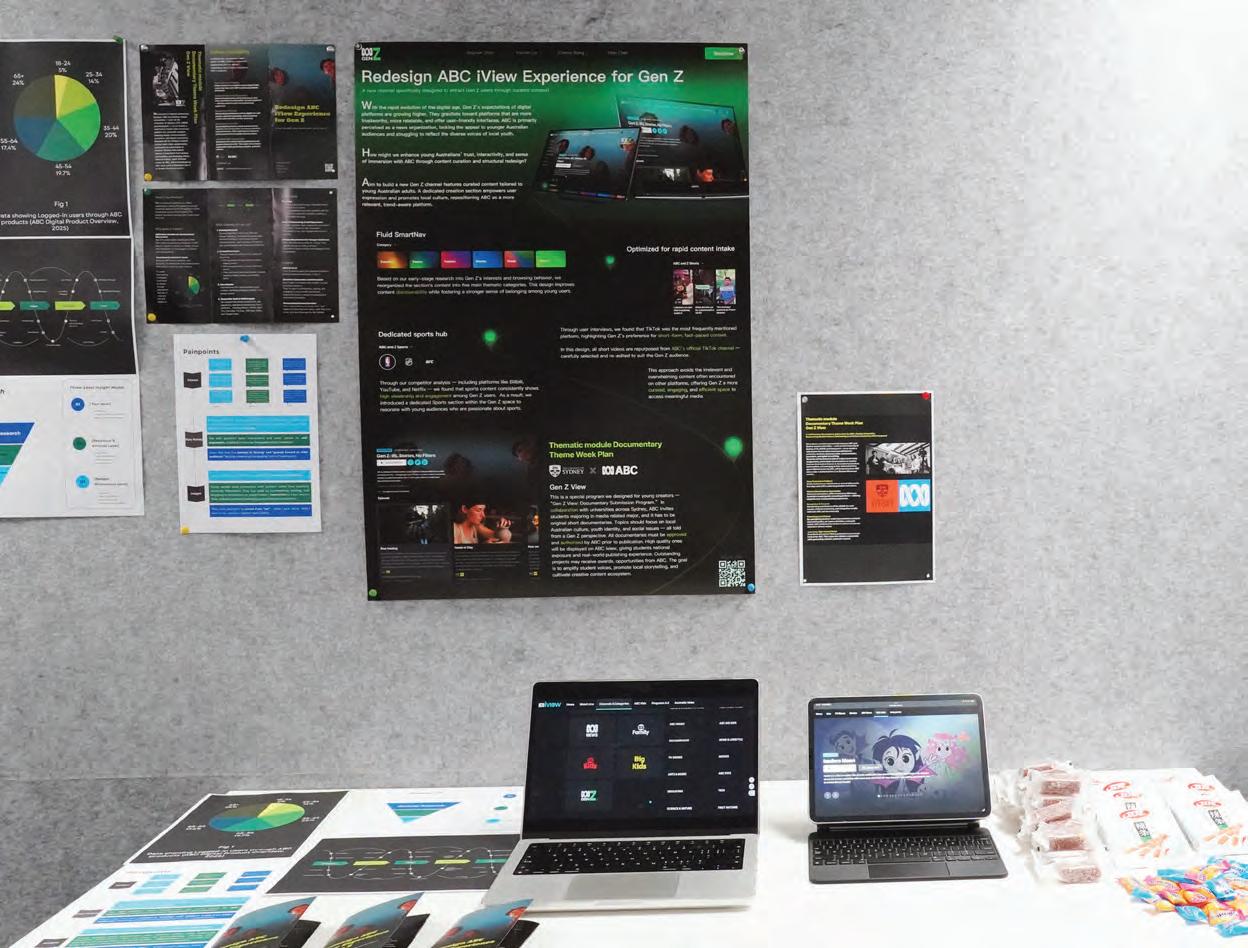
This project reimagines the ABC iView user experience to better engage Gen Z audiences by addressing the platform’s credibility gap, lack of interactivity, and limited opportunities for self-expression. Through desktop research, semi-structured interviews, competitor analysis, and case studies, we found that Gen Z values social connection, authenticity, and creative participation. Centred on the concept of curation, the project introduces a new Gen Z–focused channel showcasing content that resonates with young audiences, alongside the Thematic Documentary Week Plan—a student-led collaborative module that encourages young creators to share stories refecting local culture and values. By integrating open submissions, reward mechanisms, and localised storytelling, the redesigned iView rebuilds trust, enhances belonging, and fosters meaningful engagement with Australia’s younger generation.
The Future of the ABC in a Changing Media Landscape
The media landscape is shifting rapidly, with audiences increasingly turning to infuencers, algorithms, and third-party platforms for news and entertainment. For young Australians, the ABC risks fading into the background despite its reputation for trust and diversity. This brief asks how the broadcaster can build lasting relationships with younger audiences in a fragmented, fast-changing digital environment.
The challenge is multifaceted. Many young people avoid news altogether or prefer international voices over local perspectives. Trust in algorithms is growing, even as reliance on social media platforms raises questions of bias and reliability. The popularity of infuencers has created new personality-driven models of media, while “digital detox” and “dumb phone” movements show shifting attitudes toward screen time. At the same time, there is low awareness of the ABC’s full ofering, from arts and entertainment to educational and cultural content, leaving gaps in audience connection.
Design possibilities range from reimagining the ABC’s role on third-party platforms to creating new entry points that are playful, engaging, and distinctively Australian. The aim is to position the ABC as both relevant today and resilient for tomorrow, cultivating a healthy, lifelong connection with audiences.
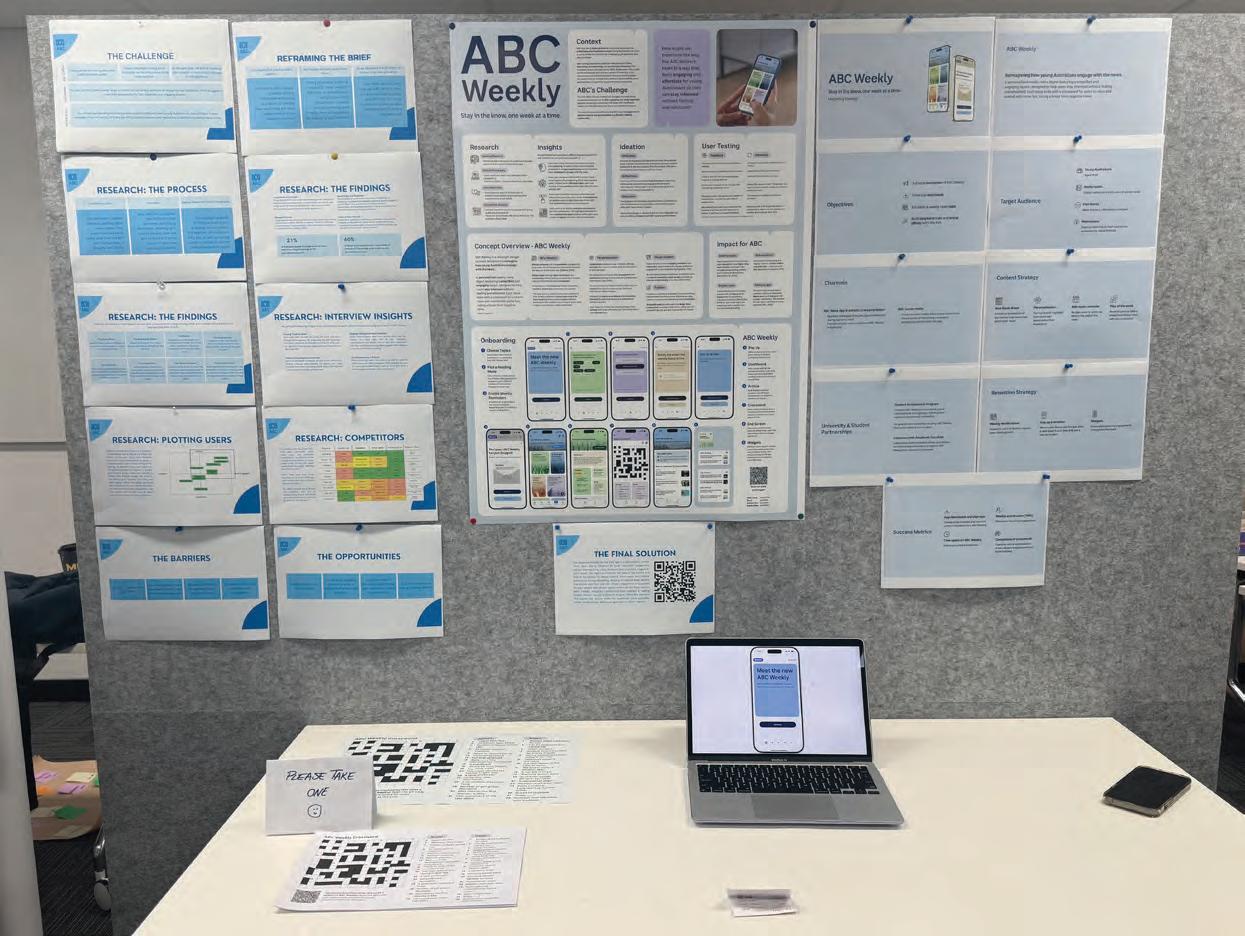
With the rise of digital platforms, the media landscape has shifted away from traditional formats. Young Australians now turn to social media for content that is engaging, personalised, and easy to access. However, many avoid the news, fnding it overwhelming and emotionally exhausting. Our research highlighted a need for news experiences that feel lighter and easier to manage. ABC Weekly is designed to reimagine how young Australians engage with the news. It ofers a personalised weekly digest that helps users stay informed without feeling overwhelmed. By simplifying updates and adding interactive elements, it encourages ongoing engagement without burnout.
Exploring Blended Learning: How to Engage and Attract Students into Cybersecurity Education
Blended Learning International (BLI) is seeking to transform its new website into a compelling platform that attracts and engages learners from diverse backgrounds. The challenge is to optimise the site not only as a recruitment tool but also as a seamless digital experience that makes pathways and accredited courses accessible, clear, and appealing.
The work begins by asking a simple question: how might design help recruit new learners through an online platform? To answer this, the project examines how efectively the website communicates its value, how easy it is to navigate, and how engaging its content feels to visitors. The focus is on aligning design and storytelling with the organisation’s mission, while ensuring the site supports a smooth journey from discovery to enrolment.
Key opportunities include strengthening the visibility of BLI’s Social Cyber Academy, Diploma, and Graduate Diploma courses, while also highlighting broader pathway programs. Strategies might involve refning brand communication, redesigning content for clarity, or reimagining the user interface to improve accessibility and engagement.
The aim is to deliver creative and practical recommendations that position the website as user-focused, responsive, and globally relevant. In doing so, the project explores how thoughtful digital design can enhance recruitment, expand reach, and connect learners with new opportunities.
CLIENT Lisa Materano, Blended Learning International
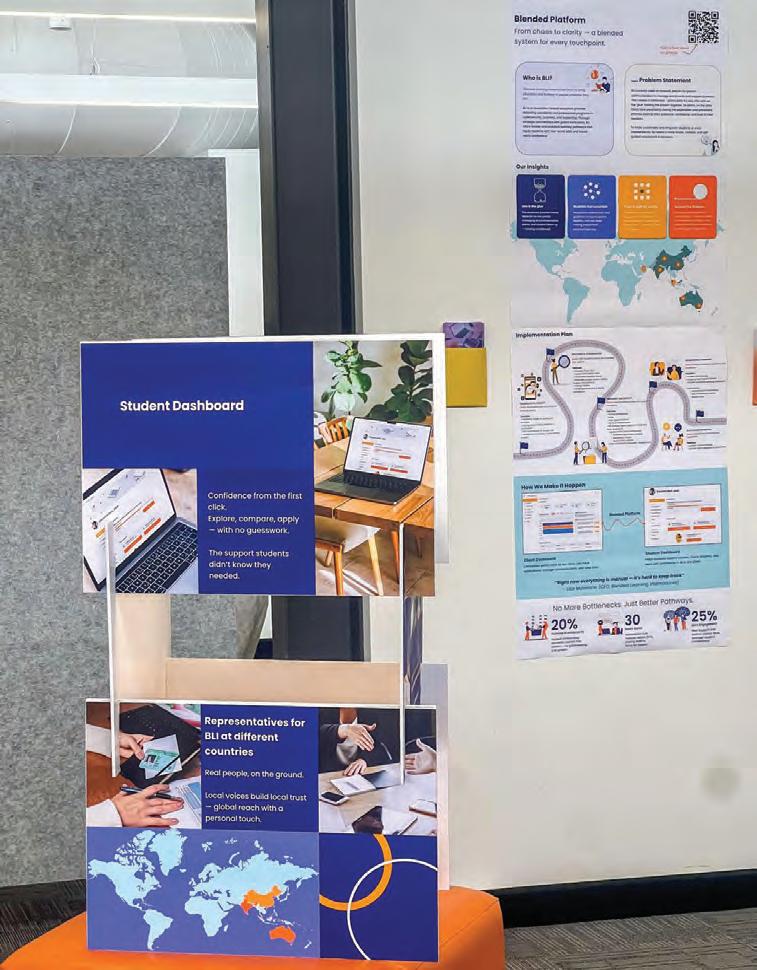
The Blended Platform reimagines how Blended Learning International (BLI) supports students and manages enrolments. What began as an efort to boost enrolments revealed deeper issues, such as over-reliance on one person, unclear communication, and limited visibility for students. Our solution builds a connected digital ecosystem with shared dashboards, onboarding tools, and clear information pathways. It helps BLI move from a system where one person managed everything to one where students can explore, decide, and connect with confdence. The Blended Platform bridges the gap between administrators and prospective students, creating a more transparent and supportive enrolment experience.
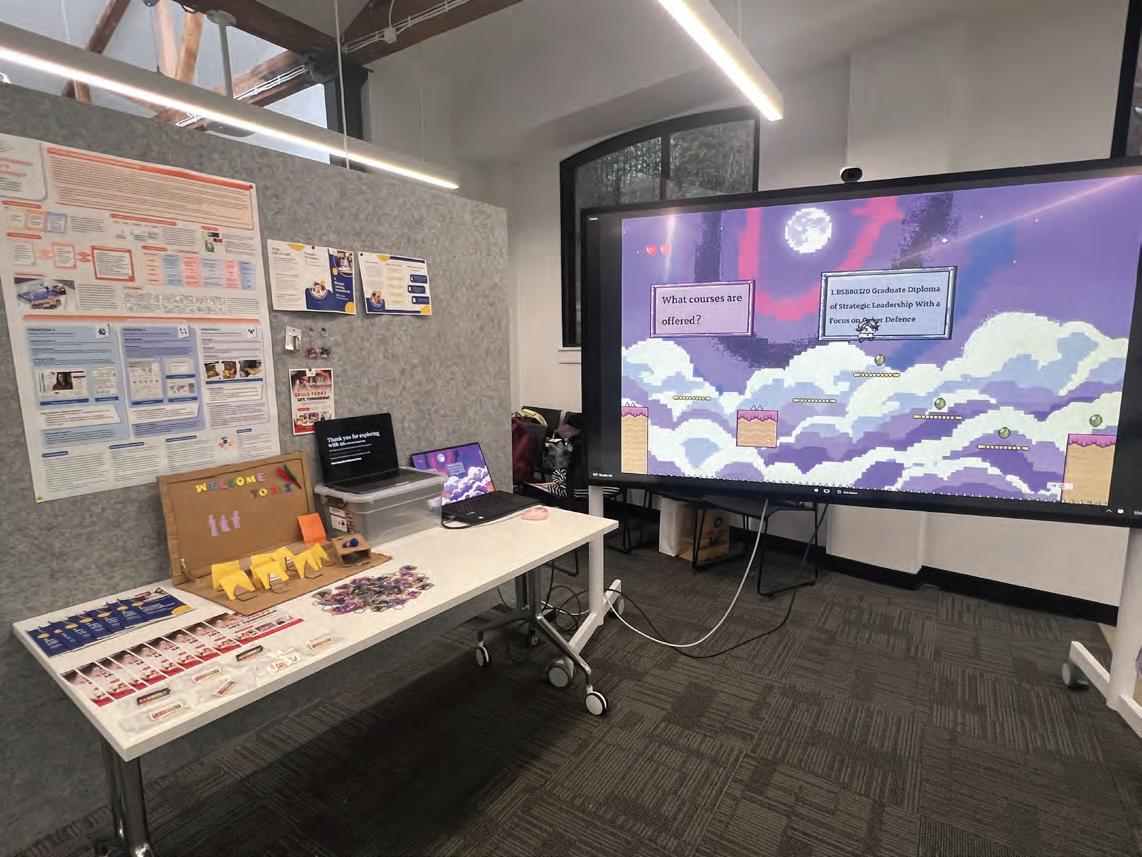
Our team redesigned Blended Learning International’s (BLI) brand and website to enhance trust, engagement, and enrolment among international students. We developed a seamless ofine-to-online experience through campus booths, interactive activities, and a redesigned website featuring an AI–human hybrid chat, multilingual support, and personalised course recommendations. We also created cohesive visual materials—including posters, brochures, a promotional video, and an 8-bit mini game for the exhibition—to make learning about BLI more engaging and memorable.
How can an exhibition created in one place be meaningfully translated to another? This project adapts Emergency Knowledge: The Missing Archives, frst staged in Dublin in 2024, for a new iteration at the Tin Sheds Gallery. The original exhibition combined research on states of emergency with archival practices of recovery and reconstruction. The challenge now is to reinterpret these ideas within Sydney’s cultural, social, and spatial context.
The work considers both practical and conceptual aspects of translation. On a logistical level, questions arise about transporting materials, designing installations, and integrating digital technologies. On a conceptual level, the focus is on how the framework of “emergency knowledge” can take on new relevance in Sydney. This includes engaging with communities who carry lived experiences of emergency and fnding accessible ways to share those stories.
Key opportunities include designing hybrid physical and digital spaces, creating interactive installations, and developing strategies to broaden audience participation. Fringe events, communications tools, and data visualisation may all play a role in shaping how the exhibition is experienced.
At its core, this project seeks to create a space of inquiry that bridges Dublin and Sydney, past and present. It asks how exhibitions can not only display knowledge but also generate new ways of understanding urgency, resilience, and shared cultural memory.
Kate O’Shea, Artist in Residence Freemantle Arts Centre, WA
Olfactory Archives of Natural Disasters explores how scent can evoke memory, empathy, and awareness of Sydney’s bushfre crisis. Through immersive spatial design, the project translates environmental data and human experience into sensory narratives. Visitors move through zones of smoke, regeneration, and refection—transforming the destructive impact of fre into a collective moment of remembrance and resilience.
Haojun Yu, Haoyu Lian, Jiahe Chen, Zhe Su, Olfactory Archive of
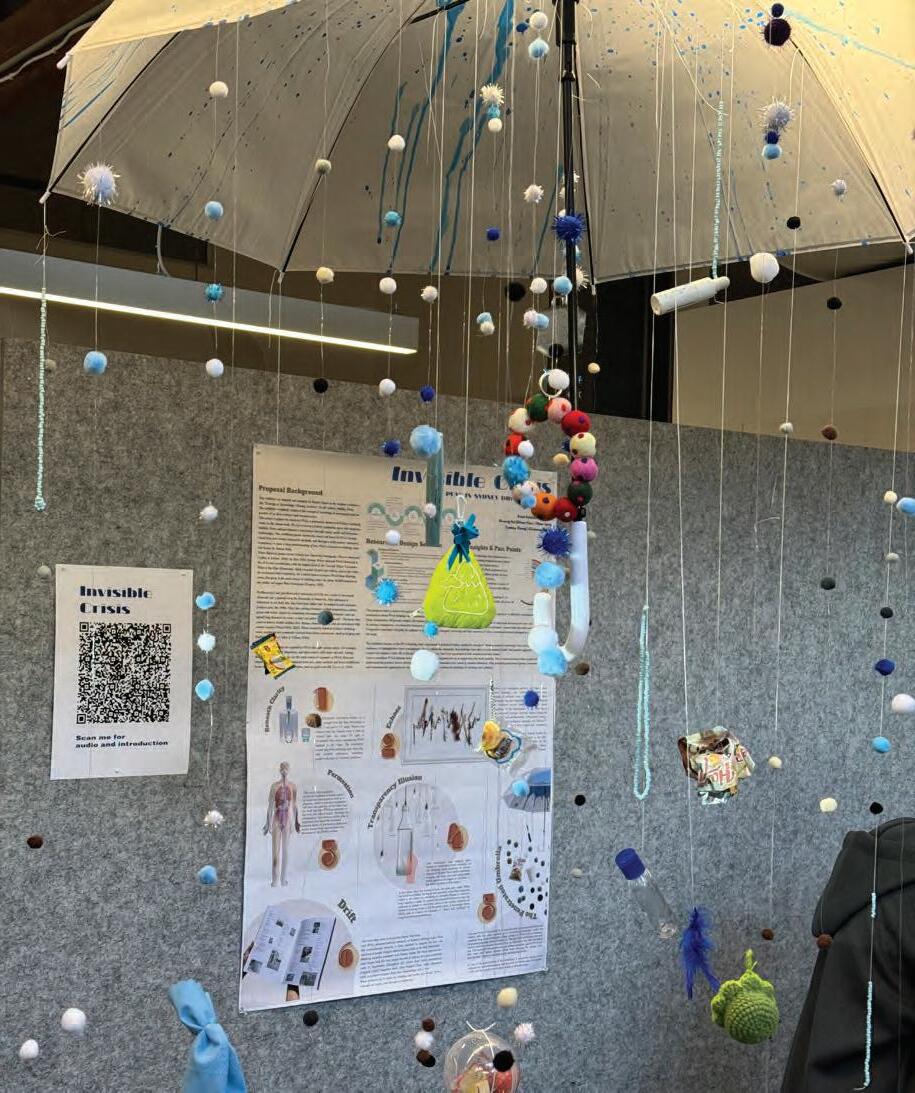
Invisible Crisis exposes the hidden threat of PFAS—“forever chemicals”—found in Sydney’s drinking water. Through sound, light, and interactive installations, the exhibition transforms scientifc data into sensory experiences that reveal how invisible pollutants infltrate our environment and bodies. From community testimonies to immersive artworks such as Drip by Drip, Beneath Clarity, and The Penetrated Umbrella, the project bridges science and emotion, calling for awareness, transparency, and environmental justice. It invites audiences to refect on the unseen stories within the water we drink and to reimagine our relationship with contamination and purity.
Chemistry is often seen as complex, abstract, or inaccessible, but what if it could be experienced through sound? This studio, in collaboration with the SCOPE Group (Science Communication, Outreach, Participation, and Education), explores how music and sound can transform the way people engage with science. The aim is to design new forms of communication that make chemistry more inclusive, participatory, and memorable.
The challenge is to move beyond technical language and diagrams and instead create experiences that connect with diverse audiences. Music ofers a powerful medium for this shift, engaging people emotionally and sensorially while breaking down barriers of jargon or prior knowledge. The work investigates how chemistry and sound can intersect—whether through interactive performances, sonic experiments, or low-tech tools that make science accessible to a wider public.
Proposals may take many forms: events that combine live music with scientifc demonstrations, immersive soundscapes that evoke molecular processes, participatory workshops where communities explore science through listening, or platforms that let young people co-create their own interpretations of chemistry through sound.
By blending design, research, and collaboration with musicians and scientists, the project asks: who is science for, and how can music open it up to more people? In doing so, it highlights the potential of sound as both an educational tool and a creative force for inclusion.
Alexis Weaver, Sydney Conservatorium of Music USYD
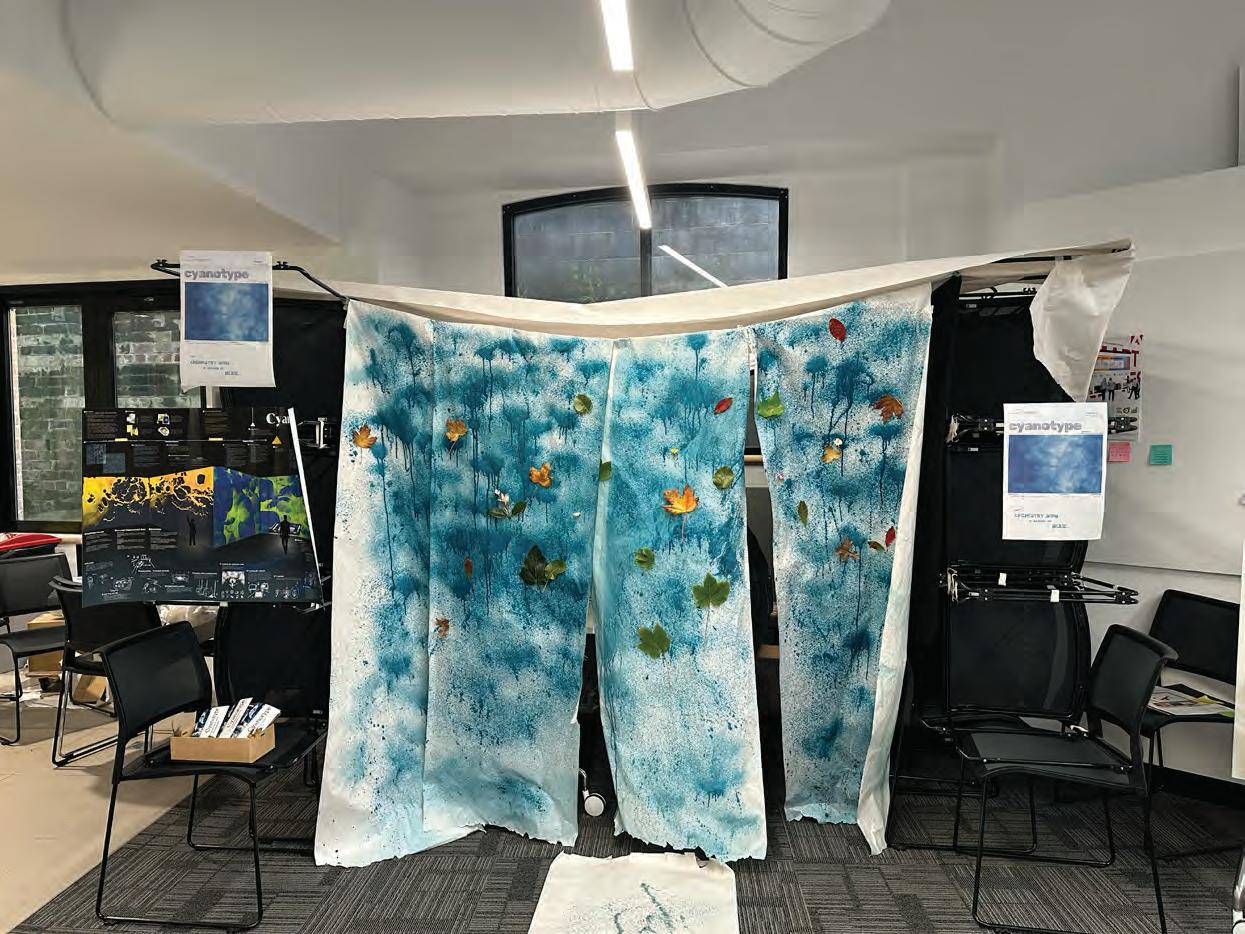
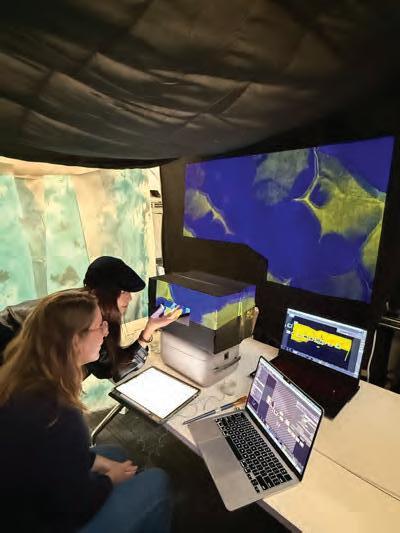
Cyanotype is an immersive, sound-driven exhibition that transforms the traditional cyanotype printing process into a multi-sensory journey. Visitors move through six interconnected stages, each aligned with a step of the cyanotype workfow and guided by water-based soundscapes. Through light, sound, and touch, audiences actively mix, expose, and develop their own prints, revealing how invisible chemical reactions can be experienced as rhythm and transformation. Blending art, science, and design, Cyanotype reimagines image-making as a ritual of chemistry and nature, inviting curiosity, play, and a renewed appreciation for the beauty of experimentation.
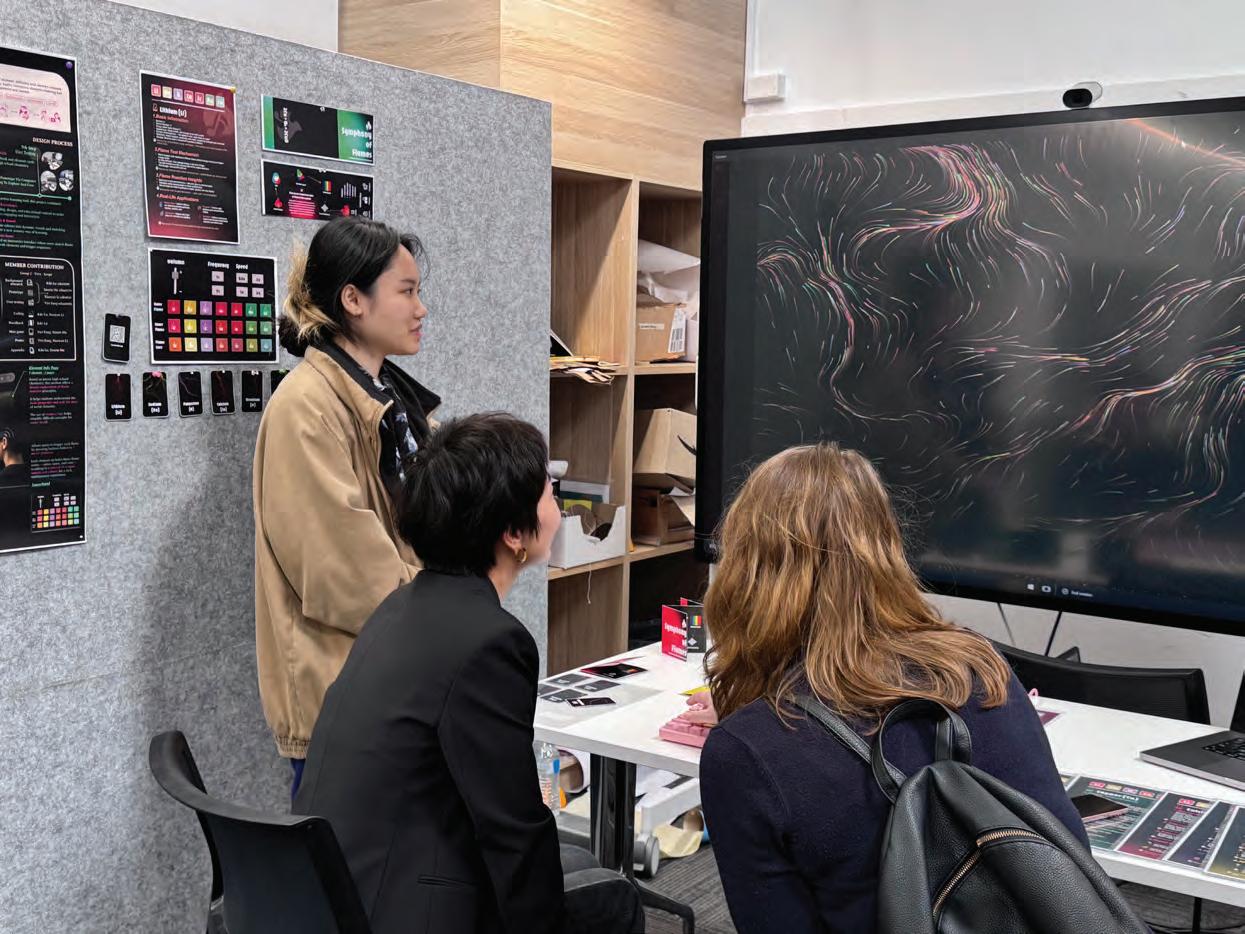
Symphony of Flames is an interactive, multi-sensory project designed for middle school students. Using Python, it converts the fame colour reactions of seven common metal elements (Li, Na, K, Ca, Sr, Ba, Cu) in chemistry into musical melodies and visual fame efects. Users can create their own music by interacting with the launchpad interface. The project also includes an interactive matching game and knowledge cards. By integrating chemistry with music and interactive experiences, it aims to enhance students’ interest and knowledge retention. Get hands-on and try our game!
Kiki Lu, Xiaoyan Li, Vivi Fang, Xinyin Hu,
Grassroots Music Spaces
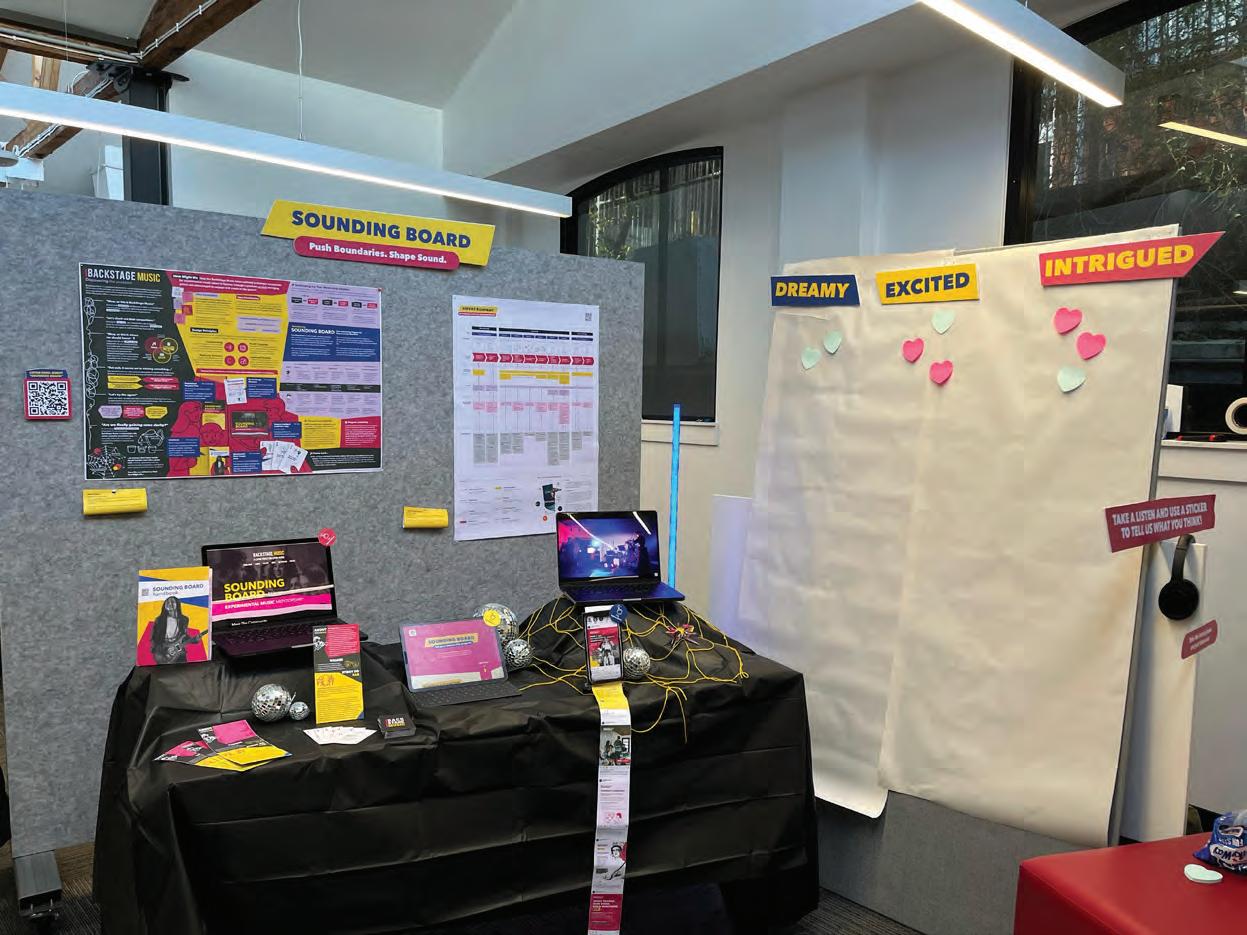
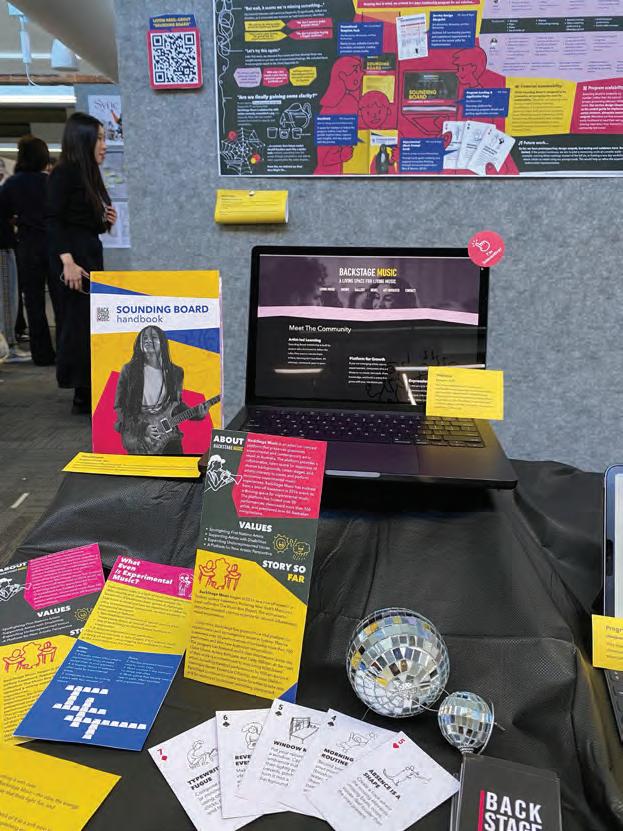
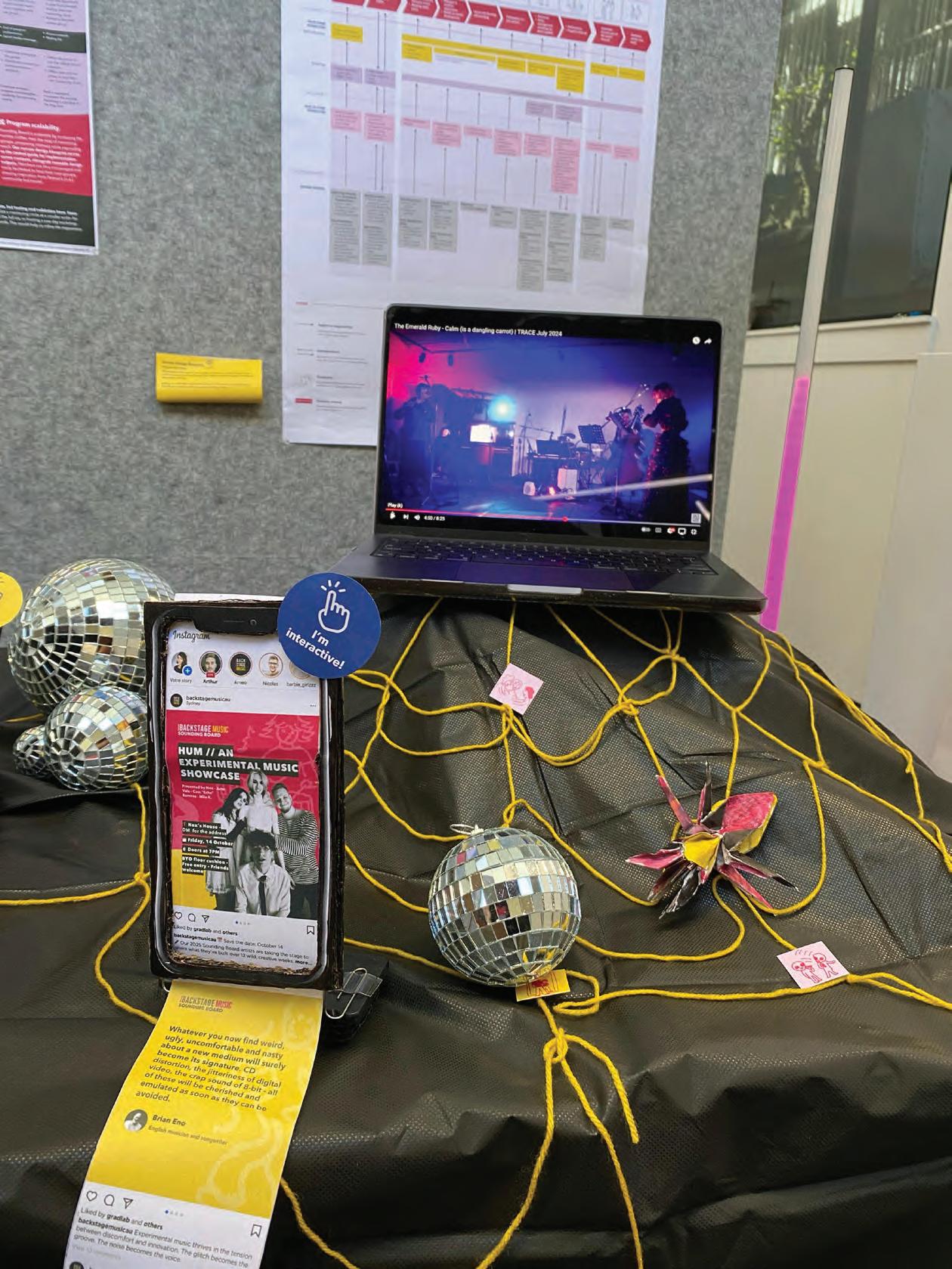
BackStage Music is an artist-run platform dedicated to experimental and creative art music in Sydney. Since 2016, it has presented more than 50 performances across diverse venues, showcasing over 100 performers and premiering dozens of new Australian works. Its events are known for their relaxed, curious atmosphere and commitment to inclusivity, ofering spaces where artists and audiences can meet on equal ground.
Looking ahead, BackStage aims to establish a permanent, independently run venue: a warehouse-style Black Box theatre with space for up to 300 people. This space would be afordable for artists, accessible to diverse audiences, and supported by a sustainable business model. More than a venue, it would be a cultural hub that embodies the energ and openness of grassroots music-making.
The challenge is to imagine what a ten-year strateg for BackStage might look like. How can design support new organisational models, fresh approaches to funding, and strategies for long-term sustainability? What creative tools could explain the platform’s signifcance to future backers and new audiences?
This project explores innovative, design-led ways to sustain experimental music. From event concepts and audience engagement strategies to organisational planning and funding models, it asks how grassroots music can continue to thrive and inspire in the decades to come.
We designed the Backstage Music Peer Mentorship Program to help emerging artists grow together through creativity and community. Remembering how isolating early musical journeys can feel, we created a space that encourages collaboration, curiosity, and confdence. Over six sessions, musicians explore sound, share ideas, and co-create performances guided by mentors. Every step—from jam sessions to self-branding workshops—helps artists fnd their voice while supporting one another. The program concludes with a live showcase and an ongoing alumni network, ensuring the journey continues. Backstage Music celebrates growth, connection, and the joy of making music together.
Gong, Jelly Wu, Kaylee Kuang, Zia Wang, From Curiosity to Loyalty: A Gami
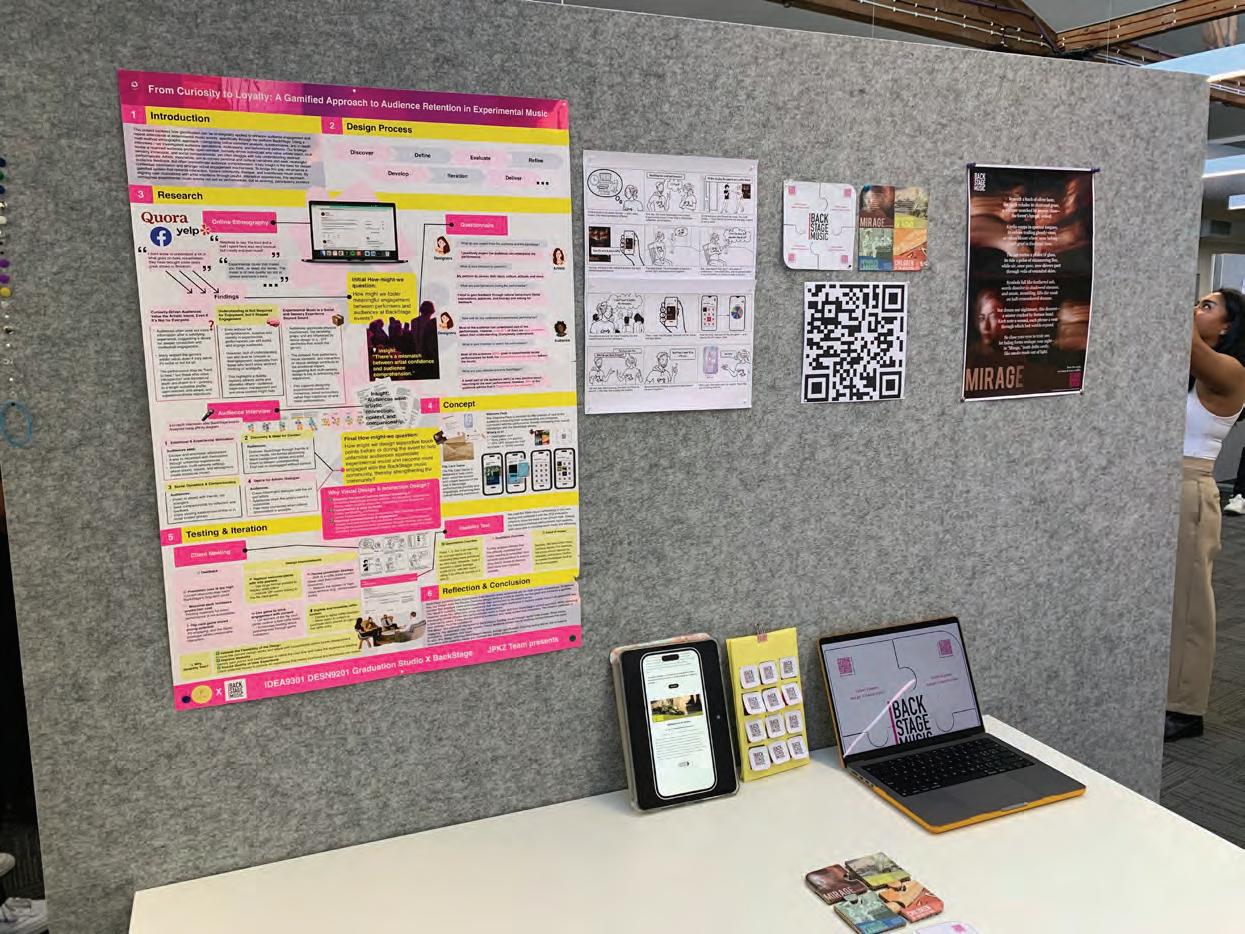
This project presents a creative design solution to enhance the BackStage experimental music experience. Through research, we identifed the need for a softer, more intuitive introduction to the multi-sensory performances, helping audiences engage with the artistic narratives. Recognising the gig as a vital social activity that fosters belonging, our intervention enriches the existing service ecolog. We employed visual and interaction design to create a futurefacing touchpoint. The result is a gamifed experience that reveals the intent behind each performance, deepening the connection for loyal attendees while successfully engaging newcomers and strengthening the communal atmosphere.
Peimeng
Making Invisible Care Visible: A Prototyping Challenge
Care sustains families, communities, and institutions, yet much of this work remains hidden, undervalued, and unrecognised. This project explores how design can bring visibility to these vital but often overlooked forms of labour. By prototyping tangible interventions, it asks how care might be acknowledged, supported, and better understood.
Two key contexts frame the challenge. In family life, the ongoing responsibilities of managing a household, raising children, or caring for aging parents often fall disproportionately on individuals. While essential to wellbeing and stability, this work is rarely recognised as a social or economic contribution. In healthcare, professionals such as nurses, ward clerks, and allied staf frequently carry additional responsibilities that extend beyond their formal roles. Emotional support, advocacy, and coordination are indispensable but remain largely invisible, contributing to stress, burnout, and systemic strain.
The project calls for prototypes that make these invisible eforts seen and valued. Interventions may range from interactive artefacts and service concepts to speculative proposals or advocacy tools. Each outcome should not only reveal unseen labour but also spark conversation about the ethics, risks, and opportunities of making care visible.
At its heart, the project highlights care as essential infrastructure for society, asking how design can give it the recognition it deserves.
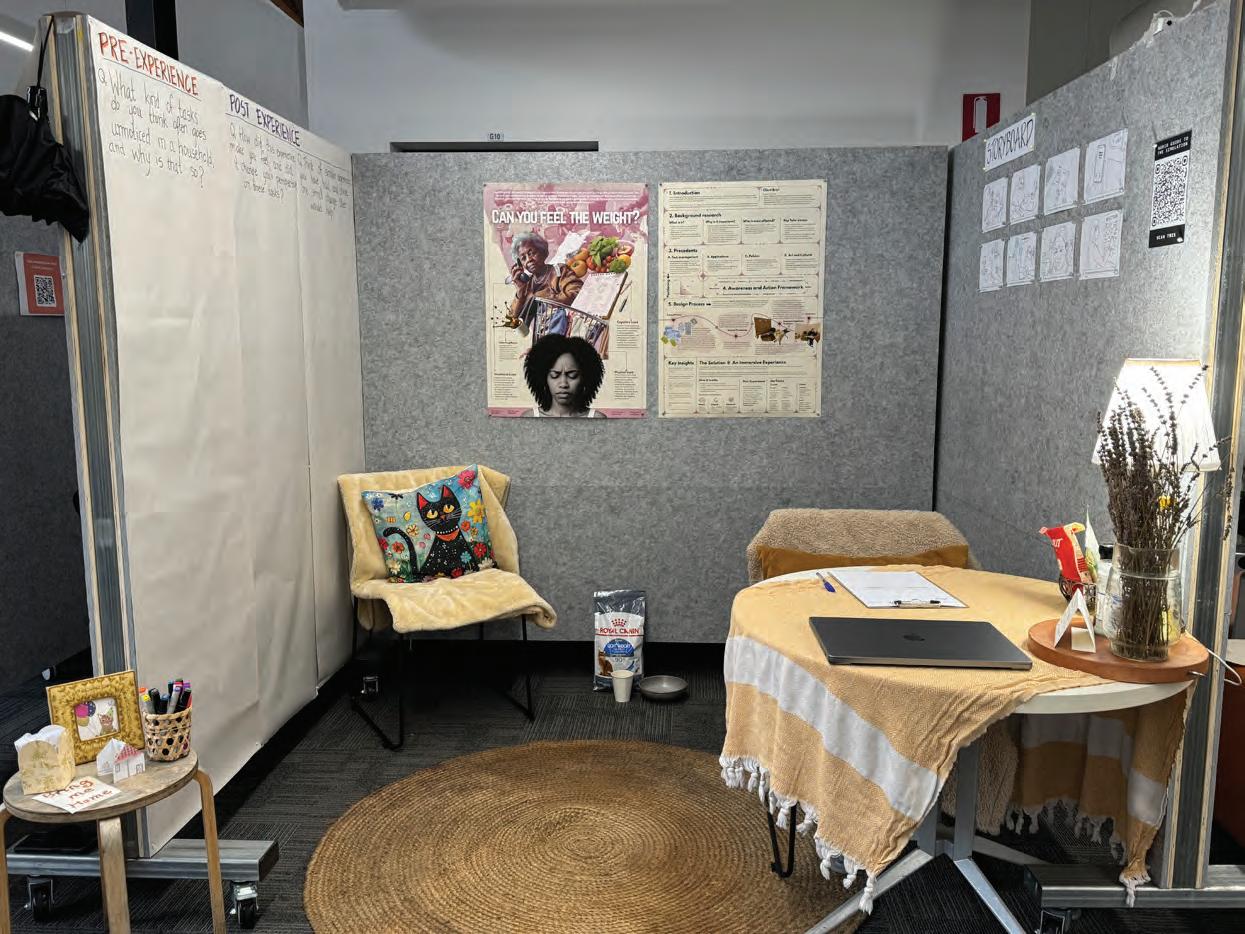
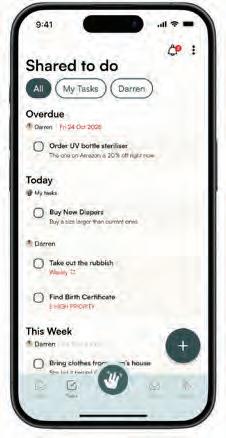
Invisible work refers to the unpaid labour of managing households, relationships, and daily care tasks. Despite its essential role in sustaining communities, it often goes unnoticed and rarely acknowledged. Drawing on insights from scenario and experience prototyping, this project addresses that gap by creating an immersive, real-time simulation that makes the cognitive and emotional demands of care visible and tangible. Participants navigate a staged home environment flled with everyday interruptions and layered responsibilities, supported by pre- and post-refection sessions. The outcome is greater awareness, empathy, and recognition. Feel the Weight encourages small but meaningful shifts in how care is perceived, appreciated, and supported in everyday life.
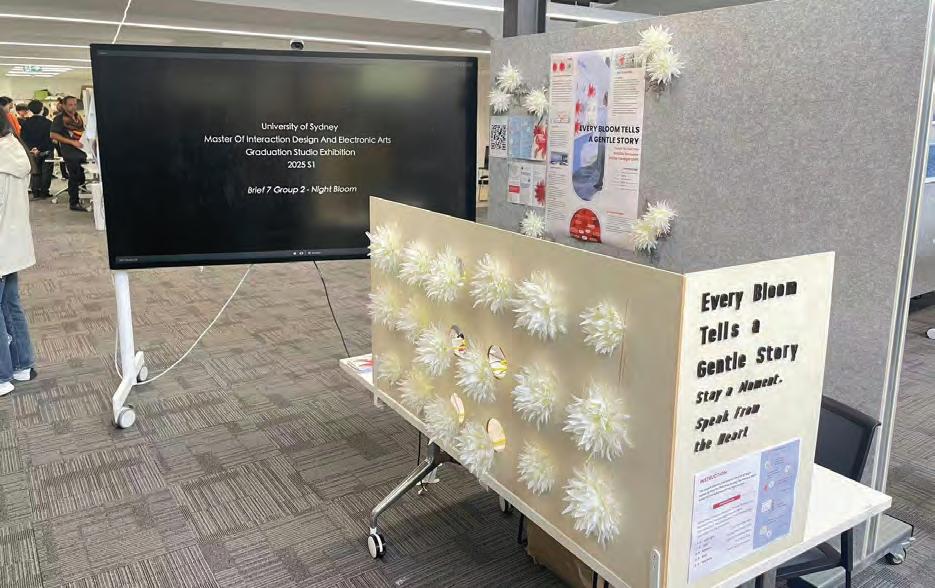
This project explores the often-overlooked, invisible work within healthcare, focusing on night-shift nurses. Through the design of a data-driven fower wall, it seeks to gently reveal their unseen labour, ease the emotional burden caused by invisibility, and raise awareness—without disrupting their work or afecting other stakeholders.
Yulin Du, Stella Qi,
Designing an Interactive Festival on Misinformation and Disinformation
Misinformation and disinformation shape public opinion, infuence behaviour, and undermine trust. This project takes on the challenge of designing an interactive festival that helps communities recognise and respond to these issues in creative, engaging, and practical ways.
The aim is to move beyond traditional awareness campaigns and create a space where people can actively explore how misinformation works and how to resist it. Building on earlier research, the task is to prototype a festival that combines immersive activities, workshops, performances, and installations. These experiences should encourage participation, spark dialogue, and equip audiences with tools to critically evaluate information.
The festival must be more than a one-of event. It should be community-centred, inclusive, and scalable, designed to bring together everyday citizens, media professionals, and policymakers. Key considerations include balancing creativity with feasibility, designing for accessibility, and ensuring that activities are grounded in ethical practice. Both physical and lowtech approaches are encouraged to ensure wide participation.
By prototyping and testing the experience, the project demonstrates how design can address urgent societal challenges. The outcome is a festival concept that is innovative, feasible, and impactful, ofering new ways to strengthen public resilience against misinformation.
GRADUATION STUDIO/
DESIGN INNOVATION CATALYST
COACH
Tanushri Saha
CLIENT
Department of Prime Minister and Cabinet, Australian Government
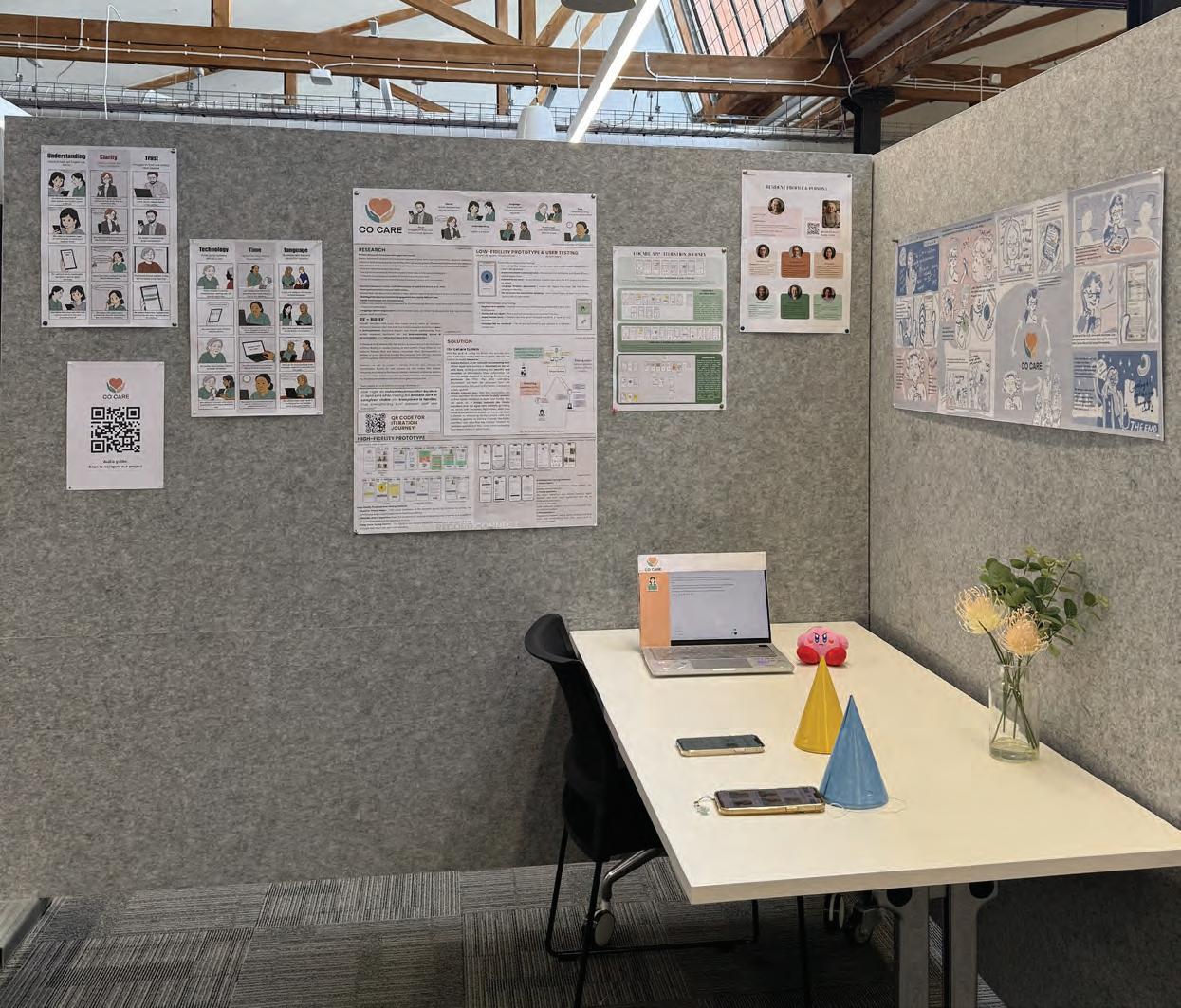
CoCare responds to the brief by addressing communication gaps between aged care workers and families. Through interviews and research, the team identifed that aged care nurses spend excessive time on documentation, while families often feel uninformed and anxious. To address this, CoCare introduces a streamlined documentation tool and a family-facing app that provides timely, accessible updates on residents’ wellbeing.
The system reduces nurses’ administrative burden, supports multilingual communication and strengthens trust between families and staf. It is designed as an integrated framework comprising multiple components that meet the needs of diferent stakeholders: aged care workers, registered nurses, family members, and residents. By making everyday care activities visible, CoCare helps maintain emotional connection, alleviates stress and reinforces the value of caregivers’ essential yet often overlooked work.
Huyen My Nguyen, Ayushi Singh, Angelina Lam, Rishabh Mishra, CoCare
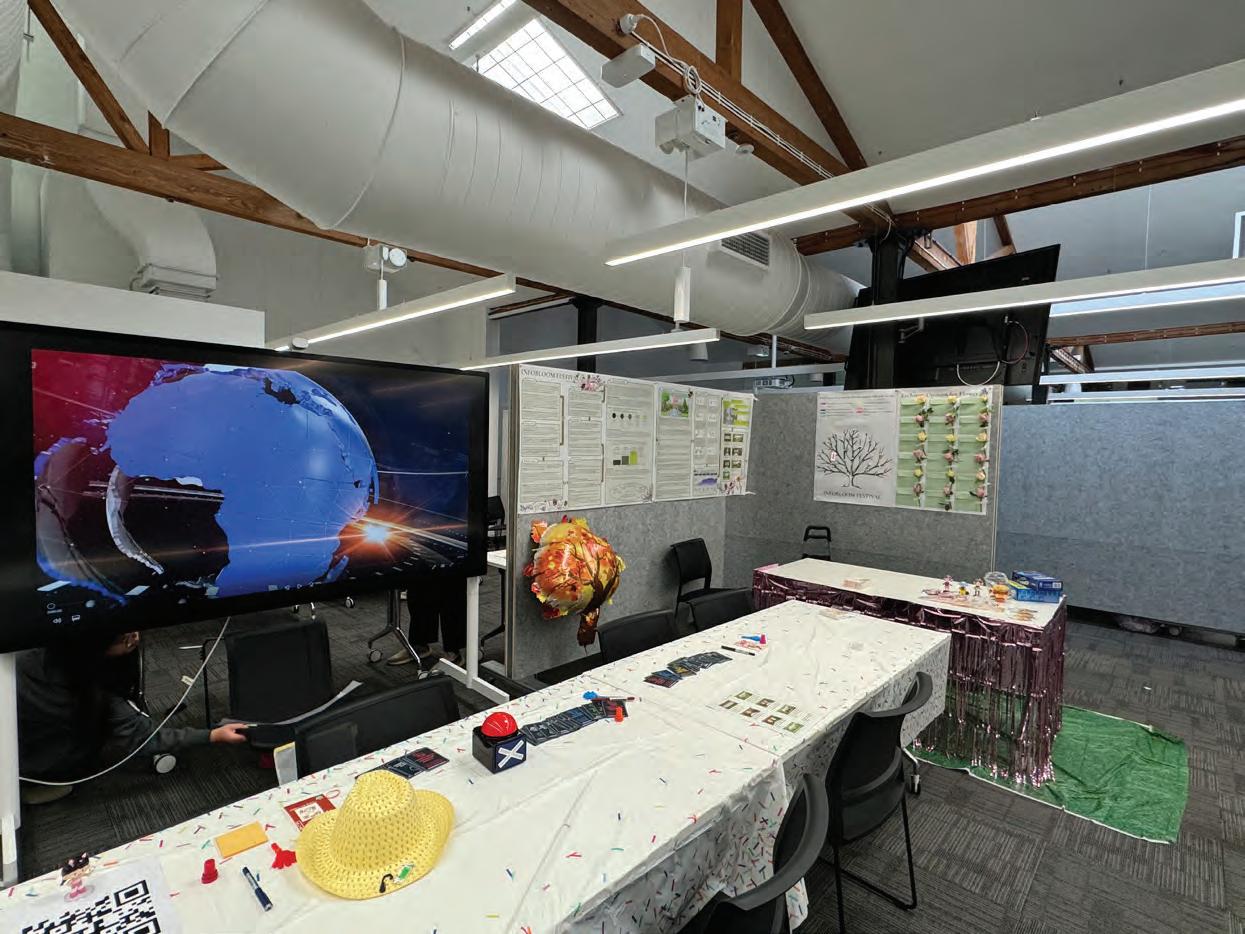
InfoBloom Festival is an immersive, participatory event in collaboration with the Department of the Prime Minister and Cabinet. The aim of this event is to collect public insights on dis/misinformation, expand its social impact, and build a two-way communication mechanism with communities. It encourages young people from culturally and linguistically diverse (CALD) communities to explore and challenge misinformation. Through interactive games, storytelling, and immersive activities, participants learn to think critically, share experiences, and rebuild understanding of information.
The festival creates a joyful and inclusive space where communication blooms, symbolised by planting, while also providing real-time feedback to policymakers. By blending human-centred, co-design, and systemic approaches, InfoBloom transforms traditional information education into a shared cultural experience that connects communities, nurtures awareness, and fosters sustainable dialogue between citizens and government
Tianze Liu, Regina Wang, Lingxiao Zhang, Zilin Liu, InfoBloom Festival
Visualising the Complexity of Nuclear Energy in the Context of Energy Transition
As the world transitions toward cleaner energ, nuclear power sits at the centre of debate. Advocates see it as a low-carbon solution, while critics raise concerns about safety, cost, and longterm impacts. This project investigates how design can help the public and policymakers better understand the complexity of nuclear energ’s role in the broader energ transition.
The challenge is not to take a position for or against nuclear power, but to frame its interconnections with environmental, social, political, and economic systems. By applying systems thinking, the task is to create visual representations that make these relationships legible to both experts and non-experts. The aim is to communicate complexity in ways that are accessible, engaging, and informative without oversimplifying critical details.
Possible approaches include developing interactive tools, physical installations, or data-driven infographics that map dependencies and feedback loops. Supporting materials should explain the design process and highlight how the visuals foster clearer understanding.
Ultimately, the project seeks to show how design can transform abstract technical debates into experiences that build awareness and curiosity. By visualising complexity, it opens new ways for communities and decision-makers to engage with one of the most pressing questions of our time: how to transition to sustainable energ.
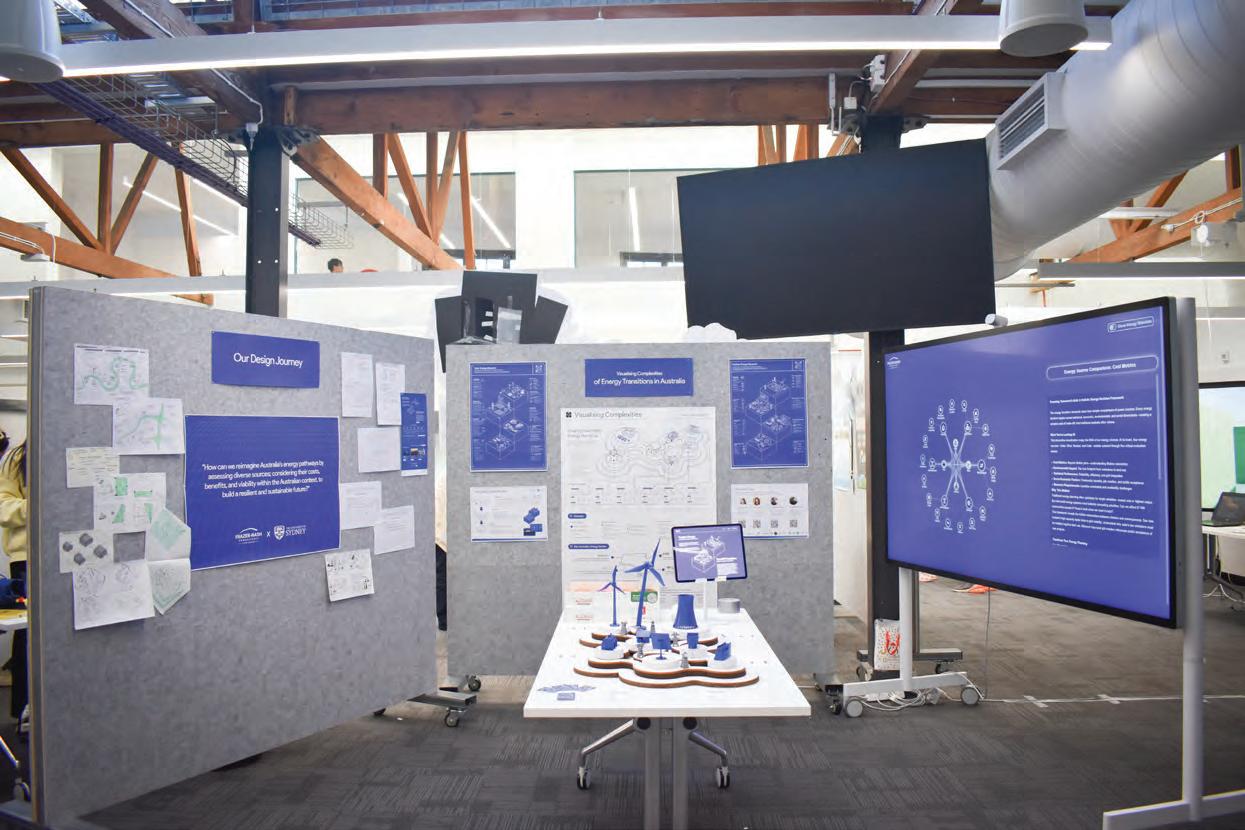
Shrutidhar Patadia, Cara Gamo, Shashank Chandrashekhar Karnad, Daniela de Mora Moyano, Visualising Complexities
Visualising Complexities is a three-tier communication toolkit that helps Australians understand the energ transition as a connected system rather than as a collection of isolated technologies. In partnership with FrazerNash Consultancy, our team designed:
1. A tactile public exhibit to spark energ literacy,
2. Layered technolog blueprints illustrating how solar, wind, nuclear, and legacy sources operate, and
3. A web-based Energ Comparison Tool that enables users to compare energ sources across cost, environmental, technical, and social criteria.
By revealing trade-ofs, synergies, and long-term implications, the toolkit transforms dense analysis into clear, actionable insights—fostering evidence-based conversations among citizens, educators, and policy stakeholders.
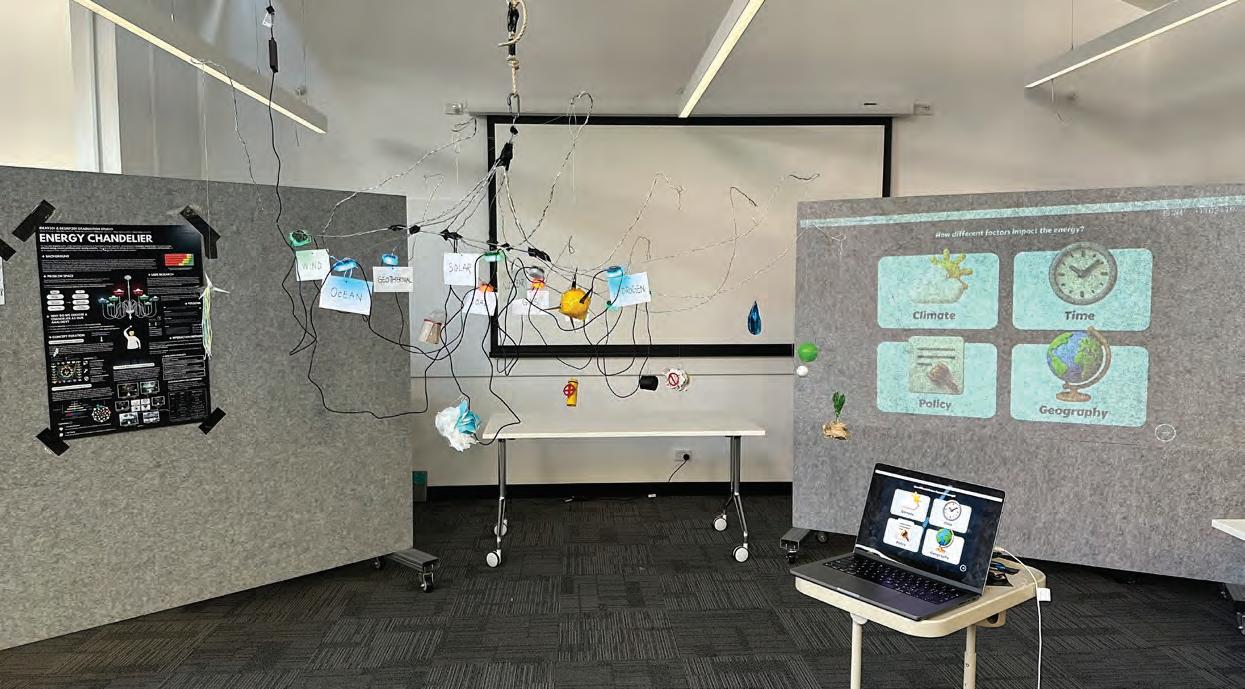
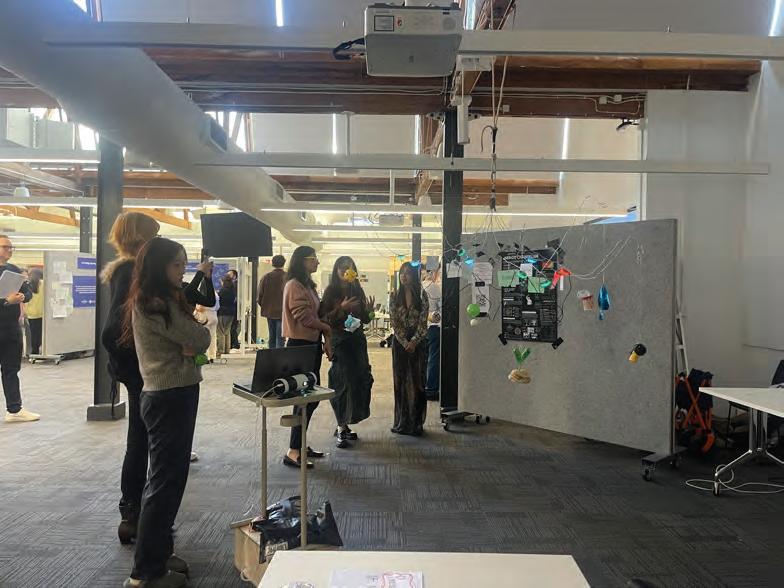
The Energ Chandelier is an interactive installation designed to demystify Australia’s complex energ transition for a non-expert audience. It features ten branches, each representing a key energ source—from solar and wind to coal and emerging options such as hydrogen. By selecting real-world scenarios like daytime or policy impact, users can observe how the brightness of each lightbulb changes, visually representing that source’s contribution to the energ grid. This tangible model makes the dynamics of our national energ mix accessible and comparable, fostering more informed and inclusive public conversations.
Chelsea Liu, Tracey Xue, Xinyue Wang, Charlie Yan, Amy Zhao, Energy Chandelier
Reimagining Bus Shelters for Sweltering Cities
In Western Sydney, summer temperatures can climb to extremes, with ground heat reaching up to 50 degrees. For those waiting at bus stops, existing shelters ofer little protection. They are often generic, purely functional, and fail to refect the needs or character of the communities they serve. This project challenges designers to reimagine bus shelters as vital public spaces that provide shade, accessibility, and a sense of pride.
The task is to move beyond the standard model and consider how shelters can respond to both climate and community. How might they ofer relief from heat while also becoming places of interaction, comfort, and cultural expression? Could they incorporate features like water bubblers for children, shaded seating for the elderly, or interactive elements that strengthen local identity?
The focus is on creating designs that are inclusive, sustainable, and inspiring. Proposals might use innovative materials to reduce heat, refect cultural narratives, or integrate beauty into everyday infrastructure.
Ultimately, the work aims to produce concepts that can be used as advocacy tools for better public infrastructure. By sparking imagination and ofering practical strategies, these designs have the potential to infuence future government policies and reframe what community spaces can be.
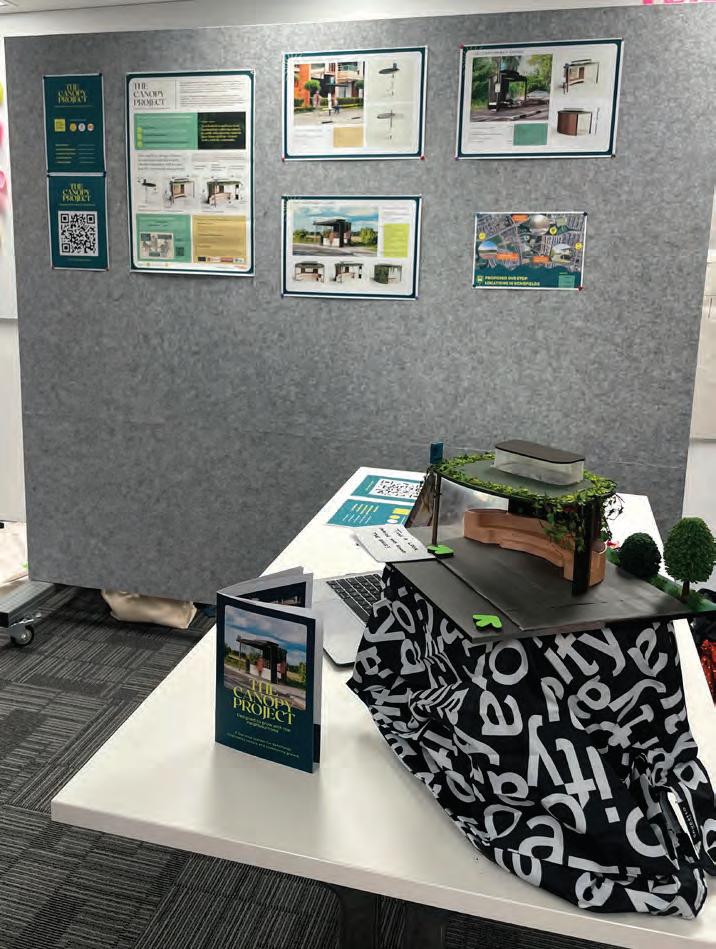
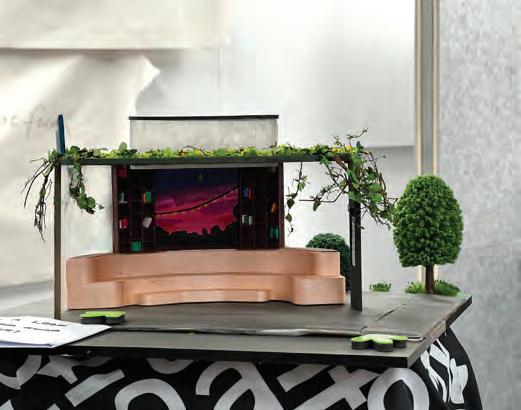
Schofelds is rapidly growing, yet its public transport infrastructure is lagging, leaving users exposed to rising temperatures and without community space. The Canopy Project addresses these community-identifed challenges of heat stress, car dependence, and weak identity with a modular, climate-responsive bus stop design that is inspired by nature and adaptable to diverse needs. This scalable three-tier living system (Canopy, Sapling, Seedling) features rounded forms and muted colours, integrating skylights, cooling systems and vertical gardens that enhance both form and function. Rooted in life-centred design and resilience, these stops are cooler, safer and more inclusive. The project fosters community connection and a lasting sense of place, designed to grow alongside Schofelds.
Alannah Clark, Joseph Zachary Chong, Sanita Budihardjo, Tamara Ariyandi, Daksha Ramprasad, The Canopy Project
Hospital Bus Shelter Redesign
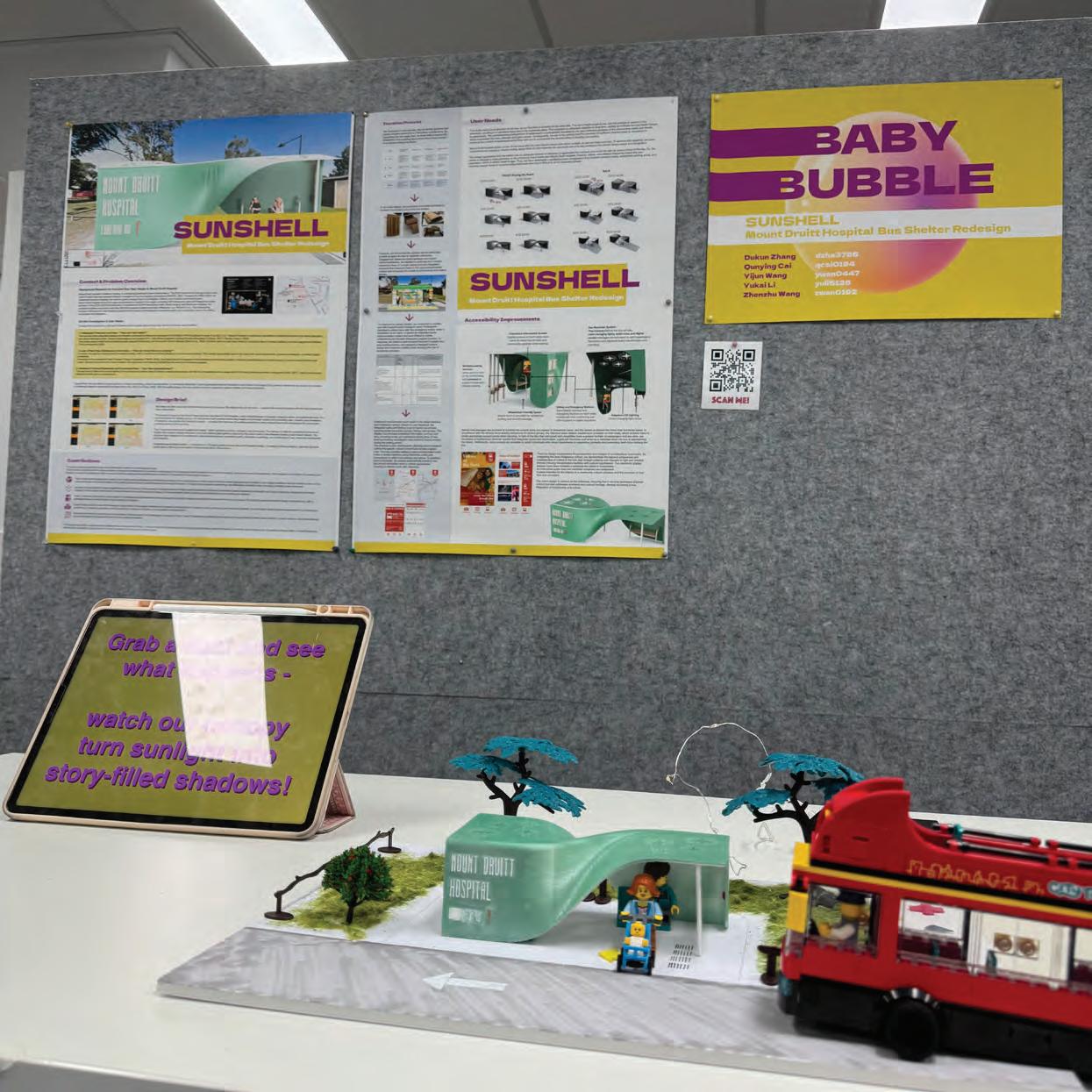
SUNSHELL redefnes the traditional bus stop as a climate-responsive and inclusive public space. Designed for Mount Druitt Hospital, it addresses heat exposure, accessibility, and community identity through a curved, ventilated canopy that enhances shading and airfow. The shelter integrates digital screens displaying real-time information and local art, tactile guidance, auditory announcements, and emergency support systems. Wheelchairfriendly layouts, ergonomic seating, and colour-coded lighting improve usability and comfort. Inspired by Aboriginal motifs from the Western Sydney Local Health District, SUNSHELL combines sustainability, safety, and cultural storytelling—creating a functional yet emotionally resonant space for all passengers.
Pearl Wang, Dukun Zhang, Qunying Cai, Yukai Li, Yijun Wang, SUNSHELL: Mount Druitt
Making Invisible Care Visible
Care is everywhere, yet much of it remains unseen. From managing households and raising children to providing emotional support in hospitals, countless acts of labour sustain daily life without recognition or reward. This project examines how design can uncover these hidden eforts and invite the public to value care as central to both society and the economy.
The focus spans two settings. In domestic life, care involves running homes, supporting family members, and carrying emotional responsibility. Although critical to wellbeing, this work is often unpaid and invisible, leaving carers without acknowledgement or opportunity for advancement.
In healthcare environments, nurses, ward clerks, and allied health professionals take on responsibilities that extend well beyond their ofcial roles. Emotional support, patient advocacy, and the coordination of complex care are essential, yet these contributions frequently go unnoticed. Many of these workers, often from migrant backgrounds, also face cultural barriers and systemic challenges that deepen the invisibility of their work.
Design becomes a tool to reveal these hidden contributions and spark new conversations. The aim is to ask what forms of care should be made visible, what risks visibility might carry, and how greater recognition can create more compassionate systems. By reframing care, the project highlights its true value as the foundation of collective wellbeing.
GRADUATION STUDIO
COACH
Martin Egan
CLIENT Bow Wu, ADP
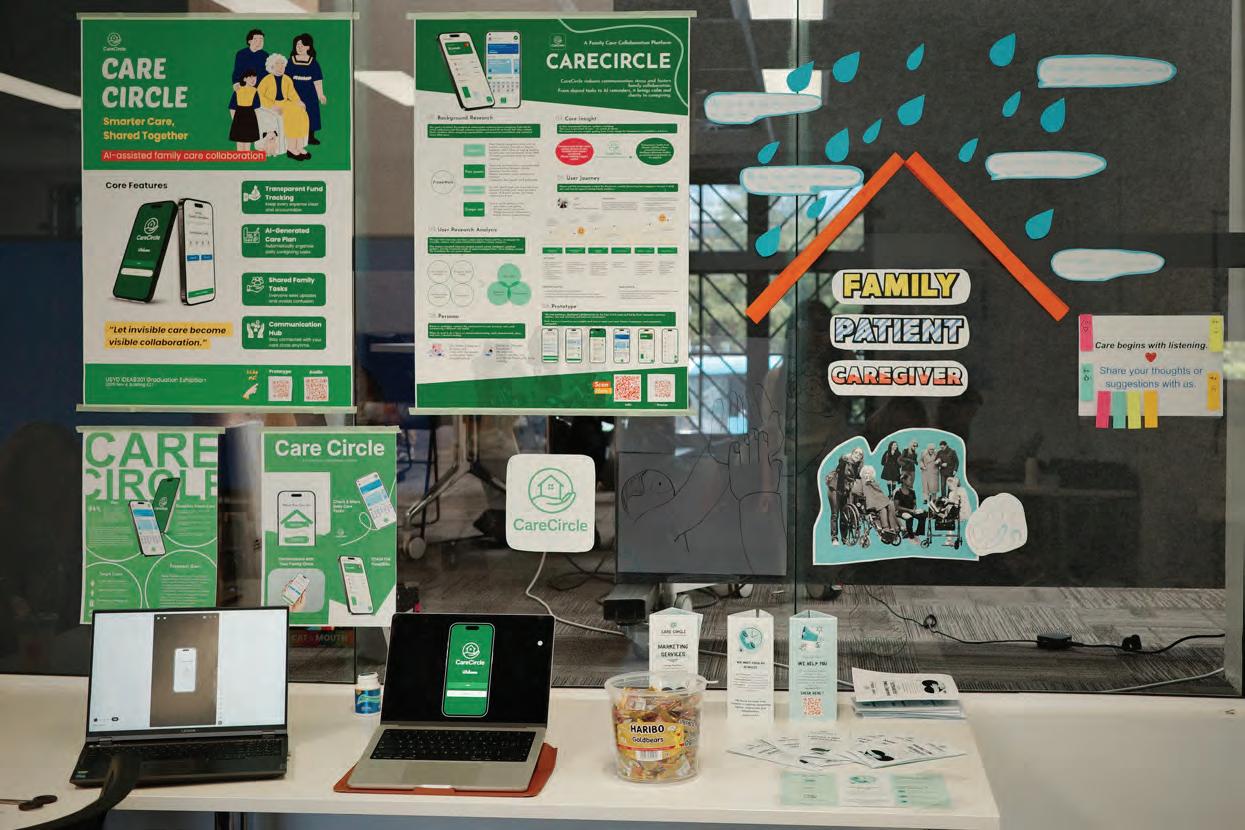
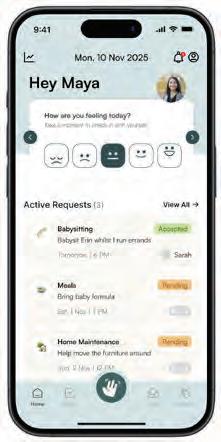
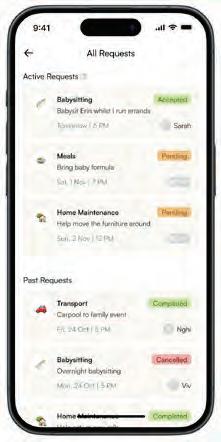
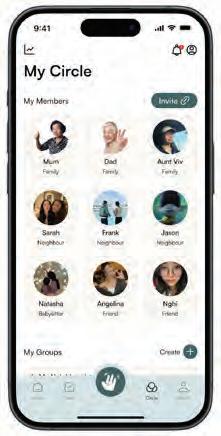
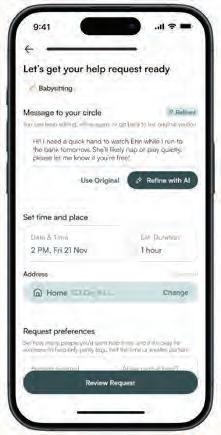
Care Circle is a collaborative family caregiving platform that transforms invisible emotional and decision-making burdens into shared, transparent, and structured care. It connects family members through task coordination and emotional awareness. This proposal summarises our design process, from research to prototype, highlighting how Care Circle fosters trust, clarity, and calm in family caregiving.
Wu, Ruoheng Dong, Kaixin Zhao, Zichen Qiao,
Reimagining Systems: Designing the Future of Assurance and Innovation
Behind every major project lies an invisible framework of systems engineering and assurance. These processes ensure safety, reliability, and long-term success across felds such as transport, health, and emerging technologies. Yet they are too often dismissed as bureaucratic exercises, seen as box-ticking for regulators rather than as opportunities to drive innovation. This work challenges that perception.
The focus is on reframing systems engineering as a creative, future-oriented discipline. Instead of compliance, the emphasis is on competitive advantage. Systems thinking can be a powerful tool for social innovation, climate resilience, and technological trust. By making abstract engineering concepts tangible and relatable, the work aims to show their impact on human values, communities, and the environment.
Two areas highlight the potential. In transport, systems assurance can help design climate-resilient corridors that protect safety while supporting ecological regeneration. In emerging technologies, from modular nuclear reactors to advanced biomedical innovation, systems thinking can accelerate progress responsibly, ensuring safety keeps pace with ambition.
The outcome will communicate this shift clearly and creatively. Through prototypes, storytelling, or visual frameworks, the work seeks to position systems assurance not as hidden scafolding, but as a catalyst for building safer, smarter, and more resilient futures.
GRADUATION STUDIO
COACH
Mel Rumble
CLIENT
Mariana Zafeirakopoulos, Frazer-Nash Consultancy
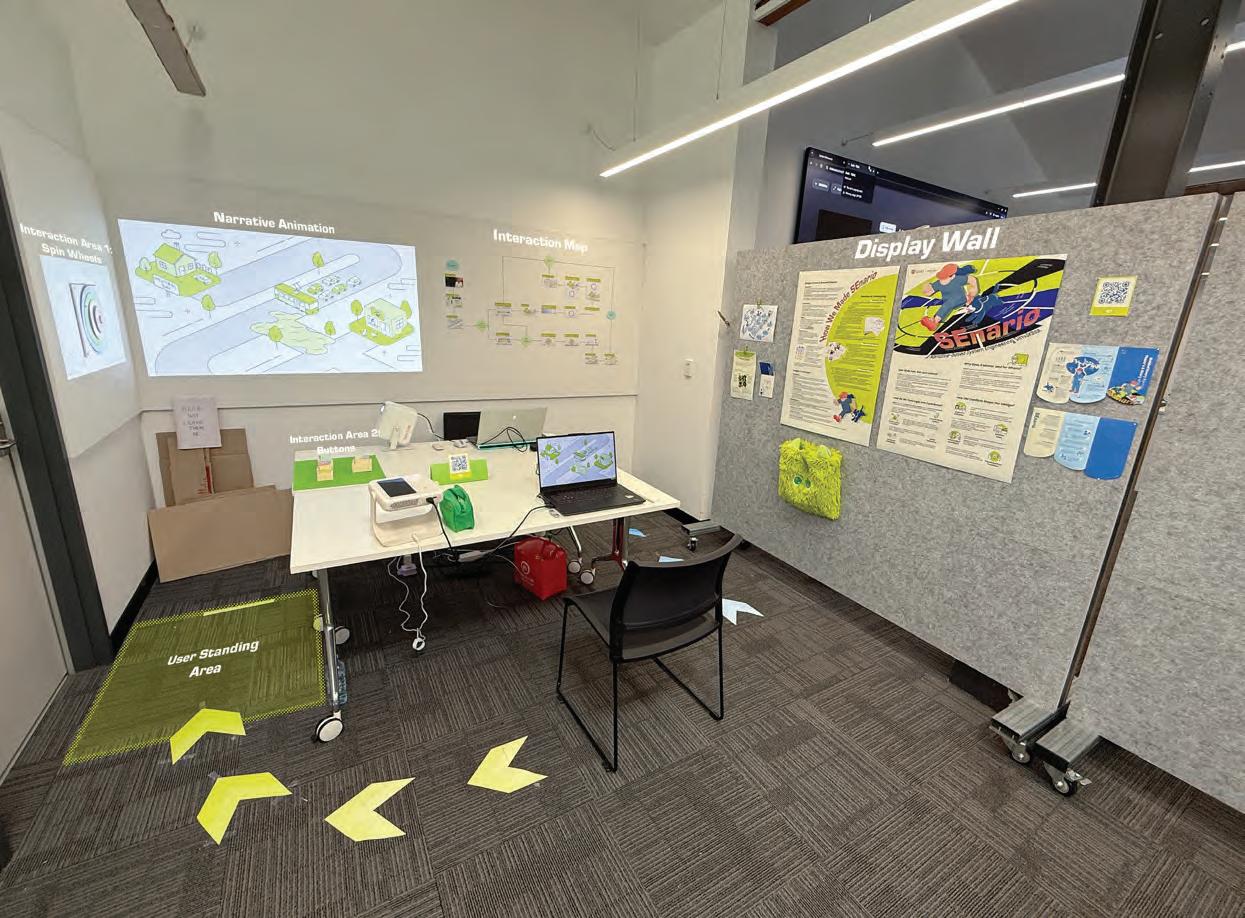
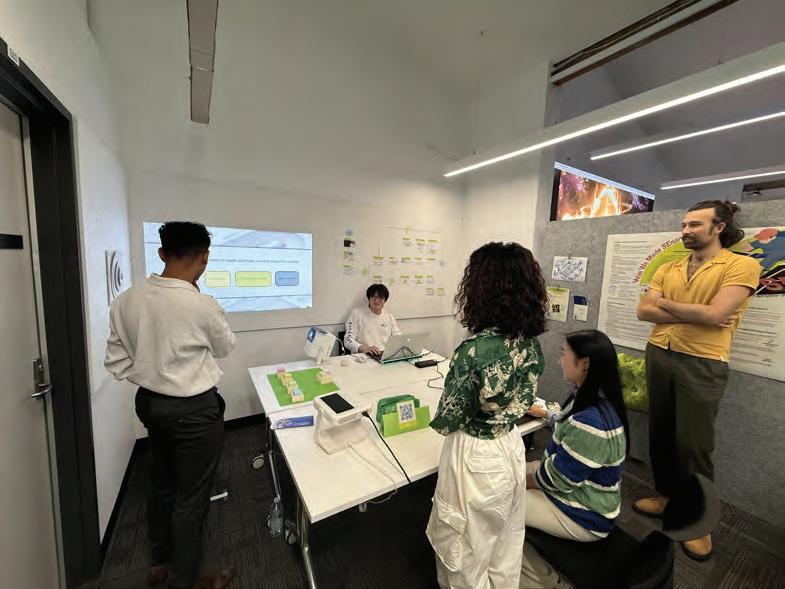
SEnario, a narrative-based Systems Engineering simulator, reimagines how Systems Engineering (SE) can be communicated and understood. Using multiple rotating discs with dynamic projections on one screen, alongside a concise interactive narrative animation on another, users experience the chain reaction in which every change triggers another within the system. Through the demo story Saving Shadow, the project demonstrates how SE helps restore order amid chaos and transform complexity into clarity, refecting its impact in real-world contexts. As both an educational medium and a narrative artefact, SEnario bridges engineering precision with human empathy.
Yera Yan, Yu Fei, Bibei Liu, Tianshun Li, SEnario
Strengthen and Enrich Learning of Students Studying Design in a Non-Native Language
As design education becomes increasingly international, many learners are navigating their studies in a non-native language. While this diversity enriches classrooms with cultural and linguistic perspectives, it also presents challenges for both learners and educators. This project explores how design can strengthen and enrich the learning experience of culturally and linguistically diverse students in ways that are engaging, inclusive, and context-specifc.
The work draws on lived experiences of international learners and insights from educational research. Frameworks such as Universal Design for Learning ofer strategies for teaching diverse groups, while initiatives like Cultural Awareness and Knowledge Exchange Scheme highlight the value of relational learning and cultural exchange. Yet these approaches are not tailored to design education. This project invites experimentation with new models and artefacts that bridge this gap.
Possible directions include speculative proposals that rethink design education beyond eurocentric, lecture-based formats, or the development of material and digital artefacts that integrate cultural and domain knowledge. Other approaches might focus on redesigning teaching at the unit level, with innovative assessments and learning resources tested for efectiveness.
The goal is to produce outcomes that are iterative, evidence-based, and creative, while ofering tangible ways to make design learning more inclusive. By doing so, the project reimagines design education as a space where linguistic and cultural diversity is not a barrier but a source of strength.
GRADUATION STUDIO
COACH
Rully Zakaria
CLIENT Jody Watts, ADP
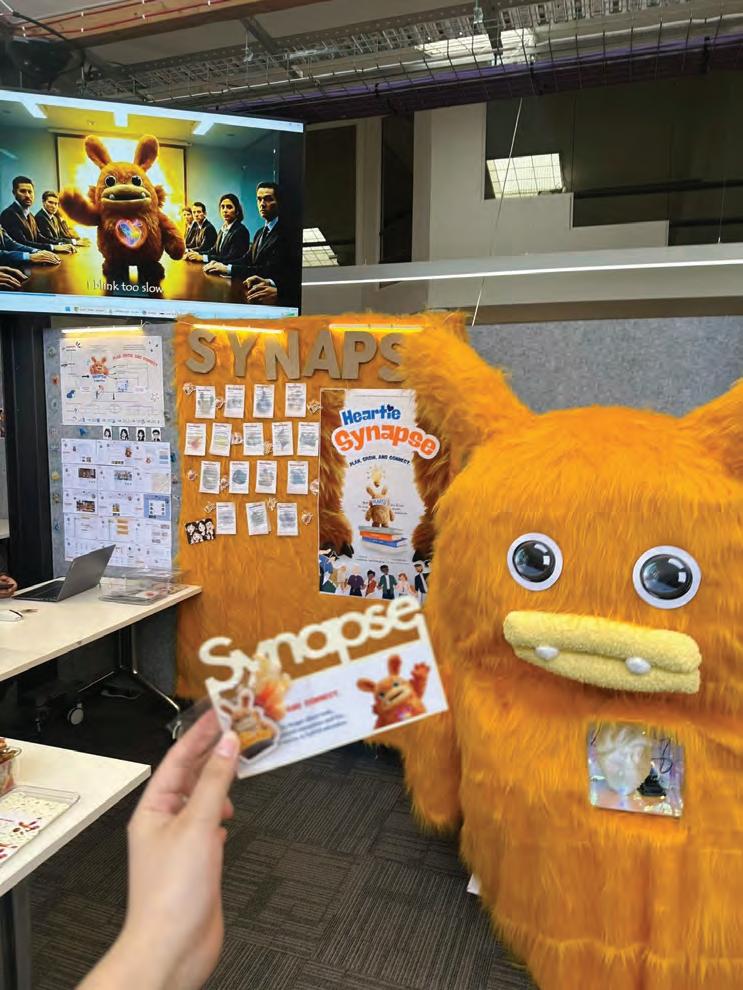
Synapse is an AI-driven Life Operating System designed to combat student burnout and social isolation. It moves beyond passive productivity apps by creating an autonomous Digital Twin, Heartie, for every user. Built on the OCEAN Big Five model, this agent uses its validated personality profle to drive all functions: optimising chaotic schedules, autonomous social mapping, and personalised career mentorship. Our multi-platform exhibit, featuring a 3D concept flm and physical IP, showcases a new paradigm for human–AI co-creation.
Xiaoyang Yu, Viki Liu, Tata Zhang, Jackson Zhao, Synapse
Understanding Country and Place around Wilkinson
Country is more than land. For Aboriginal communities it is a living story that holds spiritual, cultural, and ecological knowledge. Around the Wilkinson Building at Camperdown and Redfern, this knowledge is deeply embedded in place, yet it is often overlooked in everyday academic life. This project asks how interaction design can introduce new students and staf to the meaning of Country and foster respectful engagement with Indigenous knowledge from the outset of their time at the School of Architecture, Design and Planning.
The challenge lies in bridging gaps in awareness and understanding. While practices such as Acknowledging Country are now common, their depth and signifcance are not always recognised. Many non-Indigenous communities still undervalue the relationship between people, place, and story. There is a need for engaging formats that make these connections accessible and meaningful.
The project explores how interactive media, such as video, virtual or augmented reality, or immersive installations, can tell stories of place in ways that are culturally sensitive, emotionally resonant, and easy to share. By working with Indigenous knowledge holders, mapping the local environment, and testing prototypes, the aim is to create experiences that invite refection, respect, and responsibility. In doing so, design becomes a tool for connecting people to Country and for reshaping how place is understood within education.
GRADUATION STUDIO
COACH
Beau de Belle
CLIENT Future students and sta of ADP
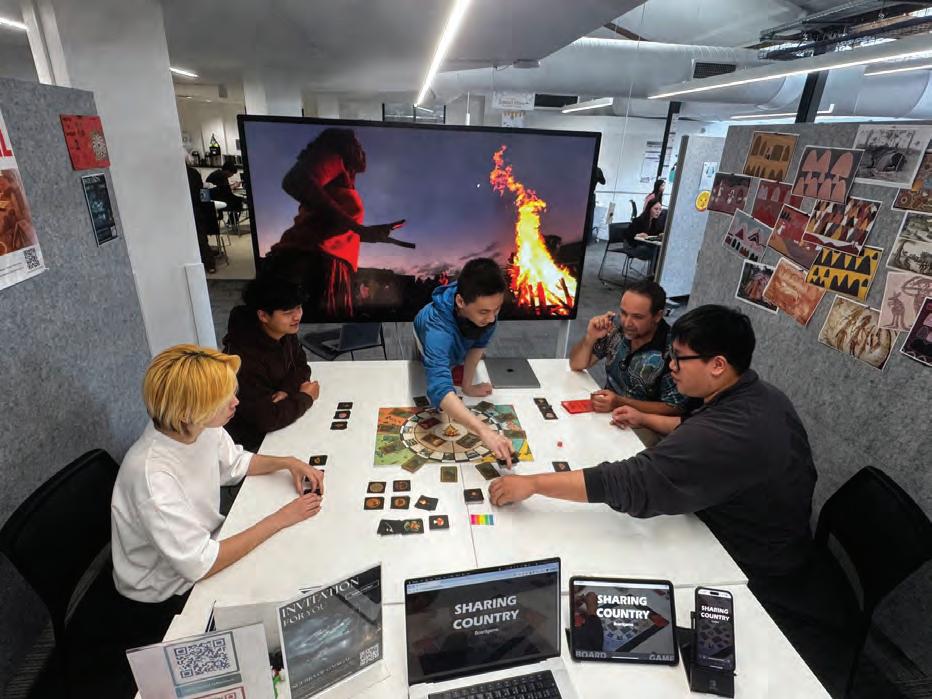
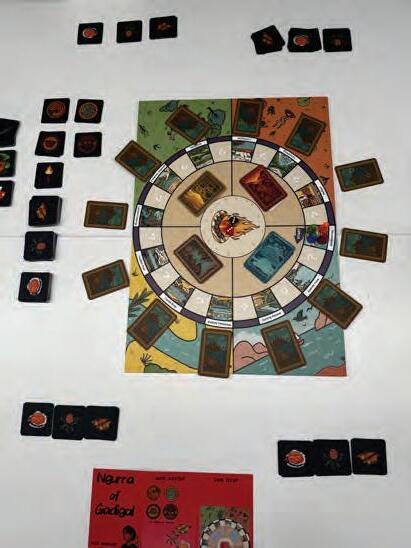
Designing a Physical Board Game: NGURRA OF GADIGAL. By integrating Gadigal culture into tabletop game mechanics, this project creates a low-barrier, high-engagement environment that transforms cultural education from passive reading to active co-creation. It enables new students and teachers to grasp the true meaning of “Sharing Country” through play. The board game provides an easy-to-understand, visually driven learning experience, turning potentially overwhelming cultural information into engaging, collaborative activities that respect both learners’ comfort zones and Indigenous cultural protocols.
Designing a Social Enterprise to Create Social Good
Social enterprises combine creativity, business strateg, and social purpose to generate lasting change. Rather than focusing solely on proft, they create sustainable models that address pressing issues, disrupt harmful systems, and contribute to collective wellbeing. This project invites participants to design a venture that applies interaction design skills to build meaningful social impact.
The scope is broad but grounded in practical outcomes. Successful social enterprises have ranged from delivering solar-powered educational tools to children in remote areas, to reclaiming discarded construction materials for new uses, to teaching coding in prisons as a pathway to empowerment. Each example demonstrates how design, when paired with entrepreneurship, can open opportunities where traditional markets or government initiatives may fall short.
The challenge is to identify a social issue that matters in a local context and design a venture that responds with creativity, empathy, and strategic thinking. This involves engaging with partners, stakeholders, and communities, while also developing a viable business model that ensures sustainability.
By drawing on the unique capabilities of interaction design, the project seeks to demonstrate how design-led enterprises can spark transformation. It is a call to create ventures that not only function as businesses but also act as catalysts for equity, dignity, and social good.
GRADUATION STUDIO
COACHES
Rohan Lulham
Howe Zhu
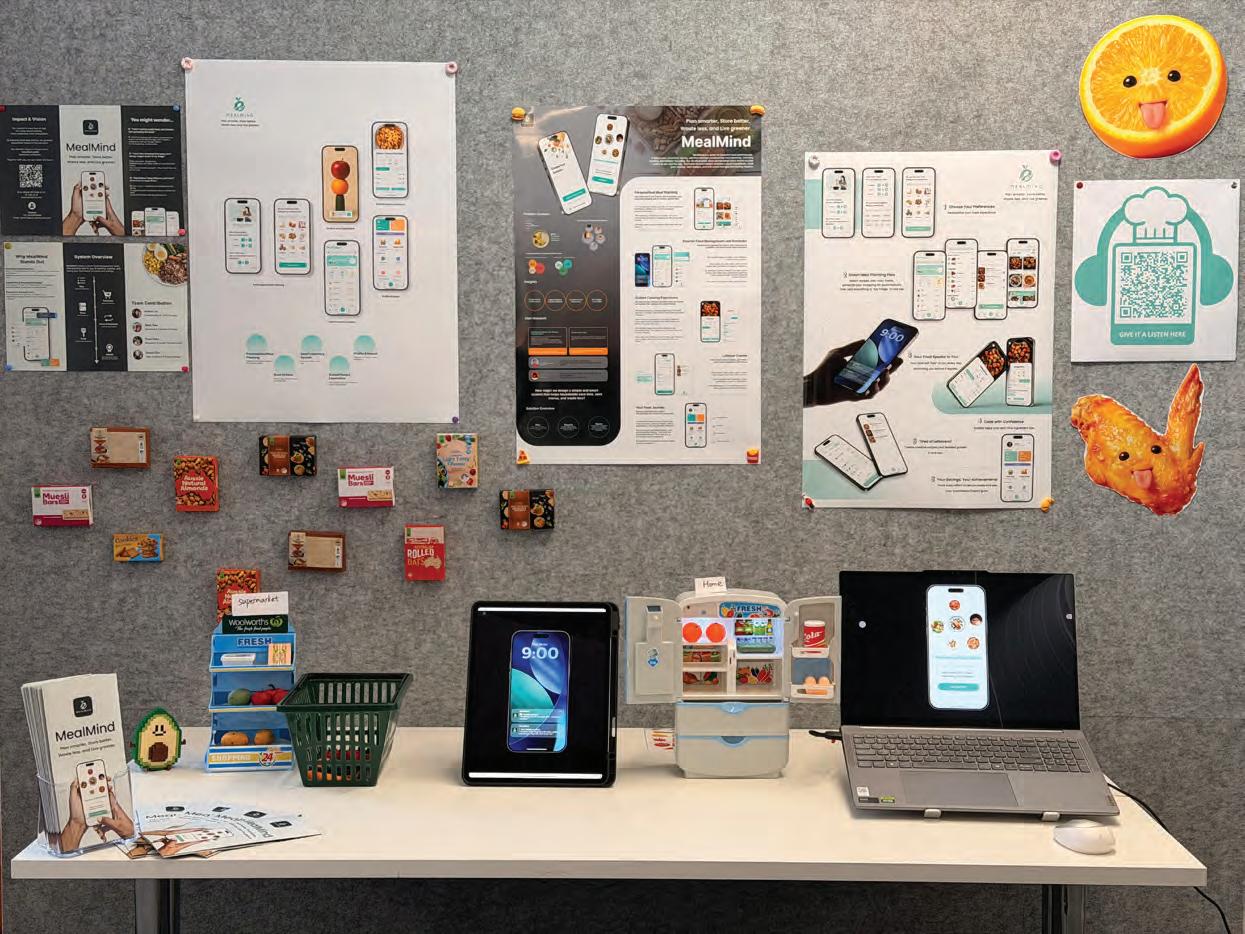
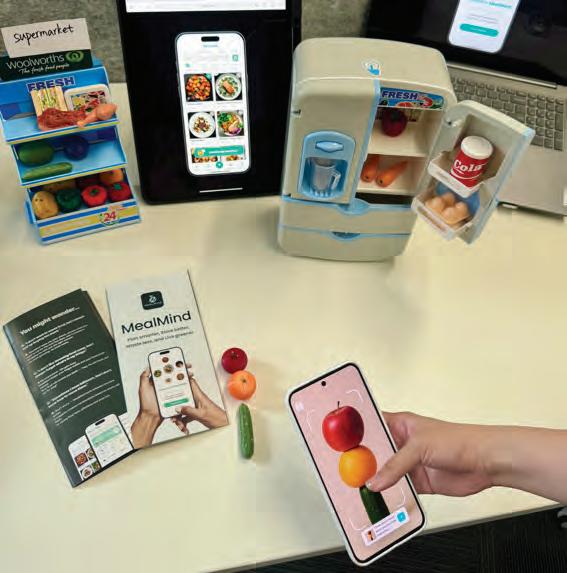
MealMind is an intelligent food management app designed to help households save time, money, and reduce food waste. Combining meal planning, fridge inventory, cooking guidance, and waste visualisation, it transforms daily routines into sustainable actions. Grounded in user-centred and emotional design, the app uses smart scanning, data insights, and playful reminders to make sustainability efortless and rewarding. By balancing convenience, health, and environmental impact, MealMind empowers users to turn awareness into action, building a digital ecosystem that connects behavioural insight, emotional engagement, and positive social change.
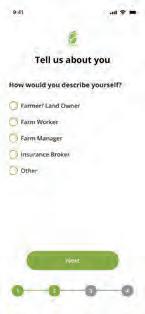
FarmSafe is a digital platform reimagining agricultural safety through smart technolog, data, and design. Agriculture remains one of Australia’s most hazardous industries, and FarmSafe responds by ofering an integrated system that combines real-time incident reporting, health and fatigue monitoring, and ofine access for remote areas. Its tools cover incident analytics, equipment safety, ergonomic work planning, isolation management, workforce training, and wearable device integration.
The project envisions how digital innovation can reshape the future of farm work. By using IoT and wearable data, FarmSafe promotes safer, more efcient, and more transparent operations. Anonymized health and activity data enable insurers to shift from static risk assessments to dynamic, behaviour-based pricing, rewarding farms that demonstrate strong safety practices. This approach creates shared value—reducing liability while improving wellbeing across the sector.
The work positions FarmSafe as a leader in agricultural safety through strategic service design and user experience innovation. It explores two directions: developing engagement strategies to encourage adoption among farmers and industry stakeholders, or advancing app prototypes that enhance remote monitoring, wearable integration, and data-driven decision-making, while addressing ethical and privacy considerations in the process.
MAJOR PROJECT IN DESIGN INNOVATION
COORDINATOR
Adeola Bamgboje-Ayodele
TUTOR Kathryn Lee
CLIENT
FarmSafe
Anusha Jaiswal, Kavya Bhatt, Riona Dsouza
Bridging human behaviour and system design to make safety adoption intuitive, scalable, and rewarding
A modular pathway that begins with confidence, grows through routine, and ends with measurable value.
These insights shaped our pathway that focuses on trust, usability, and proof as the drivers of adoption.
Low Digital Stickiness Trust Before Tech Fragmented Systems
Farmers abandon safety tools when setup feels complex or value isn’t immediate.
Adoption grows when tools prove useful early, not when they demand commitment upfront.
IMPLEMENTATION PATHWAY
Existing apps don’t talk to each other — FarmSafe unifies safety, data, and habit formation.
A staged rollout designed for credibility, low effort, and compounding value, proving the system through behaviour, not just promise.
Build Trust
Partner with two mid-size livestock farms via insurer or co-op networks.
Co-design the Starter pack around their workflows. Frame pilots as mutual value exchange. Capture early stories + proof for credibility.
This stage creates credibility and proof for broader adoption.
Build Value
Deploy SafeScore, advanced risk insights to insurers. Enable data-sharing control (farmers own visibility).
Link verified safety to incentives & partnership benefits.
Position FarmSafe as the sector’s standard for trusted safety data.
and
Build Habit
Expand through regional networks using pilot proof. Add photo/voice logs, QR checks, and Community Connect.
Create habit loops through dashboards and team recognition. Refine tools using ongoing farmer feedback.
Routine participation and network momentum driven by visible progress.
Positioning FarmSafe to turn innovation into long-term engagement, credibility, and growth.
PHASE 01
PHASE
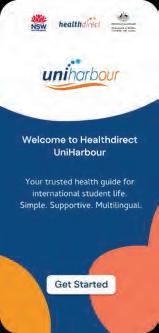
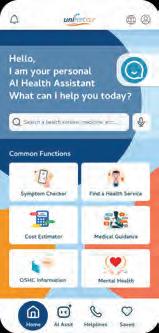
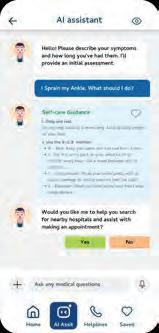
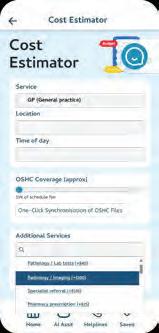
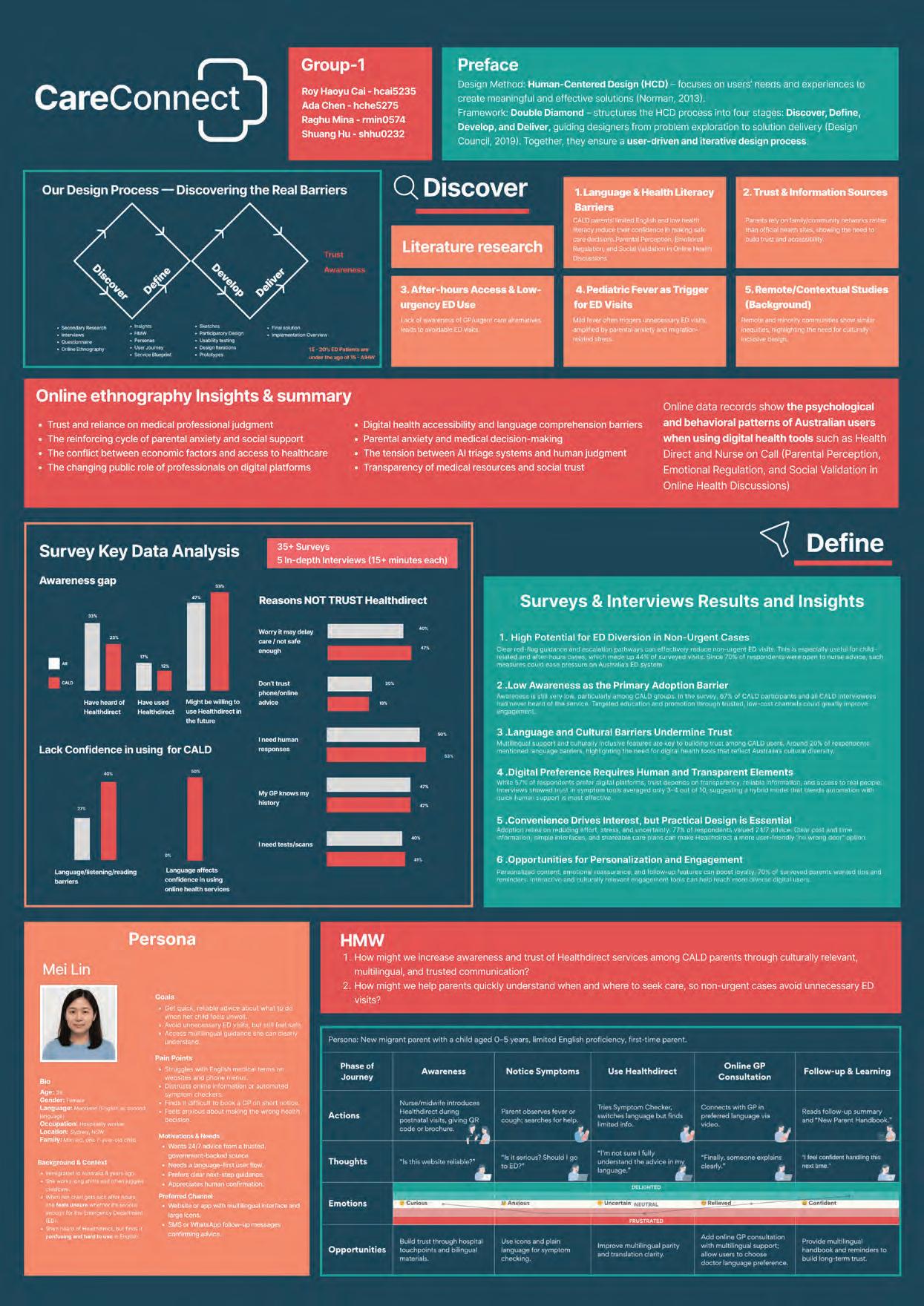
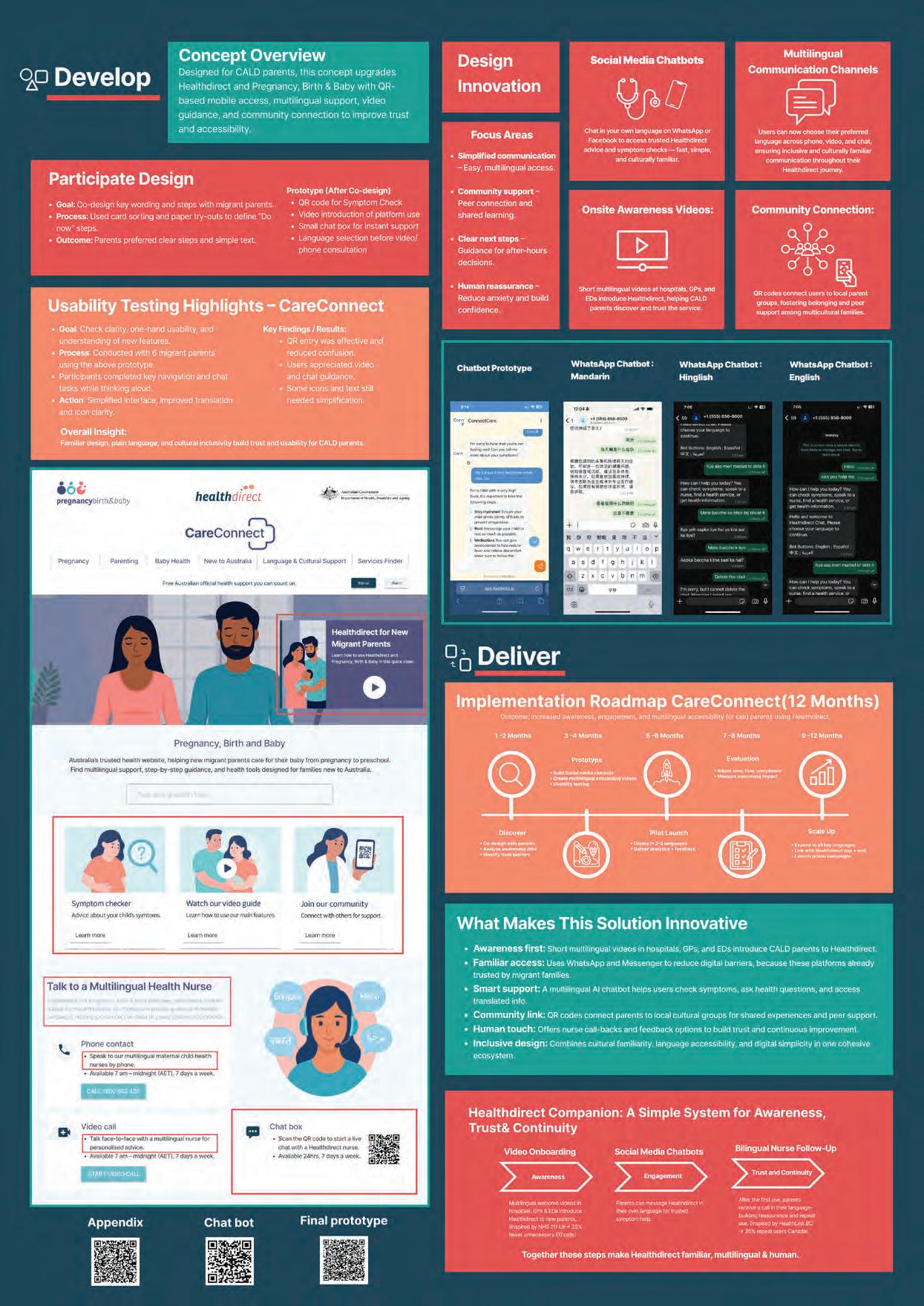
Adoption of Healthdirect’s Single Front Door in NSW
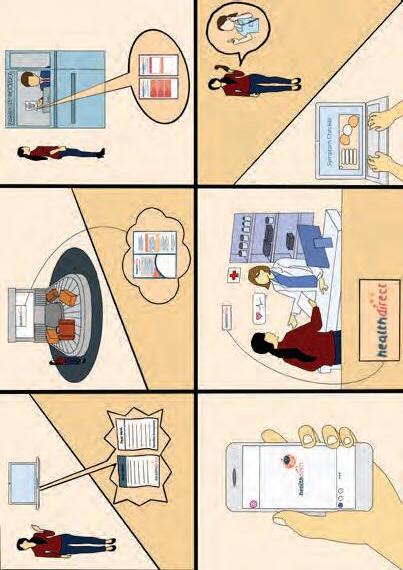
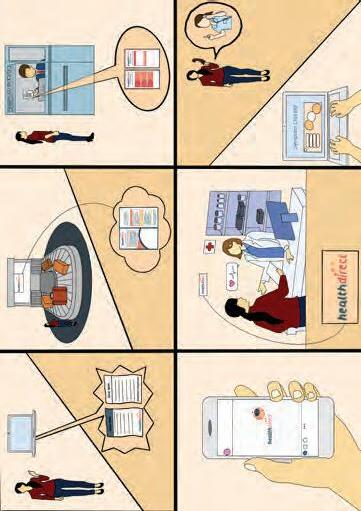
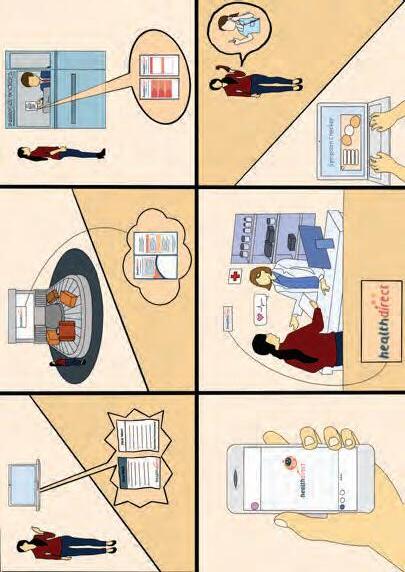
Healthdirect Australia delivers trusted, round-the-clock virtual health services in partnership with all levels of government. Its platforms include nurse advice lines, symptom checkers, service directories, and telehealth consultations, designed to improve access, efciency, and continuity of care across the health, aged care, and social sectors.
One of its major initiatives, the NSW Single Front Door (SFD), provides a central phone and digital entry point to direct people to the right care—whether that’s a GP, urgent care clinic, or self-care advice. In 2024, the SFD successfully redirected more than half of callers who initially planned to visit an emergency department, easing pressure on hospitals. Yet awareness and engagement remain low among key groups, including culturally and linguistically diverse communities, older adults, people with disabilities, and those experiencing mental health challenges.
This project explores new ways to increase awareness, trust, and use of the SFD. It considers how factors like multiple service brands, communication channels, health literacy, and cultural attitudes shape engagement. The task is to design strategies or prototypes that enhance equity, usability, and confdence in virtual care, ensuring that every person can access the right health advice, at the right time, through a system they trust.
MAJOR PROJECT IN DESIGN INNOVATION
COORDINATOR
Adeola Bamgboje-Ayodele
TUTOR
Adeola Bamgboje-Ayodele Yidan Cao
CLIENT Healthdirect Australia
Enyi Zhu, Xinye Wang, Xingyu Xiao
Roy Haoyu Cai, Ada Chen, Raghu Mina, Shuang Hu
Joseph Zachary Chong, Krish Recinto, My Nguyen, Margie Milne
Project by : The Cloud
How can we help Healthdirect better connect with CALD communities in Australia?
Problem Statement: Health Literacy a nd
Diversifying Population: The Strain on Caretakers
Awareness and Misunderstandings
CALD/Sandwich can be avoidant of help programs, often due to a lack of awareness or misunderstanding that they do not qualify for them.
A s Australia’s population grows and life expectancy rises, more CALD and Sandwich Generation households are becoming dependent on a “primary caretaker”, the family member responsible for organising daily needs, appointments, and health decisions. However, these caretakers often face low health literacy & awareness, as well as uncertainty about when or how to seek professional care. This leads to delayed treatment, avoidable GP/ED visits, and increasing stress on carers and the healthcare system. (Australian Seniors, 2025) (Australian Institute of Health and Welfare [AIHW], 2023) (Federation of Ethnic Communities’ Councils of Australia [FECCA], 2015) Audience Behavioral
(Carers Australia, 2024)
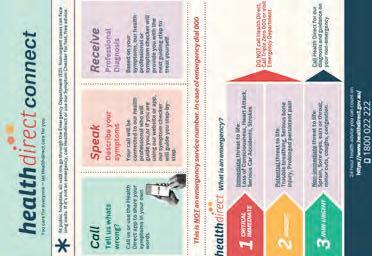
Position Health Direct in must-visit locations like multicultural grocery stores, NSW community centres, and health clinics. Distributes leaflets and fridge magnets featuring a QR code to Healthdirect’s digital platform. Enables quick access to reliable health information and available services. Builds brand familiarity and trust through meaningful, real-world engagement.
A targeted outreach initiative to connect Healthdirect w ith CALD and Sandwich Generation communities through trusted, everyday community spaces.
Our research revealed key issues that CALD groups face with Health
Direct: ata shows “e ergenc ” is sub ecti e to the indi idual, rather than scaled as triages
Aim To empower primary carers with fast, accessible, and reliable Healthdirect support, easing their workload while enabling them to learn of and guide their families and communities toward timely health diagnosis. Through desk research, interviews, and surveys with CALD c ommunity members, the Sandwich generation, and frontline h ealthcare workers, we found: CALD individuals face language and literacy barriers, lowering access to health programs. Awareness of Healthdirect remains low among multicultural groups, despite millions of users annually. Non-urgent ED visits are rising, adding strain to emergency healthcare staff. Many CALD households depend on family and community rather than formal systems. They often live in multigenerational households, overlapping wit h the Sandwich Generation. Both groups rely heavily on a primary caretaker, who bears the weight of health decisions for others.
Audience Persona
Goals Quick, reliable health guidance before actin g Avoid unnecessary hospital trips Pain Points Unsure when a condition is “serious enough” Long wait times and disrupted routine No clear guidance after hours
Name: Lalita Guptaa CALD/Sandwich family caretaker
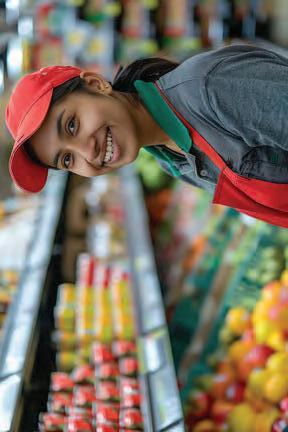
A ge: 35 Career: Grocery team member at Woolworths
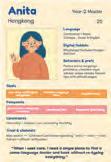
Our Solution: Making Health Direct a Household Contact Example of Our Entry Points on a Primary Carer’s Daily Journey Map Assist with Medical Care
“When Lalita’s mother became unwell, she couldn’t leave work to t ake her to the GP. With no other option, she went to the hospital after hours, only to wait for hours in ED for a minor issue. Since then, she has grown hesitant and unsure about seeking a diagnosis until the symptom grew stronger.”
generation carers are expected to double in numbers by 2030s. Reaching a number close to 3 million Australians (Di Giovanni et al., 2025) DID YOU KNOW?
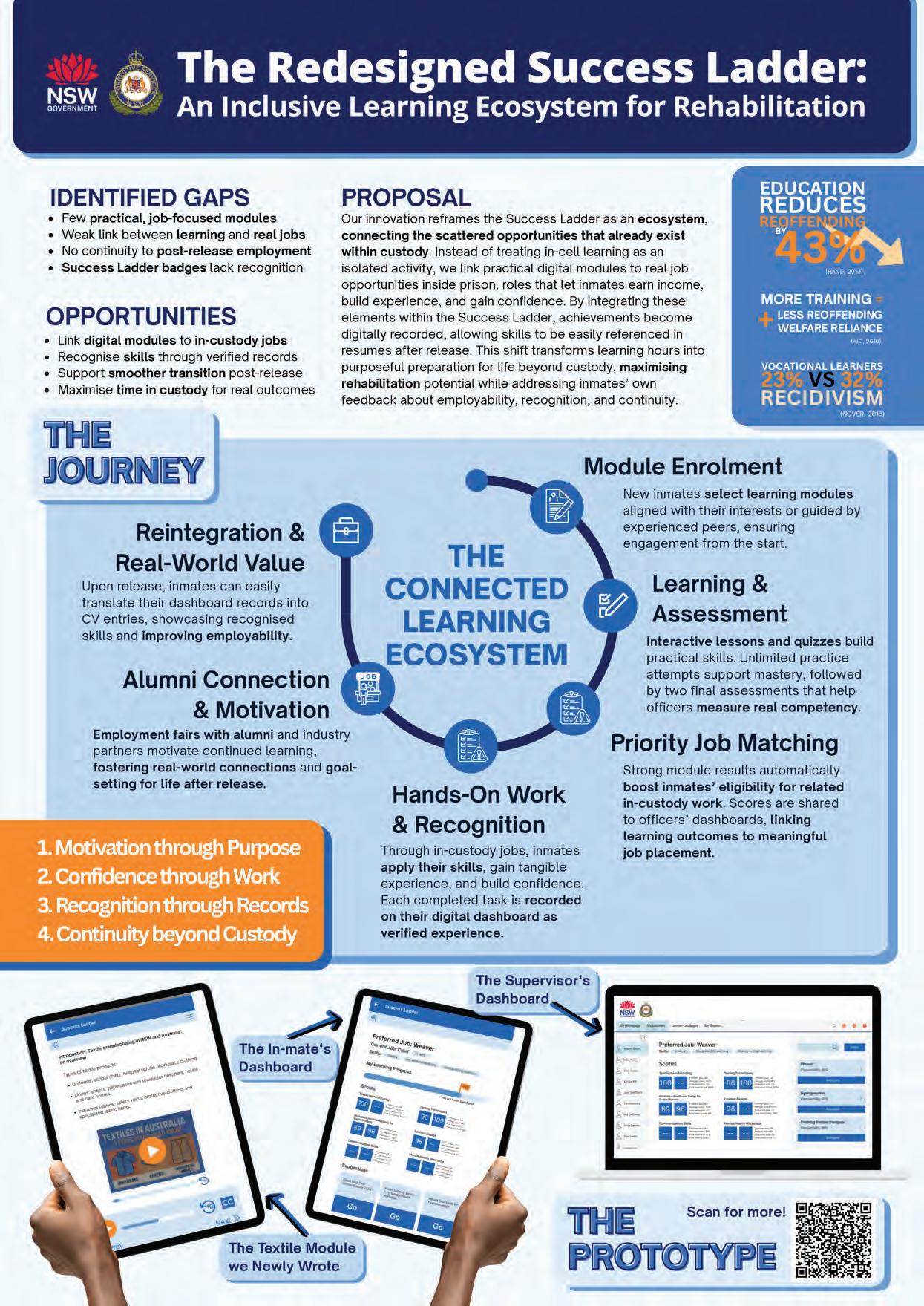
Success Ladder Digital Rehabilitation Project
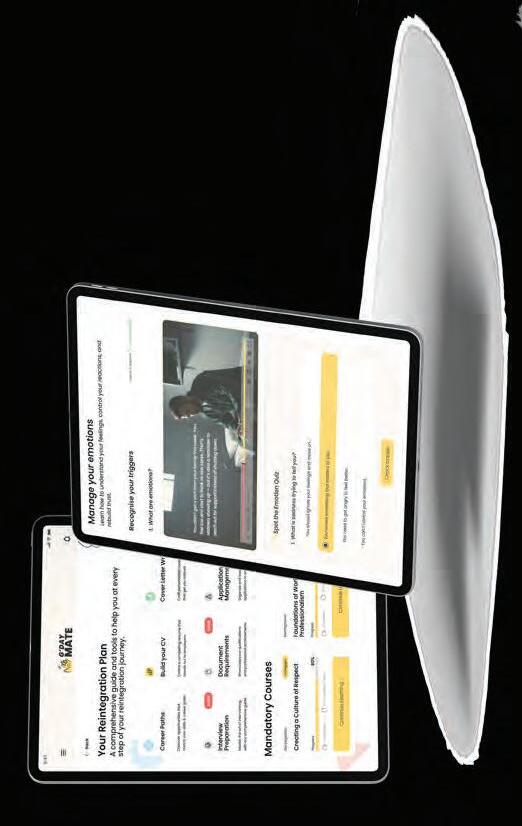
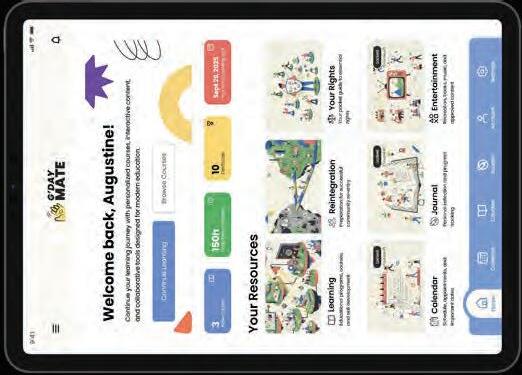
Corrective Services NSW (CSNSW) is exploring innovative digital approaches to prisoner rehabilitation through the Success Ladder platform. Success Ladder is a secure learning system accessible on inmate tablets, providing educational courses, training, and personal development programs that support rehabilitation, skill-building, and reintegration into society.
The challenge focuses on designing an interactive digital learning module that promotes personal growth within the unique context of custody. Each module should be engaging, culturally safe, and trauma-informed, addressing diverse learning needs such as low literacy levels, limited digital experience, and varied educational backgrounds. While the platform restricts free text input, external links, and downloads, it supports multimedia content including video, audio, imagery, quizzes, and interactive exercises.
The project aims to demonstrate how digital tools can make rehabilitation more efective and accessible. It invites creative prototypes that teach practical skills—such as emotional regulation, communication, or job readiness—through multimedia storytelling, gamifed progression, and adaptive learning methods. Outcomes include a working prototype with storyboards and sample content, a research-based rationale, inclusive design recommendations, and strategies for scaling the solution within the Success Ladder ecosystem.
MAJOR PROJECT IN DESIGN INNOVATION
COORDINATOR
Adeola Bamgboje-Ayodele
TUTOR Lucy Klippan
CLIENT
Corrective Services NSW
Tianyi Feng, Luka Guo, Amy Lee, Lynne Xu
Katrina Balonan, Isabel Camus, Cara Gamo, Thendrl Mageshkumaar
Patient Deprescribing Typology Project
Dr Kristie Weir’s research investigates how to improve medication safety for older adults through deprescribing—the process of safely reducing or stopping medicines that may no longer be needed. Almost half of older Australians take fve or more medications each day, increasing the risk of adverse efects and poor health outcomes. While deprescribing ofers clear benefts, its success depends on how patients understand, trust, and participate in the process.
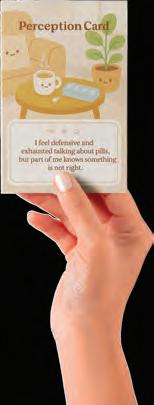
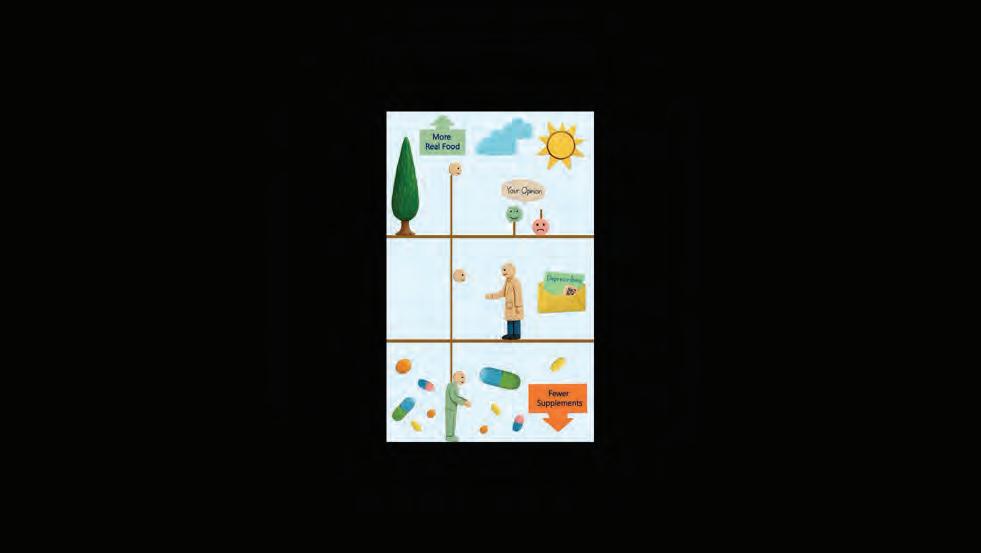
The Patient Deprescribing Typolog identifes three key patient profles: those attached to medicines, who hold positive views and prefer doctor-led decisions; those who would consider deprescribing, who are open to change and actively involved in decisions; and those who defer decisions to others, who are less engaged but place strong trust in doctors or caregivers.
This project explores how design can strengthen communication and shared decision-making between patients and healthcare professionals. Participants are invited to develop tools, digital platforms, visual materials, appointment aids, or printed resources, that make deprescribing conversations more accessible and supportive. Designs should be culturally safe, inclusive, and sensitive to diferent levels of health literacy, helping older adults feel informed and confdent about their medications while reducing the risks of polypharmacy.
MAJOR PROJECT IN DESIGN INNOVATION
COORDINATOR
Adeola Bamgboje-Ayodele
TUTOR
Mel Rumble
CLIENT Kristie Weir, USYD
Linden Zhang, Jingrong Zhang, Mingyang Xue
Zahra Mohammadi, Yuzhu Qian, Chan Dinh Huynh, Ruiqi Wang
Student Index
MIDEA SEMESTER 1
Renhao Ba
Ahmad Barraza
Qunying Cai
Xinni Cai
Yutong Cai
Xingu Cao
Yaxin Chen
Hung-I Chen
Jiahe Chen
Sichen Chen
Tiane Chen
Yanling Chen
Yifan Chen
Yuxin Chen
Ziqian Chen
Edison Chiu
Boris Dai
Yunjia Dong
Yulin Du
Skye Fan
Vivi Fang
Violet Fu
Guo Gan
Ning Gao
Chloe Gong
Peimeng Gong
Tianbo Gong
Qianhan Guo
Wang Guo
Olivia Han
Youxu Han
Zhiyuan Han
Tanya He
Max Heytman
Felicia Hu
Xi Hu
Xinyin Hu
Yang Hu
Jingi Huang
Wei Huang
Alice Hung
Shenalle Jiang
Xinyi Jiang
Tian Jin
Ann Joseph
Kaylee Kuang
Yiyi Lang
Hongde Lei
Yuming Lei
April Li
Guihan Li
Iris Li
Jessie Li
Sitong Li
Wenkai Li
Xiaoyan Li
Yukai Li
Yuwei Li
Yuyang Li
Zhuoran Li
Zoe Li
Brandon Liang
Sichen Liang
Xi Lin
Xin Lin
Fenguan Liu
Zilin Liu
Lori Liu
Mia Liu
Rita Liu
Tianze Liu
Xiaoran Liu
Kiki Lu
Zhifei Luo
Fang Ma
Nicholas McFadden
Yilin Pan
Lily Pooloat
Pratiga Poudel
Stella Qi
Yan Qiu
Ruchia Ren
Zehua Ren
Srishti Sanghi
Alicia Angel Setiawan
Wanfei Shang
Jingxuan Shao
Cheryl Shen
Tim Shen
Wuruotian Shi
Minha Song
Yihan Song
Hedvig Stendal
Zhe Su
Hanwen Sun
Yu Sun
Xiaotong Tan
Francisque Tang
Tia Tang
Jiahui Tian
Cheney Wang
Chuhan Wang
Eric Wang
Inna Wang
Pearl Wang
Peng Wang
Qiuzhi Wang
Regina Wang
Siyue Wang
Vivian Wang
Warren Wang
Xinyue Wang
Yijun Wang
Yiming Wang
Zhaosen Wang
Zhen Wang
Zhihao Wang
Zia Wang
Jelly Wu
Kaiqi Xie
Rui Xiong
Jingao Xu
Xuan Xu
Yihan Xu
Bethany Xue
Chidanwan Xue
Jiaye Xue
Tracey Xue
Charlie Yan
Yuance Yan
Jennifer Yang
Jingi Yang
Yaoyu Yang
Roxy Ye
Yuxin Ye
Bo Yu
Emmons Yu
Xia Yu
Yoyo Yu
Bertin Yuan
Binbin Yuan
Carol Zeng
Lunan Zeng
Ruisi Zeng
Xiaolong Zeng
Xiaoqi Zeng
Liping Zhan
Chace Zhang
Dukun Zhang
Ivy Zhang
Jingxun Zhang
Lingxiao Zhang
Xuanyu Zhang
Jiahao Zhang
Zhixuan Zhang
Ruoying Zhao
Shenglong Zhao
Dong Zheng
Yiyao Zheng
Terry Zhong
Judy Zhou
Puyuan Zhou
Riley Zhou
Zoe Zhou
Mingue Zhu
Xiaodong Zhu
Yusen Zhu
Rani Zulraniyah
MDES SEMESTER 1
Ria Agnihotri
Livia Angelica
Tamara Ariyandi
Katrina Beatrice Atienza
Yiyun Ba
Katrina Anne Balonan
Kavya Bhatt
Sanita Budihardjo
Isabel Camus
Shashank Chandrashekhar Karnad
Phoebe Chen
Tingting Chen
Zhuomin Chen
Joseph Zachary Chong
Alannah Clark
Rui Cong
Daniela De Mora Moyano
Yichen Ding
Ruisi Duan
Tianyi Feng
Zhichao Feng
Cara Gamo
Xushu Gao
Che Han
Benny Hansen
Kazue Hirota
Elisha Honoris
Shuang Hu
Yixuan Huang
Xueqing Jiang
Mei Ling Kwok
Angelina Lam
Alianna Li
Angel Li
Lixing Li
Wenbin Li
Haoyu Lian
Xinyao Liang
Shuo Liang
Kimmi Lin
Zihan Lin
Yinqi Ling
Chelsea Liu
Meng Liu
Xianqi Liu
Yantong Lu
Yiyao Luo
Thendrl Mageshkumaar
Margie Milne
Rishabh Mishra
Huyen My Nguyen
Zejia Nie
Shrutidhar Patadia
Alexandra Peng
Jiaru Qiao
Dakshajaa Ramprasad
Krish Recinto
Yulia Rina
Rong Rong
Jefy Ann Shaji
Alicia Shao
Peijie Shuai
Ayushi Singh
Ellen Sun
Xiaotong Sun
Liuhui Tang
Xinrui Tang
Patcharapa
Trakulpattanakorn
Xingue Wan
Ruiqi Wang
Tracy Wang
Yameng Wang
Yidi Wang
Nigel Wato
Yajie Xu
Xu Yang
Yang Yang
Chaoji Ye
Tingwei Yin
Haojun Yu
Yiwei Yu
Mint Zhang
Moselle Zhang
Yiming Zhang
Amy Zhao
Yueyi Zhou
MIDEA SEMESTER 2
Yang Bai
Yuan Bian
Pengu Cai
Minghe Chang
Yifan Chang
Dev Chaudhary
Jensen Chen
Xinyi Chen
Yuxu Chen
Guang Yeou Chow
Inglebert Christiansen
Wenfang Cui
D F G H J K L M
Ruoheng Dong
Anan Du
Mahira Falevy
Zeheng Fan
Alice Fang
Yu Fei
Junyang Gao
Tianjian Gao
Zhouxin Gao
Muzi Geng
Frankie Guo
Jiangpiaoyue Han
Songhong Han
Luobin Huang
Wensi Huang
Yiting Huang
Zhixin Huang
Fengquan Jiang
Sayaka Kachi
Bea King
Zean Lai
Xiaoyang Leng
Chunyi Li
Jinjie Li
Mengsha Li
Ping Li
Tianshun Li
Zipan Li
Ruomeng Liao
Yen-Ting Lin
Bibei Liu
Chenyang Liu
Jiawei Liu
Joanna Liu
Katrina Liu
Shengdong Liu
Shona Liu
Viki Liu
Yuxin Liu
Jinging Lu
Xinying Lu
Ziniu Lu
Jie Luo
Saviido Luo
Xi Luo
Yixiao Luo
Hector Ma
Elia Mei
Yuchen Meng
Chenlu Ni
Xiaoqian Niu
Hang Pan
Iris Pan
Lei Qi
Zichen Qiao
Dingzhong Qiu
Yuhan Ren
Shuhan Shen
Zhiqi Shen
Robin Shi
Jiarui Song
Ranyang Su
Ismail Shaadmaan Syed
Xuelian Tang
Di Tian
Clint Wang
Cyrus Wang
Erica Wang
Jayden Wang
Meredith Wang
Shiwei Wang
Shuyao Wang
Tianshu Wang
Weiyi Wang
Xueying Wang
Yi Wang
Yueyang Wang
Yunhao Wang
Ziqing Wang
Guangbaiji Wu
Scarlett Wu
Weiqi Wu
Ziyang Wu
Misty Xia
Yixin Xia
Silvia Xiao
Gillian Xie
Hanxiao Xie
Wanlin Xie
Jingxuan Xu
Joy Xu
Yiqi Xu
Yera Yan
Aiden Yang
Caiyi Yang
Ziqi Yang
Yiyang Yao
Emily Yu
Jia Yu
Roxy Yu
Xiao Yu
Xiaoyang Yu
Duomi Zhang
Ellie Zhang
Joey Zhang
Kwen Zhang
Mia Zhang
Serena Zhang
Tata Zhang
Xinyu Zhang
Jackson Zhao
Kaixin Zhao
Linxi Zheng
Nora Zheng
Weiye Zheng
Xiaowei Zheng
Wenjie Zhong
Korol Zhou
Seraphina Zhou
Jiaming Zhu
Yan Zhu
Zhenni Zhu
MDES SEMESTER 2
Lina Alawieah
Sanjana Anand
Josephin Atidipta
Katrina Anne Balonan
Kavya Bhatt
Sidharth Bindumol Sabu
Hana Binte Amran
Kewei Cai
Roy Haoyu Cai
Isabel Camus
Ada Chen
Changzheng Chen
Dawei Chen
Guangue Chen
Phoebe Chen
Ruoqi Chen
Xuanji Chen
Jiayi Cheng
Pei-Wen Cheng
Yuxuan Cheng
Joseph Zachary Chong
Xiaoxiao Cui
Daniela De Mora Moyano
Kiki Ding
Nachuan Ding
Sorrabhad Dolsukkul
Riona Richard Dsouza
Aitong Du
Edi Feng
Huan Feng
Lucky Feng
Tianyi Feng
Cara Gamo
Livia Gunawan
Srikanth Gunduri
Luka Guo
Zane He
Himani Himani
Yingfei Hong
Elisha Honoris
Kelly Hu
Shuang Hu
Baidiya Huang
Xueyang Huang
Yixuan Huang
Danny Huynh
Anusha Jaiswal
Noor Jasnoor Kaur
Damiya Jaswani
Xueqing Jiang
Mansi Jogi
Tanvi Kapur
Mei Ling Kwok
Louis Lai
Ningi Lai
Amy Lee
Alianna Li
Celia Li
Chunmei Li
Pengchen Li
Wenbin Li
Xuanzhi Li
Yanjun Li
Sia Lin
Yubing Lin
Zihan Lin
Chelsea Liu
Junyan Liu
Shuai Lyu
Ang Ma
Thendrl Mageshkumaar
Sanchana Sutharshini
Mayavan Tamilvanan
Margie Milne
Raghu Mina
Rishabh Mishra
Zahra Mohammadi
Huyen My Nguyen
Shrutidhar Patadia
Yuanao Qi
Yuzhu Qian
Jiaru Qiao
Kexin Qin
Krish Recinto
Aaron Rong
Rong Rong
Aishwarya Senthilvel
Alicia Shao
Yu Shi
Yunjing Shi
Zichun Shi
Jack Snyder Iii
Melody Song
Xuguo Su
Ellen Sun
Zhuoer Sun
Hailan Tan
Tony Tan
Lebin Tang
Patcharapa Trakulpattanakorn
Susan Truong
Manahil Uzair
Vijaylaxmi Wandimali
Ruiqi Wang
Xinye Wang
Yameng Wang
Yaqi Wang
Yidi Wang
Yiran Wang
Nigel Wato
Flora Wei
Weihang Weng
Ruirui Wu
Xingu Xiao
Rui Xiong
Lynne Xu
Mingao Xu
Xavian Xu
Xiaoman Xu
Mingang Xue
Haochen Yang
Iris Yang
Jennie Yang
Luyi Yang
Wei Yang
Xishanging Zeng
Jingrong Zhang
Kexin Zhang
Linden Zhang
Mint Zhang
Qijing Zhang
Shihan Zhang
Wangshu Zhang
Yiyan Zhang
Zijing Zhang
Chenyang Zhao
Makayla Zhao
Wenjie Zheng
Yuxin Zheng
Chuzhi Zhou
Ciel Zhu
Enyi Zhu
Yefeiyang Zhu
BACHELOR OF DESIGN (INTERACTION DESIGN)
BACHELOR OF DESIGN COMPUTING
Introduction
Callum Parker Program Director
Bachelor of Design (Interaction Design)
Bachelor of Design and Bachelor of Advanced Studies (Interaction Design)
Bachelor of Design Computing and the Design Major
New Ground marks a moment of transition, both for our graduating students and for the evolving feld of interaction design. As designers, you stand at the intersection of creativity and technolog, entering a landscape reshaped by artifcial intelligence, immersive media, and new forms of digital interaction. The work showcased in this year’s exhibition embodies this spirit of exploration, revealing how design can adapt, anticipate, and lead change in an increasingly complex world.
Throughout your studies, you have learned to design with purpose, to prototype, test, and refne ideas that respond to human needs while critically engaging with the systems and technologies that shape our everyday lives. From interactive products and services to speculative digital experiences, your projects demonstrate how interaction design can foster connection, empathy, and agency in both physical and virtual environments.
This year’s move to Carriageworks represents a collective step onto new ground, a space where design meets public imagination and where creative practice extends beyond the University. It refects our discipline’s commitment to equipping graduates not only with technical and creative expertise but also with the adaptability to thrive in a rapidly changing professional landscape.
As you transition from study to practice, you carry with you the mindset of a designer who is curious, refective, and attuned to the social impact of technolog. The role of the designer in this shifting landscape is more important than ever: to empower users, challenge assumptions, and address real-world problems with authenticity and care. We celebrate your achievements and look forward to the new ground you will continue to shape.
Designing for Transitions
In a world shaped by climate shifts, technological disruption, social movements, and economic instability, design becomes a powerful tool for guiding people, organisations, and societies through change. This project explores how design can guide these shifts, helping communities navigate change with creativity, clarity, and resilience.
Participants are invited to choose a transition that resonates with their interests or experiences and respond through thoughtful, and innovative design. This might involve personal transitions such as adapting to illness or identity shifts, social transitions like migration or parenthood, organisational transitions including remote work or automation, or systemic transitions such as climate resilience and urban transformation.
The focus is on creating interactive experiences that do more than inform: they engage. Outcomes emerge from four interconnected streams, aligned with Buchanan’s Four Orders of Design. Communication design investigates how meaning is created, shared, and reshaped through visual and speculative practices. Product design rethinks tangible artefacts that adapt, assist, and inspire in everyday life. Interaction design develops human-centred experiences that connect the digital, physical, and sensory, encouraging participation and response. Finally, system design reimagines the larger structures that shape society, from public services to sustainability strategies, working across communities and infrastructures.
INTERACTIVE PRODUCT DESIGN STUDIO/ ADVANCED PROJECT DESIGN STUDIO COORDINATOR
Morteza Pourmohamadi
TUTORS
Shweta Das
Ren Xuan Liu
Lachlan Paull
Morteza Pourmohamadi
Fred Rodrigues
Linette Salbashian
Yizhi Wu
Wai Yanace Yan
Haochen Zhang
(Communication design stream)
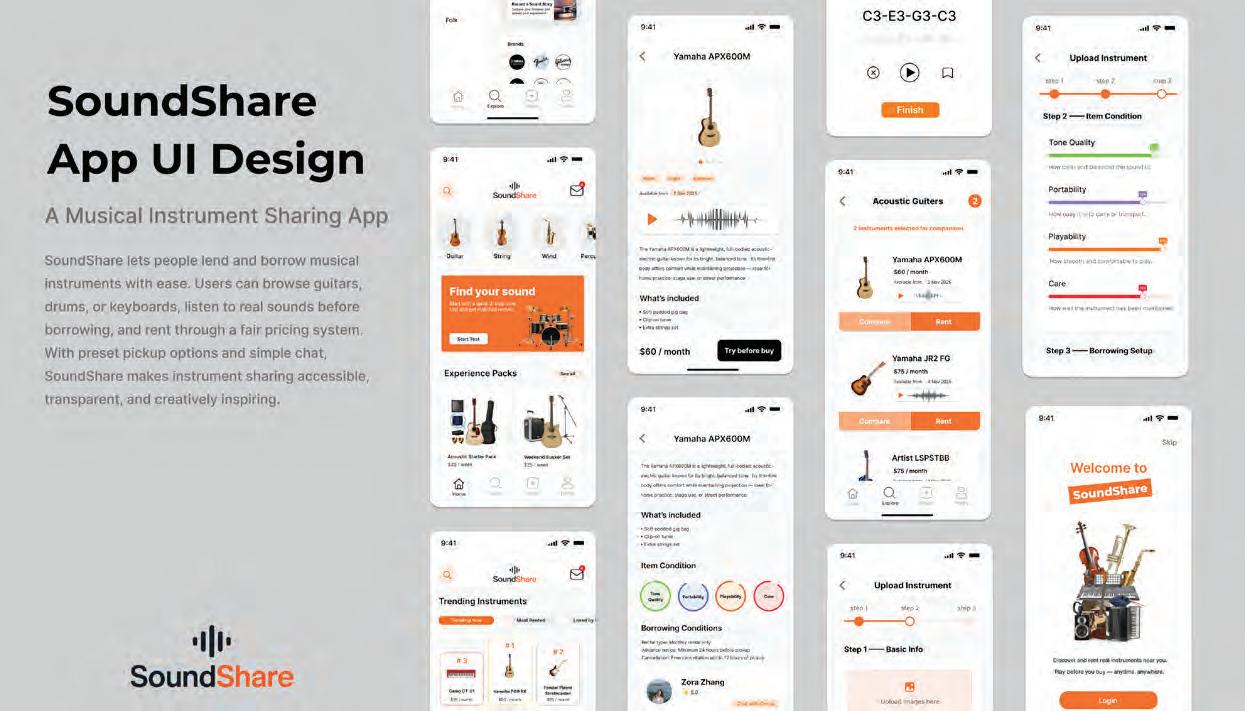
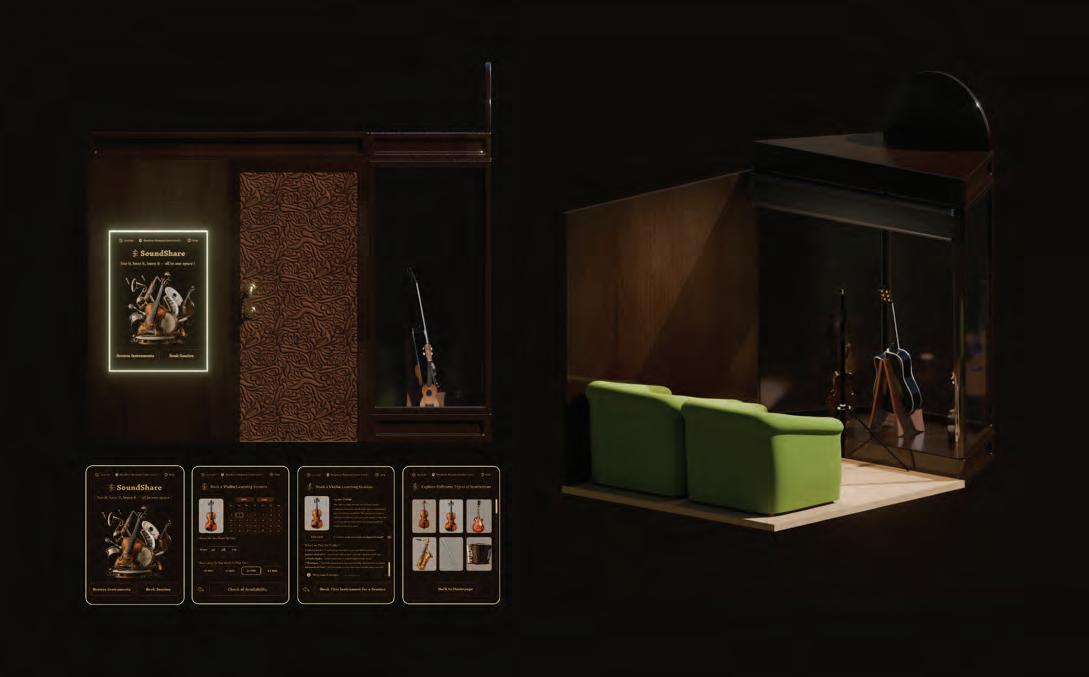
SoundShare connects people who own instruments with those who want to explore them. It includes a digital app and a physical booth that together create an accessible way to experience music. Through the app, users can browse nearby instruments, listen to tone samples, and borrow them through a clear, guided process that builds trust between lenders and borrowers. The booth extends this interaction into public space, where people can try instruments and engage with music directly, turning sharing into a creative encounter.
Ming Chen, Hans Jian, Gabriel Qi, Ruby Xu, Zora Zhang, SoundShare
(Communication design stream)
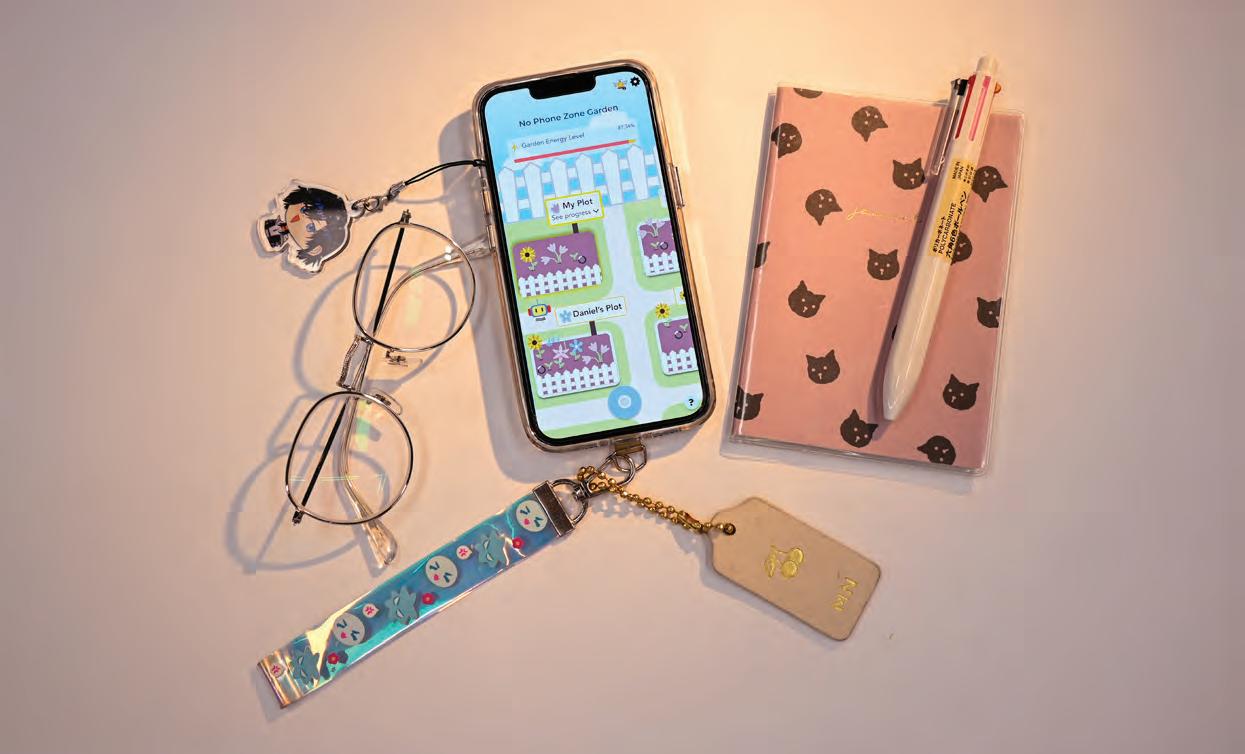
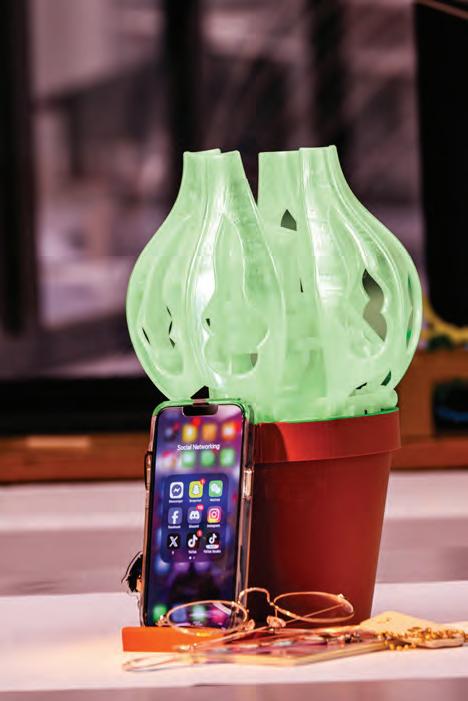
Build & Bloom is a mindful growth companion that helps young adults cultivate healthier digital habits. When users place their phone in the dock, it detects their disconnection and nurtures virtual fowers within the paired app. As their time away from screens increases, the fowers blossom and the dock itself blooms in harmony, creating a tangible refection of personal growth. By linking action with both physical and digital feedback, Build & Bloom transforms moments of mindful pause into fourishing. The shared garden and goal features extend this growth beyond the individual, fostering collective wellbeing as friends encourage and support each other’s progress.
Ankusi Jain, Joseph Huang, Peter Vu, Kim Ngoc Ngo Bui (Mari), Kevin Wu, Build & Bloom
design stream)
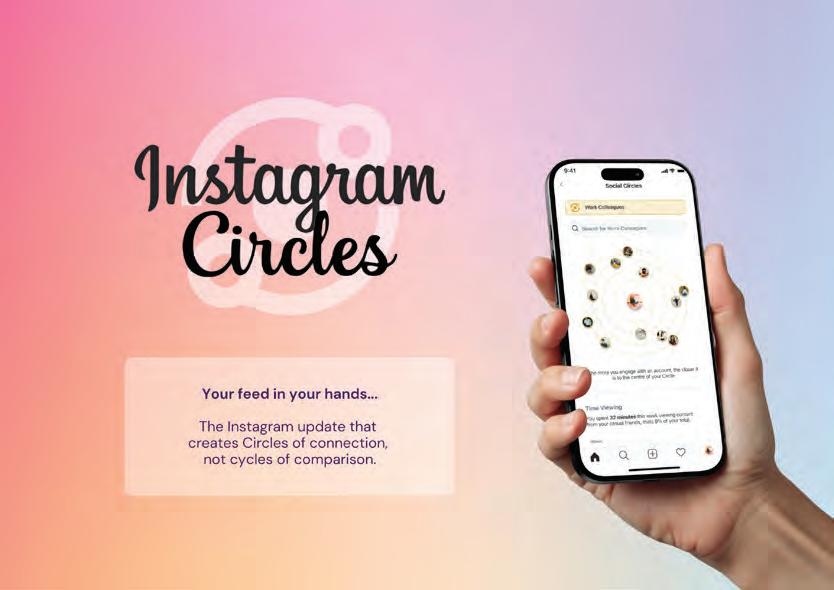
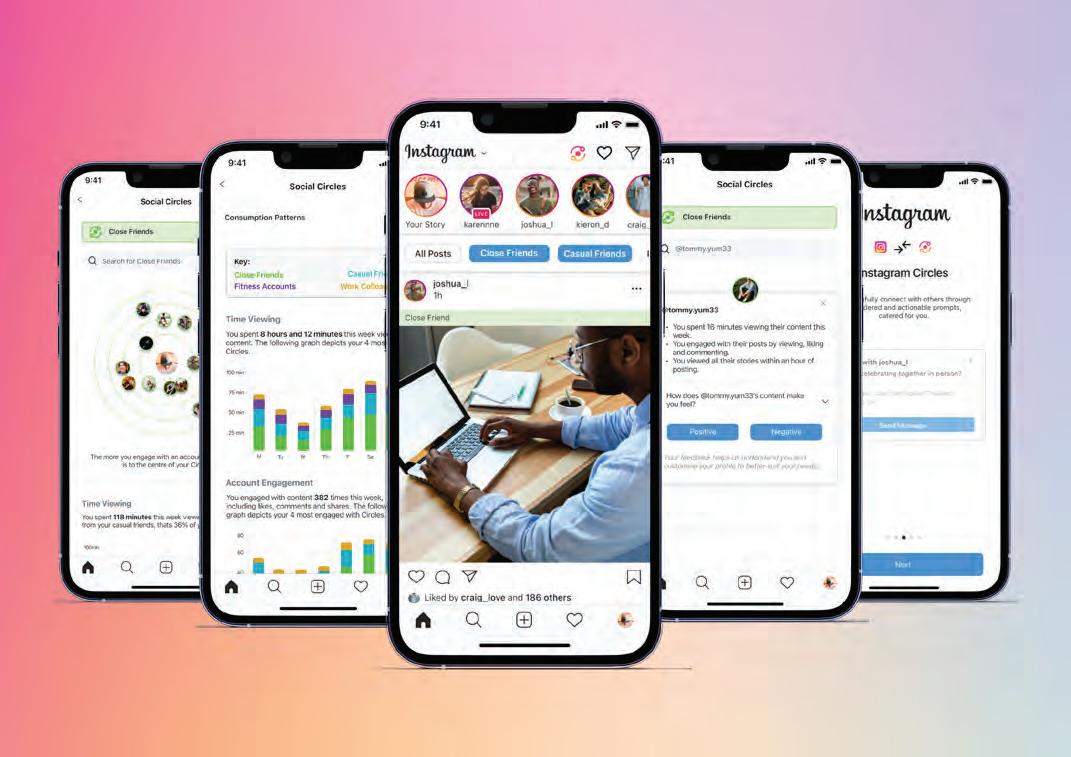
Instagram Circles reimagines Instagram as a healthier social space, transforming comparison culture into opportunities for refection and genuine connection. Developed through research on the quarter-life crisis, it supports young adults as they navigate shifting friendships and social uncertainty. The update enables users to create personalised Social Circles, such as close friends, casual friends or infuencers, and flter their feed to match their emotional needs. Visual insights reveal how time and attention are distributed across these circles, while subtle prompts encourage meaningful reconnection. By embedding wellbeing within Instagram’s existing ecosystem, Circles promotes self-awareness and connection, giving users the agency to reshape their online space during the quarter life transition, when comparison feels most intense.
Mia Whalley, Eva Loncar, Bo Schroeter, Jasmine Hughes, Instagram Circles (Interaction
design stream)
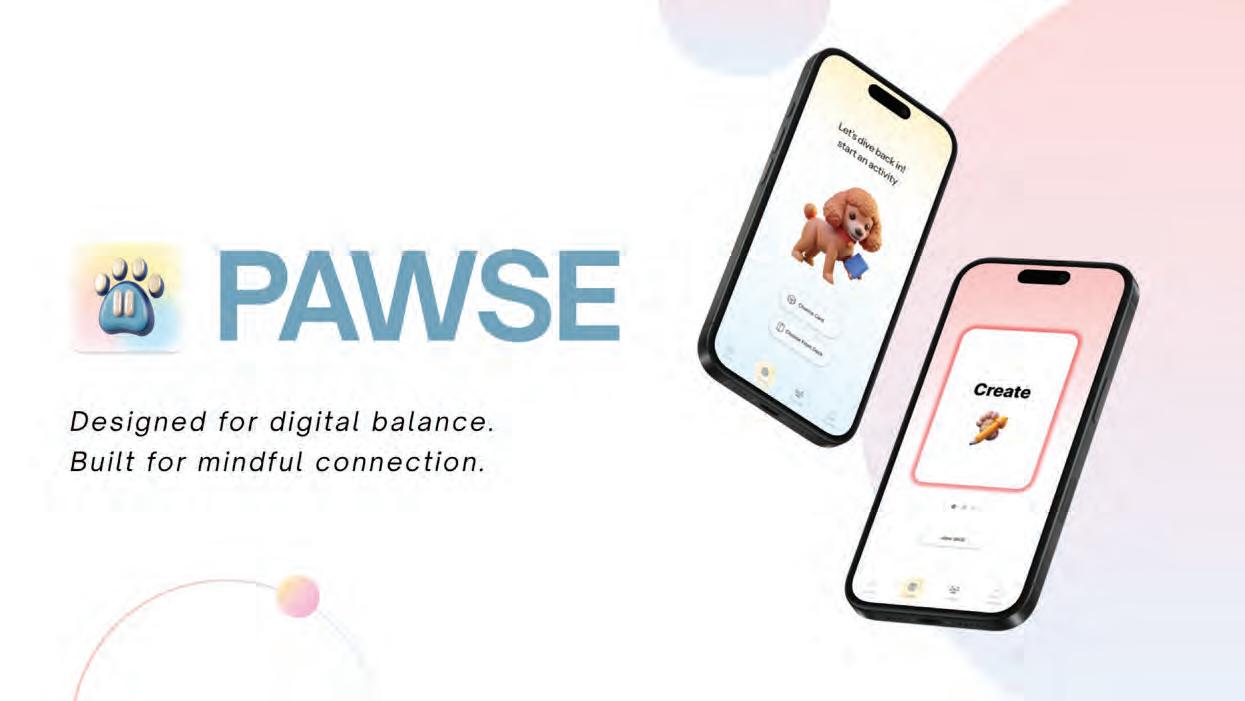
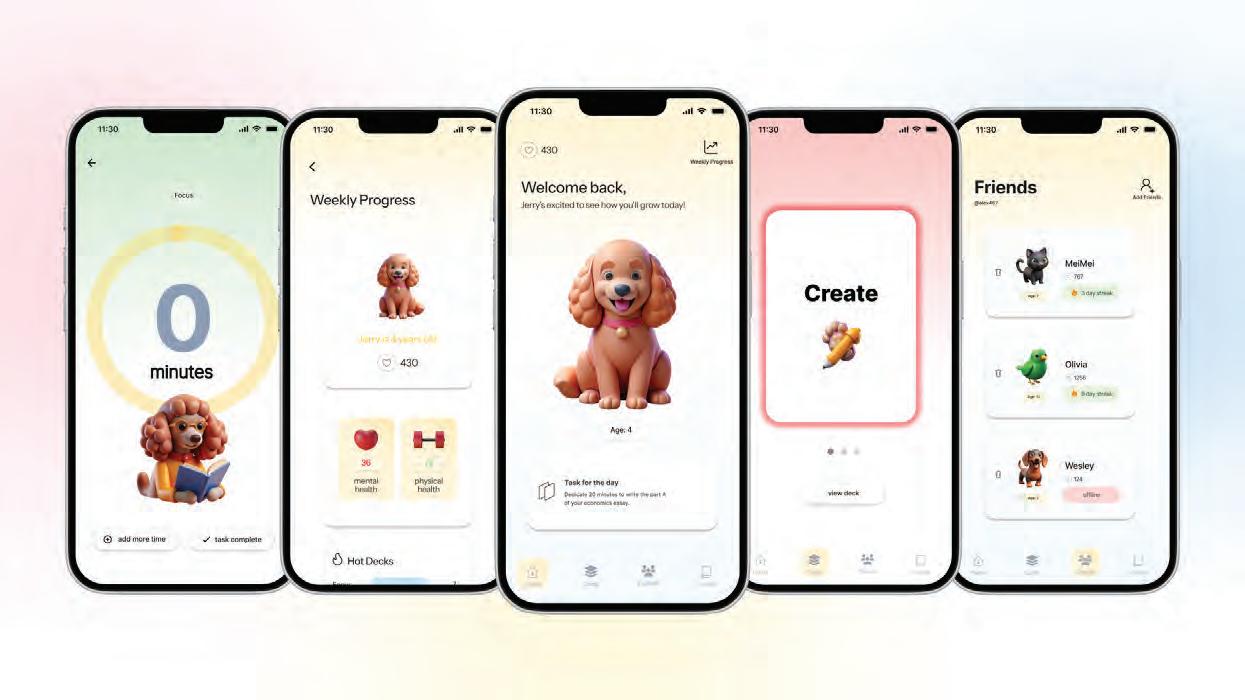
PAWSE is a mindful refection app designed to transform digital overuse into intentional, restorative engagement. Users are encouraged to step away from their screens and take part in meaningful ofine activities attuned to their habits, behavioural patterns and personal goals.
At the heart of PAWSE is a digital pet whose wellbeing refects the user’s consistency in transitioning from online to ofine spaces. As users build healthier habits, their companion grows, turning accountability into a relationship of care. Blending gentle gamifcation, emotional design and structured refection, PAWSE helps users reduce screen fatigue, rediscover presence and reconnect with the physical world.
Baby Circle is a support app that helps frst-time parents navigate the unpredictable routines of early parenthood. Working gently behind the scenes, it enables parents to pre-organise a trusted circle of family and friends and automates coordination, making the act of reaching out efortless. Through features such as group help requests, task syncing, wellbeing check-ins and a “Baby ID” that celebrates milestones, Baby Circle transforms everyday caregiving into shared moments of connection. By reducing the emotional and logistical barriers to support, the system helps parents stay grounded within their community and ensures children grow up in calmer, more supported homes.
Jason Eng, Vivienne Han, Nguyen Khanh Nghi Ngo, Angelina Nguyen, Natasha Png, Circle (Interaction design stream)
By desensitising users to the real humans behind profles and reducing them to an endless stream of swipes, current dating apps have contributed to rising gender-based resentment among young adults. This has left Gen-Z fatigued by dating as a whole, with 78% reporting dating app burnout. Circl provides an answer by ofering limited, curated matches and facilitating real-life interactions. Its AI matches users with three compatible people each week to break the scrolling habit. When they’re ready to meet, Circl recommends group events, removing the pressure of planning a date and easing intimidating one-on-one frst meetings.
Emily
design stream)
Roamy is a travel app designed to bridge the gap between travellers and locals by transforming tourism into meaningful cultural exchange. It addresses the challenge of fnding authentic, trustworthy experiences abroad by connecting users with verifed local hosts through a safe and engaging platform.
Core features include curated experience discovery, itinerary management, verifed host badges, QR ticketing and a social “Roamers” network to meet other like-minded travellers. By empowering locals to share their culture and earn income, Roamy creates mutual value while fostering trust, inclusion and lasting connections that make travel more authentic and socially sustainable.
PeriRedi is a digital wellbeing platform that centres women’s lived experiences of perimenopause as valuable knowledge, challenging the stigma and neglect it often faces within traditional healthcare. By collecting and visualising stories, PeriRedi transforms subjective experiences into validation through the collective. With features such as a story log, chat rooms and story webs, users can fnd solidarity and support from those who know perimenopause best: each other. PeriRedi ofers both emotional support and credible guidance, providing a platform for voices too often dismissed. Together, it reframes perimenopause as a powerful experience to be shared, not shamed.
Destiny Le, Ella Hayoung Lee, Gabriella Bong, Sooa Cho, Soojung Ha, PeriRedi (Interaction design stream)
Khan, Franchesca Samonte, Bianca Shen, Macayla Wong, Sherry Yang, WEEVE
(Interaction design stream)
WEEVE is an app that centralises support for new mothers while empowering partners to take an active role in maternal care. As one mother said, “It takes a village to raise a child.” Yet today, that village is often missing, replaced by fragmented advice and isolation. WEEVE aims to reweave that village, threading connections between families and the support they need. Through linked accounts, mothers and partners share access to appointments, educational resources and community groups. Mothers receive continuous professional support, while partners build confdence and initiative, helping both stay connected and supported throughout the transition to parenthood.
Khansaa
Mumate is a fnancial planning app designed for single mothers navigating the transition to solo parenting, simplifying complex money management into clear, guided steps. It features Budget Analysis, Refection Reports and Goals to help users track income, expenses and savings progress. With child profles, bill reminders and visual reports, Mumate makes fnancial planning intuitive and less stressful. Focused on privacy, trust and emotional support, it empowers single mothers to build confdence, develop healthy fnancial habits and achieve long-term stability.
Flow Maters is an emotional wellbeing app designed to ease the transition from rest to work, addressing “Sunday anxiety” and weekday burnout among young professionals. It provides a calm platform that visualises mood trends over time and includes a refective function where users can write short messages to their future working selves after uploading weekend highlights. The To-Do List integrates these refections into weekly planning, turning emotions into actions, while a built-in breathing exercise helps users maintain focus and relieve stress during the transition. Flow Maters transforms the abrupt shift between leisure and productivity into a calm, structured experience.
Spodo is a portable, pod-based guiding system that supports athletes in their return-to-play journey by helping them recover safely and rebuild confdence. Its purpose is to remind users that recovery does not end when pain stops, it ends when trust returns. Spodo combines sensor technolog with smart digital features, ofering personalised onboarding to tailor recovery goals, motion tracking for precise exercise monitoring and singleability tests for progress check-ins. Supporting emotional wellbeing through integrated journaling, Spodo generates comprehensive reports that consolidate physical and emotional health insights, making recovery holistic and efective. It harnesses the power of data to help users regain confdence and return to play safely.
Pip is a smart companion that helps frst-time growers cultivate fresh produce at home. As cities expand and access to local food declines, Pip supports urban residents as they reconnect with growing through a guided experience. Combining intelligent sensors, LED feedback and a mobile app, Pip tracks plant health across moisture, temperature, light, humidity and fertility, translating data into simple, actionable insights. With guided lessons and gamifed progress tracking, users learn, grow and gain confdence in caring for their plants. Designed for busy lifestyles, Pip makes plant care easy and rewarding, encouraging a more sustainable and self-sufcient way of living.
Lachlan Callender, Angelo de Leon, Nawar Hughes, Tyler Kennedey, Hayden Pidgeon, pip (Product design stream)
LOOP’d is an interconnected, multifaceted design system that fosters civic engagement among young Australians. It unites a digital app that builds community around civic events, a modular charm bracelet that rewards participation through tangible customisation, and interactive discussion cards that spark curiosity and connection. Together, they create a loop of motivation, recognition and belonging, forming a journey from apathy to action. LOOP’d transforms civic involvement from something distant and alienating into a personal, social and rewarding experience that strengthens belonging and shared purpose across communities.
With long repair delays undermining tenant wellbeing and housing quality, the NSW Landlord Licensing scheme transforms renting into a fair, transparent and accountable system. Rooted in revised minimum living standards, a state-wide landlord licensing framework and enforceable repair deadlines through the digital MyLease app, the reform addresses the issue at its core. By embedding compliance and education within existing infrastructures such as Service NSW and Fair Trading, it shifts housing from being treated as a commodity to being recognised as a regulated right. *All logos and visual elements are illustrative only and do not represent any real organisations.
SPARC is a seminar program designed to increase awareness, communication and the preparedness of communities and emergency services towards disasters and crisis management. The seminar, led by frst responders, invites participants to engage in playbuilding activities that simulate theoretical disaster scenarios based in their hometown, allowing for the sharing of personal insights and local solutions under the guidance of professionals. These responses are then collated and incorporated within the emergency services’ regular audits of current crisis procedures, leading to community-recommended changes to processes that keep everyone aware, involved and, most importantly, safe.
SetleSync reimagines the moving journey as a connected, caring system rather than a stressful task. Designed for international students and workers who frequently relocate, it provides a simple and safe way to pass things on locally while building trust through community exchange. Through digital touchpoints such as Awa-y and physical ones like donation stations and e-trolleys, people can easily give, fnd or request what they need. With features including “Help & Share”, “Donate” and “Sell & Buy”, SetleSync turns everyday moves into opportunities to support one another.
As the built environment faces increasing pressure to respond to the climate crisis, there is a growing demand for professionals who can bridge the gap between architectural design, sustainability, and technical performance. In the words of Ban Ki-moon, “The built environment is where the battle for climate change will be won or lost. Sustainable architecture and urban planning are key to reducing our carbon footprint and creating resilient communities.”
The impacts of climate change are not evenly distributed and are often experienced most severely by the most vulnerable communities. In the Master of Architectural Science and the newly launched Master of Building Performance and Sustainable Design, our students develop not only the skills and knowledge that equip them to tackle the challenges facing our communities, but also the passion to enter industry and lead change.
In Architectural Science, students elect streams of specialisation within their degrees: High Performance Buildings, Sustainable Design, Illumination Design, and Audio & Acoustics. Within this catalogue, the work of some of our students in the Illumination Design stream is showcased, as introduced by Dr Wenye Hu. However, in the exhibition itself, you will see work from units of study across all the streams of specialisation.
We invite you to explore the work of our talented graduates and to celebrate their achievements. Each project represents the culmination of their academic training. We are proud of our graduates and confdent that they will follow in the footsteps of our change-making alumni before them, making meaningful, positive, and restorative contributions to the built environment locally and globally.
International Day of Light
To celebrate the UNESCO International Day of Light 2025, the Lighting Lab hosted a Student Art Installation Exhibition. The next generation of designers brought energ, vision, and a strong commitment to shaping the future. Through their work, they celebrated light not only as a medium of creativity but also as a powerful force for sustainability, social progress, and cultural connection.
LIGHT AND VISION/ PRACTICE OF LIGHTING DESIGN COORDINATORS
Wenye Hu
Emrah Baki Ulas
TUTOR
Fansong Zhou
STUDIO CONTRIBUTOR
James Vlassis, ONIR Linear & Fibre Optic Lighting
Huang, Leanna Yue, Leyla Dong, Mucolume | Lumend
An ambient pendant lighting series that transforms fracture into form and breakage into beauty. Rooted in a philosophy of care rather than concealment, it embraces imperfection as a source of meaning and light. Each piece is formed from mycelium, a compostable and regenerative material cultivated through controlled growth.
Ginky
A pendant light made of over 500 iridescent acrylic discs, forming two modular structures in cold and warm hues. It is inspired by the interplay of natural and everyday optical phenomena.
Santosh Ghadge, Sarah Yap, Vidhyaa Bhaarathi, Cleotetra
Each of us is a constellation of memories, thoughts, and dreams. From within, our inner light shapes how we see and infuence the world around us.
Rutuja
Kate Brown, Xiaoran Liu, Lin He, Nobin George, Beyond the Spectrum
I hear what you hear, but I couldn’t see what you see. Now I can see them, feel them, just as you do—with my heart, through the magic of light and sound.
Kasturi
Kambekar, Caroline Suchitra,
A wave into the Vivid dream
An immersive light installation that explores the theme of diving into a dream world through methodically placed light sources arranged in a pattern representing a curvilinear three-dimensional motif.
PUBLIC PROGRAM
Lectures and events
10 DECEMBER
New Attitudes: Indefnite Plans
Bangkok Tokyo Architecture
11 DECEMBER
New Attitudes: C34 BAST
14 FEBRUARY
Financialising Intelligence: AI, Economics, and Reactionary Politics
Orit Halpern
19–21 FEBRUARY
Australasian Housing Research Conference: Housing at a Crossroad: Wealth, Inequality and Housing Futures
14 MARCH
Design for Disaster: Tackling Heat and Fire
Ashley Dunn, Stewart Monti, Shamila Haddad, Dagmar Reinhardt
14 MARCH
Design for Disaster: Tackling Water and Flood
John de Manincor, Stewart Monti, Lucy Marshall, Deena Ridenour
12 MARCH
Book talk: Assembly by Design
Olga Touloumi
13 MARCH
Beyond the Workplace Zoo: Humanising the Ofce
Nigel Oseland
21 MARCH
Histories of Architecture and Built Environments group Home Game Research Review
26 MARCH
Interaction Design Networking Meetup
1 APRIL
Countering spatial injustice in the U.S.: The promise of “zoning for equity”
Rolf Pendall
2 APRIL
Book talk: After Spaceship Earth
Eva Díaz
3 APRIL
Raising the Bar: Housing Essentials for Equitable Cities
Catherine Gilbert
9 APRIL
Digital Decarbonisation Plans in Taiwan, Japan and Australia SungYueh Perng
9 APRIL
Book talk: Is Architecture Art?
John Macarthur
9 APRIL
New Attitudes: The Way Things Go
Theo De Meyer
10 APRIL
New Attitudes: Refections on Life
Stefanie Everaert
10 APRIL
Questioning the great Australian Dream?
Anthony Burke, Nicole Gurran, Gavin Wilson, Catherine O’Donnell, David Burdon
17 APRIL
Design at Dusk
Heather Horst, Tram Tran
30 APRIL
Broken Links: The Value Housing Chain
Fatou K. Dieye
1 MAY
RENEW: Collaborative and Sustainable Practices for Multi-unit Housing Renovation Symposium
1 MAY
Friends of Figma: Designing for All: Inclusive Practice for Better Experiences
Dominic Kirkwood, Pawel Wodkowski
3 MAY
Australian Architecture Conference: Architecture in Action
3 MAY
Australian Architecture Conference: Designing the Elizabeth Line - Shaping London’s Future Transit
Neil McClements
3 MAY
Australian Architecture Conference: Australasian Student Architecture Congress
14 MAY
Book talk: Spatial Theories for the Americas
Fernando Luiz Lara
29 MAY
Money Talks
Taylor Hardwick, Marcus Carter, Tianyi Zhangshao
29 MAY
Design at Dusk
Carlos Tirado Cortes, Muhammed Yildirim, Jared Berghold
12 JUNE
Retroftting Suburbia for Urgent Challenges
Ellen Dunham-Jones
1 AUGUST
EMBARK Careers Festival and Networking Meetup
1 AUGUST
Urban Rural Commons: Japan Documented on Cards
5 AUGUST
Reclaiming Memory: The Sexto Panteón and the Forgotten
Architect Itala Fulvia Villa
Léa Namer
11 AUGUST
Scholarships and Prizes Night
13 AUGUST
Soft Architecture: Afro-Indian Spatial Strategies under Hard Migrations
Amina Kaskar
27 AUGUST
Architectural Encounters in Asia
Pacifc
Amanda Achmadi, Paul Walker, Soon-Tzu Speechley
28 AUGUST
Design at Dusk
Leigh-Anne Hepburn, Adeola Bamgboje-Ayodele, Yaron Meron, Phillip Gough, Carlos Tirado Cortes, Marius Hogenmueller
1 SEPTEMBER
Paradigm Shift in Evidence-Based Policy Development for Education Buildings: Mitigation, Adaptation and School Environments
Conducive to Learning
Dejan Mumovic
2 SEPTEMBER
Lloyd Rees and the Architects
Simon Weir, Ross Wilson
9 SEPTEMBER
Renewing the Sculpture Garden
Will Fung, Johnny Ellice-Flint, Robert Champion, Phillip Arnold
14 SEPTEMBER
Festival of Urbanism: Regenerative Creative-led Urban Development: Danks Street South Precinct Visit
Heidi Axelsen, Hugo Moline
15 SEPTEMBER
Festival of Urbanism: Thriving Cultural Ecologies: Making Spaces and Systems for Creative Practice
Kate Goodwin, Mat Levinson, Heidi Axelsen, Hugo Moline, Michelle Tabet, Rebecca Conroy
15 SEPTEMBER
Festival of Urbanism: Regenerative Country, Community, Culture
Peter Cooley, Koolyn Gordon, Daryl Wells, Jess Herder
15 SEPTEMBER
Festival of Urbanism: Regenerative Spaces? Public Art and Engagement in Urban Placemaking
Tina Havelock Stevens, Michael Dagostino, Nicole Gurran, Enya Moore
16 SEPTEMBER
Festival of Urbanism: Roads to Regenerative Urbanism
Jennifer Kent, Sara Stace, Eamon Waterford, Kevin J. Krizek
16 SEPTEMBER
Festival of Urbanism: Regenerating Civics: Urban AI, Social Media and Post-Truth
Luke Hespanhol, Rose Jackson, Marcus Foth, Christine El-Khoury, Justine Humphry
17 SEPTEMBER
Festival of Urbanism: Urban Rewilding: Nature-based Solutions for Resilience and Regeneration
Dan Penny, Jo Gillespie, Genevieve Wright, Robert Allen, Emily Fern Strautins
17 SEPTEMBER
Festival of Urbanism: Urban Regeneration or Regenerative Urbanism?
Alexandra O’Mara, Alistair Sisson, Louise Crabtree Hayes, Caroline Pidcock, Emily Rowland
17 SEPTEMBER
Festival of Urbanism: Debate: That Housing “Abundance” is the Solution
Nicole Gurran, Tina Perinoto, Patrick Fensham, Jess Scully, Steven Rowley, Ben Hendriks, Mehnaaz Hossain
18 SEPTEMBER
Festival of Urbanism: Many Hands, Many Actors, Many Ideas: Unpacking Parramatta’s Urban Design
Deena Ridenour, Kelly Van Der Zanden, Philip Graus, Phillip Vivian, Callantha Brigham, Gigi Lombardi
18 SEPTEMBER
Festival of Urbanism: Regeneration for the Next Generation
Natalie Lawrie, Colin Finn, Aaron Petersen, Akshaisankar Sabu, Lucy Band
19 SEPTEMBER
Festival of Urbanism: Reclaiming Tomorrow: Artists’ Visions for a Regenerative Future
Kate Goodwin, Anne Loxley, Jonathan Jones, Cat Jones, Liza Lim
19 SEPTEMBER
Festival of Urbanism: Connections across time and place: City Art Walk
Barbara Flynn, Jonathan Jones
23 SEPTEMBER
Parlour Sydney Student Salon Honey Amartuvshin, Simone Carmody, Ruby Mathews
24 SEPTEMBER
Green Pathways: Building a career in sustainable architecture, design and planning
Joanne Andrade, Yen Dao, Emily Chung, Natalia Saavedra Toro
24 SEPTEMBER
In the Daylight of Our Existence Architectural History and the Promise of Queer Theory
S.E Eisterer
25 SEPTEMBER
Design at Dusk
Karen Gallagher, Thom Loveday, Michelle Thomson
2 OCTOBER
Festival of Urbanism: Live Performance, Placemaking and the Arts; Creative Industries and Precincts for Regenerative Urbanism
Greta Werner, Emily Collins, George Tulloch, Ruth Callaghan, Chris Gibson
7 OCTOBER
Book launch: The Appian Way
Ross Anderson
14 OCTOBER
Competition Days: National Gallery of Victoria
Angelo Candelapes
28 OCTOBER
Façade Futures: Academia–Industry Collaboration for Planetary Solutions
29 OCTOBER
Book talk: Pistols in St Paul’s: Science, Music and Architecture in the Twentieth Century
Tin Sheds Gallery is a contemporary exhibition space located within the Sydney School of Architecture, Design and Planning at the University of Sydney that has been a site for radical experimentation for over 50 years. It provides a public platform for projects that inspire the imagination and ignite critical dialogue—addressing the diverse forces that shape the built environment locally and internationally.
The Tin Sheds ofcially opened in 1969 as an autonomous art space on City Road within the university grounds, facilitated by artists, academics and students. It spurred a pivotal historical movement in Australian art, nurturing cross-disciplinary experimentation and politically orientated practices for several decades. In 1989 it ofcially joined the School delivering art workshop classes. In 2004, it relocated to a purpose-built gallery onsite and became operationally integrated with the School.
The gallery’s mission is to foster and advance debate about the role of architecture, art, design and urbanism in contemporary society through the production of innovative exhibitions, publications and related activities.
ADVISORY GROUP
2025 PROGRAM
Deborah Barnstone
Guillermo Fernández-Abascal
Kate Goodwin
Yaron Meron
Eva Rodriguez Riestra
Emrah Baki Ulas
GALLERY MANAGER
Iakovos Amperidis
INSTALLERS
Sarah Anstee
Julien Bowman
Mac Mans eld
Image credit: RoXY, Juha van ‘t Zelfde, 2022
Image credit: Ngubadimarri Big Love for Dharug Ngurra, Bernadette Hardy, 2024
Image credit: Art Workshops 1981” from Tin Sheds Gallery [Series 1016] at the University of Sydney Archives
Image credit: The Forgotten Town (2024) Katie Taylor
Image credit: ‘Pica Erased: working image’ 2025
Tea, Time & Tim Tams
Pressure: Architecture, Process and the Print Studio
PICA Erased
Collapse by Design
EXHIBITION BY CURATOR
IMAGE CREDIT
ACKNOWLEDGEMENTS
Denis Beaubois
Mark Themann
Jessica Maurer
Create NSW, Snow and Kynan Tan, Tim Sherratt, University of Sydney
Indivisible is a body of work by artist Denis Beaubois that explores the idea of the nation. Central to the exhibition is an examination of parliamentary language since Federation and how it has been used to describe (or prescribe) the qualities of the Australian people over time.
The works incorporate data mining, video installation, sound, sculpture, and Schlieren imaging to refect on the language that upholds nationhood. Indivisible asks us to consider selective histories, mythologies, and how assumptions of national character have changed.
EXHIBITION BY WITH
IMAGE CREDIT
ACKNOWLEDGEMENTS
Stand Van Zaken (BE)
Theo De Meyer (BE)
Stefanie Everaert (BE)
GFA2 (ES/AU)
Desplans (FR/SE)
BAST (FR)
Erika Nakagawa + erikalab (JP)
Mike Hewson (NZ/AU)
Sam Chermaye O ce (DE/USA)
Ine Meganck (BE)
Hamish McIntosh
City of Sydney, Brickworks, TKD Architects, GHD, Candalepas Associates, Second Edition, Supercontext, Carey Lyon, Eckersley O’Callaghan
A Good Idea is a collaborative exhibition by Stand Van Zaken that brings together drawings by architects from around the world, which serve as instructions for locally crafted artifacts. These peculiar objects, born of global imagination and local interpretation, are explicit in their construction yet indeterminate in their use, loosely exploring themes of domesticity and the oftenoverlooked rituals of everyday life.
Together, the sketches and objects temporarily camp in the gallery space, creating an austere yet joyous interior—a rich scenography crafted with care and mindful of waste. Here, architecture celebrates collaboration, directness, ingenuity, and the beauty of bringing ideas to life.
CURATOR PARTICIPANTS
IMAGE CREDIT
Sharmila Wood
Urbonas Studio (USA)
Sao Sreymao (KH)
Khvay Samnang (KH)
Zarina Muhammad (SG)
Tomoko Hayashi (JP)
Mei Swan Lim (AU)
Imani Jacqueline Brown (USA)
Daniel Jan Martin (AU)
underFOOT Collective (AU)
Maja Baska
Actions for Water unites artists, architects, and cartographers to examine swamps, wetlands, and subterranean waters as vital ecologies of renewal. While frameworks like the Ramsar Convention aim to protect these environments, their ongoing degradation highlights the urgent need for intervention. Reimagined as interconnected ancestral, ecological, and scientifc networks, these waterscapes are envisioned as spaces of radical sensuality, otherworldliness, and speculative possibility.
Celebrated for their biodiversity and cultural signifcance, the works invite audiences to refect on what lies beneath. The exhibition explores environmental urbanism and regenerative futures rooted in care, creativity, and resilience.
EXHIBITION BY
Irene Perez Lopez
Maria Cano Dominguez
Shellie Smith
Professor Glenn Albrecht
Mia Tulumovic
Ananya Khujneri
Therese Keogh
Nicole Cha ey
CREDIT
ACKNOWLEDGEMENTS
Maja Baska
Choi Cai, Jye White, Callum Twomey, Adviteeja Khujneri, University of Newcastle
WaterTalks presents the Hunter River, known as Coquun-Myan by the Awabakal, Worimi and Wonnarua Traditional Custodians, as a living entity, shedding light on the profound and pervasive impacts of colonialism and industrialisation on water and its social and ecological systems, rendered visible in the Anthropocene.
The river’s hydrosocial narratives are depicted through artifacts, projections, and interactive elements that immerse the viewer in colonial and post-colonial water practices. Belonging, ownership, extractivism, dispossession and the biodiversity and climate crisis shape the river and its memories, entangled by deep time and spirit.
IMAGE
We thank our Sponsors for their generous support.
PLATINUM SPONSOR
GOLD SPONSORS
SILVER SPONSORS
BRONZE SPONSORS
Bates Smart is looking for current students and recent graduates to join our citymaking team.
Transformative thinking for the future city.
Pictured
Indi Sydney | Gadigal Country
Ngurra: The National Aboriginal and Torres Strait Islander Cultural Precinct Canberra, Australia
Responsiveness is embedded in our design process.
We actively respond to the needs, challenges, and contexts of all projects.
We present di erent ideas and concepts. Ones our clients’ didn’t even think were a possibility.
Creativity for us, goes beyond project outcomes but applies to our creative thinking across the whole design process.
We enjoy what we do and how we do it.
Western Sydney Startup Hub
Gonski Meers Foyer - Belvoir Street Theatre
Alexandria Park Community School
Published on the occasion of New Ground, the University of Sydney School of Architecture, Design and Planning ADP Graduate Show 2025, presented at Carriageworks.