As we begin a new year, I’m excited to share an inspiring feature that truly sets the tone for 2026— “Leading with Purpose: MR. D-MARS’ Blueprint for Growth and Resilience.” January always reminds me that while fresh starts bring new opportunities, progress requires intention. My message message resonates deeply because it challenges us to examine not just what we’re building, but who we’re becoming in the process. Leadership, after all, isn’t about maintaining the old, it’s about evolving with purpose and vision.
I wanted to feature this story because it captures the essence of leadership that our readers embody every day—grit, adaptability, and growth. The lessons I share on openness,
CONTENTS
“The pessimist complains about the wind. The optimist expects it to change. The leader adjusts the sails.”
— John C. Maxwell
expertise, and flexibility are powerful reminders that leadership is a journey, not a title. My “Blueprint for Growth and Resilience” aligns perfectly with the mission of Subcontractors USA: to empower, connect, and celebrate the individuals driving progress in our industries and communities.
To all of our loyal readers, thank you for continuing to be part of this journey with me. Your support, engagement, and commitment to growth fuel the purpose behind this publication. As we move forward together into 2026, I encourage you to lead boldly, embrace change, and remember—when the world tells you to shrink, expand.
OUR SERVICES
GRAPHIC DESIGN
• Logos
• Flyers
• Ads
• Folders
• Brochures
• Door Hangers
PRINTING
• Business Cards
• Flyers
• Folders
• Pull-Up Banners
• Step-and-Repeat Banners
• Brochures
• Door Hangers
• Letterhead
Envelopes
PHOTOGRAPHY
Headshots
Event
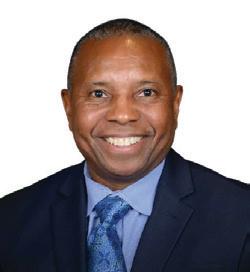
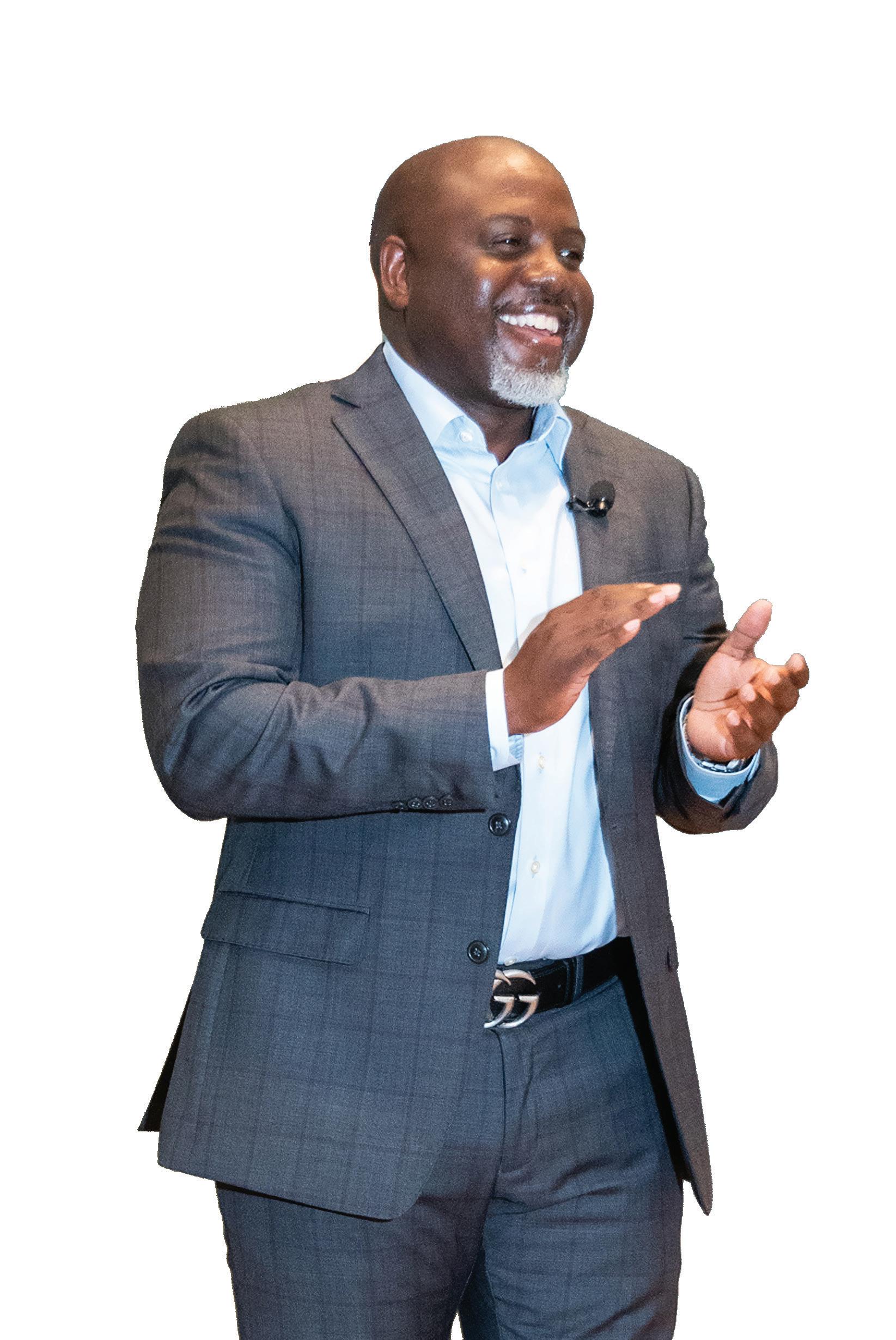
Keith "MR. D-MARS" Davis, Sr.
Turner Construction Company Launches First Equipment Company
By Subcontractors USA News Provider
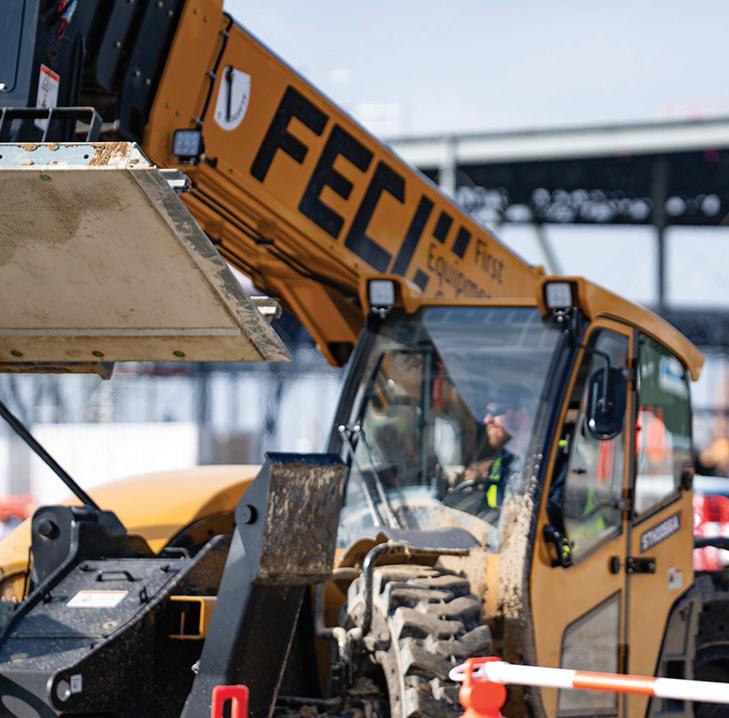
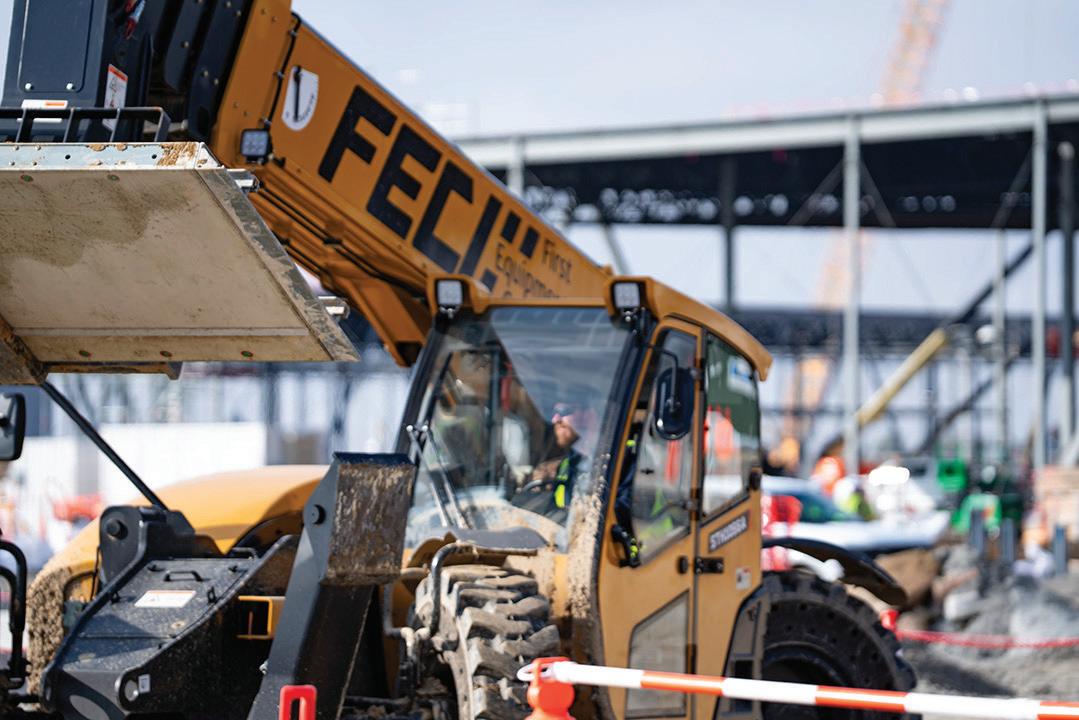
Turner Construction Company recently announced the launch of First Equipment Company (FEC), a centralized equipment rental and site services company. This represents a further strategic expansion of the services Turner offers its clients while supporting the trade contractors working on its projects.
FEC has been providing equipment and site services on several Turner projects—particularly large-scale, advanced technology projects—where its integrated model has demonstrated clear benefits. With this launch, Turner is expanding those services to support projects across the United States and to more than
40,000 trade contractors who work on Turner jobs each year. FEC will also offer equipment rental and site services to other general contractors and trade contractors in the U.S. First Equipment Company is part of Turner’s broader investment in project delivery capabilities, alongside service offerings such as xPL Offsite, SourceBlue, the Turner Accelerated Payment Program, the Turner Engineering Group, and the expansion of self-perform operations. Together, these offerings reflect Turner’s focus on improving efficiency, supporting trade partners, and delivering greater value for clients.
By centralizing equipment rental and site services into a single, dedicated organization, FEC simplifies how projects source, manage, and support equipment—ranging from
heavy machinery and operating equipment to temporary power, lighting, office and restroom trailers, fencing, and site controls. This approach reduces administrative burden, improves coordination, and provides project teams and trade partners with clear points of contact who provide fast, reliable support.
“First Equipment Company is a strategic investment in our ability to deliver projects more efficiently,” said Shannon Hines, Senior Vice President.
“By supporting the contractors working on our projects with a consistent, streamlined equipment experience, we help improve productivity in the field—benefiting our project teams and, ultimately, our clients.”
FEC integrates procurement, operations, and support into one organization staffed by experienced equipment professionals who understand construction challenges and are embedded locally to support projects in their markets. By managing sourcing, logistics, administration, and issue resolution, FEC enables Turner project teams and trade contractors to focus more fully on execution, safety, and quality.
As a wholly owned subsidiary of Turner Construction Company, First Equipment Company aligns with Turner’s standards while operating as a dedicated equipment and site services entity. The company is designed to leverage enterprise buying power and reinforce Turner’s commitments to client service and collaboration with trade contractors critical to project success.
“FEC reflects our commitment to continuously improving how we serve our clients and partners,” said Josh Ehlers, National Manager of First Equipment Company. “By enhancing efficiency at the project level, we’re strengthening outcomes for everyone involved.”
For more information, visit www.fecrent.com.
Source: Turner Construction
DALLAS COUNTY Office of Small Business Enterprise
Design Experts in IT, Network Cabling, AV, & DAS
We believe we can provide advanced solutions that help businesses and individuals succeed in today's ever-changing world. Our solutions are designed to make life easier, more efficient, and more productive
Who We Are
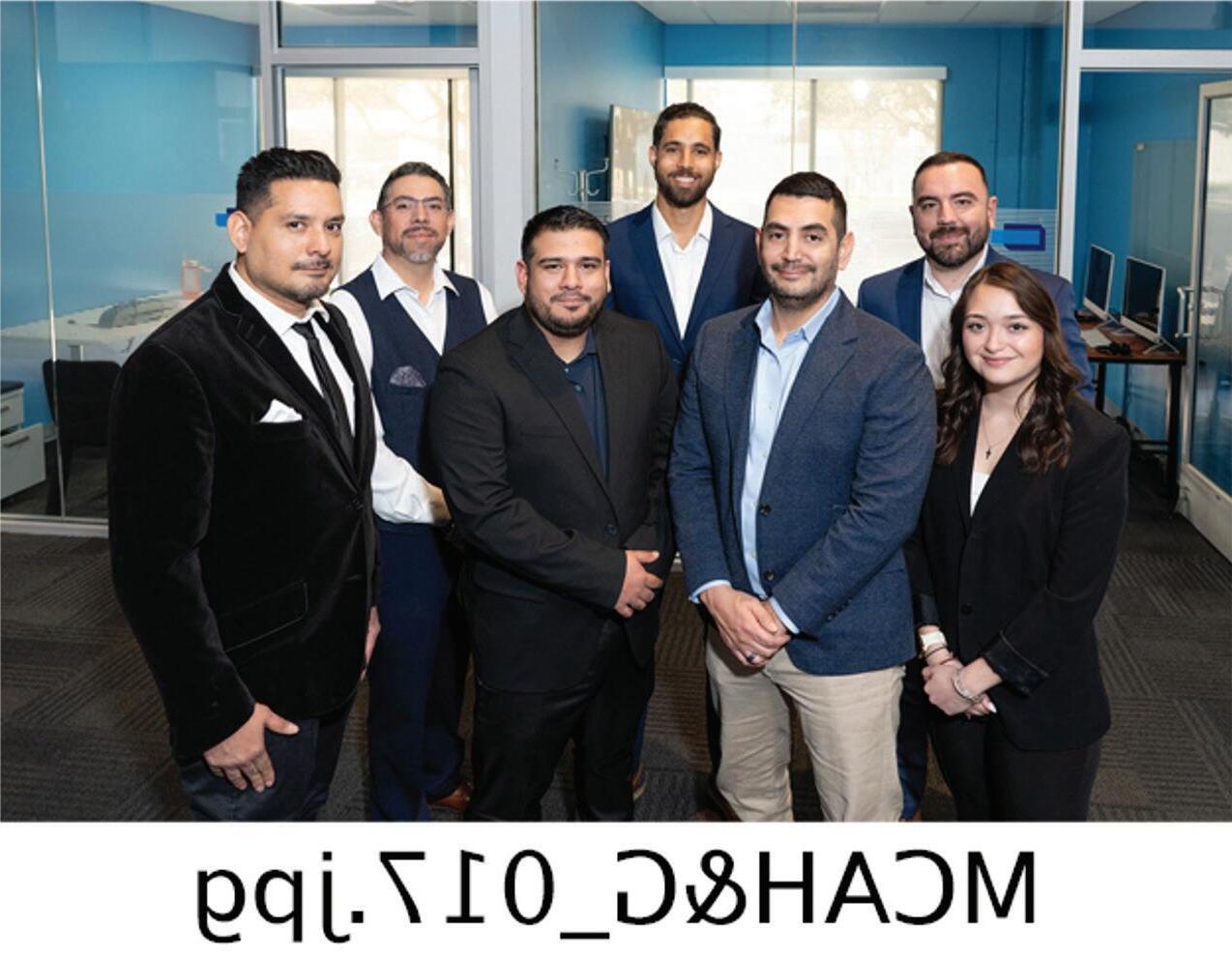
MCA Design Group delivers expert IT, AV, cabling, wireless, and data center solutions tailored to industries like energy, healthcare, and hospitality With a unique blend of field, engineering, and design expertise, our team streamlines the entire design process, saving clients time and money
We provide comprehensive services for large corporations, government agencies, public sector entities, educational institutions, healthcare facilities, and commercial real estate clients, including:
Why Choose Us
e S o l u t i o n s : O f f e r i n g
t a i l o r e d s e r v i c e s f o r l a r g e c o r p o r a t i o n s , g o v e r n m e n t a g e n c i e s , e d u c a t i o n a l
i n s t i t u t i o n s , h e a l t h c a r e f a c i l i t i e s , a n d
c o m m e r c i a l r e a l e s t a t e c l i e n t s .
I n d u s t r y - F o c u s e d A p p r o a c h : S p e c i a l i z e d
i n p r o v i d i n g h i g h - q u a l i t y d e s i g n s o l u t i o n s
f o r p u b l i c a n d p r i v a t e s e c t o r
o r g a n i z a t i o n s .
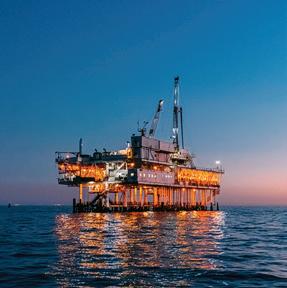
Texas Oil & Natural Gas Industry Paid $27.0 Billion in State and Local Taxes, State Royalties
By Subcontractors USA
News Provider
TXOGA President Todd Staples: “In Fiscal Year 2025, oil and natural gas proved, once again, to be the power behind Texas’ progress.”
2025 Energy & Economic Impact Report
According to just-released data from the Texas Oil & Gas Association (TXOGA), the Texas oil and natural gas industry paid $27.0 billion in state and local taxes and state royalties in fiscal year (FY) 2025—the second-highest total in Texas history. TXOGA President Todd Staples today hosted a media briefing to share the Association’s annual Energy & Economic
Impact Report and to provide an update on the industry’s record-breaking operational and environmental performance, an outlook on the energy market, and TXOGA’s policy priorities.
“In Texas, lasting progress is built on performance, not opinion. Talk doesn’t grow jobs, keep homes warm or cars running. Action, investment and innovation drive greatness across the Texas economy,” said Staples. “Even during a year dominated by market challenges, Texas oil and natural gas has proven—once again—to be the power behind Texas’ progress.”
“Twenty-seven billion in state and local tax revenue and state royalties from the Texas
oil and natural gas industry translates to nearly $74 million every day that pays for Texas’ public schools, universities, roads, first responders and other essential services,” said Staples.
“Beyond this essential tax revenue, Texas oil and natural gas delivers energy security at home and global stability for our allies.”
Since 2007, when TXOGA first started compiling this data, the Texas oil and natural gas industry has paid more than a quarter of a trillion dollars in state and local taxes and state royalties, a figure that does not include the hundreds of billions of dollars in
payroll for some of the highest paying jobs in the state, taxes paid on office buildings and personal property, and the enormous economic ripple effect that benefits other sectors of the economy.
As in years’ past, public education received a major infusion of funds from oil and natural gas royalties in FY 2025. The Permanent University Fund received $1.72 billion, and the Permanent School Fund received $1.40 billion. Together, the market value of these funds exceeds $100 billion. With a balance of $66.5 billion, the Permanent School Fund alone is larger than Harvard’s endowment and is the largest educational endowment in the nation.
Texas’ Rainy Day Fund, or Economic Stabilization Fund (ESF), has received over $35.9 billion from oil and natural gas production taxes since its inception in 1987. This number amounts to over 85% of the ESF revenue over time. The ESF and the State Highway Fund each received $2.7 billion this cycle.
In FY 2025, Texas school districts received $2.6 billion in property taxes from mineral properties producing oil and natural gas, pipelines, and gas utilities. Counties received an additional $1 billion in these property taxes.
To read more of this story, visit subcusa.com or scan the QR code.
Small Business Enterprise Program
•
Railroad Commission of Texas Announces New Oversight and Safety Director
By Subcontractors USA
News Provider
The Railroad Commission of Texas is pleased to announce that Mark Evarts has been named the new director of the Commission’s Oversight and Safety Division.
The division’s core responsibilities are over the RRC’s Alternative Fuels, Gas Services and Pipeline Safety departments, including oversight of more than 400,000 miles of pipelines in Texas, the largest system of pipeline infrastructure in the nation.
Evarts has served in numerous management roles at the Railroad Commission since 2008, most recently as Acting Director of the Oversight and Safety Division. While serving in this role, he has continued to manage the Gas Services Department, which includes the Market Oversight Section and the Gas Utility Audit Section, a role he has been in since 2022. Prior to that, he was the Director of the Market Oversight Section for fourteen years and a Special Projects Director for eleven years.
Under his leadership and with the strengths of his team members , the Gas Services Department and the Market Oversight Section have effectively provided regulatory oversight over and collaborated with 150+ Texas natural gas utilities, encouraging competition, efficiencies and compliance with applicable laws and rules.
This took place during a period of high industry growth and in response to several extraordinarily disruptive events to the utility industry, such as Winter Storm Uri, Hurricane Harvey and a major federal income tax rate change. His prior industry experience includes operations management, investment banking and public accounting. Evarts’ deep industry knowledge and proven leadership will enable him to excel in guiding the Oversight and Safety Division, ensuring the Commission’s mission of safety and accountability across Texas’ energy infrastructure.
He holds a Bachelor of Arts degree from Amherst College and a Master of Business Administration degree from the UCLA Anderson School of Management.
January is a month synonymous with fresh starts horizons—but it also comes with a hard truth: carried you last year is gone. Whether you’re executive, a growing entrepreneur, or someone for renewed momentum, yesterday’s strategies will not morrow’s growth.
This season calls for a sharper lens on leadership. Growth, sion, partnership, and completion don’t happen by default; quire intention. The question isn’t just what you’re building, you’re becoming as you build it. Are you evolving alongside you’ve planted, or relying on habits that once worked fit the moment?
True leadership isn’t defined by titles or tenure. It’s revealed we navigate challenges, adapt under pressure, and model for those watching. As Frederick Douglass reminded us, no struggle, there is no progress.” The work now is learning lead through that struggle—and forward.
Here are lessons I've learned about leadership over the
1.
LEAD BY BEING OPEN AND ENGAGED
Leadership is a contact sport. You cannot lead from a silo; be present, accessible, and deeply engaged with your team community. Being an open leader means creating an where intellect is celebrated. I often tell my team: "If a mind, use it." We must move beyond the cliché that "knowledge power." Knowledge is only potential power. It becomes the moment you apply it. Lead by showing your team information into action.
with Purpose: MR. D-MARS’
BLUEPRINT
FOR GROWTH AND RESILIENCE
2. EXPERTISE MEETS ENCOURAGEMENT
starts and new truth: the fuel that you’re a seasoned someone searching not sustain to-
Growth, expandefault; they rebuilding, but who alongside the vision but no longer revealed in how model progress us, “If there is learning how to years.
silo; you must team and your environment God gave you "knowledge is becomes real power team how to turn
To lead the way, you must be an expert in your field. Authority is built on competence. However, expertise without encouragement is just ego.
A leader’s job is to challenge the current thinking of those around them while providing the safety net of support. At d-mars.com, I’ve spent 24 years blending "old-school" methods with "new-school" creativity. This balance allows us to maintain quality and practicality while fostering an innovative spirit. When you encourage your staff to use their intellect, you aren't just getting a job done—you are birthing commitment.
3. ADAPTING TO THE SEASONS OF LEADERSHIP
Just as the calendar turns, the "seasons" of business and life fluctuate. A leader must be flexible enough to recognize when a strategy has expired.
• The Season of Sowing: This is where you write the business plan, decide on legal structures, and refine your habits.
• The Season of Pruning: This is where you refine your "Inner Circle" to protect your peace and resolve unfinished business.
• The Season of Harvest: This is where you expand because the world told you to shrink.
Example of Flexibility: Think of a business that relied solely on foot traffic. When the "season" changed to a digital-first economy, the flexible leader didn't mourn the loss of the old way; they pivoted to cross-promotional partnerships and further developed their digital advertising to reach a global audience. They changed what they could control and let go of what they couldn't.
THE POWER OF THE "SHOULDER" PRINCIPLE
One of the most vital leadership lessons is the concept of reciprocal responsibility. You are where you are today because you stand on someone’s shoulders. You cannot reach your destination alone.
When we commit to partnerships, whether with clients or our community, we must do so with compassion. We exist temporarily through what we take, but we live forever through what we give. As we focus on completion as the gateway to satisfaction this month, ask yourself: Whose shoulders am I standing on, and who am I clearing the way for?
TAKE ACTION THIS MONTH
• Audit your fuel: What worked in 2025 may not work now. Find new sources of inspiration.
• Expand your circle: Seek out partnerships that offer mutual value.
• Refine your routine: Rethink existing habits that are no longer serving your growth.
When the world tells you to shrink, expand. Scan the QR code to stay informed and join a growing community of leaders and experts shaping what’s next.
IBy Helen Callier Contributing Writer
n 2026, one thing is becoming clear and that is the construction market is entering a more selective phase. Capital is being scrutinized more carefully and speed-to-market matter more than ever.
I’ve been paying close attention to recent economic signals and regional indicators as part of my planning and business strategies process. While industry leaders feedback and opinions seem to vary on whether the market will feel “hot,” “lukewarm,” or cooling, they all point to the same underlying reality: projects that move forward in 2026 will carry higher expectations on timelines and far less tolerance for delay
This scenario has direct implications for permitting.
Recent data from the Federal Reserve Bank of Dallas, which I wrote about in my last article, supports this shift. In its December 11, 2025, Texas Employment Forecast, the Dallas Fed reported that Texas job growth is expected to slow to approximately 0.9 percent, well below the state’s long-term trend of 2.0 percent. Houston was an employment bright spot in this forecast. Also, the report highlighted weakness across several privatesector industries and declining well permits signals that financial conditions are tightening and that capital is becoming more selective heading into 2026.
Fewer Project s, Higher Stakes in a Selective Environment
In a more selective environment, owners and lenders expect projects to be constructed on time and on budget. The truth is that delays that might have been tolerated in a hotter
2026 CONSTRUCTION OUTLOOK: WHY PERMITTING AND TIMELINES MATTER MORE THAN EVER
market quickly become unacceptable when capital is disciplined and the project owner is looking to you for answers.
This is often where permitting pressure shows up first with increased levels of stress.
Timelines Matter More Than Growth Narratives
When growth is uneven, execution is the gamechanger. Firms that can reliably and consistently move projects from concept to construction to on schedule completion gain a measurable advantage.
Permits pulled on time allow contractors to mobilize and start construction as planned, keep crews productive, and help project owners obtain certificate of occupancy and become profitable sooner. When permitting slips,
the ripple effects are immediate impacting subcontractor coordination, logistics for materials, inspections, and ultimately the certificate of occupancy.
Permitting Jurisdiction Capacity Is a Real Constraint
One misconception I continue to see and hear in the marketplace is the assumption that strong demand such as for affordable housing, replacing underground utilities or sidewalk improvement projects automatically leads to faster permit approvals. In the real world, permitting jurisdictions do not scale staffing or boost review capacity overnight. In some cases, increased construction activities lengthen plan review cycles as authorities manage higher project workloads with the same resources.
That’s why understanding jurisdiction specific requirements, staffing levels, new ordinances and documentation expectations is especially important heading into 2026.
Permitting Is a Controllable Variable
Contractors and architects cannot control interest rates, capital markets, or broader economic cycles. But permitting is one of the few variables design and construction teams can actively manage.
Early engagement, complete and coordinated submittals, and professional communication with plan reviewers all reduce risk. Treating permitting as part of project execution, not as an administrative task, protects schedules, margins, and client relationships.
To Summarize What All This Means Heading Into 2026
Whether the construction market is hot, lukewarm, or cooling, one thing has not changed: you can’t build legally without a permit, and timing matters. In a more selective environment, disciplined permitting strategies are more critical.
As we move into January, I’ll be sharing additional insights based on upcoming regional forecasts and industry outlooks with a focus on what they mean for real-world execution and permitting outcomes.
If you are planning construction projects for 2026 and have questions about permitting, ask for a consultation via PermitUsNow.com/ quote or call 1-844-PERMIT-4. We know that permitting can be challenging, and we’re here to help. #BuildSafe
Texas Instruments begins production at its newest 300mm semiconductor manufacturing facility in Sherman, Texas
By Subcontractors USA News Provider
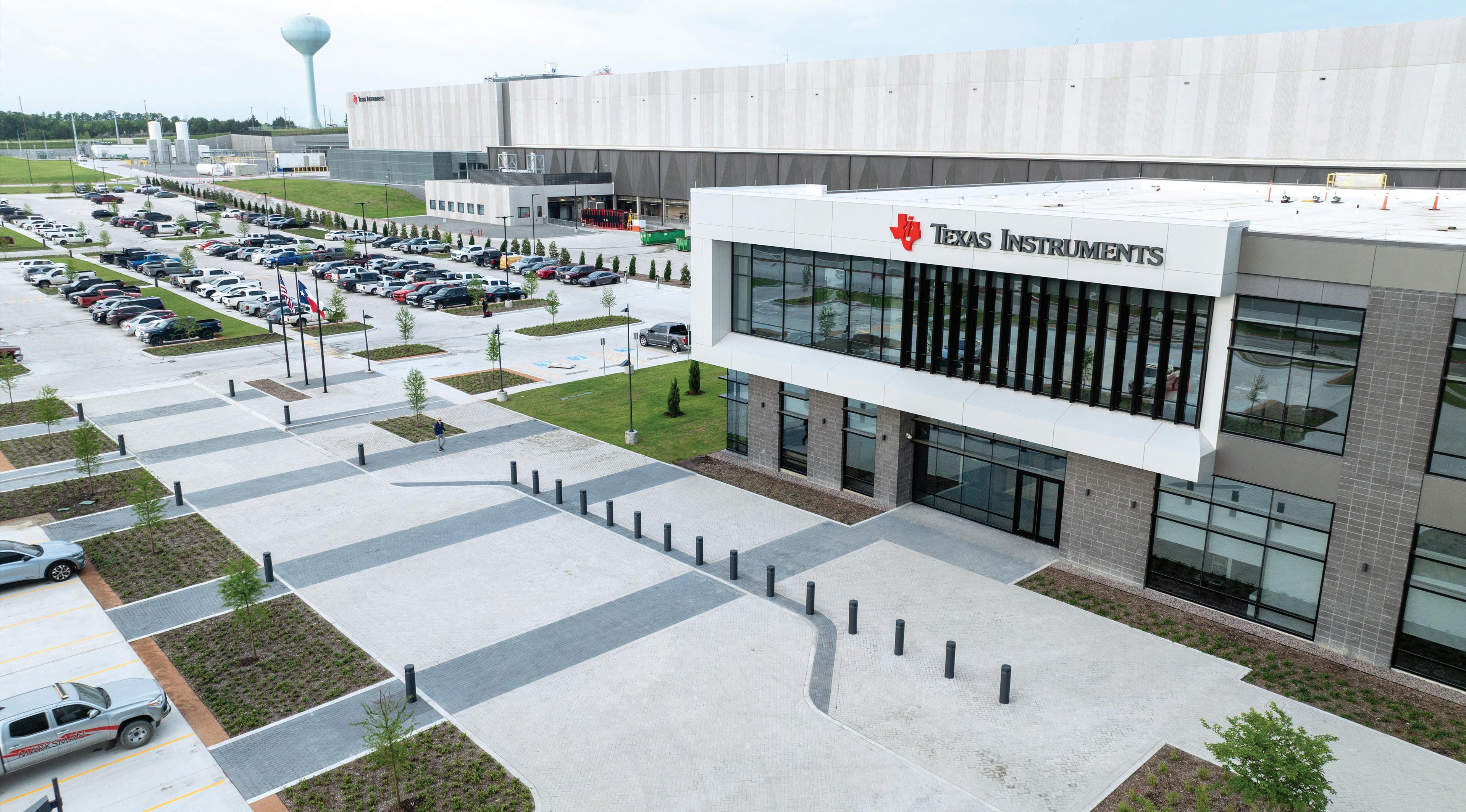
Texas Instruments continues to strengthen America’s semiconductor manufacturing leadership with a major milestone in North Texas. The company has officially begun production at its newest, state-of-the-art 300mm semiconductor manufacturing facility in Sherman— marking a significant step forward in domestic chip production, long-term supply resilience, and technological innovation.
What’s new
Texas Instruments (TI) recently announced the start of production at its newest semiconductor fab in Sherman, TX, just three and a half years after breaking ground. Leaders from TI were joined by local and state elected officials to celebrate the opening of this state-of-the-art 300mm semiconductor fab in North Texas.
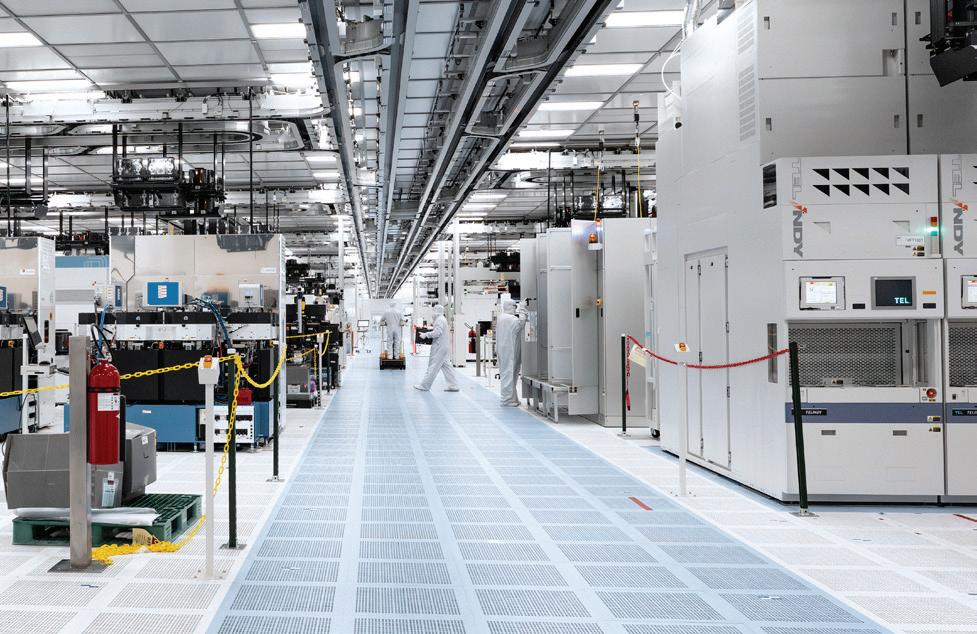
The new facility, called SM1, will ramp according to customer demand, ultimately producing tens of millions of chips daily that go into nearly every electronic device— from smartphones, automotive systems, and life-saving medical devices to industrial robots, smart home appliances, and data centers.
Why it matters
As the largest foundational semiconductor manufacturer in the U.S., TI produces analog and embedded processing chips critical for virtually all modern electronic devices. As electronics become increasingly more prevalent in everyday life, TI is building on its nearly 100-year legacy of innovation by expanding its 300mm semiconductor manufacturing footprint. By owning and controlling its manufacturing operations, process technology and packaging, TI has greater control of its supply to support customers for decades to come, in any environment.
" The start of production at our newest wafer fab in Sherman, TX represents what TI does best: owning every part of the manufacturing process to deliver the foundational semiconductors that are vital for nearly every type of electronic system,"
said Haviv Ilan, president and CEO of Texas Instruments. “As the largest analog and embedded processing semiconductor manufacturer in the U.S., TI is uniquely positioned to provide dependable 300mm semiconductor manufacturing capacity at scale. We're proud to have called North Texas home for nearly a century, and excited about how TI technology will enable the technological breakthroughs of the future."
TI in Sherman
TI’s mega-site in Sherman includes future plans for up to four connected wafer fabs that will be constructed and equipped in alignment with market demand. Combined, this site will support as many as 3,000 direct jobs, along with thousands of additional jobs in support industries
TI’s investment in Sherman is part of the company’s broader plans to invest more than $60 billion across seven semiconductor fabs in Texas and Utah, making this the largest investment in foundational semiconductor manufacturing in U.S. history. With 15 manufacturing sites around the world, TI’s internal operations build on decades of proven and reliable manufacturing expertise, providing greater control of its supply chain to get customers the products they need.
About Texas Instruments
Texas Instruments Incorporated (Nasdaq: TXN) is a global semiconductor company that designs, manufactures and sells analog and embedded processing chips for markets such as industrial, automotive, personal electronics, enterprise systems and communications equipment. At our core, we have a passion to create a better world by making electronics more affordable through semiconductors. This passion is alive today as each generation of innovation builds upon the last to make our technology more reliable, more affordable and lower power, making it possible for semiconductors to go into electronics everywhere.
DDFW Airport Begins Next Phase of Construction Project to Build New Bridge into Terminal C
By Subcontractors USA News Provider
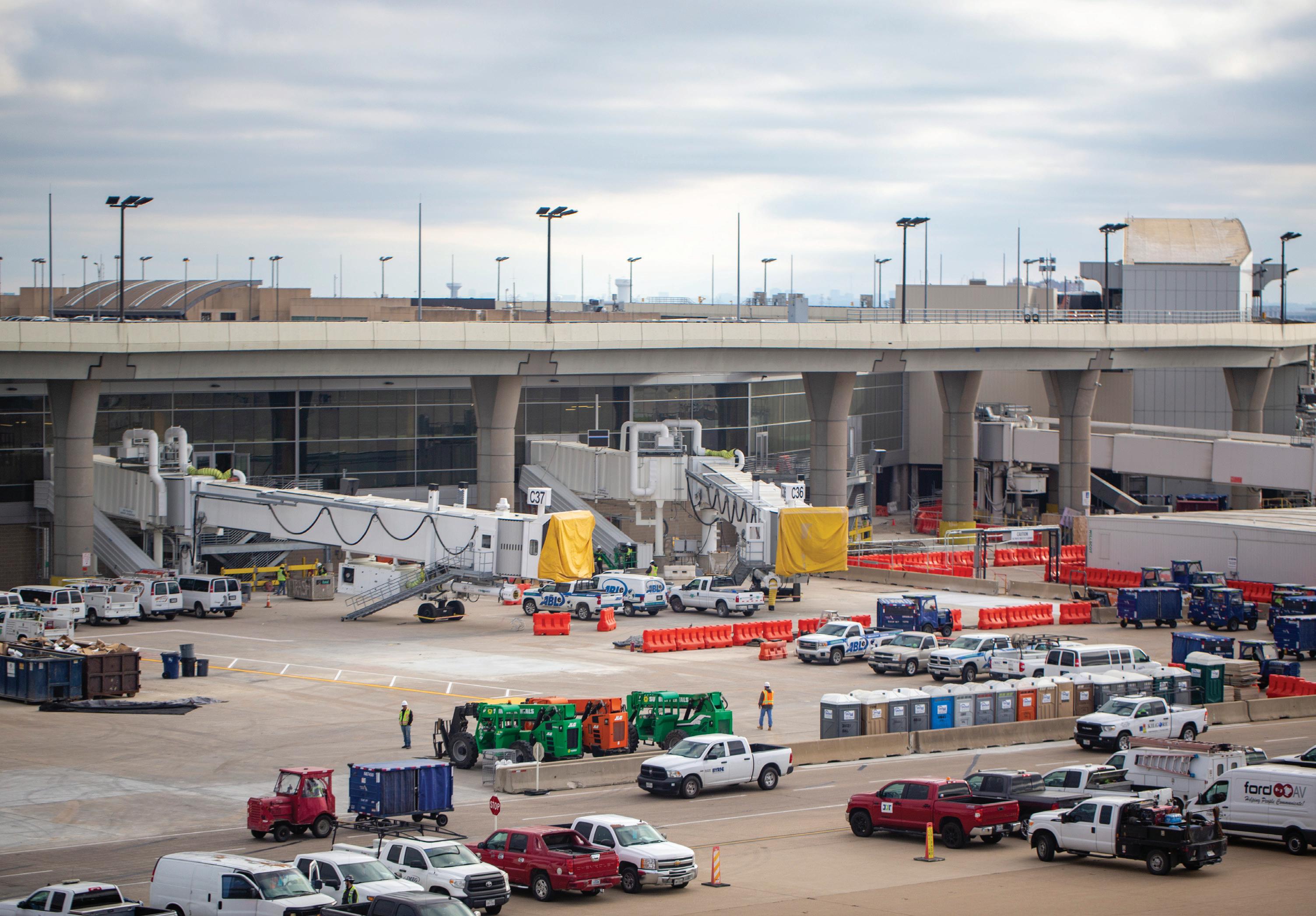
allas Fort Worth International Airport (DFW) has implemented various roadway closures and detours to support construction of the new bridge that will provide right-hand access into Terminal C, which is scheduled to be completed ahead of this summer. Additionally, a southbound detour into Terminal A has been implemented through the end of January to complete all remaining construction activity of the new access, following its temporary opening during the holiday travel period. These next phases of the International Parkway Project were strategically scheduled to begin after the busy holiday travel period. Signage will be in place to guide traffic along all detours and through construction areas.
Accessing Terminal A: Temporary Detour for Southbound Traffic
Last month, DFW opened the new right-hand access into Terminal A early to proactively remove major detours and construction impacts during the holiday travel period. Northbound access into Terminal A opened in its final condition; however, the southbound access opened in a temporary but nearcomplete condition.
To complete the new southbound access to Terminal A, a temporary detour will require traffic arriving from the north to take the previous left-hand exit into Terminal A. The
detour is scheduled to remain through the end of January, which is when the new southbound access into Terminal A is anticipated to reopen in its final condition.
Customers arriving northbound through the South Entry Plaza will continue to use the new right-hand entrance into Terminal A that has already opened in its final condition.
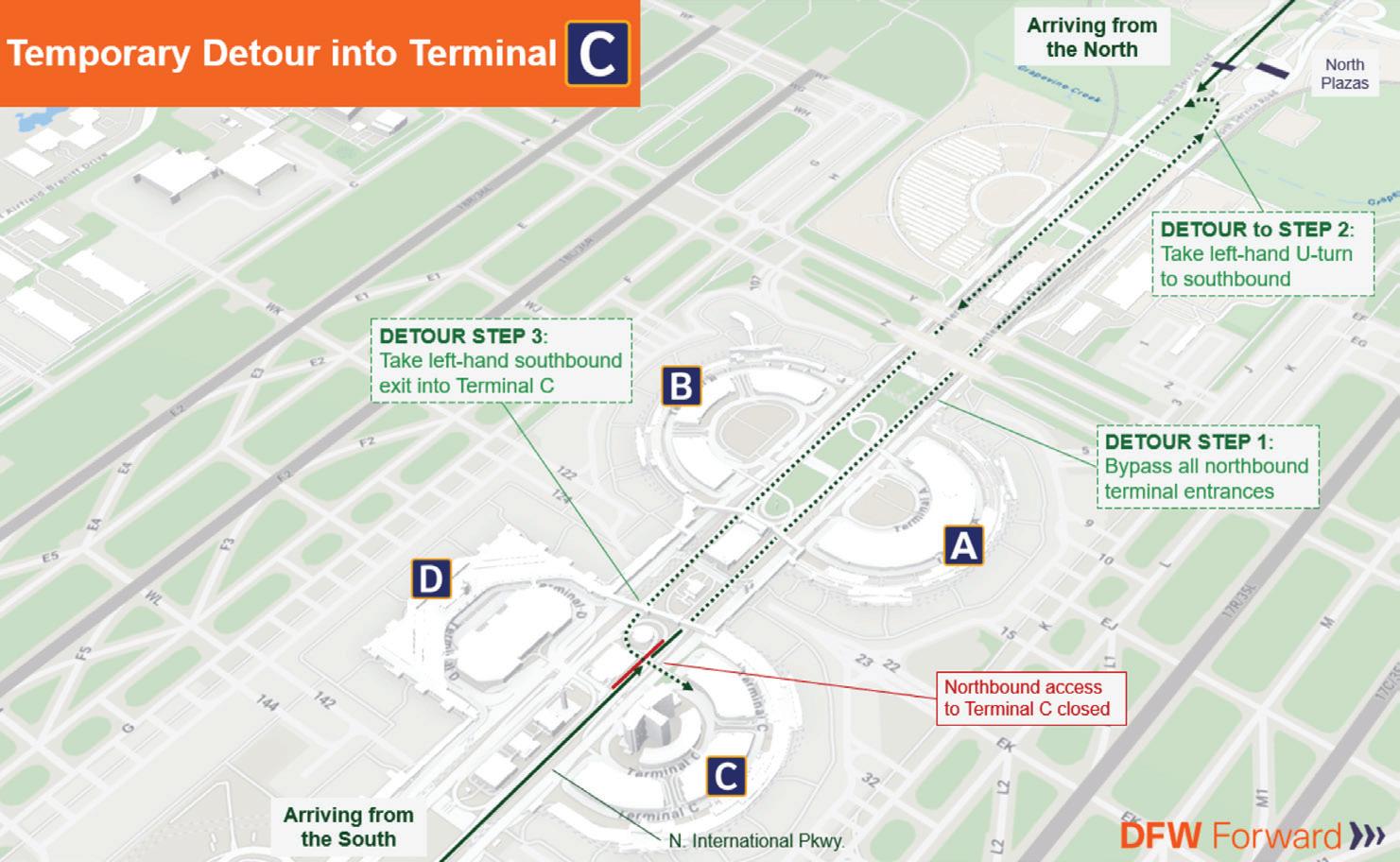
Accessing Terminal C: All Traffic to Enter Via Southbound Entrance
Currently, Terminal C is only accessible via the southbound entrance from International Parkway. Customers arriving from the south will be required to travel northbound past all terminal entrances and take the left-hand
U-turn exit before the North Exit Plaza to return to southbound International Parkway. Then, all customers will take the existing lefthand exit to Terminal C. Signage will be in place to guide customers.
Arrive Early and Utilize Tools to Navigate Construction
With major roadwork underway, customers are urged to arrive early and utilize the airport’s digital tools to navigate construction, potential roadway congestion and travel crowds.
• Arrive early: Travelers are encouraged to add additional time to their plans when driving to the airport. At minimum, DFW recommends arriving at the airport at least
two hours before domestic flights and three hours before international flights.
• Download the DFW Airport mobile app: Available for iOS and Android, the DFW Airport mobile app is available to assist travelers along every step of their airport journey with access to helpful tools, including prebook parking, live parking availability, security wait times and construction updates.
• Travel informed with construction updates : For timely updates regarding construction, sign up for construction updates via email. Additional updates for travelers, project details and construction news can be found at dfwairport.com/ construction.
About Dallas Fort Worth International Airport
Dallas Fort Worth International Airport (DFW) is one of the most connected and busiest airports in the world. Centered between owner cities Dallas and Fort Worth, Texas, DFW Airport also serves as a major economic engine and job generator for the North Texas region. The airport’s historic $12 billion capital plan – DFW Forward – is set to transform the customer experience and plan for the future with monumental upgrades and expansions underway across DFW’s terminals, airfield and roadway infrastructure.
Source: DFWAirport.com
Photo courtesy of DFW Airport
Looking
By Subcontractors USA News Provider
rom transformative urban highway projects in Austin and San Antonio to flood recovery and safety improvements, TxDOT saw progress on major projects in December, benefiting communities throughout the state.
Austin: Prep work underway for historic I-35 redesign
TxDOT’s work on the I-35 Capital Express Central project – the first major redesign of the corridor since 1974 – is well underway. Crews are reconstructing the MLK bridge, advancing work on the Lady Bird Lake segment and building the critical drainage infrastructure needed to support the lowering of the mainlanes between Holly Street and Airport Boulevard.
The project includes 6.5 miles of massive, 22-foot-diameter drainage tunnels, access shafts and a pump station to manage stormwater before excavation begins. Two tunnel boring machines are scheduled to arrive from Germany this year. Once complete in 2033, the project is expected to significantly improve mobility, safety and flood resilience in Austin.
North Texas & Panhandle: Safety projects continue in Amarillo District
TxDOT’s Amarillo District reported steady
progress
projects, including:
• Widening I-27 between Amarillo and Canyon to six lanes
• Intersection and turn-lane improvements on State Loop 335
• Upgraded lighting and drainage at FM 1061 and FM 2590
• Safety enhancements on Business I-40, including shared-use paths and median barriers
Collectively valued at hundreds of millions of dollars, the projects are aimed at improving safety, supporting growth and reducing crashes across the region.
West Texas: US 67 reopening in San Angelo
In San Angelo, drivers received welcome news as repairs on US67/Houston Harte Expressway neared completion following flood damage caused by historic July rainfall. TxDOT replaced metal pipe culverts—installed in the 1980s—with modern concrete box culverts.
The Loop, closed since late September between Bell Street and North Oakes, is now fully reopen.
San Antonio: Expansion begins on U.S. 90 December marked a major milestone in San Antonio as TxDOT officially began construction on the $473 million U.S. 90 Expansion Project in west Bexar County.
The project will widen the highway from four to six lanes, add continuous frontage roads, construct a new flyover ramp to Loop 1604 and build multiple turnaround bridges and upgraded intersections.
Phase I, from Loop 410 to Loop 1604, is underway and expected to finish by 2030. Phase II, extending to SH 211, is expected to begin in 2027.
Bexar County: FM 1518 expansion reaches key milestones
Another major San Antonio-area project—the FM 1518 expansion—continued to move forward in December. Crews completed portions of new lanes, shared-use paths and utility upgrades in Schertz, with bridge widening at Woman Hollering Creek scheduled to finish by year’s end.
The $72.78 million project will ultimately reconstruct 5.6 miles of FM 1518 with wider lanes, a raised median, sidewalks and shareduse paths, improving safety and connectivity through 2028.
With many projects continuing into 2026, TxDOT continues to work to improve safety and connectivity throughout the state.