This issue has a curated playlist that accompanies the visual experience of the magazine. Please scan the code in the Spotify app for a full sensory Strike experience.
St. Louis
/sæp-ə-ˈlɒ-ʒi/ noun
The art, practice, and philosophy of elegant dressing, originating from the Congolese movement La Sape, emphasizing style, refinement, and self-expression through clothing.
Letter from the Editors
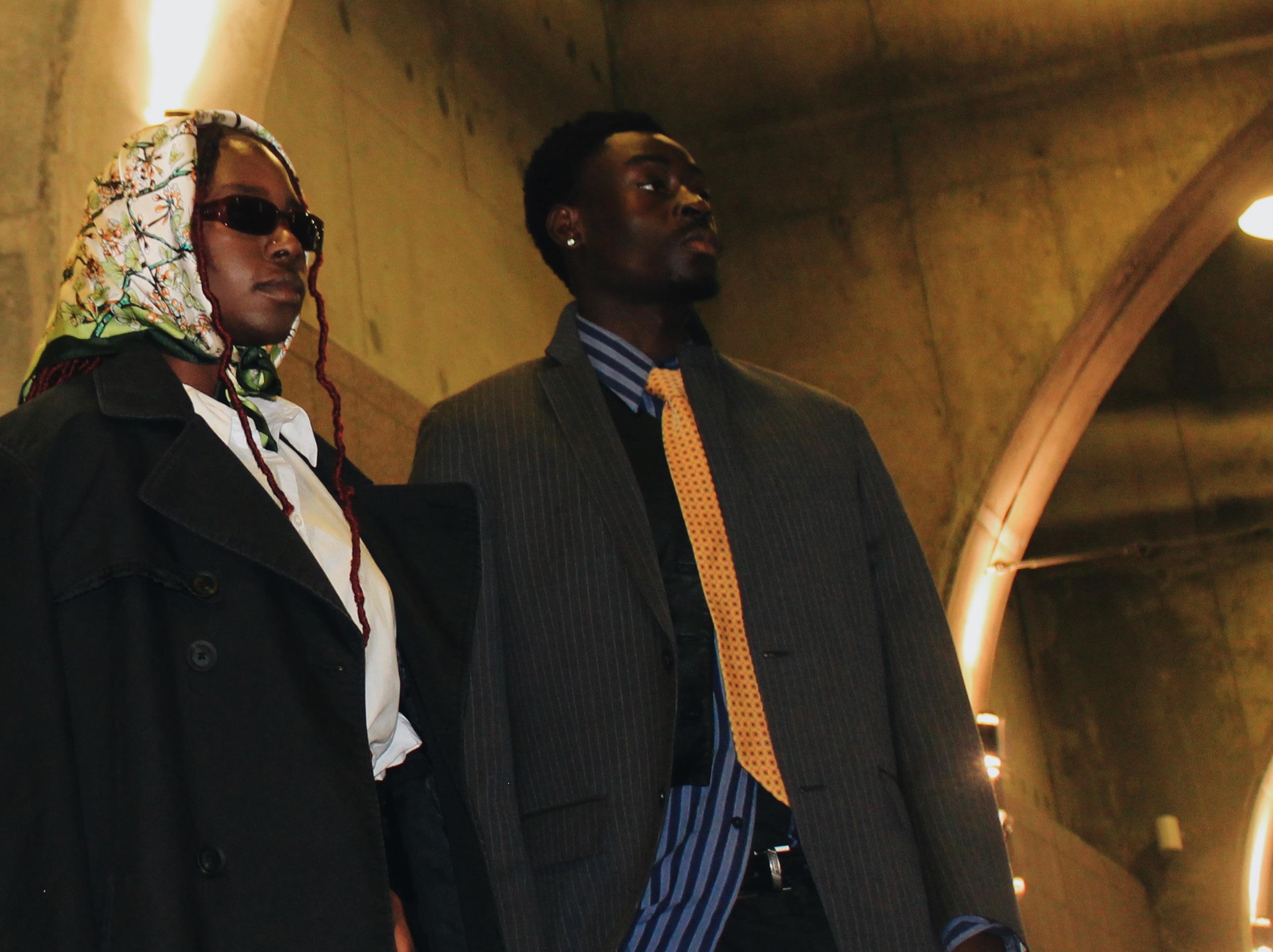
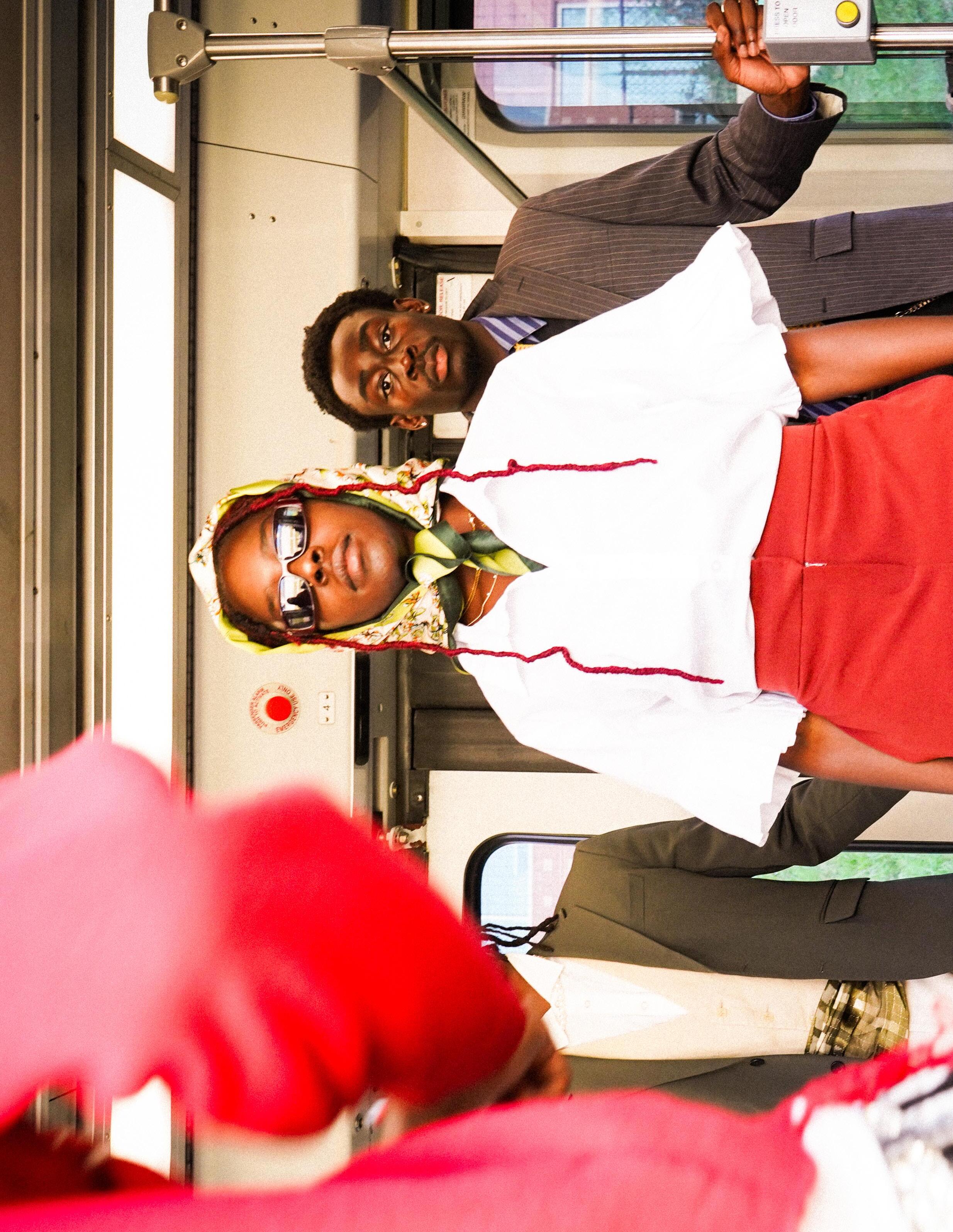
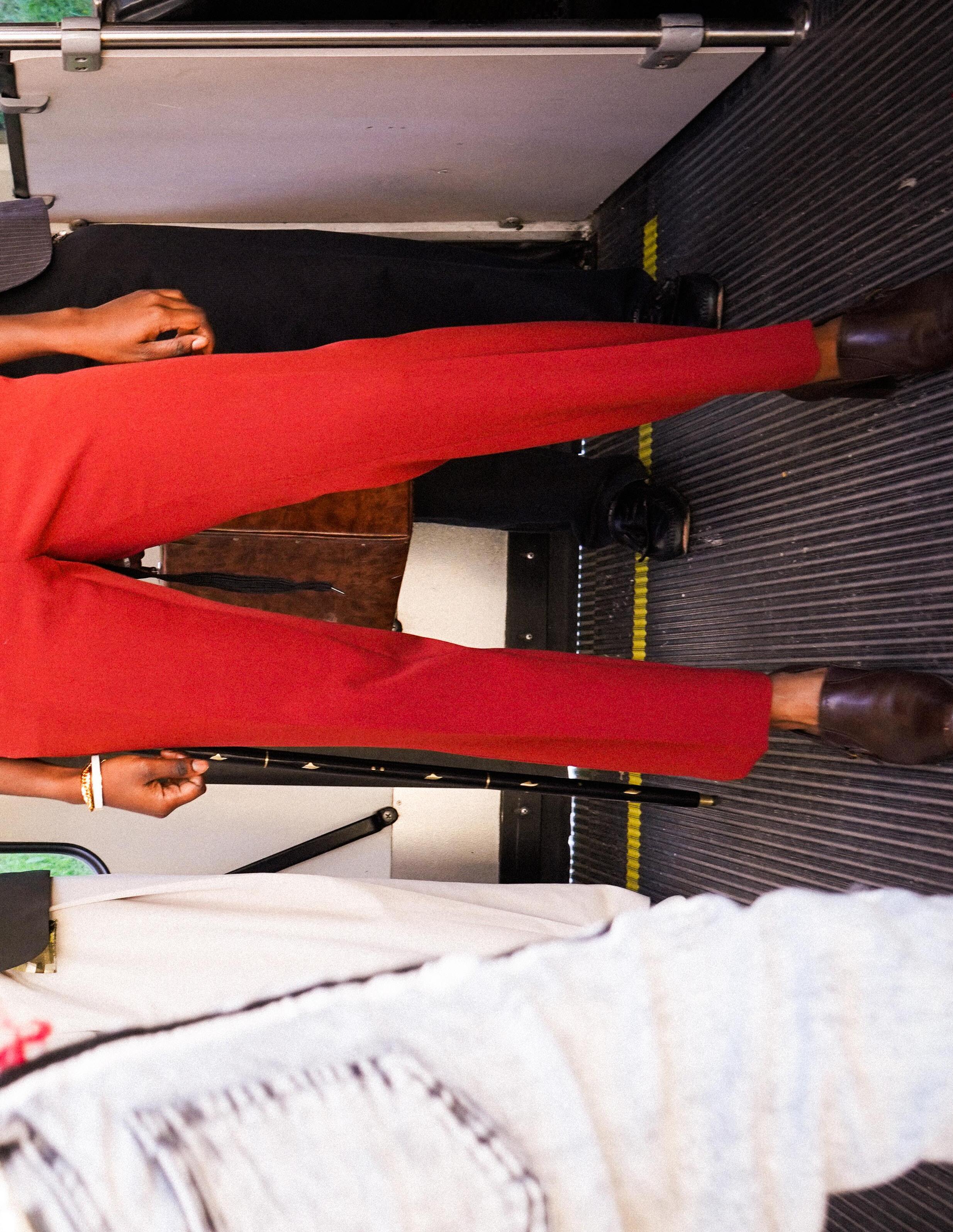
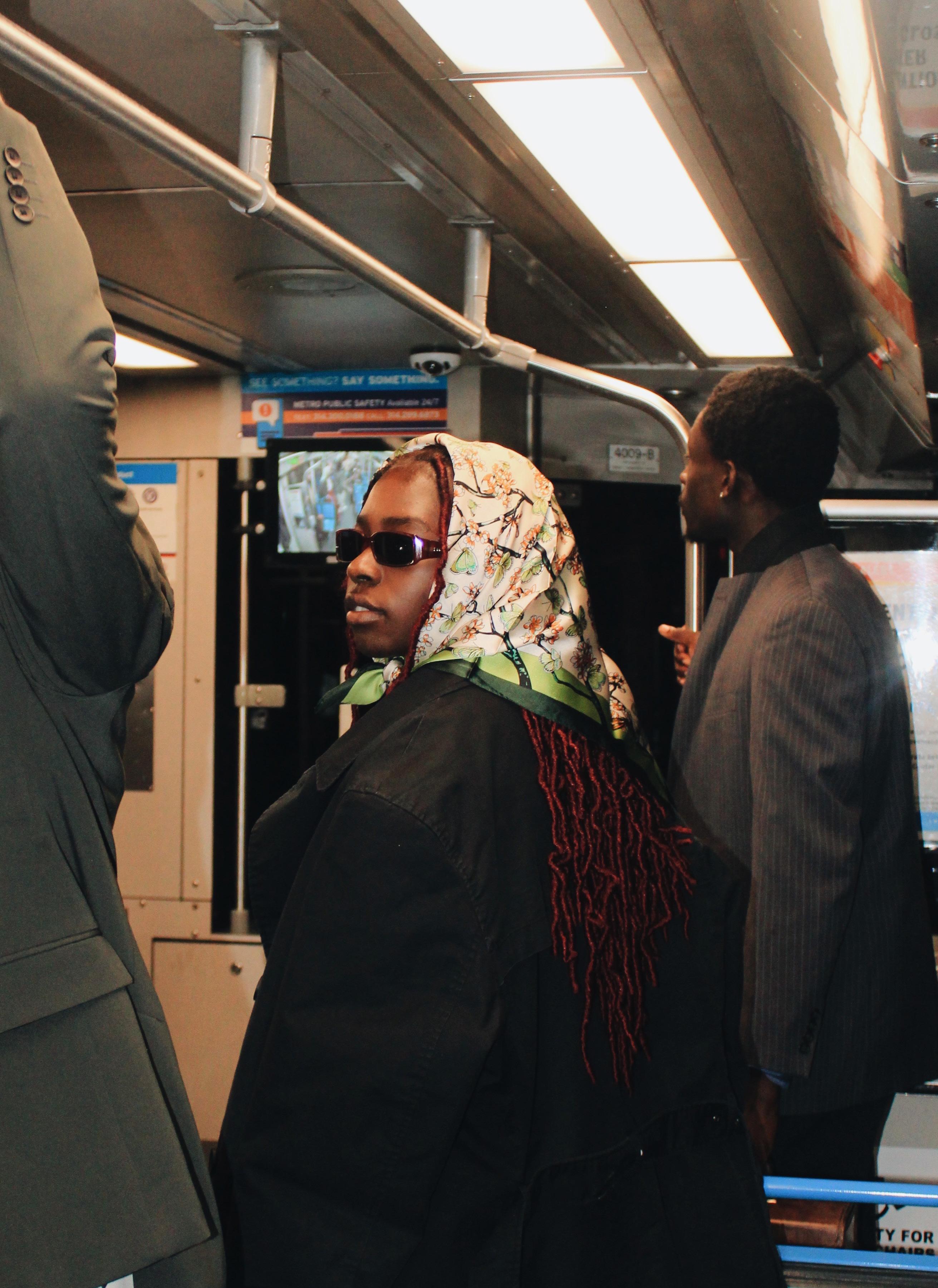
Sapologie is bold, playful, and intimate. We look beyond fads and trends and rather explore the influence of place on identity. Black culture is infused into St. Louis, As race takes a physical presence in our city. From Love Bank Park and Tschuss to the Blue Line, we breathe new life into once-abandoned places, clothes, and stories. In this city, often overlooked, lies a community of creative souls. We highlight them across the pages of Sapologie.
We are truly grateful to our team, who worked tirelessly to make Sapologie into a tangible work. We are so proud to work beside a group with such passion, grit, and determination. We wanted to push Strike STL into a new era, and we’ve accomplished just that. Just like the city we represent, Strike STL is only at its beginning. With research, intention, and a little juice, we give you Issue 10: Sapologie.
Strike Out (and of course, With Love),
Peyton & Ange
[INTRO SPREAD DESIGNS BY CHRISTINE
JUNG & KATIE ZHU]
[STRIKE MAGAZINE STL ISSUE 10]
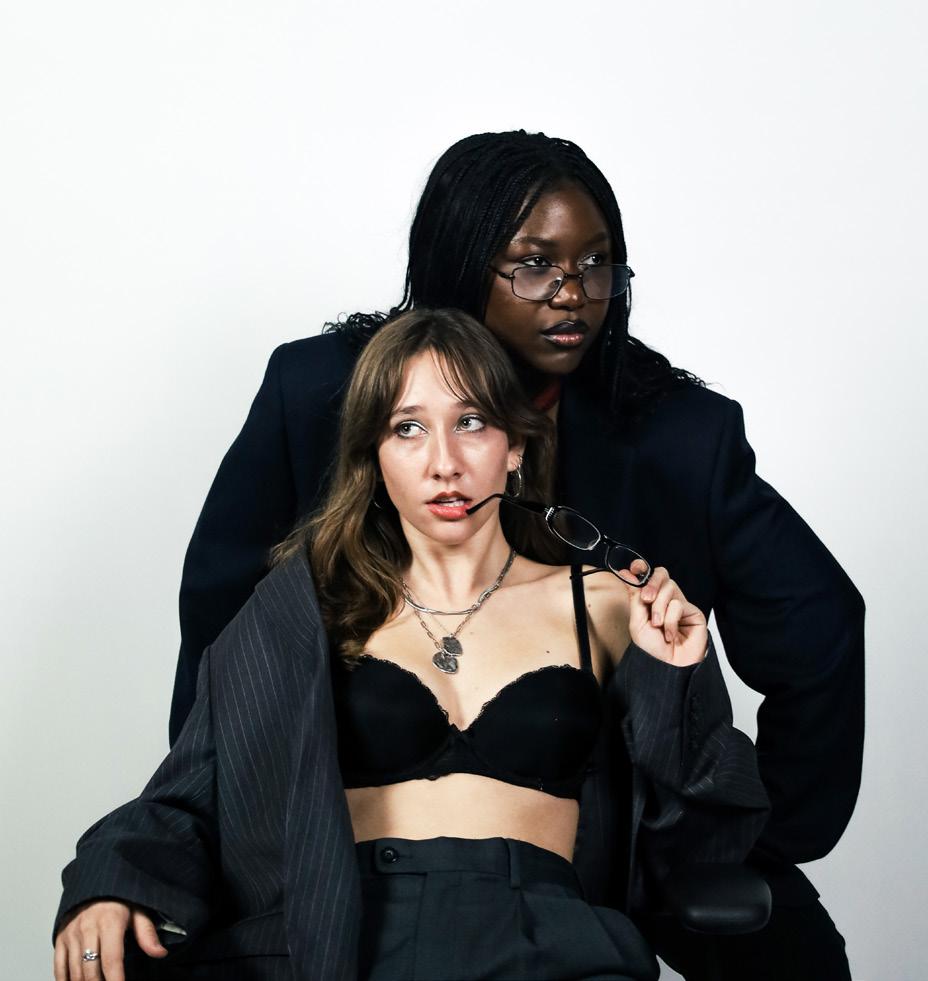
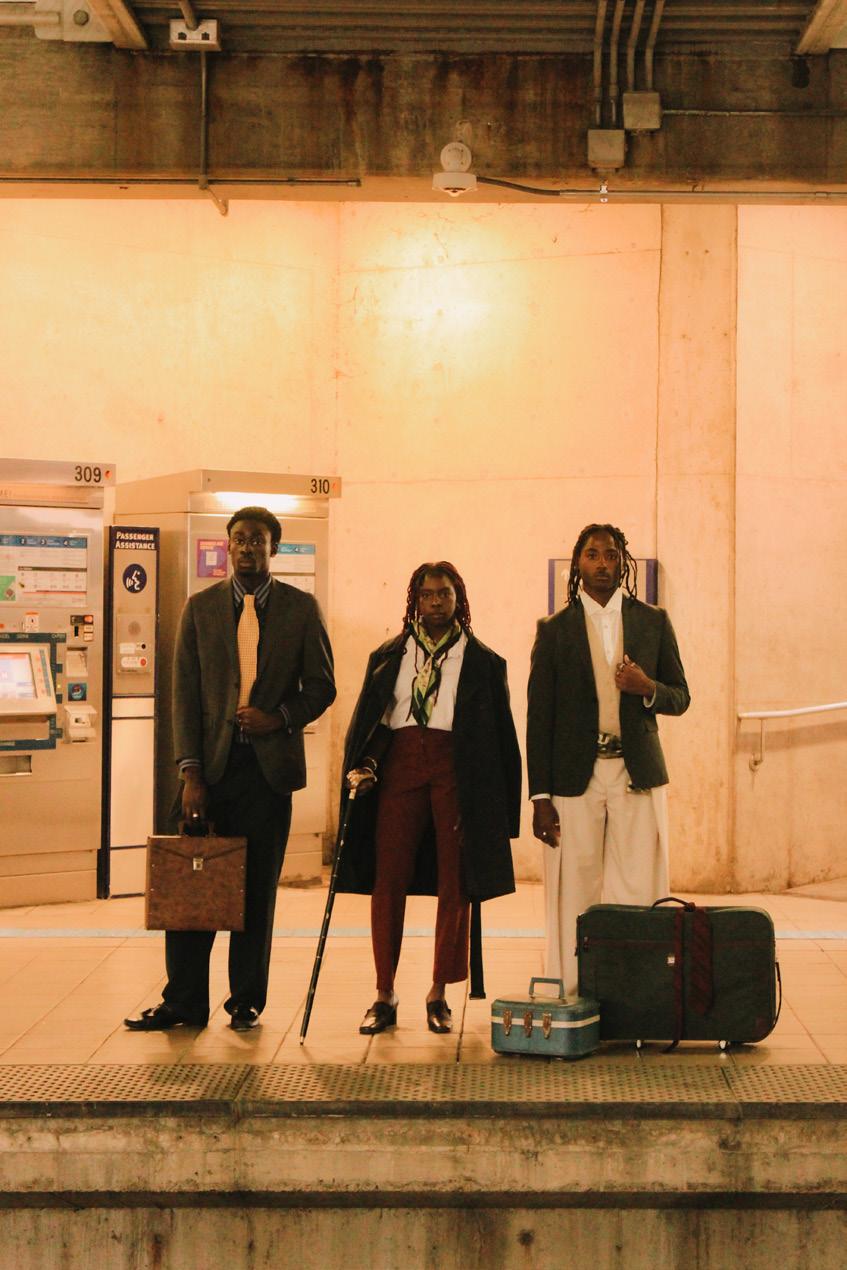
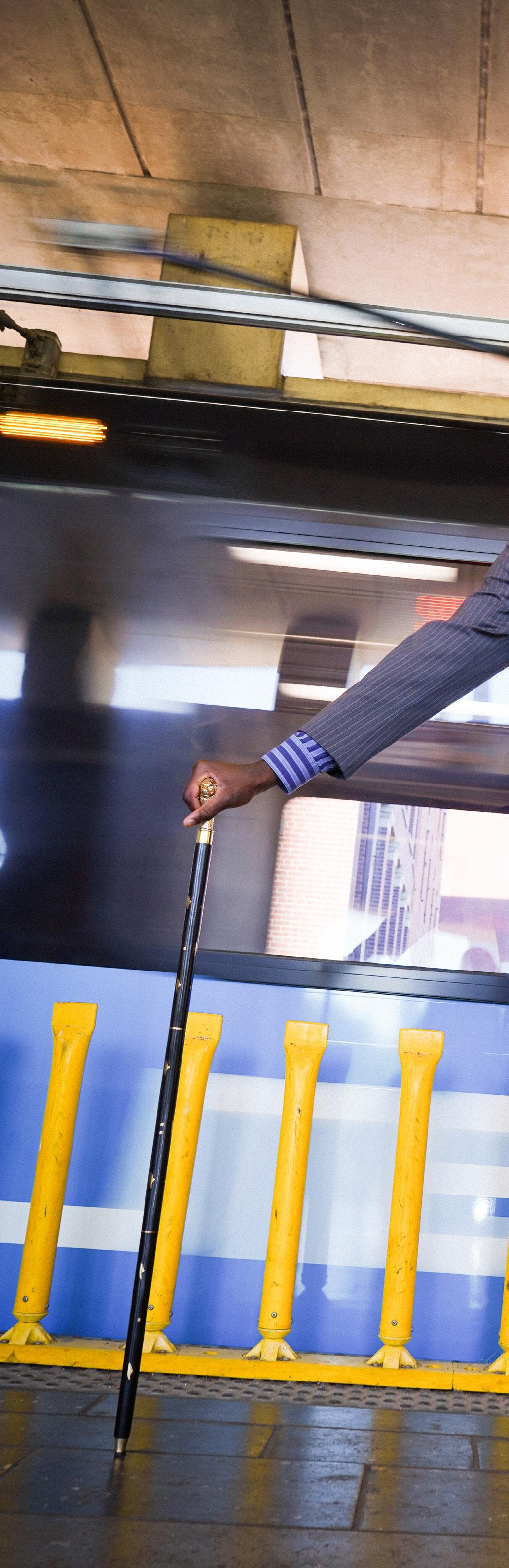
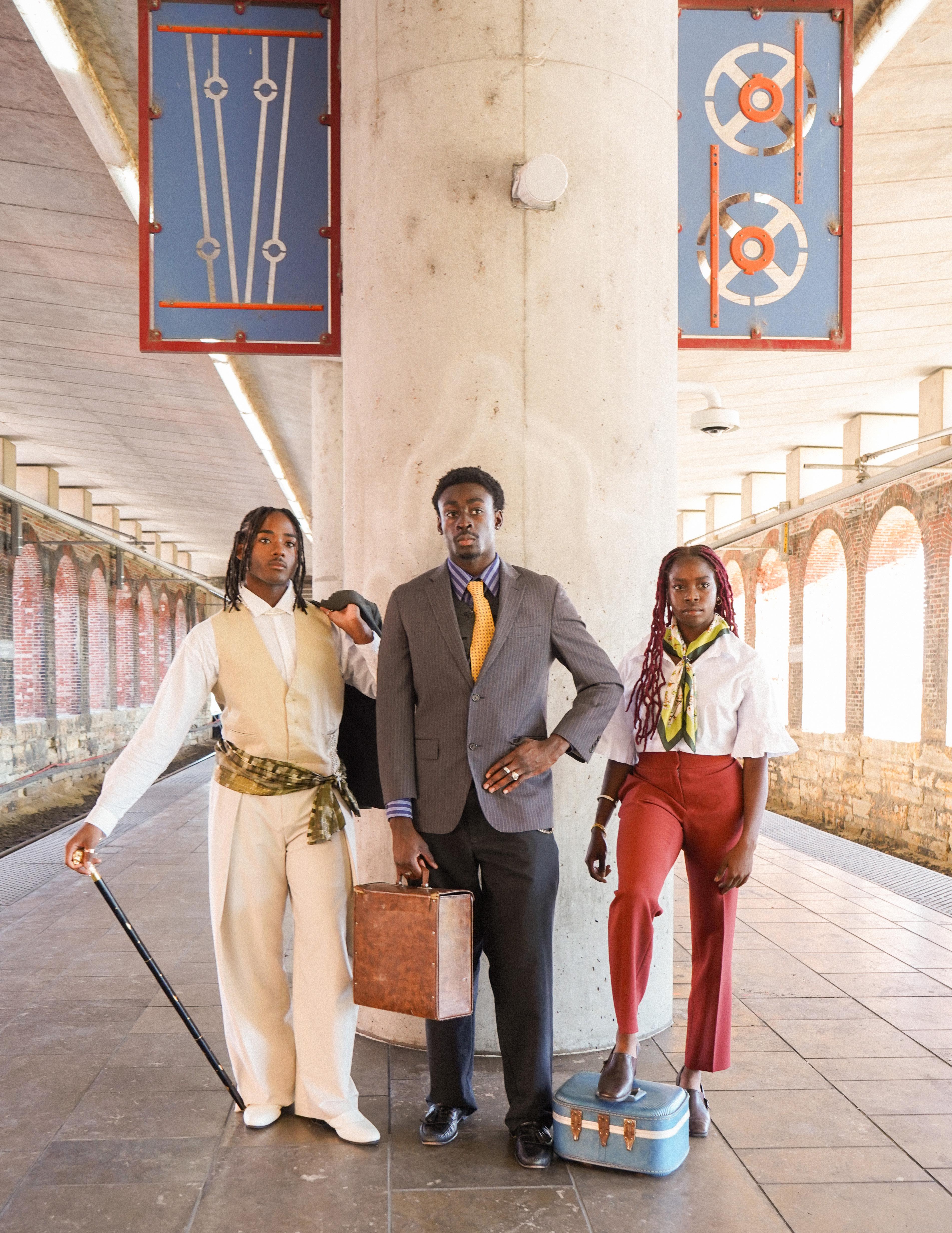
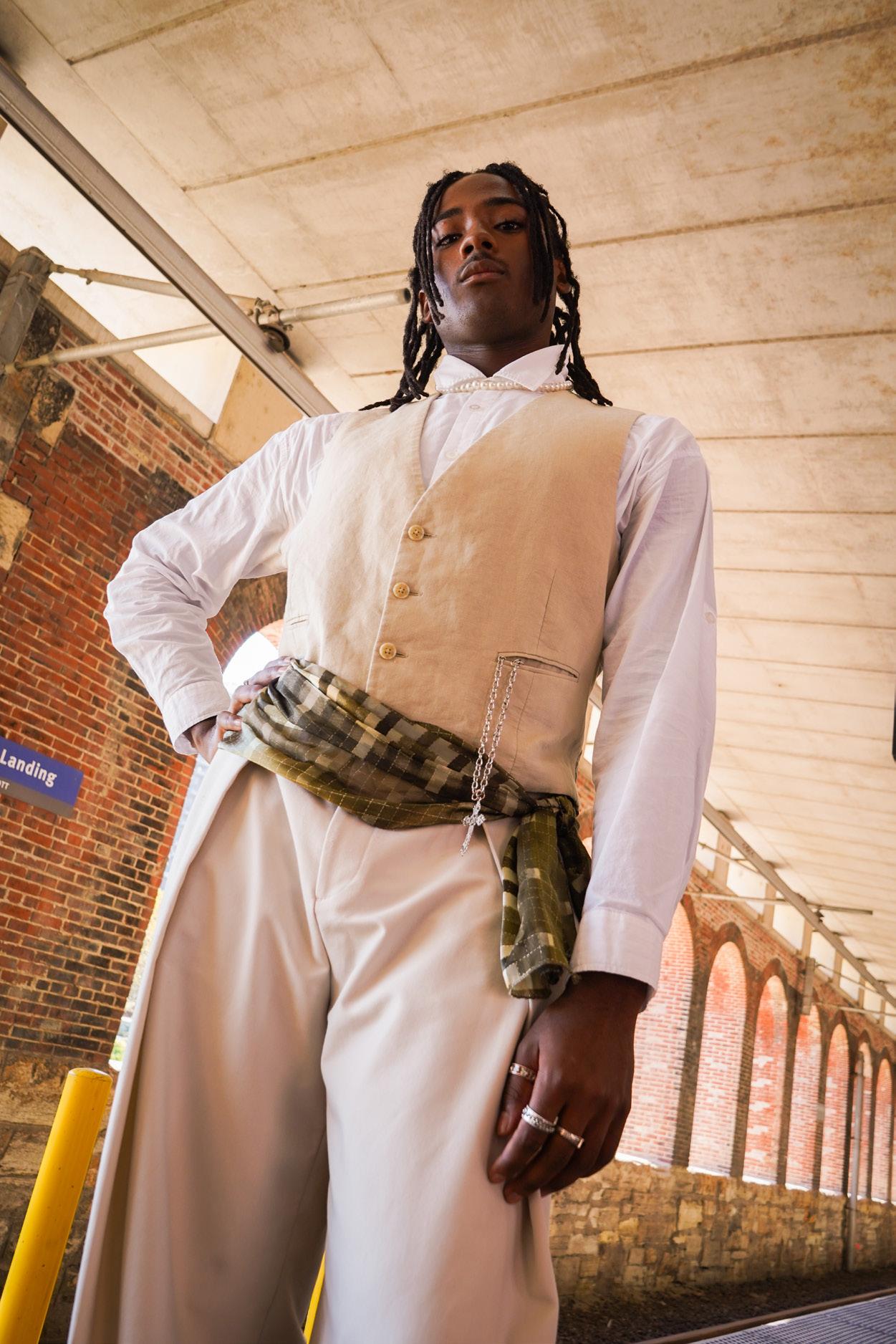
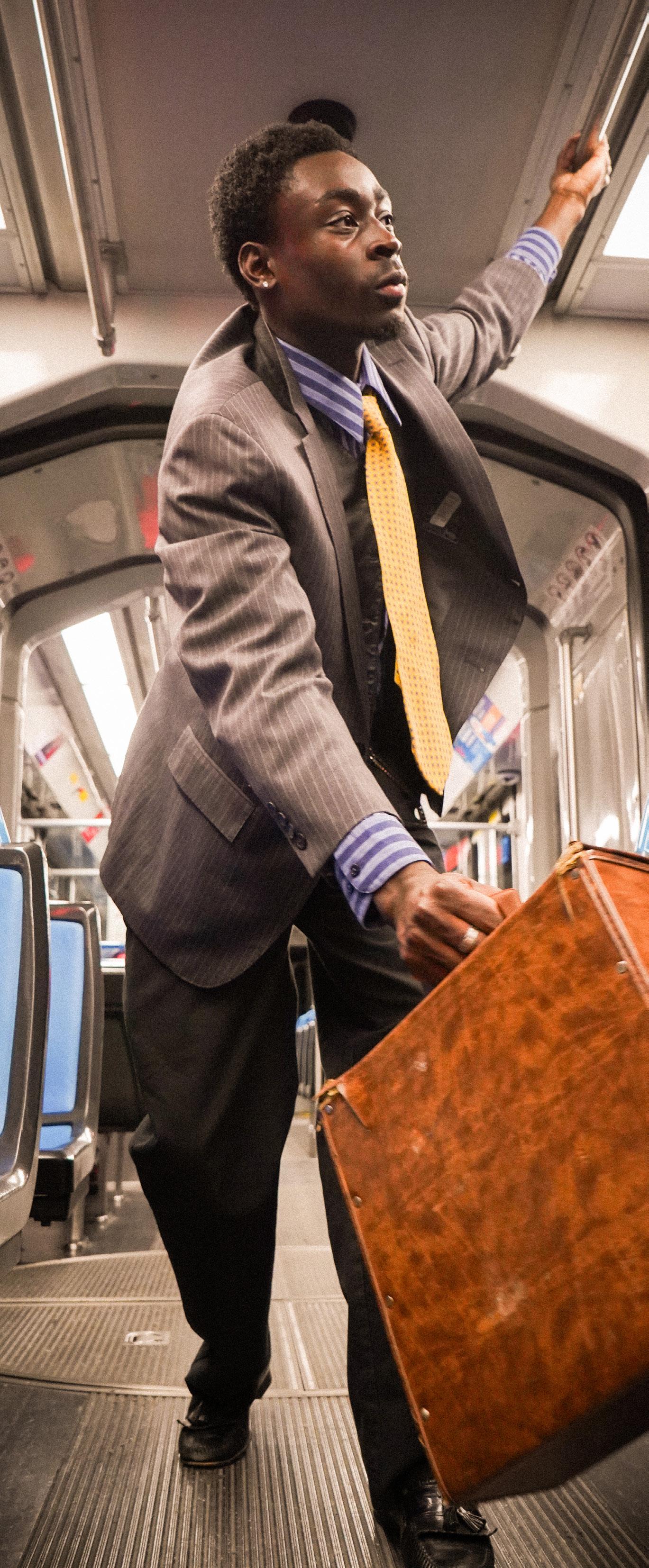
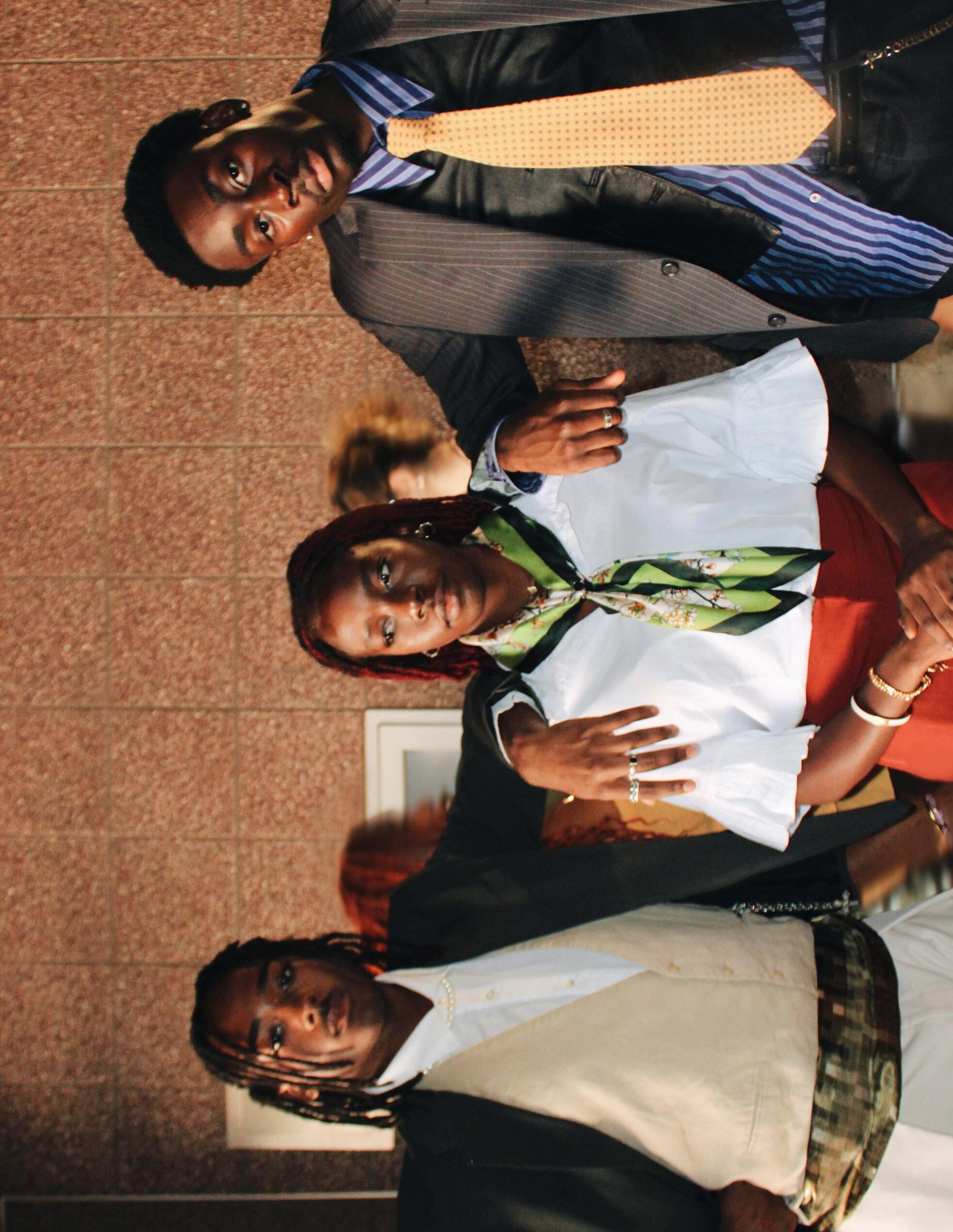
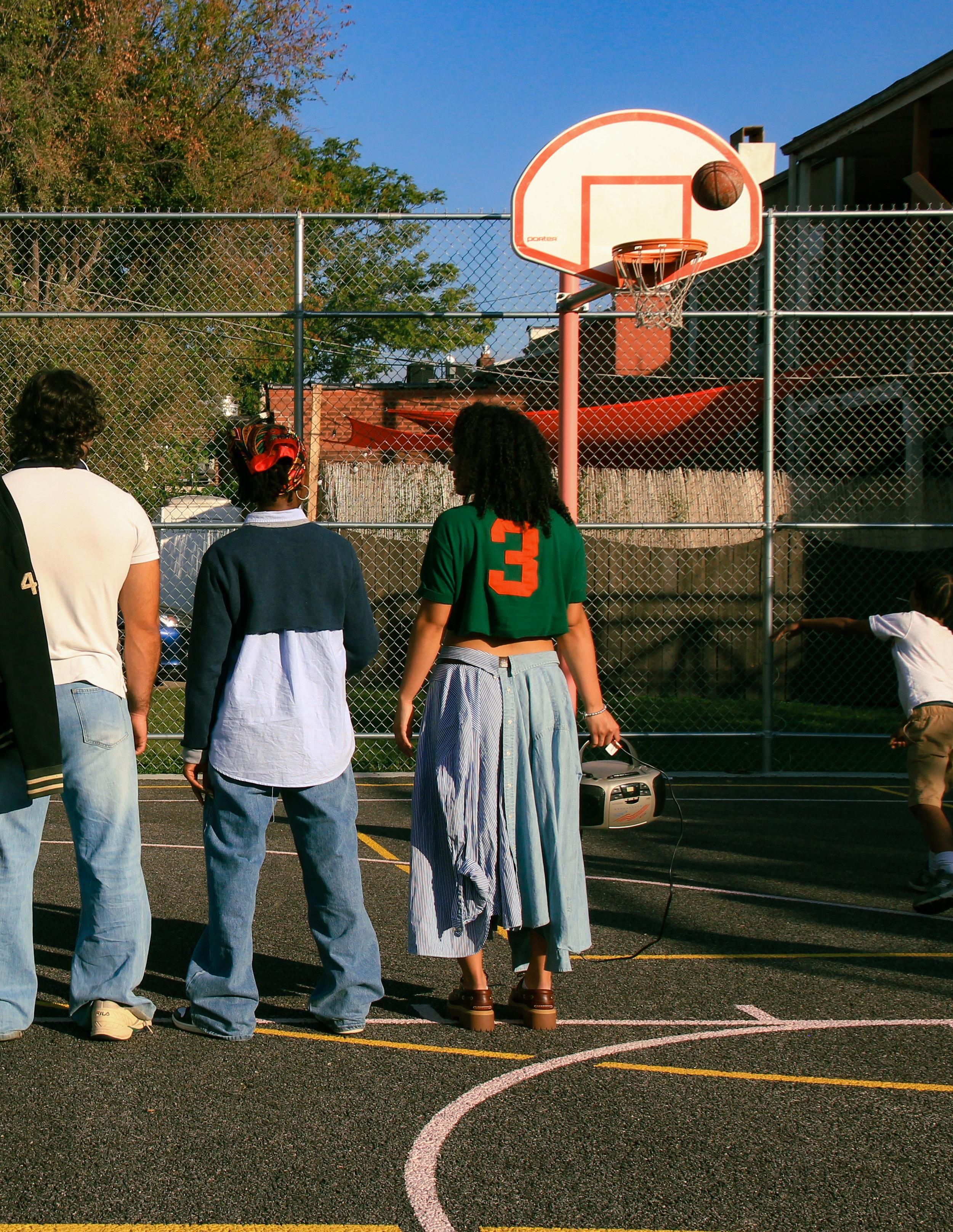
“BLACK TIE”
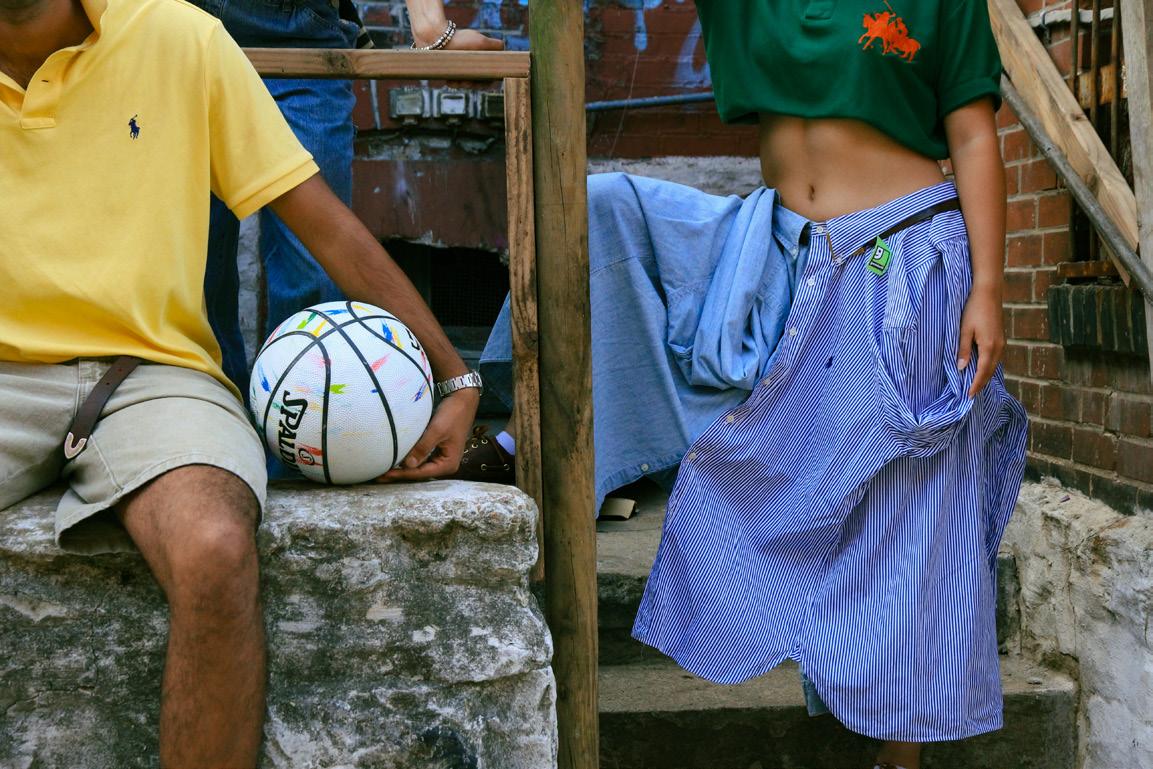
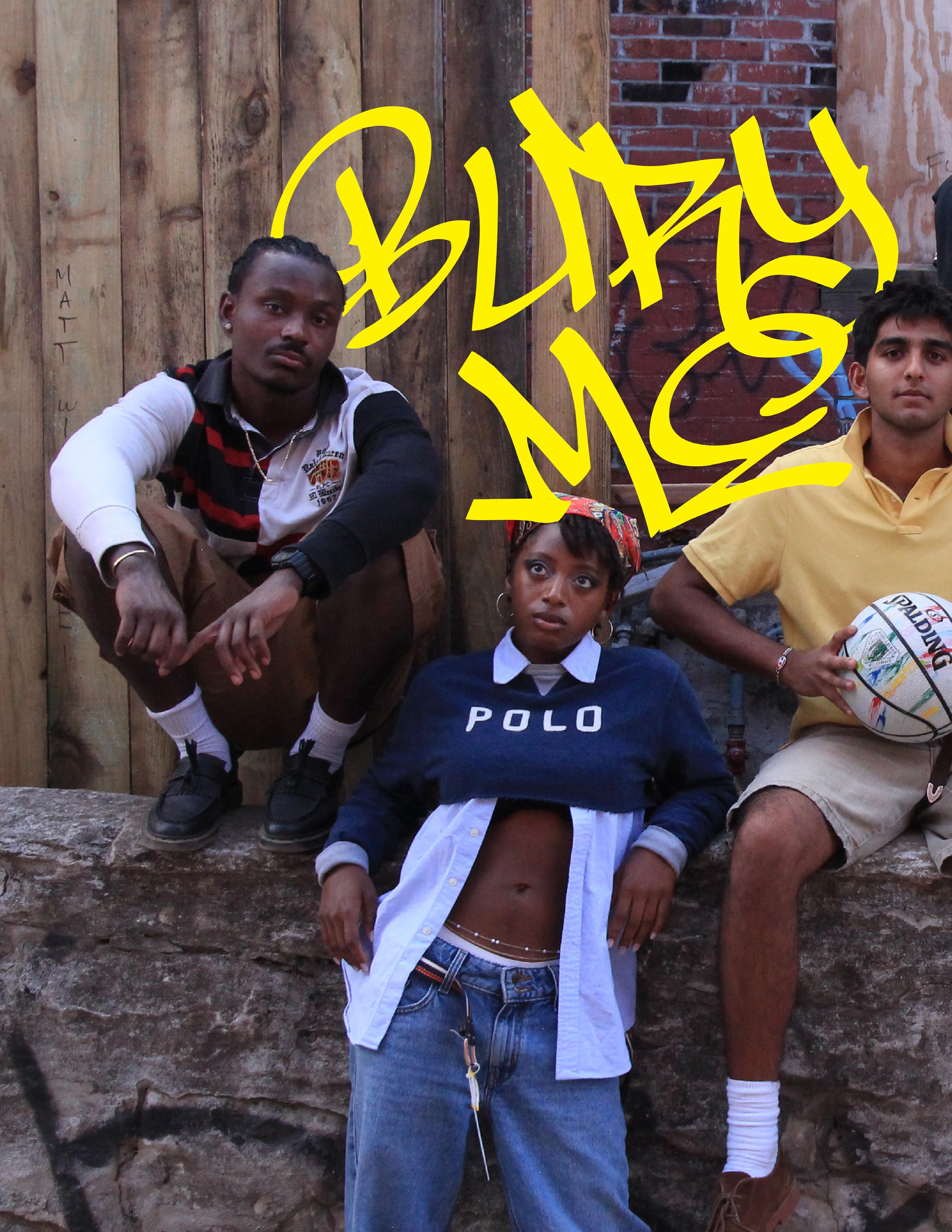
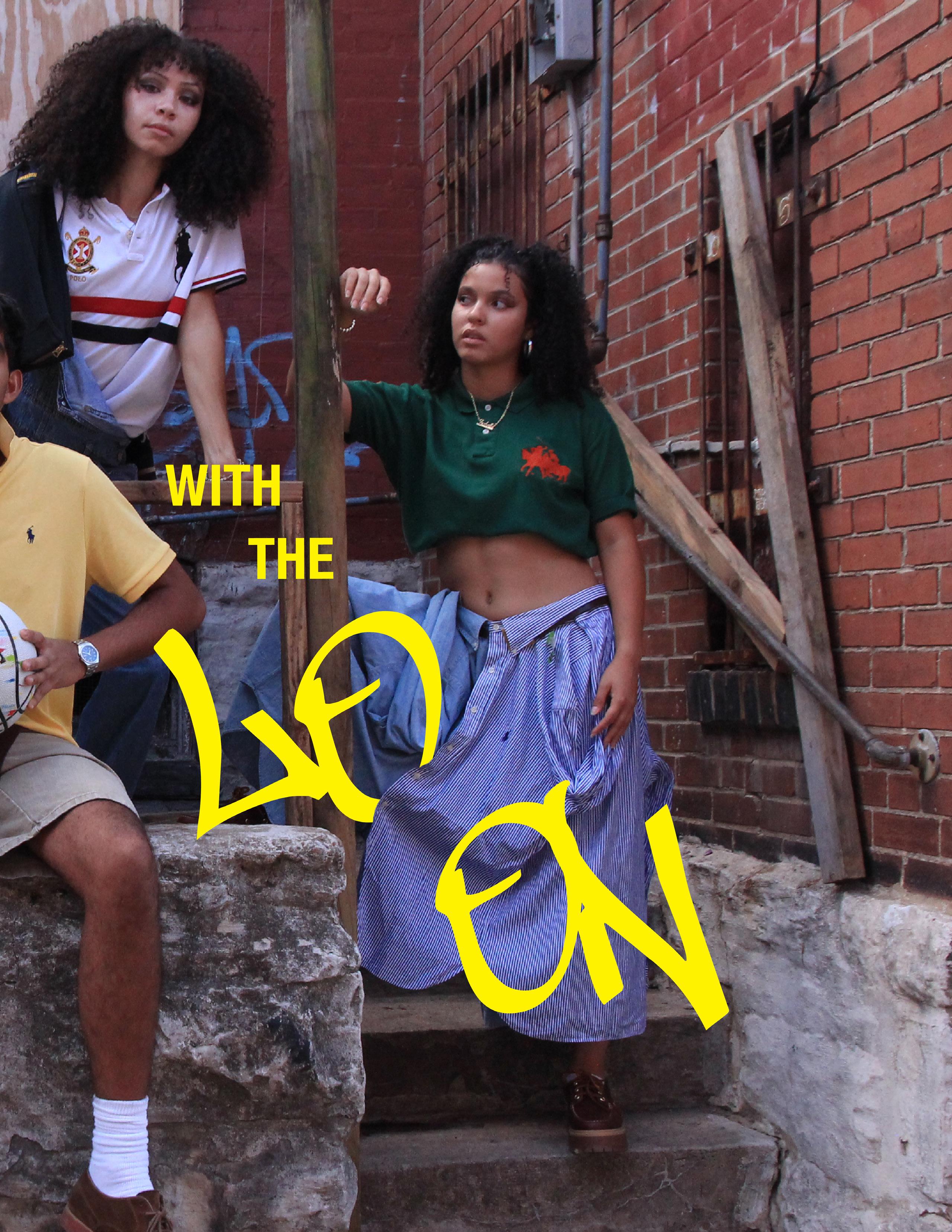
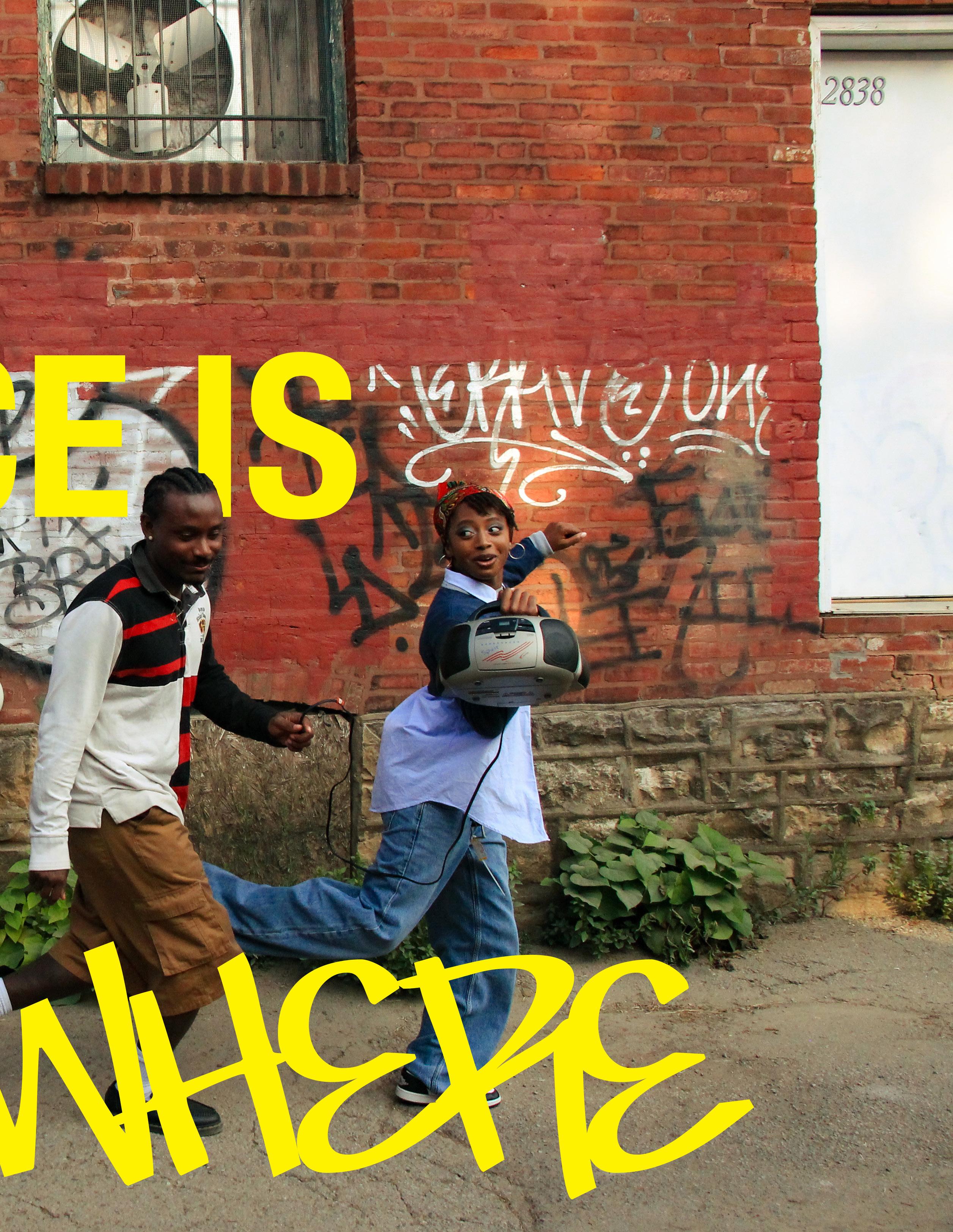
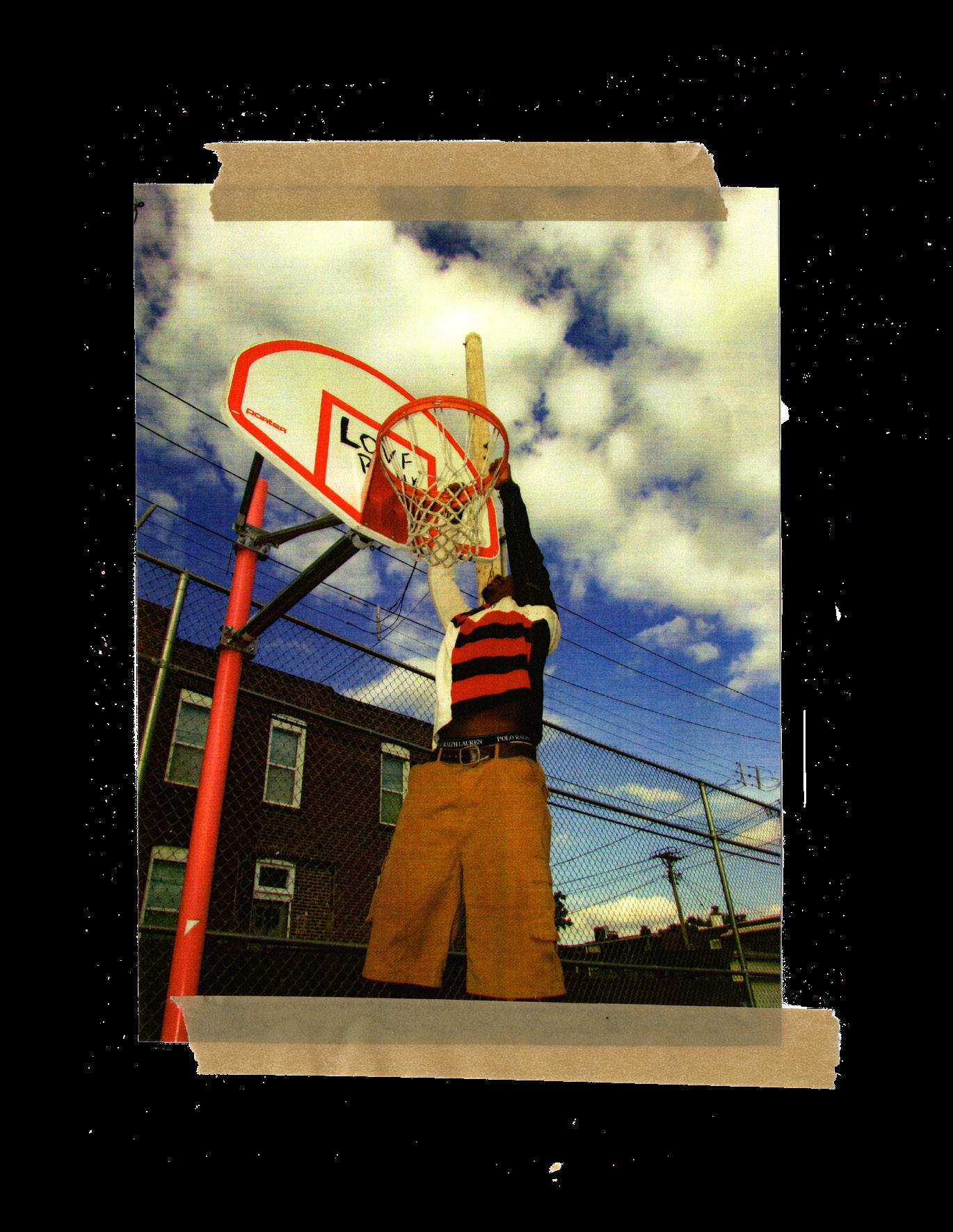
“BURY ME WITH THE LO ON”
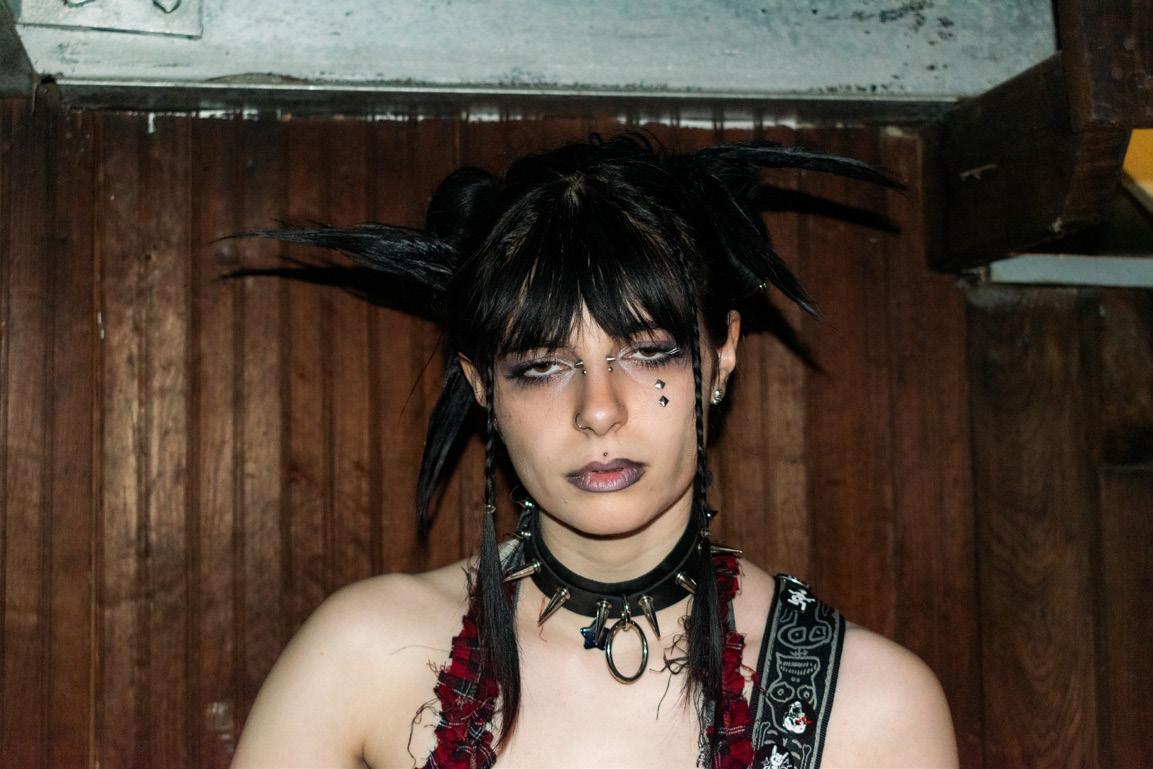
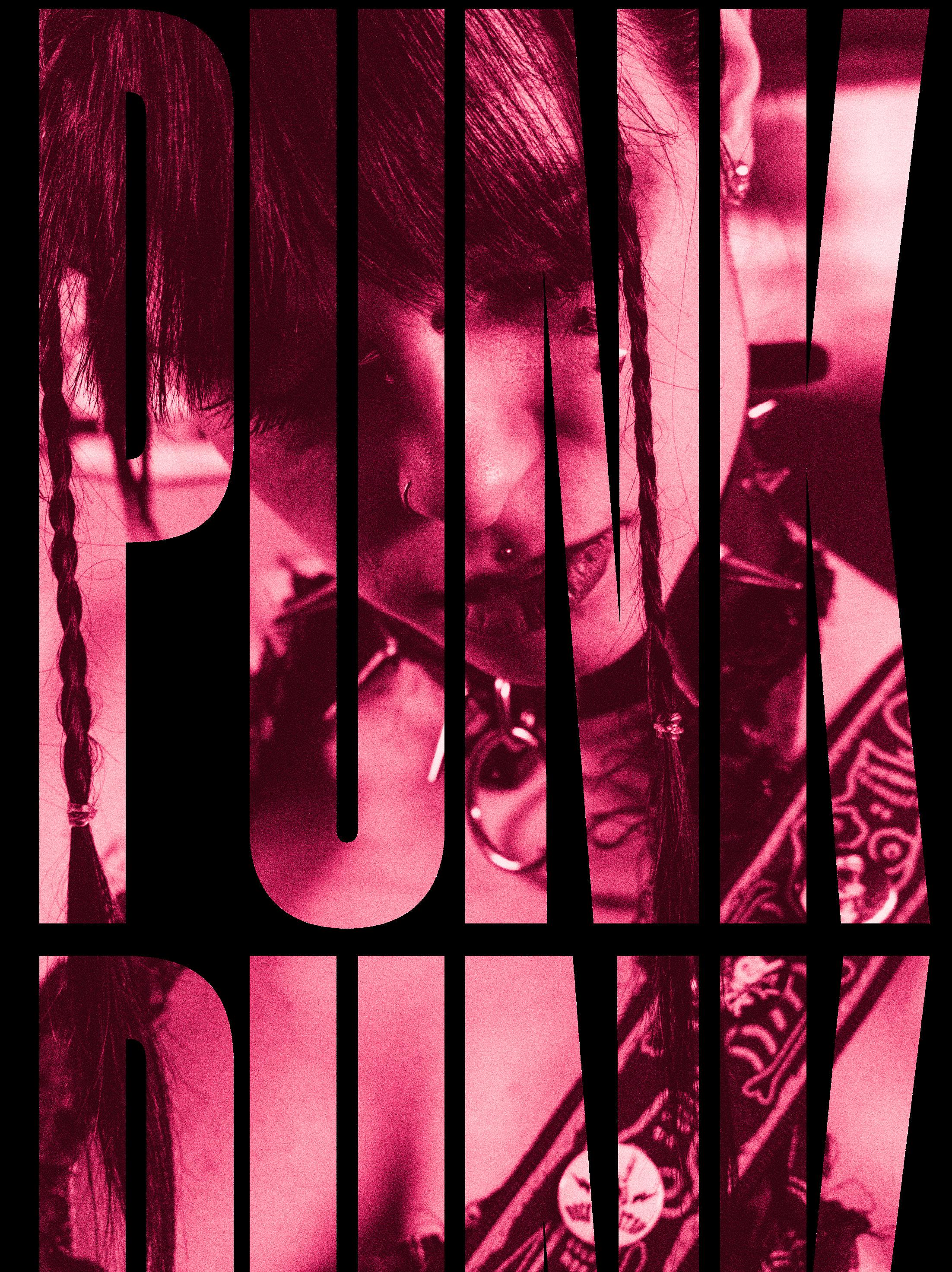
“I’M TOO PUNK FOR YOU?!” P. 40
[40-57]
[58-71]
“LET THE CHILDREN TECHNO” P. 72
[72-89]
SHOOT DIRECTOR
BL CKA TI E
PHOTOGRAPHERS Nicole Farnsley, Eleanor Bare STYLISTS Gillian Nevins-Saunders, Tylond Buchanan HAIR AND MAKEUP Sofia Greenberg, Olivia Slemmer LEAD GRAPHIC DESIGN Christine Jung GRAPHIC DESIGN Prajwal Adhikari WRITING Itohan Salami, Sadie Rosen MAKEUP Sofia Greenberg, Olivia Slemmer MODELS Tylond Buchanan, Abako Yartel, Ayisat Jimoh
SOOAH LEE
T
HE SUIT
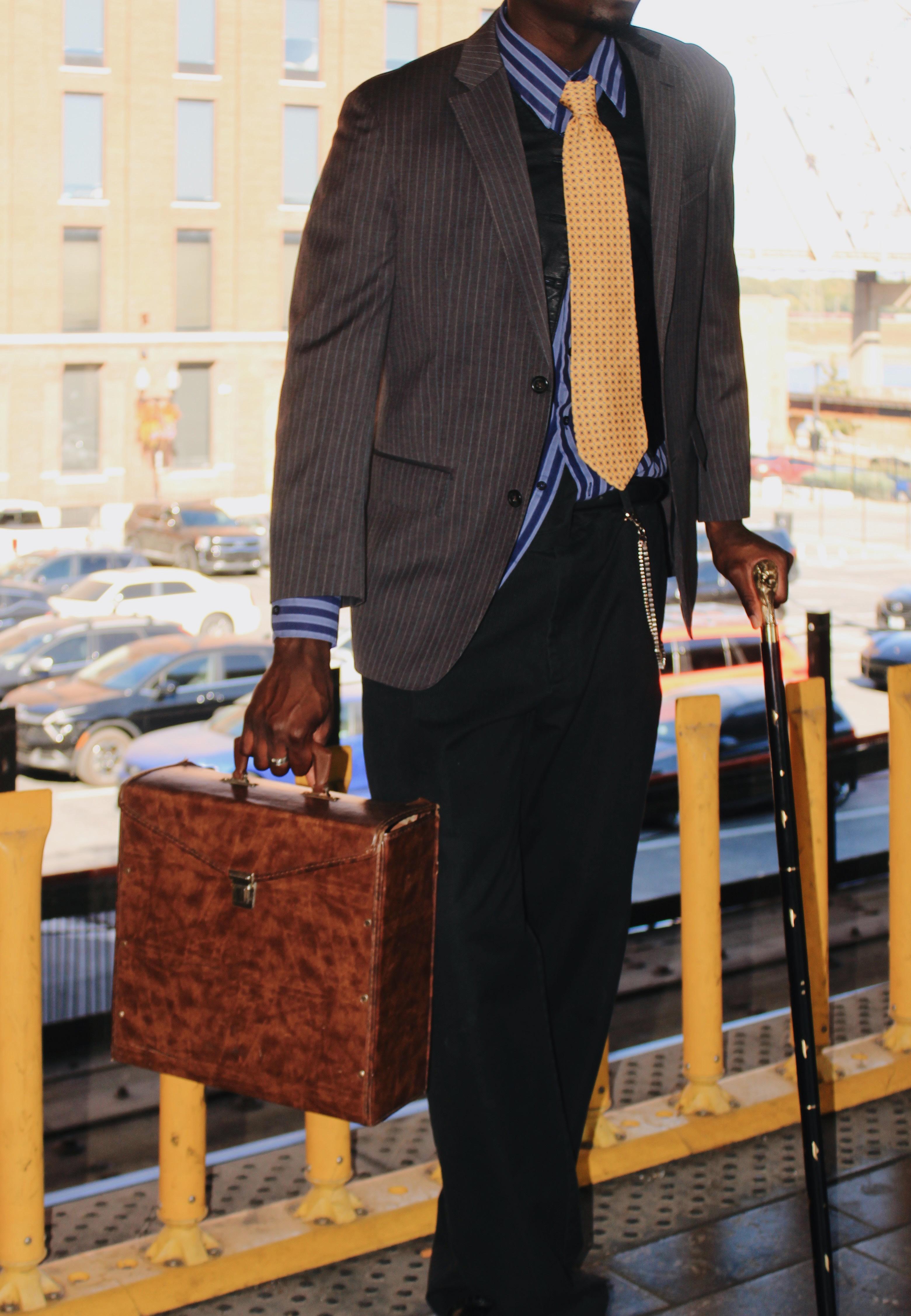
y dandyism is a protest.
I refuse to be what you expect of me.
SPEAKS.
For centuries, you’ve stripped me of my dignity
Assumed my mothers to be broads And my fathers to be aggressors
So I will take something of “yours” And make it mine.
From velvet blazers to pointy shoes shined,
I will take your precious suits and ties and turn them–Into mine
Stop trying to fit me into a box full of Garments that sag and rip
I can be proud of my hood and still represent my culture With suitcase bags that zip
So, my message to the Man
If you’re going to open my book, You must understand White isn’t the only color that belongs under a suit and tie.
VELVET BLAZERS.. POINTY SHOES.
ITOHAN SALAMI
ama used to dress me up like a little doll.
Every Sunday, she helped me into that scratchy black suit. A dozen other boys, with their arms crossed, suits too tight,
Collars digging into necks sat shoulder to shoulder beside me.
That unsightly suit stayed with me for three years
Until it burst in the buttocks one day during choir practice. I remember the sharp rip, The sudden freedom in my movements, And the shock on Mama’s face
When she saw my neon boxers glowing through the tear. I swear I heard the Lord laugh that day, a miniature rebellion in the form of men’s fashion.
That was the first time I went to see Mr. Wilson. Wilson’s Tailor Shop sat on the corner of Seventh and Grand,
Bolts of fabric lined the walls. Burgundy. Gold. Indigo. Mint
Colors that had never been allowed on a man’s church suit.
Mama looked at the extravagant suits, Then, at Mr. Wilson
And right back at me, with a glance that shrieked, “Oh hell no.”
Mama was a traditionalist.
She valued uniformity and she valued her image, or, how she would say, her “look,”
But to her misfortune, I found myself gravitating towards a particularly flamboyant suit.
A plum ensemble, embroidered with patterns that drew the eye.
J
ELI AH
ITOHAN SALAMI
SADIE ROSEN
PLUM DRESS. PLUM SUIT.
My eyes lit up and I could’ve sworn I heard the herald angels sing.
“I want this one.”
Mama looked like she was going to be sick.
Until Mr. Wilson walked by.
“Your boy has good taste ma’am,” he said with a wink. Mama looked at him reluctantly, “You don’t think it’s a little too…flashy…for the church?”
Mr. Wilson slightly frowned, “Them white folks got us believin’ anything. Tryna tell us what we should wear and what we shouldn’t. They just want us to fit they image. It’s all nonsense. Besides, if you ask me, the Lord deserves to be glorified with the flashiest suits in here.”
Mama looked at the suit, then at Mr. Wilson, And right back at me again, But this time, she whipped her debit card out of her purse.
I cheered, tugging on Mama’s dress.
The next Sunday, I finally got to put on my suit, but when mama came to help, she was dressed.
She wore a bold plum dress studded with stones that shined with every step.
A plum dress to match my plum suit.
That Sunday morning, I was the flyest thing on those choir stands.
But I argue nothing shined more than my smile that morning.
ACKS N J O
SADIE ROSEN
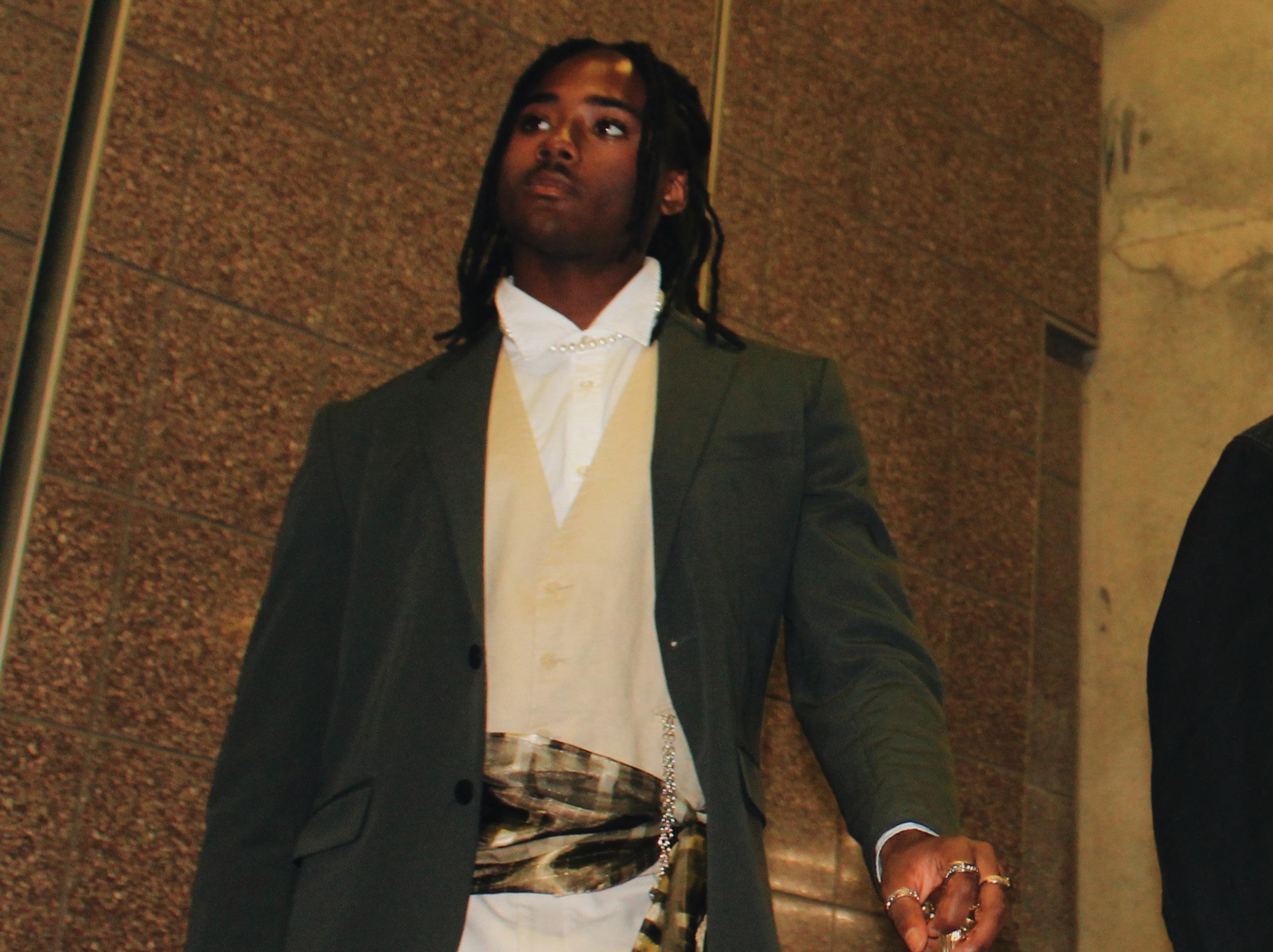
Just look at me now, Ten years later, standing in a closet full of color. Tapered jackets in deep greens and blues Baggy (but still chic) lavender colored trousers. Stripes. Velvet. Linen. Silk. Every suit chosen because it felt like me.
When I was a kid, my dad said real men wore black. Sundays meant pressed slacks, stiff collars, and a silence that swallowed every thought I had about wanting anything else.
I remember seeing Elijah one morning, strutting down the aisle in a plum suit. The light seemed to follow him.
I wanted that. That kind of freedom.
After church that day, I walked to Mr. Wilson’s shop. I stood outside, pretending to look at the display. My reflection stared back at me, a boy in a black suit, drowning in the version of himself his father wanted him to be. I turned around and walked home.
SILK. SLACKS. STIFF COLLARS. SILENCE.
PLAIN SHIRTS. NIKE SNEAKERS. TRACK PANTS.
It took me years. Years of blending in, of keeping my shirts plain, Nike sneakers and track pants.
But just last year, ten years after I saw Elijah in that glimmering suit, I found myself walking that same stretch of sidewalk again.
I stood there again, older, taller, Only this time, I wasn’t pretending to look.
The bell chimed when I opened the door. It was softer than I imagined. And there he was; Mr. Wilson.
I told him I’d been standing outside his shop for a decade. He chuckled.
I chose a forest green suit, lined with gold, that caught the light just enough. When I put it on, I felt confident.
That was the start of it.
Of my ongoing romance with dandyism. I didn’t know the word then, but I knew the feeling –the freedom to define myself through beauty.
To show that dignity could have color, that a Black man could dress boldly without it being read as a spectacle.
Visibility is a weird thing. You spend half your life trying not to be noticed, and the other half fighting to be seen the right way.
I think my biggest life lesson is: Who gives a fuck?
Because somewhere between the black suit and the forest green one, I learned that conformity is just another kind of silence. And I’ve been quiet long enough.
WHEN I DIE ...
SHOOT COORDINATOR Ashton Burgess
PHOTOGRAPHY Lé-Anne Johnson / Alex Tang
VIDEOGRAPHY Ella Doppke
STYING Ella Johnson / Arjun Kalbag
HAIR & MAKEUP Julia Mills / Olivia Slemmer
WRITING Polly Partridge / Seth Skiles
LEAD GRAPHIC DESIGN Katie Zhu
GRAPHIC DESIGN Christine Jung / Hana Rust
MODELS Aaron Adlam-Ferguson / Isabella Diaz-Mira Chelsea Haye / Mia Jackson / Arjun Kalbag / Carlos Pena
Redefined
Redefined
THE LO LIFES
RALPH LAUREN
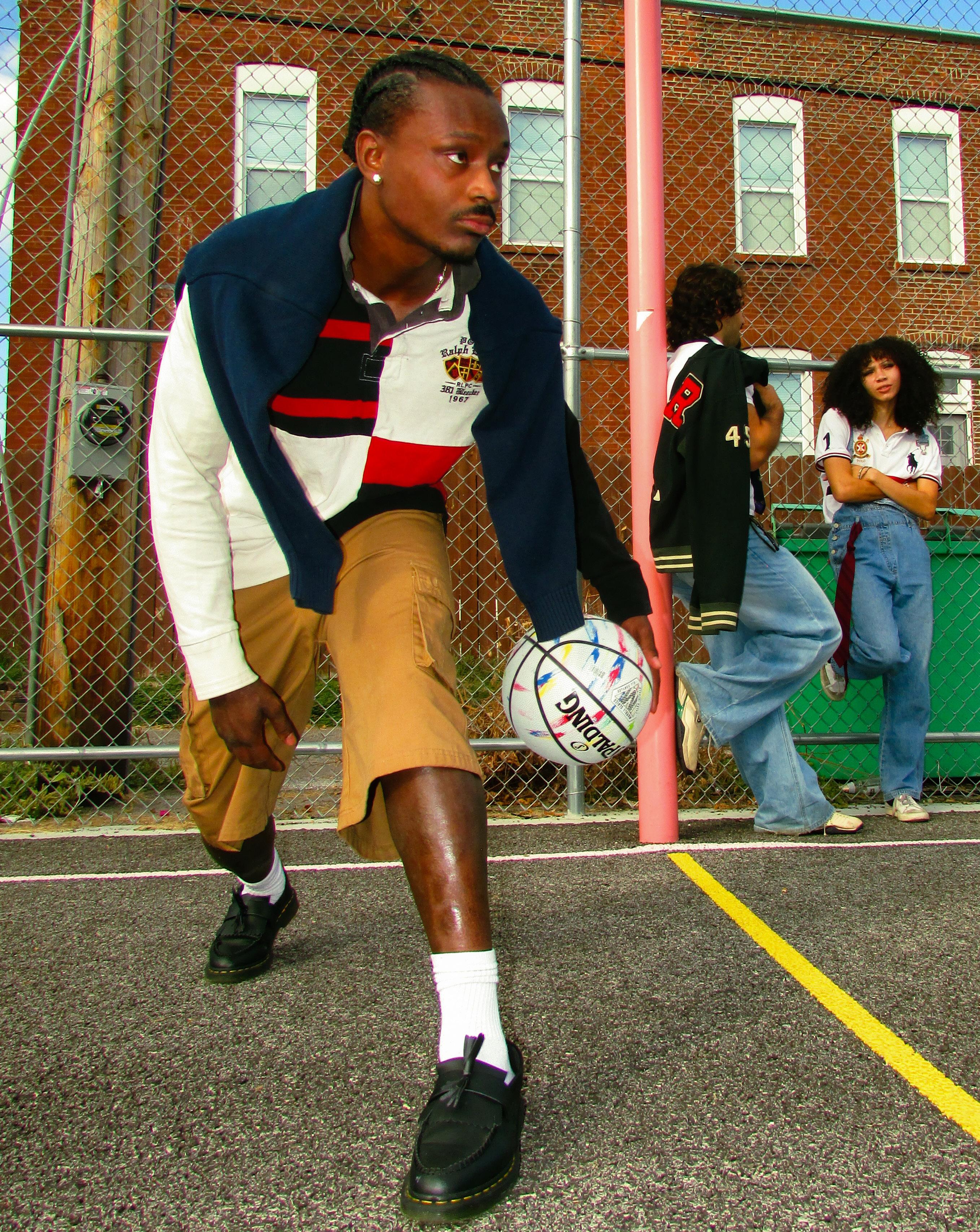
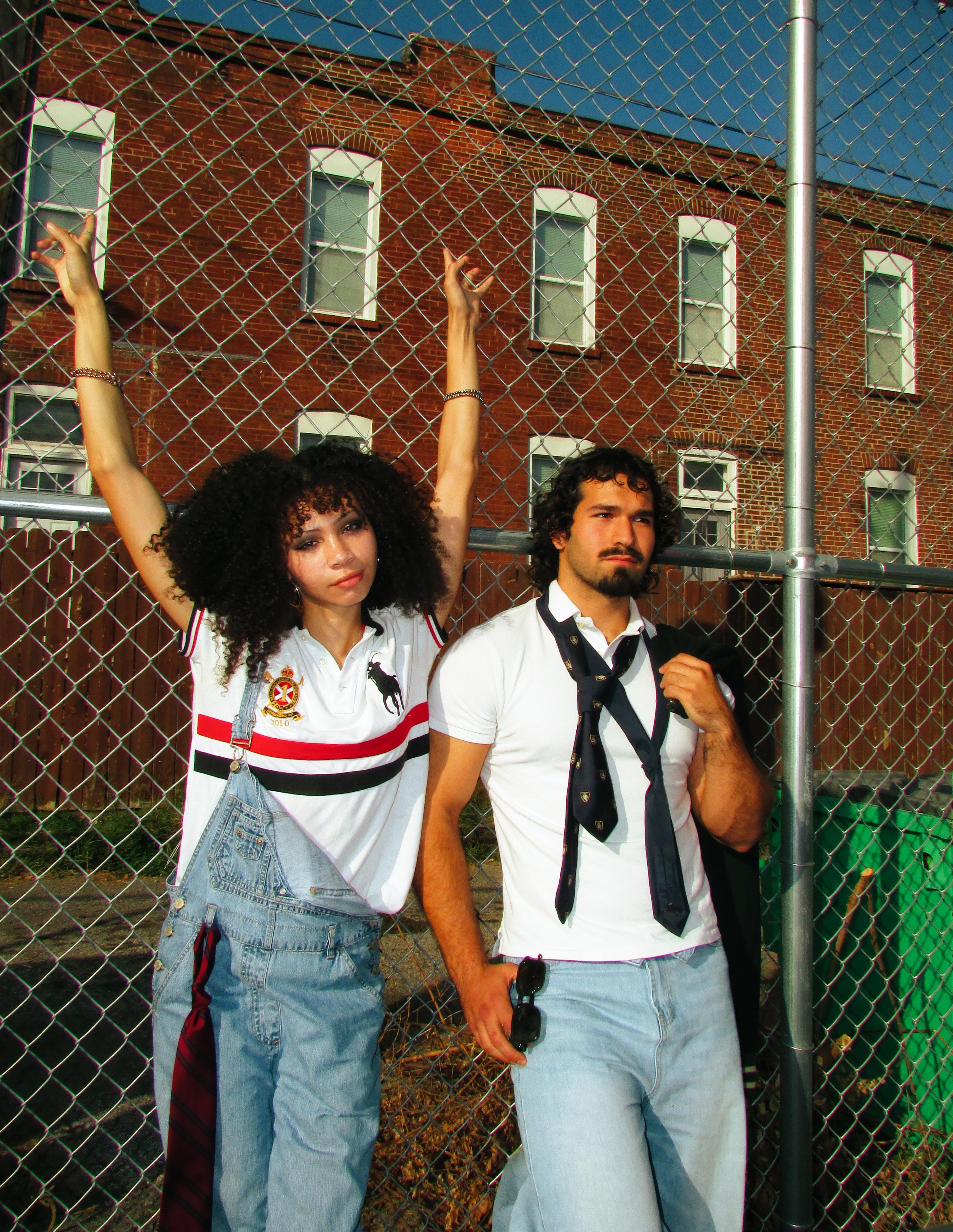
The iconic American brand with the polo figure logo started as a perfected vision of American luxury: clean lines, crisp collars, and the promise of “fitting in.” It was home to a world of manicured lawns and Ivy League accents—a place where Sunday meant lunch at the club and privilege wore a perfect little pony on the left side of its chest.
But in the late 1980s, this idealistic vision clashed with another. In the
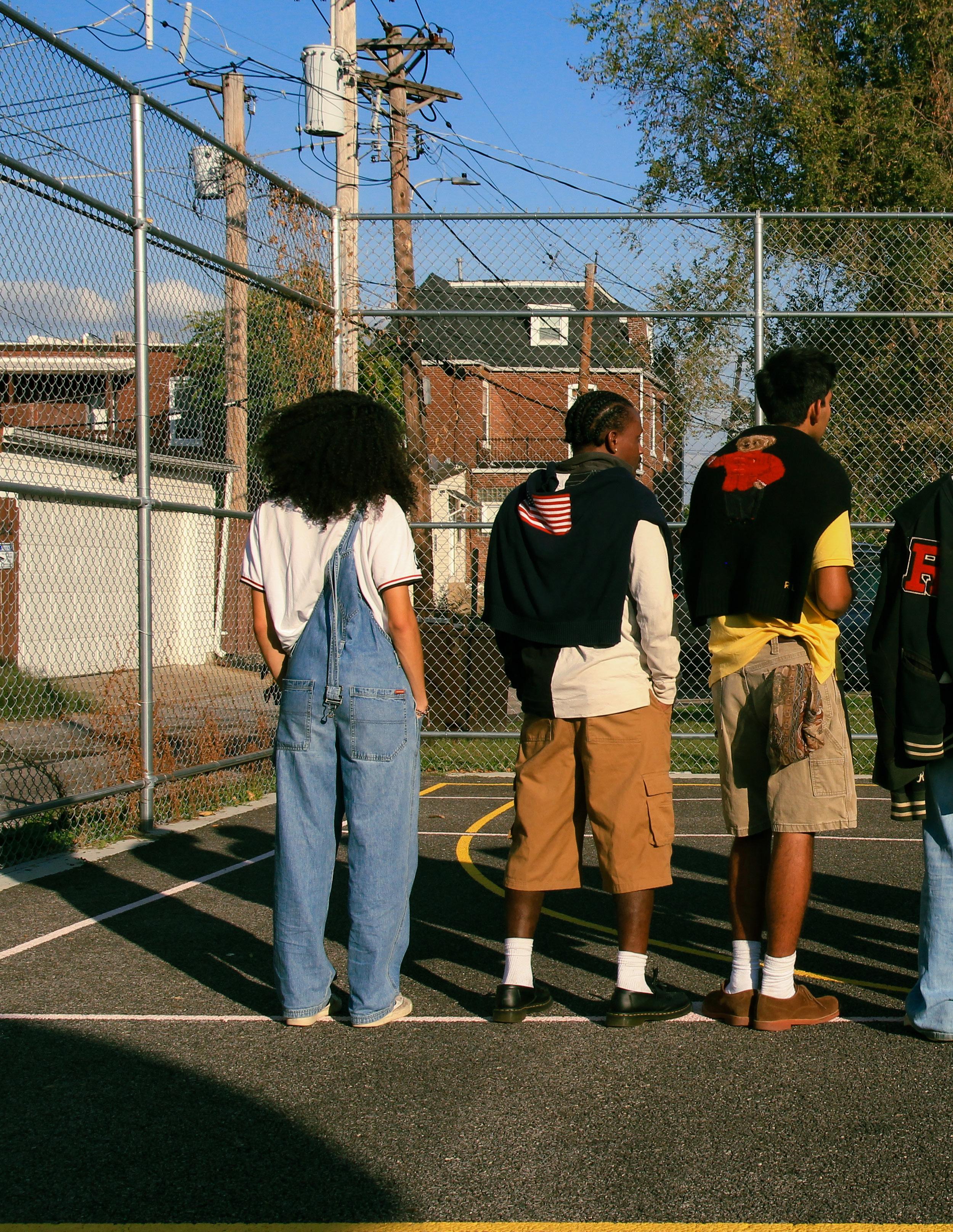
then less than fashionable neighborhood of Brooklyn—the sort of place Ralph Lauren’s target customer would have abhorred—a crew calling themselves the “Lo Lifes” redefined what luxury and aspirational dressing could look like. They weren’t lunching at the club or golfing on the greens, and they certainly weren’t invited to any charity galas, but they built their own version of that American dream, simply by aligning themselves with it through the clothing on their backs.
The clothing may have been out of their price range, but through organized “boosts” shoplifted the colorful and classic polos, jackets, and sportswear offered from the brand.
Society told them they couldn’t afford that American dream, and not only did they flagrantly disprove them, on their own terms, but they made a whole new one of their own–with Polo Ralph Lauren right at its center.
It wasn’t about chasing the country club fantasy; it was about taking those symbols of status and flipping them on their head into symbols of pride, expression, creativity, and survival. What was
once clean, tailored, utilitarian, and elegant became a badge of identity worn in vibrant colors, stacked pieces, and unmistakable branding. Polo now had two diametrically different centers of culture in a chokehold.
The brand could have seen it as a threat, a danger to the very fabric of the identity Ralph Lauren built. Instead, consciously or not, the brand absorbed that energy. The streets had breathed new life into Polo, and now it seems the very world it once excluded was shaping its aesthetic. The Lo Lifes gang turned fashion into dialogue, and in the process, reshaped the identity of an iconic elitist American luxury brand.
Turned Fashion into Dialogue
“Culture in a chokehold”
CULTUREFLUID. IS
Something once unattainable can be reimagined through grit, determination, and desire. Owning something doesn’t have to be about physically possessing it; it can be symbolic of something more. Perhaps, in this case, ownership was simply a way to stake your presence.
The American dream has always been a jumping goalpost. For some, it’s white picket fence suburbia:
polo collars, private schools, and elite institutions. For others denied the access points to even consider that vision possible, it’s simply the chance to be seen and to be heard. By reclaiming the Polo brand identity for themselves, and therefore the vision that came with it, the Lo Lifes stole back the narrative. They took control, forcing a brand built on aspiration to question who exactly gets to “dream” in America.
BIBLIOGRAPHY Backman, Melvin. “Polo Ralph Lauren’s Complicated Streetwear Past.” The New Yorker, February 2, 2018. https://www.newyorker.com/culture/culture-desk/polo-ralph-laurens-complicated-streetwear-past. / Caramanica, Jon. “The Gang That Brought High Fashion to Hip-Hop.” The New York Times, June 28, 2016, sec. Fashion. https://www.nytimes. com/2016/06/30/fashion/lo-lifes-fashion-hip-hop.html. / High, Kemet. “The Real and Raucous Story of the Lo Life Crew.” The FADER, December 7, 2016. https://www.thefader.com/2016/12/07/lo-life-crew-interview.
Howl, Thirstin. “Stealing the American Dream: The True Story of Brooklyn’s Lo Lifes Crew.” Cuepoint, August 24, 2016. https:// medium.com/cuepoint/stealing-the-american-dream-the-true-story-of-brooklyns-lo-lifes-crew-12d67d8c59ae. / Laird Borrelli-Persson. “On Episode 3 of ‘in Vogue: The 1990s’ Podcast, How Calvin, Ralph, and Donna Marketed the American Dream.” Vogue, October 2, 2020. https://www.vogue.com/article/in-vogue-the-1990s-podcast-episode-3-brand-americana.
I’M TOO
DIRECTOR
I’M TOO PUNK FOR YOU?!
SHOOT
Priscilla Lee PHOTOGRAPHERS Priscilla Lee, Cameron Parker
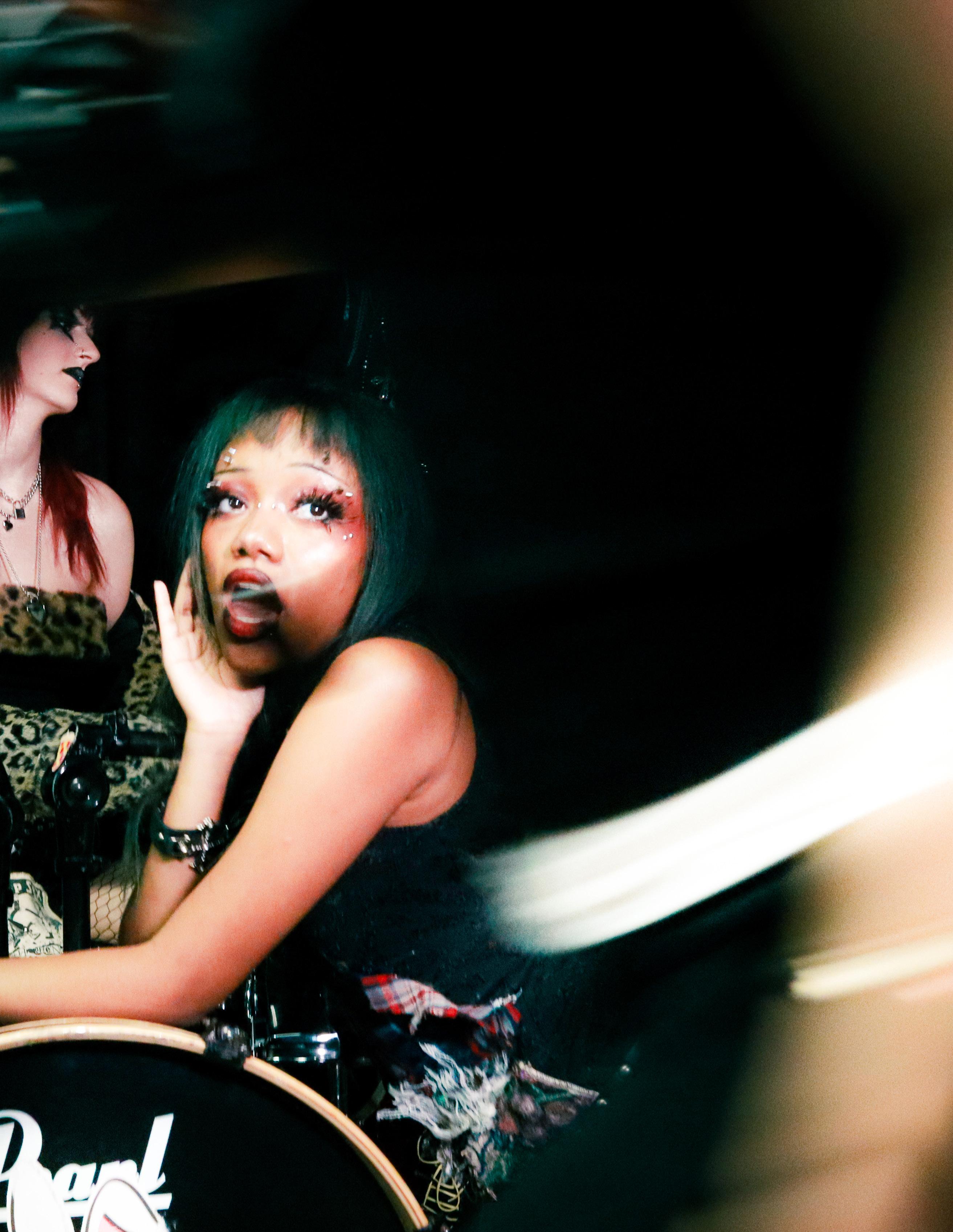
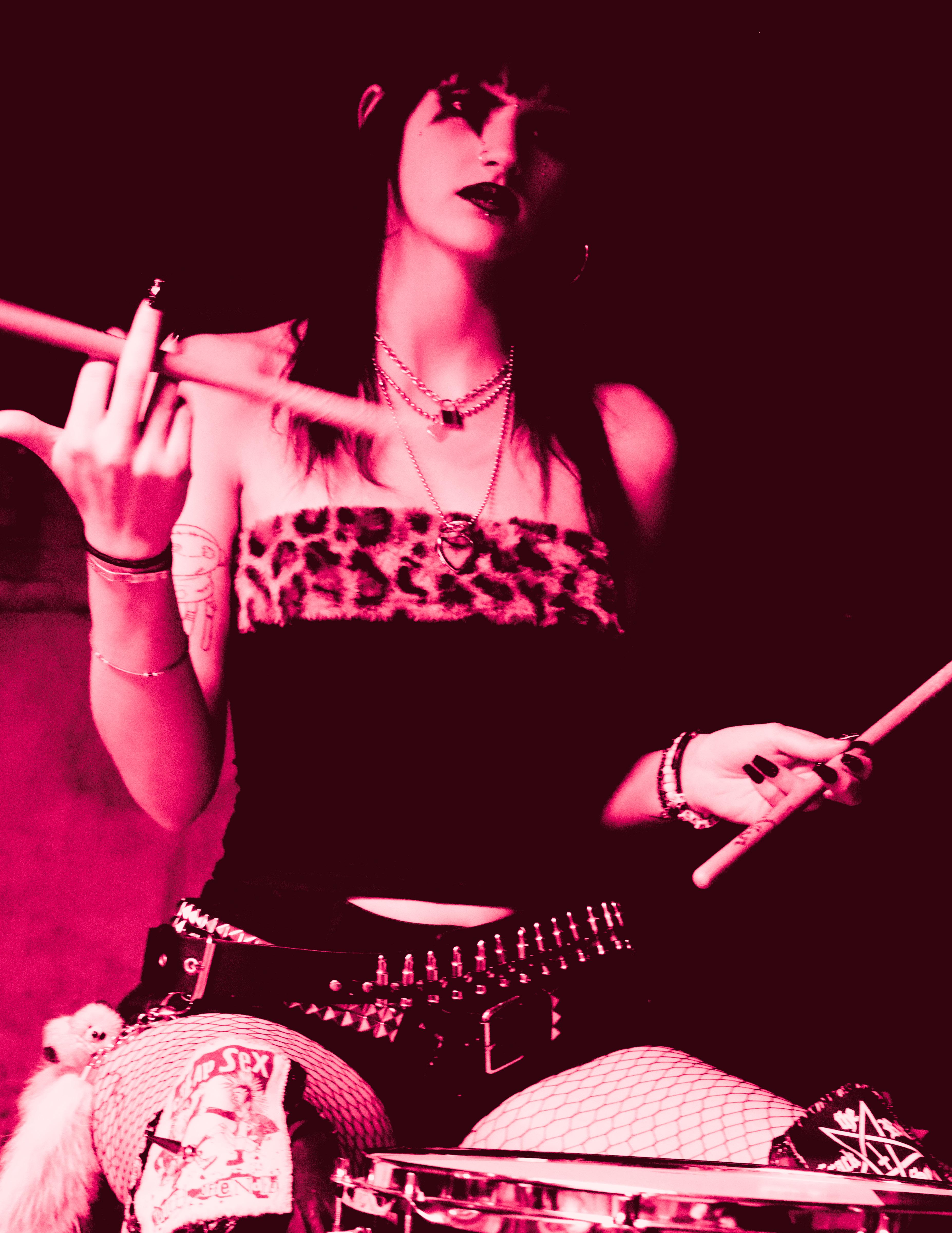
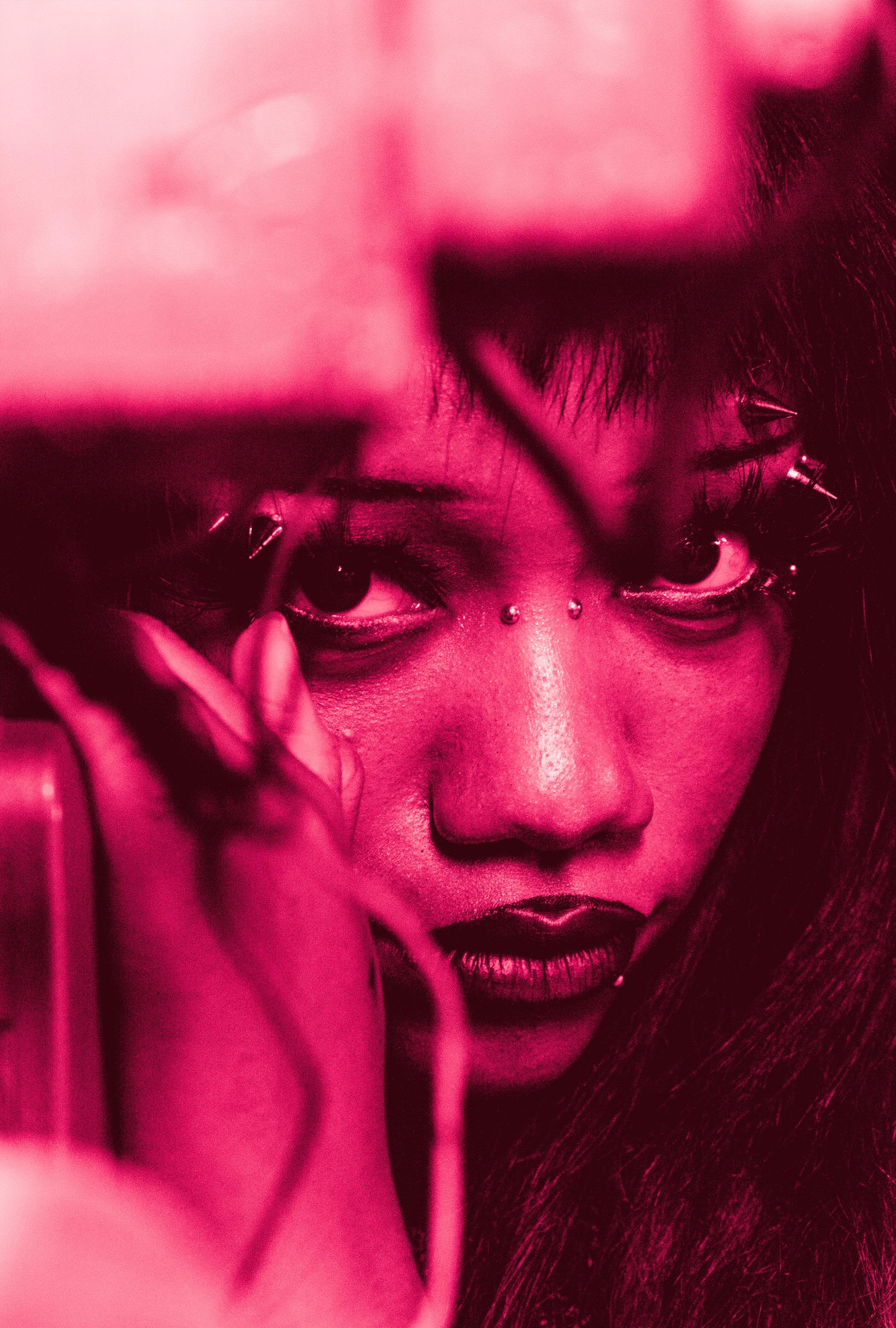
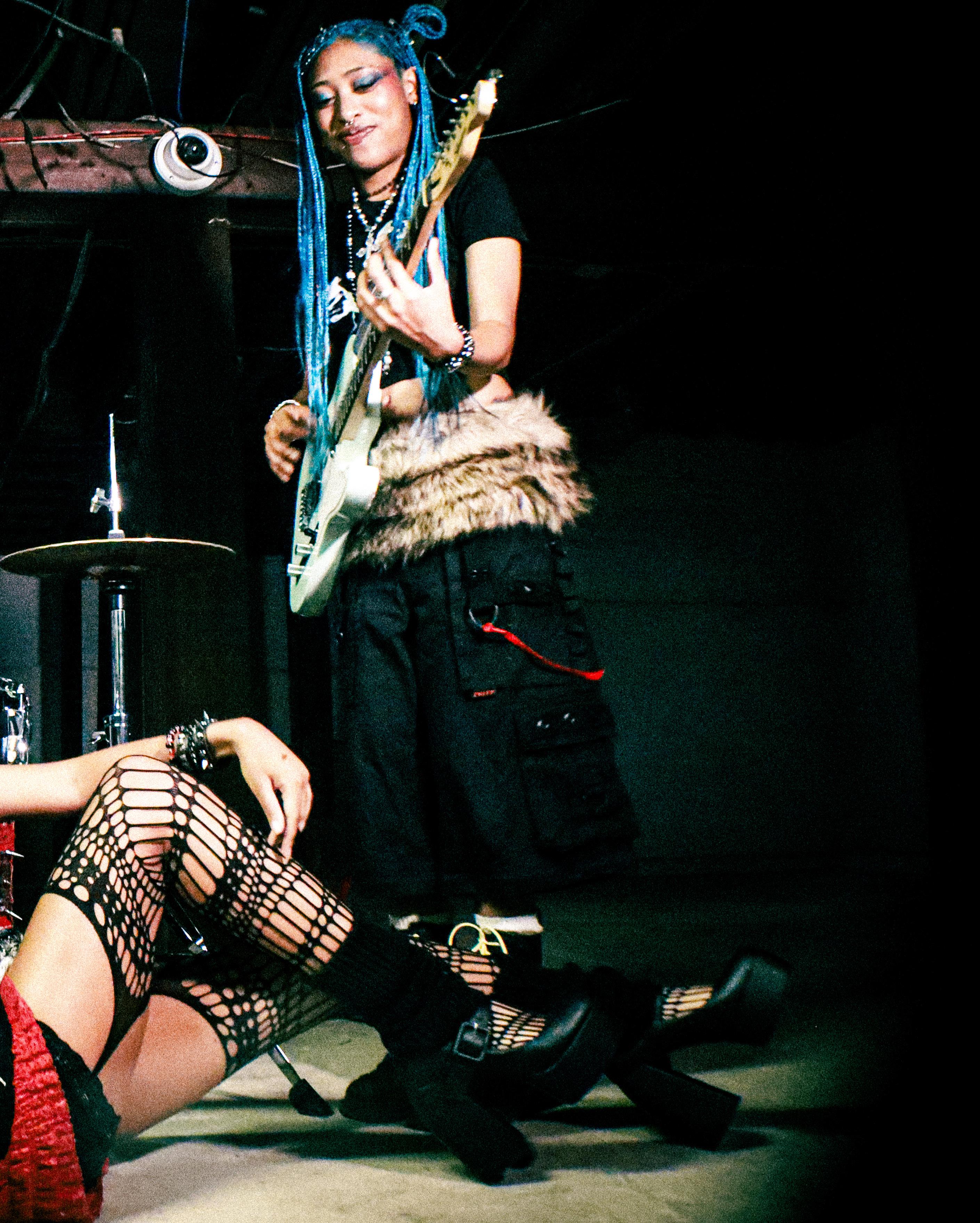
“It was just, always, like that’s what we’re doing,” says Nina of Pink Tax, when asked, “why punk?”
“It’s…everything. It’s what we wear; it’s the things we stand for; it’s the makeup we put on,” adds Bowie.
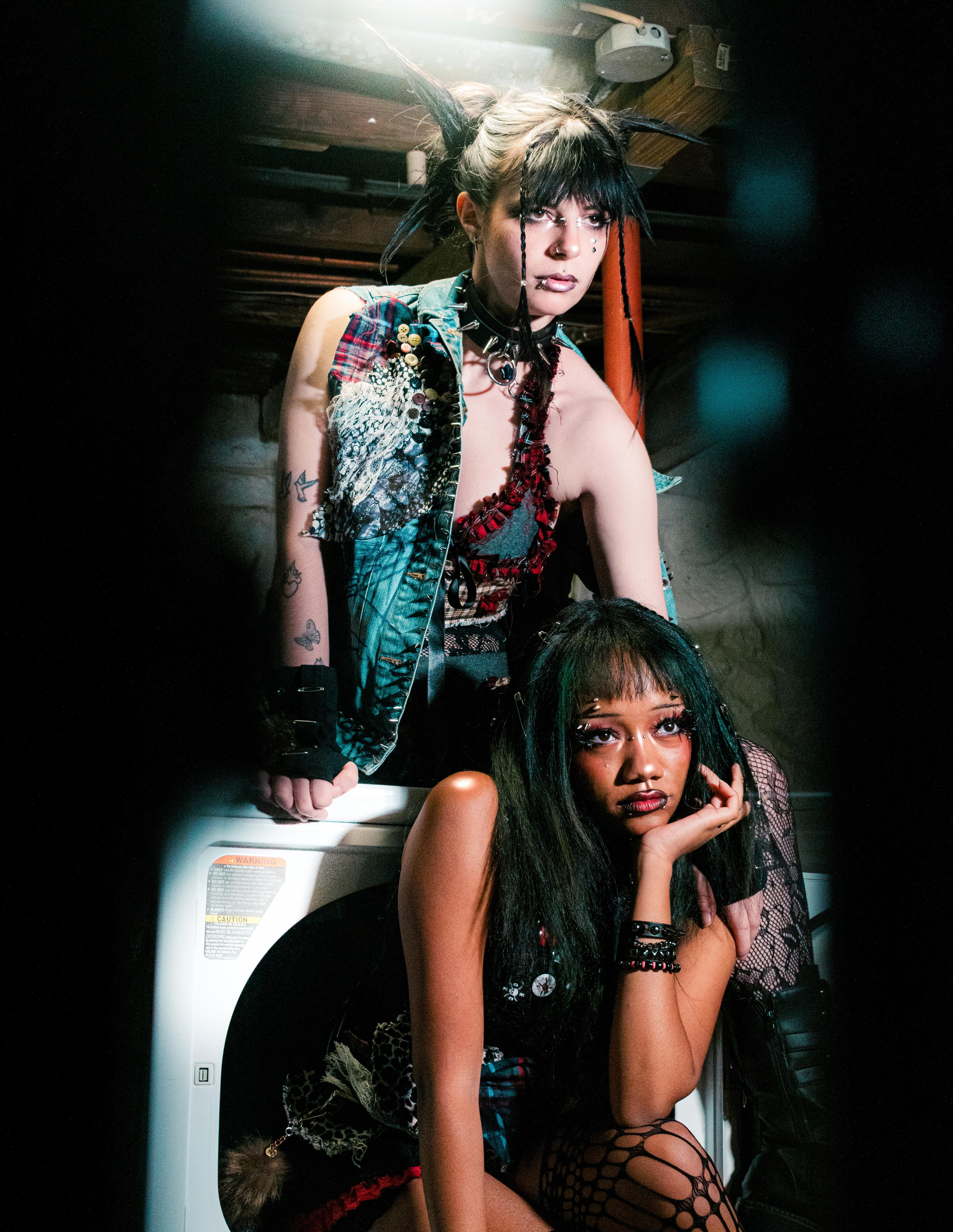
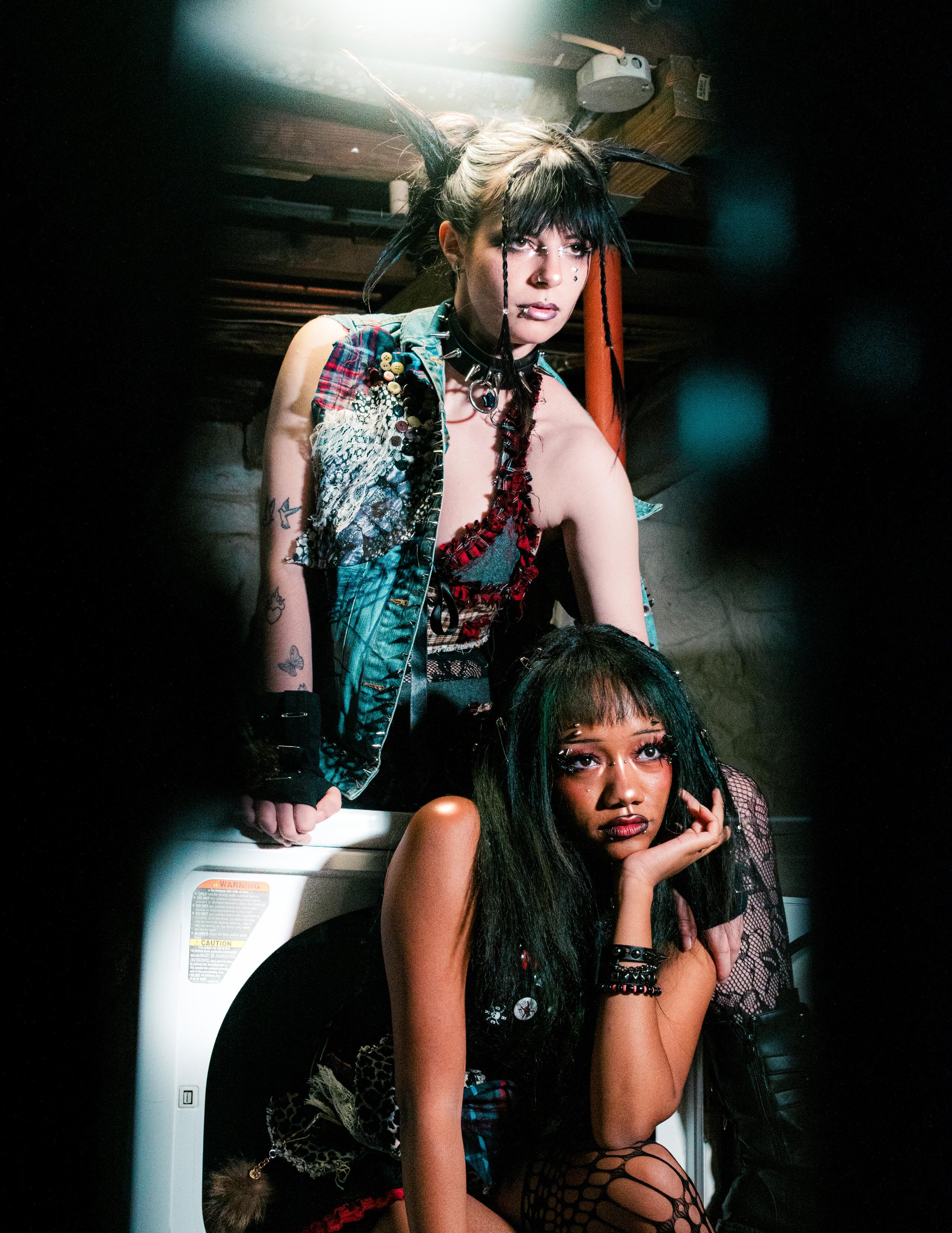
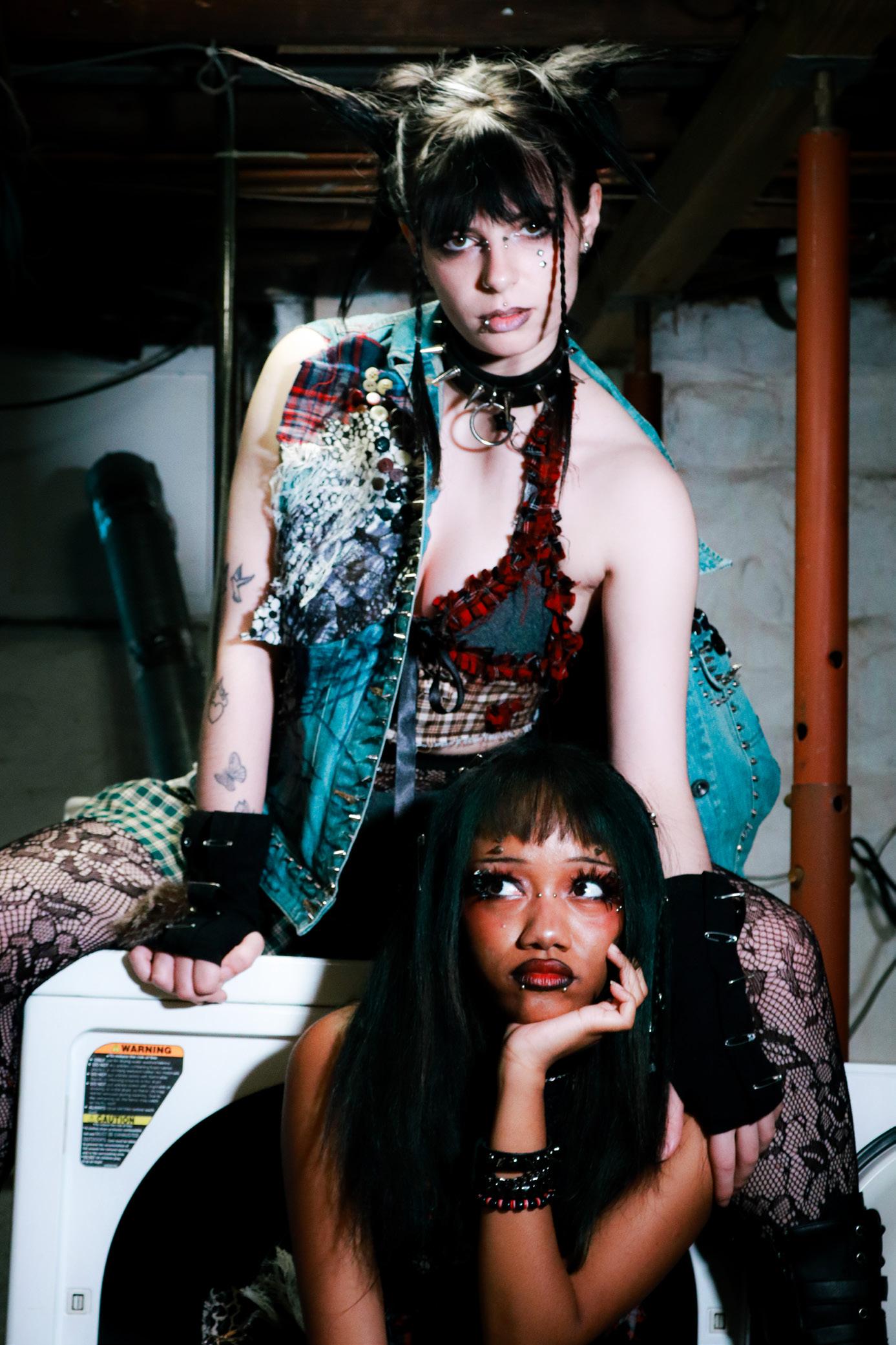
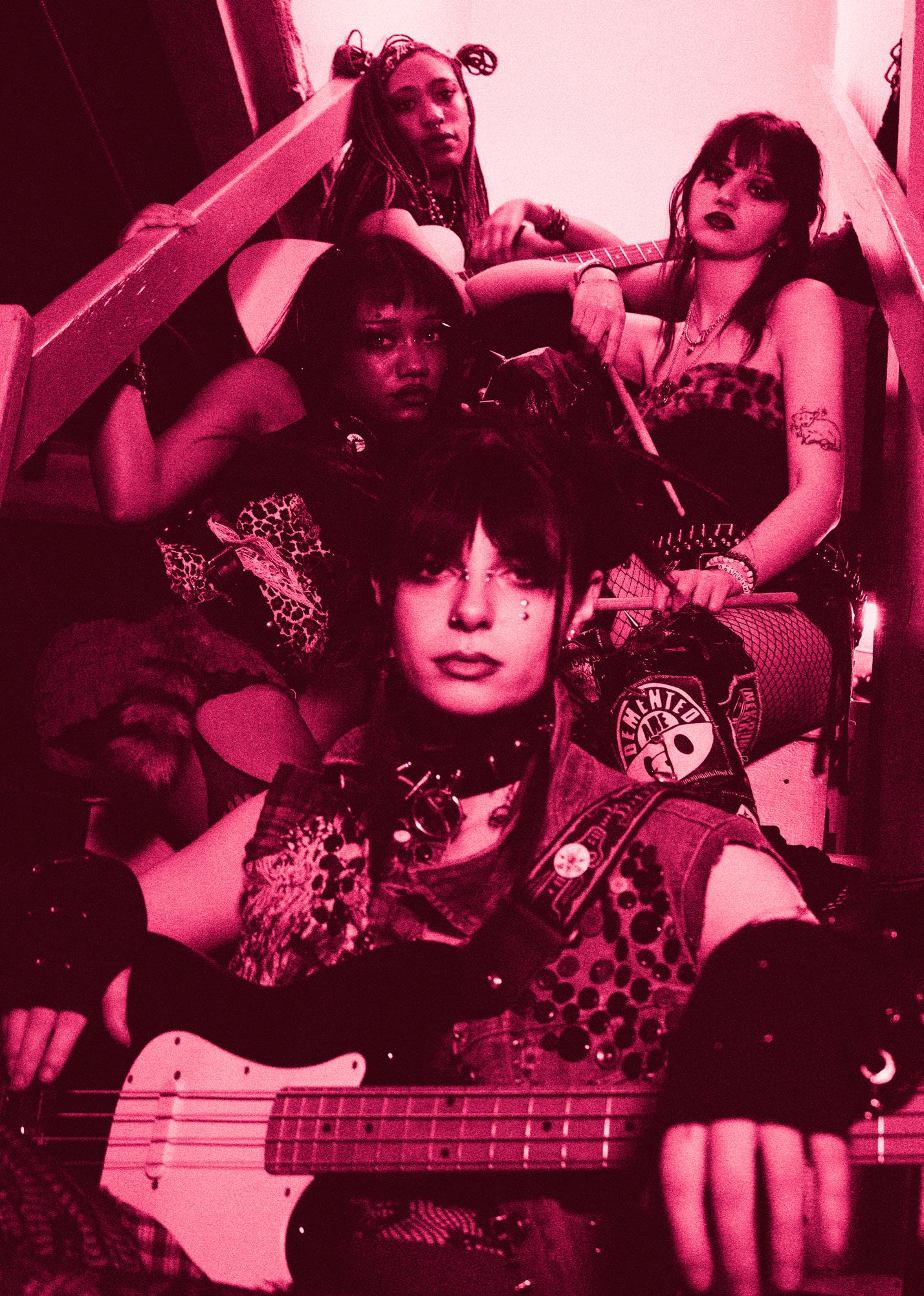
For the past few hours, punk has consisted of getting their hair spiked, makeup done, and cramming themselves into washers and behind basement pipes to get the best shot. But punk, a movement founded in the 1970s to be anti-establishment and countercultural, is just as much an identity as it is an art.
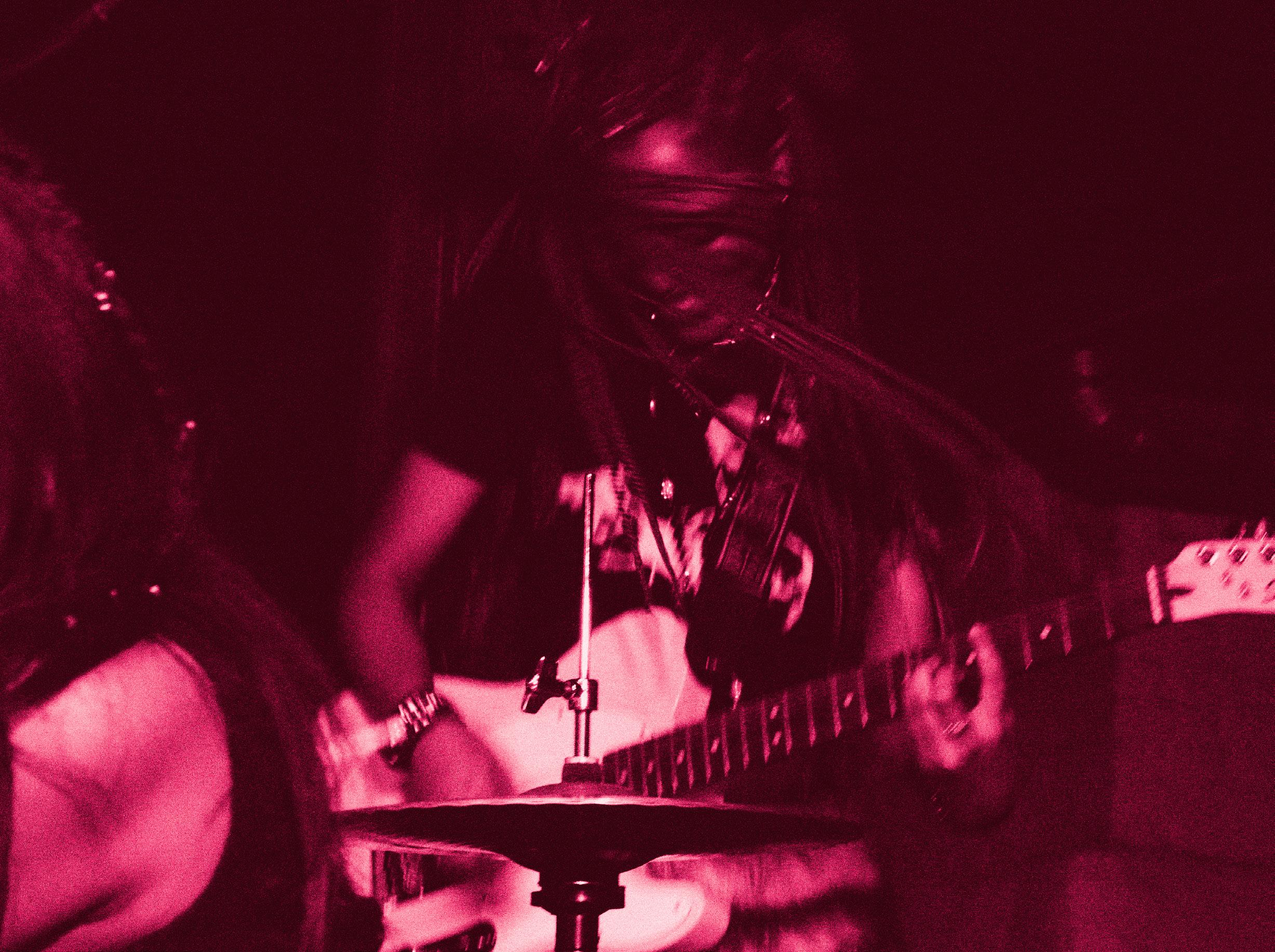
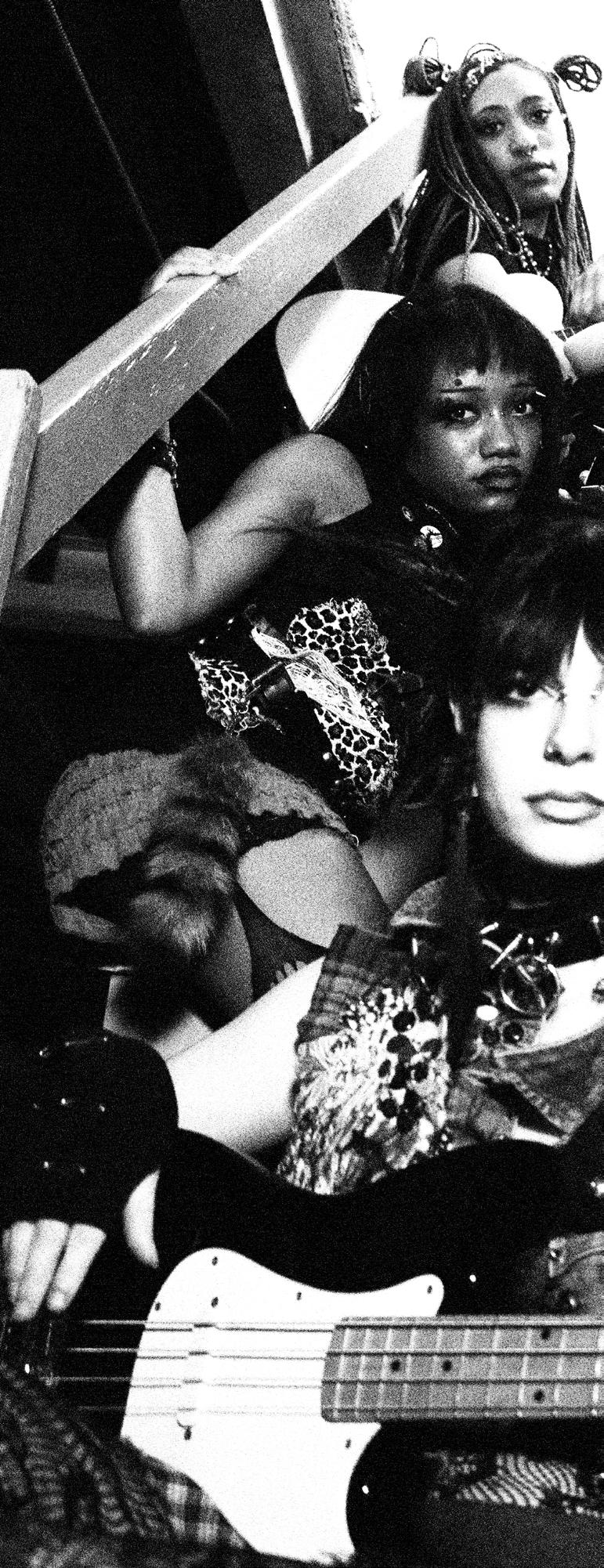
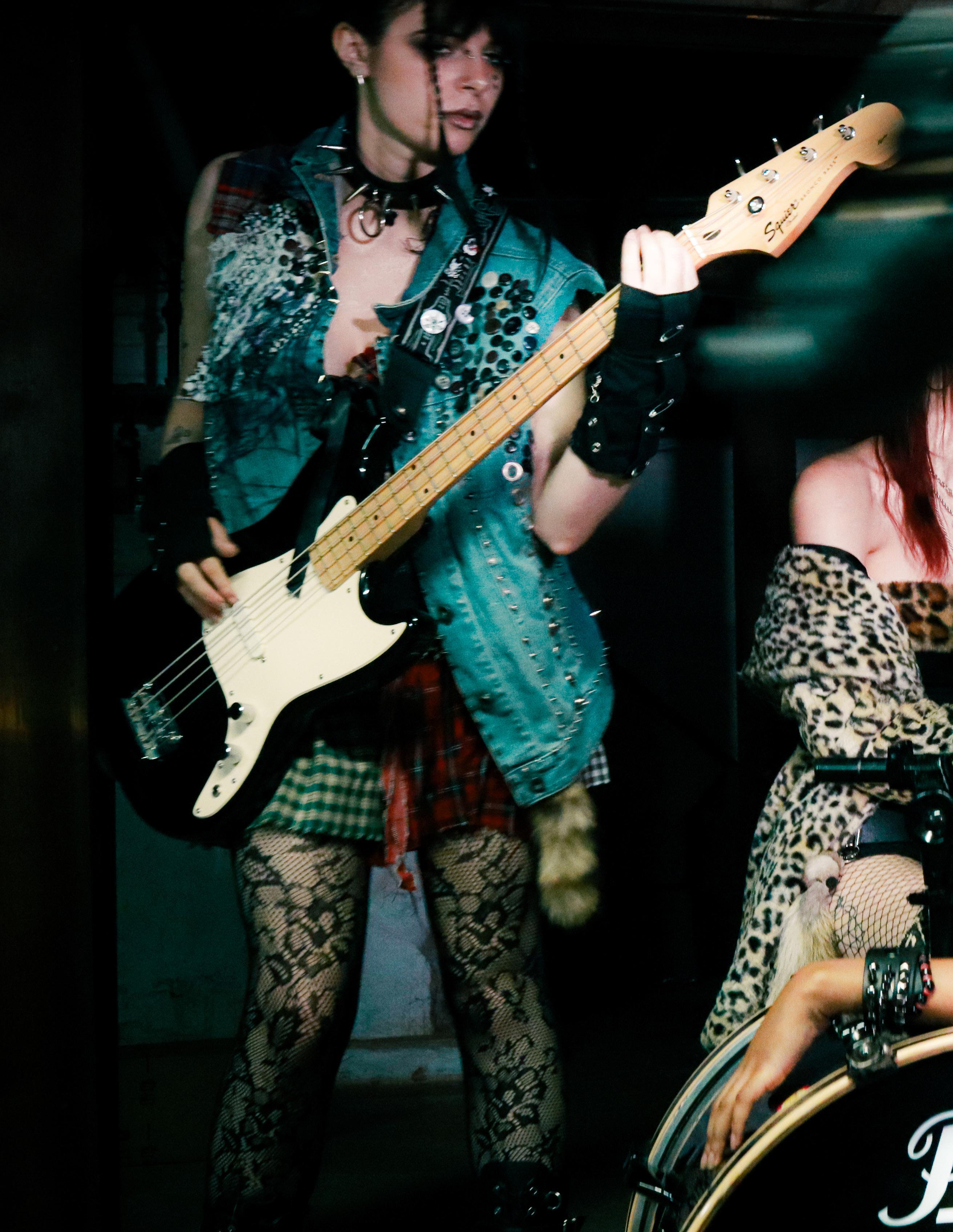
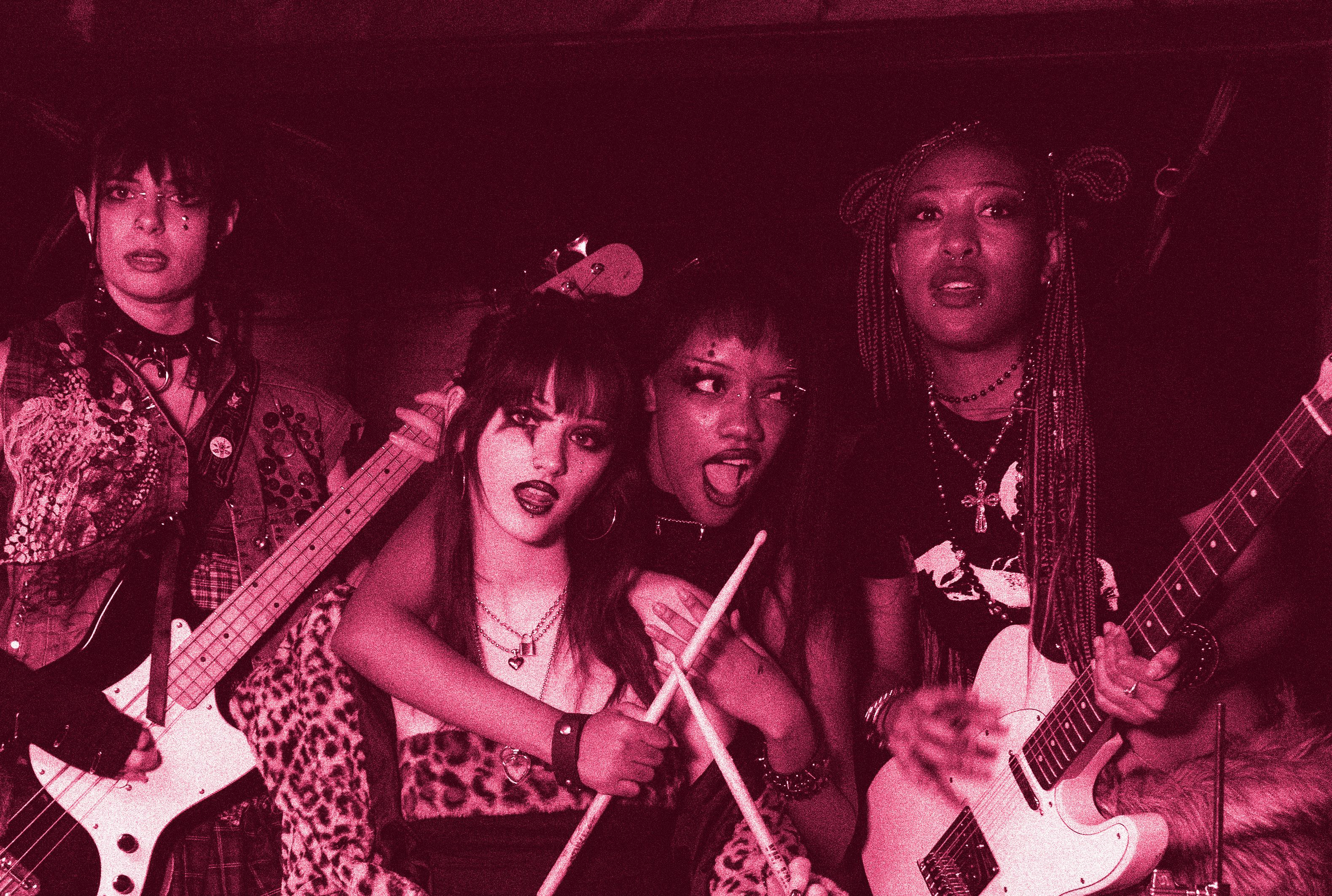
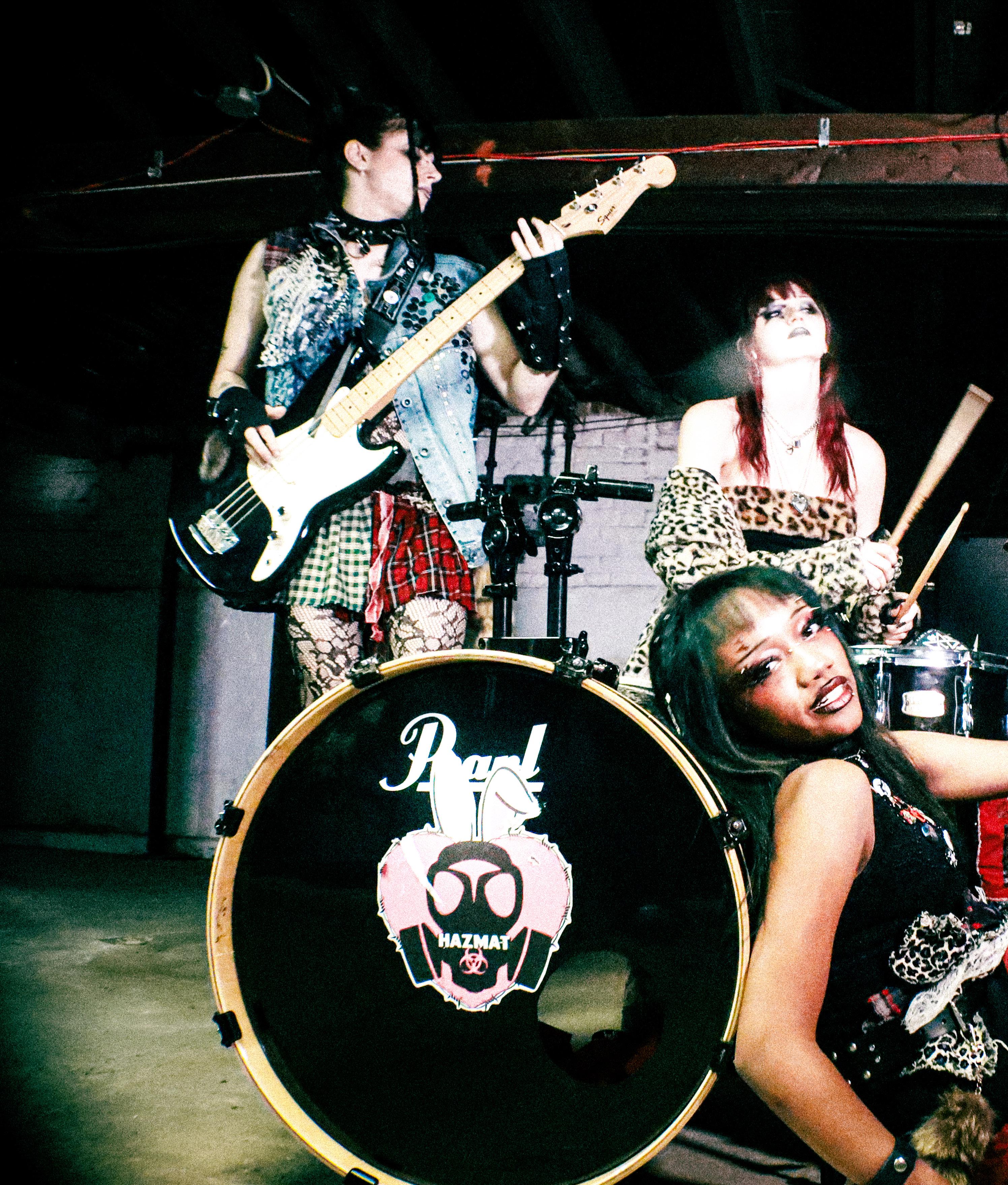
The band, named after the pink tax, the act of taxing products advertised for women more than male products, is remarkably close for a group that finalized their lineup just this summer. They sit crammed onto the basement stairs: bassist Nina, guitarist Jo, singer Trin, and drummer Bowie.
When asked how they met, Jo explains it: “Long story short, Jo and Trin know each other since middle school. One day Jo went on Tinder looking for bandmates because Jo and Trin want to start a band. Boom, find Bowie playing drums…then we all start playing… one day this summer Trin meets Nina at a show, and the rest was history.”
As for what they hope their audiences hear in their music, Pink Tax has no shortage of answers.
“I hope they hear—I hope they feel inspired,” says Trin.
“I hope through our own vulnerabilities as a band and the songs that we write and the real rage and passion that comes out of them, people will feel inspired by that vulnerability to…you know take on some of it themselves and be real with themselves and embrace their feminine rage,” says Nina. “Being authentic is a big thing. Seeing people be authentic in a show makes you wanna go home and be like, hell yeah I’m going to wear whatever I want tomorrow at work.”
“It’s really important right now, especially when it’s not going to be as well received. And the people who come out to the shows, you know that they’re in this community with you. It’s not like you’re
going to be playing a punk show and someone with completely opposing political views is going to pop out and start booing you, or something.”
“It’s really a safe haven, because you’re around people that you feel comfortable with. Be around people, make friends, in like, a basement… it’s really nice because you can just feel like, kind of accepted, in a way, not having to worry about outside and what’s going on.”
“You can all be angry together… if we’re screaming about injustices, you know that the people that are listening are the people who also understand and relate.”
“Punk, the genre itself, in history has been a super masculine thing, so riot grrrl, feminizing that, and being like, no it’s cool, I can be feminine and I can be in your face, punk, rebellious, all of those things can coexist,” Nina adds.
FEMININE RAGE.
OUTSKIRTS OF SOCIETY
WOMEN IN PUNK.
Riotgrrrl emerged in the 1990s in Washington to create a safe space for women in punk, a scene that was, and continues to be, male dominated.
Jo says that “Because the punk community here is so masculine, so many men, so much of it…we kind of wanted to bring a more feminine energy into it because a lot of them are very toxic, and they view us personally, ourselves as like, not good enough. They want to put us at the beginning of every show, play opening, they just, already don’t believe in us as much.”
“There are still some people in the punk scene, especially people around our age, who…expect us to…accept that we’re girls in punk, but they don’t accept anything else about us,” Bowie explains. “Like, what we stand for, the way we look, where we come from…they want you to be the cookie cutter punk girl.”
“If you stick up for yourself, because that’s the punk mindset, you’re a bitch. If you don’t, you’re not punk enough. It’s genuinely, like… it’s so stupid.”
“Even when we put our foot down, they treat us like we’re acting like bitches…yeah, they treat us like whiny children,” Bowie says. “They talk down on us.”
“Mansplain,” Nina notes.
“Even just the sound that a lot of the male bands produce is a lot harder, and we have more of a fun vibe, still very hard, yes, but we have a feminine touch to our sound, and they don’t really respect that, I feel. Like, they don’t see it as important,” says Trin.
“They call us cute, they call us fun, they never call us good.”
Despite riot grrrl’s efforts to carve out a safe space in the punk scene, racism is still a prominent issue in the community.
“For me and Jo, being Black girls,” Trin says, “We’re already kind of on the outskirts of society.”
“We already naturally go against our societal norms being who we are, naturally we are more alternative,” Jo adds.
PINK TAX PINK TAX PINK TAX PINK TAX
When asked if there’s anything specific they’d like to share, Jo says,
“Definitely want to talk about that a little bit. Mostly, definitely, for me and Trin, this is a very important thing that we’re doing, mostly because we don’t see girls that are like us in the community or playing, period, playing at all. It’s very rare that I see another black girl, or black person in general, playing on a stage, playing an instrument, an instrument or being a lead, that is very rare for you to see, especially in this community.”
“And honestly, just in the community, not only here in St. Louis, just to see a band with two black leads is really not…it’s not usual. And then to be very unapologetically feminine at that,” Trin explains. “People, even other Black people sometimes, they kind of look at us and be like, oh, you’re not Black enough because you chose to do this. And people, even within the punk scene, can go, ‘oh you’re not punk enough because XYZ, XYZ’ and just having a bunch of different things to say, which obviously is true, because we know why they’re saying it.”
IF YOU’RE GONNA BE PUNK,
BE PUNK.
Jo continues: “So overall, pretty much it’s just mostly important for our band because we are so diverse that we just show other people that they can do it as well and that its not …even just outside of being Black its very important to highlight our differences in where we come from and just being able to show other people that they can do what we do.”
“Especially to encourage other young girls, and just people in general, not
even just girls, but mainly it’s who we talk to, to just be themselves,” Trin notes. “Especially young Black girls, for us personally, it’s really important. Especially with the history of riot grrrl being pretty racist”---”Hella racist”--”and really excluding people of color.”
“Same thing goes for people who… [are] excluding people who are LGBTQ, queer and all of that,” Jo adds. “It’s very important that…if you’re gonna be punk, be punk.”
SHOOT COORDINATOR Riley Meltz •
PHOTOGRAPHY Lé-Anne Johnson / Maya Wohl •
VIDEOGRAPHY Lavina Grzymajlo •
STYLING Ashton Burgess / Simmi Rajagopalan •
HAIR & MAKEUP Sofia Greenberg / Eden Levi / Olivia Lu
Julia Mills / Olivia Slemmer •
WRITING Ellie Fischman •
LEAD GRAPHIC DESIGN Katie Zhu • GRAPHIC DESIGN Sage Park •
MODELS Brian Babisa / Ethan Crandall / Paris French
Wendy Mwaniki / Grace Robvais / Aavik Wadivkar •
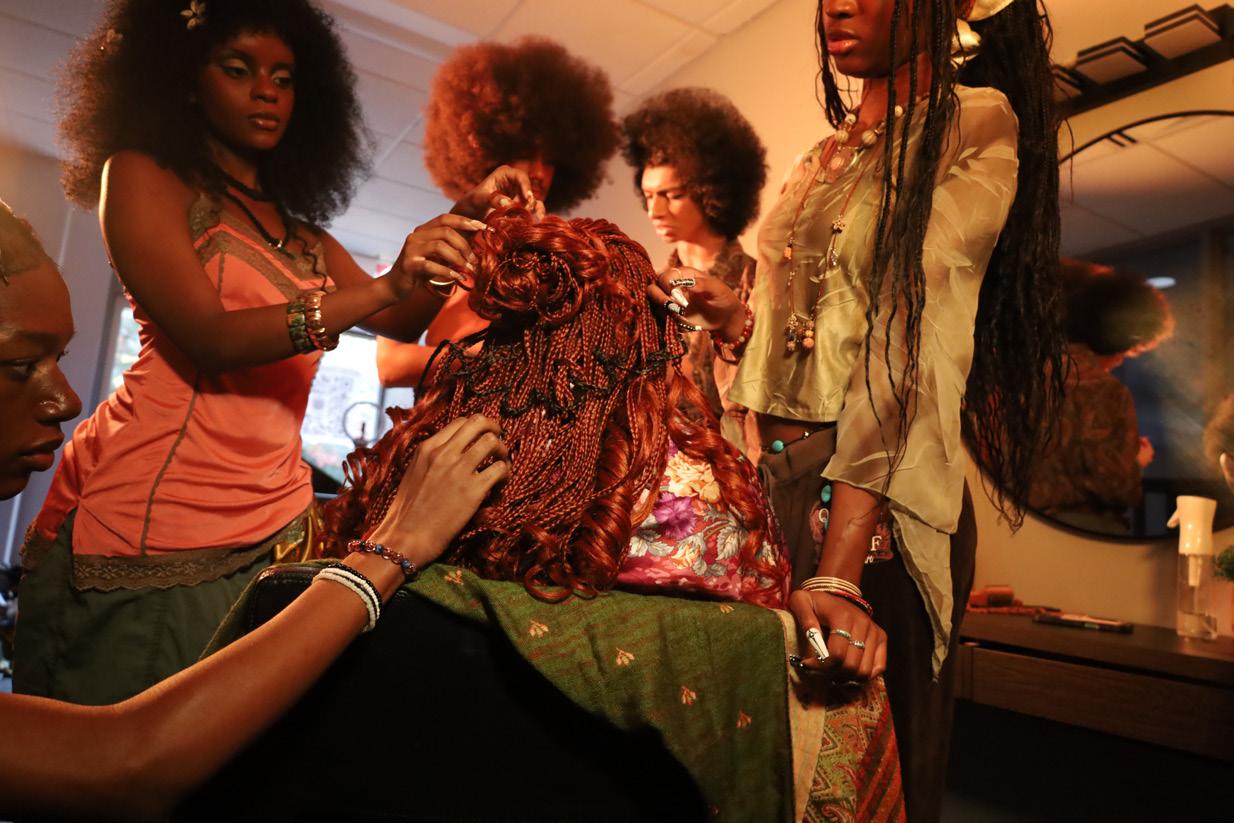
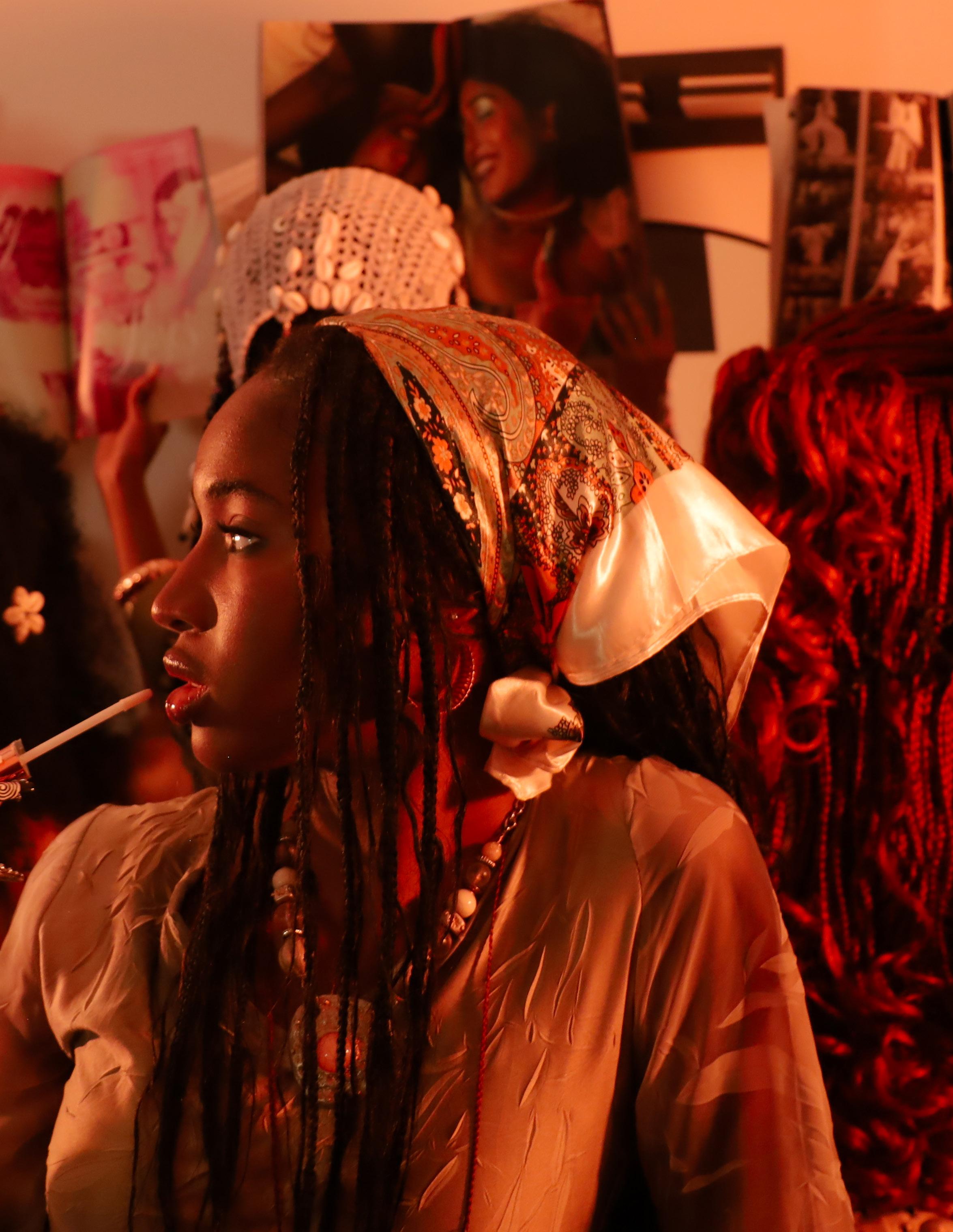
TO THE SALON
BRIAN BRIAN BRIAN
If you’re going to love my hair,
BRIAN
then you have to love the summer I became a rat’s nest and tried to hide it from everyone. The summer at sleepaway camp when the counselors set timers on our showers so I couldn’t comb my hair with conditioner in, not like Amber taught, so my solution was not to comb my hair at all.
It was a foregone conclusion for me to wind up in her chair. It was a foregone conclusion for this appointment to take six hours and that I needed to stay after the salon’s closing. I lost track of the number of times that I cried, tried to make it seem like it was from the pain of hair cleaving from my scalp, the tufts and strands she painstakingly excised from matted clumps.
If you trace deep enough beneath my hair’s roots, you’ll find the scabs where I used to scratch my scalp so hard that it would bleed. If you look closely at my roots, you’ll find crusts of red.
It wasn’t until high school when I started exploring with my hair. I went to a high school that was pretty diverse. By being in an environment where I felt more comfortable, and having had more years under my belt with my hair and my expression, I grew to view beauty as something that I define for myself and not necessarily seek within other people.
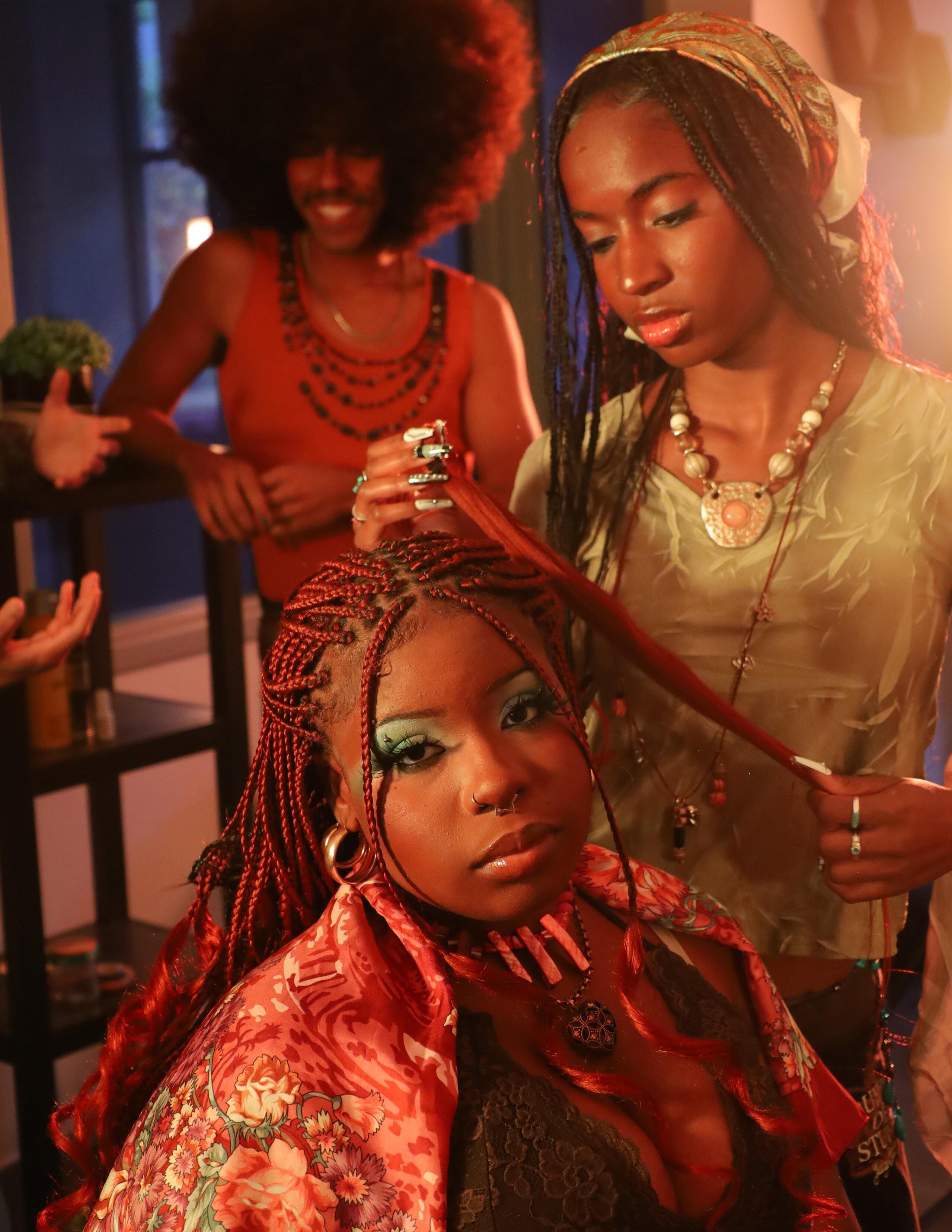
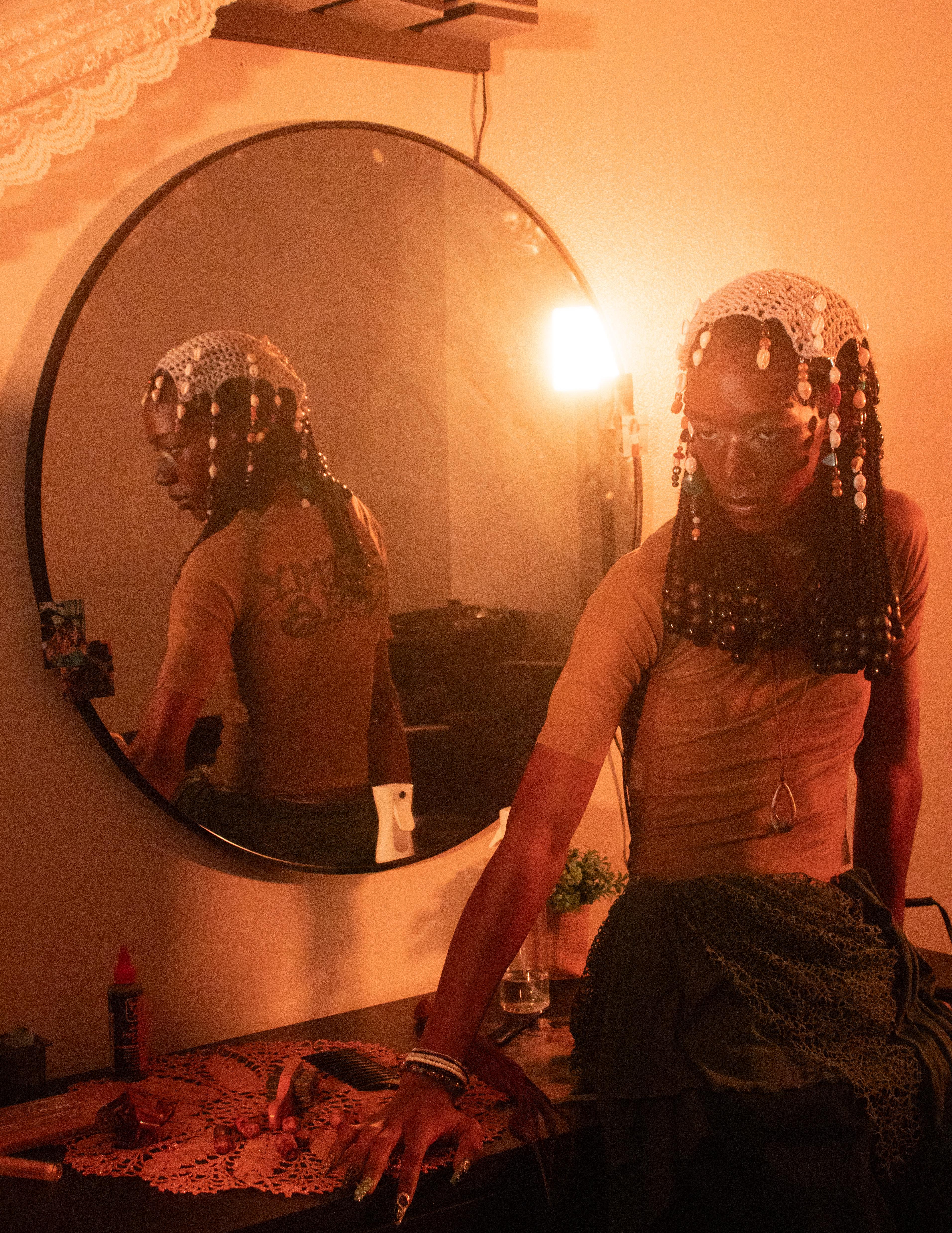
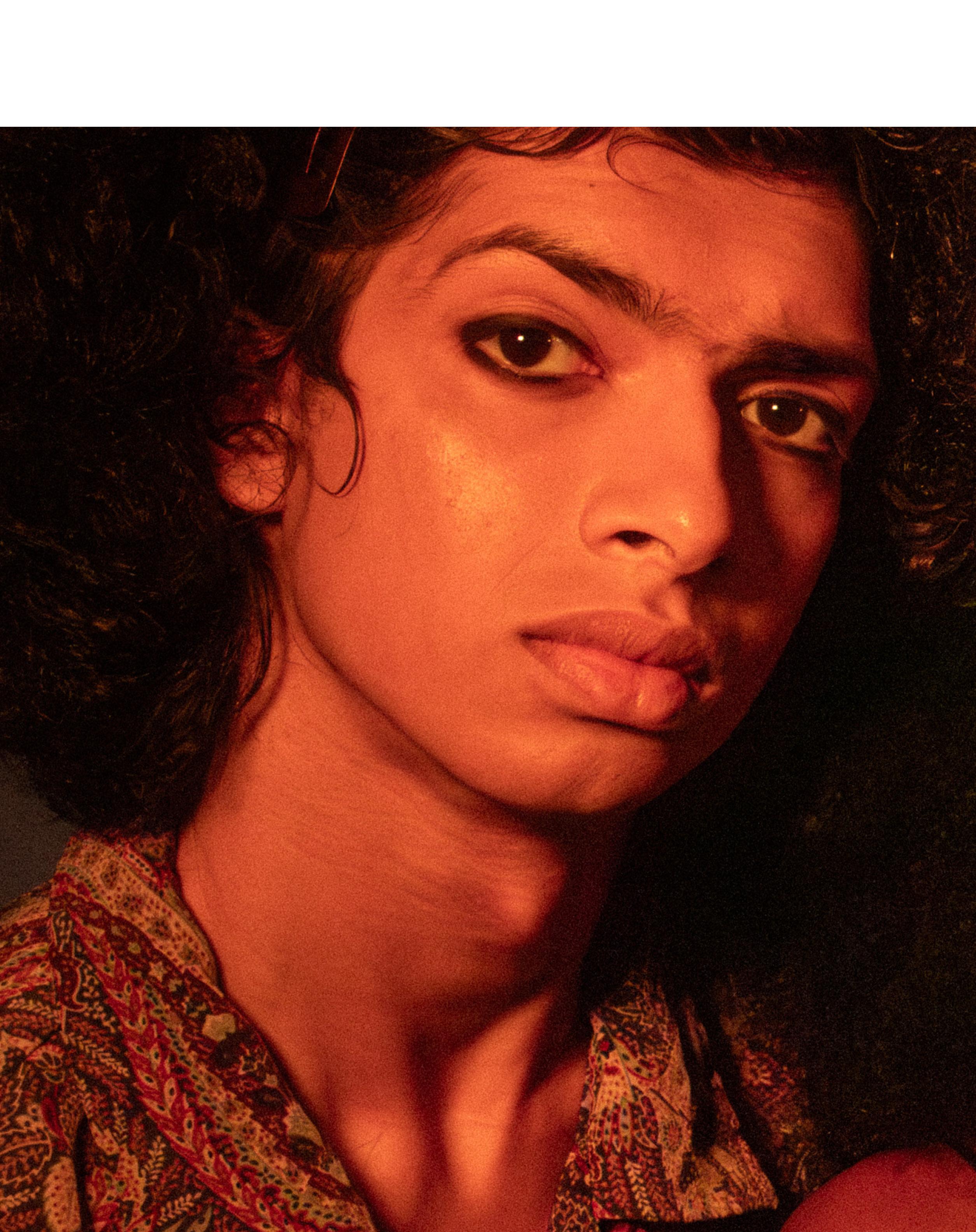
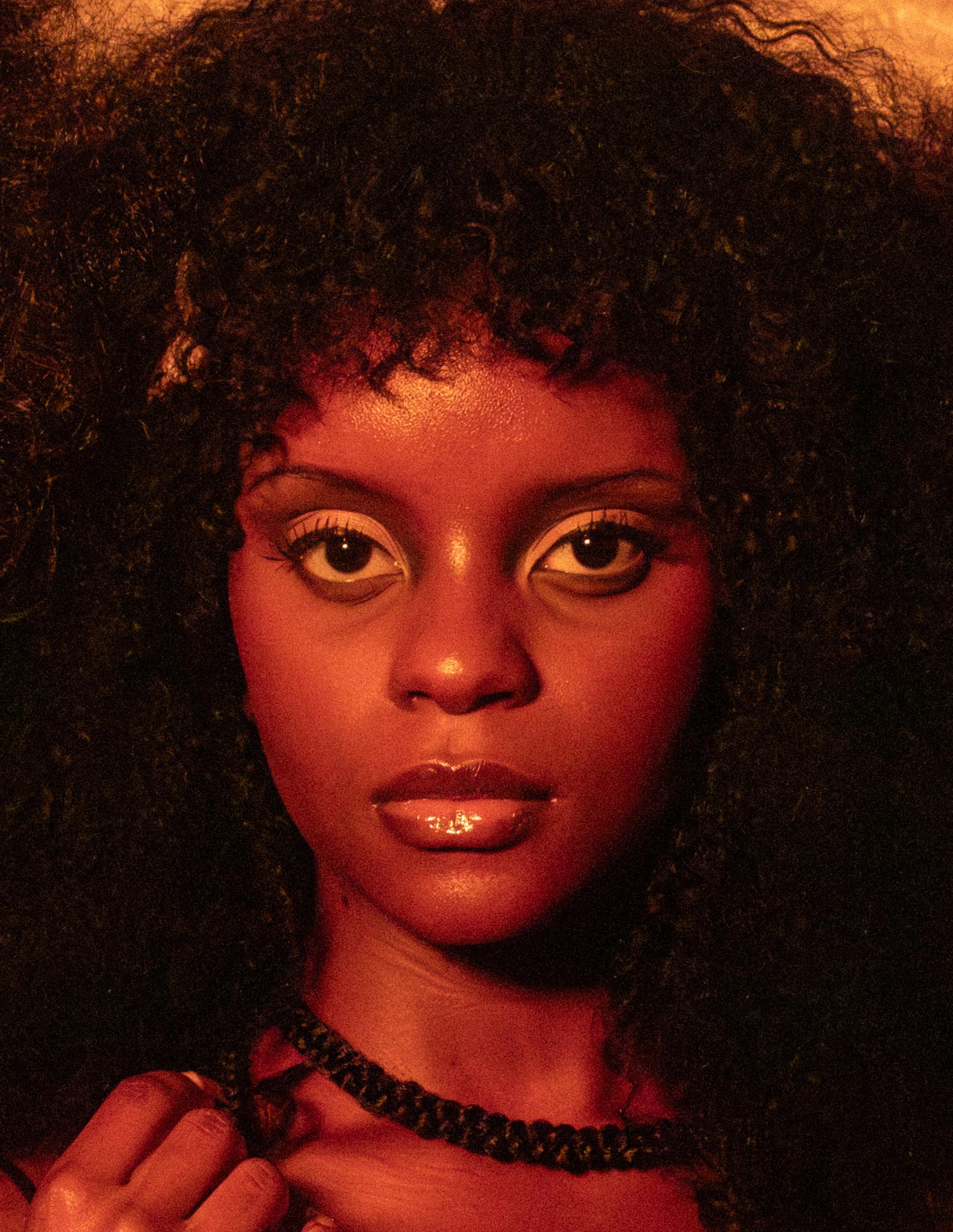
With my identity and the way I present myself, I’m not something that people see every day. Like, you don’t really see like a gay black femme man with beads in his hair, strutting down campus… with there being a need for progress in the way we talk about beauty, my existence alone is making strides in that progress.
We learned how to do my hair together, my mom and I.
My first memories of getting my hair done is when my mom used to do it. She didn’t really know how to do hair, so she would always do it with a hot comb. I would sit at the stove and she would place the metal comb on the stove to heat it up, then she would just comb my hair with it to straighten it.
Even though she didn’t know what she was doing at all, she knew not to relax my hair. This was the best way for her to handle it with the hair that I had. When we moved from that to going to more natural hair, we learned how to do my hair together, my mom and I.
Usually, if someone asks me where I’m from, I’ll make them guess. It’s interesting to see what people come up with, because I feel like a lot of interactions that we have in everyday life are based on internal assumptions that people make about you, about your background. And a lot of that is obviously defined by your appearance.
And so when I look the way I do, people presumably treat me differently [based on their assumptions].
I’ve never really considered doing something that different with my hair because I’m happy with the way it is.
And that’s generally how I approach expressions, fashion, and appearance.
I guess to a larger extent, the way that I think about beauty is if I find something that I enjoy and I like, I’ll generally stick with it.
I come from Kenya, and I attended school there for quite a while. For Kenyan schools, you have to have your hair done a specific way. Everyone has to wear cornrows and a school uniform, so the first time that I got my hair done at a salon, it was for school.
I remember that it was the same hairstylist that had done my sister’s hair and my mom’s hair, so she was very old and very experienced in what she did. She was really sweet and she would ask me to sit down
WENDY
WENDY
on a stool and then she would comb out my hair, detangle it and she would be really soft with it.
I remember trying to replicate what she was doing in my later years because I was like, how does she do it? She always managed to do it so seamlessly. Whenever she would braid my hair, she would also talk to me and tell me stories about things in my culture that were there before me, so I gained a lot of insight about the community and my history through what she was telling me.
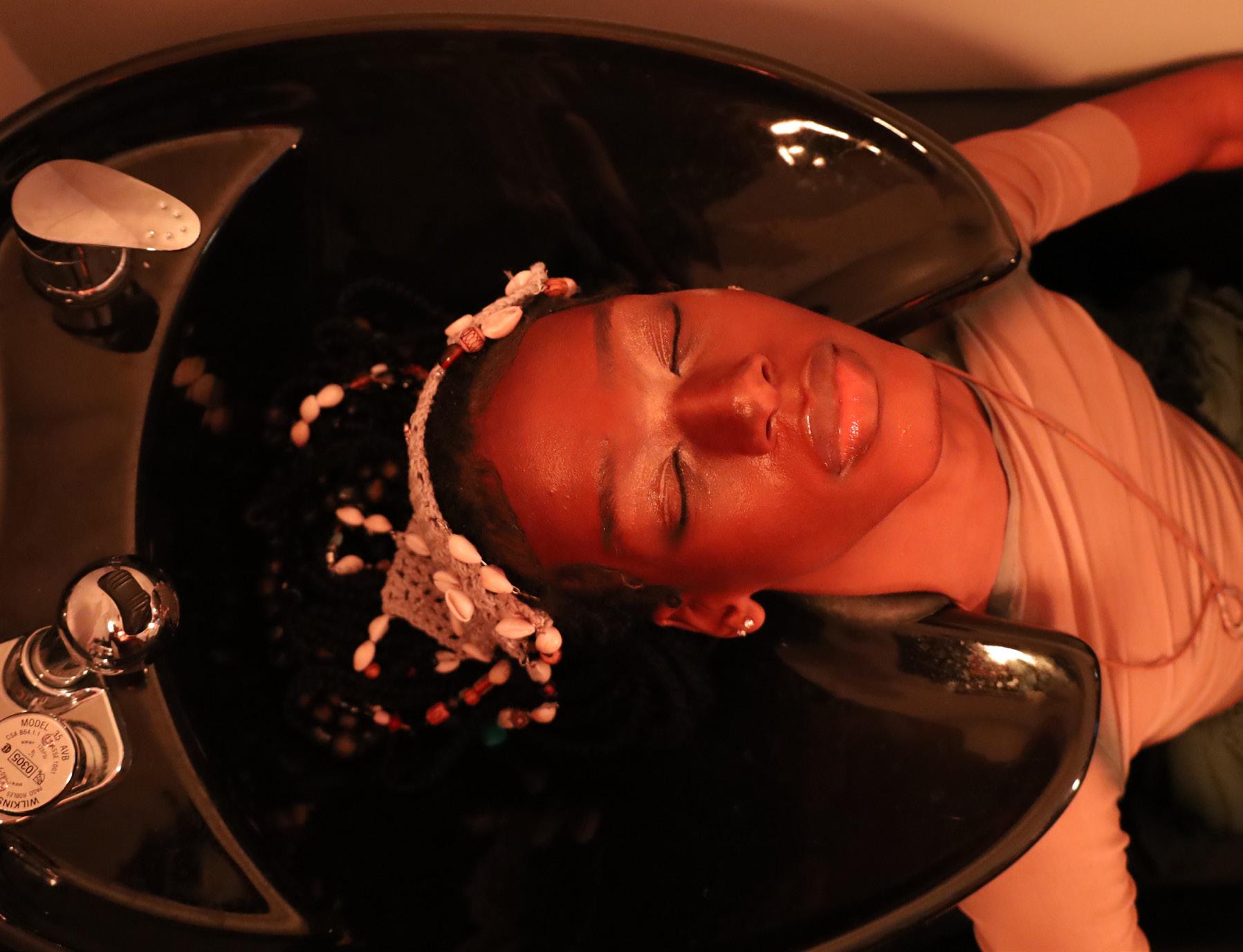
Amber set up a menagerie of tools on a small table beside her chair in the hairwashing studio.
I laid back with my neck stretched over the dip in the glass bowl, and no matter how many towels Amber put between me and the stiff, I could never get comfortable. But she made sure the water was not too cold or too hot and each time she sprayed it into my hair it struck
me that my curls were so thick that I couldn’t feel the wet, but I could still feel the pressure creeping softly up to my skin. Baby hairs sticking to my forehead. The pull of her comb, metal sinking into knots and slowly excising strand by strand.
My mother sat in a chair not too far away, for the entire time. She asked Amber questions to make sure this would never happen again—How should I be combing my hair? What products should I use? How did we get to this point? How, how how—
Like my hair is this object.
My hair was this porous, unknowable object that Amber spent six hours charting dandruff mountains and traversing ringlet streams. We had to stop for lunch. We started back up again. The very worst thing, she said, is if we have to chop it off. Your hair is so beautiful. I want to keep as much of it as we can.
I love my mom, but she was so angry when she saw the knot. Doesn’t she know? Doesn’t she know that having this thing on my head wasn’t a burden I could carry alone? How heavy my hair feels on my shoulders. Sink your fingers in, deep.
When I was little, I’d lie down in my mother’s lap and she’d scratch at my scalp. When did she ever stop? Probably when I stopped letting her touch me, not in that way. Not in the tender way that mothers are supposed to touch. I excised her tenderness the same way I excised my eyelashes and flicked them, softly, onto the playground. I took her tenderness, rolled it into a ball, and tossed it down the drain.
PARIS
PARIS PARIS
Sitting in that chair, I felt guilty.
Not just for the hair or what this appointment must have cost her, but for not letting my mother be the one to take care of me. For insisting on taking care of myself. For falling short, even of this metric I set for myself. For not telling her—any number of things. For the tears I hid. For the knots I buried. As Amber pulled sections of my hair and let them fall softly over my eyes, I let the pain fade into a dull throb and closed my eyes. •
Before I started going to African braided salons, I would go to my best friend’s childhood basement. Her mom would do my hair and put beads on my hair. We would sit in front of the TV, watch childhood cartoons, take breaks, eat chips, and spray the olive oil. We burned it in so the braids don’t unravel.
A lot of people don’t know how to do natural coily hair. They prefer for your hair to come straight and blow dried, and my mom didn’t have much experience dealing with natural hair care, which is ironic since my granny was a stylist when she was younger… If your mom doesn’t know how to do her hair, how could she do your hair? So she just permed so it could be easier to manage and easier to comb through and straighten. So, since she had been doing that to me from ages 7 to 17—10 years worth of perming and relaxers—my hair was damaged.
PARIS
SHOOT COORDINATORS � Jackie
PHOTOGRAPHERS �
VIDEOGRAPHER � Grace Chung
�
�
STYLISTS � Esme Tublin � Jordanna Boxer Wachler
�
LETCHILDREN TECHNO
Isaacson
Emma Linden
Grace Chung
Sophie Miller
Joseph Seel
LETTHE CHILDREN TECHNO
Eden Levi � Claire Gwak � Olivia Slemmer � HAIR AND MAKEUP
Music characterized by the use of synthesized sounds and having a fast, repetitive dance beat, with few or no vocals.
TECH�NO /ˈteknō/ noun
Characterized by its use of synthesized sound, repetition, and defiance of silence,
TECHNO IS PERSISTENT;
“It’s in the ethos of it to be repetitive.”
- MANAPOOL (PRODUCER/DJ AT MATERIA, STL)
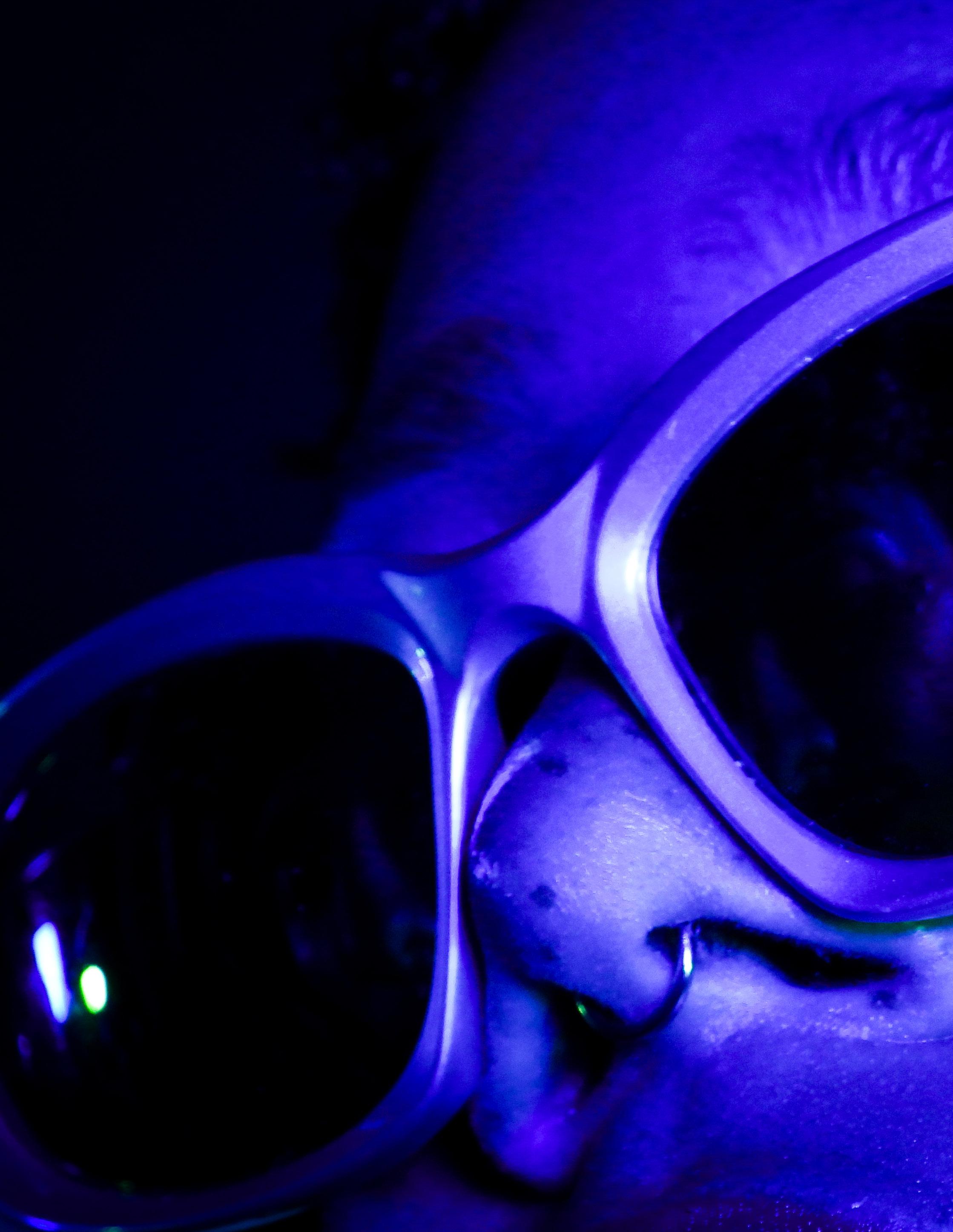
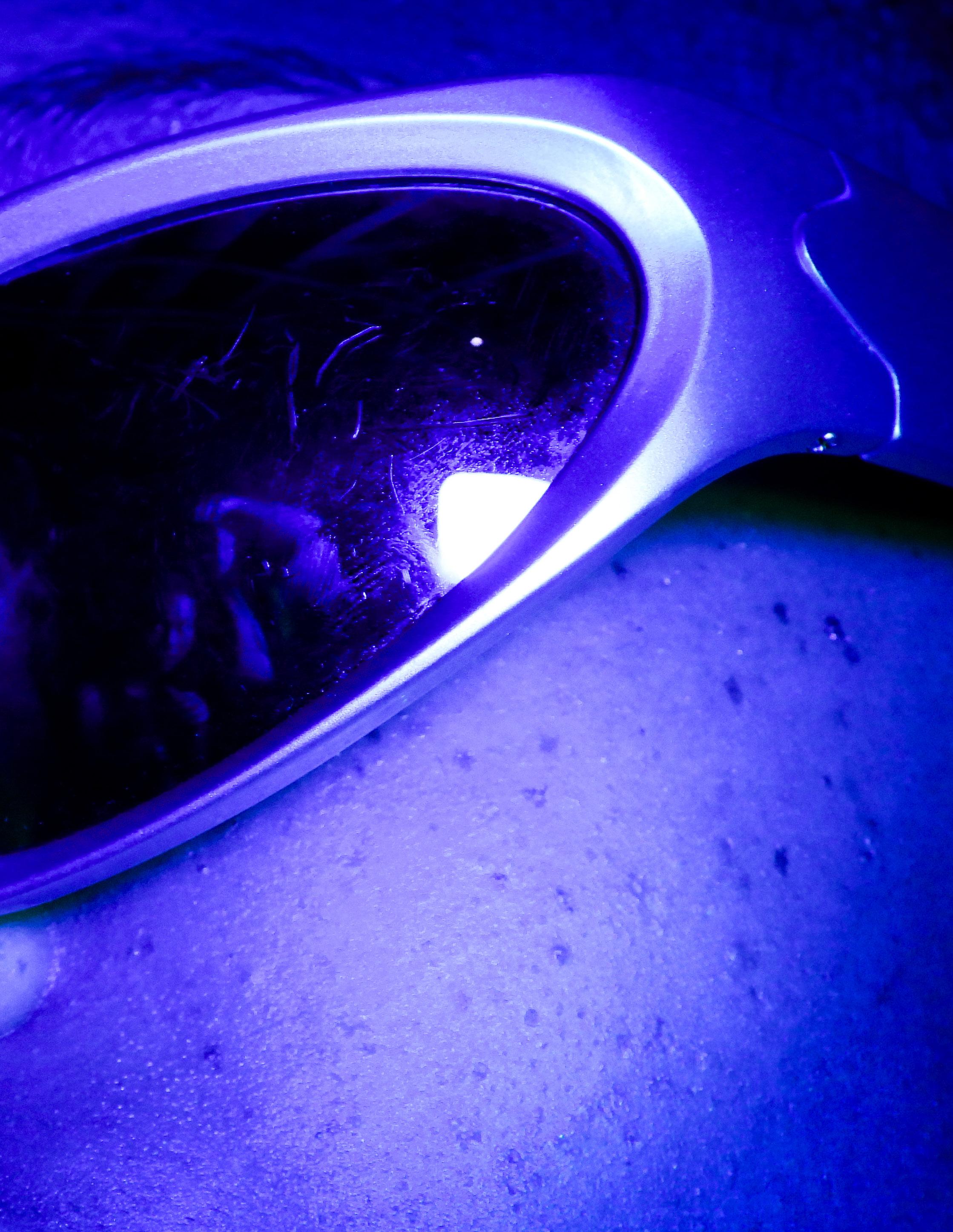
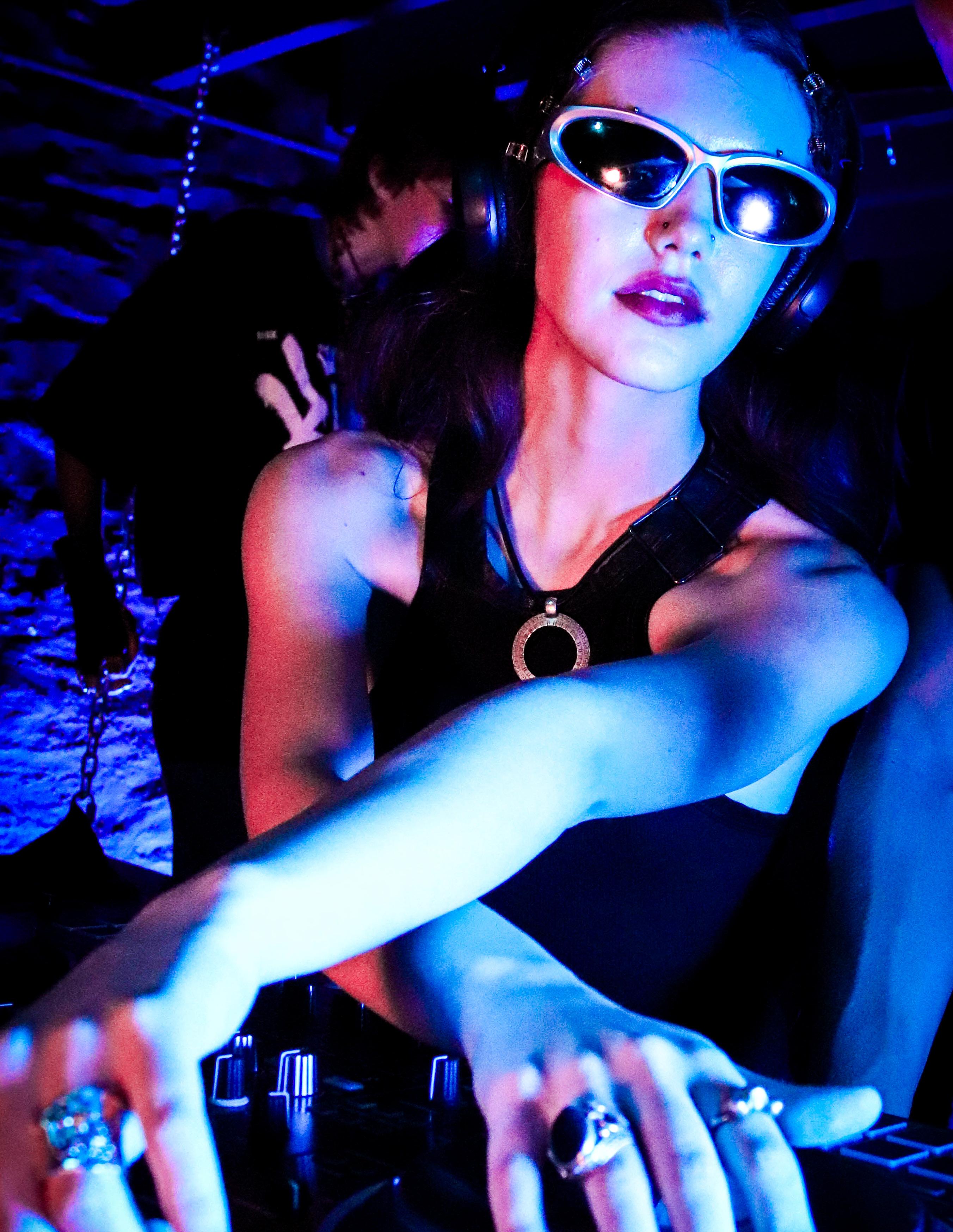
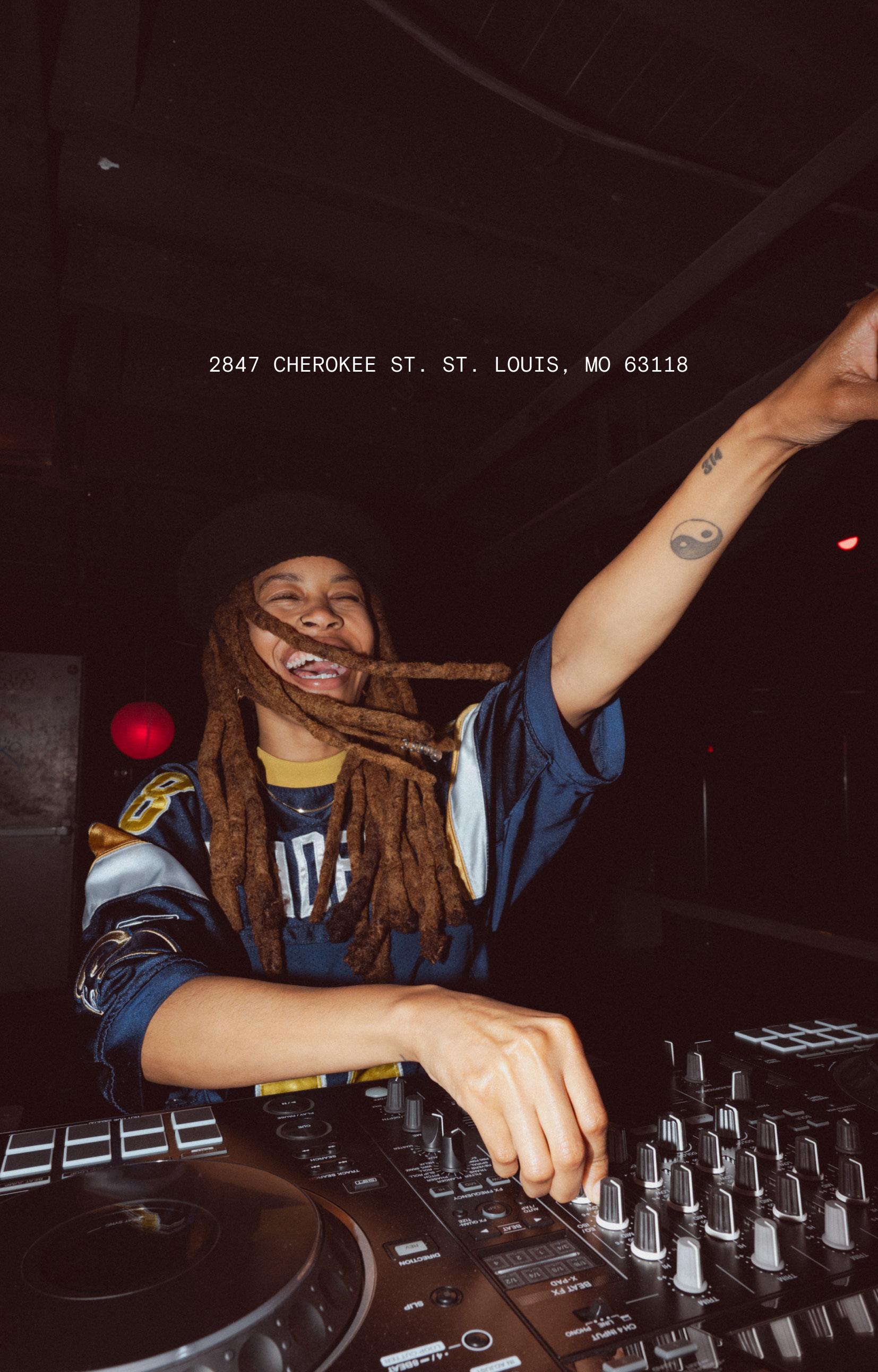
Materia is a St. Louis based techno collective, founded by the people for the people.
It serves to welcome and unite the St. Louis community. Through visceral, raw, and compelling experiences with techno, it unites. FOR, MATERIA IS PERSISTENT.
GENESIS
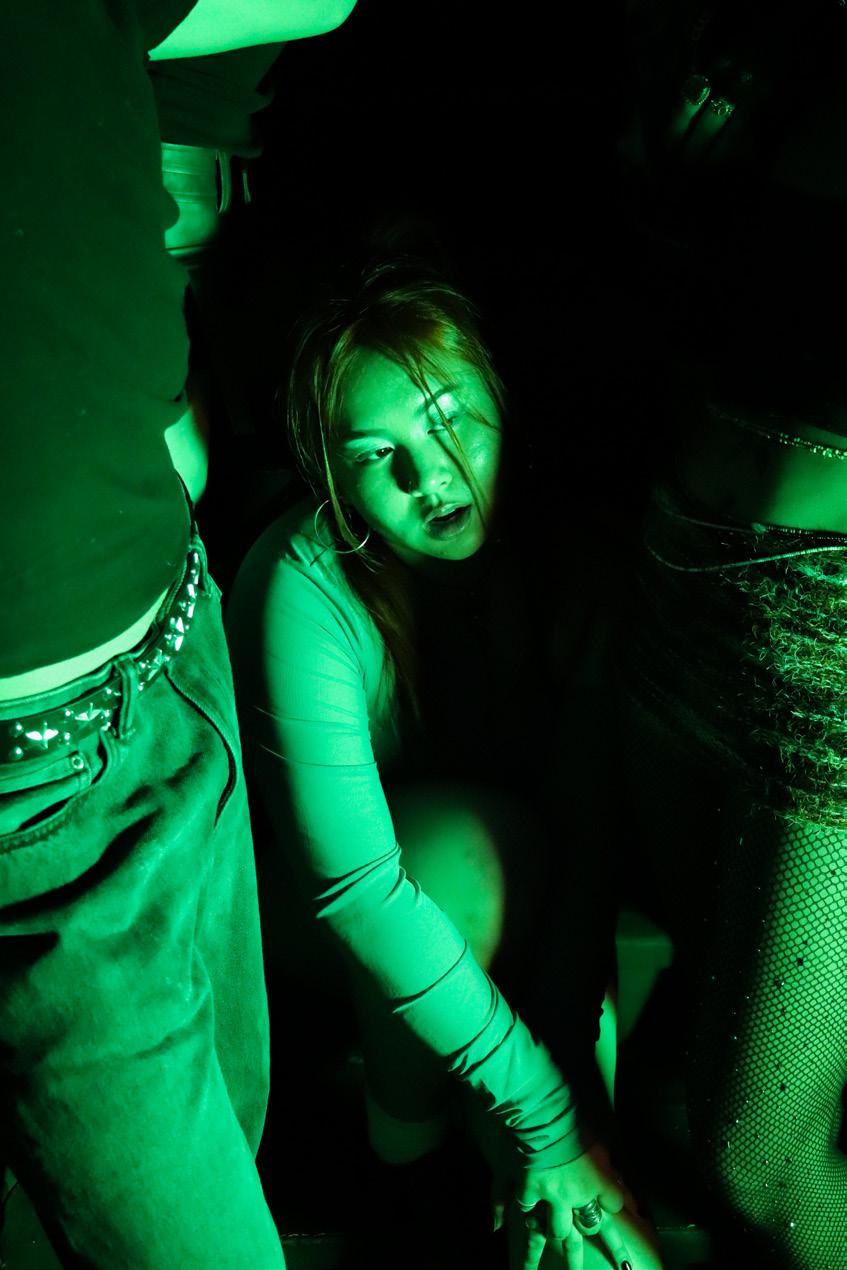
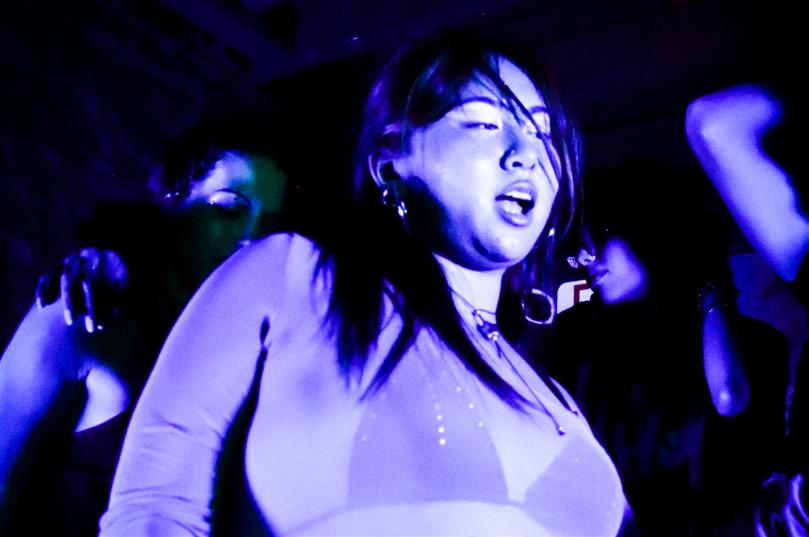
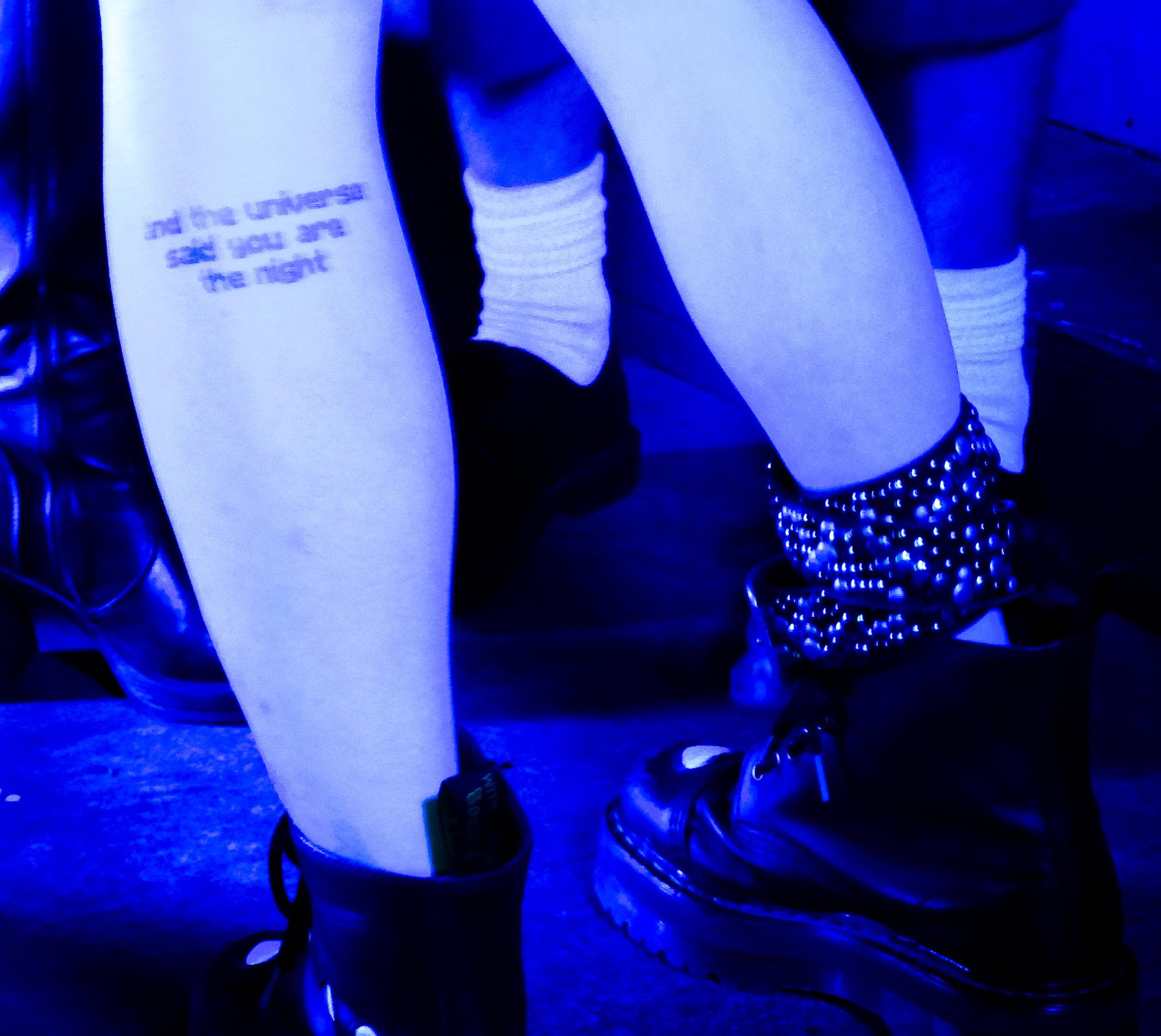
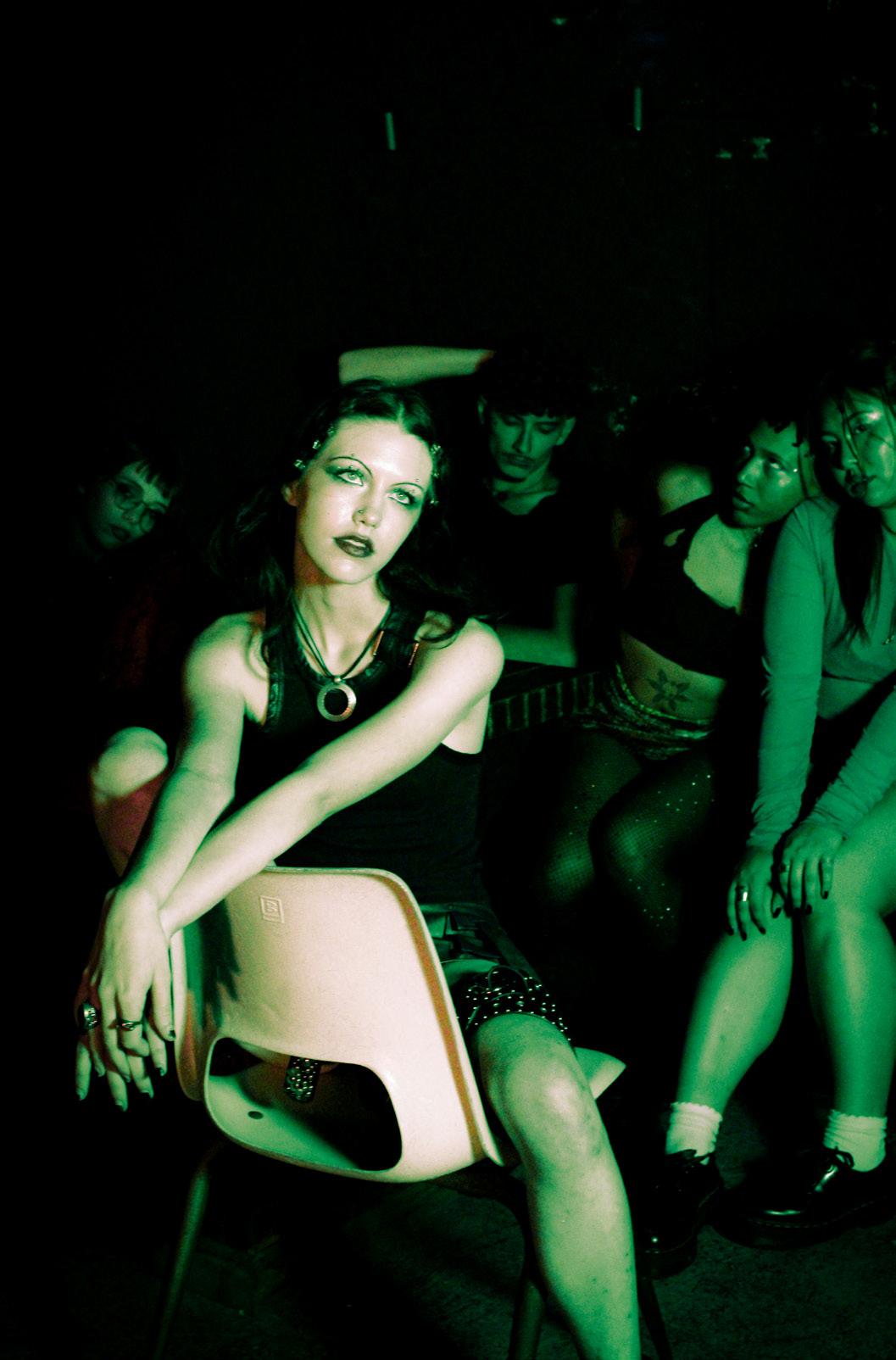
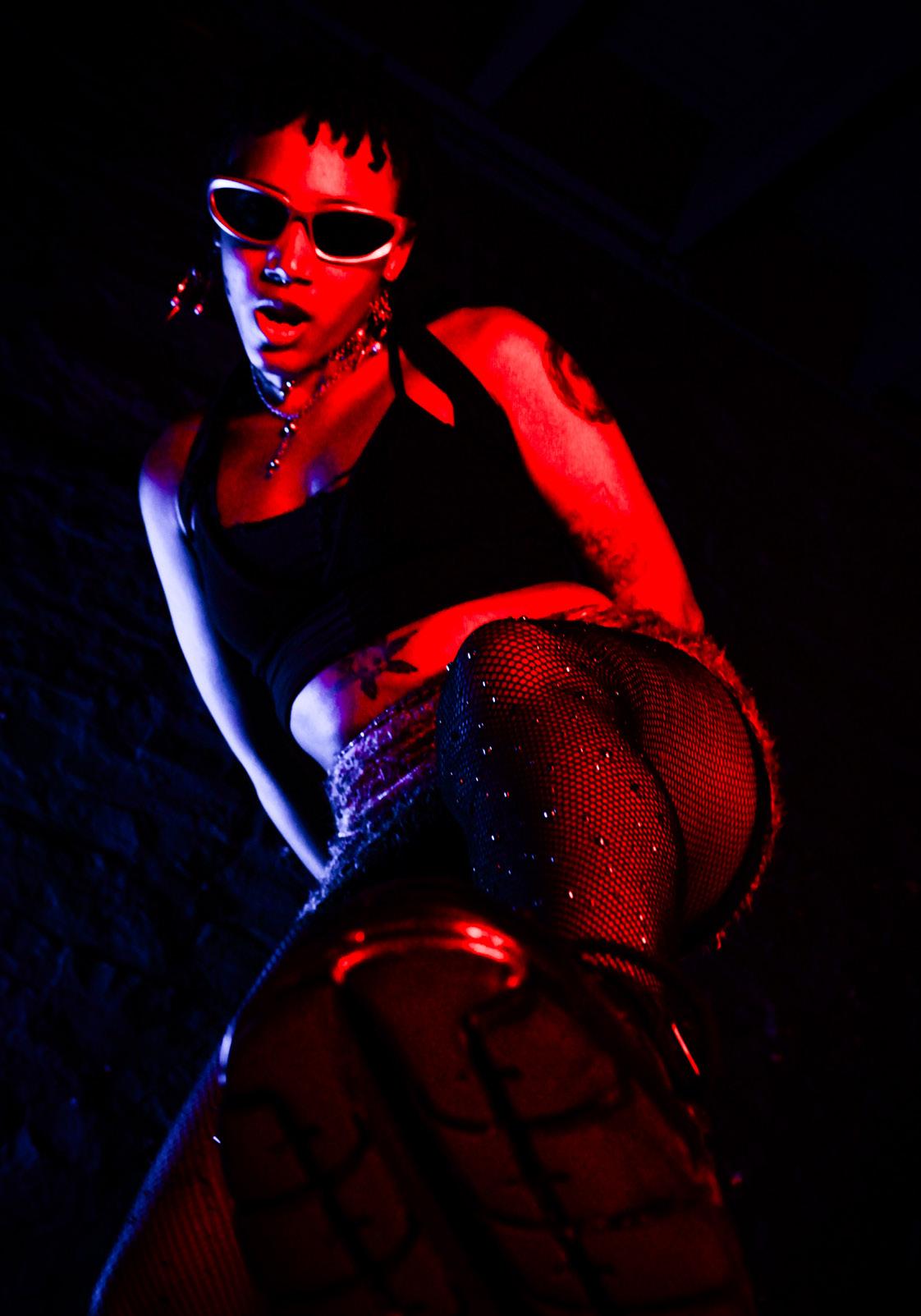
up into the light bouncing off the walls from the disco ball. Red, blue, green. Feel the sweat drop down your forehead. It’s overwhelming, it’s too much, make it stop!
FEEL IT ALL, FEEL. LOOK UP,
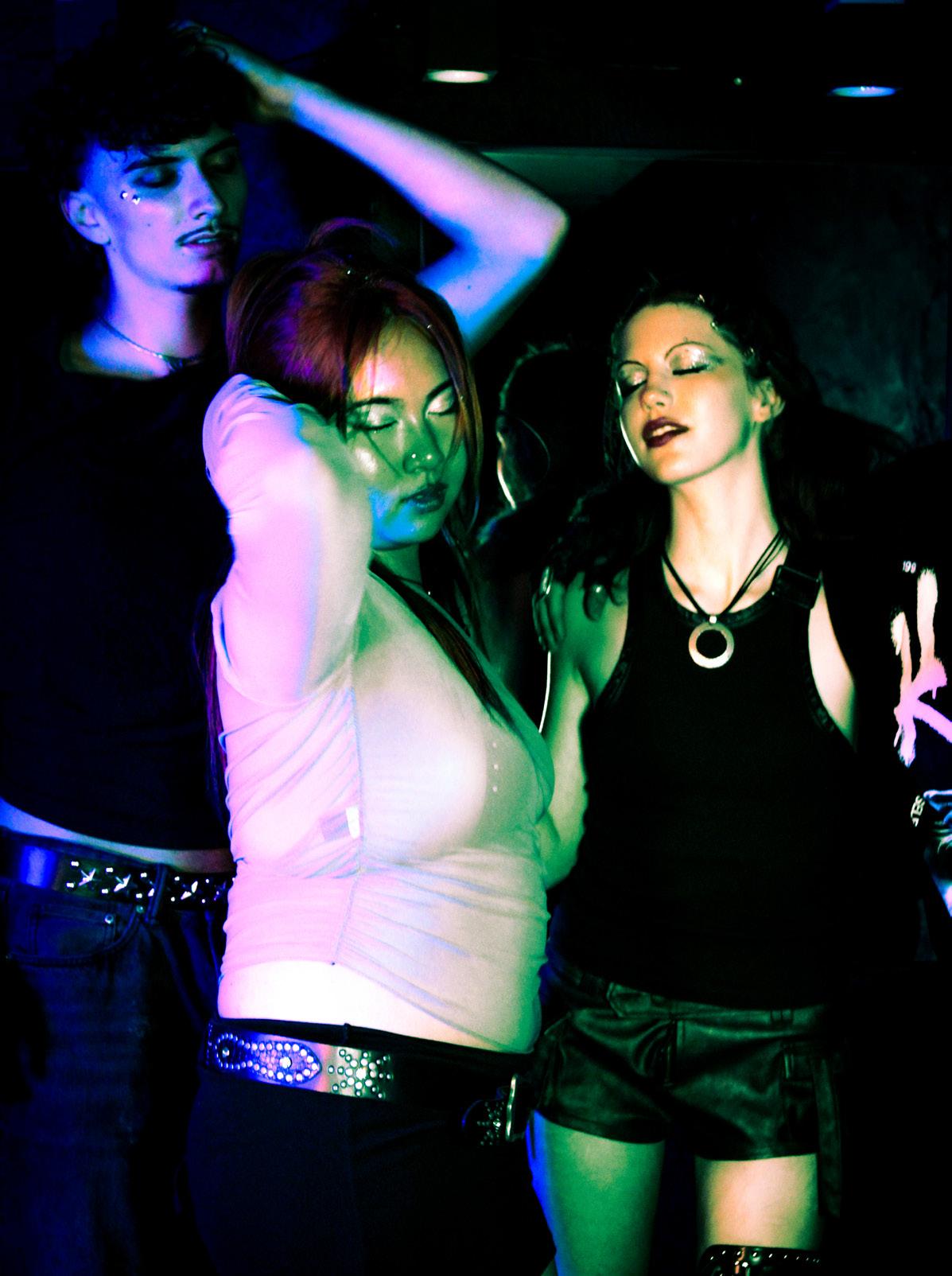
The music pumps through your veins, into your heart, into your lungs, enraging fuel, FEEL IT. Let us dance, let us grow, bigger–louder–better–Hear it. It’s overwhelming but it’s fun, you’re free, let the sweat fall, let your eyes blur. DANCE DANCE DANCE! HEAR IT!
WITH EACH FLASH
OF RED, BLUE, AND GREEN, the bounds of one’s self becomes lost. The bounds of one’s self becomes lost: The bounds…but not the body.
See, that’s the point— The point is to be unmediated, unmediated yet, unequivocally medicated. For techno rewires; techno invites you to feel.
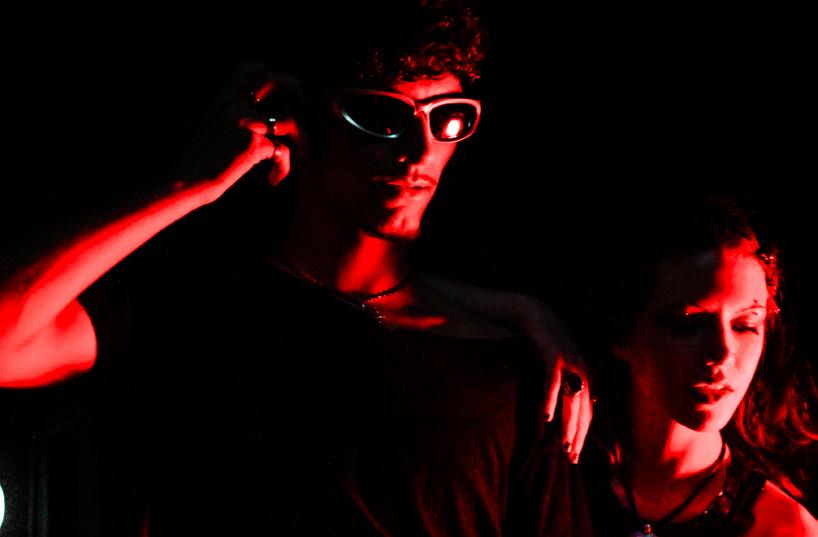
In the dark, nothing hides; everything becomes. For, the dark doesn’t suffocate. It clarifies.
“There’s something about a dark warehouse that makes the energy pretty damn right.” - BILLY (DJ AT MATERIA, STL)
INVITE THE REPETITION IN; ALLOW IT TO REWIRE YOUR BRAIN.
INVITE THE RHYTHM IN; ALLOW IT TO REARRANGE YOUR MARROW.
INVITE THE LIGHT IN; ALLOW IT TO FILL YOUR VEINS.
02 AWAKENING
AWAKENING
03 FULFILLMENT
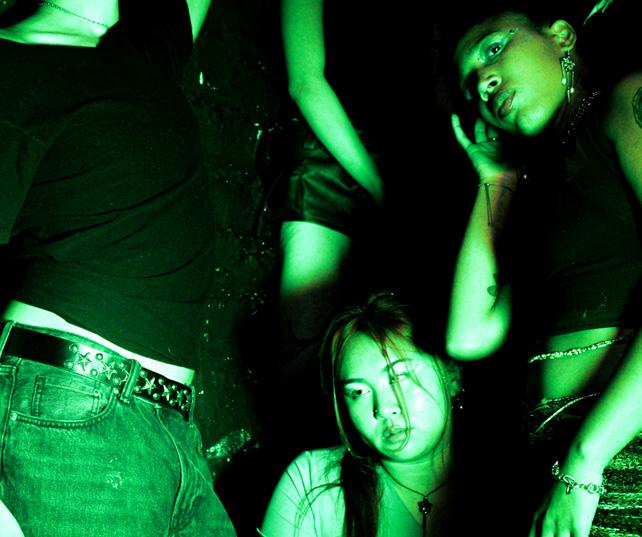
YOU DON’T CHASE THE SOUND; the sound finds you. It moves through the crowd, wired through lights of red, blue, and green. It chops through the static, linking strangers through its electric voltage.
If you don’t have a home; a home will find you. For, here, “you will bump into someone you don’t know, and you will start a conversation”
- MANAPOOL
For, here, a warehouse extends beyond its four walls: It becomes a circuit; it becomes a collective; it becomes a home. “I feel totally at home.”
-BILLY
THE CROWD BREATHES IN SYNC WITH THE BASS, all occupying one shared lung. Bodies gather, circuits form. Sweat, pulse, breath— Everyone’s inputs enter one system; one shared collective.
FULFILLMENT
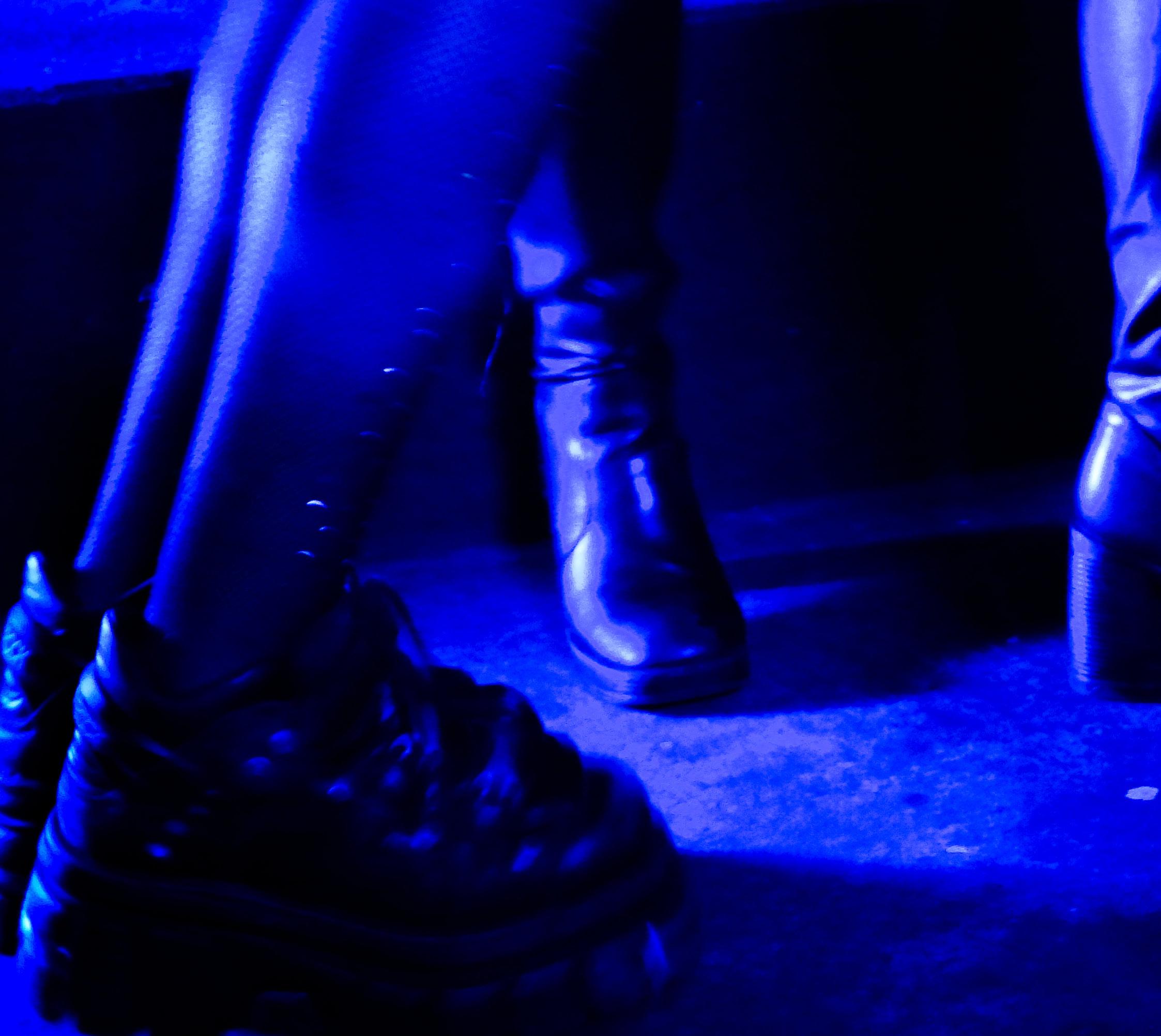
Within is a conglomerate of music bouncing around the light, around you. You can be anything, taken by the music taken by your body. Side to side your head moves, to every beat, every color. Red, green, blue. Where are your friends? Who are they?
THE STRANGERS NEXT TO YOU, SMILING, MOVING.
Within the box of light and sound you scream, holy shit I'M OVERWHELMED. Every step you take is on those lines of beats, lines of music, each note bouncing into the next. Red, blue, green. Left right, right left, dancing lost, right? Left lost lost dancing…..dance DANCE! Like learning a new language you look. Down, feet moving. Left, freedom found in movement. Right, the pitter patter of the lights on the wall. Up. The paradox. Freedom found it.