
OP Comedy
OP Comedy
It is fifty years since I arrived at St Paul’s as a bursary boy from my prep school. The single event that I recall most often from my school years came in the Autumn of 1977.
Ihad just returned to High House after a week’s suspension – the Blue Anchor had been involved. Peter Thomson (History Department (1961–64 and 1966–84) and Surmaster (1976–84)) ‘invited’ me to his office. “Don’t sit down. This will not take long. Do not waste this opportunity. Go away and think about it.”
So, here is the product of five decades of thought. The School with help from many Old Paulines and across the St Paul’s Community has raised the number of pupils with bursaries to approaching 153 – the number of fish in the miraculous shoal and boys taught at St Paul’s in 1509. These pupils, often without educational advantages earlier in life, have reached the required academic standard to be accepted at St Paul’s and to take up the opportunities available from going to school there. The introduction of VAT on independent school fees and the impact of increased employer National Insurance rates among other rising costs have led the School’s governors to take the decision that bursary costs should no longer be supported by school fee income to avoid further strain on current parents. This leaves a gap. A £3m annual gap. The obvious answer is to reduce the number of bursary places. It seems unlikely that this can have been the intention of the VAT introduction.
The School’s governors have no intention of reducing the number of bursaries and have looked at where they can find savings away from the classroom. The Old Pauline Club, in line with its objects and what is right, is looking for ways it can help. The OPC has increased its annual bursary donation to £60,000 (the equivalent of two full bursaries). This is funded from rental income raised from a highly successful housing
development and investments. Plans for Colets and the Thames Ditton site could in time help to fill part of the funding gap but this is possibly five years or more away. The back cover of this magazine sets out how you can help, please take a look.
Later in the magazine we include our new President Simon Hardy’s (1974–79) AGM statement in full. He concluded, “Looking ahead, the OPC has updated its mission to ‘foster an inspiring, inclusive and enduring fellowship of St Paul’s alumni worldwide,’ underpinned by its values of being supportive, open-minded and courteous. The Club’s actions and activities will be guided by the agreed strategic pillars:
– Support the School’s mission – Cultivate a sense of belonging – Provide a network of mutual support – Recognise Pauline achievements of all kinds – Help others to fulfil their potential”.
Simon has Atrium’s full support.
There are OPs everywhere with branches meeting in Spain, Greece, the USA and Australia in the last year. This magazine has three contributions from Thailand provided by Dominic Faulder (1971–76), Andrew Kemp (1979–84) and Tom Vaizey (1977–82), and one by Alastair Bool (1985–90) from Switzerland. Cambridge, Cornwall, Exeter, London (often) and Oxford are also homes to our contributors.
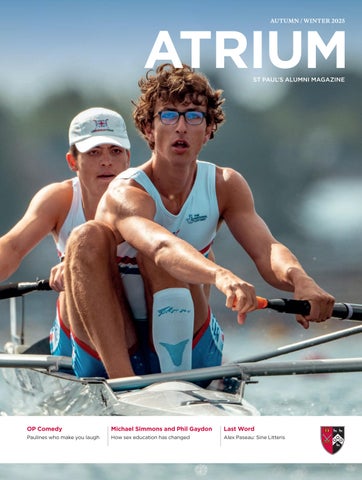
Our cover shows two new OPs, Alp Karadogan (2020–25) and Patrick Wild (2020–25) winning Gold in the Men’s Pairs at the World Rowing Under 19 Championships. They were coached by honorary Old Pauline, Bobby Thatcher. Atrium
congratulates Alp and Pat and wish them well at Harvard and Cambridge. Later in the magazine, David Herman (1973–75) profiles three Paulines on the centenary of their births. News recently reached Atrium of the death of another OP born in 1925, Ralph Blumenau (1939–43). David interviewed Ralph for Atrium in 2023 asking him about his time at School.
DH – ‘Was it difficult for a JewishGerman refugee to fit in?’
RB – ‘The School was not at all antisemitic,’ he says emphatically. ‘Quite the opposite. There were a large number of Jewish boys then, including quite a few refugees.’
DH – ‘Did they stand out?’
RB – ‘Absolutely not.’
Finally, in the Spring/Summer magazine we described Tel Aviv as the capital of Israel. We apologise for the mistake.
Jeremy Withers Green (1975–80)
The Editorial Board thanks all contributors –particularly Kaylee Meerton, Harry Hopkins, our story spotters and proofreaders and it sends Kate Wallace very best wishes as she heads off on maternity leave.
Atrium’s Editorial Board: Omar Burhanuddin, Jonathan Foreman, James Grant, David Herman, Theo Hobson, Neil Wates and Jeremy Withers Green.
Michael
Alistair
Andrew
David
Charles
Tom
Andrew
Ken
James
Appointments,
Including
The
Nick
Lorie
Alex Paseau: Sine Litteris
Andrew Hillier is an Honorary Research Associate at Bristol University and has written extensively on Britain in China. The Alcock Album: Scenes of China Consular Life, 1843–1853 was published in 2024. His next book, In the Shadow of Empire: Women and the China Consular World will be published next year. His father and grandfather were Old Paulines.
Phil Gaydon teaches Personal Social Health and Economic Education (PSHE), Religious Studies and Philosophy at St Paul’s, and is the School’s Head of Character Education. Prior to this, he created and taught modules for the University of Warwick’s Institute for Advanced Teaching and Learning, and he worked in primary and secondary schools around the country as a Philosophy Specialist for The Philosophy Foundation. He studied for his PhD at the University of Warwick.
John Venning was Head of English at St Paul’s from 1989–2014. He read English Literature at Cambridge and taught undergraduates there for a further three years while failing to complete a PhD. He then taught at Manchester Grammar School, Downside School and Malvern College. Since retirement he has done some part-time teaching, further researching and writing, and cultivates his garden in Cornwall.
Michael Simmons (1946–52) read Classics and Law at Emmanuel College, Cambridge. He qualified as a solicitor and, after serving for two years as an officer in the RAF, practised Law in the City and Central London for fifty years. Since retiring, he has pursued a new career as a writer. Michael is in touch with a sadly diminishing number of members of the Upper VIII of 1952.
Paul Cartledge (1960–64) is a Senior Research Fellow of Clare College, Cambridge and was the inaugural A.G. Leventis Professor of Greek Culture in the University’s Faculty of Classics. He is responsible in various ways for publishing over 30 books,
most recently a biography of Pericles (Reaktion Books). He is an honorary doctor of the universities of Thessalonike, Thessaly and Warwick, and a Commander of the Order of Honour (Greece). He is a Vice President of the OPC.
David Abulafia CBE (1963–67) is Emeritus Professor of Mediterranean History at the University of Cambridge, a Fellow of Gonville and Caius College, and a former Chairman of the Cambridge History Faculty. His books include Frederick II, The Discovery of Mankind, The Great Sea and The Boundless Sea which was the winner of the Wolfson History prize in 2020. He is a Fellow of the British Academy, a Member of the Academia Europaea, a Commendatore of the Italian Republic and Visiting Professor at the College of Europe and the University of Gibraltar. He has been the Apposer at Apposition and is a Vice President of the OPC.
Nick Birbeck (1967–72) graduated from SOAS in 1981 after a prolonged stay in Australia. He worked in Yogyakarta, Indonesia from 1983 to 1995 where he set up an English school, and also taught at Gadjah Mada University, training postgraduate students for overseas study. In 1995, he was employed at the University of Exeter as an Education adviser, supporting academics in all disciplines with their teaching, with an emphasis on the use of IT and, latterly, AI. He retired in 2016 but continues to teach and support academics at Exeter. He was a keen cricket and tennis player until a hip required replacing. He now enjoys gardening.
Tom Hayhoe (1969–73) read History at Cambridge and then served as President of Cambridge Students’ Union before receiving an MBA from Stanford as a Harkness Fellow. He worked for McKinsey and WH Smith before founding retail consultancy The Chambers and chairing the board of video retailer Gamestation. He held non-executive NHS roles for almost forty years, including chairing the Trust responsible for Broadmoor High Secure Hospital.
He now works in regulation as chair of the Taxation Disciplinary Board, the Legal Services Consumer Panel, and the Disciplinary Committee of the Association of Chartered Certified Accountants. He recently began a one-year appointment as Covid Counter Fraud Commissioner, chasing funds lost to fraud and error during the Pandemic.
Luke Hughes (Nasmyth) (1969–74) studied History of Architecture at Peterhouse, Cambridge and has, for the last 45 years, specialised in designing and making furniture for sensitive architectural settings. These include 62 Oxbridge colleges, 32 schools, 24 cathedrals, more than 150 parish churches and 9 synagogues (mostly in the UK but also in China and the USA). He designed the clergy furniture in Westminster Abbey used in the recent Coronation and the interiors of the UK Supreme Court. In 2021, he was voted ‘Craftsman of the Year’ by the Worshipful Company of Carpenters.
Dominic Faulder (1971–76) graduated from the University of Warwick and has been based in Thailand since the early 1980s, working as a journalist, author and editor for numerous organisations. He was a special correspondent for the Hong Kong newsweekly Asiaweek, covering Myanmar (formerly Burma) and Cambodia during the 1980s and 1990s. He has been an associate editor with Nikkei Asia for 11 years and has received numerous international journalism awards. He is a five-time past president of the Foreign Correspondents’ Club of Thailand and was, for many years, pro bono co-president of the Indochina Media Memorial Foundation.
David Herman (1973–75) studied History and English at Cambridge and English and American Literature at Columbia University. He produced arts, history and talk programmes for BBC2, Radio 4 and Channel 4 (when it was good) for nearly 20 years and since then has written about literature, and Jewish culture and history.
Tom Vaizey (1977–82) after leaving St Paul’s read History at Worcester College, Oxford. He then qualified as a lawyer and has spent most of his career living and working in Hong Kong, India, Vietnam and Thailand, both in private practice and in-house.
Ken Clark (1978–79) attended St Paul’s for A Levels. His Headmaster in Canada knew the High Master, Warwick Hele, and thought it would be a good experience. After St Paul’s, Ken graduated with a BA from the University of Western Ontario and qualified as a Chartered Accountant. From 1989 to 2024, Ken held Senior Positions in Internal Audit in various multinationals. He retired in 2024. He has contributed articles and reviews to the unofficial John Cale site Fear is Man’s Best Friend and assists a local charity shop to value vinyl that has been donated.
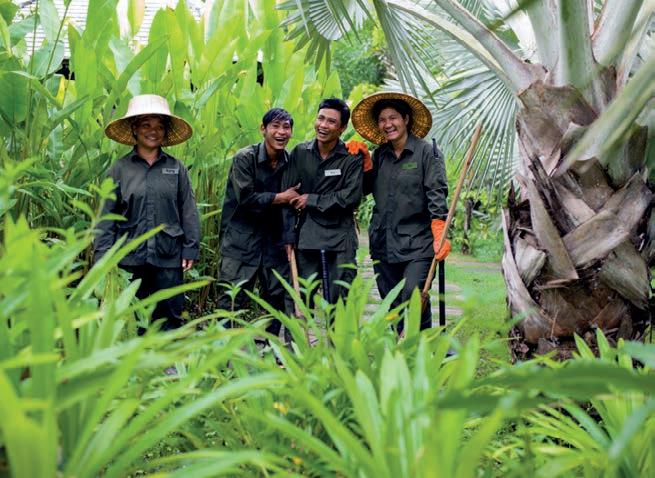
Andrew Kemp (1979–84) graduated from Loughborough University, before spending over 35 years in global hospitality, working across the UK (including at Colets), Hong Kong, Thailand, and now Singapore. He is the co-founder, with his wife Kate, of The Sarojin – a multi-award-winning luxury resort in Thailand renowned for its sustainable tourism. Based in Singapore, Andrew is a passionate golfer, sailor, and active volunteer. With two grown-up children living in the USA and UK, he remains committed to community engagement, environmental conservation, and fostering crosscultural connections through travel, hospitality, and regional collaboration.
Richard Bool (1980–85) has been Headmaster of Lingfield College, an HMC school of 900 pupils, since 2011. Before that, he was a Housemaster at Sherborne School, and then Deputy Head of Ardingly College.
Alistair Bool (1985–90) escaped the life of a City lawyer and has been living in Zurich for 25 years, working for a charitable investment foundation. He loses at tennis most weeks to Jamie Nettleton (1985–89).
Alex Paseau (1988–93) is Professor of Mathematical Philosophy at the University of Oxford and Stuart Hampshire Fellow at Wadham College. He has written several books and numerous research articles on logic and the philosophy of mathematics. At Oxford, he teaches these fields as well as metaphysics, epistemology, the philosophy of science, the philosophy of language and the philosophy of religion. He is the editor-in-chief of the Journal for the Philosophy of Mathematics and was previously an associate editor of the journal Mind
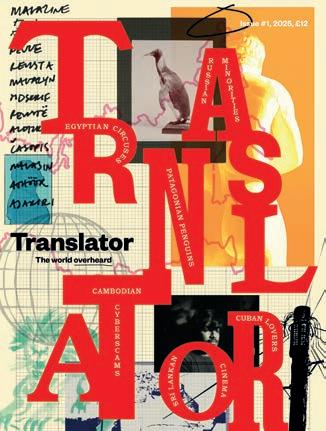
Charles Emmerson (1990–95) is a writer, historian and editor. He studied at Freiburg, Oxford and Paris and has worked in think tanks in Brussels, Geneva and London. He has written three books: The Future History of the Arctic, 1913 and Crucible, an account of Europe and America in the tumultuous years 1917–1924, with strong parallels to today. He is the editor of Translator, a new magazine of translated reportage from around the world.
James Grant (1990–95) sits on the Old Pauline Club’s Executive Committee as Sports Director, as well as holding the posts of Chairman of the Old Pauline Cricket Club and Honorary Secretary of the Old Pauline Golfing Society. After a career in event organising and charity fundraising, he now works at St Paul’s School as Associate Director, Alumni Relations. He is a Vice President of the OPC.
Lorie Church (1992–97), when he is away from the workplace, Lorie encourages people to put letters in little squares. He has had puzzles published in various titles internationally. As well as contributing to the Listener series, Mind Sports Olympiad and Times daily, he sets Atrium’s crossword.
Neil Wates (1999–2004) worked in the property sector for 15 years before training as a Psychodynamic Therapist and Counsellor. He is a trustee of a UK based charitable trust and an NGO committed to the alleviation of social
violence in East Africa. He also founded Friendship Adventure, a craft brewery based in Brixton. Neil is on the OPC Executive Committee.
Jimmy Kent (2000–05) read Philosophy at Warwick University followed by a summer at Berklee College of Music. He then studied Songwriting at Belmont University, Nashville. He now performs in nursing homes mainly to Alzheimer and dementia patients.
Oliver Gilford (2006–11) is a writer, TV producer and comedian. He has performed at Fringe festivals around the UK, worked on programmes like Big Fat Quiz of the Year and A League of Their Own, and written for international stage tours in the West End and Australia.
Yas Rana (2009–14) is the head of content at Wisden, host of the Wisden Cricket Weekly podcast, and is one of the lead commentators on the Surrey CCC livestream. He was also recently the captain of the Old Pauline Cricket Club 2nd XI.
Dear Sirs,
If a magazine were a person yours would have no ego
What a wonderful publication Atrium has become under your stewardship. I am afraid I do not agree with Messrs Porter and Willis (Letters, Spring issue). For them, membership of ‘the St Paul’s Community’ is defined by participation in alumni activities. Not so for me. I have never felt more connected to the School, nor more grateful for, and aware of, what (thanks to my parents’ sacrifices) it gave me than when reading the latest issue of Atrium. That grateful recognition of something I was given came not from reading news of reunions in Buenos Aires or Bangkok, but from the voices that spoke to me in your superb selection of articles. I do not think it is fanciful to suggest that your authors will themselves have connected with their inner Pauline when writing for what they knew to be a Pauline audience.
I have never felt more thoroughly a Pauline, or more at ease with being one – or, yes, more proud – than when reading what I have started to think of as Atrium journalism: clever, funny, self-deprecating, critically acute and intellectually curious pieces that speak to me of what I learned in those Barnes classrooms, and of what I have carried with me from there into adult life, far more powerfully than news of ‘alumni activities’ ever would.
I think the School owes you all a huge debt of gratitude. If a magazine were a person yours would have no ego but would be thoroughly at ease with its own excellence, considering itself the equal of any of its peers – including celebrated national publications. And it would be right to do so. A final shout out, too, for the excellence of the graphic design: it is a pleasure to look through as well as to read.
Yours,
Geoffrey Matthews (1972–77)
Dear Atrium,
I have just had the pleasure of watching again Antony Jay’s film Four High Masters. Messrs Oakeshott, James, Gilkes and Howarth sound like a respectable firm of country solicitors. In fact, they led the school from 1938 to 1973 covering no less than three periods of drastic upheaval. Oakeshott had the hardest task in converting a London day school into a country boarding school with all the distractions and uncertainties of a world war around him. There was then the return to the Hammersmith site to manage in time for the re-opening there in 1946. James and Gilkes, both former junior masters at the school, were the continuity candidates before Howarth masterminded the move to Barnes. At least he did not have to cope with the horrors of war. For two academics to learn new skills so successfully is truly a remarkable achievement.
Tony Jay did a great job with his interviewing technique in coaxing the story out of guarded academics. It is a long way from Yes Minister. Nowadays, no High Master can exist without a well honed and well taught interviewing technique. The time has come for Tony’s successor to bring the story up to date. Any volunteers?
Best wishes, Michael Simmons (1946–1952)
Michael Manning Dear Atrium,
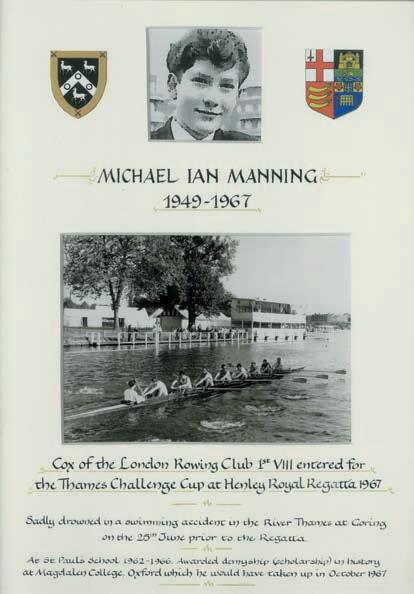
I am writing concerning a contemporary of mine at the school, Michael Manning (1962–66) who tragically drowned in 1967 whilst taking part in the Henley Regatta as cox for the London Rowing Club.
He was a close personal friend both at school and with my family. His tragic loss and achievements at school both academic and sporting were remarkable and other Pauline memories of him featured in letters in Atrium in successive editions in 2021. As Rupert Birtles (1963–66) so justifiably says Michael deserves to be remembered and this letter is by way of telling the School and Old Paulines that there is now a memorial to Michael.
Shortly after the mentions of Michael in the Atriums, I had occasion to meet the then archivist of The London Rowing Club, Julian Ebsworth (not an Old Pauline), and following conversations about Michael, Julian very kindly set about preparing a memorial.
It takes the form of a framed illustration of Michael, his coxing the LRC 1st VIII, referencing the St Paul’s crest and his Oxford award. It hangs in the Ashton Room at the Boat-house of The London Rowing Club on Putney Embankment. With very best wishes, Ashley Badcock (1961–1966)
Set out below are extracts of a letter from Philippa Alden to Robin Dodd (1961–65)
Dear Robin,
I wanted to write to say thank you so much for putting together the piece about my father, Robin Alden (English and History department 1962–65), which appeared in Atrium in October 2024.
Your description of my dad brought him to life again before my eyes. It was touching, moving and amusing. As a child, the evidence of his passion for rowing was all around me, from the pink paddle with gold italic lettering recording the bumps his crew achieved at Worcester College, hanging in the hallway, to the endless crew pictures lining the walls, to the frequent visits to Henley, and the ever present Leander scarf that unfortunately got shredded by my hamster one winter night when mum covered its cage with it to keep it warm. Not a popular family pet after that!
Famously, my dad was not present at the birth of my brother James in Barnes as he was uncontactable on the river coaching a St Paul’s crew.
I am very grateful to you for caring enough to write the article and so recognise the importance of my father’s contribution to rowing during his time at St Paul’s.
All best wishes, Philippa Alden
Enough is enough
Dear Atrium,
Whilst I am sure Simon May’s was an excellent lecture; I think the time has passed for continuing to honour Cotter (Classics Department 1928–65) and Cruickshank (Classics Department 1947–73) with a biennial lecture in their memory.
My memory of them both, and that of my peers in the History 8th, is very negative. I do not doubt their academic excellence (and in Cotter’s case his excellence as a bridge and croquet player, which seemed to occupy a lot of his time and attention), but they were hopeless teachers of boys whose instincts and ambitions did not lie with the Classics but who nevertheless required some Latin and Greek in combination with their principal A Level subjects. Regarding Cotter, we had to complain actively that he was not teaching us adequately and as a result he was replaced by a teacher who had perhaps achieved less renown but who prepared us well for the examinations and subsequent Oxbridge entry. My ire rises whenever I see their names mentioned and I do not think that they should be celebrated quite so fulsomely. Cotter retired 60 years ago; enough is enough.
Best regards, Rupert Birtles (1963–66)
Dear Atrium,
Next year, it will be 120 since our father TL “Tom” Martin first entered St Paul’s School; the following year it will be 70 since his bicycle accident outside the School a few weeks before his retirement, after 37 years service. Without further delay we can expand on his various Pauline connections through 70+ years of his life (including 28 years as Old Pauline Club Secretary).
He came to St Paul’s in 1906, with his twin brother Steve (1907–12) joining later having been quarantined for mumps. He recorded his school experiences between 1906–12 in detail, followed by higher level coverage of his first years at Cambridge (1912–14) and his war years up to 1919. He describes how in the latter period he became interested in Old Pauline affairs, while continuing to watch School rugger and cricket matches when possible. He wrote a diary covering his last two Cambridge terms in 1920, with many Pauline incidents. With these connections in mind, it is perhaps not surprising that on 22 June he “went up to St Paul’s School, interviewed the High Master and accepted post as master”.
His time as a master is well-celebrated in Staff Notes of the November 1957 Pauline. Here are a few extra vignettes: His role in charge of music (before the School appointed a full-time Music Director) brought him in contact with Gustav Holst at the Girls’ School. He took on a minor role in an informal run-through at SPGS of Holst’s opera “The Wandering Scholar”. Ralph Vaughan Williams was present, and in a letter to Holst he wrote that “the most obvious amateur of your lot (the schoolmaster) was far the most successful because he was thinking of his words and his part all the time and not worrying about his damned tone”.
The Great Hall organ used to be water-powered, and Father noted that on a quiet weekend the organ’s pressure gauge would pulse gently in time to the London Hydraulic Company’s pumping station at Walton-onThames 14 miles away.
During the horn virtuoso Dennis Brain’s (1934–36) time at St Paul’s, Father gave him organ lessons as well as in Latin. Dennis’s tragic car accident in 1957 occurred while Father was hospitalised, and he subsequently assisted Ivor Davies (Director of Music 1950–65) in persuading the great and good to give a series of Memorial Concerts in the Great Hall.
After Father's death, we found in his capacious wallet many photographs, just one of which related to his time as a master. It is a small photograph of him sitting at his desk in Room 5 during a lesson, and was taken by Oliver Sacks (1946–51), who signed the photo before giving it to him. Father had kept it for at least 35 years, for much of which time Oliver was not in the public eye.
At a Mercers’ Company Dinner for Prefects and OPs, we learned that Father had on one occasion taught without his trousers on. When challenged on this, his reasoning was simple: riding his bicycle the four miles from Ealing
to School in wet weather one day, his estimate of just the cycle cape without over-trousers turned out to be poor. Rather than sitting in soaking clothing, “all having seen much worse in the showers”, he hung the offending trousers over a radiator and taught discreetly from behind his desk. While this tale may raise a modern eyebrow, it also encapsulates the man: constructive and rational rather than conventional.
Mother and Father both continued to attend School matches and Chapel throughout our time in the ’60s, continuing to attend School Chapel in Barnes until 1980, when they moved to Shalford, near Guildford. After his death in 1982, a Memorial Service was held in the Chapel and his ashes laid under a magnolia in the School grounds. It seems that these were unwittingly moved during subsequent renovations, but we may kindly assume that as such he continues to be a part of the School, just as he was in life.
Yours sincerely, Charles Martin (1960–65) and Robert Martin (1962–67)
PS: On a personal note, his father-in-law was EHH Lee, OP (1879–84) – thereby just missing West Kensington, whom Father met with his future wife as part of his OPC duties. In line with current fashion, we can thus show ancestral connections between the last days of both West Kensington and the City Schools.
The Old Pauline Trust was set up at the time of the Old Pauline Club’s centenary in 1972. Its aim was to establish a substantial capital fund, the income from which would be used to benefit members of the Club and the School.
The Trust makes awards of up to £500 to Old Paulines undertaking charitable projects around the world. These have included volunteering for a leading human rights agency in Delhi, a gap environmental project in Borneo, and volunteer work with Mercy Ships on the coast of Africa.
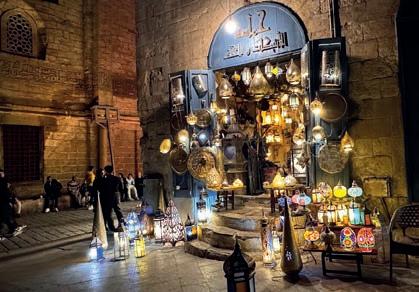
Last year, Henry Ferrabee (2016–21) was granted £500 which went towards his estimated flight and accommodation costs of around £1,000 for his trip to Egypt where he worked for the Centre for Arab-West Understanding.
This is the letter he sent to the Trust’s directors on his return from Egypt.
Dear Old Pauline Trust Directors,
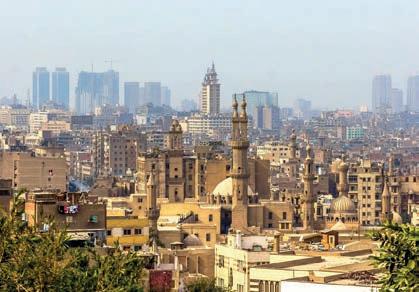
I am writing to express my gratitude for the grant to travel to Cairo for the final part of 2024. The grant enabled me to join the Centre for Arab-West Understanding and aid their ongoing work in creating a dialogue between Western and Arab audiences.
Within the first two days of being in Cairo I was invited to a Christian archaeology conference in Heliopolis to contribute expertise in Egyptian Archaeology to the conference. I was able to meet many leading figures within the Roman Catholic and Coptic Church as a consequence of being there, opening my eyes to the workings of both churches in Cairo and beyond. Without the grant, I would not have been able to make it to Cairo until much later (if at all) and I wanted to start by noting this experience as a direct result of the grant. Despite not being a practising Christian myself, being thrust directly into a coveted meeting between some of the most important institutions in the region is an experience I will carry with me for the rest of my life.
The core of my research in Cairo centred around Egypt’s ambitious 2030 Electric Vehicle targets. With the support of the grant and the institution, I have been able to highlight Egypt’s EV charging infrastructure which may hinder the government’s ability to hit their 2030 targets. I am looking to publish my report in the coming weeks which will look at foreign investment in Egypt and potential European export markets. This research has already attracted interest from several companies which have headhunted me since I have been back in London. Without the grant this would not have been possible and I am very grateful for the OPC’s generous scheme to encourage research projects like this.
The second part of my work at the Centre for Arab-West Understanding focused on transliterating Arabic articles into English for Western academics, to access our database and understand what the Arab press were saying. We were notably able to communicate a story about the rise of Hayat Tahri al-Sham in Syria just a week before they eventually mounted their attack that would take over the Assad regime. Being in the epicentre of a highly conflicted region with Sudan to the south, Gaza to the east and Syria to the northeast, I came away from Egypt with a revitalised passion for development management.
Now that I am back in London, I am applying to Development Management courses at King’s, LSE and Cambridge in the hope that I can pursue a career within an international institution.
I would say I left Cairo with a different perspective on the Arab world and Arab unity. Regardless of whether I am successful in my next steps, I will take my experiences in Cairo with me throughout my life and I made friends that I will keep for the rest of my life. Creating a network in Egypt will be invaluable as the country continues to attract sizable development aid in its bid to modernise. With a large workforce, a big energy capacity, investment in its energy transition and investment in modern infrastructure, I believe the country will become an even bigger geopolitical power over the next decade. Outside of the country’s abundance of natural resources, it also has an important geostrategic position and I hope that now I have a proper network foothold in the country it will benefit me throughout my life as it becomes a more powerful global player.
Sincerely,
Henry Ferrabee
I was once invited to address a lunchtime gathering of international headhunters and quipped that I had one of the worst planned careers imaginable. It stirred a brief flicker as the blood drained from their brains to their guts and postprandial somnolence descended.
I arrived in Bangkok in March 1981 and disliked it. Good food and wonderful temples, but not really East nor West with sticky pavements and endless rows of hot, inhuman concrete shophouses. I checked out on 1 April and paid the cashier, who asked where I was heading. “The southern bus terminal”, I replied. She shook her head.
“It’s closed for three days – we’ve had a revolution,” she said. “Well, why didn’t you say?”
“You didn’t ask.”
A Monty Python moment that changed my life and set me off as an observer of coups and more in Southeast Asia’s Buddhist nations – particularly Burma, Cambodia and Thailand. I already had some amateur experience of juntas from my gap year in South America in 1977, long before smartphones, ATMs and email.
Thailand has had some 22 putsch attempts since its first revolutionary coup in 1932 overturned then Siam’s version of absolute monarchy. My April Fool’s Day Coup actually failed, but there have been 13 “successes” – the most recent in 2014.
I then encountered a New Zealand journalist who wanted to visit Burma – as Myanmar was then known – for a soft feature on Thingyan, the Buddhist lunar new year and water festival. He needed a photographer, and I could take pictures. We made the cover of The Asia Magazine, a Hong Kong colour supplement with a decent regional circulation.
Burma was utterly enthralling – a story waiting to be told. This former British colony – home to George Orwell as an imperial policeman and Spike Milligan as an army brat –had refused to join the Commonwealth, dropped out of the Non-aligned movement it helped found, and effectively fallen off the map. It had fewer than 30,000 visitors annually and journalists were banned; they had to sneak in on seven-day tourist visas.
The country was still in the grip of General Ne Win, a xenophobic dictator who socialised with Lord Mountbatten and Barbara Cartland on his visits to a house in Kingston for Ascot and was soft on Princess Alexandra. The general seized power in 1962 and crashed the economy of one of Southeast Asia’s most naturally rich nations with a madcap variant of socialism. The United Nations designated it a Least Developed Country. Fascinated, I decided to base myself in Bangkok as a freelance photojournalist. I eked out a living with stories on Burma for the Bangkok Post and others, but always without a byline to ensure access.
An old lady turned tarot cards for me one afternoon in Bangkok's Lumpini Park and predicted a life in Thailand with a family and companies of my own. I scoffed since nothing of the kind was on my agenda. I returned to London armed with clippings and features, hoping to burst upon Fleet Street and a dazzling media career, but it was not so simple. Argentina had invaded the Falklands and interest in Southeast Asia waned even more than it had after the fall of Indochina in 1975.
I was offered a job editing a magazine back in Bangkok and took it. The tarot lady turned out dead right. Come August of 1988, when Burma erupted into a massive nationwide rebellion in numbers seldom seen anywhere, I was ensconced as a freelance correspondent, and one of only a handful of journalists with any background on the country.
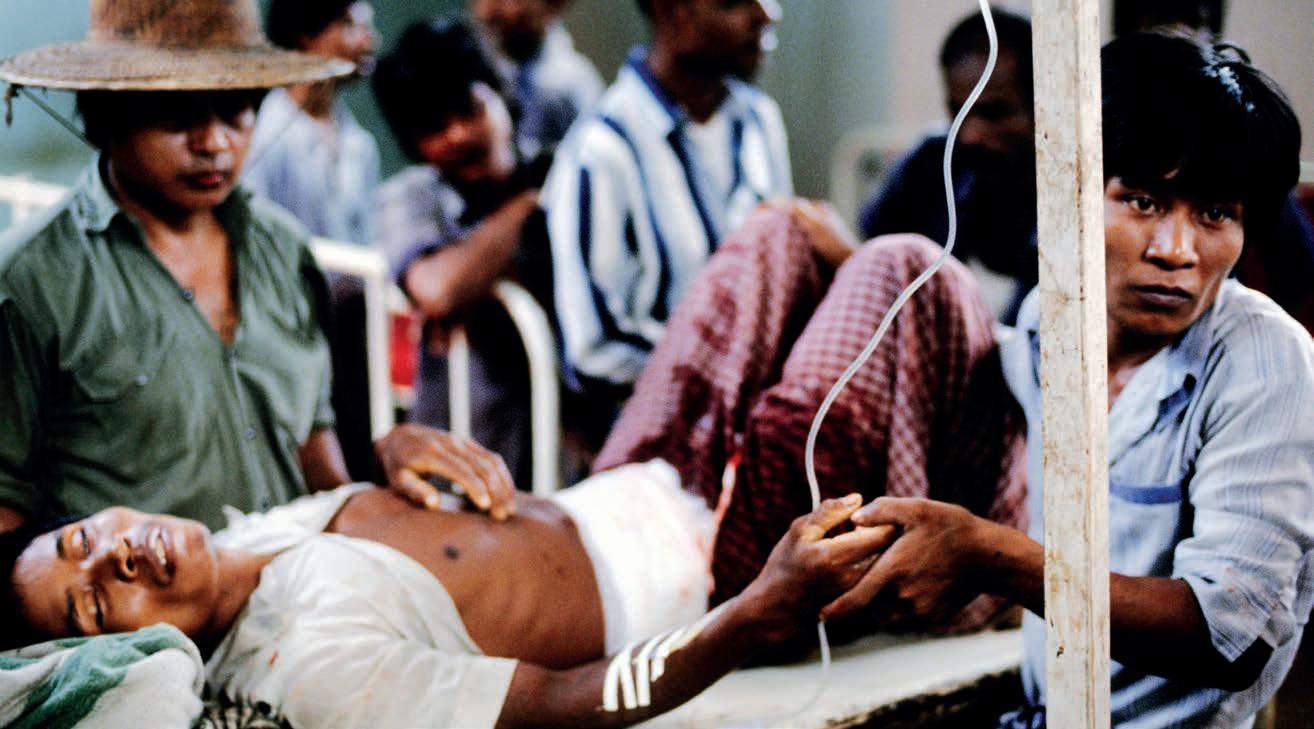
One of the great privileges of being a journalist is occasionally having a ringside seat at momentous times when history in the making is almost palpable. On August 3, 1988, I was stuck at a junction beneath Rangoon’s soaring, gold-encrusted Shwedagon Pagoda when thousands of students suddenly swept through out of nowhere. Their teenage leaders paused only to unfurl a fighting peacock banner, the Burmese symbol of student rebellion, then raced down into the heart of the city, roaring past the American and Indian embassies – the world’s most powerful and largest democracies respectively.
I arrived in Bangkok in March 1981 and disliked it. Good food and wonderful temples, but not really East or West with sticky pavements and endless rows of hot, inhuman concrete shophouses.
Military spies were still everywhere, but the police had taken the afternoon off. Completely alone, it was a heartstopping incident. The product of a privileged London environment, I had never seen a comparable display of raw, desperate courage in the face of such a fearsome security apparatus. What I saw was a trial run for nationwide demonstrations that kicked off five days later on the supposedly auspicious “8/8/88”. The military killed some 3,000 unarmed civilians over the next six weeks. Another 500 alleged looters were picked off after a coup on September 18. Many were youngsters scavenging.
The following year, I interviewed Senior General Saw Maung, the first interview with a Burmese head of state in some three decades. I also had the last interview with
democracy icon Aung San Suu Kyi before her first bout of house arrest for what would be total of 15 years. Saw Maung went mad. Suu Kyi today languishes in a rat-infested prison in Naypyitaw, the military-built capital that literally fell apart in a recent earthquake.
Myanmar is once more a violent black hole in Southeast Asia – a region that is otherwise largely a significant success story. Modern Bangkok gleams and is one of the world’s most visited cities. The vital watchtower from which mainland Southeast Asia is still observed, it has given me a career and family, introduced me to incredible people, good and bad, and taught me that the most important part of journalism is to bear witness.

Desiderius Erasmus
My guest co-author for this issue is a Dutch visitor to my home town of Cambridge named Desiderius Erasmus. You may know his witty work In Praise of Folly, though what he really loves is to immerse himself in the Greek text of the New Testament. He is an old friend of John Colet, Dean of St Paul’s, and he has generously allowed this letter that he sent to Dean Colet to be included in my article:
To his friend Colet, greetings!
Cambridge, 29 October 1511
Something came into my mind which I know will make you laugh. In the presence of several Masters of Arts I was putting forward a view on the Assistant Teacher, when one of them, a man of some repute, smiled and said, “Who could bear to spend his life in that school among boys, when he could live anywhere in any way he liked?” I answered mildly that it seemed to me a very honourable task to train young people in manners and literature, that Christ himself did not despise the young, that no age had a better right to help, and that from no quarter was a richer return to be expected, seeing that young people were the harvest-field and raw material of the nation. I added that all truly religious people felt that they could not better serve God in any other duty than the bringing of children to Christ.
He wrinkled his nose and said with a scornful gesture: “If any man wishes to serve Christ altogether, let him go into a monastery and enter a religious order.” I answered that St Paul said that true religion consisted in the offices of charity – charity consisting in doing our best to help our neighbours. This he rejected as an ignorant remark, “Look,” said he, “we have forsaken everything: in this is perfection.” “That man has not forsaken everything,”, said I, “who, when he could help very many by his labours, refuses to undertake a duty because it is regarded as humble.” And with that, to prevent a quarrel arising, I let the man go. There you have the dialogue. You see the Scotist philosophy!
Once again, farewell! Erasmus
Most of us, it is true, have no command of ‘Scotist philosophy’, though I do know how dense the works of the medieval philosopher Duns Scotus are. But Erasmus’s defence of the teaching of children resonates today, even in an increasingly secular society. Indeed, there was something rather secular about the school to which Erasmus was evidently referring – St Paul’s, which our founder carefully placed under the supervision not of the
Cathedral Chapter but of the prime Livery Company of London. Actually, Colet’s great wish was for the students to study Greek in order to understand the Greek text of the New Testament. But it seems that William Lily, the first High Master, was keen on pagan authors, and opened up the curriculum in Greek and Latin to ancient writers he had read while studying in Renaissance Italy.
Erasmus declined Colet’s invitation to serve as the first High Master, despite the impressive salary – double that offered at Eton. However, Erasmus dedicated a school textbook entitled ‘On the abundance of things and words’ (De Copia Rerum et Verborum) to Colet, which eventually turned into a Europe-wide bestseller. It is a rather impenetrable forest of Latin phrases, intended to improve Latin style. Yet, along with the Latin grammar compiled by Lily (with help from Erasmus), it laid the foundation for how Latin was taught, so much so that Eton stole the text of Lily’s book and it became known as The Eton Latin Grammar; but, Hugh Mead tells us in his lively history of St Paul’s, it remained in use at our school beyond 1840.
My own contact with Erasmus has taken several forms. My Ph.D. viva took place in his set of rooms at Queens’ College, Cambridge, of which one of my examiners was a Fellow. And then there was Dr P N Brooks, who taught me my O Level History and part of my A Level as well; for him, everything revolved around the age of the Reformation. His learned monograph on Thomas Cranmer’s Doctrine of the Eucharist is not exactly bed-time reading, but Erasmus, Luther and Cranmer were his constant points of reference. Dr Brooks died in March of this year at the age of 94. After St Paul’s he moved to the new University of Kent for a few years as a Lecturer in History, and then to Cambridge as a History Lecturer in the Divinity Faculty; and he became a Fellow first of Downing College and then of the recently founded Robinson College, as well as taking holy orders in 1967. He could often be seen wending his way up Trinity Street on his way to lecture at the Divinity School, deep in thought, with his head down and his gown flung over his shoulder, echoing the donnish ways that, for better or worse, have largely vanished from Oxford and Cambridge in the last few decades.
Colet’s era is long ago, and Greek is little – too little –studied at St Paul’s nowadays, but it is exhilarating to think that we, as Old Paulines, are connected to the great scholars of Renaissance Europe: not just Colet himself, but Erasmus of Rotterdam. St Paul’s may not have been founded by kings or queens but – better still – it was founded by people with adventurous minds.
Paul Cartledge (1960–64) remembers Mike Weaver (English Department 1961–63)
MLHL ‘Mike’ Weaver, who died last year aged 87, taught me for ‘AO’ (Alternative O Level) English in 1961–2. He had come to St Paul’s by happenstance –rather than as part of a planned school teaching career – not long after obtaining a Double First in the Cambridge English Tripos at Magdalene (the college of one S Pepys (1640s)). When he was teaching us Lower Eighth Classicists, Mike was in his mid-twenties, and a radical, belying the conservative reputation and indeed esprit of his alma mater. (The huge kerfuffle over the Cambridge English Tripos, involving at its centre Colin MacCabe, was yet to come – in the 1980s.)
Mike left St Paul’s in July 1963, to return to Cambridge, where he helped pioneer and promote a movement known as ‘concrete’ poetry then practised by the uncanny likes of Ian Hamilton Finlay (the creator in 1966 of the avant-garde ‘Little Sparta’ sculpture garden near Edinburgh). Over thirty years, besides visiting positions in the States, Mike held two permanent UK academic jobs, first at Exeter University (he was by origin a West Countryman, from Penzance), then at Oxford, where he became a Reader in American Literature and a Fellow of Linacre College, retiring early in 1997.
At both his universities he was also able to develop and teach the second of his two main specialisms. As a pathbreaking photography historian, he wrote books on early practitioners Julia Margaret Cameron, Alvin Langdon Coburn, and Henry Fox Talbot, as well as curating The Photographic Art: Pictorial Traditions in Britain and America (The Scottish Arts Council and The Herbert Press Ltd, 1986). That side of his career is very well covered in Geoffrey Batchen’s expert obituary notice in History of Photography 48.1 (2024/25), Pages 163–66.
What of Mike’s primary field of expertise and teaching us? In 1961, it was rightly
deemed that we Classicists aged 14 to 15 who had moved up from Remove bearing our meagre haul of O Levels (six in my case) were desperately in need of some breadth of instruction and study away from our super-rich diet of Greek and Latin texts (served up genially by AG ‘Tony’ Richards, School Librarian and sonorous bass). Hence our being required to take a couple of AO Levels, one on either side of the ‘two cultures’ divide identified by C P Snow in 1959. In the History of Science paper, we all failed (top mark 32 per cent.); I achieved a grand total of 20. In mitigation, we were not actually taught the stipulated curriculum but instead dabbled in such chemical mysteries as saponification, how to make soap!
We did rather better in our other required AO Level, in English literature –or was it English language literature? – taught to us by Mike. What exactly the prescribed curriculum comprised we never learned, though we did know that it included as our set text Shakespeare’s Coriolanus – in which Richard Burton starred as the eponymous traitor in a recording made in 1962 (still available on YouTube). But Mike was anyway not one to be constrained by the limits of any curriculum. He did teach us Milton, ‘the greatest’ of John Colet’s ‘children’ (David Bussey), who entered Christ’s College, Cambridge exactly 400 years ago. But in addition to the revolutionary, heretical Paradise Lost (which we read rather glamorously in a US paperback edition handily published in December 1961) Mike introduced us to Samson Agonistes: a dramatic poem set in… Gaza, inspired by the ancient Greek tragedians and adorned with an epigraph from Aristotle’s Poetics (Milton was a supreme classical scholar).
And then there was Mike’s real passion, near-contemporary American Literature. In 1971 he would publish a monograph on poet William Carlos Williams (famed, not least on the
London underground, for his 1934 effort, ‘This is just to say’). As I recall, though, he did not teach us any Williams but rather a curious trio of prose works by another member of the same New York literary circle, the experimental novelist and screenwriter Nathanael West (né Nathan Weinstein, 1903–1940). Who could ever forget The Dream Life of Balso Snell (1931), Miss Lonelyhearts (1933), or The Day of the Locust (1939) – all collected in Novels & Other Writings (Library of America, 1997) – if only for their titles?
I am not now quite sure why, but ten years ago, in June 2015, Mike and I were happily reunited – together with his second wife and fellow photography historian, Annie Hammond – in Oxford’s Ashmolean Museum (where I had done the bulk of my research for a 1975 DPhil in the archaeohistory of Sparta). Thereupon he kindly gave me a signed copy of his The Photographic Art, together with a letter written in longhand on a scrappy piece of white paper (not proper ‘writing’ paper). I quote its somewhat cryptic conclusion in full:
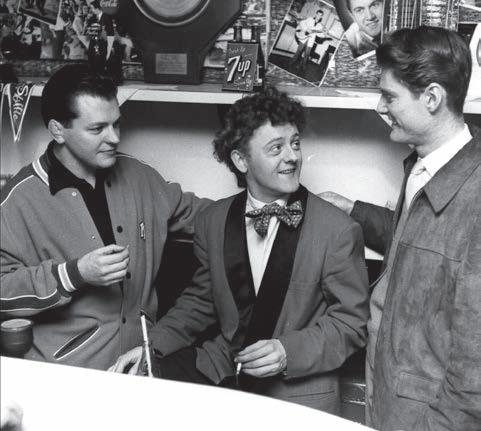
Some keywords to tempt you, in no particular order: John Simpson, David Cohen as Dr Faustus , Parker & Whitting, Headmaster of Harrow (James), and Jack Hylton’s Band, Juke Box Jury. Your memory will be ten years better than mine, of course!
I think I can parse all or most of those references, but what exactly lay behind the last two I never did fathom.
RIP, Mike, one of the most extraordinary persons I have had the privilege and pleasure to be taught by, or indeed, to have known.
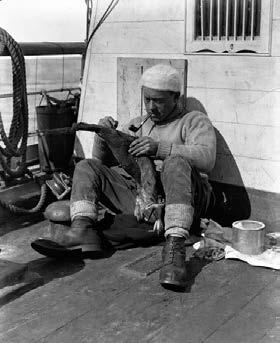
The School’s Librarian, Hilary Cummings, when discussing the rare books donated by the OPC to the School at Feast Services, highlighted George Murray Levick’s (1891–95) Natural History of the Adélie Penguin.
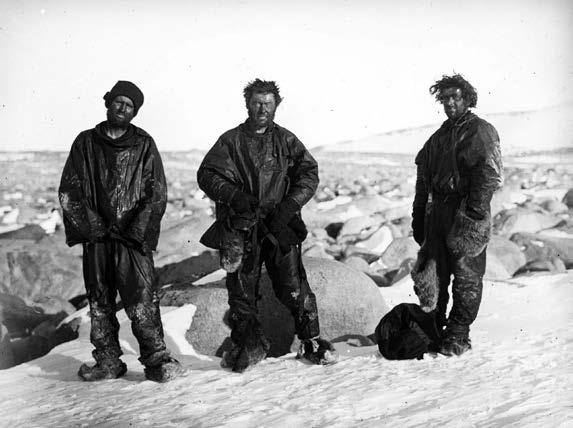
It had included a section about the animal’s sexual proclivities that was deemed to be so shocking it was removed to preserve decency. Levick, who had written the passage in Ancient Greek so only educated gentlemen would understand the depravities he had witnessed, then used this material as the basis for a separate short paper, Sexual Habits of the Adélie Penguin, which was privately circulated among a handful of experts. He had written it while acting as surgeon and zoologist on the British Antarctic Expedition 1910–1913 when he and 5 companions had to survive for seven months in complete darkness, living off the land, in an ice cave and through an appalling Antarctic winter. Mount Levick is named after him in the Tourmaline Plateau in Antarctica.
Levick, who had written the passage in Ancient Greek so only educated gentlemen would understand the depravities he had witnessed.
On his return he served in the Navy’s Grand Fleet in the North Sea and Gallipoli and during WW2 he acted as an instructor in survival techniques at the Commando training school in Scotland. He also found time to found and act as the first Secretary of the Royal Navy Rugby Union, to undertake pioneering work in training the blind for physiotherapy, to establish the Hermitage Craft School for disabled children and to act as Medical Director from 1922 to 1950 of the Public Schools Exploration Society.
Levick died in 1956 at the age of 79. At the time of his death, Major D Glyn Owen, chairman of the British Exploring Society wrote: “A truly great Englishman has passed from our midst, but the memory of his nobleness of character and our pride in his achievements
British Antarctic Expedition 1910–13
cannot pass from us. Having been on Scott’s last Antarctic expedition, Murray Levick was later to resolve that exploring facilities for youth should be created under as rigorous conditions as could be made available.”
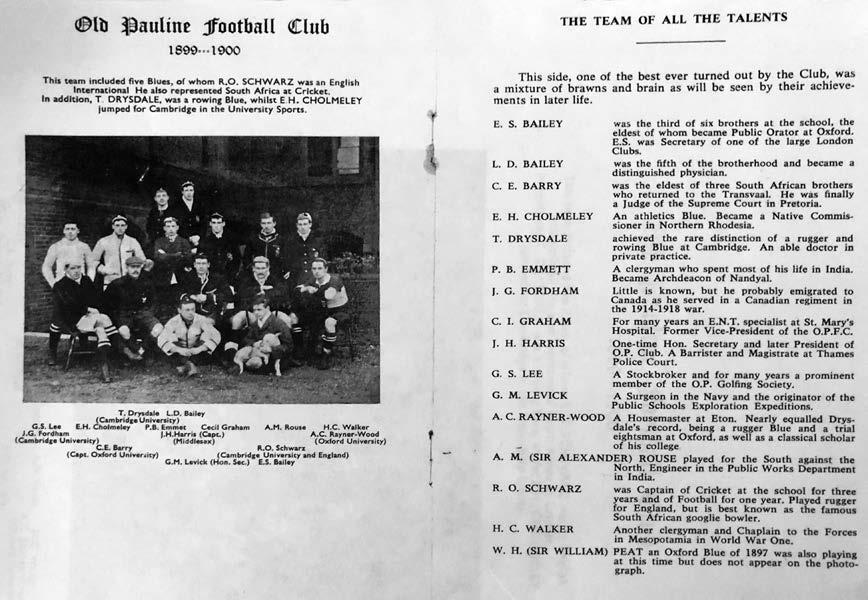
Apposition is something of a mystery to the majority of Paulines. Once a year for over five centuries the cleverest boys attend School for a 16th Century ceremony to collect the Kynaston Prize for Greek, the Isaiah Berlin Prizes for Philosophy or some such.
Atrium blagged an invitation this year. St Paul’s often feels like a 500-year-old institution that pays little or no attention to its history. Admittedly, we have a High Master and a Surmaster. Our head boy is called Captain of School. Half term is sometimes still called Remedy. But our chapel would be full if 5% of the pupils turned up and there is nowhere that all the pupils from senior and junior schools can assemble at the same time other than ‘Big Side’. It feels very 21st Century.
Apposition takes you back to Henry VIII’s reign, just after the printing press had been invented. It starts with Matins with an anthem sung in Latin. The Chairman of Governors in his Mercer robes introduces the ceremony. Four Paulines then declaim. The subjects are diverse and fascinating: China’s Belt and Road initiative, Laurence Binyon, A Sky Survey and Alzheimer’s. The Apposer, Professor Imre Leader (1976–80) reviews their work and recommends to the Master Mercer that the High Master should keep her job for another year. The Master Mercer duly obliges. Pauline violinist Richard Eichhorst plays Solo Sonata No. 4, Movement 1 by Ysaye quite exquisitely. The ceremony then reaches its boring part as the book prizes are handed out and the audience of proud parents claps. The High Master concludes Apposition by acting relieved that she and her husband will not be out on the streets that evening despite 21st Century employment law. The School’s internal inspection is all over for another year and St Paul’s can return once again to the 21st Century and weeks of external examinations.
John Venning (Head of English 1989–2014) writes. Official biographies do not seem to mention Maxwell Caulfield’s (1972–75) schooling. Surprisingly frank in many other details, they do not feature St Paul’s.
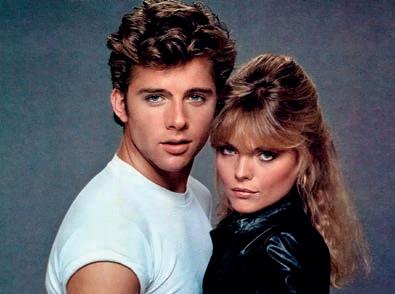
Maxwell Peter John Newby was born in Derbyshire in 1959. By 1965 his parents had parted, though Maxwell seems to have retained some fondness for his Derbyshire origins, referring to himself as a Darby (sic) lad in one email address. His mother reverted to her maiden name, Findlater, and it was as Maxwell Findlater that he first acted, appearing as a child, Ted, in the 1967 film Accident (Joseph Losey) written by Harold Pinter and starring Dirk Bogarde, Michael York, Stanley Baker and Vivien Merchant.
His entry in the St Paul’s Register from Colet Court in Autumn 1972 calls him Maxwell Connell with a stepfather, R Connell, a Motion Picture Executive of Kensington. A member of F Club, he played in a Junior Colts XV and acted in at least two plays, The Boyfriend and Romeo and Juliet. He was popular with friends and had no apparent reason to be unhappy at School.
Most online lives describe him as having been kicked out of his home aged 15, by an American stepfather, a former US Marine called Maclaine. He certainly has a half-brother called Marcus Maclaine, a musician.
The register describes him as leaving St Paul’s from 6Y in July 1975. One of his friends, a fellow wing-forward, met him shortly after his leaving school at the dental hospital in Leicester Square. He was dressed in a skin-tight, lime-green hotel page’s uniform. The explanation for this costume was that he was earning his living, and an Equity card, by dancing at The Windmill Theatre. Dancing, naked, in various revues seems to have enabled him to survive.
By 1979 he was in the USA, ironically able to get a green card because of his stepfather’s nationality. The stage name Caulfield is attributed to his admiration for Holden Caulfield in J D Salinger’s Catcher in the Rye
His revue experience seems to have stood him in good stead in the plays in which he took off some or all of his clothes, but his range was much wider than that for in 1989, he was playing John Merrick in The Elephant Man when he met Juliet Mills, the British actor eighteen years his senior, whom he married with little delay. Their soulmates’ relationship survives happily to this day.
The roles for which he is most popularly remembered were as Michael Carrington in Grease II opposite Michelle Pfeiffer (the film did not have the blockbuster success of its predecessor) and Miles Colby in Dynasty and the spin-off The Colbys. His stage, television and film credits list a remarkable range of roles, occupying every year of a long career. He even appeared for a year in Emmerdale
Luke Hughes (Naysmith) (1969–74) who served in the regiment in the 1980s, during the last decade of the Cold War reveals the Artists Rifles’ Pauline connections.
Foreign terrorists seeking shelter on British soil under the pretence of asylum? Expansion of military forces in Europe? Unforeseen threats the next generation must face? Re-introduction of Conscription or National Service? It is all in recent news so not that hard to imagine.
What is harder to imagine is David Hockney, Damien Hirst, Anthony Gormley, Francis Bacon, Lucien Freud signing up for weekly drill sessions or shooting practice on Hampstead Heath. The idea of the avant-garde artists as part of a woolly Bohemian demi-monde, contemptuous of any whiff of patriotism or support for The Establishment is still deeply ingrained.
It was not always so.
After the Crimean War (1853–56), with half the British Army on garrison duty around the Empire, there were insufficient forces available to be deployed for home defence of the British Isles. This was brought into focus after the Orsini affair, an assassination attempt by Italian nationalists on the life of Emperor Napoleon III in Paris on 14 Jan 1858, when eight people died and 150 were injured in the blast, but not the Emperor. It transpired that Felice Orsini and his co-conspirators, backed by English radicals, had travelled to England and made the bombs in Birmingham. In today’s parlance, that equates to foreign terrorists sheltered on British soil. When in April 1859 France joined forces with the Austrian Empire for the Second Italian War of Independence, there were fears that Britain might get caught up in the maelstrom, not least because the French army was so much larger than what remained in England – a tempting target.
The perceived danger of invasion led to the creation of the Volunteer Force, which over the next century and a half has evolved into what is now known as the Army Reserve.
One of the components was the creation of The Artists Rifles, the brainchild of a young art student, Edward Sterling, which gathered painters, architects, poets, sculptors, musicians and actors into a volunteer military unit based at the Royal Academy. The list of founding members, many Old Paulines, included G F Watts, Dante Gabriel Rosetti, John Everett Millais, Edward Burne-Jones, William Morris (who could not march), John Ruskin, Ford Madox Brown (who mistakenly shot his own dog on exercise), Frederick Leighton, William Blake Richmond, and John William Waterhouse. It also included Gerald Horsley, architect of St Paul’s Girls’ School.
The regiment was popular and grew quickly, first serving with distinction in the Second Boer War and most notably in 1914. So great was the number of volunteers that three battalions were able to mobilise within weeks, setting off for Boulogne on 26 October 1914. They included lawyers, doctors, engineers, sculptors, painters, architects, musicians, opera-singers, stockbrokers, clergymen (one of whom went on to be a Sergeant Instructor in the Machine Gun Corps), three Chinese speakers and a deep-sea diver.
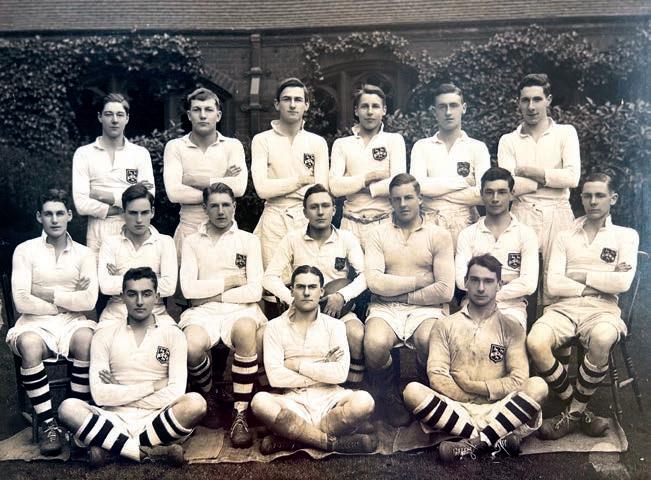
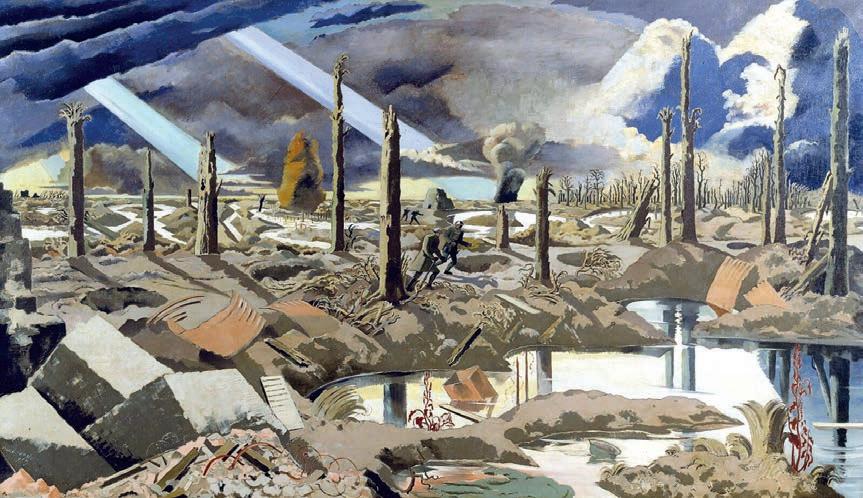
Old Paulines, with their own Officer Training Corps already well-established, were a natural source of recruits; middle-class, well-educated, creative, egalitarian and London-based. Artists like the sculptor Eric Kennington (1900–04), the artists John and Paul
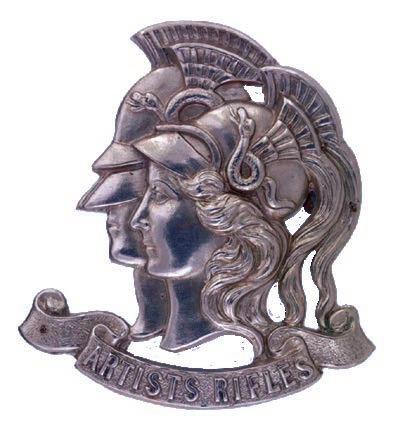
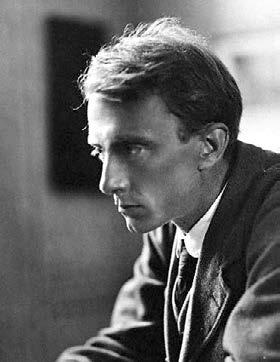
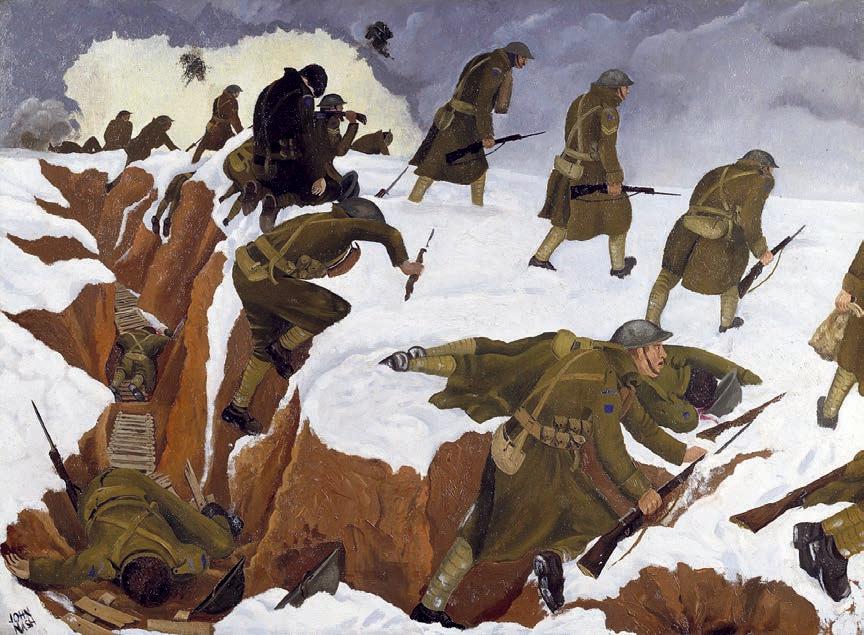
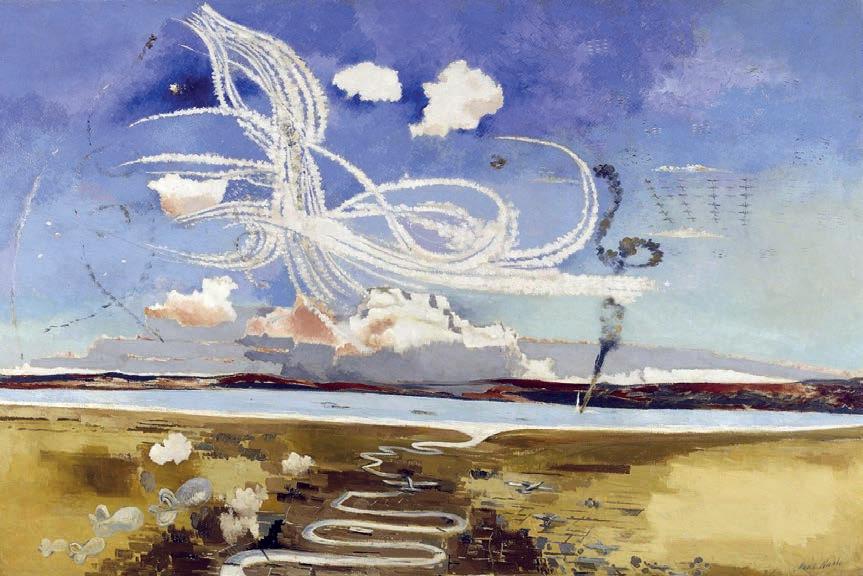
Nash (1903–06), the poet Edward Thomas (1894–95) joined such luminaries of the Artists Rifles as Charles Jagger (sculptor of the Artillery Memorial at Hyde Park), the graphic artist Alfred Leete (creator of the famous Kitchener recruiting poster, ‘Your Country Needs You’) and the poet Wilfred Owen. A larger number were commissioned as officers as soon as they arrived in France, being distributed to the Guards, every infantry regiment and to many of the Corps, including the Royal Navy and Royal Flying Corps. The remainder formed a fighting battalion and saw battles at Passchendaele in October 1917 and at Welsh Ridge near Marcoing on 30 December 1917, captured in oil so vividly by John Nash in his painting, now in the Imperial War Museum, ‘Over The Top’
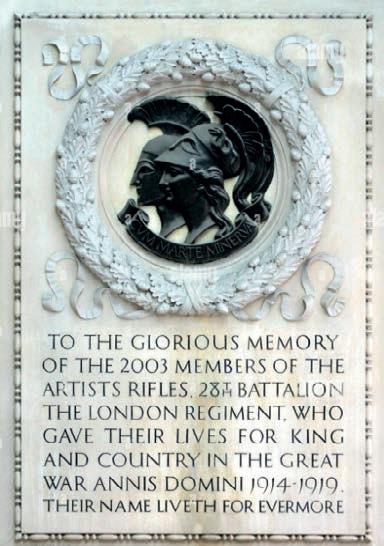
No other single unit suffered such casualties during the WW1. Out of more than 15,000 mobilised, 2003 were killed and over 3,000 wounded. Eight Victoria Crosses, 52 Distinguished Service Orders and 822 Military Crosses were awarded to those who served.
By 1937 the Artists Rifles were designated purely as an officer producing unit. Personnel were trained as officers, with their creative talents much appreciated. Barnes Wallis (inventor of the bouncing bomb) Desmond Llewelyn (‘Q’ in early James Bond movies), the cartoonist Cyril Bird (known as ‘Fougasse’ viz. ‘Careless Talk Cost Lives’) the dance-master Victor Sylvester and the playwright Noël Coward – all wore the uniform of the Artists Rifles.
During the general demobilisation of the Territorial Army at the end
of the war in 1945, the Artists Rifles was disbanded.
But the story continued.
The Special Air Service had a much shorter history but no less impressive. Created from the vision of David Stirling in the North African desert in 1941, where they destroyed more German aircraft on the ground than were destroyed in the air, in Europe, they disrupted German lines of communication, coordinating the activities of Resistance Groups and restricting the free movement of German reinforcements. The travel writer, Eric Newby (1933–36), was awarded the MC for his raiding role on the Sicilian coast in 1942. The British government saw no further need for such an insubordinate irregular force after the war and the SAS Brigade was disbanded on 8 October 1945.
Members of the Artists Rifles had, meanwhile, continued to meet since the end of the war, convinced of the need that even in the atomic age their skills of initiative, endurance and intelligence would be required, entertaining the hope that the Regiment would be re-constituted as part of any post-war Territorial Army. Similarly, some like-minded members of the SAS were still operating in small units supporting SIS activities in Greece. By 1946 it had dawned on the War Office that a Territorial Army should indeed be re-established and that there was an urgent requirement for unconventional troops for ‘special operations’.
On 8 July 1947, 21st Battalion, Special Air Service Regiment, (Artists Rifles) (Territorial Army) was created. Over 100 men who had served in the
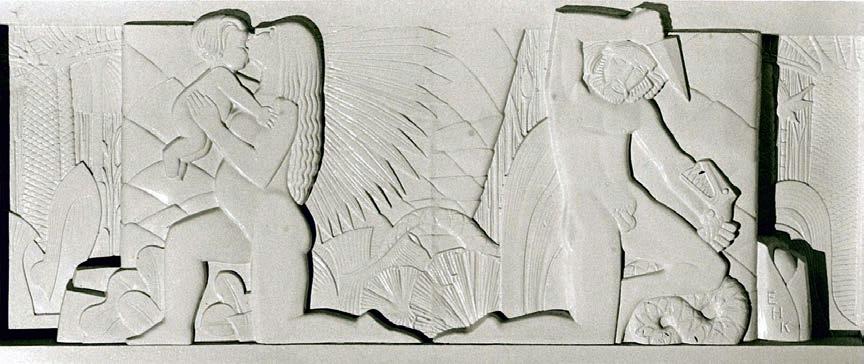
wartime SAS joined the new regiment. Often when two highly individualistic units are merged, one becomes a casualty of its history, its traditions regarded as a curiosity, not particularly interesting and more than likely obsolete. The blend of these two units into 21 SAS was however a very happy one going from strength to strength with highly creative men of action, combining tough fighting with novelty in tactics, everyone a master of their craft, able to operate alone and without orders.
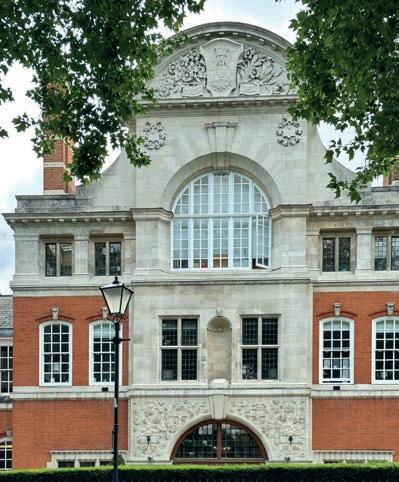
For the last 78 years, now titled 21 SAS (Artists) (Reserve), the Regiment has been at the forefront of special operations serving with distinction during the Cold War, in Bosnia, Iraq and Afghanistan. The last Academy Guard was held at Burlington House, inspected by the then Prince of Wales, as late as 1984 and on the East wall of the entrance is displayed the impressive memorial to those who died in the two World Wars.
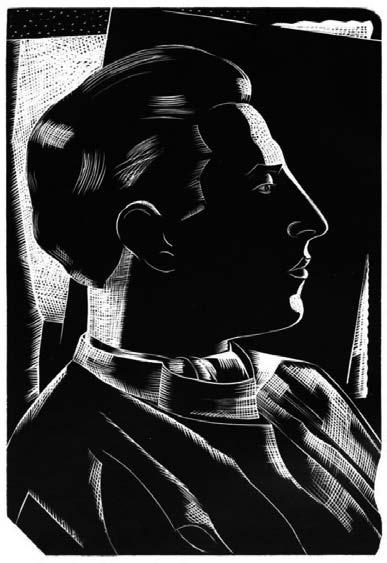
It is the 150th Anniversary of the birth of Edward C Bentley (1887–94) inventor of the clerihew. Below is the entry from Ward’s Book Of Days for March 30th.
“On this day in history in 1956, died Edward Clerihew Bentley.
Bentley was a journalist and novelist, remembered as the inventor of the clerihew, an irregular form of comic biographical verse.
Edward Clerihew Bentley was born on 10th July 1875, at London. He attended St Paul’s School, London, where he became friends with GK Chesterton, and in 1893 went to Merton College, Oxford. After Oxford, he worked as a journalist on several newspapers, particularly the Daily Telegraph, and practised journalism, for his entire professional life.
Bentley invented the Clerihew, aged 16, as a diversion from his schoolwork. Both he and Chesterton became adept at their construction. The clerihew was originally called a baseless biography, but Bentley personalised it by calling it by his unusual middle name.
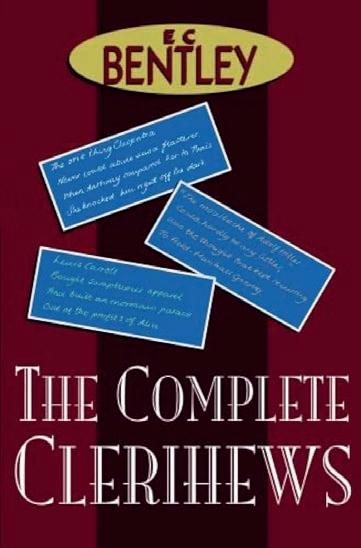
Here is one of the originals:
Sir Humphrey Davy Abominated gravy. He lived in the odium Of having discovered sodium.
In 1905, Bentley published Biography for Beginners, a collection of clerihews, under the name E. Clerihew. This was followed in 1929 by More Biography, and in 1939, he brought out Baseless Biography. In Clerihews Complete, published in 1951, all of Bentley’s clerihews are collected.
Here are a few examples:
The people of Spain think Cervantes Equal to half-a-dozen Dantes; An opinion resented most bitterly By the people of Italy.
The meaning of the poet Gay Was always as clear as day, While that of the poet Blake Was often practically opaque.
I doubt if King John Was a sine qua non. I could rather imagine it Of any other Plantagenet.
Bentley died at his home in London. One wit included in his obituary the lines:
Incidentally, Mr. Bentley Will someone write a Clerihew When they bury you?
Generations of Paulines will remember the ‘Monty Map’ in the Montgomery Room.
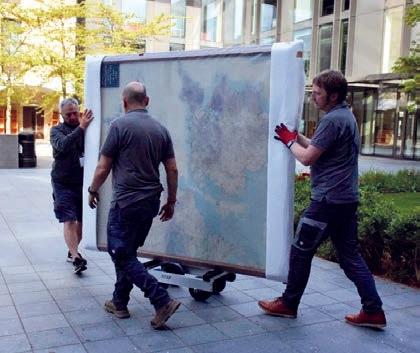
While the room may now be on the ground floor of the School’s new building, the map, used for planning Operation Overlord with Winston Churchill and Supreme Allied Commander US General Eisenhower, still takes pride of place as an incredibly important national historical document. The Old Pauline Club has agreed to support the School by funding the refurbishment of the map and its frame.

Hayhoe (1969–73) remembers his sailing days at St Paul’s.
I was already a dinghy sailor when I arrived at St Paul’s in January 1969 but spent my Saturdays that summer as the scorer for the cricket 2nd XI. On the way to matches, I heard master Alastair Mackenzie (English and Latin departments 1957–93) quizzing the captain about another sport where he spent his Sundays, already performing at national level. This was Philip Crebbin (1965–69) who, with John Tindale (1964–69), played an important role in the establishment of sailing at St Paul’s by winning a Firefly class dinghy (named Tin Bin in their honour) for the school at the Public Schools’ Championship. He went on to represent Great Britain in the 470 dinghy class in the 1976 Olympics where he came sixth, was selected in the Soling keelboat class for the 1980 Games before the British team boycott and was later technical director and skipper in America’s Cup and Admiral’s Cup campaigns.
St Paul’s had a keen sailor on the staff in Dr Mike Hudson (Master in Charge 1966–71), who had raced with the University of London sailing team and at national level in the Firefly class. Building on the Public Schools’ Championship success, he secured funding for the purchase of four Enterprise dinghies which, along with Tin Bin, were kept at London Corinthian Sailing Club (across the river from St Paul’s) from 1970 and named after Old Paulines with maritime connections. This allowed sailing to be established as a school sport and also meant that, without a boat of my own, I could race one of the Enterprises and later the Firefly at London Corinthian and on the “open meeting circuit”.
Although we never matched the Crebbin/Tindall achievement, the St Paul’s team (racing either with 4 or 6 sailors in two or three boat team racing – a high tactical branch of the sport, where you try to secure collectively better finishing places than the competition by slowing them down) was second only to Sevenoaks School (perennial seedbed for numerous sailing stars) among schools in the south-east of England in the early 1970s. Among the School’s sailors in my generation, Will Henderson (1968–73) went on to captain a British Universities championship winning team and win the national team racing championship, narrowly missed selection for the 1988 Olympics, and became the only person to win three time both the prestigious Prince of Wales Cup for International 14 dinghies and Sir William Burton Cup for National 12 dinghies. Others made their mark in the administration of the sport: Michael Camps (1969–73) was UK chair of the International Finn class (for many years one of the Olympic boats) and I served as Vice Commodore of the Royal Ocean Racing Club, organiser of the Fastnet Race.
Sailing remains one of the top sports in the UK, with an unmatched Olympic medal tally and the schools’ team racing scene is thriving, but without St Paul’s. Sadly, despite the odd individual performance by Old Pauline sailors of later generations, I understand that sailing disappeared as a School sport in the 1980s and no longer provides the training ground for sailing talent that it did in my time.
Extract from Alex Harbord’s (Modern Languages department 1928–67) obituary in The Pauline in 1983 for Frank Commings (1931–36, Master 1954–64, Surmaster 1964–74).
“My first encounter with him was at Sports Day in 1932, when we used to have the now outmoded event of ‘Throwing the Cricket Ball’. This event was ‘open’, that is to say, without age limit. Most of the 1st XI competed, naturally. To our surprise, a boy in his first year out of Colet Court had the nerve to enter for it, and win it, to the chagrin of the 1st XI.”
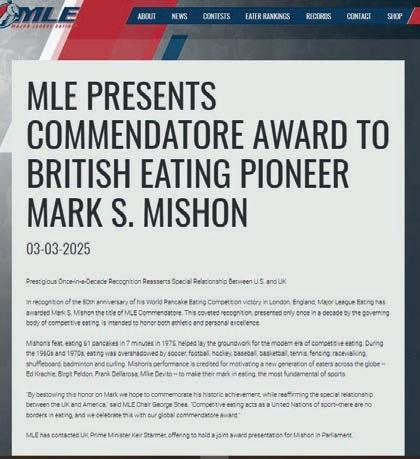
Fifty years on from a recordbreaking feat, Mark Mishon (1969–74) has again been feted.
On the 50th anniversary of his World Pancake Eating Competition victory in London, Major League Eating has awarded Mark the title of MLE Commendatore. Mark’s feat of eating 61 pancakes in 7 minutes in 1975 helped lay the groundwork for the modern era of competitive eating.
“By bestowing this honour on Mark, we hope to commemorate his historic achievement, while reaffirming the special relationship between the UK and America,” said MLE Chair George Shea. “Competitive eating acts as a United Nations of sport – there are no borders in eating, and we celebrate this with our global commendatore award.”
MLE has contacted UK Prime Minister Sir Keir Starmer, offering to hold a joint award presentation for Mishon in Parliament.
In 1975, having only recently left St Paul’s, there was some amusement and amazement among former school mates and masters and he donated a copy of the Guinness Book of Records to the then Walker Library.
Atrium’s congratulations go to Patrick Spence (1981–85) on a stunning evening at the recent British Academy of Film and Television Arts (BAFTA) awards.
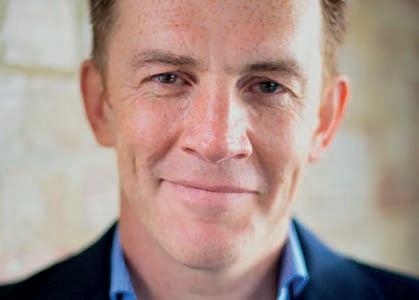
Accepting the prize for limited drama series on behalf of ITV’s Mr Bates vs the Post Office, Spence, who is the show’s Executive Producer, said the response to the show proved that the public “cannot abide liars and bullies”.
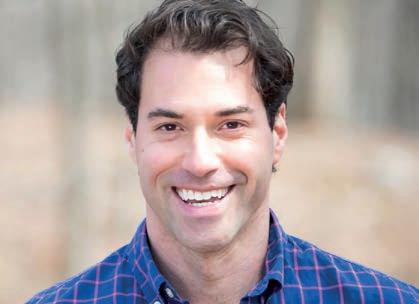
Mike Sacks, who taught at St Paul’s in 2004–05 as a Colet Fellow, is running for congress in New York’s 17th District.
A lawyer and former TV journalist, Mike said he has become so disillusioned with the state of politics in the USA that he has decided to do something about it. While Atrium would never wish to be seen to take sides politically, we wish Mike every success with his future in politics.
Giant, written by Mark Rosenblatt (1990–95), won ‘Best New Play’ at the Olivier Awards, as did John Lithgow for Best Actor and Elliot Levey for Best Supporting Actor.
This was hot on the heels of wins in the categories of ‘Best New Play of 2024’ and ‘Most Promising Playwright’ at the Critics’ Circle Awards.
Sam Grabiner (2007–12) has won his first Olivier Award, picking up ‘Best New Production in an Affiliate Theatre’ for his play, Boys on the Verge of Tears.
The award, which is the highest in British theatre, comes after his 2024 win for best debut at the Stage Awards. “I’m going to take this incredible award as a challenge to keep trying to make work that feels intimate and true,” Sam said in his acceptance speech.
Bernard Law Montgomery (1902–06) is the one we all know about but, as John Dunkin (1964–69) highlights, St Paul’s has others who shared his nickname.
Reymond Hervey de Montmorency (1888–90) was a triple Blue at golf, cricket and racquets. After leaving Oxford he taught briefly at Malvern College before becoming a modern language master at Eton from 1900 to 1927. He became the best golfer produced by the School and was a co-founder of the Old Pauline Golfing Society in 1909. He played for England v Scotland, Amateurs v Professionals and for Britain in the first international GB v USA held at Hoylake (he teed off against Bobby Jones) in 1921; a competition that later became the Walker Cup. De Montmorency’s commitments at Eton restricted his playing opportunities and he did not play in The Open until 1927, when he was 55 years old.
Herbert Montandon Garland-Wells (1921–26) was a triple Blue at cricket, football and fives at Oxford and a successful amateur games’ player who captained Surrey County Cricket Club. In 1929 he won an international cap playing as goalkeeper for England against Ireland at football. His Wisden obituary is complimentary about his leadership. He is described as displaying “a touch of unorthodoxy in the tradition of Percy Fender”. He was liked by the professional players as he showed no sign of any amateur aloofness. After the Second World War his career as a solicitor prevented him from resuming his cricket career. Thereafter his main sports were golf and bowls at which one can only assume he excelled. His nickname was part of the war effort in the Second World War with ‘GarlandWells’ used when sending messages ‘en clair’ in reference to General Montgomery. The Germans never cracked it.
Sir Edward Montague Compton Mackenzie’s (1894–90) time at School is thinly disguised in his third novel Sinister Street (1913). St Paul’s is St James’. High Master Walker is Dr Brownjohn. Mr Elam is the eccentric Mr Neech. During the First World War Mackenzie served with British Intelligence in the Mediterranean. He loved it ‘as a boy enjoys playing pirates’ and his greatest adventure and triumph as ‘Director, Aegean Intelligence Service’ was the recapture of the Cyclades Islands. After the publication of his Greek Memories in 1932, he was prosecuted under the Official Secrets Act for quoting from supposedly secret documents. Both Monarch of the Glen, published in 1941, and the TV series it inspired were enormously successful. His most famous book is probably Whisky Galore, published in 1947 and turned into a classic film. Away from writing and being a spy, he was President of the Croquet Association and the Siamese Cat Club. He co-founded Gramophone, the still-influential classical music magazine. He was also a founding member of the SNP. He is even believed to have presented the Snooker World Championship Trophy to Joe Davis.
In May, the Director of the Parker Library, Professor Philippa Hoskin, held an event to celebrate the publication of a Festschrift in honour of Life Fellow Dr Patrick Zutshi (1969–72)
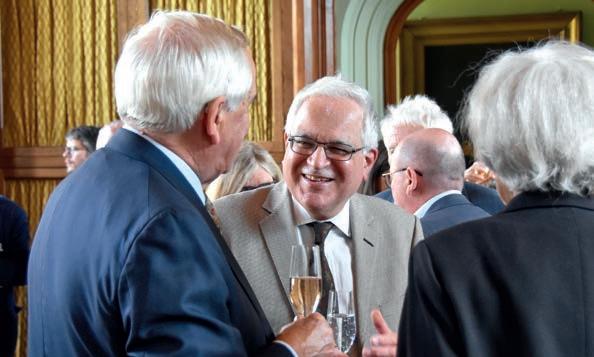
Dr Zutshi, a medieval historian, has been a member of Corpus Christi College, Cambridge, for 50 years and was until 2015 Keeper of Manuscripts and University Archives in Cambridge University Library. He is a member of the Commission Internationale de Diplomatique, and his principal research interests are the papacy in the later Middle Ages.
The Festschrift, Popes, bishops, religious, and scholars: studies in medieval history brings together essays by over 20 of Patrick’s colleagues and friends, all distinguished scholars in medieval history. The volume reflects both Patrick’s wide scholarly interests, ranging from the administration of the papal curia to intellectual and legal history and the mendicant orders, and his extensive network of colleagues and collaborators.
Professor Hoskin, who contributed an essay to the book, said, “Patrick and I have known each other and worked together for nearly 20 years on various projects. We held the event in the Parker because Patrick is a long-standing Corpus member and partly because of the manuscripts and early printed books arrayed around us. Not only is Patrick a wonderful scholar, he was keeper of the Muniments at the University Library for many years.”
Atrium warmly congratulates Dr Zutshi on his distinguished career and the publication of this book in his honour.
Chris Rampling (1986–91) has been appointed the UK’s Ambassador to the Netherlands. Chris said it was “An enormous honour to be appointed His Majesty’s Ambassador to the Netherlands from this summer. A wonderful country and a crucial partner for the United Kingdom.” Chris has been working as Director of Security at the Foreign, Commonwealth and Development Office, and was previously the UK Ambassador to Lebanon. He was awarded the Companion of the Order of St Michael and St George “for services to British Foreign Policy and National Security” in the King’s Birthday Honours List. He is an OPC Vice President.
Professor Stuart Russell (1974–78) has been appointed a Fellow of the Royal Society. Stuart studied Physics at Oxford and Computer Science at Stanford before joining the faculty of the University of California, Berkeley, in 1986. He is also a Professor of Computational Precision Health at the University of California, San Francisco, an Honorary Fellow of Wadham College, Oxford and a Vice President of the Old Pauline Club.
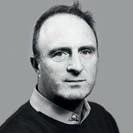
James Harding (1982–87), Editor and Founder of Tortoise Media, has been appointed as Editor-inChief of The Observer after Tortoise Media acquired the newspaper. Previously, James served as Director of News and Current Affairs at the BBC (2012–18). He was also Editor of The Times (2007–12), winning Newspaper of the Year in two of the five years he edited the paper. On taking over recently, James said that The Observer will be independent, liberal and internationalist under Tortoise.
Tom Adeyoola (1990–95) has been appointed as Executive Chair at Innovate UK, the UK’s Innovation Agency which helps businesses develop the new products, services and processes they need to grow through innovation. Tom said: “I’m thrilled, excited, honoured and rightly anxious to do justice to the opportunity and responsibility. I may be a start-up guy and this an arm’s length government bureaucracy, but it’s a role I couldn’t possibly turn down, as it represents the biggest lever opportunity there is to turbocharge the UK innovation ecosystem.” Tom is an OPC Vice President and a School Governor.
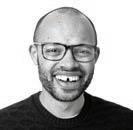
Stuart Shilson (1979–83) was awarded a CBE in the King’s Birthday Honours List “for services to the Order of St John and to Change Management”.
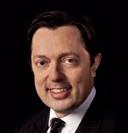
Andrew Makower (1974–79) was awarded an OBE in the King’s Birthday Honours List “for services to Parliament”.
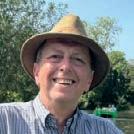
Atrium (unless otherwise described) uses reviews provided by authors or their publishers.
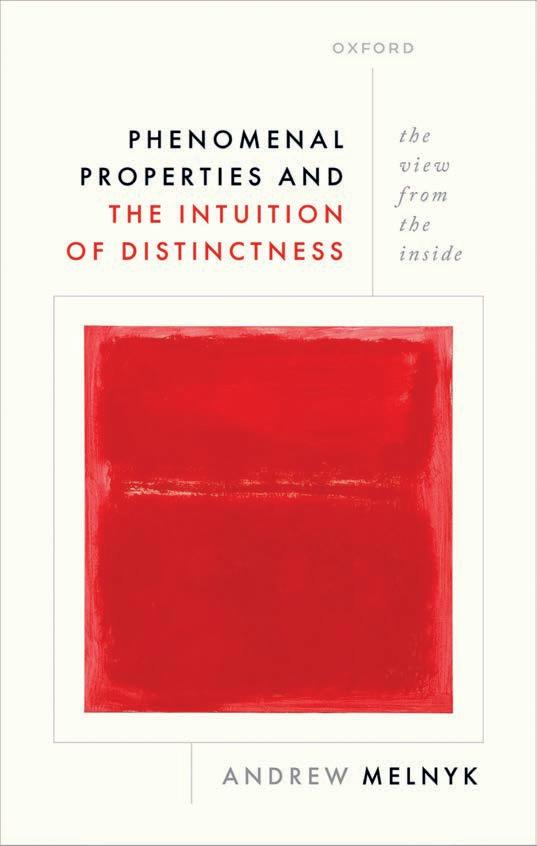
Phenomenal Properties and the Intuition of Distinctness: The View from the Inside
Andrew is Professor of Philosophy, University of Missouri.
We experience the intuition of distinctness when, for example, we attend introspectively to the phenomenal redness of a current visual sensation and it seems to us that very property could not literally be a physical property of neural activity in a certain tiny region of our brain. The book begins by arguing that the intuition of distinctness underlies certain otherwise puzzling attitudes manifested in debates both inside and outside philosophy about whether physicalism (or materialism) can accommodate phenomenal properties (or qualia). It then argues systematically against the dualist suggestion that the intuition of distinctness gives us reason to reject the physicalist view that phenomenal properties are physical, and to adopt property dualism instead. In the course of the argument, it defends an unorthodox version of representationalism and offers positive accounts of what makes our introspective knowledge of phenomenal properties special, how introspection could tell us that an introspected property is physical, and what the subjectivity of phenomenal properties could be. Finally, after critically surveying previous attempts to account for the intuition of distinctness consistently with physicalism, it elaborates a novel explanation of the intuition of distinctness. The intuition arises because introspection is, in a certain way, conceptually encapsulated, as a result of which we are unable to do something that we can do in the case of every other kind of identity claim that we believe or entertain, and therefore unable to believe, or even to imagine believing, that an introspected phenomenal property is physical.
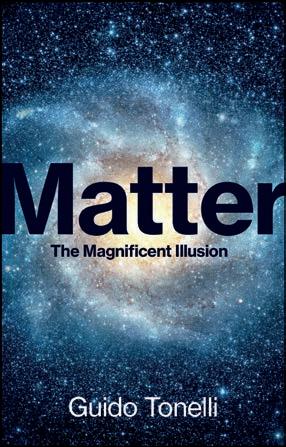
Translated by Edward Williams (Modern Languages and Creative Arts Departments 1983–2020).
Consultant Dr Ryan Buckingham, Head of Physics.
What are we made up of? What holds material bodies together? Is there a difference between terrestrial matter and celestial matter – the matter that makes up the Earth and the matter that makes up the Sun and other stars? When Democritus stated, between the fifth and fourth centuries BCE, that we are made up of atoms, few people believed him. Not until Galileo and Newton in the seventeenth century did people take the idea seriously, and it was another four hundred years before we could reconstruct the elementary components of matter.
Everything around us – the matter that forms rocks and planets, flowers and stars, even us – has very particular properties. These properties, which seem quite normal to us, are in fact very special, because the universe, whose evolution began almost fourteen billion years ago, is today a very cold environment. In this book, Guido Tonelli explains how elementary particles, which make up matter, combine into bizarre shapes to form correlated quantum states, primordial soups of quarks and gluons, or massive neutron stars. New questions that have emerged from the most recent research are answered: in what sense is the vacuum a material state? Why can space-time also vibrate and oscillate? Can elementary grains of space and time exist? What forms does matter assume inside large black holes? In clear and lively prose, Tonelli takes readers on an exhilarating journey into the latest discoveries of contemporary science, enabling them to see the universe, and themselves, in a new light.

Most of Graeme’s professional life was as principal of a company involved with the booking of session musicians and singers to perform on records, television programmes including sixteen series of Spitting Image and live events, some of which are still being played.
“Jane Austen thought that, had she accepted young Harris Bigg Wither’s proposal of marriage, she would indeed have become related by marriage to this extraordinarily handsome young man.”
A Piece of Pocket Handkerchief is based on truth and with new historical findings. Most of the main characters are in the family, friends and acquaintances of Jane Austen, as do other well-known personages of the time such as Byron and Harriet Williams.
The leading man, Hal Mildmay, falls in love with Harriet Bouverie, the sister of his deceased wife, she having died in childbirth. Trouble being, Harriet is already married. Her enraged husband takes legal action against him. If found guilty, Hal will suffer the largest damages ever awarded. Further, should the divorce be passed by Act of Parliament the couple will be forbidden by Law to marry each other on pain of imprisonment and any of their children will be described as illegitimate and with no name.
“All in the room agreed with his sentiments that divorce was wholly unfair between husbands and wives and was totally unbalanced and completely tilted towards the men. ‘When will this inequality be righted?’ he said to finish. With hollow laughter, Hal said that Boney could reappear from St Helena before that would occur.”
The story tells of the couple’s struggles against both ecclesiastical and parliamentary divorce laws of the time as well the acts against them by her husband. It tells of their lives leading up to this perilous situation, how were the Austens connected. Does their love sustain them throughout? Does their story have a happy ending? Inspired by a print overwritten in graphite and published in 1799, A Piece of Pocket Handkerchief is widely available on paperback, hardback and eBook.
Operation Dominant Dragon: Communist China’s attempt to subjugate the United States of America
Operation Dominant Dragon is Bruce Howitt’s sixth novel.
Daniel Jacobs and his partner Matthew Wagner operate a world class security agency, Albion Security, out of their Palm Beach, Florida offices. An unsolicited phone call from Bill Haldane, the head of a large British defence industry company, involves Dan and Matt in a massive plot by the Chinese Communist Party to subjugate the United States. Haldane is murdered in California and his chief financial officer Ariella Goldman carries on meeting with Dan and Matt. The Chinese secret service, MSS, initiate a relentless nationwide hunt in an attempt to kill her. Dan’s and Matt’s skills as former SAS and Delta force operators keep Ariella one step ahead of the Chinese thugs sent to eliminate her.
The Chinese Politburo is divided over their Operation Dominant Dragon. The hawks led by Admiral Zwang Li are all for attacking US soft targets and infrastructure. The more pragmatic President is opposed to Li’s rash adventures. Albion provides protection to Ariella in the US and in her home base in London. Ultimately thanks to the Albion efforts the Chinese Admiral’s plans are thwarted and the Presidents of the US and China agree on a new era of peace and prosperous trade.
Go Quicker Sound Slower are revealing comedy diaries exposing the seedy world of voice overs.
Jay Kay (not his real name), top voice over of the period the diaries were written, never wanted to publish them due to their coruscating and acerbic revelations about the world of voicing which he felt would ruin his career if they ever saw the light of day. On Jay’s tragic disappearance climbing Everest, his ex-partner Maria (not her real name) gave the diaries in a Tesco bag to his mate Roop (not his real name) so that he might share them with the world. Roop could not be bothered so Maria took them back and kept them under the sofa where actor Jonathan Kydd, who had come over for a coffee, found them while looking for a dropped biscuit. He offered to edit them for a small fee which she has not come up with as of yet. But here it is.
Jonathan explains. ‘These diaries are great fun. They are an irreverent look at the life of the modern actor who far from inhabiting the clichéd world of ‘luvvy’ theatre, realises there is more money to be made in advertising, be it voice over or in vision, the odd bit of sitcom or comedy drama, and the occasional cartoon and video game. But it also follows what was happening in our diarist JK’s personal life at the time, his fruitless attempt at keeping his relationship with his utterly unsuitable gym instructor girlfriend going, the girls he attempts to replace her with, the group of hapless ‘characters’ who are his friends, (including the morose Derek Fazakerly who spends most of his professional life dressed as a chicken), his gloriously eccentric mother’s attempts to get him to become a DIY expert on the family home, and the bunch of self-serving personalities with whom he attempts to earn his living – like the entire cast of the Henry Hedgehog cartoon series and his bizarre voice agent who frequently forgets to tell him when he is working. They are a comical dip into the life of an obsessive.’
PS most celebrity names have been thinly changed to prevent litigation.
Kate Loveman is a Professor in English Literature at the University of Leicester.
During the 1660s, Samuel Pepys (1640s) kept a secret diary full of intimate details and political scandal. Had the contents been revealed, they could have destroyed his marriage, ended his career, and seen him arrested. This book explores the creation of the most famous journal in the English language, how it came to be published in 1825, and the many remarkable roles it has played in British culture since then. Kate Loveman – one of the few people who can read Pepys’s shorthand – unlocks the riddles of the diary, investigating why he chose to preserve such private matters for later generations. She also casts fresh light on the women and sexual relationships in Pepys’s life and on black Britons living in or near his household. Exploring the many inventive uses to which the diary has been put, Loveman shows how Pepys’s history became part of the history of the nation.
Kim – a biography of MG founder Cecil Kimber
Cecil Kimber – invariably known as Kim – created the MG marque in the 1920s. Many books have been written about the cars, but this is the first biography of this leading personality in the inter-war British motor industry. Drawing on the memories of those who knew Kimber and who worked with him, it tells the full story of the man behind those famous initials. Written with the support of members of his family, the book features 750 illustrations, including many photos by Kimber himself. Jon Pressnell is a journalist and automotive historian. He has written for Classic & Sports Car magazine since the 1980s. Amongst his books are histories of the Mini, the Citroën Traction Avant and DS, and the AustinHealey. Morris – The Cars and the Company won the 2014 Michael Sedgwick Award presented by the Society of Automotive Historians in Britain, and recently he has authored The Lamborghini and Marcel Pourtout –Carrossier. Both these titles have received major awards, with the latter being winner of the 2022 Guild of Motoring Writers Montagu of Beaulieu Trophy.
Jon lives in south-west France and works additionally as a book editor and editorial consultant. An MG owner for more than 30 years, and a former editor of Enjoying MG magazine, he has a particular interest in the marque, about which he has written extensively. For Kim – a biography of MG founder Cecil Kimber he has received the Nicolas-Joseph Cugnot award presented by the Society of Automotive Historians.
“Most of us respond to the diaries with gratitude untampered by extravagant revulsion about the author’s morals. Publication diminishes the reputation of many diarists. Pepys, despite Loveman’s strictures, upholds his claims to have been a great man – ‘an unparallelled figure in the annals of mankind’, in the words of Robert Louis Stevenson – by the great thing that he did.” MAX HASTINGS, The Times
“Superb...packed with fresh material...one of the finest motoring biographies.”
CLASSIC & SPORTS CAR
In January 2002, an Old Pauline, Lieutenant Colonel Edward Dymoke Murray (1924–28), OBE DSO, nicknamed ‘Moke’, died at his home in Worthing, Sussex, aged 92. His funeral was attended by three people: two neighbours (a married couple who had been his informal carers in his later years); and a representative from the Brigade of Gurkhas, with whom he had served for the majority of his military career. There were no obituaries, other than a short notice in the Gurkha Gazette.
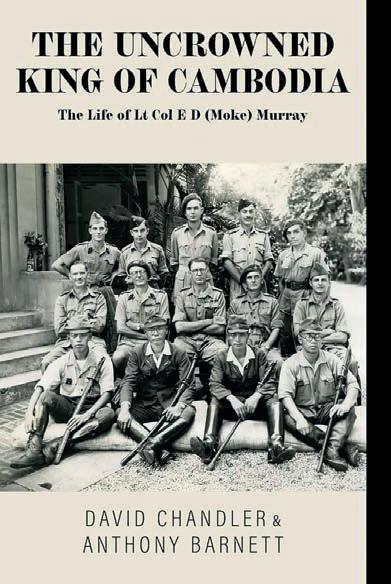
This Eleanor Rigby-esque send off belies Moke’s noteworthy record as a soldier with the British Indian, later British, Army: in India itself and Burma during World War II; in French Indochina immediately after the war, where he was in charge of Allied Land Forces in Cambodia for several months; and in Malaya during a period of insurrection known as the Emergency. On returning to the UK, he led a contingent of Gurkhas in the procession for the Coronation of Elizabeth II. Moke’s journey from military distinction to obscurity is now the subject of a biography by Anthony Barnett, a journalist; and David Chandler, professor emeritus at Monash University, Australia, and one of the foremost western historians of recent Cambodian history. The genesis of the book is a story in itself. After the fall of the Khmer Rouge regime in Cambodia in 1979, Barnett started visiting and writing about the country, predominantly for the New Statesman. He came across
a reference to Moke’s role there after the war in an official history and got in touch. This led to their meeting in 1981, when he conducted an in-depth interview with Moke, focusing on his role in Cambodia. Barnett planned to publish the account but was distracted by other projects. Meanwhile he met Chandler at a conference on Cambodia and sent him the interview transcript. Years later, Chandler asked if he could publish the transcript with an introduction written by him, and in discussions, the authors determined that it could form the basis of a biography, with the trajectory of Moke’s life illustrative of the decline of what Barnett calls the “imperial officer class” which followed the post-war winding up of the British Empire. Chandler duly researched Moke’s life, piecing together the various strands in official records, and using Moke’s own archive, with the authors speaking to the few people they could locate who knew or had connections with Moke. Barnett writes the introduction and a chapter on the Coronation. The rest of the book is written by Chandler.
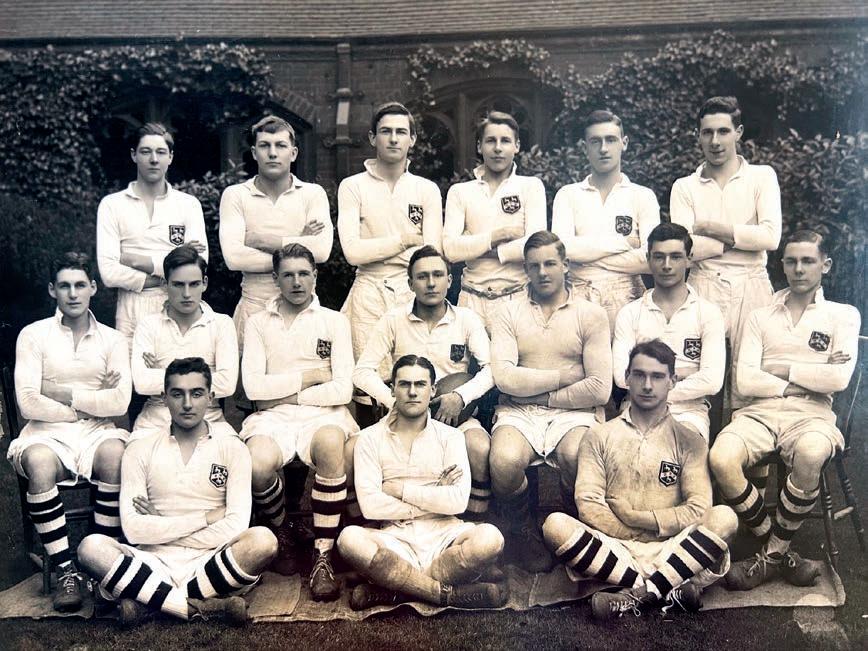
unit of the Indian Army; entry was highly competitive. He eventually succeeded and, in March 1934, joined the 2nd Battalion of the 4th Prince of Wales’ Own Gurkha Rifles (2/4 GR).
The following year, he married and returned on leave to England; his wife gave birth to a son, Colin, in May 1936. In August, Moke returned to his regiment in India. His wife and child did not accompany him; for reasons that are unknown, he never saw either of them again, though he did pay for Colin’s education. He was divorced in 1947. Colin attempted, unsuccessfully, to contact Moke in the 1960s (Colin did not know about when his father had died until contacted by Chandler for this book).
Moke later said he regarded his years fighting in Assam and Burma as the highlight of his career.
Moke was born in 1910 into a prosperous family in Farnham, Surrey. His father had been a member of an insurance syndicate at Lloyd’s, and was unfortunately bankrupted at one stage, the family surviving it seems on money from Moke’s maternal and other family sources. The family moved to Putney and Moke attended St Paul’s between 1924 and 1928. He was not particularly academic; he entered the stream known as Army/ Engineering, usually reserved for those not destined for university. He was however, active in other spheres, playing for the 1st XV, serving as quartermaster for the Officers’ Training Corps, and becoming a prefect.
On leaving school, it seems he worked as a teacher in Surrey, and joined the Territorial Army as a part time volunteer, and then as a private. In 1930, he applied for a full service commission, which he duly obtained, becoming a second lieutenant. In January 1932, he transferred to the Indian Army, which then consisted of about 150,000 Indian troops and 6,500 British officers, all stationed in the subcontinent. He initially joined the York and Lancaster Regiment in New Delhi. At the end of 1932, he was vetted by the Gurkha Brigade, which was at that stage the most prestigious
Back in India, Moke saw combat for the first time when 2/4 GR took part in a campaign against a religious leader, the Faqir of Ipi, in Waziristan (an area in what is now Pakistan which borders Afghanistan). In January 1939, he transferred to the province of Assam on the other side of India, adjacent to Burma, to join the Assam Rifles, a force made up of Gurkha battalions with police responsibilities in the region. They were assigned to protect Digboi, the company town of the Assam Oil Company, where the workers were involved in a lengthy and intermittently violent strike. The strikers fought the Assam Rifles, and Moke claims to have killed the “ringleader”. A question was later raised in the House of Commons about the use of troops against the strikers.
In 1941, the Japanese invaded Burma, defeating Allied forces there and occupying the whole country by mid-1942. Moke, who had reached the rank of Major, was transferred to V Force, an organisation conceived by the Allied Commander, General Wavell, for the purpose of operating along the India-Burma border to “harass the Japanese lines of communications, patrol enemy occupied territory, carry out…sabotage and provide...intelligence”. Accounts describe Moke’s detachment as doing exceptionally well in these activities. By March 1944, Moke was commanding a V Force outpost in the Angouching Hills on the border, which was over-run by a Japanese infantry company; many were killed but a wounded
Moke managed to escape, retreating alone through the jungle before being picked up by an Indian Army patrol which took him to safety.
By August, Moke had recovered and joined the 4th Battalion of the 10th Gurkha Rifles (4/10 GR), part of the 20th Indian Army Division led by a General Gracey, itself part of the 14th Army led by General Slim. The 14th Army engaged the Japanese in the battles of Kohima and Imphal, lasting several months, and involving fighting at close quarters with heavy losses on both sides. The Allies won these battles, so preventing a Japanese incursion into India. The Allied forces then pursued the retreating Japanese through Burma, with many vicious engagements in which Moke played a full part (one war correspondent described 4/10 GR as the “non-stop Gurkhas”), becoming commander of the Battalion in June 1945. The Japanese were ultimately defeated in Burma. The war itself ended following the dropping of atomic bombs on Japan in August 1945. Moke later said he regarded his years fighting in Assam and Burma as the highlight of his career.
The Japanese had occupied most of South East Asia, and their sudden, unexpected surrender left standing armies throughout the region. The Allied’s South East Asia Command (SEAC) was tasked with occupying parts of the region to disarm the Japanese troops and arrange for their repatriation and that of the prisoners of war they held. For this purpose, the 20th Division, under General Gracey, was assigned to the southern part of French Indochina (French colonies and protectorates that covered what is now Vietnam, Cambodia and Laos). 4/10 GR, under Moke’s command, joined Gracey in Saigon, Vietnam, in September 1945.
The situation in Saigon was chaotic. The French authorities had aligned with the Vichy regime, and co-operated with the Japanese, but the few French colonial troops had been confined to barracks after the Japanese took direct control in March 1945. After the surrender, the Japanese stood back as various political and criminal groups filled the vacuum by fighting each other and harassing the ‘colons’ (as the
local French were known). A putative Vietnamese government had installed itself in key positions in the city, part of the Viet Minh, an independence movement under Ho Chi Minh, who had declared Vietnamese independence in Hanoi, northern Vietnam, in August. Gracey did not recognise them (pointing out they had no official recognition from the Allies) and to restore order, released the French police and local troops, who ousted the Viet Minh, but this only added to the chaos as they took ‘revenge’ on the local Vietnamese population, whilst the Viet Minh retreated to the suburbs and countryside. Gracey declared martial law, but his own Division (not all of which had reached Saigon) was too meagre to maintain order, so he permitted re-armament of Japanese troops, to operate under British command. Against this background, Moke was deputed to secure the power and water supply in the northern part of the city. Soldiers under him included two Japanese battalions – so he was effectively commanding, in a conflict situation, soldiers from the same Army he had been fighting against only weeks before. His force did engage the Viet Minh, preventing them crossing a bridge into his sector, with the Japanese, under his instruction, catching them in an ambush.
Moke’s Battalion was fully engaged; many of his troops were familiar with such forms of warfare from their time in India and Burma.
In 1951 he was awarded the DSO for “gallant and distinguished service”.
Gracey’s remit included Cambodia, and on 9 October 1945, he sent Moke to its capital, Phnom Penh, as Supreme Commander, Allied Land Forces Cambodia: effectively the “uncrowned king” of that country as he later described himself in his interview with Barnett. Moke’s orders were to “take command of Allied and Japanese troops in the city, maintain law and order and ensure the stability of the Cambodian government”.
Cambodia was officially a French Protectorate, with a monarch, the recently crowned King Sihanouk, as nominal head of state. The prime minister, Son Ngoc Thanh, however, was considered unreliable and potentially disruptive by the French: he had been exiled to Japan and was considered both anti-French and pro-Viet Minh (he was half Vietnamese), and in favour of independence. The Allies, including French representatives, who had now returned to Indochina, were concerned to avoid a repeat of the chaos that had engulfed Saigon, and wished to remove Thanh. Moke, supported by Gracey, was sympathetic but considered it unwise for the British to be directly involved – it had to be a French initiative. Accordingly, General Leclerc (a Free French officer who had been present at the liberation of Paris and who had arrived in Saigon in October as Commander of the French forces) flew from Saigon to Phnom Penh, whilst Sihanouk was judiciously away on a pilgrimage. Moke arranged a meeting with Thanh at his headquarters, ostensibly to meet Japanese officers. Instead, Leclerc arrived with an armed escort, arrested Thanh and took him back to Saigon. As Gracey later reported to SEAC headquarters, it was “altogether a very satisfactory coup d’etat by the French with a strong flavour of Ruritania”. Sihanouk returned to Phnom Penh the next day and a ceremony was held where he symbolically acknowledged French protection.
Moke spent the next few months in his role in Cambodia, a period largely passing without incident although he did use Japanese troops under his command to deter a Viet Minh contingent who were approaching Phnom Penh. On 25 November, Moke presided over the formal surrender of a Japanese Division. In December 1945 he handed over to a French Commissioner and returned to Saigon. The 20th Indian Division’s mission came to an end in early 1946 and Moke returned to India. With the advent of Indian independence in 1947, the four Gurkha Rifle regiments became part of the British Army. Moke asked to stay on as a British Army officer; he was appointed Commanding Officer of the 2/7 GR Battalion, stationed in Kuala
Lumpur in British Malaya. In 1948, a communist force, led largely by Malay ethnic Chinese, started the insurrection which became known as the Emergency. The insurgents were based in the jungle, using guerrilla tactics against villages and towns, and the rubber plantations that covered the Malay peninsula. Moke’s Battalion was fully engaged; many of his troops were familiar with such forms of warfare from their time in India and Burma. In 1951 he was awarded the DSO for “gallant and distinguished service”. In 1953, Moke decided to relinquish command of 2/7 GR. He was then selected to lead a contingent of 160 Gurkhas, representing the whole Brigade, at the Coronation of Elizabeth II in May of that year.
One can only speculate as to why Moke stopped working after leaving the Army, and why he seems to have cut himself off from family; those traits seem to be more related to his own decisions and personal circumstances (the authors themselves suggest alcohol problems), rather than doors deliberately being closed.
Moke was posted to London in 1954 as support for the Assistant Adjutant General and Gurkha Liaison Officer. In 1956, he was selected as one of four British representatives at the coronation of the King of Nepal. He married again, settling in Farnham with his wife, evidently from an independently wealthy background. They had a daughter and relocated to the Channel Islands. However, by 1968, the relationship was over. His wife and daughter moved on to Spain, whilst Moke returned to England, ultimately settling in Worthing where he quietly lived out his days, without again working or participating in any sort of public role.
The final chapter of the book is entitled “Flotsam of Empire”. The authors argue that men like Moke, burdened by attitudes forged by class background and limited by experience of Empire, were unsuited to modern Britain, where they simply could not fit in. Barnett states that one of the purposes of his Introduction is to describe “the peculiar, shapeshifting character of the British nationalism that led to Moke being ignored”. The thesis is that, in order to continue to claim great power and status after World War II, Britain had to forge its special relationship with the United States, by divesting its Empire (turning it into the Commonwealth) and becoming a cornerstone of NATO. Against this background, imperialist relics like Moke were an embarrassment to be deliberately ignored. One can debate this overall view, but I am not sure that there was such a deliberate side-lining. There are many examples of ex-colonials, military and civilian, who went on to successful careers in business or the professions or into public life, as regular readers of obituary columns in the Times or Telegraph can attest. One can only speculate as to why Moke stopped working after leaving the Army, and why he seems to have cut himself off from family; those traits seem to be more related to his own decisions and personal circumstances (the authors themselves suggest alcohol problems), rather than doors deliberately being closed.
In this respect, there is a rather distracting element in the book where the authors, faced with gaps in the sources, resort to assumptions or speculation about what Moke may have thought or done. Nevertheless, they are to be commended for producing a fascinating book which draws together the strands of Moke’s life to uncover his distinguished record and reveal the person who would otherwise simply be a name in the footnotes of academic texts and official reports. The book is also a welcome adjunct to important episodes in postwar Indochina. The conflicts that originated then went on to develop into wars of global significance, the reverberations of which are still being felt today.
Neil Wates (1999–2004) looks at
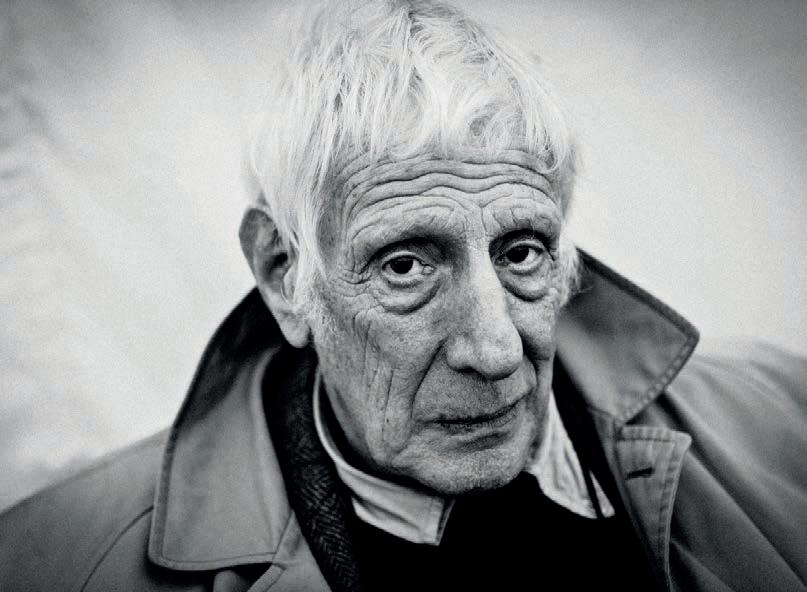
There were four other students in my Upper Eighth Theology set. A small class, but an engaged one – all five of us would go on to study it at university. Whilst we had spent the Spring of 2004 with some rather tedious ecumenical history, polymath Jonathan Miller (1947–53) had spent that time pitching a show to the BBC for release later that year. It was to be called Keeping the Faith – Jonathan Miller’s Brief History of Disbelief. The conceit was that he – a self-described ‘reluctant atheist’ – would lead viewers on a personal journey exploring the origins of his own lack of belief as well as uncovering the hidden history of atheism. He started this journey at School and so he duly arranged to come back to Barnes and film content for his show. Who else to pick on but some budding final year theologians.
It would be an ‘ordinary’ lesson, we were told, but the camera would pan back to Dr Miller, in a deep study at the back of the class. He would then engage in a post-lesson debate with some bright young minds about the concept of belief and its folly. We (ironically) now duly converted, would be filmed in violent agreement with our learned guest. How proud I was when not one but two of my
colleagues (both avowed atheists) steadfastly refused to countenance any pontificating and met this overdramatic moralising square on. Forty minutes of heated Pauline conversation later, Dr Miller – an actual, real life member of Beyond The Fringe sitting there with me – shook us all by the hand, thanked us all sincerely (but maybe just a little patronisingly?) and left us to pick the bones out of the afternoon we had all shared.
I was a bit confused by it all, not least as I was hoping he would be really funny. After all, he was one quarter of a production that had redefined the concept of modern satire and opened the floodgates for a raft of bright young things to breathe fresh life into British comedy. I was already hooked on live comedy by the time of his visit, rapidly assimilating it into my own scholastic identity, and a nerdish love for it has stayed with me still, twenty plus years later.
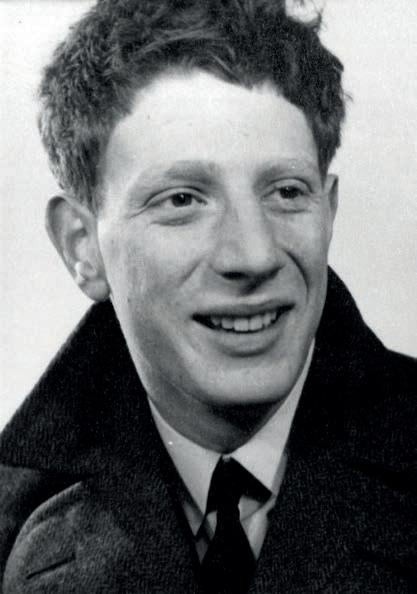

Forty minutes of heated Pauline conversation later, Dr Miller – an actual, real life member of Beyond The Fringe sitting there with me –shook us all by the hand.
In an earlier edition of Atrium, David Herman (1973–75) provided a much better write up of the life and achievements of a man he knew personally than can be produced here. Suffice it to say Dr Miller was a polymath, excelling in three astonishingly difficult careers (comedy, medicine, opera) despite all the while feeling like an agonising underachiever. A familiar Pauline feeling, perhaps – even if an extreme manifestation of it.
There have been many other profoundly talented OPs who manipulate language and use communication and speed of thought to rise to the top of their careers. It is inspiring stuff. We boast politicians, writers, barristers, educators and ambassadors amongst our alumni –all of whom capitalise on an erudition honed (in part at least) at School. I think this also directly contributes to the success of those few amongst our alumni that have made comedy their profession. Their use of communication is no less impressive. There is a much misquoted line that says writing about music is like dancing about architecture. There is an almost (but crucially not quite) funny irony about writing about comedy – it is one of the least funny things to do in the world. But anyway, here goes.
Comedy helps us cope with the difficulties of living. Comedy enables us to process and reduce our own follies and disappointments – our
difficulties enduring life, others and ourselves. As an integral part of human interaction, humour has been on the minds of thinkers for centuries. As Peter McGraw and Joel Warner explain in The Humor Code: A global search for what makes things funny, “Plato and Aristotle contemplated the meaning of comedy while laying the foundations of Western philosophy. Charles Darwin looked for the seeds of laughter in the joyful cries of tickled chimpanzees. Sigmund Freud sought the underlying motivations behind jokes in the nooks and crannies of our unconscious.” The theory is that humour is a coping mechanism that helps people to deal with complex or contradictory messages: a healing response to conflict and confusion in our brains.
There is a small but rich seam of Old Pauline contributors to this.
Other than Jonathan Miller perhaps Nicholas Parsons (1937–39) is the best-known OP comedian. At School Nicholas battled a stutter and dyslexia yet excelled academically. Despite his early ambition to act, Parsons’ parents steered him towards engineering. But he did end up being an actor and gained fame as the straight-man to Arthur Haynes in the 1950s, before hosting ITV’s Sale of the Century (1971–1983). However, he is best remembered as the long-running host of BBC Radio 4’s Just a Minute, which he chaired from 1967 until 2018 – only missing one
show in fifty years. School records note Parsons’ participation in rugby, cricket, fives, and boxing, but mention neither acting nor comedic talent. He spoke fondly of School and directly credited it with shaping his disciplined performing style – unlike the most regular panellist on the show, Clement Freud (1938–40), who hated being a pupil.
An episode of Griefcast, an interview show about how people deal with loss, Sam Bain (1984–89) talks about the profound impact of losing his father as a young boy. School was not equipped to help him handle that loss, he believes, nor were his fellow pupils. He talks about finding solace on a Christian Union House Party, but that was for him the exception that proved the rule. Not exactly fertile comedic ground but for him, writing became a way of coping – a process he discovered via teenage emotional isolation. Sam co-created Peep Show, Fresh Meat (amongst others) and has contributed to Four Lions, Smack The Pony, Succession and The Thick Of It. Together with his co-writer Jesse Armstrong he received the Writers’ Guild of Great Britain Award at the British Comedy Awards 2010. One of the characters created in
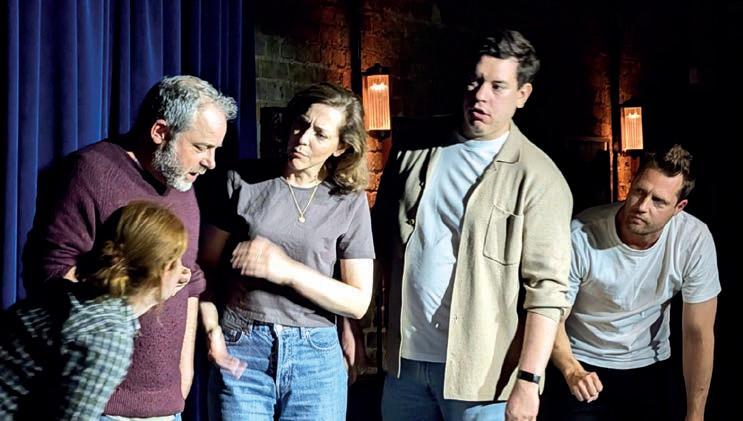
Fresh Meat (a show about students at Manchester University) was described in a review as ‘a preening, posh pillock with a sense of entitlement the size of South America’. His inspiration? “I went to public school in London and grew up surrounded by them”.
I have kept my own interest in comedy as a hobby and have produced a monthly live comedy club, in various guises, since leaving university. If nothing else it has given me a halfvalid reason to keep in my proximity some very funny people indeed, and we have had a few OPs on our various stages. Chris Martin (1999–2004) was a circuit regular before moving to Los Angeles to write on sitcoms and comedy shows including Netflix’s beloved cult hit I Think You Should Leave. Max Dickins (2001–06) continues to perform sketch, stand up and improvised comedy professionally, and he has written three books and two plays. His podcast The Inbetween Man was nominated this year for the prestigious British Podcast Awards. Rhys Collier (2002–07) took the Pauline approach to high achievement and applied it to improvisational comedy – moving after school to Amsterdam to train and perform at the legendary comedy theatre Boom
Chicago and with the Upright Citizens Brigade. He is now recognised as a leading performer on both sides of the Atlantic. Dominic Frisby (1982–87) describes himself as having “an unusual double life as a Financial Writer and Comedian”. Also, a circuit regular, he is an Edinburgh fringe veteran and was the first MC of the Old Pauline Comedy Night in 2010. Will Naameh (2005–10), aka MC Hammersmith, has to be seen live to be believed. Not for nothing do recordings of his improvised raps have over 1 million views. Of particular note is Hal Cruttenden (1982–87) who has made several appearances on Live at the Apollo, Have I Got News For You and The Royal Variety Performance as well as starring in his own sitcom, Hal on Radio 4. Shortly before the visit of one Pauline polymath in Dr Miller, the 2004 A Level theology set had briefly studied another. In his preface to his book Heretics, GK Chesterton (1887–92) wrote “There are some people – and I am one of them – who think that the most practical and important thing about a man is still his view of the universe.” Comedy is just that –presenting a view of the universe in a humorous and novel way. Class
clowning and schoolboy wit have existed just as long as the concept of education has, and St Paul’s can claim no particular ownership of these – but I like to think there is a shared comedic approach influenced by a shared academic experience.
In the press release accompanying the release of Jonathan Miller’s TV show we were told that he was “Illuminated by conversations with some of the most distinguished thinkers of the modern world”. An accurate description: I did not make the final edit. Profoundly embarrassing for me as I, by then working on a building site to fund a gap year, had told all the trades around me that I was going to be on TV that night and they should probably show me a little more respect thank you very much. Little did I countenance that my place was the cutting room floor.
Michael Simmons (1946–52) describes the difficulties meeting girls when St Paul’s returned to London after the War and Phil Gaydon (Head of Character Education) provides a 2025 perspective
In my time at St Paul’s, nothing was done officially to mitigate the rigours and deprivations of our single sex education. Perhaps there was some hangover from the previous monastic life of our universities but no attempt was made to introduce us to the opposite sex. Those lucky enough to have sisters of a suitable age found themselves with a popularity that they might otherwise not have deserved but it was a stilted and unspontaneous business. The mother of one of my classmates, Paddy De Courcy Ireland (1947–53), recognised the problem and organised a series of Saturday night dances for us culminating in hiring a table at the Hammersmith Palais. For a group that were so at ease with each other, the contrast the introduction of girls created was painful.
Having St Paul’s Girls’ School up the road in Brook Green was no help whatsoever. I was slowly cultivating a friendship with a certain Paulina who shared the daily journey with me on the Piccadilly Line. We used to get out together at Hammersmith station and she would walk with me on my side of the road until we reached the Brook Green crossing where she would bid me farewell. One day, I noticed that her hat band was different but I did not comment. When we got out of the station, she moved immediately to cross the road.
“Why are you crossing the road now?” I asked her, somewhat put out. “I’ve just been made a prefect and I have to set an example to the other girls,” was her shattering reply.
It could be only a much-repeated legend but the story persisted throughout my time at School: the senior girls at SPGS decided that they wanted an end of year dance. They approached the High Mistress to ask permission.
“Certainly, you can have a dance.” “We’d like to invite some boys from the boys’ school.” “Oh no, you can dance with the mistresses.”
Suffice it to say that we were never invited to a dance at the Girls’ School. By the time I got to Cambridge, I was a pent up and seething mass of frustration. There were girls at the lectures and girls all over the town. There were no restrictions or inhibitions to prevent me meeting them. With no prior experience, I had deeply confused expectations. I just did not know how to behave. I wasted far too much precious time in the pursuit. I tried Highland Dancing but the mixed aroma of sweat and chalk dust in the gym where it took place was anything but an aphrodisiac. I also could not master the intricacy of the movements. I then took ballroom dancing lessons and decided to go for medals. The problem was that I was so concentrating on getting my fishtail right that I never got round to talking to my partner who remained a stranger.
I have talked to many other Paulines and male products of single sex schools. My experience is not unique nor is it universal. Two of my own sons attended a fashionable and co-educational boarding school. “One of the first lessons you learn, Dad, is how to dump a girl and also to be dumped with no hard feelings.” I confessed that these were skills that I never truly acquired. I admit that I have no statistics to prove my case but my gut feeling is that the divorce rate among my contemporaries at St Paul’s is far above the average. Because of our inexperience, far too many of our first marriages were little more than practice runs. Many of us are on our second or, in my case, even third attempts. It may be cynical to say that we get better with experience but I fear that we have left casualties along the way many of which could have been avoided, if only we had been better prepared.
I have of course been writing about a long time ago. I have done a little research and things could not be more
different today. Very many single-sex schools have addressed these and other problems by going co-educational either totally or at least in their final years. Both the St Paul’s schools remain proudly single sex. Their competitive exam results alone justify their unwillingness to follow the trend. However, there have been vast internal changes.
I took a brief look at Personal Social Health and Economic Education (PSHE) and realised I was completely out of my depth. I needed an expert on the subject. Phil Gaydon, Head of Character Education at St Paul’s, kindly offered to enlighten me and here is his commentary on the situation at the School today.
Phil writes:
I have worked at St Paul’s since 2017. In that time, I have seen a step change in our relationship with St Paul’s Girls’ School after the introduction of a Memorandum of Understanding and regular joint leadership/governor meetings. I have also witnessed incremental but major and positive changes in the way we attempt to help contemporary Paulines consider their relationship to girls and women, and how single-sex education might impact that.
Even before I began teaching here though, and certainly well before the scandal of Everyone’s Invited hit both co-ed and single-sex schools and the eruption of a nation-wide desire to respond directly to the proliferation of sexist and misogynistic ideas online, many people within the school had been working to incorporate an empathetic understanding of the lives of women and girls around them into the curriculum – not least of all the long-standing, internally written Moral Philosophy course which spent an entire unit focusing on gender imbalances, feminism and sexism in contemporary society.
Since then, the pupils have taken ownership of a feminism society, International Women’s Day and International Day for Ending Violence Against Women and Girls have become staples in the school calendar, and discussions of the issues that their female peers may face is commonplace
in the PSHE curriculum and elsewhere. This includes PSHE lessons in St Paul’s Juniors and at SPGS where older pupils from both schools come together to lead discussions with younger pupils on related topics.
However, as fantastic as this is, these topics are rightfully treated as very serious. As such, these lessons and events are often perceived as speaking to larger social issues rather than directly to the everyday interpersonal relationships (platonic or otherwise) that the pupils may want to begin or develop with the girls they meet. I’m happy to report that this has not fallen by the wayside either.
At a curriculum level, relationships education is not only something that the government made sweeping statutory reforms to in 2020, but it is something that we had already, and continue to, gladly embrace in our weekly PSHE lessons for all year groups. These lessons aim at creating a space for open and honest conversations about the nature of relationships –including Michael’s aforementioned topic of ending a relationship respectfully and dealing with having a relationship ended – and can now be found in every year’s curriculum. They deal with shared experiences but also extend to helping our pupils develop an empathetic insight into experiences that they won’t share with their female peers, such as menstruation and pregnancy. That is not to say we are under any illusion that these lessons can fully prepare pupils for the experiences they will face in navigating their growing relationships, but they are there to scaffold reflection before and afterwards in a hopefully informative and positive way.
On top of this, the nature of the interactions our pupils have at school with Paulinas has changed in fundamental and beneficial ways. There is no one-off, awkward annual school dance (something I too experienced going to a single-sex boys’ school with a higher-achieving girls’ namesake just down the road), nor is the calendar merely peppered with joint attendance at talks addressing heavy and difficult genderbased topics where pupils sit, listen and then depart (pupil feedback early in my time here saw that this was given
short shrift as the solitary medium of contact for pupils who did not engage with collaborative, creative projects). Rather, alongside time set aside out of the school day for major year group events – each with a theme related to the year group – every single department and society at the school is encouraged to put on at least one joint event where smaller groups of pupils from both schools can come together, collaborate and get to know one another under the banner of common interest.
The older pupils have also been empowered to take a significant role in running joint events. For example, every year the Prefects (SPS) and the Head of School Team (SPGS) now attend a joint residential course where they learn about leadership together. After this they then lead a joint year 13 conference on a topic of their choosing, help run a year 12 conference on leadership and organise several major joint events, including the Battle of the Bands Night and MasterChef among others.
Finally, the pupils are well aware that there are things about their single-sex education that should be celebrated – such as learning that is specifically tailored to the latest research around how boys learn, a reduced prevalence of strictly enforced gender stereotypes, increased academic confidence and enhanced classroom engagement. However, they are also aware that there are potential pitfalls that they should reflect on. This was evidenced when, in response to Everyone’s Invited, the first SPS Values Committee (a pupil-organised group that wanted to reflect on the values of the school and how our school community live them out) wrote the following line into their proposed “Pupil Commitment”: “[I make a commitment to] Reflect on the school’s predominantly male environment and the pressures this can create”. As a school, we are not the only ones reflecting on how to help our pupils do this, and we are currently an active member of the International Boys’ School Coalition. Membership in the IBSC includes reflecting with boys’ schools around the world on challenges just like this.
real Rogue
Alistair Bool (1985–90) and Richard Bool (1980–85) reveal their great-uncle’s war
When the Second World War broke out, John Wiseman (1929–34) was enjoying a year off from work and studying. Upon hearing the news whilst on a voyage between Auckland and Sydney, John knew he had to return home to serve his country: “I wanted to get going in it. I thought I was not doing my job if I was out in Australia when I ought to be doing something in Europe.”
No doubt foregoing the excitement of a full moon party in Koh Samui, John enlisted in and initially trained with the cavalry, despite having only basic riding skills, but he soon made a bold decision to forgo his commission and join a draft heading to the Middle East. This decision marked the beginning of his wartime adventures. He joined the North Somerset Yeomanry and was soon in action in Syria, fighting against the Vichy French. The battles were intense, and the conditions were harsh, but John’s resolve remained unshaken. “I suppose I’m one of the last people in the world
who’s been in action by horse,” he remarked. He may also have been one of the few people to fight both against, and with the French at different stages of the war.
John faced the challenges of extreme heat, inadequate provisions and amateurish leadership. Yet he persevered, moving from horseback to foot, engaging in skirmishes and experiencing the camaraderie of his fellow soldiers. In 1942, John was commissioned as an officer in Cairo, a city that offered a stark contrast to the harsh realities of war. Life in Cairo was luxurious, and John enjoyed the respect and privileges that came with his new rank.
It was in Cairo that John encountered David Sterling, the founder of the Special Raiding Squadron (SRS). John’s determination to join this elite unit led him to Sterling’s doorstep. “I said, sir, may I join your regiment? And he looked me up and down and said, well, I’ve got a draft going out to Gazira tomorrow. If you’re on one of the trucks, yes, if not, no,” John recounted.
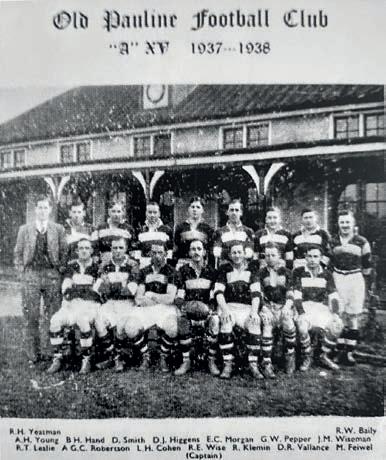
After the mission, Paddy Mayne upbraided him about mumbling over the net, which was the result of losing his false teeth in this escapade; the original set having been knocked out on a cricket pitch at Cambridge.
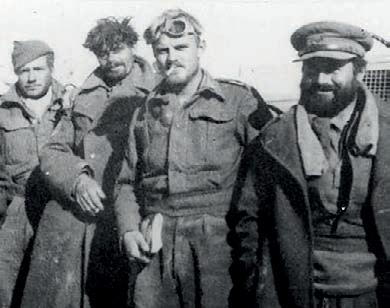
John’s time with the SRS was marked by audacious operations, including cutting the coast road to disrupt German convoys. His leadership and initiative were evident as he commanded patrols, laid mines and engaged in skirmishes with the enemy. Viewers of the TV series SAS Rogue Heroes will have some idea of what this entailed.
As the war progressed, John found himself in Italy, participating in the Sicilian invasion. The mission to destroy shore guns at Cape Moro de Porco was a testament to John’s bravery and strategic acumen. The successful operation earned him the Military Cross. Led by Paddy Mayne, the subsequent landing at Augusta was fraught with challenges, but John’s leadership ensured the mission’s success. “We had to destroy the guns on Cape Moro de Porco. Our job was to get in, climb up the cliffs, take the gun site and destroy the guns,” he described. After the mission, Paddy Mayne upbraided him about mumbling over the net, which was the result of losing his false teeth in this escapade; the original set having been knocked out on a cricket pitch at Cambridge.
John’s wartime journey continued in Italy, where he faced one of the most harrowing experiences of his life. During a mission in Taranto, a shell hit his truck, killing or injuring everyone on board except John. This tragic incident left a profound impact on John, as he lost his entire squadron in a single moment and he described it as the worst incident of his life. This event formed the basis of Rogue Heroes Series 2. Episode 3.
John’s war continued in France as part of Operation Houndsworth, where he collaborated with the resistance to cut railways and disrupt German reinforcements. His ability to speak French and German facilitated communication and coordination, making him a valuable asset in the
operations. The resistance fighters were often ruthless, executing collaborators without hesitation. John witnessed the brutality firsthand, “They made them dig their own graves. I found it quite revolting. That’s war. It’s pretty beastly,” he said.
One of his missions in France was to cut the railway south of Dijon to prevent German reinforcements (the 2nd ‘Das Reich’ Division) from moving north. “We parachuted in together with our jeeps, one of which I drove over to get close to the railway in a wood outside Dijon,” he explained. The operation involved laying explosives under the rails and detonating them to disrupt the railway. “We used to make our way to the railway with explosives, tape them underneath the rails, and put detonators in and blow them up,” John recounted.
Having been awarded the Croix de Guerre, and an MC, John finished his army career as a Major and was in command of SAS headquarters until deciding to return to civilian life, whereupon he re-joined the family optical company, returned to life in Kingston and lived until the age of 89.
John Wiseman’s life is a testament to courage, resilience, and the spirit of adventure. Like great-uncle John, my brother, Daniel (1982–86) and I grew up in Kingston-upon-Thames and attended St Paul’s. It is hard to envisage switching from that lifestyle to one involving daring raids in the desert and the strategic operations in Italy and France, with the excitement, fear and hardship such experiences entailed. Paulines are rightly taught to be proud of the Montgomery legacy, but John’s story demonstrates that other Old Paulines also made great contributions to the war effort. His story is one of remarkable bravery and unwavering dedication. His legacy serves as an inspiration, reminding us of the extraordinary journeys that shape our lives.
Before the First World War, School House at St Paul’s was an important haven for boys whose parents were resident overseas, whether in the Raj, the colonies or some other part of Britain’s wider world including the ports of China. If Shanghai was well-known, there were many other ports, some extremely remote with only the smallest of European communities.
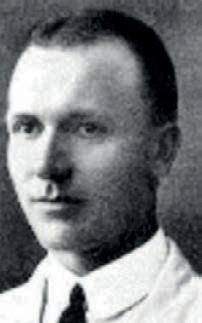
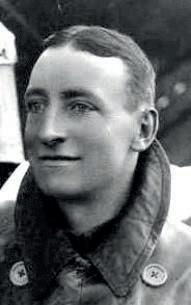
It was in that world that two Old Paulines, Edward Ayrton (1895–1900) – born, Wuhu, 17 December 1882, and Frank Ayrton (1900–03) – born, Hankou, 23 September 1887, grew up, together with their three sisters, Florence, Phyllis and Winifred. Their father, William Ayrton, was a British consul, whose principal role, as it had been since the ‘opening’ of China in 1843, was to promote the interests of British nationals, whilst also ensuring they did not ‘let the side down’. Their mother, Ellen, came from a longestablished China Coast family, her father, Reverend Thomas McClatchie, having been one of the earliest missionaries to arrive in the country. By the early 1890s, the family was living in Newchang (now Niuzhuang), a port high up on the north-east coast which would be ice-bound for six months each year. If there were few Europeans around, there was a considerable degree of freedom, the children could run free and, according to local newspaper reports, the Ayrtons gave excellent Christmas parties for
the local community. Spending most of the time with their amah, from whom they would learn some Chinese, they would be educated partly at home and partly by local missionaries, before the boys started their schooling in England. In late 1893, the family returned for William’s furlough, as it was called, and, when they set off back to China in September the following year, Edward started at Colet Court. It must have been a tearful farewell, given that he knew he would not be seeing his family for some five years. Two years later, he began at St Paul’s, boarding in School House. By this time, his maternal grandmother, Isabella McClatchie, had returned from China following the death of her husband, and, having taken lodgings in nearby Perham Road W14, she will have been able to see plenty of Edward. Most probably, he spent some of the holidays with her whilst possibly also continuing in School House where Mr Cholmeley was the housemaster. With letters taking two months to arrive, Edward must have felt very remote from his family.
It was probably from his grandmother that, four years later, he received the tragic news that his mother had died two days after the death of her new-born baby. Letters will have followed but it would be another eighteen months before he was re-united with his father and siblings. Already a sick man and shattered by his loss, William Ayrton was granted early retirement and arrived back in England in July 1899, with the four children, together with their young aunt, Millicent McClatchie.
William took a house at 62 Edith Road W14 and, the following year, Edward left St Paul’s and Frank started at School House, but possibly not as a boarder. Then tragedy struck again. On 16 December 1902, William died, worn out by his life in China, his death hastened by his grief and no doubt worry about having to care for his family. It seems that Millicent and the children’s grandmother, Isabella, then took on responsibility for the children’s care. With no pension for dependants and no evidence that either side of the family had private means, money must have been very tight and this may be why Frank left in 1903, just before his sixteenth birthday.
Save that Edward’s name is inscribed on a rowing cup for 1898 and on the 1900 Fives Cup, little is known about how either boy fared while at St Paul’s. However, Edward went on to become a leading Egyptologist working closely with William Petrie. How he developed this interest let alone expertise is a mystery. One possibility is that, during the long journey returning from China in 1893, the family travelled via the Suez Canal and stopped off to view
Save that Edward’s name is inscribed on a rowing cup for 1898 and on the 1900 Fives Cup, little is known about how either boy fared while at St Paul’s. However, Edward went on to become a leading Egyptologist working closely with William Petrie.
the pyramids, and this whetted Edward’s appetite. Or it is just possible that one of the masters at the school first fired his enthusiasm. A promising and energetic scholar, his life was then cut short when, aged, 31, he died in a drowning accident off the coast of Ceylon (Sri Lanka). He was unmarried. Following the outbreak of the First World War, Frank joined the Royal Flying Corps. By 1917 he was airborne but was then shot down. Taken prisoner, he was released at the end of the war and went on to lead a more prosaic life working for the Imperial Bank of Iran. He married but there were no children. None of the three sisters married, but Phyllis became a celebrated suffragette before returning to China in 1921.There she spent the next eighteen years devoting herself to a number of causes, before moving to Hong Kong in1939, only to be interned in Stanley for three and a half years.
Although Phyllis had obviously developed a great interest in China, there is nothing to tell us how much the two boys may have been influenced by their early life there, although Edward must have been particularly affected by the lengthy separation from his family, let alone hearing of his mother’s death when so cut off from them. Such experiences were by no means unusual during Britain’s imperial age. My grandfather, Harold Hillier (1906–10), and his brother, Geoff (1907–11), were at St Paul’s from 1906 to 1911, when, although their mother was mainly in London, they saw nothing of their father, who was in Peking, serving in the Chinese Maritime Customs.
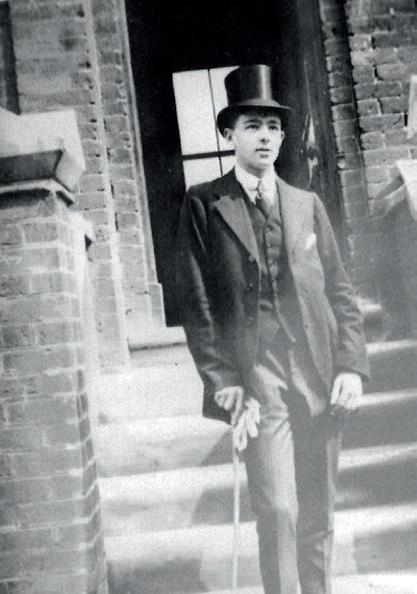
It would be interesting to hear of any other Old Paulines who boarded at School House, when their parents were abroad and even better, to see any letters or diaries recording such lives. https://www.andrewhillier.org/ ah12387@bristol.ac.uk
Andrew is grateful for help provided by St Paul’s and OPC Archivist Katherine Gregory
David Herman (1973–75) profiles three Paulines born in 1925
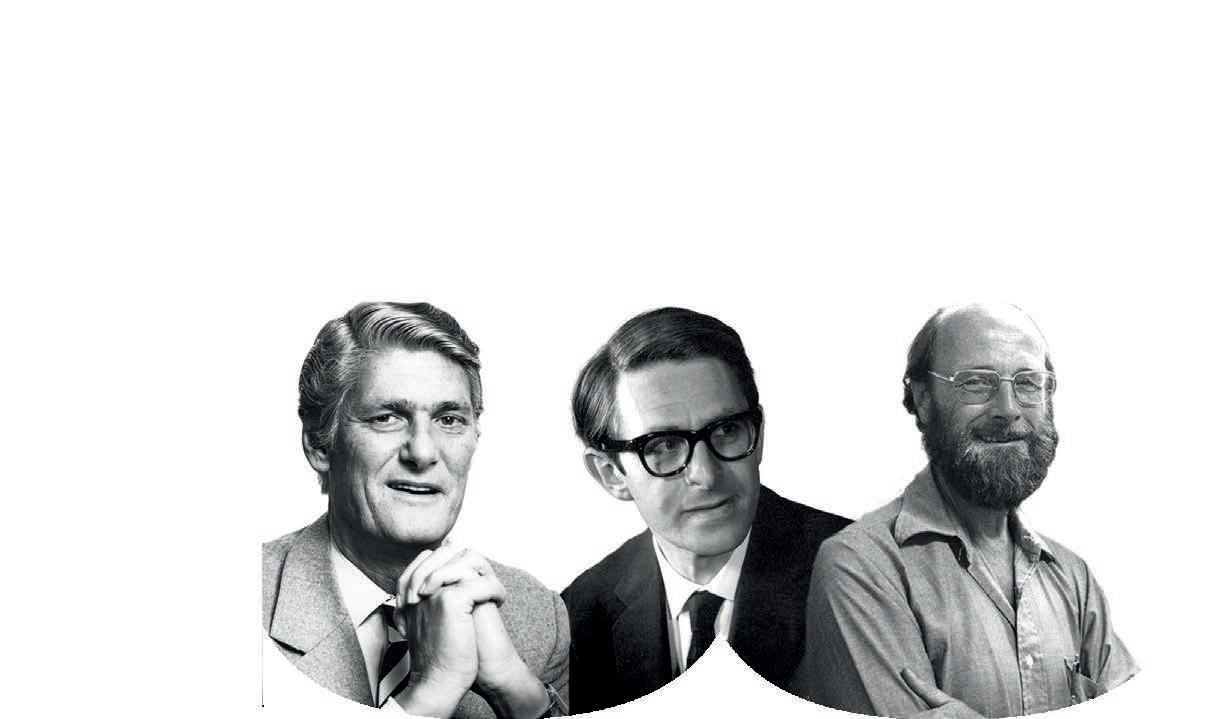
2025 marks the centenary of three famous Old Paulines. They were not just important figures in their own field but their careers covered an astonishing range and their lives could hardly have been more different.
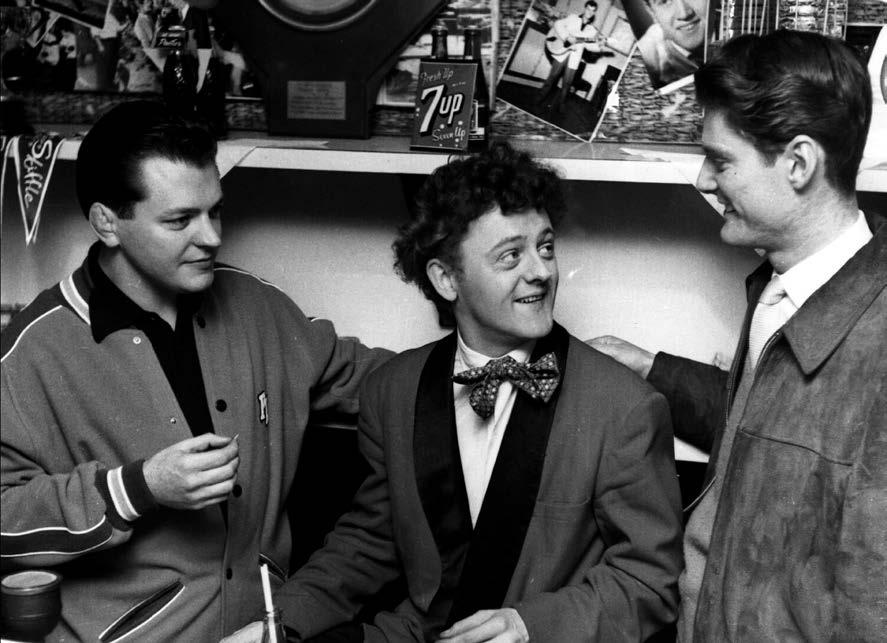
Pete Murray (1939–40) was born in September 1925. He became one of the best-known DJs on radio and TV, part of that extraordinary generation that included Terry Wogan, Tony Blackburn, John Peel and Alan Freeman.
He was born in the East End but spent his childhood in Chiswick and went to Colet Court and briefly to St Paul’s. He told one interviewer, ‘I only had one term there in the great building because we were evacuated to Crowthorne in Berkshire and that I didn’t enjoy at all. I didn’t enjoy my time at St Paul’s at all.’
Murray started out just after the war with the English service of Radio Luxembourg, and remained there for five years. Returning to London, he started presenting popular music on the BBC Light Programme, particularly in the programme Pete Murray’s Party from 1958–1961 and co-hosted one of BBC Television’s earliest pop music programmes, Six-Five Special (1957–58), with stars line Tommy Steele and Lonnie Donegan. He also appeared as a regular panellist on the BBC’s hugely popular Juke Box Jury (1959–1967). He was a regular presenter on the BBC’s coverage of the Eurovision Song Contest. He was the “guest DJ” on several editions of ABC-TV’s Thank
Your Lucky Stars (1961–1966) and he later hosted Come Dancing. Above all, Murray was among the first regular presenters of the hugely popular Top of the Pops when it began in January 1964.
Murray hosted the UK heat of the Eurovision Song Contest in 1959 and provided the British commentary for the contest itself on both radio and television in 1959 until 1961 and in 1968 and again in the early 1970s for radio, and television commentary for the 1975 and 1977 contests.
Pete Murray also had an acting career. He studied at RADA where he was awarded a Gold Medal. On the London stage he co-starred with Edward Woodward in the musical Scapa! (1962). During the 1960s, he starred in the British sitcoms Happily Ever After (1961–64), opposite Dora Bryan, and Mum’s Boys (1968), with Bernard Bresslaw and Irene Handl. He appeared in several films during the 1940s and 1950s.
Murray was one of the original BBC Radio 1 disc-jockeys when the station started in 1967. By 1969, he was one of the mainstays of BBC Radio 2, where for over ten years he anchored the two-hour magazine show Open House five days a week, with an audience of more than five million listeners. In 1973
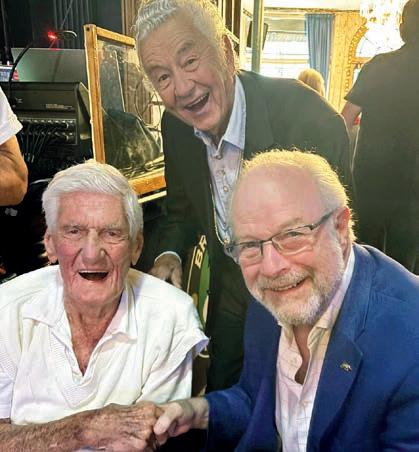
and 1976, he was voted BBC Radio Personality of the Year. In 1974, he was featured on the Emerson, Lake and Palmer live album Welcome Back My Friends to the Show That Never Ends – Ladies and Gentlemen as the master of ceremonies, at the beginning of the album.
In 1980, Radio 2 moved Murray from weekday to weekend programming. Then in 1981, he began a move into more serious, speech-only radio with a stint as presenter of Midweek on BBC Radio 4. At the end of 1983, the BBC cancelled his radio shows, describing his style of broadcasting as too old-fashioned. In 1984 he moved to LBC, a talk radio station in London. He introduced his last programme there on 22 December 2002.
Murray married his first wife, Germain, in Luxembourg, in 1952, but they divorced. He was in a relationship with Valerie Singleton, before marrying Patricia Crabbe, a former barrister. He once broke down on live television after his son, also an actor, killed himself at the age of 27, and afterwards he gave talks on coping with family tragedy. He was a hundred in September.
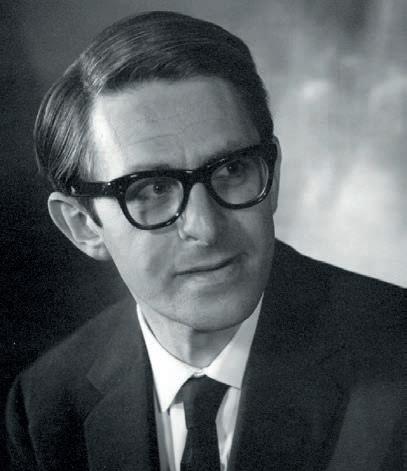
His family escaped to London in 1933 and he was raised and educated in the UK. Roth when a pupil at St Paul’s with the rest of the school was evacuated from London to Easthampstead Park.
Klaus Roth FRS, mathematician, only Pauline to win the Fields Medal
Klaus Friedrich Roth (1939–43) was part of that extraordinary generation of refugees who were educated at St Paul’s and that included the famous film designer Ken Adam, the journalist Edward Behr, the political philosopher Isaiah Berlin and Claus Michael Kauffmann.
Roth was born to a Jewish family in Breslau in Germany in October 1925. His family escaped to London in 1933 and he was raised and educated in the UK. Roth when a pupil at St Paul’s with the rest of the school was evacuated from London to Easthampstead Park. At school, he was known for his ability in both chess and mathematics. According to his final school report from 1943, ‘He is able mathematically … though with his quick mind he is liable to push on too fast.’ Another report was even less positive: ‘He has considerable ability as a mathematician. He … might get an award [at Cambridge], but owing to his being somewhat temperamental one cannot be sure he will do himself justice.’
After St Paul’s, Roth read mathematics at Peterhouse, Cambridge, where he also played for the Cambridge chess team. Despite his skill in mathematics, he achieved only third-class honours on the Mathematical Tripos, because of his poor test-taking ability. Despite this, he went on to study at University College London, finishing his doctorate
in 1950. His dissertation was Proof that almost all Positive Integers are Sums of a Square, a Positive Cube and a Fourth Power.
His most significant contributions, on Diophantine approximation, progression-free sequences, and discrepancy, were all published in the mid-1950s, and in 1958 he was awarded the Fields Medal. However, it was not until 1961 that he was offered a chair in pure mathematics at Imperial College London. He retained this position until his official retirement in 1988. He remained at Imperial College as Visiting Professor until 1996 and died on 10 November 2015.
In 1955, Roth married Mélèk Khaïry, who had attracted his attention when she was a student in his first lecture. She worked in the psychology department at University College London, where she published research on the effects of toxins on rats. On Roth’s retirement, they moved to Inverness. They had no children, and Roth donated the bulk of his estate to two health charities ‘to help elderly and infirm people living in the city of Inverness’. He sent the Fields Medal with a smaller bequest to Peterhouse. Roth was known as a problemsolver in mathematics, rather than as a theory-builder. The mathematician Harold Davenport wrote that the ‘moral in Dr Roth’s work’ was that ‘the great unsolved problems of mathematics may
still yield to direct attack, however difficult and forbidding they appear to be, and however much effort has already been spent on them’. His research interests spanned several topics in number theory, discrepancy theory, and the theory of integer sequences.
The Fields Medal is the most prestigious award given to mathematicians and he was the first ever British Fields medallist. He was elected to the Royal Society in 1960, and later became an Honorary Fellow of the Royal Society of Edinburgh, Fellow of University College London, Fellow of Imperial College London, and Honorary Fellow of Peterhouse. It was a source of amusement to him that his Fields Medal, election to the Royal Society, and professorial chair came to him in the reverse order of their prestige. The London Mathematical Society gave Roth the De Morgan Medal in 1983. In 1991, the Royal Society gave him their Sylvester Medal ‘for his many contributions to number theory and in particular his solution of the famous problem concerning approximating algebraic numbers by rationals.’
After his death, the Imperial College Department of Mathematics instituted the Roth Scholarship in his honour.
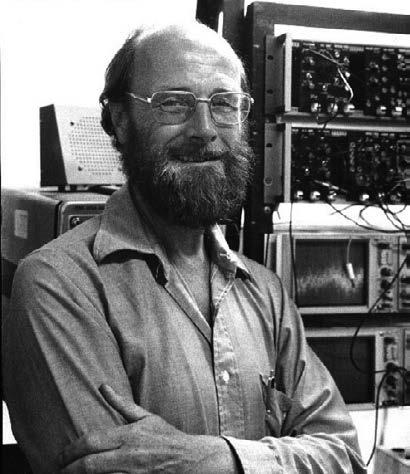
Patrick Wall (1939–42) was a British neuroscientist described as ‘the world’s leading expert on pain’ and best known for what is called the Gate control theory of pain.
He was born in Nottingham in April 1925 and was educated at Colet Court and St Paul’s, where he was evacuated during the Second World War. His school reports were extremely positive. One read, ‘He is the type of boy who makes the pedagogue’s work a sinecure… [H]is knowledge of biology is quite exceptional for a boy of his age.’ Another report finished, ‘Not prominent in games. A pleasant fellow.’
Wall studied medicine at Christ Church, where he first became interested in pain and published his first two papers, in the prominent science journals Brain and Nature, at the age of only 21.
After graduating from Oxford, he helped treat Holocaust survivors and refugees in mainland Europe, and then moved to the United States, where he taught at the Yale School of Medicine, investigating the use of lobotomies as a method of controlling depression. His research career took off in America during the 1950s and 1960s, at Yale, Chicago, Harvard and then MIT, where he met Ronald Melzack, who became a long-time collaborator. Together they wrote a paper on the Gate control theory of pain and published it in Brain in 1962; according to Wall it was read
His school reports were extremely positive. One read, ‘He is the type of boy who makes the pedagogue’s work a sinecure… [H]is knowledge of biology is quite exceptional for a boy of his age.’ Another report finished, ‘Not prominent in games. A pleasant fellow.’
by around three people. But a larger version established Wall’s reputation as one of Britain’s leading neuroscientists. The impact of the Gate theory was enormous and remains so to this day. It became the basis of modern pain assessment and treatment.
In 1967 he returned to Britain and took up a position as Professor of Anatomy at University College London. According to one tribute, ‘In the Cerebral Functions Group, on the fourth floor of the UCL Anatomy building in 1960s London, Pat created the perfect environment for his innovative thinking and experimental flair and consolidated his position as not only one of the leading neuroscientists in the world but also the ‘king’ of the new science of pain.
In 1973 he became involved with the International Association for the Study of Pain, and subsequently acted as the first editor of its medical journal, Pain. From the 1970s he also held a chair at the Hebrew University of Jerusalem, where he taught for several months a year.
In 1982 Wall and Melzack published The Challenge of Pain, followed by The Textbook of Pain, now in its sixth edition. Honours began to pour in. He was elected a Fellow of the Royal Society of Physicians in 1984 and the Royal Society in 1989; by this point he had been repeatedly shortlisted for a Nobel Prize. He was awarded the
Sherrington Medal of the Royal Society of Medicine in 1988, and in 1992 he was also elected a fellow of the Royal Society of Anaesthesiologists. In 1999 he was awarded the Royal Medal ‘in recognition of his fundamental contributions to our knowledge of the somatosensory system and, in particular, pain mechanisms’. At this highpoint in his career, he was diagnosed with cancer and died in 2001. Pat Wall revolutionized our understanding of the relationship between injury and pain, and who also became a champion for all who suffered from chronic pain. He identified that pain had been neglected and misunderstood by the clinical community and that chronic pain is not a ‘symptom’ but a condition in its own right that requires a deep understanding of the underlying neural circuits that generate it.
My thanks to Kelly Strickland, the St Paul’s and OPC Archivist.

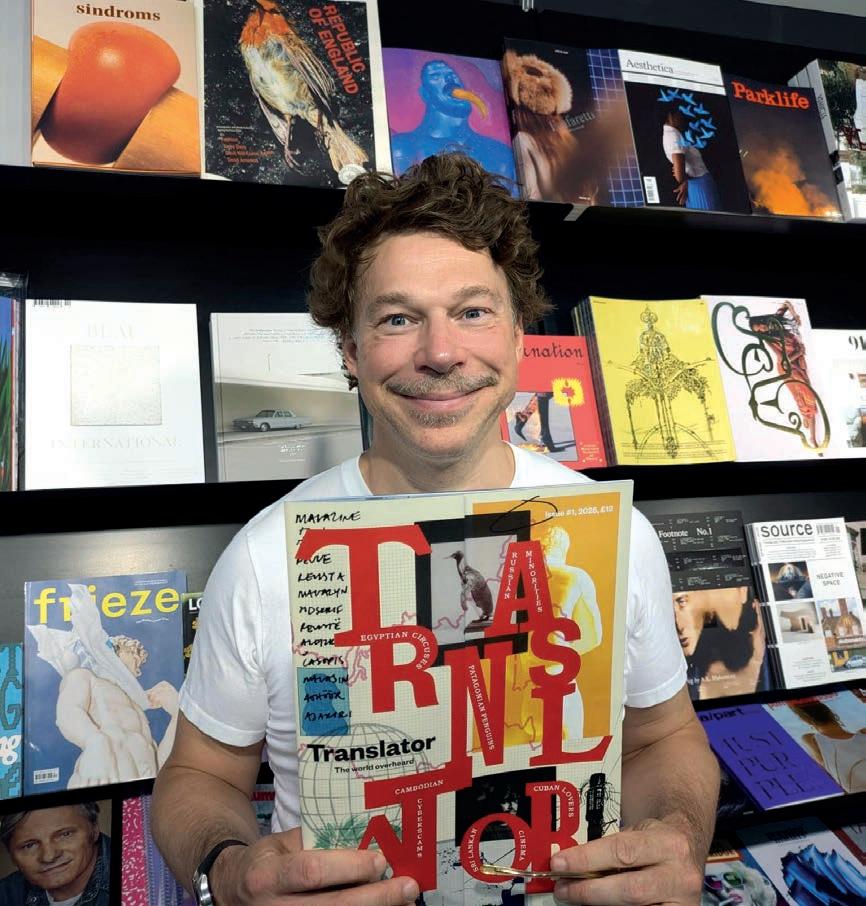
Charles Emmerson (1990–95), the founder of a new magazine of translated reportage writes about the why, and the how, of starting a magazine in an age of digital media.
In Ernest Hemingway’s novel
The Sun Also Rises one of the characters is asked how he went bankrupt. “Gradually, then suddenly”, he responds. But there are other ways too: the restaurant business is one. Another is publishing.
In an age of digital media, why would anyone start a print magazine? From a business perspective, the auguries are not good. In the transatlantic Anglosphere, many newspapers these days are owned by foundations, or by extraordinarily rich people who can bear to lose money if it buys them influence. The newspaper tycoon belongs to a bygone age. Many people
get their news from Instagram, from Tik Tok, from X. The term “legacy media” has entered into common parlance. Too many – particularly those bruised by the rise of the internet in the 2000s – newspapers and magazines, the very notion of being “in print” seem quaint. We are a long way from the print culture and mass readership of the twentieth century. And yet, in a quiet way, independent magazines are flourishing. In June 2025, another magazine, our magazine, the first issue of Translator – “a new magazine of translated journalism and reportage, for the open-minded and the language-curious” – was added to the pile.
Why paper? Physical magazines offer something that the algorithm-driven internet cannot: the power of serendipity. They also offer a reading experience which relaxes rather than irritates. You do not scroll; you turn a page. Physicality holds attention, it deepens connection. Perhaps magazines can even create a kind of brand loyalty which does not depend on ever louder and more insistently stressed voices – the key trick of influential Instagram and Tik Tok influencers, where getting and holding attention is a matter of fractions of a second. Paper publications work at a slower pace. In a news-saturated age, that is sometimes – often – what people want.
The world of independent magazines is friendly, it is dynamic, it is supportive, it is sometimes a little kooky and it is diverse in the subjects it covers. It is somewhere one can get excited about the world, rather than feeling bombarded. In the UK, publications such as The Fence or Vittles – the food newsletter which has recently made the step onto paper – demonstrate a real vibrancy.
These are arguments in favour of why magazines and newspapers matter, not that they are commercial goldmines. But they help to explain why magazines continue to be started, and why the energy and creativity behind them, attractive in itself, can help support a variety of business models.
To survive is to thrive in this world. Admittedly, that is unlikely to excite the animal spirits of capitalism. But societies function and flourish on more than money alone. Spiritual and intellectual sustenance, a sense of connection: beyond the satisfaction of material needs (something not guaranteed even in the so-called rich world) these are equal drivers of society. To start a magazine, then, is not quite a wilful act of madness. It is a hard slog into an interesting world, with a chance of encounter and maybe engaging with the flow of thought and feeling in society, if not particularly the flow of money.
Publishing can foster community; it can broaden horizons. There is enough of a demand for that kind of thing to sustain a wide print culture – even in an age of eyeballs on screens. (Go to a magazine shop like MagCulture in
In an age of digital media, why would anyone start a print magazine? From a business perspective, the auguries are not good.
London and you will just how much is out there).
One area of publishing which has become increasingly popular in recent years is that of translated fiction. Think of the success of Fitzcarraldo, the UK-based publishing house which counts multiple Nobel prize-winners amongst its authors. In some respects, translation itself is having a real moment – under pressure from AI, yet increasingly celebrated as a creative craft, not just a function of turning text from one language into another, but as a real act of cultural intermediation.
Younger people are far more likely to buy translated fiction than the older generation – half of translated fiction bought in the UK is purchased by those under the age of 35. The sensibility towards literature in translation, voices from beyond this island, is a major generational shift. Historically, mass print culture in Europe emerged around the same time as, and intricate conjunction with, the nation state. But these days, the nation state can seem old-fashioned or confining – at least in a literary sense.
That this sensibility towards works in translation should apply to non-fiction and journalism is less clear. Fiction is, after all, often an invitation on an imaginative journey in any case, an invitation to step outside one’s everyday. Non-fiction, and journalism, tends to be read with an eye towards things which are more practical and immediate: being well informed, trying to understand how the world works, grappling with an issue or a concept.
On the one hand, English readers have the enormous privilege of reading in a language where a lot is already written, some of it brilliant. On the other, however extensive the monolingual bubble is, it is still a bubble. The world does not only take place in English.
But our hope at Translator is that this is no barrier to readers’ interests in longer form journalism in translation –not news, but reportage. We started a little experimentally with a Substack of summaries from around the world. The first issue of the paper magazine carries full translated articles from Egypt, Cuba, the borderlands of South East Asia, and Argentina – this one includes my favourite word in the magazine, “penguinicide” – and other writing from Eswatini, Colombia and Chad. (We also touch on language politics, and on translation itself).
Centring ourselves around the rich media landscapes of these places – what is being actually read, what people are talking about on the street – is a more
grounded approach, one more attuned to the way the world is today, and more likely to show the world’s diversity, than one where reporters are sent out to report on “foreign” news, from often very familiar angles and prejudices. Indeed, given the general hollowing out of “foreign” news in much of the Anglophone media, readers in English may be getting – unwittingly, but importantly – an increasingly narrow view of the world.
On the one hand, English readers have the enormous privilege of reading in a language where a lot is already written, some of it brilliant. On the other, however extensive the mono-lingual bubble is, it is still a bubble. The world does not only take place in English. Translator looks beyond the Anglosphere.
The world of independent magazines is friendly, it is dynamic, it is supportive, it is sometimes a little kooky and it is diverse in the subjects it covers. It is somewhere one can get excited about the world, rather than feeling bombarded.
It is early days. Setting up a totally independent magazine on a fairly radical new model – where if we did make any money at least half would go to support translators and translation, and writing in languages other than English – is not for the faint hearted. You start from zero and have to get to one. We are a small core team in London, and brilliant contributing editors. Supporters, partners and collaborators are always welcome, as are multi-lingual readers who recommend great stories in languages other than English that we should translate.
But our hope that a network, and a community of recommenders and readers, can grow out of this. We will be better informed, and more able to understand the world we live in, if we succeed.
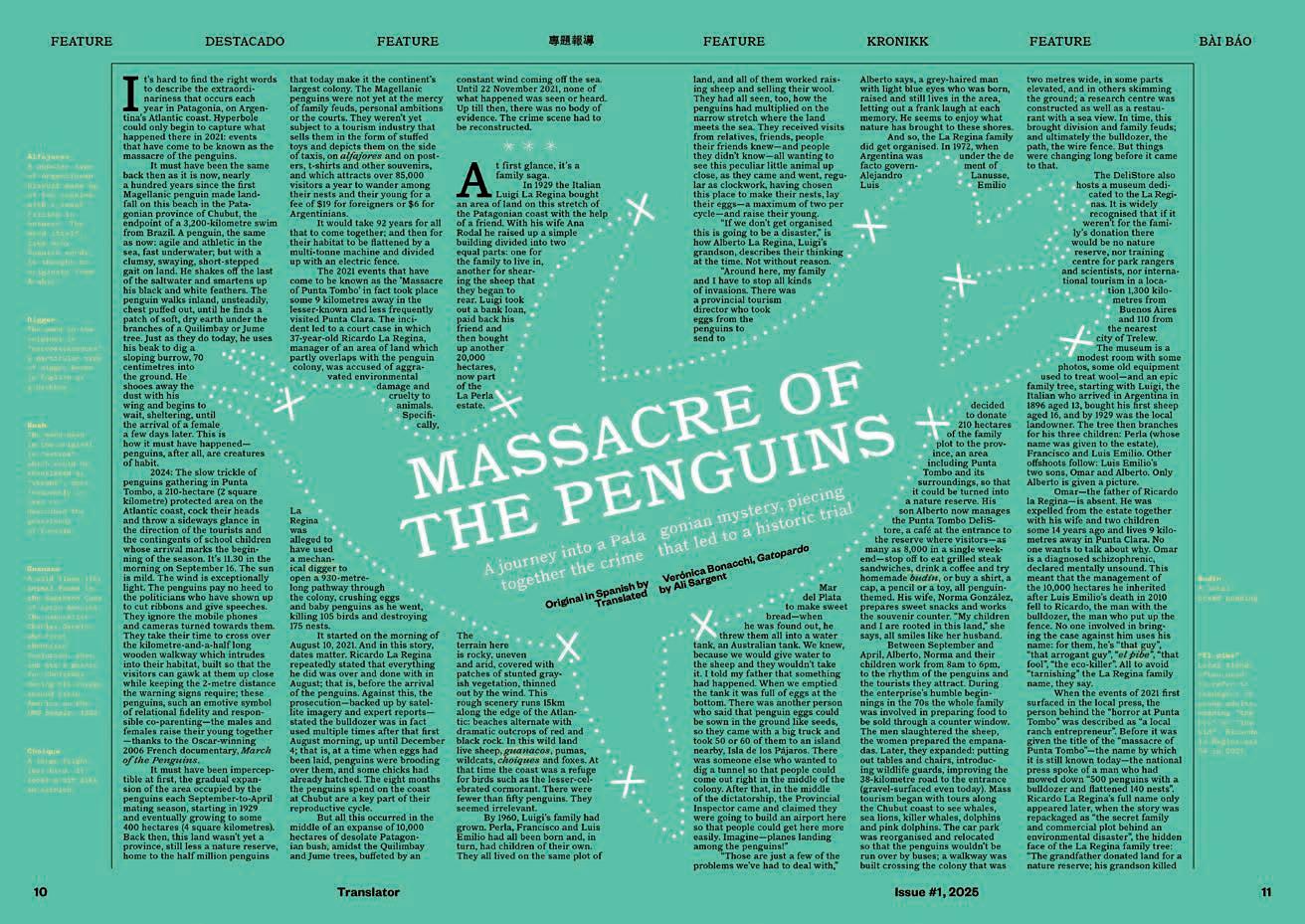
Imet Kate Stirland while studying Human Biological Sciences at Loughborough University. A shared love of sport, adventure and purpose laid the foundation for a life journey that would eventually take us across continents. After graduating in the summer of 1988, I returned to London. I played Saturday cricket for the Old Paulines and served as a Christian Union officer helping the Barnes meetings on Sundays. When the opportunity arose to manage Colets – home of the Old Pauline Sports Club in Thames Ditton – I jumped at it. I loved the hands-on nature, the variety of the work, the close-knit team of staff. It was a formative chapter, and I learnt a great deal. One of the most influential people during this time was Basil Moss (1948–53), who led the CU Barnes meetings, managed Colets, and even for a time, was my landlord. Like so many other OPs, I owe so much to Basil.
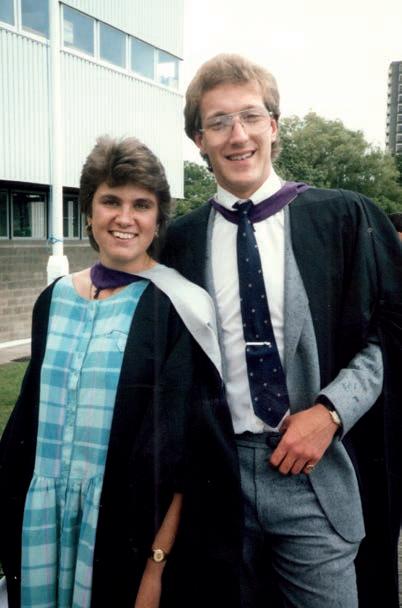
In early 1992, Kate and I packed our backpacks with a ‘round the world’ ticket and set off for an overland journey through Africa, India, and Nepal. Later that same year, we stopped and settled in Hong Kong, where we picked up our careers – mine in resort club operations and Kate’s in pharmaceutical marketing. Hong Kong was a vibrant, inspiring place. We were married at St John’s Cathedral and made our first home in Discovery Bay. After the 1997 handover and amid the entrepreneurial buzz of city life, the idea began to quietly take root: to create a luxury resort that embodied our philosophy of life, service, and wellness.
By 1999, I was scouting land in Thailand. Phuket was already heavily developed and expensive, so I headed north. I walked over 100 kilometres of coastline, collecting sand
samples and inspecting every available beachfront site. Then, in Khao Lak, I found it. A quiet, pristine stretch of coastline, untouched except for water buffalo and primary forest. A narrow lane provided direct access, and being able to step directly onto the beach met two key criteria. I will never forget that moment –sitting alone on the sand, a sea eagle landed next to me. When I stood to leave, it flew ahead and again landed near my rental car. It felt like nature was giving me its blessing. Not long after, Kate and I purchased the plot.
Juggling a lot, we divided our time between Hong Kong and Thailand. Kate and I welcomed in the millennium and the arrival of our daughter, Charlotte, and began working in earnest to bring our vision to life. It was slow going. Thai banks remained
cautious following the recent Asian financial crisis and navigating legal and design hurdles kept us busy. One Sunday evening at The Ladies Recreation Club in Hong Kong, I met John East (1960–65), who kindly offered to review our business plan and consider how we might raise finance. By the following day, John had amazingly assembled a small group of interested and professionally very helpful investors. John Harvey (1965–70) forensically assessed the financials, while Arun Nigam (1958–63) steered us on the legal framework. By 2002 – three years after buying the land – we finally secured full financing.
Even during personal milestones, we stayed committed. The evening Kate gave birth to our second child, Jeremy, we had spent the entire day negotiating and awarding the main construction contracts. The resort was very much a family endeavour.
We brought onboard Singaporean architect Sim Boon Yang to help bring our vision to life. His design was centred around a sacred ficus tree and the natural lay lines of the land. We envisioned Pathways, the spa, as a sanctuary. The spirit of the resort would take after Lady Sarojin – a fictional Thai noblewoman whose legendary hospitality would guide our brand values. Construction began and moved forward steadily.
By late 2004, we were on the brink of realising our dream. The Sarojin was complete, the staff were hired, and spirits were high. We agreed to open on 16 January 2005, to avoid a ‘soft’ launch during the peak holiday season.
We had also planned to spend the festive weekend with visiting family
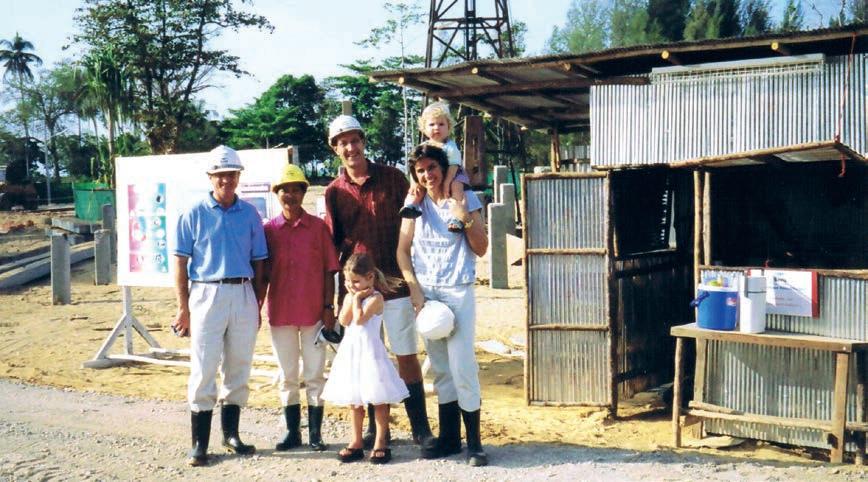
and rather late on Thursday 23 December agreed to give the whole staff the weekend off as well.
On Christmas Eve, Kate and I enjoyed a cold drink to reflect on our journey before we walked out of The Sarojin, turning lights off as we left.
On Boxing Day morning, en route to the beach with family, I received a pager message from the site security team that shattered everything: ‘sea risen 5m, resort destroyed, casualties unclear’. I immediately drove home to drop off Kate, the children and her parents and rushed north.
My first stop was Takuapa hospital, where the scale of the Tsunami hit me – waves of the injured arrived. I joined forces with a local Italian restaurateur, Ramon, to help triage by nationality. Makeshift flags were hastily drawn and taped to the wall as names were logged, and we helped the management of those that did not survive. I remained there for hours.
Later in the day I continued on to our resort. The roads and back lanes were barely passable. I clambered through the debris and made it down to the beach of the resort and stood beneath the restaurant foundations. The Andaman Sea that had earlier roared so angrily was now quiet and breathlessly lapping. There was an oddly beautiful and very silent sunset. There was no bird song, no day end buzz from the cicadas, only an empty silence. I cried. Kate, meanwhile, had transformed our Phuket home and garden into a shelter for our displaced staff.
We had made sure that the resort was fully insured and in a moment of
clarity we both recalled the very conference call that assured to us that the All Risks policy covered ‘Acts of God’. Perhaps a ‘God-incidence’ had spared us. That night we resolved with each other and the team to rebuild.
Within days, we set up a remote office, paid the staff, and arranged for them all to return home to their families throughout Thailand. In time we would contact them and offer the option to return to work.
On Boxing Day morning, en route to the beach with family, I received a pager message from the site security team that shattered everything: ‘sea risen 5m, resort destroyed, casualties unclear’.
Then we began planning the resort’s resurrection with our original contractors. The symbolic ficus tree –damaged by saltwater – was revived with fire trucks of fresh water and intensive care. For added security, I encouraged with daily supply drop offs a patrol of the Royal Thai Army to make a camp in our entrance. The international community stepped up. We created the Sarojin Khao Lak Community Fund to help channel the support we could administer locally. Village lanes were resurfaced and lit, prosthetic limbs funded, classrooms re-opened and longtail boats built to support livelihoods.

By late January we began to see the wood from the broken casuarina trees. Then we hit a major roadblock, our Thai bank withheld the first tranche of insurance money. We had no choice but to stage a peaceful demonstration. With the support of our unwavering staff, we stood outside the bank’s destroyed local branch. The bank eventually released the funds and construction resumed. Still, funds were tight. We could not afford to retain both the main construction team and the resort staff for the duration of the rebuild. The former was not short of opportunity and so we offered new roles to our own staff. The Front Office team managed project administration and coordination, the spa team oversaw the landscaping contractor, housekeepers coordinated the interiors and food and beverage catered for everyone. The former hotel team became a first-class construction company. Morale was high, and everyone pulled together to reinstate a resort.
By late September with the opening date imminent, Kate and I organised a gala evening for some visiting ‘VIPs’. The resort was stocked and polished and the team gathered in lines to welcome the ‘dignitaries’. When only Charlotte and Jeremy stepped out of the first transfer vehicle the staff soon realised that the surprise evening was for them. That night we shared and celebrated each other. It was wonderful to be able to party together. Later, we named rooms after the 53 original team members who had stayed with us through it all.
On 7 October 2005, The Sarojin reopened – on time and within budget.
The Sarojin became known not just for luxury, but for its soul. Guests and staff alike described it as a family. The following year, while passing through an airport, Kate picked up the latest edition of Condé Nast Traveler. To our complete surprise and under the heading Wish You Were Here? The Sarojin swimming pool was the front cover. The Sarojin, and especially Khao Lak, were back.
But challenges did not stop there. Thailand weathered political unrest, military coups, and financial crises. Even volcanic ash in Iceland challenged the business. Still, The Sarojin stood firm.
Within a few years, all loans had been repaid. Bookings were strong. Business was very good.
On 28 March 2020, we closed the resort and sent all our guests home. COVID-19 had arrived. Kate and I returned to Singapore to be with our children, managing The Sarojin remotely via daily video calls. Our priority remained the same: protect our people and the property. We had some reserves, but the uncertainty was daunting.
We tightened spending, structured shareholder and bank loans, and kept every baht accountable. Even a few key staff legally changed their Thai home addresses to the resort to safeguard the property.
Staff loyalty, rooted in the resort rebuild experience and trust in our leadership, ultimately carried us through. We created a chat group called “Sarojin United” to stay

connected. Weekly surveys monitored staff wellbeing. The resort’s assets: the staff, the buildings and equipment, and especially the gardens, were protected and cared for.
Everyone had been retained, everyone had shared jobs, salaries, and had equally contributed. Our support “F” was Family rather than Furlough.
The unprecedented uncertainty of dealing with the “when” was immensely challenging. By late 2021, we reopened partially to a small domestic market. It was not financially rewarding at first, but emotionally it was everything. Eventually, international travel resumed.
Last year we received two Michelin Keys for hotel excellence. That recognition, though deeply affirming, is only part of the story.
What truly defines The Sarojin is its people – resilient, gracious, and exceptional.
I don’t like cricket, I love it
I have loved cricket for as long as I can remember. The ultimate source of the obsession is likely to be familiar with other cricket-mad folk around my age, one that is an indirect consequence of one of the cheapest and most effective forms of childcare, sadly no longer available to young parents today –Channel 4’s free, all-day cricket coverage.
As the eldest of three siblings close in age to each other, my parents inadvertently discovered that plopping their five-year-old in front of the TV all day kept everyone happy. Sure, such a high volume of screen time was sub-optimal, but this was a lowenergy, low-cost way of keeping me occupied for hours, days and weeks at a time. You can add ‘virtual babysitter’ to Richie Benaud’s long list of jobs he has performed in the game.
More than 20 years later, I am immensely grateful that I am able to do something I love for work. It is a remarkable privilege. A week can include commentating on a T20 under the lights in front of a sell-out at The Oval, a trip to wherever England are playing a Test and at the end of it all, a debrief on the Test with my colleague Mark Butcher for the Wisden podcast. In the past I have even been able to say, ‘I’m off to Barbados for a work trip.’ It is not just the innumerable opportunities I have to enjoy the sport that makes the job special, it is the chance to contribute to other cricket fans’ enjoyment of the game, to ask and answer the questions that they may have and find the moments of joy and absurdity that makes the sport what it is.
My time at St Paul’s undoubtedly played a role in nurturing my love of the game. Both the junior and senior schools possessed brilliant coaches whose passion for cricket was often infectious.
I started playing for the Old Pauline Cricket Club when I was still at school and continue to do so today. To this day if you offer me the choice of
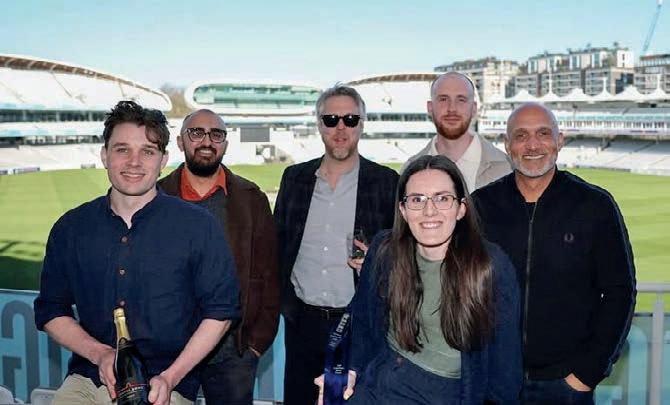
playing or watching cricket, I will take the option of playing every single time and that is in no small part because of the specific environment fostered at the club – warm, friendly and just the right level of competitiveness.
Looking back, I had a complicated relationship with St Paul’s. I was not an academic high-flyer by any means. I often felt lost in that ultra-competitive academic environment. In fact, I have a clear memory of experiencing a brief but intense existential crisis during a GCSE physics lesson. Struggling to get to grips with the finer details of nuclear fission, I distinctly remember thinking, ‘What is the point of all this?’ More generally, what was my place in the school? Was there a place for someone who knew that Oxbridge would not be for them?
Thankfully, the answer to that question was not a no. I had a home from home in the Christian Union, an extraordinary institution that provides solace for so many at School and has done for well over a century.
Elsewhere, my interests (almost all of which were non-academic) were given space to flourish. Most memorably, the support I was given to run my own sports magazine proved invaluable. Fully aware from the age of eight that I would never be good enough to play cricket professionally; this was the first time that I realised that I could turn my passion into work.
I set off to university at Edinburgh with a clear idea of what I wanted to do. I had a functional relationship with my degree, instead throwing most of my energy into the student journalism that I did on the side. I was lucky enough to get useful work experience at the right time before eventually landing on my feet with a full-time job at Wisden after I left university.
I am grateful that despite not being the archetypal Pauline, the School found a place for me to thrive. At a basic level, it showed me how carving a slightly more off-beat career path was possible, even if I still have no idea about nuclear fission.
Ken Clark (1978–79) explains why his hobby is infinite

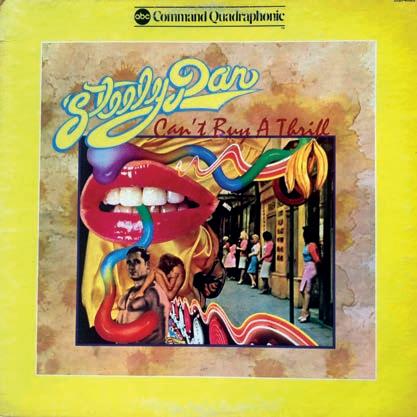
I have been collecting records since 1975 when I purchased Pink Floyd’s Dark Side of the Moon with the two posters and stickers. I now have several thousand and enjoy searching for new acquisitions as well as disposing of unwanted surplus.
There have been many studies comparing the audio image from vinyl, CD, streaming, cassette, reel to reel and digital. While streaming and digital can contain more information and sharper detail, vinyl is universally acknowledged to communicate better the emotion and sensitivity of the musicians.
The golden age of Pop and Rock (1965–1975) marked incredible advances in recording from 4 Track to a 64 Track soundscape. In addition, as one well known London long time records dealer has asserted, before the Oil Crisis of 1973, the vinyl used to make records was of a high quality so not only were many of these artists at the top of their game but the material in and on which their work was communicated was also of the finest standards. For Jazz, the golden age of Be Bop and small combo music from 1955–1965 (Miles Davis, Charlie Parker, John Coltrane etc.) also overlapped this period of highquality vinyl and recording standards. For Classical Music, Deutsche Grammophon and other labels developed high quality vinyl pressing to produce definitive versions. Modern engineers have taken the original source tapes of the epic recordings and digitised them and tried to clean up any issues, but most fans prefer the old original pressings. Even acquired pops and scratches can personalise a record so it can be
associated with a particular place and time. There is also something very comforting, like reading a book as opposed to scanning digital text on a Kindle, in pulling a record jacket out of its sleeve, and spreading the jacket out to peruse the lyrics or decipher the graphics. Double albums lent themselves to rolling tobacco or another suitable accompaniment to such wonders such as the Grateful Dead’s Live Dead album.
The average length of 20 minutes per side is the perfect attention span and when you turn it over you can refresh your glass. The great albums also are a whole with varying moods, sonics and variations between songs in the same way as a great novel is a separate reality that you can live in for a short while. Albums can also have original artwork, graphics, posters, lyric sheets and features that you simply cannot get on Spotify. Grand Funk’s Railroad’s Shin’ On comes with 3D glasses so you can experience the 3D graphics on the cover and poster as you listen to the album. The Velvet Underground’s first album had a peelable banana designed by Andy Warhol. The first pressings of Bob Marley’s Catch a Fire were made to look like a lighter with a sleeve that opened with a flip top. Jackson Browne’s Saturate Before Using was textured like a canvas bag. Chicago’s VI was printed on the same paper as used for banknotes.
You can also find novelists and poets reading their own work such as Philip Larkin, T S Eliot, William Burroughs, Jack Kerouac and Dylan Thomas on obscure records.
There are notable variances in songs on well-known albums such as vocals, guitar solo or background tracks between mono, stereo, quadraphonic pressings and different countries’ issues. Steely Dan’s Reeling in the Years has a different guitar solo on the quadraphonic version from the stereo version. There are dozens of variations of Bob Dylan’s Blonde on Blonde between mono, stereo and different countries. You can research and see which one you enjoy best or all of them and you cannot listen to these on any of the streaming digital services.
And Vinyl does furnish a room to paraphrase Anthony Powell: vinyl looks great neatly stacked and arranged in shelves next to books.
I can remember during the CD revolution, many of my friends were questioning my sanity when I kept all my records. Now they credit me with good sense.
If anyone has any questions or I can be of any assistance, please do not hesitate to contact me at kdciii2006@yahoo.com. The hobby is infinite.
Here are his thoughts on the last two decades
It has been a strange 20 years, as the reunion reminded me. A home-based gap year passed in a haze of writing, gigging, and night classes at Guildford’s Academy of Contemporary Music. I read Philosophy at Warwick but spent as much time treading the boards as thumbing pages, then a summer at Berklee College of Music and even writing a musical I took to the Edinburgh Fringe for 2 weeks, to mixed reviews.
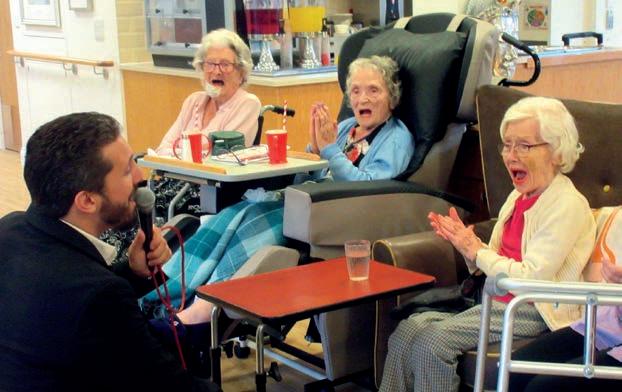
After another sluggish gap year, I landed at Belmont University, Nashville, studying Songwriting and Honours. Immersing myself in culture and opportunities on and off campus culminating in my thesis, Helen & I, a 10-song orchestral rock concept album based on Greek mythology and the Hero’s Journey. Some readers might have heard me play the leading single, Persephone, at the OP/ Leavers’ Concert on 29 June in the Wathen Hall.
Unexpectedly back in London after graduation, I sold ad space on world tours for One Direction, 5 Seconds of Summer, and other ‘modest’ artists. But the workplace culture was a poor fit for me, and, with the encouragement of my then wife, I struck out to do music full time, spreading my efforts between the album’s release, recording guide and backing vocals for karaoke tracks and performing in nursing homes.
It is the third of these that has proved to be the mainstay of my career over the past decade. With a focus on Alzheimer’s and dementia patients, I travel the south east, from Oxford and Cambridge to Southampton and Portsmouth, singing Rat Pack, rock & roll, traditional songs... While not rising to music therapy – a Masters I applied for unsuccessfully, albeit amongst the top 5% of candidates – the practice is considered music as medicine.
Music is stored across multiple parts of the brain, not just resistant to neurodegeneration, but actively helping to fight against it. Recognition wakes up dormant neurons connecting those storage areas, sometimes rendering previously mute patients talkative and present, able to remember past events, even if only for a short time. I see over and over what those moments of clarity mean to residents, families and carers.
As a career, it runs the gamut. A thick skin is required – the elderly are less likely to hold their tongues, particularly when disoriented. I have been abused, cheered, booed, physically and sexually assaulted, turned into merchandise, tipped, and propositioned. My singing improved no end. I am exposed to constant sickness. I regularly get full meals or sent home with cookies or cake. And I have enough stories to write a memoir. Perhaps the most poignant is when I was asked to pop upstairs after a gig to sing for a resident with just weeks to live. We sang White Christmas together while I held his hand. Returning two years later, after the pandemic, I was surprised to see him on the front row. His carers assured me I had saved his life – he rallied after that day, making it to the grand old age of 100 and beyond. I still struggle to take that credit.
The Old Pauline Club could, perhaps, be better known at St Paul’s itself. Pupils are largely aware that we have sports clubs (though are often surprised that we play in competitive leagues) and some, particularly those with older brothers, are aware that there are social events to come in their future. There is an Assembly for Leavers that Jeremy Withers Green (1975–80) and I spoke at this year and the Old Pauline Shield for International Excellence, which is handed out at the Leavers’ Ceremony and is so large that the OPC logo beams prominently from the stage – but there is always more that we can do.

Since Simon Hardy (1974–79) took over as Chair of the Old Pauline Trust, he has been very keen to promote the Trust to young Old Paulines and also, now, current pupils. I mentioned in the last Atrium that Simon and I met Dr Tom Killick (Deputy Head, Co-Curricular) to talk about making grants available to school societies, and it is natural to report back on this.
Societies are run by pupils, not by teachers and so the information about the process was disseminated by Tom to the society leads. Applications did name a teacher associated with the society, but all the work was done by the boys themselves and the board of judges (Marcus Grainger (1990–95), Sam Hyman (1992–97) as well as me) were extremely impressed.
One was ruled out by the School –a new Investment competition, to be run by the Senior Economics Society
We loved the concept but unfortunately could not endorse schoolboy use of ‘real money’, however shrewdly we may have thought that they might invest it. We did suggest that perhaps we might fund the purchase of some simulation software, if they reapplied.
Another unsuccessful application first time around was from The Halley Society. They are seeking funds for research but did not give enough detail on what the money would be spent on. The Lower Eighth Society President was disappointed but accepted that this was a learning opportunity and will include more detail next time.
Those applications were from 8th Formers but the entrants spanned all ages, and the first application approved was from AsiaSoc, who wanted a Mahjong set and pastries to celebrate Persian New Year and
weekly get togethers during lunch breaks. We were already impressed with the detail in the application –“It also raises cultural awareness for the wider community of people that celebrate Nowruz, not just Iranians.” but even more so when Tom told us that these were 4th Formers. The Mahjong set is in use and the pastries went down well.
Many societies produce their own, professional looking printed magazines. The grant application was very timely for Horizon Economics Business and Finance Magazine, described in the application as “SPS’ leading and fastest growing magazine on economics, finance and business”. The society did not have budget to print their very popular and successful first edition but now have the means to produce a printed copy for the Summer Term. We particularly liked that this one is a joint initiative with St Paul’s Girls’ School.
The Old Pauline Shield for International Excellence, which is handed out at the Leavers’ Ceremony and is so large that the OPC logo beams prominently from the stage.

St Paul’s Alumni Association
Autumn 2025 President
S P D Hardy
Past Presidents
C J W Madge, F W Neate, Sir Alexander Graham GBE DCL, R C Cunis, Professor the Rt Hon the Lord McColl of Dulwich, The Rt Hon the Lord Baker of Dorking CH, J M Dennis, J H M East, Sir Nigel Thompson KCMG CBE, R J Smith, B M Jones, The Rt Hon the Lord Vaizey of Didcot, J Withers Green
Vice Presidents
Professor D S H Abulafia CBE, T M Adeyoola, Rt Revd R W B Atkinson OBE, Professor M D Bailey, P R A Baker, R S Baldock, S C H Bishop, J R Blair CBE, N St J Brooks, R D Burton, W M A Carroll, Professor P A Cartledge, M A Colato, R K Compton, S B B Cook, T J D Cunis, A C Day, S J Dennis MBE, Sir Lloyd Dorfman CVO, CBE, C G Duckworth, A R Duncan, J A H Ellis, R A Engel, D H P Etherton, Sir Brian Fall GCVO KCMG, N J Fitch, Sir Simon Fraser CMG, KCMG, GCMG, B R Girvan, The Rt Hon the Lord Godson of Thorney Island, T J R Goode, D J Gordon-Smith, M S Gould CMG MBE, J S Grant, The Rt Hon the Lord Greenhalgh of Fulham, Professor F D M Haldane, H A Hampson, S R Harding, R J G Holman, J A Howard, S A Hyman, S D Kerrigan, P J King, R M Kinnear, T G Knight, J W S Lyons, I C MacDougall, G C Matthews, Professor C P Mayer CBE, R G McIntosh, A R M McLean CLH, M H Modiano, J D Morgan, A K Nigam, N H Norgren, The Rt Hon George Osborne, Sir Mene Pangalos FRS, T B Peters, D M Porteus, C M Rampling CMG MBE, R M Rayner, The Rt Hon the Lord Razzall of Mortlake CBE, J A Reed CBE, Sir Bernard Rix, B M Roberts, J M Robertson, J E Rolfe, Professor S J Russell OBE FRS, M K Seigel, J Sherjan, J C F Simpson CBE, D R Snow MBE, P M Spence, S Strauss, A G Summers, R Summers, R Ticciati OBE, The Rt Hon Tom Tugendhat MBE, VR, Sir Mark Walport FRS, R T Watkins FRAM, Professor the Lord Winston of Hammersmith
Executive Committee
The Linguistics Society sought funds for a trip to Oxford University for a lecture from the University’s Philological Society, the oldest society in Great Britain dedicated to the study of language. Another that was easy to approve.
Next up was The Geographical Society with an incredibly well written and detailed proposal entitled “Mapping St Paul’s: Seeing the site in a new light” which will involve creating a series of highly detailed and quality geospatial or GIS (Geographic Information System) maps of the school’s entire 43-acre site. The maps will be wide ranging and will cover flood risk, land use, biodiversity and more – very impressive considering the software and skills used would only normally be accessible to students at university level. The hope is that these maps can be used by future students to understand the site in more detail and also be regularly added to and updated so that changes to the environment over time can be seen. Once completed these maps will be put on display, and approving this application was a very easy decision.
The feedback from pupils and teachers has been extremely positive – and the recipients very grateful. This is an initiative we will continue into the academic year 2025/26.
Simon Hardy (President and Chairman of the Committee), Jeremy Withers Green (Immediate Past President), Tom Arnold (Secretary), Nick Brooks (Treasurer), Kut Akdogan (US), Jaipal Chawla (30s Decade), Sam Cook (20s Decade), James Grant (Sports and AROPS), Harry Hampson (Governor), Sam Hyman (Co-Opted, Surveyor), Dave Methuen (40s Decade), Elizabeth Monro-Davies (Parent), Nog Norgren (50s Decade, Legal), Rishi Patel (20s Decade), Ellie Sleeman (SPS Development), Simon Strauss (Overseas), Nick Troen (SPS Staff), Neil Wates (Communication and Engagement)
Nominations and Awards Committee
Simon Hardy (Chairman), Jeremy Withers Green, Brian Jones, Peter King, Nog Norgren
Sports Committee
James Grant (Chairman), Rob Rayner, Jehan Sherjan, Nick Troen, Jack Turner
Officers Committee
Simon Hardy (Chairman), Jeremy Withers Green (Immediate Past President), Tom Arnold (Secretary), Nick Brooks (Treasurer), James Grant
Communication and Engagement sub-group
Neil Wates (Chairman) James Grant, Simon Hardy, Jeremy Withers Green
Colets Development Financing sub-group
Stephen Withers Green (Chairman), Nick Brooks, James Grant, Simon Hardy, Richard Holman, Sam Hyman, Brian Jones, Ian Turley
Advisory Council
John East (Chairman)
David Abulafia, Peter Baker, Jon Blair, Paul Cartledge, Mike Colato, Ross Compton, Richard Cunis, Tim Cunis, Alan Day, John Dennis, John Ellis, Robert Engel, Brian Fall, Dean Godson, Stephen Greenhalgh, Richard Holman, Brian Jones, Peter King, Charles Madge, Alan McLean, Jon Morgan, Francis Neate, Rob Rayner, Tim Razzall, Bernard Rix, James Rolfe, Mike Seigel, Jehan Sherjan, Nigel Thompson, Ed Vaizey
Archivists
Kelly Strickland, Katherine Gregory (parental leave cover)
Photographer Tom Bradley
Accountants
Kreston Reeves LLP
Trustee
OPC Trustee Company Limited
In June, Simon Hardy (1974–79) started his two-year term as OPC President. His AGM statement combined commentary on the last year and his ideas for the Club’s future direction.
“Let me start by giving a warm welcome to the new Old Paulines and Honorary Old Paulines from academic and non-academic staff at St Paul’s and congratulating the five new Vice Presidents on their appointment.
As Jeremy Withers Green (1975–80) concludes his two-year tenure as President, the Old Pauline Club (OPC) stands stronger, more engaged, and forward-looking than ever. Over the past year, significant strides have been made on multiple fronts, affirming the Club’s role as a dynamic pillar of the wider St Paul’s community.
The Club has aligned itself well with the school’s priorities and is providing support in several areas:
• We increased our contribution to fund two full bursaries and, last year, over 50% of all bursary donations to the school last year came from Old Paulines.
• We mentored participants and increased our investment in the ESTER incubator programme for young OP entrepreneurs under the stewardship of Nick Troen (1998–2003).
• We financed the digitisation of The Pauline magazine from 1925 to 2000 under the direction of the SPS/OPC archivist Kelly Strickland, which is now available online.
• We donated funds for the conservation, digitisation and reframing of the Montgomery Map, originally used for D-Day planning at the old school.
Alumni engagement is on the rise thanks to a varied programme of events (averaging one per week) and the tireless efforts of James Grant (1990–95) and Neil Wates (1999–2004):
• The traditional flagship events such as the Feast Service, Earliest Vintage Lunch, Annual Dinner and Year
Group Reunions are firmly anchored in the calendar.
• The professional networks continue to bring together OPs in certain sectors including Finance, Medical, Entrepreneurship, Tech, and the Capital Angel Network.
• We have added university drinks in six cities, the summer drinks and comedy night was repeated. Our 12 overseas branches are organising more events, notably in the USA.
• St Paul’s Girls’ School alumnae are involved in more and more of our events and we are actively planning more joint activities with them in future.
St Paul’s Connect is an important and valuable mentoring platform available to the entire St Paul’s Community.
• The good news is that more Old Paulines are registering and many of them are volunteering as ‘Willing to Help’.
• The Club is looking to increase sign-ups by younger OPs and working closely with the school to engage the Upper 8ths as they prepare for life outside St Paul’s.
• Nevertheless, the benefits St Paul’s Connect have still to be fully realised, so the Executive Committee will be focusing more time and effort on getting the best out of this platform.
The professional standard of our communications is truly appreciated by the OP community:
• Significant numbers open the monthly newsletters which reflect not only the level of activity at the Club, but also the many achievements of Old Paulines.
• Atrium has evolved into a more dynamic and inclusive magazine, now showcasing over 20 OP contributors per issue, from school leavers to post-war Paulines.
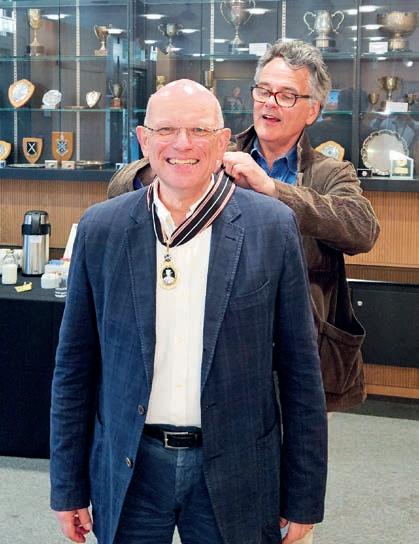
• The school’s Development, Engagement and Marketing team, OPC Communication and Engagement sub-group and Atrium’s editorial board all deserve recognition and thanks.
OP sports clubs continue to perform well and recruiting new alumni remains a constant priority:
• OPAFC grew to four league teams; the 1st XI won their league title and promotion; the 3rd XI was promoted and reached their cup final; there were four games against the school.
• At the OPFC the 1st XV had some notable wins when students were available to play; it had very few 2nd XV fixtures; a good group of recent leavers is keen to play in future.
• The OPCC has lost many regulars and is now looking to consolidate to two league teams and organise friendlies in July and August. Again, there is good interest from recent leavers.
• In Golf the OPC qualified for finals of the Grafton Morrish for the first time in 25 years and is slowly building a competitive Halford Hewitt squad.
• The popular and growing sport of padel saw a young OP team win the Plate at an Alumni tournament in Bristol.
• In Fives, Ben Beltrami (2009–14) became the 3rd OP to win the national championship.
• Colets Health Club facilities have been upgraded and membership is close to 5,000, an all-time high. The OPC is closely following and supporting future development plans.
The Executive Committee keeps renewing itself and our thanks go to those stepping down as well as those joining. The contributions to the Club by several individuals deserve to be called out:
• Nick Brooks (1966–1970) has worked tirelessly now for ten years as the OPC Treasurer and is ready to continue in this important role.
• Tom Arnold (2009–12) has joined the Executive Committee as Secretary to replace Sam Cook (2011–16) who remains on the committee as a 20s Decade Champion.
• James Grant (1990–95) plays a key role as the Associate Director Alumni Relations at the School and has strengthened the relationship and interaction with the OPC immeasurably.
Looking ahead, the OPC has updated its mission to “foster an inspiring, inclusive and enduring fellowship of St Paul’s alumni worldwide,” underpinned by its values of being supportive, open-minded and courteous. The Club’s actions and activities will be guided by the agreed strategic pillars:
• Support the School’s mission
• Cultivate a sense of belonging
• Provide a network of mutual support
• Recognise Pauline achievements of all kinds
• Help others to fulfil their potential
Jeremy’s time as President has set a firm foundation for the OPC and clarified its role as a unifying force across generations, geographies and interests. With a renewed mission, an engaged membership, and a deep respect for both tradition and progress, the OPC moves confidently into the future.”
Sam Cook (2011–16) was OPC Secretary from January 2020 to September 2024. He is currently a member of the Executive Committee and joint 20s Decade representative. Sam works as a Captain flying for British Airways.
James Grant (1990–95) is Associate Director Alumni Relations at St Paul’s School, a member of the OPC Executive Committee, Chairman of the OP Cricket Club and Secretary of the OP Golf Society.
Chris Rampling CMG MBE (1986–91) was Captain of OPCC in 1999 and 2000. In 2021 he was appointed Director of National Security of Foreign, Commonwealth and Development Office and had previously been Ambassador to Lebanon and Deputy Ambassador to Jordan. Chris was recently appointed Ambassador to the Netherlands.
Patrick Spence (1981–84) is a BAFTA winning producer who is now MD of the film and TV production company AC Chapter One and, until recently, was Creative Director of ITV Studios where he was producer for Mr Bates v The Post Office, which won a BAFTA in 2025 and three awards at the National TV Awards. He started as a script editor on Cracker and Line of Duty and with his own company, Fifty Fathoms, his credits include Adult Material, The A Word, Fortitude, Peaky Blinders and Marvellous, for which he also won a BAFTA.
Richard Watkins FRAM (1975–80) was Principal Horn of the Philharmonia Orchestra for 12 years and is currently a member of the Nash Ensemble and a founder member of London Winds and the Transatlantic Horn Quartet. His extensive discography includes works written specially for him by British composers. Closely associated with promoting contemporary music for the horn, he has given premières of concertos by Maxwell-Davies, Osborne, Lindberg, Muldowney, LeFanu, Tansy Davies and Colin and David Matthews. He holds the Dennis Brain Chair of Horn playing at the Royal Academy of Music where he is also a Fellow and is a guest teacher at the Royal College of Music. In 2023 he received an Honorary Membership of the British Horn Society.
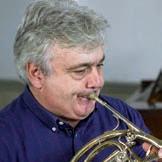
The first winners of Emerging Alumni Awards are:
A Senior Associate at McCue Jury & Partners (MJP). He joined the firm in September 2022. MJP is a human rights and public interest law firm. As one of the firm’s only two Senior Associates, Jack (along with Oli Troen) has an outsized impact on driving the firm forward. Since Oli and he joined the firm, it has doubled in size and they have together opened a new London office. Both Jack and Oli run high profile legal campaigns designed to effect change and seek compensation for victims, be they victims of terrorism, sexual violence or historic injustices. As part of the firm’s work bringing litigation on behalf of victims of Russia’s invasion of Ukraine both Jack and Oli have visited Kyiv in the past 18 months where, hosted by the government of Ukraine, they held various meetings with government officials surrounding justice and reconciliation for Ukraine. Jack is the lead associate on the firm’s litigation against Andrew Tate on behalf of four alleged victims of sexual violence. He also manages litigation brought on behalf of victims of IRA bombings during the 20th century against Gerry Adams and the victims held hostage by the Iraqi revolution guard following the hijacking of BA149 in Kuwait.
Also a Senior Associate at McCue Jury & Partners. He joined the firm in February 2023. He is the lead associate on the firm’s Ukraine work, managing a broad range of cases (including on behalf of kidnapped children and victims of Wagner Group terrorism) that make up Ukraine’s Civil Society Lawfare Programme. The programme hosts a range of civil society lawfare actions around the world which are designed to provide reparations for Ukrainians harmed by Russia’s illegal invasion. Oli is also the lead associate on the action brought against the UK Ministry of Defence by veterans of the UK’s nuclear testing programme. The case seeks compensation from the government and the truth about what happened in the South Pacific in the 1950s and 60s, the effects of which are still felt today.
Noah made his public concerto debut in early 2018 with the Woking Symphony Orchestra. He has performed at venues all over Europe, including London’s St John’s Smith Square, Southbank Royal Festival Hall, BBC Hoddinott Hall and Steinway Hall in London, Kiev’s Philharmonia Hall (Ukraine), Gothenburg’s Operan and Konserthuset (Sweden), Budapest’s Danube Palace (Hungary) and Bayreuth’s Steingraeber Kammermusik-Saal (Germany). He graduated with 1st Class Honours from the Royal Academy of Music, where he was awarded the Sir Elton John Scholarship. He is the recipient of many awards including the Young Pianist Foundation European Grand Prix and the Horowitz International Competition. In January of this year, he performed live on BBC Radio 3 and gave a virtuosic lunchtime recital at the Wigmore Hall performing Rachmaninov, Clementi and Liszt. “This recital was almost perfect… a tremendous recital by an exceptional pianist…a performance of often staggering imagination… I am not sure I have ever heard this music melt with such beauty; and nor have I heard such a magical touch as if the notes were just vaporising into the air,” wrote one reviewer.
Oliver Gilford (2006–11) – Comedy
When your comedy night is curated by alumni, for alumni, and then reviewed by me, an alumnus, for alumni magazine Atrium, edited by an alumnus press baron I owe a favour to (for having asked far too many questions about his dog Bella on stage at last year’s gig), you are in the pocket of Big Conflict of Interest and would be wise to declare it. But I shall not. I deny all allegations of corrupt gushing praise. Even with ‘faith and letters’ as my guiding principle, confession is off the table.
Regardless, the 500 words are due, and the whiff of cronyism should not distract from the joy of Old Paulines (handsome and clever), Old Paulinas (handsome and clever), and muggles (also present) packing into Headliners Comedy Club in Chiswick.
Organiser Neil Wates (1999–2004) (handsome and clever Atrium writer) opened the evening by comparing himself to Brad Pitt and promptly breaking the first rule of B Club: you do not talk about B Club.
Pitt’s doppelgänger brought on the first act, a handsome and clever OP (though not as handsome and clever as Atrium’s press baron). Dressed in bright orange stage armour, he sauntered on lugging a leather attaché heavier than Chekhov’s gun. Walking the tightrope between integrity and good publicity, I reveal to you, dear reader, he was I. With reflections on ageing and morality, bald identity politics, late night thoughts, and the tale of Gaddafi’s trip to Beaconsfield’s model village, I was [insert humble personal appraisal].
It was my privilege to then bring on a stellar roster of Britain’s best improvisers. OPs Rhys Collier (2002–07) and Max Dickins (2001–06) (handsome and clever) were joined by
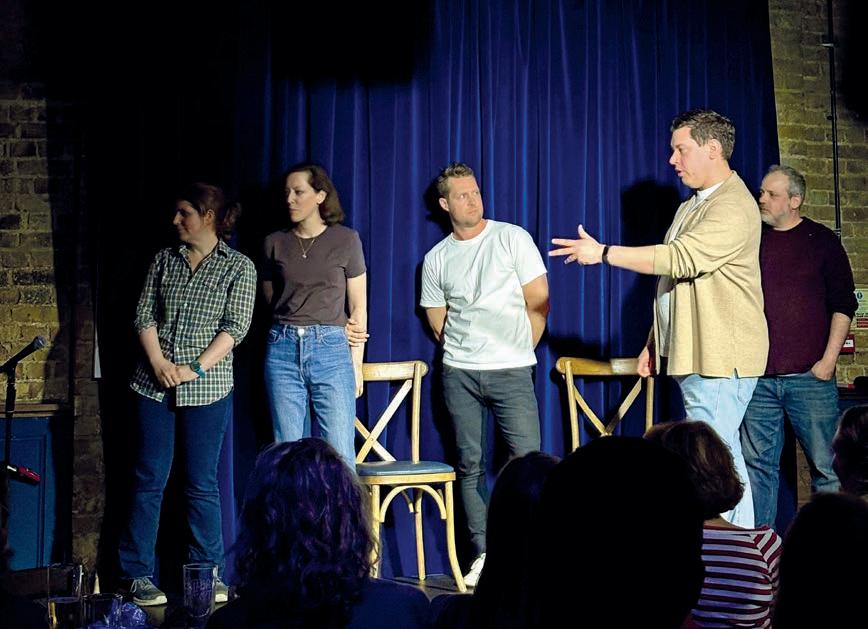
Alison Thea-Skot, Charlie Kemp and Bryony Redmond (handsome and clever because I know them too). Turning fresh audience suggestions into a delicious dish at lightning speed, this was ‘Ready, Steady, Comedy’. A surgeon falls for a patient, and a lad moves home at 23 to face his overbearing family. Unfortunately, mum’s motto turns out to be ‘suck don’t swallow’. It is not exactly ‘fide et literis’.
I opened the second half by chatting to a woman about Cancun (professional comics swear by this failsafe technique), before introducing Old Paulina Lucy McIlgorm (handsome and clever), a playwright and actor with an Edinburgh-bound show worth checking out. She delivered cool, cutting, deadpan lines on porn and privilege with a stillness and confidence that gave her punchlines space to land and room for the laughter to spread contagiously.
Then came the blistering brilliance of MC Hammersmith Will Naameh (2005–10), (handsome and clever), whose improvised rap took on audience suggestions with lyrical precision and razor wit. As a comic, he is the sort of act that makes you laugh, then despair at your own lack of talent. However often you see him rhyme with items from the audience’s pockets and bags, it is still like seeing fire for the first time.
Touring TV titan Hal Cruttenden (1982–87) (handsome and clever) was quick to mention the difficulty of following MC Hammersmith, tackling fascism, divorce and George Osborne
(1984–89) in a way that made taboos feel strangely warm. The juxtaposition of his well-spoken camp voice and jet-black humour is the key, offering the thrill of hearing a kind old lady swear. Hal is fit for the autobahn, speeding through an hour of jokes in his 30 minutes, and the audience feels the G-force in Generosity and Gags. What had started as a corrupt in-joke of an evening soon became a symbol of the School’s roots. ‘Faith and letters’ took on new meaning. Comedians give their wordy sermons to a congregation of those with faith in the arts, shared connection and the power of language to expose. For one more OP night, Headliners became a kind of church, where comedy was confession and communion. Come and join the congregation next time around. If you are handsome and clever enough.
This year’s Leavers’ Ceremony at St Paul’s at the end of the academic year was well attended and very enjoyable.
Many Leavers visited the bright red OPC Gazebo to find out more about the Club, and as ever they left with giant OPC-branded laundry bags over their shoulders, which included their OPC tie and mug. The Old Pauline Shield for International Excellence was won by Alp Karadogan (2020–25), who has been in the 1st VIII since the age of 15 and will be attending Harvard University. It was awarded on the day to his proud mother, as Alp was busy competing at Henley.
Alp and Patrick ‘Pat’ Wild (2020–25) won Gold in the Men’s Pairs at the World Rowing Under 19 Championships in Lithuania in August. They were coached by St Paul’s Director of Rowing and Honorary Old Pauline Bobby Thatcher. It is the first time a British pair has won since Matthew Pinsent and Tim Foster in 1988.
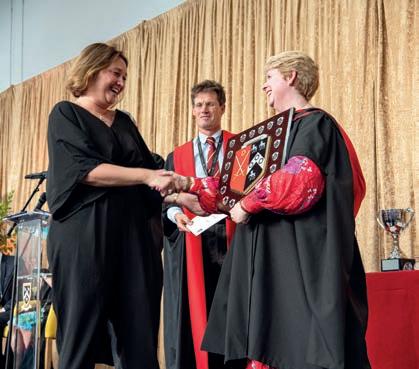
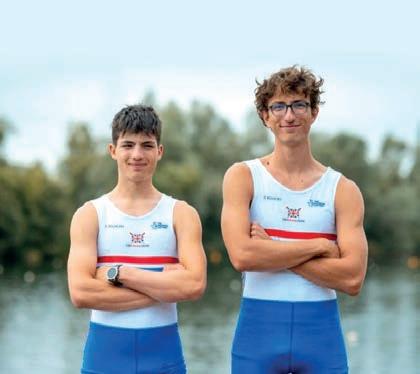
Traduttori traditori: a translator’s lot is not a happy one
Introduced by Michael Simmons (1946–52) who had been taught by Cotter and Cruickshank, Simon May (Classics Department 1988–2019) gave the biennial classics lecture. Since Simon retired in 2019, he has devoted some of his time to producing English verse translations of the early plays of Aristophanes. He is a Fellow of the Society of Antiquaries.
How should we translate Aristophanes? In his talk illustrated by several snatches at the piano, Simon reflected on the challenges and pitfalls of producing in and for a modern age, meaningful translations of ancient Athenian comedy, a literary form which often strikes us as both familiar and at the same time strangely
enigmatic. He showed how he has used modern verse forms to produce something both readable and actable, and discussed how he has tried to bring Aristophanic jokes and word play before a new audience.
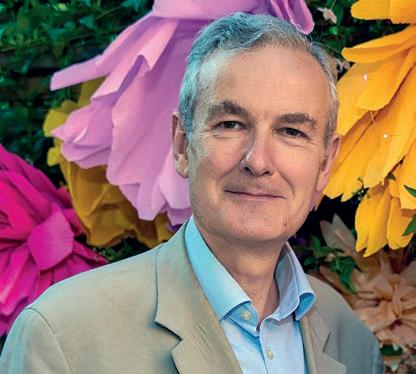
To complement the larger ride in the Autumn, a smaller Pauline Continuum rides took place in May and October, led by SPS Director of Sport and keen cyclist Luke Warriner (1997–2002).
With these, a simpler route was on offer, from St Paul’s to Richmond, and a couple of laps of the beautiful Richmond Park. If you would like to join future community rides with fellow OPs and school parents, please email community@stpaulsschool.org.uk
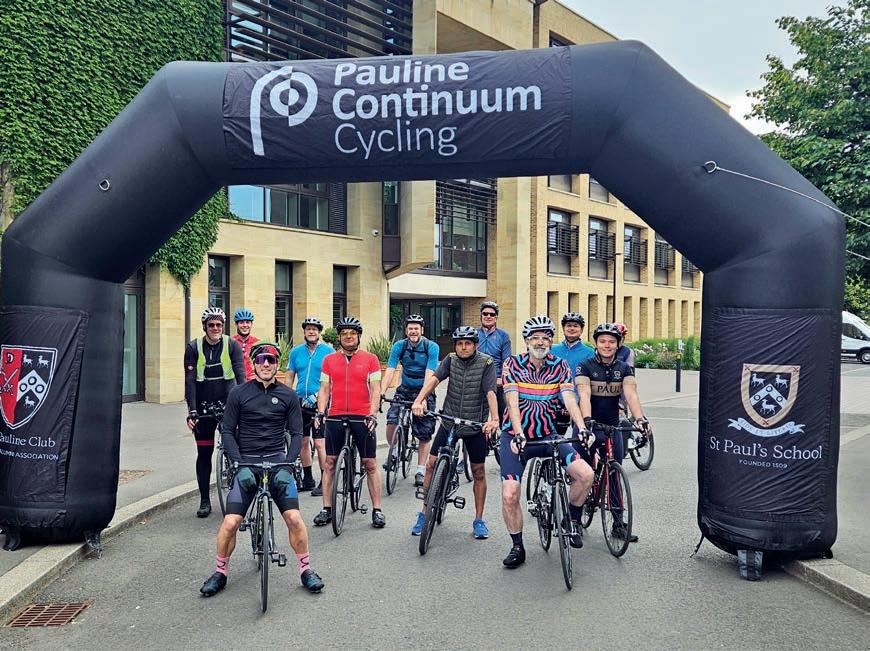
The Alumni Houseparty Weekend: A Century Not Out and Finding Firsts
The past couple of years have marked two significant events for the Christian Union and its alumni. One was a joyful celebration: 100 Years of House Parties. The other, far more poignant, was the Memorial Service for John “Tub” Beastall (1954–59) at St Martin’s Church in West Acton. Unexpectedly, these two occasions sparked a third, joyful event: the first-ever alumni house party weekend.
The idea had floated independently in the minds of several former members of the Pauline Meetings and the SPSCU, but it was not until the post-funeral curry – at Tub’s favourite Indian restaurant – that it took root. As conversation flowed, Robert Stanier (1988–93) looked around and said to Jeremy Skinner (1984–89), “You know – I think there’s something going on here.” Jeremy agreed, and together with Andrew Puddifoot (1974–79), they got to work.
In June, a group of alumni ranging from their early 20s to nearly 80 gathered at Wychcroft, a retreat centre in Surrey owned by the Diocese of Southwark. The three days were loosely modelled on the familiar house party format: fellowship, prayer, discussion, communion, singing, silence, walks and plenty of laughter.
The weekend offered more than nostalgia. It gave space to reflect, reconnect and remember. There were wider belt loops, less hair and a few more wrinkles, but the spirit of the CU remained intact – undimmed, unselfconscious and full of the same generous silliness.
For many, it was a return to something they had not realised they missed so deeply: the rootedness, the shared faith and the easy camaraderie of the Pauline Meetings. A century in, and this was something new – a first alumni house party. One born, in part, from loss, but blooming into a weekend of joy, reconnection and gratitude.
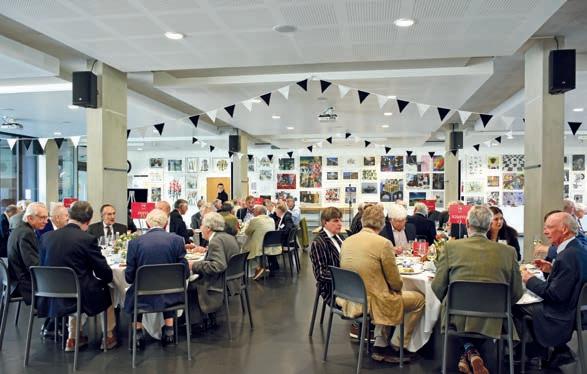
At the other end of the scale, this year’s Earliest Vintage Lunch was attended by OPs who left St Paul’s in 1974 or earlier – in fact, as far back as 1952.
OPC Vice President and Professor of Greek Culture Paul Cartledge (1960–64) gave a fascinating talk, deciding to speak before the main course rather than afterwards, in effect swapping with OPC President Jeremy Withers Green (1975–80). A drinks reception before lunch was accompanied by a fascinating Archive display provided by Kelly Strickland, St Paul’s School and OPC Archivist.
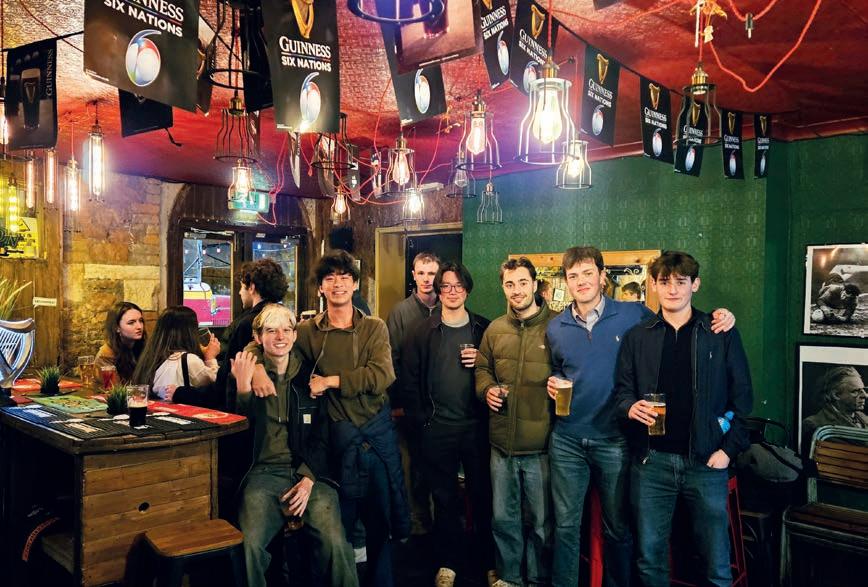
After Cambridge, Edinburgh and Oxford during the Autumn Term, it was the turn of students at Bristol, Durham and London Universities to enjoy drinks and pizzas courtesy of The Old Pauline Club and St Paul’s and St Paul’s Girls’ Schools.
James Grant (1990–95), Neil Wates (1999–2004) and Sam Cook (2011–16) represented the OPC at the events, which were supported in advance by Leavers’ Representatives. These events have a simple but successful formula and continue to generate very positive feedback as we look to engage our younger OPs.
Those who left St Paul’s in 1985, 1995, 2005, 2015 and 2020 came together for a wonderful Reunion evening in June.
Attendees were treated to a tour of the school buildings, followed by a drinks reception held in the Atrium thanks to inclement weather. Tom Killick, Deputy Head Co-Curricular, gave an update on school matters before Jeremy Withers Green (1975–80) spoke for The Old Pauline Club. The party moved to The Bridge on Castelnau and lasted long into the night, with year groups mingling and a great time had by all.
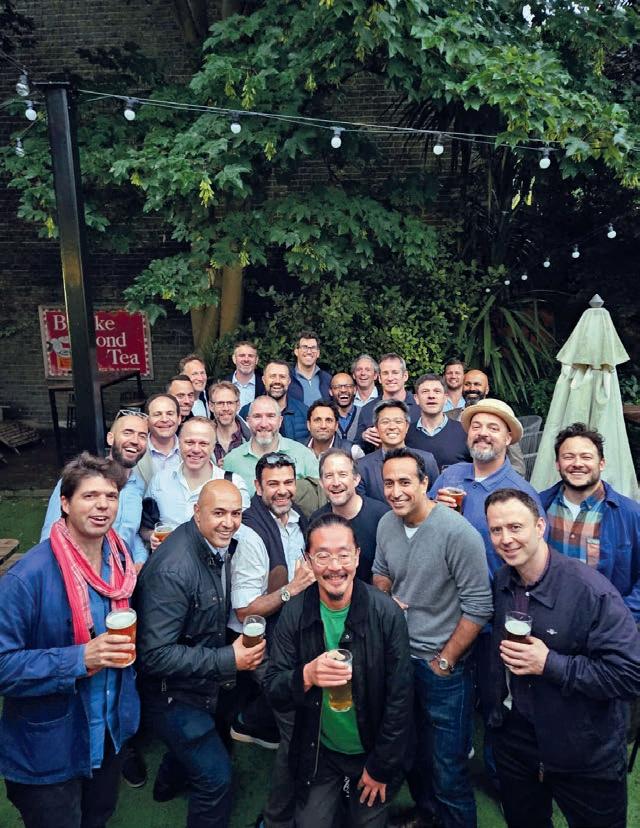
OP events are not just held in London or the rest of the UK. Our busiest branch in New York, led by Kut Akdogan (2001–06) holds regular events, while we are planning increased activity in San Francisco and Boston.
Recent events have been held in Madrid, organised by Murray Grainger (1985–90), Sydney (Freddie Blencke, 1986–91) and Athens (Menelaos Pangalos, 1979–84) with more planned across the world, some with SPGS Alumnae invited too. If you live abroad and wish to join, or indeed create an overseas branch please email community@ stpaulsschool.org.uk
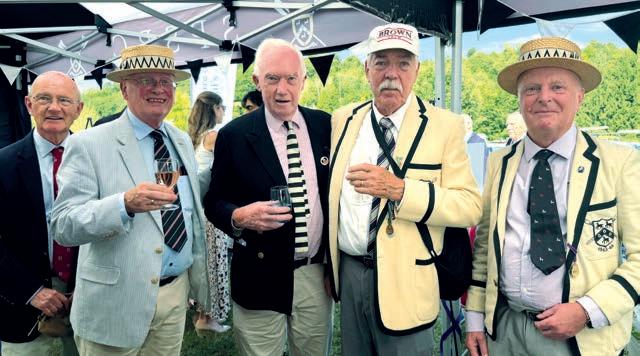
Glorious sunshine helped to make a fabulous afternoon event at Henley, with OPs joining parents at the nowtraditional SPS Tea Party in Butler’s Field.
After watching the 1st VIII dispatch KCS Wimbledon in the Princess Elizabeth Cup, a group of 60 enjoyed drinks and nibbles in and around the SPS Boat Club’s gazebo. Of special interest was a reunion of some of the 1965 1st VIII which included Vietnam Veteran, Ross Fenton (1963–65), who flew over from Massachusetts for the occasion.
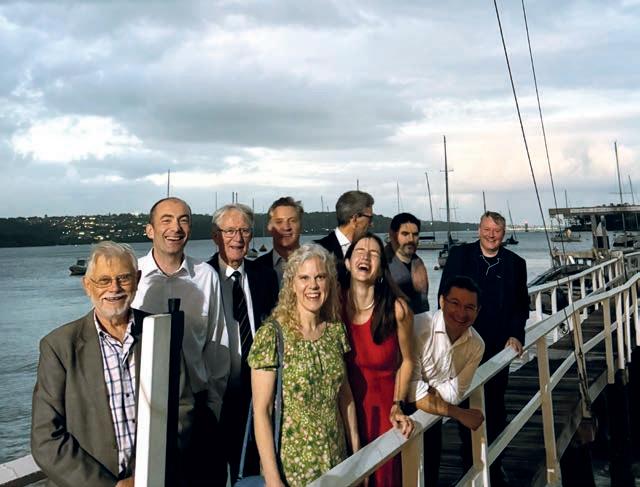
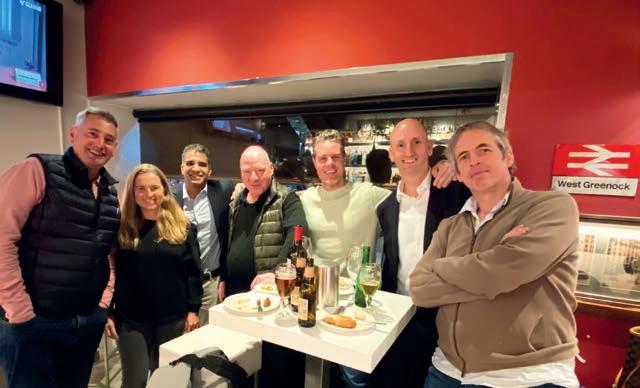
Our sincere thanks to Stephen Baldock (1958–63) who has now stepped down as Chairman of the OPC Wessex Branch.
His last act was the annual Lunch, once again at the Mercure Hotel in Salisbury. The event was impeccably organised by Martin Seccombe (1961–65) and this year featured guest speaker Peter King (1967–71). We may rebrand to the South West Branch and are looking for a new Chair or Co-ordinator.
If you are interested in being that person, please email community@ stpaulsschool.org.uk
The Spring and Summer terms saw several successful events hosted for pupils and OPs interested in careers in Law, Finance, Medicine and Entrepreneurship.
Our thanks go to Paul Hardy (1979–84), Stephen Pidcock (1995–2000), Jon Unger (1992–97) and Matt Williams (1995–2000) for being panellists at the Law event, Jeffrey Tannenbaum (1990–95) for the Finance event and to Will Englander (2009–14) for a fascinating talk at the Entrepreneurship event.
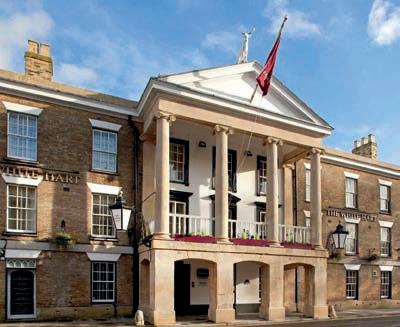
UPCOMING EVENTS
Tuesday 4 November
Media Professional Network
Thursday 6 November
Oxford University drinks
Tuesday 11 November
Real Estate Professional Network
Wednesday 12 November
OPs in London Social Networking
Thursday 13 November
From The Archives: St Paul’s School Union Minutes
Thursday 20 November
Edinburgh University drinks
Tuesday 25 November
Topical Tuesdays: Physics
Wednesday 26 November
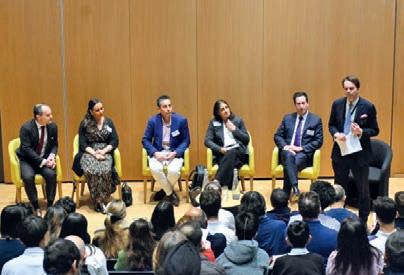
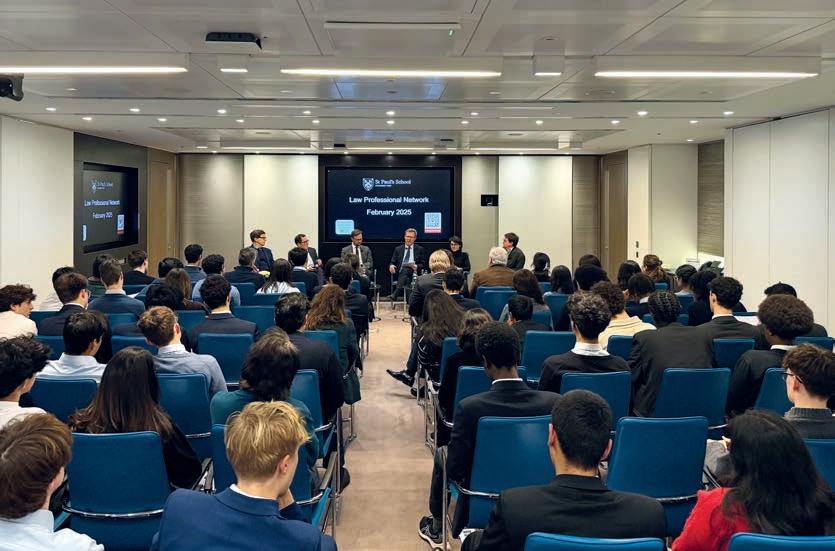
From The Archive: The Montgomery Map
Wednesday 17 December
First Term Reunion drinks for Class of 2025
Monday 9 February
Feast Service and Supper
The OPGS continues to enjoy meetings, matches and tournaments on excellent courses, with golf and accommodation for some young players subsidised thanks to a grant from the OP Trust. Unfortunately, the Halford Hewitt team, led by Charlie Prior (1995–2000) lost to Mill Hill 3-2 in the first round of the Halford Hewitt, with the match going down to the last putt. The Cyril Gray team beat King Edward’s Birmingham at Worplesdon but lost in the second round to Merchant Taylors’. In better news, for the scratch tournaments, we qualified for the finals of the Grafton Morrish at Hunstanton for the first time in 25 years and came a creditable 4th in the keenly contested Public Schools Putting Tournament at Royal Wimbledon.
In matches, a great day out was had at Royal Mid-Surrey for the match against St Paul’s with the school team prevailing narrowly. Old Uppinghamians were beaten at Denham, but KCS beat us narrowly at Kingswood. Old Lawrentians prevailed at Walton Heath and we tied with Old Haileyburians at Woking.
The Spring Meeting was held at Fulwell, with Chris Vallender (1960–64) taking the Just Cup, Jack Turner (2008–13) the Haswell Bowl (Scratch) and David Pincott (1971–75) the Goldman Salver for higher handicappers. Hayling GC was at its very best for the Summer Meeting (pictured), with high temperatures and cloudless skies –along with a glass of port on the first tee – greeting us.
Captain Nick Cardoza (1983–88) rather ruled himself out of contention for prizes by playing with hickory clubs while dressed as Harry Vardon. The Mercers’ Cup for best Stableford score was retained by Robert Silverstone (1964–68) and the Sayers Cup for best gross score was won by Charlie Prior, to nobody’s surprise given his handicap of 1.
Ian Bailey (1974–78) has agreed to be 2026 Captain, taking over from Nick Cardoza. For more information about how to join the OPGS, please email Society Secretary James Grant on jsg@stpaulsschool.org.uk
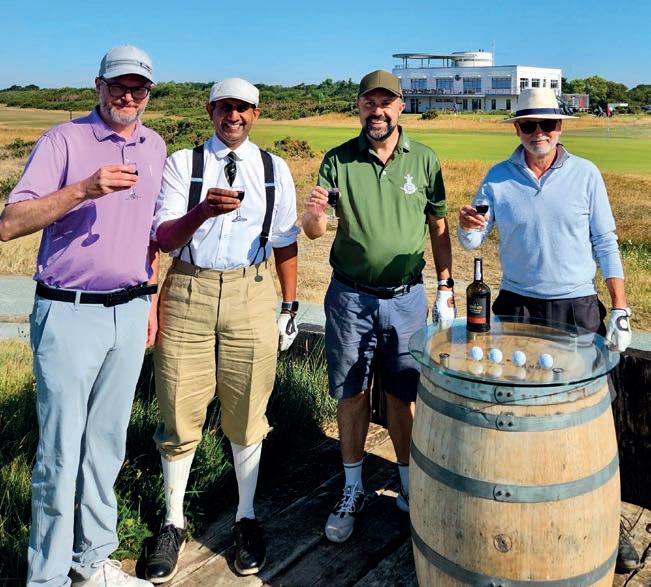
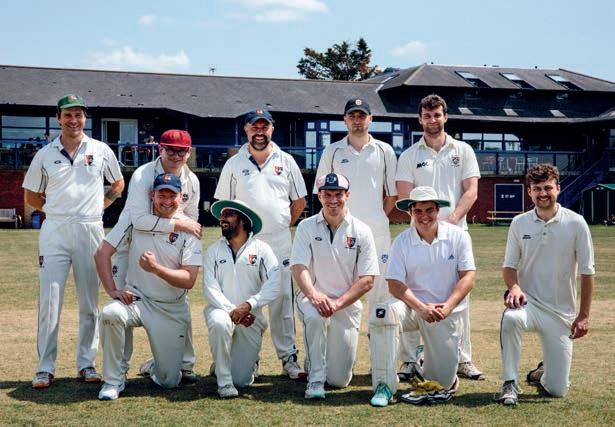
The loss of several 1st XI and 2nd XI regulars over the last few years has meant difficulty in fielding 33 players for our league sides this season. This came to a head in June and so a discussion was had with the newly formed Surrey Cricket League. Our unusual position was that 3rd XI availability remained strong and that it was the 2nd XI where the gaps were. The League were very understanding, allowing us to take the sad but sensible decision to withdraw the 2nd XI, as opposed to the 3rd XI for the rest of the season. We will review over the winter but the likelihood is that 2026 will see the current 3rd XI renamed as the 2nd XI. We do hope to resurrect a 3rd XI but on the positive side it was not that long ago that we only had 2 teams, both of whom achieved several promotions in just a few seasons.
The 1st XI under new Captain Sam Cato (2006–11) has had a mixed season in the newly formed Division 6 Central, with some excellent wins countered by some less strong performances. Ben Turner (2012–17) provided the season’s best performance with a superb 119 off 96 balls at Putney. An honourable mention too for Louis Odgers (2017–22) and his battling 93 against Old Wimbledonians. At the time of writing the 3rd XI, led by Olly Stoddart sit within striking distance of the promotion positions. The team has been strengthened since the 2nd XI withdrawal but it is a regular with the standout performances; Tom Peters (1989–94) is the league’s highest run scorer. Wickets have been shared around. The highlight of the season was a chase of 168 for the loss of 2 wickets against Hampton Wick CC, who at the time were top of the league. The Sunday team under Charlie Malston (1995–2000) continue to enjoy their cricket enormously and have achieved some excellent results.
The 1st XI ended the season in thrilling fashion, winning the league and securing promotion to the AFC top tier. After a close title race, the team surged ahead with a 4-1 victory over their promotion rivals. Promotion was sealed in dramatic style with a last-minute winner in a tense 1-0 triumph on the final day. This marks the first time in the club's history that we will compete at the highest AFC level.
The 2nd XI enjoyed a solid first season in a new league following a string of successive promotions. After a loss in the first game the team quickly adapted. Highlights included a cup victory over a side from the league above and a dominant 5-1 win over the eventual champions in the final game. The team finished a respectable 4th, and have their sights set on promotion next season.
The newly founded 3rd XI had a very successful inaugural season, securing 2nd place, and with it promotion with a number of matches to spare. In addition, the team embarked on an excellent cup run, including dominant victories and a nail-biting 1-0 win in the semi to reach the final. Narrowly losing to a strong side, they may have ultimately missed out on silverware but will be back hungry for success next year.
The 4th XI overcame a challenging season by winning five out of eight games, resulting in a confirmed finish above relegation with two games to spare. With patience and resilience, they found themselves to be competitive in a new division, evident by beating teams who finished much higher in the table. The team feel proud of their achievements and how the squad has improved across the board and are eager to show this with a strong start to the new season.
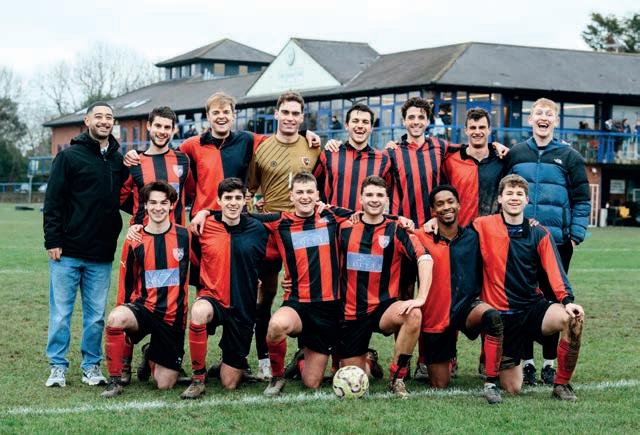
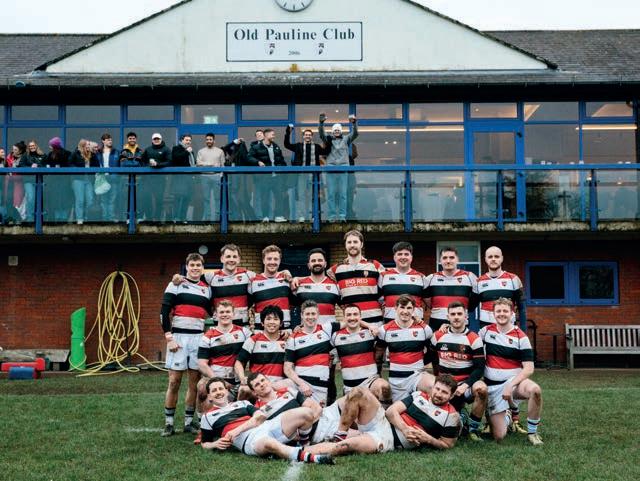
The 2024/25 season provided another catalogue of enduring memories for our beloved club. While consistent performances proved elusive in the league, the OPFC 1st XV concluded the season with a bang. A 71-21 victory over fierce rivals Harlequins Amateurs in the Cup quarter finals was welcome tonic to a team that has battled through this season, providing fresh optimism heading into the next.
Harry Strauss (2013–18) has consistently led from the front with a destructive style of play. Accompanied by the scrummaging prowess of newcomer Harry Mash (2010–15), the ferocity of Tan Lam (2016–21) in the tackle and the cool distribution of Josh Zillig (2014–19) at scrum half, the OP foundations of the team are going from strength to strength. With Undergraduate and Masters degrees completed, we look forward to welcoming the likes of Tom Elway (2016–2021), Chris Crampton (2015–20) and a number of others back into the team in September. The 2025/26 season is sure to be a corker for both players and spectators.
This summer, the 1st XV has been plying their swashbuckling style of play on the London 7s circuit. Marauding displays from Joe Wyche (2013–18) and Ben Smith (2013–18) at Middlesex in May saw the team reach the Plate Semi-Final, followed up by an eye-catching run at Chiswick RFC in July.
Wednesday evening Touch Rugby sessions on Clapham Common have proven very popular and the perfect re-entry point for players who have not taken to the field in a while. If you are interested in finding out more, you can email clubcaptain@opfc.org.uk or follow the club on instagram @oldpaulinerugby
Richard Ames-Lewis (1958–63)
John R B Barnard (1965–70)
Clive S G Billenness (1967–71)
Ralph K Blumenau (1939–43)
Philip A Cohen (1956–61)
John R Collins (1951–56)
Michael J Dale (1942–49)
Lord Terence M E B Etherton (1963–68)
Hugh L Garnham (1964–69)
Andrew R Gregory (1960–66)
Richard ‘Dick’ G Jaine (Former Undermaster, Surmaster 1979–2012)
Andrew A Kilner (1953–56)
Norman A Kirke (1941–48)
Nicholas M Kotch (1966–71)
Tim E Lester (1956–61)
Samuel ‘Sam’ J J Little (2015–20)
Mark Lovell (1947–53)
John A North (1951–56)
John ‘Dick’ R Pike (1950–55)
Alan R Pollock (1949–54)
Edwin L Pomeroy (1946–51)
Graham J Puddifoot (1967–72)
Ivor B Richards (1950–54)
Malcolm T Roberts (1962–67)
David M Shalit MBE (1941–47)
Gavin Sorrell (1948–52)
Peter N Sperryn (1950–55)
David J Steen (1942–47)
Robert G M Suter (1957–61)
John R B Barnard (1965–70)
John was born in Brighton on 25 December 1951 and, at the age of two, with his parents and sister, moved to Chiswick, where he lived for the rest of his life.
John and I were destined to become friends as we sat next to each other in Lower 2b on our first day at Colet Court in 1960. Our ‘Oak House’ pegs were one apart in Colet Court, we were in ‘E’ Club at St Paul’s and both lived in Chiswick. A friendship that lasted 65 years.
John graduated in Maths from Manchester University and followed a career in IT. He started working, in-house for Esso for 10 years before entering the contracting world and working for some large multinational companies, including Nabisco and RBS, before again going in-house for the last 10 years of his career at the Bank of America.
He was a keen sports fan and Fulham FC season ticket holder, but he will best be remembered for his athletic prowess. He was the founder of West 4 Harriers and belonged to two other running clubs. A many-time county capped runner for Middlesex in the 3,000m Steeplechase and ran in 17 marathons, including London, Boston and Trondheim. His best time in London in 1991, of which he was immensely proud, was 2 hours and 23 minutes.
A regular attendee at OP dinners until his rare neurological condition –Progressive Supranuclear Palsy – took its toll, and eventually he became bed-bound and unable to speak, although still understood when talked to, or read to from Atrium, right up to his death on 13 April 2025.
A devout and caring family man, John will be greatly missed by his wife, Mary, their three children, Elizabeth, Samuel and Annabel, and all his many friends. Nick Brooks (1965–70), friend
Ralph K Blumenau BEM (1939–43)
It is with deep sadness that we share the news of the passing of Ralph Blumenau BEM, who died peacefully on Friday 20 June 2025 at the remarkable age of 100. Ralph was born in Germany in 1933 and raised as Jewish, moving to England in 1939, when he achieved a scholarship to St Paul’s School aged 14. Ralph then graduated from Wadham College, Oxford, before pursuing a career in education. Joining Malvern College in 1957 as a Teacher of History and then went on to become Head of the department. An inspirational educator and mentor to generations of pupils, Ralph’s impact was profound and enduring. He retired in 1985 after nearly three decades of devoted service, though his connection to the College continued in his role as Governor. Following his retirement, he was awarded the British Empire Medal in the 2014 New Year Honours for services to Adult Education, recognising his 27-year contribution to the University of the Third Age in London following his retirement from the College. His intellectual energy and love of learning never waned. He published over 1,350 book reviews on Amazon and remained a sharp, curious voice well into his later years.
In 2015, Malvern College celebrated Ralph’s 90th birthday with a special event at the House of Lords. That same year, the annual Blumenau Lecture was established in his honour. This prestigious event has since been delivered by distinguished and award-winning speakers.
Ralph also endowed the Blumenau Prize, awarded annually to the most outstanding pupil in Philosophy – a reflection of his lifelong commitment to critical thinking and intellectual excellence. Ralph was happily married to Mary until she died in 2019, and was the brother Heinz T Blumenau (1941–46) who died in 2009. Ralph’s generosity, wisdom, and passion for education have left an indelible legacy on all who had the privilege of knowing him.
Adapted from the obituary published by The Malvernian Society on 23 June 2025
Professor Philip A Cohen (1956–61)
Philip Arthur Cohen was born in Bloomsbury, the only son of a Scottish surgeon and a Welsh nurse. His was a family where political discussions were frequent and heated. His interest in history was kindled at St Paul’s, and he won an exhibition to Cambridge to read history. But the teaching there disappointed him, and although he made some important friendships, he left, first to work on a trawler, then to join the 1960s radical movements in London.
He had a moment of fame in 1969 as “Dr John”, leading the squatters occupying 114 Piccadilly. Phil was interested in the life and culture of young people, and his next step was to become a youth worker and to write about it in Knuckle Sandwich, (with Dave Robins, 1978). On the strength of this he was asked to join the Institute of Education to design an innovative pedagogy respectful of the culture of children and young people.
He then moved to the University of East London, where he founded the New Ethnicities Unit, shifting later to a more general interest in urban life and writing On the Wrong Side of the Track? (2013) about the impact of the Olympics on East London. His final project was to direct Living Maps, an international network of radical cartographers very active today.
Phil was an enthusiastic sailor and spent time relaxing on the river in Wivenhoe. His first marriage was to Pam Brighton, with whom he had a son, Ned, in 1970. The marriage ended in divorce; he then married Jean McNeil and they adopted a son, Stephen, in 1988. They produced a book together in 2013, Graphologies
Phil’s interests were wide, he wrote continuously and produced, as well as academic works, books of autobiography, poetry, essays and fiction, and documentaries for TV. His aim was always to bring the University into real life, and to give a voice to people who are not heard.
He is survived by Jean, his son Ned, four grandchildren and two greatgrandchildren.
Jean McNeil (wife)
John R Collins (1951–56)
John Robert Collins was born in Surrey, on the 18 September 1937 and attended St Paul’s from 1951 to 1956 where he gained A Levels in Botany, Zoology and Chemistry. He remained extremely proud of his sporting achievements at the school, being part of the 1955 1st XV Rugby team and captain of boxing. He was a courageous fighter but just missed out on the Blue at university as Magnus M ‘Mandy’ Flett (1952–57), captain of boxing the year after, but arrived at Cambridge the same year, had broken his nose in the bout. This story was often retold every time a beer was drunk from the commemorative tankard from the fight. It was also at St Paul’s that he met John R ‘Dick’ Pike (1950–55). They were best man at each other’s weddings and remained lifelong friends, not least through their mutual love of horse racing. Between School and University John spent two years in the National Service undertaking his basic training at Catterick and then as a Commissioned Officer in the Royal Tank Regiment.
John attended St Catherines College where he studied Natural Sciences. In contrast, to his sporting achievements, he could tell anyone who listened, the Latin names of many plants and grasses. The self-appointed leader of the College rugby supporters led him into overenthusiastic plans which were loved by his peers. Painting the goal posts with the college colours, however, didn’t go down well with the authorities.
After short stints at ICI and in Fleet Street as a correspondent for the Farmer and Stockbreeder, in 1974 John established and successfully managed his own farming consultancy. He prepared and presented cash flow forecasts for the banks which optimised business management for his farmers. He was a very well-respected member of the farming community and he went out of his way to help others, keeping many of his clients throughout his career.
He was described as a good friend and could make people laugh. Couldn’t he just!
Bob Collins (son)
Terence Etherton won a scholarship to St Paul’s from Holmewood House in 1964 where he was Head Boy. He joined C Club and became an excellent historian and a very accomplished swordsman. He won an Open Exhibition to Corpus Christi College Cambridge, where he read History and then Law, and he became a member of the British fencing sabre team and would have competed in the Moscow Olympics in 1980 had there not been a boycott. Although he went on to become Baron Etherton and our second most senior judge, he was known to everyone as “Terry”. He was first and foremost a caring and unassuming person despite the heights of his achievements. Terry had time for everyone.
He believed strongly in social justice and in his last role as Chair of an Inquiry into the treatment of LGBTQ+ military personnel (prior to the ban being lifted on gay people serving in the Armed Forces) he travelled the country to interview as many former soldiers as he could. He was our first openly gay High Court judge and he married Andrew Stone in 2014 as soon as the law changed for civil partnerships.
His achievements were many. Chairman of the Law Commission, Chancellor of the High Court, and Master of the Rolls for five years. In 2019 he gave a lecture to the Hebrew University in Jerusalem in perfect Hebrew. A hereditary blood disease became a great toll on his health, but he went on to give valuable service in the House of Lords. He died aged 73.
Jonathan Caplan KC (1964–68) and Derek Etherton (1963–68)
Richard ‘Dick’ G Jaine (Former Undermaster, Surmaster 1979–2012)
It is with great sadness that we received the news of the sudden death of Dick Jaine on 3 July 2025 after an aneurysm. One-time Director of Sport, Sixth Form Undermaster, Senior Tutor, Surmaster and Acting High Master, Dick was a great servant of the School. He was instrumental in helping to bring about extensive changes, not least of which were the extensive partnership programmes and in the bringing of specialist coaches into all sports set-ups. In doing so he seemed to maintain an effortless cool, setting others at ease in the process, and almost making it look like it was not work at all!
Selected twice as an Olympic fencer, he was for many pupils the consummate coach and mentor, bringing his expertise and drive to what was usually a new sport.
Perhaps though it is as a brilliant manager that he will be remembered most fondly by former colleagues and pupils alike. He was always available, making time for anyone who needed it, employing charm and humour to make even the hardest problem seem less troublesome.
He was not one to seek praise and was adept at giving others the limelight, but he did take pride in doing things well, particularly so with the meticulous planning for both the visits of Prince Charles and the Quincentenary celebrations on “Bigside.” After 34 exceptional years, Dick needed a new challenge and joined GEMS, taking a role as Headmaster of Sherfield School. He excelled there too and was headhunted to manage a new project in Kensington. His role as CEO there was to be his last and he retired to spend time in the Surrey Hills with his wife Nynke. He had so many diverse interests that it was not really retirement at all, but sadly he did not get to enjoy it for as long as he deserved.
“We are diminished without Dick, but more, for having known him.” (former colleague).
Terry Peters, former colleague at St Paul’s (1988–2013)
Samuel ‘Sam’ J J Little (2015–20)
Sam Little, who sadly passed away earlier this year, started his St Paul’s odyssey by playing football in the barn at Colet Court. He ended it as a flying wingback for the 1st XI in a season sadly curtailed by Covid. But his favourite triumphs were driving the 2nd XI to league victory under Gaz O’Brien and leading his 4-2-1 team to unlikely cup glory against all odds.
Sport was his greatest love, whether terrifying opposition defences on the rugby field, or surging to 400m victory at Harrow. The St Paul’s gym encouraged his evangelical enthusiasm for weights, which ultimately inspired his family to join his sessions.
Sam was a prolific writer – the family poet laureate – and avid reader of everything from Virginia Woolf to Percy Jackson. He skipped over academic hurdles including achieving a First in English Literature from Durham and was working on a philosophical novel while teaching himself everything from economics and probability to the science behind strength training.
When the tributes to Sam were collated, though, they dwelled not on his undoubted talents but on his kindness. He always took the time to think of others and show interest in their lives, even when he was struggling himself. He was so proud of his two little sisters, who adored him in turn.
If you’d like to honour Sam this weekend, go for a jog, or do some push-ups against the back of the sofa, or kick a ball about in the park. Read a book. Ask someone how they are and listen to the answer. Sam would be smiling you on.
Michelle Little (mother), Mark Little (father) and Jake Little (2013–18) (brother)
Mark R C Lovell (1947–53)
Born in London, Mark spent his early years in Bucharest. When WWII broke out, his father Maurice was arrested, but escaped captivity and fled to Russia. Mark and his mother “B”, meanwhile, left via France, eventually arriving in America. After several years in Hollywood, the family reunited in Britain.
Mark attended The Hall School and St Paul’s, where the lifelong friendships he forged included Michael Simmons (1946–52) who remembered him for his wit, and his nickname: “Sphinx.” He relished Classics, the rigours of preparation and rote-learning notwithstanding. A keen thespian, he regularly trod SPS’s boards, with many a leading role to his credit.
Mark eschewed CCF for the Air Scouts, lured by the excitement of European trips. Under James ‘Jeep’ Pretty’s guidance, he travelled to the alps and around Italy. He later referred to these journeys, which took in amphitheatres, frescoes, and thunderstorms, as his “real European education.”
Mark won a Cambridge scholarship but stayed at St Paul’s an extra year playing rugby, which pleased Maurice, who favoured the oval ball. After National Service, when he learned Russian, Mark earned a double first in Classics and Human Sciences at Jesus College.
His career in marketing research spanned the UK and Canada. He earned many industry accolades, not to mention the gratitude of clients and colleagues. A lifelong learner, Mark took up astronomy, mycology, art and music. He ran marathons, played video games and enjoyed music. He still found time to publish eight books on child development.
Mark adored his family: his wife of 50 years, Susi, their daughter Rebecca, son-in-law Robert, and grandchildren Wren and Felix, and from his first marriage: children Frank, Sara (who sadly died in 2017), Simon, and Stephen, plus grandchildren Harry, Charlie and Eirlys. We will miss his humour, kindness, and enduring curiosity.
A Clerihew for Mark: Dear Mark Lovell, Would relish his waffle, And say something surprising Apropos advertising.
Simon Lovell-Jones (son)
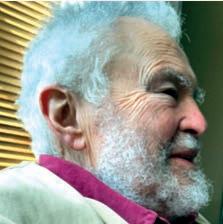
John A North (1951–56)
It is with deep sadness to announce the passing of Professor Emeritus John North, on Sunday 18 May 2025. Professor North joined the UCL History Department in 1963 and served continuously for 40 years until his retirement in 2003, including two terms (1992–97 and 2000–02) as Head of Department.
John was one of the giants in the study of ancient history. He was renowned for his ground-breaking work on the history of Roman religion and ideas, on the interaction between anthropology and history and on the relationships between ancient history, later historical periods and the contemporary world.
He was an incisive scholar, a dedicated teacher, and a generous mentor. His intellectual depth and kindness left an indelible mark on generations of students and colleagues.
Beyond his academic achievements, John will be remembered for his warmth, wit, and the collegial spirit he brought to every aspect of life. Our thoughts are with his wife, colleagues, friends, family and with all who knew him.
John’s legacy will live on in his writings, in the students and colleagues he inspired, and in the high standards of scholarship and humanity he exemplified. Adapted from the obituary published by University College London on 19 May 2025
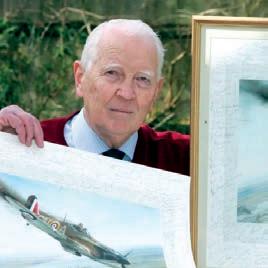
Alan R Pollock (1949–54)
Flight Lieutenant Alan Pollock died in July 2025 aged 89. He gained national fame in 1968 when he flew a Hawker Hunter jet through Tower Bridge. Frustrated by the government’s failure to mark the RAF’s 50th anniversary, and with little support from superiors, he staged unauthorised low flypasts over RAF airfields, dropping leaflets and government-issued toilet rolls. He then flew solo over the Houses of Parliament, Downing Street, and the Ministry of Defence, dipping his wings at the RAF memorial before flying through Tower Bridge in a dramatic act that shocked the public and embarrassed officials.
On landing, he was arrested and underwent psychiatric evaluation. To avoid the publicity of a court-martial, the RAF discharged him on medical grounds. He received widespread public support and was praised for his boldness and patriotism.
Born on 13 March 1936, he was the son of Lt Col John Pollock, the first British officer to enter Rome after its liberation in 1944. After St Paul’s, he joined the RAF in 1953 as a cadet at Cranwell, where he earned boxing colours before being commissioned. He flew Hunters with 26 Squadron in Germany, saw action in Aden with 43 Squadron, and was known for his skill and daring aerobatics. He later became a flight commander with 1 Squadron.
After leaving the RAF, he worked in business, including roles at Plessey and Dennis Brothers, before founding his own firm, 5D Synectics. He remained a committed advocate for RAF history, founding the “They Were There” project to support war widows, and contributing to the Tangmere Military Aviation Museum. He also raised funds for Mencap. Fluent in German, Russian, and Arabic, he was a keen linguist and had passions for skiing, mountaineering, and ornithology. He co-authored RAF Little Rissington and stayed active in the Hunter pilot community. He is survived by his wife, Trish, two sons, and two daughters. Adapted from the obituary published by The Telegraph on 10 July 2025
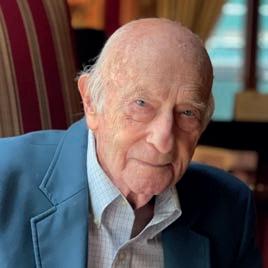
Edwin L Pomeroy (1946–51)
Ed Pomeroy arrived as a scholar at St Paul’s from Dulwich College Prep in 1946. He left in 1951 to read Greats at Hertford College, Oxford leaving with a 4th class degree. He spent his career in finance, working for the most part in Citibank’s international travelling inspection team.
In September 1986, Ed was on Pan Am flight 73 from Karachi to London. Mike Thexton (1972–76) writes: “I was returning from mountaineering in the Himalayas when I encountered Ed in the departure lounge at Karachi Airport. Ed was immaculately dressed in a suit, he remarked as he passed me, ‘the plane is late and we only have half an hour in Frankfurt to make the connection to London.’
Shortly after, as he walked by my seat on the plane with his hands in the air, followed by an armed hijacker, I whispered to him, ‘I don’t think we’re going to make the connection.’ I had not yet realised how the day would end – 20 people dead and a hundred injured after the hijackers opened fire and threw hand grenades in the crowded Jumbo jet.
Returning to the departure lounge, I spotted Ed. He was cheerful and calm, having passed the day playing cards with another passenger. I had the impression that very little would really upset him. He introduced himself and took me under his wing: ‘Let’s go to the Sheraton and send Pan Am the bill.’ So, a man completely at ease, even though he had left his shoes behind on the plane.”
Ed was soon back at work and, despite Flight 73 and having been booked previously on two flights hijacked in South America, he continued to fly regularly.
For many years, he lived in New York and was an enthusiastic member of the OPC’s community there and a generous donor to the Colet Foundation. He died a year after returning to the UK.
Jeremy Withers Green (1975–80) and Mike Thexton (1972–76)
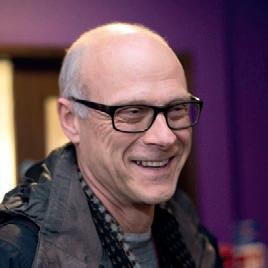
Graham J Puddifoot (1967–72)
Graham, who died in May 2024, combined his many talents and keen intelligence with a warm, affable nature that won him many friends.
He comfortably handled the academic demands of St Paul’s, where he excelled in the sciences and made a valuable contribution to the fencing team. He went on to study Environmental Sciences at UEA, where he nurtured his interest in his abiding passion: music.
After University and a spell in the nascent electronics firm Computer Workshop, Graham joined the BBC as a studio manager, recording, engineering and editing BBC TV and radio programmes – principally in the ‘pop, rock and light music’ department. This was work that he greatly enjoyed, albeit with occasional disappointments; he was scheduled to work on the sound at Live Aid at Wembley Stadium on 13 July 1985, but woke up that morning with flu and could not make it.
After 10 years at the Beeb he went freelance but continued to be in demand by the Corporation and other production companies, becoming an expert in the SADiE sound-recording system (and writing the instruction manual).
Outside work, Graham played guitar for a number of bands, including The Websters – with Jonathan Kydd (1967–72) – and in Basil Moss’s (1948–53) longrunning jazz band. His also gained his private pilot’s licence, thereafter flying friends (and his brother) to various UK and continental destinations.
Although music was Graham’s passion, he also loved words. He was never less than a formidable Scrabble opponent and composed over 50 crosswords – each eagerly awaited by the many subscribers to his puzzle mailing list.
For his many friends – including his partner of 14 years, Jess – it was Graham’s modesty, kindness and quiet sociability that were the key to who he was; qualities always in evidence at his chalet in Wales, where he and Jess enjoyed long walks with their beloved dogs. As one of Graham’s BBC colleagues noted: “a consummate professional and a truly lovely guy”.
Andrew Puddifoot (1974–79), brother

Ivor B Richards (1950–54)
Our Dad was a true man of honour. A man who was respected by all who knew him. A guiding light in times of uncertainty. The kind of man others aspired to be. In short, a real mensh. He was always a pillar of his community and after leaving Brighton for his beloved Israel, was active in his new environment leading social, religious and communal activities. He died on 10 May 2025, at the age of 88. He considered himself lucky to have a wife like Jill, four children, ten grandchildren and one great grandchild. He was evacuated from London during the blitz to Bishops Stortford, and when he returned in 1944, he was sent to Oxford College and then Colet Court and St Paul’s.
Dad went on to study Economics at LSE, before completing the ACA Accountants qualification where he achieved 4th place nationally. After some work experience at various companies as an accountant, he moved to a larger commercial company. Moving to Levy Gee, he started his move up the ladder in insolvency. He was a founder of a turnaround management system of insolvency in the UK and gained a reputation for successfully rescuing businesses. After moving to Hove in 1974, he made his mark on the community, helping local organisations.
Since retirement in around 2000, Dad spent his time researching his favourite subjects; the State of Israel and its founding, Torah, Tanach and Talmud. He also volunteered at a kindergarten, where several of the parents have reached out and expressed their sadness at his passing.
His greatest pride and joy were his grandchildren and he was delighted to have been able to meet and play with his great grandchild, Yuval.
With all the above said, we celebrate a life well lived.
Ivor’s children, David, Judi, Paul and Mark
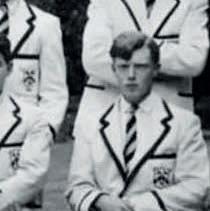
Gavin Sorrell (1948–52)
Gavin Sorrell died peacefully at his home in Putney on 13 July 2025, aged 91. He was the second of three Pauline brothers and a key member of the successful 1st VIII rowing crew, captained by his brother David Sorrell (1947–51). In 1951, they won the Princess Elizabeth Cup at Henley, the Schools’ Head of the River Race, several other regattas, and placed seventh in the main Head of the River Race, a record for a school crew at the time. Gavin also played full back in the 1st XV alongside his brother, who played lock forward.
During National Service, he was commissioned in the RAF, serving as Assistant Adjutant at RAF Benson and rowing for the RAF crew that represented Britain at the European Championships in Copenhagen, earning silver. He later read Geography at Christ Church, Oxford, and rowed three times in the Boat Race, serving as OUBC President in his final year. Their coach, Freddie Page, had also mentored all three Sorrell brothers at school.
Professionally, Gavin joined the London Stock Exchange and became a partner in the family firm, Sorrell, Lamb. He later became an external underwriting member at Lloyd’s, where he was among many affected by the institution’s mismanagement in the 1980s.
A devoted family man, Gavin found great joy in life with his wife Therese, three children, and three grandchildren. He recovered well from a triple heart bypass in 1980 and even reunited with his RAF crew to row at Henley on their 50th anniversary. In later years, he was lovingly cared for by Therese during his health decline.
Warm, generous, and sociable, Gavin had an infectious sense of humour and many lifelong friendships. A talented oil painter, he leaves behind many beautiful works. He will be deeply missed by all who knew and loved him.
John Sorrell (1951–56) (brother)
David J Steen (1942–47)
Born in Bromley in 1928 to schoolteachers James and Violet, Steen won a scholarship to St Paul’s. During the Battle of Britain, he remembered cycling to and from school watching dogfights overhead and spent his summers farming in Somerset. He developed a love of cricket, rugby, football, and point-to-point racing. He read Classics at Hertford College, Oxford, then served as an RAF Education Officer before joining stock jobbers Pinchin Denny, staying until its acquisition post-Big Bang.
Without the single-minded determination of David, the London Stock Exchange may not have had an options market before the 1980s. As its founding father, he launched the London Traded Options Market in 1978, developed it despite scepticism from conservative City figures, and chaired it for eight years.
Described by the Financial Times as an “options crusader,” Steen broke the mould. A member of the Stock Exchange council, he challenged the “gentlemen v players” mindset by taking a hands-on approach. He also forged links with exchanges in Chicago and Philadelphia to broaden the market’s reach.
By his retirement in 1987, the options market had become a billion-pound business. Milestones included the listing of British Telecom options in 1984 and a surge in demand after the Big Bang in 1986, when equity market makers turned to options for hedging. In 1993, the market merged with LIFFE, which by 1996 had become Europe’s largest futures exchange.
David was elected a Conservative councillor in Sevenoaks in 1965, helping to protect Knole Park during road planning. He remained an active and independent voice in local politics.
In 1955, he married Mary Lynne. They raised three children in Sevenoaks and lived in the same house for 66 years. In retirement, they supported Vietnamese refugee children through Hampton Court House. Mary died in 2021. They had eight grandchildren and two greatgrandchildren.
Adapted from the obituary published by The Times on 1 March 2025
Robert G M Suter (1957–61)
Robert Graeme Milner Suter arrived at St Paul’s from Thorpe House School, following his father John D Suter (1921–25) and elder brother John R M ‘Dick’ Suter (1951–54). He was in Colet House and then High House. He enjoyed rugby with the 4th XV and later played for the Old Paulines. Later in life rugby remained important, especially as a passionate Wasps fan.
He rowed for the 2nd and 3rd VIII, winning several tankards, and even coached a younger team, sometimes ending up in the river while cycling alongside on the towpath.
Music was his lifelong passion; he played piano, timpani, and sang baritone in various choirs including the Bucks Choral Society and St James Accord Gospel Choir. Later, he joined the Caring Chorus and the Dementia Choir with his daughter Sue.
His interest in the military led him to join the school’s CCF, especially enjoying rifle shooting. He returned to the sport in his 30s, even representing Middlesex, and proudly displayed his many trophies.
While still at school, he worked for the family business, Suters. After gaining A Levels, he trained as an accountant before officially joining Suters on his 25th birthday. Eight days later, he married Anita and they settled in Chalfont St Peter, where his children Russell and Susanna were born. He later became a director at Suters, but after its sale in 1978, the family moved to Worcestershire, where Robert started a property renovation business.
Following a return to Gerrards Cross after his marriage ended in 1982, Robert joined John Lewis. He was a very valued member of the business and retired in 2013 after 31 years and a total of 44 years in retail.
A lifelong member of St James Church, he served as sidesman and Tear Fund ambassador, representing them internationally in Uganda and India.
Robert is survived by his children, and grandchildren Jacob and Molly.
Russell Suter (son), Sue Pritchard (daughter) and Philip Suter (brother)
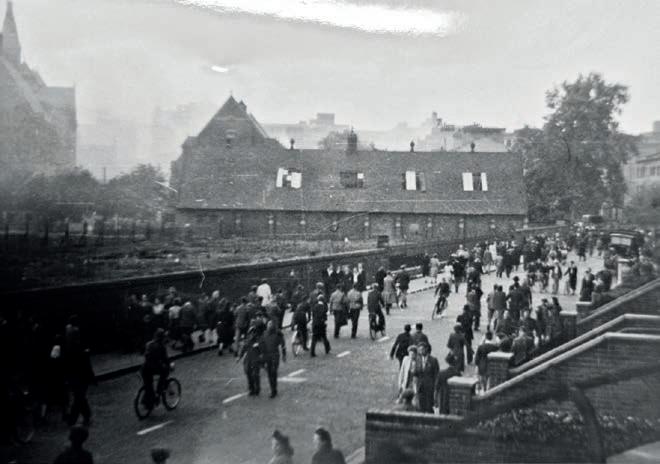
Having The Pauline digitised through to 2000 makes Past Times refreshingly easy to produce.
On the 80th Anniversary of VE Day Atrium clicked on the July 1945 magazine. The praise heaped on FieldMarshal Sir Bernard Montgomery at the start of the Old Pauline News section immediately caught the eye.
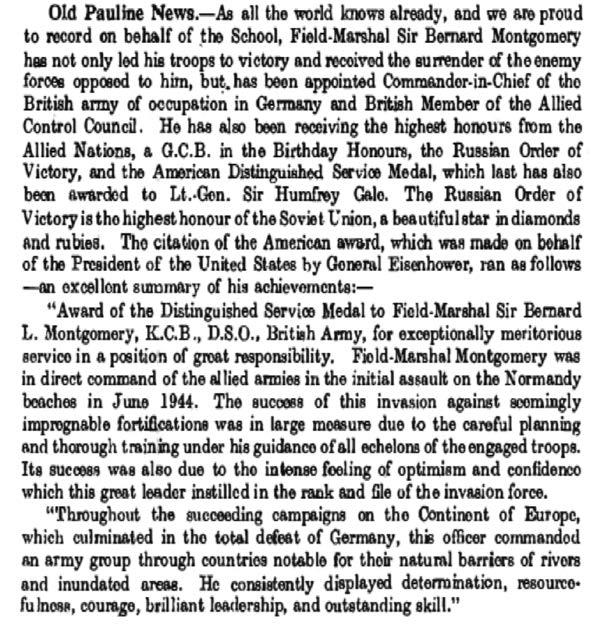
And the report and scorecard from a low scoring School 1st XI victory against Broadmoor Hospital shows how the evacuation to Crowthorne changed the fixture list. Atrium has found no evidence of a rugby match against the inmates.
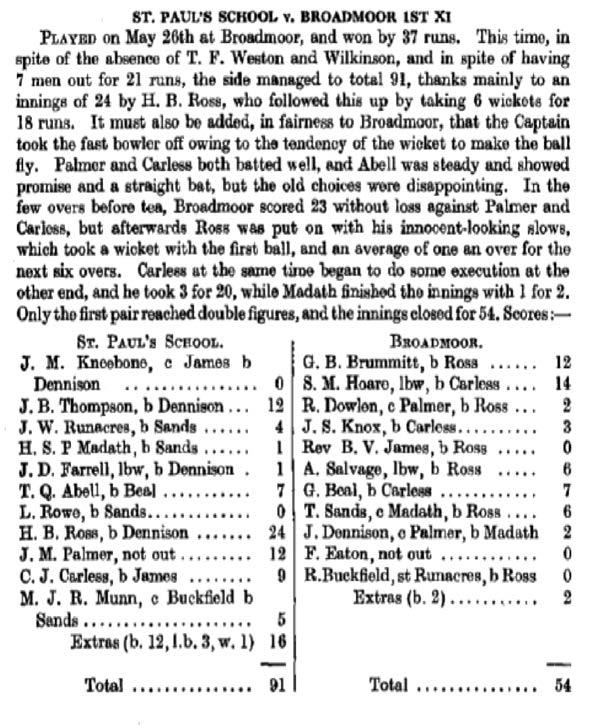
My maternal grandmother, a woman prone to ‘stoppeth’ any unsuspecting guest with lengthy, embroidered anecdotes, was delighted that I had been accepted at St Paul’s, thus continuing a tradition. Her son, Hugh Macbride (1949–54), had been at the School as had her husband, L M (Lionel) MacBride (1914–20).
One of her popular, oftrepeated stories was how Hugh, together with some unidentified friends, had become disgruntled with continual reminders by teachers of the good and the great alumni. They had, allegedly, engaged in research to identify Paulines whose past was shady.
Judge Jeffreys (1650s and 1660s), the ‘Hanging Judge’, was on the list, but I do not remember any other names although my grandmother thought a notorious poisoner was included.
My uncle Hugh, recently deceased, did not confirm this story to me. There is, however, a subtle irony to it.
Young people tend to be uninterested in their family histories. I suspect that most subscribers to genealogy websites are those in their later years and who, as they reflect on their mortality, realise how little they know about their ancestors. This can be particularly poignant when it comes to close family members that one knew. It may result in a furtive expedition into the loft in the search for documents and photographs that probably ended up in a skip during house moves. One is left regretting that one did not think to ask more questions when these people were still alive.
I was very close to my grandmother, an ex-Fleet Street journalist and a great entertainer. I once invited some of my Pauline friends to dinner to meet her. She married my grandfather, Lionel, in 1925 when, I believe, they worked on the Daily Express. Lionel was close to Lord Beaverbrook and held a number
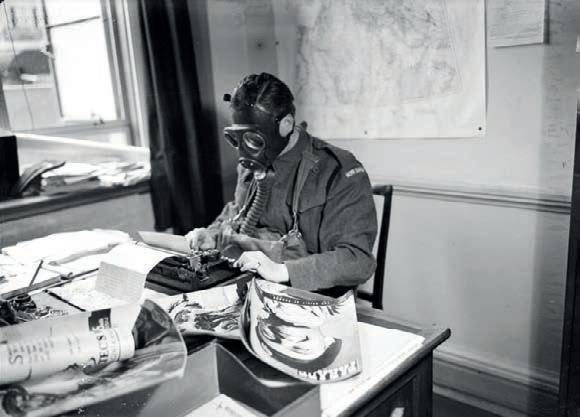
of editorial positions on his newspapers until the outbreak of war. He died in 1970, allowing my grandmother an apparent new lease of life. She moved to her beloved Peak District not long after.
I have only a very few memories of my grandfather. On one occasion he took me to visit St Paul's School, then in Hammersmith, but I am sure all we did was look at the school from the street. I have a happier recollection being picked up by my grandparents in a taxi outside Colet Court and treated to lunch on the train to Torquay where Hugh was getting married. Not long after he suffered a series of strokes and my last memory is being asked to sit by his bedside, showing him Giles cartoons while reading the captions. He tried to smile out of politeness.
My grandmother always referred to my grandfather as Anthony. I have no idea why. She did not go to his funeral and I was tasked with keeping her company at the rented house in Strawberry Hill where they lived for many years. Perhaps I should have caught on that there may have been something awry with the relationship. If anyone had asked me at the time what I knew about my grandfather, I would have answered ‘nothing’.
My relationship with my grandmother flourished after Lionel’s death and I spent most school holidays at her bungalow in Bradwell, Derbyshire. At times this could be challenging, especially when she had her favourite grandchild cornered in a room with what she thought was an
engrossed audience. By the time she died in 1983, I felt I knew as much about her as did my mother and uncle Hugh. If I thought that I might learn more about my grandfather, I was to be disappointed. On one occasion she did say that they had had their ups and downs but had always remained polite to one another. She also gave him credit for having remained faithful to her during their honeymoon. I did of course get some information from my mother. Lionel had been an absent figure, especially during the War, when she and Hugh were evacuated to Lifton in Devon. He had a marked stutter that my mother said made him very attractive to the opposite sex.
As a journalist, he had worked in a culture of heavy drinking and smoking. She remembered there were continual financial pressures on the family leading to speculation that his salary, which would have been quite sufficient, was being drained for reasons unknown. Both my mother and Hugh published short biographies in which they are surprisingly economical with references to their father.
In later years I was able to fill in further gaps, having acquired a few photographs and documents from various members of the family.
Lionel’s father was a philandering rogue and petty criminal, abandoning his mother who then remarried a civil servant named MacBride (Lionel subsequently took his name) who worked in Ceylon. She remained there for some time, leaving Lionel in the care of her father, a Dr Davy. It was
he who sent Lionel to Colet Court and St Paul’s; it was possible he was also an alumnus. I do not know why Lionel did not take up a scholarship to Oxford. After many years in Fleet Street, at the outbreak of war, Lionel took up a position at the Ministry of Information with references from Lord Beaverbrook. He received an OBE for this service. He served in the Home Guard. After the War, he spent two short periods at the Australian High Commission in Canberra. His last position was at the Air Ministry.
I am sure that my grandfather would have mixed with many celebrated names (my grandmother often talked of these) and on paper it might appear he had a distinguished career, although he may not have aspired to the very highest positions. I assumed that an Internet search would reveal more. This proved disappointing. I discovered only one photograph at the Imperial War Museum archive. This was my grandfather at his desk in the Ministry of Information during the War. He is in a gas mask. Hugh confirmed his identity from the ring on his finger.
A few years before my mother died in 2019, we talked more about Lionel. I told her that I remembered staying with my grandmother at her home during the funeral and asked her how many people had turned up, apart from her and Hugh. She replied ‘nobody’.
The solution has each of the 26 letters at least once.
24 squares show a letter where it belongs.
Across
6 Picture that is outside Atrium (5)
7 Victory to Crewe at either end is a sign of disapproval (5)
8 Bowled out, snoopy might be bald (5)
9 Covered sponge with daughter (5)
10 Scream out loud to sea monster (5)
13 area of fencing retail (with two left) (5)
16 Conflict observed in capital of Poland (6)
17 Former partner, model, show-off (6)
19 Pure wine (5)
22 Bears broken sword (5)
24 Jump over cellar (5)
25 Know heretic at heart to what place? (5)
26 If ale is drunk it’s a boy (5)
27 His friend had big ears shaking up and down (5)
1 Silent warrior found in xianin Japan (5)
2 Sister’s daughter is pleasant when taking ecstasy (5)
3 Take 40 winks before family meal tissue (6)
4 Stupid dense requirements (5)
5 Man is partly alleging back (5)
11 Warm hearts for former PM (5)
12 Composer is drunk with Brahms (5)
14 First letter of ancient language Plato heard always (5)
15 Hermit swapping poles for also-ran (5)
18 Initially six pounds for calamari (6)
20 Mid-East borders lacking plans (5)
21 Odds of 1-1 2,4,6,8 etc. (5)
22 Remains of BBQ meat missing second (5)
23 Polishes birthday suits (5)
Imagine our founder John Colet and Benjamin Jowett (1829–36), Old Pauline and eminent 19th century classicist, wandering around the modern school. Middle English not exactly tripping off Jowett’s tongue, nor its Victorian descendant off Colet’s, the pair might have been more comfortable conversing in Latin.
optimi discipuli, o Johannes, ventures Jowett upon observing some students.
Colet nods. But then wonders: studentne tamen cum fide et litteris, o Beniamine?
The two quickly establish that modern-day Paulines have great faith in themselves. Turning to letters, both Colet and Jowett quiz some of the boys in Latin. The boys look nonplussed. Eventually, one of them explains that although the school still teaches languages and literature, Latin’s place in the curriculum is much reduced. As is that of Ancient Greek. Colet and Jowett wonder how things have come to such a pass.
Colet and Jowett may be surprised, but they would not be alone. Latin’s decline at the School has been steep and, when seen in the context of its long history, strikingly recent. One of my teachers at the school was Mike Seigel (1964–68). In his time at St Paul’s, Latin was compulsory across the board: pretty much all the 120-strong cohort took the O Level in it. By contrast, a quarter of a century later, about 120 of the 150 boys in my year sat the GCSE, while in 2024 the figure was a mere 69 out of 185. In percentage terms, the drop is stark: from nearly 100% (mid-1960s) to about 80% (early 1990s) and now 37% (2024).
The A Level numbers for Seigel’s cohort are harder to estimate but would have more than matched my generation’s 13%, as opposed to the last two years’ average of just under 5%. The numbers for Ancient Greek tell a similar story. If we go further back than the mid-1960s, we would find the classics even more dominant. As Seigel himself put it, he feels he
was part of the end stage of the ancient regime.
The ‘sine litteris’ case is not limited to classics – it can be broadened. According to the school’s website, in 2024 there were 59 A Level entries in language subjects: French (19), English (17), Italian (10), Latin (7), German, Spanish and Greek (2 each). This combined total is lower than Physics (61) and much lower than Chemistry (83). If we interpret ‘letters’ narrowly to mean a language, the conclusion that modern Paulines are sine litteris is inescapable.
Some other essay subjects fare better than any single language. But even History (47), combined with Ancient History (6), falls short of Economics (55). Compared to my day, social sciences are up and humanities down.
Mathematics is far and away the healthiest subject. This autumn, 409 of the 431 – 95% of the boys in the top two years will take A Level Maths next summer or the following one. 224 or 52% of them will combine that with Further Maths.
Colet and Jowett would surely find the decline of the humanities, and classical learning specifically, lamentable. But should the rest of us?
Others far more knowledgeable about the classics have made the case for them far better than I ever could, and at far greater length than available to me here. It is true that learning Latin teaches you English grammar and vocabulary in a way no English lesson can match. Equally true is that with Latin under your belt, learning any living language, especially Romance ones, is relatively easy. But the thing I would stress, which underlies all these benefits, is that the classics give you foundational knowledge –foundational knowledge of culture, history, and languages.
This is connected to the Humboldtian ideal of education, named after the 19th century Prussian educator and scholar Wilhelm von Humboldt. The Humboldtian ideal sees a well-rounded general education as the key to
forming citizens who are cultured, versatile and capable of independent thought. Such an education equips students to adapt to a changing world. Mathematics, as the foundation of the sciences, rightly occupies a central place in such a curriculum. In the same way, Latin and Greek are the cornerstone of the humanities. In the English-speaking world, this ideal has found prominent expression in the liberal arts degrees at American universities, increasingly under threat there.
With its emphasis on STEM subjects and its move away from humanities, St Paul’s seems to have lost sight of the Humboldtian ideal. Of course, no one wants to see a return to the relentless diet of ancient texts and languages familiar to Colet and Jowett. Nor in this global world and our own more diverse society would anyone want a return to a narrowly Eurocentric curriculum. But surely something has been lost in the marginalisation of the classics and humanities more generally.
What could be done? One option would be to make a humanities subject compulsory at A Level. Alternatively, the school could introduce the International Baccalaureate, whose founders have thought carefully about curricular balance and how to provide a well-rounded education. A little Philosophy – my own discipline –might serve as the cement that holds the curriculum together. There are many ways to better realise the Humboldtian ideal. Whatever path it chooses, the school should renew its confidence in Colet’s original educational mission and the one it had pursued for centuries until very recently. As Jowett might have said to Colet (older readers: I leave the Latin translation to you) – it has lost its faith in letters.
With thanks to the Heads of Mathematics and Classics at St Paul’s, Andy Ashworth-Jones and Rob Taylor, to Mike Seigel and Rob Stanier (1988–93) for their help with this article


A new £5/month Digital Membership
As part of our lasting connection with the Old Paulines community, Colets is excited to launch a new Digital Membership designed especially for alumni who can’t regularly visit the club.
DIGITAL BENEFITS IN-CLUB BENEFITS
- TRAIN ANYWHERE WITH TECHNOGYM DIGITAL CLASS LIBRARY
- ACCESS TO TECHNOGYM WELLNESS MAGAZINE
- ANNUAL HEALTH STATION CHECK-UP
- IN-CLUB DISCOUNTS
- QUARTERLY FAMILY PASSES
JOIN US TODAY
Visit colets.co.uk/digital-membership to find out more Call 0208 398 7108 or Scan the QR code to join. Use promo code: OPDigital

For more information and how you can support the campaign by making a donation, giving your time and ideas, or sharing our commitment with others, please scan the QR code below or visit stpaulsschool.org.uk/support-us