Retailing River on
BY BILL MOTCHAN SPECIAL TO THE JEWISH LIGHT

The High Holidays are a time of reflection and renewal. That’s why many Jews visit the graves of loved ones just before Rosh Hashanah or Yom Kippur. A secluded Jewish cemetery in Louisiana, Mo., is a special place for descendants of dozens of Jewish residents who made the town their home over a century ago.
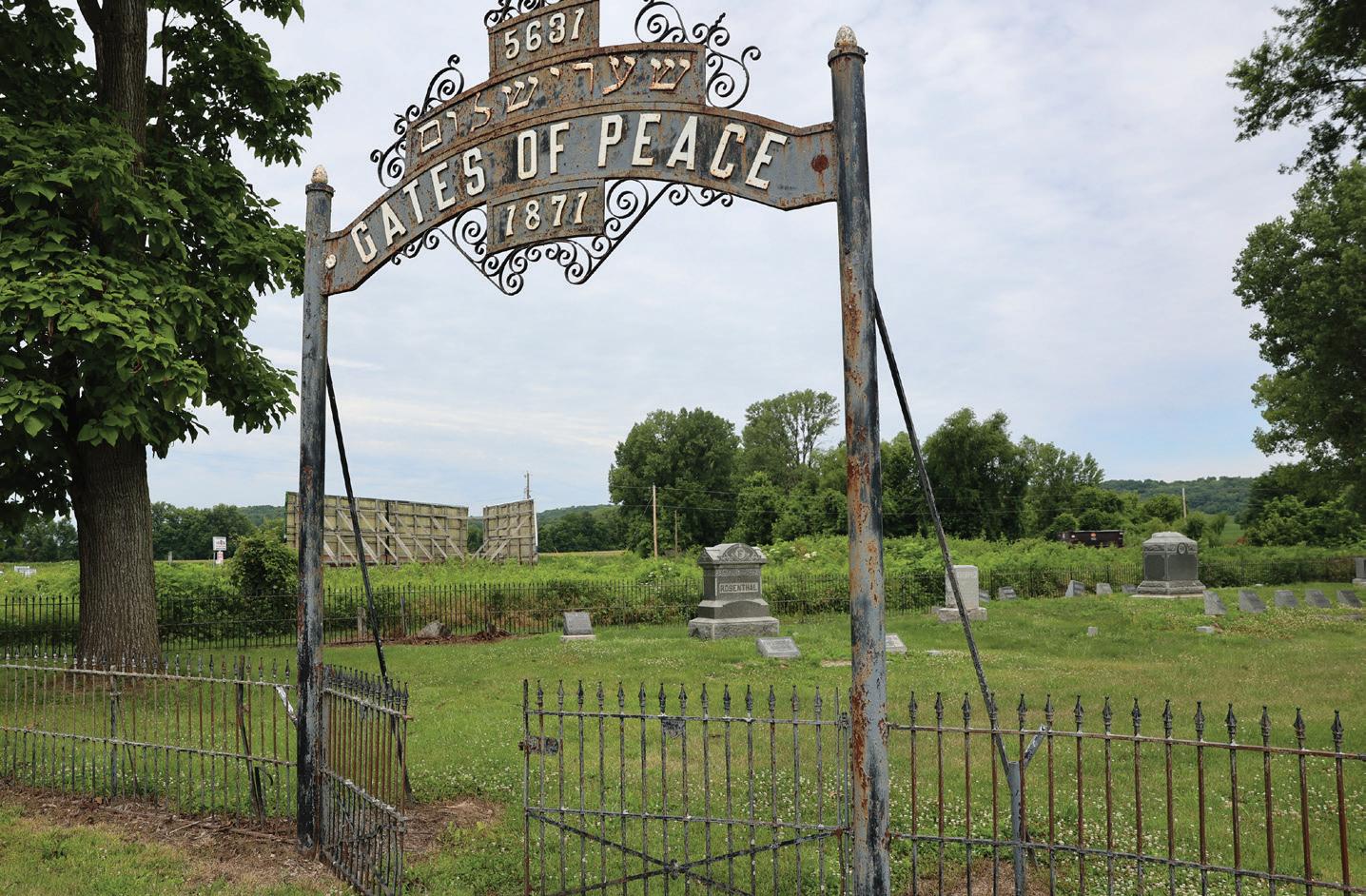
Louisiana, located 90 miles north of St. Louis, has a population of just over 3,000. The 200-year-old river town is known for its Victorian streetscape and 10 buildings on the National Register of Historic Places. Another monument to the town’s history is Gates of Peace Jewish Cemetery on U.S. 54 and state road NN. The iron gate entrance reads:
5631
(Rodef Shalom)
GATES OF
1871
PEACE
Gates of Peace, also known as Hebrew Cemetery, is the resting place of 105 Jewish Louisianans. Most were members of families who ran successful dry goods stores. In the late 1800s, more than a dozen large Jewish families made Louisiana their home. They were part of the town’s fabric. They were deputies, city councilmen, a county collector and a constable. The town had no synagogue, but residents routinely celebrated Jewish holidays and maintained Jewish life.
It wasn’t unusual for Jewish immigrants to move from town to town seeking opportunities to earn a living. As their businesses prospered, Jewish Louisianans decided to make the town their permanent home. It wasn’t

practical to build a synagogue for such a small population, but they saw a real need to create a burial ground. The first burial at Gates of Peace was in 1871: Kate Fishell died nine days after her first birthday.
Gates of Peace sits on a one-acre tract of land, adjacent to a fire station today. On June 11, 1871, 26 Jewish men including Kate Fishell’s father, Ferdinand, gathered in the town library to officially organize the Hebrew Cemetery Association of Louisiana.
Jewish migration to the Midwest

A steady influx of Jewish immigrants from Europe migrated to America in the 19th century. The Jewish pop-
ulation grew rapidly in the United States, to 300,000 in 1880 from 3,000 in 1820. Frequently, they came from central Europe. The main attraction was the ability to build a better life for their families. America represented the land of opportunity. Many of the new arrivals were Germanspeaking Jews who settled in small Midwestern towns.
“River traffic was the main mode of transportation before the railroads were established, so the cities along the Mississippi River were developed as river towns,”
Jewish author and historian Cynthia Gensheimer said. “They settled in every small town along the Mississippi.” Their career paths often took shape in the clothing and dry goods business. That choice paid off because they worked hard and were motivated to succeed, she said.
“Many of them began by being peddlers,” Gensheimer said. “There are Horatio Alger stories that begin with a Jewish settler starting with a pack on his back. Then he gets a cart, then he’d become a clerk, or set up a little store of his own.
“In the case of the Younker family, one brother would be at a store, and another would be peddling. They had one prosperous store, then they’d set up a satellite store in a neighboring city. They were dealing in different commodities. Hides and furs were a big part of the business.”
Benjamin Younker, who settled in Louisiana, was the eldest of eight brothers. Some of them were in Louisiana as early as 1856. They started with nothing, and initially one brother would be tending the store while
STLJEWISHLIGHT.ORG 5 TISHREI, 5784 SEPTEMBER 20, 2023 VOL. 76 NO. 18 A NONPROFIT, INDEPENDENT NEWS SOURCE TO INFORM, INSPIRE, EDUCATE AND CONNECT THE ST. LOUIS JEWISH COMMUNITY.
See LOUISIANA, MO. on pages 6-7 READ MORE A scenic drive ends in a stroll through historic Louisiana, Mo. — See page 7 Included in this week’s JEWISH Light
the 19th century Jews flourished, made history in small Missouri town, 90 miles from St. Louis
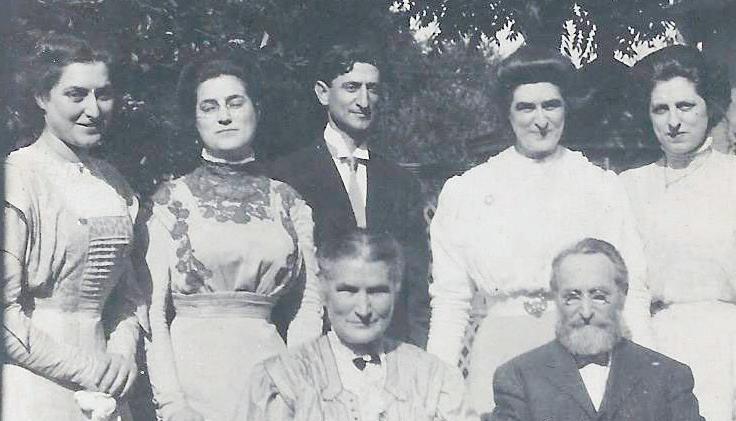
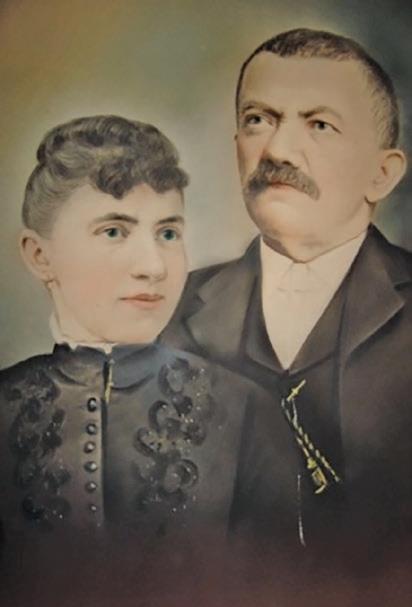
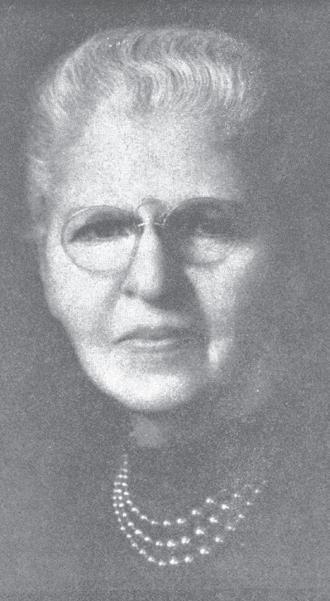
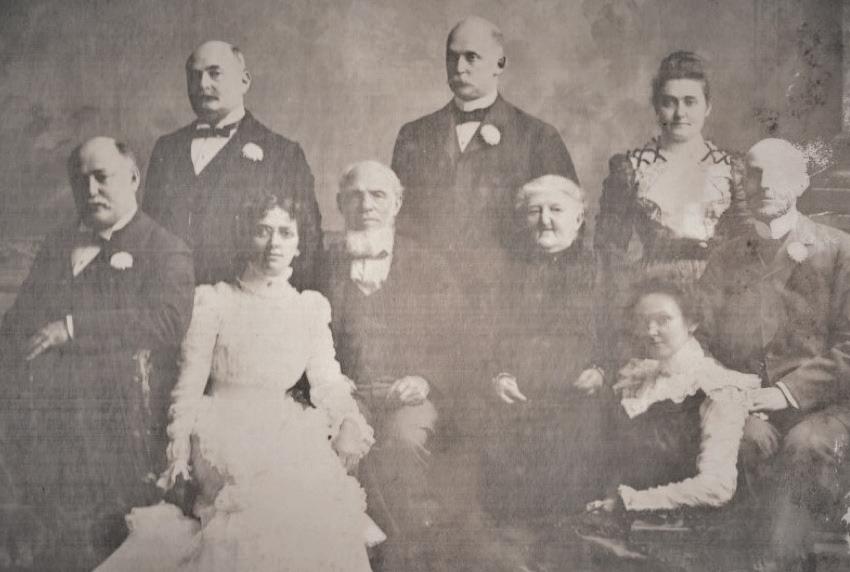
From left to right: Undated photos of Jewish families of Louisiana, Mo., including the Michael family; Sara Hart; Marcus Morris and Hannah Levy Morris; and the Zuzak family. Below, a view of downtown Louisiana, Mo. today.
The Gates of Peace Cemetery in Louisiana, Mo.
PHOTO: BILL MOTCHAN
PHOTO: BILL MOTCHAN
The Newspaper of the Jewish Community of Greater St. Louis — Founded 1963
CONTACT US
PHONE 314-743-3600
EMAIL
news@stljewishlight.org
MAILING ADDRESS
For payments
P.O. Box 790372, St. Louis, Mo. 63179-0372
For general correspondence please email news@stljewishlight.org
CONNECT WITH US
FACEBOOK facebook.com/stljewishlight
TWITTER @stljewishlight
INSTAGRAM @stljewishlight
OUR BOARD AND STAFF
BOARD OF DIRECTORS
OFFICERS
Michael Staenberg, President
Bethe Growe, Immediate Past President
Kara Newmark, Vice President
Ryan Rich, Vice President
Justin Krachmalnick, Treasurer Todd Taylor, Secretary
DIRECTORS
Caroline Goldenberg, Mia Kweskin, Debbie Lefton, Steve Rosenzweig, Adam Schneider and Alan Spector
JEWISH LIGHT PAST PRESIDENTS
Milton I. Goldstein*, Morris Pearlmutter*
(founder), Morris Moscowitz*, Melvin Newmark*, Rabbi Alvan D. Rubin*, Vivian
Zwick*, Joseph Edlin*, Michael Newmark, Richard Stein, Yusef Hakimian*, Sanford
Weiss*, Philip Isserman*, Linda Kraus, Richard Flom, Marvin Schneider, Barbara
Langsam Shuman, Terry Bloomberg, John Greenberg, David Grebler*, Milton Movitz*, Gianna Jacobson, Jenny Wolkowitz, Gary Kodner, Jane Tzinberg Rubin, Steve Gallant, Laura K. Silver, Bethe Growe
* Of Blessed Memory
INDEX
ChaiLights
STAFF
EXECUTIVE
Betsy Schmidt, Chief Executive Officer
Ellen Futterman, Editor-in-Chief
Jordan Palmer, Chief Digital Content Officer
EDITORIAL
Robert A. Cohn, Editor-in-Chief Emeritus
Mike Sherwin, Managing Editor
BUSINESS AND ENGAGEMENT
Stacy Wolff Smart, Director of Business
Development and Communications
Terri Green, Administrative Assistant
SALES
Angie Rosenberg, Senior Account Executive
Kelly Morris, Account Executive
Elaine Wernick, Account Executive
PRODUCTION
Grace Cohen, Graphic Designer
CONTRIBUTING WRITERS
24
CANDLE LIGHTING TIMES
Friday, Sept. 22: 6:41 p.m.
Shabbat ends
Saturday, Sept. 23: 7:36 p.m.
Torah reading: Ha’azinu
Yom Kippur
Sunday, Sept. 24: Light holiday candles at 6:37 p.m.
Monday, Sept. 25: Holiday ends at 7:33 p.m.
Sukkot
Friday, Sept. 29: Light Shabbat/ holiday candles at 6:29 p.m.
#STLJEWISHLIGHT
Connect with us on all our social media using
PUBLISHER'S STATEMENT
The ST. LOUIS JEWISH LIGHT (ISSN 0036-2964) is published bimonthly by the St. Louis Jewish Light, Inc., a not-for-profit corporation, 7201 Delmar Blvd. Suite 201, St. Louis, MO 63130. Periodical postage paid at St. Louis, MO. Copyright 2023. Postmaster: Send address changes to the St. Louis Jewish Light: 7201 Delmar Blvd. #201, St. Louis, MO 63130.

Bill Motchan, Amy Fenster Brown, Patricia Corrigan, Barry Gilbert, Margi Lenga Kahn, Nancy Kranzberg, Elise Krug, Cate Marquis, Eric Mink, Judith Newmark, Martin Rochester and Megan Rubenstein
Saturday, Sept. 30: Light holiday candles after 7:25 from pre-existing flame
Sunday, Oct. 1: Holiday ends at 7:24 p.m.
EDITOR’S NOTE
• Oct. 4 and 18 • Nov. 8 and 22 • Dec. 6 and 20
GENEROUSLY SUPPORTED BY
PUBLICATION DATES FOR 2023 The Jewish Light is a
Jewish Light
Coalition for Jewish Values Missouri

314 749-5271
zsmason@cjvalues.org
https://coalitionforjewishvalues.org/missouri/
Rabbi Ze'ev Smason, Chairman
Coalition for Jewish Values Missouri (CJV-MO) is the first state chapter of the largest national rabbinic public organization in America, Coalition for Jewish Values. CJV-MO serves as the voice of authentic, traditional Jewish values handed down from time immemorial. A non- partisan action group, CJV-MO, addresses issues including the protection of children, the sanctity of life and marriage, fundamental fairness in education and society at large, responding to the rise of anti-Semitism, and responsible policies toward the state of Israel.
Rabbi Yonason Goldson is President
jewelry buying event Sept. 28-30 11am - 4pm get paid cash for gold | silver | diamonds | watches | costume jewelry | coins west county mall LOWER LEVEL NEAR JCPENNY we also buy antiques, art, paintings, swords, china, crystal, collectibles & rarities. for private or in - home appointments , call 314.691.2888 st . louis estate buyers store Follow us on social media & stay up to date on STL Jewish news @stljewishlight 2023-09-20 page 02-03.indd 2 9/19/23 5:01 PM

Page 2 September 20, 2023 STL JEWISH LIGHT stljewishlight.org
INSIDE THIS WEEK’S STL JEWISH LIGHT
community partner of Jewish Federation of St. Louis.
The
is a member of the American Jewish Press Association
Event Calendar
Classifieds ................................................ 12 Features 11-12 Healthwatch 14-15 Newsmakers 10-11 Obituaries 20-21 Ohr Chadash Teen Page ..................... 16-17 Opinions 10 Simchas 18-19 Spotlight Photos 23 ShowMeChabad.com
The Jewish Light will publish print editions twice a month in 2023, on the following upcoming dates: TO YOU
BROUGHT
BY
Shabbat begins
The 2023-2024 Guide to Jewish Life community directory—included in this week’s Jewish Light—inadvertently omitted a new organization’s directory listing. The full listing appears below. Have a correction/omission to report? Email news@stljewishlight.org.
Parkland victim’s dad to bring gun safety drive to St. Louis
I’m pretty sure we can all agree that the worst reality for any parent is the loss of a child. It goes against the rules of nature. As parents, we are not supposed to outlive our children and grandchildren.
But as we know, life doesn’t always happen that way. It certainly didn’t happen for Fred Guttenberg, whose daughter Jaime, 14, was one of 17 students and faculty murdered in the mass shooting at Marjory Stoneman Douglas High School in Parkland, Fla. on Feb. 14, 2018.
Five-and-a-half years have passed since that tragedy, and a day doesn’t go by without Guttenberg thinking about Jaime and his family’s loss. But Guttenberg has become an outspoken, tireless advocate and activist against gun violence. He has spoken at town halls, lobbied lawmakers, marched in rallies, and appeared umpteen times on television.
He also has written two books, the latest of which is “American Carnage: Shattering the Myths That Fuel Gun Violence.” On Oct. 5, he will appear in St. Louis at the Ethical Society to discuss “How We Stop the Shootings,” along with Jean Peters Baker, the Jackson County prosecutor in Kansas City, and the Rev. Cassandra Gould.
I spoke with Guttenberg, 57, about his daughter and his family, his latest book, his activism, lessons he has learned and his Judaism, among other topics, in a wide-ranging Q&A. What fol-
‘How We Stop the Shootings,’ featuring Fred Guttenberg

WHEN: 7-9 p.m. Oct. 5 (doors at 6:30)
WHERE: The Ethical Society, 9001 Clayton Road


HOW MUCH: $50 for the event + Guttenberg’s book; $30 event only; $10 student reduced rate


MORE INFO: Hosted by ProgressWomen, the event also includes Jackson County Prosecutor Jean Peters Baker and the Rev. Cassandra Gould. The Jewish Community Relations Council of St. Louis is a co-sponsor.
lows are excerpts, edited for length and clarity.
Before we even get started, how are you and your wife, Jen, and your 22-yearold son Jesse doing today?
Every day is what I call a day in our journey to normal or new normal. We’re 5½ years into this and, for the past bunch of years, I’ve been incredibly public with my grief. I think I finally hit a wall and needed to take this summer off, which I did.
After my book tour in May, I pretty much backed away from all of this. I knew I was physically tired, but I didn’t know how mentally and emotionally exhausted I was. I needed the
NEWS & SCHMOOZE
News and Schmooze is a column by Jewish Light Editor-in-Chief Ellen Futterman. Email Ellen at: efutterman@stljewishlight.org.


break.
My wife and I went to Greece this summer. It was my first time in Europe, and it was fabulous.
So knock on wood, when you ask me that question today, my family and I are in a better place.
What has been the most unexpected result of this tragedy?
Discovering, maybe in a way I never understood before, what it means to be a dad. I did everything with my kids — camping, dance competitions, I was at every hockey game, I was doing homework with them. I was being what I thought was a good dad.
Other than being a guy who yelled at the television when something upset him, I never put the time into using my voice to ensure that my kids would grow up in a better, safer place. It’s been the focus of my life since the shooting. I wish it was the focus of my life before the shooting.
Why was it important for you to write “American Carnage?”



Because after Jaime was killed, when I started to understand how we got to the place that we are in today, I became acquainted with all of the lies and the myths that got us here.
When I became acquainted with how ingrained some of these lies are and these myths had become and the people who perpetuated them, I connected with Tom Gabor, my coauthor, and we decided we needed to write a book to take that on, to present data and facts and truths to help
people get educated and also help people understand how to talk about this. We needed to reclaim the conversation from a profit-driven lobby that benefits from gun violence.
In the book, you and your coauthor work to debunk 37 myths and misinformation that help to fuel gun violence. Is there one myth that stands out the most to you?
The very first one (“The Truth about Guns in U.S. History and Culture”), because it sets the table for everything
See SCHMOOZE on page 15
September 20, 2023 Page 3 stljewishlight.org STL JEWISH LIGHT
LOCAL NEWS
Fred Guttenberg is shown in a family photo with his daughter Jaime, who was killed in the mass shooting at Marjory Stoneman Douglas High School in Parkland, Fla. on Feb. 14, 2018. Guttenberg, the author of “American Carnage: Shattering the Myths That Fuel Gun Violence,” will speak in St. Louis on Oct. 5.
Proud to be Locally Owned and Operated Since 1936 GLADYSMANION.COM 314-721-4755 CAROL BUTLER 314.630.3165 and JULI-ANN FELSHER 314.303.3232 BUTLER FELSHER | GROUP Carol & Juli-Ann have successfully served generations of buyers and sellers in the St. Louis area. Call us for current and relevant real estate market updates. ButlerFelsher@gladysmanion.com | ButlerFelsher.com UNDER CONTRACT 11 DANIEL ROAD LADUE $669,000 4 Beds | 2 Baths FOR SALE 110 LANCASTER DRIVE CLAYTON $2,280,000 4 Beds | 4.5 Baths 2023-09-20 page 02-03.indd 3 9/19/23 5:01 PM
SOUND OF THE NEW YEAR
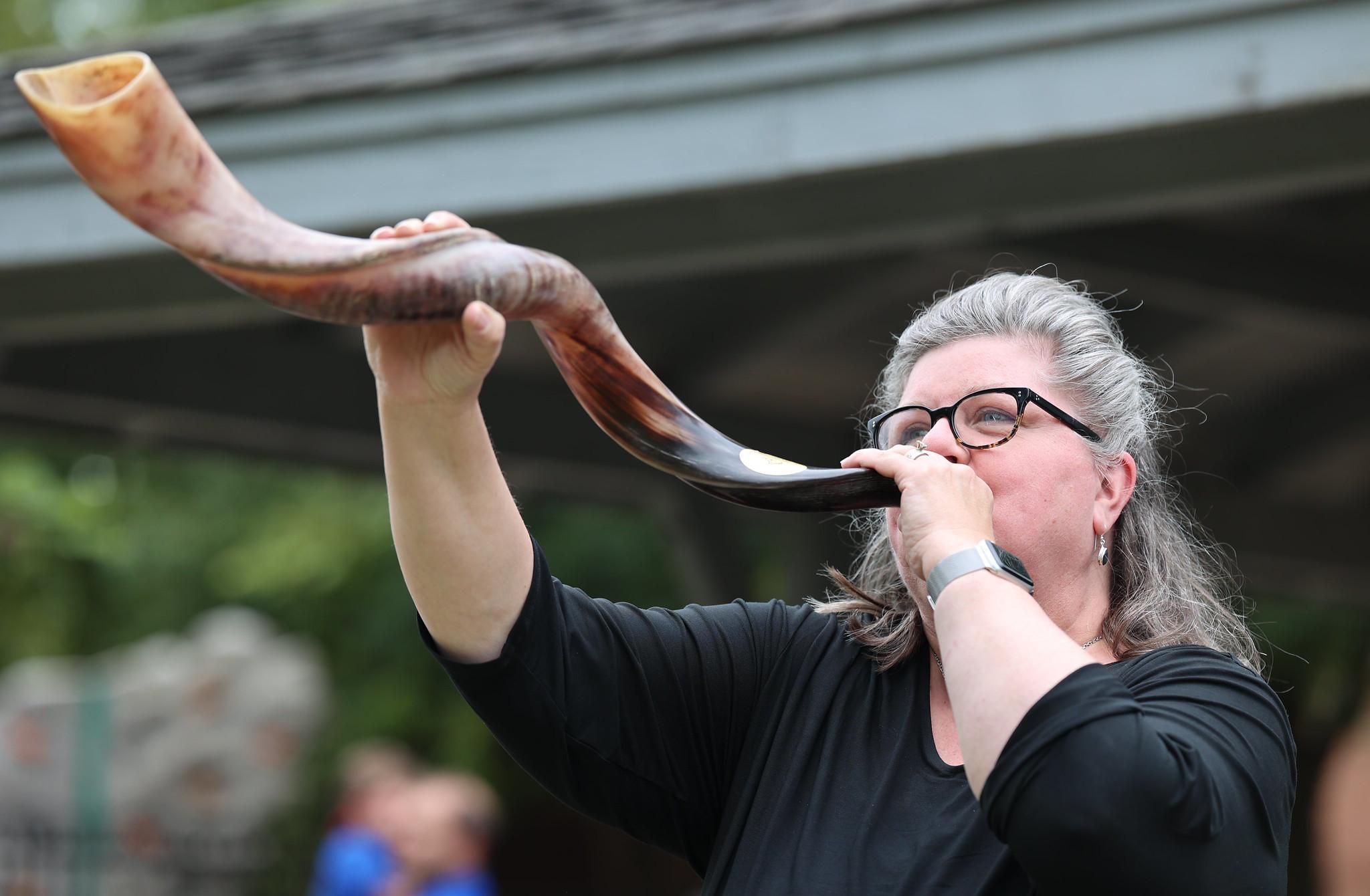
More than 50 Congregation Shaare Emeth members gathered on the water’s edge at Des Peres Park on Rosh Hashanah for a Tashlich ceremony. Rabbi Rachel Bearman led the gathering, which featured songs by Lucy Greenbaum, director of music engagement. Bearman got an assist from her mother, Judy Bearman (pictured above), who sounded the shofar. During the ceremony, participants cast stones on the water to symbolically release things weighing them down. For more photos and a video of the event, visit stljewishlight.org.

B’nai Amoona launches Hazak
Supported by a grant from the Women’s Auxiliary Foundation for Jewish Aged, Congregation B’nai Amoona is excited to launch Hazak.
Hazak (“strength” in Hebrew) is a once a month program for members of the Jewish Community that are 65 and older. Guests can enjoy a delicious meal, a program and a medical professional on site for questions, blood pressure readings and more. In addition, through the grant, the program is able to provide mental health services at a highly subsidized cost ($40 for five sessions).
The opening program is Thursday, Oct. 5 at 11:45 a.m. in B’nai Amoona’s Sukkah. After lunch, the U City Klezmer Experience will perform.
The director of St. Luke’s Community Outreach will be on hand to field health questions, take blood pressures and discuss health tips as flu season approaches.
Future dates for Hazak include:

• Thursday, Nov. 16 at 11: 45 a.m.
• Thursday, Dec. 14, Hanukkah lunch and program at 11: 45 a.m.
• Friday, Feb. 16 at 11:45 a.m., featuring Josh Warshawsky, musician in residence
• Thursday, March 8 at 11:45 a.m.
• Friday April 12, Shabbat dinner
Registration is available on the B’nai Amoona website at: www.bnaiamoona.com/ form/ll23hazakoct:
For more information, contact Liessa Alperin at liessa@bnaiamoona.com or 314576-9990 ext 116.
ADVERTISEMENT
BALANCE BLISS: DIVE INTO OUR GUIDE TO PERFECT HARMONY!
If you've noticed you aren't as steady on your feet as you used to be, it s tempting to think that it s just a normal part of aging You may think that because "everyone" your age seems to be having the same trouble as you that it's something you will have to learn to live with You may not know when it was that you started to lose your confidence and when you started to worry about every step you take but now it's starting to limit what you re able to do If this is happening to you, you're not alone We hear these types of things all the time In fact Balance Issues are the most common problem we see at HouseFit
Most people realize that their balance won t magically get better on its own, but they still don't take action It might be because they don't know what steps to take to make their balance better OR they don't truly believe balance can be improved "at their age" Fortunately there are several options to get you back on your feet again
Over the last 17 years, I’ve worked with hundreds of clients who’ve had a fall (or several), and I’ve been able to help them get their lives back In working with so many clients, I ve been able to put together a very helpful Guide
“How To Decrease Falls: Helpful Tips To Keep You Steady On Your Feet
Inside this special guide, I share detailed information, such as:
Top 3 factors that cause falls
and how to minimize your risk in each area
The 4 parts of balance that work together to keep us steady and how to find areas of improvement
How to “Test Yourself” to find out if you're at risk for a fall
Simple exercises you can do at home to start improving your balance
AND much more!
I want to make this guide available to you absolutely free of charge! To claim your free copy, simply call my office at (314) 939-1377 or visit www housefitstl com/balanceissues-journey to download the report directly to your computer
If you’re ready to start taking positive steps toward regaining your balance and an active lifestyle, this free guide will let you to start this process with confidence!
Page 4 September 20, 2023 STL JEWISH LIGHT stljewishlight.org
LOCAL NEWS
PHOTOS: BILL MOTCHAN
HouseFit 3 8 0 9 L e m a y F e r r y R d S a i n t L o u i s M O 6 3 1 2 5 ( 3 1 4 ) 9 3 9 - 1 3 7 7 i n f o @ h o u s e f i t s t l c o m w w w h o u s e f i t s t l c o m
By: Dr Beth Templin PT DPT GCS Geriatrics Physical Therapist 2023-09-20 page 04-05.indd 4 9/19/23 5:01 PM
JCA Charitable Foundation seeks grant applications
The JCA Charitable Foundation is seeking grant applications for the 2024 year for new and creative community programs and activities that support the needy Jewish elderly in the Metropolitan St. Louis area. The foundation is looking to focus efforts on educational and health care programming and services that would be of benefit to this vulnerable population. The JCA Charitable Foundation’s mission includes the support of nutritional, religious, social and cultural programs related to Judaism as well as projects which address the financial and emotional needs of older adults. Applications related to these activities are welcome. The grant is intended to support new initiatives dedicated specifically to providing a positive and material difference in the lives of seniors in the Jewish community.
To receive a grant application, e-mail a request to mangej@msn.com. Applications must be submitted by Nov. 20.


Traditional Congregation to offer Hebrew Ulpan classes
Always wanted to learn modern Hebrew? Or brush up on your skills?

Now’s your opportunity. Traditional Congregation will offer an interactive Hebrew Ulpan program for learning to speak, read and understand modern Hebrew, taught by native Israeli Ophira Nitzan Melnick. Weekly classes will be offered in beginning modern Hebrew (level one and two) as well as intermediate and advanced levels. Classes will be held on Monday or Wednesday evenings, some in person at Traditional in Creve Coeur, some online via Zoom. Fall sessions begin on Oct. 16 and Oct. 18 and will be held for 12 weeks. Tuition is $108/person for the entire session (plus the cost of a textbook). Register at: https://bit.ly/3ZkVShe. For additional information, contact Marian Gordon at traditionalcong@gmail.com or 314-576-5230.
Applications sought for Holocaust education funding
Earlier this month, the St. Louis Kaplan Feldman Holocaust Museum announced the opening of the fall funding cycle for the Rubin and Gloria Feldman Family Educational Institute. Interested individuals and organizations can apply for funds of up to $5,000 on the Institute’s online portal. The application cycle closes on Oct. 31, and award winners will be notified later in November.


The Feldman Institute supports projects that reject hatred, promote understanding, and inspire change using the history and lessons of the Holocaust. The Institute is especially, but not exclusively, interested in projects that benefit Missouri and the Midwest region. Institute funds will be dispersed to nonprofits and educational institutions. Individual educators may apply, but funds will be dispersed to the educational institute with which they are affiliated.
The Institute funds programs of educational and artistic merit that do one or more of the following: explore the history and legacy of the Holocaust; use the lessons of the Holocaust to examine subjects of ethical, social, and political importance; facilitate dialogue between people of different ethnic, racial, and religious backgrounds; combat antisemitism, racism, and discrimination based on disability, sex, religion, sexual orientation, or age. The Institute does not fund capital improvements or operating expenses.
To apply, visit STLHolocaustMuseum. org/Feldman-Institute.
‘The Immigrant’ returns to New Jewish Theatre in October
NJT produced the play previously in 1999 and 2011
The New Jewish Theatre will continue its 25th season with “The Immigrant” at the Wool Studio Theatre Oct. 12-29.
Written by Mark Harelik and directed by the New Jewish Theatre’s Artistic Director Rebekah Scallet, the play tells the true story of Haskell Harelik, the playwright’s grandfather, who came to America in 1909 as part of the Galveston Project. He makes his home in Hamilton, Texas, where he is taken in by local couple Milton and Ima Perry. This will be New Jewish Theatre’s third time to produce this story, previously seen in 1999 and 2011.
“‘The Immigrant’ remains just as relevant today as when it first premiered in 1985. It is a beautiful story, and one that
echoes my own family’s journey to St. Louis over a century ago. This beautiful play reminds us that we were all once strangers here in America, and that the power of love knows no borders or boundaries,” said Scallet.
Scallet will be making her New Jewish Theatre directorial debut with “The Immigrant.” Also making their New Jewish Theatre debuts are Dustin Petrillo as Haskell, Bryn McLaughlin as his wife Leah, and Mindy Shaw as Ima Perry. Rounding out the cast is David Wassilak as Milton, who previously appeared at the New Jewish Theatre in “Sight Unseen” and “The Good Doctor.”
The New Jewish Theatre has coordinated with multiple local organizations who help immigrants to plan outreach events at or in coordination with this production to bring awareness to current issues facing immigrants and refugees in St. Louis. They include:


• A “needed item” drive in collaboration with The International Institute will

take place throughout the showings.
• On Oct. 4, the Jewish Community Relations Council will host a virtual program at noon. This panel will discuss topics like immigration resettlement while sharing stories from people who have immigrated to the United States, featuring director Rebekah Scallet.

• On Oct. 21, following the 4 p.m. performance, there will be a discussion panel featuring members of the Central Reform Congregation Resettlement Chavurah.
• On Oct. 22, following the 2 p.m. performance, there will be a discussion featuring members of the Shaare Emeth Congregation Resettlement Group.
• Finally, a welcome neighbor dinner will take place at the J between the 4 p.m. and 8 p.m. performances on Oct. 28.
Performances are Thursdays at 7:30 p.m., Saturdays at 4 and 8 p.m., and Sundays at 2 p.m. Individual tickets are $27- $58. Tickets are available at 314-4423283 or online at newjewishtheatre.org.

Have the time of your life and join us for an evening of celebration, community and giving.
THURSDAY, OCTOBER 26, 2023
The Ritz-Carlton, St. Louis | 100 Carondelet Plaza, 63105
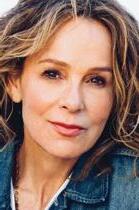
Featuring actress and best-selling author JENNIFER GREY. Jennifer will be sharing her personal story including her Jewish identity and anecdotes from her best-selling memoir, Out of the Corner
VIP PRE-PARTY 5:15-6:30 PM (Only a few spots left)
Tickets: $180, Includes a ticket to the Main Event
MAIN EVENT: L’CHAIM!
6:15 PM Cocktail Reception
7 PM Dinner and Program Tickets: $75
L’Chaim! chic attire. Dietary laws observed. Complimentary self and valet parking available. PLEASE RSVP online at JFEDSTL.ORG/LCHAIM2023 or by calling Lisa Magness at 314-442-3772 by October 20.
Attendees will have the opportunity at the event to make a gift to Jewish Federation of St. Louis’ Unrestricted 2023 Annual Campaign.
SPONSORED BY




September 20, 2023 Page 5 stljewishlight.org STL JEWISH LIGHT
LOCAL NEWS
L’Chaim! L’Chaim! AN UPLIFTING EVENING WITH JENNIFER GREY
Lorraine Allen & Rita Mae Allen Family Foundation Michael Karasick - Director
THE LUEKEN GROUP Sharon E. Remis
Laurie & Lee Wielansky
Debbie & Mike Lefton
Cindy & Steve Frank
2023-09-20 page 04-05.indd 5 9/19/23 5:01 PM
Kara & Bob Newmark
Louisiana, Mo.: How Jews made history in a small Missouri town
CONTINUED FROM PAGE 1
another would be peddling. They moved around but stayed very close. Several brothers were headquartered in Keokuk, Iowa, in the mid-1870s when they decided to set up a branch in Des Moines.
They correctly predicted that the railroads would make Des Moines prosperous, and their Younker Brothers Department Store eventually expanded to 150 stores in the Midwest.
Jewish community’s growth





















Brothers Simon and Marx Lesem helped establish organized Jewish life in Louisiana. They had relatives in Quincy who were leaders there. In 1868, one of the Lesem brothers reported there were four Jewish families in Louisiana, and in 1870 they started the Hebrew Benevolent Society. The Lesems eventually got fed up with a lack of interest in Judaism displayed by the Jews in Louisiana and returned to their native Germany.
In addition to the Younkers, Louisiana’s Jewish residents included the Genzberger, Michael, Morris, Zuzak and Wald families.
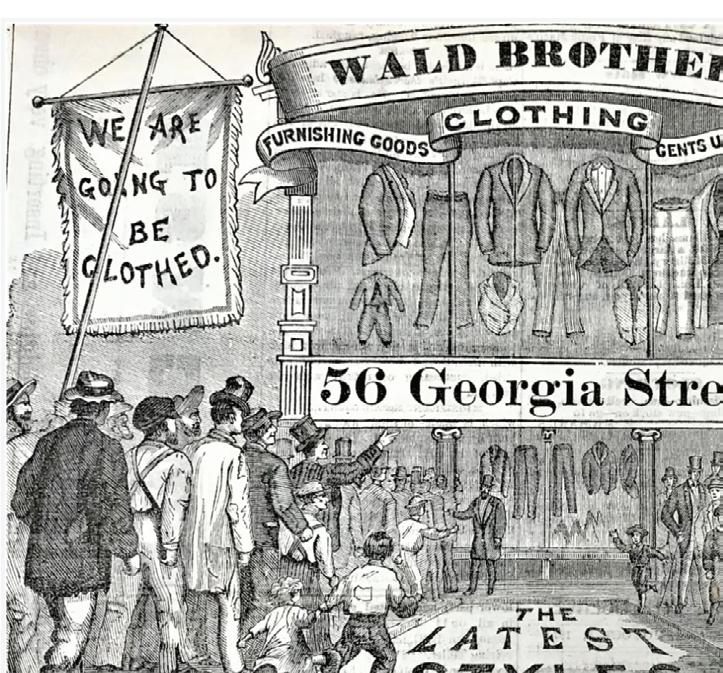
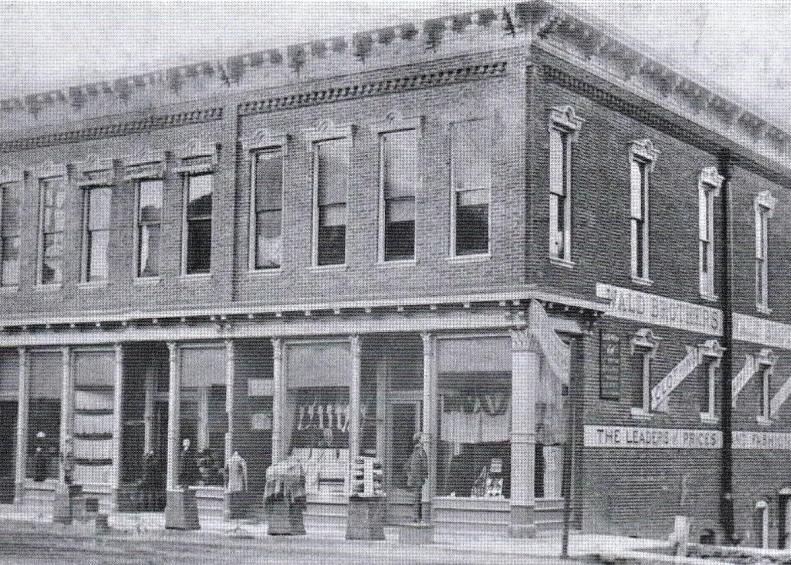
The Wald Brothers Department Store was operated by brothers David and Adam Wald. They were next door neighbors who lived a half block from their store.
Although Louisiana had a Jewish community, finding a suitable spouse was challenging for young Jewish men. So Adam Wald ventured to Chicago where he met and courted Sarah Liebenstein Hart. They settled in Louisiana, and Sarah taught religious school for Jewish children. She also led the Louisiana chapter of the National Council of Jewish Women.
Competitors and innovators


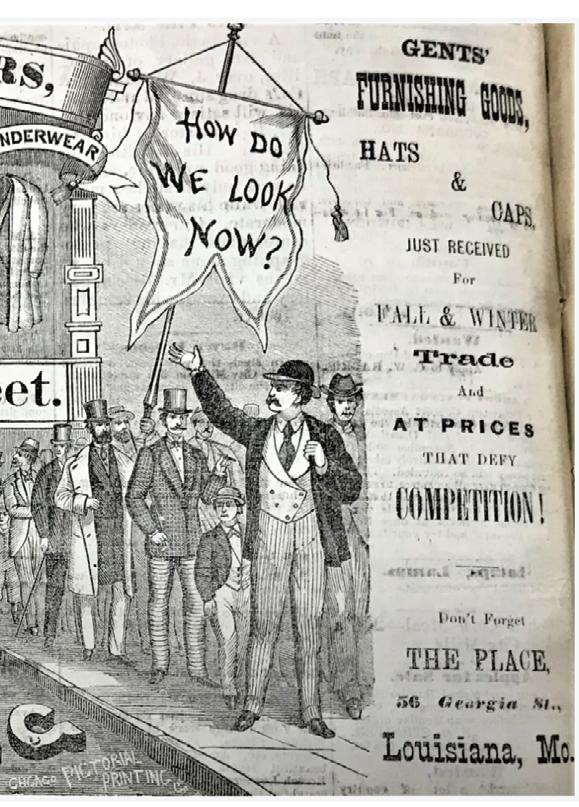
In the 1890s, the retail business in Louisiana was fiercely competitive. Two Jewish store owners, the Walds and Michaels, had stores on Georgia Street, the town’s main thoroughfare. Abraham Wald and Isador Michael were the patriarchs of the two families, and their rivalry in business often spilled over to life outside the stores. Every Friday morning, in preparation for Shabbat dinner, Jewish families would head to the local fish market. In her autobiography about life in Louisiana, “The Pleasure Is Mine: An Autobiography,” Sarah Liebenstein Hart described a weekly occurrence:
“The elder Mr. Michael and the elder Mr. Wald raced to market to buy fish. My father-in-law [Abraham Wald] had the advantage because he lived a block closer. Mr. Michael limped. Each made his way rapidly down the street intent upon getting there first.”

Although they were rivals in business, the Jewish merchants in Louisiana came together to worship. There was no official

congregation, but Shabbat services were held Friday evenings and during the Jewish Holidays at the Masonic temple on Georgia Street. Records show the congregation had 34 members. Isador Michael led services, and Isaac Younker was president-secretary-treasurer. Younker doubled as president of Gates of Peace Cemetery.
Merchandising mavens





The Younkers flagship department store in Des Moines was known for its tea room restaurant and, in 1939, boasted Iowa’s first escalator, known as the “electric stairs.”
The Zuzaks were also savvy innovators. Family members operated a sundries store in Boonville, Mo., called the Zuzak Wonder Store. Jerry Krueger, a Zuzak descendant in Akron, Ohio, offered a bit of family lore about the store.

“Depending on what source you read, the Zuzaks were either the first store to come up with Santa Claus coming to the store the day after Thanksgiving or the first one west of the Mississippi,” Krueger said. “But, yeah, the great irony is that the



























Jewish merchant is the one who figured out how to extend the Christmas shopping season.”
Two Zuzak sisters, Helen and Amy, eventually took ownership of the store and were successful businesswomen in their own right. They also contributed generously to neighboring Kemper Military Academy. Bob Bondi, a Zuzak descendant in Galesburg, Ill., often visited the sisters when he was growing up.
“I remember them quite vividly, and they were always so kind to us,” said Bondi, 72. “In the ’50s and ’60s, we’d visit them every couple of months. I also went to their burials in Louisiana. Amy didn’t marry, probably because she had diabetes and went blind very early in life when Helen took care of her.”
The Walds, Younkers and Zuzaks weren’t the only Jewish merchandising mavens in Louisiana. Elias Michael immigrated from Kolmar, Prussia, in 1856. He settled in Quincy, Ill., and in 1867 moved 45 miles south to Louisiana and opened a one-room store. It eventually grew to become one of the best-stocked dry goods stores in northeastern Missouri. In 1929, he sold it to J.C. Penney.
Marcus Morris represents another ragsto-riches story — literally. Morris was a rag salesman. He eventually had his own department store. He later branched out into real estate, owning 127 houses. His net worth was $200,000 when he died at age 59 in 1907. Adjusted for inflation, that’s equivalent to about $6.2 million today.
In 1901, Morris was elected president of Gates of Peace cemetery, and during an April 1 meeting that year he proposed that five families (Morris, Wald, Genzberger, Younker and Michael) pay $1 per month toward the cemetery’s “Iron Fence Fund.” The Zuzak, Liebenstein and Strouss families were charged 25 cents per month. The proposal passed and the iron fence remains in place 122 years later.
Jewish life in Louisiana
As the 20th century began, St. Louis was growing rapidly. The city was a hotbed of activity, preparing for the Louisiana Purchase Exposition that would attract 20 million visitors. Up north in Missouri’s Louisiana, life moved at a slower pace.
Page 6 September 20, 2023 STL JEWISH LIGHT stljewishlight.org
Above: An advertisement for the Wald Brothers Department Store in Louisiana, Mo., which is shown in a historical photo at top right.
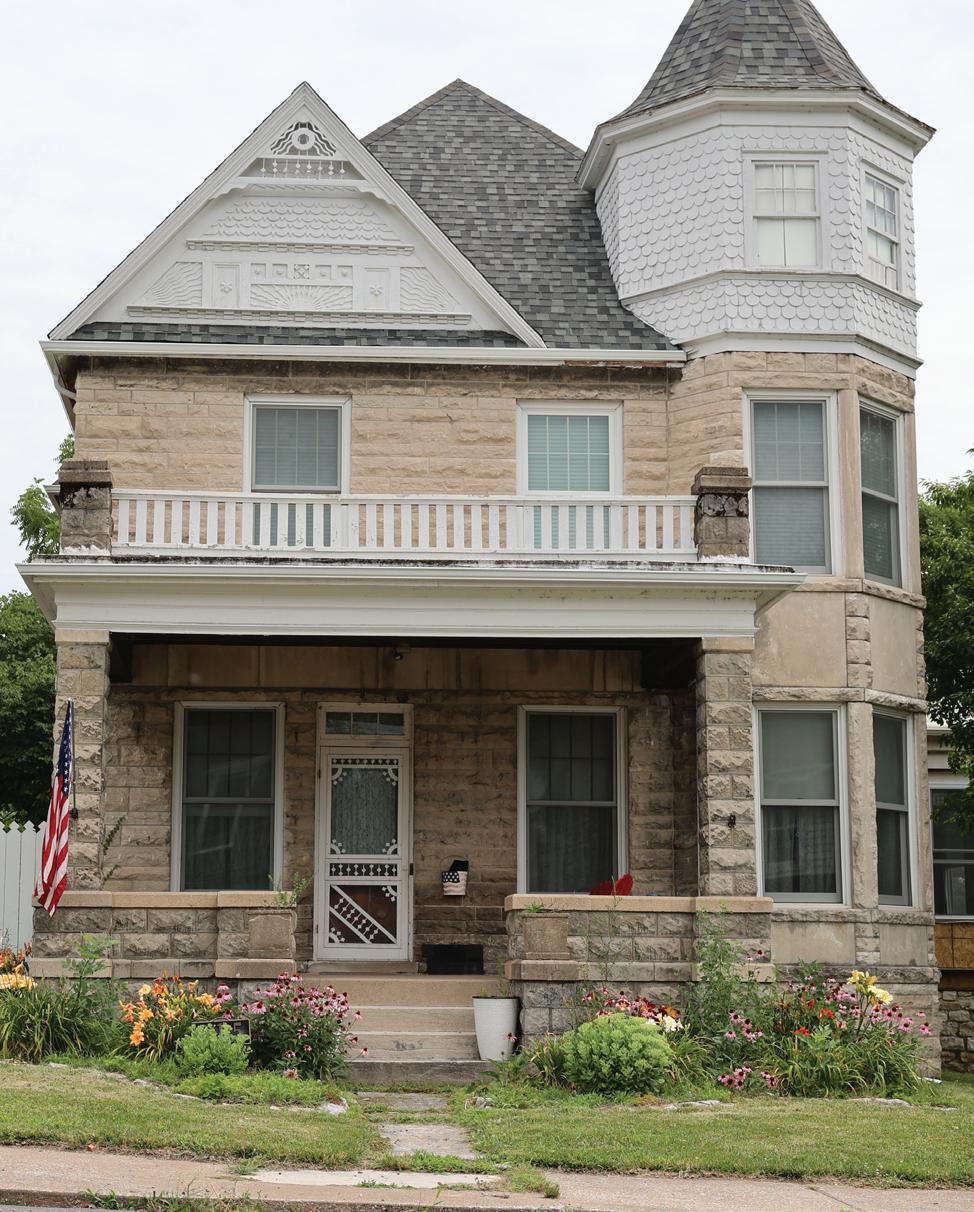
At right, the Sarah Wald house in Louisiana, Mo. PHOTO: BILL MOTCHAN
Paulette’s Special
We Do It With You In Mind We Do It All We Do It Better Paulette’s Special Occasions 9712 Clayton Rd. | St. Louis, MO 63124 314-997-3300 specialoccasionsstl.com 2023-09-20 page 06-07.indd 6 9/19/23 5:02 PM
Below, an undated photo of Zuzak’s Wonder Store in Boonville, Mo.
Occasions
Townspeople would take summer excursions on a ferry across the river to Pittsfield, Ill., or watch a horse race at the Pike County Fair. The Wald family regularly attended the local church’s ice cream socials.


U.S. Census records show Louisiana had its largest population in 1900, with 5,131 people. Jewish residents made up 1.8% of the population, about the same percentage as Chesterfield this year.

Antisemitism and prejudice against Jews were rare in Louisiana, according to Sarah Hart’s autobiography. She and the other Jewish families were not excluded from the town’s organizations, although the same couldn’t be said for Black Louisianans. Hart described a local non-Jewish family whose daughter fell in love with a Jewish traveling salesman. Her father, a G-d-fearing man, said that because Jews were the chosen people, he gave the union his blessing.
Being Jewish in a small town did require some compromises. In Louisiana, Kosher food was unavailable. There was no mikvah. Working on the sabbath was also a necessity for Jewish merchants, as Saturday was the busiest shopping day of the week for residents. Hart, speaking at a NCJW meeting in Cleveland in 1900, defended the practice of working Saturdays and observing the Sabbath on Sunday. Her premise and speech won the blessing of her friend Rabbi Leon Harrison of Temple Israel in St. Louis. Orthodox rabbis in Cleveland were far less positive in their review of the concept. Although Hart’s experience in Louisiana was positive, she left for her native Chicago after her husband, Adam Wald, died unexpectedly in 1901 at the age of 48. She subsequently married Harry Hart (a founder of Hart, Schaffner & Marx), and became an advocate for children’s welfare, active in social services and charities, including the Cook County juvenile detention home.
The last Jewish Louisianans
Jewish families tended to be large in Louisiana and other small Midwest towns, but adult children often remained unmarried. One possible reason was the lack of eligible Jewish spouses. Those who did marry usually found a mate in a larger city. Adult children of the Jewish merchants also had less interest in taking over the family business. Large companies like Macy’s, Dillard’s and big box retailers also made family-owned shops less viable.
Gradually, in the mid-1900s, the Jewish population in Louisiana dwindled and is now gone. The last Jewish resident was Dr. Howard Green, a surgeon, originally from New York. He and his second wife moved to Louisiana in 1986 to help care for her family. They ended up staying and enjoyed small town life. Green moved to Boynton Beach, Fla., eight years ago after
his wife died.
“As far as antisemitism in the town, I never encountered any,” said Green, 95. “I was one of the two only surgeons, and we did an awful lot for the community. And financially we helped most of the organizations. My wife was very active in their theater. I went back to Louisiana about five years ago, just to visit. As I was walking down the streets, anybody who saw me came over to say hello. They were so glad to see me. So being a Jew was not a problem.”
Green’s step-granddaughter Emily Hoffman was the only Jewish student who attended Louisiana High School in the late 1990s. Hoffman, who now lives in Wisconsin, keeps a kosher home and is Torah-observant. Growing up, her family made a weekly one-hour trek to attend synagogue in Quincy, Ill. She said growing up in Louisiana was a positive experience.

“I had a very good childhood,” said Hoffman, 43. “I had a lot of opportunities that I wouldn’t have had in a big city. My mother would leave out freshly baked goods for the postman. The worker in the grocery store bagging the groceries would know my name.
“I think the biggest testament would be when my mother died. I was 13 years old, and she had received the Citizen of the Year Award the year prior. She was extremely active in Louisiana. And on the day of her funeral, they shut down school and they shut down the main street because the entire town was going to be attending.”
A Jewish legacy
Gates of Peace cemetery is now maintained by Pike County. The final burial there was May 12, 1980. Henriette Morris, 88, represented the last family member that created the Hebrew Cemetery Association of Louisiana.
Green said: “Those families turned the cemetery over to the county for professional care with a stipulation that only offspring of those families could be buried there. When my wife died, we would have loved to have had her buried there, but we couldn’t do it. We had to bury her in Quincy.”

Today, tall, mature trees provide shade in the center of Gates of Peace. Every year on Memorial Day, flowers are delivered by a local florist and are placed on the graves of nine Zuzaks. Bob Bondi calls in the annual order “to honor the Zuzak family.” Unlike Louisiana, his hometown of Galesburg has nearly 40 Jewish families, a congregation (Temple Shalom) and a full-time rabbi.
On a hot summer day, an SUV drove up and parked on the gravel road just outside the cemetery. The (non-Jewish) driver got out, walked to the iron gate entrance and stood in silence for a few minutes. She has no relatives at Gates of Peace. She explained that she found visiting small, historic cemeteries a calming, soothing experience.
A walk through Gates of Peace Cemetery is a stroll through history. Visitors will see monuments bearing the names of the Jewish residents who pioneered retail merchandising more than a century ago. The city of Louisiana also honors those merchants.
From the riverfront of the Mississippi, you can take a self-guided walking tour, going west down Georgia Street.
You’ll pass the former Morris, Michael and Wald department stores. The Morris building now has a pizza parlor at street level. The Wald building holds a drug store.
Each building also bears a black oval plaque with a modern device to honor the Jewish town leaders in 1900: The


plaque contains a QR code. Scan the code with a smartphone camera to reveal facts about the building’s past and the lives of its original owner.

For more details on the town, you can check out the Louisiana Area Historical Museum at 304 Georgia St. The museum is open from Memorial Day through late October, weekdays from 1 to 4 p.m. and Saturday from 10 a.m. to 1 p.m.
There are two options to drive from the St. Louis area to Louisiana: U.S. Route 61 from Wentzville, or U.S. Route 79 from O’Fallon, Mo. Route 79 is a two-lane road and much more scenic. It meanders through lush farmland and hugs the Mississippi from Clarksville to Louisiana.
 Bill Motchan
—
Bill Motchan
—
September 20, 2023 Page 7 stljewishlight.org STL JEWISH LIGHT
scenic
in
A riverfront sign at the Mississippi River in downtown Louisiana, Mo. PHOTO: BILL MOTCHAN SONNETTE® CELLULAR ROLLER SHADES Increase your comfort and help lower your energy bills year-round with insulating Hunter Douglas shades. Rebate savings available now. Ask for details. 11477 Page Service Dr. St. Louis, MO 63146 (314) 428-7979 www.victorshade.com SONNETTE® CELLULAR ROLLER SHADES March Rebates $100 Increase your comfort and help lower your energy bills year-round with insulating Hunter Douglas shades. Rebate savings available now. Ask for details. SAME VICTOR SHADE FAMILY, NEW LOCATION! Please join us for the 2023 AJC NETZACH AWARD DINNER HONORING NANCY & KEN KRANZBERG LILY & DAVID DULAN MARY ANN & ANDREW SRENCO Thursday, October 12 The Four Seasons Hotel St. Louis 6:30 PM Entertainment by Brothers Lazaroff FOR TICKETS AND MORE INFORMATION AJC.org/stlouis/kranzbergdinner stlouis@ajc.org 314-721-8866 2023-09-20 page 06-07.indd 7 9/19/23 5:02 PM
A
drive ends
a stroll through historic Louisiana
NEWSMAKERS


Lucy Greenbaum is the new director of music engagement at Congregation Shaare Emeth. Working closely with the preschool director and cantor, she will create and implement a holistic musical curriculum for the preschool classes and curate an innovative musical vision for Shaare Emeth.
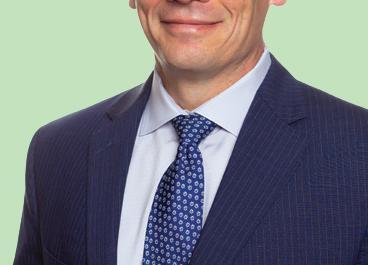
Joshua Hutkins has joined the board of the Gladys and Henry Crown Center for Senior Living. An attorney with Sandberg Phoenix, Hutkins is a member of Shaare Emeth.
Central Reform Congregation has hired Cheryl Adelstein as the interim director of community life and member relations. She was CRC’s first executive director from 1999 to 2005. And most recently, Adelstein served as the deputy director of the Jewish Community Relations Council of St. Louis. Jennifer Harris Dault has also joined CRC as the interim communications director
Rachel Leonard and Emily Trent have joined the staff at Congregation Temple Israel. Leonard is the community engagement coordinator. Trent is the new administrative specialist and previously worked as a teacher at Temple Israel’s Deutsch Early Childhood Center.
Community volunteer Debbie Lefton is one of seven women being honored by the Missouri Athletic Club as 2023 Women of Distinction. Since 2011, the MAC has annually honored local women who have been revolutionary in business, civic engage-
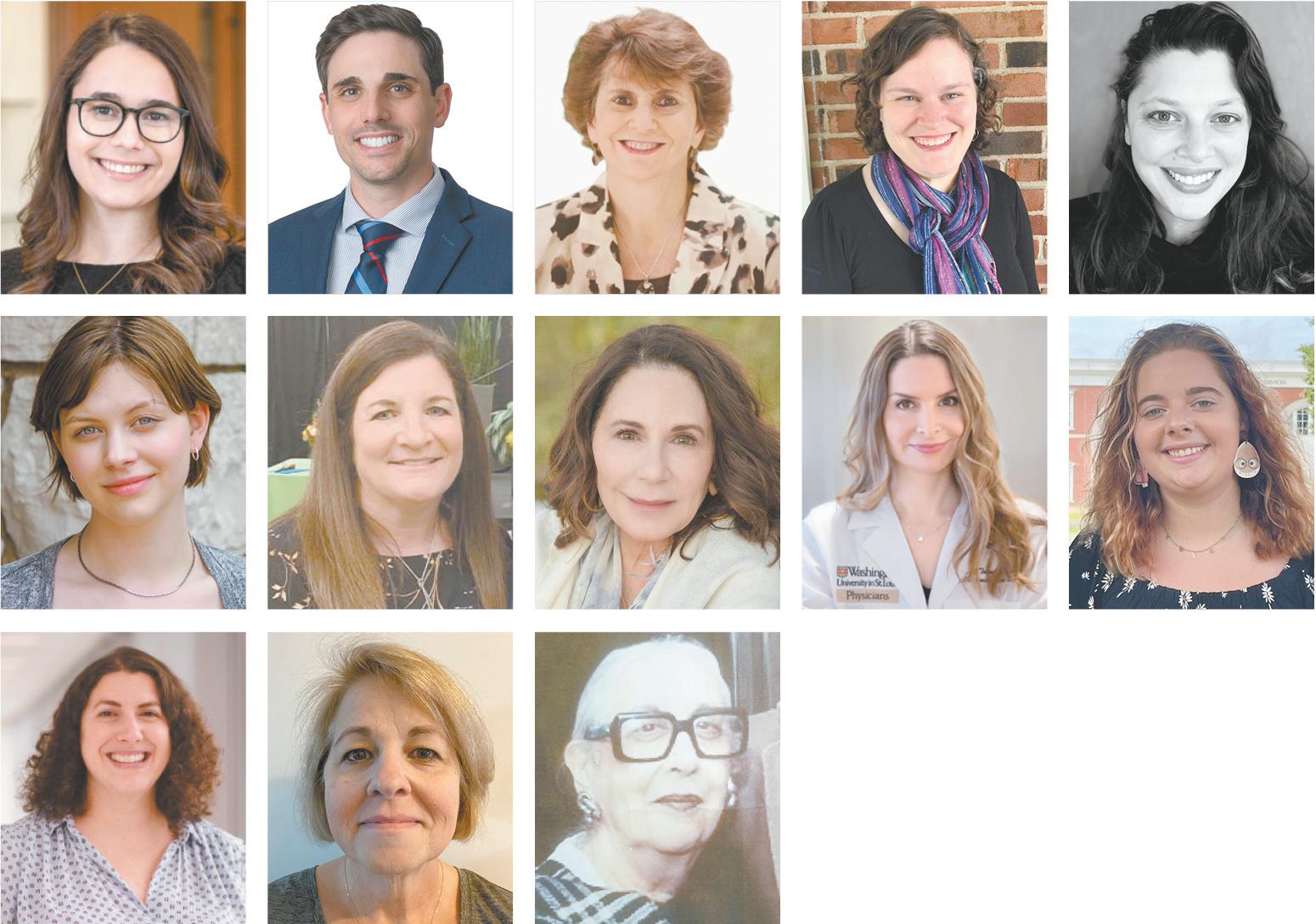
ment, philanthropic programs and mentorship. Lefton, a member of Shaare Emeth, is a board member of the Jewish Community Center, St. Louis Children’s Hospital and


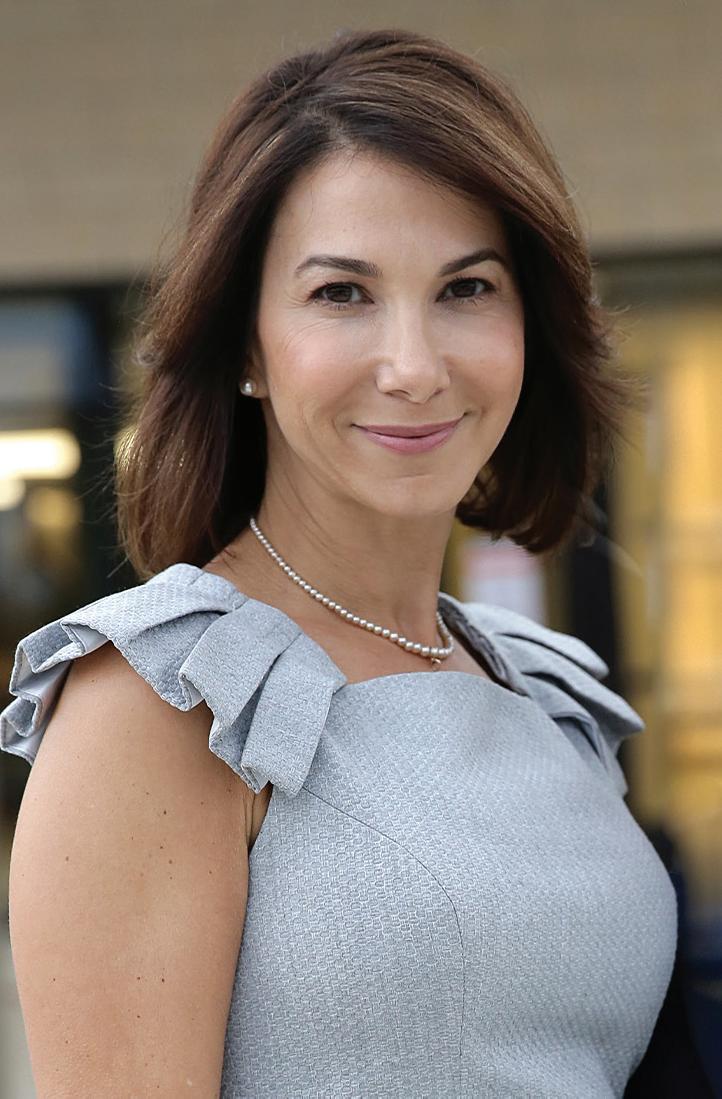
Second row: Emily Trent, Debbie Lefton, Randee Jacobs, Dr. Marissa Tenenbaum and Jillian Wolfman.
Third row: Gabriela Szteinberg Mirowitz, Deb Zoole-Israeli and Paulette Friedman.
the Jewish Light, as well as Camp Rainbow, where she has served on the board for 26 years. She recently ended her three-year term as president of J Associates and previously co-chaired Jewish Federation’s women’s philanthropy fundraiser. The Oct. 13 awards luncheon will be held at the Downtown Clubhouse. For more information on the event, visit mac-stl.org.
Randee Jacobs recently completed and self-published her memoir, “Living Out Loud.” The book reveals a strong sense of Jewish family history and how it impacted her perspective and understanding of one’s responsibility for tikkun olam and tzedakah. Jacobs, a member of Kol Rinah, said she wrote this book for her family and friends, as her legacy to inspire her children, grandchildren and generations to come.
Dr. Marissa Tenenbaum was selected by Newsweek as one of America’s Best Plastic Surgeons of 2023. She was honored in more than one category, including breast augmentation, eyelid surgery and facelift. Tenenbaum is a member of Temple Israel.
Jillian Wolfman began a new position as kindergarten teacher at Valley Park
Elementary School. She is a member of Temple Israel.

“Digital Learning and Teaching in Chemistry” was recently published by the Royal Society of Chemistry. Gabriela Szteinberg Mirowitz was one of the editors. The book compiles the established and emerging trends in this field, specifically within the context of learning and teaching in chemistry. Mirowitz is the assistant dean of advising at College of Arts & Sciences at Washington University. Mirowitz is a member of Bais Abraham Congregation.
Registered nurse Deb Zoole-Israeli will soon join the Benrus Medical Group in St. Peters. Her responsibilities include patient pre-op teaching, post-op questions and assisting with office procedures. She belongs to Kol Rinah is active with Chabad of St. Charles.
Special Occasions in Ladue, owned by Paulette Friedman, has expanded its merchandise to include contemporary sportwear for fall 2023. The shop is known for carrying cocktail wear, mother of the bride and formal attire. Friedman attends Central Reform Congregation.
Page 8 September 20, 2023 STL JEWISH LIGHT stljewishlight.org
Top row, from left: Lucy Greenbaum, Joshua Hutkins, Cheryl Adelstein, Jennifer Harris Dault and Rachel Leonard.
BROUGHT TO YOU THIS MONTH BY:
Newsmakers is a compilation of the Jewish community’s newsworthy professional and academic accomplishments. Submit your news to news@stljewishlight.org. Call 314-743-3669 for more information. Newsmakers is compiled by Elise Krug.
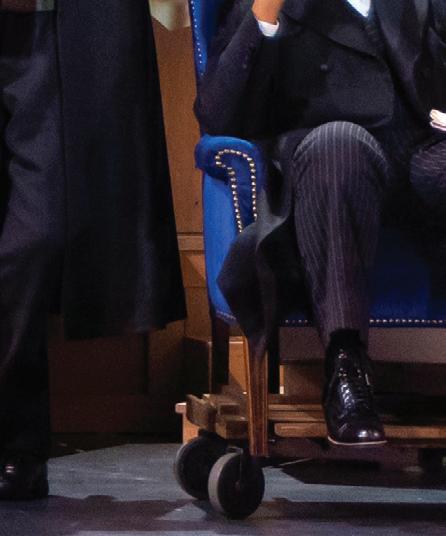
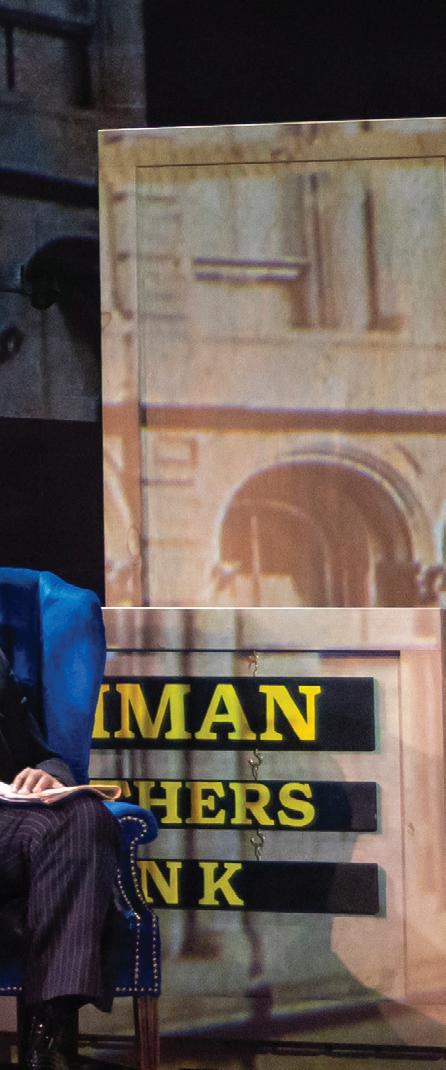
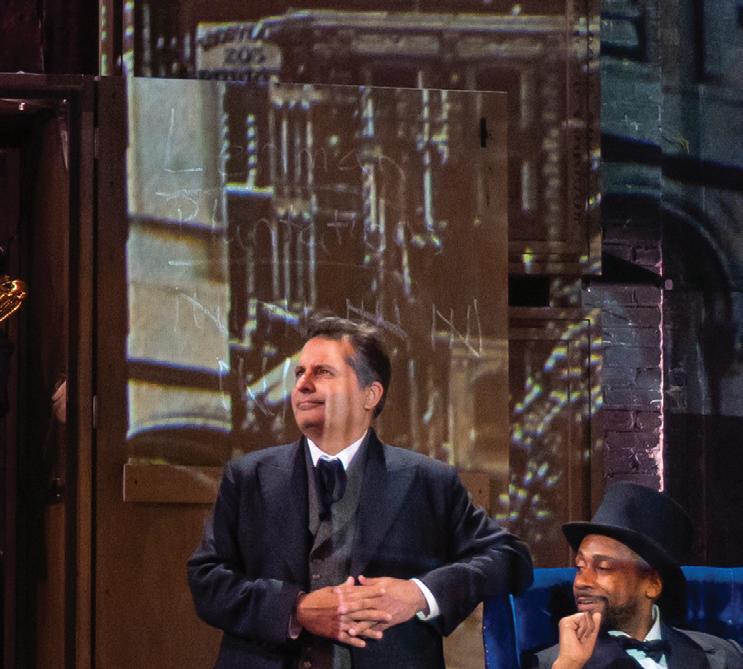
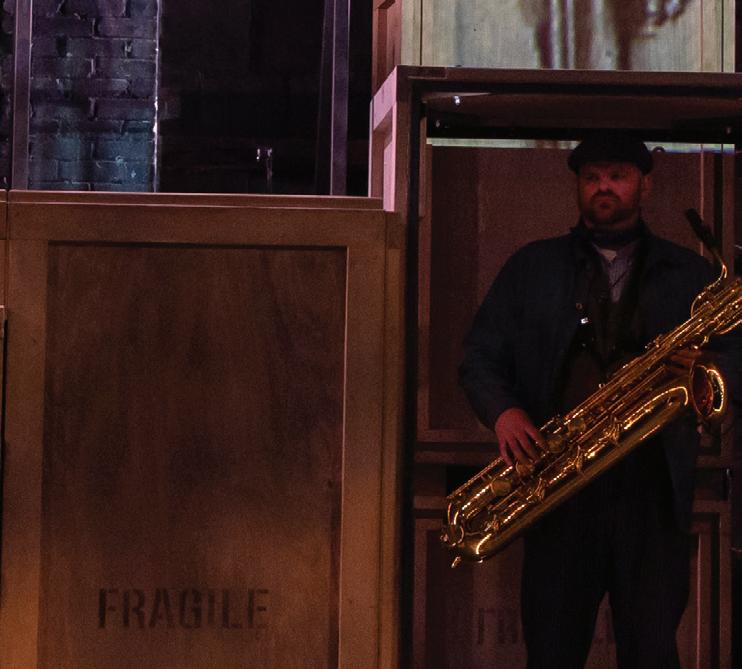
Joshua David Robinson & Firdous Bamji, The Lehman Trilogy The Huntington 2023
SEPT 5 – SEPT 24 PERFORMED AT THE LORETTO-HILTON CENTER REPSTL.ORG | 314-968-4925 EXPERIENCE THE DRAMA OF THE LEHMAN TRILOGY! TICKETS STARTING AT $25 GET TICKETS NOW! 2023-09-20 page 08-09.indd 8 9/19/23 5:02 PM
Photo Credit: T Charles Erickson Photo
Clayton High School senior offers lessons in empathy in recently published book
JORDAN PALMER CHIEF DIGITAL
CONTENT OFFICER

In the adult world, lunchtime is or should be a time to put your work down, clear your head perhaps, and basically take a break. Not all adults would agree. Some might say “Lunch? Who has time for lunch?”
In the world of American high schools, the idea of lunchtime is similar. It’s supposed to be a break from the classroom, taking tests and grades. However, to many students, lunchtime presents a new set of challenges. In a story on Seventeen.com, teens report lunchtime is one of the most stressful times of the day for them.
Now imagine that student’s stress, but as a person with a disability.
It was this scenario that prompted Grace A. Wolf, a senior at Clayton High School and a member of Congregation Temple Israel, to write a short book to help other young people learn and understand empathy and inclusion.

Primarily aimed at children of elementary school age and older, “May I Sit at Your Table?” tells a heartwarming tale about Abby, a young deaf girl, who uses sign language as her primary mode of communication.
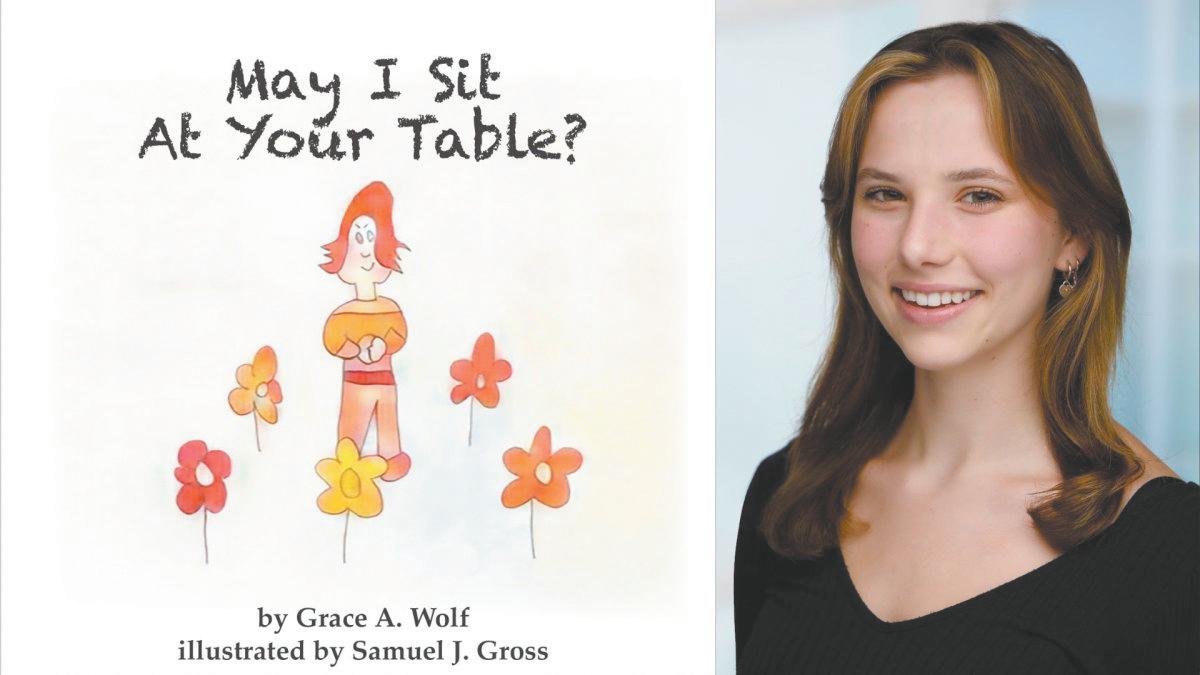
Abby is initially ignored by her classmates until her empathetic teacher, Ms. Baker, steps in to educate the children on inclusion. With its themes of diversity, inclusion, and empathy, the book sends a powerful message about celebrating those things that make us different.
To teach empathy, one must understand empathy. Wolf says she received her first lesson at a very young age.
“When I was in first grade, I brought my older brother Sam to school for Disability Awareness Week. My brother is autistic and speaks in a robotic-like voice and when he began to speak the children in the audience started laughing at him,” said Wolf. “This moment was excruciatingly painful. What I’ve learned is that it came from a lack of knowledge. They just didn’t understand.”
Another life experience plays a role in the story, and why the main character Abby, is deaf.
“I was introduced to the deaf community at one of my brother’s basketball games. I knew a few words in American Sign Language (ASL) at the time and commu-
nicated to one of his teammates signing ‘good job’ and his father started to cry, stating that no one had ever tried to reach out to his son before.”
This experience motivated Wolf to learn everything she could about ASL and deaf culture. She soon became certified through the University of Pennsylvania and even started an ASL club at Clayton High School.
“The story of Abby is a blend of my own experiences with the unstructured, sometimes stressful, time in the lunchroom and my understanding of the challenges of the deaf community,” said Wolf. “Children
can be very insensitive and need to recognize how painful it is for someone to eat alone in a room of crowded tables. Empathy must be taught and modeled.”
Part of the magic of the book is the partnership Wolf formed with her brother Sam in creating the illustrations. With Wolf’s gentle encouragement, Sam provided the original sketches, while Wolf enhanced them with color and shading. The result is a spectacularly unique work of art brimming with emotion.
“My brother Sam loved drawing when he was younger and is very talented but

has been struggling the last several years and has been unable to draw. Now, he is inspired to draw again. He even began asking to draw on his own and is excited to do more,” said Wolf.
“May I Sit at Your Table?” is available on Amazon and can be found at Barnes and Noble and other major retailers. Wolf said she will donate a portion of her proceeds from book sales to organizations that support diversity and inclusion.
Tzedakah - Teshuva - Tefila



Torah - AvodaGemilut Chasidim

During the month of Elul we were lucky to have three wonderful volunteers who assisted visitors by answering questions and pointing out and aiding with prayers for their loved ones.
Thank You
Dr. Gerald Tullman
Zvi Feigenbaum
Jerry Hochzstein
Allan Simon
September 20, 2023 Page 9 stljewishlight.org STL JEWISH LIGHT LOCAL NEWS
Nothing Compares. Beth Manlin GLOBAL REAL ESTATE ADVISOR LET ME BE YOUR REAL ESTATE EXPERT Your Dream Home Awaits in the Fall Market! SOTHEBYSREALTY.COM | 314.725.0009 CONNECT WITH ME TODAY C. 314.954.3999 | BETH.MANLIN@DIELMANNSIR.COM
Grace A. Wolf, a senior at Clayton High School, is the author of “May I Sit at Your Table?” The book is designed for children of elementary school age and older.
CHESED SHEL EMETH SOCIETY 7550 Olive St. Road - University City 314-469-1891 info@chesedshelemeth.org www.chesedshelemeth.org BETH SHALOM CEMETERY 650 White Road www.bethshalomcemetery.com Oct. 13: 12 pm - 7 pm Oct. 14: 10 am - 4 pm First Congregational Church of Webster Groves 10 W Lockwood Ave, Webster Groves, MO 63119 2023-09-20 page 08-09.indd 9 9/19/23 5:02 PM
OPINIONS
ABOUT THE OPINIONS SECTION
Viewpoints expressed in letters, commentaries, cartoons and other opinion pieces reflect those of the writer or artist, and not those of the Light. We welcome submissions of letters and commentaries to: news@stljewishlight.org
Why Yom Kippur is my favorite Jewish holiday
BY SHELLY JAY SHORE HEYALMA VIA JTA
This story originally appeared in Hey Alma (www.heyalma.com).
I get a lot of odd looks when I tell people that my favorite day of the Jewish year is Yom Kippur.
As Jewish holy days go, Yom Kippur exists at the complicated intersection of community observance, intense liturgy and heavy-hitting ritual expectations that can be — and for many people, is — a perfect storm of anxiety, pressure and guilt.
From the traditional fast to the powerful language of the readings, Yom Kippur can bring up complicated feelings and unpleasant associations. There’s a reason that there is such a growing movement to expand and adapt the rituals of Yom Kippur to be more inclusive and oriented towards growth — from designing a meaningful Yom Kippur seder for people in recovery from eating disorders for whom fasting would not be healthy to the
reframing of the confessional accountings of the liturgy to also include the acts of goodness performed by the individual and the community.
As someone who struggles with anxiety and depression, and who has a history of disordered eating and a chronic pain disorder, I spent years experiencing Yom Kippur as something miserable and exhausting. I couldn’t take in the melody of Kol Nidre or the radically intense language of the readings in Isaiah — all I could focus on was the intrusive thoughts reading me litanies of everything I’d done wrong, on the tempting reminders of my years of restricted eating, of how much my body hurt after hours of sitting in uncomfortable synagogue chairs.
For a long time, I wanted to just stop observing Yom Kippur altogether. But even when it was a terrible day, I felt like there was a potential for a meaningful experience that was just out of my reach.
The rituals and liturgy of Yom Kippur center heavily on the concept of teshuvah.
In the context of mainstream teachings and conversations, teshuvah is most com-
Can a toddler really apologize?
(And other Yom Kippur thoughts)
BY RACHEL SEELIG KVELLER VIA JTA
This story originally appeared on Kveller (kveller.com).
“Don’t you dare,” I said, just milliseconds before a red matchbox car came catapulting toward my head. I scowled at my 2-year-old and gave him a stern finger-waggle. Without hesitating, he trotted over, touched my arm gently and said, “Sorry.”
I should have been pleased, right? But my toddler’s saccharine “sorry” (pronounced “sowwy”) was devoid of remorse. Were he capable of a genuine apology, he probably wouldn’t have thrown the stupid car at me in the first place. I should add that a few minutes later, he launched a yellow matchbox car at my head.
With the approach of Yom Kippur, I find myself pondering that word, “sorry.” As both a Jew and a Canadian, I admit it’s one of the most heavily used words in my lexicon. But what purpose does it really serve? Is it a true expression of remorse? An attempt to get off the hook quickly? A way to avoid confrontation? (We Canadians are particularly adept at the latter kind of “sorry.”)
able burden carried on the national level, not as that slightly awkward feeling you get when your great aunt asks why you don’t want a second slice of her kugel. But saying sorry is also difficult for him because sincere apologies should be difficult. They emerge from an onerous process of self-reflection, acknowledgement of failure and heartfelt contrition.
monly translated as atonement or repentance. The idea of repentance is deeply embedded in Yom Kippur readings and traditions (and prayer books!), from the confessing of individual and communal sins to the framing of the Yom Kippur fast as a way of enacting punishment for the last year of harmful actions (which has, as far as I’m aware, literally no basis in traditional Jewish teachings at all).
But literally — and traditionally — translated, teshuvah means returning.
In “This Is Real and You Are Completely Unprepared,” one of the most widely accessible but deeply transformative books on the practices and teachings of the weeks leading up to and through the High Holidays, Rabbi Alan Lew (z”l) frames teshuvah not as a yearly practice of spiritual reflection and repentance but rather as a
Shelly Jay Shore (she/they) is a writer and nonprofit fundraiser. When not working, she experiments with home bartending and attempts to personally sustain the chocolate chip industry.
journey of transformation and awakening. It’s not a journey that begins with Kol Nidre and concludes with Neilah, or even one that begins on Rosh Hashanah and concludes on Yom Kippur. Rather, it’s a constant, unending process that begins, and then begins again, with the intake of each new breath. For Rabbi Lew, the spiritual work of Yom Kippur is not about a litany of one’s sins or making it 25 hours without your usual coffee intake (in fact, if I remember correctly, he doesn’t assign any particular virtue to fasting on Yom Kippur at all; it’s simply another avenue for connecting to internal and transformative work).
For Rabbi Lew and the teachers and Jews his work inspires, the work of teshuvah is about the difficult, radical and sometimes deeply terrifying journey of returning to the places inside ourselves where we lock away pain and grief and suffering, and to open them up, exposing them to clean, healing air. “Our suffering,” Lew writes, “the unresolved element of
LETTERS TO THE EDITOR
Email news@stljewishlight.org
In defense of recent letter to editor
Rachel Seelig is a freelance writer, scholar of modern Jewish literature and often frazzled mom. She lives in Toronto with her two children and husband, with whom she writes and publishes children’s books under the imprint Lovely Books.
Every year on the eve of Yom Kippur, my parents and siblings call one another to make amends for the past year’s transgressions. I always considered this an enlightened tradition, until my husband asked me why we always rehearse the same script, something about “sorry for anything bad I’ve done.” Talk about a catchall apology. “It’s sort of formulaic,” he pointed out. “Do you ever apologize for anything specific?” I must admit, he has a point. When we make this round of phone calls, are we truly atoning for wrongdoing, or just trying to check teshuvah, the cycle of repentance and forgiveness, off the to-do list?
As you may have guessed, my husband has a hard time saying “sorry.” The reason is in part cultural: born and raised in Germany, he bristles at Canadian niceties and understands guilt as an almost unbear-
Parenting guru Janet Lansbury sees “sorry” as one of the most difficult things children learn to say because it requires a high level of humility and vulnerability. It’s also loaded with parental expectations. I don’t know any parent who hasn’t asked, cajoled or even forced their child to apologize to the kid whose Lego they swiped or shin they kicked, only to have their child clam up or, even worse, completely fall apart. According to Lansbury, such moments are fueled by our own embarrassment and need to save face among other parents, as opposed to a desire to guide our kids. Without the time required to process their actions, saying “sorry” strikes the child as false, says Lansbury, “and faking emotion does not come naturally to a child.”
If we want our child to issue an honest apology, we need to give them time, and, most importantly, we need to model empathy and remorse. If we trust our children as we should, suggests Lansbury, they will learn to apologize in their own time. And when they do, they will mean it. “By trusting our children to develop authentic social responses, we give them the self-confidence to be the sensitive and deeply caring human beings we hope they will become.”
If we show them this level of compassion, they will undoubtedly return the favor, for what children do more naturally than apologize is forgive.
Lansbury’s take on apologies dovetails with that of the late Rabbi Jonathan Sacks, who saw repentance and forgiveness, the essential ingredients of the Jewish day of
In the Sept. 6 edition, several writers objected to Galit Lev-Harir’s Aug. 23 letter to the editor, “No historical equivalent” regarding the St. Louis Kaplan Feldman Holocaust Museum co-sponsoring (with the Jewish Community Relations Council) a program called “The American Dream Deferred: One Family’s Incarceration During WWII + Holocaust Museum Tour.”
Their criticism missed the mark. The original letter’s objection wasn’t what the descendant of an incarcerated Japanese American family would or did say. Lev-Harir’s objection was to the perception of equivalency created by the Holocaust Museum sponsoring the program. Like it or not, perception is reality: The vast majority of the Jewish community of St. Louis and others not in attendance read of two events grouped together as one; the incarceration of Japanese Americans, and the systematic murder of six million Jews, around two-thirds of Europe’s Jewish population.
As children of Holocaust survivors, we and many others in our community were hurt and offended by the ill-advised connection of these two events that created a perception that seemed disrespectful to the memory of the six million martyrs, including many or most of our families. Moving forward, we respectfully request the St. Louis Kaplan Feldman Holocaust Museum to display greater focus not only on the programs they choose to sponsor but on its mission statement: “ .... preserving the legacy of the Holocaust, educating about its causes and illustrating how what happened during this tragic period relates to our lives today.”
Mimi Fiszel, Tobie Dobin and Sandy Schwartzburt St. Louis
Antisemitism, threat of violence is continuing concern
Regarding “How congregations are protecting themselves from swatting and bomb threats during High Holiday services” (published on the Light’s website Sept. 12): This declaration in itself makes me furious. Why must we Jews have to go through this year after year? Are we Jews ever going to be able to practice our religion without the threat of intimidation and life-threatening violence perpetrated by people who hate Jews?
Unfortunately, the answer is incontrovertibly “no.” Antisemitism is a fact of life and will never be eliminated no matter how many precautionary and preventive measures are undertaken.
Fortunately, many temples and synagogues have now hired a police presence during the High Holidays and at other times during the year to protect its congregants, and although this is not a foolproof measure, no doubt, a police presence, will certainly mitigate such violence.
Although our First Amendment guarantees freedom of religion, it cannot guarantee the safety of those who are intent on practicing their respective religions.
As one who is a fierce defender of law and order, I propose that anyone who makes threats, or commits violence against those who choose to practice their respective religions, be given a mandatory life sentence without parole if tried and convicted for such crimes.
Such hate crimes should never be allowed to flourish and persevere.
Gene Carton Clayton
Page 10 September 20, 2023 STL JEWISH LIGHT stljewishlight.org
See COMMENTARY on page 22 See YOM KIPPUR on page 12 2023-09-20 page 10-11.indd 10 9/19/23 5:02 PM
HOLIDAYS LIFESTYLES
Time to change: A teshuvah lesson from Greg Brady
BY AMY FENSTER BROWN
We just celebrated Rosh Hashanah — happy 5784 — and Yom Kippur is right around the corner. This period in between is called The 10 Days of Teshuvah. It is meant to be a time for Jews to look inward, have self-reflection and introspection. It’s a good time to think about changes you want to make, similar to traditional New Year’s resolutions.
The first thing that comes to mind for me is no surprise: the Brady Bunch. The lovely lady, her three lovely girls, a man named Brady and his three boys taught us quite a teshuvah lesson in the episode titled “Dough Re Mi.”
This German star cookie is perfect for your Yom Kippur break-fast
BY RONNIE FEIN THE NOSHER VIA JTA
This story originally appeared in The Nosher (www.thenosher.com).
When people deny themselves food for an extended period of time, they’re usually ravenously hungry and find themselves thinking about consuming huge amounts of food. But it’s not a good idea to pack it in too quickly. It’s too hard on your digestive system.
So when Yom Kippur comes to a close, I make it easier for my family and friends and follow the age-old wisdom of transitioning from the fast to the main meal by offering my guests a light nibble as they come into my home after synagogue. I serve sliced apples and honey, hummus and pita wedges and, for those who prefer something sweet, zimtsterne cookies.
The German word zimtsterne translates to “cinnamon stars.” These starshaped cut-out cookies are actually a German Christmas specialty. (It might go without saying that when these cookies are served for Christmas they are not in the shape of a star of David.)

But for observant Jews, they are also traditional for Yom Kippur, when they are known as erste sternen, or “first stars,” because they are a reminder that before you can break the fast, you must be able to see the first evening stars that appear in the sky after sundown.
There are endless variations on this cookie; I make one version with flour and honey, which is more like a traditional gingerbread cookie. But the more popular recipes, like this one, are basically warmly spiced nut-meringues with meringue frosting. They are compellingly crispy at first bite, then everso-slightly chewy; the cinnamon-clove fragrance is spellbinding. You are also free to get creative with your cookie shapes! And here’s a bonus: they are gluten-free.
If you have never tasted zimtsterne, consider adding these cookies to your holiday menu.
Recipe: Zimtsterne
German star cookies
INGREDIENTS:
2 ½ cups finely ground almonds or almond meal
1 tsp ground cinnamon
1/8 tsp ground cloves
½ tsp salt
1 tsp grated fresh lemon peel
2 large egg whites, at room temperature
1 tsp lemon juice
1 ½ cups confectioners’ sugar
DIRECTIONS:
1. Line a cookie sheet with parchment paper.
2. Place the almonds, cinnamon, cloves, salt and lemon peel in a bowl, whisk to blend the ingredients and set aside.
3. Beat the egg whites in an electric mixer starting at low, then increasing the speed to medium-high for 1-2 minutes or until bubbly. Pour in the lemon juice and beat at medium-high for another 2 minutes or until soft peaks form. Gradually add the confectioners’ sugar and beat at high speed for 4-5 minutes or until stiff and glossy.
4. Remove about 1/3 of this egg mixture to a bowl and set aside.
5. Add the almond mixture to the remaining (2/3) mixture and stir to mix the ingredients thoroughly.
6. Roll the dough between two sheets of parchment paper to ¼-inch thickness. Place on a baking sheet and freeze for 30 minutes.
7. Preheat the oven to 300°F.
8. Use a star-shaped cookie cutter (we used a 3-inch cutter) to cut out the cookies, and place on your prepared baking sheet. Gather the trimmings, re-roll and cut until all of the dough is used up.
9. Spoon the reserved 1/3 egg white mixture atop each of the cookies, and use a small spoon or pastry brush to spread evenly to the edges.
10. Bake for about 12-15 minutes.
NOTES:
This recipe makes about 19 cookies using a 3-inch-wide cookie cutter. You can make these cookies as much as a week ahead. Keep them tightly sealed so they’ll stay crispy.
Aspiring musician Greg, the eldest Brady child, has written a song he is sure will be a huge hit. The sibling singing group, the Brady Six, is all set to record it when Mother Nature decides to play a prank on awkward middle brother Peter with a cracking, changing voice. Because Greg is a true artist he is able to cleverly craft a new song, “Time to Change,” that makes Peter’s puberty problem a plus. (A lot of alliteration, Amy. Awesome.)
Greg’s lyrics are soooo teshuvah. Let’s break it down.
“When it’s time to change, you’ve got to rearrange who you are into what you’re going to be.”
You might think it’s cheesy, but in the spirit of teshuvah, Greg Brady wrote a truly meaningful lyric and it makes a lot of sense. If you’re looking to make a positive change, start a healthy habit, work on something you’ve been putting off, you pretty much have to do what Greg suggests.
Jenny Mentle Hoffman, a St. Louis-based social worker, agrees that this song is a terrific example of teshuvah.
“This piece suggests reflection,” she says. “We shouldn’t change for the sake of change, but rather try to envision ourselves in a better place, a better space, a better self.”
Making resolutions can be fun and usually has positive intent. But if you really want to make those changes happen, you’ll need discipline and commitment.
“Change means something different to everyone,” Hoffman says. “Some type of rearranging of your life is likely going to be needed to get going with your vision, big or small.”
We all know that overnight success making or breaking habits is rare. Consistent work in small steps adds up, and you have to keep at it. Even Greg Brady knows that, as evidenced by another lyric in “Time to Change.”
“Day by day, it’s hard to see the changes you’ve been through. A little bit of living, a little bit of growing all adds up to you.”
Those Bradys were quite wise.
By the way, Peter’s voice change wasn’t Mother Nature’s only crafty twist of fate. Christopher Knight, the actor who played the nerdy teen, grew up to be superhot.
High five, Mother Nature. High five.
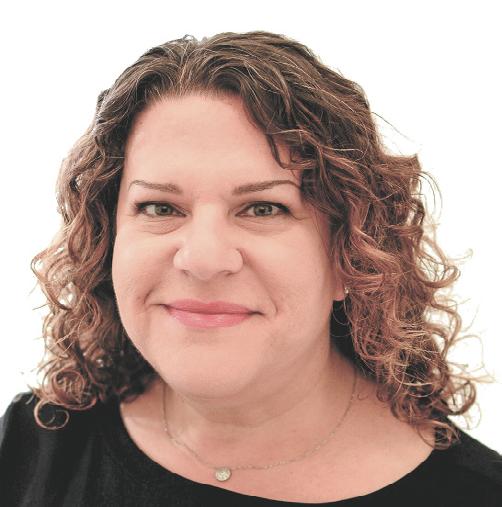
Columnist Amy Fenster Brown is married to Jeff and has two teenage sons, Davis and Leo. She volunteers for several Jewish not-forprofit groups. Fenster
Brown is an Emmy Award-winning TV news writer and counts time with family and friends, talking and eating peanut butter among her hobbies.
September 20, 2023 Page 11 stljewishlight.org STL JEWISH LIGHT
ARTS AND CULTURE FOOD
FEATURES
AMY FENSTER BROWN
PHOTO: SHERI SILVER
2023-09-20 page 10-11.indd 11 9/19/23 5:02 PM
Let’s celebrate St. Louis’ superb circus talents
BY NANCY KRANZBERG SPECIAL TO THE JEWISH LIGHT

The modern definition of a circus is based on the ancient word referring to the actual performance area, a circle of sorts, in which the gladiatorial events, chariot races, etc. took place.
Jack Marsh, executive and artistic director of St. Louis’ Circus Flora, credits Philip Astley, a horse trainer, with being the founder of the modern circus in the 18th century, utilizing a circular arena, which we now know as a ring.
Today the performers are quite different. We think of acrobats, clowns and trained animals. We also tend to think of Ringling, Barnum and Bailey and the frenzied three ring circus, but in reality, as one of America’s oldest theatrical traditions, the circus started as a European transplant in the late 1700s and was perfected in the United States by the likes of John Bill Rickets, who established the first American circus in 1798.
Our own Mid-America Arts Alliance recently sponsored a traveling exhibition entitled “Step Right Up,” curated by Timothy Tegge, a longtime circus historian, collector and performer. A second-generation circus performer, Tegge was immersed in circus culture from the day he was born.
Marsh also reminded me that here in America, we have the UniverSoul Circus, which features a large percentage of performers of color, and Latino circuses, which thrive in Mexico and on the border with the United States.
Cedrick Walker, founder of the UniverSoul Circus, says, “We get to share our culture with everyone and each member of the audience leaves with a message: that everyone belongs. The UniverSoul Circus is for the people--it’s their show.”
The Mexican Circus has roots that actually date back to pre-Columbian times.
According to Jessica Hentoff, “The Circus Lady,” who now performs with St. Louis’ Circus Flora, and one time performed with New York’s Big Apple Circus, both artistic one-ring circuses, one doesn’t have to grow up in the circus to be a good circus performer.
Hentoff is the artistic and executive director of Circus Harmony, St. Louis’s only year-round circus school and social circus program, based at the City Museum.
Hentoff says she has worked with people from 5 to 82 years of age.
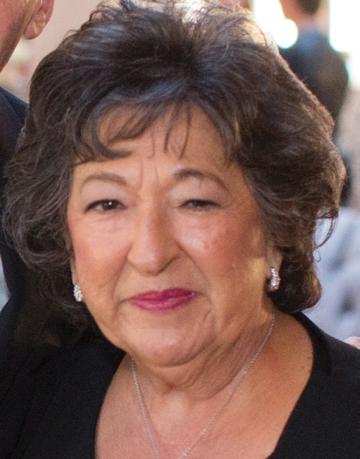
“I’ve taught children of all labels — autistic, ADD, LDD,
deaf, Down syndrome, physically handicapped, etc.,” she said. “Circus arts doesn’t require one skill set. Maybe you can’t juggle, but you can flip, or you can’t flip but you can have great balance and walk the wire.”
St. Louis is very fortunate to have Circus Flora. We are one of only three cities in the country with an annual resident circus that also provides year-round educational outreach programs. The organization has played an

important role in the renewal of circus as a performing art. Circus Flora is recognized as the first circus in the United States to successfully tell a story using a plot and original live music. The narrative acts as a framework through which humans and animals perform in concert with one another. By integrating classic traditions of the circus with contemporary theater techniques, an ensemble cast and compelling narrative, Circus Flora produces shows that consistently deliver wonder and world-class entertainment to audiences of all ages.
The late Igor David Balding was the director and producer of Circus Flora. After working for Joseph Papp at the New York Shakespeare Festival, he founded the New Theater in New York and produced 21 plays. His productions were nominated for two Tony awards and won five Obie awards. He conceived and co-produced the Circus World Championships, which were broadcasted worldwide on the BBC. These are just the tip of the iceberg of Balding’s accomplishments.
For more of Nancy Kranzberg’s commentary, listen to KWMU (90.7) St. Louis on the Air the first Friday of each month at approximately 12:50 p.m. She also hosts a weekly Arts Interview podcast for KDHX (88.1), available at artsinterview.kdhxtra. org.
Cecil Mackinnon, who performs in Circus Flora as the clown-narrator “Yo Yo” and has acted extensively with theater companies in New York, founded the Pickle Family Jugglers, a comedy juggling act that expanded into the Pickle Family Circus. In 1994 she received the first Citizen’s Exchange Council grant to travel to Eastern Europe to research circus in transition.
Circus Flora has exceptional educational programs such as “Clowns on Call,” which is Circus Flora’s first year-round outreach program. Lead by professional circus clowns, this program provides magical distraction, engaging young patients in the circus arts while providing a respite from the world of tests and worry.
Circus Flora has partnered with Craft Alliance and the St. Louis Symphony and often does “Pop Up Circus Acts” around town.
Circus Flora and Circus Harmony are two crown jewels in St. Louis’ thriving performing arts scene.
Yom Kippur: Thoughts on sharing holiday’s themes with children
CONTINUED FROM PAGE 10
atonement, as “the two great gifts of human freedom.” Both are a matter of choice, Sacks insisted, which means they can’t be forced.
Following anthropologist Ruth Benedict, Sacks distinguished between “shame culture” and “guilt culture,” and ascribed the latter to monotheistic religions like Judaism. Both shame cultures and guilt cultures instruct people how they ought to behave, but they operate very differently. Shame cultures emphasize what others think of you; the motivation for repentance is purely external, fueled by the pressure to avoid public shunning (or “cancel culture,” in today’s parlance). Guilt cultures, by contrast, are fueled
by individual conscience, the “inner conversation with the better angels of our nature.” According to Sacks, guilt serves an indispensable purpose; we must feel guilty to begin to make amends and repair the damage we have done. Yom Kippur provides the time needed to undertake this hefty task. It is not a day for rehearsed apologies but for honest soul-searching.
It turns out the rabbis and parenting experts have much in common. Both focus on opportunities to cultivate personal responsibility, kindness and empathy. The beauty of Yom Kippur is that nobody is exempt.
This is precisely the lesson I’ve decided to impart this year. Rather than coerce my kids to say “sorry” out of an abundance of shame or discomfort, I want to show them
that even I must consciously devote time every year to this important — albeit uncomfortable — undertaking. I want them to know that saying “I’m sorry” isn’t easy for me, either.
When I sit down with my 5-year-old this Yom Kippur, I will tell him that this is the day when we can talk about mistakes that we’ve made and how we might avoid making them again next year. I will apologize to him for the times that I lost my temper. Perhaps he will reciprocate, perhaps not. The main thing is that he’ll think about it. And he will know that I am thinking about it, too.
As for my 2-year-old, the lesson might need to wait another year or two. This Yom Kippur, I think I’ll just hide his matchbox cars in the closet.
Page 12 September 20, 2023 STL JEWISH LIGHT stljewishlight.org
THE ARTS IN ST. LOUIS
FEATURES 2023-09-20 page 12-13.indd 12 9/19/23 5:02 PM
Elliana Grace Hentoff-Killian is a circus artist from St. Louis who has been a performer and teacher with Circus Harmony, Ringling Bros. Barnum & Bailey, and other circuses. She is the daughter of Jessica Hentoff, the artistic and executive director of Circus Harmony. PHOTO BY GABRIELPHOTO.CA















September 20, 2023 Page 13 stljewishlight.org STL JEWISH LIGHT 2023-09-20 page 12-13.indd 13 9/19/23 5:16 PM
Is your child ready for a cellphone?
BY DR. RICHARD LAZAROFF



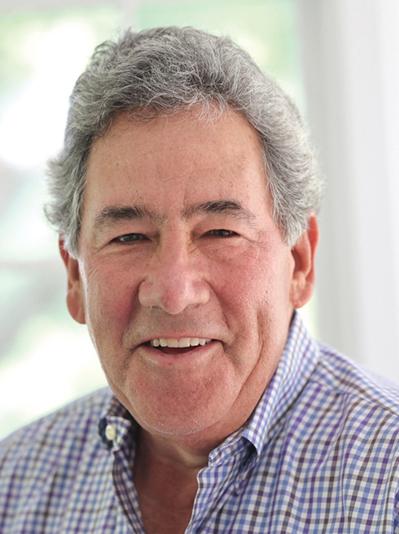
It’s back to school for so many families in our community. Our children are one year older and one grade level higher. With each advancing year, families are faced with many age-specific decisions, among them whether their child should possess a cellphone.
Some families view cellphone ownership as a safety issue. This is a valid concern if your child is allowed to return home alone.
However, it is not if one is trying to mitigate some type of risk associated with school shootings and hostage situations. More effective measures need to be in place to make these traumatic events disappear from our country.
Other families see cellphone ownership as a matter of maturity and expanding an


adolescent’s privileges. This would be a no-brainer if a cellphone was purely a phone. But we all know better. A cellphone brings access to the internet with so many inherent risks.
Because not all adolescents mature emotionally at the same rate, a decision about cellphone ownership necessitates that a parent assess their child’s ability to handle the responsibility. Most families consider making this decision between the ages of 12 to 14.
Managing an adolescent’s time on the internet and the sites they visit is a daunting task. Parents should make use of any tools available to safeguard a child’s experience, but those tools are not a substitute for being present when children are using their devices — which is impossible 100 percent of the time.

Ultimately, whether an adolescent uses
the internet and a cellphone safely will come down to communicating your expectations and then trusting your child. And don’t forget to remind your adolescent that content, words and photos can live forever on most internet formats. Postings can even have legal repercussions.
Some school districts are taking this choice out of parents’ hands. Without knowing the specifics about each school’s plans, I approve of these efforts to remove cellphones from the school landscape. Students are at school to learn. The downsides to students having access to their phones during school time are obvious: distraction, inappropriate social contact, increased bullying and access to information making cheating awfully enticing. The learning environment compromised by cellphones in so many
ways and, additionally, many children only become more anxious.



Schools have recently been under attack for stepping into areas that parents believe should be their purview. Banning books or offering gender education are two examples that properly anger parents. But I believe that the parents who express anger about cellphone bans at school are off base. Teachers need our help. They need maximally attentive students to achieve the best possible educational outcomes. Arrangements can be made to give those students who will be returning home alone a secure place to keep their phone during school. All others should just leave them at home.
Other downsides to discuss before agreeing to purchase a phone include owning an expensive item (making your child a target for theft) and the temptation to post on social media without giving adequate thought about the possible repercussions of the content posted. We are all guilty of not giving enough thought about how a note or posting will be received before pushing the send button.
So, is there a best age to purchase a cellphone for your child? Not really. Parents need to decide on an individual basis when their child is ready for the choices owning a cellphone will present.
The child needs to be mature enough to comply with limits set by a parent to minimize distraction, avoid inappropriate social behaviors and remain safe. This means that even siblings, raised in the same home, might be “ready” at different ages.
And certainly, don’t fall into the trap of allowing the most permissive parent in your child’s social group to set the age for this to happen.
Page 14 September 20, 2023 STL JEWISH LIGHT stljewishlight.org
HEALTHWATCH Healthwatch is a monthly feature focusing on a health- or fitness-related topic with a Jewish angle. The feature is published the second edition of each month. Have a suggestion for a potential Healthwatch subject? Email news@stljewishlight.org.
Make your own decision.
PHOTO: BILL MOTCHAN
Our specialty is superior heart care. Our specialty is you. At St. Luke’s Heart and Vascular Institute, you’ll find a full range of state-of-the-art procedures, treatments and services to keep your heart strong and healthy. Whether you’re dealing with a history of heart disease, need follow-up care, or are simply seeking a second opinion, our diagnostic tools and surgical expertise are second to none. Compassionate care Strong relationships that help you navigate every step of your health and wellness journey. Nationally recognized America’s 50 Best Hospitals for Cardiac Surgery™ by Healthgrades® 5 years in a row. Best technology In alliance with Cleveland Clinic’s Heart, Vascular & Thoracic Institute. Easy access Convenient locations plus same-day second opinions. Schedule your appointment at StLukesCare.com/Heart 2023-09-20 page 14-15.indd 14 9/19/23 5:02 PM
Dr. Richard Lazaroff is a retired pediatrician who practiced in St. Louis County for nearly 40 years. Married for 42 years, he is the father of two and grandfather of four and the author of “Some Assembly Required, A Guide to Savvy Parenting.” His latest book is the novel “Illumination.”
Schmooze: Parkland victim’s dad to bring gun safety drive to St. Louis

CONTINUED FROM PAGE 3
else. As a country, we haven’t always been this way. In fact, the majority of the history of the USA is of a country with gun owners who respected gun safety, including the NRA, which was once a gun safety organization.
It started to change in 1977 when a guy named Harlon Carter took over. At that time, gun sales were declining in America because hunting was no longer a big sport and there was no longer a draft. Carter redirected the NRA to work with the lobby to increase gun sales.
As part of that, they started pushing this myth across America that we all need a gun to defend ourselves. They started publishing studies that have been debunked, that are junk science, to suggest in essence that we are a country of good guys and bad guys and that the bad guys have guns so the good guys need guns to defend themselves. They found this whole new way to market weapons.
What do you believe is the bottom line when it comes to gun violence prevention — and how do we get there?
The No. 1 reason we wrote the book was to get people informed. People need to know the truth. The NRA’s response to the Sandy Hook shooting was to use the moment to sell more guns. They profited off of Sandy Hook just as they profit off all the other shootings.
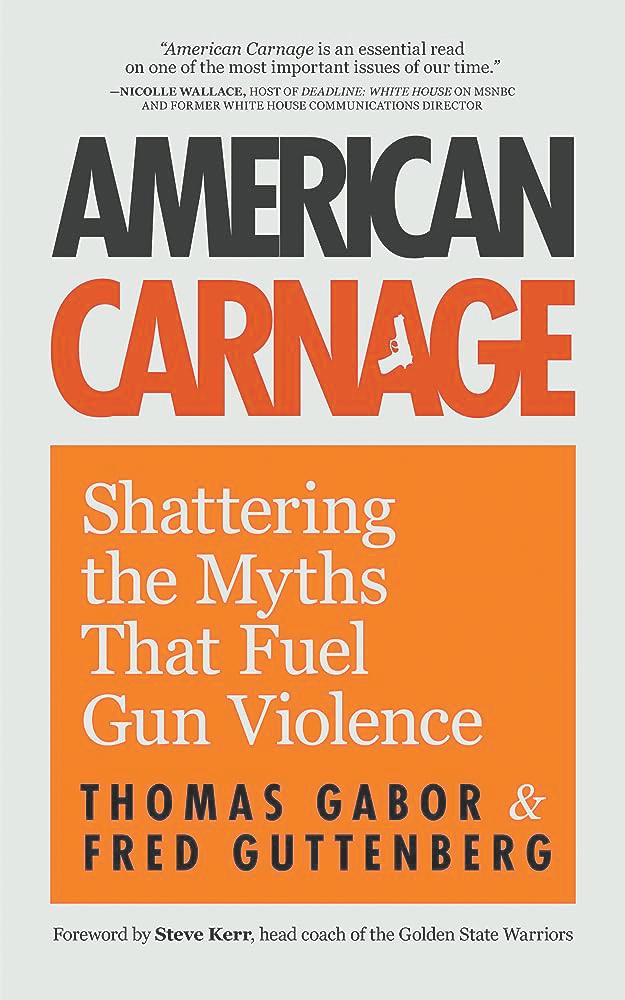
The No. 2 reason is to get people to vote on this issue. The reason President (Joe) Biden was able to sign the Safer Communities Act last year (which, among other things, enhances background checks for gun buyers age 21 and under) was because people voted. That’s the only way we’re going to significantly reduce gun violence, if Americans vote for politicians who believe in ending it.
As a country we have done a terrible job at voting for far too many years and, because we didn’t vote, we ended up with bad people. We as Americans can end up with good people, people who want to do good things, if we show up and vote. Get educated and do not sit home during an election. Vote for things that matter to you. Vote as if your life depends on it, because it might.
How do you remember Jaime and keep her memory alive in the work you do?
There’s personal and there’s public. On a personal level, I spend a lot of time with Jaime. I go to the cemetery a lot. It’s where I get to be closest to her physically. I reflect on memories, I look at photos, I watch videos.

I gave a TED Talk a couple of years ago where I said I can’t bring myself to look at Jaime in the past tense, so I look at life now as my relationship with Jamie has changed. It’s no longer about new memories but it’s embracing the ones I have

more deeply as well as creating a new future based upon doing something about what happened to her. Now to the public part of this. Because of what gun violence did to my daughter, I will forever be working as Jaime and Jesse’s dad. My son was also there (at the Parkland school), and he will be forever impacted. The way I remember Jaime on a public level is by fighting every day to do something about gun violence, by writing openly about how I feel and how I’m doing, about memories, about what I missed, about what I had as hopes because I want to share my daughter every single day just as if she were here.
Has Judaism played a part these last 5½ years in helping you deal with your grief and in the work you do to end gun
violence?
My relationship with a higher power is strained. I struggle with the idea. I’m not observant anymore. I’m really removed from the religious part of religion.




When my daughter was killed four months after my brother died (Dr. Michael Guttenberg died in October 2017 of cancer related to 9/11), I started to struggle with some of the things the rabbis were telling me. I’ve not been able to make peace with that.



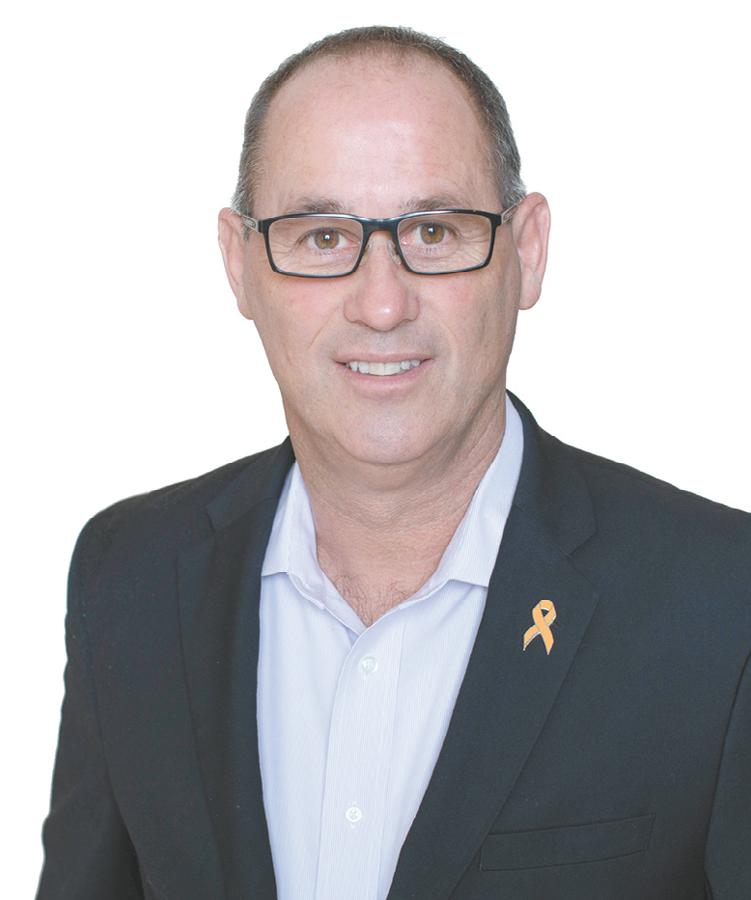
I was raised with Jewish values, with notions around tikkun olam. I do think my background, who I am, my beliefs about society, my desire to help others and make the world a better place, is firmly rooted in the Jewish foundation with which I grew up.



September 20, 2023 Page 15 stljewishlight.org STL JEWISH LIGHT
Fred Guttenberg, the author of “American Carnage: Shattering the Myths That Fuel Gun Violence,” will speak in St. Louis on Oct. 5.
PHOTO: CARLOS ARISTIZABAL
Fred Guttenberg is shown in a family photo with his daughter Jaime, who was killed in the mass shooting at Marjory Stoneman Douglas High School in Parkland, Fla. on Feb. 14, 2018.
It’s time to come Alive! GET BREAK-THROUGH TREATMENT! Ketamine Therapy ANXIETY DEPRESSION MIGRAINES FIBROMYALGIA PTSD 636-821-1168 | 2634 MO-109, Suite A | Wildwood, MO 63040 Book Online alivehealthstl.com Get local help for your Medicare questions. It’s time to take advantage. If you’re new to Medicare, I can help. Call me today. If you have this card, call me today. Benefits, features and/or devices vary by plan/area. Limitations and exclusions apply. You will pay a maximum of $35 for a 1-month supply of Part D select insulin drugs during the deductible, Initial Coverage and Coverage Gap or “Donut Hole” stages of your benefit. You will pay 5% of the cost of your insulin in the Catastrophic Coverage stage. This cost-sharing only applies to members who do not qualify for a program that helps pay for your drugs (“Extra Help”). OTC and Healthy Food benefits have expiration timeframes. Call the plan or refer to your Evidence of Coverage (EOC) for more information. Based on UnitedHealthcare Product Ancillary Network 360 Research, May 2021. Renew Active® includes a standard fitness membership. The information provided through Renew Active is for informational purposes only and is not medical advice. Consult your doctor prior to beginning an exercise program or making changes to your lifestyle or health care routine. The Renew Active program varies by plan/area. Access to gym and fitness location network may vary by location and plan. Network size varies by market and exclusions may apply. Plans are insured through UnitedHealthcare Insurance Company or one of its affiliated companies, a Medicare Advantage organization with a Medicare contract and a Medicare-approved Part D sponsor. Enrollment in these plans depends on the plan’s contract renewal with Medicare. UnitedHealthcare Insurance Company pays royalty fees to AARP for the use of its intellectual property. These fees are used for the general purposes of AARP. AARP and its affiliates are not insurers. You do not need to be an AARP member to enroll. AARP encourages you to consider your needs when selecting products and does not make specific product recommendations for individuals. AARP does not employ or endorse agents, producers or brokers. © 2021 United HealthCare Services, Inc. All Rights Reserved. Y0066_210713_104808_M SPRJ64119 004D041D • Primary care visits • See any dentist for dental services • Medicare National Network • Low insulin copays • Credits for over-the-counter products • Renew Active® fitness for body and mind As a local licensed sales agent, I can answer your questions about Medicare and help you find a plan that fits your needs and your budget. When you choose an AARP® Medicare Advantage plan from UnitedHealthcare®, you can take advantage of benefits and features that may include: Edward Pevnick Licensed Sales Agent 3146080591, TTY 711 lissinsurance@gmail.com MyUHCagent.com/edward.pevnick Get local help for your Medicare questions. It’s time to take advantage. If you’re new to Medicare, I can help. Call me today. If you have this card, call me today. Benefits, features and/or devices vary by plan/area. Limitations and exclusions apply. You will pay a maximum of $35 for a 1-month supply of Part D select insulin drugs during the deductible, Initial Coverage and Coverage Gap or “Donut Hole” stages of your benefit. You will pay 5% of the cost of your insulin in the Catastrophic Coverage stage. This cost-sharing only applies to members who do not qualify for a program that helps pay for your drugs (“Extra Help”). OTC and Healthy Food benefits have expiration timeframes. Call the plan or refer to your Evidence of Coverage (EOC) for more information. Based on UnitedHealthcare Product Ancillary Network 360 Research, May 2021. Renew Active® includes a standard fitness membership. The information provided through Renew Active is for informational purposes only and is not medical advice. Consult your doctor prior to beginning an exercise program or making changes to your lifestyle or health care routine. The Renew Active program varies by plan/area. Access to gym and fitness location network may vary by location and plan. Network size varies by market and exclusions may apply. Plans are insured through UnitedHealthcare Insurance Company or one of its affiliated companies, a Medicare Advantage organization with a Medicare contract and a Medicare-approved Part D sponsor. Enrollment in these plans depends on the plan’s contract renewal with Medicare. UnitedHealthcare Insurance Company pays royalty fees to AARP for the use of its intellectual property. These fees are used for the general purposes of AARP. AARP and its affiliates are not insurers. You do not need to be an AARP member to enroll. AARP encourages you to consider your needs when selecting products and does not make specific product recommendations for individuals. AARP does not employ or endorse agents, producers or brokers. © 2021 United HealthCare Services, Inc. All Rights Reserved. Y0066_210713_104808_M SPRJ64119 004D041D Primary care visits • See any dentist for dental services Medicare National Network • Low insulin copays • Credits for over-the-counter products • Renew Active® fitness for body and mind As a local licensed sales agent, I can answer your questions about Medicare and help you find a plan that fits your needs and your budget. When you choose an AARP® Medicare Advantage plan from UnitedHealthcare®, you can take advantage of benefits and features that may include: Edward Pevnick Licensed Sales Agent 3146080591, TTY 711 lissinsurance@gmail.com MyUHCagent.com/edward.pevnick Get local help for your Medicare questions. It’s time to take advantage. If you’re new to Medicare, I can help. Call me today. If you have this card, call me today. Benefits, features and/or devices vary by plan/area. Limitations and exclusions apply. You will pay a maximum of $35 for a 1-month supply of Part D select insulin drugs during the deductible, Initial Coverage and Coverage Gap or “Donut Hole” stages of your benefit. You will pay 5% of the cost of your insulin in the Catastrophic Coverage stage. This cost-sharing only applies to members who do not qualify for a program that helps pay for your drugs (“Extra Help”). OTC and Healthy Food benefits have expiration timeframes. Call the plan or refer to your Evidence of Coverage (EOC) for more information. Based on UnitedHealthcare Product Ancillary Network 360 Research, May 2021. Renew Active® includes a standard fitness membership. The information provided through Renew Active is for informational purposes only and is not medical advice. Consult your doctor prior to beginning an exercise program or making changes to your lifestyle or health care routine. The Renew Active program varies by plan/area. Access to gym and fitness location network may vary by location and plan. Network size varies by market and exclusions may apply. Plans are insured through UnitedHealthcare Insurance Company or one of its affiliated companies, a Medicare Advantage organization with a Medicare contract and a Medicare-approved Part D sponsor. Enrollment in these plans depends on the plan’s contract renewal with Medicare. UnitedHealthcare Insurance Company pays royalty fees to AARP for the use of its intellectual property. These fees are used for the general purposes of AARP. AARP and its affiliates are not insurers. You do not need to be an AARP member to enroll. AARP encourages you to consider your needs when selecting products and does not make specific product recommendations for individuals. AARP does not employ or endorse agents, producers or brokers. © 2021 United HealthCare Services, Inc. All Rights Reserved. Y0066_210713_104808_M SPRJ64119 004D041D Primary care visits • See any dentist for dental services Medicare National Network • Low insulin copays • Credits for over-the-counter products • Renew Active® fitness for body and mind As a local licensed sales agent, I can answer your questions about Medicare and help you find a plan that fits your needs and your budget. When you choose an AARP® Medicare Advantage plan from UnitedHealthcare®, you can take advantage of benefits and features that may include: Edward Pevnick Licensed Sales Agent 3146080591, TTY 711 lissinsurance@gmail.com MyUHCagent.com/edward.pevnick Get local help for your Medicare questions. It’s time to take advantage. If you’re new to Medicare, I can help. Call me today. If you have this card, call me today. Benefits, features and/or devices vary by plan/area. Limitations and exclusions apply. You will pay a maximum of $35 for a 1-month supply of Part D select insulin drugs during the deductible, Initial Coverage and Coverage Gap or “Donut Hole” stages of your benefit. You will pay 5% of the cost of your insulin in the Catastrophic Coverage stage. This cost-sharing only applies to members who do not qualify for a program that helps pay for your drugs (“Extra Help”). OTC and Healthy Food benefits have expiration timeframes. Call the plan or refer to your Evidence of Coverage (EOC) for more information. Based on UnitedHealthcare Product Ancillary Network 360 Research, May 2021. Renew Active® includes a standard fitness membership. The information provided through Renew Active is for informational purposes only and is not medical advice. Consult your doctor prior to beginning an exercise program or making changes to your lifestyle or health care routine. The Renew Active program varies by plan/area. Access to gym and fitness location network may vary by location and plan. Network size varies by market and exclusions may apply. Plans are insured through UnitedHealthcare Insurance Company or one of its affiliated companies, a Medicare Advantage organization with a Medicare contract and a Medicare-approved Part D sponsor. Enrollment in these plans depends on the plan’s contract renewal with Medicare. UnitedHealthcare Insurance Company pays royalty fees to AARP for the use of its intellectual property. These fees are used for the general purposes of AARP. AARP and its affiliates are not insurers. You do not need to be an AARP member to enroll. AARP encourages you to consider your needs when selecting products and does not make specific product recommendations for individuals. AARP does not employ or endorse agents, producers or brokers. © 2021 United HealthCare Services, Inc. All Rights Reserved. Y0066_210713_104808_M SPRJ64119 004D041D • Primary care visits • See any dentist for dental services • Medicare National Network • Low insulin copays • Credits for over-the-counter products • Renew Active® fitness for body and mind As a local licensed sales agent, I can answer your questions about Medicare and help you find a plan that fits your needs and your budget. When you choose an AARP® Medicare Advantage plan from UnitedHealthcare®, you can take advantage of benefits and features that may include: Edward Pevnick Licensed Sales Agent 3146080591, TTY 711 lissinsurance@gmail.com MyUHCagent.com/edward.pevnick 2023-09-20 page 14-15.indd 15 9/19/23 5:02 PM
PHOTO: WENDY J STUDIOS/COURTESY OF FRED GUTTENBERG
Visiting Israel was eye-opening journey
BY AVITAL VOROBEYCHIK JUNIOR, EPSTEIN HEBREW ACADEMY/ KADIMAH HIGH SCHOOL
For as long as I can remember, I have wanted to visit Israel. Even before visiting, I knew that one day I would want to live there. Something about the fact that there’s a place that’s specifically meant for us, the Jewish people, always stood out to me. I had never been to Israel, however there was always a piece of my heart that knew that as soon as I got to Israel, I would never want to leave.
This past summer, I had the opportunity to visit Israel for four weeks, through an NCSY summer program called Michlelet. I spent part of my summer touring Israel, learning about Israel and growing as a person. Time flew by, and once my four weeks were up, I didn’t want to leave. However, I also struggled at the beginning.
I flew to Israel with a variety of girls coming from mostly the New Jersey and New York area. Most people came to this program knowing each other — from school, from camp, from 4G (a New York NCSY program). That first week was very hard: On my campus, I was the only person from my region and I felt out of place and knew nobody. There were times at night when I would second guess my decision to leave the comfort of my house, surrounded by people I knew. However, as time went by and Michlelet came to an end, I realized that it was the best decision I could have made for myself. I made lifelong connections with people that I would have never expected, and if I could go back and spend another summer with them, I would do it in a heartbeat.
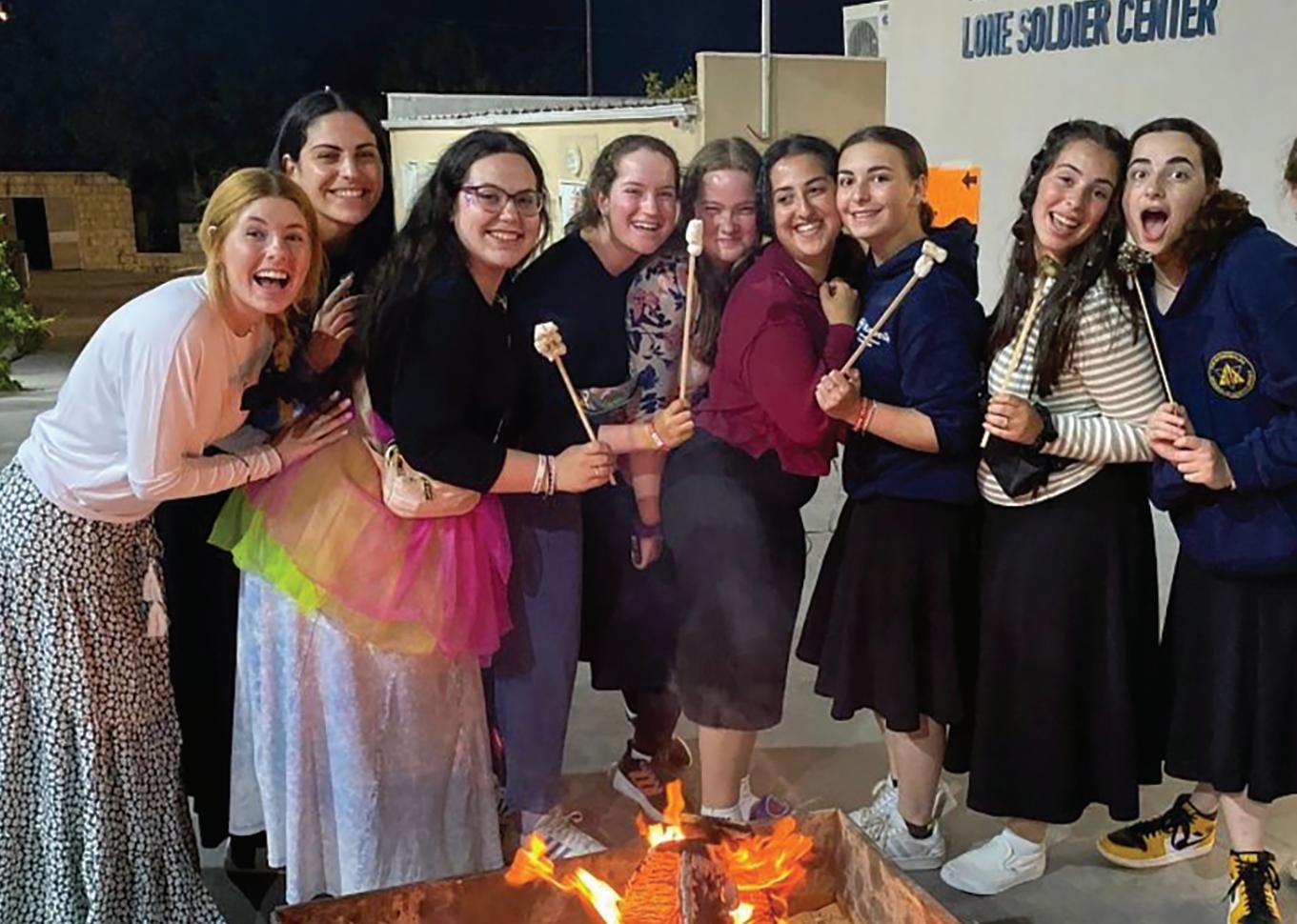
Michlelet took us all over Israel, includ-
ing the “Four Holy Cities” — Chevron, Tiveria, Yerushalaim, and Tzfat. Each place in Israel we visited was meaningful and fun. For the flight to Israel at the very beginning, most group flights landed in Israel around 3 p.m., and Michlelet took us straight to the Kotel (The Western Wall), which I was fortunate to be able to visit three times.
As someone truly connected with Israel, going to the Kotel for the first time was quite the emotional roller coaster. As soon as I got there, it was breathtaking, and just amazing that I was seeing the Kotel with my own eyes, and not through pictures. I was able to go up and daven (pray) while directly touching the Kotel. Tears came out of my eyes as I said Mincha at the Kotel for the first time ever.
A very special time for me on Michlelet was Shabbos. I spent two Shabboses on my campus; One was an “off Shabbos” spent with family friends, and one was in Tzfat with both campuses of Michlelet. A regular Shabbos on campus started out with Kabbalat shabbat (Friday night prayer), and followed by an assigned seating for Friday night dinner. For the girls who didn’t know other people, the assigned seating seemed like the best thing ever at the time — nobody had to feel left out. As Shabbos would slowly come to an end, everyone would take their chairs up to the roof, and have a kumzitz (sing) until the sun set. Shabbos was the time when people could bond without any electronics distracting them, and it was a time to really connect with Israel itself, and others around you.
There were multiple opportunities for sunrise hikes. Some had the option to wake up at 3:30 a.m. to take a two-hour
bus ride to Masada, and hike up in time for the sunrise. Others had an option to go sheep herding in Shiloh. I chose to hike up Masada. The view on the way up and at the top was spectacular. Once we got to the top, all the girls had some time to daven, and shortly after we were given a small rundown on the history of Masada. On the way back, we all stuffed into a cable car and rode our way down.
Out of all the trips and activities I had during the summer, my favorite was our overnight trip to Tiveria. We left our campus early in the morning, and once we got to Tiveria, the day was packed with lots of different activities. We started off with a water hike, and once everyone dried off, everyone was split into groups to go jeep-
ing. Little did I know that the group I had for my personal jeep, those people were going to be some of my greatest friends for the rest of my summer. Our jeep took us to our next activity — repelling. I was absolutely terrified, before, during and after, however I don’t regret doing it. The following day we went to the Kineret, and did different types of boating (banana and pancake boating). The trip finished off with an Israeli BBQ at a park on the way home.
Other than sightseeing and touring Israel, we also had multiple opportunities to do chesed (kindness) around the Land of Israel for different Jewish/Israeli organi-
TI offers teens creative Jewish learning program
BY RORY LUSTBERG SENIOR, LADUE HORTON WATKINS HIGH SCHOOL
The dreaded fall semester. For teens in high school, this time of year almost always means a plethora of after-school activities every day. Whether it’s sports practice, a special-interest club, or parttime job, teens are always busy.
As a result, religious education and enrichment can fall by the wayside. Temple Israel Rabbis (and husband-wife duo) Michael Alper and Amy Feder are aiming to change that with the creation of the synagogue’s Youth Leadership Program, which allows TI teens to interact in a religious setting through classes led by Jewish professionals.
Starting in October, TI is offering five three-week sessions throughout the 202324 school year, each with three electives from which teens in grades 8-12 can choose. Electives include Jewish theater, holiday cooking, kosher cooking, Jewish mural making, Comic Books and the Holocaust and more. Sessions run from 4:30 to 6 p.m., cost $100 and culminate with a pizza party.
“I know that many teens drop out of reli-
gious school after b’nai mitzvah, and while many of them stay around for confirmation in 10th grade, they are often not quite as engaged in the intermediate years,” Alper said. “A big part of that is that between academics, extracurriculars and social lives, kids are busier than ever, and if they’re going to participate in Jewish learning, it had to be creative, flexible and something they couldn’t experience anywhere else.”
Though Feder and Alper have had this idea for a few years, they got serious about planning at the beginning of 2023, with the help of Sidni Weglarz, director of Religious and Hebrew School at TI.
“We’re calling the sessions ‘minimesters’ because they’re three-week sessions, three Tuesdays in a row,” Weglarz said. “We thought it made sense to group things in small bites and let them pick.”
Alper said he and Feder wanted each mini-mester to offer something academic, something STEAM and something handson.
“But the cool thing is that pretty much all of the classes incorporate all of those things in different ways,” he said. “We hoped to engage kids with topics that were mature enough to acknowledge that they
can handle serious discussion, but fun enough to ensure that they wanted to come back each week.”
While she looks forward to the whole program, Feder has one specific class she can’t wait to observe.
“I am looking forward to seeing what Sarah Falkoff will do with Jewish Science; she’s a chemistry teacher at Clayton who is known for letting her students set her on fire the first day of class each year,” Feder
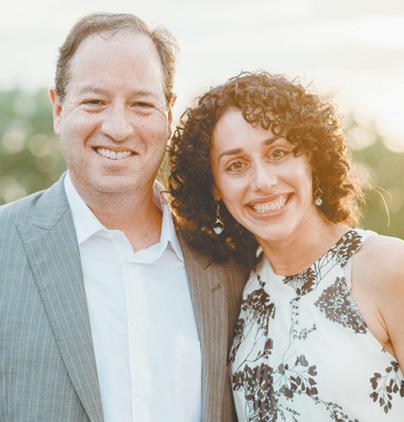
said. “While that will not be happening at TI, we’re pretty sure she’s got some other less flammable tricks up her sleeve.”
While the rabbis don’t have a set number of students they hope will sign up, they would like to see the program grow over time.
“We’re looking at this as a pilot year, and then we’ll see how it goes,” Alper said. “We truly have no idea how many students we could reach, but we’re at a point where we have b’nai mitzvahs nearly every Shabbat of the school year, so there’s a huge potential for keeping those students engaged beyond b’nai mitzvah.”
All in all, Alper’s biggest goal is giving kids a place to engage with Jewish peers without an obvious academic lens.
“We hope that this will be a low stress, low barrier way for kids to [have] Jewish informal education that isn’t about a life cycle or goal like b’nai mitzvah, or required by their parents, and will build connections in a different way than religious school may have when they were younger,” Alper said.
To sign up, or for more information, go to https://www.ti-stl.org/TIYuL or call or contact Weglarz at: sweglarz@ti-stl. org or 314-432-8076
Page 16 September 20, 2023 STL JEWISH LIGHT stljewishlight.org
See NCSY on page 22 2023-09-20 page 16-17.indd 16 9/19/23 5:02 PM
Rabbi Michael Alper and Rabbi Amy Feder of Temple Israel
BY DANIEL SHANKER, JUNIOR, EPSTEIN HEBREW ACADEMY/YESHIVAT KADIMAH HIGH SCHOOL
The Maccabi games in Fort Lauderdale, Fla., were consumed by heated competition. But don’t let that deceive you—no Jewish event would be complete without an opportunity to engage religiously, as well as competitively.
Rabbi Aharon Spielman of Chabad of Monterra introduced guests to the Judaica items at his table. “Over here, we have tefillin, we have charity, we have Shabbos candles for the women and girls. We have just an unbelievable opportunity for everybody to be able to do a mitzvah.”
Maccabi has literally thousands of young Jews in one place, ergo the obvious practical need for elaborate security measures. But Spielman and his wife, Elky, also saw the religious need for elaborate mitzvah measures; he estimates that the mitzvah corner inspired 750 tefillin donning’s over four days.
“There’s mitzvos that are waiting to happen,” Spielman said. “You’ve got Jewish teens from across the globe, from everywhere [at Maccabi]—and then some from even in my backyard. Some don’t even know what tefillin is. So, this is a real opportunity just to get them involved and to educate and give them a chance to do mitzvot.”
Many athletes at Maccabi are religiously uninvolved. Often, the mitzvah corner is someone’s first experience fulfilling the mitzvah of tefillin in a long time.
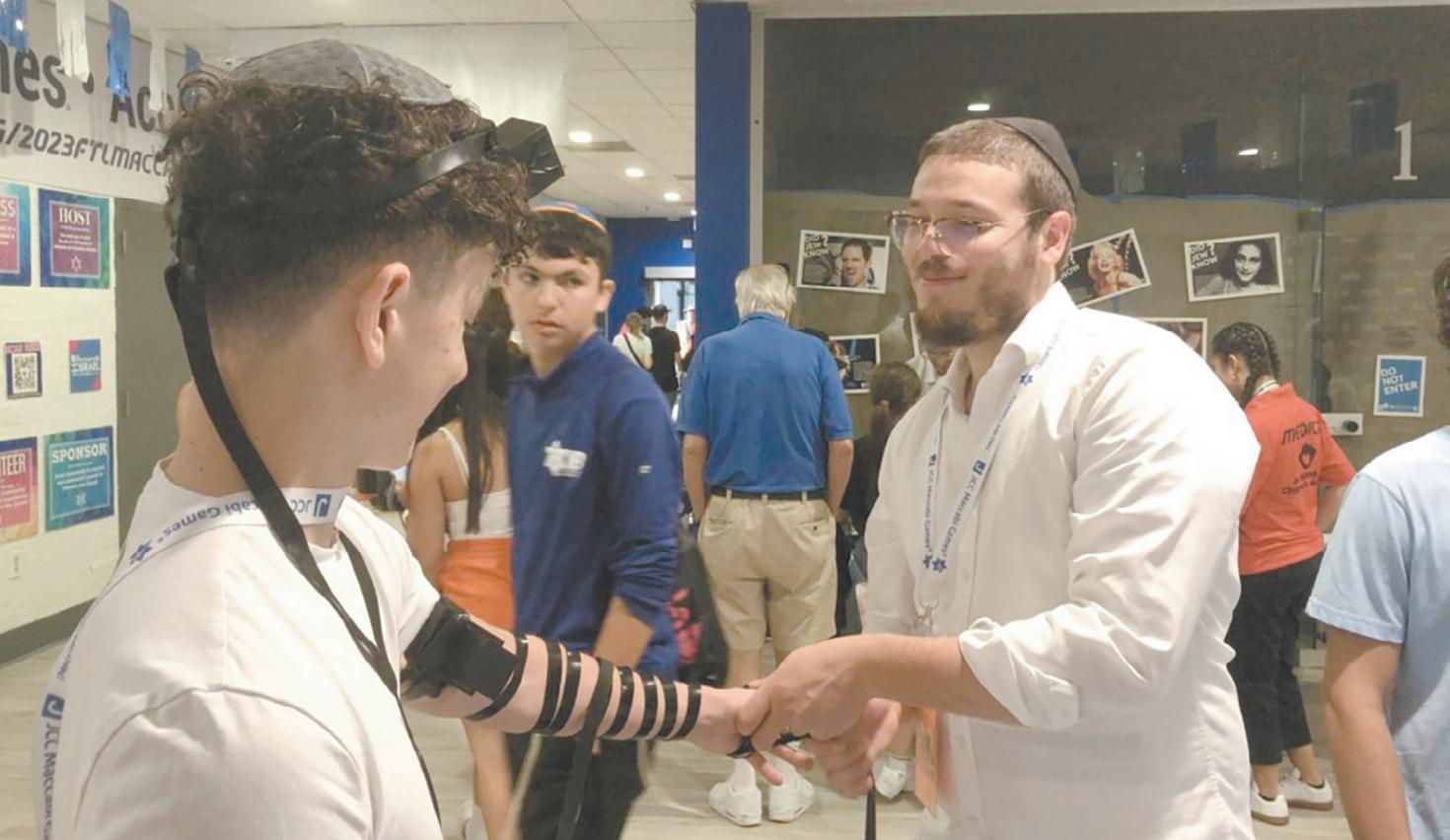
“We call it the ‘Jewish wrap,’” explained Spielman. “We put one [tefillin box] on the arm that connects to the heart, and we put one on the head that connects with our mind. Our physical temptations come from the heart, and our thoughts come from the brain. So,
we give everything over to Hashem, and we say a quick prayer, the Shema.”
When someone would come to the mitzvah corner seeking to put on tefillin, Spielman would help position the boxes and wrap the straps. Then the athlete would repeat the bracha over the tefillin word-by-word from Spielman, and could read a Shema card, with both Hebrew and transliteration.
Elky Spielman sought out mitzvah-doers as well, handing out Shabbos candles and assisting people in reciting the bracha of shehakol over a candy.
“Even though somebody is not religious, so to speak, any mitzvah that they do affects their soul, their neshama, forever,” Elky said. “Doing any mitzvah— smiling at someone, kissing a mezuzah.”
Some of these mitzvos are new concepts to the athletes. “We’re also bringing awareness to these mitzvos,” Elky continued. “Some of them never knew about making a bracha.”
As significant as these mitzvos are, Elky raised attention to something just as important for the mitzvah corner.
“[The teenagers] see someone coming
over to them and smiling and saying, ‘Hi, would you like to do a mitzvah?’” she said. “Every time they walk past us, we say hi. This is what teenagers nowadays need: personal connections.”
“What’s up, boys?” Spielman greeted a group of athletes heading to lunch. “Who’s ready for a quick tefillin?’
The Spielmans had a chart that tracked the number of people donning tefillin each day. The record was beaten every day, until 338 athletes fulfilled the mitzvah on day four of Maccabi.
“Our goal is to get as many Jewish kids to do even just one mitzvah. A lot of them [are doing] this for the first time, [which] makes it even more special,” Elky said. “Hopefully it will be a domino effect, and the next week they will do it again, or they will Google the mitzvah and they’ll learn more about it.”
“The fact is, we’re all thirsty for some meaning. It’s good to play sports, it’s healthy [and] they’re having a great time. But we’ve got to feed the neshama as well,” Spielman added. “Men, women, children—whoever’s here, there’s a mitzvah for everybody.”
Skating her own path, Dahlia Goldstein hit the ice at Maccabi ’23 in Florida
DANIEL SHANKER JUNIOR, EPSTEIN HEBREW ACADEMY YESHIVAT KADIMAH HIGH SCHOOL
The Maccabi games: the international Jewish teen sporting event, with dozens of delegations from across the globe. Thousands of athletes and coaches convened August 6-11 at the David Posnack JCC in Fort Lauderdale, Fla., where temperatures reached the 90s, and the intensity even higher.
But for all the fanfare and amenities, the one thing Maccabi didn’t have is a girl’s hockey team. And that posed a problem for St. Louis hockey player Dahlia Goldstein, a member of Congregation B’nai Amoona and rising eighth grader at Parkway Central Middle School.

There was only one way to solve this problem.
“The head of my delegation called me and said, ‘We would love to have you as the only girl on our hockey team,’” Dahlia said. “I was thinking about it for a long time, and then I said yes.”
When Dahlia entered the rink for the first time, her new team had mixed reactions.
“I guess you could say they were skeptical,” Dahlia said. “Some of them didn’t really talk to me and were like, ‘Oh, she’s a girl, she can’t play,” but some of them were very nice and welcoming.”
Traveling through Israel is highlight of Maccabi
BY NATHAN ARST SENIOR, PARKWAY CENTRAL HIGH SCHOOL
As a 16-year-old, I competed in the Maccabi Games in San Diego in 2022 with the understanding that it would be my last year. But when I heard that Maccabi would be extended to include 17-year-olds in Israel, I instantly knew I wanted to go. In fact, practically my first words as I stepped off the plane after returning from San Diego were pleas to my parents to allow me to participate in Israel this year. So as you can imagine, my trip to Israel this year was the highlight of my summer. Competing and touring in the Jewish homeland impacted me in ways I didn’t think possible.
The most compelling part of my trip was undoubtedly the Western Wall. To come face-to-face with such an ancient and prestigious part of Judaism was extremely powerful. After all, witnessing any religious site that has stood strong for thousands of years would be impressive. Once I realized I was seeing what my ancestors saw many generations ago made it even more astounding.
Dahlia, who plays locally for the Lady Cyclones in St. Louis, will have a huge leg up after experiencing Maccabi, and having played in an all-boys league.
“She played against kids from Toronto that have already been signed by the OHL (Ontario Hockey League),” said Goldstein, who was cheering her daughter on at the games. “She has evaluations for her team (the Cyclones) in the fall, and I think she’s going to realize that she’s way better than she thought she was.”
The St. Louis Maccabi delegation’s hockey coach, Jared Busch, who is a Shaare Emeth congregant and Marquette graduate, said, “[Dahlia’s] getting to play against some of these guys who play at [very high levels]. It’s great for her to have some skilled players around her, and she’s definitely getting better. She’s been great out there.”
When I stepped up to the wall, everything became quiet despite all the noise surrounding me. As I put a handwritten note in a crevice in the wall, prayed and reflected on my life, my mind was perfectly clear. This was a special experience that I’ll never forget.
Another incredible part of my journey was climbing Masada. We “slept” in Bedouin tents (though we were woken up around 4 a.m. and didn’t sleep much before). Then, early that morning, we began a steep hike up Masada. There were constant complaints of hunger and exhaustion, but it all ceased when we arrived at the top. Everyone paused at the sight of the breathtaking sunrise. With a camel ride the day before and floating in the Dead Sea later that day—plus, of course, the actual hike up Masada--it was safe to say our entire time spent in the desert those couple days was nonstop fun.
Dahlia’s mom, Traci Goldstein, was thrilled at this opportunity.
“My initial reaction was excitement for her because she’s only played on girls’ teams,” Goldstein said. “I think as she shows she wants to mature in the sport, she’s going to need to play with boys more often.”
“You get really nervous on the ice, [worrying about] how the guys will think of you and stuff, and I try to prove myself,” Dahlia added. “I just hope I get better and more confident with playing hockey.”
Busch understands the impact a Maccabi experience can have on an athlete like Dahlia.
“Going back to St. Louis, when she starts playing on her club team again, she’ll be used to the faster pace,” he said. “That’s something that in the long run will really benefit her.”
Dahlia also sees the strengths that she’s developing at Maccabi.
“These guys are much faster than me, so I think it’s going to help me get faster in my game,” she said.
To round out my top three moments of the trip, the sports competition takes the third spot. Last year I said that Maccabi was where I had the most fun playing baseball. I didn’t see how it could be possible top that, but I did.
My team didn’t win a single game, and proudly claimed last place in the tournament. But if there was a trophy for the most fun team, it would’ve been handed to us instantly. We wore bucket hats instead of baseball caps, rolled up our sleeves to
September 20, 2023 Page 17 stljewishlight.org STL JEWISH LIGHT OHR CHADASH TEEN PAGE
‘Mitzvah stands’ provided inspiration for Maccabi athletes, but what are they?
Nathan Arst at the Western Wall in Jerusalem.
See ISRAEL on page 22 2023-09-20 page 16-17.indd 17 9/19/23 5:02 PM
Dahlia Goldstein
NICKRENT-GALLUP ENGAGEMENT
Annie Nickrent and Sam Gallup have announced their engagement.

Annie is the daughter of Ellen and Robert Nickrent Jr. of Edwardsville, the granddaughter of Anita Brown and the late Daniel Brown of St. Louis and the late Aurelia and Robert Nickrent Sr. of St. Louis.
Sam is the son of Kristi Meyers Gallup and Ted Gallup of St. Louis and the grandson of Susan Meyers of Carmel, Ind. and the late Stephen Meyers and Ruth Gallup and the late Allan Gallup of St. Louis.
The bride-to-be attended Truman State University, where she graduated with a Bachelor of Arts in history. She is currently the assistant director of stewardship for the College of Arts & Sciences at Washington University.
The groom-to-be also attended Truman State University, where he graduated with a Bachelor of Science in accountancy. He is currently a financial advisor at Renaissance Financial.
Despite Truman’s small campus, and both spending four years as students at the same time, the couple did not meet until they were introduced by a mutual friend in 2021.
An April 2024 wedding is planned in Edwardsville and the couple will continue to reside in St. Louis.
SCHRAIERS CELEBRATE 75TH ANNIVERSARY
Milton and Marilyn (Schwartz) Schraier of Clayton are celebrating their 75th wedding anniversary.
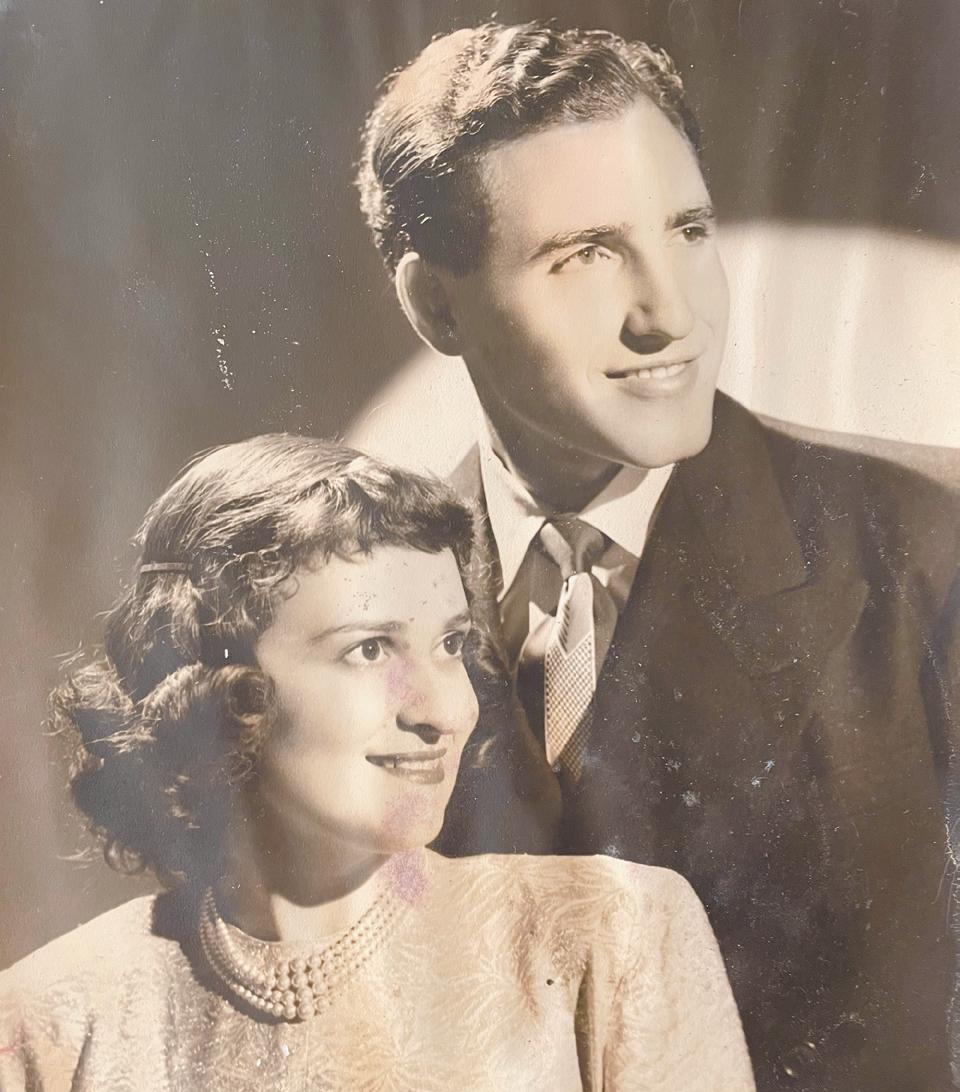
From the day they met they have enjoyed every moment of each other’s company. Their love for each other has only grown and they serve as role models for their children, grandchildren and great-grandchildren. They are loved by all who know them. May they continue to enjoy all the blessings life has given them.
Tyler Henry Lourie, son of Marci and Eddie Lourie of Chesterfield, became a bar mitzvah on Sept. 2, 2023 at United Hebrew Congregation.
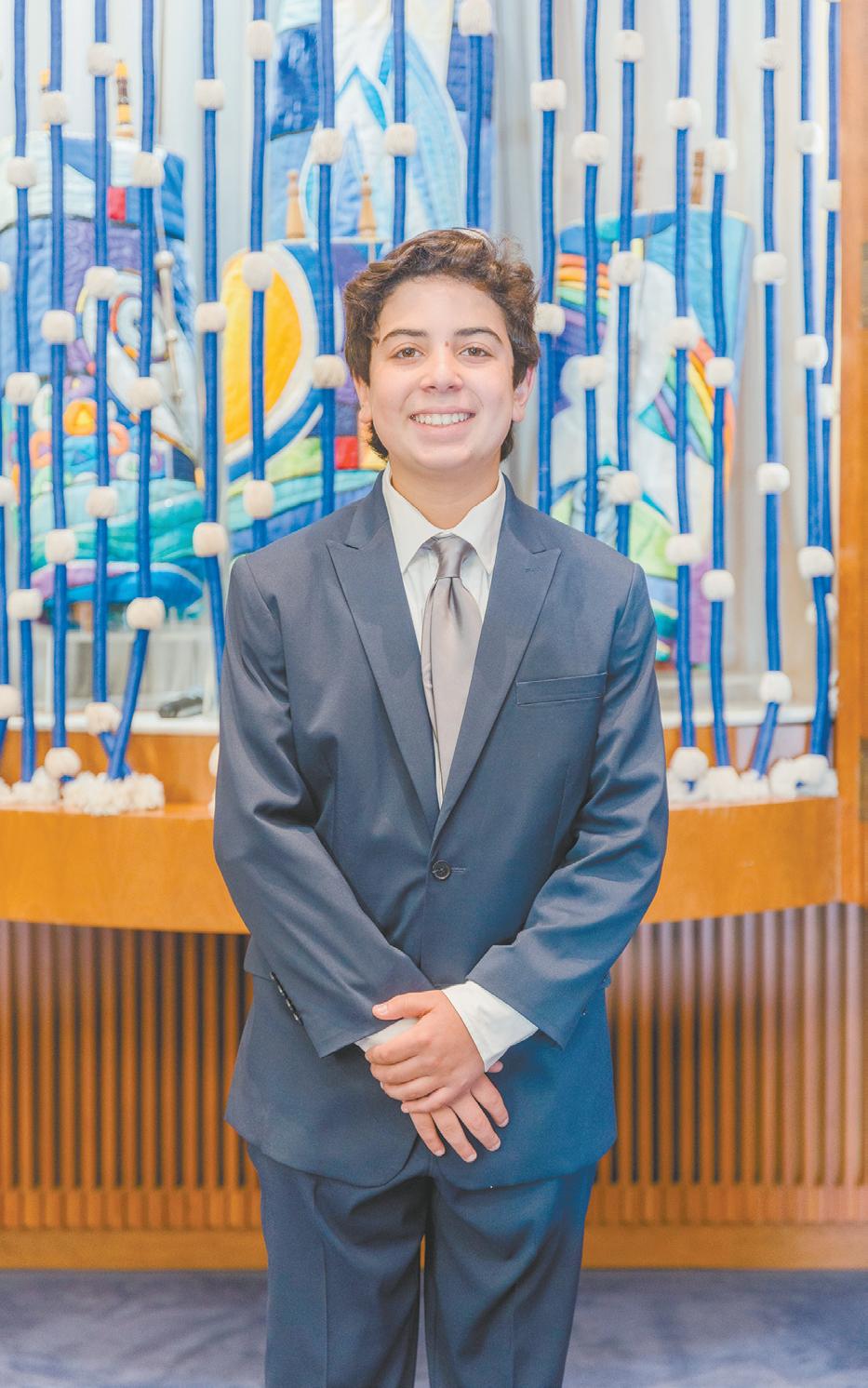
Tyler is the grandson of Ellen and Steve Lourie, and Sherri and Bob Daniel, all of Chesterfield. He is the great-grandson of Roz Libanoff and Ruth Satz, both of St. Louis. Tyler has one sibling, Zoe, who is 10 years old.
A seventh-grade student at Parkway Central Middle School, Tyler enjoys playing baseball and basketball, watching and attending sporting events, and hanging out with friends.
Ella Hope Sabin, daughter of Jennifer and Brian Sabin of St. Louis, became a bat mitzvah Sept. 2, 2023 at Congregation Shaare Emeth.
Ella is the granddaughter of Joanie and Terry Brimer, and Ellen and Bruce Sabin, all of St. Louis. She is the great-granddaughter of Elaine and Ronald Brimer, Esther and Daniel Sabin, Rosalie and David Samuels, and Annette and Harry Weinberg, all of blessed memory. Ella has one sibling, Olivia Sabin, who is 10 years old.
A seventh-grade student at Ladue Middle School, Ella chose to support Haven House St. Louis for her mitzvah project. She purchased items from their wish list and assembled and delivered welcome bags for patients and their guests to make their stay a little more comfortable. Ella enjoys playing tennis, field hockey and ping pong. She loves to travel, and especially enjoys spending time at the beach. This past summer, Ella attended Camp Sabra and was a counselor in training at Camp Shook.
Benjamin “Benny” Abraham will become a bar mitzvah Saturday, Sept. 30, 2023.


When he is not playing on the baseball, basketball and soccer teams, Benny is a proud seventh grader at Saul Mirowitz Jewish Community School. Additionally, Benny plays on the Wildcats Chesterfield gold level baseball team. He also plays the drums in the Mirowitz band and is currently a member of the robotics team. Benny also blows the shofar in Elul during the daily minyan at both B’nai Amoona and Mirowitz on a regular basis.
Benny is an avid sports card enthusiast and aggressive autograph and selfie collector, fantasy sports player, bracketologist, chef in the kitchen, and he enjoys leading prayers (davening) at both B’nai Amoona and Mirowitz.
Benny just completed his fourth summer at Camp Ramot Amoona. This past summer he really enjoyed and excelled as a counselor in training. He helped in many different areas, particularly leading morning tefillah and supporting Jewish cooking. In 2023 Benny also played baseball for the St. Louis
Maccabi delegation in Ft. Lauderdale as the second baseman on the 14U baseball team.
Benny lovingly volunteered at TASK (Team Activities for Special Kids) where he played baseball and helped with pitching and batting practice for preteens and adults with special needs. He is also collecting gently used baseball equipment to donate to Pitch In For Baseball, an organization that helps children in lower socioeconomic areas obtain equipment to play baseball.
Benny is the son of Rabbi Jeffrey and Lauren Abraham, brother of Henry and Joey Abraham. He is the grandson of Beverly (z”l) and Jackson Salasky and Malka and Bill Abraham of Tucson, Ariz. Benny was born in New York City, but loves being a resident of St. Louis. He has adopted the St. Louis Cardinals as his second favorite baseball team after the New York Yankees. Six years in Texas cemented his passion for the Dallas Cowboys and Texas Longhorns.
Page 18 September 20, 2023 STL JEWISH LIGHT stljewishlight.org
GENEROUSLY SUPPORTED BY at stljewishlight.org/simchas
YOUR SIMCHA ANNOUNCEMENT FOR FREE!
SIMCHAS BIRTHS ENGAGEMENTS WEDDINGS MITZVOT
SUBMIT
HKF Harvey Kornblum Foundation
BAR MITZVAH: BENJAMIN “BENNY” ABRAHAM
BAR MITZVAH: TYLER HENRY LOURIE
BAT MITZVAH: ELLA HOPE SABIN
PHOTO COURTESY OF SPOONFUL OF SUGAR PHOTOGRAPHY
PHOTO COURTESY OF DEE KEIM PHOTOGRAPHY
PHOTO COURTESY OF SPOONFUL OF SUGAR PHOTOGRAPHY
2023-09-20 page 18-19.indd 18 9/19/23 5:28 PM
FURFINES CELEBRATE 65TH ANNIVERSARY
Carolyn and Chuck Furfine celebrated their 65th wedding anniversary on Aug. 4. They were accompanied by their son, Earl, grandson, Ben, nieces, grandnephew and friends. The Furfines’ festivities began at the Shabbat service at Congregation Temple Israel. Rabbi Amy Feder and Rabbi Michael Alper gave a special blessing to Carolyn and Chuck during the service. Following the service, the group continued their celebration at Napoli 2 for a private dinner.
SIMCHAS
REICHMANS CELEBRATE 60TH ANNIVERSARY
The Furfines maintain an active schedule. Chuck enjoys tennis twice a week, participates in personal training on two other days and works out with Carolyn. She continues to serve as the community representative to the BarnesJewish Hospital Grievance Committee as well as volunteers with other activities. They both also enjoy reading, gardening and playing cards with friends. Both still love traveling, especially cruising.
TRIBUTES
To make a tribute, visit stljewishlight.org/tribute
IN HONOR OF
DR. & MRS. IRA KODNER
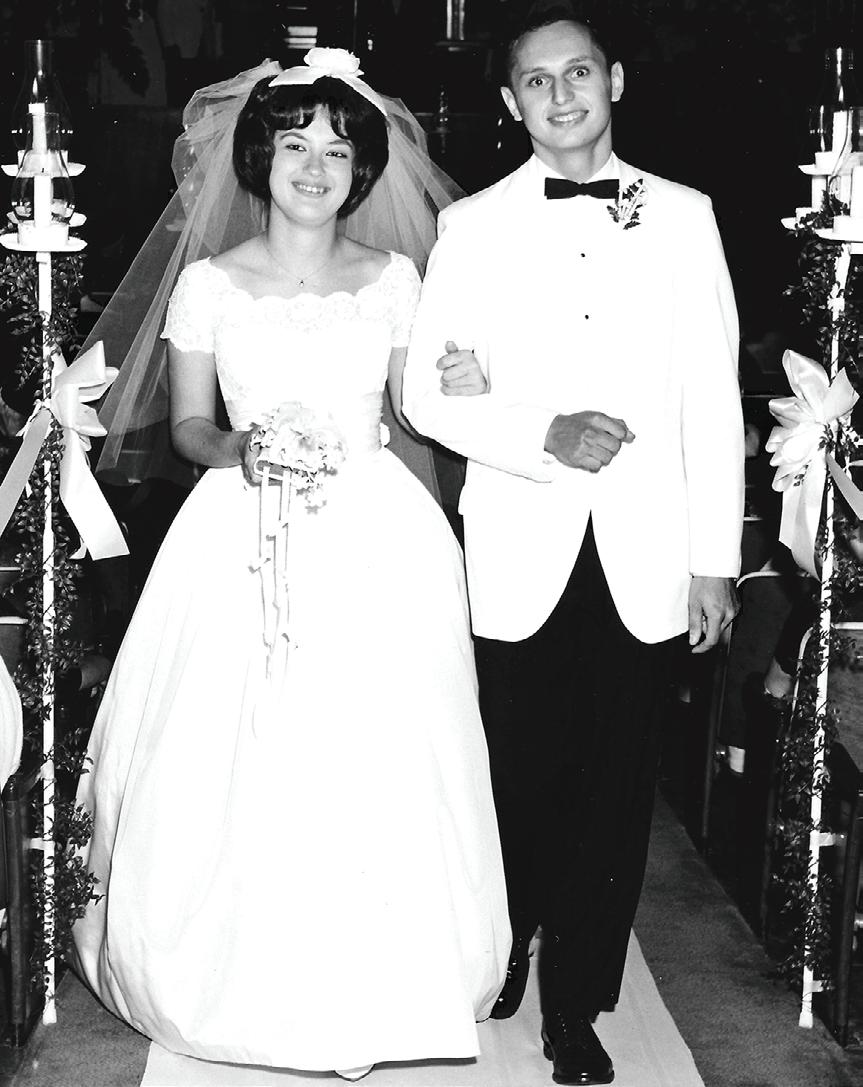
A special tribute to both of you on your 60th Anniversary.
— Susan & Guy Wolff
JEWISH LITE
JEWISH CROSSWORD PUZZLE — YOM KIPPUR EDITION
By Yoni Glatt,
Across
1. Starting point, as for a discussion
6. Baba of note
10. They can take up a good deal of your memory
14. “Kiss From ___”
15. Claimed in court
16. Ostrich cousin
17. Babe Ruth bunting to advance a runner...or part of the Yom Kippur service, once?
20. High Priest with troublesome sons
21. Stark metal
22. Small weight
23. (Yom Kippur) service
26. Made like a lion looking for a meal (not a minyan)
27. Apt Nirvana anthem for Yom Kippur?
30. Herman Wouk’s
mutinied ship
31. GPS fig.
32. Word after booking or agent
35. Bygone Jews whose general lifestyle was Yom Kippuresque
38. Items needed for Yom Kippur
41. “Daysleeper” band
42. You row with it
44. He directed “Groundhog Day”
45. Act of a protesting prisoner or one saying Vidui?
49. School break
52. Theodor who might get grinchy if he fasted on Yom Kippur
53. Six-time NBA AllStar who keeps Shabbos, familiarly
54. What the suspicious smell
55. Trap
58. The High Priest on Yom Kippur or what some plays have several of
62. Like a Broadway show
63. “Moneyball” star
64. Talks like a drunk, perhaps
65. Snow mobile?
66. Danny’s ex in “Ocean’s Eleven”
67. Some Jews curl them
Down
1. Kind of ball
2. Favorite Asian sea of crosswords
3. Ideology for most Kibbutzim, once
4. Where Kibbutzim are found: Abbr.
5. Half a dozen, in Rome
6. Notebook type
Eunice and John Reichman of Chesterfield recently celebrated their 60th wedding anniversary.
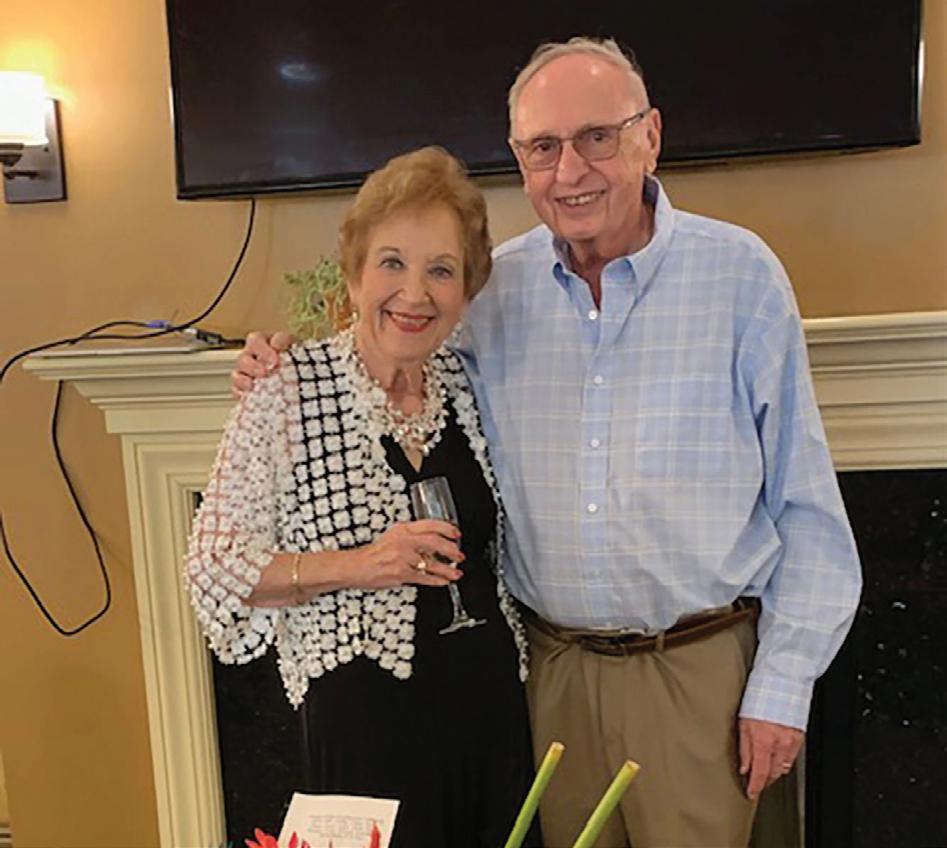
Eunice Stoliar met John Reichman at University City High School in 1958 in Spanish class. They were married on Labor Day 1963 at Congregation B’nai Amoona.
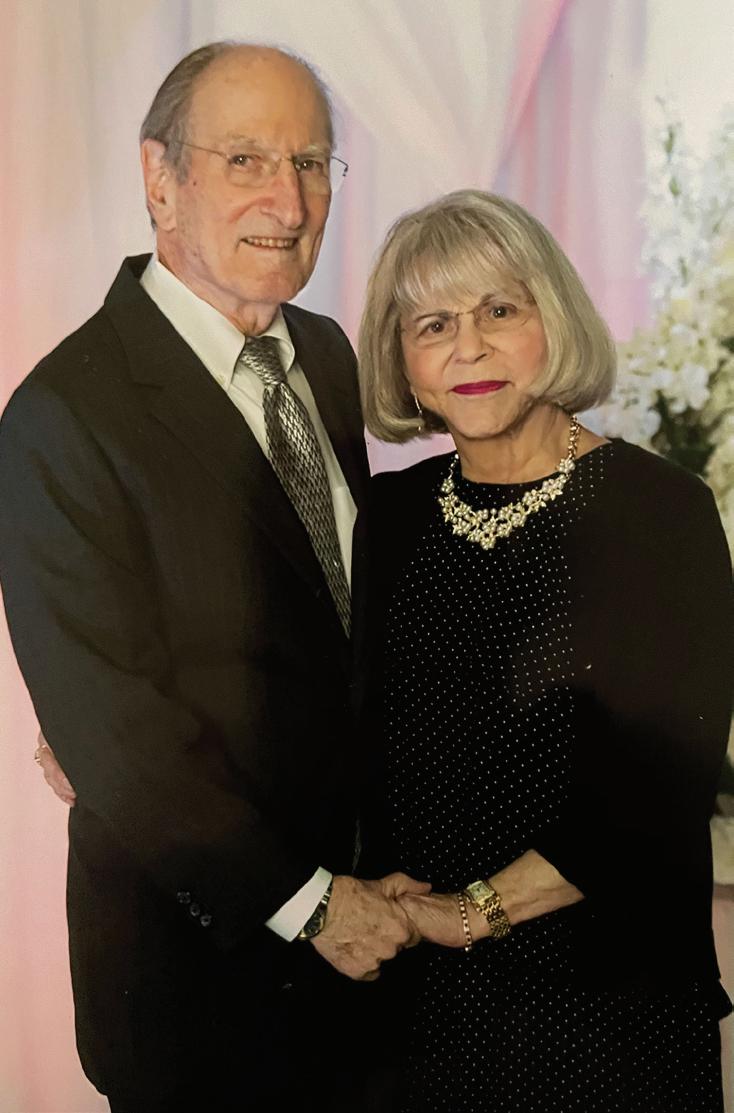
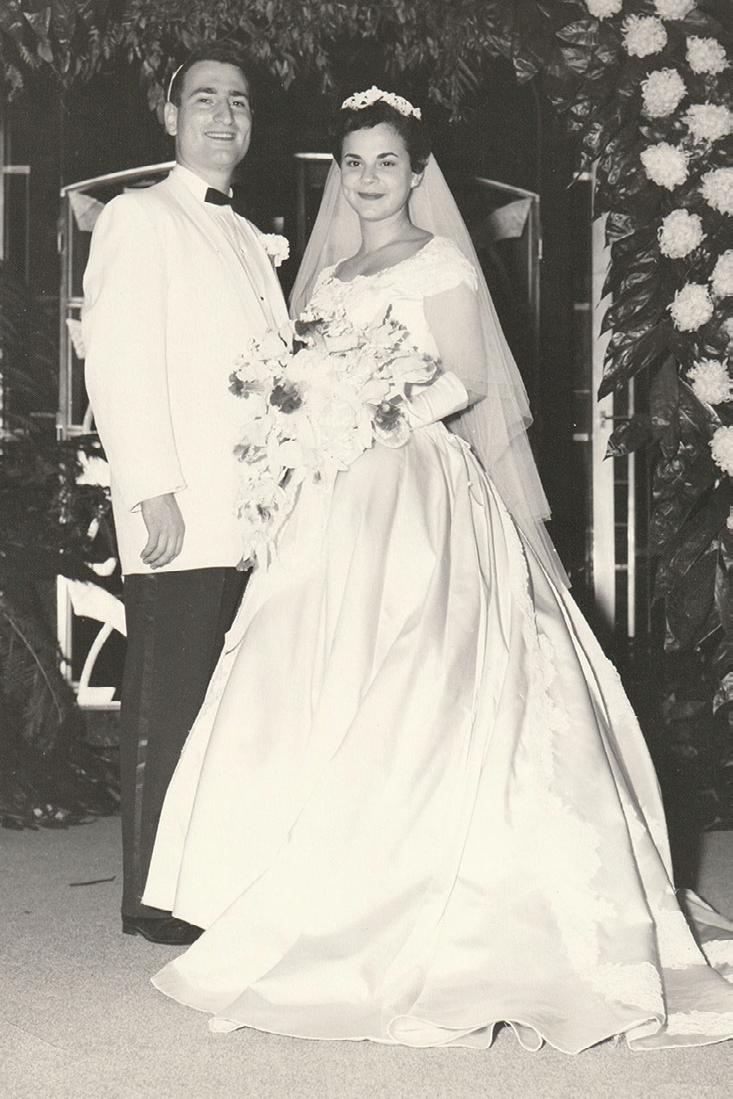
They celebrated their 60th anniversary by inviting only guests who attended their wedding to a wedding reunion. Those attending the party included the ring-bearer, a bridesmaid, several groomsmen, family and friends. A bride and groom trivia contest encouraged guests to reminisce about the early days of 1950s and ’60s, followed by a wedding slide show. It was truly a milestone celebration.
Eunice and John are planning a trip to New York City in October with their children, to continue the celebration and also to commemorate Eunice’s special birthday.
IN MEMORY OF
JACK DICKER
In memory of my father, Jack Dicker.
— Dr. Marc Dicker
IN MEMORY OF
RON SCHUFF
In Loving Memory of Ron Schuff, a True Mensch.
— Susan Plattner
7. What you can’t have on Yom Kippur, but might very well have on Purim
8. Read Torah
9. Gilbert and Sullivan princess
10. Squabbles
11. Fake
12. Quiet’s companion
13. What you might be spiritually, but not digestively, at the end of Yom Kippur
18. Spot’s friend, perhaps
19. Some midrashim
24. Barn appendage
25. French or Australian
26. Heart of the matter
27. Computer brand
28. Perform eye surgery on, maybe
29. Need on a road trip
32. Boorish cartoon where four of the five
main characters are actually Jewish
33. “Red” norseman
34. Latin palindrome
36. Quite a while
37. Group not working at the moment
39. Picnic scraps
40. Cash for a cab, say
43. You may try to
mend them before Yom Kippur
45. Managed, as sheep
46. Friendly lead in?
47. Changes chemically
48. Darth Sidious, e.g.
49. Singer Lou
50. Spam source
51. Do come slicing
54. “Million Dollar ___”
(2006 “Simpsons” episode featuring Homer’s dad)
56. Dynamic lead-in
57. “Yo, over here”
59. Choose
60. Killer of Cleopatra
61. Atl. Braves’ division
September 20, 2023 Page 19 stljewishlight.org STL JEWISH LIGHT
1 2 3 4 5 6 7 8 9 10 11 12 13 14 15 16 17 18 19 20 21 22 23 24 25 26 27 28 29 30 31 32 33 34 35 36 37 38 39 40 41 42 43 44 45 46 47 48 49 50 51 52 53 54 55 56 57 58 59 60 61 62 63 64 65 66 67
2023-09-20 page 18-19.indd 19 9/19/23 5:02 PM
koshercrosswords@gmail.com | ‘Yom Kippur Matters’ Difficulty: Medium Find answers to this puzzle online at https://bit.ly/0920-crossword
OBITUARIES
SAMUEL BERNSTEIN, PHD, February 1, 1928
– September 16, 2023
Beloved father of Lee (Elise) Bernstein, Mark (Barbara) Bernstein, and Bruce (Jill) Bernstein; brother of Dolores (Saul) Davis; grandfather of Rachel (Sam) Kallison, Daniel (Emily) Bernstein, Elissa (Josh) Bernstein Usem, Stacy Bernstein, Jordan Bernstein, and Scott (Rachael) Bernstein; great grandfather of Jonah Kallison, Brandon Kallison, Lena Bernstein, and Ari Bernstein; stepfather of Carole Goodman and Kaywin Goodman. Preceded in death by Ruth Lebowitz Bernstein, Ellen Goodman Bernstein, and Barbara Rosenberg Bernstein.
Sam was born and raised in Pittsburgh, PA, lived briefly in Chicago, and moved to Saint Louis in 1960. He served both in the Marine Corps and in the Army Reserves. He earned his bachelor degree from the University of Pittsburgh and his PhD from Southern Illinois University. He spent his career working as an executive administrator for not-for-profit social service organizations including B’nai Brith, Jewish Employment & Vocational Service, the Human Development Corporation, the St. Louis County Juvenile Court, and Metropolitan Employment and Rehabilitation Services. Later in his career he worked as a vocational expert witness.
Sam was gregarious and held friendships with many (including those whose politics were opposite of his); he was a regular for many years at a Saturday morning gathering in Bonita Springs, Florida. In his youth he was an avid runner competing in multiple marathons.
To his last days, Sam remained positive and responded to most inquiries with “I’m OK”. He never wanted to be a burden.
He will be missed by his family and friends.
Semper Fi!
A celebration of Sam’s life will be held at a future date. Tribute donations should be directed to Goodwill/MERS or the Urban League
NEAL BIERNBAUM, Sept. 2, 2023 (1955-2023)
Beloved husband of Patricia Biernbaum.
Dear father and father-in-law of Matthew Biernbaum, Meredith Buxman (Scott), Daniel Dowling, David Dowling (Dana). Loving grandfather of Owen, Madelyn, Tessa Buxman, Daniel Jr Dowling, Anna Dowling.
Dear son of the late Max and Harriet Biernbaum. Dear brother of Richard Biernbaum (Cindy Newman). Dear brother of Andrea Rothman (Arnold). Beloved nephew, uncle, cousin and friend to so many.
ROSALIE BRASCH, September 4, 2023
It is with great sadness that we announce the passing of Rosalie Brasch on September 4, 2023 at home with family.
Rosalie was born on January 31, 1930, in St. Louis, the youngest child of three. Her parents were Meyer and Etta Klayman, and her siblings were Lois and Martin. She was the adored little sister and everyone called her “Tootsie”. Their home was full of family – her uncles lived with them and they hosted a teenage Polish refugee during the war.
Rosalie married David Gers on November 27, 1949, and remained so until his untimely death in 1964. They had two daughters, Ivy and Hollie. As a young widow, single mother and breadwinner Rosalie completed her bachelor’s degree in Early Education at UMSL while working as a private secretary.
Rosalie was re-married on September 4, 1968, to Jerome Brasch, who pre-deceased her in 2020. Rosalie gave much of her time to not-forprofit organizations including:
Channel 9, St. Louis Public Radio, Reading is Fundamental, Shriner’s Hospital, OASIS, The JCA, Jewish Federation, The Brodsky Library, The St. Louis Holocaust Museum, MO History Museum, United Hebrew Congregation, The Jewish Book Festival, St. Louis County Juvenile Detention Advocacy, Bnai Brith, Hadassah, Craig
School and Delmar Harvard School. The rest of her time was devoted to her family and friends.
She is survived by daughters Ivy Gers Chrisler and Hollie Smith (Michael), grandchildren Courtney Chrisler (Steve Malter), Erin Chrisler Bonner (Nathaniel), Joshua Chrisler, Ariel Furst (Tim Mui), David Furst (Sami) and Elliott Chrisler, and great-granddaughter Anya Furst. A graveside service was held Sunday September 10 at Beth Hamedrosh Hagodol Cemetery, 9125 Ladue Rd. 63124. Memorial contributions preferred to a charity of your choice. Visit www.bergermemorialchapel.com for more information. Berger Memorial Service
DENNIS E. COHEN, September 17, 2023
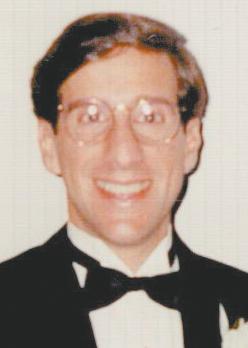
Beloved husband of the late Sharon Cohen; dear father and father-in-law of the late Todd Cohen, Lindsay Cohen (David) Schneider and Chad (Bridget) Cohen; dear grandfather of Charlotte Cohen and Gabrielle Schneider; brother and brother-in-law of Marlene (Sheldon) Kane, Lorie Jacobson and Stuart (Marcia) Shanker; Special companion to Beverlee Slaton.
Funeral service
Thursday, September 21, 11 AM at United Hebrew Congregation. 13788 Conway Rd. 63141. Visitation from 10:30 until the time of the service. Interment follows at Chesed Shel Emeth Cemetery, 650 White Rd. Memorial contributions preferred to the Jewish War Veterans Heritage Post 644 Chuck Sandroff Scholarship Fund (jwvstl.org) or a charity of your choice. Visit www.bergermemorialchapel.com for more information. Berger Memorial Service
SHELDON MARTIN ENGER passed away on September 16, 2023.
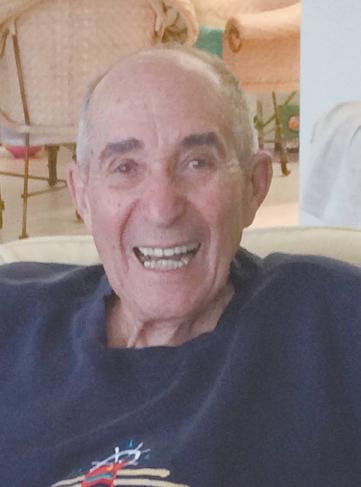
Survived by his beloved wife, Rochelle (Sheinbein) Enger; children Rabbi Cindy Enger, Marc (Jenny) Enger, and Dr. Kevin (Nancy) Enger. Loving grandfather of Jack and Elijah Enger and Amanda, Ashley, and Anna Enger. Brother of Joyce Fauser and Carol (Bruce) Canis. Brotherin-law of Sharon Kirsch (Ed Rosen) and Gary (Karen) Sheinbein. Dear uncle, cousin, friend and teacher of many.
Sheldon was preceded in death by his dear parents, Harry and Ruth Enger.
A funeral service was held Tuesday, September 19 at Congregation B’nai Amoona, 324 S. Mason Road, followed by interment at Chesed Shel Emeth Cemetery, 650 White Road, Chesterfield. Donations may be made to the Jake and Edith Sheinbein Torah Care Fund at Congregation B’nai Amoona or the Harvey Kornblum Jewish Food Pantry. Please visit www. bergermemorialchapel.com for more information. Berger Memorial Service
With the sounding of the Shofar, the High Holy Days are upon us. May your heart and mind fill with the joyful possibilities of the coming year as you gather with family and friends to celebrate our most sacred of holidays.

SUBMITTING AN OBITUARY
BRUCE K. GLATTER passed away on Thursday, August 3, 2023 at his residence in St. Louis, Missouri at the age of 70 years, 3 months, and 20 days.
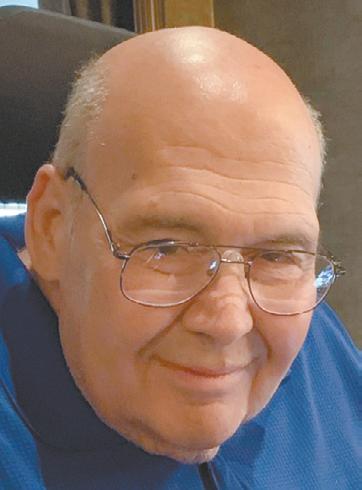
Bruce was born on April 14, 1953 in New York, New York to Bette Ann Glatter (nee Kahn) and the late Franklin Glatter. He is also preceded in death by his brother, Paul Glatter and stepdaughter, Kate Kromann.
Along with his mother, Bruce is survived by his loving husband of 32 years, Robert Germain; siblings: David Glatter and Robert (Jan) Glatter; sister-in-law, Petra Glatter; grandchildren: Ellie Kromann and Sam Kromann; and parents to his grandchildren: Ryan and Jennifer Kromann.
Bruce was also a loving uncle to Kristy (Pete) Gallup, Hayley Glatter, James Glatter, Aliza Glatter, Steven Glatter, and Aaron Glatter; and a cherished friend to many.
A memorial service will be held at 1:45 p.m. on Saturday, September 30, 2023 in the Colonnade Room at The Gatesworth, One McKnight Place, St. Louis, Missouri 63124.
In lieu of flowers, the family asks you to consider making a donation in Bruce’s name to the St. Louis Area Foodbank or the St. Louis Jewish Book Festival Aquamation Services provided by Hughes Funeral Alternatives in St. Louis, Missouri. Friends and family can sign an online guestbook at www.HughesFuneralAlternatives.com
SANDRA M GREENBERG, September 14, 2023
Beloved wife of the late Lawrence H. Greenberg; survived by Ted Greenberg (Laura) and Amy Nelson; dear grandmother of David Greenberg (Aysylu), Michael Greenberg, and Samuel Nelson; sister-in-law of Robert and Maureen Greenberg, Ronald and Jan Greenberg, and Elaine and Harold Blatt; dear aunt, cousin, and friend.
A funeral service was held Sunday, September 17 at the Mausoleum at New Mt. Sinai Cemetery, 8430 Gravois. Memorial contributions preferred to the St. Louis Zoo, the Siteman Cancer Center, or the charity of your choice. Please visit bergermemorialchapel.com for more information. Berger Memorial Service
FLORANN RICKENSOHL KESSELL, September 8, 2023
Beloved wife of the late Edward Kessell for 46 years. Dear mother of Michael Kessell, Steve (Carol) Kessell and Geoff (John Rutledge) Kessell. Special friend and companion of the late Frank Reynard. Beloved sister-in-law of Sue Kessell and Barry (the late Linda) Kessell. Dear aunt, cousin, friend, grandma, and greatgrandma.
A funeral service was held Tuesday, September 12 at Congregation Shaare Emeth, 11645 Ladue Road, with interment to follow at Beth Hamedrosh Hagodol Cemetery, 9125 Ladue Road. Service will be available via livestream. Please visit www.rindskopfroth. com for more information. Contributions in her memory may be made to the Humane Society, 1201 Macklind Ave., St. Louis, MO, 63110.
A Rindskopf-Roth Service
Obituaries continue on opposite page
Families may submit an obituary for a loved one through the funeral home they work with or by using a form on the Jewish Light’s website: stljewishlight.org/submit-obituary
Page 20 September 20, 2023 STL JEWISH LIGHT stljewishlight.org
OBITUARY NOTICES UPDATED DAILY AT STLJEWISHLIGHT.ORG/OBITUARIES
314-361-0622 BergerMemorialChapel.com BERGER Memorial Chapel ST. LOUIS Wishing you peace and happiness for the new year. Richard
2023-09-20 page 20-21.indd 20 9/19/23 5:02 PM
L’Shanah Tovah
W. Stein & Emily Stein MacDonald 9430 Olive Boulevard, St. Louis, MO 63132
HENRY PERRY MENTLE died on September 3, 2023 in Boca Raton, Florida.
Henry was born in 1949 to Edith and Philip Mentle and grew up in Bronx, NY. He was a diehard Yankees fan and grew up near Yankee Stadium. Henry studied Aerospace Engineering at Polytechnic University in New York City. He earned additional master’s degrees in industrial engineering and business administration and worked his entire career for Proctor & Gamble.
Henry met his loving wife, Jane, on a plane to Acapulco and they were married one year later in December 1977. Henry and his family lived briefly in Scranton, Pennsylvania before moving to Cincinnati, Ohio in 1985. As a father, he always made time for his children. He was a teacher, friend, coach, and confidant to his two children Robbie (Jenny) and Josh (Kynley).
Henry was a loving grandfather to his three grandchildren: Audrey (16), Charlie (14) and Avery (7). Henry was very handy and taught his children how to fix all kinds of things. He valued self-sufficiency and looking at the positive side of any situation.
Henry loved his extended family, including his brother Scott, of blessed memory, sister Iris (Howard Schornstein), his niece Sarah and nephew Ben. He enjoyed spending time with family, traveling around the world, and playing golf with his loving friends, sons, and grandkids.
Henry was nicknamed “Mitzvah Man” for his dedication to Adath Israel Synagogue in Cincinnati, Ohio. He made breakfast for the religious school kids on Sundays, was involved in local Jewish organizations, and helped at the local homeless shelter. Henry was an active Board Member of Family Promise during retirement in South Florida and helped by driving the van for homeless people.
The funeral was held in South Florida on September 5, 2023.
The family requests donations be made to Family Promise of South Palm Beach County or a charity of your choice. Family Promise of South Palm Beach County: www.familypromisespbc. org/donate
MARJORIE (MARGIE) SALZBERG RICHMAN
passed away at home on August 25, holding hands with her husband of 66 years, Moe.
Margie underwent open heart surgery 12 years ago and was given another year to live. She fought a long battle with congestive heart failure and enjoyed an additional 12 years. In addition to her husband, Margie is survived by her sons: Michael (Aliza DuBois) Richman; Marshall (Anne) Richman, and Mitchell (Ava Kahn) Richman, and her granddaughters, Rachel and Lilah Richman. She also is survived by her St. Louis family: niece Barbara Langsam (Michael) Shuman, her nephew David Langsam, and great nieces Amanda, Jessica, and Rebecca Langsam, along with many cousins and close friends. Margie’s sister, Esther (Sigmond) Langsam predeceased her, along with her parents, Pearl and Elmer Salzberg.
Margie was born and raised in St. Louis, where her family belonged to Congregation Shaare
Emeth. She graduated from University City High School and was a proud alumna of Washington University, where she graduated with a degree in elementary education. Margie taught at Wright School and Old Bonhomme School in the Ladue School District before marrying her husband Moe and moving to Detroit, Michigan. While teaching in Oak Park, Michigan, Margie earned a degree in special education at Wayne University (now Wayne State University). Detroit winters didn’t agree with Margie, so she and Moe moved to Belmont, California, where Moe was hired to head the JCC there.
They welcomed their first child, Michael, in 1963, and Marshall and Mitchell followed within four year. Margie and Moe moved to Moraga, California in 1967 and raised their three sons there. Margie shifted careers from education to real estate and she worked more than 27 years as a real estate agent in Contra Coasta County, specializing in Rossmoor (a residential community for active seniors) properties.
A resident of Rossmoor since 1992, Margie served on the Interfaith Council and, with Moe, helped found and run MEICOR, the Middle East Information Council of Rossmoor, and was an active member of Congregation B’nai Israel of Rossmoor. Margie was an ardent Zionist and an active member of Hadassah. Margie will be missed and dearly remembered.
DR MICHAEL B. RUMELT, 82, died peacefully on September 8, 2023, with his beloved wife of 55 years and his two sons by his side, after a long and hard-fought battle with cancer.
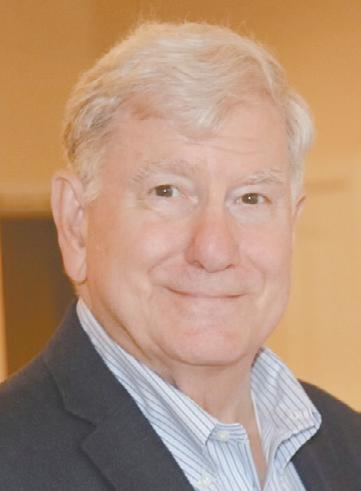
Born August 12, 1941 to Gertrude and Dr. Allen Rumelt in San Antonio, Texas, Michael spent most of his childhood in Texas, attending local college Lamar Tech before moving to St. Louis for medical school at Washington University. Immediately upon his graduation from medical school, Michael married the love of his life, Ellen Schuyler, a St. Louis native. Almost as immediately he was drafted as a physician in the US Army and sent to Vietnam. War is not the place for a soft spoken man with a gentle soul but he went and helped save the lives of countless other young men of his generation.
Upon completing his commitment to the army, Michael and Ellen moved to Chicago where Michael completed his residency in ophthalmology at the University of Chicago and then served as a Heed Fellow in Glaucoma at the University of California, San Fransisco. At the conclusion of his fellowship, and with Board certifications in internal medicine and ophthalmology, he and Ellen returned to St. Louis and with Michael’s brilliance as a doctor and Ellen’s brilliance working behind the scenes, together they created successful ophthalmology practices in St. Louis and Granite City, Illinois and Michael served as an Assistant Professor of Clinical Ophthalmology at Washington University. These practices, with their wonderful patients and staff, brought him great joy and fulfillment during his working years.
OBITUARIES INDEX
Bernstein, Samuel Biernbaum, Neal Brasch, Rosalie Enger, Sheldon Martin
Glatter, Bruce K. Greenberg, Sandra M. Kessell, Florann
Rickensohl
Mentle, Henry Perry
Richman, Marjorie (Margie) Salzberg
Rumelt, Dr. Michael B.
Weiss, Ellen
American Flag symbol denotes a United States military veteran.
He was an extremely proud father to his two sons, Andrew and Ken, loved his daughters-inlaw, Melison Rumelt and Wendy Kares, and enjoyed nothing more than spending time with them and their families. A generous and benevolent grandfather, Michael shone in the presence of his grandchildren, Ben, Leah, and Annabelle, who will miss him greatly.
In addition to his parents, Michael was predeceased by his cherished in-laws, Ben and Ceil (Rothman) Schuyler. He is also survived by his beloved brothers-in-law and sisters-in-law, Richard and Ann (Schmelzer) Schuyler, and Dr. Michael and Debra (Schuyler) Finkel, as well as his nephews and their wives and children: Aaron (Dr. Claire Finkel) Finkel, Jonathan (Alyssa) Schuyler, and Cantor Joshua (Dr. Emily Barth) Finkel.
A funeral service was held Tuesday, September 12 at Congregation Shaare Emeth. Interment Chesed Shel Emeth Cemetery, 7500 Olive Blvd. Memorial contributions in Michael’s honor may be made to the American Cancer Society, Jewish Family Services or the charity of your choice.


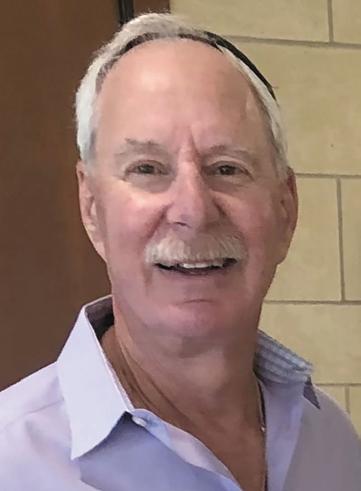
Berger Memorial Service
ELLEN WEISS, September 8, 2023
Ellen Louise Coppersmith Weiss was born February 25th, 1940, in St. Louis, Missouri, eldest daughter of Manuel and Geraldine Coppersmith. Ellen attended Ladue High School, then the Journalism School at the University of Missouri.
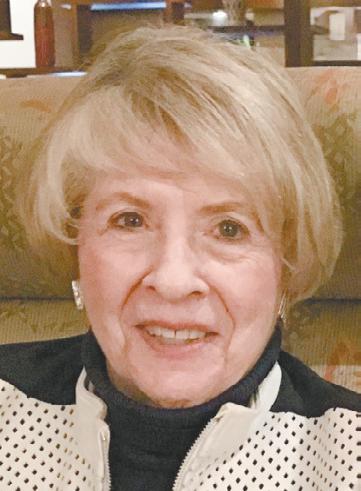
She met the love of her life, Sanford Weiss, in 1959, and they married in 1960 and had two sons, Stephen and David.
Ellen went back to college in 1969 and graduated from Washington University in 1972. She then began her career as a writer, creating and publishing and newsletters and more for the family business, Weiss-Neuman Shoe Company.

Ellen had many hobbies. She played tennis and golf, and was an avid hiker. She read fiction and non-fiction, and played Mahjong, Bridge, and Canasta. She also had an affinity for casinos and shopping malls. Ellen often pursued these interests with her many friends, both new and old, who knew her as a fun, lovable friend who was never afraid to speak her mind.
Ellen and Sanford enjoyed traveling and saw most of the world during their 62 years of marriage. For their last decades, they had a home base in St. Louis, and homes in Breckenridge, Colorado and Jupiter, Florida.
Ellen served on the board of the Alzheimer’s Association of St. Louis, and was President of the Jewish Center for the Aged. Despite her advocating for the care and treatment of dementia, many in her family developed the disease, including herself and Sanford, who died in 2022 and her sister Carol who preceeded her in death.
She is survived by her sons, Stephen and David (Bobby Sanderson), her brother, Kenneth Coppersmith, and her four grandchildren, Mackenzie, Shelby, Madison and Jonathan Weiss.
A funeral service was held Sunday, September 10 at Congregation Temple Israel, 1 Alvan D Rubin Drive. Donations may be made to the Alzheimer’s Association, or the charity of your choice. Please visit bergermemorialchapel.com for more information. Berger Memorial Service

September 20, 2023 Page 21 stljewishlight.org STL JEWISH LIGHT OBITUARIES
Sign up for email updates with the latest obituaries published online Visit stljewishlight.org/newsletters 2023-09-20 page 20-21.indd 21 9/19/23 5:02 PM
Commentary: Why Yom Kippur is my favorite Jewish holiday
CONTINUED FROM PAGE 10
our lives, is also from God. It is the instrument by which we are carried back to God, not something to be defended against, but rather to be embraced.”


To put it another way, quoting the late poet Mary Oliver: “Someone I loved once gave me a box full of darkness. It took me years to understand that this, too, was a gift.”
My brain is a loud place; it always has been. I have vivid memories of being very small, maybe 6 or 7 years old, and lying awake at night because the inside of my brain simply wouldn’t stop talking, counting the glow-in-the-dark stars on my ceiling in an attempt to lull myself to sleep. As I got older, my constant inner monologue shifted from a running recap of my everyday activities to a low, buzzing roar of catastrophizing and anxiety.
Over the course of my life I’ve become someone who always needs to have some kind of sound present, whether it’s an audiobook or a podcast or just a recording


of ambient coffee shop noise. Silent contemplation and reflection have always been — for me, at least — simultaneously a white whale of inaccessible inner work and an absolutely terrifying concept (you want me to just sit there? In a room? With my thoughts? By myself? No thank you!). But my introduction to this concept of teshuvah as a practice of returning to those frightening places and seeing what they have to teach us, how acknowledging them as parts of ourselves can help us to grow, shifted something in the way I approached the anxious, constantly humming rumble of my inner voice.
I wasn’t starting a meditation practice anytime soon — I’m still not, much to the ongoing despair of some of my wonderful former colleagues in the Jewish mindfulness field — but the rituals of Yom Kippur offered me an avenue to explore those parts of myself within a space that felt safe. Sitting in community and allowing the voices of a congregation to spill over me allowed my brain to duck inside myself
and follow now-familiar paths to the places it’s hardest to return to, hardest to explore.
On Rosh Hashanah, 10 days before Yom Kippur, we read a section of Bereshit in which Hagar, Sarah’s handmaid and the mother of Ishmael, is alone in the desert, out of water for herself and her baby. She’s certain that they’ve lost all chance for survival, and, broken-hearted, she puts the child down and walks away from him, so that she doesn’t have to watch him die, and bursts into tears. God hears her weeping, and opens her eyes — and suddenly she can see a well of water before her. Both she and the baby survive.

In a commentary on this Torah portion that appears in the Reconstructionist machzor, Rabbi Reena Spicehandler notes that the text doesn’t say that a well appeared in front of Hagar, but rather that she was suddenly able to see it. When we are trapped in a place where all we experience is fear, or despair, or hopelessness, we aren’t able to see the possibilities or
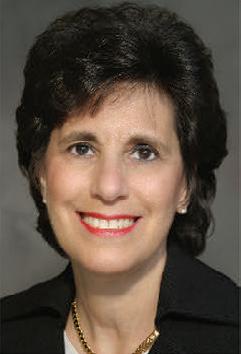
openings around us, whether that’s a new opportunity or a literal life-saving spring of water. We can only see those possibilities when we open our eyes to them, or, sometimes, when someone opens our eyes for us.
The season of teshuvah, of returning — and with it, the spiritual work that makes Yom Kippur so meaningful — is about undertaking the journey through the places of fear and despair until we can find the wells that open us up to everything around us that offers us a chance at renewal. Yom Kippur, for me, is about fully dedicating my heart and mind to that journey, year after year, prayer after prayer, breath after breath.

For me, it couldn’t be further from suffering. It’s the first delicate notes of the melody of Kol Nidre, as a congregation of hundreds holds its breath in perfect unison. It’s the first sip of water in a desert, pure and sweet. It’s a returning to the broken places, where we can still find the endless possibilities of wholeness.
Israel: Traveling through Israel was highlight of Maccabi Games
CONTINUED FROM PAGE 17
simulate sleeveless jerseys (which isn’t common in baseball) and even used eye black to draw mustaches and other designs on each other. Every team knew us for our energy and smiles, and we were even nicknamed “The Bucket Hat Team.”

Several times during the competition someone would come up to us and say, “Hey, aren’t you guys the ones who wear the bucket hats?” We would laugh about
that and end up making a new friend. Having fun and enjoying the friendly competition is what Maccabi is all about. Playing a great sport and touring a beautiful country created profound memories that will last a lifetime. Despite the unfortunate prevalence of danger to the Jewish people and threats to our existence, Israel seems to be thriving. Sure, there’s room to improve, but it’s undeniably a wonderful country, and I’m grateful I concluded this firsthand.
CONTINUED FROM PAGE 16
zations. We painted schools, and we went to a home for disadvantaged children and made tie-dye bags with them, and hung out with them. We went medical clowning and uplifted spirits of patients of all ages in a hospital near Yerushalayim. Each was an opportunity to explore Israel, to do kindness and at the same time to meet lots of different people around the country.
Each summer program is designed specifically on what people want and how













they want to spend their summer. There are over 20 different NCSY summer programs, some for boys, some for girls and some co-ed. Despite some challenges, going to Israel on NCSY summer program Michlelet helped me grow as a person and make connections with people that will last a lifetime.
I can only hope that everyone who wants to have the experience of a lifetime will consider going to Israel. The environment, the people and the overall attitude of the State of the Jewish people — it’s all amazing and worth it.

Page 22 September 20, 2023 STL JEWISH LIGHT stljewishlight.org Cheryl Perl CRS, GRI, ABR, MRE, RRES, SFR (314) 276-1166 (636) 532-0200 16505 Wild Horse Creek Rd Chesterfield, MO 63017 cheryl.perl@cbgundaker.com
NCSY: Visiting Israel was a truly eye-opening journey
Ohr Chadash Teen Page writer Nathan Arst’s Maccabi Games baseball team in Israel.
In Home Service "Trusting Hands for Your Peace of Mind" BERYL DENISE BROWNING, RN EXTENDED HANDS LLC 24 Hour Private Duty Care Bonded and Insured 314-521-4100 GENESCO REPLACE INSULATED GLASS (314) 567-9175 2456 Adie Road, 63043 GenescoWindowProducts.com Family Owned & Operated Since 1983 BONDED • INSURED • SUPERVISED SCRUBBY DUTCH CLEANING 314-849-4666 or 636-926-0555 For 1st Time Customers! $10 OFF www.scrubbydutch.com “Leafthecleaningtome.” • Repairs • Gutter Cleaning • Gutter Guards • Roofing • Drainage Solutions • Fascia Repairs or Replacements 30+ Years Experience Call Tony: 314-413-2888 www.yuckos.com 314-291-POOP Your Poop Scoop’n Service Beautiful Cemetery Plot For Sale Garden Betholam at Bellerive off Mason Rd $6750 or best offer (purchased for $10k) Call 314-922-3008 WE DO IT ALL from toilets to painting RAVEN PROPERTY MAINTENANCE CALL 636-445-6068 CLASSIFIEDS To learn more about advertising opportunities in the St. Louis Jewish Light, please email advertising@ stljewishlight.org or call 314-743-3672. 2023-09-20 page 22-23.indd 22 9/19/23 5:02 PM
The Western Wall in Jerusalem.
SUMMERFEST AT KOL RINAH
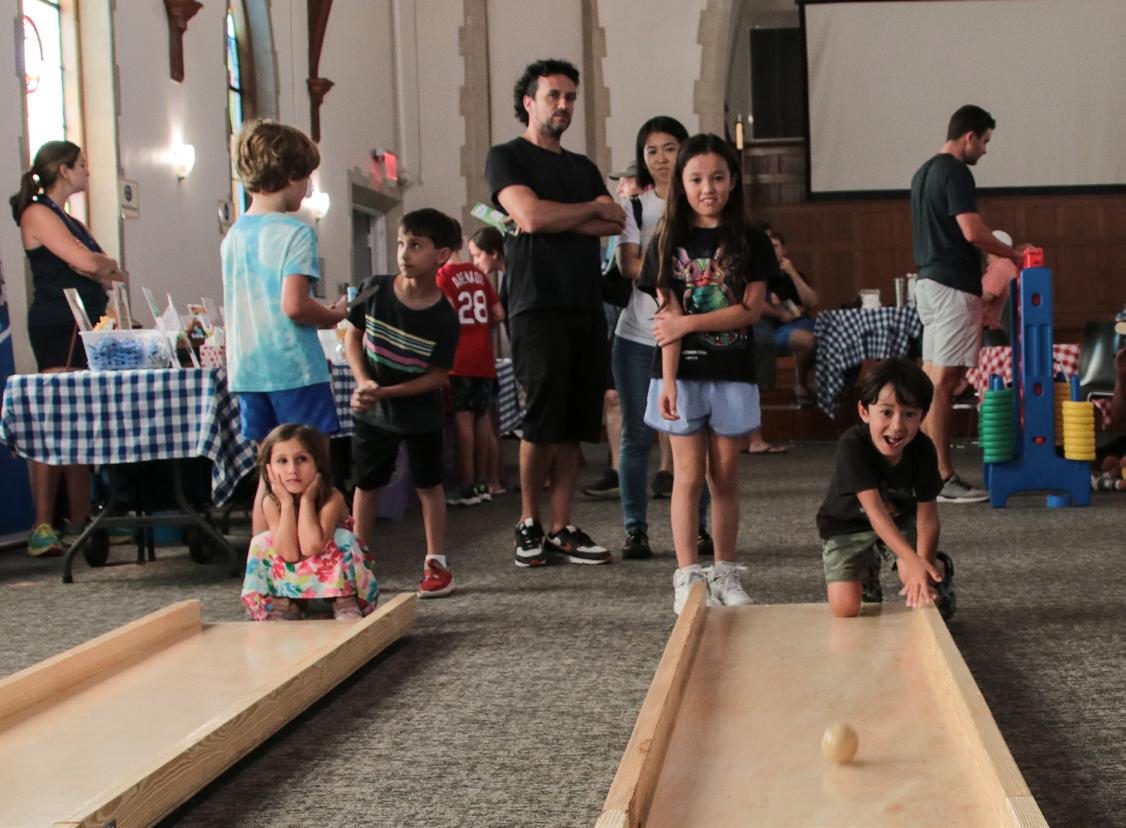
Kol Rinah hosted Summerfest on Aug. 20. Originally scheduled as an outdoor event, Summerfest was moved indoors due to extreme heat. Musical performances included Karen Kern, the Will Soll Trio and Shakshuka. Family activities were held in The Staenberg Family Community Hall with games, balloon art, science and booths hosted by Saul Mirowitz Jewish Community School, PJ Library and Just Bake It. Kol Rinah’s Brotherhood served food and hosted a whiskey tasting, and several local organizations donated items for a very successful raffle. Kol Rinah appreciates the many sponsors and partners who made this event a success, with a full list available at www.kolrinahstl. org/event/kol-rinah-summerfest.html.
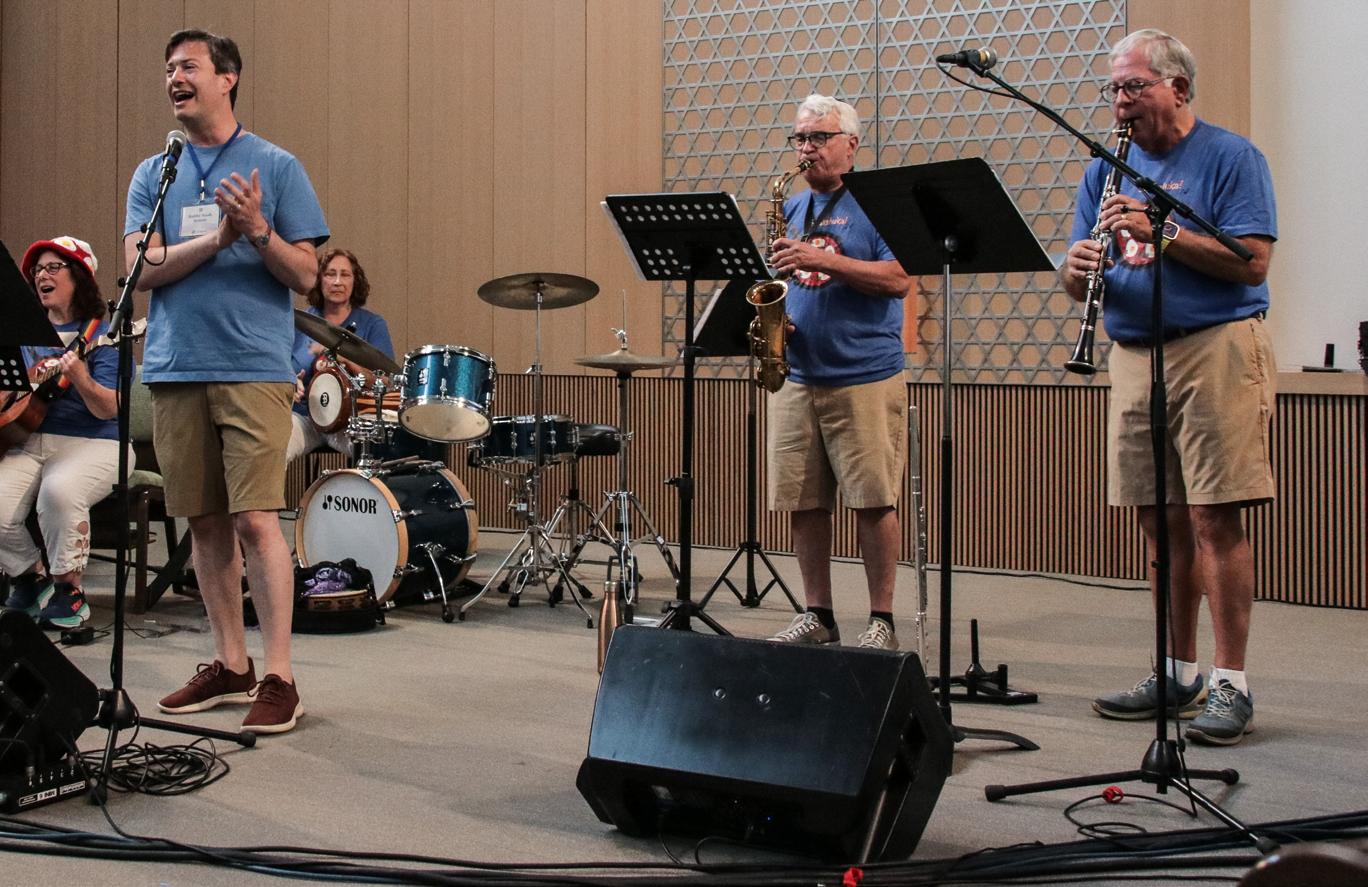
SP TLIGHT
PHOTOS FROM RECENT JEWISH COMMUNITY EVENTS
SUBMIT A PHOTO: Have a photo of a recent Jewish community event you would like to submit? Email the image and a suggested caption to news@stljewishlight.org.
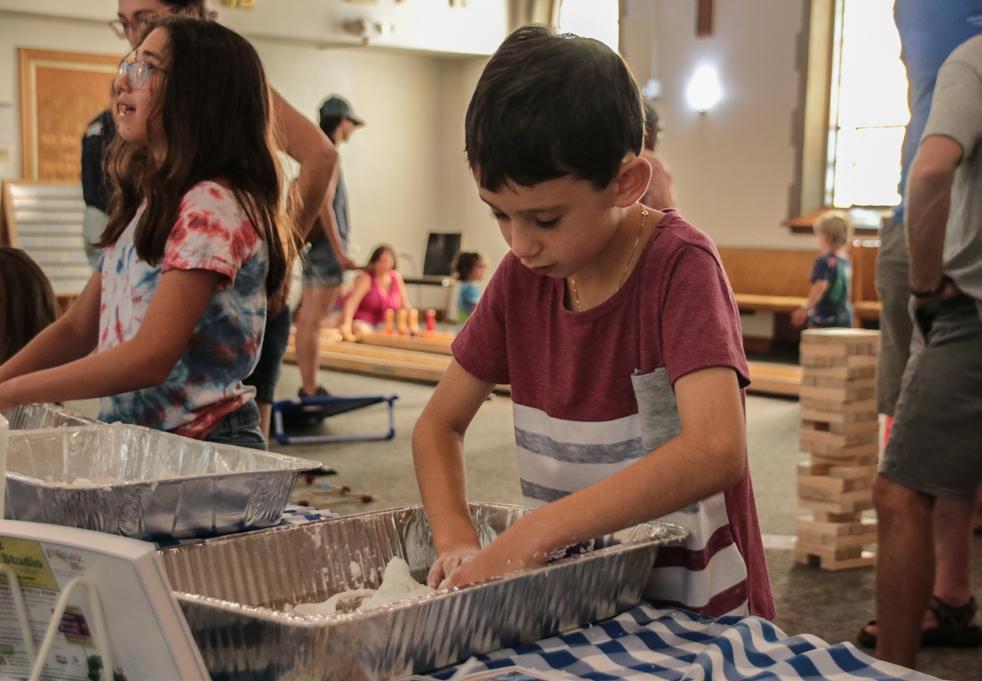
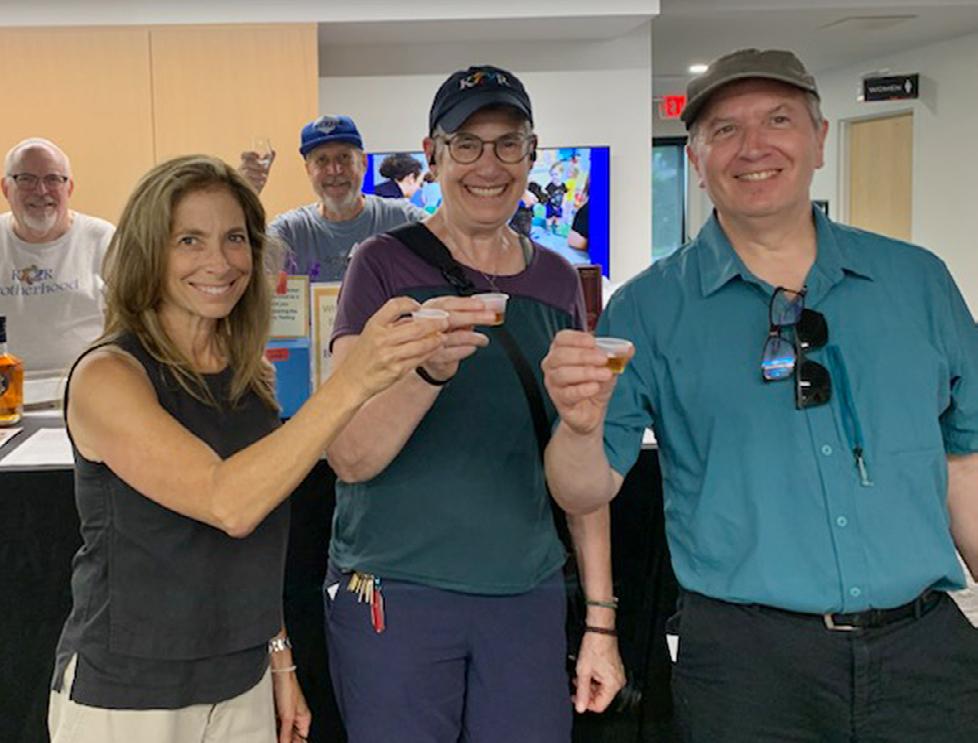
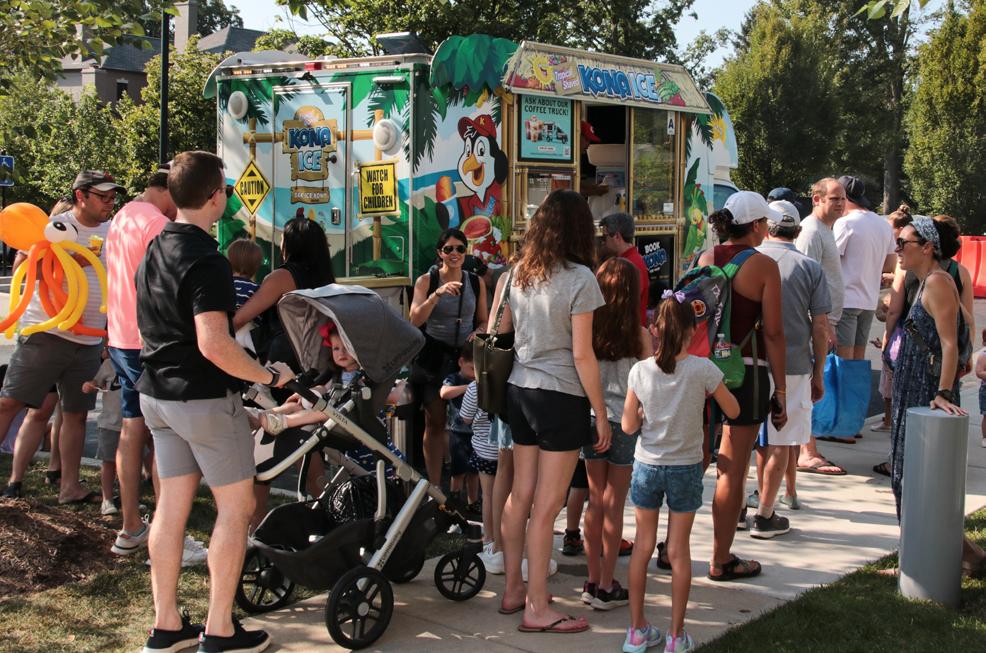
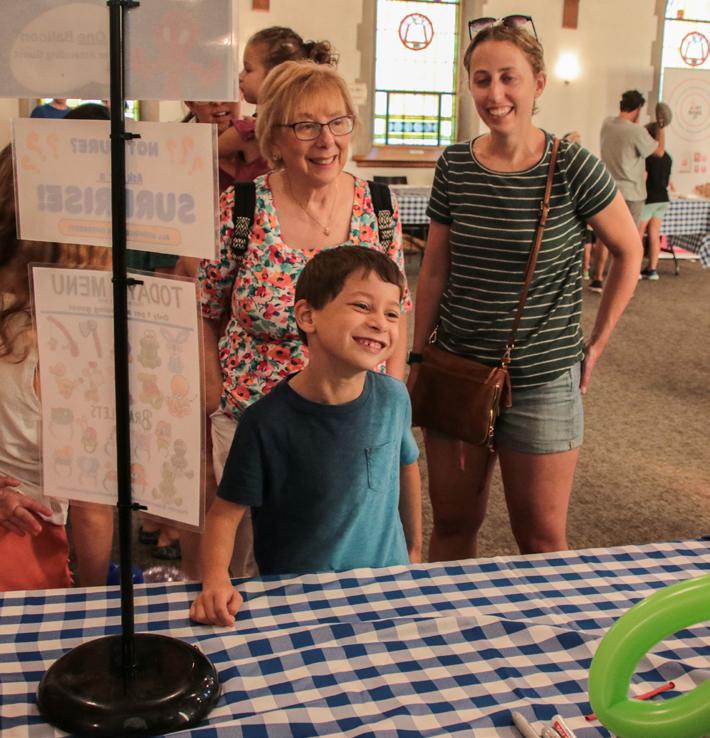
GENEROUSLY SUPPORTED BY
VIEW MORE ONLINE: stljewishlight.org/multimedia
chabad at washington university
SHABBAT ON CAMPUS
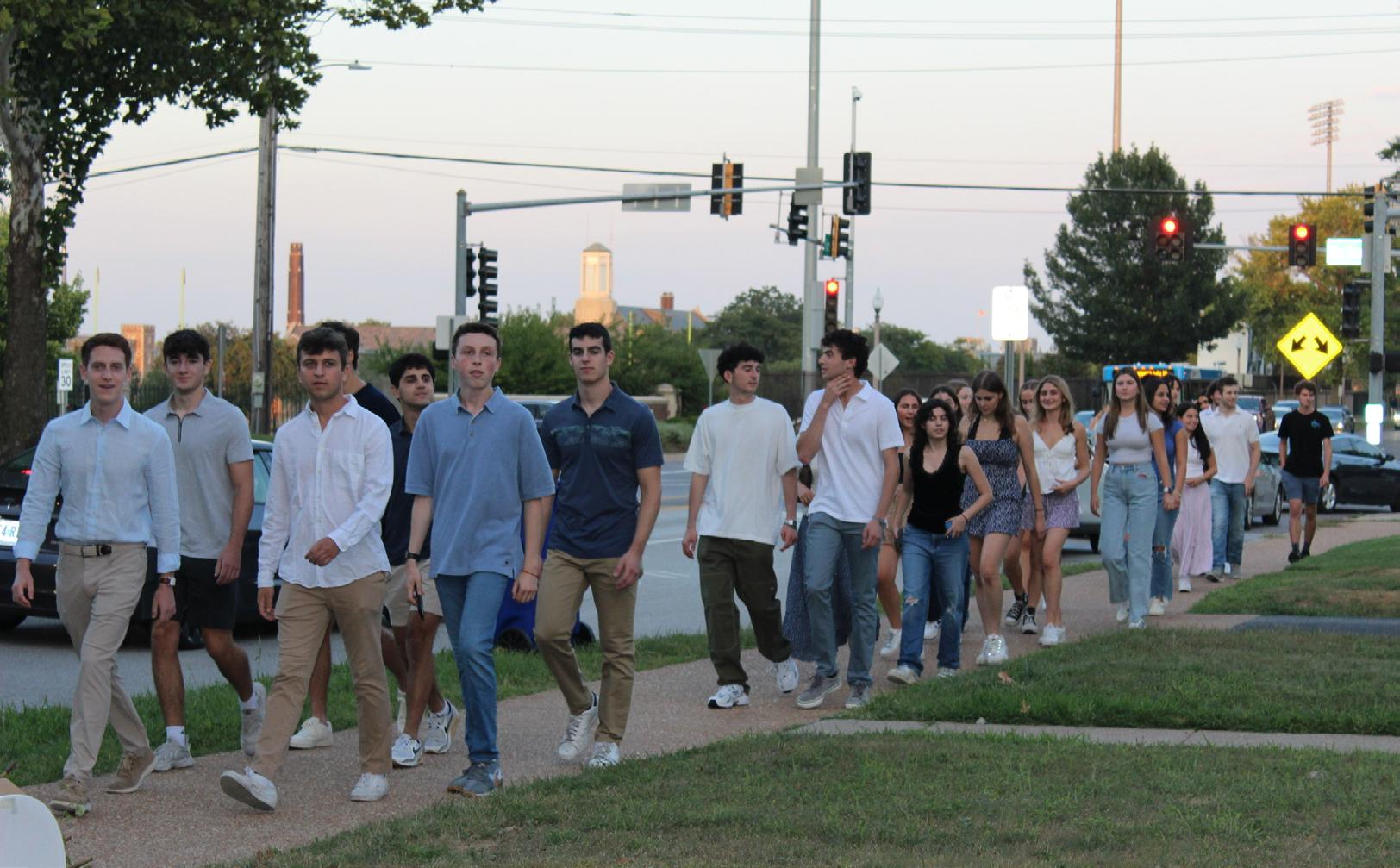
A record-breaking crowd of 395 students gathered to join the community at Chabad at Washington University for the first Shabbat of the semester. Photos were taken just prior to Shabbat.
September 20, 2023 Page 23 stljewishlight.org STL JEWISH LIGHT
2023-09-20 page 22-23.indd 23 9/19/23 5:26 PM
THURSDAY | SEPT. 21
NCJWSTL Lunch & Learn


Suicide by guns claims the lives of nearly 25,000 people in America every year. We must address this public health crisis to reduce gun violence in this country. Though gun violence conversations tend to focus on homicides, nearly six out of 10 gun deaths in the U.S. are suicides. For September’s Lunch and Learn, which coincides with Suicide Prevention Month, NCJWSTL welcomes Pat Harkins, who lost her 21-year-old son to suicide in 2009. She joined the American Foundation for Suicide Prevention and served as the board’s recording secretary for 12 years. She now serves on several committees and is the Healing Conversations Coordinator for the state of Missouri. Register at https://bit. ly/NCJW-0921. For more information, email Jen Bernstein at jbernstein@ncjwstl.org or call 314-993-5181.
TUESDAY | SEPT. 26


Center, Congregation Kol Rinah, MaTovu, Congregation Shaare Emeth, Traditional Congregation of Creve Coeur, United Hebrew Congregation and funded in part through the generosity of the Lubin Green Foundation.








SEPT
Local Jewish organizations and congregations can submit calendar items to news@ stljewishlight.org. All items received by 5 p.m. Friday will be considered for the following week’s edition.


‘Presidential Legacies’
series looks at the Carters
From 2 to 3 p.m., the Mirowitz Center’s Presidential Legacies series will look at “The Extraordinary Lives of Jimmy and Rosalynn Carter – The Camp David Accords.” In his second of three presentations, Joshua Montanari, Jimmy Carter Presidential Library and Museum Education Specialist in Atlanta, covers the Camp David Accords and how the historic treaty was negotiated with Egypt and Israel in September 1978. Register online at http://bit.ly/Register_MirowitzCenter or call 314-733-9813.
WEDNESDAY | OCT. 4
STARTING | OCT. 7
Holocaust Museum,
symphony to host program

On Sept. 26, the St. Louis Kaplan Feldman Holocaust Museum and St. Louis Symphony Orchestra will host the first “Holocaust Composer Stories” program, featuring composer Pavel Haas. Helen Turner, director of education for the museum, will speak on composer Pavel Haas and his tragic Holocaust experience. Haas was imprisoned in Terezin before being transported to Auschwitz, where he was murdered. The presentation will be followed by a performance of Haas’ String Quartet No. 3 played live by SLSO musicians. This SLSO performance is presented by the Silk Foundation. This program is free, but RSVPs are requested. Seating is limited on a first come, first serve basis. This program will take place at the St. Louis Kaplan Feldman Holocaust Museum. More information can be found at https:// shop.slso.org/7926.
THURSDAY | SEPT. 28
Speaker to look at Oslo Accords 30 years later
At 7:30-8:30 p.m. at Hillman Hall on the campus of Washington University, Former Ambassador to Israel and Egypt Daniel Kurtzer and professor Barry Rosenberg will lead a program on “The Handshake the Shook the World: A 30-Year Reflection on the Oslo Accords.” A dessert reception will follow. The event is co-sponsored by JCRC, Washington University, Washington University Hillel, Israel Center at Jewish Federation of St. Louis, St. Louis Jewish Community
STARTING | SEPT. 29 Jewish Mindfulness series begins
The Jewish Mindfulness Center of St. Louis will present “Keep Calm and Breathe: Mindfulness and Meditation for Anxious Minds” from 11:30 a.m. to 12:30 p.m. on Fridays, Sept. 29, Oct. 6 and Oct. 13. Join Rabbi Andrea Goldstein in this three-part class that will introduce participants to Jewish wisdom, mindfulness practices, and three unique meditations that can help calm a worried mind. While this class is free, registration is required. To register, call Stacy Jespersen at 314-569-0010 or email sjespersen@sestl.org
SATURDAY | SEPT. 30
Sunrise Sukkot
At 9 a.m. the Jewish Mindfulness Center will lead a Sunrise Sukkot program at Mallard Lake Loop Trail at Creve Coeur Lake Park, 2348 Creve Coeur Mill Road (park to the left of the Lakehouse Restaurant). Join Rabbi Andrea Goldstein for a Shabbat morning awe walk in celebration of Sukkot. During an awe walk we shift our attention from internal thoughts and concerns to the beauty of the world around us. Experiences of awe have been shown to reduce anxiety and stress, as well as increase feelings of joy, which makes this the perfect way to celebrate Z’man Simchateinu, the Season of our Joy. The morning will include moments of reflection, learning, and prayer. Mallard Lake Loop is a flat 2-mile path. This event is free, but registration is required. For more information or to register, contact Stacy Jespersen at sjespersen@sestl.org.

Mirowitz Center presents Harmonicas Unplugged 2023

“Have Harmonica, Will Travel” has been their motto since 1987. And the Gateway Harmonica Club continues to travel and perform today, from Powell Hall with the St. Louis Symphony Orchestra to Busch Stadium with the St. Louis Cardinals, as well as at regional and national harmonica festivals. Now they are coming to the Mirowitz Center to share the fun and magic of harmonica tunes. To register for this free Mirowitz Center program (from 3 to 4 p.m.), visit http:// bit.ly/Mirowitz-registration, call 314-7339813 or email skemppainen@mirowitzcenter.org.
THURSDAY | OCT. 5
Kol Rinah ECC groundbreaking
Join Kol Rinah for a groundbreaking ceremony at 5 p.m. to kick off the expansion of the Monica Lynne Neidorff Early Childhood Center Music with Karen Kern, speakers, maariv, and (optional) guests can bring their own dinner and eat in the sukkah.
‘Sukkot: What You May Have Missed in Sunday School’
Have you ever shaken a lulav or smelled an etrog? Have a question about this Jewish fall harvest festival? Rabbi Gidon Nitsun, Director of Senior Kollel, will talk about this significant holiday and provide a multi-sensory Sukkot experience at the Mirowitz Center that will be a treat for all. Kosher refreshments courtesy of Senior Kollel. To register for this free Mirowitz Center program (from 1 to 2 2 p.m.), visit http://bit.ly/Mirowitz-registration, call 314-733-9813 or email skemppainen@mirowitzcenter.org.
Saturday Morning Bible Study with Rabbi Shook
Saturday Morning Bible Study continues in its pioneering quest to provide an authentically Jewish perspective on the New Testament. Continuing his close and often surprising examination of the New Testament, Rabbi Emeritus, Mark L. Shook will begin the year with a careful study of the Gospel of John and then move on to The Acts of the Apostles. Students are encouraged to have The Jewish Annotated New Testament, Second Edition, edited by Amy-Jill Levine and Marc Zvi Brettler, which is available through Amazon.com. This groups meets on Saturdays from Oct. 7 – April 27 from 9:30- 10:30 a.m. at Temple Israel. No previous experience with the New Testament required. Registration required to attend in person or online: www.ti-stl.org/BibleStudy. Past participants are not automatically added to the RSVP list. Please RSVP again at the link if you’d like to attend again this year.
ONGOING
New time for weekly mindfulness mediation sits
Join Rabbi Andrea Goldstein at 9 a.m. on Tuesday mornings on Zoom for weekly Mindfulness Meditation sits incorporating teachings and stories from the weekly Torah portions, Jewish prayer and tradition. No meditation experience necessary and all are welcome. For information about how to join, call Stacy Jespersen at 314-569-0010 or email sjespersen@sestl.org.
Page 24 September 20, 2023 STL JEWISH LIGHT stljewishlight.org unrivaled luxury real estate team in greater st. louis We Sold 13 Homes Over $1 Million in 14 Days 48 Hillvale | 63105 1815 Wills Trace | 63005 1328 Westchester | 63005 2007 Kingspointe | 63005 1723 Pine Hill | 63131 1514 Homestead | 63005 1012 Greystone | 63005 309 S Spoede | 63141 10135 Fieldcrest | 63124 1505 Myrtlewood | 63005 1171 WIldhorse | 63005 915 S Meramec | 63105 12365 Mulberry | 63141 TheGellmanTeam.com 314.336.1991
YOUR CALENDAR OF ST. LOUIS JEWISH COMMUNITY EVENTS
CHAI LIGHTS
2023-09-20 page 24.indd 24 9/19/23 5:05 PM
The Gateway Harmonica Club will perform a concert at the Mirowit Center on Oct. 4.
