A Memorial Day salute to the WWII service of Jewish St. Louisans
An estimated 550,000 Jews served in the United States armed forces between 1941 and 1945, according to the Jewish Welfare Board. As Memorial Day approaches, the Jewish Light salutes the Jewish St. Louisans who served during World War II.
BY BILL MOTCHAN SPECIAL TO THE JEWISH LIGHT
Base Hospital 21
The United States officially entered World War II on Dec. 8, 1941. Two months later, 55 officers were deployed to Fort Benning, Ga., to form Base Hospital 21. It was the successor to the World War I Base Hospital 21 in La Havre, France, which treated 60,000 patients over 18 months until it was demobilized in May 1919.

In early 1942, after several months of stateside training, the troopship SS Mariposa carried Base Hospital 21 personnel to Liverpool, England. From there, the hospital went on a nomadic journey, moving first to Algeria, which was occupied by Free French Forces. The hospital
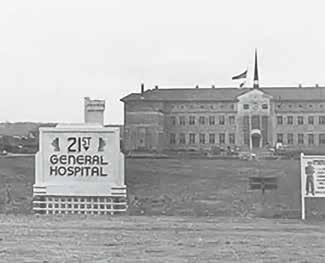
patients. By the end of 1943, Base Hospital 21 was on the move again, this time to Naples, Italy. Its third and final stop was Miercourt, France, where the 21st General Hospital was established from Oct. 21, 1944, to Sept. 12, 1945.
Cytologist (and violin aficionado) Harry Agress
Base Hospital 21 was notable for another reason. Most of the officers who staffed it came from Barnes Hospital and Washington University School of Nursing. A number of the medical personnel was also Jewish, including Capt. Lawrence Milton Shefts and Lt. Col. Harry Agress Sr.
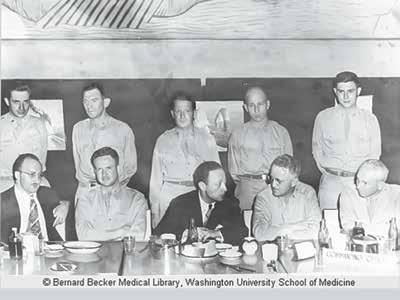
Agress was a likeable, respected St. Louis doctor who was 38 years old when he was stationed at Base Hospital 21. He born in St. Louis in 1908 and graduated from Washington University in 1932. After a residency at Jewish Hospital and graduate study at the University of Minnesota, Agress entered private practice in 1936.
Like his colleagues at Base Hospital 21, Agress was a medical professional by trade, not a soldier.
It’s easy to imagine Agress and his colleagues as dedicat-
Chesterfield elementary school fights antisemitism with education
 BY BILL MOTCHAN SPECIAL TO THE JEWISH LIGHT
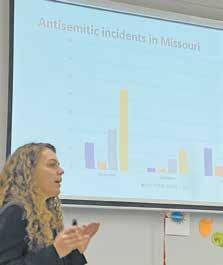
Earlier this year, an incident at Highcroft Ridge Elementary School in Chesterfield was marred by what some students and their parents viewed as a message of hate and antisemitism. At the school’s “International Night” a table representing Palestine displayed several anti-Israel posters, including an image of a hand holding a spray bottle adorned with Stars of David that read “ethnic cleansing.”
ed doctors with an unorthodox approach to the military, not unlike the crew of the fictional 4077th “M*A*S*H” unit on the TV show of the same name. In a passage from an oral history at the Washington University School of Medicine Becker Library, Agress said:
“I might say that the Army had more trouble with us than we had with them. We had a bunch of really fine medical men … and we had fine, trained people. But they also happened to be characters.”
Agress’ son, Harry Agress Jr., a retired radiologist who lives in New York, said: “These guys had guts. This whole group from Barnes, Jewish and Washington University Medical School — doctors, nurses, staff — they created this entire unit. They were right near the German border, less than 200 miles from the Battle of the Bulge.”
Base Hospital 21 was a general hospital that treated wounded Allied troops and, from time to time, German POWs.
“It had to be a pretty strange thing to know that someone you’re operating on may have killed hundreds, if not thousands, of Jews,” Agress Jr. said. “(The staff) just acted as doctors, and they were there to take care of people. They did their duty. They really were the greatest generation. They didn’t like to brag about it or
In the aftermath of the January event, Chris Clark, principal of Highcroft Ridge, told parents that the school would add safeguards to prevent a similar episode in the future. In a letter to parents, Clark said the school would review participant materials prior to future events and that “these procedures should ensure any content represents our values of respect and inclusivity and celebrates our students and families.”
On May 10, Highcroft Ridge took an additional step toward combating antisemitism. School faculty took part in a training session focusing on recognizing antisemitism and how to address it. The session was facilitated by Orna Bitton Dar and Jeny Dementeva from the Israeli American Council (IAC).
“Parents approached the IAC because they wanted some proper education for their teachers and they wanted an Israeli and Jewish organization to be involved,” said Dementeva, the council’s national director of activism. “We offer this training to schools and
See ANTISEMITISM on page 16A
STLJEWISHLIGHT.ORG 4 SIVAN, 5783 MAY 24, 2023 VOL. 76 NO. 10 A NONPROFIT, INDEPENDENT NEWS SOURCE TO INFORM, INSPIRE, EDUCATE AND CONNECT THE ST. LOUIS JEWISH COMMUNITY.
Top Photo: Main Headquarters staff of 21st General Hospital - April 1945
See VETERANS on page 8A
Middle Photo: Dinner with Jascha Heifetz (bottom center) and Harry Agress (top center) at 21st General Hospital Naples Italy 1941
Jeny Dementeva of the IAC speaks to Highcroft Ridge Elementary faculty.
1B-13B
A
ROUND UP OF ALL ST. LOUIS HAS TO OFFER FOR YOUR DINING AND ENTERTAINMENT NEEDS THIS SUMMER.
The Newspaper of the Jewish Community of Greater St. Louis — Founded 1963
CONTACT US
PHONE
314-743-3600
EMAIL news@stljewishlight.org
MAILING ADDRESS
For payments
P.O. Box 790372, St. Louis, Mo. 63179-0372
For general correspondence please email news@stljewishlight.org
CONNECT WITH US
FACEBOOK
facebook.com/stljewishlight
TWITTER @stljewishlight
INSTAGRAM @stljewishlight
BOARD OF TRUSTEES
OFFICERS
Bethe Growe, President
Laura K. Silver, Immediate Past President
Laurie Chod, Vice President
Beth Manlin, Vice President
Ben Weiss, Vice President
Justin Krachmalnick, Treasurer
Debra Klevens, Secretary
Joan Silber
TRUSTEES
Dan Bindler, Jerry Ehrlich, Richard Flom, Mark Gershenson, Caroline Goldenberg, Mia Kweskin, Debbie Lefton, Lauren Murov, Kara Newmark, Ryan Rich, Steve Rosenzweig, Bruce Sandweiss, Adam Schneider, Alan Spector, Todd Taylor, Dan Winograd

JEWISH LIGHT PAST PRESIDENTS
Milton I. Goldstein*, Morris Pearlmutter*
(founder), Morris Moscowitz*, Melvin

Newmark*, Rabbi Alvan D. Rubin*, Vivian


Zwick, Joseph Edlin*, Michael Newmark, Richard Stein, Yusef Hakimian*, Sanford

Weiss*, Philip Isserman*, Linda Kraus, Richard
Flom, Marvin Schneider, Barbara Langsam
Shuman, Terry Bloomberg, John Greenberg, David Grebler*, Milton Movitz*, Gianna

STAFF
EXECUTIVE
Betsy Schmidt, Chief Executive Officer
Ellen Futterman, Editor-in-Chief
Jordan Palmer, Chief Digital Content Officer
EDITORIAL
Robert A. Cohn, Editor-in-Chief Emeritus
Mike Sherwin, Managing Editor
BUSINESS AND ENGAGEMENT
Stacy Wolff Smart, Director of Business
Development and Communications
Terri Green, Administrative Assistant
SALES
Angie Rosenberg, Senior Account Executive
Kelly Morris, Account Executive
Elaine Wernick, Account Executive
PRODUCTION
Erin Eason, Creative & Design Manager
CANDLE LIGHTING TIMES
Shavuot
Thursday, May 25: Light holiday candles at 7:57 p.m.
Friday, May 26: Light Shabbat / Holiday Candles at 7:58 p.m. from a pre-existing flame.
Saturday, May 27: Shabbat / Holiday Ends: 9:03 p.m.
Shabbat begins
CONTRIBUTING WRITERS
Jacobson, Jenny Wolkowitz, Gary Kodner, Jane
#STLJEWISHLIGHT
Connect with us on all our social media using
Tzinberg Rubin, Steve Gallant, Laura K. Silver
* Of Blessed Memory
Bill Motchan, Amy Fenster Brown, Eric Berger, Patricia Corrigan, Barry Gilbert, Margi Lenga Kahn, Nancy Kranzberg, Elise Krug, Cate Marquis, Eric Mink, Judith Newmark, Martin Rochester
PUBLISHER'S STATEMENT PUBLICATION DATES FOR 2023

The ST. LOUIS JEWISH LIGHT (ISSN 0036-2964) is published bimonthly by the St. Louis Jewish Light, Inc., a not-for-profit corporation, 7201 Delmar Blvd. Suite 201, St. Louis, MO 63130. Periodical postage paid at St. Louis, MO. Copyright 2023.
Postmaster: Send address changes to the St. Louis Jewish Light: 7201 Delmar Blvd. #201, St. Louis, MO 63130.

The Jewish Light will publish print editions twice a month in 2023, on the following upcoming dates:
• June 6 and 21
• July 12 and 26
• Aug. 9 and 23
• Sept. 6 and 20
GENEROUSLY SUPPORTED BY
• Oct. 4 and 18
• Nov. 8 and 22

• Dec. 6 and 20
Friday, June 2: 8:03 p.m.
Shabbat ends
Saturday, June 3: 9:09 p.m.
Torah reading: Naso
The Jewish Light is a community partner of Jewish Federation of St. Louis.


The Jewish Light is a member of the American Jewish Press Association

Page 2A May 24, 2023 STL JEWISH LIGHT stljewishlight.org Arts + Eats Special Section ............ 1B-11B ChaiLights Event Calendar 16B Classifieds ............................................. 14B D’var Torah 12A Features..........................................12B-14B Jewish Lite Crossword Puzzle 12A Healthwatch.......................................... 13A Local news 3A-8A Newsmakers ........................................... 6A Obituaries 14A-15A Opinions ........................................ 12A-13A Spotlight Photos 15B
OUR BOARD
STAFF INSIDE THIS WEEK’S STL JEWISH LIGHT
AND
INDEX
TO YOU BY
ShowMeChabad.com BROUGHT
AUNTS, UNCLES AND FRIENDS.
miss your chance to brag about your graduate in our upcoming special spotlight section of the Jewish Light! SUBMIT YOURGRADUATION BANNOUNCEMENT EFORE JUNE 14! VISIT STLJEWISHLIGHT.ORG/GRADUATE
YOUR
◦GRADUATE INFORMATION
25 WORD CONGRATULATORY MESSAGE
PER SUBMISSION
CALLING ALL PARENTS, GRANDPARENTS, PROUD
Don't
WHATS INCLUDED ◦PHOTO OF
GRADUATE
(name, age, school/grade graduating, parents & grandparents names, congregation) ◦
$18
Zoom kaddish comforts mourners unsure of where to turn; Let’s talk ‘Gloria’ at NJT
Telling time
I’m a strong believer that timing matters. I remember once reading an essay about falling in love in which the writer — I’m pretty sure it was Anna Quindlen — remarked that it wasn’t a matter of finding Mr. Right, but rather Mr. Right Time. Her point was that timing — in this case whether one is even open to falling in love — is critical to many outcomes.

I thought about that in a different context when I spoke to Dr. Richard Gimpelson last week, a retired gynecologist from west St. Louis County, who emailed to thank me for an article I had written last October. It was about Philadelphia-based Reconstructionist Rabbi Geela Rayzel Raphael, known as Reb Rayzel, who on Jan. 1, 2021 — a day after her mother passed away from complications due to COVID — created a “Zoom shiva” because it was the only practical option to mourn her loss with family and friends given the restrains of the pandemic.
Let’s turn back time to Oct. 19, 2022, when I wrote about the Zoom shiva, which was still occurring nightly (except for Shabbat) even after 22 months. Nine days earlier, on Oct. 10, Gimpelson had lost his wife of 46 years, Nancy “Nan” Lee Gimpelson, to a very aggressive brain cancer called glioblastoma. He no longer belonged to a synagogue, as he did years ago to Congregation Shaare Emeth, and wasn’t sure where, or how, to mourn his late wife.
“I read an article in the Light and thought the Zoom shiva might be a good place for me to go,” he explained. “I’ve been attending ever since, anywhere from four to six nights a week. I’m amazed by the rabbis who show up and the lay people who also are phenomenal in leading the service.”
Gimpelson’s email prompted a call to Reb Rayzel to see how the Zoom shiva was going now, after nearly 2½ years. She said after the Light article, which was reprinted in other Jewish papers, attendance grew, and has kept steady at between 15 and 25 people nightly, includ-
ing Gimpelson, who as far as she knows is the only attendee from St. Louis.
When I asked what she attributed to its longevity, she replied: “I think we fit a need for people who want a liberal nightly minyan to say kaddish and also to pray for healing without having to leave home. There has been a lot of gun violence in America and people are coming to pray that things get better. Our new motto is, ‘We will pray for you.’ We call it a comfort minyan.
Our two signature moments are when participants share the people they are holding in their hearts for healing and also whatever is going on for them with kaddish and grief.”
Gimpelson, who will turn 77 on May 26, is flirting with learning to lead one of the nightly services, which last about an hour. He confesses he’s nervous not just about learning the prayers but also having to sing. He says his voice is such that he was told in school choir to just mouth the words.
“I love the nightly service and am staying with it,” he said, adding that he felt the timing was fortuitous in learning about the Zoom shiva days after his wife’s passing. “This has been a good way for me to grieve Nan’s death, reconnect with my Judaism and meet a wonderful, caring community of people.”

If you are interested in joining the Zoom shiva, email Reb Rayzel at rrayzel@ shechinah.com

A night out with ‘Gloria’ — and Ellen
If the previous item seems like a humble brag — how a Light story positively impacted a reader — I’m labeling this item “shameless plug.” But the truth is I need friendly faces in the audience, so please read on.
Next up at the New Jewish Theatre, from June 1-18, is the play “Gloria: A Life,” which explores the legacy of feminist icon Gloria Steinem. Written by Emily Mann, with guidance and participation from Steinem herself, this seven-character play is said to embody Steinem’s philosophy “that conversation is a catalyst for change” as it celebrates one of the most inspiring women of our time.
The play is performed without an intermission. After the telling of Gloria’s story concludes in Act I, the actors or a “guest responder” lead a 20-minute or so “talking circle” with the audience, first by sharing their own story of breaking barriers or simply responding to the play before opening up the conversation to the audience.
At the 4 p.m. performance on Saturday, June 10, I will be the guest responder leading the discussion and would appreciate as many supportive Light readers as possible in the audience. I promise to keep my remarks short, though bear in mind when I took my first newspaper job in 1980, we typed our stories with carbon paper between the sheets and cut and pasted paragraphs together. In 40-plus years a lot has changed — and a lot hasn’t. Journalism is still a male-dominated field, especially among top
But I promise it will be a no-gripe session — I honestly can say working in journalism for all these years has been one of my life’s pleasures. I cannot think of another career that would have satiated my curiosity, allowed me ongoing learning opportunities, provided interaction with all kinds of people, offered travel all over — there is much more to include, but I’ll stop here.
Anyhow, if you’re so inclined, NJT is offering $5 off tickets for the 4 p.m. June 10th show (in which I appear) with the code STLJL! (include the exclamation point). Performances are at the Wool Studio Theatre in the Jewish Community Center’s Performing Arts Building, 2 Millstone Campus Drive. Tickets run $27$58 and are available by phone at 314-4423283 or online at newjewishtheatre.org. Other guest responders will be featured at performances throughout the run, including the J’s President and CEO Lynn Wittels, National Council of Jewish Women St. Louis CEO Ellen Alper and Board President Nancy Litz, former Missouri House Representative and gun violence prevention advocate Stacey Newman and more. You
a full list at jccstl.com/njt-gloria-a-life.

NEWS & SCHMOOZE
News and Schmooze is a column by Jewish Light Editor-in-Chief Ellen Futterman. Email Ellen at: efutterman@stljewishlight.org.
May 24, 2023 Page 3A stljewishlight.org STL JEWISH LIGHT
can find
LOCAL NEWS
Kirsten De Broux as Gloria Steinem in Gloria: A Life at New Jewish Theatre.
PHOTO: GREG LAZERWITZ
T H E O L D E S T J E W I S H O W N E D B O D Y S H O P I N T O W N WE CAN HELP YOU SAVE ON YOUR DEDUCTIBLE FREE PICK UP AND DELIVERY 3 2 1 3 W o o d s o n R d | 3 1 4 - 4 2 3 - 5 1 1 1 IN BUSINESS SINCE 1977 ALL TYPES OF COLLISION AND BODY REPAIRS 3 2 1 3 W o o d s o n R d 3 1 4 - 4 2 3 - 5 1 1 1 L A B O R W I T H T H I S A D
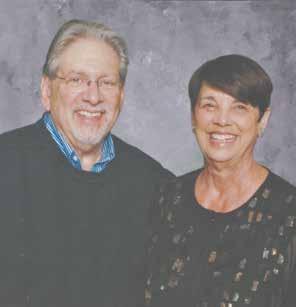
Dr. Richard and Nancy “Nan” Gimpelson
Holocaust Museum will host lecture on persecution of the Uyghur people in China
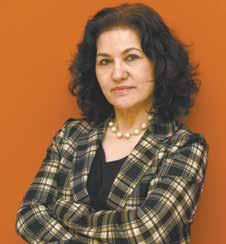
On June 1, the St. Louis Kaplan Feldman Holocaust Museum will host “Modern Day Genocide: Uncovering the Horrors of Atrocities Against the Uyghur People,” with featured speaker Rushan Abbas. Abbas is a Uyghur American activist whose sister, Gulshan Abbas, was taken by the Chinese government six days after her first public speech on the persecution of the Uyghurs in 2018. Abbas has not seen her sister since.
This lecture is the museum’s Rabbi Philip and Ruth Lazowski Lecture on Holocaust and Genocide, sponsored by the Feigenbaum-Pepose Family.
Rabbi Philip Lazowski was born in 1930 in Bielica, Poland. Following the German invasion of Poland, the Nazis forced Lazowski and his family into the Zhetel ghetto. He fled into a nearby forest and later met up with his father and brothers. They lived in the forests for three years, supplying food and information to nearby partisan groups, and were able to escape the Nazis for the duration of the war.
The Lazowski Lecture is the first of the “Change Begins with Us” lecture series, an initiative from the Holocaust museum designed to put the museum’s mission into action and expand the reach of the Impact Lab programming. The museum is dedicated to using the history and lessons of the Holocaust to reject hatred, promote understanding and inspire change. This series will feature challenging lectures on hate, bigotry, hate crimes and genocide. It is an answer to the questions, “What do we do now that we know about the Holocaust, and how do we prevent future atrocities?”
Abbas will provide a vivid account of the atrocities currently being perpetrated against the Uyghur people of East Turkistan (known as the Xinjiang Uyghur Autonomous Region) by the Chinese Communist Party (CCP). She will delve into the CCP’s utilization of modern tactics such as transnational repression, facial recognition and surveillance, modern-day slavery, and torture, as well as the targeted persecution of Uyghur women. She will also shed light on the international response to the Uyghur genocide and discuss what is necessary to address this humanitarian crisis, including advocacy, education and global action.
This program will take place at 6:30 p.m. on June 1 at the museum. Tickets are $12 and can be purchased at: stlholocaustmuseum.org/programs/ upcoming-events.
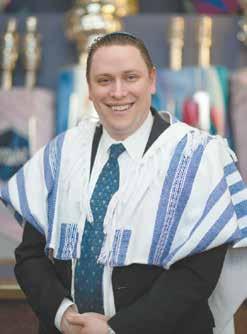
Rabbi Jeffrey Abraham named senior rabbi at B’nai Amoona
 BY ELLEN FUTTERMAN EDITOR-IN-CHIEF
It’s official. Members of Congregation B’nai Amoona decided unanimously at their annual board meeting on May 15 to confirm Rabbi Jeffrey Abraham as the synagogue’s next senior rabbi.
“The unanimous vote was a tremendous affirmation of all the hard work we have worked on to bring the B’nai Amoona community together,” said Abraham. “My wife, Lauren, my three children and I feel incredibly fortunate to be part of the B’nai Amoona community as well as the St. Louis Jewish community. This is the type of community we only could have dreamt of becoming a part of. We are looking forward to many many years of prosperity and growth together.”
Abraham noted on social media Tuesday that he is the sixth person to be named senior rabbi in the 139-year-old history of B’nai Amoona.
In March, B’nai Amoona Board President Jeff Singer said the synagogue’s personnel committee had recommended Abraham for the role, after longtime Senior Rabbi Carnie Rose stepped down
in October to become the CEO of the Jewish Community Center in Cleveland. At that time, after the board unanimously agreed to move forward with a vote at the congregation’s annual meeting in May, Singer felt confident that the congregation
would give their approval.
“Many congregants spoke about the positive relationships they’ve developed with the entire Abraham family, and what an asset they are not only to B’nai Amoona, but to the entire St. Louis Jewish community,” said Singer. “The special bond that Cantor Sharon Nathanson and Rabbi Abraham have developed, along with our amazing professional staff, will continue to strengthen B’nai Amoona’s presence as a warm and welcoming congregation.”
Singer added: “One lay leader remarked, ‘The theme of b’yachad (together in Hebrew) was inspirational and so uplifting. I have not seen our congregants so happy as a group and so individually optimistic as they were last night.’”
Abraham, who grew up in Albuquerque, N.M., attended the Jewish Theological Seminary in New York and has been in the rabbinate for 12 years. Lauren Abraham is the director of Student to Student, a school-based teen peer program run by the Jewish Community Relations Council that teaches non-Jewish high school students about Judaism. The couple’s three sons are Benny, 12, Henry, 10, and Joey, 5.
Veterans’ Vietnam War history gets personal for Bais Yaakov students
 BY BILL MOTCHAN SPECIAL TO THE JEWISH LIGHT
When Esther Miller Bais Yaakov High School (EMBY) seniors began learning about the Vietnam War, social studies teacher Bradley Durnell knew exactly how to supplement textbook lessons. He asked eight Vietnam vets to talk to the students.
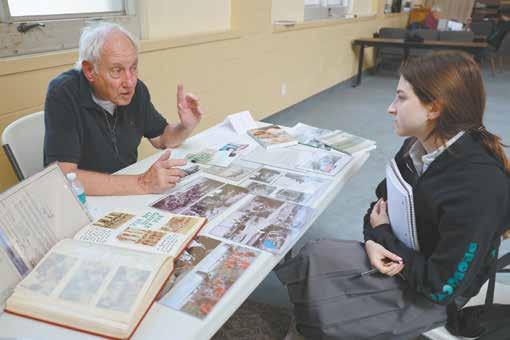
On May 4, the vets visited the school and had one-on-one conversations with students, who led the discussions.
Miera Wachsstock, 18, sat opposite Mike Rohan, 80 and said: “I want to know what your job was.” Rohan answered that he was half of a two-man crew on a fighter jet.
“I was a lieutenant, and I sat in the back seat with a stick so I could fly the plane,” Rohan said. “I was behind a major — if you had more time in, you got to sit in the front.”
At another table, Ahuva Brown, 18, closely inspected a photo of a young Bob O’Neill standing next to a large machine gun. “You operated one of these?” she asked. O’Neill, 77, explained that on one occasion, his 60-mm machine gun jammed.
“The guys figured out that if they could elevate the ammunition belt, they could fix it,” he said. “They found a C-ration can to put under the belt and it worked perfectly.”
Across the room, Sarah Sentell, 18,
asked Joe Bonfilio, a retired Air Force captain, about his Vietnam experiences. Bonfilio, 73, told her about how he had just finished serving 12 months in Vietnam and was back home in Boston waiting for his next orders.
“I was hoping for Germany or Spain, and they said, ‘You’re going back to Vietnam because there’s not too many of you guys who can handle explosives and weapons,’ so I spent another year there,” he said.
Before his Vietnam service, Bonfilio was a sophomore in college and had plans to become an architect.
“Every year, we had to fill out a deferment document, and the U.S. Department of Defense would provide a one-year deferment,” he said. “You had to pay your entire tuition upfront. That November, I got a letter saying, ‘Congratulations, you’ve been drafted. You have to report to the Army Induction Center.’ I went to the registrar and asked why I got it, and they said that after I submitted my paperwork, the secretary forgot to send it in to the government. That’s how I ended up in the military.”
Eventually, Bonfilio became a career officer in the military and at one point was assigned to monitor Minuteman III intercontinental ballistic missiles housed 10 stories below ground at Malmstrom AFB in Montana.
Page 4A May 24, 2023 STL JEWISH LIGHT stljewishlight.org LOCAL NEWS
Rushan Abbas will speak at the St. Louis Kaplan Feldman Holocaust Museum on June 1.
See HISTORY on page 7A
Rabbi Jeffrey Abraham
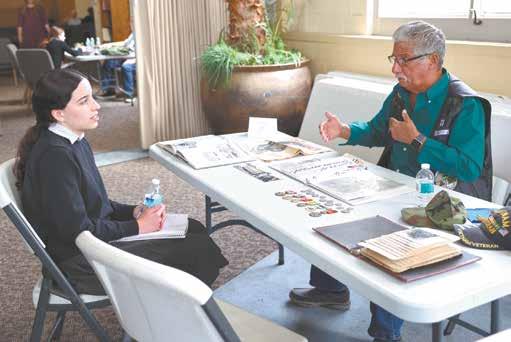
Above, Esther Miller Bais Yaakov High School student Sophia Rosenbloom speaks with Vietnam veteran John Lavin earlier this month. Below, student Sarah Sentell speaks with veteran Joe Bonfilio. PHOTOS: BILL MOTCHAN

May 24, 2023 Page 5A stljewishlight.org STL JEWISH LIGHT
NEWSMAKERS
Newsmakers is a compilation of the Jewish community’s newsworthy professional and academic accomplishments. Submit your news to news@stljewishlight.org. Call 314-743-3669 for more information. Newsmakers is compiled by Elise Krug.
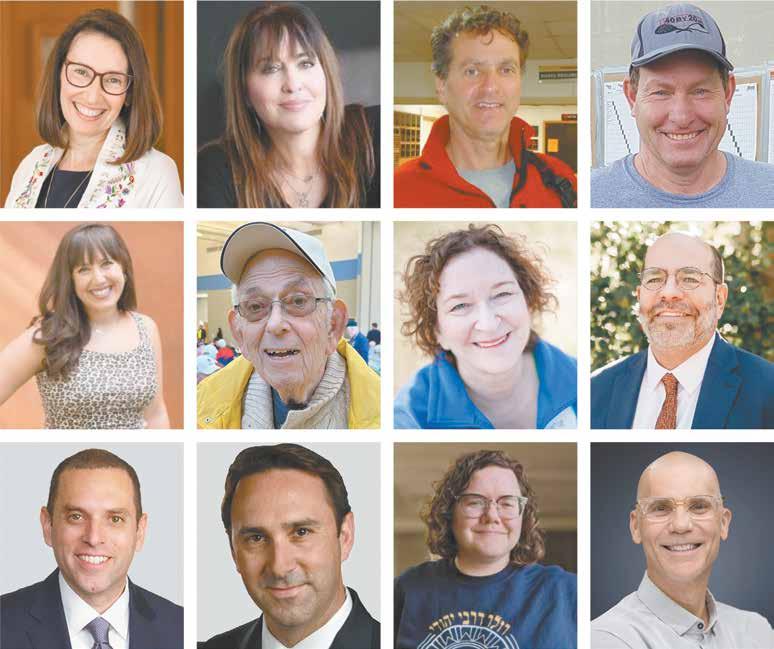
Rabbi Andrea Goldstein of Congregation Shaare Emeth received two degrees recently from Hebrew Union College - Jewish Institute of Religion: Interfaith Doctor of Ministry Program for Education in Pastoral Care and Doctor of Divinity, honoris causa, celebrating her 25 years in the Rabbinate.
Lisa Lipsitz, owner of Looks by Lisa & Co, opened a new studio in the Slavin Building in Clayton. Services are by appointment only and include hair and makeup for weddings, bar and bat mitzvahs, head shots, or any special occasion. Beginning in the fall, Lipsitz will offer classes geared towards women over 40, including skin care regimen, how to apply makeup and other topics. She is a member of Congregation B’nai Amoona.
Doug Cohen and Marty Hogan competed in the National Masters Racquetball Association national championships last month in St. Louis. The NMRA is exclusively for racquetball players in the 45-andover age groups. Cohen placed first in the men’s singles (45-55+). Cohen and Hogan placed 2nd in the men’s doubles (45+).
The St. Louis Jewish Community Center welcomes Chelsea Leon as the new director of Nishmah. Her first project will include a new Nishmah-sponsored trip to Israel as part of a project called the Momentum Journey. Nishmah, a program of the J, inspires, engages, and supports Jewish women through inspirational programming.
Sandy Palans was one of 55 veterans on board the 101st Greater St. Louis Honor Flight to Washington, D.C. He served in the army from 1956-1958 in Fort Huachuca in Arizona. Greater St. Louis Honor Flight honors area veterans’ service by providing an all-inclusive trip to Washington, D.C. to visit the war memorials built in their honor. Highlights of the one-day trip include visits to the World War II Memorial, the Korean War Memorial, the Vietnam Memorial and the Tomb of the Unknown Soldier at Arlington National Cemetery and the Lincoln Memorial.
At the J Associates recent annual luncheon, Myra Rosenthal received the

Mitzvah Star award. She was honored for her dedication and volunteerism to the Garden of Eden, which she co-founded 10 years ago. The garden is located on the Jewish Community Center property in Creve Coeur and produces more than 5,000 pounds of food annually exclusively for the Harvey Kornblum Jewish Food Pantry.
Brad “Chots” Chotiner will join the professional team at B’nai Amoona as the director of Youth Education and Engagement, beginning in August. In this
role, he will serve as director of the Meyer Kranzberg Learning Center and youth director. For the past nine years he was the director of the day camps and youth services at the J. Chotiner is a member of B’nai Amoona.
Michael Schwartz has joined Norton Rose Fulbright as part of a six-lawyer team from Bryan Cave Leighton Paisner. He focuses on mergers and acquisitions covering a range of sectors including insurance, life sciences, industrials, retail, food,
agribusiness and technology.
Michael Lourie was promoted to vice president of Strategic Marketing at BJC HealthCare. He attends United Hebrew Congregation.


Autumn Dennis begins a new role this month as administrative coordinator in the Washington University’s Department of Political Science and the Academic & Administrative Cluster. Dennis was previously director of Communications and Online Hospitality at Central Reform Congregation, where they remain a member.
Josh Allen, founder of Companion, started a podcast entitled “Baked-In.” His guests are industry innovators, and they discuss the unique ideas and values that are baked into their businesses and have led to extraordinary success. Allen’s upcoming season includes Chefs Kevin Nashan, Gerard Craft and Katie Lee Collier, chocolate king Dan Abel, Jr, and Explore STL vice president of communications Catherine Neville. Maxine Clark of Build-A- Bear and the Delmar Divine was the first guest.
Page 6A May 24, 2023 STL JEWISH LIGHT stljewishlight.org
BROUGHT TO YOU THIS MONTH BY:
TOP ROW, FROM LEFT: Rabbi Andrea Goldstein, Lisa Lipsitz, Doug Cohen and Marty Hogan. SECOND ROW: Chelsea Leon, Sandy Palans, Myra Rosenthal and Brad Chotiner. THIRD ROW: Michael Schwartz, Michael Lourie, Autumn Dennis and Josh Allen.
Young Israel of St. Louis plans gala dinner June 13

Young Israel of St. Louis will hold its Annual Dinner on Tuesday, June 13 at the Clayton Plaza Hotel in Clayton.
The shul will honor Jonty and Juli-Ann Felsher for their leadership at Young Israel for more than 30 years.
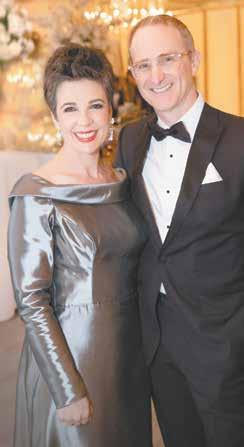
“For over three decades, since their arrival as newlyweds from Johannesburg in 1993, Jonty and Juli-Ann have been at the center of the Young Israel family, welcoming new members, raising their children here, supporting their children’s Jewish education at Epstein Hebrew Academy, and being ambassadors for Jewish life in St. Louis and particularly the Young Israel community,” a news release noted.
In addition to various board roles in the past, Jonty has served as Young Israel’s president for the past seven years, the congregation’s longest consecutive run as president. Young Israel is welcoming a new, incoming president, Max Oppenheimer.

Jonty is co-founder of RPI Therapy Services, a multidisciplinary rehab company providing Physical, Occupational and Speech Therapy and Wellness Services in outpatient clinics and senior retirement communities in St. Louis, the Metro East and Chicago. Juli-Ann is a realtor in St. Louis. The couple has three children, Joshua, Gabriel and Adam.
Rabbi Moshe Shulman of Young Israel praised the couple’s dedication to the shul. About Jonty, Shulman noted, “There isn’t a part of a Synagogue operation that didn’t benefit from Jonty’s dedication, care for details, and vision, from youth programming and adult education to board management and fiscal responsibility. He led by example, and that’s the
Report: Chesterfield man drove truck that rammed into White House security barrier
just north of the White House.
WASHINGTON — Police arrested a 19-year old man after he rammed a rented U-Haul truck into security barriers near the White House on Monday night. Reports said there was a Nazi flag inside the truck.
Police charged Sai Varshith Kandula of Chesterfield, Mo. with assault with a dangerous weapon, reckless operation of a motor vehicle, threatening to kill/kidnap/ inflict harm on a president, vice president, or family member, destruction of federal property, and trespassing, according to a statement by the United States Park Police. He is accused of intentionally crashing the truck into breach barriers at Lafayette Square in Washington, D.C.,
HISTORY
CONTINUED FROM PAGE 4A
The interactions were intended to bring the Vietnam lesson plan to life for EMBY students, Durnell said.
Police did not say what Kandula’s alleged motives were. However, WUSA9, a local TV news site, posted a photo of a Nazi flag on the pavement after the event, and The Washington Post cited a federal official confirming that the flag came from the truck.
A law enforcement official told NBC News that the suspect made threatening statements about the White House as he was being detained. The official said there were no weapons or explosives found inside the truck.
“There were no injuries to any Secret Service or White House personnel and the cause and manner of the crash remain under investigation,” Anthony Guglielmi, the Secret Service chief of communications, said in a statement.
Rosenbloom said she and her classmates planned to compare notes on what they heard.
“We’re going to discuss in class what we learned from the veterans and take advantage of the knowledge they shared with us from being in Vietnam,” she said.
strongest kind of leadership.”
Shulman said Juli-Ann is “the best ambassador we could have. She greets people with an extraordinary smile and makes them feel like they are instantly her best friend. Sometimes she serves literally as the first point of contact with the community, and we are truly blessed.”
For more information about the Young Israel gala, contact the shul office at 314727-1880 or email info@youngisrael-stl. org.
“It brings an understanding that history is something that is very much alive, not just something we discuss in class from a textbook, but it’s all around us on a daily basis,” Durnell said.
Pirchie Greenspon, EMBY secular studies principal, looked on as Vincent N. Ohlman, a former Army radio operator, explained his role in the Vietnam War to Sophia Rosenblum, 18. Ohlman held a photo of himself during his military service.
“He was your age,” and Greenspon said to Rosenbloom.

After the session with the veterans,
Later, Greenspon explained the value of the exercise for the students.
“They have experience talking to Holocaust survivors, their great-grandparents, who are people they know quite well,” Greenspon said. “That’s their frame of reference, and this is so much different.”

She said the veterans got value out of the experience, too, and they described it as a form of therapy. Rohan, the former Air Force pilot, agreed.
“I like in-person discussions and the stories that often come up,” he said. “It’s why I volunteer and talk to all kinds of people.”
May 24, 2023 Page 7A stljewishlight.org STL JEWISH LIGHT LOCAL NEWS
RON KAMPEAS JTA
636-532-0150 636-394-7515 314-878-1330 314-434-5900 Love,
delmargardens.com Kosher meals available upon request. Our Family Caring for Your Family with Love, Care, and Understanding since 1965.
Juli-Ann and Jonty Felsher
Care, and Understanding are the pillars of the Delmar Gardens Family. Caring and dedicated staff enrich the lives and health of our residents with state-of-the-art care and unending compassion through skilled nursing, rehabilitation therapy and memory care. Serving the growing needs of seniors for over five decades,that’s our family, the Delmar Gardens Family.
Veterans: Honoring the Jewish St. Louisans who served our country


talk about it. And my guess is it was also horrendous, what they saw in the hospital.”
Agress Sr., in an attempt to buoy the morale of his staff, regularly organized special dinners in the mess hall and, on one memorable occasion in 1941 while the hospital was in Naples, he arranged for a special concert after another officer picked up a new arrival from the U.S. In the Becker Library oral history, Agress recalled the other officer telling him:
“ ‘Hey, Colonel, I got a fellow, his name is Heifer, or something like that. He plays a fid dle, and the guys over at the airport told me he’s just arriving fresh from the United States. What do you think?’
“I said, ‘Just bring him by.’ So I had just finished dinner and I was sitting in the lab and in walks Jascha Heifetz with his accom panist. We just sent word out that there was going to be entertain ment tonight. … Heifetz didn’t know what the hell to do. He was shaking. I said, ‘Just be Heifetz. Just go out there and play.’ So he played and they wouldn’t let him get off the stage. They tore the handles off the seats and banged them just to keep him on. Finally,
I waved to him, ‘Come on, I think you’ve had enough.’ But it was a great experience to have people like that come through.” Agress happened to be a violin aficiona
His son said: “They would give transfusions to a limited number of soldiers who were going to have surgery. He pushed to have them get transfused well in advance
World War II, before she was born. Goldmeier, a member of Congregation B’nai Amoona and a 2021 Jewish Light Unsung Hero, has always been interested in history, and she has researched Leonard Hulbert.
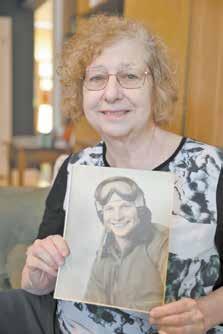
“Leonard was a tailgunner in a B-24 Liberator,” Goldmeier said. “Its name was the Lady Eve. On their third mission, they were bombing oil refineries near Dortmund, Germany, and the plane was shot down over Garbek.”

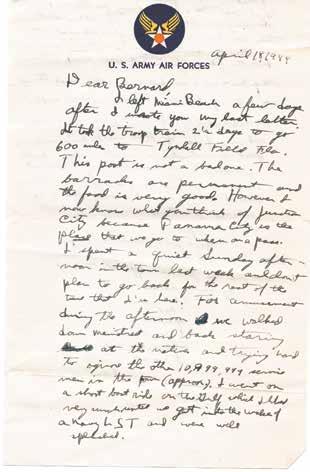
Hulbert, known as Len to his friends and family, was the youngest of three brothers who served in the military. The oldest, Dave, survived the war. He was slated to go to mainland Japan when President Harry Truman dropped the atomic bomb on Hiroshima and Nagasaki. The middle Hulbert brother was Bernard, a doctor who was stationed at the hospital in Fort Riley, Kan., as the admitting officer. Bernard Hulbert was Goldmeier’s father. He was close with Len and had a hard time talking about his brother after the war. He also kept a couple of letters from Len, but it was painful for him to read them, so he stuck them in a closet. Bernard died in 1998. Eventually, Laura Goldmeier asked her mother, Gertrude, about the letters. She knew the family kept them, but she wasn’t sure where. Gertrude Hulbert died in 2021, and while cleaning out a closet, Goldmeier and her brother found two of Uncle Len’s letters.
They offered a glimpse into the peculiarities of military life and reflected Len’s sense of humor. Ona passage that said that Tyndall Air Force Base in Florida was “almost like a vacation, except we have to get up at 5 in the morning.” In another description of his company striking a base (removing cots, weapons and other equipment), Len wrote that it was “no problem for strong (?) young men like us.”
sions. And it turns out that if you transfuse these severely injured soldiers and gave them more blood and plasma before they were operated on, they did much better. That was a major discovery. That’s what hospitals do all over the United States now. And that’s where it came from.”
Remembering Uncle Len
Laura Goldmeier was named after her Uncle Leonard Hulbert (her parents chose a name that began with L). But Goldmeier never met her uncle. He was killed in
Among the correspondence was a grim letter from the Department of Defense indicating that Leonard Hulbert was declared missing in action. It suggested that there were survivors from the Lady Eve and that families shouldn’t give up hope. Goldmeier said that letter is difficult for her to read, but the ones from her uncle helped her gain a better understanding of him.
She also posted a note on the B-24 Liberator website that said, “how proud I was of Leonard and how honored I was to be named after him.”
Page 8A May 24, 2023 STL JEWISH LIGHT stljewishlight.org
CONTINUED FROM PAGE 1A on select styles March 12–June 20, 2022 Rebates starting at $100* comfort and help lower your energy bills with insulating Hunter Douglas shades. savings available now. Ask for details. March 12 – June 20, 2022 from participating dealers in the U.S. only. Rebate will be issued in the form of a Virtual Reward Card and emailed within 6 weeks will be assessed against card balance 12 months after card issuance and each month thereafter. See complete terms distributed with Virtual Reward Card. rebate form. ©2022 Hunter Douglas. All rights reserved. All trademarks used herein are the property of Hunter Douglas or their respective owners. Victor Shade Company 10100 Page Ave Saint Louis, MO NEW LOCATION APRIL 1 11477 PAGE SERVICE DR. ST LOUIS, MO 63146 (314) 428-7979 www.victorshadecompany.com 11477 Page Service Dr. St. Louis, MO 63146 (314) 428-7979 www.victorshade.com SONNETTE® CELLULAR ROLLER SHADES on select styles March 12–June 20, 2022 Rebates starting at $100* Increase your comfort and help lower your energy bills year-round with insulating Hunter Douglas shades. Rebate savings available now. Ask for details. Manufacturer’s mail-in rebate offer valid for qualifying purchases made March 12 – June 20, 2022 from participating dealers in the U.S. only. Rebate will be issued in the form of a Virtual Reward Card and emailed within 6 weeks rebate claim approval. Subject to applicable law, a $3.00 monthly fee will be assessed against card balance 12 months after card issuance and each month thereafter. See complete terms distributed with Virtual Reward Card. Additional limitations may apply. Ask participating dealer for details and rebate form. ©2022 Hunter Douglas. All rights reserved. All trademarks used herein are the property of Hunter Douglas or their respective owners. Victor Shade Company 10100 Page Ave Saint Louis, MO NEW LOCATION APRIL 1 11477 PAGE SERVICE DR. ST LOUIS, MO 63146 (314) 428-7979 www.victorshadecompany.com SAME VICTOR SHADE FAMILY, NEW LOCATION!
TOP LEFT: Leonard Hulbert (far left) and fellow B-24 pilots TOP RIGHT: Laura Goldmeier shows her Uncle Len’s photo. BOTTOM RIGHT: A letter from Leonard to his brother Bernard.
LOCAL NEWS SIGN UP FOR THE LIGHT’S DAILY EMAIL NEWSLETTER stljewishlight.org/ newsletters
PHOTO: BILL MOTCHAN
2022-2023 Ohr Chadash
Teen Page Staff
Editor-in-Chief: Molly Levine
Staff members:
Georgia Bland
Noam Buch
Benjamin Kruger
Maya Sagett
Daniel Shanker
Bella Soyfer
Avital Vorobeychik
Katie Wallace
Ella Wertman
Advisor: Caroline Goldenberg
The road to understanding:
Why people of all ages should seek to understand different communities
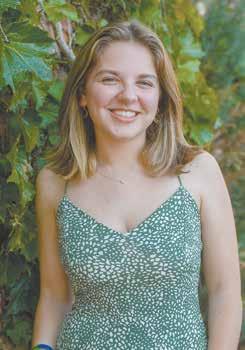
 BY BELLA SOYFER SOPHOMORE, LADUE HORTON WATKINS HIGH SCHOOL
When given the opportunity to expose themselves to cultures outside their own, some people may be uninterested, questioning why they should care. The simple answer is this: learning about other cultures helps to build an understanding of people around you. If more people strive to foster empathy for those different from them, humanity could reduce the number of hateful feelings and actions in the world.
Regardless of age, people from elementary school to adulthood should invest time into exploring outside of what they may have been taught or absorbed from their environment. Today, with the strong influence of the internet on our lives, it is easy to mistake one person’s opinion as fact, even if it is based on false information.
As younger people are still maturing, their own unique worldview is still devel-
oping, and it is easy to be influenced by those around them, including peers and parents. As a young adult myself, I have witnessed people my age make hateful comments without truly comprehending the consequences, merely because they heard it from their favorite celebrity or an influential adult in their lives. This is disheartening because many of these individuals have never actually interacted with someone from the community they are targeting, and it shows that they are unwilling to put effort towards learning about and accepting others.
Currently, rates of antisemitism are extremely high. Statistics from Jewish Community Partners, a Memphis-based organization committed to developing Jewish communities around the world and fighting antisemitism, report that while Jewish people make up only 2% of the U.S. population, 57.5% of all religiously motivated hate crimes in 2020 were aimed at Jewish individuals.
SENIOR REFLECTION SENIOR REFLECTION
BY MOLLY LEVINE SENIOR, MARQUETTE HIGH SCHOOL
The Jewish Light has always held a special place in my heart. For as long as I can remember, my family has stacked piles of Jewish Light newspapers on our living room coffee table. I fondly remember flipping through issues, completely absorbed by the diverse stories within the St. Louis Jewish community. At the time, I hoped to one day write stories as impactful as those I had so greatly enjoyed reading.
At the start of my freshman year, I joined my high school’s yearbook staff. While on staff, I learned the ins and outs of photography and design. But most importantly, I developed a passion for writing. As I approached my sophomore year of high school, I sought out opportunities to strengthen my journalistic writing. While flipping through a Jewish Light paper, something new caught my eye: Ohr Chadash. I immediately reached out to the Light’s teen page advisor, eager to embark on this new opportunity.
While on staff of Ohr Chadash, I have been fortunate enough to connect with incredible individuals throughout the St. Louis Jewish community and beyond. From interviewing local business owners to getting to know the 2021-2022 Shinshinim, I have had many opportunities to share others’ personal stories. In addition, it has been an honor to serve as editor-in-chief of the teen page this past
year. The role has afforded me both the opportunity to grow as a journalist while using my skills to help other staff members. I have enjoyed working with so many talented young writers and journalists along with an encouraging and insightful advisor.
Next fall I plan on studying journalism at the University of Missouri. I am grateful for the countless opportunities and skills I have gained while on the teen page staff, and I look forward to pursuing a career in journalism.
This statistic not only highlights the staggering rates of antisemitism, but it also expresses the normalization of discrimination towards Jewish people. Ultimately, this creates an environment where individuals feel unsafe expressing their Judaism outside their own homes. Jewish individuals have also come to expect discrimination and backlash for discussing Jewish issues and even participating in Jewish events. In order to promote understanding, encourage acceptance and make the world a safer place for the Jewish community, we must address the issues contributing to hateful behaviors.
A potential solution to combat this problem is for public schools to incorporate more opportunities for students to learn about various cultures and religions as well as their history. This initiative could help young people become more open-minded and prevent religiously motivated bullying within schools. Some programs already exist, such as clubs like
Jewish Student Union, which aims to provide a supportive community for Jewish children and educate non-Jewish individuals about Judaism as well as Student to Student, a teen-led peer program that goes into schools where there are few, or no Jewish students, and teaches them about Judaism.
In addition, some schools organize passport nights, where people representing various countries present information, performances and food from their cultures, which allows students to engage with diverse perspectives.
While these programs represent a positive start to promoting understanding among young people, significant changes are still necessary to truly have a more inclusive society. By embracing diversity and seeking out opportunities to engage with other cultures and communities, we can help build a world where acceptance and unity flourish.
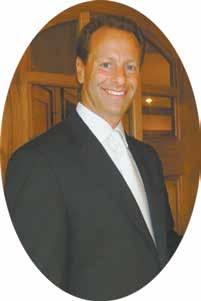
He’s an attorney, a cantor, a substitute teacher, an occasional television host and chairman of the secondary school committee of the University of Pennsylvania for eastern Missouri and southern Illinois. An outgoing personality with a zest for education, Howard Shalowitz has been volunteering with the Penn Alumni Interview Program since he was in his mid-twenties.
University of Penn alumnus shares advice for today’s college applicants
BY ARIELLA FELLMAN JUNIOR, LADUE HORTON WATKINS HIGH SCHOOL
Shalowitz, who attended the University of Pennsylvania as an undergraduate and for his master’s coursework, spent time interviewing students before being recruited by the Penn Alumni Interview Program while he was attending law school at Washington University.
“All I was doing was interviewing students who wanted to go to Penn … and then after a few years of doing that, they called me up from the Penn
admissions office and said, ‘Would you like to chair the committee?’” Shalowitz said.
Shalowitz, who has chaired the UPenn secondary school committee since 1989, has witnessed the program change and adapt over time.
“The program has changed dramatically over the last 35 years or so since I started doing interviews,” Shalowitz said. “When I first started, they would send out a form that had boxes that you handwrite and you fill in, and it would have carbonless paper underneath. So you would send in one copy by regular mail ….and this went on for years like that.”
As the committee has grown, so have the ways in which the program conducts its interviews.

May 24, 2023 Page 9A stljewishlight.org STL JEWISH LIGHT
See OHR CHADASH on page 15A
Molly Levine
Howard Shalowitz
OPINIONS
ABOUT THE OPINIONS SECTION
Viewpoints expressed in letters, commentaries, cartoons and other opinion pieces reflect those of the writer or artist, and not those of the Light. We welcome submissions of letters and commentaries to: news@stljewishlight.org
BY RABBI BRIGITTE ROSENBERG
The priestly blessing found in next week’s parashah, Naso, is one that has been an important part of our people’s story for three millennia.
In the days when the Temple stood in Jerusalem, the priests offered this blessing on behalf of G-d to the people. This tradition continues today in many congregations, where those who are descendants of the Kohanim, the high priests, ascend the bimah and bless the congregation. This blessing is also recited under the chuppah, when children are welcomed into the covenant and named, and it is the prayer bestowed upon children by their parents at Shabbat and holy days.
The three benedictions of this prayer are simple and yet incredibly powerful. The words ring in our ears as we consider the many special moments when we’ve heard them.
I recently came across a story that spoke of the extreme importance and power of these words.
It was the eve of Yom Kippur 1945, a few months after the end of World War II. The Klausenberger Rebbe, who had lost his wife and 11 children in Auschwitz, was staying in an Allies-run displaced persons camp in Germany and was preparing himself for the holiest day. All of a sudden, there was a knock on the door. A young girl came in and said, “Rebbe, I do not have a father anymore. No one will be able to ‘bless me’ before Yom Kippur.”
You know, it is an ancient Jewish custom that every parent blesses their children on Yom Kippur Eve right before Kol Nidrei. It is one of the most moving and meaningful Jewish experiences: On the holiest night of the year, a parent puts their hands on the heads of their kids
Story about helping Ukrainian family warms the heart
In this frightening world with so many upsetting issues in the news, it was heartwarming for me to read about Lynn Wittels and her generosity in helping the Ukrainian family whose son, Nikita, needed surgery here. She reminded me that I am very proud to be a member of the St. Louis Jewish community!
Marcia Weber St. Louis County
Yom Yerushalayim commentary resonates with readers
Having just come back from Israel, I really appreciated reading the May 10 op-ed “Yom Yerushalayim: A day of glory, gratitude and remembrance” by Rabbi Ze’ev Smason and Rabbi Yonason Goldson. Traveling through the biblical heartland of Israel to Mt Gerizim (Har Bracha) and Mt. Eval; seeing Shchem/Nablus, the burial place of Joseph; Shiloh, the site of the Tabernacle (and first spiritual capital of Israel for 369 years); Jerusalem and the city of David; and Hebron, the city of Abraham. The archeology, the history and the Jewish connection to the land is so palpable, I recommend that everyone do it.
I would also suggest that we refer to it as Judea and Samaria so we remember, and we remind the world that the Jewish people are connected to this area of Israel, too.
Rabbi Yosef David St. Louis
Thank you for publishing the commentary by Rabbi Ze’ev Smason and Rabbi Yonason Goldson debunking the false claims that Jews don’t belong in Israel. May the day come soon when Hashem makes these false claims seem ridiculous in the eyes of the entire world.
Barbara Olevitch University City
and blesses them.
But that year, so many children were left without parents. So this girl came to the Rebbe saying that she had no parents to bless her and that she wanted somebody to bless her.
The Rebbe put his hands on her holy head and blessed her the way a parent blesses his daughter on the eve of Yom Kippur. With tears in his eyes, he told her how precious she was, what a gift she was, how much he was praying for her bright future:
“May G-d bless you and protect you. May G-d’s countenance shine upon you and give you grace. May God lift you up and grant you peace.”
Five minutes later, there was another knock on the door. It was another girl, again without parents, again with no one to bless her before Yom Kippur. Again, the Rebbe went through the same routine. He put his hands upon her head, and he blessed her the way a parent blesses his daughter.
This repeated itself again and again. The orphans kept on coming, and the Rebbe attended to each of them, as though he was their parent. That eve of Yom Kippur, the Rebbe blessed more than 80 orphaned girls. He placed his hands on each of them and gave them the love, the undivided attention, the confidence children yearn for so deeply.
I love this story and the way it illustrates the power not only of the words of this blessing, but the real power of having someone bestow a blessing on you.
In the Torah, just before we read the words of the blessing, it says: “Speak to Aaron and his sons: Thus, shall you bless the people of Israel.” And following the blessing, we read, “Thus they shall link My name with the people of
Israel, and I will bless them.”
Truly, the power of this blessing is that we bring G-d into this world, and we bring G-d close to us, when we bestow blessing upon each other, whether it be these words or others.
On Friday nights when our family gathers to welcome in Shabbat, we always bless our kids with the priestly benediction. Over the years, our kids have learned to recite the blessing along with us, and it is really our family — parents and children — blessing each other. It is a moment of appreciation and acknowledgement for one another and for life.
While these are words that are cherished by other faith traditions that read Torah and the Hebrew bible, I cannot help but think about how Jewish these words are, how special it is that our tradition allows us to bestow blessing upon each other. Yes, these are words calling upon G-d to bless us and be present in our lives, but the words, from the very beginning, have been spoken by people.
Jewish tradition says: We are now the priests. We are able to bless and receive blessing.
On this Shabbat, pause for a moment and offer these familiar words of blessing. Bestow them on those who are closest to you — family, friends, even pets. And open yourself up to receiving blessings, those in the form of words, and those in the form of acts of kindness and love that are all around you.
May the blessings that we bestow and receive help to bring peace to our world.
I want to commend the St. Louis Jewish Light for printing in its May 10th issue the historically informative article by Rabbis Ze’ev Smason and Yonason Goldson about the legitimacy of Jerusalem as well as Israel itself. We need to be reading more articles of this nature so that all Jews are educated to the facts and able to hold their own in any debate.
Too many people both here and in Europe especially have become swayed by the “victimization” of those in the refugee camps who for decades have remained pawns of Israel’s hostile Arab neighbors. The fact that our own United States took land from the indigenous people here, as did the Australian government do to their Aboriginals, has never been condemned by the United Nations, nor led to boycotts, and our histories were made by settlers who never had ancestors living on the land!
The rabbis’ commentary contains the facts that prove that Israel historically and rightfully has long been Jewish territory, and that knowledge is essential to continue our struggle as a Jewish people. Please continue to print more and similar articles on the opinion page.
Linda Shore Creve Coeur
House vote on Israel resolution
Regarding “Rep. Ann Wagner’s resolution honoring Israel’s 75th passes. Rep. Cori Bush among 19 voting against” (published online, April 26): Again U.S. Rep Cori Bush, D-Mo., has shown utter disdain and contempt for the state of Israel by voting against a resolution praising the Jewish state and its accomplishments since declaring its independence in 1948.
Bush has supported the Boycott, Divestment and Sanctions (BDS) movement against Israel, and she has failed to condemn the murders by Palestinians of innocent Israelis.
Her actions are truly egregious and show a complete lack of knowledge and understanding for Israel, which has continuously defended itself against Palestinian ter-
rorism for the past 75 years. Apparently, Bush has forgotten the many times Israel has attempted to make peace with the Palestinians but has been rebuffed and met with stubborn resistance.
That said, Israel will continue to thrive and flourish knowing that the overwhelming majority of the world’s population supports its democratic ideals and its right to defend itself against those enemies who seek to destroy it.
Gene Carton Clayton
Community’s response to antisemitism
In a famous 1927 concurrence, U.S. Supreme Court Justice Louis Brandeis famously posited what has become known as the “Counterspeech Doctrine.” In America, we don’t correct falsehoods and fallacies by muzzling the speaker, but by challenging them with superior counterarguments.
“If there be time to expose through discussion, the falsehoods and fallacies, to avert the evil by the processes of education, the remedy to be applied is more speech, not enforced silence,” Brandeis said.
I wish the Israeli American Council (IAC) had heeded Brandeis’ wisdom in fashioning a response to the Parkway elementary school anti-Israel poster incident. (“Highcroft Ridge Elementary combating antisemitism after International Night incident” Jewish Light, originally published online on May 16).
The IAC chose “training” the school’s faculty to mandate student silence, rather than leading a larger debate on the content of the posters, which among other things, wrongly states that Palestine was formed in 1948 and disparages the purpose of an entire people as being based solely on a state of resistance to Israel (“to exist is to resist”). Aggressively it alleges Israel practices ethnic cleansing and genocide.
These accusations should be examined in the light of
Page 10A May 24, 2023 STL JEWISH LIGHT stljewishlight.org
D’VAR TORAH — PARASHAT NASO
Submit letters to news@stljewishlight.org
See LETTERS on opposite page
In bestowing blessings on each other, we come closer to G-d
Rabbi Brigitte Rosenberg serves United Hebrew Congregation and is a member of the St. Louis Rabbinical and Cantorial Association, which coordinates the d’var Torah for the Jewish Light.
LETTERS TO THE EDITOR
Staying up all night on Shavuot is about going all in
BY RABBI SHLOMO ZUCKIER JTA
This story originally appeared on My Jewish Learning (myjewishlearning.com).
The holiday of Shavuot, which begins at sundown this year on Thursday, May 25, is understood by Jewish tradition to be the time when God gave the Israelites the Torah at Mount Sinai. It is traditionally celebrated with dairy foods and intensive Torah study, with some staying up all night to learn (a practice likely fueled by the advent of coffee in the 16th century). These all-night study sessions, known as Tikkun Leil Shavuot, are held by Jewish communities of different denominations and geographies and are the only widely observed Jewish ritual involving staying up all night. Though the custom is widespread, there are few classical sources to support it. So why do we do it?
On its face, the connection is obvious. Shavuot celebrates receiving the Torah, so of course we would honor Shavuot with abundant Torah study. But upon reflection, this reason seems less than convincing. How high is the quality of Torah study in the middle of the night? As the hours
tick by, is anyone even paying attention to the teacher? Many people load up on sugar and caffeine, perhaps ill-advisedly, just to get through it. This wouldn’t seem like the best way to pay tribute to Torah.
A more common explanation is that Tikkun Leil Shavuot is precisely that — a tikkun (literally “rectification”) for what went wrong on that original Shavuot at Sinai. The Israelites, according to this theory, slept in on the day they were meant to receive the Torah. In a sort of penance for that failing, we make sure not to miss Shavuot morning by pulling an all-nighter the night before.
But this seems potentially counterproductive. If you’re worried about sleeping in and missing a morning meeting, staying up all night doesn’t quite do the trick. It’s overkill, and may actually undermine your goal. You might manage to be physically where you need to be, but at the cost of any sort of mental presence. What is the value of being present for the giving of the Torah if you’re incapacitated from sleep deprivation?
I would like to suggest an alternate explanation, one focused less on learning and preparedness and more on the experience of receiving the Torah. The goal of Shavuot night is not Torah learning — one
Want to get rid of guns? Start with those who regulate them.
BY STACEY NEWMAN
can study Torah any day of the year. The goal is to experience something of the radical encounter with God at Sinai.
In the book of Exodus, we find this description of what transpired as God descended on the mountain:
And the entire people saw the thunder and lightning and the sound of the shofar and the mountain in smoke. The nation saw, they trembled with fear, and they stayed at a distance. They said to Moses, “Speak to us yourself and we will listen. But do not have God speak to us or we will die.”
In the Torah’s telling, the encounter with God was an immersive experience. As if attending a concert with overwhelming audiovisual components, the people are at first entranced and then overwhelmed by what they’re experiencing, backtracking in fear. They are so overpowered they are unable to distinguish between the senses — hence they “saw” the “sound of the shofar.” Overawed by all of this, they beg off, asking to have Moses serve as an intermediary rather than encounter God directly again.
This should not be surprising — it makes sense that an encounter with God should be overwhelming, an experience that scrambles the senses and shifts one’s consciousness. And that’s what we’re look-
ing for on Shavuot. Tikkun Leil Shavuot isn’t primarily an opportunity to learn, nor a chance to fix some millennia-old mishap. It is meant precisely to simulate that total immersive experience.
We do that by occupying ourselves entirely with Torah — and nothing else (OK, maybe some cheesecake too). We learn until it hurts, going at it until we just can’t anymore. Depriving ourselves of sleep brings our bodies into the experience and inevitably effects a shift in consciousness. Taken together, this practice creates an intense experience, an all-encompassing engagement with God and Torah — just as the Israelites experienced at Mount Sinai.
Yes, you might have a headache in the morning, but some hangovers are worth it.
What to make of Tucker Carlson — and other journalists today
BY MARTY ROCHESTER
Exactly 23 years ago on Mother’s Day, I marched in the Million Mom March alongside numerous Jewish organizations in Washington, D.C. after my firstgrade daughter went on national television talking about her fear of guns in her school.
Nothing has changed.
Gun violence is our accepted normal and no one is safe. Shootings happen every day, somewhere. But you know that.
The Gun Violence Archive, the national entity tracking gun violence stats, reports we have had 232 mass shootings to date in 2023. By the time you read this, the number will be more.
Yet the self-professed pro-life party which has controlled the Missouri state legislature since 2002 and now controls every statewide office, refuses to do anything sane. Regardless of who lobbies them or testifies in Jefferson City, including police chiefs, ER surgeons, faith leaders and gun violence victims, the majority party in Missouri answers only to gun worshippers.
In 2000 the gun lobby, helmed by the National Rifle Association (NRA), had billboards in south St. Louis proclaiming they would have an office in the White House if George W. Bush was elected. After being declared the president, the NRA moved in as promised, after successfully commandeering Bush’s entire political party, all the way down to the state level.
Ten years later in 2010, once sworn into office in the Missouri House as a known anti-gun violence activist, I became the lone legislator willing to argue against insane gun bills. I was a small voice in the wind with the majority in the chamber supporting loosening gun laws, mak-
LETTERS
CONTINUED FROM OPPOSITE PAGE
ing it easier to own and carry guns. Everywhere.
These are the cold hard facts.
Often with Democratic votes (their names are public record), the Missouri legislature legalized machine guns and short barreled rifles, permit-less carry anywhere of guns and “stand your ground” laws allowing one to shoot first, then ask questions. They took away municipalities rights to govern their own guns and after several years of attempts, passed the Second Amendment Preservation Act in 2021, nullifying federal gun laws in the state. Governor Mike Parson signed the Act into law, promptly inviting a Justice Department lawsuit, only to have a federal judge recently declare Missouri’s law unconstitutional.
The political party in charge isn’t finished. But neither are people being shot. The party in charge now wants guns in churches, guns on buses and more guns in our schools. Their answer is always the same — more guns.
We thought they would change with Sandy Hook. Or with Las Vegas, Parkland, Buffalo or Uvalde. Or any of the others that literally made us too sick to watch news coverage and fear going anywhere.
The most non-sensical? People in our
“You are entitled to your opinion. But you are not entitled to your own facts.”
— Former Sen. Daniel Patrick Moynihan
As you have probably heard, Fox News anchor Tucker Carlson is off the air. In my judgment, Carlson and his former colleagues at Fox News are not really journalists. They certainly do not represent serious, objective, professional journalism.
But that can be said of most of Tucker’s contemporaries in today’s newsrooms, no matter print or electronic, conservative or liberal.
I include here the three traditional broadcast TV networks — ABC, CBS and NBC; CNN and MSNBC; the New York Times, Washington Post, and other national agenda-setting media.
Can you expect factual reporting any more from Rachel Maddow or Morning Joe or Joy Reid than from Tucker or Hannity or Laura Ingraham? What about Lester Holt and Norah O’Donnell, who simply cover the stories and read the words their shows’ producers feed them? Where are Walter Cronkite or Huntley and Brinkley when we need them?
The simple reality is that virtually all news media today are hopelessly biased, promoting agendas of the left or the right, well beyond whatever leanings they may have had in the past. Opinions increasingly blend easily with what are presented as facts.
My observation is hardly new. Ted Koppel noted “the death of real news” long ago ( Washington Post, Nov. 14, 2010). But things arguably have gotten even worse over time.
Although bias is media-wide, it is fair
We’ve been here before. Jewish St. Louisans and Parkway residents will remember well Parkway’s antisemitic 2008 “Hit a Jew Day” debacle.
to say that liberals dominate the media landscape far more than conservatives, except perhaps for talk radio. The Pew Research Center for the People and the Press found that five times as many national journalists identified as liberal than as conservative (Kim Holmes, “The Closing of the Liberal Mind”). Tim Groseclose, in “Left Turn: How Liberal Media Bias Distorts the American Mind,” writes that “in a typical presidential election, Washington correspondents vote about 93-7 for the Democrat, while the rest of America votes about 50-50.” There is a great deal of empirical evidence supporting Groseclose’s conclusion about the predominant liberal bent of news media in the United States.
Whether the bias is from the left or the right, it is a sad commentary on the state of American journalism.
I used to think that one exception, where one could find objective, serious reporting and analysis of events, was the “PBS News Hour,” which always had a slight liberal tilt but was relatively balanced compared with its competitors. However, even the News Hour has drifted further left over time, not only in its growing coverage of race, gender and
For Jews, the world will remain full of our critics – that is the design of it. Are we scared to engage with the inevitable elementary school student critics of Israel? Do we really believe “enforcing silence” is persuasive?
Although our parent-led movement made some waves, we were not strong enough to get the then-intervening Jewish organization — the Anti-Defamation League — to provide anything more than a tepid response.
There were physical attacks against Jews because they are Jews. And our community leaders went weak-kneed.
Now, in the face of mere words, we demand silence.
That only proves we are weak-kneed. But we need not be.
Let’s ask Parkway schools to trade in ideas; to teach our children how to think freely, and to engage in open, peaceful dialogue.
J. Martin Rochester, Curators’ Distinguished Teaching Professor of Political Science Emeritus at the University of Missouri-St. Louis, is the author of 10 books on international and American politics. nations that have actually performed one or the other egregious act. Are they true? If not, why not?
As Justice Brandeis advised, let’s respond to antisemitism with “more speech,” seizing the opportunity to correct the record and respectfully change minds.
Edward “Coach” Weinhaus Creve Coeur Clayton
May 24, 2023 Page 11A stljewishlight.org STL JEWISH LIGHT
OPINIONS
Rabbi Shlomo Zuckier is a scholar of ancient Judaism and a Research Associate at the Institute for Advanced Study in Princeton.
en,
See ROCHESTER on page 15A See NEWMAN on page 15A
Stacey Newman, a former Missouri state representative, is the executive director of ProgressWom-
a statewide social justice group focused on justice and equality issues.
JEWISH LITE
JEWISH CROSSWORD PUZZLE
By Yoni Glatt, koshercrosswords@gmail.com
| ‘Shavuot Ingredients’ Difficulty: Medium Across
1. Write
4. Notable woman in the midbar
7. Brutal
13. Part of N.C.A.A.: Abbr.
14. Fox contributor Horowitz
15. Not on the level?
16. *Shekels
18. *Section for Itzhak Perlman
when visiting the Kotel
20. “___ minute!”
21. “The Office” receptionist after Pam
22. Just a number, it’s said
24. BP competitor
27. *Holy city
29. Wiseman or Goodman
31. *Passover sacrifice option 32. Fill
coins, in Israel
36. Bad QB pass
39. Common Shavuot ingredient that connects to the starred clues in this puzzle
41. Cone preceder
42. Babysitter’s handful
44. Ripken and Coolidge
46. *It can be seen on the Israeli flag
47. “Oh man!”
49. *Like Ida Hoff
53. First name on the Supreme Court
55. Not neg.
57. Pour out
58. Jerusalem’s Jaffa and Zion
60. Frog, for one
62. *Many a kibbutznik, e.g.
64. *Bungalow
65. Some “Obi-Wan Kenobi” characters
66. Received
THIS WEEK’S PUZZLE ANSWERS
67. 2.0 GPA
69. Brew letters
70. Kitchen amt.
Down
1. Some are strict about wearing one when davening
2. Miscellaneous group
3. AKA Rabbi Isaac al-Fasi
4. Nothing, in Toledo
5. Warren Buffett’s home
6. Basic need, essentially
7. Ancient Persian city
8. Bit of shtick
9. Film spoofed by “High Anxiety”
10. Airplane pilots
11. X or Z
12. London lang.
17. Those named after Yaakov’s daughter
20. Tiny
23. Happiness
25. Very bright Jew
28. Common dinner item on Tuesday, for some
30. Their goals are out of this world
33. “No ___ Traffic”
35. Gets along well
title role
38. Western remade by the Coen brothers
40. It bounces back
43. Changes the title
45. Be visibly nervous
sion on
51. Jerusalem has has its share, unfortunately
52. Non- Jewish actress who has played several Jewish characters
59. “Rogue One”
heroine Jyn
61. Blueswoman James
62. Mi-sol go-betweens
63. The “A” in 65-Across
36. Words after “Let”, in song
54. Pitch ___ (camp)
19. What some do
Find the answers to this week’s puzzle by visiting the following link: http://bit.ly/0524-crossword

34. Near worthless
68. Begins with enthusiasm
26. Palindromic German name
STAND STRONG, LIVE FULLY:OUR FREE BALANCE GUIDE IS YOUR KEY TO ENHANCED MOBILITY
By: Dr Beth Templin PT DPT GCS Geriatrics Physical Therapist
If you've noticed you aren't as steady on your feet as you used to be, it's tempting to think that it's just a normal part of aging You may think that because "everyone" your age seems to be having the same trouble as you that it's something you will have to learn to live with
You may not know when it was that you started to lose your confidence and when you started to worry about every step you take, but now it s starting to limit what you re able to do If this is happening to you, you're not alone We hear these types of things all the time In fact, Balance Issues are the most common problem we see at HouseFit
Most people realize that their balance won't magically get better on its own, but they still don't take action It might be because they don't know what steps to take to make their balance better OR they don't truly believe balance can be improved "at their age" Fortunately, there are several options to get you back on your feet again
Over the last 17 years, I ve worked with hundreds of clients who’ve had a fall (or several), and I’ve been able to help them get their lives back In working with so many clients, I’ve been able to put together a very helpful Guide
“How To Decrease Falls: Helpful Tips To Keep You Steady On Your Feet”
Inside this special guide, I share detailed information, such as:
37. 1994 Jodie Foster
48. Letters than help you get from Akko to Eilat
50. Make an impres -
56. “John B,” in song
64. “Avatar” spec. effects
Top
3 factors that cause falls and how to minimize your risk in
each area
The 4 parts of balance that work together to keep us steady and how to find areas of improvement
How to “Test Yourself” to find out if you're at risk for a fall Simple exercises you can do at home to start improving your balance AND much more!
I want to make this guide available to you absolutely free of charge! To claim your free copy, simply call my office at (314) 939-1377 or visit www housefitstl com/balanceissues-journey to download the report directly to your computer
If you’re ready to start taking positive steps toward regaining your balance and an active lifestyle, this free guide will let you to start this process with confidence!
jewishemployment@mersgoodwill.org




Page 12A May 24, 2023 STL JEWISH LIGHT stljewishlight.org
HouseFit 3 8 0 9 L e m a y F e r r y R d S a i n t L o u i s , M O 6 3 1 2 5 ( 3 1 4 ) 9 3 9 - 1 3 7 7 i n f o @ h o u s e f i t s t l c o m w w w h o u s e f i t s t l c o m
ADVERTISEMENT
R 1 A 2 M 3 E 4 N 5 P 6 R 7 O 8 J 9 A 10 R 11 B 12 A 13 E 14 M I L Y H 15 E R O L 16 O R I B 17 I S S E L 18 O F S H T 19 I S E L A 20 N T E O 21 N I O N S H 22 A S T 23 O E A 24 G E D 25 A E 26 E 27 R R N 28 O S H 29 F 30 O R J O 31 S 32 H 33 O 34 T S A 35 Y E E 36 R I E T 37 R 38 I 39 P S C 40 G I S 41 C A R Y S 42 A R A O 43 F A K 44 I T K 45 V E L L 46 F O R M 47 E L I 48 S 49 P 50 S 51 O F A 52 S K P 53 E A I 54 S 55 R 56 C 57 R E 58 A 59 S E P 60 H I L S 61 C H M 62 O O Z E O F B 63 O O Z E H 64 O E S A 65 R O N C 66 O N E S A 67 T A N D 68 A N S C 69 R E S T PREVIOUS PUZZLE ANSWERS
Tips for parents whose kids struggle to make friends
BY DR. RICHARD LAZAROFF
Recently, a friend posted a video of a popular motivational speaker discussing why some children struggle to make friends. He concluded that it was a parent’s job to “maximize the social attractiveness of your children — because they need friends — if you dislike them, other people will.”
My friend agreed with his man’s opinion, for the most part, suggesting children who are kind, understand their limits, display good manners and know the world is not just about their wants and desires are more likely to make friends.
This confused me. I agree with some of the sentiment, but I believe it missed the mark on why some children struggle to make friends and, in addition, it suggests that a parent has failed in their parenting (to do their job).
I, too, believe in intention. Intentional parenting plays an enormous role in outcomes for children. I, too, believe that parents should instruct their children on kindness, empathy and self-awareness.
But usually, a child with few friends is not unlikeable. And what a shame for this speaker to suggest that any parent would ever “judge” their own child so harshly. It should also be remembered that one or two friends is often sufficient for many children. Kids just aren’t programmed to be the most popular in the class.
In my experience, children with few close friends fell into several categories. Some were simply shy. Shyness is thought to be genetic. A shy temperament is associated with social anxiety. Though a parent can attempt to “coach these children up” with scripts for social interaction (like how to greet your guests at a birthday party), this coaching can produce additional anxiety in your child.
Other children struggle because of an inability to read social cues. This skill can develop over time, but again, just like being a fast runner, some are born to run and some less so.
Impulse control is often seen in children diagnosed with ADHD (Attention Deficit Disorder with Hyperactivity) and disruptive behavior disorders. These children can struggle in waiting to take their turn and they are prone to angry outbursts.
So what is a parent to do?
1. Please don’t judge your own child. You may have been among the most popular kids in your class, but not every child
wants that status or can maintain it. In some measure, accept your child for who they are.
2. Schedule play dates with another child. Initially, having even two children over may be one too many as three kids often results in one child being left on the outside looking in. When possible, schedule play dates at your own home or somewhere your child feels comfortable. A “home field advantage” will put an anxious child in an environment where they are more likely to be successful.
3. Be nearby in case things become physically dangerous, but don’t interfere to prevent your child from some social failure. You can gently review any problem situations you observed with your child after the “friends” go home. We all learn
Dr. Richard Lazaroff is a retired pediatrician who practiced in St. Louis County for nearly 40 years. Married for 42 years, he is the father of two and grandfather of four and the author of “Some Assembly Required, A Guide to Savvy Parenting.” His latest book is the novel “Illumination.”
better, when learning from our mistakes.
4. Recognize and give words of praise to your child’s successes. Do not punish
failures.
5. Social scripts can be useful for kids who struggle with social skills, especially if your child is receptive to the help. Remember, it can add an additional stressor at times and certainly if your child is resistant to your suggestions.
6. Sign up for group programs with intrinsic structured activities. Sports teams, dance, scouts all value teamwork and respecting others. These activities are fertile locations to reduce the anxiety associated with larger numbers of children at one time.
7. If these suggestions are not working, talk to your pediatrician. They may refer you and your child to specialized group for social skill training or may wish to consider a medical diagnosis with treatment.


May 24, 2023 Page 13A stljewishlight.org STL JEWISH LIGHT HEALTHWATCH Healthwatch is a monthly feature focusing on a health- or fitness-related topic with a Jewish angle. The feature is published the second edition of each month. Have a suggestion for a potential Healthwatch subject? Email news@stljewishlight.org. Our specialty is superior heart care. Our specialty is you. At St. Luke’s Heart and Vascular Institute, you’ll find a full range of state-of-the-art procedures, treatments and services to keep your heart strong and healthy. Whether you’re dealing with a history of heart disease, need follow-up care, or are simply seeking a second opinion, our diagnostic tools and surgical expertise are second to none. Compassionate care Strong relationships that help you navigate every step of your health and wellness journey. Nationally recognized America’s 50 Best Hospitals for Cardiac Surgery™ by Healthgrades® 5 years in a row. Best technology In alliance with Cleveland Clinic’s Heart, Vascular & Thoracic Institute. Easy access Convenient locations plus same-day second opinions. Schedule your appointment at StLukesCare.com/Heart
OBITUARIES
Arky, Marcia A. (Spielberg) Boxerman, Burton Alan Frank, Esther Ruth
Horwitz, Marlene Kraus, Henry Steiner, Ronald E. Wolff, Alan G.
Everyone in our family can agree that she had a special gift. Each dish she lovingly prepared, carrying her unique touches, showcasing her passion and skill. Her incredible recipes and creations are cherished memories for all of us!
Families may submit an obituary for a loved one through the funeral home they work with or by using a form on the Jewish Light’s website: stljewishlight.org/submit-obituary

BURTON ALAN BOXERMAN, May 18, 2023
MARLENE
Although our beloved Marcia has passed away, her legacy will forever live within our family and resonate through generations to come. Her influence and presence will continue to thrive in the hearts and minds of her loved ones. She has left an unforgettable mark on our memories and shaped who we are as a family today.
Her journey in life will be carried on by her husband, Sydney Leonard (Lenny) Arky, married for 63 years!
And through her amazing children, who have so many of her beautiful qualities. A dear mother of Jeffrey Arky, Terri (Arky) Cross, Timothy Arky, Julie (Arky) Ocampo. Mother in law to Lynda Arky, Daniela Arky, Cameron Cross & Fabian Ocampo. Dear grandmother of Justin Arky, Alex Arky, Jacqueline Arky, Sophia Arky, Sienna Arky Sebastian Ocampo, and Kaylee Ocampo.
Beloved sister and sister-in-law of the late Joan Segal (Late Fred Segal), Suzie Flom, Skip Spielberg, Elaine Spielberg, and Sandra Spirtas. Beloved brother-in-law Arnold Spirtas, the late Fred Segal, and Alan Flom.
Daughter of the late Saul & Cecile Spielberg
Marcia was a very happy mother of our four children (5 if you count me) and my best friend of 63 years.
Marcia was known for her cooking (ask Dan Barutio & Mike Richter who ate at our house as much as our children) & our many friends that joined us for holiday meals & other gatherings.
Marcia was also a manicurist in a well known salon in St. Louis then decided to do the same in our house! She would love to have different colors every month and special gems or art occasionally. We all admired this artistic side to her.
She also loved to learn and grow as an individual. She continued to study once the children grew older and took more college courses to continue her passion in history and art.
Marcia was an active lady who loved to dance! She loved to go to aerobics classes and always wore leg warmers that would match the leotard. She also fell in love with Zumba and loved to wear the skirt with all the coins hanging down that made noises.
My Marcia & I loved to Dance wherever and whenever we could! At the house, weddings, clubs & gatherings that we went to.

One of Marcia’s other passions was hiking! She belonged to a hiking group that traveled to different countries as well as our local trails. She helped to start the original Happy Hikers with the Klevens & Sneller’s.
Whenever we traveled Marcia would always say in jest that she could live in that location, and see our future. That is why we have lived in Scottsdale for the past 33 years.
She built and nurtured our beautiful family! This amazing woman changed my life, she made it exciting, took me around the world, and we shared so many beautiful memories together. I will continue to share our stories and life experiences together until we meet again my love.
Beloved husband of the late Benita Boxerman for 63 years. Dear father of Sanford (Cynthia) Boxerman and Arlene (Leonard) Rosenberg. Loving grandfather of Hannah and Robert Boxerman, Benjamin and Matthew Rosenberg. Dear brother of Stuart B. (Susan) Boxerman and the late Lawrence H. (Susan) Boxerman. Beloved son of the late Herbert and Pearl Boxerman. Burton was born on December 21, 1933 and grew up in University City. He earned a B.A. in history from Washington University and an M.A. and Ph.D. in history from St. Louis University. Burton taught U.S. history and government at Ritenour High School for thirty years, where he also served as faculty adviser for the National Honor Society and the Scholar Quiz team. After retiring from teaching, Burton stayed active in education by supervising student teachers through the UMSL College of Education. Burton wrote many scholarly articles on American Jewish history, and co-authored with his wife Benita five books on baseball history (including two volumes on Jews and Baseball). Burton was also a frequent contributor to the St. Louis Jewish Light.
Besides teaching and history, Burton’s primary passions were politics, baseball, and Judaism. Burton served as the Democratic Committeeman for Creve Coeur Township for over 40 years, attended numerous Democratic National Conventions as a delegate or alternate (for candidates ranging from Jimmy Carter to Barack Obama), and was an avid collector of political campaign buttons. Burton was an ardent fan of the St. Louis Browns until they moved to Baltimore in 1953. He subsequently transferred his loyalty to the Chicago Cubs, and his devotion to his beloved Cubbies was exceeded only by his hatred of the Cardinals, whom he blamed for driving the Browns out of St. Louis. Burton was an active member of Shaare Zedek and later Kol Rinah. He served in a variety of leadership positions and was a faithful participant in the evening minyan.
Burton was a dog lover and, over the years, was an adoring “parent” to numerous pugs. In addition, Burton loved trivia. He organized many Trivia Night fundraisers at Shaare Zedek and Kol Rinah and, during COVID, treated his fellow virtual minyan attendees to a daily trivia question. He also loved a good delicatessen, and could frequently be found enjoying lunch at Simon Kohn.
A graveside service was held Monday, May 22 at Beth Hamedrosh Hagodol Cemetery, 9125 Ladue Road. Live stream available at www. rindskopfroth.com. Contributions in Burton’s memory may be made to Kol Rinah, 7701 Maryland Avenue, Clayton, MO, 63105; or to the Alzheimer’s Association, 9370 Olive Blvd., St. Louis, MO, 63132 or to a charity of the donor’s choice.
A Rindskopf-Roth Service
When you make your final arrangements in advance, you can plan a memorial that truly reflects your faith and passions. Whether planning for yourself or a loved one, rely on us to help you design a funeral that honors the customs and rituals you cherish.
ESTHER RUTH FRANK, May 8, 2023
Beloved wife of Edwin Frank (A’H); Loving mother of Dr. Bennett and Isabel Job Frank, Steven Frank, Vicki and Bruce Rosen and Lori Frank. Loving grandmother of Aryeh, Merah, Hillel, Yosef, Leah and Sarah Frank; Charlie and Sam Frank, Emily and Alex Rosen; Annie and Emma Cohen, and Gracie Frank.
A graveside service was held on May 10 at Beth Hamedrosh Hagodol Cemetery. Memorial contributions preferred to the charity of your choice.
Please visit bergermemorialchapel.com for more information. Berger Memorial Service
HORWITZ passed away peacefully on Wednesday, May 17, 2023 with her family and friends by her side.
Beloved wife of Richard Horwitz.
Dear mother of Lynn Horwitz and Julie Horwitz.
Loving sister of Larry (Connie) Bramoweth. Beloved daughter of the late Nathan and Florence Bramoweth. Our dear relative and friend.
Marlene worked in the healthcare industry for 33 years and spent her retirement years enjoying her nights at the casino. In lieu of flowers, the family requests that you consider a donation to the charity of your choice.
A Rindskopf-Roth Service
HENRY KRAUS, loving father of three, grandfather of six, and great grandfather of nine, passed away on May 11, 2023, at the age of 95.
Born Heinz Kraus on December 18, 1927, in Vienna, Austria, Henry immigrated to the United States in October of 1939 with his parents, the late Alfred and Friederike Kraus. Narrowly escaping the growing danger of the Holocaust, his family settled in St. Louis where Henry quickly adapted to American life. A true intellect, Henry quickly mastered English and within a few short years had obtained a degree in chemical engineering from Washington University in St. Louis.
Despite the challenges he faced in his youth, Henry lived a remarkable life full of intrigue and joy. In 1955, he married his college sweetheart, the late Shirley Kraus (1929-2017), with whom he was fortunate to share 65 years of marital bliss brimming with love, devotion, and above all close companionship. Together, they raised three children—Karen, Michael, and Gail—began a successful family-owned small business, and traveled all over the world, visiting every continent. For the last 35 winters, most of them together with his beloved Shirley, Henry resided in Naples, FL where he enjoyed golfing, playing bridge, growing orchids, and meeting with his international discussion group. He was especially proud of the Decade of Distinction Scholar Series that he and Shirley helped curate at Temple Shalom (Naples, FL) Henry will ever be remembered for his infectious laugh, generous spirit, supreme wit and zest for life. He loved spending time with his family, where his grandchildren and greatgrandchildren brought him immeasurable joy.
Henry is survived by his children Karen (Lloyd) Bill, Michael Kraus (Arlene Jantz), and Gail Kraus (Dean Bergstrom); grandchildren Stessie (Brian) Millner, Nathan (Jessi) Bill, Audrey (Justin) Smith, Tillie (Patrick) Dowd, Ben Bergstrom, and Calvin Bill; and great grandchildren Everly Timber, Rowan, Charleston, Linden, Lennon, Winifred, Donovan, and Matilda. He will be deeply missed by his family, friends, and all who knew him.
A Funeral Service was held Tuesday, May 16 at United Hebrew Congregation, 13788 Conway Road. Interment followed at Chesed Shel Emeth Cemetery, 650 White Road, Chesterfield. Memorial donations may be made to the Conservancy of Southwest Florida.
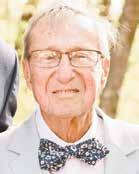
The family is immensely grateful for all the loving caregivers and friends who assisted him during his final days.
For more information and to view the service visit www.bergermemorialchapel.com. Berger Memorial Service
Page 14A May 24, 2023 STL JEWISH LIGHT stljewishlight.org
MARCIA A. (SPIELBERG) ARKY, April 9, 1940May 3, 2023
OBITUARY NOTICES UPDATED DAILY AT STLJEWISHLIGHT.ORG/OBITUARIES
OBITUARIES INDEX
Guide > The
Helpline® > Veterans Benefits > National
Bereavement
> 100%
plan ahead for peace of mind. BERGER Memorial Chapel 9430 Olive Blvd., St. Louis 314-361-0622 BergerMemorialChapel.com Richard W. Stein Emily Stein MacDonald M8335_4938_Berger_PNT_PrePlan_5-1x7_C.indd 1 8/23/17 5:28 PM A Monument Dedication For Rosenbloom Monument Co. ROSE RAYE REISS SUNDAY, JUNE 4, 2023 2:00 PM CHESED SHEL EMETH CEMETERY-OLIVE BLVD. A Monument Dedication For Rosenbloom Monument Co. MARVIN SANDWEISS SUNDAY, JUNE 11, 2023 11:00 AM BETH SHALOM CEMETERY-WHITE RD.
> Personal Planning
Compassion
Plan Transferability >
Travel Assistance
Service Guarantee
RONALD E. STEINER, May 14, 2023, at age 69.
Beloved husband of Cindy Wolff Steiner for 40 years; dear father of Laura and Dan (Klare); proud Grampster of Baker and Beckham Steiner; son of the late Jane and the late Arthur Steiner; son-in-law of the late William and the late Myra Wolff; dear brother-in-law of Andy Wolff (Dreama); adored uncle, cousin, friend and musician pal to many. Ron was a passionate family man first and foremost and a wonderfully talented musician.
Ron was born and raised in St. Louis and attended University City High School. He graduated from UMSL and enjoyed a long and successful career with Monsanto and later Pfizer. His unique sense of humor kept everyone laughing, and he was always full of surprises. Ron made the most of every situation and approached a new challenge with determination. He loved to travel and experience new places. Ron never met a stranger and returned from every journey having made a new friend. He was an incredible guitarist. As one of his good friends said, “Ron was a brilliant finger style guitarist and arranger. And an even nicer guy with a giant heart.” He had the honor of playing with some of the true greats, and performing at many special events.
Ron was an avid trout fisherman, loved a good hike and being in the great outdoors. He will be truly missed.
A funeral service was held Thursday, May 18 at Congregation Shaare Emeth, 11645 Ladue Rd. Interment followed at Chesed Shel Emeth Cemetery, 650 White Rd., 63017. Memorial contributions preferred to Kids Rock Cancer at Maryville University (kidsrockcancer.org) or Sarcoma Foundation of America (curesarcoma.org). Please visit bergermemorialchapel.com for more information. Berger Memorial Service
ALAN G. WOLFF, May 15, 2023
Beloved husband of Eleanor G. Wolff; loving father of Stacy Wolff Smart (Rob) and Todd Wolff; dearest grandfather of Madeline and Jackson Smart; dear brother of the late Craig Wolff (Ilana) and Tracy Hurwitz (Mike); dear brother-in-law of Pam Pearl (Robert); our dear uncle, cousin, and friend to many.
A graveside service was held Sunday, May 21 at Chesed Shel Emeth Cemetery, 650 White Road. Memorial contributions preferred to the Betty and Eugene Wolff Transportation Fund, c/o United Hebrew Congregation, 13788 Conway Road, 63141 or to the charity of your choice. Please visit bergermemorialchapel.com for more information. Berger Memorial Service
OBITUARIES
OHR CHADASH
CONTINUED FROM PAGE 9A
“Then they started doing it where you filled out a form online and you had to go into a portal with a certain code. And then you, as chairman, assign different people who are on your committee, and you hope that you have a lot on your committee because the number of applicants has gone significantly up since the late 1980s,” Shalowitz said.
When Shalowitz conducts an interview, he prefers to focus his questions on things that cannot be understood through grades and transcripts alone.
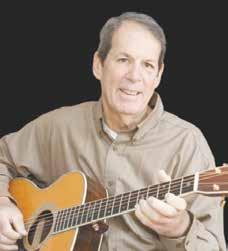
“I never ask about grades or SAT scores. I never do because I’m assuming that you’re applying to (the U of Pennsylvania) because you’re brilliant,” he said. “I need to find out what have you done during the four years (of high school) that sets you apart from other people?”
As is the case with many universities, the Penn Alumni Interview Program prefers to pair applicants up with interviewers who pursued similar interests during their
ROCHESTER
CONTINUED FROM PAGE 11A
other identity politics topics, but also in the slant it presents. Notice how, for its weekly political commentary, it relies on Jonathan Capehart of the Post, a far-left, super-liberal, rather woke commentator joined with David Brooks of the Times, who vacillates between moderate conservatism and centrism but hardly offers a clear counterpoint to Capehart.
Speaking of a counterpoint to Capehart, let me return to Tucker Carlson.
Although his style could have been less combative and more civil, I found myself agreeing with him on a lot of issues, especially on the turn liberalism has taken from mere political correctness to extreme wokeness in terms of no longer treating people as individuals but instead as rival grievance groups, thus undermining the fabric of the Constitution and the nation.
I shared his concern about border control (how we can allow millions of illegal aliens into our country in violation of the rule of law), the dumbing down of our
NEWMAN
CONTINUED FROM PAGE 11A
Jewish community, regardless of increased antisemitic threats and shootings in synagogues, continue to support and keep these legislators in office.
Conservative voters tell us at their doors they fully support Missouri’s majority political party because they want lower taxes. Yet, they are the first to join the outcry about rampant crime (guns are everywhere!) and not feeling safe in their neighborhoods, schools, grocery stores and athletic events.
The problem lives among us. Financial priorities of almost 30% of us are trumping our collective right to be safe and stay alive.
As a gun violence legislator, I had to stop consenting to media interviews in 2016 after the Orlando nightclub shooting, which killed 49 and injured 53 more. I had nothing left to say and was physically and emotionally sick. Voters said they were horrified but simultaneously voted in the officials who are hellbent on making it easier to get guns. I’ve carried guilt for not being able to muster more as the carnage keeps piling up. Meanwhile, my conscience won’t stop screaming.
Guns are now the leading cause of death for U.S. children and teens, according to the Centers for Disease Control. Let that soak in.
Why on earth won’t we vote those responsible out of office?
Why won’t voters stop supporting the
time in college. Kayley Lory, a senior at Marquette High School, was interviewed by Duke University and Washington University during her college application process.
“I think all the people who interviewed me, they do it based on your majors,” Lory said. “So all of them were in medical school here at WashU or SLU, and I liked that they had similar interests to me. I also liked that they tried to make it as entertaining as possible.”
Preparing for college interviews can surely be stressful, but a few important things remain central.
“The best thing that you can do before the interview is visit the school at some point before you apply,” Shalowitz said. “There’ll be things that will totally impress you about the school, and you won’t know about them if you’ve never visited. So number one, visit the school. It gives you way more information, and it gives you more to talk about during your interview.”
Sam Deutsch, a senior at Ladue Horton Watkins High School, took a very methodical approach when it came time for him to start thinking about college.
schools (how we can divert attention from the three R’s to an obsession with social justice and sexuality matters when half of our students in K-12 lack proficiency in reading), and many other problems.
I disagreed with Tucker strongly on some other issues, notably on foreign policy, where I found him strangely isolationist to a fault on Ukraine and many other subjects.
What about the recent controversy over Tucker’s airing of the Jan. 6 tapes and his characterizing the attack on the Capitol as relatively peaceful? On the one hand, I have called the mob invasion of one of our most sacred buildings “horrendous” and “inexcusable.” Tucker mildly condemned the act but did not go far enough to distance himself from it. On the other hand, there is merit in his argument that it is a bit of a reach to call the act an “armed insurrection,” as most media and the Jan. 6 committee did, given the fact that few were armed with lethal weapons and that it arguably could more accurately be called a riot than a serious attempt to take over the government.
Carlson rightly pointed out that there were more Capital police officers injured in the June 2020 George Floyd murder
political party which only offers token “thoughts and prayers”?
Why do we accept those who value “conservative values” more than keeping our kids alive?
The party in charge in Jefferson City has had over 20 years to do something about gun violence. They keep showing us who they are.
Never mind that almost 80% of Missourians, including 73% identifying as Republicans, support requiring back-
“Junior year I went on college visits, so I [got to go] see what the college was like. I saw like three to five colleges,” he said. “That way I would know what sizes, what kind of aspects I was looking for and then kind of compare it to other colleges.”
Shalowitz also suggests students applying early decision to their top college choice.
“Aside from (visiting) the school and also researching your discipline if you know what you want (to study), is if you really want to go to Penn, apply early decision,” Shalowitz said. “So you know if you get in early decision, they know they could count you as one of those 2,400 out of almost 60,000 applicants who’s going to go because you applied early.”
Many of Shalowitz’s suggestions for applicants hold true regardless of the universities to which they are applying.
“So, in short, I would just say, concentrate on the things that would set you apart from other people. And be prepared for the question, ‘Why University of Pennsylvania?’” Shalowitz said.
when hundreds of left-wing protestors committed arson and violence outside the White House, causing the Secret Service to rush then-President Donald Trump to a security bunker in the building. The media, along with the Jan. 6 committee, tended to underplay the latter incident.
My point is not that the Jan. 6 attack on the Capital was not a shocking affront to our democracy but rather that democracy would have been better served had we had a bipartisan Jan. 6 committee instead of one whose members were handpicked by the Democrats, along with a professional, apolitical media reporting more credibly and evenhandedly.
As for Carlson’s supposed racism, he is no more racist — and arguably less so — than the MSNBC commentators and others on the left who buy into the critical race theory assumption that, if you are white, you are by definition a racist by virtue of your skin color.
In other words, Tucker Carlson is no better or worse than the Washington, D.C., universe he inhabits. Even with him removed from the air, we are still left with lots of “fake news.”
ground checks on all gun sales and want something sane done now.
Congressman Tim Burchett, R-Tenn., summed it clearly on the U.S. Capitol steps after the recent Nashville school shooting, “It’s a horrible, horrible situation and we’re not going to fix it.”
Just stop putting them back in office. Their “conservative values” will be the death of us all.
It’s not when will be the next shooting that gags us, but where?
The oldest Jewish Funeral Home west of the Mississippi Owned
May 24, 2023 Page 15A stljewishlight.org STL JEWISH LIGHT Sign up for email updates with the latest obituaries published online Visit stljewishlight.org/ newsletters
and operated by the same family for five generations (314) 367-0438 www.rindskopfroth.com
Antisemitism: Chesterfield elementary school fights hate with education
CONTINUED FROM PAGE 1A
we have a platform called School Watch, where parents, teachers and kids can report an antisemitic incident in school.”
Principal Clark said after the session that while he is not Jewish, as a Black man, he is all too familiar with hate speech.
“I grew up in north St. Louis County during a time where there weren’t many people of color there,” Clark said. “I remember that feeling the first time being called the N-word by someone who I thought was a friend.”

The IAC antisemitism training provided school faculty with an opportunity to recognize a hate message directed at Jews.
“Now that we have this awareness, we

can be more able to identify those things. When the need to confront those things happens, now we have something else in our lexicon and we’re armed to be able to confront those pieces,” Clark said. Dementeva said it was important for the IAC to hold the training because antisemitic incidents are on the rise nationally and in Missouri.
“From the last Anti-Defamation League report about antisemitism, we saw that from 2021 to 2022, it doubled,” she said. “There were 15 antisemitic incidents in Missouri in 2021. That doubled in 2022 to 30.”
One of the faculty members who attended the training was Emily Mueller, who grew up in Eureka, Mo. Prior to working in the Parkway School District, Mueller’s familiarity with Judaism was
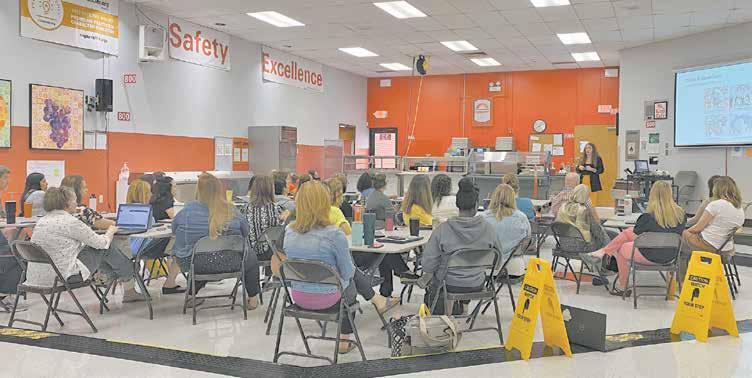




limited. She said that Dementeva and Dar helped her gain more perspective on Jewish students.
“It was a great representation of what we need to continue to be doing here to support our kids,” Mueller said. “We have to call things out. We have to support our kids when they need it and we have to show up so they all understand the differences that we are all different.”
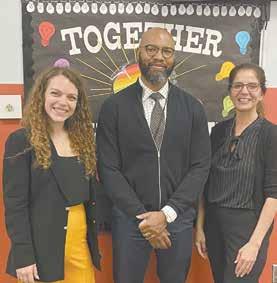
Nikki Goldfeder is a Highcroft Ridge counselor who participated in the training. Goldfeder, who is Jewish, said the session validated a lot of her knowledge of, and experience with, antisemitism.

“It was a really powerful opportunity to learn a little bit of the history of antisemitism,” she said. “In order for us to take a stand about any kind of oppression, whether it’s antisemitism or racism, we
have to first know how to recognize it. And that’s really where the presentation focused. Because if we don’t know that something is antisemitic, then we don’t have a chance of providing that counternarrative or pushing against it or educating our kids and our families.”

The school’s teachers “want to ensure that we’re creating communities where everyone feels safe, where everyone feels a sense of belonging,” said Goldfeder.
“We can bring in information from all different cultures, all different backgrounds. We can have conversations. We can share our beliefs, our traditions, and our customs without bringing in hateful rhetoric, without bringing in propaganda that contributes to socializing our kids and families into these hateful belief systems without even realizing it.”


Page 16A May 24, 2023 STL JEWISH LIGHT stljewishlight.org
Above, Highcroft Ridge Elementary School Principal Chris Clark (center) is shown with Jeny Dementeva (left) and Orna Bitton-Dar of the Israeli American Council. At left, Dementeva speaks to faculty members. PHOTOS COURTESY ORNA BITTON-DAR


BY THE GENEROUS SUPPORT OF:
BY PATRICIA CORRIGAN | SPECIAL TO THE JEWISH LIGHT
Summer is the perfect season to immerse yourself in the arts, which enrich the lives of one and all. On tap between now and late September are more than 60 cultural events, including operas, art fairs, concerts in many a genre, a much-loved circus, theater performances, special exhibits, a celebration of a local polka band’s debut album, comedians, cultural festivals and a new “Disney on Ice” show for the whole family.
Get some seasonal fun on your calendar today!
The 2023 season for Opera Theatre of St. Louis, on stage now through June 25 at the Loretto-Hilton Center, includes four rotating operas: Joplin’s “Treemonisha,” Puccini’s “Tosca,” Mozart’s “Cosi fan tutte” and American composer Carlisle Floyd’s classic “Susannah,” which “offers a powerful indictment of religious and social hypocrisy.” For performance times and tickets, call 314-9610644 or visit opera-stl.org.
vvv
You still have time to view “Monet/ Mitchell: Painting the French Landscape” at the St. Louis Art Museum, but the exhibit closes June 25. Monet, of course, is Claude, and Joan Mitchell, an American abstract expressionist

painter, was active in the New York School of artists in the 1950s. Both lived and painted in France, and the exhibit displays 24 paintings that highlight their different styles. Admission is $12 for adults, $10 for seniors and students and $6 for children ages 6-12. See slam. org for more information.
vvv
Now through the end of July, explore the architecture and general vibe of local neighborhoods on any of the many “See STL Walking Tours,” sponsored by the Missouri Historical Society. Led by a knowledgeable guide, each tour lasts two hours, and the routes are accessible for participants who use wheelchairs. The cost is $20 per person or $15 per person for MHS members. See mohistory.org/learn/see-stl/walking-tours.
vvv
Dance St. Louis sponsors the 15th annual Emerson Spring to Dance Festival 2023 May 26-27, featuring two nonstop

days of dance by 17 nationally touring professional companies at the Touhill Performing Arts Center on the UMSL campus. Tickets, $15-$25, are available at metrotix.com. For more information, see dancestlouis.org.
vvv
African culture will be on display at the 32nd annual African Arts Festival May 27-29 at the World’s Fair Pavilion in Forest Park. The festival will include live entertainment, art vendors, food, a children’s village, an African marketplace and more. Admission is free. See stlafricanartsfest.com.
vvv
Polka fans: A joyous show celebrating the release of the So Grand Polka Band’s first full-length album — the culmination of accordion player Jess Adkins’ artist residency with the Kranzberg Arts Foundation — will take place at 5 p.m. May 28 at Central Stage, 3524 Washington. Tickets cost $12. See sograndpolkaband.com or metrotix.com.
vvv
Shakespeare Festival St. Louis will present “Twelfth Night” May 31-June 25 at Shakespeare Glen in Forest Park, just off Fine Arts Drive on the east side of Art Hill between the St. Louis Zoo and the St. Louis Art Museum. Performances start at 8 p.m. six nights a week. (No shows on Mondays.) Seating is free, unless you opt for paid reserved seating. For details, visit stlshakes.org or call 314-287-3348.
vvv
Every Wednesday from May 31 through Aug. 2, music lovers will gather at the Missouri Botanical Garden for free concerts, courtesy of the Whitaker Foundation. The music starts at 7 p.m., but visitors are encouraged to arrive after 5 p.m. for a picnic — bring your own or buy food and beverages on site. See missouribotanicalgarden.org/ events-classes/signature-events/whitaker-music-festival vvv
Continued on page 4B
Page 2B May 24, 2023 STL JEWISH LIGHT stljewishlight.org
The Owen/Cox Dance Group from Kansas City is one of 17 professional dance companies from across the country performing at Dance St. Louis’ Emerson Spring to Dance Festival, May 26 and 27.
PHOTO BY MIKE STRONG
The St. Louis Art Museum’s “Monet/Mitchell: Painting the French Landscape” exhibit includes Joan Mitchell’s 1980 work “Two Sunflowers.”
IMAGE: FONDATION LOUIS VUITTON, PARIS; © ESTATE OF JOAN MITCHELL








May 24, 2023 Page 3B stljewishlight.org STL JEWISH LIGHT THE DRAMA. THE THRILLS. THE LAUGHS. THE REP winner of five tony awards®, including best play! soar to new heights in this acrobatic and theatrical spectacle! based on the life of st. louis soul music icon donny hathaway. a pulitzer prize and tony award® winning family drama. a st. louis tradition returning for its third season at The Rep! Inspired by the phenomenal voice that changed music forever. one man, six guitars, and a transformative story. HOLIDAY PRESENTATION a spectacular holiday tradition your family won’t want to miss! SEPTEMBER 5 — SEPTEMBER 24 LORETTO - HILTON CENTER FEBRUARY 6 — FEBRUARY 25 LORETTO - HILTON CENTER OCTOBER 3 — OCTOBER 22 CATHERINE B. BERGES THEATRE AT COCA MARCH 19 APRIL 7 LORETTO - HILTON CENTER NOVEMBER 25 — DECEMBER 23 LORETTO - HILTON CENTER JANUARY 18 JANUARY 28 CATHERINE B. BERGES THEATRE AT COCA FEBRUARY 8 — FEBRUARY 18 CATHERINE B. BERGES THEATRE AT COCA LIMITED ENGAGEMENTS special two-week performances with extraordinary talents you won’t want to miss! VISIT REPSTL.ORG | 314-968-4925
A family friendly spy story featuring aerialists, acrobats, contortionists and comedians, “Undercover” will delight fans of Circus Flora. Performances are scheduled June 1-25, with morning, midday and early evening shows under the Big Top in Grand Center, 3401 Washington Blvd. Tickets range from $10-$65 See metrotix.com or call 314-534-1111.
vvv
Learn about feminist Gloria Steinem’s life and legacy and share your stories about equality at Emily Mann’s “Gloria: A Life,” on stage June 1-18 at the New Jewish Theatre. Afternoon and evening performances will take place at the Wool Theatre in the Jewish Community Center’s Staenberg Family Complex. Tickets cost $27-$58. See showpass. com/gloria-a-life.
vvv
Up for something familiar, maybe something peculiar? How about “comedy tonight?” From June 1-24, you can see New Line Theatre’s production of “A Funny Thing Happened on the Way to the Forum,” by playwright and screenwriter Burt Shrevelove and master songwriter Stephen Sondheim. It’s funny, it’s ribald and it’s on stage at The Marcelle, 3310 Samuel Shepard Drive. Tickets cost $20-$30 at metrotix.com.
vvv
Dubbed “a timeless love story” set in ancient Egypt, Elton John and Tim Rice’s “Aida” will open the season at Stages St. Louis with performances June 2-July 2. All performances are at the Ross Family Theatre at the Kirkwood Performing
Arts Center. Tickets range from $51 to $76. For performance times, see stagesstlouis.org or call 314-821-2407.

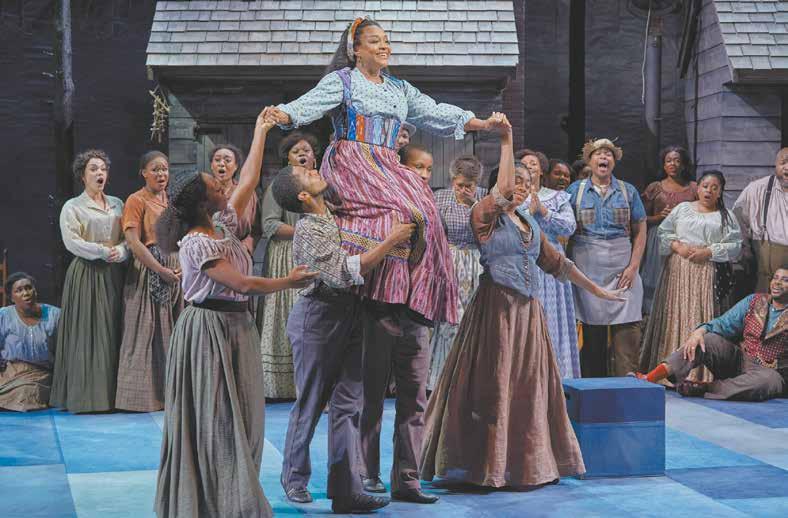
vvv
More than 80 artists from all over the country will show their work June 2-4 at the 19th annual Webster Arts Fair at the corner of Bompart and Lockwood avenues. The fair, which is free, also features local entertainment, food and hands-on art activities for all ages. Hours are 6-9 p.m. June 2, 11 a.m.-9 p.m. June 3 and 11 a.m.-4 p.m. June 4. For more info, go to websterartfair.com.
vvv
The Hollywood Casino Amphitheatre expects to draw crowds in June with this triple-threat line-up: Shania Twain at 7:30 p.m. June 4, Dead & Company at 7 p.m. June 7 and Hank Williams Jr. at 7 p.m. June 16. For more information and tickets, see hollywoodcasinostlouis.com or call Ticketmaster at 800-745-3000.
vvv
Looking for a different sound? The Glenn Miller Orchestra will bring Swing and Big Band music to town at 4 p.m. June 4 at the Sheldon Concert Hall
Tickets are $48-$68, available at Metrotix (314-534-1111 or metrotix.com). For more information, visit thesheldon.org.
vvv
A master of the guitar, banjo and mandolin, Billy Strings elevates the sound and speed of bluegrass as he folds in elements of rock, jazz, and psychedelia. He plays the Chaifetz Arena at 8 p.m. Friday, June 9. Tickets start at $39.50, available at ticketmaster.com.
vvv
Continued on page 6B
Page 4B May 24, 2023 STL JEWISH LIGHT stljewishlight.org
Brandie Inez Sutton performs in the title role in the Opera Theatre St. Louis production of ‘Treemonisha’ by Scott Joplin, reimagined by composer Damien Sneed and librettist Karen Chilton.
PHOTO: ERIC WOOLSEY
23 24
144th Season

We’re saving a seat for you.
Prepare for a season of transformative music with your St. Louis Symphony Orchestra. Season highlights include featured artists Hilary Hahn and Yo-Yo Ma, beloved classical favorites Carmina Burana and Romeo and Juliet, the complete cycle of Beethoven’s piano concertos, and a three-concert jazz series featuring works by George Gershwin. Get your tickets today at slso.org.

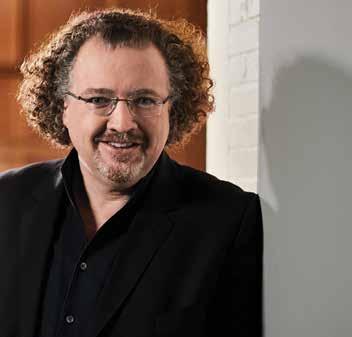


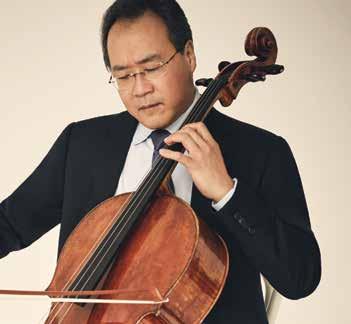
May 24, 2023 Page 5B stljewishlight.org STL JEWISH LIGHT
The Muny’s 105th season kicks off with “Beautiful: The Carole King Musical” (June 12 – 18), the story of the legendary singer and songwriter. Next up is “Disney’s Beauty and the Beast” (June 22 –30), a magical tale as old as time — or so says Mrs. Potts. Shows start at 8:15 p.m. and tickets ($19 to $120) are available at Metrotix (314-534-1111 or metrotix.com) or come early to grab a free seat. For more information, visit muny.org.



vvv
The Open Highway Music Festival returns June 16-17, with performances at the Chesterfield Amphitheatre, 631 Veterans Place Drive. Hear Jason Isbell, The Funky Butt Brass Band, Hillary Fitz and more. Individual tickets and passes are available. For schedules and ticket prices, visit openhighwaymusic.com/

vvv
Buckle up your swash and head for “ The Princess Bride: Live in Concert,” brought to you by the St. Louis Symphony Orchestra at 7 p.m. on June 16 and 18 at the Stifel Theatre. Expect “romance, wit and daring duels,” as well as those pesky Rodents of Unusual Size, all backed by the power of a full symphony orchestra performing the musical score. Visit slso.org for tickets or more information.


vvv
The award-winning Ambassadors of Harmony will present “Acapella Live” at 2 and 8 p.m. on June 17 at the Touhill Performing Arts Center. Tickets range from $17-$33. See touhill.org.

vvv
Opera Theatre of St. Louis presents “Center Stage” at 7:30 p.m. June 20 at the Loretto-Hilton Center, where you’ll hear rising opera stars perform “iconic melodies from opera’s greatest hits and cherished rarities.” Tickets cost
$15-$115. See ticketing.opera-stl. org/4141/4142





vvv
Kenny Barron (honored by the National Endowment for the Arts as a Jazz Master) and Benny Green (American hard-bop jazz pianist; former member of Art Blakey’s Jazz Messengers) will join forces for a five-night run June 21-25 for Jazz St. Louis, on stage at the Harold and Dorothy Steward Center for Jazz. Tickets cost $37-$42. See my.jazzstl. org/1307/1312.
vvv
Laughs galore are in store at Bert Kreischer’s Fully Loaded Comedy Fest at 7 p.m. June 24 at Enterprise Center, featuring Bert Kreischer, Tiffany Haddish, Fortune Feimster, Big Jay Oakerson, Jay Pharoah and Chad Daniels. Tickets cost $46.75-$126.75. See enterprisecenter.com.
vvv
Pridefest St. Louis’ celebration
“Diversity Creates Community” will take place June 24-25 downtown. Expect music, vendors, local artists, a Children’s
Shakespeare Festival St. Louis will present “Twelfth Night” May 31-June 25 in Forest Park. Pictured here is photo of the festival’s 2022 production of ‘Much Ado About Nothing.’

Area, nonprofit organizations, plenty of food and live entertainment. The parade begins at noon on Sunday at 8th and Market. For more information, see pridestl.org/pridefest2023
vvv
“Action/Abstraction Redefined: Modern Native Art, 1940s–1970s” — the first exhibition at the St. Louis Art Museum to focus on modern Native American art — opens June 24 and runs through Sept. 3 at the museum in Forest Park. Expect “groundbreaking paintings, sculptures, textiles and works on paper
SATURDAY • SEPTEMBER • 09
SMINO • MASEGO • SNARKY PUPPY • CAMEO
ANGELA WINBUSH • ARRESTED DEVELOPMENT • RAVYN LENAE

PETER MARTIN FT. DIANNE REEVES • NATE SMITH FT. JASON LINDNER AND TIM LEFEBVRE

KEYON HARROLD W/ PHAROAHE MONCH & STOUT • PHONY PPL
THE SUFFERS • DENISE THIMES • EARTHWORMS • MAI LEE • SIR EDDIE C JAZZ ST. LOUIS CELEBRATES WILLIE AKINS • ST. LOUIS BLUES & SOUL SHOWCASE
FT. RENEE SMITH AND BIG MIKE AGUIRRE• DJ ALEXIS TUCCI AND THE HOUSE OF TUCCI SAGE FT. AGILE ONE, DJ NICO MARIE & MAKEDA KRAVITZ • UMAMI • MARK LEWIS • LUSID ERIC DONTÈ AND THE MAXI GLAMOUR EXPERIENCE • MO EGESTON ALL-STARS
SUNDAY • SEPTEMBER • 10
HERBIE HANCOCK • THUNDERCAT • THE FEARLESS FLYERS
TAJ MAHAL • TANK AND THE BANGAS • GRANDMASTER FLASH
THE TESKEY BROTHERS • ANDY FRASCO & THE U.N. • SAMANTHA FISH
THE BAD PLUS • SAY SHE SHE • MARQUISE KNOX BAND FT. FUNKY BUTT HORNS
THE MIGHTY PINES • THE SHEDRICK MITCHELL COLLECTIVE FT. CHRISTIE DASHIELL BLVCK SPVDE & THE COSMOS • KENDRICK SMITH QUARTET • ROOT MOD • DJ P
DJ NUNE IS LAMAR HARRIS • BIKO • PAIGE ALYSSA • ST. LOUIS MUSIC BOX W/ JANET EVRA, ANITA JACKSON, WILL BUCHANAN, ANDREW STEPHEN, DUSTY CARLSON, DUANE "JINGO" WILLIAMS, AND TIM MOORE
TAKASHIMA RECORD BAR SOPHIE’S TAKEOVER - VIP & GA+ EXCLUSIVE FOOD TRUCK ROW • IMMERSIVE ART • ARTISAN VENDORS
CELEBRATING 50 YEARS OF ST. LOUIS HIP-HOP CURATED BY DJ GWIZ FT. DJ KUT, DJ SIR THURL, CHARLIE CHAN, TIME TRAVELER DJ'S, FLY D-EX, SHE BEATZ, & MORE
For tickets call (314) 361-2881 or visit unionavenueopera.org UAO is located within Union Avenue Christian Church, 733 Union Blvd. (Just north of Union and Delmar), STL 63108

Page 6B May 24, 2023 STL JEWISH LIGHT stljewishlight.org
PHOTO: PHILLIP HAMER PHOTOGRAPHY
FREE
PARKING Performances start at 8pm
MUSICATTHEINTERSECTION.ORG CO-PRESENTED BY C M Y CM MY CY CMY MATI_JewishLight_Ad5.1x8.pdf 1 5/22/23 1:56 PM
that challenged stereotypical expectations of Native American art during the postwar era.” A free public preview starts at 4 p.m. June 23; after that admission is $12 for adults, $10 for seniors and students and $6 for children ages 6-12. See slam.org for more information.
vvv
At last — after having to postpone last fall — the one and only Judy Collins will sing at 8 p.m. June 27 at the Sheldon Concert Hall. Tickets cost $40-$64.50, available at Metrotix (314-534-1111 or metrotix.com). For more information, visit thesheldon.org/events/judy-collins. vvv

be open late. For more info, go to cityofmaplewood.com.
vvv
Union Avenue Opera’s 29th Festival
Season will present Benjamin Britten’s “Turn of the Screw” July 7-8 and 14-15.
(Bonus: Christine Brewer will be in the role of Mrs. Grose.) Next up is Donizetti’s farce “Don Pasquale,” on stage July 28-29 and Aug. 4-5. All performances are at the Union Avenue Opera House, 733 North Union Blvd. Single tickets range from $32-$55; season tickets also are available. For tickets and performance
times, see unionavenueopera.org or call 314-361-2881.
vvv
The St. Louis Actors’ Studio will present the 9th Annual LaBute New Theater Festival July 7-23 at The Gaslight Theatre. Tickets cost $35-40. For performance times and tickets, see stlas.org/ whats-on-stage.
vvv
Singer-songwriter
Ever been so happy it hurts? That’s the name of Bryan Adams’ national tour, coming to the Enterprise Center at 7:30 p.m. July 1, and Adams is bringing along Joan Jett and The Blackhearts. Tickets range from $56.50 to $146.50. See enterprisecenter.com or ticketmaster.com.
vvv
Fair Saint Louis 2023 will celebrate the 42nd year of holiday partying on July 4 (one day only) on the riverfront. The festivities will begin with a 140th America’s Birthday Parade on the morning of July 4 and conclude with a giant fireworks display against the backdrop of the Arch. See fairsaintlouis.org/ for details.
vvv
In partnership with the World Chess Hall of Fame and St. Louis Chess Club, The Muny will present “Chess” July 5-11. Next up this month, the Jets and the Sharks will mix it up in “West Side Story” July 15-21. And don’t miss “Little Shop of Horrors” — a rollicking comedy “to die for,” all due to a total eclipse of the sun — on stage July 25-31. Shows start at 8:15 p.m. and tickets ($19 to $120) are available at Metrotix (314-5341111 or metrotix.com) or come early to grab a free seat. For more information, visit muny.org.
Moonstone Theatre Company will present “The Nerd” at the Kirkwood Performing Arts Center from July 6-23. The play follows the plight of Willum Cubbert, whose life was saved in Vietnam by Rick Steadman. Cubbert has never met his hero, so when Steadman shows up unexpectedly, Cubbert is excited – until he realizes how irritating
Steadman is. Tickets range from $15 to $40 and are available at metrotix.com.

Let Them Eat Art, a tribute to France’s Bastille Day, will take place from 6 to 10 p.m. July 7 in downtown Maplewood. The free event features live art demonstrations by regional artists, live music, kid’s activities and food and drink by Maplewood’s food purveyors. Shops will
musicality to the City Winery

at the City Foundry, at 7:30 p.m. July 12. Tickets range from $75-$88 and are available at citywinery.com.
Continued on following page
May 24, 2023 Page 7B stljewishlight.org STL JEWISH LIGHT
vvv
Steve Earle brings his unique brand of storytelling and
, located
vvv
Kirsten De Broux stars as Gloria Steinem in ‘Gloria: A Life’ at New Jewish Theatre from June 1-18.
PHOTO: GREG LAZERWITZ
Judy Collins performs at The Sheldon on June 27.
RiverBend Bluegrass, “a traditional band dedicated to the performance and preservation of the ‘High-Lonesome Sound,’” will pay tribute to the sounds of the founders of the genre at 7:30 p.m. July 14 at The Blue Strawberry, 364 North Boyle. Tickets cost $15-$20. See bluestrawberrystl.com.
vvv
On her “Ocean to Ocean” tour, singer/ songwriter Tori Amos will enchant St. Louisans at 7:30 p.m. July 14 at the Stifel Theatre. Tickets range from $36.50$111.50. See stifeltheatre.com.
vvv
The St. Louis Jewish community’s own Brothers Lazaroff have put together “Laz Jazz Fest,” slated for the Grandel Theater & the Dark Room on July 15. In addition to the Brothers Lazaroff, expect multiple jazz acts on two stages. Ticket information and line-up to come. Go to brotherslazaroff.com for more info.
The musical story “of one young man’s journey to be extraordinary,” “Pippin” will be on stage July 20-22 at COCA in the Catherine B. Berges Theatre. The show is recommended for individuals 14 and older. Tickets cost $28-36. For details on matinee and evening performances., see cocastl.org/calendar/pippin.
vvv
A “farce-meets-murder mystery,” “Clue” is based on a board game we all remember well. The musical opens July 21 and runs through Aug. 20 at Stages St. Louis. All performances are at the Ross Family Theatre at the Kirkwood Performing Arts Center. Tickets range from $51 to $76. For performance times, see stagesstlouis.org or call 314-821-2407.
vvv
The Midnight Company returns July 26 and Aug. 2 and 9 to The Blue Strawberry (364 North Boyle) with “You Made Me Love You,” a tribute to Judy Garland with Jennelle Gilreath Owens, directed by artistic director Joe Hanrahan. For ticket prices and show times, see midnightcompany.com.
vvv
Kansas — the band, not our neighboring state — is coming to the Fox Theatre at 7:30 p.m. July 29 for “Another Fork in the Road: The 50 th Anniversary Tour.” Tickets run $45-$125. Why not treat yourself — remember, all we are is dust
in the wind. See fabulousfox.com.
vvv
Seems as though we’ve waited many multiples of “five hundred twenty-five thousand six hundred minutes” for The Muny to present “Rent,” and our patience will be rewarded Aug. 4–10. Then the musical comedy “Sister Act” brings the 105th season to an end, on


The Muny will present seven shows this season; ‘Beautiful: The Carole King Musical’; ‘Beauty and the Beast’; ‘Chess’; ‘West Side Story’; ‘Little Shop of Horrors’; ‘Rent’ and ‘Sister Act.’


stage Aug. 14–20. Shows start at 8:15 p.m. and tickets ($19 to $120) are available at Metrotix (314-534-1111 or metrotix.com) or come early to grab a free seat. For more information, visit muny.org.



vvv
Matthew Paul Miller, aka Matisyahu, is known for his meshing of rock, reggae and hip-hop interlaced with Judaism-inspired lyrics. He comes to The Factory, with special guests G. Love and Special Sauce, at 7:30 p.m. on Aug. 5. Tickets, at $35.50, are available at thefactorystl.com.
vvv

Page 8B May 24, 2023 STL JEWISH LIGHT stljewishlight.org
2022 FILE PHOTO COURTESY OF THE MUNY FOR TICKETS AND INFORMATION, VISIT MOONSTONETHEATRECOMPANY.COM JULY 6 – 23 2022-2023 SEASON June 1-18 Wool Studio Theater | 2 Millstone Campus Drive | Creve Coeur, MO 63146 Guest Responder Join Ellen Futterman Editor of the St. Louis Jewish Light June 10, 4pm
Celebrating the life and work of Gloria Steinem Purchase Tickets Online Scan the QR Code or visit jccstl.com/gloria newjewishtheatre.org • 314.442.3283
By Emily Mann
The New Jewish Theatre presents
JEWISH LIGHT
Welcome “Saturday Night Live” veteran Melissa Villaseñor — and her many amazing comedic impressions — on stage Aug. 10-12 at the Helium Comedy Club at the St. Louis Galleria. If you’re 18 or older, choose from five performances. Tickets cost $24-$44. For show times, see st-louis.heliumcomedy.com/ events/74432.
vvv
Oh, What a Night! Frankie Valli (The Original Jersey Boy) and the Four Seasons will take us down memory lane at 7:30 p.m. Aug. 10 at the Stifel Theatre. Tickets range from $35-$125. See ticketmaster.com.
vvv
Jazz fans: Hear Marvin F. Cockrell and Focus at 7:30 p.m. Aug. 12 at the 17th Annual Smooth Jazz Concert at the Sheldon Concert Hall, with special guest Giulia Lorezoni 4tet from Rome, Italy. Tickets cost $50-$75, available at Metrotix (314-534-1111 or metrotix. com). For more information, visit thesheldon.org.
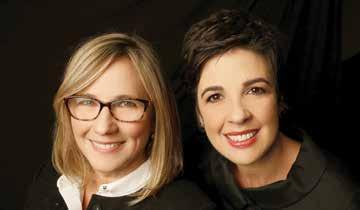
Whether he’s fronting Hootie & the Blowfish or performing with his own band, Darius Rucker has proven time and again he’s a musical force to enjoy rather than be reckoned with. See him when he brings his Starting Fire Tour to St. Louis Music Park at 8 p.m. Aug. 12. For tickets and more information go to ticketmaster.com.
vvv
Theater, music and more, all showcasing original material by independent artists — that’s what The St. Lou Fringe Festival promises, on stage Aug. 14-20 at several venues in Grand Center and beyond. Check out stlfringe.org for more information. vvv

Listen up: The Smooth Jazz Cruise on Land, featuring Lalah Hathaway and Boney James, will perform Aug. 18-19 at The Factory in Chesterfield. For performance times and ticket prices, see thefactorystl.com.
vvv
The alt-country band from Dallas, Old 97’s, are marking their 30 th year as a band with a tour that pulls into Delmar Hall on Aug. 24. For an 8 p.m. show. Tickets are $30/35 and can be gotten at ticketmaster.com.
vvv
“Ragtime,” with glorious music by Steven Flaherty and inspiring lyrics by Lynn Ahrens, will be on stage Aug. 18, 19, 25 and 26 as part of Union Avenue Opera’s 29th Festival Season. All performances are at the Union Avenue Opera House, 733 North Union Blvd. Single tickets range from $32-$55; season tickets also are available. For tickets and performance times, see unionavenueopera.org or call 314-361-2881.
vvv
Founded in 1934, the celebratory Festival of Nations will fill the eastern edge of Tower Grove Park Aug. 26-27. Expect dance, music, craft demonstrations, an ethnic gift bazaar and some 50 food booths at what is said to be the bi-state region’s largest annual multicultural celebration. For more information, see festivalofnationsstl.org.
vvv
Rick Springfield brings his “I Want My 80’s Tour” to St. Louis Music Park in Maryland Heights at 7:30 p.m. Aug. 29. He’ll get a little help from The Hooters, Paul Young and Tommy Tutone. For ticket prices, see ticketmaster.com.
vvv
The Greater St. Louis Artists will present the Labor Day Weekend Art Fair at Queeny Park Sept. 1-3 in the Greensfelder Recreation Complex at the park in Ballwin. The juried fine art and fine craft show will feature up to 130 artists from 20 states. Tickets are $6 at the door for adults; kids under 18 are free when accompanied by an adult. For details, see artfairatqueenypark.com.

vvv

The St. Louis World’s Fare Heritage Festival & Games, open from 11 a.m. to 11 p.m. Sept. 2-3, aims to “honor the major achievements that occurred in St. Louis during the 1904 World’s Fair while
celebrating our talents today.” On the upper lot at The Muny, expect music, an artists’ village, a Ferris Wheel, food trucks and a green space for kids, plus the 1904 St. Louis World’s Fair Historic Experience and a local business expo. For more information, see stlworldsfare.com. vvv

One of the largest and oldest festivals of its kind in the U.S., the Japanese Festival at the Missouri Botanical Garden celebrates the history, culture and people of Japan Sept. 2-4, showcasing music, art, dance, food and entertainment. General admission is $14 for individuals 13 and up and $6 for residents of St. Louis City or St. Louis County. For details, see events.missouribotanicalgarden.org/japanese_festival.

May 24, 2023 Page 9B stljewishlight.org STL
vvv Proud to be Locally Owned and Operated Since 1936 GLADYSMANION.COM 314-721-4755 CAROL BUTLER 314.630.3165 and JULI-ANN FELSHER 314.303.3232 BUTLER FELSHER | GROUP SKILL PLUS EXPERIENCE | SOLD Carol & Juli-Ann have successfully served generations of buyers and sellers in the St. Louis area. Call us for current and relevant real estate market updates. ButlerFelsher@gladysmanion.com | ButlerFelsher.com 6340 Clayton Road #201 | Richmond Heights, MO 63117 SOLD $725,000
Carol and Juli-Ann are a terrific team. They work well
follow up on things,
when you aren’t
a follow up! They
our home selling
seamless. I would highly recommend them.” WEEKEND K I R K W O O D P O P C O C O M A V A I L A B L E F O R S H I P P I N G , O N L I N E O R I N S T O R E 1 0 8 N K I R K W O O D R D K I R K W O O D M O 6 3 1 2 2 G O U R M E T P O P C O R N INDIVIDUAL BAGS BOXES TINS POPCORN BARS
“
together,
even
expecting
made
experience
ULTIMATE ST.
TO
LOUIS
HANDMADE
GUIDE BAGELS
BY JORDAN PALMER CHIEF DIGITAL CONTENT OFFICER
The bagel. Is it simplicity or complexity that has allowed the bagel to endure for centuries and become a staple of Jewish cuisine? Perhaps both.

Locally, Jewish St. Louisans had much to choose from when looking for homemade bagels over the years. Purveyors such as Petrofsky’s Bakery; Marlin Klein’s New York Bagelry in Bridgeton; Leonard, Jesse, and Kenneth’s New York Bagelry in the old Jeffrey Plaza; Basically Bagels in the Central West End and until recently, the Bagel Factory in Creve Coeur.
While most of these bagel joints are long shuttered, our bagel future remains strong. In 2023 alone, three new bagel shops have recently opened, adding to an impressive group of bagel makers already with years of experience under their belts.
Bagel Union
8705 Big Bend Blvd Webster Groves, Mo. 63119 www.bagel-union.com
The team from Union Loafers Cafe expanded its empire with a new bagel operation in Webster Groves. Its recent opening has been as boon for bagel lovers in southwest St. Louis County.
Flavors: Everything, plain, poppy, sesame, tzitzelnickel, cinnamon raisin, onion, salt, whole wheat, egg, cherry crunch.
Baked & Boiled Bagels
Tower Grove Farmers’ Market
Saturdays, 8 a.m. to 12:30 p.m. www.instagram.com/bakedboiled
In addition to selling at the Tower Grove Farmers’ Market on Saturday mornings,
traditional water bagels are available for walk-in purchase on Friday as part of their pop-up operation that is run inside Wild Olive Provisions in south St. Louis. Things are fluid here as the team is constantly playing with new ideas and recipes. Preordering through Instagram is recommended.
Flavors: Everything, plain, sesame seed, cinnamon raisin, cheese, poppy.
Breadsmith St. Louis
10031 Manchester Rd Kirkwood, Mo. 63122 314-822-8200

www.breadsmith.com/st-louis/
Breadsmith’s bagels are baked in-house and come with a thin crust but are very crispy with a great crumb on the inside.
Flavors: Sesame, poppy, everything Also found at: Protzel’s Deli, Circle@ Crown Café (inside the Gladys & Henry Crown Center for Senior Living).
Bridge Bread
2639 Cherokee Street St. Louis, Mo. 63118 314-296-3077 bridgebread.org
New York-style kettle-boiled bagels (also called water bagels). The made-fromscratch process is mixing ingredients, kneading the dough by hand, letting it rise, then boiling, egg washing, and baking the bagels.
Flavors: Classic, cinnamon, everything, pretzel.
Also found at: MoKaBe’s Coffeehouse
C & B Boiled Bagels
62 E. Ferguson Ave Wood River, Ill. 62095
cbboiledbagels.com
C&B uses the freshest ingredients and locally sourced whenever possible.
Flavors: Blueberry, cranberry walnut, cinnamon raisin, sea salt, onion, garlic, everything, plain, poppy, sesame.
Companion Baking
9781 Clayton Road Ladue, Mo. 63124 314-218-2280
www.companionbaking.com
These bagels are unique in that they blend the traditional New York attitude with Companion’s knowledge of long-fermented European breads which creates a hybrid bagel that their customers really enjoy.
Flavors: Plain, sesame, everything, jalapeño cheddar, cinnamon crunch, asiago, multigrain.
Also found at: Kaldi’s Coffee, Meshuggah Café, City Coffee, Washington University (multiple sites), 6 North Café, Shaw’s Coffee.

Kohn’s Kosher Deli 10405 Old Olive Street Road St. Louis, Mo. 63141 314-569-0727 kohnskosher.com
Don’t let the “deli” in the moniker fool you. Kohn’s is also a full-service bakery that makes fresh bagels daily for use with
See BAGELS on page 14B
Page 10B May 24, 2023 STL JEWISH LIGHT stljewishlight.org
MODERN COCKTAILS, DINING AND DESSERTS WORTHY OF THE SPOTLIGHT WWW. CYRANOS.COM 314.963.3232 603 EAST LOCKWOOD AVE. | WEBSTER GROVES | 63119 SERVING LUNCH & DINNER M/W/TH/F/SAT/SUN SUNDAY BRUNCH 11-3PM
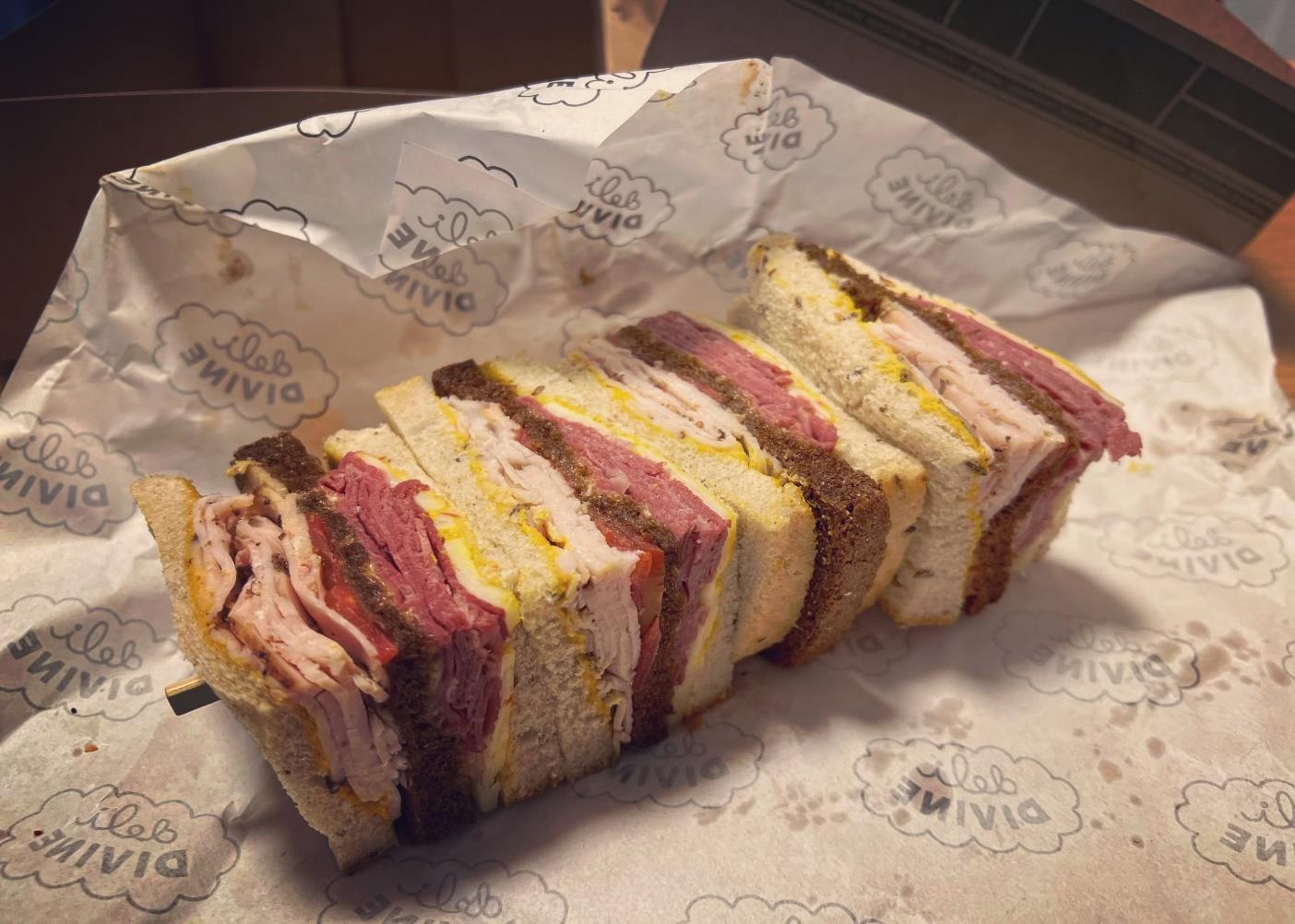




Page 11B 5501 Delmar Blvd. (inside the Delmar Div ine) B engelina.com | 314 987 DELI (3345) DELI 8am-3pm MARKET 8am-6pm atzo ball soup KNISHES + KUGELS erring NOW OPEN Sunday-Friday Closed Saturday DELI 8am-3pm MARKET 8am-6pm ox & bagel HOT PASTRAMI CORNED BEEF matzo ball soup KNISHES + KUGELS herring 5501 Delmar Blvd. (inside the Delmar Divine) B engelina.com | 314 987 DELI (3345) NOW OPEN Sunday-Friday Closed Saturday DELI 8am-3pm MARKET 8am-6pm & bagel HOT PASTRAMI RNED BEEF atzo ball soup KNISHES + KUGELS erring 5501 Delmar Blvd. (inside the Delmar Divine) | 314 987 DELI (3345) NOW OPEN Sunday-Friday Closed Saturday DELI 8am-3pm MARKET 8am-6pm lox & bagel HOT PASTRAMI CORNED BEEF matzo ball soup KNISHES + KUGELS herring
FEATURES
Local klezmer ensemble debuts in June
 BY BILL MOTCHAN SPECIAL TO THE JEWISH LIGHT
A newly formed klezmer band will perform its debut concert on June 11 at The Focal Point in Maplewood. The U. City Klezmer Experience is an ensemble group of talented musicians led by Will Soll, who plays guitar and mandolin. Rounding out the band will be Gabe Segal (clarinet, saxophone), Alyssa Avery (fiddle), Shlomo Ovadya (percussion) and Andy Curry (bass).
The concert will cover a wide array of klezmer music, from traditional wedding music to songs of city life. Soll is a student of the Torah, Yiddish and many forms of music. The name of the group came from his home in University City. Clarinetist Segal lives just a few blocks from him.
“I liked the idea of a name with ‘klezmer experience,’ and I wanted to make it a little different,” Soll said. “We have 40% of the band here and we get a general U. City vibe.”
Klezmer music is an up-tempo form of music that grew out of Central and Eastern Europe by Ashkenazi Jews. It is influenced by a number of other musical genres, including Greek, Romanian and Slavic folk dance. The Focal Point is a roots music listening room that hosts a wide range of music. Judy Stein, a Focal Point volunteer, said the listening room is eager to share klezmer music with a wider audience.
“Klezmer is interesting because it’s tied to so many different music forms,” Stein said. “There is jazz in it and eastern European music, there’s middle eastern influence, which is very cool, and makes it a really interesting art form.”
The U. City Klezmer Experience will be performing a variety of covers and original tunes, Soll said.
“We’ll be doing some contemporary music, some old world and some Hasidic,” he said. “Klezmer is the cornerstone, but there’s a broader aspect which is Yiddish culture as a whole and that has so much to offer. Anytime you have a chance to tap into Yiddish culture, that’s a really great thing”
Soll said the first rehearsal of the U. City Klezmer Experience sounded great, which he credited with the caliber of the band members. Segal has played with the Schmaltz Street
NANCY KRANZBERG — THE ARTS IN ST. LOUIS
Klezmer Band and Jumbo Knish Factory.
Avery is co-founder of the St. Louis String Collective. Ovadya has toured nationally and played klezmer with the Ottoman Underground. And Curry is a veteran performer and composer-in-residence at Congregation B’nai Amoona.
“I’m just very impressed with the quality of musicians we’ve put together,” Soll said. “I’m hoping that more people will catch the klezmer bug as part of this.”
U. City Klezmer Experience
WHEN: 2 p.m. Sunday, June 11 (doors open at 1:30)
WHERE: The Focal Point, 2720 Sutton Blvd., Maplewood
HOW MUCH: $15-$20
MORE INFO: Visit thefocalpoint.org/calendar
Here are a few small art museums worth a road trip
BY NANCY KRANZBERG
Earlier this year, I went to the Swope Art Museum in Terre Haute, Ind. where I saw a wonderful small show entitled, “Curious Vessels” by our own Melody Evans. She has received numerous awards in her career including first place in the National Visions in Clay. Her works, which also include prints, have been shown in numerous museums throughout the country. It’s well worth the short drive, but the small museum itself is a gem.
The Sheldon Swope Art Museum collects, preserves and celebrates the best in American art with programs and exhibitions designed to engage, stimulate and educate those whose lives it touches. It also enhances the culture and contributes to the economic development of the greater Wabash Valley.
The museum focuses on American regionalism and consists of works by Grant Wood, Thomas Hart Benton, Edward Hopper and Charles Burchfield as well as more modern works by Robert Rauschenberg, Andy Warhol, Alexander Calder and Robert Motherwell.
During COVID, we started concentrating on road trips and realized that there are lots and lots of these small art museum gems. Here are just a few”
Across the river in Godfrey, Ill., Lewis and Clark College hosts annual art exhibitions featuring student and faculty work, and has curated guest exhibits over the
years for reknowned artists such as Ed Paschke, Dale Threlkeld and Joe Emons. A few pieces from those shows remain permanent fixtures on the campus.
The Monticello Sculpture Gardens on the Lewis and Clark campus feature permanent sculptures by artists Peter Voulkos, Richard Hunt, Magdalena Abakanowicz, Joel Perlman, Ruth Duckworth and Stephen De Staebler to name just a few. The works are featured within and around the incredible gardens.
The Monticello Sculpture Gardens is a signature garden of the Missouri Botanical Gardens — its only signature garden out of the state.
Also in Mt. Vernon, Ill. is the Mitchell Museum on the campus of the Cedarhurst Art Center, which has made Mt. Vernon one of the most remarkable small towns in the United States. The collection was formed in the 1940s and 50s by Eleanor and John R. Mitchell, a prosperous Mt. Vernon couple, who acquired major works by Thomas Eakins, Mary Cassat, Childe Hassam, John Singer Sargent, George Bellows, Robert Henri, William Glackens, and others. These artists are now recognized as some of the most crucial figures in the development of American painting.
The most exceptional paintings in the permanent collection are by artists who trained in Europe in the late 19th and early 20th century, but who remained deeply committed to the values and beliefs central to the American experience as
they knew it.
And across the Mississippi in Belleville, is the William and Florence Schmidt Center for the Arts on the campus of Southwestern Illinois College. The permanent collection at the center consists of more than 900 works — sculptures, paintings, photographs, lithographs and more. Works by Salvadore Dali, Ansel Adams and Robert Motherwell are in this fantastic collection. There is also a very nice sculpture garden included in the center.
In March, I went to see the works of Edo Rosenblith and Jamie Stamm, whose works were on view at the Schmidt.
Rosenblith, who was born in Tel Aviv and has exhibited all over the world, currently lives in St. Louis. He is a compulsive draughtsman and works in various mediums including murals, prints, paintings, drawings and book arts. He implements a cartoon vernacular while reinventing personal and historical narratives.
Stamm was born and raised on the edge of the Everglades in Broward County, Fla. She resides on the western banks of the Mississippi River in St. Louis. Her work focuses on preserving Florida’s environmental and queer history in the face of climate change. She uses a craft-based practice to tell these stories.
We recently went a little farther and saw the unique Eiteljorg Museum of American Indians and Western Art in Indianapolis.
This special museum has an extensive collection of visual arts by indigenous peo-
For more of Nancy Kranzberg’s commentary, listen to KWMU (90.7) St. Louis on the Air the first Friday of each month at approximately 12:50 p.m. She also hosts a weekly Arts Interview podcast for KDHX (88.1), available at artsinterview.kdhxtra. org.
ples of the Americas as well as Western American paintings and sculptures collected by businessman and philanthropist Harrison Eiteljorg (1903-1997). The museum houses on of the finest collections of Native contemporary art in the world.
In the museum are works by Charles Rusell, Albert Bierstadt, Joseph Henry Sharp and Georgia O’Keefe just to name a few. In 2005, the museum opened an extensive expansion that doubled the public space of the museum and includes works by Andy Warhol, T. C. Cannon, Kay WalkingStick and many more. In the expansion is also the Gund Gallery of Western Art. This gallery is dedicated to the 37-piece collection of traditional Western art donated to the museum by the George Gund Family.
Of course, one doesn’t have to leave St. Louis to see many small art museums all over town, but that’s an entire commentary in and of itself.
Page 12B May 24, 2023 STL JEWISH LIGHT stljewishlight.org
ARTS AND CULTURE FOOD HOLIDAYS LIFESTYLES
Musician Will Soll, pictured here in 2022, is part of a new group, the U.City Klezmer Experince.
PHOTO: BILL MOTCHAN
AMY FENSTER BROWN
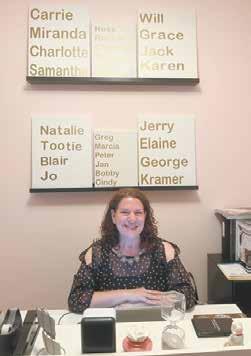
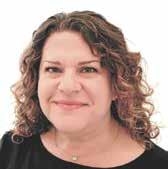
What’s TV good for? Learning life lessons, of course
BY AMY FENSTER BROWN
I love television so much that it inspired my home office décor, as you can see from this photo. Television can simultaneously be a huge waste of time, a way to stay informed, and educational, depending on what you’re watching.
Which category do your favorite shows fall under? In an effort to prove I haven’t wasted years of my life, I searched for lessons buried in some of the best episodes.
‘The Facts of Life’
Television’s most perfect show featured a gem in Season 7 titled “Doo Wah.” Airing in 1985, this episode really highlights the totally awesome ’80s with big hair, pop singer El DeBarge and clothing that prematurely aged young ladies. Oy, with the satiny blazers and gigantic shoulder pads! Poor Tootie looks like a 40-yearold carpool driving mom who has a side gig as a linebacker.
In this episode, the girls win a teen fan magazine contest, singing backup with El DeBarge (ironically to a song titled “You Wear It Well” which, of course, they didn’t). Natalie is firing comebacks and wisecracks left and right, solidifying her reign as “The Facts of Life’s” most supreme character. The chubby, funny friend with the quick wit and gift of gab always brings a smile to your face. She’s at the top of everyone’s party invitation list. This bring us to our lesson: Take a minute to think about who you are with when you feel your best. We all need a Natalie.
‘The Brady Bunch’
If there is any show that teaches us les-
sons in every episode, it’s the “The Brady Bunch.” Between sibling rivalry, first crushes and using your exact words, this show was jam packed with advice we never asked for. You’d think “Mom always said, ‘Don’t play ball in the house’ ” was the most important lesson, because you should always listen to what your mother tells you. Instead, let’s go with the episode titled “Katchoo.” Jan, the long-suffering middle daughter, cannot stop sneezing when Tiger the dog is around. Immediately everyone assumes Jan is allergic to Tiger. The Bradys realize it’s time to change (and finally put Jan’s needs before Marcia’s, thank you very much). As Tiger is being sent “away,” Jan grabs the mangy mutt’s
flea powder and … cue the excessive sneezing! You guys!!! Jan is allergic to the flea powder, not to Tiger!!! What have we learned here?
Jumping to conclusions is rarely a good idea, and sometimes you need to dig deeper for answers.

If a family can afford a live-in housekeeper, they could probably have afforded a house where six children don’t have to share one bathroom.
Tiger needs a freakin’ bath.
‘Sex and the City’
The wildly popular show about four single women navigating life and love in New York has one standout episode with a life changing lesson: He’s just not that into you.
In an episode titled “Pick-a-Little, Talka-Little,” Miranda has what she thinks is a good date with a dude, but he doesn’t call her for second one. So she does what many of us would do: justifies it with information made up in her head. Maybe he’s busy at work, or maybe he’s scared of getting his feelings hurt.
Carrie’s then-boyfriend, Jack Berger,
lays it on the line and tells Miranda, “Maybe he’s just not that into you.” Seems harsh. But man, oh man, isn’t it the most freeing fact in the wide world of dating! As Berger states, if a guy wants to see you again, he’s making plans for the next date. If not, well, he’s just not that into you.
Once we learn that, and accept it, we can move on to whatever is next. Try it in romantic relationships, toxic friendships or job interviews that go nowhere. You’ll feel free in no time flat!
‘Seinfeld’
Jerry Seinfeld’s philosophy for his sitcom was that nobody hugs and we don’t learn anything, but we did anyway. Plenty of Seinfeld’s most popular episodes teach us valuable life lessons, like what names rhyme with a female body part, or what it takes to be “Master of Your Domain.” Who’d-a-thunk we’d learn grammar lessons from Jerry and the crew?
In an episode called “The Sniffing Accountant,” Elaine, a book editor, is dating writer Jake Jarmel, whose manuscript she is editing. Elaine gets super annoyed when Jake fails to use an exclamation point at the end of a very important phone message he wrote down for her. They fight about it and break up. Then Elaine, as his editor, throws a ton of exclamation points in his manuscript for revenge.
What’s the non-exclamation point here? That overuse of exclamation points is annoying. A great current example is social media, where exclamation points are scattered about like sprinkles on a birthday cake. “Steak and corn for dinner!” is not nearly as exciting as you think, Bucko. Also, we don’t care what you’re having for dinner!!!!
May 24, 2023 Page 13B stljewishlight.org STL JEWISH LIGHT FEATURES
Columnist Amy Fenster Brown is married to Jeff and has two teenage sons, Davis and Leo. She volunteers for several Jewish not-forprofit groups. Fenster Brown is an Emmy Award-winning TV news writer and counts time with family and friends, talking and eating peanut butter among her hobbies.
WHO ARE YOUR UNSUNG HEROES? Find a complete list of past Unsung Heroes online at stljewishlight.org/unsung-list NOMINATIONS ARE NOW OPEN! 2023 DEADLINE FOR NOMINATIONS : FRIDAY, JULY 7, 2023 @ 5PM VISIT STLJEWISHLIGHT.ORG/HEROES FOR ELIGIBILITY DETAILS AND TO SUBMIT YOUR NOMINATION HONORING THE BRIGHT LIGHTS IN OUR COMMUNITY
Amy Fenster Brown and the TV-inspired decor in her home office.
St. Louisan’s life in retail informs novel about a shoe mogul’s family
BY BILL MOTCHAN
SPECIAL TO THE JEWISH LIGHT
Father and son Max and Josh Feldman have a complicated relationship. Max is a loving father, ruthless businessman and Josh’s boss. The Feldmans are a Jewish St. Louis family with a successful shoe business known as Fratelli Massimo. They and the business also are completely made up, created in the fertile mind of St. Louis author Martin Sneider.
In mid-April, Sneider launched his new novel, “Shelf Life,” during a reading at Washington University, his alma mater. The book traces the rise and fall of the Feldmans’ shoe empire.
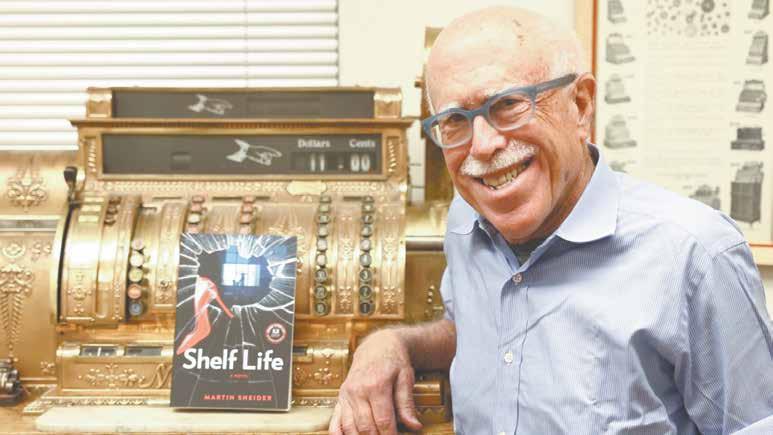
Sneider, who is Jewish, knows a thing or two about that industry. He started out in high school as a salesperson at Baker’s Shoes on Sixth Street in downtown St. Louis. He progressed in his career and eventually became CEO of Edison Brothers Stores, whose brands included Baker’s, J. Riggings, Jeans West, 5-7-9 Shops and Dave & Busters.
“Shelf Life” was published in April by Forefront Books, a division of Simon & Shuster. For Sneider, 80, completing the novel was “a dream come true.”
“I always felt that I could write,” he said. “It was around 2018, pre-COVID, and I said, ‘I want to write a book that tells the story of what happened to retailing in the last half of the 20th century.’ I had never read a book about that. I’d been teaching retailing for years. I wanted to make it about a family business and I wanted it to be a book that has a heavy proportion of interpersonal relations and tension that revolves around the business.”
The book also name-checks many familiar local institutions, such as the Parkmoor and Steak ’n Shake.
The Feldmans live in Clayton. It’s fiction, but there are many parallels to Sneider’s life. Protagonist Max Feldman was born in Omaha, Neb., as was Sneider. And of course, they both have an intimate knowledge of shoes and retailing.
“Shelf Life” is told from the point of view of Josh Feldman, the son and presumed heir of Max’s company. Asked how much of Josh is really Martin Sneider, the author said with a wink:
“Only the good parts. There are touches of me in Josh, there are touches of me in Max. Obviously, the family is fictitious.
Martin Sneider, former CEO of Edison Brothers Stores, pens ‘Shelf Life’
But the historical references to retail businesses really happened. That includes the rise of shopping malls, the role of the internet, and the big box stores like T.J. Maxx and others who have found other ways of doing business than being in a mall.”
The plot centers around a family, not unlike the fractious relationship between Logan Roy and his adult children in the hit HBO series “Succession.” Sneider avoided watching the show while writing “Shelf Life” so he wouldn’t be influenced by its characters. He did a considerable amount of rewriting before arriving at a final manuscript that passed muster with a major publisher.
“I wrote about 14 drafts,” he said. “I can show you a sheaf of rejection letters. I thought I had a good product. I sent a copy to Michael Levin (a New York Times bestselling author), and he loved the plot.

“He said, ‘I think this has potential — but boy, do you have work to do.’ He taught me about tension, the things in fiction that you want, like conflict. You want things unresolved for a while. The reader needs to wonder what’s going to happen.”
One reader of “Shelf Life” who is a fan of Sneider’s writing is Jerry Tullman, a mem-
ber of Nusach Hari B’nai Zion Congregation. Tullman has also known Sneider for 60-plus years.
“I very much liked it,” said Tullman, 80. “I think it’s sensational. It’s a stunning intellectual accomplishment. I generally read nonfiction. Martin gave me and my wife, Gail, a copy, and we both started reading it independently and neither one of us could put it down.”
While fine-tuning the book, Sneider got expert editing assistance from Levin. Sneider also received coaching from his late wife, Jill Frank Sneider, a Henry James and Edith Wharton scholar.
“She would say, ‘Why does the reader care?’ ” Sneider said. “She’d write sweet notes like that off to the side. She really helped me transform what was a nonfiction book into fiction.”
Sneider previously wrote a nonfiction exploration of the shoe business in 2009. “TOAST: How a Leading Retailer Went From Toast of the Town to Just Plain Toast,” traces the rise and fall of Edison Brothers Shoes, including his tenure at the helm. At its peak, Edison Brothers had 3,000 stores and more than $1.5 billion in revenue.
After leaving the corporate world, Sneider was an adjunct professor of marketing at Olin Business School. At Washington University, those accomplishments led to his first novel.
“I was a freshman at Central High School in Omaha, and we had to do a 300word theme on ‘The Yearling’ by Marjorie Kinnan Rawlings,” Sneider recalled. “The teacher asked me to see him after class. He said to me, ‘You’re going to rewrite and rewrite and rewrite this until you get it right because you’ve got the talent to be a much better writer than this.’ After five drafts, he said, ‘I never want to see a paper from you that isn’t written like this.’
“He saw something in me and he was merciless. My mother was a copy editor for the New York Times, so I had the advantage of indirect tutoring. I had the DNA, and I had people who read my stuff and weren’t afraid to say, ‘You can do better.’ ”
“Shelf Life” is available at Left Bank Books and online booksellers. Martin Sneider has already written three as yet unpublished sequels that will continue the Feldman family story.
Bagels: Handmade in St. Louis
CONTINUED FROM PAGE 10B
sandwiches or sold by the half-dozen, dozen or whatever amount you need. Preordering is requested.
Flavors: Plain, everything, poppy, sesame, onion, garlic, salt, and cinnamon raisin upon request.
Lefty’s Bagels
13359 Olive Blvd Chesterfield, Mo. 63017 314-275- 0959 leftysbagels.com

Made in the classic New York style, using certified kosher ingredients, each bagel is boiled and then baked on traditional burlap-topped wooden bagel boards. Lefty’s is an artisan bagel with a wonderfully soft, ever-so-slightly chewy center, and a deliciously crunchy crust.
Regular Flavors: Plain, poppy, sesame, everything, tzitzel, onion, salt.
Specialty Flavors: Cinnamon raisin, six cheese, chocolate chip, whole wheat, blueberry, pumpernickel.
Schnucks
Various Locations nourish.schnucks.com
The in-store bakery team completes the baking process of parbaked bagels in each store, every morning.
Flavors: Plain, whole wheat, cinnamon raisin, blueberry, everything, sesame, jalapeño cheddar, poppy, French toast, asiago cheese and sundried tomato.
The Daily Bread, Inc.

11719 Manchester Rd St. Louis, Mo. 63131


314-909-0010

Over 20 years, the Daily Bread worked with many recipes and styles in order to perfect their bagel-making skills. Choose from traditional bagel flavors or try a Power Bagel, a multigrain style bagel made with dry cranberry, sunflower and pumpkin seeds.
Flavors: Plain, asiago, everything, blueberry, cinnamon chip, cranberry oat, sesame, poppy.
Page 14B May 24, 2023 STL JEWISH LIGHT stljewishlight.org CLASSIFIEDS In Home Service "Trusting Hands for Your Peace of Mind" BERYL DENISE BROWNING, RN EXTENDED HANDS LLC 24 Hour Private Duty Care Bonded and Insured 314-521-4100 Family Owned & Operated Since 1983 BONDED • INSURED • SUPERVISED SCRUBBY DUTCH CLEANING 314-849-4666 or 636-926-0555 For 1st Time Customers! $10 OFF www.scrubbydutch.com GENESCO SCREEN REPAIR (314) 567-9175 2456 Adie Road, 63043 GenescoWindowProducts.com “Leafthecleaningtome.” • Repairs • Gutter Cleaning • Gutter Guards • Roofing • Drainage Solutions • Fascia Repairs or Replacements 30+ Years Experience Call Tony: 314-413-2888 www.yuckos.com 314-291-POOP Your Poop Scoop’n Service STL Jewish Light classifieds are an inexpensive way to connect our readers to the businesses and services they are looking for. FOR MORE INFORMATION CALL 314.743.3672 GET THE WORD OUT!
FEATURES
Martin Sneider is the author of the novel “Shelf Life,” which was released last month. PHOTO: BILL MOTCHAN
Not
meeting
On April 18th, Shaare Emeth hosted the Annual Meeting of the New Mount Sinai Cemetery Board of Directors. New officers were appointed and previous officers renewed.
stories that live exhibition
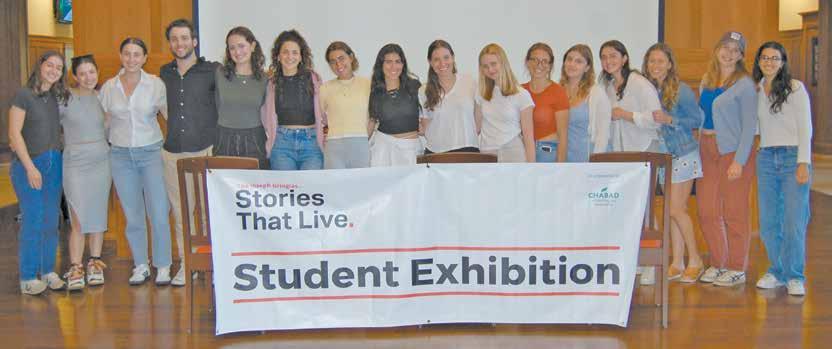
Chabad at WashU hosted 16 Joseph Gringras “Stories That Live” Student Fellows. These fellows spent the semester with Holocaust survivors to get to know them and to listen to their stories. For a final presentation, the fellows chronicled their stories through podcasts, short stories, multimedia, art projects and more. On April 18, they presented to students, faculty and guests. For more information, visit www.chabadwashu.org/5919694.
SP TLIGHT
PHOTOS FROM RECENT JEWISH COMMUNITY EVENTS
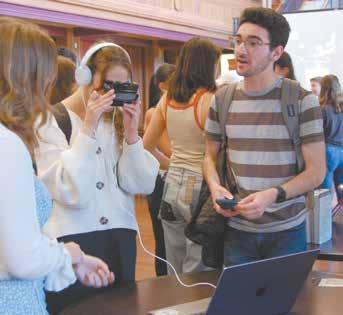
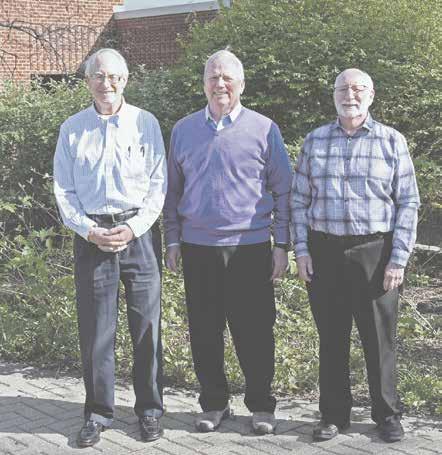
SUBMIT A PHOTO: Have a photo of a recent Jewish community event you would like to submit? Email the image and a suggested caption to news@stljewishlight.org.
GENEROUSLY SUPPORTED BY
VIEW MORE ONLINE: stljewishlight.org/multimedia
maryville university hillel Diversity Dialogue Event
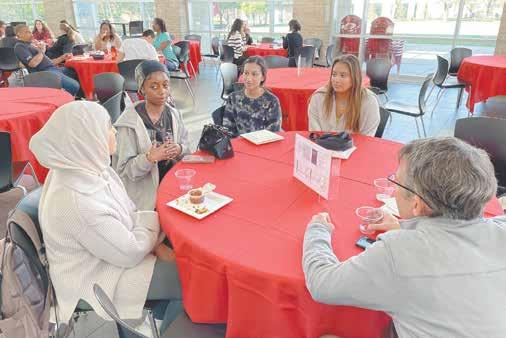
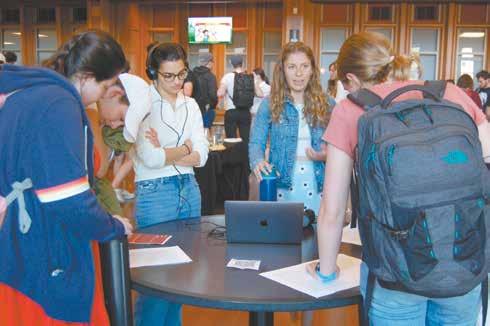
On April 17, Hillel co-hosted a “Diversity Dialogue” with the Office of Diversity and Inclusion. Maryville University Hillel director Joey Abeles led the event, using frameworks from Resetting the Table and the Pardes Institute Mahloket Matters Fellowship. The purpose of the event was to promote dialogue across difference and bridge divides on campus. The program was grounded in Jewish wisdom of Mahloket l’shem shamayim – argument for the sake of Heaven, and the imperative to listen to those who assign different priorities to values that we all hold. Thirty-five Maryville students and staff members participated, including the Maryville University President and the Vice President of Student Life. The program was funded with a Staenberg Anything Grant and the Silk Family Foundation.

May 24, 2023 Page 15B stljewishlight.org STL JEWISH LIGHT
chabad at washu
new mount sinai cemetery nmsc annual
From Left to Right:David Eidelman, Board President Dick Brickson, Bill Livingston
present: Jim Eiseman, Monica Simon
CHAI LIGHTS
THURSDAY | MAY 25
Tikkun Leil Shavuot program
Kol Rinah is hosting a joint Tikkun Leil Shavuot program with Bais Abraham and Central Reform Congregation, starting at 7:45pm. More info and RSVP at https:// www.kolrinahstl.org/event/tikkun-leilshavuot.html.
FRIDAY | MAY 26
Shavuot Sinai stroll in Longview Farm Park
Shaare Emeth welcomes the community at 3:30 p.m. in Longview Farm Park, 13525 Clayton Road, Town & Country for a stroller-friendly park walk to celebrate the Jewish festival of Shavuot. RSVP online at sestl.org/ shavuot. Participants will wander in the “wilderness” of Longview Farm Park, soaking up the beauty of nature and make our way to finding our own creative Torah. Guests can also enjoy the Shavuot tradition of eating dairy treats with our favorite ice cream bars to share. This holiday celebration is best enjoyed by friends ages 8 and under and their families, but there is room and ice cream for everyone. Free and open to the community.
SATURDAY | MAY 27
Aish event for Shavuot
From 10 a.m. to 2:15 p.m. Aish will hold a Shavuos seminar and children’s program. Adults can choose three classes from five teachers. Special program for kids ages 512 and babysitting for kids under 5. The event features a Shabbos lunch with dessert. The cost is $18 per adult, $12 per child (ages 5-12), kids under 5 are free. $50 limit per family. Location: Torah Prep Girls’ School, 8136 Groby Road, University City. RSVP required to 314-862-2474 or cwolff@ aish.com.
NHBZ’s Samson presents Shavuot ‘Starting Points’
NHBZ Rabbi Emeritus Ze’ev Smason will present a special Shavuot “Starting Points” at 9:30 a.m. Don’t miss it when he discusses “What Do You Love About Being Jewish?”
The entire Jewish community is invited to attend and to stay for Yizkor services at 10:30 a.m. RSVPs are not required. For more information, call 314-991-2100, ext 2.
SUNDAY | MAY 28
Jewish War Veterans plan Memorial Day Ceremony
Jewish War Veterans, Post 644, St. Louis will conduct a Memorial Day Ceremony at 11 a.m. in the St. Louis Kaplan Feldman Holocaust Museum. The ceremony will honor those St. Louisans who died in past wars as well as veterans who passed away in 2022. The program will feature an address by Maharat Rori Picker Neiss, executive director of the Jewish Community Relations Council. The program will also include the National Anthem, El Molai Rachamim and God Bless America Led by Cantor/Rabbi Ronald Eichaker of United Hebrew Congregation. The Ted and Rachael Pevnik Family Scholarship and the Chuck Sandroff Scholarship will be presented.
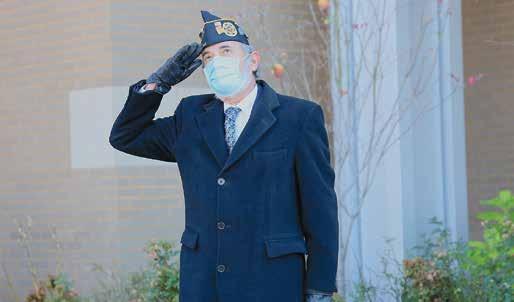
THURSDAY | JUNE 1
7 p.m. Torah learning will be led by NHBZ Rabbi Chaim Bogopulsky. There is no charge for this event and NHBZ membership is not necessary to attend. For more information, call 314-991-2100, ext. 2.
Mirowitz Centers presents
Israel’s Mishkan Museum of Art, Ein Harod
Museum educator Tanya Fredman will lead an online presentation from 10 to 11 a.m. offering a virtual tour of the Mishkan Museum of Art, Ein Harod, a little-known architectural phenomenon. It is the largest museum in Israel’s north and home to one of the most important collections of Israeli and Jewish art. Free. Register online at http://bit.ly/Register_MirowitzCenter or call 314-733-9813.
Mirowitz Center presents ‘You Are Not Stuck’
Author and yoga instructor Becky Vollmer will lead an in-person discussion from 2 to 3 p.m. at the Mirowitz Center. Vollmer will discuss her new book, “You Are Not Stuck,” looking at ways to break the cycle of fear and making bold choices for real change. This program is part of Mirowitz Center’s continuing “Keep Tour Head in the Game” series. Free. Register online at http://bit.ly/ Register_MirowitzCenter or call 314-7339813.
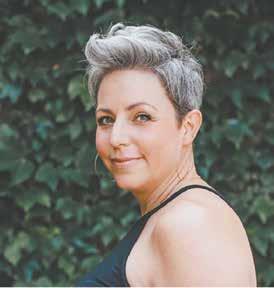
STARTING JUNE 1
Gloria: A Life Comes to The New Jewish Theatre
Read more in News & Schmooze, page 3A.
FRIDAY | JUNE 2
Movies at Mirowitz Center
From 1 to 3 p.m. the Mirowitz Center will screen the 2003 film “Secondhand Lions.” Free; register online at http://bit.ly/Register_ MirowitzCenter or call 314-733-9813.
JUNE
TUESDAY | JUNE 6
Mirowitz Center presents hands-on cooking class
Operation Food Search will lead a free, in-person cooking class from 2 to 3 p.m. at the Mirowitz Center. A professional nutritionist will lead a culinary demonstration with hands-on instruction. Learn how to reduce health risks and improve quality of life through smart grocery shopping and affordable meal prep, including tips for going meatless. Plus, all program participants get to sample menu items. Space is limited. Register online at http://bit.ly/Register_MirowitzCenter or call 314-733-9813.
THURSDAY | JUNE 8
Mirowitz Center presents ‘Safety Smarts 2023’
Scott Biondo will discuss personal security dos and don’ts from 2 to 3 p.m. at the Mirowitz Center. Biondo, director of community security for the Jewish Federation and the broader St. Louis Jewish community, will explain how to proactively protect yourself and your family, increase situational awareness and reduce your chance of becoming a crime victim. The program is co-sponsored by Mirowitz Center, Jewish Federation and St. Louis NORC. Free. Register online at http://bit.ly/Register_MirowitzCenter or call 314-733-9813.
FRIDAY | JUNE 9
‘On the Record’ with Bob Cohn
On the second Friday of every other month, join On the Record hosted by Bob Cohn, editor-in-chief emeritus of the Jewish Light, from 11 a.m. to noon to discuss films, plays, articles and books on issues of concern to our community. This online program is provided with FEL (Friends Enjoying Life), the Mirowitz Center men’s organization. Register online at http://bit.ly/ Register_ MirowitzCenter or call 314733-9813.
ONGOING
NHBZ youth programs now on Shabbat mornings
Local Jewish organizations and congregations can submit calendar items to news@ stljewishlight.org. All items received by 5 p.m. Friday will be considered for the following week’s edition.
groups: ages 3-6; ages 7-12; and ages 13 and older. Babysitting is always available for children ages 3 and under. These programs are free of charge and NHBZ membership is not necessary for families to participate. RSVPs are not needed. For more information, call 314-991-2100.
Mirowitz Center offers exercise classes
Join the Mirowitz Center for a variety of exercise classes, ($5 fee/class and in person) Mondays through Fridays, from 11:15 a.m. to noon. All techniques and combinations will be demonstrated both sitting and standing. Mondays: Fitness with an Edge with instructor Lucy Fox; Tuesdays: Music, Movement and Dance with instructor Rachel Gross, RPI; Wednesdays: Strength and Conditioning with instructor Rachel Gross, RPI; Thursdays: Tai Chi with instructor Scott Uselmann, RPI; Fridays: Chair Yoga with instructor Maxine Mirowitz. Register online at http://bit.ly/Register_MirowitzCenter or call 314-733-9813.
Mirowitz Center Community Singers
Professional musician Robert Denison will lead Mirowitz Center Community Singers from 2 to 3 p.m. on Wednesdays. No experience is necessary. Learn from CDs (no printed music). Performance opportunities will be offered. Free and open to the community; register online at http://bit.ly/Register_ MirowitzCenter or call 314-733-9813.
Movies at the Mirowitz Center
On Fridays at 1 p.m., enjoy movies on the Mirowitz Center’s 14-foot screen. Call the Movies at Mirowitz Hotline (314-733-9812) for the film title and description each week. Free and open to the community.
Crown Center presents Friday afternoon matinee series
Every Friday at 2 p.m. Crown Center for Senior Living welcomes the community to enjoy a complimentary movie with snacks in Crown’s theater. Listening devices available. Upcoming films include (April 21) and “Singing in the Rain” (April 28). For more information contact Crown Center at 314-991-2055.
Get your game on at the Mirowitz Center
From 10 a.m. to 4 p.m. the Mirowitz Center welcomes guests to play Mahjong, bridge, poker or Mexican Train dominoes – whatever games you like. The Mirowitz Center will provide complimentary coffee, tea and water (guests can bring their own snacks to enjoy and share). No reservations are necessary for these weekly games, held in the multipurpose room, but plan to coordinate your group’s schedule and any needed substitutions. Register online at http:// bit.ly/Register_MirowitzCenter, call 314733-9813, or email skemppainen@mirowitzcenter.org.
Tech Tutor at Mirowitz Center
For those looking for one-on-one assistance with their technology devices and those who are wanting to acquire new skills, free, in-person 30-minute appointments are available at the Mirowitz Center. Tech Tutor’s in-person classes will be led by an extraordinarily qualified instructor, Larry Edison. Tech Tutor is supported through a grant from the Women’s Auxiliary Foundation for Jewish Aged. Register online at http://bit.ly/Register_MirowitzCenter, call 314-733-9813 or email skemppainen@mirowitzcenter.org.
NHBZ
men’s event: ‘Sliders, Scotch, Cigars & Torah’
Men can share the joys of summer: sliders, scotch, cigars and Torah learning during “Sliders, Scotch, Cigars & Torah” starting at 6:30 for minyan, followed by the program at
NHBZ invites kids of all ages to join the fun every Saturday morning from 10 to 11:30 a.m. Children enjoy age-appropriate learning and games that are divided into the following age
Page 16B May 24, 2023 STL JEWISH LIGHT stljewishlight.org
YOUR CALENDAR OF ST. LOUIS JEWISH COMMUNITY EVENTS
On May 28 at 11a.m., the St. Louis Kaplan Feldman Holocaust Museum will host the annual Jewish War Veterans Memorial Day ceremony.
In 2020 file photo, Leslie Birenbaum salutes the flag.
PHOTO: BILL MOTCHAN
On June 1, Becky Vollmer, author of new book, ‘You are not Stuck,’ will speak at the Mirowitz Center from 2-3 p.m.
