How Your Congregation Can Help Combat the Mental Health Crisis
How Your Congregation Can Help Combat the Mental Health Crisis
Mental Health Empowerment by Teaching People Life Skills
Dear Friend in Ministry,
Our presentation “How Your Congregation Can Help Combat the Mental Health Crisis” describes the challenges society faces in the area of mental health, along with the tremendous potential for churches to help solve these challenges.
After the presentation, people have asked two main questions:
1) How can we tell others in our congregation about this opportunity?
2) What steps can our church take right now to get started?
We put together this booklet as an answer to both questions. It captures key points from the presentation and casts a compelling, attainable vision, along with clear and manageable next steps on pages 12–13.
We at Stephen Ministries are passionate about building a more caring world, and empowering people for better mental health fits right in with that. Feel free to call us with any questions or to talk through ideas.
In Christ,
The Scope of the Mental Health Crisis
• The mental health crisis impacts every demographic in every community in every city, state, and nation.
• Most often, we think of the crisis as being about severe emotional problems or mental disorders. However, it also encompasses the countless people struggling with brokenness, loss, conflict, loneliness, low self-worth, and other issues.
• The cost of the crisis is staggering. In terms of treatment, expenses, lost income, medical bills, reduced productivity, and other financial costs, it represents hundreds of billions of dollars annually in the U.S. alone.
• More significant, though, are the human costs. The mental health crisis brings tremendous suffering, both to the individual struggling with mental health and to the person’s family.
• Much of this suffering could be greatly alleviated or perhaps even prevented entirely.
The Theology of Mental Well-Being
Mental well-being involves sound psychology, but its underlying principles are biblically grounded and distinctively Christian.
• John 10:10 says that Jesus came that we may have life and have it abundantly—in fact, superabundantly. Mental well-being is a crucial part of that life.
• Mental well-being is also consistent with shalom—a Hebrew concept that describes a state of peace, unity, and wholeness.
• Mental well-being includes relating to one another. The New Testament contains over 50 “one another” passages, such as “Live in harmony with one another” (Romans 12:16), “Carry one another’s burdens” (Galatians 6:2), and many more.
At its heart, mental well-being involves modeling our lives and our relating after Jesus.
How Your Congregation Can Help Combat the Mental Health Crisis
Focusing on Treatment Isn’t Enough
Numerous initiatives have been put forward over the years, in the U.S. and around the world, in an attempt to solve the crisis. These efforts have invested vast amounts of money, research, and person-power into mental health treatment. Despite their positive impact in some areas, the mental health crisis persists and is affecting more and more people.
The primary reason these initiatives have fallen short is that they have focused almost exclusively on treatment, trying to address mental health issues after their onset. Treatment is an important part of the solution to the mental health crisis—but it is only part of the solution.
A Broader Understanding of Mental Health
In the past, people have most often defined “mental health” in a negative sense, as the absence of emotional problems or mental disorders. The early 1990s, however, saw a shift toward defining mental health in an expanded, more positive sense. According to this new perspective, mental health is not just about the absence of problems but also about the presence of mental well-being.
Most definitions of mental health today include phrases reflecting the positive aspects of mental well-being, such as the ability to “adapt to change and cope with adversity,” “establish fulfilling relationships with others,” and “find meaning and purpose in life.” Some even include “developing a sense of spiritual well-being.”
The better a person’s mental health and well-being, the less susceptible they will be to mental struggles.
Mental Health Empowerment by Teaching People Life Skills
The Need for a New, Expanded Approach
Although the definition of mental health has expanded to encompass mental well-being, the approach to combating the crisis has not changed. John A. Snyder explains the need for a new and expanded approach:
“Too often, [our mental health system] is like a group of [treatment professionals] at the bottom of a cliff. People are stumbling off the cliff and getting hurt. Some come miraculously away from the fall without serious injury—perhaps a sprained ankle—and in need of a little assistance that can easily be given. Others, however, are more seriously injured and require a great deal of attention because of broken limbs. A few are quickly hustled away because of even more serious injuries.
“The whole scene is such a busy one, and the [professionals] so preoccupied with their healing tasks, that no one seems to be able to give any attention to what would seem a more logical move: to build a fence at the top of the cliff to keep people from falling off.”
John A. Snyder, B.D., Ed.D. Associate Director of Education and Consultation
Pennsylvania Hospital Community Mental Health Center
Philadelphia, Pennsylvania
As important as treatment is, treatment alone cannot solve the mental health crisis. The solution also needs to involve putting up fences and guardrails to protect people from experiencing mental health problems in the first place.
The good news is that congregations are uniquely and ideally situated, poised, and constituted to play a leading role in this expanded solution.
How Your Congregation Can Help Combat the Mental Health Crisis
Understanding and Addressing Mental Health Needs
To effectively make a difference in the mental health crisis, it’s important to understand the various levels of mental health needs. The band across the top of the facing page shows the wide range of challenges people experience in life. The columns on the bottom half of that page divide the challenges into three levels of mental health care, describing ways a church could most effectively meet those needs.
Since treatment has long been the primary focus of mental health care, we’ll begin with that column.
Level 3: Treatment
Treating someone with a mental condition is beyond the scope of the care most congregations offer. The best, most caring thing a pastor or congregation can do is to connect the person to a mental health professional capable of providing the level of care they need.
Level 2: One-to-One Care
Every one of us at times will experience life difficulties that strain our mental and emotional capacities. In these instances, we might not need professional care but would really benefit from a skilled lay caregiver who could walk alongside us, helping us move forward to greater emotional and spiritual well-being.
Many congregations fill this niche with Stephen Ministry as a way to organize and equip laypeople to provide high-quality emotional and spiritual care.
Level 1: Mental Health Empowerment
Mental health empowerment is the missing component in our mental health system today; it’s building the fences and guardrails to prevent mental health problems before they occur. This is where congregations can make the biggest difference for the largest number of people—teaching people life skills to deepen and enrich their relationships, increase their resilience, and help them live more fulfilling, meaningful lives.
Three Levels of Mental Health Needs— and How Congregations Can Meet Them
Mental Health Empowerment by Teaching People Life Skills
What People Are Experiencing .
. . the regular stresses and challenges of everyday life that we all face.
grief, divorce, medical crises, job loss, infertility, terminal illness, financial stress, life transitions, caregiver fatigue, and other life difficulties.
A great opportunity for churches
What Congregations Can Do . . .
Level 1: Mental Health Empowerment
Teach People Life Skills to Promote Mental Well-Being and Prevent Mental Struggles
Become a hub of mental well-being by equipping and empowering people throughout the congregation and community with:
• interpersonal skills to help them relate to family members, friends, church members, coworkers, and others more effectively and authentically; and
• coping skills to help them more effectively handle the stresses and challenges they encounter in life.
This equipping will help people increase their resiliency, relate to others more effectively, deepen their relationship with God, and live more fulfilling lives.
A largely missing component in mental health care today, this is a void congregations are uniquely poised to fill—and where they can make a tremendous difference
Level 2: One-to-One Care
Provide Focused Care during Difficult Times
Connect people who are hurting with a well-trained caregiver who will come alongside them, meet with them regularly, and provide emotional and spiritual care and support for as long as needed.
. . . mental, emotional, or psychological challenges that interfere with the ability to function in daily life.
Stephen Ministry fills this gap in a very effective way
Level 3: Treatment
Refer to a Mental Health Professional
Refer people who have deeper challenges to a mental health professional who is equipped to provide the appropriate type and level of psychological and emotional care.
Pages 12 and 13 build on the concepts above, offering suggestions of specific resources to carry out the activities in this chart .
How Your Congregation Can Help Combat the Mental Health Crisis
The Missing Component: Mental Health Empowerment
Again, treatment alone will not solve the crisis. We also need to empower people to take charge of their own mental health and equip them with life skills to increase their mental well-being. The two main goals of mental heath empowerment are to:
• totally prevent or significantly reduce the instances and severity of mental health struggles, as well as identify possible problems early on in order to intervene before they advance; and
• promote or increase people’s positive mental health so they can experience greater well-being in life and be more resilient to adversities when they do arise.
Good mental health is similar to good physical health. Just as being physically healthy helps one fend off illness and live a longer, fuller life, being mentally healthy helps one better handle emotional struggles, develop deeper and more supportive relationships, and enjoy greater meaning and fulfillment in life.
Mental Health Empowerment Mental Health Treatment
Prevention & Promotion
TREAT those struggling with mental health issues. Mental health professionals are the ones who provide this level of care.
EMPOWER the mental health of everyone by teaching interpersonal and coping skills. Congregations can play a leading role here.
As mentioned on page 3, Jesus doesn’t want us to just endure mental health struggles; he wants us to have life and have it abundantly (John 10:10). Teaching life skills and strengthening emotional and spiritual well-being helps more and more people experience that life. It doesn’t mean we won’t ever face difficult times. It does mean, however, that we will have stronger, richer emotional and spiritual resilience so we can better cope with those challenges.
What Are Life Skills?
Life skills include both interpersonal skills to help people relate to others in healthier ways and coping skills to help people more effectively deal with the inevitable difficulties in life. Here are examples:
• Active Listening
• Dealing with Feelings
• Empathy
• Patience
• Assertiveness
• Anger Management
• Giving and Receiving Feedback
• Navigating Life Crises
• Flexibility and Adaptability
• Affirmation and Gratitude
• Conflict Resolution
• Handling Difficult Conversations
• Handling Social Pressure
• Maintaining Boundaries
• Saying Yes or No
• Coping with Stress
• Emotional Regulation
• Resilience
• Self-Acceptance and Understanding
Since mental health empowerment takes place in community, there is also great synergy as people relate to and support each other’s mental health as they learn, strengthen, and grow their interpersonal skills.
Life Skills Can Be Taught— and Learned
Life skills can be both taught and learned. Numerous studies have shown this, and our experiences over the years at Stephen Ministries have borne this out. Since 1975, our organization has equipped over 80,000 Stephen Leaders, who in turn have taught invaluable life skills, such as active listening, understanding feelings, assertiveness, and maintaining boundaries, to more than 600,000 laypeople.
The life skills training described in this booklet is totally separate from Stephen Ministry, the one-to-one lay caring ministry offered by Stephen Ministries.
Any congregation, organization, or individual can use these mental health empowerment resources, and any individual would benefit from learning these skills, whether they’re involved in Stephen Ministry or not.
How Your Congregation Can Help Combat the Mental Health Crisis
Who Would Benefit from Life Skills Training?
Everyone! Each of us will experience times of turbulence in our lives, no matter what our individual circumstances may be. Our level of mental health affects how well we can handle that turbulence.
The “To and Through” of Mental Health Empowerment
Empowering people’s mental health yields twofold benefits, both to and through those being empowered.
• It happens to individuals as they learn life skills to relate more effectively, deepen their connections with others, increase their resilience, and improve their own mental well-being.
• It also happens through those individuals as they relate to others who benefit from the person’s enhanced relational skills.
Low
Benefits of Life Skills Training
• Life skills training not only strengthens people’s mental health but also makes them more caring. The world can use many more caring people.
• Life skills training is a great way to build Christian community, helping people experience deeper, more authentic relationships and broaden their support system.
• Pastors and church staff will benefit as more and more people in the congregation are empowered to relate to them and others in healthier ways.
• A powerful way to strengthen the mental health of children is to teach life skills to adults who interact with them—parents, teachers, coaches, pastors, youth leaders, Sunday school teachers, and others.
• Life skills training can be an excellent magnet for drawing nonmembers, helping the congregation grow. In particular, this can be a very effective way to attract and serve younger people.
A congregation empowering people with life skills will become a hub of mental health and well-being in the community.
• Churches that actively empower people’s mental health will gain a reputation as places that feed people spiritually while teaching skills that enrich and improve their lives. What a way to serve!
Resources to Make This Happen!
Pages 12 and 13 contain the three levels from the diagram on page 7, describing resources available now from Stephen Ministries to use in your congregation.
Mental Well-Being
Resources for Meeting Level 1 Needs
How Your Congregation Can Help Combat the Mental Health Crisis
Level 1: Mental Health Empowerment
Teach People Life Skills to Promote Mental Well-Being and Prevent Mental Struggles
This is the widest gap in the mental health system—and the place where congregations can make the biggest difference to the greatest number of people.
We are developing a series of mental health empowerment resources for teaching life skills. Two are available now, with more to come later in 2026 and beyond.
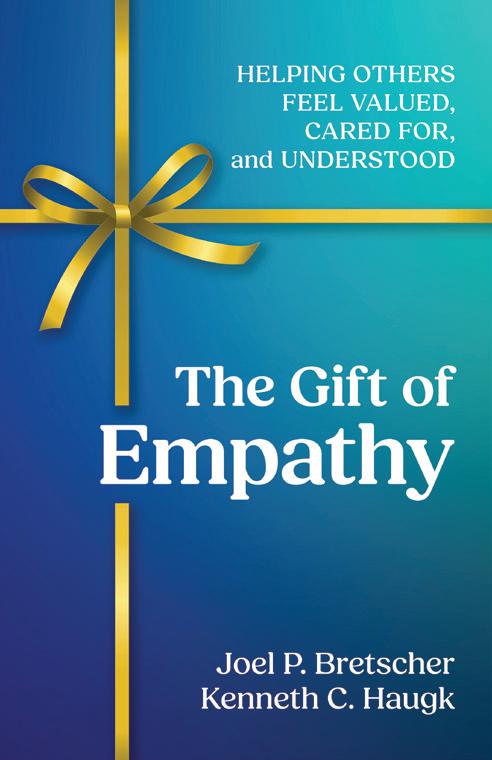
• The Gift of Empathy: Helping Others Feel Valued, Cared for, and Understood. Besides helping people grow in empathy, this award-winning book teaches a number of related life skills, including listening, reflecting feelings, being a nonjudgmental presence, bridging differences, and offering spiritual care.
> The Discussion Guide for Faith Groups includes videos, devotions, discussion questions, faith application tools, and more to help a group strengthen their empathy skills together.
> Also available is a Discussion Guide for Teams, Groups, and Organizations for use in non-church settings.
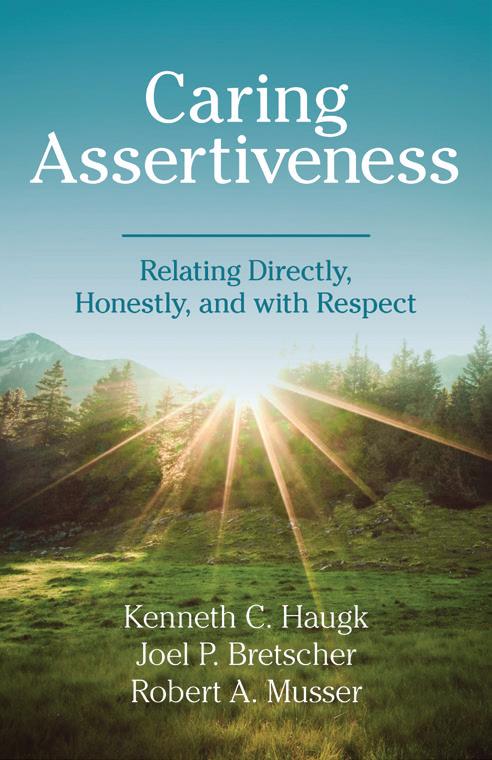
• Caring Assertiveness: Relating Directly, Honestly, and with Respect. This book explores the crucial topic of assertiveness—covering life skills such as maintaining boundaries, handling social or peer pressure, giving and receiving feedback, managing conflict, dealing with anger, emulating Jesus as a model of assertiveness, and much more.
> The Caring Assertiveness Discussion Guide provides all the resources needed to lead an engaging group study of the book. Call Stephen Ministries at (314) 428-2600 to learn about pilot-testing the Discussion Guide.
Resources for Meeting Level 2 and 3 Needs
Mental Health Empowerment by Teaching People Life Skills
Level 2: One-to-One Care
Provide Focused Care during Difficult Times
Stephen Ministry meets these needs in a powerful way. With Stephen Ministry, a church can connect a well-trained Stephen Minister (lay caregiver) to the hurting person, providing high-quality, one-to-one emotional and spiritual care for as long as needed.
In addition, these books provide another layer of care.
• Journeying through Grief is a set of four short books to send to individuals at four points during the difficult first year after the loss of a loved one.
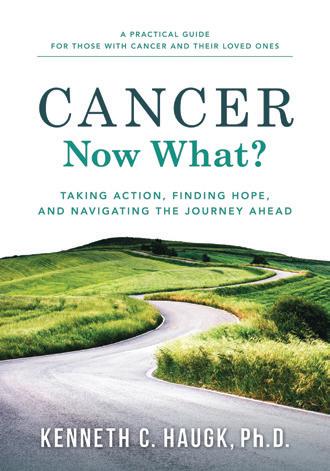
• Cancer—Now What? is a book to give to those diagnosed with cancer and their loved ones, offering insights and suggestions for navigating the journey ahead.
Level 3: Treatment
Refer to a Mental Health Professional
Although treatment is largely carried out by mental health professionals, congregations can make a great difference by connecting people with the professional care they need.
Stephen Ministry provides help and guidance for these types of referrals by equipping pastors, church staff, and laypeople to recognize these needs and refer people to the right kind of care.
These two resources are not exclusive to Stephen Ministry congregations. Any individual, church, or organization can send or give Journeying through Grief or Cancer—Now What?
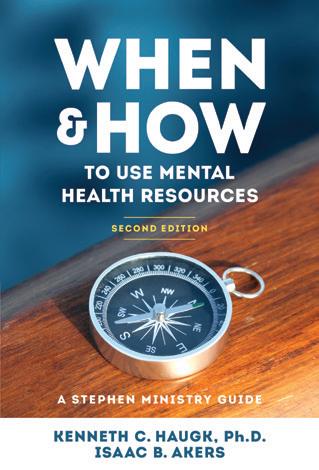
The book When and How to Use Mental
Health Resources and the video Navigating Mental Health Issues in Stephen Ministry offer in-depth guidance in this area.
Stephen Ministry is a complete system for training and organizing members of your congregation to provide quality Christian care to those experiencing life difficulties .
Although the focus of Stephen Ministry is on meeting Level 2 needs for care, the mental health resources and guidance built into the system help congregations make Level 3 referrals much more effectively .
How Your Congregation Can Help Combat the Mental Health Crisis
Why Churches Are Uniquely Poised to Make a Difference
• There are congregations located in virtually every neighborhood and community across the U.S., with many more worldwide. No other institution has such a wide reach.
• The Christian Church has a rich history of making significant contributions to benefit humankind— building schools, constructing hospitals, expanding medical care, feeding the hungry, providing disaster relief, and more. Empowering people’s mental health is another such opportunity.
• Education, spiritual growth, and building community—key components of mental health empowerment— are central to what churches do.
• Teaching life skills to promote mental health provides a very powerful and relevant way for a congregation to reach out to people in the community and meet very important needs.
• Life skills training is all about helping people live in a Christ-like way.
Four Key Components in Mental Well-Being
Good mental health is about much more than just a person’s mental state. It encompasses the whole of their inner self, including their mental, emotional, relational, and spiritual well-being. Congregations are ideally suited to promote well-being in each of those areas.
A Vision for a Reinvigorated Church
There are more than 300,000 Christian churches in the United States, located in virtually every neighborhood and community. Imagine the impact if each of these churches became a hub of mental well-being in their community—equipping people from the congregation and surrounding area with life skills to relate in healthier ways, form deeper connections, listen more thoughtfully, show greater care and empathy to others, and cope more effectively with challenges that arise.
Although you probably don’t have any influence over 299,999 of those other churches, you likely have at least some connections in one. Start there. If each of us worked to get our own congregation to start teaching life skills, even if only in one or two groups initially, the seeds will be planted and will grow from there.
Think big; start small. Together we can transform the world!
Getting Started
Empowering people’s mental health by teaching life skills doesn’t have to involve launching a major new initiative. You can start with one or more of your existing small groups, Bible studies, education classes, ministry teams, committees, and leadership groups. Introduce one or more of those groups to The Gift of Empathy or Caring Assertiveness, and encourage them to give it a try.
As people start to experience the benefits, word will spread, and you can expand your efforts to include more and more people in more and more groups. Over time, you’ll find your church becoming a beacon of hope, raising the level of mental health and well-being of people in your church and throughout your community.