The Queen Anne & Magnolia News is looking for a Outside Advertising Representative in the Queen Anne & Magnolia markets. Do you enjoy developing relationships with your neighbors and helping them market their business to our local readers? This job is perfect for someone who wants to work in the community they live in. Contact Tammy at 206-461-1322 for more details, or send resume to
Queen Anne &Magnolia news Queen Anne &Magnolia
AFFORDABLE UPTOWN
PLYMOUTH HOUSING BREAKS GROUND ON APARTMENTS ACROSS FROM SEATTLE CENTER
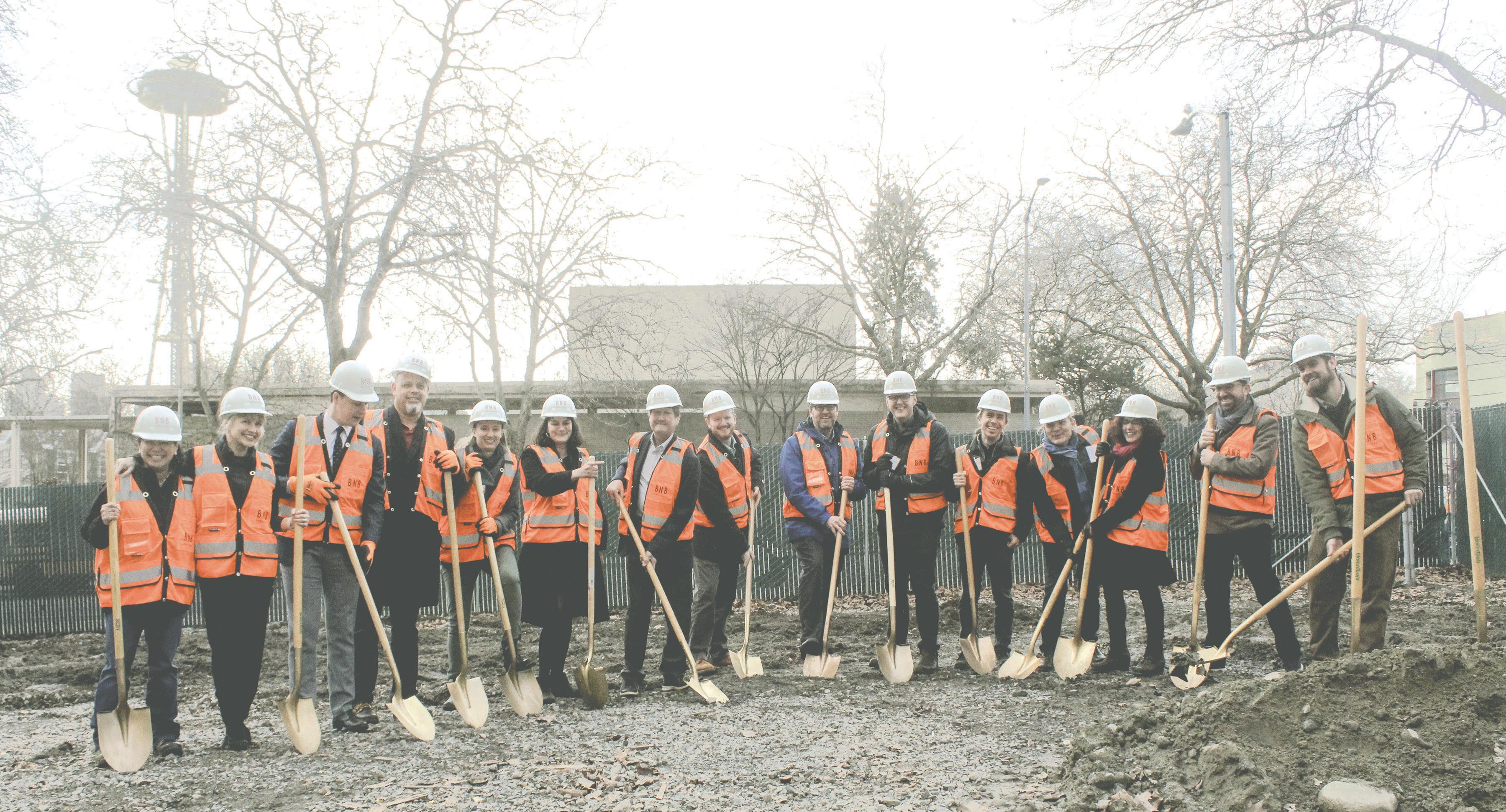
Plymouth Housing and its partners broke ground on a new affordable housing project at
on Thursday, Jan. 16.
By Brandon Macz QA&Mag News editor
The sun came out for Plymouth Housing’s groundbreaking ceremony in Uptown, where it will spend the next 18 months constructing more than 90 affordable housing units above a nonprofit community arts space. The cold, however, underscored the need for more
QA Little League sign-up ends soon
The Queen Anne Little League is seeking players age 4-16 for the 2020 spring season.
Children living or attending school in the 98109, 98119, or 98121 zip codes are eligible to play. The signup deadline is Wednesday, Jan. 29. Evaluations for the baseball minors division takes place Saturday, Feb. 1. Evaluations for majors is Tuesday night, Feb. 4. Registration is open for tee ball, softball, baseball and teen baseball and softball. Fees vary based on the sport and league.
People can register their children at qall.org, as well as sign up to volunteer, umpire and/or coach. For more information, email info@ qall.org.
affordable housing stock in order to bring those experiencing homelessness inside.
“We are here with warm hearts for what we’re going to do here today,” said Plymouth Housing board president Jane Zalutsky, who is also executive director of the Seattle Center Foundation.
Located on the southwest corner of Second Avenue North and Mercer
Street, the 11,000-square-foot “K” site was gifted to Seattle Center by the Kreielsheimer Foundation while the rest of the 43,000-square-foot block was donated to the Seattle Opera, which sold its land to Washington Holdings in 2016.
The City of Seattle and Plymouth
PLYMOUTH, Page 12
Seattle Parks removes vandalized Magnolia tree
Someone drilled holes in two Douglas firs, filled them with harfmful herbicide
By Brandon Macz QA&Mag News editor
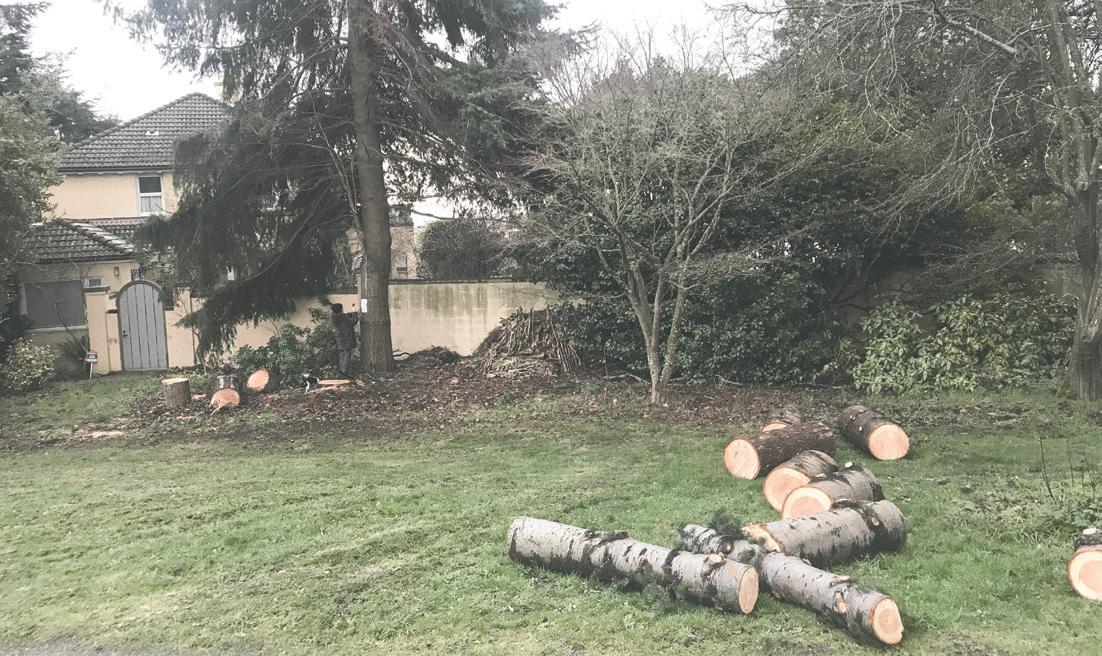
Seattle Parks and Recreation has removed one large Douglas fir tree at the southeast corner of Magnolia Park and will continue monitoring another one discovered vandalized back in April.
“We went out and we inspected the tree; it had a couple of holes drilled in
it,” said SPR arborist Chris Rippey, adding a liquid substance was discovered inside the holes. “We ended up having it tested and it came
back as a chemical that’s in a couple different products, one being a stump killer.”
TREE, Page 3
Have a New Listing You would like to get Front & Center Exposure? For only $150 each week! (Reg $200) You can be on the front page in this space!! Contact Tammy for availability & reservation 206-461-1322
Photo by Brandon Macz
Second Avenue North and Mercer Street in Uptown
Photo courtesy of Shary Flenniken
Pieces of a Douglas fir are seen in Magnolia Park. The tree was removed after someone filled drill holes with herbicide, killing it.
City council approves Battery Street Portal Park concept design funding
Outreach to start in spring, design due for completion by end of year
By Brandon Macz QA&Mag News editor
A newly sworn-in Seattle City Council unanimously approved amending the budget earlier this month. One new line item was $625,000 to fund developing a concept design for a Battery Street Portal Park in Belltown.
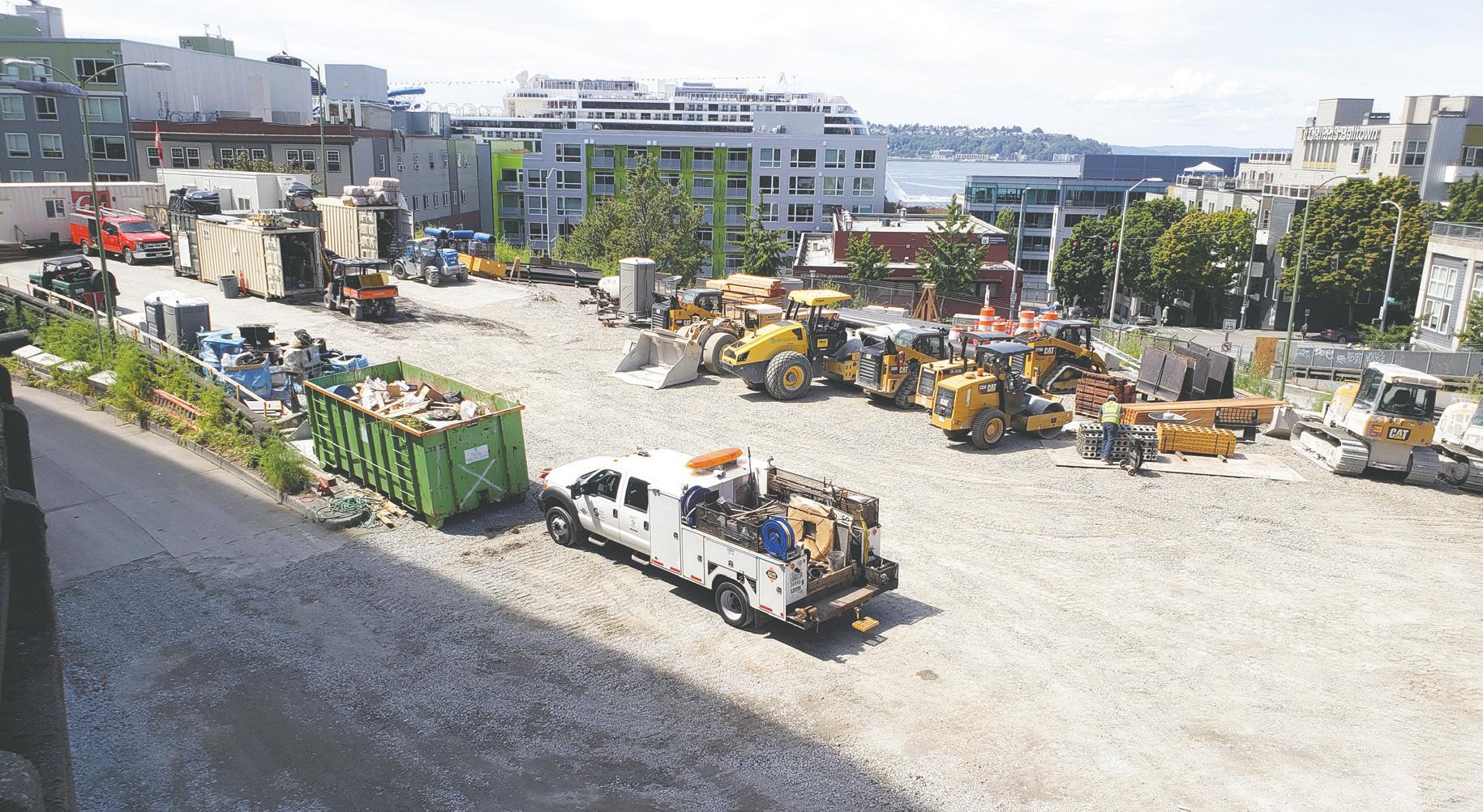
“The neighborhood has talked about having a major park ever since it was originally planned for growth in the ‘80s. It’s one of the densest neighborhoods in the state of Washington, and certainly for the city,” said Marshall Foster, director for Seattle’s Office of the Waterfront, which is leading planning for the the 1.3-acre park.
The funding to craft a concept design to repurpose the site where the now-closed Battery Street Tunnel terminated to the south was proposed by outgoing District 7 Seattle City Councilmember Sally Bagshaw. Foster said landscape architecture firm GGN, which is based in Belltown, was selected to work with the city and stakeholders on a design back in December.
Plans for a new park in Belltown were introduced a decade ago.
“The issue was that it wasn’t funded,” Foster
said. “We didn’t have funding to kind of move that idea forward.”
The Office of the Waterfront was created six years ago to work with various city departments on planning and constructing a new waterfront experience, made possible by the removal of the Alaskan Way Viaduct, closure of the Battery Street Tunnel, and opening of the new State Route 99 Tunnel.
The $712 million Waterfront for All project includes an Overlook Walk that connects Pike Place Market to the waterfront, a rebuilt Pier 62 and floating dock, expanded Waterfront Park, an Ocean Pavilion at the Seattle Aquarium, a promenade from Pine Street to Pioneer Square along the waterfront, a new seawall already under construction and rebuilds of Alaskan Way and Elliott Way for multimodal uses.
Early plans had been to make improvements all the way to Battery Street, but the project was later scaled back to end at Bell Street.
Efforts started four years ago to find a public benefit that could fill the Battery Street Tunnel, which was slated for decommissioning once the viaduct was ready to come down. WSDOT deemed the continued use of the
SUBSCRIPTION FORM
WSDOT refunding drivers incorrectly charged photo enforcement fees in State Route 99 Tunnel
By Brandon Macz QA&Mag News editor
WSDOT continues to test its tolling equipment for the State Route 99 Tunnel after it was discovered that some motorists with Good To Go! passes were incorrectly being charged a photo enforcement fee.
The 25 cent fee is applied to people who have registered their license plate with their Good To Go! account but declined to use a sticker pass that can be scanned.
WSDOT found the tolling equipment had incorrectly assessed photo enforcement fees on 64,000 accounts, resulting in the department issuing $70,000 in refunds, said Chris Foster with the WSDOT Toll Division.
“We’d received a few [inquiries] and we relayed that information to our engineers,” Foster said, “and they started to do a deep dive into our lane data, and that’s when they knew something was up.”
Refunds started on Friday, Jan. 10, and Good To Go! users were being told to allow seven days to see a credit applied to their accounts. They are also encouraged to monitor their accounts and report any future irregularities.
“We’ve implemented a solution. We’re seeing pretty good improvements,” Foster said.
Because the $70,000 in fees were incorrectly applied, the refunds do not constitute a loss of revenue for WSDOT, he said.
Ride with the No. 1 car insurer in With competitive rates and personal service, it’s no wonder more drivers trust State Farm®. As your local agent, I’m here to help life go right.® LET’S TALK TODAY.
Photo by Brandon Macz
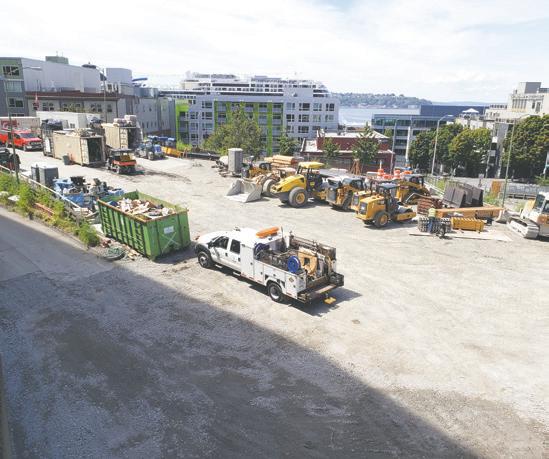
The Seattle City Council has approved funding for a Battery Street Portal Park concept design. Future funding would be needed to make it a reality.
BATTERY, Page 12
KIDS IN FOCUS SPONSORED
BY:
Make it their BEST year ever!
To learn more, schedule a FREE Placement Test today!
Kumon Math & Reading Center of SEATTLE - QUEEN ANNE
1827 15th Ave., W., Suite A-8, Seattle, WA 98119
206.216.4426
kumon.com/seattle-queen-anne
TREE , from Page 1
How do houses get built?
Humans have built all kinds of houses throughout history. During the Ice Age, humans made their homes in big caves. A few thousand years later, people figured out how to fire up a hot oven and bake their own clay bricks.
A lot of the first houses made of these bricks didn’t even have front doors. To get in the house, you climbed up a ladder to the roof and used another ladder to get down inside.
“As soon as humans left their caves and started settling in cities, architecture has been with us,” said my friend Mona Ghandi.
Ghandi is an architect and researcher at Washington State University. An architect is someone who designs buildings and supervises their construction. She said you, too, can be an architect.
It starts with an idea
First, you will need an idea. Think of a house you want to build and sketch it out on paper. After the initial idea and sketch, you can either develop your design on paper or try using a digital design
Magnolia resident Rick Israel, who lives near the park along Magnolia Boulevard, said this is not the first time the trees had been vandalized in this way. It’s happened several times in the last decade, he said, the first incident occurring seven years ago. Police responded, but did not identify a culprit.
“They had a few hunches, and of course they couldn’t prove anything,” Israel said, adding he suspects it was done by a neighbor who didn’t care for the 60-foot trees. “There’s a couple people across the street who would benefit from the views.”
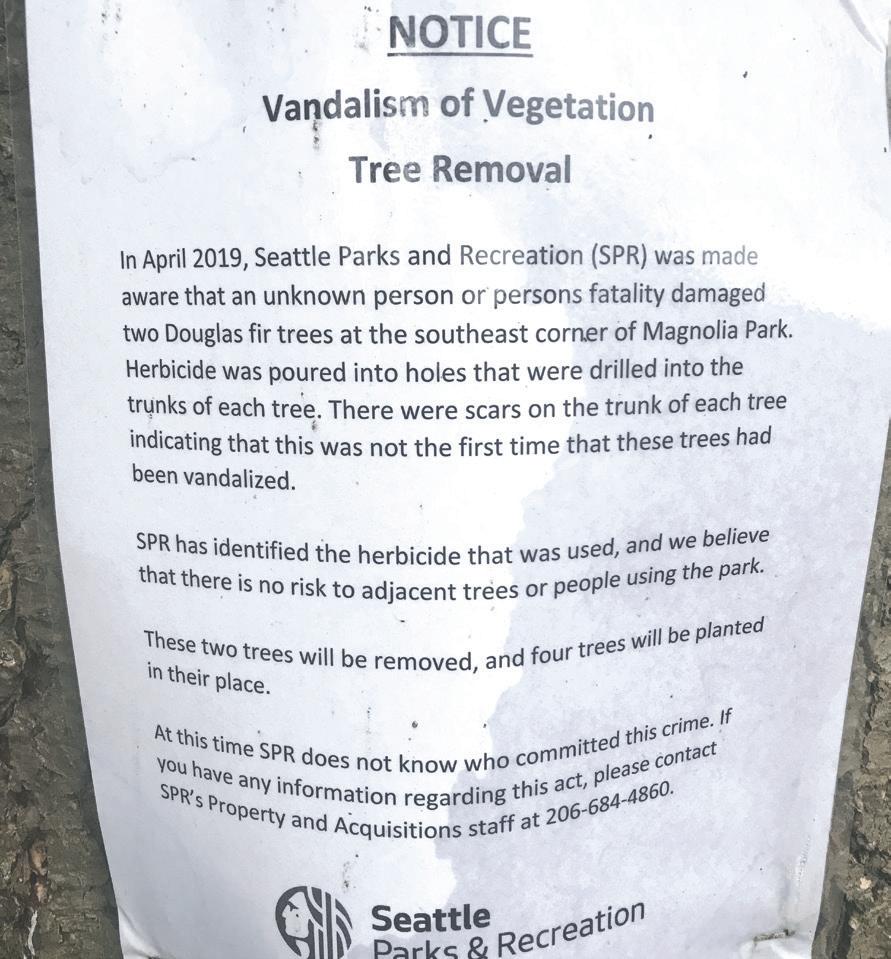
Rippey confirmed evidence of past damage to the tree, including a variety of larger and smaller drill holes, and that the April vandalism was reported to the Seattle Police Department that month. A notice posted by SPR near the vandalism site includes a number for people to report any information pertaining to this incident: 206-684-4860.
“We make police reports when these things happen. To do the report, we appraise the trees to see what they’re worth and we make a police report and they take it from there,” Rippey said.
The city used a sonic tomography unit to examine the inside of the two vandalized trees for wood decay, Rippey said, and determined one tree needed to be removed ahead of inclement winter weather; the other will be monitored on a yearly basis to determine its chances of recovery.
SPR plans to replace the tree, which was removed last week, with four trees that are roughly 2 inches in diameter, placing them further up the hill, where they’ll be more visible,
software.
Next, evaluate your design. Ask a bunch of questions, like: Will your house stand up to the weather? How does its design fit into the neighborhood? Does it meet city regulations and codes? Then you can adopt your design. That means you take it from imagination to reality.
“There is no end to design,” Ghandi said. “You can always make it better and better. The only thing that stops it is a deadline.”
It takes a whole team of architects, carpenters, plumbers, electricians, structural engineers, and construction work-
Rippey said.
Israel offered to cover the cost of replacing the vandalized tree with comparably sized evergreens. Rippey found two noble firs at 22 and 28 feet in height, and determined they would cost $2,500 to purchase and $2,000 to install, however, the cost of watering them was determined to be too prohibitive. According to an email from Rippey to Israel, the trees would have required 80 gallons of water per day from May 1 to Oct. 1. Rippey tells Queen Anne News there is no irrigation system close to the site and it would be too costly to install such infrastructure. All of these associated costs would come from SPR’s tree replacement budget.
“It does happen. I don’t think it happens as much as people think. It happens a handful of times a year,” Rippey said of tree vandalism cases in the city. “I think it’s a crime that’s just really hard to prove unless you see them doing it or someone comes forward and says, ‘Yeah, I saw this person do it.’”
for homeless people that folds up like an accordion and can be unfolded into a small shelter.
That shelter can take up to eight different configurations. It will give people a place to keep their belongings and have protection from the weather. People can also take it with them, wherever they go. Mona said the best part about architecture is that you can make things to help people live a better life.
Homes of the future
ers to build a house. We also need to think about materials. If you want to make a small house on your desk at school, you might use scraps of paper or foam boards. If you want to start a little bigger, maybe you can work with your class to build a structure made of cardboard boxes.
Helping build houses
Mona also reminded me that not everyone has a house. But she and her students are working to change that. Mona worked with her students to build a piece of architecture
Whether you live in a tall brick apartment building, a house made of mud and straw, a tiny house, a farmhouse in the country, or a house on wheels, there’s a good chance houses will look much different in the future.
What do you think houses will look like the future? What materials will we use to build them? What kinds of things will the house be able to do? Tell us about your ideas or send us your designs sometime at Dr.Universe@wsu.edu.
Sincerely, Dr. Universe
Pending Inspection at Mercer Place
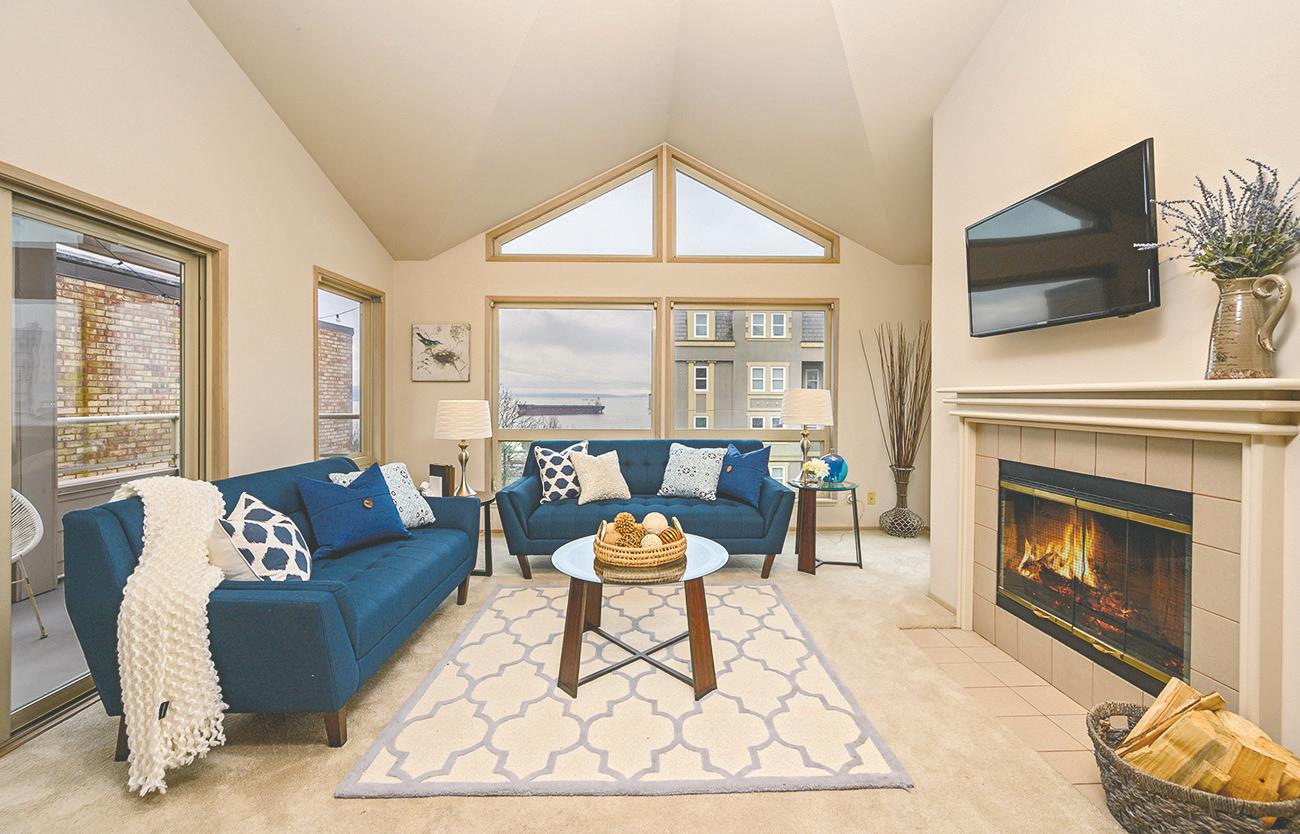
This spacious and exceptionally bright South facing corner unit with vaulted ceilings and extra-large veranda is ideal for an easy commute to Expedia, Facebook, Apple, Amazon, F5Networks and downtown. With 2 great sized bedrooms, 2 full bathrooms, in unit w/d, dining room, living room with fireplace and new engineered hardwood floors in entry, you're all set to live comfortably. Two storage units, secured parking, no pet restrictions. Myrtle Edwards Park is across the street!
SUDOKU
Here’s How It Works:
Sudoku puzzles are formatted as a 9x9 grid, broken down into nine 3x3 boxes. To solve a sudoku, the numbers 1 through 9 must fill each row, column and box. Each number can appear only once in each row, column and box. You can figure out the order in which the numbers will appear by using the numeric clues already provided in the boxes. The more numbers you name, the easier it gets to solve the puzzle!
CROSSWORD PUZZLE RETURNS NEXT WEEK
SUDOKU ANSWERS
Conny K. Knigge
December 21, 1937 - January 12, 2020
Conny died on January 12, 2020 after a difficult battle with dementia and cancer. Conny had a spirited personality. She was tough, resilient and optimistic to the end. She enjoyed the sun, trips to Hawaii, her home on 34th and the occasional libation. She loved her friends, neighbors, family and dogs.
Conny was born in Seattle on December 21, 1937 to John Oscar Sargent and Martha Merz Sargent. She was raised in Ballard and attended St. Alphonsus grade school, Holy Angels High School (1955), Seattle University and Western Washington University.
While at Western, Conny met her husband Roger Knigge and they were married in 1957. Conny lived the majority of her adult life in the Magnolia neighborhood of Seattle. Roger and Conny had two sons Kyle and Kurt. Conny volunteered for many years at Catholic Seamen’s Club. She later went on to enjoy a long career at Seafirst/Bank of America.
Conny was predeceased by her parents, sister Charlene Miyatovich, husband Roger (1969) and son Kyle (2015). She is survived by her son Kurt, daughter in law Lisa Donaldson, grandson Kris (wife Kelly), granddaughter Katie, granddaughter Kaila and nephew Lance Miyatovich (Amy).
A get together for friends and family will be held Thursday January 23rd at 11:00 am at Chinook’s- Fisherman’s Terminal 1900 W Nickerson St, Seattle, 98119
Hoffner Fisher & Harvey Guestbook at harveyfuneral.com
SENIORS PAGE
Retired urologist hosting The Original Guide to Men’s Health
Podcast seeks to get men more interested, active in improving health, accessing care
By Brandon Macz QA&Mag News editor
Madison Park resident and urologist Richard Pelman moved to the neighborhood in 1985, opening his first office in Bellevue.
In the mid-‘90s, the Washington State Urology Society endeavored to correct an information deficit when it came to health and medicine, with an emphasis on male audiences.
“They seem to be more reluctant to seek healthcare,” Pelman said.
A series of seminars was hosted across the state that included medical specialists providing information on a number of topics, encouraging men to find a primary care physician and offering advice on how to get the most out of their visits.
That effort evolved in the early 2000s, said Pelman, who worked on a Guide to Men’s Health pamphlet. At that time, there was WebMD, but it only provided advice on what to do about a diagnosis that had already been made, he said, and there were few resources providing people with information for how to care for themselves.
“The evolution to podcast was very eloquent.”
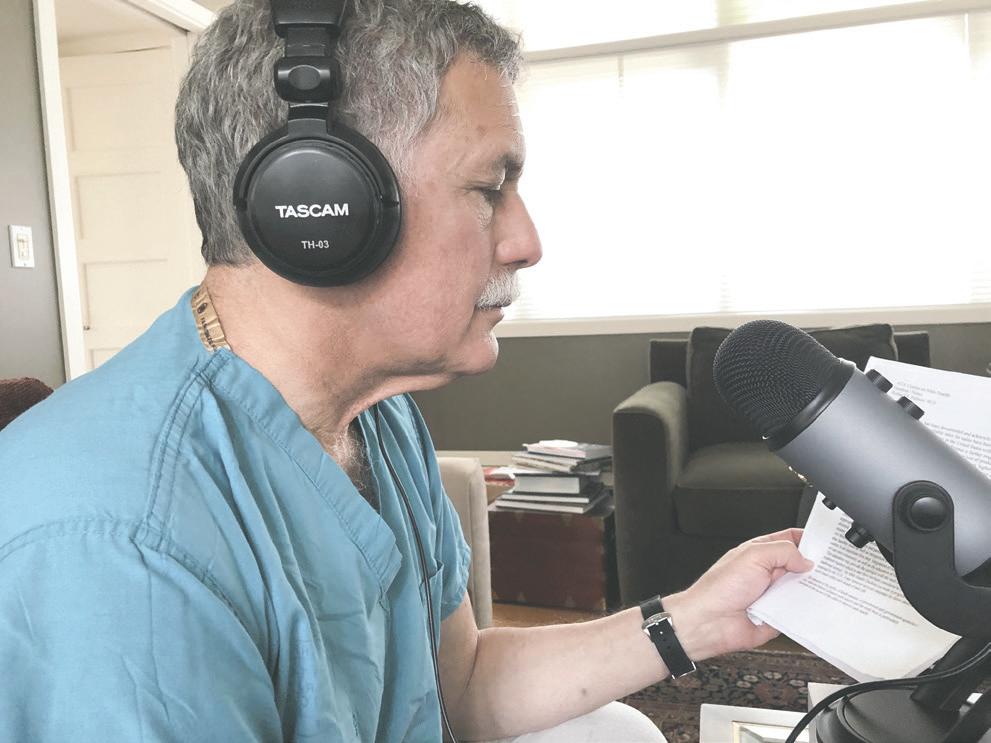
Pelman launched The Original Guide to Men’s Health podcast in April 2019, bringing on experts in a range of medical fields to not only inform, but also to motivate men to take a more serious interest in their health.
“Most men’s approach is, ‘It doesn’t exist,’ or, ‘It’s not going to affect me,’” Pelman explains in his introductory episode of The Original Guide to Men’s Health, “and there’s nothing worse than seeing a
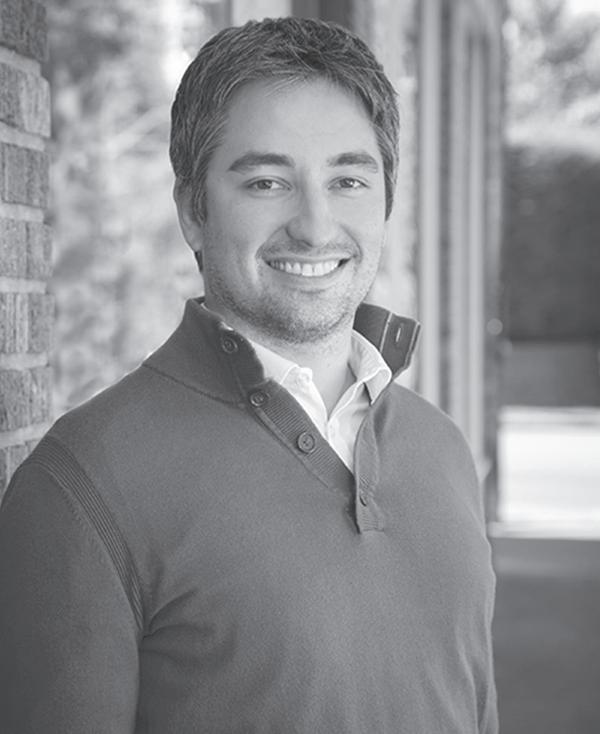
Richard Pelman hosts The Original Guide to Men’s Health.
patient come in to see you, who’s worked his whole life and has so much to look forward to, and he just never got something checked and we found it too late.”
The WSUS men’s health chair said the idea to change mediums came from executive director Debi Johnson.
“My first reaction to Debi was, ‘What’s a podcast?’” Pelman said.
When the podcast was pitched to the WSUS board, one member introduced Pelman to their son, Sean Fox, who was making podcasts as a student at Oregon State University. He helped Pelman figure out the equipment he would need for the podcast and now helps him edit and produce the episodes.
“We have a wonderful society that is allowing us to use some of our dues to fund Sean,” Pelman said.
The number of downloads grew from around 400 in May 2019 to nearly 1,000 in September.
The first episode includes an interview with Dr.
Kathleen O’Connor, professor emerita at the University of Washington Department of Anthropology and author of the Health Initiatives in Men (HIM) study, who provides insight into why men tend to avoid the doctor’s office.
Pelman recorded 24 episodes last year, interviewing experts on a variety of healthcare topics, including cardiovascular health, diet, exercise, tobacco and vaping, cannabinoids, reproductive health, testis cancer and digital addiction.
He recommends them all, noting they’re not only educational, but free to download and accessible to anyone, with many topics not being exclusive to men, such as an episode on pain management and the opioid crisis, or one on the natural medicine trend.
“These are so good because they’re experts, and you’re getting such great information,” Pelman said.
The Original Guide to Men’s Health is funded for another 24 episodes, with future topics to include back pain, allergies, LGBTQ health, pulmonary disease, dermatological health and healthcare disparities.
Now that he’s retired from the University of Washington School of Medicine’s Urology Department, Pelman has more time to hit the road and conduct interviews.
“We will travel, so the idea is to make it as painless for participants who are willing to make time for our interviews,” he said.
The podcast host said the goal is to reach as many people as possible, and he hopes the public and medical professionals help spread the word, as he sees The Original Guide to Men’s Health as an invaluable resource and an easy way for people to access information that will get them more interested in their well being.
Pelman said female urologists with WSUS are also exploring the idea of starting a women’s health podcast.
Seattle/King County Clinic returns next month
Free medical, dental, eye care being provided across Seattle Center campus
By Brandon Macz QA&Mag News editor
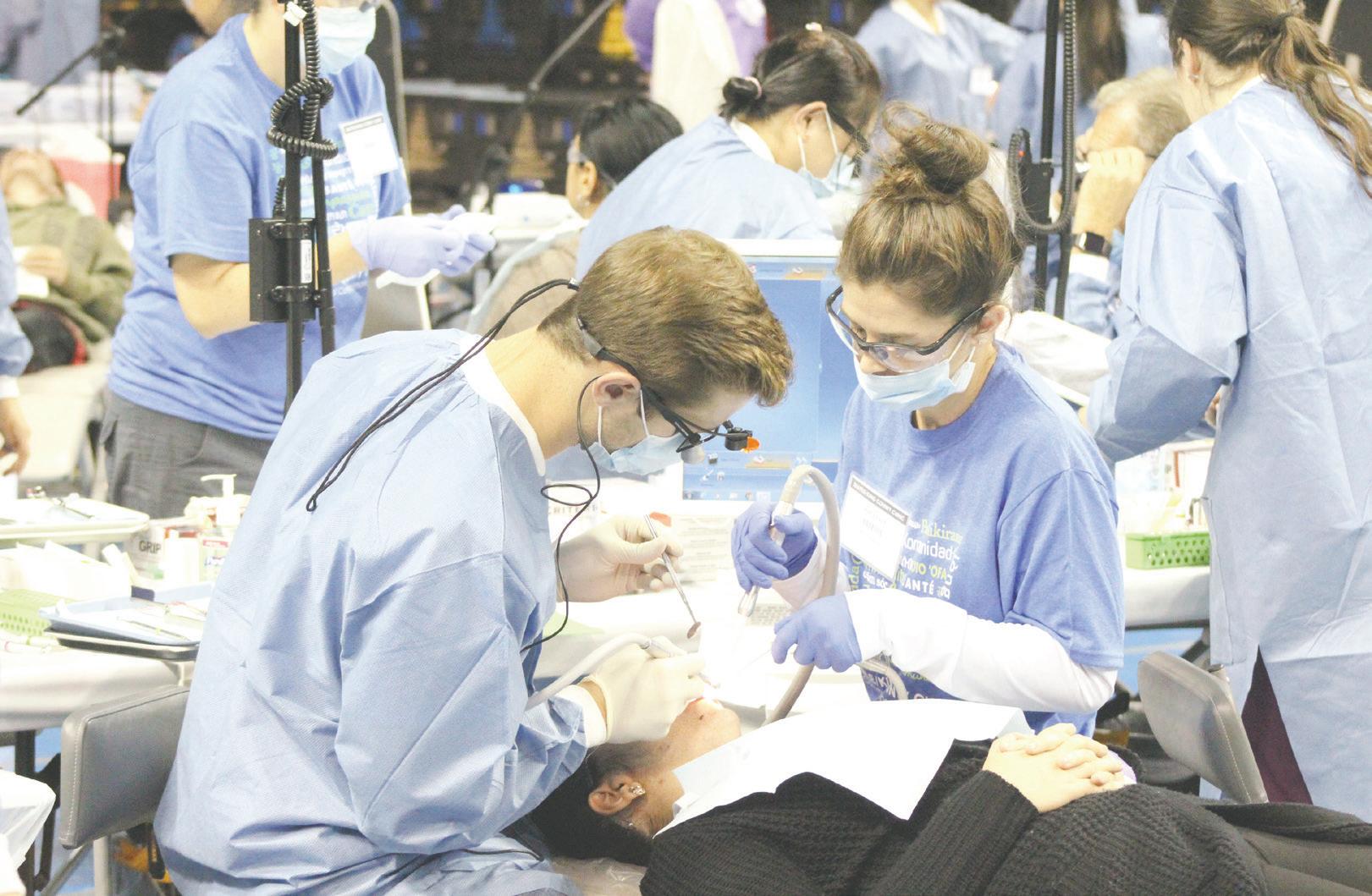
Seattle/King County Clinic organizers and volunteers are planning to serve more than 750 patients daily during next month’s four-day event. The clinic, which offers free medical, dental and eye care services for those in need, was pushed from last fall to Feb. 13-16 due to the need to relocate because of the Seattle Center arena rebuild. The clinic had operated out of the arena since 2014.
Fisher Pavilion at Second Avenue North and Thomas Street will be where patients can receive admission tickets starting at 5 a.m. Clinic doors open at 6:30 a.m. Patients do not need to provide identification or proof of immigration status, nor do they need to provide documentation to prove a financial hardship, in order to receive services. People also don’t have to live in King County to attend the clinic.
Seattle/King County Clinic coordinator Don Nunn tells Queen Anne News there will be multiple spaces used at Seattle Center for this year’s clinic, including McCaw Hall, Exhibition Hall and Cornish Playhouse. Free parking will be available for patients and volunteers at
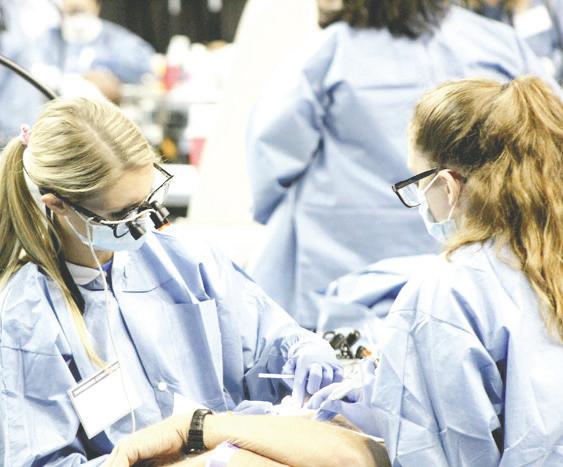
The Seattle/King County Clinic had operated out of KeyArena since 2014, but will be spread across the Seattle Center campus Feb. 13-16 due to construction.
the Mercer Street Garage. While treatment spaces had to be adjusted with the one-time facilities, Nunn said the goal remains to serve as many patients as possible.
More than 100 volunteer team leaders met on Jan. 11 for orientation, which included learning new clinic processes and procedures, Nunn said.
The clinic reports providing $17 million in direct services to 20,000 patients over the past five years.
There will be more than 800 volunteers at the clinic each day, about evenly
split between healthcare professionals and general support. There will be more than 80 dental operatories, 10 vision lanes and 1,000 pairs of prescription glasses, and more than 40 medical treatment spaces. Patients are treated on a first-come, first-served basis, and interpretation services will be available. People will not be able to receive dental and eye care in one day, but can return another day for one of those services.
More information is available at seattlecenter.org/patients.
Photo by Brandon Macz
Photo courtesy of Richard Pelman
Washington State Urology Society Men’s Health chair
PLYMOUTH, from Page 1
Housing last November announced plans to redevelop the “K” site for affordable housing and in partnership with Path with Art, a nonprofit that uses art to improve the lives of people experiencing homelessness and addiction. The Office of Housing provided $6.9 million in funding for the project at that time, and the Seattle City Council approved a 99year ground lease with Plymouth in September, charging just $1 per year.
“This outcome was one of my favorite during my time with the city,” said former Office of Housing director Steve Walker, who recently returned to work at the Washington State Housing Finance Commission as its executive director.
The commission carried out the sale of $21 million in low income tax credits (LITC), which is the main source of financing for the affordable housing development.
Walker thanked U.S. Sen. Maria Cantwell for championing a temporary expansion of the LITC program in 2018.
“Without that, today’s celebration would have been significantly delayed,” he said.
Cantwell and U.S. Rep. Suzan DelBene are working on expanding the program again with bipartisan legislation, Walker said.
Ninety-one studio apartments at Second and Mercer will be incomerestricted units, with 19 dedicated to
BATTERY, from Page 2
people who had formerly experienced homelessness, and 72 for Plymouth Housing clients exiting supportive housing. Two units will be for site managers.
“Without a doubt, homelessness is one of the central challenges facing our city and region,” said Office of Housing director Emily Alvarado, adding permanent supportive housing is the proven solution. “This saves lives, and it saves public resources.”
Alvarado thanked the Uptown Arts & Culture Coalition and other community stakeholders for supporting plans for affordable housing and pushing for it to anchor arts and cultural spaces in the neighborhood, which allowed the Office of Housing to include both in its request for proposal.
tunnel to be too expensive, given its age and vulnerability in the event of an earthquake. The transportation department chose to instead rebuild three blocks of Seventh Avenue North at the tunnel’s north end.
The Recharge the Battery group led the push to repurpose the decommissioned tunnel and keep it in the public realm rather than fill it in with viaduct rubble. A call for ideas produced 45 suggested new uses, including as a mushroom garden and a wine cave, said Aaron Asis with Recharge the Battery.
“Those efforts ended up kind of going sideways,” he said.
When the city council voted in 2018 to let the Battery Street Tunnel be filled in and not seek an alternative use for it, Asis said Recharge the Battery turned its efforts toward the portal site at the south end, which is also being filled in with viaduct rubble. That site is bounded by Battery and Bell streets and First and Western avenues.
“The first part that I think has been really exciting is seeing how a project can really galvanize a community,” said Asis, adding Bagshaw was a great partner in pushing that vision forward.
A portion of the Waterfront for All funding will be used for a Bell Street Park Extension. The four-block linear park that shares a single vehicular lane from Fifth to First Avenue will be extended to Elliott Avenue, providing a connection to the Bell Street pedestrian bridge that leads to the waterfront, Foster said. Since Bell Street was being designed out, Foster said, it made sense to create a portal
“Art heals people and community,” said Path with Art executive director Holly Jacobson, who thanked Plymouth and the city for recognizing how art promotes connectivity and creativity.
Path with Art has a $50,000 grant from the Seattle Office of Arts and Culture it will use to build out its ground-floor art, education and office space.
Alvarado also highlighted the project for its piloting of a Community Workforce Agreement that will mean constructing the affordable housing development with local workers from economically disadvantaged neighborhoods, including women and people of color.
Plymouth Housing hopes to have its
park with frontage at the extended Bell Street Park.
“We’re proud of how this happened,” Asis said. “We’re proud that we got people’s attention by presenting good ideas.”
Recharge the Battery is being joined by a consortium of stakeholder groups in collaborating with the Office of the Waterfront on development of a Battery Street Portal Park concept design, Asis said, including the Belltown Community Council, Belltown Business Association, Friends of Historic Belltown and Growing Vine Street. He said the consortium will move forward as Belltown United.
Foster said the $625,000 in city funding covers community outreach during the concept design process, which will likely start in March or April. The portal park is not part of the Waterfront for All project, meaning there is currently no funding source identified for its future construction. Asis said he sees an opportunity to build momentum in 2020 around the Bell Street Park extension and the chance to tie it to a new park on the portal site.
Seattle Public Schools continues to discuss with the city the possibility of colocating a new school on the portal site, Foster said. Queen Anne News reported on the school district’s interest in potentially sharing the site with a park and creating a K-8 school back in July.
“We do continue to talk to the school district,” Foster said. “They have a desire based on what their school population is needing in terms of a school site in the center of Seattle.”
Asis said he’s focused on the promise of a park, and he hasn’t heard much support from the community for a school on the property.
“It’s come up in every meeting we’ve had in Belltown,” Foster said. “I think it’s not impossible at all.”
certificate of occupancy by June 2021.
“It’s our hope that this project inspires everyone in Seattle,” said Plymouth Housing CEO Paul Lambros. Plymouth has carried out many complicated projects — this will be its 16th affordable housing development — but never with so many people, Lambros said. After seeing the request for proposal, he said, Path with Art was considered the best partner for the project.
“I could not be more proud to welcome new neighbors to my community,” said District 7 Seattle City Councilmember Andrew Lewis.
Lewis lives near a Seattle Housing Authority apartment building in Uptown and a DESC shelter, he said, and will be chairing the Select Committee on Homelessness and Housing Authority. Lewis said he’s committed to pushing for more permanent supportive housing, and more groundbreakings in District 7.
The Second and Mercer development is part of Plymouth’s PROOF campaign to build eight new buildings with 800 apartments, and has raised $53 million toward that goal, Lambros said, with about $21 million to go. The nonprofit housing developer plans to break ground on two more housing projects by the end of the year; one in First Hill and another in the International District.
Photo by Brandon Macz
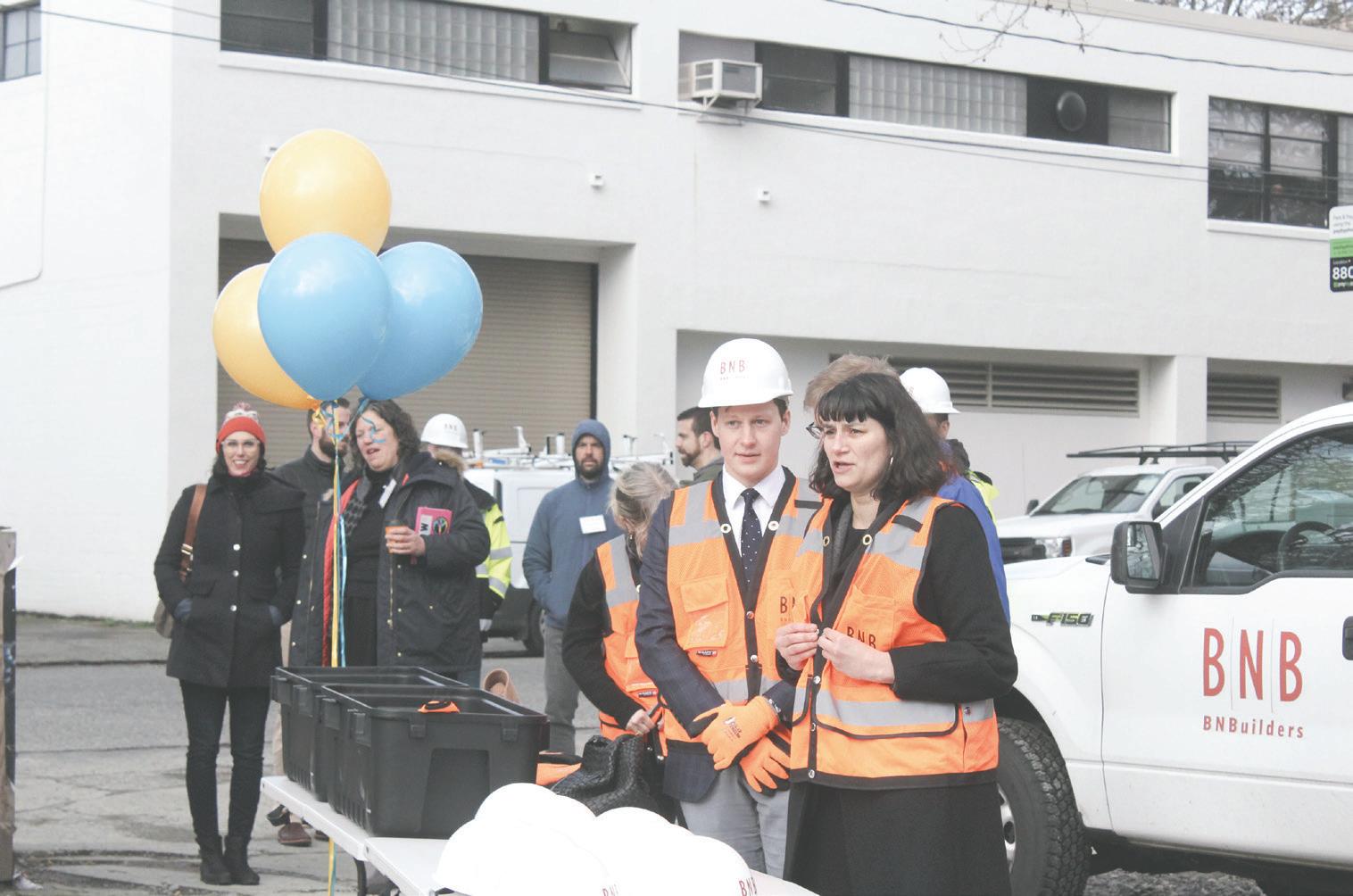
District 7 Seattle City Councilmember Andrew Lewis and Office of Housing director Emily Alvarado gear up for the groundbreaking.