





By Brandon Macz QA&Mag News editor
As we leave 2019 and enter a new decade, it’s time for reflection. A lot happened last year that will carry over into 2020, and then there were stories that were hot for a while and then fizzled. There are also changes to the neighborhood — some
Seattle Public Schools’ immunization deadline approaching
Seattle Public Schools is working to get all students caught up with their required immunizations. Any child who does not have an updated status by Jan. 8 will not be allowed to attend school.
The State Board of Health approved immunization policy to take effect on Aug. 1, 2020, which now requires verified immunization records for school and child care entry.
Online registration for the 2020-21 school year for students new to SPS starts on Jan. 6, and open enrollment for school choice is Feb. 3. This is for children who will be 5 years old by Aug. 31.
International Community Health Services will host a free immunization clinic 9 a.m. to noon. Friday, Jan. 3, at Seattle World School, 1700 E. Union St. Drop-ins are welcome, but appointments are encouraged: call 206-332-7160.
still in the pipeline — the effects of which remain to be seen. And, as our city grows, taking stock of 2019 can also serve to help our new neighbors as they settle into Seattle.
The Queen Anne News is well aware that
By Brandon Macz QA&Mag News editor
Seattle Parks and Recreation has received the green light to proceed with plans to redevelop Smith Cove Park.
some readers look forward to picking up the paper every week, while others enjoy getting the news a little sooner at queenannenews. com. Using analytics, we’re breaking down the stories that received the most clicks in 2019.
1. Online readers were excited about
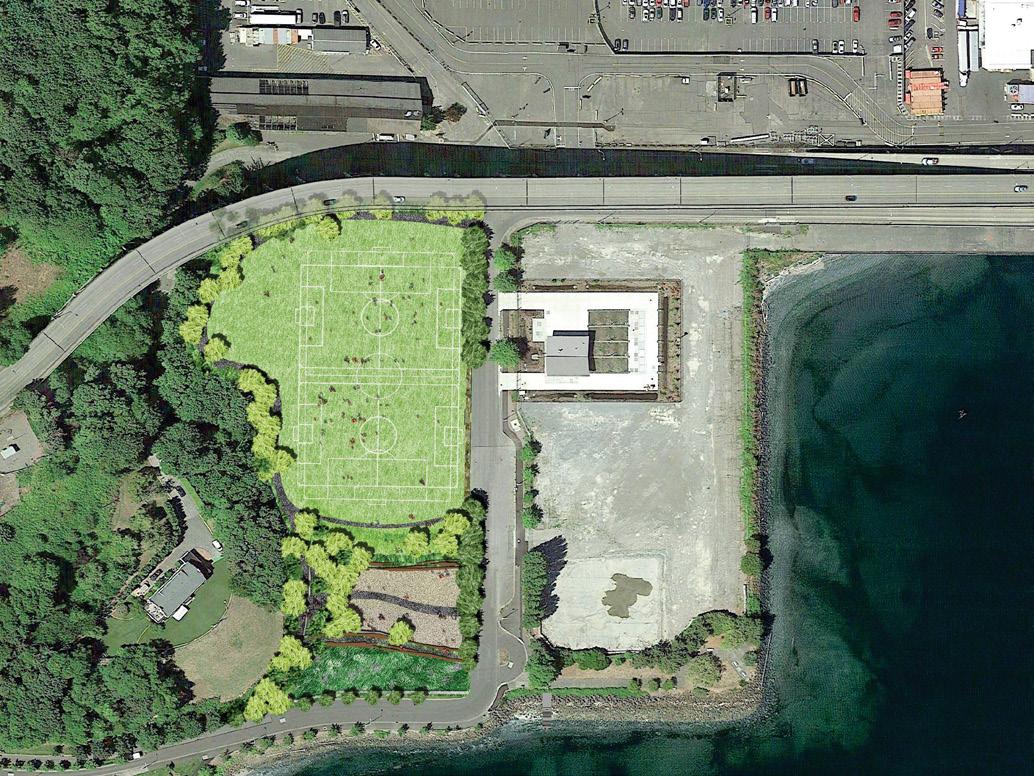
The director for the Seattle Department of Construction and Inspections has approved a Shoreline Substantial Development Permit application and determined an environmental impact statement will not be required for the project. The decision was published on Dec. 13, and any appeals to the Seattle Hearing Examiner must be submitted by Jan. 6 (3033446-LU). If none are filed, the master use permit will be issued on this date. The 11.8-acre site is on the north end of Elliott Bay and split by 23rd Avenue West, near the Magnolia Bridge. The first phase will improve athletic fields
Queen Anne Historical Society working on landmark nominations, looking for new members to support ongoing projects
By Daniel Warn QA&Mag News staff writer
The Queen Anne Historical Society strives to preserve the neighborhood’s historical integrity, from participating in the city’s landmarking processes to compiling written and oral histories.
Queen Anne Historical Society board member Leanne Olson said the organization’s role in preserving Queen Anne landmarks is essential.
“If you don’t have someone out for the history that’s there, it’s stopping, you know, just gets wiped clean,” Olson said. “I think it’s been true probably since 1852, in some respects, that it’s a clear-cut city. There’s no depth, no layers. We’re not opposed to new development. We welcome it. But for a city to have, you know, soul or authenticity, I think you need the layers of history. So you need the old and the new.”
Olson said there are currently more than 40 city landmarks in Queen Anne. The historical society defines the Queen Anne neighborhood as spanning from Lake Union to Elliott Avenue and from Denny Way to the Ship Canal.
QAHS president Michael Herschensohn said that he attends every meeting of the Seattle Landmarks Preservation Board that deals with with Queen Anne buildings to testify for landmarks, along with Olson and a few other members of the organization’s board of directors.
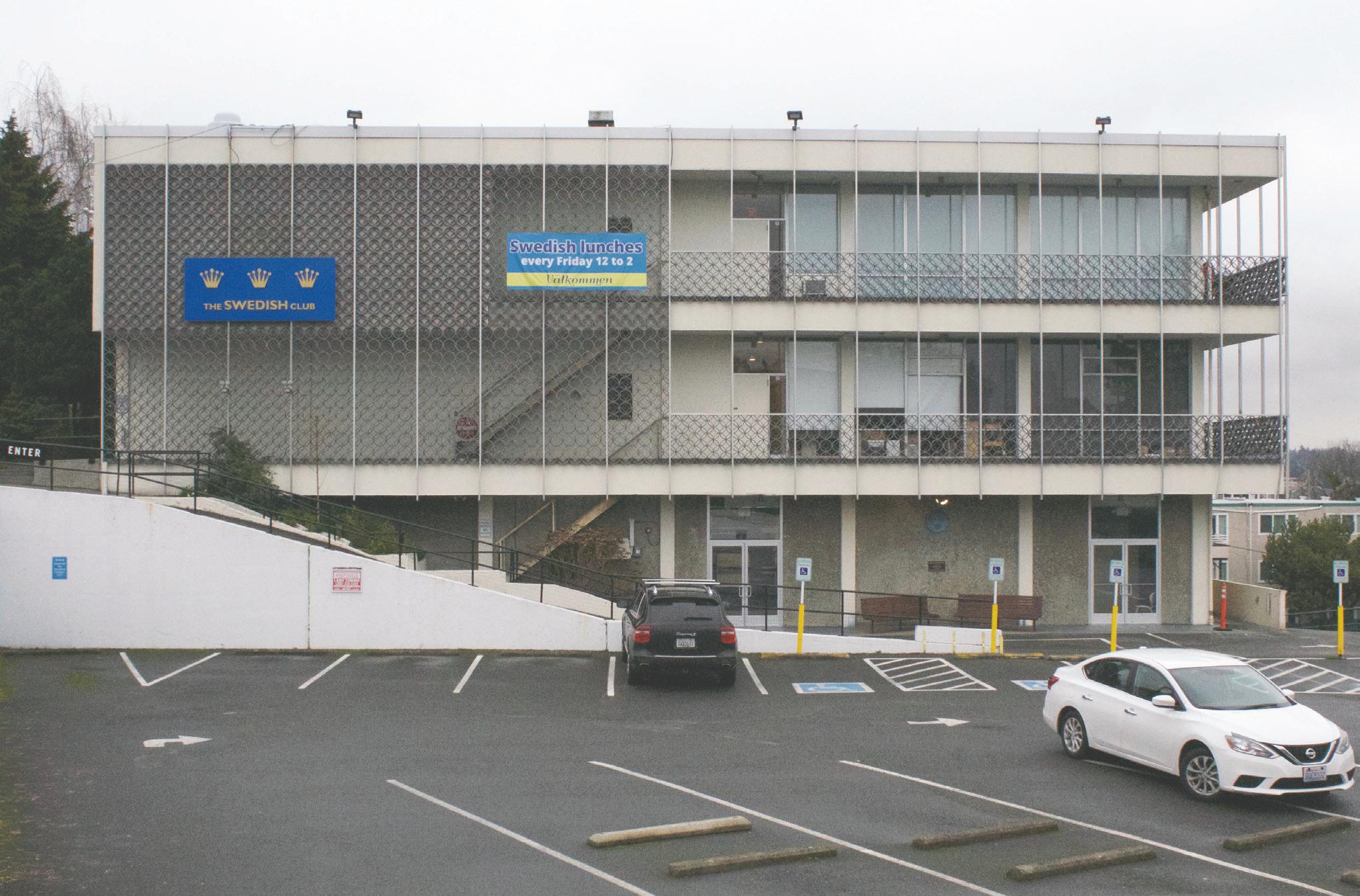
“So, right now we’re working on the nomination of the Swedish Club, which is a modern building built in 1962,” Herschensohn said. “So, we’ve been working for some time on nominating modern buildings... So now we’re working in concert with a number of different people to get the Swedish Club designated as a landmark. And the nomination has just been submitted to the staff, the landmarks preservation board.”
A major win for the society was the preservation of 57 Roy Street — the former Power Control Center — which is now used for a men’s shelter near Metropolitan Market, Herschensohn said.
QAHS also works to preserve the character of existing landmarks when they’re slated for redevelopment.
“We try to monitor buildings that are already landmarked, because the rules are you need to get a certificate of approval [from the city] for alterations, sometimes even for painting,” Olson said. “But not everything; it’s just certain features. So,
for example, as of late, it’s unusual to designate interiors. But usually exteriors and grounds are designated.”
QAHS has amassed quite a collection of two-dimensional history, sending digitized paper articles, historical documents, photographs, memoirs and family stories — along with the originals — to Seattle Pacific University for its archives. All of the historical society’s photographs are available in galleries at qahistory.org.
Historical objects get sent to the Museum of History and Industry and similar organizations.
“The people who founded the Queen Anne Historical Society… realized that having a museum would mean huge costs, constant fundraising and eventually hiring staff,” Herschensohn said. “So they made a point of not collecting three-dimensional objects.”
The society has also digitized many oral histories.
Since the early ‘70s, QAHS has always had a trained archivist to ensure the quality of the organization’s work.
Like the digitization of its archives, the Queen Anne Historical Society has embarked on large projects — one of them being the publication of the book, “Queen Anne: Community on the Hill,” which did well enough to receive a second printing.
Herschensohn said the organization also offers


tours of historic places, such as Mount Pleasant Cemetery, and hosts public programs; find upcoming events on the website.
King County’s 4Culture supports QAHS to the tune of $5,000 every two years, Herschensohn said. The nonprofit raises money, primarily through the hotel/motel tax, and redistributes it among cultural projects and organizations. Membership dues and sales also become revenue for the society’s operational costs.
Queen Anne Historical Society has a permanent home in Queen Anne United Methodist Church, and can be contacted by email at info@qahistory. com. or at P.O. Box 19432, Seattle, WA 98109. The society is currently seeking interested young people for membership, so its dues are waived for students ages 18-21.

Following the Nov. 1 decision by the Seattle Landmarks Preservation Board denying landmark status and assuring demolition of the delightful art deco Williams & Company Potato Chip Factory at 1405 Elliott Ave. W. in Interbay, a friend snidely remarked that Seattle always seems to botch its efforts at urban planning.
Agreeing that we’ve got nothing like London Docklands, les Halles in Paris or la Convergence in Lyon, I took exception to my friend’s comment, and noted he couldn’t condemn Seattle planning efforts since the city hadn’t really attempted urban planning since the doomed 1911 Bogue Plan.
Now, I think I may have that wrong.
Seattle has some good examples of successful urban planning. Sadly, it all appears to have been done privately. The cluster of Amazon skyscrapers in the old Denny Regrade/Clise tract, with its green globes, Mary’s Place, bevy of lunchtime dining spots, cool Amazon Go! store and super-safe protected bike lanes on Seventh and Eighth avenues is not botched urban planning. That’s also true for South Lake Union. Hey, how about those new Google buildings at Mercer and Fairview?
Ballard Bridge) that includes Smith Cove’s large piers, fishing and cruise ship activities, and that wobbly bridge connecting Magnolia to the rest of the world at its southern edge.
The age of the Williams & Company Factory required getting the preservation board’s opinion in anticipation of its demolition. The factory lies in a largely human-made stretch of land (yup, it’s nearly all fill from Harrison Street north to the
This tract is undergoing massive development without anyone paying attention. From what I can see, no one is doing any urban planning there. Worse yet, the number of government agencies dealing with the zone is not coordinated. It feels kind of scary. I call it silo planning. The preservation board’s participation underscores a lack of planning. Its decision was made in the absence of the factory’s context in the larger neighborhood’s future.

Sound Transit is studying a light rail route through Interbay. It may follow the route of Elliott Avenue and Interbay, or it could run along the edge of the Burlington Northern Santa Fe (BNSF) railway tracks. It will build a large station where the tracks meet Dravus Street. The route will cross into Ballard on a new bridge across Salmon Bay, or through an unlikely tunnel. This planning is also happening in the absence of a plan for the larger neighborhood.
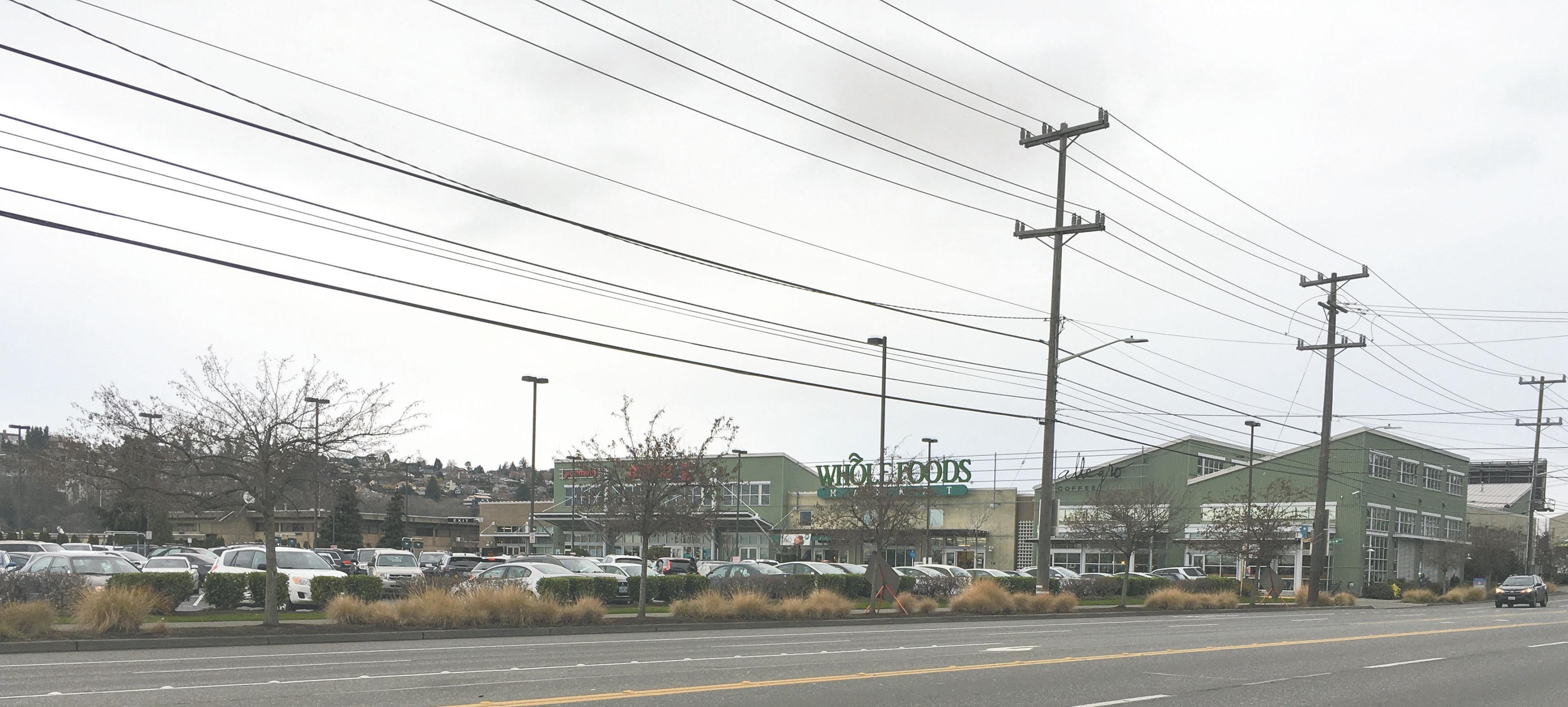
If you need more examples, remember: 1. The huge shopping mall where Whole Foods and smaller tenants flank a large parking lot. 2. The quasi-suburban big-box stores along West Armory Way. The tract of land along West Armory Way the Army wants to sell. 4. The large self-storage facility coming to completion on the northern edge of the Magnolia Bridge. 5. The multiple new and cheap apartment houses just added to the spaces where Dravus crosses Interbay and that the Seattle Monorail (remember it?) destined for a train yard. 6. The rumbles from the Port of Seattle about redeveloping its property upland of Smith Cove.
The Port of Seattle’s Fishermen’s Terminal, south of the Ballard Bridge and the BNSF tracks, train yard and shops (the elephant in the room I almost failed to mention), are reminders of this corridor’s industrial past. Both agencies build and tear down

net sheds, piers, gas tanks, locomotive storage sites and much, much more with little public input or apparent city oversight. Ugly as their various components might be, they could be preserved and cherished in a well-planned redevelopment zone.
With apparently little or no consideration of what else is happening in the zone, SDOT also has another, albeit wonderful, uncoordinated project nearby. City traffic engineers have constructed a protected bike lane along the east edge of Government Way, from the heronry at Kiwanis Memorial Preserve Park all the way to the BNSF railyard. Just where the trail exits the yard and scoots along the edge of Smith Cove Waterway, it hooks up to Expedia’s new bike and pedestrian trails. Then, where the trail turns to the east at the southern end of the waterway, Expedia has built a fantastic amphitheater with glorious views of the city skyline and Mt. Rainier. The new bike lanes and this clever redesign of the shore are wonderful additions to the city and provide a great place to watch Mt. Rainier at sunrise and sunset (or the demolition of the King Dome if it were still standing).
My gripe is that much as the new trails prove Seattle has traffic engineers, landscape architects and urban planners capable of fantastic designs, none of the redevelopment happens as part of a marvelous well-coordinated plan.
Imagine if the city had prepared an urban plan as well done as Expedia’s new campus for the entire swath from Harrison Street to the Ballard Bridge. It would have surely enhanced Martin Selig’s beautiful black boxes and sculpture garden at West Roy Street west of Mercer Place, and it would have found ways to protect (among other great art deco buildings) the Williams & Company Factory, the 1922 Wilson’s Machine Works, both dating from the early filling of Smith Cove, or the neat drive-through market (now Builder’s Hardware). This list goes on. The essential message confirms my friend’s nasty thought that, without urban planning and well executed designs, everything is random, everything is poorly planned and executed. Alas, without even trying, Seattle has botched it in Interbay!
Michael Herschensohn is president of the Queen Anne Historical Society.



Algerian coastal city
A healthy redness
El __, border town
Part of the mind
Female body part
Atrocities 24. You can call Paul Simon this
Copyread
26. Large integers
27. Large, flightless bird 28. Bread and whiskey are two
Indicate pain or discomfort 30. Worry
31. Wild goats
33. Belittle
34. More supernatural
38. Wakes up
39. Intestinal pouches
40. Popular dance
43. American state
44. CSI actor
45. Having a keen enthusiasm for
49. Swiss river
50. Restaurant item
51. Intense unhappiness
53. Unit of loudness
54. Increase in velocity
56. Mesoamerican religion
58. Early multimedia
59. Forearm bone
60. An unprincipled person
63. Swarming with
64. Shellfish
65. Root of taro plant
CLUES DOWN
1. More silly
2. Adult beverage
3. Iron used for lofting
4. Noses
5. Smile
6. One who examines closely
7. Lethal dose
8. Denotes past
9. “This Is Us” actor Fitch
10. Dabbling ducks
13. Polish beer
14. A type of cat
15. Shows respect for
20. Of I
21. Commercial
22. Chai and chamomile are two
23. Lodging option
27. Geological times
29. Unit of electrical inductance (abbr.)
30. Where G-men work
31. Hot beverage
32. One of the six noble gases
33. Southern constellation
34. South American nation
35. Suitable for use as food
36. The back
37. I (German)
38. Blood group
40. Fit to stand trial
41. Praise excessively
42. Female’s title
44. EU predecessor
45. Acutely insightful and wise
46. Disguised
47. Improved the appearance of
48. Generator
50. The real __, the genuine article
51. Male’s title
52. Home of the Hawkeyes
54. About aviation
55. At all times
57. Military peace officer
61. College degree
62. Indicates position










Magnolia women’s group raises funds to support nonprofit that provides childcare assistance to parents earning college degrees
By Daniel Warn QA&Mag News staff writer
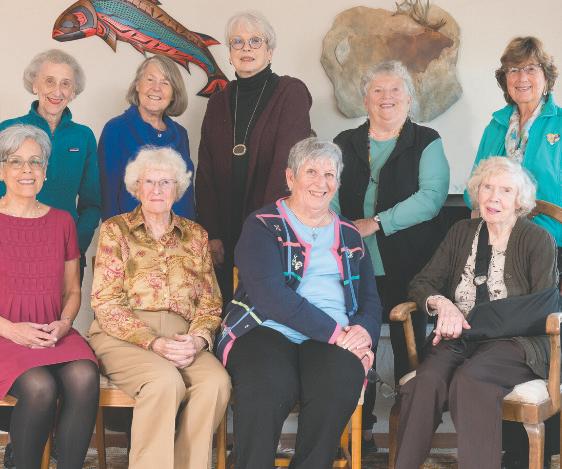
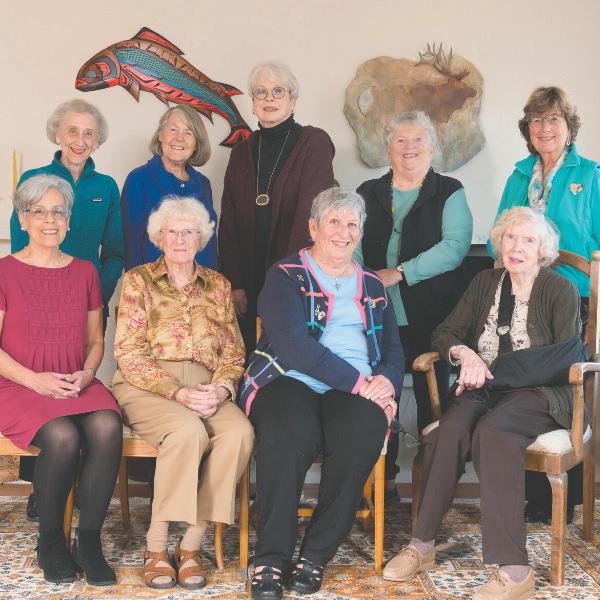
A circle of about 14 Magnolia women, most of them in their 80s, gather once a month for fellowship and to support Goodwin Connections, a nonprofit formerly known as the Seattle Milk Fund.
The Katherine B. Friele Circle has been providing support to Goodwin Connections since 1959, when the circle was founded as a fundraising arm of the Seattle Milk Fund.
The Katherine B. Friele Circle still holds an annual fundraising event each December, which raises hundreds of dollars for the nonprofit, in addition to the support it gives to Goodwin Connections’ all-city fundraisers.
Goodwin Connections was originally founded in 1907 as the Seattle Fruit and Flower Mission, and members took fruit and flowers to people in the hospital, said Goodwin Connections executive director Maggie Skinner.
Skinner said the organization is one of the longestrunning charities in Seattle, rebranding as the Seattle Milk Fund in 1935.
“It’s a continual support for the families. The continuity of childcare allows parents to stay in school, get good grades, graduate in a timely manner, and at the same time, our little ones are getting a great early-education opportunity.”
Goodwin Connections provides support to families in King, Snohomish and Pierce counties, but was originally a Seattle-only charity.
Joy Goodenough, one of the founding members of the Katherine B. Friele Circle, is the only active member of the group who was around in its early days.
“They’re just wonderful women. And I was new, and people claimed there was no ‘Seattle Freeze,’ but there was, and so these older women took me in and were ready to be friends. They had time to go to coffee or, you know, do something.”
Paul Whitham,
Katherine B. Friele Circle member
“Back in the day, we would provide dairy products to…those who were affected by wartime.” Skinner said. “In the 1960s, we started giving out educational grants to the parents — families that wanted to go to school and get a college degree.”
Now Goodwin Connections, the nonprofit primarily provides childcare assistance to families with parents who want to earn their college degree.
Families have to meet 300 percent of the federal poverty line to qualify for the program, but once a family is in, Skinner said, they are supported until the parent graduates.
“I think what’s really special about our program is we support families from the day they walk into our program to graduation day,” Skinner said.
“Well, in the beginning, my mother had been a member of Seattle Milk Fund back starting back in the early ‘40s, 1940s.”
Goodenough said. “She and her friends had a circle called the Town and Country Circle, part of Seattle Milk Fund, and they decided that they had a lot of daughters and daughterin-laws who were newly married who needed to have an affiliation with something. So, they invited us to come one evening to learn about Seattle Milk Fund.”
In those early days, there was a woman who belonged to the circle that had a friend who died in a plane crash in Alaska. That friend’s name was Katherine B. Friele. The ladies of the group named the circle in her honor.
Goodenough said that if there was an out-of-the-box fundraising idea, the ladies of the Katherine B. Friele Circle likely already tried it.
“We put together key chains, and they were made out of round, colored balls that were kind of clear, pretty colors, different colors,” Goodenough said. “We got everything all disassembled, and we would sit at the tables at our meetings and use our little jewelers pliers that we all purchased, and put together these key rings. We sold gobs of them.”
The ladies even held a women-run salmon derby each year to support the
charity.
In more recent times, the group held a Valentine’s banquet and auction that they called “For Love and Money.” Events like this not only raised money for the organization, they also provided a valuable social outlet for the circle’s members.
Paula Whitham, the Katherine B. Friele Circle’s youngest member at 72, found the circle after she moved to Seattle in 2002. Whitham said that while there didn’t seem like there was room for her at other circles in the organization, she did find a home with the Katherine B. Friele Circle, where her first job was to help the older ladies bring banquet dishes from a downstairs kitchen to an upstairs dining area.
“They’re just wonderful women,” Whitham said. “And I was new, and people claimed there was no ‘Seattle Freeze,’ but there was, and so these older women took me in and were ready to be friends. They had time to go to coffee or, you know, do something.”
Over the years, the members of the Katherine B. Friele Circle did more
than financially help the families associated with Goodwin Connections, Whitham said.
“Someone needed a vacuum cleaner,” she said. “and one night she was just really frustrated, and we went out, got her vacuum cleaner and brought it over.”
The group has also been known to do things like bake cupcakes for a child’s school birthday party and other small favors to help the people in the program.
The Seattle Milk Fund rebranded as Goodwin Connections earlier this year. It switched into the childcare charity for students back in 2014.
“Because we no longer provided milk, we needed to change our name so that it reflected what our mission was,” Skinner said. “In looking at all the different possibilities of what we could name ourselves, we actually took a look back into our history, and one of our founding women of Seattle Milk Fund was named Goodwin.
“And so we thought that her name really represented what we wanted for all families, which is to have a good win.”
Staff Report
QA&Mag News
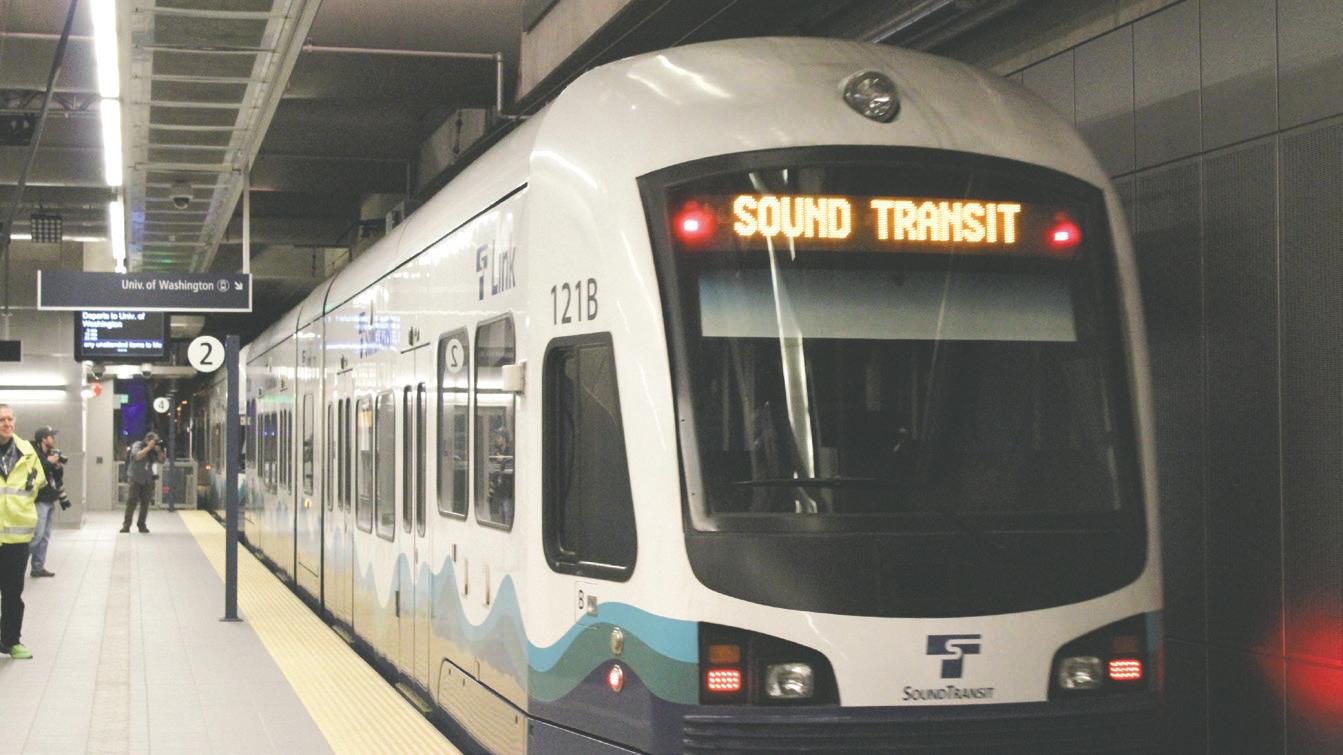
Sound Transit will begin 10 weeks of construction to build new tracks to connect downtown Seattle to the Eastside on Jan. 4.
The construction will require reducing service through March 15: four-car trains will run every 12 minutes; Pioneer Square is the last stop north and southbound (Angle Lake-Pioneer Square) and (UW-Pioneer Square), meaning people will have to change trains using a new, temporary center platform; bicycles will temporarily be prohibited at Pioneer Square; buses will replace light rail between Capitol Hill and SODO Jan. 4-5, Feb. 8-9, and March 14-15.
Sound Transit is cautioning riders to expect overcrowding during peak hours while construction is underway, and suggests people aim for the first and last train cars.
East Link light rail service is slated to start in 2023, serving 19 stations between Northgate and Redmond. There will be 10 new stations in Judkins Park, Mercer Island, Bellevue and Redmond.
Learn more at connect2020.soundtransit.org.
Staff Report
QA&Mag News
Rooftop Brewing Company celebrated the release of its ImPeachMint IIPA in 16-ounce cans at its North Queen Anne tasting room on Dec. 20.
A portion of the proceeds from the sale of this beer throughout the month of January will be donated to the Queen Anne Helpline and Fair Fight 2020.
The ImPeachMint release is part of Rooftop’s ongoing Beer Trumps Hate (BTH) campaign, which started in 2017 to support nonprofits and celebrate a love of beer “in response to the negative rhetoric pervasive in
the national political environment,” according to a news release.
Queen Anne Helpline provides emergency financial support to ensure people don’t become homeless. The nonprofit also operates a food pantry and provides clothing to those in need.
Fair Fight 2020 is focused on protecting voters rights in next year’s election, free of foreign interference.
Rooftop co-founder Craig Christian tells Queen Anne News all profits from the sales of BTH products — including stickers and T-shirts — are donated. The Helpline and Fair Fight 2020 will each receive 50 percent of the proceeds from this campaign.
Plans due by Feb. 17; SDCI to make selection in March on backyard cottage options
By Brandon Macz QA&Mag News editor
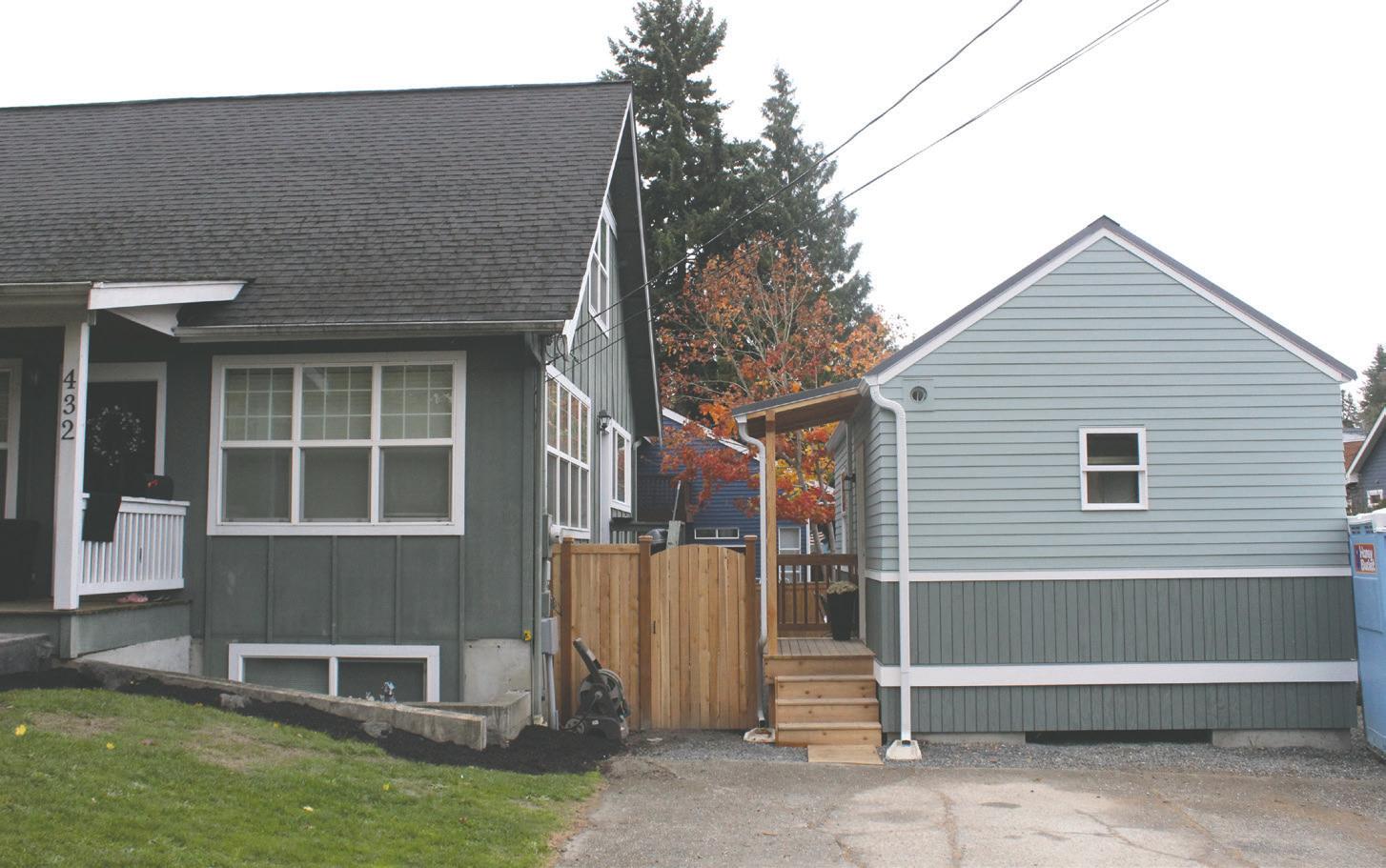
The City of Seattle has released its submission guide for crafting pre-approved detached accessory dwelling unit designs, the selected plans to eventually be offered to homeowners as a cheaper and quicker option for constructing backyard cottages in single-family lots.
The pre-approved designs are being developed under an executive order made by Mayor Jenny Durkan when she signed legislation the city council approved in July that eases restrictions on developing accessory dwelling units in single-family zones.
Pre-approved designs for backyard cottages are supposed to reduce permitting times and decrease planning costs, incentivizing more DADU construction in Seattle.
The Seattle Department of Construction and Inspections (SDCI) and Office of Planning and Community Development launched an online survey from Sept. 30-Oct. 21 where respondents were asked to rank their preferences for design criteria and describe their neighborhoods.
Eighty-five percent of the 568 respondents were homeowners. Just 8 percent of respondents described their neighborhood as being mostly apartments. Forty-six percent ranked
Now that building code has been revised to make it easier to build backyard cottages, the city is seeking pre-approved design options to offer people wanting to construct them.

on the west end of the park, add a half-acre off-leash dog area, gravel pathways and a picnic perch. The fields will include improved greenwater infrastructure to provide better filtering of runoff that ends up in the Puget Sound. A bioretention basin will be developed to the south of the off-leash dog park, which had originally been designed to be a full acre.
grading within an environmentally critical area (ECA) steep slope buffer area. This work includes the bioretention pond development to improve stormwater runoff filtration and the removal of invasive species.
green building as very important, and 48 percent ranked low-cost as very important. Sixty-one percent of respondents reported they were considering constructing a backyard cottage while 32 percent identified as an architect or having a similar profession.
Pre-approved DADU design submissions are due by Feb. 17, and a selection committee will identify 6-10 designs for SDCI staff to preapprove. Selected designers will have to then have to submit a permit-ready plan to SDCI to review at no cost. Submit plans to DADUplans@seattle.gov.
The city will then create an online gallery with images and descriptions of the backyard cottage designs. People can find the one they like and be connected with its designer to create a site plan required to complete the permit application. A royalty of up to $1,000 can be set by the designer for use of their plan.
DADU categories include: small-footprint (250-300 square feet); family-friendly DADUs with at least two bedrooms; single-story ADUs designed for accessibility; low-cost DADUs; and DADUs with a garage.
SDCI plans to have pre-approved designs selected by March. The designer retains the copyright to and liability for the pre-approved plan, and will have an hourly rate specified in their plan submission.
Anyone considering submitting a design can learn more at an information session being held 1:30-3:30 p.m. Tuesday, Jan. 14, in Room 4050 of the Seattle Municipal Tower, 700 Fifth Ave.
The submission guide is available at this shortened link: https://bit.ly/2PIdba1.
There is currently no funding for the east side of the park site, which will be the second phase of redevelopment. Plans are to add kayak and beach access on the northeast end, a playground, two sand volleyball courts, a beach grove, parking lot, beach stair and restrooms.
The Magnolia Wet Weather Storage Facility also sits on the site. The western fields were being used until recently to fix an underground conveyance pipe connected to the storage facility.
The SDCI director’s decision includes a shoreline variance, as part of the project proposes revegetation with native plants and
“As the proposed construction work and revegetation will take place adjacent to Elliott Bay, there exists the potential for debris and other deleterious material to enter the water during this proposed work,” the director’s decision states. “Best management practices (BMPs) will be employed to decrease the probability of debris or other deleterious material from entering the water during the proposed work, including project specific Temporary Erosion and Sediment Control (TESC) plans.”
SPR will also have to follow standards for the life of the project related to vegetation management within the shoreline district.
Phase one of the Smith Cove Park redevelopment is expected to start by summer 2020. The budget includes two $250,000 grants — one from King County and another from the state’s Recreation and Conservation Office.
REVIEW, from Page 1
Corino Bonjrada’s new Peruvian-inspired Pink Salt restaurant, which opened in Magnolia Village in June. The story of Pink Salt’s takeover of the former Magnolia’s Restaurant space was the top-read article of 2019.
See what all the fuss is about at pinksaltseattle.com.
2. Our second most-read story was about the Madriz family, who had plans to restore The Shanty Cafe in Lower Queen Anne as a Mexican restaurant, only to end up losing nearly $300,000 to an unlicensed contractor with a criminal past.
An attempt to save The Shanty even caught the attention of KIRO 7’s Jesse Jones, but a GoFundMe campaign was unsuccessful in raising capital needed to restart construction.
Jose Madriz tells Queen Anne News he’s had offers on the property that he’s considering.
3. We’re combining our third and tenth most-read articles here, as they relate to the tragic deaths of three children who had been passengers in a vehicle driven by David J. Cohen that rolled over outside Cle Elum in August 2018.
Nico Luiggi and Leo Schneider attended Hamilton International Middle School, and were friends with Cohen’s son, Max, who died at the scene. Luiggi died in October 2018, followed by Schneider in January. Rather than take the case to trial, Kittitas County Deputy Prosecutor Craig Juris ended up offering Cohen a plea agreement, which he accepted. Cohen received 75 months in prison during his sentencing in September.
4. Anyone looking out over the Ship Canal on Nov. 10, 2018 would have seen it lit up by the four-alarm Gascoigne Lumber fire, which destroyed five structures, including a storage building filled with finished lumber and wood trim.
That’s where Matthew D. Hooper started the fire, which was one of several he admitted to setting between Nov. 8-28 in North Queen Anne and Ballard. The Gascoigne fire was the first four-alarm fire in Seattle since 2010.
Hooper was already in custody in Whatcom County when he was identified as a suspect.
Hooper ended up pleading guilty to one count of second-degree arson and was sentenced in November to 89 months in prison.
5. The fifth spot belongs to Port of Seattle Commissioner Fred Felleman and our general election preview of the Position 5 commissioner and his challenger, Garth Jacobson.
This article had a surge of clicks as the deadline to get November ballots loomed, as did a lot of our candidate profiles, so we thank our readers for trusting our reporting as they decided the general election.
6. Readers were curious to learn about The Paragon bar and grill changing hands after 25 years in Queen Anne.
Eric and Kim Rogozienski took over the business from Todd Ivester, who came up to Seattle to run The Paragon, which got its start in San Francisco. Ivester bought the Seattle outpost in 1999, and it’s now the only one in business.
The Paragon closed in May and reopened in August, after a deep clean and updating of its interior and menu.
7. A business feature we wrote in May about a subscription service for air masks and filters got a lot of clicks, likely by people who remembered how bad the wildfire smoke was in summer 2018.
This summer ended up being milder in terms of wildfires, at least in Washington. Puraka is still in business, and serving many other areas where air quality is low more frequently than Seattle.
8. Our online readership certainly loves a good food story, though they may have had mixed feelings about the news that 5 Spot was ending its dinner service. This was a basic notice with a lot of clicks.
9. Here we again lump together two well-read articles that happen to be about the same subject. In this case, it was Seattle City Council District 7 candidate Isabelle Kerner.
A young candidate and former intern to Washington Sen. Maria Cantwell, Kerner referred to the homelessness crisis as a camping issue, and had pushed the idea of converting shipping containers into housing units. At the time of her filing, Kerner had been engaged in a lawsuit against the city for the Seattle Police Department’s handling of her 2017 assault case in Capitol Hill.
The Office of Professional Accountability found Kerner’s complaint of unprofessional conduct sustained and that officers did not do an adequate investigation. Kerner ended up dropping the case in May, citing a desire to work with SPD if elected and her acceptance of one officer’s apology as her reasons.
She did not advance in the primary.
10. And we wrap up the online-readers’ choice portion of this 2019 roundup with another foodie piece about Suzana Olmos opening her Korean-Mexican restaurant Lazy Susan in Uptown, where Crow had operated for the past 15 years.
Lazy Susan is now open at the corner of Fifth Avenue North and Aloha Street, and Champagne Diner has filled her old Citizen Six space in Interbay.
Editor’s Choice
Not to let the internet have the last word, we’re going to — quickly — lay out what we consider to be the big stories of 2019, many of which will carry over this year.
1. Oak View Group broke ground on a new Seattle Center arena, aiming to open for basketball and hockey in spring 2021. The arena is doubling in size by way of digging down, and will once again be topped with its iconic roof and fitted with its landmarked windows when all is said and done. For nearly $1 billion, we think it should look pretty nice.
2. We received a Magnolia Bridge study that confirmed residents really want a 1:1 replacement, however, an Armory Way Bridge option ranked really well, and is estimated to cost less. The city currently can’t afford any option, and is well into studying the Ballard Bridge now. While every District 7 candidate made a campaign promise to replace Magnolia Bridge, Ballard may get priority if it keeps getting stuck open. It happened twice in December, and the last time it was for more than four hours.
3. After years of trying, a developer has made headway in moving forward designs for a 50,000-squarefoot Safeway and more than 300 apartments to replace Queen Anne’s old grocery store on the hill. barrientosRYAN squeaked by the Early Design Guidance meeting, but in 2020 the West Design Review Board will still need convincing that a mega Safeway should be allowed and no other retailers be included as required with a project of this size. Meanwhile, Security Properties is gearing up for its EDG meeting on Jan. 8, where it will share designs for redeveloping the Magnolia Albertsons site. The store will change to a 25,000-square-foot Safeway, with about 138 condo units on top, under the proposal.
4. Plans to redevelop the Fort Lawton Army Reserve Center with affordable housing, open space and playfields remain on hold.
The Discovery Park Community Alliance, led by Magnolia resident Elizabeth Campbell, has been fighting housing plans at Fort Lawton for 15 years. Campbell wants it annexed into Discovery Park.
After getting a judge to require an environmental impact statement before moving forward with a redevelopment plan, Campbell filed a challenge of the EIS. When she lost that fight, she filed a land-use petition to stop the decided project after its approval in June.
As of press time, Campbell had not responded to a request by the City of Seattle to U.S. District Court Judge John C. Coughenor, asking for a rescheduling of the case. Campbell’s latest attorney filed a motion to withdraw, as she could no longer afford to retain him. She still has to submit an updated complaint that includes the Army and Seattle Public Schools as parties in the case.
If the city gets its motion approved, that complaint would be due no later than Jan. 17.
5. Sound Transit will spend 2020 assessing Ballard light rail extension route options. The Washington Legislature will be asked this session to fund the creation of a community preservation and development authority to handle redeveloping the Washington National Guard’s Seattle armory site.
Both projects will mean big changes in Interbay, and potentially some crossover.
Light rail’s future hinges on the fate of Initiative 976, which would cap car-tab fees at $30. While approved by voters in November, I-976 is being challenged by a coalition led by the City of Seattle and King County.
The armory being redeveloped first requires funding to relocate the National Guard to a new readiness center in North Bend, with the state being asked to cover the lion’s share of the cost.
The Queen Anne & Magnolia News is looking for a Outside Advertising Representative in the Queen Anne & Magnolia markets. Do you enjoy developing relationships with your neighbors and helping them market their business to our local readers? This job is perfect for someone who wants to work in the community they live

BY:
Make it their BEST year ever!
To learn more, schedule a FREE Placement Test today!
Kumon Math & Reading Center of SEATTLE - QUEEN ANNE
1827 15th Ave., W., Suite A-8, Seattle, WA 98119 206.216.4426
kumon.com/seattle-queen-anne
Whenever I go for a hike in the woods, I can’t help but admire the tall evergreen trees. No matter what time of year it is, the pines, hemlocks, cedars, and spruces are usually all green.
My friend Bert Cregg is also very curious about the lives of trees. He graduated from Washington State University and is a professor at Michigan State University.
Cregg told me that evergreens have lots of needles, which are their leaves. We have even seen some trees, such as bristlecone pines, that have had the same needles for more than 16 years.
Each tiny needle on a great big evergreen is working hard to make food for the tree. It all happens through a process called photosynthesis. Here’s how it works:
The tree’s needles contain something called chlorophyll that gives them their green color. But the chlorophyll also has another important job. The chlorophyll absorbs sunlight which the tree can use to turn carbon dioxide from the air and water into sugars. It is these sugars that help the tree grow and stay green.
But while some trees, such as maples, stop doing photosynthesis in the colder months, evergreens keep on photosynthesizing (pho-toe-synth-uh-size-ing).
In addition to sugars, evergreen trees also need something called mineral nutrients to help them grow.
In fact, humans also need mineral nutrients, such as calcium, potassium, and iron to help them grow. But while humans get their nutrients from food, trees

get a lot of their own kinds of nutrients from the soil.
Cregg said that evergreens are really good at living in cold places where there aren’t a lot of nutrients in the soil.
“Once you have worked hard to take up those nutrients,” Cregg said, “you want to hang on them.”
Evergreens store up all those nutrients and can use them through the winter months. These types of trees are also good at storing up water in their needles which can help them stay green, too.
The nutrients help trees to do all kinds of things, including go through photosynthesis. But I also found out that some even evergreens do lose at least some of their green color. We might see some of their needles at the bottom of the tree start to turn orange. That means those
needles are at the end of their lifespan.
“They drop their needles but they don’t do it all at one time,” Cregg said.
We have quite a lot of evergreen trees in Washington state, as you can tell from the state’s nickname “The Evergreen State.” The next time you look up to an evergreen, think about how each little needle is doing the job of keeping the tree green and growing.
What kinds of evergreen tree species are growing in your state or neighborhood? Can you find some of their needles or pinecones Or do you have other kinds of trees in your part of the world? Tell us about what you see and send a message to Dr.Universe@wsu.edu.
Sincerely, Dr. Universe
We all make ‘em. We all break ‘em. Still, they are important. At the very least a New Year’s resolution steers us back in the right direction. However, in addition to New Year’s Resolutions, I like to think in terms of New Year’s rituals, especially when it comes to the garden.

Basic, every-year chores should be ritualized. At some point in January, we all take down the Christmas tree. Celebrate cutting up the branches to compost or perhaps feed into the chipper. Enjoy the fragrance, right down to the sap on your fingers, remembering those happy moments when we all returned to an ancient and civil cultural center. As for that sap, it’s easy to remove. Apply a little vegetable oil to each of the sticky spots. Wipe them away with a paper towel. Simply amazing. Try it. Next comes the pre-spring garden clean up. That unpredictable, but never failing, dry, sunny day arrives in January. Cancel the lunch and movie plans and go out to gingerly rake up the last of the leaves and windfall debris. There you’ll spot the earliest of daffodil

leaves popping out of the ground. Take in the color of the first tassel blossoms of the Chinese Witch Hazel, listen to the chirping of the birds at the feeder or scouring the branches for seeds and bugs. Leave the ear buds and iTunes indoors. Nature provides the music in the wind, in the sound of the rake, in the chatter of critters, the creak of limbs — it is rhapsodic.
Now is the time to prune off unwanted branches and shoots. The best of them go indoors to be placed in containers, coupled with fresh, storebought cut flowers. It’s all a natural and artistic reminder of the promise of spring.
Next, spread a generous layer of compost over the ground; four inches isn’t too thick. Be careful not to flatten those early emerging daffodils. Sweep
all walks. Step back and savor the beauty of the garden in slumber. Enjoy the glisten from rainwater on stones and pavers. Marvel at the mosses. Now, to the New Year’s resolutions. Chief in my life has been this one: I’m not buying any plants this year. The garden is full. I have all I can handle. No new plants.
A stiff wind blows, and I can hear God laughing as I pass City People’s Garden Store and stop “just to have a look,” or walk down to Bert’s Red Apple for a baguette. Suddenly, a new and super-floriferous hellebore, which I’ve never seen before, calls to me like a siren to Odysseus. Cut the cords on the mast! Set me free! I’m buying it!
It will look great in a pot on the deck, right near the entry where I’ll pass and enjoy it many times daily.
Then I’ll find a place to shoe-horn it into the garden. Why not? Yes! I can crowd one more into that big pot I have, in which I’ve accumulated the latest and most beautiful hellebores of the last five years. Really, could I allow this perfect plant to go homeless? It’s my duty.
Hopefully, I won’t see a Sasanqua Camellia in bloom or have my eyes snared by the brilliant bark of a red or yellow-twigged dogwood. If I do, however, I’ll buy it. So what? If I can’t find a place for it, I can always give it to someone else, presented with grandiloquent pontifications about placement and what it will do for the garden in years (Ha! In generations) to come. So it goes, year after year, after joyful year. Along with my grandchildren and the new puppy in my house, my garden sweeps me into the future with the promise of continued life. I can tell you this: Yes, age has set limits on most of my long-term plans, but I still have compelling reason to look ahead to the next day, the next season, the next year.
As Amy Lowell put it: “The squills and daffodils will give way to pillared roses and to asters and to snow….” I look forward to seeing it all come to pass, to watching the parade, to taking part in the ritual, to breaking the resolutions.
Happy New Year!
January 1, 2020
www.QueenAnneNews.com | January 1, 2020
rights and opportunities to keep your house, you may contact the following: The statewide foreclosure hotline for assistance and referral to housing counselors recommended by the Housing Finance Commission: Telephone: (877) 894-4663 or (800) 606-4819 Website: www.wshfc.org The United States Department of Housing and Urban Development: Telephone: (800) 569-4287 Website: www.hud.gov The statewide civil legal aid hotline for assistance and referrals to other housing counselors and attorneys: Telephone: (800) 606-4819 Website: www.homeownership.wa.gov Dated: August , 2019 MTC Financial Inc. dba Trustee Corps, as Duly Appointed Successor Trustee By: Alan Burton, Vice President MTC Financial Inc. dba Trustee Corps 500 Union Street, Suite 620 Seattle, WA 98101 Toll Free Number: (844) 367-8456 TDD: (800) 833-6388 For Reinstatement/Pay Off Quotes, contact MTC Financial Inc. DBA Trustee CorpsOrder Number 63107, Pub Dates: 12/11/2019, 01/01/2020, QUEEN ANNE & MAGNOLIA NEWS
TS No WA09000100-18-1 TO No
180614758-WA-MSI NOTICE OF TRUSTEE’S SALE PURSUANT TO THE REVISED CODE OF WASHINGTON CHAPTER 61.24 ET. SEQ. Grantor: JOHN M SABAN, AS HIS SEPARATE ESTATE, A SINGLE MAN Current Beneficiary of the Deed of Trust: M&T Bank Original Trustee of the Deed of Trust: STEWART TITLE AND ESCROW Current Trustee of the Deed of Trust: MTC Financial Inc. dba Trustee Corps Current Mortgage Servicer of the Deed of Trust: M&T Bank Reference Number of the Deed of Trust: Instrument No. 20070321002327 Parcel Number: 560795-1310 I. NOTICE IS HEREBY GIVEN that on January 10, 2020, 09:00 AM, Main Entrance, King County Administration Building, 500 4th Avenue, Seattle, WA 98104,
MTC Financial Inc. dba Trustee Corps, the undersigned Trustee, will sell at public auction to the highest and best bidder, payable, in the form of cash, or cashier’s check or certified checks from federally or State chartered banks, at the time of sale the following described real property, situated in the County of King, State of Washington, to-wit: UNIT 723 OF MONTREUX, A CONDOMINIUM, SURVEY MAP AND PLANS, AS PER PLAT RECORDED IN VOLUME 156 OF CONDOMINIUMS, PAGES 71 THROUGH 82, INCLUSIVE, CONDOMINIUM DECLARATION RECORDED UNDER RECORDING NUMBER 9906040630, RECORDS OF KING COUNTY AUDITOR; SITUATE IN THE CITY OF SEATTLE, COUNTY OF KING, STATE OF WASHINGTON. APN: 560795-1310 More commonly known as 425 VINE STREET #723, SEATTLE, WA 98121 which is subject to that certain Deed of Trust dated March 16, 2007, executed by JOHN M SABAN, AS HIS SEPARATE ESTATE, A SINGLE MAN as Trustor(s), to secure obligations in favor of MORTGAGE ELECTRONIC REGISTRATION SYSTEMS, INC. (“MERS”), as designated nominee for COUNTRYWIDE HOME LOANS, INC., Beneficiary of the security instrument, its successors and assigns, recorded March 21, 2007 as Instrument No. 20070321002327 and the beneficial interest was assigned to M&T Bank and recorded January 31, 2017 as Instrument Number 20170131002364 of official records in the Office of the Recorder of King County, Washington. II. No action commenced by M&T Bank, the current Beneficiary of the Deed of Trust is now pending to seek satisfaction of the obligation in any Court by reason of the Borrowers’ or Grantors’ default on the obligation secured by the Deed of Trust/Mortgage. III. The default(s) for which this foreclosure is made is/are as follows: FAILURE TO PAY WHEN DUE THE FOLLOWING AMOUNTS
WHICH ARE NOW IN ARREARS: DELINQUENT PAYMENT INFORMATION From February 1, 2019 To August 15, 2019 Number of Payments 7 $1,271.14 Total $8,897.98
LATE CHARGE INFORMATION February 1, 2019 August 15, 2019 $459.00 PROMISSORY NOTE INFORMATION Note Dated: March 16, 2007 Note Amount $216,000.00
Interest Paid To: January 1, 2019 Next Due Date: February 1, 2019 Current Beneficiary: M&T Bank Contact Phone No: 800-7242224 Address: 1 Fountain Plaza, Buffalo, NY 14203 IV. The sum owing on the obligation secured by the Deed of Trust is: The principal sum of $219,715.35, together with interest as provided in the Note or other instrument secured, and such other costs and fees as are due under the Note or other instrument secured, and as are provided by statute. V. The above described real property will be sold to satisfy the expense of sale and the obligation secured by the Deed of Trust as provided by statute. Said sale will be made without warranty, expressed or implied, regarding title, possession or encumbrances on January 10, 2020. The defaults referred to in Paragraph III must be cured by December 30, 2019, (11 days before the sale date) to cause a discontinuance of the sale. The sale will be discontinued and terminated if at any time before December 30, 2019 (11 days before the sale) the default as set forth in Paragraph III is cured and the Trustees’ fees and costs are paid. Payment must be in cash or with cashiers’ or certified checks from a State or federally chartered bank. The sale may be terminated any time after the December 30, 2019 (11 days before the sale date) and before the sale, by the Borrower or Grantor or the holder of any recorded junior lien or encumbrance by paying the entire principal and interest secured by the Deed of Trust, plus costs, fees and advances, if any, made pursuant to the terms of the obligation and/or
Deed of Trust, and curing all other defaults. VI. A written Notice of Default was transmitted by the current Beneficiary, M&T Bank or Trustee to the Borrower and Grantor at the following address(es): ADDRESS JOHN M SABAN 425 VINE STREET #723, SEATTLE, WA 98121 UNKNOWN SPOUSE OF JOHN M SABAN 425 VINE STREET #723, SEATTLE, WA 98121 by both first class and certified mail on March 4, 2019, proof of which is in the possession of the Trustee; and the Borrower and Grantor were personally served with said written Notice of Default or the written Notice of Default was posted in a conspicuous place March 4, 2019 on the real property described in Paragraph I above, and the Trustee has possession of proof of such service or posting. VII. The Trustee whose name and address are set forth below will provide in writing to anyone requesting it, a statement of all costs and fees due at any time prior to the sale. VIII. The effect of the sale will be to deprive the Grantor and all those who hold by, through or under the Grantor of all their interest in the above described property. IX. Anyone having any objections to this sale on any grounds whatsoever will be afforded an opportunity to be heard as to those objections if they bring a lawsuit to restrain the sale pursuant to RCW 61.24.130. Failure to bring such a lawsuit may result in a waiver of any proper grounds for invalidating the Trustees’ Sale. X. Notice to Occupants or Tenants. The purchaser at the Trustee’s sale is entitled to possession of the property on the 20th day following the sale, as against the Grantor under the deed of trust (the owner) and anyone having an interest junior to the deed of trust, including occupants who are not tenants. After the 20th day following the sale the purchaser has the right to evict occupants who are not tenants by summary proceedings under chapter 59.12 RCW. For tenant-occupied property, the purchaser shall provide a tenant with written notice in accordance with RCW 61.24.060. Notice to Borrower(s) who received a letter under RCW 61.24.031: THIS NOTICE IS THE FINAL STEP BEFORE THE FORECLOSURE SALE OF YOUR HOME. You have only 20 DAYS from the recording date on this notice to pursue mediation. DO NOT DELAY. CONTACT A HOUSING COUNSELOR OR AN ATTORNEY LICENSED IN WASHINGTON NOW to assess your situation and refer you to mediation if you might eligible and it may
Like puzzles? Then you’ll love sudoku. This mindbending puzzle will have you hooked from the moment you square off, so sharpen your pencil and put your sudoku savvy to the test!
Here’s How It
Sudoku puzzles are formatted as a 9x9 grid, broken down into nine 3x3 boxes. To solve a sudoku, the numbers 1 through 9 must fill each row, column and box. Each number can appear only once in each row, column and box. You can figure out the order in which the numbers will appear by using the numeric clues already provided in the boxes. The more numbers you name, the easier it gets to solve the puzzle!
















Corey Hays and Dawn Bourdo
206/284-4040 Coldwell Banker Danforth www.mrmagnolia.com homes@mrmagnolia.com
Corey 206/818-3386 Dawn 206/948-4340





















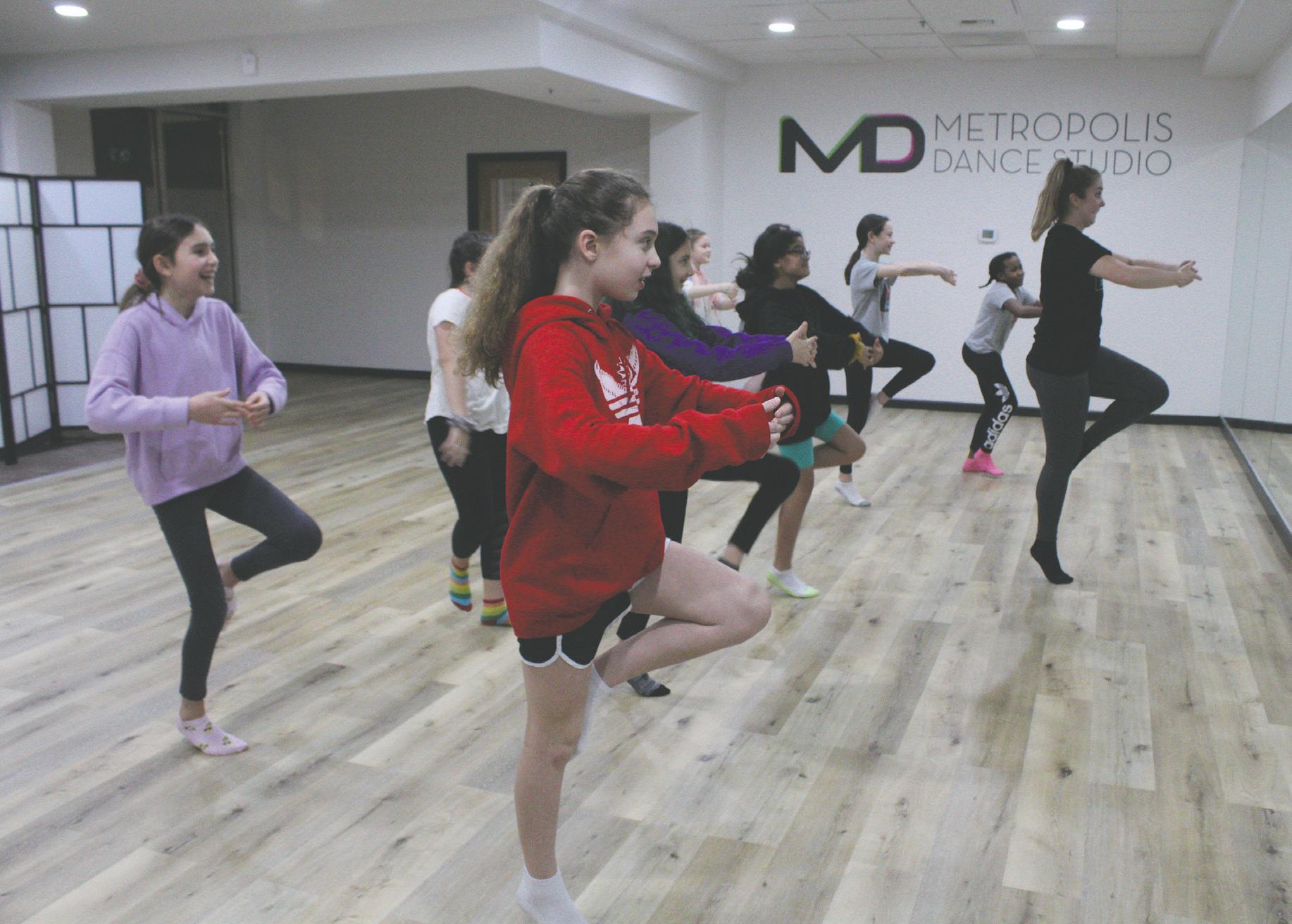
Dance program grows out of Queen Anne Community Center into new studio space in Uptown
By Daniel Warn QA&Mag News staff writer
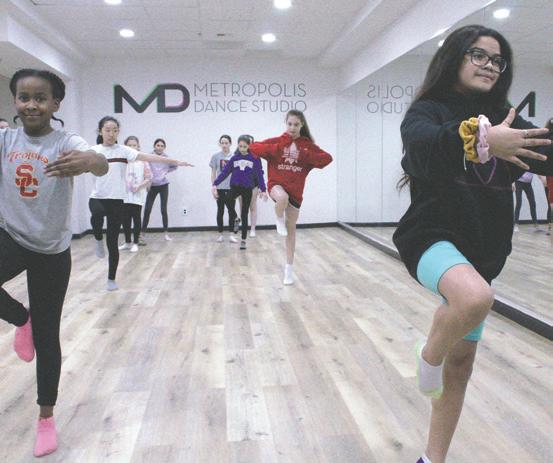
When Annlee Hoy started Metropolis Dance five years ago, she could not have anticipated that she would be opening her own studio half a decade later.
“I started Metropolis Dance in 2014,” Hoy said, “and we actually just opened the studio up Nov. 16, so the studio location is brand-new, but Metropolis Dance started at Queen Anne Community Center. We would just do kids hip-hop and break dance, also.”
These classes at the community center gained so much notoriety that Metropolis Dance was asked to share its programs at Seattle public schools. The dance business has sent instructors out to local schools to teach dance as an extracurricular activity for most of its existence.
“It’s really great because it’s good for kids to get something to do and stay moving after school, get some physical activity,” Hoy said. “It’s also helpful for working parents who aren’t able to always transport their kids after work to an activity, so we just come and meet those kids when the bell rings and take them to the gym, or whichever room that we are assigned at, and teach them.”
Metropolis Dance has cycled through about 20 schools over the years, Hoy said, and this winter quarter the participating schools include Cascadia Elementary, John Hay Elementary, McDonald Elementary, Salmon Bay School, Lawton Elementary and Whittier Elementary.
Each instructor comes up with their own choreography, and carts it out to their assigned school. At the end of each quarter, all the dancers from each of the schools come together to show off their various dances. Hoy said there are usually between 120 to 160 dancers per quarter, and that kids have to sign up at metropolisdance.com at the beginning of each quarter. Registration is now open for select
programs.
Once the business hit its five-year mark last summer, Hoy set her sights on expanding with a new studio to offer adult, teen and family classes, on top of in the classes offered at the Queen Anne Community Center and in the schools.
The new studio is located at 523 First Ave. W.
“Our shows are huge hits, with hundreds and hundreds of people there, so we just decided maybe it’s time to start offering adult classes,” Hoy said. “We just decided that, since it was our five years, we could do a little more growth and have our own place. It’s been great to have our own home.”
She said the new adult classes were partly a response to parents asking to be taught.
Adult classes currently being offered include hip hop, K-pop, breaking and popping. The studio will also offer youth classes that range from musical theater and jazz, to hip-hop and breakdance.
The addition of youth classes at the studio was intended to provide an alternative to afterschool programming, Hoy said.
“We’ve been getting asked to offer different times for students who can’t make after school…” she said.
Hoy also teaches classes for toddlers and dance fitness classes.
She began dancing as a cheerleader in high school, but received no formal training until years later.
“I didn’t start dance until my college years, which is very late in the game, but I grew up in an underprivileged family with a single mom,” Hoy said. “She couldn’t afford to take me to dance classes, and I think that if we had a program when I was a kid that was on site at the school, I would have loved it.”
Hoy went on to dance for the Super Sonics from 2003 to 2006 before opening Metropolis Dance.
“I just think that dance is such a positive thing for anyone of all ages,” Hoy said. “It’s universal. It’s good for you, physically, mentally, emotionally. You can use it as an outlet. It brings community together. It can bring people from many different backgrounds to come together and share something.”