Neighbors appealing Holy Names Academy underground parking
Residents worry about increased traffic, congestion, pollution; more than 100 petition signatures gathered
By Brandon Macz Madison Park Times editor
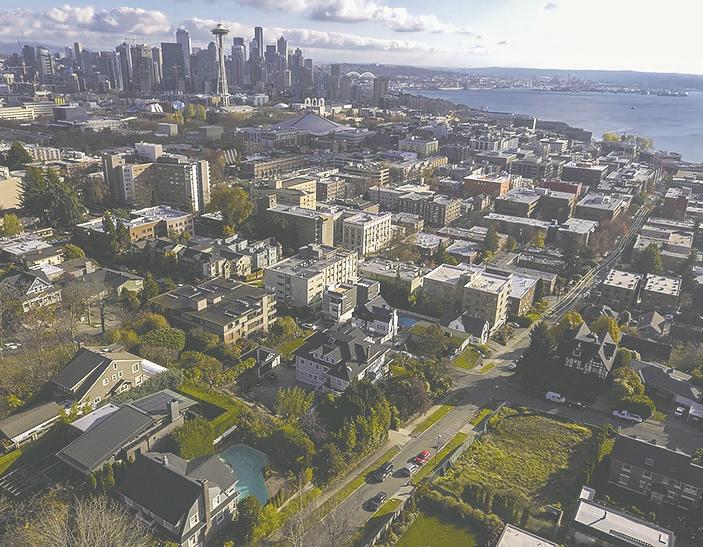
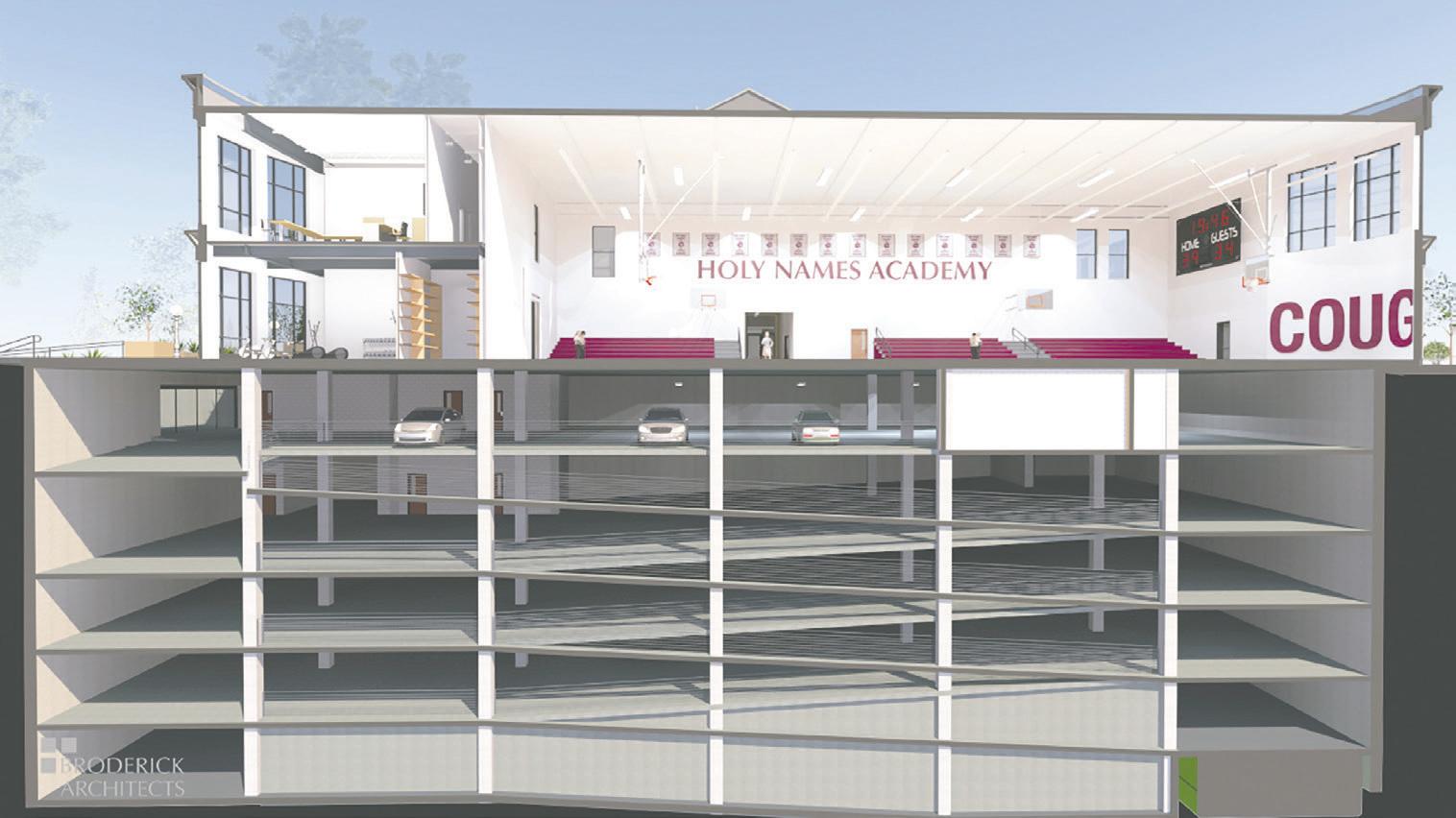
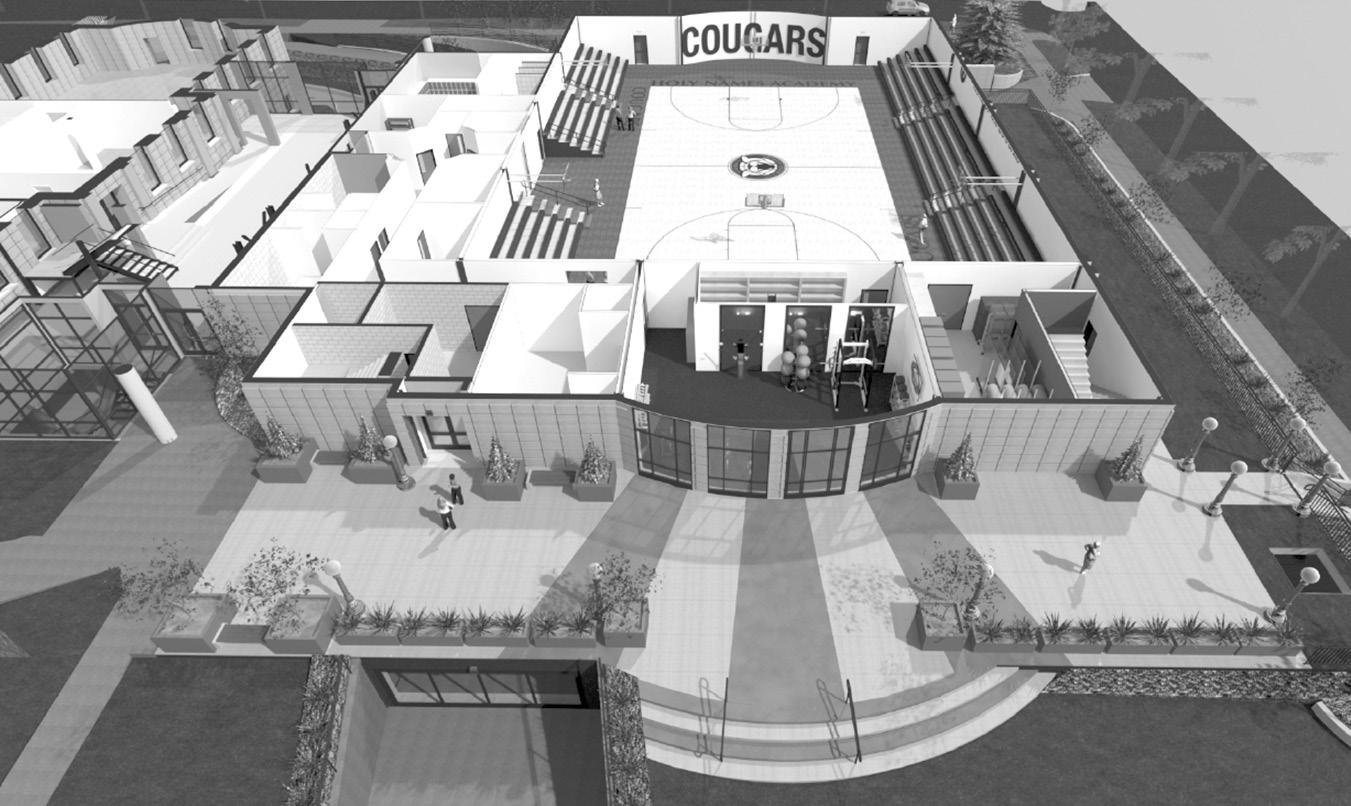
Capitol Hill residents living near Holy Names Academy are appealing a decision to allow the private school to construct five levels of below-grade parking on its campus.
The Seattle Department of Construction and Inspections cleared the secondary school for girls on Nov. 29 to proceed with its plans to develop the underground parking garage under its 30-year-old gym, which will be partially demolished to create a slightly larger two-story gymnasium in its place.
There would be 237 stalls in the underground parking garage and another 32 on a new surface lot at 21st Avenue East and
East Aloha Street; an existing 12 spaces would be removed.
Holy Names principal Elizabeth Swift told MPT in February 2018 that the goal is to reduce the number of students and faculty parking in the North Capitol Hill neighborhood surrounding the school and better accommodate athletic and other events.
The master use permit approved by SDCI does not require Holy Names to conduct an environmental impact statement, after an environmental checklist was completed and determined there would be no adverse impacts. Five exceptional trees on the site are planned to remain.
A traffic study also found no adverse impacts around five intersections from vehicle trips to the new underground parking garage, according to the SDCI director’s
decision, and that the parking provided would meet peak school demand.
Several neighbors filed an appeal on Dec. 11 that claims the new parking structure will create additional traffic and congestion, is over scale and “will be a blight, especially on the north end of the property
where the cherished, revered, and historic park will be paved with a parking lot…” They also worry about exposure to pollution during construction.
The appellants are: Shannon Martin,


Image courtesy of Broderick Architects Holy Names Academy plans to demolish its gym, so it can construct five levels of below-grade parking, and then build a new gym back on top.
Revising the Fort Lawton Redevelopment Plan
Updated legislation comes out this month ahead of council consideration
By Brandon Macz Madison Park Times editor
A public meeting and open house is being held 5:30 p.m. Monday, Feb. 11, in the Catharine Blaine School cafeteria, 2550 34th Ave. W. People can provide written or spoken comment there, and also at housing@seattle.gov.
The Fort Lawton Redevelopment Plan is being revised to fit a preferred alternative that calls for 238 units of affordable housing on the former Army base in Magnolia.
Plans to redevelop the former 70th Regional Support Command headquarters at Fort Lawton for housing have been stalled for a decade. The Base Realignment and Closure Commission (BRAC) shut the facility down in 2005, and tasked the city with its redevelopment.
An effort to create a mixed-income development at Fort Lawton that would provide market rate and homeless housing resulted in neighbors filing suit. The Court of Appeals sided with opponents, and the city was required to do a more thorough environmental review.
Tabled for years due to the Great Recession, a final environmental impact statement was published in December 2017, causing Magnolia resident and Discovery Park Community Alliance founder Elizabeth Campbell to file an appeal challenging the review; she prefers more park space.
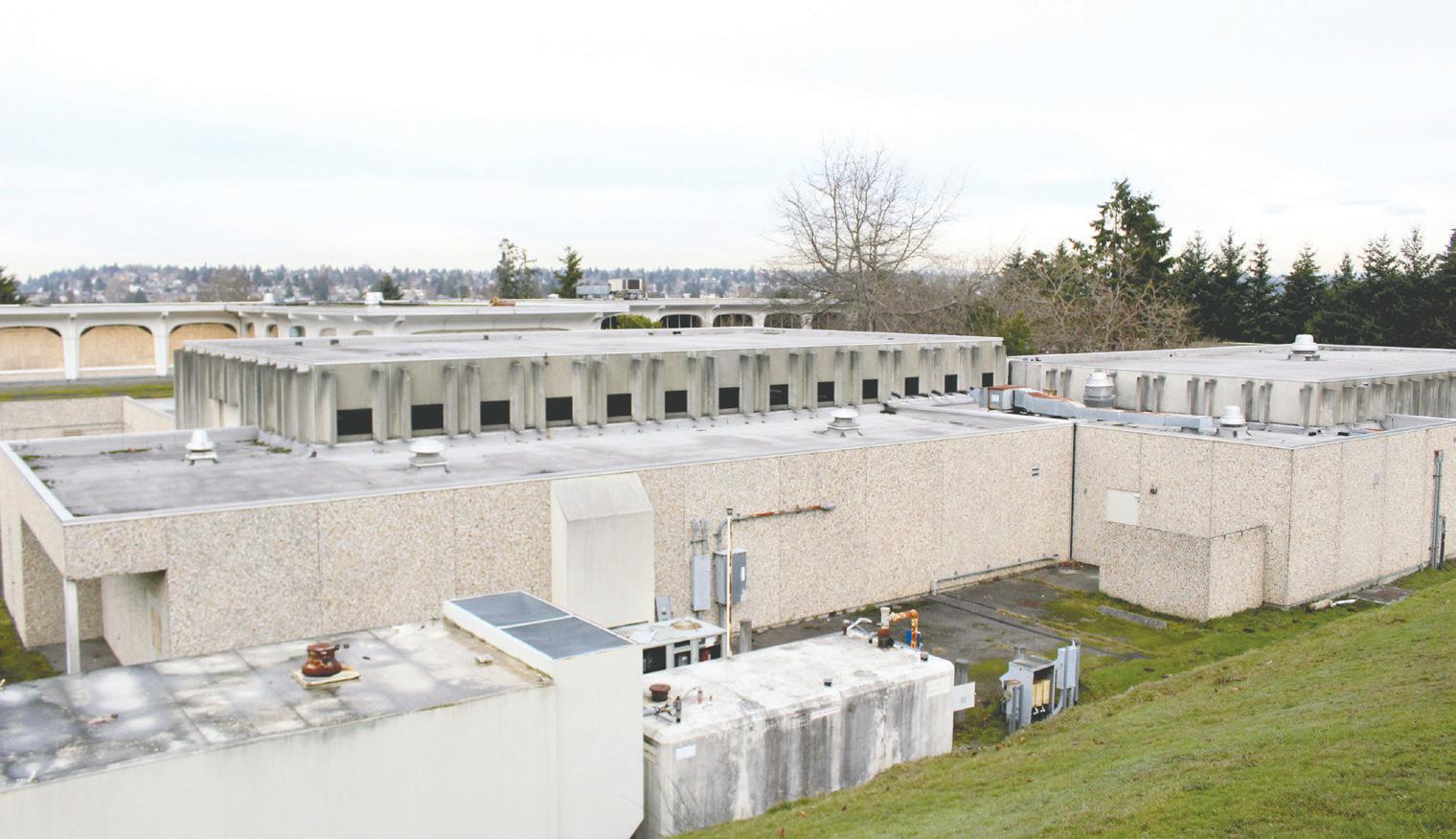
he Office of Housing is revising its Fort Lawton Redevelopment Plan to reflect a preferred alternative that calls for housing units to all be at affordable levels.
Campbell is running for outgoing Councilmember Sally Bagshaw’s District 7 seat.
Seattle’s Hearing Examiner affirmed the city’s FEIS last November, and there are currently no legal challenges facing the project, said Emily Alvarado, manager of policy and equitable development for Seattle’s Office of Housing.
The Office of Housing is now moving the preferred alternative forward, which includes 85 supportive housing units for homeless seniors and veterans and 100 affordable rental units that Catholic Housing Services will create. One unit will be set aside for a site manager. Habitat for Humanity will create 52 units of affordable ownership housing. The nonprofits were selected for the project in 2008, when the Great Recession hit.
“Catholic Housing Services has a track record of providing permanent supportive housing across the state,” Alvarado said. “We’re excited to be working with them as experts to deliver on this vision and opportunity.”
There will also be 21.6 acres of parks and recreation area in the redevelopment, which includes two multipurpose fields to be acquired by Seattle Public Schools.
The revised Fort Lawton Redevelopment Plan is expected to be released for public input and stakeholder outreach in February, Alvarado said, and that feedback will be added before the plan goes to the city council for final approval.
Legislation to be approved alongside the redevelopment plan includes a zoning change to accommodate rowhouses and
townhouses on the property.
There will also be public comment opportunities when the council considers the plan in committee, and then before a final vote.
As the Local Redevelopment Authority for Fort Lawton, Alvarado said, the city’s public outreach process has been greater than with other similarly sized projects in Seattle.
Once the city council approves the plan, it will be submitted to the U.S. Department of Housing and Urban Development for a decision.
The housing portion of the Fort Lawton redevelopment will be funded through the city’s housing levy and revenue collected through incentive zoning and the Mandatory Housing Affordability program that has only been implemented in several urban centers so far. Alvarado said the city will also assist the nonprofit developers with federal pass through funds.
“We will be waiting to allocate the resources once we realize more fully the budget at the time of development and construction,” she said.
There will also need to be conveyances for the homeownership developments and to allow Seattle Public Schools to own the six acres of land it will use for playfields.
“We are assuming there will be (construction) phases,” Alvarado said, “particularly with the affordable homeownership portion.”
Early on a school had been contemplated at Fort Lawton, but the preferred alternative only addresses fields. The Building Excellence (BEX V) levy SPS is putting to a vote in the February special election includes $8 million to be allocated to the playfields.





Photo by Brandon Macz
Montlake Market preservation plan emerges
Contractor works out preliminary design for SR 520 project that could spare neighborhood grocer
By Brandon Macz
Madison Park Times editor
It will take longer and cost more money to save Montlake Market during construction of the Montlake phase of the State Route 520 Bridge Replacement Project, but residents at a January WSDOT meeting remained steadfast in their desire to keep their small neighborhood grocer.
The Montlake Market was removed and later added back into plans for a reconfiguration of Montlake Boulevard for the next phase of the SR 520 Bridge Replacement and HOV Program, which includes a new West Approach Bridge South for eastbound traffic that will connect to the floating bridge over Lake Washington, a lid over 520 and a bicycle/pedestrian land bridge east of the lid that connects the Washington Park Arboretum and East Montlake Park.
Last session the state Legislature added a proviso that directed WSDOT to spare the market building from demolition if feasible.
WSDOT did not a have preservation plan for the market, located southeast of the SR 520 off-ramp to Montlake Boulevard, during its last community meeting on Nov. 7.
WSDOT awarded Graham Contracting Ltd a $455.35 million design-build contract for the Montlake Project in October.
The contractor has developed a preliminary design that would avoid using the property during construction, which was shared by WSDOT during a Jan. 30 community meeting. More assessment is needed to determine if it is feasible, said WSDOT director of construction Dave Becher.
“There’s a certain risk inherent in all of these,” he said of the three design proposals Graham came up with to avoid needing the market and adjacent 76 gas station site.


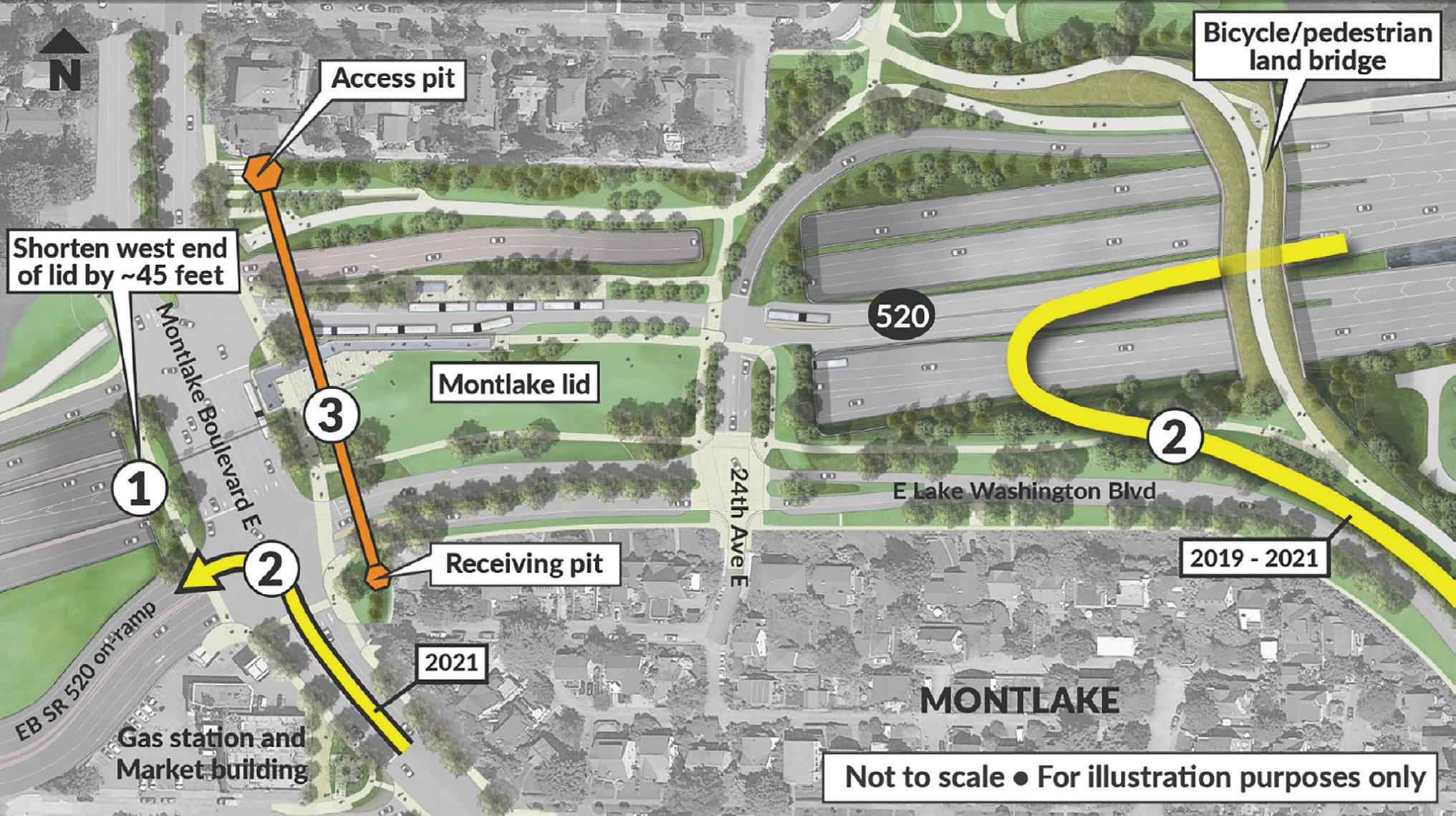
Graham Contracting has a preliminary design for the Montlake phase of the State Route 520 Bridge Replacement Project that could advance and spare the Montlake Market building from demolition.
A final environmental impact statement in 2011 had recognized community support for the market and didn’t plan for its condemnation. When WSDOT did a reevaluation in 2016, it realized it would need the property after all. Montlake Boulevard needs to be raised in order for the new SR 520 under it to meet a required 16.5-foot clearance, which would only impact the 76 station, said WSDOT deputy engineering manager Todd Harrison, and the new structure needs to be three feet thicker due to seismic reinforcement requirements.
A 54-inch-diameter water line under SR 520, on the east side of Montlake Boulevard, needs to be replaced, as does a King County combined sewer line.

With a commitment to the City of Seattle to maintain all lanes of traffic on Montlake Boulevard, Becher said, that would mean shifting traffic further west, affecting the Montlake Market site.
Graham proposes moving the west end of the Montlake Lid 45 feet to the east, away from the combined sewer line. This will have little impact on the transit plaza on the northwest end of the lid, Becher said, but is a “more economical design.”
WSDOT had been proposing to build the new water line beneath SR 520 with a tunneling pit that started south
ealogics Sotheby’s International Realty recently launched Only With Us®, a brand campaign that showcases the many unique advantages of working with our award-winning local brokerage and trusted international brand. What the Only With Us® campaign means to you: unmatched marketing exposure, access to 230 hand-selected real estate professionals, unparalleled global reach, 275 years of the trusted Sotheby’s heritage, a PR powerhouse and proven sales results. There is only one RSIR. Experience the difference today.
Managing Broker | Senior Global Real Estate Advisor Founding Member | 206.399.5842 Laura.Halliday@rsir.com WHAT MY CLIENTS ARE SAYING A CONTINUED LEGACY

For more information I invite you to visit www.LauraHalliday.com


RSIR ranks amongst the largest, most productive and fastestgrowing real estate companies in Washington with access to 22,000 brokers in 72 countries that generate US sales of $80 billion+ annually. PROVEN
Simply stated, Laura Halliday is the best real estate agent in Seattle — or anywhere else. We struggled before we asked Laura to help us find a home in Seattle. Laura helped us find the perfect home. Laura listens, identifies possibilities, and presents properties that meet our parameters, our search criteria. We could not have been better served. - GENERAL PETE & BETH CHIARELLI
Sotheby’s Presents Finest & Rarest Wines at Auction this Winter.
NEW ON
Image courtesy of WSDOT
Page 3
of the highway and worked north. Graham proposes reversing those plans, meaning the larger access pit would be sited on the north, Becher said. If it turns out the waterline needs to be relocated somewhere else, he cautioned, traffic could still end up shifting to the west, requiring use of the Montlake Market property.
The eastbound on-ramp to SR 520 from the Washington Park Arboretum will go away with the removal of the old bridge structure, requiring motorists to use Montlake Boulevard.
Graham proposes constructing a temporary on-ramp later this year that would loop from East Lake Washington Boulevard to the West Approach Bridge North, which will be reduced to two lanes both ways when the south structure is removed; tolls will remain in place. The temporary on-ramp would be used through 2021, and then a second left-turn lane to the eastbound SR-520 on-ramp would be added on Montlake Boulevard.
Whether the market building is spared or demolished, WSDOT still expects to acquire the property. The WSDOT Accountability Coalition that formed to save the market lost a legal fight to stop the purchase, and the cost of the acquisition will likely be decided through a justcompensation trial, Becher tells MPT.
“We’ll have our appraisal, they’ll have their appraisal, and then we’ll work it out,” he said.
Austin Hicks, manager of corporate relations at Strategies 360, which represents the coalition and Montlake Market owner Scott Baker, said the property alone has been assessed by the property owner at around $20 million.
The Graham preliminary design makes it clear that there are project elements that can be changed to spare the market, Hicks said.
“Really, the only decision left would be staging,” he said. WSDOT also wanted the Montlake Market site for a staging area for construction equipment and materials. The cost of finding additional staging sites, presumably leasing property for 2 1/2 years, would add up, Becher said.
None of the estimated costs WSDOT provided during the Jan. 30 meeting were exact, as they would need to be negotiated with Graham Contracting, said Becher, adding they could end up higher or lower.
“It’s a pretty big impact to the contractor,” he said. Options that preserve the market will add time to the project beyond the base contract, Harrison said. Graham Contracting has already committed to finishing the Montlake Project a year early.
“The less space you have, the more time it takes to work,” Harrison said.
While Graham Contracting was the lowest of three final bids WSDOT received for the project, the cost was still $30 million more than the transportation department’s highest estimate.
Removing the building would be the zero-cost option,
HOLY, from Page 1
Bill Gildea, Pat Griswold, Kate and Josh Pollock, Ron Friedman, Lili Sacks, Carol Hannum, Aze Hannum, Tim Anstey and Liz Nichols.
The appeal claims Holy Names provided no collaboration opportunities for neighbors, even after the appellants provided a petition signed by more than 100 residents opposed to the school’s plans last April.
“We were hoping that someone would do the right thing and consider the historical and environmental impact this project will have on our neighborhood, as well as the input from the immediate neighbors who are overwhelmingly opposed to
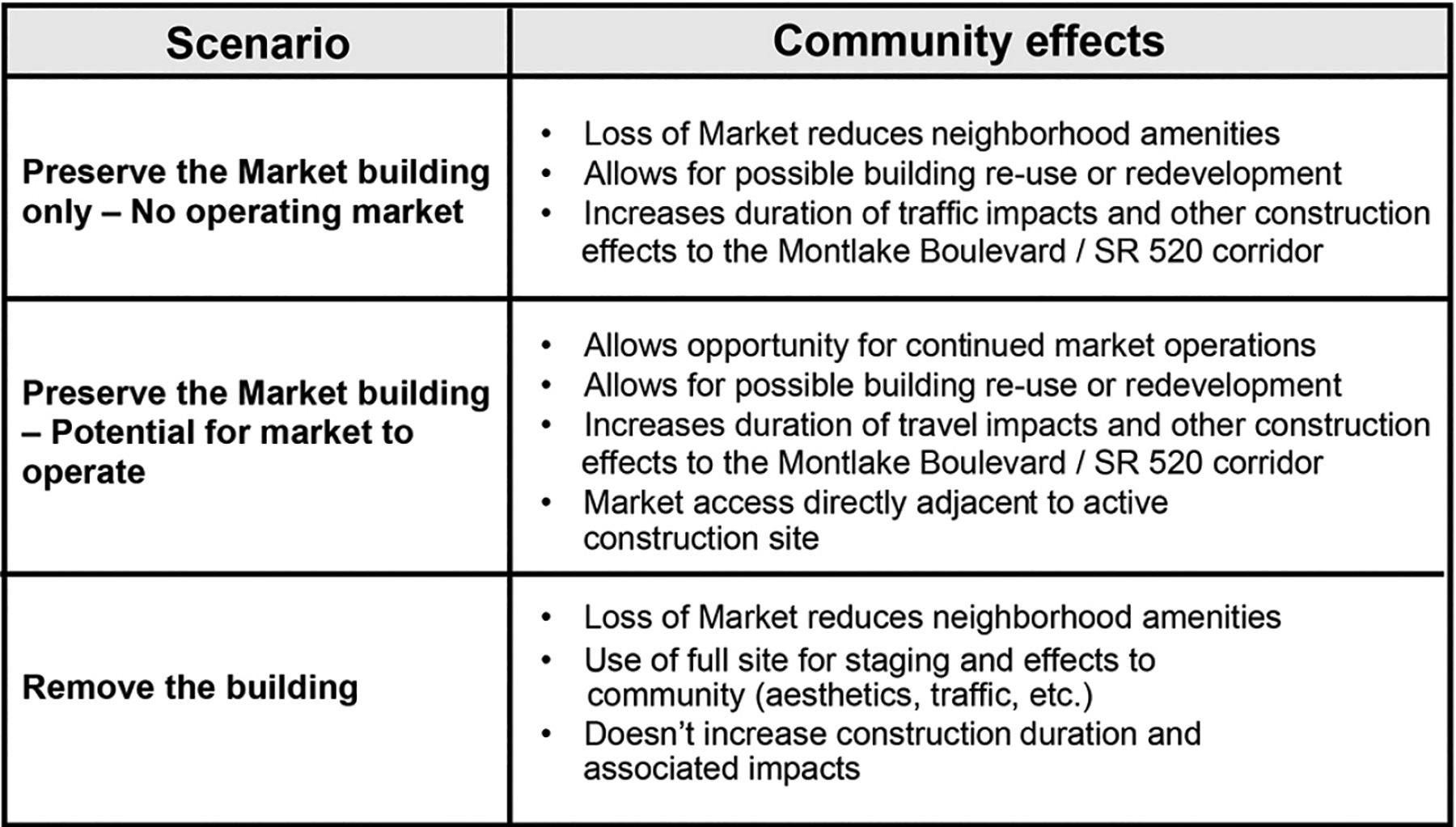
WSDOT presented three scenarios and their corresponding community impacts and costs during a public meeting on Wednesday, Jan. 30. Those who stayed after the presentation were asked to take a poll survey.
save for acquiring the site, which is expected to be completed later this summer.
Keeping the market building upright and operational is estimated to add 45 days to the project — about $50,000 more per day — adding about $20 million to the project on the high side. Becher added the business owner would have to also be willing to keep the market open during construction; additional traffic controls would be needed to ensure people were able to safely travel there.
WSDOT interprets the legislative proviso as requesting the transportation department address preserving the building, and not the business. Just keeping the building, leaving it vacant during construction, is estimated to cost upward of $10.15 million. The building could be reused later, Becher tells MPT, or surplused and sold to the highest bidder. He said he knows residents want to have their market.
There is also the unknown cost of site remediation, particularly contaminated soil and groundwater discovered around the 76 station’s gas storage tanks and pumps.
The transportation department found petroleum-related contaminants during soil testing in the public right-of-way near the Montlake Market and 76 gas station site in 2016 and 2018, according to WSDOT. Becher said WSDOT had been trying to test the market and gas station site since August 2017, but needed to go to court to get approval due to objections by the property owner.
Innovex Environmental Management completed the Third Supplemental Phase II Environmental Site Assessment for WSDOT in December, submitting its report to the transportation department on Jan. 16.
Twenty-one borings were conducted, with groundwater samples tested from 10 of those borings. Innovex analyzed
these retrograde plans,” the appeal states. “But in the end, money speaks volumes and the school apparently intends to proceed as if the neighbors do not exist and are not worthy of listening to. As surprising as it is, that has been their plain message which has not been lost on any of us.”
A prehearing conference was held on Jan. 9, where it was agreed that appellants would provide final witness and exhibit lists by April 22 and city and Holy Names representatives no later than April 29. The hearing is slated to start on May 6. Case filings can be tracked at https://web6.seattle.gov/
samples for gasoline, diesel and lube oil-range hydrocarbons, volatile organic compounds, semi volatile organic compounds, polychlorinated biphenyls and pollutant metals.
Innovex reports finding contaminants in soil samples above the allowable levels under the Model Toxics Control Act (MTCA) in six borings, and the same for groundwater tested from those six borings.
“Of the dissolved metals that were detected, only arsenic was detected above the applicable MTCA CUL,” according to the report. “This investigation confirmed that the source of the contamination is on the 2625 East Montlake Place East [76] property where petroleum and related contaminant concentrations were the highest. Contaminant concentrations in soil are highest in the area of the UST vault and the eastern pump island.”
The property owner commissioned engineering firm Hart Crowser to do its own environmental site assessment.
“It amounts to what could be a pretty routine cleanup,” Hicks said.
The report, which challenges interpretations of WSDOT’s data, states remediation could be accomplished without needing to demolish the market or impacting its operation, and the gas station likely could also remain.
Becher said there is more testing left to do around the site, including under the market.
“We really don’t have a complete understanding around the site yet,” he said.
The state attorney general’s office is working with the property owners to determine what cost they would assume for cleanup, Becher said, which WSDOT would likely carry out.
On top of the underground garage, Holy Names plans to rebuild its gym.
Examiner/case/MUP-18029.
Holy Names Academy was founded by the Congregation of the Sisters of the Holy Names of Jesus and Mary in 1880 and located in Downtown Seattle. Construction on the Capitol Hill facility started in 1906, and the school opened in 1908.
Seattle Public Utilities is accepting applications through March 22 for the Waste-Free Communities Matching Grant, which funds communitybased waste-prevention projects.
The grant program aims to support communities and innovation around waste prevention and increase access to benefits and opportunities to reduce waste.
Qualifying projects must test or expand on new approaches or technologies for waste prevention and engage at least one of the following communities: communities of color, immigrants, refugees, low‐income, people with disabilities, seniors, young adults, youth, children, and/or small businesses.
They must also provide free or low-cost resources or job training to homeless or low-income communities.
Funding is set at $5,000-$20,000, and recipients must match those amounts at 50 percent, either financially or through in-kind donations.
Find out more or apply for the grant at www.seattle.gov/util/wastefreegrants.
Image courtesy of Broderick Architects
Image courtesy of WSDOT













Keep Douglas Firs out of city gardens






Like animals, some trees just don’t domesticate well. They belong in the wild. Our venerable and beloved Pacific Northwest Douglas Fir (Pseudotsuga menziesii) is a prime example. Yet, scan the horizon of Madison Park and you’ll see them poking up here and there.
Oddly, all are about the same height and age: all are about 100 feet, likely 75 or 80 years old; far too young to be leftover old growth, and too old to have been planted after the sophistication level of our gardening public kicked in during the mid-20th century.
OK, why are these indigenous behemoths here?
I have a theory.
When I bought my house in The Park in 1974, there was one on my tiny lot, and two more looming up along the driveway, adjoining my property to the south. Today, these would be like the others I see in size. At that time, I asked the daughter of the family selling the house about these trees.
“Oh, that’s my brother.” She rolled her eyes. “There was this Boy Scout troop in Madison Park back in the ’40s. They gave out these seedlings, and all the boys came home and planted them in
their yards.”
Ah ha! Now, as I look across the Madison Park skyline, I see the ghosts of early Eagle Scouts hovering in these trees. I had the three in my little garden taken down. Not only were they shading out everything else I wanted to plant, they also were insufferably greedy water suckers. As I recall, it was Art Kruckeberg, the pioneering professor of botany at the University of Washington, who said a Douglas Fir can pull 300 gallons of water out of the soil on a hot day. No wonder my soil was dry! Then, too, I was worried that one of these giants would come down on my house (or worse a neighbor’s) in a wind storm.
So, there’s the case for never planting a Douglas Fir in your city garden. Now, what do you do if you have one?
Option 1: Call in a tree service and have it removed.
Option 2: Live with the tree. Study up on gardening in the dry shade. Irrigate when you must. Add copious layers of mulch to the ground under the tree and fill the area with drought-tolerant natives like Sword Fern (Polysticum munitum), the Giant Chain Fern (Woodwardia fimbriata) — with fronds that can reach 9 feet — and our ground covers, Mahonia nervosa and M. reopens. There are plenty more choices. Do your homework. Research is fun.
Option 3: If you choose to keep the tree and fear that a big wind
Photo by Mary Henry
Due to their size, water consumption and risk of being downed by heavy winds, Tree Talk columnist Steve Lorton cautions city gardeners not to plant Douglas Firs in their yards.
Steve Lorton Tree Talk




Country Doctor now open in Capitol Hill
Grand opening set for Feb. 21; leasing for market-rate apartments started at beginning of month
By Brandon Macz Madison Park Times editor
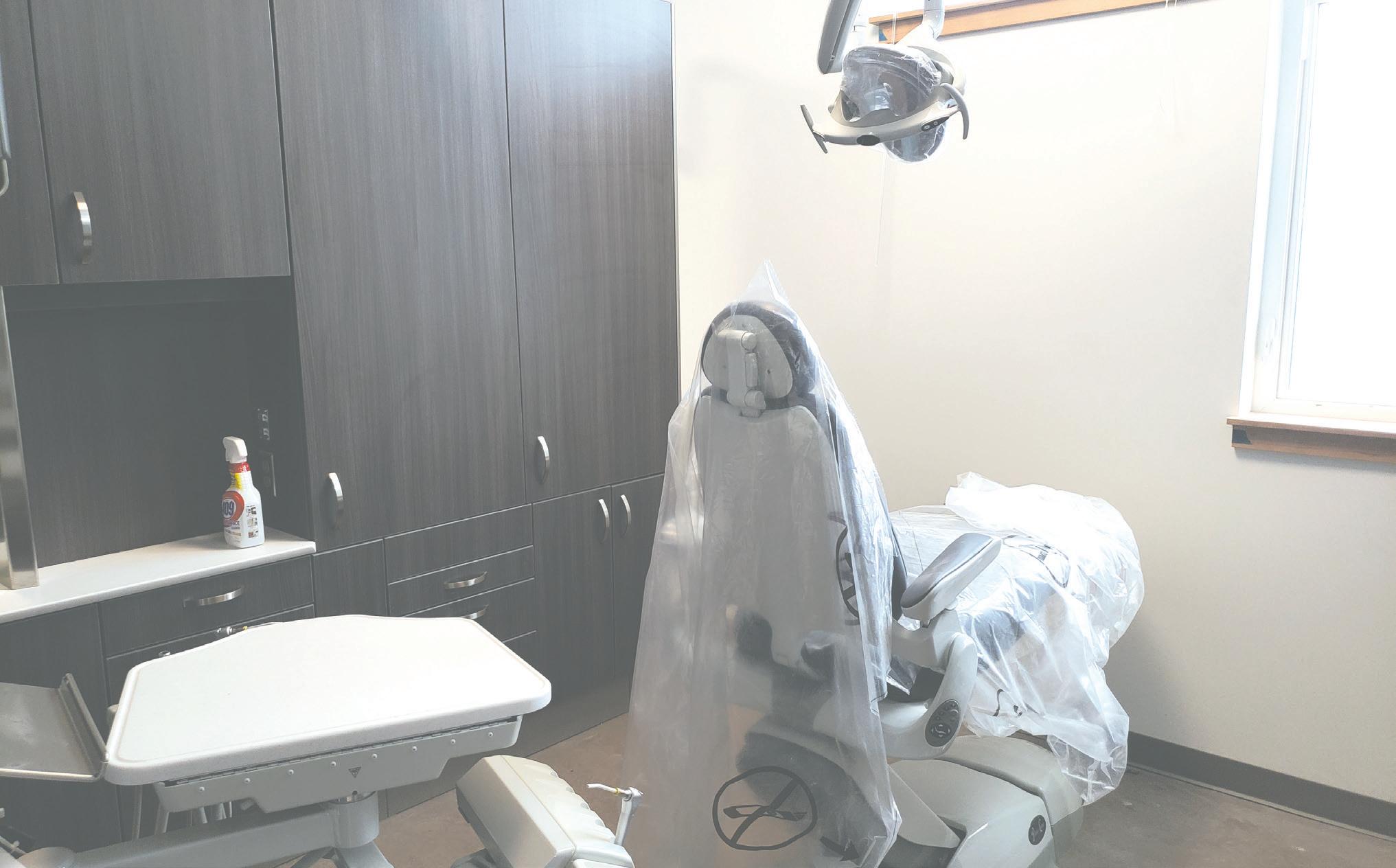
Country Doctor’s new dental clinic in North Capitol Hill is set to begin seeing patients in early February, with a grand opening planned later in the month.
“We are going to clean teeth the first week of January, come hell or high water,” Country Doctor Community Health Centers executive director Raleigh Watts told MPT during a tour of the clinic back in mid-September. Watts is blaming the postponed opening of the dental clinic on a permit delay with SDOT.
Demolition of the old Betty Lee Manor building started in early November 2017, after Country Doctor spent two years working out its plans for a four-story dental clinic and apartment building through the East Design Review Board.
The clinic has eight dental chairs, but just four will be used initially, said CHCDC development director Michael Craig during another tour with MPT on Jan. 18; the rest will be phased in.
“The first few months will be, what aare the needs of our patients,” he said.
An extension of the Country Doctor’s Capitol Hill community clinic, the new dental clinic will prioritize clients with Medicaid or no insurance, pregnant women, children and immunocompromised individuals. About 2,000 people are expected to be phased in over time, Craig said, adding Country Doctor hopes to solidify a partnership with Swedish Medical Center to fill any gaps in dental services.
Uninsured patients may qualify for a sliding-fee discount program based on income.
The first patients will be seen on Feb. 4, and a grand opening is planned for 5-8 p.m. Thursday, Feb. 21. Services
include X-rays, cleanings, oral health education, sealants, fluoride treatment, filings, crowns, dentures, extraction and limited emergency dental care.
There are six rooms on the ground floor for non-medical services, such as the WIC program and maternity support and diabetes education. Patients stay to the right as they enter, while residents of eight apartment units on the toptwo floors will go to the left. The market-rate apartments are an even mix of one-bedrooms and studios that will generate revenue for the clinic.
Marathon Properties is managing the apartments, which
will be available for lease on Feb. 1.
The second floor of the dental clinic building will be for administrative offices and HIV and behavioral health services, which can now be integrated with medical staff.
“It’s not really a backlog; we’re just not helping as many people,” Craig said.
A meeting room that will also be used for community educational programs is being named for Country Doctor founding member Linda McVeigh, who led the fundraising campaign for the dental clinic before retiring late last year.
Photo by Brandon Macz
After years of planning and fundraising, followed by a little more than a year of construction, Country Doctor Community Health Centers opened its new dental clinic in Capitol Hill earlier this month.
Ridwell offers Seattle a fourth bin
Service collects miscellaneous items for repurposing, recycling
By Brandon Macz Madison Park Times editor
While many people are looking around their homes for things to get rid of that just don’t spark joy, Ridwell founder Ryan Metzger hopes people will use his service to make sure those items don’t simply wind up in a landfill.
Ridwell grew out of a project Metzger started with his 7-year-old son Owen, first to get rid of some batteries.
“We had piles in our basement,” Metzger said of items he and his family no longer needed. “Here’s some clothes for Goodwill. Here’s some batteries. Here’s some old electronics.”
He asked neighbors about taking their batteries to recycle, followed by offers to help with other miscellaneous items that were hard to donate or recycle. The Owen’s List Facebook group started in December 2017, and then a website that drew in thousands of subscribers by last summer, Metzger said.
“As we got bigger, people would bring us ideas too,” Metzger said.
He left his job as director of growth marketing at Madrona Venture Group last July, launching Ridwell in October.
Ridwell is a bi-weekly service that focuses on four recycling and repurposing categories: Batteries, light bulbs, threads and plastic films, such as produce bags.
“Queen Anne is our most dense area. Ballard is probably the second, but we have pockets of customers in all areas we serve ”
Ryan Metzger, Ridwell founder
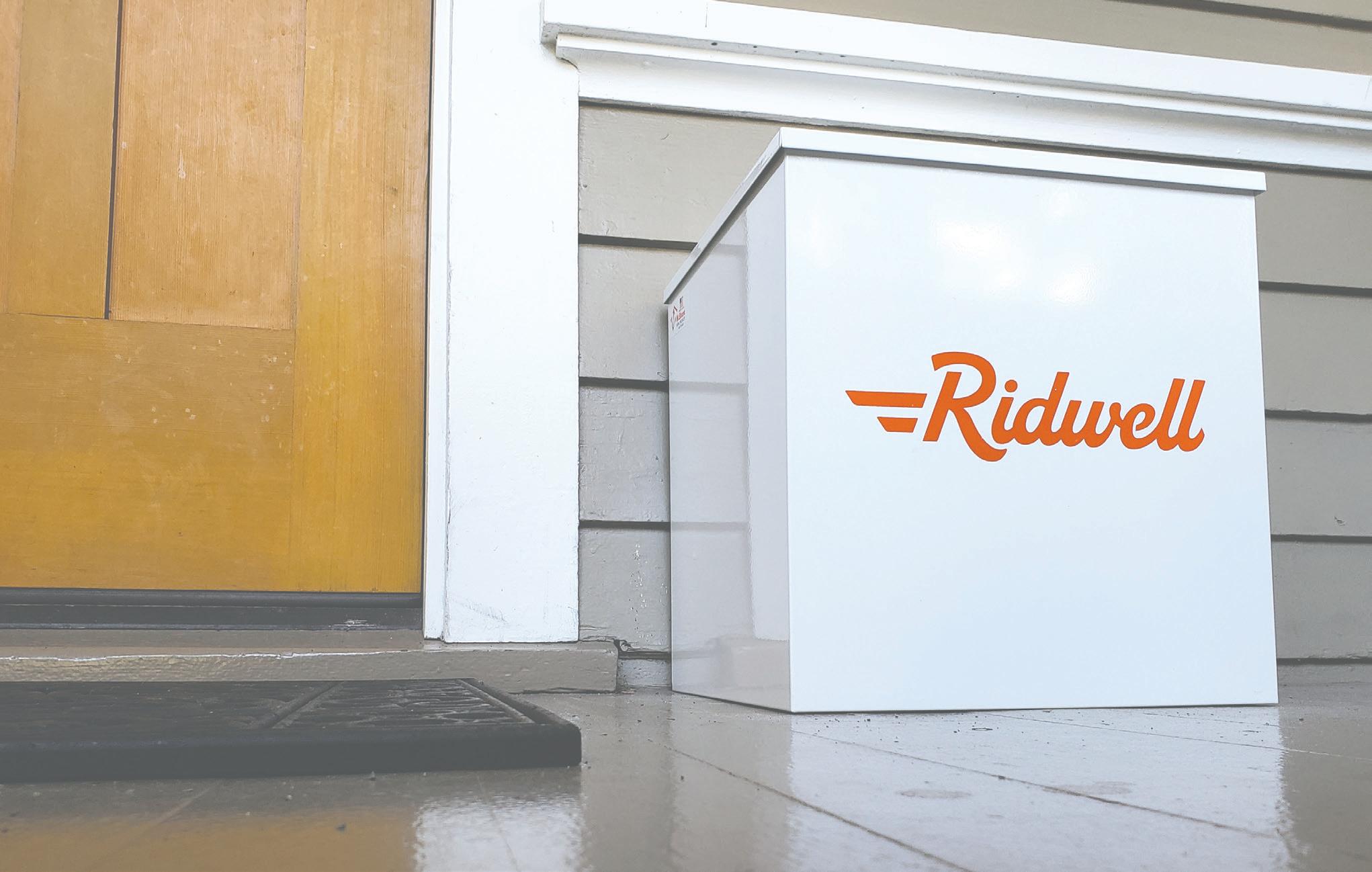
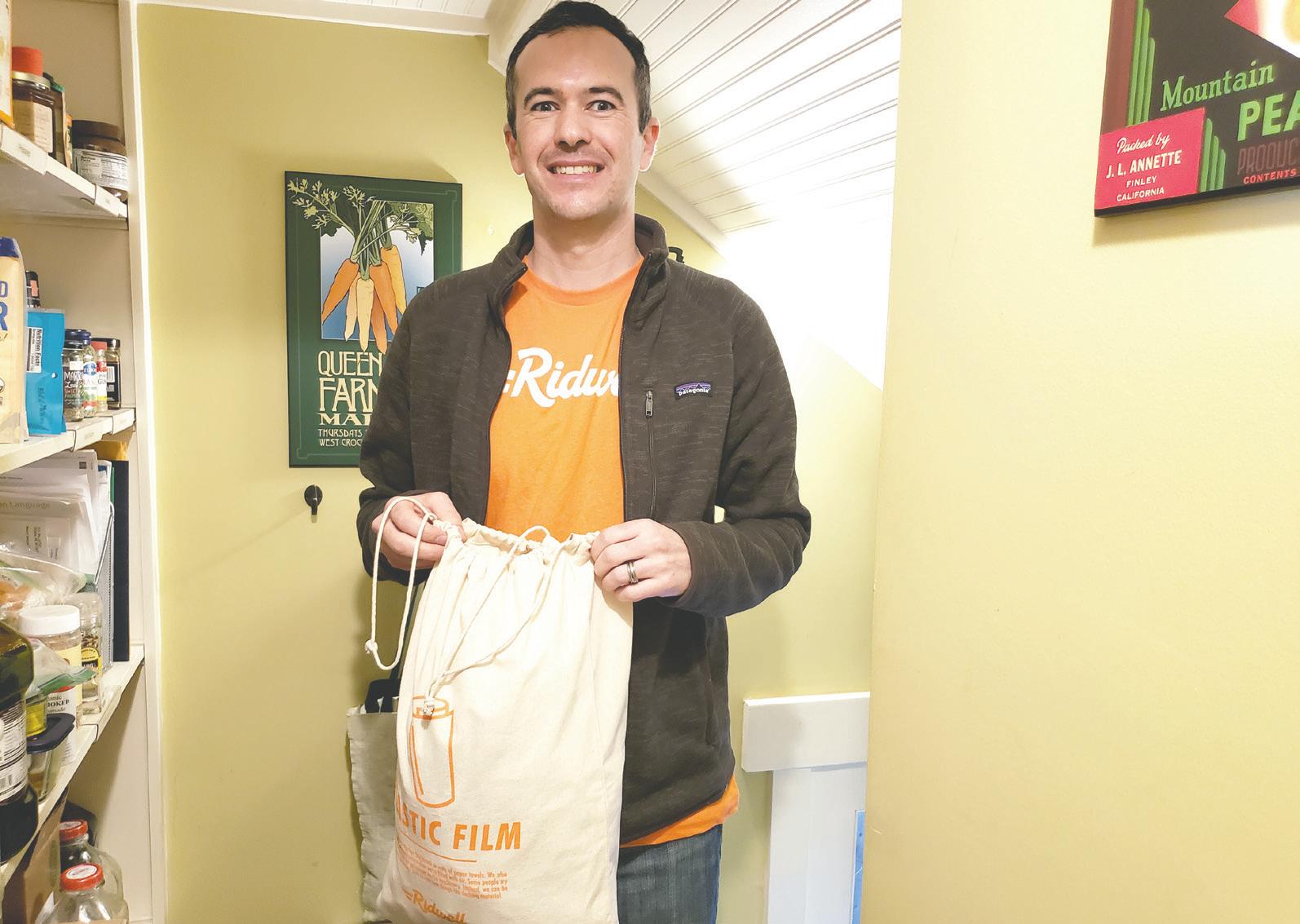
Customers have a bag for each category that they keep in various parts of their home; maybe one in the kitchen for those plastic films and one in the laundry room for tattered clothes. They then put the bags in their waterproof Ridwell bin on the porch for a representative to pick up on a certain day based on the company’s growing route schedule.
“We use normal cars for this,” Metzger said. “The bin, it sort of limits the size in some ways.”
A Queen Anne resident, Metzger started in 10 North Seattle zip codes, with about 40 early subscribers to the service; the company now has more than 400.
“Queen Anne is our most dense area,” he said. “Ballard is probably the second, but we have pockets of customers in all areas we serve.”
Ridwell has five routes in the city, which includes Madison Park and Capitol Hill, and is expanding to South Seattle on Feb. 7, which will add three more zip codes.
“West Seattle will be the last holdout,” Metzger said. “We’re kind of waiting for the viaduct stuff to finish.”
Because there are more miscellaneous items than the four categories Ridwell covers regularly, the service has a rotating category that is usually geared toward supporting a nonprofit.
One of the firsts was Halloween candy, which went to
vides birthday parties for children experiencing homelessness or housing insecurity.
Customers often email Ridwell with a recommended category or partner organization.
“We love learning how our community can help other communities,” Metzger said.
The last rotating category was extra takeout items, such as utensils and sauce packets, which was a recommendation made by Ridwell customer and Pike Market Food Bank volunteer Ashley Mandel.
“We brought 10 boxes of utensils to the Pike food bank,” Metzger said.
Mandel contacted Queen Anne News to request a story about Ridwell.
“I am a proud early customer of Ridwell and love supporting a local business that helps me be a more responsible resident and citizen,” she wrote to Queen Anne News.
Ridwell charges $10 per month for a 12-year plan, $12 a month for six months, and $14 per month for three
household items that tend to build up, but are neither easily recyclable or donated and doing just that through a growing list of partnerships.
months. Most people opt for a year, Metzger said, and many also make that choice after trying Ridwell for three months.
Most of Ridwell’s customers live in single-family residences, townhomes and condos with outside access, which is what staff need to be able to collect from the bins.
“We have people who live on boats in Ballard who are customers,” Metzger said.
If more apartment property managers requested the service, he said, it’s possible the model for Ridwell could evolve. He’s also interested in how to help small businesses.
Staffing is currently a team of four, and Ridwell will eventually hit capacity. While Seattle is Ridwell’s only market now, Metzger is excited to see where it goes next.
“We hope to create jobs in the process as we have need for more people,” Metzger said.
Find out more about the Ridwell process and how unwanted items around the house are put to better use at getridwell.com.
Attorney general seeks 911 outage impact stories
Washington Attorney General Bob Ferguson wants to hear from people affected by the Dec. 27 statewide outage of the emergency call system managed by CenturyLink, which lasted more than 12 hours. This was the second lengthy outage since 2014.
“For the second time, CenturyLink has fallen short of its ob -
ligation to provide reliable 911 services for Washingtonians,” Ferguson said in a Jan. 8 news release. “If you called for help during this outage, only to be met with a busy signal, please share your story with my office. We want to know exactly how CenturyLink’s failure impacted the people of our state.”
Stories can be shared at 911outage@atg.wa.gov.
Ferguson pushed for the maximum regulatory penalty of $11.5 million against CenturyLink for the six-hour outage in 2014, but the Utilities & Transportation Commission only fined the company $2.9 million in 2016.
Birthday Dreams, a Renton-based nonprofit that pro -
(Above) Ridwell is a member service that collects
(Left) Ridwell founder Ryan Metzger keeps his plastic film bag in the pantry.
Photos by Brandon Macz
Buyers, sellers winning in current real estate market
Sales price average comes in high, but fewer bidding wars for homebuyers

If you’ve been following the real estate market, the latest headlines regarding a market shift can be unnerving. While the market is definitely in transition, the data —at least in our zip code — shows a healthy, more balanced market. Good news for sellers: homes continue to increase in value. Good news for buyers: the choices you have been waiting for are finally out there.
Let’s dig into the numbers a bit closer:
4th Quarter, 98112, 2017:
• 86 sales
• Average days on market: 27
• Average sale price: $1,336,277
• Sale prices were 101.94 percent of the sale price
4th Quarter, 98112, 2018:
• 70 sales
• Average days on market: 41
• Average sale price: $1,393,044
• Sale prices were 97.62 percent of the sale price
These numbers show our market is good for both buyers and sellers. For buyers, a more balanced market provides fewer bidding wars and more time to make thoughtful decisions about their purchase. For sellers, even though homes are on the market for a bit longer and the sale prices are slightly below the list prices, the average sale price has actually risen in 98112.
In the last five years, Madison Park has seen the average sales price of a home increase 59 percent, to $1,420,000 in 2018, and the days on market drop from 64 in 2013 to 19 in 2018.
Real estate has proven to be an excellent investment for homeowners in our neighborhood and, according to all indicators, will continue to be a sound bet.
In the high end, the market data shows somewhat similar results to the market as a whole; days on market are up, with only a nominal adjustment in the average sales price year over year.
4th Quarter, 98112, $2 million and up, 2017:
• 13 sales
• Average days on market: 56
• Average sale price: $3,054,692
• Sale prices were 100.44 percent of the sale price
• The highest listed sale was $5.875 million at 1824 Broadmoor Drive E.
4th Quarter, 98112, $2 million and up, 2018:
• 14 sales
• Average days on market: 73
• Average sale price: $3,023,571
• Sale prices were 94.5 percent of the sale price
• Highest listed sale was $7 million at 2001 Broadmoor Drive E. (I represented the buyer)
• The highest sale in King County in 2018 was an unlisted property in Washington Park for $12.5 million.
As the home of Microsoft, Starbucks, Amazon and myriad booming tech companies, our real estate market is employment driven. Washington’s unemployment remained at 4.3 percent in December, which was the third consecutive month at an all-time low. The series extends back to 1976. In December 2017, the Washington unemployment rate stood at 4.7 percent.
In December, the U.S. Department of Commerce’s Bureau of Economic Analysis (BEA) released state personal income estimates for the third quarter of 2018. According to these estimates, Washington personal income rose to $461.1 billion (SAAR) in the third quarter from $454.3 billion in the second quarter. The reported 6.2 percent growth rate (SAAR) in Washington personal income was the second highest among the states and District of Columbia, and exceeded the 4 percent growth rate for the U.S. by a large margin (data via the state’s Economic and Revenue Forecast Council.)
Madison Park continues to be a big draw for house hunters. Buffered by Madison Park Beach on one end, and the Washington Park Arboretum on the other, our neighborhood offers a beautiful natural landscape, as well as a vibrant business district. One trend our brokers continue to see is the desire for walkable neighborhoods. Having shops, coffee, cafés, fine dining and pubs within strolling distance is a valuable asset for the Park. While many of our residents work in the city or on the Eastside, when they get home in the evenings, they appreciate the opportunity to find everything they need in our neighborhood. Let’s continue to support our local businesses.
As of press time, there are 17 homes for sale in Madison Park, Washington Park and Broadmoor. The highest is at $15 million for a Washington Park view estate, and the lowest is a waterfront condominium offered at $555,000. With the spring selling season soon upon us, we believe the market will remain strong, and are beginning to see the typical surge of spring buyers that will likely surpass the increase in listings.
If you have given any thought to taking advantage of the continued strong market, now may be the time for you to make your move.
Our Compass experts have a long history in Madison Park, and are ready to help you navigate this market to your advantage with the latest technology, top-notch marketing, and proven pricing strategies. If you’re buying, our knowledgeable and savvy agents will help you achieve success in this still-competitive market.
Evan Wyman is a managing broker at Compass and a Madison Park resident. Reach him at evan.wyman@ compass.com.


Evan Wyman Property Views




Counting down the Trump presidency
New Leschi homeowners maintain former resident’s countdown sign
By Brandon Macz Madison Park Times editor
Former Leschi resident John Holt has spent the last two years counting the days until Donald Trump’s presidency ends. Those passing his old house on the corner of 31st Avenue South and South Jackson Street know exactly when that will be, thanks to a homemade sign above the garage.
“I just thought he was going to be a disastrous president, based on everything I knew about the campaign, and I wanted to do something to register my disapproval,” Holt said of his Trump countdown sign, which is updated daily and shared on Instagram: trump_counter. “Then I realized I had the opportunity to make some commentary as history was being made.”
A retired digital marketer, Holt made the sign himself.
“You manually do it every day, so when I designed it, it turns out that no one makes numbers that size,” he said. “I knew I wanted it to be relatively prominent, and I spent some time on the internet looking for big numbers.”
Holt ended up using aluminum signs he found at a hardware store, to which he added vinyl numbers. He then attached the numbers to teacup hangers.
“I probably didn’t get started until 20 days after he got inaugurated,” he said. “What I do is take pictures in bulk, because I didn’t want the new owners to send me a picture every day.”
Holt and his wife Susan purchased the 1905-built two-story house in 2005, and lived there for the next 13 years.
“Leschi is a neat neighborhood,” Holt said. “We really liked it over there. I think Leschi is a neighborhood people don’t necessarily understand.”
The Holts downsized and moved to Magnolia last year, selling their Leschi home to Lilly
FIRS, from Page 6
and Paul Onnen.
“They said, ‘Is the sign staying?’ And I said, ‘It can, for sure,’” Holt said. “They thought it was fabulous to have it, and we created a little agreement just to make sure it would remain timely.”
“That was one of the contingencies when we bought the home,” Lilly Onnen tells MPT. She and her husband moved from Sammamish. “There’s no way I would ever be a Republican, so you chose the right girl to maintain the sign.”
Onnen said she loves the historic house, with its views of Mt. Rainier in the winter and summer foliage.
“It has retained a lot of its original heritage inside the home, and it’s a real beautiful home,” she said.
The Onnens are keeping the sign updated every day, and Holt has made another countdown sign for his new Magnolia home, though it’s less prominently featured.
“My office faces the street, and it’s like watching theater,” Holt said. “Someone is walking down the street and they’re not paying attention to anything, and they see the sign and they stop in their tracks, and they take out their phone and take a picture and are on their merry way.”
Rather than go to Leschi every day, Holt records about 100 photos over the course of more than an hour; he keeps detailed notes. He knows the halfway point for Trump’s presidency was Jan. 21, and the counter hits zero on Jan. 20, 2021.
“We moved a year ago, but if I stand out there for a minute, people honk, cheer, yell, ‘Make it go faster,’” Holt said.
He once found a $25 gift card in the mailbox left by an admirer of the sign.
“That, to me, is emblematic of what living in Leschi is all about,” Holt said. “And it’s on an arterial, so we knew it would be a
might bring it down, you can ameliorate its mass by using the Betty Miller method.
Elisabeth C. Miller was the legendary horticulturist and genius gardener who, among multiple other accomplishments, founded and funded the Miller Horticultural Library at the UW Center for Urban Horticulture and the Miller Botanical Garden (of which I am a proud board member.) Betty left us in 1994, and I am one of the few people alive who knew her well.
Betty loved her towering Douglas Firs, and she had an amazing system to manage them. She’d send climbers into the trees who would spiral up, taking off every third limb as they went around. The limbs would plunge to the ground. She’d snip off the
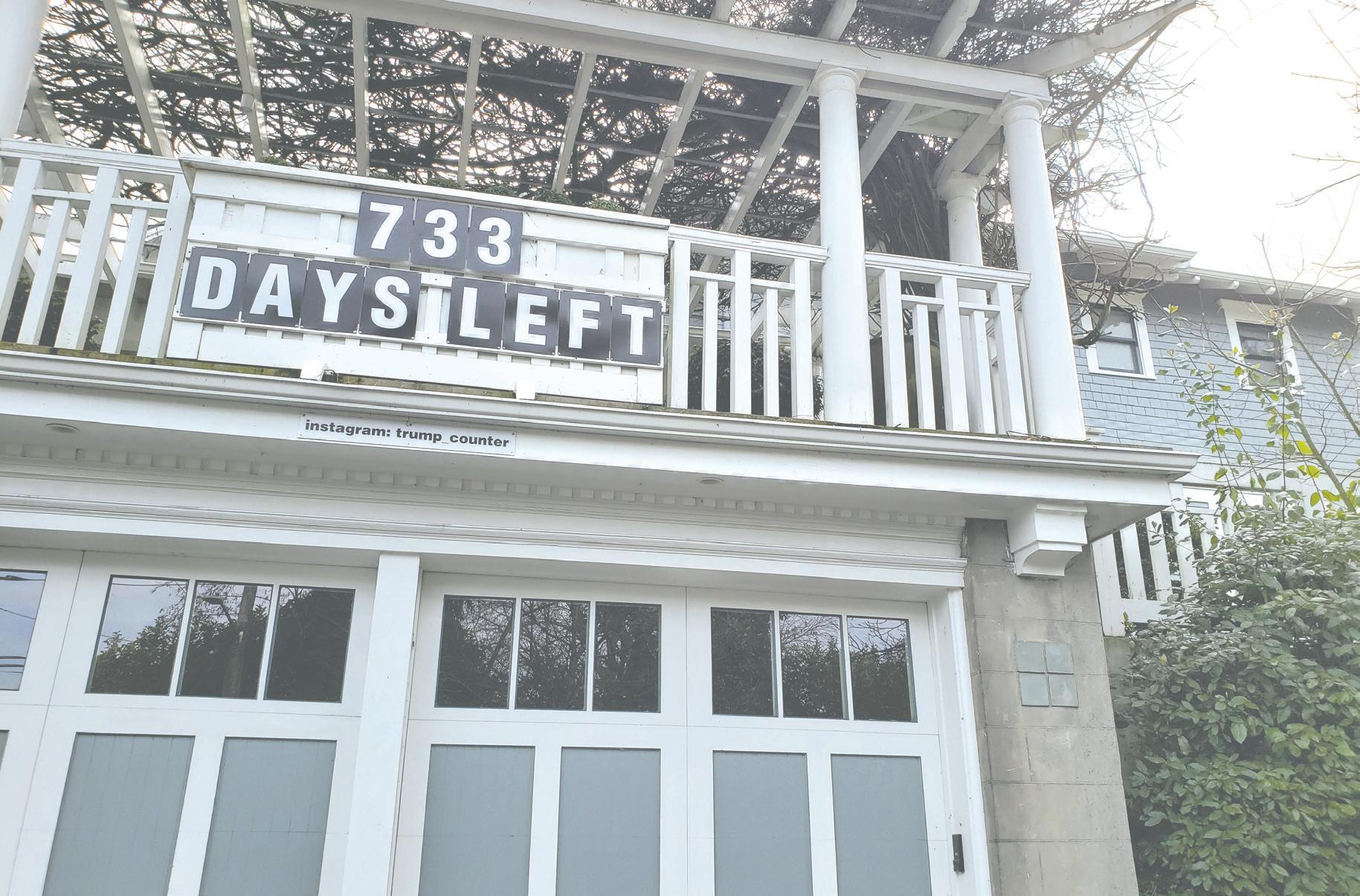
John Holt put up his Trump countdown sign shortly after the inauguration in 2017.
Paul Onnen agreed to keep it up and current when they bought the Leschi home last
prominent place to show it.”
Onnen said someone smashed her windshield with a baseball bat shortly after an interview with KING 5 about the Trump counter.
“I thought, ‘Wow, I didn’t think we had any Trump supporters that lived near us,’” she said. “‘God, I hope they don’t.’”
But that didn’t change the Onnens’ decision to keep the sign ticking off the potentially final days in office for the 45th president.
“As long as he’s in that office, the sign will be turning numbers,” Onnen said. “Each day is just another day closer to the departure of Trump, and I don’t see how he ever could be re-elected.”
There’s also that agreement with Holt.
“We actually signed a piece of paper when we bought our home that we would keep the sign,” Onnen said. “So funny, but well worth it.”
The neighbors seem fine with the sign, and have offered to turn the numbers when the Onnens are traveling, she said.
Holt will continue to maintain the Instagram account; each post with a short essay about Trump,
supple ends to use as winter protection for tender plants; larger pieces would be cut into lengths for the fire pit. The benefit to the trees was twofold. First, it slowed the growth of the tree. Secondly, it allowed wind to move through the tree, lessening the possibility that it would be taken down in a storm.
The bottom line here is simple: Never plant a Douglas Fir in your city garden. But if you have one, consider the three options. If you choose to leave it in place, you’ll have my gratitude. I love looking over The Park and seeing them punctuate the view above the rooftops. These trees, which can reach more than 250 feet in height in our forests, are among the most majestic conifers on Earth. Beautiful year round, fragrant, dramatic in the wind in movement and sound, they block the harshest light and catch the softest rays. As the dawn breaks or the sun sets and the light pours horizontally through the branches, take a good look. You’re quite likely to spot the ghost of Madison Park Eagle Scouts roosting in the limbs.
usually recapping what he did that day.
“Now, it’s become sort of a real labor of love. You know, it takes me an hour a day to write a post,” he said. “What a great coffee book it would make.”
The partial shutdown of the federal government has been a hot topic for the past month.
Onnen said she has a cousin
who works for the FBI, which is having to prioritize cases because there isn’t enough funding to investigate them all.
“I didn’t use to pay as much attention as I do now,” Holt said of his interest in politics, “and now I am paying a lot of attention. It is fascinating to me how many norms are being broken and how celebratory people are.”


Photo by Brandon Macz
New owners Lilly and
year.