
You Got a Raise. And You’re Still Broke. Here’s Why





You Got a Raise. And You’re Still Broke. Here’s Why









Mike Coady Chief Executive Officer
Peter Gollogly Regional Director
Bryan Bann Regional Manager
William Bailey Group Head of Global Partners
Adeeb Khan Team Lead - Technology
Shil Shah Group Head of Tax Planning
Ashley Eyre Head of Compliance - UK
Maria Darmanin Demajo Operations Manager – Cyprus
Mohammed Kamil Khan Product Lead - Salesforce









Husain Rangwalla Chief Technology Officer
Carlo Casaleggio Group Head of Compliance
Craig Stokes Managing Director - UK
Josh Watson Group Head of People
Danny Sutherland Group Financial Controller
Veronica O’Brien Group Head of Corporate Affairs
Jaya Prakash Goulikar Head of Compliance – Middle East
Jenna Cochrane Administration and Operations Manager - USA
Rishikesh Mishra Team Leader
Skybound Wealth Management stands as a benchmark of excellence in the world of international wealth management. As an independent firm, we pride ourselves on delivering bespoke financial solutions tailored to meet the unique needs of our global clientele. Our innovative approach combines the agility of a boutique firm with the expertise and resources typically associated with a major financial institution. About Us.
Search for ‘Skybound Wealth’
Scan QR Code
To learn more about our Leadership Team, please use the QR or click here to visit our website.








Josh Burton Chief Financial Officer
Tom Pewtress Group Head of Proposition
Paul Pavli Executive Director - Cyprus
Dmitriy Ermakov Group Head of Marketing
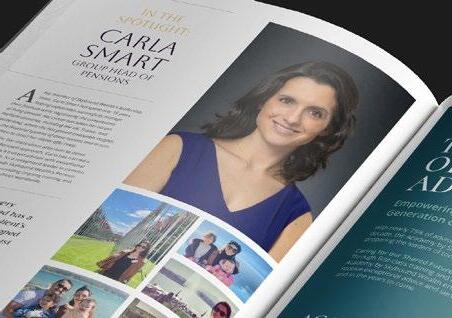
Carla Smart Group Head of Pensions
Taylor Condon Area Manager - Spain
Elyka Ygnacio Operational Finance Manager
Maria Nikolaou Executive Director - Cyprus
$1.5billion
of client assets under management
6,000 +
international clients & growing

Welcome to the latest edition of SOAR. There’s always plenty of noise in our industry, new products, market swings, bold predictions. What matters far more, in my view, is the quality of the foundations underneath the advice people rely on.
Over the past year, we’ve focused heavily on building properly. Strengthening our teams, improving the systems that support advice, and investing in the digital infrastructure that keeps clients connected, informed, and in control. Much of that work happens behind the scenes, but it shows up where it counts, in clearer conversations, better decisions, and a smoother experience when life gets busy or complicated. We’ve also continued to grow, across regions, across capabilities, and across the specialist support that sits around our advisers. Growth on its own means very little. Growth with standards, structure, and accountability is what turns momentum into long-term outcomes for the people we look after.
This edition of SOAR reflects that approach. Practical insight. Real-world context. Guidance designed to help you feel clearer and more confident about the decisions ahead, wherever you’re based and whatever stage you’re at.
Thank you for taking the time to read it, and for the trust you place in us.
Mike Coady
Mike Coady Chief Executive Officer




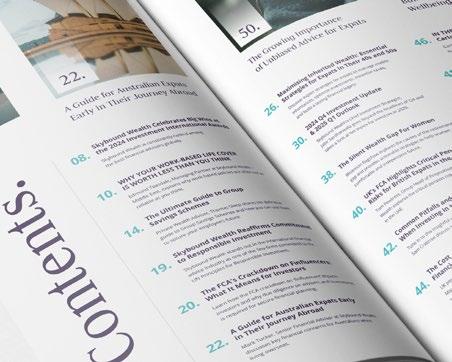
08. Creating Healthy Financial Habits for 2026
12. Planning for School Fees in Dubai: A Practical Guide for Parents
16. The Paradox of Control: Active vs Passive Investing
18. Why Earning More Doesn’t Make Life Easier
20. Unseen Changes Unintended Consequences
26. The Financial Fundamentals That Every British Expat in Saudi Arabia Must Get Right
30. Filters, Feeds, and Financial Fugazi
34. Why You Should Care About Independence
44. Why Expats Leave the UAE With Less Wealth Than They Arrived And How to Avoid It








80. 54. 86. 34.

48. From Panic to Prosperity: Sensational Headlines vs. Stock Market Reality
54. The Future of Fintech Is Human-Centered, Not Feature-Heavy
58. The Great British Take Off
60. Your Tax-Free Salary in the UAE. How to Turn It Into Lasting Wealth
62. What It’s Really Like Starting a Career in Wealth Management
66. The Real Cost of Waiting to Invest: And Why There Is Never A Good Time
68. You Got a Raise. And You’re Still Broke. Here’s Why
72. 10 Finance & Tax Questions That You Should Ask When Moving From The UK To Spain
76. Financial Planning Without Borders: Creating Stability in a Life of Contracts & Countries
80. The Real Risk of Putting Everything in One Basket
84. Shil Shah Appointed Group Head Of Tax Planning
86. Budget 2025: What the Changes Mean for Your Money
90. Expanding Into Spain With Our New Mijas Office
92. Inbound to the U.S.? Financial Moves to Make Before You Arrive
96. Q4 2025 Review. Q1 2026 Outlook
104. The 24-Hour Rule: The Simple Trick That Saves You Thousands
106. In The Spotlight: Jamie Proctor
Every January, the same pattern repeats itself. People living abroad tell themselves this will be the year they finally get organised. The year they review their investments, start saving properly, think seriously about retirement, or untangle the financial loose ends that have quietly built up in the background.
And every year, life wins.
Work gets busy. Travel increases. Children, relocations, new contracts, new countries. The plan slips to March, then summer, then “after Christmas”. Suddenly, it’s January again, and very little has changed.
“Ambition is healthy. Selfdeception is not.”
After more than two decades advising people living and working internationally, across different countries, incomes, and lifestyles, one thing is consistent. People don’t struggle financially because they don’t care. They struggle because they never build habits that survive real life.
This article isn’t about motivation or good intentions. It’s about structure. Habits. Reality. The same framework I use with my clients, and the same one I apply to my own finances.

Written by Kieron Donovan Private Wealth Adviser


People who move abroad are usually capable, ambitious, and well paid. Yet financially, many are running on hope rather than structure.
Hope that the pension will probably be enough. Hope that the property will work out. Hope that the investments should be doing fine. Hope that moving home will somehow be cheaper than expected.
Hope, however, is not a strategy.
The risk for those living internationally is subtle. The longer you’re away, the easier it is to drift without noticing. There’s no home-country system catching you, no default employer pension quietly doing the heavy lifting, and no one forcing a regular review. Either you build structure deliberately, or time slips away unnoticed.
Most people say they’re saving for “the future”. It sounds sensible, but it’s also meaningless. The future has no shape, no cost, and no deadline. Vague goals create vague behaviour.
Retirement is where this becomes most damaging. A proper reason for planning forces uncomfortable but necessary questions. When do you realistically want work to become optional? Where will you live, and will that be taxefficient? What does an ordinary Tuesday look like? Are you funding freedom, or simply survival?
For many expats, this results in more than one objective. A core income pot to provide long-term security. A separate pot for flexibility, travel, healthcare, or opportunity. Sometimes a legacy pot for children or family.
Until that picture is clear, investing is guesswork. Once it is clear, the anxiety fades and numbers replace uncertainty.
“People fail because they try to change everything at once.”
This is where many plans quietly unravel. It’s common to meet people in their late forties or fifties who want to retire soon, with substantial wealth, despite having saved very little until now. Ambition is healthy. Self-deception is not. There is no shame in starting later than planned. There is a cost to pretending mathematics doesn’t apply to you.
Healthy financial habits require honesty. About time. About how much you can realistically contribute. About risk. About what is actually achievable. A realistic plan you stick to will always outperform a perfect plan you abandon.
There has never been a perfect time to invest. Markets rise and fall. Politics changes. Interest rates move. Life interferes. Waiting for certainty is how decades disappear.
Almost every seasoned international investor eventually says the same thing: “I wish I’d started earlier.” Not that they’d timed it better, just that they’d begun.
January doesn’t need optimisation. It needs momentum. Start with something. Refine it later.

“Every January, the same pattern repeats itself. People living abroad tell themselves this will be the year they finally get organised.”



People fail because they try to change everything at once. Healthy habits are boring, which is precisely why they work.
A one percent improvement feels insignificant in the moment. Over time, it compounds. Save a little more each month, invest consistently, review annually, and avoid emotional decisions, and you don’t need exceptional returns. You need consistency.
The same principle applies beyond money. Slightly earlier mornings. One extra walk each week. A simple monthly financial check-in. Compounding applies to behaviour as much as capital.
Once a year, step back and assess five areas: family, friends, health, career or business, and finances. Score each out of ten without overthinking it. Your first instinct is usually the right one.
The lowest score deserves attention first.
Not everything needs fixing, but avoidance compounds faster than neglect. Many people are surprised by how quickly this exercise exposes drift and restores clarity.
Motivation fades. Structure survives busy months, difficult weeks, and unexpected moves. People living internationally deal with multiple tax systems, changing residency rules, different currencies, fragmented pensions, and long gaps between formal reviews. This is why financial planning for expats has to be different. It’s not about products. It’s about coordination. When structure is right, decisions become calmer. Risk becomes intentional. Progress becomes measurable. Money stops being a background stress and starts supporting life, rather than complicating it.
If nothing changes, January 2027 will bring the same conversations. Not because you failed, but because life took over.
Healthy financial habits aren’t about discipline. They’re about reducing friction. If you want to start 2026 with clarity, structure, and a plan that actually fits life abroad, this is the right moment to act. January always fills quickly, and there’s a reason for that.
Perfection isn’t required. Momentum is.

“Even modest contributions can go a long way when started early.”

Written by Mike Coady Chief Executive Officer
I’ve spent over 20 years advising families in Dubai, and as a father of four myself, I know the pressure that school fees can place on a household. The numbers can be daunting, the rules confusing, and the stakes feel personal, because they are.
Families often come to me when the stress peaks, suddenly facing bills that don’t match expectations, or struggling with multiple children at different schools. The most common causes are familiar: changes in employment, bonuses or commissions that never materialise, and fee inflation that quietly compounds year after year.
“Raising children in Dubai is an incredible opportunity, but it comes with financial responsibility.”
Dubai schools operate under KHDA’s School Fees Framework, linked to the Education Cost Index, which sits at 2.6% for 2024–25 and 2.35% for 2025–26. At first glance, those increases seem small. But with two or three children, the impact is significant.
I often see what I call “lifestyle drag.” Families match a tax-free income with a tax-free lifestyle, then find themselves squeezed by a fixed education bill that doesn’t bend. Cars, rent, and holidays can be adjusted. School fees cannot.
If fees are already overdue, the key is transparency. Ignoring statements only makes matters worse. Schools in Dubai can withhold report cards, block transfer certificates, and decline re-enrolment if balances remain unpaid. In Abu Dhabi, ADEK formalises this with a threewarning process and suspension limits. Engage early, agree on a staged repayment plan, and avoid rolling debt onto high-interest credit cards. If bridging is unavoidable, a 0% installment plan or short-term loan linked to a clear cashflow event can help, but annual fees should never become a long-term liability.
Top-tier schools can now charge over AED 120,000 a year for senior grades. With two children, the increase in cost is obvious; but it doesn’t need to become unmanageable. The families who thrive ring-fence education costs, automate contributions to a dedicated fund, and adjust lifestyle spending before they ever compromise schooling.
A useful rule of thumb is to keep school fees within 10–15% of net household income. In reality, many families I meet are spending 25–40% in peak years.
By contrast, the reactive approach; paying fees with a card in September and worrying in November, is how short-term pressure turns into long-term debt.
Education is non-negotiable for most families, but the most expensive school is not always the best fit. Curriculum, KHDA inspection trends, and the full cost over a five- to seven-year horizon matter more than a single year’s bill.
The financial mistakes I see most often are families committing without modelling the long-range cost, underestimating fee inflation, or switching schools unnecessarily.
Each change brings new deposits, uniforms, and lost discounts.

“Families often come to me when the stress peaks, suddenly facing bills that don’t match expectations, or struggling with multiple children at different schools.”
Even modest contributions can go a long way when started early. AED 3,000 a month into a diversified portfolio at 7% annualised growth could build more than AED 1.2 million over 18 years. Practical steps include automating contributions into a dedicated education fund, keeping six to twelve months of fees in reserve Also, mapping out the full cost of both school and university, so you plan for the entire journey, is vital.
Over the past decade, there has been more transparency from KHDA and ADEK around fee structures and deposits, alongside steadily rising costs at the top end. Families are now more proactive, exploring scholarships, setting up structured savings plans, and asking the right questions early.
Raising children in Dubai is an incredible opportunity, but it comes with financial responsibility. You can wait until fees overwhelm your budget, or you can take control now with a clear, structured plan.
If school fees are a pressure point for your family, the sooner you put structure in place, the easier it becomes. I’ve helped families across Dubai prepare for education costs with strategies that provide clarity, flexibility, and peace of mind, and I’d be happy to help you do the same.

We all want to feel in control, yet markets have a way of proving otherwise. That’s why the choice between active and passive investing matters so much.
Every investor wrestles with this in some form. Do you try to outthink the market, or do you accept that consistency often wins? Both approaches have their strengths and weaknesses, and both say something about the kind of investor you are.
Active investing appeals because it feels proactive. You are making decisions, applying research, and responding to what the market is doing. In moments of crisis, from the financial crash in 2008 to the COVID shock in 2020, skilled managers who held cash or defensive positions were able to soften losses and recover more quickly.
This matters because very few people truly “sit tight” when their portfolio drops. Seeing your savings fall sharply is difficult, and the ability to adjust can prevent rash decisions. That is one reason active strategies continue to hold appeal, even though many funds underperform their benchmarks over long periods.
Passive investing takes the opposite view: that markets are broadly efficient and that cost, not activity, is the main driver of returns. Low-cost index funds have shown they can match market performance closely, year after year. Perhaps the biggest benefit is behavioural. By taking away the temptation to tinker, passive investing helps protect people from themselves. Study after study shows that individual investors often underperform the very funds they hold, simply because they buy and sell at the wrong times. Passive investing builds discipline into the process, keeping ego and emotion in check.

Written by Sean Russell Private Wealth Adviser
“Every investor wrestles with this in some form. Do you try to outthink the market, or do you accept that consistency often wins?”
The reality is that both approaches can work, but not for everyone and not in every environment. Some investors value the responsiveness of active management. Others prefer the stability of a passive plan.
In practice, many resilient portfolios blend the two, using a passive core for long-term growth and stability, while layering active elements on top to manage risk or target specific opportunities. This creates room for control when it matters most, while still benefiting from the discipline of staying invested.
Investing is never only about numbers. It is also about temperament. Do you need the reassurance of flexibility, or the comfort of sticking with a plan? Do you prefer to act, or to trust?
Answering those questions matters as much as selecting the right funds. Because ultimately, your portfolio is not just a collection of assets. It is a reflection of how you see the world, how you deal with uncertainty, and what kind of control you are truly looking for.
That reflection is easier when you have someone to challenge your assumptions, test the balance between active and passive, and ensure the strategy fits you.
If you are unsure which approach is right for you, start the conversation with Skybound Wealth today.

Written by Maximillian Gerstein Private Wealth Partner
Everyone thinks that earning more money is the solution. That once you hit a certain number, life becomes easier, simpler, and less stressful. But ask anyone earning six figures, the stress doesn’t go away. In fact, in many cases, it gets worse.
More money comes with more responsibility. A higher standard of living, more financial commitments, larger expectations, and far more opportunity to get it wrong. And the brutal truth? The more money you earn, the more important it is to have a plan.
Just because you earn well doesn’t mean you’re safe. I’ve seen people earning £200,000+ a year with zero savings, expensive debt, no investment strategy, and no plan for the future. But they look successful. Nice car, nice house, premium lifestyle. They’re living on the edge, and don’t even realise it. We think more money will solve our problems. But without structure and discipline, it just amplifies them.

This is where most people go wrong. As income increases, so does spending. It’s called lifestyle inflation, and it’s the number one reason high earners stay broke.
Here’s how to break that cycle:
Before you spend anything, allocate a fixed amount to savings and investments every single month. This isn’t about living like a monk, it’s about building a foundation.
Treat your future like a bill, something that gets paid first. Automate it, make it invisible, and make it non-negotiable.
If you earn well, you should be saving more, not spending more. And yet most people do the exact opposite.
“Earning power means nothing without purpose.”

Have a Goal? Fund It. No Excuses.
Earning power means nothing without purpose. Let’s say you want to retire with £1 million by age 55. You're currently 30 years old, which gives you 25 years.
If you invest consistently at a 7% annual return, you need to contribute around £1,400/month. That’s achievable for many high earners. But if you save that money in the bank, earning virtually 0% interest, you’d need to contribute over £3,300/month to reach the same goal.
That’s a £1,900/month difference, or £570,000 more over 25 years, simply because of poor strategy.
To reach £1,000,000 by saving £1,400 a month in a bank account with 0% interest, you'd have to contribute for nearly 60 years, specifically, 59.6 years. Compared to investing, which can get you there in about 30 years at 7% growth, you'd need an extra 30 years of contributions if you’re just saving in cash.
This is why discipline isn’t just about how much you save. It’s about how you save. Smart decisions compound over time, and so do the consequences of inaction.
Now ask yourself: Are you working hard just to make your bank richer, or are you building wealth for yourself?
Being disciplined with your money isn’t boring. It’s not restrictive. It’s power. It’s control. It’s freedom. The people who win financially aren’t always the highest earners. They’re the ones who put structure in place and stick to it.
They tax themselves. They invest before they spend. They understand that building wealth isn’t a vibe, it’s a habit. And if you’re not doing that? Then your income becomes your trap.
The more you earn, the more you have to lose. Which means the need for a clear, structured, disciplined financial plan only increases.
This isn’t about cutting back or feeling guilty. It’s about ensuring that your income is working for you, not just funding a lifestyle you can’t sustain.
And if that feels like too much? If the numbers, the planning, the structure all feel overwhelming? Get help. That’s what I do.
I don’t just build investment portfolios, I build financial lives that allow my clients to live well now and in the future.

Written by Carla Smart Chartered Financial Planner & Group Head of Pensions
Recent research by Schroders Personal Wealth found that over half (51%) of UK adults say they are unaware of major upcoming pension and tax policy changes that could reshape retirement and inheritance planning. That lack of awareness could have far-reaching financial consequences, particularly with the UK’s transition from a domicile-based to a residencybased inheritance tax regime and new rules on pension death benefits.


“Awareness and sound financial advice have never mattered more.”


This article summarises the key developments, explains why they matter, and outlines what can be done to prepare.
Pension Death Benefits to Fall Within Inheritance Tax from April 2027
From 6 April 2027, most unused pension funds and many pension death benefits will be brought within an individual’s estate for Inheritance Tax (IHT) purposes.
Currently, pensions usually sit outside the IHT net, one of their most attractive features for long-term savers. Under the new rules, any unspent pension funds may now be subject to up to 40% IHT (above the nil-rate threshold).
The latest consultations have refined the approach: Recent consultations have helped refine how the changes will work in practice. Payments to dependents, including spouses and children, are expected to remain free from Inheritance Tax, and death-in-service benefits are also likely to stay outside the IHT net. However, the responsibility for reporting and settling any tax due will sit with executors or personal representatives, not pension providers, shifting more complexity into the estate administration process.
It’s important to be aware of the potential for double taxation. Where death occurs after age 75, the beneficiary’s withdrawal from the inherited pension will continue to be taxed at their marginal rate of income tax, in addition to the IHT charge on the value of the fund. The result could be a combined effective tax rate exceeding 60%, depending on the beneficiary’s income level and estate composition.
While finer details are still being finalised, this marks a fundamental shift in how pensions interact with the tax system, particularly for intergenerational planning.
“The 2024 Budget introduced a major reform that took effect in April 2025: the abolition of the longstanding domicile concept in UK tax law, replaced by a residency-based test.”
The 2024 Budget introduced a major reform that took effect in April 2025, the abolition of the long-standing domicile concept in UK tax law, replaced by a residency-based test. This change fundamentally alters how individuals are assessed for income tax, capital gains tax, and inheritance tax.
Under the new regime, anyone who has been UK-resident for ten consecutive years is now exposed to UK Inheritance Tax on their worldwide assets. Equally significant is what happens when people leave the UK. Rather than falling outside the system after three years, as was the case under the old domicile rules, former residents can now remain within scope for up to ten years after they cease UK residency. For internationally mobile individuals, whether they are living abroad, planning a return, or holding assets and pensions across borders, this represents a material shift. Cross-border planning is no longer a specialist edge case, it has become a central consideration.


“The UK pension and inheritance landscape is changing faster...”
Cross-Border Complexities: The Hidden Trap for International Families
Taken together, the extension of Inheritance Tax to pension death benefits and the shift to residency-based taxation create a far more complex landscape for cross-border estate and pension planning. What were once separate considerations now interact in ways that are easy to overlook and difficult to unwind.
A UK resident with pensions or assets held overseas, for example, could find both UK and foreign tax authorities laying claim to the same wealth unless a relevant double taxation treaty applies. Equally, individuals who have moved abroad but retained UK pension rights may discover that those pensions are still pulled into the UK Inheritance Tax net, even after many years of non-residency.
The challenges multiply for families with mixed residency status. Couples where one partner remains UK-based and the other lives overseas can face inconsistent tax treatment on the same pension assets, creating uncertainty over both tax exposure and estate outcomes. Compounding this further is the loss of longstanding domicile-based reliefs, such as excluded property trusts, which previously allowed offshore pensions and investments to sit outside the scope of UK Inheritance Tax.
The result is a much narrower margin for error. Without careful coordination across jurisdictions, families risk double taxation, administrative delays, and outcomes that bear little resemblance to their original intentions.
This is a major issue for professionals, expatriates and international families. Without careful coordination, these new rules could lead to double taxation, administrative delays, and unexpected liabilities.
The nil-rate band (£325,000) and residence nil-rate band (£175,000) remain frozen until 2030, meaning more estates will drift into taxable territory.
As of April 2025, HMRC introduced a new system for allocating tax codes to individuals starting to draw private pensions. The reform aims to ensure that new pension recipients are placed on the correct cumulative tax code more quickly, helping to reduce the over- or under-payment of income tax that previously affected many retirees in their first year of drawdown.
Failing to keep up with these changes is not a harmless oversight. It can translate into very real financial and practical consequences at exactly the wrong moment.
Beneficiaries or executors may be faced with unexpected Inheritance Tax bills, particularly where pensions were assumed to sit safely outside the estate. Financial plans built on outdated assumptions can quickly become distorted, leaving individuals exposed to tax charges they never anticipated. For families with international ties, the risk is even greater, with cross-border mismatches leading to double taxation or the loss of valuable treaty relief.
Flexibility has also reduced. Many of the most effective planning routes, including certain trust structures and pre-migration strategies, are no longer available under the new residencybased rules. At the same time, administrative complexity is increasing. Executors may now find themselves responsible for reporting and settling tax on pension benefits, adding pressure at an already difficult time.
Review your residency and estate exposure. If you’ve lived abroad or plan to, take the time to map out how the new rules could affect you. Revisit your pension beneficiary nominations and make sure all documentation reflects your current wishes. If you hold assets or have family members overseas, seek dual-qualified advice to ensure your arrangements remain efficient across jurisdictions. It may also be worth considering whether accelerating withdrawals or restructuring before 2027 aligns with your wider goals. Finally, keep an eye on government updates, as secondary legislation and HMRC guidance will determine the final shape of these changes.
The UK pension and inheritance landscape is changing faster, and more fundamentally, than most people realise. With pension death benefits likely to fall under IHT, and residency replacing domicile as the basis of liability, the next two years represent a critical window for review and adjustment.
“...lack of awareness could have farreaching financial consequences...”

Awareness and sound financial advice have never mattered more. Those who take time to understand and adapt to these new rules will be far better positioned to protect both their retirement income and the legacy they leave behind.
If you’d like to review how these changes could affect your own plans, get in touch today and we can discuss this and any other questions or concerns you have regarding your pensions.



That Every British Expat in Saudi Arabia Must Get Right

Written by Campbell Warnock Private Wealth Manager
Moving to Saudi Arabia is one of the most exciting chapters in any professional’s career. The earning potential, the lifestyle, and the absence of income tax create a rare opportunity to build wealth faster than you ever could back home.
But here’s the part many overlook: in Saudi Arabia, there are no automatic systems protecting your future. There’s no National Insurance, no workplace pension, and no built-in safety net. You’re in full control of what happens next. And that freedom is both empowering and risky.
After working with British professionals across the Gulf for many years, I’ve seen one truth hold firm: long-term success isn’t about who earns the most, but who gets the fundamentals right early on.



The first step is protection. Many expats assume their UK life cover follows them abroad, but it often doesn’t. Even when it does, the level of cover may no longer match your lifestyle or dependants. If your policy isn’t valid in the region or doesn’t reflect your current income, your family could be left exposed.
One of the first things we do at Skybound Wealth is review your existing protection to make sure it fits your new reality - location, income, and family circumstances included. The goal is simple: peace of mind that, wherever you are, the people who rely on you are financially secure.
Another essential pillar is estate planning. Your UK Will doesn’t automatically apply in Saudi Arabia, meaning local inheritance laws could override your wishes if the worst happens. A straightforward review, and where needed, a local Will, ensures your assets are passed on as you intend.
This is something too many clients only address after a scare or life event. The truth is, it’s much easier, faster, and less expensive to get it right from the start.
Life in Saudi Arabia can be unpredictable. Contracts end, projects shift, and global circumstances can change quickly. Having an emergency fund covering at least three to six months of expenses can make the difference between short-term disruption and long-term damage.
We often help clients set this up as the foundation layer of their plan, before anything else. It means that when opportunities arise, or challenges appear, they’re in a position to act confidently without derailing their long-term goals.
When you leave the UK, your pension contributions stop. Over time, that gap can become a serious shortfall. Think of your pension less as a product and more as a discipline. A habit that continues no matter where you live.
We help expats maintain that consistency by setting up flexible, globally compliant solutions that grow with them. Regular contributions, tax efficiency, and global access are what preserve your long-term financial independence.
“Cross-border financial planning has more moving parts than most people realise...”
Many expats continue using their UK accounts for everything, but it’s rarely efficient. Currency fluctuations, transfer delays, and hidden fees can all eat away at income and erode long-term returns. A well-structured banking setup using multi-currency or offshore accounts aligned to your income, savings, and investment strategy, helps you manage money seamlessly across borders.
Where Skybound Wealth truly adds value is in bringing all those moving parts together through MoneyMap, our interactive financial planning tool. MoneyMap lets you see your full financial picture in one place; how your income, savings, investments, and goals align across currencies and timelines. We can model different scenarios instantly:
• What happens if you repatriate in five years?
• How do currency shifts affect your retirement fund?
• What’s the impact of funding education abroad or buying property?
Seeing those outcomes side by side turns financial decisions from guesswork into strategy. MoneyMap helps transform cross-border complexity into clarity - giving you control, visibility, and confidence in every decision.
Cross-border financial planning has more moving parts than most people realise; residency, taxation, currency, and investment regulation all overlap. The earlier you seek professional advice, the easier it is to avoid mistakes that become costly later.
At Skybound Wealth, we start with a discovery call to understand your goals and priorities, followed by a full review of your income, savings potential, and existing assets. From there, we use MoneyMap to model your future and design a plan that supports your ambitions in the Kingdom and beyond.
Saudi Arabia offers the chance to build financial independence faster than almost anywhere else, but opportunity alone doesn’t guarantee success. The expats who thrive are the ones who act early, protect what matters, and make every Riyal work towards their long-term goals.
With structure, regular saving, and the right guidance, your time in the Kingdom can be more than a career chapter, it can be the foundation of lasting financial freedom.
If you’re ready to see what your financial future could look like, start with a simple conversation. Together, we can map it out.



“After working with British professionals across the Gulf for many years, I’ve seen one truth hold firm: long-term success isn’t about who earns the most, but who gets the fundamentals right early on.”
Why Choose Skybound Wealth?
• Comprehensive coverage for expats and their families
• Tailored advice that fit your lifestyle, whether home or abroad
• Peace of mind with flexible life, health, and critical illness cover
• Expert advice to ensure your loved ones are fully protected ACT NOW
Safeguard your future today—speak to an adviser about a bespoke insurance plan.


Written by William Bailey Private Wealth Adviser
Growing up, money was something people carried but never spoke of. Even in the earlier days of my career, outside the privacy of a confidential financial review, the subject was almost entirely off-limits.
Even inside those rooms, clients would often hesitate, shuffling papers or deflecting questions rather than reveal their true numbers.
The cultural taboo around discussing income, debt, or net worth was so ingrained that extracting the facts felt less like advising and more like detective work. Silence was the norm. People could live next door to each other for decades without once discussing what they earned, what they saved, or how precarious their finances really were.
That silence has broken.
Today, money is everywhere. You cannot open Instagram, TikTok, or YouTube without being told how much someone earns, how little they work for it, or how quickly you can replicate their apparent success.
Financial conversation has escaped the meeting room and become part of the cultural bloodstream. On the surface, this is healthy. The taboo around money long prevented people from comparing notes or learning from each other’s mistakes.
Research from the University of Cambridge in 2022 even suggested that financial openness, when genuine, improves saving habits and reduces anxiety. People no longer have to feel alone when asking whether they should invest, save, or budget differently. But with openness has come distortion.
Where once the silence left people guessing about their neighbour’s wealth, today the noise online is so deafening that truth has become impossible to separate from performance.
Influencers, “finfluencers,” and selfproclaimed wealth gurus have turned financial life into a spectacle - a clown show, even for those more cynical. Many exaggerate earnings, hide losses, or inflate lifestyles to sell an image, and with it, a product, a course, or a subscription.
A study by the FCA in 2023 found that one in six young investors made financial decisions based primarily on social media content.
The fallout is visible across markets. In the US, the collapse of FTX left countless retail investors burned after crypto influencers propelled legitimacy into what turned out to be fraud. In India, regulators have had to curb “stock market astrology” promoted by YouTube personalities promising impossible returns.

“The insecurity is real, even when the numbers aren’t. And it’s powerful enough to warp behaviour.”

In my own meetings, I see the consequences directly.
A few months ago, I sat down with a couple in Dubai who came to me in near-panic after maxing out three credit cards on a “luxury lifestyle masterclass” that promised to teach them how to buy property with “other people’s money.”
Their salaries were strong, together over £250,000 a year, but their savings were close to zero. Every month they watched people online claim to be buying apartments or holiday homes, and instead of questioning the claims, they assumed they were falling behind. Their debt was not the result of bad fortune but of comparison.
Then there was an online meeting more recently with an expat in Saudi Arabia. A man in his fifties, highly successful, who admitted he had delayed retirement planning for years because he felt inadequate.
“Everyone I follow online seems to have five properties by now,” he told me, “so what’s the point of starting late?”
The irony, of course, was that he had the means to retire comfortably if he began planning properly. But the sense of already being behind had frozen him into inaction.
And then, inevitably, the Crypto-Chaser.
The young professionals who sit across from me clutching screenshots of their trading accounts, flicking from images of their incredible +40% return one afternoon to their respective -85% drop weeks later.
“It looked like everyone else was winning,” I’m often told. The truth, realised only after the crash, is that most of those people were either lying or had already sold.
“Financial conversation has escaped the meeting room and become part of the cultural bloodstream.”
The insecurity is real, even when the numbers aren’t. And it’s powerful enough to warp behaviour. Some double down on risky bets to “catch up,” others delay planning altogether, paralysed by the fear that they are already too far behind.
The irony is painful. Social media has made it easier to discuss money but harder to see it clearly. The language of success has been colonised by those with the strongest incentive to mislead.
As an adviser, you learn quickly that the quietest client in the room often has the strongest balance sheet, while the loudest boasts often conceal fragile scaffolding.
Online, that truth is inverted: performance is everything, reality an afterthought.
Psychologists have long understood this tendency. Leon Festinger’s social comparison theory argued that people measure their own worth not in absolute terms, but by constantly evaluating themselves against others. That instinct is now weaponised at scale.
Every leased supercar filmed on JBR, every rented Airbnb presented as “my villa,” every cropped screenshot of a trading account; each of these is an invitation to feel less successful by comparison.
The effect is magnified in cities like Dubai, where wealth is not only earned but performed daily. It creates an endless arms race of appearance, where financial planning; the slow, quiet work of building lasting wealth, feels dull compared to the glamour of quick wins.


And yet, beneath the noise, the fundamentals haven’t changed. Compounding remains indifferent to Instagram. Diversification doesn’t care how many followers someone has.
Time in the market still beats timing the market, no matter how many “get rich quick” strategies flood your feed.
The paradox of this cultural moment is that while more people are talking about money than ever before, fewer are listening to the truths that matter.
The scroll never ends. Every day brings another reel of rented cars, filtered penthouses, or “six-figure side hustles” wrapped in neon captions. It’s a hall of mirrors where the loudest voices are often the least credible, and where comparison corrodes quietly, swipe by swipe.
Wealth isn’t built on curated feeds or borrowed backdrops. It’s built in silence, in discipline, and in decisions that rarely make good content. The internet will always shimmer with illusion. The question is whether you chase it, or step away to build something real.
If you’d like to cut through the noise and build a financial plan grounded in reality, speak to Skybound Wealth today.

“...independence is the decisive factor that determines whether your adviser is aligned with your best interests or with someone else’s agenda.”


Written by Josh Burton CFO & Private Wealth Adviser
After more than a decade living overseas and working within a wealth management firm that specialises in advising highnet-worth (HNW) expatriates, I’ve witnessed every kind of financial advice imaginable – from wellintentioned guidance to blatantly product-driven sales. One thing has become crystal clear: the real question isn’t who offers you advice, but who that adviser truly works for.
For anyone wondering how to choose the right wealth management firm, independence should be the first thing you look for, because it defines who your adviser really works for.
In a world full of banks, brokers, influencers, and even robo-algorithms all vying to assist you in growing your wealth, independence is the decisive factor that determines whether your adviser is aligned with your best interests or with someone else’s agenda. This article dives into why independent, unbiased advice matters more than ever for HNW expats, and how it protects your long-term goals in an increasingly global financial life.
When it comes to financial advice, not all advisers have the same freedom to choose what’s best for you. Independent advisers can offer products and solutions from across the entire market, whereas “tied” or “restricted” advisers are limited to a single provider or a narrow list. Working with a restricted adviser is a bit like shopping at a supermarket that only stocks one brand; you may get something that works, but you’ll never know if there was a better, cheaper option on the shelf next door. In fact, U.K. regulations introduced in 2013 (the Retail Distribution Review) require firms to either provide independent, whole-ofmarket, fee-based advice or else be classified as “restricted”. Yet, despite these standards, many large wealth management firms remain restricted in practice.
On the surface, independent advice is now common - according to data released by the FCA in August 2024, 86% of financial advisers in the UK are classified as independent. But labels can be misleading. Many banks and private wealth institutions technically meet minimum requirements yet still incentivize their advisers to favor proprietary funds or specific products. Even fewer advisers carry the highest credentials which can be an indicator of advanced expertise. The core issue is bias: a restricted adviser might be perfectly honest and well-meaning, but if their toolbox only contains tools from one provider, your strategy could be suboptimal by design.
Example: Imagine you have $1 million to invest. A restricted adviser tied to Bank A will likely propose Bank A’s funds, even if they charge higher fees (say 2% annually) than a comparable fund from elsewhere at 0.8%. That 1.2% fee difference on $1M is $12,000 per year, real money off your returns. An independent adviser would have the freedom to choose the lower-cost, better-performing fund from the whole market, potentially saving you tens of thousands over time.

“True independence thrives within a framework of regulation, transparency, and accountability.”

Independence doesn’t mean “anything goes” - far from it. True independence thrives within a framework of regulation, transparency, and accountability. The most reputable wealth management firms serving expats ensure they are properly licensed in multiple jurisdictions, providing clients the peace of mind that advice is given under recognized regulatory standards. Firms like Skybound Wealth Management hold multiple regulatory licences across the UK, UAE, Europe, and the US, ensuring clients receive advice that meets the highest international standards.
For example, a firm might be regulated by the UK’s Financial Conduct Authority (FCA) for its British operations, by the Securities and Commodities Authority (SCA) and Central Bank in the UAE, by CySEC in Europe, and even registered with the U.S. SEC for American clients. This multi-layered regulatory structure isn’t just bureaucratic box-ticking – it has real benefits for clients. It means your adviser is answerable to oversight bodies in each region, must meet ongoing competency and ethics requirements, and that there are avenues for client recourse if something goes wrong.
Just as importantly, being licensed in multiple countries allows your advice to travel with you. An expat’s life is rarely confined to one jurisdiction; you might be in Dubai today, move to the UK in a few years, then on to Singapore or back to Dubai for retirement. An independent firm that’s regulated in all the places you touch can continue to advise you seamlessly through these moves, adjusting your strategy to each new regulatory environment. Your financial plan remains consistent and compliant from one country to the next. In contrast, if you use a local adviser who is only licensed in one country, you may be left in the lurch (or forced to find a new adviser) when you relocate.
Ultimately, regulation gives confidence and independence gives choice – together they form the foundation of trust in a client-adviser relationship. Knowing that your wealth manager is both free to act in your best interest and held to high professional standards worldwide is crucial for peace of mind. Especially for HNW individuals, who often require more sophisticated strategies, having that “freedom with accountability” means you get the best of both worlds: unrestricted advice and the security of a robust oversight framework.

As an expatriate, your financial life seldom fits neatly within one country’s borders. You might earn in one currency, invest in a second, hold property or pensions in a third, and plan to retire in a fourth. The more global your life, the more complex your financial puzzle becomes. This is where an independent firm really proves its worth – by taking a holistic, whole-world approach to your wealth. Instead of being constrained by a single nation’s products or rules, an independent expat adviser can integrate multiple jurisdictions into one coherent strategy.
Consider some of the cross-border challenges HNW expats face and how a holistic adviser addresses them:
“A great adviser should communicate clearly, listen to your goals, and make you feel comfortable.”
Multi-Currency Wealth:
Fluctuations in exchange rates can make or break an expat’s fortune. (For instance, a British expatriate in the Gulf earning UAE dirhams and planning eventually to spend in GBP has to manage currency risk – the GBP/ AED rate has swung significantly over the years.)
An independent adviser can access hedging strategies or currency-specific investments to protect against forex risks, whereas a domestic bank adviser might not even mention this issue.
Tax Optimization Across Borders:
Each country has its own tax regime, and the interactions can be tricky. Expats often have to juggle dual tax residencies or take advantage of double taxation agreements. A holistic adviser will incorporate international tax planning –ensuring you’re not paying a penny more than necessary and leveraging any expat tax breaks or treaties available. (For example, UK expats in the UAE enjoy zero income tax in the UAE, but if they still have UK assets or eventually return, careful planning is needed to avoid surprises.)



“The most reputable wealth management firms serving expats ensure they are properly licensed in multiple jurisdictions...”
Retirement and Pensions:
You may have a UK pension, an overseas retirement plan, and other investments all earmarked for retirement in yet another country. An independent firm can advise on consolidating pensions or using specialized expat products (like a QROPS or SIPPs) to give you flexibility. They aren’t restricted to one provider’s pension product, so they can truly find what’s best for your likely retirement locale and lifestyle.
Estate and Trust Planning:
Estate laws vary widely. Without planning, a UAE-based Briton’s estate could be subject to UK inheritance tax, UAE inheritance rules (which, for Muslims, follow Sharia by default), or the laws of a future home country. A global adviser helps set up the right trusts, wills, or holding structures so that your legacy is protected and distributed according to your wishes across all relevant jurisdictions.
Crucially, an independent wealth manager can access best-in-class financial products from around the world to implement these plans.
Need to invest in U.S. markets, hold a Swiss custodial account, or set up an Isle of Man trust? They can make it happen. They are not stuck with “whoever happens to be on a particular bank’s internal list” of offerings. This open architecture ensures you get the optimal tools for each aspect of your plan, not just a sufficient one.
The scale of global wealth mobility today underscores why this matters. We are living through an era of unprecedented millionaire migration – in 2025 alone, an estimated 142,000 millionaires will relocate to new countries, the highest number ever recorded. Each of those expats faces the challenges of managing wealth on a global stage. Independent, holistic advice allows you to think globally but act personally, tailoring every part of your financial plan around your unique life trajectory.
One of the greatest advantages of working with an independent, whole-of-market adviser is flexibility. Life changes – and your financial plan must change with it. Because an independent wealth manager isn’t tied to any particular product or partner, they can adjust your strategy as your circumstances and goals evolve. This adaptability can manifest in several important ways:
Changing Investment Platforms or Products: Perhaps you started out on a certain investment platform or portfolio bond that made sense a few years ago. If a new solution arises that offers lower fees or better performance, an independent adviser won’t hesitate to recommend a switch. There’s no internal bureaucracy forcing them to “stay the course” with a subpar provider. If your current fund manager raises fees or underperforms, you can move to a better alternative. Contrast this with a tied adviser, who might be stuck with their one provider even if it’s no longer ideal.
Shifting Strategies as Goals Change:
A good financial plan is not static. As an expat, you might initially be focused on growth investing, then later pivot to wealth preservation and income, and eventually to estate planning and legacy. An independent adviser can holistically redesign your portfolio and structures at each stage without conflict. For example, if you decide to buy property back home or start a business abroad, the adviser can integrate that into your plan rather than trying to fit you into a one-size-fits-all product. If you plan to repatriate to the UK or relocate to a new country, your strategy can be adjusted proactively – asset allocation, tax strategy, insurance coverages, etc., all realigned for the new environment.

“As an expatriate, your financial life seldom fits neatly within one country’s borders.”



Perhaps most importantly, truly independent advice means no hidden agenda. There’s no pressure to “sell more of product X” this quarter or retain your assets in proprietary funds. The only metric of success is your outcome. This client-first mindset encourages an ongoing dialogue: regular reviews, check-ins when legislation changes or when new opportunities arise, and an open invitation to ask questions any time. If something isn’t working for you, an independent adviser has the freedom to change it without any corporate hurdles. They are accountable to you alone.
In practical terms, this could save you significant money and headaches. For instance, say you’ve been investing through an offshore policy that originally had low fees, but over time the costs crept up or the currency exchange rates within it became unfavorable. A tied agent might gloss over those issues because they can only offer that one policy. An independent adviser will help you unwind and transfer to a better solution – perhaps moving onto a modern investment platform with fraction of the cost – even if it means extra work, because that’s in your best interest. There’s no loyalty to past products, only to your future goals.
The real advantage here is that your financial plan isn’t chained to the past. It can continuously improve. Independence ensures that advice stays dynamic – always looking for the right fit for where you are now and where you want to go. In a world of constant change (new countries, new regulations, new economic climates), this adaptability isn’t just a nice-to-have; it’s a must for protecting and growing your wealth over the long haul.
“Working with a restricted adviser is a bit like shopping at a supermarket that only stocks one brand...”
Given the above, how can HNW expats ensure they’re entrusting their wealth to the right adviser or firm? When deciding how to choose the right wealth management firm, focus on independence, regulation, and a proven track record with clients whose financial lives span multiple countries.
Here’s a checklist of key factors and questions to consider when evaluating a wealth management adviser for your international needs:
Independence and Whole-of-Market Access: Confirm whether the firm offers independent advice or is tied to specific providers. Ask directly: “Are you independent and whole-ofmarket?” An independent, unbiased adviser will be able to scour the entire market for the best solutions rather than selling in-house products. If the adviser says they are “restricted” or only work with certain partners, understand that your choices will be limited by that.
Regulatory Credentials and Reputation:
Check the firm’s regulatory licenses and registrations. Are they regulated by top-tier authorities like the FCA (UK), CySEC (EU), SCA/ Central Bank (UAE), SEC (USA), etc., in the regions relevant to you? Working with a properly licensed firm gives you legal protections and ensures the advisers meet professional standards. You can often verify an individual adviser’s credentials on regulatory websites (for example, the FCA register in the UK). Also consider the firm’s track record and reputation. How long have they been in business? Do they have positive client testimonials or industry recognition?


Experience with HNW Expats and Cross-Border Expertise:
Your chosen adviser should understand the unique needs of expatriates, especially if you’re a HNW individual with complex affairs. Ask whether they have other clients in similar situations, and how they handle cross-border issues. Do they have knowledge of international tax planning (such as how to use the UK/UAE Double Taxation Agreement, or how the US IRS treats foreign investments)? Are they familiar with pension transfers, or multi-jurisdiction trust structures? The best expat advisers often carry additional qualifications in cross-border financial planning or have a network of specialists (tax advisers, lawyers) in multiple countries.
Holistic Planning and “Whole Picture” Services: High-quality wealth management is holistic, meaning it’s not just about picking investments but about integrating tax, estate, insurance, and financial planning into a cohesive plan. Ensure the firm offers services beyond basic investing advice. Do they help with retirement forecasting? Estate and legacy planning across jurisdictions? Business succession if relevant? For HNW clients, holistic advice is essential. Beware of advisers who only push investments without discussing things like tax efficiency or asset protection.
“An expat’s life is rarely confined to one jurisdiction; you might be in Dubai today, move to the UK in a few years...”

“Knowing that your wealth manager is both free to act in your best interest and held to high professional standards worldwide is crucial for peace of mind.”
Transparency, Trust and Personal Fit: Finally, don’t overlook the intangibles. A great adviser should communicate clearly, listen to your goals, and make you feel comfortable. Are they forthcoming with answers and education, or do they drown you in jargon? Do they disclose the pros and cons of each option, including costs and risks? You are seeking a long-term financial partner, so trust and rapport matter. The firm’s culture (independent, client-first, and fiduciary-minded) often comes through in these conversations. Also consider practicalities: will they be available across time zones? Do they use modern technology for remote clients (secure portals, Zoom meetings)? Your life as an expat can be complicated – your adviser’s job is to simplify it, not add more stress. If something feels off or high-pressure, trust your instincts and keep looking.
By ticking off the above factors, you’ll greatly increase your chances of selecting a wealth management firm that is well-suited to HNW expat needs. The right firm will be independent, feetransparent, well-regulated, globally savvy, and holistic in its approach – in other words, aligned with you, not with any single product or provider.
To see what to look for when deciding how to choose the right wealth management firm explore Why Skybound Wealth Stands Out.
After ten years abroad, one truth stands out: independence isn’t a luxury, it’s a safeguard. It’s the difference between advice that serves your goals and advice that serves a balance sheet.
If you’re considering how to choose the right wealth management firm for your circumstances, or want to understand what independent, wholeof-market advice could mean for your future, book a conversation with me today.

Written by Thomas Sleep Private Wealth Adviser
Every year, thousands of professionals move to the UAE for one reason: opportunity. Tax-free income, career growth, global experience, and a lifestyle unmatched anywhere else. On paper, it looks like the perfect recipe for wealth creation.
Yet the reality is often very different. Many expats leave after years, sometimes decades, with less wealth than when they first arrived. Instead of financial freedom, they carry regret, debt, and the feeling of wasted opportunity.
The UAE gives you the potential to accelerate wealth like nowhere else, but without structure and discipline, it can just as easily strip it away.
The biggest culprit is lifestyle inflation. From the moment you arrive, Dubai tempts you. Luxury cars, fine dining, weekend getaways, private schools, and five-star living all seem within reach. With no tax deductions, it feels as if the money will never run out. But as salaries rise, spending rises faster, and saving is quietly forgotten. Another trap is the “two-year plan” that turns into a lifetime. Most people arrive intending to stay for a short stint, but two years become five, then ten. Without a plan, the most valuable wealthbuilding years disappear while people wait to “get serious later.” By the time later arrives, a decade of compounding has been lost.
“There’s a simple framework that separates those who leave Dubai emptyhanded from those who leave financially free.”
Then there’s the absence of automatic savings structures. Back home, most professionals benefit from pension schemes or national savings systems. In Dubai, there’s no such framework, unless you build it yourself, nothing happens.
Poor advice also plays a role. Banks and unqualified advisers sometimes push short-term products, high-fee investments, or speculative ideas that benefit the provider more than the client. By the time expats realise, years of potential growth have been wasted.
Finally, there are behavioural blind spots. People are wired for instant gratification. “I’ll start next year,” they say, or “I earn enough, I’ll be fine.” Overconfidence and procrastination are powerful wealth destroyers.


The financial loss is painful, but the emotional toll cuts deeper. Many feel regret at wasted opportunity, shame for earning well yet saving nothing, or even betrayal by poor advice or their own decisions. I’ve seen both extremes; families who left after a decade with nothing but debt and memories, and others who departed with homes paid off and retirement funds secure. The difference wasn’t luck. It was planning.
“Costs in the UAE are climbing again.”
There’s a simple framework that separates those who leave Dubai empty-handed from those who leave financially free.
Start by tracking every dirham. The average Dubai household spends almost half its income on housing alone. Without visibility, costs quietly consume everything. Budgeting exposes waste and restores control.
Next, pay yourself first. Decide a fixed percentage of income -15 to 30 percent, and save it automatically as soon as your salary arrives. Saving should come before lifestyle, not after.
For example, a professional earning 60,000 AED a month who saves 20 percent and invests at 7 percent could leave after 15 years with more than 4 million AED. Stretch that to 30 years and the figure exceeds 9 million.
Then, invest long term. Avoid short-term speculation and high-cost products. Instead, focus on globally diversified portfolios and structured retirement solutions that compound steadily and tax-efficiently.
Always protect what you build. Without state safety nets, a single health shock can unravel a family’s finances. Critical illness, disability, and life cover are essential, as are properly drafted wills to ensure assets pass where intended.
Finally, stay accountable. Knowledge alone doesn’t change behaviour. Regular reviews, ongoing cashflow planning, and working with a qualified adviser provide the structure and discipline that self-management often lacks.
Two expats, both earning 60,000 AED a month. One saves 20 percent and invests consistently at 7 percent for 20 years. ending with around 6.3 million AED. The other spends everything. Same salary, same city, two radically different outcomes. The only difference was action.
Costs in the UAE are climbing again. School fees rise faster than inflation, rents are up, and healthcare premiums continue to increase. Meanwhile, global tax authorities are tightening reporting and residency rules, closing longstanding loopholes. Add market volatility, and the need for structured, disciplined planning has never been greater.
The UAE remains one of the best places in the world to build wealth, but only for those who take control of it.
“Instead of financial freedom, they carry regret, debt, and the feeling of wasted opportunity.”
Your UAE Chapter Can Still Be the Wealth-Building One
When you leave the UAE, whether in two years or twenty, one truth will remain: either you built wealth, or you didn’t. The difference isn’t what you earned, but how you planned, behaved, and protected your future.
The clock is already ticking, but it’s never too late to start. Build your budget, save first, invest long term, protect your family, and stay accountable. Do that, and you’ll leave the UAE not just with memories, but with financial freedom.



Returning to the UK is more than just a change of address. It’s a financial event with far-reaching implications, from tax rules to pension planning, investment structure, and more. But don’t worry, we’re here to guide you through it.
Download Our Essential Guide To Ensure You’re Financially Prepared And Positioned For Success.



Written by Tom Pewtress
Group Head of Proposition & Head of USA

When markets fall, headlines howl. A red day on the FTSE or S&P500 and suddenly the front pages are predicting financial Armageddon. Fear grabs attention, and the media knows it. But while the headlines shout about billions “wiped out,” history quietly shows something very different: crashes recover, often faster than anyone expects, and rarely with the same dramatic fonts.
If it bleeds, it leads – and in financial news, if it plummets, it practically screams. UK media outlets have never been shy about splashing dramatic headlines during market turmoil. Major political upsets, economic policy blunders, or global pandemics tend to produce front pages that read like the end of days for investors.
These attention-grabbing headlines play on our anxieties in real time, even when subsequent events prove the panic was short-lived. It’s not that the news is wrong, markets really do fall during crises, but the breathless tone can make temporary declines feel like permanent doom.
For long-term investors, it’s critical (and admittedly contrarian) to remember that markets have a habit of recovering quietly while the headlines are still loudly forecasting disaster.
When the UK voted to leave the EU in June 2016, the immediate media reaction was apocalyptic. The Guardian ran the headline “FTSE 100 and sterling plummet on Brexit vote” as markets sold off in shock. The pound hit a 31-year low overnight, and £85 billion was wiped off UK bluechip stocks within days. Tabloids coined terms like “Brexageddon” to capture the panic.
Yet the enduring story of Brexit and markets is far less grim. In fact, after that initial 8% plunge on referendum day, the FTSE 100 staged a recovery within days – by 1 July it was above its pre-vote level, marking its largest single-week rise since 2011. By mid-July 2016, the index was over 20% higher than its February 2016 low, entering a new bull market, and in the three years following the vote, UK shares as a whole rose about 28% according to schroders.com, despite all the gloomy predictions.
The sensational headlines of June 2016 were literally true (markets did plummet), but they weren’t the whole truth. Lost in the noise was the fact that disciplined investors who stayed the course saw UK stocks regain and even surpass their pre-Brexit values in short order.
The Brexit sell-off was loud, but the recovery was fast - a reminder that headlines panic instantly while markets often repair quietly.
Nothing sells papers like a proper market meltdown, and the global financial crisis gave the British press plenty of fodder. As the credit crunch intensified in October 2008, one Guardian piece described “panic selling” sending shares into “freefall” during what analysts dubbed “the great crash of 2008”.
On 10 October 2008, the FTSE 100 fell nearly 9% in a day, its worst drop since the 1987 crash. The article noted £89.5 billion wiped off Britain’s biggest companies in a single session and veteran traders called the day a “bloodbath” born of “pure blind panic. Such language was hardly exaggeration – and in isolation, it truly was a frightening moment. But fast-forward a bit: global markets bottomed out in early 2009 and then began one of the longest bull runs in history.
An investor reading only the 2008 headlines might have wanted to bury cash in the garden; an investor looking at the long-term trend saw an opportunity. Indeed, someone who bought a world index fund at the depth of the crisis and held on would have enjoyed well over a decade of growth afterward. The media’s focus was on the crash, with far less fanfare when the recovery quietly kicked in. Bad news made the front page, while the subsequent record highs (reached a few years later) received far fewer column inches. The 2008 crash was terrifying in real time, yet those who held their nerve caught more than a decade of growth that the headlines never bothered to celebrate.
Ruble crisis/ Collapse of Long-Term Capital Management
1600 Black Monday Kuwait invasion First Gulf War Collapse of the Soviet Union 90's recession Peso crisis Asian financial crisis Y2K/ Popping of the tech bubble 9-11 SARS/ Second Gulf War Avian flu Global financial crisis Russian invasion of Crimea Chinese stock market crash Brexit vote Hong Kong riots COVID-19
Post-COVID inflation surge Russian invasion of Ukraine
Sources: MSCI, RIMES. As of August 31, 2023. Data is indexed to 100 on January 1, 1987, based on the MSCI World Index from January 1, 1987, through December 31, 1987, the MSCI ACW with gross returns from January 1, 1988, through December 31, 2000, and the MSCI ACWl with net returns thereafter. Shown on a logarithmic scale. Past results are not predictive of results in future periods.
“...what followed those scary headlines was one of the fastest market rebounds ever recorded.”

“If it bleeds, it leads –& in financial news, if it plummets, it practically screams.”
In March 2020, as the COVID-19 pandemic spread, markets worldwide went into free-fall, and the press into full panic mode. “Black Monday” comparisons dominated the news when, on 12 March 2020, the FTSE 100 plunged 10.9%, its worst one-day drop since the 1987 crash.
BBC News plainly declared: “FTSE 100, Dow, S&P 500 in worst day since 1987”, reporting that the UK’s main index had lost over 10% in a single day. The Guardian and others chronicled the “historic losses” and “markets in turmoil” as economies shut down. It was hard to find any silver lining in headlines during those frenetic weeks – even typically staid outlets used words like “plunge”, “cratered”, and “free fall”. But once again, what followed those scary headlines was one of the fastest market rebounds ever recorded.
Massive fiscal and monetary intervention, combined with investor optimism about eventual recovery, propelled global equities upward long before the news headlines turned positive. By the end of 2020, many stock indices had erased a large chunk of their losses. In the ensuing years, markets not only recovered but soared: the S&P 500 in the US, for instance, doubled from its pandemic lows by late 2021.
The UK’s FTSE 100 was a bit slower to bounce back, but it did claw its way up and by early 2023 was regularly flirting with all-time highs. The irony is rich – while front pages in 2020 were filled with dire pronouncements of a new Great Depression, a patient investor who didn’t panic was wellpositioned to profit from the eventual upswing. COVID headlines screamed collapse, but markets staged one of the fastest rebounds on record proving again that fear moves quicker than facts.
It’s often said that “markets climb a wall of worry.” In plain terms, despite a constant backdrop of alarming headlines, global markets have historically trended upward over the long run. The problem is that bad news gets the banner headlines, whereas recoveries are often treated as back-page news or a footnote.
A record high in the FTSE or S&P might get a brief mention, but it rarely commands the inch-high font of a crash or crisis. This media bias toward negativity isn’t a grand conspiracy; it’s the simple reality that fear and drama draw eyeballs. But for investors, it poses a challenge: tuning out the noise when the noise is blaring 24/7.
The historical episodes above – Brexit, the 2008 crash, COVID, the 2022 mini-budget – all taught the same lesson: short-term panic can be a longterm investor’s friend (if handled with discipline). Those who sold in fear during the Brexit vote missed out on the rapid rebound that followed. Those who went to cash in early 2020 locked in losses while others rode the rocket back up in late 2020 and 2021.
And those who dumped UK assets at the height of the mini-budget chaos would have been doing so right before UK stocks surged to new heights a few months later. Time and again, staying invested through the turmoil – or even adding to one’s portfolio when prices are cheap – has been rewarded once the storm passes.
Why We Panic - and How to Resist It
Humans are wired to feel losses twice as strongly as gains. That’s why scary headlines hit harder than good news. Successful investors recognise this bias and structure their portfolios (and habits) to protect against it.

“The Brexit sell-off was loud, but the recovery was fast”

“Humans are wired to feel losses twice as strongly as gains. That’s why scary headlines hit harder than good news.”

For globally minded investors (like many expatriates, HNWIs, and other seasoned market players), the takeaway is clear: context is everything. Sensational media coverage can make every downturn feel like a once-in-alifetime catastrophe. But if you zoom out, most of these events are bumps on a long upward road. None of this is to say that bad news should be ignored or that risks aren’t real. Markets do occasionally undergo severe corrections, and not every recovery is instant or guaranteed. However, history shows that betting against human progress – which is essentially what a permanent bear stance amounts to – has been a losing proposition. The world economy endured world wars, depressions, oil shocks, and yes, pandemics, and the long-term trajectory of welldiversified equity portfolios has still been upward.
The next time you see a screaming headline about billions wiped off markets or some “crisis” trending on social media, remember how these same stories played out in the past. The cacophony of bad news will always drown out the quiet good news of recovery.
As an investor, your job is to maintain that longterm discipline and discern signal from noise. Or put more cheekily: when the tabloids are shouting “Sell, sell, sell!”, it might be time to check if your favourite quality stocks are on sale. Stay informed, by all means – just don’t let sensational headlines dictate sound investment strategy. In the end, patience and perspective are the real superpowers in finance. Over decades, markets have rewarded those who keep calm and carry on investing, while panic has rarely paid off. And that’s something you won’t likely see in tomorrow’s headlines – but it’s well worth remembering when everyone else forgets.


Written by Husain Rangwalla Chief Technology Officer
For over a decade, the financial-technology industry has lived in a race for more - more apps, more data, more dashboards. The result has been a paradox: as digital tools have become more advanced, most people feel less in control of their money.
The average investor now spends more time navigating technology than understanding their portfolio. At Skybound Wealth, we’ve come to a different conclusion: innovation isn’t about building more technology. It’s about building less - so people can think more clearly.
Every major fintech product begins with the same intention - to simplify the financial experience. But somewhere between ambition and release notes, simplicity gets lost in translation. Features pile up. Notifications multiply. Interfaces start to speak the language of engineers, not end users.
In wealth management, that complexity is more than an inconvenience - it’s a risk. When clients can’t interpret what they see, they disengage. And when they disengage, even the most advanced systems fail their purpose.
Our development team realised that true digital progress isn’t measured in the number of functions shipped, but in the confidence restored to the people using them.
When we rebuilt the Skybound ecosystem, we started with one principle:
If a feature doesn’t make understanding easier, it doesn’t belong. Instead of chasing automation for its own sake, we asked:
• How can a client instantly know where they stand financially - without a manual?
• How can an adviser spend less time interpreting data and more time offering insight?
Every decision, from navigation structure to colour contrast, followed that logic. The result is an interface that looks minimal, but operates with layered intelligence. We deliberately removed noise - merging dozens of data points into visual clarity - so that human judgment could re-enter the process.
If you want to see how this philosophy works in practice, explore Plume here.
“We deliberately removed noisemerging dozens of data points into visual clarity...”
The simplest way to measure success is to look at what people actually do. More than 70% of clients log in weekly, and almost all keep notifications active - not out of obligation, but curiosity.
Advisers report that conversations have changed: meetings now start with shared context instead of Excel sheets. The dialogue is about outcomes, not orientation.
That shift is profound. Technology isn’t replacing human connection - it’s restoring it, by taking the friction away.
We believe the fintech sector is entering a new stage - one of maturity rather than novelty. The first era was about building tools. The second was about connecting them. The third - the one that matters now - is about making them invisible.
This maturity phase is less about invention and more about refinement. It demands that fintech companies shift from proving what they can build to proving that what they build actually improves human decision-making. The focus moves from launch velocity to user comprehension; from dazzling features to dependable functionality. In this stage, innovation becomes a discipline of restraint - knowing when not to add another screen, another graph, another click.
When design becomes intuitive enough that users stop noticing the interface, technology has finally done its job. It has grown quiet enough to let understanding lead. It is in that quiet that trust, confidence, and genuine engagement begin to grow.

Simplicity isn’t a design trend; it’s a form of respect. Every minute a user spends trying to decode a screen is a minute not spent making a decision. Data must serve narrative. Numbers mean nothing unless they tell a story that someone can act on. Human guidance remains the ultimate algorithm. Even the best systems exist to empower expertise, not replace it.
In an age obsessed with innovation, clarity is becoming the most valuable product in finance. The future won’t belong to the platforms that do the most. It will belong to those that make the complex feel obvious - where technology disappears, and confidence takes its place.
Clarity is more than an aesthetic; it’s a competitive advantage. In financial services, trust is built when people can clearly see cause and effect: how decisions influence outcomes, how markets shape portfolios, how strategy connects to life goals. The role of design, data, and engineering is to illuminate those links, not obscure them. Every line of code and every visual choice has to answer one question - does this make the client feel more informed and more in control?
At Skybound, that’s our measure of progress. We don’t build to impress. We build to understand. Because in the end, the most advanced technology is the one that helps people make the simplest, smartest choices with confidence.
Clarity in finance shouldn’t be theoretical - it should be something you can experience. Skybound’s digital platform was built to turn these ideas into everyday tools: real-time valuations, simple dashboards, and an interface designed around how people actually think about their money.
Want to see how this works in real life? Book a consultation and we’ll walk you through the platform, your structure, and how clarity can sharpen your outcomes.
“We believe the fintech sector is entering a new stage - one of maturity rather than novelty.”
Scan the QR code or click here to find out more about MoneyMap.
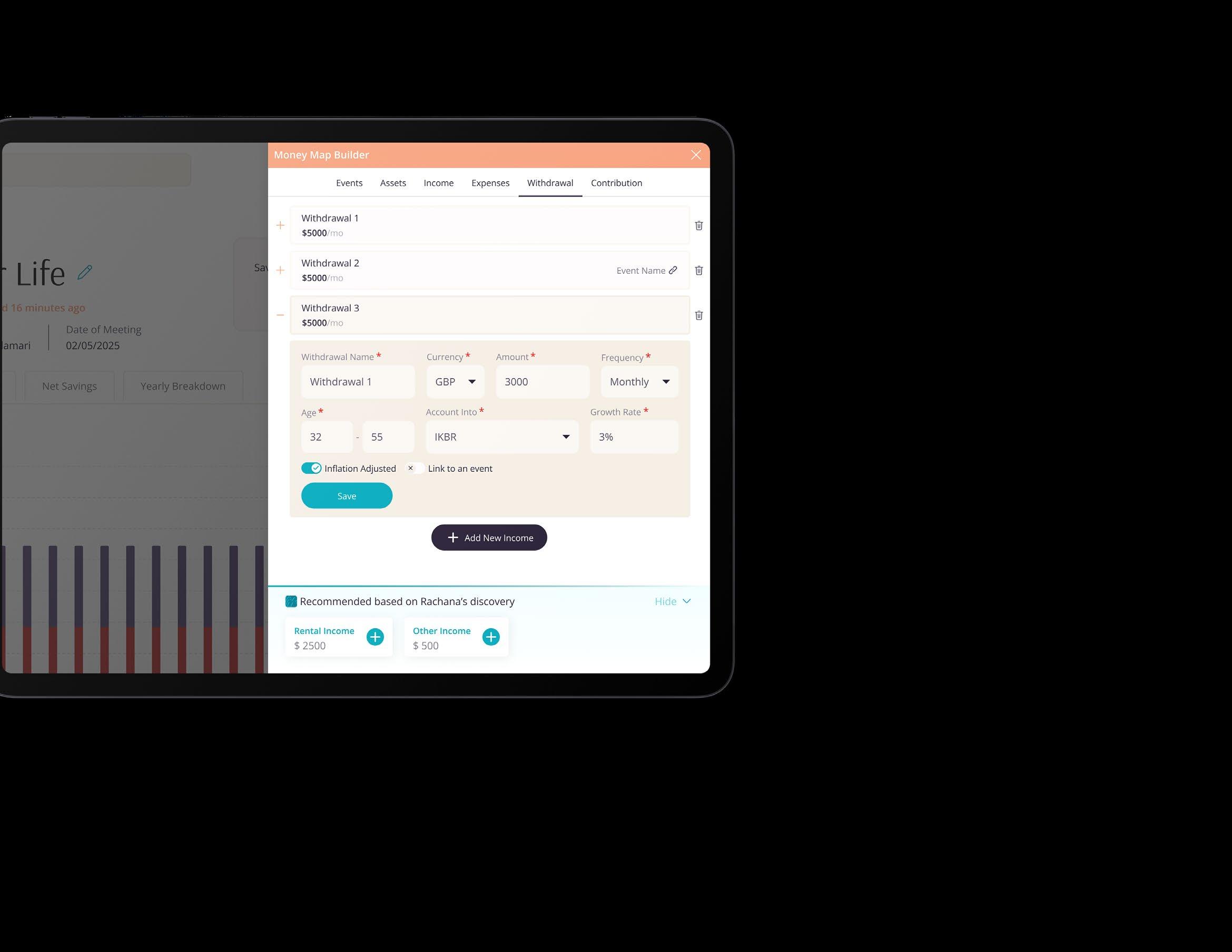
MoneyMap isn’t an add-on or a bolt-on, it’s a custom built rethink of how advisers and clients work together.
• Real-time modelling.
• Multi-currency planning.
• Tax overlays.
• Seamlessly integrated tech.
This is the standard Skybound Wealth is setting.


Written by Andy Buchanan Private Wealth Adviser & Area Manager
From April 2027, for the first time in UK history, pensions will fall within the scope of inheritance tax. The change doesn’t touch public sector or defined benefit schemes, instead, it zeroes in on money purchase pensions: the private savings pots built up over decades.
And the prize is vast. More than £1 trillion now sits in money purchase schemes, part of nearly £3 trillion in total UK pension wealth. For a cashstrapped Treasury, these inheritable pots are an obvious target. Large, visible and inheritable, they are squarely in the government’s crosshairs. For many savers, it feels less like reform and more like a raid on family security.
For those already living abroad, or prepared to look beyond the UK’s borders, the picture can be very different. Tax treatment of pensions varies widely across countries, and in many cases moving overseas can soften, or even remove the inheritance tax burden altogether.
Under double taxation agreements, retirement income or lump sums may be taxed at lower rates abroad, while in some jurisdictions pension pots can fall completely outside the UK’s estate tax regime. In other words, changing your tax residency can change the rules of the game. For those with significant pension pots, it's no longer just about lifestyle or sunshine, it’s about unlocking capital that would otherwise remain tied up in the UK tax net and securing it for the next generation.
“For many savers, it feels less like reform and more like a raid on family security.”
The harsh reality is that a UK pension is always a UK asset. No matter where you live, it remains a UK-situs holding and, from 2027, always within the reach of inheritance tax. Simply moving abroad won’t change that.
The key, therefore, is to change the nature of the asset itself. By accessing pension funds tax-efficiently and restructuring them outside the pension wrapper, savers can transform what would otherwise be a taxable UK pot into capital that can be planned with far more flexibility. This is where relocation comes into play. Many jurisdictions offer more favourable tax treatment for pension withdrawals under double taxation agreements. In some cases, such as Dubai, withdrawals can be structured to avoid local tax almost entirely. Closer to home, European destinations like Cyprus also offer highly effective regimes that allow pension assets to be drawn at low, flat rates of tax. The result is the ability to move funds out of the pension wrapper at minimal cost, and reinvest them into vehicles that sit outside the UK tax net.
In practice, this first step, getting money out of the pension wrapper efficiently, is the cornerstone of effective estate planning. Without it, pension wealth remains locked in as a future liability. With it, families gain options: how to invest, how to gift, and how to protect capital for the next generation.
The “Great British Take Off” is gathering pace. For many, relocating abroad is no longer just about lifestyle or sunshine, it’s a way to take control of their pensions and protect family wealth. The potential gains are substantial: lighter tax on withdrawals, the chance to move funds outside the UK net, and ultimately passing on more to the next generation.
But it isn’t for everyone. Uprooting your life is a big decision, and some will find the trade-offs outweigh the benefits. Still, with inheritance tax now targeting pensions for the first time, it’s no surprise that more families are considering whether a move abroad could be the smartest step they ever take.
The new long-term residence rules mean inheritance tax exposure now depends on how many years you’ve spent in the UK. Those already living abroad have a head start, time outside the UK is already counting in their favour. For them, the chance to draw pensions more tax-efficiently and restructure wealth may be greater than ever. And for those still in the UK, a well-timed move overseas could achieve the same. Crucially, it doesn’t have to be permanent exile: even a few years abroad can reset the rules and deliver lasting protection.
The inclusion of pensions in the inheritance tax net marks a turning point. Yet with change comes opportunity. Whether you are still UK-based or already living abroad, there are clear and legitimate ways to protect your family wealth: drawing pensions more efficiently, restructuring assets, and making the most of the new rules on residence.
The “Great British Take Off” doesn’t have to mean uprooting your life forever. For some, it may simply be a short, well-timed move that delivers lasting benefits. The key is to plan early, understand your options, and act before the window closes.
If you’d like to explore how this could work for you, our team is here to help turn possibility into a plan.


Written by Leo Geldenhuys Private Wealth Adviser
If you’re working in Dubai, Abu Dhabi, or elsewhere in the UAE, you already know the headline attraction: a tax-free salary. No HMRC, no IRS, no deductions eating into your pay. Every dirham you earn is yours to keep, save, and invest. Combined with strong career opportunities and a world-class lifestyle, it’s one of the best environments on earth to build wealth.
Yet many expats leave with far less than they should. After years, sometimes decades, they walk away with great memories and a high standard of living, but little to show for it financially. The difference isn’t income, it’s structure. Your salary is a tool, and how you use it today determines what your life looks like tomorrow.
Few places offer the same potential. You earn tax-free, have global access to investment opportunities, and the flexibility to structure your finances as you choose. But that freedom also means responsibility. There’s no automatic pension system, no employer-funded safety net, and no government backstop. Without a plan, even high earners find themselves exposed.
I’ve seen three recurring mistakes: assuming you’ll “sort it later,” waiting for a move home that never happens, or relying on an adviser back in the UK or Europe whose advice doesn’t fit the GCC reality. The result is always the same, years lost to procrastination.
Money matters, but time does the heavy lifting. Every dirham you invest early compounds quietly in the background. The longer you delay, the harder it becomes to catch up.
Take two expats on the same salary. Amir saves 20% of his 50,000 AED monthly income and invests from year one. After 15 years, he leaves with roughly 3.1 million AED. Omar waits a decade, then doubles his contribution to 20,000 AED per month for the final five years. He walks away with around 1.4 million AED. Same earnings, same location, very different outcomes.
Behind the numbers are human stories. The expat who delayed often leaves feeling regret and frustration, aware that the opportunity slipped away. The one who planned leaves with peace of mind, knowing the time abroad was more than just a chapter; it built independence. That’s the real difference between being an earner and being a builder.

Start with structure. Automate your savings the moment your salary lands. Diversify across currencies and regions so your future isn’t tied to one market. Protect what you build with the right insurance and a UAE-recognised will.
Understand your investments, even if you delegate their management, and build in flexibility for life changes like repatriation, relocation, or new family needs.
More than simply chasing returns, it’s about balance, creating a system that grows, adapts, and safeguards.
I’ve seen both outcomes play out. A British couple earning 90,000 AED per month spent freely, relied on employer benefits, and returned home after 12 years with debt and no safety net. By contrast, a South African family earning the same started saving 25% from day one, invested globally, and secured their children’s education. They left with over 5 million AED invested and a retirement plan already working.
Same income. Same city. Different mindset.
“Every dirham you invest early compounds quietly in the background.”
The last few years have reminded us that nothing is guaranteed. Inflation, rising costs, and market volatility have reshaped the financial landscape. Waiting for “the right time” to start is the most expensive mistake of all. The best time to take control is now, while you’re earning well, tax-free, and have time on your side.
Your tax-free salary is more than income. It’s a once-ina-lifetime opportunity to create financial freedom that outlasts your years in the UAE. The choice is simple: leave with memories, or leave with security.
If you’re ready to make your income work for you, let’s build the plan that gets you there.

Written by Joseph Lloyd Graduate Associate
When people think about graduate schemes in finance, they usually picture investment banking, asset management, private equity, or the Big Four accounting firms. I know I did.
Wealth management doesn’t always make that shortlist. But for many people, their wealth manager is the main point of contact with the wider financial system. That makes starting a career here very different.
At its core, wealth management is about helping individuals organise their financial lives. At Skybound, that focus is international. We work with clients who live and work across borders, managing careers, families, and finances in more than one country.
Their circumstances are often complex, but those complexities create opportunities to add real value. We don’t spend our days buried in spreadsheets, we help people make decisions that affect their lives and families. It’s technical, but it’s also human.
You grow with clients. You see their plans evolve. You become part of their story in a way few other finance roles allow.
“You grow with clients. You see their plans evolve.”
A big part of the job is relationship-building. That means reaching out to new people, introducing yourself, and starting conversations that matter. Trust becomes your biggest asset. Whether clients are moving country, changing careers, or preparing for retirement, you’re the person helping them adapt their plan to whatever comes next.
Those relationships are what make the role rewarding, and why emotional intelligence is as important as technical skill.

“Wealth management might not be the loudest corner of finance, but it’s one of the most personal...”
The Academy at Skybound Wealth is an 18-month programme designed to turn graduates into qualified, confident advisers. We rotate through key areas of the business, paraplanning, business development, marketing, and tech, to build a complete understanding of how advice works from start to finish.
Each rotation adds something new: technical knowledge, client experience, communication skills, and commercial awareness. Exams run alongside the practical training, so progress is continuous. You’re learning, applying, and developing all at once.
Responsibility comes quickly. You’re not a spectator here; you’re part of the business from day one.
Coming from a finance background, the first thing that struck me was the scale. Skybound is large enough to have international reach but not too big that senior leaders don’t know your name. You can walk into a meeting with people whose experience spans 20 or 30 years and be encouraged to share your perspective. That access makes learning faster, and more real. Wealth management also sits in a unique position. We’re not part of the institutions themselves; we’re the bridge between them and the individuals who rely on them. Translating complexity into clarity is what good advisers do every day, and learning how to do that early in your career is invaluable.
Finally, success in this profession isn’t just about technical ability. Financial analysis helps, but communication, empathy, and structure are what make a great adviser. You’re guiding people through major decisions, not just managing portfolios.
Wealth management might not be the loudest corner of finance, but it’s one of the most personal, and one I’m finding to be most fulfilling. For graduates who want early responsibility, exposure to real clients, and a career built as much on people as on numbers, it offers a path that’s both challenging and rewarding.
At Skybound, The Academy is where that path begins.

“At its core, wealth management is about helping individuals organise their financial lives.”
With nearly 75% of advisers retiring in the next decade, the Academy by Skybound Wealth is preparing the leaders of tomorrow.
Caring for our Shared Future
Through first-class training and mentorship, the Academy by Skybound Wealth ensures clients receive exceptional advice and service, today and in the years to come.

Scan the QR code or click here to find out more about our Academy.


Written by Christopher Bowler Private Wealth Partner & Team Leader
Alot of people in their forties and fifties tell me the same thing. They wanted to clear the mortgage, settle the kids, or “get life sorted” before they started investing properly. The intention makes sense. The outcome usually doesn’t. Paying off debt feels safe, but delaying investing comes with a cost that only becomes visible years later. And once that time has gone, you can’t claw it back. You don’t need the perfect plan to begin. You just need to begin.
Compound growth is quiet, steady, and unforgiving to those who start late. Your money grows, that growth compounds again, and the cycle carries on whether you pay attention or not.
Two clients I recently onboarded show how powerful this is. One invested consistently from 25 to 35 and stopped. The other waited until 35 and saved for the next thirty years. The early starter ended with more. Not because they saved more, but because they let time do the hard work.
Vanguard’s research supports this. A five-year delay can cut your retirement pot by as much as thirty per cent. All from waiting.
Time isn’t neutral. Every year you delay means your money has fewer years to grow, your required contributions climb, and your future goals drift further away
A single five-thousand-pound contribution at 25 can grow to more than fifty thousand by retirement. Make the same contribution at 45 and the outcome is nowhere near that. One action, two very different endings.
This is why the idea of “I’ll do it when things settle down” rarely works. Life keeps moving. And the longer you wait, the harder the maths becomes.
“Time isn’t neutral. Every year you delay means your money has fewer years to grow...”


This is where many people get caught. Becoming mortgage-free feels like security. But the numbers don’t always justify putting everything into the house.
If your mortgage costs four per cent and your long-term investment return sits somewhere between six and nine per cent, then every pound you divert away from investing is a pound missing out on higher potential growth.
On top of that, pension contributions come with tax relief. A basic-rate taxpayer turns eighty pounds into one hundred instantly. Higherrate taxpayers benefit even more. Mortgage overpayments don’t offer anything similar.
Property also ties up your capital. Once it’s in the bricks, accessing it is slow, inflexible, and usually expensive. A balanced approach tends to win. Keep investing regularly and treat mortgage overpayments as the extra, not the core.
The people who start early often aren’t the biggest earners. They’re the ones who build the habit. They stay consistent during market dips, they understand how their plan behaves, and they don’t rely on guesswork. Habit creates results. Delay creates pressure.
It’s not too late. Many people reach their forties and suddenly realise retirement isn’t far away. That moment can be unsettling, but it’s also the moment things change.
The key is to act with intention. You might need to save more and be more structured, but starting now is still far better than waiting again.
Wealth isn’t built through dramatic decisions. It’s built through steady ones. That’s why waiting for a “good time” is often the most expensive choice anyone makes.
If you want clarity on how to balance investing, mortgages, and everything else already competing for your attention, that’s exactly what the first conversation is for. Your future deserves more than “I’ll get to it when life calms down.”
If you’d like to see what starting today could mean for your retirement, let’s map it out together. A short conversation now can save you years of catch-up later.

YOU GOT A RAISE, BUT YOU’RE STILL BROKE
Written by Maximillian Gerstein
There is a pattern I see so often it has become predictable. Someone walks into a review meeting making more money than at any other point in their life, sometimes double what they earned a few years ago, yet their financial position has barely moved. Their income has changed, but their bank balance hasn’t.
It is never the numbers that explain it. It is the instinct.
The moment a raise lands, most people start planning upgrades. A better flat, a nicer car, a gym with eucalyptus towels, a few more dinners out. The lifestyle rises automatically. The saving does not. It is not a conscious decision; it is muscle memory. From childhood, people are taught that a higher income should be matched with a higher standard of living. Nobody ever teaches them that it could instead be matched with a higher rate of investment.
By the time people reach their thirties and forties, that instinct is so ingrained they barely notice it happening. One client put it perfectly.
“It feels like I’m running faster but staying in the same place.” He was not wrong. He had had four promotions in seven years and his net worth had barely moved.
There is always a turning point. It usually arrives when I map out someone’s income over the past five or ten years, then show them where they would be today if they had increased their savings slightly every time their salary rose. Not by half their income, not by anything extreme, just a modest step each time. People go quiet when they see what those choices could have become. Because it is never one raise that changes anything. It is the pattern. The discipline to take a portion of every increase and direct it somewhere useful. The habit of letting compound growth work quietly in the background. Once people see that, the penny finally drops. The problem was never their income. The problem was that lifestyle captured every gain before their future did.
This is especially common among British professionals working in the UAE and Saudi Arabia. In a tax-free environment, a jump in salary feels twice as rewarding. Lifestyle upgrades feel harmless because there is no tax bill attached. It feels like free money. Until it isn’t.
“Once you save first & spend afterwards, the lifestyle naturally fits around the structure.”
When I speak to long-term expats who regret their choices, the theme is always the same. They tell me they arrived intending to stay for “a couple of years,” then stayed for eight or ten, and spent every rise along the way because they never believed they would stay long enough to need a plan. By the time they realised they were building a life here, the opportunity had already slipped through their fingers.
Good income is a blessing, but only if you capture part of it. Otherwise, all it does is fund a lifestyle you have to keep paying for.


Lets Talk
If you know your income should have taken you further by now, let’s change that. Get in touch and I’ll help you build the structure, discipline, and long-term plan that turns every raise into real progress.
“The moment a raise lands, most people start planning upgrades.”
The most encouraging part of this job is watching what happens when that instinct finally shifts. People start by taking control of the basics. They redirect part of their monthly increase into a separate account. They map their income and goals to see how each choice affects the long-term picture. They build a structure that stops lifestyle creep from swallowing everything they earn. And the remarkable thing is this: nobody ever feels deprived. Once you save first and spend afterwards, the lifestyle naturally fits around the structure. The enjoyment stays. The guilt disappears. The future strengthens. The change is small at first, then powerful. And it comes from mindset, not money.
Good. It means you’re aware of it, and awareness is the point where things start to turn around. You are not stuck. Nothing about this is permanent. You are simply working with instincts that were shaped long before you ever earned your first professional salary.
What matters now is whether you let those instincts decide the next ten years, or you take control of them.
If you are ready to break the cycle of earn, upgrade, repeat, and actually build something with the income you have, that is where I can help. The structure, the discipline, and the longterm thinking do not appear on their own. They are built. And that is exactly what I do with clients every day.
Plan, Track, Manage & Succeed with the Skybound Wealth App. Exclusive to our Clients. Download the app today!

Scan the QR code or click here to download the app.
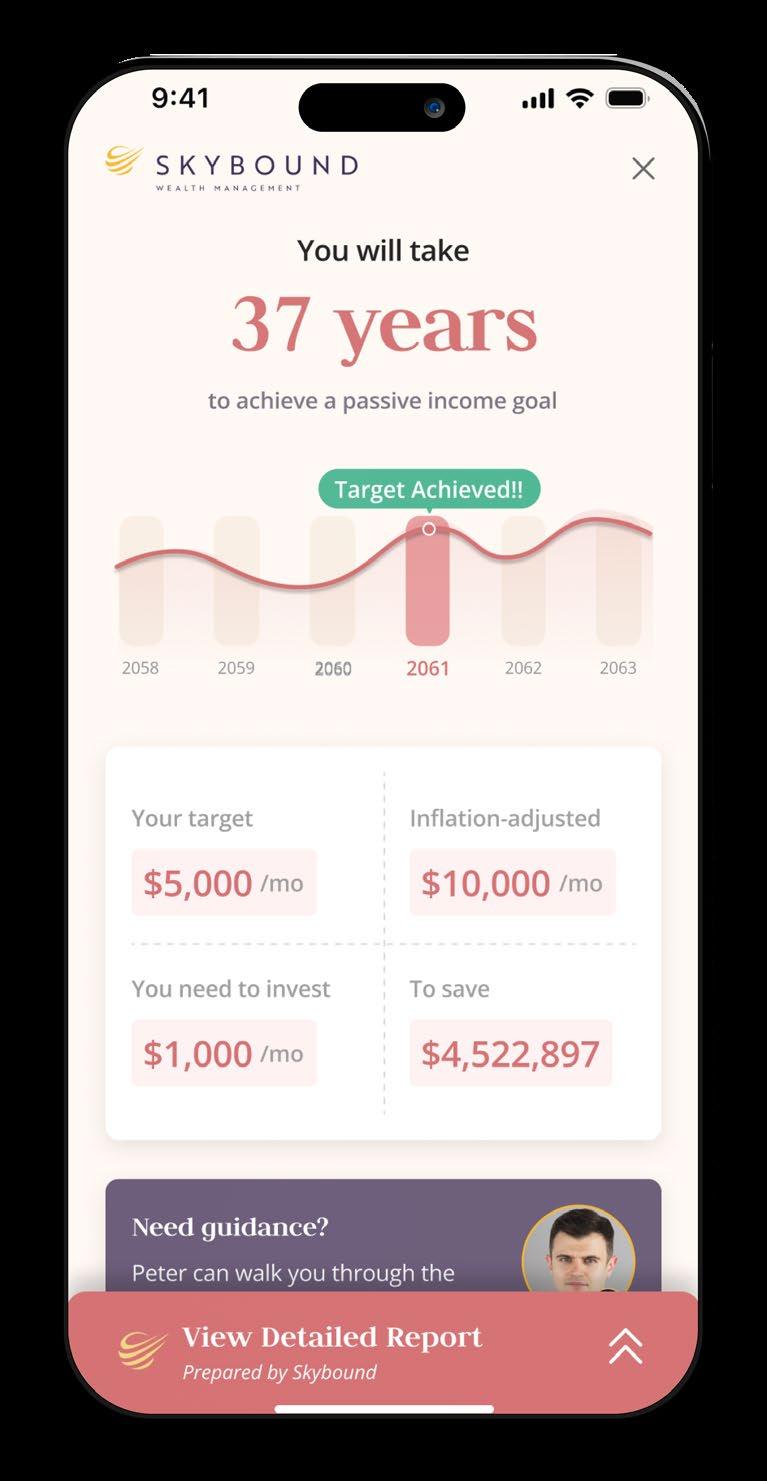
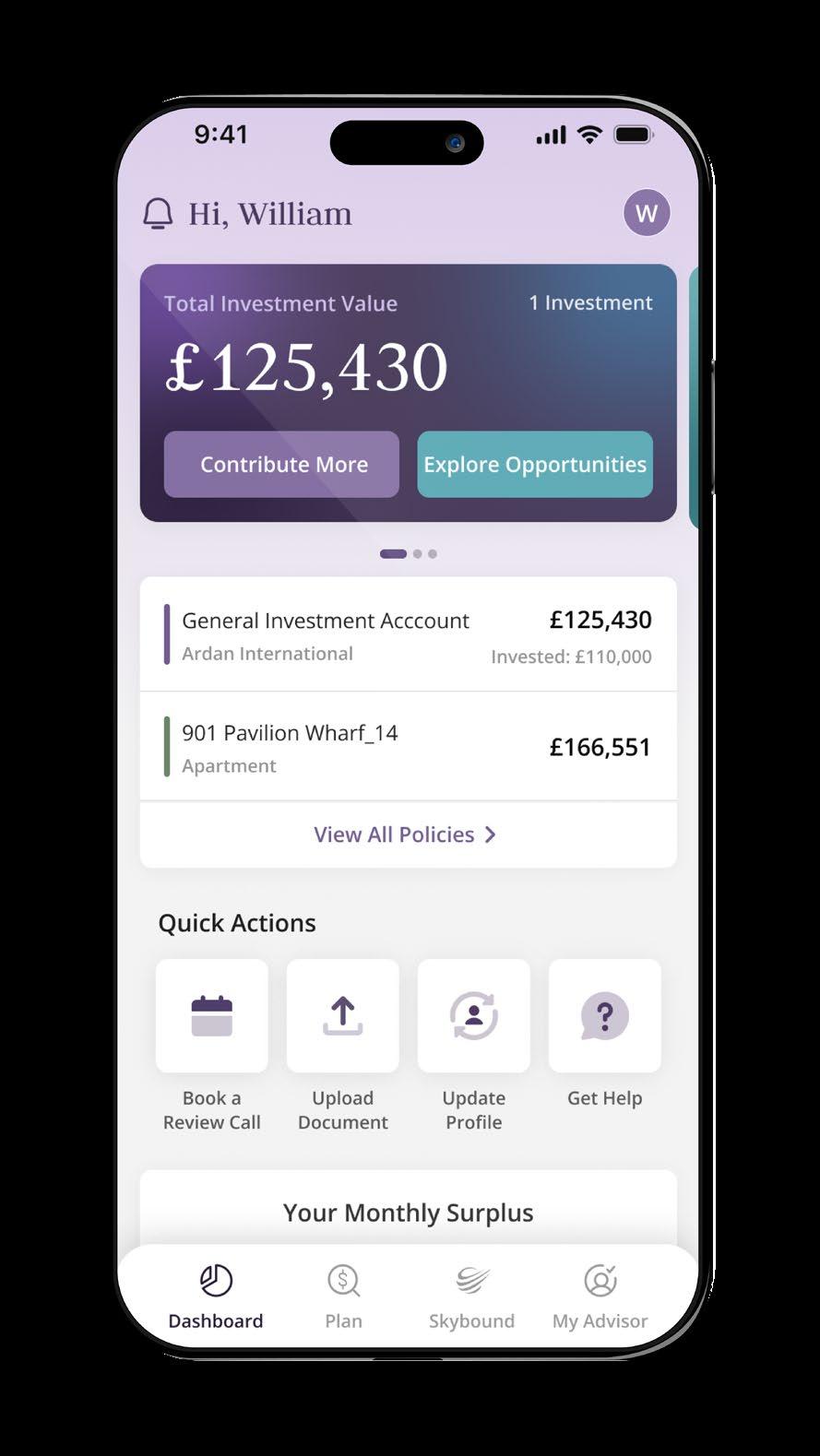

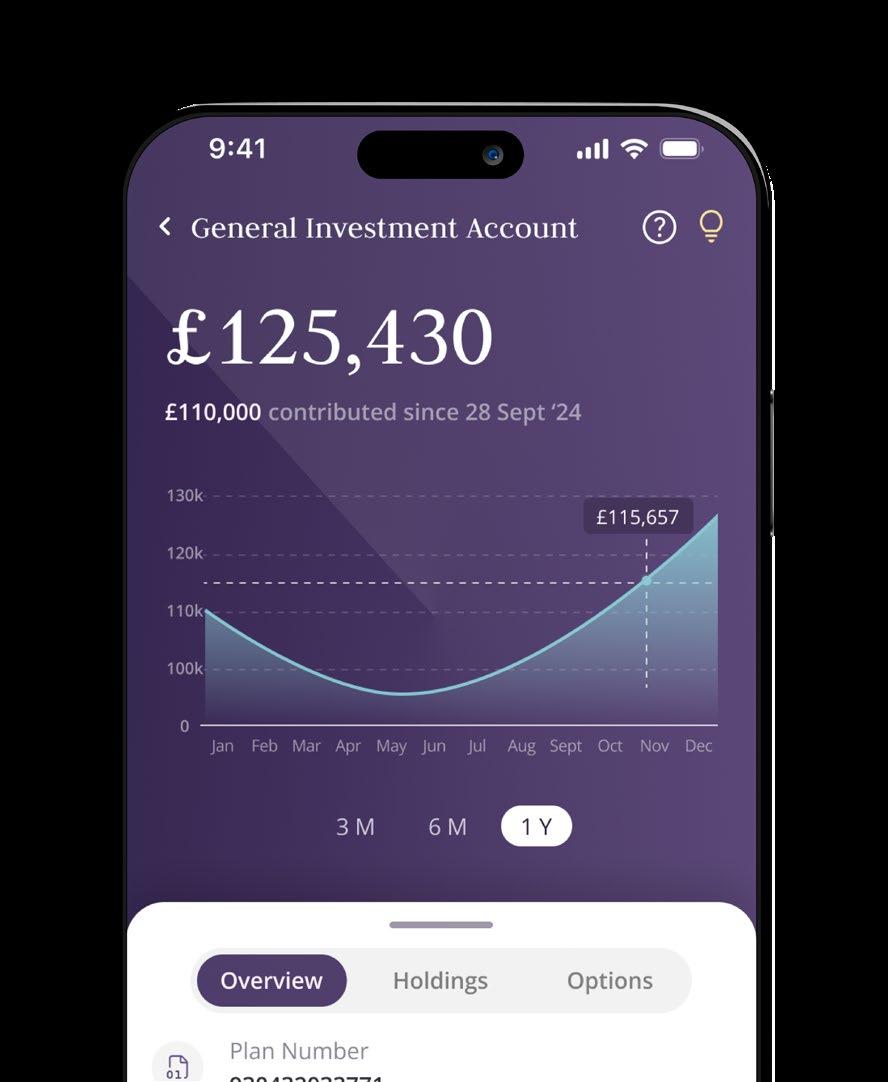


Written by Kelman Chambers Private Wealth Adviser
Relocating from the UK to Spain is an exciting decision that promises a change of pace, sunshine and a rich cultural experience. Beneath the surface of sangria and siestas, however, sits a financial landscape that needs careful attention. Asking the right questions early on can help you avoid costly mistakes and unnecessary complications. Here are ten essential finance and tax questions to consider before you make the move.


1.
One of the most important questions to clarify is where you will be considered a tax resident. Spain generally views you as resident if you spend more than 183 days in the country during a calendar year or if your main economic interests are based there. This matters because Spanish tax residents are taxed on their worldwide income.
If you do not plan properly, you could find yourself paying tax twice, once in the UK and again in Spain. The double taxation agreement offers relief, but it does not eliminate all issues. Understanding when you become tax resident and how to notify HMRC prevents surprises later.
2.
Yes. The UK offers split-year treatment in certain circumstances, but Spain does not. The date you arrive in Spain can determine whether part, most or all of your annual income falls into the Spanish tax year.
Preparing your affairs before becoming tax resident is essential. The timing of your move can have a significant impact on your overall liability for that tax year.
3.
In most cases, yes. Spanish tax residents must declare and pay tax on income from UK pensions. UK State Pensions are generally taxed only in Spain, while government pensions such as civil service or armed forces pensions typically remain taxable only in the UK even after you move. Private and workplace pensions fall under Spanish income tax rules and may be taxed at higher rates than you are used to in the UK. Understanding how each pension type is treated under Spanish law helps you plan more effectively.
4. 5. 6.
ISAs lose their tax-free status the moment you become Spanish tax resident. Interest, dividends and gains all become taxable in Spain even though they remain tax-free in the UK. Spain’s capital gains tax is progressive, ranging roughly from 19% to 28%, and Spanish rules around UK investment platforms can be restrictive. Reviewing or restructuring your investments before moving may avoid unnecessary tax.
The UK–Spain double taxation agreement prevents the same income being taxed twice, but it does not eliminate tax entirely. Instead, it determines which country has taxing rights.
Certain income types, such as dividends or rental income, may still face tax in both jurisdictions, with credits available for tax already paid. Clarity on this helps you understand where each income stream will ultimately be taxed.
If you keep a UK property and continue to earn rental income, you will still owe tax on that income in the UK. As a Spanish tax resident, you must also declare it in Spain. Spain may allow a credit for UK tax paid, but it will still apply Spanish tax rules to the net income.
Capital gains rules also change. Selling UK property as a Spanish resident can trigger higher rates and fewer exemptions, so timing a sale matters.

“Beneath the surface of sangria and siestas, however, sits a financial landscape that needs careful attention.”

7. 8.
Potentially. Spain has a Wealth Tax that applies if your net assets exceed regional thresholds, often around €700,000 per person plus €300,000 for a main home. Assets include property, investments, cash and even pension pots. Rates vary by region and can range between 0.2% and 3.5%. Some regions offer full relief, but solidarity tax may still apply. Assessing your worldwide assets ahead of time shows whether you fall into scope.
In Spain, inheritance and gift taxes are paid by the beneficiary, not the person giving the asset. Spanish residents are taxed on worldwide inheritances and gifts, and the rules vary across regions. Allowances and rates depend heavily on the relationship to the donor, which means two people receiving the same asset can face very different tax bills. Planning early helps manage cross-border exposure, avoid delays, and reduce the risk of unexpected liabilities landing on your heirs.
9. 10.
While UK tax advantages such as ISAs and certain pension reliefs do not carry over, Spain offers compliant investment structures, including taxefficient bonds or life assurance wrappers that allow growth to be deferred until withdrawal.
These can be valuable for retirees or those looking to manage income more effectively under Spanish rules.
For most movers, the answer is yes. Spanish tax law is complex, and regional differences create further layers of responsibility. Combine that with Brexit-related changes and cross-border reporting, and trying to manage the move alone can lead to errors and unnecessary tax.
A dual-qualified UK–Spain adviser can help you optimise your residency date, avoid double taxation, use allowances effectively and remain compliant with both systems.

Moving from the UK to Spain is more than a lifestyle shift. It is a financial transition that affects your tax position, reporting requirements and long-term planning. Preparing well before your move gives you time to understand where you will be taxed, how each income stream is treated and how to restructure your financial life for Spain’s system.
The earlier you begin planning, the smoother and more cost-effective your relocation becomes.
For internationally mobile professionals, movement defines everything. Contracts shift, countries change, and new opportunities appear faster than you expect. It is an exciting way to live and work, but it creates a financial reality few people prepare for.
Most expats I meet are not struggling because of bad decisions. The issue is fragmentation. Every country leaves a pension, an account, or a pot of savings behind, and one day you look back and realise your money is spread across continents with no clear direction.
Each move brings a new financial layer. A bank account in Zurich. A pension scheme in Surrey. Savings in Riyadh. Euros sitting in Ireland. Nothing is connected. Nothing is streamlined. Nothing reflects the life you live now.
Individually, each decision made sense at the time. Taken together, they form a picture that is unclear and often inefficient.
The career moves forward. The money stands still.
The Hidden Cost of a Scattered Financial Life
Keeping accounts, pensions, and savings across multiple countries can quietly erode long-term outcomes.
Cash loses real value when interest rates sit below inflation. Currency exposure becomes guesswork without structure. Pensions left in outdated schemes often underperform for years. And shifting residency rules can suddenly change how your assets are taxed.
I often see professionals who have produced strong incomes for years, yet feel no closer to long-term security. Not because they did anything wrong, but because their financial picture never kept up with their life.
Written by Sean Russell Private Wealth Adviser
“If you move countries often, your career will naturally evolve. Your money should evolve with you.”

“Financial planning is technical, but at its core, it is human.”
This fragmentation is exactly why I use MoneyMap with clients. MoneyMap brings every part of your global financial life together in one live view. It shows how your pensions, savings, property, investments, and currency positions interact and evolve over time.
It answers the questions expats struggle with:
• What happens if I move again?
• What does retiring in a different country look like?
• What if I consolidate these pensions
• What if I invest this cash rather than leave it idle?
MoneyMap turns these questions into visible outcomes. Clients stop guessing what the future might look like and start seeing it clearly on the screen.
The picture that once felt scattered finally makes sense.
James, a British professional, spent twenty years across Saudi Arabia, Switzerland, and the UK. By the time he came to me, he had:
• Two frozen UK pensions
• Cash sitting untouched in Switzerland
• Savings in Riyals in a local Saudi account
• An old ISA that had been left to drift He wanted to retire in Spain, but had no idea how all these pieces would work together.
Before restructuring anything, we mapped everything into MoneyMap. For the first time, he could see a single financial future, not four unrelated ones. Small adjustments became clear. Inefficiencies stood out instantly. And once we consolidated his pensions and moved idle cash into a diversified structure, the plan finally aligned with the life he actually intends to live.
If you move countries often, your career will naturally evolve. Your money should evolve with you. Yet most people’s finances remain scattered long after they have left each location behind.
So ask yourself this. Is your money travelling with you, or is it stuck in the last country you lived in?
If you want a structure that moves as you do, and a plan you can see clearly in one place, I would be happy to show you what MoneyMap reveals.
Book a review and we can map out the future you are working towards.
“...one day you look back and realise your money is spread across continents...”




Imagine a world where your investments deliver a consistent return, year after year. Argen Capital offers exactly that – a remarkable opportunity to earn an 8% fixed return per annum, designed for those who seek stability and security.
Our innovative approach, developed by Skybound Capital, provides you with the peace of mind that comes with a steady income stream, while also allowing you to take control of your financial future.
Discover how Argen Capital can work for you. Contact us today to learn more about this exclusive investment opportunity and take the first step towards securing your financial future.


Written by Josh Burton CFO & Private Wealth Adviser
When I sit down with clients in the Middle East, the same pattern appears again and again. Strong earnings, tax advantages, and a short window of opportunity, yet a large portion of their wealth is sitting in one place. Sometimes it is tied up in a single property, sometimes it is concentrated in a crypto wallet, and sometimes it is simply left in a current account earning very little.
The problem is rarely effort. It is structure. When everything rests on one asset class or one type of risk, even high earners expose themselves to setbacks that were entirely avoidable.
We have all heard the old saying about eggs and baskets, but in wealth planning it is not a cliché. It is a warning.
Life as an expat creates an advantage that people in the UK rarely enjoy. Higher income, lower tax, and fewer financial obligations can accelerate long-term planning. The issue is that without a structure that puts each part of your wealth to work, the years abroad can pass quickly, and very little ends up built.
Diversification is not about adding complexity. It is about creating stability, choice, and control, whatever happens next in your career.
When you left the UK, your pension contributions most likely stopped. What did not stop was the need for retirement income.
This is where long-term investment planning comes in. By using international platforms or life-wrapped solutions, expats can recreate the contributions they once had and build a retirement pot that remains portable. When you eventually relocate, the aim is not just to have filled the pension gap, but to have built a structure that supports smarter, more flexible drawdown.
An emergency fund is not exciting, yet it is essential. Three to six months of accessible cash reduces the chance of having to withdraw investments at the wrong time, turning what could have been a temporary setback into a long-term loss. It gives you breathing room and protects the rest of your plan.
Property remains a valuable part of a diversified plan. It offers inflation-resistant growth, rental income, and the ability to use borrowing to increase potential returns. A tenant paying down your mortgage is a powerful wealth-building tool.
The issue appears when everything is funnelled into a single city, region, or currency. A diversified plan treats property as a component, not a complete strategy, and it includes an understanding of purchase taxes, ongoing costs, and future rental considerations in whichever country you hold it.
Once the foundations are in place, global investment platforms open the door to long-term growth. These platforms give access to funds across multiple regions, sectors, and currencies, allowing your portfolio to reflect your goals rather than your postcode.
This is how many expats build genuine longterm wealth. It is also where tax efficiency, currency strategy, and proper asset allocation begin to matter.

“The problem is rarely effort. It is structure.”

Fixed income investments offer a layer of predictability and help balance portfolios during periods of market turbulence. Government bonds, structured notes and similar solutions provide consistency and help offset the volatility of equities. The crucial point is to use transparent, regulated solutions, not the illiquid schemes that often circulate in expat circles.
No plan is complete without protection. Life cover, critical illness cover and income protection are the foundations that allow the rest of the plan to function, even when life takes an unexpected turn. Protection gives your family stability and ensures that your long-term strategy does not collapse if your income does.
A properly diversified plan does not dilute opportunity. It strengthens it. It gives you a range of assets that behave differently, so no single event can undo years of progress. It creates structure, liquidity, and resilience. And it helps your wealth evolve as your career and family life change.
I always bring the conversation back to a simple point. If your income stopped tomorrow, would your assets continue working for you?
If markets dipped, would the rest of your plan protect you? And if your life has moved across borders for the last decade, has your wealth kept up?
If the answer is no, diversification is not just a recommendation. It is essential.
A strong plan begins with a clear understanding of what you own, how it behaves, and where you want to get to. Once that picture is in place, everything else becomes far easier to build.
If you would like to review your current position and map out a stronger, more balanced approach, book a review and we can walk through it together.
Skybound Wealth is pleased to announce the appointment of Shil Shah as Group Head of Tax Planning, further strengthening the firm’s global advisory capability across the UK, Switzerland, Europe, US, the Middle East and beyond.
A Chartered Accountant (CA), ICAS Tax Professional (ITP) and qualified financial planner, Shil brings significant UK and international tax expertise. His background includes nine years at Deloitte and KPMG, followed by advisory work at a Partner Practice of the UK’s largest FTSE 100 financial advice group, where he advised business owners, executives, professional athletes, non-UK domiciliaries and internationally mobile families on complex cross-border matters.
Shil’s experience covers residency and domicile strategy, the remittance basis, HMRC enquiries, offshore structures, trusts, UK property taxation, pre-arrival planning and multi-jurisdiction coordination. His technical depth, combined with practical private-client advisory experience, allows him to simplify complexity and deliver clear, confident guidance to clients with global lives.
In his new role, Shil will lead the development of Skybound Wealth’s tax framework across all regions and sub-brands, including Global Partners, Athletes & Creators and Women Like Us. He will work closely with advisers and leadership to further integrate tax strategy across the Plume Advice Suite, MoneyMap and Skybound’s joined-up advice model, ensuring clients receive fully aligned, tax-led wealth planning wherever they live.

Mike Coady, CEO of Skybound Wealth, welcomed Shil to the group:
“Cross-border tax planning is now central to global advice. Clients want clarity, confidence and someone who can simplify the reality of living, working and investing across borders. Shil brings serious technical capability, London-based expertise and a way of explaining tax that clients instantly relate to.He strengthens every part of our advisory model and is a major addition to the team as we scale globally.”
“Shil will lead the development of Skybound Wealth’s tax framework across all regions and sub-brands...”


The Chancellor’s latest Budget didn’t deliver fireworks, but it did confirm a long list of changes that will shape how people earn, save and pass on wealth over the rest of the decade.
The theme running through the entire statement was simple. While some Tax rates may be untouched, thresholds, allowances and incentives are being tightened in almost every direction. For anyone earning, investing or planning, the detail matters.
Below is a clear explanation of the measures that count, what the limits actually are, and why now is the time to prepare rather than wait for these rules to land.

Written by Craig Stokes Managing Director - UK
The headline rates of income tax remain unchanged, but the thresholds that determine how much of your income falls into each band will now stay frozen until 2031. That means the personal allowance stays at £12,570, the basic rate band still tops out at £50,270, and the higher rate band still runs to £125,140. The additional rate remains anything above that figure.
“What stands out in this Budget is not an immediate shock, but the volume of changes arriving over the next four years.”
On paper nothing changes. However, in reality, if your earnings rise, the amount of tax you pay will increase, whilst your spending power will not. More people will drift into higher bands, and more income will be taxed at the 40% and 45% rates even though the bands themselves haven’t moved. The personal allowance taper above £100,000 remains in place, creating a painful marginal rate for those falling into that range. Freezing thresholds for this long is effectively a tax rise without the Chancellor ever increasing the rate itself.
The inheritance tax nil-rate band stays locked at £325,000 and the residence nil-rate band stays at £175,000. Together, couples can still pass on up to £1 million, but the freeze until at least 2031 means more estates will fall into charge as asset prices continue to rise.
The one welcome improvement comes from April 2026, when the £1 million business and agricultural property relief ceiling becomes transferable between spouses. That allows couples to shelter up to £2 million of qualifying assets, which will make a meaningful difference to business owners and farming families.
From April 2027 the ISA system becomes split by age. Under-65s retain the current £20,000 annual limit, but only a maximum of £12,000 of that can go into a cash-based ISA. The remaining allowance can only be utilised through an investment-based ISA. Over-65s remain free to put the full £20,000 into cash if they prefer.
Importantly, ISA money already saved is unaffected and will stay exactly where it is. The changes apply only to new contributions. The structure remains flexible, but younger savers will be nudged firmly towards investment-based ISAs in future.
Dividend tax will increase in April 2026, with rates rising to 10.75% at basic rate, 35.75% at higher rate and 39.35% at additional rate. This will reduce net income for business owners and investors drawing dividends from portfolios or company structures.
Savings income will follow a similar path, with tax rates rising in April 2027 to 22%, 42% and 47%. Interest on cash savings, bonds and fixed-income holdings will therefore become less tax-efficient unless wrapped or sheltered.
From April 2027, property income will be taxed under its own standalone rates, separate from other forms of income. The basic rate will rise to 22%, the higher rate to 42% and the additional rate to 47%. For landlords and anyone receiving rental income, this shift is likely to increase annual liabilities and will become an important consideration when reviewing how property fits into a wider financial plan.
“...it did confirm a long list of changes that will shape how people earn, save and pass on wealth over the rest of the decade.”

Salary sacrifice remains available, but from April 2029 the National Insurance saving will be limited. The first £2,000 of employer-routed pension contributions remains NI-free, but employer and employee NI will apply above that level. Pension tax relief and the 25% tax-free lump sum were both left untouched, despite widespread speculation ahead of the Budget.
One of the more contentious measures is the reduction of Venture Capital Trust income tax relief from 30% to 20% from April 2026. While investment limits for qualifying companies are being increased, the cut in relief is expected to reduce investor appetite and restrict the flow of capital into smaller businesses. Many industry voices expect a spike in demand this year as investors lock in the 30% relief while they still can.
From April 2028 owners of homes valued above £2 million will face a new annual surcharge collected alongside council tax. Properties in the £2 million to £2.5 million range will face a charge of £2,500, rising to £7,500 for homes valued at £5 million or more. Since this requires valuations to be updated for the first time since 1991, many households may find themselves closer to the threshold than expected.
One change that will matter immediately to internationally mobile clients is the abolition of voluntary Class 2 NI contributions for people living overseas. Class 2 contributions have historically been an inexpensive way to build or maintain UK State Pension entitlement, so losing this route will require more careful planning.

Electric vehicle road pricing grabbed the headlines, with charges of 3p per mile for EVs and 1.5p for plug-in hybrids from 2028. But the freeze on fuel duty, which affects far more drivers, has only been extended by six months. Increases will resume from September 2026, which may come as a surprise to those who heard the headline and missed the detail.
What stands out in this Budget is not an immediate shock, but the volume of changes arriving over the next four years. The majority of measures take effect in 2026, 2027, 2028 and 2029, which creates a reasonable planning window.
There is still time to use the current ISA rules, take advantage of today’s salary sacrifice structure, review how income is drawn from investments, prepare for the changes to dividend and savings tax, and assess how property or estate plans may need adjusting long before new thresholds bite.
The direction of travel is consistent. Allowances are tightening, incentives are being reduced and more income, wealth and savings will be brought into the tax system by default. That makes early planning far more valuable than reacting when the rules finally land.
If you would like to understand how these changes interact with your wider position, our advisers can help you review your plan and make the most of the opportunities that still exist before the new rules take effect.
“While some Tax rates may be untouched, thresholds, allowances and incentives are being tightened”
Disclosure
Skybound Wealth UK is a Trading Style of Skybound Wealth Management Limited who are authorised and regulated by the Financial Conduct Authority. While investing offers the potential for higher growth over time, it also carries risk, and the value of investments can fall as well as rise.


Written by Peter Gollogly Regional Director
Skybound Wealth, the global wealth advisory brand of the Skybound Wealth Management Group, has announced the opening of a new office in Mijas, Spain, marking a significant step in its European expansion and long-term regional strategy.
The move reflects a clear shift among expatriates across Europe who are no longer looking for local advice alone, but for firms with the scale, structure and regulatory depth to support them across borders, markets and life stages. Spain has emerged as a cornerstone market in that evolution. The Spanish presence is being established through Skybound Insurance Brokers Ltd, a Group entity, and will provide on-the-ground capability across the Costa del Sol and wider Andalusia region, backed by the Group’s centralised investment oversight, governance framework and proprietary planning technology.

Peter Gollogly, Regional Director, stated, “We’ve seen strong and sustained demand across Europe this year, both from clients seeking more robust, cross-border advice and from highcalibre advisers looking for a serious long-term platform. Spain was a natural progression for the Skybound Wealth brand as we continue to build depth, scale and credibility across Europe."
The Mijas office, due to open shortly, will form part of a wider European build-out, with further announcements expected in early 2026 as the Group continues to invest in regulated local presence supported by global infrastructure.
Clients in Spain will have access to Skybound Wealth’s proprietary advice and planning tools, including MoneyMap, the Plume Advice Suite and the client app delivering an interactive, transparent planning experience designed specifically for internationally mobile professionals and families.
Peter Gollogly added:
"This expansion isn’t about geography alone, It’s about raising standards, combining local access with global capability, and giving clients confidence that their financial planning is built on structure, discipline and long-term thinking.”
The announcement follows a year of record progress for the Group, including being named Company of the Year (Global Winner) at the Investment International Awards 2025, alongside awards for Excellence in Client Service and Excellence in Advisory Best Practice.
Skybound Wealth is the global wealth advisory brand of the Skybound Wealth Management Group, helping internationally mobile professionals, families and entrepreneurs protect and grow their wealth with clarity and confidence.
With offices across the US, UK, EU, Switzerland and the UAE, Skybound Wealth delivers crossborder financial planning, advice, and long-term wealth solutions worldwide.
The Spanish branch operates through Skybound Insurance Brokers Ltd, a Cyprus-licensed insurance intermediary regulated by the Insurance Companies Control Service (ICCS) and authorised under the EU Insurance Distribution Directive (IDD). Skybound Insurance Brokers Ltd forms part of the Skybound Wealth Management Group.
“The announcement follows a year of record progress for the Group, including being named Company of the Year...”

OWritten by Sam Ling Private Wealth Adviser
nce you are part of the U.S. system, you fall under some of the most complex tax rules in the world. These include worldwide income taxation, strict reporting requirements for foreign assets, exposure to estate and gift tax, and punitive treatment of certain non-U.S. structures. Preparing in advance can make all the difference. At Skybound Wealth USA, I help foreign nationals and returning Americans review their finances before entering the system, minimising tax exposure, reducing compliance burdens, and protecting long-term wealth. Here are some of the most important steps to take before U.S. residency begins.

Effective planning begins with understanding when you officially become a U.S. tax resident. This usually occurs either on the day you enter with a long-term visa such as a green card or H-1B, or when you meet the Substantial Presence Test, which is based on time spent in the U.S. over three years.
The test uses a weighted calculation: all days present in the current year, one third of days from the prior year, and one sixth from the year before that. For some people, deferring entry until the start of a new calendar year can delay U.S. tax residency by twelve months, giving valuable time to make strategic moves.
Once you are a U.S. resident, all capital gains become taxable, even if they were built up long before your arrival. Unlike some countries, the U.S. does not reset the cost basis of non-U.S. assets. This means long-held property, business shares, or investment portfolios may be exposed to tax on appreciation that occurred over decades.
Selling or restructuring assets before arrival can lock in gains free of U.S. tax. In some cases, gifting strategies or rebasing assets to new structures may also provide a more favourable starting point.

One of the biggest surprises for new arrivals is the U.S. treatment of foreign investment funds. Many non-U.S. mutual funds, ETFs, and insurance-based products are classed as Passive Foreign Investment Companies, or PFICs. These come with complex filing requirements and punitive taxation, including the loss of long-term capital gains treatment.
Restructuring your portfolio into U.S.-compliant investments before arrival avoids unnecessary reporting headaches and ensures your wealth grows efficiently within the U.S. system.
Foreign structures are another common trap. Foundations are often treated as grantor trusts, foreign companies may be deemed controlled foreign corporations, and offshore holdings can be treated as transparent or abusive if not properly disclosed. Each of these may bring heavy reporting obligations, look-through taxation, or even exposure to GILTI rules.
If you are a shareholder, settlor, or beneficiary of a non-U.S. entity, it is vital to carry out a legal review before arriving in America. In some cases, restructuring or dissolving entities ahead of time is the most effective solution. Coordinating with U.S.-based tax and legal counsel ensures compliance and avoids IRS scrutiny.
“Relocating to America may be a new beginning, but it doesn’t need to come with financial complications.”
The U.S. estate and gift tax system catches many people off guard. Citizens and residents are taxed on their worldwide assets, with exemptions currently set at $13.61 million per person but due to reduce significantly in 2026. Anything above the threshold is taxed at 40 per cent.
Non-citizens face an even tighter regime, with an exemption as low as $60,000 unless residency or other structuring is in place. Gifting strategies before residency can reduce exposure, but once in the system, detailed reporting applies even to gifts between spouses or family members. Without preparation, your estate could be far more exposed than expected.
Finally, entering the U.S. system brings extensive disclosure requirements. The FBAR requires you to report foreign financial accounts if their total value exceeds $10,000, including pensions, investments, and joint accounts. FATCA extends reporting further, applying once foreign assets cross $50,000 for U.S. residents, or $200,000 for those living abroad.
Failure to file can result in penalties starting at $10,000 per violation, and can open the door to wider audits. These rules are aggressively enforced, so preparing your reporting position before arrival is essential.

Inbound planning is all about timing and structure. At Skybound Wealth USA, we build pre-arrival financial roadmaps that restructure investments, eliminate PFIC exposure, coordinate with international tax advisers, prepare for estate implications, and set up compliant U.S.-based accounts. The earlier this planning is done, the more options you have to protect your wealth.
“Once you are part of the U.S. system, you fall under some of the most complex tax rules in the world.”
Relocating to America may be a new beginning, but it doesn’t need to come with financial complications. With the right preparation, you can protect your wealth, reduce future tax burdens, and enjoy peace of mind that your finances are ready for the move.
If you are planning a move to the U.S., contact Skybound Wealth USA to arrange a pre-arrival strategy review and make sure you step into your new life with confidence.
Disclosure
This material is provided for general informational purposes only and does not constitute personalised financial, tax, or legal advice. US tax and residency rules may change and vary by individual circumstances. Past performance does not predict future results. Skybound Wealth USA is an SECregistered investment adviser. Registration does not imply any specific level of skill or training. Please refer to Form ADV Part 2A, Part 2B, and Form CRS for full disclosures.
Since 2003, GC Partners have been helping private & corporate clients with their foreign currency and money transfer needs. Established In 2003
Transacted, Per Annum
FX Rates


Report
Q4 2025 Review & Q1 2026 Outlook

Written by Jabir Sardharwalla Chief Investment Strategist
Markets showed modest but respectable gains over the final quarter of 2025. The “periodic table of returns” below by Asset Class and Style Returns summarises this. These returns are even more surprising given the elevated volatility of Q4. What’s really impressive are overall returns, shown in local FX, for the year as a whole.
Once again, if you blinked, you missed out, massively!
“The S&P 500 delivered an impressive near +18% for the year thereby maintaining its double-digit returning trajectory of yester-years.”
Here’s a summary of key asset class performance and factors driving their returns:
Equities:
AI remained the dominant theme. This drove US returns which, in turn, drove global returns.
Communication and IT delivered +33% and +23.6% respectively – and that’s despite all the bearish talk about an impending dot.com bubble and the AI infratstructure spend about to implode on itself. The S&P 500 delivered an impressive near +18% for the year thereby maintaining its double-digit returning trajectory of yester-years. To think it was out-done by EM (MSCI EM +34%) and Asia (MSCI Asia +33%). Even Japan’s TOPIX returned a very healthy +25.5% while the UK’s FTSE All Share delivered +24% with Europe ex-UK on +20%.
EM performance was broad-based and is depicted below vs DM. It also compares their valuations at the start of 2026:
“Precious metals, on the other hand, have had a volatile but upward trend.”
Consumer-facing sectors struggled on the back of noise around jobs numbers and the decline in consumer confidence. The latter placed a natural lid on inflation – which has so far been tame.
Within the Mag (Magnificent) 7, only two of the its names outperformed the S&P 500!
Source: Bloomberg Finance LP, Deutche Bank Bloomberg large/mid-cap country stock market indices, 2025 total return in USD (%)
Source: Bloomberg Finance LP, Deutche Bank Bloomberg large/mid-cap country stock market indices, 12m fwd PE estimates at the start of 2026

Commodities:
Saw oil come under even more pressure as a combination of strong supply and tepid demand continues to drive a surplus. This scenario is expected to dominate in 2026. Furthermore, the slow move towards some sort of resolution in Ukraine has meant a reduction in oil risk premium. Precious metals, on the other hand, have had a volatile but upward trend. US$ weakness has meant a steady increase in prices. This has affected base metals too (e.g. copper).
Fixed Income:
The rally in risk assets also extended to the fixed income arena. Spreads (a measure of risk) narrowed further but better value was still to be had among US IG (Investment Grade) and HY (High Yield). There were some impressive returns delivered over 2025: EM Debt +13.5%, Global IG +10.3%, Global IL (IndexLinked) +9.1% and US HY +8.5%. I the world of Sovereign (Government) bonds, Global Gov. +7%, US Treasuries delivered +6.3% and UK +5%. Contrast these with Euro Governments +0.6% (France remains in gridlock and has proved itself to be unable to reach a compromise on a deficit reduction plan) and German Bunds -0.9% as the country decides to relax fiscal tightness and vastly increase spending). The worst performer were Japanese JGBs at -6.2% (due to a shift away from keeping rates down and letting them normalise).
FX: The US$ was down -9.4% on the year –improving over Q4. Overall, considering everything that went on (geopolitics, tariffs, etc.), that’s an impressive performance. The GB£ gained +7.5%, the Euro +12% and Yen -0.5%. The primary catalyst for these moves: the Fed’s easing cycle – and the expectations that it will go even further.
“AI remained the dominant theme. This drove US returns which, in turn, drove global returns. And that’s despite all the bearish talk about an impending dot.com bubble & the AI infratstructure spend about to implode on itself.”
So where to from here?
Here are some of the key factors likely to affect Q1 and the rest of the year:
Rates, R*, Inflation equilibrium:
When it comes to the economy, markets will be watching carefully to see if an equilibrium can be maintained between an economy operating at its full potential (generally deemed to be full employment) alongside stable inflation (i.e. what is deemed to be its target level). This is how R* is defined. This then determines bond yields (which is reached by markets). The latter will define debt-servicing costs! The table below summarises various, indicative levels for R* alongside yield curve calculations (based entirely on what we know to be the case today) and assesses how does today’s yield curve look if we strip out cyclical noise?
The answer to this is split between the three segments of a yield curve i.e. its Front-end (typically up to 2 years), it’s “belly” (the middle part, typically over 2y up to 7y) and lastly (and very importantly), the long end (10y+). The upshot: the front-end of the yield curve (YC) remains suppressed by expectations of near-term easing; the belly still has embedded in it an assumption that the low -rate regime eventually returns; however, here’s the danger: the long-end remains anchored to the precovid norms we experienced and this is increasingly inconsistent with higher debt, higher R* and less credible policy! While the above is not a call on timing…..it is a structural observation i.e. the longer markets cling to outdated anchors (i.e. the post-GFC assumptions that neutral rates are structurally near zero, long end yields can be suppressed indefinitely and fiscal excesses will self-correct), the greater is the risk of adjustment and the stronger the force with which it will be delivered (whiplash).
Region
United States
Eurozone (Core)
Japan
2.75%–3.25% (currently: 3.00%–3.50%) 4.75%–5.25%
1.75%–2.25% (currently: 1.8%–2.0%) 3.75%–4.25%
0.75%–1.25% (currently: 0.75%–1.25%) 1.5%–2.0%
Footnotes / Methodology
Front end: below neutral but converging; Belly of the curve: modestly rich; Long end: materially rich
Front end: rich; Belly of the curve: rich; Long end: materially rich
Front end: near fair value; Belly of the curve: slightly rich; Long end: rich
Markets price further easing and eventual policy restraint. Long-end yields still embed an assumption that fiscal dominance and inflation credibility risks remain contained — an assumption we view as fragile.
Curve pricing remains anchored to weakgrowth narratives and underestimates QT, rising bond supply and fiscal expansion. The spread compression seen in the Peripherals hides core duration risk.
A genuine regime shift is underway, but markets still assume an implicit ceiling on yields. Further repricing depends on wage persistence and BoJ tolerance for yen strength.
1. R* (real neutral rate): The real interest rate consistent with output at potential and inflation at target, absent cyclical stimulus or restraint. Estimates derived from a synthesis of central-bank models (e.g. HLW), market-implied real yields (e.g. TIPS), fiscal arithmetic and structural forces (demographics, capex, debt).
2. Market-implied real yields (e.g. TIPS), fiscal arithmetic and structural forces (demographics, capex, debt).
3. Implied Nominal Policy Rate (Long-Run): The nominal expression of R*, calculated as: implied nominal neutral ≈ R* + long-run inflation anchor. Note: This is an equilibrium anchor, not a policy forecast.
4. Fair Value Yields (FV): Indicative equilibrium ranges assuming positive term premia in post-QE world, rising sovereign supply, no financial repression and broadly intact inflation credibility.
5. Current ranges shown are market-implied ranges i.e. inferred from traded prices such as interest-rate derivatives (OIS), not the official government target (e.g. Fed 3.50%–3.75%).
AI/CAPEX Spend:
My last quarterly referenced sources (e.g. McKinsey) that looked at the success of GenAI pilots. It openly challenged the efficacy of many of them. The worldwide adopted use of GenAI (for 2025) is already in the order of 15% to 20%. Of course, this is by no means even e.g. top quartile sector adoption is running at 40% to 50% while among SME adoption it is less than 10% globally. However, projected growth rates for 2026 to 2027 are almost double these rates! Furthermore, when one drills down to “chip category” (e.g. AI Accelerators GPU/ ASIC, Data Centre CPUs, DRAM/HBM, etc.), the projected growth rates are “Strong to Very Strong”. In this regard, the chart below (source: Aviva) shows what the projected Hyperscaler CAPEX levels are (Oracle, Microsoft, Meta, Alphabet and Amazon).
“The worldwide adopted use of GenAI (for 2025) is already in the order of 15% to 20%.”
These levels become even higher if one looks beyond the hyperscalers. It also highlights the risk – the sheer quanta involved is a material portion of their cash piles. We are not concerned by the odd $1bn here and $2bn there…….however, these amounts matter. So the growth rates referred to above need to demonstrate rising growth to support scale and therefore economic returns on CAPEX investment. This enormous demand for AIequipment results in an ever-growing demand for energy (next section).
Forecast for 2026 based on average of analysis' expectations. The companies mentioned are for illustrative purposes only, not intended to be an investment recommendation. Source: Aviva Investors, Bloomberg, Macrobond as at 1 December 2025.
We think AI-related capex spending could become an increasingly important global driver of business investment. The major US “hyperscalers” are expected by analysts to increase their capex to around $500bn in 2026 (Figure 2), over three times their level of annual capex prior to the arrival of ChatGPT and other Large Language Models (LLMs). While the hyperscalers are expected to reinvest the bulk of AI-related investment over the coming years, we also expect investment across the major adopter industries (e.g. financial and business services) and supporting sectors (e.g. utilities and industrials) to rise as business practices are transformed and as demand increases.
“We think AI-related capex spending could become an increasingly important global driver of business investment.”
Energy:
To facilitate the growth in AI Infrastructure, the table below best sums up the sheer power load needed for the projected growth rates ahead.
Right now, Global Data Centres use up 1.5% to 3% of all total global electricity usage. Of this, some 5% to 15% is consumed by AI workloads. Given the vast growth rates projected, how will energy production keep up? 80% of all energy production is hydrocarbon generated. The growth rate in non-hydrocarbon is simply not fast enough….and even if we go all-out hydrocarbon, the refining rate can’t keep up (not enough refineries, many are obsolete). There is the ever-present risk of geopolitical disruption – though this has alleviated considerably with developments over Russia-Ukraine and now with recent US events over Venezuela.
Topic Summary
Current Global Data Centre Power Usage
Forecast AI-Driven Power Demand (by 2030)
Growth Required in Power Grid Capacity (2030 target)
Actual Grid Expansion Rate (Current CAGR)
415–460 TWh per year (this is 1.5% to 3% of global electricity); AI workloads consumes 5% to 15% of that consumption.
Doubles to 945 TWh/year; in extreme growth case, could reach 2,000 TWh by 2035. AI-driven workloads may account for 35% to 50% of data centre use.
+110% growth (compound) vs 2023 levels.
About 2.4% globally (4% in China, under 2% in US/EU); this could call for over $3tn spend by 2028 to support AI expansion.
Gap Between Required and Actual Grid Growth Shortfall of about 7–10% CAGR
Estimated Infrastructure Cost to Close Gap (2024–2030)
Timeline to Close Infrastructure Gap
Feasibility of Achieving Power Targets
$2.5–3.0 trillion globally!
7–10 years (realistically) [Compares current total electricity growth of 3%–4% vs the 8%–12% needed to meet AI growth alone]
Partially achievable but requires policy acceleration and private capital (more achievable in China vs elsewhere due to all sorts of regulatory, environmental and consumer challenges).
“To facilitate the growth in AI Infrastructure, the table below best sums up the sheer power load needed for the projected growth rates ahead.”
Supporting Comments from Reports
Goldman Sachs (Dec 2025): The present grid is capable of powering current AI/Digital infrastructure because AI is a small slice of broader electricity use. This is rapidly changing!
DB (Nov 2025) & GS (Dec 2025): Global electricity demand is currently growing at 3% to 4% p.a. AI data centre power needs are increasing 2–3x faster than the current growth rate! Implies a 10% to 15% CAGR in power demand from AI alone.
McKinsey & PGIM: Growth in demand far outpaces infrastructure expansion; grid needs to double output in 5–7 years to keep pace.
PGIM (2025) & GS: Major lag in developed markets; permitting delays, NIMBY (Not-In-My-Back-Yard) constraints, lack of transmission investment cited.
GS & PGIM: Grid investments globally are some $300bn/ year vs the required $600bn/year; this is a serious mismatch and overlooks the time required to roll it out (2y to 5y+). Grid growth is steady and incremental; AI demand is lumpy, concentrated & accelerating. Some regions (e.g. EMEA) are already experiencing power constraints and are already trying to slow data centre buildout.
DB & GS (2025): Includes renewables, HVDC lines, grid-scale batteries; assumes US and China drive bulk of CAPEX.
DB: Even with accelerated approvals and funding, grid builds take time. High voltage lines often require 5–7 years from planning to operation.
PGIM & BCG: Realistic only if (i) AI datacentre efficiency improves, (ii) power-hungry models shift to edge/low-power inferencing, (iii) governments streamline energy permitting.


Most analysts would list a string of risks – and I am sure they could make a case for any one of them. The one that concerns me the most is inflation. What we have seen – and why it is different this time round – is the multi-variate nature of it. Services inflation has become sticky. Within that, key items such as food are even stickier and running at alarmingly high levels. To cap it all, given the above analysis around energy, there’s every argument energy costs cannot sink that much lower from here. If this view materialises, then we can circle back to the very first point around R* and Bond Yields. We have seen what happens when yields start rising….. and we already know what debt-servicing costs are being incurred by countries. The chart below is a good point to end on. It highlights the drag we have seen from energy inflation is over while services inflation remains sticky. Furthermore, if energy inflation picks up sufficiently, it feeds back into services!

The Simple Trick That Saves You Thousands

We have all been there: scrolling online, spotting a limited-time deal, and feeling the urge to hit “buy now.” More often than not, it is not about the item itself but the thrill of instant gratification. The problem is that impulse purchases are one of the biggest silent killers of financial goals.The 24-Hour Rule is a simple habit that can change that.
The idea is straightforward. Whenever you are tempted to buy something non-essential, wait 24 hours before making the purchase. In that pause, two things usually happen. The emotional rush fades, making the purchase feel less urgent. Logic then takes over, giving you space to ask: Do I really need this? Will I use it more than once?
Impulse spending is easier than ever. With oneclick checkouts, next-day delivery, and constant advertising on our phones, the temptation is always there. Psychologists point out that buying triggers the same dopamine response as other instant rewards. By creating just a day of space, you interrupt that cycle.
This habit cools emotional spending, reduces buyer’s remorse, and saves serious money. Those small impulse buys, AED 100 here, AED 300 there, add up to thousands over a year. By building in a delay, you spend less on things you regret and more on things that truly matter.
A Real-Life Example
Imagine you see a sleek new smartwatch for AED 1,500. It looks impressive and promises to simplify your life. Normally, you might buy it instantly. But with the 24-Hour Rule, you wait. The next day, you realise you already have a perfectly good watch, and you do not actually want more notifications on your wrist. Instead of adding clutter, you have saved AED 1,500 that could go toward a holiday, an investment, or an experience you will genuinely value.
Now scale that habit up. Say you are tempted to upgrade your car for AED 150,000, trading in something that still works perfectly well. Waiting not only cools the impulse, it gives you time to ask whether the extra horsepower or newer model is worth diverting funds from your children’s education, your retirement plan, or that family holiday you have been dreaming about. One pause, in this case, could protect years of future goals.
This is where the 24-Hour Rule becomes more than a budgeting trick. Redirecting just one avoided AED 1,500 gadget purchase each quarter means AED 6,000 a year. Invested at 6 percent annually, that could grow to more than AED 34,000 in five years. Stretch it further and the compounding effect is even greater. Small, repeated pauses translate into meaningful longterm progress.
To apply the 24-Hour Rule, start with a threshold. For example, use it on anything above AED 200. Add items to a “wish list” instead of buying them and review once a week. Pair it with a budgeting app to track how much you did not spend, turning it into a positive feedback loop. For bigger purchases, extend the wait to 30 days. Involve your partner or family too. Agreeing to pause together creates accountability and keeps everyone aligned on priorities.
The 24-Hour Rule is not about depriving yourself. It is about putting intention back into your spending. By creating just one day of space, you reduce waste, cut regret, and keep your money working for your bigger life goals.
If you would like to explore practical ways to strengthen your financial habits, speak with Simon Athwal at Skybound Wealth today.
“Impulse spending is easier than ever. With one-click checkouts, next-day delivery, and constant advertising on our phones, the temptation is always there.”
PrivaTe WeaLTh adviser
aThLeTes & creaTOrs
Discipline, resilience, and clarity of vision, are qualities that define Jamie’s career, both on and off the pitch.
With over 15 years in elite sport, Jamie brings the same focus that powered his football career to his work as a Private Wealth Adviser. Specialising in advising athletes, content creators, and business owners, Jamie helps clients build longterm wealth and navigate the unique challenges of short-window, high-pressure careers.

“Jamie’s experience gives him an unrivalled understanding of the financial needs of athletes and creators, and how to structure success for the future.”
Jamie’s career in football, paired with his academic background in Business and Accounting, has shaped his approach. He now helps clients protect their wealth, manage cross-border finances, and plan for life after the spotlight, ensuring their financial future is as strong as their career.
Jamie’s work with Athletes & Creators continues to build Skybound’s reputation for delivering tailored, world-class advice, helping clients secure financial freedom, today and in the years ahead.






80% of athletes experience financial difficulty when they retire.

Scan the QR code or click here to get your financial coach well before you reach the finish line.
Award winning, independent & internationally regulated financial planning & pension advice through life’s journey.
At Skybound Wealth Management, we are always looking for ways to help you keep more of your money and ensure it works just as hard for you as you did to earn it.
Skybound Wealth is part of a group of regulated entities operating across multiple jurisdictions. With specialist product divisions covering areas such as Pensions, Repatriation, and Investments, and dedicated teams supporting internationally mobile individuals from regions including the UK, US, South Africa, Australia, Europe and beyond, we are perfectly placed to support you, wherever life and work may take you.

Scan the QR code or click here to contact your Skybound Wealth Financial Adviser today for more information about any of the topics seen in this publication.