In his book, The Craftsman, Richard Sennett articulates three interlinking troubles that constantly marginalise and demoralise the craftsman and degrade the idea of craftsmanship. The first trouble is the attempts of institutions to motivate the crafts workers to make them more productive. The second lies in the way skills are developed, and the third is the paradox of absolute standard and practical standard, in which the craftsman is pulled in contrary directions.1
These three troubles rendered the organisation of craftsmanship in modern society into an ambivalent condition: on the one hand, the society has systematically and ideologically belittled the worker associated with material production; on the other, it constantly romanticises and eulogises the crafts and craftsmanship.
1. Richard Sennett, _The Craftsman / Richard Sennett._ (London : Allen Lane, 2008).
52.
The question of why urban manufacturing is constantly in precarious condition and abject form can not be attributed to environmental and economic considerations, like dirtiness and pollution, which could be easily solved with new production approaches, such as Industrial 4.0 and digital fabrication. However, it is more rooted in the production relations and politics of labour.
The question asked by Sennett at the beginning of his book, how people could engage practically but not necessarily instrumentally, becomes even more critical for today's city, a place that rejects corporal experience.
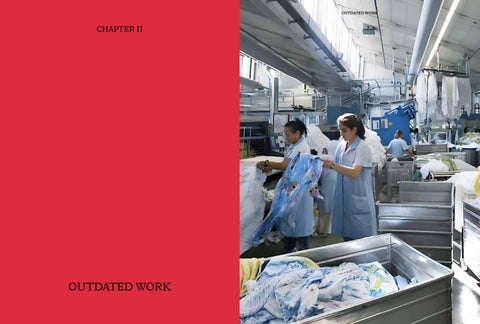
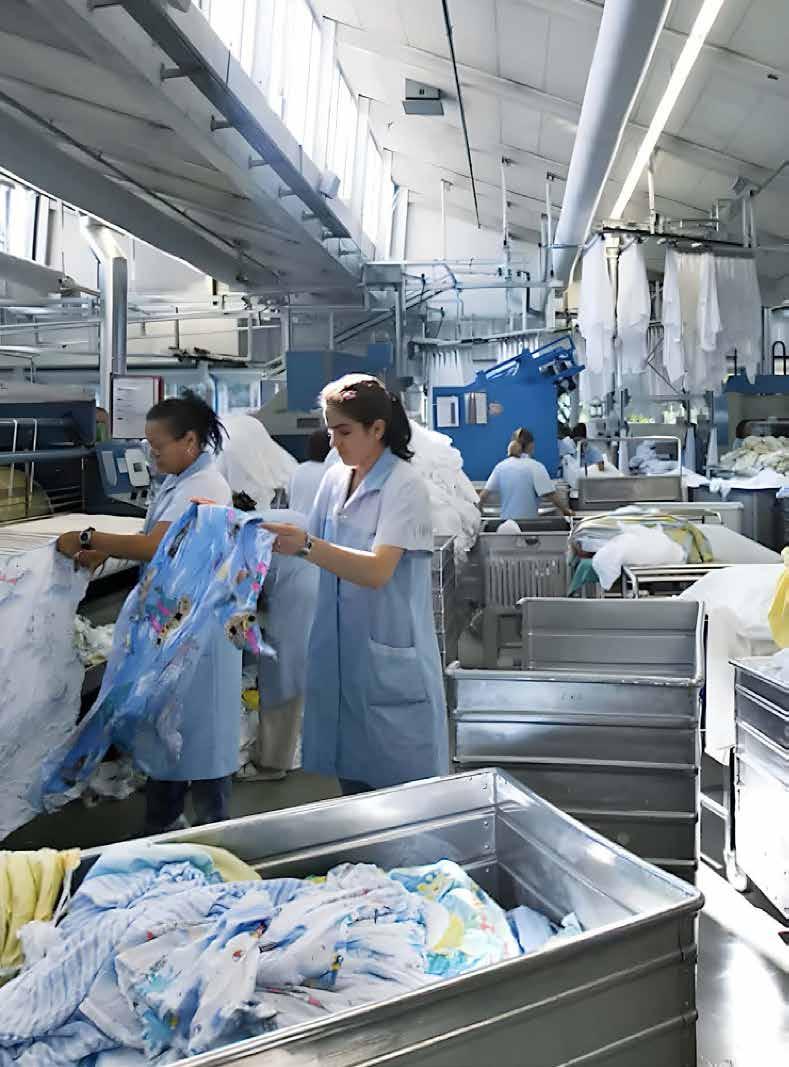
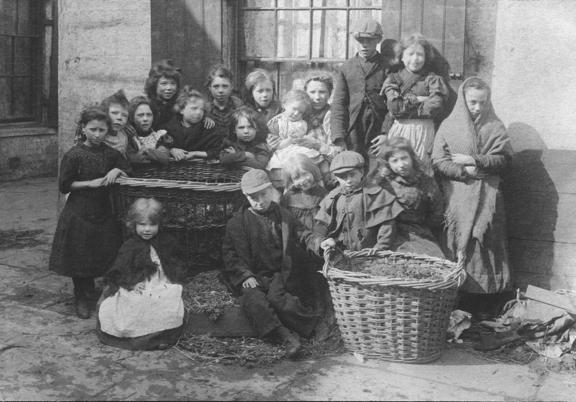
Fig 01. (Previous) The laundry workers.
Source: Photograph of Kurt Graf.
“At different moments in Western history practical activity has been demeaned, divorced from supposedly higher pursuits.Technical skill has been removed from imagination, tangible reality doubted by religion, pride in one’s work treated as a luxury.”2
2. Richard Sennett, The Craftsman (London : Allen Lane, 2008). 21.
DEMORALISED WORKER
The workshop was recognised as craftsman’s home physically and spiritually. Christianity embraced the work of craftsmen since it could counteract the human propensity toward self-destruction and bring peace and productivity. Early Christian morality viewed free time as a temptation and leisure as an invitation to laziness, seducing and distracting man from his work.3
This fear was attributed particularly to woman, for which their feet need to be bound domestically, and their hands need to be occupied with needles. This relationship was materialised in the patriarchal workshop, where work and life mixed face-to-face in a highly hierar-
3. Ibid. 55.
chical relationship. The workshop, therefore, is a place that integrates a bunch of people using different forms of authority to formulate a strong relationship alternative to the mode of family.
Karl Marx, Charles Fourier, and Claude Saint Simon envisaged the workshop as a place where the dichotomy between labour and life dissolves, allowing for the synthesis of work, personal development, and community belonging.
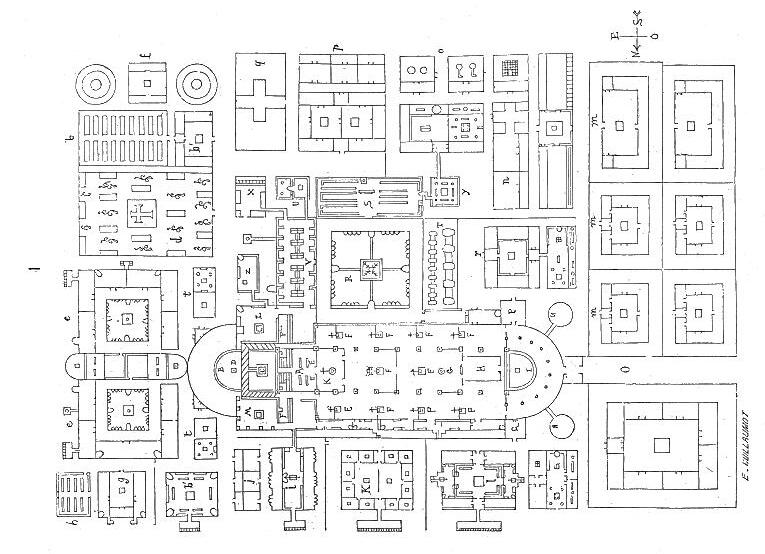
Fig 02. The Plan of Saint Gall, Reichenau, Early 9th Century.
THOMAS CHIPPENDALE’s WORKSHOP (1840s)
In his book, The Gentleman and Cabinet-Maker’s Director, the famous Georgian cabinet maker Thomas Chippendale added all the information necessary for a craftsman to make the piece: the dimensions and the moulding profiles, indicating the drawings were used for illustrating Chippendale’s standard and in house crafts training. Moreover, this collective training and learning scenario is further evidenced in Chippendale’s ‘confession’ that part of the drawings in his book was developed by the craftsman in his shop.4 His workshop in Saint Martin Lane articulates the spatial repercussions. The premises accommodated forty to fifty craftsmen, divided into several specified studios, such as a feather studio, glass studio, and upholstered studio. A covered passage between two houses, one of which was Chippendale’s dwelling, led to the long interlocking yards, around which the promises incorporated its residences, showrooms and workshops for the different crafts, formulating
a
4. Morrison H. Heckscher, Chippendale’s Director: A Manifesto of Furniture Design (Metropolitan Museum of Art, 2018). 33.
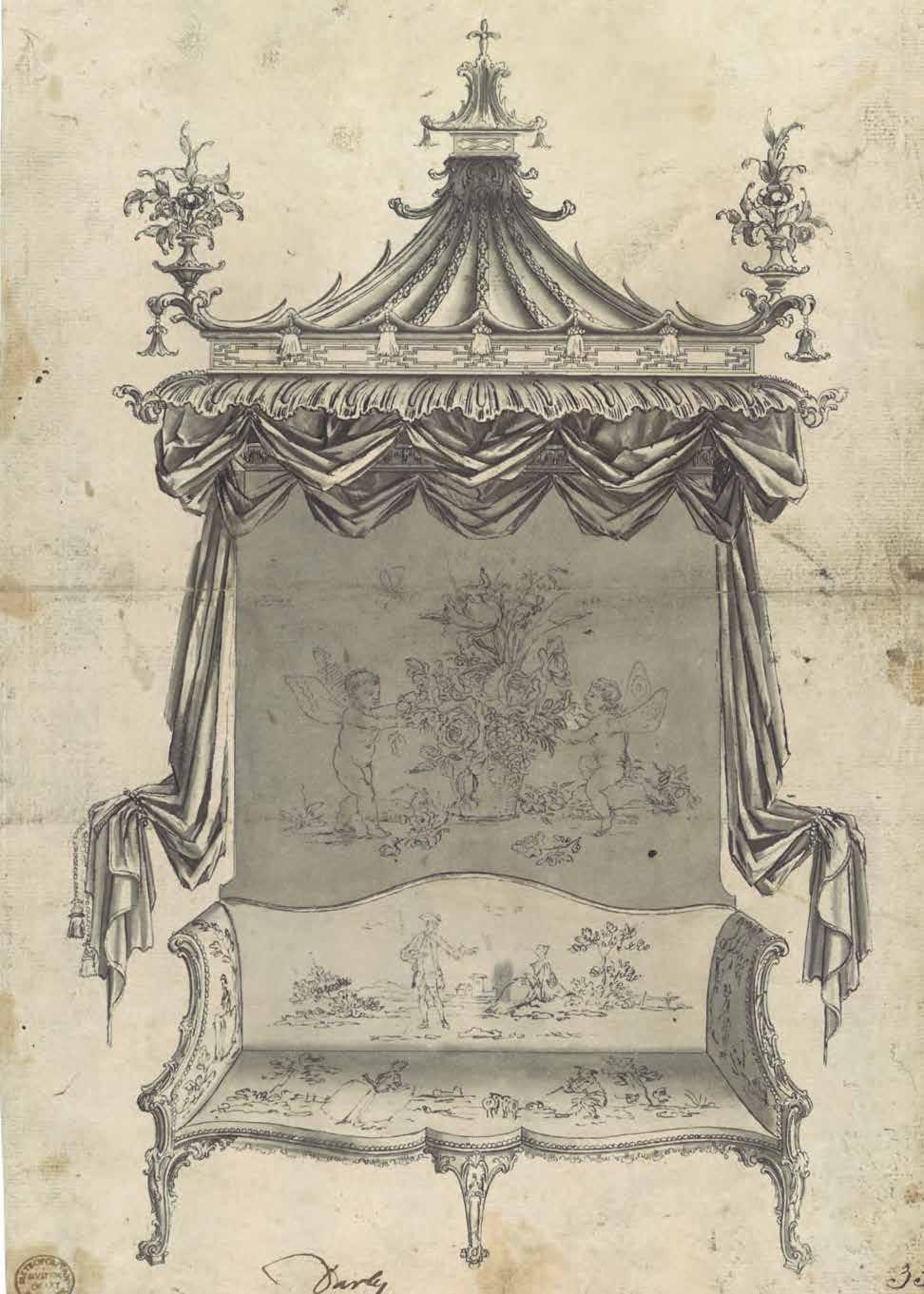
Fig 03. A Bed, designed by Thomas Chippendale, For his book.
Source: The Gentleman and Cabinet Maker’s Director, 1759.
Fig 04. (opposite) A Chair, designed by Thomas Chippendale, For his book.
Source: The Gentleman and Cabinet Maker’s Director, 1759.
2.
3.
4.
5.
hybrid working and living model. Although this may be seen as an early example of the division of labour described by the pin factory by Adam Smith, 19th-century cabinet manufacturing still involved a high level of crafts skills.5
Therefore, the interlocked courtyards must be interpreted as a communal space where craftsmen deal face-to-face with knowledge sharing and craft training.
5. Adam Smith, _The Wealth of Nations_, vol. 11937 (na, 1937), 7-8.
1. Mr. Chippendale’s Dwelling House
Yard
Showrooms
Store Room; Chair Room
Oven
6. Drying Room For Deals
7. Shed Veneering Roomg, Feather Room
8. Uphosterer’s Shop, Warerooms, Drying roof
9. Sheds and Warerooms, Glass room
10. Shed & Room Over
11. Open Covered Passage
12. Cabinet Maker’s Shop
Fig 05. Mr. Chippendale’s Premises, 60-62, St Martin’s Lane, London, 1803. Source: Drawn by Author.
The organisation of craftsmanship in pre-industrial era were based on two exclusive efforts: the urban guild and apprenticeship system. The guild were corporations that attempted to solidify and regulate craftsmen to gain collective reputations. The apprenticeship system enables knowledge to transmit through out generations aiming to keep secrets and make it sustainable. The urban guild could be viewed as an urban workshop, whose ruler used his authority to regulate his subordinates, say apprentices, journeymen, and housewives.
“The apprentice shall and will diligently, faithfully, soberly and honestly, according to the best of his knowledge, skill and ability, serve the masters.... during the said term. and obey, observe, and fulfil all instructions, orders, and lawful commands of the masters and those put in authority under them.”6
“The masters will accept the apprentice as an apprentice during the said term, and by the best means that they can, will instruct him, or cause him to be instructed in the branches of the business of a manufacturing engineer”7
As illustrated in the apprentice indenture, both the masters and apprentices were assigned specific responsibilities intended to build a reciprocal relationship and expectation. As Cronin argues, what was absent at the end of the 19th century and the beginning of the 20th century was precisely the expectation and reciprocal relationship between the apprentice-learn-
Source: RIBA Collections
6. Indenture of 1904, quoted in HMSO 1928b, pt. VI, App. E, pp. 192-6.
7. Indenture ibid. (a).
er and the master.8
However, in the second half of the 19th century, the pervasive trends of using cheap, unskilled workers and child apprentices stimulated a broader social and political gaze on the legitimacy of the apprentice system, which manifested the decline of this system.9
Source: British Library.
8. Bernard P. Cronin, Technology, Industrial Conflict and the Development of Technical Education in 19th-Century England (London: Routledge, 2019), 103.
9. see the descriptions in The People in the Abyss by Jack London and Condition of the Working Class in England by Friedrich Engels
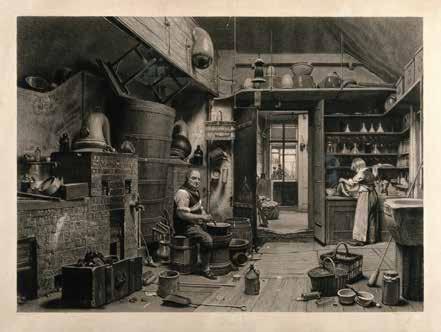
Fig 08. John Simmons and his apprentice working in the laboratory of John Bell’s pharmacy in Oxford Street. Engraving by J. G. Murray, 1842, after W. H. Hunt.
Source: Wellcome Collection.
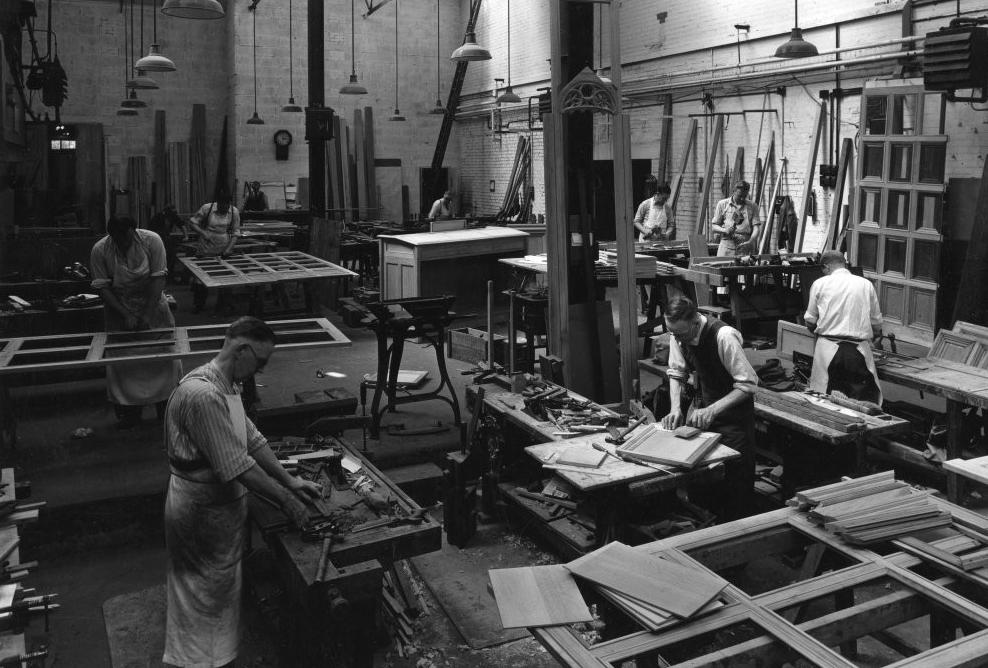
Fig 06. (Previous) Craftsman in the workshop making frames for furniture. J. L. Green & Vardy Ltd, 79 Essex Road, London, 1930s.
Fig 07. Apprenticeship Indentures, England, 1719.
FINSBURY TECHNICAL COLLEGE
(1870s)
“We have gone in too much for cheapness at the cost of quality, and that had tended very much to degrade our handicraft skill...the apprenticeship has broken down here...(and) cannot much longer be maintained.”10
The advent of mass production envisaged a paradigm shift in crafts education: in the apprentice system, education was integrated into the workplace and seen as a primary responsibility of employers, which had transcribed to one in which such learning opportunities were available only outside of the workspace in the form of after-working classes offered through a patchwork of state-supported institutions.
The notion of a free contract and labour market with a wage system was widely accepted in society, which rendered the old practices of apprenticeship as an outdated system either undesirable or impracticable, which bound workers with asymmetrical relationships by legal and moral obligation. This apprenticeship was considered the culprit for the miserable condition of the working class. Consequently, it was urgent to develop a new education system that could not only train workers to fulfil the needs of novel production methods but also mediate the deteriorated relationship between employers and workers.
Initiated from the Technical Institution Act in
10. Hansard Samuelson, reports of the Royal Commissioners on Technical Institution, (London, 1881), 527.
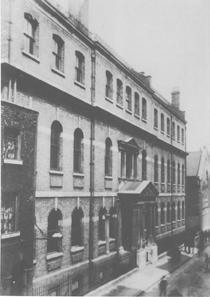
Fig 09. Finsbury Technical College, 1883-1926. The building remains and is used as Shoreditch County Court. Source: Imperial College Archives.
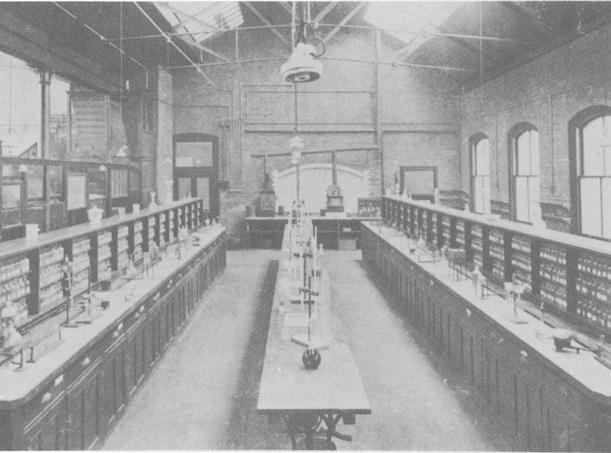
Fig 10. Finsbury Technical College. Chief Chemistry Laboratory on the north side of the top floor. Source: From City & Guilds of London Institute Prospectus form,1912-13.
1889, the emergence of technical education was not a natural evolution of the British education system since it stemmed from the anxiety between national competitions11 and grew in a firm idea of separation, which detached education from workspace.
The Finsbury Technical College was recognised as the first technical college of England in 1883. It was designed to be a ‘model trade school for the instruction of artisans and other persons preparing for intermediate posts in industrial works.’12
The college offered opportunities for daytime and evening study, and subjects included building, design, drawing, engineering, mathematics and science. The daytime class was a general provision: ‘training on broad, practical and scientific principles’, which connected to the careers of Civil, Mechanical, Electrical and Chemical industries. The night time classes were designed for apprentices, workers, and supervisors, who conducted practical courses like cabinet making, colour, and decoration. In 1886, the day class attracted about 155 students around 14 to 19 years old; in contrast, 900 students attended the night class courses. Most of them were full-time workers aged around 14 to 40. The separation of time reflected the propensity of educational ideas which similarly separated mental and practical activities.13
11. Considerable influence caused by the Paris Exhibition of 1869
12. W. H. Brock, ‘Building England’s First Technical College: The Laboratories of Finsbury Technical College, 1878–1926’, in The Development of the Laboratory: Essays on the Place of Experiments in Industrial Civilization, ed. Frank A. J. L. James (London: Palgrave Macmillan UK, 1989), 155.
13. Bernard P. Cronin, Technology, Industrial Conflict and the Development of Technical Education in 19th-Century England (London: Routledge, 2019), 206.
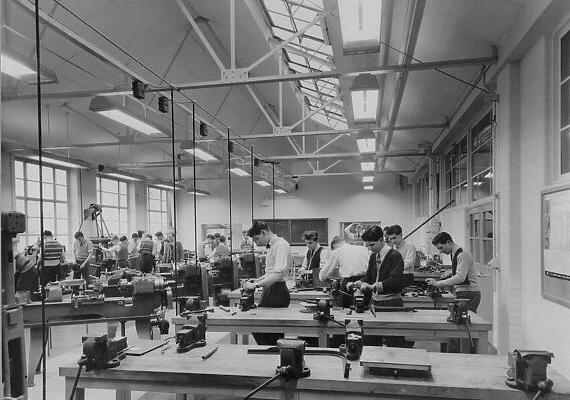
Fig 11. Carlisle Technical College, 1950s.
Source: Historic England Archive.
Originally from the architect Edward
Robins’ book: Technical School and College Buildings, Being a Treatise on the Design and Construction of Applied Science and Art Buildings, and Their Suitable Fittings and Sanitation, with a Chapter on Technical Education, London.
The four-storey plain-brick building consisted of classrooms, workshops and laboratories, which were arranged around a modest atrium as the only communal space shared by all the students and staff.
The architect could not envisage such amounts of students the college could ever attract; nevertheless, the absence of a library, refreshment room, terrace, or common room neither for students or staff reflects the intentions behind the idea of technical education that rather than creating life and experiences within the college, the architect and the City & Guilds of London Institute were more interested in how it could effectively train more skilled workers.
Compared with the conventional apprentice model, which conducts a face-to-face learning in doing process under the supervision of the master, the new technical education system, with its factory-like architecture, practical curriculums, and utilitarian philosophy, failed to function as a compensation and substitution for the old system.
Fig 12. (opposite) Floor Plans of Finsbury Technical College, 1887. Source: Redrawn by Author.
Cookworthy
INVISIBLE WORKER
The workshops of nineteenth century London were unusually small since the manufacturing premises in East End were constrained by limited space and high land prices, the unable to invest in capital-intensive equipment.1 Consequently, efficiency and profitability could only be achieved through intensified labour, which initiated the subcontracting system and gave birth to the role of a middleman.
“The real assembly line runs through the streets” is a famous analogy made by Peter Hall, explaining the way commodities took shape within the structured landscape of interconnected material and commercial fluxes, which precisely described the work of middleman, who associated trades by distributing tasks and materials, gathering by-products and assembling into finished products in their commercial warehouses.2
1.
2.
George Dodd, Days at the Factories (C. Knight & Company, 1843), 5.
Peter Hall, The Industries of London Since 1861 (Hutchinson University Library, 1962), 227~8.
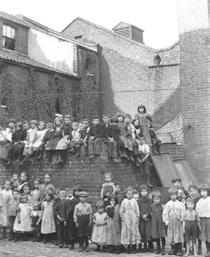
Fig 13. Pool Square in Spitalfields. Source: Photograph by Horace Warner, 1901.
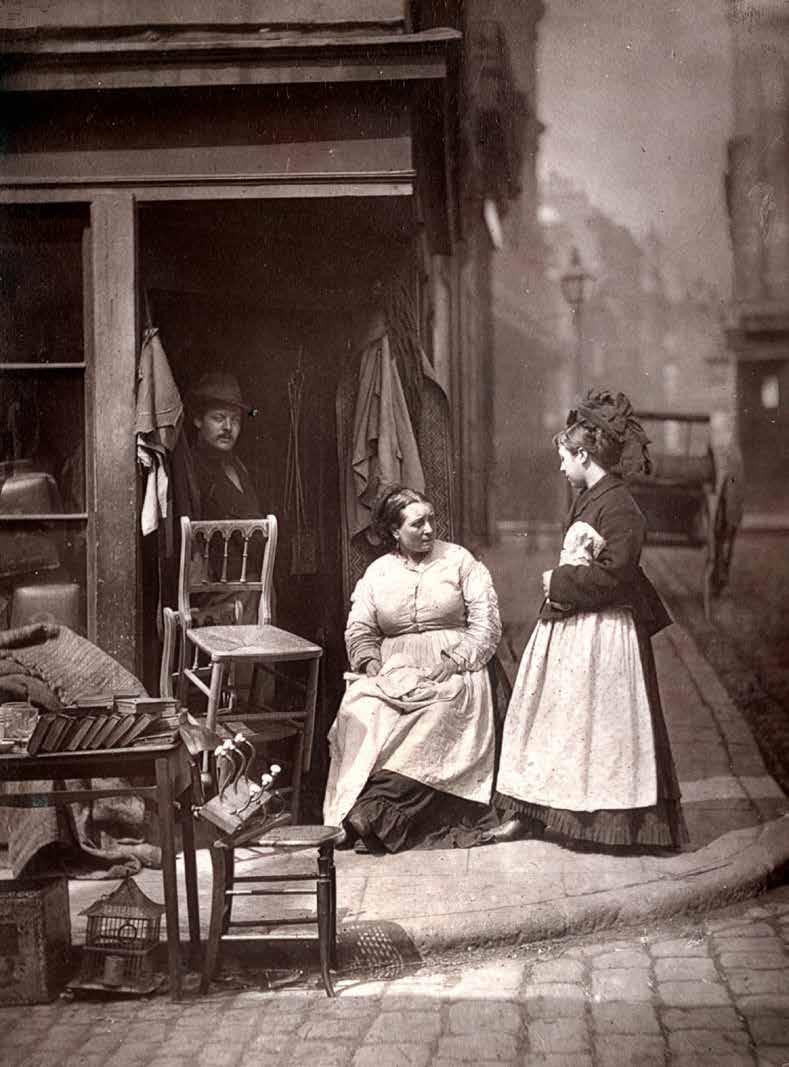
Fig 14. (opposite) A Victorian Furniture Shop in London, 1870s.
Source: London School of Economics Archive.
Source:
Fig 15. In 1901-2, Horace Warner took photos of East End street, whose route coincide with Charles Booth’s survey about the condition of East London. Source: Photograph by Horace Warner, 1901.
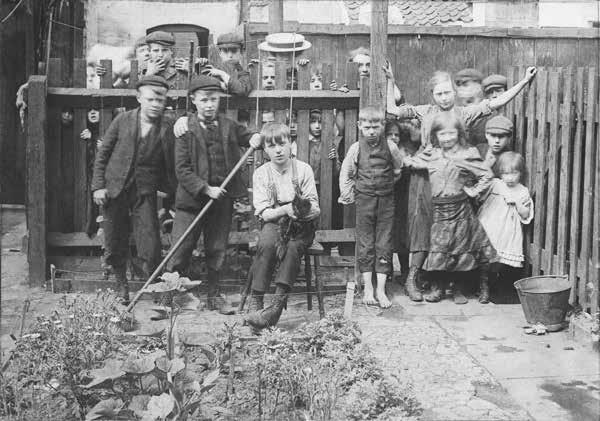
Fig 16. Parsley Season in Crown Court. Source: Photograph by Horace Warner, 1901.
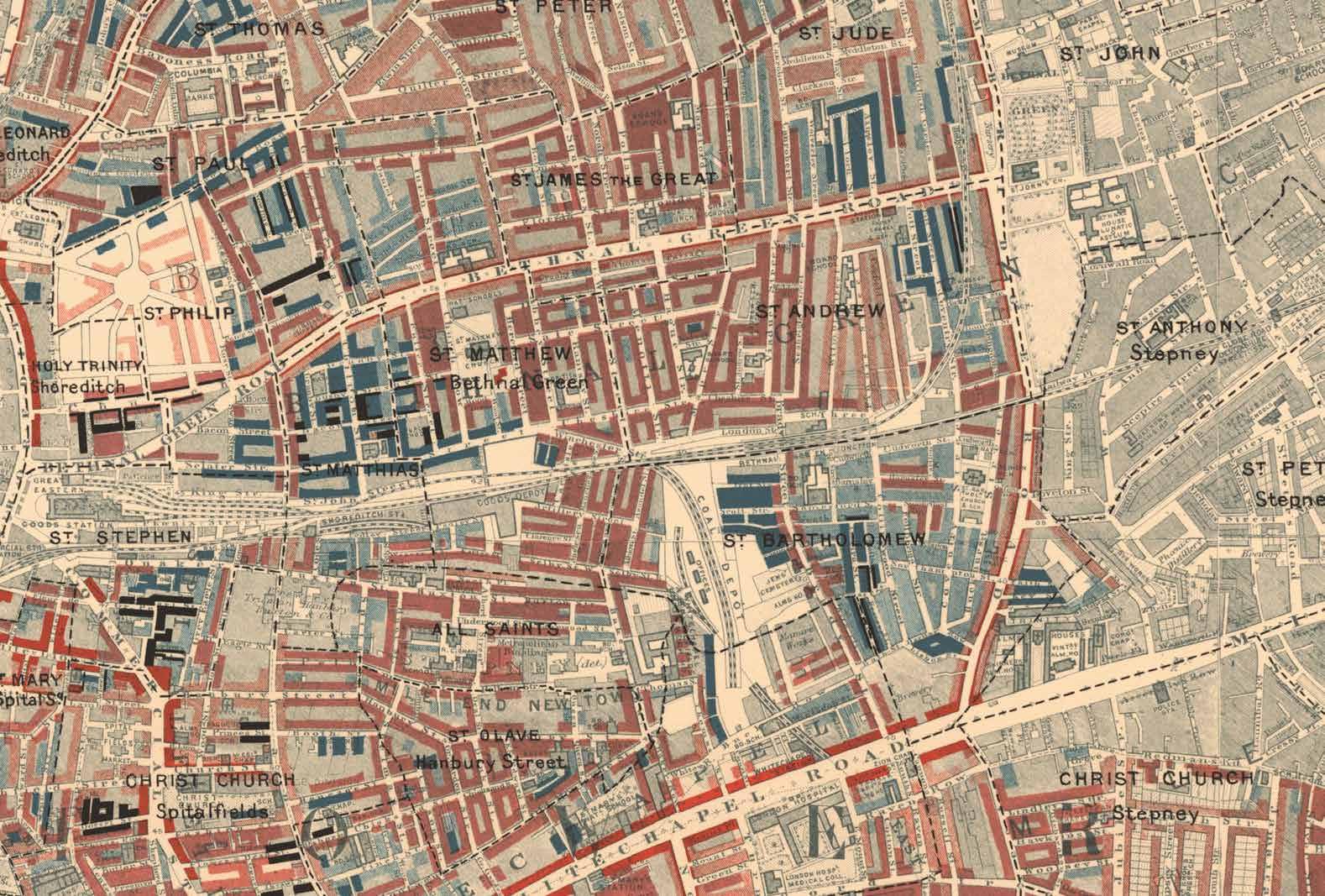
Fig 17. (Following page) London Poverty Map, Charles Booth, 1889.
London School of Economics Digital Library.
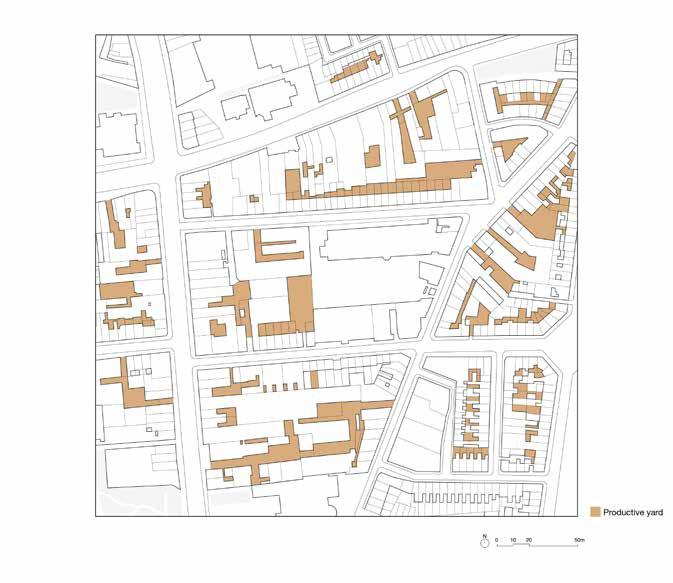
Source: Drawn by Author.
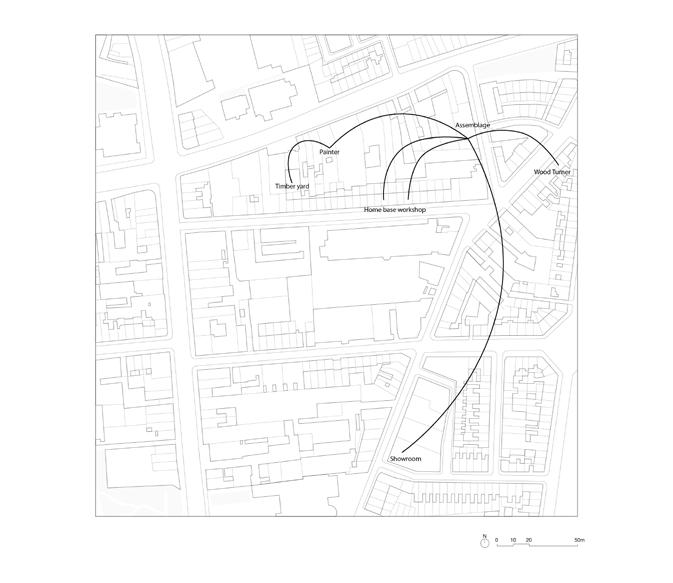
Source: Drawn by Author.
Fig 18. Production organisation in Shoreditch, London, 1889.
Fig 19. Goods Movement in Shoreditch, London, 1889.
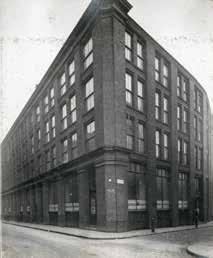
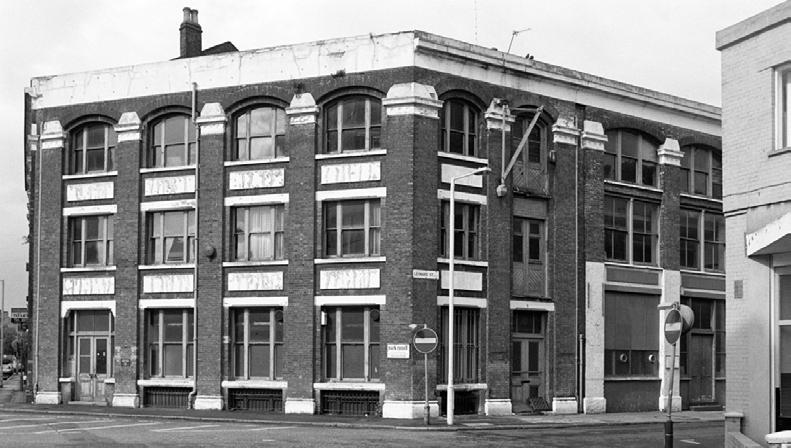
The commercial warehouse, a combination of showroom and warehouse, was employed by a subcontractor as an interface between the spheres of production and consumption. The products were brought from subcontracting craftsmen, workshops or factories, assembled and finished on site or nearby, and then stocked and displayed before passing to the high street retailers.3
tracting system that connects one to others’ needs and working time is a power structure that informs decision-making of which type of work should be celebrated and which needs to be concealed. Consequently, the small manufacturing works could be concealed from the public, and the workers’ bodies would dissolve into the city’s fabric.
The power of the middleman and wholesalers declined at the beginning of the 20th century since the system had become too complex to be effectively managed. Therefore, department stores and retailers tended to buy products directly from producers, indicating that the same concealment and control could be achieved solely through its architecture.
Furniture was displayed on an uninterrupted ground floor, categorised by type and stacked closely to each other, sometimes suspended from the ceiling. Additionally, some fully furnished rooms were decorated with different styles as showcases for the latest fashions and tastes. The upper floors were used to store goods ‘in the white’ — unpolished and upholstered. The finishing process is usually delivered by workshops on the top floor or nearby.
The warehouse’s basement was used to assemble and pack the finished products into crates. Therefore, it needed to remain half a floor above the ground to allow light, ventilation and easy access to goods. The take-in doors, light wells, hoists, and wall cranes manifested the everyday confrontation between production and consumption. The internal arrangement was a condensation of the subcontracting system that rendered the warehouse a liminal space, a spatial incarnation of the middleman. In essence, the subcon-
3. Joanna Smith and Ray Rogers, Behind the Veneer: The South Shoreditch Furniture Trade and Its Buildings (Swindon, England: English Heritage, 2006), 22.
Fig 20. The Harris Lebus Showroom, Tabernacle Street,1900s.
Source: Harris Lebus Archive.
Fig 21. Commercial Warehouse, Leonard Street, Shoreditch, Hackney, London.
Source: Photograph by Peter Marshall.
High Street: A Spatial Instrument
The high street, ubiquitous in the British city, is commonly considered diverse and inherently mixed. However, the concept was initially invented as a spatial model designated to host from those of “first and last sort of building” to “the greatest bigness for Citizens, or other Persons of extraordinary Quality”.4
The model was invented under the mercantilism regime, in which the market was underestimated, and domestic commerce was suppressed. Reflected on legislation, high street was once designated by the common court as the only legal place for commerce, condemning any by-lane trade to be of the black market.5 Consequently, it was constructed as an upgrade of muddy anarchic markets, providing a clean, ordered and easily controlled urban structure to retain urban morality.
While the nation gradually shifted toward Laissez-faire capitalism in the mid-19th century, the notion of the free market significantly challenged the previous idea of viewing luxury as vice and accepting that individual interests could contribute to the public good.
The high street, a sensitive model, therefore, was driven into a paradoxical condition: on the one hand, it has to embrace the free market, asking for free movements of goods and people; on the other hand, it sought more order than ever it was. As a result, strict rules and regulations were implemented.
Evidenced by regulations on the appearance of
shopfronts, use of light, street sanitary and the differentiation of back and front space of the street, the urban production and distribution finally reduced reliance on the liminal warehouse and shifted to the more efficient high street model, which was orchestrated as a spatial instrument for order.6
4. 19 CAR. II. c.18, The Rebuilding of London Act 1666 5. ibid.
org/10.2307/633470), 3.
6. John A. Dawson, ‘Futures for the High Street’, The Geographical Journal 154, no. 1 (1988): 1–12, (https://doi.
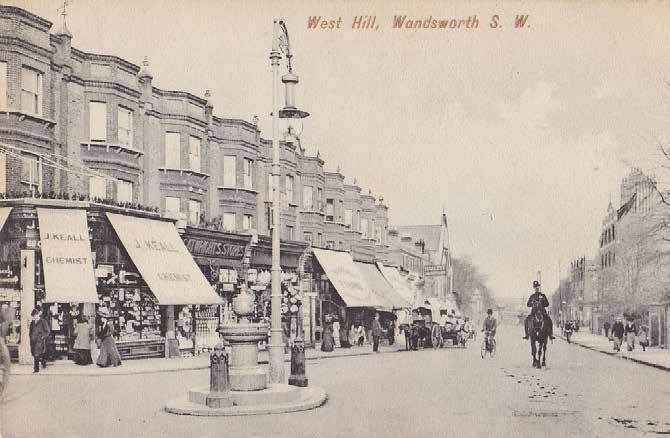
Fig 25. West Hill looking east towards the town centre of Wandsworth and its High Street. Keall’s dispensing chemist’s shop on the left was one of a small chain in the area. Source: Wandsworth Historical Society.
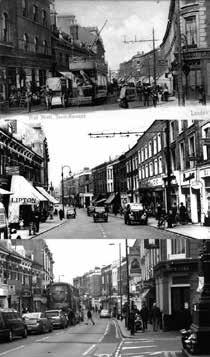
Fig 22. (a) High Street, South Norwood c.1905
Source: Museum of Croydon, John Gent collection.
Fig 23. (b) High Street, South Norwood 1956 Image source as above.
Fig 24. (c) High Street, South Norwood 2015 Sam Griffiths.
DARK KITCHEN MODEL (2020s)
“an agency for peace, security, and segregation which, by its very nature, limits the horizon of experience— Reducing noise transmission, differentiating movement patterns, suppressing smells, stemming vandalism, cutting down the accumulation of dirt, impeding the spread of disease, closeting indecency and abolishing the unnecessary”.7
The long history of how the city constantly depresses small manufacturing spaces manifests this segregation sometimes by violence but in most situations by the invisible framework, protocol and social engineering. For instance, there is still no suitable land classification and suitable regulation for the dark kitchen, a game-changing role raised during the pandemic, which completely challenged the city’s food production and consumption.
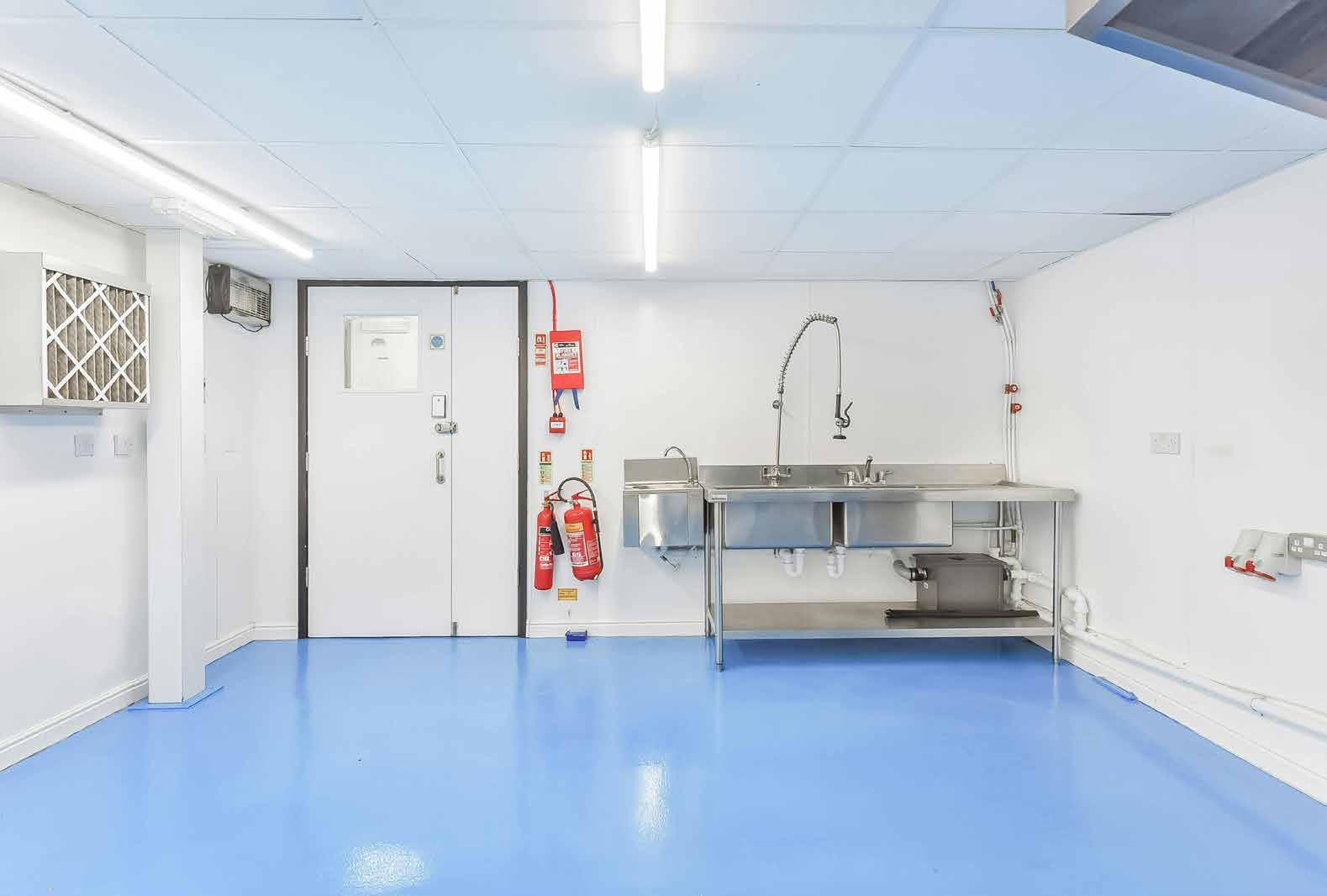
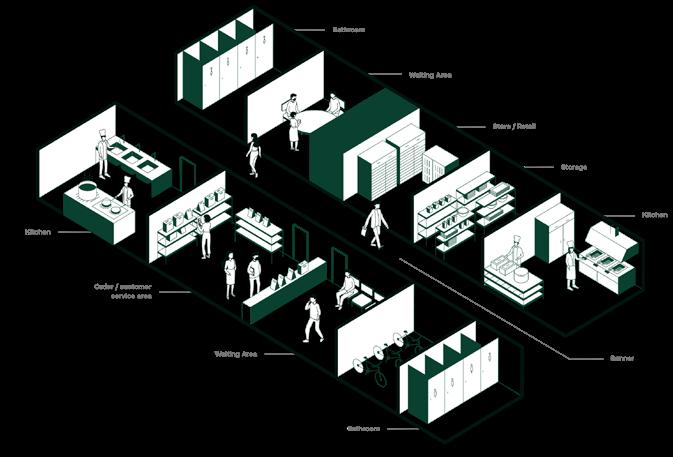
Differentiating from traditional restaurants, dark kitchens avoid providing any dining space; instead, the customers can only order online, and the food will be delivered by deliverymen in a delicate food box. Illustrated in a standard dark kitchen designed by Foodstars(one of the successful dark kitchen suppliers), the space consists of a series of rentable kitchen units that facilitate basic kitchenware. The machine-like space encapsulates noise, small and smoke in its interior
7. Robin Evans, “Figures, Doors and Passages,” in Translations from Drawing to Building and Other Essays (London: Architectural Association, 1997), 89–90.
Fig 26. Dark Kitchen model designed by Foodstar in 2018. Source: https://foodstarsuk.com/
and only leaves a small window for passing the food as its interface to the outside. Therefore, it was inextricably concealed in the city’s backstage, in which the production space becomes an endless interior within which frictionless parallel worlds are constructed.
The asymmetrical relationship between the city and its production sector is outlined in these buildings. The contemporary city lacks visibility of manufactural work and workspace, which renders today’s online platforms such as food ordering, uber, and E-commercial platforms as the contemporary middleman with the algorithm as its new prosthesis.
Source: https://foodstarsuk.com/
Fig 28. New Version of Dark Kitchen model designed by Foodstar in 2023.
Fig 27. (Previous) A plain dark kitchen interior.
Source as above.
INFRASTRUCTURAL WORKER
Contemporary production has entirely shifted from Fordism using linear assembly lines and hierarchies of subcontractors, imposing a series of standardised objects for mass consumption, to Post-Fordism production, processing materials in different times and spaces, organising autonomous workers into extended supply networks by emphasising performance and efficiency (Supply-Chain management).
From the perspective of workers, the evolution of the production method is a propensity toward abstraction, which produces forms with flexible, interchangeable and indeterminate content. Abstraction means uprooting something essential from its totality to define generic frameworks rather than specific solutions.
Contemporary production calculates measures, predicts and even creates the needs and desires of consumption. In other words, production is no longer
based on needs but desires.8 These structural and temporal changes require new architectures to reorganise and re-program the autonomous producers to meet the performance and efficiency standards. Logistics is the founding principle of the neoliberal economy. The contemporary city, therefore, becomes a place of fluxes that renders any forms of friction as obstacles. While obstacles have been removed in a frictionless world, circulation manifests itself as rationalisation of space.
8. The way of advertising has accordingly shifted to a method that must now emerge from a community of users seeded by influencers(KOLs) to whom products are sent for social broadcasting. Consumers are no longer passive actors but more reflective of the production process.
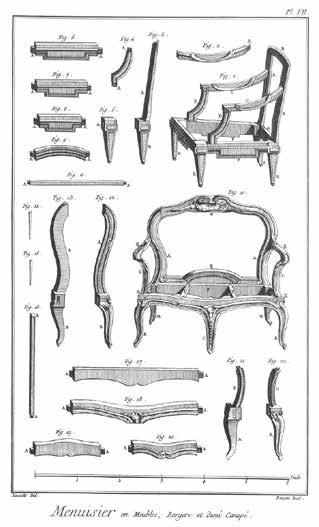
Fig 29. Art of the Cabinet Maker. Source: Encyclopédie of Diderot and D’Alembert.
Fig 30. Collage of Barbara Kruger’s, Untitled (I shop therefore I am), 1987.
Source: Collaged by Deborah Richmond.
“The space of logistics is therefore defined in relation to the power that operates it. In order to reach a specific place more quickly and easily, geographical features are manipulated and new infrastructures constructed. However, this greater connectivity is achieved at the cost of erasing all obstacles…Such a process is never peaceful.”9
The previous boundaries between the logistics space and the city built by large distribution centres, ports, and data centres have devolved. The logistics seek ways to integrate with the city’s fabric and incorporate with other city functions. For instance, London’s planning authorities are finding ways to accommodate creative industry and advanced small-scale manufacturing in previous industrial shed.10
Since the city has already blurred the functional and structural boundaries, small manufacturing units and its logistics systems could gradually permeate
9. Hamed Khosravi, Taneha Kuzniecow Bacchin, and Filippo LaFleur, Aesthetics and Politics of Logistics (Humboldt Books, 2019), 23.
10. Frances Muir and Levent Kerimol, ‘Industrial Intensification Primer’ (Greater London Authority, 2017).
back into the dense urban fabric from which they were once expelled. The small manufacturing space needs to readapt these frictionless movements of goods, capital, and information, which enable the forms of control and measurement that ensure the fluxing demands are satisfied in a timely and efficient manner.
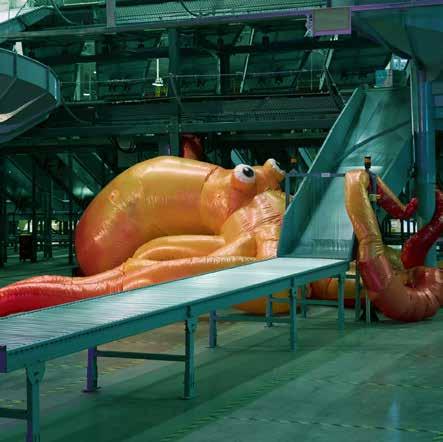
Fig 31. Cao Fei, Asia One (still), 2018. Single-channel HD video, color, sound, 2.35:1, 63:21 minutes.
In both the flux and abstraction, workers and their bodies have been reduced as infrastructure.11 In fact, it is not a novel process that the worker’s body has always been through reduction and degradation. From the 18th century, cabinet makers used furniture catalogues as design standards to achieve production in advance to the efforts of implementing machine tools
11. Luis Andueza et al., ‘The Body as Infrastructure’, Environment and Planning E: Nature and Space 4, no. 3 (1 September 2021): 799–817
Source: Winterthur Library Digital Collections.
for accuracy to fulfil the interchangeability, and finally, these historical efforts on materials have all put on labour and work rendered them as pure resource and capital. In his explanation about the capitalist labour process, Marx reads humans as the time’s carcase. He writes,
“It is no longer the worker who employs the means of production, but the means of production who employ the worker.”12
Re-conceptualising the body as infrastructures by Gandy in his Cyborg urbanism, urban infrastructural space functions less as the prosthesis of the human body; the body, therefore, becomes the extension of those infrastructures, subsumed under the requirements of smooth circulation and accumulation of capital.13 This understanding builds connections between workers, their bodies, and urban infrastructure by viewing the body as part of the urban infrastructure, through which one can actively take action and intervene in the process.
12. Marx, 1990:425
13. Matthew Gandy, ‘Cyborg Urbanization: Complexity and Monstrosity in the Contemporary City’, _International Journal of Urban and Regional Research_ 29, no. 1 (2005): 26–49
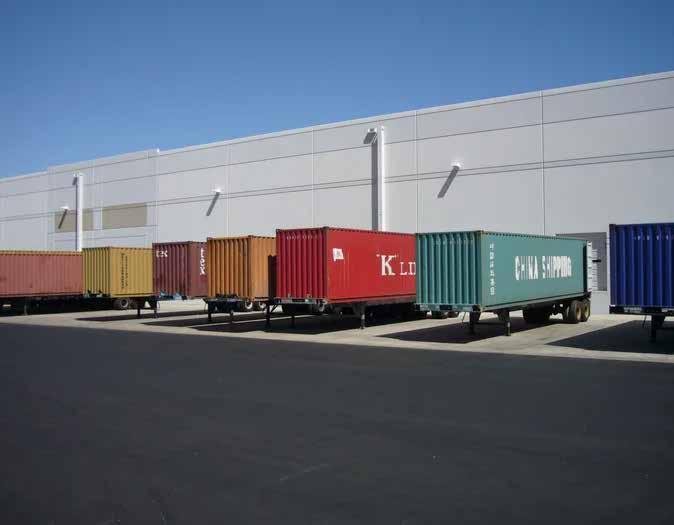
Fig 32. Tejon Ranch Commerce Centre, El Tejon, CA, 2006. Source: Photograph by Deborah Richmond.
Fig 33. Furniture catelogue of door knobs, 1780s.
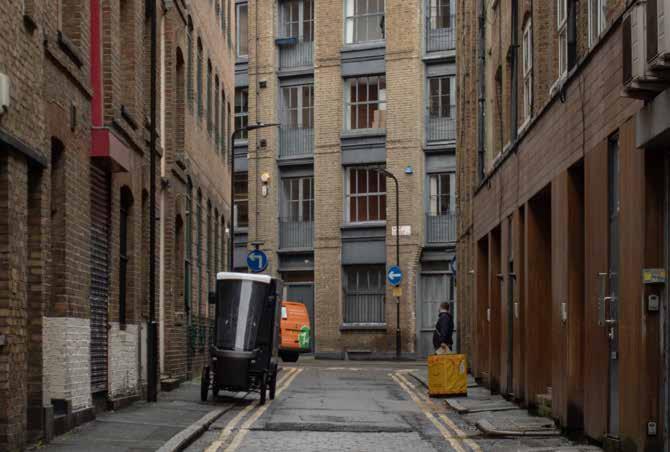
34. An electrical tricycle as a prevailing way of moving cargo in the city is one of the strong images of our era, emblematic of the intersection between urban mobility innovation and sustainability efforts. Source: Exhibition: Staging the era. Curated by the Artist: Cao Fei.
CITIES LOGISTICS (2017s)
There are few commodities from direct production; indeed, contemporary manufacturing, particularly in the urban territory, for its relatively limited operational space, relies on the reorganising and reassembling of demanding by-products. Moreover, struggling with the limited storage space, the small manufacturing premises exerted effort to cut inventories and celebrate just-in-time production. undoubtedly, these challenges all ask for a more adaptive and efficient way of using the city’s logistics infrastructures; likely, the old massive urban distribution centres are nothing but rigid in this case. In fact, small urban manufacturing never stops developing ways of moving materials and products across dense city fabric, inspiring the City Logistics concept.
“City logistics is the process for optimising the logistics and transport activities by private companies in urban areas while considering the traffic environment, the traffic congestion, and energy consumption within the framework of a market economy.”14
Small-scale interventions incorporate logistics with the city’s fabric, using alternative vehicles like cargo bicycles or tricycles, electric trucks and vans with less pollution and better passing ability in traffic congestion.
urban mobility centres are another small-scale
14. Eiichi Taniguchi, Russell Thompson, Tadashi Yamada, and Ron Van Duin, City Logistics: Network Modelling and Intelligent Transport Systems (London: Pergamon, 2001).
Fig
intervention of city logistics that derives from the idea of utilising the leftover space in the city centre to manage goods movements and provide social and recreational spaces for logistics workers. For instance, London has incorporated big logistics companies such as DPD and uber to transfer parking buildings in the city centre into mobility centres, which are inefficiently used during their off-peak hours.15
These mobility centres are expected to reduce the overall milage and emissions and to relieve the traffic congestion in central London. Moreover, they are introduced as a new role not to extend and smoothen the logistics circulations but to build new social connections within the logistic system.
As Alberto Toscano claimed, once freed from the abstract pressures of value and exchange and organised under systems of collective management, logistics emerged and could potentially remerge as a vital tool for communal production, alongside facilitating equitable access to and redistribution of resources.16 The social connections, confrontations, negotiations, and coordination ensure that these new logistics spaces cannot be read as infrastructures. Instead, it seeks high exposure and can structure a form of life.
15. Alison Conway, “Goods Movement for Urban Manufacturing ,” in The Design of Urban Manufacturing ed. Nina Rappaport (New York: Routledge, 2020), 81.
16. Alberto Toscano, ‘Logistics and Opposition’, Mute, Politics My Arse, Vol. 3 (8 June 2018).
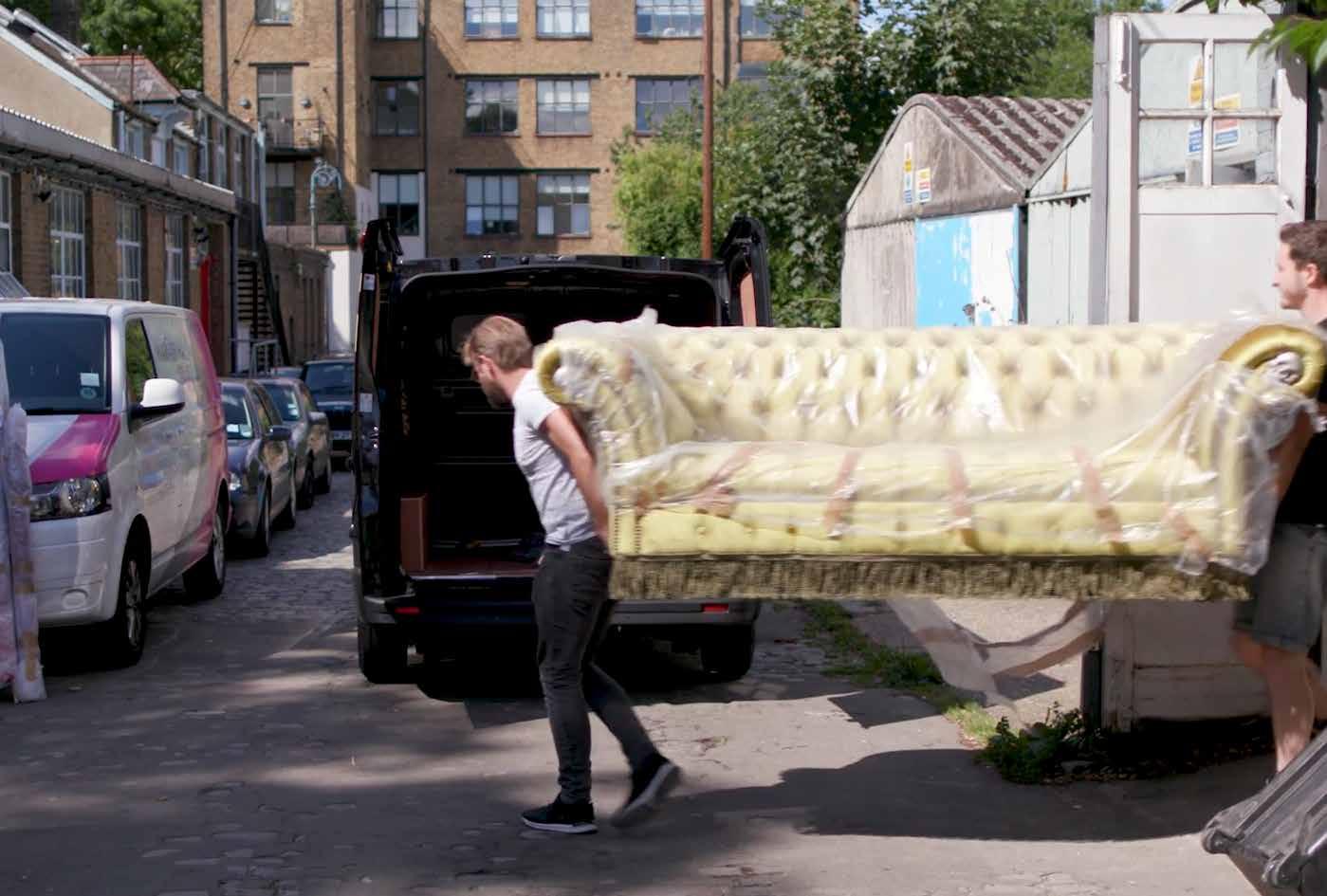
Fig 35. (Previous) Moving a prop sofa in the city through the supply chain of creative industry, manifests a close connection between culture production and city’s manufacturing business.
Source: The film(still 6’00’’): London Made: Exploring the links between London’s culture and industry by We Made that.
DESIGN II
A WAREHOUSE FULL OF NOTHING
A big warehouse full of nothing, recapturing the core question of the separation and lack of visibility of manufactural work and workspace, proposes a strategy to subvert this condition.
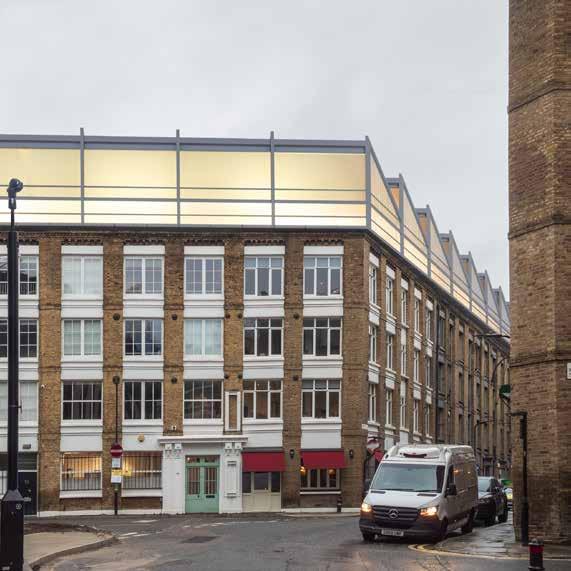
In the centre of the South Shoreditch, an island like block on the corner of Philip street and Luke street was a 19th century redevelopment of a 4 stories dense concentration of workshops and warehouses that purpose built for furniture industry.
The design proposal reclaims the building as a commercial warehouses, an archetype introduced by the chapter, contributing to the furniture trade of wholesalers in the East End in 19th century. The commercial warehouses was a interface between different sectors, a liminal space, by which subcontracting workers were concealed in backstage workshops. However, the contemporary logistics is precisely a contrary process of segregation preventing each sector from direct interaction. To this end the contemporary warehouses are full of nothing but desire.
The design proposal attempts to subvert this condition by reconfiguring the existing warehouse to create a condensation of the whole manufacturing process and concentrating the people, activities, materials and fluxes and flows, forcing confrontations, intersections, and frictions.
It reform the previous structure to open the ground floor to the city, destructing party walls and
Fig 36. Existing plan, In the centre of the South Shoreditch, an island like block on the corner of Philip street and Luke street.
integrating fragmented yards to compose a series of interlocking voids impossible to conceal work form public.
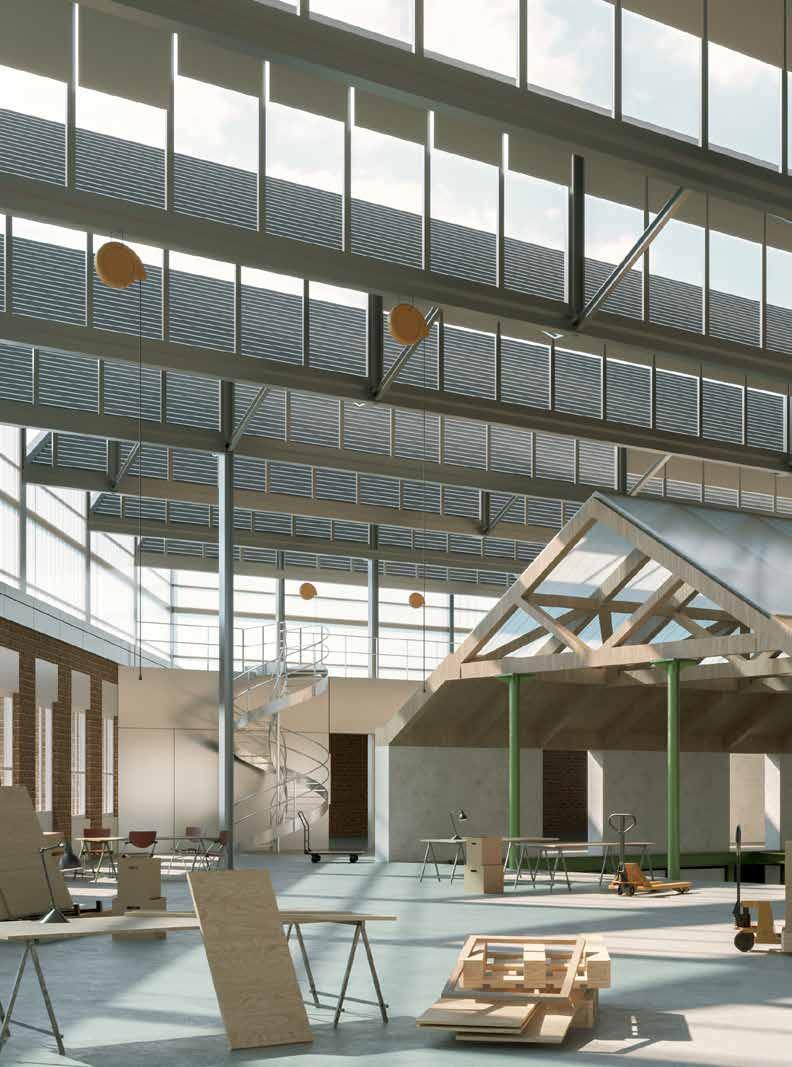
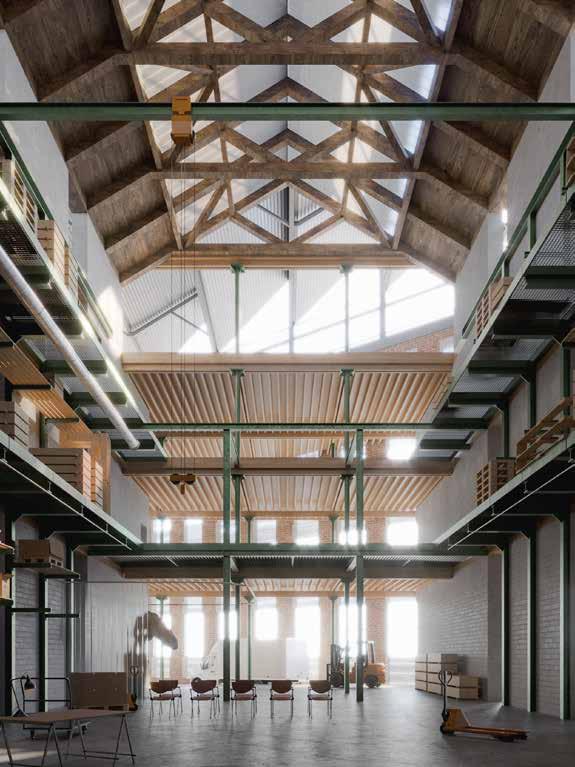
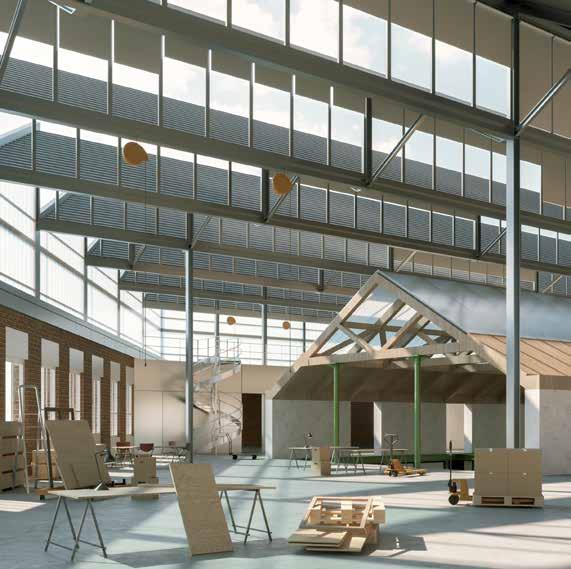
The design features a two-story loading space on the Phipp Street. Hidden behind the main façade, the loading space is the new interface of the warehouse. Connected with the loading space, the Central atrium is featured as the logistic core. As the backbone of the building, it connects every occupants inside the enclave through storing, distributing, processing the raw materials. Logistic is not an unless process happened with a generic industrial shed, instead, it highly exhibitive and performative. While logistic become proactive, the atrium could become not merely a spatial condenser but a social condenser, a place for communication, education and innovation.
The proposal entails the removal of the existing warehouse roof to make room for a double-height communal workspace atop the warehouse. This workshop space is designed to be open and accessible to all occupants, serving as a departure from the previous spatial arrangement characterized by control and segregation. By embracing openness over concealment, it challenges the conventional division in between different spheres such as back and front, service and served. Instead, it fosters a sense of unity and interaction, encouraging incidental encounters and intersections that enrich the experience of those within the
Fig 37. (Opposite) Warehouse in Leonard Street, Shoreditch, London.
Source: Photograph by Author.
Fig 38. (Opposite) Ground Floor Plan, While logistic become proactive, the atrium could become not merely a spatial condenser but a social condenser, a place for communication, education and innovation.
0 5 15m space. To avoid misleading, the intention for the roof top workshop is by no means to feature an universal plan suitable for any form of making but to emphasis on adaptivity of the building to meet the unforeseen needs of the fast changing production methods.
The lighthouse-like roof top workshop with its iconic industrial roof structure broadcasts a image of contrast between the old and new, openness and segregation, concealment and celebration, which gives a great visibility of the inside manufacturing work to a broader city territory.
Andueza, Luis, Archie Davies, Alex Loftus, and Hannah Schling. ‘The Body as Infrastructure’. Environment and Planning E: Nature and Space 4, no. 3 (1 September 2021): 799–817. https://doi. org/10.1177/2514848620937231.
Aureli, Pier Vittorio. ‘Architecture for Barbarians: Ludwig Hilberseimer and the Rise of the Generic City’. AA Files, no. 63 (2011): 3–18.
Bianchetti, Cristina. Bodies. Between Space and Design. 1st edition. Berlin: De Gruyter, 2020.
Brock, W. H. ‘Building England’s First Technical College: The Laboratories of Finsbury Technical College, 1878–1926’. In The Development of the Laboratory: Essays on the Place of Experiments in Industrial Civilization, edited by Frank A. J. L. James, 155–70. London: Palgrave Macmillan uK, 1989. https://doi.org/10.1007/978-1-349-106066_10.
Cairns, Graham, ed. Narrating the City: Mediated Representations of Architecture, urban Forms and Social Life. Intellect, 2020. https://doi. org/10.2307/j.ctv36xw5z8.
Chippendale, Thomas, and W. F. Bodmer. The Gentleman and Cabinet Maker’s Director. New ed of 3 Revised ed edition. New York: Dover Publications Inc, 2000.
Cooney, E. W. ‘Eighteenth Century Britain’s Missing Sawmills: A Blessing in Disguise?’ Construction History 7 (1991): 29–46.
Cronin, Bernard P. Technology, Industrial Conflict and the Development of Technical Education in 19th-Century England. London: Routledge, 2019. https://doi.org/10.4324/9781315187204.
Dawson, John A. ‘Futures for the High Street’. The Geographical Journal 154, no. 1 (1988): 1–12. https:// doi.org/10.2307/633470.
Dodd, George. Days at the Factories. C. Knight & Company, 1843.
Engels, Frederick. ‘The Condition of the Working Class in England’. In The Sociology and Politics of Health, 22–27. Routledge, 2005. https://www.taylorfrancis.com/chapters/ edit/10.4324/9780203996102-6/condition-working-class-england-frederick-engels.
Ferm, Jessica, Dimitrios Panayotopoulos-Tsiros, and Sam Griffiths. ‘Planning urban Manufacturing, Industrial Building Typologies, and Built Environments: Lessons From Inner London’. urban Planning 6, no. 3 (23 September 2021): 350–67. https://doi.org/10.17645/up.v6i3.4357.
Gandy, Matthew. ‘Cyborg urbanization: Complexity and Monstrosity in the Contemporary City’. International Journal of urban and Regional Research 29, no. 1 (2005): 26–49. https://doi.org/10.1111/ j.1468-2427.2005.00568.x.
Hall, Peter. The Industries of London Since 1861. Hutchinson university Library, 1962.
Heckscher, Morrison H. Chippendale’s Director: A Manifesto of Furniture Design. Metropolitan Museum of Art, 2018.
Joyce, Patrick. The Rule of Freedom: Liberalism and the Modern City. 1. publ. London: Verso, 2003.
Keep, Christopher. ‘Technology, Industrial Conflict and the Development of Technical Education in 19th-Century England’. Victorian Studies 47, no. 2 (Winter 2005): 299-301,321.
Lauridsen, Alberte, and Marianna Janowicz. ‘Slippages, Spillages, and Divides’. Accessed 6 January 2024. https://www.e-flux.com/architecture/
Loftus, Donna. ‘Investigating Work in Late Nineteenth-Century London’. History Workshop Journal, no. 71 (2011): 173–93.
Mayor of London. ‘Learn from London’s High Street Report’, 2014.
Muir, Frances, and Levent Kerimol. ‘Industrial Intensification Primer’. Greater London Authority, 2017.
OMA/Rem Koolhaas : Generic City. Tokyo : TN Probe, 1995.
Rappaport, Robert N. Lane, Nina, ed. The Design of urban Manufacturing. New York: Routledge, 2020. https://doi.org/10.4324/9780429489280.
Richmond, Deborah. ‘Requiem’. MAS Context (blog). Accessed 5 January 2024. https://mascontext. com/issues/production/requiem.
Riello, Giorgio. ‘Boundless Competition: Subcontracting and the London Economy in the Late Nineteenth Century’. Enterprise & Society 13, no. 3 (2012): 504–37.
Robins, Edward Cookworthy. Technical School and College Building, Being a Treatise on the Design and Construction of Applied Science and Art Buildings, and Their Suitable Fittings and Sanitation, with a Chapter on Technical Education. London: Whittaker and co., 1887. https://catalog. hathitrust.org/Record/001885048.
Schmitt, Carl. ‘Appropriation/Distribution/Production: Toward a Proper Formulation of Basic Questions of Any Social and Economic Order’. Telos: Critical Theory of the Contemporary 1993, no. 95 (1993): 52–64. https://doi. org/10.3817/0393095052.
Sennett, Richard. The Craftsman. London : Allen Lane, 2008.
‘Sexuality and Space (Princeton Papers on Architecture): 1: Amazon.Co.uk: Colomina, Beatriz: 9781878271082: Books’. Accessed 4 February 2024. https://www.amazon.co.uk/Sexuality-Space-Princeton-Papers-Architecture/ dp/1878271083.
Smith, Adam. The Wealth of Nations. Vol. 11937. na, 1937.
Smith, Joanna, and Ray Rogers. Behind the Veneer: The South Shoreditch Furniture Trade and Its Buildings. Swindon, England: English Heritage, 2006.
Suburban urbanities: Suburbs and the Life of the High Street. uCL Press, 2015. https://doi.org/10.2307/j. ctt1g69z0m.
Toscano, Alberto. ‘Logistics and Opposition’. Mute, Politics My Arse, Vol. 3 (8 June 2018). https://syntheticzero.net/2018/06/08/logistics-and-opposition/.
We made that and LSE Cities. ‘High Streets for All’, 2017.
Voice, Paul. ‘Labour, Work and Action’. In Hannah Arendt. Routledge, 2014.
LIST OF FIGURES
Fig 01. (Previous) The laundry workers. Source: Photograph of Kurt Graf.
Fig 02. The Plan of Saint Gall, Reichenau, Early 9th Century.
Fig 03. A Bed, designed by Thomas Chippendale, For his book. Source: The Gentleman and Cabinet Maker’s Director, 1759.
Fig 04. (opposite) A Chair, designed by Thomas Chippendale, For his book.Source: The Gentleman and Cabinet Maker’s Director, 1759.
Fig 05. Mr. Chippendale’s Premises, 60-62, St Martin’s Lane, London, 1803.Source: Drawn by Author.
Fig 06. (Previous) Craftsman in the workshop making frames for furniture. J. L. Green & Vardy Ltd, 79 Essex Road, London, 1930s. Source: RIBA Collections
Fig 07. Apprenticeship Indentures, England, 1719.Source: British Library.
Fig 08. John Simmons and his apprentice working in the laboratory of John Bell’s pharmacy in Oxford Street. Engraving by J. G. Murray, 1842, after W. H. Hunt. Source: Wellcome Collection.
Fig 09. Finsbury Technical College, 1883-1926. The building remains and is used as Shoreditch County Court.Source: Imperial College Archives.
Fig 10. Finsbury Technical College. Chief Chemistry Laboratory on the north side of the top floor.
Source: From City & Guilds of London Institute Prospectus form,191213.
Fig 11. Carlisle Technical College, 1950s.Source: Historic England Archive.
Fig 12. (opposite) Floor Plans of Finsbury Technical College, 1887.Source: Redrawn by Author. Originally from the architect Edward Cookworthy Robins’ book: Technical School and College Buildings, Being a Treatise on the Design and Construction of Applied Science and Art Buildings, and Their Suitable Fittings and Sanitation, with a Chapter on Technical Education, London.
Fig 13. Pool Square in Spitalfields.Source: Photograph by Horace Warner, 1901.
Fig 14. (opposite) A Victorian Furniture Shop in London, 1870s. Source: London School of Economics Archive.
Fig 15. In 1901-2, Horace Warner took photos of East End street, whose route coincide with Charles Booth’s survey about the condition of East London. Source: Photograph by Horace Warner, 1901.
Fig 16. Parsley Season in Crown Court. Source: Photograph by Horace Warner, 1901.
Fig 17. (Following page) London Poverty Map, Charles Booth, 1889.
Source: London School of Economics Digital Library.
Fig 18. Production organisation in Shoreditch, London, 1889. Source: Drawn by Author.
Fig 19. Goods Movement in Shoreditch, London, 1889.Source: Drawn by Author.
Fig 21. Commercial Warehouse, Leonard Street, Shoreditch, Hackney, London.Source: Photograph by Peter Marshall.
Fig 22. (a) High Street, South Norwood c.1905 Source: Museum of Croydon, John Gent collection.
Fig 23. (b) High Street, South Norwood 1956 Image source as above.
Fig 24. (c) High Street, South Norwood 2015 Sam Griffiths.
Fig 25. West Hill looking east towards the town centre of Wandsworth and its High Street. Keall’s dispensing chemist’s shop on the left was one of a small chain in the area. Source: Wandsworth Historical Society.
Fig 26. Dark Kitchen model designed by Foodstar in 2018.Source: https://foodstarsuk.com/
Fig 27. (Previous) A plain dark kitchen interior.Source as above.
Fig 28. New Version of Dark Kitchen model designed by Foodstar in 2023.Source: https://foodstarsuk.com/
Fig 29. Art of the Cabinet Maker. Source: Encyclopédie of Diderot and D’Alembert.
Fig 30. Collage of Barbara Kruger’s, untitled (I shop therefore I am), 1987.Source: Collaged by Deborah Richmond.
Fig 31. Cao Fei, Asia One (still), 2018. Single-channel HD video, color, sound, 2.35:1, 63:21 minutes.
Fig 32. Tejon Ranch Commerce Centre, El Tejon, CA, 2006. Source: Photograph by Deborah Richmond.
Fig 33. Furniture catelogue of door knobs, 1780s.Source: Winterthur Library Digital Collections.
Fig 34. An electrical tricycle as a prevailing way of moving cargo in the city is one of the strong images of our era, emblematic of the intersection between urban mobility innovation and sustainability efforts.Source: Exhibition: Staging the era.Curated by the Artist: Cao Fei.
Fig 35. (Previous) Moving a prop sofa in the city through the supply chain of creative industry, manifests a close connection between culture production and city’s manufacturing business. Source: The film(still 6’00’’): London Made: Exploring the links between London’s culture and industry by We Made that.
Fig 36. Existing plan, In the centre of the South Shoreditch, an island like block on the corner of Philip street and Luke street.
Fig 37. (Opposite) Warehouse in Leonard Street, Shoreditch, London. Source: Photograph by Author.
Fig 38. (Opposite) Ground Floor Plan, While logistic become proactive, the atrium could become not merely a spatial condenser but a social condenser, a place for communication, education and innovation.