February 2017

The list below applies to acronyms used throughout the base document. Acronyms may be included in Appendices and will be defined as they are used.
Acronym Definition
ADA A mericans with Disabilities Act
APA A merican Planning Association
CARRI Community and Regional Resilience Institute
CPG Comprehensive Preparedness Guide
CRS Community Rating System
DHS Department of Homeland Security
EPA E nvironmental Protection Agency
FEMA Federal Emergency Management Agency
GCRC Galveston Community Recovery Committee
LDRM Local Disaster Recovery Manager
NDRF National Disaster Recovery Framework
NGO Nongovernmental Organization
NIST National Institute of Standards and Technology
NFIP National Flood Insurance Program
NREL National Renewable Energy Laboratory
NVOAD National Voluntary Organizations Active in Disasters
PAS Planning Advisory Service
PDRP Post-Disaster Redevelopment Plan
PPD P residential Policy Directive
PRA P riority Redevelopment Area
RSF Recovery Support Function
THIRA T hreat and Hazard Identification and Risk Assessment
VOAD Voluntary Organizations Active in Disasters
This planning guide is designed to help local governments prepare for recovery by developing pre-disaster recovery plans that follow a process to engage members of the whole community, develop recovery capabilities across governmental and nongovernmental partners, and ultimately create an organizational framework for comprehensive local recovery efforts.
Disasters in the United States result in billions of dollars in damage and disrupt the lives of untold numbers of citizens each year. According to the Center for American Progress, in 2011 and 2012 alone, 1,107 fatalities and up to $188 billion in economic damage were the result of extreme weather events.1 Although some areas are more susceptible to disasters than others, no area is perfectly safe and all communities need to be prepared for recovery after a disaster strikes.
The Federal Emergency Management Agency (FEMA) works to ensure that communities have the tools needed to make informed decisions to reduce risks and vulnerabilities and to effectively respond and recover. Effective pre-disaster planning is an important process that allows a comprehensive and integrated understanding of community objectives. Pre-disaster planning also connects community plans to guide post-disaster decisions and investments. This guide will aid in understanding the key considerations and process that a local government can use to build a community’s recovery capacity and develop a pre-disaster recovery plan.
“Without a comprehensive, long-term recovery plan, ad hoc efforts in the aftermath of a significant disaster will delay the return of community stability. Creating a process to make smart post-disaster decisions and prepare for long-term recovery requirements enables a community to do more than react….”2
The ability of a community to successfully manage the recovery process begins with its efforts in pre-disaster preparedness, mitigation, and recovery capacity building. These efforts result in resilient communities with an improved ability to withstand, respond to, and recover from disasters. Pre-disaster recovery planning promotes a process in which the whole community fully engages with and considers the needs and resources of all its members. The community will provide leadership in developing recovery priorities and activities that are realistic, well planned, and clearly communicated.
Local leadership is a key element of the national approach to disaster recovery embodied in the National Disaster Recovery Framework (NDRF)3, which is the national framework designed to support effective recovery in disaster-impacted communities. The NDRF acknowledges that successful recovery depends heavily on local planning, local leadership, and the whole community of stakeholders with an interest in recovery. The NDRF emphasizes principles of preparedness, sustainability, resilience, and mitigation as integral to successful recovery outcomes. These themes are highlighted throughout this guide.
1 Daniel J. Weiss and Jackie Weidman, Disastrous Spending: Federal Disaster: Relief Expenditures Rise amid More Extreme Weather, (Washington: Center for American Progress, 2013), available at: https://www.americanprogress.org/issues/green/report/2013/04/29/61633/disastrous-spending-Federal-disaster-reliefexpenditures-rise-amid-more-extreme-weather/
2 Florida Department of Community Affairs / Florida Division of Emergency Management, Post-Disaster Redevelopment Planning: A Guide for Florida Communities (2010), p. 4. 3FEMA, National Disaster Recovery Framework (2016). http://www.fema.gov/national-disaster-recovery-framework-0.
Pre-Disaster Recovery Planning Guide for Local Governments
Information provided in this Guide is drawn primarily from and builds on the general planning concepts in the following documents, among others:
• National Disaster Recovery Framework (FEMA)
• National Mitigation Framework (DHS)
• Developing and Maintaining Emergency Operations Plans: Comprehensive Preparedness Guide 101 (FEMA)
• PAS 576: Planning for Post-Disaster Recovery (APA)
• PAS 560: Integrating Hazard Mitigation into Local Planning (APA)
• Long-Term Community Recovery Planning Process: A Self-Help Guide (FEMA)
• Threat and Hazard Identification and Risk Assessment Guide: Comprehensive Preparedness Guide 201 (DHS)
• A Whole Community Approach to Emergency Management Themes and Pathways for Action (FEMA)
Successful community recovery is broader than simply restoring the infrastructure, services, economy and tax base, housing, and physical environment. Recovery also encompasses re-establishing civic and social leadership, providing a continuum of care to meet the needs of affected community members, reestablishing the social fabric, and positioning the community to meet the needs of the future. Encouraging a town or city to make progress toward recovery efforts may be difficult, particularly after a catastrophic disaster. Preparation efforts are critical to ensuring that leadership, government, and nongovernmental organizations (NGOs) are ready to act quickly. A community comprises a variety of partners, including economic development professionals, business leaders, affordable housing advocates, faith-based organizations, and functional and access needs populations, and each has a significant part to play in recovery.
At a fundamental level, disaster recovery requires balancing practical matters with broad policy opportunities. Communities must be ready to invest significant effort to understand and acclimate to the new conditions and growth opportunities post-disaster and to create a desirable future based on these circumstances. Doing these things successfully requires the community to undertake a structured recovery planning process after the disaster, through which the community develops a vision for itself, sets goals, and identifies concrete methods for reaching these goals. Without an organized community planning process that is ready to be implemented post-disaster, recovery may occur but is likely to be uneven, slow, and inefficient.
Pre-disaster planning ensures that an affected community is ready to undertake an organized process and does not miss opportunities to rebuild in a sustainable, resilient way. With a planning framework in place (developed using this guide), a community is better situated to address pre-existing local needs, take advantage of available resources, and seize opportunities to increase local resiliency, sustainability, accessibility, and social equity. By working in advance to develop an understanding of needs and vulnerabilities, identify leaders, form partnerships, establish resources, and reach consensus on goals and policies, communities will be prepared to begin recovery immediately rather than struggle through a planning process in the wake of a disaster.
• Establish clear leadership roles, including the mayor’s office, city manager, and city council, for more decisive and early leadership.
• Improve public confidence in leadership through early, ongoing, and consistent communication of short- and long-term priorities.
• Avoid the often difficult, ad hoc process of post-disaster discovery of new roles, resources, and roadblocks.
• Gain support from whole-community partnership s necessary to support individuals, businesses, and organizations.
• Improve stakeholder and disaster survivor involvement after the disaster through a definition of outreach resources and two-way communication methods the local government and key organizations will employ.
• Maximize Federal, State, private-sector, and nongovernmental dollars through early and more defined local priorities and post-disaster planning activity.
• Provide for more rapid and effective access to Federal and State resources through better understanding of funding resources and requirements ahead of time.
• Enable local leadership to bring to bear all capabilit y and more easily identify gaps through a coordination structure and defined roles .
• Better leverage and apply limited State and nongovernment resources when there is no Federal disaster declaration.
• Maximize opportunities to build resilience and risk reduction into all aspects of rebuilding.
• Speed identification of local recovery needs and resources and ultimately reduce costs and disruption that result from chaotic, ad hoc, or inefficient allocation of resources .
• Improve capability and continuity through preidentification of when, where, and how the local government will employ and seek support for post-disaster planning, city operations, recover y management, and technical assistance.
• Proactively confront recovery and redevelopment policy choices in the deliberative and less contentious predisaster environment.
• Improve the ability to interface with State and Federal Recovery Support Function structure.
In 2015, officials in Douglas County, CO, adopted the county’s first Disaster Recovery Plan. The plan establishes the county’s comprehensive framework for managing recovery efforts following a major disaster. The plan is also linked to a previously developed Continuity of Operations Plan to facilitate successful disaster recovery.
“Having been through our own wildfires, floods, and other local emergencies, as well as having witnessed other counties navigate their own disasters, our staff had the foresight to recognize the importance of collaboration among our partners to assemble a recovery plan,” said Commissioner David Weaver. “By focusing on what could occur instead of what is or already has happened, places Douglas County in the best possible shape to react to any potential disaster, be it man-made or natural.6
4FEMA, Developing and Maintaining Emergency Operations Plans: Comprehensive Preparedness Guide 101: (2010). http://www.fema.gov/library/viewRecord. do?=&id=5697.
5FEMA, Local Mitigation Planning Handbook (2013). https://www.fema.gov/media-library-data/20130726-1910-25045-9160/fema_local_mitigation_handbook.pdf.
6 “County Adopts Disaster Recovery Plan” (March 20, 2015), http://www.douglas.co.us/county-adopts-disaster-recovery-plan/). For more information, see the Douglas County Disaster Recovery Plan at http://www.douglas.co.us/documents/douglas-county-recovery-plan.pdf.
This guide is designed to help local governments work with community stakeholders to develop a recovery plan that includes recovery roles and capabilities, organizational frameworks, and specific policies and plans. Using a step-by-step discussion of the planning process, this guide introduces principles underlying preparedness and recovery planning, describes topics to be considered as part of the planning process, and identifies specific organization-building and planning activities.
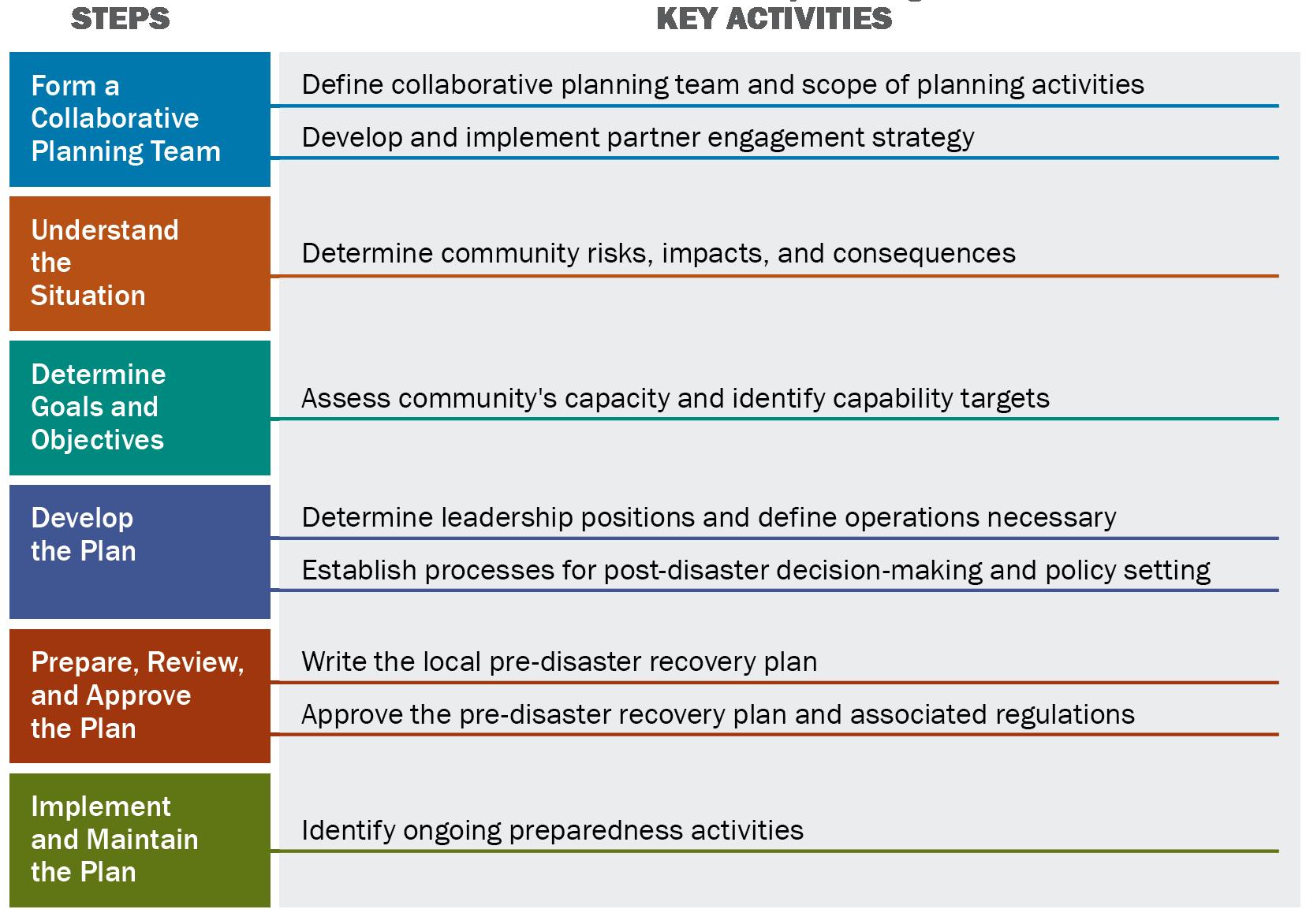
Achieving fundamental recovery preparedness, involves application of six standard planning process steps as well as several associated key recovery activities. The key activities are intended to serve as additional considerations that expand on the overarching six planning steps, as illustrated in the graphic below, and focus more specifically on the challenges and unique partnerships necessary for successful pre-disaster recovery planning. In the following chapters this guide provides guidance for applying these steps and activities in a scalable fashion in large to small communities.
The planning process introduced and discussed in this guide directly aligns with the process outlined in Developing and Maintaining Emergency Operations Plans: Comprehensive Preparedness Guide 101 (CPG 101). This guide is formatted to follow the six steps of CPG 101 and presents six standard planning steps in Chapters 7 through 12 and then presents key recommended activities that are specific to pre-disaster recovery planning efforts. Figure 1 can help to serve as a basic orienting checklist for preparing for recovery.
Additionally, the considerations in this guide reflect the best practices and general sequence of other planning guidance documents, such as the Local Mitigation Planning Handbook. Similarities among these processes are discussed throughout this guide and are outlined in Appendix A of this guide.
Completing this process results in a pre-disaster recovery plan that provides a local-level framework for leading, operating, organizing, and managing resources for post-disaster recovery activities. The plan can then be used to implement the post-disaster recovery process and carry out post-disaster planning and management of recovery activities, such as restoring housing, rebuilding schools and child care services, recovering businesses, identifying resources for rebuilding projects, returning social stability, and coordinating other community planning processes. This guide will also assist communities with the creation of other tools, such as recovery ordinances, that support recovery activities.
The primary target audiences for this guide are local government officials and planners taking an active role in organizing or managing the development of a recovery plan. Their titles can vary from community to community but generally include community, economic, urban or emergency management planners; key departmental staff and officials such as housing departments or authorities; and city managers. Secondary audiences include organizations that represent key stakeholders in the community, such as disability, cutural, social services or other interest groups. These secondary audiences might also include local partners who have responsibility, oversight, or authority (formal or informal) to manage resources, policies, programs, infrastructure, and institutions significant to the recovery process.
Successful planning for recovery requires participation by local government and community leaders, officials, organizations, and individuals who are able and ready to take responsibility for shaping the future of their community. Additionally, government and community leaders who are involved in predisaster recovery planning should have the ability to encourage participation from all segments of the community. While this guide is more extensive than that needed for leadership, a key role of the planner will be to take key materials and concepts in this guide to educate and inspire community leaders to support the development and implementation of the recovery planning. The tools and resources accompanying this guide located at www.fema.gov/plan will include an overview for use with community leadership
Regional or county level agencies, councils or commissions may also be a potential audience. This guide acknowledges that some communities have more capacity and capability to address pre-disaster recovery preparation than others do. While the primary responsibility for the planning process is at the local level, emphasis is placed on identifying partners and resource providers able to collaborate with or supplement local capacity. A regional or multi-jurisdictional effort may be appropriate where resources are more limited.
This Page Intentionally Left Blank
A number of Federal initiatives are designed to assist all levels of government, as well as businesses, individuals, and families with disaster preparedness activities. This guide is one element among these initiatives. Information on these national efforts is summarized below.
Presidential Policy Directive 8: 6 National Preparedness, describes the Nation’s approach to preparing for the threats and hazards it faces. At its core, PPD-8 requires the involvement of the whole community in a systematic effort to keep the Nation safe from harm and resilient when struck by natural disasters, acts of terrorism, pandemics, and other disasters. It directs the development of a National Preparedness Goal 7 This guide supports that goal at the local level by providing guidance to local government stakeholders for pre-disaster recovery planning.
The National Preparedness Goal defines what it means for a whole community to be prepared for all types of disasters and emergencies. The National Preparedness Goal is:
“A secure and resilient nation with the capabilities required across the whole community to prevent, protect against, mitigate, respond to, and recover from the threats and hazards that pose the greatest risk.”8
The National Preparedness Goal identifies five mission areas (Prevention, Protection, Mitigation, Response, and Recovery) to organize preparedness activities. Within these mission areas, the National Preparedness Goal defines the Core Capabilities that are necessary to prepare for the types of risks and hazards that pose the greatest risk to the security of the Nation. Core Capabilities represent the competencies necessary for the timely restoration, strengthening, and revitalization of communities impacted by a catastrophic disaster. The National Preparedness Goal, along with the NDRF and all other frameworks, was refreshed in 2015 and 2016 to address lessons learned through implementation and stakeholder feedback. A number of new guidance documents will help the public, businesses, NGOs, and all levels of government make the most of their preparedness activities. This guide supports the achievement of this goal at the local level by providing additional guidance to local governments for pre-disaster recovery planning to augment information in the National Preparedness Goal and the NDRF.
6 Presidential Policy Directive 8: National Preparedness (2015): https://www.fema.gov/learn-about-presidential-policy-directive-8
7 DHS, National Preparedness Goal (2015): http://www.fema.gov/national-preparedness-goal
8 DHS, National Preparedness Goal, p.1.
PPD-8 requires an annual National Preparedness Report that summarizes national progress in building, sustaining, and delivering the Core Capabilities outlined in the National Preparedness Goal. The intent of the National Preparedness Report is to provide the Nation—not just the Federal Government—with practical insights on Core Capabilities that can inform decisions about program priorities, resource allocation, and community actions. Since 2012, the Core Capabilities within the Recovery Mission Area have consistently emerged as areas for improvement.
Recovery Core Capabilities include Planning, Public Information and Warning, Operational Coordination, Economic Recovery, Health and Social Services, Housing, Infrastructure Systems, and Natural and Cultural Resources. Additionally, many of the Mitigation Core Capabilities, such as the incorporation of Long-Term Vulnerability Reduction and Community Resilience into the planning process, are intrinsically linked to successful pre-disaster recovery planning. This guide describes the process for delivering the Recovery Core Capabilities at the local government level. All of the Core Capabilities are discussed in more detail throughout this guide and at https:// www fema.gov/core-capabilities
The NDRF provides recommendations on the local role in preparing for and implementing recovery. It also identifies guiding principles, best practices, and expectations to enable efficient and effective recovery support and coordination for the whole community. It is built on a scalable, flexible, and adaptable coordinating structure to align key roles and responsibilities to deliver the necessary capabilities. As such, it is a valuable resource to help local stakeholders understand the practices and guidelines followed by Federal agencies in supporting disaster recovery. The NDRF also identifies strategies that can be used to inform local recovery planning. In addition to these strategies, the NDRF identifies leadership responsibilities at the local, State, tribal, and Federal levels.
The National Preparedness Goal defines eight Core Capabilities that apply to the Recovery Mission Area. The efforts of the whole community – not any one level of government – are required to build, sustain, and deliver the Core Capabilities.
• Planning – Conduct a systematic process engaging the whole community as appropriate in the development of executable strategic, operational, and/or tactical approaches to meet defined objectives.
• Public Information and Warning – Deliver coordinated, prompt, reliable, and actionable information to the whole community throug h the use of clear, consistent, accessible, and culturally and linguistically appropriate methods to effectively relay information regarding any threat or hazard and, as appropriate, the actions being taken and the assistance being made available.
• Operational Coordination – Establish and maintain a unified and coordinated operational structure and process that appropriately integrates all critical stakeholders and supports the execution of core capabilities.
• Economic Recovery – Return economic and business activities (including food and agriculture) to a healthy state and develop new business and employment opportunities that result in a sustainable and economically viable community.
• Health and Social Services – Restore and improve health and social services capabilities and networks to promote the resilience, independence, health (including behavioral health), and well-being of the whole community.
• Housing – Implement housing solutions that effectively support the needs of the whole c ommunity and contribute to its sustainability and resilience.
• Infrastructure Systems – Stabilize critical infrastructure functions, minimize health and safety threats, and efficiently restore and revitalize systems and services to support a viable, resilient community.
• Natural and Cultural Resources – Protect natural and cultural resources and historic properties through appropriate planning, mitigation, response, and recovery actions to preserve, conserve, rehabilitate, and restore them consistent with postdisaster community priorities and best practices and in compliance with appropriate environmental and historic preservation laws and Executive Orders.
A key feature of the NDRF is its use of Recovery Support Functions (RSFs) to organize Federal resources. The six RSFs (Community Planning and Capacity Building, Economic, Health and Social Services, Housing, Infrastructure Systems, and Natural and Cultural Resources) are intended to promote a flexible recovery structure at the Federal level; they are designed to support local, State, and tribal recovery structures. The NDRF also identifies factors that facilitate a successful recovery, such as resilient rebuilding, effective decisionmaking, and coordination. These factors are expanded on in Appendix C. Finally, an NDRF Overview Course is available through the Emergency Management Institute.9
Discussion Point: Mi tigation Core Capabilities
The National Preparedness Goal defines seven Core Capabilities that apply to the Mitigation Mission Areas. The first three are common Core Capabilities, shared with all mission areas.
• Planning
• Public Information and Warning
• Operational Coordination
• Community Resilience
• Long-Term Vulnerability Reduction
• Risk and Disaster Resilience Assessment
• Threats and Hazards Identification
The National Mitigation Framework10 establishes a common platform and forum for coordinating and addressing how the Nation manages risk through mitigation capabilities. Mitigation reduces the impact of disasters by supporting protection and prevention activities, easing response, and speeding recovery to create better prepared and more resilient communities.
During the recovery planning and coordination process, actions can be taken to address the resilience of tribal or local communities. The NDRF defines resilience as the ability to adapt to changing conditions and withstand and rapidly recover from disruption due to emergencies, while mitigation includes the capabilities necessary to reduce loss of life and property by lessening the impact of a disaster. Consideration should be given to integrating the National Mitigation Framework and Mitigation Core Capabilities into the structure, policies, and roles developed during the course of building a local recovery plan. A recovery plan can contain important elements to operationalize the Mitigation Core Capabilities during the recovery period. The best way to integrate mitigation activities is to link the recovery plan with the local hazard mitigation plan.
Key References to Use in Conjunction with this Guide
• Planning for Post-Disaster Recovery: Next Generation (PAS Report 576), APA
Provides extensive information and examples for organizing, planning, managing, and implementing recovery. Also includes a resource library and model recovery ordinance. https://www.planning.org/research/postdisaster/
• Community Resilience Planning Guide for Infrastructure and Buildings, NIST
Follows the same six-step planning construct used in this guide, helps bridge physical planning for infrastructure resilience with the social and organizational dimensions of the community, and provides a method to evaluate and set recovery goals for return of functioning infrastructure that can help drive recovery as well as pre-disaster mitigation. http://nvlpubs.nist.gov/nistpubs/SpecialPublications/NIST.SP.1190v1.pdf.
• Local Mitigation Planning Handbook, FEMA
Provides guidance for the required local hazard mitigation plans and links to risk assessment resources. http://www. fema.gov/library/viewRecord.do?id=7209
• Effective Coordination of Recovery Resources for State, Tribal, Territorial and Local Incidents, FEMA Provides examples and guidance for building whole-community partnerships and coordination structure at the local, State, tribal, and Federal levels to serve recovery. https://www.fema.gov/media-library/assets/documents/101940
9An independent study course called “National Disaster Recovery Framework Overview” is available at http://training.fema.gov/is/courseoverview.
aspx?code=IS-2900.
10 DHS, National Mitigation Framework (2016). https://www.fema.gov/media-library-data/1466014166147-11a14dee807e1ebc67cd9b74c6c64bb3/National_ Mitigation_Framework2nd.pdf.
This Page Intentionally Left Blank
Through years of national, State, tribal, and local experience implementing community disaster recovery efforts, several key concepts have emerged that serve as a foundation for successful pre- and post-disaster recovery planning. These concepts, discussed briefly below, are expanded upon throughout the NDRF.
First and foremost, recovery planning should be driven by the community. The NDRF emphasizes, as one of its nine principles, the concept and importance of local leadership and local primacy. Local governments, businesses, NGOs, and their community members in particular have the primary responsibility for many recovery decisions, investments, and actions. Therefore, local governments serve in the lead role in planning for and managing many aspects of community recovery. Local recovery organizational structure must have a direct nexus with local government. Local input is also needed by State, tribal, and Federal partners so that they can design programs and policies to meet local needs.11
In some cases, it may be difficult for the community to take on significant responsibility for the recovery process because of lack of capacity, resources, staff, or other factors. External partners may need to support recovery planning, outreach, communication, and implementation activities. However, this support must still be guided by community leaders, the local government, and a broad range of community stakeholders. Care must be taken to ensure that support is applied where necessary, beginning immediately after disaster strikes and continuing through challenging redevelopment decisions.
The ability of the local community to lead, manage, and implement its own recovery process is central to the success of long-term recovery. Technical assistance from outside partners can support the community’s efforts, but local vision is necessary to guide the process, and local capacity is needed to maintain momentum over the months or years required for complete recovery.
To guide recovery from Hurricanes Gustav and Ike, City of Galveston leaders created the Galveston Community Recovery Committee (GCRC), which included 330 city-appointed representatives serving on five focus groups (Economic; Environment; Housing and Community Character; Human Services; and Infrastructure, Transportation, and Mitigation). Beginning in January 2009, the GCRC worked with Federal, State, and local partners over a 12-week period to develop a recovery plan. GCRC continued to meet periodically over the next 2 years, during which, implementation of 30 of the 42 projects in the original plan commenced.
Pre-disaster planning can help communities develop the organization, leadership, and stakeholder engagement necessary to carry out a process such as the one undertaken in Galveston after Hurricane Ike. Establishing these aspects of the recovery process before the disaster increases the community’s resilience and speeds recovery efforts.
11 Appendix B of this document includes further explanation of the integration of State and local resources during recovery.
Preparedness is a shared responsibility, and it is important that planning be a whole-community activity involving individuals; businesses; faith-based and community organizations; nonprofit groups; schools and academia; media outlets; cultural, environmental, and recreational organizations; and all levels of government. Participation of all parts of the community strengthens the planning process and facilitates an equitable implementation after a disaster strikes. Broad participation is especially important because buy-in from community members and organizations is strengthened by an inclusive process. Recovery planning must also involve stakeholders and elements of local government not typically involved in emergency planning, including economic development, housing advocates and homeless organizations, insurance companies, lenders, apartment owners associations, environmental and historic preservation stakeholders, and many others. Inclusion is necessary to ensure that all aspects of a community are considered.
As a concept, Whole Community is a means by which residents, emergency management practitioners, organizational and community leaders, and government officials can collectively understand and assess the needs of their respective communities and determine the best ways to organize and strengthen their assets, capacities, and interests. By doing so, a more effective path to societal security and resilience is built. In a sense, Whole Community is a philosophical approach on how to think about conducting emergency management.
There are many different kinds of communities, including communities of place, interest, belief, and circumstance, that can exist both geographically and virtually (e.g., online forums). A Whole Community approach attempts to engage the full capacity of the private and nonprofit sectors, including businesses, faith-based and disability organizations, minority and underserved or under-represented populations, and the general public, in conjunction with the participation of local, tribal, State, territorial, and Federal governmental partners. This engagement means different things to different groups. In an all-hazards environment, individuals and institutions make different decisions on how to prepare for and respond to threats and hazards; therefore, a community’s level of preparedness will vary. The challenge for those engaged in emergency management is to understand how to work with the diversity of groups and organizations and the policies and practices that emerge from them in an effort to improve the ability of local residents to prevent, protect against, mitigate, respond to, and recover from any type of threat or hazard effectively.12
Many local governments have mutual aid agreements with neighboring tribes. These governments and tribes look to one another for assistance on a day-to-day basis for routine emergencies, and would also look to one another after a disaster. In Florida, for example, the Seminole Tribe of Florida has mutual aid agreements with at least five other counties that are outlined in State, local, and tribal laws and policies.
Keeping these pre-existing agreements in mind, local recovery planning teams should include representatives from neighboring tribes.13
12 For more information about the Whole Community approach, see FEMA’s A Whole Community Approach to Emergency Management: Principles, Themes, and Pathways for Action https://www.fema.gov/media-library-data/20130726-1813-25045-0649/whole_community_dec2011__2_.pdf.
13For more information about tribal-local government mutual aid agreements, see https://ppines.legistar.com/LegislationDetail.aspx?ID=2229607&GUID=4F5DA8FAB5C5-44F3-87AE-091765AE800C&Options=&Search=.
As emphasized in the U.S. Department of Justice’s An ADA Guide for Local Governments, 14 recovery planning, both before and after a disaster, must include people with disabilities and others with access and functional needs from the beginning to prevent delays or exclusion in post-disaster recovery efforts. For example, affected populations may need to relocate, and including these stakeholders in pre- and post-disaster planning processes helps to better integrate their needs into plans and recovery actions. Maximum efforts should be made to ensure that community members whose involvement has historically been low are encouraged to participate. Youth, for example, can often convey the preparedness message more strongly than others in the community. Emphasis should also be placed on including seniors, individuals with disabilities, and others with access and functional needs15; those from religious, racial, and ethnically diverse backgrounds; and people with limited English proficiency. To ensure full and meaningful participation, there must be physical, programmatic, and communication access for all those potentially affected by a disaster.
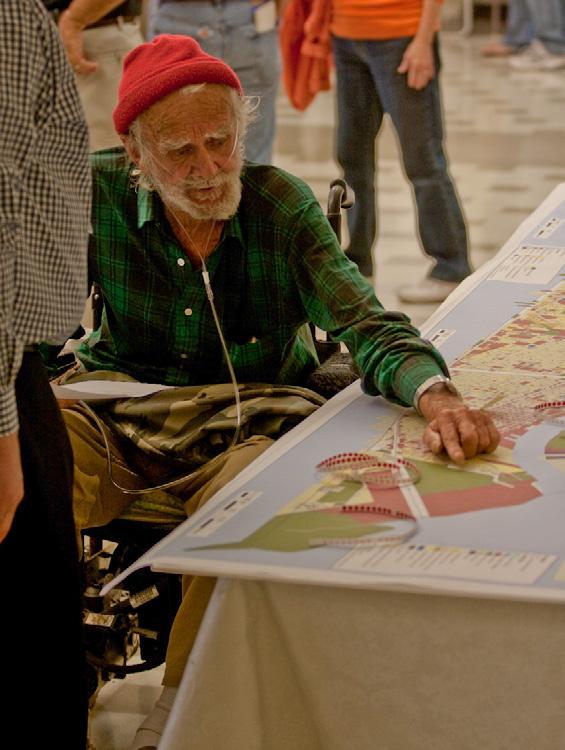
Galveston, TX: Community resident participates in a recovery planning session, learning about where he lives, risk and recovery issues.
Partnerships with regional, State, tribal, and Federal agencies and organizations are important for recovery planning and post-disaster recovery because disasters can stress even the most prepared or equipped local community, and partnerships offer a multitude of mutually beneficial resources. Mutual aid agreements between local governments, councils of governments, tribes, and regional planning entities are one way partnerships can help alleviate the burden of recovery. Others include technical assistance from universities, financial assistance from NGOs and charitable organizations, various other assistance from existing long-term recovery groups, and volunteer assistance from Volunteer Organizations Active in Disasters (VOAD).
Disasters can disproportionately affect some members of the community, including low-income, aging, functional and access needs, and minority populations. These groups are more likely to be displaced and have more limited access to resources, mobility issues, or difficulty participating or being represented in recovery planning and community activities. The planning process should evaluate the risk of these groups and their likelihood of displacement and establish a strategy for basic communication, as well as a plan for ensuring equal participation in post-disaster recovery planning and decisions.
For example, housing construction costs and replacement home values are likely to increase as a result of increased demand and reduced supply in a significant disaster. This can disproportionately affect the ability of the low- or fixed-income residents to find adequate and safe housing. Hazard mitigation strategies used after a disaster, such as buyouts, can also have the effect of reducing the stock of affordable housing if housing redevelopment plans are not adequately addressed. The community’s affordable and fair housing plans should be coordinated with its recovery plan to ensure that all residents can participate and are served in recovery and that workforce housing can be replaced. For communities receiving Community Development Block Grant funds, the Consolidated Plan can also address recovery and resilience issues.
Housing support or mitigation programs should take care to ensure equal access where possible. In some cases, resources from Federal, State, or non-governmental agencies can be used to augment housing or mitigation programs to encourage the participation of these groups or assist in the redevelopment of affordable housing in safe areas.
14U.S. Department of Justice, An ADA Guide for Local Governments: Making Community Emergency Preparedness and Response Programs Accessible to People with Disabilities (n.d.). http://www.ada.gov/emerprepguideprt.pdf.
15 People with disabilities and other people with access and functional needs must be able to access the same programs and services as the general population. Providing access may require including modifications to programs, policies, procedures, architecture, equipment, services, supplies, and communication methods.
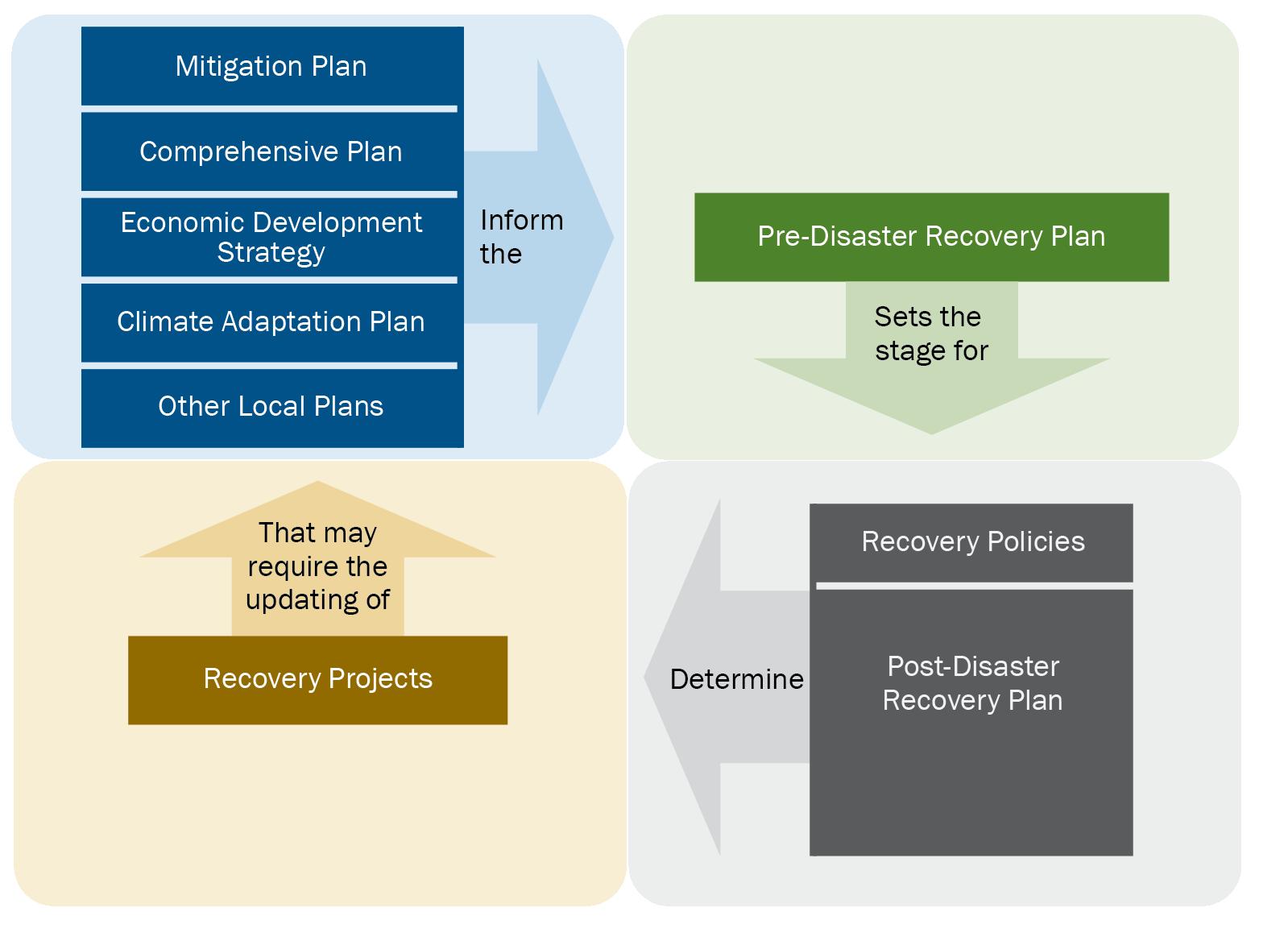
The planning process should incorporate the results of other applicable planning processes in the community and region. Hazard mitigation plans, comprehensive plans, housing plans, and other planning documents can define a wide range of goals for the community and represent shared priorities of community members. Linking recovery planning to build on the community’s existing plans helps inform recovery planning efforts and capitalize on past planning efforts so as not to “reinvent the wheel.” Additionally, linking recovery planning with other applicable planning processes helps to incorporate community perspectives. Recovery activities can then in turn be used to inform revisions to the community’s other plans. Including the whole community in the pre-disaster recovery planning process means including all sectors of the community.
Many existing Federal programs relate to disaster recovery. While many of these programs are voluntary for communities, the requirements for participation could benefit communities when they develop their predisaster recovery plan. For example, the Economic Development Administration requires communities to produce Community Economic Development Strategies, and the Department of Health and Human Services has preparedness requirements for communities that relate to disaster recovery. A pre-disaster recovery planning process would build upon these existing efforts.
Figure 2 outlines the relationship between existing plans, like those mentioned above, and the pre-disaster recovery plan. In addition, the figure explains how these existing plans and the pre-disaster recovery plan are used after a disaster to support the development of post-disaster recovery plans, policies, and projects.
16 Many of these voluntary programs have grants or other funding opportunities associated with them that can be used by communities to support recovery-focused initiatives.
A key goal of both hazard mitigation and recovery is increasing resilience, defined in the National Preparedness Goal as “the ability to adapt to changing conditions and withstand and rapidly recover from disruption due to emergencies.” Although these two activities differ in many respects, this shared objective of increased resilience allows mitigation and recovery planning to reinforce one another and leverage greater benefits within the development of plans, and programs or projects. Because both mitigation and recovery planning can be carried out pre-disaster, there is generally ample time to coordinate activities and promote more widespread attention to resilience. Recovery planning can support hazard mitigation and resilience building by providing a post-disaster mechanism for implementation and integration into the roles, processes, and decisions that occur in the complex recovery environment. Additionally, much of the analysis and information involved in the development of mitigation plans can be used to inform the pre-disaster recovery planning effort. (Note that while recovery planning can support hazard mitigation, the intent of the pre-disaster recovery planning process is not to add to the community’s mitigation plan.)
The pre-disaster recovery planning process benefits from and builds on hazard mitigation as:
• The mitigation planning process identifies local hazards, risks, exposure, and vulnerability;
• Implementation of mitigation policies and strategies reduce the likelihood or degree of disaster-related damage, decreasing demand on resources post-disaster;
• The process identifies potential solutions to future anticipated community problems; and
• Mitigation activities increase public awareness of the need for disaster preparedness.
Pre-disaster planning efforts also increase resilience by:
• Establishing partnerships, organizational structures, communication resources, and access to resources that promote a more rapid and inclusive recovery process;
• Describing how hazard mitigation underlies all considerations for reinvestment;
• Laying out a process for implementing activities that will increase resilience; and
• Increasing awareness of resilience as an important consideration in all community activities.
Reviewing the community’s hazard mitigation plan is a good way to prepare for the pre-disaster planning process. The hazard mitigation plan identifies likely hazards and can be used to determine priority activities and policies to be undertaken as part of disaster recovery, when resources and opportunities are available to rebuild in a more resilient fashion. The local jurisdiction may have its own mitigation plan or may have participated in a multi-jurisdictional mitigation plan. The State Hazard Mitigation Officer can be contacted if there are difficulties locating a plan.
The State hazard mitigation plan is also a good resource. Much like the local or multi-jurisdictional plan, the State plan will identify potential hazards as well as State hazard mitigation goals, priorities, and funding sources.
FEMA developed the Local Mitigation Planning Handbook (2013) as step-by-step guidance for developing a mitigation plan. Many of the steps in the handbook apply to recovery preparation as well.17
In many ways, the process outlined in this guide aligns closely to the steps contained in the Local Mitigation Planning Handbook. The Key Activities presented in later sections of this guide and the tasks associated with those Key Activities facilitate close coordination and collaboration across these two planning processes. Appendix A compares the process outlined in this document and the process outlined in the Local Mitigation Planning Handbook.
16The handbook is available at https://www.fema.gov/media-library-data/20130726-1910-25045-9160/fema_local_mitigation_handbook.pdf.
Building Resilience into the Recovery Process – The National Mitigation Framework
Recovery offers a unique opportunity to reduce future risk. Following any disaster, recovery efforts can be leveraged to implement solutions that increase community resilience in the economic, housing, natural and cultural resources, infrastructure, and health and social services and government sectors. Well planned, inclusive, coordinated, and executed solutions can build capacity and capability and enable a community to better manage future disasters.
The National Mitigation Framework establishes a common platform and forum for coordinating and addressing how the Nation manages risk through mitigation. Mitigation reduces the impact of disasters by supporting protection and prevention activities, easing response, and speeding recovery to create better prepared and more resilient communities.
The mitigation and recovery mission areas focus on the same community systems—community capacity, economic, health and social services, housing, infrastructure, and natural and cultural resources—to increase resilience. Crossmission area integration activities, such as planning, are essential to ensuring that risk avoidance and risk reduction actions are taken during the recovery process. Communities have developed hazard mitigation plans that outline strategies and priorities to further community resiliency through mitigation. Integrating mitigation actions into pre- and post-disaster recovery plans also provides systematic risk management after a disaster, with effective strategies for an efficient recovery process.
Recovery projects that increase resilience can be implemented in any of the community systems outlined above. For instance, housing and infrastructure projects may increase resilience by rebuilding housing to meet new building and accessibility codes that minimize future damage or relocating critical infrastructure out of hazardous areas. Other resilience strategies could focus on diversifying the economy and bringing in sustainable industries or helping community organizations to increase the resilience of all populations through preparedness efforts. Using innovative solutions to meet recovery needs is an important consideration in developing recovery strategies. State, tribal, territorial, and local communities can look to a wide range of organizations, such as the Rockefeller Foundation or various university centers and research institutes, for help in increasing resiliency.
Lessons learned during the recovery process also inform future mitigation actions and pre-disaster recovery planning. Linking recovery and mitigation breaks the cycle of damage-repair-damage resulting from rebuilding after disasters without considering resilience.
Thorough, comprehensive, and community-supported pre-disaster recovery plans allow a locality to more easily and effectively begin the recovery process immediately after a disaster. The development and documentation of recovery planning goals, including the partnerships necessary to achieve those goals, help recovery stakeholders understand existing capabilities and gaps. Equally important is the development of realistic goals. Although a community may have its own resources or partner resources at its disposal, the resources available to recover effectively are finite. Goal development in both the pre-disaster and post-disaster environments needs to account for the availability of resources so that they may be leveraged strategically to achieve desired outcomes. Appendix F includes a template that can be used to document existing capabilities as they relate to recovery goals and the partnerships and resources in place (or not currently in place) to achieve those goals.
In addition to determining capability gaps, using a goal-oriented process for pre-disaster recovery planning helps to build consensus among the involved stakeholders. Establishing common, mutually agreeable, strategic goals early in the planning process reduces conflicts when the plan is implemented in a postdisaster setting.
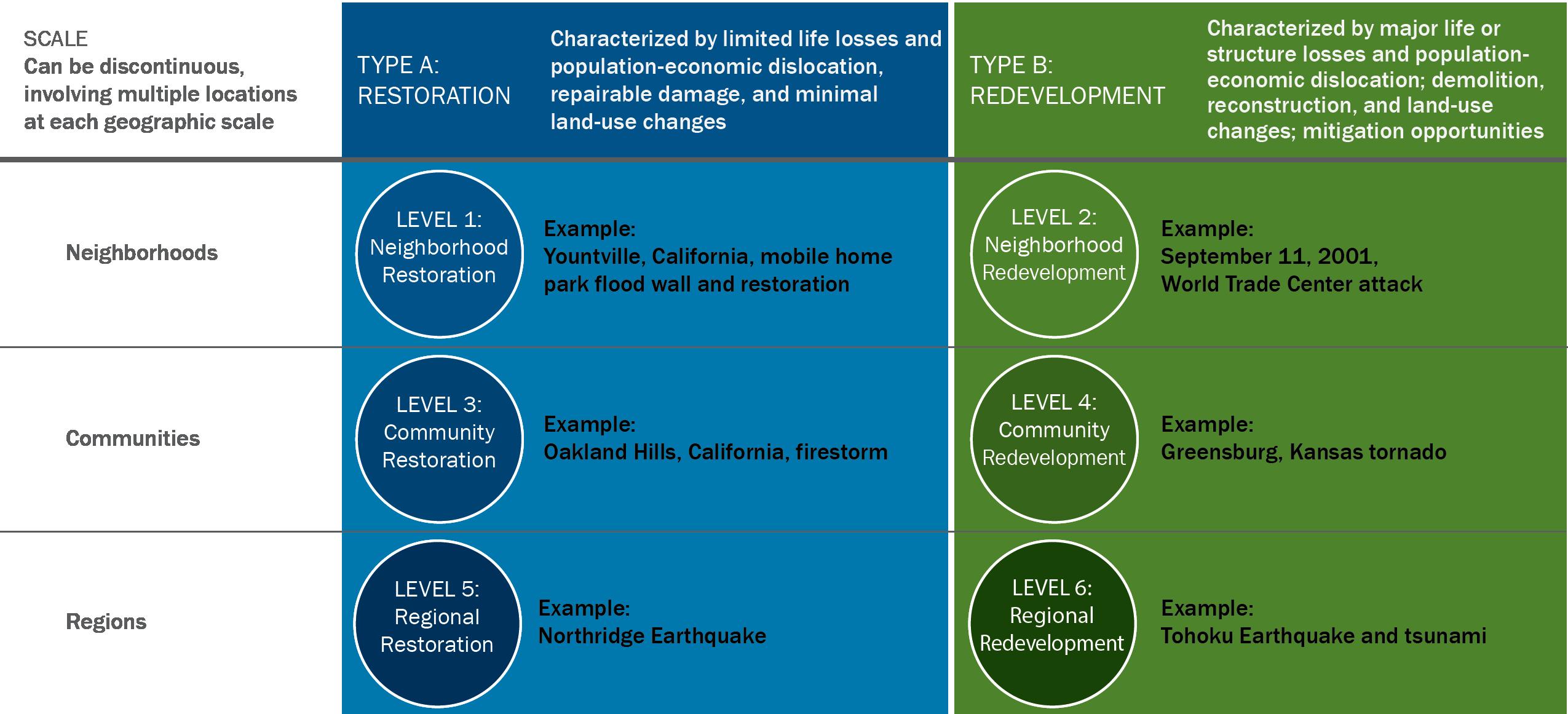
Recovery plan components should be scaled to meet both the capacity of the community to manage its own recovery process and the level of risk the community faces. Communities that have minimal resources to manage recovery but many vulnerabilities and risks will want to emphasize partnership-building in the planning process and seek assistance from State or regional bodies. Communities with a high capacity to manage recovery will want to emphasize local roles and responsibilities in facilitating the recovery process and may be in a position to develop a robust recovery plan.
Pre-disaster recovery plan components such as recovery goals and policies, administrative structure, and activation of personnel (see Appendix E) will vary depending on the capacity of the community and the partnerships needed or already in place. Operational guidance included in the pre-disaster recovery plan should also consider the different phases of disaster management, transition from or coordination with response coordination structures, and identify times when recovery operations peak and when they begin to wind down. An example of a scalable recovery system is shown in Figure 3
Communities with limited capacity to plan for recovery and with low risk factors for disasters can undertake certain basic planning activities that can lay the groundwork for recovery planning, and require little staff time or funding. Examples of basic planning activities include:
• Committing to risk reduction and risk management
• Designating a point-person for recovery planning (ideally, someone who understands both emergency management and community planning)
• Identifying vital facilities that, if damaged or destroyed, would have the strongest consequences to the community (e.g., facilities used by the public, facilities that serve critical economic functions)
• Developing a public engagement strategy that is inclusive of the entire community’s population (this also includes determining the best ways to communicate)
• Identifying existing recovery stakeholders (local agencies or organizations that would be critical to facilitate the recovery process after a disaster)
• Identifying outside partnerships to build resilience (State agencies or other organizations that have resources to support local recovery after a disaster)
• Identifying training programs that could help build the community’s capacity to plan for recovery (these may include training offered by the State or independent study courses offered by the Emergency Management Institute)
• Identifying key post-disaster responsibilities of local government and officials, not only for immediate rebuilding, such as permitting requirements, but also for establishing a post-disaster strategy for interim and long-term recovery
Basic planning activities generally involve the identification of people, partnerships, and programs that can support the community’s recovery planning process.
Alternatively, communities that do have the capacity needed to plan for recovery, or communities facing higher risk factors for disasters, can undertake more comprehensive planning activities in addition to the basic activities listed above. Examples of comprehensive planning activities include:
• Developing recovery priorities based on existing plans and initiatives already in place (assessing known planning goals that should be incorporated into recovery planning)
• Establishing a Local Disaster Recovery Manager (LDRM) position, office, and/or set of functions
• Conducting a vulnerability analysis (determining not only which facilities are critical, but how vulnerable they are to disaster impacts and why they are vulnerable)
• Conducting an assessment of recovery capacity (reviewing resources available to support recovery after a disaster and where there are gaps)
• Developing and adopting a recovery ordinance (a formal ordinance that describes how the community will undertake the recovery process after a disaster)
• Developing a hazard mitigation plan (required by FEMA for most disaster assistance);
• Developing a formal, stand-alone pre-disaster recovery plan
• Formalizing mutual aid agreements with other jurisdictions to support long-term recovery needs
• Integrating resilience strategies into economic development, housing, infrastructure improvement, historic preservation, health policies, and other regional or community programs and plans
Comprehensive planning activities require resources such as staff and possibly funding (though it is noteworthy that developing an approved hazard mitigation plan can open the door to future funding opportunities, which can be used to implement mitigation actions).
The pre-disaster recovery planning process should address all of the Core Capabilities under Recovery and Mitigation (see Section II.C of this guide for a list of Recovery Core Capabilities and Mitigation Core Capabilities). Recovery activities may continue for months or years after a disaster, and the organizational structure for overseeing recovery needs to be flexible and durable so the appropriate responsibilities can be carried out. The recovery structure will need to change and adapt to the changing priorities and goals of the community over the course of the many months and years of recovery operations.
A truly holistic recovery process must include activities that support building community resilience and encouraging sustainable development. This concept can be implemented in recovery planning efforts through coordination with mitigation planning. Mitigation is a sustained action eliminating or reducing potential effects of hazards, and mitigation planning attempts to identify those hazards, reduce any impacts from those hazards, and identify potential solutions. Thus mitigation planning, pre-disaster recovery planning, and other types of planning have parallel perspectives with overarching recovery goals of:
• Increasing the speed of community recovery;
• Effectively using resources; and
• Increasing opportunities for community betterment that take into account and balance all community populations, needs, and risks.
A successful mitigation program and other pre-disaster planning can set the stage for a more sustainable and resilient community by positioning the community to be able to adapt to changing conditions, identify future natural and human-related disaster threats and hazards, and withstand and rapidly recover from disruption due to future emergencies. By addressing potential risks and developing solutions, policies, and action statements, communities become both more resilient and sustainable.
The Community Rating System (CRS) was implemented in 1990 through the National Flood Insurance Program (NFIP) to recognize and encourage activities in communities that work to exceed the minimum standards of the NFIP. Through the CRS, communities that take actions that meet the goals of the program are entitled to discounted rates for flood insurance premiums. Many of the resilience and sustainability programs that communities either already engage in, or seek to engage in as a part of recovery planning, complement the activities highlighted by CRS. By conducting planning for recovery in coordination with mitigation and other resilience-focused programs, communities can see a tangible predisaster benefit through CRS.16
16 For more information on the NFIP CRS, see https://www.fema.gov/national-flood-insurance-program-community-rating-system.
This Page Intentionally Left Blank
Response and recovery are fundamentally different and separate elements of disaster management, but they are closely linked. Initially, when disaster strikes, response takes the spotlight. Emergency responders provide the most urgent and immediate assistance to the disaster-impacted communities, including food, water, shelter, debris clearance, and medical attention. Response operations are typically short-term, and usually focused on issues of life safety and property protection. However, recovery addresses the short-, intermediate-, and long-term needs of an impacted community with a focus on rebuilding for resilience. Recovery begins during the response period when information is gathered through damage assessments, ensuring an early strategic focus on recovery. Coordination with response operations is essential to ensure that recovery begins immediately and minimizes any potential negative impacts on the recovery process.
CPG 101 serves as the foundation for all emergency planning. Because the process presented in this guide is an expansion of the CPG 101 process, the Key Activities for pre-disaster recovery planning build on the same concepts from response planning. Examples of similar fundamentals between the two processes include a communitybased and inclusive planning process; analytical problem-solving processes; the consideration of a variety of hazards, risks, and vulnerabilities; flexibility; and the identification of goals. Furthermore, effective plans for both response and recovery delegate responsibility and authority, and contribute to overall community preparedness ahead of disasters.
Discussion Point: Differences in Response and Recovery Planning Goals
A few high-level (and hypothetical) examples of the fundamental differences in response planning and recovery planning goals are listed below. Notice that the goals in response planning are short-term, whereas the goals in recovery planning are long-term.
Disaster Impact on Local Water Supply
• Potential Response Goal: Deliver emergency water supply to affected residents.
• Potential Recovery Goal: Address infrastructure or natural resource impacts to return and enhance the resiliency of the water supply in the long-term.
Disaster Impact on Local Hospital
• Potential Response Goal: Relocate patients to other hospitals and establish temporary, emergency medical care facility.
• Potential Recovery Goal: Establish facilities within the community, or use regional facilities, to reestablish a sustainable medical care system.
Disaster Impact on Central Business District
• Potential Response Goal: Inspect and condemn damaged properties.
• Potential Recovery Goal: Assist small businesse s to resume operations and redevelop a resilient Central Business District.
This Page Intentionally Left Blank
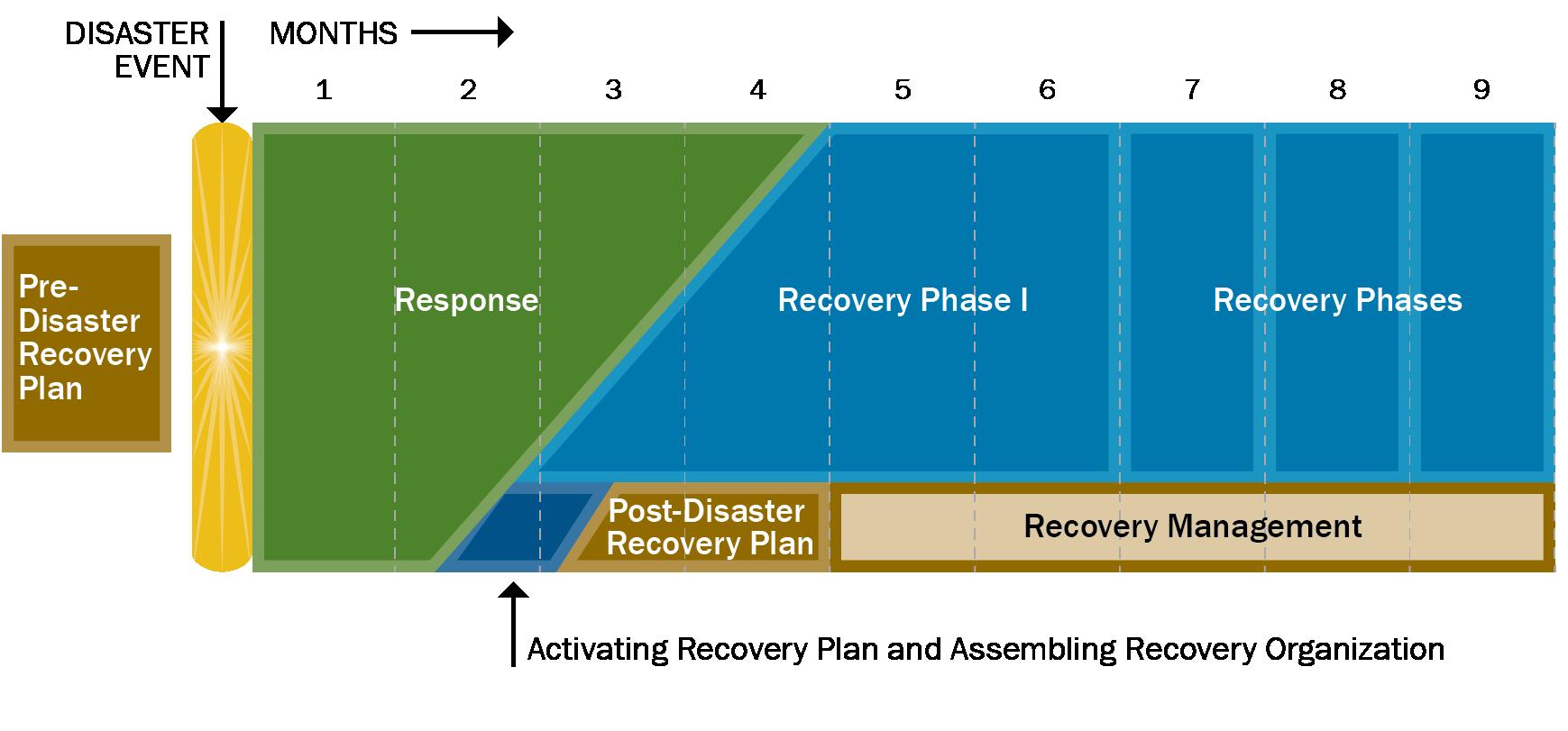
A variety of steps can be taken before a disaster occurs to plan post-disaster response. Creating a common understanding of needs and potential challenges, institutional and community disaster awareness, and risks and vulnerabilities prior to a disaster, all help facilitate the post-disaster recovery process. Additionally, establishing leadership and outside support (partnerships), reaching consensus on priorities, and accomplishing other planning activities through a pre-disaster process will benefit the community after a disaster. If they plan in advance, communities greatly reduce, or in some cases eliminate, the need to address these activities in the wake of a disaster, and are better prepared to begin timely and efficient management of impacts and long-term consequences shortly after disaster strikes. Pre-establishing consensus on roles and responsibilities, leadership, policies, and processes enables the local government, and community at large, to streamline implementation of the recovery process.
As shown in Figure 4, the period of organizing for post-disaster recovery and carrying out the post-disaster recovery planning process must start early as the community transitions to recovery efforts. This period can be shortened if a pre-disaster plan is in place that defines the steps that are expected to occur, how they occur, and who will be responsible for them.
During the planning process, common issues to consider include timeline and transition among functions and personnel. It is recommended that planners address challenges in early recovery, establish the interface between response and recovery, and determine when and who will initiate post-disaster recovery planning and actions. For example, emergency managers and recovery planners often have different perspectives regarding the appropriate scope of recovery activities, which can lead to coordination conflicts after a disaster. By involving emergency managers in the pre-disaster planning process, recovery planners can gain a better understanding of how their methods and goals differ from those of emergency response management, allowing both processes to operate more smoothly.
Table 1, which is also included in the NDRF, outlines the critical tasks associated with planning for recovery both pre- and post-disaster. While the process outlined in this guide discusses the tasks associated with all types of pre-disaster planning activities (i.e., strategic, operational, and tactical planning), it is important to remember that successful pre-disaster recovery planning will speed post-disaster planning and activities. Therefore, post-disaster planning tasks are equally important considerations during pre-disaster planning.
For post-disaster planning process guidance, FEMA’s Long-Term Community Recovery Planning Process: A Self-Help Guide17 describes and discusses a range of critical activities, including assessing needs, assigning leadership, securing outside support, and reaching consensus. Reviewing the Self-Help Guide to gain a complete understanding of what a post-disaster planning process entails is highly recommended as preparation for pre-disaster planning because successful pre-disaster planning prepares a community to act quickly and efficiently and apply a postdisaster planning process. Critical planning tasks are shown in Table 1
Driven by policy, establishes planning priorities
• Develop a mitigation plan that establishe s post-disaster risk reduction priorities and policies to guide post-disaster recovery and redevelopment.
• Establish pre-disaster priorities and policies to guide recovery and reinvestment across the other Recovery Core Capabilities.
• Develop an inclusive and accessible whole c ommunity public engagement strategy.
• Evaluate current conditions; assess risk, vulnerability, and potential community-wide consequences.
• Integrate recovery and mitigation goals and policies into other Federal, State, regional, and community plans.
• Establish priorities and identify opportunities to build resilience, including sustainable development, equity, community capacity, and mitigation measures.
• Establish clear leadership, operational coordination, and decision-making structures at the local, State, tribal, and Federal levels
• Develop pre-disaster partnerships to ensure engagement of all potential resources.
Describes roles and responsibilities, focuses on coordinating and integrating the activities of the whole community
• Identify and engage whole communit y s takeholders, including the general public, c ommunity leaders, faith-based organizations, nonprofit organizations, private-sector entities, and health providers (including behavioral health).
• Identify limitations in community recovery management capacity and the means to supplement this capacity, such as training and education, and make it available to all s takeholders.
• Determine roles, responsibilities, and resource s of whole community partners.
• Establish continuity of operations plans to ensure essential recovery services can be delivered during all circumstances.
Identifying specific projects and managing resources
• Establish specific local procedures, requirements, regulations, or ordinances to address specific, expected post-disaster recovery actions.
• Establish specific plans, contracts, and resources for tactical activities expected postdisaster (e.g., debris management, recovery management, temporary housing, building permitting).
• Evaluate community conditions, re-assess risk, evaluate needs, and forecast future needs and trends.
• Set goals and objectives: short-term, intermediate, and long-term; engage the public in the process.
• Identify opportunities to build in future resilience through mitigation.
• Consider standards for sustainable, universally accessible, healthy community design and c onstruction that also integrates mitigation and long-term resilience building activities.
• Ensure policies are inclusive of the whole community, including people with disabilities and others with access and functional needs.
• Organize, build on, and adapt as necessary, pre-existing plans and priorities, including predisaster recovery and mitigation plans.
• Use a community-driven and locally managed process designed to promote local decisionmaking and ownership of the recovery planning and implementation effort.
• Work collaboratively with all groups of people affected by the disaster to promote inclusive and accessible outreach to their communitie s and address issues relevant to them.
• Ensure inclusion and encourage participation of individuals and communities that may require alternative and/or additional outreach support.
• Keep the public informed on all aspects of recovery and encourage collaboration acros s partners.
• Implement a coordination structure and build partnerships among local agencies, jurisdictions, and State, tribal, and Federal governments.
• Develop tools and metrics for evaluating progress against set goals, objectives, and milestones.
• Identify, adapt, implement, and manage actions, procedures, programs, requirements, organizations, regulations, ordinances, and policies to address specific needs
• Identify specific projects in areas of critical importance to the State, region, or community’s overall recovery.
• Provide well-defined activities and outcomes, including schedules and milestones, aimed at achieving recovery.
This Page Intentionally Left Blank
Addressing disaster recovery activities is most effective when the whole community has thoroughly considered and discussed the inclusive recovery process before a disaster has even occurred. Discussions as to how a community is going to handle disaster recovery must be organized and structured. By following CPG 101 and subsequently the Key Activities outlined in the following sections of this guide, communities will be able to create a written pre-disaster recovery plan that can aid them in effective management of recovery operations after a disaster. This guide outlines pre-disaster activities according to the six standard planning steps with nine Key Recovery Activities outlined in Figure 5. The guidance for each of the Key Activities is intended to support and build upon the six steps and information included in CPG 101.
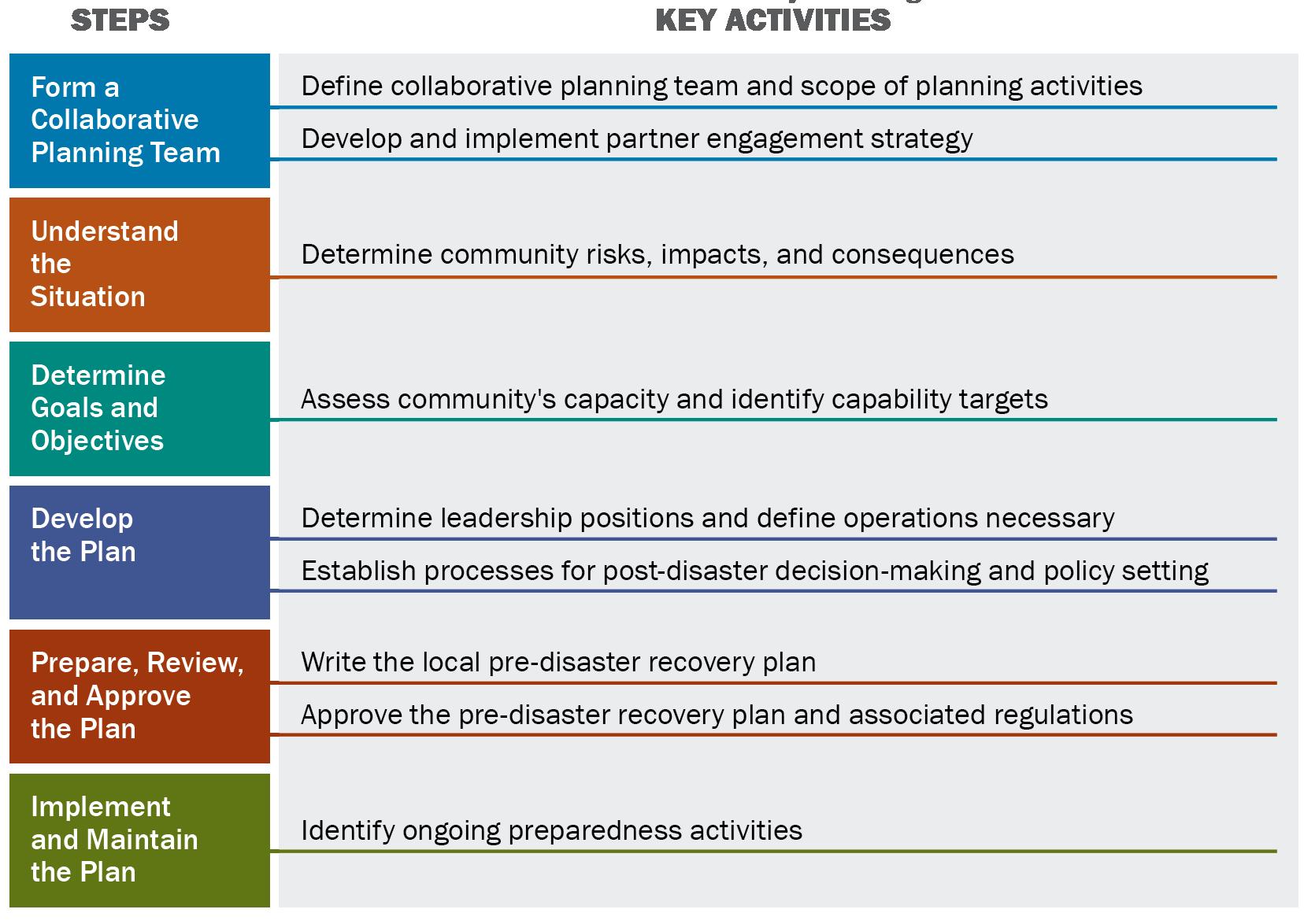
The Local Pre-Disaster Recovery Planning Key Activities Checklist can be found in Appendix G. The checklist summarizes the detailed activities in this guide and can be used to track progress.
A general timeline is provided in the following descriptions of each planning activity. These timelines provide estimated schedules that will vary by community and are intended to serve as an example only. Some Key Activities must be completed sequentially and others can be done concurrently. Because every community is unique, the amount of time it takes to work through each Key Activity may vary. Additionally, Figure 6 summarizes the individual timelines and displays the overall schedule for a typical pre-disaster recovery planning process.
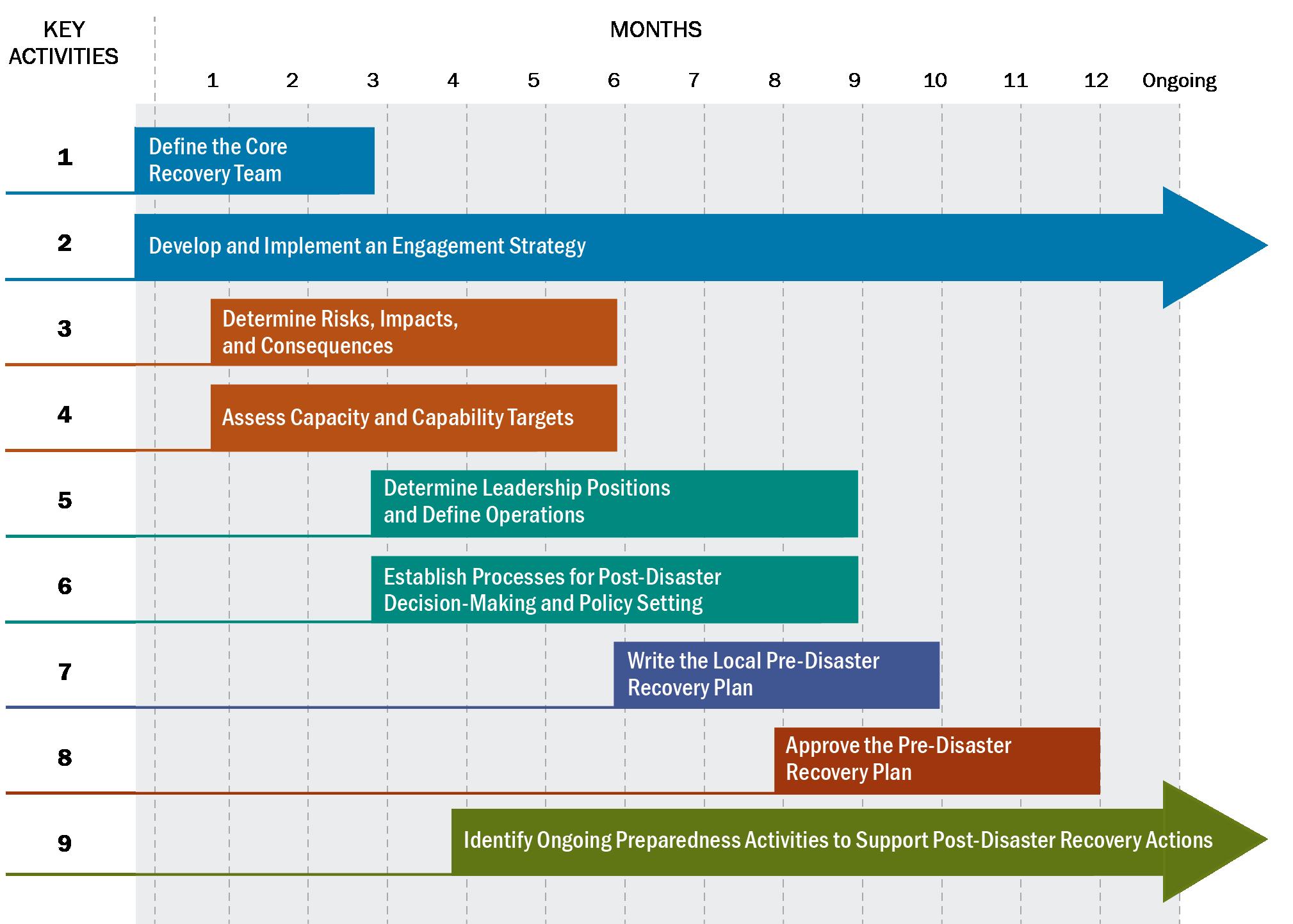
As outlined in CPG 101, successful planning is launched using a team made up of a variety of partners from the whole community. In Key Activities One and Two below, planners will identify the collaborative recovery planning team and partners, outline and scope the planning activities as they relate to recovery, and establish a process for engaging recovery-specific stakeholders.
KEY ACTIVITY ONE: DEFINE THE COLLABORATIVE RECOVERY PLANNING TEAM AND SCOPE OF PLANNING ACTIVITIES
Timeline: Beginning of Planning Effort to Month 3
A collaborative recovery planning team leads the recovery planning process and steers the community through the steps needed to be prepared for recovery.
Identify Collaborative Recovery Planning Team Representatives
Identify collaborative recovery planning team representatives from jurisdiction departments/agencies that have roles in community planning, development, recovery sectors, and disaster recovery.17 It is important to impress upon potential participants that the recovery planning process is not intended to be limited to those typically involved in emergency planning. Local agencies or departments well-positioned to participate in the collaborative planning team may include:
• Local elected or appointed officials (e.g., Mayor, City/County Manager)
• Emergency Management and Public Safety (Police/Fire/Emergency Medical Services)
• Community Planning
• Zoning and Building Inspection
• Finance and Administration
• Floodplain Management
• Public Works
• Education
• Community Development or Redevelopment Agencies
• Economic Development (local and regional)
• Environmental Protection
• Historic Preservation Boards or Commissions
Pre-Disaster Recovery Planning Guide for Local Governments
• Museums, Cultural Institutions, Libraries, and Archives
• Health and Social Services
• Americans with Disabilities Act (ADA) Coordinators
• Housing
• Transportation
In addition, members of the team that developed the community’s hazard mitigation plan or comprehensive plan are valuable participants. Figure 7 provides a basic depiction of how local community planning stakeholders and external community planning supporters work together.
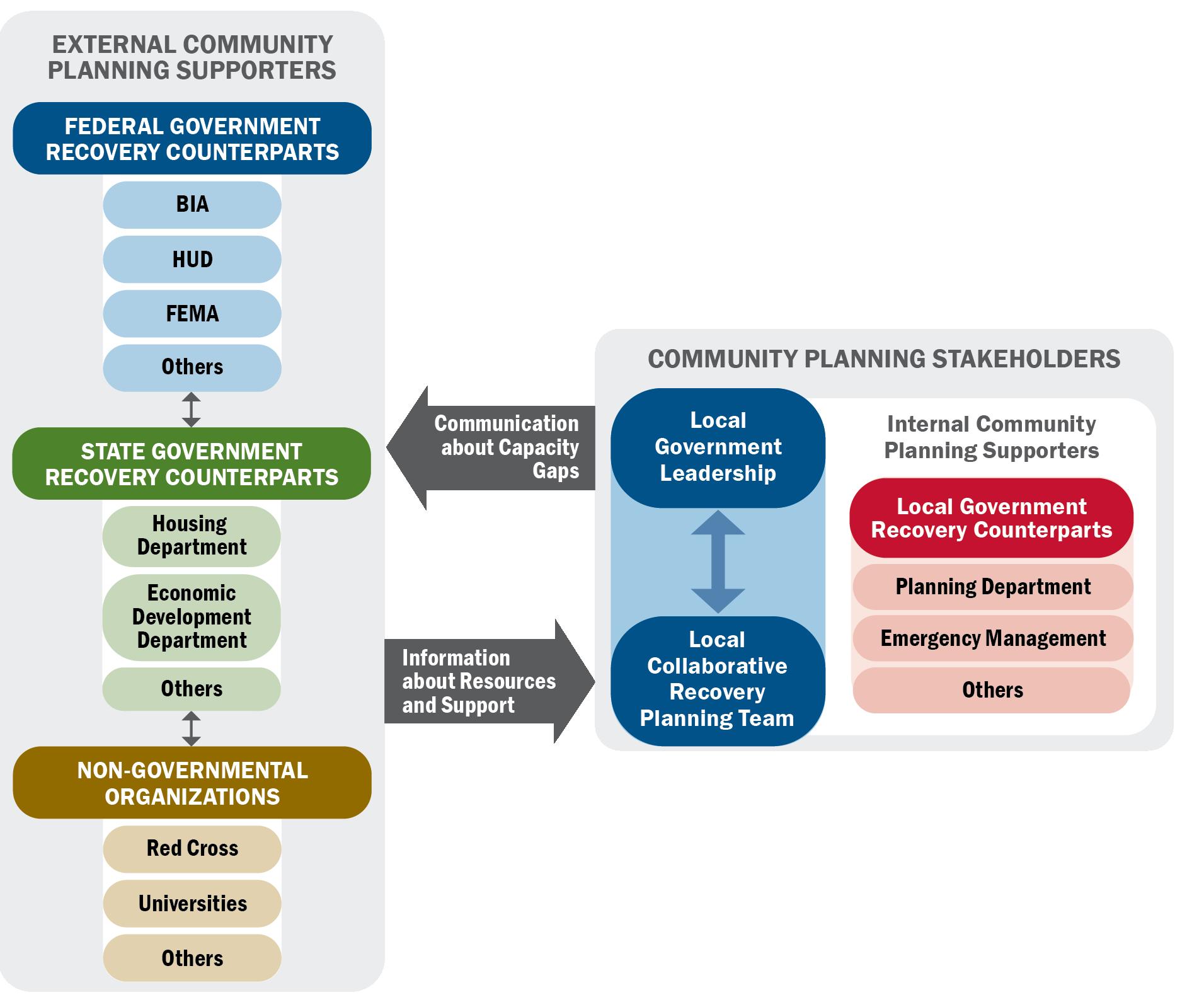
Developing strong participation and ownership by all parts of the community helps build the resilience needed for a community to act quickly and in a coordinated fashion following a disaster. Many organizations that should participate in the planning process will take on key roles working hand-in-hand with local government or with one another. Planning partners may include NGOs, or business leaders that work inside or outside of the area covered by the recovery planning process, that have responsibilities or authority relevant to some aspect of community development, social services, economic development, business, or disaster recovery, and can assist with data collection or analysis, provide advice on planning, policy development, or other technical assistance. Many other entities, such as NGOs, advocates for those with disabilities, housing and homeless advocates, environmental advocates, and business and community organizations can provide input for policy development and other technical assistance during the recovery planning process. These organizations also bolster the community’s capacity to recover by providing additional expertise or other support needed both to plan for and implement recovery activities. Neighboring communities and governments, neighboring tribes, and regional planning organizations should also be considered as planning partners.
Identification of team members should promote the concept of making recovery planning an inclusive process. It is important to include as planning partners those who serve as advocates for the needs of children, seniors, those with disabilities and others with access and functional needs, those with limited English proficiency, and those from historically underserved and culturally sensitive populations. This ensures that the collaborative recovery planning team includes voices from a wide range of perspectives and fosters wide-ranging support for both pre-disaster plan development and post-disaster plan implementation. Examples of organizations that may have a role in supporting recovery efforts include:
• Chambers of commerce
• Educational and medical institutions
• Housing non-profits
• Faith-based organizations
• Realty organizations / associations of realtors
• Power and utility companies/cooperatives and any operator of critical infrastructure
• American Red Cross
• Community Development Finance Institution
• Independent national, regional, and local social services delivery agencies
• Fraternal organizations
• Independent charities
• Volunteer recruitment groups
• Child-focused non-profits/experts
• Private-sector trade associations
• Apartment owner associations
• Neighborhood partner networks
• Homebuilders associations
• State Insurance Boards/Commissions
• Parks and recreation areas
• Historic sites, museums, and other historic preservation organizations
• Organizations that represent traditionally underserved populations
• Disability advocacy organizations
• Existing long-term recovery group(s) (This entity may represent multiple NGOs active in a community that focus on disaster recovery. See your State VOAD contact for information).
After NGOs and other community organizations are identified for partnership, formal agreements with organizations that may provide or support local services after a disaster should be considered. Care should be taken to align NGOs and other organizations with the appropriate agencies or departments that serve similar functions.
Before any in-depth planning can begin, the planning team must carefully define the geographic area to be served by recovery preparedness activities. If the community has limited resources, it may be beneficial to consider a multi-jurisdictional recovery plan that covers multiple towns and cities or is county-wide. This would be particularly appropriate if the community is covered by a multi-jurisdictional hazard mitigation plan. Regional or multi-jurisdictional planning can help establish common processes as well as facilitate mutual aid for longer-term recovery activities. Planners need to consider the current mitigation plans and hazard information when determining geographic scope.
The geographic scope and/or multi-jurisdictional partners may need to be revisited as further hazard analysis occurs (e.g., hazards cross boundaries, strong economic linkages may be affected). Regardless of multijurisdictional planning, local governments, individually, may still need to establish specific roles, policies, requirements, and legal mechanisms but could do so within the framework of the regional or multijurisdictional effort.
A recovery plan does not need to be lengthy, and should not duplicate, but rather complement, key elements of recovery that are already addressed in other planning documents. Care should be taken to identify which activities will be considered and included in the pre-disaster recovery plan and which will not. The planning team should determine whether existing community planning documents can be leveraged or built upon to inform recovery planning. Essential recovery information, such as policies and requirements that support recovery, operational processes and guidelines, key people and partners and their recovery roles, and recovery resources, may be documented in the community’s other existing planning documents. Those elements from other planning documents should be summarized or consolidated in the pre-disaster recovery plan and referenced appropriately. These plans’ applicability to recovery should be identified in the pre-disaster recovery plan. For example, there may be certain hazard mitigation, development, or housing priorities in other community plans that should be consulted during the recovery period to guide disaster-specific decisions on these topics. Therefore, the pre-disaster recovery plan should note the existence of such plans and summarize the information contained in those documents, as well as suggest how and when those planning documents should be incorporated post-disaster.
Timeline: Ongoing
Key Activity Two, which aligns with Step 1 of CPG 101, is an ongoing activity. While involving stakeholders and partners early in the planning process is important to ensure inclusiveness, stakeholders and partners involved will likely change over time. As risks, impacts, consequences, capability gaps, and capacity are determined, additional partners will need to be identified. It is critical that stakeholders and partners be continually evaluated and that new partners be identified and included as needed throughout the planning process.
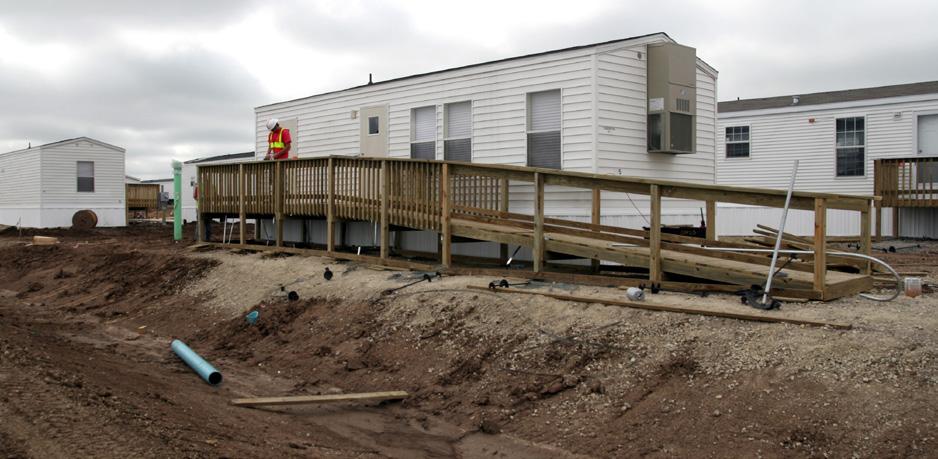
Interim disaster housing is often a major challenge for communities.
Using the Core Capabilities is one way to identify stakeholders and partners to engage in the pre-disaster recovery planning process. Table 2 includes potential partners for each Core Capability. The table is not intended to be an exhaustive list.
While there are many strategies for identifying and engaging new partners, one useful approach is to build upon existing partnerships with organizations that have already been identified and included in the planning team. These established partner organizations likely have their own network of contacts and organizations that provide support, in some fashion, to the recovery organization. This concept is known as using a “network of networks” and is illustrated in Figure 8. Although these additional partners might not traditionally be associated with recovery operations, they could be a vital resource to a community.
Stakeholders are those who will be involved with the work of the collaborative planning team but do not directly serve on the team. Generally speaking, stakeholders can be anyone with an interest in the recovery planning process. They may include local individuals and organizations or those from outside of the community, at the county, State, or even national level. The list of stakeholders should include those with community ties that can help with outreach, as well as those with technical knowledge associated with addressing the key community sectors, including all of the Core Capabilities. Considering the local risk assessment and identifying structures, facilities, and services in areas potentially affected by a disaster helps to identify additional stakeholders. Additional stakeholders may be identified by those on the collaborative planning team, as well as by other sources, such as community advocacy organizations.
Stakeholders will be motivated to participate in the planning process for a variety of reasons, and the collaborative planning team needs to take those reasons into account. Additionally, the planning team will need to set expectations for stakeholder involvement and define the contribution needed from stakeholders throughout the process.
Table 2 Suggested Stakeholders and Partners for Recovery Core Capabilities
PUBLIC INFORMATION AND WARNING
OPERATIONAL COORDINATION
HEALTH AND SOCIAL SERVICES
ECONOMIC RECOVERY
HOUSING
INFRASTRUCTURE SYSTEMS
NATURAL AND CULTURAL RESOURCES
Consider people who are experienced engaging the entire community and who are strategic thinkers. These people may have backgrounds in fields such as planning, public administration, architecture, and landscape architecture; experience with accessibility and universal design is also desirable. Professional planning and design organizations, such as the American Planning Association (APA), American Institute of Architects, and American Society of Landscape Architects are also resources. Include regulators (such as zoning and permitting, safety, ADA coordinators), and those involved in the mitigation plan and other community development planning.
Consider people with community outreach experience or expertise in mass communications, facilitation, and/or civic engagement. Stakeholders should also have experience in reaching out to populations with functional and access needs. Involve a public affairs officer or communications department.
Consider involving leaders in the community to make sure that all recovery processes are integrated. These leaders may include city managers, county administrators, or local government officials and leaders from community organizations. Consider groups that may be at odds postdisaster to address coordination upfront.
Consider including representatives from local government departments, medical professionals, school district superintendents, consumer and legal service organizations, and managers of non-profits providing services that support physical, programmatic, and effective communication access for the community. Also involve voluntary organizations that are active after a disaster and other organizations that represent the service and support needs of all community members, including immigrants and refugees, and people with disabilities, or access or functional needs.
Consider including economic development officials, representatives of Community Development Corporations, major employers, local business owners, representatives from employment and labor departments, labor organizations, and faculty from colleges and universities.
Consider including developers, residential construction companies, fair or affordable housing advocates, homeless organizations, representatives of housing agencies, and housing department staff.
Consider including public works officials and local engineers. The American Society of Civil Engineers and other similar professional organizations are potential resources.
Consider including historic preservation experts; members of cultural, museum, library, and archival organizations; members of landmarks, parks, and tree boards; and parks and environmental protection department staff.
Local governments and community leaders need to coordinate with recovery counterparts from the regional, State, tribal and Federal levels to ensure effective post-disaster recovery operations. Identifying which agencies have the related mission expertise or resources to support recovery activities during the pre-disaster planning process will help to facilitate implementation after a disaster. Through pre-disaster recovery planning, organizations with similar missions and functions will already be aligned and have established relationships.
The Networks of Networks Concept (depicted in Figure 8) is promoted by the Community and Regional Resilience Institute (CARRI). The concept emphasizes two things:
• Multiple partners to support local recovery. This includes partners from within the community and outside the community.
• Organization and structure, linking potential partners who may not have a direct relationship with the community (Network of Network Partners) to Strategic Stakeholders or Partners that already work closely with the communities Recovery Organization.18
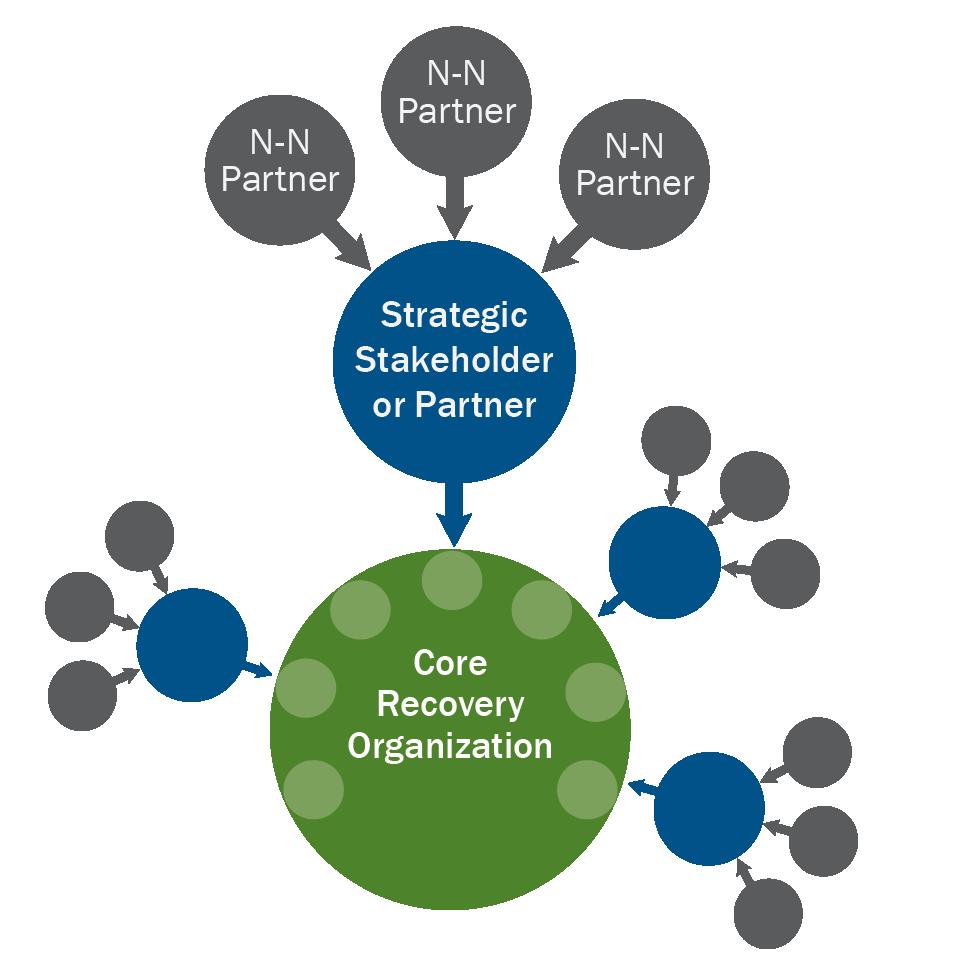
18http://www resilientus.org/
Disasters do not recognize political boundaries. Regional, State, tribal, and Federal partnerships are important because disaster impacts are typically regional and felt by people both inside and outside of city limits, across county lines, and/or across State lines. External partnerships (partnerships with organizations, associations, and agencies not already part of the collaborative planning team) facilitate the sharing of resources across and between jurisdictions and can help compensate for local capability deficits. Pre-disaster communication and coordination among external partners helps ensure that these partners are prepared to help the community recover more quickly after a disaster. At the Federal level, there are numerous examples of external partners that support the RSFs, which can be found in the NDRF. Additional information about identifying State, Tribal, and regional partners can be found in Planning for PostDisaster Recovery and Reconstruction. 20
The University of Oregon’s Community Service Center, Cascadia Regional Earthquake Workgroup, U.S. Geological Survey, and Oregon Emergency Management partnered to help develop a recovery plan for the communities in the Cascadia Region of Oregon. This undertaking began with a community forum during which participants identified what they thought would be recovery issues after a disaster and potential next steps to address those issues based on their field(s) of expertise.
After the forum, participants were interviewed about their reasons for attending. Some of the common reasons were personal interest and a sense of responsibility for a particular segment of the community. Participants were also asked to provide suggestions as to what would have made the forum more productive. Common responses included being provided hypothetical scenarios as a basis for discussion and more information (e.g., maps and other data), as well as having a better idea of what was expected of them. When engaging stakeholders, it is important to understand what is motivating them and to convey clear information and expectations.19
Because local communities can rarely complete recovery from significant disasters on their own, locating the right partners early on helps achieve the community’s recovery goals.
In May 2007, Greensburg was struck by an EF5 tornado that destroyed or damaged nearly all of the buildings in the city. To help implement the community members’ goal of a “green” recovery, the U.S. Department of Energy National Renewable Energy Laboratory (NREL) became involved only a month after the disaster occurred. NREL played a critical role by providing specific guidance on recovery projects, developing studies and recommendations, and creating an integrated energy plan that became part of the city’s comprehensive plan.
With NREL’s assistance, the City’s green initiative led to a variety of positive results, including:
• Significantly lower energy usage by new homes in Greensburg
• Significantly lower energy use and environmental impact by the city’s Leadership in Energy and Environmental Design (LEED)-certified public buildings
• Creation of a 12.5-megawatt wind farm that produces enough energy to power the entire city
• Increased expertise in green design throughout the region
While very successful, NREL acknowledges that the green planning process would have been more efficient if it was considered prior to the disaster, before there was a pressing need for immediate redevelopment. Nonetheless, by being prepared to partner with NREL and other organizations, Greensburg was able to quickly and effectively address a key community goal and develop a very productive recovery strategy. 21
19 For more information about this planning effort, read the Cannon Beach Post-Disaster Planning Process Report https://scholarsbank.uoregon.edu/xmlui/bitstream/ handle/1794/5570/CREW_Report_07.17.06.pdf?sequence=1
When aligning external agencies with the local recovery organization’s structure and process, planners must consider the key community sectors (such as housing, healthcare, social services, businesses, etc.) and other community needs to be addressed by local agencies and organizations. Additional information about determining how external agencies align with local agencies and organizations can be found in APA’s Planning for Post-Disaster Recovery
Considering how external organizations interact with one another is also important. For example, when connecting with a State agency, it is important to understand their relationships with other State agencies and Federal agencies as all of these agencies from all levels of government play a role in post-disaster recovery efforts. There may also be Federal resources that can be funneled through State partners or opportunities to leverage resources from respective State and Federal agencies.
Establishing agreements about roles and responsibilities includes making sure that agencies understand their roles and the chain of communication among recovery stakeholders, and have a firm understanding of their capacity to execute their responsibilities (or an understanding of where gaps exist). Local leadership may want to consider securing written agreements (such as interagency agreements, memoranda of understanding, mutual aid compacts) that describe commitments to roles, relationships, and resources.
Because local communities can rarely complete recovery from significant disasters on their own, locating the right partners early on is essential to achieving the community’s accessibility recovery goals. Joplin, MO, was struck by an EF5 tornado in 2011, resulting in $2.8 billion dollars in damages. To help implement the community members’ goal of integrating “universal design” into infrastructure and building projects completed as part of disaster recovery, the City involved independent living centers and other disability organizations, which provided specific guidance on recovery projects. These partners played an integral part in developing studies, recommendations, and drafting an integrated accessibility plan that became part of the city’s comprehensive plan.
With the assistance of planners, architects, and disability organizations, the City’s accessibility initiative led to a variety of positive results. Examples include:
• Continuity in the planning and development of public facilities and infrastructure that fostered accessibility, thus avoiding separate “islands” of accessible developments
• Expanded sensitivity and understanding among community developers and planners regarding the relevance and importance of universal design
• Strengthening of long-term partnerships and ongoing working relationships between local officials, developers, planners, and accessibility advocates and experts
By being prepared to partner with disability organizations, Joplin was able to quickly and effectively address a key goal of the community and develop a very productive recovery strategy.
20 For more information, see APA’s Planning for Post-Disaster Recovery and Reconstruction (PAS 483/484) (1998), Model Recovery Ordinance (see Appendix D). 21For more information about the partnership between Greensburg and NREL, see Rebuilding Greensburg Kansas, as a Model Green Community: A Case Study,
http://www.nrel.gov/docs/fy10osti/45135-1.pdf
This Page Intentionally Left Blank
In CPG 101, Step 2, the planning team will identify threats and hazards and assess the community’s risks. For recovery planning, this analysis and assessment will be based, in part, on existing community planning products. Key Activity Three outlines the need for the planning team to focus on impacts and a broader range of consequences specific to recovery.
Timeline: Months 1 to 6
Obtain Existing Disaster and Community Planning Products
The key to determining risks, impacts, and consequences is to know your community and understand what defines your community’s identity. Using existing data that may be available in local planning documents or from local community organizations, identify and map all community features, attributes, community makeup, people, and assets (social, political, financial, infrastructure, public and private sector, institutional, etc.). Understanding these community features will assist the hazard identification process and provide a more thorough understanding of resources at the community’s disposal. You should examine previous disaster events and their impacts and communicate to the planning team any community insights from these previous disasters.
Planners should begin by assembling all available, up-to-date risk assessment data. If the community has a hazard mitigation plan, risk assessment information in that document should be used as a starting point. If a hazard mitigation plan does not exist, use guidance provided in the Local Mitigation Planning Handbook, Task Five, to conduct a risk assessment. In most cases, hazard mitigation plans address only natural hazards. Planners should consult other documents, such as Threat and Hazard Identification and Risk Assessments (THIRAs),22 that have been completed by States, regions, tribes, and some communities for additional threat and hazard information. Other risk assessment documents, such as critical infrastructure assessment plans, and current conditions of a community should also be considered when identifying a comprehensive list of hazards.
Some planning documents may focus only on short-term impacts. The recovery planning process must ensure that long-term impacts and consequences are considered. Plans such as regional Comprehensive Economic Development Strategies23 provide a broader view of risks and consequences.
These existing documents provide detailed information to assist in identifying potential impacts from threats or hazards. Reviewing these plans helps planners throughout the recovery planning process to identify threats and hazards, and will also serve as a baseline for determining existing roles and responsibilities, and existing policy and capability gaps. Examples of existing documents to review and consider include:
22CPG 201 can also assist in identifying threats or risks that may not be addressed in a local mitigation plan.
23The Economic Development Administration has updated the Community Economic Development Strategies requirements to include a section on resilience and recovery planning http://restoreyoureconomy.org/recovery/post-disaster-planning-for-economic-recovery/
• Emergency operations plans
• Local hazard mitigation plans, including risk assessments
• State hazard mitigation plan
• Tribal hazard mitigation plan(s)
• THIRAs
• CRS documentation
• Floodplain management regulations and policies
• Continuity of operations plans
• Local agency program operations/guidelines
• Local or county comprehensive plans or master plans
• Capital improvement or facilities plans
• Regional transportation plans
• Local or regional Comprehensive Economic Development Strategies
• Climate action plans
• Resiliency plans
• Community visioning document or statement(s)
• Sector or facility-specific disaster mitigation, recovery, or preparedness plans (i.e., plans for schools, child care facilities, and hospitals)
Identify Impacts and Community Consequences
Understanding the community’s risks and possible direct, indirect, long-term, and systematic impacts will provide a foundation for the pre-disaster recovery planning process. The collaborative planning team assembled in Key Activity One should use the risk assessment information and the existing plans to conduct additional analysis to identify the broad range of recovery-specific impacts and consequences. Understanding impacts allows members of the planning team to focus recovery planning efforts and to determine potential capability gaps according to sector-specific impacts.
Pre-Disaster Recovery Planning Guide for Local Governments
Considerations for conducting an assessment of impacts and community consequences include:
• Identifying potential direct impacts to major community assets and systems, such as:
Community and regional economy, small and large business
Museums, historic sites, and other cultural resources
Environmental resources and protected natural areas
Infrastructure systems
Social and community fabric
Affordable and accessible housing
Critical infrastructure systems and the cascading impacts that the loss of such systems may have on other aspects of the community
• Identifying potential indirect impacts, such as:
Business disruptions from relocation of workforce and/or customer populations or inaccessibility, and other cascading economic impacts
Access to services such as health care, public transportation, grocery stores, day care and schools
24If the community does not have a hazard mitigation plan, refer to the State Mitigation Plan and contact the State Hazard Mitigation Officer for more information.
Population shifts
Household pets, service animals, and livestock
• Identifying local government and other organizations that will have an increased workload as a result of the disaster (e.g., increased demand for social services, need for building inspectors and permitting).
• Considering impacts and consequences for individuals with disabilities and others with access and functional needs; those from religious, racial, and ethnically diverse backgrounds; children and teens; people with limited English proficiency; and those who may be underserved or may not normally participate in or contribute to public outreach efforts. Consider ways to communicate with and involve members of the community in the recovery process (such as displaced residents), ensuring accessible formats.
• Developing a baseline recovery scenario based on expected impacts to identify recovery consequences and issues to be used during the next Key Activity.
Using information collected and analyzed in this step, the collaborative planning team should hold community meetings or workshops, accessible to stakeholders and all members of the community, to evaluate risks and discuss impacts.
It is important to look at the interdependencies and connections among the identified impacts and highlight to all participants the ramifications of the indirect, cascading, and long-term impacts of a disaster across the community. This understanding motivates not only a stronger commitment to participate in a recovery process, but also a stronger interest in taking mitigation actions in advance to reduce losses and lessen those potential consequences. Collectively, understanding the potential impacts, and taking steps to reduce potential losses and consequences, helps improve community resilience.
In its 2012 risk analysis, the City of Colorado Springs focused on fund reserves for a city affected by significant forest fires earlier that year. In 2013, the city gave the disaster-impacted area additional scrutiny because of new post-disaster threats of flooding and mud slides due to the destruction of protective vegetation. Whereas the estimated (unreimbursed) disaster cost to the municipality, $3.75 million, was considered a manageable expense to be covered by special reserve funds, the infrastructure costs to upgrade the stormwater management system to handle increased runoff may be much higher—in the range of $10 million. This example highlights the interrelated aspect of hazard mitigation planning as part of a city-wide risk management strategy and having the foresight to anticipate unbudgeted expenses through the use of a reserve account.
Community leaders and officials from communities that have experienced a significant disaster can be a powerful resource to the planning team and community at-large in grasping the consequences and challenges for long-term recovery. Planners may want to reach out to emergency management networks as well as state-wide associations in other key professions to identify peers with valuable experience, such as a municipal league; association of towns, cities, or counties; the APA; city and county managers associations; association of regional planning commissions; the State Hazard Mitigation Officer; State-level VOAD, Chamber of Commerce; or Indian Tribal governments to name a few.
This Page Intentionally Left Blank
As outlined in CPG 101 Step 3, the planning team will begin to establish the mission, priorities, goals, and objectives based on the threats, hazards, and risks that face the community. Key Activity Four focuses this step on important aspects of recovery, specifically directing the planning team to evaluate a community’s ability to address recovery needs and establish appropriate targets, goals, and objectives based on the community’s capacity.
Timeline: Months 1 to 6
The National Preparedness System defines eight Core Capabilities applicable broadly to disaster recovery at all levels of government:
• Planning
• Public Information and Warning
• Operational Coordination
• Economic Recovery
• Health and Social Services
• Housing
Based on the risk assessment and identified recovery impacts and consequences, Key Activity Four, which aligns with Step 3 of CPG 101, helps the collaborative planning team evaluate the community’s ability to address the recovery consequences. This evaluation of recovery capacity can be framed around the eight Core Capabilities that apply to the Recovery Mission Area, as well as the Mitigation Core Capabilities that address integration of community resilience. Suggested questions for community self-assessment, framed around the cross-cutting Recovery Core Capabilities, are included in Table 3. Completing this evaluation and comparing identified needs to established roles and existing community resources allows the community to identify gaps. Understanding capacity gaps will then serve as the basis for resource and partnership decisions throughout the recovery planning process, while understanding strengths will allow the community to leverage its existing resources and expertise. Table 3 lists capacity assessment questions related to recovery core capabilities.
• Infrastructure Systems
• Natural and Cultural Resources
These Core Capabilities are described in further detail in the National Disaster Recovery Framework.
PLANNING CORE CAPABILITY
•
• How will your local government and partners implement a post-disaster recovery process that structures, coordinates, and communicates major community decisions, actions, and investments, and where necessary apply a formal post-disaster community recovery planning process?
How will your community be able to ensure community stakeholders participate in shaping the community-wide recovery, providing input to key decisions and plans?
•
OPERATIONAL COORDINATION CORE CAPABILITY
PUBLIC INFORMATION AND WARNING CORE CAPABILITY
•
How will your local government establish linkages with regional, State, and Federal entities and other appropriate private-sector, nongovernmental, and nonprofit partners?
• How will your local government implement a LDRM role or functions across appropriate elements of local government? Local government should be able to orchestrate and manage local government redevelopment actions and planning and recovery projects, as well as coordinate local government with private-sector and nongovernment recovery and reconstruction activities?
How will your local government identify, prioritize, and proactively obtain resources to fund and enable recovery actions on behalf of all actors in the community?
• How will your local government ensure adequate public information, communication, inclusiveness, and information sharing in accessible formats throughout the phases of recovery ? All stakeholders should be informed of permitting requirements, opportunities, resources, activities, and progress in recovery. Communications should be accessible to all populations in the community.
•
HEALTH AND SOCIAL SERVICES
• At a time of increased need for governmental effort, resources, and staff after a disaster, how will the local government surge and maintain staffing in key areas that support recovery planning, operational coordination, public information, and implementation of the other capabilities (housing, economic, health and social services, natural and cultural resources, and infrastructure), and carry out overall long-term management of various aspects of recovery activities?
How will hazard risks be considered throughout recovery, with risk reduction and resiliency measures integrated into recovery actions, investments, and decisions?
The team should also to consider identifying additional capabilities or needs that may be relevant to recovery in the community. Additional capabilities should include formal capabilities from the mitigation mission area, such as Community Resilience, or capabilities that do not appear in the National Preparedness Goal (such as individual and family empowerment or volunteer management) but are very important to the community.
General questions for additional consideration when assessing community capacity include:
• What must be done to ensure that the necessary resources to carry out a post-disaster coordination, planning, and management process are identified and available? Are additional partners, technical expertise, funding, or other resources required? How can the community address each of the Recovery Core Capabilities and any additional needs during an actual recovery process?
• What are the indicators of successful recovery? How does the community define a successful recovery? For example, would a certain percentage of homes need to be rebuilt or rehabilitated? A certain percentage of businesses or schools? Would stabilized local revenues indicate successful recovery? Is an increased level of resilience or mitigation of risk a priority outcome?
• How well do the other elements of local government outside emergency management fully understand the workload, activities, and needs associated with their roles in recovery?
Those involved in the pre-disaster recovery planning process should inventory and review current policies and regulations that relate to recovery operations or other potential post-disaster community development activities. Careful consideration is needed to evaluate whether these policies and regulations work to support, or could potentially hinder, post-disaster recovery. Additionally, policies and regulations that could potentially conflict with one another should be considered at this point. Documents to consider include:
• Local ordinances (zoning ordinances, subdivision regulations, building codes, ADA accessibility guidelines, and others)
• Planning documents, such as:
Required local hazard mitigation plan;,
Comprehensive or land use plans
Capital improvements plans
Fixed transportation and para-transit plans
Small area development plans
Emergency preparedness and response plans
Some questions to consider when conducting this review include:
The issuance of building permits is often an area that challenges the capacity as well as the policies of a local government after disaster. Be ready with surge capacity and communicate permitting requirements to property owners.
• What current State policies and regulations would encourage or inhibit recovery activities?
• Are there financial, staffing, or other constraints that affect the community’s ability to develop or update policies and regulations?
• What local, regional, tribal, or State policy, planning, or intergovernmental conflicts might be significant in the event of a major disaster? Is the local policy, plan, or coordination process adequate to address this limitation or does it conflict in a post-disaster environment? Is the magnitude of possible rebuilding considered in these activities?
Policies from other levels of government that may impact local recovery efforts (e.g., State policies) should be referenced to ensure that local recovery can take place without violating those policies. For example, some States are “Dillon Rule” States, whereby local governments can only exercise authority expressly granted by the State. In the context of pre-disaster recovery planning, communities in “Dillon Rule” States need to coordinate with State counterparts to determine responsibilities and authorities post-disaster. If there is any doubt about the legality of a recovery action such as the development of a recovery ordinance, local stakeholders should work with their town, city, or county attorney to de-conflict policies and procedures.
Inevitably, recovery operations create an increased workload for partners. During pre-disaster recovery planning efforts, it is critical that partner agencies and organizations evaluate their staffing resources. This evaluation will serve to not only identify gaps in staffing quantity or expertise, but will also identify strengths and capacities of various partners. For example, expertise related to community development, housing, community planning, social services, disability access, historic preservation, identifying funding sources, grant writing, public administration, and financial management are particularly important in developing a robust pre-disaster recovery plan.
Some questions to consider when evaluating staff resources include:
• What staffing resources are available to assist with the increased workload associated with recovery activities?
• Does current staff have subject matter expertise necessary to undertake recovery activities, develop new programs, or organize complex long-term projects?
• Do all city departments fully understand their roles in recovery and redevelopment?
• What organizational structures already exist within partner organizations to manage recovery? Are there long-term recovery organizations or committees to coordinate those NGOs supporting individuals and families, to manage volunteers and donations, or to use nontraditional assets? What community leadership is available to lead recovery efforts, within local government and among external organizations?
Recovering from a disaster costs money. Partner agencies and the community as a whole must consider a community’s normal tax base in conjunction with the post-disaster potential loss of tax base, and increased government operational costs. The costs of recovery management and activities should be considered as well. As financial aspects of disaster recovery are evaluated, some questions to consider include:
• What current local government and NGO financial resources are available to use for potential recovery activities?
• Are contingency plans available for continuity of the operation of local government and/ or NGOs over an extended period of time? Specifically, are mechanisms in place for emergency funding and procurement after a disaster?
• Are financial reserves available to address potential risks? What is the ability of the local government and NGOs to apply for grants, establish lines of credit, or secure other funds needed for recovery?
A key resource for the rebuilding of housing after the 1994 Northridge Earthquake was the tax exempt mortgage revenue bond resource available from the Private Activity Bond allocation from the Internal Revenue Code (from U.S. Department of Treasury).
The City was able to negotiate with the State to target a substantial amount of bond authority for their “Loans to Lenders” program to enable Home Savings and other lenders to finance repairs in rental properties that were “underwater” as a result of the early 1990s recession, and had been rejected by the Small Business Administration. A state agency that handles the annual allocation of tax-exempt private activity bond authority needs to be flexible to help localities with specific post-disaster recovery needs. Are financing mechanisms available locally, or barriers in State law or operations that could be modified to facilitate recovery?
As discussed above, effective pre-disaster recovery planning is based on inclusive partnerships and considerations of the whole community. Communication and outreach strategies are the foundation of developing inclusive partnerships and taking a holistic approach to both pre- and post-disaster recovery planning. Pre-disaster, local governments and their partner agencies should identify their plans and resources available to conduct outreach. Attention should be paid to identify strategies to effectively communicate with seniors, people with disabilities, people with access and functional needs, people with religious, racial and ethnically diverse backgrounds, and people with limited English proficiency.
Questions for consideration when evaluating strengths and weaknesses include:
• What capabilities does the community have to involve residents and other stakeholders in recovery planning?
• What capabilities does the community have to educate residents and other stakeholders about the importance of recovery planning and preparedness?
• What capabilities does the community have to communicate with community members after a disaster and to engage them in coordinated recovery activities?
• What relationships does the community have with organizations that can assist with recovery planning and implementation?
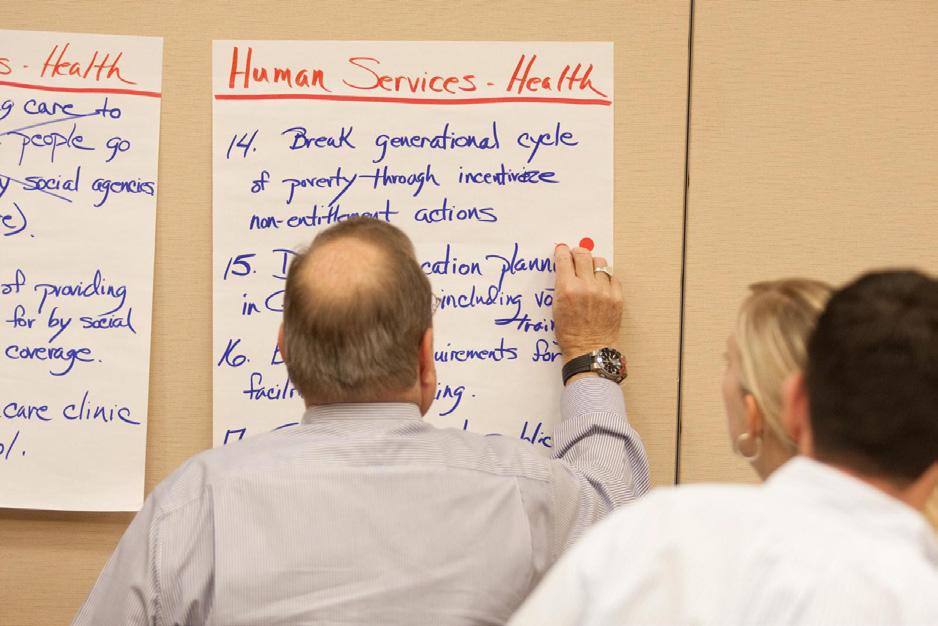
Community stakeholders participate in recovery planning meetings.
Information should be collected in an organized manner to help maintain a clear understanding of the community’s capabilities. To assist with this, a Recovery Capability Documentation Template Worksheet is provided in Appendix F. Understanding strengths and weaknesses enables the community to determine what additional partnerships may be required, such as NGOs or other levels of government, to improve strengths and weaknesses. The information in this section (particularly the identification of resource gaps) will assist the planning team in identifying new partners to engage. Building partnerships is an ongoing activity that ought to be regularly revisited to ensure maximum partnership and community engagement in the process.
While an initial capacity assessment is needed to successfully launch the recovery planning process, it is important to continuously evaluate capacity to provide current feedback and information for the future.
In Panama City, FL, assessments of institutional capacity carried out during the planning process noted a number of issues that were successfully addressed. One issue was that coordination between participating agencies on recoveryrelated subjects had been limited in the past. To address this during the planning process, emphasis was placed on defining how post-disaster roles and responsibilities could be best coordinated. This additional work was successful in developing a strong foundation for recovery but did affect the schedule for the overall planning process. For more information, read Panama City Post-Disaster Redevelopment Plan (PDRP) Case Study, 6. 25
Information on capacity gaps can also be identified through a review of past recovery activities. When reviewing its response to Hurricane Sandy, New York City found that the large number of volunteers and unsolicited material donations overwhelmed the non-profit organizations that were helping the city coordinate this assistance.2 In its recommendations, the city noted the need to improve its processes for pre-identifying partners assisting with this work, so that adequate capacity is available to address both the scale of these resources and the need to distribute them over large geographical areas. 26
25Available at http://www.floridadisaster.org/Recovery/IndividualAssistance/pdredevelopmentplan/documents/Toolbox/CaseStudyPanamaCity.pdf.
26 For more information, read the City of New York’s Hurricane Sandy After Action Report, pp. 29-30. Available at http://www.nyc.gov/html/recovery/downloads/pdf/ sandy_aar_5.2.13.pdf.
CPG 101 Step 4 outlines strategies for developing, analyzing, and comparing possible solutions for achieving goals and objectives. Key Activities Five and Six outline recovery-specific decisions that should be made during the pre-disaster planning process, such as leadership, resources, organizational roles, and responsibilities.
Timeline: Months 3 to 9
To have the right people in place to implement recovery post-disaster, it is important to determine which positions and applicable skills are necessary. The following sections outline some decisions that must be made during the pre-disaster recovery planning process to prepare a community for post-disaster recovery activities.
As explained in CPG 101 Step 4 (the step with which this Key Activity aligns) pre-disaster recovery leadership and operations solutions should be carefully developed, analyzed, and compared before a decision is made. CPG 101 provides general guidance on conducting this analysis.
The first major leadership decision that planners and community leadership must make is the identification of a LDRM. The LDRM, as defined in the NDRF, organizes, coordinates, and advances recovery at the local level. This position has both pre- and post- disaster responsibilities. The person in this position requires knowledge of the community, relationships with other local leadership, the ability to pull a team together to develop a long-range vision, strong communication skills, and knowledge and experience in community planning. Additionally, an effective LDRM needs to have the following general qualities:
• Authority: The ability to direct and execute recovery. As noted in FEMA’s Effective Coordination of Recovery Resources for State, Tribal, Territorial and Local Incidents, 27 the LDRM will need to have the authority and influence to convene and coordinate recovery stakeholders while emergency managers continue with disaster response.28 This requires support from senior leadership for recovery. The LDRM should be respected and recognized as a leader across as many sectors of the community as possible.
27FEMA, Effective Coordination of Recovery Resources for State, Tribal, Territorial, and Local Incidents (2015), https://www.fema.gov/media-library/assets/ documents/101940.
28Section 2 (Leading the Recovery Coordination Process” of Effective Coordination of Recovery Resources for State, Tribal, Territorial and Local Incidents).
• Accountability: Recovery leadership must be accountable to the stakeholders of the community and those that empowered them to manage recovery in the first place.
• Attitude: Recovery leadership must understand that recovery is a long-term endeavor involving many stakeholders, each with their own interests, needs, opinions, and resources. Being persistent but patient in working with local stakeholders and other partners is critical to managing the recovery process.
• Aptitude: The ability to think strategically over the long-term about recovery needs, the ability to be flexible in using nontraditional approaches and resources, and an understanding about how to leverage resources and bring about stakeholder consensus are all necessary in an effective LDRM.
Strong leadership is critical for successful recovery, so the identification of such leadership must be a high priority. A strong leader makes securing partnerships easier, in part because the community will be able to demonstrate that it has put time, thought, and talent into preparing for recovery. The LDRM ought to also have the relationships and expertise necessary to ensure that recovery activities are closely coordinated with response and mitigation efforts. Partnerships across the various mission areas need to be made long before a disaster.
Under Beaufort County’s Disaster Recovery Plan, existing county officials are given responsibility for managing long-term recovery activities (as well as short-term recovery and response activities):
• The County Administrator oversees recovery activities and is responsible for establishing recovery policies and procedures.
• The Deputy Administrator for Public Services and Land Management serves as the Disaster Recovery Coordinator.
• The County Administrator for Public Services and Land Management and the Deputy Administrator for Community Services are responsible for recovery operations and coordination. Each of these positions coordinates recovery activities for the agencies they regularly oversee.
• A Recovery Task Force, staffed by representatives of county agencies as well as some outside organizations, provides advice and assists with coordination.
This approach to defining leadership roles facilitates involvement of high-level officials as needed while not burdening them with responsibility for day-to-day operations. It also facilitates input from the complete range of agencies that will be involved in recovery. If applied in other communities, it may be necessary to adjust this approach to best fit the size and form of local government. 29
29For more information about Beaufort County’s Disaster Recovery Plan, visit http://www.bcso.net/Emergency%20Management/Plans/Disaster%20Recovery%20 Plan.pdf.
After the LDRM has been selected, planners must decide which agencies and organizations will serve in lead roles and which will provide support during the post-disaster recovery process.
Creation of a recovery management office may be appropriate depending on the potential complexity of the recovery or the structure of the city government. The APA report Planning for Post-Disaster Recovery: Next Generation provides detailed recommendations (see pages 57–59 of that report) for integrating such an office that would focus on four objectives:
• Offering a foundation for preparation of a recovery plan that anticipates as clearly as possible pre- and post-disaster recovery needs, as well as short- and long-term recovery requirements
For smaller communities with limited capabilities to manage recovery on their own, designated recovery leaders should be regional leaders. The LDRM does not have to represent a single jurisdiction, but can represent a region consisting of small towns and rural counties, and in the wake of disaster, lead a coordinated recovery effort that benefits the entire region. Regional cooperation also allows communities to demonstrate a critical mass of disaster-impacted people, infrastructure, housing, businesses, etc. that will attract more collective resources than individual communities competing for the same resources.
Regionalism also comes with challenges—mainly, the coordination of individual communities that may have different needs and different policies. The regional approach is a strategic one when it comes to recovery management, but requires additional coordination, relationship building, and the ability to inspire unity of effort.
• Providing an administrative umbrella for recovery management under which both short-term emergency-related and long-term development-related recovery initiatives can be coordinated
• Creating an action-oriented organizational venue for kick-starting effective short-term recovery initiatives and actions
• Coordinating short-term recovery initiatives and actions with visioning, exploration of options, and public policy making more characterized by long-term recovery for rebuilding.
Examples of governmental agencies that may have a role in supporting recovery efforts include the local planning department, regional planning organizations, environmental and historic preservation offices, health department, department of economic development, public works, housing and community development, department of social services, zoning and building code department, the public school system, and area colleges and universities.30
When Hurricane Ike struck Chambers County, TX, much of its infrastructure and services were destroyed. Chambers County is rural, home to a population of almost 30,000 over nearly 600 square miles of land. It comprises small towns with populations up to 5,000 people. When Chambers County decided to create a stronger, more resilient community, it took a regional county-wide approach that incorporated stakeholders from all of its towns. Chambers County created the Chambers County Recovery Team (ChaRT), which comprised representatives from all parts of the county and from various community sectors. This regionalist approach promoted unity of effort by merging the capacity and capabilities of multiple communities into one collective effort. 31
30Additional information about recovery roles of various agencies can be found in the APA document Planning for Post-Disaster Recovery: Next Generation, available at https://www.planning.org/research/postdisaster/.
31For more information, read the Chambers County, TX, Long-Term Community Recovery Plan. Available at http://www.tbrpc.org/tampabaycatplan/pdf/resource_ docs/case_studies/Chambers_TX_LTRPlan.pdf.
Decisions need to be made as to how local government will work with and leverage the capabilities of NGOs and other partners. One significant mechanism used for coordination by NGOs that focus on local disaster recovery is the establishment of a long-term recovery group. If one does not exist, the local government needs to be a proponent to establish such an organization and then define the coordination points.
Figure 9 illustrates a generalized post-disaster structure that basically addresses roles of community leadership, coordination, and planning, as well as links to outside resources.
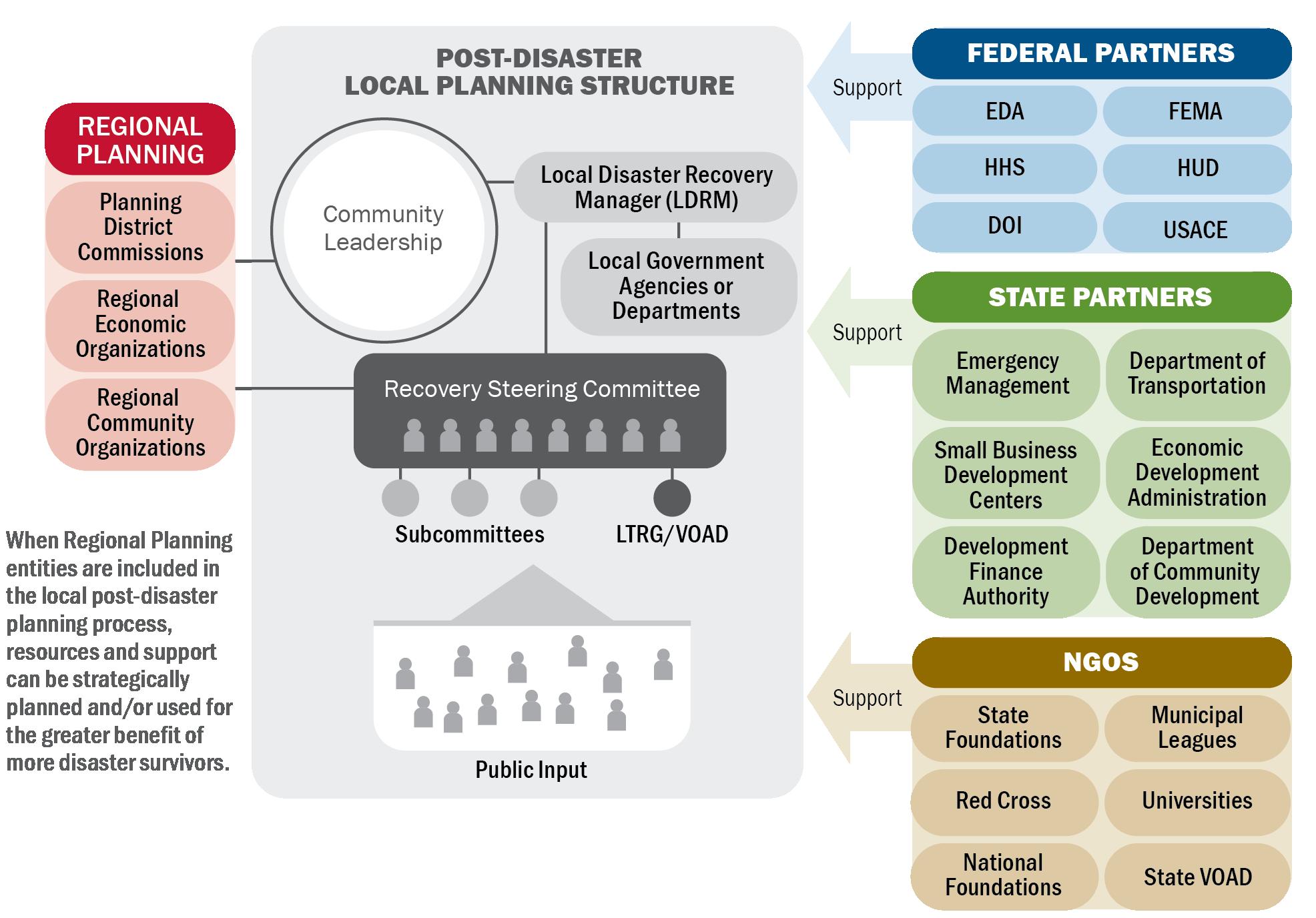
In addition to leadership, other positions need to be identified in the recovery organization. These positions should be coordinators associated with key areas of community recovery. These coordinators may be drawn from local government staff or other recovery partners. In organizing these key areas, it is helpful to consider aligning core roles and capabilities with key community needs. In addition to the expertise required as part of their normal duties, coordinators would also be the primary points of contact for recovery in that subject area and would provide updates and other situational awareness to the LDRM. The Core Capabilities, listed below and discussed in detail above, can be used as a framework and modified to meet the community’s situations both pre- and post-disaster.
• Operational Coordination (LDRM)
• Recovery Planning
• Public Information
• Economic Recovery
• Health and Social Services
• Housing Recovery
• Infrastructure Systems
• Natural and Cultural Resources
Beyond the Core Capabilities, other categories for sector-specific positions could include:
• Individual and Family Recovery
• Hazard Mitigation and Resilience
• Volunteer Coordination
• Children and Youth
• Accessibility or ADA Coordination
When assigning personnel to recovery positions, it is important to consider and follow local protocols and procedures; planners must consider how appointments and assignments of staff must take place. Recovery committee(s), stakeholder group(s), and existing task forces or committees can be used as appropriate when determining the sector-specific structure that a community will use. Communities with limited staff may want to take a regional approach, or look to county or regional governments for assistance in coordinating activities.
A local housing expert may understand affordable and accessible housing and the need for it within the community (e.g., affordable price ranges and locations), while the LDRM may not have that specific knowledge. Officials with specific expertise should support the LDRM to ensure successful recovery. Other organizations may also need to support recovery by assuming leadership roles and representing their constituents in a way that ensures that the recovery process is inclusive and community driven.
The May 2011 tornado in Joplin destroyed or damaged more than 25 child care centers, impacting slots for more than 600 children. Because the availability of child care services also impacted parents’ ability to work and begin repairs, the Joplin Child Care Task Force was formed to address issues for that specific sector. This group worked to meet the needs of families after normal child care services were disrupted by the tornado. 32
32For more information, see the Administration for Children and Families’ Children and Youth Task Force in Disasters: Guidelines for Development https://www.acf. hhs.gov/sites/default/files/ohsepr/childrens_task_force_development_web.pdf.
Individuals representing different sectors will support the sector-specific coordinators as subject matter experts in their particular fields. The pre-disaster recovery planning process presents the opportunity to identify sources of expertise in subjects including recovery planning, resource management, fundraising, public outreach, partnership engagement, project implementation, and coordination with State, tribal, and Federal government agencies.
The identification, acquisition, and coordination of resources play a significant role in post-disaster recovery. Resources employed to facilitate recovery may include shared information (such as data, intelligence, and key stakeholders contacts), technical assistance, subject matter expertise, and funding mechanisms (such as existing financial reserves, grants, and loans). Planners can also look to the Effective Coordination of Recovery Resources for State, Tribal, Territorial, and Local Incidents guide for more detailed information specific to recovery resource identification, management, and coordination. A lack of resource coordination among recovery participants can lead to conflicts and inefficiencies.
After recovery leadership positions and their responsibilities are determined, it is also important to identify general administrative coordination and planning activities that occur during a recovery process. This is a prerequisite for all other recovery planning activities and is a key component of a pre-disaster recovery plan. Some of these administrative activities can be addressed in a recovery ordinance (Appendix D), discussed in Key Activity Six.
Existing task forces or groups of stakeholders may already be formed and could be utilized to establish recovery committees. As a result of the U.S. Department of Labor Workforce Investment Act programs, there may be an existing collaborative local task force focused on the issues and needs of youth and adult workers (including single parents, people with disabilities, and others with access and functional needs). Similarly, under the Federal Temporary Assistance for Needy Families program, there may be an existing local task force concerned with issues and needs of welfare recipients that could address those needs for that sub-population group or for the social services sector in general. There may also be existing school facility planning groups that can address needs at schools. The Local Emergency Planning Committee can also address environmental disasters. Existing committees, groups, or task forces can be resources for technical assistance for local governments.
After positions have been determined within the recovery organization, operating guidelines and strategies must be established to ensure effective communication and coordination that will fully meet the needs of the community. Agencies serving in lead roles as a sector-specific coordinator need to work with their respective supporting agencies and partners to determine their own operational strategies. Careful consideration of existing statues, policies, and regulations will be required during this phase of the planning process. Defined guidelines and strategies vary from sector-to-sector and from community-to-community. In a predisaster planning process, coming to an agreement ahead of time about coordination mechanisms and strategies facilitates more efficient and effective postdisaster activities.
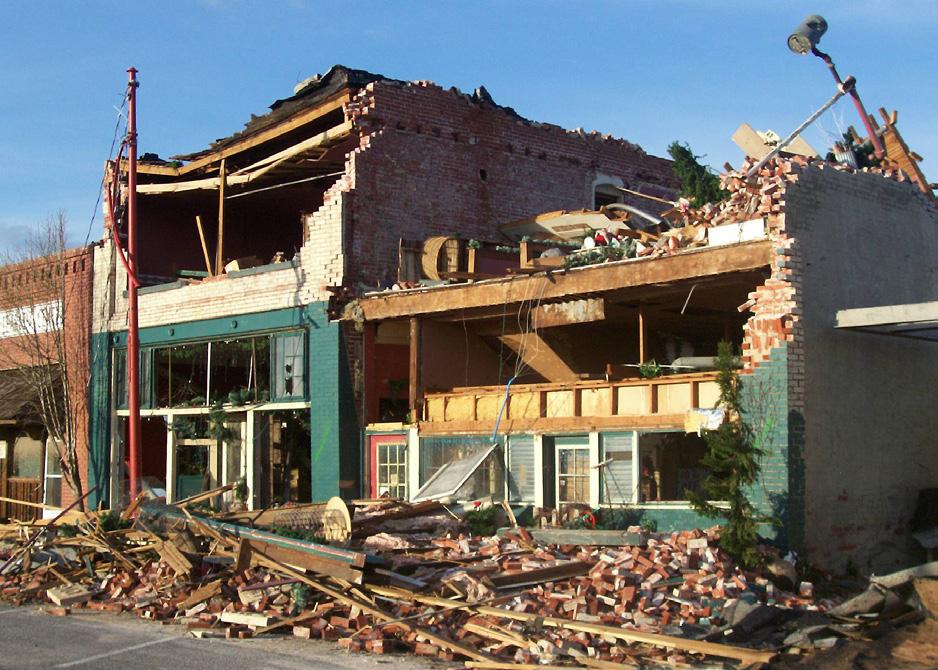
Historic buildings and districts and other cultural resources should be factored into pre-disaster and post-disaster priorities.
Creating a chain of communication and pre-determined location(s) for convening partners enables recovery planning and implementation to be initiated in a timely manner. Use of technology for virtual coordination and information sharing can be considered. Not every emergency will require a robust recovery organization, which means planners need to take steps in a pre-disaster context to determine what situations would require the recovery organization to take action. Care should be taken in this step to clearly delineate responsibility for leading the engagement of recovery partners either in preparation for, or immediately after a disaster has occurred. These communications must be accessible to partners with disabilities or access and functional needs to ensure inclusiveness of the whole community.
Prepare a Process for Gathering Damage Information and Assessing Impacts to Evaluate and Support Recovery Activities through the Long-Term
One of the first post-disaster recovery activities is to assess damage and gather information. While each disaster impacts a community in a different way, steps can be taken during the pre-disaster planning process to establish information sharing practices. Emergency managers and responders may be a source of initial impact information immediately after a disaster has occurred. The full range of partners identified through the planning process will assist with preparing a broader and longer-term statement of impact needs. Sector-specific coordinators and other community leaders should identify, pre-disaster, what sorts of information they need and how best to obtain that information. Consideration must also be given to data collection mechanisms and long-term impact analysis. Information sharing and analysis processes should be considered with partners from all sectors to ensure that the products can be used by all partners involved in the recovery process.
Many options exist for information collection, analysis, and sharing; what works for one community may not work for another. Local governments may also want to consider the use of tools and software to assist in completing these tasks. While the specific execution of an information gathering and sharing strategy will likely need to be addressed post-disaster, preliminary decisions can be made pre-disaster in regards to who is responsible for data management and what partners can provide pertinent community information.
Coordinated messaging is a challenge in any portion of a disaster. In recovery specifically, information for citizens can be complex, confusing, and even conflicting. The recovery organization needs a defined position dedicated to ensuring that information related to the recovery effort is being effectively communicated to the public in accessible formats. Specifically, the planning team should determine who is responsible for delivering effective public communication, how this will be accomplished, how often, in what formats, and for what purposes. To the extent possible, it is important to be transparent in informing the public so that expectations can be identified in advance, properly addressed, and clarified. Transparency helps to build public confidence in the recovery effort.
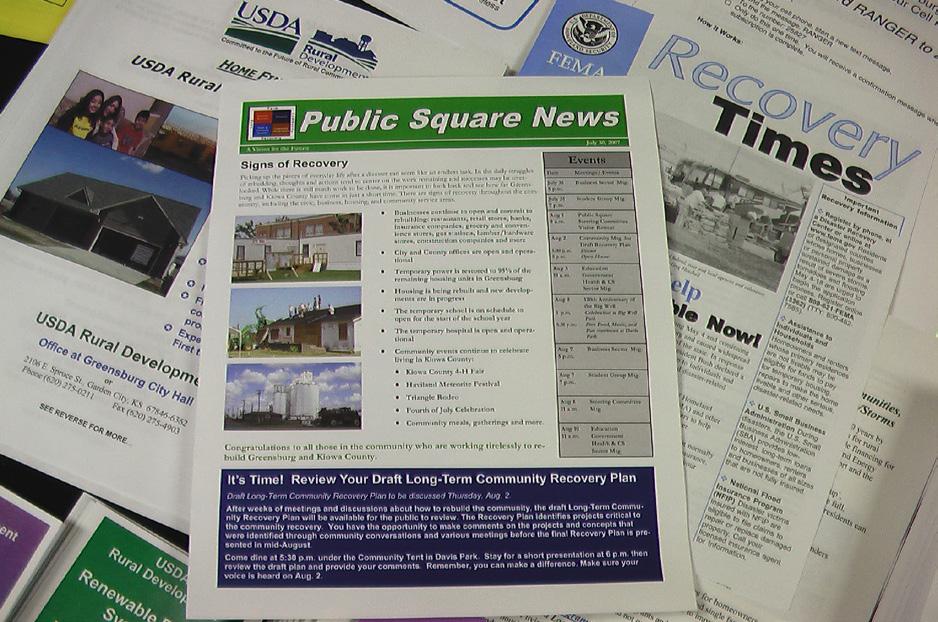
Develop Strategies for Tracking the Needs of Individuals and Families and Connecting Them with Recovery Support Resources (Referred to as “Disaster Case Management”)
The primary goal of disaster recovery operations is to address the needs of survivors and communities. Recovery planners should develop holistic, pre-disaster recovery plans and strategies, based on potential disaster scenarios, to address both disaster-caused and pre-existing, ongoing social service and community development needs. These plans and strategies should include a comprehensive disaster case management process that integrates technological solutions as well as tracks and matches survivors and available resources, develops individual disaster recovery plans, and provides referrals and advocacy services. Whole-community recovery includes disaster case management for individual recovery and efforts to rebuild community infrastructure. Both approaches require strong partnerships among government, local community, NGO, and private-sector stakeholders and are key for survivor recovery.
NGO-led disaster case management has been the cornerstone of recovery for more than 40 years. In 2006, FEMA was authorized to develop and implement a disaster case management program when Congress enacted the Post-Katrina Emergency Management Reform Act, with States including Illinois, Missouri, New Jersey, and New York implementing disaster case management under FEMA grants. Working under their own missions, NGOs continue to provide disaster case management services to survivors and training to practitioners.33
33The National Voluntary Organizations Active in Disaster (NVOAD) website contains disaster case management tools developed by subject matter experts: National Voluntary Organizations Active in Disaster: http://www.nvoad.org/; Disaster Case Management Points of Consensus: http://www.nvoad.org/wp-content/uploads/ dlm_uploads/2014/04/POC_CaseManagement_Final1.pdf; Disaster Case Management Guidelines: http://www.nvoad.org/wp-content/uploads/dlm_uploads/2014/04/ dcm_guidelines_-_final_-_2012_-_feb.pdf
After Hurricane Katrina, each impacted parish developed its own long-term recovery group. Four of them chose to work together on processes, forms, trainings, sharing information, and sharing an Unmet Needs Roundtable where funders collaborated to serve cases presented by disaster case managers. They also worked together through committees that addressed traditional long-term recovery group topics, such as Disaster Case Management, Donations Management, Rebuilding Coordination, and Emotional and Spiritual Care. At the height of the recovery effort, this coordination through the Greater New Orleans Disaster Recovery Partnership had 70 agencies regularly participating, many of which were National VOAD members or their affiliates. For more information on the formation of long-term recovery groups, please see the National VOAD Long-Term Recovery Guide and other helpful resources at www.nvoad.org.
After the evaluation of financial strengths and weaknesses in the previous Key Activity, the planning team will need to develop strategies for filling identified financing gaps. Financial resources to consider include both grants and low-interest loans. It is important to be aware that loans may be necessary to support recovery, especially in cases where grants and similar funds are not available or do not fully support recovery needs. Financial resources are not only needed for individuals and families, but for businesses and various sectors of the government as well. Many potential post-disaster funding sources can be preidentified.
Most States have a recovery leadership and coordination structure that addresses the recovery Core Capabilities. Some States may have a structure that includes a function for assistance to and outreach to local recovery entities and organizations. During pre-disaster recovery planning, the mechanism for coordinating with external partners, such as State government agencies and departments, and Federal resources, should be identified. Local governments may elect to have a position within the local recovery organization that works directly with the State or may choose to have State and local resources that work in similar functional areas collaborate directly. The pre-disaster recovery plan should also identify existing relationships between local departments and State and Federal agencies, and ought to identify strategies for leveraging and coordinating those relationships in a post-disaster environment. These relationships, as well as the strategies for engagement that are identified pre-disaster vary greatly among local communities.
Fairfax County, one of the first jurisdictions in the United States to develop a disaster recovery plan under the NDRF, modeled its recovery organization structure on the NDRF.
After a disaster, the Fairfax County Pre-Disaster Recovery Plan would guide the establishment of a temporary Recovery Agency, led by a Recovery Coordinator / LDRM and Recovery Policy Advisory Board. Depending on the scope and scale of the disaster, one or more RSF Branches would be activated under agency leadership and assigned responsibility for addressing recovery objectives.
Using the NDRF as an operational model is an approach that any community can take. This method provides a number of benefits, including improved partner agency coordination. The full plan and additional information is available on Fairfax County’s website: http://www.fairfaxcounty.gov/oem/pdrp/.
Timeline: Months 3 to 9
In addition to establishing an effective organizational structure with all of the necessary agencies and partners, stakeholders and participants in recovery must also establish leadership principles and a decisionmaking process. Similar to Key Activity Five, the decisions that relate to post-disaster decision-making processes and priority-setting should be made using CPG 101 Step 4 as a guide.
With likely threats and hazards in mind, the pre-disaster recovery planning team will need to determine what goals, priorities, and policies can be established prior to a potential disaster. While priorities for short-, intermediate-, and long-term recovery established pre-disaster are ideal in helping to facilitate and inform post-disaster decision-making, the impacts of a disaster vary, and therefore some decisions, policies, and procedures will be made in the midst of the recovery process. For example, understanding that much of the community is in a flood zone allows local officials to begin thinking about a relocation plan. The considerations and decisions related to recovery from a flood are very different from the decisions made in the wake of an earthquake. However, in both cases, if baseline priorities for leadership addressing short-, intermediate-, and long-term recovery have been established pre-disaster, the outcomes for the impacted community will be improved.
Planners must determine a process for making decisions post-disaster. As recovery needs are identified, there must be a process for making decisions to address those needs. Establishing this decision-making process guides leadership in allocating limited resources. As the decision-making process is developed during this Key Activity, it will be helpful to organize decisions through a process that:
• Evaluates the conditions and needs after a disaster
• Sets recovery goals and objectives
• Measures progress against those goals and objectives as well as the process, protocol, and policy concerning recovery funding
• Ensures there is sufficient input on recovery priorities from key stakeholders and makes sure that stakeholder outreach is linked to post-disaster decision-making (i.e., the process to involve key stakeholders pre-disaster is reflected in the post-disaster process)
The processes for enacting post-disaster recovery policies or ordinances should also be established during pre-disaster recovery planning. Even before a disaster, a person with the responsibility for enacting policies (including considerations for when policies ought to be enacted and for how long) can be identified. Disaster recovery may require that certain authorities and policies be in place to initiate and expedite recovery activities. This helps to compensate for losses in government capacity or significant challenges and choices after a disaster.
After severe flooding from Hurricane Floyd in 1999, Kinston, NC, developed a plan to relocate residents out of the floodplain. Using Hazard Mitigation Grant Program funds, the community bought out properties in a coordinated fashion that allowed residents to move into the same neighborhoods together. This helped preserve the social and economic fabric of the community. 34
34For more information, see https://www.fema.gov/media-library-data/20130726-1515-20490-7614/kinston_cs.pdf.
The planning team must determine which policies may need to be altered post-disaster to address recovery needs. Examples of potential policies include expedited zoning and building code compliance review for rebuilding and expedited procurement or hiring policies. Ordinance language can then be developed to implement these policies. When drafting policy language, it is important to consider State statutory laws or authorities that may invalidate or limit the proposed changes. It is also essential to understand the local government’s post-disaster responsibilities under an adopted Floodplain Management Ordinance for communities participating in the NFIP.
Roles and responsibilities for those who would be responsible for overseeing these policies also need to be established pre-disaster. For example, local governments need to determine who would be responsible for overseeing expediting zoning review and what authorities they must be granted to accomplish their assignments. Policies should be drafted to ensure that recovery participants will have the authority needed to execute their responsibilities. Formalizing authority legitimizes the pre-disaster recovery plan and indicates commitment by local leadership. Authority and responsibility of designated recovery leaders should also be clearly defined. This step can be accomplished by developing a recovery ordinance, which grants the recovery organization the authority to implement recovery planning activities after a disaster strikes. For more information about how to develop an ordinance, see Appendix D of this guide.
Finally, formal approval must be obtained by the governing body for policies and ordinances that have been developed. Proposed ordinances and the recovery plan can be adopted by the jurisdiction at the same time.
A recovery ordinance formally establishes the organizational structure for disaster recovery and defines pre- and postdisaster regulatory authorities. By adopting an ordinance prior to a disaster, the local jurisdiction will be able to respond more quickly and effectively.
A typical recovery ordinance authorizes:
• Authority
• A pre-disaster recovery planning organization
• Temporary post-disaster modification of development regulations
• A hazard mitigation program
• Creation of a post-disaster recovery strategy or plan35
This Page Intentionally Left Blank
CPG 101 Step 5 outlines guidance for writing effective plans and explains how information, documentation, and decisions made in previous steps are consolidated to form a written plan. Key Activities Seven and Eight discuss the need to draft and approve a written pre-disaster recovery plan, as well as the need to approve ordinances or regulations associated with the plan.
KEY ACTIVITY SEVEN: WRITE THE LOCAL PRE-DISASTER RECOVERY PLAN
Timeline: Months 6 to 10
Aligning with CPG 101 Step 5, information, documentation, and decisions from the preceding Key Activities should be consolidated to formulate a written local recovery plan. CPG 101 includes general guidelines for writing effective plans. The plan must be concise and clearly communicate the decisions made by the pre-disaster recovery planning team to operators, partners, and the public in an accessible format. The plan ultimately provides a framework for action, accounting for known pre-disaster issues and resource gaps, and addresses leadership, partners, priorities, and polices for recovery.
Figure 10 outlines suggested components or sections of a written pre-disaster recovery plan. Further explanation regarding these components is provided in Appendix E.
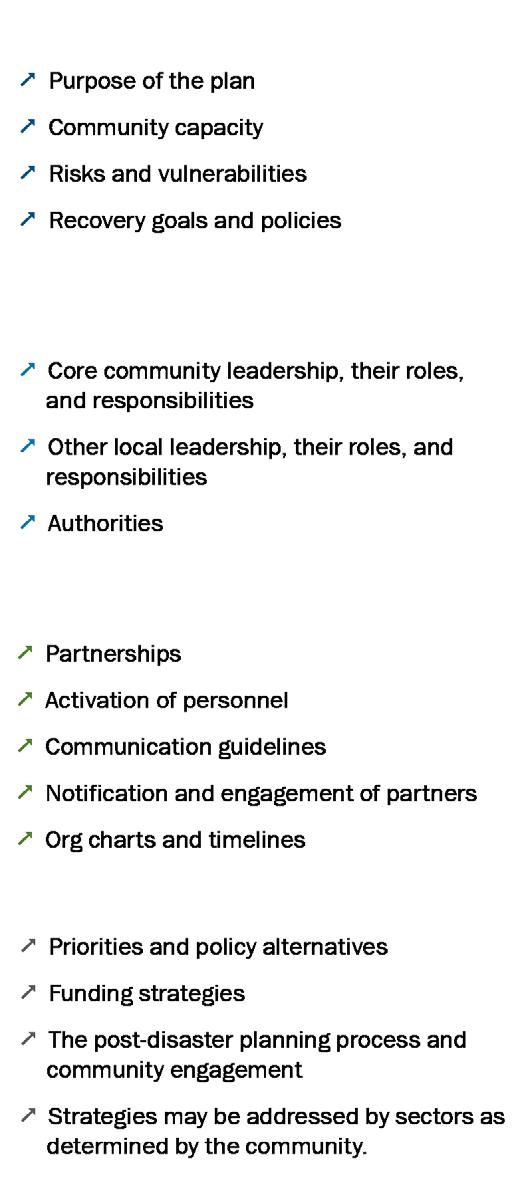
Timeline: Months 8 to 12
Community members should be invited to review and provide feedback ahead of final approval and publication of the plan. This activity aligns with Step 5 of CPG 101. Public outreach may be accomplished through a variety of means, including advertising through traditional media outlets, such as newspapers and radio, and through other nontraditional outreach, including organizational bulletins and social media websites, such as Facebook and Twitter.
Many communities have used social media as one means of public outreach. While there may be a legal obligation to use traditional media, supplementing those kinds of outreach efforts with nontraditional outlets helps ensure that the overall outreach effort is as inclusive as possible. The plan should be made available by various means (including printed and electronic versions) and in formats accessible to those with communication access needs. A short summary of the plan and/or plan topics should also be developed as the plan is finalized to serve as a quick reference.
Notification to the community about this review process may include traditional means, including print media, as well as nontraditional means, such as social media or other online forums. Public outreach should be used to determine accessibility needs. Furthermore, planners must be sure to consider the use of appropriate auxiliary aids and services (e.g., interpreters, captioning, alternate format). It is critical, as part of this outreach effort, to include representation from the whole community, including children; individuals with disabilities and others with access and functional needs; those from religious, racial, and ethnically diverse backgrounds; and people with limited English proficiency.
A key ongoing preparedness activity is strengthening the community’s resilience through pre-disaster planning and implementation activities. An innovative example of just such an activity is Hillsborough County’s identification of Priority Redevelopment Areas (PRAs). PRAs are a tool for addressing the county’s foremost redevelopment issue: prioritizing where rebuilding, reconstruction, and redevelopment will occur after a disaster. The PRA strategy permits redevelopment priorities to be determined pre-disaster, so that the community’s development vision is well-supported and recovery can occur quickly and efficiently. Exactly how redevelopment is facilitated is based on a pre-disaster gap analysis of each PRA, but could include incentives, transfer of development rights, specialized permitting procedures, or other methods.
To differentiate PRAs based on their current level of resiliency, two general classes have been defined (each of which includes multiple subclasses):
Sustainable PRAs are areas that can be sustainably redeveloped at a higher intensity and are a focus of the jurisdiction’s land use plans. They are considered “sustainable” in the sense that their vulnerability to disaster impacts is relatively low.
Vulnerable PRAs contain essential facilities that are key to economic recovery and/or are a focus of the jurisdiction’s land use plans. However, their vulnerability to disasters is relatively high; consequently, pre- and post-disaster hazard mitigation investment in these areas is a priority.
The concept of PRAs was integrated into the county’s 2010 PDRP and later that year two pilot PRAs (Ruskin and University Area) were identified for use in testing the concept. Both pilots have housing stock that is diverse and affordable, and conforms more closely to current building standards, which makes them priorities for redevelopment. However, Ruskin is vulnerable to flooding and so is designated as a Vulnerable Established Community PRA, while University Area, which is less vulnerable to flooding, is designated as a Sustainable Regional PRA. 36
36 For more informationabout Hillsborough County’s PRAs, visit: http://www.hillsboroughcounty.org/index.aspx?nid=1795.
After an appropriate period of time to allow for comments, planners need to hold hearings to adopt the plan and any ordinances, resolutions, or other authorities needed to support plan implementation and other recovery activities. This process will vary among jurisdictions based on standard approval and adoption practices. Many times this task can be accomplished through means normally employed to adopt ordinances, resolutions, and authorities. At this point, planners should also encourage that an annual (or other regularly occurring interval) administrative review requirement be included in the final plan, as a mechanism to make necessary changes to the document.
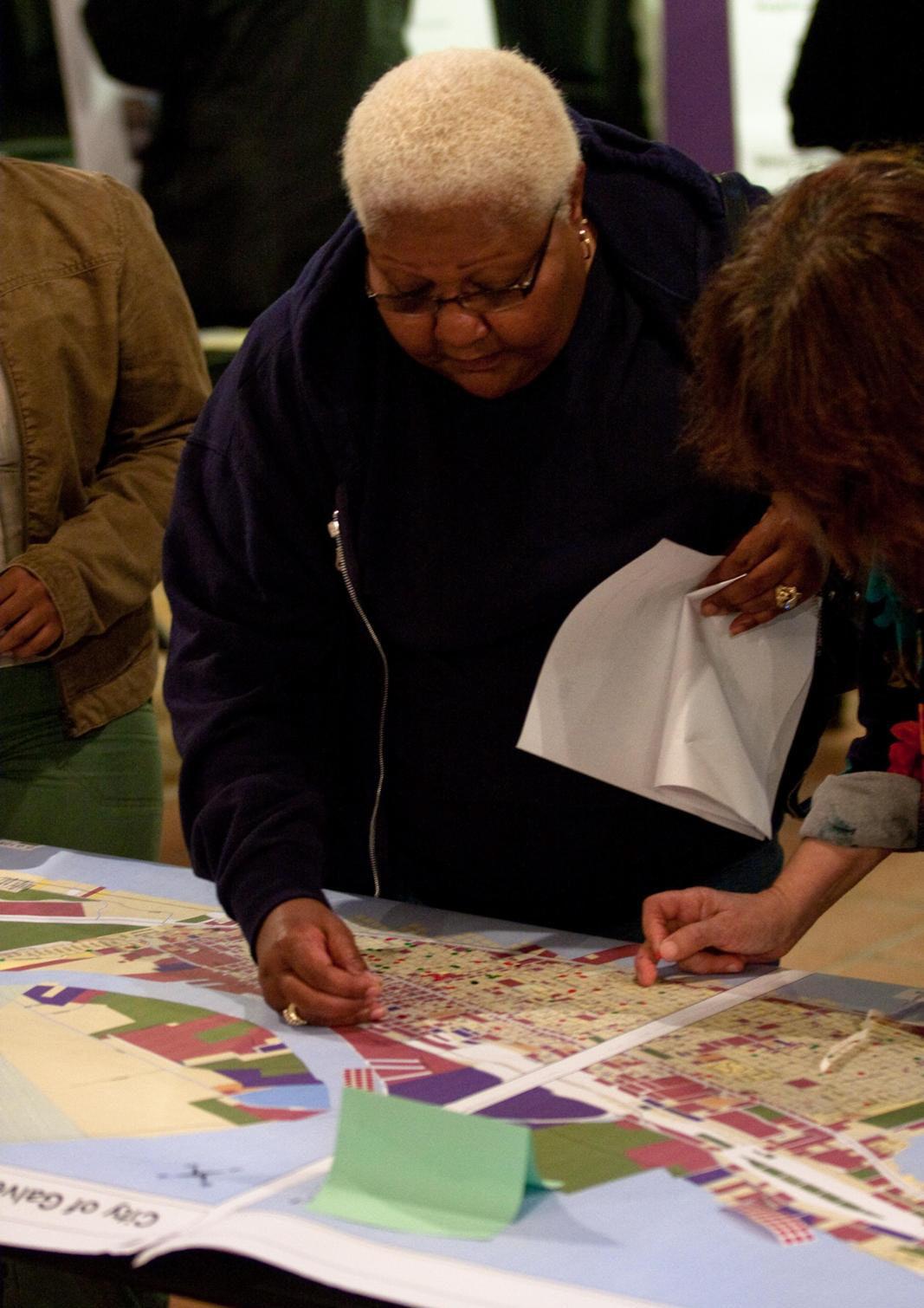
A community stakeholder in Galveston reviews a map of the disaster-impacted area.
After experiencing historic flooding and subsequent landslides and mudslides in 2013, the town of Jamestown utilized all of the resources available to engage the community for plan development and review. The most immediately useful technique that the town used was one that was in place before the flood: a town Quick Topic board. When people were divided, everyone already knew to go to the board, where they could ask questions, make comments, and learn valuable information. As time went on and the recovery progressed, the Town implemented a more comprehensive communication strategy, including Rebuild Jamestown Community Meetings, mass email communications, an updated and more concise town website, a regular digital newsletter, Facebook postings, and, for people not online, phone calls as needed as well as information posted in the post office and town hall.
This Page Intentionally Left Blank
Step 6 encourages planners to identify training and exercise opportunities, and to establish a schedule for revision and review of plans. In recovery, as outlined in Key Activity Nine, actions to increase overall preparedness and community resilience and capacity are vitally important to the success of a pre-disaster recovery plan. Review and revisions of pre-disaster recovery plans should be based on real world and exercise experiences, as well as lessons learned by other jurisdictions.
Timeline: Ongoing
Ongoing activities such as training, exercises, and document revisions ensure that local stakeholders are able to effectively undertake post-disaster recovery activities. The final Key Activity (which aligns with Step 6 of CPG 101) is vital to ensure that the plan remains a useful document for the community and to ensure that stakeholders are prepared to implement the plan if necessary.
Establish Which Agency or Committee is Responsible for Overseeing Ongoing Preparedness Activities
Having collaborative recovery planning team members oversee ongoing activities provides a stable and consistent means for enabling the community’s continuous understanding of the recovery plans and the steps and resources available to follow the plan. Adopting formal procedures and policies to govern ongoing preparedness activities will provide a framework for standardization of and consistency in subsequent recovery actions undertaken. Ideally, one of the agencies on the planning team is designated to manage and monitor preparedness activities related to the plan.
Undertake Regular Activities to Increase Preparedness
To maximize understanding and build capacity in the recovery process, communities should establish a regular schedule of training, exercises, and document review, revision, and update. This will enable planners to address outstanding capability or process gaps, mitigation needs, and other preparedness needs. Recovery plan–focused exercises should be integrated into other community preparedness activities. The recovery plan should be discussed along with any activity associated with other planning projects that already have built-in public involvement, such as the comprehensive plan, hazard mitigation plan, or economic development strategies. Additionally, considerations for recovery operations (guided by the predisaster recovery plan) should be included in exercises of the emergency response plans for the community.
Recovery exercises are drills used to test execution of recovery operations. Exercises involve developing hypothetical disaster scenarios and asking the recovery organization and other partners to consider the community ability to implement recovery under those circumstances. This process enables evaluation of the plan, aides the community in understanding its role in recovery preparedness and plan implementation, and helps identify gaps in policies, roles, partners, resources, and procedures.
When testing the pre-disaster recovery plan, it is important to consider unanticipated challenges that could hamper the community while addressing a disaster. For example:
• The building permit office does not have enough staff to manage the increased permitting workload. How will the locality increase the permitting capacity to meet post-disaster demands and support rebuilding efforts?
• The fire chief has been asked to take the lead role in overseeing the pre-disaster recovery planning process and establish new partners for redevelopment. Does the fire chief have the authority and capability to do that?
In 2012, Fairfax County, VA, held a recovery tabletop exercise that was intended to train and educate participants on their newly developed pre-disaster recovery plan. By completing an exercise using the plan, Fairfax County was also able to identify areas for future improvement of their plan, including roles that needed to be further developed. 37
As a community’s population, economic base, leadership, and demographics shift, local capabilities and capacity may change, it is important to periodically take stock of the community’s capabilities and capacity to support recovery. This may include new or previously ignored assets and capabilities that may come with those shifts. This reevaluation may occur in conjunction with other planning updates, such as:
• The comprehensive planning process involves evaluating changes in local demographics, the economy, and other local conditions, which pre-disaster recovery planning should take into account.
• Local mitigation plans are required to be reviewed and updated at least once every 5 years; updating the pre-disaster recovery plan on the same schedule allows it to include up-to-date risk assessment information.
Stakeholders, partners, and the public should be regularly invited to comment on the plan, provide their concerns and suggestions for revision/updates, and participate in exercises.
Regular evaluation and review may require a process for the receipt of notifications of necessary or proposed changes with respect to other State, county, and/or local statutes, rules and regulations. This may also include notifications of proposed and effected budgetary changes to agencies and programs that are a part of the plan.
37 The formulated After Action Report and Improvement Plan can be viewed at http://www.fairfaxcounty.gov/oem/pdrp/ffx-pdrp-ttx-feb10-2012.pdf.
Characteristics of a community may change over time, which means that planners must regularly reevaluate the threats, hazards, and vulnerabilities of their community. Vulnerabilities could be physical, environmental, cultural, or geographic elements of a community that could be risk prone, or policies that could inhibit the ability of a community to recover from a disaster. They could also be the result of a new hazard or new information about an existing hazard. Predisaster recovery planners need to work closely, and regularly, with hazard mitigation experts to research and understand changing community vulnerabilities. Hazard mitigation is a fundamental cornerstone of preparedness, and opportunities to mitigate should be considered and utilized. Planners must also consider new community vulnerabilities that arise from changes in policy at the local, State, tribal, and Federal levels that could impact the pre-disaster recovery plan. Regardless of how new vulnerabilities are identified, many of the previous Key Activities will need to be repeated to ensure the validity of any decisions that were made during the planning process.
As the final activity in developing a pre-disaster recovery plan, the collaborative planning team should document the steps that were followed in the planning process. No two jurisdictions conduct their planning process in exactly the same way, so it is important that planners take the time to document best practices and lessons learned. Analysis of the planning process and defined areas for improvement in future planning efforts benefit the community and partner communities as well. Lessons learned from the planning process, or from execution of the plan post-disaster should also be used to guide future revisions of the pre-disaster plan.
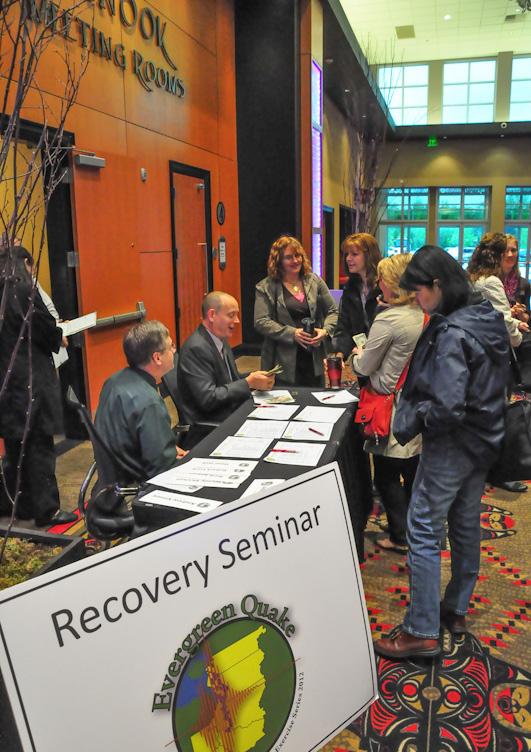
Some of the best guidance for recovery planning comes from lessons learned by those tackling the effects of actual disasters. The following are summaries of proposals that appear in the Hurricane Sandy Rebuilding Strategy (http:// portal.hud.gov/hudportal/documents/huddoc?id=HSRebuildingStrategy.pdf ). Based on Hurricane Sandy recovery work undertaken in a number of States, these proposals illustrate a few best practices that can be incorporated into predisaster planning.
Addressing temporary housing needs is one of the most critical activities post-disaster, and addressing permanent housing issues can be complicated. Consider strategies for making damaged residences habitable that will expedite the recovery process.
Issue: Finding short-term housing for displaced households was very difficult.
Solution: Rapid repairs programs should be used to quickly make damaged residences habitable and reduce demand for shelters and temporary housing.
Issue: Persistence of mold due to water damage was a common and intractable problem for many households and requires expertise to address properly.
Solution: Develop consolidated guidance on addressing mold, asbestos, and other indoor air pollutants.
Small businesses have limited resources and are very vulnerable after a disaster. Consider ways to provide small businesses with immediate, direct, and consistent assistance.
Issue: Lack of a centralized location for business recovery information made it difficult for small business owners to find information they needed.
Solution: A business assistance team should be developed to coordinate with assistance providers.
Issue: Small businesses had difficulty obtaining capital needed to retain employees and replace inventory.
Solution: Develop methods to expedite loans and adjust loan programs to better match “real world” needs.
Recovery activities benefit from access to information on pre-disaster conditions, disaster impacts, and other recovery work. Consider what data will be useful after a disaster, how it will be cataloged, and the process for distributing it.
Issue: Non-profit organizations’ work was hindered by lack of access to government data (such as individual needs assessments).
Solution: A centralized location should be created to distribute data (with personally identifiable information removed).
Issue: There was a lack of clarity on who has authority to release data.
Solution: “Data Stewards” identified by each organization should serve as points of contact for data requests.
Issue: Personnel did not know what information to ask for and where to find it.
Solution: A document containing a list of all data sets that are typically requested during a disaster should be available from the Data Steward.
References included in this section are for documents and websites cited throughout this guide. Many additional resources are available to assist planners and stakeholders, which are available through the Recovery Pre-Disaster Planning Guidance for Locals Resource Library.
Administration for Children and Families. 2013. Children and Youth Task Force in Disasters: Guidelines for Development. https://www.acf.hhs.gov/sites/default/files/ohsepr/childrens_task_force_ development_web.pdf
APA. 1998. Planning for Post-Disaster Recovery and Reconstruction (PAS 483/484). https://www.planning. org/publications/book/9026831/.
APA. 2010. Integrating Hazard Mitigation into Local Planning. (PAS 560). https://www.planning.org/ publications/book/9026884/.
APA. 2015. Planning for Post-Disaster Recovery: Next Generation (PAS 576). https://www.planning.org/ media/document/9008226/.
Beaufort County, SC. 2012. Beaufort County 2011-2012 Disaster Recovery Plan. http://www.bcgov.net/ Archives/county-government/emergency-management/2011-DisasterRecoveryPlan.pdf.
Chambers County, Texas. 2009. Long-Term Community Recovery Plan. http://www.tbrpc.org/ tampabaycatplan/pdf/resource_docs/case_studies/Chambers_TX_LTRPlan.pdf.
City of New York. 2013. NYC Hurricane Sandy After Action Report. http://www.nyc.gov/html/recovery/ downloads/pdf/sandy_aar_5.2.13.pdf.
City of Pembroke Pines, FL. 2015. Motion to Approve a Mutual Aid Agreement with the Seminole Tribe of Florida for Law Enforcement Services. https://ppines.legistar.com/LegislationDetail. aspx?ID=2229607&GUID=4F5DA8FA-B5C5-44F3-87AE-091765AE800C&Options=&Search=.
Community Service Center at the University of Oregon. 2010. Pre-Disaster Planning for Post-Disaster Recovery: Case Studies. http://redevelopment.net/wp-content/uploads/2010/09/CRS-CaseStudies_Final.pdf.
DHS (Department of Homeland Security). 2013. Threat and Hazard Identification and Risk Assessment qGuide: Comprehensive Preparedness Guide 201. https://www.fema.gov/media-library-data/ 8ca0a9e54dc8b037a55b402b2a269e94/CPG201_htirag_2nd_edition.pdf.
DHS, 2015. National Preparedness Goal. https://www.fema.gov/national-preparedness-goal. DHS. 2016. National Mitigation Framework. https://www.fema.gov/media-library-data/ 1466014166147-11a14dee807e1ebc67cd9b74c6c64bb3/National_Mitigation_Framework2nd.pdf.
Pre-Disaster Recovery Planning Guide for Local Governments
Douglas County. 2014. 2 http://www.douglas.co.us/documents/douglas-county-recovery-plan.pdf.
EPA. Local Leaders Guide to Moratorium on Development. Retrieved from landuse.law.pace.edu.
Fairfax County Office of Emergency Management. 2012. Fairfax County Pre-Disaster Recovery Plan Tabletop Exercise After Action Report/Improvement Plan. http://www.fairfaxcounty.gov/oem/pdrp/ffx-pdrp-ttx-feb10-2012. pdf.
Fairfax County Office of Emergency Management. 2012. Fairfax County Pre-Disaster Recovery Plan. http://www. fairfaxcounty.gov/oem/pdrp/pdrp-complete-doc-march2012.pdf.
Hillsborough County, Florida. 2010. Hillsborough County Post-Disaster Redevelopment Plan. http://www. hillsboroughcounty.org/en/residents/public-safety/emergency-management/post-disasterredevelopment-plan
Hurricane Sandy Rebuilding Taskforce. 2013. Hurricane Sandy Rebuilding Strategy. http://portal.hud.gov/ hudportal/documents/huddoc?id=HSRebuildingStrategy.pdf.
FEMA (Federal Emergency Management Agency). 2005. Long-Term Community Recovery Planning Process: A Self Help Guide. http://www.fema.gov/pdf/rebuild/ltrc/selfhelp.pdf.
FEMA. 2010. Developing and Maintaining Emergency Operations Plans: Comprehensive Preparedness Guide 101. http://www. fema.gov/library/viewRecord.do?=&id=5697.
FEMA. 2011. FEMA 104-008-1, A Whole Community Approach to Emergency Management: Principles, Themes, and Pathways for Action. https://www.fema.gov/media-library-data/20130726-1813-25045-0649/whole_ community_dec2011__2_.pdf.
FEMA. 2013. Local Mitigation Planning Handbook. https://www.fema.gov/media-librarydata/20130726-1910-25045-9160/fema_local_mitigation_handbook.pdf.
FEMA. 2015. Effective Coordination of Recovery Resources for State, Tribal, Territorial and Local Incidents. https://www.fema. gov/media-library/assets/documents/101940.
FEMA. 2016. National Disaster Recovery Framework. http://www.fema.gov/national-disaster-recoveryframework-0.
FEMA. 2016. “National Flood Insurance Program Community Rating System.” https://www.fema.gov/national-floodinsurance-program-community-rating-system.
Florida Department of Community Affairs / Florida Division of Emergency Management. 2010. Post-Disaster Redevelopment Planning: A Guide for Florida Communities. http://www.floridadisaster.org/recovery/ documents/Post%20Disaster%20Redevelopment%20Planning%20Guidebook%20Lo.pdf.
Florida Division of Emergency Management. Panama City PDRP [Post-Disaster Redevelopment Plan] Case Study, 6. http://www.floridadisaster.org/Recovery/IndividualAssistance/pdredevelopmentplan/documents/ Toolbox/CaseStudyPanamaCity.pdf.
Galveston Community Recovery Committee. 2009. Long-Term Community Recovery Plan, City of Galveston, TX. http://www.cityofgalveston.org/DocumentCenter/View/192.
NIST (National Institute of Standards and Technology). 2016. Community Resilience Planning Guide for Infrastructure and Buildings, Volume 1. NIST Special Publication 1190. http://nvlpubs.nist.gov/nistpubs/
SpecialPublications/NIST.SP.1190v1.pdf.
ONHW (Oregon Natural Hazards Workgroup). 2006. Cannon Beach Post-Disaster Planning Process Report https:// scholarsbank.uoregon.edu/xmlui/bitstream/handle/1794/5570/CREW_Report_07.17.06. pdf?sequence=1.
National VOAD. 2012. Long-Term Recovery Guide, National Voluntary Organizations Active in Disaster. http://www.nvoad. org/wp-content/uploads/2014/05/long_term_recovery_guide_-_final_2012.pdf.
NREL (National Renewable Energy Laboratory). 2009. Rebuilding Greensburg, Kansas, as a Model Green Community. NREL Technical Report NREL/TP-6A2-45135. http://www.nrel.gov/docs/fy10osti/45135-1.pdf.
U.S. Department of Justice. n.d. An ADA Guide for Local Governments: Making Community Emergency Preparedness and Response Programs Accessible to People with Disabilities. http://www.ada.gov/emerprepguideprt.pdf.
Weiss, D.J. and J. Weidman. 2013. Disastrous Spending: Federal Disaster-Relief Expenditures Rise amid More Extreme Weather. Washington: Center for American Progress. https://www.americanprogress.org/wp-content/ uploads/2013/04/WeissDisasterSpending-1.pdf.
This Page Intentionally Left Blank
Figure 11 depicts the relationship between two of the planning processes outlined and discussed in this document. The left side of the graphic shows the Key Activities outlined in this guide, while the right column displays the corresponding steps in the Local Mitigation Planning Handbook Process ( http://www. fema.gov/library/viewRecord.do?id=7209). There are many similarities between these processes. While recovery will be the focus of the collaborative planning team, care should be taken to integrate with both response and mitigation planning efforts, as well to support the building of resilient communities.
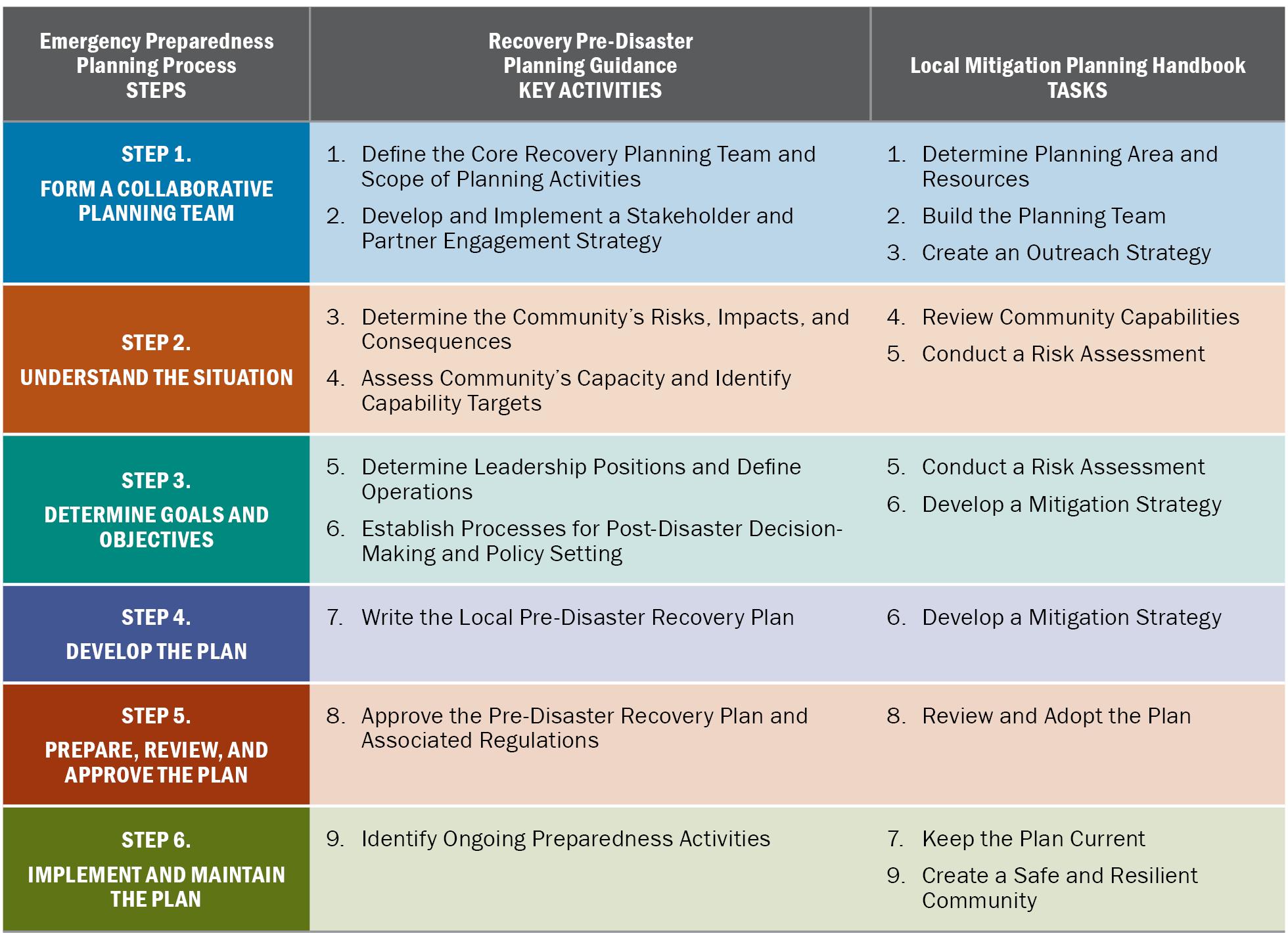
This Page Intentionally Left Blank
Local communities must engage a wide range of entities to enable recovery preparedness and postdisaster recovery planning, including nongovernmental, State, and Federal partners.38 However, the local community is ultimately responsible for leading and managing its recovery from disaster.
State government plays a critical role in terms of support to local governments in pre-disaster recovery planning and post-disaster long-term community recovery. The State must play a proactive role, leveraging its position and capabilities through its statutory powers, its relationships with key Federal departments and agencies, and its own talent and resources to help fill local capacity and resource gaps.
Many States have either designated an established department as the recovery lead after a disaster or chosen to create a new State entity dedicated to coordinating recovery efforts and resources. For example, Alabama designated its Department of Economic and Community Affairs to lead recovery in the wake of the April 2011 tornadoes. Louisiana chose to create a new State entity, the Louisiana Recovery Authority, in response to Hurricane Katrina. Whichever route is taken, it is important to have a lead agency or department in place to coordinate post-disaster recovery.
Local leaders, in coordination with State and tribal officials, should take advantage of every opportunity to build relationships with Federal partners. This encourages Federal interest and awareness in local initiatives and fosters the sharing of ideas. Many State governments have established relationships with Federal agencies and utilize these relationships as a conduit through which Federal resources connect to support local recovery needs. The engagement of Federal resource providers does not mean that Federal governance will supplant locally driven initiatives and authorities. Federal resources will, however, support the goals and priorities of local governments through technical assistance and capacity-building activities.
Local stakeholders should understand how State, tribal, and Federal resources can support their plans. Details of constraints, limitations, and restrictions are determined in a Federal disaster declaration and in other laws and policies that govern Federal activities. Local governments can connect with Federal program providers early to share information, learn about potential resources, and understand requirements associated with Federal assistance. Having a broad base of recovery program knowledge (including an understanding of eligibility and process) is a key component of local recovery preparedness and allows local officials to communicate clearly to their constituents. Some examples of this type of knowledge are funding splits for cost sharing programs, competitive grant guidelines, programmatic time limits, environmental and historic preservation laws, access and functional needs and civil rights laws, and documentation and reporting requirements.
38
This Page Intentionally Left Blank
Experience has shown that the presence of certain factors in a community can help ensure a successful recovery. The National Disaster Recovery Framework identifies seven success factors for successful disaster recovery. These are:
• Recovery leadership defines roles and responsibilities for all stakeholders and participants.
• Businesses, nonprofits, and local community leadership examine recovery alternatives, address conflicts, and make informed and timely decisions that best achieve recovery of the impacted community.
• Organizations providing leadership or assistance for recovery establish realistic metrics for tracking progress, ensuring accountability, and reinforcing realistic expectations among stakeholders.
• Governments, voluntary, faith-based, and community organizations provide assistance to track progress, ensure accountability, and make adjustments to ongoing assistance.
• Communities engage in pre-disaster recovery planning and other recovery preparedness, mitigation, and resilience-building work.
• Individual, business, and community preparation and resilience-building provide a foundation for recovery plans that improve the speed and quality of post-disaster recovery decisions.
• The public-private partnership under the National Infrastructure Protection Plan facilitates broad coordination and information sharing among all levels of government and private sector owners and operators of critical infrastructure.
• The community develops processes and criteria for identifying and prioritizing key recovery actions and projects.
• The community’s recovery leadership creates an organizational framework involving key sectors and stakeholders to manage and expedite recovery planning and coordination.
• Recovery authorities revise existing local- and State-level emergency response contingencies to include recovery planning best practices and other preparedness, mitigation, and community resiliencebuilding work.
• Well-established, pre-disaster partnerships at the local, State, tribal, and Federal levels, including those with the private sector and NGOs, help to drive a successful recovery.
• Recovery stakeholders leverage and coordinate disaster and traditional public and NGO assistance programs to accelerate the recovery process and avoid duplication of efforts.
• Communities seek out, interface, and coordinate successfully with outside sources of help, such as surrounding governments, foundations, universities, nonprofit organizations, and private sector entities—a key element in rapid recovery.
• Readily available surge staffing and management structures support the increased workload during recovery, such as code enforcement, planning, communications, grant-writing, and management.
• Recovery leadership establishes guidance for the transition, including the transfer of roles and responsibilities from response operations, to recovery, and finally to a new normal state of community functioning.
• Leaders ensure compliance with architectural standards and programmatic accessibility during recovery.
• Stakeholders collaborate to maximize the use of available resources to rebuild housing, infrastructure, schools, businesses, and the social-historical-cultural fabric of the impacted community in a resilient manner; and to provide health care, access, and functional support services.
• All community perspectives are represented in all phases of disaster and recovery planning; transparency and accountability in the process are clearly evident.
• Communities create post-disaster recovery plans that can be implemented quickly and recovery resources are maximized. Local opinions are incorporated so that community needs are met in a more holistic manner.
• Public information is accessible to everyone throughout the recovery process. Messaging includes captioning, large print, Braille, interpretation, and translated materials, to ensure effective communication with individuals with disabilities and to facilitate access to information for individuals with limited English proficiency.
• Continuous and accessible public information campaigns targeted toward community members on various recovery programs, and knowing leadership’s commitment to short-term, intermediate, and long-term recovery, as well as the overall recovery progress, increase public confidence.
• Community stakeholders need to understand and have access to broad and diverse funding sources in order to finance recovery efforts.
• The community’s knowledge and professional administration of external programs greatly aid the recovery progress.
• Resource providers collaborate to provide program flexibility and financial planning, recovery management, and program administration support in a post-disaster environment.
• Recovery management programs support the development and maintenance of adequate financial monitoring and accounting systems for new and large levels of investment. Management programs include systems that detect and deter fraud, waste, and abuse.
• Federal recovery expenditures maximize the use of local businesses to promote local economic development.
• Organizational structures for coordinating recovery assistance are scalable and flexible.
• Recovery structures at all government levels evolve, adapt, and develop new skills and capacities to address the changing landscape of post-disaster environments.
• Functional and effective intergovernmental relations influence the efficiency of the recovery process.
• Organizational flexibility facilitates the application of laws, regulations, and policies in the context of disaster and enhances the government’s adaptability to govern in unforeseen disasters.
• Flexible staffing and management structures enhance the adaptability of the governmental structure.
• Engaging in more partnerships before a disaster helps reduce or avoid the challenges of establishing new partnerships in a post-disaster environment.
• Organizational flexibility is compatible with the integrity and accountability of taxpayer-funded programs.
• The community rebuilds a sustainable future, factoring in the ecological, economic, and local capacity considerations.
• The recovery is an opportunity for communities to rebuild in a manner that reduces or eliminates risk from future disasters.
• Communities can incorporate stronger building codes and land use ordinances. Vulnerable structures can be retrofitted, elevated, or removed from harm.
• Community members, businesses, and local governments can incorporate risk reduction strategies into governance and local decision-making.
Critical factors for recovery have also been identified at the local and the regional levels. These factors have been further defined in concrete operational terms that explain which activities and objectives must take place first for other actions and resulting conditions to occur. The Association of Bay Area Governments, which represents more than 100 California cities and counties, reported in an International City/County Management Association publication that among the members it surveyed, the following factors are the most critical to successful recovery:
• Financing
• Expediting long-term housing recovery
• Supporting recovery of downtown businesses and the local economy
• Ensuring local government facilities and services recover smoothly
The Broadmoor neighborhood in New Orleans was devastated by Hurricane Katrina in 2005. Broadmoor recognized the value of collaborating with the community and partnered with non-profits and the private sector in a collaborative planning process facilitated by the Harvard University Belfer Center. The result of this collaborative process was a community that was able to pull together, leverage resources, and achieve recovery goals faster than they might have otherwise.
While there is guidance on defining success factors broadly, each community must define success on its own terms because the examples above may not be applicable to every community or every disaster. As a result, a component of disaster recovery preparedness and planning is to determine success factors that are deemed most appropriate by local stakeholders.
A local recovery ordinance can help ensure that the authorities and processes needed to achieve recovery goals are in place before a disaster strikes. It is important to consider State statutory laws or authorities, and potential tribal authorities, relating to planning, land use, or other elements covered by a recovery ordinance. A county or city attorney can help navigate these statutes (if applicable) and ensure that a local recovery ordinance is in compliance with State laws.
More information about the creation of an ordinance, as well as a model recovery ordinance, is available in the APA’s Planning for Post-Disaster Recovery: Next Generation ( https://www.planning.org/research/postdisaster/). Model recovery ordinance information is available at https://www.planning.org/research/postdisaster/ briefingpapers/recoveryordinance.htm.
A recovery ordinance accomplishes the following:
1. Creates legal authority for post-disaster interventions to modify future development
2. Authorizes recovery management organization
• This creates and authorizes the recovery organization and names the primary players involved. The ordinance can allow the recovery management organization to remain in place to address long-term recovery needs (long after the emergency management period ends). It emphasizes the importance of communication and partnerships with emergency operations center staff to ensure everyone associated with the recovery management organization learns about disaster impacts immediately.
3. Directs preparation of recovery plans or strategies
• The ordinance allows the recovery management organization to develop policies, actions, and strategies after disaster strikes, and describes the public input process needed for plan adoption. It also describes the need to coordinate recovery planning with other planning processes already in place.
• It identifies the partnerships with other levels of government and other organizations.
4. Establishes temporary regulations covering extraordinary actions regarding private property
• For example, the ordinance can allow expedited demolition or building permits, fee waivers, and other approaches to accelerate recovery.
• Alternatively, the ordinance could allow the creation of a moratorium on development, defined by the U.S. Environmental Protection Agency (EPA) as “a local law or ordinance that suspends the right of property owners to obtain development approvals while the community takes time to consider, draft and adopt land use plans or rules to respond to new or changing circumstances not adequately dealt with by its current laws.” In this case, the new circumstance would be the disaster impacts that may need to be considered in future land use policies.
5.Identifies processes for communities to take cooperative action with State, tribal, and Federal entities, as well as involve citizens, businesses, and stakeholder groups in recovery planning
• Essentially, outlines the protocols and lines of communication among all stakeholders who might be involved with recovery planning and/or implementation.
However, the same results may be achieved through a resolution stating the same or an administrative memorandum for those communities with strong managerial governance. In most localities, ordinances must go through at least two readings at different sessions, and more often than not, a public hearing is required, with the prerequisite notifications in a newspaper of general circulation and postings.
The outline below provides additional information on the Pre-Disaster Recovery Plan Components discussed in Key Activity Seven. These components, their descriptions, and prompts are provided as example guidance only. As local communities develop pre-disaster recovery plans, they may choose components that are more suitable for their needs.
Plan Purpose (narrative): Why is the community preparing for recovery? Why is it important?
Community Capacity Assessment (narrative): What recovery capabilities does the community currently have, and how might they be compromised after a disaster?
Risks, Hazards, Exposures, and Vulnerabilities (narrative and table or bullet points): List the community assets that would be at risk if a disaster struck. This section may also include different types of disasters likely to occur in the community, and how the impact on community assets may vary, depending on the disaster. If a local, State, or tribal mitigation plan currently exists, it should be referenced for risks and vulnerabilities already identified. If not, identifying risks and vulnerabilities as part of the pre-disaster recovery planning effort could feed into future mitigation plans. Table 4 provides a template for listing risks and mitigation measures.
Table 4 Sample Table of Risks and Mitigation Measures
A
B
C Moderate ImpactModerate Impact No
D
E
Strategies (narrative): Based on the community capacity assessment and the determination of risks, hazards, exposures, and vulnerabilities, what strategies could the community discuss and evaluate?
Recovery Goals and Policies (narrative and table or bullet points): If a disaster strikes, which community assets will be a priority for recovery?
Implementation Process: How will the recovery strategies, goals, and policies be carried out? Develop action statements and timelines to assess progress.
Recovery Administrative Structure: What department head, if any, should direct the local recovery process? Or should a long-term disaster recovery manager be hired? How should the chain of command flow, and which departments are responsible for what activities? Should the local organization parallel State, tribal, and Federal disaster recovery frameworks?
Community Engagement Strategy: What local volunteer agencies are active in disasters? Are NGOs and educational organizations available? How should these organizations line up with the recovery team?
Mitigation Measures (narrative and table or bullet points, building on the previous section): What, if any, mitigation measures have been implemented, are in progress, or are planned?
• Recovery Leadership (narrative and list): Who are the recovery leaders in the community?
• Authorities (narrative): What legislation or policy enables these leaders to manage post-disaster recovery?
• Partners (narrative and table or bullet points): Which local agencies and organizations, regional/State agencies and organizations, tribal organizations, Federal agencies, and NGOs are recovery partners, and what are their recovery roles and responsibilities after a disaster? Table 5 is a template for listing partners and their recovery responsibilities.
• Activation of Personnel (narrative): How and when are personnel assigned to fill recovery roles activated?
• Assessment and Data Gathering (narrative): What types of assessment and data gathering will be conducted after a disaster strikes? Before? Who is responsible for data collection? Are there predetermined guidelines and forms to be used for data collection?
• Communication Guidelines (narrative and reference to organizational chart): How will recovery leaders and stakeholders communicate with one another? How often should they be communicating?
• Notification and Engagement of Recovery Partners (narrative and reference to organizational chart): How and when will recovery partners be notified and engaged post-disaster?
• State, Tribal, and Federal Engagement (narrative and reference to organizational chart): How will local recovery leaders communicate with the State and tribes? Are there partnerships with State, tribal, or Federal agencies that should be referenced?39
• Organizational Chart (diagram): How are recovery leadership and partners organized?
• Timelines (narrative and timeline): Show the projected timelines for beginning the recovery process, starting at the time of the disaster. The planning timeline from the beginning of this guide is shown below. A similar format may be used to show post-disaster activities such as activation of personnel, data gathering, and engagement of partners. The timeline below shows time ranges spanning months. In post-disaster recovery, time ranges for initial recovery activities will likely span only days or weeks. The timeline shown in Figure 12 is a general illustration of what a timeline might resemble.
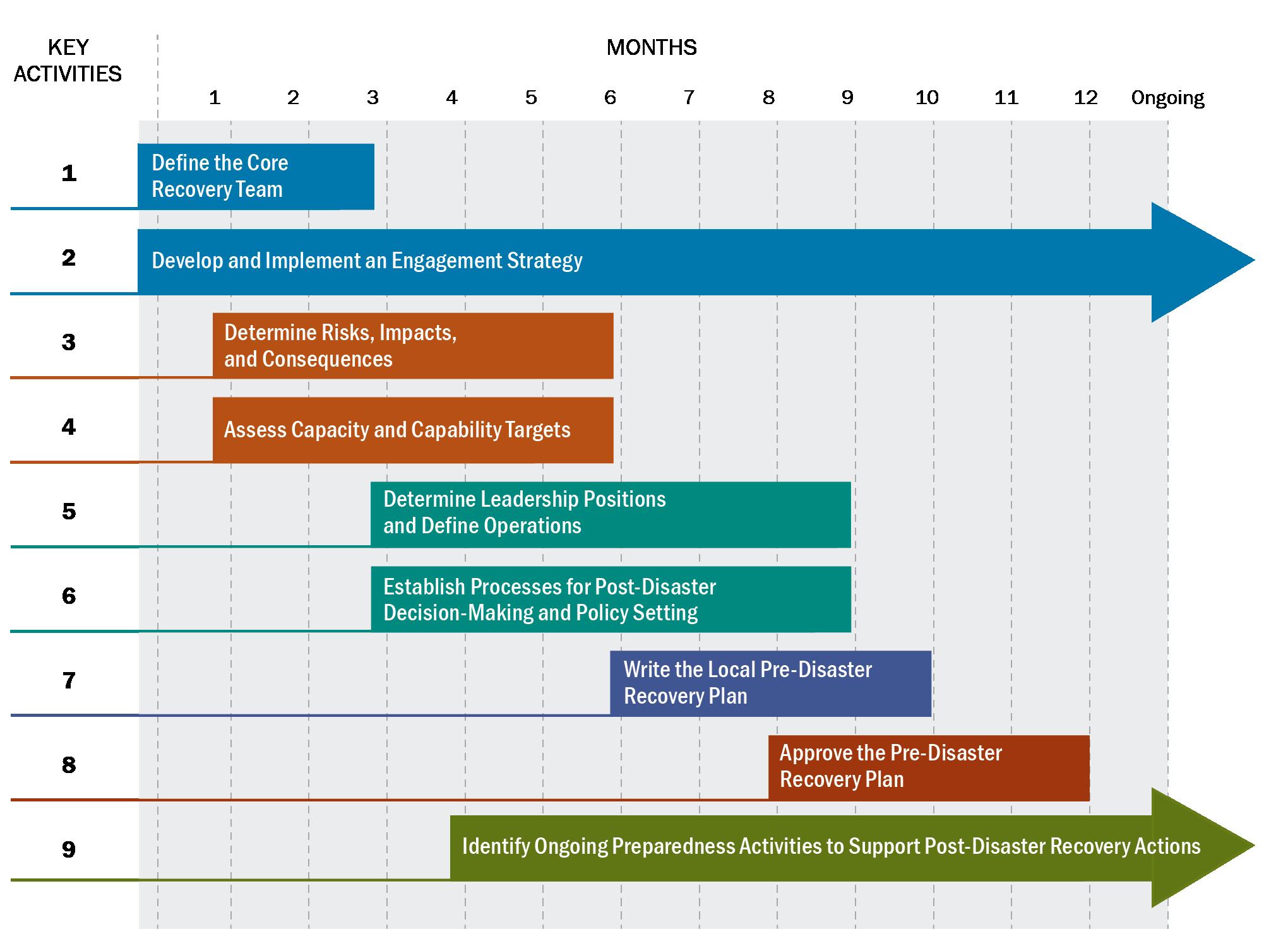
• Execution Strategy (narrative): Articulate how the community will execute its strategy for predisaster recovery planning, taking into account operational items listed in Section 3. Emphasize reliance on existing plans as guides to direct recovery and the process of being fully inclusive in predisaster recovery plan development.
• Priorities and Policy Alternatives (narrative): List priorities for recovery implementation, as well as policy alternatives that may be either in place through existing partnerships or legally authorized in emergency situations. Policy alternatives (such as expedited permit requests, for example), if allowed, should be mentioned in this section.
• Funding Strategies (narrative): List funding strategies that may be either in place through existing partnerships or legally authorized in emergency situations. These may include keeping known resource providers up to date with assessments of disaster impacts so that initial funding requirements can be determined.
Capability Land Use
Phase Pre-Disaster
Target/Need (Goal) Polk County will facilitate the expeditions redevelopment to the extent possible while exercising due diligence in decisions affecting long-term land use policies.
Tasks/Actions Evaluate the need to revise ordinances and other regulatory processes to accommodate postdisaster conditions.
Description
May include ordinances regarding fee assessment, inspection fees, and others, or development of an overarching post-disaster redevelopment ordinance that would temporarily supersede regular ordinances. Develop thresholds for activation. Coordinate with municipal jurisdictions to ensure consistency throughout the county. Note: suggest to State that plan adoption can be done off cycles to expedite implementation.
Priority High
Implementation Time Frame
• Public outreach to cities: December 2010
• Revise comp plan: June 2010
Responsible Agency Growth Management Dept.
Assistance from county communications channels
Data from utility and tax bills for outreach efforts
Other jurisdictions’ policies
This Page Intentionally Left Blank
KEY ACTIVITY ONE: DEFINE THE COLLABORATIVE RECOVERY PLANNING TEAM, SCOPE OF PLANNING ACTIVITIES, AND STAKEHOLDER ENGAGEMENT STRATEGY (BEGINNING OF PLANNING EFFORT THROUGH MONTH 3)
F Include stakeholders with community ties who can help with outreach, as well as those with technical knowledge associated with Core Capabilities.
F Identify key organizations and community leaders who should serve as planning partners.
F Make sure the identification of team members is an inclusive process.
F Define the area to be covered by recovery planning activities and how the planning process will relate to adjoining areas.
F Determine if existing planning documents can be used to record pre-disaster recovery planning information.
KEY ACTIVITY TWO: DEVELOP AND IMPLEMENT A STAKEHOLDER AND PARTNER
F Define the scope of stakeholder engagement.
F Establish partnerships with NGOs and define capabilities and roles in support of disaster recovery (ongoing).
F Establish partnerships.
F Confirm which agencies will partner with the local government on post-disaster recovery activities.
F Establish agreements with these partners to ensure that their roles are understood; use Memoranda of Agreement/Mutual Aid Agreements as appropriate.
F Establish which governmental agencies have a role in supporting recovery activities (ongoing).
F Identify how external agencies will align with the recovery organizational structure and process.
F Establish agreements with agencies to fulfill the roles outlined in the pre-disaster recovery plan.
KEY ACTIVITY THREE: DETERMINE RISKS, AND THEIR IMPACTS AND CONSEQUENCES (MONTHS 1 TO 6)
F Assemble and use existing mitigation planning data, if available.
F Obtain existing disaster information and community planning products.
F Identify hazards, and assess risks and vulnerabilities.
F Engage community members, leaders, and businesses in understanding risk and identifying direct and indirect community consequences.
KEY ACTIVITY FOUR: ASSESS THE COMMUNITY’S CAPACITY AND IDENTIFY CAPABILITY TARGETS (MONTHS 1 TO 6)
F Evaluate planning and regulatory strengths and weaknesses.
F Evaluate local organizational, administrative, and technical strengths and weaknesses.
F Evaluate financial strengths and weaknesses.
F Evaluate effective communication access and outreach strengths and weaknesses.
KEY ACTIVITY FIVE: DETERMINE LEADERSHIP POSITIONS AND DEFINE OPERATIONS NECESSARY FOR POST-DISASTER RECOVERY PLANNING AND MANAGEMENT EFFORTS (MONTHS 3 TO 9)
F Establish a post-disaster recovery organizational structure with clear lines of communication.
F Decide which agencies will lead and which will provide support during the post-disaster recovery process.
F Determine desired skill sets and credentials for local recovery leaders.
F Create position descriptions for recovery positions.
F Identify who will serve as the Recovery Coordinator and manage the recovery effort.
F Follow local protocols/procedures to assign personnel to recovery positions.
F Establish recovery committee(s) or stakeholder group(s).
F Determine potential costs and operational resource needs, and sources of technical and administrative support.
F Define recovery operations and strategies.
F Identify communication requirements, and permitting and inspection processes.
KEY ACTIVITY SIX: ESTABLISH PROCESSES FOR POST-DISASTER DECISION-MAKING AND POLICY SETTING (MONTHS 3 TO 9)
F Determine a process for making decisions post-disaster.
F Determine processes for enacting post-disaster recovery policies.
F Determine policies to be set before a disaster.
KEY ACTIVITY SEVEN: WRITE THE LOCAL PRE-DISASTER RECOVERY PLAN (MONTHS 6 TO 10)
F See the Pre-Disaster Recovery Plan Components diagram in Figure 10
KEY ACTIVITY EIGHT: APPROVE THE PRE-DISASTER RECOVERY PLAN AND ASSOCIATED REGULATIONS (MONTHS 8 TO 12)
F Present the plan to the community.
F Hold hearings for and adopt any ordinances, resolutions, or other authorities needed to support implementation of the plan and other recovery activities.
KEY ACTIVITY NINE: IDENTIFY AND UNDERTAKE RECOVERY READINESS ACTIVITIES (ONGOING)
F Establish which agency or committee will be responsible for overseeing ongoing preparedness activities.
F Undertake regular activities to increase preparedness.
F Conduct regular reviews of recovery policy documents and ordinances.
F Test pre-disaster planning, preparation, and staff capabilities through recovery exercises.
F Conduct regular reviews of pre-disaster recovery plans, policy documents, and ordinances.
F Evaluate new vulnerabilities.
This Page Intentionally Left Blank
Accessibility: The suitability or adaptability of programs, services, activities, goods, facilities, privileges, advantages, or accommodations for all members of the population, including individuals with disabilities and others with access and functional needs.
Capability: The sum of capacity, ability, and knowledge that provides the means to accomplish a mission, function, objective, or end state.
Capacity: A combination of all the strengths and resources available within a community, society, or organization that can reduce the level of risk or the effects of a disaster (from the U.N. International Strategy for Disaster Reduction).
Community: A network of individuals and families, businesses, governmental and nongovernmental organizations, and other civic organizations that reside or operate within a shared geographical boundary and may be represented by a common political leadership at a regional, county, municipal, or neighborhood level.
Collaborative Planning Team: A group of individuals representing organizations responsible for plan execution that develops and writes the actual plan, contributes to planning efforts, and helps to facilitate, organize, and carry out planning disasters.
Core Capabilities: Distinct critical elements necessary to achieve the National Preparedness Goal.
Inclusive: Including partners from various government, nongovernment, private-sector groups, and community leaders. Includes people with disabilities and others with access and functional needs, Limited English Proficiency, cultural groups, faith-based groups, and other citizens. See Whole Community.
Limited English Proficiency: Persons who do not speak English as their primary language and who have a limited ability to read, speak, write, or understand English.
Mission Areas: Groups of Core Capabilities, including Prevention, Protection, Mitigation, Response, and Recovery.
Mitigation: The actions necessary to reduce loss of life and property by lessening the impact of disasters. Mitigation can include, for example, community-wide risk reduction projects, improving the resilience of critical infrastructure and key resource lifelines, projects that reduce risks from specific vulnerabilities from natural hazards or acts of terrorism, and initiatives to reduce future risks after a disaster has occurred.
Nongovernmental Organization (NGO): A nongovernmental entity that serves the interests of its members, individuals, or institutions and is not for private benefit.
Planning: The process of developing, maintaining, exercising, executing, and updating a plan.
Recovery: The state of normalcy achieved after a disaster by planning ahead of time and making the best use of community resources.
Resilience: The ability of a community to anticipate, resist, absorb, respond to, adapt to, and recover from a disturbance.
Response: The actions taken to save lives, protect property and the environment, and meet basic human needs after a disaster has occurred.
Risk: The potential for an unwanted outcome as determined by its likelihood and the consequences.
Risk Assessment: A product and process evaluating information based on a set of criteria specifying risks for the purpose of informing priorities, developing or comparing courses of action, and informing decision making.
Stakeholders: People or organizations who may be affected by a policy or action.
Strategic Planning: A planning process establishing organizational goals and identifying, scoping, and establishing requirements for the provision of capabilities and resources to achieve them.
Sustainability: Meeting the needs of the present without compromising the ability of future generations to meet their own needs.
Universal Design: The design of products and environments to be usable by all people, to the greatest extent possible, without the need for adaptation or specialized design.
Vulnerability: A physical feature or operational attribute that renders an entity open to exploitation or susceptible to a given hazard.
Whole Community: A process that engages all members of a society (without discrimination) to achieve a shared understanding of community risks, needs, and capabilities and develops strategies that organize and strengthen communities’ assets, capacities, and interests; also optimizes resources.