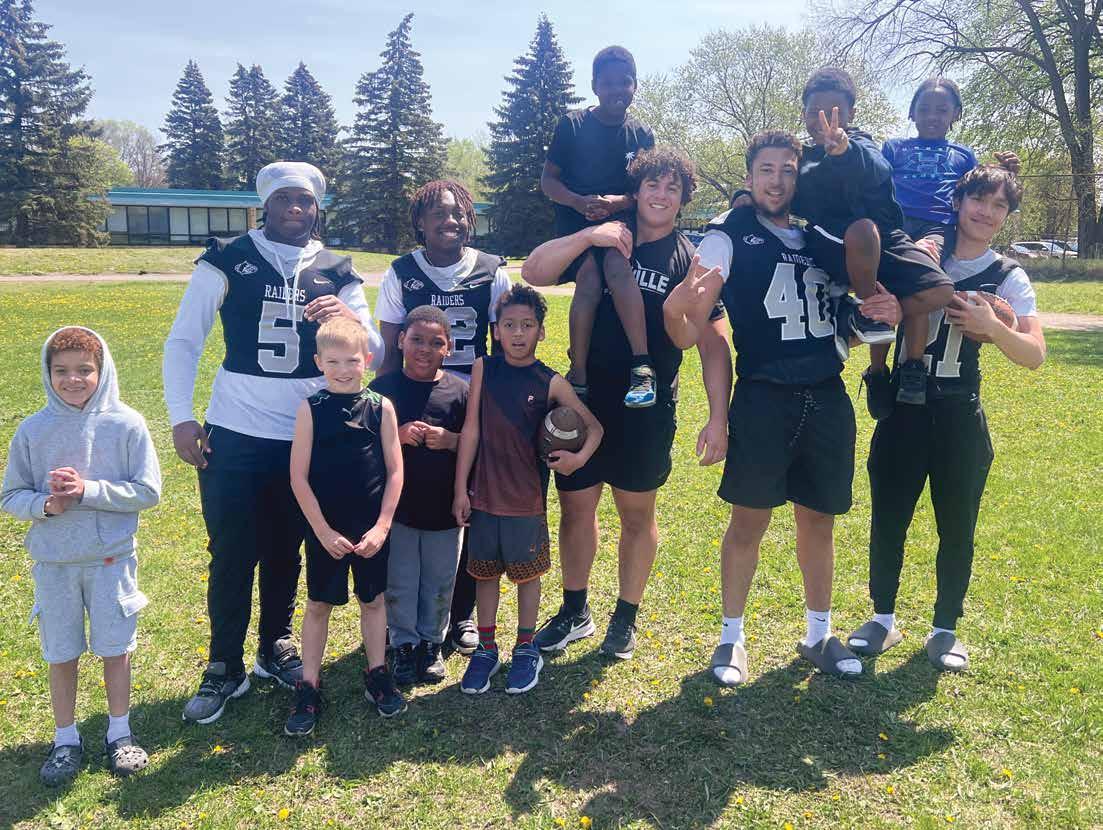
For more on the RAHS football players’ spring visits to district elementary schools, see page 13.
Roseville Area Schools

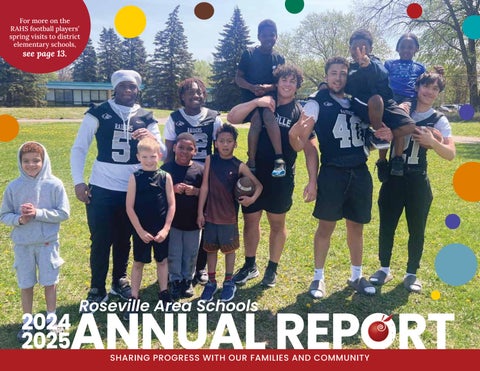
For more on the RAHS football players’ spring visits to district elementary schools, see page 13.
SHARING PROGRESS WITH OUR FAMILIES AND COMMUNITY

We are excited to share the 2024–2025 Roseville Area Schools Annual Report, celebrating the progress, achievements, and partnerships that help our district thrive. This year’s report reflects the energy and dedication that fuel our mission to create a vibrant learning community where every student is empowered to succeed.
Our commitment to excellence, innovation, and equity guides all we do:
· Excellence: Engaging, high-quality learning experiences inspire students to discover their strengths and prepare for the future.
· Innovation: Staff, students, and community embrace new ideas that keep learning relevant in a changing world.
· Equity: We foster inclusive, welcoming spaces where every student feels seen, valued, and equipped to thrive.
This report highlights our strategic goals, outlines Minnesota’s Comprehensive Achievement and Civic Readiness Report priorities, and shares inspiring examples from classrooms, programs, and partnerships across the district. With the strength of our community and the dedication of our educators, we are building a future where every student can realize their potential.
In Partnership, Dr. Jenny Loeck Superintendent

Each learner experiences a sense of belonging and a joy of learning, is inspired and prepared to reach their potential, and contributes to our communities.
Roseville Area Schools is committed to ensuring an equitable and respectful learning environment for every student, family, and staff member regardless of race, gender, gender identity, sexual orientation, socioeconomic status, ability, home or first language, religion, national origin, age, and physical appearance.
7,597
Total Students (includes Pre-K)
% of students who speak a language other than English at home: 36%
Top 6 home languages (in order): 1. English 2. Spanish 3. Hmong
ACHIEVEMENT
Early Childhood Family Education (ECFE) students: 186
ECFE 3-5 students enrolled at the end of 2024-25 school year: 174
Early Childhood Family Education (ECFE) parents/caregivers: 287
Pre-K students: 305
Students receiving Early Childhood Screening services: 419
(of total student population including Pre-K)
English Language Learners: 17%
Special Education Services: 18.6%
Advanced Academic Talent Development: 12.4%
68.6% (2023) compared to state average of 74.5%
Cost-saving opportunities for qualifying families: 51%
(includes Pre-K)
School day breakfasts served (2024-2025): 388,779
School day lunches served: 873,713
“Super Snacks” served: 92,145
Students transported daily: 5,600
Number of bus stops: 745
Total number (including full time, part time, and temp): 1,247
Licensed personnel: 672
Support professionals: 385 Administrators: 22
BIPOC staff: 328
Budgeted general operating fund: $131.5 million
Basic per pupil state funding: $7,281
Local revenue sources (primarily from local property taxes): $34.4 million
Sources of funding: State 77%, Local 20%, Federal 3%
These goal areas are established by the state of Minnesota, which school districts are required to address in an annual report.
CACR Goal Areas
READ Act Goal NEW!
The percentage of all students enrolled in third grade will increase proficiency on the MCA reading test from 42.9% in 2024 to 48.6% in 2025.
2024-2025 District Results
Did not meet, 41.8% of 3rd graders were proficiency in 2025
• Invested heavily in elementary literacy materials—Wit and Wisdom, Amplify, Fundations, Heggerty—focused on Science of Reading and Structured Literacy
• Trained nearly all K-4 teachers in Science of Reading and structured literacy practices
•Completed over 150 hours of LETRS training over two years
• Supported literacy intervention through Alternative Delivery of Specialized Services (ADSIS) with approximately $1 million
All Children are Ready for School
All Racial and Economic Achievement Gaps Between Students are Closed
80% of students enrolled in Pre-K and eligible for kindergarten in the fall of 2025 will score at age level or higher in Establishes and Sustains Positive Relationships; as indicated in TS Gold.
Goal was exceeded. 88% of Pre-K students met age appropriate level in TS Gold.
Math: The racial disparity for students’ proficient on the MCA math test district wide (grades 3-11) between black students and white students will decrease by 6 percentage points from 38% in 2024 to 32% in 2025.
Reading: The racial disparity percentage for students’ proficient on the MCA reading test district wide (grades 3-10) between Hispanic students and white students will decrease by 7 percentage points from 44% in 2024 to 37% in 2025.
Math: Did not meet; increased to 42%
Reading: Did not meet; increased to 47%
• Used purposeful play, in alignment with kindergarten, used purposeful play to provide opportunities to practice the skills being taught in all areas of development
• Implemented TS Gold developmental assessment, which provides data on student growth and information to plan interventions through PLC
• Supported students’ social and emotional development through Second Step curriculum instruction and Pyramid Model interventions
• Shared social- emotional read aloud books and support strategies with families via family newsletters to practice social skills at home.
• Recognized reading as a social justice issue
• Expected long-term gains in literacy and math from new strategies
• L aunched first year of reading changes, with proficiency gains anticipated in 2-3 years as younger students advance to MCA testing
• Offered Cognitively Guided Instruction (CGI) in K-8 to deepen studentcentered math skills
• Conducted K-8 math screenings three times annually, with targeted student support
• Provided Coaching for Equity book study for site administrators and ATPPS lead teachers
CACR Report
All Students Graduate from High School
All Students are Ready for Career and College
2024-2025 District CACR Goals
The percentage of the All Students group in Roseville Area Schools that graduate in 4 years will increase from 85.2% in 2022 to 90% in 2024.
The average composite score on the ACT test for all tested students districtwide on the district contract days will increase from 20.0 in 2024 to 20.2 in 2025.
2024-2025 District Results
Not Met: The 2024 Graduation Percentage was 84.5% Goal Met; Composite score for 2025 was 20.3
Examples of Strategies to Achieve Goals
• Established the AVID program in grades 5-12 across all schools
• Integrated AVID WICOR strategies—Writing, Inquiry, Collaboration, Organization, and Reading—into School Improvement Plans
• Advanced Grading for Equity work
• Implemented Xello last year
• Expanded career readiness pathways and course options at the secondary level
• Offered certifications in various fields for high school students
• Enabled students to earn college credit through Advanced Placement, Concurrent Enrollment, College in the Schools, and Post-Secondary Enrollment Options
• Advanced Grading for Equity work
Prepare Students to be Lifelong Learners
In the 2024-2025 school year all student groups by race will remain representative within 10% of their overall school population in our Career and Technical Education and college credit bearing courses.
Did not meet; White students were overrepresented while American Indian/Native American, Hispanic, and Black students were underrepresented.
• Provided students lessons in homeroom/advisory classes for college and career readiness
• Used career inventory information to assist students with the course registration process
• Explored training programs and post-secondary schools tied to careers
• Provided career exploration lessons for classroom teachers
• Visited college campuses and invited professionals for classroom visits to share insights about various career paths and opportunities
• Continued to offer on the job training opportunities
• Established AVID 7-12 college and career vertical articulation meetings for teacher planning
• Contributed to community service projects
Our graduates are prepared to achieve their goals and aspirations.
• Ensure students are college- and career-ready
• Deliver a challenging, joyful, and safe learning environment
• Deliver innovative, effective practices and systems
Our learners contribute to an equitable, caring society.
• Cultivate student engagement and joy in learning
• Support learner resiliency (student social and emotional learning and mental health)
• Amplify student leadership and voice in decision-making
• Prepare learners to be racially and socially responsive
We are a culturally responsive, inclusive, anti-racist district.
• Ensure educator commitment to anti-racist practices
• Hire and retain a diverse workforce
• Develop equitable leaders
• Develop a culturally responsive evaluation system
• Secure and allocate financial resources to support the district’s mission and vision #1 #2 #3 #4 #5
• Build a culture of belonging where all feel welcome, included, and safe
The community is united behind meeting student needs.
• Partner with families and the community to support student success
• Build a culture of belonging
We are financially secure.
• Cultivate and maintain community trust
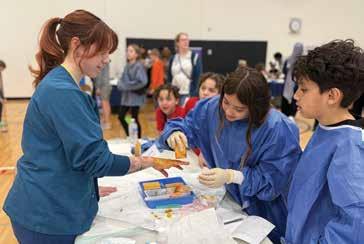
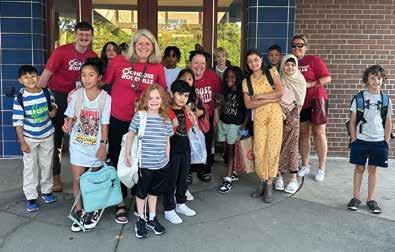
AVID students from RAMS and Parkview Center School hosted the annual Career Café, where more than 450 students and family members explored future possibilities by connecting with more than 40 professionals across diverse careers—encouraging students in grades 5–8 to explore and connect.
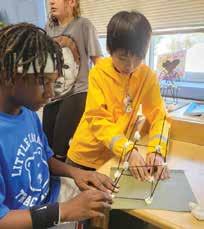
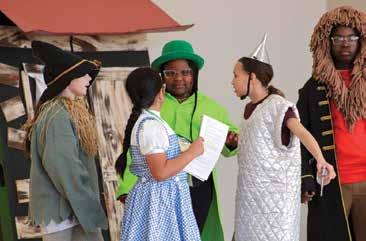
Elementary students from four schools strengthened their literacy skills through dramabased learning—reading scripts, playing literacy games, and performing The Wizard of Oz. Led by licensed teachers, this academic program provided targeted support in reading and math beyond the regular school day.
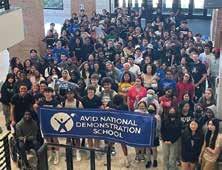
Roseville Area Middle School and Roseville Area High School were named AVID Schoolwide Sites of Distinction for 2024–2025—the highest AVID certification level—recognizing their strong, schoolwide commitment to college readiness and academic success for all students.

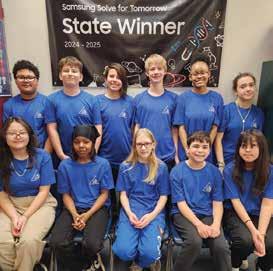
The Edgerton Ice Savers, a team of 12 sixth graders, earned national recognition as one of 10 Samsung Solve for Tomorrow finalists for their ice thickness sensor and “Don’t Fall Through Ice” app. They also won the Community Choice Award, bringing $60,000 in Samsung technology to Edgerton Elementary.
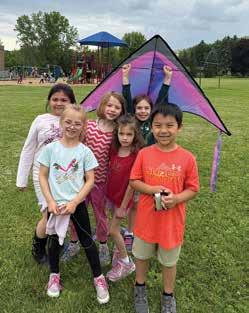
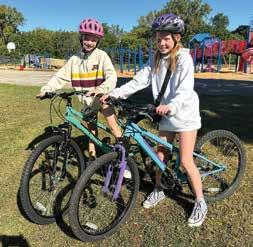
To celebrate completing their “Powerful Forces” literacy module, Emmet D. Williams 1st graders took their learning outside with a joyful wind-themed day—flying kites, chasing bubbles, playing with ribbon wands, blowing on pinwheels, and so much more!
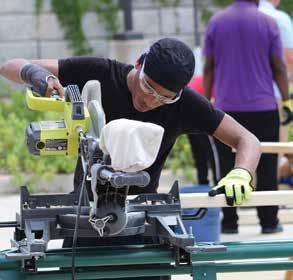
The Roseville Adult Learning Center partners with the Karen Organization of Minnesota to offer a nocost training program to prepare adults (especially immigrants, refugees, and people of color) for an apprenticeship in the trades.
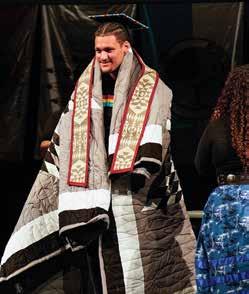
Students, families, and staff came together for the American Indian Education Program’s Recognition Celebration. From Medicine Wheels for kindergartners to star quilts for graduating seniors, the event honored the growth and cultural pride of Native students. The evening closed with a hoop dance by Jackie Bird, celebrating culture and strength.
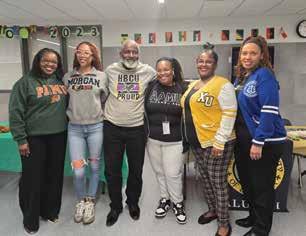
Roseville Area High School hosted an inspiring HBCU (Historically Black Colleges & Universities) College Fair, where students connected with representatives from schools like Florida A&M, Dillard, Prairie View A&M, and Xavier University. Executive Director Niceta Thomas said the event helps all students explore the rich history and supportive communities of HBCUs.
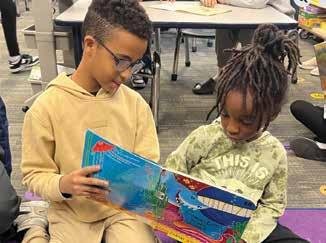
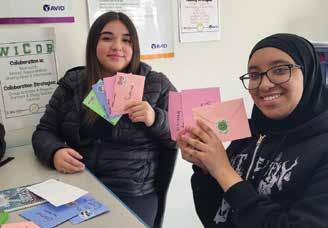

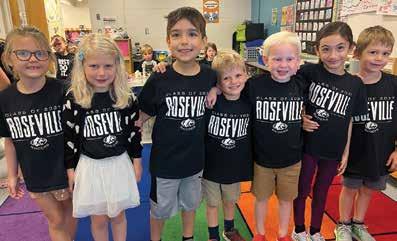
On Kindness Day, Brimhall Elementary 6th graders paired with kindergarten buddies to celebrate kindness. They read a story together, engaged in thoughtful discussions, and created inspirational posters, fostering empathy, connection, and a culture of caring across grade levels.
Students from Roseville Area High School and Fairview Alternative High School wrote personalized cards to younger students, offering encouragement and support. This initiative, in partnership with Do Good Roseville, highlights the important role older students play in inspiring and uplifting younger students while spreading kindness.
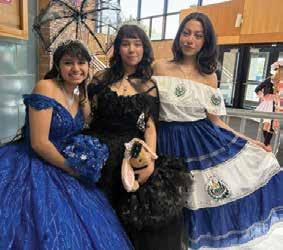
Edgerton’s Girls on the Run team created flags representing the diverse cultures and ethnicities of students and staff. Their Community Impact Project encouraged peers to celebrate individuality, embrace diversity, and promote unity, highlighting the importance of recognizing and valuing what makes each member of the school community unique.
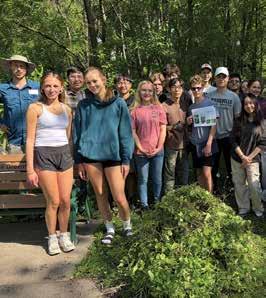
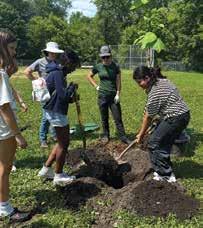
RAHS AP Environmental Science students removed invasive garlic mustard plants in Willow Park, gaining hands-on experience in environmental stewardship. This project allowed them to positively impact their local community while learning about ecological responsibility, conservation, and the importance of protecting natural spaces from invasive species.
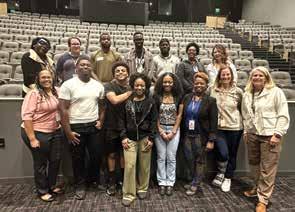
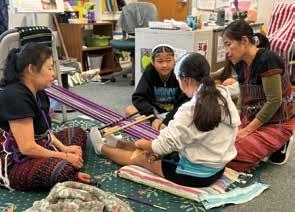
RAHS 9th graders participated in panels with diverse educators to prepare for reading The Hate U Give. The discussions aimed to equip students to engage thoughtfully with complex topics— racism, policing, code-switching, and interracial relationships— while modeling clear, respectful communication across diverse perspectives.
Edgerton Elementary hosted its popular Edgerton Stories event, welcoming families for a free, hands-on evening celebrating learning, creativity, and cultural diversity. Attendees explored stations featuring Karen letter writing, Hmong story cloths, Native American games, Latino art, friendship bracelets, hair braiding, and more, fostering connection, engagement, and community.
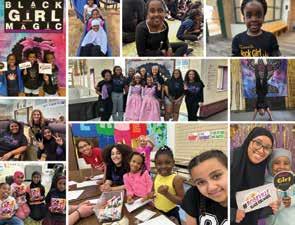
District schools celebrated Black Girl Magic with activities for all students that uplift and empower Black girls, recognizing their accomplishments and leadership. By highlighting their contributions, the celebration benefits all students, fostering inclusion, appreciation, and understanding, while encouraging the entire school community to participate and honor the value of diversity and representation.
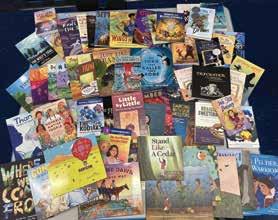
Elementary librarians, working with Native American students and families from the American Indian Parent Advisory Council, added about 70 books to better represent Native American culture. RAMS and RAHS also contributed funds, enriching library collections with books that serve as both “mirrors and windows” for the district’s diverse community.

Roseville Area Schools continues to build strong relationships with trusted community partners, working closely with Do Good Roseville, the Roseville Optimist Club, the Roseville Rotary, our seven municipalities, faith-based organizations, and district committees. Through funding, volunteerism, and shared purpose, these partnerships strengthen support for students, families, and staff while creating a more connected school community.
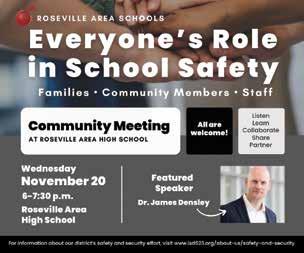
Families, staff, and community members gathered for a districtwide meeting on safety initiatives featuring nationally recognized violence prevention expert Dr. James Densley. The evening reinforced a shared commitment to collaboration, with the message: “Your presence and partnership matter—let’s work together to keep our schools safe for everyone.”
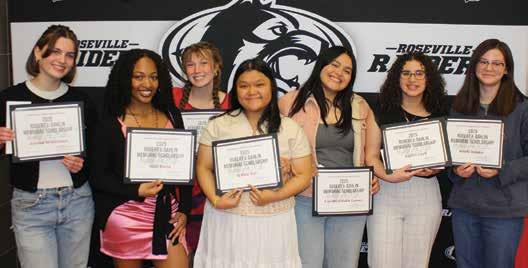
The RAHS community celebrated 47 students awarded more than 60 scholarships totaling over $82,000—made possible through the extraordinary generosity of local organizations, families, and community members who believe in investing in our students’ futures.
Faith leaders and community members from more than 75 faith communities came together to share resources available to district families. Their dedication to service and outreach highlights the generosity, care, and strong community spirit that support students and families throughout the district.

The district partnered with The Morris Leatherman Company to survey community perceptions on education quality, leadership, finances, communication, and more—including gauging support for a potential Capital Projects Levy for Technology. This work helps ensure we remain aligned with the community’s priorities and values. Here are a few highlights from the survey results.
rate the quality of the education provided by Roseville Area Schools as excellent or good
say the ability to use computers and other technology effectively and efficiently is for today’s students absolutely essential/very important/somewhat important 83% 89% 98%
strongly agree/agree that Roseville Area Schools provides a safe and secure learning environment for students

The district reaffirmed its commitment to sustainability by approving a three-year contract, starting July 1, 2025, for waste disposal and recycling services across all buildings, with an option for one additional three-year extension.
District administration applied for a 2025–2027 Public Entity Innovation Grant (PEIG) for $190,000 to expand successful elementary waste, recycling, and organics programs to secondary schools. The grant would upgrade cafeteria sorting, improve singlestream recycling, add milk carton collection, introduce reusable trays and silverware, and establish standard operating procedures and best practices.

From Our Front Page:
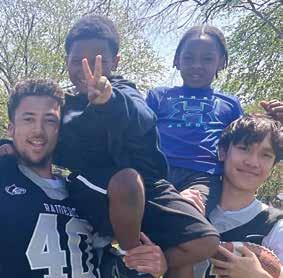
Each spring, RAHS football players visit elementary schools during recess to toss the football and connect with younger students. The tradition strengthens community bonds and gives older students a meaningful chance to serve as positive role models.

Achievement Report: https://bit.ly/623AchievementReport
Program Participation Report: https://bit.ly/623ProgramParticipation
Graduation and Post-Secondary Report: https://bit.ly/623GraduationReport
College and Career Readiness Report: https://bit.ly/623CollegeCareerReadiness
Staff Diversity Report:m https://bit.ly/StaffingDiversityReport
Enrollment and Demographic Report: https://bit.ly/623EnrollmentDemographic