
CurriculumHandbook
DiplomaProgramme
KhalifaCityCampus


Contents
thateachstudentfindsthepaththatbestsuitstheiraspirations Weencouragestudentstocarefully considerwhichoptionalignswiththeirpassions,strengths,andfuturegoals,knowingthateitherroute offersavaluableandenrichingeducationalexperience Contactyourchildsmentoratanytimetoask questionsorshareinformationaboutyourchild’slearningjourney
WelcometoourDiplomaProgramme
TheKCCPromise
OurCore
Commitment
Toopendoors.
Robert Paler

AnneWatkins HeadofPrimary
BarrySmyth AssistantHeadand MYPCoordinator


LukeClarke AssistantHeadand DP-Coordinator



MeetOurDPCoordinator
MyJourney
My journey began in rura Nova Scotia, Canada, where I grew up milking cows, chopping wood, and skateboardingtothesoundsofNrvanaandPearlJam InspiredbycaptivatingstoriesofSchlieffenPlansand Blitzkriegsfrommyunforgettablehighschoolhistoryteacher Ms McIsaac,IpursuedaBachelorofArtsanda Bachelor of Educaton credentials that set me on a path to inspire curiosity and crtical thought in students acrossCanada,China,andtheUAE
Overthepastseventeenyears neducation,IhavespenttenyearsdeliverngtheInternationalBaccalaureate curriculum at the RIS Gardens Campus. For eight of those years, I’ve taught across both the Middle Years Programme (Grades 6–10) and the Diploma Programme, incuding DP History, Theory of Knowedge and English Language and Literature Beyond the classroom I have held a range of leadership roles incuding Head of Grade (Pastoral), Theory of Knowledge Coordinator and Head of Department (ndividuals and Societies)
WhenI’mnotteaching you’lllikelyfindmeenjoyingFiveGuysatGalleriaafteramove,cyclingtoAlHudayriat Islandintheheat,gamingonthePS5withmyson,William,orattemptingtosurviveanotherHIITworkoutinmy livingroom
TheDiplomaProgramme
The International Baccalaureate Diploma Programme (DP) develops the knowledge skills, and dispositions neededtosucceedinanincreasinglycomplexandinterconnectedworld.TheWordEconomicForum’sFuture of Jobs Reporthighlights the rising demand for critical thinking problem-solving creativity, and emotional intelligence coreskillscultvatedthroughtheDP’sacademcandpersonalchallenges
Research consistently shows that DP students are exceptionally well-prepared for higher education they are 21% more likely to gain admission to top universities and more likely to complete their degrees than non-DP peers. A global study also revealed that 72% of DP graduates felt well-prepared for university coursework compared to 53% of their non-DP counterparts The DPs emphasis on research, reflection, collaboration, and adaptabilityensuresthatstudentsarereadytothrivebothatunversityandbeyond
Every DP student embarks on a unique personal journey one shaped by their indvidua strengths aspirations,andpotential
I am excited to brng my experience as an IB educator and eader to the DP journey at KCC and to work alongside a passionate and dedicated team commtted to supporting our students growth, achevement andsuccess
Luke Clarke
MeetOurCareersCounselor
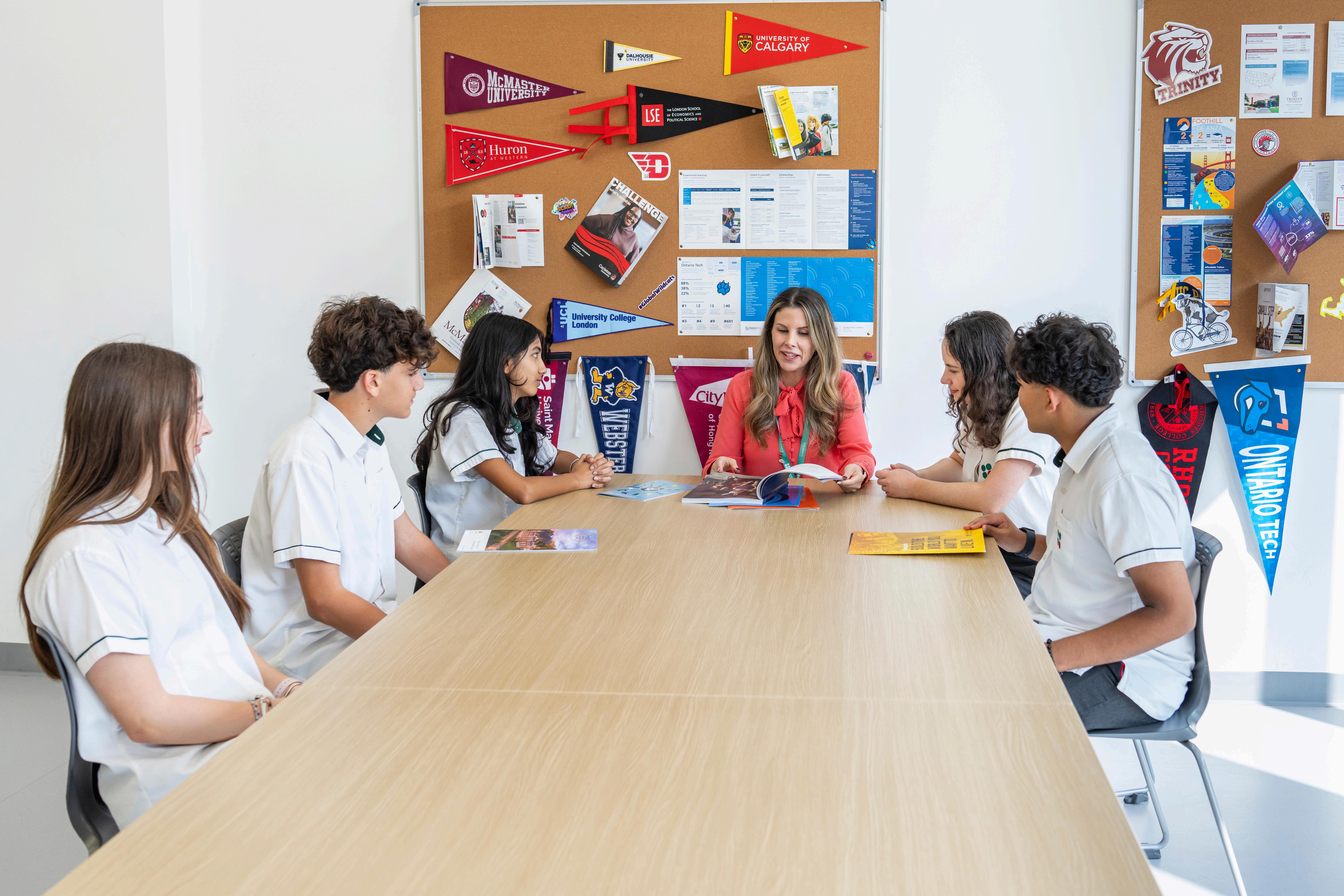
The universty and careers guidance departments approach to university and career development is built around helping students discover who they are and where they want to go. The program begins in Grade 8 guiding students to explore their interests passions, and natural strengths wh e learning how these connect to future academic and career possibilities The goal is to give every student a clear sense of direction early on whilealsohelpingthemdeveloptheconfidenceandskillstoadaptastheirgoalsevolve
At the heart of this strategy is a comprehensive counseling program that blends evidence-based guidance with practical sk -building Through the integration of the Unifrog platform, students engage in meanngfu exporation of universties, courses, and career paths that match their indvidua profiles This approach ensures that every decision, from subject selection to university applications, is grounded in sef-awareness andinformedchoice
Interactive workshops and small-group sessions create spaces for reflection, growth and preparation Students learn how to bu d strong CVs develop their soft skills, and articuate their strengths through interviewsandpersonalstatements Theseexperiencesaredesignedtoempowerstudentstotakeownership of ther journeys, transforming the often overwhelming process of post-secondary planning into one of discoveryandopportunity
Partnership and connection are key eements of the program Throughout the school year, I coordinate vists from university representatives and career professionals who share valuable insights and pathways These interactionshelpstudentsseewhatispossible,brdgingthegapbetweenclassroomlearningandreal-world aspiratons Students are also encouraged to create their own opportunities through leadership and communtyengagement,learningnotjusthowtoprepareforthefuture buthowtoactiveyshapeit The overa framework emphasizes collaboration across counseling academics and leadership to create a consstent and supportive environment for student growth Every part of the program is designed to build readiness,resilience,andpurpose
Ultimately, this is about more than universty placement It is about equipping students with the confidence curiosty and clarty to thrive in whatever path they choose next By combining structured guidance wth genuine human connecton parent support and guidance, the program helps students see their potentia andtakemeaningfulstepstowardfulfillingit Carmen Page
TheIBLearnerProfile
The International Baccaaureate learner profile describes a broad range of human capacties and responsibilitiesthatgobeyondacademicsuccess Theyimplyacommitmenttohelpallmembersoftheschool communitylearntorespectthemselves,othersandtheworldaroundthem.
TheIBDiplomaProgramme
All students in Grades 11 and 12 will undertake the IB Diploma Programme There are two pathways for studentseithertostudythe'FullDploma'or IBCourses
The IB Diploma Programme (DP) was established in 1968 to provde an international education that would enable young people to better understand and manage the compexities of our world and to provide them with the skills and attitudes to take action to improve it Such an education was grounded in the more progressve educational thinking of the time but also in the belief that the world could be made better throughaneducationthatfocusedonconcepts ideasandissuesthatcrosseddisciplinary,cultural,natonal andgeographicalboundaries.
The Diploma Programme (DP) provides a challenging, internatonally focused, broad and baanced educational experience for students aged 16 to 19 Students are required to study six subjects and a currculum core concurrently over two years. The programme is designed to equip students wth the basic academic skills needed for university study, further education and their chosen professon Additionally the programme supports the development of the vaues and life skills needed to live a fulfilled and purposeful life.FromTheDipomaProgramme:FromPrinciplesintoPractice IBO 2015
TheIBDiplomaProgrammeoverview
What makes the Dipoma Programme unique is the focus on leaderner centered approach and the holistic experence The currculum framework and the supporting structures and principles are designed to ensure that each student is necessarily exposed to a broad and balanced curriculum. The Learner Profile and the Core are postoned at the centre of the programme and the core requirements of Theory of Knowledge (TOK), the Extended Essay and Creativity, Activity, Service (CAS) broaden the educational experience and challengestudentstoapplytheirknowledgeandunderstandinginrea-lifecontexts.
Students study six subjects concurrently These include two languages, one subject from individuals and societies (group 3) one experimental science (group 4) one mathematcs subject (group 5) and one subject from the arts (group 6) or another subject from groups 1 to 4 where university entrance demands it, subject to timetabling In order to prepare students for the future, an IB education equips students with the depth of dscipline specfic knowledge and sk s across a breadth of areas of knowledge Students are expected to study three subects at a higher level (HL) Ths is baanced with a requirement for breadth by expectingstudentstostudythreesubjectsatstandardlevel(SL)
In addition to the 6 group subects, students complete three other core requirements a course in Theory of Knowledge(TOK);anExtendedEssayacademicresearchproject(EE) and;aprogrammeofpersonalgrowth in Creativity, Activity and Service experiences (CAS). All six courses and core requirements are completed overatwo-yearperiod Courseofferingswillvaryyeartoyearbasedonstudentandtimetablingconstraints
PossibleCourseOfferings
Group1
StudiesinLanguageandLiterature
Studies in Language and Literature (or Language A) courses are designed for students who can use or converseinthelanguageinunfam arcontexts Thislanguagecoudbethestudent’sdominant firstorhome language, or could smply be a language they are addtionally comfortable in using in academic settings All DPstudentsarerequiredtotakeatleastoneLanguageA.
AsecondlanguageAcanbechoseninsteadofaforeignlanguagestudyaso whichleadstotheawardofan officiallyrecognisedBilingualDiploma ahighlyprestigousandrarevariantoftheregularIBDiploma.AllKCC studentsmusttakeanEnglishAcourse,andhavetheoptionofasecondLanguageAcoursetoo eitherArabic (taughtcourse)oranyotherlanguageintheworld(viaschool-supportedself-taught) AlllanguagesintheA groupequallyallowforDiplomapointstobeawarded
ArabicA:LanguageandLiteratureSL/HL
EnglishA:LanguageandLiteratureSL/HL
The Language A Language and Literature course aims to develop skills of textual analysis and the understandingthattexts,bothliteraryandnon-literary canrelatetoculturallydeterminedreadingpractices. The course also encourages students to question the meaning generated by language and texts An understanding of the ways in which formal elements are used to create meaning n a text is combined with an exploration of how that meaning s affected by reading practices that are culturally defined and by the circumstances of production and reception The study of literature in translation from other cultures is especially important to DP students because t contributes to a global perspective Texts are chosen from a varetyofsources genresandmeda
ArabicA:LiteratureSL/HL
EnglishA:LiteratureSL/HL
TheIBDiplomaProgrammeLanguageA:Lteraturecoursedevelopsunderstandingofthetechniquesinvolved nliterarycriticismandpromotestheabilitytoformindependentliteraryjudgments nLanguageA:Literature, theformalanalysisoftextsandwidecoverageofavarietyofliterature bothinthelanguageofthesubject and in translated texts from other cultural domains is combned with a study of the way literary conventonsshaperesponsestotexts
Studentscompletngthiscoursewillhaveathoroughknowledgeofarangeoftextsandanunderstandingof other cultural perspectives. They will also have developed sk ls of analysis and the ability to support an argument in clearly expressed writing sometmes at signifcant length This course will enable them to succeedinawiderangeofuniverstycourses particularlyinliteraturebutasoinsubjectssuchasphilosophy, awandlanguage.
School-SupportedSelf-TaughtLiterature(SSST)
StudentswhoproficientlyuseanylanguageotherthanEnglishorArabic(i.e.theirhomeorfirstlanguage,ora second language of fluency) can maintan their connection to this anguage through a the SSST Literature A course The school will timetable the student with a DP Literature course expert during the school week who will guide them through choosing ther texts of study course requirements preparing for the oral exam and administering the coursework and final exam schedules Additonally, the family engage a prvate tutor who canconversewiththestudentinthatlanguage andisabletodiscussthethemespresent nthechosentexts, reviewstudentworkandliaisewiththeschoolsupervisoronprogress TheIBwillguaranteethatanylanguage canbestudedinthiscourse eventhesmallendangered anguages!
Group2
LanguageAcquisition
All students are required to study a second language, usually as a Language Acquistion course (learning a foreignlanguage)orasasecondLanguageAcourse
Placement in DP Language Acquistion courses is strictly regulated to ensure that every student experiences appropriateacademicchallenge’ Putsimply astudentwhohasstudiedalanguagebefore orwhohasbeen exposed to it in their environment may not be placed into an Ab Inito course A student who is already able to converse in unfamiliar contexts (i.e. not specifically taught topics) may not be placed into a Language B course At KCC, we operate on the basis that the student chooses the language and we choose the level, basedontherlanguageprofile
Language ab initio and language B are language acquisition courses designed to provide students wth the necessary skills and intercultural understanding to enable them to communicate successfully in an environmentwherethelanguagestudiedisspoken Thisprocessallowsthelearnertogobeyondtheconfines of the classroom expanding their awareness of the world and fostering respect for cultural dversity There are strict rules set by the IB about the placement of students into the correct language acqusiton course, basedonappropriateacademicchallenge Therefore,studentswillbeabletoselecttheirsecondlanguagein DP butKCCstaffwillchoosetheappropriatecourse-eitherLanguageA,LanguageBorAbInitio
ArabicLanguageBSL/HL
FrenchLanguageBSL/HL
SpanishLanguageBSL/HL
(suitableforstudentsworkingatproficientlevelinphase2-4)
(suitableforstudentsworkingatproficientlevelinphase2-4)
Language B is a language acquisition course designed for students with some previous experience of the targetasaforeignlanguage IntheLanguageBcourse studentsfurtherdeveloptheirabilitytocommunicate n the target language through the study of language, themes and texts In doing so they also develop conceptualunderstandingsofhowlanguageworks,asappropriatetothelevelofthecourse
ArabicabinitioSL
SpanishabinitioSL
FrenchabinitioSL
Language ab initio is a language acquisition course designed for students with no prior experience of the target language It is not appropriate to study ab ntio wth prior learning in the language, or for exposure to the language in the environment for any ength of tme beyond those new to the country It should be noted thatlanguageabinitioisofferedatSLonly.AllstudentsregisteredwithanArabicspeakingcountryspassport musttaketheArabicMinistryexamsandbeenrolledinanArabiccourseintheDipoma
Group3
IndividualsandSocieties
EconomicsSL/HL
Economcs is a dynamic social science The study of economics is essentially about deaing with scarcity resource allocaton and the methods and processes by which choices are made in the satisfaction of human wants As a social science, economics uses scientfic methodologies that include quantitative and qualitative elements TheIB-DPEconomcscourseemphasisestheeconomictheoriesofmicroeconomics,whichdealwith economic variables affecting individuas, firms and markets and the economic theores of macroeconomics whichdealwtheconomicvarablesaffectingcountres,governmentsandsoceties
These economc theories are not studied in a vacuum rather they are to be applied to realword issues Prominent among these issues are fluctuations in economic activity international trade, economic development and environmental sustainability. The economics course encourages students to develop international perspectives fosters a concern for global ssues and raises students’ awareness of their own responsibilities at a local, natona and internatona level Teachers explictly teach thinking and research skils suchascomprehension,textanalysis,transferanduseofprimarysources
BusinessManagementSL/HL
The Business Management course is designed to develop students’ knowedge and understanding of business management theories as well as their ability to apply a range of tools and techniques. Students learn to analyse,discussandevaluatebusinessactvitiesatlocal nationaland nternationallevels Thecoursecoversa range of organisations from al sectors, as well as the sociocultural and economic contexts n which those organisationsoperate.
Thecoursecoversthekeycharacteristcsofbusinessorgansationandenvironmentandthebusinessfunctions ofhumanresourcemanagement,financeandaccounts,marketingandoperationsmanagement.Throughthe exporation of six underpinning concepts (change culture ethics gobalisation, innovation and strategy) the course alows students to develop a hoistic understanding of todays complex and dynamic business environment The conceptual learning s frmly anchored in business management theories, tools and techniquesandpacedinthecontextofreal-worldexamplesandcasestudies
PsychologySL/HL
The IBDP Psychoogy course aims to develop an awareness of how research findings can be applied to better understand human behavour and how ethical practices are upheld in psychological inquiry. Students learn to understand the biological cognitive and sociocultural influences on human behaviour and explore alternative expanatonsofbehaviour Theyalsounderstandandusediversemethodsofpsychologicalinquiry
GlobalPoliticsSL/HL
The global politics course expores fundamental political concepts such as power, equality sustanabilty and peace in a range of contexts and at a variety of evels It alows students to develop an understanding of the loca,national,internationalandglobaldimensionsofpoliticalactivity aswellasallowingthemtheopportunity to explore political issues affecting their own lives. Global politics draws on a variety of disciplines n the social scencesandhumanites Ithelpsstudentstounderstandabstractpoliticalconceptsbygroundingtheminreal world examples and case studies and also invtes comparison between such examples and case studies to ensureatransnationalperspective
Group4 Sciences
BiologySL/HL
Biology sthestudyof ife Thevastdiversityofspeciesmakesbiologybothanendlesssourceoffascinationand a considerable challenge. Bioogists attempt to understand the living world at all evels from the micro to the macro using many different approaches and technques Biology is stil a young science and great progress is expectedinthe21stcentury Thisprogressisimportantatatimeofgrowingpressureonthehumanpopulation and the environment By studying biology in the DP students should become aware of how scientists work and communicate with each other Whie the scientific method may take on a wide variety of forms it is the emphass on a practical approach through experimental work that characterses the sciences Teachers provide students wth opportunities to design nvestigations, collect data, develop manipulative skills anayse results collaboratewithpeersandevaluateandcommunicatetheirfindings
ChemistrySL/HL
Chemistry is an experimental science that combines academic study wth the acquisition of practica and investigational skills. Chemical principles underpin both the physical environment in which we live and all biological systems Chemstry is often a prerequisite for many other courses in higher education, such as medicine bologicalscienceandenvironmentalscience Bystudyingchemistrystudentsshouldbecomeaware of how scientists work and communicate with each other. While the scientfic method may take on a wide variety of forms, t is the emphasis on a practical approach through experimental work that characterises the subect Teachers provide students with opportunities to develop manipulative skills, design investigations, collectdata anayseresultsandevaluateandcommunicatetheirfindings.
PhysicsSL/HL
Physicsisthemostfundamenta oftheexperimentalsciencesasitseekstoexplaintheuniverseitself,fromthe very smallest particles to the vast distances between galaxes Despite the excitng and extraordinary development of ideas throughout the history of physics observations remain essential to the very core of the subect Models are developed to try to understand observatons and these themselves can become theories thatattempttoexplaintheobservations Bystudyingphysicsstudentsshouldbecomeawareofhowscientists work and communicate with each other While the scientific method may take on a wide variety of forms it is the emphasis on a practica approach through experimenta work that characterises the subect Teachers provide students wth opportunities to deveop manipulative skils, design investigations collect data anayse resultsandevauateandcommunicatetheirfindngs
EnvironmentalSystemsandSocietiesSL
Environmental systems and societies (ESS) is firmly grounded in both a scientific exploration of environmental systems n their structure and function and in the exporation ofcultural economic ethica, politcal and social interactionsofsocietieswiththeenvironment Asaresultofstudyingthiscourse,studentswillbecomeequpped with the ability to recognise and evaluate the mpact of our complex system of societies on the natural world This course can fulfil either the Individuals and Soceties or the Sciences requirement. Aternatively, this course enablesstudentstosatisfytherequirementsofbothsubjectgroupssimutaneouslywhiestudyingonecourse
DesignTechnologySL/HL
DP design technology aims to develop internationaly-minded people whose enhanced understanding of desgn and the technological world can facilitate our shared guardianship of the planet and create a better world It focuses on analysis design development synthesis and evaluation The creative tension between theoryandpractice swhatcharacterisesdesigntechnologywithintheDPsciencessubjectgroup.Bothscience and technology have a fundamental relationship with design Technology preceded science, but now most technoogical developments are based on scientifc understandng Traditional technoogy comprised useful artifacts often with little understandng of the science underpinning their production and use. In contrast, moderntechnology nvolvestheapplcationofscientificdiscoverestoproduceusefulartifacts Theapplication of scientific discovery to solve a problem enables designers to create new technooges and these new technoogies,inturn,canimpactontherateofscientificdiscovery
ComputerScienceSL/HL
The DP Computer science SL/HL course requires an understanding of the fundamental concepts of computational thinking as well as knowedge of how computers and other digtal devices operate The course, under-pinned by conceptual thinking draws on a wide spectrum of knowledge and enables and empowers nnovaton, exploration and the acquisition of further knowledge Students study how computer science nteractswithandinfluencescultures,societyandhowindividualsandsocietiesbehave,andtheethicalissues nvolved Duringthecoursethestudentwilldevelopcomputationalsolutions.
Sports,ExerciseandHealthScience(SEHS)SL/HL
Sports exerciseandhealthscence(SEHS)SL/HLisanexperimentalsciencecoursecombiningacademicstudy with practical and investigative skills SEHS explores the science underpnning physcal performance and provides the opportunty to apply these prnciples The course incorporates the disciplines of anatomy and physiology, biomechanics psychology and nutrition Students cover a range of core and option topics, and carry out practical (experimental) investigations in both laboratory and fied settings The course offers a deeperunderstandingoftheissuesrelatedtosports,exerciseandhealthinthe21stcenturyandaddressesthe nternationaldimensonandethicsrelatedtoboththeindividua andglobalcontext.
Apart from being worthy of study in its own right, SEHS is good prepa-ration for courses in hgher or further education related to sports ftness and health, and serves as useful preparation for employment in sports and eisure ndustries Both the SL and HL have a common core sylabus internal assessment scheme, and overlapping elements in the options studed While the skills and activities are common to all students HL requires additional material and topics within the options. Through studying any of the group 4 subjects, students should become aware of how scientists work and communicate, and the variety of forms of the scientificmethod’withanemphasisonapracticalapproachthroughexperimentalwork
Group5
Maths
Mathematics:ApplicationsandInterpretationsSL/HL
Thiscourserecognisestheincreasingrolethatmathematicsandtechnoogypayinadverserangeoffeldsin adatarichworld Assuch itemphasisesthemeanngofmathematicsincontextbyfocusingontopicsthatare often used as appications or in mathematical modelling. To give this understanding a firm base, this course also includes topics that are traditionally part of a pre-university mathematics course such as caculus and statistics
Thiscourserecognisestheincreasingrolethatmathematicsandtechnoogypayinadverserangeoffeldsin adatarichworld Assuch itemphasisesthemeanngofmathematicsincontextbyfocusingontopicsthatare often used as appications or in mathematical modelling To give this understanding a firm base, this course also includes topics that are traditionally part of a pre-university mathematics course such as caculus and statistics
Mathematics:applicationsand nterpretatonisforstudentswhoareinterestedindevelopingtheirmathematics fordescribingourworldandsovingpracticalproblems.Theywilalsobeinterested nharnessingthepowerof technology alongside exploring mathematical models Students who take Mathematcs: applications and interpretationwllbethosewhoenjoymathematicsbestwhenseeninapracticalcontext
Mathematics:AnalysisandApproachesSL/HL
This course recognses the need for analytical expertise in a world where innovation is increasingly dependent onadeepunderstandingofmathematcs.Thscourseincludestopicsthatarebothtraditionallypartofapreuniversity mathematics course (for example, functions trgonometry, calculus) as well as topics that are amenabletoinvestigation conjectureandproof for nstancethestudyofsequencesandseriesatbothSLand HLandproofbyinductionatHL
The course alows the use of technology, as fuency in relevant mathematical software and hand-held technologyisimportantregardlessofchoiceofcourse However,Mathematcs:analysisandapproacheshasa strongemphasisontheabilitytoconstruct communicateandjustifycorrectmathematcalarguments
Mathematics: analysis and approaches is for students who enoy developng their mathematics to become fluentintheconstructionofmathematicalargumentsanddevelopstrongskillsinmathematicalthinking They wil alsobefascinatedbyexploringrealandabstractapplcationsofthese deas withandwthouttechnoogy. Students who take Mathematics analysis and approaches will be those who enjoy the thril of mathematical problemsolvngandgeneralisation
Group6
TheArts
Grade 11–12 students are not required to choose an Arts course and may opt for a second course in another subjectgroup(1-4)instead
TheatreSL/HL
Theatre is a practical subject that encourages discovery through experimentation, the taking of risks and the presentation of ideas to others It resuts in the development of both theatre and life skills; the building of confidence creativityandworkingcollaboratvey
t gives students the opportunity to make theatre as creators, designers, directors and performers It the opportunity to engage actively n the creative process transforming ideas into action as inquisitive and productive artists Students experience the course from contrasting artistic perspectives They learn to apply research and theory to inform and to contextualise their work The theatre course encourages students to appreciatethatthroughtheprocessesofresearching,creating,preparing,presentingandcriticallyreflectingon theatre as participants and audience members they gain a richer understanding of themselves their communityandtheworld.
While some students choose Theatre as a course to develop them as actors most students appreciate the courseforitspracticalengagementwithglobalissues,andlearnmoreaboutwhatitmeanstobehuman They applytheseperspectivestoawidevarietyofcareerpaths TherearenoexamsinTheatre itisassessedbythe Bcompletelythroughprojectworkcompetedduringthetwoyearsatschool
VisualArtsSL/HL
The DP Visual Arts course encourages students to challenge their own creative and cultural expectations and boundaries Itisathought-provokingcourseinwhichstudentsdevelopanalyticalskillsinproblem-solvingand divergent thinking while working towards technical proficiency and confidence as artmakers In addition to exporingandcomparingvsualartsfromdfferentperspectivesandindifferentcontexts studentsareexpected toengagein experimentwithandcriticalyreflectuponawiderangeofcontemporarypracticesandmedia
The course is designed for students who want to go on to study vsua arts in higher educaton as wel as for those who are seekng lifelong enrichment through visual arts The role of visual arts teachers should be to actvey and carefully organise learning experiences for the students directing their study to enable them to reach their potential and satisfy the demands of the course Students should be empowered to become autonomous,informedandskiledvisualartists
MusicSL/HL
Through the DP Music course students wil develop to become well-rounded modern musicians through a combinationofpracticalwork,theoreticandtechnicaltraningandthedeveopmentofcreativecompetencies
Thisholisticcourseachievesthisbyscaffoldingandintegratedapproachesto:deeplisteningskills,performance proficency, compositional craft the abilty to discuss music critically the ability to justify creative choices and thecapacityforentrepreneurshipinthemusicalword
Throughout this course students and teachers have fexibility and agency to access unique and personalised content and approaches to engaging with music Four Areas of nquiry combined with diverse contexts offer students the opportunity to experience a variety of musical works, forms and genres in a meaningfu manner. Throughout the course, students embody three roles, the researcher the creator and the performer Through their work students inquire create, perform and reflect on their work in progress. This creative process of workngintheartsandspecificalyinmusic isencapsulatedinthethreemusicalprocesses exporingmusicin context,experimentingwithmusicandpresentingmusic
This flexiblity s about choice in the learning, teachng and assessment as well as forging deep life-long connectionsbetweenstudents’passonsandinterestsandthewiderworldofmusicandmusic-making
CoreRequirements
TheIBDiplomahascorerequirementsthatmustbemetinadditiontothesubjectrequirements
TheoryofKnowledge(TOK)
IB-DPcandidatesarerequiredtotakeTheoryofKnowledgeasaninterdiscipinarycourseduringtheirGrade11–12 years Theory of Knowledge calls for students to look crtically at the nature of knowledge and examne the knowedgequestionsimplicit nreallifestuations Howdoweknowwhatweknow?Howisknowledgegenerated anddiseminated ndifferentdiscplnes?Therequirementsofthecourseincludeanexhibitionandessay ForIB Diplomastudents theexhibtionisinternallyassessedandexternallymoderatedandtheessaywillbeexternally assessedandmoderated
ExtendedEssay(EE)
Each student will complete an independent research project n a discplne of their choosing, leading to an original scholarly essay The extended essay is an in-depth study of a focused topic It is intended to promote high-level research and writing skills intellectua discovery and creativty t provides students with an opportunitytoengageinpersonalresearchinatopicoftheirownchoice,undertheguidanceofasupervisor(a teacherintheschool) Thisleadstoamajorpieceofformallypresented,structuredwriting inwhich deasand findingsarecommunicatedinareasonedandcoherentmanner,appropriatetothesubjectchosen.
Scores in TOK are paired with EE scores to allow a Bonus Matrix of up to +3 points toward the IB Diploma’s accumulatedpointsystem
Creativity,Activity,Service(CAS)
All students are expected to be engaged in ongoing meaningful experiences outside of the classroom At KCC students will have opportunities to engage with the creative arts with physically demanding activty and with servce to the community both wthin the school and beyond and each student is responsible to build a programmethatreflectstheirinterestsandallowsthemtogrowasathinkerandlearner
Over the twoyear programme students collect a range of reflective evidence demonsatrng the ongoing processoflearningthroughexperence Whilethsisnotformalyassessedstudentsactivelyparticipateinthree formal documented interviews with their CAS coordinator/adviser to describe their learning and growth. As successful competion of CAS is a requirement for the award of the IB Diploma we encourage students to give CASasmuchimportanceasanyothereementoftheDiplomaProgramme
CourseSelection
Over the twoyear programme students collect a range of reflective evidence demonsatrng the ongoing processoflearningthroughexperence Whilethsisnotformalyassessedstudentsactivelyparticipateinthree formal documented interviews with their CAS coordinator/adviser to describe their learning and growth As successful competion of CAS is a requirement for the award of the IB Diploma we encourage students to give CASasmuchimportanceasanyothereementoftheDiplomaProgramme
Students will be asked to choose from an initial long-list of subjects on the understanding that no subject or combinationcanbeguaranteedatthisstage.
Once student demand s analysed, the subject offer is amended published and set for the folowing programmecycle Studentswillbeofferedtheopportunitytochangetheirselectionwithnthsconfirmedlistof subjects Coursesandlevelsgenerallycannotbechangedafterthistime
Once student demand s analysed, the subject offer is amended published and set for the folowing programmecycle Studentswillbeofferedtheopportunitytochangetheirselectionwithnthsconfirmedlistof subjects.Coursesandlevelsgenerallycannotbechangedafterthistime
Please note: Environmental Systems and Societes (ESS) is an interdiscipinary course which meets the requirement for both ndividuals and Societies AND Sciences. Students are therefore able to choose a second subjectfromethertheindividuasandsocietesgrouporthesciencesgroup,subjecttotimetabing
CourseselectionmustallowforthreeHigherLevelandthreeStandardLevelcourses.
SLclassesmeetforaminimumof150hoursoverthetwoyearsoftheprogrammewhleHLclassesmeetfor240 hours TheextendedtimesforHLclassesreflectthegreaterdepthandcomplexityofthecontentstuded Some KCC classes wil be taught with the levels combined SL students are normally reeased for self-study whle HL contentisbeingcovered.
AssessmentintheDiplomaProgramme
B Dploma courses at KCC are designed to prepare students for success on the assessments required by the IBO
Each subject has specific required assessment components These assessment components nclude a combinationofthefollowng
Internal assessments (IAs): Individual projects completed by students over time under the supervision of their teachers These projects are assessed by the teacher and the marks for the cohort are moderated by the IBO IAs ncludeExplorationsinMath OralPresentationsinlanguages InvestigationsinScience,etc.
External assessments (EAs) ndividual projects completed by students over time under teachers’ supervision, assessedbyIBexaminersonly.TheseEAsincludeWrittenTasksinlanguagesubjects,portfoliosinartssubjects, theTOKessayandtheExtendedEssay
Papers: Formal written examinations to be taken in May of the second year of the programme Group 1–5 subectsallhavetwo-threePapers,eachwithformatandrequirementsspecifictothesubject,levelandPaper
Al assessment tasks set by teachers throughout the two-year programs are preparation for the formal IB assessments Summative assessments are designed to be graded according to IB mark schemes and grades are issued directly by the IB In Grade 11 these expectations are modified to address only content and skills coveredthusfar nthecourse InGrade12 assessmentsincreasinglymirrorfinalIBexpectations
Students will be assessed continuously throughout the two year course, with classwork, class discussion, submtted assignments, ‘mock’ As mock exams and in-class presentations and tests all contributing to the gradesreportedonthetranscriptissuedeachsemester Thesetranscriptgradesareformedusingtheteacher’s expertknowledgeofthecourse’sgradeboundariesandexpectations andallevidencetodatefromthestudent. Theyoftenserveapurposeinuniversityapplications butaresupersededentirelybythefina B-issuedgradesin Julyafterthesecondyear.OnlytheIB-issuedfinalgradescounttowardsastudent’sDiplomapointsscore.
IBDiplomaPoints
Students can acheve a maximum score of seven points per course, for maxmum subject score of 42 for their sixcourses
AchievementinTOKandtheExtendedEssaycanaddamaxmumofafurtherthreepointstoastudentsoverall Diploma score TOK and the Extended Essay are graded on A–E scales and the two grades are combined on a matrixtogeneratetheextrapoints.Thehighestscorepossibleforalcomponentsoftheprogramme then is45 ponts
CompletionofsixIB-DPcoursesmeetngsubjectgrouprequirements,withthreetakenatHigherLevel.
AlassessmentcomponentsforeachofthesixsubjectsandthecoreDiplomarequirementsmustbecompleted inordertoqualifyfortheawardoftheIBDiploma
AwardsintheDiploma
The IB Diploma will be awarded to a candidate who is awarded a minimum of 24 points across a valid combinationofsubjects,providedalthefolowngrequrementshavebeenmet:
CASrequrementshavebeenmet
There sno‘N awardedforTOK theEEorforacontrbutingsubject
There snogradeEawardedforTOKand/ortheEE
There snograde1awardedinasubject/evel
Therearenomorethantwograde2sawarded(SLorHL)
Therearenomorethanthreegrade3sorbelowawarded(SLorHL)
Thecandidatehasgained12pointsormoreonHLsubjects(forcandidateswhoregisterforfourHLsubjects thethreehighestgradescount)
Thecandidatehasgained9pointsormoreonSLsubects(canddateswhoregisterfortwoSLsubjectsmust gainatleast5pointsatSL)
Thecandidatehasnotreceivedapenaltyforacademicmisconductfromthefinalawardcommittee.
AmaximumofthreeexaminationsessionsisallowedinwhichtosatsfytherequirementsfortheawardoftheIB Diploma.Theexaminatonsessionsneednotbeconsecutve
AcademicIntegrity
As KCC students develop into ‘inquiring, knowledgeabe and carng learners who contribute postively to their communities,’theyhavedalyopportunitiestoreadandwrite,toconsiderandcreate.Theydrawuponabroad base of shared information and ideas to construct and express their own understandings support their own argumentsandarticulatenewideasintheirownuniquevoices
Wearecommittedtothepracticeofacademichonestyinallaspectsofteachingandlearnngandexpectthat the conduct and work of all KCC stakeholders will be consistent with Principed behaviour described by the IB LearnerProfile
We act with integrity and honesty with a strong sense of fairness, justice and respect for the dignity of the ndvidual groups and communities We take responsibility for our own actions and the consequences that accompanythem
AllKCCstudentsareexpectedto:
Ensurethatal submittedworkisauthenticinnature Thismeansthattheworkmustbethestudent’soriginal work and expression and that the work of any others included in the submission must be accurately and entirelyacknowledged
IncludeaBibliographyorWorksCitedpagewthanyassignmentthatdrawsonsources Ctetheworkofothers whetherquotedorparaphrased usingthemostcurrentMLAformat. Respect the concept of intelectual property for non-textual sources, whether creative or expressive, when workingwithpublications images,music,videooranyothersourcesofothers’work. Conduct themselves approprately within a testing environment to ensure that both the fact and appearanceofacademichonestyaremaintainedatalltimes