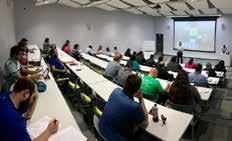
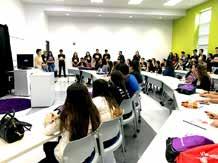
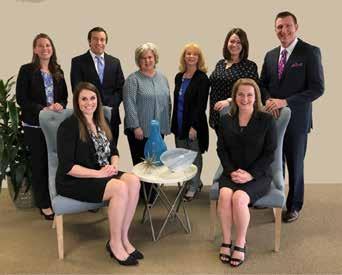
Local health professionals discuss opioid crisis in Rio Grande Valley.
RAGS TO RICHES
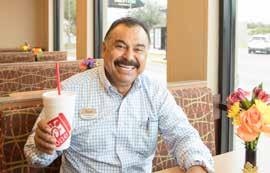
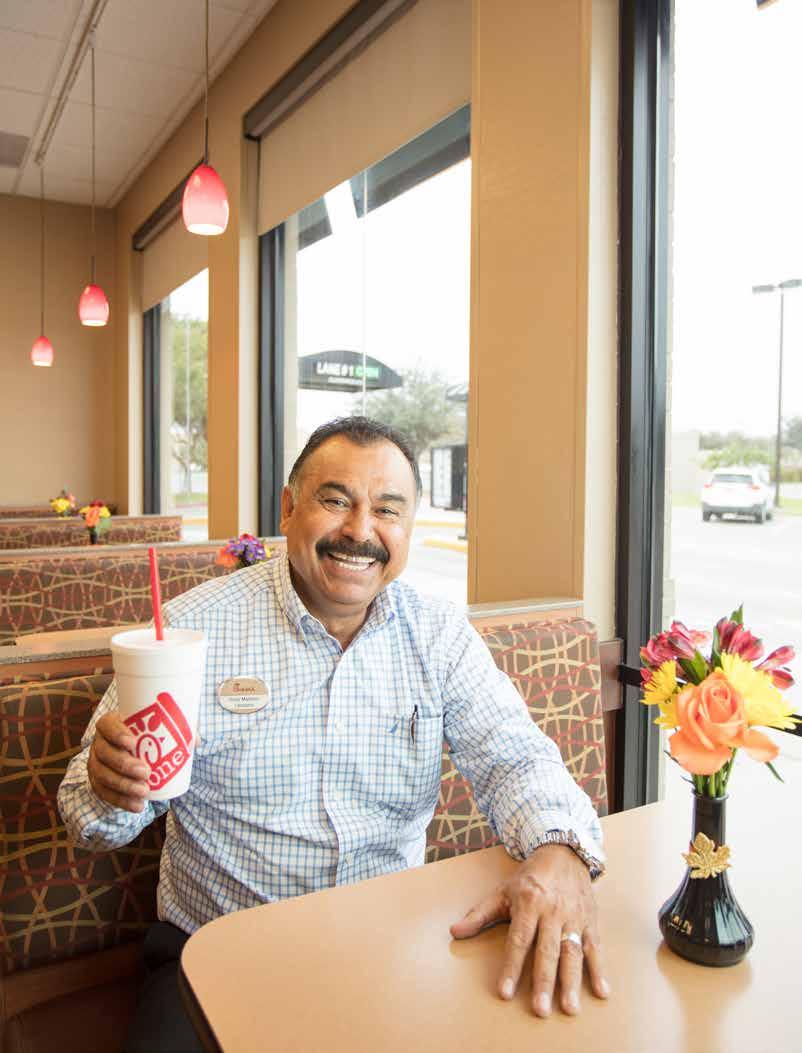
The Chick-fil-A dream of Rudy Martinez.
PARENTAL INVOLVEMENT
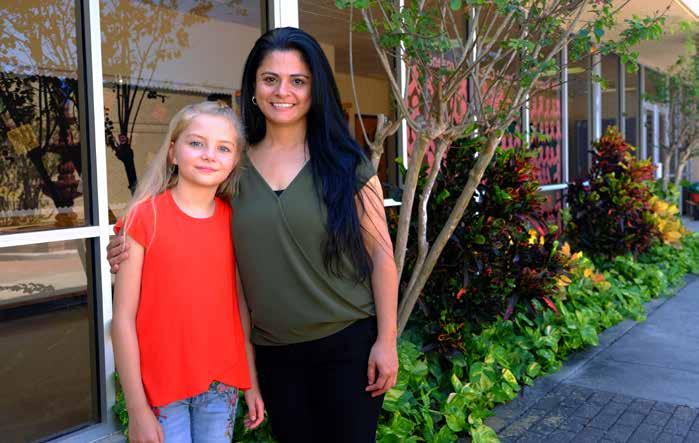
Are we doing enough to help our children succeed?
SURF TOWN
South Padre Island surf culture
WHEN WE SERVE TOGETHER IN OUR COMMUNITIES, EVERYONE SOARS.
Southwest Airlines® proudly partners with those who are helping to shape our communities all across America. One good deed—when coupled with another and another and another—can truly make a positive difference in our daily lives.
SKILLED HANDS, COMPASSIONATE HEARTS
From neuromuscular dentistry to dental implants, our goal is to advance the health of your smile. Whether you’re looking for a comprehensive oral health checkup or a total smile makeover, our office has a dental professional to suit your unique needs.
Family Dentistry
Cosmetic Dentistry
Neuromuscular Dentistry
Migraine Headache Treatment
Sleep Apnea Treatment
24 Hrs Emergency Night Clinic
We strive to create a comfortable, safe environment for our patients by providing the highest quality dental services and care. Our highly skilled team of dental professionals are committed to your immediate and long-term oral health needs through a variety of dental health services.
Located in Mercedes, RGV Premium Outlets, McAllen, Palms Crossing, and La Plaza Mall Rocky-Mountain Chocolate-Factory
GABE PUENTE
PUBLISHER/CEO
1 Corinthians 4:5
Thank you for picking up a copy of RGVision! In this issue, we shed light on the opioid crisis in the RGV. It’s plain to see that addiction affects people regardless of socioeconomic circumstances. And it’s critical to create a safe space, free of discrimination, for dialogue on this epidemic for the sake of our community. Whether you, a loved one, or an acquaintance has been affected by this affliction, it is important to remember there is no room for judgment in recovery. With a new year comes new beginnings.
In each issue, we share profiles on local business leaders, medical professionals, and educators. Our hope is that you continue to be inspired, educated, and informed of the growth in the Rio Grande Valley as well as the foundation this region was built upon: the people. Thank you for picking up this issue! And Happy New Year!
PUBLISHER'S NOTE
Copyright by RGVision Publications Inc. All rights reserved. Reproduction without expressed written permission of the publisher is prohibited. The opinions and views expressed in the magazine don’t necessarily reflect those of our advertisers or collaborators. RGVision magazine is published bi-monthly and circulates 12,000 copies across the Rio Grande Valley in 420 locations with a direct mail distribution to major hospitals and Superintendents within Region 1. The RGVision office is located at 801 N Bryan Rd, Mission, TX 78572.
To receive an annual subscription of RGVision publications for $29.99, email info@RGVisionMagazine.com.
RGVISION
STAFF
DOMINIQUE Y. ZMUDA
GRAPHIC DESIGNER/ILLUSTRATOR
MARIELA PEÑA
GRAPHIC DESIGNER/ILLUSTRATOR
GWYN D. ZUBIA
CONTENT MANAGER/ILLUSTRATOR
DANTE TUEXI
DIGITAL MANAGER
OMAR DÍAZ
PRODUCTION MANAGER
SOFIA ALEMAN
DIGITAL CONTENT ASSISTANT
MAYRA MORENO
GRAPHIC DESIGNER/ILLUSTRATOR
Adriana Dominguez
Claudia V. Lemus-C. Nick Gonzalez
Bill Martinez
Derrick Kinney
Dr. Alfonso Mercado
Amy Casebier
Abbey Kunkle
Lori Houston
Teclo J. Garcia
Sofia Aleman
David Alvarado
Cori Smelker
Rod Santa Ana
Gwyn D. Zubia
Kevin Martinez
Omar Díaz
James Hord
Dominique Zmuda
For editorial comments and suggestions, please send e-mails to info@rgvisionmagazine.com.
For advertising information, please call us at 956.379.6017 or e-mail us at info@rgvisionmagazine.com.
A special thank you to all the advertisers who support this publication: you are the power behind the flywheel igniting positive change that keeps the conversation going.
PRINTED IN MEXICO
TABLE OF CONTENTS
2018 VOLUME 10 ISSUE 1
RGVISION MAGAZINE
Local health professionals discuss opioid crisis in Rio Grande Valley.
PARENTAL INVOLVEMENT
Are we doing enough to help our children succeed?
RAGS TO RICHES
The Chick-fil-A dream of Rudy Martinez.
SURF TOWN
South Padre Island surf culture.
EDUCATION
Language Success
pg 8
Preserving Our Future
pg 10
The Miracle of South Texas
pg 16
Breaking the Cycle of Poverty
pg 20
Tips for Teachers
pg 22
Child Genius?
pg 24
Noble Texas Builders
pg 28
Fighting for Change
pg 32
QUALITY OF LIFE BUSINESS HEALTH
Financially Literate
pg 34
Lighting the Way
pg 36
It's All About Family
pg 40
Tres Lagos
pg 42
Generational Selling
pg 44
NAFTA
pg 48
Move It Self Storage
pg 58 IRA to Benefit Your Business
pg 60
CT-free Knee Replacements
pg 62
GERD
pg 64
Seeking to be Healed
pg 72
Psycology of Success
pg 74
Company Building
pg 80
The King's Salt, La Sal del Rey
pg 82
Finding Your Refuge
pg 84
When it Comes to Autopay
pg 86
Language SUCCESS
Student Learns Third Language through HCISD’s
Dual Language Program
by Adriana Dominguez
Vladislava Milova, a fourth-grade student at Wilson Elementary School, pronounces the word for “dog” in three different languages, “cобака [sa-BACH-ka], perro, dog.” With Russian and English already under her belt, she is picking up a third language through Harlingen CISD’s Dual Language Academies.
Students aren’t typically accepted into the program after second grade, but because of her experience with a foreign language, Vladislava was allowed to give Spanish a try, and she is thriving.
“Vladislava only started the Dual Language program last year, but she reads Spanish very well. I’m very impressed with the way she reads the language with fluency,” said Yesenia Cortez, her Dual Language teacher.
But when it comes to learning and retaining a new language, practice is key — that is something not lost on the young trilingual student’s family.
“At home, she speaks Russian because her mom doesn’t want her to forget the Russian language. Then at school, she speaks English and Spanish,” Cortez said.
Vladislava had the chance to visit family in Russia last summer. That is when she truly had the chance to
become immersed in the Russian language, but she was also surprised to hear other familiar languages spoken.
“I got to visit Millerovo, a town in Russia, for 10 weeks during the summer,” she said. “A lot of Russian people speak English. I would always hear some people speaking in English in stores. A few people spoke Spanish there, too.”
Vladislava’s love for the Spanish language began early on.
“I always loved Spanish even though I didn’t understand it before,” she said. “I would hear people speak it from far away, and I wanted to know what they were saying. So, when my mom said she was going to put me in the dual language program, I was so excited.”
Before she began the program, Vladislava was already learning Spanish words on her iPad with the help of translating tools. Now, she and her sisters who are also enrolled in the program, help each other practice their language skills. She pokes fun at the fact that her parents don’t know what she and her sisters are saying when they converse in Spanish.
By the end of fifth grade, she will be academically at
I always loved Spanish even though I didn’t understand it before. I would hear people speak it from far away, and I wanted to know what they were saying. So, when my mom said she was going to put me in the dual language program, I was so excited.”
grade level and equally proficient in English and Spanish.
Kristi David, principal at Wilson Elementary, said that she is noticing that students enrolled in the program are outperforming their monolingual peers. But far beyond just being a place where English speakers can learn Spanish, it is a place where English language learners can shine. HCISD’s Dual Language Academies are based on a bilingual education model where native English- and native Spanish-speaking students work together and learn in two languages.
“I’ve gotten to see Vladislava and the friendships she’s made. It just crosses all cultural boundaries, and it’s nice
that everyone can be friends no matter where they came from,” said David. “You expect that in every classroom, but when you have a child who can’t speak the language in a classroom, they can feel deprived. In the Dual Language program, students gain respect and appreciation for what they can learn from Spanish speakers and vice versa. That’s my favorite piece.”
Since 2012, HCISD has implemented the initiative at five campuses — Milam, Lee Means, Lamar, Sam Houston, and Wilson Elementary.
Vladislava Milova (left) Yesenia Cortez (right)
Vladislava Milova, a fourth-grade student at Wilson Elementary
PRESERVING OUR FUTURE
Former First Lady Laura Bush Recognizes PSJA ISD as a Wildlife Conservation Model
by Claudia V. Lemus-Campos
In an effort to ensure local wildlife continues to prosper and encourage students to be active learners by exposing them to nature early on, Pharr-San Juan-Alamo Independent School District has established itself as a leader in creating and maintaining natural habitats at schools.
This work is possible thanks to support from the Santa Ana National Wildlife Refuge, the National Wildlife Federation, Friends of the Wildlife Corridor, and Texan by Nature. Because of their involvement, guidance, and support PSJA students are able to better retain their knowledge of science, reading, math, and social studies concepts by utilizing these natural habitats as outside classrooms, providing them with hands-on learning.
In light of these efforts, Texan by Nature, an organization founded by Former First Lady Laura Bush, recently designated PSJA ISD and the newly created Lower Rio Grande Valley Learning Landscapes Collaborative as a valued partner and Conservation Wrangler for leadership in establishing a network of organizations working together to engage students, teachers, and administrators to incorporate native habitat gardens as outdoor classrooms.
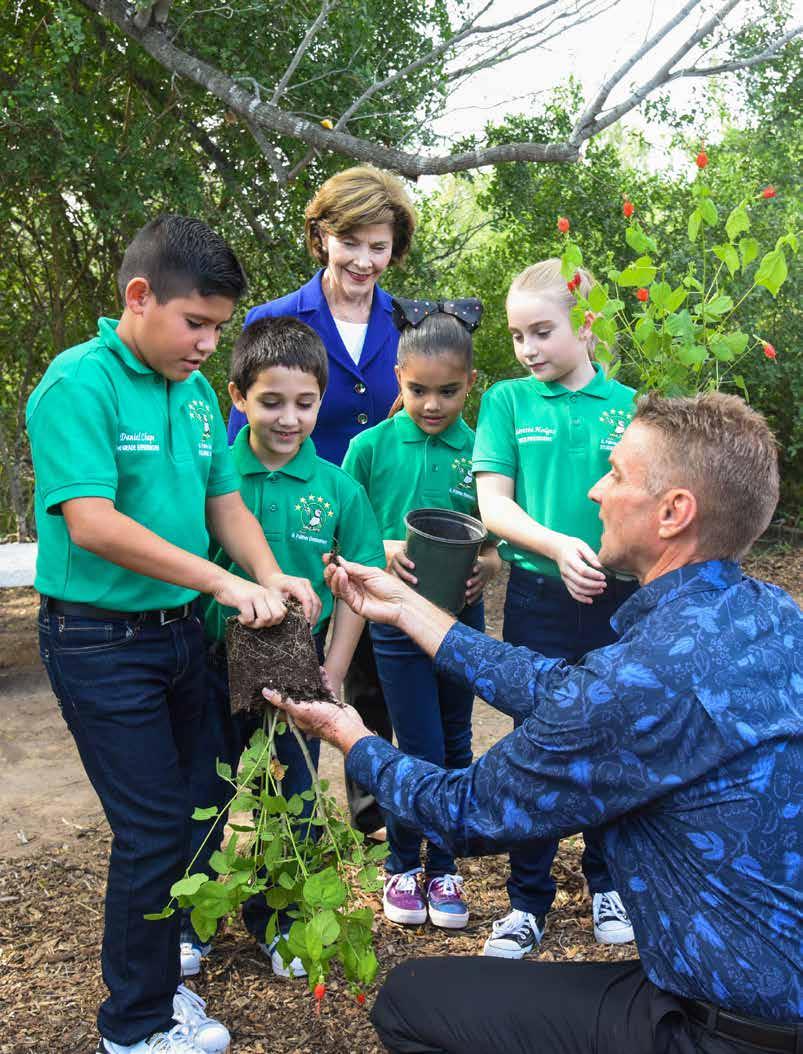
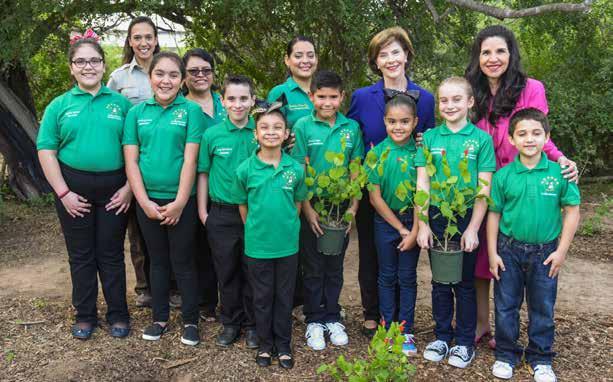
As part of this designation, Bush paid a special visit Nov. 8, 2017, to Palmer Elementary in Pharr. Guided by campus student leaders, she toured the school’s natural walking trail behind the school and also took part in a special planting ceremony with the school’s Gardening
Club. During her visit, she had an opportunity to address district and community leaders in the school’s library where she shared the importance of preserving local wildlife and flora to maintain the unique ecosystem of the region.
“Schoolyard habitats offer a unique and necessary experience of interacting with nature that is often unavailable to children growing up in today’s society,” Bush said.
Currently, over 20 PSJA elementary campuses have preserved outdoor learning spaces, with the goal of expanding this work districtwide.
“What started as a way to preserve our South Texas natural flora and wildlife has quickly become part of our daily learning environment,” said Dr. Daniel King, PSJA ISD
“What started as a way to preserve our South Texas natural flora and wildlife has quickly become part of our daily learning environment.”
Dr. Daniel King , Pharr-San Juan-Alamo ISD Superintendent of Schools.
superintendent. “Our science coordinators and teachers have done a fantastic job incorporating this work in our curriculum and our partners have helped us make it a reality. Our school grounds are not only beautiful, they are living laboratories for our students to dig deep and practice what they learn in the classroom.”
TAKING GREEN TO THE NEXT LEVEL
The entire PSJA community has been inspired by this work and other schools, including Buell Central in Pharr, have started similar sustainability projects. Through an initiative called Buell Green, Inc., students
from middle school and high school employ a variety of project-based learning activities focused on sustainability and conservation inside and outside the classroom.
Some of their many projects include hydroponic and aquaponics gardens, sustainable agriculture through vertical gardening, organic composting, and even the use of renewable energy through their own solar-powered golf cart and wind energy kite project.
Students are able to harvest organic vegetables, such as lettuce, peppers, radish, and tomatoes. They even raise chickens to collect eggs. As a way to give back, all items harvested or collected by the students are donated to the RGV Food Bank.
These efforts have recently earned the campus a $50,000 grant from the National Fish and Wildlife Foundation to help fund the Buell Green Conservation and Restoration Program and expand it throughout the district.
Gonzalez, Administrator for High School Programs & Services
The Miracle of
SOUTH TEXAS
Dual Enrollment/Dual Credit Program at South Texas College Transforms the Rio Grande Valley
by Nick Gonzalez
The miracle of South Texas. That is what some say the Dual Enrollment/Dual Credit program at South Texas College has done to transform the Rio Grande Valley from a sleepy school-to-work culture to a college-going, college-completion culture.
I had this vision way back as a local high school principal, when I first learned in 1993 that a community college had been established to serve Hidalgo and Starr counties.
“What an opportunity for our students and our community,” I thought. It wasn't until this moment that this type of educational institution was available to these two counties — almost 700,000 residents without this vital ladder to higher education and a better way of life.
As the principal at McAllen Memorial High School at that time, I knew that many of the students were yawning through the last years of high school. It was evident that not only talking about college, but also connecting them with a tangible pathway to higher education was the motivating factor to keep them meaningfully engaged.
Nick
1,703
In its first year offering dual enrollment course (2007), South Texas College graduated 25 dual credit students. In May of 2017, 1,703 of degrees and certificates were awarded to dual credit students.
This was key during a time with dropout rates among our mostly Hispanic population ran high. Of those who made it to graduation, the refrain I would often hear from many bright, capable students was, “I can’t go to college, sir. I have to work and help support the family.” STC erased this very real excuse and made it even more possible through the Dual Enrollment/Dual Credit program, which the state approved in 1997.
In 1999, when I took over the Dual program at STC, we had 450 students in the fall semester, with only five high schools out of 40 in our service area that were participating as partners in this program. Our policy then was to charge the students $100 per course for taking these classes, whether at their high school or our campus. I found this to be a barrier for most kids since every single high school then, as it is today, qualified for free-and-reduced federal lunch — an indication that most were poor. One hundred dollars just provided an excuse for students to say, “I’ll do it later,” and simply meant that only those financially able to take college classes
continued. The dreams of the majority remained bottled up.
In the spring of 2000, our Board of Trustees, with the backing of STC President Dr. Shirley Reed, adopted the policy to waive tuition and fees for students taking college classes at their high schools, and since then, the program has grown to over 14,000 today. Most are taking college classes at their high schools during the school day, at no cost to them or their parents. This has been made possible mainly through the strong partnerships we have established with 24 school districts at 78 high school sites, expanding from the farthest high school in Starr County to that of the city of Hidalgo and everything in between. Our division deans and program chairs have opened their doors to help with the recruitment of over 380 high school teachers with the proper credentials and STC departmental approval to teach college classes. They, too, have been able to provide over 228 STC faculty at many different high schools to teach and cover the ever-increasing high demand for courses in this program.
DUAL CREDIT STUDENTS
Since 2000, we have served over 98,000 students in this program, and saved them and their families over $180 million in tuition and fees. More importantly, the availability of a variety of college completion pathways, such as 29 Early College High Schools (ECHS), including two that are CTE Workforce ECHS, and six different Middle College Academies, made it possible to graduate — free of charge — over 880 students with two-year associate degrees in May 2017, two weeks before they graduated from high school. Also, in the Career & Technology (CTE) area, we are graduating close to 1,000 students with one-year certificates that will enhance their pursuit of a career, or that they make use of to acquire a better paying job as they complete a higher degree. Offering CTE dual classes was made possible when I helped write and championed the enactment of HB 415 during the 2003 Texas Legislative session. This bill helped remove dual enrollment rule barriers restricting dual CTE courses, and opened the door, for the first time, for workforce courses to be offered as dual credit classes by our college with our high school partners and throughout the state.
To me, it is not a miracle. It is what happens when policy creates opportunity, and you have the support of
Since 2000, we have served over 98,000 students in this program, and saved them and their families over $180 million in tuition and fees."
Nick Gonzalez, Administrator for High School Programs & Services
key people like our STC president, the members of our board, school superintendents, and leaders and staff at STC, who have helped this along the way. It looks like a miracle only because of the hard work by many individuals at our college and the schools that made it so.
For more information on the program, and how it is sustained financially, please visit our website at www. southtexacollege.edu.
BREAKING THE CYCLE OF POVERTY:
A NEW APPROACH
by Lori Houston
Sabrina Walker-Hernandez has a big, audacious goal. It took root in her mind last May, when she attended an executive leadership program at Harvard. Her plan is to break the cycle of poverty in Edinburg and the surrounding communities, starting with the youth. With a problem that big, she knows that a mindful approach to the underlying causes would be needed.
Walker-Hernandez is the CEO of the Boys & Girls Clubs of Edinburg RGV. She and her team started researching factors that impact poverty.
“There are three things that you can control that will eliminate poverty,” Walker-Hernandez said. Several studies have shown that, regardless of race or location, if you graduate from high school, obtain a full-time job, don’t have children before marriage, and wait until you are 21 before marriage, you will have a 97 percent chance of avoiding poverty.
The Boys & Girls Club of Edinburg RGV already has a history of helping local youth graduate from high school, but Walker-Hernandez realized that they would have to be more intentional in their programming in order to improve, as well as changing the other two elements for many of the young people in the area. Specific goals in
each area were set, as well as a plan to achieve them.
“We are going to help increase the graduation rate by 5 percent, we’re going to reduce the teen pregnancy rate by 10 percent, and we’re going to build a teen innovation center which focuses on STEM jobs, including vocational things,” Walker-Hernandez said.
Walker-Hernandez believes that reducing the teen pregnancy rate is going to be the most challenging because it involves fighting people’s personal beliefs.
Many people think that teens are all having sex, but according to the National Center for Health Statistics, it is not as prevalent as it may seem. The Boys & Girls Club has started offering a 10-week abstinence education program called Heritage Keepers that attempts to help young people make informed decisions about their sexual behavior.
In addition to the curriculum that is offered to members of the organization, the club held a sexual risk avoidance conference for the youth and parents in the community that have not been a part of the program. The main goal of the conference was to show teens that there are other options.
“It’s not just the moral message of waiting, it is the
economic message, too,” Walker-Hernandez said. “Your life will be more economically viable if you wait.”
The conference, called “The Power to Wait,” was held at the Edinburg Conference Center at Renaissance. It included a full day of sessions led by different experts in the community. There was also a parents-only session that covered current sex trends and information on how to discuss the topic of sex.
Dr. Beverly Ashley-Fridie opened by talking about goal setting and why practicing abstinence is vital to achieving those goals. Dr. Pablo Tagle led a session that focused on self-love and self-respect, and how they influence the choices you make, especially when it comes to sex. Judge Renee Betancourt discussed the internet’s impact on the way we socialize and the way we view sex in today’s world, including the legal ramifications of sexting. Pastor Vidal Muñiz covered the shift in the American family and the importance of making a conscious decision when selecting a spouse, marriage, and having kids. Sarah Sagredo-Hammond and Gisselle Mascarenhas-Villarreal led the session on love, lust, and infatuation. The participants also received medical-based information about STDs, their prevalence, and current trends from Dr. Letreise Winkfield.
More than 90 young people attended and had the opportunity to ask questions.
“We wanted to bring together teens with professionals,” Walker-Hernandez said. “Not just any professionals, but professionals that look like them, that have made some of the decisions we are trying to encourage them to make, or have made decisions that they have regretted
and are willing to share their stories and are willing to be honest with the kids.”
Walker-Hernandez noted that one interesting aspect of the conference was the attendance by a group of girls who were in the juvenile justice system. They attended as a condition of their parole or as part of their sentence.
“It was very interesting to see their perspective, and for them to see different options for themselves,” she said.
The Heritage Keepers curriculum and the Power to Wait conference isn’t just for young people who have never had sex. It is about educating the youth and empowering them with the ability to make good choices no matter where they are in their lives.
“You get to hit a reset button and start again,” WalkerHernandez said.
TIPS FOR TEACHERS: 3 Ways to Teach in Texas
by Abbey Kunkle
Amazing teachers come to us from all disciplines and walks of life, and each has unique qualities that will provide a lasting impact on our children. Today, teachers take many different pathways to get into the field. Though there are some general requirements for those looking to get into the profession, depending on a variety of factors, there are generally three different options for prospective teachers to reach their goal.
For those interested in teaching elementary to high school education, the first requirement across the board is to obtain a bachelor’s degree from an accredited university, which, fortunately, can be earned right here in the RGV with a plethora of majors to study at the University of Texas Rio Grande Valley, as well as options at South Texas College and now at Texas A&M University’s campus in McAllen. In addition to holding a bachelor’s degree in any subject, the usual job seeker’s requirements are a successful interview and reference check, as well as the standard background check and fingerprinting required for working with children. For those who wish to work in the public school system, state certification is also necessary.
A well-known route for those interested in teaching is to pursue a degree in education and complete the associated Educator Preparation Program (EPP). This
tends to be the path taken most by those who entered college knowing in advance that they wanted to become teachers. Generally, accredited universities provide a solid foundation for teachers with courses in child development, curriculum and lessons, language, literacy, and more, as well as time spent observing in a classroom as student teachers. Upon completion of their degree, graduates have passed the certification exam in their respective fields and are prepared to enter the workforce.
Albert Aleman, an eighth-year teacher at Donna ISD, obtained his degree in education at the University of Texas-Pan American. He did learn a great deal during his studies, but noted that this still cannot fully prepare teachers for what they can expect in the classroom. Upon entering college, Aleman knew that he wanted to become a teacher and definitely recommends that path to those who want to do the same. He also recognized that depending on the person, another path to teaching might also be a good fit. Even more than knowledge from books, observation time and learning to emulate experienced teachers has been an important aspect to his success in teaching.
“Education is not a cookie cutter thing — it is not one size fits all,” he said. “Every year is different.”
For those who obtained their degree in a different
field, nontraditional routes to teaching are available and have been on the rise across the country. To work in the public school system, the State of Texas requires that public school teachers obtain state certification, so Alternative Certification Programs (ACPs) are another great option. Anayancy Martinez, special education teacher with Edinburg Consolidated ISD, took the alternative certification route while working as a paraprofessional in the school system. ACPs generally take one year to complete and, like Martinez, participants are often allowed to teach or intern while completing the requirements, which provides extremely valuable experience as they jump into the field. ACPs can be found through universities and colleges, education service centers, and private entities. Though the requirements remain the same, not all programs are created equal. Cost, support, and even job placement rates vary, so it is important to do research before selecting the right fit for you.
Though certification does help with preparation and is a highly marketable asset in the job search, it is not always required to teach. According to the TEA, for public charter and private schools, only a bachelor’s degree is required. In the RGV, IDEA Public Schools is one example of a district that does not require certification. However, they do employ many state-certified teachers and have their own stringent expectations for hiring and helping teachers grow. Shelby Quevedo says she had a wonderful experience as a first-year teacher with IDEA. Quevedo noted that while certification is likely beneficial, IDEA provides a wonderful environment with extensive support for new teachers.
“IDEA is big on two different things for teacher growth — content and coachability,” she said. “They focus on teams to help with content and classroom management. It is a lot of checks and balances.” With 100 percent graduation rates and 100 percent of students attending college, IDEA’s methods have proven to be very effective.
Talk to any teacher and you will find that, as Aleman
For those interested in teaching elementary to high school education, the first requirement across the board is to obtain a bachelor’s degree from an accredited university, which, fortunately, can be earned right here in the RGV.
said, “it is not one size fits all.” Each educator has taken their own unique path, and though they may come to the profession in different ways, their passion and experience tend to be their most valuable assets in working with children.
For those interested in the field, local higher education facilities as well as http://tea.texas.gov provide great resources.
CHILD GENIUS?
How to Detect and Nurture Genius in Your Child
by Cori Smelker
As parents we are prone to thinking our children are certifiable geniuses. While it is true that children does come into this world with their own unique gifts and talents, how do we really know whether they are truly gifted geniuses?
There are a few signs that might indicate your child is at least above average, if not gifted — or a genius.
Your child can hold a conversation from an early age. According to the Davidson Institute, an education foundation for advanced children, “early and prolific use of language is typical in profoundly gifted children.”
They love fidget spinners because it helps them burn energy. If, even as an infant, your child got bored from being in one position, or made noise because the mobile stopped working, they might be gifted.
They have a love for books. If your child has shown an interest in reading even before they started school or can read from an exceptionally young age, there is every chance that they may be a genius.
Their memory is exceptional. Toddlers who can quickly recognize locations (and nothing as obvious as the Golden Arches) and faces may indeed be gifted. Of course, having a good memory is useful for anyone and is a great skill to develop.
They seek out more advanced peers. Your child naturally gravitates to adults or older children, and holds meaningful conversations with them.
They want to learn. Many geniuses are also very motivated to learn, and will do almost anything to facilitate their burgeoning skills. For instance, children might pick up books that have been read to them and then match known words from that book to the same words in another book. They will then extrapolate meanings of unknown words through contextual clues.
Children with a genius IQ will often outpace their peers in the classroom and if not encouraged properly, can either become bored or disruptive, or find ways to further their own education.
What do you do if you suspect your child might be a genius/gifted? If your child is already in school, talk to the teacher since they should have a good idea if your child is indeed gifted. Work together with the educators to formulate a plan for your child.
Ensure your child gets enough exercise. John Medina in his book, “Brain Rules for Baby” says, “Encouraging an active lifestyle is one of the best gifts you can give your
child.” It may mean putting away “World of Warcraft.”
Enroll your child in some kind of music class. Children who play a musical instrument outperform their peers who do not play any kind of instrument.
Read to your children as often as possible, and make books readily available to them. According to Evans, author of “Family Scholarly Culture and Educational Success,” a child who is raised in a home containing at least 500 books is 36 percent more likely to graduate from high school and 19 percent more likely to graduate from college than a child raised in a home containing few or no books. The library can be your best friend in terms of giving your child access to books, or an e-reader where many books can be downloaded for free.
Limit the amount of time spent playing video games or watching television, even “educational” shows. The questions asked in the shows can never be tailored to your specific child, and your children will miss out on important learning skills if all their knowledge is coming from TV or video games.
Speak a foreign language. Children from bilingual homes have a distinct advantage over their monolingual counterparts. Studies have shown that bilingual children often have a better attention span and can multitask better than their monolingual friends.
What is it like to grow up as a genius/gifted person?
“There is a balance between maintaining your childhood and cultivating and optimizing the intellectual factor,” said Mia Witt, from San Antonio. Her family opted for her to skip grades but balked at her graduating high school at age 14.
“We compromised,” she said. “My parents wanted me to have the social interaction with my peers but wanted me to be academically challenged. As a result I took college credit hours and actually trained as an LVN while still in high school. I went to high school for two hours a day, and then did two hours in a work-study program. It was not perfect, but it worked.”
At the end of the day, the best way to nurture your child, whether a genius or not, is to give them as many opportunities to learn and to use their innate talents and gifts as freely and as often as they can. All children have a gift, some are just more obvious than others.
Parental Inv olvement in
Edu c a tion
Are we doing enough to help our children succeed?
by Abbey Kunkle
Parental involvement in a child’s education is a major indicator of their success in school; however, not in ways you might think. Today, as many working parents often have little time to physically be at their child’s school, they sometimes feel guilt at their perceived lack of involvement. Of course, it is easy to start comparing themselves to other parents, leaving many wondering whether they are doing enough in the classroom to help their children succeed.
According to Lily Eskelsen Garcia, president of the National Education Association (NEA), the most
significant type of involvement that parents can have in their child’s education is not what they do in the classroom, but rather what they do at home. The NEA suggests that bridging the gap between what is learned at school and how it is relevant to day-to-day life is a critical role for parents. Daily engagement with their children, including monitoring, supporting, and advocating, can help ensure that children have every opportunity for success.
The National Parent Teacher Association (PTA), another national leader in education and child advocacy, agrees with the NEA’s assessment that parents are most
“Be a caregiver, an awesome supporter, a foundation provider. Your most important job is to be a parent.”
Robin Wilson-Clipson, founder of PACE Academy
effective by being present and involved at home. In their “PTA Parent’s Guide to Success,” the National PTA recommends some specific ways that parents can help children thrive in school. With their busy schedules, it can often seem difficult to get everything done. But incorporating a few simple steps into daily routines can make all the difference in their children’s future. Some of these recommendations include:
Help your child learn at home. Set aside a time every day when your child can concentrate and focus on homework. Fifteen to 30 minutes should suffice.
Make reading a part of your daily routine. Read with your child, or depending on their age, encourage reading every day.
Talk to your children! Encourage your child to tell you about their day at school. You can also use real life situations like tipping at a restaurant or discussing the news to continue learning throughout the day.
Set goals with your child and create a plan to reach them.
Based on her experience as a teacher, founder of PACE Academy in Harlingen, current school board president, and mother, too, Robin Wilson-Clipson believes that everyone in the Rio Grande Valley can and should apply these national recommendations to their own lives. Routine and support are among her most important recommendations for parents to help their children succeed at school. Wilson-Clipson noted that teachers are there to teach and parents should not have to feel like school needs to continue when the family gets home.
“Be a caregiver, an awesome supporter, a foundation provider,” she said. “Your most important job is to be a parent.” She has seen firsthand that providing a strong support system as well as fulfilling children’s basic needs is essential to their success. Even
providing a healthy breakfast, making sure they get enough sleep, and being on time can immediately show significant improvements in a student’s performance at school. Wilson-Clipson also noted the importance of recognizing each child’s strengths and passions. To foster success, she encourages parents to talk to their children daily and get excited about what they are doing at school. When parents care about education, students usually show more interest, too. Of course, checking on your child’s grades is a great tool for keeping up with their progress. This has never been easier as now, the majority of schools provide parents with online access to grades as well as other information and resources. Communicating with teachers, especially if you have any questions or concerns, can help as well.
According to Wilson-Clipson, in addition to providing a strong support system at home, another impactful way that parents can get involved with their child’s school is by getting the community involved and making an effort to raise funds and secure donations. Parents who advocate for children at the local level can help schools obtain the funds to improve facilities and provide stateof-the-art resources for children to learn and grow. Participating in your school’s PTA, sometimes called PTO or Parent Teacher Organization, can help parents find opportunities to participate when and how they can.
So, is parental involvement important to your child’s success at school? Absolutely. Talk to your child’s school and teacher to find out when and how you can help out, but most importantly, be present in your child’s life, show an interest in what they care about, and be there to provide for their physical and emotional needs. To make a difference in your child’s education, be the best parent you can be and the rest will follow.
UPCOMING EVENTS
MON-SUN JANUARY 1 -7 + John Milton
TUESDAY JANUARY 16 + Two On Tap
FRIDAY FEBRUARY 2 + VSO: América, América
TUESDAY FEBRUARY 6
+ Mcallen Town Band: Moments In History
FRI-SAT FEBRUARY 9-10 + Shen Yun (3 showings)
SUNDAY FEBRUARY 11 + The Wizard of Oz
WEDNESDAY FEBRUARY 14 + Million Dollar Quartet
TUESDAY FEBRUARY 20 + 3 Redneck Tenors
THURSDAY FEBRUARY 22 + Foreigner
WEDNESDAY MARCH 7 + STOMP
WEDNESDAY MARCH 21
+ Mcallen Town Band: Celebration of Music
WEDNESDAY APRIL 4
+ Buddy: The Buddy Holly Story
FRIDAY APRIL 6
+ VSO: Forbidden Pleasures of Carmina Burana
FRIDAY MAY 11
+ Frankie Valli and The Four Seasons
956.681.3800 www.mcallenpac.net
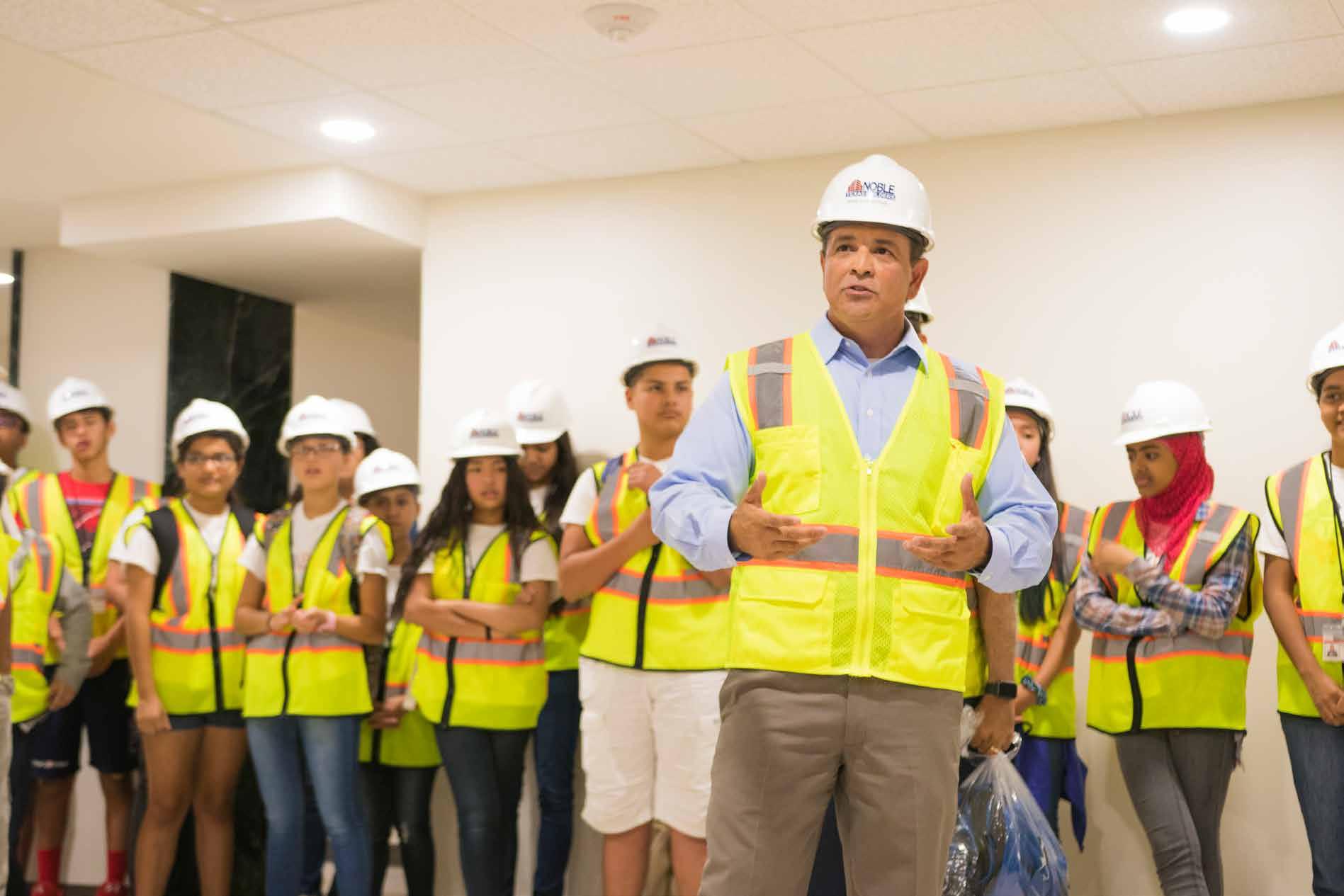
Making Noble Contributions to Education in the RGV
by Abbey Kunkle
As the Rio Grande Valley continues to grow exponentially, business involvement and investment in our community is extremely important to our future. Our four-county area is one of the fastest growing in the nation, which has contributed to the massive economic growth over the past couple decades. To keep up, local businesses are doing their part to prepare the next generation of workers to take over. Among other industries, health care and education are flourishing here in the RGV, and in addition to developing the businesses of tomorrow, Noble Texas Builders is one Valley company that has committed to support students right here in our community.
With a focus on safety, quality, and producing proactive solutions, Noble Texas Builders provides general contracting and designbuild and construction management services. They have quickly become a success, and strive to use their platform to make a difference and be a part of the fabric of our community. With a corporate office based in Weslaco, the company is invested in the Valley’s success, and their hands-on, professional construction services begin with a strong foundation thanks to their experienced and talented team. Company President Rene Capistran recognizes the importance of his team and their effect not only on the success of the business, but also on the significance of their projects for years to come. Current projects include educational facilities like South Texas ISD facilities, as well as multiple facilities for Cameron County, hospital work for Valley Baptist, and some retailers in the area.
the science, technology, engineering, and mathematics (STEM) fields. During the program, the company’s engineers and architects expose the students to their field, speaking about what they do as well as giving tours of their facilities.
“I believe as business leadership continues to look for the human capital of tomorrow, we need to do our part and show our students what the industry has to offer,” Capistran said regarding the importance of getting involved with the program. He encourages students to find their passion. “Don’t just go get a degree. Decide what you want to be and align your education to it. Then you’re working toward your passion. Don’t focus on being successful. Success is something we work toward for the rest of our life. Be a person of significance. How are you going to improve the life of your family and your community?”
“If we expect to grow as a community, I think you have to invest in education. We’re doing a lot of things because we truly believe there is so much industry coming to the RGV. I think we have a responsibility to help these students.”
Rene Capistran, president of Noble Texas Builders
To further their efforts in supporting education and improving possibilities for tomorrow’s workforce, Noble Texas Builders recently hosted their inaugural Noble Charities Foundation Fishing Tournament with the intent to raise money for their foundation, which supports a $25,000 scholarship with South Texas College. An endowment of $25,000 is also being set up with UTRGV and was expected to take effect in December. To have the greatest impact in giving back, Noble Texas Builders also partners with United Way, Easterseals RGV, the Boys & Girls Club of Edinburg RGV, and other local organizations.
More importantly though, Capistran noted that the company is focused on two initiatives. In addition to providing infrastructure, they are committed to supporting both health care and education in the Rio Grande Valley. One of their main goals is to introduce students to how education can be applied to their future, and to help them work toward more than just a job, but a meaningful career they are passionate about. Through their efforts with the University of Texas RGV’s Texas Prefreshman Engineering Program, also known as TexPrep, Noble Texas Builders is helping provide students from sixth to 12th grade with the opportunity to build a foundation in
As can be seen through their work with students in the Valley, Capistran and his company clearly focus on volunteering and make it a priority to give back.
“If we expect to grow as a community, I think you have to invest in education,” he said. “We’re doing a lot of things because we truly believe there is so much industry coming to the RGV. I think we have a responsibility to help these students.”
Along with their corporate office in Weslaco, the company has a regional office in Wimberley, Texas, and a sister company, Noble General based out of El Paso. Due to their commitment to serve the RGV, they plan to open another office in Brownsville at the beginning of this year.
Now Accepting Students Living Anywhere in the RGV
FIGHTING FOR CHANGE
Systems That Control the Classroom
by Sofia Aleman
How does a Rio Grande Valley child reach eighth grade with a second-grade reading level?
There are too many pieces to the puzzle and not one solid answer. Kristin Keith, currently an eighth grade special education teacher at W.A. Todd Middle School in Donna, shed light on the educational experience and expectations of teachers at different levels in the area.
Keith used to teach first grade. She discussed everything from grade level priorities placed on fluency, writing, and overall reading comprehension, as well as what is being done to boost literacy in schools.
First, it’s important to highlight that when it comes to the public school system, there are many systems that are collectively at work, making the decisions that will influence what happens in your child’s classroom, and facilitating how teachers will fill their lesson plans. When it comes to making decisions on curriculum, many educational entities have input. The federal government passes laws and supports Texas financially, while Texas funds its public schools as well. Each financial provider sets their own standards. In addition, there are more than 30 autonomous school districts in the Valley, each with their own superintendent and school boards. Together, the educational collaborative governs the emphasis individual schools place on what is important to teach.
In the state of Texas, students in pre-K through second grade build their foundation in reading comprehension, which begins at phonics and phonemic awareness and carries to fluency, comprehension, inferencing, and
much more. Students are largely graded by their abilities in reading comprehension at the end of the year. And though these reading skills are continually part of the public school student’s curriculum, around third grade marks a shift when it comes to a student’s measure of success.
“For first grade, a student’s achievements are measured by their reading level,” said Kristin Keith, eighth grade special education teacher at W.A. Todd Middle School in Donna. “In junior high, it’s measured through STAAR, even though their reading level is still tested.”
Not every school district or even school is the same, but for the most part, a huge emphasis is given to passing the State of Texas Assessments of Academic Readiness. Public school students take the assessments starting in third grade through high school. According to the Texas State Education Agency, it is a bundle of statemandated standardized tests used in Texas to evaluate a student's accomplishments and knowledge learned in the corresponding grade level. It’s given in reading, writing, math, science, and history.
Help for students still struggling with reading comprehension is different at every school.
“The resources available to students not reading on grade level and who are not in the special education program will vary from campus to campus as well as district to district,” Keith said. “Currently, at our campus there are guided reading classes aimed at helping students get caught up.”
Even though students can benefit from programs like the one at this campus, the reality is their measure of success isn’t based on whether they advanced a reading grade level by the end of the year. It’s whether they passed the STAAR. Both teachers and principals perform their duties to the best of their abilities, carrying an immense weight on their shoulders to ensure students can attain a specific score at the end of the year.
“I grew up in Kentucky where students took standardized tests, but we didn’t spend the entire year preparing for it,” Keith said. “Passing or failing a grade level didn’t depend on our scores, either. In fact student’s didn’t, and they still don’t, get scores until the following fall. Rather than looking at the progress of the students in their reading levels, it all goes back to the test.”
The systems in place here aren’t built to focus on a student’s fluency or reading comprehension all the way through 12th grade and teachers have to work around that reality.
There is no single resolution to the illiteracy problem in our area. Respect and appreciation should be given to hardworking educators who teach under the umbrella
of our vast educational bureaucracy. For now, we can help by encouraging any person who tirelessly works to reform the education system. These individuals are the ones trying to make sure students don’t continue to “fall between the cracks,” meaning they are passed to the next grade but not necessarily on a paired reading level. True reform will have to start with the decision makers who can reevaluate what is really important for students to have learned upon graduation.
KEEPING OUR YOUTH FINANCIALLY LITERATE
by David Alvarado
In today’s fast-paced competitive economy, personal finance education should start early at both home and school. For high school graduates who choose to go on to higher education, personal finance education in college is often scant and few high schools in the United States offer the proper curriculum. Even fewer schools require personal finance instruction as a graduation requirement.
Regardless of when a young person’s formal education ends, they will be thrust into situations where they need
to know how to manage living expenses. As a result, high school seems like the most critical and logical place to deliver financial literacy education to America’s youth. With ever rising tuition costs, most college students are expected to borrow in order to finance their education. Most often do so without fully understanding how much debt is appropriate for their education or the connection between their area of study and the income level that they can expect upon graduation. Even worse, many students attend college without understanding financial
“It’s an important life skill and [Harlingen CISD] understands the importance of that and by the time students graduate from college, they’re better equipped to handle personal business financing.”
Cynthia Thompson, assistant principal for Harlingen Early College High School
aid, loans, debt, credit, inflation, or budgeting.
A recent study by the Financial Industry Regulatory Authority-Foundation Financial Capability Insights indicated that only 24 percent of millennials (ages 18 to 34) surveyed could answer four out of five questions correctly in a financial literacy quiz. The study found that “lower-income millennial households are much less likely to have retirement accounts, non-retirement investment accounts, and rainy day funds.”
Cynthia Thompson, assistant principal for Harlingen Early College High School, said financial literacy curriculum is in line with the district’s overall vision for graduation.
“It’s an important life skill and [Harlingen CISD] understands the importance of that and by the time students graduate from college, they’re better equipped to handle personal business financing,” said Thompson, who is part of the Curriculum and Assessment team at HCISD. The team focuses on providing curriculum based support through systemic collaboration designed to ensure educational excellence for all students. “It’s really about building students that are college and career ready.”
The Texas Education Code requires instruction in personal financial literacy in K-8 mathematics instruction and in one or more courses offered for high school graduation.
Starting with the 2016-17 school year, each school district and open-enrollment charter school that offers a high school program must provide Personal Financial Literacy as a one-half credit high school social studies elective course.
The Advanced Technical Credit Program offered at HCISD high schools gives students a chance to receive credit at participating community colleges across Texas
for taking certain enhanced technical courses during high school.
In addition to the new requirement at the high school level, HCISD is also working to broaden financial literacy education for the entire community. In recent years, HCISD has provided opportunities to learn about financial literacy through programs and community events such as the HCISD Financial Fitness Expo and the Annual Parental Involvement District-Wide Conference.
The purpose of these community events is to strengthen existing partnerships with community-based organizations and financial institutions like IBC Bank to educate high school students so when they leave, they have a better understanding of their finances.
“Based on personal experiences, if I had known then what I know now, I would have put more money away in investments and I would have started years ago,” said Thompson, who has children graduating from high school and college. “I definitely feel like this curriculum would have been very useful instead of having to learn from trial and error.”
We would not allow a young person to get in the driver’s seat of a car without requiring driver’s education, and yet we allow our youths to enter the complex financial world without much related education. The 2008 financial crisis that led to the most recent recession demonstrated that a lack of financial literacy was one of the factors that led to negative economic consequences in the United States.
The basics of personal financial planning needs to be taught both in school and at home. When students graduate, they should understand how credit works and know how to budget, save, and invest — for their sake and the financial future of our country.
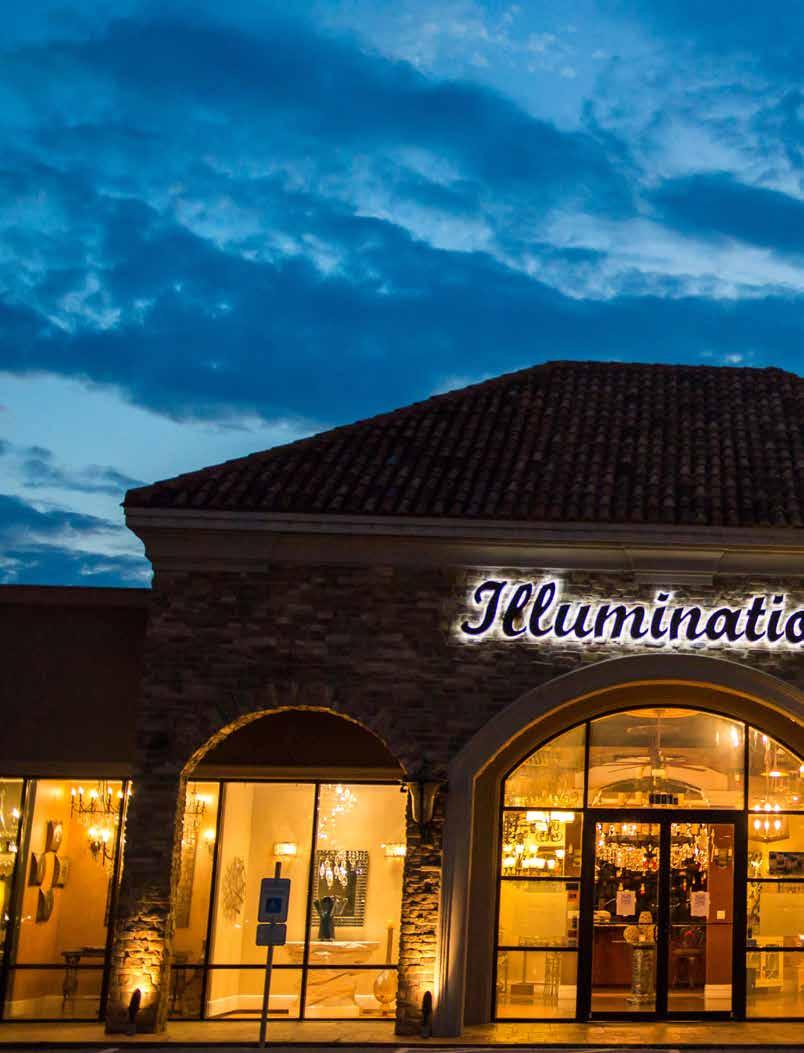
There are a plethora of decisions that go into building a house. From floor plans to wall color and everything in between, there are so many ways to personalize a living space — right down to the light fixtures that brighten each and every room.
That’s where the experts at Illuminations come in.
“Most people don’t realize all the work that goes into it, all the details that are associated with choosing lights for a new house, until they come across the problem, so we help them avoid those problems before they are faced with them,” said Melinda Garza, a co-owner at Illuminations.
Illuminations is a family-owned lighting fixture showroom that has served the Rio Grande Valley since 2000 at its McAllen location. Founded by Garza’s parents, Gustavo and Gracie Garcia, Illuminations is now coowned by Garza and her two siblings — D’Ann Torres and Marco Garcia.
“There’s nobody else that you can trust as much as you do family,” Garza said. “We’re very close, so I couldn’t see myself working with anybody else but my family.”
In April 2017, Illuminations expanded with a second store opening in Brownsville.
“We’re just excited about the Brownsville location opening,” Garza said. “The Lower Valley is growing a lot. We’ve had customers from the Lower Valley come to McAllen to shop. So it’s nice now that we’re able to have that second location for our customers’ convenience.”
Illuminations is more than a lighting showroom. The experts there work closely with contractors and homeowners to select the best fixtures — everything from chandeliers and ceiling fans to exterior lighting and even home decor — for residential and commercial projects. Employees at Illuminations often personally visit the site of the project to fully understand what the lighting needs are.
“We’re the experts,” Garza said. “We have the floor plans, or we walk the house, so we’re able to count every single little thing they need so we can make sure our customers don’t go over budget.”
It’s a personal touch that many customers wouldn’t get by visiting a big box home supply store, and one that Garza’s father intimately understood.
“We’re the experts. We have the floor plans, or we walk the house, so we’re able to count every single little thing they need so we can make sure our customers don’t go over budget.”
Melinda Garza, co-owner of Illuminations
“My dad used to be a contractor himself many years ago, which is when he got the idea to open the store,” Garza said. “He knew what the builders were struggling with, or what they needed when it came to sending their customers to choose their lighting.”
Many contractors operate by giving their clients — the homeowners — an allowance to select home features like lighting fixtures, Garza explained. It’s easy, though, for the homeowners to get overwhelmed and go over budget, select pieces that don’t work well together, or forget items altogether — especially if they don’t have someone to help them. The experts at Illuminations help eliminate that confusion and uncertainty with their specialized knowledge on exactly what is required to properly light a house. They streamline the entire experience.
“A customer may go to one store for one thing, another store for something else, so the builder’s running around all these different places trying to gather all the items they need,” Garza said. “When with us, it’s more of a onestop shop. They send their customers to us, we help them choose everything. And if necessary, we can deliver next day, if they need it, because we stock everything.”
Garza and the rest of her team at Illuminations find it rewarding to help homeowners and business owners stay abreast of trends in lighting and fixtures. The store also offers price matching if customers find the same products at lower prices elsewhere. But if homeowners fall in love with fixtures that push them over budget, there’s already a plan in place to help.
“We collect whatever overages are due so the builder doesn’t have to worry about it,” Garza said. “They just come, pay their allowance, and they’re not incurring expenses after the fact.”
And with nearly two decades in the RGV, Illuminations has become part of the fabric of the region it serves.
“We donate fixtures every year to Habitat for Humanity,” Garza said. “We’ll donate items to the church. We’re always giving back to the community.”
Visit the Illuminations website at http://illuminationsrgv. com.
Join a team and family of educators committed to preparing students for success in college and in life.
Team Support
IDEA provides the benefits and support teachers need to do their best work inside of the classroom.
Continuous Growth
IDEA believes that learning should never stop, even for teachers.
College Success
Since 2007, our teachers have ensured 100% college acceptance for our seniors.
Audrey Cisneros, IB Visual Arts IDEA Donna College Prep
Elisa Cantu, Pre-Kinder IDEA Edinburg Academy
Derek Gonzalez, 4th Grade Math IDEA Edinburg Academy
With Derrick Kinney & Associates - It's All About Family
A dedicated family man who cares for his clients like his extended family, Derrick Kinney and his team are passionate about helping each family they work with achieve the financial goals that are important to them.
Making Life Easier and Reducing Stress
Recently, the Derrick Kinney & Associates team received a 99% Client Satisfaction score. Many clients commented on what a "great experience" it was to work with their team and how easy they made things. "Our goal is to make life easier and reduce stress for our clients," Kinney said. The trusted team at Derrick Kinney & Associates is there to help make their clients lives better.
Helping Those who Help Their Families
A family-focused practice, Derrick Kinney & Associates serves preretirees, retirees, professionals, and business owners. Kinney said the people he visits with have worked hard at their jobs, providing for their families, raising their kids, or building their businesses. Giving Back to the Rio Grande Valley
Derrick Kinney with Mario Reyna, McAllen ISD Coordinator for Health & Physical Education (K-12) After School Enrichment Programs
A strong supporter of McAllen schools, Derrick supports quality education by recognizing outstanding teachers and students. Their team gives back to worthy organizations that make our local communities stronger and help those in need.
Examples of clients they serve include:
Individuals and couples who want their portfolios to fund meaningful life experiences in retirement.
Family-minded people who want to leave a financial legacy with the least amount of taxes.
High wealth individuals who want professional advice on their portfolio strategy.
For a no-obligation visit with one of their friendly and knowledgeable financial advisors, contact Derrick Kinney & Associates at (956) 668-0701 or online at www.DerrickKinney.com.
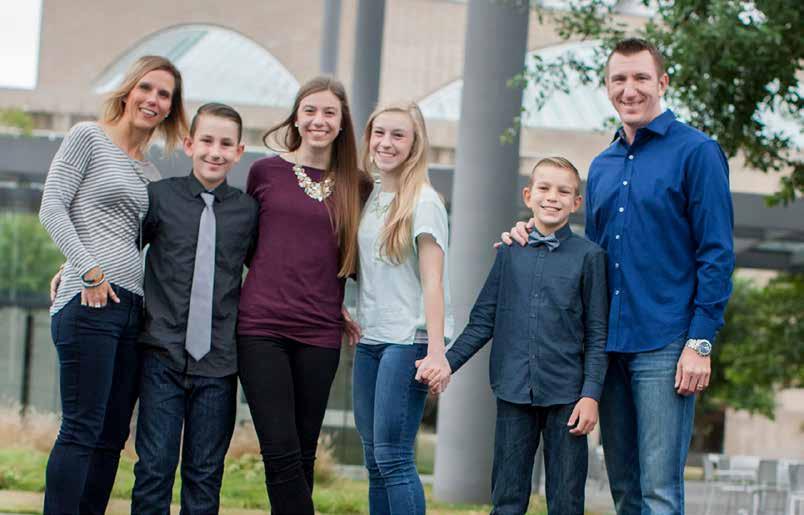
Derrick Kinney and his family
DERRICK KINNEY & ASSOCIATES
TWO CLIENTS AND THEIR LASTING IMPACT ON PRIVATE WEALTH ADVISOR DERRICK KINNEY
"Derrick. I've got cancer and the doctor doesn't give me long to live." I asked my well-loved client and friend, "Bob. how can I best serve you right now?" Faced with the end of his life. Bob wanted to make sure that his family would be taken care of. I suggested we hold a family meeting to share with his family what was important to him. His wife. his children. and each of his grandchildren gathered together to hear him share the values he wanted to pass to the next generation. It was one of the most difficult conversations I've ever led. It was an emotional time and many tears were shed. but it was one of the most rewarding moments I've experienced as a private wealth advisor. His family, who remain clients to this day, regularly thank me for helping their Dad speak to them in such an affirming and lasting way.
"That's why we do what we do. One client. One family. One legacy at a time."
- Derrick Kinney
"Put your hand on my chest." No client had ever said that to me. "Derrick," Ted said. "I want you to feel my pacemaker. If it ever stops. Mary is going to need you. I want you to promise me you'll be there for her." I assured him we would. Ted and Mary had worked with our team for many years. We had designed a retirement plan they were enjoying together. but we also discussed a Plan B if something happened to either of them. Early one Saturday morning I received the call that Ted had passed away. As promised. we walked alongside Mary. helping her with this difficult life transition. It was beautiful to help her get back on her feet and empower her to make decisions for what she wanted to do financially. Her children are very thankful for us honoring our promise to Ted and being there when Mary needed us the most.
Tres Lagos: A Place to Grow
by Lori Houston
After 10 years of thinking and planning, the community that took shape in the mind and heart of developer Mike Rhodes has now taken root in reality. Tres Lagos, located in north McAllen, is a 2,700-acre master planned community with a 25-year project timeline. Phase one is complete with model homes open for viewing.
Approximately $35 million has been invested in the first phase of construction, which has largely been devoted to the community center and the parks and lakes. There is an amphitheater for concerts, as well as
45 acres of parks with tennis courts, basketball courts, sand volleyball areas, outdoor workout equipment, and many covered picnic stations with barbecue pits.
Rhodes Enterprises is bringing to life their vision of the perfect community.
“I brought together everything I’ve done and learned and seen all over the country and done it all here, so it is pretty exciting,” Rhodes said. Everything a community needs will eventually be found in this planned development. Small shops and restaurants are expected
to go up in the next three years on the 11acre retail island.
In addition to fire, police, and hospital services, full-range educational opportunities will also be situated within Tres Lagos.
Idea Public Schools has already opened a campus in the community and Texas A&M has started building a campus on their 100 acres, as well.
“A person will be able to be born here, get the best K-12 education with Idea Public Schools, go from there to Texas A&M all the way through a doctorate program,” Rhodes said. There is also a 90-acre Tech Park adjacent to A&M where they hope to attract high-tech jobs. With such a comprehensive community, “a person could basically live their whole life here without ever having to leave,” Rhodes said.
Now that the development is starting to really take shape, Rhodes noted that his colleagues are starting see the vision that, before, only existed in his head.
“Right now, you don't really notice the thousand trees we planted because they're not big yet, but in my mind, I see 30 to 40 years from now when all the trees are big and all the hike-and-bike trails go under the trees,” he said.
The hike and bike trails are the backbone the rest of the community is built upon. Rick Harrison, a premier community planner, designed the layout to be pedestrian oriented. The many walkways allow you to see all the way through the community and provides shortcuts to other areas, like the shops and the parks. The curving streets allow you to keep going without the stops and turns of most subdivisions.
“The vehicular system is designed to maintain the flow,” Harrison said. “The pedestrian system is designed to make it as convenient as possible.”
Another unique feature of the layout is the way the houses are placed on the lots. Instead of lining them all up at the same distance from the road, the houses are positioned so that residents will have a more open view of the neighborhood, instead of looking into one another’s windows. In conjunction with the winding streets, there is a more open feel to it.
“All of our designs will achieve the same density as the grid, but with a fraction of the pavement,” Harrison said. He estimates he has eliminated over 5 miles of road that would have normally have been needed with a standard design.
The first phase of the development contains three neighborhoods; Estancia, Ensenada, and Escondido. Every house in the planned community will have gigabit speed fiber optic, digital video, and security cameras. All the homes will be built with smart home technology. Tres Lagos homes and parks are also environmentally friendly. They are set up to conserve water by reusing water for irrigation purposes. Each house has two water meters: one for lawns, and one for the household and drinking water.
Tres Lagos will eventually have 5,000 single-family homes and about 3,000 multifamily units. As a planned community, everything is laid out and ready as the community grows. As more and more homes are built, the retail aspect will also begin to grow. It is expected that there will be over a million-and-a-half square feet of retail in Tres Lagos.
It is estimated that this community will bring in about 6,000 permanent jobs. The 90-acre Tech Park will be the source of most of the permanent jobs. However, teachers, hospital workers, firemen, police, and retail workers will also add to that number.
Rhodes Enterprises is the largest mixeduse land developer in the Rio Grande Valley. The organization has donated land for schools and nature centers around the area as part of its commitment to community. Creating unique communities to serve the needs of Valley residents has always been a driving force for Rhodes.
“I love building communities,” he said. “It's all I think about.”
UPCOMING EVENTS
SAT-SUN JANUARY 13-14
+ Saxet Gun Show
TUESDAY JANUARY 16
+ Winter Texan Expo & Health Fair
SUNDAY JANUARY 21
+ McAllen Marathon Scott Crane Memorial Run
+ Wedding Fair
FRI-SUN JANUARY 26-28
+ McAllen International CarFest
FRI- SUN FEBRUARY 9-11
+ All Valley Boat Show
SAT-SUN FEBRUARY 17-18
+ Saxet Gun Show
FRIDAY MARCH 16
+ Lone Star Mustang National
SAT-SUN MARCH 24-25
+ 2018 RGV Home Show
SUNDAY APRIL 15
+ RGV Wedding & Quince Expo
FRI-SUN APRIL 27-29
+ South Texas Comic Con
SUN MAY 20
+ Engage A Platinum Wedding Event
THURSDAY JULY 12
+ TFEA Convention & Trade Show
GENERATIONAL SELLING
RGV Experts: Technology, Communication Key to Understanding Generational Differences
by Amy Casebier
When talking about the differences between generations, definitions of those differences depend on who’s talking — along with the generation they belong to. And when it comes to the concept of generational selling, the idea of how different generations consume products and services, deliberations are even more complicated. However, understanding and bridging gaps among generations — from a business standpoint or otherwise — may all come down to a single concept.
“I think the word that comes to mind is technology and the way that the different generations are utilizing (and) perceiving technology,” said Andrea Fuentes, a communications instructor at South Texas College.
With relentless technological advancements, though, it’s easy for older generations to feel left behind. In that same vein, younger generations who adhere to innovations like smartphones and social media often become subjects of exasperation for others around them.
“What I find is the exasperation is reciprocated because the millennials want the older people to use and adopt the technology and some of the older people do, and then they’re still not given any credit for having done so,” said Laura Nunn, a communication professor at South Texas College.
Some even believe that technological advancement comes at a significant cost — higher than the initial confusion, for example, of using a smartphone after a significant update to its operating system.
“For every technological advance that we take, we amputate something from our lives,” Nunn said, citing the book “Understanding Media: The Extensions of Man” by Marshall McLuhan. “For example, when the telephone first began to be the landlines in the homes, no longer did the women meet at the fence to talk about things. So you took away the legs from the community.”
With sometimes intimidating differences between generations heightened by technology or other factors, businesses look to market themselves to a wide range of consumers. Especially in today’s world, there is no one-sizefits-all solution for companies to reach different age groups.
Fuentes compared how she, a millennial, found out about Dave & Buster’s opening in McAllen to how her parents, baby boomers, did.
“I heard about them coming to the Rio Grande Valley through an article that The Monitor posted online,” she said. “My parents found out about it through the newspaper they received. Nontraditional versus traditional media.”
It’s these distinctions in forms of communication that businesses have trouble tapping in to.
“When someone from one generation takes the time and effort to understand another, they can begin to build relationships on trust, understanding and effective communication,” reads an article on generational selling in Promo Marketing Magazine. “So how can salespeople foster that connection?”
Generational selling is the idea that businesses might use different techniques to appeal to people of different ages. For example, a business might appeal to a baby boomer customer by touting its reliability and longevity. For a millennial customer, however, the business could change tactics, promoting its apps and convenience.
“Before any business makes a move to sell or makes a move to advertise or develop a relationship with its audiences, it has to understand its audiences,” Fuentes said.
Once the target audiences are defined, it becomes a matter of the business reaching them.
“It’s all going to depend on what’s their goal,” Fuentes said. “If it’s to launch a new product, that wording will have to change and there might be four or five advertisements that they make. In those four or five, they have very specific audiences.”
Fuentes, who is also the faculty adviser for an advertising club at STC, reflected on an annual national competition. Every year, clubs across the country receive a single client, and it is up to the organization to develop an advertising plan. This year, the client is Ocean Spray, and the company is specifically looking to capture millennial customers.
“It’s interesting to see the research if you dig into brands that have been around for a very long time,” Fuentes said. “They’re looking at the idea of brand loyalty. And they have the brand loyalty of people 45 and older. They don’t have the brand loyalty of millennials. It’s so interesting that they’re saying, ‘well, right now our current traditional efforts of the two men in the big cranberry bog isn’t working.’”
For millennials, at least, social media seems to be one of the best ways to announce everything from grand openings to special promotions. A client for Fuentes’ public relations class, Ice Cubed Raspas in Edcouch, has harnessed the power of Facebook for reaching its clients. After less than a year since opening, its Facebook page has more than 17,000 followers.
“It’s funny we find merit in following,” Fuentes said. “There’s exposure there, there’s awareness that they exist. We find merit in that, but would a baby boomer? If I tell my parents, ‘they have 17,000 followers,’ would they have had the same reaction? Probably not.”
Knee surgery in Texas just got innovative.
Dr. Raul A. Marquez, Orthopedic Surgeon, performs the leading-edge surgery at Cornerstone Regional Hospital using the NAVIO Surgical System™.
Raul A. Marquez, MD
The robotic assistance eliminates the need for a pre-operative CT scan and enables precise and efficient placement of the implant. During the procedure, a 3D model of the patient’s knee is used to guide the robotics-assisted tool directed by the physician, providing an extra layer of precision and accuracy.
Valley’s economic future is a five-letter word: NAFTA
by Rod
|
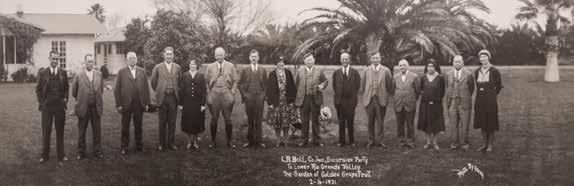
Through the centuries, unpredictable and overwhelming events have shaped the economy of the four-county Rio Grande Valley. While sometimes painful at the time they occur, those factors have usually resulted in more diverse and robust commerce for the area and its people.
In the mid-1700s, the arrival from Mexico of an expeditionary party of homestead-seeking families started the area’s first commercial venture: cattle ranching.
That lasted until the early 1900s when the advent of electricity and the railroad, combined with fertile soil
and new arrivals from the Midwest and Mexico, led to a booming agricultural economy that still thrives today.
Then beginning in the 1960s, a warm climate and the proximity to Mexico became important, attracting Mexican retail customers, Winter Texans, and maquiladoras that expanded and enriched the local economy.
But a U.S. trade treaty with Mexico and Canada enacted in 1994 has had the biggest influence, dollar-wise. NAFTA, the North American Free Trade Agreement, is converting the Valley into a major
Santa Ana
photos courtesy of Byron Jay Lewis
“The main goals of NAFTA were twofold. The first was to increase the flow of products and investments among the three countries of the U.S., Mexico, and Canada. The second was to reduce or eliminate tariffs and duties on those products.”
Dr. Luis Ribera , an agricultural economist and director of the Center for North American Studies at Texas A&M in College Station
player in the very lucrative global marketplace.
And depending on the outcome of ongoing renegotiations, NAFTA will continue to drive the Valley’s economic engine for decades to come.
The impact of trade with Mexico and Canada ripples throughout the Valley’s economy in a very positive way, experts say, adding to the area’s existing economy of agriculture, retail sales, the maquiladora industry, and tourism.
“The main goals of NAFTA were twofold,” said Dr. Luis Ribera, an agricultural economist and director of the Center for North American Studies at Texas A&M in
College Station. “The first was to increase the flow of products and investments among the three countries of the U.S., Mexico, and Canada. The second was to reduce or eliminate tariffs and duties on those products.”
It’s difficult to know what would have happened without NAFTA, but since the treaty was implemented, those two goals have been met in a big way while opening new trade opportunities with other countries worldwide, Ribera said.
NAFTA has allowed each of its three countries to tap into its counterparts’ supply and demand situations.
Ribera cited agriculture as an example.
“Mexico knows the U.S. can’t maintain a year round supply of fruits and vegetables, so investments in both countries have been made to transfer Mexican produce to the U.S.,” he said. “Those investments include greenhouses, cold storage facilities, transportation, highways, etc.”
Similarly, the U.S. and Mexico invested resources to supply what Mexico couldn’t produce in large enough quantities, including corn, grain, rice, and cotton.
Those investments are having a huge economic impact on the Valley, especially through its bridge ports of entry and the Port of Brownsville.
In 2016, the U.S. imported almost $12 billion of fresh and frozen produce, including fruits, vegetables and nuts from Mexico. Half of that entered the country via Texas land ports on about 220,000 trucks.
A new east-west Mexican highway from Mazatlan on the Pacific to Matamoros on the Gulf of Mexico now carries endless truckloads of produce to Texas, and especially the Pharr International Bridge, that continue to destinations throughout the U.S.
“Because the new highway cuts down on travel time
and cost, for the first time ever, in September, Pharr outpaced what had been the top land port of entry for produce: Nogales, Arizona,” Ribera said.
The Pharr bridge now handles roughly 13,000 northbound produce trucks per month — over 400 per day — with substantial traffic increases predicted through at least 2025, due to increased demand for fresh produce, Ribera said.
That increased trade results in infrastructure investments in the Valley as brokers and businesses move to Pharr from Nogales and other smaller ports along the entire U.S.-Mexico border.
“It creates more of everything here: gas stations, restaurants, cold storage facilities, offices, roads, apartments, houses. The list goes on and on,” Ribera said.
Eduardo A. Campirano, the port director and CEO of the Port of Brownsville, said trade at the tip of Texas is booming. The deepwater seaport, created in 1936, is exporting large quantities of gasoline, diesel and steel to Mexico, among many other products and trading countries.
Raw petroleum that Mexico can’t refine is imported to Brownsville then shipped via barge to Houston refineries,
he said. Operations are now underway to deepen the port’s ship channel from 42 feet to 52 feet to handle larger ocean-going vessels.
The resulting Port of Brownsville statistics are staggering, handling about $3 billion in commodity exports yearly via rail, vessel, barge, truck, and pipeline. It covers approximately 40,000 acres with 4 million square feet of covered and open storage.
It is also a world leader in ship recycling and the construction of offshore drilling platforms.
The port has created 8,000 regional jobs, 44,000 jobs in Texas, infuses $2 billion to the local economy, and $3
billion to the Texas economy.
Like a stately oak tree that is better able to withstand a whack from an ax than a skinny sapling, the Rio Grande Valley’s economy is now better able to withstand downturns in any one of its many branches.
Both Ribera and Campirano said the future of the Valley’s economy is promising.
“Hopefully, NAFTA can be improved to increase trade velocity while maintaining security,” Campirano said.
THE CHICK-FIL-A DREAM OF Rudy Martinez
by Rod Santa Ana | photos by James Hord
The rags-to-riches story of Chick-fil-A’s Rudy Martinez is worthy of a movie that could have happened, as he said, “only in America.” The plot is that of a destitute Mexican immigrant who works his way to wealth beyond his craziest dreams.
Rudy, the youngest of five, was born in the tiny Mexican border town of Valadeces, across the Rio Grande from Starr County. His father was an American citizen; his mother, a Mexican.
The lack of schools in the area prompted his mother, Esther, now 92, to move the family upriver to Reynosa where her children could get the education they needed.
Rudy excelled in his classes, eventually earning a medical degree in Monterrey to become a family doctor. But by then, the family had moved across the river to the Rio Grande Valley. Rudy followed but wasn’t certified to practice medicine in the U.S. as he had been in Mexico.
“It was 1982,” he said. “I was married, had one daughter, didn’t speak English, and badly needed a job to support my family.”
He began by applying at medical clinics, hoping to work as a nurse. But his lack of English kept him unemployed. He had nowhere to turn until one day he stopped for a free sample of chicken at the Chick-fil-A at La Plaza Mall in McAllen. It was a chance encounter that led to a dream Rudy said he is still living today.
“I asked Mercy Contreras, the young lady handing out the samples, if they were hiring,” Rudy recalls. “She took me back to the owner/operator of the restaurant, a tall
Anglo man who hardly spoke Spanish.”
After Mercy translated, Norman Kober mustered what little Spanish he knew, looked Rudy in the eye and asked, “Quieres jale?” Do you want work?
“No,” Rudy told him. “I don’t want a job, I need a job.
Today he says, “There’s a difference between wanting and needing, and I think my answer impressed him.”
Kober was even more impressed when Rudy said he could start working immediately if Kober handed him a uniform.
A few days later, after an English-speaking cousin helped him fill out the job application, Rudy started working at that Chick-fil-A. At the time of the interview for this story, it was 33 years ago almost to the day.
For almost two years, the once-Mexican doctor breaded and cooked chicken, washed dishes, swept floors, mopped, whatever it took to help run a successful restaurant. Along the way Rudy picked up enough English to start taking orders from customers. He stayed late every day to help file daily reports and eventually earned the job of assistant manager.
Soon, Rudy convinced Chick-fil-A officials to give him a scholarship to study English at the then-Pan American University. He attended classes four days a week then worked evenings and weekends at Chick-fil-A to log in 40 hours.
Kober helped Rudy practice his English by sending him to assist in the startups of new Chick-fil-A restaurants all over the country.
“I lost count after 20 grand openings, but a lot of the kitchen help at these new restaurants were recent immigrants from all over Latin America, so they were glad to train under me in Spanish,” Rudy said.
By the mid-1990s, Rudy had become Kober’s righthand-man. He was also helping run Kober’s second Chick-fil-A on Jackson Road in Pharr, doing everything but signing supply and payroll checks.
“My dream then was to have my own FSR, freestanding restaurant, as opposed to most Chick-fil-As that are located in malls,” he said.
Rudy’s exhaustive efforts did not go unnoticed by Chick-fil-A officials. In December of that year, Kober told Rudy to prepare for a phone call from the corporate office in Atlanta, Georgia, offering Rudy the position of owner/ operator of a Chick-fil-A in San Antonio that was doing poorly.
Soon, Rudy and his wife were flying back in first class from Atlanta, toasting with a Coke that their dream had come true, a restaurant of their own.
But the 12-year old establishment was a disaster. It was dirty, in a poor location in a rundown mall with only three years left on a 15-year lease. It was Chick-fil-A’s lowest performer in the country.
When Rudy told the six employees there that a lot of hard work was in their future, two quit on the spot.
But Rudy and the four remaining employees got busy. He innovated and went over budget to attract customers. He placed Chick-fil-A placards on boarded up stores at the mall. He convinced large anchor stores to place free Chick-fil-A sandwich cards in their employees’ paycheck envelopes, and he passed out more free cards to businesses along Military Highway.
Sales began to soar. In the ten months of Rudy’s first year, sales jumped from $290,000 in 1995 to $330,000 in 1996. In 1997 sales jumped 33 percent to $440,000, enough for Rudy to win Chick-fil-A’s annual Symbol of Success Award. It came with a paid lease on a new car for one year, Rudy’s first new car ever.
In 1998, sales jumped another 32 percent, earning
Rudy back-to-back Symbol of Success awards and a clean title to the leased car.
“That new car was a huge sign of my success,” he said. “Nowhere but in America could that happen. My whole family and in-laws were so impressed. And it hadn’t felt like hard work because I enjoyed it so much. I felt like a professional athlete playing for a living, not working. What more could you ask for?”
The restaurant in San Antonio didn’t close after the lease expired as Chick-fil-A had planned before Rudy took over. He was given a better location at South Park Mall and by 1999, sales there hit $1 million.
In 2000 he was forced to give up the restaurant for a new restaurant at the much more affluent Inghram Mall. In two years, Rudy’s magic drove annual sales up to $1.7 million. He and his growing family were living the good life with a six-figure income and a new house in a San Antonio suburb when opportunity knocked again.
Chick-fil-A was opening a new free-standing restaurant in McAllen. After many anxious weeks, Rudy finally got
“When I came to the U.S., I found Chick-fil-A. That’s when my dream began. I’m living proof of the American Dream, and I don’t want to stop dreaming.”
Rudy Martinez, Chick-fil-A chain owner & operator
the news: the restaurant was his if he wanted it.
It opened on December 5, 2002. Located just north of Trenton on North 10th Street in upscale north McAllen, his restaurant was at that time surrounded by farmland. But corporate financial studies predicting an eventual commerce boom in the area were correct.
Sales by 2004 hit $2.7 million, earning Rudy his second new car bonus, a Ford F-150. Sales since then have climbed about $1 million annually. In 2016, sales hit $6.3, employing 90 people.
In 2015 he opened his second Chick-fil-A, a new restaurant in Edinburg, now managed by Rudy’s daughter, Laura.
When asked by corporate officials how Rudy would manage to run two stores, he said, “I don’t run stores. I develop leaders to run them for me.”
In 2016 his finely tuned lucrative stores had combined sales of $11 million, employing 150 people who all learn and practice Chick-fil-A’s Recipe for Service that includes eye contact, smiling, using a friendly tone and staying connected with customers.
“We went from four employees in San Antonio to 150 employees now,” he said. “The good Lord will decide how I proceed, but I’m looking at a possible third restaurant in 2018. There are over 100 owner/operators like me with two stores in the Chick-fil-A chain, but only two that have three stores. I may be the third. We’ll see.”
At 61 and with a hip replacement in his medical history, Rudy’s not sure what lies ahead. But he’s prepared for whatever comes, confident in the success of his rocksolid convictions. These include hard work, smart work, faith, service to others, trust he’s developed with many, giving back to the community and raising a loving family by making time for them.
“When I came to the U.S,” he said, “I found Chick-fil-A. That’s when my dream began. I’m living proof of the American Dream, and I don’t want to stop dreaming.”
“We
- Rene Capistran President and CEO of Noble Texas Builders
Move It Self Storage IN MISSION
by RGVision | photos by Kevin Martinez
We spoke with Greater Mission Chamber of Commerce’s Featured Member of the Month Greg Garcia, property manager for Move It Self Storage in Mission. He shares his experience with the business’s membership with the Mission Chamber.
Greg Garcia: I work for Move It Self Storage and I’m the property manager here. I oversee the property, rentals, equipment, and sales merchandise. Being in storage, it’s a unique job, meaning, that you wear many hats. This a large property … I have over 700 units that we have to maintain and make sure that they’re up to standards to keep our customers happy. We offer storage for personal
belongings, for business inventory, and we have a large variety of sizes. So, if you have something small or large, we can accommodate you. We have drive-up units and if you want to store inside a climate-controlled building, you have that option as well. We offer insurance to our customers, which is something that is highly considered especially down here in the Valley, where the humidity is very high. Sometimes, that can cause some damages to your items. So, it does help, that insurance. Some of these other competitors don’t offer that insurance and don’t inform their customers of the things that can happen when you’re storing. We have three locations
here in Mission and we’re all members of the (Greater Mission) Chamber. As time allows, we try to make as many events as we can. Just recently, when Hurricane Harvey hit, we had some members from the O’Grady Elementary come by asking for donations and the only thing we could donate were boxes. Fortunately, we still had some promotional boxes backed up so we were able to provide some boxes for them. We try and stay as active as we can with the community in the best way we (can). Networking is big. A lot of times when you go visit these businesses, you just deal with these employees that are just in front of the counter. When you go to these mixers, these events with the Chamber, you’re actually dealing with upper management — employees that have higher titles that probably are decision makers in the business. Those are the contacts you want to make. Going to these mixers … these chamber events, helps bridge that gap right there. A lot of times you go and you won’t find these people. The exposure of the company, being able to network with all these other businesses, being able to talk to someone with the higher title that’s a decision maker in the company, helps, versus going to the actual office or building and just speaking with an employee that has to bypass other people just to get an answer. The exposure is the biggest thing. You get your name out there.
“This a large property … I have over 700 units that we have to maintain and make sure that they’re up to standards to keep our customers happy. We offer storage for personal belongings, for business inventory, and we have a large variety of sizes."
Greg Garcia, property manager for Move It Self Storage
Selecting an IRA to Benefit YOUR BUSINESS
A sponsored IRA might be just the thing to help your staff save for retirement
If you haven’t yet thought about setting up a retirement plan for your employees, you’re not alone. The task didn’t make the to-do list of nearly a quarter of the 1,600 owners of small and medium-sized businesses recently surveyed by Pew Charitable Trusts. Those surveyed cited expense (71 percent) and lack of resources to administer a retirement plan (63 percent) as the top challenges to getting started.
Business owners in the 2017 Pew survey said they would be more likely to offer a plan to workers if it led to greater profitability, and it just might. The main benefits for employers include tax savings (including a possible $500 tax credit for some plans in addition to any deductions for contributions) and the ability to attract and retain top talent. The key is to find the right plan, whether it’s a 401(k), pension or individual retirement account (IRA). Yes, there are employer-sponsored ones available. Here’s a closer look at how IRAs can help you help your employees save for retirement.
SEP IRA
Pro: The Simplified Employee Pension plan was created for small businesses and the self-employed, with an easy, no-cost setup and flexibility in how much an employer
contributes (employees can’t make contributions). For businesses concerned about cash flow, the ability to increase, decrease or suspend contributions is appealing, and employer contributions are tax deductible. All investment, distribution and rollover rules of traditional IRAs apply here.
Consideration: Because you must contribute the same percentage amount to other employees as you do yourself, you may need to switch to a different plan as the number of workers grows. Also, those who are self-employed may be able to contribute more money to an owners-only 401(k). Talk to your adviser about what makes sense for your own retirement planning as well.
SIMPLE IRA
Pro: A popular option for businesses with fewer than 100 employees, this type of IRA has been described as a “starter 401(k)” because it’s designed to be set up quickly at a low cost. Employers must make matching or nonelective contributions and offer all workers a chance to participate. Employer contributions are tax deductible and employee contributions are pre-tax.
Consideration: These plans are generally less flexible than 401(k) plans, with lower contribution limits.
MYRA
Pro: MyRA isn’t an employer-sponsored plan. All an employer would do is offer the information and allow workers to set up payroll deductions. It’s a Roth IRA designed by the government for workers who don’t have access to or aren’t eligible for employer-sponsored plans, and allows employees to save in a limited fashion.
Consideration: The only investment option is government bonds, and the maximum an employee can save in the account is $15,000 before it must be transferred to a private-sector Roth IRA. However, if you want a plan with no cost and no administration tasks, this is it. MyRA has other limitations, including the fact that employers can’t make contributions. However, if an employer-sponsored plan isn’t right for your business and you want to offer a way for workers to save, this is one solution. You can always switch to a different savings plan as your organization grows.
With people living longer and retirement stretching to 30 years for some, saving has never been more crucial. However, only a third of Americans are contributing to an employer-sponsored retirement plan, a recent analysis of tax data by Census Bureau researchers shows. By
working with your adviser to set up a plan, you can boost your financial well-being and that of your employees. Withdrawals from retirement accounts may be subject to income taxes, and prior to age 59½ a 10% federal penalty tax may apply. Any SIMPLE IRA distributions made to a participant under age 59½ during the two-year period beginning with the employee’s initial participation date will be subject to a 25% premature penalty. Unless certain criteria are met, Roth IRA owners must be 59½ or older and have held the IRA for five years before tax-free withdrawals are permitted.
Article provided by Bill Martin, CFP®, 1845 Capital of Raymond James, 1400 N McColl, Suite 101, McAllen, TX 78501. For more information, please contact Bill Martin, CFP® at 956-331-2777.
Certified Financial Planner Board of Standards Inc. owns the certification marks CFP®, CERTIFIED FINANCIAL PLANNER™, CFP® (with plaque design) and CFP® (with flame design) in the U.S., which it awards to individuals who successfully complete CFP Board's initial and ongoing certification requirements."
CT-FREE KNEE REPLACEMENTS a First in Texas with Robotic–assisted Platform
Over the years, knee arthroplasty has advanced beyond the limited world of cutting jigs, guides, and drills with the introduction of imaging, custom implants, and new robotic technology. Now a robotic–assisted knee surgery platform eliminates the need for a preoperative CT scan and combines intraoperative planning software with robotics for increased precision and accuracy during device implantation.
Partial knee replacements have been done with the system for several years, according to Raul A. Marquez, MD, an orthopedic surgeon at Cornerstone Regional Hospital in Edinburg. But recently the platform has been adapted for total knee replacements. One notable advantage of the system to patients is avoiding unnecessary imaging. Another possible benefit is improved accuracy and precision for the surgeon, which could mean better patient outcomes*.
HOW DOES IT WORK?
The NAVIO Surgical SystemTM consists of a unique hand-held robotic bone-shaping device and a so-called “CT-free” navigation software platform. “When doing knee replacements, CT scans are usually required before surgery,” Marquez said. “Using this new system, we can digitally collect patient-specific data to build a 3-D model of a patient’s knee during the actual procedure.”
The NAVIO intraoperative planning software maps the bone surface to get a 3-D representation of the bone structure. Advanced planning software allows the surgeon to virtually position the implant before it is actually implanted, creating a customized solution for each patient.
Custom measured knee implants reduce the chance of an improper fit.
TECHNOLOGY THAT FITS
Robotic assistance comes from the handheld tool, and computer navigation tracks the position of the hand piece relative to the bone surface. The surgeon uses the tool to remove diseased bone, making way for the implant.
“The human eye cannot detect a 3- or 4-degree difference, but this tool can,” Marquez said of the tool’s accuracy. “Patients are more comfortable when we use this because they know their implant is custom measured just for them, which greatly reduces the chance of improper fit.”
BOTH PARTIAL AND FULL KNEE REPLACEMENTS
Marquez has been using the system on unicompartmental knee arthroplasty (partial knee replacements) since 2014. The device received FDA marketing clearance for total knee arthroplasty in July
2016 and Marquez did his first full knee replacement in June 2017. It was the first total knee replacement performed in Texas without the need for a CT scan. “This system allows me to easily convert a partial knee replacement to a full knee replacement, depending on the patient’s needs,” Marquez added. Converting from a partial to a full knee replacement is not as involved with the new platform compared to traditional knee arthroplasty, he said.
FASTER RECOVERY TIME
Both partial and full knee replacement surgeries are done using a minimally invasive technique. Marquez said that the incision to insert the implant is smaller than traditional knee surgery. “Recovery can take one-third less time because there is less soft tissue dissection and patients can get up the same day and walk,” he said, adding that patients are usually out of the hospital after two days with no need for inpatient rehabilitation. “Patients go directly to outpatient physical therapy for four to six weeks.”
GET MORE INFORMATION
If you are a potential candidate for partial or total knee replacement surgery, you owe it to yourself to learn about your options. For more information about robotic knee replacement surgery at Cornerstone Regional Hospital, please call (956) 618-4444 or visit cornerstoneregional.com/robotic. Marquez offers free seminars on robotic total knee replacement surgery. See the events page on the website for upcoming seminar dates and times.
DISCLAIMER:
*Individual results may vary. There are risks associated with any surgical procedure. Talk with your doctor about these risks to find out if robotic surgery is right for you.
Physicians are independent practitioners who are not employees or agents of this hospital. The hospital shall not be liable for actions or treatments provided by physicians. Cornerstone is directly or indirectly owned by a partnership that includes physician owners, including certain members of the hospital medical staff. For language assistance, disability accommodations and the non-discrimination notice, visit our website.
The NAVIO Surgical SystemTM features intraoperative planning software that eliminates the need for a CT scan before knee replacement surgery.
The surgical system features a unique hand-held robotic bone-shaping device.
Raul A. Marquez,
DR.
(GERD), ACID REFLUX, HEARTBURN, AND BLOATING
Stop Suffering Today
by Sofia Aleman | photos by James Hord
Most Americans have experienced heartburn at least one time in their life. According to the American Gastroenterological Association, more than 60 million Americans experience heartburn or reflux symptoms at least once a month.
Heartburn is caused by gastric contents, which usually include acid abnormally going back into the esophagus. The esophagus is not prepared to come into contact with acid and the damaging effects cause a burning sensation.
If someone’s heartburn persists and occurs frequently, they might be suffering from a more serious problem called gastroesophageal reflux disease, or GERD. GERD is a chronic, often progressive disease that can lead to a pre-cancerous condition known as Barrett’s esophagus, and eventually esophageal adenocarcinoma. Studies have shown that it’s the fastest growing cancer in the U.S.
“Gastroesophageal reflux disease is a relatively common condition that affects from up to 20 percent of the population. It is a chronic reflux of stomach contents into the esophagus. GERD manifests itself as several symptoms including heartburn, regurgitation,
and difficulty swallowing,” according to a 2017 WebMD Medical Reference.
People who suffer from GERD have a weak lower esophageal sphincter (LES), the ring of muscle between the esophagus and stomach. Because of this weakness, acid easily protrudes out of the stomach back up in the esophagus.
Thankfully, Dr. Del Pino, director of the Heartburn and Antireflux Center in McAllen, is introducing the LINX device to the GERD sufferers around the Valley.
Del Pino is the first in the Rio Grande Valley to offer the LINX reflux management system, an innovative device designed to treat GERD, acid reflux, heartburn and bloating.
Antacids and other medication may reduce GERD symptoms. However, studies suggest long-term use of GERD medication may be risky. Beyond the risk of longterm proton pump inhibitor (PPI) use, about 40 percent of GERD sufferers continue to have heartburn and regurgitation while taking medication for GERD, according to a study by the American Gastroenterological Institute.
After detailed exams at the Heartburn and Antireflux Center, specialists will determine if you indeed have
GERD or perhaps another less severe complication. Once GERD is diagnosed, a patient has to decide whether they’re going to take medication for the rest of their life, which has a costly side-effects profile. Studies have shown that people who continue to suffer from GERD, and choose to take a heartburn medication, have an increased chance of gastrointestinal infections, pneumonia, and even dementia, according a 2016 study done by the Jama Neurology Network titled “Association of Proton Pump Inhibitors with Risk of Dementia.” The research has led a lot of patients to question whether staying with their medication is worth the cost. And many of them are opting to receive the LINX device instead.
The LINX is a flexible ring of small magnets about the size of a quarter that is placed around the esophagus just above the stomach. The strength of the magnets helps keep the valve between your stomach and esophagus closed to prevent reflux. When you swallow, the magnets separate temporarily to allow food and liquid to pass into the stomach, then closes to prevent stomach contents from moving up. The procedure uses a minimally invasive surgical technique that lasts about an hour and many patients are able to go home the same day. Though the device is removable, it lasts forever and doesn’t change the anatomy of your GI tract. Bothersome regurgitation, a debilitating symptom of GERD, has been eliminated in 99 percent of patients.
Del Pino thrives on the satisfaction of his customers. He says several of his patients have exclaimed on postoperative visits, “Nobody ever mentioned that my reflux could go away within one operation. I should have done this 10 years ago!”
This procedure has a drastic impact on quality of life, and may introduce a heartburn-free reality to you if you’re suffering from GERD. For more information, visit the website at heartburncenter.net, or to schedule a GERD treatment consultation, call (956) 540-8065.
Visit the office at:
Heartburn & Antireflux Center, 110 E. Savannah Ave., Bldg. A 202 McAllen, TX 78503
Local health professionals discuss opioid crisis in Rio Grande Valley
by Amy Casebier
JJ Rodriguez started drinking and using drugs when he was 15 years old as a way to relate to his friends. To have a good time. Relieve stress from school and playing sports.
“People seemed to like me more when I was drunk or high, as that’s what my mind told me,” he wrote in an email. “I loved my life, I told myself, when I was getting drunk or high.”
Alcohol and marijuana paved the way for pills and cocaine. Rodriguez found he couldn’t control the amount of substances he consumed. After a period of upheaval that included selling drugs, jail stints, and an ultimatum from a judge to seek treatment or face real time behind bars, Rodriguez finally experienced a pivotal moment when he was 25.
“It wasn’t until my life got so bad and full of depression that I finally gave in,” he wrote. “I still remember the night where I left my apartment in Houston, not knowing where I was walking, but I just took off walking and I ended up in front of a church. That night I just remember falling to my knees screaming to God to please help me.”
Now 38, Rodriguez has been in recovery for 12 1/2 years. He founded A Vision for You Help Center in 2010 in Edinburg. The center is a faith-based nonprofit that offers chemical dependency counseling — one of several in the Rio Grande Valley. However, Rodriguez says that the region requires more help, especially in the face of the country’s opioid crisis.
“The opioid crisis is an epidemic, and this is very serious. This has been a serious issue for a very long time now because you can get opioids through a prescription. People think because they have a prescription, and they are getting it from a doctor, it’s OK to be addicted because ‘I trust my doctor.’”
-JJ RODRIGUEZ
“The RGV needs 10 times more resources than this,” he wrote. “We very much lack more opportunities where people can find and get help with their active addictions.”
The Trump administration on Oct. 26, 2017, declared the nationwide opioid crisis a public health emergency. This tactic frees up funds and resources to respond to the problem.
“The opioid crisis is an epidemic, and this is very serious,” Rodriguez wrote. “This has been a serious issue for a very long time now because you can get opioids through a prescription. People think because they have a prescription, and they are getting it from a doctor, it’s OK to be addicted because ‘I trust my doctor.’”
According to the Centers for Disease Control, more than 140 people die of an opioid overdose every day in the United States. Use of the drugs can cause everything from a dangerous decrease in blood pressure to slowed and stopped breathing, the Mayo Clinic website states. Those who take too much of the drugs face a high risk of death.
Some of the areas hardest hit by overdoses in the country include Appalachia, the Rust Belt, and New England, according to 2015 data compiled by the National Center for Health Statistics and the CDC. However, the
Rio Grande Valley is no stranger to this type of addiction.
“The thing about the opioid epidemic is it transcends socioeconomic class,” said Anthony Brister, a therapist at Tropical Texas Behavioral Health in Edinburg. “I’ve seen it in very low functioning 14-, 15-year-old kids and I’ve also seen it in stay-at-home moms that are housewives and are very wealthy.”
The prevalence of opioids — substances that range from heroin to fentanyl to prescription painkillers like hydrocodone, codeine, and morphine — may be partly to blame for the current crisis.
“For the longest time opioids have just been used to treat pain and other medical issues, and so it’s been hard to combat because it’s on the streets and it’s also in doctor’s offices, too, and pharmacies,” Brister said. “Initially, it’s beneficial. The purpose of it is to reduce pain. But ultimately, that’s why people do any kind of drug, is to escape from their pain.”
The highly addictive nature of opioids makes it hard for people to stop taking them.
“Unfortunately, once people use it frequently enough, in large enough quantities, there becomes a physical dependency on it,” said Stephen O. Vega, the director for Substance Use Disorder Services at Tropical Texas. “A
lot of times we see people who their body has become physically dependent on the drug, and they require it in order to have some kind of normal behavior.”
It’s often when people attempt to stop using opioids that the staff at Tropical Texas take them in.
“A lot of the addiction is propelled by withdrawal symptoms,” Vega said, explaining that symptoms include anxiety, nervousness, nausea, sweating, and vomiting. “They’re trying to remove or get away from those withdrawal symptoms, which promote continued use, which kind of perpetuates the addiction.”
There are a number of ways to address opioid addiction. From residential and outpatient services to preventive services and medication therapy, there are resources available for those who seek them out. However, some patients are not ready to admit they have a problem. That’s when other forms of treatment come in.
“What we do is try to integrate a type of technique that is called motivational interviewing,” said Miguel A. Reyes, a licensed clinical psychologist at Nuestra Clinica del Valle in Donna. “It involves a type of technique that allows the patients to have control during the therapy, and whenever they’re ready, we’ll start working with them.”
Reyes also emphasized the importance of family when it comes to the battle against addiction.
“For the family, it’s difficult to maintain a balance between being supportive and becoming codependent,” he said. “Codependent meaning enabling and causing more harm. One of the suggestions is for people themselves to seek counseling, to seek professional guidance and not do it by themselves because they may cause more harm.”
It’s difficult to say just how many people here grapple with opioid addiction. Right now, few official studies exist documenting such numbers in the RGV.
“I think we’re at the beginning stages of collecting accurate data in the Valley,” Vega said. “I would say the Valley is underserved when it comes to treating substance abuse disorders as a whole. We do not have any adult residential treatment facilities down here in the Valley.”
More data is available for Texas as a whole — including a worrying statistic.
“What caught my attention was that here in Texas, 80 percent of heroin-dependent patients begin with prescribed opioids or narcotics,” Reyes said.
Collecting more data specific to addiction the Rio Grande Valley may be the key to obtaining more funding and programs for patients.
“I really think we need more advocacy in substance
abuse disorder services, the need for resources down here, to support our communities,” Vega said. “It wasn’t until the spotlight got brought into the opioid situation that people started investing into it. That’s just how it works.”
Another way to tackle the problem of opioids is to stop the issue before addiction can take root.
“We need to find and identify the risk factors,” Reyes said. “If they can identify who is at risk, we can prevent. Because preventing is a lot easier than treating the person.”
NEED HELP?
Nuestra Clinica del Valle (956) 787-8915 http://nuestraclinicadelvalle.org
A Vision for You Help Center (956) 720-1397 http://www.avisionforyouhc.com
Tropical Texas Behavioral Health Crisis line: (877) 289-7199 http://www.ttbh.org/en/
Rio Grande Valley Area of Narcotics Anonymous (956) 949-1900
http://www.rgvareaofna.org/home.html
•
&
OUR NEW PARTNERSHIP MEANS NEW OPPORTUNITIES FOR YOU. FBMC Benefits Management, Inc. has recently been selected in a competitive bidding process to be the official provider of Employee Benefits for the ESC – Region 19 Purchasing Group – the Allied States Cooperative. These benefits include everything from employee health insurance, to life insurance, to flexible savings accounts – even pet insurance!
MEMBERSHIP SERVICES INCLUDE MORE THAN JUST BENEFITS. By becoming a member of ESCRegion 19 Purchasing Cooperative (Free to any city, county, or government entity including nonprofits and charter schools) you gain access to competitively bid discounts from approved vendors without having to go through the request for bid (RFP) process.
HELP IS JUST A PHONE CALL AWAY. No matter what size entity you are – we can make your life easier AND give your employees the benefits they deserve!
A better way to benefit
SEEKING TO BE HEALED
Stories Behind Alternative Care and Health and Wellness
by Sofia Aleman
In a society seeking fast-paced results with food, technology, and overall service, a need to alleviate symptoms of an illness with medicine is no different. Our culture wants immediate relief with little to no effort. However, there is a small pocket of individuals pursuing an alternative to that brand of health care. Some buzzwords of this type of care include holistic, natural, naturopathic, homeopathic, integrative care or health and wellness. But these all encompass the same type of result people are aiming for: to be healed and rid of their symptoms for good. The idea behind these types of care is that each will treat the person as a whole and sees the body as something that can heal itself given the right support.
Caregivers in these types of fields encourage removing obstacles like poor diet, toxins, and encouraging exercise that would allow recovery in the body. Their aim is to identify the root of the problem, as opposed to just masking symptoms, as well as guiding people into adapting healthy lifestyles.
Although there are countless methods to a more natural path to body recovery, this article will highlight two: chiropractic care and functional wellness. Moreover, it will tell the story of a few people who have benefited greatly from looking outside the box when it came to their health and wellness. Why go the alternative route? We’re not doctors, nor does this story aim at endorsing any one method specifically, but the stories we heard told such phenomenal and remarkable testimonies of total life transformations, that we just had to share.
CHIROPRACTIC CARE
According to the National Center for Complementary and Integrative Health, a branch of The National Institutes of Health (NIH), and part of the U.S. Department of Health and Human Services, chiropractic care is defined as “a health care profession that focuses on the relationship between the body's structure — mainly the spine — and its functioning.” Chiropractors work to correct issues with spinal alignment, easing pain, boosting mobility, and other functions.
Chiropractic adjustments do not work to treat the immune system directly. Treatments clear any interference to the nervous system allowing the body to function as it was designed to.
“My oldest son and I both have used chiropractic care to help us with seasonal discomfort like allergies and sinuses,” said Ana Garza, a patient of Dr. Tiffany Miller at Family Wellness Chiropractic. “My son at 12 years old
had exhausted the typical course of treatment from an allergist. Meanwhile, all of his symptoms remained the same. So, the next step was sinuplasty. I refused and began treating him with essential oils and chiropractic care instead.” Three months later, Garza’s son had no more symptoms. After avoiding the surgery, he also didn’t need to take any prescription or over-the-counter allergy medicine.
FUNCTIONAL WELLNESS
According to The Institute for Functional Health, “functional medicine is about understanding that every body is different.” That means that every person should require a unique health program tailored to their own genetics and experience. This method of care aims to rid patients of medications that act as mere symptom reducers and develops a customized health plan for each person specifically.
Rebecca Britt, a patient of Dr. Pablo Tagle, from the Institute for Functional Health in McAllen, said her health was drastically changed in only three months.
“I've lost 45 pounds in three months with his help,” Britt said. “I used to be pre-diabetic, had daily headaches, poor liver function, and suffered from leaky gut. Now all those issues are gone. So, it's worked for me.”
Britt explained she prefers natural ways to address ailments and that she considers her care at the Institute to be “noninvasive.”
“We’re all so quick to rely on modern medicine and pills as an easy fix to our problems — whether you might suffer from diabetes, obesity, high blood pressure, or other countless ailments — when there are more natural ways to address these issues,” Britt added.
Britt and Garza are among the many people choosing integrative types of care because of the serious side effects most medication introduces to the body over time. Proper diet, exercise, and researching different ways to regain one’s health isn’t quick, but patients are starting to see the cost of seeking fast results.
Now, more than ever, marketing “natural” products has peaked. It begs the question, is it possible to be fully healed? These patients would say yes, and encourage readers to take their health back into their own hands.
“The truth is there is no magic pill out there, no easy shortcuts to a healthy lifestyle,” Britt said. “They simply don’t exist. It takes work and patience. You have to first really want it, and then go out there and own it.”
Psychology of Success and New Year’s Resolutions That Work 1.
There are fundamental psychological principles of success that are applicable to people of all ages and backgrounds. Success is defined as the accomplishment of an aim or purpose, the attainment of popularity, prosperity or profits. All humans are different, yet we all have the same goal in life: to live a successful one. People want have a successful life yet only a few have a plan on how to obtain it.
THREE CORE THEMES OF SUCCESS
According to Harvard MBA professor Clayton Christensen, there are three recurring themes can be found when studying individuals who feel they live a satisfying, happy, successful life. First, career, as people spend the majority of their time at work. If one is not satisfied with their work, they will not be satisfied with their life. Second, relationships. Relationships serve as the foundation of our lives. Without a strong foundation, one cannot weather a storm. Thirdly, ethics. It is easier to do the right thing 100 percent of the time than 98 percent of the time. Living an ethical life will help make the world a better place.
CAREER
Even though U.S. stock indices have been at record highs,
unemployment at multi-year lows, and a robust economy, a recent Gallup study found that two-thirds of Americans feel disengaged, unsatisfied, and feel no real connection to their jobs. Researchers have found that having unfavorable views toward your job has negative health consequences such as weight gain, stress, weakened immune system, and mental health degradation.
Achieving career satisfaction is more attainable than most people believe. People spend most of their waking hours working. Conventional wisdom would lead one to think that it is compensation, title, and reputation that leads to career satisfaction. However, a study by Frederick Herzberg found there are two ingredients that determine career satisfaction: motivation factors and hygiene factors. Motivation factors determine job satisfaction, and hygiene factors determine job dissatisfaction.
WHAT IS INTRINSIC AND EXTRINSIC MOTIVATION?
Motivation factors are intrinsic and include things like fulfilling work, learning and growth, feeling your efforts are making the world a better place, and working towards a common goal. These intrinsic factors lead to fulfillment and pride, which lead to job satisfaction. It might explain
why people who work at nonprofit organizations or volunteer for charities can be more productive than paid employees.
Material factors on the other hand are extrinsic and include salary, title, and status. If someone is happy with a motivation factor, they will feel more satisfied with their job. If a person is unhappy with a materialistic factor, they will feel more dissatisfied with their job. The key to understanding career satisfaction is that the motivation factors must outweigh and be greater than the hygiene factors. A person will stay at a job as long as a job satisfaction outweighs job dissatisfaction.
CAREER TIPS
Find somebody who you admire because of his or her career. Make a list of why you admire that person and work toward achieving your goals.
Find somebody who you don’t admire because of his or her career. Make a list of why you dislike that person and be sure you aren’t doing the same kinds of things. Make a list of the motivation factors in your careers and assign a rank of 1-5, with 5 being the most satisfied and 1 being the least satisfied.
Make a list of the hygiene factors in your career and assign a rank of 1-5, with 5 being the most dissatisfied and 1 being the least dissatisfied.
Compare the scores between the motivation and hygiene factors to see where you are in the job satisfaction/dissatisfaction spectrum
Ultimately, having a job, which brings satisfaction, will lead to a fulfilling career. If you do find yourself in a career where you are dissatisfied, don’t be discouraged. Identifying and accepting that change is necessary is a step in the right direction. In the words of Steve Jobs, “Your work is going to fill a large part of your life, and the only way to be truly satisfied is to do what you believe is great work. And the only way to do great work is to love what you do. If you haven’t found it yet, keep looking. Don’t settle. As with all matters of the heart, you’ll know when you find it.”
RELATIONSHIPS
The second recurring theme of success is relationships. Relationships serve as the foundation for our life. Without strong relationships, it is almost impossible to navigate through the difficult times we will encounter throughout life. The legendary football coach Lou Holtz once said that relationships are always either growing or dying. We must invest in relationships every day or they will fade.
Relationships are a great paradox; they require effort and dedication most when it seems like they need it the least. It is easier to get a tree to grow by watering it every day than trying to save it when it’s dying.
ETHICS
The third is ethics. It is easier to do the right thing 100 percent of the time than 98 percent of the time. If one crosses the line once, nothing will stop them from doing it again. Disgraced financier Bernard Madoff did not start by stealing billions. There is never a wrong time to do the right thing, and there is never a right time to do the wrong thing. Do what’s right and avoid what’s wrong.
New Year’s resolutions often involve career choices and making important decisions. Deciding upon a new year’s resolutions can be stressful and anxiety provoking. Oftentimes, you may find yourself feeling overwhelmed with the changes that you may want to make. To diminish the occurrence of these negative outcomes, you can follow these New Year’s Resolution tips:
Set Small Goals. Setting small goals throughout the year instead of one overwhelming goal helps you be more productive.
Set Realistic and Attainable Goals. Setting realistic and attainable goals helps increase your chances of following through with the new lifestyle changes you are wanting to make.
Change One Behavior at a Time. Changing one behavior at a time is recommended as it helps you stay focused and engaged.
Don’t Be Too Hard on Yourself. No one is perfect. Don’t let a small setback stop you from reaching your goals. It is important for you to recognize when a misstep occurred so that you get back on track.
Accept Help from Others. We may need to join a support group, share our experiences with family and friends, or seek professional help in order to maintain motivated.
References available upon request (Co-Authors include Dr. Mercado’s Mental Health Lab at UTRGV: Fernando Martinez, Yvette Hinojosa, & Amy Ramirez)
South Padre Island SURF TOWN
by Teclo J. Garcia | photo by Dominique Zmuda
If the primary definition of surf is the mass or line of foam formed by waves breaking on a seashore or reef, then South Padre Island is the quintessential surf town.
A quarter-mile-wide outer bank sand bar, South Padre Island is surrounded by water. The calm Laguna Madre separates it from the Texas mainland on the west side, and the Gulf of Mexico's frothy waves front it on the east.
What’s more, the Gulf’s underwater continental shelf is closer to South Padre Island than any other part of the
Texas coast and that creates bigger, more consistent waves in clearer, bluer water.
So, yes. SPI, with its bay, beach and blue waves, is a surf town. But ask anybody out there familiar with surf towns, and you need more than that to be a hangten hangout. Good news is, SPI has a culture and an environment — a surfing ecosystem, if you will — that make it a real surf town.
Sure, it doesn't have Santa Cruz, California's eclectic
beach scene, nor does it have the seismic surf of Hawaii's North Shore, but South Padre Island is, by most accounts, the best place to surf in Texas and may be the best town for surfers.
Broad skyscrapers watch over the narrow streets of South Padre Island. Sandwich and ice cream shops share space with nice restaurants and T-shirt traps. Shoulder to shoulder, bars, beach stores, and hotels line Padre Boulevard, the Island’s four-lane-wide main drag.
But tucked away in between the touristy joints and miles of condos are half a dozen or so real surf shops.
Surf shops that carry real surf boards, wetsuits, and equipment surfers respect. The shops are frequented by surfers from the RGV, San Antonio, Houston, and other parts of Texas and the country.
And the stores are more than retail outlets. They help form and sustain South Padre Island's surfing community. Most have websites and Facebook pages where they share photos, video, and communicate with each other. Island Native, Eh Bruh SUP, and On The Beach are some of those locations where surfers and tourists congregate. On The Beach even posts a local, daily surf report that anyone can hear by calling the store.
Organizations like the Surfrider Foundation, Sea Turtle Inc., South Padre Surf Co. surf school, and others along with events like Sandcastle Days, and places like Louie’s
Backyard, WannaWanna, and Clayton’s Beach Bar all lend themselves to creating a beach and surf vibe. Any given day, you might see a cadre of boards staked in the dunes outside WannaWanna.
Furthermore, on the bay side there’s kite boarding and paddle boarding — while not surfing — that are in the surf realm and add to the overall ambience of water-sport culture at South Padre Island.
Back on the Gulf side, there are several surfing hot spots at South Padre. While some surfers dedicated to places like Corpus Christi and Galveston claim they have the best surf in Texas, it’s widely accepted — from Texas Monthly to the authoritative SurfinginTexas.com — that SPI is the best location for wave riding.
SPI, even with Texas’ best surf, doesn’t have big waves compared to California or even Florida. Still, most days you’ll find wet-suited people looking for action at Isla Blanca Park near the jetty. The corner enclosure creates waves like nowhere else in the region. Surfers also gather at other popular break spots further up the beach from there.
The best waves at SPI typically occur in the fall and winter months (or when there are storms), when most of us are not there. But the surfers know when swells are the best.
“I’ve
been surfing South Padre Island for five years. The surf may not be like Cali or Hawaii but I’m glad to have the surf we have at SPI. When you’ve been doing it for years, you know what time of year (is best), winter and spring swells, hurricane swells and you always keep up with the SPI surf report.”
Isaiah
Cruz, surfer
“I’ve been surfing SPI for five years,” said San Benito’s Isaiah Cruz. “The surf may not be like Cali or Hawaii but I’m glad to have the surf we have at SPI. When you’ve been doing it for years, you know what time of year (is best), winter and spring swells, hurricane swells and you always keep up with the SPI surf report.”
So, let’s take stock for a sec. South Padre Island has real surf. Check.
It has the best waves in Texas, real surf shops and a surf report. Check.
It has surf-related sports, good beaches, people who say “bruh,” surfing events and most of all, real surfers. Check.
SPI is an international resort with tall buildings, fine restaurants, and spring breakers galore. But it’s also a surf town. The very definition of one.
BUILDING COMPANY CULTURE
by Sofia Aleman
As an employee, it’s hard to find a corporate culture you fit into, but as an employer, it’s much easier to build one within the organization you lead. Your company culture will solidify the foundation and values of your business, making you more attractive to both people seeking employment and clientele.
When it comes to building the foundation of your organization, you have to make sure you are recruiting loyalty with the employees you hire. Will people uphold the integrity of the business because they believe their voice matters and feel like an important asset? Do they have high esteem for the company and what it stands
for? As the employer, part of your technique should be only hiring new employees after a semi-rigorous process that will determine whether or not this person will “fit right in” the culture you are trying to build or obtain. Live by the motto “hire slow and fire fast.”
Comparable to the story of the “Three Little Pigs,” don’t let your business be blown away by the competition. Build your company culture on a solid foundation that will be made to last. Once someone is hired, there has to be reason to stay at their job, and not constantly be dreaming of the “greener grass,” which normally comes with a higher water bill.
Everybody has impact. Sometimes it’s really hard for workers to see their own impact. But each job has significance in the future of the company.
Building company culture has two parts, the employees (whom you hire) and you, the employer who works relentlessly trying to maintain good rapport and empathy toward the people in the company. If employees start to feel misused or cheated, their work begins to suffer because they believe it is devalued, or unappreciated, and work ethic will begin to slack.
There are ways to know your employees aren’t happy, so RGVision has adopted Patrick Lencioni’s “The Three Signs of a Miserable Job: A Fable for Managers” to explain what some companies may be missing when building company culture:
NO MEASURABILITY
Employees value positive feedback and constructive criticism that doesn’t tyrannically underrate their work. It’s important to make it very clear how their work is being measured and that they trust who is measuring them. There’s nothing pleasant about an employee questioning whether or not they’re doing a good job in the workplace, or feeling like they’re being measured too harshly. Generally people appreciate reviews and feeling acknowledged. Recognizing their personal growth and knowing they’ve met organizational goals shows them their employer cares. This truly adds quality ingredients to the brew of company culture.
ANONYMITY
Encouraging unity in the workplace helps employees work together as a team. Are they just ships at dock, aimlessly wandering past each other every day trying to autonomously do a job that requires intercommunication? Do you as the employer know if this person has a family? Do the people who work with them really know them or are trying to get to know them? People stay because of their coworkers. Here at RGVision we like to have quarterly outings. Within that hour or two there’s interesting conversations and people get to know each other, leading them to unity.
IMPACT
This single-handedly motivates people to leave or stay at their job. It is very satisfying for a jobholder to recognize their work has meaning.
Heed the example of the “Two Masons.”
There once were two masons working on the same project.
A New York reporter interviewed each of the masons separately, asking them the same question, “What is it that you do?”
The first mason replied, “Well I lay stone. It’s gruesome and very hard work. Every day I come in, my back hurts and I’m constantly under the hot sun laying brick. I’m building this object that will take too many years to build. I will be gone before it’s finished and won’t even get to see it.”
Then the reporter asks the second mason the same question. The second mason responds, “I’m building something the world will marvel over. I’m building a cathedral. I may not be here to get to see it finished, but I know it’s going to have an impact on the world. Yes, I work in the hot sun all day long, but what I'm building today will last for generations to come. I’m leaving behind an extraordinary legacy.”
Both had the same jobs but each mason had a different perspective.
Every member of your team has an impact. Even a pizza delivery guy has an impact on a single mom who doesn’t have time to make dinner for her kids.
Everybody has impact. Sometimes it’s really hard for workers to see their own impact. But each job has significance in the future of the company. We have to step back and see what it is we have in front of us and recognize our worth in the organization, even in the smallest assignments.
Understanding these key factors of creating company culture can help you, “the boss,” employ and keep people who are going to stay in the company, and perform well.
THE KING’S SALT, LA SAL DEL REY
by Cori Smelker
There are few sounds more satisfying than the crunch of frost under your feet, so what do you do if you live in a warm weather climate with little chance to experience frost? Walk on the shores of a salt lake. If you’re looking for a day trip that is just a bit off the beaten path, look no further than the aptly named La Sal Del Rey. Located between Raymondville and Edinburg, this 530-acre salt lake is protected by the U.S. Fish and Wildlife Service, and is part of the Lower Rio Grande National Wildlife
Refuge. Included in this area is more than 5,000 acres of surrounding Tamaulipan thorn scrub and grasslands. As you approach the lake, you would be forgiven for thinking you were looking at a frozen landscape as the sun’s rays dance across the blanket of solid salt, which covers most of the ground surrounding the lake. The lake itself averages a depth of approximately 4 feet and conservative estimates say that the lake holds at least 4 million tons of salt. On most days, the buoyant water
On most days, the buoyant water mirrors the magnificent South Texas sky, but sometimes the lake will turn pink because of a large growth of algae.
mirrors the magnificent South Texas sky, but sometimes the lake will turn pink because of a large growth of algae. No one knows for sure how the lake was formed, although one theory is that it is part of an extinct inland sea that has since dried up — except for this section.
Salt has long been the mineral of kings, and highly sought after by people from all walks of life. Native American stones have been found in and around the lake, and as far back as 1792 the Spaniards marked the lake on their maps when they claimed the salt deposit for the Spanish king. Tracks left by heavily laden wagons headed for Mexico City can still be seen around the lake. During the Civil War, camels were used to carry the salt to Confederate troops. This salt lake has seen many at its shores, collecting the precious mineral for trade, to sell, to use as a preservative, and for tanning hides.
The trails leading the lake will take you through some breathtaking, albeit rugged terrain. Don’t be surprised to cross paths with deer, and even the odd herd of feral pigs. White-tailed deer can possibly be seen darting away from you as you take the 1-mile trek from the trailhead to the lake; or possibly Nilgai, a species of antelope that was imported to the Valley from India before the 1920s as zoo animals, and then released in South Texas in the 1930s, where they have continued to breed and populate the region.
Although the salt lake is the main feature of this section of the refuge, there is an interesting anomaly found here, too: a small
area of freshwater that bubbles up from the ground and serves as a homestead for fish, frogs (the leopard frog in particular can be heard as you trek towards the lake), and snakes, including rattlesnakes and Texas indigo snakes.
La Sal Del Rey is open to those who want to explore the land on their own on foot or on bicycle, but there are some precautions to take. The refuge encourages visitors to go with a friend or in groups, to take along water, and to apply sunscreen regularly. In summer, the daytime temperatures can easily soar to 100 degrees or more; winter daytime temperatures tend to be more comfortable, staying in the 70s. It is best to go either in the early morning or at dusk, which is when wildlife tends to be more active (if that is what you’re going for).
Directions: From McAllen, go North on Hwy 281 for approximately 20 miles. Exit 186 East for approximately four miles to the kiosk on the north side of the road. From Harlingen, go North on Hwy 77 for approximately 24 miles. Exit 186 West for approximately 22 miles to the kiosk. For more information, tune into AM 530 or call the Lower Rio Grande National Wildlife Refuge at (956) 784-7500. Guided tours are occasionally offered as well.
by Gwyn D. Zubia
The Rio Grande Valley is in a transitional climate zone, where humid subtropical and semi-arid climates meet, creating an overlap that allows a special ecosystem of wildlife and vegetation to flourish. The Central and Mississippi flyways are two significant migration trails that pass through the RGV, making it an ideal place for bird enthusiasts to view an abundance of birds from across the world. Below are just some of the many places that work to protect and strengthen our precious wildlife and landscapes.
QUINTA MAZATLAN
Quinta Mazatlan is the World Birding Center’s McAllen branch. Observe our region’s wide variety of native plants, birds, and other wildlife while hiking through the 15acre habitat. Visitors will also find an events venue, art gallery, nature exhibit, and gift store inside its hallmark 10,000-square-foot 1930s adobe mansion.
600 Sunset Drive McAllen, TX 78501
(956) 681-3370
LAGUNA ATASCOSA NATIONAL WILDLIFE REFUGE
At 98,000 acres, Laguna Atascosa National Wildlife Refuge is the largest conservation area of its kind in the lower Rio Grande Valley. Photographers can capture breathtaking images at the visitor’s center. There, visitors can sit in a blind and photograph birds that pause for water and food just feet away.
Buena Vista Blvd.
Los Fresnos, TX 78566
Phone: (956) 748-3607
ESTERO LLANO GRANDE STATE PARK
Part of the World Birding Center network, Estero Llano Grande is home to a magnificent variety of local wildlife within its shallow lake, woodlands, and thorn forest. Flora and fauna thrive in this ecosystem because of its diversity of terrain which includes woodlands, a shallow lake, and thorn forest. Its central location makes it convenient for anyone in the Rio Grande Valley to enjoy its over 230-acre area. Visitors will find an impressive array of storks, herons, gulls, and other shorebirds that flock there in the late summer, as well as other rare Valley species.
3301 S. International Blvd.
Weslaco, TX 78596
8 a.m. to 5 p.m.
Phone: (956) 565-3919
The Central and Mississippi flyways are two significant migration trails that pass through the RGV, making it an ideal place for bird enthusiasts to view an abundance of birds from across the world. Below are just some of the many places that work to protect and strengthen our precious wildlife and landscapes.
ROMA BLUFFS WORLD BIRDING CENTER
Roma Bluffs is located within the far west corner of Rio Grande Valley and offers an incredible view of the Rio Grande that cannot be found elsewhere. As part of the city of Roma’s Historic District, Roma Bluffs is situated among beautiful, mid-19th century architecture. Bird watchers will be delighted to know that the refuge attracts species such as ringed kingfishers, red-billed pigeons, Couch’s kingbirds, brown jays, and much more.
610 N. Portscheller St. Roma, Texas
Tuesday through Saturday 8 a.m. to 4 p.m. Open daily during winter months.
BOCA CHICA BEACH, BROWNSVILLE
Acting as a bridge between the Gulf Coast and the lower Rio Grande Valley, Boca Chica creates a safe space for wildlife to migrate. Boca Chica Beach features 10,680 acres of protected beachfronts, mangrove marshes, salt flats, shallow bays, and lomas, or dunes. Wildlife enthusiasts can observe the nesting grounds for Kemp’s Ridley sea turtles in the area where the Rio Grande and Gulf of Mexico meet. Not far from Boca Chica beach is the national historic
landmark of Palmito Hill Battlefield, home of the American Civil War’s last land battle. Well-preserved, this historic site creates a unique insight into the landscape Civil War soldiers viewed and experienced in 1865.
It is no secret that the Rio Grande Valley offers a wide range of outdoor activities to enjoy. Both beginner and experienced birders and hikers will love the accessibility of such abundant wildlife. Early morning and dusk are ideal times of day to visit any of these refuges. The air is generally still, the skies are often mesmerizing, and the wildlife is teeming. Whether you are looking for an easy trail to walk on a winter weekend or a challenging hike for a summer vacation, you can find a nature trail in the Rio Grande Valley to fit your interest.
NOTE: The World Birding Center is a network of nine birding sites across the Rio Grande Valley. Each location is sponsored by partner communities in collaboration with Texas Parks and Wildlife Department and U.S. Fish and Wildlife Service. Other World Birding Center sites include:
Bentsen-Rio Grande Valley (Mission)
Edinburg Scenic Wetlands
Harlingen Arroyo Colorado
Old Hidalgo Pumphouse
Resaca de la Palma (Brownsville)
South Padre Island Birding and Nature Center
WHEN IT COMES TO
Convenience of autopay for bills, easy shopping with subscription boxes, one-click buying with amazon—it all makes purchasing our commodities and hobbies so much easier within our busy schedules. Sometimes adding on another subscription to a TV show streaming service or spending $0.99 on an extra life to get to the next level in our favorite game doesn’t feel like we are really spending money. Our credit card information is already saved, and with the click of a button we immediately get what we want. In fact, according to a study in the Journal of Experimental Psychology published by the American Psychological Association, Monopoly Money: The Effect of Payment Coupling and Form on Spending Behavior, doctors Priya Raghubir and Joydeep Srivastava found that people are less likely to spend cash as opposed to credit cards. When we see the cash leave our hands, we are immediately aware of how much money we’ve lost. It can create somewhat of a disconnect.
But it’s so convenient, it saves time, and it’s ingrained in our lifestyle. The staff at RGVision Magazine got curious—what type of spending habits does our community have when it comes to one-click buying and auto payments? We created a short survey to gage the answers to this very question. Here’s what we found:
by Gwyn D. Zubia
Conclusions and commonalities:
• Majority have bills set to autopay
41% have between 1 and 3 bills set to autopay
Only 21% spend money on in-app purchases 75% are paying subscribers to entertainment accounts
78% spend most on television or movie streaming services
• Majority subscribe to entertainment accounts, and majority of that for TV & Movie services.
In-network pricing with most PPO plans
Modern, high-tech environment with a friendly atmosphere
Full-service dentistry
Cosmetic procedures
Elite preferred provider of &
Don’t forget to FLOSS!
FLOSS offers a variety of services to accommodate your dental needs from teeth whitening to implants! Contact us for a free consultation at infomcallen@flossdental.com or call us at 956-627-0525. 4501 W. EXPRESSWAY 83 MCALLEN TEXAS,
Dr. Roxana Lopez
THE HEARTBURN S URGEON
Mario Del Pino, MD, FACS
Education & Training
- Foregut MIS training at the University of Pittsburgh
- Proctor, Da Vinci Robotic
Surgery platform
- Director, Bariatric Surgery
Rio Grande Regional Hospital
For more information
Heartburn & Antireflux Center
956.540.8065
heartburncenter.net
HOW IT WORKS
110 E Savannah Ave Bldg A 202 McAllen TX, 78503
• Endoscopy
• 24pH Study, Bravo Test
• Esophageal Mannometry
• Robot Nissen, Toupet Fundoplication
• LINX Procedure
• Robot Hiatal Hernia Repair
GERD Treatment Consultation
Dr Del Pino is the first in the Rio Grande Valley to offer the LINX reflux management system, an innovative device designed to treat gastroesophageal reflux disease (GERD), acid reflux, heartburn and bloating.
Antacids and other medication may reduce GERD symptoms, however studies suggest long term use of GERD medication may be risky. Beyond the risk of long-term proton pump inhibitor (PPI) use, about 40 percent of GERD sufferers continue to have heartburn and regurgitation while taking medication for GERD, according to a study by the American Gastroenterological Institute.
GERD is a chronic, often progressive disease that can lead to a pre-cancerous condition known as Barrett’s esophagus. Studies have shown that esophageal adenocarcinoma is the fastest growing cancer in the US.
The new LINX device Dr Del Pino offers works to stop reflux at its source. Using laparoscopic techniques, Dr Del Pino will position the LINX around the esophagus just above the stomach.
The quarter-sized flexible band of magnetic titanium beads strengthens the body’s natural barrier against acid reflux. The magnets open to allow food and liquid down, then close to prevent stomach contents from moving up, stopping acid reflux at its source.
The surgery is performed under general anesthesia and takes about 30 minutes. The LINX system begins working immediately, and patients generally go home the same day or next.
KEY FEATURES OF LINX SURGERY FOR GERD
• Precise procedure restores reflux barrier
• Preserves the ability to belch and vomit
• Reduces or eliminates dependence of medication
• Removable
• Reduces gas and bloating
• Does not limit future treatment options
WHO IS A CANDIDATE FOR THE LINX PROCEDURE?
• GERD patients who are not adequately treated with medications
• GERD patients who are concerned about long-term use of PPIs