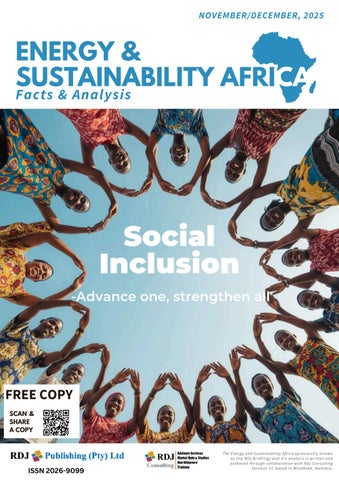
Energy and Sustainability Africa - November:December 2025
ENERGY & SUSTAINABILITY AFRICA
Social Inclusion
RDJ Publishing (Pty) Ltd is the publishing home of the Energy and Sustainability Africa, written and authored through the collaboration with RDJ Consulting Services CC (www rdjconsulting co za)
RDJ Consulting Services CC is an advisory consultancy to the Energy, Water and Transport Sectors with a focus on sustainable operations and renewable energy
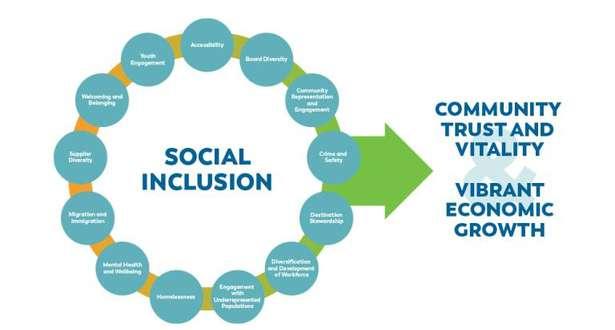
SOCIAL INCLUSION TODAY… ADVANCE ONE, STRENGTHEN ALL
Social Inclusion: the process of ensuring all people, regardless of background, have the opportunity to participate fully in society, access resources, and enjoy a standard of living considered normal.
In 2020, the World Bank found that potential gains from closing economic gender gaps could unlock a “gender dividend” of $172 trillion for the global economy.
In sub-Saharan Africa, losses from gender inequality are at US$2.5 trillion or 11.4 percent of the base regional wealth.
(World Bank, 2020 https://openknowledge.worldb ank.org/server/api/core/bitstre ams/3adf6e09-ae8f-5551-acae9cb6ae63376a/content)
Excluding women, mothers, people with disabilities and LGBTQ+ people from the workforce and positions of power come at a huge cost to the global economy.
The overlay of gender with other identity markers confers additional disadvantage in education, as it does in other outcomes. In Senegal, for example, women are 10 percentage points less likely to complete primary school for being female, 1.6 percentage points for being ethnic minority, and an additional 3.8 percentage points for being ethnic minority women.
In a study using data from Ethiopia, Malawi, Tanzania, and Uganda, Mitra (2018) found the largest gaps in Tanzania. There, 53 percent of persons with severe functional difficulties are employed, compared to 85 percent of persons with no functional difficulty.
The 2030 Agenda envisages peaceful, just and inclusive societies where all human beings can fulfil their potential in dignity and equality.
((UNESCO) https://www unesco org/en/socialinclusion-factsheet)
Can True Sustainability Exist Without Social Inclusion?
Social inclusion is a term that appears frequently in global conversations, from international conferences to regional development meetings and
programme design sessions Yet, the true meaning of social inclusion and its application in our daily lives, governance, community development and/or across different industries is not fully appreciated in practice.
improving the terms on which individuals and groups take part in society
At its core, social inclusion refers to a society’s efforts to ensure that all individuals, regardless of who they are or where they come from, have the ability, opportunity and dignity to fully participate in all areas of life. According to the World Bank Group, social inclusion is the process
of improving the terms on which individuals and groups take part in society to improve the ability, opportunity, and dignity of those disadvantaged based on their identity.
The United Nations also describes it as a commitment to ensuring equal opportunities for everyone so that each person can achieve their full potential In principle, this means building systems, policies and environments that guarantee fairness and uplift livelihoods so that no one is left behind or treated differently because of their associations or differences.
Unfortunately, the reality in many communities and regions remains far from this ideal described scenario Around the world, people continue to face barriers that prevent them from participating fully in the political, economic and social spheres. These barriers often arise
from discriminatory attitudes, cultural beliefs, social norms and perceptions that label and marginalise certain groups As a result, some individuals find themselves excluded from essential services such as land ownership processes, legal systems, labour markets, education and healthcare, crucial services that others can access with ease
Social exclusion can stem from differences in gender, age, race, ethnicity, religion, citizenship status, geographic location, disability, or sexual orientation and gender identity (SOGI). The effects of exclusion can be deeply personal and devastating to those affected. It can strip away these individuals’ joy, distort their sense of worth, undermine their dignity and security, and limit their chances of living a better and more fulfilling life
These challenges are further intensified by global and regional transformations such as economic and social crises, shifting political landscapes and the accelerating impacts of climate change, which continues to widen existing inequalities Climate change disproportionally affects the vulnerable communities, causing them to experience these hardships the most, often bearing the brunt of challenges they played no role in creating.
To remedy the effects of social exclusions, various institutions, programmes and initiatives are now tailored to drive social inclusion For example, the 2030
Agenda for Sustainable Development envisions a world that is fair, peaceful and inclusive, one where every individual can live with dignity and equality However, achieving this vision remains a challenge. To promote inclusion and equality, one cannot shy away from tackling one of Africa’s biggest hurdles, poverty, protecting the planet and fostering sustainable economic growth Furthermore, the Sustainable Development Goals (SDGs) such as SDG 5 and SDG 10, are clear and highlight global commitment to inclusion, which underscore reducing inequalities within and among countries, and promoting gender equality, respectively. However, the progress is uneven, and a lot of work is still underway
a world that is fair, peaceful and inclusive
The 2025 United Nations ‘Sustainable Development Goals Report’ notes that, despite the continued progress, discriminatory laws and gender-based norms continue to hinder gender equality. Women are still underrepresented in leadership, often lack control over key resources like land rights and technology access, and face barriers to economic participation Data from 131 countries in 2024 revealed that no country has achieved full equity across the areas measured, including legal frameworks and public life, violence
against women, employment and economic benefit, and marriage and family This calls for an urgent need for more purposeful strategies and initiatives to close these existing gaps.
Beyond the moral imperative, social inclusion yields profound economic benefits The World Bank emphasises that inclusion is not only the right thing to do, but it is also economically smart When individuals are excluded, the costs accumulate at both personal and national levels. On a micro or personal level, exclusion leads to lower or loss of wages, reduced lifetime earnings, limited education and employment outcomes and increased physical and mental health challenges
And at a macro level, these individual burdens translate into reduced productivity, lower human capital, slower economic growth and missed national development opportunities. Globally, the numbers are staggering over US$160 2 trillion in human capital wealth lost due to gender inequality alone, Afro-descendant communities in Latin America continue to live in poverty at rates 2 5 times higher than others, and around 90 percent of children with disabilities in developing countries are not attending school. These losses affect not only the economic and social welfare of countries but also represent missed opportunities and constraints that hold entire societies back
Over time, the accumulation of exclusion can escalate into broader social challenges. When people feel consistently marginalised or devalued, social tensions grow. This can manifest in unrest, conflict and division, all of which carry long-term consequences for national stability and economic performance Recognising this reality, international institutions such as the World Bank have placed social inclusion at the centre of their development strategies.
The US$ equivalent refers to current exchange rates (December 2025)
Information available at the time of publication. Reliance on this information is not advised
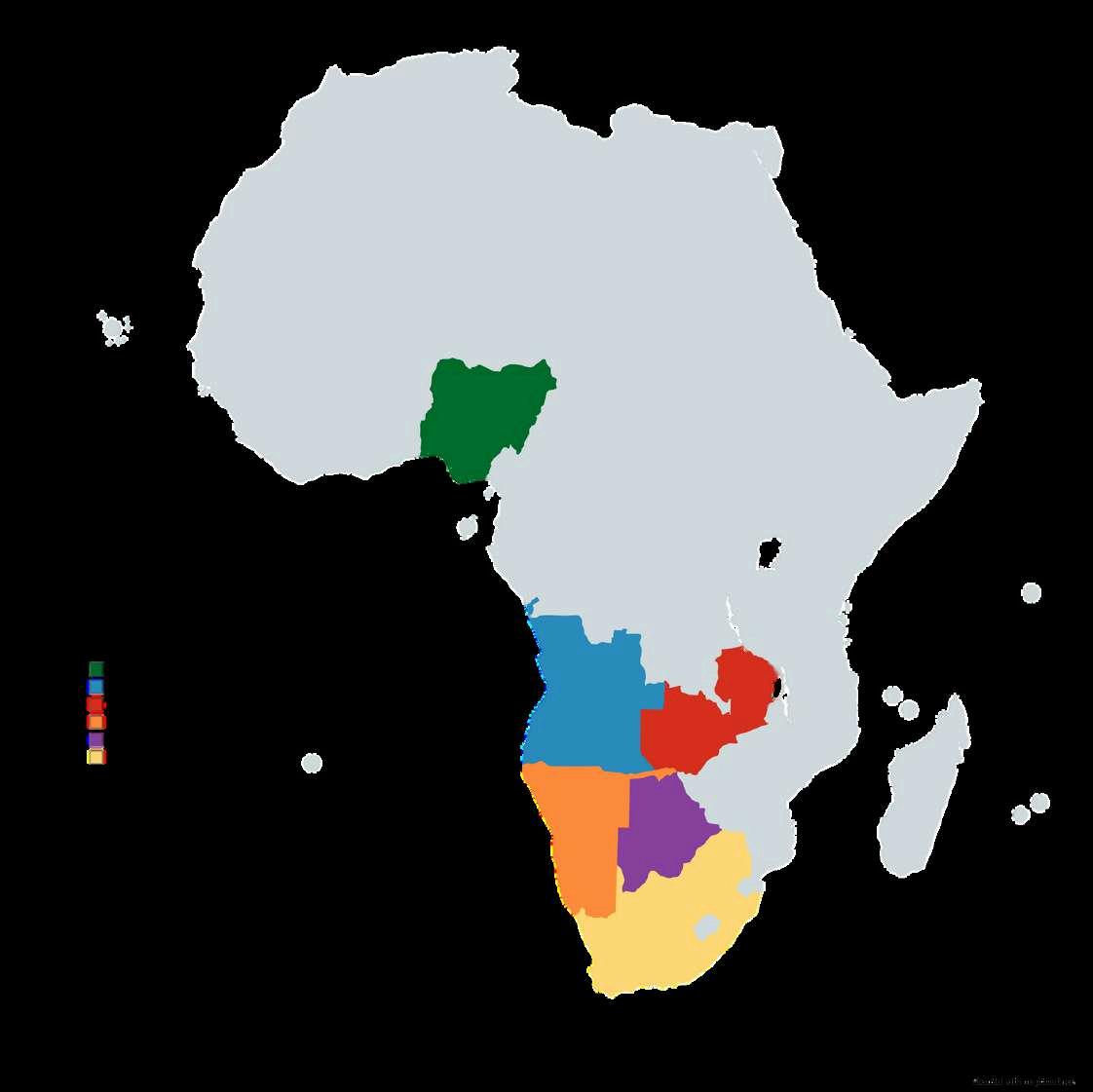
Data Source:Namibia: www.mme.gov.na, Botswana: www.bera.co.bw, Zambia: www.erb.org.zm, Others: theglobaleconomy.com
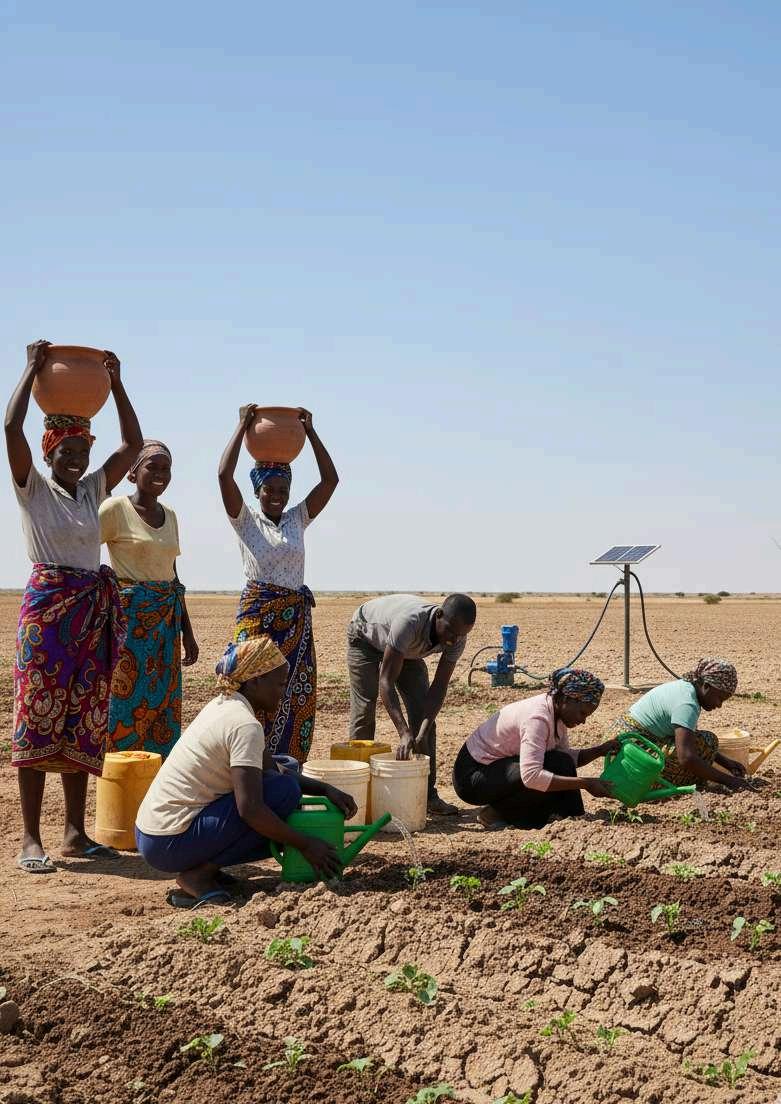
The GESI Approach to Agriculture
Persistent inequalities, particularly those caused by exclusion based on gender, age, and disability discrimination, continue to restrain the potential
of the agriculture sector’s output and impact Women, youth, and persons with disabilities continue to face structural barriers that hinder their participation and access to opportunities
Agriculture remains the backbone of Africa’s socio-economic landscape, supporting millions of livelihoods and contributing significantly to food security.
According to the United Nations (UN) Women, women in Africa spend roughly 3 4 times more time on unpaid care and domestic work compared to men In the SubSaharan African countries, the share of women labour in crop production in most countries is estimated at 40 percent. Despite this contribution, globally, women are only earning 77 cents for every dollar earned by men.
This seemingly exposes women's financial independence to challenges
The World Economic Forum’s Global Gender Gap Index in 2021 further revealed the anticipated duration necessary to close the global gender gap in different regions due to the impact of COVID-19 The report showed that at the current [2021] relative pace, gender gaps can potentially be closed in 52 1 years in Western Europe, 61 5 years in North America, and 68 9 years in Latin America and the Caribbean. While in Sub-Saharan Africa (SSA), the period jumps to 134.7 years, similarly, in the Middle East and North Africa, where it could take up to 142.4 years. These stark projections highlight the urgency of accelerating interventions aimed at achieving gender equality
In response to these challenges, the Gender Equality and Social Inclusion (GESI) approach has emerged as a transformative framework for building inclusive, resilient and sustainable agricultural systems in Africa. GESI focuses on understanding and addressing unequal power relations and the structural inequalities experienced
by individuals based on their social identities
The report acknowledges that gender, age, disability and other intersecting characteristics shape people’s vulnerabilities, access to opportunities and participation in development. The approach promotes actions that reduce disparities, amplify voice and agency, and ensure equal rights, responsibilities, respect and opportunities for everyone
Research by others demonstrates that closing gender gaps in agrifood systems has the power to accelerate global progress on ending poverty and hunger. Authors like Konthoujam and Ravindranath are among those who argue that gender equality and social equity are fundamental to achieving sustainable agricultural development Further, the authors cautioned that all the goals can be set but achieving them can be quite challenging due to deep-rooted social norms and gendered power dynamics prevalent in many low- and middle-income countries These dynamics often result in women experiencing disproportionate risks and barriers compared to men, which in turn shape agricultural outcomes at the household and national levels.
A collaborative study by the World Bank and the ONE Campaign, titled ‘Levelling the Field: Improving Opportunities for Women Farmers in Africa’ , illustrates these disparities The study examined productivity differences in six countries (Ethiopia, Malawi, Niger, Nigeria, Tanzania and Uganda) that together account for over 40 percent of Sub-Saharan Africa’s population and found that women’s farms consistently produce less per hectare than men’s, with productivity gaps ranging from 13 percent in Uganda to 25 percent in Malawi
Despite constituting a substantial share of Africa’s farmers, women often lack secure land ownership, access to credit, farm inputs such as fertiliser and tools, extension services, and reliable market networks. Even when women access similar resources as men, the study revealed that equal inputs do not always translate into equal outputs, further reflecting deeper systemic and social constraints According to the Food and Agriculture Organization (FAO) estimates cited in the
Stakeholder Perspective of the Namibian Green Hydrogen Industry: A case study of Daures Green Hydrogen Village.
Analysis conducted jointly by the ASA program through the University of Stuttgart (Germany) and the Namibia University of Science and Technology (NUST).
By: Michael Naukushu Masters in Sustainable Energy Systems
Namibia University of Science and Technology (NUST)/ASA Participant 2025.
Community Perspective: Voices from Uis
As part of a study conducted on extensive stakeholder perspectives of the Namibia green hydrogen industry, the article narrated in person
interview responses from members of the Uis community where Daures Green Hydrogen Village is located. The fourth analysis on community perspective was conducted to bridge the gap in critical areas to ensure public acceptance, proper comprehensive regulatory framework, appropriate market designs and enhancing sustainable innovation application This aligns with NDP6 commitment to cultivating creative economic industries and implementing skills development strategies (Republic of Namibia, NDP6, 2025) Namibia’s emerging green hydrogen industry represent a sustainable platform for industrial economic expansion that create employment through skills development
Agricultural optimism emerges in the desert
The DHGV with substantial support from the UK government and UNIDO`s Accelerate-to-Demonstrate Facility is presently producing agricultural products such as Cucumbers, Peppers and Tomatoes (DGH). This has brought great excitement among the Uis community Locals have described these agricultural
products as best to come out the region. On the other hand, the recent seedling donations from DGHV has sparked some interest in backyard gardening and household food security initiatives The project offers a fresh hope to local farmers that have been long demoralized by water scarcity and consistent drought Despite the overwhelming agricultural products, the community has urged for the establishment of local vegetable market in Uis town to boost economic flow within the community and expand opportunity for vendors through local distribution and resale The community is also keen on acquiring training enabling them to develop skills and adopt interest in gardening which is one crucial strategy in human development and reducing reliance on imported food mostly fruits and vegetables (Keller, 2024).
From Mining Town to Clean Tech
Tourism Hub
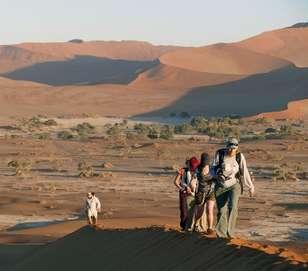
Uis area is a popular tourist destination due to its geographical proximity of the iconic Brandberg Mountain and historic rock artwork (Erongo Regional Council, 2022). DGHV brings a new dimension of attraction by showcasing sustainable technology and agricultural innovation on top of its natural heritage. This shift from conventional to "climate tech" tourism
may put Uis in the forefront of a global break to absorb real-world attention in witnessing and learning innovative approaches to energy sustainability and technology advancement. Tourism is the second socioeconomic pillar of this area, surpassed by mining (Keller, 2024).
Balancing opportunities and challenges with industry growth
In regards with the community acceptance, the gap between what’s needed and what’s available resonates around time and the community have shown patience with the project, leveraging on achieving a sustainable enduring industry that could somehow meet the community current and future needs The community has urged the government to give full support to this kind of initiative and also protect the industry since these kinds of industries could surpass mining in the future due to the renewable nature of primary resources. Mining is an intrinsically unstable sector, yet the Uis community has relied on it for a long time. Establishing a DGHV industry could resolve critical issues highlighted in the Daures Daman constituency (Keller, 2024), such as poor infrastructure, energy inequity and limited skill development facilities
Youth unemployment continues to rise owing to a lack of qualifications, since many Uis inhabitants drop out of school before completing grade 10, restricting their ability to pursue skill development opportunities The community has asked support for the younger generation to be empowered to pursue higher education. School kids in the surrounding area have shown a great desire to visit DGHV in order to gain better understanding of technology, which would drive them to make sensible career decisions
Strong Community Engagement
The community have expressed satisfactory engagement with the project, particularly through an appointed representative who maintains the
communication between DGHV and community residents
However, community members have advocated for expansion of communication channels beyond town hall meeting to more widespread various platforms such as WhatsApp groups, posters at schools and supermarkets to reach a larger audience. This could also prevent cases such as the recently news on the absenteeism of community leaders at the groundbreaking ceremony Despite transport being a barrier in attending meetings at DGHV, some capable residents have shown interest in attending site meetings at their own transport cost to ensure consistent engagement. This utterance gives a clear picture of how strongly the community is standing with the project
The Community voices from Uis have demonstrated significant support and patience towards the development of this creative industry to ensure that the technology innovation results in actual benefits of livelihoods and economic empowerment.
References
M A Sophia Naima Keller (October 2024) Stakeholders Perceptions of socio ecological potential and risks of the green hydrogen production in Namibia. Case of the Daures Green Hydrogen Village.
Erongo Regional Council (ERC) (2022): Erongo Region Profile Geography https://www erc com na/erongoregion/geography/
H. Amapindi (September 22, 2025). Daures Green Hydrogen Village.
Daures breaks ground for Namibia’s first Pilot Green Fertilizer Plant https://daures green/daures-breaksground-for-namibias-first-pilot-green-fertiliser-plant-byhertha-ekandjo-the-daures-green-hydrogen-village-onsaturday-broke/
Namibia sixth national development plan (NDP6) Fostering Economic Growth, Inclusiveness and Resilience for Sustainable Development NDP6 booklet Republic of Namibia NDP6 (2025)
Eco-Warriors: The New Tourism Guardians
Africa’s tourism sector is undergoing a profound transformation, driven not by the number of visitors alone, but by the eco-warriors who are
redefining the way travel intersects with conservation, climate action, and community empowerment.
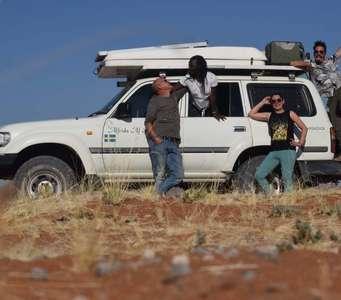
In the context of African tourism, eco-warriors are those who ensure that tourism balances the needs of both people and the planet Across the continent, tourism is recovering strongly post-pandemic, and with that resurgence comes the opportunity to align growth with sustainability. According to the UN World Tourism Organization (UNWTO, 2024), African arrivals have been steadily increasing, particularly in nature-based and adventure tourism segments, highlighting a growing appetite for experiences that are not only authentic but environmentally conscious
This trend reflects a broader shift in which tourism is increasingly regarded as a powerful tool for sustainable development, capable of generating economic growth while safeguarding ecosystems and cultural heritage In many African nations, eco-tourism initiatives now serve as the backbone of regional development strategies, demonstrating that tourism can simultaneously create jobs, support communities, and protect biodiversity.
In Africa, Namibia offers a compelling example of tourism driving both economic and environmental outcomes The Namibia Tourism Satellite Account in 2022 showed that tourism contributed approximately USD826million to GDP (6 9 percent), directly supported 57,571 jobs, and generated over USD415million in tourism consumption (Ministry of Environment, Forestry and Tourism (MEFT), 2024). With the majority of
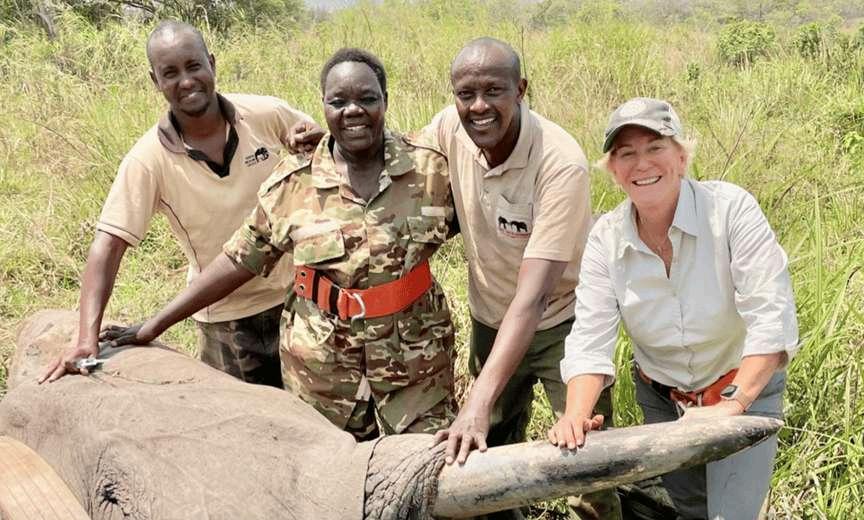
Namibia’s wildlife living outside government-protected areas, communal conservancies play a critical role in conservation, employing local guides, lodge operators, and rangers as front-line protectors of ecosystems.
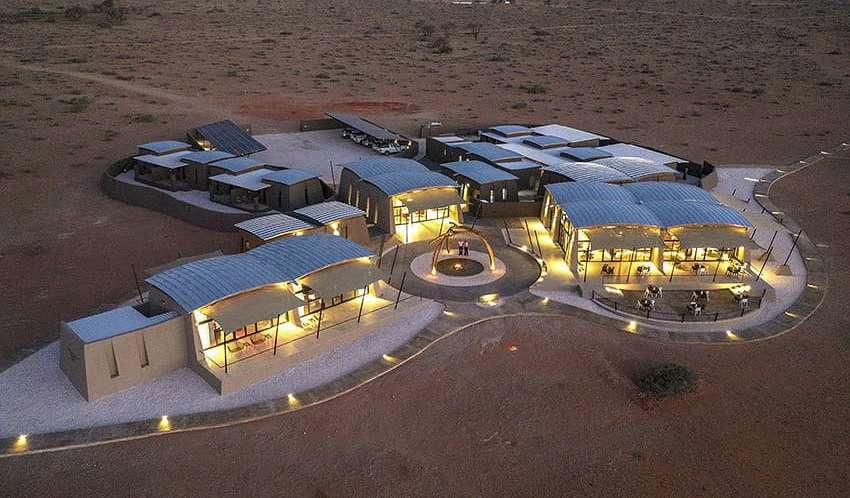
These eco-warriors ensure that tourism revenues are reinvested into wildlife monitoring, anti-poaching patrols, and community welfare programs, demonstrating a practical link between sustainable tourism and livelihoods Many lodges in Namibia like the Desert Grace Lodge which lies about 60km north of Sesriem on the C19 road, are now powered by solar energy, have implemented water recycling systems, and design visitor experiences that minimise environmental disturbance while maximising conservation awareness The result is a tourism model that not only sustains the economy but also strengthens the resilience of communities that live alongside some of Africa’s most iconic wildlife.
Beyond the Namibian borders, Kenya and South Africa provide further illustrations of the eco-tourism movement In Kenya, the Tourism Sector Performance Report 2023-24 reveals approximately 4 5 million domestic tourists, 1.95 million international arrivals, and total tourism revenue of approximately USD2.71billion, underlining the sector’s strong recovery (Ministry of Tourism & Wildlife, 2024)
Many Kenyan operators now integrate environmental practices such as renewable energy, waste reduction, and water-saving technologies, while community conservancies protect critical wildlife corridors. In South Africa, the 2024 Bi-Annual Tourism Performance Report indicates that nature-based tourism continues to grow, with eco-friendly accommodations and lowimpact campsites increasingly managed by community trusts or conservation agencies (Department of Tourism SA, 2024) Some reports even show an ecotorism growth of up to 20% annually. These investments in sustainable infrastructure generate revenue that is reinvested into environmental protection, cultural preservation, and local employment, showing a direct intersection between tourism, climate resilience, and socioeconomic development
Further, across the African continent, eco-warriors are expanding their reach by collaborating with governments, private investors, and international agencies to embed climate-smart tourism strategies that reduce carbon footprints, protect biodiversity, and build local capacity (UNECA, 2024)
Despite these successes, challenges remain. The UNEP Africa Environment Outlook Update (2024), warns that climate change is increasingly threatening key tourism assets, from coastlines and forests to wildlife habitats
and cultural landscapes, making the role of eco-warriors more critical than ever Rising temperatures, erratic rainfall, and other environmental pressures directly impact safari tourism, coastal resorts, and community livelihoods, highlighting the urgency of sustainable practices (UNEP, 2024).
Eco-tourism thus provides a pathway for mitigating these threats by promoting renewable energy use, responsible water management, and nature-positive travel experiences On the ground, these efforts are embodied by rangers using solar-powered drones for wildlife monitoring, lodges that recycle water and reduce waste, and community-run initiatives that channel tourism revenues back into conservation and education programs These combined efforts ensure that eco-tourism not only preserves Africa’s natural heritage but also creates green jobs, strengthens cultural identity, and empowers local communities.
The story of eco-warriors in African tourism is ultimately one of vision and resilience These individuals and communities are demonstrating that tourism can be a force for climate action, economic empowerment, and ecological restoration By choosing eco-conscious lodges, supporting community-driven projects, and advocating for sustainable policy frameworks, governments, investors, and travellers alike can amplify the impact of these unsung heroes
Transport: Connected and Protected
In African tourism, the status of transport infrastructure can determine attractiveness from several angles One under-rated aspect is that
transport functions as a critical Health, Safety, and Emergency (HSE) tool by enabling safe access to remote destinations, reducing the risk of accidents, and supporting emergency response systems.
Well-maintained roads, reliable transit links, and organised transport networks allow tourists to reach ecological reserves, cultural sites, and communitybased initiatives without compromising safety. At the same time, these transport systems empower local communities to manage their emergencies effectively, from rapid medical evacuations to disaster response, while minimising environmental impact through planned routes and regulated mobility In this way, transport not only connects visitors to Africa’s rich landscapes and heritage but also integrates safety, public health, and environmental stewardship into the tourism experience.
Transport infrastructure in regions such as Namibia’s Zambezi area exemplifies this dual role Newly tarred roads linking wildlife reserves over vast distances to urban centres have made travel safer and more efficient for tourists while allowing emergency services to reach remote areas quickly. These improvements also support local economies through lodges, guiding services, and small enterprises that can operate more reliably when transport routes are accessible, reducing delays and increasing resilience during unforeseen events By providing safe and reliable access, transport becomes a lifeline for both visitors and the communities that host them.
Rural regions such as those in Malawi for instance, highlight the risks of inadequate transport and networks During the rainy season, poor road conditions limit access to ecotourism sites and delay emergency response for surrounding communities, increasing both safety hazards and economic losses. Conversely, accessible roads that
connect lodges, parks, and villages reduce travel risks and allow for timely medical intervention
Studies on Ethiopian ecotourism ventures show that sites with better transport accessibility generate approximately 30 percent higher revenues than more isolated counterparts, illustrating how reliable transport simultaneously drives economic growth and strengthens HSE outcomes
Another example is South Africa’s rural tourism networks that demonstrate how transport can integrate community development, tourism, and safety. Wine routes and cultural trails extending beyond urban centres attract visitors to remote regions while ensuring safe and efficient travel These roads provide not only clear directions and regulated vehicle standards but also easier access for emergency services in the event of accidents. By facilitating organised travel and controlled tourism flows, transport supports both visitor safety and environmental protection and prevents damage from informal or unsafe off-road travel
Regional transport corridors, such as the Mtwara Development Corridor in Tanzania, Mozambique, Malawi, and Zambia, show the broader benefits of connecting remote destinations. These multi-country road and rail networks improve accessibility to previously isolated areas, opening opportunities for tourism while ensuring emergency services can respond effectively
By providing providing safer, regulated routes, the corridor reduces environmental and accident risks associated with ad hoc or informal travel methods, demonstrating how transport infrastructure directly contributes to HSE outcomes.
Community-based tourism initiatives again illustrate the HSE value of transport In Gabon, Rwanda, Uganda, and South Africa, homestays, lodges, and eco-tourism experiences depend on reliable transport links to bring visitors safely to remote villages These connections allow residents to serve as first responders during emergencies, using their knowledge of terrain and routes to ensure tourist safety. Even simpler transport modes, such as bicycles and minibuses in Namibia, maintain low environmental impact while linking remote communities to essential services, markets, and emergency facilities, reinforcing both safety and sustainable development
Transport also has significant implications for public health in tourism regions. Well-maintained roads and accessible transit routes enable rapid delivery of medical supplies and prompt access to health facilities for tourists and local populations alike During disease outbreaks or accidents, this connectivity can save lives and prevent minor incidents from escalating into larger crises. In Ethiopia, better transport infrastructure has been linked not only to increased tourist revenue but also to improved readiness for health emergencies, illustrating how mobility is central to both economic and HSE objectives
Challenges remain as can be expected, however. Many rural African regions still contend with underdeveloped roads, limited public transit, and informal travel routes that pose safety hazards In East Africa, tourism operators report that insufficient infrastructure increases the likelihood of accidents and delays emergency medical services In some areas, poor signage, unregulated vehicles, and a lack of emergency planning exacerbate these risks. Addressing these issues would require a holistic transport planning that integrates infrastructure, HSE protocols, and community engagement to ensure safe and sustainable tourism development
Combining accessibility with emergency preparedness and sustainability
Ultimately, transport in African tourism serves as a fundamental HSE tool that connects urban centres to remote destinations, safeguards visitor well-being, and supports community resilience From Namibia’s Zambezi reserves to South Africa’s wine routes and the multi-country Mtwara Development Corridor, reliable transport infrastructure enables safe travel, mitigates environmental risks, and strengthens the capacity of local communities to respond to emergencies
Water: The Dynamics of Who drinks,
Who waits
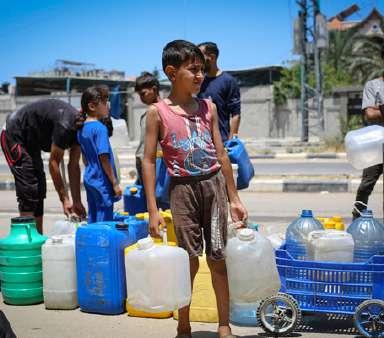
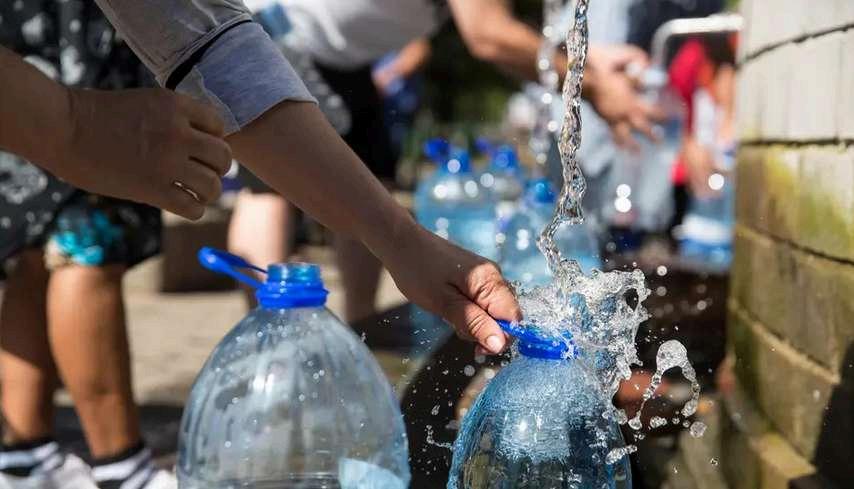
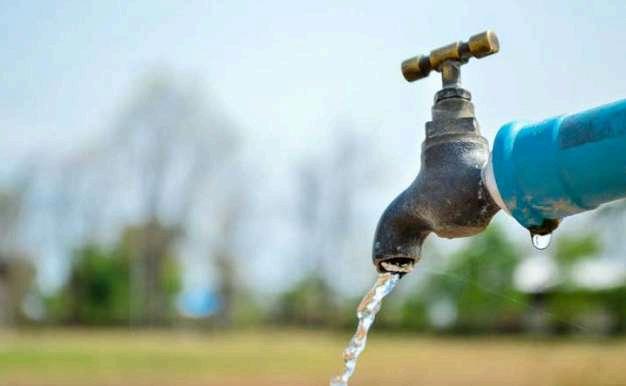
Access to cleaner water is often taken for granted in Africa and many other parts of the world, but the reality is frequently different For some, it
means a quick tap turn, while for others, it means long lineups, heavy loads, exclusion from decision-making, or just not having enough water.
Who drinks? Who is holding out?
These questions aid in our comprehension of the foundations of power, inequality and the need for inclusive approaches that consider gender equality and social inclusion (GESI), and diversity, equity, and inclusion (DEI).
Approximately one in four people worldwide still lack access to clean drinking water, and in many sub-Saharan African contexts, women and girls spend more than thirty minutes a day gathering water, according to the World Health Organization and the United Nations Children's Fund (UNICEF) However, "waiting" encompasses more than just waiting in line. Gendered roles (women and girls collecting water), poverty, marginalised groups (those with disabilities, ethnic minorities), remote rural locations, unstable services and restricted voice in water administration are some of the layers of injustice that are reflected in it The SEI study on gender and social equality emphasised that unsafe water and sanitation disproportionately impact social group, including women, girls, people with disabilities, people marginalised due
to ethnicity, caste, poverty or other factors. Additionally, Global Water Security Center (GWSC), noted the significant differences in water availability across and within cities, as well as the exclusion of pertinent stakeholders from decision-making
So who really drinks? Unpacking the water dynamics.
Urban households have piped water, greater wages, easier access to services, decision-making authority and a lighter collecting load Therefore, those in urban settings seem to have access and as such are more likely to access water services. By contrast, individuals who live in rural or urban informal regions, low-income households, households headed by women, people with disabilities and members of socially marginalised groups are among those who are likely to wait
Moreover, water access and influence are closely tied; individuals who make decisions regarding the water system seemly represent privileged group’s interest and those who are waiting frequently have no voice More than just "everyone has a tap" , equality entails equal access, voice and results, particularly for the historically marginalised groups When users have a
sense of ownership, open and equitable governance, improved maintenance, and services that address actual needs, inclusive water systems are more likely to be sustainable
Often, the inherent waiting burden as result of lack of services like water can lead to a number of social costs, including increased health risk, lost income for women, and education for girls These costs are a reflection of inequality, which cannot be resolved by water infrastructure alone, instead, data, inclusive design, normative transformation and governance reform are required for tailored intentional solutions.
Furthermore, the DEI approach suggests that the focus for essential services like water go beyond gender considerations For instance, elderly people who might not be able to lift heavy objects, disabled people could require closer access to drinking fountains and marginalised ethnic groups might not be included in service planning as well.
Pathways for inclusive access
Researchers and decision makers that aim to promote inclusive water access can use some of these approaches to promote inclusive water access initiatives:
Determine who is waiting and why, gather intersectional and disaggregated data
Furthermore, ensure that women, young people, and marginalised groups are included in inclusive governance, such as water service boards, utilities and community committees and that their participation is significant.
Prevent cost disadvantages for low-income households, households headed by women and consumers in rural regions, utilise equitable pricing or affordable solutions
Track equity achievements, including whether waiting times have decreased and whether women and marginalised groups have a voice and decisionmaking authority.
In order to achieve inclusive water and sanitation, the GWSC conference, emphasises on collaboration among communities, research, policy and the commercial sector
Water is one of the essential services that everyone needs to survive. Thus, ensuring equitable access to clean water is not just a development necessity but a social justice imperative The varied experiences of
YOUTH IN ACTION
Young Innovators Growing Hope in Namibia: Turning Fish Waste into Food
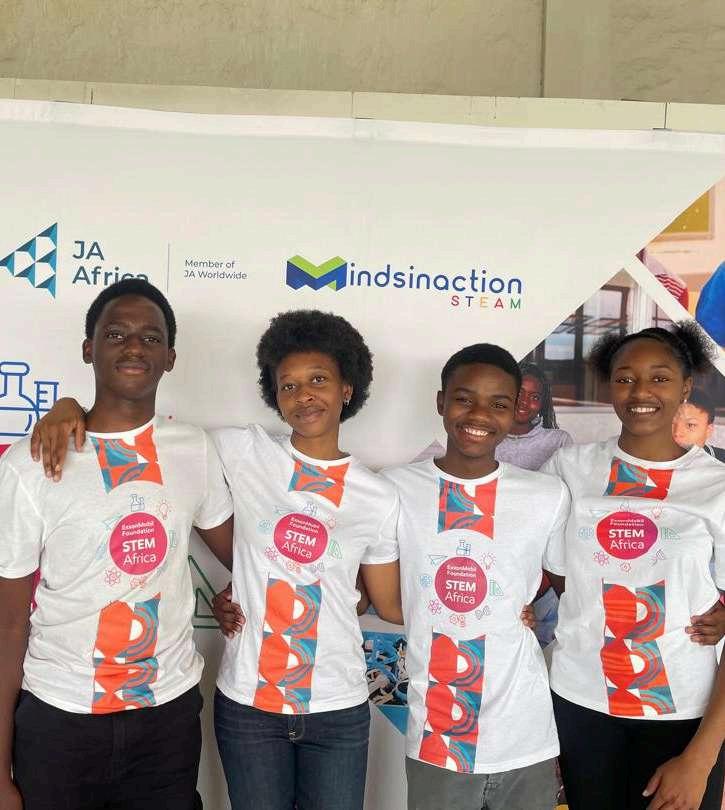
Ndalikutala Nghilalulwa, Victoria Mikka, Rauna Sakeus and Mike Peter Elias
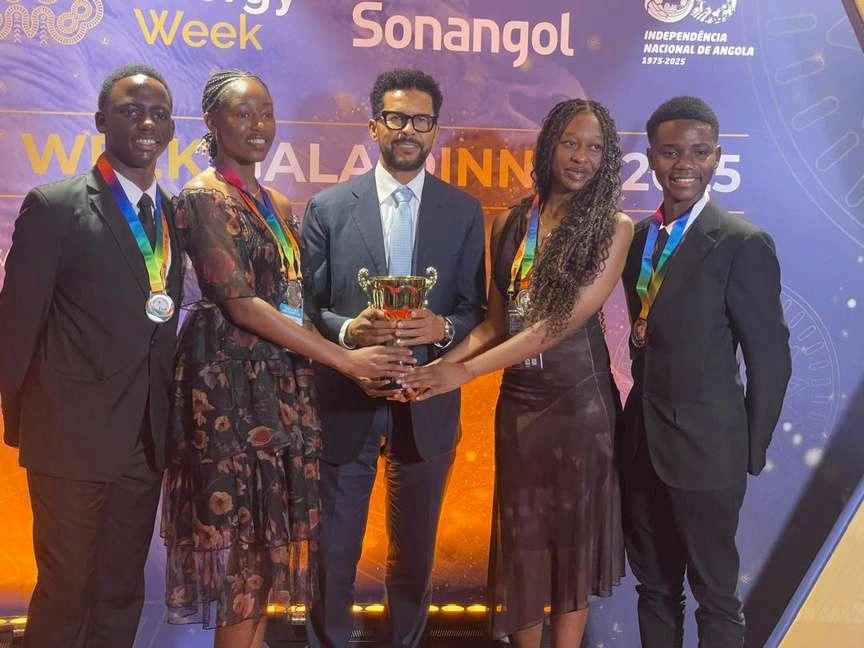
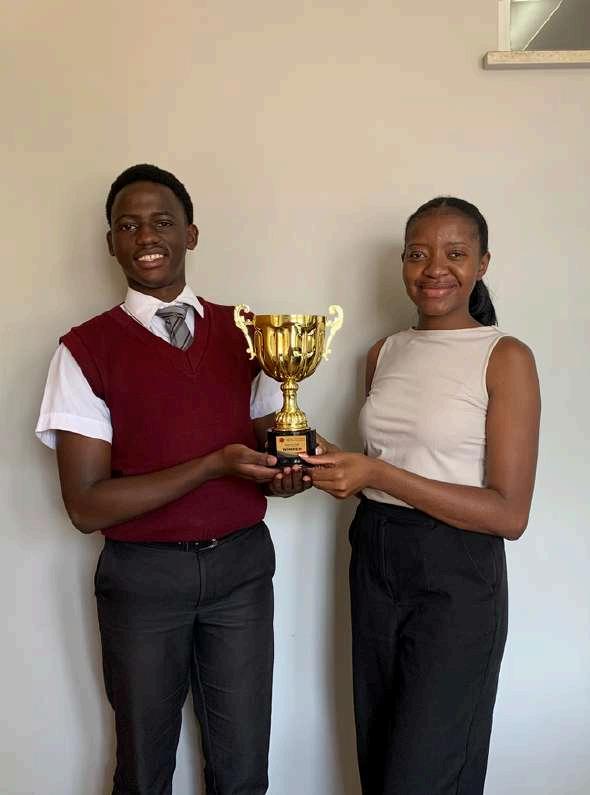
At a time when food insecurity and environmental waste continue to challenge communities across the continent, four innovative students from Delta Secondary School Windhoek - Ndalikutala Nghilalulwa, Mike Peter Elias, Rauna Sakeus and Victoria Mikka - are showing that the future of sustainability may lie in the hands of young scientists. Their groundbreaking project, Scholar Sprouts, transforms fish waste into bio-feed for plants, presenting a practical and eco-friendly solution that can strengthen school feeding programmes while promoting green innovation among Namibian youth
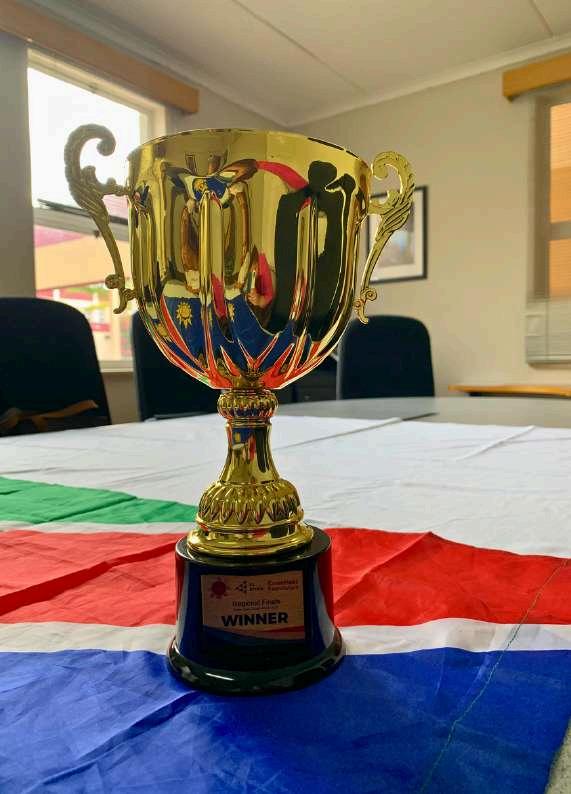
Their success is rooted in the ExxonMobil Foundation STEM Africa Programme. The competition commenced at the Namibia University of Science and Technology (NUST) with a STEM Zonal Quiz involving eight participating schools Delta Secondary School emerged as the overall winner of the event As the first-prize award, the learners were granted the opportunity to attend a Design Thinking and Robotics Course at Mindsinaction in Windhoek During this programme, they acquired a range of valuable digital skills, including coding, problem-solving, robot construction, and effective teamwork Furthermore, the learners were trained to identify and assess challenges within their communities and to develop practical and sustainable solutions to address those challenges.
1. How did the idea for converting fish waste into bio-feed for plants come about?
“Honestly, it started with seeing how many schools struggle with food shortages - like when school feeding programs just stop working because of droughts or rising prices. It felt unfair that learners were going hungry when we have all this science around us that could help I started reading about aquaponics and realised fish waste isn’t actually waste - it’s packed with nutrients that plants love That’s when it clicked: what if we turned something usually thrown away into something that feeds people? From there, we built a system that does exactly that -turns waste into life.” Mike Peter Elias responded.
2. How does your 3D-printed system work in simple terms?
“Our aquaponics system is a closed, self-sustaining cycle where fish and plants benefit each other The fish produce waste, which beneficial bacteria convert into nutrients that plants absorb. The plants, in turn, clean
the water, which is recycled back to the fish tank. The 3Dprinted parts make the setup lightweight, affordable, and easy to assemble The app we designed connects to sensors that track pH levels, temperature, and water quality It provides real time data and alerts, making the system user friendly,” Vitoria Mikka explained.
Ndalikutala Nghilalulwa emphasised that the system operates through a simple and efficient cycle The fish produce waste, which is channelled into a bio-filter containing specialised bacteria that convert ammonia into nutrients for the plants The plants then absorb these nutrient-rich compounds as food, purifying the water in the process. The clean water is finally recycled back into the fish tank, completing the loop and ensuring a continuous, self-sustaining cycle
3. How long did it take to complete the project from concept to final design?
“It took us about a month We moved quickly, from planning, to designing and printing, to testing everything We spent a lot of late afternoons at school making small changes until the system worked exactly how we wanted it to” Rauna Sakeus explained
4. How do you think your system can help rural communities in Namibia?
“Our goal was to create something that could make a real impact beyond the classroom The system uses minimal water, provides both fish and vegetables, and can be monitored easily through the app This makes it a practical solution for rural or drought-prone areas Families, schools, or small cooperatives can use it to produce food sustainably, reduce costs, and even generate income” Victoria Mikka replied.
Mike Peter Elias added, “It can make a huge difference Rural schools can use Scholar Sprouts to grow their own food without relying on inconsistent deliveries The system runs on solar power, so it doesn’t depend on electricity or constant maintenance. It gives schools fresh fish and vegetables all year round while teaching students coding, biology, and sustainability at the same time Basically, it feeds both the body and the brain ”
5. How has participating in the STEM project changed your perspective on science and innovation?
Ndalikutala Nghilalulwa outlined that the programme has given him a much deeper understanding of science and
STEM Previously, his knowledge of STEM was based largely on classroom theory, the books, the principles, and what was taught. However, this programme provided the opportunity to visualise, touch, build, and apply STEM in real life. He noted that the hands-on experience has significantly broadened his perspective and deepened his passion and appreciation for STEM
“It changed how I see science completely I used to think science was only about labs and formulas, but now I see it as a tool to solve real issues, like hunger and sustainability. Through this project, we also saw how innovation connects directly with our school’s feeding program It showed us that even a small system like Scholar Sprouts can play a part in improving how schools feed their learners and care for the environment at the same time” Rauna Sakeus added.
6. How did teamwork play a role in your success?
Teamwork was everything We all had different strengths - coding, designing, building, and presenting - and that’s what made it work. We had moments where things didn’t go as planned (like sensor readings going haywire or pipes leaking), but every time that happened, we solved it together The energy in the group kept the project alive It wasn’t just my project or their project It was our creation Mike Peter Elias expressed.
Victoria Mikka added “Teamwork was one of the key reasons we succeeded Each member contributed unique skills and insights We supported one another through challenges and celebrated every breakthrough together Working as a team taught us that collaboration, open communication, and respect for each other’s ideas are essential in turning a concept into a real, working solution”.
7. What does this recognition mean to you and your school?
Ndalikutala Nghilalulwa expressed that their victory serves as proof of his ability and reinforces his belief that he can contribute to Africa’s solutions to realworld challenges. He added that the achievement is
also a recognition of the school’s dedication to equipping learners with practical skills, not only to solve problems, but to thrive in the real world and contribute to the improvement of the country.
Mike Peter Elias added “It means a lot It’s proof that students in Namibia can innovate on a global level For me, it’s more than just a trophy - it’s a reminder of every late night, every code error, and every ‘aha’ moment that got us here. For our school, it’s pride. It shows that when young mindset the right support, we can actually build things that change lives”
8. In conclusion, do you see yourselves pursuing careers in STEM fields after school?
“Definitely This project made me realize that I enjoy solving problems and finding new ways to help others I’d like to continue in a field like environmental or agricultural technology; something that lets me combine science with sustainability and community impact.” Rauna Sakeus concluded.
Ndalikutala Nghilalulwa concluded that he is fully committed to pursuing a career in the STEM field after completing school He expressed a strong interest in fields such as chemical engineering, petroleum engineering, or medicine, with a particular aspiration to specialise as a cardiologist.
“Without a doubt This project made me realize how much I love the mix of biology, physics, and coding I definitely want to stay in STEM - maybe something in biotechnology or renewable energy I want to keep creating systems that make the world more sustainable. STEM isn’t just my interest anymore - it’s my lane”. Mike Peter Elias concluded.
“Absolutely This project strengthened my passion for STEM and showed me its potential to change lives I am interested in engineering We want to continue exploring how technology and sustainability can work together to build a better future. Beyond personal goals, we also hope to inspire other young Namibians to see STEM as a field where they can lead, innovate, and create lasting impact ” Victoria Mikka concluded
WOMEN IN FOCUS
Powering Change
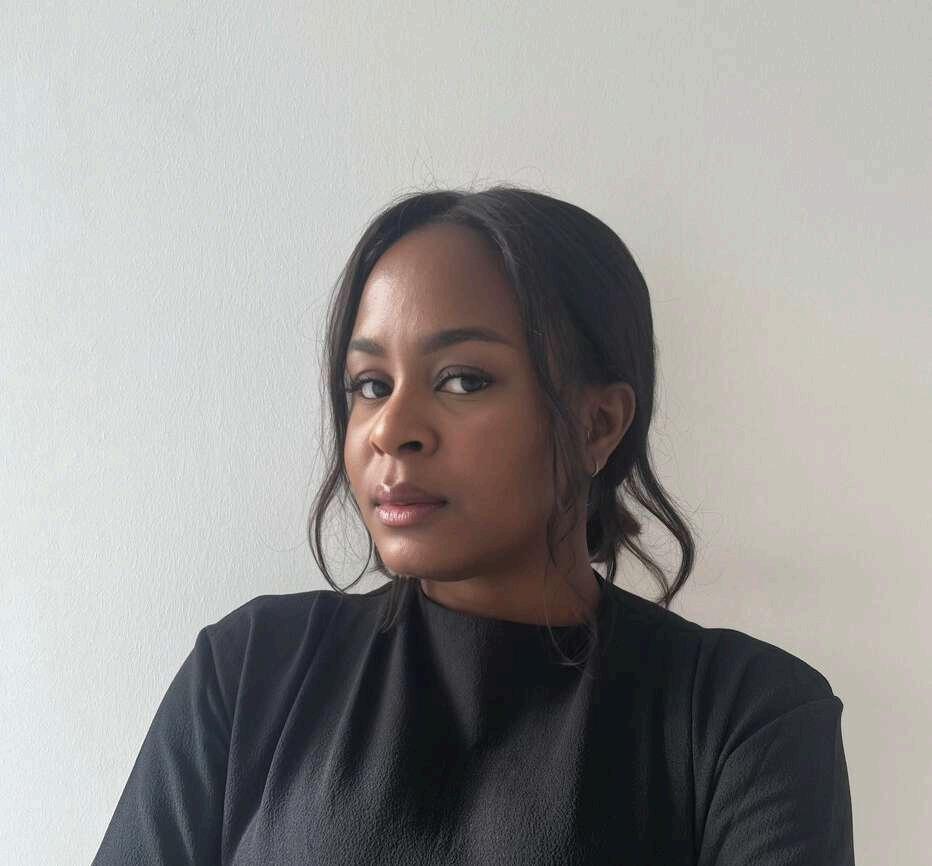
Ms. Petlong Dakhling
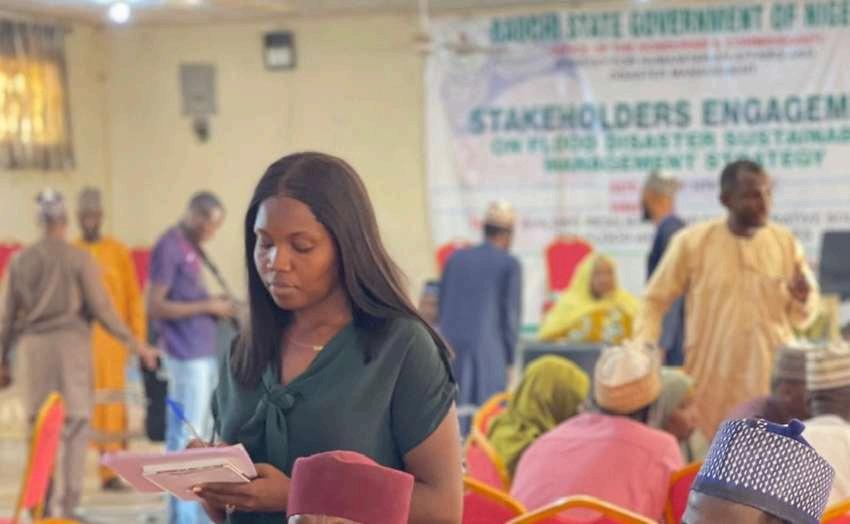
In the climate and energy space, it’s easy to get swept up in technology, funding figures, and policy headlines. However, Ms. Petlong Dakhling, a Climate Change and Energy Analyst, brings the focus back to people She sits at the intersection of sustainability research, energy policy, and ESG assessments - championing an approach to development that is inclusive, equitable, and community driven. Her reflections draw from lived experience and on-the-ground engagement, offering a powerful reminder that a climate-secure future must be socially inclusive or it is not sustainable at all Her insights add a much-needed human depth to the clean energy conversation
Personal
Petlong Dakhling is a Climate Change and Energy Analyst at the African Energy Council, where she focuses on sustainability research, energy policy, and ESG assessments She holds a degree in International Relations and a master’s in International Law With a background in International Relations and a master’s degree in International Law, she brings a strong understanding of governance, social impact, and global climate frameworks to her work. She also serves as a Technical Consultant to the Bauchi State Commissioner of Humanitarian Affairs Nigeria, contributing to recovery and resilience efforts of flood-affected communities across the state Her work reflects a commitment to community-centered climate action, energy access, and elevating the role of women and vulnerable groups in building long-term resilience.
1. Could you briefly share your journey into international development and what drew you to climate change, energy, and ESG work?
“My university path began in Economics, but I realized early on that numbers alone couldn’t capture the kind of change I wanted to contribute to That realization pushed me to pivot to International Relations, where courses like Peace Studies and Environmental Politics helped me find my purpose As a native of Plateau State, Nigeria, I have witnessed how advancing desertification continues to strain communities The conflicts it fuels affect many families These experiences strengthened my commitment to sustainability and climate action, driving my focus on climate awareness, socially inclusive initiatives that empower women, youth, and vulnerable communities, and energy access ” Ms. Dakhling said.
2. In your view, why is social inclusion essential in the energy transition to clean and sustainable energy sources?
“Personally, I believe social inclusion matters in the energy transition because real progress only happens when people’s everyday realities shape the solutions Clean energy systems do not succeed simply because they are modern or efficient. They succeed when communities can actually use them, afford them, and see themselves reflected in the decisions being made In many places, especially where climate impacts and weak
infrastructure already create pressure, ignoring people’s lived experiences can make new systems feel distant or even exclusionary. Making room for women, youth, and other often-overlooked groups helps ensure the transition closes gaps instead of widening them and builds a stronger sense of ownership that makes clean energy efforts more sustainable in the long run ” Ms Dakhling emphasised
3.In what ways can renewable energy initiatives better accommodate the needs and realies of the vulnerable groups including womens, youth and those residing in remote or underserved regions across the continent?
“Working closely with communities has taught me that renewable energy becomes powerful when it solves real, everyday obstacles One example is Solar Sister’s work in rural Nigeria, where women are trained to distribute solar lanterns and clean cookstoves This simple model increases household energy access, reduces reliance on kerosene, and creates steady income for women who often have limited economic opportunities It also supports youth who are trained as local technicians, ensuring that systems are maintained and remain reliable over time Without initiatives like this, families remain dependent on expensive, polluting fuels, women lose out on financial independence, and communities continue to face energy insecurity that limits education, safety, and productivity ” Ms. Dakhling explained.
4.What role can women and youth play in shaping socially inclusive climate and energy related programmes?
“I find that women and youth do far more than participate in climate and energy programmes; they often reshape them in ways that make the work more honest and relatable Women understand the daily realities of energy use in ways that make solutions practical and grounded Youth bring creativity, digital skill, and a willingness to test new ideas When both groups are included in leadership spaces, community
dialogues, or technical teams, programmes become more trusted and far more responsive to local needs Their perspectives help ensure that climate and energy initiatives are not only effective but genuinely inclusive.” Ms. Dakhling said.
5.What key lessons have you drawn from working in cross-cultural and multistakeholder environments?
“One lesson that stands out for me is that making people feel seen is just as important as technical expertise In my work, I have noticed how quickly conversations shift when people realize their experiences are genuinely valued Working across cultures means recognizing that communities operate within different systems, expectations, and historical experiences, which shape how they engage Collaboration is strongest when people feel respected and heard I have also learned that progress requires patience, as multi-stakeholder spaces balance competing priorities and timelines Truly inclusive processes, however, create solutions that are resilient, widely accepted, and grounded in people’s realities.” Ms. Dakhling shared.
6.In conclusion, what advice would you offer to women professionals who are passionate about starting or advancing careers within the international development field?
“Confidence grows the moment you stop assuming the room knows better than you I used to hold back in meetings, thinking others were more qualified, until I realized my perspective could actually shift conversations My advice is for women to take up space early, trust the value they bring, and not wait for perfect readiness to contribute Women often enter spaces shaped long before they arrived, but that shouldn’t make them shrink Your insight, intuition, and leadership are assets. Seek challenges, ask questions others overlook, and claim the tables where your contributions can make a difference ” Ms. Dakhling concludes.
My Energy Life Series
Unlocking Net Zero: Exploring Innovative Solutions Across EMEA
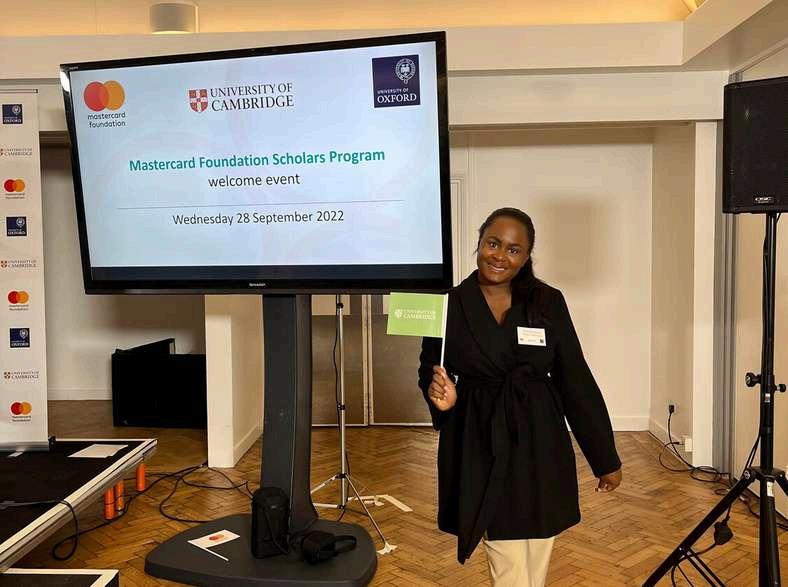
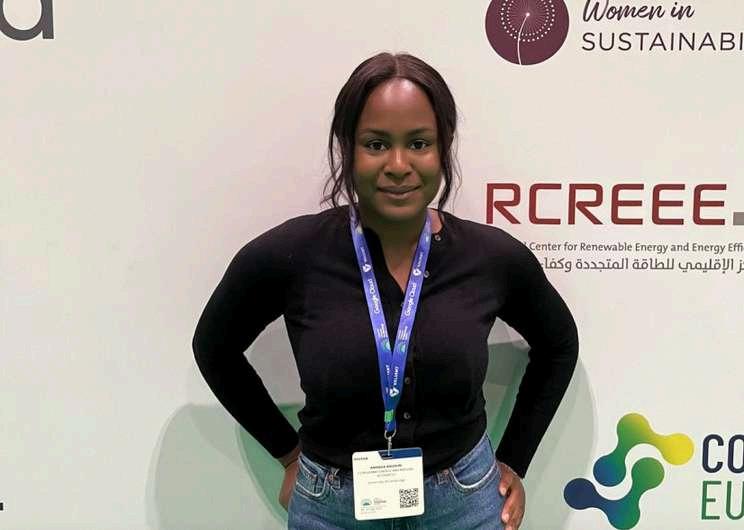
Interview with Amanda Balogun
contributed by:
presented by:
In this episode, we meet Amanda Balogun, an Energy ConsultantatGHD.AmandaBalogunsharesherstoryofhow shegotstartedintheenergyindustry,detailingherinitial
challenges and offering invaluable advice to fellow young professionalsseekingtheirpathinthisdynamicindustry
Tell us about your journey in the energy industry.
I began my journey as an architectural engineering student at Heriot-Watt University During my degree, I particularly loved studyingaboutenergyefficiencyinbuildingsandsustainability,so I decided to pursue a career in the energy sector, particularly sustainable energy After completing my degree, I joined PwC Nigeriaasastrategyconsultant,wheremyprimaryfocuswason energyprojects However,duringthistime,Ibecameincreasingly interestedinexploringthefeasibilityofusingenergytechnologies to achieve net zero, despite having various challenges such as supply intermittency, hydrogen safety concerns, etc. This led me to pursue a Master's degree in Energy Technologies at the University of Cambridge.Icurrentlyworkasanenergyconsultant at Gutteridge Haskins and Davey ( GHD ), where I contribute daily towardsachievinganet-zerofuture.
What do you do in your current role at your company?
As an energy consultant, I engage in a wide range of projects acrosstheEMEAregion Theseprojectsrangefromtechnicaldue diligenceprojects,whichinvolveevaluatingelectricityassetsprior to acquisition to ensure their viability, assess their performance, and investigate potential risks associated with acquiring such assets, to innovative projects, such as using nature-based solutions to address challenges within electricity networks, such asfloodmitigation.
Could you describe your typical day at work?
My typical day at work is pretty unpredictable! I try to catch up with some of my colleagues on the interesting projects they're workingon.Then,Icontinuetoworkonthevariousprojectsthat I'minvolvedin.Otherdaysarealotmorefastpaced. Oneofthe great things about my typical day at work is that I literally learn somethingnewbecauseweworkonsomanydiverseprojects.It's a job that keeps me learning about new developments in the sector!
What are some of the challenges you have faced in the industry?
WhenIbeganmycareer,findingtherightfitwaschallenging.Iwas passionate about delivering sustainable energy solutions; however, the sector is broad and rapidly evolving, so I was not surewhatpathtotakeorhowtocontributeeffectively Itwasalso challenging to gather enough information to help me find the rightfit However,Iwascommittedtomakingtherightmovesto ensureIcontributetowardsasustainablefuture
Also in my career, I have observed various challenges in the industry,suchasnavigatingpoliciesandregulationsthatsupport innovative solutions, because policies change and sometimes therearegapsthatmayaffecttherapidimplementationofsome innovativesolutions Fundingtoimplementsustainablesolutions is also a significant challenge Despite having brilliant technologicalideasthatcanfacilitateaNetzerofuture,theymay notbeeconomicallyviableorscalable,whichisachallenge
What is the most fun thing you love about your work?
IlovethatIgettoworkondifferentprojects Itisalwaysexciting tosolvenewproblemsbecauseitoffersadifferentperspectiveon the wide range of challenges that exist and gives me the opportunitytokeeplearning.
How do you balance work and life?
I make sure to effectively manage my time so that I can spend timewithmyfamilyandfriends.Also,Imakeaconsciouseffortto explorenewactivitiesfrommybucketlistwhenIcantomaintain ahealthybalancebetweenmypersonalinterestsandwork.
What are the core hard skills someone in your field should have?
Thereareawiderangeofskillsapersoncanhaveinthisfield,but skills that have helped me include technical knowledge on how energy technologies work and the ability to analyse energy data, including consumption patterns and emissions, using software likePythonandPowerBI
Additionally, skills in policy analysis, energy demand management,andenergymodellingareusefultohave
The best thing about my work is the continuous opportunity to solve important problems by being exposed to a wide range of projects IknowIhavesaidthisalot,butitreallyisthebestthing about my work I get to keep learning about the sector and upskillingtobeabletoprovidevalue
What
would you consider a highlight of your career?
For now, I would say seeing projects I have worked on come to fruition and the positive impact they have on people's lives I wouldalsoaddseeingthepeopleIhavementoredlandjobsand receive scholarships that allow them to contribute to a more sustainablefuture
What
are you passionate about outside of work?
Outside of work, I am passionate about advocating for access to good education, energy access, and gender equality in less privileged communities. I have other hobbies, such as horseback riding.
How do you think that your work makes a difference in the energy space?
Theenergysectorgloballyisevolvingrapidly;therefore,Ibelieve the work that I do in supporting strategic energy planning and delivering innovative projects that are both technically and economically feasible plays a crucial role in achieving an emissionsfreeenergysector
What advice do you have for someone new to the industry?
Readalot,researchalot,bepassionateaboutwhatyoudo,and make sure you try to do your best with every given opportunity Someone once told me that it is important to look at everything you do and every skill you learn as compound interest You may thinkitisnotrelevantatthetime,butyouneverknowwhenyou will need to use it or when it will be useful to you I cannot emphasizeenoughhowtruethishasbeenforme!
Ministry of Environment, Forestry and Tourism - Namibia
Description: Wildlife Skins and Other Products Sales
Bid Closing date: 09 December 2025 at 17h00 https://www.meft.gov.na/tenders/wildlife-skins-and-other-products-sale/487/
African Development Bank Group
Description: Supply, Installation, Maintenance and Support for a Network Security Policy Management Solution for the African Development Bank - REF : ADB/RFP/TCGS/2025/0258
Bid Closing date: 15 December 2025 at 05h00 pm GMT https://www.afdb.org/sites/default/files/corporate procurement/procurement notice rfp for impl of network se curity policy mngt solution ref 2025-0258 sik.pdf
Parliament of Uganda
Description: Framework Contract for Routine Maintenance and Service of the Standby Generators per Quarter for A Period of Three Years
Bid Closing date: 17 December 2025 https://egpuganda go ug/bid-notices
Ministry of Agriculture Irrigation and Water Development - Malawi
Description: Consulting Services for Building and Strengthening Producer Organisations in the Southern and Central Region
Bid Closing date: 19 December 2025 https://projects.worldbank.org/en/projects-operations/procurement-detail/OP00411499
Okavango Diamond Company (Pty) Ltd - Botswana
Description: Provision of a Governance, Risk and Compliance Management System for Okavango Diamond Company (Pty) Ltd (ODC)
Bid Closing date:19 December 2025 at 16h30 https://www.odc.co.bw/sites/default/files/GRC%20Advert%20%281%29.pdf
Water Resources Authority - Kenya
Description: Consultancy Services to Undertake Comprehensive Aquifer Assessments and the Preparation of Development and Management Plans for Nakuru Aquifer Systems.
Bid Closing date: 06 January 2026
https://tenders.go.ke/tenders
DAVID JARRETT
EDITORAND CHIEFEXECUTIVEOFFICER @RDJGROUP
NICOLE FELIX CHIEFDESIGNER (LAYOUTANDDESIGN) @RDJPUBLISHING