Trophy recycling is a win-win for many reasons CONSTRUCTION USTA honors outstanding tennis facilities in the U.S.
EQUIPMENT
PADDLES, BALLS, SHOES
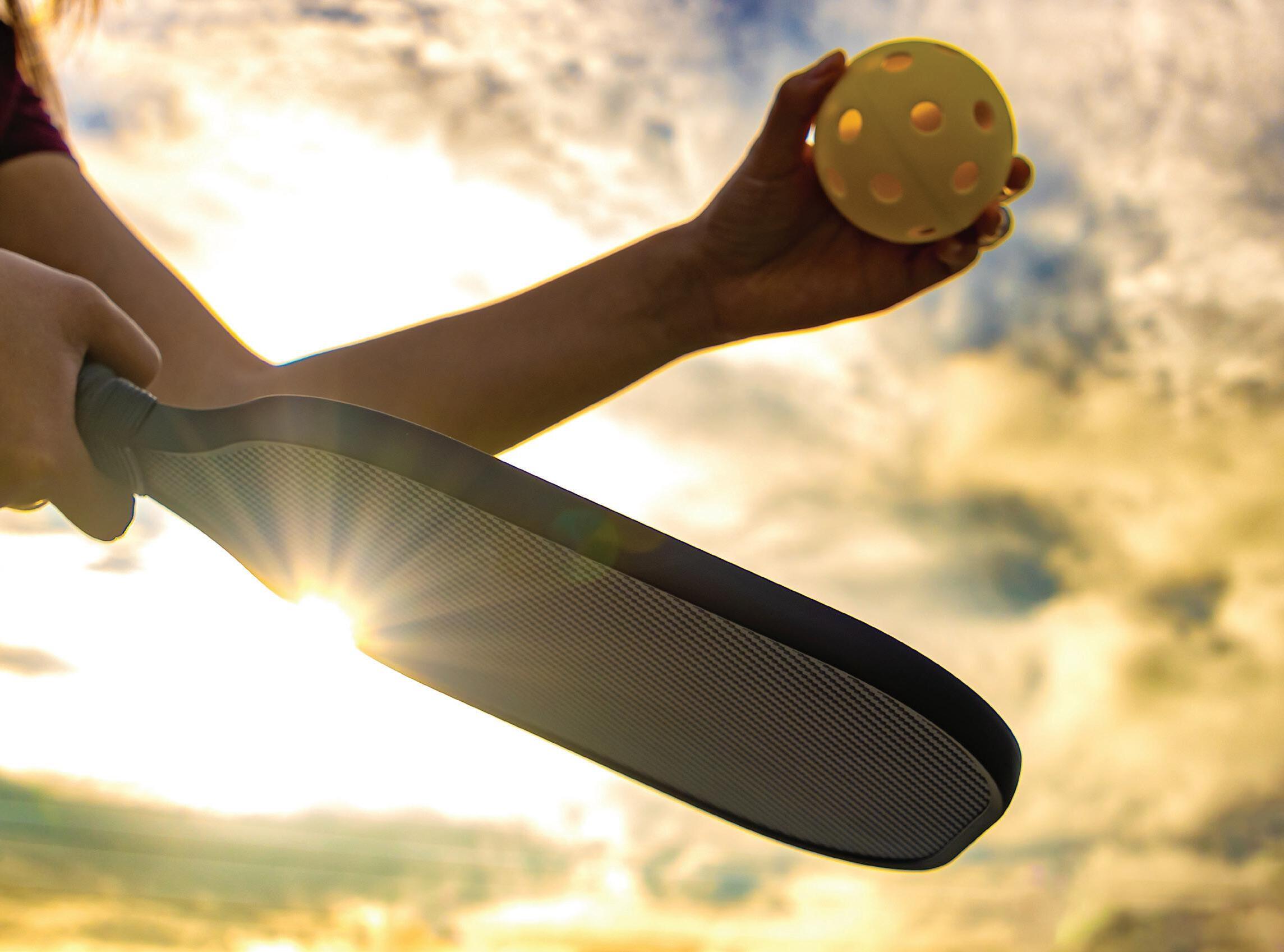
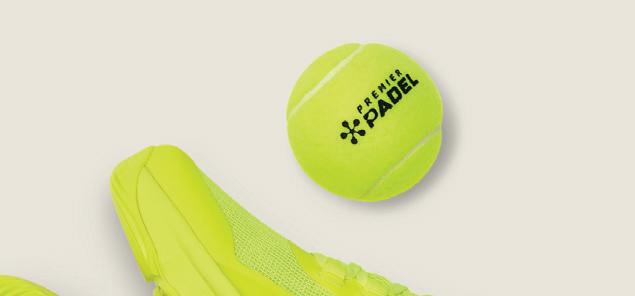
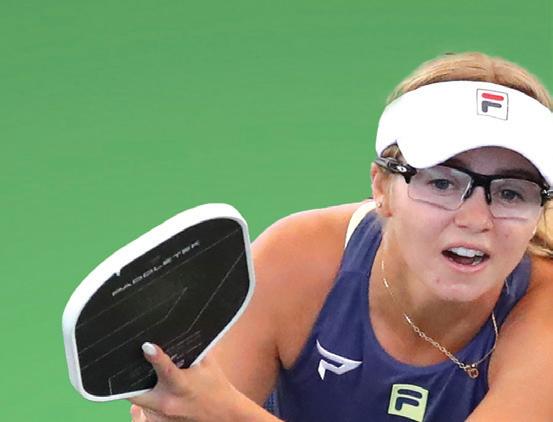
Everything you need to help outfit some of the country's 19.8 million pickleball players.
Recharge and refresh with a 'teaching vacation'
RACQUET SPORTS Squash has been quietly expanding opportunities TEACHING PROS
2025 / Volume 53 / Number 10 /$5.00
SERVING A NEW NEED
As pickleball growth continues, manufacturers are providing the equipment your players expect.
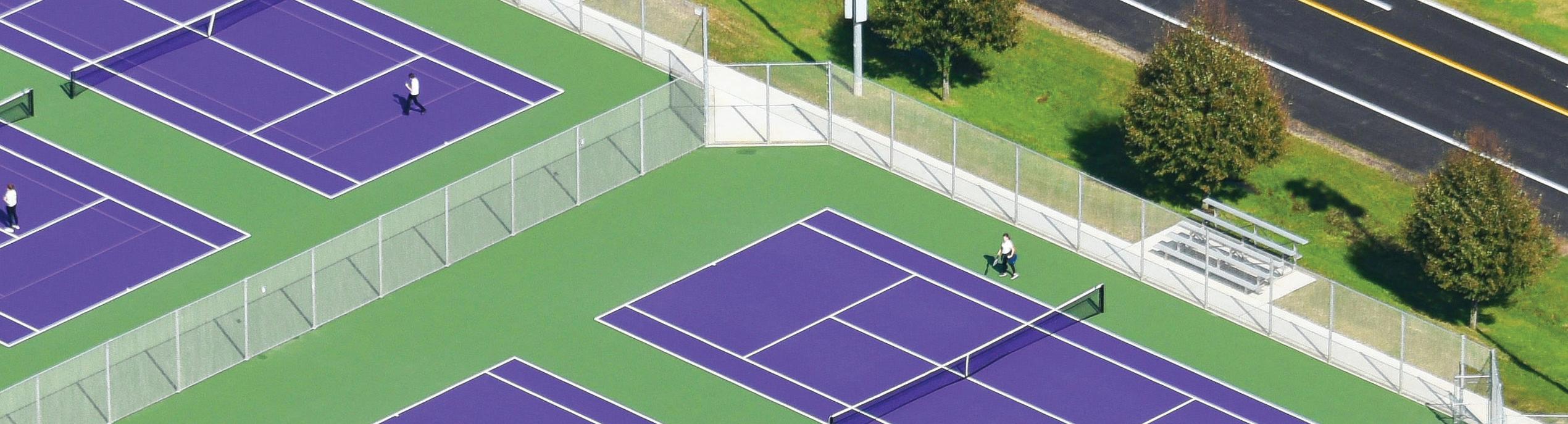
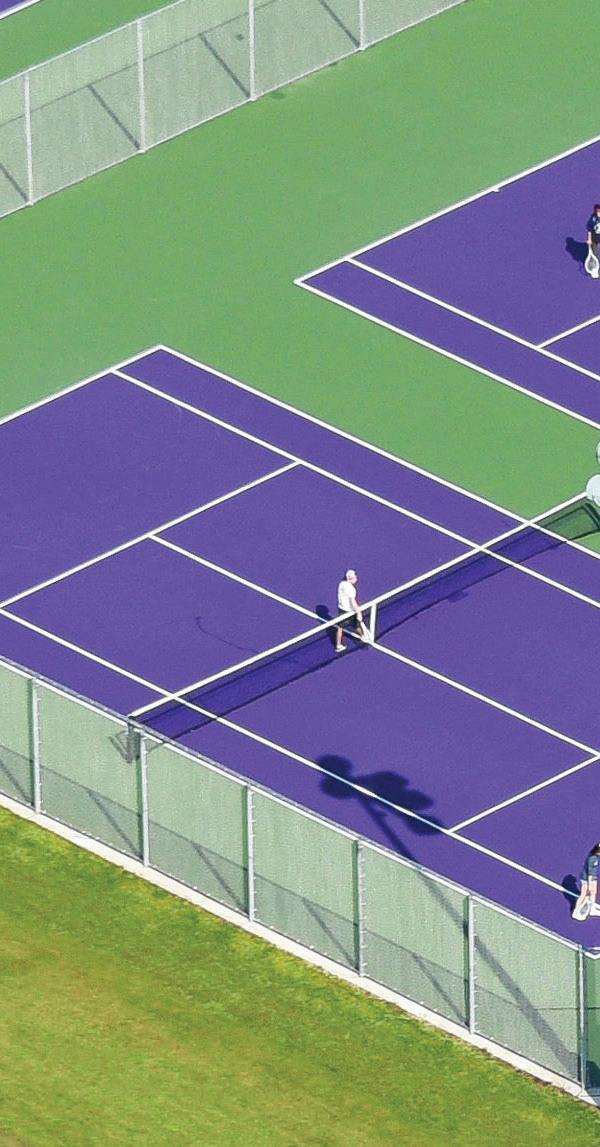
SHIELD YOUR SURFACE
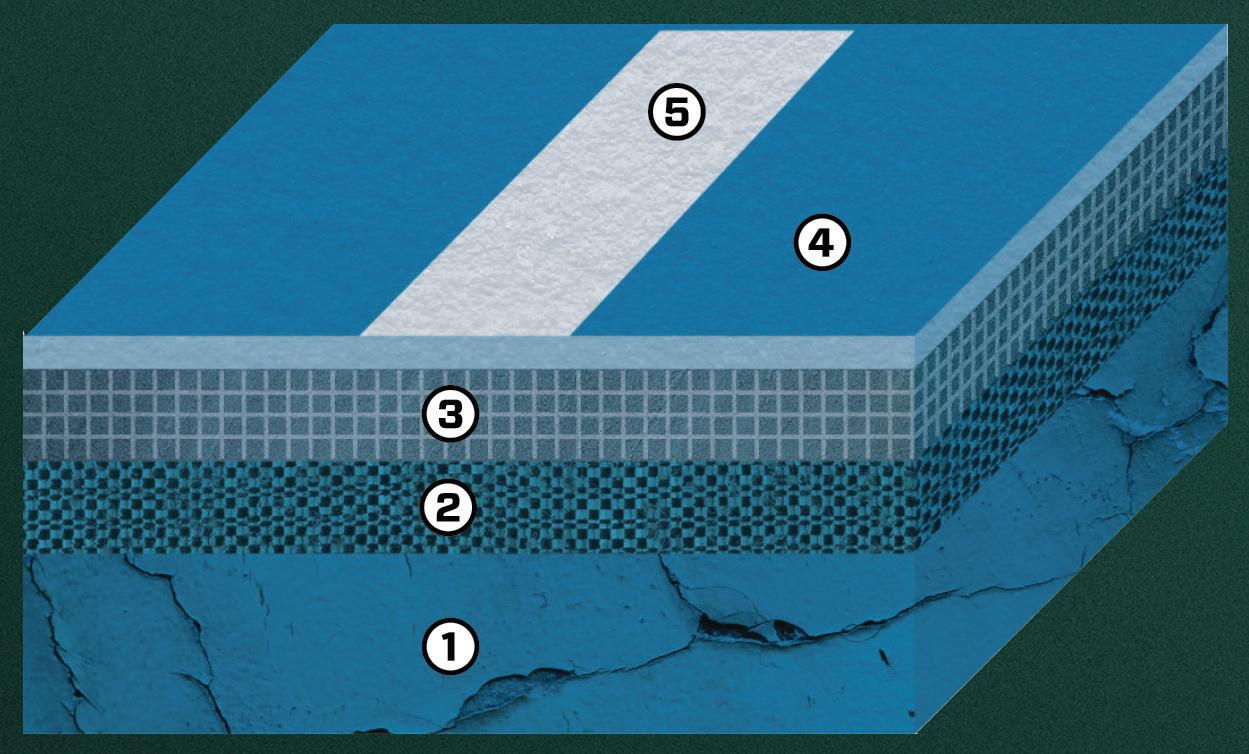
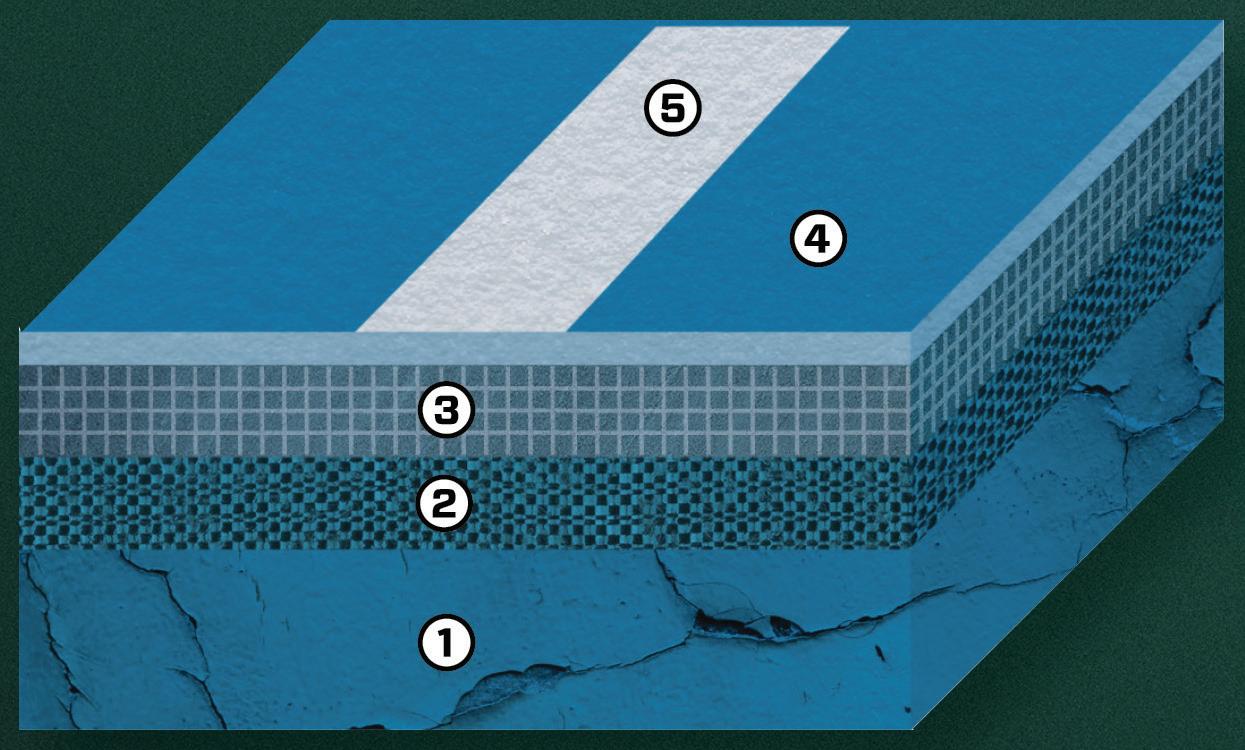
TitanTrax Shield®
The best crack repair method available. The Shield covers the entire court & is guaranteed to protect your surface from cracks.
The official surface of the 2024 MAC Championship, now available with a 15 year warranty.
Why do players love to
PLAY ON HAR-TRU
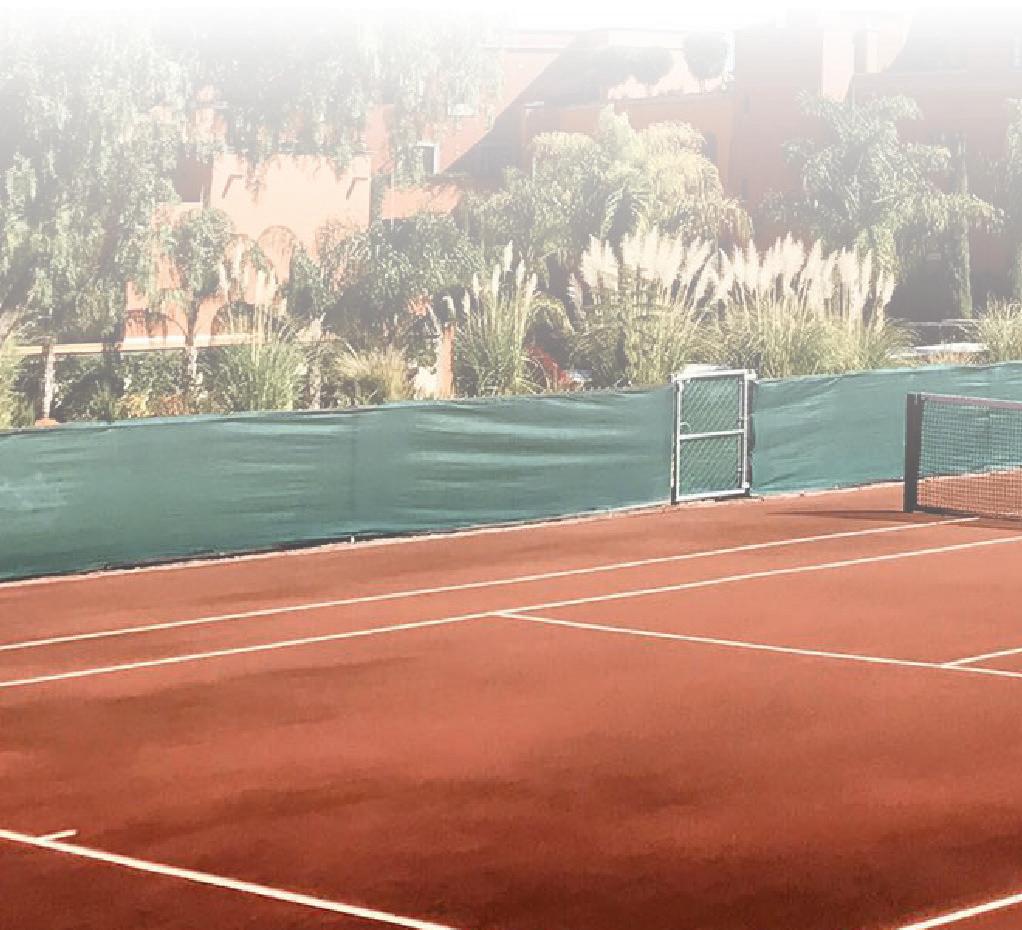
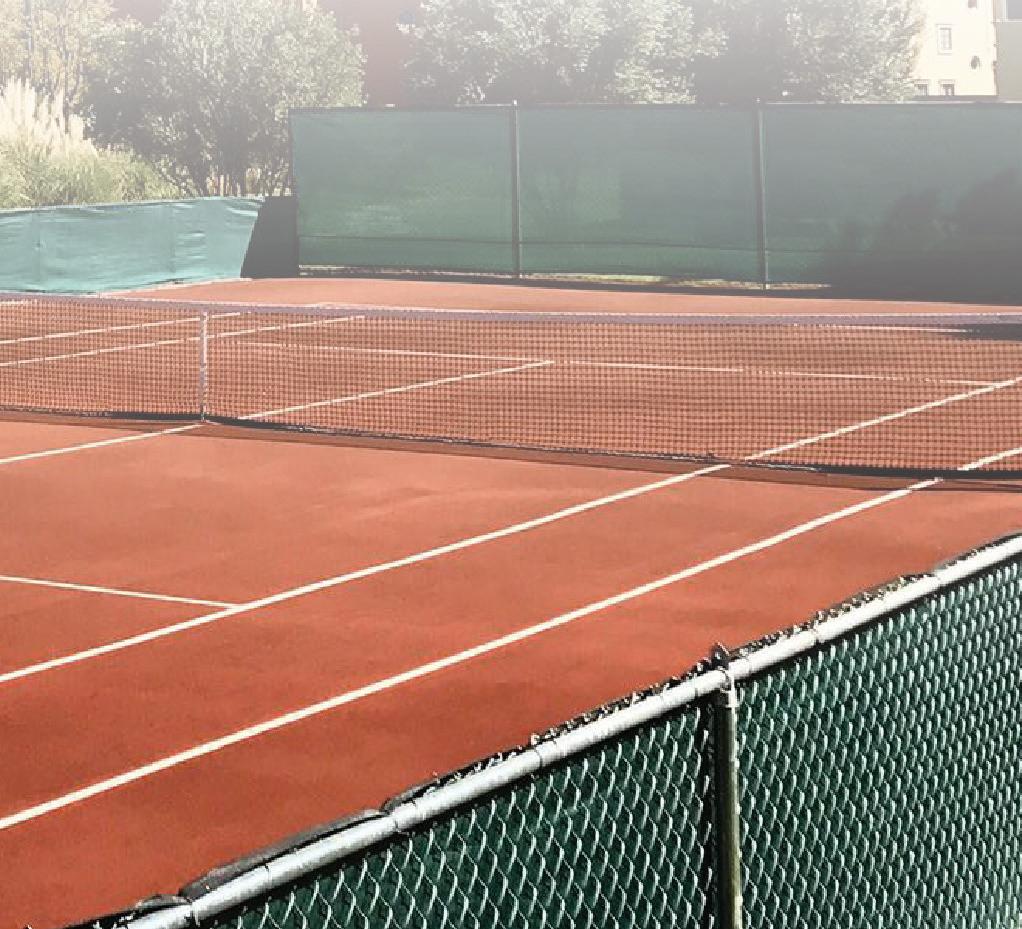
Although it’s referred to as clay, HAR-TRU is composed of crushed stone. This is what makes it such an effective tennis court surface. It is more durable and more consistent than its European clay court counterparts.
HAR-TRU is made from billion-year-old Pre-Cambrian metabasalt found in the Blue Ridge Mountains of Virginia. It’s a natural green stone that is extremely hard and angular, two very important qualities when it comes to tennis court construction. The angularity helps the stone particles lock together to form a stable playing surface.
The hardness provides exceptional durability. The natural green color is classically clay and instantly recognizable.
Fewer injuries
HAR-TRU is known for being easier on the body and reducing the incidence of common tennis injuries. In fact, players are seven times less likely to be injured on a HAR-TRU court than on a hard court. This gives you more hours of play each day — without over-stressing joints and lower extremities.
More competitive play
Playing on clay — and especially American green clay — develops a complete all-court game. Players develop essential footwork and balance techniques that playing on other surfaces just doesn’t teach. The surface improves player patience, persistence, and endurance. Clay court players learn how to construct shots and points that beat higherranked players, allowing them to succeed on all surfaces.
Environmentally friendly
HAR-TRU is a porous surface that reduces runoff and soil erosion. As a result, your courts can be installed in locations where many court surfaces could not be due to zoning restrictions.
HAR-TRU dries quickly after a rain and can be played through a light rain. In the heat, the surface is 10–15 degrees cooler than most other courts. Clay courts never crack, and repairs are easy and inexpensive. With simple, consistent care a HAR-TRU court will last forever.
about the courts that players love to play on.
IndustryNews
Information to help you run your business
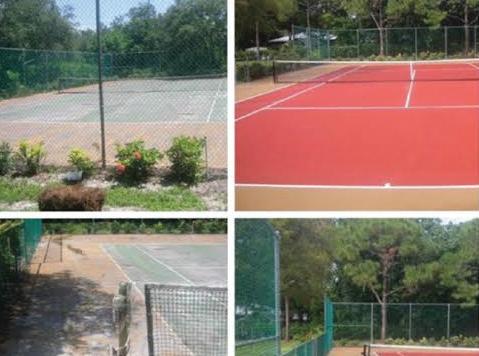
Princeton Leads USTA Outstanding Facility Awards
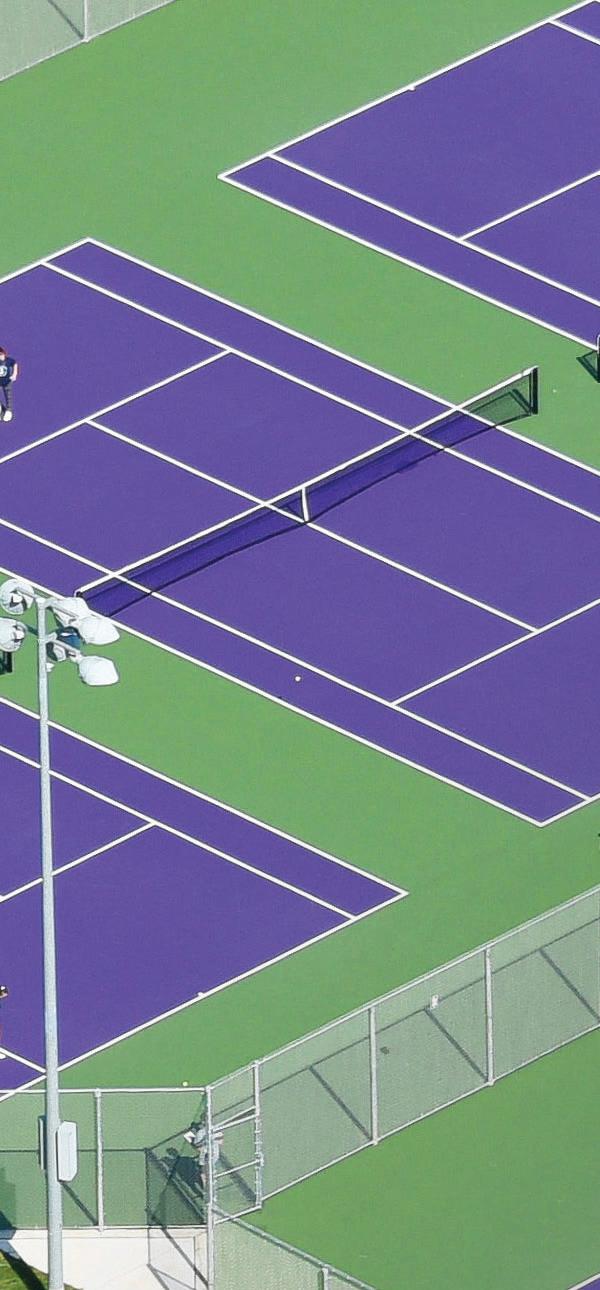
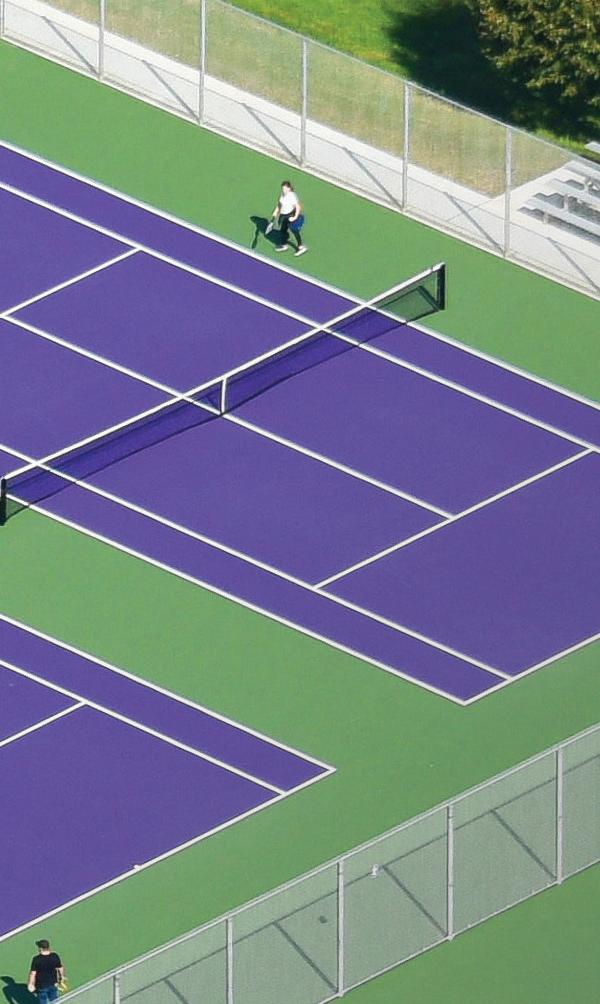
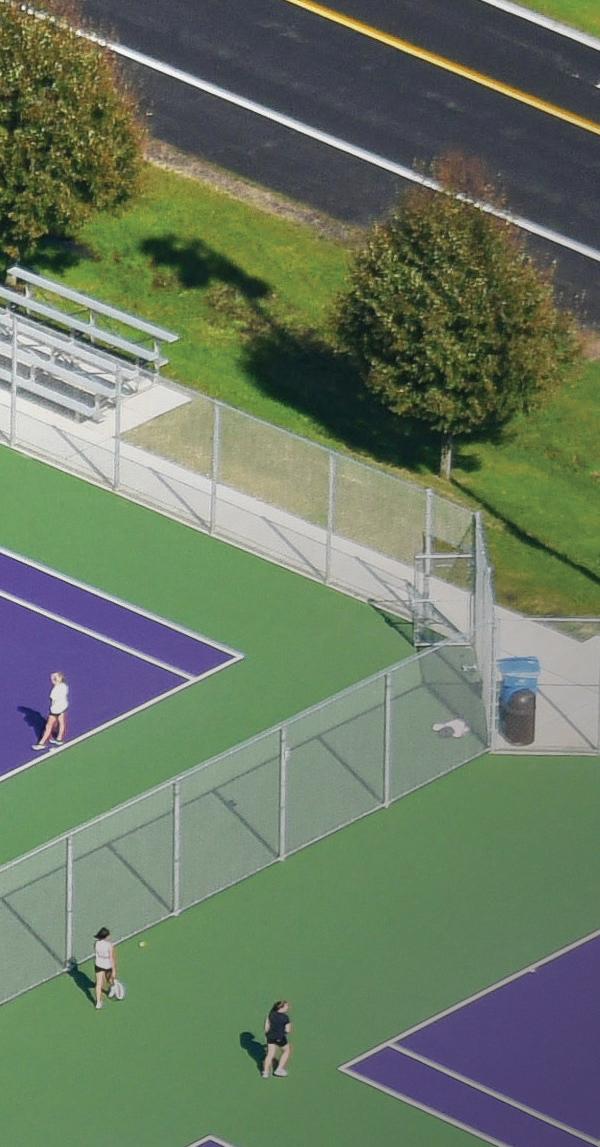
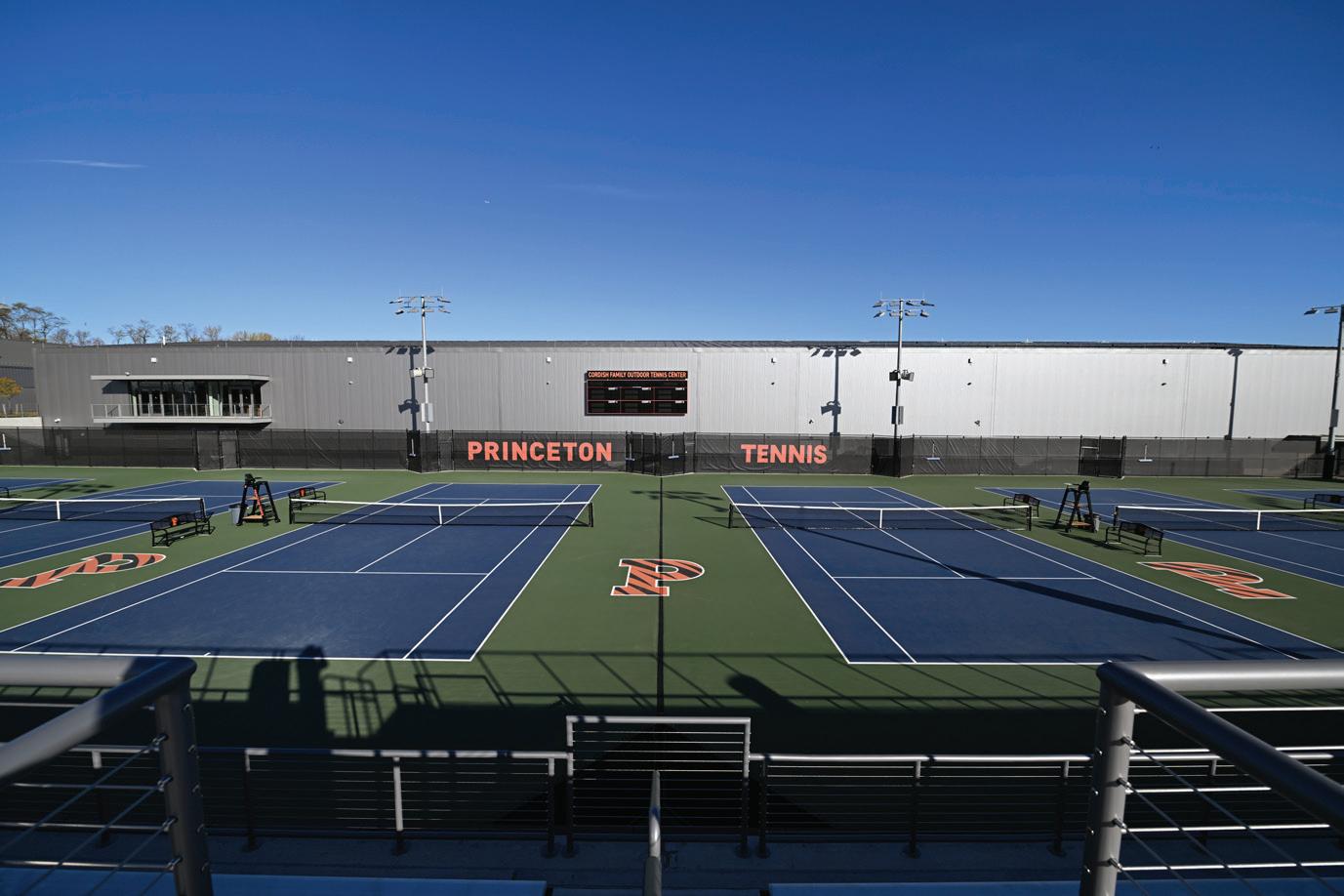
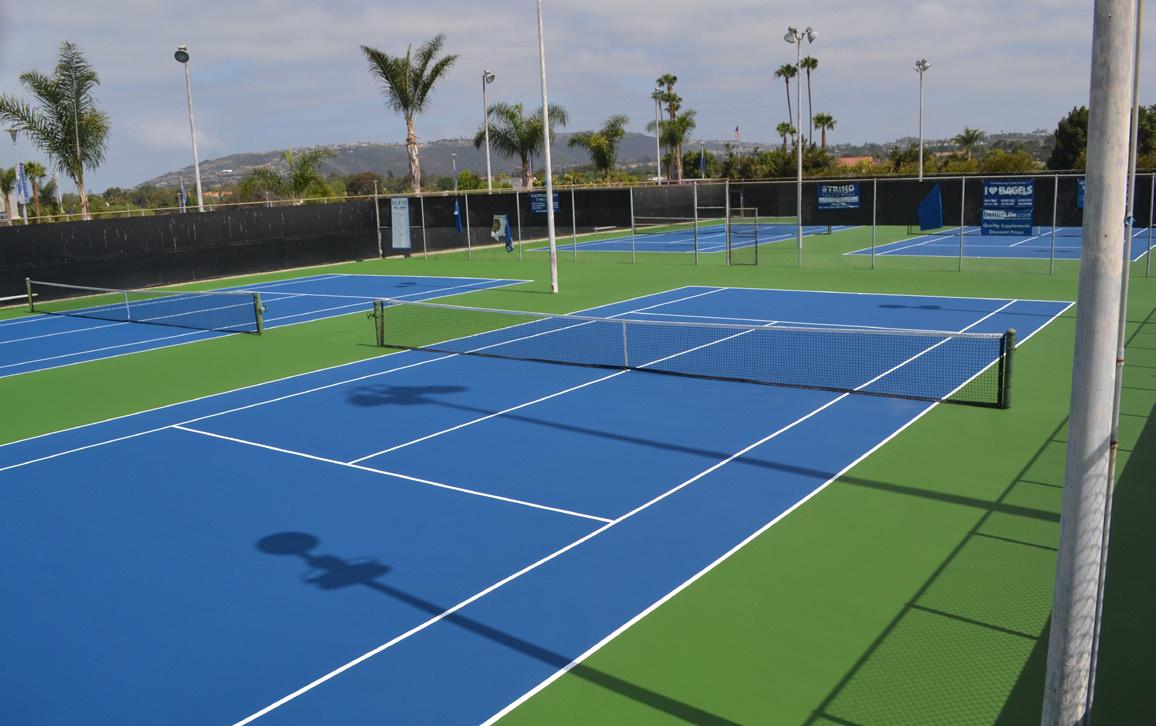
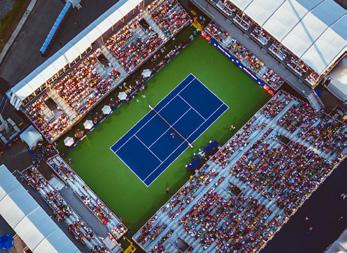
The USTA has named Princeton University its Featured Facility of the Year, the highest honor bestowed by the USTA on a tennis facility. Princeton was one of 45 winners of the USTA’s annual Outstanding Facility Awards program, which recognizes excellence in the construction and/or renovation of tennis facilities throughout the country.
Princeton unveiled its new Racquet and Recreation Fieldhouse in November 2024. The 180,000-square-foot facility includes 18 total tennis courts (nine outdoor, nine indoor) and not only serves as the home of Princeton’s varsity men’s and women’s tennis programs, but also is a hub of campus and community recreation.
“Princeton University is a great example of the many ways investing in world-class tennis facilities can create long-lasting and meaningful impacts on a community,” said Ted Loehrke,
the USTA’s managing director of Section Partnerships. “Facilities like this one are integral in the USTA’s mission. We are proud to recognize all 45 of these facilities for their continuing e orts to enhance lives through the sport of tennis.”
The 2025 USTA Outstanding Facility Award winners are:
• Public Courts: Small Tennis Centers (2 to 11 courts): Gulph Mills JKST (King of Prussia, Pa.), Henry J. Calamari Memorial Tennis Center (Slidell, La.), Ida Lee Park Tennis Center (Leesburg, Va.), John & Fay Menard YMCA Tennis Center (Eau Claire, Wis.), Kohler Sports Core (Kohler, Wis.), Northampton Tennis & Fitness Club (Richboro, Pa.), Tonaquint Tennis Center (St. George, Utah), Valley Athletic Club (Olympia, Wash.)
• Public Courts: Large Tennis Centers (12 or more courts): Balboa Tennis Club (San Diego), City of Palm Beach Gardens
Tennis and Pickleball Center (Palm Beach Gardens, Fla.), Rome Tennis Center at Berry College (Rome, Ga.), Sportime Randall’s Island (New York), Steamboat Tennis and Pickleball Center (Steamboat Springs, Colo.), Yarbrough Tennis Center (Auburn, Ala.)
• Small Private Facilities (2-11 courts): Central PA Tennis Center (Williamsport, Pa.), Compass Pointe Tennis Club (Leland, N.C.), East Brunswick Racquet Club (East Brunswick, N.J.), Ellington Racquet Club (Ellington, Conn.), Grand Rapids Racquet + Fitness (Grand Rapids, Mich.), Greensburg Racquet Club (Greensburg, Pa.), Hendersonville Racquet Club (Hendersonville, N.C.), Hobe Sound Tennis Center (Hobe Sound, Fla.), Legacy Racquet and Fitness Club (Mountain Home, Ark.), Palmira Tennis Club (Bonita Springs, Fla.), PEAK Racquet Club (Missoula, Mont.), Pelican Bay Foundation (Naples, Fla.), River Trails Tennis Center (Arlington Heights, Ill.), South Towns Tennis & Pickleball (Orchard Park, N.Y.), Wisconsin Athletic Club-Lake Country (Hartland, Wis.)
• Large Private Facilities (12 or more courts): Brookhaven Country Club (Farmers Branch, Texas), Evergreen Racquet Club (Bloomington, Ill.), Michael D. Case Tennis Center (Tulsa, Okla.), Overland Park Racquet Club (Overland Park, Kan.), Sportime Port Washington (Port Washington, N.Y.), The Club at Quail Ridge (Boynton Beach, Fla.), Wheaton Sport Center (Wheaton, Ill.)
• Educational Institutions: Albuquerque Academy Racquet Center (Albuquerque, N.M.), City of Laredo Tennis Complex at Texas A&M International University (Laredo, Texas), Dillingham Tennis Complex (Honolulu), Ed Yarbrough Tennis Complex (Jasper, Ind.), Noblesville Millers Tennis Complex (Noblesville, Ind.), Princeton University (Princeton, N.J.—Featured Facility), Temple University Tennis Complex (Philadelphia)
Former PTR CEO Peter Hurley left the organization in September. While the organization searches for his replacement, PTR board member Martin VanDaalen will step in as interim CEO.
“We are grateful to Pete for his service,” said PTR Board Chair Lynne Rolley. “Pete has helped guide PTR through a period of transition to our new headquarters in Tampa, and we appreciate his service. As Pete embarks on this new chapter, we wish him the very best in his future endeavors.”
ASBA
Technical Meeting Dec. 2-6
Celebrates 60th Anniversary
The American Sports Builders Association’s Technical Meeting will be in San Antonio, Texas, Dec. 2-5, at the Grand Hyatt San Antonio. This year, ASBA will celebrate its 60th anniversary, with additional events planned.
“The ASBA Technical Meeting is widely regarded as one of the best gatherings in the industry and this year’s will be no exception,” says ASBA Chairman Randy Resley. “ASBA continues to offer the best content, and to build on its success, providing not just excellent technical information but opportunities to connect with the best and brightest minds in the sports facility design, construction and supply industry.”
The meeting, which attracts members of the Association as well as of the larger sports design and construction industry from around the world, includes opportunities for learning, networking and business development. Visit www.sportsbuilders. org, or e-mail info@sportsbuilders.org.
USTA CTDW/Impact Conference
To Be Feb. 19-21 in Texas
The USTA Community Tennis Development Workshop is coming back! The national CTDW, which had been one of the top events for recreational tennis learning, collaboration and inspiration, has not been held for a number of years. But on Feb. 19-21, 2026, the CTDW will join with the USTA Foundation’s Impact Conference, to be held at the Gaylord
Texan Resort in Grapevine, Texas.
The unique event will unite leaders, organizers and others dedicated to expanding tennis and opportunity in communities across the country. Stay tuned for more information.
McMahon Careers Launches ‘Racquets Search & Hire’
Executive search, hiring and education firm McMahon Careers has launched Racquets Search & Hire, a support service for managers, clubs and racquet sports professionals, designed to bring “a fresh level of transparency, clarity and tailored solutions” to the hiring process.
Racquets Search & Hire offers a tiered approach so clubs can select the level of service that aligns with their needs, budgets and timelines. The three levels of service are: DirectorSearch, for candidate recruitment; ProMatch, for pairing the club with top racquets professionals; and ProConnect, for employers to post a job efficiently and effectively, and for racquets sports professionals to apply for jobs.
“For too long, racquet sports recruiting has lacked a clear, structured process that
CONSTRUCTION
ASBA Publishes Inaugural Padel Court Manual
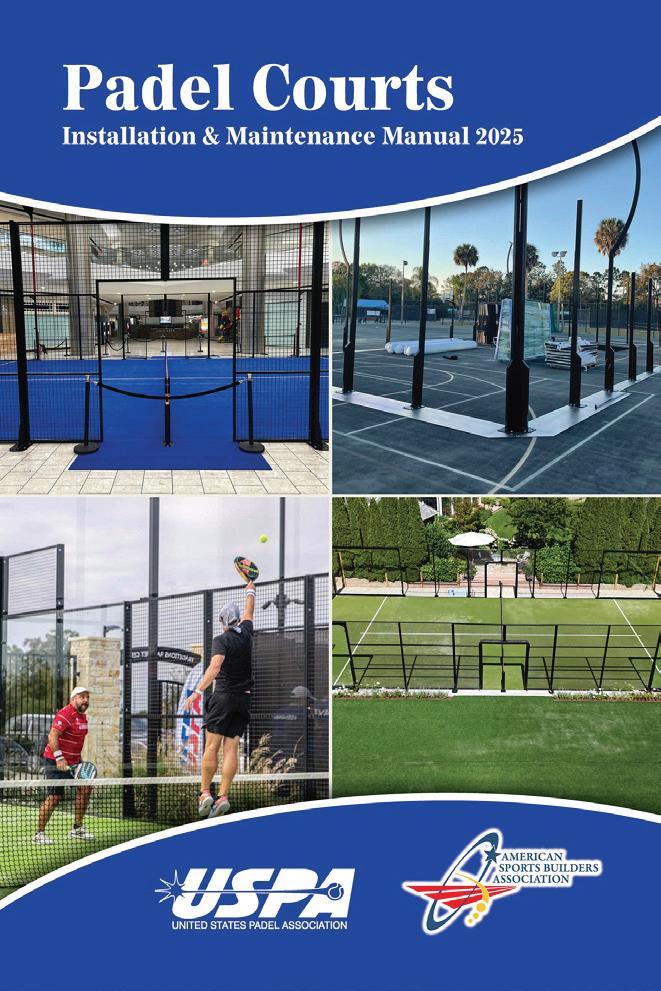
The American Sports Builders Association, the national organization for builders, design professionals and suppliers of materials for athletic facilities, has published its inaugural “Padel Courts: Installation and Maintenance Manual.”
The new manual, written by an editorial committee that included representation from the U.S. Padel Association as well as builders and suppliers in the industry, covers padel court dimensions, planning and design, base construction, maintenance, discussion of the installation of court kits, indoor and outdoor facilities, amenities and accessories, lighting and more. The book is $39.95, in either print or electronic format. Visit sportsbuilders.org/page/OnlineStore
“Padel is one of the fastest-growing sports worldwide and its entry into the
works for both clubs and professionals,” says Mark McMahon, founder/president of McMahon Careers. “We’re offering straightforward, flexible services that clubs can trust, while giving professionals a transparent pathway to the opportunities that best fit their skills and career goals.”
Visit McMahonCareers.com or contact Director of Operations Ashley Hunter at ashley.hunter@mcmahoncareers.com for more information.
ITF Names ‘Tie Break Tens’ As Short-Format Tennis Partner
The International Tennis Federation has recognized Tie Break Tens (TB10) as its official partner in short-format tennis. TB10 will be integrated into the ITF’s Junior Tennis Initiative program in select nations.
The format can be used with red, orange, green or yellow balls and on any court size. TB10 is a fast-paced competitive format, with eight or 16 players competing in a series of single tie-break matches. It is designed to complement the existing tennis calendar and tournaments, not compete with them, says the ITF.
U.S. market has awakened a need for solid technical information,” says ASBA Chairman Randy Resley. “ASBA continues to offer the best content and to build on its record of success in providing excellent publications that serve the sports industry.”
The Pro Shop Pros
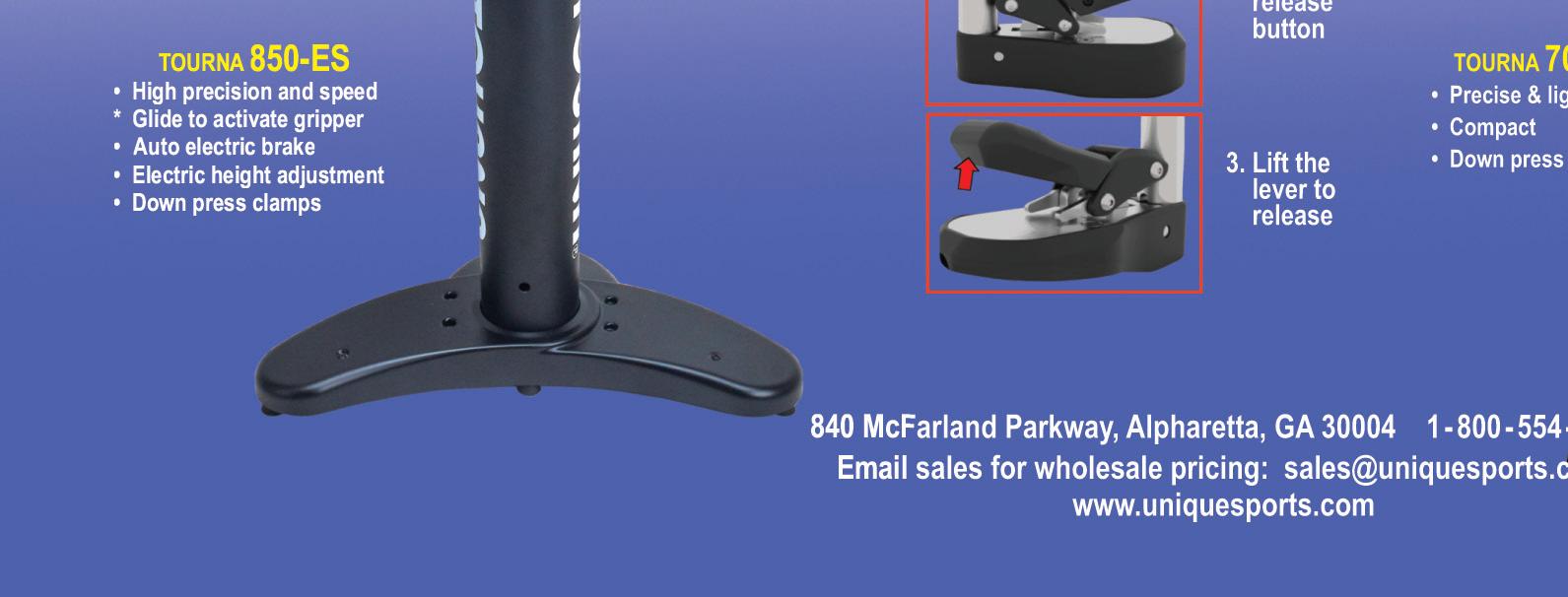
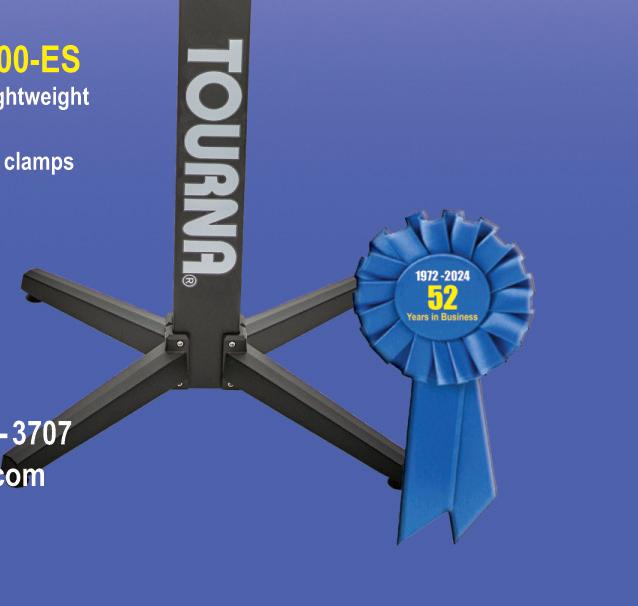
Proudly serving country clubs, independent retailers, teams, facilities, and the entire racquet sports community for more than 50 years.
Your Wholesale Partner In Racquet Sports
Customer’s SPEAK
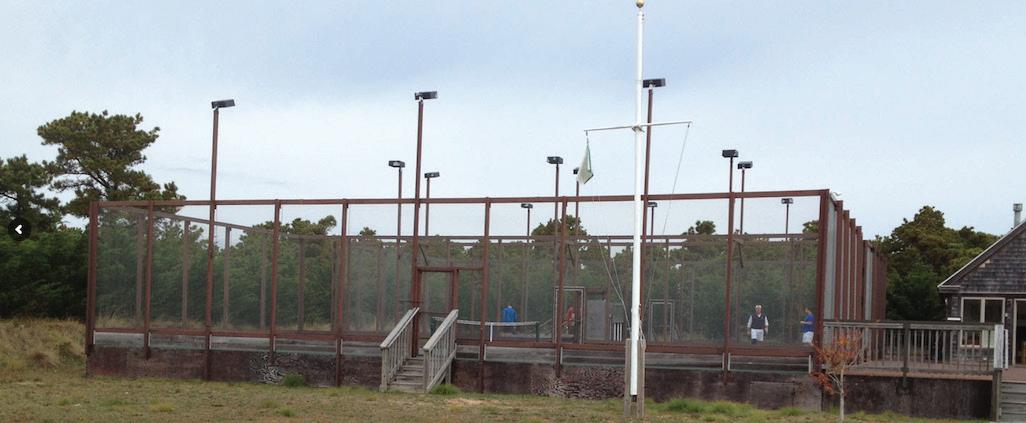
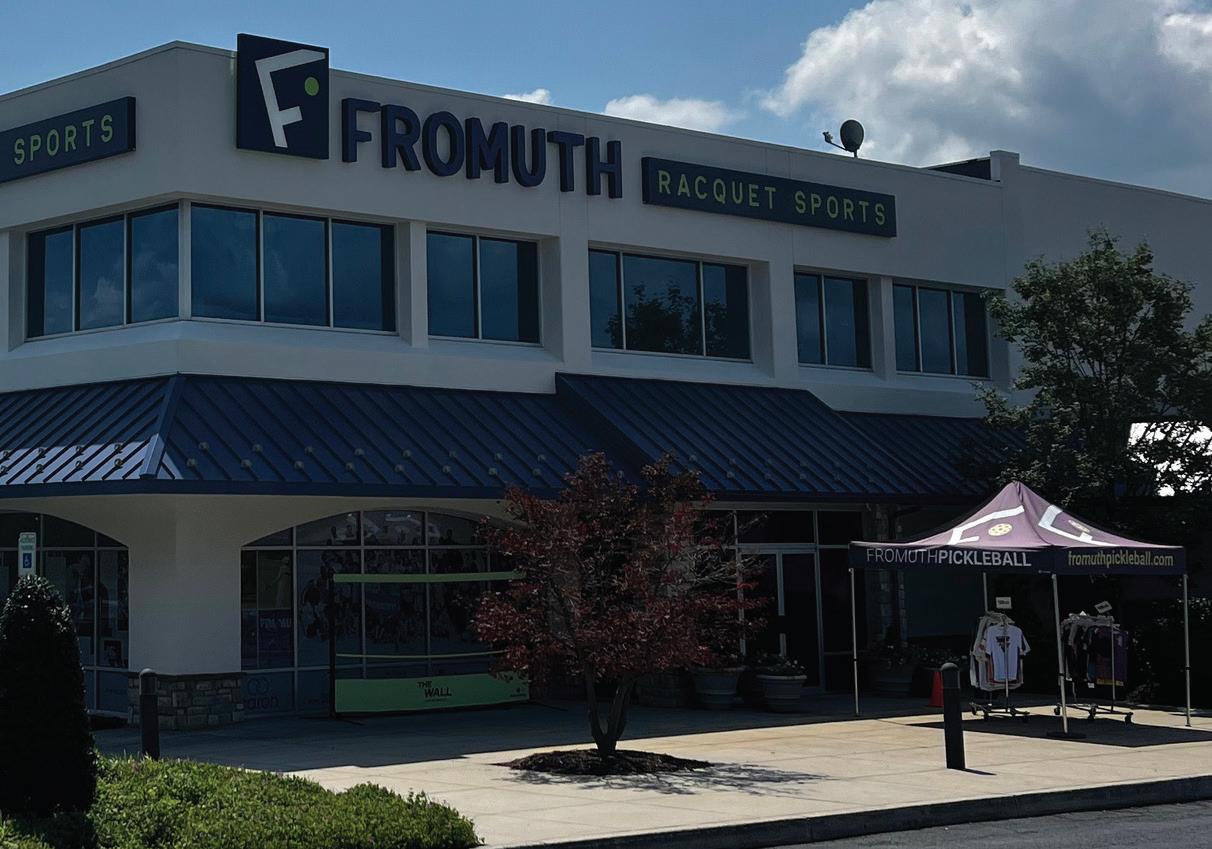
Can I say thank you for so many years of impeccable service and support from everyone at Fromuth. Running a business like mine on Nantucket Island is super stressful because of the rapid pickup in customers, voracity in product needed and wanted in an extremely short window of time. Fromuth has and will continue to be my lifeline during this time because of the quickness I can get what I need when I need it no matter what, and the support from everyone there when they noticed I may have ordered the wrong product. Thank you to the moon and back!
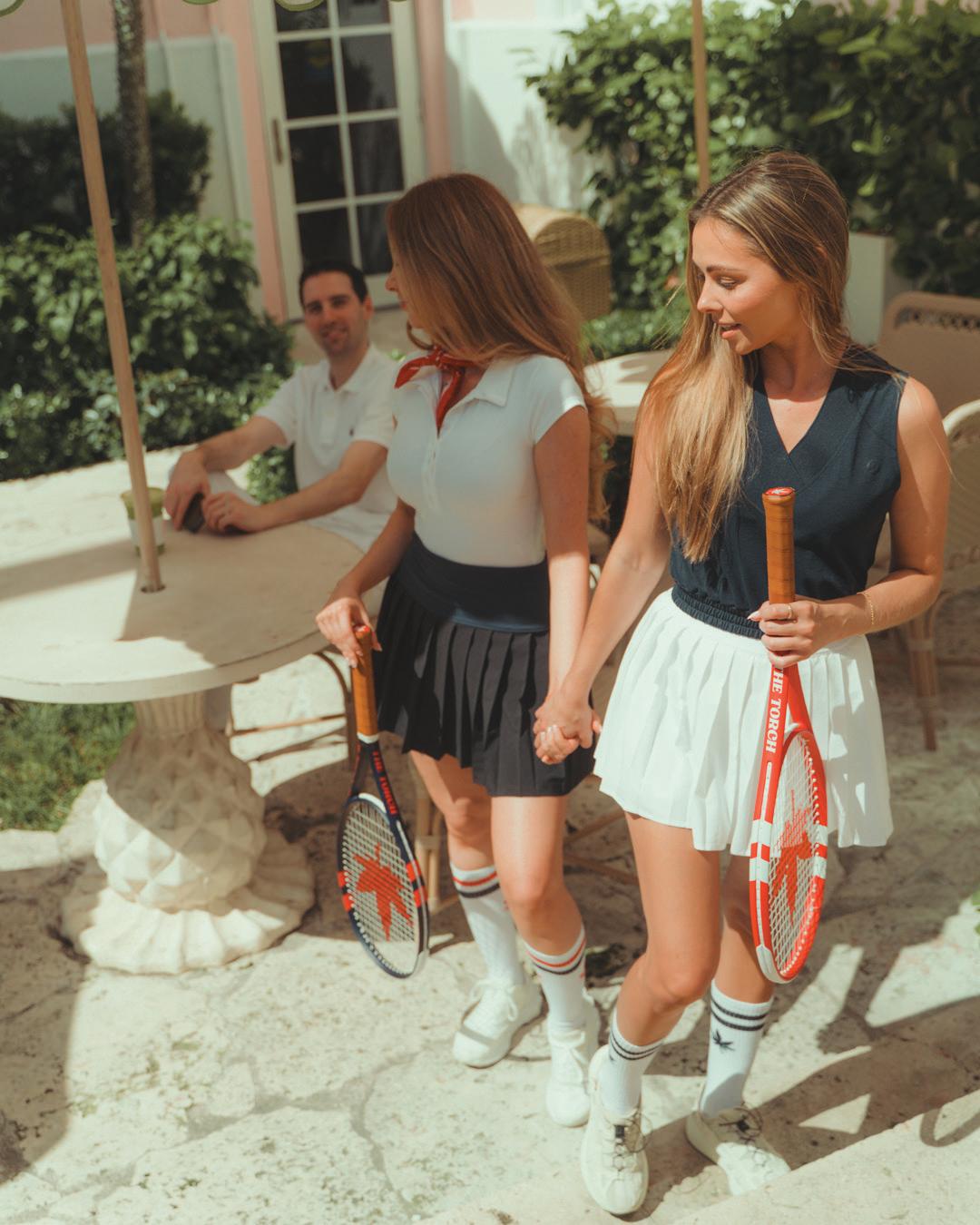
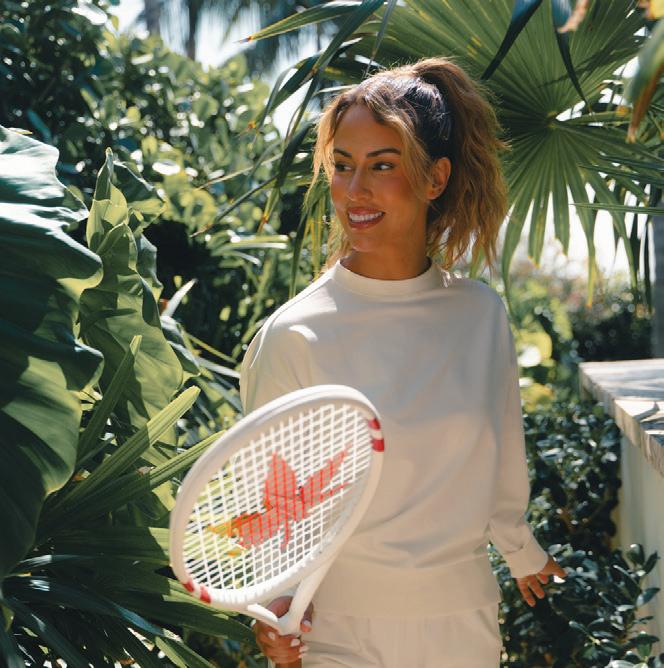
With its iconic Japanese maple leaf logo,Boast says it is "bringing a fresh, modern edge to women's sport and lifestyle apparel."
Boast has launched its 20252026 Women’s Collection, an on- and off-court apparel line that draws on the brand’s classic heritage. The company says the collection introduces a new perspective on women’s tennis and lifestyle apparel, blending performance-driven, meticulous design with Boast’s signature irreverent style and essence.
Boast says each piece in the collec-
tion was “purposefully designed with the athlete’s comfort and movement in mind. Elevated fabrics, thoughtful construction, versatile silhouettes and refined details transition seamlessly from the court to everyday life, reflecting the convergence of sport and fashion that has defined Boast since 1973.”
Suggested retail for the 13-piece women’s collection range from $58 to $148. Visit boastusa.com for more.
PUBLISHER BILL SIMON
EDITOR
PETER FRANCESCONI peter@acepublishinggroup.com
MANAGING EDITOR SCOTT GRAMLING
CREATIVE DIRECTOR IAN KNOWLES
SENIOR EDITOR ED M c GROGAN
ART DIRECTOR
CRHISTIAN RODRIGUEZ
SPECIAL CONTRIBUTOR BOB PATTERSON
CONTRIBUTING EDITORS
KIM BASTABLE, CYNTHIA CANTRELL, PEG CONNOR, JOE DINOFFER, JUDY LEAND, GREG MORAN, KENT OSWALD, CYNTHIA SHERMAN, MARY HELEN SPRECHER, JOE TEDINO
CONTRIBUTING PHOTOGRAPHER DAVID KENAS
EDITORIAL DIRECTION 10TEN MEDIA
RACQUET SPORTS INDUSTRY 60 East 42nd St., Suite 740, NY NY 10165 peter@acepublishinggroup.com
ADVERTISING DIRECTOR JOHN HANNA 770-650-1102, x125 hanna@knowatlanta.com
Looking for back issues of Tennis Industry/Racquet Sports Industry? Visit the archives at our website at TennisIndustryMag.com for free digital versions.
• Laykold’s sand blend delivers greater control of court pace and prolongs life of the court
• Higher quality latex means court pace lasts longer
• Laykold Gel is the world’s greenest court (60% recycled and renewable material
• Laykold’s automotive grade pigments retain color for longer
• Laykold’s is made in ISO certified factories in Germany, USA and Australia
• Laykold product yields are typically 10 to 20% greater than our competitors
REDRAW THE LINES
RED BALL TENNIS DROPS THE PRESSURE AND DIALS UP THE FUN OF THE CLASSIC GAME WE ALL LOVE. NO FORMAL COURTS, NO STRICT RULES, JUST HIGH-ENERGY PLAY WHENEVER AND WHEREVER YOU WANT. LEARN MORE TODAY
Short Sets
Italy retained the Billie Jean King Cup title in September after defeating the U.S., 2-0, in the final in Shenzhen, China. The U.S. team will next compete in a qualifier in 2026, against an opponent and at a location to be determined.
Czechia’s Davis Cup team beat the U.S. squad, 3-2, in September in Delray Beach to move on to the Davis Cup Final 8, Nov. 18-23 in Italy, joining France, Belgium, Italy, Austria, Spain, Argentina and Germany.
According to analysis by Fruity King, US Open champion Carlos Alcaraz now has 7,716,720 Instagram followers and now can command up to $11,500 per post. Jannik Sinner has 4,802,244 followers but has a higher engagement
rate of 6.03 percent, and can fetch up to $8,600 per post.
RecycleBalls has been shortlisted for the international 2025 Sport Positive Awards in the Purpose-led Partnership with a Non-Profit category.
Sports Warehouse, the company behind online retailers Tennis Warehouse, Running Warehouse, Pickleball Warehouse and the newly launched Padel Warehouse, has unveiled its newest retail location in La Quinta, Calif., bringing all four specialty brands together under one roof.
New Balance has partnered with Mosaic Brand Partners to help grow its tennis business with a dedicated team
of territory managers. New and current customers can continue working directly with New Balance’s Customer Service and Credit teams, and there will be no changes to shipping or invoicing.
The International Tennis Integrity Agency suspended Australian Davis Cup captain Lleyton Hewitt for two weeks—from Sept. 24 to Oct. 7, 2025— and fined him $20,000 for pushing a volunteer anti-doping chaperone in 2024. During his suspension, Hewitt was unable to take part in tennis-related activities.
Who is Stan Smith?, the critically acclaimed documentary about tennis legend and cultural icon Stan Smith, is available to stream on Hulu and ESPN+.
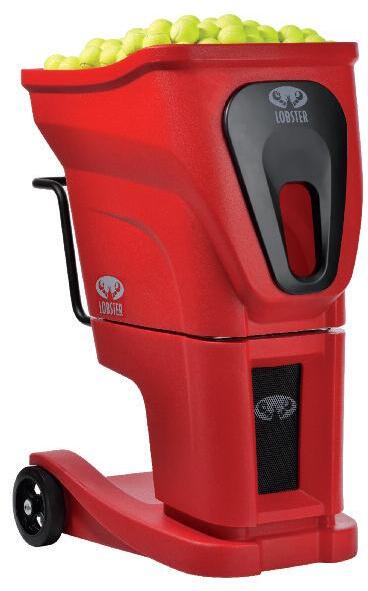
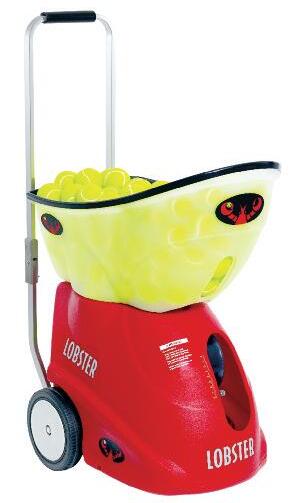
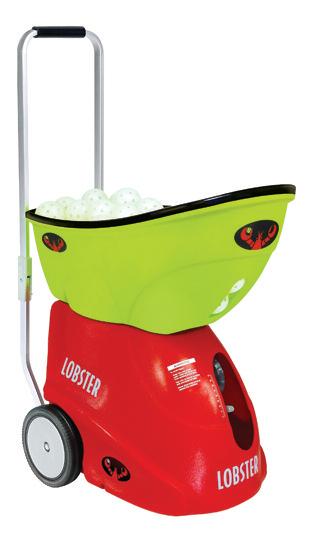
THELOBSTER ADVA NTAG E
2024 STATEMENT OF OWNERSHIP, MANAGEMENT AND CIRCULATION
7. Complete mailing address of known office of publication: Tennis Channel 60 East 42nd St., Suite 740 New York, NY 10165 Contact: Edward McGrogan
8. Complete mailing address of headquarters or general business office of publisher: 3003 Exposition Blvd. Santa Monica, CA 90404
9. Full names and complete mailing addresses of publisher, editor and managing editor: Group Publisher: Bill Simon, same as No. 8 Editor: Peter Francesconi, same as No. 8 Managing Editor: Scott Gramling, same as No. 8
10. Owner: Tennis Channel 3003 Exposition Blvd. Santa Monica, CA 90404
11. Known beholders, mortgages and other securities: None.
12. Tax Status: Has not changed in the preceding 12 months.
13. Publication Title: Racquet Sports Industry
14.
People Watch
Five-time Grand Slam singles champion Maria Sharapova, alongside Bob and Mike Bryan, the most successful doubles team in ATP Tour history, were formally inducted into the International Tennis Hall of Fame in Newport, R.I., on Aug. 23, right before the US Open.
Rick Caro, a pioneer in the health and fitness industry and a founding leader of the International Health, Racquet & Sportsclub Association (IHRSA)—now called the Health & Fitness Association—passed away Aug. 30. As president of Management Vision and a consultant to more than 1,700 clubs, suppliers and organizations, he helped define the credibility and professionalism of the industry.
Tennis brand Boast has named industry veteran Iain Pound as its vice president of sales and hired five new sales representatives to strengthen its presence in the tennis industry: Doug Kruger, Mark VandeWater, Jeff Ellis, Blake Doobrow and Sarah Maynard. The new sales reps will focus on building relationships with pro shops, tennis clubs, specialty retailers and regional accounts.
The Southern Tennis Foundation, the charitable arm of the USTA Southern Section, will induct Joe Cabri and Bonnie Vandegrift and the late Althea Gibson into the Southern Tennis Hall of Fame Class of 2026 on Jan. 24 in Atlanta.
The Pickleball Hall of Fame's 2025 inductees are competitors Cammy MacGregor and Chris "Mills" Miller, and contributor Melissa McCurley. The group will be inducted in Surprise, Ariz., Nov. 5-6.
Longtime coach and industry figure Bruce Levine passed away suddenly on Aug. 24 at the age of 68. A senior pro at the Hall of Fame Tennis Club in Newport, R.I., Levine also was the head coach of the D3 Salve Regina men’s and women’s tennis programs since 2021. He was a technical advisor for racquets and strings for Tennis Magazine, and for 10 years was general manager and partner at the award-winning Courtside Racquet Club in Lebanon, N.J.
INSTRUCTION
Fast Track Tennis Launches Program to Make Learning Easier
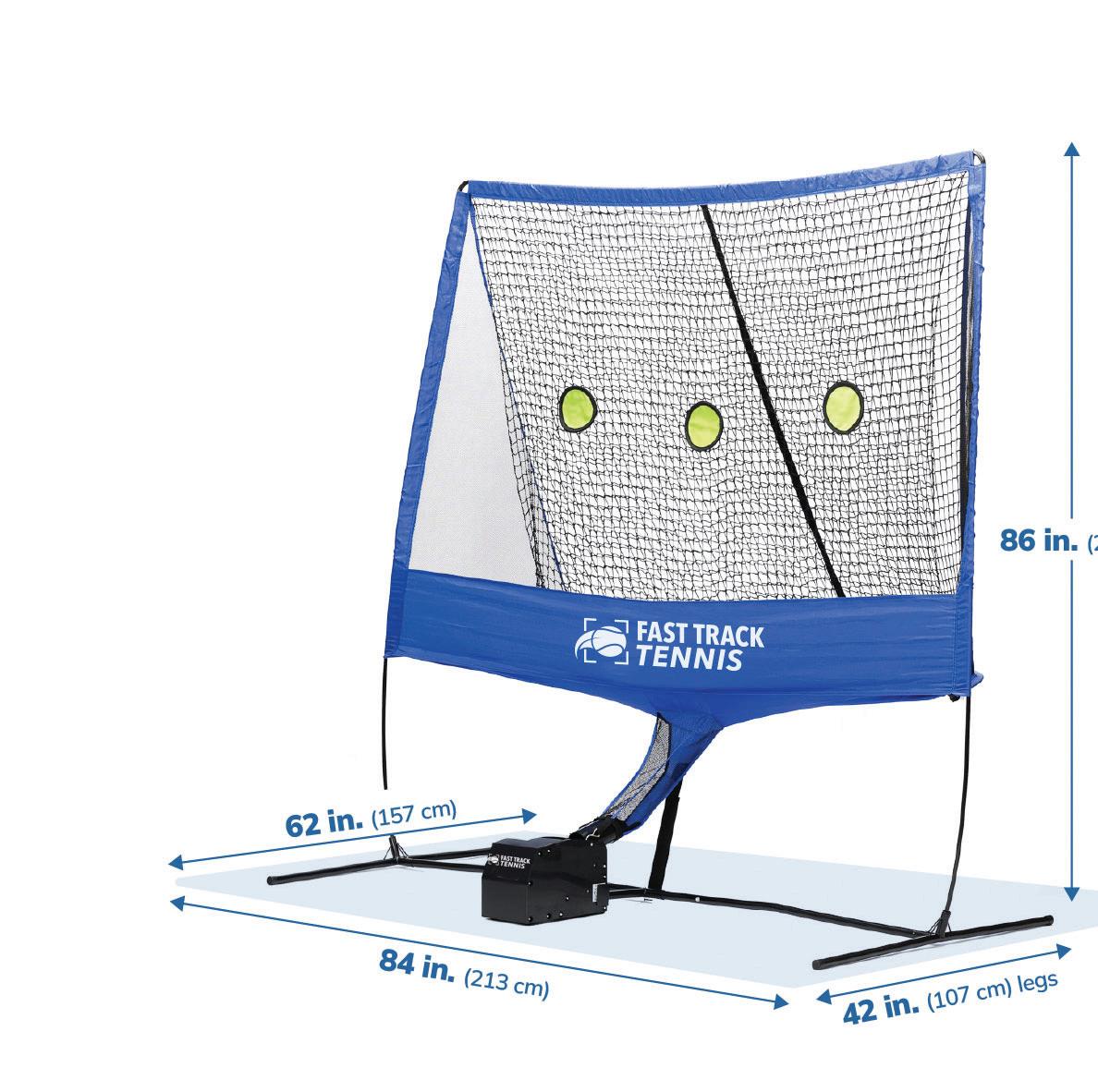
Fast Track Tennis, the patented portable training system for practicing tennis anywhere, announced the launch of the 1-2-3 Method, a learn-to-play instructional program designed to break down barriers and help new players get into the game faster and with more confidence.
In addition, former pro tennis star Zina Garrison has joined Fast Track Tennis to support the program’s mission of making tennis accessible for all.
The 1-2-3 Method trains instructors on how to introduce tennis fundamentals to beginners through the simple and fun program, which can be set up in any location, such as a school gym—no court required. With this new program, players have instant access to rack up thousands of real-ball hits in 10 classes.
“Even as tennis becomes more inclusive, the industry still falls behind in accessibility for underserved and underresourced communities,” says John Davey, CEO and Founder of Fast Track Tennis. “Our new program aims to solve this issue with a low-cost, high activity approach that gives players the foundational tools, access and confidence to truly enjoy the game from the start.”
Visit FastTrackTennis.net.
Fast Track Tennis is a portable tennis training system that transforms everyday spaces into practice areas with no court, partner or ball pickup required.
US Open Sets Attendance, Compensation, Sales Records
The 2025 US Open broke records for attendance and player compensation. The full, three-week attendance of 1,144,562 was a 9 percent increase over 2024. Main-draw singles and men’s and women’s doubles attendance—which included 27 sessions over 15 days and the first weekend start in the Open Era—eclipsed 900,000 for the first time, with 905,255 attendees, also a 9 percent increase over 2024. Fan week attendance (239,307) was up 10 percent. The US Open Mixed Doubles Championship drew 78,000 fans during Fan Week and drove a two-day sellout in Arthur Ashe Stadium.
The 2025 US Open awarded the largest purse in professional tennis history with $90 million in total player compensation (vs. $75 million in 2024). Men’s and women’s singles champions each earned $5 million (up from $3.6 million). For the first time ever, the winning teams for men’s doubles, women’s
doubles and mixed doubles each earned $1 million in prize money. The men’s and women’s qualifying tournament prize money was increased 10 percent to a record $8 million.
US Open digital platforms totaled nearly 47 million visits—a 19 percent increase—from 14 million unique devices over the event’s three weeks. The US Open’s official social media channels achieved 3.1 billion total interactions— up 34 percent from last year and surpassing 3 billion for the first time.
Food and beverage sales increased 19 percent over 2024, including an all-time high of 738,459 US Open Honey Deuce signature cocktails sold, a 32 percent increase. US Open merchandise sales also increased 27 percent year over year.
The Intercollegiate Tennis Association and PlayReplay Inc. have a three-year partnership to bring electronic linecalling to all divisions of college tennis.
What can Racquets Pros do to Enhance their Career Trajectory?
Tips from a Master Professional
The racquet sports industry is evolving faster than ever. Clubs are expanding their programs and members are demanding exceptional experiences, on, and off the court. Professionals are expected to not only direct a variety of instructional, competitive and social activities but to also manage the business while leading with purpose, and vision. When asked how a professional can continue to advance and grow in this challenging and exciting industry, I offer two ideas.
EDUCATION
Success in this industry requires more than technical skills on the court. The CRSE Program immerses you in business strategy, leadership, financial management, and club operations. Through live group classroom sessions, private one-to-one coaching, group discussions and topical case studies, you’ll develop an executive-level mindset and a broad set of skills that will position you to lead dynamic racquets programs.
COMMUNITY
Your professional network is your greatest asset. The Certified Racquet Sports Executive program brings you together with a peer group of the industry’s best forwardthinking professionals who share your ambition. You will collaborate, share ideas, and build relationships that last a lifetime. The connections you make here often become the foundation for your future learning and career opportunities.
Graduates of the CRSE Program have done more than take an important step in a career progression—they have experienced and seen what’s possible for themselves and their program. Make the decision now to invest your time, energy and resources into your career and earn the prestigious designation valued by managers and employers.
Don’t wait—by joining the CRSE Class of 2026, you’ll become part of an elite network of 200+ CRSE-Designated Racquet Sports Executives
PlayReplay is the first and only electronic line-calling system officially approved by the ITA for use in college tennis and will be the exclusive ELC provider at several of the most prestigious ITA Championships in the fall and spring seasons.
The PlayReplay system has been approved by the ITA as a review (challenge) system for indoor and outdoor matches, for singles and doubles play, and for unofficiated, roved and chaired matches. Approval comes after PlayReplay became the first ELC system to obtain a Silver Classification from the ITF, which is responsible for accuracy testing among ELC systems.
PTR, PPR Partner with Spintip
The Professional Tennis Registry (PTR) and Professional Pickleball Registry (PPR) have a new partnership with AIdriven video analysis platform Spintip. The deal provides PTR and PPR members access to Spintip’s technology, designed to enhance player performance, social sharing and enjoyment at all skill levels.
Only 30 participants are accepted into the program each year. Apply now and join the ranks of the industry’s most successful leaders
McMahon, RSPA Master Professional Founder & President McMahon Careers
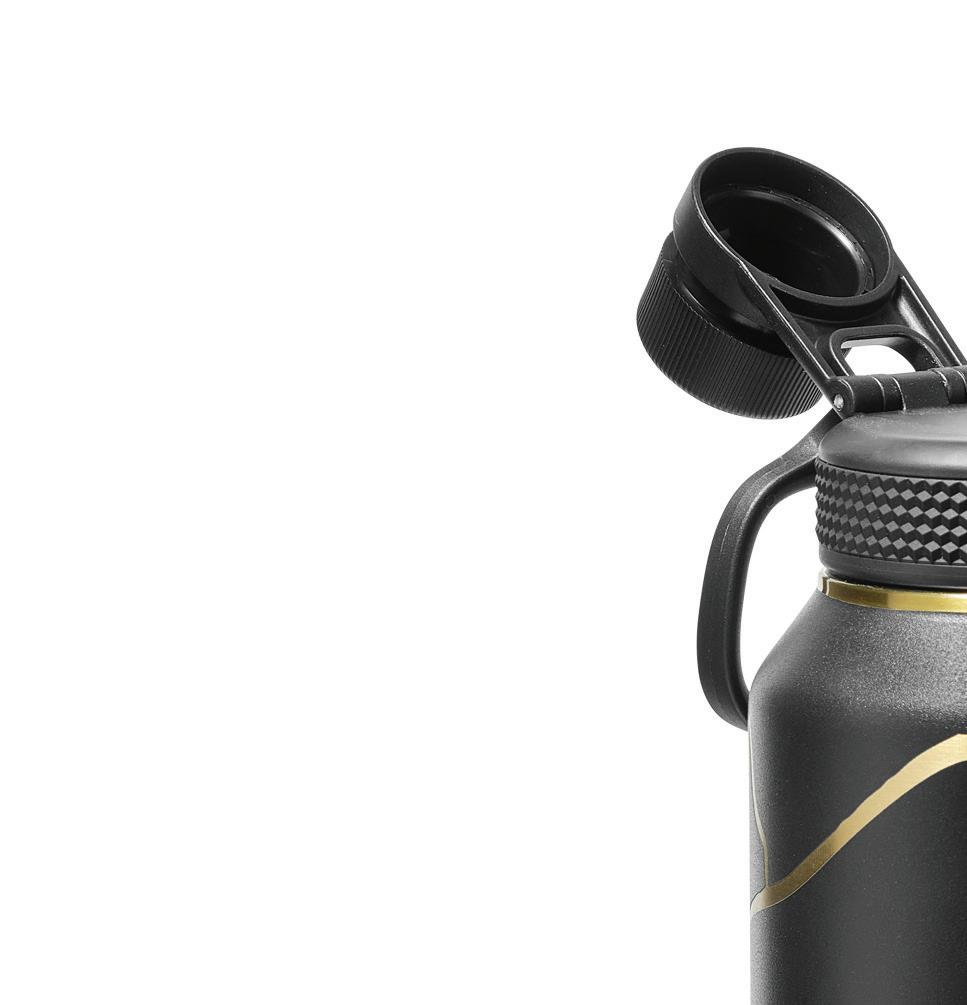
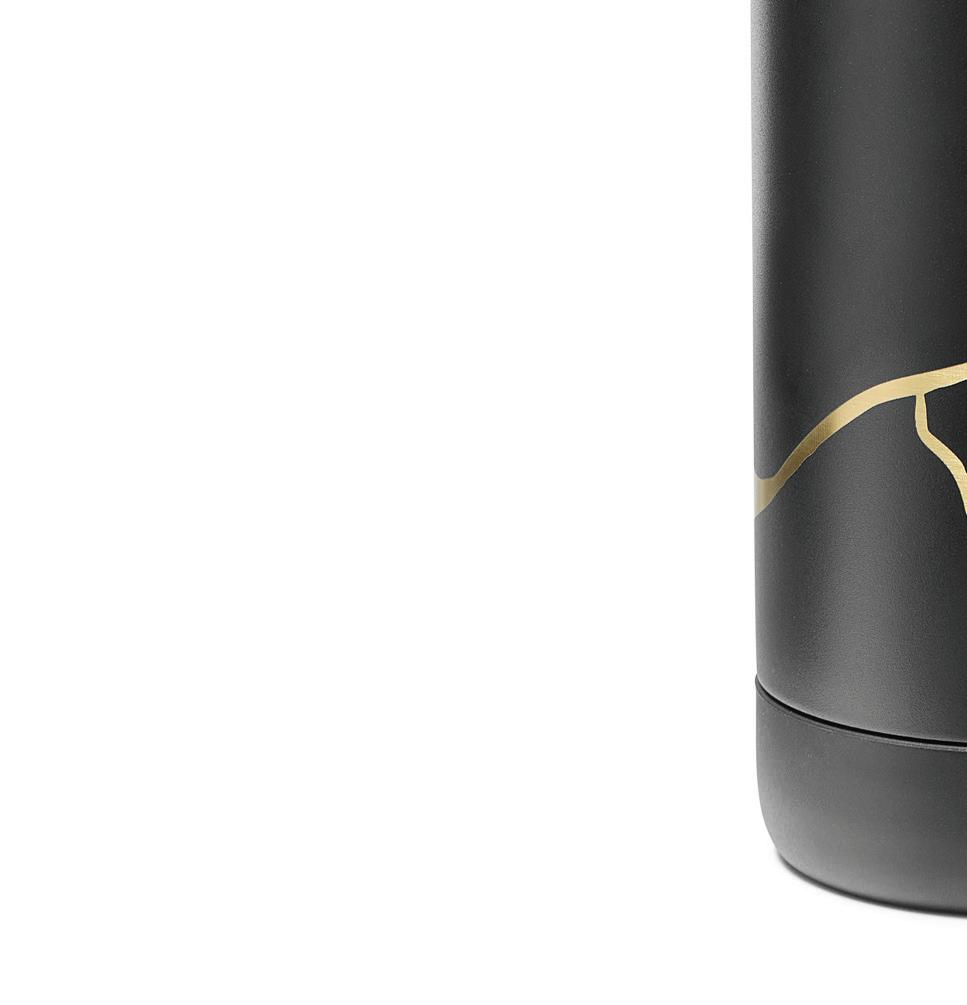
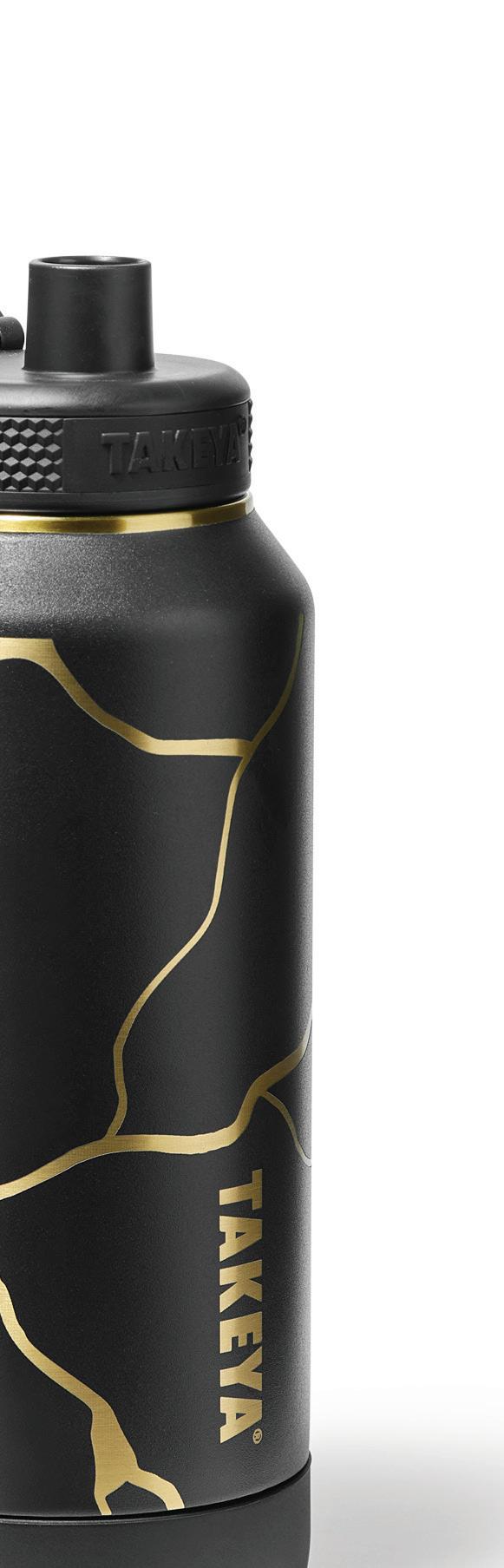
Takeya Launches ‘Kintsugi’ Bottles
Htery comfort
durability; and a specialized texture
ydration company Takeya is launching the Kintsugi Collection, inspired by the Japanese art of repairing broken pottery with gold. The limited-edition bottles offer triple-wall insulation with copper lining to keep drinks cold up to 36 hours; leakproof comfort sip straw or spout lid; bumper protection for durability; and a specialized texture with powder-coated finish. The collection is available in black, blue, white or pink. Visit takeyausa.com.
Takeya says each limited-edition bottle blends elegant design with modern performance, reflecting resilience, endurance and grace.
USA Pickleball Announces Partnership with PickleTile
USA Pickleball has named PickleTile its Preferred Court Builder and Official Noise Reduction Partner. PickleTile will serve as a primary resource for those seeking to build pickleball courts, and will have a strong presence at the 2025 USA Pickleball National Championships.
“With PickleTile’s support, we can go beyond advising on how to build courts and truly walk alongside communities through the entire process,” says Mike Nealy, CEO of USA Pickleball. PickleTile also will contribute to USA Pickleball Serves’ Grow the Game Program.
“We created this company to transform how courts are built, how communities experience the game, and how sound, space and design come together,” says PickleTile Founder and CEO Scott Miller. “With USA Pickleball, we’re ushering in a new standard—building courts with certified precision so each one plays quieter, integrates smarter, and delivers a visibly elevated, premium experience.”
Junior Tennis Champions Center Names Martin Blackman CEO
The Junior Tennis Champions Center in College Park, Md., has named Martin Blackman as its new Chief Executive Officer. Blackman brings more than two decades of leadership in high-performance tennis development, including a decade as General Manager of USTA Player Development.
USTA Foundation Launches Community Impact Hubs
The USTA Foundation has launched the Community Impact Hub initiative in 10 communities across the country, with the goal of leveraging the power of tennis to grow impact and grow the game in underresourced communities.
The 10 USTA Foundation Community Impact Hub pilot locations are: Advantage Cleveland Tennis and Education, Cleveland; Atlanta Youth Tennis & Education Foundation (AYTEF) & L.E.A.D. Center for Youth, Atlanta; Cincinnati Tennis Foundation; Houston Tennis Association; Junior Tennis Champions Center, College
Park, Md.; MaliVai Washington Kids Foundation Inc., Jacksonville, Fla.; New York
Junior Tennis & Learning, New York City; Sloane Stephens Foundation, Fort Lauderdale, Fla.; Tennis Memphis; Woodcraft Rangers, Los Angeles.
USRSA Names MRTs and CS
Master Racquet Technicians
Farhang Heydari, Los Angeles
Kristian Krcek, Boise
John Lacy, Birmingham, Ala.
Certified Stringer
Isaiah Romero, Los Angeles
Porter, Austin, Bruning Lead RSPA Annual Award Winners
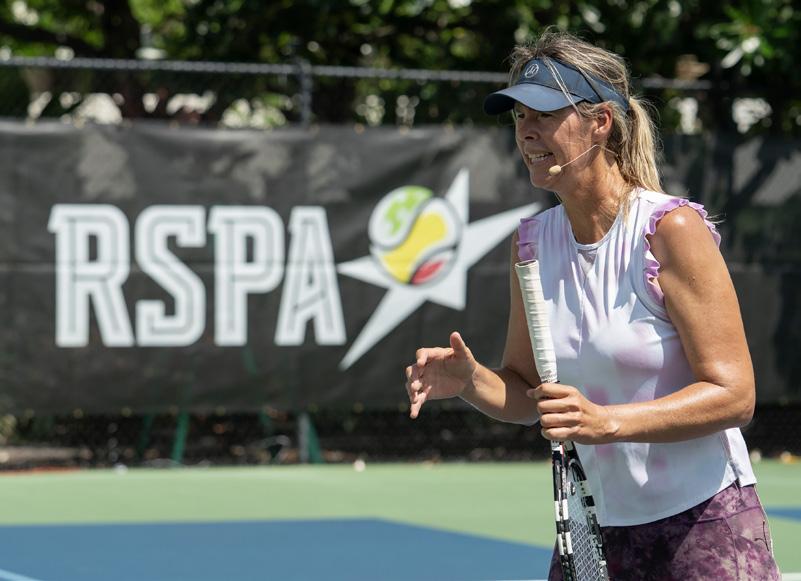
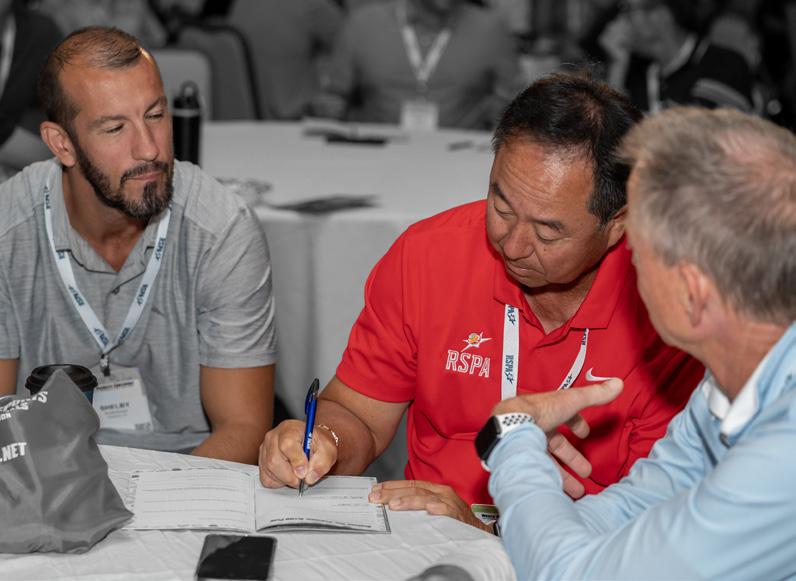
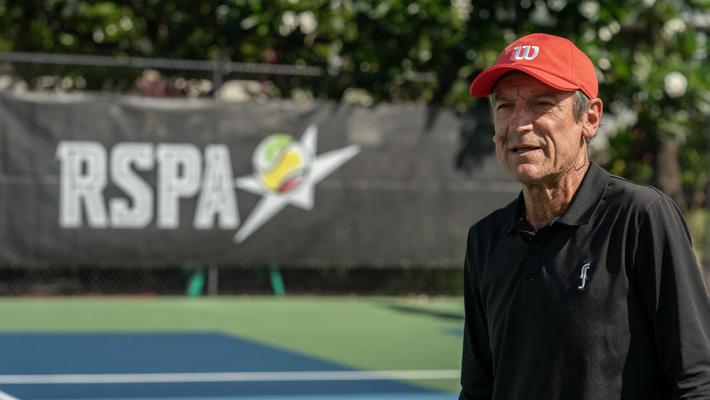
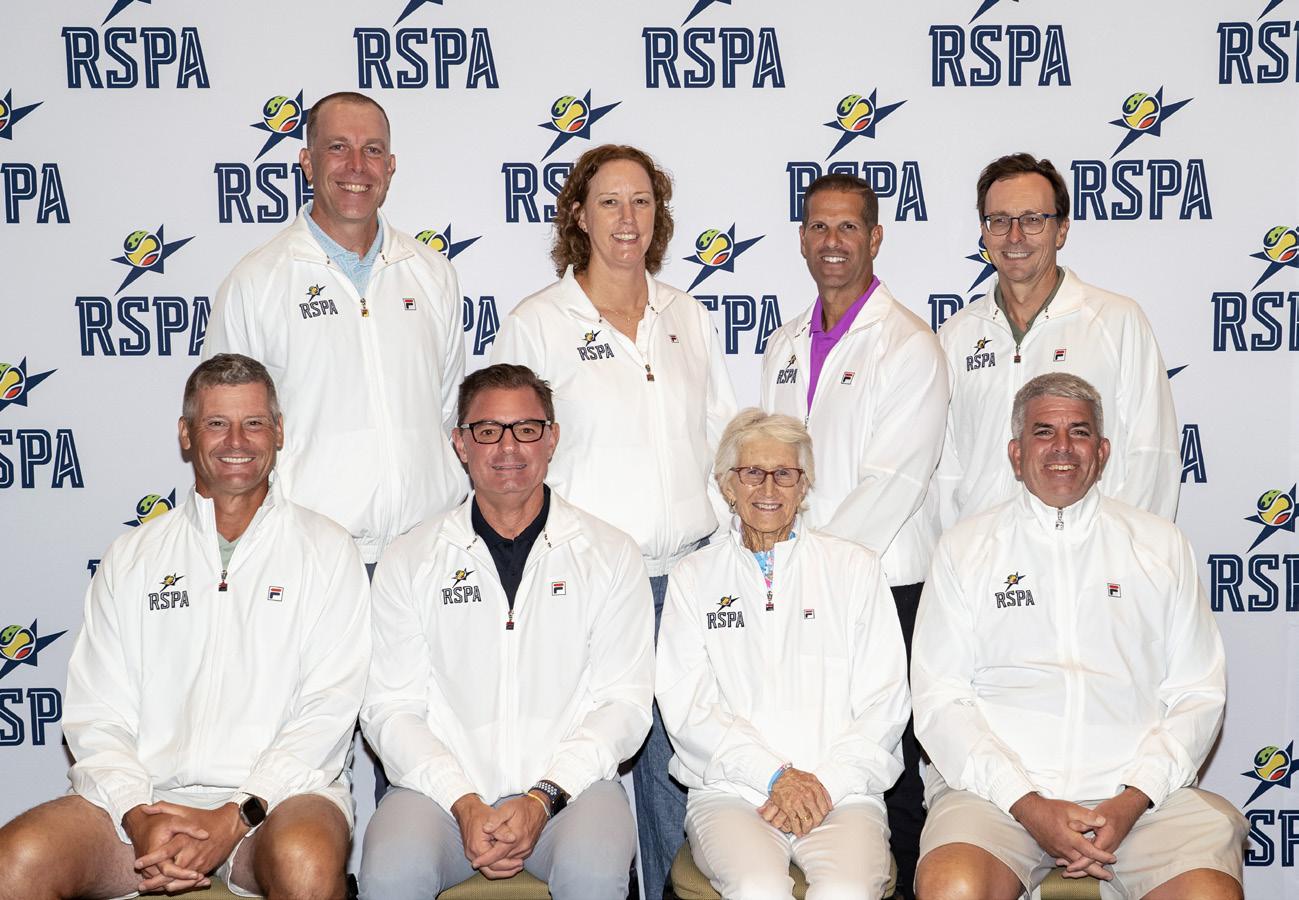
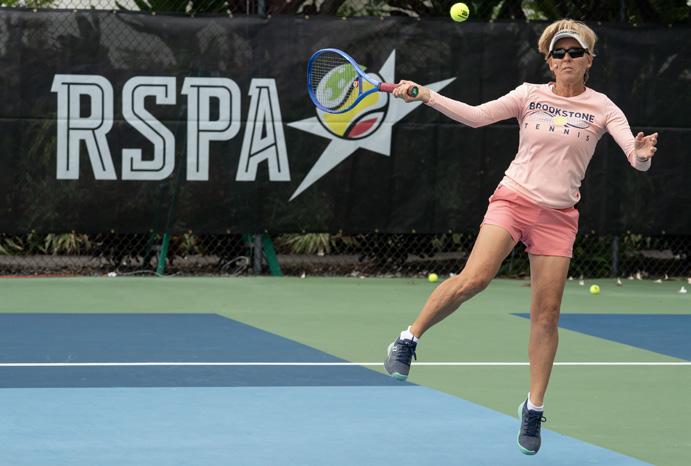
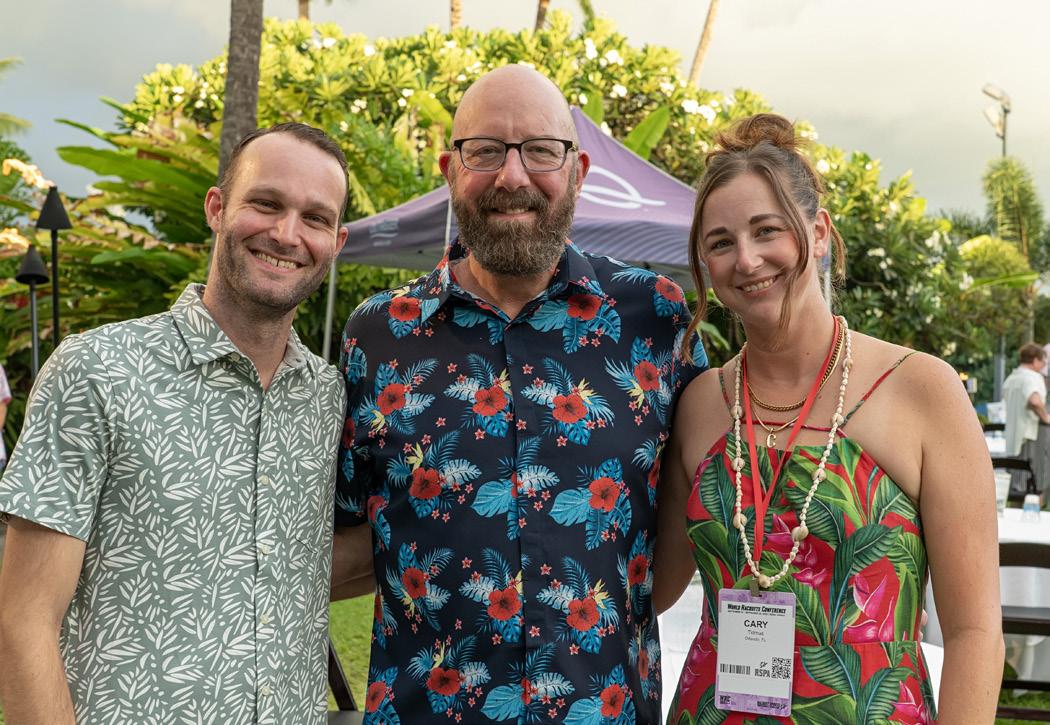
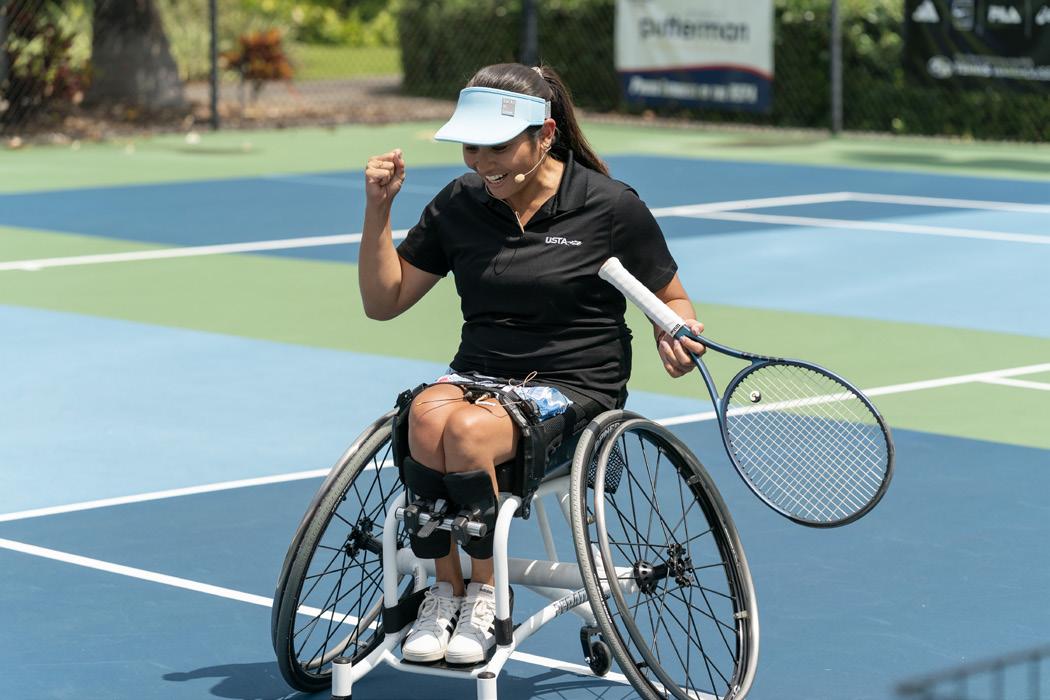
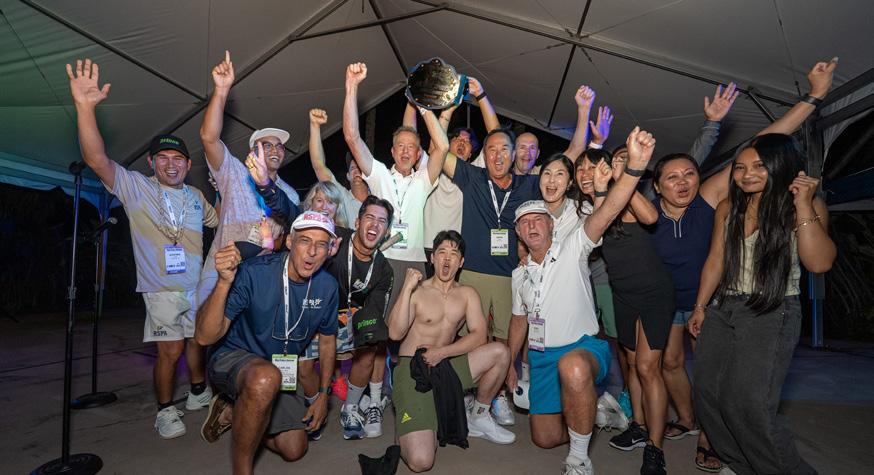
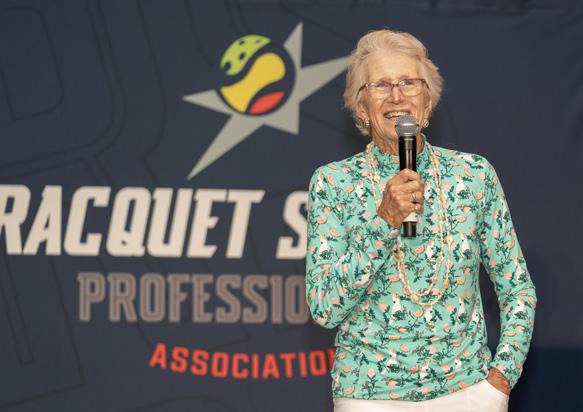
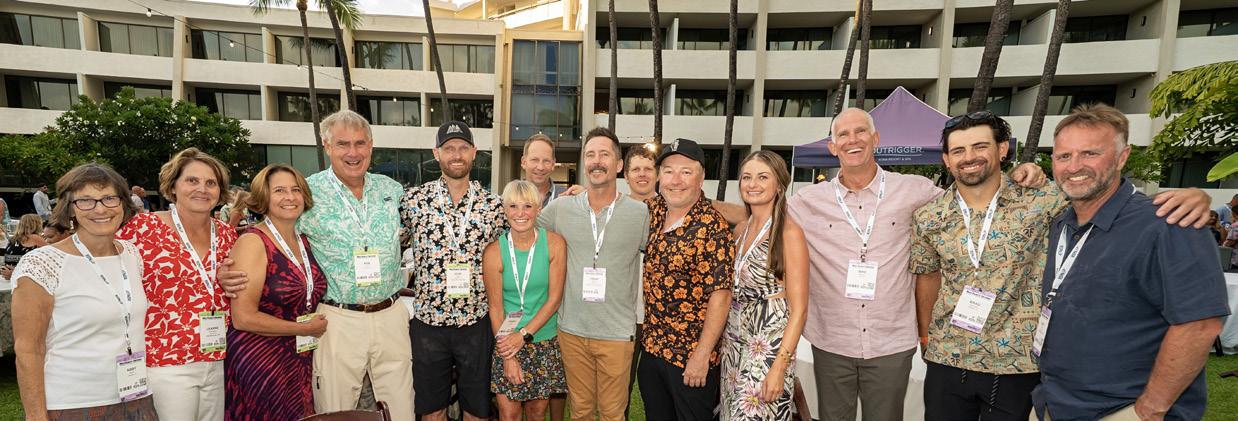
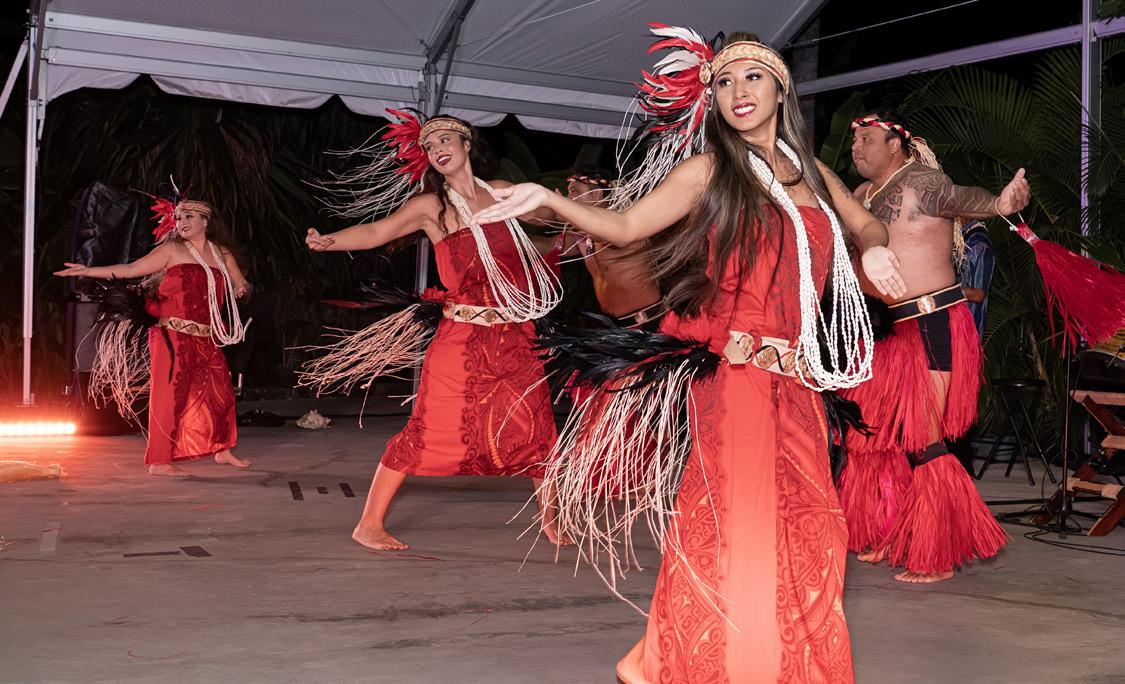
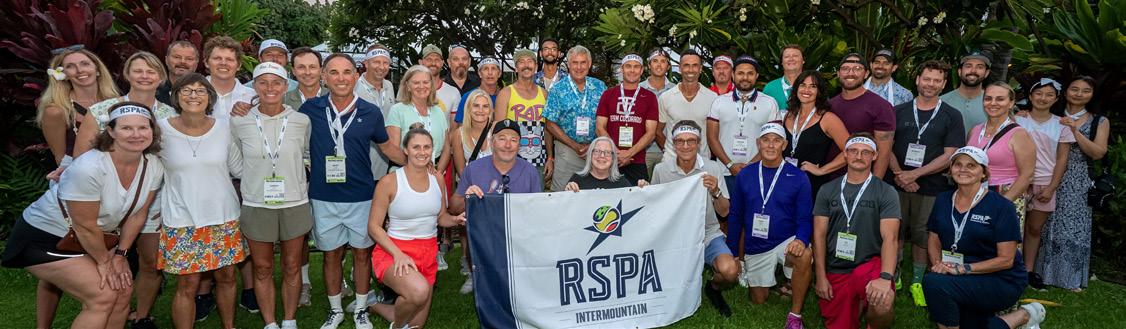
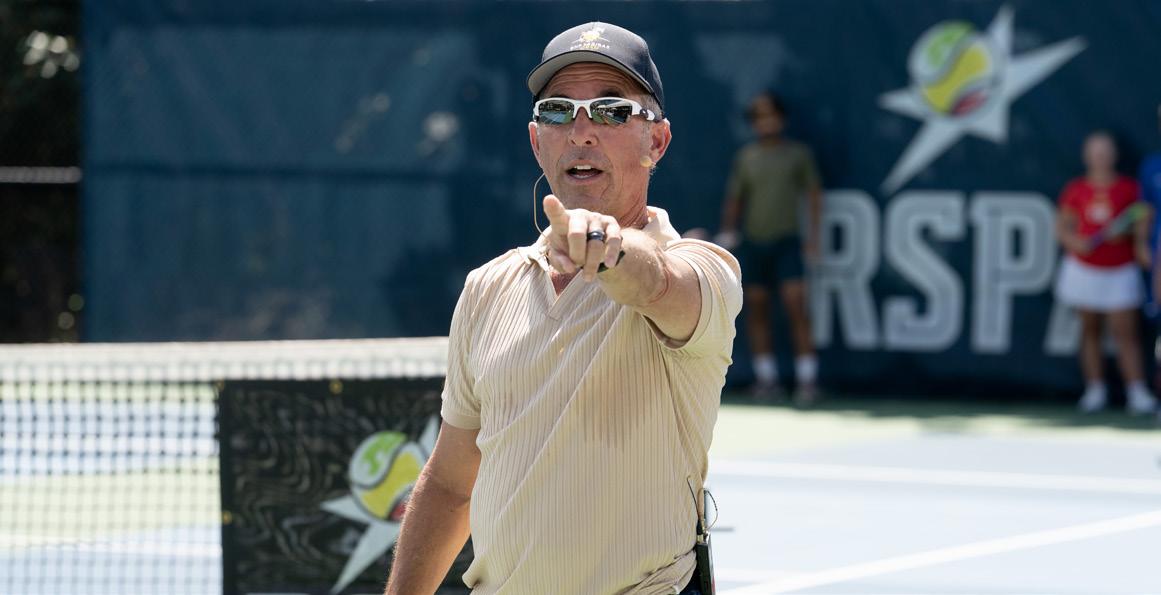
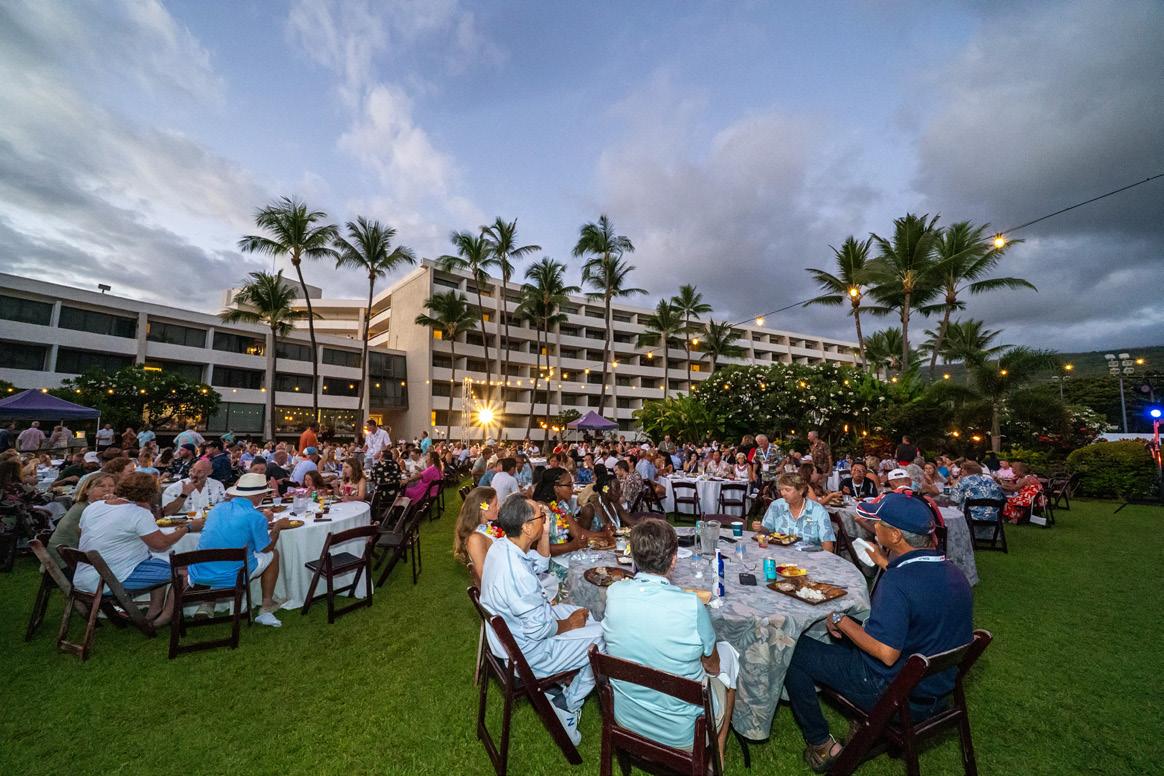
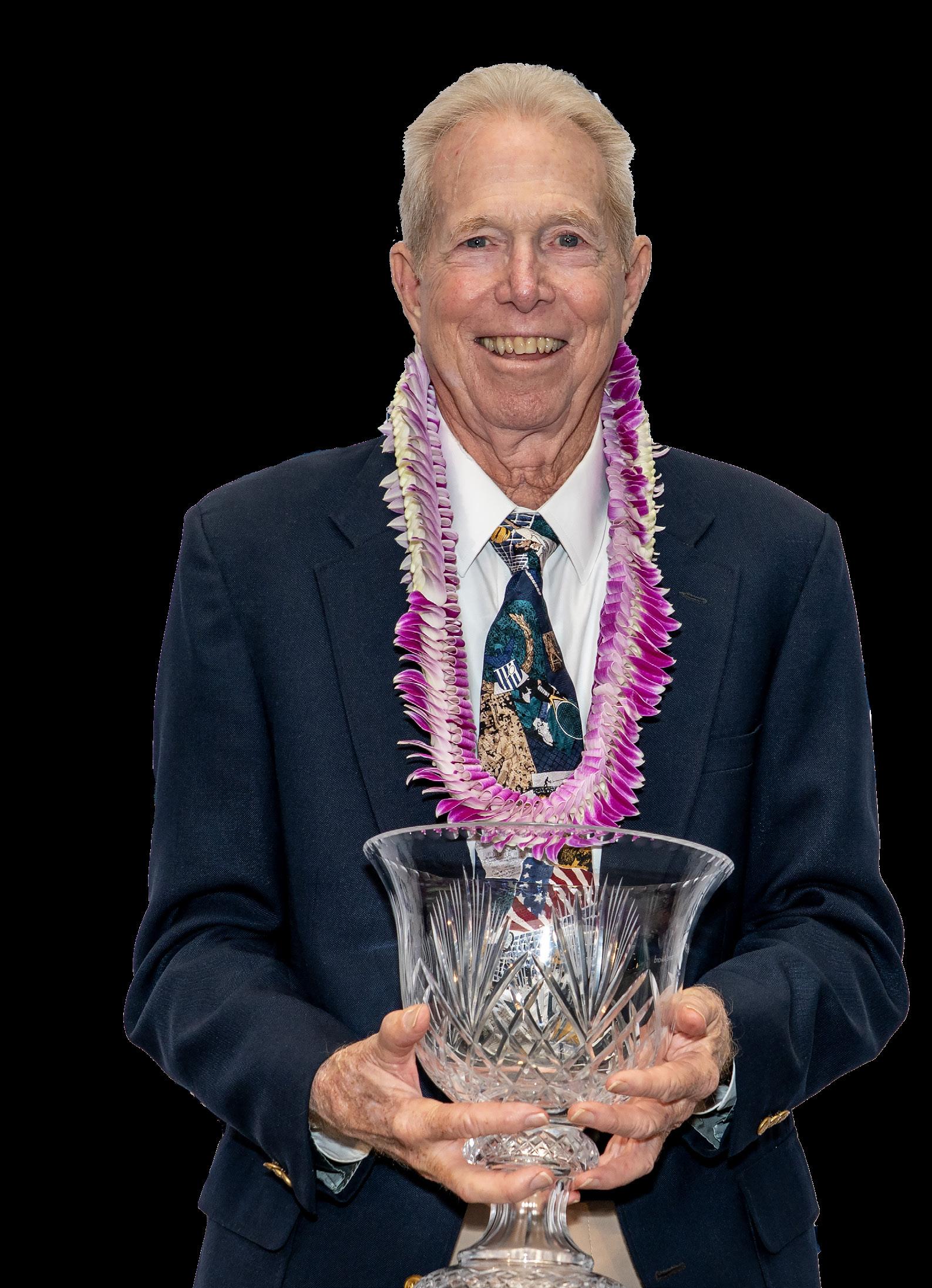
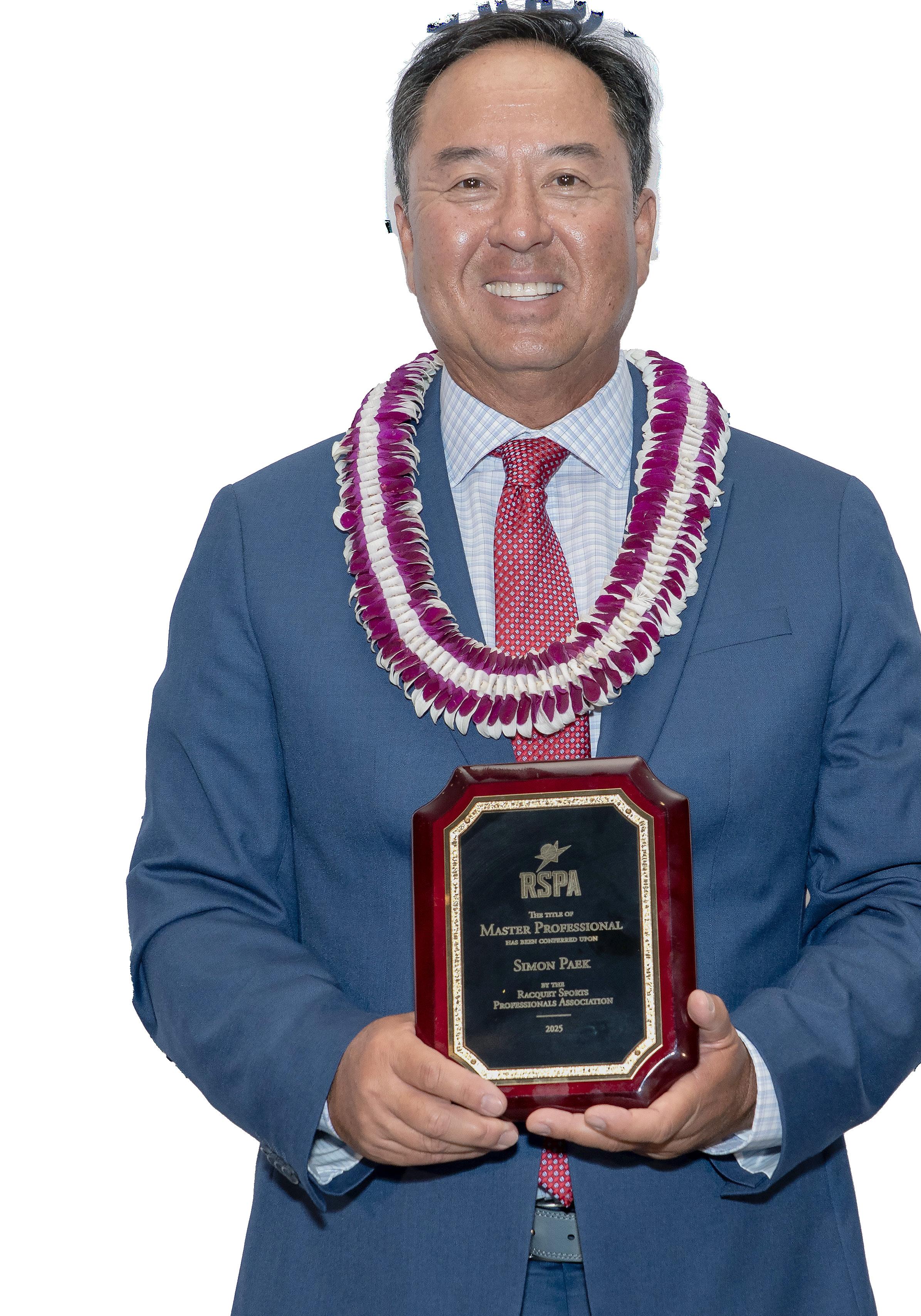
The Racquet Sports Professionals Association (RSPA) has named Dr. Dave Porter as the recipient of the 2025 Tim Heckler Hall of Fame Award, recognizing his extraordinary contributions to the sport of tennis and his positive impact on athletes and the coaching community. The honor was presented in late September during the RSPA’s 2025 World Racquets Confer-
ence, held in Kona, Hawaii.
Other RSPA award winners honored during the conference include:
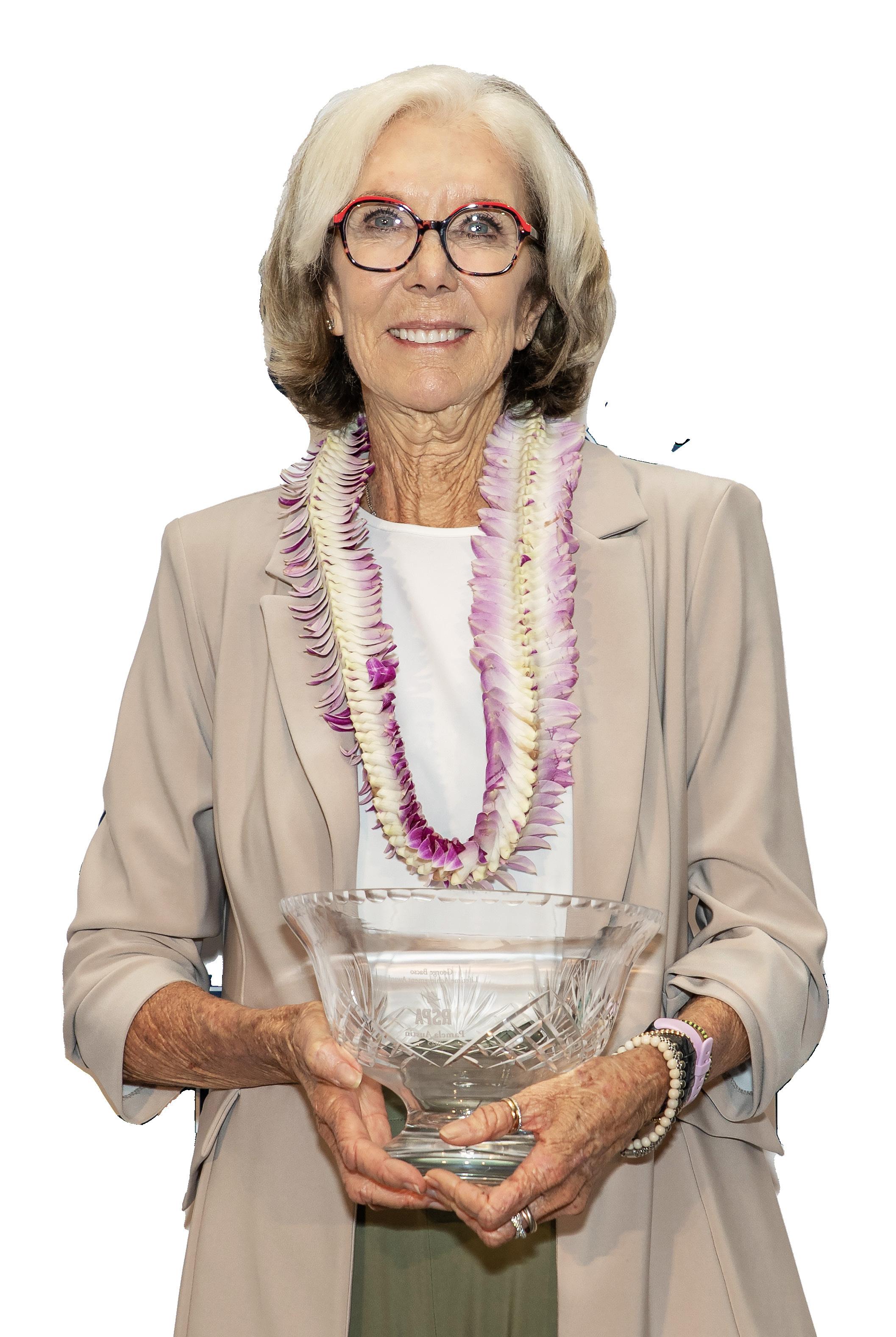
* Pam Austin, who received the George Bacso Lifetime Achievement Award, recognizing her extraordinary career and outstanding accomplishments in the industry.
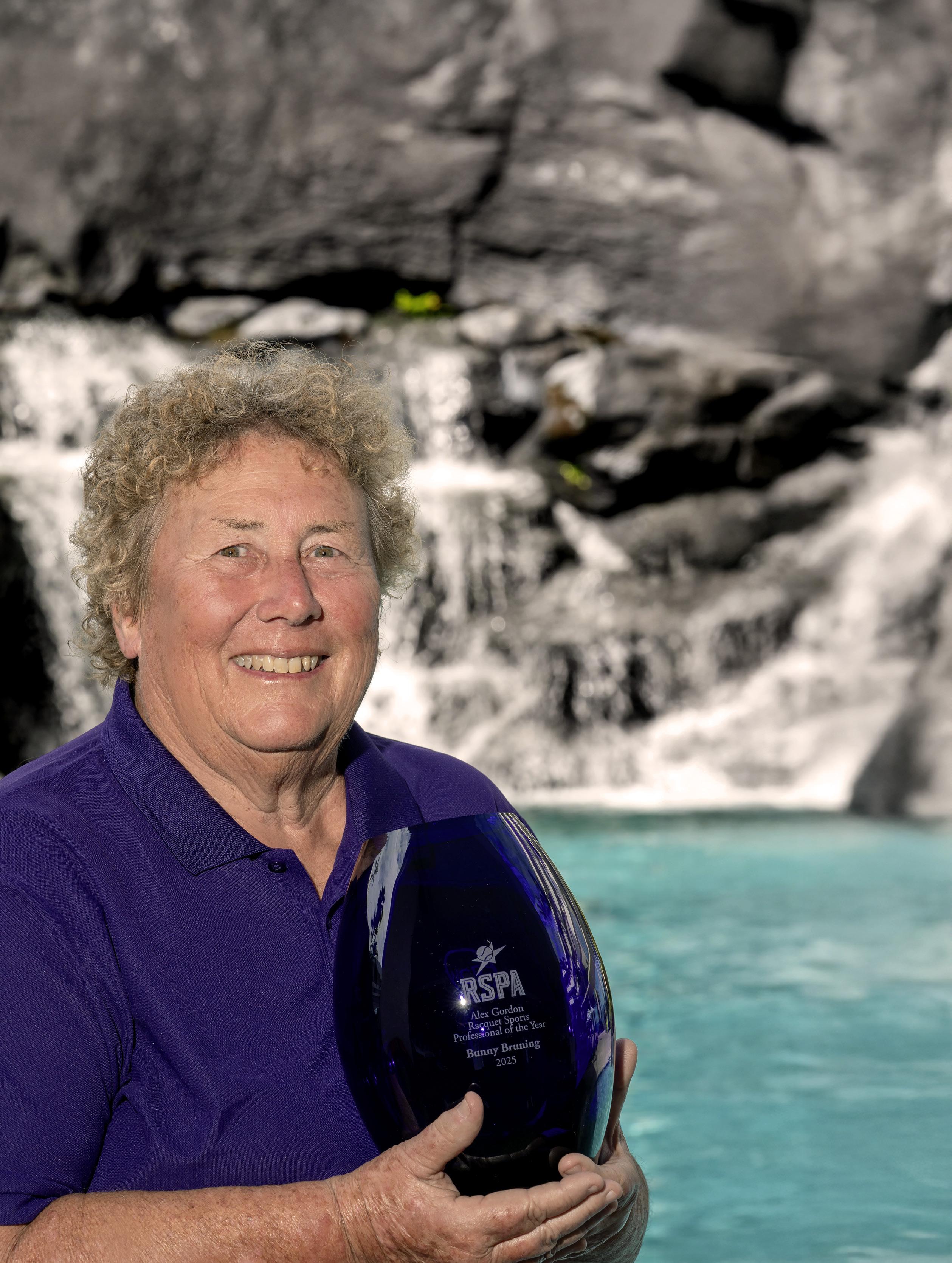
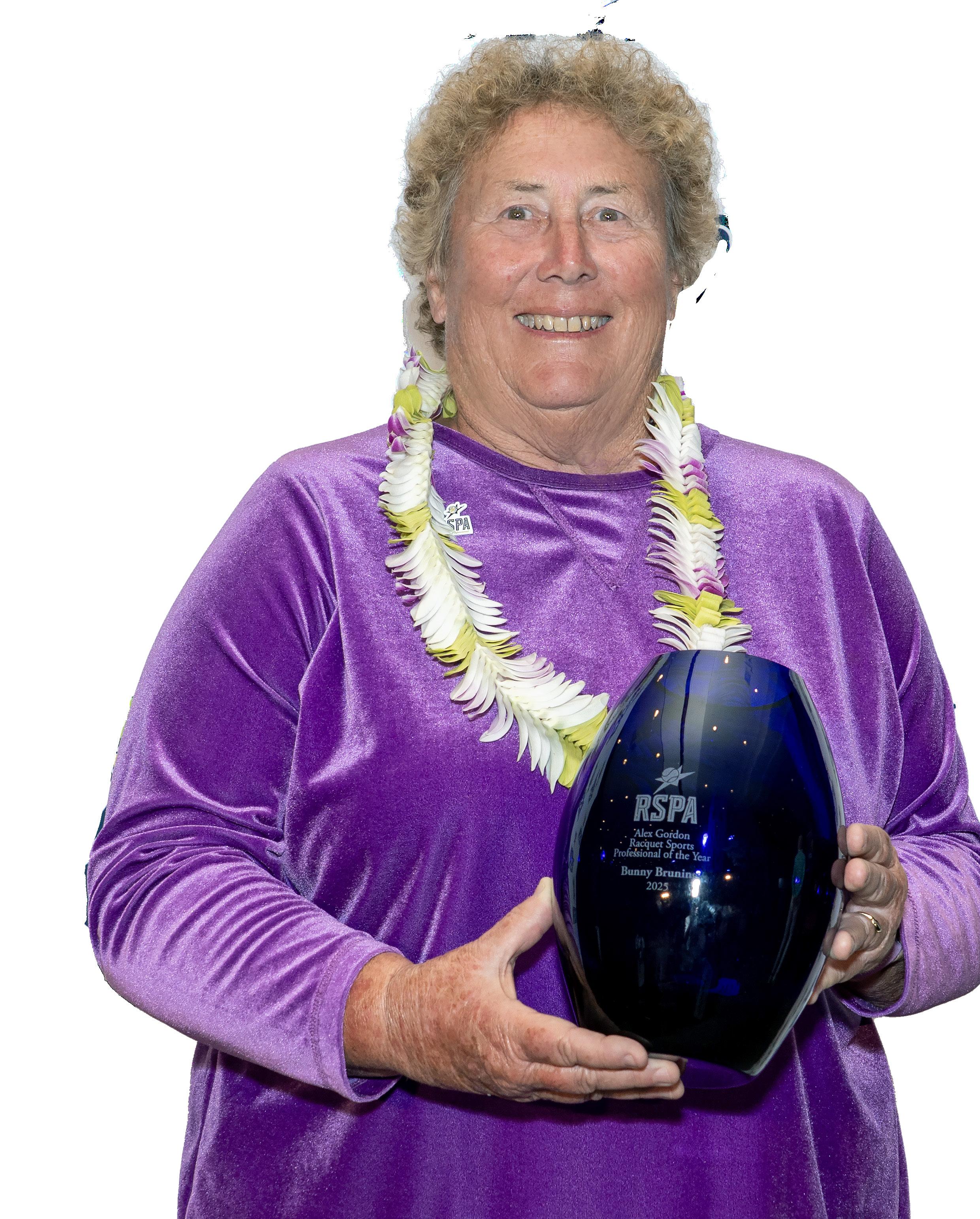
* Bunny Bruning received the Alex Gordon Racquet Sports Professional of the Year Award, recognizing her influence through coaching, mentorship and community development.
* Greg Prudhomme won the Large Facility Manager of the Year Award.
* Michael Ray-Pallares, founder of One Love Tennis Inc., received the Bob Ryland Diversity, Equity and Inclusion Award.
* Logan West received the Laurie Martin High School Coach of the Year Award.
* Keith Puryear received the 2025 Steve Wilkinson College Coach of the Year.
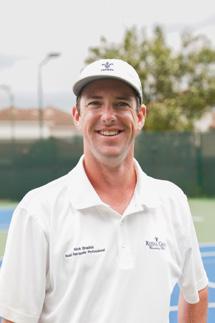
* Nick Bradish and Rita Dotson both received the 2025 RSPA Star Award.
* Alvin Varnado was honored with the RSPA Industry Excellence Award.
MAXIMUM SPIN & ULTIMATE POWER
Chris Haworth (USA)
Your Players
Reduce,
Reuse, Reward
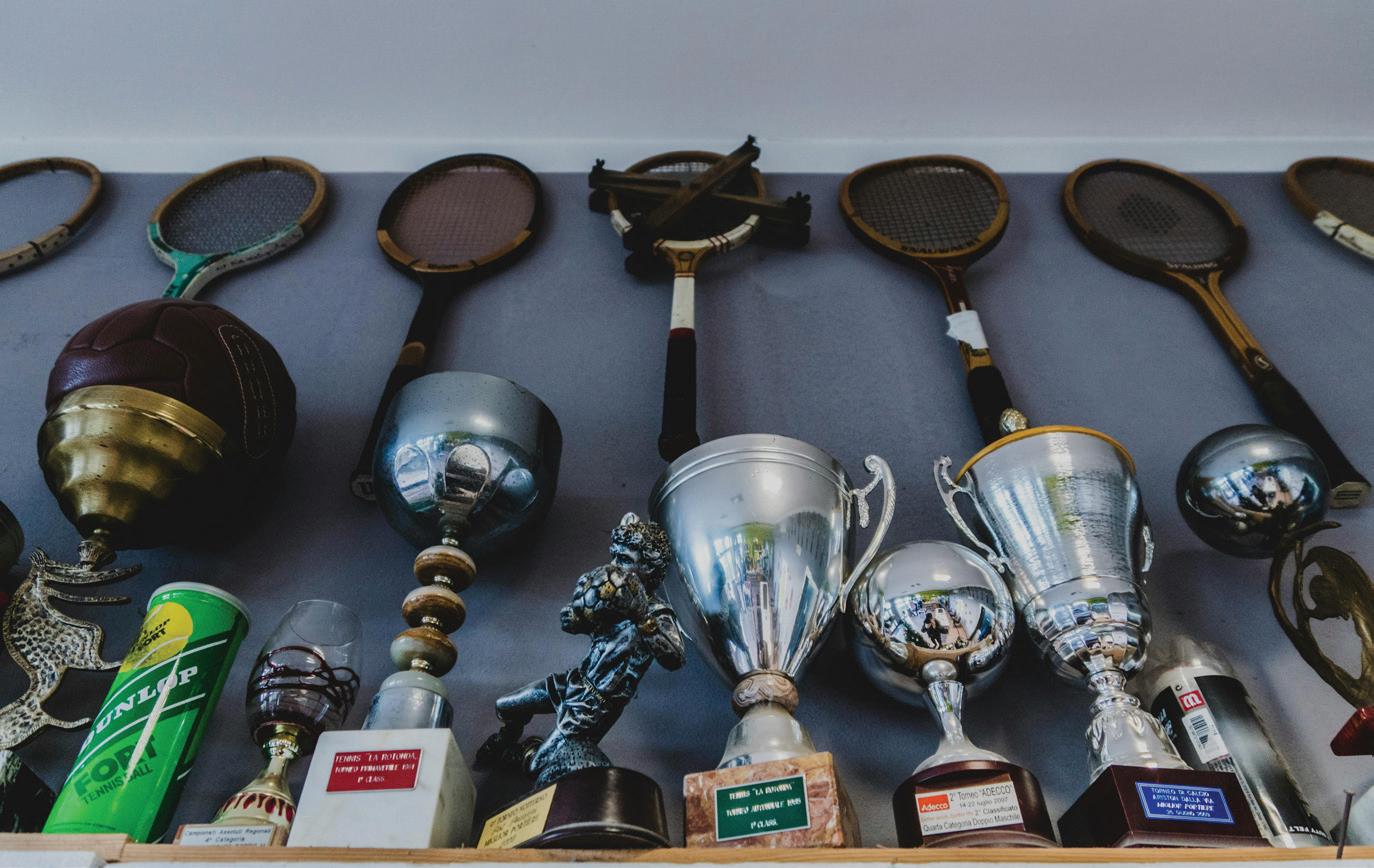
Trophy recycling reduces clutter, and can be a cost-e ective, environmentally friendly way to honor participants.
By Mary Helen Sprecher
Want to do something good for the game? Consider a new avenue: Trophy recycling.
Each year, more trophies, plaques and awards are being manufactured and handed out than ever before at racquet and paddle tournaments and events. That means recipients (and in the case of youth athletes, their parents) are faced with an ever-expanding amount of hardware—which in most cases simply gathers dust. It also creates a classic catch-22: The sentimental value means people keep shu ing awards around, eventually consigning them to boxes in attics and basements and creating clutter. Throwing out awards can create guilt for parents, and it also means they go into landfills, not ideal for the environment.
These days, though, clubs, parks, facilities, CTAs and other organizations can help—and raise their profile at the same time—by partnering with award-specific recycling programs:
• Nationwide Trophy Recycling (nationwidetrophyrecycling.com) takes plaques o trophies and sends the trophies down the line to not-forprofit organizations, whose owners might not be able to a ord trophies for their participants. A plaque is far less expensive than a whole trophy, and the nonprofit can choose to have something engraved.
• Holmes Custom (hcbrands.com) has worked with an organization called Dreams Come True to give trophies to children completing chemo and radiation treatments.
• Awards Mall (awardsmall.com/
Trophy-Recycling_ep_46.html) has been in the business of trophy recycling for 30 years. Rebuilt trophies are donated to not-for-profit organizations across the U.S.
• Lamb Awards & Engraving (lambawards.com/trophy-recycling) will either rebuild trophies and donate them to organizations with limited funds, or break down trophies for parts that can be reused.
• Medals for Mettle (medals4mettle. org) accepts medals and gives them to children and adults fighting debilitating illnesses. A similar organization is Bling for Bravery (snowdropfoundation.org/get-involved/bling-for-bravery).
Looking locally, rather than nationally, for opportunities to recycle trophies may result in finding individual organizations that are operating on a shoestring and need awards for their participants. (Ribbon awards may also be useful to such groups.)
If you’re putting up a bin for people to deposit trophies, post a QR code with information on the recycling program. And, if desired, a link where people can make a donation, if shipping fees are required.
Essential points for event owners to note when partnering with award recycling programs:
• Vet organizations carefully to ascertain they are legitimate and still accepting awards.
• Find out which types of awards can and cannot be accepted.
• Research any fees for shipping and other costs. Some companies o er free prepaid labels, while some may require the donating club or CTA to pay shipping.
• Using a local awards recycling program can help avoid shipping fees.
• Remember that parents and participants may be so enthusiastic about donating items that they may not sort awards, but may bring cartons containing all their awards.
• Write a press release for local media, promoting your club, CTA, etc., and its ability to recycle awards. A receptacle overflowing with awards is an excellent visual that will likely get picked up for coverage.
THE 50-YEAR COURT
FOCUS ON YOUR PROGRAM, NOT ON PLANNING YOUR NEXT REPAIR.
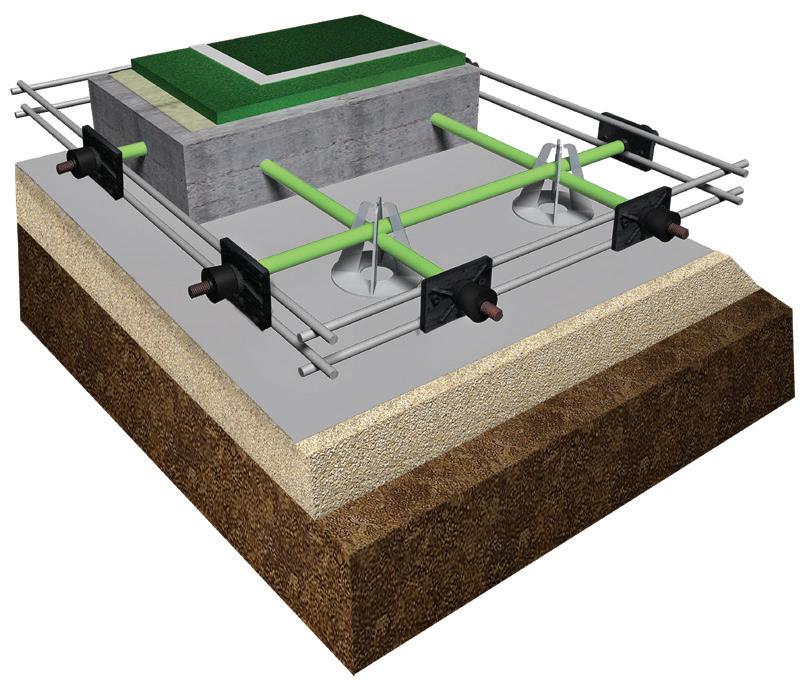
A world-class court begins with a foundation that seamlessly blends precision and strength. Our state-of-the-art posttension concrete system, ClassicCourt, is engineered to deliver consistent performance and unmatched durability.
DIAMOND COATING –CLASSICCOURT EXCLUSIVE
Our proprietary, patented, breathable liquid vapor barrier is engineered to regulate moisture release from the concrete slab. Controlling the rate of evaporation—especially after heavy rain—helps prevent bubbling and other surface issues in the acrylic layer.
POST-TENSION CONCRETE SLAB –50-YEAR WARRANTY
Once poured and tensioned, the concrete slab remains under constant compression. This allows it to ‘float’ over the subgrade rather than being rigidly anchored, absorbing ground movement and helping prevent shifting, settling, and cracking.
POST-TENSION CABLES –MADE IN USA
ClassicCourt uses high-performance 1/2” U.S. steel cables fabricated with virgin grease, powder-coated hardware, and an exclusive green sheathing exceeding 50 mils in thickness for superior corrosion protection.
Racquet Sports
Rallying the Sport Squash
has been expanding beyond its private-school roots—and may be coming to a public park near you.
By Joe Tedino
When Kevin Klipstein left a career in software marketing to take the helm of US Squash in 2004, he envisioned transforming the sport from a privileged pastime with roots in private schools into a more inclusive and widely accessible game. He saw squash shedding its elitist reputation and reaching a broader and younger audience.
For two decades, Klipstein has sought to make the sport as accessible as other more mainstream sports.
“More awareness; more availability,” he says. “The sport is sticky once people try it.”
Now, as Klipstein steps down as president and CEO, he has accom-
plished several of his top goals:
• Expanding scholastic squash, once the domain of New England prep schools, in public and private schools across 22 states, where thousands of middle and high school students compete in leagues—representing a fivefold increase since the early 2000s.
• Opening the $40 million, 75,000-sq.ft. Arlen Specter US Squash Center in Philadelphia, which has 20 courts, serves as the national headquarters for US Squash, houses the Hall of Fame and is the training and competition venue for Team USA Squash.
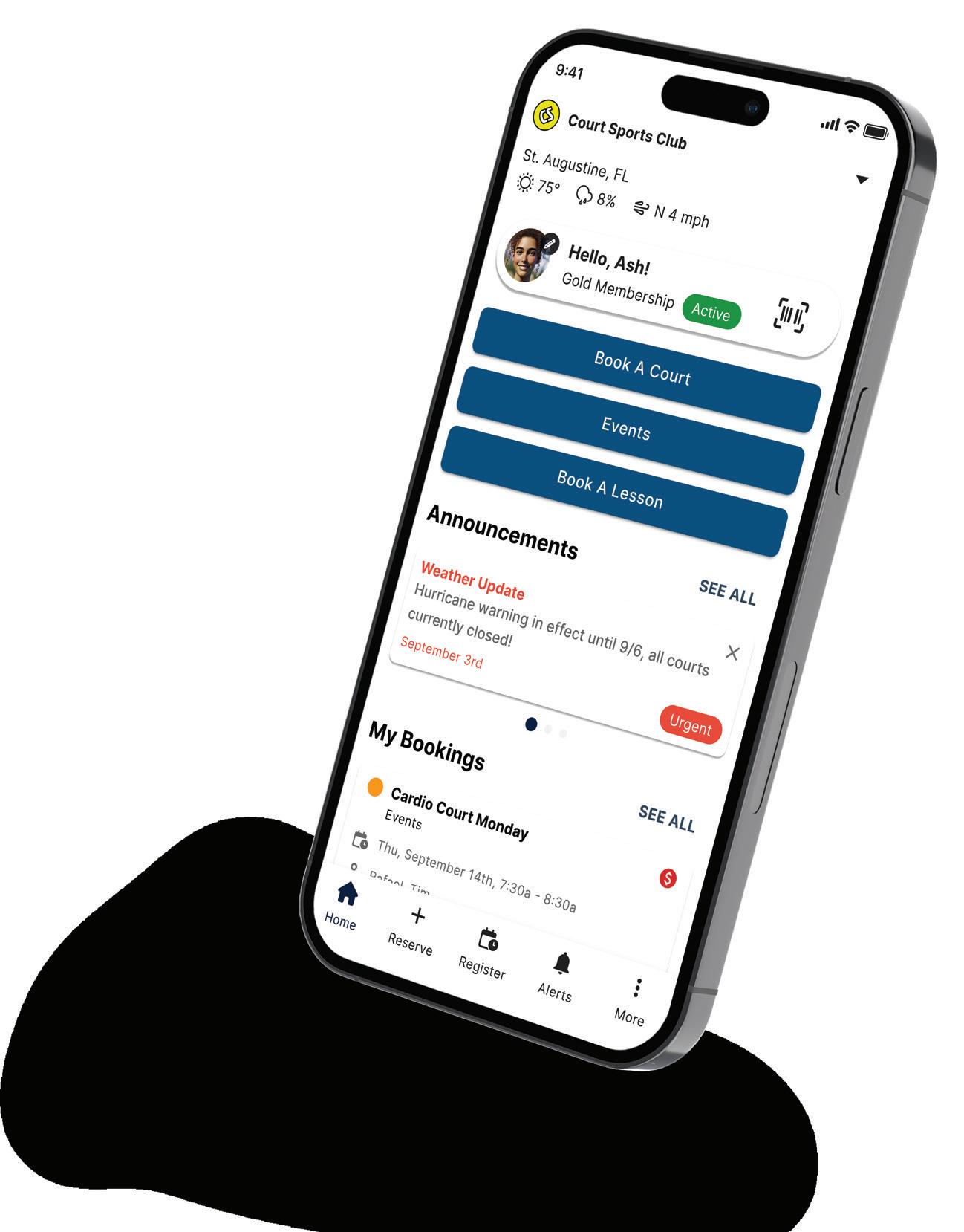
• Introducing Club Locker, a cloudbased online reservation system to help boost engagement among players, coaches, clubs, teams and
governing bodies, while enhancing awareness and fostering community development.
• Paving the way for the sport’s Olympic debut at the 2028 Los Angeles Games.
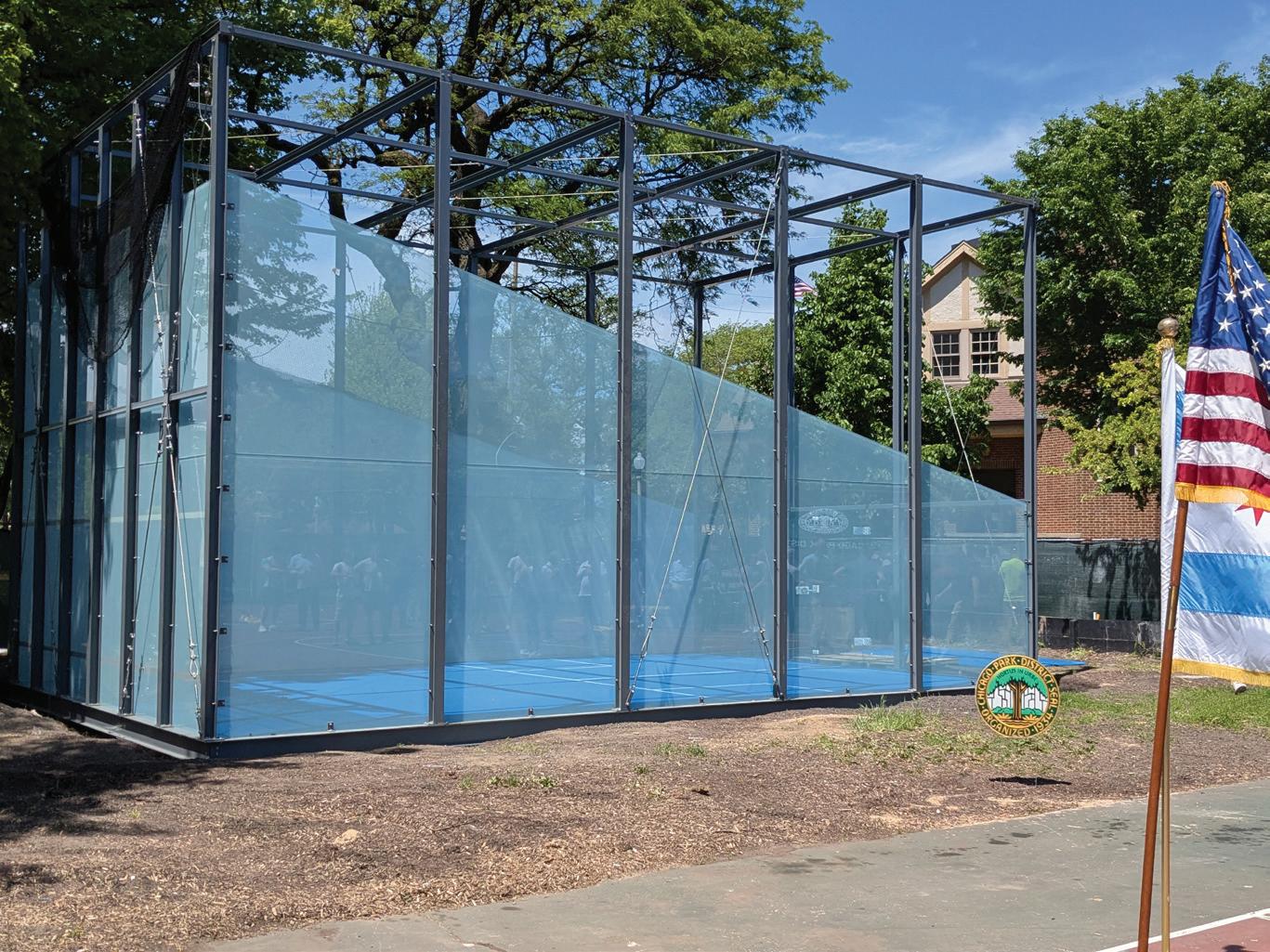
• Unveiling the nation’s first outdoor squash court in a public park in Chicago’s West Loop.
These achievements have set the 121-year-old US Squash organization on a new trajectory. A major part of the grassroots push involves public middle and high schools, which Klipstein believes is the largest untapped resource for junior players—and a key to growing participation.
“If kids aren’t even aware of squash, much less have access to it, then those top athletes aren’t going to be entered into our pipeline,” says Klipstein, who plans to continue to work at the intersection of sports and technology. “That’s fundamentally how we build toward elite performance—by growing participation from the ground up.”
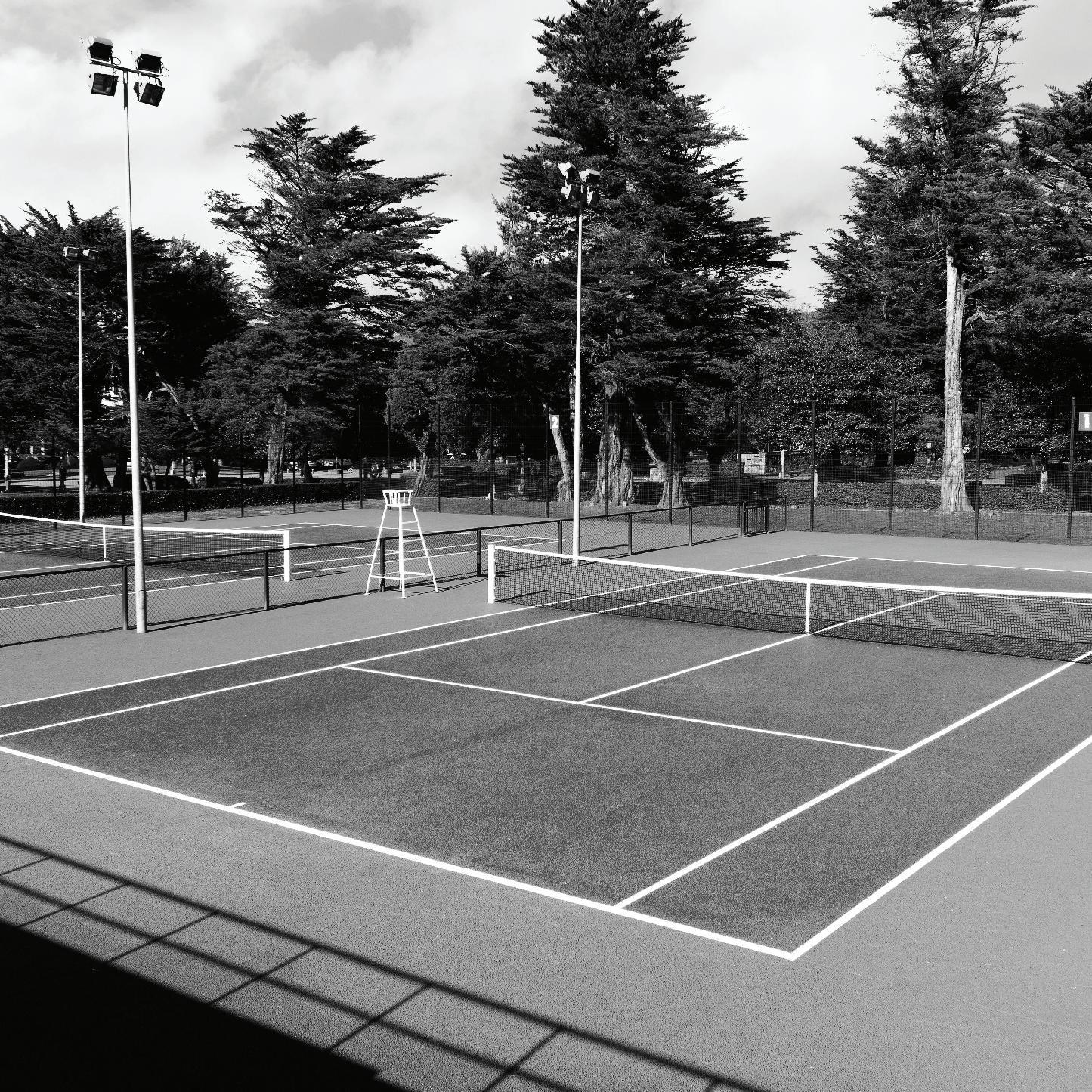
Klipstein’s support for raising the public visibility of squash can be seen in the installation of the first public outdoor squash court in the U.S. When Klipstein learned that the U.S. Professional Squash Association Foundation planned to build an outdoor court in a Chicago public park, he reached out to foundation president Arnold Dratt to offer help.
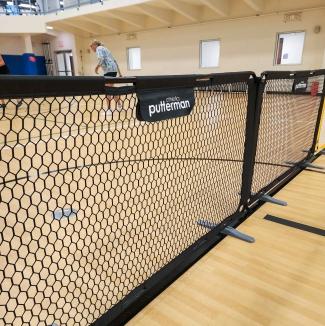
The two worked closely with a modular court designer in Amsterdam, engineer Rik Zwikker, whose company, Access Courts, builds state-of-the-art glass and steel squash courts for both indoor and outdoor use. The installation of a public court in Chicago (photo above), along with racquets and balls donated by Dunlop, is part of the effort to “make squash more accessible” to youngsters, Klipstein says.
“We supported the Union Park project financially and drove the adaptation of the design of an indoor version that costs less than $50,000 and can be assembled in a day,” he adds, “mainly to make it as easy as possible for schools to start programming,” he adds.
Squash’s blend of strategy and athleticism draws people into the game. Overall U.S. participation has jumped
SQUASH
PHOTO BY JOE TEDINO; SHUTTERSTOCK
by 13 percent in the past three years to 1.3 million, according to the Sports and Fitness Industry Association.
Besides boosting squash participation at schools, US Squash is working closely with court designer Zwikker to bring more courts to public spaces in the United States.
“We’re growing squash by investing in grassroots programs, smart court technology, and global events like the Olympics,” Klipstein says. “Through big tournaments and ongoing collaboration, we’re building a strong, lasting squash culture—one that’s thriving in the U.S. and around the world.”
Modular Squash Courts Can Provide More Access to the Sport
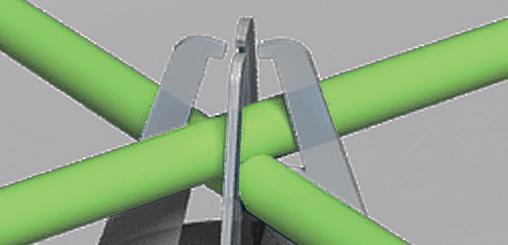
A modular squash court from Access Courts in Amsterdam aims to lower the cost and speed up installation to improve access to the sport in schools and communities.
The U.S. Professional Squash Association Foundation and US Squash collaborated with engineer Rik Zwikker of Access Courts to develop a glass and steel tube court that can be assembled for indoor use in as little as one day and at a cost of about $50,000.
“There is a lot more flexibility on where you can put these courts, either indoors or outdoors,” says Kevin Klipstein of US Squash, which is the nonexclusive
U.S. sales partner of the glass/steel courts. “We think it will be an important tool to continue the growth trajectory (of squash) and sustain it.”
A modular outdoor court installed in a Chicago public park last May has become a “showroom” for the concept, according to Arnold Dratt, PSA Foundation president.
A California group with the nonprofit Squash and Education Alliance, which sponsors squash for public school students, examined the Chicago court this summer.
“They came to see if it made sense for their program expansion,” Dratt says. Zwikker brought the
indoor version to the RacquetX conference in Miami in March.
“The overwhelmingly positive feedback confirms we're heading in the right direction, opening doors to integrate squash seamlessly alongside other racquet sports,” Zwikker said on social media after the event.
Klipstein agrees: “We think this also plays well into how other sports are encouraging participation,” he says, noting the organic growth of pickleball and padel. “Without this product, it would be difficult for us to take advantage of that overall trajectory and movement within racquet sports.”—Joe Tedino
COMMUNITY. SUppOrT.
When coaches thrive, tennis thrives
USTA Coaching offers a connected, inclusive community with the benefits, services, and education to help you stay at the top of your game, on and off the court. No matter your coaching role today or in the future, you belong here.
PADDLES & BALLS
Extended Play
Players of the fastest growing sport continue to embrace equipment that will help their games.
By Kent Oswald
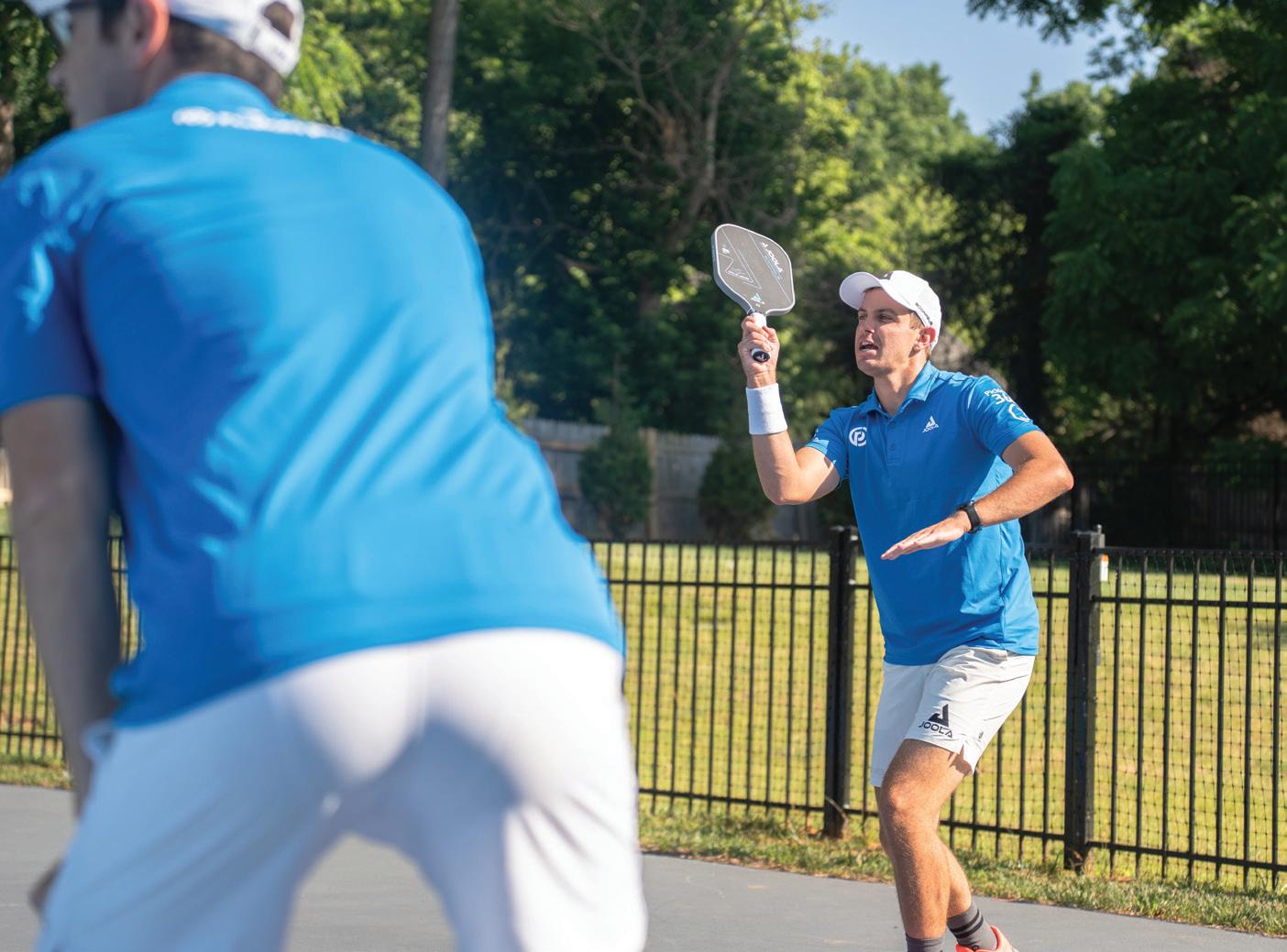
> With pickleball court construction continuing at a furious pace, combined with 19.8 million pickleball players (according to the most recent SFIA report)—a 46 percent increase from the year before—there is clearly a great deal of sales opportunity. And pickleball equipment manufacturers, new and old, are responding.
While the good times may slow as a result of supply chain complications and pocketbook challenges, those in the know see additional runway available for the sport to continue to take o . As a result, expect continuing investment in technologies to enhance play, responding to a continuing consumer search and embrace for the equipment that can take their game to higher levels. (Prices are suggested retail.)
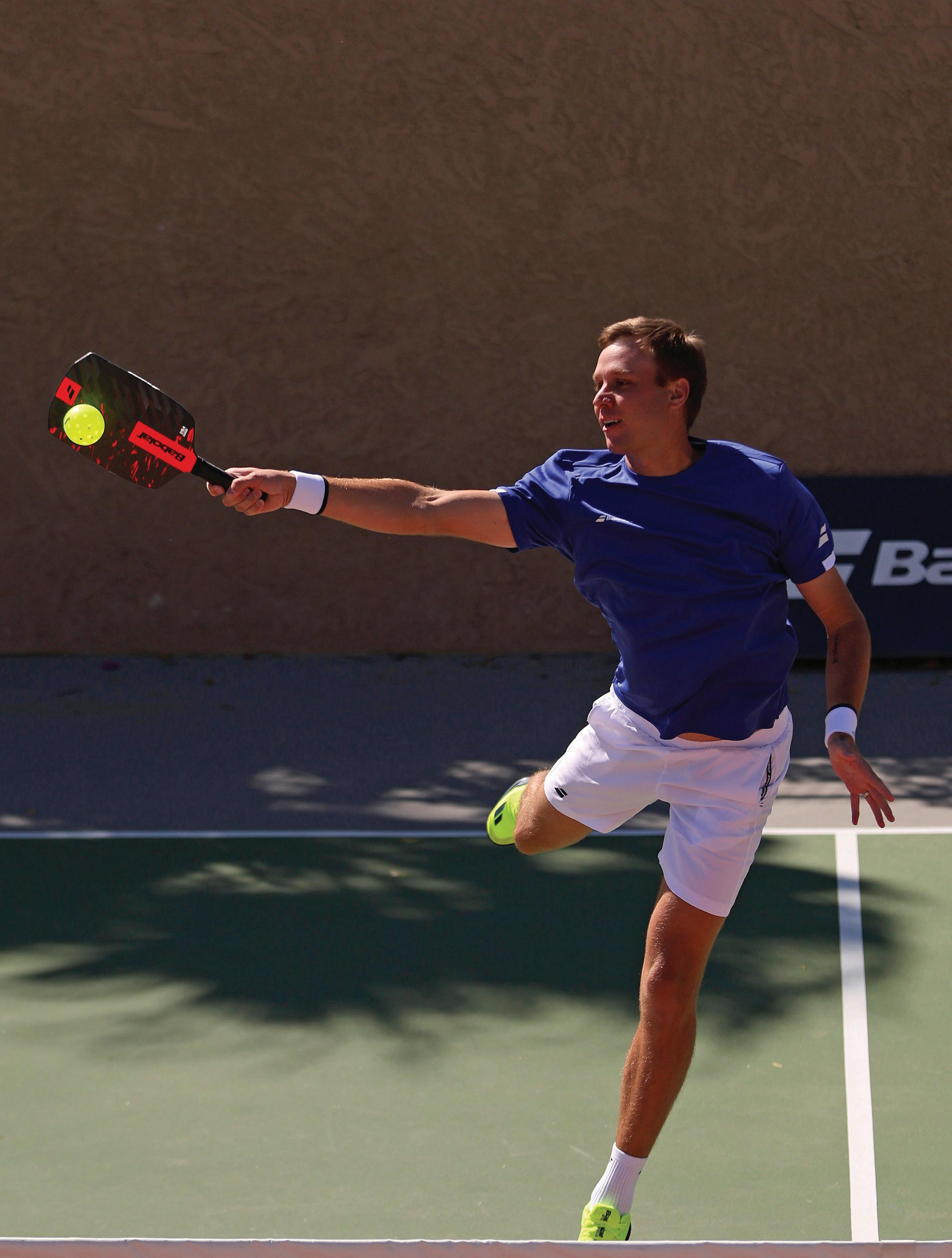
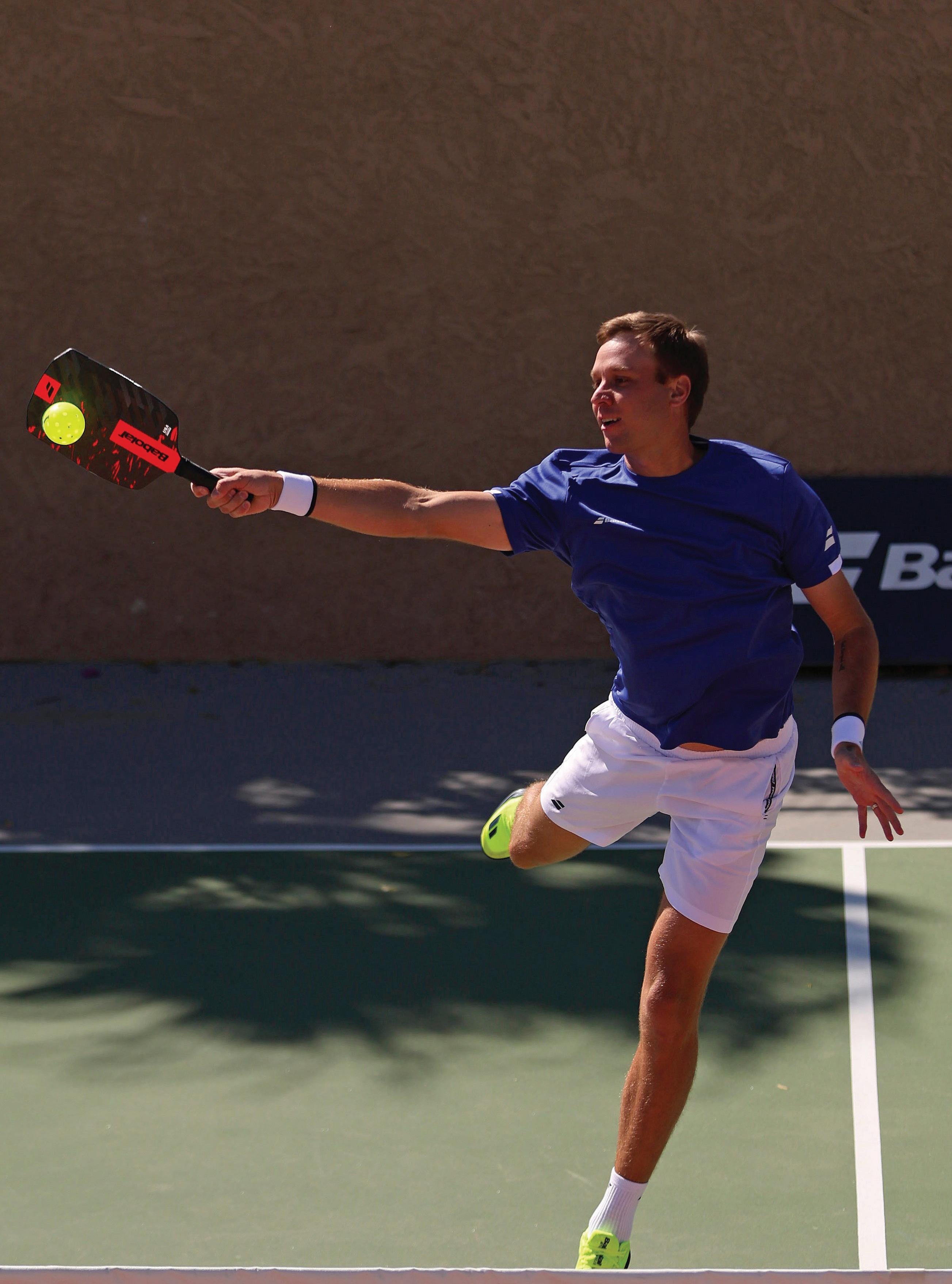
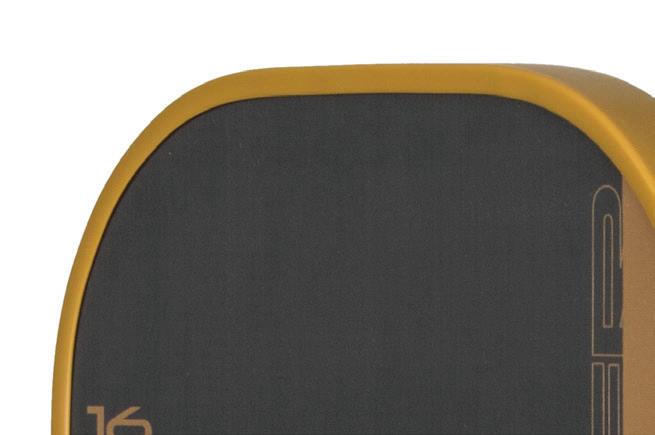
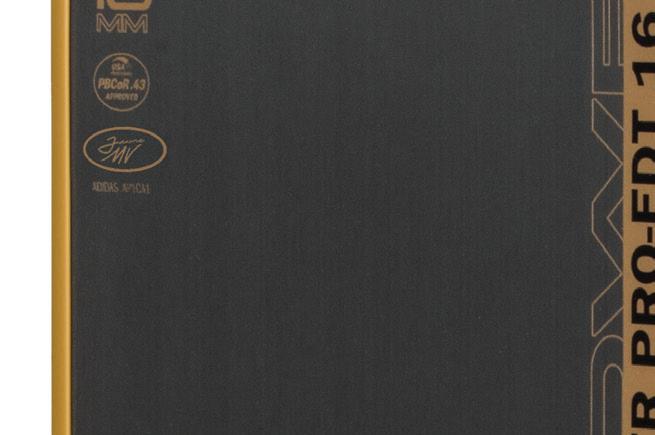
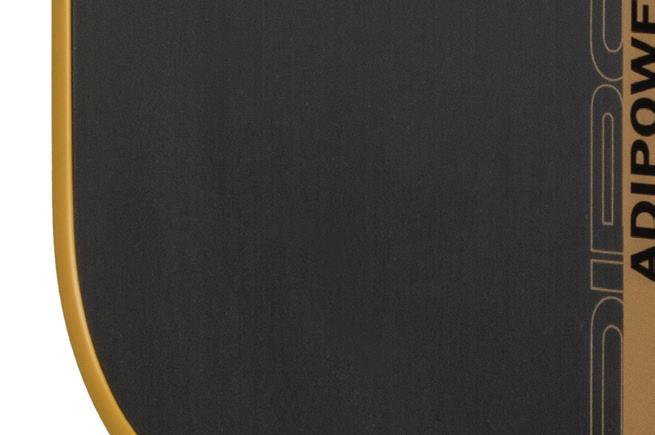
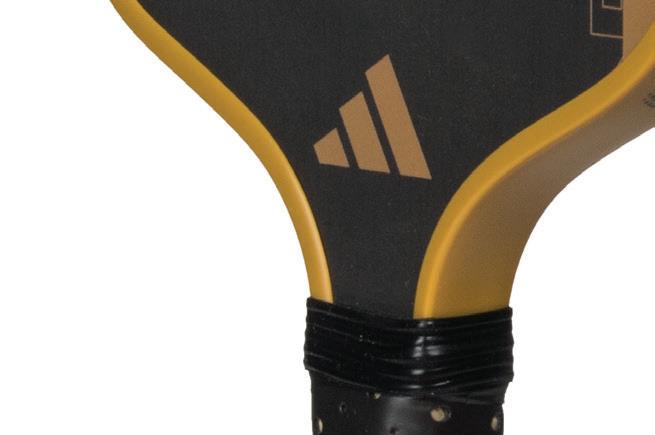
Aggressive play is rewarded with the Adipower Pro-EDT 16 ($189). The extended-reach frame, low-density core and raw-carbon-fiber face, balancing the stick’s power with reliable spin, complements play for those seeking full-court coverage and an early-rally advantage.
Babolat
BABOLAT.COM/877-316-9435
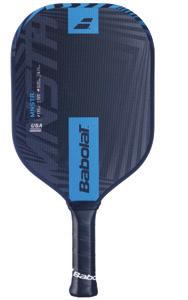
Maximizing ball rotation following impact for competitive players is the mission statement of the MNSTR ($169), thanks to a polyester textured surface over a polypropylene honeycomb core. Outstanding feel and minimal arm-wear due to reduced vibration are benefits of the robust sweetspot’s location in the 16.1-inch x 7.8-inch face.
Joola
JOOLA.COM/301-816-3060
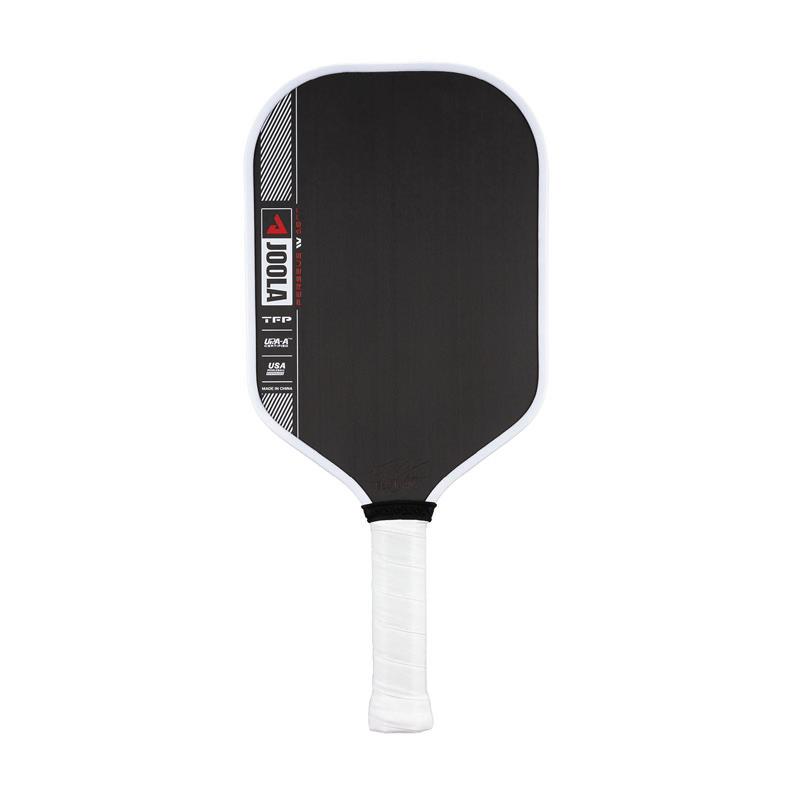
Joola’s Pro IV paddle line-up features sticks molded specifically for di erent playing styles. Included are the standard-shaped Perseus, endorsed by Dekel Bar; the wide-body Scorpeus for control, endorsed by Anna Bright and Colin Johns; the elongated Magnus preferred by Tyson McGu n for power; the Hyperion, played by Simone Jardim, for its speed; and Agassi-Graf signature paddles.
Engage
ENGAGEPICKLEBALL.COM 407-720-5749
Delivering maximum pop with a responsive feel, the AlphaPro ($260) has a reinforced carbon frame, polymer core, octagon grip and vibrationdampening tech. All foam, no honeycomb and created for durability, the ProFoam ($230) features one-piece construction, dynamic responsiveness, consistency and precision.
Onix
ONIXPICKLEBALL.COM/800-467-1421
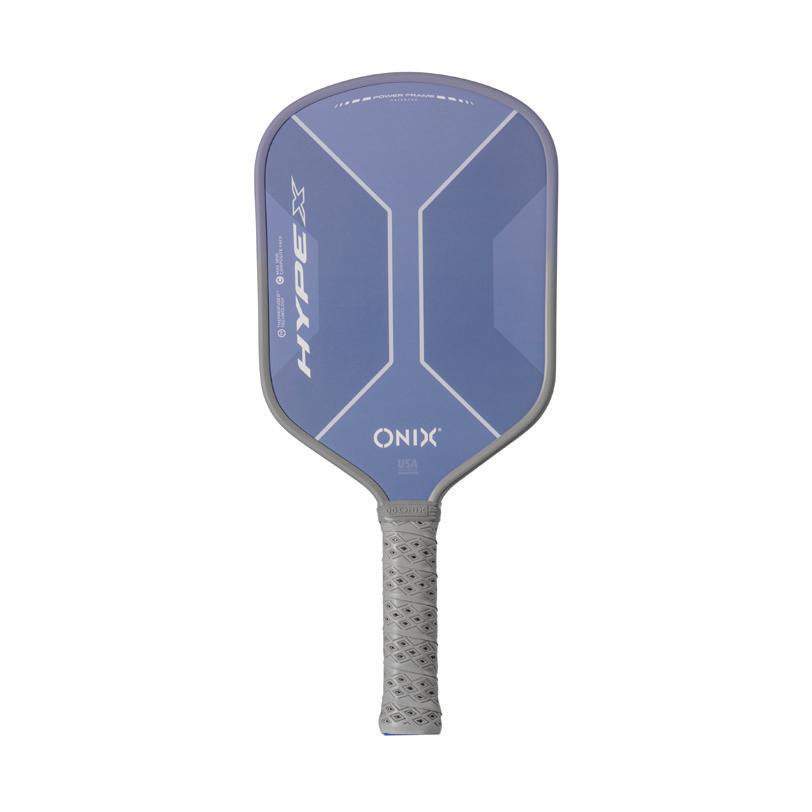
Popularly priced USAPA-approved paddles are the Hype X Pro ($120) and Hype X ($90), both with unibody construction. The former is an elongated paddle, providing a greater sweetspot, with a raw carbon fiber face for spin and additional power. The latter, also elongated at 16.4-inches x 7.5-inches with a composite face and honeycomb core, fits with the player moving up in levels.
Gamma
GAMMASPORTS.COM/800-333-0337
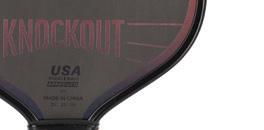
Power, precision and an extended, forgiving hitting zone combine in the 8.4-ounce, 16-5/8-inch x 7-3/8-inch Knockout ($250), the company’s first-ever foam-core paddle. The raw carbon face creates outstanding spin, and the honeycomb grip minimizes hand stress and maximizes sweat absorption for hours of comfort for players hitting at performance levels.
Paddletek
PADDLETEK.COM/866-972-3353
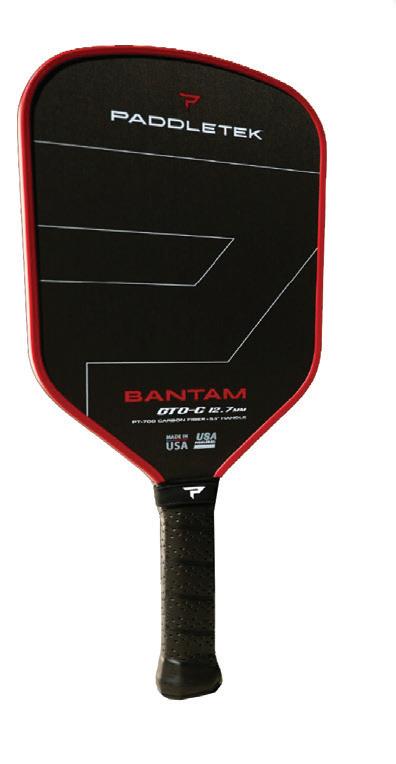
The hybrid-shaped Bantam GTO-C ($250), the Carbon series’ latest addition, o ers—through a variety of weight options—all-court performance with a tapered head, wider sweetspot and a balance of reach, feel and power, o ering competitive players consistent play from any angle.
ProKennex
PROKENNEX.COM/800-921-4525
In the newest iterations of the Black ACE Avenger 11 and 11 LG ($260), the proprietary kinetic system has been engineered into both face and handle to further eliminate shock and vibration. The power and spin quotients for the paddles, with their 11-mm honeycomb polypropylene cores and 7.9-ounce weights, are jiggered to the highest levels of USAPA’s new requirements.
The Tour 40 (3-pack/$12) is the company’s first rotationally molded ball. This one-piece construction method enhances durability, allowing for longer, more consistent play, making it ideal for modern tournament play, and maintaining its shape and consistent responsiveness, game after game.
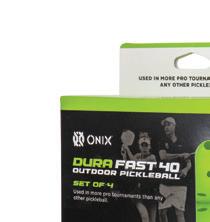
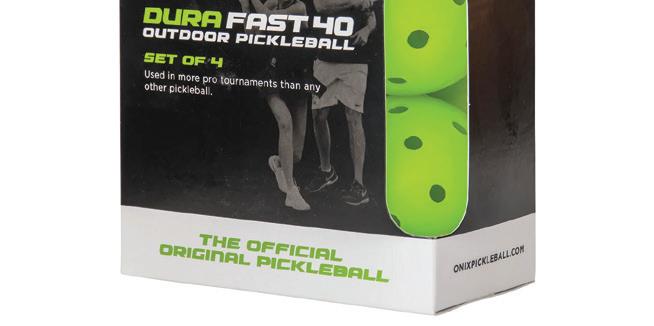
The Pickleball Canada Tour’s o cial ball, the seamless, roto-molded DuraFast 40 (4-pack/$13) features large and small holes for true flight. The durable balls are available in three vibrant colors and deliver consistent speed and bounce.
“PRO-CUSHION is the best solution for the truest bounce for tennis and pickleball. It transforms courts into permanent, crack-free, cushioned surfaces while providing a playing surface that’s easier on the body and joints. I love playing on Pro-Cushion for those reasons and I highly recommend it”
Tim Wilkison, Tim Wilkison Tennis Academy
Competed in 40 Grand Slam Tournaments
High ranking of #21 on ATP Tour
FOOTWEAR
Taking It in Stride
By Kent Oswald
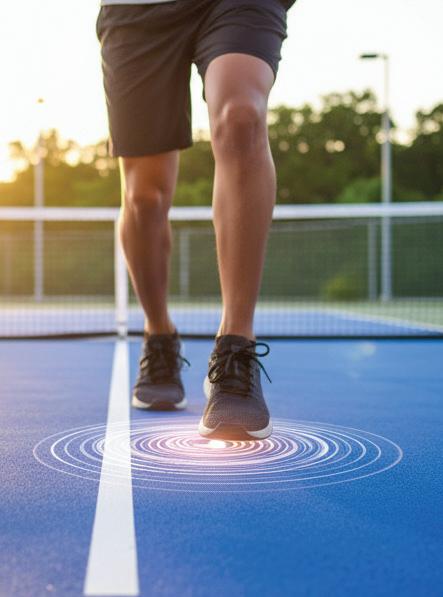
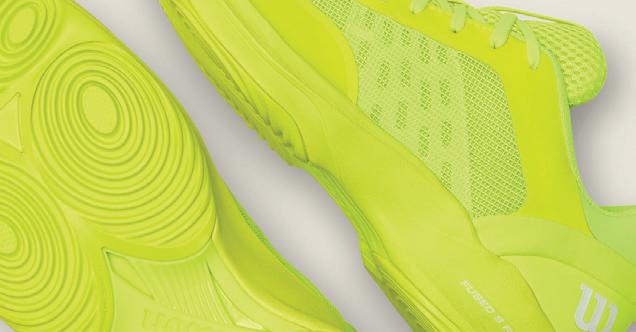
Even as product development, science and manufacturing technology reach near-unimaginable levels, reports suggest that the most useful tools for dealing with the immediate future for footwear manufacturers and retailers might be a crystal ball and, perhaps, a big box of tissues.
There is significant concern that the good times of the last few years, due to the robust participation growth for pickleball and tennis, and the introduction of padel, are being met, blunted, and perhaps even reversed, by the headwinds of domestic economic uncertainties, tari s creating supplychain entanglement, and the likely unavoidable resulting price increases.
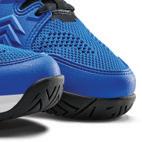
Fewer footwear series are seeing dramatic updates, and the indications are for fewer introductions of new lines in 2026. Focusing on the shoes on o er does still, however, provide some semblance of order and normalcy—for now. (Prices are suggested retail.)
K-Frame Speed Rublo ($155) codesigner Andrey Rublev brought his Top 20 experience to this performance shoe, ensuring it would be lightweight, breathable and comfortable. It also features exceptional stability and energy return through the midsole, as well as reinforcement throughout high-wear zones. New colorways will be unveiled throughout 2026. Built to support all playing styles, the lightweight, breathable Hypercourt Express 3—comfortable from the moment you first slip your foot in—has been updated to balance stability with a roomy forefoot. New for the small court is the K-Frame Pickleball ($135), o ering exceptional stability for lateral movements, reinforcement in high-wear zones, and step-in comfort.
Babolat
BABOLAT.COM/877-316-9435
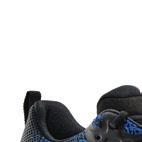
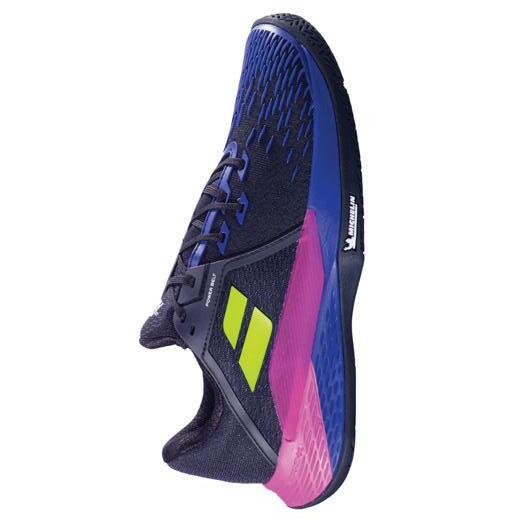
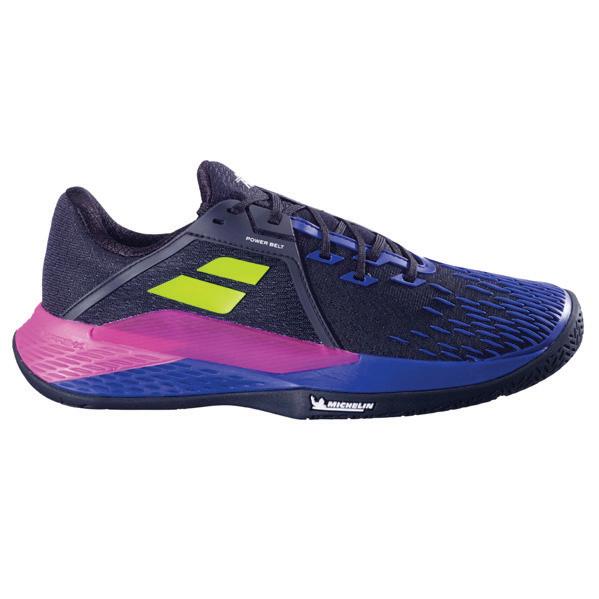
The Propulse Fury 3 (men, $139), available in a dramatic black/ dark blue colorway, improves from bottom up with a sole that is both more durable and lighter. Midsole enhancements include increased lateral support and improved stability. The result is an even more stable, durable and comfortable ride.
Head
HEAD.COM/800-289-7366
Lotto
LOTTOSPORT.COM/888-595 6886
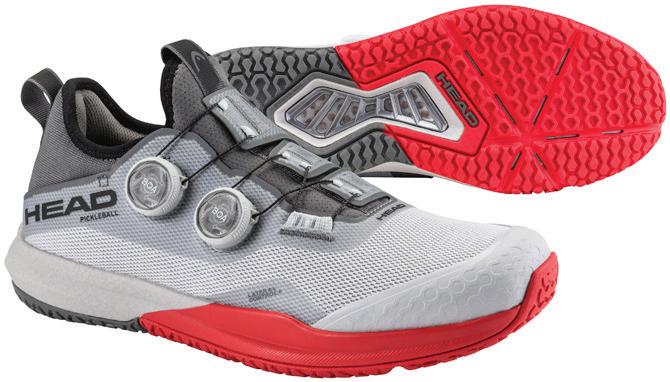
The performance line features the stable, durable Revolt 5.0 (m/w, $149) supporting aggressive baseline play, and the lightweight Sprint Pro 4.0 enhancing a creative, all-court game, available with both clay- and all-court soles. Robust pickleball play is supported by the Motion Pro Boa (m/w, $199) o ering superior movement, comfort, stability and breathability.
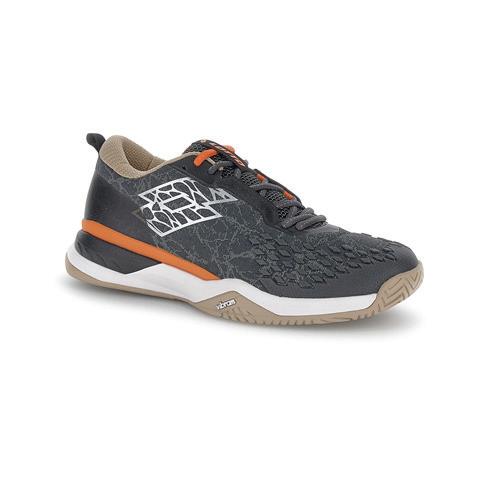
O ering step-in comfort and support in a lightweight shoe, the Raptor Hyperpulse II Speed (m/w, $160) delivers traction with a Vibram compound sole and durability on both clay and hard courts. Responsiveness is provided through extra cushioning and enhanced energy return throughout the interior.
Supporting the power baseliner, the Wave Enforce Tour 2 (m/w, $150) o ers enhanced stability and lateral maneuverability through extra attention to the fit and support beginning from the ankle and heel. This is paired with a durable outsole and polyurethane mesh upper. Tennis and pickleball players working their magic throughout the whole court will be rewarded by the Wave Exceed Tour 6 (m/w $140).
The Roger Pro Fire (m/w $220), currently reserved for “members” and sported by Joao Fonseca, among others, will get seasonal colorways through the year to add to the original’s striking pink/flame colorway. Features of the all-court shoe include extra molding and reinforcement to protect the foot during slides, extra padding through the heel, and a form insert atop the midsole for energy return.
Skechers
SKECHERS.COM/800-746-3411
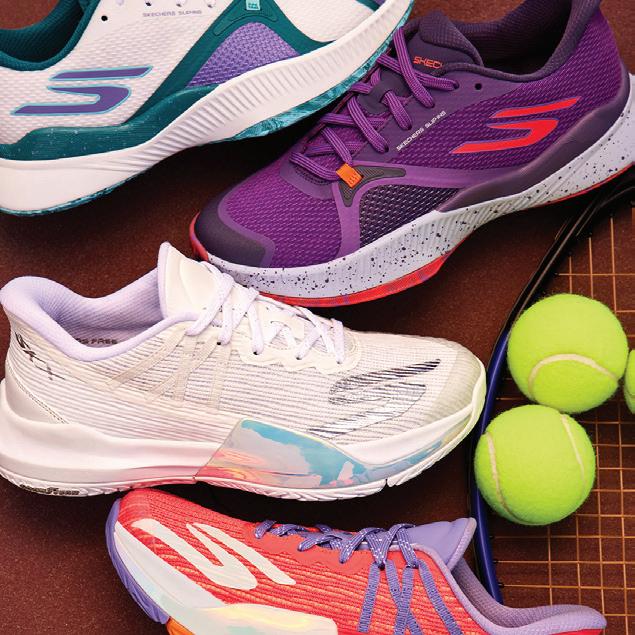
The sturdy Baseline Bully (m/w, $155) is a slip-in kick featuring Goodyear soles delivering superior traction and stability, as well as interior support for heel placement and energy return on sudden stops. The lighter slip-in, the State Champ (m/w, $120), has a breathable mesh and synthetic overlay upper and a sleek silhouette.
Tyrol
TYROLPICKLEBALL.COM
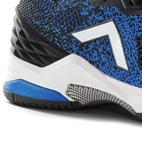
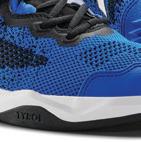
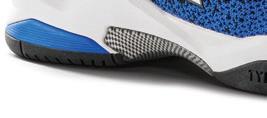
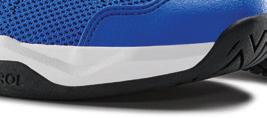
Raising comfort on the small court (and injury prevention) to a higher level, the Smash (m/w, $140) will have new colorways for the new year. It is built on a medium “D” last and also features a robust toe box, one-piece mesh upper, and an interior design to promote air flow. Additional highlights are the shock-absorbent insole and a chevron tread.
Wilson
The latest addition to the court footwear line-up is the Hurakn Pro V2 (m/w, $96), designed for play within the padel cage. Lightweight, breathable and plush inside with a durable outsole and exceptional traction, designers include a women’sspecific heel and arch in the One series and a sport-specific chassis providing stability and flexibility.
Yonex
YONEX.COM
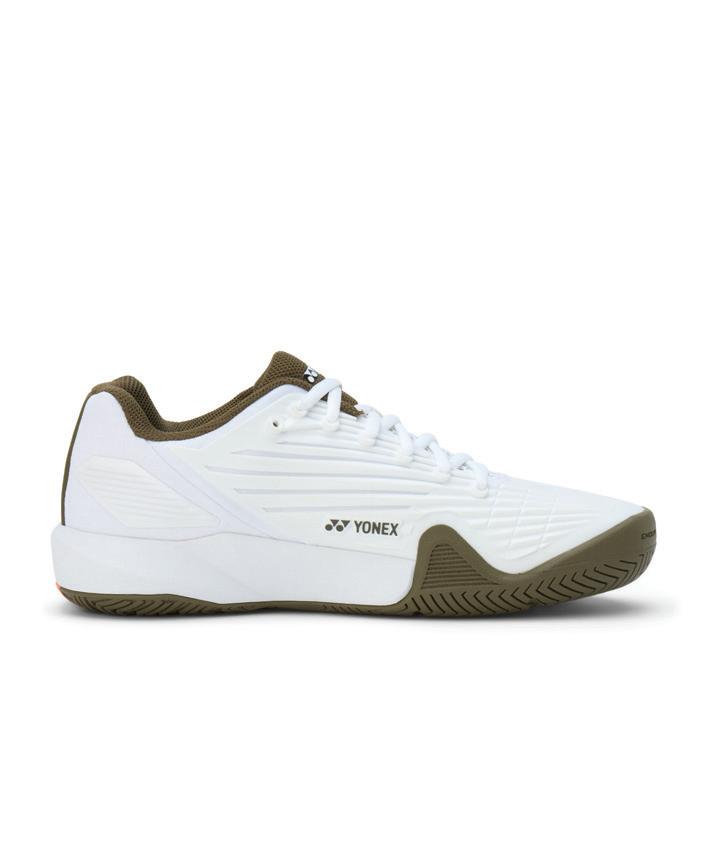
Created in the spirit of stability and support, the Eclipsion 5 (m/w, $145) is foundational for the games of Elena Rybakina and Casper Ruud. External highlights include inclusion in the company’s collections themed to each of the majors. Product highlights include an outsole with superior durability, interior foam cushioning providing stability, and exceptional support.
Skill Set
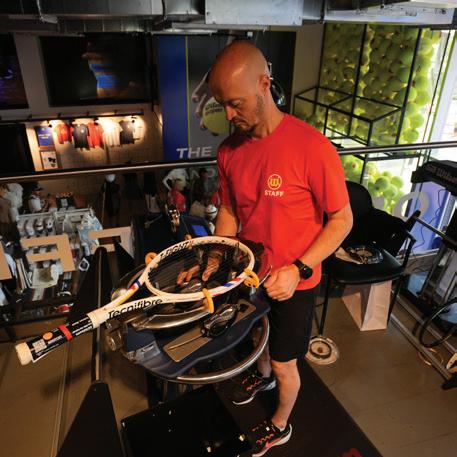
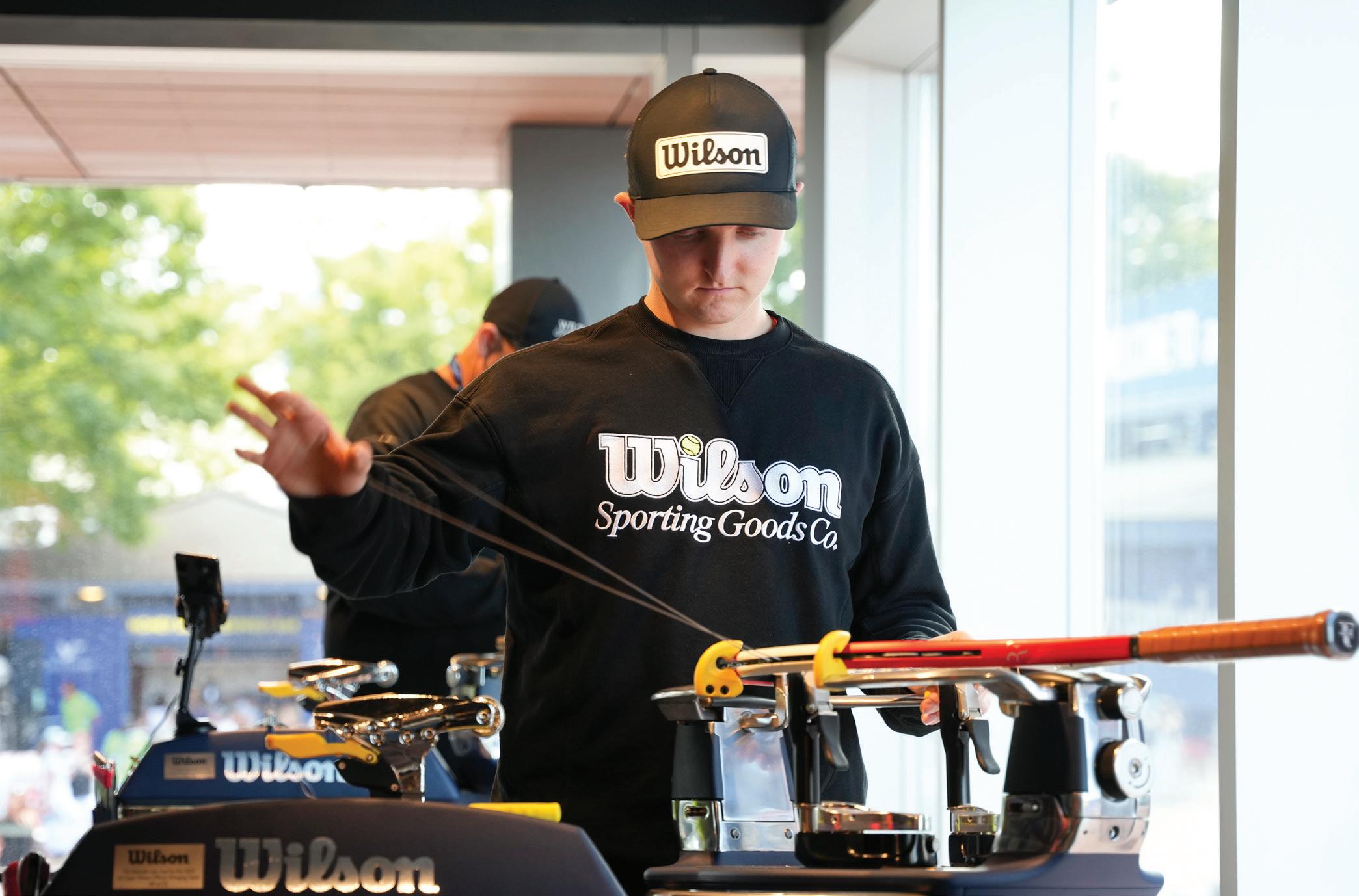
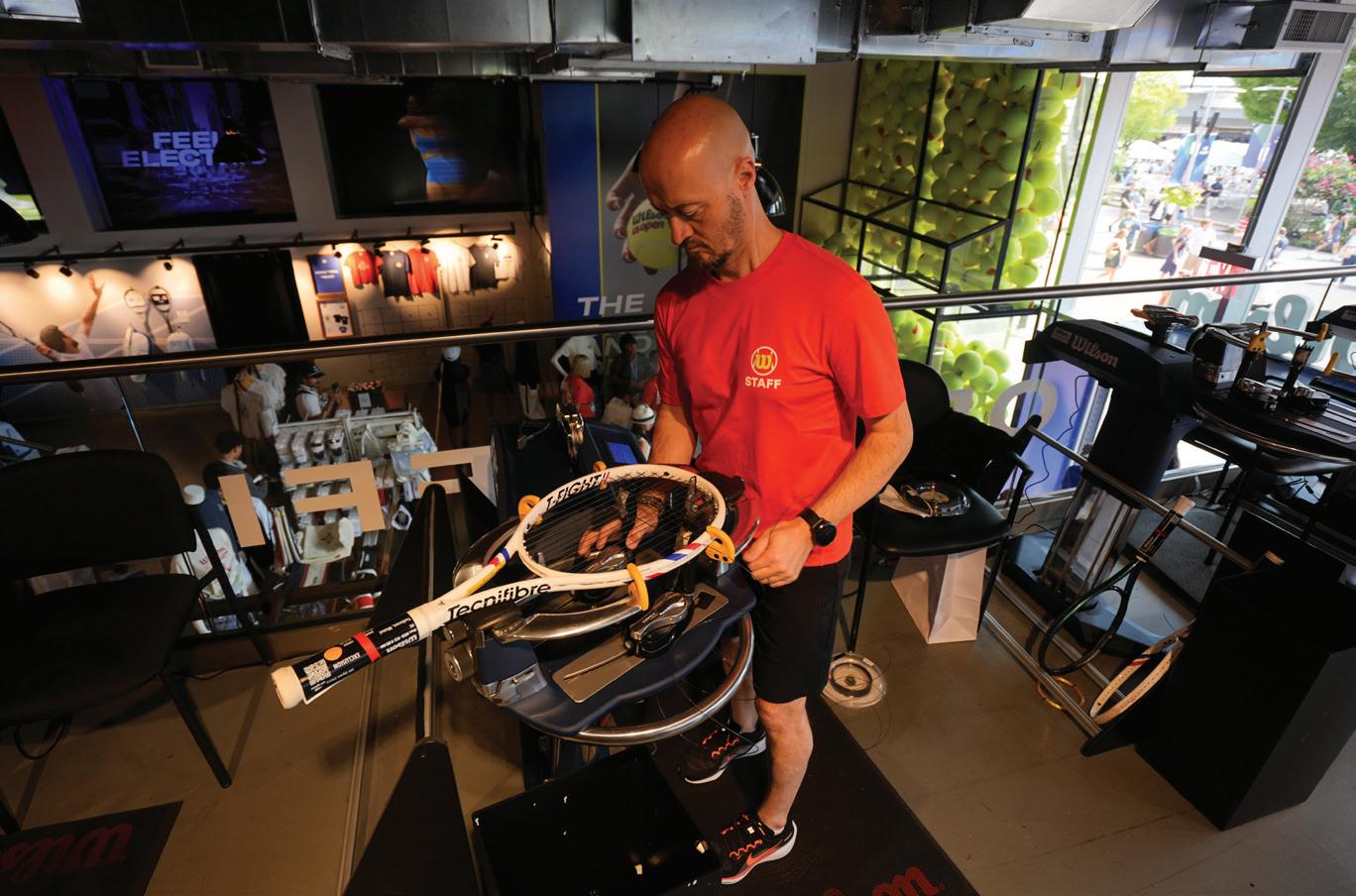
Being on the stringing team at a Grand Slam tournament sounds glamorous, but it’s also nothing like you can imagine.
By Bob Patterson
USRSA Executive Director
> During my 30 years of working at tournaments, I would describe my job to my friends like this: “You know what ‘roadies’ are, right? The guys who haul all the equipment, tune the instruments, and get everything ready for the rock stars to perform? Well, that’s what I do for tennis players.”
My first trip to the French Open was magnificent, but probably not at all how most people would imagine. I took a stroll through the Paris neighborhood from my hotel to Roland Garros every morning. I ate croissants, baguettes and other wonderful food. But I only saw the top of the Eiffel Tower in the far distance. I didn’t see the Louvre or any of the other museums or attractions in the City of Light. My days were spent hunkered down
over my stringing machine, churning out racquets. But that was what I was there for.
I did meet some wonderful people, many of whom are still my friends today. It was a great experience but certainly not a holiday. The same can be said for other Grand Slams and top-level pro events. (See “Inside the Pressure Cooker,” by Josh Newton, on the following page.)
I was often asked, “How did you get a job like that?” My answer 30 years ago, it turns out, is not a lot different today. You work hard, and you make connections.
My first gig was at an ITF Challenger tournament in my hometown. As the only USRSA Master Racquet Technician in the area, I was invited “to help out.” Soon, I was getting invited to work more tournaments, some bigger, some smaller. I took all that I could fit into my schedule, and before I knew it, I had a lot of experience at tournament stringing at various levels, which led to even more opportunities.
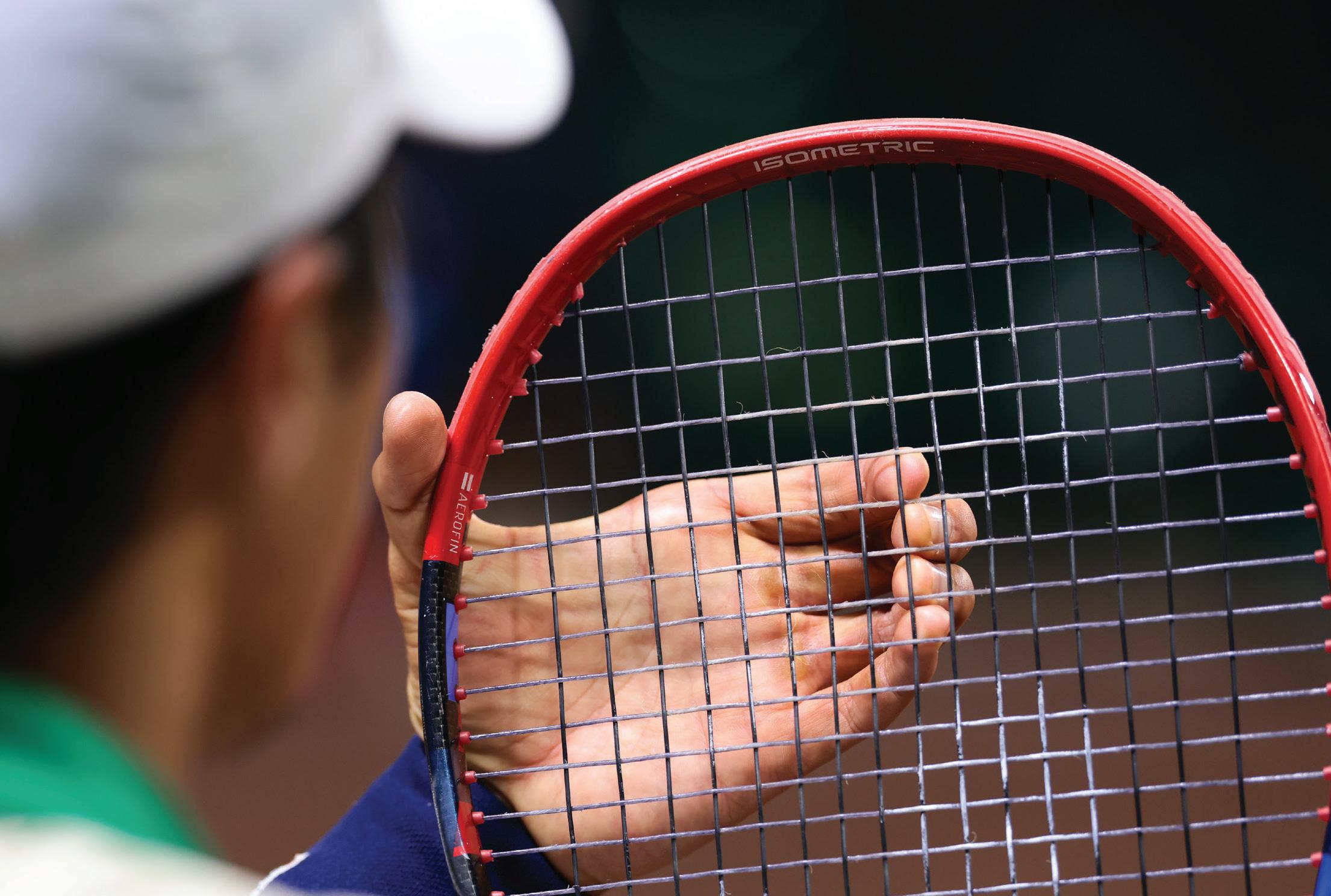
“Getting into this line of work isn’t as simple as applying for a job,” says Tatum Hing, the Grassroots Manager and Stringing Team Leader for HEAD North America. “Most stringers are brought in through industry referrals, based on experience and reputation.”
That seems to be a consistent policy throughout the industry and with other teams. So, how do you gain that tournament experience and reputation to get that referral? You start small and work hard, and along the way make connections that will pay dividends going forward.
It might be a regional or national junior tournament, or a USTA or ITF Pro Circuit event. Often the pros and shop personnel at these event sites are burdened with other tournament responsibilities and would welcome the help. Call and email tournament directors and site managers. You’ll gain experience and build a resume—and
most importantly, you meet people. It might be a coach who appreciates your professional work or another stringer who values your expertise or work ethic, but it will all help you build a network.
It is not easy to get into a gig at the top of the pro game. Keep in mind that at a Grand Slam event, there may be more than 500 players competing in the main draws and qualifying, but the stringing team is generally 20 or so individuals. It is an elite group.
Ron Rocchi, the Global Tour Manager with Wilson, has more than two decades of experience and wisdom gained from developing and managing tournament stringing teams. As Rocchi points out, tournament stringing isn’t for everyone. A lot of good shop stringers “crash and burn” in the intense environment of the tournament stringing room.
“It is more difficult than most
people think,” Rocchi says. “And there is no guarantee—most stringers will simply not make the cut, and there can be a multitude of reasons why.”
Being a good stringer is certainly important, but almost as important is being a good teammate when it comes to the tournament stringing team.
“Tournament stringing can be very challenging,” says Mark Gonzales of Yonex. “Being the first ones to arrive and the last ones to leave makes for long days, and the high level of consistency needed for frame after frame is a must for the tournament stringer.
“Being compliant with the stringing team rules and having good chemistry are a must for the tournament stringer. Being a great teammate is essential, some actions may include removing strings for a teammate if he is on the clock to have a series done, stenciling if asked, creating and applying labels when needed.”
Tournament stringing is more difficult than most people think. And there is no guarantee—most stringers will simply not make the cut.
RACQUET TECHNICIANS
This requires a dedication to the overall work and, as Rocchi emphasizes, checking your ego at the door.
If you find that you have what it takes and enjoy it, tournament stringing can be extremely gratifying. But be ready to
start small and put in the work. Whether you make it to the Grand Slam level or not, tournament stringing can be a very rewarding endeavor. If you’re like me and many others I have spoken with, you will make
Inside the Pressure Cooker
A tournament stringing room veteran describes the scene, and the challenges, when working for the world's
top pros.
By Josh Newton, MRT
(Editor’s Note: Master Racquet Technician Josh Newton is a longtime stringer who has worked pro tournament stringing rooms, including at many Grand Slam events.)
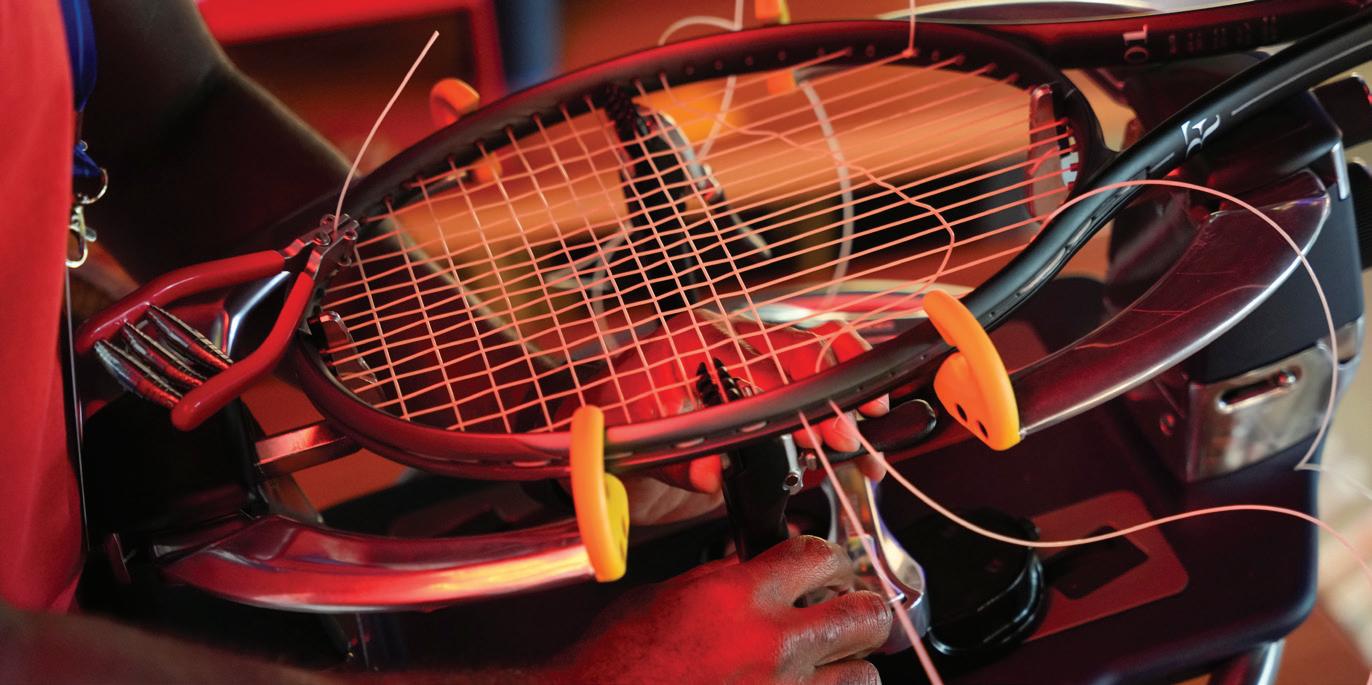
Imagine a long, narrow corridor, stringing machines down each side packed in so tightly that you need to turn sideways as you walk past to avoid being hit by the handles of the racquets being strung.
It’s 7 a.m. and you have an eight-pack of racquets due at 10. Normally plenty of time, but your fingers are slow to awake after another night with only a few hours’ sleep—and of course, the frames are all 18x20s with all poly. Thankfully, the symphony of whirring tension heads pulling and clamp bases clacking helps keep you awake, as does another espresso.
You manage to finish your first racquet, the stiffness in your fingers lessens and you’re feeling pretty good, when in walks a top player you’re stringing for with two racquets for his 8 a.m. practice. They request the same stringer, same machine, so you know they are coming your way. Unless you can’t get them done.
You don’t want to say no, but you know that will leave you roughly two hours to do seven racquets for your other player. Your teammate next to you cracks a joke to lighten the mood, and says, “You got it, no problem.” You smile and nod in agreement to the player’s request. On go your headphones with some inspirational music and you put your head down and get to work.
It’s just another day in the stringing room.
This scenario encompasses so much of what you encounter when stringing at a tournament. For me, the main difference between shop stringing and tournament stringing is the pressure. It doesn’t matter if it’s for an M15 ITF event or for a Grand Slam, you are tasked with bringing your best from the first racquet to the last, for players who are counting on you to do a good job because they are competing for their livelihood, their dreams.
The job may seem glamorous, and it can be in a lot of ways, especially for a tennis junkie like me. There’s no doubt that contributing to the game at its highest level and being among the best players in the world in some of the most iconic places is truly an awesome experience.
lifelong friends and gain a wealth of knowledge and experience.
At the very least, it will make you appreciate the serenity of having a set schedule and normal pace at your day job.
But the hours are long, and the stakes are high.
Having the skill set to string a perfect racquet in 15 minutes is just the start of what you need to be able to do. It’s one thing to do that in a shop, maybe 15 times in a day, but during a tournament, you need to repeat this task 30 or more times during a day that can be more than 15 hours, for sometimes weeks on end with little sleep. The pressures on you are both mental and physical.
You can never lose focus, no matter how many racquets you’ve strung or how tired you are. Mistakes do happen, of course, and how you roll with them is also important.
You must also maintain a positive attitude through it all because you are working in a team environment. Stringers who don’t display good teamwork are not asked back.
We ask back those stringers who are easy to work with and willing to help out their team to get the job done. Things like helping to cut out strings or to stencil, or keeping the stringing room clean, go a long way in getting asked back. The goal is to arrive and leave the stringing room as a team each day, not just leave when you are done with your racquets.
You need to be flexible and adaptable in order to accommodate the inevitable last-minute requests from players, but still be able to deliver on what you have already promised. Flexibility also means being able to work under the direction of the string team leader, or a player. Some players are very particular.
You also need to be flexible in terms of things like food and accommodations. Again, keeping a smile on your face and an upbeat attitude will go a long way in getting asked back to an event.
Babolat doesn’t have a formal application or auditioning process to become a stringer at one of our events. We rely on personal recommendations from other stringers and are always willing to give someone a shot who comes highly recommended. That being said, we tournament stringers love what we do and don’t want to give it up, so it can be a hard field to break into.
But each of us tries to mentor stringers we meet who we think could handle doing a tournament. We are always looking to the future of this sport, and to creating the best stringers and technicians we possibly can—whether for a Grand Slam event, or for a small shop in your community.
School Spirit
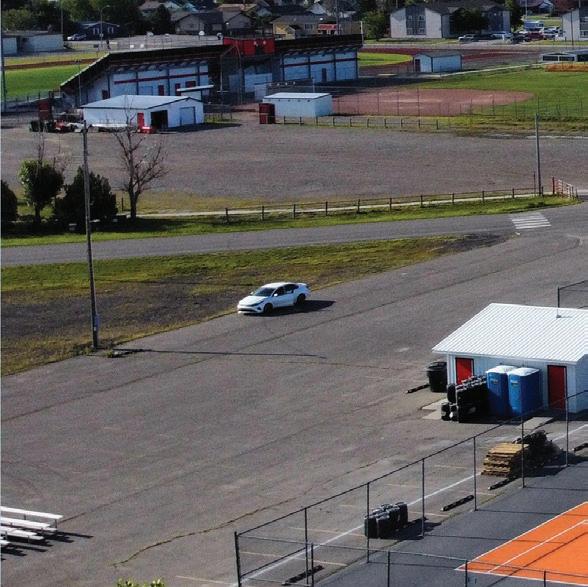
With local, section and national partnerships, Montana’s Hardin High School leveraged a TVS grant to create six new courts.
By Wendy Anderson
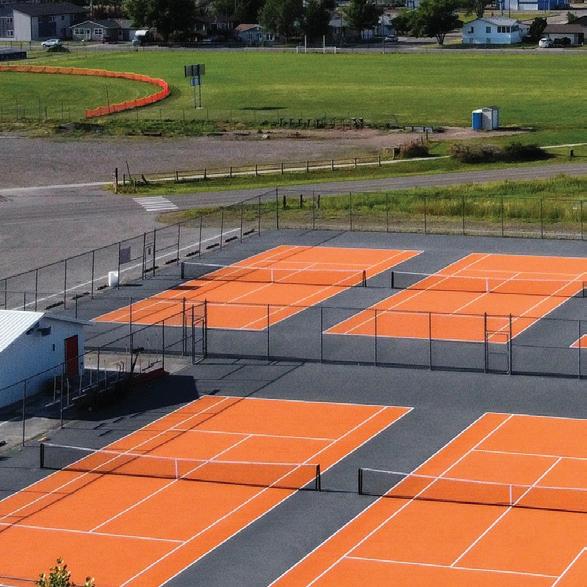
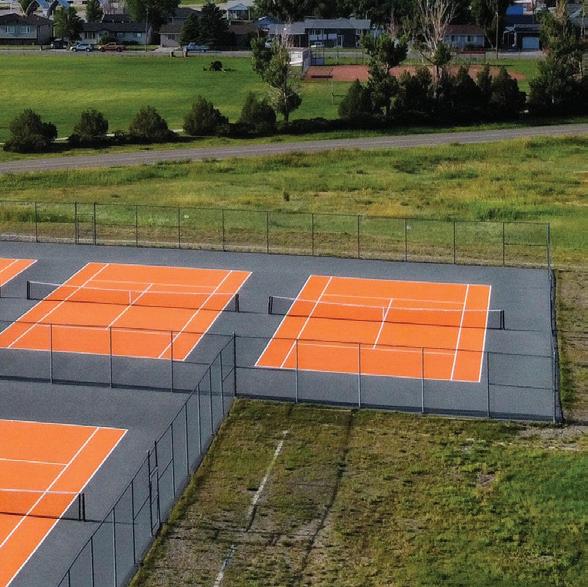
There is one thing you can’t miss when you drive into Hardin, Mont., a rural town of 3,800 about 45 miles east of Billings: six newly-refurbished orange and gray tennis courts at Hardin High School. Along with the players on them.
Fifty years ago, Land and Water Conservation Funds originally helped build three courts for the Hardin High Bulldogs. The school sits just outside the Crow Indian reservation, and the Crow Nation and Tribal Council helped maintain the three courts for decades.
But as the popularity of the sport grew, so did the need for more courts. On Sept. 12, six renovated courts were dedicated and celebrated with a community lunch and a tennis clinic (hosted by USTA Intermountain and USTA Montana), all made possible with the help of the USTA Tennis Venue Services grant fund.
“When I moved to Montana about four years ago, I heard that the Hardin tennis courts needed repair, so a year ago, we started raising the funds to resurface six tennis courts in Hardin,” says Jodie Adams, a member of the USTA Montana Board of Directors and a USTA National consultant.
“As someone who has worked with parks and school programs throughout my career, I knew the community’s desire for improvements was there. They just needed more knowledge about available resources.”
Adams referred Montana community leaders to TVS, where they applied for $50,000. That was the impetus for other entities, including the Montana Coal Board, to match funds for the six-court project.
“But TVS provides so much more than just money that our rural communities need,” Adams explains. “Sometimes, something as simple as a correct concept drawing can help leaders and volunteers see a way forward.”
“Refurbishing our courts was on our long-term plan,” says Tobin Novasio, superintendent of Hardin School Districts 17H & 1, “but we probably wouldn’t have gotten to them right away without Jodie getting the ball rolling with TVS.”
Once Mike Flamm, Hardin Middle School principal and longtime tennis coach of 20 years, got the high school tennis program up and running, the students did the rest.
“It took about three years to get the kids recruiting among themselves,” Flamm
notes, “but once they did, their sense of school pride and being part of a successful program really changed the landscape
“We’ve had 70 to 80 kids come out for tennis in the past few years. Now we’ve won a couple of state championships and are hoping to bring (the championships) to Hardin in coming years. It makes an incredible economic impact.”
“This community has a craving for tennis, and it’s wonderful to see how everyone came together to make this project happen,” adds Todd Carlson, USTA Senior Director of Tennis Venue Services, Parks & CTAs.
Phase II of the Hardin project involves adding four new courts, to create a hub of 10 total courts that will continue to serve numerous rural communities and the Crow Tribal community throughout the east side of Montana. (About 88 percent of the high school’s student body is comprised of minorities, and the majority of the 540 students are American Indian.) The school also is now pursuing a bid to host the Montana High School State Tennis Championships, which would be a first for the southeast area. Hardin is also hoping to be the home to a new National Junior Tennis & Learning (NJTL) chapter.
“Having grown up on a farm in a rural community myself, I know firsthand what an amazing difference tennis can make in communities like Hardin,” notes USTA Intermountain Executive Director Rob Scott. “This is sure to impact so many lives that otherwise might not benefit.
“It’s been a fantastic team effort from local, section and national partnerships to get this project over the finish line.”
Sponsored content. For more on how USTA’s Tennis Venue Services can help your facility or project, visit usta.com/facilities or email facilities@usta.com.
Why Certification is Just the Beginning for Pickleball’s Future
Future
Pickleball is evolving at lightning speed. The third-shot drop is no longer the default, rallies are faster, and paddle technology has transformed strategy. Players are adapting — and coach education must evolve right alongside them.
For years, certification has been a critical foundation for coaches. It set standards, created accountability, and helped establish pickleball as a recognized profession. The sport wouldn’t be where it is today without that foundation. But as the game continues to change, so do the demands on coaches. Certification is a strong starting point — yet ongoing education, community, and real-world application are what ensure coaches can keep pace with the sport’s
growth and guide players at every level. Earning a certification shows readiness, but it’s only the first step in a larger journey. The most successful coaches are those who keep learning, share best practices, and stay plugged into how the game is being played today — and where it’s headed tomorrow.
COACHING IS THE LIFEBLOOD OF PICKLEBALL
Coaching isn’t just about helping players hit a better dink. It’s the heartbeat of the sport. Players who work with coaches stick around longer, join more leagues, and contribute more to facility revenue.
The numbers are telling: players who take lessons spend an average of $567 over their lifetime in the sport, compared
to just $56 for those who don’t. One partner club tracked this over a full year, and the conclusion was clear — lessons drive participation, retention, and spending.
“The foundation of every successful pickleball facility starts with its coaching. Great coaches don’t just run programs, they shape the player experience and drive community growth.”— Deanna Lorincz, Co-Founder, Pickleball 365
Facilities that invest in coaching aren’t just teaching skills — they’re strengthening the health of their entire business.
A FRAMEWORK BUILT BY PROFESSIONALS
RPO’s Level 1 education system is shaped by Collin Johns, one of the best players
“At Racketpro, we give coaches confidence, consistency, and continuity. Our dynamic certification program builds a solid foundation that grows with coaches and evolves with the game itself.”
— Josh Jenkins,
Director of Global Pickleball Operations–Racketpro
backgrounds. They’re figuring it out on their own. Our goal is to give them the tools to build lasting careers, not just side hustles.
MEMBERSHIP OVER A BADGE
in the world. But Collin’s influence goes beyond his success on tour. He’s served as a club director, coached at the college level, and built programs from scratch. He’s also developed ventures like PB360 and Johns Design & Consulting, helping facilities rethink how to grow through coaching.
“For me, it’s more than star power. It’s learning from leaders who know the game and know how to teach it.” — Armando Ferreria, RPO Clinician & Founder of My Sports Jobs
By blending the expertise of elite players with the perspective of career coaches and program builders, we’ve created a framework that speaks directly to what coaches need today: credibility, adaptability, and a path to turn passion into a profession.
EDUCATION THAT EVOLVES WITH THE GAME
Pickleball changes fast. Strategies that
worked yesterday don’t always win today’s points. That’s why our curriculum is continuously updated to reflect new tactics, technology, and coaching insights. For coaches, that means education isn’t a one-time workshop. It’s an ongoing process that evolves alongside the sport.
.
COACHING AS A BUSINESS
Great technical knowledge doesn’t matter if coaches can’t attract or retain clients. That’s where many programs stop — but it’s where a coaching career really begins.
To bridge that gap, RPO is launching a Business Module in Fall 2025. It will cover marketing, program design, client retention, and financial sustainability.
“Education unlocks potential — only finding and retaining clients turns it into success.” —David Selvaggi, RPO
Instead of treating certification as the finish line, we emphasize membership. Coaches receive liability insurance, access to live webinars, a coach locator tool, and a peer network for sharing best practices.
“The goal isn’t a piece of paper — it’s building a career.” —Nathan Van Buskirk RPO Level 1 Coach
Membership turns education into a continuous journey, keeping coaches supported and connected long after certification day.
THE BIGGER CONVERSATION
Certification has been invaluable in setting standards and legitimizing pickleball coaching. But today’s coaches need more than a test and a badge to succeed. The sport is evolving quickly, and the demands on coaches are greater than ever.
That’s why we believe certification is just the beginning. What truly matters is what comes after: ongoing education, business tools, and a connected community that helps coaches grow year after year.
Coaching is the engine of pickleball’s growth. By shifting from a one-time certification to a membership model, we’re working to give coaches what they truly need — support, resources, and a career path that evolves with the game.
If pickleball is going to sustain its remarkable momentum, coaching can’t be an afterthought. It has to be the priority.
Clinician & Founder of Chicago Pickleball
Academy
Many new coaches don’t come from country club systems or formal teaching
“Travel is so expensive nowadays,” says tennis director Robin Henders. “This is a cool way for our pros to take a break, refresh and spend time with their families at these luxury resorts.”
Recharge and Refresh!
By Lynn Armitage
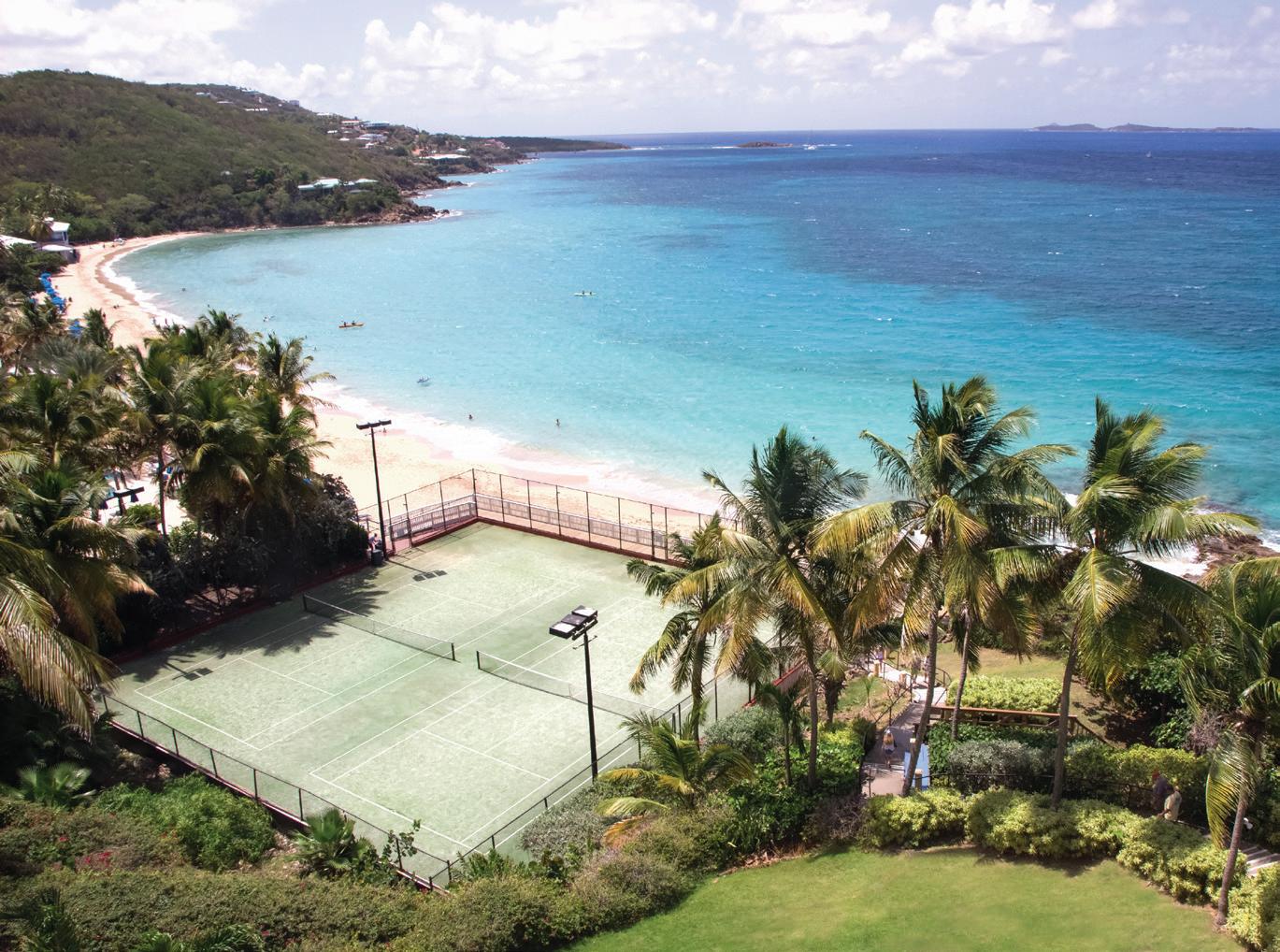
Looking for a cost-effective getaway? Consider a resort ‘teaching vacation.’
> Did you know that all these years you’ve been working hard as a certified tennis professional, you could have been taking nearly-free vacations at luxury hotels in exotic locations?
These “teaching vacations” may be one of the best-kept secrets in the industry. In exchange for teaching tennis a few hours a day, you—along with your partner or family—can enjoy a greatly discounted, weeklong vacation at an all-inclusive beach resort in locations like the Caribbean,
Mexico, Central and South America, Japan, Thailand, Fiji, Indonesia, the Maldives and Malaysia.
But according to a tennis insider, only about 30 percent of U.S. tennis instructors even know about them.
Robin Henders, co-owner and director of tennis at Five Star Tennis Center
in Plainfield, Ill., has taken eight teaching vacations with his wife and two daughters in the last 15 years.
“That was my main means of traveling in the early years, when I didn’t have a lot of discretionary income for family vacations," he says.
Over the years, Henders has invested a lot of sweat equity and many long hours into making Five Star Tennis Center an award-winning facility. So he started taking advantage of the tennis teaching vacations offered by Fit Bodies Inc.—an organization that places certified health and wellness instructors at all-inclusive, luxury beach resorts to teach fitness classes to hotel guests for just a few hours a day in exchange for an almost-free, seven-day vacation.
Teaching pros pay their own airfare and a booking fee ranging from $500 to $1,000. But all food, drinks, alcohol, land and water sports, and hotel rooms are comped by the resort for the fitness pro, spouse and up to two children under the age of 13.
“Many of these luxury resorts charge $600 to $1,000 a night, depending on the time of year. So that’s a vacation savings of about 80 to 85 percent,” explains Fit Bodies owner and fitness enthusiast Suzelle Snowden. She says she developed this novel business concept in 1992 after an opportunity came her way to fill in for an injured yoga instructor while vacationing with her husband at a resort in Jamaica.
More than two decades later, Fit Bodies Inc. (fitbodiesinc.com) has become an industry leader for wellness teaching vacations. For the tennis side of the business, Snowden works with eight resorts in four countries—Jamaica, Mexico, Dominican Republic and the Maldives.
To recruit qualified tennis teaching professionals to meet the burgeoning demand—which Snowden says is her biggest challenge—she partners
with Racquet Sports Management (RSM), a consulting business that grew out of its parent company, Tennis Management Group Inc.
“About 95 percent of the teaching pros we recommend to Fit Bodies comes from the United States, and we get them through a contractual relationship with RSPA [formerly USPTA],” says Dave Robinson, a senior partner at RSM and the director of racquet sports at Little Falls Swimming Club in Bethesda, Md. Robinson says he is seeing a growing demand for pickleball pros in particular.
Unlike a hotel’s sta pro, who is on the court for eight hours a day, tennis instructors recruited by Fit Bodies work only two hours a day.
“The rest of the time they can spend with their families by the pool, or whatever they choose,” says Snowden.
For Henders, the best takeaway has been the people he has met.
“I once taught a class with players from India, Ireland, London, Australia and Kansas. And I am still friends with some of them on Facebook.”
What’s more, teaching vacations are good for the tennis business, too, in terms of boosting morale for Henders’ 15 full-time tennis pros, who he has always encouraged to book these trips.
“To qualify, you must be certified by RSPA or PTR. That’s a guarantee we make to our partner hotels,” says Snowden. Once you become a member of Fit Bodies, you can access all the
locations willing to host teaching pros and pick the place and date that you want to go.
Yet another way to experience a tennis teaching vacation is through a PTR membership. As a value-added benefit to PTR members, professional instructors can teach tennis at two resorts in Jamaica: Couples Swept Away and Couples Negril.
Consider this cost-e ective way to recharge—while spending time with loved ones in a wonderful place.
Lynn Armitage is a freelance writer and avid tennis player in Madison, Wis.— although admittedly, she does not have the requisite skills to qualify for a tennis teaching vacation.
Your Serve
Sport for Your Lifetime
For pros, it’s rewarding to see tennis students develop as players and as people.
By Bob Ingersole
Given the latest research on the physical, mental and emotional benefits of tennis, it’s no wonder the game continues to gain new players.
As a tennis professional for many years, I’ve had the opportunity to utilize many coaching advances to help my players, and it’s been extremely rewarding to see my players develop both as players and as people.
In addition to improving players’ lives, tennis has been shown to actually lengthen lives by as much as 9.7 years. Studies measuring the impact of tennis on longevity found it beat out many other sports, including running, cycling, swimming and team sports.
While tennis coaching has evolved to make use of technology, tennis instruction also encompasses many
more aspects important for healthy development. The sport provides the opportunity to learn and grow in so many ways that it’s the ideal sport for children, teens and beyond. Consider the following benefits:
• Improves coordination, agility and balance
• Develops strategic thinking and problem solving
• Cultivates social skills and counters isolation
• Cognitive challenges promote focus and decision making
• Improves cardiovascular fitness BENEFITS OF TENNIS
• Competition enhances emotional resilience
• Teaches self-confidence, independence, responsibility and time management
• Strengthens bones
• Reduces stress and promotes emotional balance
• Provides opportunities to make new friends
• Promotes teamwork and sportsmanship
Learning to play tennis is much more than simply hitting balls; it’s a game of physics, geometry and psychology. Good coaching takes into account a player’s physical, mental and emotional strengths and develops the player’s game to maximize them.
In a former career as a school teacher in Australia, I was fortunate to be involved in piloting a program working with children with all types of challenges. The first thing I learned was to listen—crucial in helping these children progress. It was only through careful—and caring—listening that we were able to start understanding the underlying issues these children faced.
Presently, I work with, and mentor, a wide variety of students, some of whom face their own significant challenges. I also coach some very gifted, driven tournament players competing in age groups ranging from 12-andunder to 75-and-over.
Each student has different needs and goals. Evaluating and structuring the best developmental pathway for each individual enables them to reach their tennis goals. It also helps them improve many essential life skills.
With all these amazing benefits, who wouldn’t want to play this game?
USTA Eastern Hall of Fame inductee
Bob Ingersole is president of Ingersole Events & Tennis Management LLC and, among other positions, is a member of the USTA National Junior Competition Committee and the USTA Eastern Junior Comp Committee and President of USTA Eastern Junior Tennis Foundation. A USPTA/RSPA Elite Professional and a PTR Professional, he also is a recipient of the USTA Volunteer Exceptional Service Award, on the Wilson Advisory Staff, and a member of the USPTA/RSPA Eastern Hall of Fame.
We welcome opinions and comments. Email peter@acepublishinggroup.com.
The aloha spirit continues to shine through the Racquet Sports Professionals Association following an unforgettable World Racquet Conference in Hawaii. We exceeded all expectations for attendance—and 20 percent of you were first-time conference goers! A heartfelt thank you to our national board, executive committee, awards committee, executive directors and national staff. Your teamwork and incredible spirit made this conference a standout experience for every member who joined us in Hawaii. Each session— on-court and off—was insightful, professional and eye-opening, offering fresh perspectives not only on the racquet sports industry, but also on the broader wellness space. Congratulations to all our award winners, who
have done so much, given so much, and dedicated their lives to our industry and profession. We are so proud of all of the nominees and attendees who embrace our industry as their own, who live it and are passionate about it. Highlights of the World Racquets Conference 2025 are available through our virtual conference package, which is available on our website.
Brian Dillman | RSPA CEO
sion, our careers and the next generation of racquet sports leaders.
We had some powerful conversations about our industry and the challenges we face in the decades ahead. Our industry remains unregulated and underrepresented, and many professionals struggle to translate their skills into broader career opportunities. This is a challenge we must tackle together. By raising the profile of our profession, investing in high-level professional development and actively recruiting new members into our association, we can shape a stronger, more recognized future for racquet sports professionals. We truly believe this is the most exciting time in racquet sports in the past 20 years, thanks to the explosive growth across all the disciplines we represent. But it’s up to us to keep advocating for our profes-
The
We operate in an unregulated industry where certification isn’t required, so it’s up to us to consistently demonstrate what it means to be a certified professional, especially when half of our industry lacks formal credentials. One of the most important things we can continue to champion is ongoing professional development. In regulated industries, continuing education is mandatory. Last year alone, our members logged a record-high 68,000+ hours of continuing education. That’s a powerful distinction and a compelling argument for the value of professional certification. As the Racquet Sports Professionals Association, we must keep promoting the idea of racquet sports as a viable, respected career path. Experience and education matter. And that’s what sets an RSPA Certified Professional apart.
As a certified professional, you are a brand. Your brand represents you, your facility and our industry. To gain greater recognition and representation in our industry, we should work together to improve (or rebrand) ourselves to represent the future of the industry and to ensure that we are current, relevant, consistent and growing our visibility to gain the credibility our industry deserves.
The spirit and energy that came through during the conference were matched by a powerful tool for personal growth: the creation of a Rebrand You Personal Action Plan, still available on the RSPA app. This plan is more than a resource; it’s an invitation to rebrand
yourself. It’s a chance to reflect on where you are today in your career, clarify what matters most to you moving forward and build a team and strategy to support your next chapter. Whether you’re refining your professional identity or charting a new path, this personal action plan helps you align your purpose with your career aspirations and take ownership of your evolution as a racquet sports professional.
We heard messages during the conference that touched on growth, innovation, teamwork, analysis and deep thinking about all aspects of our industry. We have categorized all of our professional development into three major categories,
or tracks: coaching, operations and leadership. Throughout the conference, each of our different courses fell into one of these three categories. Future divisional conventions, webinars and other specialty courses will offer these tracks for you to choose what you would like to explore and learn more about. We recognize that not all professionals share the same goals. That’s why we believe this categorization will help you identify the professional development opportunities best suited to enhancing your skills, growing your business and advancing your career.
We announced at the World Racquet Conference that September is officially the new year for racquet sports. And just like many people do when the new year rolls around, it’s a time for reflection, review and future planning. Take this opportunity to determine what your path and your place in the racquet sports industry will be. Our resources at the RSPA are here for you and we are committed to walking alongside you in
your journey.
As you reflect on who you are, what your brand is today, and what you want your brand to become in the future, remember: your success is our success, and our success is the industry’s success. When one of us wins, we all win. That’s why being a member of the RSPA means we’re all in this together, and we win as one.
I am so proud of the work we have done over the last 98 years, and I am incredibly optimistic for the work to be done because when I look our members in the eye and hear their passion for this industry, it fills me with hope. Let’s share this hope, let’s get to work and let’s win as one.
TENNIS COURTS PICKLEBALL COURTS
Brian Dillman RSPA CEO
Thanks, but not Farewell
Happy Holidays, everyone! I enjoy this time of year, but in the back of my mind, I am coming to grips with the fact that my RSPA Presidency has come to an end. I will still be in the board meetings and contributing to our future decisions as the past president and helping the new board as they lead us forward for the next two years.
For 2026-2027, we have a very strong and experienced group of Master and Elite Professionals led by Mark Faber as the incoming president. Mark is a dedicated and resourceful leader who was very involved with all my decisions over the past two years, so I have no doubt that he will transition into the role very smoothly.
As I look back on the last 24 months, I am very proud of all the great changes we were able to initiate, as we grew from a strong tennis community of dedicated and well-educated tennis professionals, to a large rebranded racquet sports association with multi-sports education, certifi-
cation and career opportunities.
I believe our success over the last two years is greatly due to three things:
First, a knowledgeable board of directors committed to growing and expanding our name, reputation and the constant recognition that our members always come first when making bold moves.
Second, an incredible, hard-working office staff who took our rebranding and all the long hours it took to achieve and expand our membership offering to five different sports.
Third, Brian Dillman, who is heading into his third year as CEO, infused new ideas, new management style and work ethic into everything he tackled. Under Brian’s direction, and the Board’s push to change and expand, the staff, members, sponsors and consumers were all a part of the new internationally recognized RSPA.
Our out-of-the-box decision to have our 2025 WRC in Kona, Hawaii, presented many operational challenges which Brian and the staff managed amazingly well. The Hawaii Division had campaigned heavily to stage the WRC in their home. Kona and the conference did not disappoint with a strong array of high profile presenters as well as gorgeous scenery, great weather and many mahalos!
I am sure our WRC 2026 in Dallas will have a different vibe, but our members and the Texas division will make sure we stage another memorable week. We may see more boots and cowboy hats instead of leis, but the camaraderie will be strong, and the networking sessions will still be well attended and lively.
Our RSPA membership and certification departments are humming with energy as we offer more coach developer workshops
Trish Faulkner | RSPA President
and certifications in our new racquet sports, as well as the opportunity our members now have to enjoy five different sports with just one RSPA membership.
The newly revamped and redesigned website is much easier to navigate. The area we hope all members will go to is the new career center. Whether looking to hire or be hired, the RSPA should now be the one stop shop for all your career decisions. We have also expanded our insurance offerings, which particularly are helpful for those members whose job package does not include full health and retirement benefits.
In the last part of this year, our marketing department, with Tim Buwick, is now making strong headway with many corporate sponsors. It is imperative that all members promote and support our endorsees and sponsors in every way possible. All our endorsees bring different benefits to our association. Some are in the form of heavy discounts and some are vetted companies we are confident in using in our day-to-day business activities.
We have formed the new Business Development Committee to help provide leads for Tim and the staff to pursue. We all come in contact with many different
consumers and some of them own or manage companies who might benefit from being associated with the RSPA.
What many of us do not understand are the reports we receive each week noting those members who have paid their dues and not completed their education requirements, and those who have completed their education and not paid their dues! Remember, there are payment plans and plenty of great educational sessions online and on Tennis Resources. We want you to join us as we expand our sports and our career opportunities. The RSPA continues to grow and gain strength in the racquet sports industry. Why not work with the best?
Enjoy your holidays, which are usually very busy for all of us with
work and family. Thanks again to Brian Dillman and our dedicated staff. I could not have achieved all we did in 2025 without the full sup-
port of you all and my fellow board members. Thanks, but not farewell!!
CERTIFICATION CALENDAR PREVIEW
DECEMBER 2025
Rebrand You
2025
Award Winners
Pam Austin George Bacso Lifetime Achievement Award (Southern California)
Rita Dotson RSPA Star Award (Florida)
Keith Puryear Steve Wilkinson College Coach of the Year (Mid-Atlantic)
Logan West
Laurie Martin High School Coach of the Year (Mid-Atlantic)
Dr. Dave Porter Tim Heckler Hall of Fame Award (Intermountain)
Bunny Bruning
Alex Gordon Raquet Sports Professional of the Year (Missouri Valley)
Simon Paek RSPA Master Professional (Southern California)
Dr. Greg Prudhomme Large Facility Manager of the Year (Southern California)
Kyle LaCroix George Bacso Tennis Coach Developer of the Year (Florida)
Brock Orlowski 2024 Top Education Credit Earner (Midwest)
Michael-Ray Pallares Bob Ryland Diversity, Equity & Inclusion Award (Florida)
Hawaii
Alvin Varnado RSPA Industry Excellence Award (Southern)
Jason Grigg George Bacso Pickleball Coach Developer of the Year (Mid-Atlantic)
Nick Bradish RSPA Young Professionals Award (Texas)
Laumaur Lindsay, RSPA Marketing Specialist
Dr. Dave Porter’s numerous accolades go far beyond his involvement in college tennis. As a coach, educator and visionary in his career, Dr. Porter has been defined by a relentless pursuit of excellence, with a commitment to shaping athletes and leaders of tomorrow. That’s why the RSPA is proud to celebrate Dr. Porter as the recipient of this year’s Tim Heckler Hall of Fame Award.
His journey from a young athlete born in Iowa to a Hall of Fame coach is a testament to his achievements. Porter’s career began at Brigham Young University (BYU), where he played bas ketball and tennis, all while studying for his bachelor’s. After serving a mission in New England, he returned to complete his studies, earning himself a Master’s in Physiology and a Doctorate in Curricu lum & Instruction from the University of Hawaii.
Over a 38-year career, Dr. Porter has transformed the university’s tennis program into a powerful contender. He is the first coach in NCAA history to lead both men’s and women’s teams to a national championship in back-to-back consecutive years between 2002 and 2003. It was under his leadership that the BYU-Hawaii Seasiders went to claim nine national titles, which include two NAIA championships and seven NCAA Division II crowns. His accolades also include being the five-time recipient of the National Coach of the Year Award and receiving the Educational Merit Award. He’s constantly in conversation as the college coach with the most wins in collegiate tennis history, earning over 1400 career wins. Porter was named ITA National Coach of the Year six times and collected 30 regional and conference coaching honors.
Porter’s incredible impact wasn’t limited to the court—he chaired the Exercise & Sports Science Departments at BYU-Hawaii, where he was able to
DR. DAVE PORTER
shape academic programs, mentoring students in health and exercise. He was also involved in developing the “TimeEx” fitness program, providing users with the necessary info to work on muscular and cardio-vascular strength, along with endurance, without the need for workout equipment. His holistic approach to coaching spoke deeply of his character, discipline and service to the tennis
also led into his position as national president from 2003 to 2005. As a member of the Racquet Sports Professionals Association (RSPA), Porter’s incredible contribution to tennis has gained him numerous awards, including the George Bacso Lifetime Achievement Award, 2x College Coach of the Year, Professional of the Year and his induction into our Hall of Fame.
legacy isn’t represented purely through his wins, but in the lives he’s changed. Porter has set the standard for what itchampions through passion
TIM HECKLER HALL OF FAME
PAM AUSTIN GEORGE BACSO LIFETIME ACHIEVEMENT AWARD
In the world of racquet sports, there are few families that carry a legacy quite like the Austins. And at the heart of it all, you’ll find the eldest of the bunch, Pamela Austin—a player, mentor and leader whose influence has helped shape the foundation of tennis. Her career has carved a path for many professionals, demonstrating how leadership can be rooted in grace and love for the game.
Growing up in Rolling Hills Estates, Calif., Pam trained at the Jack Kramer Club, alongside her siblings: Tracy, Jeff, Doug and John—all of whom went on to become incredible professional players. Her career started at the college level when she attended UCLA and made a name for herself, winning the Pacific-8 Conference doubles championship. This was just the beginning of her journey to excellence. She quickly transitioned to the professional stage, where her highlight accomplishments include winning the U.S. Hard Court Doubles Championship with Tam O’Shaughnessy in 1970. That following year, she earned the National Amateurs Doubles title alongside Margie Cooper, as well as reaching the second round of the French and U.S. Open. One of the most notable moments in her career was in 1974, when Pam joined her brother, Jeff Austin, on the Denver Racquets team. They went on to win the World Team Tennis championship, solidifying the powerhouse dynamic of the Austin family. She also played mixed doubles with Oscar Wegner and competed in major tournaments, including Wimbledon and the French Open. Pam’s impact extends far beyond her time on the court, as she continues to shape the sport and inspire generations. After retirement, she stepped into the coaching and administration space. For over a decade, Pam served as the Director of Tennis at the Riviera Club and
was acknowledged as the “Riviera’s First Lady.” She was a leading figure, loved by all and known for her ability to connect with people through the game of tennis. Her dedication to being a guide for future tennis professionals was evident as she organized countless college events for the community. Pam also obtained a leadership role with the USTA, helping with the Fed Cup, Davis Cup and Olympic tennis programs. These unwavering efforts earned her the Southern California Pro of the Year award in 2001.
In 2016, Pam was greeted with a heartwarming celebration for her retirement. It was more than a farewell; it was an earnest tribute to a woman who devoted her whole life to the sport. She was honored with a star on Riviera’s Walk of Fame, reflecting the relationships she built, the players she mentored and the community she nurtured. The event united an impressive collective of friends, family, colleagues and tennis icons who were thrilled to commemorate Pam’s professional achievements and meaningful contributions. Winning the
Laumaur Lindsay, RSPA Marketing Specialist
George Basco Lifetime Achievement Award should come as no surprise. Pam didn’t just play the game. She helped shape it. Although she stepped away from the daily routine of tennis, her legacy will continue to influence the sport.
GEORGE BACSO LIFETIME
ELEVATE SAFETY AND STYLE
Explore our Fence Accessories
Elevate the safety and aesthetics of your tennis and pickleball courts with Aer-Flo’s superior court-side fencing. Our innovative products, including PolyCap® Fence Toppers and a complete line of Fence Guards, are engineered to protect players and extend the life of your fencing.
Whether you’re looking for a simple, cost-effective upgrade or maximum long-term durability, our fence accessories are the professional-grade solution. They minimize injuries, enhance court visibility, and provide a durable barrier against the elements.
Why Choose TUFFY®?
Player Safety: Covers sharp fence tops, significantly reducing player injuries.
Professional Look: Instantly gives your court a clean, finished appearance.
Weather Protection: UV-treated materials protect your fencing from harsh elements.
Easy Installation: Designed for simple, one-person setup..
Built to Last: High-quality construction with warranty options up to 5 years.
NO.1 BALL ON TOUR*
NOW MORE SUSTAINABLE PACKAGING
SAME GREAT PERFORMANCE
RECYCLED PAPER LABEL
RECYCLABLE PAPER LID MADE FROM 30% RECYCLED PLASTIC
BALEX GORDON PROFESSIONAL OF THE YEAR
Laumaur Lindsay, RSPA Marketing Specialist
efore the bright lights of Wimbledon and the roar of Grand Slam crowds, Bunny Bruning’s tennis story started on the courts of San Diego. Born and raised in Calif., she began her professional career at the age of 17. Her journey spanned nearly a decade on the WTA Tour, where she left a lasting impression through her talent and tenacity.
Bruning took part in all four Grand Slam tournaments, reaching the second round in singles at Wimbledon, the U.S. Open and the Australian Open. She also competed in doubles, where she made it to the second round at the French Open, U.S. Open and Wimbledon. This was a true display of her versatility, teamwork and overall competitive spirit. One of Bruning’s most prominent achievements came in 1976 when she was runner-up at the Wimbledon Plate—an event that offered early-round players a second chance to compete. Bruning also reached the WTA doubles finals twice in her career: Rome in 1977 and Pittsburgh in 1979.
After retiring from the tour, Brun ing didn’t step away from tennis. In stead, she moved to Iowa, leaned into a coaching role and became a leading figure in the local tennis scene. From 1982 to 2024, she served as the Tennis Director at the Wakon da Club in Des Moines, mentor ing several players—from casual beginners to aspiring profession als. She played a pivotal role in the Central Iowa Tennis Alliance, focused on initiatives to grow the sport at the grassroots level.
“As a teaching pro, Bunny has selflessly given time, finances and encouragement so everyone she encoun tered found some success with tennis,” said USTA Tennis Service Represen
BUNNY BRUNING
tative John Terpkosh. Her coaching philosophy focused on fundamentals, sportsmanship and joy. Bruning believed that the game of tennis should be fun, accessible and inclusive; a belief that spoke true to her work as an advocate for LGBTQ+ players. She often claimed that tennis was more than a game. It was a
Division for 15+ years. Her heart and knowledge led her to become the RSPA Vice President, where she dedicated her time to the association’s future. Wherever she goes, Bruning involves herself in the community, volunteering her time with plenty of local causes to help others. We’re proud to present her with
SIMON PAEK NEW MASTER PROFESSIONAL
Simon Paek’s name is synonymous with leadership in tennis education. With over 34 years of teaching experience, Paek has contributed to the sport at every level, from junior development to interna tional coaching certification. Paek has become a cornerstone of the Southern Calif. tennis community, known not only for his technical expertise, but also for his commitment to mentoring and in clusivity. He sees the sport as a singular bridge between cultures and generations, connecting a sense of purpose to every lesson.
After graduating from UC Irvine, Paek quickly immersed himself in the world of racquet sports, becoming an RSPA Elite professional, division tester and USRSA-certified stringer. Today, he serves as the director of tennis at Mission Viejo Country Club, where he leads programs for players of all ages and skill levels, with the same energy and care that he shows others. His extensive leadership roles in the tennis community are evident, between his time serving as president of the RSPA California Divi sion and sitting on the National Execu tive Committee.
Paek’s influence has earned him monumental recognition, such as California Division Professional of the Year (2003), as well as the George Bacso Coach Developer of the Year Award (2022) and the Alex Gordon Professional of the Year Award (2023). The associ ation has honored him for continuing to create incredible changes here and internationally, acknowledging his work alongside Don Henson to bring certifica tion to dozens of Korean coaches. These efforts welcome and strengthen inter national ties—expanding professional opportunities across the board. His initiatives reflect the beliefs of what the
RSPA represents: inclusivity and global accessibility.
Laumaur Lindsay, RSPA Marketing Specialist
empowered, Simon Paek continues to leave a lasting impression on the sport
Rediscovers Her Essence and Identity Sabalenka Rediscovers Her Essence and Identity Sabalenka
Steve Flink, International Tennis Hall of Fame
PHOTO CREDIT: Fred Mullane, CameraWorksUSA
Although the 2025 United States Open will be recollected by a wide range of erudite observers for the excellence and artistry of one Carlos Alcaraz in stylishly collecting a sixth Grand Slam title, fans will remem-
that is difficult to combat, and to rise once more to a lofty occasion and meet the moment forthrightly after a series of setbacks that might have permanently wounded lesser individuals.
Think about what this 27-year-old
title for the first time. That surely was her low point of the season. Sabalenka was so frustrated and embittered by her setback that she made some flagrantly unsporting remarks afterwards, both on court at the presentation ceremony and later in her
Sabalenka should have lauded Gauff much more for handling the abysmal conditions much better than she did, but that was not the case. Losing a second straight final at a Grand Slam event in a match she felt should have gone her way clouded her judgement. Quite clearly, Sabalenka
At Wimbledon, she seemed likely to make amends for her debacle on the red clay of Roland Garros, but once more Sabalenka lost an agonizing appointment. The surging American Amanda Anisimova toppled Sabalenka 6-4, 4-6, 6-4 in the penultimate round. In all three of those majors, Sabalenka had been the favorite, but thrice she had suffered hard knocks
And so the U.S. Open was her last chance to salvage one of the sports’s four showcase events. Historical precedent did not point to a triumph for the top seed. Not since 2014– when Serena Williams took her third title in a row on the hard courts at Arthur Ashe Stadium—had a woman captured the U.S. Open crown in consecutive years. For that matter, the last man to defend a title in New York was remarkably Roger Federer in 2008 when the Swiss claimed a fifth straight title.
In any event, Sabalenka moved into the semifinals at the USTA Billie Jean King National Tennis Center without losing a set this year. In the semifinals, she collided with the industrious and enterprising American Jennifer Pegula. They had met in the 2024 final on the same court, with Sabalenka prevailing in two tight sets.
This time around, Pegula gave Sabalenka a much sterner test. From 2-4 down, she secured 16 of 20 points and four games in a row to win the open ing set. The evening audience in Ashe Stadium was eupeptic, anticipating a victory for the popular Pegula, sensing that Sabalenka might be vulnerable. But Sabalenka displayed considerable poise under pressure, finding her range off the ground, locating her serve more accu rately, imposing herself honorably across the board.
The third set of that semifinal was one of the best in the entire tournament. Sabalenka secured an early break, but Pegula pushed her to the limit thereafter. The popular 31-year-old had two break points with Sabalenka serving at 3-2 and another when down 4-3, but held on. She saved two match points in the final game. The crowd was cheering Pegula on unabashedly down the stretch. But Sabalenka’s poise under pressure was strikingly evident. She came through 4-6, 6-3, 6-4.
Now one match away from a second U.S. Open title, Sabalenka took on Anisimova. The American had enjoyed a stupendous fortnight. In the quarter finals, she avenged a jarring 6–0, 6-0 defeat in the Wimbledon final against Iga Swiatek with a 6-4, 6-3 triumph over the No. 2 seed. Then she ousted two-time former champion Naomi Osaka in one of the finest matches of the tournament 6-7 (4), 7-6 (3) 6-3.
With their Wimbledon semifinal fresh in the minds of both participants, Sabalenka and Anisimova walked on court for their U.S. Open final with the highest of aspirations. Down a break at 2-3 in the opening set, Sabalenka, controlling the climate of the match, dynamically took seven of eight games.
At 5-4 in the second set, Sabalenka served for the match and reached 30-30, but timidly netted an overhead before getting broken.
And yet, she refused to surrender her authority. The second set was settled in a tie-break, and in that sequence Sabalenka shined, prevailing seven points to three, closing out the contest 6-3, 7-6 (3) for her fourth major title. As
endured prior to the U.S. Open at the premier tournaments.
Her primary 2026 goal will surely be to win more than one Grand Slam tournament while maintaining her place at the top of the ladder as the best woman tennis player in the world. She is overdue to win Wimbledon and could prevail at Roland Garros. It won’t be easy for Sabalenka to remain the pace setter
OLearning in the Next Decade
Learning in the Next Decade
Gary Horvath, RSPA Certified Master Professional
ver the past fifty years, the USPTA/RSPA has evolved from a certification body to a trade association that provides education, certification and continuing education (ECCE) programs in multiple sports. The RSPA meets the needs of applicants and members with varied levels of education, sports backgrounds, experiences, and priorities. Recently, the RSPA strengthened the industry’s educational foundation by providing pre-certification education programs. This is a step forward in continuing to raise the educational standards for tennis professionals.
RSPA ECCE and Learning
At my first divisional conference, I learned that there is more to being a tennis professional than drills and techniques.
I discovered that learning often creates more questions than answers. In other words, it presents more opportunities to learn. Because new topics arise and others evolve, continuing education (CE) programs are essential tools for addressing changes in the industry.
Learning may occur in activities that are measured subjectively. Examples of such activities are interactions with others or learning from mistakes. Learning may also take place in activities where it is measured objectively. These activities may include conferences, online classes and webinars. Learning of all types is important, but CE programs usually include activities where learning is measured objectively.
The following sections include some of my lessons learned from the RSPA ECCE program. When reading them, think about what you have learned from ECCE activities and how you would like them to impact you in the future.
On Court Drills and Techniques
Presentations that demonstrate drills and techniques are common at most conferences.
Drills – Professionals must understand the difference between blocked and random drills. Research shows there is greater retention with random drills. Blocked drills are often best for introducing a new concept.
Most professionals have an extensive collection of drills. Anecdotal evidence suggests they use 10 to 15 drills regularly. They use variations of these drills to meet the specific needs of their students.
The Game Teaches the Game –When drilling, coaches should optimize the number of balls hit in game-like situations to increase retention.
Techniques – Techniques are constantly evolving because of changes in equipment, technology to support learning, and the fitness and skill levels of the athletes.
On Court and Teaching
activity on a court (7,200 square feet) to optimize revenue.
Chart your lessons – Professionals should chart their lessons with a quasitime-and-motion study. The intent is to measure the number of student contacts by specific learning activities. Variables that might be tracked include the type of shots, discussions, warm-ups, water breaks or random and blocked contacts.
Play – Professionals should maintain their tennis skills. They should consider playing other racquet sports. They must maintain their fitness and health, have a healthy diet and get sufficient sleep. Periodization applies to teaching tennis.
The Sun – Wear sunglasses, a hat and use sunscreen.
The Business of Tennis
Certification Levels – Career professionals should strive to become an elite professional. Learning occurs when upgrading to the highest certified level.
Evidence-based research – It was exciting to attend conferences when Vic Braden, Jim Loehr and Jack Groppel presented cutting-edge evidence-based research. Their presentations covered topics such as sports psychology, human performance, diet, sleep, hydration and periodization. In 2025, these topics are part of the core competencies.
Athlete-centric – Over the past twenty years, the sport transitioned from being a coach-centric sport to an athlete-centric sport.
Communication Skills – Professionals should periodically refresh their communication and soft skills.
Court Real Estate Management – Professionals must learn to manage
RSPA Engagement – Become engaged in the RSPA. Participate in activities, serve on committees or become an officer. Being active increases a professional’s sphere of influence and exposure to different ideas.
Experiences for your students – Fun is a priority at all times! Create positive on-court and off-court experiences. Have competitive players keep notebooks/diaries. Create meaningful on-court experiences by using technology-based products, such as Swingvision. Provide students with instructions on how to optimize their time using a ball machine.
Promotion – Tennis professionals have busy schedules, but they should appropriately promote their accomplishments. It is easy to have a strong virtual
presence on social media.
CE Matters – Let the people in your tennis community know when you participate in CE events. Tell them what you have learned. Specifically, let your boss know how you are improving your skills.
Share your Expertise with the Community - Make presentations about your profession at career fairs, write a tennis column, or have a presence on social media.
Support Local Tennis Activities
– Support high school tennis, college or local tennis programs and their booster clubs. Tennis in the parks is essential!
Earn CE Points from Other Industries – The RSPA CE program allows professionals to learn from other sports or industries. For example, attend a conference that addresses demographic or economic trends and their impact on your tennis business.
Timely Communications – Unless there are extenuating circumstances, return telephone calls, emails or other communications within 24 hours.
USTA – Benefits may accrue from working with the USTA and supporting its programs. It is also appropriate to share your thoughts about what you think is best for tennis.
Special Interactions
I was fortunate to have special interactions with industry leaders that resulted in long-term learning.
Conference Experiences – As the conference chair for a divisional conference, I selected Gladys Heldman as the keynote speaker. The dinner discussion with Gladys and her husband, before the conference, provided insights that shaped my thoughts about women’s tennis.
Vision and
Computing – I had a drop-in visit to the USPTA headquarters when it was at Saddlebrook. Tim Heckler spent two hours educating me about computers and his vision to use them to strengthen the USPTA. This discussion helped me understand the value of having leaders with a vision. Shortly after the trip, I purchased my first desktop computer.
a building in New York City. I served on the APTA national board of directors and led the formation of the USA PPTA, the teaching organization that merged with the USPTA in 2015. These experiences increased my understanding of the learning process, the value of teaching other racquet sports, and my knowledge of the tennis and platform tennis industries.
Lifetime Friends – Over the years, I learned from MANY people in the tennis industry. When I joined the USPTA, I was required to have a sponsor. Dave Romberg was my sponsor, and Jack Michalko was a tester. Since then, we have remained friends, as well as confidantes when discussing professional matters.
ECCE Programs for the Next Decade
Platform Tennis – I was hired as a tennis and platform tennis professional in my first full-time job. I had never played platform tennis, but I was a quick learner. I was certified on the courts atop the 50th floor of
In the coming years, ECCE programs will help RSPA professionals adapt to shifting population trends and evolving community needs. Changes in age distribution, cultural backgrounds and workforce dynamics will influence participation in tennis and related activities. These developments will shape a more diverse and multifaceted environment, offering new opportunities for engagement and growth across the sports.
Padel Warehouse: The Next Step in Racquet Sports Excellence
Image and Article Provided by Tennis Warehouse
For decades, Tennis Warehouse has been the go-to destination for tennis players, coaches, and racquet sports professionals seeking the very best in equipment, apparel, and expertise. Their foundation has always been, and will remain, tennis. Tennis Warehouse is as committed as ever to serving their loyal tennis community as the industry’s online leader with the largest selection of gear, trusted service, and expert support.
At the same time, with the racquet sports landscape continuing to evolve, one thing has become clear: padel is here to stay. Padel’s explosive growth in Europe and Latin America is now spreading across the United States with coaches and clubs embracing the sport at a remarkable pace. The RSPA’s introduction of padel coaching certifications underscores just how important padel has become to the future of racquet sports.
Rick Kerpsack, President of Tennis Warehouse explains. “As growth in our European tennis business began to level off, we saw our padel business accelerating. That prompted us to take a
closer look at the sport, which ultimately led to installing a padel court in our California warehouse. The court is now in constant use, as more and more people discover and quickly become hooked on the game. That’s why we are proud to introduce Padel Warehouse”.
Modeled after the success of their European sister company, Total Padel, Padel Warehouse brings players and coaches in North America the same unmatched access to premium products, a curated selection of padel racquets, shoes, balls, apparel, and accessories, and the trusted service that Tennis Warehouse has always delivered. Whether you are a coach just beginning to add padel to your offerings, or a player stepping onto the padel court for the first time, Padel Warehouse is built to be your complete resource.
What this means for RSPA members
With padel coaching becoming a bigger part of the RSPA’s vision, Padel Warehouse wants to support you every step of the way. Just as you’ve enjoyed special member discounts at Tennis Warehouse, you’ll now receive the same exclusive discounts at Padel Warehouse.
That means you can equip yourself, your players, and your programs with the latest padel gear at unbeatable value.
Rick adds “We believe padel represents one of the most exciting opportunities in racquet sports today. Our investment in the sport reflects our commitment to meeting player demand and helping build the community both in Europe and here in the United States.” `
Padel is more than a trend, it’s the fastest-growing racquet sport in the world, and now it has a true home in North America. Padel Warehouse is excited to serve the racquet sports community with the same dedication that built Tennis Warehouse into the industry’s most trusted leader. And while they expand to meet the growing demands for both padel and pickleball, their loyalty to tennis remains stronger than ever.
RSPA members: Your discount awaits. Visit www.PadelWarehouse. com to explore the full selection and take advantage of your exclusive savings today.
PORTABLE NETS
NET POSTS
BALL CARTS BACKPACKS
P PADDLE GRIPS
BALL PICK-UPS
COURT LINES
BALL MACHINES
WINDSCREENS
COURT PAINT
COURT BENCHES
LED COURT LIGHTING
Finishing Strong, Together
With 2025 coming to an end, I would like to take this opportunity to reflect on all that the RSPA has been able to accomplish this year. I want to start by thanking my wonderful membership team, Kim and Benny. The rebranding of our organization came with continuous changes, resulting in adjustments and enhancements to our standard procedures, as well as record-high calls and emails from both existing and potential new members. This was accompanied by the implementation of various membership initiatives, all of which were taken on with great poise. With so much excitement and change that came about with the rebrand, there was never a dull moment in our department. Our membership intern, Gwen, has also been such a wonderful addition to the team, assisting across departments with anything that may be needed and quickly becoming an integral part of our overall success. I could not imagine a better group of teammates to have by my side in ensuring that our members are being taken care of at the highest standard – and the numbers speak for themselves!
This year, we achieved our highest number of active members across the US and our international membership since 2021. Our members are also showing us that professional development was one of their priorities for 2025. We have already had more members upgrade their tennis certification from Instruc-
tor to Professional and have had more members upgrade from Professional to elite compared to last year (YTD). I would also like to congratulate Simon Paek, our Southern California regional vice president and 32-year member, for achieving his Master Tennis Professional certification this year—an incredible accomplishment held only by less than 150 active members. It is estimated that more members will have onboarded as, or added, a racquet sport certification other than tennis to their dossier compared to last year, further showing the value in being a part of an organization that certifies in multiple sports, yet requires only one membership. Our division leadership and Board— who are on the front lines interacting with all of our members, fielding questions, feedback and assisting in any way they can to help them achieve their professional goals—deserve a huge thank you as well. Our division structure ensures a more intimate membership experience, allowing our members to have an RSPA representative close to home that they can reach out to for questions about networking, certifications, conferences and ways that they can get involved at the divisional level! Congratulations are in order for the Southern and New England divisions, who won the Large and Small Division of the Year awards, respectively, at this year’s World Racquets Conference. Their work in promoting the RSPA at
Linda Gordon, RSPA Membership Manager
the local level, ensuring that there were numerous certification workshops across all racquet sports, hosting educational events, and increasing their membership are just a few of the many factors that showed our awards committee just how deserving they are.
The value of membership with the RSPA is truly enhanced by the invaluable benefits that members receive from our endorsees. It is because of these companies that have partnered with us to provide such value and opportunity to our members’ professional careers that we have people from all across the world wanting to join in on the world’s leading certifying body. And to our members, both long-time and new, thank YOU for your trust and dedication to our organization. We would not be where we are today if not for your continued support, constant feedback, and time that you take to attend webinars, certification workshops, conferences, volunteer events and local meetings. I find that you can never be too involved in this organization; there is always something going on. So, if you would like to know more about events near you, mentoring opportunities, or any other way to have more involvement with your organization, do not hesitate to reach out to us! You get out of your membership what you put in, and we are here to make sure you are getting the most out of your continued membership.
Finally, to the rest of the staff here at the headquarters, what a pleasure it is to come into the office and work with everyone across all departments. Coming off of our 2025 World Racquets Conference in Hawaii, but seen on a daily basis, it is incredible to see how essential each person in this team is to the overall success of the RSPA. It is rare that any
success
I wish you all a wonderful end to the
and hope that you take the time to reflect on all that you have
accomplished these last 12 months and to start thinking about all you hope to achieve this
and how we can help you. We’ve got lots of work to do to continue to elevate careers in racquet sports, and the team here at the RSPA is excited for all that is to come in 2026!
THE CALICLAY SYSTEM
- Crushed basalt.
14-15 tons Together with the turf base is about 1 inch
- Caliclay Synthethic Turf 0 .4 inches The turf is for stability and moisture retention
- Asphalt, concrete or 95% compacted soil with seal