THIS ISSUE OF PULSE marks our 48th edition, closing out four years of serving the High Desert. We wanted to take a moment to share a few milestones with you.
Our first year launched in the heart of the COVID scare that engulfed the world. At the same time, local, regional, and national publications were shutting down or discontinuing their printed editions. It has not been an easy task to survive, yet here we are, heading into our fifth year.
The concept of Niche Media became the foundation of our marketing program. Building a strong team of writers and contributors, backed by great advertisers and capped off by awesome readers, has made our mission successful.
We also added a new publication, PULSE of the HEARTLAND in Florida, which is now four months old. Look for more publications and new service areas coming in 2026.
All of this has been possible because of a solid support staff. From graphics to finance, each has played a key role in our continued growth and success.
Please remember to support our advertisers. They make this publication possible.
Jim Conkle
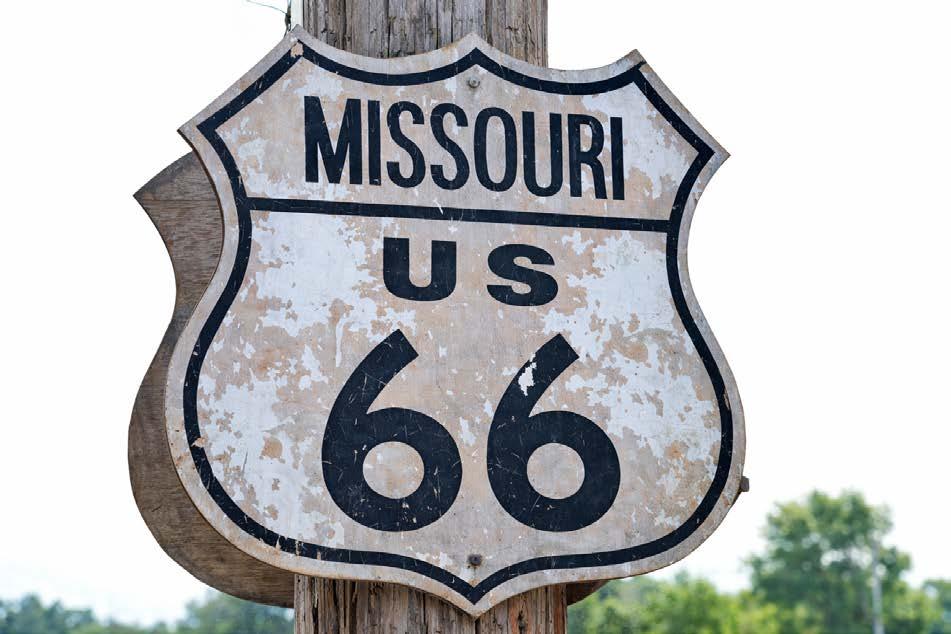
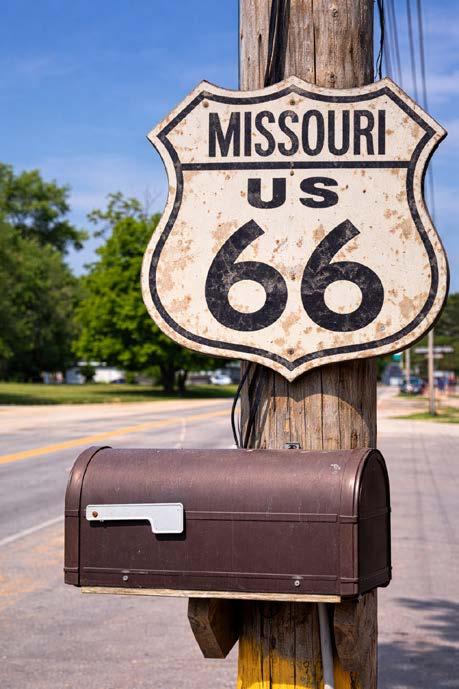
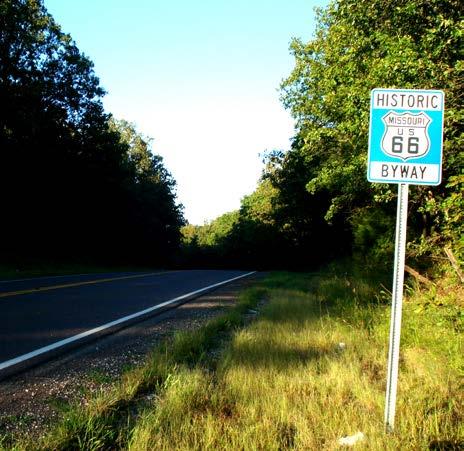
Route 66 at 100: Missouri Where the Journey Finds Its Rhythm
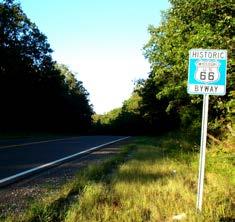
AS ROUTE 66 LEAVES ILLINOIS and crosses the Mississippi River, the Mother Road enters Missouri, the state where the journey begins to feel real. While Illinois marks the birthplace of Route 66, Missouri gives the road its rhythm. Here, the highway starts to curve, climb, and stretch westward, guiding travelers through rolling hills, historic
towns, and some of the most preserved stretches of the original route anywhere in the country.
One of the first and most powerful symbols of this transition is the Chain of Rocks Bridge near St. Louis. Once a vital Mississippi River crossing, the bridge’s distinctive bend and industrial steel frame marked the moment travelers truly left the eastern states behind. Today, it stands as one of the most photographed landmarks on the Mother Road, a reminder that the adventure had officially begun.
Not far from the bridge, travelers found comfort and familiarity at roadside institutions like Ted Drewes Frozen Custard, where generations of Route 66 motorists stopped for frozen custard served upside down. These simple moments, stretching legs, sharing dessert, refueling both car and spirit, became part of the Route 66 experience.
As the highway winds southwest, Missouri reveals why it holds such a special place in Route 66 history. Towns along the route did not just survive because of the road. They were shaped by it. In Cuba, Missouri, travelers still pass historic motels and vibrant murals celebrating Route 66 culture, while nearby stands the legendary Wagon Wheel Motel, one of the oldest continuously operating motels on the entire route. Its glowing neon sign remains a beacon for modern day road
By Tiffanie Nicole – Pulse Media
trippers seeking an authentic overnight stop.
Missouri is also where Route 66 nostalgia feels especially alive. Quiet roadside landmarks like the Gary Gay Parita Sinclair Station capture the timeless image of mid century travel, a single gas pump, a modest station, and the open road stretching endlessly ahead. These preserved stops remind travelers that Route 66 was never about speed, but about connection.
Farther along the route near Carthage, travelers can still experience Route 66 the way families once did at the 66 Drive-In Theatre, a rare surviving drive in theater that has welcomed motorists since 1949. Nearby, the open air art village of Red Oak II preserves relocated buildings, signage, and stories from disappearing Route 66 towns, ensuring their legacy lives on.
Missouri’s stretch of Route 66 proves that the highway was never meant to be rushed. The curves in the road, the preserved pavement, and the towns that still embrace their Route 66 identity invite travelers to slow down and experience the journey, not just pass through it.
As Route 66 approaches its 100th anniversary in 2026, Missouri stands as a living museum of the Mother Road. It is the place where Route 66 becomes more than a line on a map. It becomes a story told through bridges, diners, neon lights, and the people who kept the road alive.
Next month, the Route 66 at 100 series continues into Kansas, where the Mother Road briefly passes through the state before pushing farther west toward open plains and endless horizons.
Marcy’s Musings
Miracle on Eleventh Street
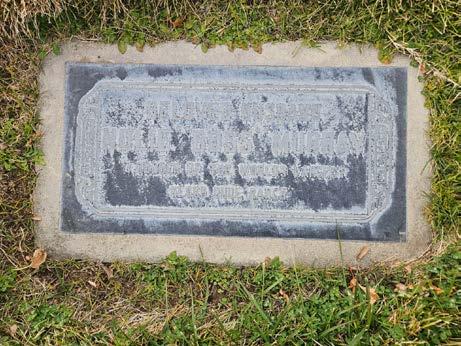
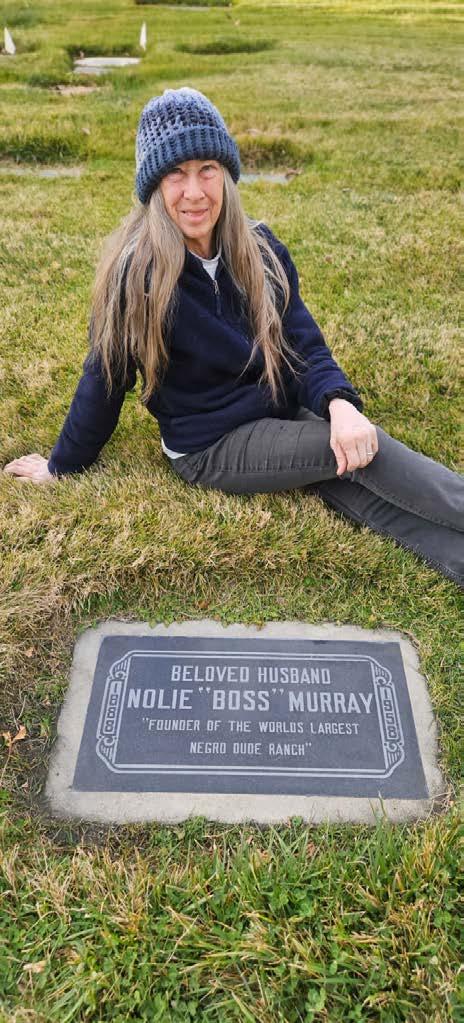
ON A RAINY FRIDAY, the day before the planned Saturday November 22 Mohahve Historical Society "Rocks, Roads, and Monuments" fieldtrip around Old Town Victorville, which had been rescheduled from May, I decided I'd better drive the route. I wanted to make sure I could easily find all the sites, as well as determine where a caravan of cars could safely stop at each location. All was going well until I made the cemetery loop and parked at what I thought was the area of the gravesite of Nolie Murray, 1888-1958, "Founder of the World's Largest Negro Dude Ranch." I had been there several times before and photographed the gravestone.
With a clear close-up photo on my phone, and a cemetery map in hand, I figured this would be easy. After 20 minutes of sogging through wet grass, I gave up and went to the cemetery office for help. With only one lady at the desk who was not free to leave, I was sent back to the same spot. Still no luck.
The fieldtrip day arrived. We stopped near the gravesite and got out. I discussed the importance of Nolie Murray and the Murray's Overall Wearing Dude Ranch in what is now Apple Valley, then known as the "outskirts of Victorville." Then I had to admit I couldn't locate the grave. But I did hold up a nice clear photo of the black granite gravestone with all words and dates easy to read. Minds started racing. Maybe it sunk into the ground. Maybe it was stolen. Maybe with all the hype about the Smithsonian Traveling Green Book Exhibit, some dishonest thief realized its value and wanted it for himself! Should we
A few days later MHS member Jack Barry got a lot of exercise walking up and down the rows, searching all the headstones in Block G, Section 2.5, trying to locate Grave #6. No such luck.
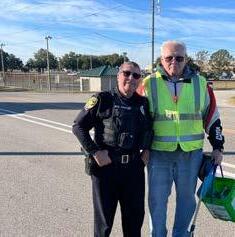
On Tuesday, December 30, I was driving across the river from Apple Valley to Victorville on my way to the Victor Valley Museum, I suddenly decided to give it one more shot. This time the office had two staffers. After telling them my sad story, they began to understand the importance of this man, Nolie Murray, and his role in local history. Pointing out that the four monuments at the entrance to the cemetery were placed by MHS also impressed them a little. The gentleman quickly volunteered to take the challenge.
I drove back to the site and waited. Armed with a small green flag and a cemetery diagram, he drove up in his trusty golf cart and went right to work. In about 10 minutes, by using legible neighboring stones as guides, be located the illegible partially buried marker. Hallelujah!
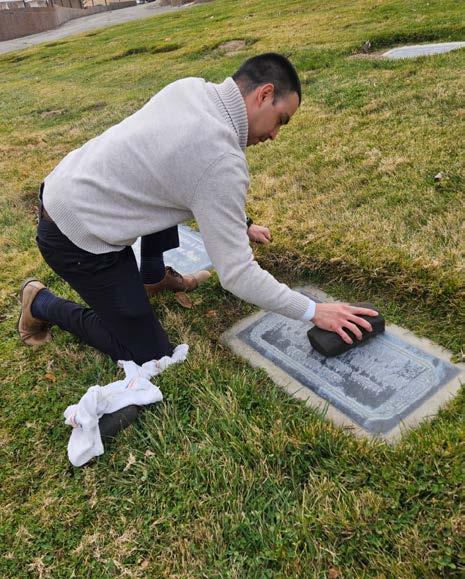
The gravestone looked to me like it needed to be replaced. But what do I know? "Not so fast. Wait right here," he told me, as he sped off to the supply shed. Returning with an ordinary black pumice stone, he started scrubbing. And lo and behold, the letters magically reappeared, looking like brand new in about fifteen
minutes. There it was! "BELOVED HUSBAND NOLIE 'BOSS' MURRAY." Next line: "FOUNDER OFTHE WORLD'S LARGEST NEGRO DUDE RANCH." On the left "1888," and on the right "1958." A feeling of great relief came over me. To think that right here, in the Bell Mountain area of Apple Valley, was once a welcoming oasis, with nice little cabins, horses, and a swimming reservoir, a dude ranch that welcomed people of all races back in the Jim Crow days, a Green Book site, a stopping place between Needles and Los Angeles for tired and hungry travelers trekking across the vast barren Mojave Desert. I am so thankful that Nolie Murray, a local celebrity in his own right, rests in peace right here under his once again shiny legible black granite grave marker.
call in Sherlock Holmes?
A Christmas Party in Five Acts
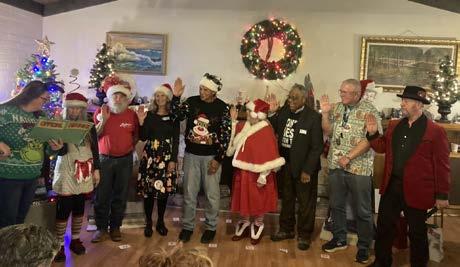
THE DECEMBER 18, 2025 , Mohahve Historical Society
Christmas celebration was a spectacular production with a large excited audience. It's SHOWTIME!!
ACT I "Our Honorees"
Scene 1- "Older and Wiser"
The show opens with two birthday girls, Lorelei Matsuda and Clara Petrosky, celebrating their special day at the historic Lone Wolf Colony. All join in for a beautiful rendition of the birthday song, with Uncle Leo strumming the guitar chords.
Scene 2- "Special Guest"
Meet Mohahve VII contributor, 96-yearold Arthur Moss, accompanied by his daughter Tanya and son-in-law Rod Ison, brand new MHS members. Read Art's story M7 page 85 to learn a bit about the Victor Valley in the Good Old Days. Unfortunately M7 contributors Linda Beserra and Dick Garrison were unable to make it, but you can read their stories on pages 45 and 109.
Scene 3- "The Nons"
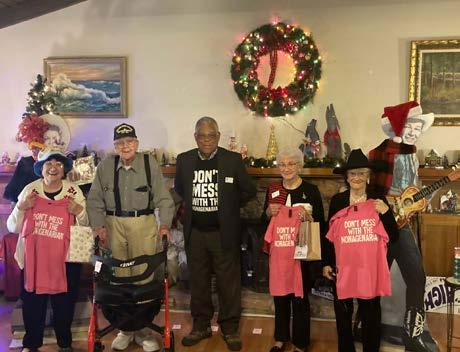
Next up- Our interesting and active 90-somethings. The action begains with Board Member Mike Phillips revealing his official "Don't Mess With the Nonagenarian" t-shirt, hidden under his suitcoat. His role is making sure all three deserving ladies, Clara Petrosky, Bonnie Ingram, and Lorraine Moffat, each get their own official pretty-in-pink Nonagenarian T. Although
Elizabeth Ross was unable to attend, Santa's little elf will make the delivery. Rounding out the scene, Art Moss is invited back on stage for the photo op, as he definitely qualifies for the honor.
ACT II "The Roger Family and Sons of the Pioneers"
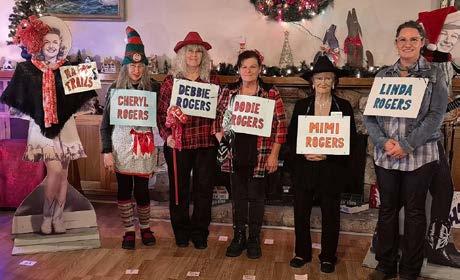
Scene 1- "The Characters"
Introducing Cheryl, Linda, Mimi, Dodie, and Debbie, daughters of the famous couple, Roy Rogers and Dale Evans.
Next, joining Roy on stage, the original members of his band, the Sons of the Pioneers: Tim Spencer, Bob Nolan, Hugh Farr, and Karl Farr.
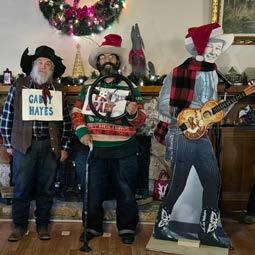
What? Here come two more guys inviting themselves to the party: Roy's sidekick Gabby Hayes, claiming to know how to sing ("Yer darn-tootin' I can sing!"), and Pat Brady driving in on Good Old Nellybell, and screeching to a halt with a loud "Whoooooh, Nelly!!"
Then, a little late due to a Big Bear fishing trip, brother Dusty comes rushing in with two Grand Ole Opry gals, Minnie Pearl, with a loud "Hooow-deee!" and that "Crazy" Patsy Cline. Well, looks like everybody's here now.
Scene 2- "The Singin'"
All these talented singers and musicians, join in to close out the act with three rousing numbers: "Country Roads" and "This Land is Your Land," the Apple Valley versions, and of course, Roy and Dale's theme song, "Happy Trails."
ACT III "The MHS Duo"
Two talented board members, Eric (i.e. The Tin Man) and Delvin (i.e. Gabby Claus) performing a traditional Christmas song, "White Christmas," followed by Eric's lively rendition of "Have Yourself a Merry Little Christmas!"
INTERMISSION- A delicious homecooked meal prepared by the LWC staff
ACT IV "Important December Business"
Scene 1- "The Raffle"
Mayor Pro Tem Kari Leon and Councilman Curt Emich do the honors: Nine lucky winners are selected with Film Festival posters and Christmas goodie bags delivered by Mrs. Claus, i.e. Board member Therese Moore.
Scene 2- "A Big Thank You"
Best wishes to departing board members Meera Maheswaran and Dennis Hom, who are invited to rejoin the board any time!
Scene 3- "Installation of 2026 Board of Directors"
Lone Wolf Colony Executive Director Shannon Irwin does the honors: Directors Mike Phillips, Joe Michael, and Eric Mandeson; Treasurer Kellie Chavez, Recording Secretary Leo Adkins, Corresponding Secretary Therese Moore, Vice President Delvin Harbour, and President Marcy Taylor take the oath. The audience cheers enthusiastically, knowing that the organization is in good hands for another year.
ACT V "The Christmas Sing-along"
Time to grab your song book and sing your heart out! Led by the Sons of the Pioneers and other talented musicians and singers, eight traditional Christmas songs end the evening on a high note!
CURTAIN CALL- "A Night to Remember"
Thanks to all of our members who came together to make this evening a success!
Cheers to the MHS board, our honorees, our guests, and the staff of the Lone Wolf Colony, the Apple Valley Town Council members, and especially the great musicians, actors and actresses, who lent their talent and sense of humor to close out 2025 in style and wish you a happy and successful 2026.
Forward Ever, Backward Never
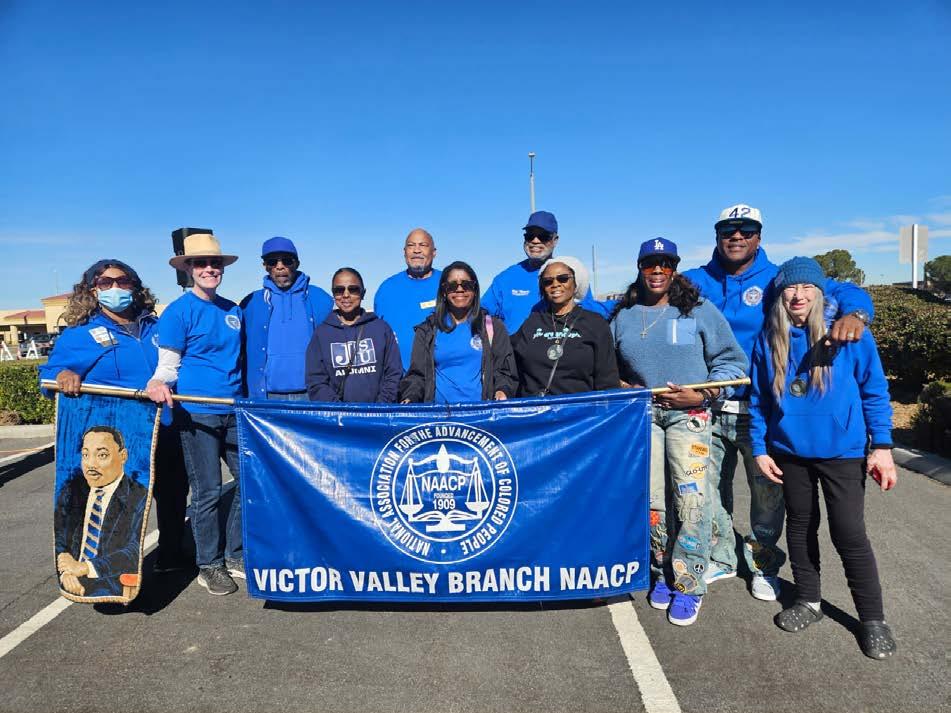
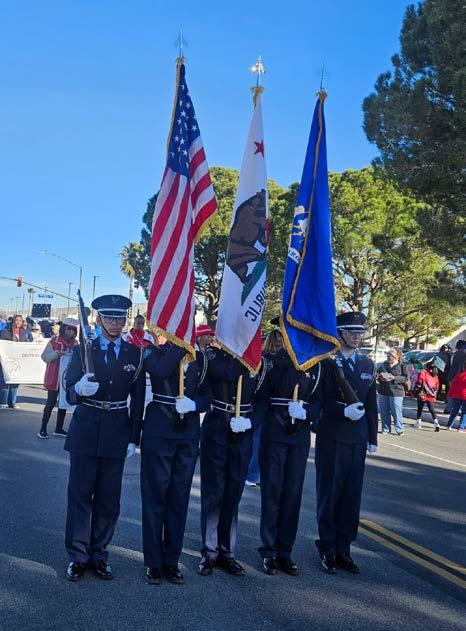
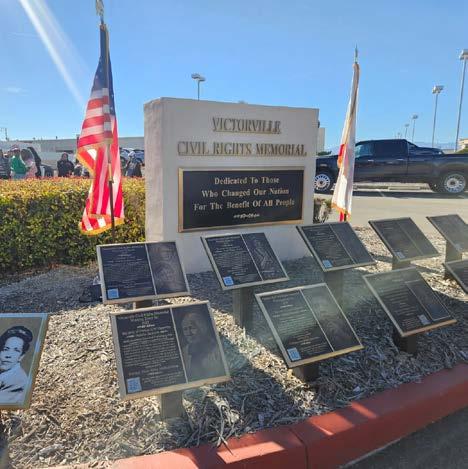
HUNDREDS OF HIGH DESERT residents of various ages, races, and cultures, representing a number of local organizations, gathered together in unity on Civic Center Drive in Victorville on Monday January 19, 2026. The 18th Annual Martin Luther King, Jr. Peace March was presented by the High Desert Alumnae Chapter of Delta Sigma Theta Sorority, with support from the City of Victorville and the Victor Valley Women's Club. Its important theme,
"Protecting the Dream, Forward Ever, Backward Never," resonated with the participants, led by the all female Sultana High School Air Force Jr. Reserve Officer Training Corps Color Guard.
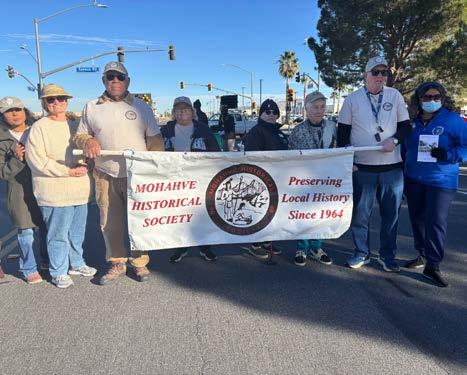
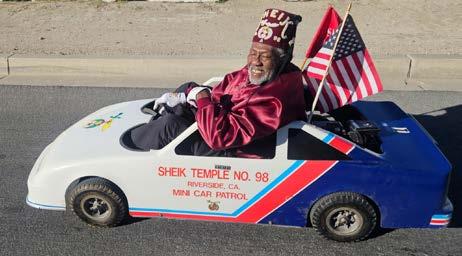
Joining the Deltas and their youth group, the Delta Gems, were members of NAACP Victorville Branch 1082, No Drugs America, the Shriners and Masons, the Alpha Kappa Alpha Sorority, the High Desert Branch of the California Writers Club, the Mohahve Historical Society, the Tuskegee Airmen, and a number of local church congregations.
Following the march attendees were treated to a dynamic program. Vocalists Winnie B. Thompson and Christie "Merraje" Malone belted out a few traditionals: "The National Anthem" and "Lift Every Voice and Sing," then added a few musical selections
of their own. New this year were the South Pacific Breeze Samoan dancers, lending their talents with an island flavor. The two guest speakers both addressed topics of concern, while expressing hope for more progress and a bright future. The Civil Rights Memorial Essay winner, a student at Galileo Academy School, read her essay and posed for photos beside her plaque, the twelfth to be placed, honoring Ella Josephine Baker and her contributions to the cause.
But the celebration was not over yet. Attendees were invited to attend a free concert at Victor Valley College that evening, courtesy of the Dreamers, Visionaries, and Leaders organization and the college ASB. What a wonderful way to celebrate the life of a great civil rights leader, gone too soon but never to be forgotten!
Senior Care Professionals
High Desert Leaders Publish New Book Amplifying Women’s Stories of Resilience
TWO LOCAL LEADERS with the Today’s Woman Foundation have released a new book highlighting powerful stories of resilience from women across the High Desert.
Do You Hear Me? The Darkness Didn’t Win, co-authored by Melanie Ajanwachuku and Cindy Bostick, is a collaborative anthology featuring personal accounts from local women who have faced adversity, loss, trauma, and hardship—and emerged with strength and determination.
The book brings together voices from throughout the High Desert, offering stories that are at times heart-wrenching, yet hopeful and determined. Contributors share diverse lived experiences that reflect the realities many women face, while emphasizing perseverance, healing, and the importance of being seen and heard.
“This book is about voice,” said co-author Cindy Bostick. “It gives space to women whose stories matter and reminds readers that resilience takes on many forms and can exist even in the darkest moments.”
Co-author Melanie Ajanwachuku noted that the contributors represent a wide range of backgrounds and life experiences. “Each story is unique, but together they tell a larger story of courage, community, and survival. Cindy and I extend our appreciation to Book Editor Karen Englesen for her thoughtful guidance and dedication, and to Illustrator Theresa Shellcroft for bringing the pages to life with her beautiful artistry.
We are also deeply grateful to the contributors—Brisa Alfaro, Heidi Battaglia, Jessica Borzilleri, Debbie A. Cannon, Susan Conway, Dana Hernandez, Marie Langley, Margherita Leone, Asian Medawar, Hailey Reyes, Renee Rincon, Theresa Shellcroft, Margaret Smith, Dr. Michelle Sugi, Lydia Usry, Regina Weatherspoon-Bell, and Dr. Maryam Zand—whose voices, insights, and open heart made this book truly special. Their passion and generosity of spirit continue to inspire our community.”
The project aligns with the mission of Today’s Woman Foundation, a local nonprofit dedicated to empowering women and girls through education, advocacy, and community-based programs. The book also serves as a platform to elevate local voices and foster connection through shared experience.
You can find the book on Amazon now, but Today’s Woman Foundation recommends waiting until March to buy—exciting discounts and give aways are coming as part of a special campaign on the road to Bestseller!
Community events, including local book signings and speaking engagements, are planned.
About Today’s Woman Foundation:
Today’s Woman Foundation is a High Desert–based nonprofit organization focused on uplifting women and families through educational programs, scholarships, advocacy initiatives, and healing-centered community efforts. Visit the website at Todayswomanfoundation.org to learn more about the work of this organization.
~ Today’s Woman Foundation
Cindy Bostick
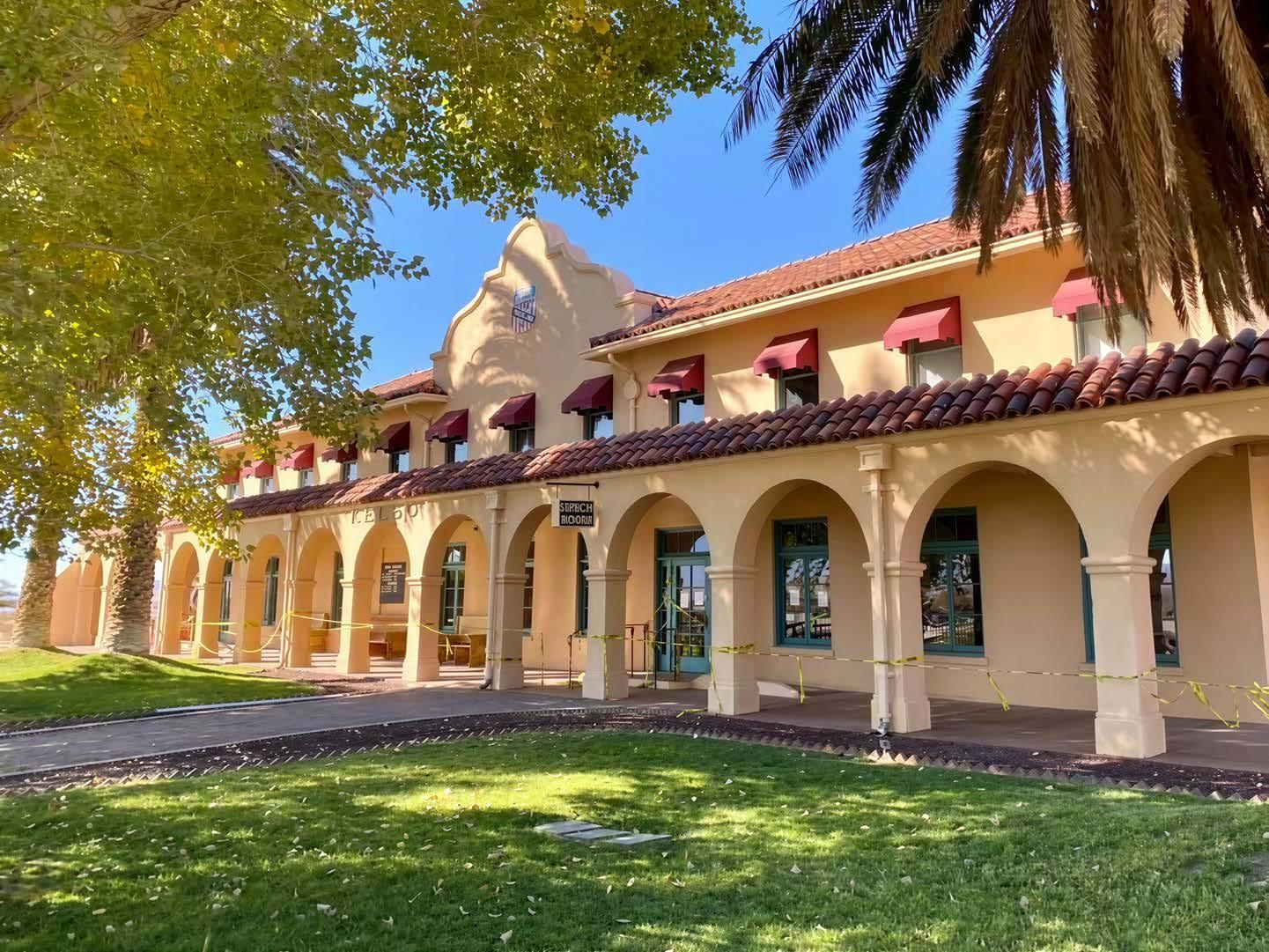
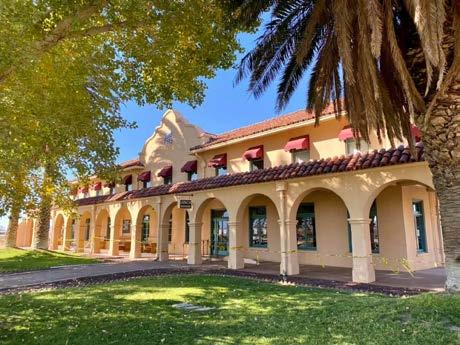
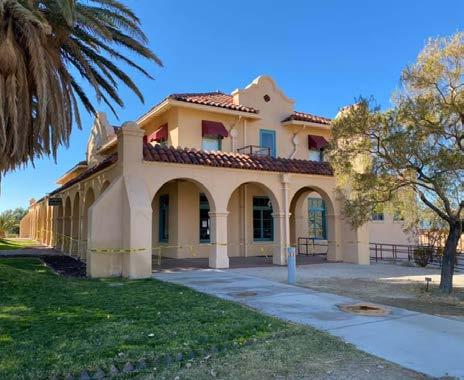
THE KELSO DEPOT —formerly the Kelso Depot, Restaurant and Employees Hotel, and now home to the Mojave National Preserve Visitor Center—sits in the heart of the Mojave Desert within the National Park Service’s Mojave National Preserve.
Kelso Depot is one of the Mojave National Preserve’s star attractions—it played a major role in shaping the history of southeastern California, helped write a whole chapter of western railroad development, and now stands as one of the last surviving examples of early railroad architecture in the Southwest.
The depot is located in Kelso, California, located 235 track miles east of Los Angeles, at the intersection of Kelso Cima Road and Kelbaker Road, roughly between Baker and Interstate 15 to the north and Interstate 40 to the south.
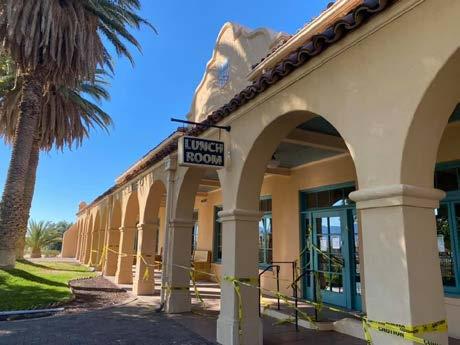
The Kelso Depot Visitor Center in Mojave National Preserve is currently closed for a major overhaul of its heating, ventilation, and air conditioning (HVAC) system.
The project, which began in late 2023, requires extensive repairs to the building’s core infrastructure, rendering the site temporarily inaccessible.
Renovation is ongoing, with the visitor center expected to reopen in 2026. During the rehabilitation, nearby restrooms and parking areas have also experienced
intermittent closures due to a well pump problem in July 2023 and November 2025. Because of the preserve’s remote desert setting, the National Park Service (NPS) urges visitors to bring plenty of water for themselves and their pets. Even when facilities are open, reliable water access cannot be guaranteed. But what is this special place anyway?
By Jaylyn And John Earl www.thedesertway.com
What began as a practical response to geography and grade slowly shaped Kelso’s identity, anchoring it as a crucial— if remote—support hub in the broader story of the Los Angeles & Salt Lake Railroad. The rails didn’t just arrive in the Mojave — they cut into it, like a blade drawn across a sleeping giant.
In August 1900, when Senator William A. Clark bought that unremarkable little Los Angeles railway, nobody in the desert felt the tremor yet. But the moment he set his sights east, the Mojave felt a shift — a new line being scratched across its hide. Clark wasn’t building a railroad; he was carving a corridor between two worlds. By 1902, Union Pacific smelled the ambition on the wind and bought half the stock before the line was even finished. Two titans shaking hands over a map the desert had never agreed to.
Then came the construction — not gentle, not patient. Crews pushed from Salt Lake and Los Angeles like rival armies racing toward each other, laying steel across sand, lava rock, and silence. Every spike was a challenge. Every mile was a dare. By 1905, the line had stretched nearly 235 miles into the Mojave’s interior and reached a lonely dot on the surveyor’s sheet: Siding #16.
There was nothing there. No town. No shade. Just heat, emptiness, and the faint
promise of a water stop.But the desert has a way of turning nothing into somewhere.
Siding #16 would soon have a name — Kelso — and become the beating heart of the Salt Lake Route, a place where steam engines caught their breath before clawing up the Cima Grade, and where men learned that the Mojave doesn’t care about senators, rail barons, or fortunes. It only respects those who endure it.
Kelso got its name thanks to a very scientific process: two warehousemen at Siding #16 tossed their names into a hat— then, for good measure, added the name of another warehouseman who didn’t even work there anymore, John H. Kelso. As darn luck would have it, the only person not present won.
Note: The depot was not named after Union soldier, politician and preacher, John R. Kelso of Missouri.
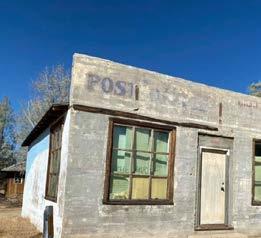
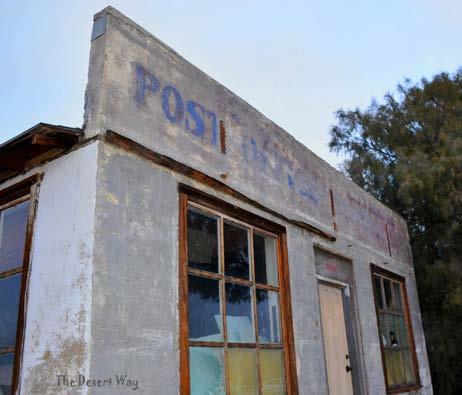
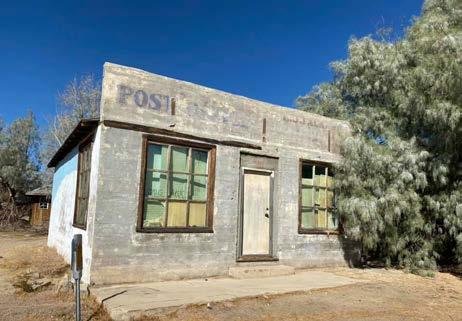
The first depot, a small, one story building with a water tank built by the San Pedro, Los Angeles and Salt Lake Railroad, opened in 1905—back when trains were the height of luxury and “air-conditioning” meant opening a window. The post office opened on May 20, 1905, and kept the mail flowing until 1962, when the depot’s function ended.
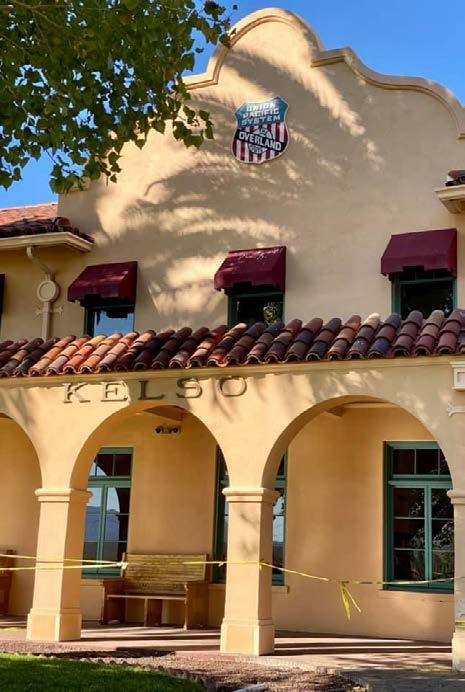
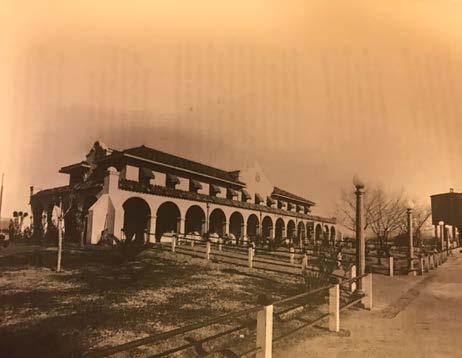
Upon construction completion in 1925, the Union Pacific Railroad replaced the old depot building with the current Spanish-style depot, originally named the Kelso Clubhouse and Restaurant. The restaurant and and boarding rooms continued to operate until 1985.
and brakemen—could remain on duty, allowing a maximum of sixteen hours of operation before requiring an uninterrupted eight-hour rest period.
On a remote stretch of railroad where long grades and heavy traffic often pushed crews to their limits, Kelso became an essential stopping point. The depot and its associated facilities provided the food, lodging, and respite that federal law demanded, ensuring that crews could safely continue their journeys across the Mojave’s vast and unforgiving landscape. Originally, the restaurant and telegraph office each had three shifts, operating around the clock.
The Kelso Depot was not a Harvey House—no matter how many times people mix them up. Harvey Houses only existed along the Atchison, Topeka and Santa Fe Railway, so calling Kelso one is like insisting a cactus is a palm tree. Charming as it is, the Kelso facility should never be labeled a Harvey House… unless you want railroad historians to appear out of thin air and correct you on the spot.
Other railroads including the Los Angeles and Salt Lake Railroad had their own version of Fred Harvey facilities, such as the Lunch Room in the new Kelso Depot.
There was even a one room schoolhouse built in 1908—because even in the middle of the Mojave Desert, kids still had to do their homework. It served the railroad community back in the day, and after a long retirement, has been restored as a ranger station for the National Park Service. The school closed in 1975 and students were bussed to Baker.
Kelso was never a tourist hotspot; nobody was packing their Model A or Model T for a glamorous getaway to a remote desert outpost with more sand than roads.
Kelso made its final debut as a meal stop in the August 1930 issue of The Official Guide, by which point only three long-haul passenger trains were still trudging each way between Los Angeles and Salt Lake. By then, every surviving passenger train had its own dining car.
According to the Mojave Desert Dictionary, 2nd Edition by Patricia A. Schoffstall (2014), the restaurant was affectionately called The Beanery and its last meal was served there at midnight on June 30, 1985. It opened in 2009 then closed again in 2013.
There was also a more practical, legally mandated reason for maintaining a crew hotel and restaurant at Kelso. Federal regulations limited the hours that train crews—engineers, firemen, conductors,
Actually, there was only one major Fred Harvey House (Casa del Deseierto) in Barstow, California, known for its iconic name and role on Route 66 in the Mojave Desert. It was rebuilt multiple times before the final 1911 structure was established, serving as a key railroad hub. While other smaller Harvey facilities existed along the broader Santa Fe route through arid lands, Barstow’s was the prominent desert Harvey House.
By early 1923, the railroad decided Kelso needed an upgrade, so they started building the fancy new “Kelso Clubhouse & Restaurant,” which opened two years later, complete with all the whimsical charm a remote desert outpost could muster.
The Kelso Depot served passengers, railroad employees, and, most importantly, thirsty steam locomotives that needed water stops like giant metal camels crossing the Mojave.
In 1944, the Vulcan Mine and the Union Pacific Railroad brought plenty of eager workers into Kelso—men with time on their hands when not working and absolutely nothing to do in the middle of the Mojave Desert.
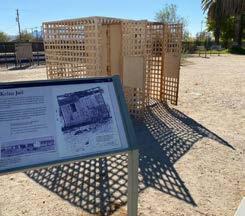
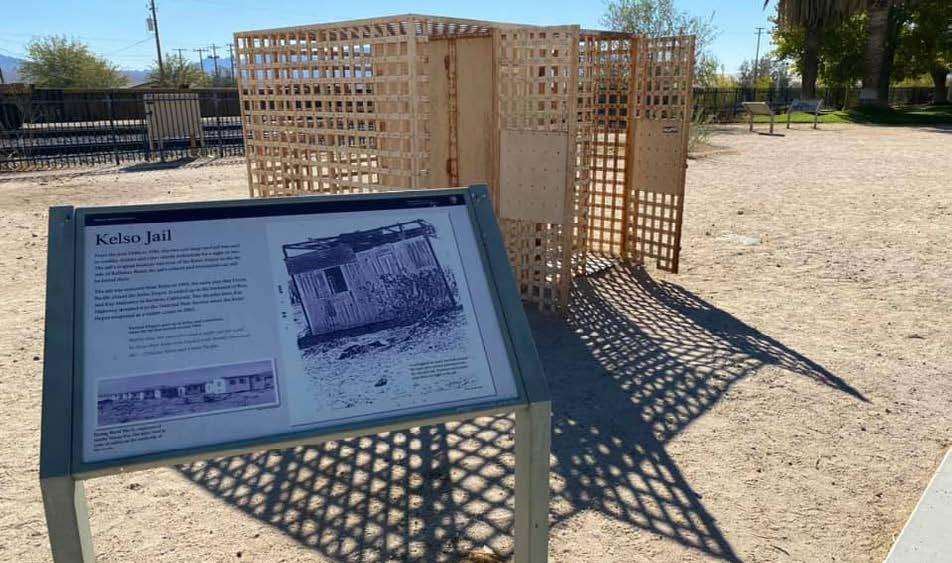
Predictably, boredom teamed up with alcohol, and before long the local pastime became “drink until gravity wins.” When things got rowdy, the solution was simple: toss the drunks into the two 6-foot tall iron cells so they could sleep it off. I wonder if any frequent flyers had their own key, like Otis Campbell on the Andy Griffith Show
Back when it was actually in use, the little strap-iron jail even had a roof for shade— because if you’re going to sleep off a bender in the Mojave Desert, you might as well avoid becoming a human raisin.
At one point, corrugated tin walls surrounded the whole setup, giving it that
Kelso Depot, ca. 1925, U.P.RR. Collection, Bill Kappele Enlargement, March 1992. This photograph is the property of Dennis G. Casebier, Goffs Schoolhouse, 37198 Lanfair Road, Essex, CA 92332
charming “frontier storage shed meets time-out corner” vibe. Strap-iron jails like this popped up all over the United States in the mid-to-late 1800s, proving that even back then, people needed a sturdy place to cool off after making questionable life choices.
The Kelso Depot was a major player in Union Pacific’s World War II efforts. But when the war wrapped up, the depot’s importance started fading fast. It was like the party ended, everyone went home, and Kelso was left standing there with the lights still on, wondering where all the trains went.
When the Korean War broke out in the early 1950s, the Union Pacific line suddenly got busy again. For a few years, trains were rolling through Kelso with the enthusiasm of people who just heard there were free snacks at the next stop.
By the 1960s, the new high-horsepower diesel-electric locomotives rolled in, flexing their muscles, making the old steam-era workforce obsolete. As these supercharged engines took over, the need for Union Pacific personnel in Kelso shrank.
In 1985, Union Pacific decided the unused Kelso Depot had outlived its usefulness and suggested tearing it down—because nothing says “problem solved” like a bulldozer.
Fortunately, preservationists from the Kelso Depot Fund swooped in like architectural superheroes, capes optional, and fought to save the place. Thanks to Mrs. H. Marie Brashier, Kelso Depot remains an icon of Mojave National Preserve! Mrs. Brashier began the movement to save Kelso Depot from demolition.
A motorist cruising down one of the giant bajadas—or alluvial fans, for those who like fancy geology words—that blanket the heart of Mojave National Preserve in the 1990s would suddenly stumble upon a big, lonely white building in full Spanish-mission cosplay.
It stood there almost completely by itself, looking both majestic and confused, right next to the sleek, high-speed Union Pacific mainline between Los Angeles and Salt Lake. A few crumbling buildings to the northeast and some modern prefab houses to the southeast of the tracks were the only clues that this lonely spot had once been a small town.
Undoubtedly its crown jewel was Kelso Depot, doubling as a boarding house for employees, complete with a billiard room, a library and a restaurant which served both employees and as a meal stop for passenger trains without dining cars. Unlike Yermo near Daggett, 72 miles west of Kelso, the railroad combined all of these facilities in a single, large building.
In 1992 Congress appropriated
$1,000,000 dollars to restore the building. An archeological survey of the site was conducted in June 1995 and subsurface testing was conducted in March 1996. The results were reported in The Kelso Depot: An Archeological Evaluation, by Steven E. Daron, February 1997.
Thanks to the passage of the California Desert Protection Act in 1994, the East Mojave National Scenic Area was redesignated as Mojave National Preserve, thereby transferring administrative responsibility for the Kelso Depot to the National Park Service.
In 2002, the National Park Service initiated a comprehensive restoration program aimed at stabilizing the structure, preserving its architectural integrity, and adapting it for interpretive use.
On October 20, 2005, Kelso Depot opened as the Mojave National Preserve Visitors Center, highlighting the region’s intertwined natural and cultural histories. Kelso Depot is #2001000760 on the National Register of Historic Places.
The National Park Service has indicated its intention to reopen the Kelso Depot at some point in 2026, without adverse impact to the historic character. The complexity of conditions has driven up costs for repairs, and hence require many levels of approval and oversight. Ahh, bureaucracy.
Although there is no official reopening date, we remain hopeful. Due to unforeseeable project delays and bad weather, prospective visitors are advised to consult the National Park Service’s official website or social media platforms for the most current information before planning a visit.
For adventurers heading to Kelso Dunes at nearly 500 feet high, they are the third largest sand dunes in the United States and one of about 35 singing sand dunes in the world. Kelso Dunes are home to rare plant species and endemic insects found nowhere else in the world.
Note: All photos except where noted otherwise were taken by Jaylyn and John Earl.
Schoffstall, Patricia A., Mojave Desert Dictionary, 2nd Edition, published by Mojave River Valley Museum, 2014.
SWIM Speakers February
February 5 Doctor Talk
PACE Medical
February 12 Everyday Sayings and Where They Originated
Debbie Walker
February 19 The Museum of the Bible
Vicki Godden-Allen
February 26 Automotive Maintenance Care
Tony Caspary
• Feb. 9- 6:00 PM Regular monthly general membership meeting of NAACP Victorville Branch 1082, Victorville Office
• Feb. 10- 11:00 AM Regular monthly meeting of Friends of the Apple Valley Library "The Art of Antiquing"
• Feb. 14- 9-2:00 Info Fair celebrating the Route 66 CentennialNeedles El Garces Harvey House, 950 Front Street
• Feb. 18- 11:30 Apple Valley State of the Town, Singh Center for the Arts "Playing Our Cards Right"
Seniors With Inquiring Minds (SWIM) meets every Thursday from 1:00 – 3:30 pm in the Percy Bakker Center located at 9333 E Avenue in Hesperia, CA 92345
Friends of the Apple Valley Library
14901 Dale Evans Parkway Apple Valley, CA 92307
Tuesday,
February 10, 2026 - 11:15 AM
We are accepting donations of gently used books, CD's and DVD's.
We will have a surprise guest speaker. Come and meet new friends and enjoy a day at the Apple Valley Library.
• Feb. 26- 6:30 doors open / 7:00 Mohahve Historical Society meeting- Sid Hultquist "Up Close with Mountain Lions"
• Feb. 28- 10:00 Fieldtrip to 29 Palms Visitor Center, Murals, and other sites. Call (760) 9875-1918 for more info
Widows or Widowers
WOW meets each Saturday except the 3rd and 5th Saturdays in the Fellowship Hall of Trinity Lutheran Church 16138 Molino Drive Victorville CA 92395
Feb 07: 9 AM Happy Birthday for February babies Speaker - Carla Franko from Cultural Arts Center
Feb 14: 9 AM Valentine's Day celebration, exchange cards
Feb 21: 10 AM Breakfast Denney's Restaurant Main St. Hesperia near Hwy 15
Feb 28: 9 AM Game Day
The Solitude of Mount Vernon
GEORGE WASHINGTON was tired. He had saved the United States from British tyranny and just wanted to kick back on an Adirondack chair and stare out across the rolling hills of his estate toward the muddy waters of the Potomac River with a pint of Modelo Especial.
“George,” Martha may have said. “Some of the boys are here, and they want to talk.”
“But, my darling wife,” George may have replied, “I’m tired and thirsty. Who is it?”
“Oh, just Johnny, Benny, and Billy.”
According to The Gilder Lehrmann Institute of American History, George Washington stated it best in a letter to his friend, General Henry Knox, written in April of 1789. He knew that the newly formed Congress would be pressing him to take the reins of the country for which he had fought so hard, but he was reluctant to accept the task.
For myself, the delay may be compared to a reprieve; for in confidence I can assure you – with the world it would obtain little credit – that my movements to the chair of Government will be accompanied with feelings not unlike those of a culprit who is going to the place of his execution: so unwilling am I, in the evening of a life nearly consumed in public cares to quit a
peaceful abode for an Ocean of difficulties, without that competency of political skill –abilities which is necessary to manage the helm.
The hesitation made sense to the 57-year-old retired Commander-inChief of the Continental Army during the Revolutionary War. He had also served during the French and Indian War years before and had seen enough of the carnage of war.
It had been his wish to simply retire to his very comfortable 7,600-acre farm, to
By John Beyer
live out the rest of his life alongside his darling Martha.
But this was not to be. His country needed him - again.
My own darling wife, Laureen, and I visited Washington, D.C. in the summer of 2025 to learn about all the big goings-on planned for the 250th birthday celebration on July 4th in 2026.
We love the nation's capital, except for the humidity and the biting insects that seem to find any inch of uncovered skin a person dares show in public. And that doesn’t even explain the three bites on my right cheek, and I’m not talking about the cheek on my face.
We booked a ride to Mount Vernon with City Cruises aboard the Inner Harbor Spirit. A very large, comfortable ship with a bar and restaurant. Since it was only a 90-minute plow up the Potomac River from the City Cruises dock, the restaurant we did not need. But, like our first president, I was thirsty, and the bar in the lower salon proved invaluable.
The cruise along the river was beautiful and historical. We passed the Naval College, the Pope-Leighey House, the National Harbor, and the gorgeous old town of Alexandria. Of course, there was one site after another to view, and the entire time a tour narrative played over the speakers detailing what we tourists were seeing and the importance of these sights.
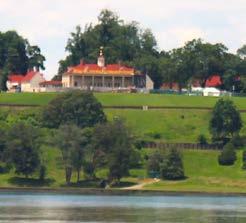
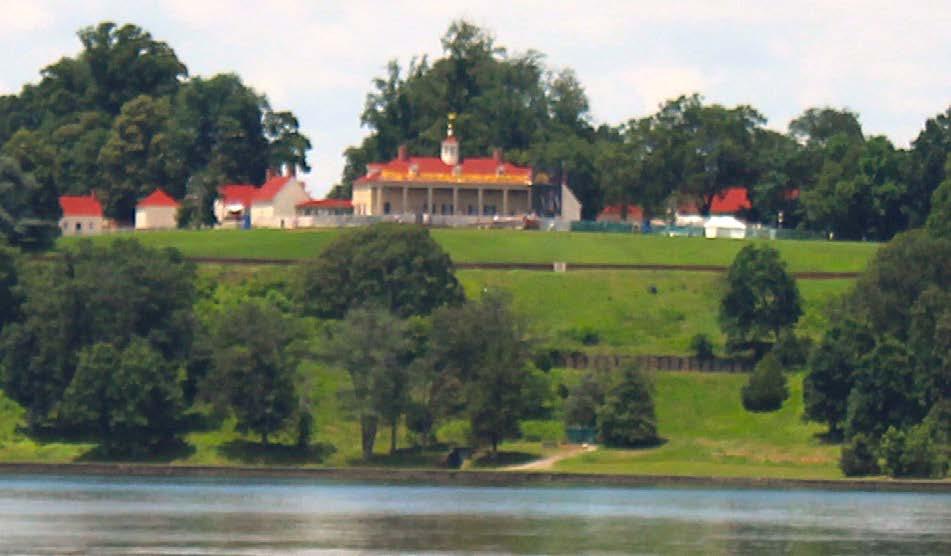
View of Mount Vernon from the Potomac River
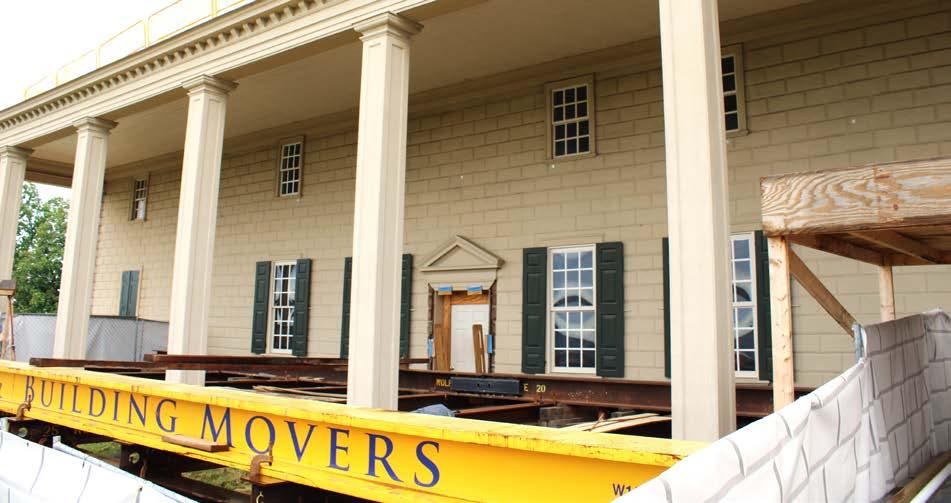
The white pillars on the front portico during renovation
But the big plan was to wander the acreage of Mount Vernon and tread where George Washington and so many others have walked through the centuries.
The Inner Harbor Spirit slowed to enter the small docking area at Mount Vernon, allowing all of us a chance to glance up the rolling green grass hills toward the impressive and large home of our first president.
It was very impressive indeed. The eight tall white columns supporting the front portico gleamed in the early morning sunlight, drawing a remarkable and colorful contrast with the bright red tiled roof.
“It’s beautiful,” Laureen said.
“Like you.” I knew how to woo my wife. The ship docked at the wharf, and Laureen and I took the dirt path leading to the estate’s farm, which was used to feed the staff and the Washingtons themselves when they resided there. It should be noted that there were many other farms stretched out across the thousands of acres that once made up the entirety of the plantation. Through the decades, much of the land was sold off, and now the farm consists of a little over 500 acres.
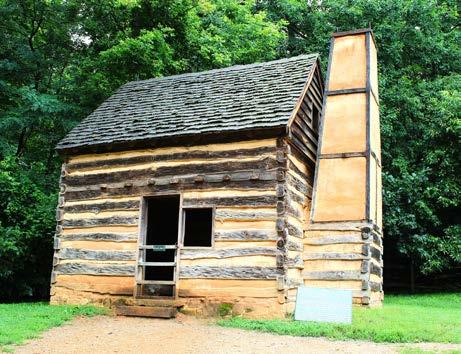
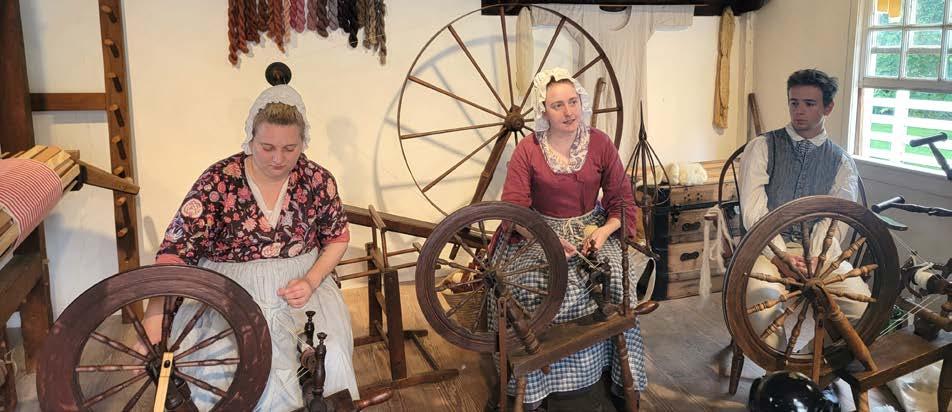
A side note, though Washington referred to the area we know as Mount Vernon as the farm, it was actually a fully functioning plantation. The enslaved persons harvested crops which were sold to nearby towns, created leather and metal goods to be sold, and worked a distillery creating Washington’s own rye and corn whiskey, which was very popular amongst townsfolk near and wide. It was a hard life, working six days a week from sunup to sundown, with only Sundays off.
Slavery was a peculiar institution, especially in the United States, which was founded on freedom and equality.
We wandered up along the Forest Trail below tall American chestnuts, native oaks, and tulip poplars. It was beautiful and led us to the Patriots Path, where reenactors had set up a Revolutionary War camp.
We met Orion, a young man who was dressed in full military regalia, standing behind a recruiting station for the Continental Army.
“I love talking to the kids about why people volunteered to fight for freedom. So many want to join now, it’s cool.”
As he spoke, a group of older men approached with young children. “Many veterans come here and talk with their children about their time in the service. It’s an honor to meet them,” Orion said.
From there, we continued walking, taking in all the sights: the salt house, the Ford Orientation Center, the Purple Heart Memorial, the smokehouse, the stable, and even the dung repository.
There is a lot to see, but we were disappointed when we arrived at the mansion itself. The majority of it was closed for reconstruction.
Though the mansion was being renovated for safety concerns, we were allowed to walk through four or five rooms, navigating yellow caution tape and making sure to step carefully so as not to fall through to the basement with the many open sections of floor.
One docent stated, “The mansion will be more stable since all the old floor timbers
will now be wrapped with steel for support. But all the flooring will be the exact wood that was used when the house was built. Everything will be original.”
The folks in charge guaranteed the home would return to its wonderful, authentic grandeur for the 250th celebration, where the city is expecting millions of visitors.
After three hours, and a nice lunch and ale at the Mount Vernon Inn, we headed back to the wharf to catch our return trip.
Walking down the path, we came upon an ornate white marble mausoleum which housed the remains of George Washington, Martha, and many of the family.
Directly across from the tomb was a dirt field bordered by tall green trees overlooking the Potomac River. It is here that many of the slaves are buried.
No headstones, no wooden crosses, and nothing to say who these unfortunates were. We were told by a docent that they are still using ground-penetrating radar to locate further graves and simply marking the graves with rocks.
A sober end to a rather delightful day full of history.