68. PREPARING FOR A DRIER FUTURE WITH TREE PERSONALITIES
INTRODUCING PURPLE PINEAPPLES TO AUSTRALIA
For the first time, Australian farmers are growing purpleskinned pineapples to test whether the crop can survive the harsh Aussie climate.
Piñata Farms, located in south-east Queensland, sourced two purple pineapple varieties from Brazil, and is now trialling them in local soils. One unnamed variety, known for its sweet, low-acid flesh, is already showing promise, but experts believe commercial availability may be 10 years away.
The Scurr family, who own and operate Piñata Farms, conducted a tiny trial harvest earlier this year. Consumer feedback was overwhelmingly positive, with Piñata Farms managing director Gavin Scurr commenting, “I guess it’s novel. People just haven’t seen purple pineapples.”
According to the Australian Pineapple Peak Industry Body, Queensland is the heart of Australia’s pineapple industry. In this state alone, more than 35 million pineapples are grown each year, signalling the high consumer demand for this fresh fruit.
Australia’s ancient sharks
A major archeological study has found that gigantic sharks swam along the Western Australian coast more than 115 million years ago.
The study was co-authored by Dr Mikael Siversson, Head of Earth and Planetary Sciences at the WA Museum.
Analysing five fossilised vertebrae from the Darwin Formation, the team found that the timeline for when sharks started evolving to a giant body size was earlier than previously assumed, by about 10 million years.
The uncovered fossils were identified as belonging to the now-extinct carbabiodontids, a species of shark that lived during the late Cretaceous period. They were the first sharks in their group - known as neoselachiansto evolve a giant body size.
Pineapples grow when clusters of fertilised flowers fuse together and form a fruit, which can take up to two years. New plants are then cultivated from the small suckers at the base of mature plants.
The Scurrs began with only 12 purple pineapples from Brazil, six of each variety, and now have 2,000 plants. With each generation taking two years to mature, this means the process to creating a commercially viable product will take a while. But the Scurrs believe it will be worth the wait.
Using advanced statistical methods and data from nearly 2,000 modern sharks, researchers were able to predict that these sharks were 6-8 metres long, weighing more than three tonnes.
“This is the most detailed analysis ever done on extinct shark size using vertebrae,” says Dr Silversson.
“These sharks were massive, and they lived in shallow coastal waters. That tells us a lot about how ancient food webs worked and it shows just how important Australia’s fossil sites are for understanding prehistoric life.”
These ancient predators were reshaping
marine ecosystems before the arrival of the more famous giant shark, the Megalodon. In fact, they reached enormous sizes only 20 million years after first appearing.
These impressive finds are helping to paint a clearer picture of prehistoric Australia and the amazing creatures that lived there.
ADDRESSING AUSTRALIA’S VET ACCESS CRISIS WITH VETCHAT
Every pet owner knows that moment of uncertainty when your dog won’t eat, your cat’s acting strangely, or you notice something that just doesn’t seem right. And it always seems to happen at 11pm on a Saturday night, or when you’re hours from your regular vet.
That anxious question loops in your mind: Is this serious enough for an emergency vet visit, or am I just overreacting?
This dilemma reflects a broader challenge facing Australia. With nearly 70 per cent of households owning pets, a nationwide shortage of veterinarians, and mounting cost-of-living pressures, access to veterinary care has become a growing crisis.
In many regions outside wellresourced areas, animals face delays in treatment or miss out on care altogether, while veterinarians work to the point of exhaustion.
A TELEHEALTH SOLUTION THAT CAN SAVE THE LIVES OF PETS
VetChat offers a practical solution with a 24/7 telehealth service that connects pet owners with 50+ registered Australian veterinarians within two minutes via video chat or live messaging.
Experienced vets assess symptoms and provide clear guidance, and the impact is significant: VetChat’s data shows 80 per cent of after-hours concerns can either be resolved at home or safely wait to be seen within the next couple of days, rather than requiring immediate emergency care. This guidance helps pet owners make
confident decisions while reducing strain on emergency services.
For rural and remote pet owners, VetChat addresses the challenge of distance to veterinary services. When the nearest emergency clinic is hours away, instant access to professional advice helps owners determine the urgency of their situation without unnecessary travel or expense.
Pet owners can choose one-off consultations or join VetChatPlus
for unlimited access and additional financial coverage for common emergency incidents. And while it’s not a replacement for hands-on care, VetChat provides immediate veterinary expertise when it matters most, improving outcomes for our pets and contributing to a more sustainable system of care across Australia.
For more information, visit: vetchat. com.au/veterinary-telehealthaustralia-2025
A YEAR OF GROWTH, GRATITUDE AND GIVING BACK
The founding owners of Australian Power Equipment look back at the highlights of 2025
As another year draws to a close, Abby Crawford and Andrew Cockbain reflect on the year that has been – not just on the business milestones that have been passed, but on the quieter, more meaningful moments that have shaped Australian Power Equipment’s journey so far.
“Yes, it has definitely been a year of growth filled with new partnerships, projects, and horizons, but the achievements that have brought us the deepest joy have little to do with equipment, infrastructure, or international travel,” Abby says. “The stories that matter began far away from project sites and boardrooms, in the forests, enclosures and breeding facilities of the wildlife programs we proudly support.”
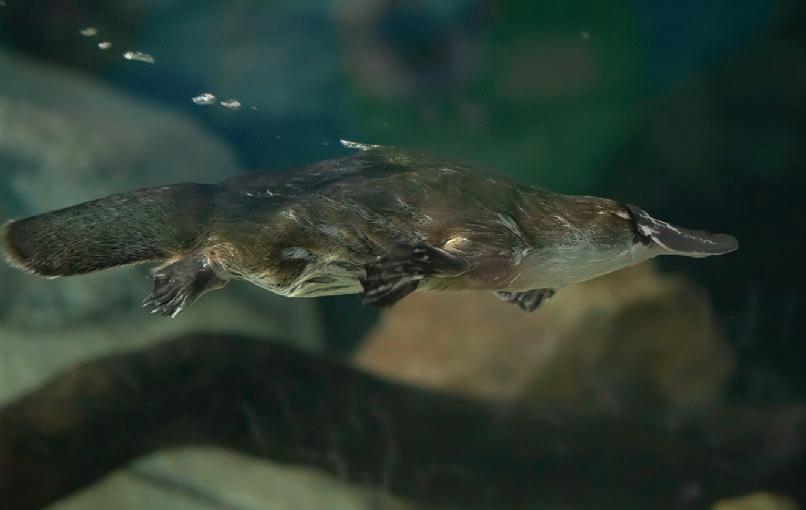
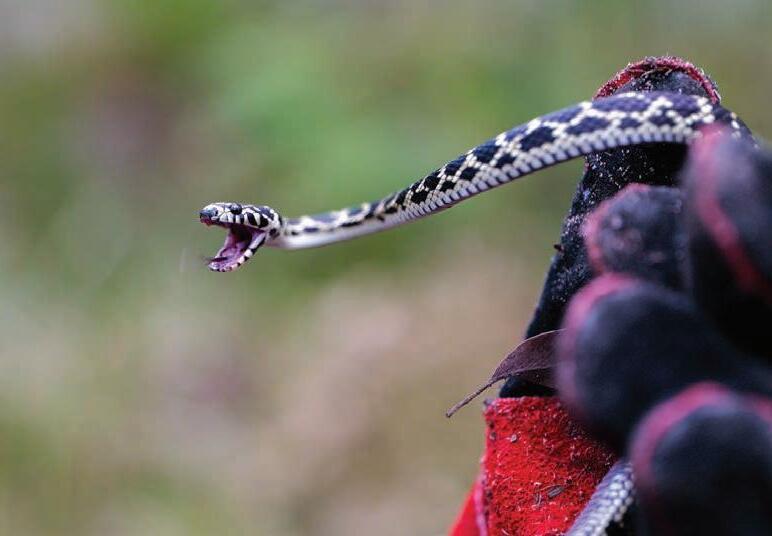
TOP TO BOTTOM: THE ENDANGERED BROAD-HEADED SNAKE (CREDIT: AUSSIE ARK); MACKENZIE THE PLATYPUS (CREDIT: RICK STEVENS)
For Abby and Andrew, the past year has been defined by the remarkable progress at Aussie Ark, particularly the ongoing protection of the broadheaded snake – a species that has long struggled against habitat loss.
“Knowing that our contribution helps strengthen a breeding program designed to secure this remarkable species’ future has been one of the most rewarding threads of the year,” Andrew says.
The same sense of pride extends to the Corporate Partnership that the business duo has forged with Taronga Conservation Society Australia.
“The dedicated teams at Taronga continue to achieve extraordinary results that ripple far beyond the walls of the organisation,” Abby says.
Critical conservation programs such as Taronga’s platypus conservation recovery program, cannot happen without the support from its partners.
“The knowledge and expertise within our two sites drive our tangible conservation outcomes and have the power to make a legacy impact for threatened species,” says Dr Phoebe Meagher, Wildlife Conservation Officer, Taronga Conservation Society Australia.
“Supporting people and their skills provides the necessary fire for change, and it is one of the most crucial factors in project success. We all extend a heart-felt thank you to Australian Power Equipment for its continued engagement and support. This partnership is making a direct difference to the future of the platypus.”
“Knowing that our contribution helps strengthen a breeding program designed to secure this remarkable species’ future has been one of the most rewarding threads of the year.”
have kept us grounded. They remind us that success isn’t just measured in revenue or growth charts, but in the kind of legacy we choose to build.”
For Abby and Andrew, that legacy is about responsibility, stewardship, and the belief that commercial success should run hand-in-hand with positive impact. As they look ahead to 2026 and the opportunities it will no doubt present, they’re carrying forward more than new goals.
“We’re carrying forward gratitude – for the wildlife experts working tirelessly behind the scenes, for the communities and partners who share our values, and for the privilege of being able to support programs that restore, regenerate, and protect the natural world,” Abby says.
“Often the most meaningful work isn’t the loudest. Sometimes it’s found in the quiet triumph of a growing, breeding population – a species given another chance.”
“In a world that moves quickly, and in industries that often move even faster, pausing to support something bigger than ourselves feels more important than ever,” Abby says.
“While our business has taken us from Surabaya to Istanbul, Milan to Queensland, and everywhere in between, these conservation projects
TOP TO BOTTOM: ABBY AND ANDREW ON THE COVER OF MINING MAGAZINE; A BROAD-HEADED SNAKE (CREDIT: AUSSIE ARK).
RESEARCH SUGGESTS REPRODUCTIVE TRANSITIONS IMPACT WOMEN’S CAREERS
Words: Susan Skelly
The four main reproductive transitions most women experience can have a cumulative effect on their career path.
In research published in Elgar Encyclopedia of Occupational Health Psychology, Professor Rebecca Mitchell and her team look at the need to build workplaces that acknowledge and respond to these reproductive milestones.
Says Professor Mitchell, who leads the Macquarie University Health at Work Research Centre: “Each of these is a standalone career set-back, but over time they contribute to a more challenging and depressed career trajectory than for employees who do not have to deal with them.”
All of them remain, to a large extent, taboo in the workplace.
Menstruation is stigmatised in terminology such as “that time of the month”, suggesting heightened emotions and emotional unpredictability. Menstrual issues might also include endometriosis, where uterine tissue grows outside the womb, causing inflammation, pain, and sometimes infertility.
Nearly 90 per cent of all women experience premenstrual syndrome (PMS), with pain that is debilitating and often work-and career-limiting. Prolonged pain is often “normalised”.
“This is a situation that is exacerbated by a relative absence of attention to reproductive transitions in school-based education or public
health, as well as limited training of clinicians,” says Professor Mitchell.
“There is a strong stigma associated with menstruation and this is amplified by the stigma associated with chronic pain — both of which lead to silence.”
"Menstrual issues", she adds, "are often ignored by healthcare providers and HR professionals, being treated as taboo by organisational leaders and even women themselves. It is unlikely that women will disclose endometriosis or menopause to their workplace manager or supervisor as the bodily functions associated with reproductive transitions are seen as messy, if not dirty.”
FROM BABY BRAIN TO QUITTING TIME
The second transition that influences women and their careers is maternity or pregnancy. Women are seen as having diminished competence during this period and are also |judged as having less commitment to the workplace in the medium term, which restricts their opportunity for promotion.
With pregnancy can come an expectation of lowered competence (baby brain) and heightened emotionality (warmth and nurturing, which is not valued in most offices and workplaces).
Motherhood? A lowered commitment to work, depleted resources and work/life conflict!
“One of the reasons that we don’t have women in more senior positions is that we fail to accommodate menopause (and motherhood to a lesser extent), which means women have less opportunity to progress in their careers.
"Mothers," says Professor Mitchell, "face systemic barriers to career progression and promotion, and an expectation that they will put their role as mother before work. They may be disregarded for leadership roles that require travel and extended hours."
The stigma attached to menopause, which lasts an average of seven years, is centred on lowered competence and the loss of “being a woman.” Some 25 per cent of women experience career disruption and more than 1 in 10 have quit work due to menopausal symptoms.
“Menopausal women are stereotyped as irrational, moody, unable to concentrate and having poor memory,” says Professor Mitchell. “Importantly, this stigma tends to be perceived as ongoing rather than temporary – menopause is associated with the ‘end’ of a working woman’s capability.”
There are also identity-related issues — not feeling like yourself or knowing who you are any more, she says. “Women generally experience a mix of these which change across the menopausal transition.”
THIS PAGE: MOTHERHOOD OFTEN COMES WITH STIGMA ABOUT WOMEN'S EMOTIONALITY; WOMEN MAY BE DISREGARDED FOR LEADERSHIP ROLES.
HOW TO STEM THE STIGMA
Disclosure of reproductive status and symptoms can reduce perceived stigma, especially if such disclosure is met with recognition and support.
There is evidence that relatively simple support is helpful for women during the 4Ms; however, this often needs to be at supervisor level. Without an understanding of the specific challenges faced by a person who is transitioning through menopause or pregnancy, for example, this support is not available.
There have been substantial changes in workplace attitudes and support for pregnancy and motherhood. Regulatory changes such as maternity leave have improved the work-related experiences for women to some extent. Unfortunately, discrimination on the grounds of menopause is not included in broad anti-discriminatory legislation.
Professor Mitchell and colleagues appeared as expert witnesses at the recent senate inquiry into menopause and perimenopause and their recommendations –including a national focus on the psycho-social impact of menopause (beyond physiological) and on the significant (and detrimental) impact of menopause on workforce engagement and retention – were incorporated into the senate report.
POLICY SHIFTS
Policies to accommodate the 4Ms are nascent.
“We know that training for supervisors is useful as is employee awareness and health promotion.
“In consequence, there are fewer senior women at work, which is detrimental to organisational performance and leads to fewer role models for younger women.”
We also know that being able to work from home or have control over room temperature is helpful,” says Professor Mitchell.
A recent report on menopause by the Korn-Ferry institute, which included participants from Australia as well as the UK and the US, suggests that menopause symptoms vary widely, from cognitive (memory and concentration) to physical (joint pain, dental problems, hot flushes, sleep difficulties) to emotional (irritability, emotional dysregulation).
“There is some evidence that creating communities such as menopause cafés where women can exchange information and experiences, is helpful,” Professor Mitchell says.
Flexible work arrangements are positive initiatives. And worksupported access to clinicians with relevant expertise is also beneficial.
“One of the reasons that we
don’t have women in more senior positions,” says Professor Mitchell, “is that we fail to accommodate menopause (and motherhood to a lesser extent), which means women have less opportunity to progress in their careers and are more likely to leave work early.
“In consequence, there are fewer senior women at work, which is detrimental to organisational performance and leads to fewer role models for younger women.”
Without policy efforts to address the stigma associated with the 4Ms, say the researchers, women are likely to remain silent.
This article was originally published on The Lighthouse, with research done by Rebecca Mitchell, a Professor in the Department of Management in the Macquarie Business School and head of the Macquarie University Health at Work Research Centre.
MEET PAULY FROM MUNDA WINES
Munda Wines is a premium wine label sourcing grapes from world-renowned growing regions all across Australia.
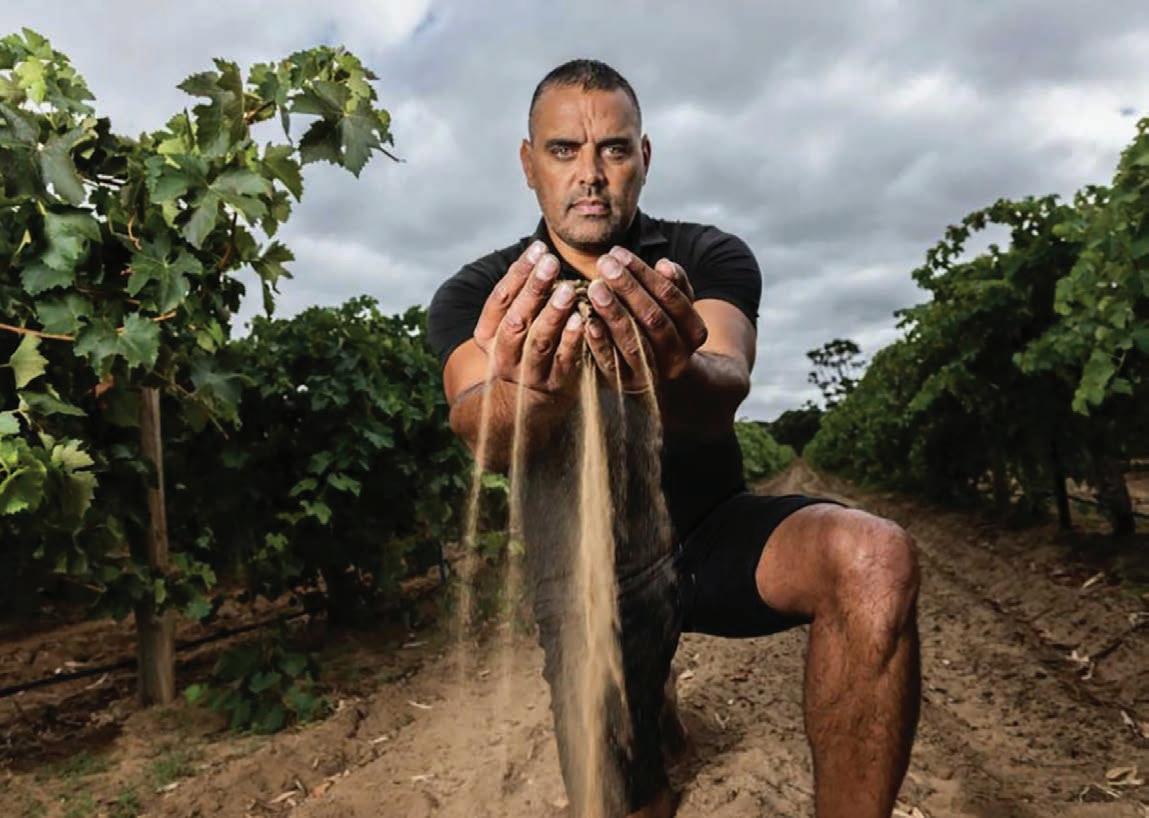
As well as crafting exceptional drops, Munda is committed to celebrating the traditional owners of the land where the vineyards now sit. It was founded by Wirangu and Kokatha man Pauly Vandenbergh, who is committed to honouring land and culture in the winemaking process.
We spoke to Pauly about the inspiration behind his label, and what makes Munda Wines so unique.
WHAT INSPIRED YOU TO START MUNDA WINES?
It’s a funny story. I moved from Ceduna to Adelaide with my mum when I was about 13. She enjoyed a glass of red, and I became particularly fascinated with the Taylor’s Cabernet Sauvignon that she used to drink. The wordscabernet and sauvignon - were so
unique, and I was intrigued by what they meant.
We’d be going to the bottle shop, and I used to ask my mum whether I could order the wine, just so I got to say the words (you’d never get away
with that today). The fascination continued to grow, and as I got older, I also developed a palette for wine. I love sharing a glass with friends and family, having a yarn and a laugh. That’s what started the journey for me.
WHERE DID THE NAME MUNDA COME FROM?
Munda in my language means ‘land’ or ‘country’, and that's from the Wirangu and Kokatha people.
When I was researching the wine industry, I kept stumbling on the word ‘terroir’, which is a French word that refers to wine-growing environments. I noticed that international words are often used in Australian industries, and I realised that the translation of terroir for my family and people is Munda.
My hope is that, in the future, the industry will embrace Indigenous words more. Whatever country you’re from in Australia, wherever the vineyards are located, we could use the local traditional name for land or terroir, to co-exist with that Indigenous community.
While Munda comes from terroir, it’s also an acknowledgement of the Traditional Owners of the lands where my grapes are grown. I hope I can give them a platform for their people to be acknowledged in the wine industry.
HOW DO YOUR LABELS REPRESENT YOUR MISSION?
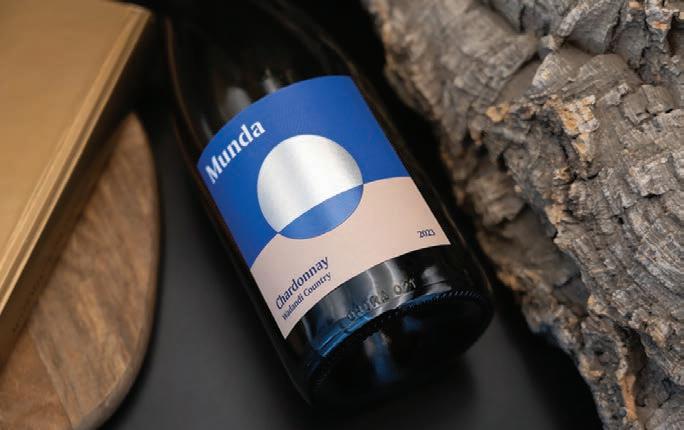
I worked closely with Traditional Owner groups on the labels, asking them to describe the colours of their land and what best reflected its characteristics. It was really important to me to use ochre colors, as ochre is a significant part of our culture and our ceremonies.
The circle featured on the label was another important element, because the circle means so many things in Indigenous culture. Whether it's a yarning circle, the sun or the moon, people can look at the label and interpret what they see.
The label is also a way of honouring my people, who come from the Ceduna area. It’s a reflection of what Wirangu country would look like if you flew over the top of Ceduna and
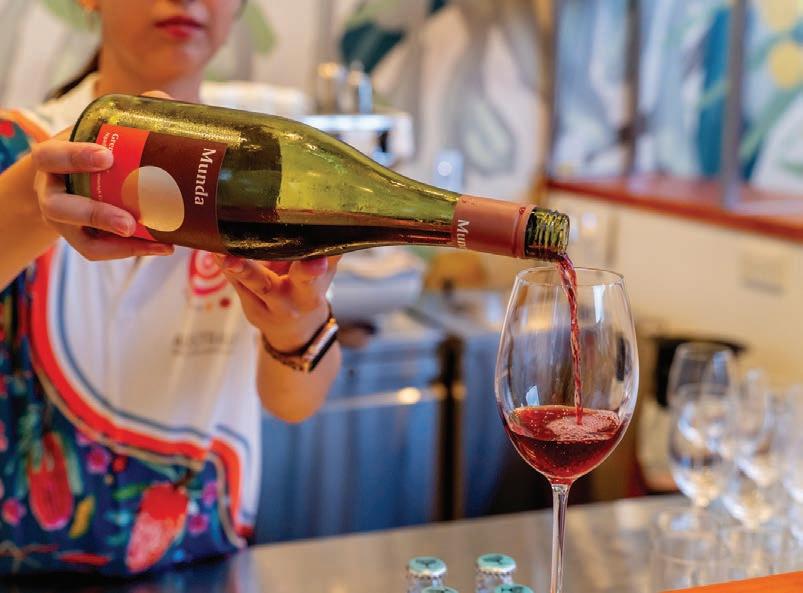
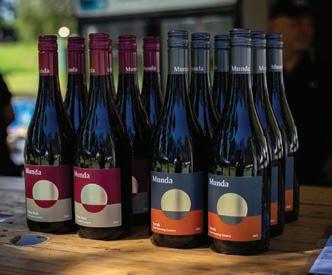
THIS PAGE: EACH BOTTLE FROM MUNDA WINES ACKNOWLEDGES THE TRADITIONAL OWNERS OF THE LAND ON WHICH THE GRAPES WERE GROWN.
looked down. While I won’t be able to grow grapes in Ceduna, it will always be the spiritual home of Munda.
HOW DO YOU SELECT WHICH WINEMAKERS TO WORK WITH?
I’ve been fortunate to connect with many winemakers who have beautiful ideas and understand the importance of wine reflecting country.
Marco Cirillo from Cirillo Estate Wines is one of the best grenache makers in the world, so I loved collaborating with his family. We also worked on a shiraz with Tom Harvey out of Chalk Hill in McLaren Vale. Because that region has sandy soils, it produces incredible reds, and our shiraz received a Halliday Wine Score of 96 in its first year.
WHAT FEEDBACK HAVE YOU RECEIVED ABOUT THE WINES SO FAR?
People always tell me how much they enjoy our wines.
My people are also really proud, because they can see that I try to honour them in everything I do. Munda is about coexistence, and it’s a beautiful way of integrating 65,000 years of culture and heritage while also educating the industry. There’s also a sense of acknowledgement from the Traditional Owner groups who see me putting them on the front label for the first time.
We feel really fortunate at Munda because we’ve got wines from all over. Whether it’s Chardonnay from the Walgalu people in Tumbarumba, or Pinot Noir from the Wurundjeri people in the Yarra Valley. There aren’t many wine labels that combine so many regions, and that allows us to tell the stories of many different Traditional Owner groups.
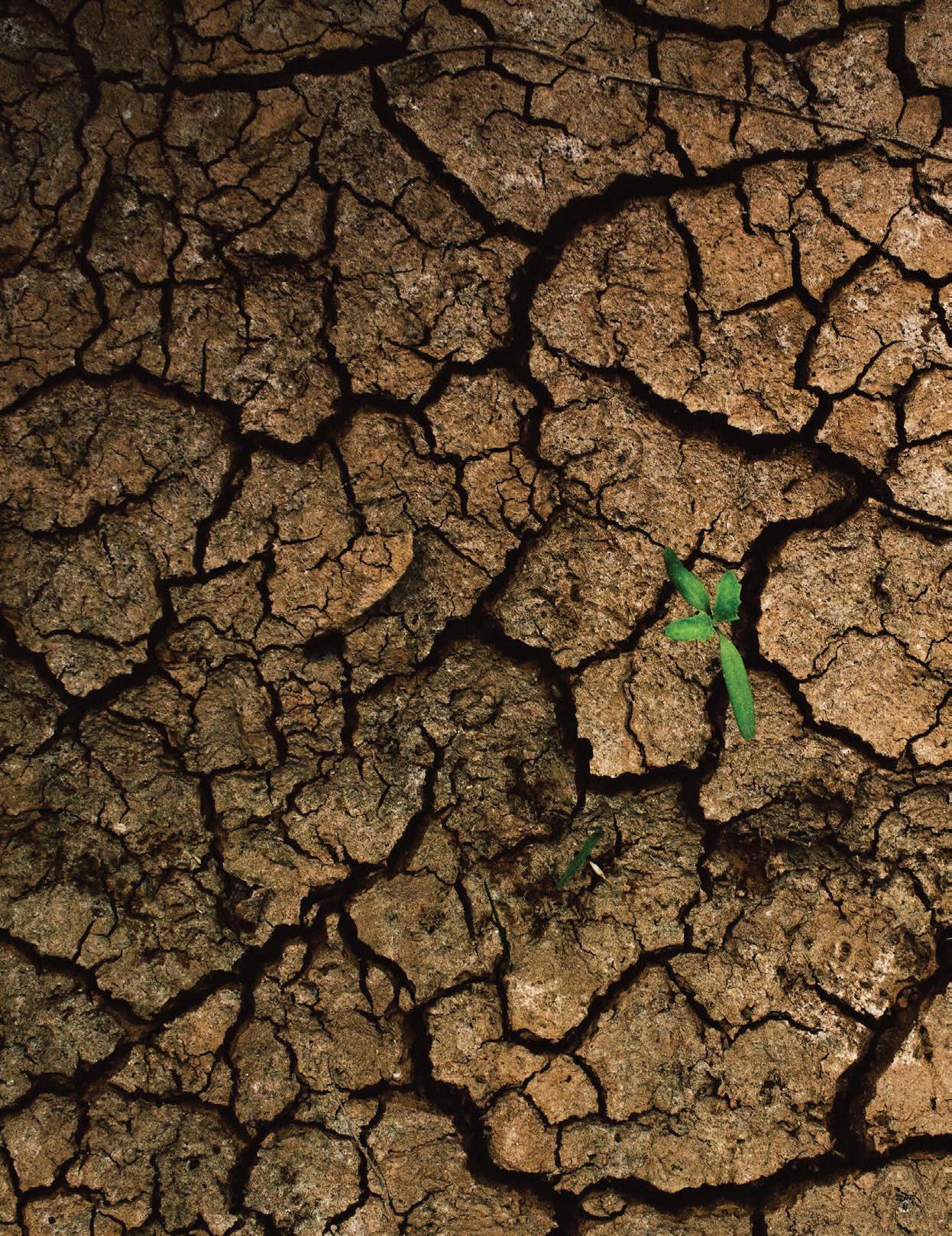
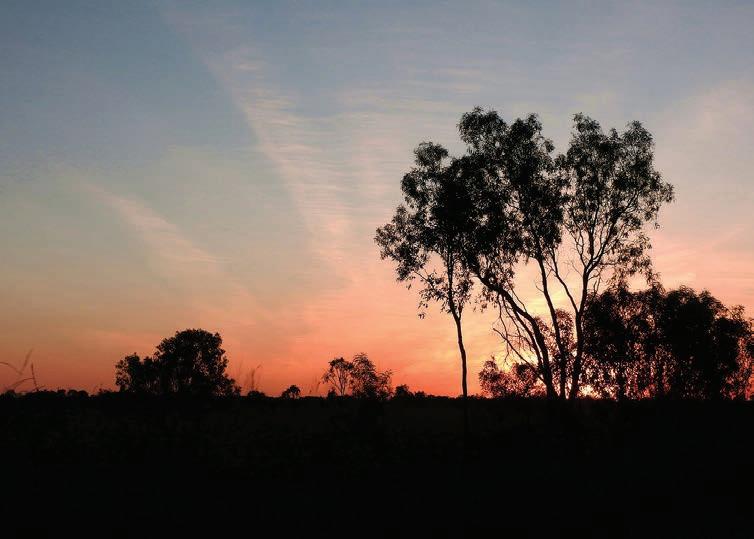
PREPARING FOR A DRIER FUTURE WITH TREE PERSONALITIES
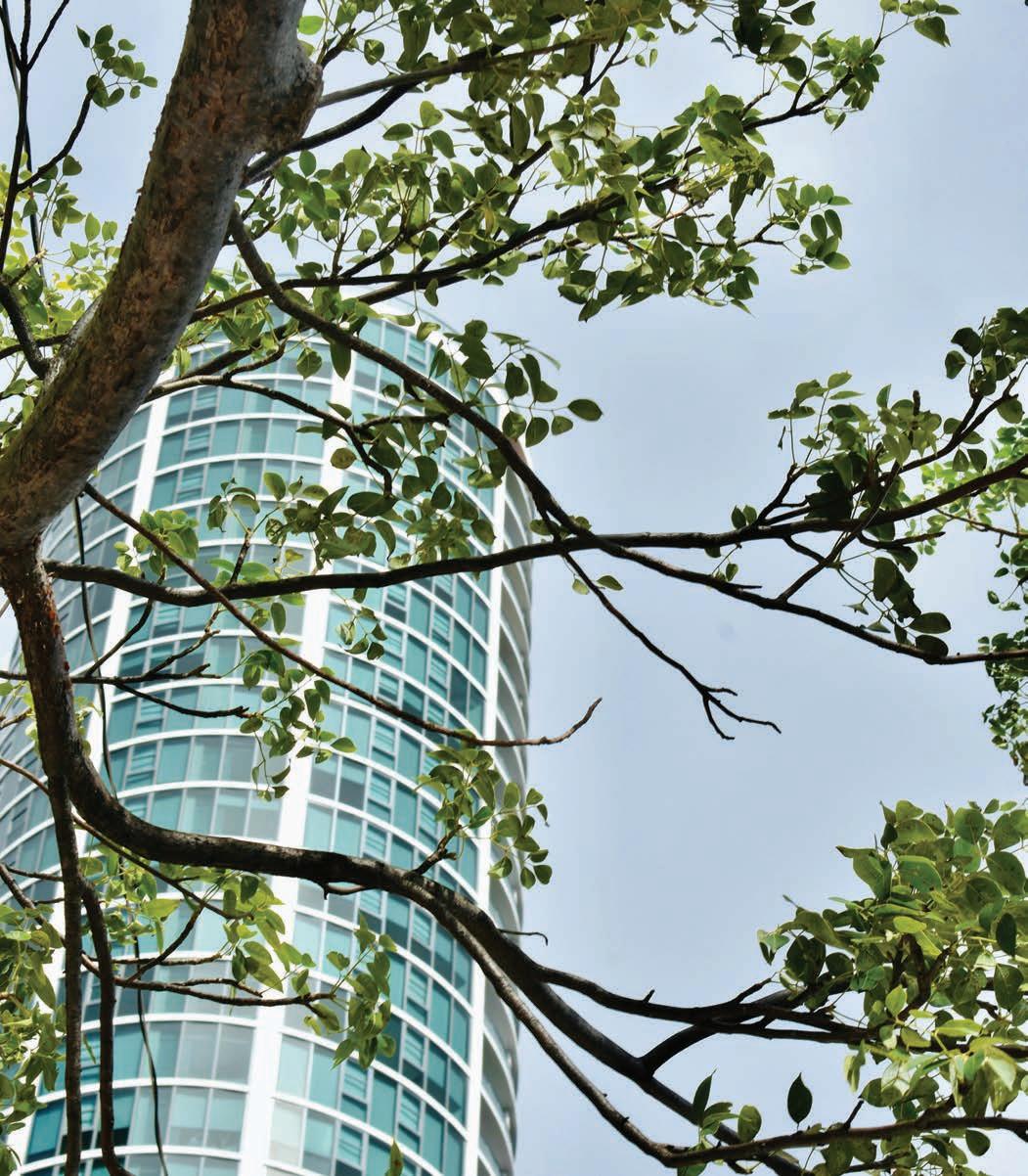
THIS PAGE: RESEARCHERS ARE MEASURING TREE 'PERSONALITIES' TO DETERMINE HOW THEY WILL RESPOND TO HARSH CONDITIONS.
Words: Milky Osman
As South Australia’s urban landscape suffers through a second consecutive dry year, a team of scientists from Flinders University has turned to an unconventional method to help save the region’s trees — measuring their unique “personalities.”
HERE’S THE LOWDOWN FROM AUSBIZ
To better understand how trees may respond to drought differently, the researchers used a new approach to assess a plant’s resilience to take up water from the soil, in a sense measuring their ‘personality’.
Trees exhibit different behaviours under stress. Some are better at soaking up water when it’s present, while others are more conservative and more likely to survive extended drought.
With Australian cities growing hotter and drier due to climate change, it’s crucial to understand how trees respond to water stress for urban planning and long-term livability.
MEET A PRO WHO CAN SHED MORE LIGHT
Flinders co-authors Professor Guan, PhD candidate Zhechen Zhang, and Professor Okke Batelaan, from the National Centre for Groundwater Research and Training at Flinders University, worked with colleagues from the University of WA and Colorado School of Mines in the US on the new article.
“Some trees take up water from soil more efficiently than others when soil water is abundant, but become less safe in drought – just like humans with different personalities respond to different stressors,” says Professor of Hydrology Huade Guan.
“With this in mind, the tree ‘personality’ test to measure how the tree is responding during drought can help to determine whether it’s likely to recover when the soil moisture returns – and whether irrigation or watering is recommended, or too late to apply.”
MEASURING PERSONALITY
Current measurements of plant water properties are labour intensive, as well as destructive and difficult to scale. This limits the comprehensive characterisation of the whole plant and surrounding land-surface water properties.
To carry out this work, the team studied the Allocasuarina verticillata, a native Australian species commonly found in South Australia. They attached two small, non-invasive devices to the tree stems — one to measure sap flow and the other to monitor water potential, essentially the tree’s internal water pressure.
The setup is similar to a Holter monitor used to check a human heart’s rhythm, only in this case it tracks the tree’s response to changing moisture conditions.
“Some trees take up water from soil more efficiently than others when soil water is abundant, but become less safe in drought –just like humans with different personalities respond to different stressors.”
“Understanding evapotranspiration allows for more accurate predictions of runoff and water demand in a changing climate.”
The results are promising. By observing how each tree balances water uptake with drought resistance, the team can determine which are likely to bounce back after a dry spell and which may not.
A SMART INVESTMENT FOR GREENER CITIES
This new ability to measure tree resilience comes at a critical time. As urban councils and developers across Australia invest more heavily in green infrastructure to combat heat and improve quality of life, keeping those trees alive through extreme weather becomes both an environmental and financial concern.
The tree personality test offers a smarter way for councils to manage their urban forests. After understanding which trees need more support, such as targeted irrigation or better soil water retention, resources can be directed more efficiently.
In some cases, it might even help councils decide whether watering a particular tree during drought is worth the effort, or too little, too late.
REAL-WORLD IMPACT
This ‘personality’ research is now being trialled in the real world as part of the ‘Drywells and Trees’ project, funded by Hort Innovation’s Green Cities Program. The program aims to investigate how roof water harvesting for garden soils may improve tree health in the dry season and enhance canopy cooling in summer.
A consortium of local councils including the Cities of Marion, Mitcham, Unley, Port Adelaide Enfield, and Onkaparinga are participating, alongside a broad network of urban
design and climate resilience partners such as TreeNet, Resilient South, and the University of South Australia.
THE BUSINESS OF CLIMATE ADAPTATION
Flinders University experts have also recently published a complementary study on vegetation response to climate variability. The aim was to examine better use of water levels and improved plant evapotranspiration (water moving to the atmosphere) to protect urban and other plants in future hotter and drier conditions. Understanding evapotranspiration allows for more accurate predictions of runoff and water demand in a changing climate. As climate change intensifies, innovative studies like these are becoming essential for saving Australia’s urban green spaces.
Cities can make smarter, more resilient investments in the living infrastructure that keeps communities green and healthy by understanding how individual trees respond to drought.
The latest article, ‘Revealing seasonal plasticity of whole-plant hydraulic properties using sap-flow and stem water-potential monitoring’ (2025) by Zhechen Zhang, Huade Guan, Erik Veneklaas, Kamini Singha and Okke Batelaan has been published in Hydrology and Earth System Sciences ‘.
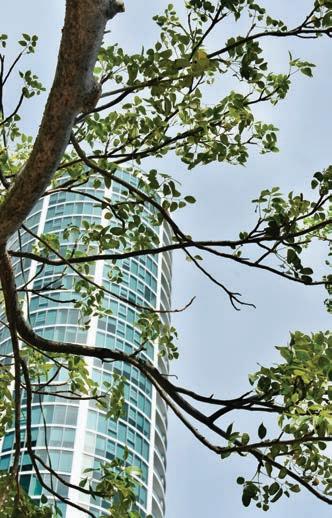
THIS PAGE: OBSERVING HOW TREES INTAKE WATER CAN HELP RESEARCHERS TO PREDICT THE IMACT OF DROUGHTS.
INDIGENOUS STEM STUDENTS REACH FOR THE STARS IN SPACE EDUCATION
Words: Milky Osman
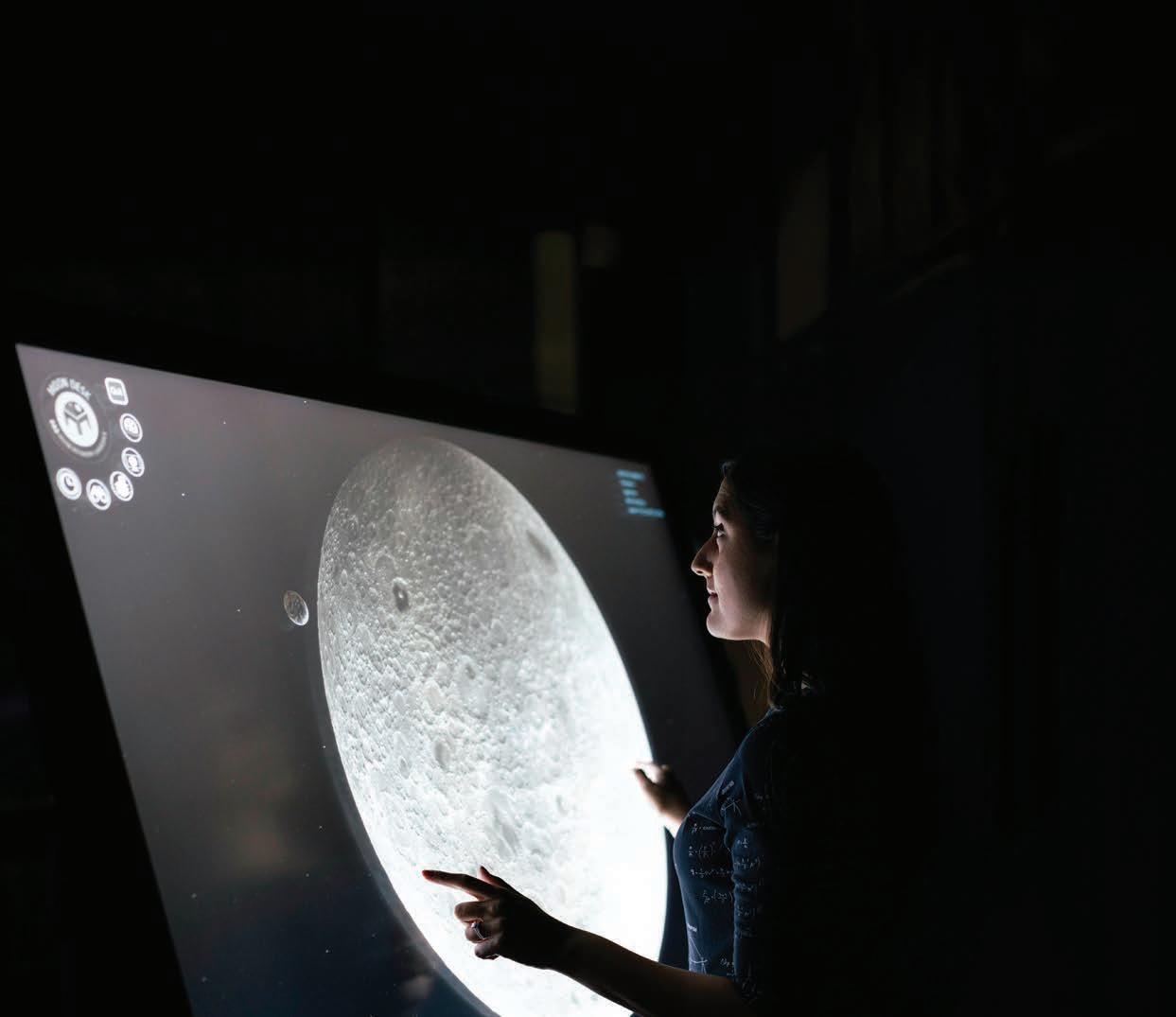
Monash University’s National Indigenous Space Academy (NISA) has partnered with the UK’s leading space research organisation to increase space education opportunities for First Nations STEM students.
HERE’S THE LOWDOWN FROM AUSBIZ
For the first time, NISA students have access to an initiative outside of NASA’s Jet Propulsion Laboratory in California, learning at the UK’s national space laboratory, STFC’s RAL Space.
On 2 October, the UK’s Science and Technology Facilities Council (STFC) and Monash University signed a partnership agreement to expand the NISA program.
The historic signing took place at the 76th International Astronautical Congress (IAC) in Sydney, with representatives in attendance from Monash University, STFC, the Australian Space Agency and the UK Space Agency.
NISA accepts Indigenous students across undergraduate and postgraduate levels who identify as Aboriginal or Torres Strait Islander.
Selected on academic merit, they must study a degree in science, technology, engineering or maths at any university in Australia.
GETTING TO THE CRUX OF IT: SPACE EDUCATION MATTERS
The new partnership empowers Indigenous Australian STEM students to participate in a 10-week program at STFC’s RAL Space facility, located in Oxfordshire.
The program has students working on space science projects including pioneering quantum technology
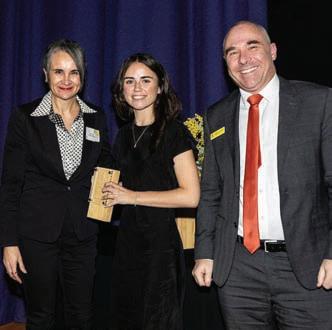
CLOCKWISE FROM THIS PAGE: NISA IS INCREASING SPACE EDUCATION; KEIRA MORAN WAS NAMED AS THE FIRST ANDY THOMAS SPACE FOUNDATION SCHOLAR; KEIRA RECEIVING HER AWARD.
research. Students also collaborate with the RAL Space camera electronics team, who have supplied camera systems for major missions including NASA’s PUNCH and STEREO spacecraft.
To prepare students, a Space Boot Camp run by Monash Faculty of IT will cover aerodynamics, robotics, astrophysics, planetary science, engineering, computer and earth sciences, NASA JPL and STFC’s RAL’s space exploration missions.
In September, two First Nations students from the 2025 NISA cohort, Chloe Radoll and Mitchell Cooper, kicked off their placements at RAL Space.
Chloe, an Anaiwan woman from Tamworth, is studying engineering at the University of Technology Sydney. Mitchell, a Boandik man from Sydney, is enrolled in the University of Sydney’s Faculty of Engineering and IT.
The partnership placements build on the existing collaboration between Monash’s NISA and NASA’s Jet Propulsion Laboratory, where six additional students from the 2025 cohort were placed. These international placements mark a significant step in supporting Indigenous talent in Australia’s growing space and technology sectors.
MEET A PRO WHO CAN SHED MORE LIGHT ON THE SPACE EDUCATION PROGRAM
Noongar Whadjuk/Ballardong man
Professor Christopher Lawrence, Associate Dean at Monash’s Faculty of Information Technology and NISA lead, welcomed the new partnership between NISA, Monash University and RAL Space.
“This is just the beginning of what promises to be an exciting journey,” Professor Lawrence said. “It is only fitting that NISA expands into the UK given our long shared history.”
“This agreement will deliver long-term benefits for First Nations students, our communities, and all
Australians. What the NISA students learn at RAL Space they will bring back home to enrich our research and inspire the next generation.”
The partnership supports the UKAustralia Space Bridge Framework Arrangement, signed in 2021, which aims to strengthen connections, collaboration, and investment between both countries’ space sectors.
Under the Space Bridge framework, the STFC-Monash collaboration highlights a key moment in establishing what organisers hope will become a flagship partnership. This alliance demonstrates both countries’ dedication to expanding opportunities in space science education and encouraging international cooperation in STEM fields.
SKY-HIGH OPPORTUNITIES FOR INDIGENOUS STEM STUDENTS
Associate Director of the National Laboratories at STFC, Dr Hugh
Mortimer, praised the program as well the two First Nations students currently at RAL Space via the NISA program.
“NISA is a fantastic example of how international collaboration can be used to support underrepresented groups in STEM and open meaningful opportunities in the global space sector,” Mortimer said. “It’s been a privilege to host these two talented students and see them already making contributions to our work –and we look forward to expanding the program in future years.”
Professor Anu Ojha, International Director at the UK Space Agency, shared her delight at welcoming the new NISA students placed at RAL Space.
“We are delighted that students will gain hands-on experience at RAL Space,” Ojha said. “This is exactly the kind of opportunity we want the UK-Australia Space Bridge to enable – actively partnering to further develop the skillsets of a next generation workforce and showing how collaboration across borders can unlock new possibilities.
NISA has been creating opportunities in space education for Indigenous Australian STEM students, with backing from the Australian Space Agency, CSIRO and the Andy Thomas Foundation, since launching in 2023.
NISA was named as a finalist for the Engagement Australia 2025 Excellence Awards, recognised in the “Excellence in Indigenous Engagement” category. The program was granted nearly half a million dollars in renewed funding from the Australian Space Agency to continue operating until at least 2027.
With this partnership, NISA is not only breaking new ground in space education, but also reshaping what’s possible for Indigenous Australian STEM students. The program continues to inspire and equip the next generation of First Nations scientists and innovators.
LEADING THE WAY
Business leaders today are navigating converging pressures — climate instability, social inequality, digital transformation, and shifting investor expectations. For many, sustainability has moved from the margins to the centre of strategy, as both a moral imperative and a drive of competitiveness and innovation.
The University of Cambridge Institute for Sustainability Leadership (CISL) has long argued that the leaders who will compete and thrive in this context are those able to shape markets that deliver positive outcomes for people, nature and climate. But what does that leadership actually look like in practice?
We posed this question to the first cohort of our fully online, parttime Postgraduate Certificate in Sustainable Business. The cohort comprises established and emerging leaders from around the world who have begun embedding sustainability into their leadership style and are now formalising their journey with this accredited programme. Their responses offer a powerful, real-world perspective on what sustainability leadership looks like across industries and geographies.
Drawing on their diverse professional backgrounds, many
see sustainability not just as a responsibility but as a powerful driver for innovation and leadership. By building cross-sectoral knowledge and expanding their impact beyond current industries, they
are actively turning challenges into opportunities. This mindset reflects a shift from reactive fixes to proactive strategy, making sustainability central to shaping future-ready organisations.
LEFT TO RIGHT: BEAUTIFUL CAMBRIDGE UNIVERSITY; THE CITY OF CAMBRIDGE.
1. Balancing vision with realism: Leadership begins with ambition, but not blind ambition. As one student put it, it’s about “the ambition versus realism piece.” Leaders must set bold goals that inspire transformation, while remaining grounded in what is achievable. This balance is critical for maintaining credibility and forward momentum.
2. Purpose-driven leadership: Purpose-driven leadership is not about lofty mission statements — it’s about clarity of direction. Leaders who articulate compelling sustainability purpose align their organisations around shared priorities, unlock innovation, and strengthen resilience. Purpose becomes a source of competitive edge.
3. D riving change and awareness: Leaders are not passive observers. They are change agents who “bring ideas to reality” and raise awareness across their organisations. They challenge the status quo and mobilise others to act.
4. Courage and resilience: Sustainability leadership requires courage, especially when pushing against entrenched norms. It also demands resilience. As one student noted, it’s about “not being afraid” and taking “one step after the other.”
Progress may be incremental, but persistence is key.
5. Collaboration and collective action: No leader can drive sustainability alone. Effective leadership is deeply collaborative, involving “bringing people together” and “enabling teams to deliver on a common goal.” These leaders understand the power of collective action and build coalitions across departments, sectors, and borders.
6. Authenticity and everyday practice: Sustainability is not just strategy—it’s a way of being. Leaders must “live it every day,” modelling sustainable behaviours and values consistently. Visibility and authenticity build trust and inspire others to follow suit.
7. Systems thinking and policy influence: True leadership goes beyond the boundaries of the organisation. It involves “unlocking policy settings” and understanding the broader systems—economic, environmental, and social—that shape business outcomes. These leaders push for systemic change with empathy and insight.
8. Innovation and continuous learning: Sustainability is dynamic, and leaders must foster a culture of “continuous learning.” They encourage experimentation, support innovative solutions,
APPLIED LEADERSHIP: LESSONS FROM THE FIELD
These insights form a compelling definition of sustainability leadership: a purposeful, courageous, and collaborative approach to driving change across industries and markets. It calls for leaders to balance ambition with pragmatism, integrates sustainability into everyday business practices, and fosters innovation, learning, and accountability. Under this definition, leaders act with empathy, influence policy, and unite people to achieve a better future that is cleaner, fairer and able to deliver prosperity.
The Postgraduate Certificate in Sustainable Business Online invites applications from business professionals who are ready to lead with purpose and impact to join us. Learn more and apply: https://bit.ly/CISLPCSBOnline
and aren’t afraid to challenge conventional thinking. This mindset is essential for navigating uncertainty and staying ahead of emerging trends.
9. Integration into business practices: It’s not about adding another layer to business— it’s about transformation. Leaders focus on “embedding sustainability into business as usual,” shifting from volumedriven models to those that prioritise value creation and preservation. This integration is where real impact happens.
10. Mea surement and accountability: Finally, leaders embrace transparency. They see “reporting as a facilitator for transformation”, using metrics not just to comply, but to learn, improve, and hold themselves accountable. Measurement becomes a tool for strategic alignment and continuous industry progress.
CHURCHIE: A HOME AWAY FROM HOME
For many rural families, the decision to send a child to boarding school is one of the most significant choices they’ll make in their lives. Churchie makes the experience one that the boys remember forever.
At Anglican Church Grammar School – commonly known as Churchie –boarding is more than just a place to stay during term time. It’s a vibrant and supportive community located on a spacious 22-hectare campus in East Brisbane, Queensland, where boys grow into confident and capable young men.
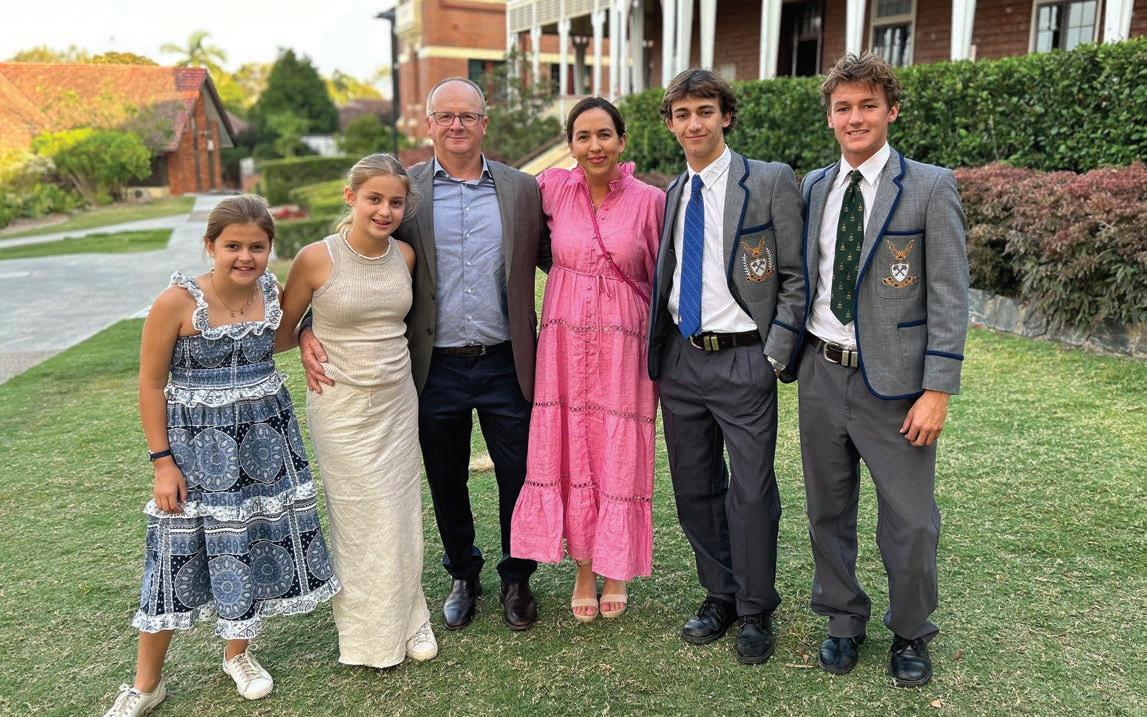
Angus and Chrissy Chandler have lived and breathed Churchie boarding for seven years. As parents of Will, who recently completed Year 12 and Tim, who graduated in 2023, they reflect on their time at the school and share their experience for families about to embark on their own boarding journeys.
"As a parent, the decision to send your child to boarding school is not an easy one. We remember agonising over it: will boarding be the right fit for
our family? Will our boys be happy? Will they make friends? Will someone notice if they are struggling?
More than anything, we wanted our kids to have a better boarding and school experience than we had. One where academics, sport, service and the arts would all be valued, and one where we, as parents, would have open and consistent communication with our children and the school. That is exactly what we’ve experienced. From real-time academic feedback to regular communication from staff and WhatsApp groups that kept us connected when we couldn’t attend events, we’ve always felt part of the school and boarding community.
What we’ve seen since that initial drop-off has been nothing short of remarkable. Our boys have grown in confidence, resilience and inner
strength, and they have developed a strong sense of self and responsibility. They have thrived academically and have been involved in various sports, service, cocurricular and house activities. They have found mentors among both teaching and boarding staff, role models in older boys and have made true friends. The boarding house is not just a place to reside during the term; it’s a home away from home, a family and a support system.
We may not be with our boys day to day, but we still celebrate their milestones and achievements. We come and go on weekends when we can. We rely on other families, and we cheer from the sidelines. Above all else, we trust in the village that is Churchie Boarding."
To learn more about Churchie’s boarding program and how it can benefit your son, visit churchie. com.au/boarding or contact the admissions team at 07 3896 2200 or admissions@churchie.com.au
THIS PAGE: THE CHANDLER FAMILY OUTSIDE SCHOOL HOUSE AT CHURCHIE
UNPACKING THE AUSTRALIAN GOVERNMENT’S SOCIAL MEDIA BAN
From 10 December 2025, social media platforms will be legally required to take reasonable steps to prevent Australian teens under the age of 16 from creating or using an account.
This policy affects all age-restricted platforms, including Facebook, Instagram, Snapchat, TikTok, X, and Youtube, in an attempt to reduce risks of younger users being exposed to damaging content on social media.
It is also a response to design features that encourage young people to spend more time on
screens, with the Australian Institute of Family Studies finding that excessive screen time has negative impacts on motor and cognitive development, as well as social and psychological wellbeing.
The age restrictions will apply to all social media platforms that meet three specific conditions:
1. T he main purpose of the platform is to enable online interaction between two or more end-users
2. T he platform allows end-users
to interact with some or all of the other end-users
3. T he platform allows end-users to post content
Online gaming and standalone messaging apps such as Whatsapp will not be impacted under these laws, according to legislative rules laid out in July 2025. However, messaging services with social media style features will be included in the age restrictions.
For more information, head to esafety.gov.au
PLAYING TO LEARN FROM HOME WITH EKINDY
When kindergarten aged children are unable to attend a local service due to distance, travel or medical reasons, eKindy is an option for families to engage in an approved, at-home, comprehensive kindergarten program for their child, under the Queensland Government “Free Kindy” initiative.
Experienced, early childhood teachers teach and support the learning and development of each child, in individualised and group settings, using digital and physical resources, in virtual and face-toface spaces.
In eKindy, children are playing to learn and have great agency to make decisions within their play. eKindy teachers plan and implement quality child-centred activities in partnership with children and their families, recognising that all children bring with them diverse identities and backgrounds.
Following the Queensland Kindergarten Learning Guideline and the national Early Years Learning
Framework, modelling quality principles, practice and outcomes to enhance young children’s learning and transition to school, our eKindy teachers deliver high value, early education to help build learning and development foundations in rich language and vocabulary, identity, connection, problem-solving, memory, and emotional regulation. eKindy celebrates and values families as children’s first teachers and the vital role played in a child’s educational first steps. Families join in with eKindy in ways that suit them and connect learning experiences into regular family activities.
If you can’t get to a place-based kindergarten service regularly, because you live in a rural or isolated community, your family is travelling, or your child has a medical condition which prevents regular attendance, you may be eligible to enrol your child in eKindy.
brisbanesde.eq.edu.au/enrolments/ ekindy
eKindy builds the foundations of future success for children who live in rural or remote areas, travel, or are medically unable to attend a local kindergarten.
BRAIN DIFFERENCES BETWEEN SOCIAL AND SOLITARY SPIDERS
Words: The Lighthouse
Researchers have found that certain species of 'social' spiders have increased memory, recognition and collaboration skills.
Studying the behaviour of huntsman and crab spiders found to live together in harmony, Dr Penna-Gonçalves found that while social and solitary spiders have similar overall brain sizes, the internal structures tell a completely different story.
The findings represent the first robust test of a theory called ‘The Social Brain Hypothesis’ in non-webbuilding spiders, examining whether animals living in groups need bigger brains to manage the complexities of social relationships.
SPIDER SOCIALITY
Sociality in spiders is extraordinarily rare, with only 0.1 per cent of the world’s 53,000 spider species living in groups. Most spiders are hostile territorial loners, who may even cannibalise their neighbours.
Positive spider social tendencies appear to stem from what Dr PennaGonçalves calls being ‘lazy to launch’, where young spiders stay home longer instead of dispersing after their first moult.
“For spider species who show an extended maternal care timeframe, we found the young don’t eat each other, and they start sharing prey,” she says.
“Social spider species babies will collaborate to hunt, or one individual might hunt the prey, but the others come by and stay to share the meal,” she says. “I didn’t see this behaviour in solitary babies.”
MAPPING MICROSCOPIC MINDS
To study the inner workings of spider brains, Dr Penna-Gonçalves developed new techniques that pushed the boundaries of neuroscience technology, spending almost two years perfecting brain staining methods so she could get meaningful images via micro CT scanning.
“We used a complex staining process that fixes different tissues inside the brain so you can see contrast between different structures,” she says. “Without using staining that reacts to different tissues, everything inside the brain just looks grey.”
Some samples required more than 100 days of staining before they were ready for micro CT scanning, in a partnership with the University of Melbourne.
Spider brains are particularly tricky to study because of their location.
“Most insects and animals have a separate head that contains their brain, but the brain of a spider sits inside of its fused head and thorax, the cephalothorax, surrounded by muscle and many other tissues, so it’s difficult to isolate,” she says.
Once scanned, each spider brain image required painstaking manual mapping of individual structures — a process that can’t yet be automated.
SIZE ISN’T EVERYTHING
The team compared brains from six species: social huntsman spiders (Delena cancerides), social crab spiders (Xysticus bimaculatus), and four closely related solitary species.
To their surprise, they discovered that the overall size of the brain and central nervous system showed no significant differences between social and solitary species.
However, internal brain structures revealed important differences. Social huntsman spiders had distinctly larger brain areas called ‘arcuate bodies’ and ‘mushroom bodies’, both regions of the brain that are linked with memory and cognitive processing.
These enlarged structures likely support the complex social behaviours observed in huntsman spider colonies, such as recognising kin or friendly spiders from their own society, and group coordination.
One of the study’s most intriguing discoveries was that social huntsman spiders have smaller venom glands compared to their solitary cousins — direct evidence that cooperation within the species gives them an evolutionary advantage.
This finding supports the idea that cooperative behaviours reduce the investment that individuals need to make in costly biological systems, such as venom production.
Future research could employ new techniques like ‘brain soup’, which involves literally dissolving brains to count individual neurons, and may provide more accurate measures of cognitive capacity than brain volume alone.
This story was originally published in The Lighthouse.
DAY STAY & REFRESH
Make the most of your time in this holiday season with our offer. The perfect mix of relaxation, comfort, and calm before you continue your journey.
Starting from $165, unwind between 9am–5pm with poolside relaxation, delicious dining and a tranquil private space to refresh and recharge.