

Drake Property Management: Focused on
trust, service, and community











RESTORE WITH PURPOSE

With our eco-design approach, and decades of building restoration and project management experience in the rental market, we help our clients create sustainable living spaces.
OUR SERVICES:
Building Restoration,
Capital Project Repairs,
Building Science,

Roofs, Windows, Walls, Balconies, Project Management
Parking Garages, marketing canada@egis-group com
CONTACT:

EDITOR’S NOTES
What’s behind the curtain?
If you haven’t watched the original version of The Wizard of Oz, what have you been waiting for? It came out in 1939 and is on TV at least once a year (and available to stream any time you want). It’s one of the best movies ever made, and a great film to watch as a family. Anyway, there’s a scene in the movie where the Wizard says, “Pay no attention to that man behind the curtain.” It reminded me of what happened during the vote on Budget 2025. Two Conservative MPs were alleged to be hiding behind some curtains until their colleagues had voted. What strange and funny times we live in.
This issue of RHB Magazine features a profile on Drake Property Management. The company has been managing rental properties across the Greater Toronto and Hamilton Area for more than 15 years. They focus on older purpose-built rentals that required institutional-quality operations while maintaining their communityfocused character. They’ve grown the business (6,000+ units across 17 communities) through developing partnerships with owners and committing to providing resident-focused service
The second article summarizes the contents of the webinar, “Charting the insurance landscape: Practical strategies to protect your portfolio,” co-hosted by RHBTV and The Buildings Show. The panelists discussed actionable strategies to help rental property owners protect their assets, improve their coverage, and save them money. The third article summarizes the changes to the Ontario Fire Code, which is set to go into effect on January 1, 2026, and how the updated legislation will affect building owners.
Make sure to read CFAA’s newsletter, National Outlook , as well as the Regional Association Voice (the digital version contains additional content). FRPO introduces Marielle Hossack as new Director of Policy and Regulatory Affairs and summarizes Bill 60’s impact on rental housing owners. Yardi Canada wraps up this issue by stating how housing providers must use data to anticipate what residents want and act before competitors do.
We enjoy hearing from our readers, and we want to support twoway communication. If you have any comments or questions, send them to david@rentalhousingbusiness.ca. I look forward to your emails.

Publisher Marc Côté
marc@rentalhousingbusiness.ca
Editorial David Gargaro
david@rentalhousingbusiness.ca
Creative Director / Designer
Scott Clark
National Director, Sales and Marketing
Melissa Valentini
melissa@rentalhousingbusiness.ca
Sales Executive
Justin Kreslin
justink@rentalhousingbusiness.ca
Office Manager
Geeta Lokhram
the issue!
David Gargaro Senior Editor
Subscriptions
One year $49.99 Cdn
Two years $79.99 Cdn
Single copy sales $9.99 Cdn
Opinions expressed in articles are those of the authors and do not necessarily reflect the views and opinions of the RHC Board or management. RHC and RHB Inc. accept no liability for information contained herein. All rights reserved. Contents may not be reproduced without the written permission from the publisher. P.O. Box 696, Maple, ON L6A 1S7 416-236-7473
Produced in Canada
All contents copyright © RHB Inc. Canadian Publications Mail Product Sales Agreement No. 42652516
Meet the Resident Experience OS
Everything your team needs to lease faster, operate smarter, and deliver an outstanding resident experience, on one platform.
Integrates effortlessly with industry-leading tools, so your team doesn’t have to change the way they work.
AI Leasing Assistant
Faster responses, automated scheduling, higher conversions, and no manual processes, increasing resident satisfaction.
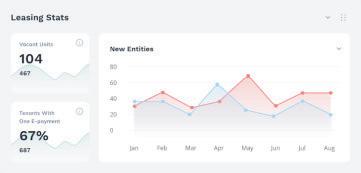
Portals and
Payments, maintenance, messaging, packages, and more in one branded experience.

TRUST


Track, nurture, and convert leads with speed and accuracy.
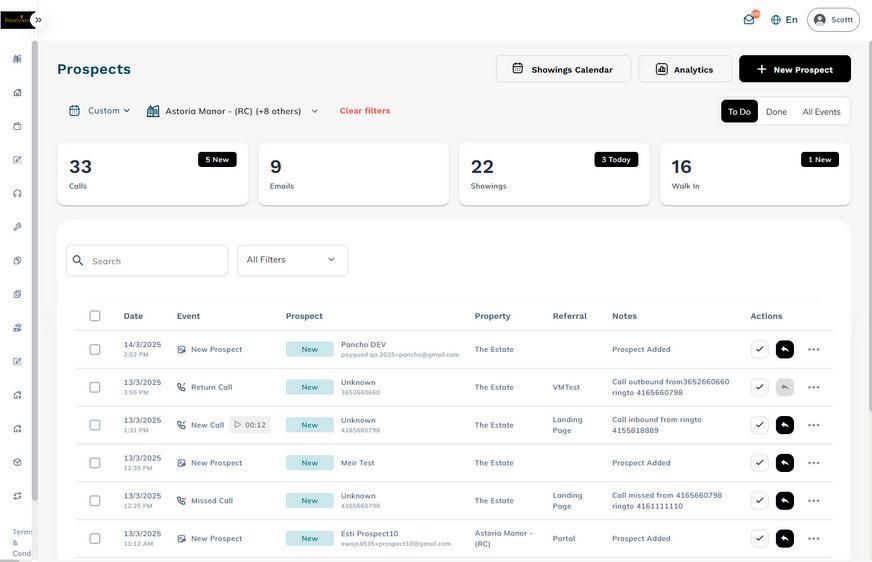
Automate repetitive tasks, reduce admin time, and keep your team focused on what matters.
Trusted by leading owners and operators across Canada and the U.S. powering millions in monthly rent payments and delivering the modern experience residents expect.






PRESIDENT’S CORNER
This issue of National Outlook discusses the release of Budget 2025 and how it addresses the housing situation in Canada. It also includes reports from Desjardins, PwC, and Deloitte on the status of Canada’s rental housing industry and where it is going.
On November 4, Francois-Philippe Champagne, Minister of Finance and National Revenue, released the details of Budget 2025, the first federal Budget under Prime Minister Mark Carney. The Budget passed the confidence vote by the slimmest margin, 170 to 168. The Budget outlines a broad series of new investments and policy tools to expand housing supply, speed up construction, modernize approvals, and preserve existing rental stock. The reviews are mixed, as there is additional funding and incentives for developing new purposebuilt rentals but it does not adequately address development costs and regulatory impediments to building as quickly as we need. See pages 35-38 to read a summary of the key housing-related initiatives.
Desjardins and PwC published reports on the status of Canada’s rental housing industry. Desjardins’ Rental Market Outlook report found that rent inflation is on the decline in Canada. The primary driving factors are the increase in rental stock under construction, the high inventory of condominium apartments in Toronto and Vancouver, and the decline in population growth due to the reduction in nonpermanent residents. PwC and the Urban Land Institute published a report, Emerging Trends in Canadian Real Estate, which determined that purpose-built rental is emerging as a cornerstone of real estate strategy for developers and institutional investors. Key driving factors include condo market pressures, the pursuit of long-term growth over short-term yield, and strong demand tailwinds. See pages 38-39 to read more about the findings in these reports. Deloitte also published a report on the need to address Canada’s labour resources to
support increased residential construction. The report stated we will need an additional 410,000 to 520,000 construction workers by 2030 to meet construction demand and replace an aging and retiring workforce. See pages 39-40 for more information from this report.
The RHC Conference is coming to Ottawa in 2026. Make sure to save the date: May 26 – 28, 2026. We look forward to seeing you there.
If you are not already a direct member of Rental Housing Canada, please consider joining RHC as a Direct Rental Housing Provider Member or a Suppliers Council Member. Visit www.rentalhousingcanada.ca today.

Tony Irwin President and CEO, RHC
your Laundry from your Phone!day.
our laundry payment solution that allows residents to pay using a mobile app.
One App Does It All
More than just app payment, the mobile app makes the chore of laundry easier for residents. Depending on your specific tech bundle, you can select different modules for:
• Remote Monitoring
• Cycle Countdowns & Alerts
• Service Requests
• Laundry Education
• Refund Management
Enhanced User Experience
The ultimate benefit of a modern, digital laundry room is convenience with a variety of tools at your residents’ fingertips.

For more information contact us at:
In this issue of... NATIONAL OUTLOOK


35. Budget 2025 outlined a broad series of new investments and policy tools to expand housing supply, speed up construction, modernize approvals, and preserve existing rental stock.
38. Rent inflation is on the decline across Canada, primarily due to the increase in rental housing supply and slowing population growth from reductions in immigration levels.

38. Purpose-built rental housing is emerging as a cornerstone of real estate strategy for developers and institutional investors.
To subscribe to RHC’s e-Newsletter, please send your email address to admin@rentalhousingcanada.ca.
Rental Housing Canada (RHC) (formerly the Canadian Federation of Apartment Associations (CFAA)) is the leading national voice for Canada’s rental housing sector representing owners, managers and builders of nearly one million residential rental units across Canada.
RHC advocates for policies that enable our members to grow, invest, manage and build purpose built rental housing which provides quality rental homes for more than 10 million Canadians. For more information about RHC itself, see www.rentalhousingcanada.ca or telephone 613-235-0101.
RHC Member Associations
Corporation des Propriétaires Immobiliers du Québec (CORPIQ) www.corpiq.com P: 514-748-1921
Eastern Ontario Landlord Organization (EOLO) www.eolo.ca P: 613-235-9792
Federation of Rental-housing Providers of Ontario (FRPO) www.frpo.org P: 416-385-1100, 1-877-688-1960
Greater Toronto Apartment Association (GTAA) www.gtaaonline.com P: 416-385-3435
Hamilton & District Apartment Association (HDAA) www.hamiltonapartmentassociation.ca P: 905-632-4435
Investment Property Owners Association of Nova Scotia (IPOANS) www.ipoans.ns.ca P: 902-425-3572
LandlordBC www.landlordbc.ca P: 1-604-733-9440
Vancouver Office P: 604-733-9440
Victoria Office P: 250-382-6324
London Property Management Association (LPMA) www.lpma.ca P: 519-672-6999
New Brunswick Apartment Owners Association (NBAOA) www.nbaoa.ca jbrealsetate@nb.aibn.com
Manufactured Home Park Owners Alliance of British Columbia (MHPOA) www.mhpo.com P: 1-877-222-4560
Professional Property Managers’ Association (of Manitoba) (PPMA) www.ppmamanitoba.com
P: 204-957-1224
Saskatchewan Landlord Association Inc. (SKLA) www.skla.ca P: 306-653-7149
Waterloo Regional Apartment Management Association (WRAMA) www.wrama.com P: 519-748-0703
Built to meet the everyday needs of rental housing professionals
Your one-stop source for maintenance, repair, and operations essentials, from cleaning supplies and tools to paints and finishing products, plus the expert services that keep your properties running smoothly.

Dedicated support
• External sales reps who know your business
• In-store Pro Desk associates with trade expertise
Preferential pricing
• Exclusive pricing program
• Price lists and bulk rates
• Access to tiered discounts depending on your annual spend
Built around professionals
• Charge accounts for business owners*
• Special orders from leading manufacturers
Reliable delivery
• Fleet of flatbeds, boom trucks, and third party logistics
• 5 distribution centers and 27 HUB stores across Canada
• Nationwide jobsite delivery
*Upon credit approval. Minimum annual purchase of $5000 required. Other conditions apply. In participating stores only. Learn more at rona.ca/en/pro
Largest Primary Rental Markets by Unit Count in Ontario

1 Toronto, On - 334,748
2 Ottawa, On – 78,463
3 London, On – 48,189
4 Hamiltonton, On – 45,445
5 Kitchener, Cambridge, Waterloo, On – 38,894
6 Windsor, On – 18,380
Your Trusted Partner for Property Maintenance, Repair & Operations
Reliable Supply. Responsive Service. Real Results.
H&S Building Supplies Ltd. offers a comprehensive range of MRO (Maintenance, Repair, and Operations) and renovation products to keep your buildings running smoothly and projects on schedule. With over 14,000 items in stock, we provide competitive pricing, dependable service, and prompt delivery.
Count on us for the supplies and support you need to maintain and improve your properties—every season, every project.


H&S Building Supplies Ltd.
Supplying quality products to


Drake Management:Property
At RHB Magazine, we appreciate the numerous privileges of covering the rental housing industry. We get the opportunity to build relationships with industry leaders as they grow into their roles and define industry trends. We also get to watch companies evolve over time: sometimes loudly, sometimes quietly, but always in response to the pressures and possibilities of Canada’s volatile rental housing market. Some organizations emerge as disruptors, others rely on scale, and a few carve out their identity over years by staying close to the needs of their communities.
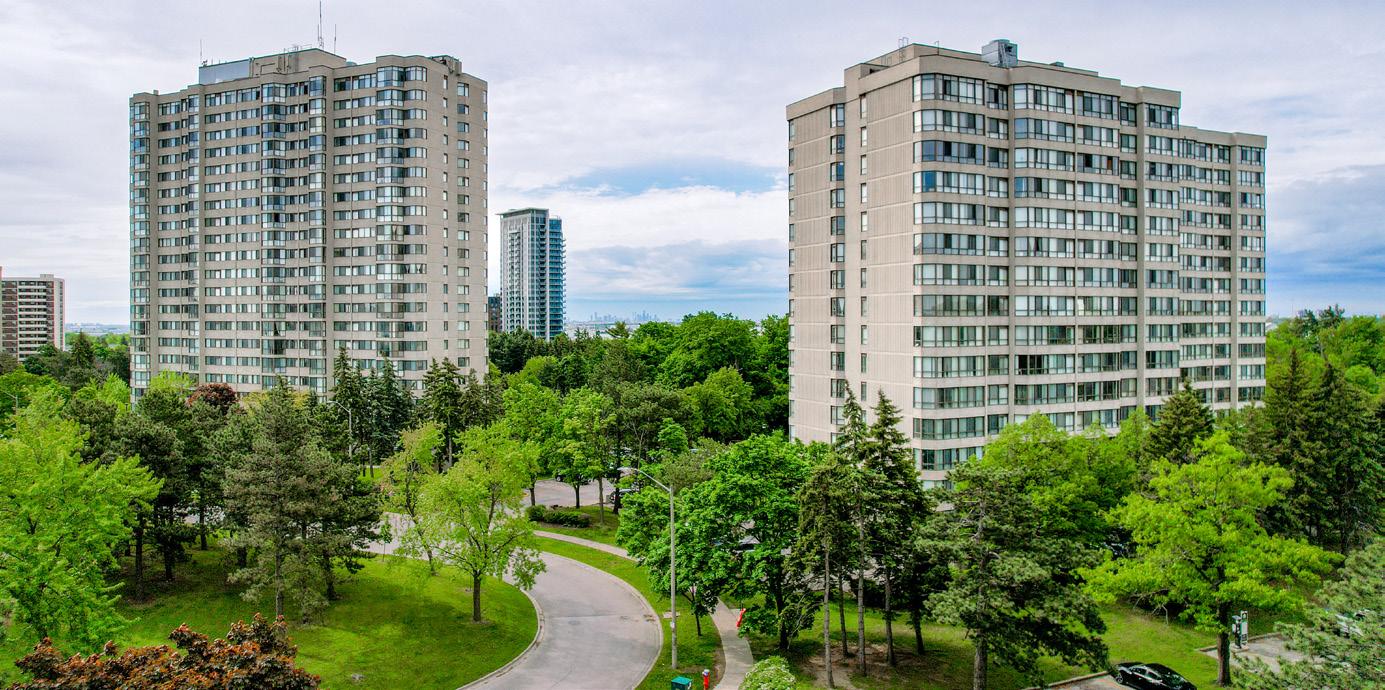
Drake Property Management (Drake PM) is one of those companies that have managed to maintain a low profile—they haven’t appeared on our radar until recently. Their work isn’t always public facing, but their footprint across the Greater Toronto and Hamilton Area (GTHA) has grown steadily. And we expect things will change. That’s thanks in part to industry veteran Hero Mohtadi, who recently joined the company as Executive Vice President of Property Management. We’ve covered her leadership journey for several years. And that’s why it’s the right moment to take a closer look at the property management firm and the reason for her move.

Management:Property
Focused on trust, service, and community
By David Gargaro


Background
Drake PM has been in business for about 15 years, although its foundation goes much deeper. Their portfolio is backed by more than 50 years of ownership and management experience. The Brampton-based firm has developed operating partnerships with rental property owners across the GTHA.
Founded in 2009, the company started out by managing a modest portfolio of small multi-family buildings. From the beginning, they’ve established a clear direction: build a property management platform that prioritizes resident stability, operational consistency, and long-term value creation. This approach has continued to fuel their growth, as they currently oversee over 6,000 units in more than 60 buildings and 17 communities, supported by more than 70 employees. They are also on track to manage more than 10,000 units within the next two years.
From the outset, ownership has focused on managing older purpose-built rental properties. They believed this segment of the rental housing market would benefit from a property manager that could provide institutional-quality operations while also maintaining their community-focused character. To achieve these goals, they developed structured property management systems, set clear service expectations, and followed a longterm stewardship mindset. They also prioritized long-term stability over short-term gains.
“What led me to Drake was the opportunity to take my experiences of team creation, operational excellence, DEI-driven leadership, cross-border insight, and a deep understanding of the current market, and help build a best-in-class, adaptive property management platform that can grow with the portfolio, especially in secondary markets where the need and opportunities are strong,” said Hero.
Even with their growth, the property management firm has managed to maintain a relatively low profile. They’ve focused on doing the work: stabilize older buildings, support residents, and manage assets for long-term stability and growth.
An owner’s mindset
Drake PM has grown by establishing longterm partnerships with building owners. They operate with an owner’s mindset, treating every building under management as if it were part of their portfolio, adhering to an owner’s level of discipline, care, and commitment to the long term. This approach has driven their growth, rather than the pursuit of opportunistic expansion.
Operating with an owner’s mindset includes three key elements:
1. Structure and accountability: They run every building (both newly added and longstanding) through the same structured onboarding process. They follow the same standards for inspection, service, staffing, and reporting. This provides ownership with a clear understanding of what to expect, while residents experience the same level of responsiveness.
2. Predictability: They focus on reducing turnover, improving building performance, and driving operational efficiencies. They employ disciplined practices rather than cost-cutting measures to produce stability of results.
3. Long-term thinking: Being an owner means pursuing long-term value over short-term gain. Capital improvements are geared to benefit building owners and residents for years and decades. They take a measured approach to ensure asset viability, resident impact, and lifecycle planning.
This mindset resonates with owners and their residents. Being consistent in delivering operational excellence produces loyalty from both groups. That means being proactive, reliable, and solutions oriented, communicating clearly, and identifying efficiencies and value creation strategies to enhance the resident experience.
“People stay when they feel their homes are cared for and their concerns are taken seriously,” said Hero. “That is how you build long-term stability and strong communities.”
Managing aging rental housing stock
As stated earlier, the property manager has targeted older purpose-built rental buildings, which were built between the 1960s and 1980s. These assets form the backbone of the more affordable rental housing stock across the GTHA. These types of properties tend to be home to diverse, multigenerational communities. However, they also require a high level of care and management.
Older buildings face numerous challenges:
• Outdated mechanical systems
• Significant capital projects
• Accessibility limitations
• Increasing regulatory requirements
• Rising utility and operational costs
To extend the useful life of properties, the property manager employs preventive maintenance, which includes regular inspections,
Full-Service Laundry Room Management! Let us take the hassle out of laundry for your Multifamily, Campus or Hospitality property, with no upfront costs.
CCL - Commercial Machine Sales!
From machine and parts sales to installation and service, we’ve got you covered.

Hero Mohtadi
Hero Mohtadi has more than 20 years of experience in the multi-residential sector across institutional, private, and public platforms in Canada and the U.S. She built her career from the ground up, starting out as a leasing consultant. Because she began in customer-facing roles, Hero developed a strong foundation in service, communication, and resident experience before moving into senior leadership positions that involved overseeing multi-family portfolios in major national markets. Her work has included launching purpose-built rental communities and building and leading high-performing teams. Prior to joining Drake Property Management, she worked with Bentall Kennedy, Hazelview Properties, Timbercreek Properties, and Dream Unlimited.
Hero has earned multiple industry accolades, including several FRPO MAC Awards for product, property, and team excellence. In 2024, she received the National Women in Real Estate (WIRE) Award, recognizing her leadership and contributions to the sector. Hero’s involvement in tenant advocacy, industry associations, and community-focused initiatives has further shaped her leadership lens. She serves on the Board of Directors of the Greater Toronto Apartment Association (GTAA) and on the Board of WomanACT, which reinforces her dedication to advancing equity, inclusion, and long-term community building within the housing sector.
“What’s driven me throughout my career is building strong, empowered teams and creating operating platforms that are scalable, disciplined, and resident-focused,” said Hero. “Team development, mentorship, and inclusion have always been central to my leadership style. As the market has shifted and vacancy rates tightened, rental demand outpaced new supply, and PBRs began to consistently outperform condos on stability and rent levels, my work increasingly centred on designing platforms that can thrive in a tougher environment, balancing affordability pressures, regulatory complexity, and high resident expectations.”


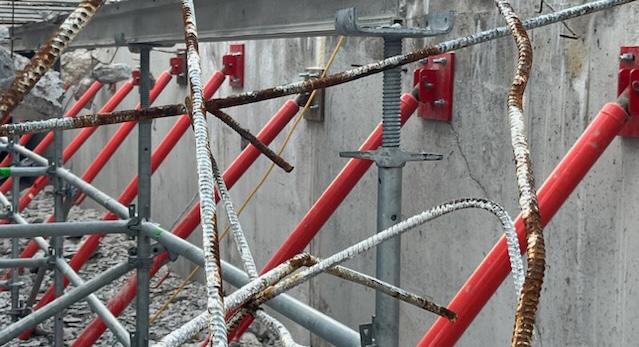


seasonal programs, and system checks to detect and treat issues before they escalate. They also engage in proactive capital planning, building multi-year capital plans that focus on asset preservation and resident safety.
The company maintenance requests through a centralized platform that tracks responsiveness, completion times, resident communication, and escalation. Real-time dashboards and regular inspections ensure building conditions remain stable and predictable. Key performance indicators (KPIs) allow owners to track performance, covering factors such as:
• Service response times
• Building inspection results
• Elevator uptime
• Vacancy and days-on-market
• Reporting timeliness
• Progress on capital projects
• Regulatory compliance
Management takes a practical approach to achieving sustainability across environmental, social, and governance (ESG) pillars. To help improve energy efficiency and sustainability, as well as extend building life while reducing utility costs, they have invested in:
• LED lighting retrofits
• Low-flow plumbing fixtures
• Enhanced building envelope work
• Mechanical system upgrades
• Waste diversion initiatives
Community-focused service
Two key tenets of managing their day-to-day operations are “building community” and “trusted service.”
Building community involves clear communications, consistency of operations, and compassion for residents. Residents want to feel heard and supported. This is essential in older rental communities due to the number of daily challenges. The management team emphasizes:
• Early engagement
• Fast response to maintenance issues
• Empathetic conflict resolution
• Transparent communication
Some challenges are unexpected, such as loss of income, medical emergencies or sudden hardships, which can lead to difficulties paying rent. Drake PM's Rental Support Program (RSP) provides temporary relief for residents experiencing unforeseen financial difficulties. Upon approval, residents may receive partial
or full forgiveness of rent increases or a onetime rent credit, with no obligation to repay. The management team handles each situation confidentially and reviews them individually, reinforcing their commitment to supporting residents during times of need.
The second tenet—trusted service—involves delivering on commitments with discipline. Management upholds structured service standards, rigorous inspection routines, strong emergency protocols, and clear communication channels. This ensures residents know what to expect from their buildings’ management team.
The company’s management philosophy combines institutional rigour with communityfocused service. Their principles include maintaining accountable operations, transparent communication, KPI-driven performance, and consistent, respectful resident engagement. They train staff to deliver predictable service, resolve issues quickly, and maintain open lines of communication with residents and owners.
With more than 70 employees, the company operates as a fully integrated management platform. Their team includes regional managers, on-site staff, maintenance technicians, CRM and resident-services support, 24/7 emergency response, AI-enabled leasing, and accounting and compliance functions. This structure allows the company to deliver institutional consistency across its expanding portfolio. They also provide new employees with onboarding and ongoing training, and supports them with standard operating procedures, field audits, and leadership engagement.
Attracting investors and partners
The company’s growth strategy focuses on positioning the company as a modern housing provider. Their goal is to strengthen portfolio stability and drive performance above targets. These principles guide their approach to attracting investors that seek operational consistency, financial clarity, and a proactive leadership team.
“When investors see that we operate with discipline, maintain strong resident communities, and manage assets thoughtfully, it reinforces confidence in the long-term potential of the portfolio and encourages future investment,” said Hero.
To engage new or existing investors and partners, they focus on three core principles:
1. Understand what success looks like for them: Every investor or partner has different objectives (e.g., long-term value







creation, stabilization, revenue growth, ESG performance). Others may want to navigate municipal approvals or major capital programs.
2. Communicate clearly and set strong expectations: Investors expect disciplined operations, defensible NOI growth, and a clear strategy for responding to market shifts. Provide transparent reporting, proactive risk mitigation, and consistent communication. Demonstrate how decisions protect capital, enhance long-term value, and position the assets or portfolio for sustainable growth.
3. Offer practical solutions: Apply expertise in purpose-built rentals, value-creation strategies, capital planning, and strategies focused on efficiency and sustainability. Understand the nuances of federal immigration policy, provincial housing goals, and municipal approvals to develop actionable operating plans.
“Investors and partners seek assurance that we can anticipate challenges, navigate uncertainty, and deliver a strategic, forward-looking path,” said Hero. “Across all relationships, the goal is the same: lead with understanding, communicate with clarity, and provide experience-driven solutions that support both individual assets and the longterm vision for the portfolio.”
State of the industry and opportunities for growth
Costs continue to increase across the rental housing industry, including operational costs. There is growing demand to implement technology and automation to improve efficiencies and reduce costs. Population growth is still strong, which has helped to keep rental demand high, while vacancy rates have gradually eased from historic lows. It is difficult to pursue new development due to elevated construction and borrowing costs, which has increased pressure on property managers and owners to perform more efficiently and protect financial outcomes. While the need to control costs and improve financial performance is high, there is continued interest in pursuing environmental, social, and governance (ESG) strategies, community engagement, and improving the resident experience. Ownership believes it is positioned to do well in this type of environment as it has focused on building a platform that emphasizes
efficiency, rather than retrofitting existing systems.
“Our culture is grounded in accountability, entrepreneurship, and an ownership mindset, which is critical when investment teams and ownership groups require flexibility, transparency, and a clear path to value creation,” said Hero.
“Our ability to customize our operating model across purpose-built rentals and vintage assets is a significant advantage. The strength of our internal culture, our commitment to inclusion, and our focus on growing strong leaders ensures we attract and retain the right talent to deliver consistently strong results.”
Ownership has identified several key opportunities for growth:
• Secondary and tertiary markets: These regions outside core major cities have clear provincial housing targets, growing populations, and limited access to sophisticated property management options.
• Specialized asset classes: There is long-term demand to develop or repurpose purpose-built rental properties, co-living developments, mixed-income communities, and other purpose-designed rental formats. Being successful requires creating a flexible operating platform that can adapt across these different opportunities.
• Technology, data, and AI integration: The industry has often lagged in technological integration. There are opportunities to improve leasing, operations, maintenance, and resident services. Data-driven decision-making, efficient systems, and AI-powered software can improve operational performance and support long-term asset value.
• Sustainability and community-focused development: Projects that incorporate low carbon systems, resilient infrastructure, and thoughtful community programming can create long-term differentiation. These approaches are attractive to both investors and residents.
“One of the largest opportunities continues to be people,” said Hero. “Building diverse, high performing teams, investing in leadership development, and empowering staff to think with an ownership mindset is a major competitive advantage. Strong teams drive strong assets, and that is especially important in a complex market.”
Trusted Advisors

Providing Expertise in Building Science and Structural Restoration
Garage & Balcony Assessment & Restoration
Building Cladding Design, Assessment & Remediation
Roofing System Design, Assessment & Remediation
Building Condition Assessments
Capital Planning
Building Renewal
Energy Audits and Modelling
Philip Sarvinis | Bill Gladu | Jeremy Horst | Michael Pond Duncan Rowe | Jack Albert Beau Gaudreau | James Cooper | Nigel Parker | Paul Fritze | Sohrab Karkhel
Charting the insurance landscape: Practical strategies to protect your portfolio

By David Gargaro
On October 29, RHBTV and T he Buildings Show co-hosted a webinar entitled “Charting the insurance landscape: Practical strategies to protect your portfolio.” Vanessa Topple, Host and Producer of RHBTV, moderated the webinar with a panel of insurance experts, which included:
• Jeff McCann, CEO, Apollo Insurance
• Andreas (Andy) Schwartze, Associated Broker, Nacora International Insurance Brokers
• Danielle-Maria Ardrey, Commercial Insurance Broker, Solidify Insurance
• Sheldon White, Vice President, Commercial Lines, Solidify Insurance
“Over the past decade, insurance costs have surged 50 to 100 per cent, which has created major challenges for property owners, managers, and operators with rising deductibles, tougher placements for older buildings, and major risks like water, fire, and theft,” said Topple. “These are putting serious pressure on operating budgets. Our panelists shared practical and actionable strategies to help protect your assets, improve your coverage, and obviously save you money.”
Market dynamics
The webinar began with a discussion of how to control insurance costs. Risk management was identified as a key strategy. Investing in better training for staff and management, and paying attention to building operations, would help make the building a better risk for underwriters. Adding water sensors and employing mitigation tactics to prevent extensive water damage would also help to lower insurance risk. Another approach included layering your risk strategy, which involves combining building coverage with
tenants’ insurance.
“If a tenant is causing damage, which is often a driver for claims, you’re able to subrogate against that tenant and make sure they have coverage as well,” said McCann. “Underwriters are evaluating whether you can share the risk with other policies that might be in place.”
After consecutive years of insurance rate hikes, it appears the market has started to soften. The property casualty insurance industry has no upfront hard costs, which affects how its members price insurance. Claims increase in cost over time due to inflation, and premiums rise and fall around claims in cycles. At present, we’re in an insurance buyers’ market. In 2024, the return on investment for insurance companies was 16 per cent, which means they’re doing very well financially.
“Tell your broker to get tough and negotiate returns on investment,” said Schwartze. “You are in a buyers’ market right now. Take advantage of it.”

Yes, we can!
Since MetCap Living established itself as a leader in property management, we have routinely been asked one, simple question; “Can you help us run our property more effectively?” And, for well over thirty years, the answer has remained — Yes, we can! Our managers are seasoned professionals, experienced in every detail of the day to day operations and maintenance of multi-unit rental properties. From marketing, leasing, finance and accounting, to actual physical, on-site management, we oversee everything.
Guaranteed vacancy reduction, revenue growth and net profitability — when you’re ready to discuss a better option; we’ll be there. You can count on it.
Kazi Shahnewaz Director, Business
Development
Office: 416.340.1600 x504
C. 647.887.5676
k.m.shahnewaz@metcap.com
www.metcap.com
While it sounds like the right time to chase lower premiums, this is not always the case. There may be better ways for rental property owners to balance insurance costs against real value and protection. Building owners often equate cost to value, but insurance does not always follow this logic. Getting the most value from insurance involves getting the right protection for the most competitive price.
Brokers should help clients by examining their full portfolio to maximize value. Examine insurance through the lens of risk management rather than as a retail product. Insurance is not to be bought in exchange for instant gratification, other than knowing there is peace of mind in being properly protected.
“But you are going to look at it in terms of a long-term investment,” said Ardrey. “If you’re managing your risk properly and lowering your overall risk profile, insurance companies will reward you by lowering your premiums and giving you more favourable renewal terms.”
Shifting premiums and underwriting standards
Premiums and underwriting standards are going through significant changes. Various factors are driving these shifts, and rental property owners must adapt going into 2026 if they want to control their insurance costs.
COVID-19 changed the employment landscape, as many people worked from home. Employers had to monitor employees to ensure they were doing the work. This led to what’s referred as “template underwriting,” which involves checking boxes to answer questions. Underwriters can match the answers to the appropriate risk and price for that risk. This is different from the traditional approach of personally meeting clients and evaluating a host of factors (e.g., wiring, windows, roof, individuals) on a case-by-case basis.
“Insurance has become a box-checking environment,” said Schwartze. “It’s become like that in banking and in life insurance. I don’t think it’s going to change.”
Everyone has access to the same markets and information. The value of your insurance depends on the broker’s ability to interpret your risk and structure your policy to protect your entire portfolio. They can get better rates and terms by negotiating with the underwriters on your behalf, and selling your story and experience. Many brokers can (and will) simply email your insurance form, which is where value is lost.
“Just because we’re not going into boardrooms anymore to have these negotiations, some clients feel as though it’s no longer part of the process,” said Ardrey. “For a lot of people, it still is. That’s why you want to get the right balance between the cost and the coverage, as well as the client’s risk tolerance.”
Water events and catastrophic losses
Broad factors, such as catastrophic events (e.g., forest fires, tornadoes, ice storms, flooding), have a significant impact on insurance premiums. This year, Canada has been virtually unaffected by natural disasters, whereas 2024 was a record year in terms of catastrophic losses. These events drove insurance pricing up for the whole market. Except for the recent hurricanes, there have been fewer catastrophic losses globally, which has led to some relief in premiums.
Water damage is one of the main causes of damage to buildings and portfolio management, and not all of it is insurable. Water damage accounts for 50 per cent of overall owner claims, 70 per cent of real estate claims, and millions of dollars in uninsured repairs.
“The deductible on your property used to be the same as the water damage,” said White. “Now it’s completely different. Depending on the area you’re in, [the insurance company] could raise it. You could have a $5,000 deductible on water but everything else could be $1,000.”
Water-related damage falls into four categories:
1. Unmonitored leaks: These are ongoing, not sudden, issues and often uninsured. These types of leaks eventually lead to more significant events and larger bursts. Installing water detection sensors is a data-driven, digital method of tracking individual leaks in units, bathrooms, kitchens, and other common areas. Leak and pressure detection can also be used to monitor mainline pipes, respond to changes to water pressure more quickly, and protect assets.
“How you operate your buildings, your risk management and your risk management culture, the training and the operational diligence with your teams on site to be able to educate the tenant [will] enable you to report these things more quickly and mediate these things more quickly,” added McCann.
2. Natural disasters (e.g., hail, overland water): It’s unusual for multifamily buildings to be so exposed to these types of events, but claims happen. Ensure that coverage limits reflect the current replacement cost value for each type of

Adding to
your
multi residential portfolio by taking advantage of existing land.
Join RHB and a panel of land use experts who will break down the strategies that work and don’t work!
From family owned to large developers, join Jason Birnboim, Greg Jones, and special guest Adrian Rocca, for a unique conference session on Thursday, December 4th as they show how to turn risk into opportunity. Understand the potential and optimize your properties land value as you navigate evolving industry policies for long-term success.


The conference session is Sponsored by Kingsgate Restoration and is part of the Buildings Week events.


Register for your spot today or make it part of your All Access Pass at PM Expo!
The conference session is Thursday, December 4th, 10:30 AM to 12:00 PM. at the Metro Toronto Convention Centre. Early bird pricing ends November 7th so be sure to register now!


Adrian Rocca CEO, Fitzovia
Jason Birnboim President, Beaux Properties International Inc.
Greg Jones President, SkyDev
Vanessa Topple Moderator
coverage. They should consider tariffs, labour costs, and other inflationary expenses. Beware of special limits that reduce coverage, especially for overland water and other specific events.
3. Sudden and accidental pipe bursts: Early detection, staff and tenant training, and a practical response plan are the keys to mitigating the damage from these events. Conduct water drills (like fire drills) to check on tenants and units when leaks are detected. Implement proper building maintenance procedures to check pipes. Having the proper coverage for your building is important. It’s also essential for tenants to have insurance to recover claims for damaged belongings (either in their unit or in storage), as well as pay for a hotel while their unit is being repaired.
4. Negligent tenant s: Cooking accidents are a major driver of tenant-driven insurance claims. While fires are a problem, fire sprinklers can cause even more damage, spraying 75 to 150 litres per minute. The water will soak that unit and the one below. Other issues include candle-caused fires, frozen pipes due to windows being left open in the winter, toilets clogged with kitty litter, and sprinkler heads damaged when tenants move out. “These all come out of your building insurance portfolio and against your claims if you can’t claim against the tenant,” said McCann. “Make sure the tenant has a policy and ensure you’re having these conversations and educating your tenants.”
Portfolio and placement challenges
Rental property owners with multiple buildings in their portfolio have different insurance concerns and risks than single-building owners. Ensuring you have a healthy risk portfolio involves achieving balance across all properties and exposures, not minimizing risk or maximizing profit.
For example, a rental property owner may have a mix of units with varying levels of value and risk (i.e., high-income and low-income units). Some insurers may enable them to put all the units on one policy for a fixed minimum premium. This policy may seem desirable due to its low upfront cost. However, one loss on any unit could affect the entire portfolio. At the same time, it’s not necessary to purchase individual policies for each unit because this prevents you from grouping similar units together strategically.
“A healthy portfolio would look at each of the units individually and bundle the nicer units, the newer buildings, the AAA tenants together on one policy, as their relative risk is pretty low,” said Ardrey. “Units in older buildings, ones that have had claims before, student rentals, etc., might
be grouped either independently or together. Looking at it from a risk perspective, you would look at each of the moving parts of the portfolio individually and how they fit collectively.”
The deductible is another consideration. Every rental property owner has different standards for how much damage they are willing to cover financially before they decide to contact the insurance company to put in a claim. For example, if their threshold is $10,000 in damages, then the insurance broker should not put the deductible at $1,000, as this would be a missed opportunity to lower the upfront premium.
When evaluating older buildings for potential issues, underwriters focus on what the tenants cannot see (e.g., risers, electrical systems, plumbing). For the most part, aesthetic in-unit improvements don’t affect insurance costs. Underwriters care about replacing galvanized plumbing and fused wiring, which can lead to higher and more frequent claims.
Saving money on your insurance policy
The webinar concluded with the panelists providing advice on how to save money on your insurance policy while strengthening your insurance position. Some of their recommendations included:
• Choose a specialized insurance broker with deep experience in your specific niche, as they will have a better understanding of your risks, negotiate stronger coverage, and help you to avoid unnecessary premiums and potentially costly gaps
• Conduct annual policy reviews (rather than renewing automatically) to identify potential coverage gaps and savings opportunities
• Add a tenant liability insurance mandate to leases and track compliance to protect against small or preventable claims
• Add rental income coverage to your policy for when units become uninhabitable after a loss (e.g., fire or water damage)
“Make sure income replacement or rental income coverage is on your policy,” said White. “It's bone cheap but it will save you money in the long run because now somebody else, the insurance company, is paying that rent for you while that person is displaced.”
To watch the whole webinar, please visit https://www.boldtv.ca/events.

Get ready for changes to the Ontario Fire Code

By David Gargaro
Rental property owners should take note: the Ontario Fire Code’s new requirements are going into effect on January 1, 2026. The new requirements affect equipment and operations in residential buildings. They introduce new national standards for inspection and testing, demand more rigorous documentation, and create faster enforcement mechanisms through administrative monetary penalties.
Bringing Ontario up to national standardss
The most impactful update to the Ontario Fire Code is the adoption of national ULC standards (ULC-S536 and ULC-S537). They expand how fire alarm systems are inspected, tested, and verified. Annual and monthly reports, attendance logs, and equipment checks will all have prescribed formats. The emphasis is on consistency and traceability.
Operators must demonstrate that inspections were performed, as well as how, when, and by whom. Rental property owners and managers cannot use simple checklists when performing inspections. They must demonstrate specific, detailed reporting, most of which uses newly standardized forms.
More detailed inspection and reporting
The changes to the Fire Code will affect how rental property owners and their contractors manage data, documentation, and testing. Battery testing will become more complex. Historically, inspectors simply recorded voltage readings. The new standard requires load or functional testing, with results carefully documented. Technologies like voice evacuation systems and wireless CO detectors will also require more rigorous testing and tracking. Deficiencies must be clearly separated from general notes and tracked in fixed lists.
“Operators will also need to make sure their contractors are using the new standardized forms,” said Shereen Gonsalves, Associate Lawyer, Cohen Highley LLP. “For larger portfolios, this could mean implementing new recordkeeping systems or providing staff with training to ensure consistency across all buildings. This will be a huge adjustment for apartment operators and staff.”
Faster and simpler enforcement of AMPs
The new Ontario Fire Code will be introducing administrative monetary penalties (AMPs), which allow fire departments to issue on-the-spot fines for Fire Code violations. Previously, enforcement involved the provincial offences court process, which is a slower, more formal mechanism that often led to gaps between non-compliance and consequences. AMPs remove this buffer from the process.
“AMPs are a game changer because they give fire departments a faster, simpler way to enforce compliance,” said Gonsalves. “Even administrative errors or omissions like missing documentation or incomplete logs can now have immediate financial consequences.”
Fire safety has always been a legal obligation, but it now carries a more direct financial risk. The shift requires rental property owners and managers to move from reactive compliance to proactive prevention. This makes keeping detailed records even more important.
Exit doors, keys, and special devices
As of January 2026, the requirements for locking, latching, and fastening devices will apply to every exit door, not just designated fire exits. If a door is part of the path of egress, it must meet the updated standards. Rental property owners or managers must confirm doors with electromagnetic locks are either approved by the Chief Fire Official or compliant with the Ontario Building Code. Otherwise, every exit door must have a simple release that can be opened from the inside.
Access is another critical issue. Supervisory staff must always have ready access to keys or special devices required to operate fire alarm systems or access fire protection equipment. They must also know where these items are stored, and they must be easy to retrieve.
“If a fire official asks to see these keys or devices during an inspection and staff can't locate them, this could result in an AMP on the spot,” said Gonsalves. “Taking these steps now will help ensure compliance and avoid any issues when the new rules come into effect.”
Integrated systems and ongoing compliance
detectors must work together (i.e., they are not standalone systems). Integrated fire protection and life safety systems must be tested according to the CAN/ULC-S1001 standard. Rental property owners or managers should request written confirmation from monitoring companies that they comply with either NFPA 71 or CAN/ULCS561. Taking a collaborative approach will reduce risk, support safer homes, and create better relationships with regulators.
“Compliance should be viewed less as a one-time event and more as an ongoing management process, with consistent testing, clear documentation, and open communication between operators, fire officials, and contractors,” said Gonsalves
Conclusion
Ontario’s Fire Code update will be coming into effect at the start of the new year. It requires more oversight, more documentation, and more accountability. Fortunately, there is still time to prepare. Rental property owners should begin reviewing doors, updating documentation practices, training staff, and coordinating with contractors now to meet the January 2026 deadline and avoid costly AMPs.
For more information on the Ontario Fire

Regional Rental Trends
Canada’s Market is Converging
While national rent averages have dipped, the real story lies in regional shifts — expensive cities are cooling while a ordable markets are catching up.
Expensive Cities Down, Mid-Markets
Hold, A ordable Cities Rise
Toronto and Vancouver have driven the national rent decline, while mid-tier cities like Calgary, Mississauga, and Ottawa remain steady. A ordable markets — Saskatoon, Edmonton, and Winnipeg — continue to grow.
Migration Follows A ordability
Canadians are moving from Ontario and BC to Alberta, where incomes are strong and living costs are lower. Most movers are under 40, the country’s core renter demographic.
Remote Work Keeps Mobility High
17% of Canadians work fully remote, 5% hybrid. Flexibility lets renters choose a ordability and space over proximity to downtowns.
The A ordability Trade-O
High salaries in big cities don’t o set their high rents.
Vancouver: 40% of income spent on rent
Toronto: 32%
Winnipeg / Regina / Saskatoon: <25%
More renters can save and build financial flexibility in smaller markets.
Takeaways
Demand for Larger Units
Even as smaller unit rents soften, 3+ bedroom rents continue to climb — families and remote workers are renting longer and wanting more space.
1- Rent growth persists in a ordable, smaller markets.
2- Mobility and remote work continue to reshape rental demand.
3- Younger Canadians are prioritizing space and savings over big-city living.


Federal government releases Budget 2025
By Tony Irwin, President and CEO, RHC
On November 4, 2025, FrancoisPhilippe Champagne, Minister of Finance and National Revenue, released the details of Budget 2025, the first federal Budget under Prime Minister Mark Carney. On November 18, the Budget passed the confidence vote by a slim margin, 170 to 168.
RHC was encouraged to see Budget 2025 outline a broad series of new investments and policy tools to expand housing supply, speed up construction, modernize approvals, and preserve existing rental stock. It includes a $25-billion, five-year investment in new housing initiatives, with a focus on scaling up purpose-built rental housing and affordable housing across the country. The previously announced new federal agency, Build Canada Homes, will take a more active role in developing housing projects, standardizing designs, and coordinating infrastructure with municipalities.
Build Canada Homes

The creation of Build Canada Homes marks a shift in federal involvement in housing delivery. It could also provide the rental housing industry with new opportunities for collaboration on large-scale projects and more predictable support for long-term rental development.
Build Canada Homes will:
• Support the construction of large-scale housing projects, including purposebuilt rental
• Prioritize non-profit and community housing, in partnership with provinces, territories, and Indigenous communities
• Launch procurement processes for factory-built, modular, and mass-timber construction, using standardized designs to cut costs and shorten timelines
• Coordinate federal contributions to municipal infrastructure to unlock new development-ready land
Canada Mortgage Bond program
Budget 2025 increases the annual Canada Mortgage Bond (CMB) issuance limit from $60 billion to $80 billion, with $20 billion reserved for multi-unit residential financing. This will help to:
• Lower borrowing costs for purpose-built rental developers
• Improve liquidity for lenders
• Support a pipeline of new rental projects at a time when construction starts have slowed



NATIONAL OUTLOOK
The federal government will continue purchasing up to $30 billion annually in CMBs to stabilize the market. For rental housing providers, the expansion helps address high financing costs, which have stalled many projects in the last two years.
Canada Rental Protection Fund
Budget 2025 reinforces the Canada Rental Protection Fund (CRPF), a $1.47-billion initiative that enables non-profit and co-operative housing providers to acquire aging rental buildings. Funding includes $470 million in contributions and $1 billion in low-interest loans.
The CRPF aims to prevent the loss of affordable rental units due to redevelopment, financial distress or conversion. This will help to maintain stability in communities with aging rental supply. Private owners can also divest older buildings while reinvesting into new housing.
Canada Housing Infrastructure Fund
The Canada Housing Infrastructure Fund (CHFI) reinforces the focus on housing-enabling infrastructure, which includes water, sewer, transportation links, and servicing required to support density. The government has committed to:
• Increasing investments through the CHFI
• Work directly with municipalities to identify catalytic infrastructure projects that unlock new housing supply
• Coordinating Build Canada Homes and other federal agencies to align infrastructure funding with major development areas
Accelerated Capital Cost Allowance
The new Accelerated Capital Cost Allowance (ACCA) increases depreciation rates for eligible purposebuilt rental projects from 4 per cent to 10 per cent. This improves after-tax project returns, offsets higher construction and financing costs, and may help restart stalled rental developments that have been sidelined by economic conditions. The government is also introducing accelerated depreciation for modular and prefabrication equipment, supporting factory-based production and complementing Build Canada Homes’ procurement of modular and mass-timber units.
Updates to Housing Accelerator Fund
Budget 2025 enhances the Housing Accelerator Fund (HAF) to reward municipalities that remove zoning barriers and accelerate approvals. Funding will help to shorten the municipal approval cycle and support:
• As-of-right zoning for fourplexes and missing-middle housing
• Pre-zoning for density near transit
• Municipal performance targets tied to approval timelines and housing outcomes
Union Training and Innovation Program
To support the increased development of housing, the federal government proposes $75 million over three years for the Union Training and Innovation Program, which will focus on:
• Red Seal apprenticeships
• Upskilling workers in modern construction methods
• Increasing labour supply in residential construction
Increasing the number of employees in this specialized workforce will help deliver the volume and speed of construction needed to meet Canada’s housing targets.
Standardized design catalogue
Following pilot initiatives in 2024, the federal government will expand access to standardized design catalogues for rowhouses, multiplexes, and mid-rise buildings. This will help to reduce the time and costs for early-stage development, streamline development approvals, and support the mass adoption of
modular and prefabricated housing. Rental housing providers can use these designs to help reduce the risks of development and shorten pre-construction timelines. These design packages include:
• Full architectural drawings
• Engineering reports
• Energy and climate resiliency assessments
• Costing templates and user guides
GST rebate for first-time homebuyers
Budget 2025 confirms elimination of the GST on new homes priced up to $1 million, and a reduced GST rate for homes priced between $1 million and $1.5 million. This measure may have secondary impacts on rental markets, including shifts in demand and the overall housing mix.
Desjardins: Rent inflation easing across Canada
According to the Desjardins Rental Market Outlook, published in November 2025, rent inflation is on the decline across Canada. The primary causes are the increase in rental housing supply, particularly purposebuilt rental, combined with slowing population growth due to reductions in immigration levels. However, the pause in rent hikes may be temporary, especially if construction levels decline.
Desjardins’ report shows that Canada is building purpose-built rental (PBR) units at the fastest pace in decades. Rental stock under construction increased by more than 25 per cent in the first half of 2025, with Quebec leading the way. In 2024, the total number of PBR units rose by 4.1 per cent, which was the fastest annual growth in over 30 years. In Toronto and Vancouver, condominium apartments are increasingly being used to absorb demand, which is adding supply to the rental pool.
Government support has helped to drive the boom. Incentives such as GST/HST rebates, accelerated capital cost allowances, and more favourable financing are funding these new rental projects.
The increased rental housing supply is being pushed by declining demand. Population growth has slowed, as Ottawa has reduced non-permanent resident (NPR) inflows. Since temporary residents (e.g., students) are among the most likely to rent, this shift is reducing rental demand, especially in cities like Toronto and Vancouver. This demographic shift will further reduce rent inflation. If current immigration targets hold, Desjardins expects some notable dynamics (e.g., Calgary could see rent declines, growth in Toronto and Vancouver may flatten). Quebec has looser rent-setting rules and strong local demand, so rent levels may remain more buoyant.
Desjardins forecasts national rent inflation will continue to slow into mid-2026 before stabilizing. However, rents may begin to increase if trends change. Construction costs are still very high. Rising costs for land, labour, and materials (as well as regulatory red tape) could make future rental projects less viable. Despite the positive construction numbers, purpose-built rentals make up a small percentage of Canada’s total housing stock; as a result, vacancy rates are improving gradually.
PwC: Purpose-built rental forming the cornerstone of real estate strategy
According to PwC and the Urban Land Institute’s report, Emerging Trends in Canadian Real Estate, purpose-built rental (PBR) housing is emerging as a cornerstone of real estate strategy, especially as developers and institutional investors evaluate their strategies in a more volatile market.
Key factors driving the trend include:
• Condo market pressures are shifting capital: With the pre-construction condo market under strain, many developers are redirecting stalled or unprofitable condo projects into rental developments.
• Long-term growth story over short-term yield: PwC ranks PBR as a “best bet” for investors, especially those willing to accept lower returns today in exchange for steady, long-term growth.
NATIONAL OUTLOOK
• Strong demand tailwinds: Even with a tighter immigration policy, household formation continues to drive rental demand. Much of Canada’s current rental stock is aging, which is creating opportunities for modern, higher-quality PBR units.
Public policy is helping to push purpose-built rental developments forward. Programs like Build Canada Homes are accelerating PBR development. Developers are tapping into local incentives (e.g., development-charge relief) and partnering with non-profits to make PBR more financially viable. Some investors are also optimistic about revived tax credits (e.g., for multi-unit residential buildings) and favourable financing structures that support rental builds.
PwC has noted increasing supply in Toronto and Vancouver has led to softer rental rates. While PBR development is accelerating, there’s concern about how quickly new units can be absorbed, especially in higher-end or luxury segments. Some developers are using land originally intended for condos to build rental instead. However, land costs, zoning, and development rules can make conversions challenging.
PwC also noted the following outlook and potential strategic opportunities:
• Institutional capital: Pension funds, family offices, REITs, and other institutional players are increasingly viewing Canadian PBR as scalable, impact-driven, and long-term.
• Modular construction: Prefab and modular methods can help to lower costs, speed up development, and reduce risk.
• Regional differentiation: Some markets are more favourable than others (e.g., Calgary has affordable land, investor-friendly policies, and growing rental demand).
Deloitte: Canada’s building boom won’t happen without more labour resources
The federal government is planning to ramp up construction to build more homes. This includes fasttracking nation-building infrastructure and doubling home construction to achieve these goals. However, according to recent analysis by Deloitte’s Future of Canada Centre, we have a significant labour shortage that will interfere with these plans.
Deloitte’s report estimates that we will need an additional 410,000 to 520,000 construction workers by 2030. In August, Canada’s construction workforce consisted of about 1.7 million people. This means we would need to scale up by one-third of this figure in just five years.
Construction demand comes from three major fronts:
• Housing: Doubling the number of housing starts could require up to 290,000 more workers by 2030, based on current productivity. Even with a 10 per cent productivity boost, the need is still around 264,000.
• Public infrastructure: If public investment returns to its previous peak (about 5.1 per cent of GDP), as many as 87,000 additional workers may be needed.
• Private investment: Deloitte’s models assume the government’s target of catalyzing $500 billion in private capital could drive demand for another 128,000–140,000 workers by 2030.
Deloitte’s numbers represent net demand, which assumes no retirements. However, the construction sector is facing a wave of exits. According to BuildForce Canada, more than 270,000 workers will retire between 2025 and 2034, which would mean gross hiring needs must exceed 800,000 new people.
Construction productivity is also down. According to Deloitte, over the past 10 years, output per worker has decreased by around 7 per cent. This is especially concerning because every new worker costs money to train and integrate.
The federal government is planning to spend a lot of money to address the skilled labour shortage, However, the labour issue is not just a money problem. Deloitte suggests Canada needs a parallel humanresources strategy that involves government, industry, unions, training institutions, and immigration systems.
NOVEMBER 2025
Deloitte suggests the following approach to address the labour shortage:
• Coordinated action between federal and provincial governments, colleges and training bodies, unions, employers, and Indigenous partners
• Inclusive recruitment of women, youth, racialized Canadians, and underemployed workers to make use of untapped potential (e.g., women make up around 13 per cent of the construction workforce)
• Recalibration of Canada’s immigration system to bring in trade-skilled newcomers; this means adjusting admissions to prioritize construction trades
• Faster recognition of immigrants’ credentials to reduce the time to contribute
• Encourage employers to absorb apprentices using targeted financial incentives and policies to make work more flexible and family-friendly
• Invest in modular construction, robotics, prefabrication, and other productivity-enhancing technologies; a 10 per cent productivity gain could cut labour demand by about 50,000 workers by 2030
• The new Major Projects Office could help sequence projects to prevent spiking of demand for trades in localized “hot spots”
Slowing momentum, rising costs: Canada’s multifamily market adjusts in 2025
Canada’s multifamily housing market entered 2025 in a slower gear. With the Bank of Canada lowering its policy rate to 2.5%, housing providers are seeing early signs of easing, but uncertainty remains. Economic pressure from tariffs, now averaging 12%, and weaker exports have led to a 1.6% annualized contraction in second-quarter GDP. Job creation has also cooled, with monthly gains averaging 8,000 compared to the long-term average of 18,000.
Population growth increased by only 0.1% in the second quarter, the slowest pace since 1946, driven by a notable decline in non-permanent residents. Combined, these factors have softened demand just as operational costs continue to climb.
Vacancy reached 4.3% nationally in the third quarter, up 20 basis points from last quarter and 110 basis points year over year. Rent growth decelerated for the sixth consecutive quarter, now at 3.9% compared to 6.2% a year earlier. With new completions landing just as employment and population growth cool, vacancy pressure is likely to persist into early 2026, keeping rent growth subdued. At the same time, annual turnover rose to 25%, the highest level in three years, while tenants’ average stay shortened to 36 months, reflecting growing mobility among renters.
Regional standouts: mixed signals across Canada
Two-bedroom markets across the country are responding differently to these shifting dynamics. Halifax (5.9%), Edmonton (4.9%) and Saskatoon (4.7%) led the nation in new lease rent growth, fuelled by job creation and local sector strength. Halifax’s booming tech scene, supported by Dalhousie University and Nova Scotia Community College, continues to attract new talent and demand for rental housing.
Montreal experienced a sharp rise in vacancy, up 5.6%, largely due to the delivery of more than 2,300 new purpose-built units earlier this year. Calgary maintains the highest vacancy rate at 5.8%, with strong completions pushing new lease rent growth into negative territory at -3.0% after a period of overbuilding. In contrast, Winnipeg (2.4%) and Halifax (2.8%) remain among Canada’s tightest markets, underscoring the regional divide in rental conditions.
The cost side of growth
New this quarter, the report introduces national metrics that highlight the rising monthly cost of operating rental properties. These benchmarks help housing providers forecast budgets, detect cost overruns early and better understand the financial health of their portfolios. Even as rent growth slows, monthly expenses continue to climb. Repairs and maintenance expenses reached a monthly average of $183 per unit in Ontario, the highest in the country. Monthly controllable expenses neared $500 per unit in Ontario and Alberta, while total monthly operating costs rose to roughly $700 per unit in Ontario, exceeding the national average of $671.
NATIONAL OUTLOOK
Still, efficiency improvements are visible. Digital prospect conversion rates hit 8.7% nationally, showing leasing teams are securing more leases from fewer inquiries. While resilient, this rate highlights room to refine digital follow-up and lead nurturing. Operators focusing on retention are also stabilizing performance, as longer resident stays reduce turnover costs and support predictability in an uncertain market.
What housing providers can do next
As 2026 approaches, housing providers should prioritize efficiency over aggressive rent increases. Reviewing vendor contracts, optimizing maintenance schedules and adopting preventative maintenance programs can help control rising expenses. Data insights such as turnover percentage, average stay and per-unit costs provide valuable benchmarks for operational decisions.
Retention will be key. Flexible renewals, resident incentives and consistent service quality can help extend tenancy durations and balance rising costs. Those who focus on efficiency, sustainability and resident experience will be best positioned to succeed as Canada’s multifamily market continues to recalibrate.
Read the full Q4 2025 Canadian Multifamily Report for more insights: https://yardi.com/ cndmultifamilyreport
RHC Conference coming to Ottawa in 2026
The RHC Conference is heading to Ottawa in 2026. Mark your calendars for the conference, which will take place on May 26 – 28, 2026 at the Rogers Centre. This national event will bring together industry leaders, policymakers, and service providers for three dynamic days of innovation, insight, and connection. With a future-focused agenda covering sustainability, leadership, market trends, and housing policy, expect impactful keynotes, expert panels, and powerful networking, all aimed at shaping the future of rental

SOLUTIONS FOR ALL YOUR PROPERTY NEEDS
HD Supply Offers Maintenance, Repair & Operations products and services. Everything you need. All in one place.
NATIONWIDE DELIVERY

Flexible delivery options, from next-day to scheduled drop-offs at your site.
BUDGET MANAGEMENT
Trade credit, job quotes & bulk pricing options available.
STREAMLINED PURCHASING
Save time and money with customizable e-Procurement solutions built for your business needs.
EXPERT CUSTOMER SERVICE
Whether it’s routine maintenance and repairs, property upgrades, or suite turn renovations, our dedicated team is committed to delivering a seamless experience every step of the way.
EXTENSIVE PRODUCT OFFERING
Thousands of products in stock every day, plus access to thousands more we can source on your behalf. Essential categories available, including:



• Appliances
• Plumbing
• Tools
• Flooring
• Paint & Sundries
• Cleaning & Janitorial
• Grounds Maintenance
• Fire Safety
• Hardware
• Electrical
• Cabinetry
• HVAC
• Lighting
• Personal Protective Equipment
• And MORE!
Plus, Exclusive Brands that deliver quality, style & value.
CEO’s message: Looking ahead to a pivotal fall
As 2025 comes to a close, it’s a great time to look back at what we’ve achieved together and the work that lies ahead. This year, FRPO continued to champion the essential role of rental housing in addressing Ontario’s long-standing supply and affordability challenges. Our advocacy at the provincial and municipal levels remained strong and focused, emphasizing a thriving rental sector is fundamental to a stable, future-ready housing system.

Over the past year, we worked closely with the Ontario government to push for policies that enable a more predictable and workable environment for rental housing providers. One of our top priorities has been improving the performance of the Landlord and Tenant Board. We’ve consistently highlighted the need for faster, more efficient processes to ensure fair outcomes for tenants and to give housing providers the certainty they need to keep investing in Ontario’s rental stock.
Our “Say Yes to Housing” initiative also continued to build momentum. Thousands of Ontarians have sent messages to their municipal leaders urging them to support new rental development and reduce barriers that slow or prevent much-needed housing from being built. This growing public support reinforces what we already know: people want solutions, and they want governments at all levels to act decisively.
We’re also looking forward to the pending FRPO MAC Awards. Each year, the awards showcase the professionalism, innovation, and leadership of Ontario’s rental housing providers. It’s an opportunity to recognize exceptional work and to celebrate the individuals and organizations who are pushing the industry forward.
As we enter 2026, please know that your voice and membership are the foundation of our efforts. We will continue to champion our industry, advocate for sensible policy, and work tirelessly to ensure the rental housing sector is recognized as a vital partner in building a prosperous future for Ontario.
Thank you for your continued support.
Tony Irwin, President and CEO, FRPO
Marielle Hossack appointed as Director of Policy and Regulatory Affairs
In September, FRPO announced Marielle Hossack as the new Director of Policy and Regulatory Affairs. She will be responsible for overseeing regulatory compliance, shaping policy initiatives, and advocating on behalf of the organization’s interests.
Marielle brings significant experience to her position with FRPO. Her most recent role involved serving as Senior Communications Manager with Telus Health, where she was responsible for leading international campaigns, media relations, crisis communications, and global PR agency partnerships. She has held several positions in federal politics, including serving as Senior Communications Advisor and Press Secretary to the Minister of Public Services and Procurement, Accessibility, and Employment. Marielle is also Co-Chair of WE BILD Toronto (Women Empowered; Business, Investing, and Leadership Development), and has a Bachelor of Communications degree from the University of Ottawa.
For the full story read the Winter issue of FRPO FE.
Bill 60 includes amendments to Residential Tenancies Act
On October 23, the provincial government introduced Bill 60, the Fighting Delays, Building Faster Act, 2025. The Act is designed to streamline housing construction and landlord-tenant resolution. It includes several amendments to the Residential Tenancies Act, 2006 (RTA), which are intended to reduce inefficiencies and misuse of the system at the Landlord and Tenant Board (LTB).
Key changes to the RTA that would affect rental property owners include:
• Shorter notice period for rent eviction notice: Rental property owners may issue a termination notice for non-payment of rent effective no earlier than seven days after it is served. This reduces the time a tenant has after missing rent before their tenancy can be terminated. This would enable rental property owners to see much quicker resolutions for rent arrears situations. The timeline to request a review of a decision or order has also been shortened from 30 days to 15 days.
• Payment of tenant arrears before hearing: Tenants must pay 50 per cent of the rental property owner’s claimed arrears of additional costs before the tenant can have an LTB hearing. This shifts the financial onus to tenants and helps to prevent misuse of the system, practically eliminating frivolous or bad-faith disputes.
• Limits on tenant appeals or reviews: The LTB is limited from setting aside LTB order reviews. Also, there may be “prescribed limitations or conditions” under which reviews or appeals can occur. This change to the rules reduces tenants’ opportunities to challenge evictions or LTB decisions.
• Redefining “persistent failure to pay”: The Bill changes the definition of “persistent failure to pay rent.” Rather than tying failure to pay to fixed dates, it is defined in accordance with regulations.
• Elimination of compensation. Landlords do not have to provide compensation for own-use evictions when they provide at least 120 days' notice.
Some of the proposed changes to the RTA will be introduced in phased rollouts over time. As a result, rental property owners must remain aware of regulation details and timing to adapt their practices accordingly.
See https://www.ola.org/sites/default/files/nodefiles/bill/document/pdf/2025/2025-10/b060_e.pdf to read the contents of Bill 60.
2025 MAC Award Nominees
Winners will be announced on December 4.
Resident Manager of the Year
• Gino Hagong - Signet Group
• Adam McGuin - Equiton
• Tom McPherson - Skyline Living Leasing Professional of the Year
• Marlene MacFarlane – Canadian Apartment Properties REIT
• Sydney Benoit – Rhapsody Property Management Services
• Madison McLellan – Killam Apartment REIT Property Manager of the Year
• Dushyantha Anantharajan - Canadian Apartment Properties REIT
• Belinda Black - Tricon Residential
• Marios Proniaris - Park Property Management Company Culture
• BlueStone Properties
• iRestify Inc
• Skyline
Best Property Management Website
• Homestead Land Holdings Limited: www.homestead.ca
o Web Designer: Rentsync
• Fitzrovia: www.sloanelife.ca
• Skyline Living: www.elioapartments.ca
o Web Designer: Rentsync Best Advertising Campaign
• Fitzrovia
o Sloane by Fitzrovia
• Tricon Residential
o The James
• Minto Apartments
o At 88 Beechwood, people are welcome, too
Social Media Award of Excellence
o Shiplake Properties
o Signet Group
o Fitzrovia – Sloane by Fitzrovia
Best Lobby Renovation of the Year
• Greenwin Corp & GWL Realty Advisors Residential
o 2160 Lakeshore Road, Burlington
• Old Oak Properties
o Forest Hill 575, London
• Hazelview Properties
o Story of Midtown Toronto
o Contractor: Sky Group of Companies
Best Amenity Space Renovation
• DBS - 25 St. Dennis, Toronto
• Fitzrovia - Maddox Cabbagetown, Toronto
• Canadian Apartment Properties REIT
o Nuovo, Ottawa
Best Suite Renovation of the year under $50,000
• Morguard – Fifty on the Park, Toronto
o Contractor: The Byng Group
• Dream – 177 St. George, Toronto
o Contractor: Sky Group of Companies
• Fitzrovia – Maddox Tyndall, Toronto
Best Suite Renovation of the year over $50,000
• Minto Apartments - Minto Yorkville, Toronto
o Contractor: Sky Group of Companies
• BGO Living - Park Place, Kitchener
• GWL Realty Advisors Residential - 400 Walmer, Toronto
Best Amenities in a New Development
• Skyline Living
o Talisman Gate Apartments, Gravenhurst
• Fitzrovia
o South Tower - Sloane, Toronto
• DBS
o Bela Square, Toronto
Best Rental Development of the Year, Under 200 Units
• Old Oak Properties
o The Saint James, London
• Drewlo Holdings
o Block 599, Kitchener
• The Rose Corporation
o The Bakerfield II, Newmarket
Best Rental Development of the Year, Over 200 Units
• Dream Asset Management Corp, Kilmer Group & Tricon Residential
o Birch House at Canary Landing, Toronto
• Old Oak Properties
o Centro South Tower, London
• Fitzrovia
o Elm-Ledbury, Toronto
Best Rental Development of the Year, Secondary Market
• Briarlane Property Management
o 611 Davenport, Toronto
• Dream
o Voda, Ottawa
• Homestead Land Holdings Limited
o The Shipman II, St. Catherines
Environmental Excellence
• Hazelview Properties
• Skyline
• Canadian Apartment Properties REIT
Climate Leadership
• Drewlo Holdings
o 1285 Sandy Lane, Sarnia
• GWL Realty Advisors Residential
o Grenadier - 40 High Park and 77 Quebec, Toronto
• Drewlo Holdings
o 1066 Commissioners Road, London
Customer Service Award of Excellence
• Tricon Residential
• GWL Realty Advisors Residential
• O’Shanter Development Company Limited
Outstanding Community Service for a Supplier Member
• The Byng Group
• Wyse Meter Solutions
• Cohen Highley LLP
Outstanding Community Service for a Rental Housing Provider
• Canadian Apartment Properties REIT
• Skyline Group of Companies
• Drewlo Holdings
IMPACT AWARD
• Old Oak Properties
o Old Oak Animal Campus
• Starlight Investments
o Children’s Book Launch: Ivan’s Garden of Hope
• Daniels Corporation & Choice Properties
o Building Belonging at Uniti Rentals
Ontario’s leading advocate for strong and stable rental housing.
FRPO is the largest association in Ontario representing those who own, manage, build and finance residential rental properties.
For membership inquiries please contact Lynzi Michal, Director, Membership & Marketing
Federation of Rental-housing Providers of Ontario 801-67 Yonge Street, Toronto, Ontario M5E 1J8 416-309-8744
lmichal@frpo.org www.frpo.org


Hot Topics:
LPMA discusses Openroom.ca, a tool that helps landlords avoid costly tenant screening mistakes, and the Cross Cultural Learner Centre's capital campaign. pg. 49
HDAA discusses the Safe Apartment Buildings By-law, the Vacant Unit Tax, and the City's push against Bill 60. pg. 53
RHPNS discusses the final stages of the Halifax Water hearing and the Residential Property Management course. pg. 57
RHSK discusses the research on the unintended consequences of rent control, as well as what's happening in Saskatchewan's housing industry. pg. 61
Check out the digital version of RHB Magazine for news from EOLO and ARLA
The Member Associations

RHPNS

We’ll keep your systems top of mind, so you don’t have to!
With over 65 years of industry experience, our team is dedicated to ensuring optimal performance, resident comfort, and budget control.

Work with Enercare for reliable home services tailored to your property’s unique needs, with dedicated support from your Client Success Manager. We offer energy-efficient upgrades for multi-residential properties, servicing low, mid, and high-rise dwellings to enhance comfort and sustainability. Our expert team ensures seamless installations that meet manufacturer standards, regulations and safety codes, along with comprehensive maintenance and repair services for all systems, including:
Why choose the Enercare Advantage® Program?
Enercare Advantage® offers a hassle-free, convenient solution for residents, eliminating concerns when it comes to upfront payments, costly repair service calls, and equipment replacement.* Below are additional benefits the Enercare Advantage® program provides to you and your residents:
Design & Install
Industry leading products. NEW energy efficient equipment to offset your carbon footprint.
Quality installations done right the first time.
Service & Maintenance
HVAC maintenance to keep your equipment operating efficiently.* Service performed by fully licensed and insured technicians.
Potential utility rebates on eligible equipment.
Invest in other improvement projects.
Potential welcome incentive on eligible equipment.
PRESIDENT’S MESSAGE
Scaling up landlord advocacy and support in 2026
As we celebrate 58 years of LPMA’s commitment to the property management industry, I’m excited to share a development that will strengthen our impact.
LPMA is recruiting a full-time executive director who will re-imagine our programming and expand our support for landlords across London and Southwestern Ontario. The new recruit will lead our lobbying and government relations efforts, advocating for municipal policies that are fair for both landlords and tenants. They will also focus on building stronger partnerships with industry associations to deliver value to members and contractor partners.

As always, we will continue to prioritize our core mission of providing education, insight, and advocacy to the property management community.
I’m looking forward to seeing you at our annual Christmas party on December 9 at RiverBend Golf Community. Stay tuned for more details about this special celebration!
Best regards,
- Tracy Norman, President, LPMA
ONLINE TOOL, OPENROOM, HELPS LANDLORDS AVOID COSTLY TENANT SCREENING MISTAKES
Few landlords are willing to rent to tenants who have already been evicted for non-payment of rent or for causing damage. Until recently, however, there hasn’t been an effective way of avoiding it.
Openroom.ca is changing that. The website amasses court orders related to residential tenancies from across Canada and makes them publicly searchable. Roughly 50,000 court records are currently available and reveal a tenant’s history of evictions, past rental disputes, and unpaid rent. Most recent court orders for non-payment of rent are just a few days old.
The website is useful to housing providers, renters, and paralegals. Tenants can search for a landlord they’re considering renting from to determine if anything in the individual’s past could be problematic. Paralegals also use the website for research purposes before attending a court hearing.
Company co-founder and CEO Weiting Bollu says landlords can search for combinations of names, including first, middle, and last names and even nicknames. Users can then view the results of past disputes that were filed by a landlord or tenant.
“The primary (thing) that people are looking for is, was there unpaid rent or damages that have happened in the past?” Bollu notes.
Openroom is the most comprehensive database in Ontario for residential tenancy dispute public records, Bollu says. Court orders originate in Small Claims Court, Divisional Court, and the Supreme Court, or from the Landlord and Tenant Board (LTB). Openroom obtains them through Freedom of Information requests and from users who upload their orders to the website.
Bollu believes the website works because of Canada’s open court principle, which allows members of the public and the media to attend
Tracy Norman

court hearings and access court records. About 30,000 people visit Openroom every month, including large and small landlords.
“What should be made publicly accessible today isn’t accessible easily, which is why Openroom started three years ago to make sure that everybody has access to as many documents as possible,” says Bollu, a former software product manager.
Michelle Teichroeb, founder-principal of Harrison Carter Group, a property management company in London, says that higher vacancies and weaker rental applications have compelled her to take a harder look at applicants’ financial situations. In particular, she’s seeing applicants with poor financial histories or insufficient income.
As part of her screening protocol, she asks for proof that applicants have paid their rent on time for the previous 12 months, runs a credit check, and contacts their rental references, which she says many tenants fake. She also crosschecks the applicant’s name and address, and their landlord’s name.
“There’s lots more digging that we do and certainly Openroom has been a great tool,” Teichroeb says. “It’s an immediate red flag to me if they (tenants) are listed on Openroom, especially for nonpayment of rent… I would say it’s a game changer because, historically, it’s been very hard to find out if someone’s been evicted or even evicted recently. Is that why they’re looking now?”
Searches of public records are free, with a limit of 10 results per search. There is also a proviso that searches be limited to screening tenants and legal research to prepare for court hearings.
In the interests of fairness, Openroom doesn’t display court records that are older than seven years. If a tenant wins the case they brought against a landlord, their name isn’t searchable. And if a landlord’s case against a tenant is dismissed or they lose the case, the tenant’s name is also not searchable. Bollu says that principle protects tenants who might be seen as litigious by a prospective landlord.
“What we’re saying is that we can’t let people weaponize Openroom like that and we’ve made a stand by saying that not everything is searchable.”
An $88 one-time fee allows landlords to report rental arrears through the website’s rental debt ledger service, which was launched a year ago. Landlords provide a court order from a Canadian court or tribunal and Openroom creates a monthly breakdown, including the interest and fees that are owed to the landlord. The debtor and credit bureau Equifax Canada are notified for up to six years from the issue date of the court order, along with the latest balance owing each month. The ledger is updated when landlords notify Openroom that they have received payments.
Fewer than five per cent of debtors who use the rental debt ledger service have contacted their landlord in the last year to repay their debt, Bollu says. Not all tenants care about their credit history or credit score in the short term, but their attitude shifts when they apply for a loan or a mortgage.
“Then, when the institution pulls their credit history, they see this rental debt on it and that’s when it matters and that’s when they come back (to pay their landlord and clear their debt),” Bollu says.
Openroom offers free classes led by experts on topics such as unpaid rent and fraudulent documents on YouTube in Openroom University. Housing experts also write articles aimed at landlords and tenants, which are posted on the website. The goal is to help both parties make informed decisions, Bollu says.
The impetus for launching Openroom came when Bollu and her husband, Vishal, who is the company’s co-founder and chief technology officer, decided to start a family and move into the
home they were renting out. Instead, their tenants decided they weren’t going to vacate or continue to pay rent.
“At the time I didn’t know that was possible because, like many other small-scale landlords, I was very naïve, didn’t know anything and definitely didn’t know the LTB existed,” Bollu recalls.
After a nearly two-year dispute with their tenants, the couple was finally able to evict them. They shared their court orders with the Openroom community and other landlords began sharing their orders as well.
Recently, Openroom became a registered consumer reporting agency, which allows the website to provide searchable court orders for the purposes of tenant screening in compliance with provincial government standards and to report rental debt to Equifax.
Statistics from the website indicate that, as of November 12, $357 million is owed in rental arrears based on provincial LTB court orders posted on Openroom. The average rent owed to landlords for every non-payment of rent case in 2024 amounted to $15,220.08.
Bollu says she would like to see far fewer landlords with unpaid rent.
“How we see it is that if the good players are in the (rental) ecosystem and the bad players are weeded out from the bad tenant and bad landlord perspective, there will be a better future for everybody.”
CAPITAL CAMPAIGN SPURS CCLC’S INCLUSIVE HOUSING COMPLEX
The Cross Cultural Learner Centre (CCLC) is one step closer to its goal of providing high-quality rental housing to newcomers and other residents.
The centre, which is London’s leading resettlement agency and an LPMA member, is developing a residential apartment complex at 763-773 Dundas

St. in London’s Old East Village. Two existing buildings have been demolished and work is under way to prepare the area for excavation. CCLC has also embarked on a capital campaign, Doorways to Dreams, to raise $2 million toward the project’s $100 million cost.
Valerian Marochko, CCLC’s executive director, said the agency is concentrating on housing that prioritizes newcomers, although residency will also be open to other vulnerable Londoners and local families seeking safe, secure housing.

“It’s a different project. It’s not just apartments, it’s built with purpose,” he said.
Two energy-efficient buildings with 247 one-, two-, and three-bedroom units are expected to open in late 2028. The buildings will share underground parking, gym and laundry facilities, meeting rooms, commercial space, and a health and wellness centre.
At least 75 units will be priced below market rent and 54 will be accessible. In addition, 25 apartments will be offered to those on the City’s community housing wait list.
Marochko believes the complex will benefit the area.
“I hope this will be the critical mass element by bringing 600 to 700 people to Old East Village along the Dundas Street corridor… It will help to really bring the area to life.”
London Property Management Association (LPMA) is a non-profit organization, located in London, Ontario, Canada, that provides information and education to landlords.
LPMA represents the interests of both large and small property owners. The association has more than 400 landlord members representing approximately 35,000 rental units. Membership is open to landlords and property management professionals who own or manage one or more residential rental units. Ph: 519-672-6999 Web: www.LPMA.ca
Sign up online or call Ayden Pearson.
Valerian Marochko

PRESIDENT’S MESSAGE

As the holiday season begins and we close out a busy 2025, the HDAA reflects on a productive and impactful year. We hosted several successful and informative dinner meetings, our Annual Golf Tournament, and our Annual Trade Show, each offering valuable networking and educational opportunities for our members. This year also demanded significant advocacy efforts as Hamilton introduced a wave of new by-laws, with more expected in 2026. Several measures have already passed, including the new Safe Apartment By-law, which is set to take effect in January. The municipality continues to focus heavily on the rental housing sector, supported by strong tenant advocacy organizations. In this environment, it is more important than ever for housing providers, who understand the complexities, responsibilities, and realities of the industry, to stay united, engaged, and vocal in conversations with councillors and the broader public.
- Daniel Chin, President, HDAA
Safe Apartment Buildings By-law
Hamilton’s Safe Apartment Buildings By-law will come into effect on January 1, 2026. It mandates annual registration and ongoing compliance for apartment buildings with two or more storeys and six or more rental units. Under the bylaw, property owners must submit a suite of mandatory maintenance plans including pest management, waste disposal, cleaning routines, electrical servicing, HVAC care, capital repair forecasts, and a Vital Services disruption plan to maintain consistent property standards over time. Landlords are required to maintain a tenant notification board in a central common area, establish and track Tenant Service Request channels, and preserve service logs for at least 30 months. All registered buildings will be evaluated by City inspectors, with evaluation scores published publicly as part of the program’s transparency efforts.
Property owners will be prohibited from showing or leasing any unit that does not meet minimum maintenance standards, has unresolved property standards orders, lacks essential services such as heat or water or has known pest issues. While ensuring livable conditions is a shared goal, these rules place landlords at risk of extended vacancy periods and revenue loss particularly in older buildings where maintenance issues can be ongoing or delayed due to contractor backlogs. The by-law stems from a six-year campaign by tenant advocacy groups like ACORN Canada,
resulting in amendments that introduced stricter registry requirements, increased fines (from $400 to $600 per infraction), and additional multilingual documentation mandates.
The financial burden is also a concern. The by-law requires annual registration, detailed maintenance plans, ongoing inspections, and tenant-facing administrative tasks like maintaining service logs and notification boards. These requirements increase operating costs and administrative overhead, particularly for landlords without professional property management teams. Additionally, the threat of fines, inspections, and restrictions on renting out vacant units may create uncertainty and risk aversion among owners, discouraging reinvestment in aging buildings.
Supply will be affected if landlords choose alternatives rather than invest in costly compliance upgrades and there could also be a reduction in services/amenities in buildings to offset costs or cutbacks on building improvements and unit improvements. The worry is that in trying to improve rental quality, the by-law could accelerate the decline of small-scale rental providers, shrinking supply at a time when Hamilton already faces growing demand and a long housing waitlist, and add to the growing affordability issues. The real test will be how the City balances proactive enforcement with education and support for landlords, particularly those with limited resources.
Vacant Unit Tax

Hamilton’s Vacant Unit Tax (VUT) completed its first full year of implementation in 2024, requiring all residential property owners to declare whether their properties were occupied. Homes deemed or declared vacant for more than 183 days are subject to a 1% tax on their assessed value, with revenue directed toward affordable housing initiatives.
In the City’s interim review, the program was said to produce far higher numbers than originally anticipated. Of roughly 178,000 eligible property owners, the City achieved a 97.8% declaration rate, leading to 413 declared vacant units and 4,534 properties being identified or “deemed” as vacant, far exceeding the original estimate of 1,135 units. As a result, projected net revenue for affordable housing is expected to reach $12.5–$12.7 million, supported in part by lower than expected startup and administrative costs. These numbers, however, require further examination, as staff noted only 0.2% of properties were declared vacant by owners, while 2.3% were deemed vacant due to missed filings or administrative issues. This means the majority of vacant designations may not reflect true, physical vacancies and highlight challenges with communication and compliance in the first year of the program. The net revenue figures may also not reflect true vacant unit numbers, which would result in a much less successful program.
The rollout has not been without challenges. Many property owners did not receive the initial notices due to a Canada Post strike, which resulted in confusion, delayed filings, and a higher-than-expected number of properties being “deemed vacant” because owners missed the declaration deadline. Council extended appeal periods and offered drop-in clinics, and the program was reviewed again this fall, resulting in a new vote to continue the tax for 2025.
From a landlord’s perspective, the VUT raises important concerns. Housing providers who temporarily hold units offline for renovations, insurance repairs, turnover, safety upgrades or compliance work may face significant administrative burdens each year to prove an exemption. Failure to submit documentation on time can lead to large, unexpected tax bills, especially for small landlords. There is also the risk prolonged repairs or delays triggered by permitting, trades shortages or supply-chain issues could unintentionally trigger a vacancy designation. By discouraging longer turnover periods or major renovations, the tax may lead some owners to sell aging rental stock, take units off the long-term market or avoid reinvesting in older buildings. These pressures could further tighten Hamilton’s already low supply.
Municipal overreach? The City’s push against Bill 60
Bill 60, the Fighting Delays, Building Faster Act , has been a major topic in Ontario’s housing policy discussions. While tenant- rights advocates have sounded alarms, housing providers see the bill as a long overdue and welcome change that could help streamline operations, reduce backlogs at the Landlord and Tenant Board (LTB), and create a more balanced, efficient system. Under its provisions, the bill would amend several statutes including the Residential Tenancies Act , 2006, with changes such as reducing the statutory notice period for rent arrears evictions from 14 days to 7 days, shortening the time to request a review of a decision from 30 to 15 days, and removing the requirement for a landlord to pay one month’s rent compensation in the case of “owner’s use” evictions provided four months’ notice is given.
From a landlord perspective, these changes are encouraging, they promise faster adjudication of arrears cases, more certainty around re - entry of units, and reduced costs from prolonged tenant
conflicts. That efficiency can make the difference between a viable investment and one that drains resources and can also encourage more supply in a rental market that desperately needs it.
In response, several municipalities, including Hamilton, have publicly opposed the bill. Tenantrights groups in Hamilton held a city-based “renter town hall” to push back against Bill 60, and city councillors in neighbouring jurisdictions have passed motions opposing the legislation. They have cited concerns about potential erosion of tenant rights, faster evictions, and reduced ability of renters to challenge orders. The opposition, including motions at City council and town - hall style events organized by tenant groups, underscores how local politics are engaging with what is provincial legislation.
Past event
November 12, 2025 – Dinner meeting
The HDAA held our final dinner meeting of the year on November 12. We were joined by Steven Harmer, President of FrontLobby, and Kayla Andrade, Founder of Ontario Landlords Watch, who discussed the increasing importance of rent reporting, a tool gaining significant traction among housing providers across Ontario. Rent reporting not only helps responsible tenants build strong credit histories, but it also provides

landlords with a valuable mechanism to identify and discourage problematic rental behaviour. Through platforms such as FrontLobby, housing providers can report both on-time rent payments and unpaid rent from current or former tenants directly to the credit bureaus, where it becomes part of a tenant’s credit file.
For reliable tenants, particularly newcomers, students, and individuals without traditional credit accounts, rent reporting can be transformative. Consistent on-time payment reporting can boost credit scores and open doors to future financial opportunities. For housing providers, the benefits are equally significant. Rent reporting creates an additional incentive for tenants to pay rent and arrears on time, reduces chronic non-payment, and strengthens screening efforts.
The HDAA also provided an update on Hamilton’s Rental Licensing Pilot Project, with the final staff report scheduled for presentation to Planning Committee on December 2.
Upcoming event
January 14, 2026 – Dinner meeting
The HDAA will be holding the first dinner meeting of the new year on January 14. Make sure to mark your calendars and keep an eye out for our emails

Diligence Assessment



Reserve Fund Study + Capital Planning
Water Leakage Investigation
Building Envelope Restoration
Roof Repairs + Replacements Parking Garage Rehabilitation
Waterproofing Repairs
Building Envelope + Structural Testing
Energy Audits + Decarbonization Studies
Deep Energy + Decarbonization Retrofits
Commissioning + Sustainability
OneVoice,OneMessage,OneMagazine!
EXECUTIVE DIRECTOR’S MESSAGE
Keeping affordability at the forefront: Advocacy beyond the hearing room
Affordability challenges, rising operating costs, and growing political tension continue to shape Nova Scotia’s housing environment. The past several months have underscored that housing policy doesn’t exist in isolation—it intersects with municipal decisions, utility regulation, and the economic realities faced by both tenants and housing providers.
RentNS
For Rental Housing Providers Nova Scotia (RHPNS), the focus remains steady: advocate for fairness, amplify members’ voices, and keep affordability at the heart of every discussion. Since our last update, that work has continued inside and outside the Nova Scotia Regulatory and Appeals Board (NSRAB) hearing room, in public debate, and in direct engagement with decision-makers.
HomeNS
- Kevin Russell, Executive Director
Advocacy
Update: The Halifax Water hearing enters its final stage
When we last reported, RHPNS was midway through its intervention at the NSRAB’s review of Halifax Water’s proposed 36.6% multi-year rate increase. Since then, the evidentiary phase has concluded, submissions have been filed, and the Board’s decision is expected before year-end.
RHPNS’s participation brought an essential and previously missing perspective to the hearing: how water rates directly affect multi-unit housing providers and the tenants who ultimately bear those costs. Halifax Water’s own affordability test, based on a median household income of $87,000, failed to reflect the economic reality of renter households, whose median income in Nova Scotia sits closer to $25,000–$50,000—nearly half the figure used by the utility.
During cross-examination and submissions, RHPNS challenged the fairness of imposing steep rate increases on a customer class that has no choice but to absorb them. For many tenants, water is not a discretionary expense; it’s a basic necessity embedded in rent. The proposed increases threatened to push up operating costs, strain maintenance budgets, and risk higher rents or reduced investment in aging buildings.
Equally important, RHPNS questioned Halifax Water’s escalating capital spending plans and its approach to bad-debt allowances, pressing for a more balanced distribution of costs across residential, commercial, and institutional users. These issues go beyond accounting; they determine whether affordability remains achievable for thousands of Nova Scotians who rent.
While Halifax Water rejected RHPNS’s proposed compromise—a phased 5% annual increase over five years—our intervention reframed the public conversation. The association’s evidence and advocacy helped shift the hearing’s focus from utility revenue to real-world affordability, ensuring the Board heard directly from the sector most affected by the decision.
From campaign to case study: Advocacy in action
The Stop the Rate Hike campaign proved that industry advocacy can mobilize broad public support. More than 3,400 HRM renters and residents joined the effort, generating over 31,000 emails to decision-makers and drawing extensive media attention. What began as a regulatory filing quickly became a province-wide discussion about fairness, accountability, and housing costs.

Inside the hearing room, the campaign’s impact was unmistakable. The Board repeatedly referenced the more than 2,000 complaint letters submitted by residents, renters, and housing providers, a clear signal that affordability had become central to the proceeding.
Beyond the immediate outcome, RHPNS’s approach offers a tested playbook for future policy challenges: combine solid data with real-world stories, build broad coalitions, and communicate consistently across public and regulatory channels. The campaign also reinforced that housing providers and tenants share a common interest in controlling cost pressures imposed by governments and utilities.
Affordability under pressure: Beyond utilities
Even as RHPNS awaits the NSRAB’s decision, which has been delayed to late December, other affordability pressures continue to mount. Property taxes are rising at unsustainable rates, and the province has yet to extend the Capped Assessment Program to multi-unit residential properties. Combined with escalating insurance premiums and other operating costs, these factors are eroding the operating margins of rental housing providers, creating unsustainable financial pressure even as rent levels remain constrained by the provincial rent cap.
The lesson is straightforward: rent control may freeze rents, but it does not shield tenants from the inflationary forces driving up the true cost of housing. Municipal taxes, provincial assessments, and utility rates continue to climb, leaving providers with few options but to absorb losses, defer maintenance or eventually exit the sector altogether, reducing supply and worsening long-term affordability.
This reality has been unfolding since the rent cap was first introduced in 2020. What began as a temporary pandemic measure has become a long-term fixture, despite clear evidence that it is reducing supply. Multiple RHPNS surveys, echoed by independent academic research, show that small and mid-sized family managed rental housing providers have been selling their properties, displacing tenants, and accelerating the loss of affordable units.
As construction costs rise and financing tightens, there are signs new rental projects are being deferred or cancelled. Developers and investors are rational actors—when policy risk outweighs potential return, capital simply goes elsewhere.
Confronting political narratives and building common ground
The public debate around housing has grown more polarized. Unfortunately, some politicians and activists have chosen to attack the very people providing the housing Nova Scotians rely on. Recent commentary accusing housing providers of being “the problem” ignores the economic evidence and dismisses the daily realities of running rental properties responsibly under unprecedented cost pressures.
RHPNS’s recent public statement, “Politicians and activists attacking rental housing providers are the problem, not the solution,” was not a defensive gesture—it was a call to return to evidence-based discussion. The op-ed reminded readers that attacking housing providers won’t build a single new unit or make a single rent more affordable. Collaboration, not confrontation, must drive the path forward.
Consider the debate over fixed-term leases. Contrary to popular perception, the province’s largest companies use them sparingly, often representing less than 5% of their total portfolios. Smaller and mid-sized family managed operators rely on fixed terms to house students, seniors, newcomers, and people with limited credit history, precisely the groups most at risk of homelessness. If government were to ban or restrict fixed-term leases without independent data, thousands of tenants could lose housing options that work for them.
RHPNS has urged the Province to establish a verifiable, independent data set on fixed-term leasing before any legislative changes are considered. Responsible policy must be guided by facts, not ideology.
A call to work together
The past year has shown what effective advocacy can achieve. RHPNS has proven that housing providers’ voices can influence public discourse, shape regulatory hearings, and challenge unfair narratives. Yet advocacy is not opposition for its own sake. It’s about ensuring that decisions— whether at the municipal, provincial or utility level—reflect the lived realities of those providing and occupying rental housing.
As the NSRAB prepares to rule on Halifax Water’s application, one truth remains constant: affordability is not a luxury. It’s the foundation of a healthy, sustainable housing market. Nova Scotians deserve policies that encourage investment, support responsible management, and protect tenants through stable supply, not political slogans.
The path forward requires collaboration, data, and respect among all parties—government, tenants, and housing providers alike. Because attacking those who provide the housing is the problem, not the solution.
Education
With 23 students enrolled, the RHPNS Residential Property Management (RPM) course is once again enjoying a highly successful year. Strong participation reflects the growing demand for professional property management education across Nova Scotia.
This year’s cohort includes property managers from large and mid-sized firms, small familymanaged housing providers, and individuals seeking a deeper understanding of the residential

rental business before purchasing investment properties. The next RPM course is scheduled for September 2026, with four students already on the waiting list.
The RHPNS Building Service Excellence course is set to return in May 2026, continuing the association’s commitment to strengthening frontline skills and service standards. The program is designed to help staff deliver an enhanced resident experience through practical, customerfocused training.
Membership services
The 2025 Annual RHPNS Golf Tournament was a complete sell-out, featuring 44 teams and 18 hole sponsors, and drawing more than 180 participants for a day of networking, camaraderie, and industry engagement. The event once again proved to be one of Nova Scotia’s premier opportunities for housing professionals to connect and share insights in a relaxed, social setting.
The Residential Tenancies Program Luncheon, the final event of the year, took place on November 12. The session opened with a presentation from Residential Tenancies Program executives, followed by a lively Q&A that engaged 160 attendees and provided valuable dialogue between housing providers and program leadership.
Planning is already under way for 2026, with a lineup of events designed to engage, educate, and connect members through learning and networking opportunities. Stay tuned!
RHPNS is committed to being the Positive Voice of Landlords providing members Advocacy, Education and Membership Services Programs. RHPNS lobbies all levels of government and industry stakeholders to ensure a balanced and competitive rental market. RHPNS believes there is strength in numbers, when RHPNS speaks on industry issues stakeholders listen.
168 Hobsons Lake Drive, Suite 301, Halifax, Nova Scotia, B3S 0G4
Executive Director: Kevin Russell, Email: kevin@rhpns.ca T: 902-425-3572
















CEO’S MESSAGE
Advancing the industry through advocacy, education, and connection
Rental Housing Saskatchewan (RHSK) continues to serve as the leading voice for rental housing providers across the province. Our mission is to deliver knowledge, promote best practices, and advocate for a strong and resilient rental housing industry. We represent a dynamic and growing community of professionals who are committed to providing safe, high-quality rental homes for the people of Saskatchewan.

Through strategic partnerships, educational programming, and a steadfast commitment to advocacy, RHSK has become a trusted resource for housing providers seeking to navigate the complexities of the rental market. Our work ensures that landlords, property managers, and investors are equipped with the tools and support they need to succeed in a rapidly evolving housing landscape.
- Landon Field, CEO
New research shows unintended consequences of
rent control
This month, RHSK releases exclusive research demonstrating the unintended consequences of rent control.
Saskatchewan continues to stand out as one of Canada’s most affordable provinces for renters, offering stable housing costs and a responsive rental sector. With average rents significantly lower than those in provinces with rent control, and a strong Residential Tenancies Act , Saskatchewan’s rental market is proving that affordability can be achieved without additional regulation.
Recent research commissioned by Rental Housing Saskatchewan (RHSK) reveals that rent increases in the province have been modest over the past decade, with a growth rate of just 31 per cent compared to 58 per cent nationally. The average rent-to-income ratio sits at 26 per cent, below the national average. Rental arrears are also low, at just 3 per cent, over half the national average, indicating strong payment stability among tenants.
RHSK is urging governments to focus on policies that expand housing supply and protect existing
rental stock, rather than introducing rent control measures that have consistently led to unintended consequences in other jurisdictions. These include reduced investment, deteriorating housing quality, and the withdrawal of rental units from the market, particularly by small and mid-sized providers who are already facing steep increases in property taxes, insurance, utilities, and maintenance costs. Saskatchewan’s leadership in housing starts this year is a promising sign that supply is beginning to catch up with demand. RHSK supports practical, evidence-based solutions such as streamlining zoning and permitting, targeted rent subsidies for low-income households, and partnerships that incentivize affordable development.
Rental Housing Saskatchewan continues to advocate for collaborative approaches that strengthen the rental sector and ensure Saskatchewan remains a place where families can find a home they can afford, without compromising quality or supply.
This session reinforced RHSK’s commitment to being at the forefront of economic dialogue, ensuring that housing providers are not only informed but actively contributing to policy and planning discussions that shape the future of Saskatchewan.
Landon Field, CEO

Saskatchewan leads the country in housing starts
According to the latest data from the Canada Mortgage and Housing Corporation (CMHC), Saskatchewan currently leads the country in housing starts: they are up 48 per cent over the first nine months of 2025 compared to the same period in 2024.
"More and more people are choosing to put down roots and establish their lives in Saskatchewan," said Warren Kaeding, Trade and Export Development Minister. "This increase in housing starts creates jobs and economic growth, which leads to the programs and services Saskatchewan residents count on."
This boom is especially strong in multi-unit construction, which grew by 53.8 per cent in September. This level of growth matters a lot for the rental market, as more multi-unit housing typically means more apartments and purposebuilt rentals coming available. Even though Saskatchewan’s vacancy rate increased slightly to 2.7 per cent in 2024, it remains very tight. For landlords and developers, this surge in building could help ease pressure, offering more options to renters while keeping demand strong.
The province’s robust economic growth is fueling this push: Saskatchewan’s GDP hit a record $80.5 billion in 2024, and investment is rising steadily. The provincial government points to its “Securing the Next Decade of Growth” strategy and its InvestSK.ca platform as key in attracting development.
Private capital investment in Saskatchewan increased in 2024 by 17.3 per cent to $14.7 billion, which also ranks first among provinces. Private capital investment is projected to reach $16.2 billion in 2025, an increase of 10.1 per cent over 2024. This is the second highest anticipated percentage increase among the provinces.
This is a promising development for rental housing providers. The construction boom should help to increase supply, reduce the tightness of the current rental market, and potentially stabilize rents, while still supporting strong investor demand.
For more information, visit InvestSK.ca.
New modular units being built in Saskatoon
On November 12, federal and local partners announced that Saskatoon is set to build 120 new modular rental homes in response to a housing shortage. The project is called Aurora Pointe, which will be located at 102 Henry Dayday Road in the Aspen Ridge neighbourhood. These units will be geared toward families and will include two- and three-bedroom homes.
The federal government is funding the development with $38.3 million in low-interest financing through CMHC’s Apartment Construction Loan Program, which supports the construction of more rental housing across Canada. The project is being developed by the National Affordable Housing Corporation (NAHC), a non-profit organization focused on affordable housing in Saskatchewan. The Canadian Mental Health Association (Saskatoon) is also involved in the project, as it has stated that stable housing is a critical part of mental wellness.
Local and national leaders framed the announcement as part of broader efforts to tackle Canada’s housing crisis. Modern construction methods, like modular building, and partnering with non-profits is supporting faster and more affordable construction of homes.
Aurora Pointe is a significant step forward in helping to grow Saskatoon’s housing supply. By increasing the number of family-sized rental units, the City aims to relieve pressure on its tight housing market and offer more secure, long-term homes for residents.
Rental Housing Saskatchewan Award winners
Congratulations to the winners of the 2025 Rental Housing Saskatchewan Awards:
• Lifetime Achievement Award: Bonnye Moncrief
• Rental Housing Provider of the Year – greater than 500 units: North Prairie Rentals
• Rental Housing Provider of the Year – up to 500 units: WestCliff Properties
• Property Management Company of the Year: Hazelview Properties
• Property Manager of the Year: Elaine Corkery (Hazelview Properties)
• Rental Development of the Year: Berkshire Heights Townhomes by Ehrenburg Homes
• Renovation Project of the Year: Kenwood Manor (Avenue Living Residential)
• Excellence in Customer Service: MD Nurul Arefin (Deveraux Apartment Communities)
• Executive of the Year: Alex Hanson (Colliers)
• On-Site Employee of the Year: Roger Burkholder (AVANA)
• Service Member of the Year: B&Bowa’s Cleaning Services
• Crime Prevention and Tenant Safety: WestCliff Properties
• Community Impact Award: The Colliers Cup
Upcoming Business of Rental Housing Forum
RHSK will be hosting the final Business of Rental Housing Forum of the year. It will take place on Thursday, December 4 at 11:30 am in the Avana Office, 1738 Victoria Avenue East.
These events are designed to provide housing providers with valuable insights into the business side of rental ownership. They also provide opportunities to network, learn, and strengthen business knowledge.
Join Landon Field, and hear from guest speakers Gavin Robinson from Virtus Group and Riley McRae from Butler Byers Insurance, as they explore the financial and legal fundamentals of operating rental housing, including:
• Tax implications of rental operations
• Incorporation options and limited liability
• Cash flow considerations
• Insurance essentials for you, your rental, and your renters
We’ll also take a closer look at insurance sections of lease agreements, coverage updates, and the key differences between various types of insurance available to housing providers. You do not want to miss our last in-person event of 2025!
Looking ahead
As we reflect on a successful fall season, and look forward to a new year, RHSK remains committed to supporting Saskatchewan’s rental housing community. Through advocacy, education, and connection, we continue to build a stronger, more resilient industry that meets the needs of both housing providers and tenants.
Whether attending a forum, enrolling in LEAP or using the Landlord Toolkit, RHSK is here to help housing providers succeed. We thank our members for their continued engagement and look forward to another year of growth, innovation, and leadership in Saskatchewan’s rental housing sector.
As the voice of landlords in Saskatchewan, we deliver knowledge, promote best practices, and advocate for a healthy and resilient rental housing industry. We are the leading community of industry professionals who are proud to provide safe, high-quality rental homes for the people of Saskatchewan.
We work to ensure Saskatchewan’s rental housing industry meets the needs of renters, owners, and managers. Our team is dedicating to serving our members in any way that we can.
Landon
Field, Chief Executive Officer 1705 McKercher Dr, Saskatoon, SK S7H 5N6 eo@skla.ca




Chair’s message

The biggest EOLO news of this issue is that I will be retiring from my role as the de facto Executive Director of EOLO as of December 31, 2025, although I will continue to represent EOLO on key government relations files. The EOLO Board has chosen to contract with Jeremy Newman to act as the new EOLO Executive Director. Jeremy and I will work together to ensure a smooth transition. See the leading article below for more details.
Other articles address the new rules for carbon monoxide alarms, and the City of Ottawa’s moves to bring in new Mid-rise Design Guidelines. Merry Christmas and happy holidays to all!
- John Dickie, Chair, Eastern Ontario Landlord Organization
EOLO gaining new executive director
For decades, EOLO has been led by John Dickie. The law firm Dickie & Lyman LLP has provided the administrative support for EOLO, including organizing the semi-annual Education and Networking events. Recently, John informed the EOLO Board that he intends to retire from practicing law within about 12 months, and Dickie & Lyman will cease to provide the administrative support for EOLO.
However, John indicated that he is still willing and able to lead EOLO’s key government relations work, which John has done with passion, dedication, and great success.
With the aid of a Transition Committee, the EOLO Board considered how to proceed, and decided to take up an offer from Jeremy Newman to provide the administrative support for EOLO. For most of the last decade, Jeremy has been the hands-on administrative lead for EOLO as an employee of Dickie & Lyman (and recently as a contractor for Dickie & Lyman).
As of January 1, 2026, Jeremy will become the EOLO Executive Director, providing leadership and administrative support for EOLO, including organizing the semi-annual Education and Networking events.
With the approach the Board has chosen, EOLO will benefit from Jeremy’s extensive contacts with EOLO’s supplier and landlord members, and his knowledge of how EOLO has operated for many years. Jeremy will also undertake some of the government relations (GR) work EOLO does, although John is to continue to lead the most important GR files for now. John is to introduce Jeremy to his many contacts at the City of Ottawa,
and will turn over the critical GR files to Jeremy over the next few years.

The EOLO Board thanks John for his leadership and government relations work over the past decades. The Board also thanks John and his law partner David Lyman for Dickie & Lyman’s work for EOLO. The Board also recognizes Jeremy’s work and skills as the past hands-on lead for EOLO administrative work.
The EOLO Board has every confidence in Jeremy and John going forward. Geoff Younghusband, Chair of the Transition Committee, said, “I and the EOLO Board are thrilled to establish this new collaborative arrangement, ensuring seamless continuity in the conduct of EOLO‘s affairs.”
Jeremy is thankful for the opportunity, and looks forward to providing a greater ability to concentrate on EOLO’s and members’ needs, including the administrative, educational, and social activities, while adding the GR work over time. John and Jeremy are pleased to continue to work together to serve EOLO and rental housing providers and their suppliers in Ottawa.
New contact information will be sent to EOLO members when available. Questions can be directed to admin@eolo.ca. John, Jeremy, David, and EOLO’s directors will be happy to answer questions at EOLO’s Spring Education and Networking event, which will take place sometime in March 2026.
Jeremy Newman

City creating Mid-rise Design Guidelines
For the first time, the City of Ottawa is creating Design Guidelines for new mid-rise developments. All Ottawa residents are invited to provide comment through Engage Ottawa. Act immediately, or you will have to comment on the first draft before or when it goes to committee in February or March 2026.
The City currently has Design Guidelines for High-rise Buildings and for Low-rise Infill Housing, as well as for arterial roads and neighbourhood collector streets. All of those are providing precedents for the new Guidelines.
City planning staff have also reviewed other cities’ Mid-rise Design Guidelines, including Toronto, Vancouver, Guelph, Mississauga, Calgary Centre City, Kelowna, Portland, San Jose, Seattle, Denver, and Central Melbourne (in Australia). The gleanings are spelled out in a Discussion Paper available on Engage Ottawa.
Common themes of the other cities’ Design Guidelines include:
• Support compact growth and transit use; compatible infill in or adjacent to established neighbourhoods
• Height proportionate to the width of the right-of-way the building faces
• Establishes angular plane requirements to ensure appropriate scale, sunlight, and views, particularly in relation to low-rise or parks
• Serves as transition between low- and high-density areas
• Setbacks and step-backs are used to reduce perceived bulk and create a pedestrian-friendly street
• Ground-oriented units or active commercial frontages at grade to animate the street
• Design that responds to heritage context, adjacent scale, and local character
The purpose of the Discussion Paper is to identify themes that will help shape the design guidelines, such as:
• What are the givens?
• What topics will be included or excluded?
• What is the right balance among guideline issues?
The Official Plan (OP) applies policies and guidelines using the structure of “transects,” which describe the physical characteristics of different types of places and their role in Ottawa. This approach permits policies to be more closely tailored to an area’s context, age, and function. The six transects (Downtown, Inner Urban, Outer Urban, Greenbelt, Suburban, and Rural) are each associated with OP land use designations (Hubs, Mainstreet Corridors, Minor Corridors, and Neighbourhoods). This results in two-part names for land use policies, such as “Downtown Hubs” or “Inner Urban Mainstreet Corridors.” Target minimum and maximum building heights and minimum density are provided for each land use designation based on the transect in which they are located.
Mid-rise buildings are permitted extensively along the City’s arterial and collector road network. They are also permitted in suburban hubs and major transit station areas (MTSAs), which often focus on large, lowdensity land uses such as strip commercial and shopping malls, or in urban mixed-use areas, such as the downtown and inner suburbs. Mid-rise buildings are permitted in mixed use, residential, and employment contexts. The OP is directing mid-rise buildings to locations that are transit-supportive and capable of transformative change.
The urban design section of the OP provides certain mid-rise-specific built form policies (4.6.6.7). Mid-rise buildings shall be designed to respond to context, and transect area policies, and should:
- Frame the street block and provide midblock connections to break up large blocks
- Include a base with active frontages, and a middle portion that relates to the scale and character of the surrounding buildings or planned context
- Be generally proportionate in height to the width of the right of way, with additional height permitted in the Downtown Core Transect
- Provide sufficient setbacks and step-backs to:
• Provide landscaping and adequate space for tree planting
• Avoid a street canyon effect
• Minimize microclimate impacts on the public realm and private amenity areas
Issues and opportunities
Here are some issues where City staff are seeking input.
• Can flexibility be a reward for high quality interface with the public realm?
• Clarity is good but difficult to achieve. Diagrams can help. Do residents have comments?
• Suburban contexts require more parking. How can that best be included?
• What allowances should be made for wood construction?
• How can space be made for trees?
The earlier knowledgeable people comment, the better.
Expanded carbon monoxide alarm requirements in January
Starting January 1, 2026, Ontario will significantly expand the carbon monoxide (CO) alarm requirements in residential and care occupancies.
Carbon monoxide, undetectable to human senses, is generated through the incomplete combustion of fuels. Poisoning can be lethal and hard to diagnose or prevent without early detection. Carbon monoxide alarms are already required in any house or apartment with a fuel-burning appliance, a wood-burning fireplace or an attached garage.
Current requirements mandate a CO alarm adjacent to any sleeping area.
Amendments to the Ontario Fire Code will require a CO alarm on every level of a dwelling, including additional requirements set out below.

For buildings with storage garages, a CO alarm must be installed:
• Next to each sleeping area in any apartment/ care unit sharing a wall, floor or ceiling with the garage
• On every level of those same units that lack a sleeping area
• Next to each staff sleeping room not part of a dwelling unit
For buildings heated with a forced-air fuel burning appliance that is not inside the home (e.g., a boiler room), a CO alarm must be installed:
• In the service room containing the appliance
• In public hallways heated by that appliance:
• One per divided section, or every ≤ 25 m in undivided hallways
• Next to each sleeping area in any unit heated by the appliance
• On every level of those units without a sleeping area
Landlords are responsible for ensuring CO alarms are installed as per the new requirements. Once installed, tenants are responsible for testing and reporting issues to their landlord.
Tenants are recommended to test the alarm in their units monthly.
Landlords are recommended to:
• Replace batteries annually if battery powered
• Replace alarms every 7 to 10 years
• Ensure models meet safety standards (CSA-6.19 or UL 2034)
• Inspect fuel-burning appliances regularly
The new changes are a proactive step toward ensuring the safety of residents, but come with additional compliance workload, potential capital costs, and maintenance tracking. However, compliance will provide fire inspection readiness and improved liability protection.
EOLO encourages its members to share how your CO alarm rollout goes. Email admin@eolo.ca if you have any issues.
For more information, visit the Ottawa Fire Services’ web page or contact the Fire Prevention and Education Team.
BECOME AN EOLO MEMBER NOW!
EOLO invites Ottawa area landlords to join the organization. Have your interests and concerns heard, and benefit from EOLO’s support. As an EOLO member, you will be able to:
• Receive prompt emails of relevant City rule changes
• Attend two networking receptions a year
• Attend two free education events a year
• Receive all 6 annual issues of RHB Magazine with current developments, City and provincial funding programs, and landlord-tenant laws.
To apply for membership, go to www.eolo.ca, download the membership application form and send it to us at the contact info on that website.
We Are Legends


EXECUTIVE DIRECTOR’S MESSAGE
ARLA’s election was finalized and a new Board of Directors for 2026 was elected. We held our AGM & Christmas Luncheon on November 14, 2025, which is our final event of 2025. Our new Board of Directors will meet in December before the new year starts!

The City of Edmonton’s municipal election was finalized and a new mayor, Andrew Knack was elected, along with four new councillors; the remaining were incumbents. We are hopeful this new council will move the City of Edmonton forward and make it affordable and safe. We will be approaching the new council with respect to the Waste Management issues our members are facing. We have brought this forward in the past with no results and will continue to bring this issue forward to see change. We will be working on a campaign for our waste issues that we will share across social media and to our membership.
ARLA is updating our Market Research paper and will be distributing this to all levels of government, and of course our membership. This will be done before mid-2026.
Looking ahead to the rest of 2025, we’re focused on delivering value for our 2026 schedule, providing more opportunities for members to connect, and publishing timely updates on the local, provincial, and federal issues that matter the most to Alberta landlords. We will continue to keep you informed, engaged, and empowered so you can maintain a thriving business in an ever-changing economic environment.
- Donna Monkhouse, Executive Director
AGM & Christmas Luncheon
Our AGM & Christmas Luncheon was held at the Chateau Louis Conference Centre on November 14, 2025. Great food, cocktails, entertainment, and presents made the day a lot of fun. The new Board of Directors was introduced and the previous Board members were thanked for their time. Once again, our members have stepped up to sponsor this great event.
MERRY CHRISTMAS & HAPPY NEW YEAR FROM

What’s happening in Edmonton?
Municipal
election results
Following the recent municipal election, Andrew Knack is the new mayor of Edmonton. Eight of the 12 wards have incumbent councillors returning to represent their wards. See https://www.edmonton. ca/city_government/city_organization/citycouncillors for the complete list of names.
Waste removal
ARLA is continuing its efforts to improve the waste removal system with the City. We will keep on advocating to have waste removal put back into property managers’ hands. We will be bringing the issue forward once a new City of Edmonton council is in place.
What’s happening in Calgary?
Municipal
election results
Following the recent municipal election, Jeremy Farkas is the new mayor of Calgary. There are also 10 new City councillors, with four incumbents returning. See https://www.calgary.ca/council/ councillors-and-wards.html for the complete list of names.
Donna Monkhouse

Motion to repeal blanket rezoning by-law
On November 17, the Calgary Executive Committee voted to approve a notice of motion to repeal the City’s “blanket rezoning” by-law, forwarding the matter to full council for debate on December 15. The motion, sponsored by Mayor Jeromy Farkas and six councillors, would roll back the land-use changes and restore the previous zoning districts that existed prior to August 2024.
Under the original blanket rezoning, most single-family lots across Calgary were rezoned to allow duplexes, rowhouses, and four-plexes without separate public hearings. Supporters say it accelerated housing supply; opponents argued it bypassed community input and strained infrastructure. The new motion asserts the rezoning “failed to deliver greater housing affordability” and has raised concerns over tree canopy loss, parking, traffic, and neighbourhood character. The motion directs City administration to prepare an amending by-law to revert land-use district designations for properties prior to the original second/third reading of the blanket rezoning. It would exclude lots already under development permit or subdivision processes
The rollback means many parcels that under the blanket rezoning could have been redeveloped into multi-unit rental buildings might face the older zoning constraints, making it harder to build higher-density rental housing in established neighbourhoods. For landlords and investors, development of new small-scale rental infill (e.g., duplexes or four-plexes) could slow down or become less predictable. However, this may encourage a more targeted plan to focus rental development where infrastructure and transit already exist rather than blanket conversion of low-density zones.
Upcoming changes to the RTA
The Alberta Law Reform Institute (ALRI) continues to work on issues with the RTA and Clarity.
ARLA will keep bringing the issue of electronic service forward, not as a last resort but as a first option for delivery.
Investing in Alberta’s rental properties: Join ARLA for unmatched benefits
If you invest in rental properties in Alberta, consider joining the Alberta Residential Landlord Association (ARLA) for numerous compelling reasons. Your membership supports advocacy for the Alberta multifamily housing industry, education, and much more.
Alberta is one of three provinces in Canada without rent controls, and ARLA is dedicated to maintaining this status. We consistently advocate to ensure our voices on issues and solutions are heard. The absence of rent controls provides choices for tenants and keeps rents affordable. Despite Alberta experiencing one of the highest percentage rental increases in 2024, rents remain more affordable than in many other provinces, offering competitive rental prices.
In 2024, ARLA published a research document on Alberta’s rental market dynamics and policy landscape, which is available on our website. Increased migration and demographic trends in Alberta have impacted rent prices due to supply constraints. Housing providers face higher costs for mortgages, utilities, property taxes, and maintenance, affecting profitability. Over the past decade, Edmonton has led with some of the lowest rent prices and smallest increases. Average rents in Alberta saw little to no increase from 2013 to late 2024. We invite you to read the report to learn more about Alberta’s rental market. We are currently working on an update to this for distribution mid-2026. ARLA is a non-profit, membership-based association that educates and advocates for housing providers in Alberta. Established in 1994, we have a strong and growing membership. We provide all forms required to satisfy the Residential Tenancies Act (RTA) in Alberta. Our monthly seminars, webinars, and luncheons cover a range of relevant topics. We also have a network of reliable service providers for our landlord community. Our networking events, such as the member appreciation BBQ and lawn bowling, offer many
opportunities for connection. Members benefit from discounts on forms and services, including insurance, credit checks, and RTDRS representatives. We also offer an RTA workshop webinar three times a year and an online RTA course called SuiteSmarts.
We provide monthly updates on government issues, industry news, and market trends. With Edmonton’s municipal election approaching, we are preparing our issues for the candidates to help our members make informed decisions. We are collaborating with other associations on waste management issues in Edmonton to control contractor costs. We stay actively involved with government activities to ensure our voice is heard. ARLA welcomes members from single-unit landlords to large-scale landlords and REITs, as well as not-for-profit groups. If your company is a member, all employees can participate in ARLA events and activities.
Discover the many benefits of ARLA membership by visiting our website at www.albertalandlord. org or contact us to learn how you can benefit from becoming a member.
SuiteSmarts Residential Tenancies Act course
SuiteSmarts is an online interactive learning tool designed to help Alberta landlords become better acquainted with Alberta’s Residential Tenancies Act (RTA). This is an excellent opportunity for people new to the rental industry to learn about the RTA, or for veteran landlords who would like to brush up on their knowledge of the legislation, in this user-friendly, self-paced learning format. SuiteSmarts consists of seven hours of online learning, which is accessible 24/7, in nine training modules. ARLA members can take the course at a reduced rate of $19.95 (compared to $79.95 for non-ARLA members). Attendees receive a certificate of completion upon passing the exam. For more information and to sign up, please visit www.suitesmarts.ca

Future events
ARLA has no further events in 2025 and we look forward to a great 2026.
Watch our website for upcoming events in 2026 and save the dates.


For more information about becoming a member of the Alberta Residential Landlord Association (ARLA) please feel free to email donna@ albertalandlord.org or you can call our office directly and speak to us at 780 413 9773.
Visit our website at www.albertalandlord.org to learn more about us!
Final Take Away Final Take Away
Brought to you by Yardi Canada Ltd
Smarter decisions, stronger returns: How data drives market advantage
By Peter Altobelli, Vice President and General Manager, Yardi Canada Ltd.
More than half of Canadian renters plan to move within the next one to two years, a clear signal that the market is shifting, as per a recent simplydbs survey. With new supply on the horizon and renter expectations evolving faster than ever, housing providers must use data to anticipate what residents want and act before competitors do.
By 2030, Canada is expected to reach a record high for new purpose-built rentals. For housing providers, this represents both opportunity and competition.
Understanding where renters are looking
The latest RentCafe.com Canadian Renter Interest Report, which analyzes millions of online interactions from prospective tenants, shows that renters are exploring more options outside major metropolitan areas. While larger cities continue to attract interest, affordability pressures and flexible work arrangements are encouraging many Canadians to consider emerging markets.
While online searches are expanding to new markets, data from the Yardi Multifamily Report shows that many renters are still browsing more than moving. National vacancy rates have started to rise and are expected to keep rising, which points to easing conditions but also to continued pressure from supply and affordability. These mixed signals highlight an important moment for housing providers to understand what matters most to residents and to adjust services and communication accordingly.
What residents value most
The various surveys and reports provided by simplydbs offer a detailed look at renter preferences across the country. Based on feedback from more than 26,000 renters, the study reveals what truly influences satisfaction.
Private space remains a defining feature. Nearly half of renters said balconies and outdoor areas are essential, and 94 per cent said they prefer having them. Large, functional units are also more desirable than smaller, high-end spaces, showing that comfort and practicality often outweigh luxury finishes.
For housing providers, these insights have real business implications. According to simplydbs, more than 90 per cent of renters rely on property websites when deciding where to live. Highlighting amenities and features that renters value most such as private balconies, in-suite
laundry or pet-friendly policies can increase interest and set listings apart.
Housing providers that align their marketing and investment strategies with these preferences—and pair them with better technology—can improve both leasing performance and retention for the long term.
Technology drives satisfaction
Modern renters are not only looking for well-designed spaces. They also expect communication and maintenance to be simple, quick and transparent. Recent survey data from simplydbs shows that a large share of residents prefer to use a building app to communicate or submit maintenance requests, and 87 per cent of renters expect to hear back from a property within 24 hours of reaching out.
When communication and service requests are handled promptly, residents are more likely to renew their leases and recommend their communities to others. The right technology, one that centralizes marketing, leasing and property management needs, transforms these touchpoints into long-term operational efficiency.
Turning data into action
Canadian housing providers have more data than ever, so the value now is in using it. National insights can guide strategy, highlight trends and support decisions that improve operations and retention. When that information is paired with the right technology, teams can respond faster, simplify workflows and deliver better service.
As supply grows and renter expectations shift, providers that act on data and stay responsive to residents will be the ones that retain tenants and protect their position in the market.
Learn more about how technology can support your property management strategy at www.yardibreeze.ca.