MARIELLE HOSSACK APPOINTED AS DIRECTOR OF POLICY AND REGULATORY AFFAIRS
2025 MAC AWARDS FINALISTS
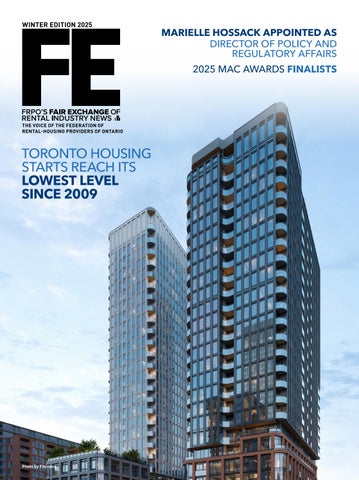
TORONTO HOUSING STARTS REACH ITS
LOWEST LEVEL SINCE 2009
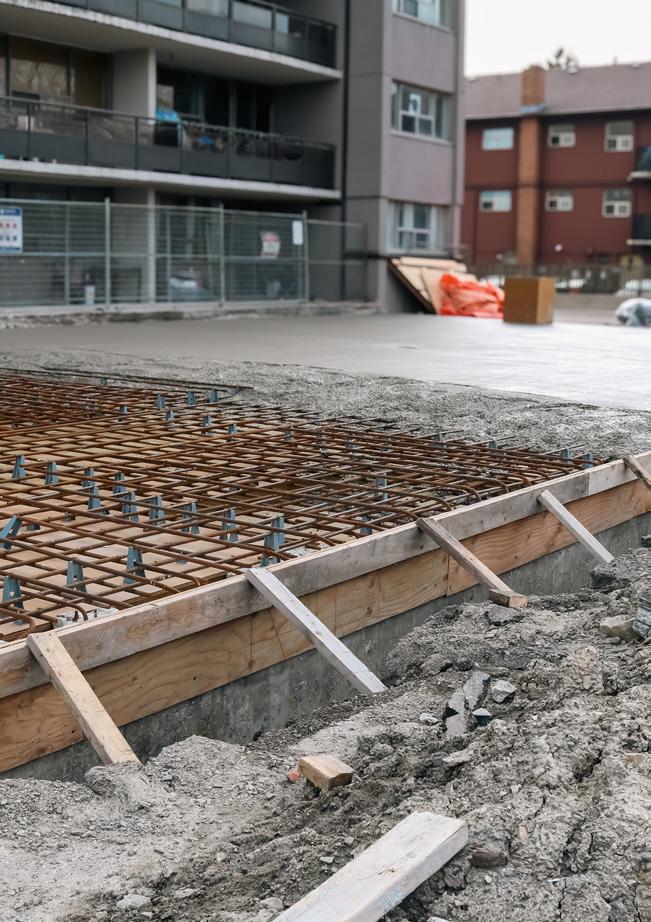
Photo by Fitzrovia
Full-Service Laundry Room Management! Let us take the hassle out of laundry for your Multifamily, Campus or Hospitality property, with no upfront costs.
CCL - Commercial Machine Sales!
From machine and parts sales to installation and service, we’ve got you covered.
Yes, we can!
Since MetCap Living established itself as a leader in property management, we have routinely been asked one, simple question; “Can you help us run our property more effectively?” And, for well over thirty years, the answer has remained — Yes, we can! Our managers are seasoned professionals, experienced in every detail of the day to day operations and maintenance of multi-unit rental properties. From marketing, leasing, finance and accounting, to actual physical, on-site management, we oversee everything.
Guaranteed vacancy reduction, revenue growth and net profitability — when you’re ready to discuss a better option; we’ll be there. You can count on it.
Kazi Shahnewaz Director,
Business Development
Office: 416.340.1600 x504
C. 647.887.5676
k.m.shahnewaz@metcap.com
www.metcap.com
With decades of experience and countless successful projects, Zgemi delivers quality construction and renovation solutions across residential, commercial, hospitality, retail, and institutional sectors.
Account
PRESIDENT'S MESSAGE
TONY IRWIN President & CEO FRPO
Looking ahead to a new year
As 2025 comes to a close, it's a great time to look back at what we’ve achieved together and the work that lies ahead. This year, FRPO continued to champion the essential role of rental housing in addressing Ontario’s long-standing supply and affordability challenges. Our advocacy at the provincial and municipal levels remained strong and focused, emphasizing a thriving rental sector is fundamental to a stable, future-ready housing system.
Over the past year, we worked closely with the Ontario government to push for policies that enable a more predictable and workable environment for rental housing providers. One of our top priorities has been improving the performance of the Landlord and Tenant Board. We’ve consistently highlighted the need for faster, more efficient processes to ensure fair outcomes for tenants and to give housing providers the certainty they need to keep investing in Ontario’s rental stock.
Our “Say Yes to Housing” initiative also continued to build momentum. Thousands of Ontarians have sent messages to their municipal leaders urging them to support new rental development and reduce barriers that slow or prevent much-needed housing from being built. This growing public support reinforces what we already know: people want solutions, and they want governments at all levels to act decisively.
We’re also looking forward to the pending FRPO MAC Awards. Each year, the awards showcase the professionalism, innovation, and leadership of Ontario’s rental housing providers. It’s an opportunity to recognize exceptional work and to celebrate the individuals and organizations who are pushing the industry forward.
As we enter 2026, please know that your voice and membership are the foundation of our efforts. We will continue to champion our industry, advocate for sensible policy, and work tirelessly to ensure the rental housing sector is recognized as a vital partner in building a prosperous future for Ontario.
Thank you for your continued support.
Tony Irwin, President and CEO, FRPO
SOLUTIONS FOR ALL YOUR PROPERTY NEEDS
HD Supply Offers Maintenance, Repair & Operations products and services. Everything you need. All in one place.
NATIONWIDE DELIVERY
Flexible delivery options, from next-day to scheduled drop-offs at your site.
BUDGET MANAGEMENT
STREAMLINED PURCHASING
Save time and money with customizable e-Procurement solutions built for your business needs.
EXPERT CUSTOMER SERVICE
Whether it’s routine maintenance and repairs, property upgrades, or suite turn renovations, our dedicated team is committed to delivering a seamless experience every step of the way.
EXTENSIVE PRODUCT OFFERING
Thousands of products in stock every day, plus access to thousands more we can source on your behalf. Essential categories available, including:
Plus, Exclusive Brands that deliver quality, style & value.
EVENTS
PM EXPO AT THE BUILDINGS SHOW
Date and Time:
December 3 – December 5, 2025 | 8:00 am – 4:00 pm
The Buildings Show is the place where Canadian construction comes together, uniting 18,000+ industry professionals for accredited educational content, meaningful networking, product and service discovery, and future insights.
2026 FIRE CODE CHANGES: KEY IMPACTS FOR APARTMENT OPERATORS WEBINAR
Date and Time:
December 11, 2025 | 11:00 am – 12:00 pm
Significant updates to the Ontario Fire Code take effect January 1, 2026. Get ahead with this essential webinar for apartment operators. Join FRPO, Cohen Highley, and IGNIS Building Solutions as we review key revisions, from exit door requirements and fire alarm testing to reporting standards and new enforcement tools to help you keep your buildings safe and compliant. Learn practical steps to prepare your operations, avoid penalties, and streamline fire safety procedures before the new regulations take effect.
RENTAL HOUSING CANADA CONFERENCE
Date and Time: May 26 – May 28, 2026 | 8:00 am – 4:00 pm
FRPO MAC AWARDS
Date and Time:
December 4, 2025 | 5:00 pm – 9:30 pm
For more than two decades, the MAC Awards has celebrated the leaders of Ontario’s rental housing industry, recognizing their unwavering dedication to providing top-notch rental accommodations. With their passionate teams and forward-thinking approaches, MAC Award winners transform their latest project endeavours and innovative ideas into reality.
Please check www.frpo.org regularly for newly
FIXED COST TURNOVERS
WINTER ISSUE 2025
MEMBER
UPDATE UPDATE
We’re delighted to welcome our newest supplier members to the association this past quarter. This is the perfect time to connect, share expertise, and explore new opportunities. Housing professionals can discover fresh supplier options to support their work, while suppliers have the chance to build lasting partnerships within the rental housing community. Let’s connect and make things happen!
NEW RENTAL HOUSING PROVIDER MEMBERS
Renée Bourgon
NEW ASSOCIATE & CORPORATE SUPPLIER MEMBERS
The Casa Company
Leasing Software & Technology
Attn: Jamie Koffer t 416-704-5449
e. jamie@casacompany.com
Flood Prevention & Water Systems
Attn: Simon Brunet t 416-453-8938
e. simon.brunet@connectedsensors.com
Attn: Phil Langille t 905-607-7244
e. plangille@rimkus.com
Interior & Exterior Signage Solutions
Attn: Conall Mackinnon t. 647-225-0115
e. conall@signifysigncompany.ca Signify Sign Company
Group of Companies
Attn: Pedro Ribeiro
t. 416-700-9651
e.pribeiro@triumphinc.ca Building Envelope & Energy Solutions
Attn: Cory Birch
t. 705-722-6706 x 6000
e. cbirch@mmcorp.ca
Construction, New Structures & Restoration Services
Attn: Jawed Khasrowi t. 647-806-5419
e. jawed@sibwest.ca Sibwest Group of Companies
Attn: Nechemia Farkas t. 416-650-7810 e. nfarkas@rentseeker.ca Multifamily Advertising Platform
Inc.
Attn: Kashif Aziz
t. 416-817-7441
e. kashif@dijicle.com
Attn: Tricia Thompson t. 416-901-5154
e. office@buffaloconstruction.ca
Attn: Jessica Middonti t. 905-670-7730
e. office@pacificpaving.ca
MARIELLE HOSSACK APPOINTED AS DIRECTOR OF POLICY AND REGULATORY AFFAIRS
By David Gargaro
In September, FRPO announced Marielle Hossack as the new Director of Policy and Regulatory Affairs. She will be responsible for overseeing regulatory compliance, shaping policy initiatives, and advocating on behalf of the organization’s interests.
Marielle brings significant experience to her position with FRPO. Her most recent role involved serving as Senior Communications Manager with Telus Health, where she was responsible for leading international campaigns, media relations, crisis communications, and global PR agency partnerships. She has held several positions in federal politics, including serving as Senior Communications Advisor and Press Secretary to the Minister of Public Services and Procurement, Accessibility, and Employment. Marielle is also Co-Chair of WE BILD Toronto (Women Empowered; Business, Investing, and Leadership Development), and has a Bachelor of Communications degree from the University of Ottawa.
“Those years in politics shaped the professional I am today,” said Marielle. “They gave me a deep understanding of how policy decisions are made, how they affect communities, and how collaboration between government and industry can make a real difference.”
Marielle first became interested in rental housing through real estate
investment. Her “side project” became a full-blown passion. She spent time researching and discussing rental housing with everyone she met. She joined FRPO to connect with people who shared her spirit of commitment and professionalism, as well as a genuine interest in maintaining quality homes and strengthening their neighbourhoods.
Marielle brings a unique dual perspective to her role as both a tenant and landlord. She understands how policy decisions play out on the ground. That perspective is valuable in ensuring the challenges facing housing providers are clearly understood and effectively communicated. Her government experience taught her how to navigate complex policy environments and build productive relationships across sectors. During her time in the Minister’s Office, she helped advance the Accessible Canada Act, a landmark piece of legislation that strengthened accessibility standards in housing. That experience reinforced her belief in the importance of clear, practical, and well-designed policy.
“With my background in policy and government, this role was a natural fit,” said Marielle. “It gives me the chance to combine something I genuinely enjoy with work that shapes a fair, balanced, and forward-looking rental housing system in the province I’m proud
to call home. I value collaboration and open dialogue, and I believe those strengths help bring housing providers’ voices to the table in a constructive, solution-focused way.”
Marielle’s main goal is to strengthen Ontario’s rental housing system by ensuring policy decisions recognize the realities facing housing providers and support the long-term viability of the sector. In the near term, this will involve advancing FRPO’s advocacy on improving the Landlord and Tenant Board, reducing regulatory barriers to developing new rental supply, and ensuring legislation encourages continued investment in purposebuilt rental housing.
“Over the longer term, I want to help ensure FRPO remains a trusted, solutions-oriented leader in housing policy,” said Marielle. “I also want to ensure that public policy keeps pace with the realities of Ontario’s housing market. It’s not an easy challenge, but with collaboration and thoughtful policy, I think it’s solvable.”
GET READY FOR CHANGES TO THE ONTARIO
FIRE CODE FIRE CODE
By David Gargaro
Rental property owners should take note: the Ontario Fire Code’s new requirements are going into effect on January 1, 2026. The new requirements affect equipment and operations in residential buildings. They introduce new national standards for inspection and testing, demand more rigorous documentation, and create faster enforcement mechanisms through administrative monetary penalties.
Bringing Ontario up to national standards
The most impactful update to the Ontario Fire Code is the adoption of national ULC standards (ULC-S536 and ULC-S537). They expand how fire alarm systems are inspected, tested, and verified. Annual and monthly reports, attendance logs, and equipment checks will all have prescribed formats. The emphasis is on consistency and traceability.
Operators must demonstrate that inspections were performed, as well as how, when, and by whom. Rental property owners and managers cannot use simple checklists when performing inspections. They must demonstrate specific, detailed reporting, most of which uses newly standardized forms.
More detailed inspection and reporting
The changes to the Fire Code will affect how rental property owners and their contractors manage data, documentation, and testing.
Battery testing will become more complex. Historically, inspectors simply recorded voltage readings. The new standard requires load or functional testing, with results carefully documented. Technologies like voice evacuation systems and wireless CO detectors will also require more rigorous testing and tracking. Deficiencies must be clearly separated from general notes and tracked in fixed lists.
“Operators will also need to make sure their contractors are using the new standardized forms,” said Shereen Gonsalves, Associate Lawyer, Cohen Highley LLP. “For larger portfolios, this could mean implementing new recordkeeping systems or providing staff with training to ensure consistency across all buildings. This will be a huge adjustment for apartment operators and staff.”
Meet the Resident Experience OS
Everything your team needs to lease faster, operate smarter, and deliver an outstanding resident experience, on one platform.
Integrates effortlessly with industry-leading tools, so your team doesn’t have to change the way they work.
AI Leasing Assistant
Faster responses, automated scheduling, higher conversions, and no manual processes, increasing resident satisfaction.
Portals and
Payments, maintenance, messaging, packages, and more in one branded experience.
TRUST
Track, nurture, and convert leads with speed and accuracy.
Automate repetitive tasks, reduce admin time, and keep your team focused on what matters.
Trusted by leading owners and operators across Canada and the U.S. powering millions in monthly rent payments and delivering the modern experience residents expect.
Faster and simpler enforcement of AMPs
The new Ontario Fire Code will be introducing administrative monetary penalties (AMPs), which allow fire departments to issue on-the-spot fines for Fire Code violations. Previously, enforcement involved the provincial offences court process, which is a slower, more formal mechanism that often led to gaps between non-compliance and consequences. AMPs remove this buffer from the process.
“AMPs are a game changer because they give fire departments a faster, simpler way to enforce compliance,” said Gonsalves. “Even administrative errors or omissions like missing documentation or incomplete logs can now have immediate financial consequences.”
Fire safety has always been a legal obligation, but it now carries a more direct financial risk. The shift requires rental property owners and managers to move from reactive compliance to proactive prevention. This makes keeping detailed records even more important.
Exit doors, keys, and special devices
As of January 2026, the requirements for locking, latching, and fastening devices will apply to every exit door, not just designated fire exits. If a door is part of the path of egress, it must meet the updated standards. Rental property owners or managers must confirm doors with electromagnetic locks are either approved by the Chief Fire Official or compliant with the Ontario Building Code. Otherwise, every exit door must have a simple release that can be opened from the inside.
Access is another critical issue. Supervisory staff must always have ready access to keys or special devices required to operate fire alarm systems or access fire protection equipment. They must also know where these items are stored, and they must be easy to retrieve.
“If a fire official asks to see these keys or devices during an inspection and staff can't locate them, this could result in an AMP on the spot,” said Gonsalves. “Taking these steps now will help ensure compliance and avoid any issues when the new rules come into effect.”
Integrated systems and ongoing compliance
The new Ontario Fire Code emphasizes the interconnectedness of fire protection systems. Sprinklers, alarms, monitoring stations, and CO detectors must work together (i.e., they are not standalone systems). Integrated fire protection and life safety systems must be tested according to the CAN/ULC-S1001 standard. Rental property owners or managers should request written confirmation from monitoring companies that they comply with either NFPA 71 or CAN/ULC-S561. Taking a collaborative approach will reduce risk, support safer homes, and create better relationships with regulators.
“Compliance should be viewed less as a one-time event and more as an ongoing management process, with consistent testing, clear documentation, and open communication between operators, fire officials, and contractors,” said Gonsalves
Conclusion
Ontario’s Fire Code update will be coming into effect at the start of the new year. It requires more oversight, more documentation, and more accountability. Fortunately, there is still time to prepare. Rental property owners should begin reviewing doors, updating documentation practices, training staff, and coordinating with contractors now to meet the January 2026 deadline and avoid costly AMPs.
For more information on the Ontario Fire Code, visit https://www.ontario.ca/laws/regulation/070213#act-verion.
On Thursday, December 11, FRPO will be co-hosting a webinar, 2026 Fire Code Changes: Key Impacts for Apartment Operators, with Cohen Highley and Ignis Building Solutions. For more information and to register, visit https://frpo.org/events/index.html/event-info/details/id/73
100 Sheppard Avenue East, Suite 300
Toronto, ON M2N 6Z1
CMHC ONTARIO BUSINESS CENTRE
Attn: Guy-Anne Duval
T: 613-748-2000
TORONTO HOUSING STARTS REACH ITS LOWEST
18 York Street, Suite
LEVEL SINCE 2009
F: 416-250-3204
gduval@cmhc-schl.gc.ca
COINAMATIC CANADA INC.
Attn: Don Neufeld
By Jordan Nanowski, Lead Economist (GTA), Canada Mortgage and Housing Corporation
301 Matheson Boulevard West
Mississauga, ON L5R 3G3
CMHC recently published its Fall 2025 Housing Supply Report, which examines new housing construction trends in the Vancouver, Calgary, Edmonton, Toronto, Ottawa, and Montréal Census Metropolitan Areas (CMAs). The following is a condensed version of the report, with a focus on Toronto-specific insights.
Highlights
366 Westpark Crescent
Waterloo, ON N2T 3A2
• Condominium apartment starts plummeted in the first half of 2025. Record-low, pre-construction sales drove construction activity to its lowest level since 2009.
C: 403-815-8672
F: 905-755-8885
• Rental apartment starts did comparatively better, owing to favourable financial viability and a positive long-term outlook among rental developers.
dneufeld@coinamatic.com
• The current downturn and short-term trajectory of new construction points to deteriorating affordability and broader economic challenges for the region.
DIVERSO ENERGY
Attn: Jon Mesquita
T: 226-751-3790
jon@diversoenergy.com
• The number of new and active resale listings rose compared to the first half of 2024 and is well above historical norms. This led to increased housing supply and additional competition for the new construction market.
Toronto, ON M5J 2T8
34 Leading Road, Unit
Etobicoke, ON M9V
Market downturn for new condominiums worsened
Among Canada’s largest cities, Toronto was the epicentre of weakness for residential construction in the first half of 2025, posting the lowest per-capita housing starts (see Figure 1). While all housing types in the region posted annual decreases over this period, the condominium apartment segment – facing ongoing struggles – was the largest drag on activity.
8200 Keele Street Concord, ON L4K 2A5
EFFICIENCY ENGINEERING
Housing Starts per 10,000 Population, January to June
Attn: Lauri Alty
202 - 225 Pinebush Road Cambridge, ON N1T 1B9
2024 2025 Figure 1: Per-Capita Housing Starts Vary Widely Across CMAs: Calgary Leads, Toronto Trails
550 Alden Road Unit 110 Markham, ON L3R 6A8
Source: CMHC
T: 519-624-9965
lalty@efficiencyengineering.com
FIRETRONICS 2000 INC.
Attn: David Morris
T: 905-470-7723
davidmorris@firetronics.ca
500 Consumers Road North York, ON M2J
100 University Avenue North Tower, Suite 700 Toronto, ON M5J 1V6
Total housing starts fell 44%, reaching their lowest level since 2009 (or 1996 on a population-adjusted basis). This was led by a notable 60% drop in condominium apartment starts. With 70% pre-construction sales required, record low sales
limited the ability of condominium developers to secure the financing needed to break ground on new projects.
Industry sources suggest investors were the main buyers of pre-
construction condominiums in recent years before they became increasingly discouraged by reduced profitability. Consequently, condominium starts fell the most in the urban core, where investors have been most active.
Figure 2: Condominium Apartment Starts Fell More in Sub-Regions With a Larger Investor Presence
Source: CMHC
Some buyers interested in condominium living were deterred by heightened economic uncertainty. Many that were still interested turned to the resale market that offered a vast supply of units that were lower priced, larger and potentially more suitable to their needs (on average). Notably, the number of condominiums available for sale on the resale market was at a record high in the second quarter of 2025.
Tepid pre-construction sales have reduced starts by causing fewer project launches and more cancellations. Many in the building community suggest construction costs must be reduced to ease condominium prices and improve project viability.
Prices for new condominiums that can better compete with prices on the resale market, along with improved macroeconomic conditions, could bring more prospective buyers off the sidelines. Also, attracting a wider buyer pool beyond investors may result in less volatility in supply when the appeal of investment condominium apartments fluctuates.
Rental apartment starts fared better
Relative to condominium apartments, rental apartment starts decreased by only 8% in the first half of 2025 remaining well above their 10-year average. Favourable financial viability and optimism among developers regarding the region’s long-term rental fundamentals reduced the decline for rental apartments. Viability has been supported by government financing incentives and lower land prices:
• 84% of respondents to the 2025 Rental Housing Development Study who primarily operated in the Greater Toronto Area, utilized CMHC financing tools
• Land prices were down 30% from their 2021 peak in early 2025, according to Altus Group data
Seeing better prospects, some condominium developers switched to rental construction with nine projects converted since 2024, according to Urbanation.
The downturn in condominium construction, which has supplied much of the region’s rental housing in recent decades, makes it vital to maintain a steady and growing stream of rental construction. To do so, it would be important to ensure consistent access to capital, mitigate cost volatility from municipal fees and tariffs and address regulatory hurdles in the management of housing supply.
Current trajectory points to deteriorating affordability
Weakness in Toronto’s new construction market isn’t expected to reverse over the short-term, with annual housing starts through 2027 expected to be well below what’s required to restore affordability to pre-pandemic levels by 2035. This threatens affordability and presents the prospect of less economic activity, outmigration, a higher incidence of homelessness and forgone tax revenue.
-34.0%
Old Toronto
Rest of City of Toronto
Rest of Toronto CMA
Annual Change in Condominium Apartment Starts, 2025 v. 2024, Toronto CMA (%)
G e t r e a d y t o p a r t y l i ke i t ’s 1 9 8 5 !
G e t r e a d y t o p a r t y
l i ke i t ’s 1 9 8 5 !
Social Media Award of Social Media Award of Excellence Excellence Award of
Signet Group Signet Group
Shiplake Properties Shiplake Properties
Shiplake Properties
Fitzrovia Fitzrovia
Sloane by Fitzrovia Sloane by Fitzrovia Signet
Best Advertising Best Advertising Campaign Campaign Best Advertising
Fitzrovia Fitzrovia
Sloane by Fitzrovia Sloane by Fitzrovia
Minto Apartments Minto Apartments
At 88 Beechwood, people 88 Beechwood, people are welcome, too are welcome, too
Tricon Residential Tricon Residential The James The James
Best Property Best Property Management Website Management Website Property Management Website
Homestead Land Holdings Ltd. Homestead Land Holdings Ltd. www.homestead.ca www.homestead.ca
Web Developer: Rentsync Web Developer: Rentsync
Fitzrovia Living
Fitzrovia Fitzrovia www sloanelife ca www sloanelife ca
Skyline Living Skyline Living www.elioapartments.ca www.elioapartments.ca
Web Developer: Rentsync Web Developer: Rentsync www.homestead.ca
Best Suite Renovation -
Best Suite RenovationUnder $50,000 Under $50,000 -
Morguard Morguard Fifty on the Park, on the Park, Toronto
Fitzrovia Fitzrovia Maddox Tyndall, Maddox Tyndall, Toronto Toronto
Dream Dream
177 St George, 177 St George, Toronto
Contractor: Sky Group of Companies Contractor: Sky of Companies on Park, Fitzrovia Tyndall, Dream St
Fitzrovia Fitzrovia Elm-Ledbury, Elm-Ledbury, Toronto Toronto Properties
Centro South Tower, Centro South Tower, London London
Centro Tower, Management House
Dream Asset Management Corp., Dream Asset Management Corp., Kilmer Group & Tricon Residential Kilmer Group & Tricon Residential Birch House at Canary Landing, Birch House Canary Landing, Toronto Toronto
Elm-Ledbury,
Climate Leadership Climate Leadership Award of Excellence Award of Excellence of
Drewlo Holdings Holdings 1066 Commissioners Rd, 1066 Commissioners Rd, London London
GWL Realty Advisors GWL Realty Advisors
Grenadier Square - 40 High Park Grenadier Square - 40 High Park Ave & 77 Quebec Ave, Ave & 77 Quebec Ave, Toronto Toronto 1066 Square - 40 High Toronto
Property Manager of the Year Manager
Property Manager of the Year
Belinda Black Black
Tricon Residential Tricon Residential
Community Service - Suppliers Community Service - Suppliers Service -
Cohen Highley LLP Cohen Highley LLP
The Byng Group The Byng Group
Dushyantha Anantharajan Dushyantha Anantharajan
Tricon Anantharajan
The Byng Wyse Meter Solutions
Wyse Meter Solutions Inc, Wyse Meter Solutions Inc,
Canadian Properties REIT
Marios Proniaris Marios Proniaris
Canadian Apartment Properties REIT
Park Property Management Park Property Management
Canadian REIT Management
Leasing Professional Leasing Professional of the Year of the Year of
O’Shanter Development Company Ltd. O’Shanter Development Company Ltd.
Tricon Residential
Tricon Residential Tricon Residential Realty
Resident Year
Resident Manager of the Year
Resident Manager of the Year
Gino Hagong Gino Hagong
Impact Award Impact Award Impact Award
Signet Group Signet Group
Tom McPherson Tom
Skyline Living Skyline Living
Adam McGuin Adam McGuin
Gino McGuin
Equiton
Environmental Ex Environmental Exc Exc
Canadian Apartmen Canadian Apartmen
Skyline Skyline
Hazelview Propertie Hazelview Propertie
Canadian Apartmen Hazelview Propertie
Company Culture Company Culture
BlueStone
BlueStone Propertie BlueStone Propertie
Skyline Skyline
iRestify Inc iRestify Inc
The Daniels Corporation & Choice The Daniels Corporation & Choice
Properties Properties
Corporation & Choice
Building Belonging at Uniti Rentals
Building Belonging at Uniti Rentals
Old Oak Properties Old Oak Properties
Old Oak Animal Campus Oak Animal Campus
Starlight Investments Starlight Investments
Old Starlight
AWARD RECIPIENT LIFETIME ACHIEVEMENT
We’re honoured to announce that Gloria Salomon has been named the recipient of this year’s FRPO Lifetime Achievement Award!
With over 35 years of leadership in the rental housing sector, Gloria has made a lasting impact as Chair of DBS (formerly Preston Group), a family-run business founded by David Bela Salomon Carrying forward her family’s legacy, she has helped shape DBS into a leading force in Toronto’s rental housing industry
Today, the company manages over 1,850 highrise residential suites across the city and is entering a bold new chapter under her leadership, with plans to double in size over the next five years through new purpose-built rental developments across the GTA.
A dedicated industry advocate, Gloria serves as First Vice Chair of the FRPO Board of Directors and is a past Chair of the Greater Toronto Apartment Association, where she played a key role in housing policy and advocacy Beyond the industry, she also serves as a Director of the Friends of Simon Wiesenthal Centre, supporting education, human rights, and the fight against antisemitism.
Join us in celebrating Gloria’s incredible achievement at the MAC Awards on December 4th, a night dedicated to honouring excellence in Ontario’s rental housing industry.
CONSISTENT, RELIABLE PERFORMANCE
Professional-quality, durable, self-priming, Zero-VOC*, low odour interior paint formulated to meet the performance requirements of professional applicators. Ideal for schools, hospitals and nursing homes.
BENEFITS
Leed V4 Compliant & Entry Level MPI Approvals
Excellent Hiding & Coverage Saves Money: Less Material Required
Great Film Build & Sag Resistance Resists Runs & Drips on the Wall
Great Touch-Up Reduces the Amount of Rework
A NEW CHAPTER FOR RENTAL LIVING IN TORONTO
By Ryan Funt, Vice President, Marketing, Fitzrovia
Toronto’s rental market is changing quickly as residents look for housing that blends convenience with long-term livability. Fitzrovia’s latest community, ElmLedbury, captures that moment. Located in the Garden District, the project is designed to feel less like a conventional apartment building and more like a place where hospitality, design, and everyday convenience intersect.
Setting down roots in the Garden District
The two towers rise from the corner of Mutual and Queen, a short walk to Toronto Metropolitan University, the Financial District, and St. Michael’s Hospital. With that mix of accessibility, Elm-Ledbury draws in professionals, students, families, and downsizers alike.
Hariri Pontarini Architects and Turner Fleischer Architects gave the project its distinct look. Curved glazing and masonry details nod to the area’s heritage buildings while keeping the design contemporary. Inside, the 542 suites range from studios to expansive three-bedrooms. Premium kitchens assembled in Italy, spa-inspired bathrooms, and layouts that make the most of space speak to both livability and function
Amenities that feel like experiences
Elm-Ledbury was conceived around the idea that amenities matter as much as the suites themselves. At its heart is The Mews, an open-air pedestrian promenade edged with boutiques and green space, lending a European ambiance. Among its curated offerings are SOI Thaifoon, a vibrant Thai eatery that brings street-market flavour to everyday life with from-
Trusted Advisors
Providing Expertise in Building Science and Structural Restoration
Garage & Balcony Assessment & Restoration
Building Cladding Design, Assessment & Remediation
Roofing System Design, Assessment & Remediation
Building Condition Assessments
Capital Planning
Building Renewal
Energy Audits and Modelling
Philip Sarvinis | Bill Gladu | Jeremy Horst | Michael Pond Duncan Rowe | Jack Albert Beau Gaudreau | James Cooper | Nigel Parker | Paul Fritze | Sohrab Karkhel
scratch dishes such as Pad Thai, curries, and housemade peanut sauce, and Aisle 24, a next-generation market that is open around the clock, fully automated, and stocked with fresh foods, daily essentials, and household goods. Together, these experiences make Elm-Ledbury more than just a place to live, shaping the rhythms of food, ease, and community connection.
Fitness takes centre stage at The Temple, a commercialgrade gym developed with NHL performance coach Matt Nichol. It features strength and cardio equipment, a Peloton studio, and a yoga sanctuary. For sports and recreation, there is also a Toronto Raptors-branded basketball court, complete with a display of rare Jordan sneakers, along with Formula One and ski simulators and vintage arcade games
For quieter moments, residents can gather in reservable sky lounges, cook in chef’s kitchens, or unwind on outdoor terraces equipped with firepits, gardens, and a hand-built Italian pizza oven. Families benefit from Bloomsbury Academy, Fitzrovia’s in-house Montessori-inspired early childhood education centre, while pet owners enjoy a rooftop dog run and spa. Everyday conveniences such as smart package lockers, concierge service, and resident pricing at Fitzrovia’s café-bar 10 DEAN round out the offering.
Building community
Programming is central to Elm-Ledbury. Each month residents are invited to events that range from yoga classes to seasonal celebrations. Fitzrovia also builds connections through partnerships with Toronto institutions. Residents have had access to Blue Jays batting practice and Raptors events that bring the community together in unexpected ways
Marketing that told a story
Much of Elm-Ledbury’s early momentum came from a marketing campaign that treated the building like a brand in its own right. A blend of digital, out-of-home, and influencer-driven storytelling helped generate millions of impressions and a tour-to-lease conversion rate that far exceeded industry norms.
“Our goal was to reframe how people perceive rental living in Toronto,” says Ryan Funt, Vice President of Marketing at Fitzrovia. “Rather than promoting units and floorplans, we focused on experiences, from wellness to community engagement. Every channel, from TikTok to TTC ads, was selected to meet renters where they are, with a consistent brand story rooted in nature and hospitality. That integration of brand, message, and medium helped build trust and momentum long before residents moved in.”
National Apartment Group - Ontario
Ontario’s multifamily investment market continues to outperform the broader commercial real estate sector on a relative basis. Notwithstanding an evolving macro environment, investor sentiment for multifamily assets remains positive due to the sector’s defensive investment profile, robust supply-demand fundamentals, consistent formation of equity capital, as well as the relative availability and cost of debt. As of Q3 and at the onset of Q4 2025, multifamily assets continue to weather the impact of various headwinds and are well-positioned within the current environment due to stable and continued cashflow growth.
For additional info on cap rates, valuations, and market trends in the current investment landscape, please reach out to a member of CBRE’s National Apartment Group.
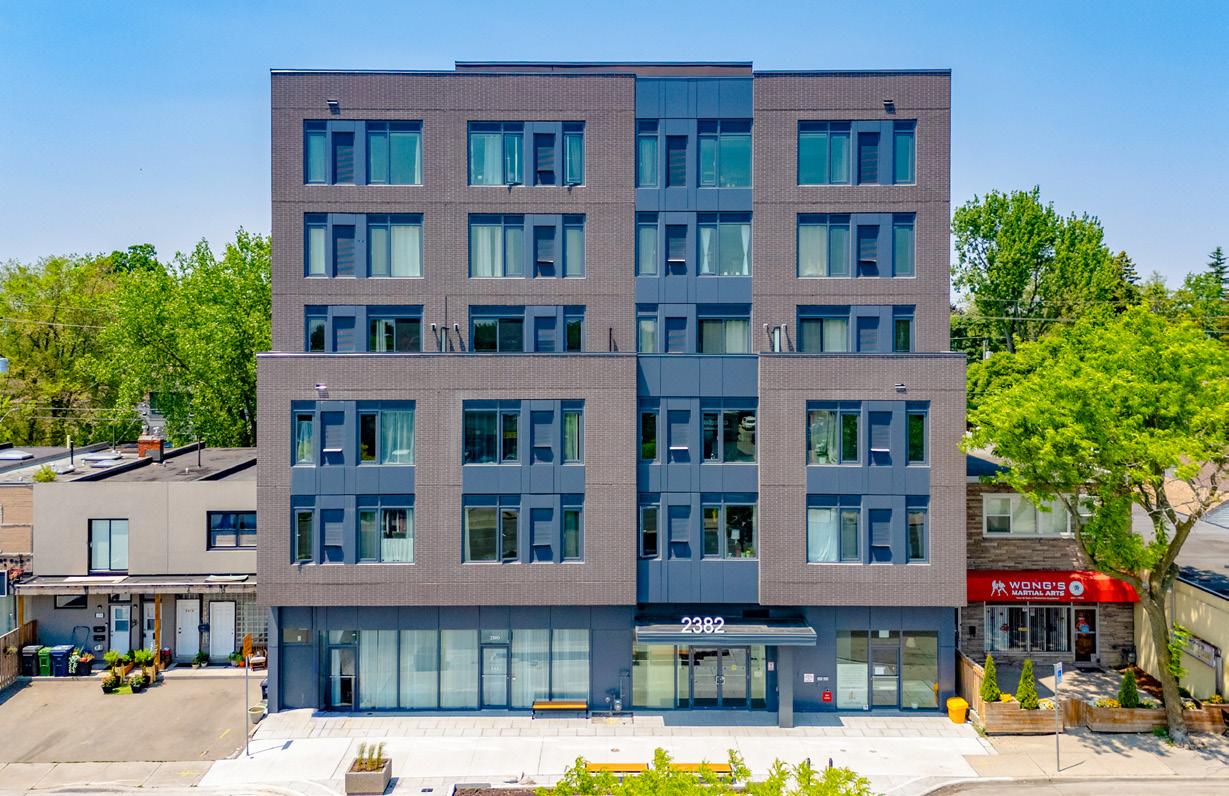
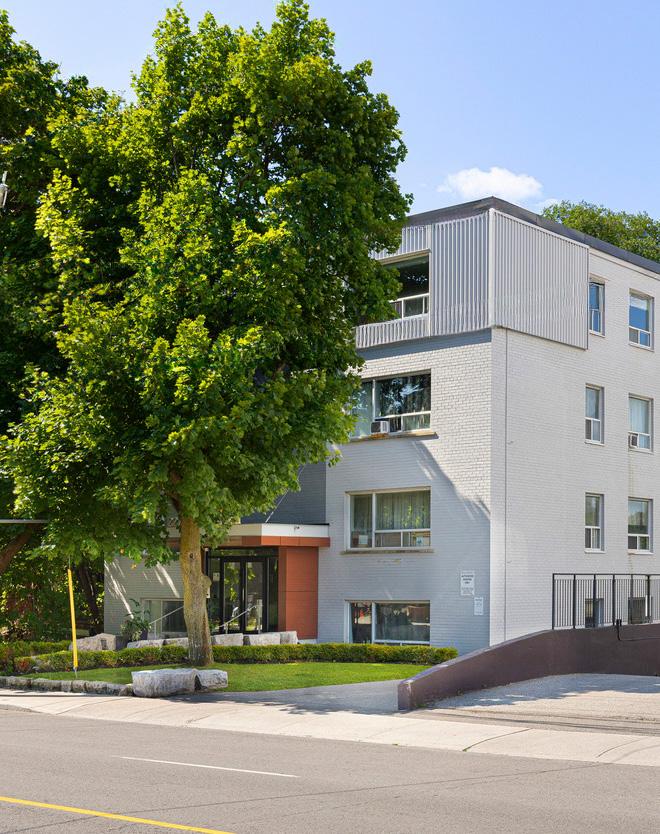
2380–2382 Kingston Road
39 Suites + 1 Retail Unit
For
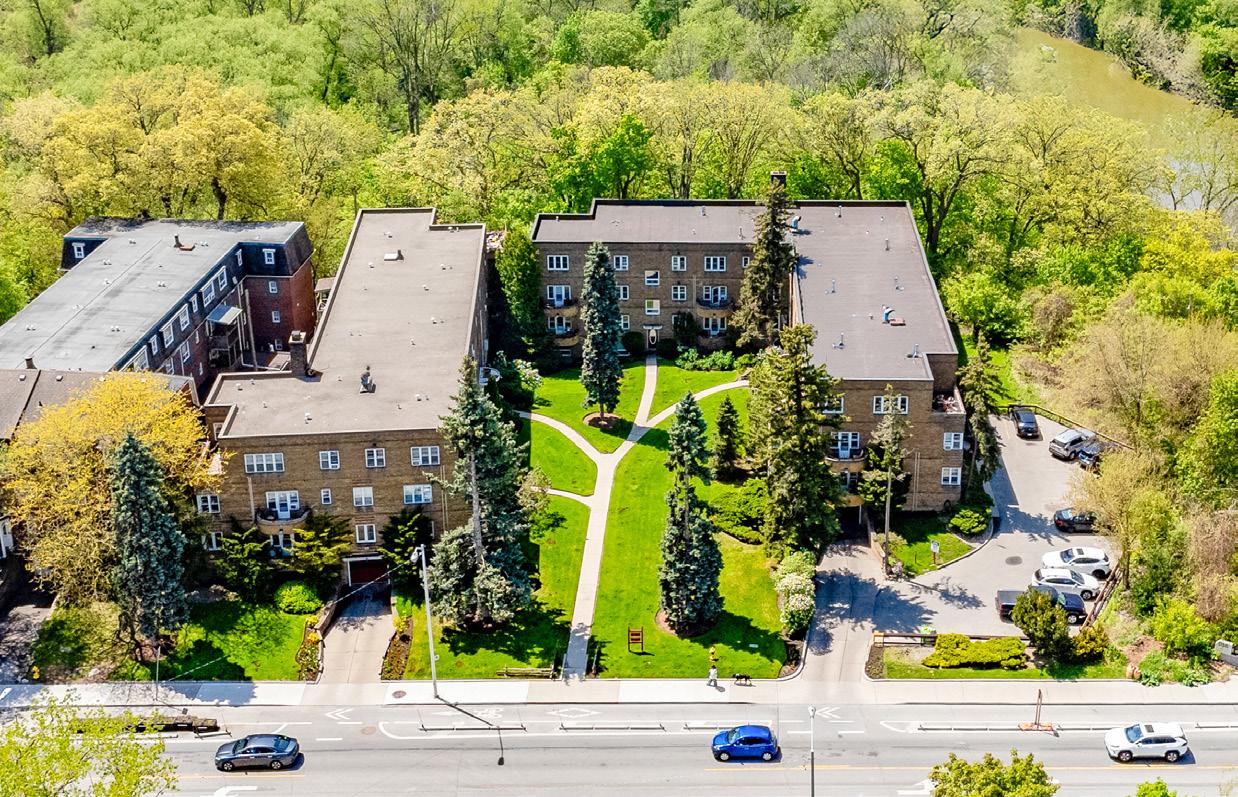
2 Properties | 119 Suites
LISTING
2
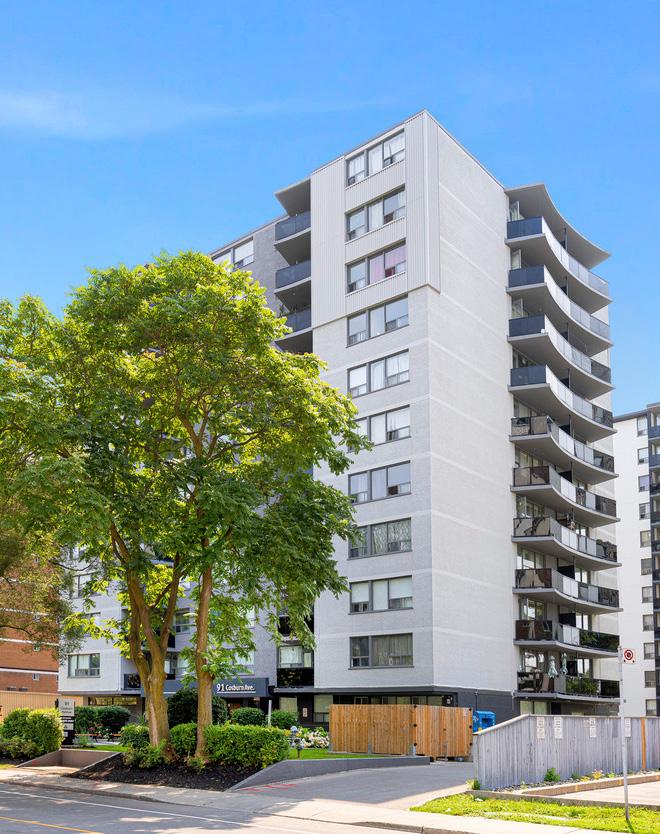
LISTING 91 Cosburn Avenue & 2278 Weston Road
Representative 1350 & 1400 Winding Trail
A new standard for rental living
Elm-Ledbury shows how purpose-built rentals can compete with the best housing options in the city. By combining design, hospitality, and programming, Fitzrovia has delivered a community that feels both aspirational and accessible. The project is defined not only by design and amenities but by the sense of connection it fosters among residents.
For more information, visit elmledbury.ca.
Highlights at Elm-Ledbury
• Rooftop infinity pools with cabanas and skyline views
• The Temple fitness centre with Peloton and yoga studios
• Raptors basketball court with a curated sneaker wall
• Formula One and ski simulators alongside arcade games
• 10 DEAN café and cocktail bar with resident perks
• Bloomsbury Academy daycare for children 18 months to 6 years
• Complimentary virtual healthcare access through Cleveland Clinic
• Pet spa and rooftop dog run bridge
• Sky lounges, co-working spaces, and outdoor terraces with pizza ovens
Waterproofing
Caulking
Masonry
Protective
Custom
RISING THROUGH CHALLENGE: THE OPPORTUNITY IN ONTARIO’S RENTAL MARKET
By Theresa Lapensée, Vice President, Property & Resident Operations, MillDon Living
Owners and operators across Ontario’s rental housing industry are feeling the pressure this year — and it doesn’t look like it’s letting up anytime soon.
Costs are climbing, compliance expectations are growing, and public perception of landlords has never been more complex. Interest rates and insurance premiums remain high, construction and maintenance costs continue to rise, and new Ontario Fire Code standards arriving in 2026 will add another layer of responsibility for operators already managing competing demands.
These pressures reflect a national trend. Across Canada, rising tariffs, persistent inflation, higher borrowing costs, and a shortage of skilled trades are driving up project expenses, slowing housing progress, and making it increasingly difficult for rental providers to operate efficiently and sustainably.
The Landlord and Tenant Board’s ongoing backlog adds to the strain. For tenants, delays mean waiting months to resolve maintenance or neighbour concerns. For landlords, it means extended timelines to address non-payment, illegal activity, or regain possession of units. These prolonged processes heighten tension in
communities and erode both fairness for landlords and accountability among tenants.
So, in a market where so much feels beyond our control, how do rental providers stay steady?
Focus on what you can influence
When the landscape is unpredictable, the best thing we can do is focus on what we can influence — and there’s plenty of it.
We choose how we care for our buildings, communicate with residents, prepare for new regulations, and support our teams.
That focus builds stability within our organizations, strengthens assets, and reinforces community trust.
Research backs this up. A blog from Propra Technologies found that maintenance request fulfilment “significantly influenced tenant satisfaction,” and that “the number one reason tenants leave a rental is dissatisfaction with the maintenance process.” (propra.ca) When residents see their homes being cared for, they’re more likely to stay — and to view their landlord as a partner, not an adversary. The everyday details are what build reputation and retention.
Kellie Speakman Vice President, Multi-Family
Management kellie.speakman@jll.com
Service as a stabilizer
When the economy or policy landscape feels shaky, service becomes the anchor.
This is not the time to cut back on front-line staff — it’s the time to support them, train them, and empower them to deliver great service. The stronger and more confident your team feels, the better they’ll care for residents and represent your communities.
Residents who feel heard and respected are more likely to stay through uncertainty. Small gestures — a quick response, a clear explanation, a follow-up to confirm resolution — go a long way.
Empathy and communication cost little but return a great deal in loyalty.
Care and consistency in the physical environment
It’s tempting to pull back when budgets are tight, but consistent care pays off. Deferring maintenance often leads to bigger, more expensive issues later.
Clean hallways, working lights, fresh landscaping, and well-kept amenities are visible signals of care. They show residents their home matters. These details aren’t cosmetic — they preserve value and build trust.
Getting ahead of compliance
With Ontario Fire Code changes coming in 2026, now’s the time to prepare. Document systems, schedule inspections, and ensure staff are trained and confident in their fire safety roles.
If you know elevators, boilers, or mechanical systems will need upgrades, plan ahead — don’t wait for them to fail. Preventive investment protects residents, reduces emergency costs, and avoids downtime.
Proactive preparation is more than compliance — it signals to residents, insurers, and partners that safety is taken seriously and builds long-term credibility.
Lead with steadiness
Rental housing is a long game. Buildings stand for decades, and resident expectations evolve slowly. Reacting to short-term pressures rarely produces sustainable results.
The operators who thrive are calm, consistent, and visible — they keep standards high even when times are tough. Stability doesn’t come from dramatic change; it comes from steady, daily actions that build trust and strengthen communities.
Sometimes, those actions are as simple as keeping a lobby spotless or ensuring a parking garage is well lit. A clean lobby gives residents pride when welcoming guests. Bright lights in a garage help a lone resident arriving home at midnight feel safe. These small details don’t cost much but communicate care — and that care anchors trust, stability, and belonging.
Most importantly, lead your teams with this same commitment to steadiness. Reassure them through clear leadership and explain the why behind your approach. When people understand purpose, it unites them — especially at a time when divisiveness in properties and communities can feel overwhelming.
Challenge and opportunity often share the same door — it depends how we choose to open it. This market, though difficult, is an opportunity for rental providers to raise the bar: to enhance the standards of rental living, elevate service quality, and demonstrate what responsible, community-minded ownership truly looks like.
Built to meet the everyday needs of rental housing professionals
Your one-stop source for maintenance, repair, and operations essentials, from cleaning supplies and tools to paints and finishing products, plus the expert services that keep your properties running smoothly.
Dedicated support
• External sales reps who know your business
• In-store Pro Desk associates with trade expertise
Preferential pricing
• Exclusive pricing program
• Price lists and bulk rates
• Access to tiered discounts depending on your annual spend
Built around professionals
• Charge accounts for business owners*
• Special orders from leading manufacturers
Reliable delivery
• Fleet of flatbeds, boom trucks, and third party logistics
• 5 distribution centers and 27 HUB stores across Canada
• Nationwide jobsite delivery
*Upon credit approval. Minimum annual purchase of $5000 required. Other conditions apply. In participating stores only. Learn more at rona.ca/en/pro
SO YOU BUILT A MULTIFAMILY BUILDING. NOW WHAT? SO YOU BUILT A MULTIFAMILY BUILDING. NOW WHAT?
By Kellie Speakman, Vice President, Multi Family, JLL Canada
Congratulations! You've successfully navigated the complex world of multi-family development, and your building is complete. The construction crews have packed up, the certificate of occupancy is in hand, and you're holding the keys to your new asset. But completion represents just one milestone in a journey that continues well beyond ribbon cutting. For developers transitioning from condominiums to purpose-built rental properties, this operational phase presents both familiar challenges and entirely new considerations.
Having spent years helping developers navigate this transition, I've seen how decisions made in these first months determine whether your investment becomes a steady performer or standout success. The shift from project completion to ongoing operations represents a fundamental transformation of your business model requiring new skills, different partnerships, and a long-term perspective many developers initially underestimate.
Understanding the rental market paradigm shift
If you're coming from condominium development, you're about to discover that purpose-built rental represents a fundamental business model change. In condo development, your exit strategy begins before construction ends - presales drive financing, and successful sellout means project completion. Purposebuilt rental development marks the beginning of a longterm operational commitment where success depends on decades of effective property management, tenant relations, and market adaptation.
This shift requires recalibrating your entire approach to design decisions, finish selections, and building systems. While condo buyers focus on aesthetics and resale potential, rental tenants prioritize functionality, convenience, and lifestyle amenities. Features that impress potential buyers during weekend showings may prove impractical for daily living or expensive to maintain over time. Custom features that helped sell condos often create maintenance headaches in rental units.
W H O W E A R E ?
Recognized as a best practice in Living Green Environmental Management Standards Manual.
W H A T W E D O ?
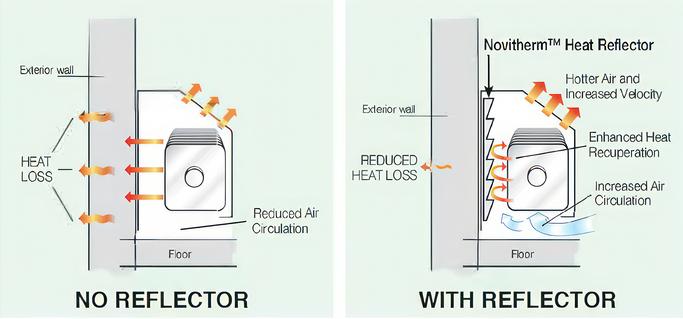
Reducing energy consumption reduces future operating costs. Novitherm TM Heat Reflectors are a simple and effective product which reduces gas consumption and has a direct positive impact improving your tenants' comfort.
Find out how Novitherm TM Heat Reflectors can benefit you with a FREE building assessment
The revenue model transformation proves equally significant. Instead of lump-sum sales providing immediate capital recovery, rental properties generate steady monthly income streams that build value through both cash flow and appreciation over time. Success metrics shift from absorption rates and sellout timelines to occupancy rates, rent growth, tenant retention, and net operating income optimization.
Pre-construction decisions that shape rental success
The groundwork you laid during pre-construction takes on different significance in rental operations. Common areas and amenities that might have seemed like lost sellable space in condos now serve as retention tools that justify premium rents and reduce turnover costs. The relationships you built with local officials and community stakeholders become ongoing operational assets, providing valuable insights into area developments, regulatory changes, and community concerns affecting property performance. The goodwill established during construction by managing noise, traffic, and dust professionally proves especially critical where your new building becomes part of an existing community fabric.
Unit mix decisions prove particularly crucial, as today's rental market
shows growing demand for larger two and three-bedroom units driven by families choosing longterm rentals due to affordability constraints, seniors aging in place, and strategic roommate arrangements. Larger units generally yield more stable income streams through longer tenancies. Construction priorities must shift from delivering impressive finished spaces for sale to emphasizing durability, maintainability, and operational efficiency. Energyefficient systems, durable finishes, and easily maintainable building components provide ongoing value that compounds annually through reduced operating costs, while the contractor relationships you cultivated during construction become invaluable operational assets for ongoing maintenance needs.
The critical management decision
One of your most important decisions involves choosing between self-management and partnering with a professional management company. This choice significantly impacts your ongoing involvement, operational efficiency, and financial performance.
Self-management can work effectively for developers with strong organizational skills, available time, and desire for complete operational control. The
potential for higher net returns by eliminating management fees appeals to many developers, particularly those managing smaller portfolios. However, successful self-management requires developing comprehensive expertise across multiple disciplines including landlord-tenant law, affordable housing compliance, risk management, and property technology implementation.
Professional management partnerships offer established systems, trained personnel, and specialized expertise that immediately enhance operational efficiency. Experienced management companies bring market knowledge, legal compliance expertise, and operational best practices that take years to develop independently. The risk mitigation benefits prove particularly valuable for developers new to rental operations, providing protection from costly mistakes inexperienced self-managers often encounter.
Navigating the lease-up phase
The lease-up phase represents where your transition from development to operations becomes most apparent. Unlike condo marketing targeting individual buyers making one-time purchase decisions, rental marketing focuses on attracting quality tenants who become long-term community members.
Successful lease-up requires understanding rental market dynamics that differ significantly from condo sales patterns. Rental markets respond to seasonal patterns, local employment changes, and competitive dynamics requiring ongoing market analysis and pricing adjustments. The quality of your initial residents significantly impacts your property's reputation and future leasing success, as these tenants become property ambassadors providing referrals and online reviews.
Building operational excellence through industry engagement
Successful multi-family ownership extends beyond achieving full occupancy, requiring systems protecting asset values while maximizing tenant satisfaction. Preventive maintenance programs represent critical operational elements for protecting your investment. New buildings may seem low maintenance, but systems warranties expire, and deferred maintenance compounds quickly.
Tenant retention emerges as a critical success metric many new rental property owners’ underestimate. Each lease renewal avoids turnover costs averaging 1-3 months of rent, including vacancy periods, marketing expenses, and unit preparation costs. Financial
management shifts from projectbased cash flow planning to ongoing operational optimization, requiring sophisticated propertylevel financial analysis supporting long-term value creation.
As you transition into operations, engaging with industry associations and building professional networks becomes increasingly valuable. Organizations like the Federation of Rental-housing Providers of Ontario (FRPO) and Rental Housing Canada (RHC), and local apartment associations provide access to market intelligence, regulatory updates, and operational best practices that can significantly impact your property's performance. These connections offer insights into emerging trends, technology solutions, and policy changes that affect multifamily operations before they impact your bottom line.
Industry networking also provides access to experienced operators who've navigated similar transitions, offering practical guidance on everything from vendor selection to resident retention strategies. The relationships you build through professional associations often lead to strategic partnerships, referral opportunities, and access to resources that enhance operational efficiency. Regular participation in industry events and continuing education programs ensures you stay current with evolving
regulations, market conditions, and operational innovations that can provide competitive advantages in an increasingly sophisticated rental market.
Your partner in operational success
Transitioning from condo development to purpose-built rental operations represents an exciting evolution of your real estate expertise. The project management skills that made you successful in development provide a strong foundation, but rental success requires developing new competencies in tenant relations, property operations, and long-term asset management.
Whether you choose selfmanagement or professional management partnership, the key lies in developing operational excellence that protects and enhances your investment while providing steady returns and longterm appreciation. Your success as a developer positions you well for this transition, and with the right operational approach, your newly completed building can provide stable returns while serving as a platform for future development success.
For more information on JLL’s multi-family management services or if you have any questions about navigating this transition, please feel free to reach out.
RESTORE WITH PURPOSE
With our eco-design approach, and decades of building restoration and project management experience in the rental market, we help our clients create sustainable living spaces.
SLOWING MOMENTUM, RISING COSTS: CANADA’S MULTIFAMILY MARKET ADJUSTS IN 2025
By Peter Altobelli, Vice President and General Manager, Yardi Canada Ltd.
Canada’s multifamily housing market entered 2025 in a slower gear. With the Bank of Canada lowering its policy rate to 2.5%, housing providers are seeing early signs of easing, but uncertainty remains. Economic pressure from tariffs, now averaging 12%, and weaker exports have led to a 1.6% annualized contraction in second-quarter GDP. Job creation has also cooled, with monthly gains averaging 8,000 compared to the long-term average of 18,000.
Population growth increased by only 0.1% in the second quarter, the slowest pace since 1946, driven by a notable decline in non-permanent residents. Combined, these factors have softened demand just as operational costs continue to climb.
Vacancy reached 4.3% nationally in the third quarter, up 20 basis points from last quarter and 110 basis points year over year. Rent growth decelerated for the sixth consecutive quarter, now at 3.9% compared to 6.2% a year earlier. With new completions landing just as employment and population growth cool, vacancy pressure is likely to persist into early 2026, keeping rent growth subdued. At the same time, annual turnover rose to 25%, the highest level in three years, while tenants’ average stay shortened to 36 months, reflecting growing mobility among renters.
Regional standouts: mixed signals across Canada
Two-bedroom markets across the country are responding differently to these shifting dynamics. Halifax (5.9%), Edmonton (4.9%) and Saskatoon (4.7%) led the nation in new lease rent growth, fuelled by job creation and local sector strength. Halifax’s booming tech scene, supported by Dalhousie University and Nova Scotia Community College, continues to attract new talent and demand for rental housing.
Montreal experienced a sharp rise in vacancy, up 5.6%, largely due to the delivery of more than 2,300 new purpose-built units earlier this year. Calgary maintains the highest vacancy rate at 5.8%, with strong completions pushing new lease rent growth into negative territory at -3.0% after a period of overbuilding.
In contrast, Winnipeg (2.4%) and Halifax (2.8%) remain among Canada’s tightest markets, underscoring the regional divide in rental conditions.
The cost side of growth
New this quarter, the report introduces national metrics that highlight the rising monthly cost of operating rental properties. These benchmarks help housing providers forecast budgets, detect cost overruns early and better understand the financial health of their portfolios. Even as rent growth slows, monthly expenses continue to climb. Repairs and maintenance expenses reached a monthly average of $183 per unit in Ontario, the highest in the country. Monthly controllable expenses neared $500 per unit in Ontario and Alberta, while total monthly operating costs rose to roughly $700 per unit in Ontario, exceeding the national average of $671.
Still, efficiency improvements are visible. Digital prospect conversion rates hit 8.7% nationally, showing leasing teams are securing more leases from fewer inquiries. While resilient, this rate highlights room to refine digital follow-up and lead nurturing. Operators focusing on retention are also stabilizing performance, as longer resident stays reduce turnover costs and support predictability in an uncertain market.
What housing providers can do next
As 2026 approaches, housing providers should prioritize efficiency over aggressive rent increases. Reviewing vendor contracts, optimizing maintenance schedules and adopting preventative maintenance programs can help control rising expenses. Data insights such as turnover percentage, average stay and per-unit costs provide valuable benchmarks for operational decisions. Retention will be key. Flexible renewals, resident incentives and consistent service quality can help extend tenancy durations and balance rising costs. Those who focus on efficiency, sustainability and resident experience will be best positioned to succeed as Canada’s multifamily market continues to recalibrate.
Read the full Q4 2025 Canadian Multifamily Report for more insights: https://yardi.com/cndmultifamilyreport
ONTARIO GOVERNMENT MOVES FORWARD WITH BILL TO SUPPORT GROWTH IN SIMCOE COUNTY
By David Gargaro
On November 25, the Ontario government introduced the Barrie-Oro-Medonte-Springwater Boundary Adjustment Act, 2025. If the Act is passed, it would support growth in Simcoe County through the transfer of approximately 1,673 hectares of land located in the Townships of Oro-Medonte and Springwater to the City of Barrie.
The legislation would unlock up to 8,000 new homes, support the continuation of major economic investments, and align with key transportation infrastructure projects, including the Barrie GO Line expansion and the Bradford Bypass. The Office of the Provincial Land and Development Facilitator (OPLDF) would be involved in supporting discussions between municipalities on how to best implement the legislation, including getting financial compensation from the City of Barrie.
According to the Province, this expansion isn’t just about housing: it will support broader economic development, offering space for new businesses, job creation, and growth in sectors that rely on residential and employment lands.
Relevance of new legislation
Barrie has been one of Ontario’s fastest-growing urban centres. However, municipal officials have repeatedly warned that the City is running out of developable land, which could create bottlenecks for development if not
addressed. The proposed boundary adjustment will help to address this problem by injecting fresh land supply where it is most needed.
According to provincial leaders, this move is necessary to keep pace with housing demand, while enabling sustainable growth that balances residential and employment lands. In doing so, the government hopes to support long-term affordability and build resilience in housing supply across the region.
Implications for rental housing
This development could carry significant long-term implications:
• New supply potential: The addition of 8,000 homes provides opportunities for purpose-built rentals and purpose-built condos that could enter the rental market. This could translate into new opportunities in Barrie and neighbouring towns.
• Demand ripple effects: As Barrie and neighbouring municipalities absorb new residents, demand for rental housing could rise. That could be meaningful for landlords offering family-sized units or multibedroom rentals geared to growing households.
• Infrastructure and services readiness: For rental properties to thrive, accompanying infrastructure (e.g., roads, servicing, transit, amenities) needs to
keep pace. Developers and property managers will want to watch municipal plans to ensure there is adequate support for new development.
• Market competition and timing: While new homes may offer opportunities, they may also create competition with existing rental stock once they come online. Strategic timing and market analysis will be key for those weighing new development vs. acquiring/ retrofitting older buildings.
What comes next
The Act must receive legislative approval. If passed, municipalities and developers will move into the planning and servicing phases. Meanwhile, the provincial government continues to roll out complementary infrastructure funding programs across Simcoe County, including through the Ontario Community Infrastructure Fund (OCIF). Recent announcements show allocations aimed at water, wastewater, roads, and essential services, which are required to support new housing growth.
Quick facts
• Barrie’s population is projected to increase from 169,000 people in 2024 to 298,000 people by 2051. The number of jobs is projected to grow to 150,000 over the same time frame.
• The boundary changes would impact 2.3 per cent of land in Springwater and 0.8 per cent of land in Oro-Medonte.
• If passed, the legislation would allow the Minister of Municipal Affairs and Housing to make regulations on transitional matters (e.g., phasing-in property tax changes, financial and other forms of compensation) to support an orderly transition for impacted residents and businesses.
• In 2024, the Barrie GO Line had 4.3 million riders on weekdays, weekends and holidays. Ridership is projected to grow to 10-14 million by 2041.
• The Bradford Bypass is a new four-lane freeway that will connect Highway 400 and Highway 404 in Simcoe County and York Region.
By Viler Lika, Founder and CEO, SingleKey
Ontario’s rental housing market is facing a period of uncertainty. Economic pressures, high interest rates, and affordability challenges are reshaping how tenants manage their finances and how landlords manage risk.
For many housing providers, rental payments are the foundation of financial stability. They cover mortgages, maintenance, and operating costs. Yet these payments are increasingly vulnerable. Missed rent, false payments, and fraudulent applications are becoming more common. What starts as a single disruption can lead to months of lost income and costly legal proceedings.
At SingleKey, our data shows that the average Canadian renter now spends nearly 40 per cent of their income on housing. When finances are stretched this tight, even one unexpected expense can trigger missed payments or defaults. Understanding why rental fraud is growing and how to manage it has become essential for every landlord and property manager seeking to protect their investment.
Why rental fraud is growing
Tenants are facing rising living costs and limited income growth. Millennials and Gen Z renters, who make up a large portion of Canada’s rental population, are carrying higher debt loads than ever. According to Equifax Canada, their average non-mortgage debt increased by 2 per cent in 2025 compared to the previous year. Nearly one in four renters is under the age of 34. For many, a job loss or even a single month of reduced hours can create immediate financial strain.
Despite some recent moderation in rent prices, affordability remains a serious issue. SingleKey’s national data shows that the average Canadian tenant spends 37 per cent of their income on rent, above the recommended 30 per cent threshold. Tenants are paying even more in major cities, from Vancouver at 37.46 per cent, to Calgary at 39.76 per cent, to Toronto in crisis territory at 41.12 per cent. This level of financial pressure leaves little room for error and contributes to rising payment delays and fraudulent applications.
Common scams affecting landlords
Not all rental fraud looks the same. Some situations arise from genuine hardship, while others involve
PROTECTING RENTAL INCOME IN AN ERA OF RISING SCAMS
deliberate deception. Both can cost landlords thousands of dollars.
1. Non-payment of rent
This is the most common form of financial loss for landlords. When a tenant defaults, eviction can take months. Data from SingleKey’s Rent Guarantee program shows that the average landlord loses four months of rental income after a default, not including legal costs or property damage.
2. Overpayment schemes
Tenants may send an incorrect payment and then request a refund for the difference. Others use fake payment confirmations or eTransfer requests that appear to be deposits but actually withdraw funds. Landlords who manage properties alone, without automated systems, are especially vulnerable to these tactics.
3. Misrepresentation during applications
Some prospective tenants provide altered pay stubs, false employment details or inflated income statements. Without verification tools or consistent screening processes, it can be difficult for landlords to identify falsified information before signing a lease. The key to prevention lies in adopting reliable and verifiable processes from the start.
Building a strong tenant screening process
Protecting against rental scams begins long before a lease is signed. The goal is to assess whether a tenant can pay today and sustain those payments over time.
While traditional rent-to-income ratios remain useful, they are no longer sufficient on their own. Tenants are spending more of their income on housing, and strict rules that ignore current realities can lead to prolonged vacancies.
Here are five key metrics every landlord should review:
• Credit score: Evaluate the tenant’s rating and number of recent inquiries. A strong score with stable activity often indicates financial reliability.
• Eviction records: Public records can reveal patterns of non-payment or lease violations.
• Payment history: Review whether the tenant has a record of missed or late payments on loans or credit cards.
• Employment history: Consistent work history signals income stability and reliability.
• Debt-to-income ratio: This measures how much of a tenant’s income is already committed to other debts. Collecting and verifying this data can be time-consuming for independent landlords, but digital screening tools that generate a single verified report, such as SingleKey, make it much easier.
Creating a layer of trust and protection
The rental industry has lagged other financial sectors in adopting risk management tools. When you buy a car, you insure it. When you buy a home, you insure it. Yet many landlords still operate without any form of protection for their rental income.
This is where trust infrastructure becomes critical. Trust infrastructure includes the systems and safeguards that make the rental process transparent, verifiable, and low risk for both parties. Examples include:
• Standardized screening platforms that verify credit, income, and identity
• Automated rent collection tools that confirm legitimate payments
• Rent guarantee programs that cover landlords in the event of missed rent
These systems do more than prevent fraud. They build confidence. Tenants know their information is handled professionally and fairly. Landlords gain peace of mind that rent will be paid on time and that any disruptions will be covered.
For landlords managing multiple units or portfolios, this infrastructure also simplifies operations. It allows teams to focus on property quality and tenant experience instead of chasing overdue payments or verifying applications manually.
Moving from reactive to proactive
Economic uncertainty is likely to continue in the near term. That means financial strain among tenants and potential scams will also continue. The cost of doing nothing is high: months of unpaid rent, legal fees, and unnecessary stress.
By adopting modern screening tools and risk mitigation programs, landlords can shift from reacting to problems after they occur to preventing them before they happen. The result is not just reduced risk but a stronger, more sustainable rental business.
This approach is not about distrust. It is about fairness and transparency for both landlords and tenants. A clear, standardized process ensures expectations are set early, payments are verified, and both sides can operate with confidence and remain secure, resilient, and profitable in the years ahead.
THE HIDDEN COST OF EMPTY WEEKS: A PLAYBOOK FOR RENEWALS AND FASTER LEASING IN 2026
By Nechemia Farkas, CEO, Rentseeker.ca
Most of us price rent to the dollar and lose the plot on the calendar. The unit that “should” lease at your target number becomes a quiet expense the moment it sits empty for seven days. Do that across a few floors, a few times a year, and you’ve found the hole in your NOI—no headline discount required.
Let’s start with the number we all underestimate: the cost of one vacant week. Take a $2,000/month unit. One quiet week is roughly $500 in revenue you won’t get back. Add an extra week when tours don’t line up, or replies slow down, or move-in dates miss the local calendar—and your “full-price win” just turned into a discounted year in disguise.
So the question for 2026 isn’t simply “What’s the right rent?” It’s “How do we spend fewer weeks empty—and keep more people a second year?”
Here’s the playbook I’ve seen work across very different buildings:
1) Treat renewals as a product launch, not a mail merge. Renewal success is built 90 days out, not nine. Publish a small,
visible “reliability pact” the resident can feel: minor repairs within 48 hours, preventive inspections on a schedule, clear channels for after-hours issues. Add a human touch—one quick check-in a month before renewal notices land. Most “shopping around” starts because people don’t know what to expect next year. Tell them first.
2) Price the renewal to the timeline, not just the market.
If a resident can accept a staggered increase that keeps their move date aligned with life (school terms, employer rotations), you often keep them—and their neighbours read that stability. The cheapest unit to lease is the one that never turns.
3) Win the first hour, not the first discount.
Leasing teams with same-day reply SLAs don’t just look good; they convert. The fastest response carries real value when choice expands. I’ve watched properties cut response times in half and watch days-to-lease drop without touching price. Put one owner on the inbox; let the rest of the team specialize on tours and files.
4) Fix calendar math in student and employer-driven submarkets. In Kitchener–Waterloo–Cambridge, Waterloo Uptown, and pockets of Toronto, demand runs on academic calendars and co-op rotations. Offer 9–10-month options and off-cycle start dates so you’re not fighting the crowd in the same seven-day window. A well-timed lease is worth more than a poorly timed discount.
5) Make the listing do the heavy lifting.
A good listing reads like a FAQ:
• The plan (true floorplan with dimensions)
• The price (all-in, not just base)
• The time (self-book tour slots this week)
• The promise (your reliability pact—response times, fix standards)
6) Keep incentives small—and expiring.
Permanent discounts train people to wait. Time-boxed offers (“apply by Sunday; choose one: one month free or $X/mo off for 12 months”) move faster and protect comps. The choice makes it feel fair; the timing makes it effective.
7) Tier inside the same asset.
Create Good / Better / Best packages: base unit; smartsuite; smart-suite + coworking or storage. You’ll hold rate where you’ve invested without dragging down the rest of the roll—and you give renewing residents a path to “trade up” without leaving the building.
If you only change two habits for 2026, let them be these:
a) Review pricing and comps every Friday (small moves compound)
b) Measure the funnel you can control: time to first reply, tour show-rate, and days from tour to lease. When those tighten, vacancy weeks evaporate
And the policy note? Keep it practical. Predictable approvals clocks lower carrying risk and smooth delivery; stackable, performance-based retrofit incentives make reliability cheaper to provide; and locally tuned inclusionary/fee frameworks keep projects buildable where vacancy can safely rise. None of this needs a slogan. It needs execution.
Empty weeks are quiet, but they’re not harmless. Close the gap on response time, timing, and reliability, and you’ll feel it—first in renewals, then in days-to-lease, and finally in your NOI.
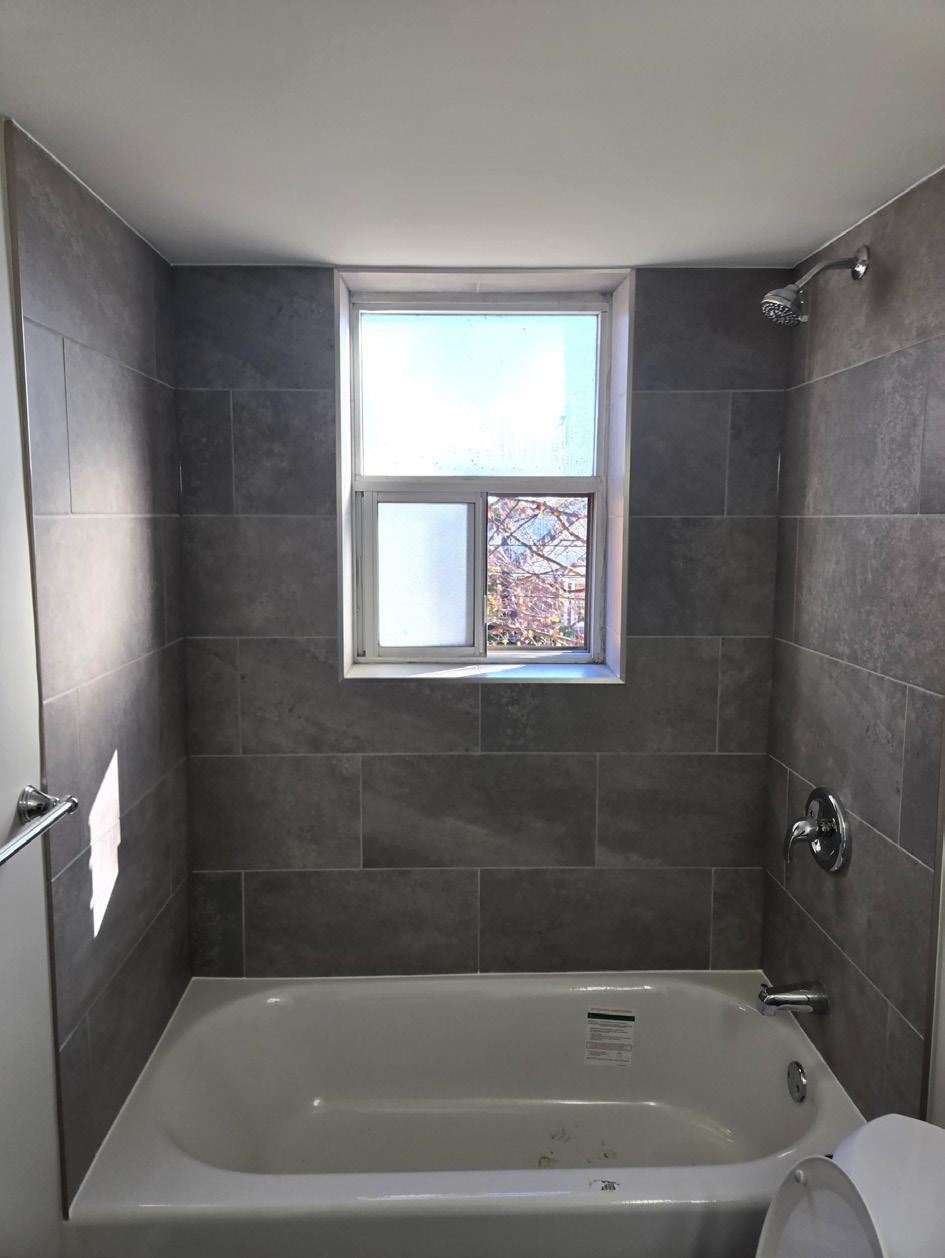
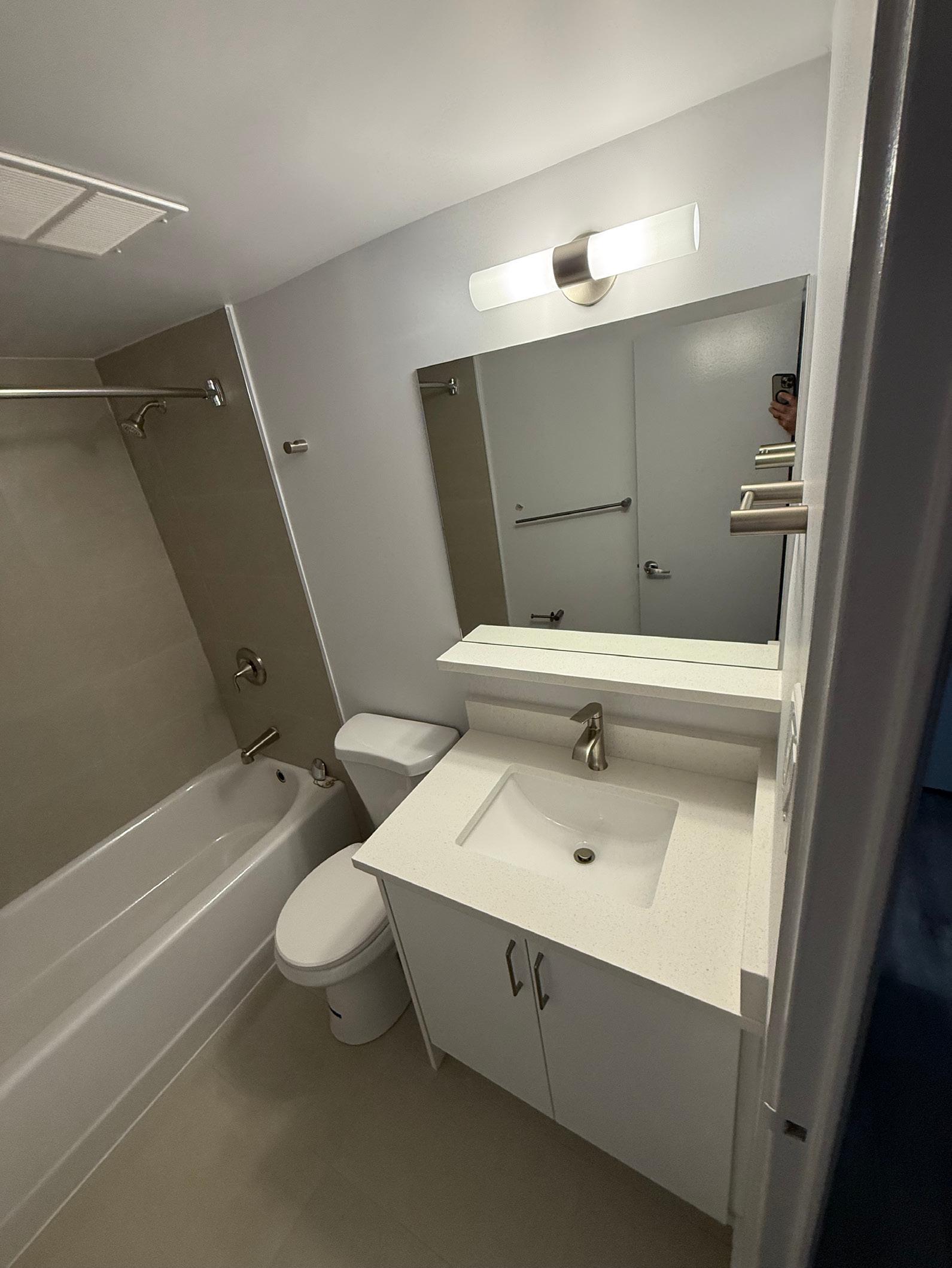
In Ontario's evolving rental housing landscape, property owners and managers are under increasing pressure to balance tenant satisfaction with longterm asset performance. Among the many areas of capital improvement, bathroom renovations— particularly the wet area—stand out as high-impact investments. The wet area, which includes tubs, showers, and surrounding wall systems, is not only central to tenant comfort but also a frequent source of costly maintenance issues such as leaks, mould, and water damage.
Why bathrooms drive property performance
The wet area is often overlooked in broader renovation plans, yet it plays a pivotal role in the durability and appeal of a rental unit. A well-planned renovation strategy that prioritizes quality materials and efficient installation can significantly reduce future maintenance costs and extend the lifecycle of the building.
Comparing your options
Property owners essentially have four paths forward when renovating rental-unit bathrooms, each with distinct advantages depending on your situation and goals.
Full demolition and rebuild offers complete design flexibility and the opportunity to address underlying plumbing or structural problems. However, the extended timeline of two to four weeks per unit and substantial disruption make this approach challenging in occupied buildings. It's best suited for major structural issues or buildings undergoing comprehensive renovation.
Refinishing or reglazing strips and recoats existing fixtures with the aid of harsh chemicals. It might be the most budget-friendly option, but with a typical lifespan of only three to five years, this is best viewed as a temporary solution, not to mention one with strong odors during application, which leads to potential chipping.
Tile replacement provides excellent durability and a high-end aesthetic with one-to-two-week installation timelines, though grout lines require ongoing maintenance and can harbour mould in high-moisture environments.
Bath liner and wall systems have emerged as an increasingly popular solution for rental properties. These involve installing custom-molded acrylic panels over existing fixtures, eliminating demolition. When properly installed, these systems can typically be completed in one to two days per unit—a critical advantage in Ontario's competitive rental market
Why Property Managers Trust TruSeal Injection?
Efficient , non-invasive leak repair
Highly trained technicians
Built for multi-residential buildings.
Curtain Wall Injection
Waterproofing
Foundation Wall & Crack Injection
Elevator Pit Waterproofing
Advanced Injection Systems
Key considerations for rental properties
Installation speed and vacancy costs
In Ontario's rental market, every day a unit is vacant represents lost revenue. The financial impact of extended renovations compounds quickly: a threeweek renovation versus a two-day renovation represents significant lost rent, plus the harder-toquantify cost of prospective tenants who choose other properties while yours remains unavailable.
Installation speed matters most when you're working with tight turnover windows between tenants, managing portfolio-scale renovations where you need to move crews between buildings efficiently, or operating in competitive markets where speed to market affects your ability to capture quality tenants. However, speed shouldn't come at the expense of quality—a rushed installation that requires callbacks and repairs defeats the purpose entirely.
Lifecycle costs vs. upfront investment
Property managers should think beyond initial price tags and calculate total cost of ownership over the expected lifespan of the installation. This means considering the expected lifespan of the solution, ongoing maintenance requirements like grout cleaning or surface repairs, vacancy costs during installation, the likelihood of tenant complaints and emergency repairs, and the frequency of future renovation cycles.
A solution with a higher upfront investment but longer lifespan and lower maintenance may deliver better value than repeated budget fixes over the same timeframe. Conversely, in properties you're planning to sell within a few years, it may make sense to prioritize lower upfront costs over maximum longevity.
Accessibility and future-proofing
Ontario's Building Code includes specific requirements for barrier-free design in certain residential & commercial applications, and demographic trends suggest growing demand for accessible features across all housing types. Key accessibility features to consider include low-threshold or curbless shower entries, grab bar reinforcement in walls, and slipresistant surfaces.
These elements serve not only tenants with mobility challenges but also aging populations and families with young children—significantly expanding your potential tenant base. Properties that plan for accessibility from the start avoid costly modifications down the road and position themselves for a broader market.
What we've learned working with multi-unit properties
After 40 years of working exclusively in the commercial and multi-unit space, we've identified patterns in what makes bathroom renovations successful.
Precision matters more than speed. Our PermaFit™ solutions, manufactured in facilities in Quebec and Tennessee, are designed specifically for high-turnover environments like rental housing. We use laser precise measurements to ensure custom fits that eliminate gaps—the primary source of water infiltration and callbacks. A system installed in one day that needs repair in six months hasn't actually saved time.
Assessment is everything. Before recommending our solution, we need to verify that existing fixtures are structurally sound.
Accessibility should be standard, not custom. We integrate accessibility features as standard options rather than expensive add-ons because we've seen
the market shift. Properties that plan for accessibility from the start have broader appeal and fewer costly retrofits later.
Occupied building renovations require different protocols. Working in occupied buildings means coordinating with property managers on tenant communication, managing noise and access carefully, and completing work in tight timeframes. This requires systems and training beyond typical residential work. Our one-day installation timeline isn't just about speed—it's about recognizing the economic realities property owners face when every day of vacancy represents lost revenue.
Conclusion: Strategic investment in high-impact areas
Bathroom renovations are more than cosmetic— they're strategic investments in asset performance, tenant satisfaction, and operational efficiency. The wet area may be the smallest room in the unit, but its impact on maintenance costs, tenant retention, and building reputation is substantial.
The most successful renovations aren't necessarily the most expensive or the fastest—they're the ones that align method, materials, and expectations with the
By carefully evaluating renovation methods based on your building's specific needs, timeline constraints, and long-term goals, property managers can make investments that deliver returns for years.
The bathroom may be the smallest room in the unit but getting it right makes everything else a little bit easier—from tenant satisfaction to maintenance efficiency to long-term asset value.
Learn more about Bath Fitter Commercial's approach to multi-unit renovations:
Phone: 1-888-991-1332
Email: Commercialsales@bathfitter.com
Website: https://bathfittercommercial.com
References
1. AEC Daily course: Acrylic Bath Remodeling: A Design Professional’s Guide Retrieved from https://www.aecdaily.com/course. php?node_id=2189495
2. Canadian Mortgage and Housing Corporation (CMHC). (2025). Rental Market Report: Ontario. Retrieved from https://www.cmhc-schl.gc.ca
3. Ontario Building Code. (2012, as amended). BarrierFree Design Requirements. O. Reg. 332/12.
5250 Solar Drive, Unit 31, Mississauga, ON L4W 5M8
16 York Street, Suite 1900, Toronto, ON M5J 0E6
20 Upjohn Rd, Suite 103 Toronto, ON, M3B 2V9
100 St Regis Cres S, Units 5-6, North York, ON M3J 1Y8
20 Eglinton Ave West, Suite 1200, Toronto, ON M4R 1K8
2375 Skymark Avenue Mississauga ON L4W 4Y6
ESW Building Services Inc.
Attn: Martin Wladyka T: (647) 920-7563 info@eswbuildingservicesinc.com
First National Financial LP
EN-PRO
Attn: John Kamarlingos T: (647) 461-6522 info@ethosplumbinginc.com Vaughan, ON L4L 8L9
174 Simcoe Street North Oshawa, ON L1G 4S9
455 Danforth Ave., Toronto, ON M4K 1P1
Attn: Maria Broekhof T: (416) 593-2913 maria.broekhof@firstnational.ca 6435 Northwest Drive, Mississauga, ON L4V 1K2
110 Matheson Blvd W, Suite 210 Toronto, ON L5R 4G7