

My friends,
How are you? No, how are you, really? Are you holding up? Someone recently described the times that we’re in as “chaos and havoc”. Doesn’t it feel like we’ve been there for a while? Family mental health challenges + COVID + permanent changes in our lives postCOVID (doing everything online, socializing less, etc.) + uncertainty and unrest in our country = the ultimate chaos and havoc!
All of this can shake our foundation. How do we survive it? We do what we can, when we can, and how we can – at that moment. We keep our world as small as we need to – at that moment. We look inward and decide what we really need - at that moment. We work to free our mind – at that moment. The point is - there are no rules. Do what you need to do for you. It is not selfish, it is self-preservation.
An article in Wildmind Meditation recently said “Feet on the ground. Heart wide open. Keep looking up.” It’s not always easy, but it is hopeful. In community with you always,
Be well,

CLICK A LINK FOR MORE INFO!
or visit http://ppal.net/events/
What to Know, What to Expect: Juvenile Justice 102 10/20/2025
6-730pm
https://bit.ly/1020jj102
Pre-Planning for a Mental Health Crisis: The Road to Readiness 10/28/25
12pm-2pm
https://bit.ly/1028-crisis
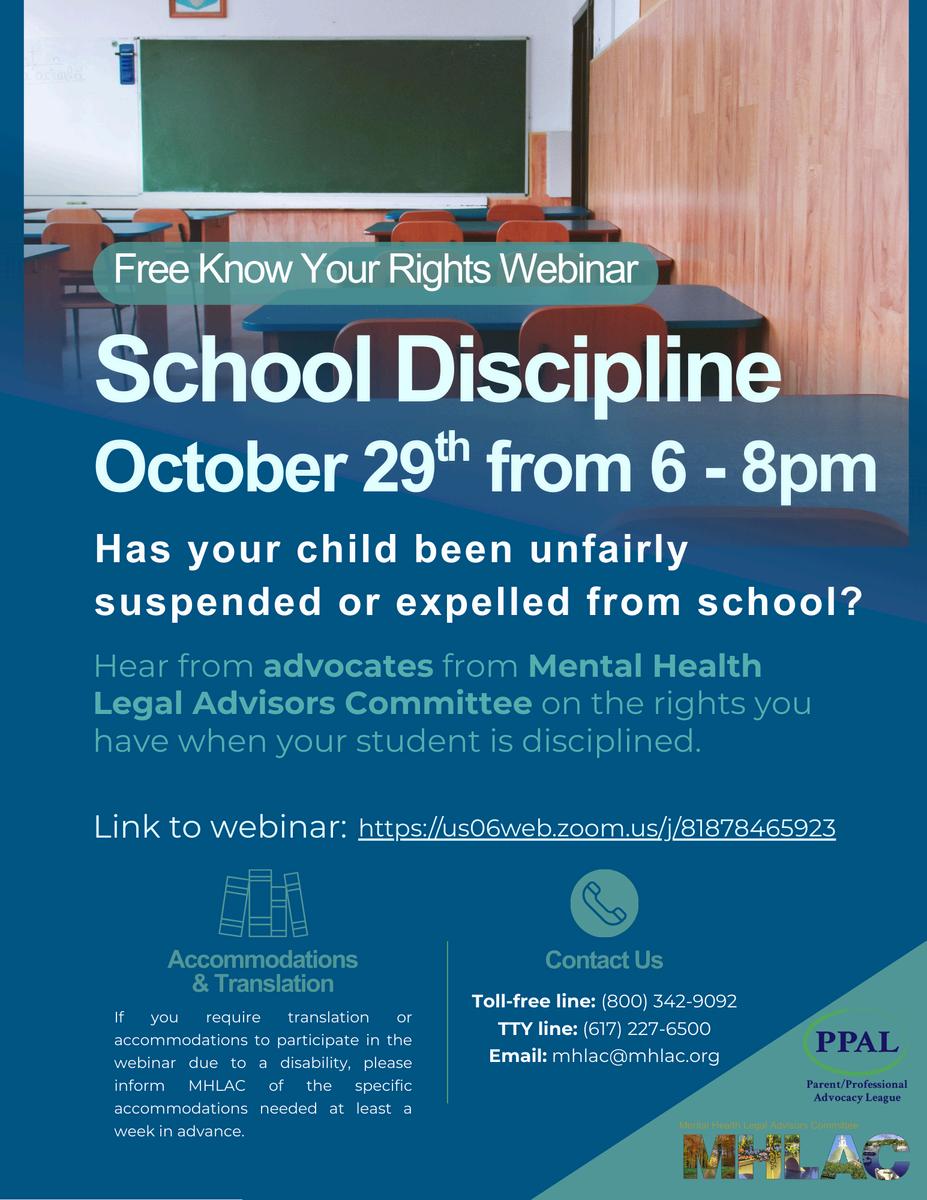
Know Your Rights Webinar: School Discipline with Mental Health Legal Advisors Committee 10/29/2025
6-8pm
https://us06web.zoom.us/j/81878465923
Guardianship is Not the Only Option: Supporting Decisions in Adulthood with Center for Public Representation 10/30/25
6pm-8pm
https://bit.ly/1030-guardianship
Juvenile Justice Basics Juvenile Justice 101 11/7 10-1130
https://bit.ly/117-jj101
My Child’s Not Going To School: What Now? 11/13/25
12-2PM
https://bit.ly/11-13-avoidance

Our support groups sometimes change. Please visit PPAL net/Events for the most up-to-date info
MONDAY
Are you navigating the mental or behavioral health systems for a child, teen, or young adult?
Request 1:1 peer support!
We have NO waitlist!
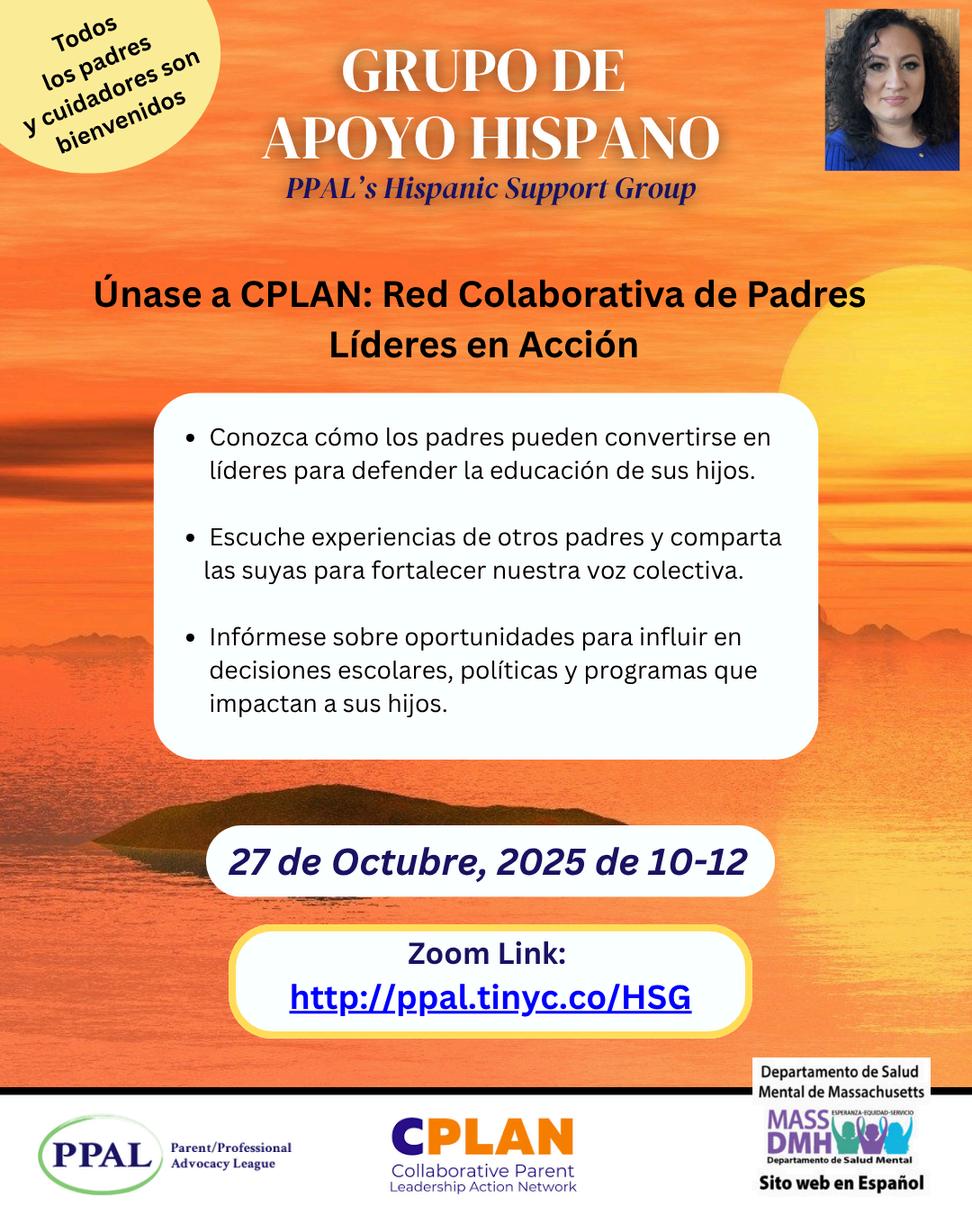
Virtual: Grupo de Apoyo Hispano 10:00 AM - 12:00 PM
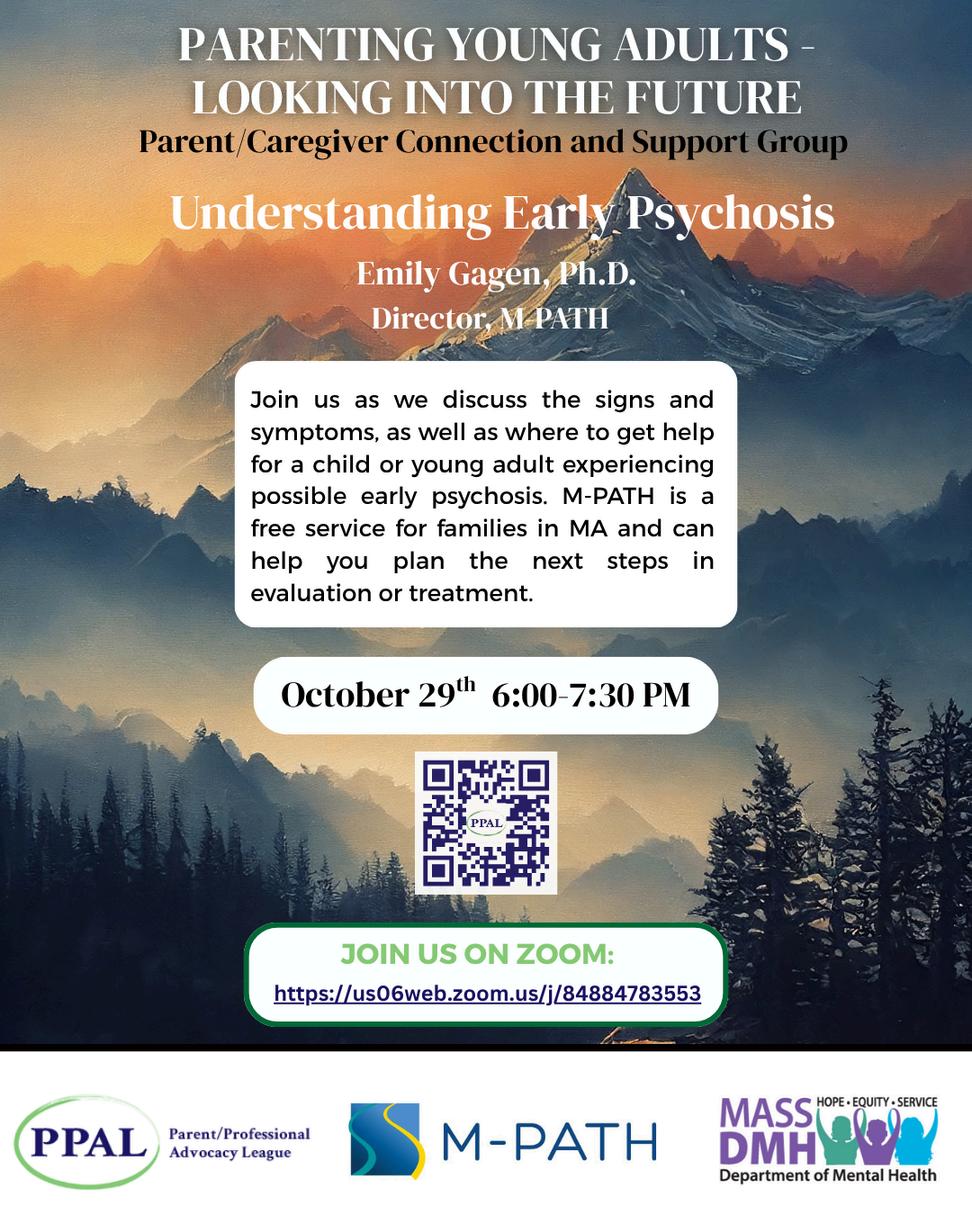
Hybrid: Parenting Young Adults - Looking to the Future 5:00 PM - 6:30 PM (Gardner)
WEDNESDAY
Virtual: Relax & Connect 11:30 AM - 1:00 PM
In Person: Westborough Parent Connections
2 Wednesdays nd 12:30 - 2:00 pm
4 Wednesdays th 6:30 - 8:00 PM
Virtual: Parenting Young Adults: Looking to the Future
6:00 PM - 7:30 PM
THURSDAY
Virtual: Grandparents Lunch and Learn 2 Thursdays nd 12:00 - 2:00 PM 4 Thursdays th 6:30 - 8:00 PM
Hybrid: Empowered Caregiver Connections
6:00 - 7:30 PM (Foxborough)
TUESDAY
Hybrid: Caregiver Connections
Virtual: P Powe 12:00 PM
5:00 PM - 6:30 PM (Winchendon)
FREEServices. Noinsurance required.
FRIDAY

Do you need help navigating and advocating in the school system for a loved one with mental or behavioral health needs? School Problem Solving Clinic Make An Appointment! parentsupportgroup@ppal.net

Experiencing a sense of overwhelm? What families are saying...
The world is feeling unsettled for many. At PPAL, we know this often feels more intense for families parenting a child or young adult with mental health needs. 55% of families felt overwhelmed nearly all the time and 28% at least half of the time. THIS IS TOO MUCH AND TOO OFTEN!
What is the hardest part of caring for a child with mental health needs right now?
Balancing
family members
What does this mean for families?
Chronic overwhelm affects the physical and mental health of the whole family.
PPAL staff are parents and caregivers just like you, and we have also experienced the sense of overwhelm.
PPAL CAN HELP! PPAL offers FREE 1:1 support, community support, workshops, information, resources, and more!
If you need help from PPAL right now, request family support here or call us toll free at (866) 815-8122.
Prepared for when your child transitions to adult life? What families are saying...

76% of families WORRY they are not prepared to support their child’s transition into adulthood.
92% of families PROVIDE SUPPORT for their adult child (18+ years) with mental health needs.
For a child’s transition into adulthood...
Families look for guidance & support in many places
67% Family-run organization like PPAL
60% Child’s therapist/psychiatrist
57% Family & friends
45% Child’s special education team
45% State agency (ex: DMH or DDS)
37% Social media, such as Facebook groups
When a youth is 18+ years, families provide guidance & support
67% Most of the Time (needs support for major things, ex: housing and finances)
25% Some of the Time (needs regular family support & also somewhat independent)
5% Seldom (needs occasional support, support finding a new provider)
3% Never (independent for the most part)
does this mean for families?
Transitions to adulthood are complicated. Families need support and information to help their kids be successful.
PPAL staff are parents and caregivers just like you. We can help.
PPAL offers FREE 1:1 support, community support, workshops, information, resources, and more!
If you need help from PPAL right now, request family support here or call us toll free at (866) 815-8122.
My non-binary twelve year-old wants to move to Canada. They’ve been sharing articles with me about Canada’s history as a place of refuge for LGBTQIA+ Americans Did you know Toronto is widely considered one of the world's best cities for LGBTQIA+ rights and safety, consistently ranking high in global surveys and recognized for its strong legal protections against discrimination and its vibrant, inclusive community? I do, now. And every time my child overhears something in the news about rollbacks of rights for LGBTQIA+ folks, I learn even more.
These days, news of climate change, political conflicts, social divisions, and disasters seems inescapable For children and teens especially those already navigating mental health challenges—this barrage of global stress can feel overwhelming and destabilizing.
But uncertainty doesn’t have to paralyze us. With guidance, we can help young people find grounding, meaning, and hope even in disquieting times.
When frightening stories arrive, our first job is to help kids feel safe.
Reassure concretely Use language appropriate to their age: “Right now, you are safe here, and we are watching to make sure you stay safe”
Focus on helpers. Remind them: “There are people working hard—scientists, community organizers, emergency responders—to solve the problem and take care of others.” As Mr. Rogers said, “Look for the helpers.”
Avoid graphic media exposure. Be mindful of images, video, or social media clips they can fuel fear Especially for younger children, limit their access to news that contains violence or sensational visuals
By starting with safety, we help their nervous systems settle enough to listen and talk.
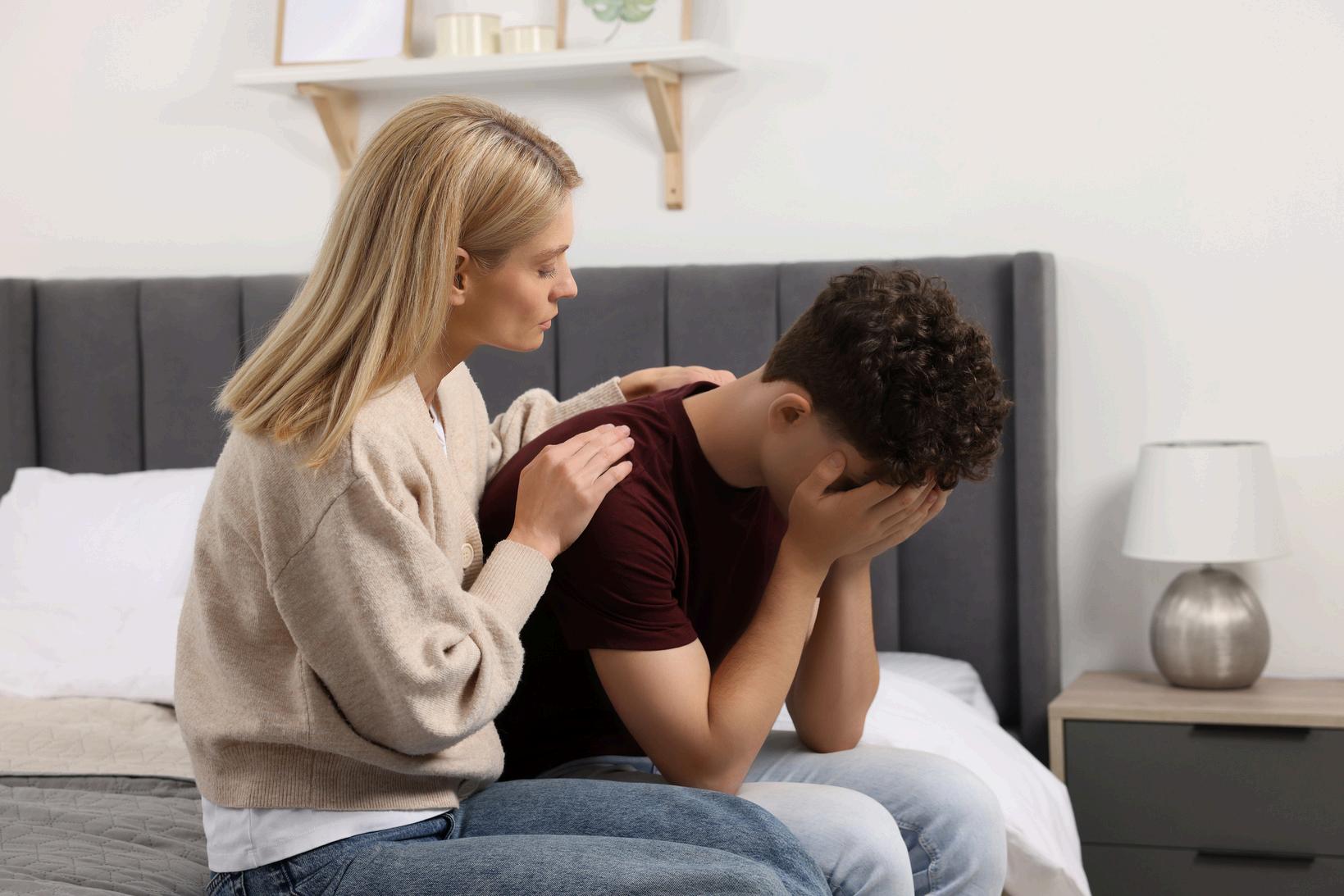
Kids often pick up snippets of news from peers, social media, or overheard conversations. Maybe they’ve encountered protesters, or seen something scary on YouTube Rather than waiting for them to ask about these issues, inviting the conversation can help:
“I saw something about [event]. What have you heard?”
“I’m feeling anxious about what’s going on. How are you feeling?”
This kind of open question can invite your child into the discussion—on their terms (See tips from the Kids Mental Health Foundation on starting conversations)
When you do talk:
Use age-appropriate language.
Stick to facts rather than speculation.
Admit when you don’t have all the answers (it builds trust).
Remember that you can validate their feelings without agreeing with the assumptions they are based on. Try a validation sandwich: “I can imagine that feels really scary,” or “I hear that you're feeling xyz; that must be so hard.” It’s ok to follow up with “My point of view on that issue is a little different; can I explain it to you?”
Let them know their feelings anxiety, confusion, sadness are valid. The world is complex, and it’s okay to feel unsettled.
Chronic exposure to distressing news especially via social media—is linked with heightened anxiety. Here’s how to balance access and protection:
Set a “news window”—a fixed, limited time each day when your family reviews news together.
For younger children, avoid having distressing news playing in the background. For older kids, co‑watch or co‑scroll when they’re getting updates, so you can pause, clarify, or correct misinformation.
Teach media literacy: Ask questions like, “Do I trust this source?” “What’s the author’s agenda?”
Dana Behavioral Health recommends promoting critical thinking and letting kids know it’s safe to come to you when they see something worrying.
From the CDC’s guidance on helping children after disasters: limit media coverage, create calm environments, and offer reassurance.
It’s okay if you don’t always feel steady so much is weighty right now. But how you respond to news and uncertainty offers a model for your kids:
Take care of your emotional well-being.
Be honest about your own questions and anxieties. Be accessible, not perfect.
Lean on support: peer groups, therapy, community resources.
Talk aloud about how you evaluate news sources for accuracy. Which news sources do you tend to trust? Which do you feel have biases? When you look at a new news source, how do you evaluate its credibility and whether you feel it carries an agenda other than to inform?
When your child sees you handling uncertainty with compassion and curiosity, it gives them permission to try that too.
Encourage projects or small actions that let your kids make a difference even amid big problems. By getting involved, kids not only gain a sense of agency, but may find themselves surrounded by a community of people who feel the same as they do about an issue.
While many global issues are beyond a child’s control, there are ways they can feel empowered:
Write a letter to a lawmaker
Start a kindness project at school
Volunteer with a local cause
When my older child, now 15, was younger, he was especially upset by climate change. We sought out small climate protests to attend (large ones were too overwhelming), and he always made his own sign. He felt encouraged to see kids like him who also wanted to fight climate change. Later, he decided to start his own (unofficial) non-profit, “Save the Bees,” through which he distributed packs of pollinatorfriendly flower seeds around our neighborhood. Not only was he able to feel like he was making a difference, but he got to chat with neighbors who supported his cause and feel less alone.
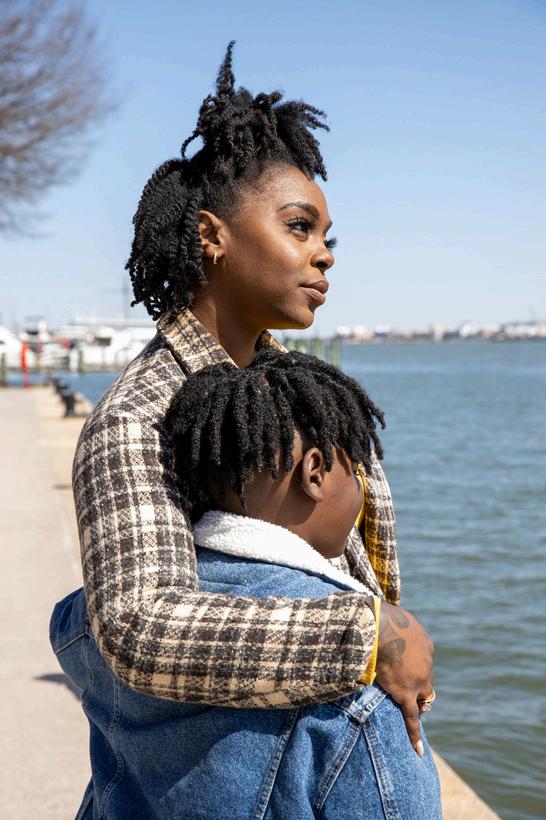
When the world feels too vast, return to small, consistent actions that ground you - anchors. These can reduce anxiety and restore calm.
Routines: consistent meals, sleep, family check-ins
Coping rituals: breathing exercises, nature walks, journaling, art, music.
Physical movement: even brief activity helps regulate mood and reduce overwhelm.
Connection: leaning into trusted relationships—friends, family, mentors.
Most kids will adjust over time, but some will struggle longer. If you notice sustained symptoms—prolonged sadness or irritability, regression in behaviors, sleep issues, withdrawal, or thoughts of harming themselves—it’s time to reach out
Resources to keep handy:
SAMHSA Disaster Distress Helpline: 1 800 985 5990 (available 24/7)
National Institute of Mental Health: Helping Children and Adolescents Cope With Traumatic Events
National Suicide Prevention Lifeline / 988 (in the U.S.)
Child Mind Institute: guides for helping children handle traumatic or frightening news
Your child’s therapist or pediatrician can also adjust support to help them navigate periods of heightened stress.
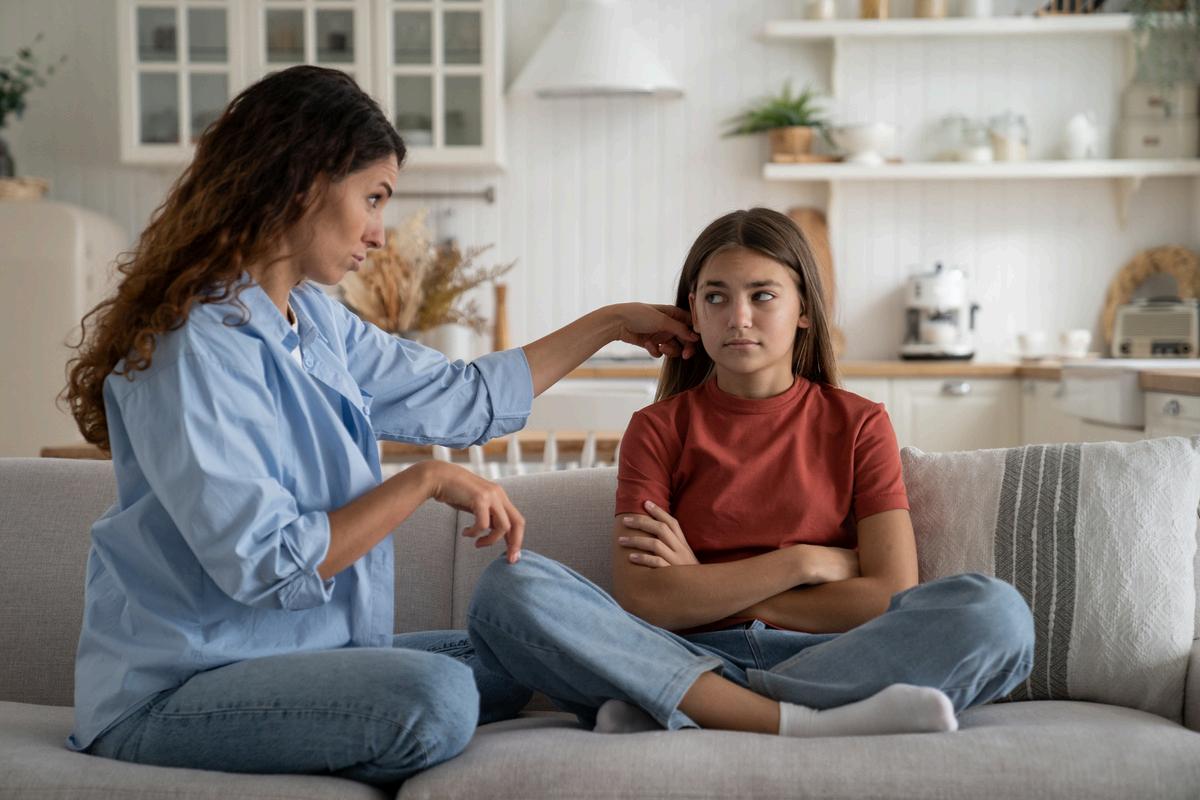
I wish I could end this article by saying that my twelve-year-old child now feels safe in their home country and no longer gives Canada a second thought. We’re not quite there yet. But I do think they are doing better. We’re limiting how often the news is on at home, but checking in about my child’s reaction to it regularly. We talk about how thankful we are to live in a state where many, including many in government, support LGBTQIA+ rights, and how we, as parents, are keeping a close eye on these issues and will do what we need to do to keep our child safe We’ve also gotten connected with several organizations that share my child’s concerns and are organizing to do something about it. We found that Greater Boston PFLAG has great support groups for the parents of LGBTQIA+ kids, and BAGLY and OUT Metrowest provide great peer support groups and safe spaces for tweens, teens, and young adults. My child and I went to Boston Pride together this year; their sign had both glitter and cat stickers.
We can’t promise kids that the world will always be safe or fair. But we can promise them that they’ll never have to face the weight of uncertainty alone. By offering grounding, honest conversation, and space for hope and action, we help them build a sense of agency, resilience, and connectivity.
Meet Meri Viano
PPAL’s Associate Director
Celebrating 22 years with PPAL!
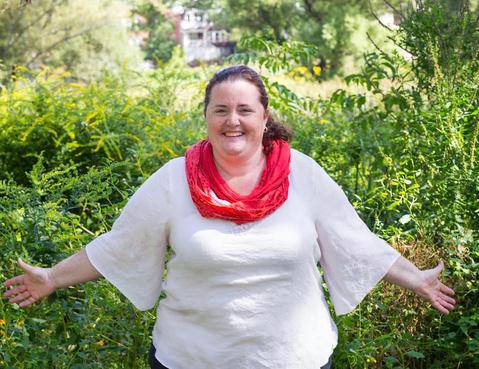
Tell me about your role with PPAL and how you got here. I came to PPAL because, at the time, my children were very young and I was working in education and other disability-related groups but could not find a parent group or an agency that understood children’s mental health. My son had been diagnosed with PTSD and Reactive Attachment Disorder and I just couldn't find a place to be. I started working in children’s mental health prior to the Children’s Behavioral Health Initiative and prior to creation of the Family Resource Centers. I worked very closely with what was being called Family Partners–a new position in the state.
Interestingly enough, Pauline Curry, who I met at a conference and who ran The Support Network in Western Mass, told me about PPAL. I couldn’t believe I didn’t know about it. My family was going to therapy for seven years right across the street! That's just wild, right? PPAL was right for me. I started working at PPAL as a Program Director within Central Mass and worked my way up to Associate Director.
What drew you to children's mental health advocacy?
Actually it started with MassFamilies Organizing for Change. I noticed that there were not enough families showing up to support mental health legislative bills. I was trying hard to figure out how to get preventative community services for my kids that had trauma, which insurance often wouldn’t cover So, I was looking for a community of parents myself, but I was also looking for the right professional support in order to keep kids in the community living at home.
What is your favorite part about your job and why?
So, it's interesting because I think it’s changed as I've grown in the position. I’ve always appreciated talking to amilies/parents and young people in the community to hear what's working and not working– but that leads me o the part that I really, truly, love, which is training and creating family-driven and youth-driven systemic change in the state That can only happen though if you know the pulse on the ground– what's working or not working - which often changes. It certainly has since I was advocating for my children who are now adults.
ts are you most proud of?
pr y families. It doesn’t get any better than listening to a devastated parent, and helping them to make a plan and take back their power.
If we’re talking about specific projects, I have been involved in several of which I’m proud. One was a medical home project where we brought mental health to the forefront with Dr Rich Antonelli, who is currently the Medical Director of Integrated Care at Boston Children's Hospital. I really look at him as a champion– he had one of the first conversations with PPAL to really think about integrating mental health into pediatrics. That was a big deal for us.
The second project involved creating a family organization with juvenile justice - a huge step in the right direction. The third project was advocacy to create a bridge for transition-age youth receiving services from the Department of Mental Health so that when a youth turns 18 they are not automatically pushed into the adult system. My son, who was in a residential program, had to move to an adult program on his 18th birthday. There was no flexibility. Because of our advocacy, youth were finally able to remain in the child-serving system up to their early 20’s As parents we know that turning 18 does not automatically make our children “adults” The transition age youth program provides flexibility
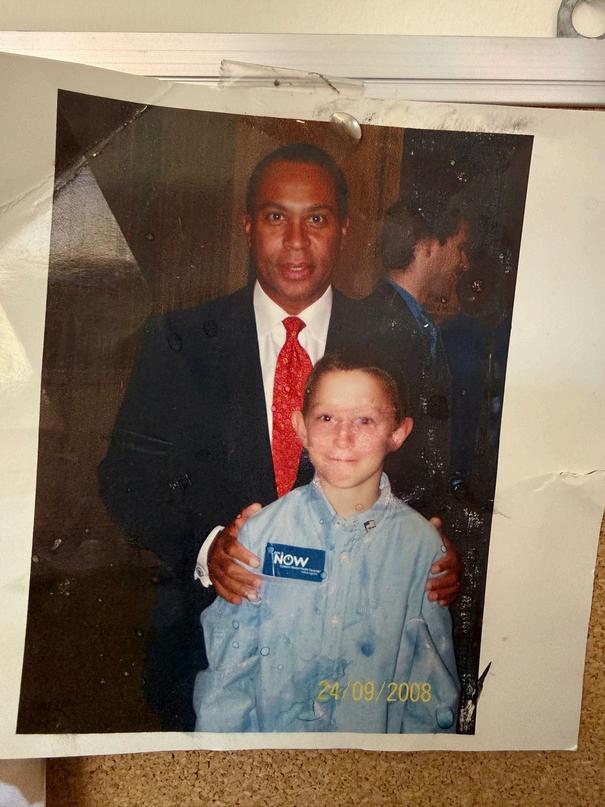
Finally, my son, who was 8 or 9 at the time, spoke to the legislature in the state house advocating for support of the Children’s Mental Health Campaign’s “The Time Is Now Initiative! This was before CBHI services when kids were stuck in residential and not accessing community services Hundreds of families showed up That was definitely a proud day for me!
Meet Pamela Bows
PPAL’s Policy Coordinator and Communications Coordinator
Celebrating 4 years with PPAL!
Tell me about your role with PPAL and how you got her I am the Policy Coordinator and Communications Coordi with PPAL’s marketing and workshops, as well as sitting mental health services at a state government level. Prior paraeducator with many different populations of studen recently in an elementary school sub-separate program th needs.
What drew you to children's mental health advocacy?
I have my own lived experience with mental health and s my adult life I was never quite able to find support, b therapist to therapist In adulthood, I became an internet and was able to find a therapist with whom I could connec Desensitization and Reprocessing) among other effective therapies which allowed me to get my head above water. Working in schools made me feel depressed and hopeless– not because of the students, who were amazing, resilient, and fun, but because of the systems I saw negatively affecting families on a daily basis.
What is your favorite part about your job and why?
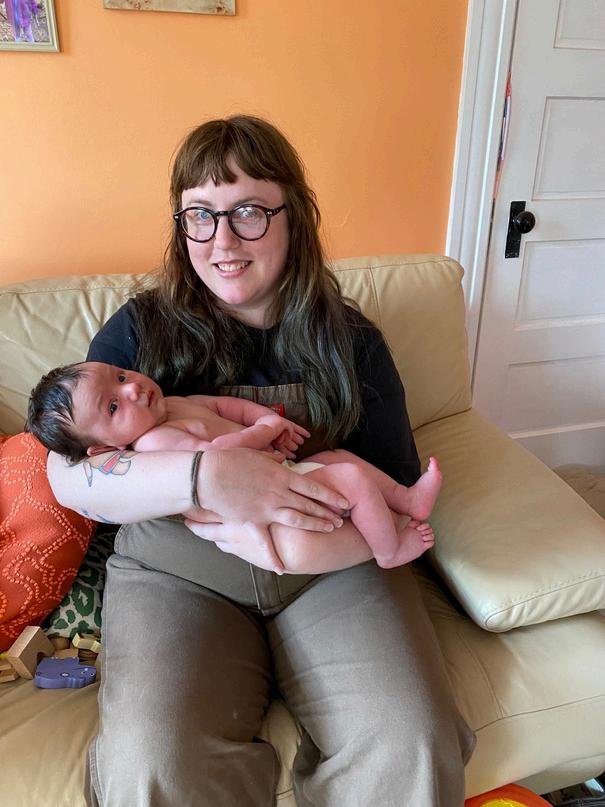
I love the community and teamwork at PPAL– hearing about my coworkers’ roles directly supporting families, and wrapping that around to the policy work I help support through the Children’s Mental Health Campaign and other advocacy coalitions
What professional accomplishments are you most proud of?
I’m proud to be able to work at PPAL! I was very scared to switch from working at schools to working in a professional office setting I almost declined the offer! But it has been 4 years and I’m here doing it! While here, I have learned to speak up and out - whether it’s about family needs or legislative initiatives. I have designed and improved internal communications systems, and have contributed to PPAL and the mental health community in ways that I’m very proud of.
Galvis: One
PPAL is so grateful to Magali Galvis who is a passionate and tireless advocate for mental health. This summer, on behalf of PPAL, Magali Galvis participated in key community events and wellness celebrations across Greater Boston and Central diverse communities with warmth and health resources available and accessible Here
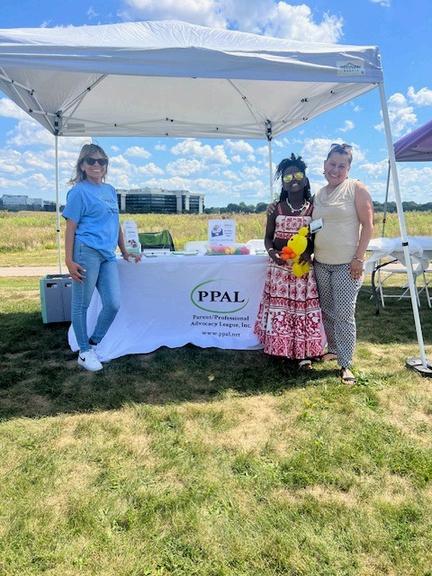
Magali joined community members and staff at Charles River Community Health to celebrate National Health Center Week by sharing information about mental wellness and accessing care.
Learn more about Charles River Community Health and National Health Center Week
https://www charlesriverhealth.org/ https://healthcenterweek.org/
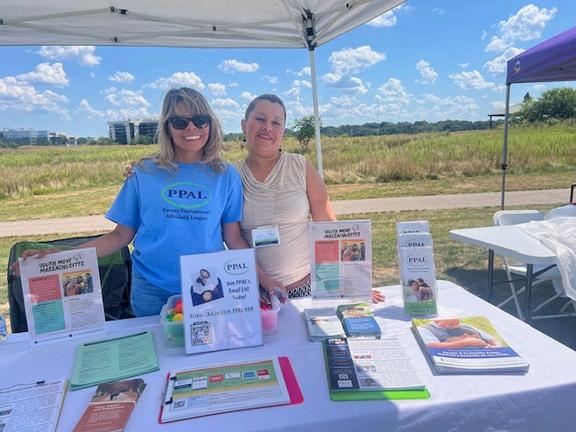
Magali brought a friendly and supportive presence to several Back to School Resource Fairs, including METCO’s Back to School Fair and Boston’s Student Support Resource Fair She engaged community members in conversations about emotional well-being for students and families.
Find out more about METCO: https://metcoinc.org/events/
At Martha Eliot Health Center in Jamaica Plain, Magali connected with local families, providing mental health resources and multilingual support.
Find more information about Martha Eliot Health Center at https://www.childrenshospital.or g/about-us/locations/bostonchildrens-martha-eliot-healthcenter
Brazilian Independence Festivals:
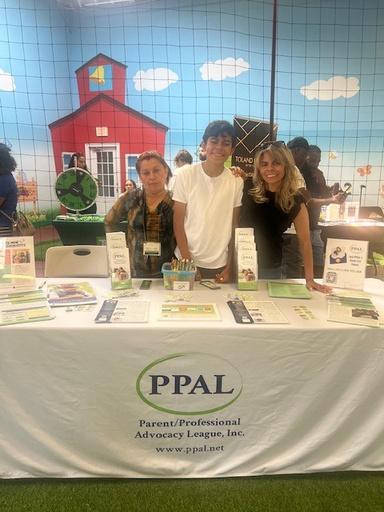
Through vibrant and passionate outreach at the 30th Annual Brazilian Independence Day Festival and the Brazilian Worcester Festival, Magali connected with Portuguese-speaking families, breaking down barriers to care and fostering culturally sensitive support.
Learn more about the Boston Brazilian Independence Day Festival: https://www.spanishclassesboston.com/events/2025/9/7/30th-annual-brazilianindependence-day-festival
Magali’s dedication and passion in her outreach and advocacy remind us that one dedicated person can spark change, build trust, and uplift entire communities around mental health. Her commitment is a model for all who want to make a difference - one event, one conversation, and one family at a time. THANK YOU, MAGALI! YOU ARE A MIGHTY MENTAL HEALTH
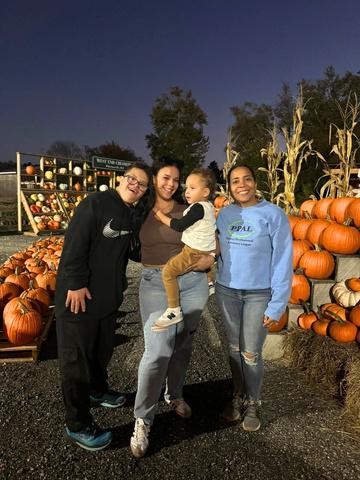
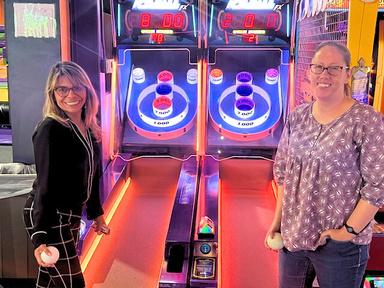
Families had a blast in September at Xtreme Craze in Foxborough, where kids and parents alike enjoyed bouncing through the inflatable air park, playing rounds of laser tag, and sharing food and connection. At the beginning of October, we headed to West End Creamery for hayrides, games, and pumpkins. Looking ahead, we have even more exciting family events planned this fall! In November, families can join us at Launch for another fun-filled bouncy adventure None of this would be possible without the continued support of Central MA DMH, which helps us bring families together and strengthen community connections across Central MA

In addition to these special events, our team continues to provide one-on-one support to families and host daily support groups. We’ve been active in the community through several National Night Out and back-to-school events, and we’re excited to welcome guest speakers to our groups to discuss important topics such as teen depression, organizational strategies, care planning, suicide awareness, and many other topics. Our Active Parenting of Teens classes kicked off this month and will run through October, alongside several upcoming trainings: The Mental Health IEP (virtual, October 7, 12–2 PM), Talk Saves Lives: An Introduction to Suicide Prevention (in-person, Dudley Library, October 16, 6–8 PM), Moving to Young Adult Life: Transition Planning and Postsecondary Options (virtual, October 17, 10–11:30 AM), and Guardianship Is Not the Only Option: Supporting Decisions in Adulthood (virtual, October 30, 6–8 PM). As we settle into fall, we look forward to connecting with you at a support group, training, or community event and hope to see you soon!
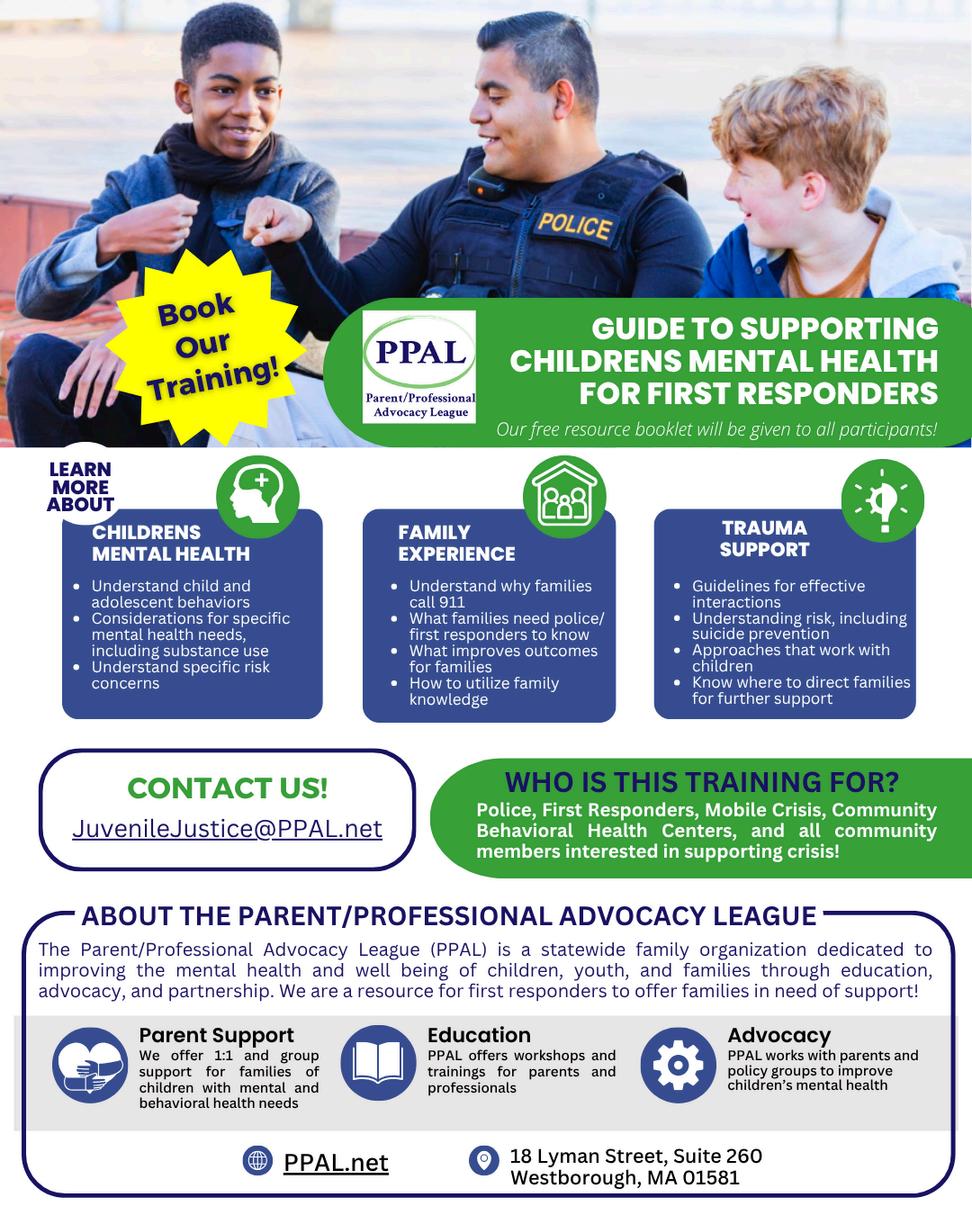
Call us toll free at (866) 815-8122 Email: info@PPAL.net
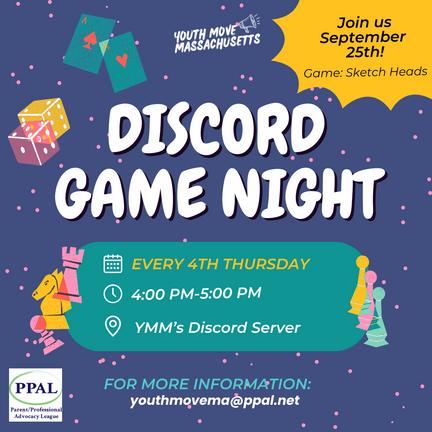
As we settle into the new school year, Youth MOVE Massachusetts has been partnering with organizations across the state to deliver trainings for young adults on topics such as advocacy, self-disclosure, employment, and more! Since launching our Discord in August, our online community has continued to grow. In response to interest from young adults, we’ve added a monthly game night where youth can join our Youth Peer Specialists to stream, play, and connect. We remain committed to cultivating a supportive, accessible online community where young people can connect and share their lived experiences with mental health!
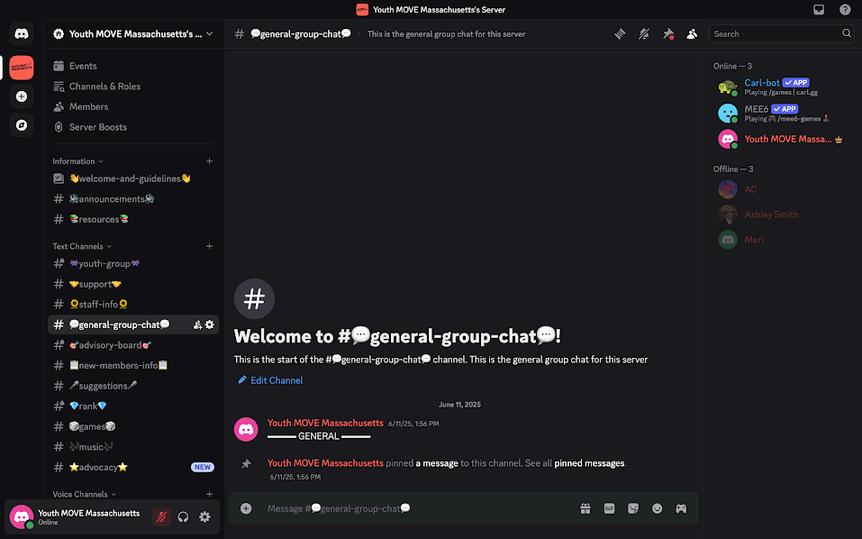
Youth MOVE MA is also strengthening its role in statewide mental health initiatives. We are excited to announce that our newest Youth Peer Specialist, Ashley, has accepted the position of Co-Chair for the Statewide Young Adult Council In this role, Ashley will help guide advocacy efforts and ensure that young adult voices are represented at the state level.
WrittenbyAshleySmith,YMMPeerSpecialist
https://youthmovemassachusetts.net/the-power-of-being-seen/
Six years ago, I was a resident in an all-girls intensive residential program for mental health. It was a lockedprogramwithheftysecuritymeasures.Intricaterulesandregulationsdictatedeverythingwedid. We would be punished if we bit our nails, as it was considered a form of self-mutilation. They counted our calorie intake during meals and snacks, and if we were a few calories short that day, we would be confined to our rooms Every day, we had to form a line and walk a specific number of laps along the hallwaywalls ThisiswhatIbecameusedto
When you walk into programs like this, you don’t expect to succeed You expect people to give up on you Toseeyouasafileinsteadofaperson Acase,notakid
Thatwasme.BythetimeIlandedinthisprogram,IhadconvincedmyselfthatIwasstupid,broken,and hopeless. That mindset is common for youth in residential programs, and unless someone interrupts thatcycle,itbecomesaself-fulfillingprophecy.
Forme,thatinterruptioncameintheformofoneteacherwhoworkedattheprogram.Heremindedme, over and over again, that I wasn’t stupid. I didn’t believe him at the time. It took me four more years beforeIcould,buthewasright.
What made him different wasn’t just academics. It was connection. He was the only one I felt truly saw measaperson,notacasefile.
One day, my parents were coming in for a team meeting I was at the program’s version of school, waitinguntilIwascalledintothemeeting Afewminutesbeforethemeetingwassupposedtostart,the loudspeaker announced, “Code Blue in the lobby” Knowing this was around the time when my parents would be arriving, and that the lobby was exactly where they would have been, my stomach dropped My father was about 89 years old at this time The time ticked by, past when the meeting was set to begin Nobodygavemeanswers,buttheydidbringmeupstairsfromschoolandsitmeonthecouchin the living room. There were no staff in sight, except for my teacher, sitting quietly behind me on the couch.
Months later, after I had left the program, my dad passed away. There was about a week between his death and his services, which I spent dissociating, trying to heal my family. I did not cry. I was in characterathisservices,greetingeveryonewhocametogivetheircondolenceshappily.Thatwas,until I saw my teacher rounding the corner. I jumped out of the line and ran to him. He had no idea that the tearshesawstreamingdownmyfaceinthatmomentwerethefirstIfeltsafeenoughtoshedinweeks.
That’s the impact of one person refusing to see you as just a diagnosis or a behavior That’s what gave mehope
The truth is, in systems like DMH, young people are labeled long before anyone meets us Our files say things like “non-compliant,” “risk to others,” or “unfit for home” The system defines us by our worst days and our hardest moments
But we are more than that We are learners, leaders, and dreamers We are future success stories And when one person believes in us beyond the labels, it can change everything
Here’s what I know now: the way adults show up in programs like this one can make the difference between despair and hope. Sometimes it’s not about changing the entire system in a day; it’s about the small, consistent actions that remind a young person they’re more than the system says they are.
I am living proof that it works. I went from being a kid convinced I was hopeless to becoming a college student, earning a degree, becoming a Peer Specialist, engaging in advocacy work in the field, and becoming someone who is determined to change the very systems I grew up in.
That didn’t happen in isolation. It happened because people refused to give up on me when I had already given up on myself.
So if you take anything from my story, let it be this: every young person, no matter how they are labeled, deserves to be seen as more than their file We are more than our diagnoses, more than our placements, and more than our behaviors We are whole people, and when someone believes in us, it gives us permission to start believing in ourselves, too
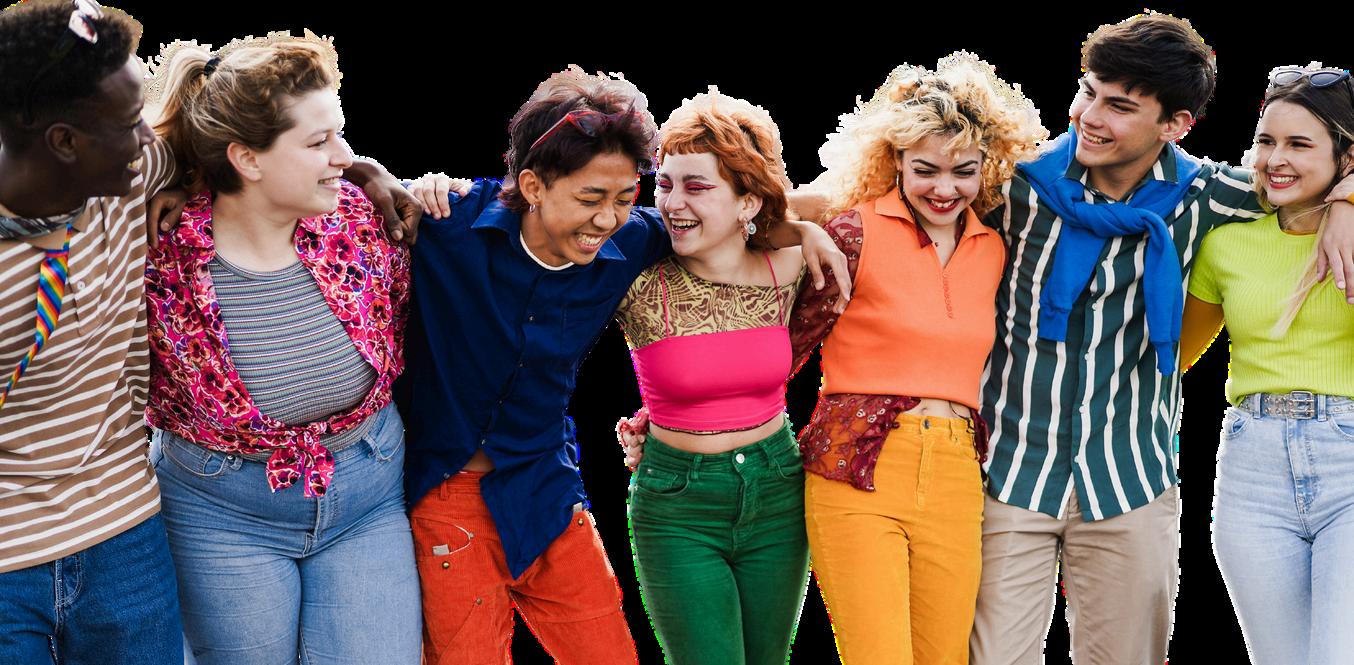
Youth MOVE Massachusetts is a youth and young adult-led organization rooted in peer support through lived experience with mental health needs We provide our youth participants with access to leadership development and training opportunities and we offer opportunities for engagement in statewide and national policy advocacy efforts
Strategies for Youth (SFY) is presently developing training for Massachusetts law enforcement officers to support their ability to recognize and respond effectively to youthexperiencingmentalhealthcrisesand/orexhibitingsignsofdisability(MHCD).
SFY is a national training and policy organization founded in 2010, dedicated to ensuring the best possible outcomes for youth during interactions with law enforcement.TheystartedandarestillbasedinCambridge.
Thesurveyisanonymousandconfidential. Yourresponseswillbeintegratedintothetraining tohelpofficersavoidproblematicinteractions.



https://www.surveymonkey.com/r/YouthAdvocatesMHSurvey


What does a favorable report mean?
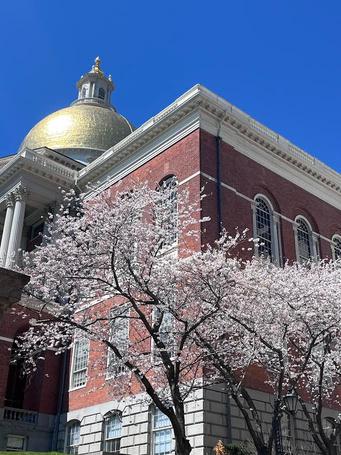
After a bill has a hearing where legislators listen to testimony from the public, they must review the bill and decide whether it should move forward in the lawmaking process. Bills can be reported out as “ought to pass,” “ought not to pass,” or be sent to study further.
When bills receive a favorable report, they move through a process of bill reading and debates before being finally voted on. We are glad to tell you the bills below have received a favorable report and we’re hopeful about them becoming law!
Reported Favorably:
H4599 An Act establishing a bill of rights for children in foster care
https://malegislature gov/Bills/194/H4599
SD575 An Act relative to MassHealth reimbursement for schools https://malegislature.gov/Bills/194/SD575
S1061 An Act to promote public safety and better outcomes for youths (commonly referred to as Raise The Age)
https://malegislature gov/Bills/194/S1061
Waiting for a Report:
H645 An Act allowing the administration of antiseizure medication on school busses
https://malegislature gov/Bills/194/H645
Hearing Scheduled:
HD4248 An Act to ensure efficient and effective implementation of the Roadmap for Behavioral Health Reform
https://malegislature gov/Bills/194/HD4248
PPAL to testify on behalf of this bill at the hearing on November 3rd
“Section 9C of Chapter 29 of the Massachusetts General Laws requires that when projected revenue is less than projected spending, the Governor must act to ensure that the budget is brought into balance”
From the Massachusetts Budget and Policy Center
At PPAL and the Children’s Mental Health Campaign, we’re currently on the lookout for 9C cuts. While 9C cuts can be made at any time, on October 15th the state updates its revenue predictions and this is a time we commonly see cuts to the state budget This could affect any part of the government, but we are keeping our eye closely on the DMH budget, especially since cuts were considered at the beginning of the budget process. The good news? We have already been speaking to important government members throughout the state, asking them to keep kid’s mental health off the table and reminding them about the huge outpouring of support we saw this spring to support children’s mental health in the budget!
You may have heard about the federal Department of Education Reduction in Force (RIF) and wondered, “What does this mean for my child?”
Your child still has the right to a Free and Appropriate Public Education (FAPE).
Your child still has the right to their IEP or 504.
Your child still has the right to evaluation, services, and due process.
The Office of Special Education Programs (OSEP) is the FEDERAL oversight agency– they make sure that states do their job to protect students’ rights at school Without OSEP, your student’s rights STILL EXIST and you still can and should submit any COMPLAINTS through the state. Schools cannot opt-out of special education law; all of your students' services and rights are still mandated BY LAW.
Though, as of the release of this newsletter, the RIF’s have been paused after being heard by the courts, we still don’t know what will happen in the long run. If workers are not reinstated, there may be trouble with the federal funding for schools in the next school year. What we do know is that there are many law and advocacy groups working on this issue, and you can count on us at PPAL to update you as we find out more!

Navigating Unfixable Situations with Your Child
From Happy Family
Building a Successful Relationship with your Elected Officials
From ABH (Association for Behavioral Healthcare)
Lifting Up LGBTQIA+ Youth and Families
From Children’s League of Massachusetts and Rhode Island Coalition for Children and Families
Immigrant Student and Parent Rights at School
From Massachusetts Advocates for Children and Massachusetts Law Reform Institute
Entre Familia is a 6-to-12-month residential substance use treatment program providing bilingual/bicultural support to pregnant and postpartum women and women with children under the age of 17.
Understanding Chronic Sorrow
From Psychology Today
I’m Listening- uniting listeners nationwide to support mental health awareness and advocacy, including stories about mental health from celebrities
MassAdvocates For Children- linktree
Youth Move Massachusetts
<-------
Supported Decision-Making (SDM) is an effective alternative to guardianship that is gaining momentum in Massachusetts and nationwide
Supported Decision-Making gives people more independence, more dignity, more freedom.
College Students and Mental Health: Data and Resources
From UMass Chan Medical School

IEP Focus Groups Application October 2025
from FCSN (Federation for Children with Special Needs)
Rethinking Discipline Initiative
From DESE (Department of Elementary and Secondary Education)
Massachusetts Association of 766 Approved Private Schools (MAAPS) Program Visit Checklist
TriTogether
Working to offer free tutoring services for students whose circumstances have previously made tutoring inaccessible.
Family Continuity Has Joined Advocates
Youth Advocacy Foundation
Our Mission is to the Shut Down the Cradle-to-Prison™ Pipeline in MA by ensuring that our state’s most vulnerable students receive a stable and quality education through expert holistic, individual, and systemic racially-conscious, student-directed advocacy
"The
greatest glory in living lies not in never falling, but in rising every time we fall.”
October 2025 October 2025