Oakland Post
“Where there is no vision, the people perish...” Proverbs 29:18 postnewsgroup.com
60th Year, No. 21 Weekly Edition. June 7 - 13, 2023
Congresswoman Barbara Lee Pushes MLB to Reconsider Involvement in Oakland A’s Relocation Process

perceived as incentivizing the team’s relocation, which runs counter to the rationale behind the MLB’s century-old exemption from Anti-Trust laws and has been consistently upheld by Supreme Court rulings.
Dysfunction Plagues Oakland’s Top Cop Search While Crime Rates Rise
Thao seeks to boost crime reduction and hire a new chief
By Ken Epstein
The City of Oakland’s leadership is seeking to beef up police presence in affected neighborhoods as Oakland, along with many other cities across the country, experiences a rising crime wave. Meanwhile, resources are drying up as federal pandemic funding comes to an end.
ing to many observers.
Though she has already allocated funds to pay for the search, Mayor Thao said in her KTVU interview that the commission has not agreed on hiring an executive search consultant and has therefore not yet begun the search process.
“I am pushing and pressuring them to actually finally agree on a consultant,” she said. “We are waiting for the police commission to actually go and sign with the consultant.”

Critics are saying the failure to hire a search consultant and a variety of other issues undermining the functioning of the commission are the responsibility of the commission’s chair, Tyfahra Milele, who they want to step to down.
“I wouldn’t know why they haven’t found a consultant, except
The city is already increasing enforcement and is moving toward placing more officers and crime prevention personnel on city streets, strengthening the respected Ceasefire crime reduction program, and providing six police academies to bring more officers into the department, according to Mayor Sheng Thao.
In an interview this week with KTVU2, Thao said she is working closely with the Oakland Police Department under the seasoned leadership of 25-year veteran Assistant Chief Darren Allison, while the city searches for a new police chief to replace LeRonne Armstrong, who was fired in February by the mayor.
However, a national search for a new chief is hampered by dysfunction on the city’s powerful Oakland Police Commission, accord-
that they are inept,” said Rashidah Grinage, a member of the Coalition for Police Accountability, which helped establish and now monitors police commission activities.

In a letter this week to commissioners, Cathy Leonard, president of the Coalition for Police Accountability, detailed 10 concerns about Milele’s leadership. “If she is allowed to remain as chair … the damage done … will be significant,” the letter said. “Losing the credibility and trust of the community, the city and the federal court may have the effect of prolonging the federal oversight over the police department.”
According to the letter, Milele attended an OPD retreat before Armstrong was fired but did not tell other commissioners.
The letter also stated that the commission did not have the standing to weigh in on the firing
of the chief because Milele failed to subpoena records related to the handling and mishandling of an internal OPD case against Sgt. Michael Chung, which was connected to the chief’s firing.
Milele also interfered with the work of the commission’s Inspector General, resulting in an Ethics Commission complaint, the letter said.
According to KTVU, Milele wrote a response saying that the commission is “very actively involved in searching for a new police chief,” and said that “we worked diligently on this paramount assignment, as we have on multiple occasions.”
In a strongly worded press statement, Milele blasted KTVU’s news reporting and her critics, who include members of the Police Commission and police accountability activists, saying, “We are profoundly disappointed by a troubled local TV station’s (reporting) ... that repeats inaccurate, malicious assertions and fails to take into account verifiable facts that were made available to the writer of the … screed.”
Backing Milele’s leadership, former Alameda County Chief Assistant District Attorney Terry
Washington, DC —
Congresswoman Barbara Lee (CA-12) today sent a letter to the Commissioner of Major League Baseball, Rob Manfred, requesting that he reconsider his direct involvement in the negotiations of the Oakland Athletics potential relocation to Las Vegas. The Oakland A’s have been actively negotiating a deal with Las Vegas legislators to fund a new ballpark and relocation to Las Vegas. According to press reports, Commissioner Manfred has committed to waiving the relocation fee, which is standard for any team seeking to leave their home city. Such action could be
“I write regarding the future of the Oakland Athletics Baseball Club in the East Bay. Many of my constituents in the East Bay and I are increasingly frustrated with the continuing apparent failure of the team and Major League Baseball to deal in good faith with local government agencies,” wrote Congresswoman Lee.
“The City of Oakland and Alameda County have been home to the A’s for five and half decades. Multiple generations of Oaklanders have grown up identifying with the team’s dogged efforts and hard-earned triumphs. The A’s organization adds significant tangible economic benefit to our region, including numerous good paying jobs at Oakland Coliseum. But as important is the sense of unique shared cultural identity that surrounds the team and its local fanbase,” Congresswoman Lee continued.
“MLB’s continued active encouragement of the A’s abandonment of Oakland and the East Bay runs counter the rationale supporting MLB’s century-old exemption from federal antitrust law. I ask you to reconsider efforts to subsidize or otherwise encourage the relocation of the Oakland A’s out of the East Bay.”
Congresswoman Lee is exploring legislation to address the century old MLB’s anti-trust exemption as it relates to franchise relocation. Read the full text of the letter below.
Dear Commissioner Manfred, I write regarding the future of the Oakland Athletics Baseball Club in the East Bay. Many of my constituents in the East Bay and I are increasingly frustrated with the continuing apparent failure of the team and Major League Baseball to deal in good faith with local government agencies.
The City of Oakland and Alameda County have been home to the A’s for five and half decades. Multiple generations of Oaklanders have grown up identifying with the team’s dogged
Continued on page 10
Supportive Housing Community Land Alliance Addresses Invisible Pipeline to Homelessness
Ikharo said.
In 2021, Alameda County’s Home Together 2026 Plan determined that $2.5 billion was needed for their five-year plan to house the homeless population..
Wiley, an unsuccessful candidate in November for Alameda County DA, supported her at a May 25 police commission meeting.
“From my viewpoint, I have a very positive view of this commission,” Wiley told the commission. “And I think that her leadership should continue.”
Regina Jackson, currently a
on page 10
By Tanya Dennis
Last year, Alameda County lost 87 beds for people encountering mental health challenges because of SSI’s low reimbursement rate to board-and-care facilities. These closures are causing an invisible pipeline to homelessness.
On May 20, at the Oakland Museum, the Supportive Housing Community Land Alliance (SHCLA) presented an innovative solution, entitled permanent supportive housing, where residents retain a unit for as long as they live.
In addition, SHCLA advocates for democratizing beauty, noting that individuals who live in boardand-care have little access to art and beauty, a modality that assists in healing and recovery from mental illness.
SHCLA CEO Teslim Ikharo is an urban strategist, community

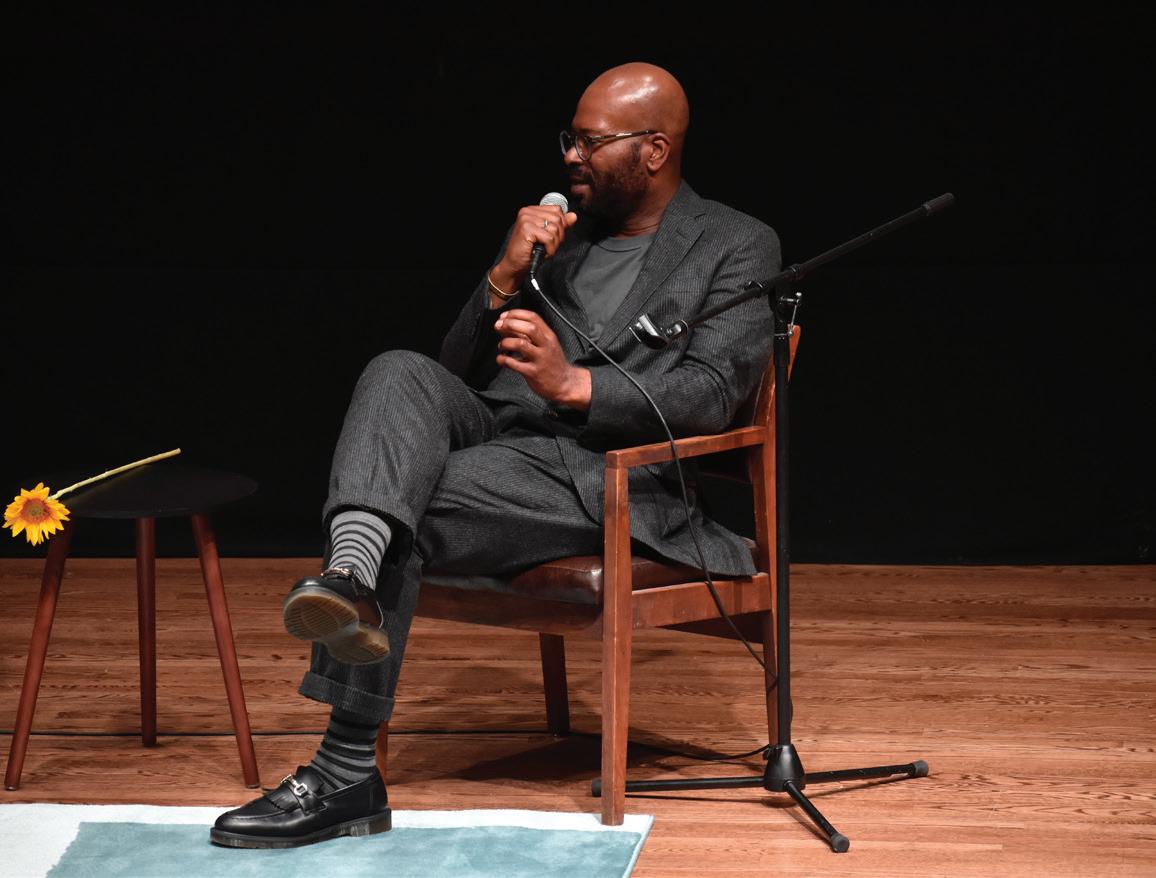
convener, and impact investor who uses finance, real estate development, social services and public policy to make positive change.
Ikharo previously worked in affordable housing developments and with formerly incarcerated and homeless populations.
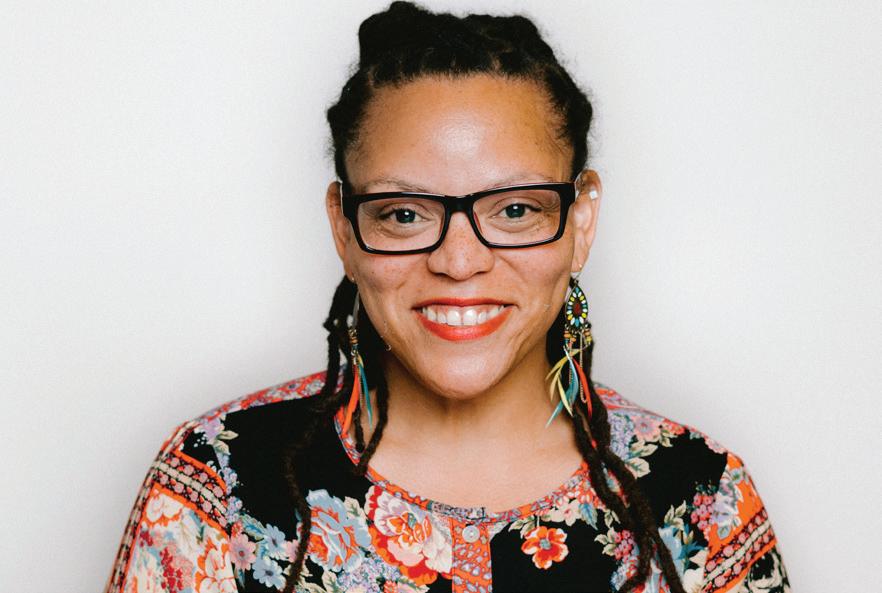
Ikharo says, “SHCLA’s permanent supportive housing model provides permanent housing without conditions -- for example, the person doesn’t have to be sober to acquire a bed or space.”
The target audience in Alameda County are residents 30% below the median income with mental health issues. Many are homeless even with family support. Currently there are 15,000 people experiencing homelessness with half located in Oakland, Oakland is the epicenter of homelessness and 47% are African American,”
Ikharo believes the solution to attain that goal are Land Trust non-profit community organizations that assure permanent affordability for low-income residence. These organizations select geographic boundaries, Oakland, Alameda County or California and once they identify their geographic boundaries, they utilize a re-sell formula attached to the deed of the property that states use and affordability limits.
The funds for land trust projects typically come from public sources like city, county and state \which are used to purchase land and buildings.

Land trust’s unique approach is they separate ownership of the land from the building. By splitting title between the land and improvements, the land trust then sells the building to low-income owners, while the trust retains ownership of the land.
Retaining ownership of the land ensures that, in the interest of the community, the property retains the use intended, which is low-income, affordable housing. If the owner gets into financial trouble, the land trust can either purchase the home back or find another buyer.
Continued on page 10
Continued
Congresswoman Barbara Lee
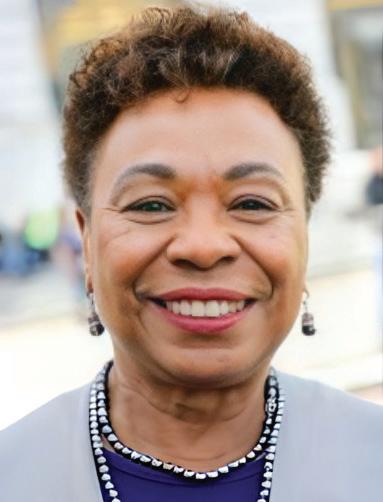
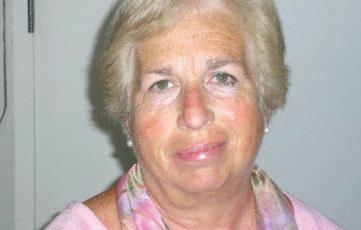
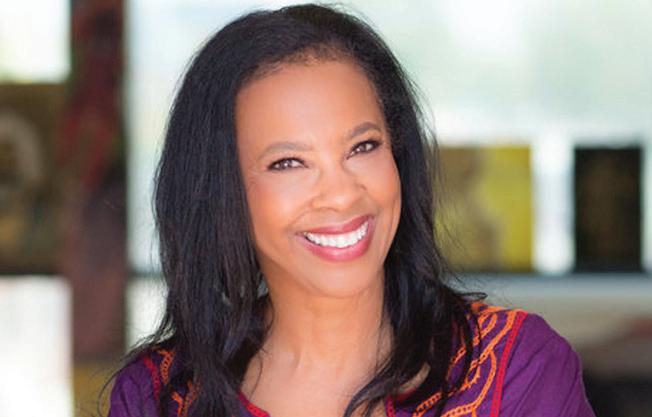
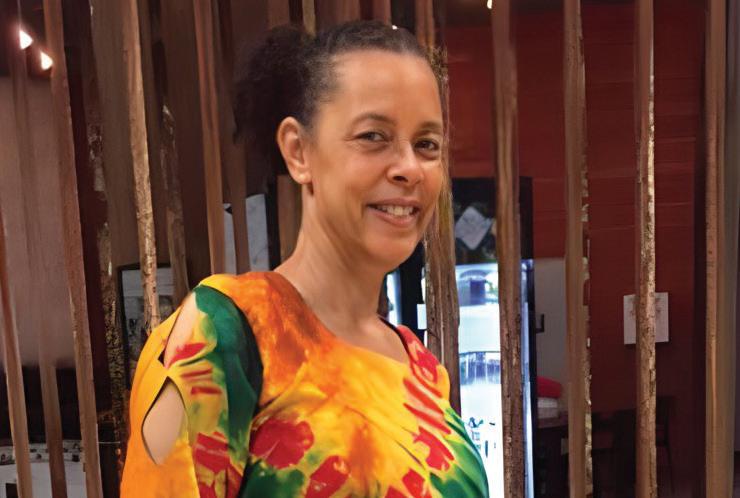
(Clockwise from top left:) Police Commissioner Regina Jackson. File photo. | Police Commission Chair Tyfahra Milele. File photo. | Rashidah Grinage, a Coalition for Police Accountability coordinator. File photo. | Cathy Leonard, president of the Coalition for Police Accountability. File photo.
Teslim Ikharo, the CEO of the Supportive Housing Community Land Alliance, speaks at the Oakland Museum on May 20.
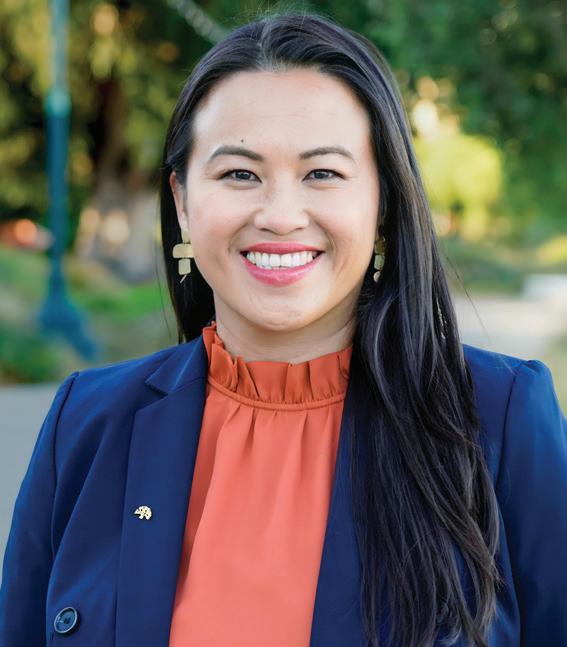
Oakland Mayor Sheng Thao
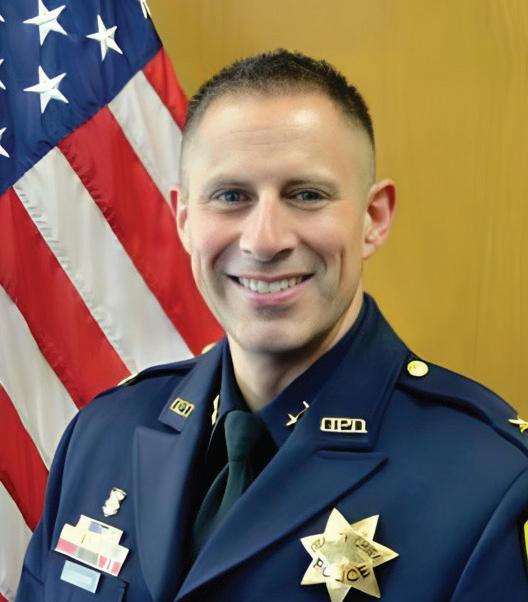
Assistant Chief Darren Allison
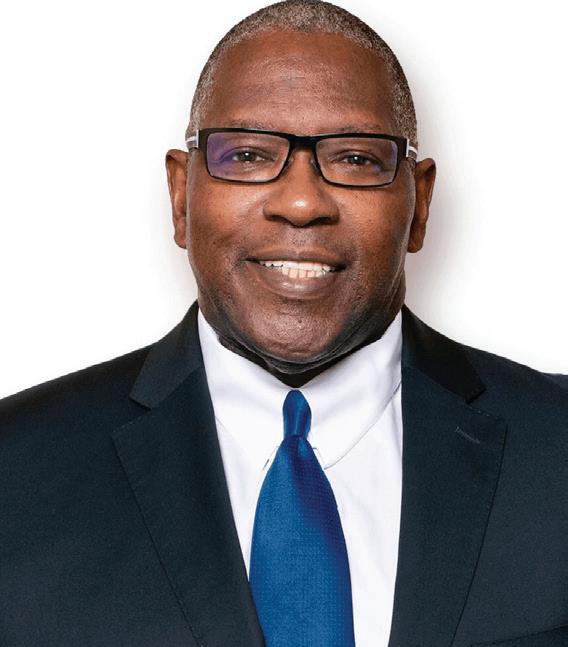
Former Alameda County Chief Assistant DA Terry Wiley
‘ ‘ Chicago’s New Mayor.. Page 8
... Page 8 Juneteenth
Guide .. Page 5 Hidden Genius Project ... Page 3
Justice for Andre Robinson Jr.
‘Round the Bay’
Black Caucus Members’ Bills
Protecting Black Children, Union Workers Advance
counterparts who are classified as “missing.” Therefore, when Black children are reported missing, law enforcement does not always treat those cases with urgency or issue Amber Alerts.
The AMBER moniker — which stands for America’s Missing: Broadcast Emergency Response — was created as a legacy to nine-year-old Amber Hagerman, who was kidnapped and murdered while riding her bicycle in Arlington, Texas.
By Antonio Ray Harvey California Black Media
Pro-public service legislation
introduced by Assemblymember Tina McKinnor (D-Inglewood), Assembly Bill (AB) 1, moved closer to becoming law when it was passed by the Assembly with a 66-3 vote late last Month.
It is now under consideration in the Senate.
If passed by the Legislature and signed by Gov. Newsom, the bill will permit California legislative staff to unionize and collectively bargain for wages, benefits and working conditions, regardless of their political affiliation.
“Legislative staff aren’t looking for special treatment. They are looking for the same dignity and respect afforded to all represented workers,” said McKinnor in a statement after her colleagues voted to advance the legislation.
“To the staff in our district offices and Capitol offices — including our dedicated committee staff — that honorably serve the people of the State of California every day, know this: We see you and we respect you,” McKinnor continued. “With AB 1, we are taking action to make sure that current and future legislative staff, regardless of their member’s political affiliation, are afforded a safe, equitable and fair opportunity to build a noble career in public service.”
McKinnor, a former legislative employee herself, said at the Women In California Legislature” speakers series on March 8 that she was an original signer of the “We Said Enough” letter in 2017. The correspondence led to the “Me Too” movement to address workplace sexual harassment, retalia-
tion and intimidation within the California Legislature.
Mary Virginia Watson, chief of staff for Assemblymember Liz Ortega (D-Hayward), supports AB 1. Watson has been a campaign director, and political organizer.
“Congrats to #CALeg staff!
I was proud to speak in favor of #AB1 in (the) policy committee, and as a chief of staff, I 100% support Leg staff’s right to unionize. A union would improve recruitment and retention and help the legislature better serve Californians!,” Watson tweeted.
If AB 1 is approved, it will take effect on July 1, 2024.
Another bill, dubbed the “Ebony Alert” bill, would help locate missing Black youth and Black women in California also made it out of the Senate last week with a 39-0 vote.
Senate Bill (SB) 673, authored by Sen. Steven Bradford (D-Inglewood), establishes a notification system to address the issue of missing Black children and young Black women in California who do not receive enough attention.

“The Ebony Alert would ensure that resources and attention are given so we can bring home missing Black women and Black children in the same way we would search for any missing child and missing person,” Bradford, Vice Chair of the California Legislative Black Caucus (CLBC), stated in March.
The Black and Missing Foundation Inc. (BAMFI), reports that 38% of missing children in the U.S. are Black, despite Black people making up 14% of the population. Black children are disproportionately classified as “runaways” in comparison to their white
“When someone who is missing is incorrectly listed as a runaway, they basically vanish a second time. They vanish from the police detectives’ workload. They vanish from the headlines. In many ways, no one even knows they are missing. How can we find someone and bring them home safely when no one is really looking for them,” Bradford said.
Bradford’s Ebony Alert bill is inspired by a similar bill, the
Gun Enhancements Appropriate in Hayward Murder
Vaughn Boatner’s Case is a Prime Example of When Enhancements Should be Applied
By Traci Grant
District Attorney Pamela Price announced on June 1 that she has authorized a gun enhancement for Vaughn Boatner, a 33-yearold man accused of murdering his pregnant ex-girlfriend in her Hayward home on May 11, 2023.
Price also has authorized his extradition from Washington state to California to face those charges, in addition to attempted murder charges and child abuse.
Boatner, a San Mateo resident, is accused of fatally shooting 30-year-old Monique Al-
dridge seven times in the head and also shooting her new boyfriend Jacques Jackson Fields once in the head and in the arm. The incident unfolded in front of the 5-year-old son both Aldridge and Boatner shared.
Jackson Field survived and managed to protect the young boy. U.S. Marshals captured Boatner on May 22 in Seattle. He will be brought back to Alameda County to face justice.
“In this instance, we believe the major gun enhancement is appropriate in this egregious violent crime,” Price said. “The message I will continue to repeat is that our special directive doesn’t prohibit all gun enhancements. Each crime requires a painstaking evaluation of the evidence and the circumstances. Unless required by law or excluded from the policy, enhancements are not going to be automatically applied. They will be used sparingly when appropriate, as in this case.”
Without any gun enhancements, Boatner could face 25 years to life for the first-degree murder of his ex-girlfriend and seven years to life for the attempted premeditated murder of Jackson Field. With enhancements, he could face 50 years to life for murder and 32 to life for attempted murder.
Traci Grant is the communications director for the Alameda County District Attorney’s office.
Black News Publishers Watchful of Legislative Process as Online News Payment Bill Advances
content.
Assemblymember Buffy Hicks (D-Oakland) said she authored the bill with the goal of supporting California’s local news media outlets including ethnic media and small news publishers throughout the state.
Feather Alert, introduced by Assemblymember James Ramos (DSan Bernardino), the only Native American serving in the California Assembly. The Feather Alert law, which took effect in January, assists law enforcement to quickly notify the public when Native American Californians are reported missing.
Black women and girls face a higher risk of being harmed and trafficked. According to a report by the Congressional Black Caucus Foundation on human trafficking incidents in the U.S., 40% of sex trafficking victims were identified as Black women.
By Edward Henderson California Black Media
Black news publishers in California are watching lawmakers closely, anticipating that they will include provisions in a pro-journalism bill that would benefit their businesses.
On June 2, the California Assembly passed Assembly Bill (AB) 886 with a vote of 46-6.
The bill would mandate that social media platforms such as Twitter, Facebook and Google pay a “journalism usage fee” to news organizations for sharing their
“Free press is in our constitution, and it is at risk right now. That is what this bill is about,” Wicks told the Assembly. “Publishers deserve to be paid a journalism usage fee relative to how much their content is used on these platforms.”
According to the text of the bill, newspaper advertising has decreased by 66% over the past 10 years, and newsroom staff have declined 44%.
“Given the important role of ethnic media, it is critical to advance state policy that ensures their publishers are justly com-
Continued on page 7

postnewsgroup.com THE POST, June 7 - 13, 2023, Page 2
Alameda County DA Announces
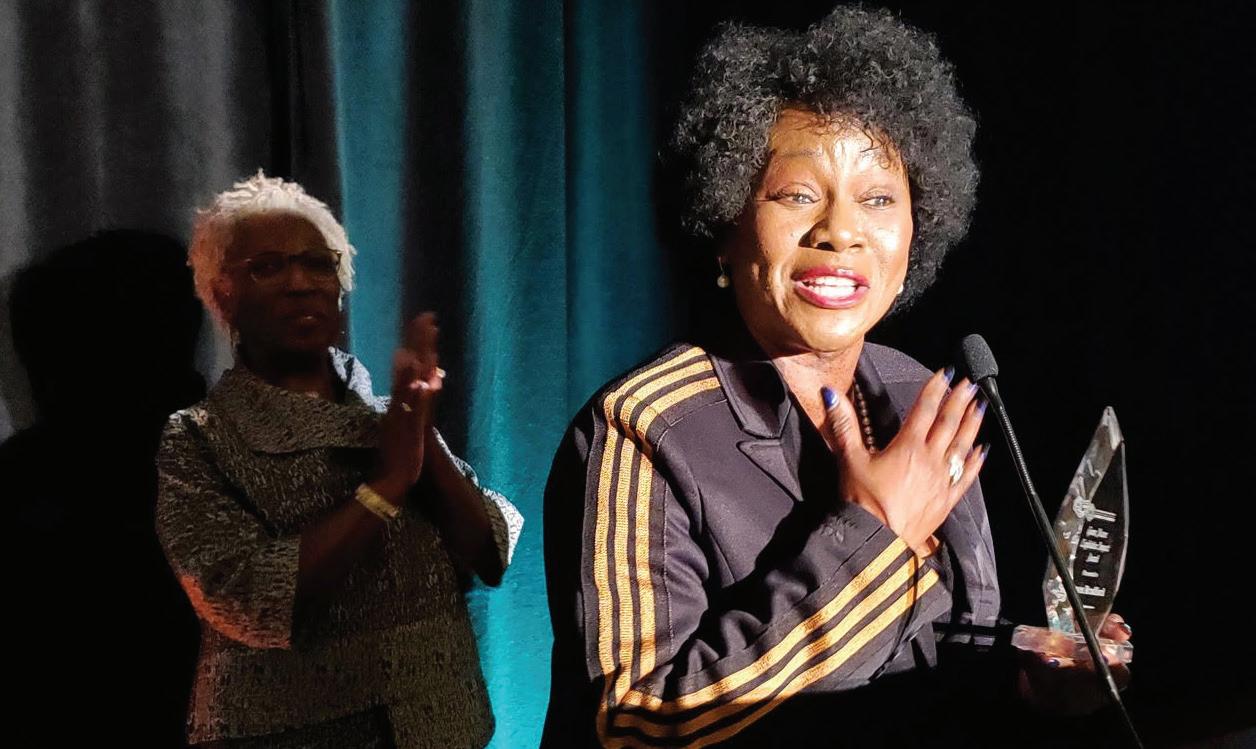
Assemblywoman Tina McKinnor (D-Inglewood) first piece of legislation that she authored when she joined the Assembly would provide employees of the legislature the right to form, join, and participate in union activities. CBM photo by Antonio Ray Harvey. April 19, 2023.
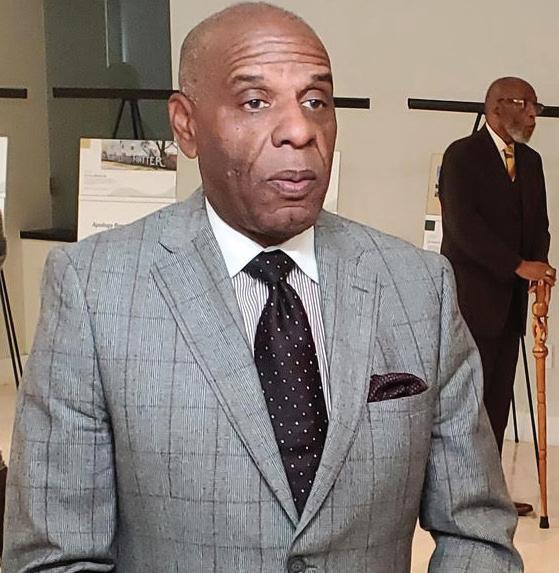
State Sen. Steven Bradford (D-Gardena) SB 673 legislation would increase awareness and resources to locate missing Black youth and Black women. Bradford is shown here at a California Reparations Task Force meeting in Oakland, Calif., on May 6, 2023. CBM photo by Antonio Ray Harvey.
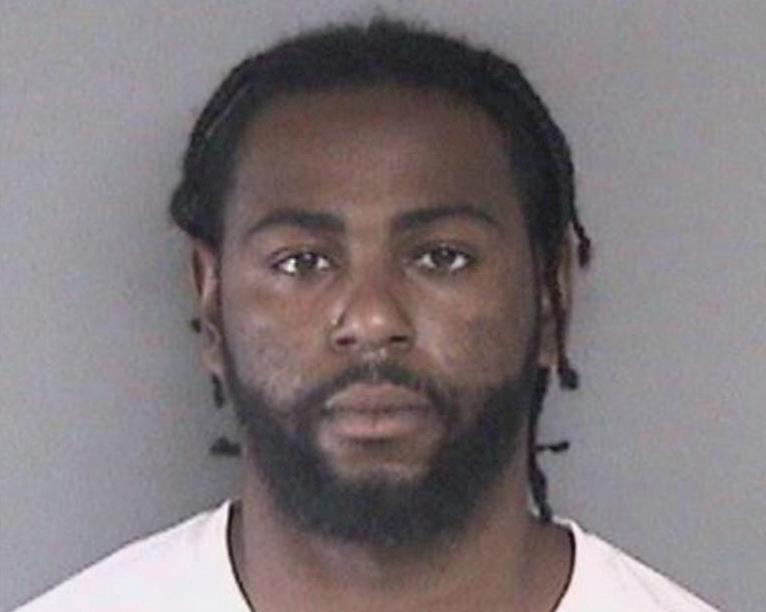
Vaughn Boatner. Photo courtesy Hayward Police Department.
Photo courtesy California Black Media
COMMENTARY: Tim Scott’s ‘Happy Talk’ View of Race in America.
By Emil Guillermo
Tim Scott is a Black man from South Carolina and one of just three members of the U.S. Senate. Cory Booker (D/N.J.) and Rev. Raphael Warnock (D/Ga.) are the other two, both mainstream Democrats.
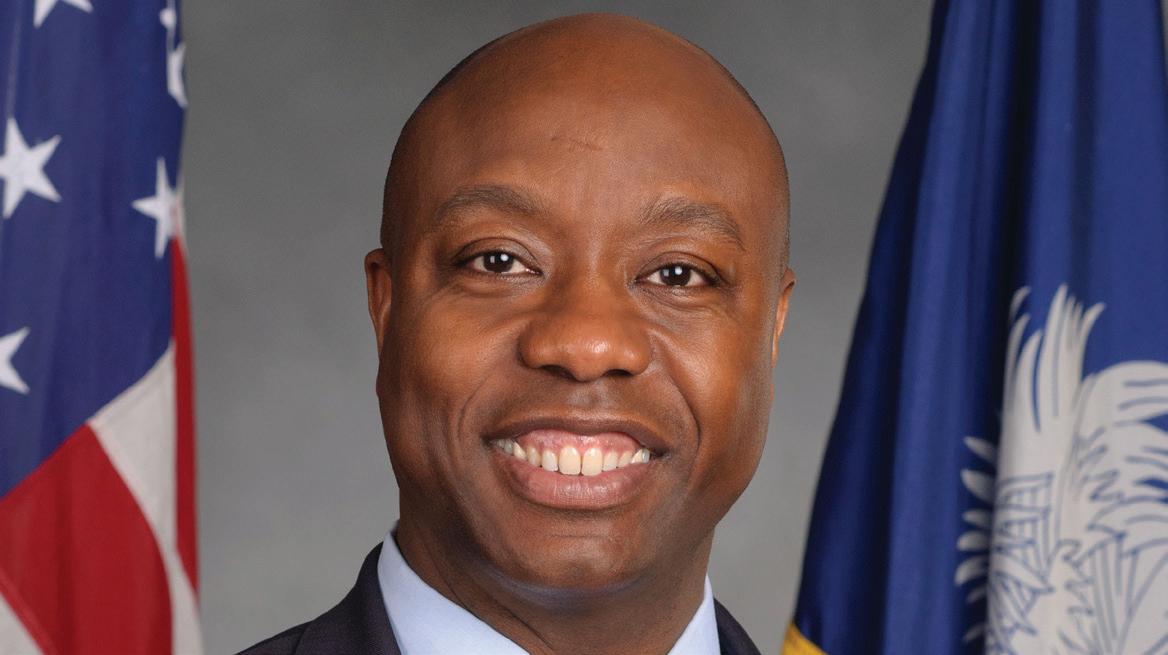
Instantly, you know what makes Tim Scott “special.”
He’s a successful non-white Republican from the South. And now he’s running for his party’s nomination for president against Donald Trump, a man Scott voted twice to acquit when it was time to impeach.
Pass? Or is it time to take a more serious look at Scott?
If you saw “The View” on Monday this week, then you know Scott can stand up to Whoopi and the ladies of that show. I thought he spoke well enough. But he doesn’t get to the basic question of race in America.
Scott doesn’t think racism exists. He’s not interested in solving racism in America. He’s not about ending the historic and systemic ways that white supremacy endures in American society.
That’s way too negative for
Scott. Scott simply wants to hold himself out there for all to see, an American success story.
“I think people are hungry for something hopeful and optimistic,” he said on “The View.” “I believe America could do for anyone what she’s done for me.”
Essentially, it’s an “I got mine, you can get yours, too” message. This is America, what a country! Success can happen to you, Black America! And all the rest of us out there, too.
What about systemic racism, you ask? But I succeeded, Scott says.
Yes, it’s good to know the system works well for Sen. Tim Scott.
Does it work for regular folks that we all know and love? People who are just making a living, paying their taxes, abiding by the laws, but still not reaching Scott’s America.
That’s the America that you can get to if you pull yourself up from your bootstraps---even though you’ve got on yesterday’s Jordans. Systemic racism? You got Jordans. A big Costco TV. A late model, used automobile. Why not be Republican?
This is the heart of Sen. Tim Scott’s campaign: American Racial Happy Talk where he loves to tell his narrative.
“I’m a kid that grew up in a single-parent household mired in poverty,” Scott said on ABC. “By the time I was in the fourth grade, I went to four different elementary schools. As a freshman in high school, I failed four subjects, and so I understand and appreciate the importance of hope.”
So, Scott got hope from the Republicans? That’s before they started banning books and Black history.
“View” co-host Sunny Hostin pushed back, talking about her own upbringing in a Bronx project, then added both she and Scott are “the exception but not the rule.”
She said that when it comes to racial inequality it persists in economics, education, health care, criminal justice, and housing. “At nearly every turn these achievements were fought, threatened, and erased most often by white violence,” said Hostin.
Scott replied it was more important to show the African American community that to be successful you don’t have to be the exception. He pointed to former President Barak Obama, and Vice President Kamala Harris, and other Black leaders.
All exceptions, Hostin pointed out.
“Progress in America is palpable,” Scott insisted. “It can be measured in generations. I look back at the fact that my grandfather, born in 1921 in South Carolina, when he walked on a sidewalk and saw a white person coming, had to step off and not make contact.”
Sure, life is better than the old Jim Crow South. But simply naming Black success stories only seems to prove there may be more
Hidden
Genius Project, OCCUR to Offer Free Tech Program in East Oakland
 By OCCUR Staff
At a time when the technological divide has become more pronounced due to the ongoing impacts of the pandemic, two organizations are coming together with a timely intervention aimed at fostering technological inclusion and empowerment.
The Hidden Genius Project and OCCUR are partnering to host a free Community Tech Program at the David E. Glover Emerging Technology Center located at 6948 Foothill Blvd., Oakland, CA 94605.
The program will serve young people of color between the ages of 12 and 18 and run from June 13 to July 20, on Tuesdays and Thursdays, with daily sessions from 10 a.m. to 3 p.m.
game design, and more.
The Hidden Genius Project, renowned for its commitment to training and mentoring Black male youth in technology creation, entrepreneurship, and leadership skills, is joining forces with OCCUR, an organization that supports the economic development and civic inclusion of historically excluded communities.
Their collective mission? To provide a safe and engaging learning environment where youth can explore their interests, develop new tech skills, and build self-confidence through technology. And the best part? The program is free.
ogy concepts and potential career paths while empowering them with the resources and confidence to be creators rather than mere consumers in the tech sphere.
“This partnership is about more than just providing access to technology; it’s about creating a space where young people can see themselves as innovators, creators, and problem solvers,” said Dr. Brandon Nicholson, CEO of The Hidden Genius Project. “By cultivating a passion for technology and nurturing hidden talents, we believe we can inspire young people to be the tech leaders of today and tomorrow.”
Additionally, the program will offer mentorship opportunities, fostering a sense of community and connection among participants.
Recognizing the potential barriers to entry that many young people of color face in accessing technology education, both The Hidden Genius Project and OCCUR have made a concerted effort to ensure the program is cost-free. They have also strived to make the registration process as straightforward as possible.

“Through this initiative, we aim to demystify the world of technology for our young people,” said Dr. David B. Franklin, president & CEO of OCCUR. “We want to ignite their curiosity, develop their technical skills, and empower them with the belief that they, too, can contribute to the tech world in meaningful and impactful ways.”
CITY
OF OAKLANDREQUEST FOR PROPOSAL (RFP) FOR Representation of Low- and Moderate-Income Tenants at Rent Adjustment Program Petition and Rent Adjustment Board Appeal Proceedings

Contract Amount: $250,000 per year, ($500,000.00 total), Terms: 2 Years
Project Description: The City is seeking a qualified organization(s) or person(s) to provide representation services to low- and moderate-income tenants under jurisdiction of Rent Adjustment Program ordinances and regulations at Rent Adjustment Program (RAP) petition and Housing Residential Rent and Relocation Board (HRRRB) appeal proceedings. These representations services are more expansive than consultation and include but are not limited to, fully representing client in negotiations, hearings and mediations in RAP and HRRRB petition and appeal proceedings respectively.
Pre-Proposal Meeting: Friday, June 23, 2023 - 2:00 PM (Pacific)
Join Zoom Meeting https://us02web.zoom.us/j/86165806080?pwd=cTdlNUVnZnp

zSUtiWG9aOUUzOWxsUT09
Proposal Submittal Deadline: Friday, June 30, 2023, by 2:00 P.M. via iSupplier.
NOTE: (1) Proposals not received at the above location by the stated deadline will be returned unopened; (2) If using a courier service, please secure guaranteed delivery to the required location and time as noted above.
Reminders:
• The following policies apply to this RFP: Equal Benefits
Wage • Campaign Reform Act
• 50% L/SLBE • Living
• Professional Services Local Hire • Prompt
Payment • Arizona Boycott • Dispute Disclosure • Border Wall Prohibition • Sanctuary City Contracting and Investment Ordinance.
• Did not receive and invitation? Start Early with iSupplier registration. Upon completion of registration, send an email to iSupplier@oaklandca.gov listing “RFP for Representation of Low and Moderate Income Tenants at Rent Adjustment Program Petition and Rent Adjustment Board Appeal Proceedings” as the subject and advise of an invitation to the RFP. DWES will add your business to the RFP invitation.
• All who wish to participate in this RFP must register (at least 5 days prior to submittal due date) through iSupplier at (https://www.oaklandca.gov/services/ register-with- isupplier) to avoid last minute submittal complications and receive addenda/ updates on this RFP. For additional help registering and submitting your proposal to iSupplier please watch the user guide videos at (https://www. oaklandca.gov/documents/isupplier-user-guides).
• Experiencing bumps when registering? Send email to isupplier@oaklandca.gov to advise that you need HELP to expedite registration for this RFP.
Answers to Questions:
1. For project-related questions contact the Project Manager Victor Ramirez via email at vramirez@oaklandca.gov, (510) 238-3220.
2. For Isupplier related question after registration contact the Administrative Analyst II Marina De La Torre at mdelatorre@oaklandca.gov, 510 238-6419.
Asha Reed, City Clerk and Clerk of the City Council, (Friday, June 9, 2023) The City Council reserves the right to reject all proposals.
The summer program is designed to be flexible and approachable, with a drop-in style that allows youth to learn at their own pace and on their own terms. The sessions will cater to various interests, from coding to graphic design, video
The programming will emphasize creative exploration, offering a wide array of resources to attendees. These resources will serve as tools to learn and apply practical tech skills, as well as to foster an environment of innovation and discovery.
The ultimate goal is to expose young people to various technol-
Interested families can register their kids for this summer’s program by visiting hiddengeniusproject.org/summerprograms2023.
Registration is not mandatory but encouraged to ensure youth can have the full support needed when they arrive.
THE POST, June 7 - 13, 2023, Page 3 postnewsgroup.com
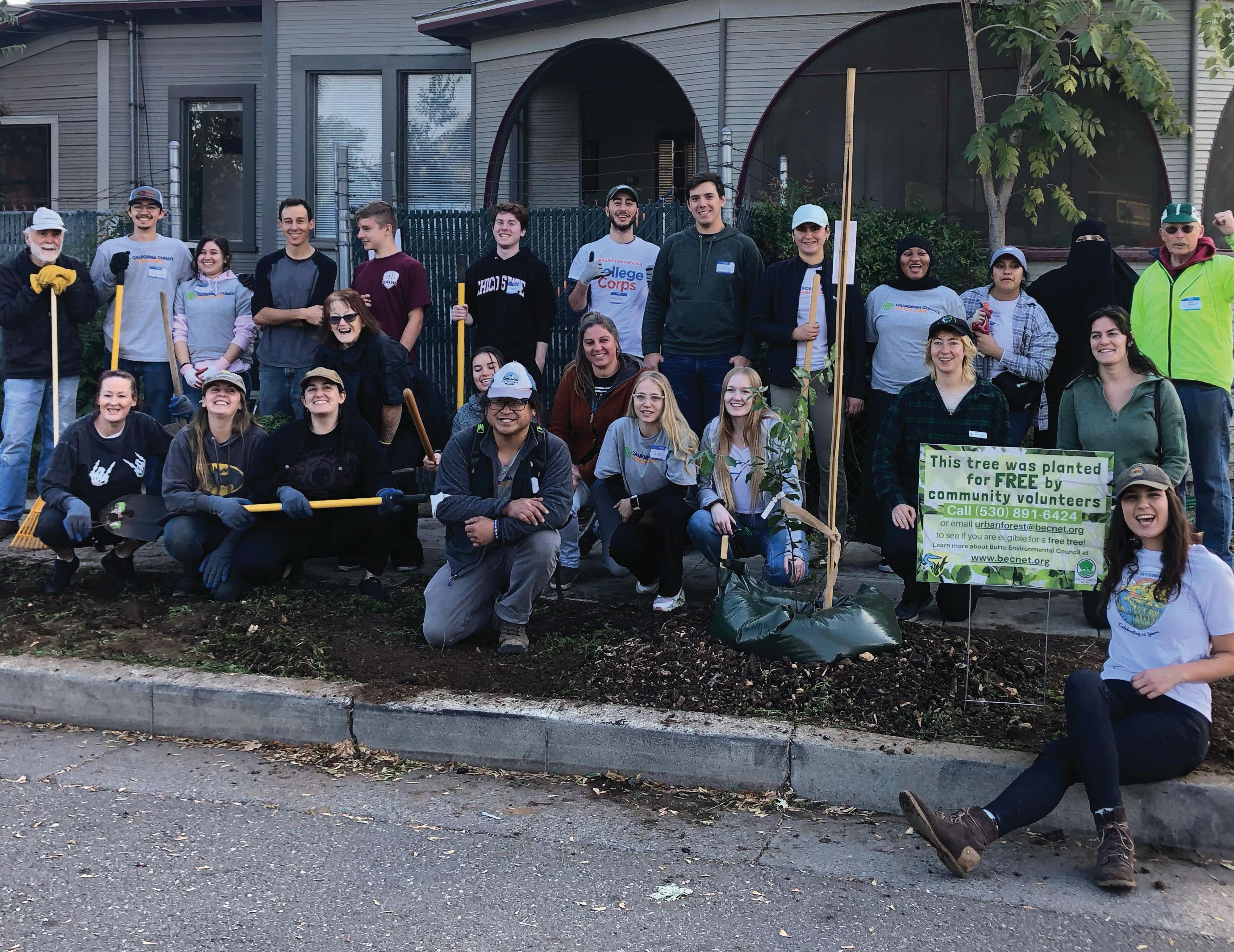
Apply Now! Scan the QR code or visit: WWW.CACOLLEGECORPS.COM BUILD SKILLS HELP OTHERS EARN MONEY A youth takes instruction on a technical matter.
Continued on page 7
THE POST, June 7 - 13, 2023, Page 6 postnewsgroup.com Public Notices, Classifieds & Business To place a Legal Ad contact Tonya Peacock: Phone: (510) 272-4755 Fax: (510) 743-4178 Email: tonya_peacock@dailyjournal.com All other classifieds contact the POST: Phone (510) 287-8200 Fax (510) 287-8247 Email: ads@postnewsgroup.com THE POST PUBLISHED EVERY WEDNESDAY 360 14th Street, Suite B05, Oakland, CA 94612 TEL: (510) 287-8200 FAX:: (510) 287-8247 info@postnewsgroup.com www.postnewsgroup.net Paul Cobb - Publisher Brenda Hudson - Business Manager Wanda Ravernell - Sr. Assoc. Editor Ken Epstein — Writer and Editor Maxine Ussery - COO Jack Naidu - Production Manager Conway Jones - Editor, Capitol Post Photographers: Zack Haber, Amir Sonjhai, Auintard Henderson Contributors: Zack Haber, Tanya Dennis, Kiki, Godfrey News Service, Robert Arnold Distribution: A and S Delivery Service abradleyms72@gmail.com (415) 559-2623 Godfrey News Service eelyerfdog@juno.com (510) 610-5651 This newspaper was incorporated on June 8, 1963. It is published by The GOODNEWS Is..., LLC, 405 14th Street, Suite 1215, Oakland, CA 94612. The contents of the POST Newspapers are copyrighted and may not be reproduced in any form without the advance written consent of the publisher.
Black News Publishers
Continued from page 2
pensated for the content they create and distribute,” the bill’s language asserts.
AB 886, also known as the California Journalism Preservation Act, would require outlets receiving funds to use 70% of it on journalists and support staff. The bill was co-sponsored by the California News Publishers Association (CNPA), and the California Labor Federation (CLF).
“When local newspapers shutter, civic engagement goes down, corruption goes up, and the ability to combat disinformation erodes further,” CNPA wrote in a statement of support for the bill.
“Like all workers, journalists’ labor produces value. News workers win their fair share of it through collective bargaining with employers, as protected by the National Labor Relations Act. But, if that value is unfairly captured by third-party tech websites instead of the news publishers that employ journalists, these workers cannot bargain for pay that reflects their actual economic productiv-
ity. Meanwhile, newsroom jobs keep disappearing,” wrote CFL’s Mitch Steiger in a press release.
AB 886 also references a document written by the African American journalist and abolitionist Samuel Cornish in 1827.
It highlighted the need for African Americans to have their own platform to express their grievances, advocate for their rights, and challenge racial inequality. “We Wish to Plead Our Own Cause,” Cornish wrote and Wicks references in the bill language.
The bill language goes on to state, “This call to action spurred the establishment of numerous Black-owned newspapers and publications, solidifying the role of the Black press as a powerful tool for empowerment and social change, and laid the groundwork in our country for other ethnic media to plead their own cause.”
The Bill has faced opposition from multiple organizations such as the National Newspaper Publishers Association (NNPA), the California Chamber of Commerce, CalMatters and Facebook’s parent company Meta.
According to Meta, news accounts for less than 3% of the content appearing on most Facebook
users’ feeds. They also state that the media’s struggles were not in direct correlation with the growth of social media platforms.
“If the Journalism Preservation Act passes, we will be forced to remove news from Facebook and Instagram rather than pay into a slush fund that primarily benefits big, out-of-state media companies under the guise of aiding California publishers,” Meta said in a statement.
An analysis conducted by the tech industry-funded group Chamber of Progress shows that the biggest beneficiaries of the proposed law would be news outlets such as Fox News, the New York Post and Newsmax, all of which have faced accusations of spreading misinformation in the past.
According to the study, these outlets would receive four times more in revenue than major California news organizations, 151 times more than Latino news outlets in the state, 643 times more than newspapers located in the state’s worst news deserts and 844 times as much as California Black news outlets.
The bill will now be considered by the state Senate.
Tim Scott “Happy Talk” ...
Continued from page 3
exceptions to the rule in 2023. But the basic rule of Black Life in America has not changed enough. Were Republicans to blame?
Co-host Whoopi Goldberg asked Scott, “How can you get your party to stop trying to stop the progression that people are making? Republicans have these issues.”
“I think humans have these issues,” Scott replied. “The issue of discrimination that I have faced… is an issue of the heart. It’s not Republicans or Democrats.”
But that’s the way they vote.
Republicans don’t vote with their hearts when they strip down the Voting Rights Act, look to diminish Obama’s Affordable Care Act, or keep adding books to ban as they strip curriculums of BIPOC history considered too ‘woke.’
Republicans are backing all of that.
But that’s too negative, and the reason Tim Scott is using racial happy talk in a campaign that pushes an optimistic narrative while ignoring reality.
Tim Scott is political artificial intelligence in the flesh.
Emil Guillermo is a veteran newspaper, TV and radio journalist who was once host of NPR’s “All Things Considered.” He does a reality talk show at www.amok.com
postnewsgroup.com THE POST, June 7 - 13, 2023, Page 7
Watchful of Legislative Process ...
On sale at Barnes & Noble stores, barnesandnoble.com; walmart.com; and most websites.
New Chicago Mayor
By Gregory Taylor, Chicago Crusader Newspaper
Amid ethnic pageantry and fanfare, Brandon Johnson began his first week as mayor of Chicago after being sworn into office on Monday, May 15, capping his stunning ascension to City Hall, the pinnacle of Chicago politics.
Five weeks after Chicago’s 17 Black wards helped Johnson defeat Paul Vallas in the mayoral runoff, Chicago’s 57th mayor took the oath during a soulful inauguration at the Credit Union 1 Arena on the Near West Side. Mayor Johnson later held an open house at his office on the fifth floor at City Hall. Later that evening Mayor Johnson’s inaugural ball was held at the UIC Forum with reportedly 15,000 guests.
At the inauguration ceremony, Chicago’s 50 elected aldermen were also sworn into office. Later, Cook County Circuit Court Chief Judge Timothy Evans administered Johnson’s oath before nearly 10,000 people who filled the arena on a cool morning where long lines stretched along Harrison Street hours before the service began.
Inside, the arena was abuzz with excitement as Governor JB Pritzker, Lt. Governor Juliana Stratton, Attorney General Kwame Raoul, Cook County Board President Toni Preckwinkle, and Cook County State’s Attorney Kim Foxx joined members of a changed City Council that includes 16 new aldermen. Four are Black, including Lamont Robinson (4th), Desmon Yancy (5th), William Hall (6th) and Ronnie Mosley (21st).
But the biggest star was Mayor Johnson who, along with his wife Stacie, the city’s first Black First Lady, took center stage in a ceremony that reflected his love for the West Side, his passion for people and his desire to unify Chicago after a toxic election where anti-crime campaign promises stirred racial tensions in the city’s Black neighborhoods.
Soul was a major theme in Johnson’s inauguration.

A dance performance by the Muntu Dance theatre, a powerful prayer by prominent clergyman Reverend Otis Moss III, the singing of Lift Every Voice and Sing by Walt Whitman and the Soul Children of Chicago, and a soul-stirring gospel performance by Karen Clark Sheard of the famed Clark Sisters, were highlights of the inauguration, drawing loud cheers and applause.
But as part of Johnson’s agenda to unify Chicago, the program also included readings and performances by other races. Rabbi Shoshanah Conover gave a special blessing, and Imam Hassan Aly delivered a prayer for peace for guidance.
During his inauguration speech, Mayor Johnson promised to improve public safety and transportation as crime across the city and the CTA remain a problem. He talked about Chicago’s violent crime problem, the police shooting of 13-year-old Adam Toledo and the recent fatal shooting of 24-year-old Officer Aréanah Preston, who was scheduled to be buried later in the week after a funeral at Trinity United Church of Christ.
“Too many Chicagoans, though, fear for their safety,” Mayor Johnson said. “And when they walk down the streets to get groceries or drive to the gas station, because our city’s homicide and violent crime rates have consistently outpaced our peer cities, our public transit is unreliable and unsafe. So much so, that many parents refuse to let their
Justice for Andre Robinson Jr.: Parents Desperately Seek Help Finding Son’s Killer
children ride, even when the CTA could be the pathway to opportunity and enrichment.”
He also reaffirmed his promise to reopen the mental health clinics Rahm Emanuel closed in 2012.
“And how about we also create a Chicago where the hundreds of thousands suffering from episodic mental health receive treatment in that trauma?” Mayor Johnson said. Mental health services are needed, he said, “Because [there are] people like my late brother Leon, who died addicted and unhoused. If only there was treatment. I want to make sure that no one ever has to suffer because they do not have access to mental health services. And people have told us no for too long. It’s a matter of life and death. So, let’s bring together the private sector, the public sector, the county, the state and the federal government to find the best solutions for delivering these services, including reopening our mental health care centers across the city of Chicago.”
Lingering economic inequities in Chicago was another important topic Mayor Johnson spoke about during his first speech as mayor.
“We can create a prosperous city which no one is too poor to live in,” Mayor Johnson said, calling Chicago “one of the richest cities in one of the wealthiest countries, at the richest time in the history of the world. And so that means I’m talking about a Chicago where 65,000 people don’t wake up on the streets or in a shelter where public housing and affordable housing and a pathway to homeownership exists for everyone.
“I’m talking about a city where it will no longer be the case where every network dollar belonging to a white family, where only $0.08 belongs to a brown family and only $0.01 belongs to a Black family. We can do it, Chicago. We can bring Chicago home. My family is living proof of the type of transformation that can happen with real investments.
“Our schools call out for more resources to fulfill their mandate of providing every single child in our city with a world class education that meets their specific needs. And despite the trauma, these challenges produce, too few can rely on the consistent access to mental health care that they desperately need. But as we debate and discuss the solutions to these crises, I want to remind us that we must have the real conversation.”
Mayor Johnson thanked his predecessor Lori Lightfoot, who drew cheers after saying, “We welcome you to the peaceful transfer of power.” Lightfoot lost her re-election bid following a tough first term in office.
Mayor Johnson spoke about Chicago’s affordable housing crisis, the homeless population and difficulty many families face of owning a home.
“All of us in this room today, all of us in this room today are the product of our own stories,” Mayor Johnson said. “And each and every one of us has a story to not only tell, but lift up, and all of us in this room have the ability to take action to be the courageous men and women who came before us.”
Lorraine Hansberry: Pioneering Playwright, Feminist, and Racial Justice Activist
By Tamara Shiloh
Lorraine Hansberry, born on May 19, 1930, in Chicago, made history as the first African American woman to have a show produced on Broadway with her groundbreaking play, “A Raisin in the Sun.” Despite her short life, Hansberry fearlessly tackled tough topics and left a lasting impact on American theater.
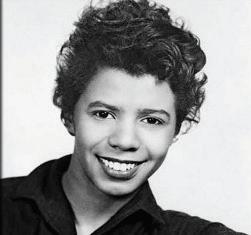
Hansberry came from an exceptional family. Her father, Carl Augustus Hansberry, founded Lake Street Bank, one of the first banks for African Americans in Chicago, while her mother, Nannie Perry Hansberry, was a driving school teacher.
Growing up, she was surrounded by influential African American leaders, intellectuals, and artists who frequented her home, including W.E.B. DuBois, Paul Robeson, Langston Hughes, Duke Ellington, and Jesse Owens.
Her childhood was marked by adversity when her family challenged Chicago’s restrictive housing covenants in 1937. They faced threats and violence, including a brick thrown through their window. This experience and the subsequent legal battle shaped Hansberry’s understanding of racial inequality and fueled her determination to fight for justice.
At the University of Wisconsin-Madison, Hansberry delved into theater, politics, and the global anti-colonial movement. She moved to New York in 1950, where she immersed herself in the vibrant literary and political scene, studying under luminaries like DuBois. It was there that she met and married Robert Nemiroff, a white Jewish writer who shared her political beliefs.
Hansberry’s artistic talent came to the forefront with the success of “A Raisin in the Sun.” The title was taken from the poem “Harlem,” which was written by family friend Langston Hughes.
She worked at the Black newspaper Freedom and other odd jobs to raise funds for the production of the play at the Ethel Barrymore Theater, which opened in March, 1959
Inspired by her own experiences and the lives of working-class African Americans, the play resonated deeply with audiences.
Contrary to expectations, it ran for 19 months on Broadway, giving voice to African American stories and breaking barriers. The play received critical acclaim, earning Hansberry four Tony Award nominations and made her the youngest person to receive the New York Drama Critics’ Circle award for best play in 1959.
Even after achieving success, Hansberry continued to explore thought-provoking themes. Her play “The Sign in Sidney
Brunstein’s Window” addressed race, gender, and sexuality.
Tragically, she passed away from pancreatic cancer in 1965 at the age of 34, leaving a lasting legacy. Her funeral was attended by an overflowing crowd, highlighting the impact she had made.
Posthumously, her play “Les Blancs” debuted on Broadway in 1970, further solidifying her place in the theatrical canon. Nemiroff lovingly completed her unfinished works, ensuring her voice would continue to be heard.
Lorraine Hansberry’s brilliance as a playwright, fearless activism, and unwavering commitment to racial justice continue to inspire artists and activists. She shattered barriers and created space for African American stories and presence on the stage.
Her legacy serves as a reminder of the transformative power of art and activism in driving social change, leaving an indelible mark on American theater history.
By Family Support Advocates

On Nov. 8, 2020, Andre Robinson Jr’s life was violently taken. Oakland Police Department patrol officers responded to the 1000 block of 71st Avenue and located a male with gunshot wounds.


The 19-year-old was transported to Highland Hospital, where he was declared dead. When Latanya and Andre Robinson Sr. f received the call that their Sun, as his mother called him, had been killed, the whole family’s world was turned upside down.
Known as a very loving and respectful young man, Andre took pride in being a big brother to his younger brother and even to his older sisters. He really valued family and friends and loved his dog, Bella Bands.
Andre’s parents and entire family continue to be devastated by his loss. They said, “Our Sun is not just a number. He was not just # 99 in 2020. He was a person who is loved and missed by his family. If anyone has information, PLEASE,
reach out to the Oakland Police Department.”
The Family Support Advocates is a committee of the Violence Prevention Coalition. Their mission is to advocate for local, state, and federal policies and legislation to enhance and expand support to families and friends of those who experienced violence; for more compassionate and transparent communication between law enforcement, the district attorney with the family of homicide victims and to push for the elimination of all violence, but particularly gun violence and homicides.
The Family Support Advocates stand with Andre’s grieving family and loved ones to ask that anyone in the community with information that can lead to the arrest and conviction of the murderer to come forward and contact the Homicide Section at 510-238-3821 or the TIP LINE at 510-238-7950. CrimeStoppers of Oakland is offering a reward for an arrest in this case.
Need help paying for transit? Get up to 50% off Bay Area bus, ferry, train! See if you qualify clipperstartcard.com THE POST, June 7 - 13, 2023, Page 8 postnewsgroup.com
Chicago’s Mayor Brandon Johnson, Chicago Crusader Newspaper.
Andre Robinson Jr. Photo courtesy of the family.
Lorraine Hansberry. Missomnipedia fair use photo.
June 18 San Francisco Juneteenth
Weekend at Gilman Park
Celebrate Freedom Day and honor fathers with live music, food, and fun at the SF Juneteenth Fathers Day Festival on Sunday, June 18 from noon to 6:00 p.m. 903 Gilman Ave., SF Oakland
June 10:
BoomShake Music, in partnership with the Black Cultural Zone, as part of Oakland Juneteenth Liberation Month invites you to a community arts & culture gathering sparked by the seeds, roots, and branches of artist, teacher, mother, and friend Monica Hastings-Smith aka Mo’ Clearly, who transitioned to the ancestor realm in June 2021. 1 p.m. – 6 p.m., Free. Liberation Park, Oakland, CA 7101 Foothill, Oakland
June 16:
Oakland Rocks’ Juneteenth week: Celebrating the journey, justice, resilience, and progress culminates in a lunchtime concert featuring the West Coast Blues Society, performances by Oakland’s Poet Laureate and Youth Poet Laureate with remarks by Vice Mayor Mayfield. 11 a.m.1 p.m., Oakland City Hall Plaza, 14th and Broadway.
Odun Ayo: A Juneteenth Celebration of Black Families, Students and Staff Thriving in Black Joy and Excellence in OUSD. The evening celebrates Black students, staff, and families in Oakland schools. Featuring live performances by Queen Iminah and African American Females of Excellence (AAFE), Kingmakers of Oakland, Spear of the Nation,
interactive activities, and community resources to uplift Black Joy and Excellence in Oakland Unified School District. Organized by Spearitwurx with AAFE, African American Male Achievement (AAMA), and OUSD Office of Equity. 5 p.m. - 9 p.m. at Oakland Museum of California, 1000 Oak St., Oakland CA

June 17
Afrocentric Oakland FAM
BAM Oakland’s 14th Annual Juneteenth Festival Lake Merritt Amphitheater Lake Merritt Boulevard Oakland, CA 94612
A celebration of Black/African culture that has become a familyfriendly tradition for thousands of Bay Area residents. Father’s Day tribute have been a guaranteed good time for the whole family. For more, info, go to AfrocentricOakland.com. 12 noon – 8 p.m.
Berkeley
Berkeley Juneteenth
June 11.
Week:
Prayer for Peace: Pastor Michael Smith, McGee Avenue Baptist Church, 1640 Stuart St. calls for the community to come together at their places of worship and pray for peace, protection for children, community healing, equal justice under the law, and to remember the hope and promise of Juneteenth. An all-denominational and community inclusive event that can be repeated on June 18. 11 a.m.- noon.
June 18
36th Annual Berkeley Juneteenth Festival Sun. 18, 2023, 11 a.m. -7 p.m.
3271-3299 Adeline St. Berkeley. Performances by Sonny Farley, Junior Toots, Nkan music, Guitar Trifecta, II Funk Ky Shu’s Wit Nu Soles, Nat Bolden, Shan-
non Rhodes, SambaFunk!, Deanna Brewer, Blackcat Zydeco
Richmond and West Contra Costa County
Richmond
June 17
Juneteenth Family Day and Festival
A Juneteenth parade 10:00 a.m. at Booker T. Anderson Community Center, 960 South 47th St. Richmond, CA 94804 is followed by a festival at 3230 Macdonald Ave. Richmond, CA, 11:30 a.m. to 6 p.m.
Albany
A free, outdoor Juneteenth and Father’s Day Celebration including music, art, food, dance, a maker’s fair and more in store. It features performances by: Terrie Odabi (blues), African Heritage Ensemble (African drumming workshop/performance), Keith & The KC Kids (classical fusion), Skip the Needle (rock), Al Lazard and the World Street Players (New Orleans Funk), Tiffany Austin (jazz/soul), Valerie Troutt’s MoonCandy (live house ensemble), DJ K-La V (soulful party music). For more information, go to AlbanyJuneteenth.com
American Canyon
The 2nd Annual Juneteenth Community Fest will be held on Sunday, June 18, 2023, from 1 p.m. - 6 p.m. at Main Street Park, 5500 Eucalyptus Dr., in American Canyon.
Brenda Knight will be the MC and Dr. Lawrence VanHook will be the keynote speaker.
For additional information contact: Brendaknightevents@ yahoo.com or 707-319-4773.
East Contra Costa County
June 17 Antioch
Grace Bible Fellowship Church, from 11:30-4:30 p.m. vendors and kid zone, live music, food and drinks. FREE live entertainment featuring headliner R&B Musical Group Surface, R&B sensation Niecey Living Single, Christian Rap Artist CJ Emulous, Gospel Artist Alfreda Campbell. 3415 Oakley Road, Antioch, CA 94509
Pittsburg
Souljah’s 12th Annual Juneteenth Celebration family event at a new location, City Park – Railroad and Civic avenues, noon5:30 p.m.
June 18
Antioch
Juneteenth: A Freedom celebration. Rides and games; live entertainment, free food and drinks and more. Williamson Ranch Park, Lone Tree Way & Hillcrest. Antioch, CA 94531 noon - 5 p.m. Pleasant Hill
The event will be held at the City Hall lake, 100 Gregory Lane, from 4:30 p.m. - 7:30 p.m. and will feature: a performance for the kids by Unique Derique, a visit from Princess Tiana of ‘The Princess and the Frog,’ a West African highlife band, Sweet Mother Food Truck & The Guzzler Bar Truck and an art display
June 25
Concord
Juneteenth: “Honoring the Past, Inspiring the Future” includes vendors, games, food, crafts, music, dance, speakers Sunday, June 25, Todos Santos Plaza, 2175 Willow Pass Road, Concord, CA, 1 p.m - 3 p.m., South Alameda County
June 15
Hayward
The summer’s first Thursday
street party will be presented by the Hayward Chamber of Commerce in conjunction with the city’s Juneteenth celebration organizers. 5:30 p.m. to 8:30 p.m. at B and Main Streets.
June 17
The West Coast Blues Society will present the Hayward Russell City Juneteenth Celebration music festival on the plaza behind City Hall with jazz, blues, R&B and gospel performances, including a special guest appearance by the legendary Johnny Rawls, of Hattiesburg, Miss. For more information, call (510) 472-8800 or visit www.westcoastbluessociety. org.
June 19
On national Juneteenth Day of Observance, the Pan-African flag will be flown on Hayward City Hall Plaza. The Hayward Public Library will also be presenting its annual Juneteenth Online Readathon.
Livermore
June 17
Juneteenth Celebration in
Partnership with Tri-Valley for Black Lives
The local celebration, including music, art, drumming, singing, dancing, and musical performances. 10 a.m. – 4 p.m. at Bankhead Plaza, 2400 First St, Livermore, CA 94550
June 17
Vallejo
33rd Annual Vallejo Juneteenth Festival & Parade will take place at Martin Luther King, Jr. Park downtown behind City Hall at Mare Island Way & Capitol Street. This year’s event will feature a parade in downtown Vallejo. 11 a.m. - 5 p.m.
June 19
Stockton
“Juneteenth Celebrating Freedom, Community and Education” will be held at Weber Point Event Center, 221 N. Center St., Stockton. 10 a.m. – 6 p.m. For more information, contact Ms. Rosemarie 209-430-4096; Ms. Gloria 209-481-6184 or Ms. Rachel 209-718-9828.
VETERANS OF OAKLAND CALIFORNIA
Veterans of Foreign Wars Post 2727, located in Oakland, CA is seeking new members to join its Post.
Must meet eligibility as follows:
1) Proof of Service by providing a copy of your DD Fm 214
2) Must have been awarded a recognized campaign medal or badge
3) Served in Korea between 30 June 1949 until present, or earned Hostile Fire or Imminent Danger Pay as evidenced by your DD Form 214.
4) Overseas service in hostile areas.
If eligible, Post 2727 will pay the membership fee for the pt 2 years Of your membership.
For more eligibility details and to apply, please contact one of the following individuals:
Arthur Butler, 253-343-8554
Aumont Phipps 510-677-4843
AL Dean 510-332-2891
postnewsgroup.com THE POST, June 7 - 13, 2023, Page 9
... Continued from page 5
Juneteenth ‘Round the Bay’ Guide
Continued from page 1
SHCLA is a non-profit land trust created in 2021. Start-up funding came from the Mental Health Services Act which taxed homes worth over $1 million and put those tax revenues into special services for the mental health pop-


Oakland’s Top Cop Search ...


Continued from page 1
member of the police commission and former three-time chair of the commission, wrote a letter to the City Council on June 5 adding her concerns about Milele’s leadership:
“Chair Milele arbitrarily has no responsibility to anyone but herself. The ‘Chair-driven’ protocol she has put in place does not treat commissioners as the code of conduct requires with fairness and equity, it is a clear abuse of power. It is also in direct violation of the very measures LL and S1 which Oakland voters supported.
“It is my professional opinion that Chair Milele has abused power, retaliated against commissioners and has not been accountable or transparent to commissioners or the community. Her chairmanship should be ended as soon as possible.”
In her response to the KTVU report and her critics, Milele
ulation across California. SHCLA is thought to be an innovative approach to resolving mental health concerns because it uses housing stability as an intervention.
“We increase the likelihood that low-income residents with severe mental health issues can improve their mental health symptoms and recover when they have stable housing,” Ikharo says. “We
wrote, “The extremist attack by an unelected, unaccountable, small group of politically ambitious zealots counters the will of the Oakland electorate and makes flagrantly false allegations. That a controversial local TV outlet, hoping to stop the erosion of its
are working to increase solutions for marginalized populations largely by combining the private sector, non-profit sector and government sector believing more coordination is needed between the three, with the notion that the three entities should be borrowing ideas from each other.”
police chief, she submitted a detailed timeline of the commission’s efforts to initiate a search, adding that “A vigorous, ongoing search for a new Oakland police chief is and has been underway for months. We don’t understand why the mayor would have said the Commission is not searching for a consultant when as recently as [June 6] the Commission’s search committee met with the City’s HR Department and nominee search firm.”
Barbara Lee Pushes MLB...
Continued from page 1
efforts and hard-earned triumphs.
The A’s organization adds significant tangible economic benefit to our region, including numerous good paying jobs at Oakland Coliseum. But as important is the sense of unique shared cultural identity that surrounds the team and its local fanbase.
The City of Oakland and Alameda County have worked to assemble a compelling plan for a new ballpark and surroundings, including items the A’s had previously publicly said were indispensable for a new home field. And yet recent press reports suggest the team and Major League Baseball are pursuing an alternative that includes none of these assets.
another.” That same month, in an interview published in the Los Angeles Times, you are quoted as saying “The principal utility of the exemption is that it allows us to be more aggressive than other leagues in preventing franchise relocation. It is a fan-friendly doctrine in the law.”

dwindling audience, would simply repeat the libels with a reckless disregard for the truth prompts this response.”
Denying that the commission has failed to move promptly to hire a search firm to find a new


Milele also accuses her critics of an attempt to seize power. “This is an attempted power grab by a small band of political extremists with a personal agenda that will make the Oakland Police Department still more difficult to reform and continue the seriously mounting crime issues plaguing the good people of Oakland.”
The Oakland Post will continue to follow this story and the response to these issues by city and community leaders.
Uptown Station’s New Community Space Welcomes FAME Oakland
First African Methodist Episcopal Church moves downtown to former Sears, Capwell’s site
I believe strongly that our community also provides value to the A’s. Oakland has been the scene for this franchise’s greatest successes. East Bay performing artists have celebrated the A’s musically, and the A’s team colors and style feature prominently in local fashion, providing the franchise with significant value and cultural caché. Not least, the fans and employees of the A’s and Oakland Coliseum have made their own significant contributions to the team’s bottom line for fiftyfive years.
These reports lead me and many in the East Bay to conclude that the A’s and MLB have in fact not been acting in good faith. As a federal legislator, I believe such actions are inconsistent with federal policy goals related to the MLB’s exemption from antitrust scrutiny.
In a July 2022 letter to the U.S. Senate Judiciary Committee, you volunteered that, “The antitrust exemption helps ensure that MLB Clubs maintain deep and enduring relationships with their fan bases, whereas franchises in other major professional sports regularly relocate from one market to

Yet in this case, Major League Baseball is actively seeking to subsidize the relocation of the Oakland A’s through your public offer to waive MLB’s standard relocation fee and actively take crucial revenue, and a cultural staple, from the East Bay.
MLB’s continued active encouragement of the A’s abandonment of Oakland and the East Bay runs counter the rationale supporting MLB’s century-old exemption from federal antitrust law. I ask you to reconsider efforts to subsidize or otherwise encourage the relocation of the Oakland A’s out of the East Bay. Thank you for your full and fair consideration of this matter.
The City of American Canyon Hosts 2nd Annual Juneteenth Celebration



The City of American Canyon in partnership with the American Canyon Arts Foundation, will host their 2nd Annual Juneteenth Celebration.

The Juneteenth Community Fest will be held on Sunday, June 18, 2023, from 1 p.m - 6 p.m. at Main Street Park, 5500 Eucalyptus Dr., in American Canyon.



Planned again by Brenda Knight Events, the celebration will open with a Power Hour of Gospel with Rev. Terrence Nichols as MC. Singers featured are Rev. James Williams, Michael Nelson and JaCoree Prothro. Praise dancers will also be performing and a blessing of the event.
Knight will MC the daylong
event which will feature a dance party with Top Shelf; Ronnie Stewart and the West Coast Caravan of All Stars featuring Blues legend Johnny Rawls.


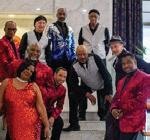

Closing out the evening will be 11-time Grammy winner, Tony Lindsay featuring Eddie M from Prince and Sheila E, Janice Maxie Reid on keyboard and Jeff Minnieweather on drums.





The keynote speaker is Dr. Lawrence VanHook and the Buffalo Soldiers. There will be vendors, food trucks and a Kidzone.
Bring your hats, sunscreen, lawn chair and blankets. All fathers will be entered in a free Father’s Day Raffle.
Free parking is available at

Walmart which is walking distance to Main Street Park.

The event is FREE to the public.
We thank our sponsors for making this possible: City of American Canyon, American Canyon Arts Foundation, American Canyon Tourism Improvement District (TBID), Walmart, Visit Napa Valley, Recology, Napa Junction, Napa Valley Vintners, Napa Ford, American Chamber of Commerce, Fastsigns, BINZ Company, Lions Club, Cotton Realty, and American Canyon Community and Parks Foundation.

For additional information contact: Brendaknightevents@yahoo. com or 707-319-4773.
By Post Staff FAME Oakland, the East Bay’s oldest African American Church, has relocated to Block, Inc.’s new Oakland Community Space located at 1955 Broadway. This move is the second after a three-alarm fire first destroyed the historic church building that was a beacon of light for many years on Telegraph Avenue.
Rabbi Bloom and the Temple Beth Abraham Family welcomed the FAME family to worship in its synagogue immediately following
the horrific fire on Feb. 20.
Now, First African Methodist Episcopal Church members will worship in the Community Space, which is free for 501(c)3 community organizations to gather and to be used as a disaster relief space, as it is being used in this case.

“The ongoing support our church has received is a testament of God’s love,” said Dr. Rodney Smith, senior pastor of FAME Oakland. “The initial shock has faded and the real work to rebuild, not just a church, but a community

institution has just begun. Every time a member of this community, whether elected, business, or faith leader steps up it is confirmation that we will carry this load together.”
Beyond grateful for Block, Inc. support, First Lady Rev. Amittia Bradley Smith added, “The community is encouraged to stay up to date with our rebuilding efforts by connecting with us on social media and signing up for our mailing list at www.fameoakland.org., the best is truly yet to come.”
FAME will host services every Sunday at 10 a.m. at Oakland Community Space every Sunday at 10 a.m. For questions, email info@fameoakland.org or call the church office at 510-655-1527.
Block, Inc. is a global technology company with a focus on financial services, made up of Square, Cash App, Spiral, TIDAL, and TBD. The Community Space opened in Summer 2022 and has hosted more than 100 events in support of 50+ local nonprofit organizations. To learn more about reserving the space go to, www. block.xyz/inside/oakland-community-space.

THE POST, June 7- 13, 2023, Page 10 Invisible Pipeline to Homelessness ...
postnewsgroup.com
Celebrants
first Juneteenth celebration in 2022. Photo
of the
at American Canyon’s
courtesy
American Canyon Juneteenth.
Oakland Community Space photo courtesy of Block, Inc.
Rev. Dr. Rodney D. Smith & Rev. Amittia Bradley Smith
Patch of the Oakland Police Department
