Oakland Post
By Carla Thomas
Mistah FAB’s DOPE Era
Company hosted the “Let’s Go Oakland 21st Annual Turkey and Food Giveaway” on Tuesday outside North Side Market at 45th and Market streets in North Oakland.
DOPE, which stands for “Developing Opportunity for People to Evolve,” lived up to its name as Mistah FAB and 10 collaborating organizations distributed food and essential supplies to the community. With enough donations to serve nearly 1,000 families, Mistah FAB shared his gratitude.
“This is the most we’ve ever had to give away,” he said. “We also appreciate all the generous donations of food, toiletries, and supplies that made this possible.”
Mistah FAB emphasized the challenges many families face during the holidays — whether missing deceased loved ones or not having enough money for gifts or food.
“We’re stepping up to help and uplift our community, because people right here in our own neighborhoods are struggling with basic needs. We’re here to ease that pressure and show that we care. We want everyone to know that together, we can make it.”
Oakland Mayor Barbara Lee attended the event, thanking the many volunteers, community members, and organizations who
came together to make a difference in Oakland. In addition to food, attendees received new coats, blankets, socks, and toiletries. Collaborating organizations included the Oakland Private Industry Council, One Nation Dream Makers, Side Door, the African American Sports and
Entertainment Group, Cell Block to City Block, Black Women Organized for Political Action (BWOPA), Grown Sexy Divas, Prison Focus, Cage University, Formerly Incarcerated Giving Back (FIGB), and the Oakland Post.
Richard Johnson, the CEO
and to remove
By
Many local residents are opposing a proposal backed by the Oakland Police Department and supporters on the City Council to hire an out-of-state company to operate surveillance cameras on city streets, which failed to pass on Nov. 18 at the City Council’s Public Safety Committee.
The proposal failed on a 2-2 tie vote. If it had passed, the resolution would have been forwarded to the
City Council for a final decision. Councilmembers Carroll Fife and Rowena Brown voted against the $2.25 million contract with Flock Safety. Councilmembers Charlene Wang and Ken Houston voted in favor. Some supporters of the Flock resolution hope to bypass the Public Safety Committee and take the proposal directly to the full City Council, where Flock may have a greater
By Tone Oliver and Pastor Ken Chambers Special to The Post
More than 500 community members gathered on Saturday, Nov. 22 at the Interfaith Council of Alameda County (ICAC) Hub for a major Community Harvest Food Giveaway organized by Helping Others Win, founded by LaMel Smith.
“My mission,” said Smith, a long-standing leader in Oakland’s grassroots service community, “is rooted in the belief that if you love people, you feed them — just as scripture teaches.”
The event, held at West Side Missionary Baptist Church (WSMBC) at 732 Willow St. in West Oakland, drew families, volunteers, and partner organizations including the Oakland Ballers, Project Pet, Bay Area One Health Coalition, HIV Education and Prevention Project of Alameda County (HEPPAC), Bay Area Association of Black
Psychologists, Inc. (ABPsi), Maddie’s Fund, and ICAC. The Ballers’ commitment to showing up for Oakland families was clear throughout the event.
With rising needs across the region, the Oakland Ballers and their nonprofit partners are working to ensure families not only receive holiday cheer but also access to essential support, resources, and community care,” said Laura Geist, Oakland Ballers’ general manager.
Marshall Williams, executive director of the Bay Area One Health Coalition and Project Pet, emphasized the importance of united partnerships:
“Project Pet and The Bay Area One Health Coalition were proud to stand by Helping Others Win, WSMBC, ICAC, HEPPAC, ABPsi, Maddie’s Fund, and The Oakland Ballers for a successful, responsive Community Harvest session,” Williams said. The event also featured live music, bringing joy and energy
Post Staff
By Carla Thomas
Marshall Williams (left) of the Bay Area One Health Coalition and Project Pet at the Community Harvest Food Giveaway with Oakland Ballers General Manager Laura Geist (center), and giveaway founder LaMel Smith. Photo by Tone Oliver.
DOPE Era and Formerly Incarcerated Giving Back give away turkeys, sides, supplies and more in North Oakland. Photo by Jonathan Fitness Jones.
Chase Vice President - Community Manager Myesha Brown leads a presentation on fraud prevention, sharing tips and insights on fraud prevention at the Chase Bank’s Broadway branch in downtown Oakland. Photo courtesy of Chase Bank.
Flock surveillance camera. Courtesy photo.
School Board President Jennifer Brouhard (left) and Vice President Valarie Bachelor (right). File photos.
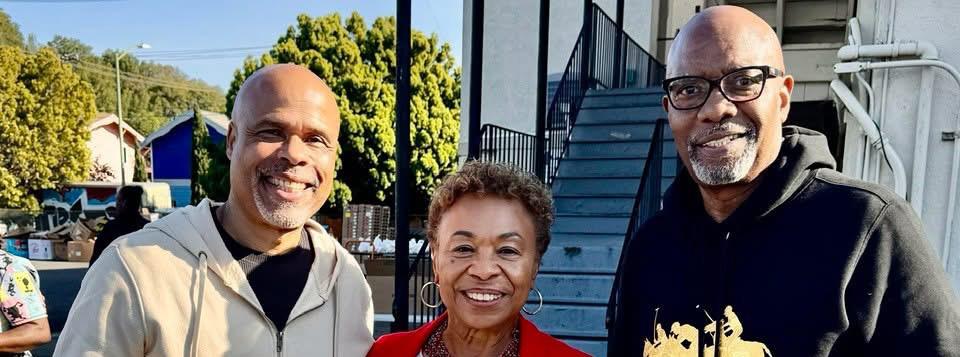
Shelly Tatum (left) joins the Honorable Mayor Barbara Lee (center) and Pastor Michael Wallace (right) at the giveaway. Photo courtesy of Shelly Tatum.
The bags of turkeys and other food lined up for distribution. Photo courtesy of Shelly Tatum.
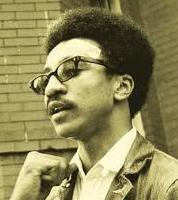
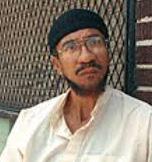
H. Rap Brown. Facebook photo. Imam Jamil Abdullah Al-Amin. Scoop News USA photo.
By McKenzie Jackson California Black Media
A new report reveals that while Black women in California face some of the steepest inequities in wages, health, and housing, they also display remarkable strength through high civic engagement and community leadership.
Black women in California earn just 60 cents for every dollar paid to White men — a gap so wide it won’t close until 2121 if current trends continue.
That statistic headlines the California Black Women’s Collective Empowerment Institute’s (CBWCEI) newly released “2025 State of Black Women in California report,” a sweeping analysis of disparities in education, health, housing, and economic mobility.
CBWCEI President and CEO Kellie Todd Griffin says the findings aren’t meant to shock — they’re meant to spark action.
“The data gives us direction,” she said. “The lived experiences of Black women give us urgency. We publish this report to push people.”
The 21-page report, authored by Griffin and research director Dr. Astrid Williams, was unveiled during a Nov. 12 online briefing.
The report examines the realities facing California’s 1.2 million Black women and girls across critical areas, including education; economic mobility; health indicators and disparities; housing and environmental justice; violence and safety; the underfunding of Black women-led organizations and political power; and civic engagement.
Speakers during the video conference included California Black Women’s Health Project CEO Sonya Young Aadam; EVITARUS Managing Partner Dr. Shakari Byerly; Jeness Center President Karen Earl; Los Angeles County Supervisor Holly J. Mitchell; and Mount Saint Mary’s University Strategic Initiatives and Partnerships Vice President Dr. Krishauna Hines-Gaither.
According to the report, 25% of the California’s Black women and girls live below the federal poverty
line, which is double the rate of White women.
Over 80% of Black households in the state are led by women who are the primary breadwinner.
However, Black women are twice as likely to be unhoused as White women. Black women are also evicted at nearly double the rate of any other group in Los Angeles County — home to over 454,000 Black women.
Regarding health, Black women have elevated rates of hypertension, stroke, and diabetes, with social stressors such as racism, poverty, and caregiving burdens as key contributors. Eighty percent of Black women have health insurance but still suffer from higher rates of chronic illness such as diabetes or heart disease. One in three delay care due to cost.
According to CBWCEI, Black women are up to six times more likely to die from pregnancyrelated causes than White women.
“We live at the intersection of the best and worst — unmatched resilience and unacceptable health disparities,” Aadam said.
Despite these challenges, the findings weren’t all bleak. Black women in California vote at higher rates than any other group. Three Black women represent the state in Congress, nine serve in the Legislature, and 243 hold local government leadership positions, including six county supervisors and two mayors.
Byerly noted this contrast.
“Although we have some of the highest hurdles to climb, we actually over-index as it relates to civic engagement and civic participation in other ways,” she said. “Over two-thirds in our recent survey say they have donated money, time, and have volunteered in the face of natural disasters, wildfires, and ICE raids. They have provided childcare to their neighbors and family members.
They are housing their loved ones.”
Black women, Byerly explained, are “net contributors.”
Request
Our Best Defense Against Trump ... Continued from page 2
Continued on page 7
for
Proposals
By Edward Henderson California Black Media
On Nov. 20, the Office of Community Partnerships and Strategic Communications (OCPSC) hosted an online forum with ethnic media outlets across the state to highlight two statewide programs that benefit all Californians: the CalAssist Mortgage Fund, which provides disaster-related mortgage relief, and Check to Protect, a vehiclesafety campaign led by the National Safety Council and supported by the California New Motor Vehicle Board.
While these programs serve residents across the state, the conversation was designed specifically for Asian American and Pacific Islander (AAPI) and Black media outlets to ensure communities that have been historically underrepresented—and often disproportionately affected by disasters and safety recalls—receive timely, accurate, and culturally relevant information.
“These families have lost everything—not once, but repeatedly,” said Rebecca Franklin, chief deputy director of the California Housing Finance Agency (CalHFA).
“And while they work to rebuild, they are still responsible for their mortgage payments, adding emotional and financial strain to an already difficult situation,” Franklin continued.
The CalAssist Mortgage Fund, administered by CalHFA, recently expanded its income limits, allowing thousands more California homeowners to qualify for mortgage assistance after losing or sustaining severe damage to their homes in recent disasters.
In Los Angeles County for example, homeowners earning up to $211,050 may now be eligible for up to $20,000 in mortgage payment grants that never have to be repaid.
One of those families is the Lee family in Altadena, whose home was destroyed by the Eaton Can-
–The Residences at Liberation Park GC Bid
Black Cultural Zone CDC, in partnership with Eden Housing, Inc., invites qualified General Contractors to submit proposals for general contracting services for the Residences at Liberation Park development. Our mission is to ensure an equitable, inclusive, and community-driven process that aligns with local and funding requirements.
Please review the Request for Proposals by visiting: https://edenhousing.org/request-forproposals-the-residences-at-liberation-park-gc-bid/ Important Dates
RFP Questions Due: Monday, November 3, 2025
FAQ / RFI Responses Published: Monday, November 17, 2025
RFP Responses / Submissions Due: Monday, December 1, 2025
yon Fire.
“I am grateful for the CalAssist Mortgage Fund. Thanks to the program’s support with three months of my mortgage, I have been able to put that money aside to help with living expenses and add to my rebuild fund,” said T. Lee.
To qualify, the home must have been your primary residence and destroyed or severely damaged in a qualified California disaster between January 2023 and January 8, 2025—including the 2025 Los Angeles wildfires, San Diego floods, the Park Fire, and disasters in Butte, Tehama, and Plumas Counties.
Income limits apply, and eligible properties include single-family homes, condos, or permanently affixed manufactured homes with up to four units.
The Check to Protect Campaign reminds Californians to check their vehicles for open safety recalls. California currently leads the nation with more than 6 million vehicles with unrepaired safety recalls, including over 110,000 “Do Not Drive” recalls, where the risk of crash, fire, or injury is severe.
“Vehicle recalls disproportionately affect communities of color, rural communities, and low-income communities,” said Kimberlee Bay, assistant director and equity officer for the California New Motor Vehicle Board.
Visit CheckToProtect.org then enter your license plate or VIN number to check and see if your vehicle has any open recalls. Repairs are free at authorized dealers, regardless of where the vehicle was purchased. Anyone can bring the vehicle in for service.
San Joaquin resident Irina Garcia-Martin shared her experience navigating the site when she found out her vehicle had an open recall for her airbags.
“I checked the site and called the dealership. They set up an appointment. I took my van in. The process was so easy, quick, and free,” Garcia-Martin concluded.
By Joe W. Bowers Jr. California Black Media
California’s latest School Dashboard makes one thing clear: Black students are making progress, but not nearly fast enough — and the public education system is still not organized to deliver the excellence they deserve.
The Dashboard, a colorcoded statewide K-12 public school accountability tool, rates schools and districts on English language arts (ELA), math, chronic absenteeism, suspension, graduation, and college-career readiness. Five colors — Blue, Green, Yellow, Orange, and Red — show, from high to low, how well students are performing and how much progress they’re making. This year, African American students continue to score lowest among major racial groups across most academic indicators.
State Superintendent of Public Instruction Tony Thurmond says the results reveal both momentum and a mandate for urgency. “Our students are gifted; the system must rise to meet their potential,” he said.
Thurmond points to statewide gains: Black students posted a 2.4% increase in ELA proficiency, 2.3% in math, and 2.1% in science, alongside increases of 3.5% in graduation rates and 3.1% on the College & Career Indicator.
Those improvements, he said, “are showing results” from state investments in literacy coaches, tutoring, teacher residencies, community schools, and mental health supports.
But progress, Thurmond stressed, “Is not enough. We have more work to do.”
California Black Media (CBM) sought out leading Black educators across the state — including Dr. Margaret Fortune, founder of Fortune School; Dr. Ramona Bishop, former Vallejo Unified Superintendent and co-founder of Elite Public Schools; Compton Unified Superintendent Darin Brawley, Ed.D.; and the California School Boards Association (CSBA) Chief, Communications Troy Flint, which represents thousands of school board members statewide
— to ask the central question: Why are majority-Black students underperforming, and what will it take to close the gap?
What emerged is a set of insights shaped by each leader’s role — and ultimately reinforcing one another.
Fortune, whose charter schools serve a majority-Black student body and outperform county and state averages, says the issue isn’t student ability — it’s whether schools are designed to help students succeed.
“Black kids are very, very smart,” she said.
For Fortune, the question is whether schools are designed to produce strong outcomes: highquality teaching, tight assessment cycles, re-teaching when needed, and classrooms where students can learn without disruption. Her schools’ results, she argues, show what’s possible when instruction is rigorous and expectations are high. But she says the state still hasn’t invested at the level necessary to change outcomes statewide.
Bishop described the problem in sharper terms. “There’s no accountability… for any students in these systems,” she said. Districts can remain in the red or orange year after year.
“I’ve never seen a superintendent lose their job because Black students aren’t performing,” she said.
Brawley leads one of the state's most improved districts. African American students in Compton outperform African American students statewide on all measures. He attributes the gains to disciplined systems — “setting the vision,” developing SMART goals, holding regular principal data chats, and using performance data to adjust instruction throughout the year. He stressed that Compton’s progress comes from consistent monitoring, clear expectations, and staying focused on results for every student group. While encouraged by the improvements, Brawley cautions that no one should “pat themselves on the back” while achievement gaps remain.
RFP Shortlist Interviews (in-person): Monday, December 15, 2025
GC Selection Announced: Monday, January 5, 2025
Contract negotiation / execution: Through April 2026
Adult Day Program
Adult Day Program
Dedicated staff needed to work with individuals with developmental disabilities in communitybased settings, or environments.
Dedicated staff needed to work with individuals with developmental disabilities in communitybased settings, or environments.
Qualifications: High school or equivalent. Driver’s license. Dependable and efficient. Background check. Physical exam and TB test.
Qualifications: High school or equivalent. Driver’s license. Dependable and efficient. Background check. Physical exam and TB test.
Training available. Decent wages. Please call (510) 690-9570.
Training available. Decent wages. Please call (510) 690-9570.
Gov. Newsom Responds to Federal Court Blocking Texas Redistricting Plan
By Bo Tefu California Black Media
Gov. Gavin Newsom responded to a federal court ruling that blocked Texas’ mid-decade congressional redistricting plan, emphasizing that the decision does not affect California’s own redistricting efforts.
The ruling came after Texas lawmakers redrew congressional maps earlier this year, following pressure from President Trump to secure additional Republican-leaning seats ahead of next year’s congressional midterm elections. The court found “substantial evidence” that Texas racially gerrymandered its 2025 map, invalidating the changes.
“Donald Trump and Greg Abbott played with fire, got burned and democracy won,” Newsom wrote on X following the ruling. “This ruling is a win for Texas, and for every American who fights for free and fair elections.”
He clarified that California’s congressional map, approved by voters through Proposition 50 in a special election, will remain in place. Lawmakers had removed a trigger clause linking California’s redistricting to changes in other states, making the Texas ruling irrelevant to California.
Paul Mitchell, the consultant hired to draw the new California districts, confirmed the state’s maps would not change.
“The trigger language was re-
moved in the legislative process as it was clear that TX was redistricting. So, even if their map is invalidated/postponed, the Prop 50 maps stay in place,” Mitchell wrote on social media.
Earlier this year, California lawmakers passed bills to redraw the state’s congressional map, potentially adding up to five Democraticleaning districts in response to proposed Republican gains in Texas.
The Trump administration has sued California over its new congressional maps, with a hearing scheduled for Dec. 3. Legal experts say the Federal Court ruling in Texas does not affect California
because the courts in Texas invalidated maps based on racial gerrymandering.
Loyola Law School Professor Justin Levitt told CBS News, “California drew districts overwhelmingly for partisan reasons and there’s actually nothing that the litigants in California have pointed to that indicates California focused predominantly or excessively based on race.”
Newsom emphasized that California will move forward with implementing Proposition 50, ensuring the state’s new redrawn congressional districts are finalized for the 2026 midterm elections.
California Invests in Community Health and Job
Creation Amid Economic Challenges
By Bo Tefu California Black Media
California is making major new investments in community health and manufacturing, directing nearly a quarter billion dollars toward programs that expand access to health care and to support job creation across the state. Gov. Gavin Newsom announced two sets of awards last week that aim to strengthen local services, grow regional industries, and boost the state’s long-term economic outlook.
The largest investment includes $145.5 million to 153 organizations that provide community-based health and social services. The funding is part of the state’s Providing Access and Transforming Health (PATH) Capacity and Infrastructure, Transition, Expansion, and Development (CITED) initia-
tive. The program helps local providers expand whole-person care, including housing supports, care coordination, and services for historically underserved communities.
“PATH CITED represents a vital investment in the future of Medi-Cal and the health of California,” said Department of Health Care Services Director Michelle Baass. She said the funding strengthens
1111 Broadway, Suite 800, Oakland, CA 94607 (510) 208-7400 • www.alamedactc.org
Request for Proposals (RFP) for Countywide Ramp Intersection Safety Plan Professional Planning and Public Outreach Services (RFP No. R26-0007)
The Alameda County Transportation Commission (Alameda CTC) is seeking proposals for a contract to commence services in May 2026, or as indicated in the RFP and/or appropriate addenda.
Key Dates:
• Optional Online Pre-Proposal Meeting is scheduled for Tuesday, December 2, 2025, at 2:00 p.m. Pacific Time (PT)
• Proposal due date: December 23, 2025, BEFORE 3:00 p.m. PT
This contract will be funded in whole by Congestion Management Agency (CMA) member fees and as such, will not be subject to the Alameda CTC Local Business Contract Equity Program. However, Alameda CTC strongly encourages each proposer to consider the use of local and/or small business enterprises in its proposal. Any contract resulting from this RFP will be awarded without discrimination based on race, color, religion, sex, sexual orientation or national origin. All RFP documents are available Procurement Portal at https://alamedactc.bonfirehub.com. All questions regarding this RFP must be submitted via the Procurement Portal, no later than 3:00 p.m. PT on December 2, 2025.
Submittals must be made in accordance with the instructions in the RFP.
Legislative Analyst’s Office Releases Outlook on California Budget; State Could Face $18 Billion Shortfall
By Bo Tefu
California Black Media
California may face substantial financial challenges in the 20262027 fiscal year, according to the latest analysis from the nonpartisan Legislative Analyst’s Office (LAO).
Despite a surge in state revenue this year, which brought in roughly $7 billion more than expected, the state could face an $18 billion budget shortfall, driven by rising spending commitments and continued reliance on volatile revenue sources, particularly high-income earners and major technology companies.
Legislative Analyst Gabe Petek noted that the state currently has little capacity for new spending.
“There are some particular uncertainties with the numbers, and things could shift in the coming months,” he said, emphasizing that the state’s revenue relies
Trump Admin Cuts Off Billions in Permanent Housing Funding for Homeless
By Bo Tefu California Black Media
California faces uncertainty after the Trump administration issued an executive order in late July cutting federal funding for Housing First programs, a cornerstone of the state’s homelessness strategy.
heavily on companies like NVIDIA, Apple, Google, and Meta. Analysts warned that a stock market downturn or other economic shocks could quickly impact California’s finances.
The report highlighted concerns over abnormal growth in spending, projecting future deficits of $20 billion to $30 billion.
Several factors are contributing to the strain, including expansion of state programs, new costs from recently passed ballot propositions estimated at $8 billion, and potential federal policy changes that could affect state industries and tax revenue.
Gov. Gavin Newsom has proposed additional spending, including a boost to the Hollywood tax credit, preparation for possible litigation under the incoming federal administration, and potential disaster relief funding. Analysts said addressing these proposals would require cuts to other programs, tapping reserves, or
creating new revenue sources.
Senate President pro Tempore Monique Limón (D-Santa Barbara) responded to the report on Nov. 19.
“California’s economy remains steady, despite some selfinflicted economic wounds from our own federal government, including harmful tariffs, attacks on our workforce, and shortsighted federal budget actions,” said Limón.
She added, while the LAO forecasts a shortfall, upcoming January and May forecasts will guide the Senate in crafting a responsible budget that protects education, childcare, safety net programs, health care, and public safety. Limón also thanked the LAO and stressed collaboration with the Assembly and the governor to develop the best possible budget for Californians.
Assembly Speaker Robert Rivas (D-Hollister) urged preserving core services, while Republican Vice Chair of the Senate Budget Committee Roger Niello (R-Fair Oaks) called for a review of inefficient programs. Former Senate Pro Tem Mike McGuire (D-Healdsburg) emphasized strategic investments to support families, and Assembly Republican Leader James Gallagher (R-Yuba City) warned of long-term fiscal consequences.
California currently has about $11 billion in savings, but analysts stressed that careful oversight is essential to maintain fiscal stability while meeting the state’s policy priorities.
Black Caucus Chair Sen. Weber Pierson Applauds Sen. Monique Limón, New Senate Pro Tem
a more equitable, person-centered system and helps connect Medi-Cal members to the support they need.
Newsom said the state remains committed to improving access to care and supporting locally tailored services that meet community needs.
Through the broader five-year PATH initiative launched in 2022, California has awarded more than $1.66 billion to more than 2,200 providers. The state reports that the work has expanded access for children and youth and helped reduce avoidable hospital visits.
The state is also investing nearly $100 million to accelerate manufacturing growth and create new jobs.
Nine companies received California Competes Tax Credits through the Governor’s Office of Business and Economic Development (GoBiz). The awards support an estimated 2,752 new jobs with an average annual salary of $139,000 and will generate more than $370 million in private investment.
“California’s global leadership in innovation and manufacturing continues to set us apart,” Newsom said. The selected companies represent sectors including aerospace, microelectronics, wastewater treatment, food manufacturing, and apparel.
Dee Dee Myers, Senior Advisor to the Governor and Director of GO-Biz, said the companies represent the next generation of California innovation.
State officials say the combined investments will strengthen regional economies, support workers, and reinforce California’s long-term commitment to equitable growth across health care and industry.
California’s Housing First program prioritizes providing people experiencing homelessness with permanent housing quickly, with minimal preconditions. California codified the approach in 2016, requiring state-funded programs to follow its principles.
Jonathan Russell, who oversees homelessness services for Alameda County, described the policy shift as a “tectonic shift” that has left agencies navigating conflicting federal and state rules. “There’s a lot of unknowns,” he said. Local officials are unsure how and whether they can access federal dollars to continue operating supportive housing programs.
The federal move has sparked a debate over the causes and solutions to homelessness. Housing First supporters argue that stable housing is essential for recovery from mental illness, substance abuse, and poverty. Critics contend that providing housing without behavioral requirements can fail to address underlying issues.
Local agencies are evaluating how federal funding cuts may affect operations. Many programs rely on federal dollars to provide case management, mental health care, and other essential services. Without this support, California may need to reallocate resources or seek alternative financing to maintain housing stability for thousands of residents.
Russell emphasized the urgency of clear guidance.
“We need direction quickly so that people who are already housed don’t end up back on the streets,” he said.
Despite the federal rollback, California officials stressed their commitment to Housing First. The approach has demonstrated success in reducing chronic homelessness and improving health outcomes for participants.
By Bo Tefu California Black Media
Sen. Monique Limón (D-Santa Barbara) has taken the oath of office as the 50th President pro Tempore of the California State Senate, marking a historic moment for the state’s legislative leadership.
Limón, sworn in on Nov. 17, is the first Latina to lead the Senate.
A formal induction ceremony will take place on Jan. 5, 2026, in Sacramento.
Black Caucus Chair, Sen. Akilah Weber Pierson (D-San Diego), praised Limón’s leadership and underscored the significance of her appointment.
“I am proud to congratulate Monique Limón on officially becoming Senate President pro Tempore today,” posted Weber on Instagram.
“Her heart for service and commitment to Californians will guide the Senate with integrity and purpose,” Weber Pierson wrote. “With President pro Tempore Limón at the helm, I am confident we can continue to make meaningful progress in improving the lives of families across our state.”
Limón steps into her new role as California lawmakers prepare to address major issues affecting families, workers, and communities across the state. She said the role carries weight during a pivotal moment.
“I am proud to assume the role of President pro Tempore of the California State Senate at this critical time in our state and the nation’s history,” she said. “I look
forward to working alongside my colleagues to move California forward and address the issues impacting the almost 40 million people who call this state home.”
A day after taking the oath, Limón visited a family farm in Ventura for a press conference focused on agriculture, land stewardship, and the experiences of farmworkers. She spoke about her own family’s history, noting that her grandfather picked strawberries in Oxnard and tomatoes in Salinas. She said the visit highlighted the importance of protecting the land and recognizing the traditions tied to it.
Limón also reflected on the fear many farmworkers felt during federal immigration enforcement actions.
“It is not lost on us while we are having this conversation, there are members of this community who feel the uncertainty, the fear, the concern about the safety issue, about the immigration issue,” she said.
She appeared alongside Assembly Speaker Robert Rivas (D-Hollister); Assemblymember Steve Bennett (D-Ventura); Assembly Agriculture Committee Chair, Assemblymember Esmeralda Soria (D-Fresno), and California Farm Bureau President Shannon Douglass.
Rivas said that while California agriculture remains strong, federal tariffs and “unprecedented enforcement raids” created “chaos” and “uncertainty.”
Gov. Gavin Newsom attending the COP30 conference in Brazil. Courtesy of Gov. Gavin Newsom’s Facebook page.
iStock.
iStock.
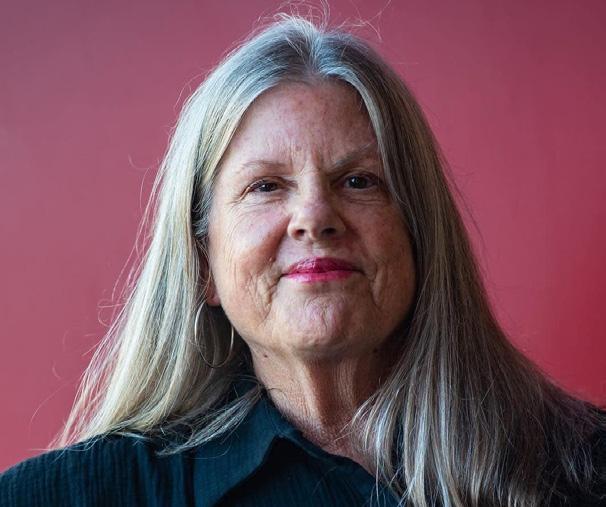
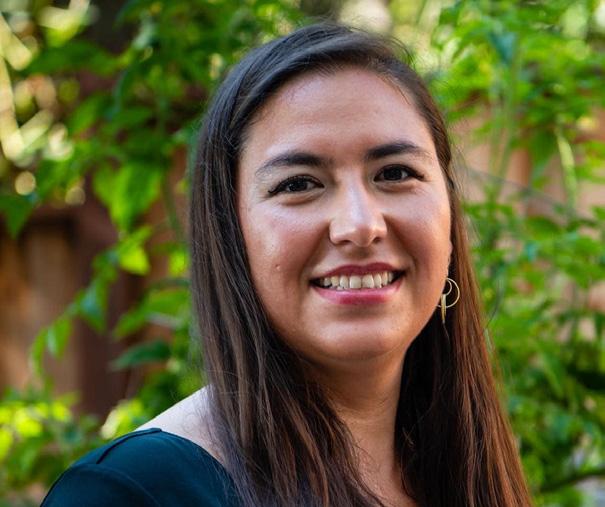
Sen. Monique Limón (D-Santa Barbara), left, and Sen. Akilah Weber Pierson (D-San Diego), right. File photo.
Oakland School District Under Pressure ...
Continued from page 1
turing of the district’s central office administration, neither of which at this point contain sufficiently deep cuts to eliminate the shortfall.
One proposal would cut 54 positions at the district office, providing about $22 million in savings.
The second proposal eliminates 48 jobs, saving about $17 million.
“There’s no way to cut $100 million, roughly 20% of our unrestricted general fund, without significant pain,” said Denise Saddler, OUSD’s interim superintendent.
“Our financial situation is genuinely urgent — we will fall back into state receivership, likely within two years, if we don’t make some changes. If we lose local control, the state will make decisions for us, and our community voice disappears.”
Urging unity, Saddler called on the board to work together, to collaborate with the community on how to move forward.
“We are absolutely in a place where we have to do less with less,” said Dan Bellino, OUSD’s chief of staff. “We can’t continue to keep doing the same work with less. These are not necessarily recommendations, but proposals to get to a balanced budget. We know these aren’t things that any of us actually want. But this is where we’re at.”
In October, the board directed district staff to develop budget cut options but with restrictions, avoiding proposals that require school closures or mergers and to stay away from cuts to school sites.
School Board President Valarie Bachelor, acknowledging that present financial conditions are hard, urged colleagues and the community not to feel defeated.
“I want our community to really think about not buying into the doom loop, that we are doomed as a district, that we must go into receivership, that we cannot handle our own business,” she said. “We must persevere over that, and we must work together.”
The board is scheduled to make a final vote on the budget cut on Dec. 10
Currently, OUSD finances are being monitored by the State Department of Education, Alameda County Office of Education, and the Fiscal Crisis Management and Assistance Team (FCMAT). The district has been warned that it could fall into state receivership again if does not balance its budget.
OUSD only left state receivership in July after 22 years, finally repaying a $100 million state loan while following the directions of state-appointed overseers.
“The clock is ticking,” said Boardmember Mike Hutchinson.
“People want to call what’s going on now ‘austerity measures’ … I guarantee you, if we take a loan from the state, they’re going to enforce every austerity measure because they’re not going to let us take 20 years to pay it back.”
OUSD’s chief academic officer, Sondra Aguilera, warned board members that there will likely be reductions in federal funding in the future, which would impact money that supports low-income students.
The board adopted an amendment approving additional plans to look at deeper budget cuts. These include reducing the numbers of contracts with outside consultants, finding ways to improve student attendance, as well as making cuts without restrictions.
At the same time the district wrestles with the current deficit, it faces tough contract negotiations with teachers and other school employees.
The Oakland Education Association (OEA) recently declared an impasse as negotiations stalled. The process moves to mediation and then potentially to fact-finding with a neutral third-party panel, which issues a non-binding recommendation.
If no agreement is reached after these steps, the union can then lawfully call for a strike, while the school district may be able to implement its last, best offer.
Making its case to the public, OEA issued a community letter saying the district has the lowest pay in the region and “suffers from 25% annual teacher turnover—a crisis for both stability and student learning.”
“Educators received no raise in 2024, and now the District is proposing no raise for 2025 and 2026,” according to OEA. “How can Oakland hope to keep teachers if the District refuses to pay them a fair wage? How can we improve student outcomes when there is no effort to build or sustain a stable, experienced workforce?”
Oakland Ballers Join Local Leaders
Continued from page 1
into the space. “Music brings diversity and culture together in the same space,” said drummer Brandon Cook, reflecting on the role of art in community service:
Faith leaders across Oakland played a central role in the event and ongoing outreach efforts.
Dr. Kenneth Anderson, pastor of Williams Chapel Baptist Church and an ICAC board member, highlighted the church’s expanding support for unhoused families:
“We’re honored to partner with local organizations serving and helping the community. ICAC is launching our second overnight Safe Car Park program for unhoused individuals living in their cars at WCBC, operating from 7 p.m. to 7 a.m. seven days a week. For more information, go to InterfaithAC.org.”
Pastor Robert Lacy of St. Andrew Baptist Church, also an ICAC member, underscored the urgency of the moment:
“In a moment when the Bay Area needs answers, St. Andrew is delivering food, safety, and education with the urgency of first responders. Through our partnership with ICAC Homeless Solutions, we are working toward dignity, housing, and hope for every neighbor.”
Dr. Ken Chambers, pastor of West Side Missionary Baptist Church and director of ICAC, spoke to the larger vision guiding
Increase in Holiday Scams ...
Continued from page 1
vention event on Thursday, Nov. 20, at the Chase Community Center on Broadway in downtown Oakland.
The workshop brought together Chase representatives, law enforcement experts, and community members to share practical strategies on recognizing and avoiding scams that often escalate during the holidays.
According to the Federal Bureau of Investigation’s Internet Crime Complaint Center’s (IC3) annual 2024 report, nearly $2 billion was lost to fraud in California. Almost half of the reported complaints came from California residents over the age of 60, victimized by the top three cybercrimes: Cryptocurrency Fraud, Extortion, and Phishing-Spoofing.
In the critical fight against financial crime, Chase provided participants with information on how to protect themselves from fake emails, online shopping scams, charity fraud, check fraud, and identity theft.
The event featured a guided discussion followed by a questionand-answer session, encouraging residents to share their experiences and concerns about scams circulating in Oakland and the greater Bay Area. Chase Community Manager Myesha Brown opened the session by emphasizing the importance of vigilance and partnership.
“Fraud prevention is a community effort,” she said, noting that scammers often adapt quickly to new technology and social trends. “Oftentimes, a scammer who calls will rush the process. This is a bright red flag.”
Linh Lam from Chase’s Global Security Investigations team discussed scams targeting older adults and the importance of supporting
vulnerable community members.
Captain Aaron Smith of the Oakland Police Department joined the presentation, offering local insights on rising fraud trends. He highlighted the department’s coordination with financial institutions to identify scam patterns and assist fraud victims. “The best defense is early awareness,” Smith told attendees.
Tips like protecting your social security number, checking on your unused checkbooks or credit cards regularly, and “trusting your gut” when receiving unusual texts or email alerts were advised. Also, recognizing typos in messaging as a red flag was highlighted.
The Oakland event was one of 20 free educational workshops hosted by Chase nationwide as part of its largest fraud and scam prevention initiative. JPMorgan Chase announced the campaign earlier in the week, underscoring investments in advanced technology, customer education, and realtime intervention tools.
The firm’s multilayered approach includes in-app scam warnings, a new trusted contact feature for customers, and a dedicated Scam Interruption Team designed to stop transactions when scam activity is suspected. Chase also continues to partner with AARP and law enforcement agencies to protect older adults and strengthen community scam prevention efforts.
“Protecting our customers from fraud requires a united front,” said Jennifer Roberts, CEO of Chase Consumer Banking. “We’re leading by example, but everyone, banks, tech companies, and social media platforms, must work together to safeguard our communities.”
H. Rap Brown, 82 ...
Continued from page 1
a Black militant who authored “Die, Nigger, Die: A Political Autobiography” in 1969, to a grocery store owner and spiritual leader as imam after he emerged from prison in 1976.
Targeted at a young age by COINTELPRO for his speeches urging Black people to take up arms against oppression, especially in concern to police brutality in the mid-1960s, Al-Amin passed away on Sunday at the Federal Medical Center in Butner, North Carolina, while serving a life sentence in the shooting death of a Georgia sheriff’s deputy in 2000.
that he wrote and released “Die, Nigger, Die,” which, according to Azat TV, was a title that “reflected both his rage and his sense of urgency.” He resurfaced when he was arrested for robbery in New York in 1971.
Five years later, after becoming a Sunni Muslim – changing his name to Jamil Abdullah Al-Amin, he emerged from New York’s infamous Attica State Prison a different person.
Police Surveillance Cameras ...
Continued from page 1
chance of passage. Under the proposed contract, Flock would maintain 290 automated license plate reader cameras to observe vehicles on Oakland’s roads. The police department also backs a city proposal to allow police to incorporate private cameras into the Flock system.
Oakland’s Privacy Advisory Commission, a volunteer board, refused to endorse the proposal, saying Flock has shared access to data with federal agencies, potentially supporting immigration enforcement and investigation of people seeking abortion services.
California state law prohibits local police departments from sharing license plate reader data with the federal government.
Recently, a former member of the Privacy Advisory Commission sued OPD for allegedly breaking state and local law by repeatedly sharing its license plate reader information with federal authorities, data which includes license plate numbers, GPS location, date, time, and vehicle type and color.
Some business owners and residents strongly support OPD’s plan, but many residents are coming to city meetings to oppose the contract.
“What I would like to see is a complete rejection of Flock,” said Fife said at the Public Safety Committee meeting.
OPD is standing behind its support for the Flock system. “The camera system is an essential tool for ensuring safety in our community. We will consider the community’s concerns before presenting the item again,” said an OPD
spokesperson.
Many members of the public do not trust Flock, fearing that the company would share Oakland data with federal immigration agencies. Lisa Hoffman, co-executive director of East Bay Sanctuary Covenant, said the contract would place the city’s immigrant residents in “grave danger.”
“Flock has violated contracts with other sanctuary cities by sharing data with the federal government for immigration enforcement and lying about it,” Hoffman said, adding that cities have terminated their contracts because of this.
“Why would Oakland choose to spend $2.25 million building the very surveillance infrastructure that will be weaponized against our immigrant neighbors?” \ In a recent letter to Flock Safety, the California Highway Patrol warned the company against sharing surveillance data with the federal government.
CHP Commissioner Sean Duryee sent the letter to Flock Safety’s CEO Garrett Langley, restating that data and video from Flock cameras cannot be shared with federal officials.
“CHP’s contract with Flock prohibits providing the information gathered from these cameras to the federal government or any other entities outside the State of California, limits the time Flock can retain data and camera footage, and expressly requires compliance with state law governing [automated license plate reader] systems and AB 34,” said Duryee in the letter, quoted by KTVU 2.
this work:
“These events underscore a citywide commitment to unity across neighborhoods. We come together as a community to provide wrap-around services for low-income and unhoused families in need. Working together works.”
From food security to youth celebration to providing safe spaces for unhoused families, this year’s holiday initiatives showcase what Oakland continues to embody: community, compassion, and collective strength. Partner organizations encourage residents to support and volunteer throughout the holiday season.
Holiday Giving Continues:
Toy Drive on Dec. 21
The season of service continues on Dec. 21, from 9 a.m.-12 p.m., at Williams Chapel Baptist Church at 1410 10th Ave. More than 2,000 toys will be distributed to local children through a partnership that includes:
● Williams Chapel Baptist
Church
● Oakland Ballers
● Helping Others Win
● Project Pet
● Bay Area One Health Coali-
tion
● Interfaith Council of Alameda
County
The event will also feature live entertainment from Black Love, bringing joy to families during the holidays.
According to his family, AlAmin had been in poor health since 2014.
Born in 1943, Hubert Gerold Brown earned the nickname ‘Rap’ by his peers on the streets of his native Baton Rouge, Louisiana, for his skill with word games and oratory. He was introduced to SNCC by his older brother on a visit to Cambridge, Maryland, in 1963 where he witnessed organizing led by Gloria Richardson, who, contrary to what was the common tactic of the time, did not entirely support nonviolent direct action.
During Freedom Summer in 1964, Brown, a Howard University student, organized in Mississippi and represented the college at a White House meeting with President Lyndon Johnson. A year after the 1965 Voting Rights Act passed, Brown was again organizing voter registration in Alabama, but by 1967, he was firmly behind former SNCC Chairman Stokely Carmichael (Kwame Ture) espousing Black Power, a militant approach to self-determination and self-defense in Black communities.
Touring the nation in 1967, Brown encouraged supporters to use violence against a violent and repressive government.
“Violence is a part of America’s culture,” Brown said during a 1967 news conference. “... America taught the black people to be violent. We will use that violence to rid ourselves of oppression, if necessary. We will be free by any means necessary.”
Brown had been accused of inciting a riot in Cambridge, Maryland, but disappeared before his trial began. It was during this time
“I’m not dissatisfied with what I did,” he told an audience in Kansas City, Missouri, in 1998. “But Islam has allowed things to be clearer. … We have to be concerned about the welfare of ourselves and those around us, and that comes through submission to God and the raising of one’s consciousness.”
The former firebrand became a leader in the West End neighborhood of Atlanta, Georgia, where he opened a grocery and health food store and, as an imam, was known for helping fight for a drugfree environment.
During the 1960s, Brown was an imposing figure, a tall man in a dark beret, jacket, and sunglasses, speaking loudly, urgently and earnestly, as were many of the young, militant, Black men of his era. In his West End neighborhood though, he dressed in the robes of his faith and, as a former athlete, coached kids in basketball, seldom, as one student remembered, using his ‘outside’ voice.
“Brown’s life spanned eras of open segregation, mass rebellion, state repression, spiritual transformation, and community leadership,” wrote Stacy M. Brown of Black Press USA. “He understood that freedom movements required structure and purpose. In one of his clearest reflections on struggle, he said liberation movements had to rest on political principles that gave meaning and substance to the lives of the masses. ‘And it is this struggle,’ he said, ‘that advances the creation of a people’s ideology.’”
Al-Amin is survived by his wife, Karima Al-Amin and sons Kairi and Ali Al-Amin.
Sources for this report include Wikipedia, NNPA Newswire, Azat TV, CNN News, Facebook and WALB News.