Support Your Child’s Mental Health: MediCal Covers Therapy, Medication, and More
When children struggle emotionally, it can affect every part of their lives — at home, in school, with friends, and even their physical health. In many Black families, we’re taught to be strong and push through. But our kids don’t have to struggle alone.
Medi-Cal provides mental health care for children and youth, with no referral or diagnosis required.
Through California Advancing and Innovating MediCal (CalAIM), the state is transforming how care is delivered. Services are now easier to access and better connected across mental health, physical health, and family support systems. CalAIM brings care into schools, homes, and communities, removing barriers and helping children get support early, before challenges escalate.
Help is Available, and it’s Covered Under Medi-Cal, every
child and teen under age 19 has the right to mental health care. This includes screenings, therapy, medication support, crisis stabilization, and help coordinating services. Parents, caregivers, and children age 12 or older can request a screening at any time, with no diagnosis or referral required.
Medi-Cal’s Mental Health and Substance Use Disorder Program
For children and youth with more serious mental health needs, including those in foster care or involved in the justice system, Medi-Cal offers expanded support, including: • Family-centered and community-based therapy to address trauma, behavior challenges, or system involvement.
Wraparound care teams that help keep children safely at home or with relatives. Activity funds that support
2025 in Review: Seven Questions for Black Women’s Think Tank
Founder Kellie Todd Griffin
By Edward Henderson California Black Media
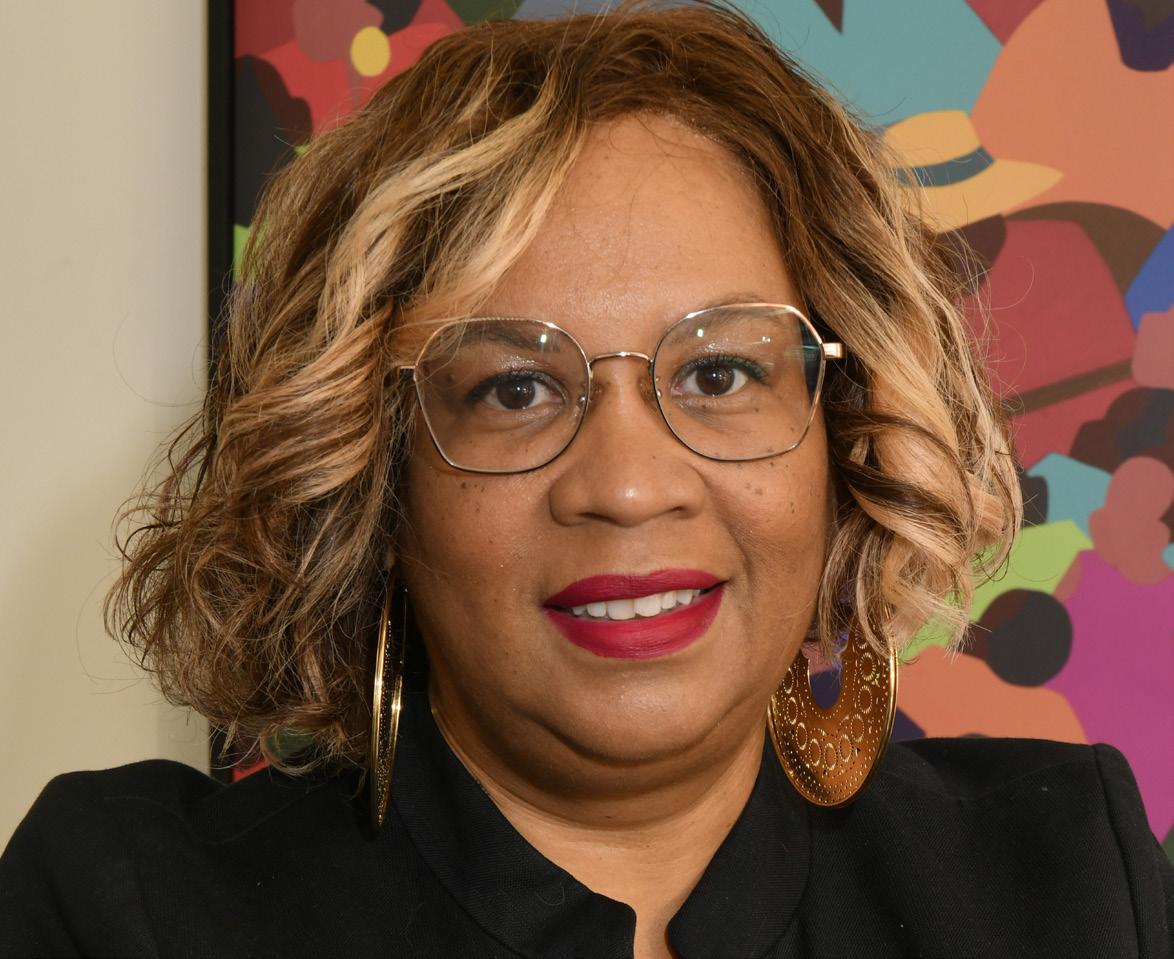
With more than 25 years of experience spanning public affairs, community engagement, strategy, marketing, and communications, Kellie Todd Griffin is recognized across California as a leader who mobilizes people and policy around issues that matter.
As the president and CEO of the California Black Women’s Collective Empowerment Institute, Griffin is on a mission to shift the narrative and outcomes for Black women and girls. She founded the nation’s first Black Women’s Think Tank, securing $5 million in state funding to fuel policy change.
Griffin spoke with California Black Media (CBM) about her successes and setbacks in 2025 and her hopes for 2026.
Looking back at 2025, what stands out to you as your most important achievement and why?
Our greatest achievement in
this year is we got an opportunity to honor the work of 35 Black women throughout California who are trailblazing the way for the next generation of leaders.
How did your leadership, efforts and investments as president and CEO California Black Women’s Collective Empowerment Institute contribute to improving the lives of Black Californians?
We’re training the next leaders. We have been able to train 35 women over a two-year period, and we’re about to start a new cohort of another 30 women. We also have trained over 500 middle and high school girls in leadership, advocacy, and financial literacy. What frustrated you the most over the last year?
Getting the question, “why.” Why advocate for Black women? Why invest in Black people, Black communities? It’s always constantly having to explain that, al-
2025 in Review: Seven Questions
By Edward Henderson California Black Media
Oakland native LaNiece Jones has served as executive director for Black Women Organized for Political Action/Training Institute for Leadership Development (BWOPA/TILE) since 1995.
Jones is committed to supporting Black women to become authentic leaders and coalition builders who empower their communities and prepare others for economic success.
With a bachelor’s degree in criminal justice administration from California State University, East Bay, and a master’s degree in social entrepreneurship and change from Pepperdine University, Jones also runs her own Oakland-based marketing and public relations firm, L.A.
Jones & Associates.
Jones spoke with California Black Media about her successes and setbacks in 2025 and her hopes for 2026.
Looking back at 2025, what stands out to you as your most important achievement and why?
Our most significant achievement this year has been leading a historic leadership transition at BWOPA – honoring the visionary legacy of our founding president, Dezie WoodsJones, while boldly charting a path forward. This wasn’t just a change in leadership – it was a transformation of purpose and momentum.
How did your leadership, efforts and investments contribute to improving the lives of Black Californians in 2025?
This year, BWOPA expanded our civic engagement efforts – training over 500 women in advocacy, increasing Black voter education across multiple counties, and holding elected leaders accountable through our chapter network. We also launched the Black Women’s Power-Up
Continued on page 7 Continued on page 7
Kellie Todd Griffin. CBM file photo.
LaNiece Jones. CBM file photo.
Adult Day Program
Adult Day Program
Dedicated staff needed to work with individuals with developmental disabilities in communitybased settings, or environments.
Dedicated staff needed to work with individuals with developmental disabilities in communitybased settings, or environments.
Qualifications: High school or equivalent. Driver’s license. Dependable and efficient. Background check. Physical exam and TB test.
Qualifications: High school or equivalent. Driver’s license. Dependable and efficient. Background check. Physical exam and TB test.
Training available. Decent wages. Please call (510) 690-9570.
Training available. Decent wages. Please call (510) 690-9570.
COMMENTARY: My Afternoon at the Black Repertory Theater
By Emil Guillermo
We live in the Bay Area, where the cost of living has gone through the roof.
Yet Trump dismisses the affordability crisis as a “Democratic con job.” Will he ever come to Oakland and say that?
Maybe when PEN Oakland gives him a fake peace prize like the one FIFA’s World Cup organizers handed out the other day?
No one is holding their breath.
What people are thinking
about is community, diversity, and culture—values that were very much on display at the 36th annual PEN Oakland awards, which I had the pleasure of co-hosting at the Black Repertory Theater.
One of this year’s honorees was an Oakland ice cream parlor. Miharu Ice Cream received an award for its diversity and mix of flavors. The parlor was nominated by the late Oakland poet and PEN Oakland board member Jack Foley, who died last month.
NOTICE AND DIGEST
Known for his long-running KPFA radio shows, Foley believed diversity works in Oakland—at least at his favorite ice cream shop.
That same spirit filled the Black Rep Theater, located in that part of Berkeley that bumps up against Oakland along Adeline. I was reminded what a resource the space is for the broader community: a large stage, lighting, a mic, and comfortable seating for several hundred people. It’s no surprise the local NAACP chapter, of which I am a member, holds its meetings there.
It was the perfect venue for PEN Oakland, the local chapter of the international organization for poets, essayists, and novelists. Founded by Oakland resident Ishmael Reed, PEN Oakland is known as the “working-class PEN.”
Several award recipients stood out to me.
The first was Carvell Wallace, honored for his memoir “Another Word for Love.”
A longtime reporter covering culture, music, sports, and the arts, Wallace writes poignantly about growing up poor with a single mother. He describes their survival as being like “survivors of a shipwreck who had washed ashore onto a deserted island. We had made it, but for how long?” The book
Continued on page 7
AN ORDINANCE: (1) AMENDING SECTION 8.62.100 OF THE OAKLAND MUNICIPAL CODE (“O.M.C.”) FOR THE PURPOSE OF REMOVING THE LIMIT ON PUBLIC STREET CLOSURES FOR RESTAURANT, RETAIL, CAFÉ, PARKLET, AND OTHER BUSINESSES TO CLOSE AND USE PUBLIC RIGHT-OF-WAYS TO ENCOURAGE PUBLIC SAFETY, BUSINESS DEVELOPMENT, AND HEALTHY OUTDOOR USE AND ENJOYMENT OF PUBLIC SPACES UNTIL DECEMBER 31, 2026 UNLESS FURTHER EXTENDED BY CITY COUNCIL AND (2) ADOPTING APPROPRIATE CALIFORNIA ENVIRONMENTAL QUALITY ACT FINDINGS
This Ordinance amends Section 8.62.100 of the Oakland Municipal Code (O.M.C.) to retain the portion of the Flex Streets Program facilitating public street closures for restaurant, retail, café, parklet, and other businesses to close and use public rights-of-way to encourage public safety, business development, and healthy outdoor use and enjoyment of public spaces with a new sunset date of December 31, 2026 unless further extended by City Council. This Ordinance further finds that reinstating this portion of the Flex Streets Program is exempt from the California Environmental Quality Act (“CEQA”) Notice of Publication
This Ordinance was introduced at the City Council meeting, Tuesday evening, December 2, 2025, and passed to print 8 Ayes; Final adoption has been scheduled for the Special City Council meeting Tuesday afternoon December 16, 2025, 1:00 P.M., at One Frank H. Ogawa Plaza, Council Chamber, 3rd floor, Oakland, California, and via Teleconference.
Three full copies are available for use and examination by the public in the Office of the City Clerk at One Frank H. Ogawa Plaza, 1st floor, Oakland, California. ASHA REED, City Clerk
NOTICE AND DIGEST
AN ORDINANCE AMENDING OAKLAND MUNICIPAL CODE CHAPTER 10.20 (SPEED LIMITS) AND ADOPTING APPROPRIATE CALIFORNIA ENVIRONMENTAL QUALITY ACT FINDINGS TO REFLECT CHANGES IN OAKLAND’S STREET NETWORK AND TO MODIFY SPEED LIMITS ON BROADWAY AND INTERNATIONAL BOULEVARD
The ordinance amends Chapter 10.20 of the Oakland Municipal Code to update speed limits in alignment with recent changes to the city’s street network and California state law. It incorporates findings from Engineering & Traffic Surveys and provisions from Assembly Bill 43, which allow for speed limit reductions based on land use and roadside activity, including the designation of Business Activity Districts. These changes are supported by valid traffic surveys and are exempt from the California Environmental Quality Act under multiple qualifying provisions
Notice of Publication
This Ordinance was introduced at the City Council meeting, Tuesday evening, December 2, 2025, and passed to print 8 Ayes; Final adoption has been scheduled for the Special City Council meeting Tuesday afternoon December 16, 2025, 1:00 P.M., at One Frank H. Ogawa Plaza, Council Chamber, 3rd floor, Oakland, California, and via Teleconference. Three full copies are available for use and examination by the public in the Office of the City Clerk at One Frank H. Ogawa Plaza, 1st floor, Oakland, California. ASHA REED, City Clerk
COMMENTARY:
By Wanda Ravernell Post Staff
From the fourth week of November to the first week in January, if you are of African descent, but particularly African American, certain violations of cultural etiquette will get your ‘Black card’ revoked.
From Thanksgiving to Christmas to New Year’s Day, whether it’s the dining room table or the bid whist (Spades? Uno, anyone?) table, your card may be in danger.
It could take until Super Bowl Sunday for reinstatement.
I don’t know much about the card table, but for years I was on probation by the ‘Aunties,’ the givers and takers of Black cards.
How I Got into Trouble
It was 1970-something and I was influenced by the health food movement that emerged from the hippie era. A vegetarian (which was then considered sacrilegious by most Black people I knew) prepared me a simple meal: grated cheese over steamed broccoli, lentils, and brown rice.
I introduced the broccoli dish at the Friday night supper with my aunt and grandfather. She pronounced the bright green broccoli undone, but she ate it. (I did not, of course, try brown rice on them.)
I knew that I would be allowed back in the kitchen when she attempted the dish, but the broccoli had been cooked to death. (Y’all remember when ALL vegetables, not just greens, were cooked to mush?)
My Black card, which had been revoked was then reattained because they ate what I prepared and imitated it.
Over the decades, various transgressions have become normalized. I remember when having a smoked turkey neck instead of a ham hock in collard greens was greeted with mumblings and murmurings at both the dining room and card tables. Then came vegan versions with just olive oil (What? No Crisco? No bacon, at least?) and garlic. And now my husband stir fries his collards in a wok.
But No Matter How Things Have Changed…
At holiday meals, there are assigned tasks. Uncle Jack chopped raw onion when needed. Uncle Buddy made the fruit salad for Easter. My mother brought the greens in winter, macaroni salad in summer. Aunt Deanie did the macaroni and cheese, and the great aunts, my deceased grandmother’s sisters, oversaw preparation of the roast beef, turkey, and ham. My father, if he was present, did the carving.
These designations/assignments were binding agreements that could stand up in a court of law. Do not violate the law of assignments by bringing some other version of a tried-and-true dish even if you call it a new ‘cheese and noodle item’ to ‘try out.’ The auntie lawgivers know what you are trying to do. It’s called a menu coup d’état, and they are not having it.
The time for experiments is in your own home: your spouse and kids are the Guinea pigs.
My mother’s variation of a classic that I detested from that Sunday to the present was adding crushed pineapple to mashed sweet potatoes. A relative stops by, tries it, and then it can get introduced as an add-on to the standard holiday menu.
My Aunt Vivian’s concoctions from Good Housekeeping or Ladies’ Home Journal magazine also made it to the Black peoples’ tables all over the country in the form of a green bean casserole.
What Not to Do and How
Did It Cross Your Mind?
People are, of all things holy, preparing mac ‘n’ cheese
with so much sugar it tastes like custard with noodles in it. Also showing up in the wrong places: raisins. Raisins have been reported in the stuffing (makes no sense unless it’s in a ‘sweet meats’ dish), in a pan of corn bread, and – heresy in the Black kitchen – the MAC ‘n’ CHEESE.
These are not mere allegations: There is photographic evidence of these Black card violations, but I don’t want to defame witnesses who remained present at the scene of the crimes.
The cook – bless his/her heart – was probably wellmeaning, if ignorant. Maybe they got the idea from a social media influencer, much like Aunt Viv got recipes from magazines.
Thankfully, a long-winded blessing of the food at the table can give the wary attendee time to locate the oddity’s place on the table and plan accordingly.
But who knows? Innovation always prevails, for, as the old folks say, ‘waste makes want.’ What if the leftovers were cut up, dipped in breadcrumbs and deep fried? The next day, that dish might make it to the TV tray by the card table.
An older cousin – on her way to being an Auntie – in her bonnet, leggings, T-shirt, and bunny slippers and too tired to object, might try it and like it….
And if she ‘rubs your head’ after eating it, the new dish might be a winner and (Whew!) everybody, thanks God, keeps their Black cards. Until the next time.
The ‘aunties’ playing cards. iStock photo by Andreswd.
Mona Vaughn Scott. Photo courtesy of Emil Guillermo.
Kellie Todd Griffin ...
Continued from page 2
though we are aware that there are other populations that are in great need, the quality-of-life indices for Black Californians continue to decrease. Our life expectancies are decreasing. Our unhoused population is increasing. Our health outcomes continue to be the worst.
We’re not asking anyone to choose one group to prioritize. We are saying, though, in addition to your investments into our immigrant brothers and sisters – or our religious brothers and sisters – we are also asking you to uplift the needs of Black Californians. That way, all of us can move forward together.
What inspired you the most over the last year?
I’ve always been amazed by the joy of Black women in the midst of crisis.
That is really our secret sauce. We don’t let the current state of any issue take our joy from us. It may
Black Repertory Theater ...
Continued from page 6
has also received praise from LGBTQ readers for its courage and emotional honesty.
Another honoree was William G. Wong, author of “Sons of Chinatown,” published by Temple Press. I’ve known Bill for decades. We both spent years in mainstream media before finding our voices in ethnic media, as columnists at AsianWeek in the 1990s. We were two outspoken Asian Americans at a time when Asians were expected to stay silent.
Also honored was Mona Vaughn Scott, who, for the past 36 years has been the guiding force behind the Black Repertory Group. She took over leadership after the death of her mother, Nora Vaughn. Un-
break us a little bit. We may get tired a little bit. But we find ways to express that – through the arts, through music, through poetry. What is one lesson you learned in 2025 that will inform your decision-making next year? Reset. It’s so important not to be sitting still. We have a new administration. We’re seeing data showing that Black women have the largest unemployment rate. We’ve lost so many jobs. We can have rest – we can be restful – but we have to continue the resistance. In one word, what is the biggest challenge Black Californians faced in 2025? Motivation.
I choose motivation because of the tiredness. What is going to motivate us to be involved in 2026?
What is the goal you want to achieve most in 2026?
I want to get Black Californians in spaces and places of power and influence – as well as opportunities to thrive economically, socially, and physically.
der Scott’s direction, the Black Rep has nurtured actors, audiences, and community members. It comes as close as theater can to being a true community center.
Despite setbacks—including a recent act of vandalism— the theater has endured. Under Scott’s leadership, it continues to demonstrate that Black theater, like the Black church, remains vital to preserving community.
That’s award worthy. About the Author Emil Guillermo is a Bay Area journalist, writer, and stage monologist. See him tell Christmas stories on Monday Dec. 15, at 7 p.m. at the SF Marsh at 1062 Valencia St., San Francisco. See his microtalk show on YouTube.com/@ emilamok1
NOTICE AND DIGEST
Ann Lowe: The Quiet Genius ...
Continued from page 4
1930s, she designed gowns for high-society women in Florida and New York, operating boutiques and working for prestigious department stores. Her reputation for craftsmanship, originality, and elegance grew increasingly. She was known for creating gowns that moved beautifully, featured delicate hand-made flowers, and looked sculpted rather than sewn. Many wealthy clients specifically requested “an Ann Lowe gown” for weddings, balls, and galas.
Her most famous creation came in 1953: the wedding gown worn by Jacqueline Bouvier when she married Massachusetts Sen. John F. Kennedy. The dress – crafted from ivory silk taffeta with dozens of tiny, pleated rosettes – became one of the most photographed bridal gowns in American history. Despite this achievement, Lowe received no public credit at the time. When a flood destroyed her completed gowns 10 days before the wedding, she
Black Women’s Equity Champion LaNiece Jones ...
Continued from page 2
Advocacy Masterclass Series, which now includes focus areas such as economic empowerment, maternal health, mental wellness, educational equity, and legislative strategy. In addition, we continue to grow the DWJ Public Policy Fellowship Program, which proudly celebrated its 10th anniversary this year.
What frustrated you the most over the last year?
The ongoing political gaslighting of Black communities – especially Black women – has been deeply frustrating.
What inspired you the most over the last year?
The unstoppable power of Black women at the grassroots
ORDINANCE AMENDING OAKLAND MUNICIPAL CODE TITLE 4, CHAPTER 4.56, VACANT PROPERTY TAX TO 1) ADD AN EXEMPTION FOR PARCELS THAT CHANGE OWNERSHIP AFTER ASSESSMENT, 2) REQUIRE THE HEARING OFFICER TO INCLUDE FINDINGS OF FACT IN THEIR DECISIONS, AND 3) ESTABLISH A TWELVE MONTH TIME PERIOD WITHIN WHICH OWNERS OF PARCELS DEEMED VACANT AND ASSESSED THE VACANT PROPERTY TAX MUST FILE A PETITION TO REVERSE THE ASSESSMENT, CLAIM AN EXEMPTION, OR TO SEEK REFUND OF TAXES PAID
This ordinance amends portions of the City of Oakland’s Vacant Property Tax, Oakland Municipal Code, Chapter 4.56. The Vacant Property Tax ordinance, originally approved by Oakland voters as Measure W in November 2018, imposes a special parcel tax on parcels deemed “vacant” in a calendar year, each year for twenty (20) years following the initial imposition of the tax. Parcels are deemed vacant if they, or in some situations permanent improvements built upon them, are not “in use” for at least fifty (50) days during the calendar year, and are not subject to any often (10) listed exemptions. This ordinance further adds an exemption for change of ownership on parcel if an “Arm’s Length Transaction” takes place after a decision made on vacancy status; requires a hearing officer to include the findings of fact in their decisions; and establishes a statute of limitations for filing a petition to reverse the assessment or entitlement to exemption or seek refund of taxes paid to within 12 months from the due date of the second installment of the secured property tax bill.
Notice of Publication
This Ordinance was introduced at the City Council meeting, Tuesday evening, December 2, 2025, and passed to print 8 Ayes; Final adoption has been scheduled for the Special City Council meeting Tuesday afternoon December 16, 2025, 1:00 P.M., at One Frank H. Ogawa Plaza, Council Chamber, 3rd floor, Oakland, California, and via Teleconference.
Three full copies are available for use and examination by the public in the Office of the City Clerk at One Frank H. Ogawa Plaza, 1st floor, Oakland, California. ASHA REED, City Clerk
NOTICE AND DIGEST
AN ORDINANCE, AS RECOMMENDED BY THE CITY PLANNING COMMISSION:
1) AMENDING TITLE 17 OF THE OAKLAND MUNICIPAL CODE (THE PLANNING CODE), TO (A) ADJUST REGULATIONS FOR PERMITTED AND CONDITIONALLY PERMITTED ACTIVITIES AND FACILITIES FOR PURPOSES OF PROVIDING GREATER OPPORTUNITIES FOR GROUND FLOOR ACTIVITIES AND EASE THE PERMITTING BURDEN FOR COMMERCIAL, CIVIC, AND LOW IMPACT INDUSTRIAL ACTIVITIES; AND (B) MAKE RELATED MISCELLANEOUS AND ADMINISTRATIVE CHANGES; AND
2) MAKING APPROPRIATE CALIFORNIA ENVIRONMENTAL QUALITY ACT FINDINGS.
The ordinance proposes revisions to 28 chapters of the Oakland Planning Code. The amendments would reduce regulatory barriers to permitting certain types of small- and neighborhood-serving businesses, as well as the implementation of parks improvements and maintenance by the City.
Notice of Publication
This Ordinance was introduced at the City Council meeting, Tuesday evening, December 2, 2025, and passed to print 8 Ayes; Final adoption has been scheduled for the Special City Council meeting Tuesday afternoon December 16, 2025, 1:00 P.M., at One Frank H. Ogawa Plaza, Council Chamber, 3rd floor, Oakland, California, and via Teleconference. Three full copies are available for use and examination by the public in the Office of the City Clerk at One Frank H. Ogawa Plaza, 1st floor, Oakland, California. ASHA REED, City Clerk
and her seamstresses worked day and night to remake everything –at her own expense. Her dedication and perfectionism never wavered.
She eventually opened “Ann Lowe Originals,” her own salon on New York’s Madison Avenue. She served clients such as the Rockefellers, DuPonts, Vanderbilts, and actresses like Olivia de Havilland. Yet even with her wealthy clientele, she struggled financially, often undercharging because she wanted every dress to be perfect, even if it meant losing money.
Lowe’s contributions were finally recognized later in life. Today, her exquisite gowns are preserved in museums, including the Smithsonian National Museum of African American History and Culture and the Metropolitan Museum of Art.
In the last five years of her life, Lowe lived with her daughter Ruth in Queens, N.Y. She died at her daughter’s home on Feb. 25, 1981, at the age of 82, after an extended illness.
level continues to inspire me. From mothers advocating for educational equity at school board meetings to young leaders pushing for housing and climate justice.
What is one lesson you learned in 2025 that will inform your decision-making next year?
“Capacity before campaign.” You can’t sustain bold ideas without building internal infrastructure.
In one word, what is the biggest challenge Black Californians faced in 2025?
Displacement.
Whether it’s housing, jobs, education, or political representation – Black Californians are being pushed out, priced out, and too often left out. Reversing this trend requires unapologetic advocacy, bold policy shifts, and the political will to center those most impacted.
What is the goal you want to achieve most in 2026?
To secure a full slate of Black women candidates in key state and local elections – and win. That includes building out a robust BWOPA political leadership institute, developing a campaign war chest, and forging statewide coalitions to shift power from protest to policy.
Support Your Child’s Mental Health
Continued from page 2
healing through sports, art, music, and therapeutic camps.
• Initial joint behavioral health visits, where a mental health provider and child welfare worker meet with the family early in a case.
Child welfare liaisons in Medi-Cal health plans who help caregivers and social workers get services for children faster
Keeping Kids Safe from Opioids and Harmful Drugs
DHCS is also working to keep young people safe as California faces rising risks from opioids and counterfeit pills. Programs like Elevate Youth California and Friday Night Live give teens mentorship, leadership opportunities, and positive outlets that strengthen mental well-being.
Through the California Youth Opioid Response, families can learn how to avoid dangerous substances and get treatment when needed. Song for Charlie provides parents and teens with facts and tools to talk honestly about mental health and counterfeit pills.
DHCS also supports groups like Young People in Recovery, which helps youth build skills for long-term healing, and the Youth Peer Mentor Program, which trains teens with lived experience to support others. These efforts are part of California’s strategy to protect young people, prevent overdoses, and help them make healthier choices.
Support for Parents and Caregivers
Children thrive when their caregivers are supported. Through CalAIM’s vision of whole-person care, Medi-Cal now covers dyadic services, visits where a child and caregiver meet together with a provider to strengthen bonding, manage stress, and address behavior challenges.
These visits may include screening the caregiver for depression or anxiety and connecting them to food, housing, or other health-related social needs, aligning with CalAIM’s Community Supports framework.
Notably, only the child must be enrolled in Medi-Cal to receive dyadic care.
Family therapy is also covered and can take place in clinics, schools, homes, or via telehealth, reflecting CalAIM’s commitment to flexible, community-based care delivery.
Additionally, BrightLife Kids offers free tools, resources, and virtual coaching for caregivers and children ages 0–12. Families can sign up online or through the BrightLife Kids app. No
NOTICE AND DIGEST
insurance, diagnosis, or referral is required.
For teens and young adults ages 13–25, California offers Soluna, a free mental health app where young people can chat with coaches, learn coping skills, journal, or join supportive community circles. Soluna is free, confidential, available in app stores, and does not require insurance.
CalHOPE also provides free emotional support to all Californians through a 24/7 support line at (833) 317-HOPE (4673), online chat, and culturally responsive resources.
Support at School — Where Kids Already Are Schools are often the first place where emotional stress is noticed. Through the Children and Youth Behavioral Health Initiative (CYBHI), public schools, community colleges, and universities can offer therapy, counseling, crisis support, and referrals at no cost to families.
Services are available during school breaks and delivered on campus, by phone or video, or at community sites. There are no copayments, deductibles, or bills.
Medi-Cal Still Covers Everyday Care Medi-Cal continues to cover everyday mental health care, including therapy for stress, anxiety, depression, or trauma; medication support; crisis stabilization; hospital care when needed; and referrals to community programs through county mental health plans and Medi-Cal health plans. How to Get Help
• Talk to your child’s teacher, school counselor, or doctor.
• In Alameda County call 510272-3663 or the toll-free number 1-800-698-1118 and in San Francisco call 855-3555757 to contact your county mental health plan to request an assessment or services.
• If your child is not enrolled in Medi-Cal, you can apply at BenefitsCal.com or my.medical.ca.gov.
• In a mental health emergency, call or text 988, the Suicide and Crisis Lifeline. Every child deserves to grow up healthy and supported. MediCal is working to transform care so it’s accessible, equitable, and responsive to the needs of every family.
ORDINANCE (1) ADDING CHAPTER 9.54 OF TITLE 9 OF THE OAKLAND MUNICIPAL CODE TO ESTABLISH AND REGULATE ENTERTAINMENT ZONES PURSUANT TO SB 969 (2024) TO PROMOTE ECONOMIC ACTIVATION; (2) MAKING OTHER CONFORMING CHANGES TO SECTIONS 9.08.180 AND 9.08.190 OF THE OAKLAND MUNICIPAL CODE; (3) CLASSIFYING AN ENTERTAINMENT ZONE EVENT AS A TIER TWO OR TIER THREE SPECIAL EVENT PURSUANT TO CHAPTER 9.52 OF THE OAKLAND MUNICIPAL CODE; AND (4) ADOPTING APPROPRIATE CALIFORNIA ENVIRONMENTAL QUALITY ACT FINDINGS
This Ordinance adds Chapter 9.54 of Title 9 of the Oakland Municipal Code to establish and regulate Entertainment Zones pursuant to a Management Plan to allow for the purchase of open container alcoholic beverages from local bars, restaurants, wineries, breweries and onsale licensees for consumption outside in common spaces, such as plazas, public streets, sidewalks, or public rights-of-way during certain hours, subject to a special event permit issued pursuant to Chapter 9.52, pursuant to SB 969 (2024) to promote economic activation. This legislation makes other conforming changes to Sections 9.08.180 and 9.08.190 of the Oakland Municipal Code to further consistency with this policy. The proposed ordinance establishes Entertainment Zones in the Jack London District, Broadway Valdez/Northlake District, Temescal District, and Uptown Downtown and further classifies an Entertainment Zone Event as a Tier Two or Tier Three Special Event pursuant to Chapter 9.52 of the Oakland Municipal Code and adopts appropriate California Environmental Quality Act Findings. Notice of Publication
This Ordinance was introduced at the City Council meeting, Tuesday evening, December 2, 2025, and passed to print 8 Ayes; Final adoption has been scheduled for the Special City Council meeting Tuesday afternoon December 16, 2025, 1:00 P.M., at One Frank H. Ogawa Plaza, Council Chamber, 3rd floor, Oakland, California, and via Teleconference. Three full copies are available for use and examination by the public in the Office of the City Clerk at One Frank H. Ogawa Plaza, 1st floor, Oakland, California. ASHA REED, City Clerk
is on the Move’ ...
safety and infrastructure improvements, and renovations to parks, libraries, senior centers, and other public facilities under the city’s Measure U Authorization.
Citywide paving and streetscape projects will create safer streets for Oaklanders. Additionally, critical facilities like the East Oakland Senior Center and San Antonio Park will receive much-needed renovations, according to the city.
Some of the projects:
$50.5 million – Citywide Street Resurfacing
$13 million – Complete Streets
Capital Program
• $9.5 million – Curb Ramps
Program
• $30 million – Acquisition & Preservation of Existing Affordable Housing
• $33 million – District 3: Mandela Transit-Oriented Development
• $28 million – District 6: Liberation Park Development
$3 million – District 5: Brookdale Recreation Center Capital
Project
$1.5 million – District 1: Oak-
land Tool Lending Library (Temescal Branch Library)
$10 million – District 3: Oakland Ice Center
“I recognize that many naysayers said we couldn’t do it,” said Johnson. “Well, you know what?
We’re here now. And we’re going to be here next year and the year after. The fact is we’re getting our fiscal house in order. We said we were going to do it — and we’re doing it.”
Investors placed $638 million in orders for the $334 million of bonds offered by the City. There was broad investor demand with 26 separate investment firms placing orders. The oversubscription ultimately allowed the city to lower the final interest rates offered to investors and reduce the city’s borrowing cost.
“The oversubscription ultimately allowed the City to lower the final interest rates offered to investors and reduce the City’s borrowing cost,” said Sean Maher, the city’s communications director.
“The Oakland City Council worked closely with the administration to both advance the bond issuance process and ensure that the community had a clear understanding of the City’s timeline and approach,” said Councilmember at-Large Rowena Brown.
“In September, the City Council took unanimous action to authorize the Administration to move forward with the bond sale because these funds are essential to delivering the very improvements our communities have long
asked for – safer streets, restored public facilities, and expanded affordable housing,” she said.
Continuing, Brown said, “I want to extend my sincere thanks to City Administrator Jestin Johnson, Finance Director Bradley Johnson, and Mayor Barbara Lee for their leadership, diligence, and steady guidance throughout the City’s bond sale efforts.
“Navigating complex market conditions while keeping Oakland’s long-term infrastructure needs front and center is no small task, and this moment reflects tremendous professionalism and persistence,” she said.
Moody’s gave the city an AA2 rating on the bonds, its third-highest rating, which it gives to highquality investment-grade securities.
There was both a tax-exempt portion and a taxable portion for the bond offering, reflecting the various uses of the bond proceeds, according to a statement released by the city.
The $143.5 million of tax-exempt bonds have a 30-year final maturity and received an all-in borrowing cost of 3.99%. The $191 million of taxable bonds have a 24-year final maturity and received an all-in borrowing cost of 5.55%.
The $49 million in tax-exempt bonds that refinance existing obligations of the City resulted in $5.6 million of debt service savings for taxpayers through 2039, or $4.7 million on a present value basis.
Mayor Lee said that, based on her experience serving on the House Financial Services Committee of the U.S. Congress for more than 10 years, city staff has done an exemplary job.
“I have witnessed many cities go to the bond market throughout the years,” she said. “I can tell you with certainty that Oakland’s team is remarkable, and our residents should be proud of their reputation, their competence, and their deep knowledge of this very sophisticated market.”
Looking ahead to the final sale of the bonds, according to the city press statement, pricing marks the point at which the City and investors locked in the final dollar amounts, interest rates, and other key terms of the bond sale. This stage is commonly referred to as the sale date. At pricing, no funds are exchanged. The actual delivery of bonds and receipt of monies occurs at closing, which is scheduled within the next two weeks.
Capital projects receiving this funding will proceed on individual timelines based on their individual conditions and needs. At the time of closing, funding will be immediately available to those projects.
High School Seniors Once Again Getting Early Cal
By Diana Lambert EdSource
The California Student Aid Commission is sending out preliminary notices of Cal Grant eligibility to high school seniors.
The early communication with seniors had not taken place for the past three years because of federal student aid delays, according to the commission.
Award notifications will be sent to approximately 78,000 high school seniors who have applied for financial aid for the 2026-27 cycle, according to a media release from the commission. Cal Grants do not need to be repaid.
“This early alert is our effort to let students know California lead-
BRIDGE Housing President and CEO Ken Lombard Scores Top Honors for Affordable Housing Leadership
BRIDGE Housing President and CEO Ken Lombard. Courtesy of BRIDGE Housing.
By Post Staff
San Francisco-based BRIDGE
Housing and its president and CEO, Ken Lombard, have been named among the nation’s housing industry standouts, earning two of the top prizes at the 2025 Multi-Housing News Excellence Awards.
BRIDGE Housing was named Development Company of the Year, while Lombard received Executive of the Year, recognition that places the nonprofit affordable housing provider alongside leading national developers of both affordable and market-rate housing. The awards were announced in New York for the accomplishments achieved during 2024.
Multi-Housing News is one of the industry’s most respected publications. Award winners are selected by a panel of housing professionals, including multifamily developers, architects, and owners.
“BRIDGE Housing is deeply honored to be recognized by Multi-Housing News and our industry peers,” Lombard said. “These awards are a testament to the high-impact, mission-driven work by BRIDGE’s exceptional team to deliver quality affordable housing and support services that empower residents to improve their lives.”
The Development Company of the Year honor represents a milestone for BRIDGE Housing, which received the Gold award— its top designation—in a category that included both affordable and market-rate developers. The recognition caps what has been one of the strongest growth periods in the organization’s 42-year history.
In 2024, BRIDGE significantly expanded its footprint across California, Oregon, and Washington. That momentum continued into 2025, with portfolio growth of 9%, including the addition of nine new communities and 1,187 new or ac-
quired affordable housing units. The nonprofit also added three new projects to its development pipeline as it nears a portfolio of 16,000 units.
The growth reflects a broader strategy aimed at accelerating both acquisitions and ground-up development, supported by partnerships with major financial institutions and innovative capital markets strategies. BRIDGE has also emphasized high-quality design and deep community engagement as central elements of its approach.
BRIDGE became the first affordable housing developer to issue tax-exempt construction bonds for one of the largest affordable housing projects in Portland, Ore., leveraging its strong credit rating.
Earlier this year, the nonprofit launched the BRIDGE Housing Impact Fund, with a goal of investing $1 billion to preserve and create affordable housing. It also closed on $175 million in taxable general-obligation bonds after increasing the offering in response to strong investor demand.
The company’s performance also underscores the role of Lombard, who has led BRIDGE since 2021 and was honored individually for his leadership.
Under Lombard’s tenure, BRIDGE has built a new leadership team with experience drawn from both the nonprofit and private sectors, with a particular focus on what the organization describes as efforts to “break the status quo,” especially in affordable housing finance. Those initiatives have helped reduce capital and construction costs, strengthen relationships with institutional investors, and expand resident support services.
Today, BRIDGE Housing serves more than 33,000 residents across 139 communities on the West Coast.
“Ken has dedicated his career to innovative real estate solutions that improve the quality of life in underserved neighborhoods,” said Kenneth Novack, chair of BRIDGE Housing’s board of directors. “His visionary leadership and the work of our incredible team have positioned BRIDGE for long-term growth that will extend our impact throughout the West Coast.”
Founded in 1983, BRIDGE Housing has helped create more than 23,000 affordable homes with a total development cost of $6 billion.
3rd Floor at 1 Frank H. Ogawa
Plaza in Oakland.
ers want them to enroll and succeed in higher education,” said Daisy Gonzales, executive director of the California Student Aid Commission. “We know financial aid is the front door to higher education for many populations, including low-income students, students with dependent children, foster youth, and veterans. Our unified message is clear; we want students to enroll and claim their Cal Grant award in California.”
To claim their grant, students must go to mygrantinfo.csac. ca.gov. After creating an account, students can select the college they plan to attend and access information about the grant.
At the meeting, residents will have the opportunity to:
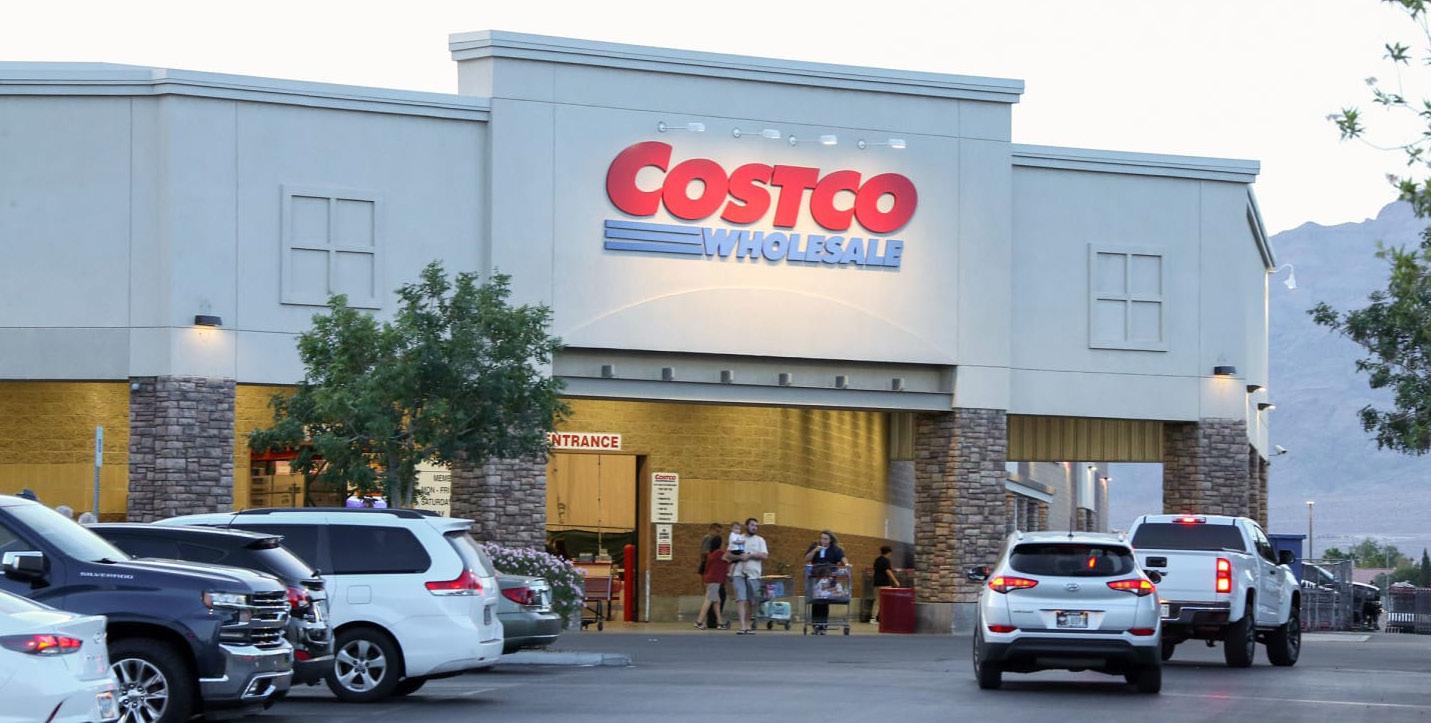
• Hear about a proposed resolution from Fife for Costco in Oakland
• Find out details from the City Administrator and Oakland’s Real Estate Division
• Ask questions, share ideas about benefits residents are looking for
• Make sure decision-makers know what residents need.
The proposed resolution would give authority to the City Admin-
istrator to negotiate terms for an exclusive negotiating agreement
$63.5 Million Awarded to 5 Oakland Affordable Housing Developments ... Continued from page 1
(seniors) – $10 million, 67 apartments
The awards are in addition to the $80.5 million announcement from January 2025 under the City’s 2024-2025 New Construction Multifamily Affordable Housing Development Notice of Funding Availability (NOFA).
In total, the department has awarded $144 million this year. City funding for these awards is largely sourced from Measure U, the Oakland voter-approved 2022 housing and infrastructure bond measure.
“Measure U allows us to invest in new, affordable homes and meet the needs of so many Oaklanders, with a particular emphasis on serving Oakland’s most low and extremely low-income residents and reducing homelessness,” said Emily Weinstein, director of Oakland’s Department of Housing and Community Development. “We now have more affordable housing underway than ever before. Oakland HCD is proud to play a role in making this possible.”
This announcement comes directly after the City of Oakland successfully priced a total of $334 million of General Obligation Bonds. The bond funds provide access to capital dollars that will be used by City departments to deliver paved roads, restore public facilities, and invest in affordable housing.
City of Oakland’s investments are often the first of many that fund a project; once developers receive a commitment from Oakland HCD, they leverage it to secure other funds, typically at a leverage rate of 1 to 7. Oakland HCD’s accelerated application review and award process allows for the City’s allocations to operate in rapid succession with State and County funding timelines.
Awarded projects are simultaneously applying for County Measure W funds and will be seeking funding at the State level through Tax Exempt Bond and Low-Income Housing Tax Credit applications as early as February 2026.
The 2024-2025 New Construction NOFA is the first to include a unique set-aside in partnership with the Oakland Housing Authority (OHA) to provide both capital and operating subsidies to awardees including up to $15 million for capital investments in developments in which OHA has substantial investment or ownership, and up to $10 million in op-
ceries, and we want to keep those dollars and tax revenues within our city. This proposed ENA is an important step toward bringing a world-class retailer to Oakland and creating hundreds of goodpaying jobs right here in District 3.”
erating, predevelopment, project-based vouchers, or other operating assistance to projects selected through the City of Oakland’s competitive process.
About the New Construction Notice of Funding Availability (NC NOFA)
The NC NOFA is a long-existing program of over two decades and is the primary avenue by which Oakland HCD distributes funding for new affordable housing. NC NOFA applications must meet minimum threshold standards to become eligible for funding, including the engagement of community constituents, commitment to serving Extremely LowIncome (ELI) residents, developer, and property management experience, and more.
Oakland HCD has awarded $289,400,039 to affordable housing developments through its New Construction NOFA from 2023 to present. Currently, the new construction pipeline has 486 affordable units under construction, and another 693 affordable units are projected to start construction between December 2025 and June 2026.
In 2025, the City of Oakland provided funding commitments to 904 new units of affordable housing under construction, of which 265 were for people exiting homelessness. The City of Oakland leverages funds from the State and Federal governments to maximize the impact of local dollars whenever possible.
About Oakland’s Housing and Community Development Department Homelessness and housing affordability are top priorities for Oakland residents. To address these challenges, the City implements a multi-pronged approach. The Housing and Community Development Department is addressing housing affordability issues through its “3P” framework: Protect Oaklanders from displacement; Preserve the existing affordable housing stock; and Produce new, deeply affordable housing units. Oakland HCD also aims to prevent homelessness for vulnerable residents through partnerships with and grants to community service organizations. Read more about Oakland HCD and its current priorities in the 2023-2027 Strategic Action Plan. Justin Phillips is the communications director for the office of Oakland Mayor Barbara Lee.
(ENA) with Deca Companies and Costco Wholesale Corporation to pursue a potential Costco development at 2008 Wake Ave. in the North Gateway Development Area of the former Oakland Army Base, adjacent to the Port of Oakland.
“As the D3 Council representative, my primary objective is to improve the lives of my constituents, who have endured generations of disinvestment and neglect,” said Fife. “For too long, our West Oakland community has lacked access to essential services, often forcing residents to leave Oakland to find quality options –including groceries. Our families deserve access to affordable gro-
Deca Companies, a San Francisco-based real estate investment and development firm, is leading the development project. Deca has extensive experience with major projects across California, including the redevelopment of the Phillips 66 Refinery in Southern California, large mixed-use California projects in Perris, Bakersfield, and Mead Valley; along with electric vehicle charging lots and industrial projects across the Bay Area and Southern California.
“We’re thrilled to be working with Councilmember Fife to bring a major grocery retailer to West Oakland,” said Travis Duncan, vice president of Deca Companies. “This project sends a clear message: Oakland is open for business. We’re proud to be part of the team working to help alleviate
the food desert and bring affordable, high-quality groceries that can serve folks in Oakland and people from across the East Bay.” Tony Beatty, longtime broker for Costco in the Bay Area noted, “While I cannot comment on the specifics of potential opportunities that are currently being evaluated, existing Costco locations in the Bay Area perform very well, and we have been looking at potential expansion opportunities where they can best serve their members.”
If approved by the full City Council, the City Administrator would be authorized to negotiate terms for an exclusive negotiating agreement with Deca Companies and Costco Wholesale Corporation, a critical first step. If negotiations are fruitful, the resulting ENA would come before the City Council for approval.
In the interim, community outreach and engagement will continue to ensure residents are included in the decision-making process in a meaningful way, according to a statement from Fife’s office.
Proposal to Bring Costco to Oakland ...