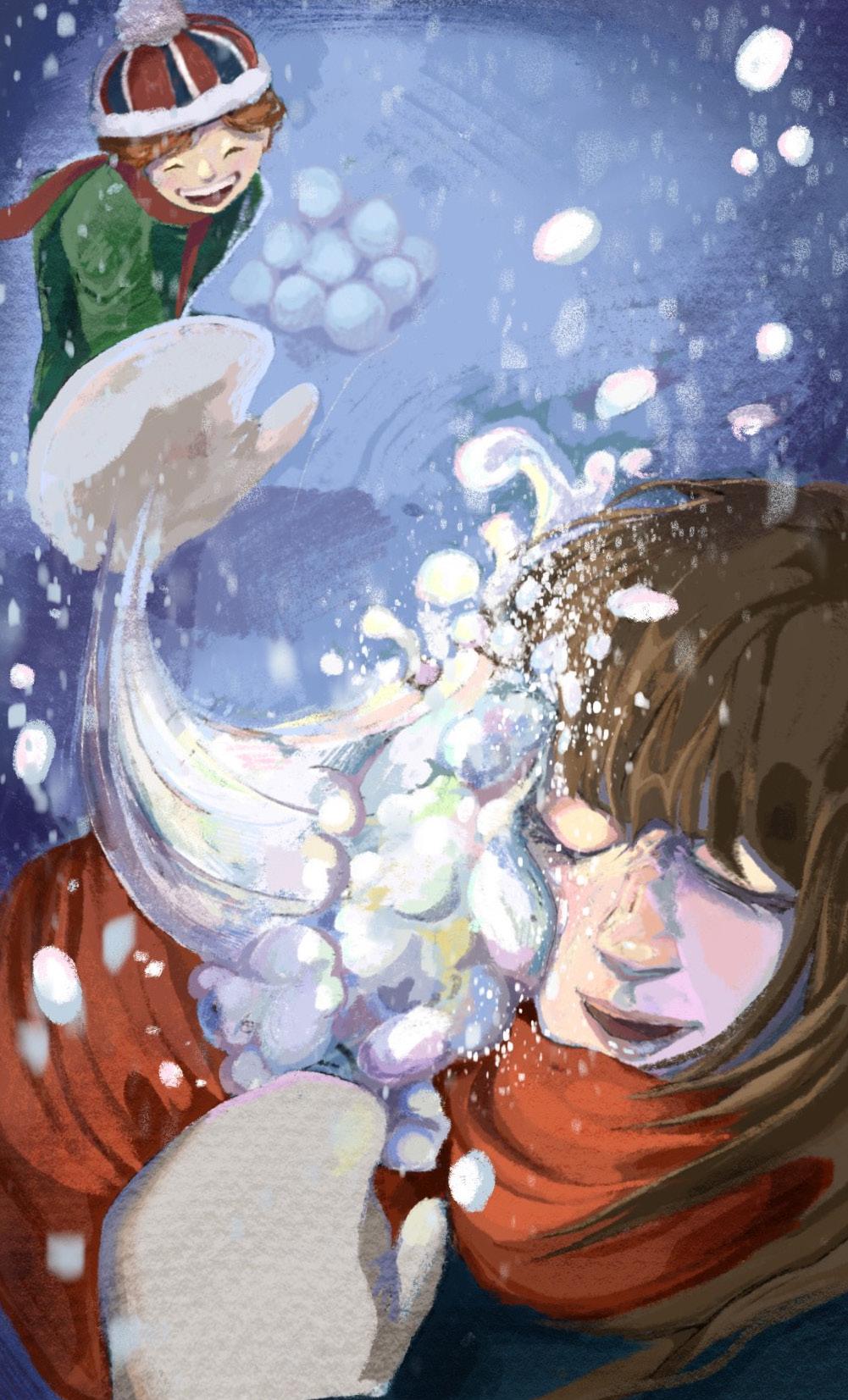
Cover by Isabelle Wang @isabelledoesarts
pilates princesses, muscle mommies, cardio bunnies
pilates princesses, muscle mommies, cardio bunnies
animal crossing and the problem with prestige fictional pursuits
slipping & sliding i've got my crossword to keep me warm response

1. Tonya Harding vs. Nancy Kerrigan
2. Me vs. the patch of ice I slipped on
3. Snow Miser vs. Heat Miser
4. Elsa vs. Anna
5. Elsa vs. her country’s history of colonialism #Frozen2
6. Scrat vs. his acorn
7. Kevin McCallister vs. the wet bandits
8. The man from “Baby It’s Cold Outside” vs. the woman from “Baby It’s Cold Outside”
9. Frozone from The Incredibles vs. his wife
10. Literally everyone vs. ICE
“Me and babies got beef.”
“We’re in different IQ brackets.”
Dear Readers,
I had a lot of ideas for my first editor’s note as editor-in-chief—New Year’s Eve plans gone wrong; awkward but wholesome family gatherings; all the airports I have come to hate. But, of course, none of that seems appropriate now. Although it has been nearly two months and a full winter break since our community had our comfort and safety shaken to its core, I still feel it everywhere on campus. I find myself lingering at the flowers in front of Barus and Holley and staring at PVD <3 Brown posters along Thayer. And I find myself thinking of resolve. Every new year, we make resolutions. We resolve to change something about ourselves, our lives, the world around us. I feel that same sense of resolve around campus: a resolve to be closer, a resolve to make change, a resolve to do all we can to make sure these tragedies never happen
again. It’s those feelings of community and hope that I try to carry with me right now.
Our writers have also been exploring resolve, community, change. AnnaLise examines the stereotypes around different female fitness groups in this week’s Feature article. For Narrative, Samaira questions the idea of change and Danielle reflects on a childhood moment of resolve. In A&C, Grace confronts the conflict between prestige and community in Animal Crossing and Sasha learns not to fear fiction. Finally, Ina catalogues the changes on campus in post-pourri and Lily treats us all to a winter-themed crossword.
The snow that wets our shoes and piles up on our sidewalks will melt in the coming months, and flowers will bloom in all colors. The world shows its resolve, just like we show ours.
I hope we can all keep each other warm out here in the cold.
Love,
Elaina Bayard Editor-In-Chief
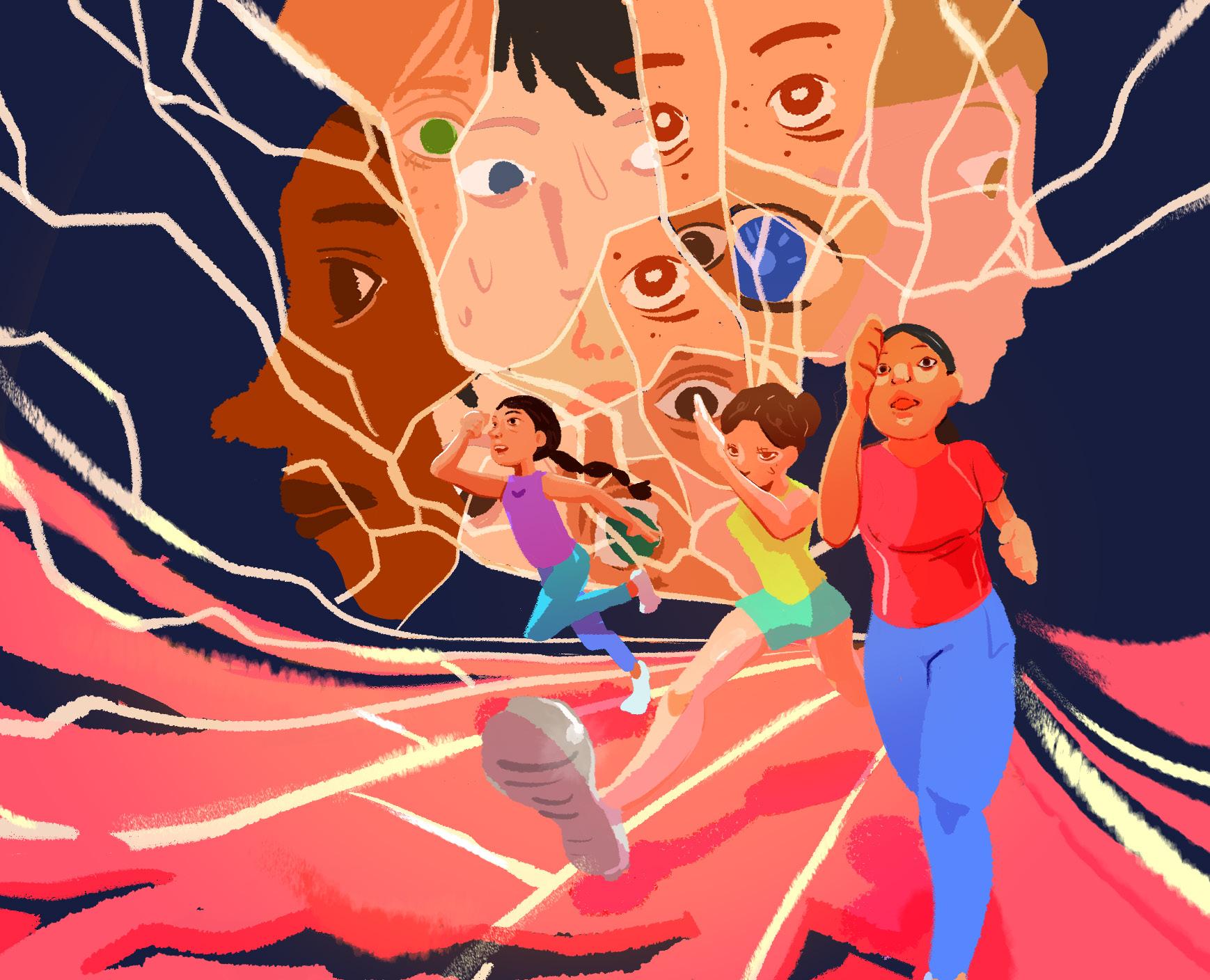
Unathleticism has a way of creeping into your identity. Growing up, I was surrounded by athletes, most notably my mother, who ran D1 in college and then stumbled into a marathon addiction in post-grad life. Both of my younger brothers are gym rats, with the youngest having run his first marathon at age 15. I am the only member of my family who did not run track and cross country in high school. Hearing my mother tell the story of how she and my father got together, I think it was in large part due to running: he was one of the only people from their company willing to run with her on early mornings following late-night boozy work functions, leading to their eventual union.
In stark contrast, though I was forced into more sports as an elementary and middle schooler than would be productive to list, I wasn’t good at any of them. I thought of myself as clumsy, slow, and untalented, sometimes even a liability to the team. By the time I gained enough autonomy to be able to quit, I did so with great enthusiasm and disdain. I hated running and most forms of exercise, even though I desperately wanted to be the kind of person who was disciplined enough to have a daily fitness routine. Being unathletic and unfit became more than just a characteristic of the hobbies I chose to pursue, the ways in which I allocated my time, and the metrics of my overall health. It was a piece of my identity. It was something that separated me from my family, and from an idealized version of myself.
In theory, exercise should just be exercise. It should bestow the benefits studies have shown it to bestow—no more, and no less.
In practice, exercise and identity are deeply intertwined.
In the case of my high-school self, my relationship with fitness reflected the overall patterns of how I engaged with myself more broadly. Every skipped Chloe Ting Ab Challenge video was evidence of a lack of discipline, every inability to follow a workout class was telling of general incompetence, and every quickly fatiguing hike was a sign of a poor work ethic. Exercise existed, it felt, to prove me unworthy— not just of the benefits exercise can provide, but
of a whole host of seemingly unrelated virtues.
Eventually, this would change, as I discovered a true love for certain types of movement, and, just as powerfully, I realized that I could skip the ones that didn’t resonate. And yet, the identity politics of exercise remain.
Gender is not inherent to any form of exercise, and yet the ways in which we engage with certain types of fitness are difficult to extract from the stereotypes surrounding them. It is not just a matter of fit or unfit; society has created new sub-identities.
The way I view myself in relation to the fitness world did not just change as I went from what I would call unathletic to what I would call athletic. My self-perception changes with every different exercise I do. I am a different person on a yoga mat than I am on a track.
And, unfortunately, the way I see other women changes too.
I. Pilates Princess
I came to Pilates, as many do, in a moment of desperation.
I had considered getting into it for years, intrigued not just by the purported physical and mental health benefits, but perhaps also by what Vogue calls “a trend of Gen-Z and millennial women who have made Pilates not only a lifestyle, but an aesthetic too. Picture Stanley Cup-wielding, tote-carrying women dressed in matching Lulu Lemon sets…grabbing an iced matcha on their way out of the studio.” Sounds close enough to modern-day royalty to me. I wanted to ascend into that elite ring of women with lives going as smoothly as the slow, controlled, repetitive movements they practiced.
But aspirations aside, I never actually managed to sign up for that first reformer class until both my love and athletic lives began to sputter at the same time. I’d fallen into a rut in my running, my speed plateauing for the first time since I’d begun doing it seriously. So when my boyfriend dumped me right after a failed set of 800s, I finally downloaded ClassPass. If I wasn’t going to start the next semester with
by AnnaLise Sandrich
Illustrated by Emily Chao
a faster marathon time, then I at least wanted lean legs and abs. The kind of toned physique that says, I’m better off without you
This is, of course, a well-documented myth. Pilates is good for improving core strength, strengthening posture muscles, promoting balance, reducing back pain, and a whole host of other physical benefits. It does prevent injuries, boosts immunity in older adults, and may even reduce symptoms of depression and anxiety. It’s really fun. The carriage on the reformer reminds me of structures I would find on playgrounds as a kid.
What it doesn’t necessarily do is make you lean, or toned, or any of the images that come to mind when you think “Pilates body.” The reputation of a Pilates physique likely came into existence around the 1930s, when professional ballet dancers (some of whom were former clients of Pilates founder Joseph Pilates) began touting its rehabilitative effects. Many of those same ballerinas went on to become Pilates instructors or start studios of their own, and thus the strong association between Pilates and a particular body type was born. Pilates—while useful for a wide variety of other reasons— “didn’t make these early adopters long and lean; they were simply long and lean women who happened to practice Pilates.”
And yet, my awareness of all that didn’t stop me from filling my water bottle, donning a purple sports bra that matched my leggings, and walking to the studio. I had lost control of my ability to run at a particular speed, as well as my ability to make a particular boy love me. Booking a class seemed much easier than dwelling on a failed relationship and a failed sub-3:20 attempt. I texted my mom the night before, “im going to be a pilates princess im so excited.” And she responded, “Does that make me a pilates queen?”
Truthful marketing or not, there is an aesthetic surrounding the “Pilates Princess” that is difficult to shake off. Some of it has to come down to the term itself. Why call someone who goes to Pilates a princess? Alliteration, obviously. But alliteration alone can’t account for the fact that there are far fewer Pilates
Of course, that’s not to say there were no men at the Pilates classes I went to, but there were certainly fewer of them. The data seems to agree with the anecdotes—one June report claimed that 72% of Pilates-goers are women. Though the benefits of Pilates apply to people of all genders, much of the messaging of Pilates is targeted towards women. Some of this may be changing as fitness spaces become more inclusive and common misconceptions surrounding Pilates are debunked, though often the sell of the Pilates Princess is that of the sophisticated, graceful, elegant figure. Fit in a feminine way. The princess, with her matching sets and aesthetic water bottles and air of togetherness, was born and continues her reign.
Maybe that’s all overthinking it, and the real meaning behind the term is simply that a Pilates class can cost anywhere from $10 to upwards of $100. Princesses are not just women, but also rich. How much of elegance is femininity versus wealth? Or, alternatively: in our current society, how much of femininity must be bought?
Perhaps there is accessibility to be found in stretching your two-week free ClassPass trial to the full extent of its potential. I signed up for as many classes as I could, testing out the various studios of Manhattan, and even purchased the cheapest month-long new client class bundle I could find once my free subscription expired. Even so, I don’t think I kept up with the discipline long enough to truly reap all of the benefits.
And yet, there was something oddly calming about lying under the soft warm lights on the reformer, watching myself stretch out and back in the long mirrors lining the walls, slowly, smoothly, over and over again, alongside all these sophisticated New York women (with a few members of other genders, and a few that seemed not so different from who I had been before walking through the studio doors). There is something about going to a class, placing your body in the trust of an instructor, and leaving feeling as though you’ve accomplished something. The aesthetics of the studio pull you in—immersed in sleek wooden floors, silky high ponytails, and flowery logos inundating everything from the sign above the door to customized $20 grip socks for sale next to the reception desk. You can’t help but feel as though you’re a little bit of everything that was advertised to you—the picture of aesthetically hydrated grace, style, and wellness, a selfcare goddess with her shit together. If you had asked me then, abs tense and heart broken as I strained against the various pulleys and straps that have been likened in many a standup set to a torture device, I would have said I felt long enough to stretch around the entire world.
II. Muscle Mommies
While scrolling between sets, sitting on a hip abduction machine in the Nelson, I came across a reel in which a creator interviewed various male gym-goers on the controversial question: “Muscle Mommies or Cardio Bunnies?”
Many respondents answered that they would prefer an avid frequenter of the stairmaster, the erg, or the treadmill—one explained, “It just looks better.” Perhaps this is part of the reason some women fear becoming
too “bulky.” Large muscles, particularly the upper body, go against the grain of the current dominant beauty standard.
On the other hand, there are the men who say they prefer the lifters. One can’t help but wonder if the preference for Muscle Mommies is sort of like the “cool girl” in the movies who doesn’t wear makeup and instead likes fixing up cars—a male fantasy of a woman who is just a little bit masculine. Sometimes I hear Muscle Mommies praised in a way that seems to look down on Cardio Bunnies and Pilates Princesses—exercises that have somehow become quite gendered, associated with the feminine.
If that is the case, is the demonization of the Pilates Princess or the Cardio Bunny the equivalent of the takedown of the homemaker, the girly girl, the stay-at-home mom? Is it putting down forms of exercise more closely associated with femininity in the service of the undercover, sneaky narrative that a more “male” form of exercise is a better one?
Still, I can remember at least one TikToker stating that a “Muscle Mommy could take care of me.” The role of the caretaker—and the mother—may be one associated with stereotypically domestic roles assigned to women. But “taking care,” in the context of large muscles, more likely indicates a complete reversal of traditional gender roles. The Muscle Mommy, in this scenario, becomes the protector.
And all this being said, a jacked physique doesn’t seem to cater to the typical male gaze. Women face inordinate amounts of pressure to become the opposite: small and slim. When you lift heavy, words like “massive” and “huge” suddenly become good things. That’s sort of magical. There’s really nothing quite like the endorphin rush of a successful set of shoulder presses, followed by looking in the mirror and, for the first time, not being afraid of being too big—when the number of pounds on the scale becomes less relevant than the number of pounds on the bar.
I do at least three times more cardio than weight training and Pilates combined, but I have never once considered myself a Cardio Bunny.
The top two entries for “Cardio Bunny” in Urban Dictionary are: “a fine female specimen found near elliptical, treadmill, stair-stepper, or other calorie-burning equipment” and “Those people (usually women) that you see in the gym every single day whose entire workout revolves around cardio exercise… They get all sweaty and really think they're killing it in the gym, but as time goes on, you notice that their bodies look no different because they plateaued ages ago.”
“That girl hits the gym almost everyday and she's thin and flabby at the same time. Must be a cardio bunny.” As the definitions indicate, it’s not a term imbued with a lot of respect, and it’s one I have never heard used to describe a man. I do not know where the word comes from. Something to do with Playboy Bunnies, perhaps? Even if completely untethered to any sexual connotations, the bunny rabbit is not exactly the most inspirational athletic figure.
Pilates Princesses and Muscle Mommies
will sometimes describe themselves as such, proudly, affectionately. And, sometimes with rivalry but often in reverence, a Muscle Mommy will mention a Pilates Princess and vice versa—a respect for the exercise that is not yours, a respect for the multitude of motivations and goals that exist within the fitness community. The terms “Pilates Princess” and “Muscle Mommy” can certainly be diminutive or derogatory, but can also be ones of endearment. It is far rarer to hear someone describe themselves, with no selfdeprecation whatsoever, as a Cardio Bunny.
Cardio, in theory, could encompass a vast range of activities—rowing, swimming, biking, and, in my case, running. But within the Cardio Bunny scope, it seems to mostly be a term that applies to equipment in the gym—Cardio Bunnies as the foil to Muscle Mommies (or heavy lifters in general, regardless of gender). You don’t call an Ironman, for example, a Cardio Bunny. Most runners identify as runners—hybrid lifters, maybe. Maybe there’s just more respect to be found in specificity and specialization.
And sure, there’s definitely a difference between a Stairmaster Warrior and a Marathon Runner. One wants to get fast. The other wants to get fit. They’re different goals, even if one isn’t inherently better than the other. But the lines get blurred sometimes.
What about the casual jogger on the treadmill? Is their run framed as thirty minutes of cardio in order to burn off a few calories? Or are they a marathon runner building general aerobic fitness by squeezing in an extra three miles into their training schedule at an easy pace? Does the mindset matter if it’s the same workout?
These days, I do most of my runs outside, but I began my running journey on the treadmill in my parents’ garage, which felt safe and hidden from judgement. Still, there are days I find myself inside again, particularly in the bitter winter months. Can cold weather and icy sidewalks transform you from a marathoner into a rabbit?
When I began running, it was with the explicit purpose of losing weight:. a Cardio Bunny approach to running. This is not to say that it is always the Cardio Bunny case— sometimes the aim is improving health or fitness—but weight loss is a goal that is often dumped onto women in order to fit an ideal body standard.
At some point, the therapist I was seeing at the time told me she thought I was headed into eating disorder territory. Fasted cardio in order to better burn fat, long runs with no fuel. I had adopted a senseless training schedule optimized for burning calories rather than speed, which included a ludicrously abrupt build in mileage. A complete lack of understanding of the physics and physiology of running. I came down with a bad but predictable case of shin splints, and on the second day of not being able to run, woke up screaming from a nightmare in which I had suffocated in my own fat.
But what got me out wasn’t dropping the running altogether. Ultimately, at some point, you have to choose between speed and “skinniness.” I haven’t lost much weight in the past two years, but I’ve shaved 53 minutes off my marathon time. Come this May, hopefully a few minutes more.
by samaira mohunta
Illustrated by Kyubin Nam @binnibinni_studio
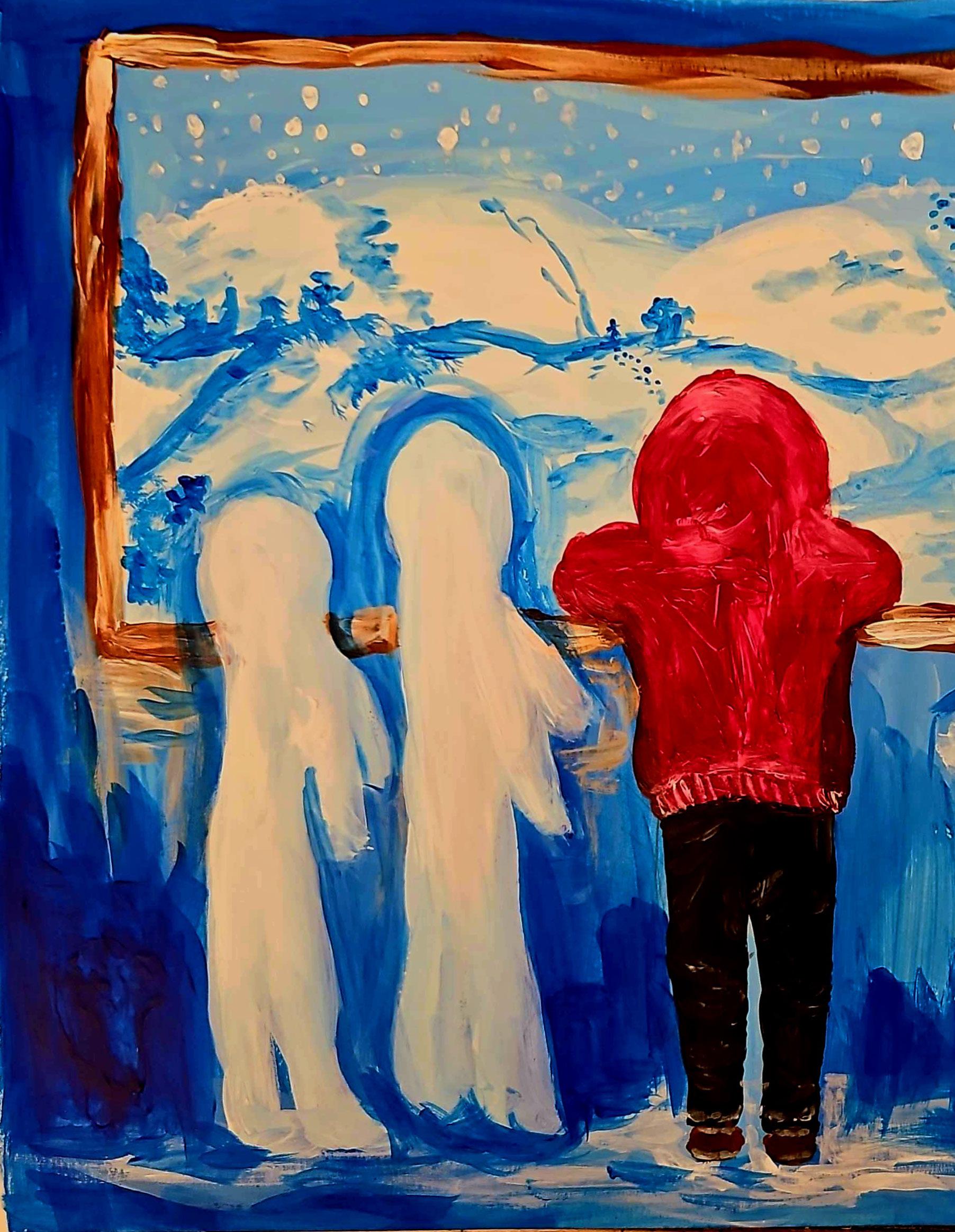
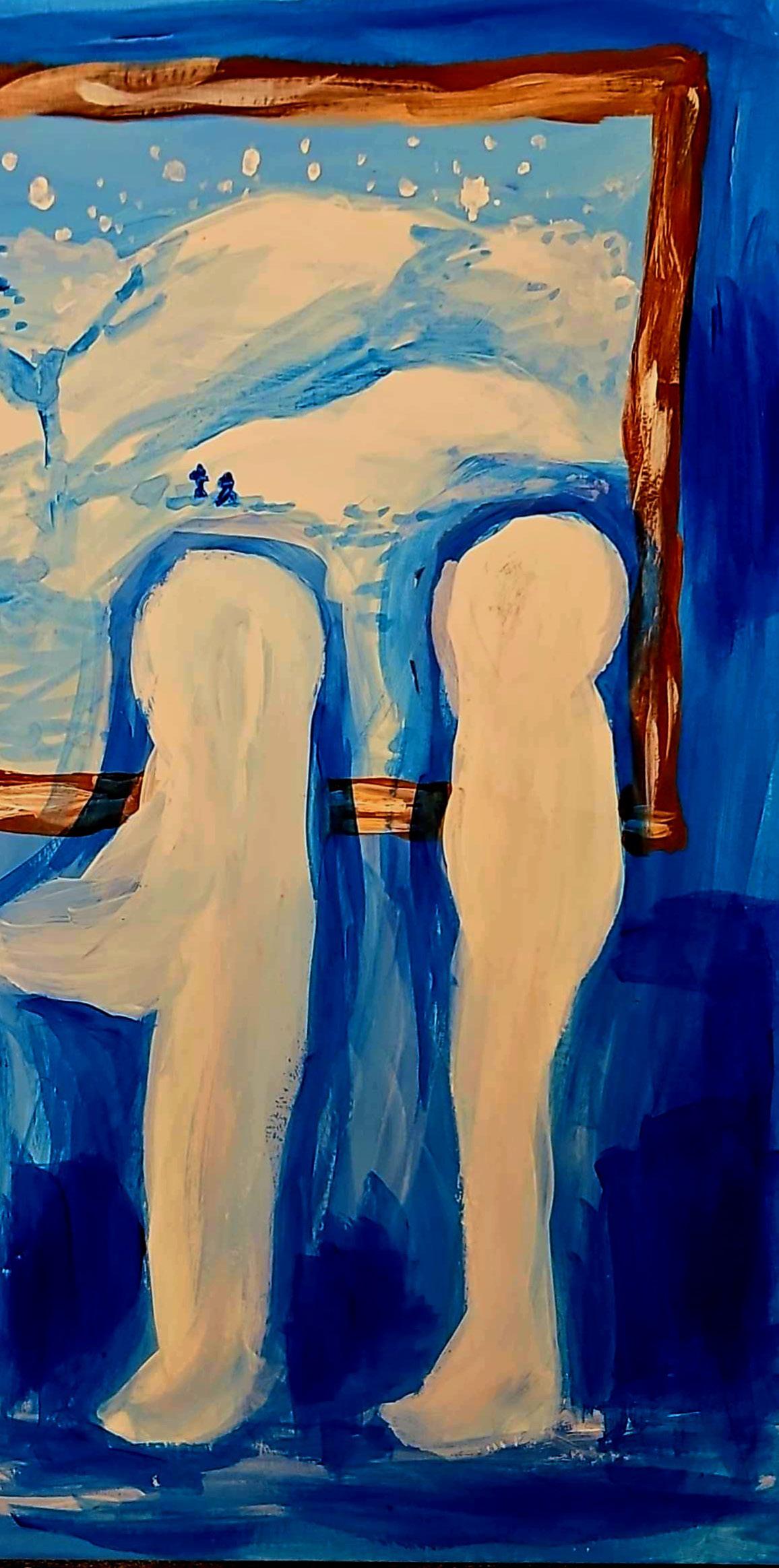
My roommates point at the window. Look outside, they say. It’s all white, everything is white. The snow is coming down fast. But this is not the first snow we wanted, not how we wanted it. I’m sorry you had to leave. And I’m sorry you had to leave the way you did. But where did you go? You didn’t tell us anything about it. How could you? You couldn’t have known.
Maybe if everything happened ever so slightly differently, we would have spoken to each other. During our sophomore or junior year, we would have been friends. Maybe this semester, too. Anyway, I’m sorry we all left for home in less than a day, left collegetown without leaving a card outside your room. I’m sorry you won’t be able to walk through the Van Wickle gates again, but if we can, we’ll walk through them twice: Once for us and once for you.
Returning home for winter break was bittersweet, like knowing how to ride a bike and still liking the safety of the training wheels. I’m not who I was my first semester, but I’m not who I was before it either. It’s an odd feeling, really. To have neither size of shoe fit you, yet know that you still have to choose a pair and keep walking. I no longer show up to class in flip flops with my hair undone. I don’t shy away from applying concealer either. I laugh while speaking to strangers and tell them I have no idea how to play cricket, that I don’t mind learning how to, that it doesn’t matter to me as much as it used to. I no longer miss my 9 a.m.s and I suddenly go to bed at a not-so-late time. A lot changed over winter break, and I don’t know why I suddenly care so much about things I never paid attention to. It feels different; is it bad that it feels good?
It was nice meeting my high school friends again, as though so much time had passed, yet none at all. We sat together, half-watching whatever was playing on the TV and half-talking, with someone saying we should do something, play a game or something, yet no one moving. I spent Christmas with my best friend again, we spoke about the same things again. How we became friends because of a book series, when we all went swimming together during a storm, our college promises to each other. Some of my friends have changed, too. A few things for the better and a few things for the not-so-better. It’s okay, though. I should welcome change. Still, it’s funny to think about. To think how just one semester can change someone so much, so little, and sometimes, not at all.
Now my friends make fun of me for saying “c-a-a-n-t” instead of “c-a-n-t,” “f-a-a-s-t” instead of “f-a-s-t.” When did you become such a south-dilli-type-ladki? Itne nakhre, itne gaali. But my Hindi grammar is still embarrassingly bad, and I still can’t go an hour without talking. I still like to come up with ridiculous full forms for words and still call up people asking them where my phone is. Oh. Fuck. I have changed a lot over winter break, but I haven’t changed much at all, either.
We are learning how to take our seats again, learning how to raise our hands again. And learning takes time. And time it will take. But we will get there soon. And until we do, and even after, know that you are not alone, that we are all here for you.
I turn the doorknob.
a
by danielle li
Illustrated by ellie lin
Careful now, don’t let Buddha hear. The hinges protest, and I ignore them.
I’m hunched over.
Mother forbids me from watching the Hunchback of Notre Dame. She said churchgoers are always virtuous. I begin to crawl. My knees are sore and stinging.
Floorboard ridges dig into my palms. My hands are strawberries, pockmarked with seeds.
I stop and peer up. Draw a hopeful breath. It is no use—I am always tiptoeing under watchful eyes.
I’m afraid of Buddha’s eyes.
He affixes them to me as soon as he hears the rasp of the Blue Room’s door. We call it the Blue Room because of the cerulean paint slathered over the walls and its deep, cool cast when evening falls. I suppose when the last owners painted this room, they wanted us to imagine we were in heaven. I feel only as if I have been plunged into a deep pool, the kind with an uneven finish that snags at your feet and leaves soggy white cuts.
My room is the Pink Room, although the walls are really a shade of lavender. You would think the master bedroom was called the Red Room, or the Orange Room, but no, we call it the Big Room. We like naming objects this way too—Big Car, Small Car, Big Daughter, Small Daughter.
The Blue Room is different from the rest. It is like comparing the sun to the moon—only one can be the center of orbit, drawing in other bodies with its irresistible pull. It is a place that belongs to no one but itself.
The Blue Room is different in other ways too. For one, the walls are lined with Yellow Books—texts, teachings, scriptures that knit an elaborate constellation of celestial realms and cosmic renewal. They have faded to the color of discolored teeth, whether by time or sunlight or the oil of too many fingertips flicking through pages. I imagine that the very secrets of the universe have been sealed and stoppered carefully in these books. To stand before them must be like perusing through aisles of a rundown Asian supermarket. Pick some ginger, cloves, szechuan pepper, grab a bottle of lao gan ma, but rush to leave because the children are crying for dinner.
Of course, this is all just how I have pictured it. I have never flipped through most of
those old-teeth books. I have never heard their voices and the way they fight to drown each other out. I once tore a page in one of them just to see whether angels, or demons, or even the guardians of purgatory would descend through the window panes along with the warm breeze and drag me down to hell. But it only ever became a torn page.
Now look at Buddha, who is perched against the left wall in the Blue Room, framed snugly between those golden books and melancholy-coated walls. He is the centerpiece: no need to visit the Louvre, the Met, or the State Hermitage. He watches from the moment I creep inside to the moment I scurry out again. Some say his downcast eyes are serene, drawn into a smile with the tender wisdom of the allseeing deity. I say they are like the eyes of a cold herring, mournful and unblinking.
In fact, the entire room watches, waiting. Think of a lion overlooking his domain of grasslands, of the Bayside State Prison warden examining his unwilling tenants while twirling the key ring round his thumb, of children’s faces piercing through Sea Life at New Jersey’s filmy aquarium glass (“Mom, look at that upsidedown fish! Is it sleeping?”). Stepping into this room, I am the soon-to-be-dinner gazelle, the seething prisoner, and the choking fish.
Across Buddha is a window with panes that have never been opened and shutters that have never been closed. Perhaps if I entered more often on those lazy July mid-afternoons I would’ve caught the hot, thick dollops of sunshine that poured through those shutters. But I did not enter; the sunshine went uncaught. What must this room look like to those standing outside the panes, squinting in their struggle to see through the accumulation of dust and prayer? What must it look like to the common
starling and tufted titmouse that flit overhead— are they reminded of Prince Siddhartha nursing their brethren, the wounded Sarus Crane? Or do they pass it as I have: one moment, one more, they’re gone.
Still, the Blue Room cannot be avoided forever. Step past the walls, the books, the statue. Tear your gaze from Buddha’s eyes and toward the sliding closet doors. They are white, worn, and always complaining, rattling on their hinges. Here is a small storage space tucked away, a shrouded secret within a room that reveals nothing. It is a soft, warm secret that whispers of childhood and the lovely ownership of a child over her playthings. Here is a teddy bear with an orange sash, a worn woolly sheep, a plastic dog that squeaks in protest as I drag it along with purple yarn. The sheep and dog do not lay at Buddha’s feet, however. I think they, too, are afraid of entering the Blue Room.
Once a year, I am bidden to enter. And unlike during my rescue missions for my stuffed companions, I cannot avoid Buddha’s eyes by pretending they are not looking. I must meet them, with incense smoke in my hands snaking toward the blue ceiling and a film of sweat that pools in the ridges of my palms. I wonder how I can cup fire and water and remain unscathed.
Listen to the murmur of chanting by mother, father, sister. Their melody coats the air as sweetly as that incense. I fasten my own voice beneath a limp tongue and gritted teeth. I am a Christmas caroler with a sore throat, armed with droll certainty that my music could bring nothing but dissonance.
It's at times like these that the weight of the Blue Room turns my entire home into an unfamiliar landscape, a semi-reality that you only stumble upon in the places between dreams and waking.
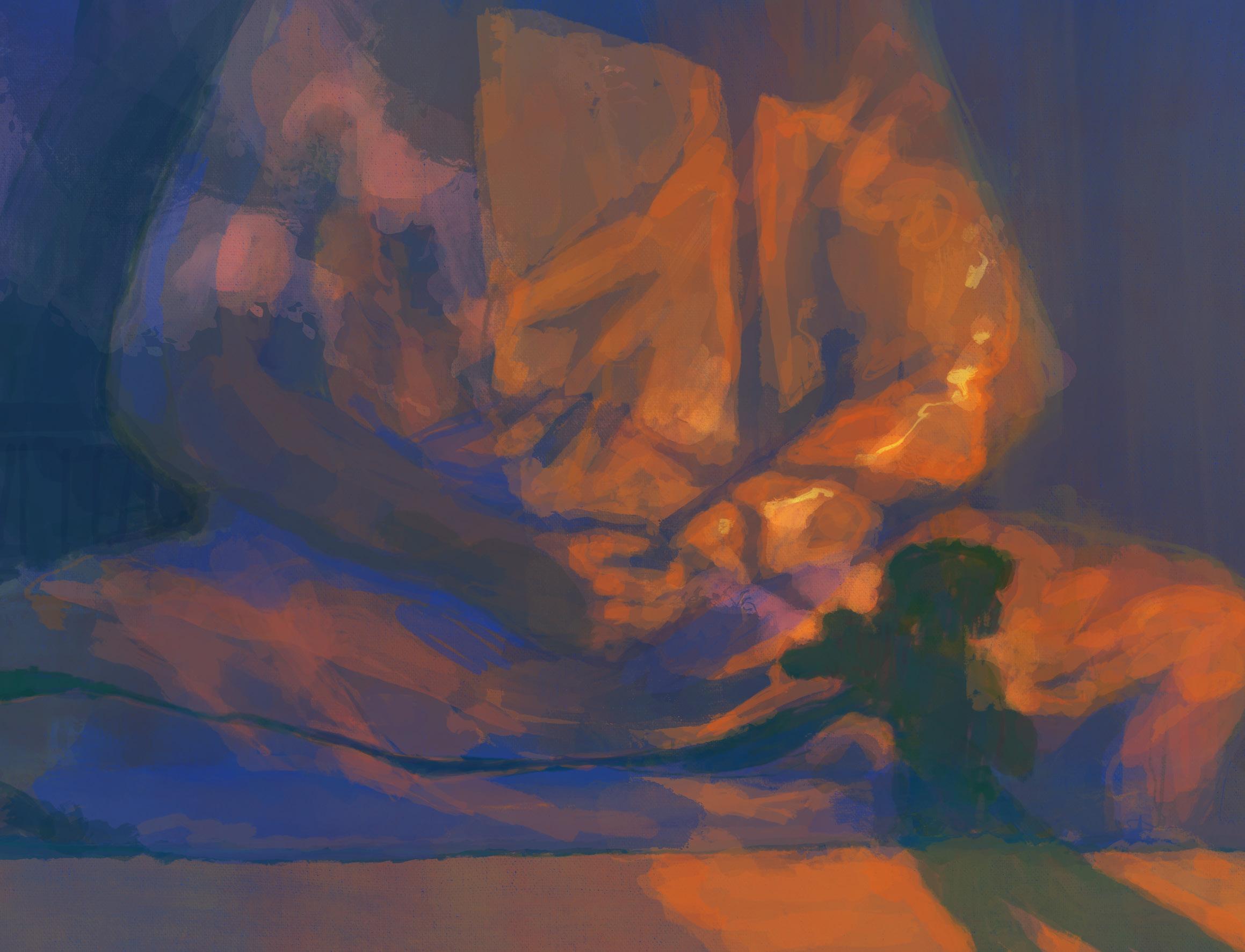
Watch your step now; keep your hands and feet inside the ride at all times. Green is for stop and red is for go. Your home is a shrine, and you are its keeper.
by Grace Ma Illustrated by Yoonseo Lee
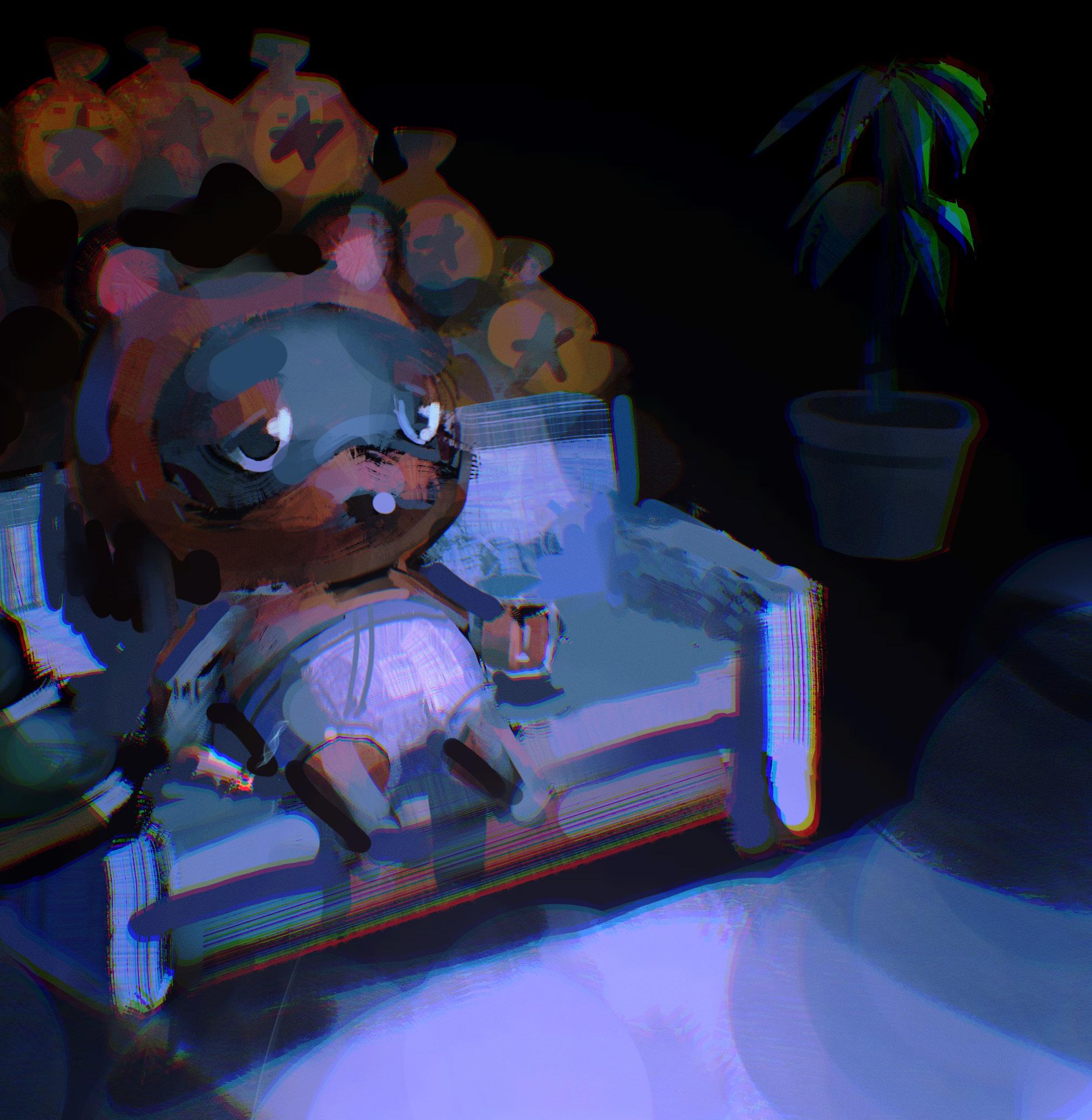
Like every other teenage girl in the country, I was absolutely obsessed with Animal Crossing: New Horizons (ACNH) during the pandemic. I was actually a little late to the game—I got my first Nintendo Switch in late 2020, a few months after ACNH was released, and I had never played Animal Crossing (or really any video game) before. But once I got hooked, it was over for my screentime—something about the simplicity and direction of the life I led on my island appealed to me as a deeply bored teenager in quarantine. I’d spend all of my waking hours fishing, decorating my in-game house, selling turnips, and trying to max out my character’s wardrobe from Able Sisters. Even when school started up again during my junior year, I’d play ACNH during my Zoom classes and college information sessions (likely a large part of why I can no longer pay attention to virtual lectures). During a time when I was isolated from just about everyone but my family, I found comfort in my daily interactions with the villagers on my island.
The villagers. Any Animal Crossing: New Horizons player will know how contentious the discourse around villagers was during the heyday of the ACNH hype—videos of players hitting “ugly” villagers with nets, villager tier lists and rankings based on nothing but appearance, popular villagers being sold for real money on eBay. In particular, the newly released villager Raymond—a gray cat with heterochromia and glasses—sparked a frenzy so crazy that people started cyberbullying real people on Twitter for refusing to sell him to them. In a way, this was the core of the ACNH experience—not decorating your island with furniture, but rather with the cutest NPCs, the objective ranking of which was determined by a council of chronically online players on social media.
Some background on how choosing villagers works in ACNH, for the uninitiated: There are about 400 villagers in the game, only distinct from each other in appearance and dialogue presets. You start off with two villagers (your “starters”) and you have no control over the specific characters you get (unless, like a great many ACNH players, you keep restarting the game from scratch until you get starters that you deem cute enough to get past the first scene). As your island grows, you get to invite more villagers to your island. You get more choice here, as you can choose who to invite by repeatedly visiting remote islands to meet villagers, but if you’re looking for a specific villager, your odds are abysmal. This itself spawned a black market in which people sold tickets to fly to these islands, which were often acquired through repeatedly completing mundane tasks such as “hit three rocks” and “chop three trees.” But, as the only way you can guarantee a specific villager is by visiting another player’s island where that villager is moving out, a typical day spent on an
Animal Crossing forum would consist of a flood of user posts about selling their animal neighbors.
I stayed offline during the first few weeks I played the game, largely unaware of the toxic wastelands that were Twitter and Reddit. My starters were the gray monkey Shari and the blue bear cub Kody, and for my new villagers, I took the first options I got (the blue rhino Hornsby and the strawberry rhino Merengue). I felt an attachment to my starters—they were with me through the unceremonious early days when we lived in tents in the middle of weed-infested wilderness and built the island with me brick by brick. Shari loved to sing along to whatever song I decided to play on the radio, even when I only had one song. Kody would always talk to me about his abs and his workouts, which I found strangely endearing. Hornsby loved visiting the museum and mispronouncing the names of all the dinosaurs.
But then, I learned from a friend that there were 400 villagers out there that I could meet.
I was curious to see what the options were, so I typed “animal crossing villagers” into Google. Here, I finally waded headfirst into the online Animal Crossing community by stumbling across my first villager tier list, where I was devastated to find that my OGs, Shari and Kody, were both bottom-tier. This discovery impacted me greatly—I found entire Reddit threads trashing Shari by saying her hands were stained with pee—and I naturally started gravitating toward more popular villagers as my island grew. I would check tier lists and Reddit every time I met a new candidate to live on my island, and I would only invite them if they were A-tier or above. When Shari and Kody eventually asked to move out, I let them—after all, this meant more spots for the good villagers.
Within a few weeks of this discovery, my island became unrecognizable. The landscape was now carefully curated: Neatly arranged brick buildings replaced the tents we used to live in, and bridges and staircases connected all the different parts of the island. I could almost imagine I lived in a city. The villagers, too, were meticulously selected to conform to the cuteness standard of online strangers. My island had finally been rated five stars due to the arrangement of buildings and decorations; my villager selection would probably earn me a non-trivial amount of real money in the villager black market. But underneath this pristine veneer of perfection, I felt nothing. I felt nothing for these villagers; nothing like the way I felt about Shari when she gave me medicine after my first wasp bite and sang along to my first KK Slider record. The only thing these new villagers brought me was their appearance and their place in the tier list, as if the only value they had was as status symbols.
Without realizing, I’d gotten sucked into the strange world of prestige and status in the Animal
Crossing community. Players did not actually care about connecting with their villagers; they only cared about how they made them look in the eyes of other players and the aesthetics they brought to their island. Owning popular villagers was a way of claiming cultural capital among ACNH players, and players spent hours of their time (and dollars of their real money) curating their island for clout. My island now looked exactly the same as thousands of others on Switches across the globe, my villagers consisting of the fashionable likes of Dom, Marina, Zucker, Fauna, and Whitney. My game of relaxation and mid-pandemic connection had turned into one of social posturing and grinding.
It was my love for my other, less popular villagers that finally made me realize what had happened to me. One of my favorite villagers on my island was Stella, an adorable magenta sheep with a permanent sleepy smile. She was cute, sure, and no one hated her, but she never made the lists of “dreamies”—people’s dream villagers—either. I found myself constantly wanting to advocate
on her behalf on Reddit and argue about how underrated she was to justify why I was keeping her on my island alongside the greats like Marina and Dom, and somewhere along the way, I realized: Why did I need other people’s permission to have my own preferences?
This realization sent me reevaluating various aspects of my real life as well. Social prestige had been such an integral part of my life that I’d become unconscious of how it influenced my decisions—colleges, jobs, and even friends and potential romantic partners often had a prestige tag attached to them. As a (particularly impressionable) junior in high school, college applications and personal relationships were an especially salient part of my life, and I ended up delegating much of my thinking about them to other people. I aspired to attend Harvard or MIT because those were the schools everyone told me were the best and where everyone else wanted to go. I tried forcing myself to enjoy my STEM classes because these were the “better” majors that made more money and were more respected. I spent hours poring over pictures of people I might have wanted to date, wondering if they were conventionally attractive enough for me to justify liking them, and I was never brave enough to tell anyone else out of fear that they would make fun of my taste.
Growing up surrounded by this culture of status-seeking, I’d lost track of the fact that experiences and relationships are more than decorations on a digital island,
but real, beautiful things I can appreciate without the permission of others. I started to realize that Harvard and MIT were not the best for me, and started intentionally targeting a more niche class of schools. I started thinking harder about what classes I actually enjoyed, and once I got to Brown, I promptly gave up on science once I shopped my first chemistry class. I stopped giving as much of a shit about what other people thought of the people I dated, because I realized that the only attraction that mattered was my own. Some of these decisions have baffled the people around me, but over time, I’ve come to be less bothered by that, and I’ve started to claim my life as my own. I now play Animal Crossing in peace with the villagers I want, not giving a single thought to any tier list. I’ve kicked out some of the popular villagers that were only there for window dressing, but I’ve kept a few that I felt a stronger connection to. My island is now a mix of popular and underrated villagers, but what they all have in common is that I genuinely want them to be there—and it has made my time with Animal Crossing enjoyable again.
write is might
by Sasha Gordon Illustrated by Angelina So @ang_i_i_
Dear Amber, I wasn’t wholly truthful with you. I know the assignment said “FICTION.” I saw the word standing proudly at the top of the page, clearly heard you say we were here to invent and imagine. I know that’s what this class was about. I know this was supposed to stretch me. I know it’s important to write fictions, and read fictions, and learn from them. But I choke up when I see that word. It’s quicksilver down my throat. I’ve tried to put pen to paper and boldly go it alone, and I’ve tried to map more elaborate plans as an amulet against the tides of uncertainty, but neither works. I cower when confronted with the wide-open expanses of fiction. It could be anything, and that is the problem.
—
Amber, I should note, was my high school creative writing teacher. Present Sophomore Me thinks of Sophomore Me of High School as, well, sophomoric. An aspirational “writer,” whatever that means. Because it’s important, because it’s noble, because it’s interesting, defendable, or any other adjective with heroic potential. A mink-lined cloak to shield me from the pedestrian. So superior, yet so insecure. I either knew or felt I needed to improve my writing, to render it impregnable to the assaults of criticism. In hindsight, the class didn’t necessarily achieve those lofty aims, but so few things do. Realistically, I thought it would maybe be an outlet for angst, perhaps where I’d find an inlet into myself, or even—forgive me—a safe harbor. I don’t believe I’m alone in thinking
that Amber’s were daunting tasks to be assigned, however. “Write something.” It must meet some minimum standard of originality, be consistent in voice, work towards a plot, and, crucially, make sense to someone outside of your head who definitionally suffers from the chronic condition of having fewer details than you, the writer. Young writers think this is curable. It is not. Too many details suffocate a story. The writer will always know more, the reader will be left wanting, and the quest to resolve this fundamental imbalance is one you will always lose. Grown-up writers, I think, don’t try so hard to resolve it. After all, a good story wants to be chased.
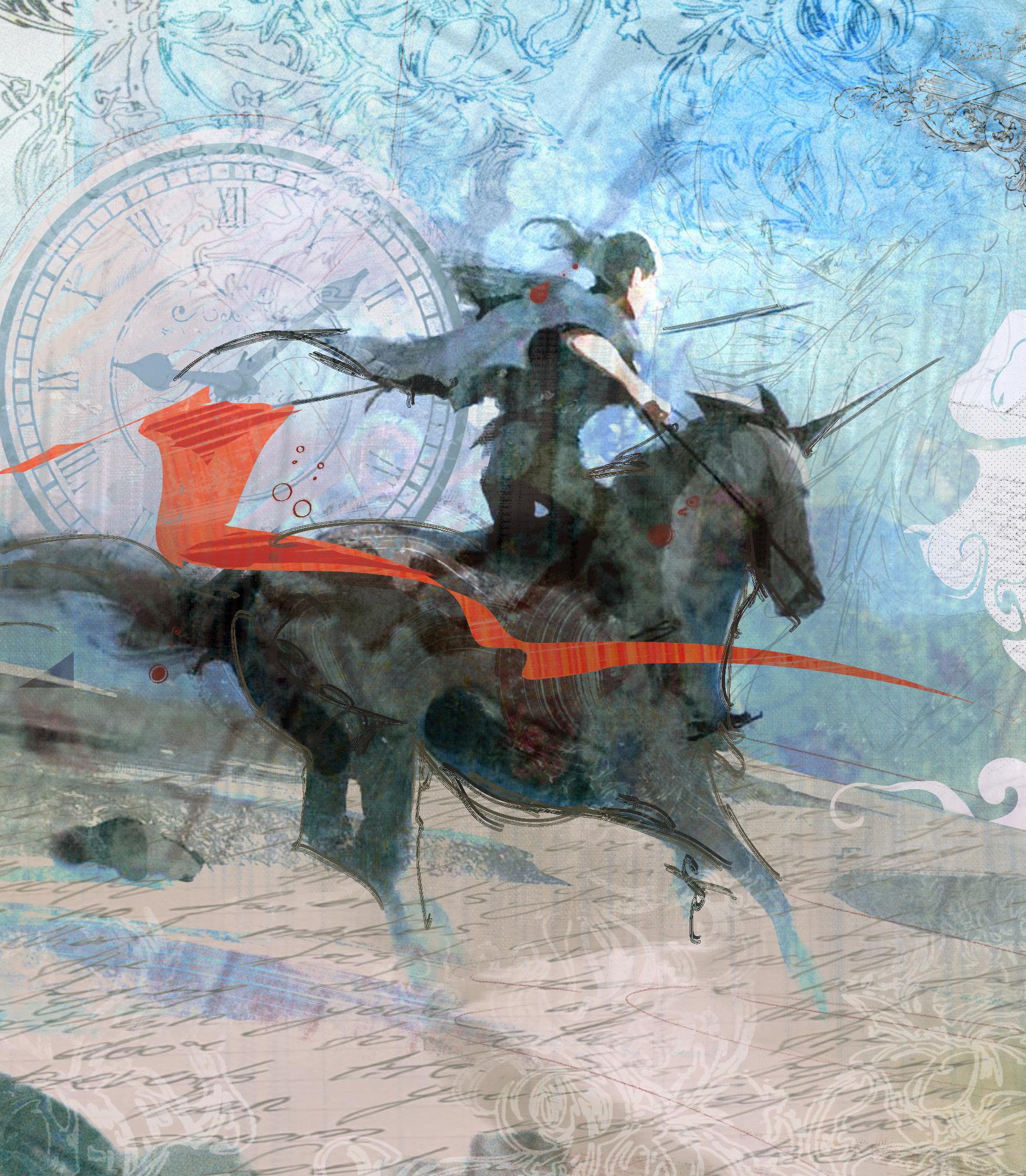
— Even now, the hunt is on—I know this is not a piece about creative writing. I’m just trying to figure out how to tell you that. This is a piece about The Once and Future King. I read T. H. White’s elegiac tome for the first time at age 11, a notably larger undertaking of my school’s “lit club.” Published in 1958, The Once and Future King is a retelling of the legends of King Arthur, as all Arthurian texts are, and particularly inspired by Thomas Malory’s 15th century Le Morte d'Arthur (shockingly, an English-language text). Odysseying through it week by week, I equally suffered the devastating blows of “Six other years passed by” and reveled in the joys and suspenses of “Queen Morgause stood in the moonlight, drawing the spancel through her fingers.” If you’re looking for world-class fiction, The Once and Future King might be the definition of it. Yet as I read White’s treatment of the Arthurian legend, it seemed like he was cheating. He had the contours of the story already and thus I presumed White’s job was only to color them in, making the genre assignment of "fiction” feel somewhat unearned. Color them in he does—White sprinkles quests throughout Arthur’s previously unremarked-on upbringing, renames him “the Wart,” and exposes the proto-king to theories of war, virtue, and societal organization to render him a more robust character. And sometimes, White floors you:
“The place in which he found himself was absolutely flat. Here, in the belly of the night, the illimitable, flat, wet mud was as featureless as a dark junket... In this enormous flatness, there lived one element—the wind… In the human world, the wind comes from somewhere, and goes somewhere, and, as it goes, it passes through somewhere… This wind came from nowhere. It was going through the flatness of nowhere, to no place…”
This is how I feel about writing fiction. I am thrust with no warning into an oddly-dimensioned expanse, too large and strange to comprehend, too foreboding a place to even scent a hint of future triumphs. Told to write a short story, I produce either a blank page or a diary entry. I’d never seen my feelings characterized so deftly before. Some would quibble with me here, say this passage isn’t evidence of my true cosmic bond with T.H. White, that actually, any kind of novel experience and its accompanying uncertainty would be similarly aptly characterized by this excerpt. I beg to differ. Were this just a description of something merely new, it would not be so vacant. A novel experience isn’t this terrible blank void, it has at least some ridges, influences, schematic bleed from other life experiences. White insists that here, this is not the case: “the total features of [this] world…darkness, flatness, vastness, wetness: and, in the gulf of night, the gulf-stream of the wind.” The only features in this odd world are generally ones that
humans try to pretend we can master—inventing walls, lights, and dehumidifiers to assuage our fears. Frightening. I should again make mention of the fact that T.H. White isn’t the protagonist of this story, and thus not the one experiencing this blankness. “He” in this passage is, of course, the Wart. He’s just been told by a talking owl that it’s time for him to try living amongst the wild geese, and the above lines are what immediately follow. These are his only touchpoints—yet rather than being concerned about his new avian nature, he observes his anomalous surroundings. Yet this blinding blankness doesn’t phase the Wart as much as it phased me. No, the strangest thing in this alien goose colony for the Wart is that he is told of the absence of War. I think it’s because it’s paralyzing. As a squire, his job is to serve knights, and knights serve War. He is the footsoldier of the footsoldier, to an organizing scheme he’s now being told doesn’t even exist. Please understand this—transforming into a goose? No biggie. Enormous, illimitable flatness? Not his problem. But the absence of war, the unthinkable potential of a world less bellicose, arrests this future king. Much as I feel fiction rushing by me when I try to write, a harsh stream forever out of reach of my ever-trying pen, so too is the Wart swept up:
“The Wart, facing into this wind, felt that he was uncreated. Except for the wet solidity under his webbed feet, he was living in nothing—a solid nothing, like chaos. His were the feelings of a point in geometry, existing mysteriously on the shortest distance between two points…It was power, current, force, direction, a pulseless worldstream steady in limbo.”
It does feel like I am an unbelieving point that lies on the shortest distance between two points— the start and end of a story. I have a hard time finding those points, and it feels like there would be less resistance if I assigned them nonfictionally in a grand proclamation, but this is not the quest I’m on. What comes out of the writer is fast and uncontrollable and the only thing they could have produced, but it is not to be taken uncritically. The “flow” state of the writer is far more literal than it’s generally taken to be. After finding where the water is coming from, and opening a faucet to let it out the other end, the job of the writer is to hold steadfast. The Wart isn’t a writer, but he does cultivate fortitude and resistance to the immense pressures rocketing by him—hunger for power and the hegemonic belief in “Might is Right.” We later learn that his “shortest distance” should produce justice, but to traverse it, the Wart must resist the seemingly easier path of battle, of deciding what is Right preemptively. The resistance of this moment is visible in the novel, as these windswept passages are entirely distinct from their textual surroundings. Much of the preceding chapters’ airtime was taken up by encounters with knights and falconry and hay-making, a kind of blurry, inconsequential background. (Perhaps it’s intentional that the knighting and squiring all feels so small in comparison to this one moment of wilderness.) When the Wart returns from the geese, it is with a store of fortitude he will later tap. When I left my writing class, I had perhaps written no fiction, and the Wart had engaged in no War, but we were both better prepared for any future encounters. Reading this passage just the one time mapped it indelibly onto the surfaces of my brain, elevating it above any of the more topical installments. If I were to recall any passage from the story, it would begin here.
If I am to be read as the Wart as well as White—for we have outlined my quest, preparations, and sent me off on it—and I am similarly thrust about, then I too must encounter something even stranger in this limbo than the limbo itself. My “absence of War” moment in this strange land, my unthinkable alternative, is something, then, that I bring from my world to the realm of fiction, only to fail to encounter an analogous concept. I lose my envisioned lifelong purpose—my particular noble conception of writing—somewhere. The Wart brings his squirely upbringing and romantic fantasies of battle to the peaceful geese (peaceful being a misnomer, for they have no alternative disposition) and finds no Wars to win with them. I bring my fear of fiction, my aspirations of writerhood, my need for guidelines in this featureless expanse, and am met with the uncomfortable reality that fiction or not, life has no pre-existing contour. So perhaps my homegrown War is both my fear of all this and my lust for Write. The Wart learns that War is not the way—the everpresent axiom “Might is Right” is wrong. I learn that fear is not what I need—knowing is not knowable. There is no track to uncover for my characters and truly, there isn’t one for me. My corruption, albeit perhaps a less visible one than literal battle, was believing that Write is Right, and that there’s a winner after feats of Write—whether it be me, triumphantly writing better and more muscularly than everyone else, or whether fiction would best me in the end. But eventually the Wart stops looking for War, and I must stop looking for certainty. The Wart’s life is somewhat inseparable from Might, and all he can do is try to resist its heady allure, employ it only where good and necessary. This is my goal with Write.
Nestled in this eldritch passage is a brief glint of relief—“Two miles to the west, there were three spots of light in a triangle. They were the weak wicks from fishermen's cottages, who had risen early to catch a tide in the complicated creeks of the salt marsh. Its waters sometimes ran contrary to the ocean.” Not so flat and featureless as it had seemed earlier. The horrifying expanse is not such an invisible labyrinth, and perhaps, I can find somewhere to start a fiction. The inhospitable two-dimensionality of this plane becomes 3D enough for me to inhabit it without being crushed. Yes, the idea of each miniscule moment of a fictional text being intentional is terrifying. Or each moment of any written work, actually— this included. But there’s a balance between fully writing nonfictions, as I admittedly did for Amber (sorry again), and just bringing a little touchpoint along to align my earthly dimensions with that of the story. If I’m not going to War, I don’t need the armor of a story having “actually happened” to defend my plot choices. It is beautiful to make a home for wayward Fictions, which, unlike Nonfictions, are only accountable to the self. Where else would they live?
Today, I’m largely uninterested in writing fiction. Though I am interested in not being afraid of it.
by Indigo Mudbhary
Illustrated by Minglu Du @duminglu_art
cw: rape, sexual harrassment
Dear A,
It was the spring of 2025. You, me, and P were at Gigs on the Green, jumping up and down to the Stowaways’ cover of “Good Luck Babe.” The worst spring of my life was reaching its end, and in a few weeks, I would be headed to Nepal to research the thesis I had been planning since my sophomore year. By the time I would return to Brown, my rapist would have graduated. As I looked at you and P, I felt, for the first time in months, cautiously optimistic.
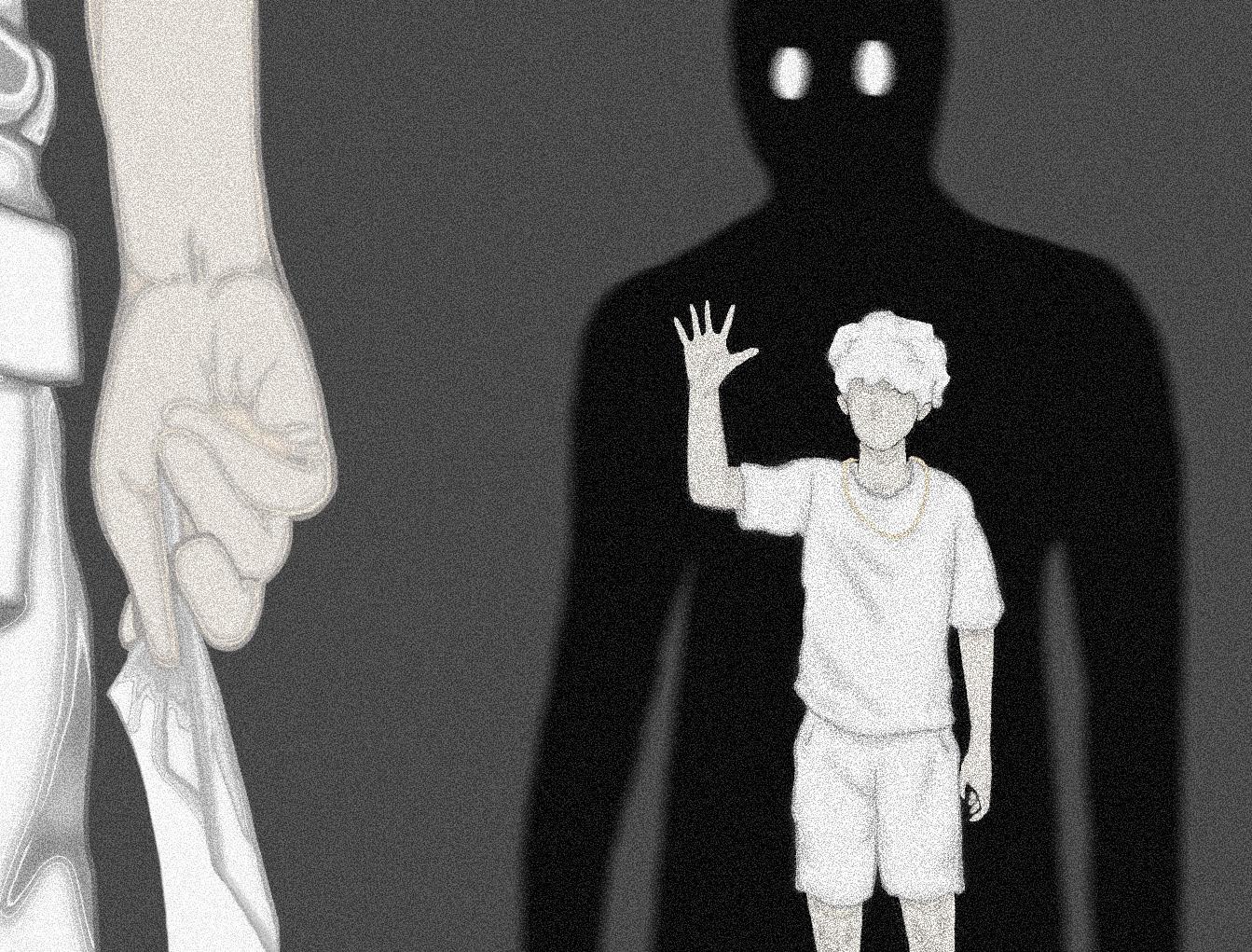
When most people look at you, they see a tall, curly-haired young man with a flashy gold chain and a charming, toothy smile. But when I look at you, I see an earnest, slightly awkward fifteen-year-old with his life ahead of him. In Normal People, Connell says to Marianne, “You’re the kind of person, people either love you or hate you.” She responds, “Well, you don’t hate me,” to which he says, “No, I’m immune to you, in a way. Because I knew you in school.” It’s the same with you and me, minus the starcrossed romance. To me, you’ll always be A who I did high school debate with.
I remember noticing you around campus when I first arrived at our high school purely because of your height. I had attended an allgirls K-8 school, so I was not used to having classmates as tall as you. I didn’t really get to know you, though, until we were both at that debate tournament in Sacramento in 2022, when you were a sophomore and I was a freshman. Do you remember? I was immediately struck by how kind you were to this student you hardly knew, giving me advice about public speaking and high school parties and all those things that seemed so important to us then.
Over the course of many debate tournaments, you became a brother to this only child. In Nepali, we call those who are older brothers to us, whether literally or metaphorically, “dai.” For example: Ed Sheeran dai, Zohran Mamdani dai, Dean Rashid Zia dai. As time wore on, I started to think of you as A dai. I changed your contact name to “A dai,” accordingly.
I loved going to high school with you. We would always get lunch a few times a semester, sitting together outside on the astroturf with our plates of tofu (ours was a ridiculous hippie high school that most Brown students don’t believe is real when I try to describe it to them).
11 post –
You asked me to manage your campaign for student government, and I was flattered. Even though you lost, it was a success from my perspective, as “campaign meetings” were a lovely pretense to gossip about our classmates.
Then COVID happened and you graduated and we lost touch. You had been such a fixture of my high school life that the idea of keeping in touch never occurred to me. One day, during the spring of my senior year, a stupid moment at a debate convention (see: a kid trying to waterboard himself to prove that torture shouldn’t be illegal) made me laugh out loud in disbelief. I remember turning to the seat next to me to say something snarky to you, only to realize you weren’t there. You were at Cornell by then, and I missed you.
A year later, I was across the country in Providence, experiencing the epic highs and lows of being 18 and intelligent and impulsive and emotional and tired. In other words, I was a first-year who lived in James-Mead. One night, I was walking up Thayer toward CVS when suddenly I saw you whiz by on a bicycle. You didn’t see me. Immediately, I texted you: “Do you go to Brown???????”
You responded the next day, saying yes, you had transferred, and that the two of us should get dinner sometime. So we did, at the Ratty. I ate a sandwich and stared in awe at the bearded man across from me. Who was this old guy, and what had he done with A dai?
At one point, you asked if I was seeing anyone. I hesitated to tell you about my boyfriend—you were family to me, and it felt vulgar to tell you about my romantic and sexual life. I managed to choke out an affirmative response, and you congratulated me, giving me one of those earnest smiles that had made me trust you when I was 14.
We didn’t get dinner that often at Brown. We were both busy people. Besides, you were A dai—you weren’t going anywhere. Just when I thought I’d lost you, fate had brought you to Brown. How lucky were we?
Running into you on campus was always a pleasure. Once, you called me an alien like Yves Tumor, and I wrote a poem about that comment on the pleasure of being known. Another time, I was dressed like Zendaya/Tashi in Challengers for Halloween, and you said it didn’t suit me, that I looked better goth. The compliment meant the world, as multiple friends had said the opposite, that I looked better when dressed normal, and that I should try it more often.
Again, you made me feel known.
I remember another time when I was dressed in these scary boots, and you called out from your bike, “What happened to the old Indigo?” You were referring, of course, to high school Indigo, who mostly wore ankle-length sun dresses and didn’t like to curse.
I yelled back, “I took her to a rock, and I killed her with my own hands!” Several heads turned toward us, concerned, but we didn’t care because we were laughing.
Then came the spring of 2025, that awful spring. Every day was hell, but life went on—I went to class, wrote my essays, grabbed lunch at the Ratty with friends. During one such meetup, my friend M showed me some texts you sent her. You were inviting her to cook dinner at your apartment, but your tone was pushy. I thought too highly of you to think anything of it and interpreted the messages as a poor attempt at expressing romantic interest. A dai wasn’t creepy. Awkward, maybe, but so was I.
Even though it was a horrible, no-good spring, I still did my best to have a lovely birthday. I invited everyone I love to Wick Pub, and, of course, you were there. You only stayed an hour, as it was your first stop of the night. After you left, someone asked me if I had invited you.
I laughed at the strange question. “Yes, he’s a friend from high school,” I said.
“Really?” She replied. “You guys sounded like two siblings bickering.”
And so we were.
The next time we hung out was at Gigs with P. I had just found out that you had a crush on P, something you accidentally confessed to me
on 4/20. I had been surprised, as I had always assumed you were one of the few straight alumni of our hippie high school. After the 4/20 revelation, I invited P to Gigs with us and tried to set the two of you up by subtly taking a long time in the bathroom or just vanishing for lengthy periods.
After the Stowaways set ended, the three of us went out for drinks. You confessed that someone at Cornell had accused you of doing something sexually inappropriate, and that you had been socially ostracized because of the accusation. You spoke about it as if you had apologized, atoned, repented, reflected. I loved you, so I didn’t ask you to explain in detail the nature of the accusation. I assumed it must have been a comment made in poor taste. Since coming to Brown, you had started calling everyone “baby,” which I found hilarious, but I could see how it would make others uncomfortable. It was probably something like that, blown out of proportion.
Because you had just shared a secret, I shouted one back over the noise of the bar. I told you about my rape, my Title IX case, and how I would have left Brown by now if not for L. You gave me a side hug, and I felt reassured by the appropriateness of the gesture. It was brief, a little awkward, and very chaste. In other words, a perfect hug to give a person after they’ve told you about their rape. I told you that I appreciated you, and I left the bar smiling, trailing behind you and P, hoping that you would kiss.
Summer came and went—my time in Nepal was more beautiful than I could have
ever imagined. After returning to the U.S., I moved into an apartment in Fox Point, where, on a humid September night, I received a text informing me that you had raped someone at Cornell.
It suddenly all made sense—your sudden transfer to Brown, your drunk confession, your texts to M. How could I not have seen it earlier? Shouldn’t being raped mean I can spot a rapist? I remember dropping my phone and dry retching over my carpet. I eventually called P to tell them about you, about what you were. P, in particular, had a right to know since they’d hooked up with you after our night out (it was in the foyer of Steinert of all places, but levity feels inappropriate at this point in my letter to you). P was devastated, and so was I.
I saw you a few times that autumn. You would wave at me from across the green, stop your bike to talk to me outside the Lindemann, make eye contact with me in the VDub. I’d always turn sharply in the other direction whenever I saw you, no matter how much it disrupted my plans for the day or route through campus. It would have been too painful to talk to you—you knew what happened to me, and I knew what you had done.
Of course, A, you know that I believe firmly in restorative justice, to the point that I insisted on giving that to my own rapist. Many people in my life protested, viewing my actions as lenient and misguided rather than principled and empathetic. You deserve the same, but I also deserve the right to not speak to you for as long as it takes me to figure out what I can even say. This is not a choice I make lightly. After I found out what happened, and I would see you
from across the street, I didn’t see a rapist—I still saw that 15-year-old from San Francisco. Your contact name is still A dai, even though I’ve blocked you. I won’t change it.
Over winter break, P texted me to let me know that you’d released a Substack manifesto. Obviously, I read it, desperately scanning each line to see if I could find A dai anywhere. He was nowhere to be found. Instead, I found the crazed ramblings of a monster who admits to the world that the only time he ever felt human was when he was raping another person. When I read that, I knew that I didn’t know you anymore.
The worst part about this, A, is that this is exactly the kind of betrayal you would have given me advice about how to navigate. I can see myself telling you about it and you saying something ridiculous to add much-needed levity to the situation. That was the A I knew.
In your manifesto, you write about being human in a way that corrupts the sanctity of shared humanity. So let me tell you about a time I felt human. It was when we were in that bar with P, and I told you what happened to me, and you listened in the way that only an old friend can. For a moment, the care and love that I felt radiating from you eclipsed the horror of my rape, and I knew that I was going to heal, with time, through conversations like that.
You have everything you need to repair the mess you’ve made, A dai. I certainly hope you try.
Goodbye, good luck, Indigo
by Ina ma | Illustrated by Julia Park
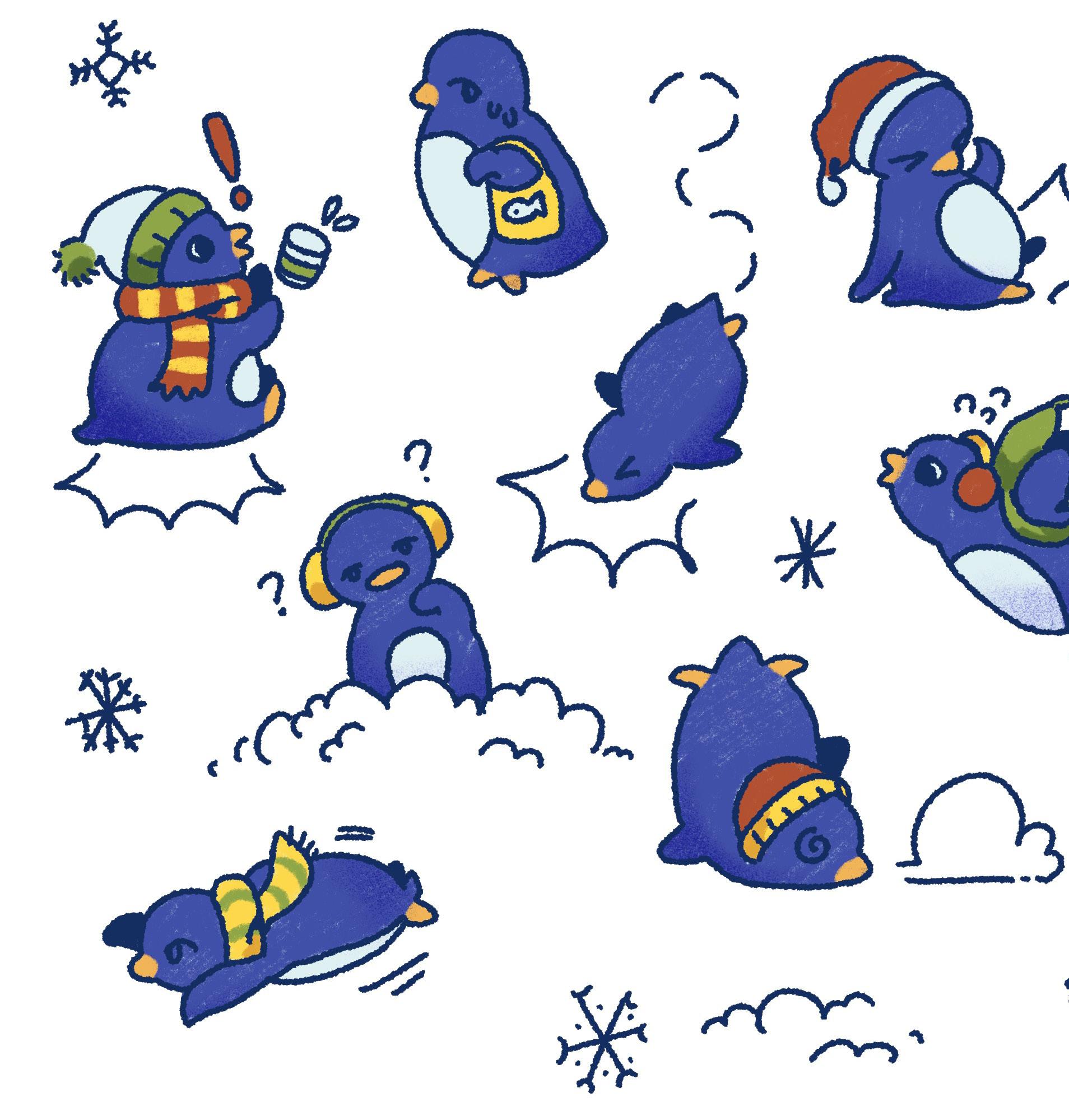
1. Manhole in front of Page-Rob. To the untrained eye, this innocuous manhole is a safe stepping stone, uncovered in snow compared to the icy sidewalk around it. Nothing like biffing it in front of an audience of the mailroom line, people going to class, and drivers stopped at the intersection.
2. Right side of the Sarah Doyle Center stairs. You think you’re safe coming up the stairs from Brown St., and then you’re walloped by ice thicker than a Jo’s panini. By the time my facilities work order is fulfilled, it’ll be spring.
3. Ratty slushy. And not the fun kind. The floors grow grayer and wetter as the day goes on, until you’re wading through the ghosts of footsteps to get to your tres leches. My idea of lunch is green peas and kosher wings, not marinating in shoe juice. There’s a little yellow fan blowing, and it’s trying its best. Blow, little fan…blow…
4. Pile of snow at Meeting Street and Brown Street. Of all the inconvenient piles of shoveled snow on campus, she takes the crown. You’re a fool to think you can get across her unscathed—your boots will sink into her faster than you can lift them, and there will be snow dripping down your heels when you arrive at class.
5. Thayer. Shoveled, for a better stretch of the road. Snowbanks are the main hazard, so play Twister with the steps of those before you. Thankfully, the motorists are usually going too fast to heckle you.
6. Road plate on the way to the Nelson. Heated and steamed from underground maintenance, warm enough to melt any ice on top and dry the surface of this little slice of sidewalk. This dark bronze sheet is a delightful break from the surrounding frozen asphalt. If you know, you know.

post- mini crossword
by Lily Coffman
illustrated by Ariana Jimenez
1 2 3
1.Icy precipitation that covered the country last weekend
5. Chocolate coffee drink
7. None of the above
8. Like a slightly underbaked brownie
Urban pollution
_____ this world
First Hispanic woman to go to space
It doesn't need reinventing
Chemical group derived from benzene Across Down
9. What 1-Across does
Thank you for reading
“It is freshman year and every day I feel as though I am stranded in a whiteout, the world empty save for the roar of the wind and voices too dim to distinguish. It’s that particular brand of loneliness exacerbated by the cold, and when a blizzard rolls around, heaping buildings in mounds of snow and dulling the afternoon sun to twilight, what else is there to do but go outside?”
— Sydney Pearson, “treasure under our feet”

“The prospect of that, the expectation of it all, excited me as a child. It’s sickening that the same feeling that once inspired me today weighs on me, crushes me under the pressure of what it means to leave a legacy— to leave and have people know that you were once there, that your name means something, that you are carrying on all that it meant before.”
— Joe Maffa, “maffa way” 2.07.25
EDITOR-IN-CHIEF
Elaina Bayard
FEATURE
Managing Editor
Chloe Costa Baker
Section Editors
Anika Kotapally
Gabriella Miranda
ARTS & CULTURE
Managing Editor
AJ Wu
Section Editors
Lizzy Bazldjoo
Sasha Gordon
NARRATIVE Managing Editor
Section Editors
Chelsea Long
Lucie Huang
Gabi Yuan COPY
LIFESTYLE
Managing Editor
Hallel Abrams
Gerber
Section Editors
Alayna Chen
Tatiana von Bothmer
POST-POURRI
Managing Editor
Tarini Malhotra
Section Editor
Christina Li
HEAD ILLUSTRATORS
Junyue Ma
Lesa Jae
LAYOUT
SOCIAL
Yana Giannoutsos