
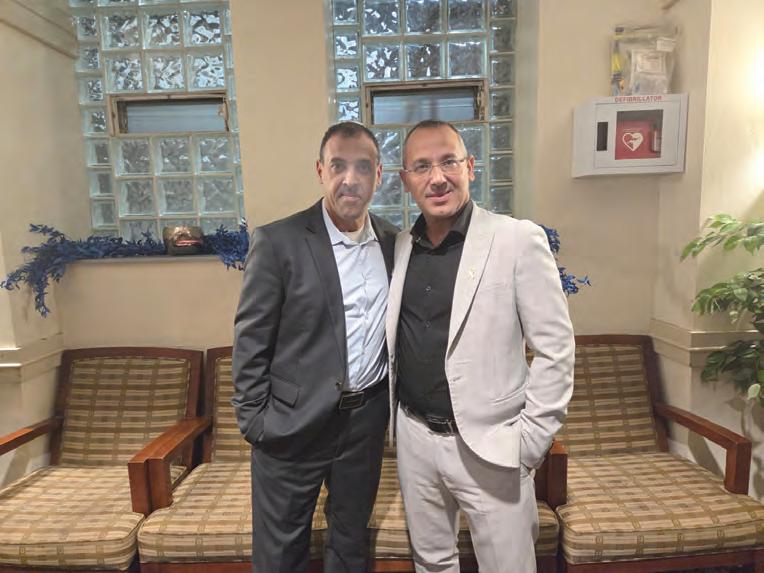
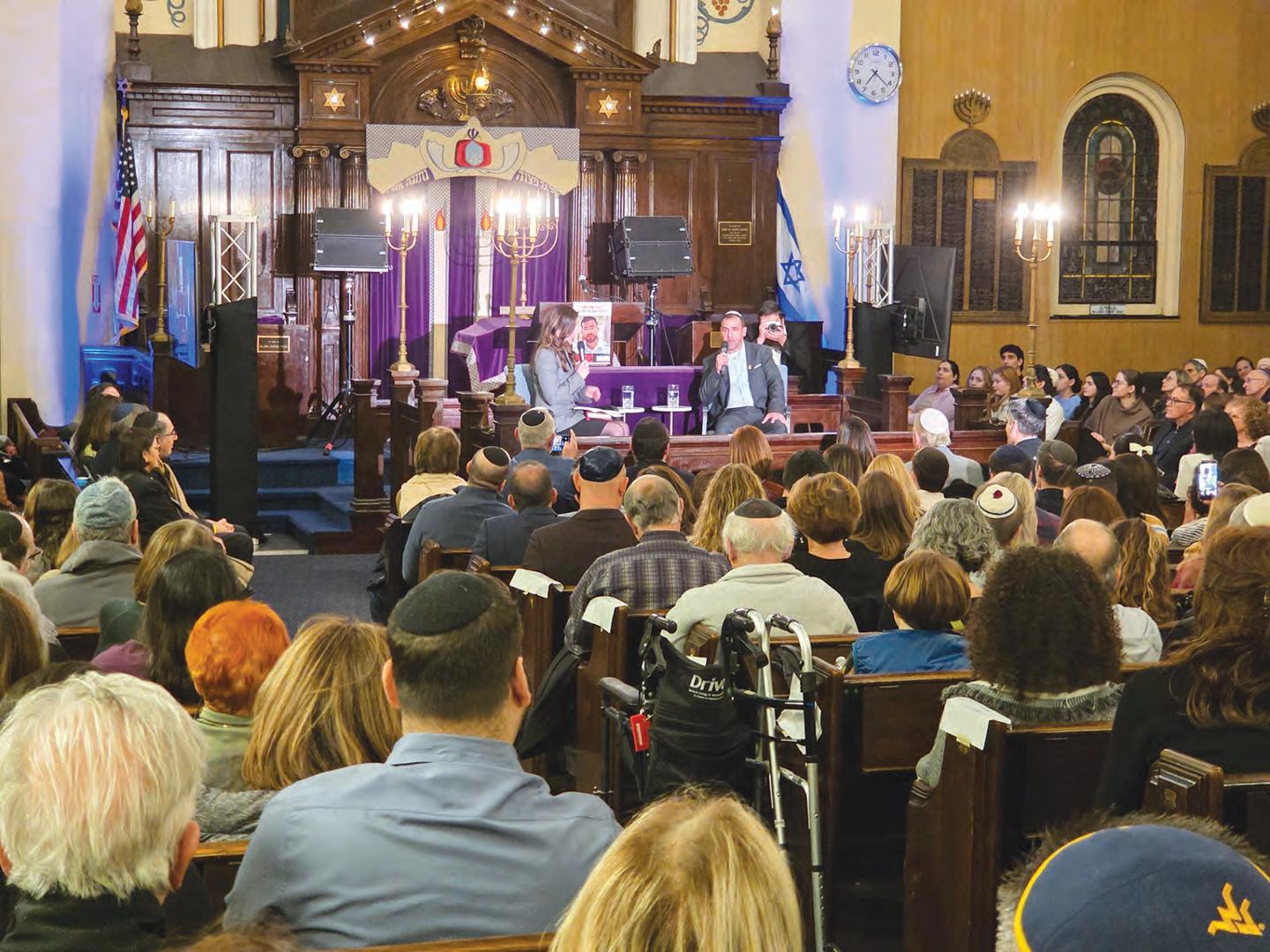
“Ichose life,” Eli Sharabi told the more than 700 in attendance at Congregation Poale Zedeck on Dec. 7.
It was a theme repeated during Sharabi’s discussion with Laura Cherner, director of the Jewish Federation of Greater Pittsburgh’s Community Relations Council. Sharabi recounted the physical and psychological terror he experienced — including broken ribs and starvation — during the 491 days he was held in Gaza after his Oct. 7, 2023, abduction from Kibbutz Be’eri by Hamas.
The conversation touched on many of the same experiences Sharabi described in his book “Hostage,” the first account published by an Oct. 7 hostage. The Chronicle Book Club discussed “Hostage” the same day as the event.
At its core, Sharabi’s talk spoke of his fundamental will to survive and find meaning during his time in captivity. The husband and father of two told of his motivation to return safely to his family, a goal he realized was empty only after being released and learning of their murder during the initial terrorist attack in Israel.
Sharabi’s retelling included details of being held in a Palestinian family’s home in Gaza before being moved to Hamas’ tunnels.
He also spoke about the relationships he formed with fellow hostages, including Alon Ohel. Ohel is a pianist from Misgav, Pittsburgh’s sister region in Israel, who was kidnapped while attending the Nova music festival.
At 51, Sharabi was older than those he was detained with and developed a paternal position within the group. That relationship was es suffered from untreated injuries, including
near-blindness, and had difficulties adapting to his time in captivity.
Sharabi was released before Ohel, who endured an additional eight months in Hamas captivity before his eventual release on Oct. 13, 2025. The elder former hostage told of his conversations with Ohel’s parents after he was set free and his fight to ensure Ohel’s release, including appearing before the United Nations.
“He was like a son, and I needed to fight for him like his parents were fighting for him,” Sharabi said.
Sharabi’s Pittsburgh appearance was the idea of Israeli-American and Squirrel Hill resident Etti Martel, who enlisted the assistance of Michael Milch. Martel recounted her emotional meeting with Sharabi in Israel after his release.
“All the worry, all the pain, it all came out,” she said. “I looked at him and asked for forgiveness — forgiveness for what we couldn’t prevent.”
Milch said he and Martel worked with Rabbi Yisroel Altein and Chani Altein of Chabad of Squirrel Hill, as well as the Federation and the Jewish Community Center of Greater Pittsburgh.
Sharabi, he said, is emblematic of a “human being’s great God-given ability to overcome any trial and tribulation, challenge or loss.”
One of the lessons of Sharabi’s talk, Milch said, is the need to look after others.
“Eli’s ability to be a father-like figure for so many amidst the hell on earth teaches us all that we have it in us to do the same with our loved ones and friends, even when times are tough,” he said.
By David Rullo | Senior Staff Writer
The streets of Mt. Lebanon will glow a little more brightly this holiday season. That’s because, for the first time, Mt. Lebanon’s holiday festivities will include a menorah lighting at Clearview Common on Washington Road. The celebration is a victory for a group of Jewish community members who advocated last year at a commission meeting for public recognition of Chanukah. The charge was initially led by Chabad of the South Hills Rabbi Mendy Rosenblum, who, for the last three years, has been asking Mt. Lebanon to allow a public menorah and Chanukah parade at its annual holiday celebration, which includes a Christmas tree.
When attorney Bryan Neft first learned of Rosenblum’s struggles with the township he decided to get involved.
Mt. Lebanon’s refusal to include a menorah in its public acknowledgement of the holiday season came at a time when Neft felt the Jewish community had been through enough. He cited Oct. 7, the push for BDS resolutions in the city of Pittsburgh and attempts to have Allegheny County pass a ceasefire resolution as examples of what he considers attacks on the Jewish community.
Neft began having conversations with the township’s commissioners, some of whom were wary of appearing to endorse a particular religion or feared that permitting a Chanukah display could open the door to requests from offensive groups like the Ku Klux Klan.
“My response was, if you get something ugly, deal with it when it happens, but this is legitimate,” he said.
Neft encouraged concerned community members to come to the next commissioners’ meeting and speak in favor of the menorah. The commissioners eventually sent the matter to their Civic Engagement Advisory Board, which met with Rosenblum, Beth El Congregation of the South Hills Rabbi Alex Greenbaum, Temple Emanuel of South Hills Rabbi Aaron Meyer and other community members, Neft said.
“Things progressed to the point where, by the

The Pittsburgh Jewish Chronicle is proud to bring you stories that matter and stories that delight. What kinds of news and features do we publish?
• Quality news
• Award-winning news
• Objective news
• News you can trust
• News no one else has
• News that connects the entire Pittsburgh Jewish community
• Good news and bad news
• Happy news and sad news
• Local news
• National news
• Israel news
• World news
• People news — machers and everyone else
• Organization news — big and small
• Breaking news
• Trends and analysis
• Series of news articles on special topics
• News about the Orthodox, Conservative, Reform, Reconstructionist, new movements and the unaffiliated
• News about the political left, the right and everything in between
• News about the old, the young and everyone in between
• Features — culture, food, health, history, travel, sports and more
• Calendar of events
• Information you need to know
• Opinions
• Letters to the editor
• Polls
• Life cycle events — births, b’nai mitzvah, graduations, engagements, weddings and anniversaries
• Obituaries
To make a donation, please scan this QR code or use the form below.

Kindly fill out this form, and return it with your check or credit card information. Donations can also be made by major credit card by logging on to the Pittsburgh Jewish Chronicle website, www.pittsburghjewishchronicle.org, and selecting DONATE.
We thank you, and the Pittsburgh Jewish community thanks you!
One-Time Gift of:
☐ Monthly Gift of:
☐ Enclosed is my check to the Pittsburgh Jewish Chronicle for $
☐ Charge my credit card the amount indicated below:
Editor Toby Tabachnick
When nearly 2,000 teenage athletes came to Pittsburgh last summer to compete at the JCC Maccabi Campus Games, showcasing a striking demonstration of peoplehood, the Chronicle was there.
A Jewish researcher living in Pittsburgh, Dr. José-Alain Sahel, is on his way to restoring sight to the blind. The Chronicle continues to follow his work as well as his accolades.
accomplishments, generosity and solidarity uplift our readers, especially during turbulent times. We also know our readers are not naïve. At a time when the Jewish people is experiencing an alarming rise of antisemitism, the Chronicle stays committed to telling those stories, too, reporting the truth during this crazy age of misinformation.
At a time when so many media outlets cannot be relied upon to tell the stories of the Jewish people fairly and accurately, independent Jewish journalism is essential. Uplifting
The Jewish community has been rallying to assist those in need due to food insecurity. Jewish Pittsburghers joined forces to help a local woman who lost everything in an apartment fire. One community member, Fran Fall, has been knitting scarves and headwraps for the homeless for 27 years. These stories — and scores more highlighting the good work of our community — have all been featured in the Chronicle in the last year.
The Chronicle’s tagline, “Connecting Jewish Pittsburgh,” is reflective of our mission: To share news that not only informs, but helps build communal pride and communal bonds.
We know the stories of Jewish Pittsburgh’s
I am going to be blunt: This job is getting harder and harder. And we cannot do it without your support.
Every day, the news is filled with reports of blatant Jew-hatred around the world, from terror attacks on synagogues and schools, to an antisemitic arson attack at our governor’s home, to far-right television personalities maligning the Jewish state, to a local elected official lobbing false
accusations of genocide against the Jewish people, to anti-Zionist groups urging boycotts and divestment from the Jewish homeland.
Pittsburgh’s Jewish community has not been immune from the incessant antisemitic attacks. In the last year, we have fought boycott initiatives and been bombarded with anti-Zionist rhetoric at
Our small but dedicated staff continues to persevere. We know how important it is for us to tell these stories — to report the truth — especially when many other media outlets seem more intent on fanning the flames of hate. We take our responsibility seriously, and strive to carry it out with integrity, clarity and courage.
At a time when so many news sources cannot be relied upon to tell the stories of the Jewish people fairly and accurately, independent Jewish journalism is essential.
various protests and demonstrations. Antisemites identifying with terrorist organizations like Hamas and Hezbollah have been arrested in our city. Online attacks against our Jewish institutions, individual community members and Chronicle writers are common.
Telling these stories not only keeps our community informed, but can also help keep our community safe.

SUBSCRIPTIONS
subscriptions@pittsburghjewishchronicle.org 412-687-1000, ext. 2 TO ADVERTISE advertising@pittsburghjewishchronicle.org 412-687-1000, ext. 1
EDITORIAL DEPARTMENT
Email: newsdesk@pittsburghjewishchronicle.org
BOARD OF TRUSTEES
Evan H. Stein, Chair
Evan Indianer, Vice Chair
Derek Smith, Treasurer
Gayle R. Kraut, Secretary
Gail Childs, Dan Droz, Malke Steinfeld Frank, Seth Glick, Judith Kanal, Cátia Kossovsky, Charles Saul
GENERAL COUNSEL
Stuart R. Kaplan, Esq.
Jim Busis, CEO and Publisher 412-228-4690 jbusis@pittsburghjewishchronicle.org
EDITORIAL
Toby Tabachnick, Editor 412-228-4577 ttabachnick@pittsburghjewishchronicle.org
Adam Reinherz, Senior Staff Writer 412-687-1000 areinherz@pittsburghjewishchronicle.org
David Rullo, Senior Staff Writer 412-687-1000 drullo@pittsburghjewishchronicle.org
ADVERTISING
Amy Weiss, Account Executive (412) 613-0697 aweiss@pittsburghjewishchronicle.org
PRODUCTION
Jeni Mann Tough Production Manager Carl Weigel Art/Production Coordinator
The Chronicle has been an indispensable resource for Pittsburgh’s Jewish community for more than six decades. Our print paper is delivered free of charge to any member of our community who wants to receive it, reaching more than 8,000 Jewish households each week. Our daily email newsletters are delivered to more than 5,700 readers’ in-boxes. Our website draws 70,000 users a month. And we reach thousands more through social media.
As a nonprofit, the Chronicle depends on donor support to survive. If our work has inspired you, informed you, engaged you or empowered you, please consider a donation so we can continue to connect Jewish Pittsburgh now and for years to come.
We do this work for you, but we cannot do it without you. PJC
5915 Beacon St., 5th Floor Pittsburgh, PA 15217 Main phone number: 412-687-1000 Subscriptions: 412-687-1000, ext. 2
Subscriptions subscriptions@pittsburghjewishchronicle.org 412-687-1000, ext. 2
Published every Friday by the Pittsburgh Jewish Publication and Education Foundation 5915 Beacon St., 5th Floor Pittsburgh, PA 15217 Phone: 412-687-1000
POSTMASTER: Send address change to PITTSBURGH JEWISH CHRONICLE, 5915 BEACON ST., 5TH FLOOR PITTSBURGH, PA 15217 (PERIODICAL RATE POSTAGE PAID AT PITTSBURGH, PA AND AT ADDITIONAL MAILING OFFICES) USPS 582-740
Manuscripts, letters, documents and photographs sent to the Pittsburgh Jewish Chronicle become the property of this publication, which is not responsible for the return or loss of such items. The Pittsburgh Jewish Chronicle does not endorse the goods or services advertised or covered in its pages and makes no representation to the kashrut of food products and services in said advertising or articles. The publisher is not liable for damages if, for any reason whatsoever, he fails to publish an advertisement or for any error in an advertisement. Acceptance of advertisers and of ad copy is subject to the publisher’s approval. The Pittsburgh Jewish Chronicle is not responsible if ads violate applicable laws and the advertiser will indemnify, hold harmless and defend the Pittsburgh Jewish Chronicle from all claims made by governmental agencies and consumers for any reason based on ads appearing in the Pittsburgh Jewish Chronicle

By Deborah Weisberg | Special to the Chronicle
In what has become an interfaith tradition, members of Tree of Life Congregation
will take part in a Christmas pageant at Calvary Episcopal Church in Shadyside on the seventh day of Chanukah, Dec. 21.
The event, which is open to the public, will be followed by a Festival of Lights reception with latkes, sufganyot (jelly donuts), gelt, dreidels, and songs led by Rabbi Jeffrey Myers on guitar.
Myers, in the role of Moses, will narrate the Nativity, and Tree of Life members, including congregation president Alan Hausman, will play the Three Wise Men.
“It’s a funny twist,” said Hausman. “We’re playing the only non-Jews in the story, and members of Calvary will be playing Jews.”
It is a celebration of the season and of a partnership that began after the Pittsburgh synagogue shooting, when the Rev. Jonathon Jensen offered Tree of Life space at Calvary for Rosh Hashanah and Yom Kippur services.
“We were looking for what to do with services and went to the usual suspects — the Carnegie, and Soldiers and Sailors — which, for one reason or another, could not accommodate us all three days,” Hausman said.

In calling around to churches, he connected with Jensen, not realizing the reverend was one of the “gazillion” people who had reached out in the immediate aftermath of the shooting to offer support.
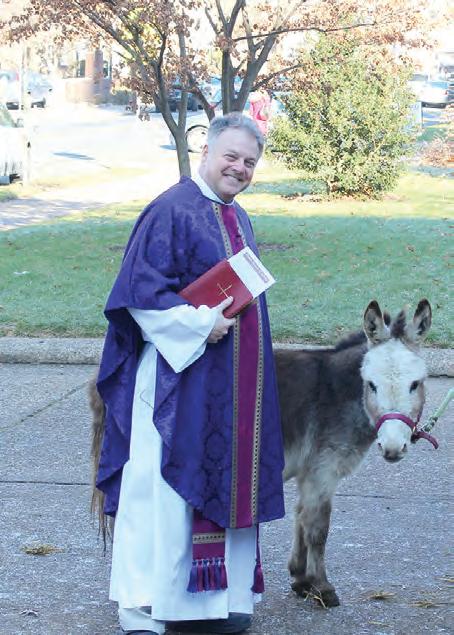
“He welcomed us to hold services there and wouldn’t accept a penny in rent,” Hausman said, noting that Jensen also authorized security upgrades to Calvary at the church’s expense.
Hausman remembers feeling a bit lost during their initial meeting when he asked Jensen the proper way to address him, and how quickly he was put at ease. “He told me, my name is Jonathon,” Hausman recalled.
asked if he’d like to be in that,” Jensen recalled. “I said, ‘How about I write you in as Moses?’ and he said ‘Great, I have my own kit,’ which included a giant Styrofoam Ten Commandments.”






When Tree of Life’s High Holiday services first were held at the church, in 2019, more than 20 members of Calvary served as greeters and ushers.
“Roughly 800 people came for Rosh Hashanah that year and I was completely overwhelmed by their outpouring of gratitude … by their emotions and relief at having a place to worship,” said Jensen, who was particularly moved when a couple of Tree of Life congregants called him a mensch. “I was never so touched as I was that day by their deep and meaningful offer of thanksgiving.”
Tree of Life has observed the High Holidays at Calvary ever since and will continue there until its new shul is completed in Squirrel Hill. Construction is slated to begin next year.
Being able to aid Tree of Life in a time of need aligns with Calvary’s mission, Jensen said.
Since then, there have been other collaborations. Jensen has participated in Torah Studio studies with Tree of Life at Rodef Shalom, including one this past Dec. 6. In a lighter vein, Calvary hosts weekly mahjong games and joins in Jewish heritage nights at Pirates and Penguins games.
“Friendships have developed,” Jensen said. “And we’ve learned so much from one another.”

“Rather than say, ‘Let us know if there’s anything we can do,’ I wanted to offer specific help. At Calvary we are good at sharing space. I emailed Rabbi Myers after the shooting that ‘I can’t imagine what you are going through, but if you need space, we can seat 1,000.’”
“I told him our home is your home.”
As their friendship grew, Jensen eventually invited Myers to be in Calvary’s Christmas pageant.

“Rabbi Meyers writes this wonderful campy Purim spiel every year,” Jensen said. “He told me Calvary looks like Hogwarts in Harry Potter, so he asked, ‘Would I be a wizard?’ And I said ‘Sure.’ We did it once at Calvary and once at Rodef [Shalom Congregation].”
“I told him that we do our own campy play — the Christmas pageant — and
This year, Tree of Life donated $36,000 to Calvary’s $6 million capital campaign, which is designed to “preserve, sustain, and share” its historic buildings and ministries.
Calvary hosts Rabbi Aaron Bisno of Temple Ohav Shalom as its first rabbi in residence within its Center for Interfaith Collaboration. Bisno and Jensen lead a class on Sunday mornings — “A Priest and a Rabbi Walk into a Classroom” — which has explored the parables of Jesus and the books of Genesis and Exodus.
“This isn’t about converting people to other faiths,” Jensen said. “It’s about converting people more deeply to their own faith.”
Hausman sees the bond between congregations as the silver lining to a tragedy.
“It was an awful, awful way to go into a friendship, but hopefully these things will help teach the world that acceptance is what we need to learn,” he said.
“We use different prayers and have different rituals but when you drill down, at our core we share the same beliefs — in being good to other people and to ourselves.”
The Dec. 21 pageant begins at 11 a.m. Unlike in past years, live animals will not be part of the pageant, however, there will be a nativity petting zoo outside the church from 11:30 a.m. to 2:30 p.m. PJC
Deborah Weisberg is a freelance writer living in Pittsburgh.

By Adam Reinherz | Senior Staff Writer
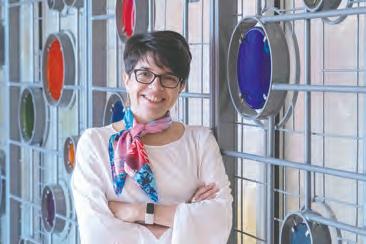
Laura Cherner, a homegrown Jewish professional known for pairing quiet conversation with public activism to better Pittsburgh’s Jewish community, is leaving her post as director of the Community Relations Council at the Jewish Federation of Greater Pittsburgh. With commitment to fostering rela tionships and respect between Pittsburghers — particularly among those holding diverse and competing views — Cherner has served the CRC through sizable challenges, including the Pittsburgh synagogue shooting and its trial, COVID, Oct. 7 and the Israel-Hamas war.
Weeks from beginning her role as chief community relations officer at the JCRC Bay Area, Cherner, 30, spoke with the Chronicle about her growth as a professional and the lessons she’s bringing to San Francisco.
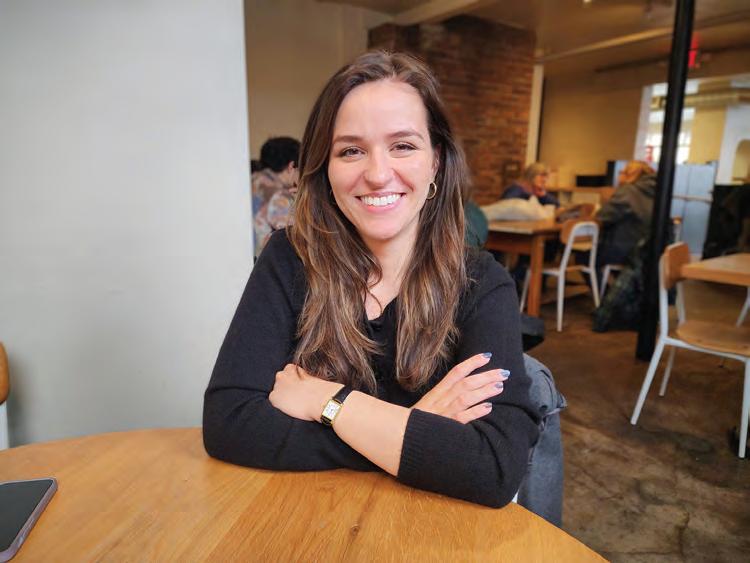
This interview has been edited for length and clarity.
As CRC director, you’re a Jewish communal contact for many Pittsburghers, as well as state and national figures. Tell me how this started.
I really fell into it to be honest with you. A week after I graduated from the University of Pittsburgh, I started working at the Federation as an administrative assistant. I really had no idea what I wanted to do with my life. I was interested in politics. I worked for a congressman and I completed a Jewish studies certificate in
which combines a lot of the things I care about, like being able to incorporate advocacy and building relationships with different communities. Federation hired me for that — I think they took a leap — and the rest is history. Major events occurred during your time with the CRC. Could you reflect on the beginning?
I became assistant director when I was 21 years old. I was passionate about young adult engagement and getting the next generation of people involved in CRC, so I created the young leaders CRC, which I’m still proud of. We also marched in the Pittsburgh Pride Parade, which was a nice way for the community to come
together in a really visible way with the broader community. That first year we had about 140 participants, and one of the great things we did was the “Love is Kosher” campaign, which has had a lasting power as a message. When the shooting happened I was 23, and it was just kind of a reset moment in how I understood my job, my own community, and what responsibility and opportunity someone like me has. My concept of a crisis situation in the community relations realm just completely went on its head. What do you mean?
One of the things we always said about Oct. 27 was that the embrace we felt from the community was because of the work that we’d put into building relationships on the day prior and the decades prior. When I look back on the shooting, one of the things that really sticks out in my mind is the day of the shooting I went to the JCC, which ended up being the point of gathering for families and for the FBI, and the first person that ended up showing up for me was Tim Stevens (founder of the Black Political Empowerment Project). He called me on my way that morning to make sure I was OK, and then he showed up at the JCC just to be with me. That always sticks with me. The power of the work we do has an ability to build genuine, real connections for times of calm and also times of crisis.
Building relationships requires time and trust. You became director during COVID. What was that like?
It was challenging in a lot of ways. I was 25 years old. I was the youngest director of
community relations in the country. I’m still probably one of the younger ones. Federation and our board were taking a leap of faith and trusting me to do something big. At the same time, the work was virtual, there was a feeling of isolation and distance from the community, so for that first year there was a lot of learning. Tell me more about that period. It was a really weird time to start building my own relationships in the community, because a lot of relationship-building is in person. Also a lot of community relations is government relations. There were a lot of social service needs during COVID, so we were constantly asking, “How do we take the relationships that we have at the federal level and help people?” In 2021 there was also Operation Guardian of the Walls (an 11-day military conflict between Israel and Palestinian forces), and we learned that when there’s violence in Israel there’s an uptick in antisemitism, typically in the Diaspora. I remember we did the Stand Against Antisemitism event outside of the City-County building, which was one of the first times I saw a lot of people in person after COVID. On the one hand, it was nice seeing people but on the other hand the reason why we were gathering was because of a rise in antisemitism. That event kind of helped me get my footing as director. We brought together a lot of allies we have in the community, and we called upon the relationships that we built to stand with us, in a way that we hadn’t since Oct. 27.
How has your work evolved?
When I reflect back on what community


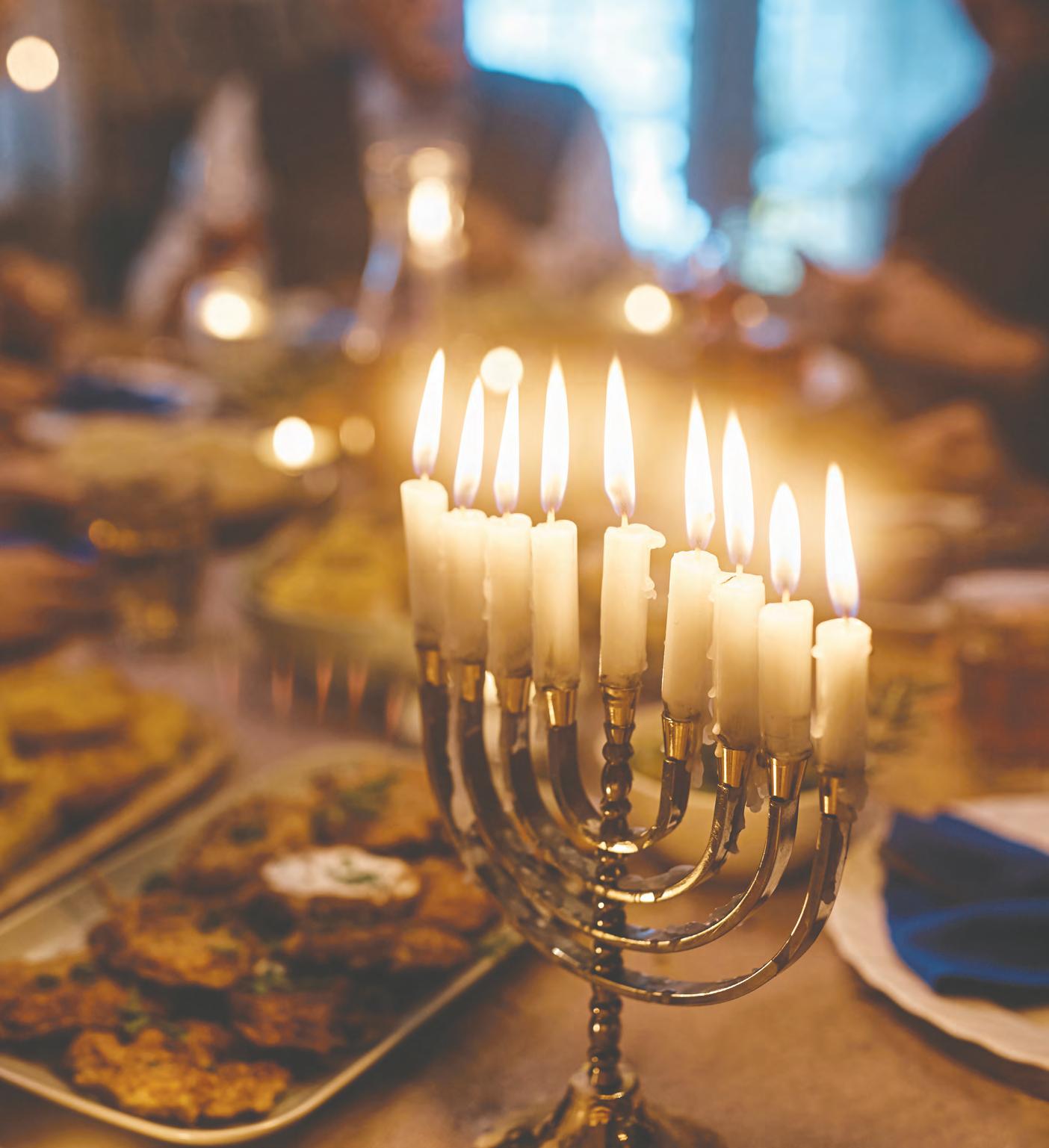
Hanukkah


Wishing you a season of love, laughter, and light.
Chanukah from Barb Warwick and the entire District 5 City Council office!
CHANUKA FROM OUR FAMILY TO YOURS!

From Senator Dave McCormick & Dina Powell McCormick -
By Emma Riva | Special to the Chronicle
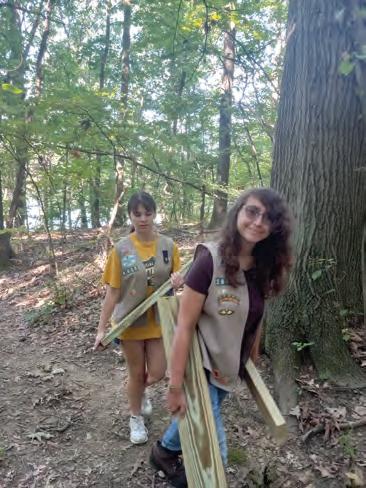
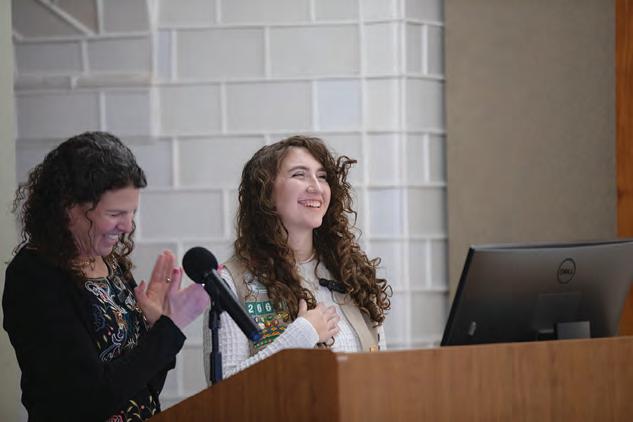
During the Holocaust, the Girl Guides of Great Britain provided not just comfort for the dying in concentration camps, but also practiced a form of resistance. In Ravensbrück, a secret Girl Guide unit kept one of the few records chronicling which inmates lived and died in the camp. Now, after two years of work, Pittsburghbased Girl Scout Lily Sassani has created a patch honoring this little-known facet of Girl Scout history, and is debuting the Holocaust Education Girl Scout Patch in partnership with the Holocaust Center of Pittsburgh.
A Girl Scout patch is an honor a Scout receives through a three-part process. Scouts who work to receive the Holocaust Education Girl Scout Patch will have to fulfill requirements in “Discover, Connect, and Take Action” curricula.
“It’s something that’s very personal to me, having read about the lives of women who resolved to survive horrible conditions because they loved their communities,” Sassani said. Sassani, a New Kensington resident, told the Chronicle in 2023 that she was the only Jewish student she knew in her community and was excited to tie together her work as a Girl Scout with her Jewish identity.
Sassani took inspiration from Janie Hampton’s “How the Girl Guides Won the War,” where she learned about the Girl Guides’ role in fighting injustice during World War II. As she was developing the patch, the Holocaust Center connected Sassani and Hampton, and gave Sassani access to interviews with Holocaust survivor Edith Leuchter, who was a Girl Guide in France, and her daughter Debbie Leuchter Stueber, a member of the Holocaust Center’s Generations Speakers Bureau. Sassani has met with the Holocaust Center staff every week for the patch project and is working toward the Girl Scouts of Western Pennsylvania Gold Award.
“We typically create curriculum for schools, so this was a meaningful challenge — how to make such a serious and heavy topic something Girl Scouts would choose to learn about on their own time,” Holocaust Center Director of Programs Emily Loeb said. “We also knew that some girls may have already studied the Holocaust, while others may not have, so the curriculum needed to provide a clear, accessible overview of the Holocaust before focusing on the role that Girl Guides played.”
In the two years they’ve worked together, Sassani has forged deep relationships with Holocaust Center staff. Her project connects the older generation of survivors with civicminded younger people of all faiths.
“I hope my patch touches a lot of people,” Sassani said. “It tells stories of the Holocaust specific to the experiences of women, children and affected civilians across the world as a w hole, which I don’t think a lot of schools talk about.”
To design the patch, she worked with the Holocaust Center to study the Girl Scouts of Western Pennsylvania’s design and production
standards and created multiple drafts across a process that ultimately took 10 months.
“It also taught me a lot of preliminary skills that I never would have expected to have learned if it weren’t for the topic or for the Holocaust Center,” Sassani said. “I got to tie all sorts of my interests with this project, like art, history, writing. It’s almost a testament to my motivation to get outside of my comfort zone and create something that will impact people.”
Sassani is a senior at Burrell High School and plans to study art, history, or writing in college. And she’s dedicated to educating others about Jewish history, she said.
“If we connect that with history, we’re building foundational resources for people to protect each other and find solidarity,” Sassani said.
The b est way to ensure “never again” is more than a slogan is to engage with the history — not just of suffering, but of resistance, she said.
“I think it would be great to see more Girl Scouts, even more kids, really, have an interest in their communities and work with others to create something that means something to them,” Sassani said. “I think the more passion and curiosity we create in people, the better off we are. And if we connect that with history, we’re building foundational resources for people to protect each other and find solidarity.”
The Jewish Women’s Foundation of Greater Pittsburgh funded Sassani’s project throughout its development. This month, after an unveiling on Dec. 7 at Chatham University, the patch is complete and Sassani will begin making the curricula available to other Girl Scouts.
“There is so much I hope Girl Scouts take away from earning this patch,” Loeb said. I hope they learn how much power they have and how they can use their voices to make the world better. I hope they are inspired by the courageous actions of the Girl Guides during the Holocaust and feel motivated to build a more just future.
“This program is timeless, and its lessons are deeply relevant today,” she continued. “I’m incredibly proud to be part of something that can help a generation of young women see themselves as upstanders and changemakers.”
PJC
Emma Riva is a freelance writing living in Pittsburgh.
By Adam Reinherz | Senior Staff Writer
Acommunity-centered project is forging ahead with plans to grow.
The Center for Loving Kindness and Civic Engagement, a project of the Jewish Community Center of Greater Pittsburgh, is recommitting to its mission and exploring avenues for communal betterment following the recent departure of Rabbi Hindy Finman as senior director of Jewish Life at the JCC. Before Finman’s June 2024 arrival, Rabbi Ron Symons held the position and oversaw the CFLK since its 2017 opening.
“I think it’s really important to emphasize that not only the Center for Loving Kindness and Civic Engagement, but any program or initiative at the JCC, is bigger than any one person,” JCC CEO and President Jason Kunzman said. “We all know that the only thing that you can count on when you are in the business of supporting community is that change is inevitable, and in the face of change we the JCC have always and will continue to pivot and really press on to continue the work.”
Kunzman noted programs and partnerships, including a series of upcoming public
conversations and staff trainings with the YMCA of Greater Pittsburgh — seeking to spark understanding and combat hate — as testament to the CFLK’s commitment to “two basic principles.”
Driving the center is the belief that “neighbor” is not a geographical term but a “moral concept,” and people should not “stand idly by while your neighbor bleeds,” he said. For years, the CFLK has advanced those ideals through interfaith activities, including book clubs and pre-Passover seders. Earlier

this year the CFLK joined the Pittsburgh Theological Seminary to welcome Rabbi Shai Held, author of “Judaism is About Love,” for a public discussion about faith and love alongside the Rev. Dr. Jerome Creach of PTS. Similarly, the CFLK has worked with the Christian Associates of Southwest PA to create “We Have to Talk,” a spiritual leaders network aimed at fostering greater relations among clergy and faith-based communities. As a lead-up to the High Holidays, and through the Hebrew month of Elul, the
CFLK has offered yearly programming blending ritual and discourse, including this year’s Yom Kippur program, which included Jewish memorial prayers and a panel discussion regarding forgiveness and democracy.
Regardless of leadership or moment, the CFLK’s “founding principles” have dictated a need to continue serving the wider community, Kunzman said.
“Through the years, following the 2018 synagogue attack, the pandemic, Oct. 7 and the increased level of societal and political divisiveness, the Center for Loving Kindness and Civic Engagement has continued to evolve,” he continued. “Again, at the core, no matter the what, the why has remained consistent.”
With no immediate plans to search for a new senior director of Jewish life at the JCC, Kunzman said the center will rely on current staff to shepherd the project forward.
“It’s called JCC’ing it,” he said. “It means doing whatever we have to do.”
Continuing the mission of the CFLK is imperative, he continued. “The work remains critical — more critical than ever — and our commitment to that work remains steadfast.”
PJC
Adam Reinherz can be reached at areinherz@pittsburghjewishchronicle.org.







By Tim Miller | Special to the Chronicle
When Alexander the Great burst onto the scene in 336 BCE and quickly conquered much of the known world, he could not have guessed that one of the peoples swept into his orbit would make a point of refusing what he had to offer. Unlike the Persian Empire, which in the centuries before Alexander largely left their subject peoples alone, Alexander’s conquests went hand in hand with a conscious effort to spread Greek culture.
Following his death in 323 BCE, the vast territory Alexander ruled was split between his generals, the Seleucids of Syria and the Ptolemies of Egypt. By 200 BCE the province of Judea, while technically under the control of the Seleucids, was nevertheless able to play the two empires off of each other for its own potential gain.
Jerusalem was also becoming a commercial hub, and the position of Temple high priest was being transformed into a political as well as a religious office. The combination of these factors led many elites in Jerusalem to adopt Greek manners of dress, diet and social interaction — a process known as Hellenization — while disregarding aspects of their Jewish identities.
To sum up an incredibly complex situation, Hellenizing Jews were eventually able to install a high priest named Jason, who was
sympathetic to their interests. Jason was also able to bribe the new Syrian King, Antiochus IV (crowned in 175 BCE), to support him. In only a few years, however, war broke out between him and the Jewish adherents of an even more Hellenizing high priest, Menelaus. Because Menelaus offered Antiochus even larger sums of money, he got the king’s support. Menelaus also allowed Antiochus to enter the Temple and walk away with many of its riches, an act that wouldn’t have been news at any pagan temple at the time, but which caused great offense in Jerusalem. In 167 BCE, after false rumors of Antiochus’ death inspired the Jews to rally back to Jason, Antiochus attacked Jerusalem and instituted bans against burnt offerings, circumcision, the observance of the Sabbath, the possession and study of “the books of the law” and so
on. Finally, a statue of Zeus was placed in the Temple. This was Antiochus’ way of ensuring, as 1 Maccabees puts it, “that all people should be one people, and that all should give up their particular customs.” Anyone who refused assimilation was to be killed, and in scenes that were to be repeated down to the Shoah, some of the Jews’ gentile neighbors took advantage of the situation and began attacking them as well.
Syrian soldiers spread out into the Judean countryside to enforce these new practices, and the atrocity stories recorded in 1 and 2 Maccabees were the result, in part, of the malleability of paganism. In the ancient world, adding foreign gods to your own local pantheon was not an imposition at all, and before this point the inability of Jews to do the same was merely quaint and bizarre. Now it was a threat, and the Jews’ refusal to give up on their religion was pushback that no other empire in the ancient world ever had to face before.
After the first organized band of Jews to oppose the Syrian army refused to fight on Shabbat and were slaughtered, a family of priests from the village of Modin enter the story. Led by an aging father named Mattathias, he and his five sons (Judah Maccabee among them) organized their own fighting force. They had no qualms about fighting on Shabbat, or about punishing Jews who took up paganism, and they soon strung together a series of victories.
Indeed, any one of their military triumphs against the Syrians could have been considered the “miracle of Chanukah,” but it was the
retaking of Jerusalem and the rededication of the Temple that ended up becoming central to the story. It did not mark the end of the war, but it did spell out what was truly at stake. Since the rededication of the Temple took place three years to the day after the statue of Zeus was placed there, on the 25th of Kislev, an annual holiday was established to celebrate the event. And since relentless campaigning kept the Maccabees and their army from observing Sukkot, Chanukah was established from the beginning as an eight-day festival, like Sukkot. It is sometimes even called “Second Sukkot” or “the festival of booths in the month of Kislev.”
This is the story, anyway, as recorded in the two books of Maccabees. 1 Maccabees was written anywhere from 50 to 75 years after the Maccabean War, while 2 Maccabees was written much closer to the events it narrates. Both indicate that the observance of Chanukah was popular in Judea immediately after the war.
But scholars have noted something strange: Very little writing survives about the holiday until the closing decades BCE, when the Houses of Hillel and Shammai are shown, still debating how many candles to light on each night. By the late first century CE, the Jewish historian Josephus could refer to Chanukah and say, “From that time to this we celebrate this festival, and all it Lights.” The “miracle of the oil” isn’t mentioned in writing until much later in the Talmud.
Please see Chanukah, page 28

Submit calendar items on the Chronicle’s website, pittsburghjewishchronicle.org. Submissions also will be included in print. Events will run in the print edition beginning one month prior to the date as space allows. The deadline for submissions is Friday, noon.
q FRIDAY, DEC. 12-THURSDAY, JAN. 8
Chabad of the South Hills is collecting new toys for hospitalized and underprivileged children for their Chanukah Toy Drive. For more information, call 929-327-4837 or email RabbiMendel@Chabadsh.com.
q SATURDAY, DEC. 13
Join in community and enjoy a smorgasbord of dairy delights at the Cheese Ball, a casual and cheesy evening to support Shaare Torah Congregation. A cocktail hour will be followed by a presentation by Brent Delman, “The Cheese Guy.” Participants will indulge in a selection of cheese pairings while learning about the kosher cheese business and what it takes to acquire some of the best kosher cheeses in the world. Heavy appetizers, along with wine, beer and a specialty cocktail are included. All food will be chalav yisrael. Casual attire. 7:45 p.m. Learn more and register online at shaaretorah.net/event/cheese.
q SUNDAY, DEC. 14
Join Temple Ohav Shalom for Shalom Tots: Jelly and Jammies. Bring your own cozy comforts and join a Chanukah pajama party with custom-filled sufganiyot from a fillings bar, play a game of pass the parcel and sing Chanukah songs in the candlelight. 10 a.m. Free. 8400 Thompson Run Road. templeohavshalom.org.
Join Chabad of the South Hills for the Annual Chanukah Festival, including a grand menorah lighting, latkes, mobile game truck, music, donuts and fire truck gelt drop. RSVP to be entered into a raffle to win Chanukah swag. 5 p.m. Dormont pool parking lot, 1801 Dormont Ave. chabadsh.com/menorah.
Join the Tree of Life Congregation for its outdoor menorah lighting. 5:30 p.m. Corner of Wilkins and Shady Avenues. treeoflifepgh.org.
Chabad Young Professionals, the Jewish Federation of Greater Pittsburgh and the Strip District Terminal invite you to a festive community menorah lighting filled with warmth, music and Jewish pride. Enjoy fresh latkes, delicious donuts and the glow of the menorah. 5:30 p.m. Strip District Terminal Building. cyppittsburgh.com/terminal.
q SUNDAYS, DEC. 14-DEC. 28
Join Chabad of Squirrel Hill for its Men’s Tefillin Club. Services and tefillin are followed by a delicious breakfast and engaging discussions on current events. 8:30 a.m. 1700 Beechwood Blvd. chabadpgh.com.
Join a lay-led online Parashah study group to discuss the weekly Torah portion. No Hebrew knowledge needed. The goal is to build community while deepening understanding of the text. 8:30 p.m. For more information, visit bethshalompgh.org/ online-parashah.
Join Chabad of Greenfield for its annual Chanukah festival featuring the world’s sweetest menorah. Chanukah art, food for sale, music, dancing dreidels, glow sticks, receive your own menorah, gelt and candy toss with special guests and a live performance by the Allderdice Marching Band. 5:30 p.m. 4315 Murray Ave.
q MONDAY, DEC. 15
Join Pittsburgh Mayor Ed Gainey in lighting the downtown menorah and enjoy latkes, donuts and live music. 5 p.m. Portico of the City County Building, 414 Grant St. chabadpgh.com.
q MONDAYS, DEC.15 -DEC. 29
Join Congregation Beth Shalom for a weekly Talmud study. 9:15 a.m. For more information, visit bethshalompgh.org.
Join Temple Sinai for an evening of mahjong every Monday (except holidays). Whether you are just starting out or have years of experience, you are sure to enjoy the camaraderie and good times as you make new friends or cherish moments with long-term pals. All are welcome. Winners will be awarded Giant Eagle gift cards. All players should have their own mahjong cards. Contact Susan Cohen at susan_k_cohen@yahoo. com if you have questions. $5. templesinaipgh.org.
q TUESDAY, DEC. 16
Tree of Life Congregation is partnering with Calvary Episcopal Church, Parkway Jewish Center and Temple David for this year’s Pittsburgh Penguins Jewish Heritage Night. Menorah lighting will occur during intermission and there will be kosher food stands and post-game photo opportunities. 7:30 p.m. PPG Arena. adamato@pittsburghpenguins.com.
q TUESDAYS, DEC. 16-JUNE 30, 2026
Join Beth El’s Rabbi Alex Greenbaum and his Bible/Talmud Adult Education class for a thoughtprovoking weekly session of Bible and Talmudic study. This program is available both in person and virtually. Call the office at 412-561-1168 to receive the Zoom link or to make an in-person reservation. 10:30 a.m. 1900 Cochran Rd. bethelcong.org.
q WEDNESDAY, DEC. 17
Chabad of the Souths Hills invites you to its Grand Chanukah senior’s lunch. Enjoy a delicious kosher lunch with hot latkes and a presentation by the Jewish Association on Aging and AgeWell Pittsburgh. $5 suggested donation. 1 p.m. Preregistration strongly suggested at 412-278-2658. 1701 McFarland Road. chabadsh.com.
q WEDNESDAYS, DEC. 17-DEC. 31
Bring the parashah alive and make it personally relevant and meaningful with Rabbi Mark Goodman in this weekly Parashah Discussion: Life & Text. 2:15 p.m. For more information, visit bethshalompgh. org/life-text.
Join Chabad of the South Hills for Baby Loves Shabbat, music and movement for ages 0 to 3. Challah making and Shabbat songs. 3:45 p.m. 1701 Bower Hill Road. chabadsh.com.
q THURSDAY, DEC. 18
Join Chabad Young Professionals for Drinks and Dreidels on the first night of Chanukah for festive fun, featuring an open bar with craft cocktails, a buffet of Chanukah bites and handmade latkes. Indulge a donut station, join the annual dreidel tournament and help light the menorah. 7 p.m. $30. cyppittsburgh.com/dd.
q SATURDAY, DEC. 20
Join Chabad of the South Hills for Drinks & Dreidels, a Chanukah soiree. Enjoy a strolling magician, donuts, latkes, hors d’oeuvres and signature drinks. 7:30 p.m. $25. 1700 Bower Hill Road. chabadsh.com/dreidel.
q SUNDAY, DEC. 21
Tree of Life Congregation will join Calvary Episcopal Church for a joint Chanukah and Christmas celebration. Tree of Life congregants will join their
friends from Calvary to celebrate the holidays with pageantry and, of course, food. 11 a.m. Free. Calvary Episcopal Church, 315 Shady Ave. treeoflifepgh.org.
Join Chabad Young Professionals at Romp n’ Roll for Mommy and Me — an afternoon of play, climbing, music and laughter — the perfect way to celebrate Chanukah with your little ones. Kids will enjoy open gym time and plenty of fun while parents relax and connect. Light the menorah, sing Chanukah songs and enjoy pizza, crispy latkes and fresh donuts. 4 p.m. $36/family. cyppittsburgh.com/family.
q TUESDAY, DEC. 23
Join the 10.27 Healing Partnership for crafting and conversation at their wreath-making event. Learn how to make a wreath and bring your creation home. Greenery and materials will be provided. Program is free and open to everyone. Registration is required. This program will take place in room 316 of the Jewish Community Center. 2:30-4 p.m. 1027healingpartnership.org/wreath-making.
q THURSDAYS, JAN. 8, FEB. 5
Join Rabbi Amy Greenbaum and the Beth El community for the all-virtual Beth El’s Virtual Hope and Healing Program on the first Thursday of the month. This is a safe space to chant, breathe, pray for healing and seek peace. Feel free to keep your camera off and just listen. Call the office at 412561-1168 to receive the Zoom link. 5:30 p.m. Free. bethelcong.org.
q MONDAY, JAN. 12
Make your own resin tzedakah box and enjoy light refreshments with Chabad of Squirrel Hill at Art and Soul. 7 p.m. $45. 1700 Beechwood Blvd. chabadpgh.com/resin.
q SATURDAY, FEB. 7
Join Congregation Beth Shalom for Clues and Schmooze (with some booze), a fun trivia event, including an open bar and snacks. There will be a 50/50 raffle, so bring cash to participate. Trivia will be played with teams of three to six. Bring your own team or be matched up at the door. Must be 21 or older to participate. 7 p.m. $30. 5915 Beacon St. bethshalompgh.org/clues-and-schmooze-2026. PJC
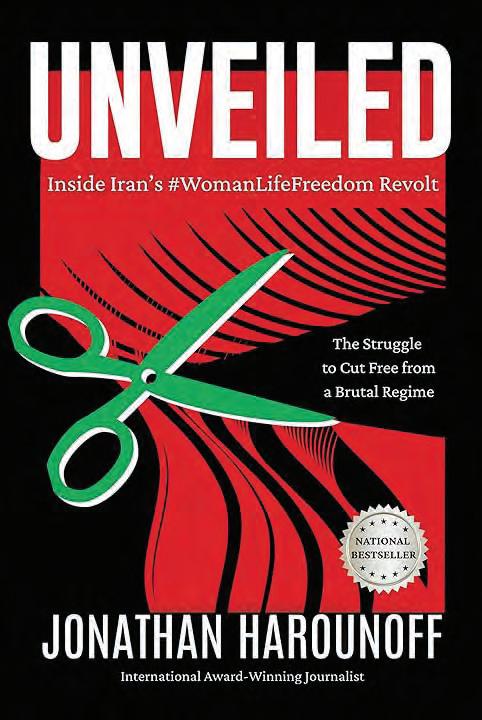
The Pittsburgh Jewish Chronicle invites you to join the Chronicle Book Club for its Jan. 18 discussion of “Unveiled,” by Jonathan Harounoff. The author will join us for the meeting.
Email: Contact us at drullo@pittsburghjewishchronicle.org, and write “Chronicle Book Club” in the subject line. We will send you a Zoom link for the discussion meeting. PJC




“‘Unveiled’ takes us inside the ‘Woman, Life, Freedom’ movement, sparked by the slaying of a young woman for wearing a loose hijab, in what became the most serious challenge the [Iranian] regime has faced in forty-six years. Harounoff has given us a nonfiction drama replete with heroines and villains, one that is sure to captivate readers.”
–Peter Kann, Pulitzer Prize-winning foreign correspondent and former publisher, The Wall Street Journal.
Your hosts
Toby Tabachnick, Chronicle editor
David Rullo, Chronicle senior staff writer
How it works
We will meet on Zoom on Sunday, Jan. 18, at 1 p.m.
What to do


Buy: “Unveiled.” It is available from online retailers, including Amazon and Barnes & Noble. It is also available through the Carnegie Library system.
Our Mission: Leverage the power of community to achieve lasting solutions to hunger and its root causes.

What’s New:
Volunteers are critical to the ability of the Food Bank to serve our neighbors. Last year, 8,900 volunteers donated 78,800 hours to support our mission. There are several ways to get involved as an individual or with a group. Visit pittsburghfoodbank.org/volunteer or email volunteer@pittsburghfoodbank.org.
KDKA-TV Turkey Fund through December 31 Donations made at PNC Bank locations of $50 or more will be matched up to $75,000. Donations can also be made by texting KDTURKEY to 50155, KDKA.com/turkeyfund or by mailing a donation to P.O. Box Thanks | Pittsburgh, PA 15230
Empty Bowls Dinner, Sunday, March 15, 2026 at Rodef Shalom
information below.
1 N. Linden St. Duquesne, PA 15110 412-460-3663
www.pittsburghfoodbank.org
Year Established: 1980 Number of Employees: 160
Interested in Helping?
Contact: Jennifer Zgurich Director of Corporate and Community Giving 412-460-3663 x453 | jzgurich@pittsburghfoodbank.org

‘Dancing With the Stars’ holiday special debuts first-ever Chanukah routine
The popular TV series “Dancing With the Stars” ushered in Chanukah a little early as part of an inaugural show, “Dancing With the Holidays,” which aired on Dec. 2, JNS reported.
Alan Bersten, a Jewish dancer and choreographer, led the several-minute-long routine that featured themes of the Jewish holiday.
“Growing up Jewish, you don’t really see a lot of Chanukah representation, so tonight we’re doing a special performance to celebrate,” Bersten said on the show. “Hopefully, Jewish kids are watching this, and they feel seen and they feel proud.”
Bersten, 31, is a ballroom and Latin dancer of Russian Jewish heritage who was born in Minnesota. He first gained a national audience in 2013 on the show “So You Think You Can Dance” before becoming a pro on “Dancing With the Stars.”
The performance, which opened with Bersten and two male dancers spinning oversized metallic dreidels against a sparkling blue backdrop, was set to the song “Miracle” by American Jewish rapper Matishayu.
The Center for Jewish History hailed the number as a “milestone,” saying it was “filled with nods to Jewish heritage,” including “spins that echoed a whirling dreidel” and “classic steps inspired by Jewish folk dancing.”
Israeli doctors perform successful small-intestine transplant
Doctors at Rabin Medical Center in Petach Tikva have successfully performed a rare and complex small-intestine transplant on Daniel Haim Biton, a 36-year-old man who had lived for 17 years without a functioning digestive system, JNS reported.
The seven-hour surgery gave Biton, who has depended on intravenous total parenteral nutrition since age 19, the chance to live without medical devices or dietary restrictions for the first time in nearly two decades.
“This is one of the most complex and rare procedures in modern medicine,” said surgeon Dr. Eviatar Nesher, who led the transplant operation. “Daniel is a true fighter. His resilience moved all of us. Thanks to the generosity of the donor family, he now has a real chance to live fully again.”
The hospital said the transplant was made possible thanks to the organ donation of a 6-year-old boy, who died from complications of the flu, and whose parents chose to donate his organs to save lives.
Biton, a trained chef, grew up working in his father’s bakery and dreamed of a culinary career. Shortly before enlisting in the Israel Defense Forces, doctors discovered multiple polyps and tumors in his intestines. He underwent repeated surgeries, chemotherapy, removal of his intestines and creation of a stoma, followed years later by surgery to remove a liver metastasis.
“I lost the ability to truly eat,” Biton said. “I had no sense of taste, no feeling of fullness. I ate only to taste, but nothing was absorbed. This transplant gives me back the human experience of eating like everyone else. It feels like being born again.”
Dec. 15, 1999 — U.S. fund buys stake in Israeli water
An intestinal transplant is offered only as a lifesaving last resort for patients with severe intestinal failure when long-term intravenous nutrition can no longer continue due to liver failure, repeated infections or vascular complications. The surgery carries higher risks and lower long-term graft survival rates than most other organ transplants.
Ireland, Spain, Netherlands announce boycott of Eurovision following failed effort to oust Israel Ireland, Spain, the Netherlands and Slovenia’s public broadcasters said they will boycott this year’s Eurovision Song Contest after a meeting last week of the European Broadcasting Union confirmed Israel’s participation, JTA reported.
The G eneral Assembly meeting in Switzerland of the European Broadcasting Union, which organizes the annual song competition, was convened to discuss some members’ calls to have Israel ousted from the contest over the war in Gaza and allegations of voting interference.
But despite calls for a vote on Israel’s participation, the EBU instead said that its members approved new rules prohibiting voter interference from governments and third parties.
While the EBU did not reference Israel in its press release following the meeting, it said that there would be “no need for a further vote on participation.”
Israeli President Isaac Herzog wrote in a post on X that he was “pleased” that Israel will be included in this year’s competition, adding, “Israel deserves to be represented on every stage around the world, a cause to which I am fully and actively committed.”
And Golan Yochpaz, the CEO of Israeli
broadcaster KAN, told EBU members during the meeting that “the attempt to remove KAN from the contest can only be understood as a cultural boycott.”
But after the meeting, several public broadcasters that had previously stated their intention to boycott the competition if Israel was allowed to compete followed through on their promises.
Robert Kraft named NFL Hall of Fame finalist
Robert Kraft, the Jewish owner of the New England Patriots, has been named a contributor finalist for the Pro Football Hall of Fame Class of 2026, the Hall announced last week, according to JNS.
Kraft, who has owned the Patriots since 1994, led the franchise to six Super Bowl victories and 10 Super Bowl appearances, in both cases more than any other owner in NFL history. He purchased the team for a then-record $172 million to prevent its relocation to St. Louis and privately financed construction of Gillette Stadium in Foxborough, Massachusetts.
The 2026 class also includes former Patriots head coach Bill Belichick as a coaching finalist, setting up a possible joint induction for the duo whose 23-year partnership yielded unprecedented success before ending contentiously in recent years.
Kraft has chaired the NFL’s broadcast and media committee for 18 years and serves on 17 ownership committees.
In 2019, Kraft founded the Foundation to Combat Antisemitism to challenge hate and promote tolerance through public awareness campaigns and educational initiatives. PJC — Compiled by Toby Tabachnick
Items are provided by the Center for Israel Education (israeled.org), where you can find more details.
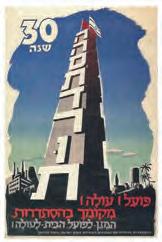
Dec. 12, 1920 — Histadrut Labor Federation is founded The General Federation of Jewish Labor, known as the Histadrut, is founded in Haifa to serve as an independent trade union for Jewish workers in Palestine. David Ben-Gurion is elected its secretarygeneral in 1921.
Dec. 13, 1961 — Prosecutor urges death for Eichmann
After Nazi Adolf Eichmann is convicted of 15 charges, including murder, crimes against the Jewish people and crimes against humanity, Israeli prosecutor Gideon Hausner successfully argues for a death sentence.
Dec. 14, 1981 — Israel annexes Golan Heights
The Knesset votes 63-21 in favor of surprise legislation to annex the Golan Heights — captured in 1967 — and apply Israeli law there in place of military administration. The Labor Party boycotts the vote.
San Francisco-based venture fund Aqua International Partners buys a 25% stake in Israeli bottled water company Mayanot Eden (Eden Springs) for $47.5 million, financing the company’s expansion into Europe.
Dec. 16, 1984 — Activist Abie
Nathan aids Ethiopia
Israeli peace activist Abie Nathan arrives in Ethiopia with $300,000 worth of supplies, funded through global Jewish giving, to relieve a drought-driven famine that kills an estimated 1.2 million people over two years.
Dec. 17, 1975 — Kissinger discusses Israel with Iraqi envoy
U.S. Secretary of State Henry Kissinger tells Iraqi Foreign Minister Saddun Hammadi in Paris that Israel’s existence is not negotiable, but the United States is willing to see Israel “reduce its size to historical proportions.”
Dec. 18, 1911 — Health care fund is created
At the urging of Berl Katznelson, a special convention of Jewish agricultural workers in Ottoman Palestine approves a proposal to cr eate Kupat Holim Clalit (General Sick Fund) to handle immigrants’ health care. PJC



LISA & HERKY POLLOCK
Just as the Hanukkah lights brighten the darkest nights, JAF brings light to neighbors facing financial hardship. This season, as always, the Jewish Assistance Fund continues its mission: Offering financial help with dignity, privacy, compassion and no repayment to the Western PA Jewish community. When my 77-year-old mother was badly injured and in the hospital for months, I had no idea how we’d manage her health coverage. Stephanie Davis stepped in, guided us through every step, and made the impossible feel possible. I will be forever grateful for her compassion, expertise, and determination.

“grounded in both Sephardic music and American folk music” enables an authentic synergizing of her musical identity.

By Adam Reinherz | Senior Staff Writer
Lily Henley is treating Pittsburghers to an educating performance.
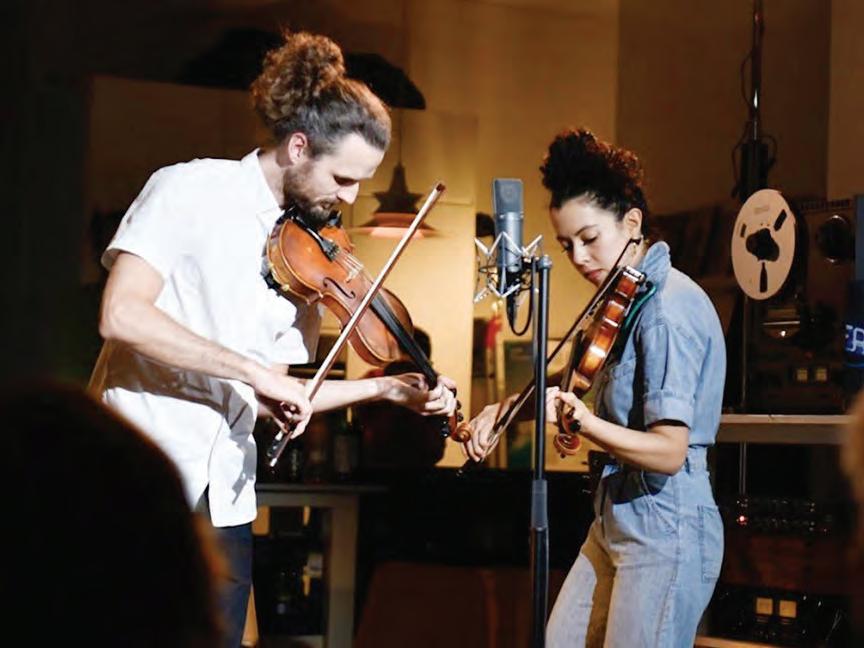
The Boston-based fiddler and graduate student, who often blends Sephardic Jewish music with Americana, will perform alongside her husband and fellow musician, Ethan Setiawan, on Dec. 13 at the Original Pittsburgh Winery. The Saturday evening show, presented by Calliope, a nonprofit arts organization, will blend storytelling and song while exploring Henley’s personal connection to Ladino.
Though the exact number of Ladino speakers is unknown, the Forward reported in 2021 that about 60,000 people speak the language often referred to as “Judeo-Spanish.”
Ladino is “basically the language of the Sephardic Jewish people who came out of the Iberian Peninsula — Portugal and Spain — during the Inquisition,” Henley told the Chronicle by phone. “It’s an Ottoman Jewish language based on old Spanish and Portuguese, but it has vocabulary and portions of a wide array of Ottoman languages, including Hebrew, Arabic, Turkish, Persian, old French, old Italian, Bulgarian, Greek. So it really has bits of everywhere that Sephardic Jews have lived historically in the Ottoman Empire.”
Henley’s interests in Ladino expanded over time.
“I grew up singing in Ladino, and I definitely grew up hearing Ladino singers,” she said. “My mom cared about us being conscious of our Sephardic background, so we had a chunk of albums of Sephardic singers or well-known Ladino singers.”
Henley’s fascination with the language grew, as did her commitment to performance.
As a child, Henley played fiddle all while moving “two dozen times before turning 20,” she said. Being able to play music that’s
Adding to that identity are Henley’s academic interests. Along with completing a Fulbright scholarship in Paris and spending a year studying Ladino, she completed a master’s in ethnomusicology and focused on Ladino life cycle songs. Months ago, Henley began a doctoral program at Harvard University where she’ll continue studying ethnomusicology.
“There’s been all this deep diving that I’ve done as a scholar, and all of that has just fed into my work that I’ve been doing all my life as a musician,” she said.
Libraries and lecture halls differ from recording studios and stages; and though there’s a distinction between Henley’s pursuits she sees them as “two sides of a coin.”
“I’m first and foremost a musician, and I’m an entertainer, and I’ve been performing since I was a young teenager, and I have more than one musical influence,” she said. “But on the other side is my kind of scholarly work that I think feeds into the root of what I do as a musician.”
Henley showcased her influences and talents on the 2022 album “Oras Dezaoradas.”
Translated as “Hours Without Hours” in Ladino, the 10-track album represented a collection of new Ladino songs “informed by the sounds of American string-band music” coupled with Sephardi influences.
While Henley will integrate similar sounds during her upcoming show, the infusion of stories and explanations should be enjoyable to “any lover of music,” she said.
Beyond mere entertainment there’s also an educational aim, she added. “I just hope that the music draws people in, the story draws people in, and that in the course of that, they’ll learn something about this endangered language and culture that they didn’t know before.” PJC
Adam Reinherz can be reached at areinherz@ pittsburghjewishchronicle.org.



Continued from page 1
was supposed to be one on Beverly Road and one in uptown. That got changed to just the one in uptown.”
Charlene Tissenbaum spoke at the January commissioner’s meeting. Her message, she said, was simple.
“I said I’ve lived in Mt. Lebanon for 30 years and it was a wonderful place to raise my kids and I always felt that it was diverse and welcoming,” she said. “But I said if we’re going to use language like ‘holiday celebration,’ and if we talk about Mt. Lebanon being inclusive, then it should reflect the people that live here, and next to our Christmas tree, we should have a menorah.”
When she learned that the township intended to include a menorah on Washington Road, she felt the significance of the moment shouldn’t be ignored.
Tissenbaum reached out to fellow Mt.
Continued from page 6
relations looked like in the beginning, it was a lot more gathering together, and trying to build relationships for the sake of building relationships, so that hopefully when you need to call on people they’re there for you — and there are times that has happened in this community, and in other instances it hasn’t. When I think about it, particularly post-Oct. 7, it’s unfortunate that so much of the work has really become about addressing antisemitism. What I will say is I’m grateful for the leadership and the partners that we have in the community, and at the Federation, that give me and give others confidence that we’re addressing it in a collaborative and holistic way.
Tell me about some of the successes. One of the programs I’m proud of is our Coffee and Conversation series, where I’ll do a question and answer forum with different candidates across levels of government. It’s a really great way for the candidates to understand some of the issues our community is thinking about, and also for our community members to connect with candidates and promote civic engagement. A lot of community members are interested in government relations — so along with engaging our city and county
Reibach, and the trio organized a public menorah lighting, to be held Dec. 17 at 5:30 p.m.
For Reibach, the event is a way to voice the community’s appreciation for the menorah’s inclusion. And, she said, the public lighting is a way to bring attention to the menorah.
“Instead of it just being up there we wanted to light it up so it wasn’t just this dark thing in the corner,” she said, noting there is public attention on the event.
“The Facebook event is growing. People are interested in it,” she said.
Gelman concurred, saying that even though the South Hills is home to 20% of Greater Pittsburgh’s Jewish community, that presence often isn’t reflected publicly.
“Mt. Lebanon is full of wonderful people who want to be inclusive, but Jewish life just isn’t naturally visible here,” she said.
She is hoping for a strong community turnout.
“We’re all excited,” she said. “We’re hoping it’s a joyful moment where kids can learn about the
officials on different issues, we’ve taken groups to Harrisburg and Israel — and we’ve been able to accomplish a lot of significant things, like the Nonprofit Security Grant Program.
With help from the Federation, nonprofits can pursue grants from the Pennsylvania Commission on Crime & Delinquency State Security Grant Program and the federal Nonprofit Security Grant Program. Why is that such a big deal for the CRC?
Making sure that people are safe, and feel safe, is one of the most important unifiers. Going into other communities and training them on how to apply for a grant or doing a walkthrough in a church or in a mosque, which Federation’s director of community security, Shawn Brokos, does, is a really important community engagement tool. Regardless of what may have happened in the relationship, or what someone may have said, or the perception of how a community may feel about the Jewish community, at the end of the day one unifier is that we all want everyone to be safe. This program gives our community a lot of confidence and reassurance that we’re actively taking steps to make sure we’re safe and so many opportunities to collaborate with other communities around this common goal.
The trio is also hoping that some local and state officials will attend.
And while the ultimate turnout is unknown, one thing is certain: Three South Hills rabbis will attend.
Chabad’s Rosenblum said his goal throughout his attempts at a public Chanukah event in Mt. Lebanon have always been “to have more light in the South Hills.”
The public lighting — Mt. Lebanon is featuring an electric menorah and the three rabbis are each bringing their own menorahs to light and offer the traditional holiday blessings — isn’t so much a victory for Rosenblum, he said, but for the entire Jewish community.
He pointed to the township’s magazine, which features a menorah on its December cover.
“It’s unbelievable in this largely Christian suburb of Pittsburgh that the holiday spirit is being ushered in with Chanukah,” he said. “The truth is that the victory is that Chanukah will be present in Mt. Lebanon and Dormont and
You’ve had an interesting vantage point on the community. What do you see moving forward?
I think it’s a moment of opportunity. There are members of the community who are more activated, engaged and passionate about community building and Jewish continuity than ever before. At the same time, the backdrop is a lot of significant challenges. One concern I have is that I don’t want our community, but also others, to define us based on antisemitism — because that’s not what the community is. We are an incredibly resilient, vibrant, strong, diverse Jewish community, and members of the community show up in different ways and express that in different ways. We need to figure out how we define ourselves during this moment, for ourselves but also for the broader community, when we are making that introduction and saying, “I’m a member of this Jewish community, and here’s what community means to me.”
We’ve talked a lot about community. The word is in your title, but what does ‘community’ mean to you?
Community is coming together, seeing everyone and taking care of each other. This is from our young children — and being able to send them to pre-K and giving them
husband and I did. We must find the meaningful lessons that can be learned from even the most devastating events,” she said.
Rick Wice, head of Poale Zedeck security, said the coordination of law enforcement for the event was “cooperation of the highest level,” involving the Pittsburgh Police, the Federation’s security team lead by Shawn Brokos, and local security companies.
Near the end of his conversation with Cherner, Sharabi said he was a “practical person,” who spent a few minutes crying after his release, but stressed that people can choose how to react to horrible circumstances.
“I didn’t choose to be kidnapped. I didn’t choose what happened on Oct. 7. But for 491 days I chose how to react to my situation; what to hold onto and how to stay human in extreme situations,” he said.
Despite the death of his family, Sharabi said he has never found meaning in sadness or anger.
“I have a choice — to let my grief and loss bury me or find a way to move on,” he said. “I know I can’t do anything to bring them back. but I also know that I’m here and life is here and I love life.” PJC
David Rullo can be reached at drullo@ pittsburghjewishchronicle.org.
Washington and everywhere else in Pittsburgh.”
Beth El’s Greenbaum, too, is thankful that the township is featuring a menorah as part of its holiday celebration and is pleased that community members arranged the public event.
“It’s perfect,” he said. “I don’t need any more.”
Temple Emanuel’s Meyer said the joy of the season should be shared with Mt. Lebanon officials, who not only listened, but acted as well.
“I’m so grateful to Mt. Lebanon Municipal Manager Keith McGill, Rev. Noah Evans and the civic engagement board, and the Mt. Lebanon commissioners for hearing and acting upon the concerns of the Jewish community,” he said.
In addition to the menorah lighting, the celebration will include holiday favorites like gelt, dreidels and kosher pareve donuts.
“This is a community lighting for everybody in the community led by Mt. Lebanon residents,” Tissenbaum said. PJC
David Rullo can be reached at drullo@ pittsburghjewishchronicle.org.
a good Jewish education — all the way up to our older adults and making sure that they’re aging with dignity. Something I’ve thought about more post-Oct. 7 is that comm unity also means connection and peoplehood. There’s such a shared understanding and experience when it comes to being Jewish, that regardless of where you are, politically, religiously or where you’re from, we’re all connected, and connection has built so many beautiful things and wonderful people. Community is everything, and we wouldn’t be able to do anything without the people who make it what it is. Before you leave, what do you want people to know?
Everything we’re able to do is because of the collection of people around us. I’m so grateful and amazed that we have such strength and infrastructure in the Jewish community. We have really learned how to take care of each other. For me personally, I’m grateful that the community has uplifted me so much. You’ve given me the opportunity to be where I am and to professionally contribute to things I care about. It has been really gratifying, and I just want to say thank you.
PJC
Adam Reinherz can be reached at areinherz@ pittsburghjewishchronicle.org.












Guest Columnist
Judy Mars Kupchan
After two years of war and all that came with it, in one night it was over.
Twenty live hostages were returned to us, and we are still waiting for the remains of the last of the murdered hostages. Reserve soldiers are still being called to serve, and many are engaged on several fronts in the ongoing conflict called a ceasefire. There are no celebrations of the end of war, no dancing in the streets, no fireworks. It is all too fragile; we are still too fragile. Among the changes that have occurred very quickly is the physical landscape that we came to know over the past two years. Some of the most enduring symbols and signs that held us together are gone, and strangely — I’m ashamed to admit — I am missing them.
The large, ubiquitous banners carrying the faces of hostages, and also those of soldiers who died in battle, are gone from the street corners. These are the faces of our heroes that were etched in our minds. We know their names, their smiles, their eyes. They were all too young, full of life when those photos were taken. Some fought valiantly to survive the tortures of captivity. Many gave their lives, that we might live in our sovereign country. Did my fervent prayers and those of everyone who prayed for them help keep them alive? It
was our mission to bake cookies and cakes for the soldiers, to provide meals for the soldiers who came to bury their comrades, and to be menachem avel, to provide comfort, at their funerals. It was our privilege and our honor to keep them in our hearts and our prayers every day. We all still remember them, but the photos that told us that this is our family, this is our story, are gone.
hostages would return. In singing “Acheinu,” the prayer for the release of captives, we declared our brotherhood, our connection to all Israel. In singing “Lu Yehi,” “let it be,” we expressed our hope that all our prayers will be answered. The sweetness of our voices joining together gave us comfort and strength, even if we didn’t believe the words. The hostages have been returned, thank God, our prayers indeed
The hostages have been returned, thank God, our prayers indeed answered. But the words of anger and division are everywhere now, and I miss the moments of feeling that oneness.
Among the public demonstrations of support for the families of the hostages was one on Shabbat mornings in our neighborhood, where the Messilah park in Jerusalem begins. This gathering of men and women from all the congregations in our neighborhood (Orthodox, Reform, Masorti) and many others was a quiet testament to the compassion for our bereaved neighbors and hostage families, a reflection of the attention we paid, of the love we felt as a community.
The rabbis of these kehillot and other community members spoke words of Torah as they affirmed our vigilance and hope that the
Guest Columnist Nathan Lyons
You know Doron from “Fauda.” Four full seasons where he fumes and furrows that rubbery brow, scowls through underground tunnels, reaches over a bullet-riddled car to unload a magazine of lead into the bad guys attacking his father’s farm, pretends to sip coffee in a village square before pulling a silenced machine gun and ventilating a terrorist.
And now I notice him at a café in North
Tel Aviv. Slimmer than last season. In real life, as Lior Raz. He does not exactly look at me, but there is the faintest tilt of the chin, a micro nod that might have been aimed in my general direction. Almost certainly a Duvdevan reflex from his undercover days, that discipline of staring at someone by deliberately not looking at them. Yes, he has almost certainly clocked me.
I am sitting on a wooden bench with my bag, a curiously oversized bag. He is at an outdoor table. Maybe 15 meters away. Maybe 10. In “Fauda,” such pronounced non-eye contact means we are scouting each other. Did he just scratch his ear, whisper into a concealed earpiece — target confirmed?
Watching Lior Raz not look at me only confirms he has seen me. His invisible
answered. But the words of anger and division are everywhere now, and I miss the moments of feeling that oneness.
The big white tents that would often be a sign of a wedding or a simcha in other days became the signpost and the venue for mourning the war dead. I hope I never see another one, but when they appeared in our neighborhood, squeezed between a gas station and an apartment building, or on a parking lot, they were the most profound sign of a family and a community in pain. Hundreds of people came to stand in line (sometimes for hours) to offer personal words of comfort or to share a
surveillance team has seen me. Any stranger who sits this close to an indifferent Doron should be counting the seconds. It is his lack of recognition that unnerves me most. My shoulders tighten. The “Fauda” theme begins in my head, rising into a rapid heartbeat. This is high alert.
I get up. Stumble inside. Study the menu with the seriousness of a man decoding nuclear launch codes. I refuse to turn around. Out of the corner of my eye I catch several figures at his table who look suspiciously like characters from the series. Is that the actress who played Moreno’s sister, before the colonel was blown up in Season 2? That’s her: Anat. She got with Steve, one of the unit’s most seasoned killers, two episodes later. She glances at me. Or at my reflection
memory with the mourners, and many came to simply sit in the proximity of the mourners, to be a part of the kehillah in that sacred tent. The choreography of the friends who organized these tents and brought water on hot days and snacks for someone who might need a sweet in the midst of such tragedy, was moving and impressive. Nothing could diminish the tragic loss of life, but the intense brokenness of the mourners was carried by the community in the tent. To be sure, I do not miss the tents. Yet the offering of comfort, the expression of our extraordinary community, the compassion for one another, is sorely missed.
Truly, we do not need the physical signs of the war to appreciate the remarkable uniqueness of this country at its most challenging and critical moment. What we have witnessed among volunteers and community organizers is simply unforgettable, as they put everything else aside to make this country work when so much was falling apart. While the rest of the world is busy canceling us and denying our right to exist, we have all met many angels in human clothes who have reminded us how to breathe, how to maintain hope, how to be our best selves, as a free Jewish people in our homeland. May we hold tight to that blessing. PJC
Judy Mars Kupchan is an olah to Israel from Chicago. She is a retired CEO of the Florence Melton School of Adult Jewish Learning and a Jewish educator for more than 40 years in the U.S. This article was first published on The Times of Israel.
in the espresso machine. Hard to tell. We are running out of time. Any minute now Steve will appear, ash-laden cigarette dangling from one hand, the other brushing his grizzly, white-flecked beard. I will not even feel the knife.
Then again, maybe the safest strategy is to sit beside them. The very next table, with my back to them. Sip my coffee with idle British boredom. Who would suspect a man performing the theater of normality? If questioned, I have the perfect alibi. I’m a British tourist who has never seen the show. Show? What show? Jolly nice to meet you.
I hover too long. That alone feels incriminating. There is nothing gluten-free on this
Guest Columnist
Revital Yakin Krakovsky
Israel’s war of self-defense in Gaza has granted a dangerous new lease on life to the antisemitic Boycott, Divestment, Sanctions movement, long condemned across the West for its ideology and its documented ties to terror groups. This
movement, which seeks the delegitimization of the state of Israel as a Jewish state, is now receiving shameful concessions from governments, cultural institutions and global organizations.
A stark recent example is the decision by Guinness World Records to exclude Israeli citizens from submitting records due to the “current climate.” This policy reportedly led to the rejection of a humanitarian application by the Israeli nonprofit Matnat Chaim for the largest number of altruistic kidney donations. GWR acknowledged that it had stopped accepting new record
submissions from Israelis and Palestinians after Oct. 7.
Yet while blocking Israeli submissions, GWR continues to validate records from countries known for severe human rights abuses. Iran, a regime condemned for its treatment of women, dissidents and minorities, had multiple records published by GWR throughout 2024 and 2025, including the “Longest Number Recall” and the “Most spoons balanced on the body.” Russia, despite its full-scale invasion of Ukraine in 2022, has not faced a comparable ban. These inconsistencies reveal a clear double
standard that penalizes Israelis simply because they are Israeli.
This pattern extends beyond GWR. The Eurovision Song Contest turned into a full political arena, with several countries pressuring the European Broadcasting Union to bar Israel from participating. After the EBU affirmed Israel’s rightful inclusion, broadcasters in Spain, Ireland, the Netherlands and Slovenia announced that they would withdraw or boycott the broadcast. The fact that the world’s
Last week, the Chronicle asked its readers in an online poll the following question:
“Should Israeli President Isaac Herzog pardon Prime Minister Benjamin Netanyahu for alleged criminal misconduct?” Of the 310 people who responded, 69% said no; 26% said yes; and 5% said they weren’t sure. Comments were submitted by 94 people. A few follow.
Absolutely not. To pardon Netanyahu would prevent justice from taking its course (whether he’s judged innocent or guilty) and would be a disgrace.
Hate him or love him, Bibi is still prime minister and the internal political grievances inside Israel pale in comparison to the bigger issues at hand, including those which affect Diaspora Jewry. A pardon would be the quickest thing to do to be able to move on.
Special dispensation should not be given to a politician.
Should Israeli President Isaac Herzog pardon Prime Minister Benjamin Netanyahu for alleged criminal misconduct?
At the same time, I think Netanyahu should retire and give the Israeli electorate a chance to vote in a different politician.
A crime is a crime. Why preemptively pardon him while he erodes hope of a two-state solution, prolongs the conflict and violence, doesn’t hold settlers accountable for their crimes, and tries to dismantle democracy in Israel for his own gain? He’s shown who he is; make him deal with the consequences.
Seems like a witch hunt. The Israel version of Trump Derangement Syndrome.
Absolutely not! It would be the equivalent of pardoning the Jan. 6 insurrectionists and Trump as well.
case, Netanyahu would be pardoned even before adjudication. This is so inappropriate I don’t even have sufficient words for it. “No” will have to suffice.
A pardon should come only after a trial. If he is found guilty and agrees to step down then it would perhaps be appropriate to pardon him.
Trump is giving a master class in the abuse of the pardon power. Israel should reject this approach and retain its commitment to impartial justice.
Just like when Gerald Ford pardoned Richard Nixon, it is the best way to move the nation forward. PJC
— Compiled by Toby Tabachnick
Continued from page 18
menu, I inform the waiter with a sigh, then exit, careful not to let my bag bump into anything, walking past the celebrity table with what I hope is a casual gait. Hundreds of digital eyes follow me. That discarded cigarette lighter is definitely a transmitter. They used that trick in Season 4. Not gonna fool me.
Around the corner, I cool down. Put my bag on the pavement. I have made it. Imagine. I’m carrying the contraband everyone was warned about and cleared the perimeter unchallenged.
Continued from page 18
largest cultural competition came close to excluding Israel illustrates the growing willingness to single out the Jewish state. In sports, Israeli athletes regularly face hostility, intimidation and at times direct physical threats. Opponents from certain states refuse to compete against them, and events themselves have become sites of targeted aggression. During a professional cycling race in Spain, Israel’s team was physically attacked and threatened, leading organizers to ask the team to withdraw. Israeli teams have even been pressured to remove their national identity from uniforms for safety reasons, a humiliation almost never imposed on athletes from other nations engaged in conflict.
From what I have read, it sounds like the case against Netanyahu was flimsy at best. I think Herzog should pardon Netanyahu.
I greatly admire the prime minister’s courage and level-headed manner, and that he led Israel during an insane situation caused by insane people. This is the least that we can do for him.
If I smoked, I would light a long slow Camel and inhale victory. Me, an unlikely hero of Palestine, right under the Zionists’ noses in the fanciest neighborhood of occupied Tel Aviv. Wait, was Tel Aviv ever Palestinian? Maybe not this Kikar Milano neighborhood, built in the 1970s. Anyway, I have smuggled dangerous materials (dirty laundry and a bag of oranges) and a head full of literature past the most deadly Israeli agent in history. Mubarak! Mission accomplished. But no true operative would stop here. I want one last encounter. One final brush with greatness. Swinging my bag across my shoulder, I turn back toward the café. Doron is on my right. Same exact spot.
The BDS movement has played a central role in driving this exclusion. Although it presents itself as a human rights initiative, its core demands, including a so-called “right of return” intended to eliminate Israel’s Jewish majority, reveal its true objective. During my tenure at the Ministry of Strategic Affairs between 2017 and 2020, we published two in-depth reports, "Terrorists in Suits and Behind the Mask." These reports documented terror affiliations among senior BDS leaders and exposed the antisemitic ideology embedded within the movement. A coordinated governmental effort at the time significantly weakened BDS activity and credibility.
In the wake of the Oct. 7 massacre and Israel’s defensive war in Gaza, the movement has regained momentum. Its most extreme narratives, including the false “genocide” accusation, have been amplified
As Rabban Shimon ben Gamliel said some 2,000 years ago, when justice is done, truth is served and peace ensues. All of this pardoning of big shots and influencers and activists and high rollers, along with condoning shady activity, has to stop. In this
Yes, he sees me. Our eyes meet for a fraction. His pupils are clear, his expression unreadable. He’s not aged at all. Did makeup deepen those wrinkles, grey his temples, for that last operation in Lebanon? At a glance — and I’m no professional — he seems unarmed. I consider leaning in with something conspiratorial. Ani Amok Bifnim, I rehearse, I am deep inside the enemy network. The exact words he told Gabby when the Shin Bet’s chief interrogator lifted the cloth bag from his head in a jail cell. The sentence hovers on my tongue like a bad idea hoping to be chosen. But those steady eyes tell me everything. There is no scene unfolding. Only an actor waiting for his morning shakshuka and a
by influencers, universities and even some Western governments. Leaders in Spain and Ireland have echoed BDS language, granting unprecedented legitimacy to its delegitimization campaign.
The selective cultural and economic targeting of Israel represents a profound ethical failure.
When global institutions punish Israeli civilians, artists, patients and athletes while granting legitimacy to oppressive regimes, they are not promoting justice. They are participating in discrimination that uniquely targets the world’s only Jewish state.
This pattern aligns with the definition of antisemitism outlined by the International Holocaust Remembrance Alliance, whose Working Definition includes “applying double standards by requiring of Israel a behavior not expected or demanded of any
Chronicle weekly poll question: Do you display your menorah in a window to publicize the miracle (pirsumei nis)? Go to pittsburghjewishchronicle.org to respond. PJC
man with an overactive imagination. I’ll only blow my cover. So I do the sensible thing, let my gaze lightly graze Lior Raz as though he is any other Tel Aviv resident who’s slipped into my line of sight. I walk inside, heart thudding with the embarrassment of invented espionage, and order an oat milk latte, to go. The barista nods politely, unaware that I have just completed the most delicate mission of my morning. PJC
Nathan Lyons is a Tel Aviv-based writer fascinated by the chaos and glory of life in Israel. This article was first published on The Times of Israel.
other democratic nation.” This is precisely what we are witnessing today.
If the global community seeks genuine peace, justice and human rights, it must reject these selective standards. Cultural, scientific and sporting institutions must apply one universal principle for all nations, rather than one for the world and another for the Jewish state.
The world must confront and isolate movements that seek to delegitimize and ultimately dismantle Israel, the only democracy in the Middle East. PJC
Revital Yakin Krakovsky is deputy CEO of the International March of the Living and CEO of March of the Living Israel, senior advisor to the Combat Antisemitism Movement, and a former senior department head in the Ministry of Strategic Affairs. This article was first published on The Times of Israel.
We invite you to submit letters for publication. Letters must include name, address and daytime phone number; addresses and phone numbers will not be published. Letters may not exceed 500 words and may be edited for length and clarity; they cannot be returned.
Send letters to:letters@pittsburghjewishchronicle.org or Pittsburgh Jewish Chronicle, 5915 Beacon St., 5th Floor, Pittsburgh, PA 15217
We regret that owing to the volume of correspondence, we cannot reply to every letter.
By Jessica Grann | Special to the Chronicle
Ienjoy the festival of Chanukah, which, for me, is a quiet family holiday. I don’t feel the same stress about cooking or time restraints as I do with most other holidays, so it’s a pleasure to patchke with frying up some special treats.
I embrace the custom of eating fried food and dairy food during Chanukah. I’ve published three different donut recipes and leek edjeh (think leek latkes) in the past few years, but this is the first time I’m sharing my fried cigar recipe. Many people think of cigars as restaurant food. But once you complete this recipe you’ll see it’s not so complicated and perhaps you’ll attempt a meat cigar recipe as well.
These cigars are flaky and light, with a salty feta cheese filling that melts yet stays in place. I love each crunchy bite when eating anything made with phyllo pastry. If you’d rather work with spring roll wrappers, you can buy a package in the freezer section at Murray Avenue Kosher. Believe it or not, these cheese cigars are easier than making homemade donuts and everyone loves them.
Ingredients:
2 cups crumbled feta cheese, about a half-pound
1 cup shredded mozzarella cheese
1 large egg, beaten
2 tablespoons finely chopped flat leaf parsley

A dash of black pepper or Aleppo pepper, if desired or spring roll wrappers
1 tablespoon all-purpose flour mixed with 1 tablespoon water, to make a sealing paste for the pastry
Neutral oil for frying
Bring the frozen pastry to room temperature by placing the phyllo or the spring roll dough on your countertop for a few hours. Crumble a half-pound of feta using the back of a fork, which will yield about 2 cups. Mix in the mozzarella cheese, 1 beaten egg and the finely chopped parsley. You can add 2 tablespoons of finely chopped dill or spring onion if you’d like, but I usually make these as

is. The feta cheese is very salty so you won’t need to add any salt, but you can add a dash of pepper if you like.
In a small bowl, mix 1 tablespoon of water with 1 tablespoon of all-purpose flour to form a paste, which you will use to seal the pastries. If using phyllo, unwrap the pastry and roll it onto a cutting board or clean countertop. Use a sharp knife or kitchen shears to cut the rectangle in half horizontally.
Quickly roll up half the pastry, wrap it in plastic wrap and put it back into the freezer for later use.
Cover the remaining half of the pastry with a clean tea towel.
If using spring roll wrappers, remove the sealed cover from the package, but leave the pastry in the package and cover with a towel. Keep both pastries covered between rolling each cigar. The phyllo pastry will be in a rectangular shape and the spring roll wrapper is a perfect square. The spring roll pastry is a bit larger and you can use a rounded tablespoon of filling, while the phyllo works better with 2-3 teaspoons of filling per piece. For the spring rolls, use one sheet of pastry (you can freeze any left over for another recipe); for the phyllo dough use two pieces stacked together. Work on a clean board or countertop, taking only the amount of pastry needed for each roll.
You’re going to roll on the diagonal, so place the correct amount of filling at the corner nearest to you, and press it into a 2- or 3-inch log of cheese.
Roll the corner up over the filling one full turn, then carefully tuck in the sides of the pastry to meet in the center.
Once secure, roll up the entire piece as tightly as possible, tucking in any loose pieces as you roll.
won’t see the flour and this is a great trick to remember when making other things. Place the roll seam down on a plate. Roll up the rest of the cigars and cover with a towel until the oil is ready for frying.
You will get about 24 pieces if you use phyllo and about 18 if you use spring roll wrappers. If you wish to freeze any or make a double batch, place them on a baking sheet seam down and freeze for 1 hour before transferring to a container, using wax paper between each layer. You can fry them frozen in about 5 minutes — just watch them carefully.
I use a heavy-bottomed stainless saucepan to cook these. It’s not quite a deep fry, but you will most likely need 2 or 3 cups of oil. It’s important that they have some room to float and that the cigar does not sit on the bottom of the pan.
The oil should be around 375 F. Bring it up slowly over medium-low heat, then increase the heat to about medium. If you fry even once a year, I suggest getting an instant read digital thermometer that can read at a high level temperature to check the oil between every batch. I also recommend adding chunks of peeled carrot to the hot oil to attract the dark burned bits and keep the oil cleaner. Add a chunk or two with every batch and remove them before adding fresh pieces. Reduce the heat back to medium-low before adding the pastry. Add 4 to 6 at a time, depending on the size of your pot.
Fry for 20-30 seconds per side before carefully removing each piece to rest on a paper towel-lined tray. Cool for 5 minutes before serving, but be careful: Fried food can retain heat for longer than expected.
These are best when eaten fresh. You can rewarm them in a 425 F oven for about 8 minutes to freshen before serving.
Discarding cooking oil can be a bit of a mess; you never should put it down your kitchen drain. The best way to discard used cooking oil is to add a few cups of raw, rolled oats to the cool oil. If there is less than 1 cup of oil in the pan, 1 cup of oats usually will soak up the grease in about an hour. If there is more oil, it’s best to add a few cups and put a lid on the pot and let it rest overnight. Give it a good stir in the morning and add more oats if needed. Discard into your garbage bin — preferably into a pretty full bag so there is material to soak up the oil.
Take the garbage outside immediately to avoid messy leaks.
Chanukah sameach! Enjoy and bless your hands! PJC
Jessica Grann is a home chef living in Pittsburgh. — FOOD —
When you get to the end, dip your finger into the bowl of flour paste and place a dab on the corner near the top before sealing. You

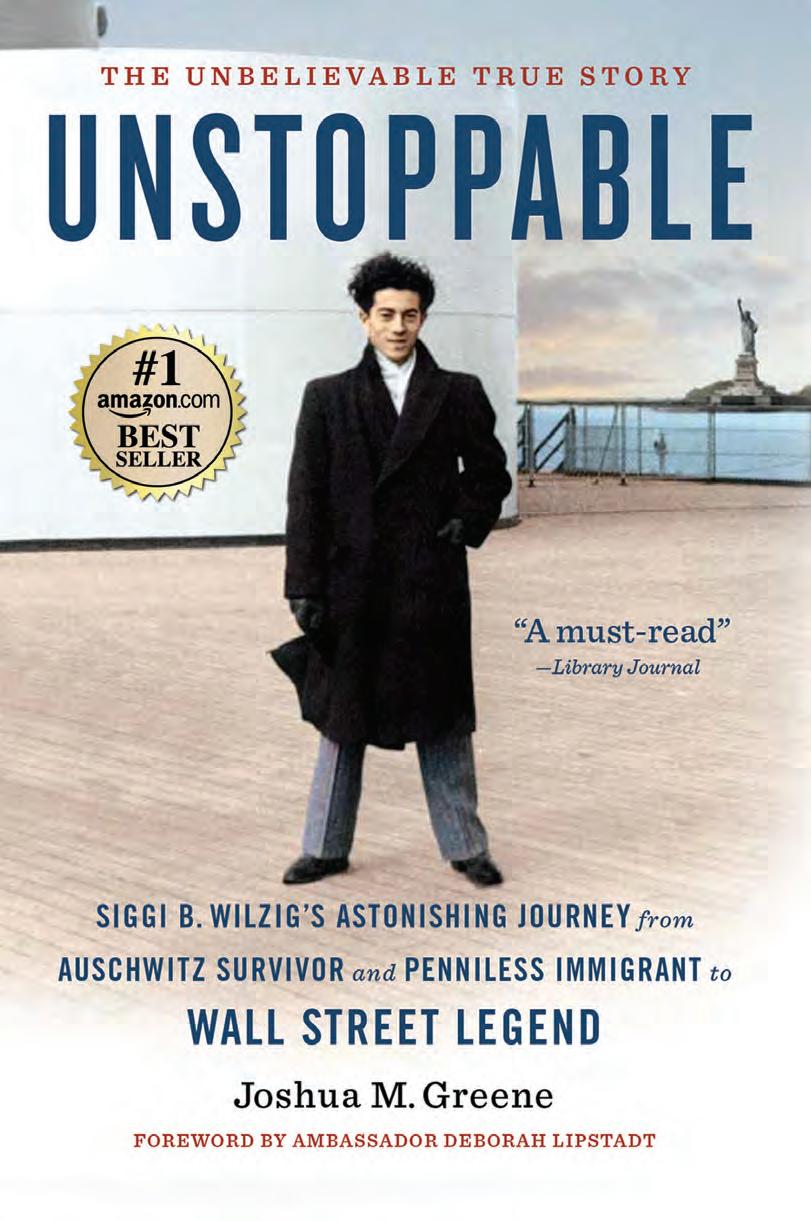

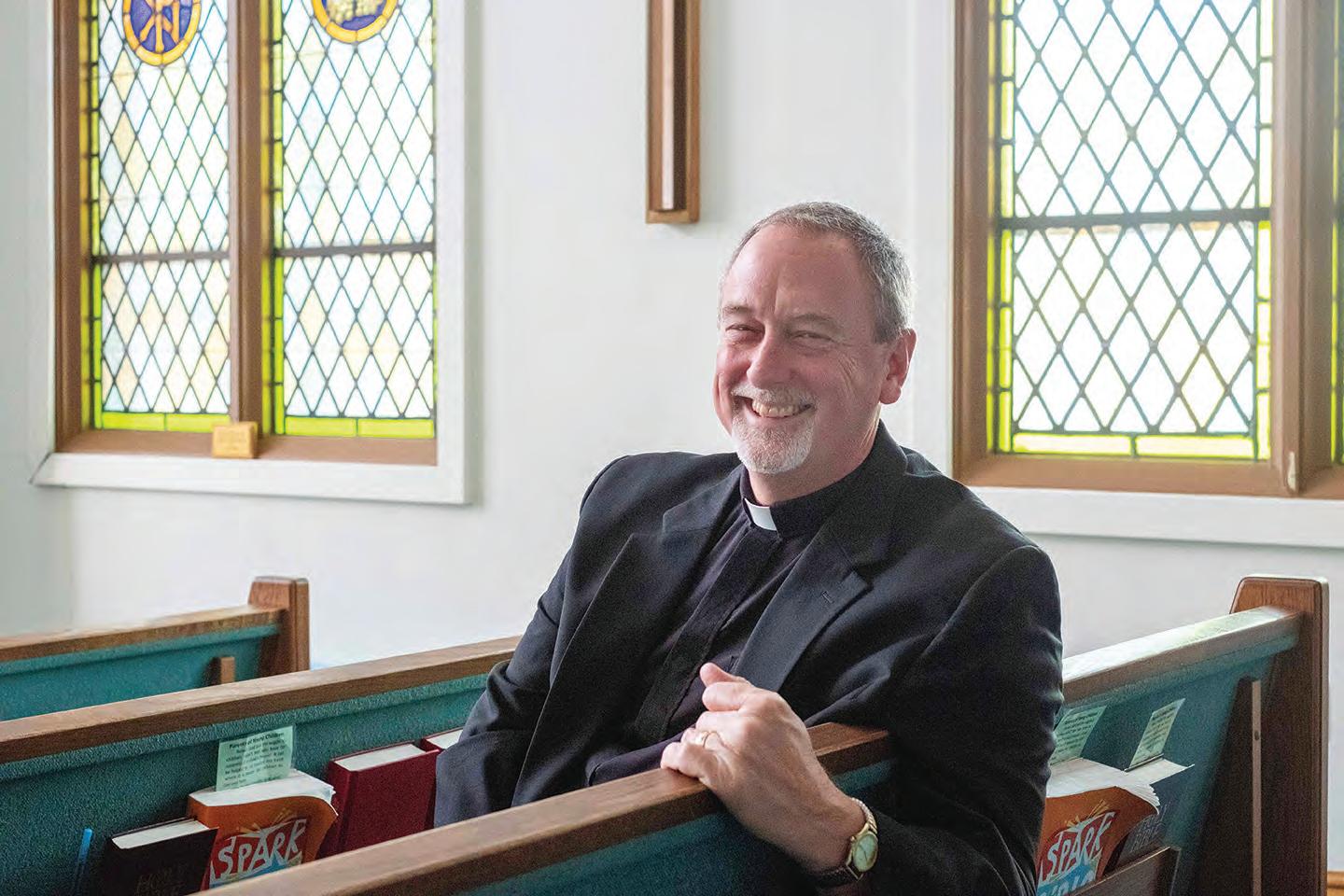
Righteous Among the Neighbors is a project of the Holocaust Center of Pittsburgh that honors non-Jewish Pittsburghers who support the Jewish community and take action to uproot antisemitism. In partnership with the LIGHT Education Initiative and Mt. Lebanon High School, student journalists interview honorees and write profiles about their efforts.
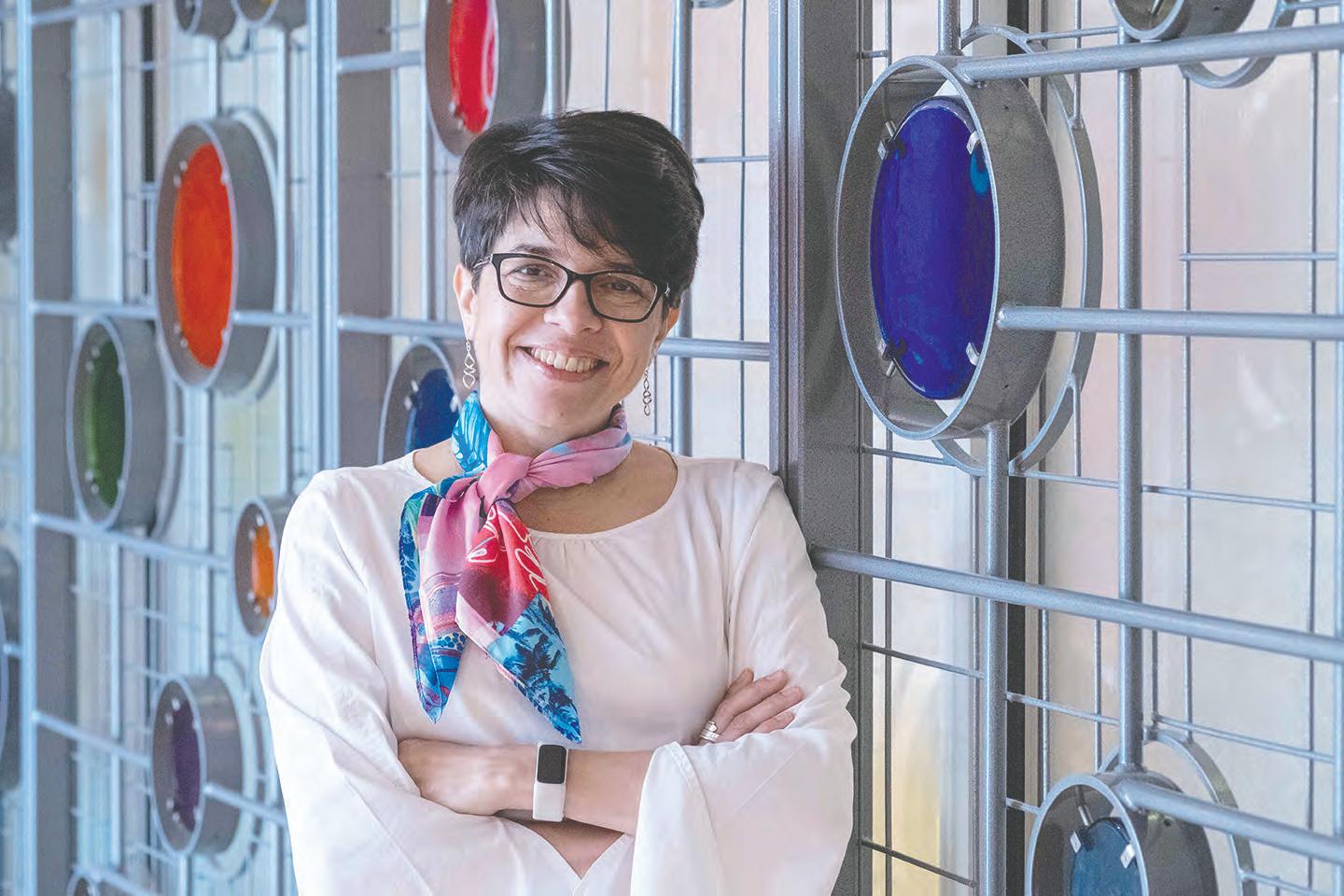
ment to reckoning with antisemitism in the Christian tradition, have led to his recognition as Righteous Among the Neighbors.
After the Oct. 27, 2018, synagogue shooting, the Butler Clergy Network was created to encourage interfaith cooperation and support among religious leaders. Several weeks later, the network planned a vigil to send a public message of Christian support to the Jewish community.
Benson was moved by the silent candlelight walk down Main Street that followed the vigil.
“It was a powerful witness that we weren’t going to let what happened to Tree of Life define us,” he said.
Following that gathering, the network asked how it could support Cantor Michal Gray-Schaffer, spiritual leader of B’nai Abraham, and her congregation. They decided that individual congregations would visit B’nai Abraham, one at a time, attend a Friday night service and stay afterward for the oneg.
Benson brought almost 40 people from his congregation. This moment stuck out to Cantor Gray-Schaffer, who nominated Benson for this award.
“Joel bringing almost 40 people showed to me that he really must have pushed it and marketed it and made it an important thing for his congregants to do,” she said. “They were so respectful — they stood when we stood, joined in on the English when they could. We almost had to kick them out two hours after the service ended because everybody was just having such a good time getting to know each other.”
Benson and Gray-Schaffer have been meeting monthly alongside other Lutheran pastors to study and develop a deeper understanding of each other’s faith. Benson believes building this relationship is crucial, especially with the surge in antisemitism locally and around the world.
“As a Christian, it is important to stand up and say this does not represent what we believe about loving our neighbors as God
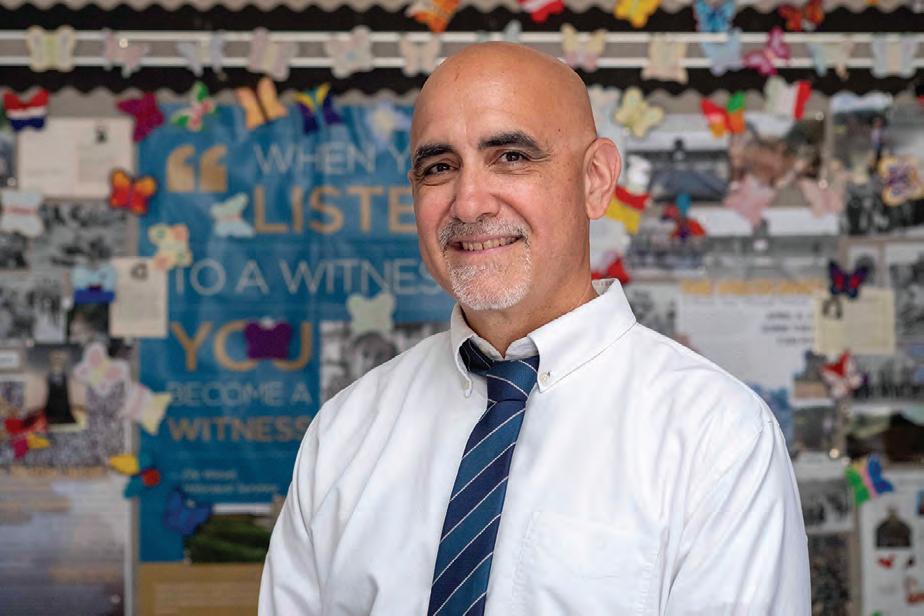
dedicated her career to ensuring that every family, regardless of faith, language or culture, feels seen and supported.
Dancisin said her passion for supporting diverse cultures in health care began years ago, when she was assigned to help an Orthodox Jewish family from Mexico receive treatment at UPMC Children’s.
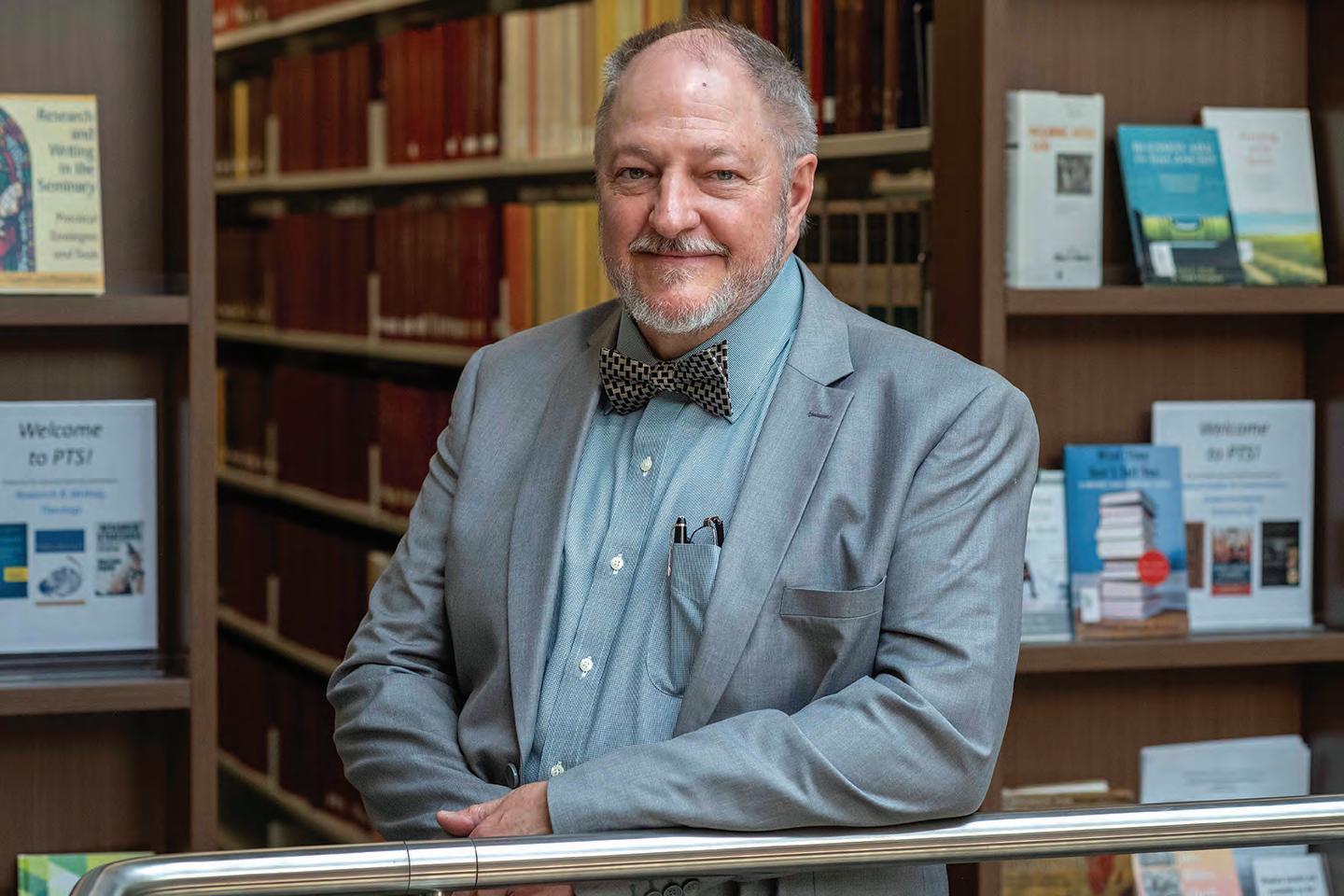
“This family spoke Spanish, they didn’t speak English, so I was a medical interpreter for them,” Dancisin said.
That experience left a lasting mark.
“We became very close,” she said. “At the end of the experience, I wanted to hug them … but couldn’t because females who are not part of your family cannot touch [the men]. So we virtually hugged. But that really marked me. We speak the same language, share the same Hispanic culture, but because of religion, we are still so different.”
That moment of recognition became the foundation of Dancisin’s work at Children’s Hospital.
“Our infrastructure is not built for them,” she said. “We live in a Christian world. There are no barriers for people who are Christian, or we don’t see them because the world is designed around that.”
Dancisin wanted to change that reality. She and a colleague began discussing how to make Children’s Hospital a more inclusive place for patients and providers of all faiths.
“Throughout the years, Dr. [Michael] Moritz and I kept talking about how we needed to get people from the Jewish community together at Children’s to see if we could do something,” she said. “Finally, one day that happened, and that’s how we started working on it.”
Collaborating with Moritz and members of the Jewish community, Dancisin offered to lead the effort.
Under Dancisin’s leadership, the committee has made measurable strides: securing kosher food options in the cafeteria; obtaining a grant from the Jewish Federation of Greater Pittsburgh to buy resources for in-patient Jewish observances; and inviting
— encouraging schools to teach about the Holocaust — was first passed, Joe Harmon saw an opportunity. The Redbank Valley High School educator advocated for a Holocaust studies elective at his school, creating something he felt was essential for his students.
Harmon has been named as Righteous Among the Neighbors for his longtime support of the Jewish community. He was nominated by Emily Loeb of the Holocaust Center of Pittsburgh.
Loeb praised Harmon’s innovative approach, noting that Harmon not only teaches the historical aspects of the Holocaust, but also emphasizes Jewish life and culture.
“He goes above and beyond by having his students actually meet Holocaust survivors when possible,” Loeb said. “So this fall, he brought 50 students to the Holocaust Center to not only meet a survivor, but to connect what he’s teaching in the classroom to a real person.”
Harmon’s journey with Holocaust education began in college. Returning to school as a 29-year-old paramedic, he enrolled in a summer course on Nazism, Hitler and the Holocaust.
“The professor was just fantastic and really spurred my interest in the topic,” Harmon said. “Just the way he could describe what happened made me really care about the events and the people that were lost.”
His dedication also includes firsthand experience abroad. A trip to Poland, visiting sites such as Auschwitz, Treblinka, and the Warsaw and Lodz Ghettos, left a lasting impression. Harmon recounted standing over a mass grave of 45 children, ages 4 to 17, executed solely for being Jewish.
“It wasn’t just 6 million,” he said. “There
By Emma Curren
Tension between the Jewish and Lutheran religions goes back to the founding of Lutheranism. Kurt Kusserow is taking steps to mend the relationship between the two faiths.
Kusserow, bishop emeritus of the Western Pennsylvania Synod of the Evangelical Lutheran Church in America, has been recognized as Righteous Among the Neighbors for his honesty, humility and willingness to grapple with antisemitism in his religion.
Kusserow said his upbringing as the son of Lutheran missionaries in Singapore and Malaysia “informs a lot of who I am.”
Kusserow moved back to the United States for college and to enter the ministry. In 2007, he was elected bishop of the Western Pennsylvania Synod of the ELCA, overseeing nearly 200 congregations.
Kusserow was nominated for the Righteous Among the Neighbors award by Noah Schoen, the manager of community engagement at the Holocaust Center of Pittsburgh.
Kusserow and Schoen met through a program called Reckoning with Antisemitism as Christians, where Kusserow was on a panel of Christians who talked about their journeys of reckoning with antisemitism and how it affected them.
“[Kusserow] spoke with a lot of vulnerability about how difficult it was to face the presence of antisemitism in the Lutheran tradition and really modeled to everyone who was there what humble and meaningful Christian engagement on this topic could look like,” Schoen said.
Kusserow and Schoen created an initiative where groups of Lutheran pastors who Please see Righteous, page 23
Continued from page 22
meet for text study are visited by rabbis once a month, sharing their perspectives and helping the pastors reckon with antisemitism.
Kusserow also wrote a book called “What is the Gospel?” and he gave Schoen a copy so that he could read it and understand Kusserow’s perspective on Christian issues. While reading, Schoen encountered “a handwritten sticky note where [Kusserow] suggested an edit to the original text to avoid a word that could potentially have a slight connotation associated with antisemitism.”
“I thought, ‘Wow.’ He took the time to read over his whole book before giving it to me because he wanted to improve it from a perspective of addressing antisemitism,” Schoen said. “I think it shows his integrity, humility and understanding that for Christians reckoning with antisemitism, it is an ongoing process.”
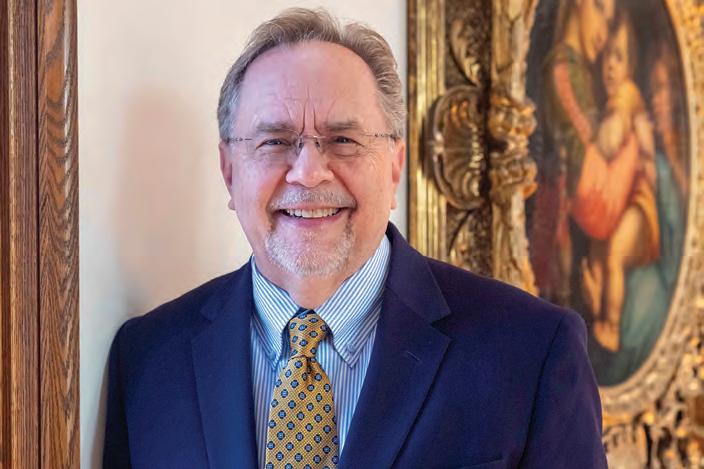
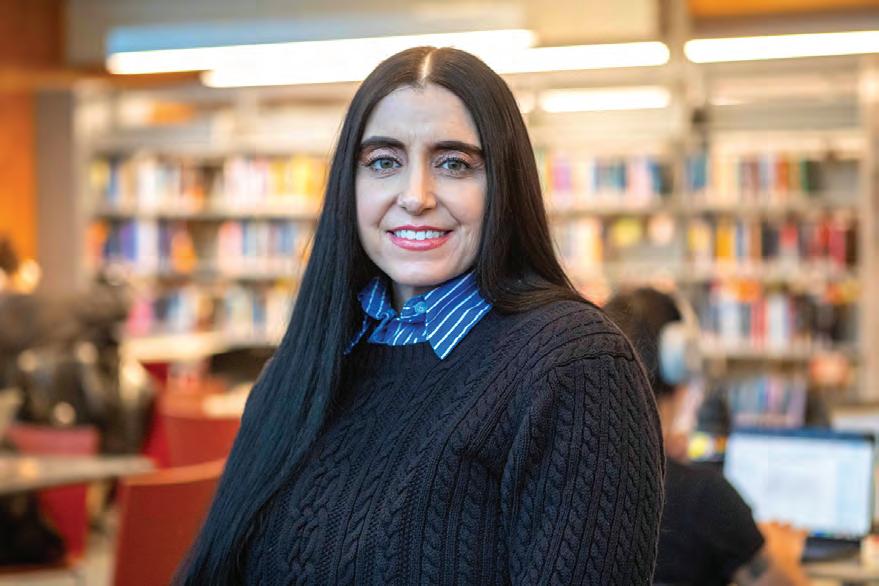
“So often, people live in a small circle of knowledge and comfort that leaves very little reason to go beyond that,” Kusserow said. “When there’s an opportunity to open doors and see things that are not in your normal circle of life, you find things that you have been missing.”
By Lauren Rossetti
Jim Paharik, a professor at Seton Hill University who campaigns for Holocaust education through his work at the National Catholic Center for Holocaust Education, has been recognized as Righteous Among the Neighbors.
Paharik has led the NCCHE since 2019 as someone who understands the importance of Holocaust education in regard to the weight of the past and the urgency of the present.
“Jim is a person who builds community,” said Melissa Marks, a professor at the University of Pittsburgh at Greensburg, who nominated Paharik.
Marks has worked with Paharik on the NCCHE board since 2022, and has seen firsthand how he brings the community of Westmoreland Country together.
During his tenure, Paharik has worked to forward the goals envisioned by the Sisters of Charity who founded the NCCHE in 1987.
“Sister Gemma Del Duca and Sister Mary Noel Kernan viewed the work of the Center as a direct expression of the Catholic mission of their religious order and Seton Hill University, which focuses on a deep respect for Judaism and a commitment to upholding the dignity and sanctity of all human life,” Paharik said.
Among his many undertakings, in 2023 Paharik brought in the Violins of Hope to Seton Hill, a touring exhibit featuring musical instruments rescued and restored from the Holocaust.
Another program developed by Paharik was a series of video recordings of second-generation children of Holocaust survivors.
With a dwindling Jewish population in Westmoreland County, Paharik’s work provides the area with resources and education it would not have otherwise.
“Jim’s focus is on social justice for everyone and that it is the duty of everyone to be upstanders,” Marks said. “He uses examples of Catholics during the Holocaust, but he applies those principles today.”
Paharik’s life of academia and devout Catholicism has guided his aspirations.
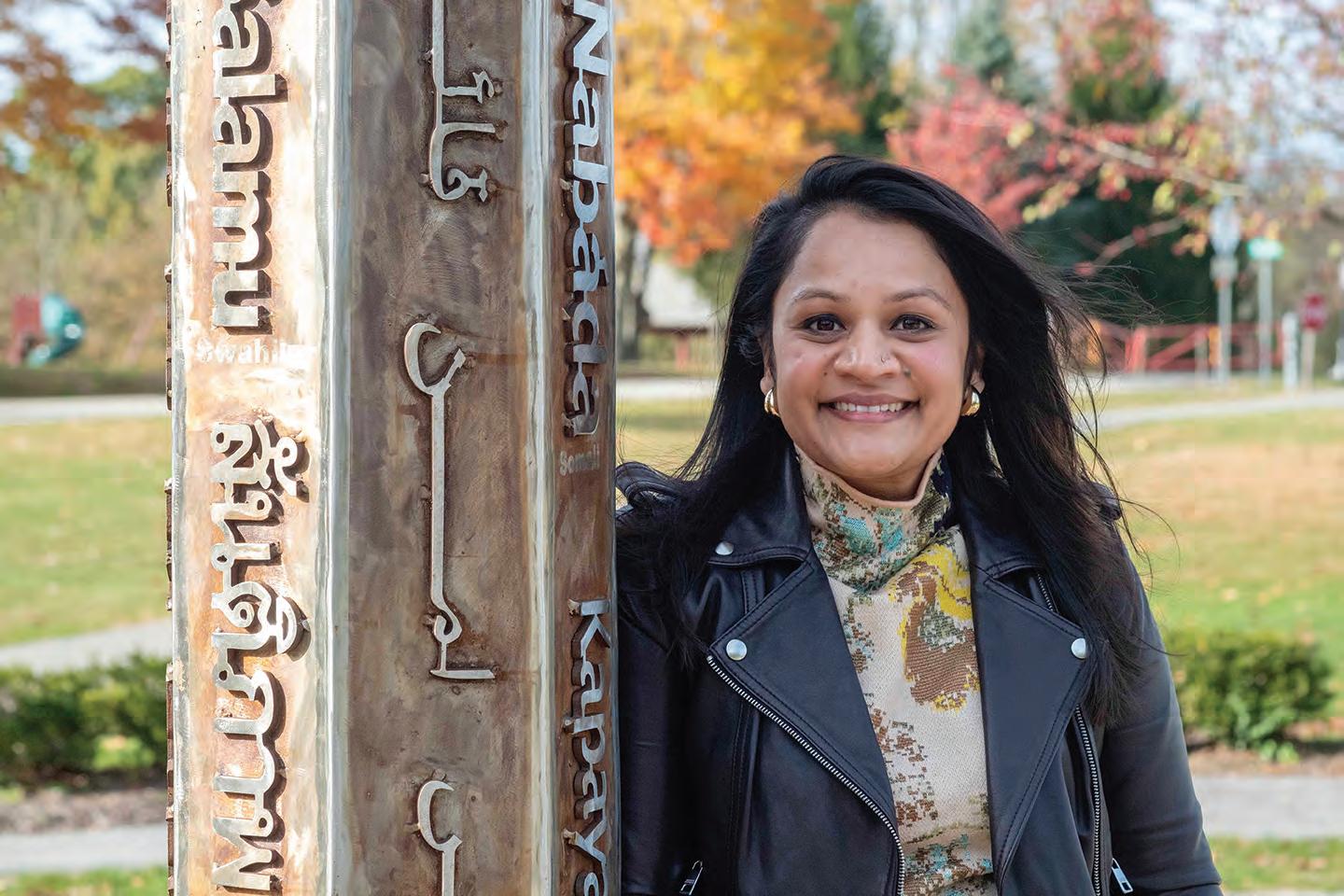
“It is informed by my life of academic inquiry into the dangers of totalitarianism and state-sponsored violence, as well as my desire to help bring about a more just and compassionate world,” he said.” The goal of tikkun olam, which is a Hebrew term meaning ‘to heal the world,’ has guided the Center’s work throughout our history, and will continue to inspire us into the future.”
By Greta Stern
Meg Pankiewicz decided she wanted to dedicate her career to Holocaust studies after volunteering at the Jewish Community Center in Squirrel Hill. She met Holocaust survivor Sam Gottesman and immediately felt a “shift” in her life.
“Knowing him, learning from him, him becoming part of my family, changed every dynamic of how I look at the world and how I want to make it better,” she said.
After her life-changing meeting, Pankiewicz dedicated her career to Holocaust and Jewish studies.
Her actions stood out to the Pittsburgh Families Bridging Kindness nomination committee — a group composed of survivors and family members of victims of the Pittsburgh synagogue shooting — which nominated her as Righteous Among the Neighbors.
Pankiewicz teaches English alongside a course in Holocaust and genocide studies at Canon-McMillan High School. She also teaches Holocaust and genocide studies at Seton Hill University.
“This material is single-handedly the most important, most transformative material that we can give students,” Pankiewicz said. “Not just students, but even adults. I think even the world. I believe in its power, I believe in its meaning. I see it, firsthand, change students. It has changed me.”
She was so inspired by the material she taught and the experiences she had with Jewish community members that she pursued a doctorate in Holocaust studies. Her goal was to “learn more and be able to give [her] students and the people that [she] teaches more.”
Carol Black, one of the women responsible for nominating Pankiewicz, is a member of the Pittsburgh Families Bridging Kindness group and survivor of the Pittsburgh synagogue shooting. Black first connected with Pankiewicz two years ago when she spoke at Pankiewicz’s screening of “Repairing the World: Stories from the Tree of Life” at the public library in Canonsburg. She was impressed by Pankiewicz’s determination to show the film to students, despite her school district denying the screening in school.
To Black, the world needs more educators like Pankiewicz, a person filled with
— and she’s undaunted in this pursuit of hers — makes her stand out,” Black said. “She’s just a warm, caring, loving, tender person, and she’s very much involved with making sure that people know about what went on, and she works very hard at it.”
“I wish [the Jewish people] would know that I will stand by them forever,” Praniewicz said. “They always have a place with me that is safe and loving.”
By Addie Young
Just days after Hamas’ Oct. 7 attack in Israel, Bhavini Patel stood among hundreds of mourners gathered at a Pittsburgh vigil. Candles flickered, prayers were whispered and grief hung heavy in the air. Patel wasn’t there for a photo or a headline. She was there to listen, to grieve and to remind her Jewish neighbors that they were not alone.
As antisemitism continues to rise across the country, leaders who speak out play a crucial role in building understanding and hope. Patel is one of those voices. Her consistent efforts to confront hate and strengthen connections among communities earned her a nomination as Righteous Among the Neighbors.
Patel launched her campaign as a 12th district congressional candidate on Oct. 2, 2023. Just five days later, terrorists attacked Israel, leading to the worst loss of Jewish life in a single day since the Holocaust.
What followed was a period of intense grief and uncertainty for Jewish communities. Patel understood the need for visible solidarity, not just words. She attended vigils alongside local residents, showing empathy and a commitment to standing with her neighbors during a moment of deep heartbreak.
As Patel continued her campaign, she spoke openly against antisemitism, even when doing so drew criticism from opponents. For her, allyship was never a political strategy. It was a moral responsibility.
While Patel is no longer a candidate, her steady, visible solidarity has made her a key bridge-builder in Pittsburgh’s Jewish and Hindu communities.
Together with community leaders from StandWithUs, the Jewish Federation of Greater Pittsburgh and the Jewish Community Center of Greater Pittsburgh, she helped launch interfaith, cross-community initiatives bringing Hindu and Jewish residents closer together and strengthening bonds. From shared meals to cultural
nity gathering at the Hindu Jain Temple in Monroeville. More than 200 Hindu and Jewish residents shared music, stories and a vegetarian meal.
“Sitting together, eating together, mourning together, dreaming together, figuring out what a world of peace could look like. That is how we move forward,” she said.
Those early events inspired a more structured initiative. Patel helped organize a five-session Hindu/Jewish cohort of 22 community members who met to explore culture, identity and faith.
Patel immersed herself in the work of understanding the challenges Jewish residents were facing. She participated in programs at the JCC and engaged with the Federation’s Community Relations Council, gaining a deeper awareness of the rising concerns about antisemitism.
Her leadership caught the attention of community members across the city, including The Tree of Life CEO, Carole Zawatsky, who nominated Patel for the award.
“I knew right from the start that she believed in a strong Jewish community, and that she was passionate about supporting the Jews of Pittsburgh and Squirrel Hill,” Zawatsky said. “She is a wonderful ally, not only against antisemitism, but against all forms of identity-based hate.”
Patel’s unwavering support has not always come easily. Speaking against antisemitism made her a target for online harassment and criticism. Still, she chooses to remain a visible ally.
“Being a good neighbor and good friend should not be controversial,” Patel said. “It should be who we are.”
By Blake Silverman
Kannu Sahni first came to Jewish Family and Community Services because he needed career direction.
“I was trying to understand my strengths and where I could be useful,” Sahni said. “The support I received helped me get centered. I stayed connected because I believed in what the organization was doing. I believed in the work.”
Sahni, who went on to become the first non-Jewish board member of JFCS, has been nominated by Dana Gold, chief operations officer of JFCS, as Righteous Among the Neighbors.
Gold first met Sahni when he applied to
Please see Righteous, page 24
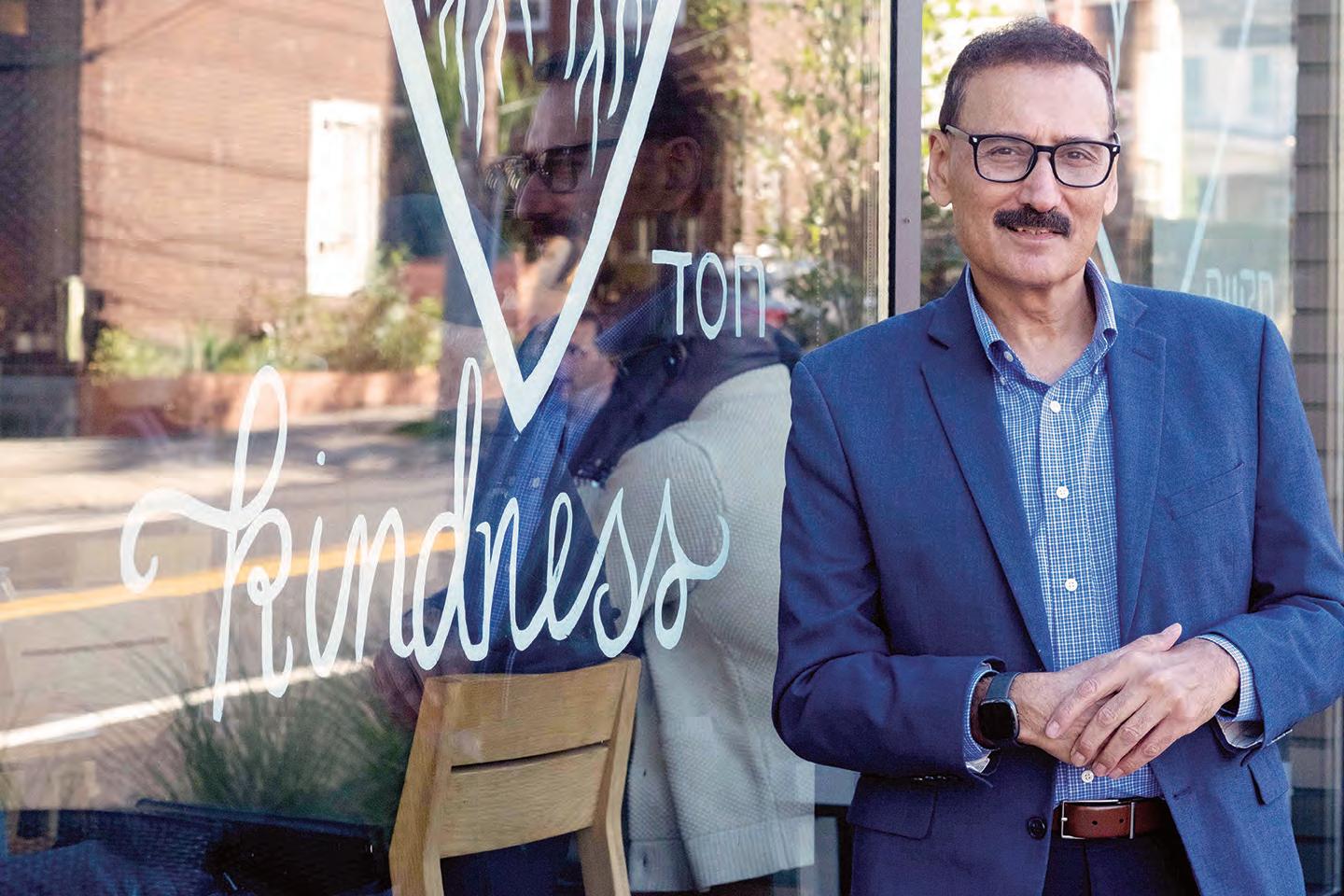
closely. He encouraged the team. He helped us stay grounded. He helped us think about how to support the Jewish community, while
only part of a much larger mission to create a more accepting environment for everyone on campus, including the


The Branch wishes you a
student government president,” Washo said. “He took me to my first Shabbat dinner way back in 2002 and I’ve felt a connection to the community since.”
Rothstein sees Washo’s ability to help others as one of his most impactful traits.
“He’s someone I can truly admire,” Rothstein said. “He’s a good man with a big heart and a loving smile. He’s just a very real
the country is achieved through one, simple action: communication.
“I think you really have to communicate,” Washo said. “The more you interact with students and people around you, the more you get to know people on a real human level.” PJC
All photos by Brian Cohen.
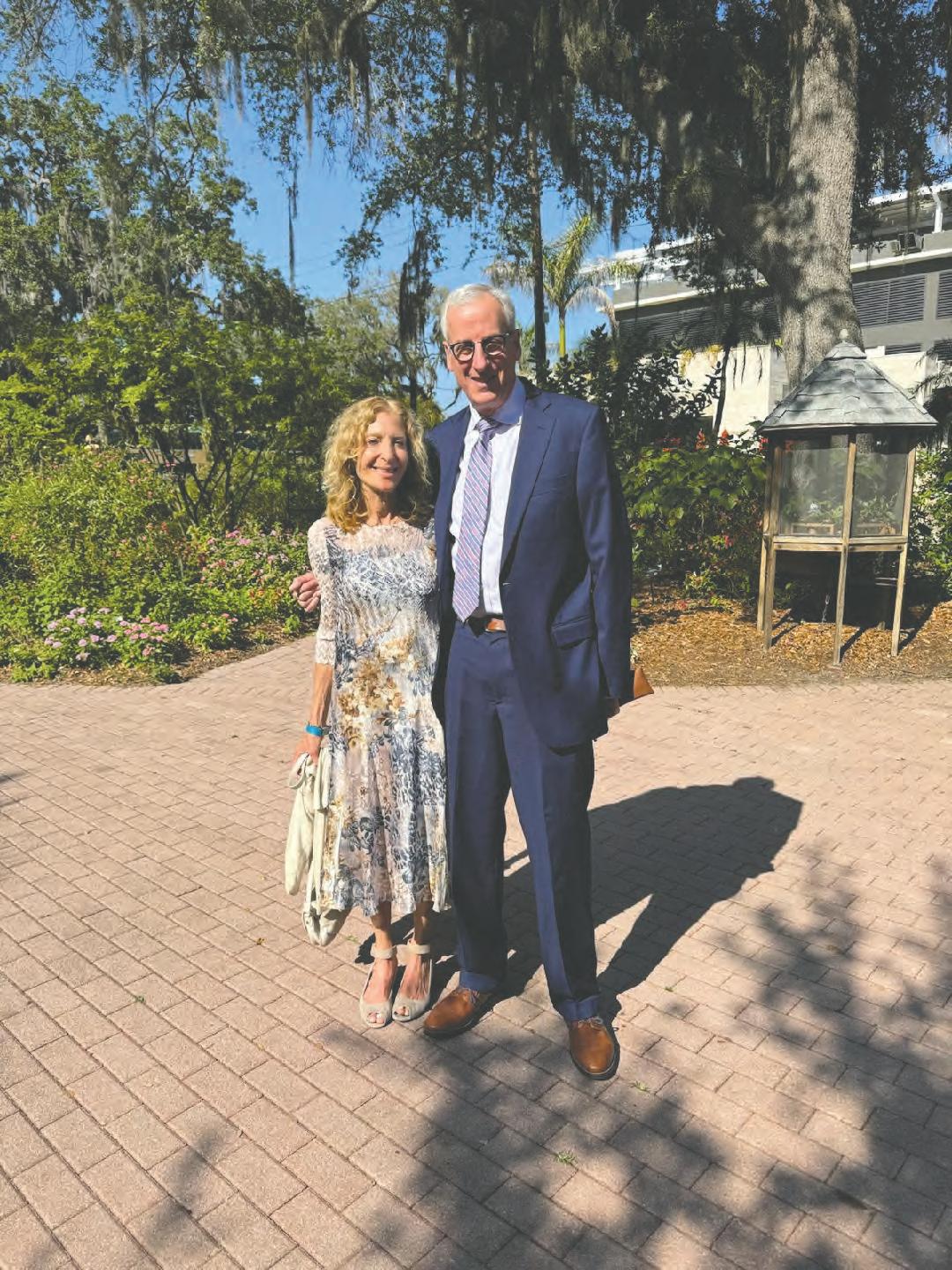
We hope you have a wonderful Hanukkah and a prosperous New Year


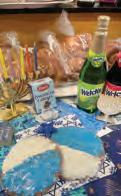
Devon and Nathan Rosenstock are delighted to share the joyous news of the birth of their son, Sage Keith Elovitz Rosenstock. Sage Keith is named in loving memory of his paternal grandfather, Keith Rosenstock (z”l). His Hebrew name, Meyer, honors his late maternal great-grandfather, Meyer Elovitz (z”l). Kvelling grandparents are Linda Rosenstock of Mauna Lani Point, Hawaii, and Charlotte George and Shelley Elovitz of Venice, Florida. We are especially grateful to our cousin, Dr. Michal Elovitz, whose care and support were invaluable during the birth. With pride, we celebrate this new chapter, welcoming the first grandchild on both sides, and the generations of love that Sage carries in his name. PJC



When the plot thickens, so does the
I’ve noticed something lately. Many people I speak with are waiting for something to finally make sense. People say things like, “Once this settles down … ,” or “Once I get past this chapter … ,” or “When life gets back on track …” as though clarity is a package scheduled for delivery next Thursday.
But life rarely arrives in neat, labeled boxes. It shows up in fragments. Unanswered questions. Detours we didn’t choose. Pits we never saw coming.
This week’s Torah portion, Vayeishev, opens in exactly that kind of uncertainty. Yosef has big dreams, dreams that feel so real he can practically touch them, yet everything seems to push him in the opposite direction. Instead of rising, he falls. Instead of getting support, he is betrayed. Instead of purpose, he faces a prison cell.
If this were the whole story, it would be heartbreaking. But buried in the mess is a truth we only see later: The very twists that seemed to break him were actually building him.
This is the Torah portion that greets us as the holiday of Chanukah shines into our calendar.
Chanukah is a holiday of stubborn light.
The Maccabees returned to a devastated Temple. The menorah had been smashed, the walls stained with the residue of chaos. Everything “reasonable” screamed: “It’s too soon. Don’t bother kindling the menorah. Wait until conditions improve.”
But they lit it anyway. They lit it because darkness is not something you negotiate with, as it doesn’t respond to reasoning. You must overwhelm it, one flame, then another and another.
The miracle wasn’t only that the oil lasted eight days. The miracle was that anyone believed a tiny flame was worth igniting in the first place.
Several years ago, on the afternoon before Chanukah began, I met a man at one of the spots I was placing a large public menorah in Monroeville. We spotted each other and exchanged that classic “you look Jewish, I look Jewish” nod and started talking.
He admitted he hadn’t connected with his Judaism in decades. “I guess it just faded,” he said. “Life got busy. I don’t even know where I’d begin again.”
I suggested he start now with the next mitzvah opportunity, lighting the menorah. He thought for a moment and said he used to love lighting the menorah as a kid.
So that year, on the first night he lit one candle, the next night, two. And slowly, something reawakened. The flame on his menorah rekindled the flame inside.
Months later, after getting involved with the Jewish community he told me, “That one candle changed the direction of my life.”
That’s Chanukah. Not fireworks. Not perfection. Just a fragile flame, refusing to go out.
The Torah describes the pit Yosef was thrown into as “empty, there was no water in it.” The sages explain: There was no water, but there were snakes and scorpions. Because when we’re down, the mind fills the empty spaces with worst case scenarios.
But from that same pit, Yosef’s rise began. The descent was not a detour, it was a trajectory.
How many times has a setback actually been a setup? How many moments of confusion were really invitations to grow?
A miracle doesn’t arrive by physically removing darkness. It comes when we discover the light we’re capable of bringing into it.
Chanukah is not a holiday of grand gestures. It is the celebration of a single spark making a comeback.
So, this Chanukah, light something, kindle something, begin something, reengage in something.
Visit someone who needs company. Give tzedakah before you overthink it. Bless the Shabbat candles even if you’ve missed a few weeks (or years).
Take on one mitzvah that feels meaningful to you.
Don’t wait for everything to be fixed. Don’t wait for the pit to make sense. Don’t wait for the jar to be full.
Our world doesn’t need more perfect people — it needs more glowing ones.
Chanukah is a reminder that your smallest flame might be someone else’s sunrise. And the chapter you think is falling apart may just be the one where the miracle begins.
Wishing you a holiday of light, hope and revealed miracles. PJC
Rabbi Mendy Schapiro is the director of Chabad of Monroeville. This column is a service of the Vaad Harabonim of Greater Pittsburgh.

GOODMAN: Lee S. Goodman, on Sunday, Dec. 7, 2025. Beloved husband of the late Sandra Goodman for 65 years. Loving father of Marne (Dr. Peter) Geller of Sarasota, Florida, and the late Stuart Goodman; father-in-law of Ellen Goodman Crawford (Randy Crawford) of Pittsburgh. Brother of the late Lois (Morton) Simons. Cherished grandfather of Andrew (Katherine) Geller, Joshua (fiancée Paige) Geller, Samantha Goodman and Blake Goodman. Lee met Sandra at Camp Lynnwood, who later left Penn State University to be with Lee at the University of Pittsburgh. Lee was a lifelong athlete, from playing soccer at the University of Pittsburgh to golf and tennis in the U.S. Senior Olympics. Lee and Stuart played as father and son in the U.S. Open side courts through the Equitable Family Tennis Challenge. After selling his company L&M Paper, he became a substitute physical education teacher for the Pittsburgh Public Schools. Lee believed Pittsburgh was the most wonderful city in the world. Lee and Sandra were season members of the Pittsburgh Symphony Orchestra and Westmoreland Country Club. Services were held at Ralph Schugar Chapel, Inc. Interment Homewood Cemetery. For access to Zoom, please call the funeral home at 412.621.8282. Contributions may
Jewish Association on Aging gratefully acknowledges contributions from the following:
R Golding
Esther and David Miller
Simma & Lawrence Robbins
Richard, Mindy, & Logan Stadler
Schlesinger & Seed Families
Bernard Shire
Anchel Siegman
Lois L Solomon .
Norman & Sylvia Elias
Norman & Sylvia Elias

















Sunday December 14: William Aronovitz, Fannie Gertrude Becker, Belle Bennett, Nathan Bennett, Joseph Braunstein, Hannah Cohen, Meyer Fineberg, Benjamin Finkelhor, Philip Hoffman, Milton Kuperstock, Samuel Kurfeerst, Benjamin Levin, Abraham Lincoff, Benjamin Jacob Platt, Leon Ryave, Fannie Solow, Philip Stein, Max Zeiden











Monday December 15: Essie Finesod, Hymen Glickman, Ralph Hoffman, Harry Katzen, Sylvan Meth, Max Osgood, Mary R Sachs, Dorothy Saul, Dorothy Weiss Schachter, Sylvia Snyder Sealfon, Benjamin S Shapiro, Elaine Supowitz, Charles Tillman, Mary Weinerman
Tuesday December 16: Rose Blatt, Reuben Bliwas, Raymond Cole, Lena Eisenberg, Jacob Erenrich, Birdie Weiler Greenberg, Celia Liberman, Morris Miller, Ed Newman, Stella G Pervin, Louis Riemer, John Rothstein, Lawrence E Schachter, Marcia E Schmitt, Sarah Schor, Faye Schwartz, Herman Schwartz, Charles Stewart, Anna Swartz, Fannie White, Dave L Wyckoff
Wednesday December 17: Ella Braemer, Harry B Cramer, Anne G Diznoff, Esther H Friedman, Benjamin Gordon, Alexander Grossman, Joseph Grumer, Sylvia Rudov Klein, Harry Lieberman, Percy A . Love, Alfred (Kurlie) Miller, Esther Monheim, Sophie Ruben, Sidney J Rudolph, Norman H Schlesinger, Dr Donald M Schwartz, Morris Serbin, Bessie Sherman, Violet Slesinger, Morris A Taylor, Louis Venig
Thursday December 18: Rose Cohen, Isaac Dobkin, Jeanette Greenberg, Stuart Richard Harris, Zelda Sparks Hepner, William L Kaplan, Morris L Karp, Frank Levine, Meyer Levy, Ella Farber Lipman, Harry Marshall, Csipa Shapiro, Marc Wells Shapiro
Friday December 19: Marci Lynn Bernstein, Thelma Chizeck, Julius B Epstein, Miriam Ginsberg, Jacob Goldblum, M .D ., Lawrence Louis Green, Mollie G Kartub, David Aaron Liebman, Bella Marians, Dorothy Mustin, Anna Natterson, Rebecca Oppenheim, Annette Reidbord, Edward David Rosenberg, Howard Bernard Schwartz, Selma Schwartz, Milton Shermer, Bertha Tabachnick
Saturday December 20: Samuel Avner, Helen N Broida, Esther F Busis, Jacob Coon, Murray D Goldstein, Samuel Litman, Mary Malyn, Louis Marlin, Alex Pollack, Nathan A Potosky, Annette Reicher, Sara B Rosenberg, Hattie Shire, Max Shulman, William Silk, Della Ruth Stearns, Louis F Stein, Mildred Weiner


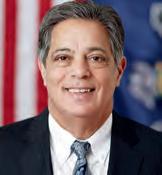
Obituaries:
“A little more fun, a little more love, a little more light every night. That’s the joy of Hanukkah.”
Continued from page 27
be made to the Stuart Goodman Fund at Hillman Cancer Center, UPMC Cancer Pavilion, Suite 1B, 5150 Centre Avenue, Pittsburgh, PA 15232. schugar.com
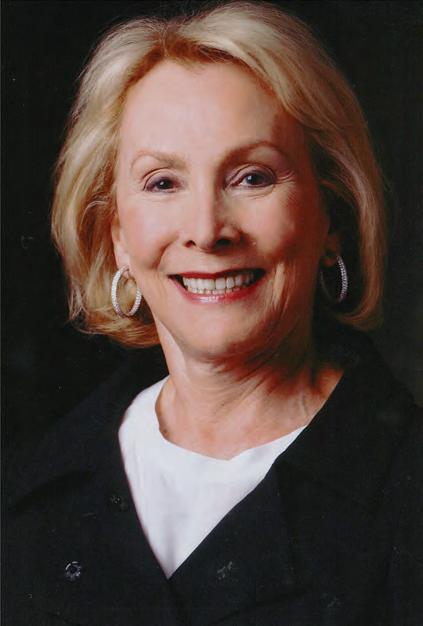

MILLER: Barbara Goldfarb Thorpe Miller, age 88, died peacefully at home on Dec. 2, 2025. Barbara was the daughter of the late Samuel and Rachel Goldfarb of Washington, Pennsylvania,. and granddaughter of the late Rabbi Jacob and Zelda Goldfarb, who founded Beth Israel Congregation in Washington, Pennsylvania. She grew up in Washington and attended Chatham College in Pittsburgh, where she received a master’s degree in English. While at Chatham she met Richard Thorpe. After Richard and Barbara married, they moved several times while Richard served in the Army as captain and while he was in his residency in ophthalmology, returning to Pittsburgh to start their family. After Richard’s untimely passing, Barbara remarried Charles Miller, D.M.D., of Pittsburgh who predeceased her. Barbara traveled extensively and served as a docent at the Carnegie Museum of Art, where she enjoyed educating the public on the museum’s extensive and ever-changing collections. She also served as the first Jewish chairperson of the Pittsburgh Symphony Ball. Barbara will always be remembered for her generosity and her love of friends and family. Barbara is survived by her loving son, John Thorpe, and his wife, Parima Pandkhou, and grandchildren, Lili Thorpe and Henry Thorpe, who she adored. Services were held at Rodef Shalom Congregation. Interment West View Cemetery of Rodef Shalom Congregation. In lieu of flowers, donations may be made to the Pittsburgh Symphony Orchestra or the Jewish Federation of Greater Pittsburgh. Arrangements entrusted to Ralph Schugar Chapel, Inc. schugar.com PJC
Chanukah:
Continued from page 10
What is going on here? Perhaps there is a clue in a curious story told at the beginning of 2 Maccabees. The entire book is addressed to Jews living in Egypt who aren’t convinced that the Maccabean War or the new holiday of Chanukah have anything to do with them. To convince them otherwise, the story is told of the survival of a miraculous fire, remnants of which lasted from the destruction of the First Temple back in 587 BCE to the dedication of the Second Temple more than 50 years later.
When we learn that, according to this story, the dedication of the Second Temple is also associated with the 25th of Kislev, it is hard not to see a connection between it and Chanukah’s “miracle of the oil.” Even if it doesn’t survive in writing, then, perhaps the miracle entered the Chanukah story fairly early, maybe even as a companion to the story in 2 Maccabees.
The word Chanukah, of course, means “dedication” (see Psalm 30:1, where the word appears), and a good guess as to what happened to the holiday was that, soon after the Maccabean War, Jews realized that its focus could not be on military victories. Indeed, this has been the issue with Chanukah for centuries, since how can Jews living under the control of Romans, Muslims or Christians, celebrate their ancestors’ victory over their rulers? And since the descendants of the Maccabees — the Hasmoneans — were disliked by just about everybody, there was even more reason to not emphasize them.
Making the focus on the holiday the rededication of the Temple also solved the problem for Diaspora Jews, like the ones living in Egypt. Since even at this early date the Jews
of the Diaspora sent regular contributions for the upkeep of the Temple, the rejuvenation of Jewish sacrificial worship and the rededication of the Temple was a victory for Jews everywhere, and for all time.
Finally, 1 Maccabees reports that following the ban on Jewish practice, the pagan Seleucids also “built altars in the surrounding towns of Judah, and offered incense at the doors of the houses and in the streets.” It is suggested that when these altars were destroyed, they were replaced by lighted candles. This is a beautiful, if unconfirmed, origin story of the injunction many of us still follow today, of placing a lit chanukiah in a window or doorway as a public declaration that we are Jews and proud to be so.
Of course, we shouldn’t forget that the Maccabean war was also nearly a civil war, and that many Jews of the time were willing to give up some or all of their Jewishness for just a bit of somebody else’s culture. We can also wonder what this has to do with why 1 and 2 Maccabees were left out of the Tanakh. As usual, it isn’t so much what has happened to us over the millennia that matters but how we interpret it, how we tell it and retell it. But the Jew-hatred, the infighting, the pull of assimilation and the tug of tradition — and the outbreak of extreme versions of both — and our ability to fall back on communal rituals and household rites … it all sounds very modern.
Or does what is happening now sound very old? And if we pause before placing our chanukiah in our windows today, fearing for our safety in Pittsburgh in 2025, have we also inherited this hesitation from Jews in the Judean countryside, so many years ago? PJC
Tim Miller is a freelance writer living in Pittsburgh. He is online at wordandsilence.com.

Contact me today to discuss all of your real estate needs!
Sherri Mayer, Realtor Squirrel Hill Office C: 412-760-0412 O: 412-421-9121x225 sherrimayer@howardhanna.com HowardHanna.com

5125 Fifth Ave. 2 & 3 Bedrooms Corner of Fifth and Wilkins Spacious 1500-2250 square feet ”Finest in Shadyside” 412-661-4456 www.kaminrealty.kamin.com




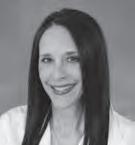


Smith-Rosenthal Team
Jason A. Smith & Caryn Rosenthal
Jason: 412-969-2930 | Caryn: 412-389-1695 Jasonasmith@howardhanna.com Carynrosenthal@howardhanna.com
5501 Baum Blvd. Pittsburgh PA 15232
Sign up on the right hand side of our homepage. pittsburghjewishchronicle.org
pittsburghjewishchronicle.org
hand side of our homepage. pittsburghjewishchronicle.org

aweiss@pittsburghjewishchronicle.org 412-613-0697 advertising@pittsburghjewishchronicle.org





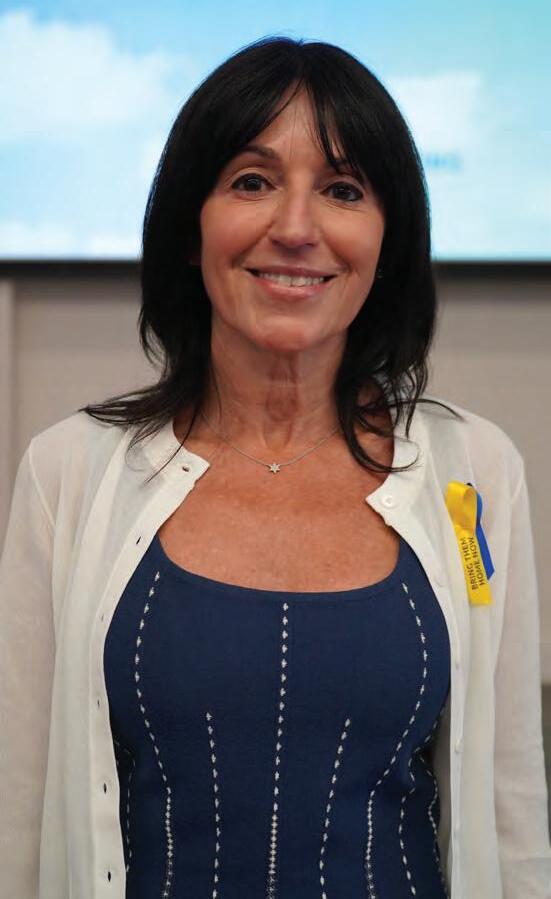
I am thrilled to share my excitement for the JCC’s Big Night on March 7. Our Big Night is more than a fundraiser: it’s a celebration of our community and our largest opportunity to come together in support of the JCC, an organization that enriches lives.
As we gear up for the 20th annual party-with-apurpose, Big Night Derby: Off to the Races, we’re creating an evening that’s as meaningful as it is fun. Every dollar we raise strengthens our community by providing critical support for the JCC Annual Fund.
I’m inviting you to support us as a Big Night sponsor or donor. Our collective participation helps fuel:
• Year-round programs and services that touch every generation, from toddlers to seniors.
• Essential anonymous financial assistance that allows individuals and families to access highquality programs and services.
• Accessible wellness, cultural and communitybuilding opportunities for all, regardless of ability to pay.
Last year alone, we provided more than $2.8 million in scholarship assistance to families and individuals who need us.
Please consider becoming a Big Night supporter today. When we race together, everyone truly wins.
With gratitude, Merris Groff, JCC Chair of the Board
HONORARY
Make your sponsorship part of your year-end giving or fulfill your pledge in 2026. For more information and to pledge, contact Sara Rhoades, Director of Annual Giving, at srhoades@jccpgh.org or 412-697-3510 or scan the QR code.

Eli Sharabi, a resident of Kibbutz Be’eri who was abducted during the Be’eri massacre on Oct. 7, 2023, and held as a hostage by Hamas terorists for 491 days, spoke to students at Hillel Academy of Pittsburgh about the necessity of faith.
Stuck on Chanukah
With Chanukah nearing, Community Day School students learned about the holiday while making menorahs.
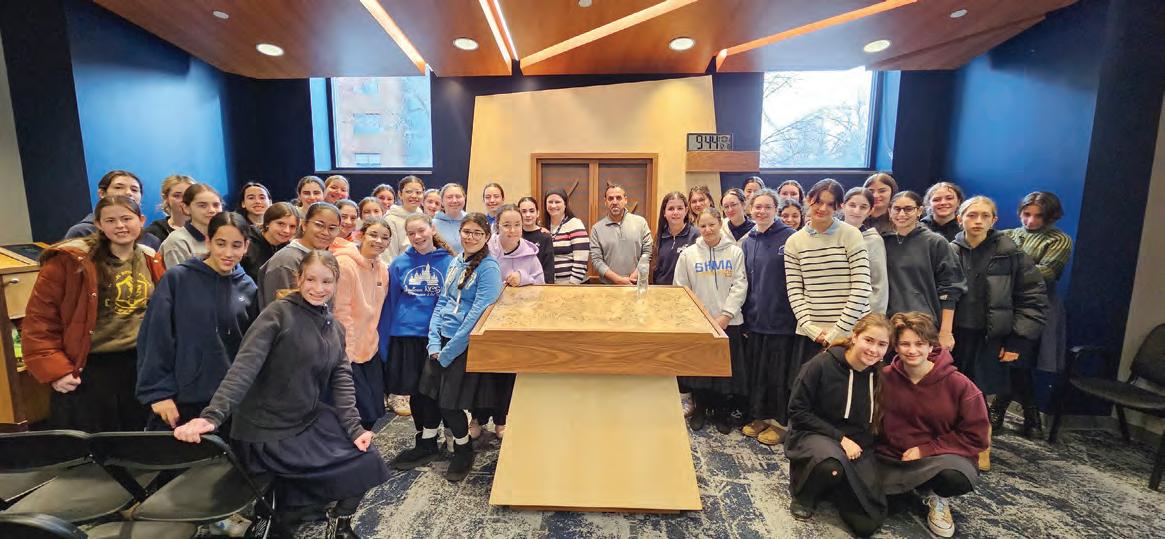
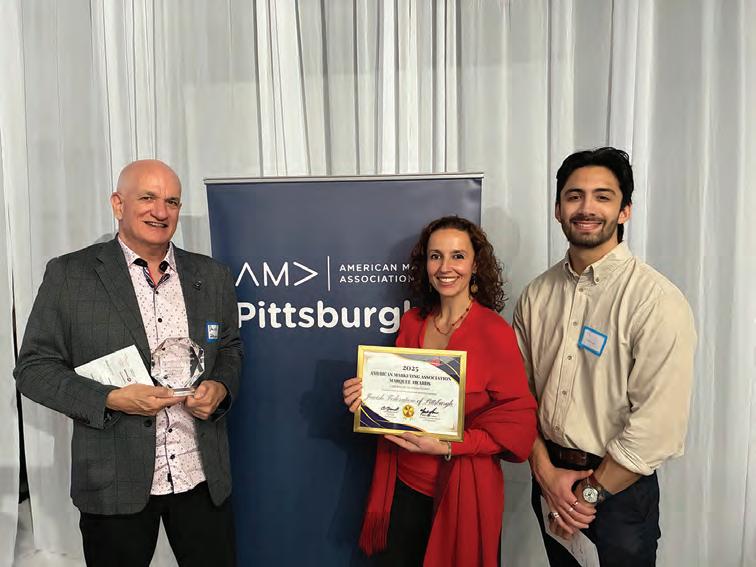
The Jewish Federation of Greater Pittsburgh received two honors at the AMA Pittsburgh Marquee Awards. The “That’s Federation” campaign won Top Digital Nonprofit Marketing Campaign, and the “Refuse to Sign” campaign was named Finalist (runner up) for Nonprofit Integrated Marketing Campaigns. Both campaigns were evaluated on measurable results and were built through collaboration across the Federation.
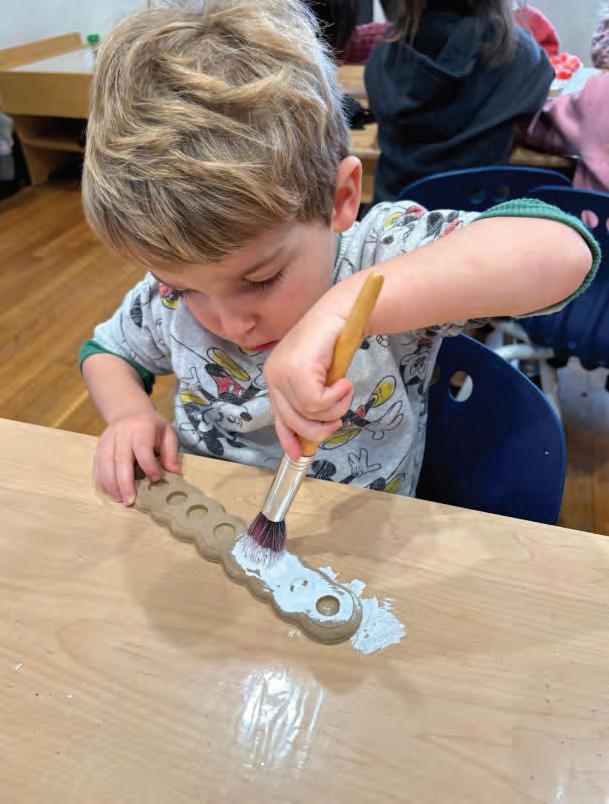
Gallerist Ronit Itzikzon Feldman and guest artist Galia Yakim Harush are presenting “Jour ney” at WeArt in Memory of the Light and Bravery of Amit Mann. The Karmiel-based exhibition, which runs through Jan. 20, explores themes of femininity, nature, spirit, raw emotion, healing and renewal. The Karmiel/Misgav region is tied to Pittsburgh through the Jewish Federation of Greater Pittsburgh’s Partnership2Gether program.
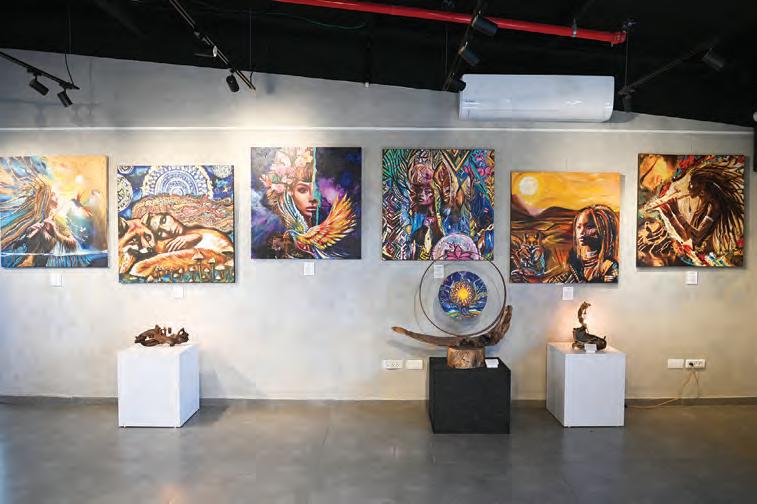
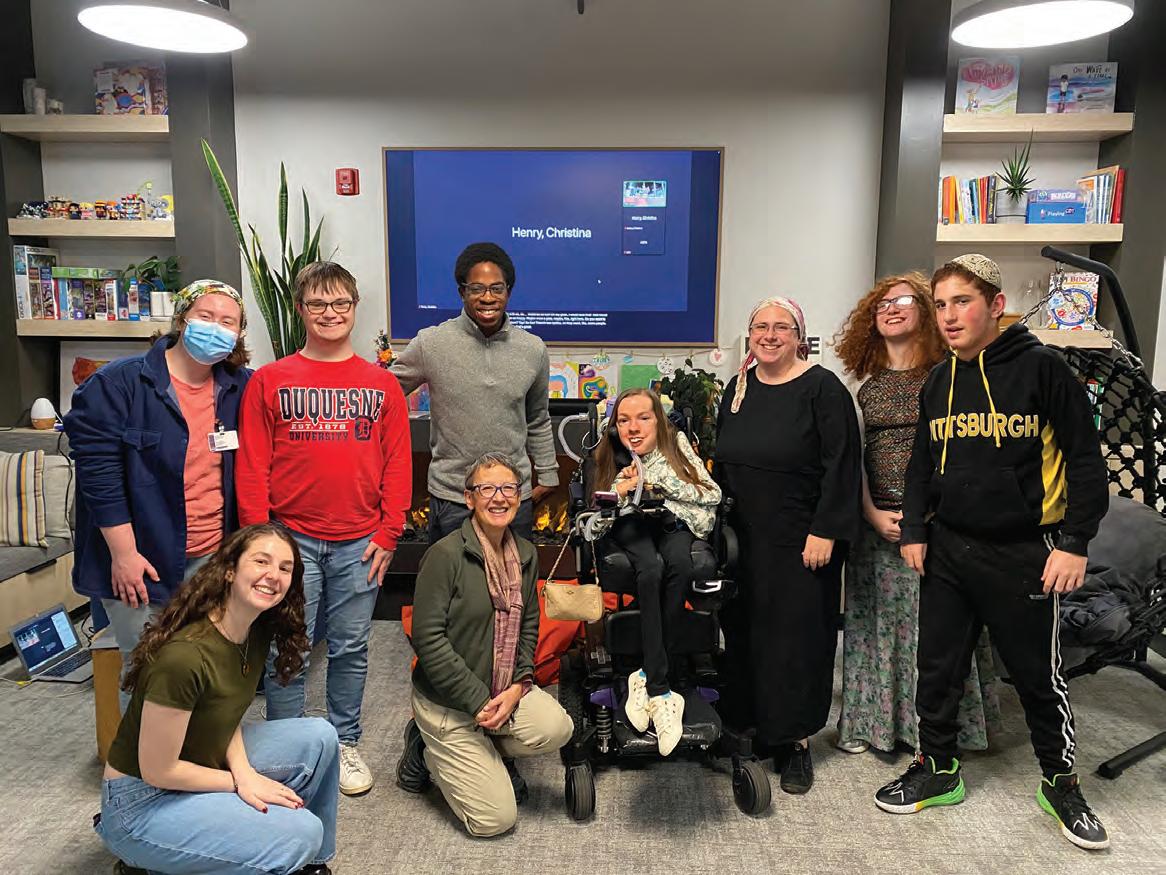
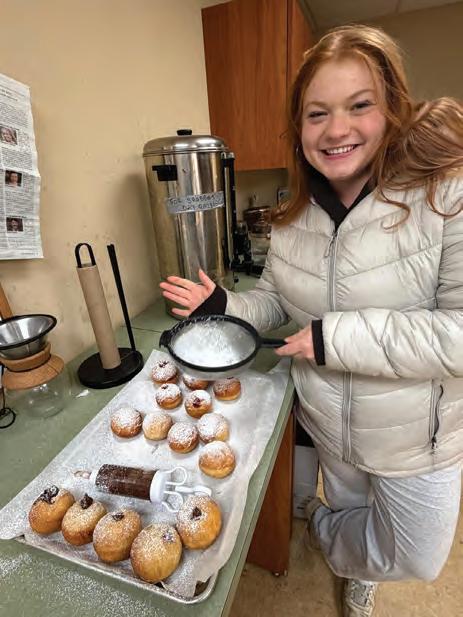
DECEMBER 14TH
3:00-4:30 PM 6424 Forward Ave. Free and open to the community