

GOOD NEWS. BAD NEWS. YOUR VIEWS.
The Pittsburgh Jewish Chronicle is proud to bring you stories that matter and stories that delight. What kinds of news and features do we publish?
• Quality news
• Award-winning news
• Objective news
• News you can trust
• News no one else has
• News that connects the entire Pittsburgh Jewish community
• Good news and bad news
• Happy news and sad news
• Local news
• National news
• Israel news
• World news
• People news — machers and everyone else
• Organization news — big and small
• Breaking news
• Trends and analysis
• S eries of news articles on special topics
• News about the Orthodox, Conservative, Reform, Reconstructionist, new movements and the unaffiliated
• News about the political left, the right and everything in between
• News about the old, the young and everyone in between
• Features — culture, food, health, history, travel, sports and more
• Calendar of events
• Information you need to know
• Opinions
• Letters to the editor
• Polls
• Life cycle events — births, b’nai mitzvah, graduations, engagements, weddings and anniversaries
• Obituaries
To make a donation, please scan this QR code or use the form below.
2025 ANNUAL APPEAL – CONTRIBUTION FORM

Kindly fill out this form, and return it with your check or credit card information. Donations can also be made by major credit card by logging on to the Pittsburgh Jewish Chronicle website, www.pittsburghjewishchronicle.org, and selecting DONATE. We thank you, and the Pittsburgh Jewish community thanks you!
One-Time Gift of:
☐ Monthly Gift of:
☐ Enclosed is my check to the Pittsburgh Jewish Chronicle for $
☐ Charge my credit card the amount indicated below:
Headlines
Support the Pittsburgh Jewish Chronicle: Strengthening community, preserving history and elevating our voices
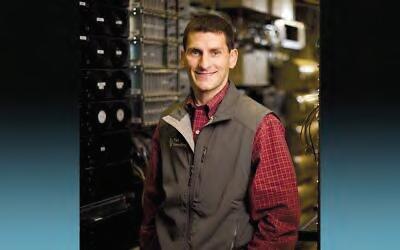
Board chair
Evan H. Stein
In a society moving faster than ever, where information floods our screens from countless directions, trusted journalism has become not just valuable, but essential. For over six decades, the Pittsburgh Jewish Chronicle has been that steady, reliable voice for our community: documenting our joys, our challenges, our traditions, our leadership and our future. Today, we are asking for your support to help ensure that this vital institution can continue to do the work the Pittsburgh Jewish community has come to rely on for many years to come.
strengthen Jewish identity, connection and
This work has not gone unnoticed. The Pittsburgh Jewish Chronicle is recognized regularly for journalistic excellence by local and national organizations. Our newsroom has received multiple awards from the Press Club of Western Pennsylvania
The Chronicle is more than a newspaper. It is the recordkeeper of Jewish life across western Pennsylvania, the storyteller that preserves our history, the watchdog that protects our interests and the convener that brings us together. Week after week, our team works with intention and passion to deliver reporting that is accurate, balanced and deeply rooted in the community we serve. We highlight local achievements, share milestones, explore cultural and religious traditions and prompt difficult but necessary conversations. Whether we are covering breaking news, featuring local leaders, or cataloging community events, our objective remains constant: to
Jewish Chronicle depends on donations from readers who believe in the power and necessity of independent Jewish journalism. Your contribution directly fuels everything we do: from in-depth local reporting to coverage of Israel and global Jewish issues; from community events to thoughtful editorials; from special projects to digital
At a time when antisemitism is rising across the country and misinformation spreads rapidly, strong Jewish journalism is not only valuable; it is protective.
and the American Jewish Press Association, and was honored this year by StandWithUs with its Lion of Truth in Journalism Award. These tributes highlight not only the quality of our reporting but also the dedication of our small team working tirelessly to ensure that our community is represented with perspective, integrity and heart. These awards affirm what many of you already know: The Chronicle is producing journalism that stands among the best in the country.
But awards alone cannot sustain a newsroom. What sustains us is you.
As a nonprofit publication, the Pittsburgh
innovations that help us reach younger audiences and readers across the region.
Your support also ensures that the Chronicle remains freely accessible to everyone. In an era when many news outlets are erecting paywalls, we have chosen a different path. We believe that every member of our community — regardless of age, income, synagogue affiliation, or level of observance — deserves access to the stories and information that inspire us. Your donation makes that choice possible.
Moreover, supporting the Chronicle means supporting the preservation of
Pittsburgh’s Jewish narrative. Our archives stretch back decades, holding stories of congregations that have transformed, leaders who have inspired and families whose names adorn the the walls of our institutions. Each new issue becomes part of that living record. When you give, you are not just sustaining a newspaper, you are helping to safeguard the collective memory of our community.
At a time when antisemitism is rising across the country and misinformation spreads rapidly, strong Jewish journalism is not only valuable; it is protective. The Chronicle provides clarity when rumors circulate, context when headlines appear and local perspective when national stories impact Jewish life here at home. And thanks to your support, we will continue to deliver reporting that is principled, nuanced and grounded in Jewish values.
If the Pittsburgh Jewish Chronicle has informed you, inspired you, comforted you, or helped you feel more connected to our community, we ask that you consider making a donation today. Your generosity empowers our work, strengthens communal bonds and ensures that this vital institution can continue to thrive.
Thank you for believing in independent journalism. Thank you for supporting the storytellers, the recordkeepers and the guardians of our communal voice. With your help, the Chronicle will remain strong — today, tomorrow and for generations to come. PJC
Please consider making a gift to support local Jewish journalism | pittsburghjewishchronicle.org

SUBSCRIPTIONS
subscriptions@pittsburghjewishchronicle.org
412-687-1000, ext. 2
TO ADVERTISE
advertising@pittsburghjewishchronicle.org 412-687-1000, ext. 1
EDITORIAL DEPARTMENT
Email: newsdesk@pittsburghjewishchronicle.org
BOARD OF TRUSTEES
Evan H. Stein, Chair
Evan Indianer, Vice Chair
Derek Smith, Treasurer
Gayle R. Kraut, Secretary
Gail Childs, Dan Droz, Malke Steinfeld Frank, Seth Glick, Judith Kanal, Cátia Kossovsky, Charles Saul
GENERAL COUNSEL
Stuart R. Kaplan, Esq.
Jim Busis, CEO and Publisher 412-228-4690 jbusis@pittsburghjewishchronicle.org
EDITORIAL Toby Tabachnick, Editor 412-228-4577 ttabachnick@pittsburghjewishchronicle.org
Adam Reinherz, Senior Staff Writer 412-687-1000 areinherz@pittsburghjewishchronicle.org
David Rullo, Senior Staff Writer 412-687-1000 drullo@pittsburghjewishchronicle.org
ADVERTISING Amy Weiss, Account Executive (412) 613-0697 aweiss@pittsburghjewishchronicle.org
PRODUCTION
Jeni Mann Tough Production Manager
Carl Weigel Art/Production Coordinator
5915 Beacon St., 5th Floor Pittsburgh, PA 15217
Main phone number: 412-687-1000
Subscriptions: 412-687-1000, ext. 2
Subscriptions subscriptions@pittsburghjewishchronicle.org 412-687-1000, ext. 2
Published every Friday by the Pittsburgh Jewish Publication and Education Foundation 5915 Beacon St., 5th Floor Pittsburgh, PA 15217
Phone: 412-687-1000
POSTMASTER: Send address change to PITTSBURGH JEWISH CHRONICLE, 5915 BEACON ST., 5TH FLOOR PITTSBURGH, PA 15217 (PERIODICAL RATE POSTAGE PAID AT PITTSBURGH, PA AND AT ADDITIONAL MAILING OFFICES) USPS 582-740
Manuscripts, letters, documents and photographs sent to the Pittsburgh Jewish Chronicle become the property of this publication, which is not responsible for the return or loss of such items.
The Pittsburgh Jewish Chronicle does not endorse the goods or services advertised or covered in its pages and makes no representation to the kashrut of food products and services in said advertising or articles. The publisher is not liable for damages if, for any reason whatsoever, he fails to publish an advertisement or for any error in an advertisement. Acceptance of advertisers and of ad copy is subject to the publisher’s approval. The Pittsburgh Jewish Chronicle is not responsible if ads violate applicable laws and the advertiser will indemnify, hold harmless and defend the Pittsburgh Jewish Chronicle from all claims made by governmental agencies and consumers for any reason based on ads appearing in the Pittsburgh Jewish Chronicle

Headlines
The exit interview: Rabbi Lawrence Freedman
By Adam Reinherz | Senior Staff Writer
For more than two decades, Rabbi Lawrence Freedman has considered service a religious expression and patri otic undertaking. As a chaplain in the 171st Air Refueling Wing of the Pennsylvania Air National Guard, Freedman has aided thousands of military personnel by teaching Torah, delivering invocations and fulfilling various spiritual needs. On Dec. 31, he will officially conclude his duties as a lieutenant colonel chaplain.
Mere weeks from retirement, Freedman, 61, spoke with the Chronicle about the responsibilities of service, nuances of chap laincy and what’s next for a faithful rabbi.
Thi s interview has been edited for length and clarity.
Congratulations on your upcoming retirement. Before we discuss what’s next, let’s talk about now. What do you do as a chaplain?
There’s three chaplains at the 171st Air Refueling Wing. We take care of the spiritual needs and the spiritual fitness of the troops. This means helping them feel connected to something larger than themselves. It could be the church, could be family, could be the Air Force, it could be the unit, it could be a whole bunch of different things, but they need to be connected to something larger than them selves, so they don’t feel adrift, so they don’t feel lost in the world. When you start to feel lost in
With
interactions with soldiers. They call it “ministry of presence,” which
eye to the
By Adam Reinherz | Senior Staff Writer
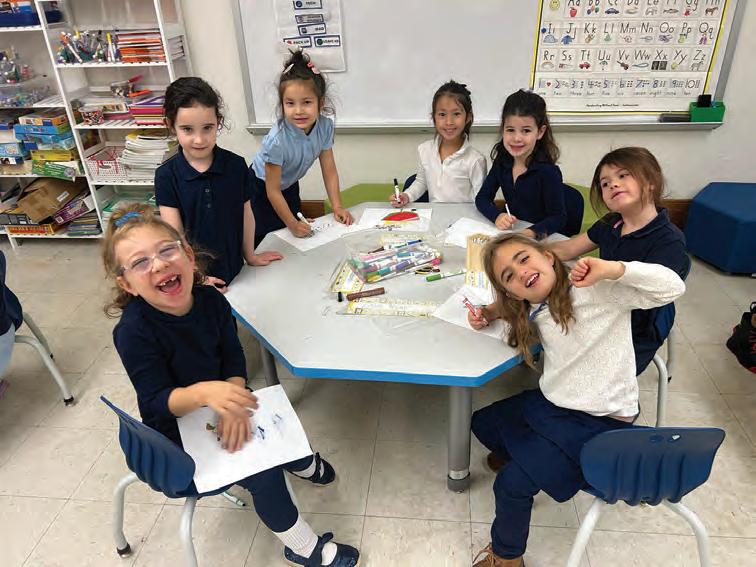
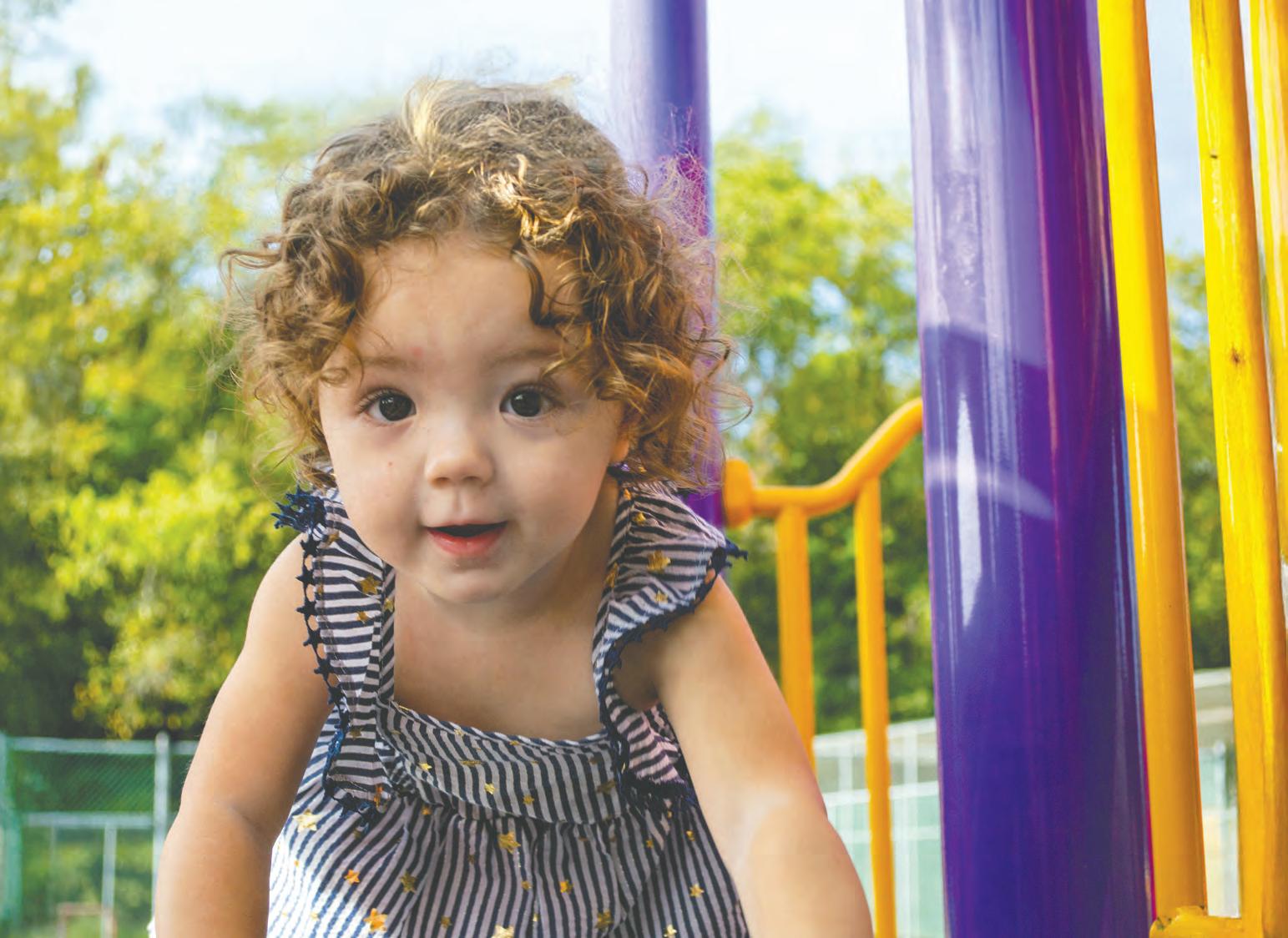
Akindergartener in Amy Matthews’ Community Day School class returned to school after getting vaccinated. When Matthews asked about the experience, the student replied, “What’s COVID?”
Kindergarteners are typically 5 or 6 years old. Born during the pandemic, most have little or no memory of masking, lockdowns, podding and periods of social isolation. Still, COVID’s shadow lingers over Pittsburgh’s young learners.
With nearly half the academic year complete, representatives from the city’s Jewish day schools said this year’s kindergarteners have behavioral patterns dissimilar from older students. Whether it’s hyperactivity, failure to make eye contact or difficulty regulating emotions, many of today’s kindergartners — and even early grade school students — present patterns that signal a new educational reality. While teachers were always tasked with meeting students’ needs, demands post-COVID have shifted.
Classroom sights and sighs
Having students become “successful citizens” in a classroom requires “a lot of scaffolding now,” CDS Head of School Casey Weiss said. Teachers are spending more time on “how to have eye contact and what it means to come into a classroom and say, ‘Good morning,’ to a classmate.”
Students require additional instruction regarding social awareness and “niceties,”
to them about morality, about how you make decisions that are good and true to your values. I would bring in Jewish stuff, and they liked it.
People have various spiritual needs. How do you meet the demands? I once had a chaplain colonel who was teaching us, and he said, “I may not be able to be your pastor, but I can always be your chaplain.” That definitely works for me, because I annot be everyone’s rabbi, but I’m definitely
Before I came to Pittsburgh, I was in Newburgh, New York, and I was part of the 105th Air Mobility Wing. We had eight Jews on a base of 1600 people. We had 45 minutes that we were allowed to run our worship services. I knew that they didn’t want davening — they were not a davening crowd — so I brought breakfast. Everyone laughs at the cliche, but I would bring bagels and cream cheese, and I would do Torah study. Usually it was about the parsha, but sometimes about a holiday. They loved it. I couldn’t pull it off here. I tried. I just didn’t have as many Jews. I also came during COVID and that didn’t help for building community. As for working with troops, regardless of their faith, you have to learn to listen to people in a different way. You have to learn a different vocabulary. You have to figure out how to stay true to yourself and share what you are without proselytizing and without being annoying.
You’re a non-combatant airman. Do you ever worry about relating
I give invocations before flights go off but oddly enough I’ve never been up in a military plane. I’ve been inside them — they’re
future, educators aid ‘COVID kindergarteners’
Weiss continued. Learning how to stand in line isn’t simply a lesson in safety, it’s understanding when someone “brushes by us, or we knock into someone, we say, ‘Hey, are you OK?’”
Sophie Rice, a counselor at CDS, said she’s noticing “struggles in social communication.” Many kids are “more comfortable talking to adults than they are talking to their peers.”
Whether it’s describing weekend engagements or asking questions that foster relations, students are reluctant to “get to know each other on a deeper level.”
Hillel Academy of Pittsburgh
Principal Yikara Levari called current
kindergarteners more energetic and physical than previous cohorts.
Brittney Friedman, an elementary principal at Hillel, said many kindergarteners, and students slightly older, are not only afraid of failure but lack skills to handle hardship.
“We have kids that will throw things across the room because they don’t even want to try,” she said.
Citing research from University of California, Irvine, Friedman mentioned declining abilities to focus. Whereas students’ average attention span in 2004 was 150 seconds, it’s now closer to 47 seconds.
What’s happening
Those in kindergarten are among the 3.6 million children born during 2020. Studies regarding the pandemic describe “negative developmental outcomes,” however additional research is needed to determine any lasting effects on young children, according to a study of 475,740 kindergarteners published in JAMA Pediatrics.
While the coming years should offer insight, Pittsburgh’s educators said looking back provides perspective.
Kids born during COVID largely missed out on “mommy and me groups” or other settings where similar-aged babies, toddlers and parents consistently interacted, Rice said. Whether children missed seeing peers or had fewer chances to learn how to share, the effects of social isolation were intensified by what happened at home, Friedman said.
Careful not to criticize parents, the educator noted many people simultaneously lost daycare or similar resources, while needing to uphold professional and familial duties. For numerous people, the “mindset of COVID just became survival.”
Practices from that period remain, as many parents realize, “If you just tie a kid’s shoelaces, there will be no tears, there will be no dysregulation, everyone will just get out of the house where we need to go.” But denying children agency restricts their ability to “problem-solve,” Friedman said. There are students today who cannot “regulate when someone ruined their project in kindergarten because they didn’t have those skills from when they were 2, 3 and 4.”
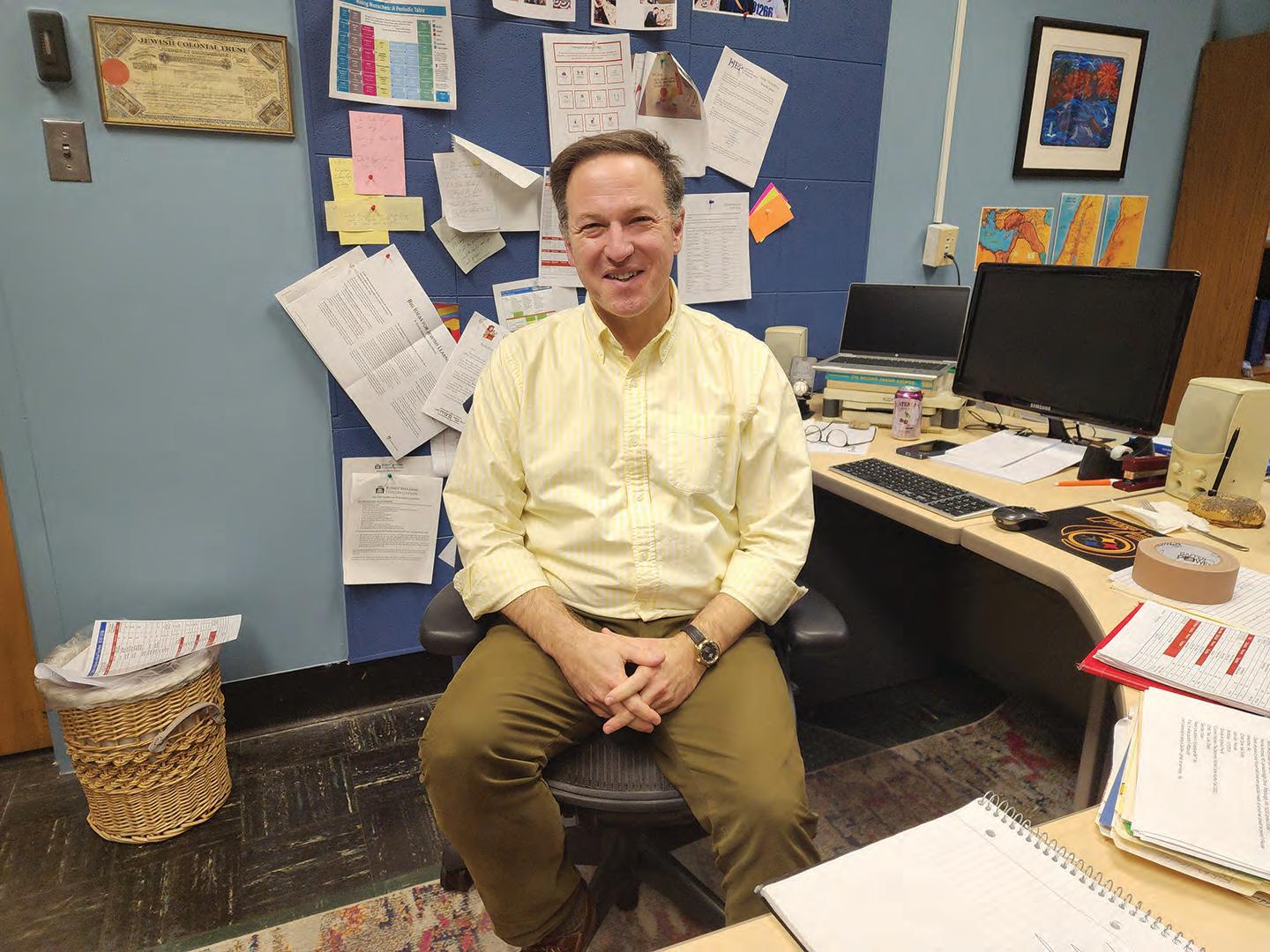
p Rabbi Lawrence Freedman reflects on service.
Photo by Adam Reinherz
Photo courtesy of Community Day School
Discover Jewish Pittsburgh’: A community-led project to welcome newcomers
By David Rullo | Senior Staff Writer
Rebecca Gruener believes Pittsburgh has a vibrant Jewish community that’s perfect for young families. The problem, she said, is that not enough people know about it and the resources available to prospective newcomers don’t provide enough information.
Gruener said she had friends who participated in the Orthodox Union’s Community Home Relocation Fair, a program that helps Orthodox communities market themselves to potential transfers, before moving.
Communities featured on the OU website dedicated to the fair included Atlanta, Georgia; Boston, Massachusetts; Buffalo Grove, Illinois; Portland, Ohio; and San Antonio, Texas. Pennsylvania was represented by Harrisburg, Philadelphia, Scranton, Wilkes-Barre and even White Oak, but no Pittsburgh-proper community was listed.
Moreover, Gruener said, the information the OU provided about Pittsburgh was “outdated and barely updated.”
“I realized that we’re an amazing place to live, we have a lot to offer, and we’re just not advertised enough,” she said.
Pittsburgh, Gruener said, has amenities
many families are seeking — a low cost of living, walkable neighborhoods, professional opportunities and a fully realized Jewish infrastructure.
And yet, she said, the city isn’t marketed the way it should be.
Rabbi Mark Goodman to leave Congregation Beth Shalom
By David Rullo | Senior Staff Writer
Rabbi Mark Goodman is ready to turn the page.
In a Nov. 24 Facebook post, Goodman announced that when his contract at Congregation Beth Shalom expires at the end of June 2026, he will move on from the Conservative congregation where he has served for the last five years.
“The standard rabbinic contract is either two or five years. Senior rabbis usually get five years; assistant and associate rabbis get two years. I did two years and then I did another two years — before that I had a staff job at Beth Shalom for year,” Goodman said. “It’s been a really great experience, but it’s time to move on to something else.”
Goodman initially served as the interim director of the synagogue’s Derekh and Youth Tefillah program after the departure of Rabbi Jeremy Markiz.
When the congregation decided to hire an assistant rabbi, Goodman said he thought “it would be great for Pittsburgh to bring in some young, new rabbi — maybe a woman or a gay rabbi, but I didn’t really think of myself.”
And while he was familiar with the congregation, Goodman didn’t think he necessarily was the right fit, partially because
he was already committed to Brith Sholom, a congregation in Erie, Pennsylvania, where he led High Holiday and monthly Shabbat services, a role which he continues.
After an initial search, Beth Shalom asked Goodman if he’d take the job.
“I was like, ‘I’ve never considered myself an assistant or associate rabbi, but I’ll give it a try,’” he said.
Goodman said he is grateful for the opportunity to serve the community over the last four years — including pastoral work and filling in for the congregation’s Senior Rabbi Seth Adelson.
The prospect of a new contract, though, caused Goodman to ponder the future.
“Ultimately, I only have a few years left as a rabbi. I’m 49, so I’ve got about 15 more good years left in me,” he said. “It’s time for me to go and do the things I’ve always dreamed of doing.”
And while he isn’t sure what the future will bring, Goodman said he hopes to remain in Pittsburgh.
The rabbi, who has a passion for Hasidic Judaism, has a wealth of opportunities. He is the author of the book “Life Lessons from Recently Dead Rabbis: Hassidut for the People,” and teaches a course on the movement, something he plans to continue in some form after his tenure at Beth Shalom ends.
Please see Goodman, page 19
“I said, ‘Let’s do something now to try and get the word out, try to attract people to think about Pittsburgh,’” said Gruener, who is a mother to two children, ages 3 and 10 months.
The Pittsburgh Jewish community, Gruener noted, isn’t at a crisis point; in fact, she said, it continues to thrive. The Pittsburgh transplant — she moved here in 2016 for graduate school — simply feels now is the time to be proactive.



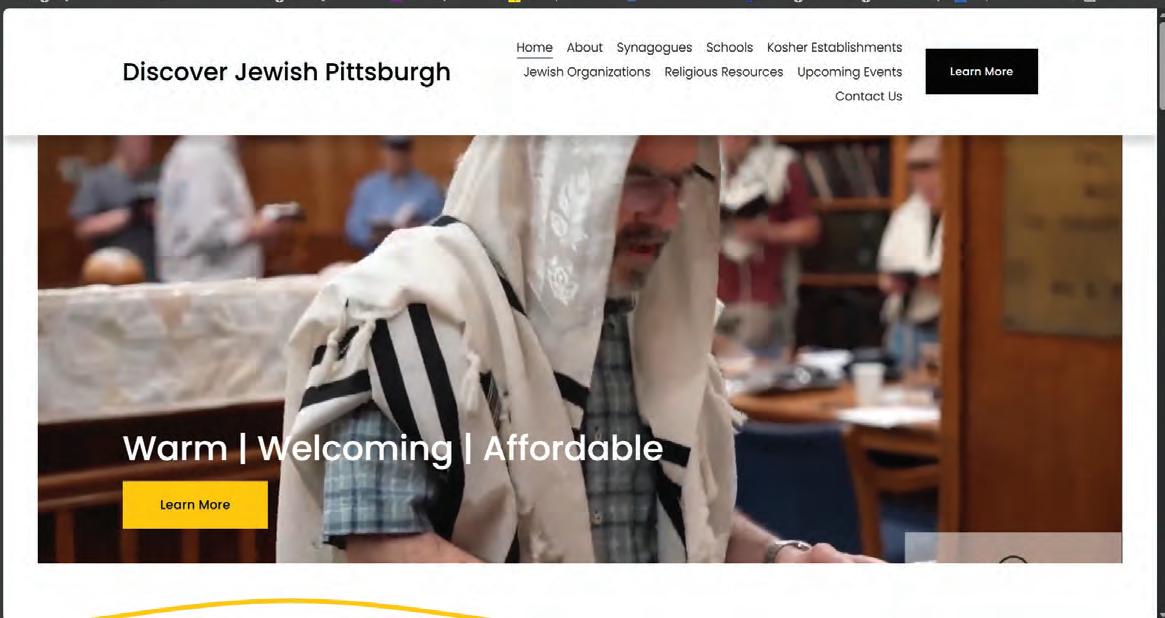
p Discover Jewish Pittsburgh home page Screenshot by David Rullo
Calendar
Submit calendar items on the Chronicle’s website, pittsburghjewishchronicle.org. Submissions also will be included in print. Events will run in the print edition beginning one month prior to the date as space allows. The deadline for submissions is Friday, noon.
q SATURDAY, DEC. 6
Families with young children are invited to attend Shabbat With You and spend Shabbat morning at Fifth and Morewood (Rodef Shalom) for a fun and engaging Shabbat morning service followed by lox, bagels and play time. 9 a.m. $5 per family. rodefshalom.org/shabbatwithyou.
Tree of Life Congregation announces the premiere of Season 2 of The Torah Studio, with special guest Rector Jonathon Jensen of Calvary Episcopal Church. He and Rabbi Myers will lead a discussion of the Torah portion during Shabbat services, 9:45 a.m. Levy Hall, Rodef Shalom, 4905 Fifth Ave. treeoflifepgh.org.
q SUNDAY, DEC. 7
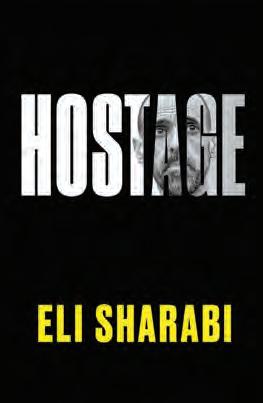
The Pittsburgh Jewish Chronicle invites you to join the Chronicle Book Club for its discussion of “Hostage,” by Eli Sharabi. 1 p.m. Email drullo@pittsburghjewishchronicle.org for registration link.
Chabad of the South Hills invites you to attend the Miracle Makers Olive Press. Enjoy a toddler zone, latkes and treats. Co-sponsored by CKids and PJ Library. 4 p.m. $10/child. 1700 Bower Hill Road. chabadsh.com/olive.
Join Chabad of Squirrel Hill for “An Evening with Eli Sharabi.” Hear his story of survival and learn about his unimaginable strength and unwavering hope. 7 p.m. $18. Location to be provided. chabadpgh.com/sharabi.
q SUNDAYS, DEC. 7-DEC. 28
Join Chabad of Squirrel Hill for its Men’s Tefillin Club. Services and tefillin are followed by a delicious breakfast and engaging discussions on current events. 8:30 a.m. 1700 Beechwood Blvd. chabadpgh.com.
Join a lay-led online Parashah study group to discuss the weekly Torah portion. No Hebrew knowledge needed. The goal is to build community while deepening understanding of the text. 8:30 p.m. For more information, visit bethshalompgh.org/online-parashah.
q MONDAY, DEC. 8
Experience an evening of Chassidic songs and stories on the theme “Illuminating the Everyday,” at Chabad of Squirrel Hill’s Women’s Farbrengen 7 p.m. $10 suggested donation. 1700 Beechwood Blvd. chabadpgh.com/farbrengen.
Ladies, Join Chabad Young Professionals for an evening of creativity and connection at Candles & Cocktails. Get into the Chanukah spirit while crafting your own scented candles and enjoying delicious cocktails, appetizers and great company. Workshop led by Wicks & Wax Studio. 7:30 p.m. $30. cyppittsburgh.com/candle.
q MONDAYS, DEC. 8-DEC. 29
Join Congregation Beth Shalom for a weekly Talmud study. 9:15 a.m. For more information, visit bethshalompgh.org.
Join Temple Sinai for an evening of mahjong every Monday (except holidays). Whether you are just starting out or have years of experience, you are sure to enjoy the camaraderie and good times as you make new friends or cherish moments with long-term pals. All are welcome. Winners will be awarded Giant Eagle gift cards. All players should have their own mahjong cards. Contact Susan Cohen at susan_k_cohen@yahoo.com if you have questions. $5. templesinaipgh.org.
q TUESDAY, DEC. 9
Enjoy an uplifting evening of Chassidic stories and niggunim in honor of the 19th of Kislev — the New Year of Chassidut at Chabad of Squirrel Hill’s Men’s Farbrengen. 7:30 p.m. $10. 1700 Beechwood Blvd. chabadpgh.com/farbreng.
q TUESDAYS, DEC. 9-JUNE 30, 2026
Join Beth El’s Rabbi Alex Greenbaum and his Bible/Talmud Adult Education class for a thoughtprovoking weekly session of Bible and Talmudic study. This program is available both in person and virtually. Call the office at 412-561-1168 to receive the Zoom link or to make an in-person reservation. 10:30 a.m. 1900 Cochran Rd. bethelcong.org.
q WEDNESDAY, DEC. 10
Join Classrooms Without Borders for Exodus 1947 and the Legacy of Survival: Heroism, Agency and Nation-building, and hear a story of resilience, resistance and renewal in the shadow of the Holocaust. CWB Scholar-in-Residence Avi Ben-Hur will facilitate a discussion with Professor Aviva Halamish on how the survivors of the Exodus transformed loss into leadership. Halamish will share the untold story of their impact on the making of modern Israel. 7 p.m. Free. 4905 Fifth Ave. cwbpgh.org/event/exodus-1947.
Join Chabad of the South Hills for a new JLI course, “The Kabbalah of Meaning,” exploring Jewish wisdom for finding the purpose that connects parts of life. No previous Jewish learning required. Online or in person. This course will satisfy the continuing education requirements of physicians, health care professionals, psychologists, social workers, LMFTs and LMHC/LPCs. 7:30 p.m. chabadsh.com.
Join Chabad of Squirrel Hill for the JLI Course, “The Kabbalah of Meaning.” Explore Jewish wisdom for finding the purpose that connects all parts of life with the JLI course, “The Kabbalah of Meaning.” This course will satisfy the continuing education requirements of physicians, health care professionals, psychologists, social workers, LMFTs and LMHC/LPCs. 7:30 p.m. $90. 1700 Beechwood Blvd. chabadpgh.com/jlicourse.
q WEDNESDAYS, DEC. 10–DEC. 31
Bring the parashah alive and make it personally relevant and meaningful with Rabbi Mark Goodman in this weekly Parashah Discussion: Life & Text. 12:15 p.m. For more information, visit bethshalompgh.org/life-text.
Join Chabad of the South Hills for Baby Loves Shabbat, music and movement for ages 0 to 3. Challah making and Shabbat songs. 3:45 p.m. 1701 Bower Hill Road. chabadsh.com.
q SATURDAY, DEC. 13
Join in community and enjoy a smorgasbord of dairy delights at the Cheese Ball, a casual and cheesy evening to support Shaare Torah Congregation. A cocktail hour will be followed by a presentation by Brent Delman, “The Cheese Guy.” Participants will indulge in a selection of cheese pairings while learning about the kosher cheese business and what it takes to acquire some of the best kosher cheeses in the world. Heavy appetizers, along with wine, beer and a specialty cocktail are included. All food will be chalav yisrael. Casual attire. 7:45 p.m. Learn more and register online at shaaretorah.net/ event/cheese.
q SUNDAY, DEC. 14
Join Temple Ohav Shalom for Shalom Tots: Jelly and Jammies. Bring your own cozy comforts and join them for a Chanukah pajama party with customfilled sufganiyot from a fillings bar, play a game of pass the parcel and sing Chanukah songs in the candlelight. 10 a.m. Free. 8400 Thompson Run Road. templeohavshalom.org.
Join Chabad of the South Hills for the Annual Chanukah Festival, including a grand menorah lighting, latkes, mobile game truck, music, donuts and firetruck gelt drop. RSVP to be entered into a raffle to win Chanukah swag. 5 p.m. Dormont Pool parking lot, 1801 Dormont Ave. chabadsh. com/menorah.
Join the Tree of Life Congregation for its outdoor menorah lighting. 5:30 p.m. Corner of Wilkins and Shady Avenues. treeoflifepgh.org.
Chabad Young Professionals, the Jewish Federation of Greater Pittsburgh and the Strip District Terminal invite you to a festive community menorah lighting filled with warmth, music and Jewish pride. Enjoy fresh latkes, delicious donuts and the glow of the menorah. 5:30 p.m. Strip District Terminal Building. cyppittsburgh.com/terminal.
q MONDAY, DEC. 15
Join Pittsburgh Mayor Ed Gainey in lighting the downtown menorah and enjoy latkes, donuts and live music. 5 p.m. Portico of the City County Building, 414 Grant St. chabadpgh.com.
q TUESDAY, DEC. 16
Tree of Life Congregation is partnering with Calvary Episcopal Church, Parkway Jewish Center and Temple David for this year’s Pittsburgh Penguins Jewish Heritage Night. Menorah lighting will occur during intermission and there will be kosher food stands and post-game photo opportunities. 7:30 p.m. PPG Arena. adamato@ pittsburghpenguins.com.
q WEDNESDAY, DEC. 17
Chabad of the Souths Hills invites you to its Grand Chanukah senior’s lunch. Enjoy a delicious kosher lunch with hot latkes and a presentation by the Jewish Association on Aging and AgeWell Pittsburgh. $5 suggested donation. 1 p.m. Preregistration strongly suggested at 412-278-2658. 1701 McFarland Road. chabadsh.com.
q THURSDAY, DEC. 18
Join Chabad Young Professionals for Drinks and
Dreidels on the first night of Chanukah for festive fun, featuring an open bar with craft cocktails, a buffet of Chanukah bites and handmade latkes. Indulge a donut station, join the annual dreidel tournament and help light the menorah. 7 p.m. $30. cyppittsburgh.com/dd.
q SATURDAY, DEC. 20
Join Chabad of the South Hills for Drinks & Dreidels, a Chanukah soiree. Enjoy a strolling magician, donuts, latkes, hors d’oeuvres and signature drinks. 7:30 p.m. $25. 1700 Bower Hill Road. chabadsh. com/dreidel.
q SUNDAY, DEC. 21
Tree of Life Congregation will join Calvary Episcopal Church for a joint Chanukah and Christmas celebration. Tree of Life congregants will join their friends from Calvary to celebrate the holidays with pageantry and, of course, food. 11 a.m. Free. Calvary Episcopal Church, 315 Shady Ave. treeoflifepgh.org.
Join Chabad Young Professionals at Romp n’ Roll for Mommy and Me — an afternoon of play, climbing, music and laughter — the perfect way to celebrate Chanukah with your little ones. Kids will enjoy open gym time and plenty of fun while parents relax and connect. Light the menorah, sing Chanukah songs and enjoy pizza, crispy latkes and fresh donuts. 4 p.m. $36/family. cyppittsburgh.com/family.
q THURSDAYS, JAN. 8, FEB. 5
Join Rabbi Amy Greenbaum and the Beth El community for the all-virtual Beth El’s Virtual Hope and Healing Program on the first Thursday of the month. This is a safe space to chant, breathe, pray for healing and seek peace. Feel free to keep your camera off and just listen. Call the office at 412561-1168 to receive the Zoom link. 5:30 p.m. Free. bethelcong.org.
q MONDAY, JAN. 12
Make your own resin tzedakah box and enjoy light refreshments with Chabad of Squirrel Hill at Art and Soul. 7 p.m. $45. 1700 Beechwood Blvd. chabadpgh.com/resin PJC
Join the Chronicle Book Club!
The Pittsburgh Jewish Chronicle invites you to join the Chronicle Book Club for its Dec. 7 discussion of “Hostage,” by Eli Sharabi.
From Amazon.com: “On October 7, 2023, Hamas terrorists stormed Kibbutz Be’eri, shattering the peaceful life Eli Sharabi had built with his British wife, Lianne, and their teenage daughters, Noiya and Yahel. Dragged barefoot out his front door while his family watched in horror, Sharabi was plunged deep into the suffocating darkness of Gaza’s tunnels. As war raged above him, he endured a grueling 491 days in captivity, all the while holding onto the hope that he would one day be reunited with his loved ones.
“Eli Sharabi’s story is one of hunger and heartache, of physical pain, longing, loneliness and a helplessness that threatens to destroy the soul. But it is also a story of strength, of resilience, and of the human spirit’s refusal to surrender. It is about the camaraderie forged in captivity, the quiet power of faith, and one man’s unrelenting decision to choose life, time and time again.”
Your hosts
Toby Tabachnick, Chronicle editor
David Rullo, Chronicle senior staff writer
How it works
We will meet on Zoom on Sunday, Dec. 7, at 1 p.m.
What to do
Buy: “Hostage.” It is available at area Barnes & Noble stores and from online retailers, including Amazon and Barnes & Noble. It is also available through the Carnegie Library system.
Email: Contact us at drullo@pittsburghjewishchronicle.org, and write “Chronicle Book Club” in the subject line. We will send you a Zoom link for the discussion meeting. PJC
Headlines
Northwestern agrees to pay $75M, void encampment deal to end Trump’s antisemitism investigation
Northwestern University will pay $75 million to the Trump administration to recover nearly $800 million in federal funding frozen by an ongoing antisemitism investigation, in the second-largest agreement of its kind, JTA reported.
The deal, which will last for three years, also means the Chicago-area private university will no longer abide by an earlier agreement it struck with pro-Palestinian protesters that included a commitment to dedicate space on campus for Muslim and North African students.
“The cost of a legal fight was too high and the risks too grave,” the offices of Northwestern’s interim president Henry Bienen posted in a lengthy statement explaining why the school capitulated to Trump’s demands. “If our $790 million in federal research funding remained frozen, the freeze threatened to gut our labs, drive away faculty, and set back entire fields of discovery.”
“The Northwestern agreement is a huge win for current and future Northwestern students, alumni, faculty, and for the future of American higher education,” Education Secretary Linda McMahon said in a statement praising the agreement. “The deal cements policy changes that will protect students and other members of the campus from harassment and discrimination, and it recommits the school to merit-based hiring and admissions.”
Northwestern is the sixth university to strike an agreement with the Trump administration
to end investigations and free up federal funding; its payout is second only to Columbia’s $221 million. Critics of the agreements have compared them to shakedowns, questioned their relevance to fighting antisemitism, and claimed they threaten academic freedom.
Netanyahu says he is formally seeking the pardon Trump requested on his behalf
Israeli Prime Minister Benjamin Netanyahu is formally seeking a preemptive pardon of the criminal charges he has long faced, saying in a video address ending his prosecution was needed to bring unity to a divided nation, JTA reported.
“I am certain, as are many others in the nation, that an immediate end to the trial would greatly help lower the flames and promote broad reconciliation — something our country desperately needs,” Netanyahu said in the speech on Sunday as his attorneys filed a petition with Israeli President Isaac Herzog, who is responsible for granting pardons.
Netanyahu has three legal cases open against him, on charges of fraud, bribery and breach of trust. They relate to allegations that he accepted lavish gifts in exchange for political favors and that he used his position to secure positive media coverage. The trial in the cases began in 2020 and has proceeded in fits and starts, with hearings routinely canceled as Netanyahu attends to Israel’s affairs.
In his speech, Netanyahu did not acknowledge guilt and said, as he long has contended, that the charges against him were political in nature.
Herzog’s office said it would consider the pardon request in accordance with Israeli law.
Today in Israeli History
Dec. 8, 1885 — 1st Knesset speaker Sprinzak is born
Dec. 5, 1949 — Ben-Gurion rejects international status for city of Jerusalem
Prime Minister David Ben-Gurion declares that “Jewish Jerusalem is an organic, inseparable part of the State of Israel” and that Israel will not give up sovereignty over its “eternal capital.”
Dec. 6, 1867 — Zionist leader Motzkin is born Leo Motzkin, the chairman of the Zionist Executive from 1925 to 1933, is born in what is now Brovary, Ukraine. Motzkin becomes interested in Zionism after witnessing the 1881 pogrom in Kyiv.

Dec. 7, 1953 — Ben-Gurion resigns, is succeeded by Sharett Israel’s founding prime minister, David Ben-Gurion, announces his resignation and retirement to Kibbutz Sde Boker in the Negev. He is succeeded by fellow Mapai member Moshe Sharett, the foreign minister.
After drawing BDS backlash, progressive Jewish writer Peter Beinart apologizes for speaking at Tel Aviv U
Peter Beinart began his first social media post after his latest speaking engagement with an apology, JTA reported.
“By speaking earlier this week at Tel Aviv University, I made a serious mistake,” the progressive Jewish writer posted on X, a day after a scheduled appearance at the Israeli school.
The morning before, he had defended his plans, saying he saw “value in speaking to Israelis about Israel’s crimes.” Now, he said, “I let my desire for that conversation override my solidarity with Palestinians, who in the face of ethnic cleansing, apartheid and genocide have asked the world to boycott Israeli institutions that are complicit in their oppression.”
Beinart’s apology came in the face of steep criticism from some on the anti-Israel left, where Beinart has long been one of the most prominent Jewish voices. The Palestinian Campaign for the Academic and Cultural Boycott of Israel, a founding member of the Boycott, Divestment and Sanctions movement, publicly and privately called on Beinart to cancel his talk, and he endured a bruising volley of castigation online.
Emphasizing that he had not been paid for his speech, Beinart said he had been motivated by wanting to influence Israeli Jews as he said he had with American Jews “with whom I strongly disagree, both to listen and in hopes of changing their minds.” But he said he had come to understand that he could have done that without speaking at an Israeli university, and that he had erred by not consulting Palestinians when making his plans.
“This was a failure of judgment,” he wrote. “I am sorry.”
Mengele lived openly in Argentina for years, declassified archives show
Declassified archival files made public by Argentinian President Javier Milei prove that Josef Mengele, the infamous Nazi concentration camp doctor known as the “Angel of Death,” lived openly in the country after World War II and evaded arrest due to years of official inaction, JNS reported.
The archives show that Buenos Aires knew by the mid- to late 1950s that Mengele had fled to the South American country, having arrived in 1949 using an Italian passport under the name Helmut Gregor.
By 1956, Mengele began using his real name after having obtained a legalized copy of his original birth certificate from the West German Embassy in Buenos Aires, showing just how safe he felt in Argentina.
Local intelligence had already identified him as the top Nazi criminal by then, tracking his residence and investments, including a partnership in a medical laboratory believed to have been funded by Mengele’s father.
However, an Argentine judge rejected a 1959 West German extradition request, claiming “political persecution.” Further bureaucratic delays and poor coordination across agencies allowed Mengele to escape to Paraguay in early 1960.
Mengele moved to Brazil later in 1960, where Nazi-sympathizing German Brazilian farmers provided safehouses. He lived for years under aliases before dying of a stroke in 1979. PJC
Compiled by Toby Tabachnick
Yosef Sprinzak, the first speaker of the Knesset and a two-time interim president, is born in Moscow. He helps establish many institutions that form the foundation of the state, such as the Histadrut labor federation.
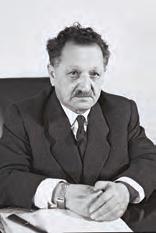
Mapai in the Knesset for a decade.
Dec. 9, 1987 — First Intifada breaks out
Riots erupt in the Gaza Strip and West Bank in response to a fatal army truck crash the previous day, marking the start of the First Intifada. The violence kills 900 Palestinians and 100 Israelis by the end of 1991.
Dec. 10, 2000 — Barak resigns as prime minister
Prime Minister Ehud Barak resigns amid the Second Intifada and calls for a special election within 60 days. Barak hopes to win a national vote of confidence against Likud’s Ariel Sharon but loses badly Feb. 6, 2001.
Dec. 11, 1947 — British announce end of mandate
Arthur Creech Jones, the British colonial secretary, opens a Commons debate about Palestine by revealing that the mandate will end May 15, 1948, and that all British troops will be withdrawn by Aug. 1. PJC


p Yosef Sprinzak represented
By Teddy Brauner, National Photo Collection of Israel, CC BY-SA 3.0
WORLD —
p Leo Motzkin received this card as a participant in the First Zionist Congress in 1897.
Charitable Giving

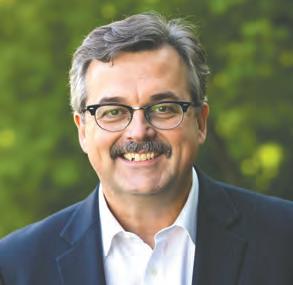
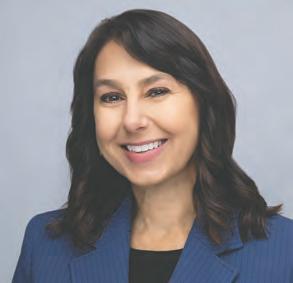

Andrey Popov/Adobe Stock
Charitable Giving
A unique window for charitable giving before 2025 ends
Guest Columnist
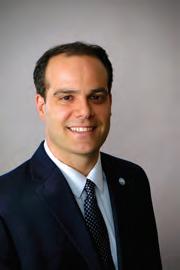
Roi M. Mezare
If you have ever considered making a larger charitable gift, this may be the year to do it. The recently enacted One Big Beautiful Bill Act has created a shortlived but significant tax opportunity that expires at the end of 2025, and financial experts are urging donors to act before the window closes.
to gain traction nationwide and has long been a meaningful philanthropic vehicle within the Jewish Federation of Greater Pittsburgh.

www.jwfpgh.org
• Established in 2000
• $2 million in grants
• 98 grantees funded
Under current law, taxpayers who itemize can deduct charitable contributions up to 60% of their adjusted gross income. Beginning in 2026, however, OBBBA introduces two important changes. The first is a new 0.5% AGI “floor,” meaning that only charitable contributions exceeding that threshold will be deductible. For many middle- and high-income taxpayers, this
A DAF allows donors to make a contribution now, securing the immediate tax benefit, while retaining the ability to recommend grants in the years ahead. This flexibility has become especially valuable as organizations navigate evolving needs and respond to unexpected crises. Through a DAF, donors can support Jewish communal institutions, synagogues, social service organizations, Israel-related causes and secular nonprofits from one convenient account. The funds are invested professionally, giving contributions the potential to grow and ultimately increase charitable impact.
Local financial advisers and philanthropic professionals anticipate a rise in DAF openings and contributions as awareness of OBBBA’s implications spreads. Some donors may fund a DAF with appreciated securities, leveraging an additional tax advantage by avoiding capital gains tax while maximizing
For donors considering substantial contributions, multiyear pledges, or legacy gifts, 2025 may offer the best opportunity in years to optimize giving.
means a portion of their giving will simply no longer count toward tax deductions. The second change reduces the maximum tax benefit of itemized deductions for those in the highest income bracket, from 37% down to 35%. While a 2-percentage point difference may sound modest, for sizable gifts it can translate into thousands of dollars in reduced tax benefit.
In practical terms, the same charitable gift could yield a smaller net advantage if made after these new provisions take effect. For donors considering substantial contributions, multiyear pledges, or legacy gifts, 2025 may offer the best opportunity in years to optimize giving.
The looming shift has prompted a growing number of financial planners to call this period a true “tax-planning window.” For some donors, it could make sense to “pull forward” several years’ worth of charitable giving into 2025, effectively taking advantage of today’s more favorable rules while still ensuring that organizations receive support over time. This approach allows individuals and families to lock in the current deduction structure without having to part with funds all at once in terms of grant distribution.
Here in Pittsburgh, where charitable giving runs deep and where our community has a history of stepping up in decisive moments, donors are already exploring tools that offer both flexibility and strategic advantages. Chief among them is the donor-advised fund, which continues
their deduction. Others may choose to use bonuses, year-end income or business earnings to establish or significantly bolster their charitable fund before Dec. 31, 2025.
Of course, each donor’s financial situation is unique. Not everyone will benefit equally from shifting giving strategies, and not every household itemizes deductions. That’s why trusted advisers recommend reviewing charitable, tax and estate planning goals sooner rather than later. The key is to evaluate whether advancing gifts into 2025 aligns with your values, your financial picture and your long-term philanthropic aspirations. With new limits beginning in 2026, this year presents a rare, time sensitive opportunity to make a lasting impact while maximizing the tax advantages of giving.
As always, thoughtful giving is not only a financial decision but also a reflection of the world we aspire to build. This brief window created by OBBBA gives our community a chance to strengthen the institutions and causes that shape Jewish life in Pittsburgh and beyond. PJC
Roi M. Mezare, associate vice president of Development & Foundation at the Jewish Federation of Greater Pittsburgh. The Jewish Federation of Greater Pittsburgh is not a licensed tax, legal or investment adviser, and this information is not intended as advice. Please consult with your legal and/ or financial advisers for guidance specific to your situation.
Our Mission: The Jewish Women’s Foundation of Greater Pittsburgh seeks to improve the lives of self-identified women and girls through collaborative philanthropy and social change grantmaking.
Our Impact: JWF is rooted in the belief that empowering women and girls is not just a matter of justice, but a catalyst for broader social transformation. When we invest in women and girls, we are investing in healthier communities and a more equitable society. Using a collaborative philanthropy model means that every JWF Trustee is empowered as a leader, funder, and decision-maker.
Your Support: While Trustees participate in grantmaking decisions, we greatly value the generosity of all our donors and welcome your support of JWF’s efforts at any level.
Judy Greenwald Cohen Executive Director jcohen@jwfpgh.org
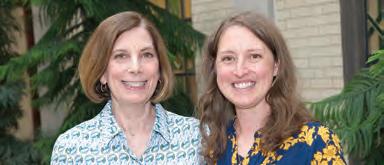
Contact us to learn more about becoming a JWF Trustee or a member of the Young Women’s Giving Society (YWGS).




Stevie Sheridan Program Officer ssheridan@jwfpgh.org
Charitable Giving
Every contribution matters this giving season
Guest Columnist
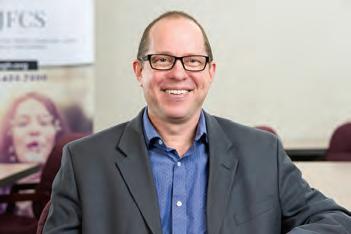
Jordan Golin
I’ve been honored to stand with Pittsburgh’s Jewish community and its deep commitment to helping neighbors in need — Jewish and non-Jewish during my nearly 25 years at JFCS. My colleagues and I have walked alongside people facing intense personal struggles like family challenges, mental health concerns a nd financial hardship, as well as community crises like COVID, the Pittsburgh synagogue shooting, and the harmful rhetoric aimed at our immigrant neighbors.
any of us are busy preparing for the holidays. While some of us are planning elaborate meals or buying holiday gifts for loved ones, others are struggling to ind ways to celebrate more simply — and
There
Throughout these years, one trend has been a constant — the growing divide between the “haves” and “have-nots.” Over the years, the wealthiest Americans have grown more affluent while the poorest have fallen further behind. Today, the richest 10% of Americans hold two-thirds of our country’s wealth, while the top 1% own nearly as much as the bottom 90%.
The reasons for this gap are complicated, and I’m no expert on wealth inequality. I do, however, see its impact on people right here in our Pittsburgh community. It’s most clear at the end of the year, when
Many of us who are financially secure don’t take our circumstances for granted, are grateful for what we have, and are aware that others aren’t as fortunate. That’s why so many people choose to give back during this time of year, making the end of the year known as “giving season.” For many, generosity isn’t just a kind gesture — it’s a spiritual calling. Jewish teachings and tradition encourage giving tzedakah. Often translated as “charity,” its root means “justice.” Tzedakah is our obligation to help create a fairer world where those who have more than they need share with those who have less. This is how we build a society where everyone is treated
with dignity and valued equally.
This year has been particularly difficult for many of our neighbors. Financial stress has grown throughout the year but is hitting a new peak just as the calendar year is winding down. For example, the JFCS Squirrel Hill

Food Pantry, like many others nationwide, has seen nearly twice as many people in need in 2025 compared to 2024, with steady monthly increases.
How do financially vulnerable families cope during the holidays? Often by s acrificing essentials, like prescription medications or necessary home repairs, to afford gifts and special holiday meals.
Holiday spending can also create lasting financial strain. Credit card debt, payment plans, or borrowing from friends and family can lead to long-term financial challenges and even relationship tension long after the season ends.
This pressure can have a negative impact on people’s emotional and physical health. We know that financial stress commonly contributes to anxiety and depression and can also affect physical health, causing insomnia, headaches, high blood pressure and more.
So what can we do to help? While financial contributions are important and appreciated, giving back during the holiday season does not have to mean donating money. There are countless ways to help — coordinating a food drive for a local food pantry, visiting older adults, or making no-sew blankets for nearby shelters are all meaningful ways to make a difference.
However you choose to give back this holiday season, your generosity will make a real difference for a neighbor in need. Everyone has something to offer, and each act of kindness can bring hope, comfort and connection to someone going through a hard time. PJC
Jordan Golin is the president and CEO of Jewish Family and Community Services of Pittsburgh.
Gift-giving is central to many holiday traditions and food is a big part of nearly every Jewish holiday (“they tried to kill us, they were defeated, now let’s eat”). But those who can’t afford the typical festive foods may feel left out during a season meant for celebrating connection and togetherness.

Charitable Giving
A Chanukah gift that lasts: Why Israel bonds matter more than ever this
year
Chanukah is the time when many fami lies look for gifts that feel meaningful rather than disposable. With Israel on our minds and in our prayers this year, more people are choosing presents that reflect both personal values and connection to the Jewish community. One gift that does both is an Israel bond.
renewal, they represent a modern expression of those themes, allowing individuals to support Israel’s economic strength in a direct, tangible way.
For many families, the act of giving an Israel bond is its own statement: that Jewish continuity matters, that Israel’s future matters and that even one gift can play a part in sustaining both.
For children, grandchildren and every generation
Unlike most presents, an Israel bond does more than mark an occasion. It celebrates Jewish identity, strengthens Israel’s economy and offers recipients a financial gift that continues long after the holiday ends. It is both practical and symbolic, something you give to a person you love while also giving strength to the state of Israel.
A gift of light and lasting value Israel bonds offer strong rates, competitive returns and a sense of purpose. They can diversify a portfolio, be included in IRAs, or be given as gifts for any milestone. During a season when we reflect on dedication and
Israel bonds uniquely bridge the gap between generations. A grandparent gifting a bond to a grandchild gives them more than a future return. They give them a connection to the Jewish story, a reminder that they are part of something bigger, something with roots and purpose. The bond becomes a statement of identity.
This is what makes an Israel bond different from typical Chanukah gifts. It is meaningful today and beneficial tomorrow. It is personal and communal. It is individual and national. Few presents can carry that balance.
A popular Chanukah choice: The eMazel Tov Bond
For an accessible and impactful gift, the


Leadership
Charitable Giving Effective
By Family Features
For the approximately 18 million veterans in the United States — roughly 6% of U.S. adults ages 18 and older, according to the U.S. Census Bureau — the return to civilian life can present challenges.
Because many veterans need assistance as a result of their military service, consider these impactful and meaningful ways to support veterans and ensure their sacrifices are honored and needs are met.
Engage in community outreach programs
By participating in community events, you can help bridge the gap between veterans and civilians, fostering a sense of understanding
and appreciation. Events such as parades, public ceremonies and educational forums can be organized to highlight the contributions of veterans. Additionally, volunteer opportunities within your community can also provide support to veterans, such as helping with home repairs, providing transportation to medical appointments or simply spending time with veterans who may feel isolated.
Provide employment and career support
Gaining employment is an issue for many veterans transitioning back to civilian life. To help ease the transition, community members can support veterans by offering resume writing workshops, interview coaching and career fairs specifically targeted at veterans. Employers can also actively seek and hire veterans to leverage their unique skills and experiences. Veteran-friendly hiring practices
and mentorship programs can also be beneficial toward ensuring veterans find the financial stability and purpose they need to thrive.
Contribute to veteran-focused charities
Donating to veteran-focused charities can help provide essential services such as housing, health care and educational assistance. In addition to monetary donations, consider volunteering your time or skills. Many charities need volunteers to help with various tasks, from organizing events to providing administrative support.
Advocate for veteran health care initiatives
Many veterans require specialized medical care due to their service. Advocating for better health care policies and initiatives can help ensure they receive quality care. This includes
supporting legislation that improves access to medical and mental health services for veterans. You can also work with local health care providers to develop programs specifically designed for veterans.
Promote mental health awareness and resources
Mental health is a critical aspect of overall well-being, and many veterans face unique mental health challenges, including posttraumatic stress disorder and depression. Promoting mental health awareness and providing resources can help veterans cope with these issues. This includes organizing mental health awareness campaigns, providing information on available resources and reducing the stigma associated with seeking help.
Find more ideas for supporting veterans in your community at eLivingtoday.com. PJC
eMazel Tov Bond is a favorite. Beginning at only $36, it is designed for milestones of all kinds, including bar and bat mitzvahs, births, graduations and holidays. It is easy to purchase online, making it perfect for lastminute gift giving that still feels thoughtful. The bond matures in five years, allowing the recipient to redeem its full value at that time.
about financial responsibility. Young adults appreciate it because it becomes part of their long-term planning. And for anyone receiving it, the bond provides a lasting reminder of support for Israel.
A Chanukah of hope and commitment
As candles are lit across Jewish homes this season, many will reflect on the themes at the heart of Chanukah: dedication, identity, and the triumph of light over darkness.
This year, giving an Israel bond is a way to honor those values. It is a gesture that strengthens Israel’s economy, supports its people, and reinforces the ties that bind Jewish communities around the world.
A gift of an Israel bond honors the past, invests in the future, and helps sustain the state that continues to inspire and unite us. Few gifts accomplish so much in one small envelope (or email!) PJC
About Israel Bonds: Since its founding more than seven decades ago, Development
Corporation for Israel (known as Israel Bonds) and its affiliates around the world have generated over $55 billion in investments worldwide. With strong rates and deep symbolic meaning, Israel bonds provide a powerful way to strengthen Israel’s economy and maintain a personal connection to the Jewish State and the people. Learn more: israelbonds.com.
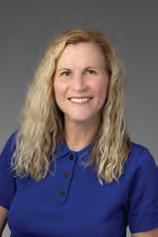
Adrienne Indianer is Israel Bonds Pittsburgh’s registered representative.



Mitzvah Opportunity 40 Years of Impact Help Us to Help Others
Your tax-deductible gift fuels life -changing financial assistance for the Western PA Jewish Community.
For 40 years, we have been increasing economic security and standing by our neighbors in need. In 2025, with your support, we will provide over $300,000 in critical aid to people across 45+ zip codes in the region. This financial lifeline helps those struggling to meet basic needs such as housing, utilities, medical care, food, and transportation.
JAF’s warm and caring support arrives just when it’s needed most, offering hope and relief to those unsure how they will pay pressing expenses. Each story is unique—whether facing eviction or utility shut -off notices, delays in SNAP benefits, or unaffordable costs for hearing aids or car repairs essential for work. We provide a helping hand with no repayment required, supporting neighbors as they navigate life’s necessities.
"The JAF grant saved my life. I was on the brink of homelessness. The grant helped me pay back rent, ensuring a roof over my (and my dog's) head, and cover my past due electric bill. Having these basic needs met allowed me to move forward, secure a job, and build a future."
— A Community Member
JOIN US IN CELEBRATING 40 YEARS OF COMMUNITY IMPACT
HELP SOMEONE STAY SAFE AND SECURE
Donate by check, credit card, donor advised funds, gifts of stocks and bonds, matching gifts, individual retirement accounts (IRAs), corporate & family foundations, and legacy planning. Visit JAFpgh.org or call 412.521.3237

Charitable Giving
How to maximize the impact of charitable giving
By StatePoint
Charitable giving and helping communities provide many of us with a sense of purpose and joy. However, giving back looks different for everyone. No matter your charitable giving goals, thoughtful planning can help tailor your strategy to best help your chosen charity and your own finances.
“Like any financial strategy, charitable giving can offer personal monetary benefits, such as potentially lowering your taxes, but you need to be strategic and plan your gifts if you want to maximize your impact with a charity as well as for yourself,” says Beth Stentz, who has served for 15 years as a financial adviser with Edward Jones, a full service financial services firm.
To help you make the most of your charitable giving, the professionals at Edward Jones are sharing some tips and advice:
Choose wisely
Selecting a deserving organization is a personal decision and depends on what’s meaningful to you. Would you prefer your donation stay in the community, or would you like it to have national or global impact? Whatever you choose, make sure

the charity is trustworthy. To ensure the organization is a qualified charity, look for it on the IRS’ Tax-Exempt Organization Search, the Better Business Bureau’s Wise Giving Alliance or the nonprofit Charitynavigator.org that rates charities based on financial health, accountability and transparency.
Check tax deductibility
Qualified nonprofits include religious, charitable, educational, scientific and


literary charities, as well as those dedicated to helping children and animals. Political organizations and candidates are not eligible. To claim a charitable tax deduction, you must donate to qualified organizations in good standing with the IRS. Go to IRS.gov to find out if contributions to the organization you select are tax deductible. A financial adviser can work with your tax professional to determine the most tax-efficient way to give to a cause.
Support comes in many forms
If you aren’t able to contribute financially, consider donating time, clothes or household items that are in good shape but no longer used. Many organizations have lists of needed things on their websites.
Keep records
If you plan to itemize charitable deductions, the IRS requires that you substantiate them. For amounts less than $250, records such as a canceled check, bank statement or credit card receipt can suffice. For donations of $250 or more, you must obtain a receipt or other written acknowledgement of the donation from the charity.
Consider control and flexibility
If you desire control and flexibility — or if you have unique needs — you might benefit from exploring advanced charitable giving strategies. Trusts, annuities, donor advised funds, and foundations are all things to consider with the benefit of input from professionals, such as your financial adviser and tax preparer.
To learn more about how to maximize the impact of your charitable giving, visit EdwardJones.com. Whether you have been philanthropic for decades or are just starting to donate, there’s likely a giving solution that fits your goals. PJC


As more people approach the Hebrew Free Loan Association, the Board of Directors and staff are proud to carry on the legacy of this organization.
Your generosity helps us to grow and make valuable and life-changing loans to people across our community and we thank you.
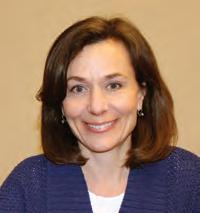
Shani Lasin Board President
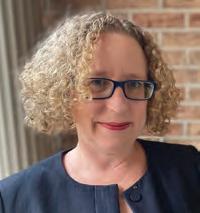
Amanda Hirsh Executive Director
The Hebrew Free Loan Association of Pittsburgh is a nonprofit that supports financial stability and advances opportunities for people in our region by providing nonsectarian, interest-free loans.
Photo by shironosov / iStock via Getty Images Plus
Opinion
Strong always
Guest Columnist Casey Weiss
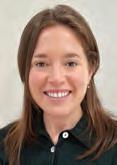
Four whirlwind days in Israel changed so much: my understanding of this moment, my vision for our students and my sense of what it means to lead a Jewish day school today. I returned home with something far more profound than jet lag or a suitcase full of notes. I came home with a strengthened conviction that Am Yisrael not only lives, but thrives, even in the shadow of unimaginable loss. Our people continue to choose courage, connection and life itself.
This journey was made possible by the Community Day School board, the Jewish Federation of Greater Pittsburgh, Partnership2Gether, the Jewish Agency for Israel, and the visionary leadership of Kim Saltzman and Noa Epstein Friedman. I am deeply grateful, not only for the opportunity to witness their work firsthand, but for the honor of carrying back the sacred responsibility of sharing what I learned.
From the moment we arrived, it was clear that this was not a typical visit. We were welcomed into rooms where decisions are made in real time for schools and communities living under the weight of anxiety and memory. We met regional education leaders whose commitment keeps schools in Karmiel and Misgav open, stable and connected to families despite ongoing trauma and the ever-present echoes of sirens. They spoke not in grand statements, but in the determined language of educators everywhere: How do we help our children
feel safe? How do we give them a future they can believe in?
At every stop, we encountered the true spirit of a Karmieli, a person rooted in this breathtaking land, shaped by its challenges and defined by a deep sense of responsibility for others. It is not a slogan or a motto. It is a way of being. It is resilience translated into action.
world, spoke candidly about the antisemitism that pushed them to leave home. They shared their hopes for belonging, for safety, for a future where they can simply be who they are: Jewish kids growing into Jewish adults with dreams that reach far beyond fear.
And then there was the Children’s Village, where we met Mali. She is a devoted house
These are real relationships with real people, the ones our students and the broader Jewish Pittsburgh community deserve to know.
At Pisgot High School, we walked the hallways like any visitors would, until the walls themselves transformed into a memorial.
Portraits of graduates murdered at Nova or fallen in Gaza lined the corridors. One frame was heartbreakingly empty. The student killed in the war has a younger brother, and the family asked to wait. They want his picture to go on the wall only after his brother graduates, so the siblings will hang together. The absence, the silence of that empty space, said everything words could not.
At Lavon Elementary, we saw the insistence on preserving childhood. Children programmed robots with curiosity and confidence. They created intricate miniature artworks with tiny brushes and giant imaginations. They burst into song, singing Ad HaSof, until the end, a joyful declaration that they will keep living, keep laughing, keep building a future that terror cannot touch.
At the Absorption Center, Selah students, newly arrived teens from around the
mother caring for 12 children removed from their homes. The table was set with care: fresh cookies warm from the oven, next to a meticulously organized chart tracking each child’s appointments, chores and afterschool activities. Her love was not loud. It was not showy. It was steady, and it filled the room. These children, who have endured too much, have someone who wakes up every morning and says: You matter. You belong. I am here.
At United Hatzalah, volunteer medics described rushing into danger to save lives — Israelis and Arabs, strangers and neighbors. Whoever needs help. Their stories revealed not only the trauma they witness, but the unshakeable belief that every human life is priceless.
These are not symbolic partnerships. These are real relationships with real people, the ones our students and the broader Jewish Pittsburgh community deserve to know. For decades, Pittsburgh and Karmiel Misgav have been intertwined through acts
of kindness, shared resilience and a commitment to Jewish continuity that spans oceans and time zones. But this moment demands even deeper connection.
That is why this spring, our CDS eighth graders will travel to Karmiel and Misgav for a mifgash that is not a field trip and not tourism. It is a hand to hand, heart to heart encounter with peers whose lives are shaped by the same Jewish story yet lived with a different urgency. Our students will sit in their classrooms, hear their hopes, see their courage and recognize themselves in the faces of teenagers who are their family across the sea. This journey will give them something no curriculum ever could: the understanding that being part of the Jewish people is not theoretical. It is real and it is theirs to inherit, protect and proudly lead into the future.
I left Israel with a heart that felt heavier and fuller at the same time. Heavier with the grief of what has been lost. Fuller with the pride of who we are and the hope of what we will build together.
And now I return to CDS determined to lead with deeper purpose. To ensure our students know not only the anguish of our story, but the light that refuses to go out. To help them see that their Jewish future is not inherited by accident, but carried forward with strength, love, and responsibility.
We will rise to meet this moment. We will build. We will teach. We will love louder than those who seek to silence us.
Because the miracle of our people is not only that we survive. It is that we bring more life into the world.
Am Yisrael Chai Always. PJC
Casey Weiss is head of school at Community Day School.
The historic new UN resolution is reason for hope
Back in Jerusalem, my grandfather, Rabbi Yitzhak HaLevi Herzog, was then serving as chief rabbi of the land of Israel. As crowds thronged into his home to celebrate the result of the U.N. vote, my grandfather gave voice to the hope felt by millions of Jews in a special radio broadcast. “After the years of
In a moment of diplomatic drama for the ages, the United Nations adopted Resolution 181 on Nov. 29, 1947. Across the Jewish world, the news that the U.N. had endorsed the creation of a Jewish state in the land of Israel was met with joy, relief and an overwhelming sense of hope. Our people were now closer than ever to realizing an eternal dream: to return home to the land of Israel, restore Jewish sovereignty and rejoin the family of nations in peace.
Members of my own family were at the heart of these events. Abba Eban, my uncle, was a leading figure in the Jewish Agency delegation in New York that fought to secure every vote in favor of the resolution. This success was a precursor to a stellar diplomatic career that saw him become a legendary foreign minister and leading spokesperson for Israel.
by the valiance, creativity and sacrifice of thousands of men and women who fought to establish and defend the nascent Jewish and democratic state.
Sadly, independence did not herald an end to the existential threats to our nation. In the decades since, Israel has been forced
This resolution paves the way to broaden the circle of peace in the Middle East and build a future of stability, cooperation and integration to the benefit of us all.
bitter exile, which have lasted 2,000 years,” he declared, “the dawn of Israel’s redemption is beginning to rise. Let all the House of Israel unite, with steadfast hope and eternal faith in the Rock of Israel and its Redeemer.”
U.N. endorsement of a Jewish state, however, was not enough to bring the state of Israel into existence. That was achieved
repeatedly to defend itself from those who seek our destruction. Rather than recognition of our legitimate self-defense and continual pursuit of peace, Israel instead has faced relentless condemnation at the very institution, the United Nations, that endorsed the right to Jewish self-determination back in 1947.
The low point came in 1975. In a moment of infamy, the U.N. General Assembly endorsed a resolution equating Zionism with racism. My father, Chaim Herzog, then Israel’s ambassador to the U.N., responded on the floor of the General Assembly: “Zionism is nothing more — and nothing less — than the Jewish people’s sense of origin and destination in the land linked eternally with its name.” In an iconic moment, emblematic of my father’s lifelong stand against antisemitism, he tore up his copy of that shameful resolution in front of the watching world. These values, combined with his deep Irish roots, earned him a lasting tribute: a Dublin park bearing his name — one that some now disgracefully seek to erase.
It took 16 years for the U.N. General Assembly to revoke the shameful “Zionism is racism” resolution, and today, the United Nations remains a hostile environment for Israel. Rather than fulfilling its purpose and fighting courageously against a global epidemic of jihadist, murderous and abhorrent terror, time and again, the United
Guest Columnist
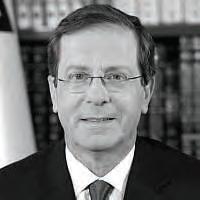
Isaac Herzog
Chronicle poll results: Discussing politics on Thanksgiving
Last week, the Chronicle asked its readers in an online poll the following question: “Did you or will you discuss politics over Thanksgiving?" Of the 190 people who responded, 49% said no; 35% said yes; and 16% said they weren’t sure. Comments were submitted by 58 people. A few follow.
Given the rise of white nationalist Nick Fuentes as Charlie Kirk’s heir apparent in the Republican Party, we must discuss politics at every dinner table now. Fuentes admires Hitler, and is extremely dangerous.
I love my family and do not need to make anyone upset on this or any holiday.
My nephew derided Obama continuously until my family and I had to leave the dinner early. That was over 10 years ago and we haven’t seen him or his family since.
Hopefully, politics will not be discussed. It’s a time to be grateful and not harp on things that are negative!
Herzog:
Continued from page 16
Nations has exhibited moral bankruptcy. International forums and institutions have consistently opted for outrageous hypocrisy and protection of the perpetrators of atrocities, rather than the victims they are meant to protect.
However, there is a glimmer of hope at the United Nations.
Last week, the U.N. Security Council voted to adopt President Donald Trump’s
It’s hard not to. It affects everything. I only spend time with the like-minded.
Not if we can help it as there are varying opinions amongst the family, including members who, once they get started on it, won’t stop!
Peace Plan to end the war in Gaza. This historic achievement was made possible by the masterful diplomacy of President Trump and his administration. Resolution 2803 paves the way for an opportunity for a real “day after”: a Gaza demilitarized, deradicalized and free from Hamas.
There remains huge work to be done in implementing this plan on the ground. The Hamas terrorist organization is still active in Gaza. It still holds the remains of two deceased hostages, Ran Gvili and Sudthisak Rinthalak, in blatant violation
Young Peoples Synagogue clarifies status, stresses stability while confronting challenges
As president of Young Peoples Synagogue in Pittsburgh, I want to clarify the perception of our synagogue suggested by the Chronicle’s article “Jewish Community Legacy Project guiding congregations through sustainability, mergers and last chapters” (Nov. 21, 2025).
Young Peoples Synagogue is still going steadily along, though we, like many congregations today, are facing demographic challenges. We are proud to note, however, that since 2015, with the exception of several months’ closure during the pandemic and two weatherrelated cancellations, we have only missed a minyan twice for our ongoing Shabbat and holiday services throughout the year.
We are fully aware of our demographics, and, as we think and plan for the coming years, we are happy to have learned of JCLP and the great help it may be able to offer. We have
I and everyone I know is concerned with the chaos in world politics — and most especially here in our country. Ignoring it is the worst possible option; it’s really no option at all. Ignoring it is allowing it to continue and grow. And isn’t that a lot like how things started in Nazi Germany?
We have differences; however, we appreciate and love each other so we listen respectfully.
I will discuss politics only with those that are not afflicted with the incurable TDS (Trump Derangement Syndrome). Everyone else present can just listen to the truth I discuss.
We will try to avoid the topic as one family member has totally different values and beliefs than the rest of us.
I will be thankful if political conversations are avoided as we enjoy Thanksgiving with family and friends. Our group is divided and those pleased with our current leadership are very opinionated.
of the agreement. Hamas has also used the ceasefire to embark on a series of violent executions of Palestinian civilians in Gaza, further evidence of the terror group’s violent brutality.
However, after two years of a war which began with Hamas’ brutal attack on Oct. 7, 2023 — a war in which our finest sons and daughters have fallen in defense of our homeland — U.N. Security Council Resolution 2803 provides hope and opportunity that we must seize. This resolution paves the way to broaden
Being thankful for the blessings we have fits with tikkun olam. Ours is a broken world and we must try to mend that which is torn. That begins with awareness of the task before us. Part of that task is political, whether we like it or not.
My community is divided, so we discuss books, food, weather, ailments, children, and once in a while, sex.
We all need to focus on what brings us together, not divides us. Thankful to be together as family and share the love, even in these most divisive of times.
Time to just talk turkey. PJC
— Compiled by Toby Tabachnick
Chronicle weekly poll question: Should Israeli President Isaac Herzog pardon Prime Minister Benjamin Netanyahu for alleged criminal misconduct? Go to pittsburgh jewishchronicle.org to respond. PJC
the circle of peace in the Middle East and build a future of stability, cooperation and integration to the benefit of us all.
Like the Zionist leaders on Nov. 29, 1947, who embraced hope while remaining cleareyed about the challenges ahead, we too must approach this historic moment with cautious optimism for a more secure and peaceful future for our region. PJC
Isaac Herzog is the 11th president of the state of Israel.
participated in online sessions with its principals in Atlanta and have tuned in to a number of its community education programs.
We look forward to continuing our connection with the Jewish Community Legacy Project and its rich resources as we prepare for a sustainable future for Young Peoples Synagogue.
Clarification
In “JCLP guides congregations through sustainability, mergers and last chapters” (Nov. 28), the Chronicle reported that Beth Israel Congregation consistently attracts at least five people to its Shabbat services on Zoom. According to Marilyn Posner, president of the congregation, Beth Israel’s Friday night Zoom services consistently attract about 15 worshippers. PJC
We invite you to submit letters for publication. Letters must include name, address and daytime phone number; addresses and phone numbers will not be published. Letters may not exceed 500 words and may be edited for length and clarity; they cannot be returned.
Send letters to: letters@pittsburghjewishchronicle.org or Pittsburgh Jewish Chronicle, 5915 Beacon St., 5th Floor, Pittsburgh, PA 15217
We regret that owing to the volume of correspondence, we cannot reply to every letter.
Rebecca Spiegel Squirrel Hill
Headlines
Freedman:
Continued from page 4
not comfortable, there are no windows — but I’ve never been up. I know it’s weird, but I don’t think it’s a disconnect to give a blessing for something I haven’t done. I haven’t had surgery, but I’ve been bedside saying blessings for patients. I haven’t been dead either, but I do a whole bunch of funerals, right?
You’re finishing up nearly 22 years of military service. How’d you start?
I came in very, very late. I was 39 and running the religious school here very successfully. One day we were in New York City, and it was Fleet Week (a citywide salute to the sea services) and there were these young sailors walking around. I remember I saw one of them, and I said to Deborah, “What do you think about me going into military chaplaincy?” And she said, “Sure.” It was just another challenge. It was just a thing. I don’t have great origin stories.
Still, you’ve undertaken some pretty sizable responsibilities.
I was sent to Manhattan in April of 2020. COVID had just started and I was among the first people in Manhattan. I was with a fatality search and recovery team. I was the chaplain for the unit — we did bring in another one, so there were two of us — and we took care of the spiritual needs of about 150 troops, and other people who brought in
Kindergarteners:
Step by step
Educators are responsible for more than academics. “We need to empower children to learn and to practice being people,” Weiss said. “It’s about putting on your coat and taking your coat off. It’s about learning to tie our shoes.”
Parents can aid development by having children help bake, water plants or assist with other responsibilities at home. “We don’t want to foster a culture of learned helplessness where the adults are stepping in to do everything,” Weiss continued. Creating a culture where students are empowered to solve problems and “learn how to do things for themselves is going to create a much more capable community.”
Weiss and other educators told the Chronicle addressing kindergarteners’ behaviors should not be confused with “recognizing and honoring neurodiversity.”
There are students with “struggles and things they are actively working on, and that is really important to note,” Weiss said.
The key to addressing today’s kindergarteners is not simply saying every student “has a diagnosis” or requires individual services, Levari said. “Those are determined by a lot of different factors.” What’s imperative is that “the environment, education, everything, has to adapt so that we can better meet students’ needs.”
Hope for a remedy
Kindergarteners have experienced certain challenges, but researchers point to children’s resilience.
D ani Dumitriu, a pediatrician and Columbia University neuroscientist, told NPR, “One of the important things about child development is that what happens at 6 months is not predictive of what happens at 24 months and it’s not predictive of what happens at 5 years.”
Classroom activities are significant, according to local educators.
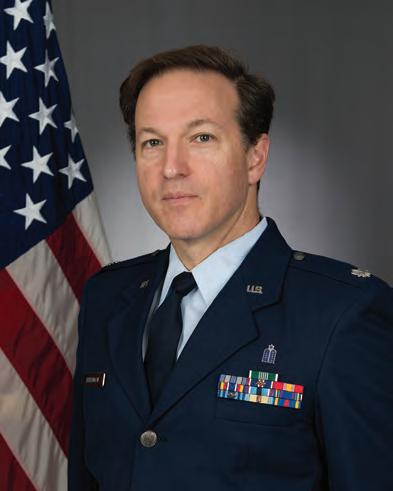
semi-trailers, who were not used to dead bodies. That was a big one. It was a full month. The other one was when I went to Kuwait in 2011 to do Passover. I was there for two weeks doing Passover-related Torah study and Shabbat. I also went to Qatar to do a seder in 2024. Coincidentally, while I was in Qatar, there was a colonel whose daughter was working
“As for working with troops, regardless of their faith, you have to learn to listen to people in a different way.”
–RABBI LAWRENCE FREEDMAN
her preparations, and then we did the bat mitzvah on the embassy grounds in Doha.
Though you’re retiring from the military, you’re continuing to serve as director of the Unified Religious School (a project of congregations
Beth Shalom, Rodef Shalom and Temple Sinai). How does being a chaplain influence your professional perspective?
I’m always interested in recruiting. It’s an interesting thing where many Jews are
when you join the American military, they say, “There’s Jews in the American military? How is that a place for a Jewish boy?” What I’ll say is that people should understand the military is a community of people working together. It’s a good place for Jews to join up, whether you go for a couple years, or a whole career. Do the reserves and guard, or if you like it, go to active duty. It’s a very interesting experience, and it’s something that Jews in America should not think is foreign to them or unavailable.
Before we wrap up, what else do you want readers to know?
I think the biggest takeaway is people love to say, “Thank you for your service,” which is very nice. But I always want to say to them, “You’re welcome, but everybody should be serving their community.” Lots of people can serve in lots of ways. People should think about that. Maybe pastors and rabbis could be police chaplains or volunteer firefighter chaplains or volunteer firefighters. They need people. Maybe you can figure out a way to get involved in the Squirrel Hill Urban Coalition — they do all kinds of stuff to make the community better. Go be part of a pickup basketball game and be a ref. I think the takeaway is to go serve your community. Find somewhere, whether it’s in a uniform or not, but go serve your community. PJC
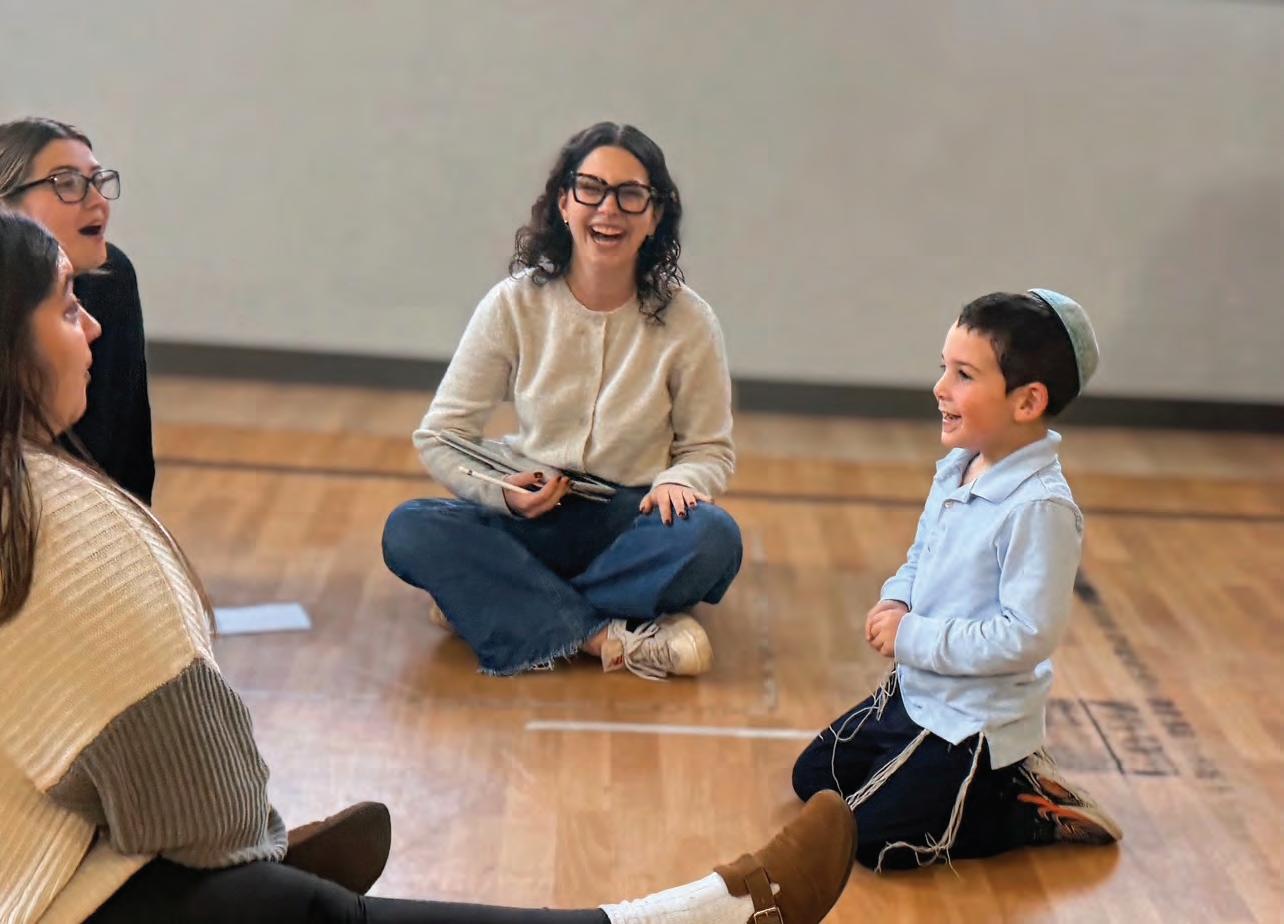
promote “partner and collaborative learning,” Friedman said. Similarly, teachers are being asked to see the scientific method as more than a discipline-specific model.
The process “embodies failing,” Friedman said. “Students design something, and if it doesn’t work, it’s not up to the teacher to tell them how to fix it. It’s for them to problem solve and figure out, ‘Well, why did my bridge collapse?’”
Down the road at CDS there’s a similar push for inquiry and partnership.
“We do a lot of asking each other questions and talking about our feelings,” Rice said.
During a recent activity, students drew a “serene happy place” before educators told young learners to remember, “Next time I’m stressed, next time I’m angry, I can go to my happy place in my mind.”
Using art for empowerment is just one example of helping kindergarteners “build up skills” for everyday life, Rice said. Also important is reminding students “they’re in this together, and they can, throughout the rest of the week, ask each other for help,
Acting Talmudically isn’t merely for kindergarteners.
“Parents need to take this kind of thing into account,” Rice said.
There’s a natural power imbalance between parents and children, but encouraging reciprocal conversations isn’t about promoting disrespect, it’s about empathy, she continued.
“It is challenging to be a kid right now, and there are lots of things that we can do to kind of boost them back up in a world that has all these challenges that we didn’t deal with when we were kids.”
The more things change
When it comes to young learners, there are two aspects to the COVID story, said Leah Shollar, a Yeshiva Schools of Pittsburgh administrator who oversaw General Studies Grades 1-12 during the pandemic. “One is the academics and one is the social emotional.”
Regarding academics, “if you’re tuned in, you see where the gaps are and you come up with a plan to remediate them. I think
Adam Reinherz can be reached at areinherz@
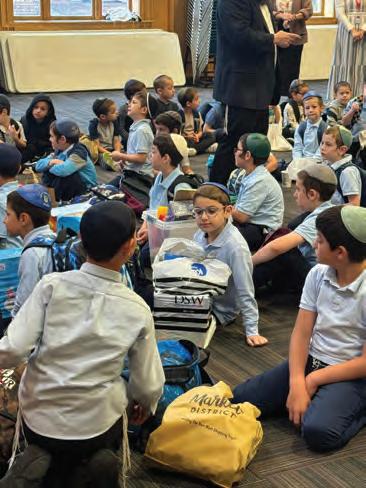
the bigger issue for kids in Pittsburgh, in the day schools, is that it’s been a very traumatic childhood so far.”
Even if they aren’t aware of the specifics from the Pittsburgh synagogue shooting and its trial, or the events of Oct. 7, 2023, and the ensuing Israel-Hamas war, students have been inundated with conversations and media coverage about antisemitism and hardship. The pandemic is “one of a number of pretty intense experiences that this cohort of kids has been through,” Shollar said.
Children need a “healthy social emotional environment,” and it’s educators’ and parents’ responsibility to provide “positive experiences for them to feel a sense of community and connection.” It can’t be that the world is simply a “scary place where bad things happen.”
Months from now kindergarteners will graduate, switch classrooms and follow a familiar yearslong educational process. It behooves the community to take the long view and recognize that ensuring these children’s “health and happiness” is needed for them “to go on to establish healthy families themselves.”
PJC
Adam Reinherz can be reached at areinherz@ pittsburghjewishchronicle.org.
p Rabbi Lawrence Freedman is retiring as a Lieutenant Colonel Chaplain from the 171st Air Refueling Wing of the Pennsylvania Air National Guard on Dec. 31. Photo courtesy of Rabbi Lawrence Freedman
p Kindergarten students at Hillel Academy of Pittsburgh enjoy hands-on learning with members of the school's support services and University of Pittsburgh Department of Occupational Therapy. Photo courtesy of Hillel Academy of Pittsburgh
p Students gather at Yeshiva Schools of Pittsburgh. Photo courtesy of Yeshiva Schools of Pittsburgh
Headlines
Discover:
Continued from page 5
The result is the website “Discover Jewish Pittsburgh” (discoverjewishpittsburgh.com), created by Gruener and a cadre of volunteers.
Billing itself as a grassroots effort of parents, teachers and community members who love Pittsburgh, the website’s intent is to show that “Pittsburgh is a great place to live as an Orthodox Jew.”
To that end, the site attempts to answer the questions a young family might have before moving to a new city, including information about synagogues, schools, Jewish organizations, kosher establishments and religious resources, such as data about the city’s eruv, mikvahs and even upcoming events.
The site is a work-in-progress, volunteer Brianna Greenstein said.
Like Gruener, Greenstein is a transplant who moved to Pittsburgh six years ago for graduate school, and a mother. She helps update the site and adds new information.
“The original intent was to get people to move here, but at the same time I want to utilize the fact that we now have this great website that showcases Jewish Pittsburgh, so let’s use it as a community resource,” she said. They even created a video, featured on
Goodman:
Continued from page 5
He also writes about soccer, photographs and hosts a podcast about the sport.
Goodman is taking time to weigh his options but said there is a certain amount of anxiety and tension when leaving a position.
“The way it works in rabbi employment is you look, you leap and then you land,” he said. “You have to depart one place and then it’s months before the next thing comes along. I hope to continue in Pittsburgh because my family is here, my wife’s employment is here, my kids are in school here and they have years to go until they finish.”
Goodman grew up Reform but decided to become a rabbi in the Conservative movement because of its “tradition and observance,” he said.
He was ordained from the Ziegler School of Rabbinic Studies in 2006. He was a teacher of Talmud and Jewish law in San Francisco from 2006 to 2011 before serving as the rabbi and director of Judaic studies at the Denver Jewish Day School from 2012 to 2017. He concurrently served as the rabbi for Congregation Har Mishpacha in Steamboat Springs, Colorado, until 2018.
the site, highlighting the city and the wider Jewish community.
To that end, “Discover Jewish Pittsburgh” has already expanded its content to include a kosher bakery in East Liberty and Reform congregations in the South Hills and North Hills.
future-focused.”
“They did their homework and have designed something that is engaging for the community that they’re hoping to attract,” she said. “I’m really hopeful that they’re going to be able to fulfill their goal of bringing more people from the community
“We want more people from all over to come to Pittsburgh because it’s a wonderful place to raise a family.”
–SHELLY PARVER
The goal, Greenstein said, is to list all things Jewish, but she’s also clear that “the priority is Orthodox Judaism.”
In fact, it was the focus on Orthodox Judaism that allowed the site to be created.
Gruener said the Jewish Federation of Greater Pittsburgh provided a Community Priority Grant and Hillel Academy of Pittsburgh is the site’s fiscal sponsor.
Shelly Parver, associate director of planning and impact at Federation, said the website, originally called “Promote Pittsburgh,” was attractive because it targeted young adult engagement and was “creative and
to Pittsburgh. We want more people from all over to come to Pittsburgh because it’s a wonderful place to raise a family.”
The website has already garnered attention locally, and both Gruener and Greenstein are working to ensure families know about it beyond the city’s boundaries.
“We’ve been posting it online,” Greenstein said. “There’s this group ‘Move to a Jewish Community Out of Town,’ that people post to if they’re interested in finding out about other communities they’ve never heard of. I posted the video we made and the link. I immediately got people reaching out.”

Those interested in learning more about Pittsburgh and its Jewish community can reach out through the website’s contact page.
“As their responses come in, we’re going to pair them with people from the community who we think would be well suited to talk to them about Pittsburgh, their experience and answer their questions. Hopefully they’ll come to the city for a visit,” Gruener said.
She hopes to use some of the grant money provided by Federation to help pay for people to visit the city.
“It would be amazing if we could get them all in on the same weekend for a Shabbaton,” she said.
As the site continues to grow, Gruener said she hopes people already in Pittsburgh will reach out to volunteer and to share information that can be included in “Discover Jewish Pittsburgh.” They can do so through the site’s contact page. In the meantime, she’s happy to have the outlet to showcase what she’s learned since moving here.
“It’s a warm and welcoming Orthodox community,” she said, “but honestly, one of my favorite things about Pittsburgh is how all the different sects of Judaism are connected,” she said. PJC
David Rullo can be reached at drullo@ pittsburghjewishchronicle.org.
of us, not just through the breadth of his knowledge, but through the clarity and genuine passion he brings to every class, sermon, and conversation.”
Goodman, he said, makes the Torah “accessible, uplifting, timeless and deeply personal.”
Beth Shalom, he continued, is grateful for the rabbi’s time, commitment, contribution and heart.
“We wish Rabbi Goodman every success as he moves forward in his rabbinic journey and in all that lies ahead for him and his family,” Teplitz concluded.
The congregation, Teplitz told the Chronicle, is assessing its options to “meet and exceed the needs of our congregants.”
For Goodman, the future may be rooted in the past.
He hopes to use his varied experiences and focus on areas of Judaism that have been the most important and meaningful to him: teaching Torah — particularly Hassidut and
In Pittsburgh, he is a past president of the Greater Pittsburgh Jewish Clergy Association and is on the clergy council of Squirrel Hill Stands Against Gun Violence, CeaseFirePA and HIAS. He is also part of the spiritual leaders’ caucus of the Pennsylvania Interfaith Impact Network.
Talmud — social justice and social action.
“Some kind of project or organization where I can do those things to the best of my ability would be ideal,” he said.
In a letter to the congregation, Beth Shalom President Paul Teplitz wrote that Goodman’s “teaching has touched so many
“I’ve been studying all these [Hasidic] rabbis and quoting them — granted, they lived in the 1800s, so life was different — but the Sfat Emet only lived to the age of 47 and the Kotzk rebbe died at 51. I’m 49 and only have so many years on the earth to serve God and the Jewish people. I would love to do that in a way that is most authentic to who I am and what I think is the future of 21st-century Judaism,” he said. “I hope I can find a job that allows me to do that right.” PJC
David Rullo can be reached at drullo@ pittsburghjewishchronicle.org.

p Rabbi Mark Goodman
Photo courtesy of Rabbi Mark Goodman
Life & Culture
Crunchy cranberry, apple and almond slaw
By Jessica Grann | Special to the Chronicle
This crunchy cabbage salad is perfect for the fall and winter months and can be prepared in under 10 minutes.
I love the different flavors and textures — there’s variety in every bite. You have apples, cabbage, nuts and dried cranberries. The base is a bag of prepared cabbage/coleslaw, which makes things easier, but you certainly could chop fresh cabbage if you have some on hand. A prepared mix works well if it includes purple cabbage and/or carrots. The available brands with a hechsher are sold in various sizes, so get a bag that is close to 10 ounces.
The addition of parsley makes this salad very refreshing, especially when paired with the apple cider and maple vinaigrette.
I prefer to make this just before serving. The onions marinate first in the vinaigrette, so you can prepare those in advance and just mix it together before your meal if that makes life easier. This is a small batch that will serve 5 or 6 people. You can easily double the recipe, but keep in mind that it can only sit out for about an hour or two before the cabbage will begin to wilt.

It has just enough flavor to lightly coat the ingredients without excess pooling in the bottom of the bowl.


Serves 5 or 6 as a side dish
1 9- or 10-ounce bag of prepared coleslaw mix, or 6 cups of cabbage, thinly sliced
½ cup finely chopped red onion
3 tablespoons neutral oil
2 tablespoons apple cider vinegar
2 teaspoons Dijon mustard
1 tablespoon maple syrup
¼ teaspoon salt
A few shakes or grinds of black pepper
½ cup chopped flat leaf Italian parsley
½ cup toasted sliced almonds or slivered almonds
⅓ cup dried sweetened cranberries
1 small apple, cored and thinly sliced
Dice the red onions and put them into a bowl.
Either use a separate small bowl to make the dressing or just prepare it in the big bowl that you will serve the salad in.
Pour the oil, apple cider vinegar, maple syrup, Dijon mustard, salt and pepper into the bowl and mix well with the onions. Let this rest for 10 minutes to allow the onions to soften in both flavor and texture. After 10 minutes, stir in the parsley before folding the cabbage into the bowl.
Once the cabbage is well covered, add most of the almonds and cranberries and mix in, leaving the rest to sprinkle on top. You can garnish the top with apple slices or mix them into the salad.
If you’re not a fan of maple dressings, you can substitute the sweetener with honey or agave syrup. If you’d like a bit more dressing, stir in an extra tablespoon of both oil and vinegar, and also a teaspoon of maple syrup or an alternative sweetener.
Enjoy and bless your hands! PJC
Jessica Grann is a home chef living in Pittsburgh.






Photo by Jessica Grann
Life & Culture
Vote to end the strike also ends Goldy’s long hair nightmare
By Steve Mellon | Pittsburgh Union Progress
Aman walked through the front door of Cardamone’s Salon in Regent Square shortly before 6:30 Tuesday night, Nov. 18. The outside breeze sent his long blondish hair flowing. He flipped it out of his face, Fabio-like. A receptionist looked up. She’d been told to expect him.
“We should have balloons here,” she said.
This was a big occasion. The most anticipated hair trimming since former Steelers player Brett Keisel had his legendary beard trimmed in 2020. That took place in front of a packed house in a Marshall bar. Only a few folks were on hand for Tuesday night’s trimming. It’s tough to turn out a big crowd for a ceremonial haircut in this town unless you’re a Steeler.
Andrew Goldstein is no football guy. He’s president of the Newspaper Guild of Pittsburgh (and a former Chronicle intern), and the last time he plopped himself into a hair stylist’s chair, he emerged looking like a sprightly and earnest young man. That was back in the fall of 2022. A short time later, he and dozens of his colleagues went on strike at the Pittsburgh Post-Gazette.
Goldy, as he’s known by his colleagues, decided he’d let his hair and beard grow until the strike ended. It was his way of showing commitment to the cause. No one expected the strike would last more than three years. Goldy was beginning to look like Forrest Gump in those movie scenes where he’s running across the country for the upteenth time.
Relief arrived last month, when a federal appeals court ruled in the union’s favor. It was a big win for the union, and for organized labor. A few days later, guild members voted to end the strike and then offered to return to work at the PG’s North Shore office on the morning of Monday, Nov. 24. Goldy, however, wasn’t waiting to get rid of his locks. “Lord of the Rings” hair can be a real pain. Wind blows Goldy’s hair into his mouth; he gets food stuck in his beard.
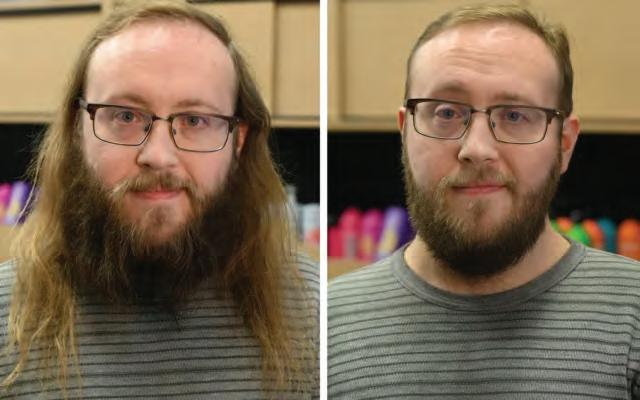
A few weeks ago, while reporting a story for the union’s strike newspaper, Goldy interviewed unionized federal workers who’d been furloughed during the government shutdown. Goldy’s hair fell in his face, so he used a pen to flip it away. The pen cap got tangled in his hair. He tugged at the pen, trying to get it free. It was embarrassing.
Then there’s the issue of keeping all that hair clean.
“I go through a bottle of shampoo a week,” Goldy said.
“So do I,” said his longtime friend Nick Barilla, who showed up for the shearing. Nick pulled off his cap to show a head barren of hair. Nick’s wife, Liz, shot him a long glance. “It’s for my body hair,” Nick said. He’s practicing his dad jokes.
Hair stylist Patty Knapp guided Goldy to a chair and then went to work. She used elastic bands to gather Goldy’s hair into two bundles, each about 18 inches long. Then she cut the bundles with scissors and handed the hair to Goldy’s mother, Rena Becker, who sat nearby. The hair will go to Wigs For Kids, a nonprofit organization that helps children who are losing their hair due to illness and/ or medical treatment.
Patty then reached for her electric shears. While her shears buzzed, clumps of hair fell
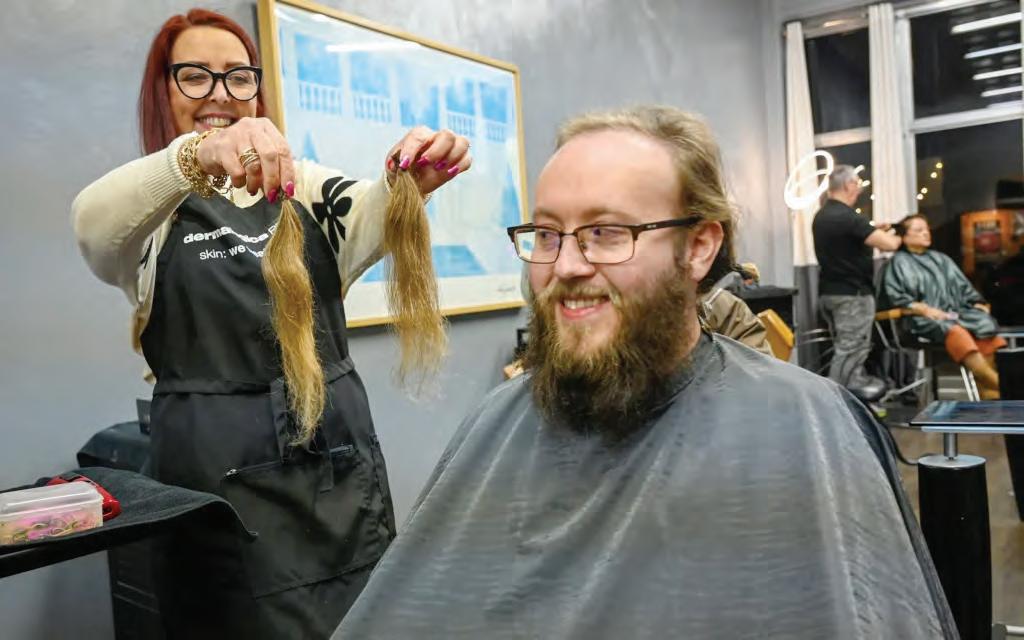
to the floor. Patty unearthed a new man.
“It looks like you went into a time machine and went back 10 years,” Liz said to Goldy. Rena agreed. “This looks so nice,” she said. Then she turned to those sitting nearby. “We went to an Italian barber in Squirrel Hill when he was so much younger,” she said, motioning to her son, “and he looked a lot like this.”
Goldy’s father, Bennett Goldstein, shot pictures with his cellphone. He and Rena are regulars at strike rallies. Every Labor Day, the couple stand on the sidewalk to cheer the strikers as they march. Goldy’s entire family
has stood with him during the entirety of the union’s long effort. It’s a Pittsburgh thing.
“His grandmother passed away last year,” Bennett said. “She was so looking forward to this being over. Even with her dementia, she remembered the strike. She adored Andrew. A large part of her focus was, ‘How is Andrew doing?’”
Rose Goldstein died Oct. 28, 2024.
Once Patty finished trimming Goldy’s hair, she turned her clippers on his beard, then his mustache. At one point, she pointed out, “Hey, you’ve got a lip under there.”
And then it was done. Goldy stood up. He wondered how his head would feel in the cold air, now that there’s much less hair to provide insulation.
A woman who’d been watching the transformation walked up.
“You look 20 years younger,” she said Goldy. He’s 33, so that would put him in middle school. “My son’s got a long beard,” the woman continued. “I wish he would get it cut.”
Nick raised his eyebrows.
“Look at that,” he said to his friend. “You’re already getting comments from the ladies.” PJC
Steve Mellon is a photojournalist and writer for the Pittsburgh Post-Gazette; he was on strike and working as an editor of the Pittsburgh Union Progress, where this first appeared.

p Patty Knapp, hair stylist at Cadamone’s Salon in Regent Square, shows Andrew Goldstein locks of hair she’d just cut from his head on Tuesday,
18, 2025. This was Goldstein’s first haircut since he and his fellow members of the Newspaper Guild of Pittsburgh went on strike at the Post-Gazette in October 2022. Photo by Steve Mellon/Pittsburgh
p Before and after views of Goldy
Photos by Steve Mellon/Pittsburgh Union Progress
Celebrations
Bat Mitzvah
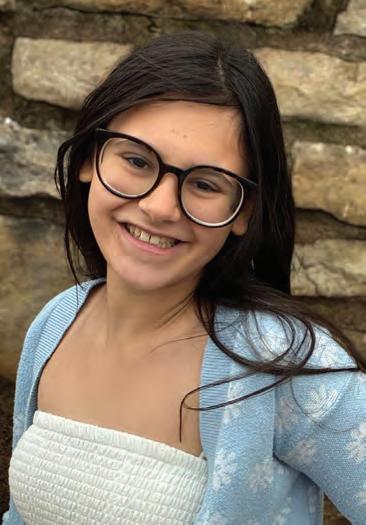
Torah
The significance of name
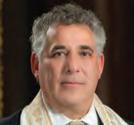
of his past, as well. Like a child named for a beloved relative, Yisrael carries within it the spirit of those who came before.
Nitzan Adira Helfand will be called to the Torah as a bat mitzvah on Dec. 6 at Congregation Beth Shalom. She is the daughter of Ilanit Helfand and Alex Helfand, and the sister of Meital Helfand. She is a seventh grader at Community Day School. She enjoys participating in the school play, doing gymnastics, reading, fashion, singing, art and nature. She spends her summers at Camp Young Judaea Midwest.
ignificance of name
Rabbi Aaron Bisno
Parshat Vayishlach
Genesis 32:4 – 36:43
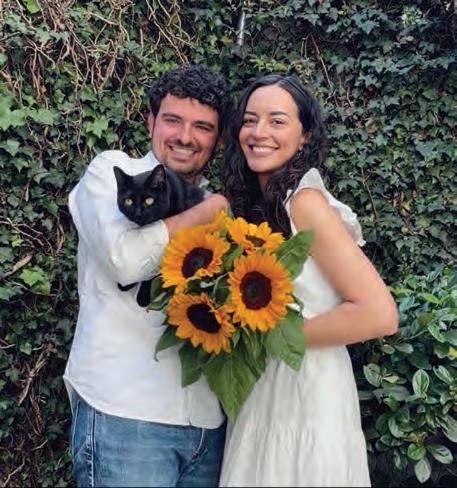


The significance of name
TThe significance of name
The significance of name
The significance of name
Rabbi Aaron Bisno
Rabbi Aaron Bisno
Parshat Vayishlach
Parshat Vayishlach
he significance of a name has always been central to how Judaism understands both identity and destiny. When parents name a child, a community renames itself, or one adopts a new moniker, one often looks to the future for inspiration. And why not? We hope a new name will influence what comes next.
Genesis 32:4 – 36:43
Genesis 32:4 – 36:43
With immense joy, Cheryl Moore announces the engagement of her son, Antonio Satryan, to Chelsie Galo, daughter of Dr. Napoleón Galo Jordan and Dr. Farida Galo Chevez, of El Progreso, Honduras. Tony is the grandson of Pearl Moore. Tony and Chelsie were also cherished by all their other grandparents before their deaths. Tony earned his Bachelor of Arts from Indiana University–Bloomington and his Master of Science, Education from Johns Hopkins University, and is the director of development for Camp Seneca Lake. Chelsie earned her Bachelor of Science and Master of Education from The Ohio State University and is a doctor of veterinary medicine student at the National Autonomous University of Mexico. An autumn 2026 wedding in Pittsburgh is being planned, to be officiated by Tony’s lifelong best friend, Rabbi Sam Rheins. PJC
Rabbi Aaron Bisno
Rabbi Aaron Bisno
Parshat Vayishlach
Parshat Vayishlach
Genesis 32:4 – 36:43
Genesis 32:4 – 36:43
This impulse isn’t wrong; new names rightly express hope. But Jewish tradition teaches that naming is never only about what lies ahead of us. Taking on a new name must also remind us from whence we’ve come.
This 800-year-old midrash teaches that names, even when pointed toward the future, need be rooted in memory. In our tradition, names are never arbitrary: Avram becomes Avraham, father of nations; Sarai becomes Sarah, princess of a covenantal people. And Mount Horeb will be renamed Mount Sinai — or Horeb is a place, while Sinai, derived from either s’neh (the burning bush) or siman tov (good sign), evoking revelation, points us toward the future.
The significance of a name has always been central to how Judaism understands both identity and destiny. When parents name a child, a community renames itself, or one adopts a new moniker, one often looks to the future for inspiration. And why not? We hope a new name will influence what comes next.
The significance of a name has always been central to how Judaism understands both identity and destiny. When parents name a child, a community renames itself, or one adopts a new moniker, one often looks to the future for inspiration. And why not? We hope a new name will influence what comes next.
The significance of a name has always been central to how Judaism understands both identity and destiny. When parents name a child, a community renames itself, or one new moniker, one often looks to the future for inspiration. And why not? We hope a new name will influence what comes next.
The significance of a name has always been central to how Judaism understands both identity and destiny. When parents name a child, a community renames itself, or one often looks to the future for inspiration. And why not? We hope what comes next.
The significance of a name has always been central to how Judaism understands identity and destiny. When parents name a child, a community renames itself, adopts a new moniker, one often looks to the future for inspiration. And why a new name will influence what comes next.
The significance of a name has always been central to how Judaism understands identity and destiny. When parents name a child, a community renames itself, adopts a new moniker, one often looks to the future for inspiration. And why not? a new name will influence what comes next.
This impulse isn’t wrong; new names rightly express hope. But Jewish tradition teaches that naming is never only about what lies ahead of us. Taking on a new name must also remind us from whence we’ve come.
Each new name, rather than rejecting the past, builds upon it. When Jacob becomes Israel, his old name is not erased. In fact, throughout the rest of Genesis, both names appear (sometimes even in the same verse). The message is clear: Within Jacob and Israel, the old and the new coexist, the past and the future are intertwined.
This impulse isn’t wrong; new names rightly express hope. But Jewish tradition teaches that naming is never only about what lies ahead of us. Taking on a new name must also remind us from whence we’ve come.
This impulse isn’t wrong; new names rightly express hope. But Jewish tradition naming is never only about what lies ahead of us. Taking on a new name must us from whence we’ve come.
new names rightly express hope. But Jewish tradition teaches that naming is never only about what lies ahead of us. Taking on a new name must also remind us from whence we’ve come.
We see this most powerfully in this week’s portion Vayishlach, wherein our patriarch Jacob receives a new name. Alone beside the Jabbok River, Jacob wrestles through the night with a mysterious being and emerges forever changed. Mid-bout, his hip is wrenched; thus, he will literally move through the world differently than before. Yet it is as the sun rises that the greater change occurs. At dawn, the being declares, “Your name shall no longer be Jacob, but Israel, for you have wrestled with God and with humans and prevailed.”
This impulse isn’t wrong; new names rightly express hope. But Jewish tradition naming is never only about what lies ahead of us. Taking on a new name must us from whence we’ve come.
This impulse isn’t wrong; new names rightly express hope. But Jewish tradition teaches that naming is never only about what lies ahead of us. Taking on a new name must also remind us from whence we’ve come.
We see this most powerfully in this week’s portion Vayishlach, wherein our patriarch Jacob receives a new name. Alone beside the Jabbok River, Jacob wrestles through the night with a mysterious being and emerges forever changed. Mid-bout, his hip is wrenched; thus, he will literally move through the world diQerently than before. Yet it is as the sun rises that the At dawn, the being declares, “Your name shall no longer be Jacob, but Israel, for you have wrestled with God and with humans and prevailed.”
We see this most powerfully in this week’s portion Vayishlach, wherein our patriarch Jacob receives a new name. Alone beside the Jabbok River, Jacob wrestles through the night with a mysterious being and emerges forever changed. Mid-bout, his hip is wrenched; thus, he will literally move through the world diQerently than before. Yet it is as the sun rises that the greater change occurs. At dawn, the being declares, “Your name shall no longer be Jacob, but Israel, for you have wrestled with God and with humans and prevailed.”
In an age when identities are fluid, names are often chosen to reject the past; renaming Jacob as Israel offers a counterpoint. Taking a new name does not mean one becomes someone else, but becomes more truly themself. Or, in the words of an ancient blessing, “The old shall be made new, and the new shall be made holy.”
We see this most powerfully in this week’s portion Vayishlach, wherein our patriarch Jacob receives a new name. Alone beside the Jabbok River, Jacob wrestles through the night with a mysterious being and emerges forever changed. Mid-bout, his hip is wrenched; thus, he will literally move through the world diQerently than before. Yet it is as the sun rises that the greater change occurs. At dawn, the being declares, “Your name shall no longer be Jacob, but Israel, for you have wrestled with God and with humans and prevailed.”
We see this most powerfully in this week’s portion Vayishlach, wherein our patriarch Jacob receives a new name. Alone beside the Jabbok River, Jacob wrestles through the night with a mysterious being and emerges forever changed. Mid-bout, his hip is wrenched; thus, he will literally move through the world diQerently than before. Yet it is as the sun rises that the greater change occurs. At dawn, the being declares, “Your name shall no longer be Jacob, but Israel, for you have wrestled with God and with humans and prevailed.”
We see this most powerfully in this week’s portion Vayishlach, wherein our patriarch receives a new name. Alone beside the Jabbok River, Jacob wrestles through a mysterious being and emerges forever changed. Mid-bout, his hip is wrenched will literally move through the world diQerently than before. Yet it is as the sun greater change occurs. At dawn, the being declares, “Your name shall no longer but Israel, for you have wrestled with God and with humans and prevailed.”
We see this most powerfully in this week’s portion Vayishlach, wherein our patriarch receives a new name. Alone beside the Jabbok River, Jacob wrestles through the a mysterious being and emerges forever changed. Mid-bout, his hip is wrenched will literally move through the world diQerently than before. Yet it is as the sun greater change occurs. At dawn, the being declares, “Your name shall no longer but Israel, for you have wrestled with God and with humans and prevailed.”
Jacob’s new name derives from the Hebrew verb lisrot (“to wrestle”) combined with El, a name of God. To be Yisrael, then, is to live in holy tension with both history and faith, the past as well as the future.
Jacob’s new name derives from the Hebrew verb lisrot (“to wrestle”) combined with El, a name of God. To be Yisrael, then, is to live in holy tension with both history and faith, the past as well as the future
Jacob’s new name derives from the Hebrew verb lisrot (“to wrestle”) combined with El, a name of God. To be Yisrael, then, is to live in holy tension with both history and faith, the past as well as the future.
Jacob’s new name derives from the Hebrew verb lisrot (“to wrestle”) combined with El, a name of God. To be Yisrael, then, is to live in holy tension with both history and faith, the past as well as the future
Jacob’s new name derives from the Hebrew verb lisrot (“to wrestle”) combined with El, a name of God. To be Yisrael, then, is to live in holy tension with both history and faith, the past as well as the future
A 13th-century collection of midrashim known as Yalkut Shimoni, adds a deeper insight: The five letters of Yisrael,
Jacob’s new name derives from the Hebrew verb lisrot (“to wrestle”) combined name of God. To be Yisrael, then, is to live in holy tension with both history and past as well as the future.
Jacob’s new name derives from the Hebrew verb lisrot (“to wrestle”) combined name of God. To be Yisrael, then, is to live in holy tension with both history and past as well as the future
A 13th- century collection of midrashim known as Yalkut Shimoni, adds a deeper insight: T letters of Yisrael ( י ש ר א ל ) contain the initials of all seven of our patriarchs and matriarchs
A 13th- century collection of midrashim known as Yalkut Shimoni, adds a deeper insight: The 5 letters of י ש ר א ) contain the initials of all seven of our patriarchs and matriarchs:
A 13th- century collection of midrashim known as Yalkut Shimoni, adds a deeper The 5 letters of Yisrael ( י ש ר א ל ) contain the initials of all seven of our patriarchs matriarchs:
A 13th- century collection of midrashim known as Yalkut Shimoni, adds a deeper insight:
A 13th- century collection of midrashim known as Yalkut Shimoni, adds a deeper insight: The 5 letters of Yisrael ( י ש ר א ל ) contain the initials of all seven of our patriarchs and matriarchs:
So it was that as dawn broke over the Jabbok River, Jacob — now Israel — rose limping from nocturnal wrestling with a name that at once recalled his past and signaled his future. And to this day, Jacob’s new name renews us, as well. For in every generation, we too become own version of Yisrael — wrestling with an ancient faith, answering the urgent call of conscience and grappling with an ever-changing world exactly as we find it. PJC
A 13th- century collection of midrashim known as Yalkut Shimoni, adds a deeper The 5 letters of Yisrael ( י ש ר א ל ) contain the initials of all seven of our patriarchs matriarchs:
The 5 letters of Yisrael ( י ש ר א ל ) contain the initials of all seven of our patriarchs and matriarchs:

י = Yitzchak/ Yaakov ש = Sarah ר = Rivkah/Rachel א = Avraham ל = Leah
י = Yaakov ש = Sarah ר = Rivkah/Rachel א = Avraham ל = Leah
י = Yitzchak/ Yaakov ש = Sarah ר = Rivkah/Rachel א = Avraham ל = Leah
י = Yitzchak/ Yaakov ש = Sarah ר = Rivkah/Rachel א = Avraham ל = Leah
= Avraham
י = Yitzchak/ Yaakov ש = Sarah ר = Rivkah/Rachel א = Avraham ל = Leah

י = Yitzchak/ Yaakov ש = Sarah ר = Rivkah/Rachel א = Avraham ל = Leah
= Leah
Jacob’s new name, then, is not only about his future; it, quite literally, contains a record of his past, as well. Like a child named for a beloved relative, Yisrael carries within it the spirit of those who came before.
Jacob’s new name, then, is not only about his future; it, quite literally, contains a record of his past, as well. Like a child named for a beloved relative, Yisrael carries within it the spirit of those who came before.
This 800-year- old midrash teaches that names, even when point be rooted in memory. In our tradition, names are never arbitrary: father of nations; Sarai becomes will be renamed Mount Sinai (the burning bush) or siman tov = Rivkah/Rachel
Jacob’s new name, then, is not only about his future; it, quite literally, contains a record of his past, as well. Like a child named for a beloved relative, Yisrael carries within it the spirit of those who came before.
Jacob’s new name, then, is not only about his future; it, quite literally, contains a record
Jacob’s new name, then, is not only about his future; it, quite literally, contains a record of his past, as well. Like a child named for a beloved relative, Yisrael carries within it the spirit of those who came before.
This 800-year- old midrash teaches that names, even when pointed toward the future, need be rooted in memory. In , father of nations; will be renamed Mount Sinai (the burning bush) or = Sarah
This 800-year- old midrash teaches that names, even when point be rooted in memory. In our tradition, names are never arbitrary: father of nations; Sarai becomes Sarah, princess of a covenantal people. will be renamed Mount Sinai or Horeb is a place, while Sinai, derived burning bush) or siman tov (good sign), evoking revelation, points us toward the future.
Rabbi Aaron Bisno is the Frances F. & David R. Levin Rabbinic Scholar at Rodef Shalom Congregation and serves as the rabbi at Temple Ohav Shalom in the North Hills. This column is a service of the Greater Pittsburgh Jewish Clergy Association.
This 800-year- old midrash teaches that names, even when point be rooted in memory. In our tradition, names are never arbitrary: father of nations; Sarai becomes Sarah, princess of a covenantal people. will be renamed Mount Sinai or Horeb is a place, while (the burning bush) or siman tov (good sign), evoking revelation, points us toward the future.
This 800-year- old midrash teaches that names, even when pointed toward the be rooted in memory. In our tradition, names are never arbitrary: Avram becomes , princess of a covenantal people. And , derived from either ing revelation, points us toward , contain the initials of all seven of our patriarchs and matriarchs:

This 800-year- old midrash teaches that names, even when pointed toward the be rooted in memory. In tradition, names are never arbitrary: Avram becomes , princess of a covenantal people. And , derived from ing revelation, points us toward = Yitzchak/ Yaakov
Jacob’s new name, then, is not only about his future; it, quite literally, contains his past, as well. Like a child named for a beloved relative, Yisrael carries within of those who came before
Jacob’s new name, then, is not only about his future; it, quite literally, contains his past, as well. Like a child named for a beloved relative, Yisrael carries within of those who came before.
Rabbi Aaron Bisno Parshat Vayishlach Genesis 32:4 – 36:43
Obituaries
CAPLAN: Suzanne H. Caplan, age 81, of Dormont, died Friday, Nov. 21, 2025, after a prolonged period of illness. She was born on Dec. 11, 1943, the second daughter of Samuel H. and Mildred Caplan. A 1962 graduate of Taylor Allderdice, Suzanne was an engaged citizen, demonstrating against the Vietnam War and for civil rights. Following her father’s death in 1972 she took over Pittsburgh Glove Manufacturing Company, running the business for 20-plus years. Suzanne wrote several business books and was a popular speaker, particularly committed to small and women-owned businesses. A lifelong Steelers fan, Suzanne said that the best moment of her life was sitting in a cold, damp Tulane University stadium on Jan. 12, 1975, to watch her team win their first Super Bowl. Suzanne is survived by friends including Jean, Sara, Maura, Wendy, Kathy Rose and David; her sister Naida (Caplan) Schwartz, brother-in-law Joel Schwartz, niece Harriet Schwartz and nephew Howard Schwartz; cousin Ricki Suzanne Liff; and nephew and nieces of her heart, Graham, Ann and Kathy. In lieu of flowers, please send contributions to the Women’s Center & Shelter of Greater Pittsburgh or your preferred support/advocacy organization. Services are private. Arrangements entrusted to Ball Funeral Chapel, Inc.
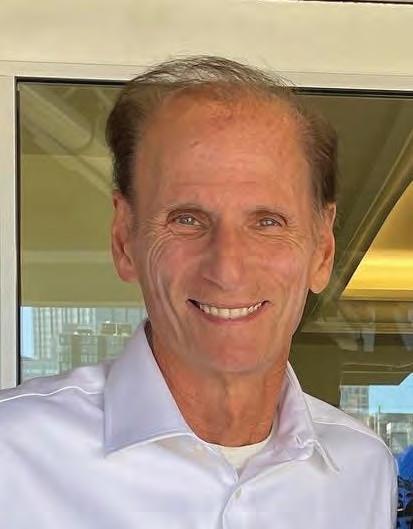
COHEN: “It is more blessed to give than to receive.” Acts 20:35. Jeffrey “Jeff” Edward Cohen passed away on Nov. 29, peacefully in his home, in the presence of his family, at the age of 68. Throughout his yearlong battle with duodenal adenocarcinoma, he continued to live his life on his terms, working as tirelessly as his body could handle and navigating as the protector of the family without complaint. Jeff, a native of Pittsburgh, married his high school sweet heart, Phyllis, in 1984, and they have since honored their wedding vows in more ways than one over the last 41 years. He began his professional career in shoe sales working for Nike, learning of the opportunity when buying cleats for a minor league tryout. Pitching for Point Park University during their College World Series seasons, he held a great love for the game. From watching Roberto Clemente’s 3000th hit at Three Rivers Stadium with his grandma Lil to throwing batting practice to Barry Bonds, he was his daughter Aly’s go-to almanac for all things baseball during her years as a broadcaster for the Pirates pre and postgame shows. After several years in the shoe business, he moved the family back to Pittsburgh to begin his entrepreneurial career as owner of Weiss Provision Company, which now services some of the top country clubs and restaurants in the city as a meat wholesaler. His stress reliever was always coaching. He loved coaching basketball, from Aly’s AAU teams to Allderdice boys state finalists. AJ, his son, followed in his coaching footsteps, eventually ending his career at Boston College to return home and run the business with his dad. From Aly’s broadcasting career to AJ’s coaching, he was always their number one supporter and best critic, many times traveling all over the country. He made many sacrifices in his journey making sure his family, friends and employees were taken care of. Son of the late Norbert and Joanne Cohen, son-in-law of Harriet Kluchman, father-in-law of Gary Messer (Aly) and brother of Steven and Erin Cohen, and uncle to Rachel and Michael Cohen. There is no person who better embodies “it is more blessed to give than to receive” than Jeff. His family is grateful for any donation that is made in Jeff’s memory. They are asking to please make donations to your local community food bank. Services were held at Ralph Schugar Chapel, Inc. Interment Beth Shalom Cemetery. schugar.com
D’Alessandro Funeral Home and Crematory Ltd.
“Always A Higher Standard”

Dustin A. D’Alessandro, Supervisor • Daniel T. D’Alessandro, Funeral Director 4522 Butler St. • Pittsburgh, PA 15201 (412) 682-6500 • www.dalessandroltd.com
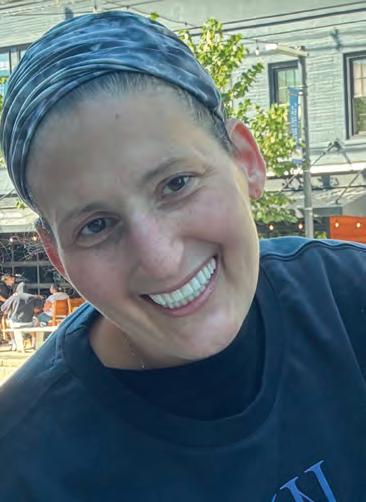
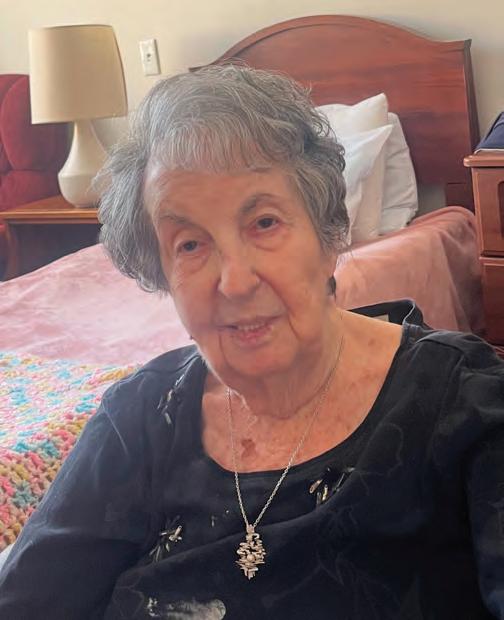
COHEN: Melanie Jill Cohen, on Sunday, Nov. 9, 2025. Loving daughter of Marlene Terkel and the late Howard Cohen. Stepdaughter of Denise Cohen and the late Marshall Terkel. Cherished sister of Lori Schiller, Lee (Beth) Terkel and David (Sue) Terkel. Aunt of Sophie and Allie Schiller. Niece of Marilyn (Roger) Galbraith of Irwin and Martin (Shelly) Kaufman of New York. Melanie will be loved and remembered by all who knew her. Graveside service and interment were held at Homewood Cemetery. Contributions may be made to Animal Friends, 562 Camp Horne Road, Pittsburgh, PA 15237. Arrangements entrusted to Ralph Schugar Chapel, Inc. schugar.com
HECHT: Helen Hecht, on Friday, Nov. 28, 2025. Beloved wife of the late Arnold Hecht; loving mother of Steve (Lynn) Hecht of Squirrel Hill and the late Mark Hecht. Sister of the late Sylvia (Joe) Rosenberg, Jennie (Willie) Felder, Martha (Dave) Cohen, Herman (Mal) Neuman and David (Ceil) Neuman. Sisterin-law of Linda (late Herman) Neuman. Cherished grandmother of Aaron (Sara), Adam (Jessie), Dana (Jess Fortune), Sarah, Alison and Loren Hecht. Helen was a proud and adoring great-grandmother. She is also survived by nieces, nephews and great-nieces and nephews. Graveside services and interment were held at Poale Zedeck Memorial Park Cemetery, Gibsonia, PA. Contributions may be made to Ahava Memory Care, c/o JAA, 200 JHF Drive, Pittsburgh, PA 15217, or the JFCS Squirrel Hill Food Pantry , 5743 Bartlett St, Pittsburgh, PA 15217 or charity of donor’s choice. Arrangements entrusted to Ralph Schugar Chapel, Inc. schugar.com
Reda Kossis, age 98, of Miami Beach and Pittsburgh, passed away on Nov. 25, 2025, in her home in Pittsburgh while under hospice care. Reda was born to parents David and Ella Pearlstein in Pittsburgh in 1927. She graduated from Taylor Allderdice High School in Pittsburgh in 1944. She married Bertram Kossis, the love of her life, in 1949, and was preceded in death by Bert. Reda and Bert had two children, Jeffrey (Marlene) and Neil (Lisa); four grandchildren; and four great-grandchildren (with one on the way). She had four brothers — Eddie, Saul, Milton and Dan — who all predeceased her. Reda spent her early married life raising her family and managing the household. In time, Reda and Bert joined Green Oaks Country Club in Verona, Pennsylvania, and were active members there for many years. They had many good friends at the club. In later years, when Reda and Bert were spending more time in Florida, they joined Westview Country Club in Miami and made many friends there. Cryptside services and entombment were held at Homewood Cemetery. The family suggests that in lieu of sending flowers, donations be made to the Jewish National Fund, National Office, 42 East 69 Street, New York, NY 10021. Arrangements entrusted to Ralph Schugar Chapel, Inc. schugar.com

Please see Obituaries, page 24










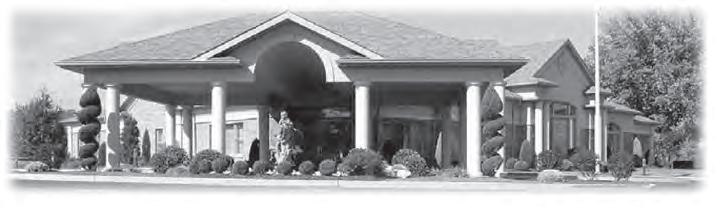

Jewish Association on Aging gratefully acknowledges contributions from the following: A gift from ...
Tibey Falk
Rachel G Meyers
Richard, Mindy & Logan Stadler . . . Nancy K Young
Contact the Development department at 412-586-2690 or development@jaapgh.org for more information. THIS WEEK’S YAHRZEITS —
Sunday December 7: Sidney Epstein, Anna Gold, Ella Kazan, Jennie Levy, Donald J Isaac Mikulitsky, Jane Florence Pianin, Joseph Reisz, Freda Rosenwasser, Charles Saxen, Norman M Schwartz, Yetta Vinocur, Judge David H Weiss
Monday December 8: Bessie M Bleiberg, Joan Brandeis, Samuel B Cohen, Louis Debroff, Hilda B Friedman, Jacob Gilberd, Marcella Shapiro Gold, Bella Goodman, Everett Green, Eileen G Herman, Frieda K Lawrence, Ruth M . Lazear, Sadye Lincoff, Carl Markovitz, Jacob Mendelblatt, Marcus Rosenthal, Goldie Mallinger Schwartz, Charles B Julius Sheps, Morris Solomon, Bella Stein, Edna Teplitz, Celia Verk
Tuesday December 9: Bernice Finegold, Bertha Fingeret, Rebecca A Leo Freiberg, Margaret K Lebovitz, Martin Rebb, Edward F Reese, M .D ., Esther Rice, Herbert Rosenbaum, Bessie Rosenblum, Eugene M Rosenthall, Louis Schultz, Dorothy Schusterman, Albert H Snyder
Wednesday December 10: Gertrude P Elias, Leonard Enelow, Arthur Forman, Jack J Friedman, Jacob Gold, Norma Harris, Harry Haynes, William Hersh, Milton Iskowich, Max Janowitz, Sylvia Kalmenson, Nannie Klater, Shirley Krouse, Shirley Krouse, Ruth Kwall Land, Ruth Kwall Land, Joseph Levitt, Allan Lippock, Maurice Malkin, Rebecca K Malt, Harris Nathan Miller, Ruth Murman, Annette Nussbaum, Harry Rosenfield, Harold J Rubenstein, Frank Smith, Zelig Solomon, Anne C Weiss
Thursday December 11: Maurice P Ashinsky, Esther L Bialer, Saul Broverman, Julian Falk, Harry First, David Frank, Louis Frank, Rose Goldstein, Martin W . Hepps, Sarah Jacobson, Edith Z Kramer, Alvin Lichtenstul, Jennie Markovitz, Julia Monheim, Myer Palkovitz, Morris Rudick, Morris J Semins, Aaron Siff*, Dr Jacob Slone, Shirley Starr, Morris Weiss
Obituaries
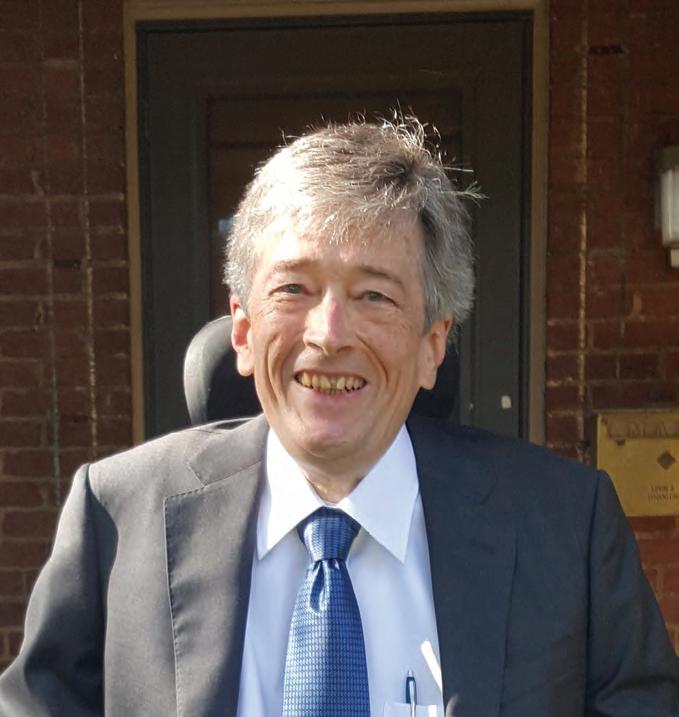
Friday December 12: Susan Barotz, Irving I . "Chick" Bogdan, Victor Chesterpal, Marc Leon Front, Rae Kleinerman, Dr Hyman Levinson, Fannie Malkin, Max Mallinger, Louis Menzer, Fannie Rice, Marvin L Silverblatt, Sam Swartz
Saturday December 13: Julius Berliner, Jacob Braun, Florence Meyers Clovsky, Leonard Samuels Finkelhor, Edward L Friedman, Alfred Krause, Max Lemelman, Sarah Young Pretter, Hymen Rosenberg, Annie Segall, Lillian Shermer, Max Strauss, Samuel Z Udman, I Barnes Weinstein

“Don’t wait for an opportunity. Create it.”
Continued from page 23
Paul O’Hanlon, age 71, of Pittsburgh, on Nov. 30, 2025. Beloved husband of Lori Levin; loving father of Samuel O’Hanlon; caring brother of Donna (Joseph) Valentino and the late Nancy O’Hanlon, Karen (John) McNeil and Joseph (Laura) McNeil. Paul was an attorney for 35 years. He was also a passionate disabilities rights activist in the city of Pittsburgh. He specialized in housing, healthcare, transportation and voting rights. Paul fought for years for people with disabilities and impacted many people throughout his life. A graveside service was held at Homewood Cemetery. Secular shiva will be held from 4 to 7 p.m. every day this week at Paul’s home. Professional services trusted to D’Alessandro Funeral Home & Crematory,
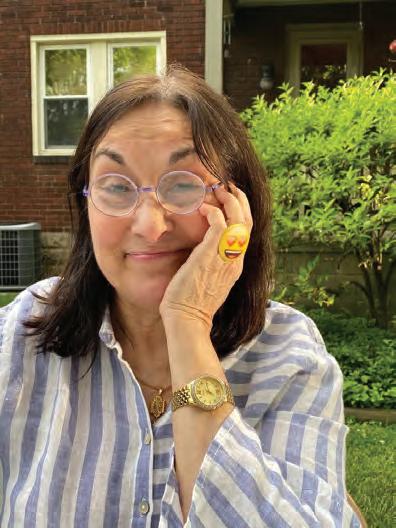


Fran “Franny” Weingrad, on Wednesday, Nov. 26, 2025. Wife of the late Ronnie Weingrad; loving mother of Eric Weingrad (Lisa Tomko) and Adam Weingrad (Lisa). Loving daughter of Charlotte and the late Sherman Pasekoff. Cherished sister of Marilyn Pasekoff and Lori Winick (Elliot). Adoring grandmother of Sophia, Noah, Maxwell (and their mother, Christa), Isadora and Stanley. Also survived by a host of nieces, nephews and extended family and friends. Franny will be remembered for touching so many lives in her 40-year career as a leader in the early education community. Franny’s spirit and love of life was a bright light that will shine and be part of us forever. Services were held at Ralph Schugar Chapel, Inc. Interment private. In lieu of food and flowers, contributions may be made to ) or Princeton Child Development
SPECIAL OCCASIONS DESERVE SPECIAL ATTENTION

What is a special occasion…a birth, a b’nai mitzvah, an engagement, a wedding, an anniversary? Absolutely!
But so is a birthday, a graduation, an athletic victory, an academic achievement…anything that deserves special recognition.
Absolutely! special recognition.
a wedding, an anniversary? Absolutely! achievement…anything that deserves special recognition.
And there is no better place to share your joy than in...
What is a special occasion…a birth, a b’nai mitzvah, an engagement, a wedding, an anniversary? Absolutely!
And there is no better place to share your joy than in...
And there is no better place to share your joy than in...
And there is no better place to share your joy

And there is no better place to share your joy
The more you celebrate in life… the more there is in life to celebrate!
The more you celebrate in life… the more there is in life to celebrate!
The more you celebrate in life… the more there is in life to celebrate!
The more you celebrate in life… the more there is in life to celebrate!
SEND YOUR CELEBRATIONS, MAZEL TOVS, AND PHOTOS TO: announcements@pittsburghjewishchronicle.org
SEND YOUR CELEBRATIONS, MAZEL TOVS, AND PHOTOS TO: announcements@pittsburghjewishchronicle.org
SEND YOUR CELEBRATIONS, MAZEL TOVS, AND PHOTOS TO: announcements@pittsburghjewishchronicle.org
SEND YOUR CELEBRATIONS, MAZEL TOVS, AND PHOTOS TO: announcements@pittsburghjewishchronicle.org

But so is a birthday, a graduation, an athletic victory, an academic achievement…anything that deserves The more you celebrate in life… the more there is in life to celebrate!
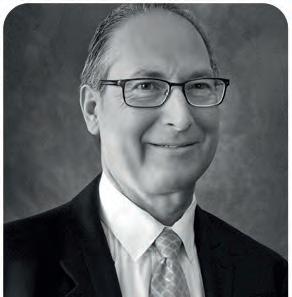






SEND YOUR CELEBRATIONS, MAZEL TOVS, AND PHOTOS TO: announcements@pittsburghjewishchronicle.org
We provide expert help with long term care planning, powers of attorney, wills, trusts and special needs. We help you implement legal and tax strategies to protect your wealth during your life and afterwards.




Allison Park, Pennsylvania 15101 We make house calls!






PENDING
First time offered
Magnificent showplace. Large 4+ bedroom home on large lot. With a magnificent covered porch. Home is bright and airy center hall with exciting kitchen and first floor laundry. See the great bathrooms and more.
PENDING
SHADYSIDE • $495,000
First time offered
Close to shopping and restaurants. Large charming 5 bedroom home with off street parking. Hardwood floors open kitchen and more.
SHADYSIDE • $875,000 5000 Fifth Ave, Unit #101
3 bedrooms, 2½ bathrooms, balcony, 2 indoor parking spaces, full-time building attendant, guest suite, exercise room, own storage room, great amenities in this luxury building.
OAKLAND - THE MADISON • $768,000 220 N Bellefield, Unit #1003
Light-filled spacious 3 bedroom, in-unit laundry, unbelievable closets. Great terrace, 2 parking spaces. Party room, guest suite, exercise room and great storage room. Luxury living near universities, hospitals and more. SQUIRREL HILL • N OF FORBES • $1,195,000






Life & Culture
Dairy devotees rejoice: The Cheese Guy is coming to town
Adam Reinherz | Senior Staff Writer
The cheesiest night in Pittsburgh will be anything but unpleasant. On Dec. 13, Shaare Torah Congregation is welcoming Brent Delman, aka “The Cheese Guy,” for a community-building event featuring a dairy smorgasbord, wine pairings and a presentation certain to delight the palate.
Speaking with the Chronicle by phone from his Yonkers, New York, home, Delman said the 90-minute affair will not only offer attendees highly coveted cheeses but an opportunity to learn about a tasteful evolution.
For nearly 20 years, Delman has treated kosher consumers to once unavailable fares. Since making early batches of artisanal cheese in his basement, and bringing them to Riverdale Park Farmers Market on Sundays, Delman has continued growing his business and expanding eaters’ understandings.
“There’s been a generation of young people that have grown up with my product, and it’s really incredible, just a beautiful thing, to be a part of,” he said.
Growth and maturation — both in business and in taste — take time. Delman learned this lesson even before founding The Cheese Guy. For years, he imported specialty foods that fetched interest and boasted quality. After becoming more observant as a young man, he committed to ensuring kosher consumers in the U.S. could access the finest goods.
The pledge led him to begin partnering with

small dairy farms, nurturing young cheeses and developing new products. All the while, Delman continued frequenting food fairs and other public fora. He listened to customers — both those familiar with Jewish dietary laws, and those unable to distinguish chalav from chalaza. Over time, The Cheese Guy brought more than 30 types of cheese to market, including truffle gouda, aged manchego and pecorino romano.
Delman plans to schlep several varieties to the Dec. 13 event as well as plenty of stories and predictably “cheesy jokes.”
Whether in Pittsburgh or elsewhere, a cheesemonger’s quest, he said, requires connecting and informing. Providing samples of aged cheeses and other products, including cornichons and biscotti, allows people who may
have “sort of knee jerk responses or reactions to kosher products” to gain new perspectives.
There’ve been times, he continued, where people have denigrated kosher items in general by saying they’re inferior or overpriced.
“I’ve got to dispel some of those preconceived notions,” he said. “A lot of our products are carried in places like Whole Foods and specialty stores because they’re good products, not because they’re kosher.”
Delman’s mission is serious, but laughter remains a key piece of the process.
He wears a T-shirt bearing the words “Life is gouda,” and regularly posts clips of eaters’ reactions to various cheeses. Filmed at farmers markets and other events, the videos often feature non-kosher conscious consumers
dancing, smiling and praising a product they’ve never previously tried.
Delman is proud of opening minds — and mouths — but also the ingredients themselves.
Across the country, The Cheese Guy partners with “family farms and rural communities,” he said. Product sales support local businesses and ensure customers receive exceptional foods.
Delman noted he also offers vegetarian, lactose-free, raw milk, pasture-raised, hormone-free varieties of cheese, which meet specific needs, including those of people who aren’t necessarily conversant in Jewish law and its dietary code.
“There are some niches,” he said. Whether it’s Muslims searching for kosher “if halal is not available” or vegetarians, “people know that my cheeses, and most kosher cheeses, do not contain animal enzymes like rennet or lipase or lard.”
When it comes to explaining comestible curiosities or how COVID and disposable income altered appetites, Delman bears no shortage of insights. He said he plans to use his Pittsburgh visit to dig into the meat of kosher cheese, and hopes to meet both those enthused by affinage and even individuals wary of whey.
The time is ripe to come together as a community, he continued. “Let’s enjoy each other’s company and maybe put aside some of the tough things — the difficulties that we’re going through — and enjoy life together.”
After all, like his T-shirt reads, “Life is gouda.” PJC
Adam Reinherz can be reached at areinherz@pittsburghjewishchronicle.org.

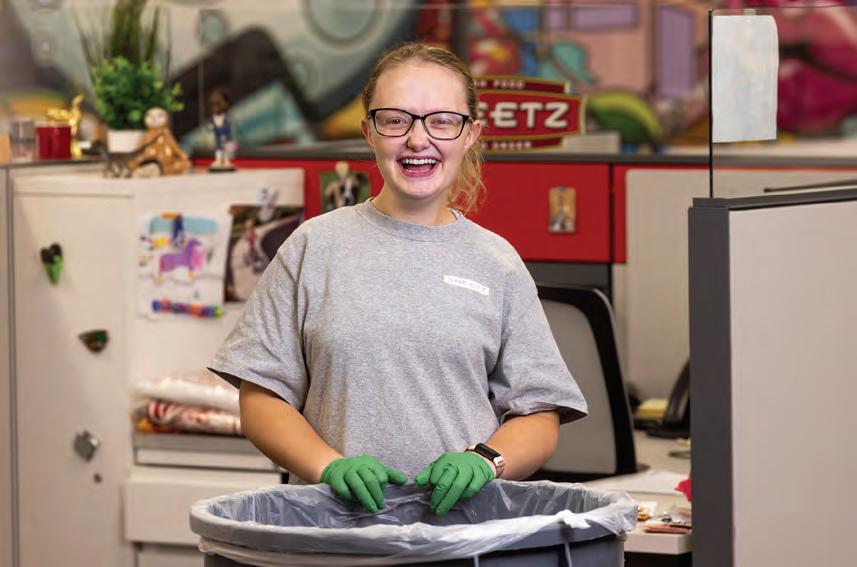
Medicare felt overwhelming—dozens of plans, endless forms, and no clear path. Then we met with Stephanie. She was calm, caring, and incredibly knowledgeable. She guided us to a plan that fits us both—and it’s been fantastic. We’re so grateful we found her.
— IRIS & PHIL SAMSON


p Brent Delman, aka “The Cheese Guy,” is coming to Pittsburgh on Dec. 13. Photo courtesy of Brent Delman
Community
Machers and Shakers
Jeff Freedman, co-Creator of QBurgh, and Jim Busis, CEO and publisher of the Pittsburgh Jewish Chronicle, were recognized for their leadership of the Pittsburgh Media Partnership at Newsapalooza, organized by the Center for Media Innovation at Point Park University on Nov. 20.
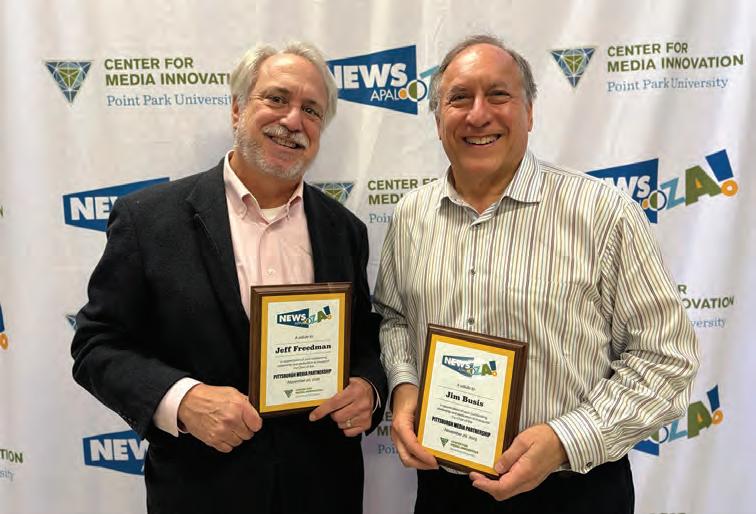
What a special day
Community Day School celebrated Grandparent and Special Friend Day on Nov. 21. Schoolbased activities enabled older adults to learn alongside Jewish day school students.
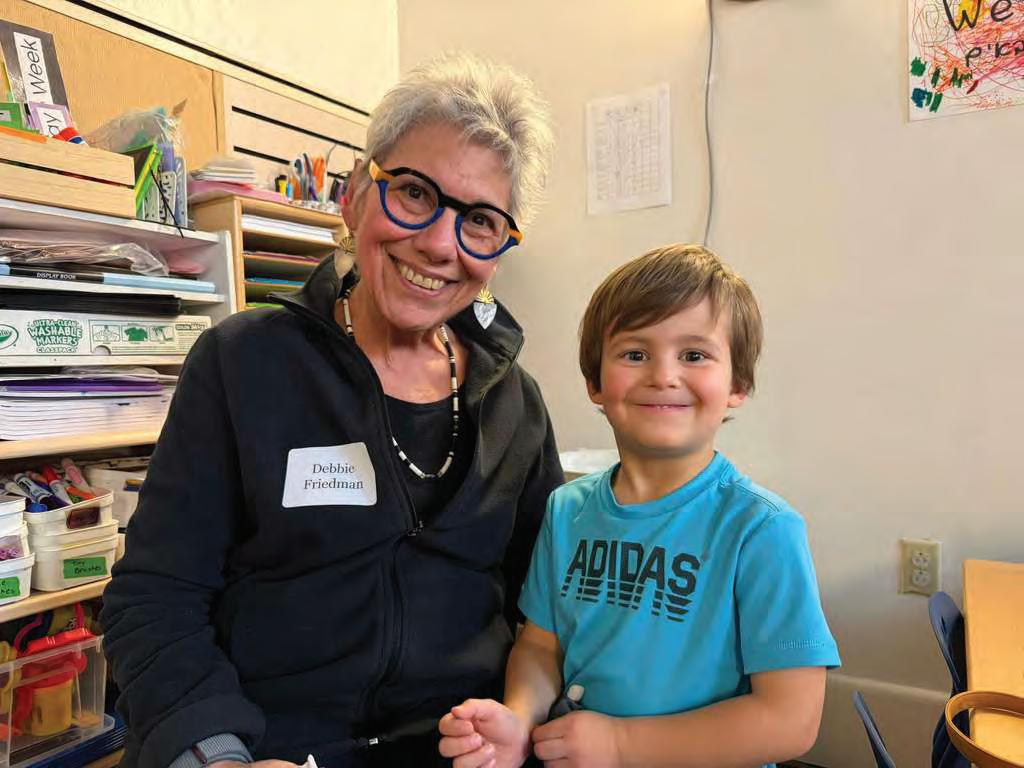
Almost time to light
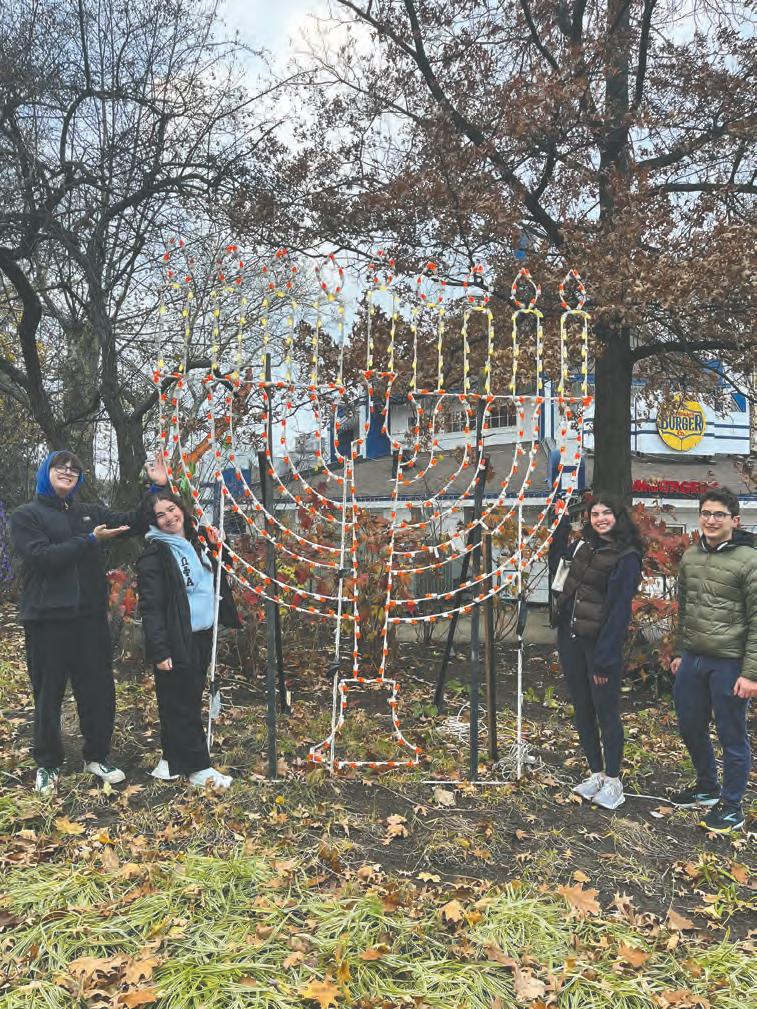
Inclusion is the ingredient
The Friendship Circle of Pittsburgh’s Bunny Bakes specialty coffee and cafe celebrated its second birthday. The celebration was a reminder that with necessary supports everyone can contribute and thrive in community.
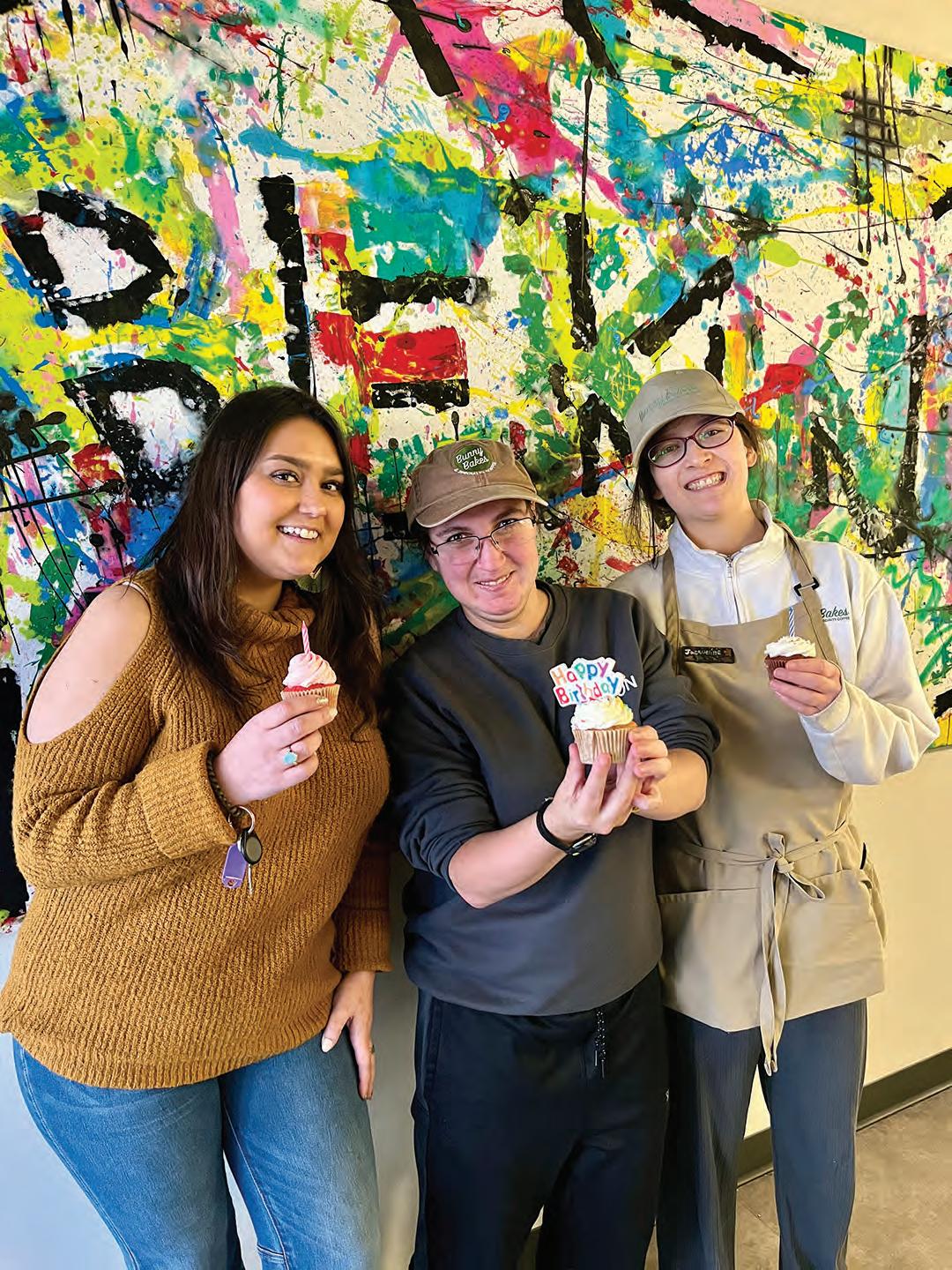

Filling minds and tummies
Approximately
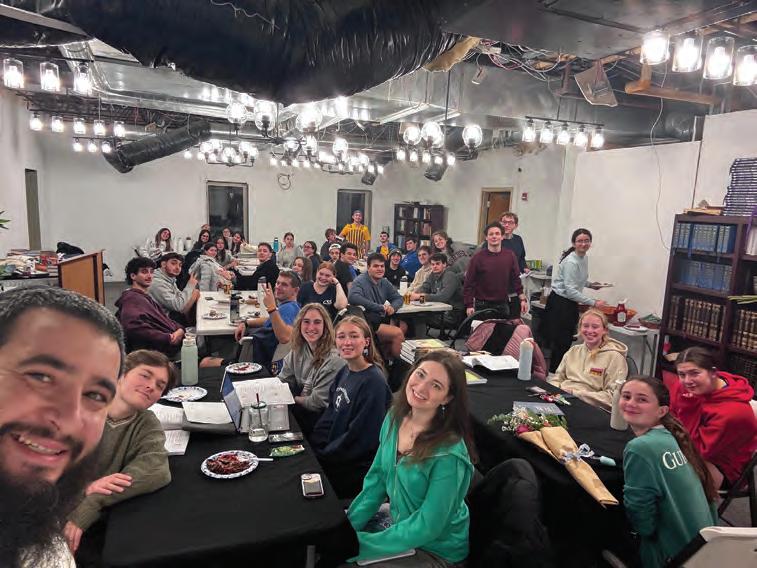
p From left: Newsmachers Jeff Freedman and Jim Busis
Photo by Maureen Busis
p disabilities.
Photo courtesy of The Friendship Circle of Pittsburgh
p
Photo courtesy of Community Day School
Hillel JUC’s First Year Students of Hillel (FYSH) group visited Kennywood amusement park.
p
Photo courtesy of Hillel JUC
40 students gathered at Chabad House on Campus for a weekly Torah study class.
p Digesting Torah and other tidbits
Photo courtesy of Chabad House on Campus
Honoring University of Pittsburgh Chancellor Joan Gabel
HONORARY CHAIR: EVA TANSKY BLUM CHAIRS: NANCY AND STEVEN COHEN
JOSHUA SHAPIRA
BECOME A BIG NIGHT SPONSOR
Make it part of your year-end giving or fulfill your pledge in 2026. For more information and to pledge, contact Sara Rhoades, Director of Annual Giving, at srhoades@ jccpgh.org or 412-697-3510 or scan the QR code below.

TRIPLE CROWN
PRESENTING SPONSOR
Nancy and Steven Cohen
WINNER’S CIRCLE
Anonymous
PNC Bank
S&B USA
Joshua Shapira and Family
SECRETARIAT
A&L BMW, Jaguar, Land Rover & The Lamfrom Family
Sandra Block and John Suhrie
Highmark® Blue Cross Blue Shield
Stacey and Scott Seewald
Lori and Bob Shure
GARLAND OF ROSES
Ceeva, Inc.
Debbie and Bill Demchak
Paula Garrick Klein
Dana and Jason Kunzman
Nancy and Woody Ostrow
Hilary Tyson and Charles Porter
UPMC and UPMC Health Plan
Lori and Jimmy Ruttenberg/ Equilibrium Wealth Advisors
Nancy and James Wolf
THOROUGHBRED LEAGUE
Anonymous
Aladdin Food Management Services LLC
Nancy and David Brent
Cindy Goodman-Leib and Scott Leib
Oxford Development Company
Jeffrey Markel and Carol Robinson
CHURCHILL DOWNS
Anonymous (2)
Lauren and Scott Americus
Deborah and David Baron
Dickie, McCamey & Chilcote
Caryle Glosser
Dana and Michael Laidhold
Marcie Mitre and Ken Levin
Kerry Bron and Robert Levin
Pittsburgh Roots Endodontics | Laura & Jeffrey Parker
S&T Bank
Suzanne and Brian Schreiber
Rachel and Steve Zoffer
MINT JULEP CLUB
B&R Pools & Swim Shop
big Burrito Restaurant Group
Eva and Gary Friedman
Karen and Jack Friedman
Jewish Healthcare Foundation
Carole and Jerry Katz
Liquid Screen Design
Ellen Olshansky and Rich Pattis
Pittsburgh Pirates
Rivers Casino
Rothschild Doyno Collaborative
Dr. Stuart Silverman
Shari and Rick Sweet
Lynn and Marc Zelenski
RIDERS UP
Besty and Marc Brown
Rachel and Bryan Clark
Andrea and Andrew Eller
Fragasso Financial Advisors
Beth Goldstein and Jeremy Goldman/ Goldstein Tax Advisors
Ina and Larry Gumberg
Laura and Jonathan Kessler
In Memory of Elaine Belle Krasik (z"l)
Susan and Michael Kurtz
Susan and Louis Leff
Larry (z"l) and Claire (z"l) Levine
Marcia and Melvin Solomon
Rachael and Alex Speck
Vigliotti Landscape and Construction, Inc.
Walnut Capital
STARTING GATE
Agency Group
Allegheny Roofing and Sheet Metal Company, Inc.
Debra and Stewart Anderson
Baptist Senior Family
Laurie Moser and Stewart Barmen
Liza and Adam Baron
Gail and Norman Childs
Dean Damick
Marion Damick
Dodi Walker Gross and Daniel Edelstone
Federated Investors Foundation
Mary Pat and Eric Friedlander
Ruth and Alan Garfinkel
The Glickman Family
Dr. Leslie and Steven Latterman
Evelyn Levine
Lieber Hammer Huber & Paul PC
Catherine Loevner
Fara and Andy Marcus
Jane and Mark Mendlow
Kimberly and Jim Meyers
Pittsburgh Penguins Foundation
PJ Dick Incorporated / Trumbull Corporation / Lindy Paving
Melissa and Peter Rackoff
Nancy and William Rackoff
Michele Levine and Jim Rosenberg
Winchester Thurston School
Carol and Michael Yahr
Carrie and Doran Young
Zelenkofske Axelrod LLC
Dr. David Zubrow
*as of 11/17/2025