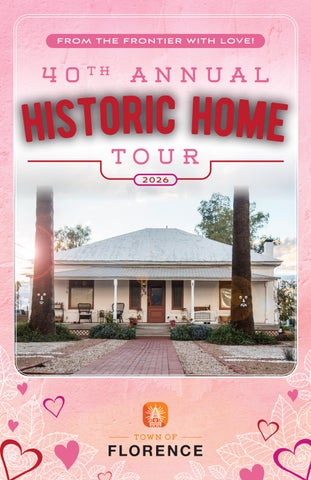
Welcome to Florence, Arizona! It is a joy to host you for the 40TH Annual Historic Home Tour – a remarkable milestone celebrating four decades of preserving, sharing, and honoring the heritage that makes our community so special.
This year’s theme, “From the Frontier With Love!”, brings a fitting touch of warmth and history to Valentine’s Day weekend. As you explore Florence’s most cherished homes and landmarks, you’ll discover stories of resilience, craftsmanship, and community that span more than a century – stories rooted in the frontier era and carried forward with care and pride.
For forty years, homeowners have opened their doors and hearts to showcase Florence’s past in a personal way. We remain deeply grateful for their generosity and their commitment to stewarding these treasures so future generations can experience the town’s living history.
Throughout the tour, we invite you to take your time, learn something new, and enjoy the atmosphere of our downtown. Historic plaques, informational displays, and helpful volunteers will guide your experience, while our trolleys make it easy to navigate the tour route.
Before you head home, I encourage you to visit our Historic Downtown District, where local shops, restaurants, and vendors are ready to make your day even more memorable.
Thank you for celebrating this milestone year with us. Whether this is your first tour or your fortieth, we are grateful for your interest in Florence and hope you leave with a deeper appreciation for the stories – and the love – preserved in our community’s historical heart.
Warm regards,
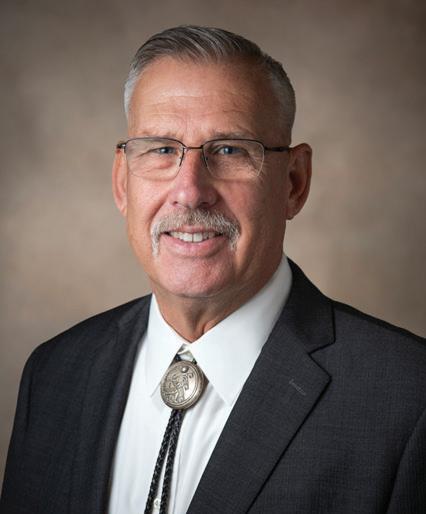
KEITH EATON Mayor of Florence, AZ
check out the thursday edition of the casa grande dispatch for all of the latest florence headlines. Support local journalism & subscribe today! (520) 423-8685 Local Office: 190 N. Main Street, Florence | (520) 868-5897
to subscribe? Call (520) 423-8685 or go online to PinalCentral.com to activate your home delivery of the Casa Grande Dispatch , Pinal Ways Magazine or your PinalCentral.com digital subscription today!
Direct-mailed to over 6 , 4 00 Florence homes monthly!
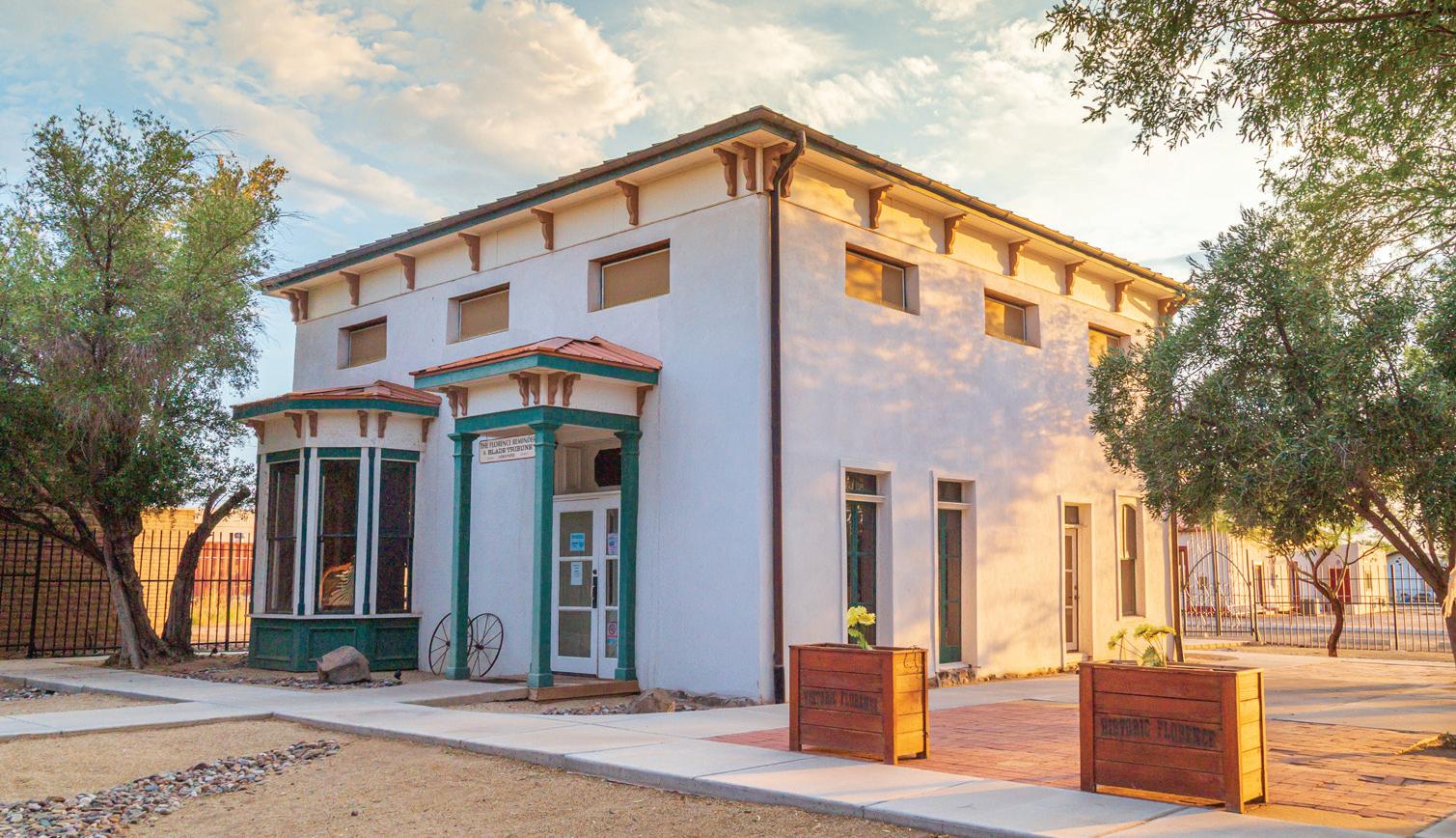
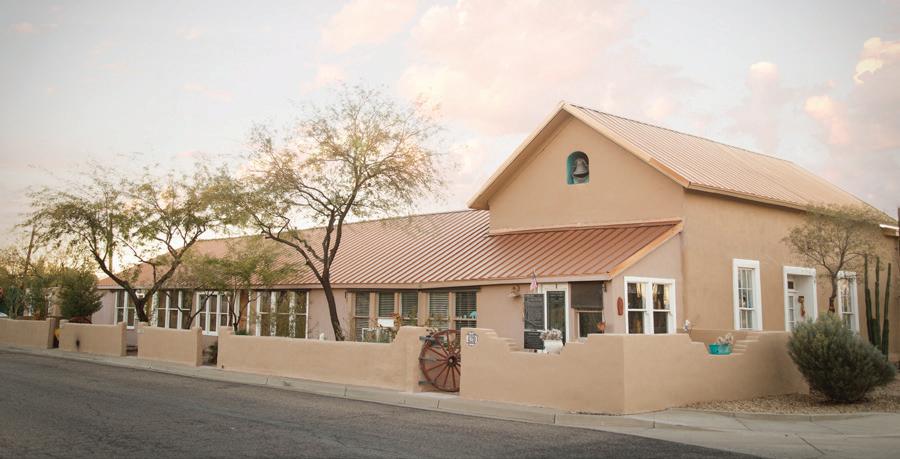
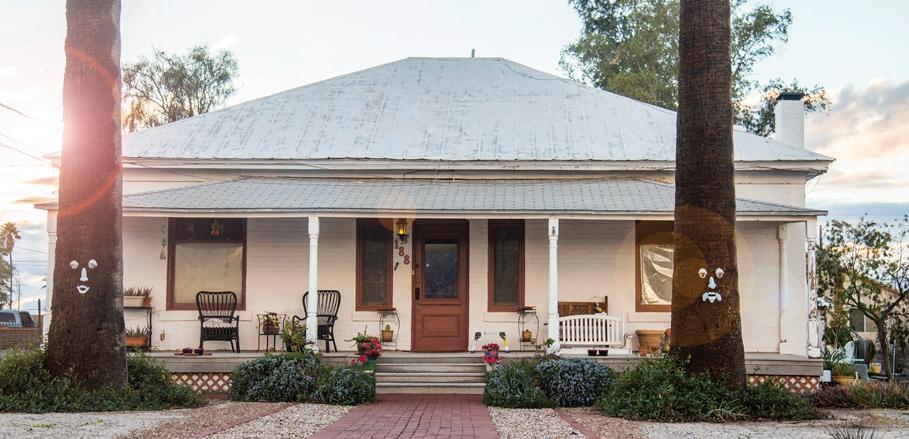
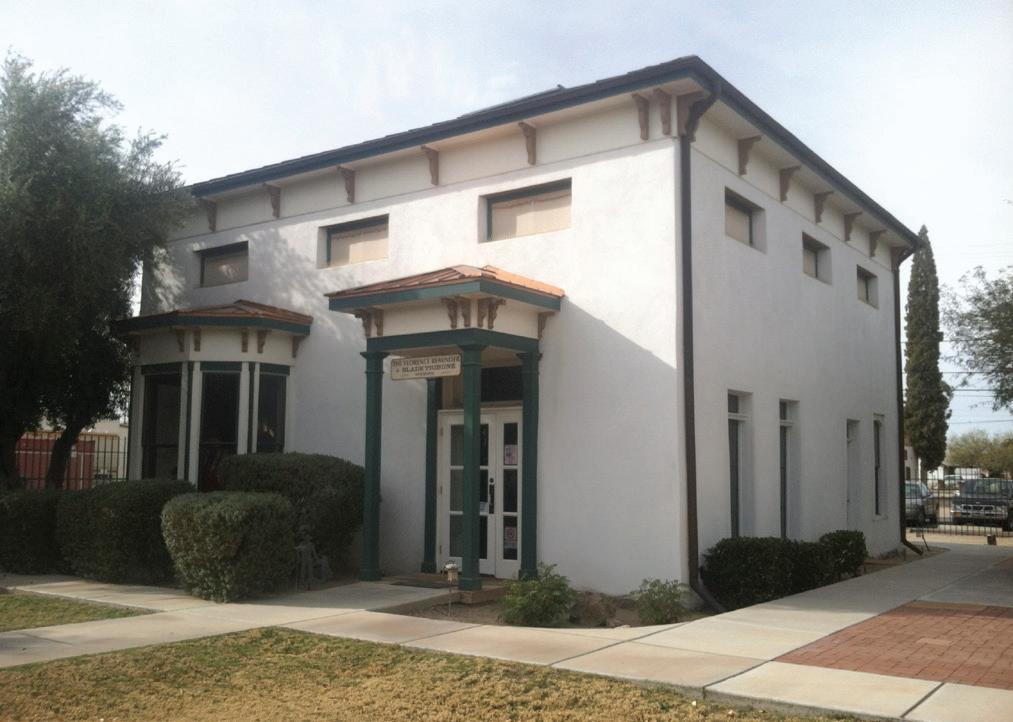
Photo: Michael Joseph Baca/Casa de Baca Studios of the Historic Clarke House, home of the Florence Reminder & Blade-Tribune
2026 homes & buildings
PROPERTY LISTING
We suggest visiting the sites listed in PINK PRINT first today as these locations are open to the public, today only. Today’s guests can return to Florence throughout the year to see the other historic buildings listed on this tour!
H ome Tour HQ
Jaques Square | 291 N. Main Street
1. Jacob Suter House (1913) (Late Transitional)
270 N. Pinal Street
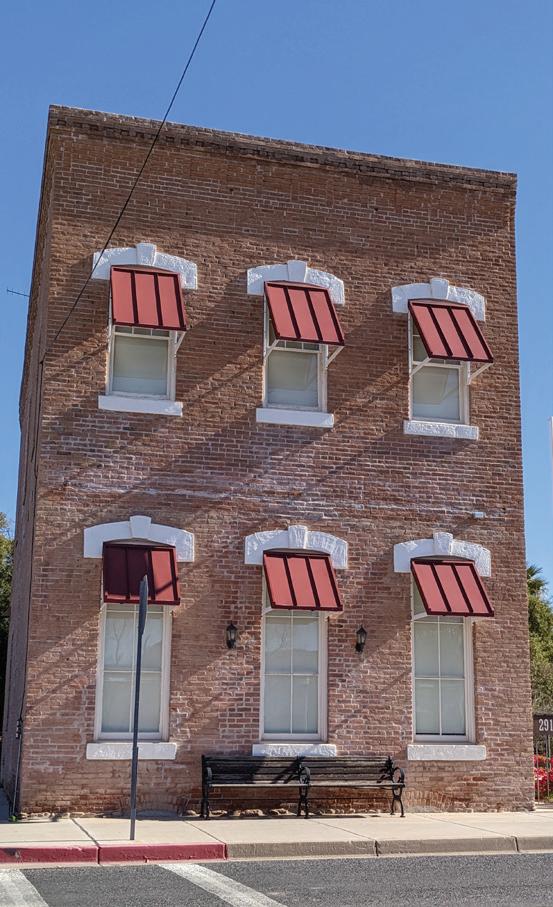
2. Brunenkant Bakery (1889) (American Victorian)
291 N. Bailey Street
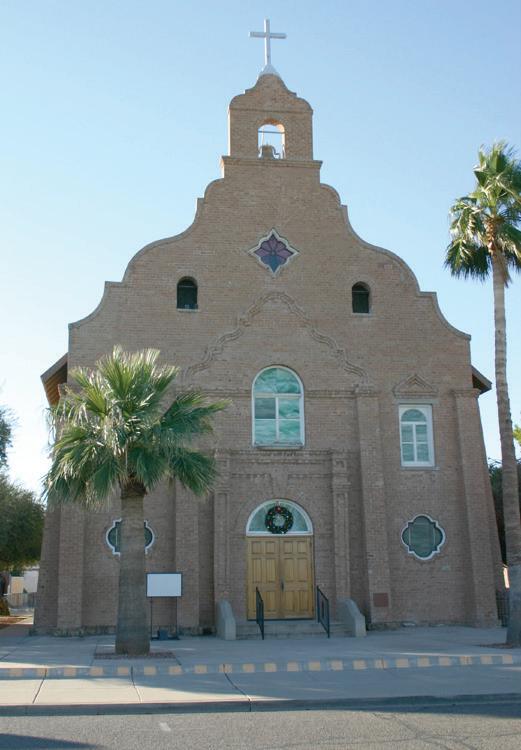
3. Assumption of the Blessed Virgin Mary Church (1912) (Mission Revival)
221 E. 8th Street
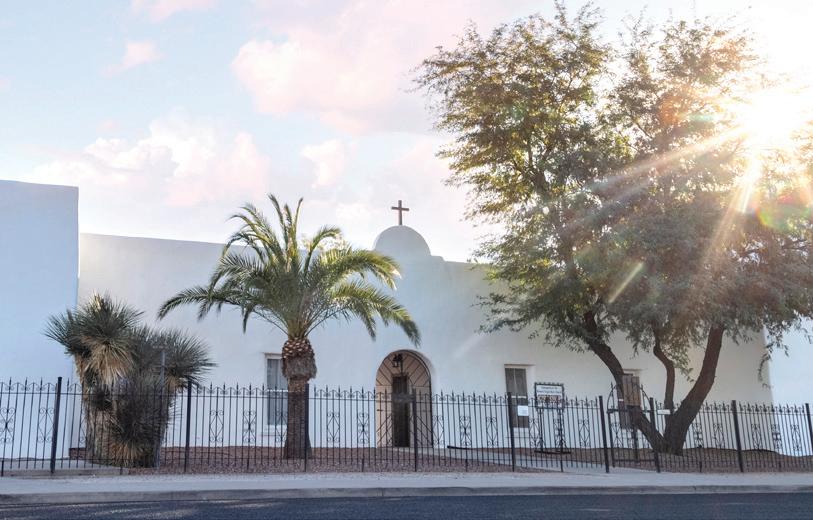
4. Chapel of the Gila (1870) (Mission Revival)
255 E. 8th Street 5. Carmen Michea Rental Residence (1886-1889) (Sonoran and Spanish Colonial Revival)
240 E. Ruggles Street
6. Silver King Hotel (1895) (Early Transitional)
440 N. Main Street
7. First Pinal County Courthouse/ McFarland State Historic Park (1878) (Early Transitional)
24 W. Ruggles Street
8. 1st E.N. Fish and Company Store (1868) (Sonoran and Early Transitional)
420 N. Quartz Street
9. Woman’s Club of Florence (1929) (Spanish Colonial Revival) 231 N. Willow Street
10. Smith Brickyard/ Windmill Winery (1887) 1140 W. Butte Avenue
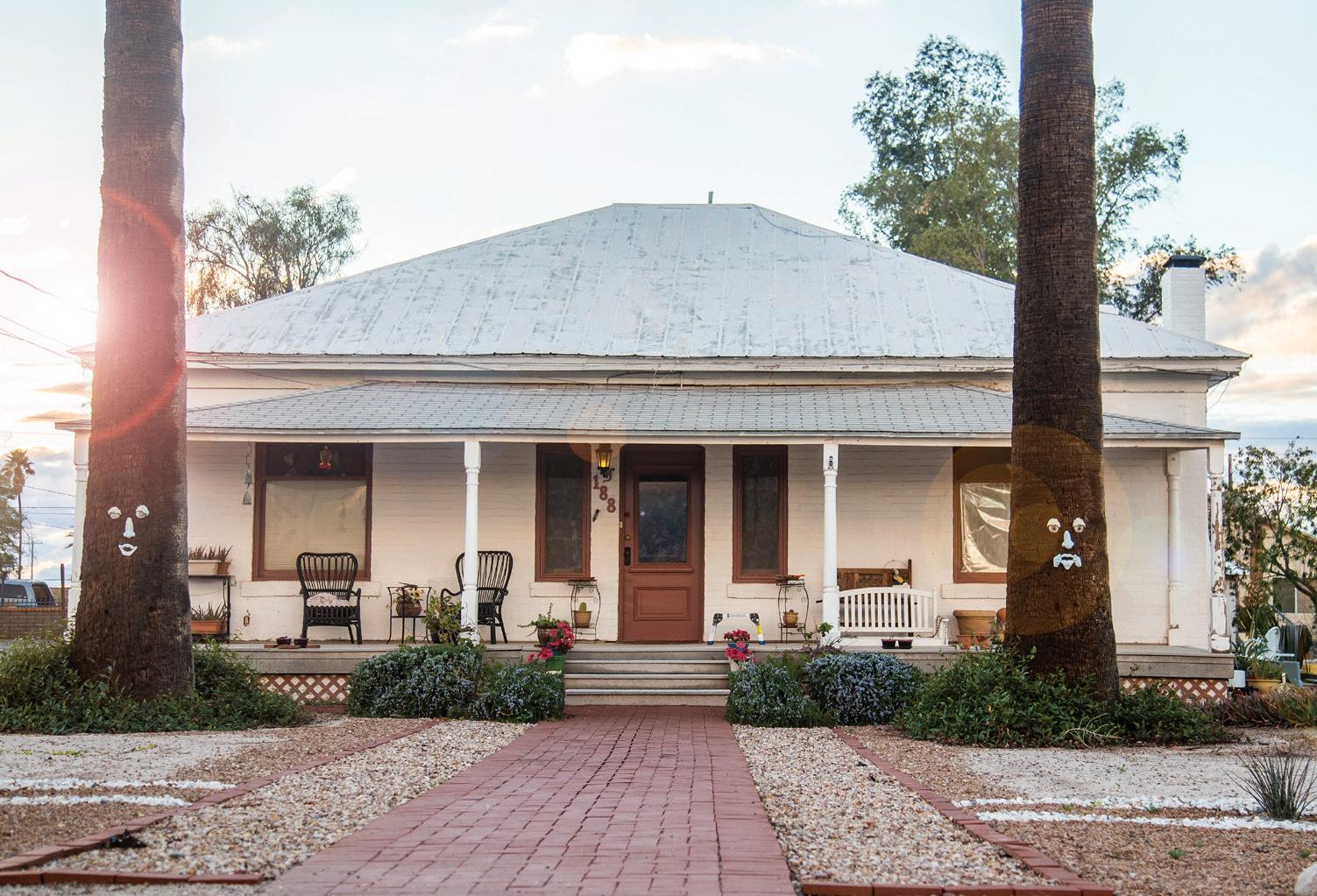
11. W.Y. Price House (1911) (Late Transitional) 188 S. Willow Street
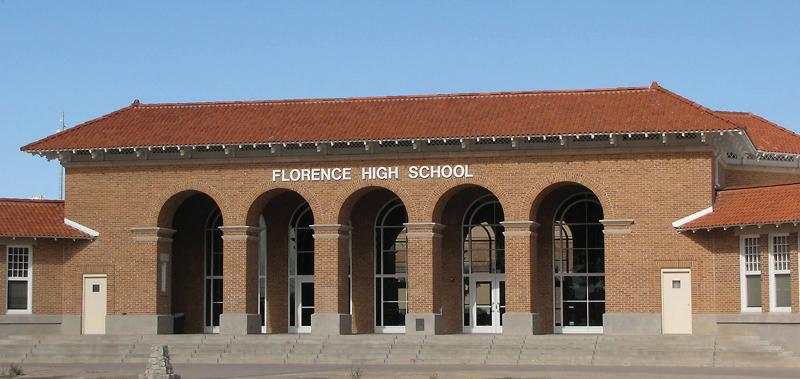
12. Florence High School (1916) (Spanish Colonial Revival) 1000 S. Main Street
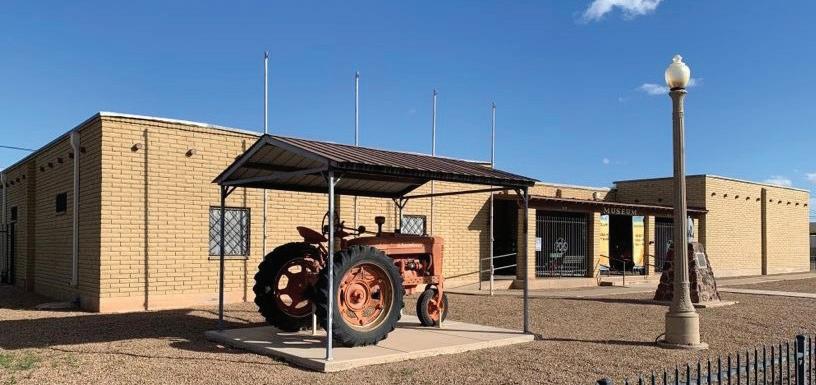
13. Pinal County Historical Museum (1968) 715 S. Main Street
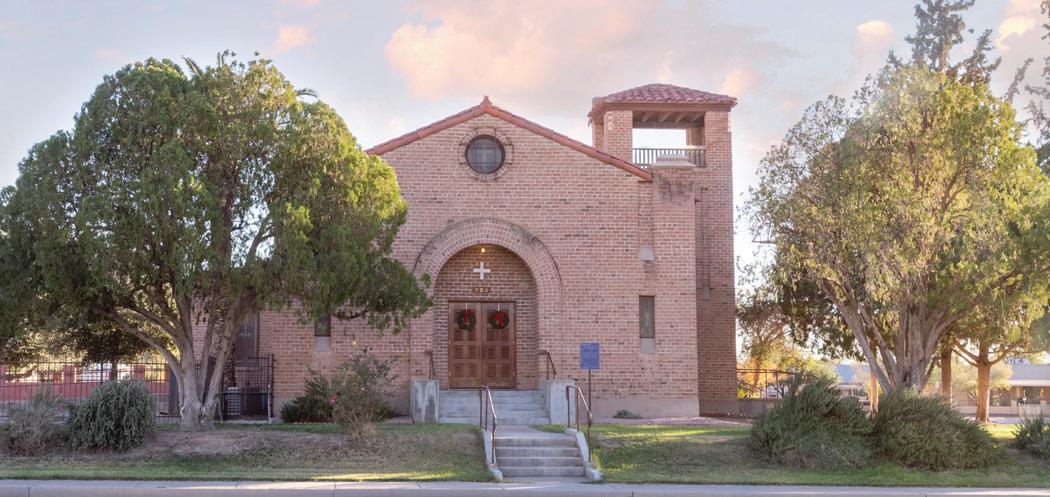
14. First Presbyterian Church (now Desert Hope Presbyterian) (1931) (Spanish Colonial Revival) 225 E. Butte Avenue
15. The Second Pinal County Courthouse (1891) (Spanish Colonial Revival) 135 N. Pinal Street
16. William Clarke House (1884) (Late Transitional) 190 N. Main Street
’s events
FEBRUARY
Performance by Los Pequeños
Ballet Folklorico
Jacques Square
1:00 p.m.
Performance by The Solitary Man
- An Acoustic Guitar Soloist
Downtown Historical Main Street
10:00 a.m. – 4:00 p.m.
Paint Your Partner
10:00 a.m. – 4:00 p.m.
Featured Women of Arizona
10:00 a.m. – 4:00 p.m.
14 TH
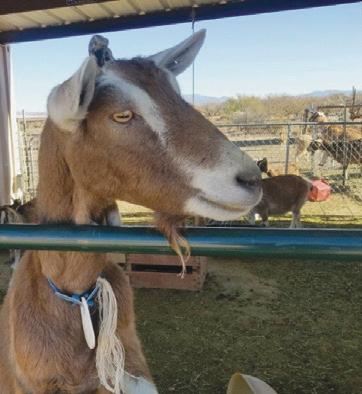
Pinal County Open Space and Trails Animal Meet and Greet
10:00 a.m. – 4:00 p.m.
Valentines Dance: 21+ (FREE EVENT)
Florence Community Center and Viney Jones Library
7:00 p.m. – 12:00 a.m.
SAVE THE DATE:
41st Annual Historic Home Tour
Saturday, February 13, 2027
This square was created in 1984 and is named of Spanish-born Father Dominic Jaques who served the Assumption Catholic Church from 1934 to 1957. Jaques, wearing his monk’s robe and sandals, often worked 80 hours a week serving the State prison, the POW camp in Florence as well as the church. As a chaplain at the prison, he met with condemned prisoners.
His interest and love for his fellow man was evident in his work with the prisoner of war camp in Florence. To better serve the German and Italian prisoners, he learned to speak their languages. He died in 1964 and is buried in Barcelona Spain.
welcome TO HISTORIC FLORENCE
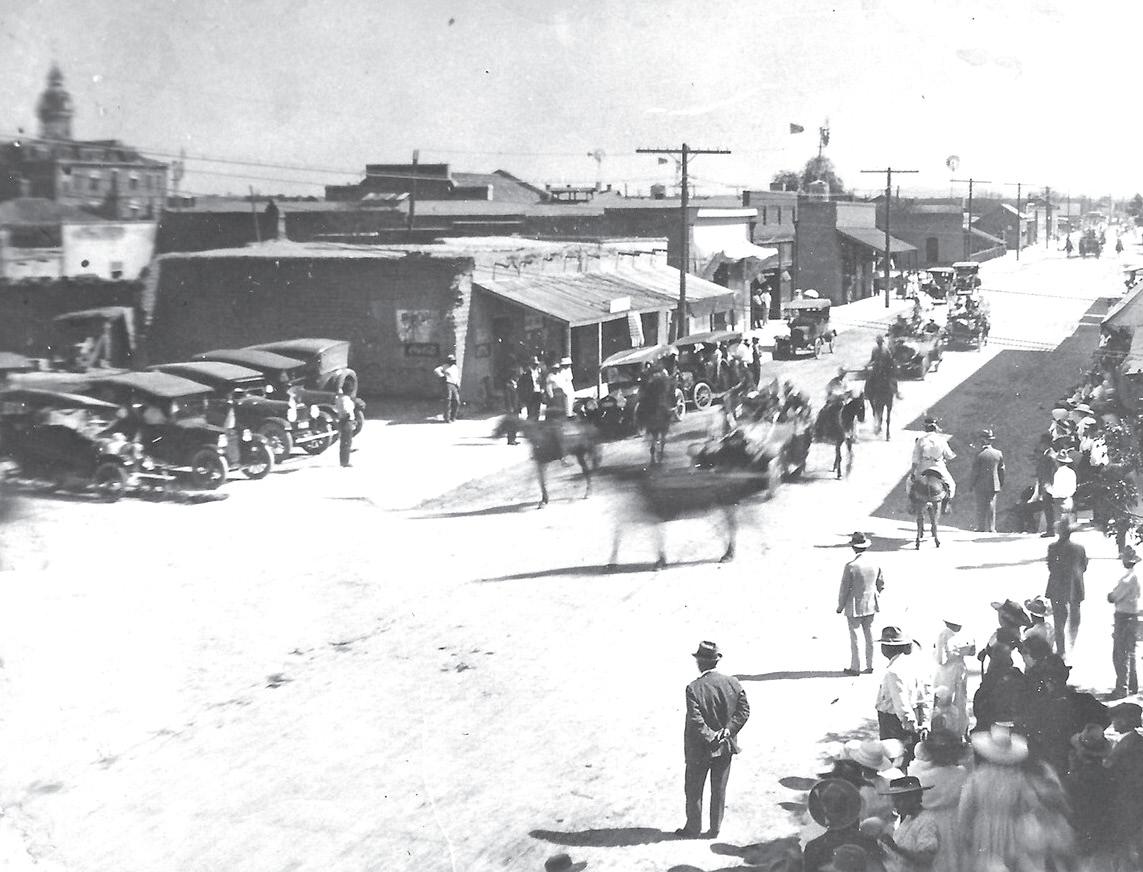
Arizona became a territory under the signature of Abraham Lincoln in 1863. When the Civil War ended two years later, the U.S. Calvary came to protect the new territory from bandits and Apache incursions. Farmers soon settled on the banks of the Gila River to raise cattle and hay utilizing the Ancestral Sonoran Desert People’s irrigation canals to water the thirsty desert. Families from Mexico moved north to escape wars in northern Mexico as settlers came from the east seeking fortune and adventure. So began Florence. Florence boomed in the 1870’s as wagonloads of ore from the Silver King Mine passed through town. Single men swarmed to work the mines and spend their money in Florence, while cowboys from local ranches celebrated payday here as well. Multiple establishments such as the Nicholas and Tunnel Saloons served these men who would quench their thirst, gamble, and enjoy female companionship.
Homes and commercial buildings were constructed of sun-dried mud brick known as adobe and shaded by cottonwood trees growing along the small ditches of flowing water. The sounds of Mexican music could be heard on many evenings in this small desert oasis. Single men from Boston, New York, and Ohio found the señoritas who had been educated in Mexican convents very enchanting. Descendants of the resulting marriages still live in town. Eventually, eastern Victorian ladies ventured west to live on the frontier. Mrs. Estella Colton relates in her memoirs how horrified she was to learn that on hot summer nights, she was expected to sleep on a cot in the street clad only in her nightgown. Only a path down the center of the street was left for late bar patrons to make their way home.
The good people in town finally demanded law and order. Florence became the County Seat in 1875 of the newly created Pinal County, where a new adobe courthouse and jail were built (now McFarland State Park). That didn’t stop citizen vigilantes from storming the courthouse believing two jailed men were murderers and hanging them from the ceiling joists. While miners and cowboys whooped it up and the ex-sheriff and his deputy shot it out on Main Street, the more tranquil citizens tried to bring civility, culture, and religion to Florence. There were always dances at the courthouse or musicales at Mrs. Clarke’s new house. Townsfolk worshiped at the Chapel of the Gila or gathered for services at the adobe courthouse.
Florence is home to McFarland State Park, Pinal County Historical Museum, Florence Aero Modeler Park, Charles Whitlow Rodeo Grounds, a quaint historic downtown, and the final resting place of Charles D. Poston, the Father of Arizona, at the summit of Poston Butte.
There are several signature events that occur in Florence each year. In addition to the Historic Home Tour, other events include: the Road to Country Thunder, Jr.
Parada Parade, and the Oldest Youth Rodeo every Thanksgiving weekend. December brings Florence Hometown Holidays, a light parade and holiday tradition cherished by all.
Once you’ve completed the Home Tour, we invite you to extend your journey on the Heritage Trail by visiting our diverse array of shops, businesses and restaurants to see all Florence has to offer.
We hope you enjoy the 40th Annual Florence Historic Home Tour!
THA nk You To o ur 2026
H ome Tour C ommi TT ee m embers
Cathy Adam
Maricella Benitez
Sophie Dessart
Barb Kelly
Steven Gallagher
Larry Pfeiffer
Chris Reid
Lynn Smith
Kyle Wright
architectural styles IN
FLORENCE
SONORAN STYLE | 1866 –
1950
High plastered adobe walls typical to Spanish Colonial and Mexican architecture
Earth and timber flat roof construction methods of the Ancestral Sonoran Desert
People and Pima Indians
Built flush with the property lines with rear gardens
Stone foundations and narrow tall windows and doors with wood casings
EARLY TRANSITIONAL STYLE | 1871 –
1947
Differed from the Sonoran Style by the addition of verandas running the length of the structure
Pitched roofs with the roofing running parallel to the street
LATE TRANSITIONAL STYLE | 1878 –
Square-shaped structures with front yards
1949
Hipped, pyramidal or mansard shaped metal or shingled roofs
AMERICAN VICTORIAN STYLE | 1885 –
Similar to structures built in the Eat
1922
Relied on imported prefabricated materials such as columns, lintels and cornices
Walls are brick and any roof style is appropriate
AMERICAN BUNGALOW STYLE | 1908 –
1950
Whereas the Sonoran Style is unique to the Southwest, the Bungalow Style is unique to this time period in the United states
Located on the center of the lot
Made of brick with large wood shingle roofs and large porches
MISSION REVIVAL STYLE |
1911 – 1942
Adapted from Spanish –Colonial churches ins California
Brick, stuccoed walls with tiles gable roofs between ornate and parapet walls
in memoriam OF JENNIFER EVANS
The 2026 Home Tour committee would like to dedicate this year’s tour to the Memory of Jennifer Evans.
JENNIFER EVANS
July 15, 1969 – September 18, 2025
Jennifer was the Florence AZ Main Street Program Manager for 13 years. During that time the Main Street Program ran the Historic Home Tour from 2000 through 2013. The Main Street Program is a volunteer organization in programming and projects that helped the long-term effort to revitalize Florence’s historic downtown commercial district. After her tenure with Main Street, Jennifer worked for the Town of Florence as a Management Analyst for 11 years focused on economic development and then primarily managing federal grants for the Town. Jennifer was a US Naval Veteran.
2026 home tour
PROPERTY LISTINGS
WHILE VISITING THESE SIGHTS ALONG THE HERITAGE TRAIL, ADDITIONAL INFORMATION ABOUT FLORENCE CAN BE FOUND ON POSTERS WITHIN MAIN STREET’S PLANTERS.
DETAILS ON SOME OF THE PROPERTIES MAY CONTAIN STORIES RELATING TO LOVE AND RELATIONSHIPS. THEY WILL BE HIGHLIGHTED IN DARK PINK IN HONOR OF VALENTINE’S DAY.
J AC ob s u T er H ouse (1913)
270 N. Pinal Street
This house was built for the Swiss-born tinsmith Jacob Suter, his wife, and five children. He had a natural ear for music and his whole family performed as the Suter family orchestra. The Suter family later moved to Globe where Mr. Suter was a business partner with future Arizona Governor, George P. Hunt, in the hardware business. It is constructed of adobe brick and wood floors, porches, and full setbacks. Today, the building is home to the Pedro E. Guerrero Arts Center.
Look up and see the widow’s walk. Traditionally found in coastal areas for wives to watch their sailing husband’s ship’s return, it is not known if Mrs. Suter stood there watching for Mr. Suter to walk home from his tin shop.
b runenk A n T b A ker Y (1889)
This structure was originally built for a grocer and baker, Conrad Brunenkant, who came to Florence in 1889 after the closing of the Silver King Mine. His “City Bakery” building opened in April 1890 with a free dance. Brunenkant’s son, Alvin, continued a family grocery business on the ground floor into the 1930s and also served several terms as the town’s mayor. The building continued to house a grocery store into the early 1960s.
The second floor of the building was initially used as Doctor Albert Adler’s office (1890-1892) then as hotel rooms (ca.1898-1910), and from 1914 until after 1941 as headquarters for the local chapter of the “Alianza Hispano Americana,” a fraternal order. After some years of remaining vacant, the structure was rehabilitated in 1973 and later served as the Town Library, Chamber of Commerce, and Visitor Center. In 1984, it was used for the movie Murphy’s Romance and represented the town hall for the fictional Town of Eunice.
Vir G in m A r Y C H ur CH (1912)
221 E. 8th Street
Completed in 1912, this is probably the best and most imposing example of Mission Revival Style in central Arizona. Mission Revival is an architectural mode that originated in California in 1887, in response to the new appreciation for the State of California’s Hispanic heritage. The first structure on this site burned in 1893. This 1912 building was constructed under the direction of Father Henry Heitz, who was the last of a long line of French-born priests in Florence. Note the pressed tin ceiling. The date 1912 is significant because the Territory of Arizona was trying to convince Congress that it deserved statehood. This building was a move away from adobes, demonstrating that Arizona was progressive in both politics as well as architecture.
C HA pel of TH e G il A (1870)
255 E. 8th Street
This last remaining mission church is a prime example of adobe construction. Notice the cottonwood beams (called vigas) with the saguaro ribs spread across. The use of native plants and materials was an early example of ‘green’ building techniques. Saved from the wrecking ball, the restoration was completed through joint efforts of the Town of Florence, the Diocese of Tucson, and other public and private funding in the early 1990s. The first priest ordained in Arizona was Florence’s French-born Father Edouard Gerard, who founded several churches in Arizona, including St. Mary’s in Phoenix.
In nearby Adamsville, a traveling photographer named Carlo Gentile bought a captured Yavapai young boy named Wassaja from the Pima for thirty dollars in 1871. Gentile had him baptized at the Chapel of the Gila. Renamed Carlos Montezuma, he was the first Native American student at the University of Illinois and the first male Native American to receive a medical degree. He became a renowned doctor in Chicago and until his death fought for the rights of Native Americans. He is buried at the Fort McDowell Indian Cemetery.
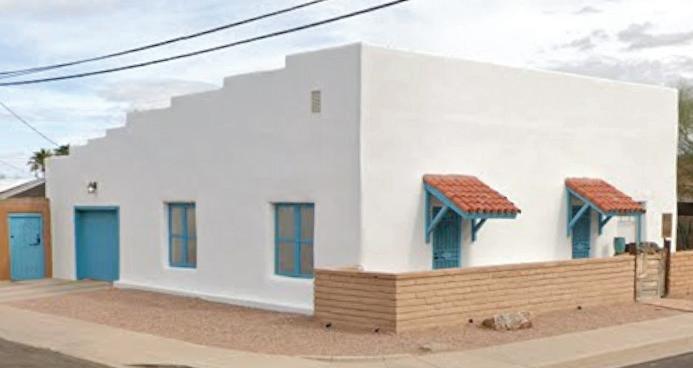
240 E. Ruggles Street
Originally a simple Sonoran adobe (squared off, flat-roofed), this home was remodeled in the 1940s with Spanish Colonial Revival details such as the raised parapet front wall, stepped-down roof line on the sides, and two red tile porticos over the front doors. In 2012, the kitchen was remodeled, and the exterior was refinished with true lime plaster. This home is part of an enclave of properties owned by the Carmen and Jean Baptiste Michea family, clustered in the northeast portion of the Florence Historic District.
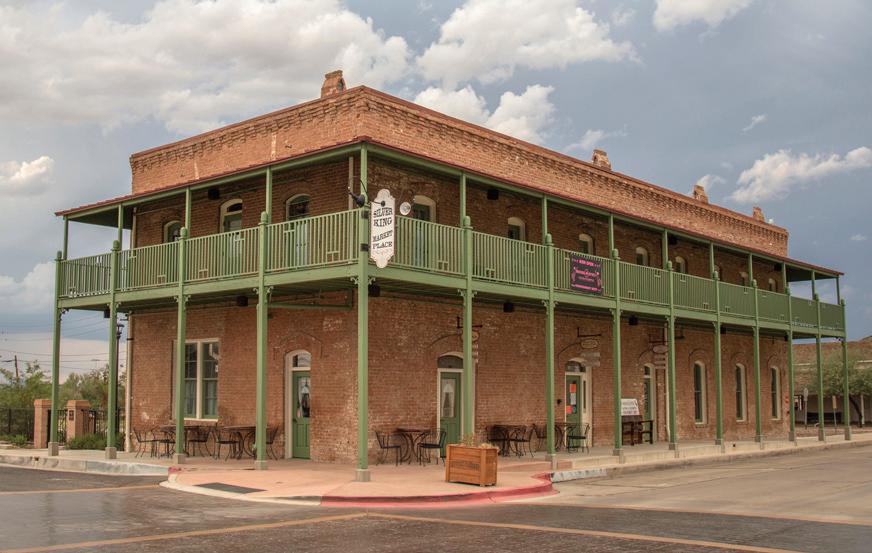
s il V er k in G H o T el (1895)
440 N. Main Street
Originally an unplastered 1876 L-shaped adobe with a gable roof, the hotel was built for William Long, a partner of the Silver King Mine. The building was renamed the Florence Hotel in 1890. After fire destroyed a portion of the building around 1895, it was replaced by a two-story brick building. The building complex was the social focus of Florence for many years, providing “modern” overnight lodging, a saloon, a ballroom, and the finest dining room in town. Adjoining the hotel is Padilla Park. Along the edge of Padilla Park are signs describing the story behind the hundreds of upside-down glass bottles buried beneath the park.
The Arizona Republic of May 14, 1904, reported the marriage of Miss Tillie Miller to James Horton, presided over by the Reverend Henry Heitz at the Reverend’s home. “The happy couple was escorted to the Florence Hotel and ushered into the bridal suite after a rousing reception from a number of the bride’s friends.”
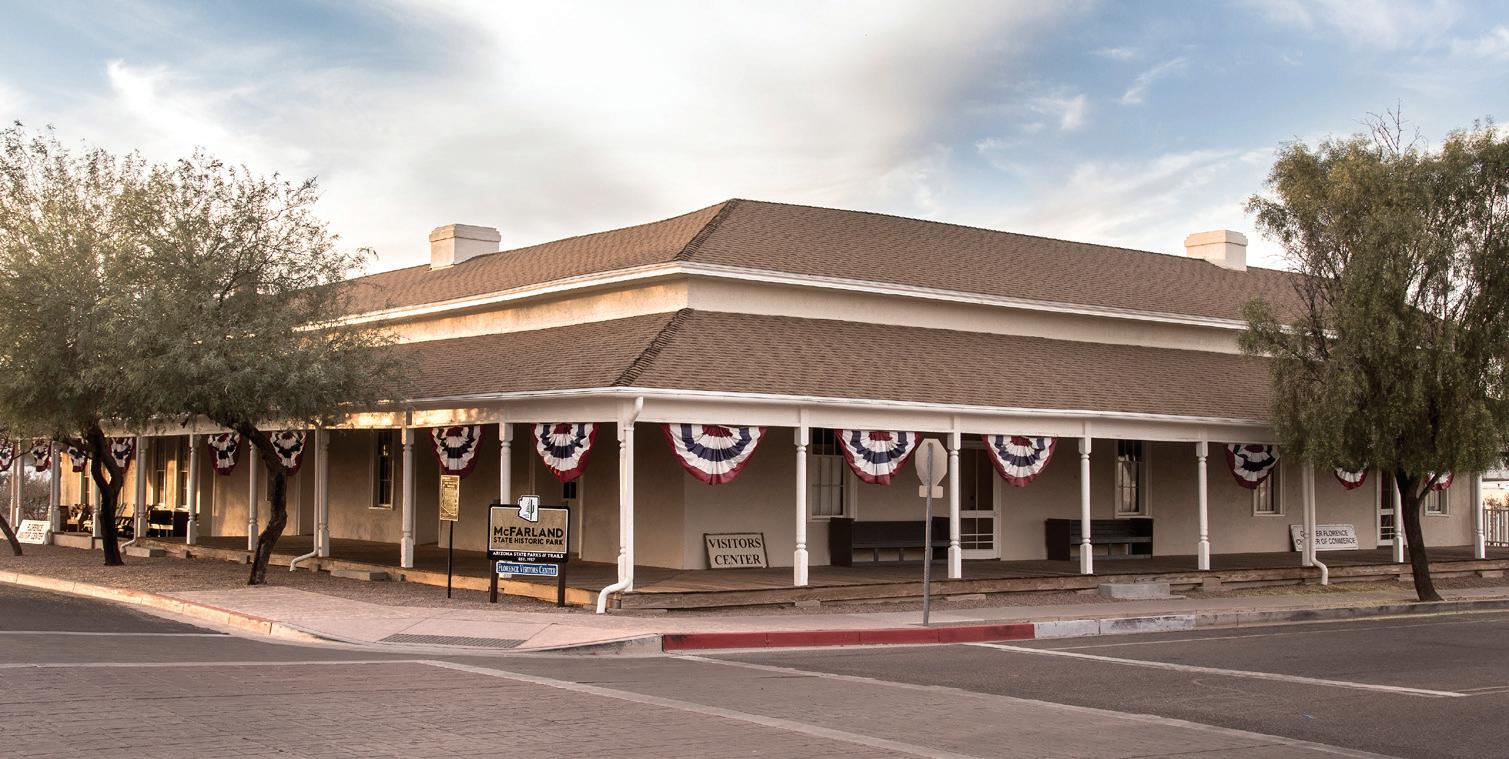
24 W. Ruggles Street
When Pinal County was created in 1875, the township of Florence was selected as the county seat. Records show that in 1877, the county purchased Lot No. 67 for $1,100 as the site for the courthouse. Colonel Levi Ruggles, who had earlier surveyed and laid out the Townsite of Florence, drew up the plans for the courthouse for $25. On November 23, 1877, a bid of $2,700 for construction was accepted. The building was completed in March of 1878. Building plans called for a courtroom, jury room, Sheriff’s Office, jail, and three other offices. Both Joseph Kibbey and Richard Sloan, who served as Territorial Governors, tried and heard cases here as attorneys before entering politics. After the 1891 Second Pinal County courthouse was built, this structure served as a hospital, public health buildings, a welfare office, a nursing home, and the Pinal County Historical Society in 1963. Former Arizona Governor Ernest McFarland and his wife Edna purchased the building and donated it to the Arizona State Parks Board for use as a museum in 1974. They had long-time connections to Florence. McFarland State Historic Park has been open to the public in this restored courthouse since 1979.
420 N. Quartz Street
(1868)
The mercantile firm of E.N. Fish & Co., with Joseph Collingwood as partner and local manager, opened Florence’s first store in this building in 1868. A second store was built on the property by Levi Ruggles. The first Florence post office was housed in this building with
Thomas Ewing as postmaster. Collingwood later succeeded him. The property has passed through several owners, one of whom was Charles G. Mason, one of the four original owners of the Silver King Mine. Building additions from 1867 to 1888 included a U-shaped complex, wood shingles and later metal gabled roofs updated these Sonoran adobe structures. The buildings housed the second Wells-Fargo Office and the San Carlos hotel, which operated into the 1920sRecent modifications serve as residential units. Portions of these buildings are among the oldest in Florence. Look for the current owner’s carpentry work.
Legend tells that a woman by the name of Frenchie ran a “cat house” in the hotel.
9
W om A n ’s C lub of floren C e (1929) 231 N. Willow Street
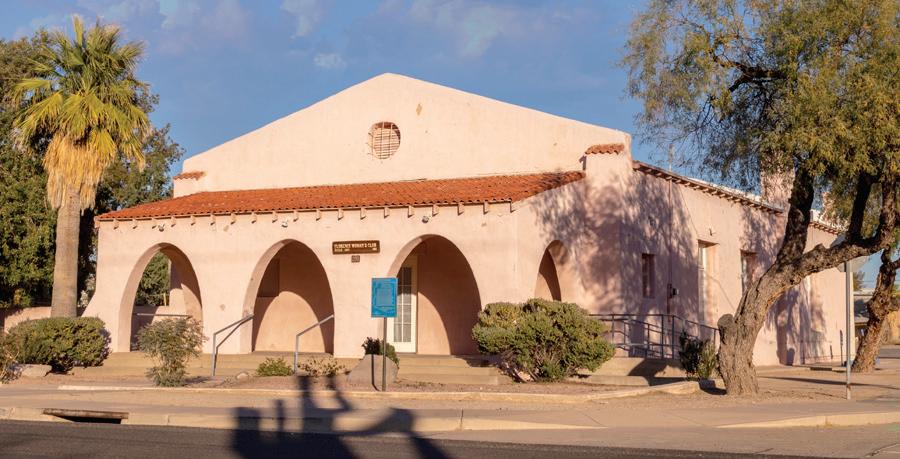
This Spanish Colonial Revival style building is a fine example of the work of architects Lescher & Mahoney (successors to Lescher & Kibbey) of Phoenix. The firm designed three other buildings in town including the Florence High School. The architectural drawings were prepared in 1928 and the construction by Arizona State Prison inmates was completed in 1929. Material and construction costs were $9,420. The women held dinners, bazaars, musicals, concerts, and tea parties to raise money along with a subscription drive to fund the building. It is the second-oldest women’s club in Arizona. It was an outgrowth of the Village Improvement Club founded in 1897.
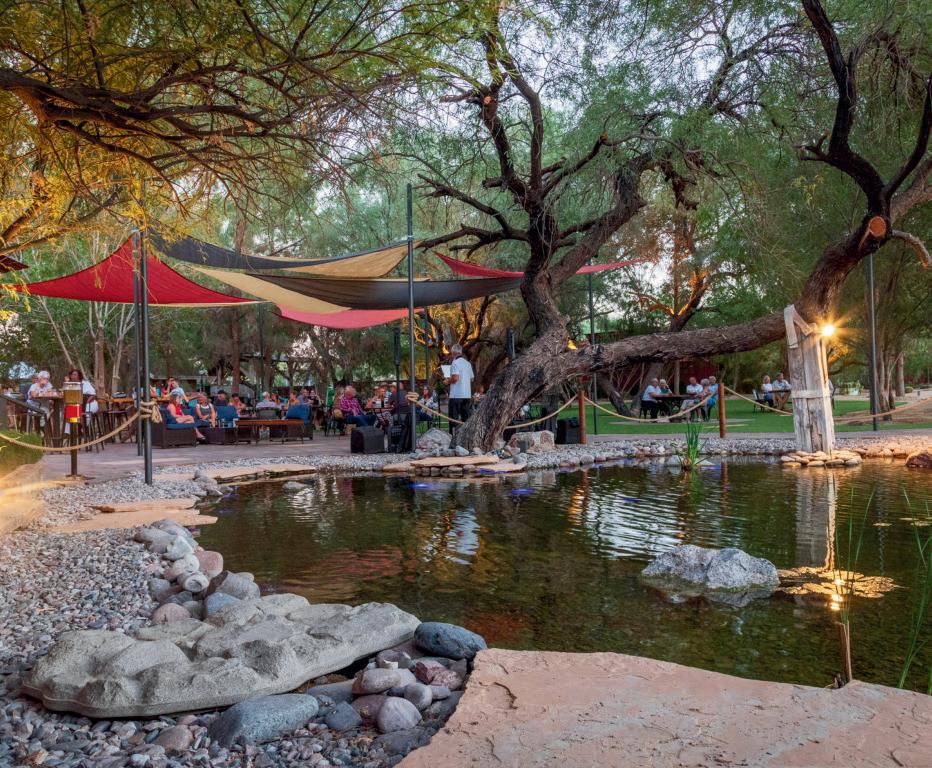
This site was the original location of the Stone Brickyard circa May 1887. It was acquired by George Eaton in September of 1887. It was then sold in 1906 to George Smith and his family. Bricks from this brickyard were used to construct many of Florence’s homes, commercial buildings, the Second Pinal County Courthouse, the Catholic Church of the Assumption and the First Presbyterian Church of Florence.
During the busiest times, Smith family had 50,000 to 100,000 bricks in two to three kilns at any given time. To fire one kiln it took 100 cords of wood which was gathered in the surrounding desert by area residents.
Former owner Eaton was a founding member of the 1888 Florence branch of the Good Templars. Good Templars was a secret society for the promotion of total abstinence from the use of alcoholic beverages.
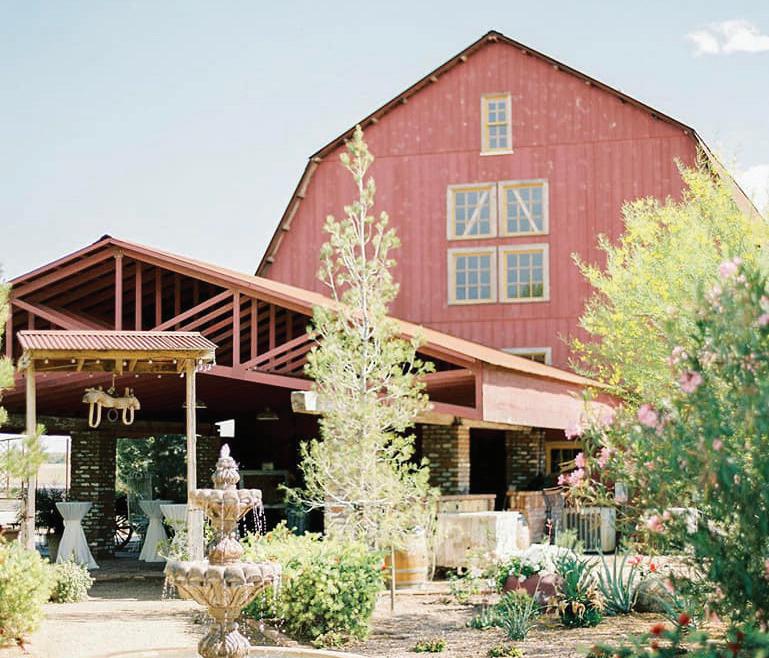
Ironically, in recent years, recent owners Harold and Katie Christ had developed the site as the Windmill Winery, wedding venue/event center and wine tasting room. They incorporated remnants from the brickyard into the property’s design in addition to moving and restoring a 1910 dairy farm barn from Wisconson to the site.
Arizona’s Hidden Gem in Historic Downtown Florence. Quality framed fine art, reasonable prices.
As seen on Arizona Highways TV
Website casadebacastudios.com
315 N. Main Street, Florence, Arizona 520-233-1981
Tuesday - Saturday 10am-4pm
Please call or stop by to inquire about our portrait work.
Great gifts, charcuterie boards, t-shirts, magnets and postcards.
Local Artist: framed art, jewelry, wood-turning, gourds and more.
William Price arrived in the Arizona territory in 1883 and owned the Florence Mercantile Company, one of the leading commercial institutions of its day. Price also had vast land holdings in the area producing crops and raising cattle. He served two terms on the Florence Town Council, served as Pinal County Treasurer and was a driving force in the San Carlos irrigation project.
Price and his fiancé Bogi Bartleson had an interesting tale of love. Bogie replanted a cottonwood sapling struggling to grow outside of town. Bogie’s care helped the tree to survive. Later in time, Price proposed to Bogie under this very tree. As a couple they stood up for several marriages in town as best man and maid of honor. Unfortunately, Bogie contracted tuberculosis and died in 1902 before she and William could be married. She was buried in her wedding dress in the A.O.U.W Cemetery.
1000 S. Main Street
“Old Main” offers visitors a rare opportunity to step inside the heart of Florence’s educational history. Established in 1871, the Florence Unified School District is one of the oldest in Arizona, and Old Main stands as a tangible reminder of the community’s long-standing commitment to learning.
This historic site traces the remarkable evolution of FUSD, from an enrollment of just 64 students in 1873, to the construction of Florence Union High School in 1915, and decades of growth that shaped generations of students. Within these walls, milestones unfolded: the first ninth-grade class, the first graduating class of five students in 1917, and the expansion of academic offerings that mirrored the growth of the town itself.
Historical displays and timelines highlight key moments, including the district unification in 1976, and the eventual transition of the original Florence High School building, which served the community until 1989. The story preserved here and documented in part through local interviews and a master’s thesis by longtime educator Janys Hellman, reflects not just buildings and dates, but the resilience, pride, and progress of Florence.
Visiting Old Main is more than a stop on the tour—it’s a chance to connect with the roots of public education in Florence, honor those who came before, and better understand how the past continues to shape the future of the community. Whether you’re a history enthusiast, a former student, or a curious neighbor, Old Main offers a meaningful glimpse into Florence’s enduring story.
p in A l C oun TY H is T ori CA l m useum (1968)
715 S. Main Street
The earliest established historical museum in Pinal County. This private non-profit brings to life the stories of Florence. See displays of cactus furniture, the shootout at the Tunnel Saloon, the Second Territorial Prison, the Junior Parada Rodeo, and more. Don’t miss Tom Mix and Gene Autry’s connections to Florence as well as outdoor exhibits of farm equipment, the original Alex Gay blacksmith shop, and a homesteader’s cabin. Then visit Maverick the stuffed Mountain Lion.
firs T p resb YT eri A n C H ur CH
(no W d eser T H ope p resb YT eri A n) (1931)
225 E. Butte Avenue
An example of Mission Style, the first church services were held in this building on Easter Sunday 1931. The 1888 church services were originally held in the First Pinal County Courthouse (now known as McFarland Stare Historic Park). Revered Isaac Whittemore, the first minister of the church, also became the first custodian of the Casa Grande National Monument having worked diligently to have Congress make the ruins the nation’s first prehistoric reserve in 1892. He was an outspoken advocate for the civil and water rights of the Native American population. Ernest W. McFarland purchased the land for a new church in 1930 for $900 at this site. Prison trustee labor, known as the “Preacher’s Gang” was used in the construction of the building. The massive 1889 copper bell, which sits in the columbarium today, was cast in New York State in 1889, shipped here by rail and wagon. It was stolen in 2010 but recovered, found in a ditch south of town.
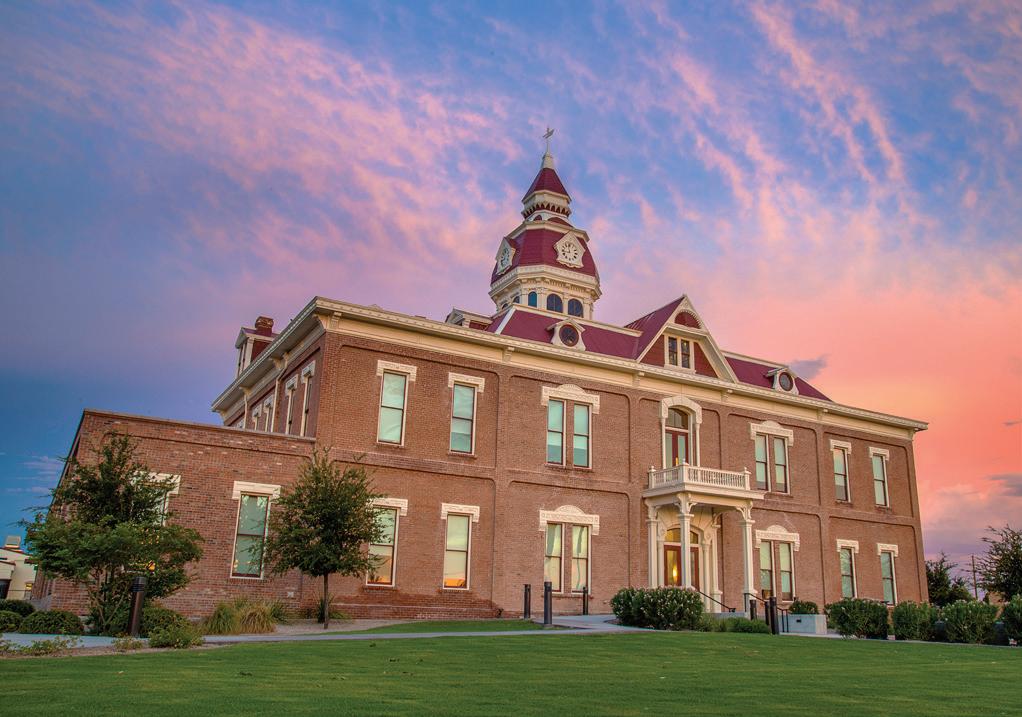
The Pinal County Courthouse is the most important architectural landmark in Florence and the most outstanding surviving example of the America-Victorian Style in central Arizona. The goal of the County Supervisors was to build an “impressive” courthouse, as a symbol of a bright future. The building was designed by Arizona architect James M. Creighton, who was among the territory’s first architects. The original clock tower is only a painted clock face due to budget constraints. The stairway leading to the upstairs courtroom was fabricated in San Francisco, shipped to Florence in pieces, and then assembled inside the courthouse. In the 1980s, the Boards of Supervisors planned to remove the cupola from the roof, but there was so much public outcry, they decided to forget the idea.
Two notorious women were tried in the second-floor courtroom. In 1899, Pearl Hart was tried and convicted for robbing a stagecoach. She was sent to Arizona Territorial Prison in Yuma to serve a five-year sentence. Her accomplice, Joe Boot, was sent to Yuma for 30 years. Winnie Ruth Judd, the infamous ‘trunk murderess’, had her sanity hearing in this courthouse in 1933.
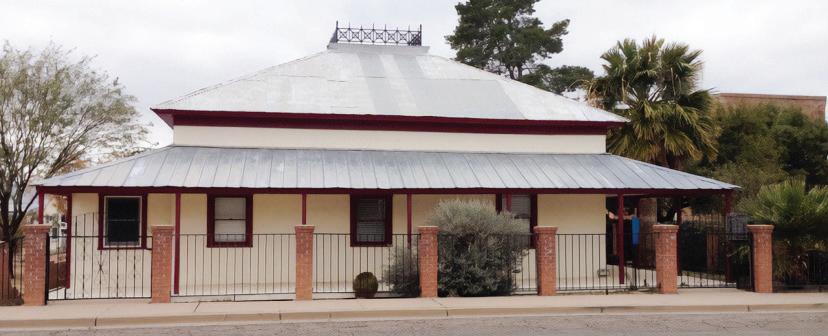
The William Clarke House is an excellent example of the later transitional style of architecture; a blending of Sonoran walls, elegantly detailed Anglo-Victorian entrance porch louvered bay window, and interior exposed adobe walls. In front of the home were large olive tress, lilac bushes and a climbing rose bush on a trellis by the front door. The interior was furnished with an impressive array of Eastlake Period furniture including a square grand piano used by Clarke’s wife, who taught music lessons. Now the offices of the Florence Reminder and Blade Tribune newspaper, the building was renovated and restored by Donovan & Ruth Kramer of Casa Grande Valley Newspaper Inc.
It is said the home was built as a wedding present for Clarke’s new bride, Ella who had come to Florence to help with her sister Mrs. Guild’s babies and ended up marrying William Clarke who built the nearby Clarke house.
Arizona’s last territorial governor, Richard E. Sloan, resided here during the time he served as Pinal County District Attorney from 1885 to 1888. It is said he carried his wife over the threshold on their honeymoon there. Some in town yused to refer to the house a the ‘honeymoon cottage’.
Historic Home Tour 2026
s T op 1
2026 tram stops
HISTORIC HOME TOUR
Brunenkant Bakery
291 N. Bailey Street
s T op 2
Second Catholic Church of the Assumption
221 E. 8th Street
s T op 3
Carmen Michea
Rental Residence
240 E. Ruggles Street
s T op 4
1st E.N. Fish and Company
420 N. Quartz Street
s T op 5
Woman’s Club of Florence
231 N. Willow Street
s T op 6
Smith Brickyard/Windmill
Winery
1140 W. Butte Avenue
s T op 7
W.Y. Price House
188 S. Willow Street
s T op 8
Florence High School
1000 S. Main Street
s T op 9
Pinal County Historical Museum
715 W. Main Street
s T op 10
Assumption of the Blessed Virgin Mary Church
225 E. Butte Avenue
s T op 11
The Second Pinal County Courthouse
135 N. Pinal Street
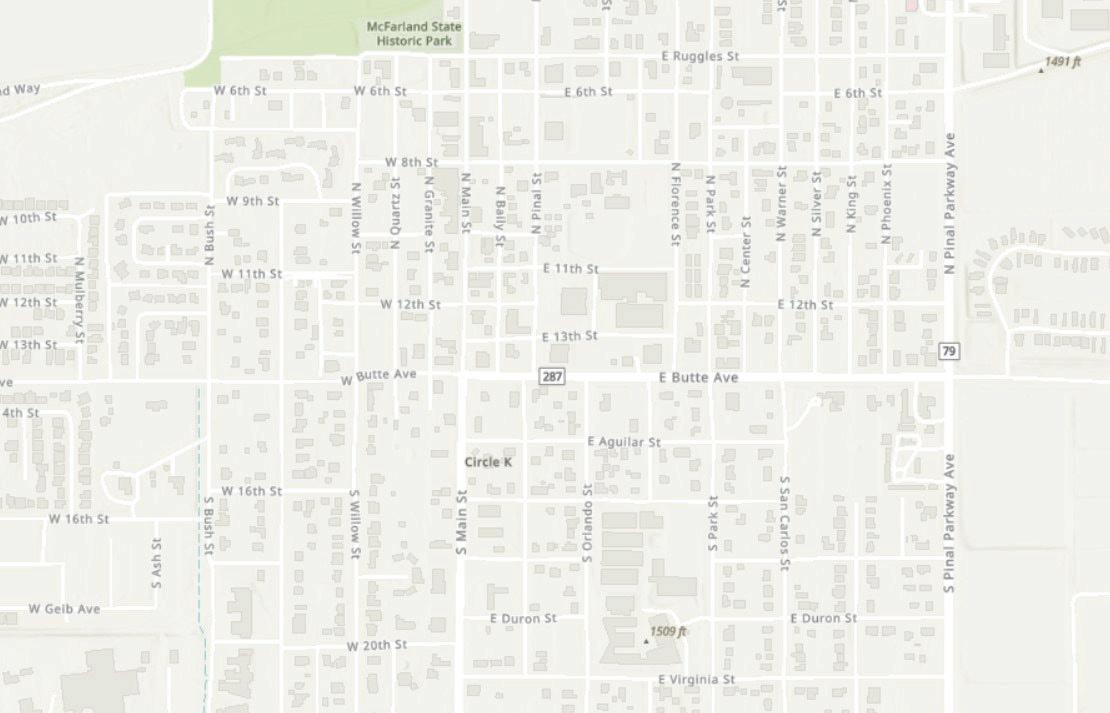
Unlisted properties are within walking distance from Home Tour Headquarters at Jaques Square. The trams will not stop at these locations.
We suggest visiting the sites listed in PINK PRINT under the home listings on page four of this booklet. These locations are open to the public today only. The other historic buildings are available to see throughout the year, so we would love for today’s guests to come back and visit Florence!
local flavors
1866 Coffee House
363 N. Main Street (520) 525-2243
A & M Pizza
445 W. Highway 287 (520) 868-017
Anthem Grille
6100 W. Merrill Ranch Parkway (520) 723-1660
Bar 727 727 Gressinger Street
Burger King
80 W. Highway 287 (520) 868-3880
Chen’s Bistro
3281 N. Hunt Highway (520) 723-6333
Florence Café
495 N. Pinal Parkway, Suite #102 (520) 868-8058
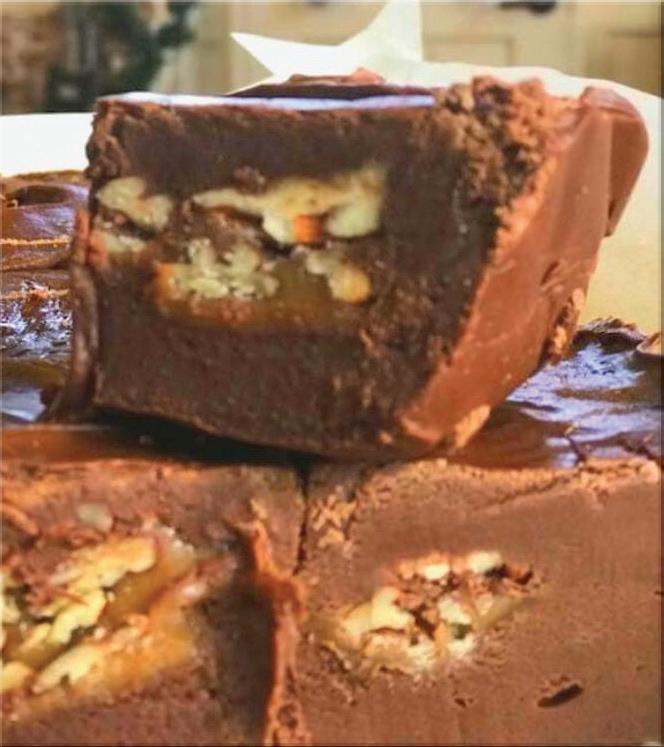
Florence Fudge Company
440 N. Main Street, Suite #101 (520) 424-6514
The Irish Cowboy
305 N. Main Street (520) 614-6252
Jalapenós
981 S. Main Street (520) 868-8986
Lidia’s Cocina at Old Pueblo
505 Main Street (520) 868-4784
McDonald’s
801 Arizona 79 (520) 836-4850
McDonald’s (Anthem) 3623 W Anthem Way (520) 836-4850
Mount Athos Restaurant and Cafe 444 N. Pinal Parkway, PO Box 2563 (520) 868-0735
River Bottom Grill 2501 N. Pinal Parkway (520) 868-3131
Sonic
495 N. Pinal Parkway, Suite #107 (520) 868-0266
Station Coffee
130 N. Main Street (520) 340-4273
Subway
55 S. Main Street (602) 262-1211
Subway (Anthem)
3235 Merrill Ranch Parkway (520) 723-2824
Taco Bell
558 N. Pinal Parkway (520) 868-8471
The Loft and Pantry
350 N. Main Street (541) 480-6381
Your Behind BBQ Birds and Bones
270 N. Main Street (520) 635-5537
Valentino’s Eatery
3385 N. Hunt Highway (520) 723-5910
Windmill Winery
1140 W. Butte Avenue (480) 313-2303
DID YOU KNOW...
In days of yore, newly married couples would be raucously “serenaded” by friends and neighbors in a custom called “Shivaree”. Today traces of the custom are the tin cans tied to the getaway car as the newly married couple leaves the church.
ON A COUPLES WEDDING
NIGHT, neighbors and friends would have some pre-shivaree drinks and head to the newlyweds home. Waiting until the lights went out, they would knock loudly on the door, bang pots and pans, serenade and in general interrupt that first night as bride and groom. Usually, if the groom provided a cash gift or a treat, the revelers would take their party elsewhere. If not, the groom could be abducted and left somewhere far away to find his way home in whatever he was or wasn’t wearing when captured.
Pinal County District attorney Fletcher Doan’s son, John, was married at the Silverbell mine in 1907. His bride describes the shivaree that greeted them their wedding night in her memoir saying: “John gave them $20 and I was greatly relieved when they left, although John said we would have been insulted if they hadn’t come.” ($20 in 1907 is approximately $680 today).
Dr Potyczka Flor Home Tour
some unusual stories of
TROUBLE IN PARADISE...
The Arizona Republican of Nov. 28, 1918 reports that Secretary of State’s stenographer, Celeste Thomas eloped to Florence to marry John Quaid. The couple left for a honeymoon in Miami accompanied by the bride’s parents. The Dec. 7, 1918 edition reported that John Quaid was arrested in Miami for bigamy having already left another wife behind. He believed her to be dead from comments from his first mother-in law whom he described as “too much mother-in law.” He claimed that he did not know he was already a father as well.
ONCE, TWICE... BUT THRICE?...
Victorian women used dance cards to keep track of the men they wished to dance with at balls and other social events. You couldn’t dance with the same man more than two times without creating a scandal.
some unusual stories of
READ ALL ABOUT IT!...
The local newspaper Arizona Weekly Enterprise followed local resident Jacob Suter’s quest for a wife.
Leo Goldman, of Pinal, will join Jacob Suter in his trip to Europe next month. We have a faint suspicion that they are intent upon matrimony and shall expect to see them return with brides.
Mr. Jaocb Suter will start for Europe about the 15th of the month and will not return till about the 1st of February next. He does not deny that he intends to bring a Swiss girl home with him.
Suter did return with a wife,Bertha Andreas, whom he courted for a full two weeks. They had five children and formed the Suter Family Band, a wellknown musical addition to the life of the town. The family moved to Globe where he built a house identical to his home in Florence. In Globe he was a business partner with future Arizona Governor George P. Hunt in a hardware business. The Suter home is currently on today’s home tour and operates as the Pedro Guerrero Arts Center.
Jacob Suter, chairman of the Board of Supervisors, left for the east Saturday and sailed for Europe this week. His destination is his old home at Spengler in Suhr, Switzerland. He expects to return home some time in February and will bring a wife with him. We wish him bon voyage.
historic heartburn
THE ROAD TO LOVE IS NOT ALWAYS SWEETNESS AND ROSES.
The Prescott Journal Minor published divorce news. The column was titled ‘Miserable Marriages’.
Vinegar valentines were a type of cheeky postcard decorated with a caricature and insulting poem sent to someone the sender did not like. A lampoon of Valentine's Day cards, the unflattering novelty items enjoyed a century of popularity beginning in the 1840s during the Victorian era.
TWO EXAMPLES
Miss Nosey - On account of your talk of others affairs, At most dances you sit warming the chairs, Because of the care with which you attend, To all others business you haven’t a friend.”
I’m not attracted by your glitter, For well I know how very bitter, My life would be if I should take, For my spouse, a rattlesnake, Oh no, I’d not accept the ring, Or evermore t’would prove a sting.