

By Olivia Muñoz Reporter
Itwas an average day for Pierce College student
Daniel biking around campus, who’s studying business administration with hopes to transfer and pursue a degree in accounting.
But what should have been a typical day for him was quickly transformed when
taken into foster care custody while I’m detained, because I don’t have my passport or Social Security with me,”
Daniel said. “One of my fears is to be detained by ICE, even though I’m a U.S. citizen.”
Ever since the beginning of summer, raids conducted by Immigration and Customs Enforcement (ICE) have surged across the country, particularly in Los Angeles. Communities, homes and businesses have been targeted
“Yesterday, my mom saw the ICE truck, and she started running away. It’s a good thing she didn’t get caught. I almost cried when she told me that, because, honestly, I don’t know what I’ll do without her.”
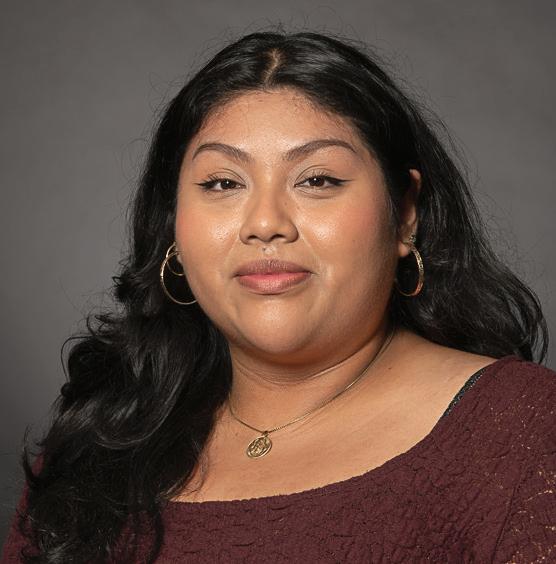
Jeffrey Martinez Political Science Major
thoughts of the possible dangers lurking off campus crossed his mind.
The fear of being detained by immigration law enforcement as a Hispanic father has made Daniel take precautionary measures before leaving his home. Due to his fear of reprisal by immigration enforcement, The Roundup decided to grant anonymity to Daniel.
“I carry my Social Security and my passport, because I’m Hispanic and I’m very brown. So, if ICE were ever to pull me over and I’m with my son, I would hate for them to take me in and then have my son
by these raids in a movement created by President Donald Trump’s administration, a movement that has made LA residents fear for their rights.
The considerable spike in deportations by ICE in LA during and after Trump’s first 100 days in office, a 253% increase at the height of the movement in June.
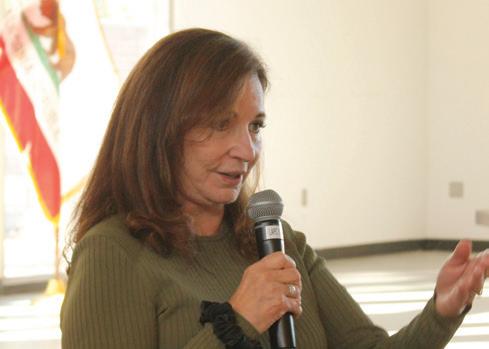
These mass deportations and the risk of being detained are not issues impacting Pierce only. Deputy Isaac Jorge, who has been a team leader of the Pierce Sheriff’s station for seven years, had a personal encounter with
and talking
Homeland Security parked on campus in September
“I was driving by to talk to them, and they said they were the law enforcement agency, ,and I let the school know so the school was aware of it,” Jorge said. “They were not enforcing any immigration laws here. They were actually going to another place and happened to park here for 20 minutes while they regrouped.”
This occurred twice in a week in the early hours of the morning and hasn’t happened since. Still, the agency being on campus might have dire consequences for both students and faculty.
According to a 2017 report from the Los Angeles Community College District’s Institutional Effectiveness & Student Success Committee, more than 10,000 undocumented students were
enrolled in the LACCD. Nearly 800 of these students were enrolled at Pierce, making up 3.7% of the total student population.
Surviving in a time of fear
As finals approach and
Article continues on page 4.


6201 Winnetka Ave.
Woodland Hills, CA 91371
Room: Pierce College Village 8211
Phone: (818) 710-4115
Phone: (818) 710-4117
Website: www.theroundupnews.com
Email: newsroom.roundupnews@gmail.com


Editor-in-Chief..........Abraham Elizalde
Managing Editor..............Violet Garcia
Photo Editor...................Karla Delgado
Photo Editor................Myraneli Fabian
News Editor.................Zamourad Iqbal
Campus Life Editor.........Emily Garcia
Opinion Editor...........Melanie Somoza
Sports Editor....................David Cohen
Copy Editor................Gerardo Escobar
Online Editor...............Daisy Aguinada
Reporters
Natalie Baharian
Gabriella Carlos
Emileo Carreon
Brianna Fuerte
Ivy Jade Garry
Elizabeth Holodnak
Tim Lewis
Olivia Muñoz
Chris Rubinstein
Leah Sklarski
Photographers
Josue Aguilar
Damian Celedon
Cherie Clark
Bryce Edwards
Calvin Henry
Melanie Jurado
Sandra Mazas
Alissa Nguyen
Jesus Rivas
Advisers
Jill Connelly
Jeff Favre
Tracie Savage
Morgan Keith
*For advertising, call: (818) 710-2960
Corrections?
Email us at newsroom.roundupnews@ gmail.com
Scan the QR code below to subscribe to our weekly newsletter

PierceCollege promotes its Health Center each semester to raise students' awareness of its services. It encourages them to explore the best resources available on campus for their physical and mental health.
But Pierce should also foster an environment for students by offering more workshops or activities focused on health issues caused by poor diet or by not engaging in physical activities such as workouts, walking, swimming and other activities that can help reduce stress.
According to data from California Cradle-to-Career, 51% of community college students are employed. It may make it hard for some students to balance work and school, leading to stresseating, fatigue and poor academic performance, as well as work-life conflicts and many other problems.
A 2025 survey conducted by Higher Ed among 5,000
undergraduate students found that 44 percent rated their nutrition as average, while 30 percent rated it as below average or poor.
One of the primary causes of the poor diet among the students is food insecurity, as per the article by Higher Ed “Report: Addressing the Roots of Food Insecurity in Higher Ed.
“Students experience food insecurity at higher rates than the general population, with estimates putting students between 33 to 51 percent food insecure and all U.S. adults at 9.8 percent. College students have higher risk factors for food insecurity.”
Food insecurity is also associated with students' busy schedules and lack of cooking skills, which force them to choose unhealthy food, as per the “Report: Addressing the Roots of Food Insecurity in Higher Ed.
The best way to encourage students to have a healthy lifestyle is to provide life skills. It doesn't have to be
a lot, but having cooking skills that let students cook in a minute would make a difference, giving a better healthier option to eat.
The University of North Dakota offers paid and free cooking classes for students and also has the Culinary Corner next door to its Wellness Center. The culinary corner, taught by guest chefs and teachers, engages students in a fun way and helps them develop cooking skills and basic healthy meal-prep ideas.
Nutritional inadequacy can lead to poor academic performance and low energy to focus in class, according to the American University article. “Skipping breakfast makes it hard for students to stay alert and focused, remember crucial information, and solve problems.”
The school should encourage students to ride bikes, attend gym classes, dance, practice yoga or participate in running competitions or hiking. Pierce has these facilities.
Pierce should promote clubs
that offer these opportunities for students to work on their physical health. More advertising and sending newsletters to everyone each week would be more effective, or Pierce could run a small contest that involves some physical activity to help students reduce inactivity.
According to the study conducted by the Centers for Disease Control and Prevention, “Bridging the Gap: Promoting Physical Activity in College-Aged Students,” “By prioritizing PA within higher education, campuses have the power to foster lifelong healthy behaviors, reducing health care burdens and improving quality of life well beyond graduation.”
The better way to live a fulfilling academic life is to have access to proper food and mental wellness, which could be achieved by addressing students' exercise and healthy eating habits.
By Melanie Somoza Opinions Editor
matters, now more than ever, but not just for the planets, health for the well-being of our future generations.
For a day, I tried to make my routine more sustainable, and I learned quickly that some changes were easier than others.
I decided to walk to nearby places like the grocery store, my friend’s house and the coffee shop. The walks were just over a mile each and the fresh air helped me unwind and connect back with nature.
I was also curious how my commute to work would change, since I had never taken the bus even though there’s a stop just around the
corner from my house.
What’s usually a 15-minute drive turned into a 55-minute bus trip with three transfers. Doing this on my day off was manageable, but on a workday — especially after a long shift late at night—it would feel exhausting.
It made me realize how much stability depends on access and convenience.
The UN Environment Programme said that sustainable living is about recognizing how our everyday choices affect the planet, and finding ways for people to live better and more consciously
That was something I kept reminding myself, as I made small shifts at home.
Eating in instead of ordering takeout turned out to be the easiest change, especially because I also tried to eat less meat.
According to the Center for Biological Diversity, meat consumption is one of the most environmentally destructive industries, which made cutting back feel more intentional.
Sustainability is broken down into four pillars, environmental, economic, social and human —and according to Inspire Clean Energy, the most important urgent pillar is environmental
protection, which focuses on reducing waste, pollution and over consumption.
I stuck to the things I normally do on my day off. Since I had already taken the bus to work, I stayed in the area afterward and decided to stop by a few thrift stores.
Picking up preowned pieces instead of buying new ones felt like a simple way to
reduce waste.
Even though my changes were small. They reminded me that individual choices still carry weight.
According to the Intergovernmental Panel on Climate Change small changes to everyday life could help reduce global emissions by 70% by 2025.

December 10, 2025

By Brianna Fuerte Reporter
People used to fantasize about the future having flying cars, and while we’re not quite there yet, the next best thing has come to our streets, Waymo selfdriving cars.
Waymo slowly grew as it expanded its services from Arizona to San Francisco and, recently, Los Angeles, trying to expand their project of safe driving experiences.
In 2023, according to the Michigan Journal of Economics, Cruise, another self-driving car, and Waymo recorded 102 crashes combined over the span of 6 million miles in driving distance, which is considered extremely low.
Compared to the 40,901 people who died in car crashes in 2023, according to the IIHSHLDI (Insurance Institute
for Highway Safety and the Highway Loss Data Institute), Waymo has proven to reduce the risk of car crashes and deaths.
Additionally, in contrast to gasoline vehicles, Waymo produces zero tailpipe emissions, resulting in a lower carbon footprint and cleaner air. According to the Michigan Journal of Economics, if San Francisco were to replace 6.6% of gasoline cars with electric driverless cars, like Waymo and Cruise, an estimated 40% of fine particulate matter concentrations would decrease, which are known to be a cause of respiratory problems like asthma, and would improve the air quality immensely.
In addition to this, the Carbon Credits claim that
Waymo, with more than 250,000 electric rides per week, is able to prevent around 315 tons of carbondioxide emissions, based on the emissions - avoidance methodology. According to the California Hearing Center, Waymo also has the ability to help those who are hard of hearing. Waymo has partnered with 13 different disability advocacy organizations, including the National Federation of the Blind, American Council of the Blind and United Spinal Association, to help create a communication-barrierfree environment through Waymo’s Accessibility Network.
This allows Waymo’s accessibility settings to include audio cues that announce when the vehicle is
moving or stopping, button locations, and important trip information. It’s important to keep in mind that the technology is still new. There is going to be a lot of trial and error on how to properly handle this big change on the road. Although, if anything, Waymo has proven to benefit the public instead of trying to cause chaos. The road can be dangerous for anyone, drivers, passengers and pedestrians. If Waymo is able to improve driving experiences in safety and inclusivity, then it shouldn’t be vilified for trying to improve everyday life.

cars pose danger to society
By Gabriella Carlos Reporter

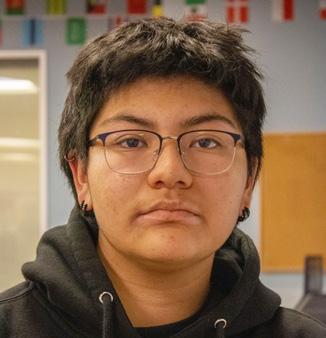
“Personally, I would not trust a self-driving car. I would prefer a human who’s able to make quicker decisions and more aware of their surroundings, environment, and other people. While I do feel like maybe self-driving cars would be good for people who can’t drive.”
DexterCruz-BiochemistryMajor
Self-driving vehicles are unsafe for people, with issues like trapping passengers, hitting pedestrians and running lights.
Using AI to power its vehicles, Waymo is still in the beginning stages of learning how to function on the roads, leading to dangerous uncertainty. The difference between having a human versus an autonomous vehicle is the ability to think with nuance.
A recent incident in San Francisco led a Waymo to kill a neighborhood cat causing outrage from the community.
According to The New York Times, the main reason people are more upset with Waymo is the lack of sympathy and that they are stealing real people’s jobs.
“Still, Kit Kat’s death has given new fuel to detractors.
They argue that robot taxis steal riders from public transit, eliminate jobs for people, enrich Silicon Valley executives — and are just plain creepy.”
There is no driver or person to blame which leaves the issue to the billionaire corporation and executives who can get away with a simple apology.
Many drivers are still scared from the uncertainty and lack of regulations on self-driving vehicles. According to AAA Newsroom, 6 in 10 U.S. drivers are still afraid to ride in a selfdriving vehicle. Most drivers want advancements in the safety systems involved with Waymo’s.
Waymo’s are more or less behind on their ability to react to unpredictable situations. Many people have reported being stuck in unsafe situations
due to Waymo’s ability to lock the car and not let its passengers out.
According to Chron an incident in Austin, Texas had a woman locked inside on a busy freeway after stopping in traffic.
“A woman named Becky Levin Navarro took to TikTok on Sunday after her Waymo ride to the Deep Eddy Cabaret took an unexpected route. Navarro said the driverless taxi suddenly stopped underneath the MoPac Expressway, in a spot near where two lanes merge, and locked her and other passengers inside.”
Another incident of passengers getting stuck inside Waymo during vandalism and protest acts. During the antiICE protests in Los Angeles, Waymo’s have been targeted for vandalism and being lit on
fire.
Though it can be a political statement, many people who are getting stuck inside the Waymo’s are becoming the subject of danger due to the rise of people being openly violent towards Waymo’s.
According to Time, “Some social media users have suggested that self-driving vehicles in particular have become a new target because they are seen by protesters as “part of the police surveillance state.’”
Inherently supporting AI and Waymo’s as it is not experienced or advanced enough will never be as comparable to a human driver leads to the accidents and risks of choosing self-driving cars.
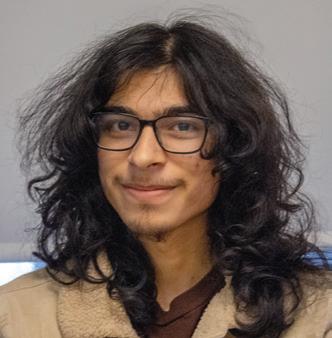
“I’d say in the current state, I would trust a self-driving car to an extent. I wouldn’t trust that a self-driving car is mandatory because then there’s a chance of something happening.”
JoshuaCervantes–PhilosophyMajor
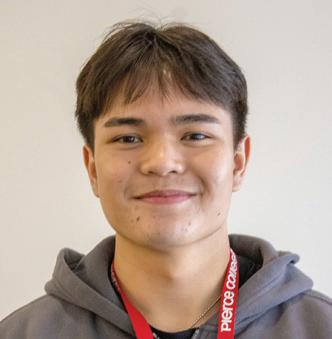
“Probably not for a while or until the technology advances. I recently saw one of the self-driving cars cut off a couple of people and almost hit somebody. But later, I think I can trust it.”
Patrick Cantuba - Mechanical Engineering
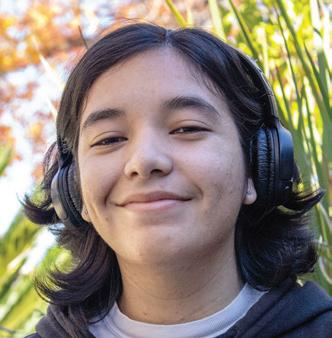
“Absolutely not. AI should not be driving cars; it should not be doing any of that. It’s going to run over a small child at some point. I don’t trust anyone.”
Cody Cabral- Studio Arts Major
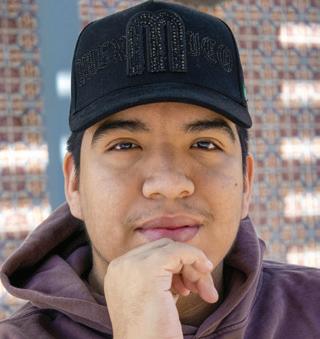
“I mean it depends on anyone. You have got to be aware of your surroundings, because there’s been a lot of reckless drivers.”
Christian Cornejo – Early Childhood Development
applications are due, students’ academic priorities take a backseat to the thought of whether or not they will see their family members at the dinner table the next night. According to the California Immigrant Data Portal, more than 6 million residents in California were undocumented or lived with undocumented family members, most of them being Latino.
Political science major Jeffrey Martinez is one of those students who is worried for his family’s safety, and the threat of deportation is palpable for his family.
“I feel scared, especially now that ICE agents are able to racially profile you,” Martinez said. “Yesterday, my mom saw the ICE truck, and she started running away. It’s a good thing she didn’t get caught. I almost cried when she told me that, because, honestly, I don’t know what I’ll do without her.”
Like Daniel, Martinez has begun to carry documentation such as his birth certificate \in fear of being targeted by ICE.
Besides the devastation of having loved ones taken away, there are also the ramifications of these deportations.
Chicano studies professor
Tony Sandoval said that because of the uptick in immigration law enforcement and these raids, a close undocumented friend of his decided to self-deport in fear of what would happen if she was detained by ICE.
“She’s going back to Mexico because she’s scared,” Sandoval said. “She’s placed on a certain medication due to a health issue, and she’s dependent on that certain medication. If she gets detained, she’s not going to have access to that medication, which could be fatal.”
Daniel discussed how his undocumented single mother has suffered major financial loss due to her fears of immigration law enforcement.
“My mother works in housekeeping. She used to drive out really far for some of her clients, but she lost a lot of work because she’s scared to leave the house unnecessarily. She lives alone, and she’s her own head of household,” Daniel said. “It has really affected her income, financially. It’s just not wanting to take unnecessary risks to get pulled over or deported.”
The passing of Trump’s One Big Beautiful Bill Act has allocated $170 billion dollars for immigration law enforcement. In April, he gave a speech that referred to illegal immigrants as “animals” and said they were “not human.” When Trump was first elected, political science professor Denise Robb recalled her students feeling distraught and scared for their futures.
“Many of my students were stressed out because many of them, if they are not undocumented, their parents are. They were all crying, I mean, literally crying,” Robb said. “I canceled all of my classes, and I turned them into student talk sessions. So, we sat in a circle and talked about how we felt. I said, ‘If you’re happy Trump got elected, we can talk about that too.’ Most people, though, wanted to talk about how scared they were.”
This fear has been prevalent across campus. The Monarch Brahmas Club, formerly the Undocumented Brahmas Club, took defensive measures to avoid becoming a target of anti-immigrant rhetoric. The club on campus exists to provide a community for undocumented, Latino or other students seeking friendship and support.
President of the club Camila Reynaldo is a Pierce student and a Peruvian immigrant. Reynaldo said that during Club Rush in September, many students saw the word “undocumented” in the title and walked away. It also attracted unwanted questions about the club member’s immigration status from at least one person. Because of this, the name of the club changed in part due to their worry of being preyed upon, as well as to attract more students to join.
“Some people ask if they have to be an immigrant to be in the club, and we were like, ‘No, if you want a space to talk, or a community, or if you are Latino, you can do it.’ You don’t have to be an immigrant to be in the club,” Reynaldo said. “We also don’t want to be a target for people who don’t like immigrants or don’t like to be around immigrant people. Which is really sad, because we’re just people— what are we going to do to you, what can we say to you? It’s really sad.”
Both professors Robb and Sandoval said that they know students who have opted to take online classes to mitigate the risk of traveling to campus out of fear of detainment, as well as students who are
not undocumented who keep documentation with them out of fear of racial profiling. Robb locks the doors to her classroom during instruction to prevent unexpected searches from federal agents.
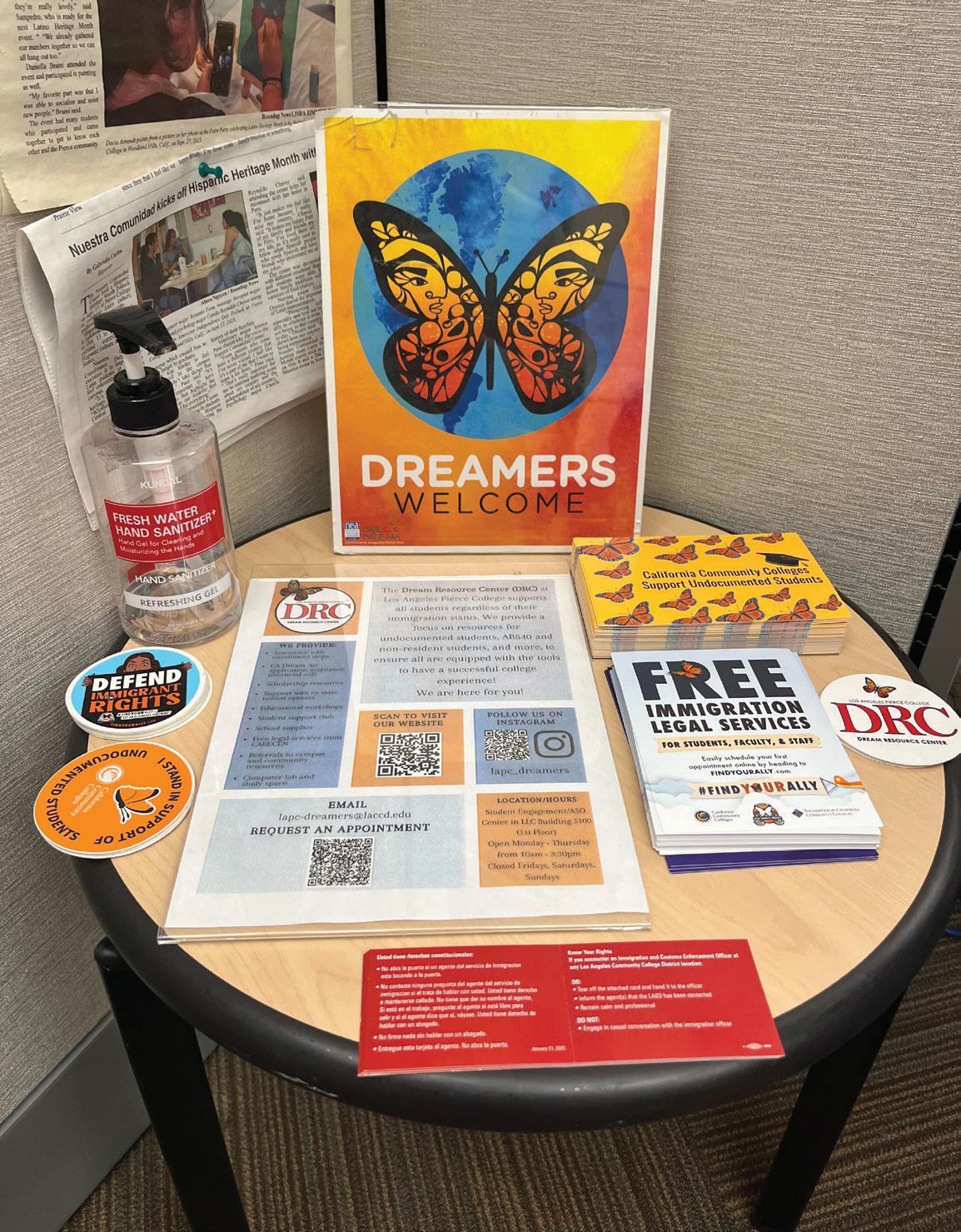
The LACCD’s official website has a page dedicated to resources and contacts for faculty and students in case of incidents with immigration law enforcement, the title being “Know Your Rights.”
Robb said that it is more important now than ever to be proactive in defending the rights of the undocumented and other marginalized communities.
“If you’re not part of the solution, you’re part of the problem. I really believe that any time you see an injustice, if you don’t do anything, you might as well be helping the unjust people,” she said. “This is a democracy, so everybody has to participate. It’s our job. Otherwise, we might as well have a dictatorship, which is what the current president would like.”
Protests against immigration law enforcement in major cities, including LA, Portland, New York and Atlanta gathered thousands of people over the summer, while local protests drew many San Fernando Valley residents.
In California, laws have been passed targeting the masking and identification of federal law enforcement agents, which were challenged by the Trump administration.
Governor Gavin Newsom and Attorney General Rob Bonta created a website to allow people to report misconduct by federal agents.
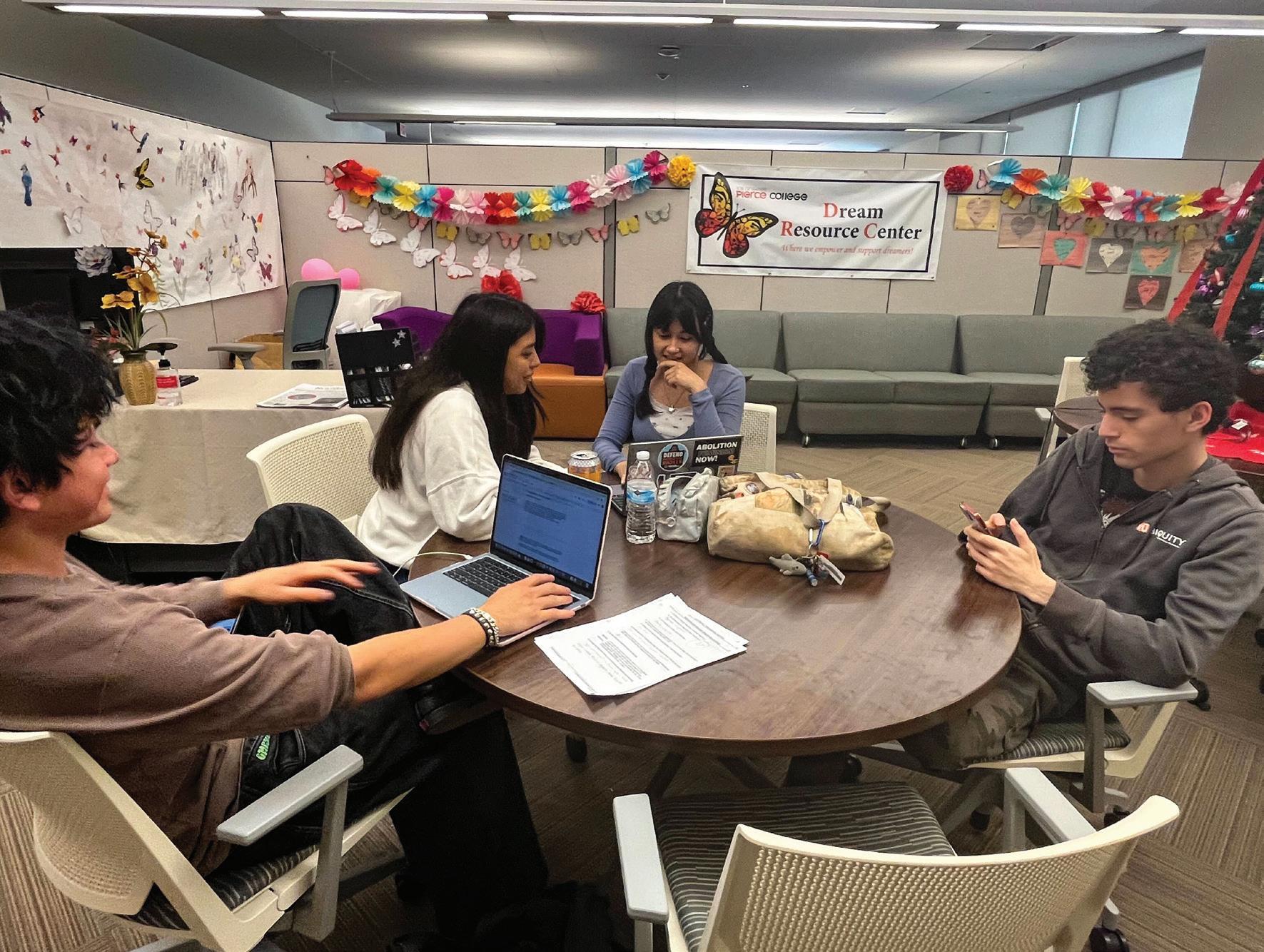
On campus, the Dream Resource Center and the Monarch Brahma Club are here to help undocumented students and immigrants feel less isolated and afraid. Reynaldo said that the club is there to support students in any way.
“You’re not alone. You can speak to us and be friends with us. We’re a really good community, and we can help you if you give us the opportunity to help you,” she said.
Robb said that she wants those students who are living in terror to know that the faculty and staff care deeply about them.
“We love them, and there are many, many, many of us that are not in favor of what’s happening, and we’re going to do our best to protect them,”
she said.
Daniel said that Pierce has been a positive space for him to be during these difficult times in his and his family’s lives
“Pierce has been very safe and a very good support system to get my degree and get my studies in line,” he said. “As far as on-campus, I have felt a very strong support system with good people around me.”
With this being Trump’s second and final term in office, Daniel said that he’s feeling hopeful about the future, and he knows that he and others like him can persevere.
“There’s always a light at the end of the tunnel” he said. “And I feel like it’s getting closer and closer each day.”
Ivy Jade Garry contributed to this story.

By Chris Rubinstein Reporter
By Chris Rubinstein Reporter
By Emileo Carreon Reporter
Duethat point. But we can’t really say whether it was caused directly from it, but I’m pretty sure that was an impact. It was a factor.”
and said it was important for professors to turn in their grades in a timely manner.
The Pierce College president told the Academic Senate that enrollment for winter 2025 increased by the headcount of 6% of students that are planning to enroll in the upcoming winter intersession.
The Academic Senate meeting took place at Building 600 on Monday, Dec. 8.
Due to a recordbreaking 43day government shutdown, the Supplemental Nutrition Assistance Program (S.N.A.P.), known as CalFresh in California, had been put on hold. Although the state is expected to move forward with issuing November payments, the recipients are still feeling the repercussions. During this period, Pierce College faculty have focused on making sure students don’t go hungry by providing food resources and referrals.
to a recordbreaking 43day government shutdown, the Supplemental Nutrition Assistance Program (S.N.A.P.), known as CalFresh in California, had been put on hold. Although the state is expected to move forward with issuing November payments, the recipients are still feeling the repercussions. During this period, Pierce College faculty have focused on making sure students don’t go hungry by providing food resources and referrals.
that point. But we can’t really say whether it was caused directly from it, but I’m pretty sure that was an impact. It was a factor.”
President Ara Aguiar said this was an increase over the previous year, but the number has gone down since the recent disenrollment phase.
Head of the Brahma Bodega Geremy Mason has been doing everything he can to make sure students were supported through this crisis.
Head of the Brahma Bodega Geremy Mason has been doing everything he can to make sure students were supported through this crisis.
“It was a little higher before, but the headcount is up,” Aguiar said. “Enrollment is up by 5%. It was 8% on Thursday of last week, but there was disenrollment that took place on Friday. So that had a 3% drop in our enrollment numbers.”
Mason said he noticed an uptick in traffic during last month’s fresh bodega and suspected that it was likely due to the S.N.A.P. cuts.
Mason said he noticed an uptick in traffic during last month’s fresh bodega and suspected that it was likely due to the S.N.A.P. cuts.
Vice President of Academic Policy Travis Orloff went over the required prerequisite courses that can have a huge impact on students’ education
“We did have a lot more people at our fresh bodega three weeks ago,” Mason said. “And I think that was partly due to the fact that people had not received their S.N.A.P. benefits at
“We did have a lot more people at our fresh bodega three weeks ago,” Mason said. “And I think that was partly due to the fact that people had not received their S.N.A.P. benefits at
The Bodega has referred students to their services and food pantries in the community for extra support. During the shutdown, Mason said the Brahma Bodega was able to supply students with more food than usual due to the extra donations from their community partner.
“So, students that might be in summer or winter intersession class, their grades might not be turned in before the start of the spring or fall semester,” Orloff said.
The Bodega has referred students to their services and food pantries in the community for extra support. During the shutdown, Mason said the Brahma Bodega was able to supply students with more food than usual due to the extra donations from their community partner.
“Without a passing grade, that student might be enrolled in a class that they don’t need prerequisites for.”
Psychology professor Brian Gendron highlighted that students are still required to take prerequisite courses for the upcoming spring semester. Gendron also highlighted that enrollment for winter has been successful for many students who have enrolled in previous years.
“When we do our orientation, we’re telling students, ‘Hey be aware that these programs might be affected, but still go ahead and apply if you’re interested,”Mason said. “But we’ve been working closely with [the] student lunchbox, our partner, to get more money [and] more items to give away.”
“When we do our orientation, we’re telling students, ‘Hey be aware that these programs might be affected, but still go ahead and apply if you’re interested,”Mason said. “But we’ve been working closely with [the] student lunchbox, our partner, to get more money [and] more items to give away.”
Pierce’s music department has also assisted students with free food for the holidays. Music instructor assistant Barmey Ung distributed granola bars, noodles, apple sauce and soups to students in Music Office 3416. Ung said the bodega assisted him with food to outreach to students in need.
“Well, that is a 6% higher number than a year ago,” Gendron said. “So, this is great. It shows that they are growing. Enrollment is up and we need enrollment to be up, because we are in a budget deficit. And so, we need students to be there and make sure that they are offering classes that they want.”
Pierce’s music department has also assisted students with free food for the holidays. Music instructor assistant Barmey Ung distributed granola bars, noodles, apple sauce and soups to students in Music Office 3416. Ung said the bodega assisted him with food to outreach to students in need.
“Our department pooled our resources together to get as many food donations as we can to support our students
“Our department pooled our resources together to get as many food donations as we can to support our students
bunch of snacks[and] a bunch of chips, so we were giving those out for a while. We do have some vending machines [options]. ”
have some vending machines [options]. ” To ration the food distribution, music department faculty are allowing three items a day per student in need. Due to the limited supply, this resource may last until the end of the month. Students have been taking
To ration the food distribution, music department faculty are allowing three items a day per student in need. Due to the limited supply, this resource may last until the end of the month.
Students have been taking
Brahma Bodega helped him and his family when S.N.A.P. benefits were taken away.
“When they took it away, I would go to the bodega and get snacks at school rather than spending money at the cafeteria,” Lomeli said. “And I would take some stuff home for my family as well.”
“When they took it away, I would go to the bodega and get snacks at school rather than spending money at the cafeteria,” Lomeli said. “And I would take some stuff home for my family as well.”
love what Pierce does here, but I think making it more known to other people would be helpful,” Lomeli said. “Sometimes I go to the Bodega to get snacks and I’ll come back to the cafeteria where a lot of my people are and they’ll look at me and say, ‘What’s the Bodega?’ So just making sure that people know what it is and that they can take advantage of those resources would be good.”
Lomeli said he’s grateful for the resource.
love what Pierce does here, but I think making it more known to other people would be helpful,” Lomeli said. “Sometimes I go to the Bodega to get snacks and I’ll come back to the cafeteria where a lot of my people are and they’ll look at me and say, ‘What’s the Bodega?’ So just making sure that people know what it is and that they can take advantage of those resources would be good.”

Lomeli said he’s grateful for the resource.
“I love the bodega, I
“I love the bodega, I

By Natalie Baharian Reporter
Beforethe sun rises, campus officially opens and students start making their way to school.
Meanwhile, another kind of business is in motion at Pierce.
In just a brief periof, custodians and the Maintenance and Operations Department work together in a race against time to ensure that the campus is clean for the initial wave of 8 a.m. classes.
For many students on campus, classes and clubrelated activities consume most of their time. It’s rare to notice the work the custodians do on campus. Students don’t normally see the work rush that occurs because it’s done during certain intervals such as early in the morning, inbetween classes and in the evening. Nonetheless, all the clean trash cans, stocked supplies and smooth floors are because of a team of people that work demanding jobs that determine the state of campus upon arrival.
One of the people at the heart of the Maintenance and Operations department
“But I encourage them to close it out, let students see the cleaning even if they get upset. At least they know it’s being sanitized.”
Damain Christopher Provisional
Operations Manager
is custodian Damain Christopher who serves as the provisional operations manager. Overseeing various sectors of the department such as the custodians, gardeners, and the workers in auto-shop, his position expands to several areas on campus.
“When I was promoted to provisional operation manager, my normal hours were 10 a.m to 6:30 p.m. But because the A-Shift supervisor needed help with 33 custodians, I changed my shift to 6 in the morning to 2:30 p.m,” Christopher said. “So not only am I doing the provisional manager duties, I’m doing the senior custodian supervisor duties, custodial supervisor duties, and custodial duties.
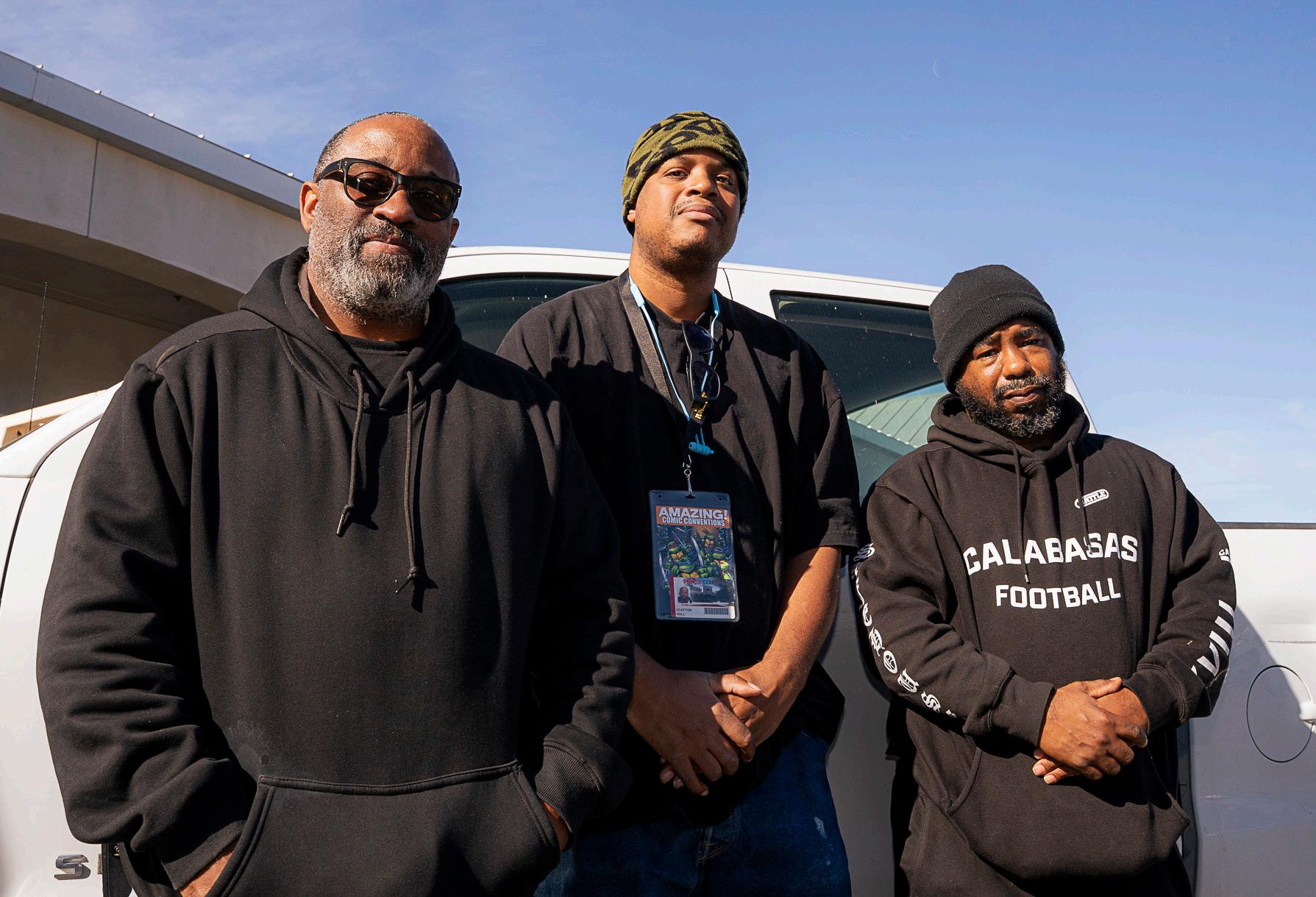
Provision Operations Manager Damain
Hills, Calif. on Dec. 3, 2025.
Because we’re very much short-staffed, so we have to make it work.”
This shortage impacts the approach done by custodians, having them work just as hard to meet certain deadlines and complete the required areas of their specific shift.
With distinguishable shifts, the A-shift from 4:30 to 7:30 a.m and the B-shift from 12 to 8 p.m. Each team has different approaches depending on the time of the day that is being covered. Because the A-shift team has less time, their priorities differ from other custodians.
“Every custodian can work up to 20,000 square feet. So we take the staff, chop up the campus, and assign each custodian to 20,000 square feet to cover in less than 4 hours,” said Christopher.
A priority of all the custodians, particularly the A-shift team is to keep the bathrooms clean and organized as often as possible. For them, restrooms aren’t just one of the many things that need to be completed, it is the most important thing that needs to be done before any student steps on campus.
The strong emphasis on restroom cleanliness is due to it being one of the
most challenging because of the time crunch but also because of its significance in the overall cleanliness of the campus. Without clean restrooms students are at risk of sicknesses and unhygienic exposure which would cause concern for campus conditions.
“It’s such a big priority for us because there’s a lot of diseases and people carry things. Especially after COVID”, said Chrisopher. “That’s when we finally got respect as custodians, because we deal with bacteria and viruses. We don’t want anyone getting sick from our restrooms. I also tell them sometimes it’s good to let students see you cleaning. The A-Shift comes in at 4:30, so students don’t see them. But I encourage them to close it out, let students see the cleaning even if they get upset. At least they know it’s being sanitized.”
Now focusing on the B-shift, challenges still continue. Custodians must find ways to clean all parts on campus during school hours without interfering with students and staff day-to-day activities. During class times, custodians do their best to get as much done but because
those times are just short intervals, it can be a challenge to cover their designated area. Because it isn’t just restrooms but also other parts of campus that are open but must be maintained for future use by students.
“The majority of the time, we are at the point where a lot of students are going in and out of classes. It’s very busy and we’re in a rush”, said Clayton Hall, a custodian working the B-shift. “So while the classes are in, we’ll go and rush to the bathrooms to get those details cleaned right away before those classes come out.
Then they’ll be using those restrooms because we have a consecutive mob and people keep going in and out of the restrooms all the time.”
Other than restrooms, each custodian is assigned a specific area of the campus to cover. Some work on the trash cans outside of classrooms while others work in the academic spaces of the campus. Having to complete both the restrooms and the entirety of campus is anything but a simple task, and it’s completed with efficiency and determination.
In many cases, custodians are tasked with several different things to do and must
complete them before the end of their shift and other workrelated activities. For Hall, his responsibilities span all over campus, from the restrooms to the bookstore.
“I am in control of the bookstore”, says Hall. “ So I’ll go to the bookstore back and forth, check our trash cans to make sure they’re low. If they’re low, I don’t worry about them, but if they’re full, I’ll empty them and put a brand new bag in to make sure they keep flowing and everything runs smoothly.”
In addition to this, seasonal changes or different times within the semester can present a challenge.
Areas heavily populated for students for things such as finals or even holiday events can be a tough challenge to tackle, but the custodians do it every day.
“We get in here and we pick up from everything that was left over at night from the inside. Because I cleaned the lower library”, said custodian Keithan Gooden. “And then they [multicultural center] also feed all the people in the little program. So every day it can be different, just depending on what they have.”
December 10, 2025
By Elizabeth Holodnak Reporter
The Applied Music Program recital kicked off its first performance of the semester on Dec. 2.
The showcase performed a variety of music, such as classical and jazz while also showcasing musical theater skills such as personal expression. The event was held in the Performing Arts building where vocalists, pianists and instrumentalists each presented the work they have been refining throughout the fall semester.
Assistant professor and director of the applied music program Charlotte Wilkins said the recital is the first of four that highlight the accomplishments of the A.M.P.students.
“Students work towards their recital performance over the course of the semester in their one-to-one applied lessons,” Wilkins said. “They focus on skill development, technique, tone, intonation and showcase the culmination of these skills in the recital and in their final jury performances.”
The program featured a wide variety of repertoire, from jazz standards to Italian arias.
Performers took the stage one by one, each accompanied by pianist Lance Merrill, a longtime facility collaborator in the music department. Pieces ranged from the relaxed swing of “All of Me” to the dramatic intensity of classical works by Mozart, Schubert and Scarlatti, giving students the opportunity to demonstrate versatility in both style and vocal technique.
The concert featured performer and music major Linoyuh Savage-Goldenberg who said the recital marked an important milestone for her growth as a vocalist. She performed “Non so più” from Le Nozze di Figaro along with “The Worst Pies in London” from Sweeney Todd. For Savage-Goldenberg, both pieces took her into new territory.
Goldenberg said memori zing the fast-paced lyrics of Sweeney Todd was one of the biggest challenges.
“These two songs are new for me personally. I’ve never done an aria before, and I’ve never done a classical musical theater song,” SavageGoldenberg said. “It was especially hard because there were so many words coming at once. But it meant so much to me that I did so good. I love
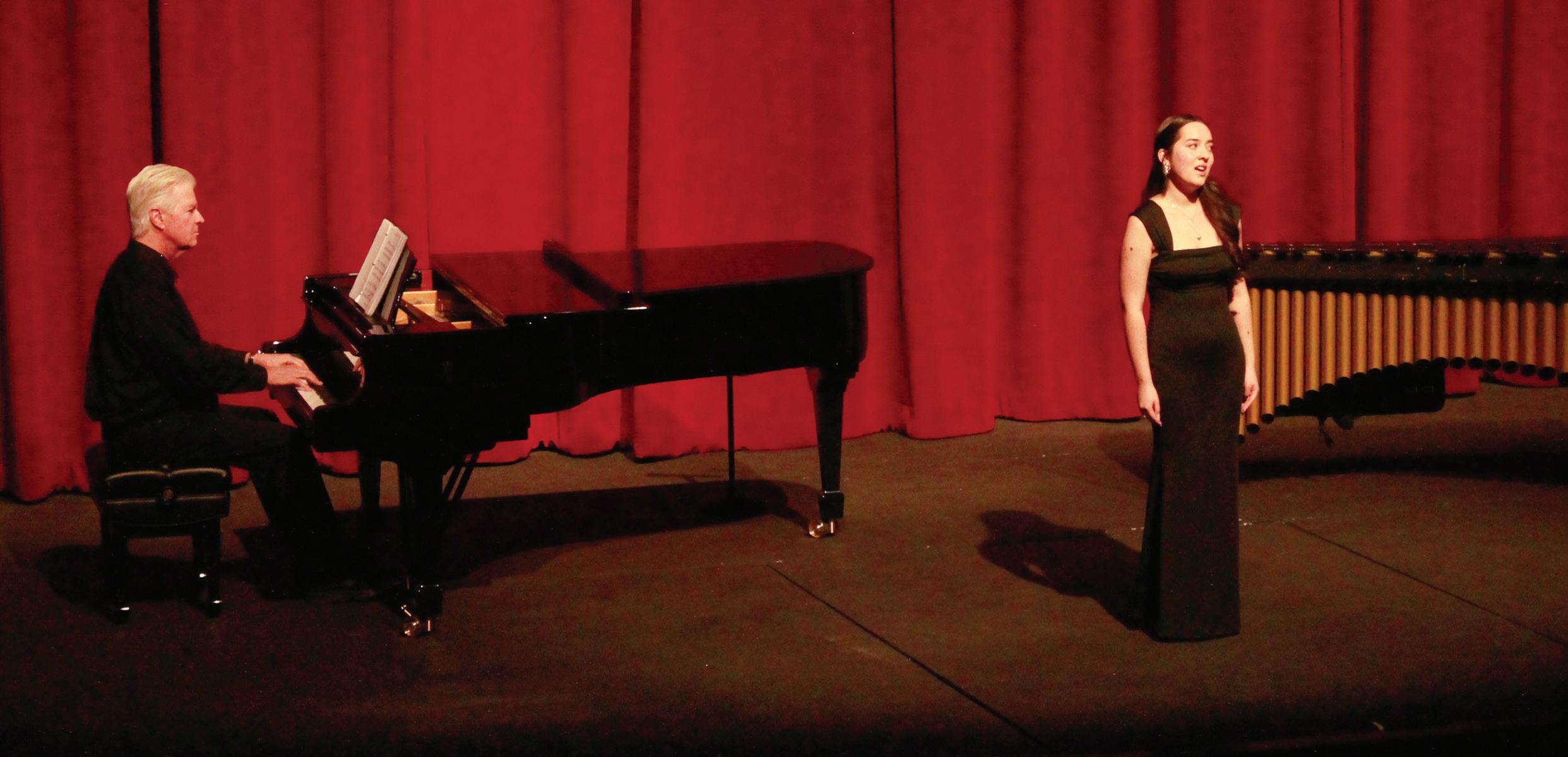
performing on the stage.”
Performer and music major Sophia Ysabel Reyes said her selections carried deep personal meaning. Reyes performed “These Foolish Things (Remind Me of You),” a jazz standard connected to memories of her grandmother.
“This piece is very important to me because I grew up listening to jazz with my grandmother,” Reyes said. “It’s one of our favorite songs that we’d always sing together.”
Reyes also performed the Italian aria “O cessate di piagarmi,” she said it challenged her both linguistically and technically.
“It’s one of my first Italian arias,” she said. “This piece taught me a lot, especially with technique, and I feel like I’ve really grown as a musician and a performer.”
As the recital concluded, Wilkins emphasized that events like this are essential
to the program’s mission. She said the performances show not only what students have learned, but how they are developing as artists. With three more recitals scheduled this semester, it is a rare opportunity for intensive training and public performance experience.
The next Applied Music Program recital will be on Thursday, Dec. 10 at 1 p.m. in the Performing Arts building.
By Emily Garcia Campus Life Editor
Pierce College Philosophy Department hosted a cabaret on Dec. 4, the department intended to celebrate the connections of discipline of interest and ideologies. Students created videos, poems, and animation films in relation to the cabaret’s theme, what’s the meaning of life.
The cabaret was hosted by philosophy president Alexa Basilio who intended it for Professor Melanie McQuitty’s class who is studying the topic.
Chair of the Philosophy department Cara Gills said the event was meant to connect philosophy to the students’ everyday lives.
“The purpose of the Philosophy Cabaret is to really allow students to see philosophy in their everyday lives,” Gills said. “Especially through art and different artistic expressions.”
The event has been hosted at Pierce for the past 11 years. The Great Hall was covered
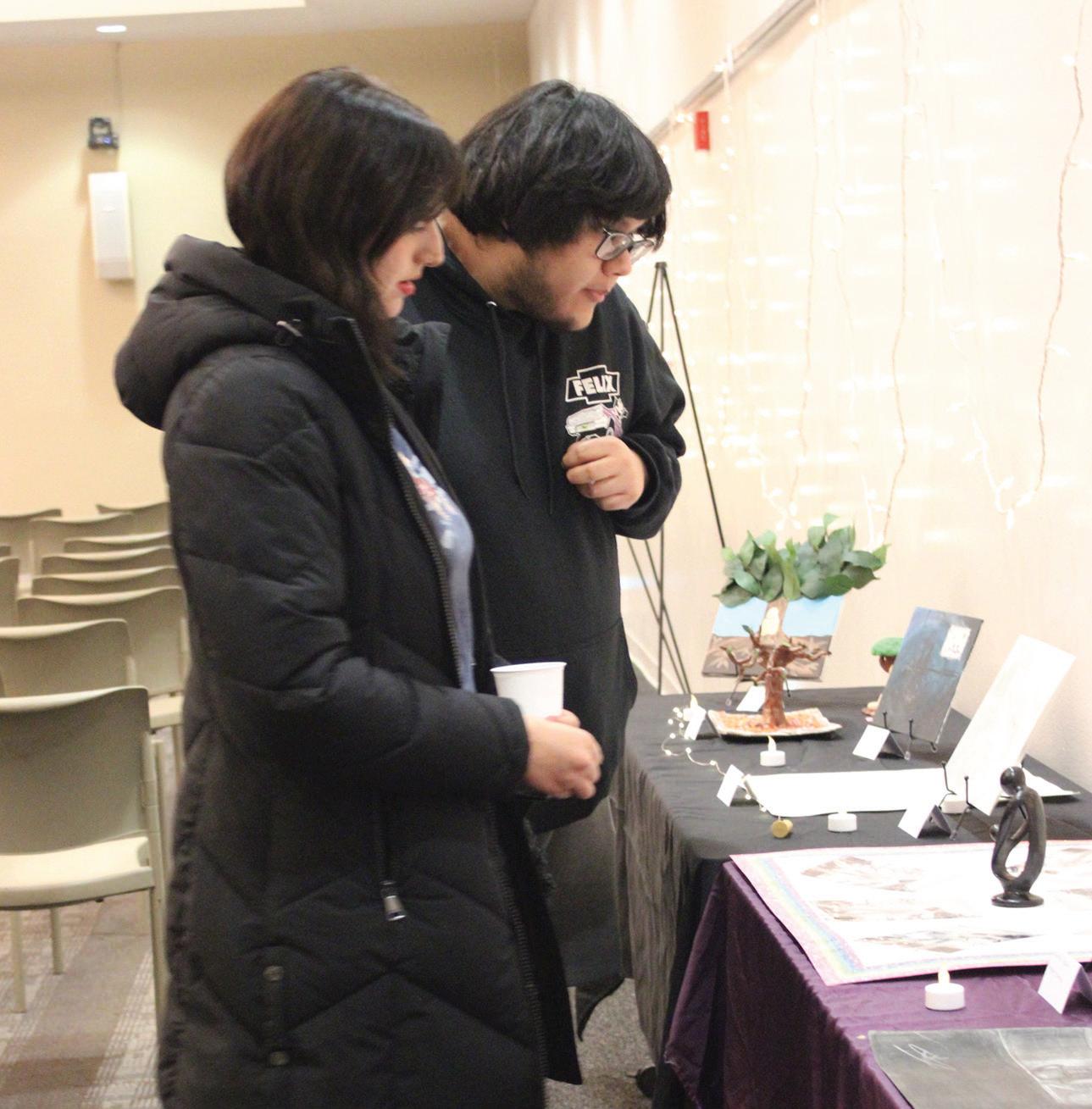
majoring in philosophy.
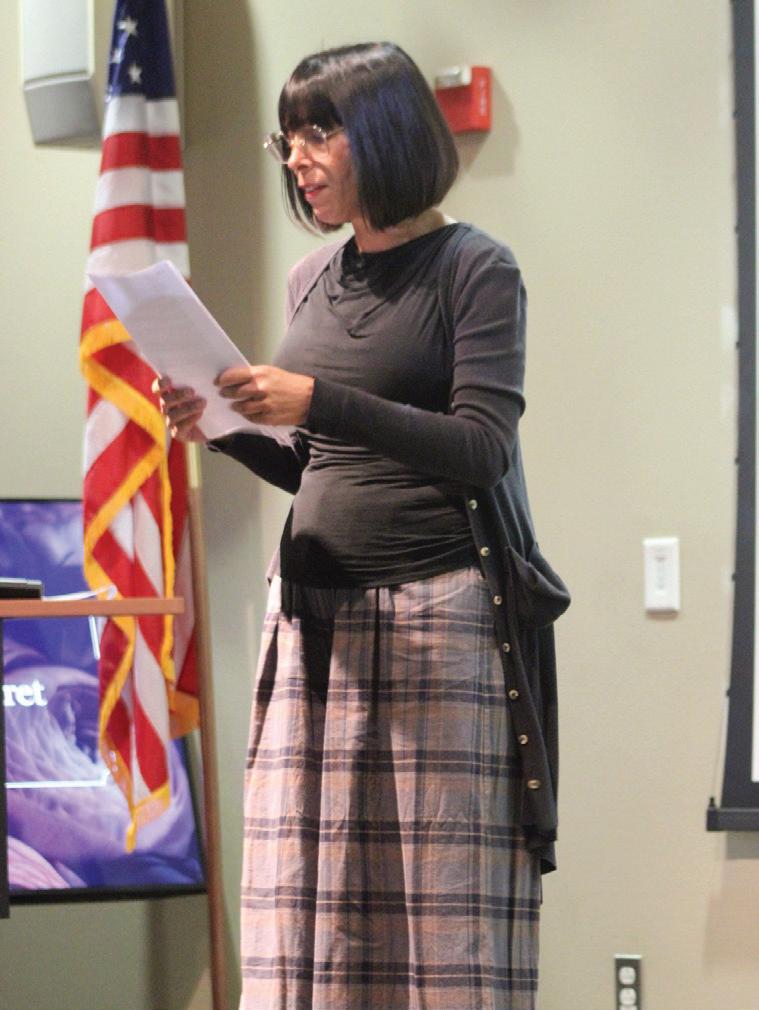
McQuitty said the cabaret is a type of performance meant for the students to understand the topic.
“It’s sort of like a cabaret and a salon. A salon has art and a cabaret has performances, and it’s a celebration of our peer students,” McQuitty said.
Philosophy cabarets date back to 19th century Paris, France. The smaller cabarets offered entertainment like music, poetry, comedies or small theatrical stories. The event spread across Europe to Germany and overseas to Switzerland, this caused cabarets to include
political standpoints in each presentation.
Over time the cabaret meant more than entertainment, it was a connection to human experiences and a reflection of society.
Nursing major Alexandra De Los Santos said the purpose of the event was humanizing.
(Left to Right) Carol Vasque and Anthony Felix look at the artworks displayed during the Philosophy Cabaret event in the Great Hall at Pierce College in Woodland Hills, Calif., on Dec. 4, 2025.
Photo by Sandra Mazas.
Melanie Mc Quiddy talks at the Philosophy Cabaret in the Great Hall at Pierce College in Woodlands Hills., Calif., on Dec.4,2025. Photo by Sandra Mazas.
“How it intersects with everything it’s like the main fulcrum on which everything rests,” De Los Santos said. “Like this is me struggling with the immensity of the totality like everything of humanity.”


By Josue Aguilar Photographer
of people showed up to Pierce College to donate toys at the Motor 4 Toys event.
The non-profit and charitable organization received a variety of items from board games to bikes at their 22nd annual Charity Car Show and Toy Drive. People were excited to donate to children in need.
Charities that petitioned Motor 4 Toys were given some of the donated toys for their organization to distribute. The Motor 4 Toys event was held on Dec. 7, 2025, in Parking Lot 7.