MEET THE CREW
EDITOR-IN-CHIEF
MELANIE SOMOZA

REPORTER

REPORTER
GABRIELL ALGO

MANAGING EDITOR
ZAMOURAD IQBAL

REPORTER

REPORTER
LAUREN MUNSALUD

PHOTOGRAPHER
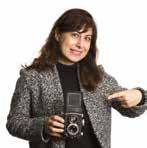
GELAREH BEHDAD
REPORTER

ADVISERS
JEFF FAVRE, JILL CONNELLY, MORGAN KEITH

OLIVIA MUNOZ
JULIA RAMIREZ
JAMES MONDARES

WHERE HOLLWOOD MEETS THE LENS
Story and
by Gelareh Behdad
photos
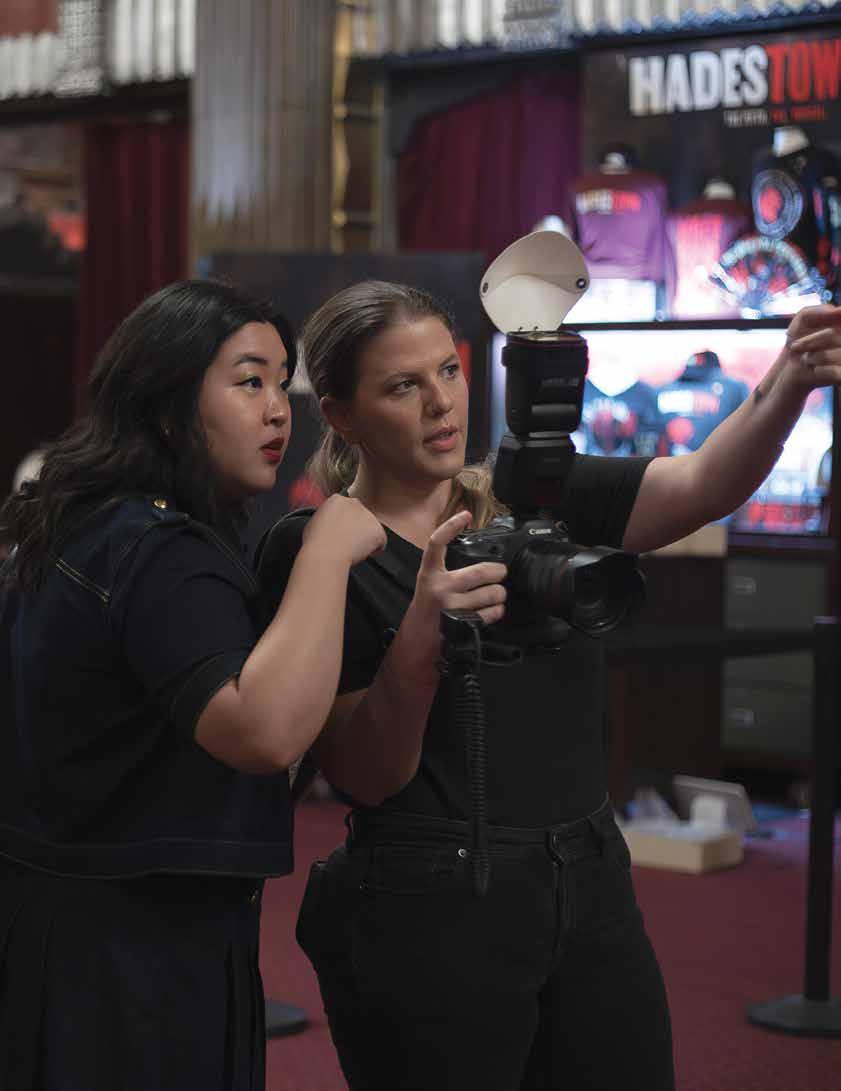
Adina Hsu and Chelsea Lauren talk about photographing the cast of “Hadestown” at the Hollywood Pantages Theatrew on Oct. 22.
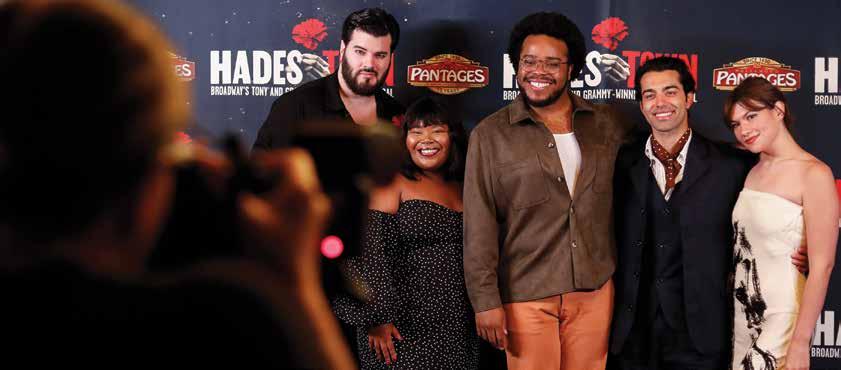
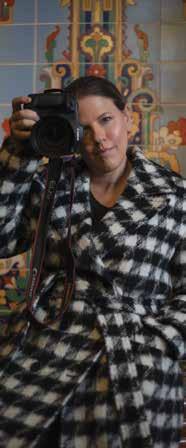
Chelsea Lauren photographs the cast and crew of “Hadestown” at the Hollywood Pantages Theatre in Hollywood, Calif., on opening night on Oct 22.
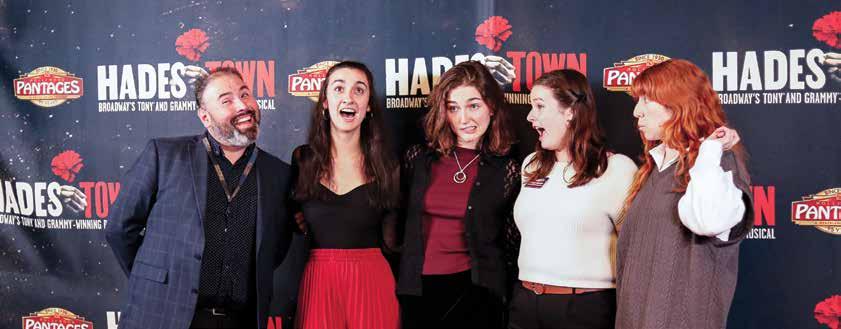
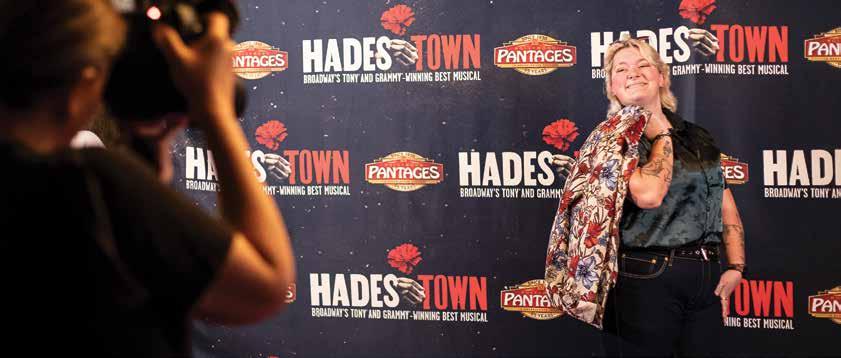
Beneath the golden lights of the Pantages Theatre, the air buzzed with quiet anticipation. Around 50 cast and crew members from “Hadestown” gathered on the red-carpeted stairs, their laughter echoing through the ornate hall.
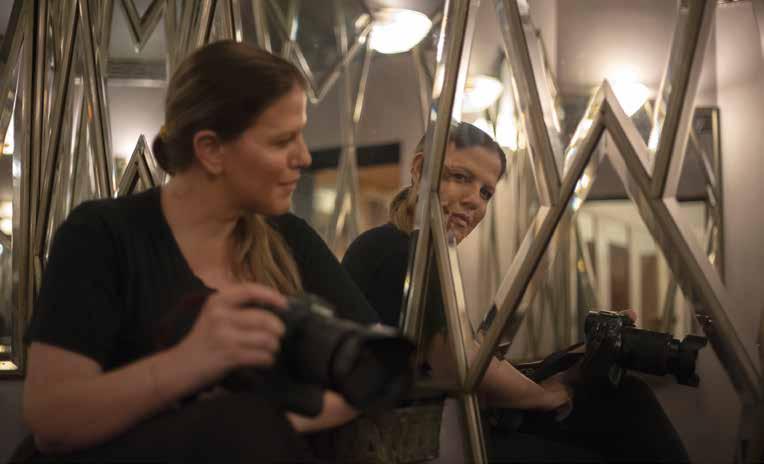
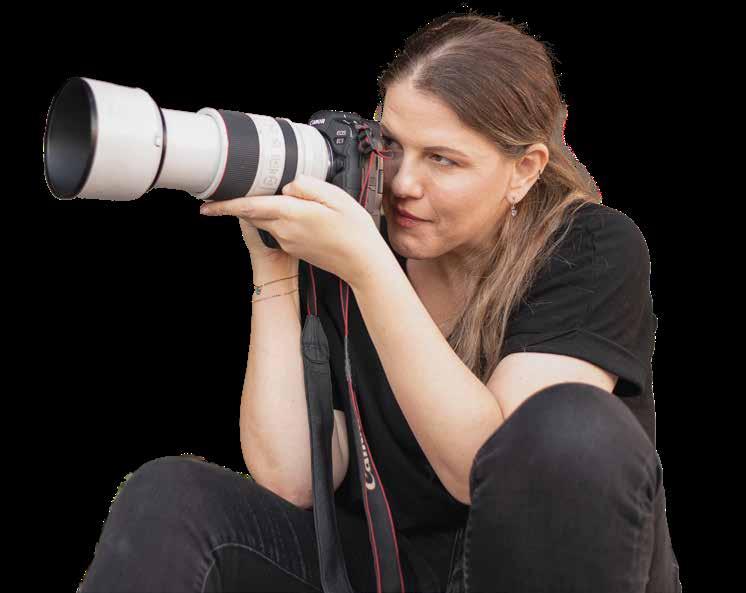
With her camera in hand, Lauren moved with calm precision, guiding each person into place, adjusting angles, fixing lines, shaping order from the cheerful chaos. For nearly eight minutes, the theater became her studio, her confident voice and smile blending professionalism with warmth. In many ways, that moment on the staircase at the Pantages encapsulated who
Lauren has become, a photographer whose artistry lies not just in the images she captures but in the trust and energy she creates around her.
From the instant her grandparents placed that first Canon 40D in her hands, photography has been more than a skill— it’s been her language, a way of transforming fleeting moments of emotion into lasting stories.
“I get to call some of the most talented and creative people friends,” Lauren said. “I count myself very lucky for that.”
Growing up in Los Angeles, Lauren was surrounded by creativity. She drew, wrote
poetry and made and sold jewelry. Her parents emphasized academics—anything less than an A was unacceptable, but every free moment she devoted to art.
Initially, Lauren pursued a more traditional path, starting college as a bioengineering pre-med major. It was only after some time that she realized science was not her passion and switched to communications, where her natural storytelling abilities flourished.
Her early work in photography was entirely self-taught. Through trial, error and persistence, she developed her skills, learning as she went.
• Michael Kubeisy is a photographer whose career spans over four decades.
• In his recent book, “The Day the Lion Roared,” he shares his personal journey of faith, perseverance and life-changing experiences.
• “You have to constantly make phone calls, hustle,” he said. “If you make a mistake, you have to own it and learn from it.” He emphasized, “If your pictures aren’t good enough, you are not close enough.”
• Importantly, Kubeisy stresses that technical skill may open doors. “But character and kindness, your interaction will keep you in,” he added. “We can all get the job once. But will they come back and hire you again? That’s the key.”
Chelsea Lauren poses in front of mirror at the Hollywood Pantages Theatre on Oct 22.
“I didn’t go to school for it,” Lauren said. “I learned by doing it and by failing a lot at first.”
Those early experiences laid the foundation for a career that would eventually span Hollywood events, portraiture and travel photography.
Lauren was one of the few women working in event photography. She said that her presence sometimes made subjects more comfortable during shoots. Over time, she built a reputation for professionalism and empathy, qualities that helped her earn the trust of celebrities, artists, and performers alike.
Today, Lauren focuses on portraiture and event photography, a place where emotion and artistry intersect. She observes her subjects, prioritizing their comfort and making them feel seen.
“If someone’s nervous, it shows in the photo,” she explained. “I try to give people options, letting them see shots and feel satisfied with how they look.”
LA Opera Director of Communica-
“I got to call some of the talented, creative, beautiful people, friends, and I count myself very lucky for that.”
- Chelsea Lauren
Connection is at the heart of Kubeisy’s process. “I love being with people,” he says. “You have to engage them.” He often starts by asking actors what they like or don’t like in photos, creating trust before ever clicking the shutter. That sense of ease allows both Kubeisy and Lauren to capture something genuine, even with well-known figures.
For him, photography isn’t about guarding secrets or lighting tricks. “My lighting isn’t a secret,” he laughs. “You can use my setup, but you’re not me.” What defines his work, he insists, is personality — the ability to connect, to make people comfortable, and to “live the moment.”
What makes Lauren’s work stand out, according to Marlene, is her creativity and distinctive eye.
“She always finds fresh, imaginative ways to capture her subjects,” Meraz said.
Looking ahead, Lauren dreams of shooting for National Geographic, drawn
ter event photography, Lauren
THE LIFE OF A SET DESIGNER
Article by Julia Ramirez
Photos by Myraneli Fabian
The deck was a mess of torn paper and dripping brushes. Sheets of white had turned sepia under layers of steeped tea, their edges curling as they dried in the sun.
Smudges of watercolor stained the paper, catching the light like tiny pieces of film grain. It wasn’t a studio or a classroom—just a friend’s backyard.
But for Laura Jones, it was a set in the making, a space where art came alive through touch and texture.
Once known for her vivid paintings, Jones has traded canvases for a set. Her brushstrokes now appear in light, fabric and found objects that help shape the world unfolding on screen.
At 23, Jones is re-shaping the look and feel of modern set design before discovering film.
She is learning how art doesn’t just hang on walls. It surrounds, moves and immerses an audience.
“I couldn’t believe we literally built this mini world in this warehouse. That was just so cool,” Jones said about working as a set designer. “There’s so many more storylines that we could do, and I want to get on those projects and do more of those storylines and be a part of creating those things.”
Building a miniature world quickly became more than just a thrill for Jones. It became a calling.
Her curiosity deepened in college, when a friend invited her to join a set crew as a production design assistant. It was her first time steeping onto an XR, an LED backdrop that blends physical and digital worlds.
“In the beginning of college, I didn’t know that I wanted to go into film,” Jones said. “I was thinking about fashion design or even interior design.”
One of her latest projects was a Netflix ad that required the team to coordinate a screen test involving water.
Laura Jones sets up for a project in Sherman Oaks, Calif., on Nov. 7. Photo by Myraneli Fabian.
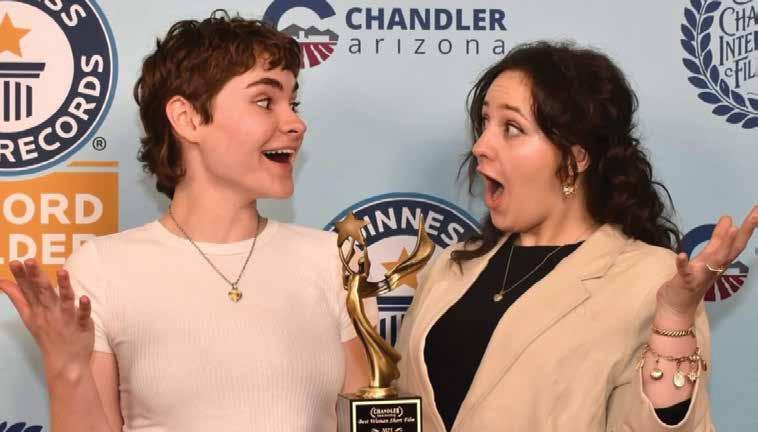
Sarah Cleary, Jones’s coworker at King Studios, recalled the challenge of pulling it off.
“In the video, my boss gets woken up by water, and Laura’s job was to pour a cup of water on his face from just the right angle, so the camera wouldn’t catch it,” Cleary said.
Even small moments such as that, Cleary explained, can take hours of planning and teamwork. Timing becomes key on a professional set.
“It’s a hard task to be very precise,” Cleary said. “Sometimes there’s a limited amount of takes and if someone doesn’t hit their cue, it throws everything off.”
Cleary emphasizes the importance of teamwork and the challenges of rehearsal before filming.
“By the time you get to filming, you want everyone to be in harmony.” she said.
For Jones, the experience reinforced how much coordination and creative problem-solving go into even the smallest scenes.
It’s a lesson echoed by veteran designer Jim Lenahan, a retired music video designer that specialized in computer graphics rendering and lighting.
“A set is not finished just because it’s done,” Lenahan said. “It has to be dressed.
You can’t throw lumps of aluminum on the stage and call it a set.”
As Jones continues to build her portfolio, she’s focused on finding projects that not only challenge her skills but also resonate with her creativity.
“I hope to get on more projects that I’m passionate about,” she said. “Sometimes you take jobs just to gain experience or make connections, but I’m hopeful those will lead me to bigger projects, ones I really believe in, with people who share the same creative energy.”
That mindset of balancing opportunity
“It’s a hard task to be very precise.”Sarah Cleary
with purpose guides how she approaches each new set. She’s learning not only how to build environments but also how to make production design efficient, sustainable and collaborative.
Looking beyond her career, Jones is thoughtful about where the field itself is headed. The rise of new technologies, including AI, has already started changing how sets are imagined and built, but Jones is cautious about how far it should go.
“Set design in the future is interesting because of this uprising of AI,” she said. “I think people sometimes mistake it for being able to create projects on its own. But that takes away the human aspect of creating art. It should be a tool, not an artist.”
For Jones, the collaboration, the problem-solving and the shared creative spark is what makes the work meaningful.
“What makes it worth it is the people,” she said. “You’re prepping a set or a prop and just talking about life while you work. Every project becomes its own little community. You meet people, you collaborate and you get to build relationships while also creating art.”
Laura Jones receives an award for her film “Single Buffalo” at Chandler International Film Festival in Chandler Arizona, on Feb 9. Photo courtesy of Laura Jones.
PASSION IN MOTION
Story and photos by James Mondares
SCHOOL SEQUENCES
Twiddling with his thumbs, a young boy looks up into the bright lights of a TV. Dashing images chain in a link of picture after picture, illuminating the dimly lit living room.
Supernatural TV drama “Manifest” was on. Here, a desire to make people invested in something grew — what it was, he couldn’t quite name yet.
But from his youngest years, Enoch Chao knew that art would be his domain. In that sense, he was sure to manifest an animation channel of his own.
“When I first posted one of the videos on YouTube, my friend said, ‘You should post this!’” he said. “I was like, ‘Wait, this
could be something, like a bigger part of my life, like a bigger hobby. You know, instead of just watching TV as a kid, now I can make something like that.”
One of many animators whose passion started as a kid, Chao, 19, is a current sophomore at the USC School of Cinematic Arts, majoring in animation and digital arts. Chao also has a YouTube channel, Chaomein, where he posts his own short films and projects.
He recalls drawing comics as a kid, but really fell in love with it around fifth grade.
“I was already making comics before, but then I was like, ‘Wait, I like video editing,’” Chao said. “So then I just combined those two, and realized that I can tell a story.”
Chao’s mother also went to an art college, so by the time he reached ninth grade he knew he wanted to pursue that path too.
“It was kind of like a no-brainer, because I just heard that my mom went to CalArts,” he said. “Then, I was like, ‘Wait, I’ll literally just go there and do animation.’”
During high school, Chao took art classes and researched other colleges. He found this to be a hobby, but he knew that college would be something he’d have to prepare for.
Chao was then accepted to USC’s Cinema school, where he was able to find inspiration from others.
“The first assignment we had for Intro to Animation, we had to make three illustrations of three different worlds,” he said.

“Everyone just had such different stuff, like someone made a horror, monster theme, and others with a ballet and a sci-fi theme. Just a bunch of stuff that I wouldn’t have thought of for each other.”
He said that 2D is his domain, but he wishes to expand skills in scriptwriting and storyboarding.
“I just like making something that I would be proud of and other people can see. It’s a journey.” Chao said.
FLASH-FRAME INDUSTRIES
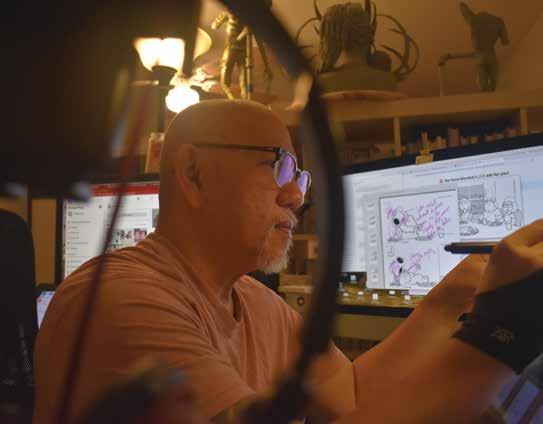
His glasses sat comfortably on the bridge of his nose. One hand held the side of the
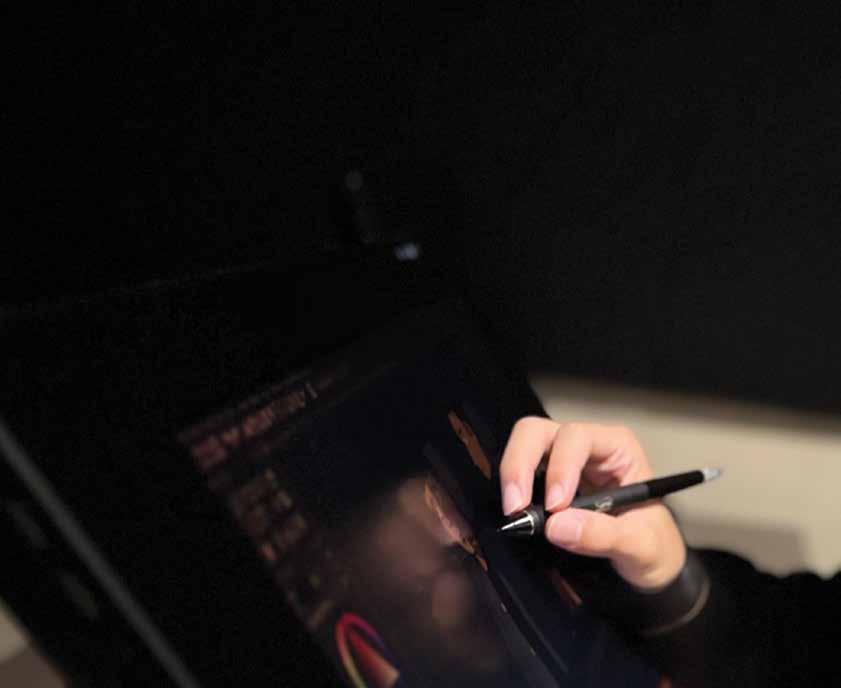
tablet, the other meticulously tracing outlines and ensuring definition in the drawings. His eyes trod carefully, looking to get each scene right, the tablet ablaze with every gesture of the stylus.
“Every time I drew something, I was pretty sure that my drawing was good.” Alfred Cruz said. “I think that my drawing is pretty good, much better than the other peoples’ [when I was younger]”
Cruz is a revisionist who works for “Family Guy.” He has been animating for 30 years, originally starting his career in the Philippines. Cruz also worked as a background artist for other projects, such as “The Princess and the Frog” and “Winnie the Pooh.”
Cruz drew well as a kid despite not liking
it at first. Kids from his classes would often ask him to draw things for them. He didn’t go to school for drawing. When he first told his father about it, Cruz was shocked at his father’s response.
“I thought that I was going to be an artist for the comics,” he said. “But my father told me, ‘[Being an] artist will make you hungry.’”
Instead, he pursued a two-year vocational degree in architecture. Then, Cruz found himself working at a textile factory as a tracer, where he would work on tracing paper and have his projects screen printed.
In 1988, for animation company Fil-Cartoons, he took an “in-betweener” exam, where he drew the in-betweens of two frames to create smooth and natural transi-
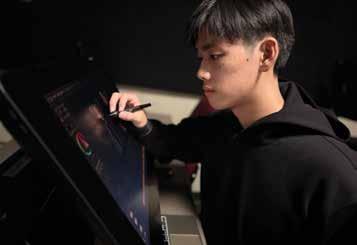
Enoch Chao works on an assignment at the USC animation lab on Nov 5.
tions. He was recruited after that exam to work in America.
But soon after arriving in the States, Cruz hit a few obstacles.
“The struggle I experienced here was when I lost a job for seven months, for not being totally legal to work here,” he said.
“That was a big struggle for me. But since I got my green card and papers, it was easier to look for a job in animation.”
Language barriers were also a challenge.
“Actually when I came here, they all knew that our first language was Tagalog and our second language was English,” he said. “But here, it’s very hard to make friends here, especially speaking English. It’s a nosebleed for me.”
From there, things improved. Cruz landed gigs working for “Rugrats in Paris,” and “The Simpsons” as a background artist. He was then referred to join Disney, where he’d work on“The Princess and the Frog.”
Cruz also worked for the 2015 “Spongebob Movie” before landing his current job at “Family Guy” as a revisionist. In this position, he fixes minor mistakes made during the animation process, dealing with minute details such as hand gestures and wrong eye directions.
He plans to retire soon but advises younger artists right now to be honest.
“Do your best,” he said. “When you do

your best, the payoff is good. You don’t need people to say ‘Oh, you’re good.’”
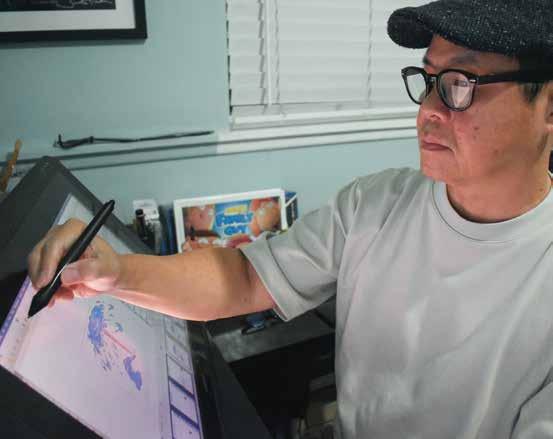
Cruz’s hands intertwined with his stylus as he danced around the tablet, creating characters and scenes, bringing them to life. Though he’s an adult, that young
curiosity stayed with him, all the way from back in the Philippines when he was a young boy. One thing has remained constant—a love of art.
“For me, drawing has always been more than just a skill, it’s also a way of expressing myself when words fall short.” said Edwin “Wincat” Alcala, another animator and assistant director for “Family Guy.” “Animation, on the other hand, takes that feeling to a whole new level. It’s like giving your drawings a heartbeat.”
Also starting his career in the Philippines, he has been working on animation projects for over 40 years. Such projects include “Danny Phantom” and “Fairly OddParents.”
As a young boy, Alcala would watch shows from Hanna-Barbera and Warner Bros. on his TV. Stunned and awe-struck, he asked his dad questions.
“I remember asking my dad how they did,” he said. “He just said, ‘Oh, it’s just a bunch of drawings.’”
As a kid, he would already draw on anything he could.
“My notebooks, the empty pages of books, even the backs of old calendars,” he said. “We didn’t have much growing up, so I couldn’t afford proper art materials like sketchbooks or pencils, but that never stopped me.”
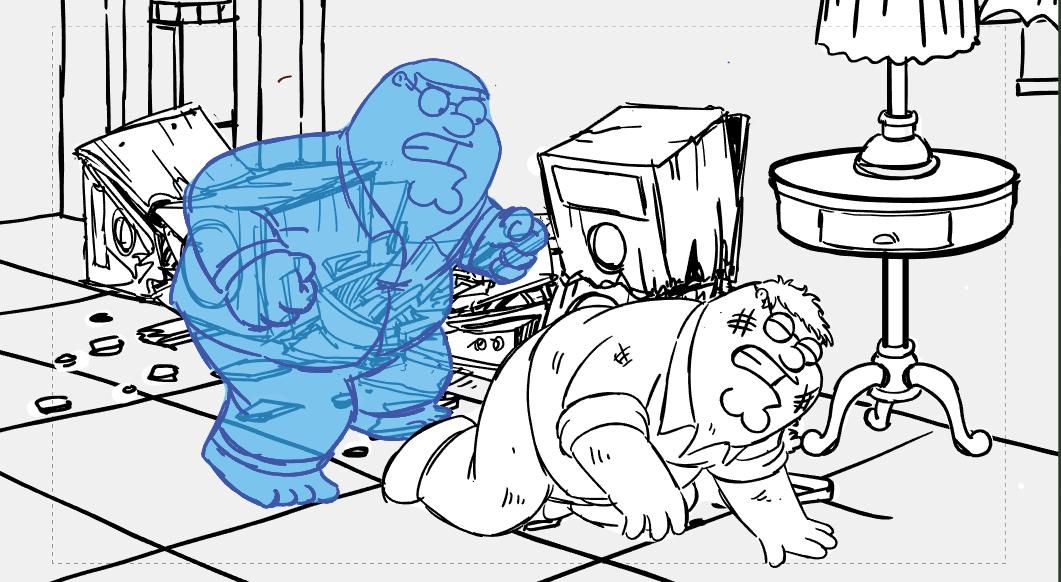
Original artwork by Edwin “Wincat” Alcala.
Photo courtesy of Edwin “Wincat” Alcala.
Similar to Cruz, Alcala went to school for architecture and started work as an inbetweener. Even though it was an entry-level role, this is where he began to understand and fall in love with the craft of animating.
Upon arriving in the states from the Philippines, he recalled it to be both challenging and exciting—grateful for the opportunity, but still feeling challenged to adapt to a new culture and prove himself all over again.
“Drawing has always been more than just a skill.”
- Edwin “Wincat” Alcala
When it comes to his Asian identity impacting his time in the industry, he mentioned certain difficulties.
“On one hand, it meant that I sometimes had to work harder to prove myself, to show that I could meet the same standards as everyone else and contribute at a high level,” he said. “On the other hand, it also gave me a unique perspective, perspectives that sometimes came from growing up in the Philippines and seeing the world a little differently.”
Now, for “Family Guy,” Alcala works closely with the director. He oversees the storyboard process and gives feedback on staging, timing and continuity to bring the
vision to life.
“What I love most about animating is the experience of feeling and living the story as you create it,” he said. “While animating, you’re not just making a drawing, you’re translating the acting and emotions.”
Looking ahead, Alcala anticipates some concerns.
“To be honest, I’m not entirely sure what the next five years will look like in this in-
dustry, especially since animation is going through a bit of a low point right now in the U.S.,” he said.
Scott Claus, animator and department head for 2D and 3D Education at CG Spectrum said one of the biggest challenges to the animation industry is getting started.
“I’ve had different times in my history working professionally in animation where technology crept up and it took away jobs,” he said. “And what it usually takes away are the entry-level jobs, so it becomes harder for someone to come right out of college and then get a job doing something that’s junior-level expertise.”
But for Alcala, whose career is nearing its end, the struggles have been worth it.
“Animation has truly been a lifelong passion for me, 40 years of it,” he said. “It’s more than a career. It has become a way of life. Since 1985, I’ve had the privilege of working in this industry, keeping the joy of childhood creativity alive in my everyday work.”
Edwin “Wincat” Alcala working on a project at his home in North Hills on Nov 5. Photos by James Mondares.
Alfred Cruz working on a project at his home in Granada Hills, on Oct. 27.
Photo by James Mondares.
THE UNSUNG HEROES OF HOLLYWOOD
Story by Olivia Muñoz
Photos by Olivia Muñoz, Hannah Colburn and Abraham Elizalde
It’s biting cold. It’s the kind of cold where you can see your breath in white puffs and wish you were anywhere but outside. The eerie cacophony of the forest echoes, and trees and wilderness stretch on for miles; it is a place almost completely isolated from civilization. A crew is scrambling to get everything ready for the upcoming shoot, their frantic energy sizzling through the air.
Despite these harsh conditions, this is paradise on Earth for Hannah Colburn. The set of “Homestead Rescue” was her first gig as a production assistant, and it only made her want to pursue her dreams of the cinematic world even more.
“We were out in the middle of the forest. It was 30 degrees. I was still the happiest person alive because I just thought it was so cool to see the camera equipment and how things flow. I honestly had no idea what I was doing—I was faking it till I made it,” Colburn laughed.
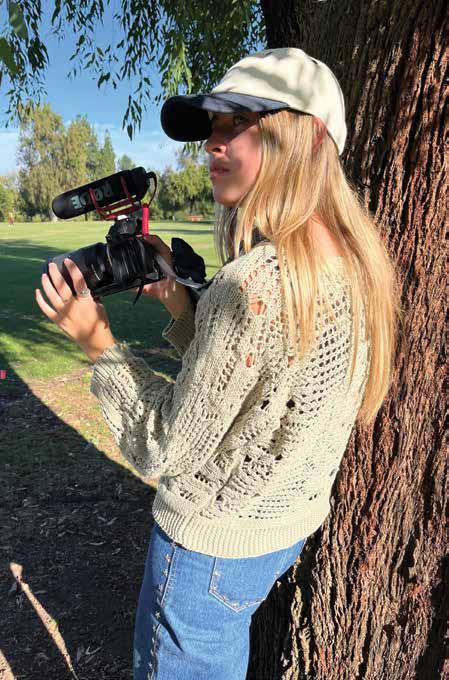
A Los Angeles-based aspiring filmmaker, Colburn was introduced to the industry through her roles as a production assistant (PA) and videographer. She is the writer and director of her short film, “Lacuna,” which premiered at the Beverly Hills Film Festival and was later released on various social media platforms. She has worked on multiple movies and television shows as a PA, including “The Jennifer Hudson Show”
2.

Hannah Colburn photographs cricket players at Woodley Park in Van Nuys, Calif., on Nov.
Photo by Olivia Muñoz.
and the film “Wrong Place.”
PAs are the backbone of Hollywood, quietly working behind the scenes to ensure everything runs smoothly.
There are multiple types of PAs who work on-set, in the writing room, and in post-production, fulfilling a range of tasks, from running errands and wrangling the cast to retrieving equipment and delivering scripts.
Their jobs change from one production to the next. Despite being one of the few jobs in the industry without an official union, it is arguably the most demanding position on any given set.
Colburn’s love of filmmaking began in high school, when a film class inspired her to purchase a camera and start experimenting by creating videos with her friends. From that point on, she knew she loved movie-making and was destined to work in the film industry, no matter what.
“I was never meant to be working a nineto-five in an office,” she said. “That was never the dream. I think I really wanted to have creative control over making videos. So I was wondering, ‘How can I make that into a career?’”
After graduating from high school, Colburn tried the college route for a day and decided it wasn’t the right fit for her. She worked as a deposition videographer for witness testimonies, and, seeking something more creative, switched to wedding videography. But, she felt trapped in the same routine day after day.
Colburn knew her heart still belonged to film.
She pivoted and, following in the steps of so many stars before her, concluded that working as a production assistant was the way to go.
Determined to follow her high school passion, Colburn began applying for PA jobs. She found her lucky break with her job on the set of “Homestead Rescue.” She bared her teeth and braved the frigid temperatures and wilderness setting, enduring long days with unpredictable hours and many atypical tasks, which included feeding chickens, refilling gas canisters and retrieving snacks for the crew.
As her first PA job, Colburn sought to find balance. She didn’t know how to use a walkie-talkie or the set lingo and took many cues from the other, more seasoned
PAs. However, it was this experience that solidified her desire to continue pushing forward.
“I gave it kind of a test trial to see and make sure that it was something I liked and wanted to do,” Colburn said. “You know, the moment I stepped on set, there was no going back for me. I was so thrilled and so happy.”
She continued to work on several other productions. She eventually landed another PA gig on the set for “Wrong Place,” starring Bruce Willis. It was her first job on a feature film, and it opened a gateway for a whole new world of creativity and duties.
“I would go get Bruce Willis’s lunch, or I would go get him from his trailer,” she said. “I would sit and hide behind a piece of furniture while they filmed a shot, because I would have to tell an actor when to go into the room.”
Working on that also provided her with a host of new learning experiences.
“[Bruce Willis’ stunt coordinator] asked me to get an apple box for them. I genuinely thought they meant they wanted a box of apples, and I was searching high and low for one,” Colburn said. “I came back to him, and I was like, ‘I have bad news, we don’t have apples.’”
At the end of production, at the urging of her fellow crewmates, Colburn decided it was time to pack her bags and head to Los Angeles to pursue filmmaking as a career. When she arrived, she found a job working at a deli across the street from the Warner Bros. studio, which provided her with connections to secure PA roles on the sets of shows like “America’s Got Talent” and “The Jennifer Hudson Show.”
Being a PA is a role that often transforms into other positions. It is recognized as a starting point for many aspiring directors, screenwriters, cinematographers and actors wanting to get their foot in the door.
For many PAs, the job allows them to understand all the roles on and off set and explore other options.
This was true for Marianna Vashchilenko.
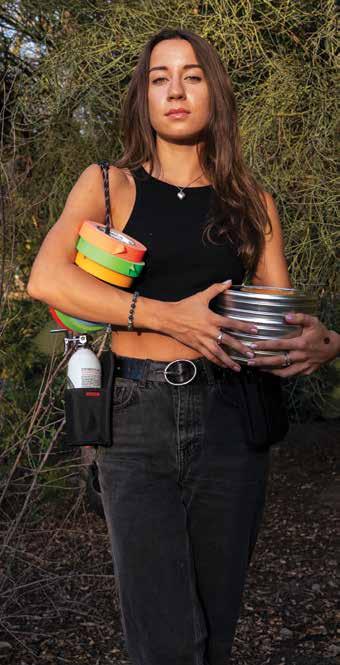
Marianna Vashchilenko poses with film equipment at Pierce College in Woodland Hills, Calif., on Nov. 5. Photo by Abraham Elizalde.

Vashchilenko began as a PA, but is now a film loader and second assistant camera. She said that it is common for people to shift directions in this industry.
“It’s so often that you see people like, ‘Oh, I want to be a director, I want to be this, I want to be that.’ But they end up finding a different new job within the industry, and they are fully satisfied with it,” Vashchilenko said.
Having worked as a PA for a few years, Vashchilenko is familiar with both the upsides and downsides of working in such a multifaceted position.
“Sometimes there were 20-hour shoots where it was just like, yeah, you’re not safe to drive home. At that point, you’re so exhausted,” Vashchilenko said. “It was the most brutal job ever. You kind of just have to love what you’re doing, and you have to be proud of it. Like, even though you will not see my work on the screen, I was part of this, and I’m proud of myself.”
Despite the challenges faced by PAs, their importance is often underestimated.
Scarlette Ortiz is a producer who has worked on projects for organizations such as the Coalition for Humane Immigrant Rights of Los Angeles (CHIRLA) and photographer Brittany Bravo.
Ortiz worked as a child actress and then pivoted to the production side. After working both in front of and behind the camera, she understands the importance of PAs on set.
“Being a PA is one of the most valuable entry-level jobs, because you can see how a set really works,” Ortiz said. “You’re right in the middle of everything; you learn how all the pieces work, and you see how quickly you have to be on set, which is really important. It may seem small, but being a PA really teaches you how to be professional and adaptable.”
ing people from different locations, or things like that, no task is too small. It is essential to keep the production moving,” Ortiz said.
Living in L.A., Colburn still faced many common challenges amongst PAs, such as struggling to make ends meet while pursuing her passion for directing and screenwriting.
“It’s a balance for sure. It’s one of those things, though, if you want it bad enough, you’re going to figure out how to make it work,” she said.
Beverly Hills Film Festival accepted her short film, she was overwhelmed.
“I cried tears of joy. It was an overall amazing experience,” Colburn said. “Just seeing my film on an actual movie theater screen was insane. It was awesome, especially knowing that I didn’t have a huge crew or a lot of money to put into it, or anything. It was truly just a DIY film.”
“Lacuna” has amassed more than 65,000 views on YouTube. She has continued working on sets for both studio productions and her own projects. Recently, she has begun working on a new short film, “Stitched,” which she hopes will build on the success of her first film.
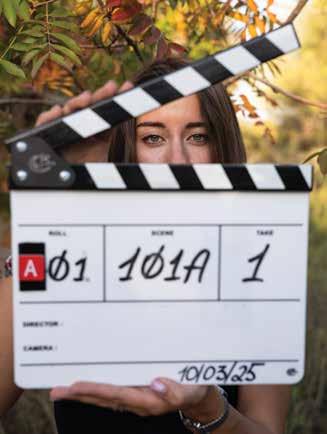
Marianna Vashchilenko poses with a film slate at Pierce College in Woodland Hills, Calif., on Nov. 5, 2025.
Ceara Kirkpatrick, one of Colburn’s close friends and a producer for “Lacuna,” witnessed Colburn’s enthusiasm and love for her work while on set with her.
“She’s so passionate about what she’s doing. Naturally, that’s going to bring curiosity,” she said. “Like, maybe we should try this thing, or maybe we should try this shot. She comes up with really cool ways to convey something I’ve never seen before.”
Kirkpatrick can also attest to Colburn’s skill as a director, which was first refined through her role as a PA.
“I’m always so impressed with her ability to stay cool, calm and collected under pressure, under stress,” she said. “I think any production is going to have moments that get a little stressful, get a little hectic and really push you as a person or as a creative. And anytime there was anything remotely stressful or chaotic, Hannah was as cool as a cucumber.”
Although the audience may not tangibly see or appreciate the hard work PAs put into their job, she recognizes that the work is valued regardless.
“Even if you’re doing things that you think maybe won’t apply to you, maybe you’re getting coffee, or you’re transport-

With the downtime she had working as an assistant to an executive on “The Jennifer Hudson Show,” Colburn began to slowly piece together her script for what would become “Lacuna.” Once she had the concept, she called up a friend to act in it and went on a spontaneous road trip to Northern California to shoot the script.
Shortly after, she submitted it to five film festivals in L.A. When she saw that the
It’s been a long way since her first job on set to where she is now. Colburn shows no signs of stopping as she continues to pave the way to living her vision of being a filmmaker.
“It’s very much worth it to go after your dreams, at least giving them a shot, and giving yourself the opportunity,” Colburn said. “I think life is way too short not to try to go after what you want.”
Photo by Abraham Elizalde.
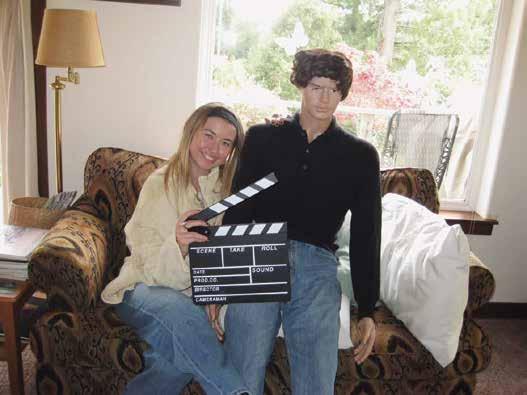


Hannah Colburn poses with a mannequin on the set of “Lacuna” in Men- docino,Calif.,on June 23,2024.Photo courtesy of Hannah Colburn.
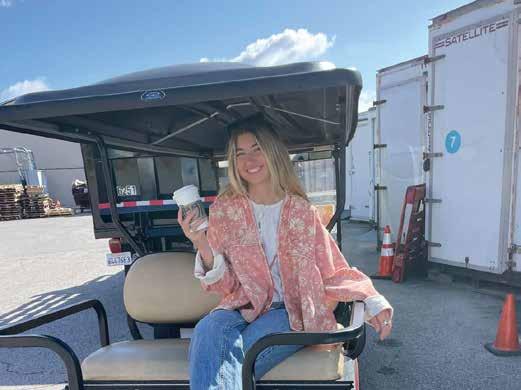
Hannah Colburn sits at the back of a golf cart on the Paramount Studios lot in Los Angeles, Calif., on July 30th, 2023. Photo courtesy of Hannah Colburn.


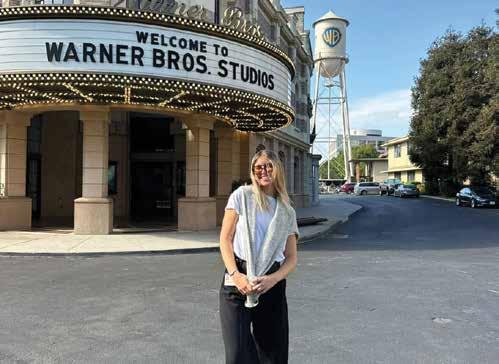
Hannah Colburn stands in front of a Warner Bros. sign at the Warner Bros. Studios in Woodland Hills, Calif., on Nov. 5.
Photo by Abraham Elizalde.
THE SHOW MUST GO ON
Veteran actors open up about staying resilient amongst Hollywood’s youth
Story by Lauren Munsalud
Photos by Myraneli Fabian and Calvin Henry
The smell of hot dogs and clouds of steam engulfed the room as Damon Standifer lifted the hot dog bun steamers. His shirt was smudged with chili after working a long shift at Cupid’s Hot Dogs. It was a typical day at work, until a former professor from his early acting days walked up and immediately recognized him. They had a brief conversation, but the moment lingered uncomfortably for Standifer. After nearly four decades in the industry, this wasn’t where he imagined being recognized.
Moments like these reminded Standifer—who works a day job between roles to stay afloat, despite being a long time actor with multiple credits in television and film—of all the years spent chasing his dreams. As he stood there in embarrassment, Standifer thought about the short lived excitement of one-day gigs and the long stretches between roles. He questioned if he had made a mistake with his life.
“I got real bad,” Standifer admitted. “I was really depressed. I would get horribly, horribly depressed and
consider quitting. And then, I think, ‘Well, it’s too late. I’ve been doing this too long, I can’t quit now.’”
Standifer, 59, has been acting for 36 years. He is a SAG-AFTRA actor who appeared in films such as “Ace Ventura: When Nature Calls,” and TV shows, including “Five Days at Memorial.”
He is part of the 37% of all males cast in film and TV shows last year who are older than 40, according to a 2019 SAG study.
A 2021 report from the Geena Davis Institute on Gender in Media
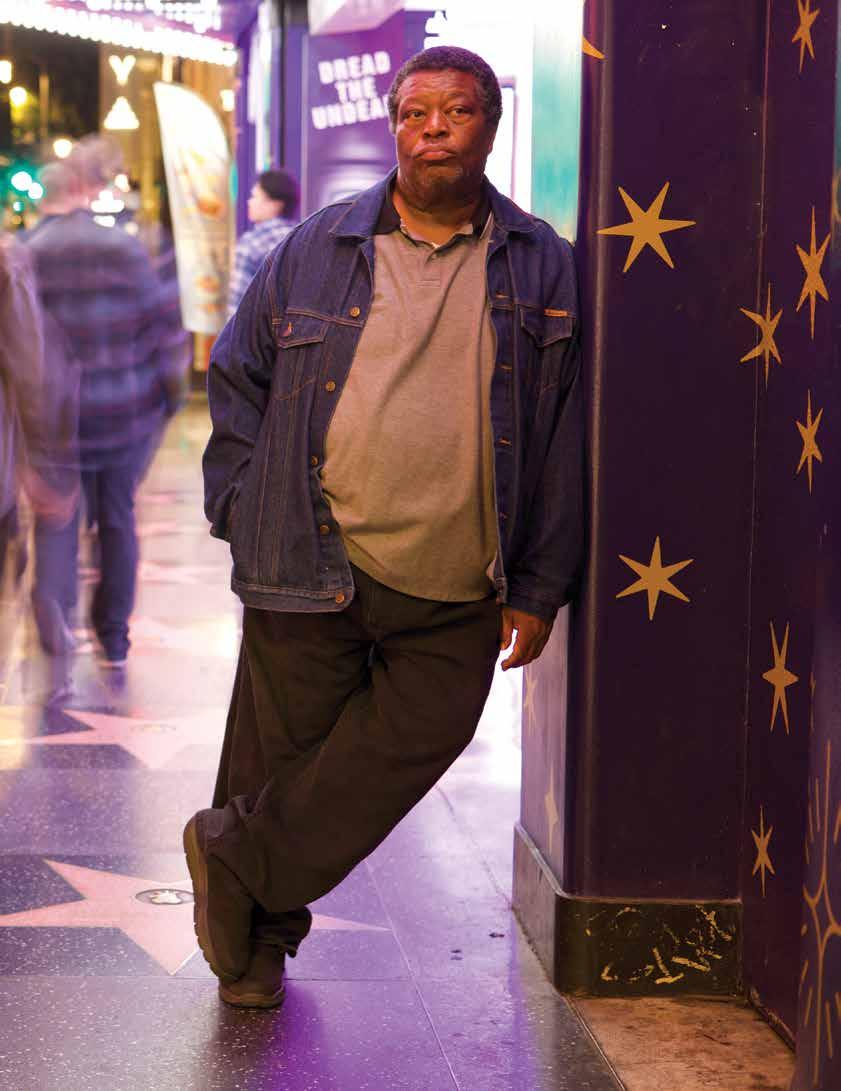
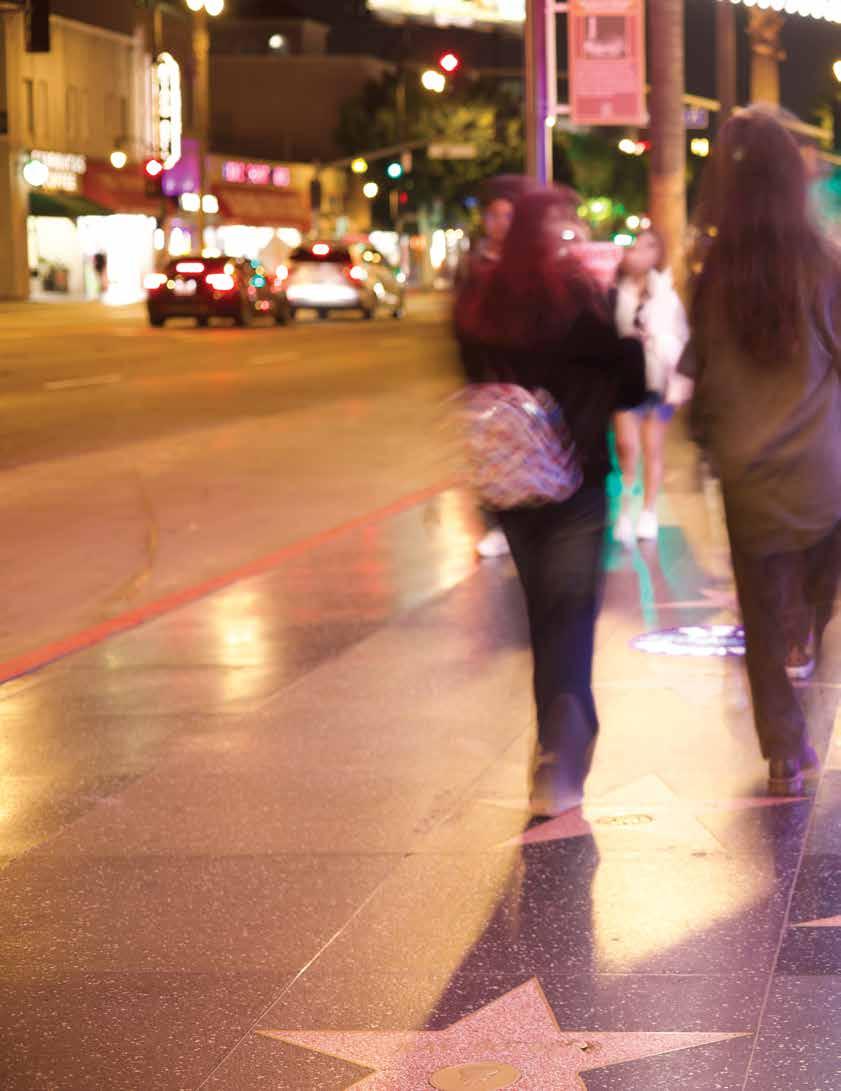
Damon Standifer stands on the Walk of Fame in Hollywood on Nov 6. Photo by Myraneli Fabian.
more plays throughout his years in school.
By the time he was 20 and attending CSUN in 1989, Standifer landed his first role on the television series “Superior Court.” Though it was a brief role, it marked the beginning of his professional acting career.
In the following years, Standifer landed more small roles on TV. It wasn’t until 1995 when he landed his first motion picture, an appearance in “Ace Ventura: When Nature Calls,” where he acted alongside Jim Carrey. On set, Standifer remembered Carrey continually improvising, turning each take into something unexpected.
“I was a little excited because it was my first ‘real’ film but I also felt at ease, comfortable,” Standifer said. “It’s like any other job, if you’re surrounded by good people, you tend to be relaxed.”
in that role, I was just like ‘Wow,’” Herrmann said. “Something just really stuck with me.”
Later in high school, Herrmann participated in a variety show, where students were able to put together what kind of acts they wanted. She was timid but went up on stage where she performed different skits with her best friend.
“I love being on stage,” Herrmann said. “I wasn’t shy there. That’s where I feel that’s my zone.”
found that characters older than 50 were less than a quarter of all characters in top grossing films and most popular television shows from 2010 to 2020.
This lack of representation isn’t simply a number for Standifer—it’s a lived reality.
Over the years, rejections have piled up not only for Standifer, but for his acting friends. Watching them struggle to book roles has made him question the fairness of the industry and his path.
Casting director Katie Taylor said those limitations begin long before actors even audition.
“We don’t get to pick the demographics or age when we get a casting need from a client,” Taylor said. “What we prioritize is acting skills, if that’s necessary, but a lot of times it’s just about the look.”
Long before Standifer knew about the challenges to come when he got older in the industry, he was only focused on his love of performing.
He discovered his passion for acting as a child, when he starred in a third grade play about tooth decay. After that, Standifer found himself performing in
Years later, in 2022, Standifer landed a more serious role in the television series “Five Days at Memorial.” He portrayed Emmett Everett, a paraplegic patient trapped in a flooded hospital after Hurricane Katrina. It was a role that allowed Standifer to connect to a character on a much deeper level.
Standifer took experiences from his life and said he incorporated gestures and mannerisms he had observed from his father, who was also paraplegic.
“‘Five Days at Memorial’ was the first chance I got in a long time where I really had to focus,” Standifer said. “I had to be in the moment.”
Despite intermittent success, when Standifer reflected on his career he admitted there are some things he might have handled differently.
“I think I might have been more aggressive,” Standifer said. “I’m not good at reaching out to people—this is a business, it’s who you know.”
Standifer’s reflections echoes the experiences of actress MaryLee Herrmann, who has faced similar challenges in pursuing roles later in life. Like Standifer, Herrmann had known she wanted to become an actress since she was 10, after watching the TV series “Holocaust,” starring Meryl Streep.
“Something about Meryl Streep
Even in an industry that often overlooks older women, Herrmann created opportunities to perform, most notably in her one woman show, “Schmaltzy and Princie.” During the creation process, Herrmann kept trying to write a fictional tale, but she then realized there was a big personal story inside her that she couldn’t get out of her head.
What she thought would be something short and sweet, came out to be a 19-page monologue in which she explores the bond between a father and a daughter, the fears that come with aging and the challenge of finally pursuing one’s dreams after loss.
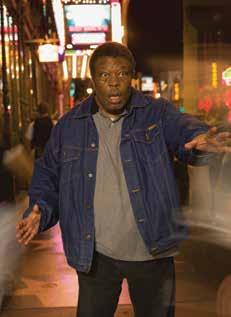
Damon Standifer poses on the Walk of Fame in Hollywood, on Nov 6. Photo by Myraneli Fabian.
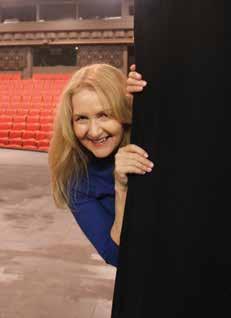
MaryLee Herrmann peeks out behind a curtain in the Mainstage Theatre at Pierce College in Woodland Hills, Calif., on Nov 10. Photo by Calvin Henry.
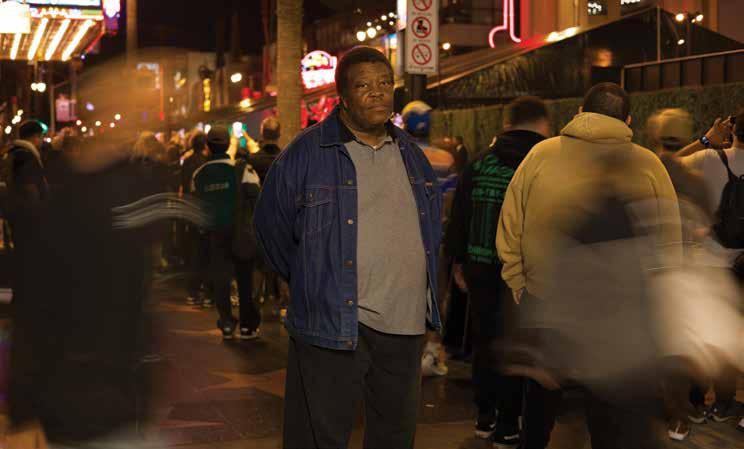
Standifer stands in the middle of a crowd on the Walk of Fame in Hollywood, Calif., on Nov 6.
This performance allowed Herrmann to work through her grief and revisit her struggles with unfinished dreams.
“I was floundering,” Herrmann said. “I was just like, you know what, I think I just have to go somewhere where I feel there’s other people who have these dreams and they want to make things happen.”
For Herrmann, “Schmaltzy and Princie” was an opportunity for her to create a project for herself where she didn’t need to audition; it was a sense of empowerment. She realized that many middle-aged and older women were turning to one-woman shows as a way to create opportunities in an industry that rarely offers them.
“In the last couple years I’ve been out here, I realize that there are just so, so few roles,” Herrmann said. “And I think that was one of the other things that sparked the one woman show.”
Although there is a lack of senior roles in the industry, older men are more likely to be represented than older
women.
Economists Robert Fleck and F. Andrew Hanssen reported in “The Online Academic Community” that women older than 30 only had 20% of leading roles, while men had 80%.
After several years of doing background acting, Hermann had witnessed the opportunities older men get compared to women. She observed that many more older men on set had more leading and minor roles and background characters.
“I just kind of got that realization that this is a reality,” Hermann said. “It’s not just the books and other people saying it. It’s very true.”
As a casting director, Taylor sees the subtle pattern behind who gets chosen and who doesn’t. Despite the lack of opportunities for older women in the industry, Taylor says there is a higher demand for older talent in advertising than there is in TV and film.
“It may just be their actual look, and there’s definitely certain looks that are
picked more than others,” Taylor said. “That’s part of being an experienced casting director. You get to see who different companies are picking over and over again.”
For Herrmann and Standifer, the reality of being overlooked is something they have come to accept, even as they continue to chase their passion.
As Herrmann looks ahead, she still hopes to be a full-time actress and not have to work her day job. Despite the uncertainty, Herrmann says she’ll always crave more, not out of dissatisfaction, but because acting feels inseparable from who she is.
“The choice is whether to be afraid of who I am and take a traditional path,” Herrmann said. “Or to honor who I am and continue finding ways to overcome the challenges and struggles, and embrace the moments when I get to do what I love and be true to who I am.”
Damon
Photo by Myraneli Fabian.

FROM A CAPELLA TO VOICE-OVER ARTIST
Story by Zamourad Iqbal
Photographs by Calvin Henry
Topher Ngo, voice-over artist stands in the broadcast room at Pierce College, Woodland Hills, Calif. on Nov 12.
Topher Ngo was crying in his parents’ bathroom four years ago, feeling dejected and questioning whether he would ever fulfill his dream of becoming the artist he had long aspired to be—the crushing pressure of having a two-year timeline.
He was on the verge of losing hope and ready to go back to school. But after six months, a single text to audition for a Disney movie became the cornerstone of his career as a voice-over artist.
“I remember being so loud and blown away,” Ngo said. “I was trying to be professional on the phone, trying to keep my cool. I hung up the phone, and I was screaming and hollering, running around my apartment. That movie literally changed my life.”
Ngo’s desire to become a performer is rooted in his childhood, and he never gave up, even when faced with a crucial decision in his life—whether to follow a stable career path as a doctor, as his parents believed, or to pursue what made him happy.
The journey from struggling as a musician to almost hitting rock bottom and landing his first role in the Disney movie “Turning Red” as a voice-over artist has been a rollercoaster ride and a defining moment in his artistic career.
“It’s going to be such a fun cornerstone of my career memory,” Ngo said. “I gotta say, that’s pretty crazy to be doing a Disney movie as your first over voiceover credit with the people who wrote it, it was — Billie Eilish and Finneas.”
Ngo felt surreal when he saw his name for the first time, printed on the music sheet
for “Turning Red,” featuring the fictional 4*Town Boy Band that became popular after the movie.
“I remember going to the Fox lot that Disney owns, and sitting in the booth with Finneas and Jordan Fisher and the other 4*Town boy band casts just taking it all in and seeing my name printed on the sheet music as part of the boy band. It was one of the most magical feelings,” he said.
Ngo recalled the moment working for his school’s a cappella group made him realize his passion for performance.
“I knew it myself that I’d be happier pursuing my actual passion.”
- Topher Ngo
“I was pre-med and taking music industry classes. I joined an a cappella group and served as their music director, president and community service director,” Ngo said. “By the end, I realized that was the passion that inspired me and kept me going, ‘I love performing; I love doing this.’”
Ngo’s parents believed that being a doctor was a better choice. However, Ngo’s passion was to become an artist.
“The shift was hard. I had to sit down with my parents to tell them, ‘I’m going to pursue music now, instead of being a doctor,’ and they were not too thrilled about it,” Ngo said. “I knew it myself that I’d be happier pursuing my actual passion. Internally, I was weighing those feelings and saying to myself, ‘What’s keeping me going, and what am I excited about doing?’ And it always came back to music.”
Ngo began his acting classes before the COVID-19 pandemic with Shaheen Vaaz, a theater professor at Pierce College. She recognized that Ngo was special.
“Topher had some amazing kind of dedication and focus you could see,” Vaaz said. “He brought everything to a higher level and was driven to be able to improve and learn. Even when we took things online, he stayed the same. All his work was of a very high caliber. He invested himself in things completely.”
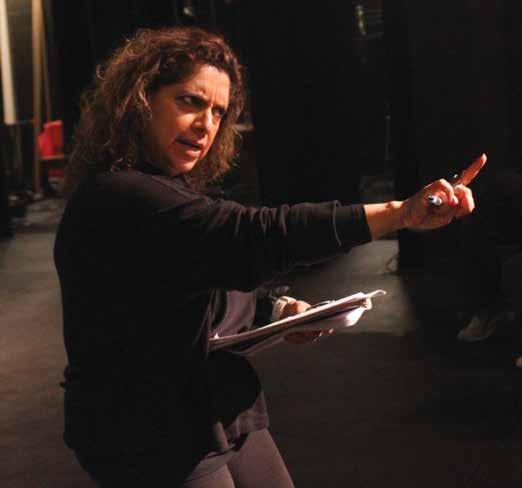
Vaaz highlighted his impressive theater acting achievement when he was her student.
“Every time we put on a production at Pierce, we enter a theater festival, and he got nominated as an actor for that festival,” Vaaz said. “Topher, as a relatively new
Shaheen Vaaz teaches an acting class at the Mainstage Theatre at Pierce College on Nov 12. Photo by Henry Calvin.
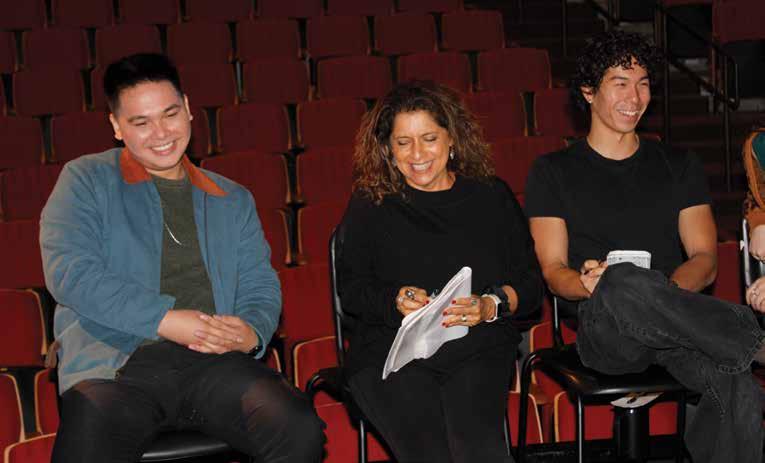
actor, won the entire festival. He took home the first prize in acting in our region and was invited to attend a ceremony in Washington, D.C. That’s a big deal, you know, it really is a big deal. I’m getting goosebumps telling you about it.”
Ngo said Vaaz has been the person who believed in his craft, and he wouldn’t be an actor without his teacher.
“I did one of my first-ever acting assignments for her, and she was crying,” Ngo said. “I remember it was so resonant to me that she was so moved by my story, but it’s one of the major people who really believed in me as a person and my artistry, as well as what I brought to the table. ”
Vaaz described Ngo’s character as generous and someone who is always ready to guide and help.
“Topher definitely gives back. He’s led workshops for students and shared
what he knows about the business. He’s always learning and is a true artist,” Vaaz said. “I can’t wait to see what he does next; you know, I can’t wait to see where his journey takes him. And he’s the kind of person you want to keep working with.
Actor Bianca Crader, Ngo’s cousin, said he loved performing, and his career as a voice-over artist came as a surprise.
“I always knew he had this drive to be in the performing arts because, as a little kid, he was so passionate about music and singing, and he always worked really hard,” Crader said. “I always thought that he was going to become a musician as a kid. But voice acting was actually what I didn’t expect.”
Crader described Ngo as someone who took a bold step in choosing what he truly wanted, inspiring his cousin to follow her own path.
“He’s the core of my resilience, because growing up in a particularly second-generation family that escaped the Vietnam War,” Crader said. “We have family pressure on us to go to medical school. But he inspired me to pursue my calling.”
Ngo wanted to take a different path, but many people supported him in whatever he chose to pursue, including his parents, despite their initial desire for him to become a doctor. Now, wants his audiences to be inspired by his work and to believe they can also achieve their dreams.
“ I want people to know that my parents came from nothing,” he said. “They’re Vietnamese refugees. I had no experience in any of this, and I worked my butt off to get here, and people can still do the same thing too.”
Topher Ngo, Shaheen Vaaz and Shane Chung watch acting performances during class at Pierce College, Woodland Hills, Calif., on Nov 12. Photo by Henry Calvin.

Review: Vista Theatre & Pam’s Coffy
Story and photos by Olivia Muñoz
There are few places in Los Angeles where you might find not only Pam Grier but also cherry pie, VistaVision and old Hollywood flicks.
Luckily for Angelenos, you can find them all at the Vista Theatre and Pam’s Coffy, a quaint yet groovy theater-and-cafe duo in Los Feliz.
Tucked in a corner at the crossroads of Sunset and Hollywood boulevards, the Vista Theatre and adjacent Pam’s Coffy lie at the heart of two of Los Angeles’s most iconic streets. The theater and cafe are owned by Quentin Tarantino, one of Hollywood’s most iconic filmmakers. True to Tarantino’s style, both the Vista and Pam’s exist as portals to a bygone era of 35 mm film, real butter on popcorn, 1970s nostalgia and delicious lattes.
Just a few steps off the busy sidewalk, Pam’s Coffy feels like stepping into a ‘70s fever dream. Psychedelic rock ballads float from the speakers, evoking flower power nostalgia. Retro cereal boxes and lunch tins line the shelves behind the front counter, while vintage movie posters stretch across the walls.
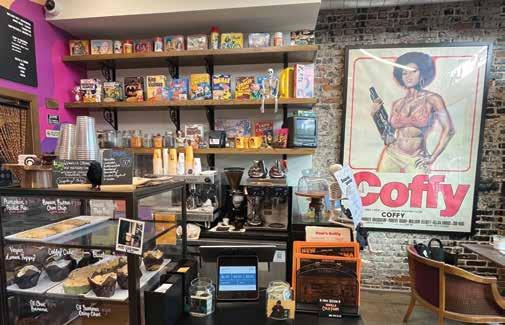
interior and serving counter
Niche references abound in the small space, but what it lacks in size it makes up for in style. A swirl of magenta, violet, fuchsia, orange and beige pops from the walls, and mini VCR TVs sit in several corners, their grainy screens playing decades-old films.
There’s even a VHS viewing room, a tiny, dark booth tucked behind a beaded curtain, containing a cushioned bench and an analog TV, which plays films such as the 1954 classic “Creature from the Black Lagoon. ”
Pam’s Coffy delivers not only vibes but also delicious food options. The menu features pastries, baked goods, a variety of coffees and a range of Cap’n Crunch flavors that can be ordered by the bowl. The Boo-Berry Latte is a bitter dark roast with hints of blueberry, topped with marshmallow cold foam and bits of the titular Boo Berry cereal. The blueberry jam muffin is chewy and packed with fruit. Both are standouts among a list of treats to enjoy before heading to a screening next door.
The Vista, a century-old theater that was renovated by Tarantino and re-opened in 2023, has an antique feeling inside and out. The marquee outside displays the films currently being shown, dead in the daytime but dazzling with lights at night. There’s a box office at the entrance, the facade decorated in gold hieroglyphics. The ground is covered in the concrete handprints and sloppy, carved-out signatures of stars and filmmakers such as Cary Elwes, Martin Landau and Barry Bostwick.
The lobby, draped in ruby red carpet and walls, is complete with a decked-out concessions stand and a 9-foot-long display of candy, the smell of fresh popcorn permeating the air. The theater is a cavernous room adorned with Egyptian Revival motifs: cloaked female figures and Sphinx heads line the auditorium walls, with a scarab symbol hovering above the single screen. It is both luxurious and antiquated, with grandeur that is almost awe-inspiring and reminiscent of Hollywood’s golden era.
Both the Vista and Pam’s are iconic venues, rich with L.A. film history and references. The establishments offer a blastfrom-the-past aesthetic and atmosphere, making them great stops for die-hard cinephiles and those who enjoy a good cup of coffee.
Information
Vista Theatre and Pam’s Coffy
Location: 4473 Sunset Blvd., Los Angeles, CA 90027
Pam’s Coffy: 8 a.m. to 7 p.m.
Vista Theatre: Typically operates from 11 a.m. to 10 p.m., although hours may vary.
Prices: Boo-Berry Latte, $5.75; Blueberry jam muffin, $4.25.
Visit vistatheaterhollywood.com for tickets.

The
of Pam’s Coffy in Los Feliz, Calif., on Oct. 2.
LOVE OF THE CRAFT
Photos and Story
By Gabriell Algo
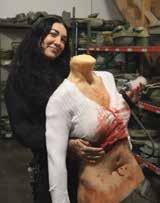
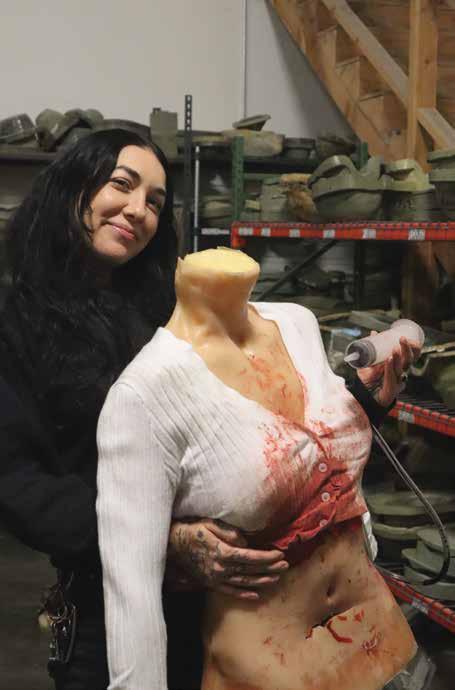
Rebecca Klika poses with a hand in her studio in Van Nuys, Calif., on Oct 8.
Sweat beaded off her brow, gloves sticky with resin and enough harmful gasses in the room to make her head spin. Rebecca Klika had been working all day with her partners at the shop making prosthetics and props for her client.
They rested before leaving, but on her way home she was ladened with thoughts about her job.
“Were the props stored correctly?” “Hopefully no dust gets into the mold.” “What if the silicone doesn’t set correctly?” “I’m going to have to re-do that face when I get back.”
Klika is a practical effects artist turned co-owner after starting Extra Special Effects in Los Angeles, a practical effects company that works with different studios to create facial prosthetics, as well as other props and rigs to be used in shooting scenes.
“I love what I do so much, I don’t want to do anything thing else.”
-Kelly Gorman
WHAT ARE PRACTICAL EFFECTS?
Practical effects are a blend of the creative arts mixed in with chemistry, sculpting and almost any physical creation medium used to manufacture props. It’s a term used to define a plethora of other professions, some of which have little to no relation to each other material-wise but are all serving to create a physical representation of the director’s vision for their film. Examples of practical effects go back as early as 1895 from Alfred Clark, who used a camera trick known as the stop trick to make one of his actor’s heads disappear on camera. Since then, paint brushes, carpentry, chemistry and the camera itself has served a critical part in developing new methods in creating more convincing practical effects.
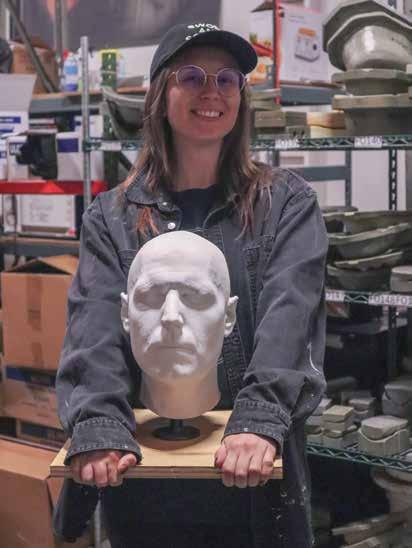
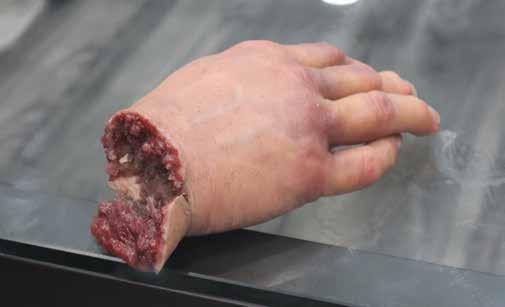
Top: Kelly Gorman holds model head in Van Nuys, Calif., on Oct 8. Bottom: Prostetic hand made by Extra Special Effects
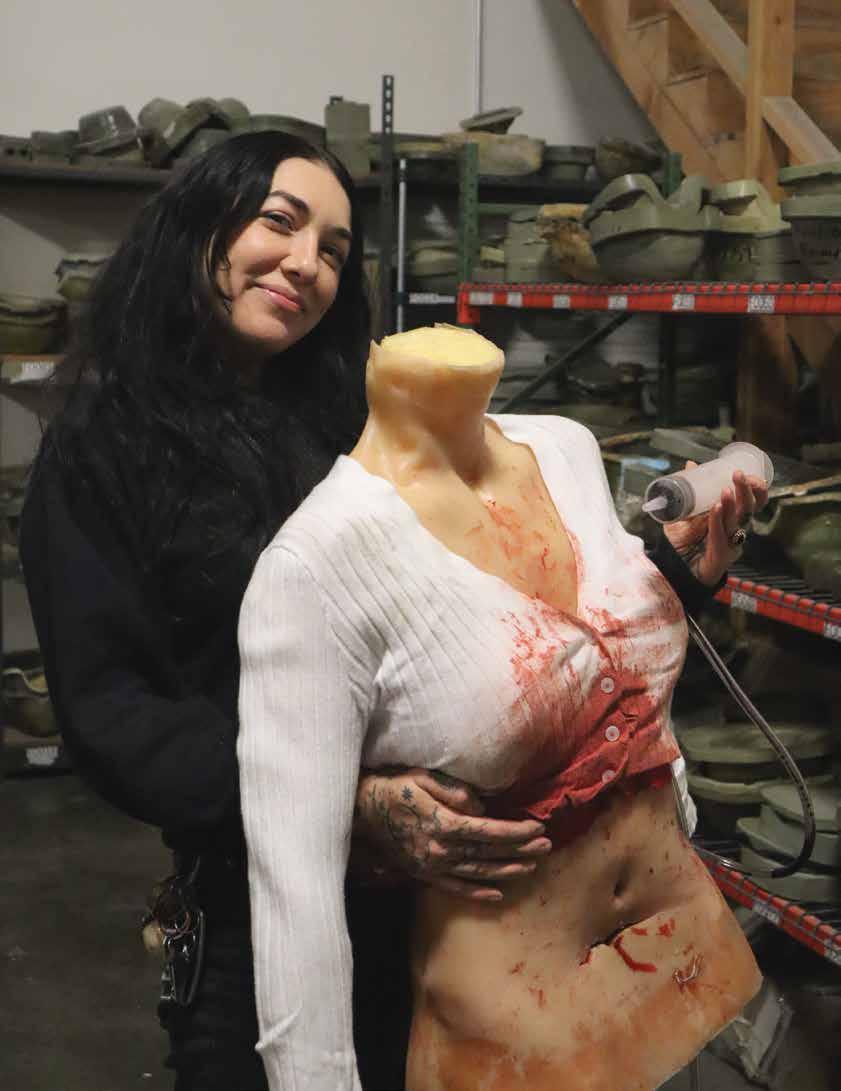
Ridley Scott’s 1979 Sci-Fi Thriller “Alien” was one of Kelly Gorman’s biggest inspirations. With an abundance of practical effects techniques throughout the film, it served as the catalyst of her discovery of the craft of fabricating costumes and designing sets to fit the specific vision of a director.
“Being a very creation heavy field, it’s a naturally physically laborious job,” Gorman said. "It demands a lot of know-how and problem solving in case things don’t turn out right, which is usually the case.”
Crunch is a term well-known for many creatives, meaning tight deadlines and production challenges that can translate to long hours.
Ellie Propper is an experienced shop hand who has done projects for the American Film Institute and 13th floor Productions. She has taught seminars about budget SFX techniques for students to use in their early projects.
Through working with her peers, she agrees that crunch is most likely to be expected, one of those contributing factors
being the desired look of the project.
“There’s a lot of back and forth between yourself as a make-up artist and the director and production being like, ‘This is what I’m buying, this is what I’m getting,’” Propper said. “Or sometimes, the director gets a really good idea, and they really want to add this one thing last minute.”
“It’s either there’s no work for months, or there’s just so much work.”
- Kelly Gorman
Klika and her colleagues have worked with dozens of studios on projects, including “Rings of Power,” “Star Trek” and season three of “The Mandalorian.” Creating molds and specific parts for every
project is work that can stretch for months at a time.
Team member Chelsea Tapia said that teamwork is a key to their success.
“You see someone getting ideas, and if everyone’s sharing ideas, then everyone’s evolving,” Tapia said.
All three of the artists resonate with that, though that doesn’t mean it’s been easy for them with other shops.
“It’s either there’s no work for months, or there’s just so much work,” Gorman said. “There’s been times where I’ve worked 100 hours a week, and you’re just losing your mind.”
Now that they are a team, the women enjoy each other’s company while expanding their careers and success in practical effects.
“I love what I do so much to the point that if the thought ever occurs to stop, it just gets overridden,” Gorman said. “I don’t want to do anything else.”
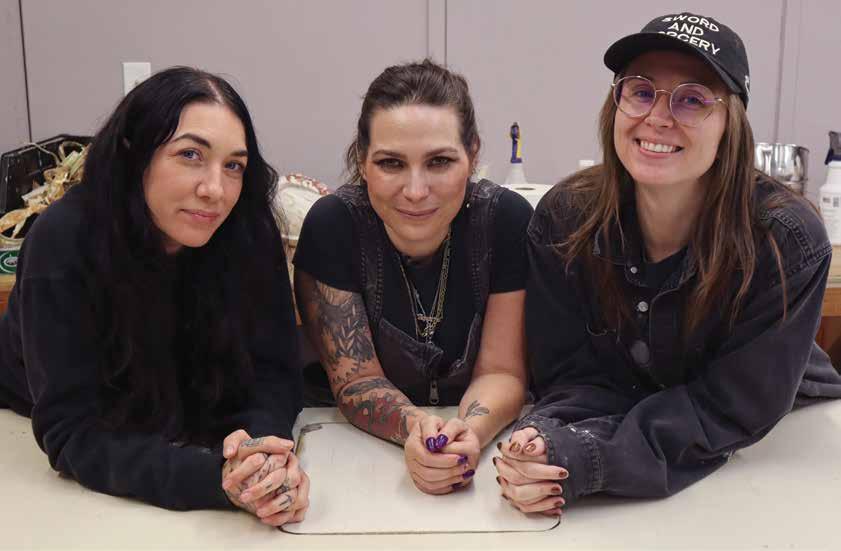
Chelsea Tapia, Rebecca Klika and Kelly Gorman pose in their studio in Van Nuys, Calif., on Oct 8.
THE INVISIBLE ART
THE HUMAN TOUCH BEHIND FILM EDITING
ARTICLE BY MELANIE SOMOZA PHOTOS BY VICTOR MONTIEL & GERARDO ESCOBAR
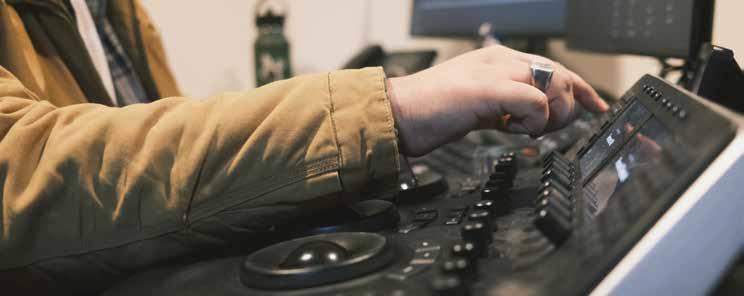
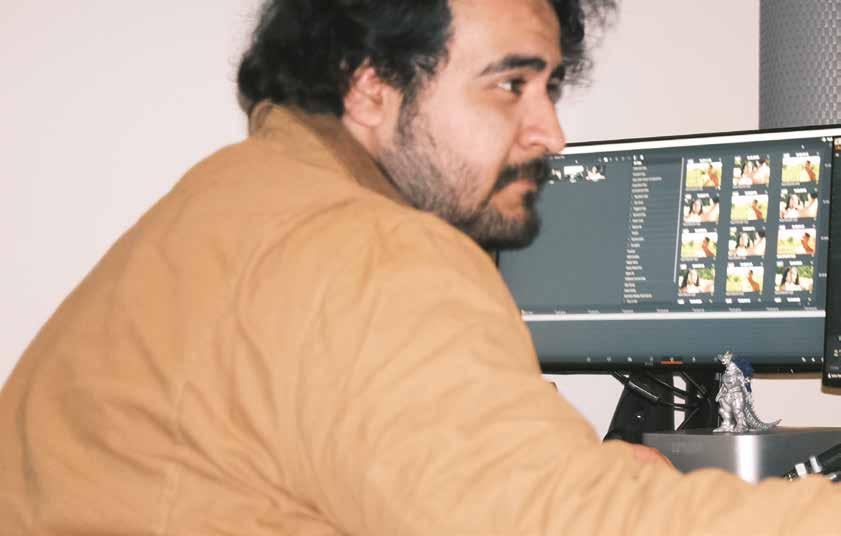
The monitor glowed inside the studio, casting a sharp light across Miguel Delgados’s tense face. He rubbed his eyes and ran a hand through his hair as he watched the Kennedy Center Honors footage stutter across the screen. Clips clashed, with some shots too bright and others losing detail in the shadows. The cursor hovered over the send button like it held the fate of the world.
The room held a heavy, anxious quiet, broken only by the low hum of the equipment. Sleep was impossible, and for a moment he considered quitting.
The clock read 3 a.m. as he called his friend in a panic.
“Did I do this right?’
Delgado said he got lucky with the Kennedy Center Honors edit, but moments like that have come to define his career since joining the post-production world in 2020.
“You’re in a place of constant growth, constant evolution that you have to keep up with, and sometimes it’s stressful because times change fast,” he said. “But you have to evolve with it.”
Editors are the unsung artists behind the
screen—the ones whose choices decide how a story feels. Through voices like Delgado’s, professors guiding the next generation, and students learning the rhythm of emotion, the craft of editing reveals itself as both technical and deeply human, even in an age ruled by digital tools.
Delgado’s path to filmmaking wasn’t a straight line. After dropping out of community college, where every day felt like another day in high school, he turned back to his childhood passion.
Between side hustles, he spent late nights, teaching himself editing through YouTube tutorials, slowly building the skills that would launch his creative career.
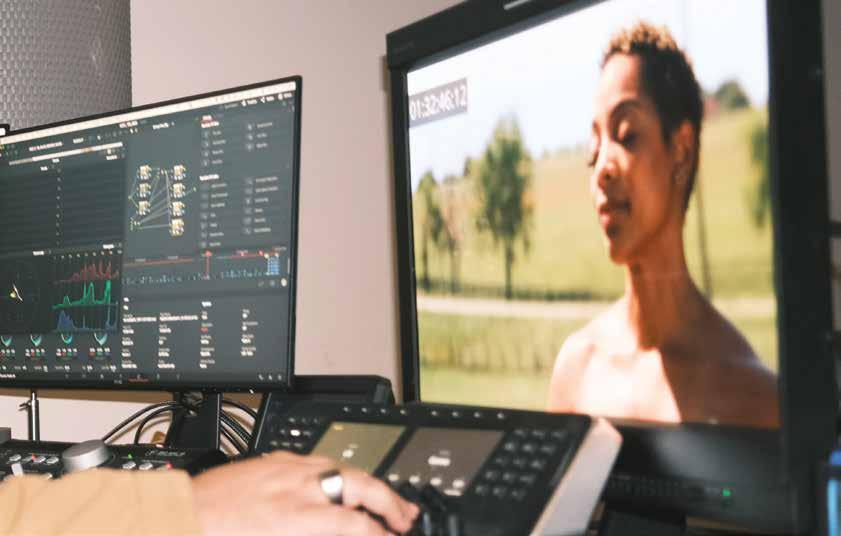
In 2024, Delgado, now an online editor and colorist at Geiger Post in Hollywood, edited “Jimmy Fallon’s Holiday Seasoning Spectacular,” a project filmed largely on green screens that pushed his technical limits.
To some viewers, a polished show or film feels effortless, but Delgado knows how much control and intuition it takes to make every moment flow.
“I would take a long time doing it be-
cause I wasn’t happy in my first couple of rounds,” Delgado said. “You have to be your own self-critic. Once you meet your own standard, that’s when you know it’s great.”
Editing is about more than trimming clips; it’s about shaping emotion, deciding what the audience feels and when. For Delgado, that means chasing perfection even when no one else will ever see the difference.
“We had to find a way to make everything fast and still look good,” he said. “You have to evolve with the decisions people make and figure out how to make them work on screen.”
According to Film editor Brent Joseph, film editing has long been called an “invisible art” because when it’s done right, viewers don’t notice it. Editors take hundreds of hours of raw footage and shape it into a seamless story that guides the audience’s emotions.
Randi Atkins, a film editing professor at the American Film Institute, said the craft is what brings every element of a production to life.
“Good editing is the difference between

Miguel Delgado editing and coloring a project in Hollywood, Calif., on Nov. 5. Photo by Victor Montiel.


Miguel Delgado poses in front of Geiger Post in Hollywood, Calif,. on Nov. 5. Photo by Victor Montiel.

crying at the end of a scene or not,” Atkins said. “So much of it comes from timing and building up to a moment the right way so it lands emotionally.”
Atkins said that while technology continues to evolve, her approach to teaching hasn’t changed much. She focuses on fundamentals that can’t be replaced by shortcuts or software.
“I tell my students they can’t just leave college and be editors right away,” she said. “They need to learn the ropes and the politics of this industry from a lower-stakes position. I don’t let them use automation tools that do the work for them because I want them to understand how everything functions at a basic level before adding the fancy stuff.”
That hands-on approach is something students carry with them as they enter the industry.
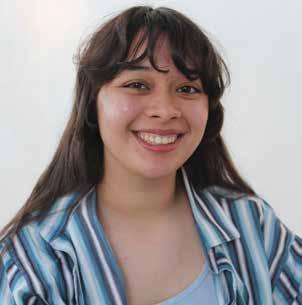
That emotional precision is what drew CSUN film editing student Emma Cantu to the craft. She said that learning to edit changed how she sees stories and the world
around her, because no two editors tell a story the same way.
Cantu discovered her passion for storytelling through entertainment when she joined her high school news broadcast. As she learned to edit interviews, she became inspired to tell people’s stories with authenticity and integrity.
“I see people edit a story and they don’t put much care into it,” she said. “That’s why I felt like it was special to me to do it that way.”
Cantu said she views editing as one of the most powerful and sometimes overlooked parts of filmmaking, capable of shaping how people and cultures are remembered. Throughout history, she said, editing has also been used to erase voices and perspectives, which is why learning the craft and taking ownership of how stories are told is important to her.
“Everything we consume is edited,” Cantu said. “Embracing editing and learning how to do it are important to telling the story the way you want it told.”
Cantu said she thinks about how editing shapes representation. She pointed to how films about Mexico are often tinted yellow, a stylistic choice that she believes flattens the country’s beauty and complexity.
“I want people to feel seen in the stories I work on,” she said. “And in the editing process, you can do that in several ways.”
As technology advances, Delgado said he’s both excited and uneasy about artificial intelligence usage in post-production.
“We’re able to incorporate it into our workflow,” he said. “But in the back of my mind, I wonder if a robot’s going to be able to color the whole show.”
For now, it is still humans like Delgado who make the final cut, shaping stories in the quiet hours as he did at 3 a.m.
“And that’s where that whole thing comes in,” he said. “You have to stay cool during these panic situations, because once you start losing your cool and once you start freaking out, then you truly start losing it. But once you get past that, you’re cruising.”

EMMA CANTU’S TIPS FOR SURVIVING FILM SCHOOL
• Experiment with everything
• Practice skills that you aren’t used to
• Make connections with peers and professors
• Utilize your college and students resources
• Draw from your own experiences
• Make mistakes — you can only go up from here
• Don’t compare your progess to others
• Have fun making art
Miguel Delgado works at Geiger Post in Hollywood, Calif., coloring a project on Nov. 5. Photo by Victor Montiel.
LETTER FROM THE EDITOR
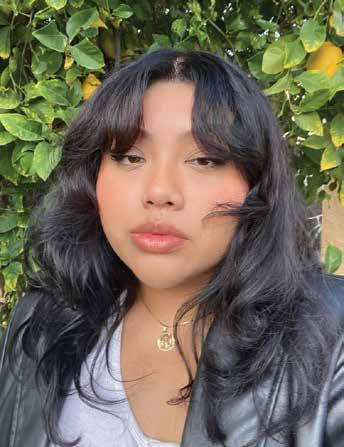
Movies have always felt like magic to me — not just what we see on the screen, but everything that happens before the cameras even roll.
When I chose a film-themed issue for The Bull, I knew I wanted to spotlight the people whose work often goes unseen: the editors, sound designers, production assistants, set decorators, teachers and students whose passion keeps this industry alive.
This issue became an invitation to look beyond the spotlight. As a journalism student, I’ve learned that the most unforgettable stories often come from people whose work usually goes unnoticed. The ones sweeping sets at 2 a.m., the ones stitching costumes by hand, the ones solving problems no audience will ever notice.
Their dedication reminded me why I fell in love with storytelling in the first place.
I want to thank my advisers for always pushing me to think bigger, question deeper and follow the story wherever it leads.
Thank you for trusting me with this platform and for helping me grow not just as a journalist, but as a leader.
To my staff: You truly brought this issue to life. Thank you for every rewrite, every idea and every moment, and all the times you stayed after class to make sure everything was right.
You showed up with creativity, patience and so much heart — and this magazine is proof of what collaboration looks like at its best.
To my friends and family: Thank you for supporting me through the deadlines and quiet stretches.
And to my parents, thank you for taking care of my fur baby so I could stay focused. Your support means more than you know.
And finally, to every reader: Thank you for opening these pages and stepping behind the curtain with us. I hope this issue makes you appreciate film in a new way — not just for the stories it tells, but for the people who make storytelling possible.
Lights. Camera. Behind the scenes!
Enjoy the issue.
- Melanie Somoza