
BRAIN HEALTH AND DEMENTIA RISK REDUCTION


Welcome
There is limited public awareness of the risk factors that contribute to dementia, despite growing evidence that around 45% of cases are linked to modifiable factors such as hearing loss, smoking, inactivity, and cardiovascular health.
This e-bulletin includes a range of projects and initiatives which focus on prevention and help limit the risk factors that can contribute to dementia.
Public Health Network Cymru organised a webinar on this topic on the 17th July 2025. The presentations and recording from the webinar can be viewed on our website.
4 Articles
Raising awareness of dementia prevention in Cardiff and the Vale of Glamorgan – recent developments
Rosie Keogh, Health and Wellbeing Officer, Cardiff Council
RCN Prehabilitation Project – Extending the benefits to improve Brain Health and Dementia prevention
Nicola Davis-Job,Acute Care and Leadership Adviser, Royal College of Nursing (RCN) Wales
Sally Wilson, Professional Lead for Older People and People with Dementia, RCN UK
Heather Randal, Head of Education, RCN UK
Hearts and Minds: 14 Reasons to Move and Improve. Addressing modifiable dementia risk factors at a community level
Michelle Symes, Research and Development Officer, Rural Health and Care Wales (RHCW)
Brain Health and Dementia Risk Reduction – How can we affect change?
Natalie Elliott, National AHP lead for Dementia. NHS Wales hosted by Cardiff and the Vale. Natalie. Elliott@wales.nhs.uk
Michaela Morris, National Mental Health Services Improvement Lead and National Dementia programme Lead, Quality Safety & Improvement, NHS Wales Performance and Improvement. Michaela.Morris@ wales.nhs.uk
Ian Dovaston, Improvement Manager, National Dementia Care Programme, Quality Safety & Improvement,NHS Wales Performance and Improvement. Ian.Dovaston2@wales.nhs.uk
Alzheimer’s intergenerationalSocietyposter for Brain Health messaging
Louise Nicholas, Local Services Manager for Powys and the Welsh Dementia Support Line Team. Alzheimer’s Society Cymru


Raising awareness of dementia prevention in Cardiff and the Vale of Glamorgan – recent developments
Rosie Keogh, Health and Wellbeing Officer, Cardiff Council

To improve its accessibility across communities, the dementia prevention guide produced in Cardiff and the Vale of Glamorgan is now available in Arabic, Bengali, Urdu and Somali.
In addition, with the support of Cardiff and Vale University Health Board’s Local Public Health team, a 30-second animation has been produced with key messaging related to dementia prevention in all six languages. The animations are available to view on the Cardiff and Vale University Health Board website: Dementia Prevention - Cardiff and Vale University Health Board.
The animations are available


to be used on digital screens or shared via messaging platforms. Downloadable resources are available via the following link: https://f.io/ jNO3Cbz6
Background
Dementia is currently the leading cause of death in Wales (1), and the number of older adults living with dementia is projected to rise by 70% by 2040 (2). Research by Alzheimer’s Disease International (ADI) indicates that most people believe dementia to be a normal part of ageing, with 95% of participants thinking they could develop the disease during their life (3). However, the 2024
report of the Lancet standing Commission estimates that 45% of dementia cases could be preventable by addressing 14 potentially modifiable risk factors (4).
A partnership project between Cardiff Council, Vale of Glamorgan Council, Cardiff and Vale Regional Partnership Board and Cardiff and Vale University Health Board aims to raise awareness that, contrary to many beliefs, developing dementia is not an inevitable part of ageing.
A booklet has been produced, highlighting the key modifiable risk factors identified in the Lancet report, and communicating four key
messages:
Getting older does not mean that you will get dementia. You will not necessarily get dementia because a family member has. You can take action to lower your risk of developing dementia. It is never too early or too late to take action
Information about the risk factors is provided, along with corresponding localised signposting, to support people to make positive lifestyle changes.
20,000 booklets have been printed, and many locations across the region have been (and continue to be) supplied with hard copies, including GP surgeries, Hubs and libraries, leisure centres and community centres.
An easy read version is also available online.
The team are encouraging everyone, no matter their age, to download a copy of the booklet and share the resources with others.
To request a supply of booklets (if based in Cardiff/Vale of Glamorgan), or to request the digital files to adapt for your own region, contact dementiafriendly@cardiff.gov. uk.
This resource has been made possible through Welsh Government grant funding
and the support of the Cardiff and Vale Regional Partnership Board.
Website: Dementia Prevention - Cardiff and Vale University Health Board
References:
Deaths registered in England and Wales - Office for National Statistics
Planning ahead: dementia services in Wales
World’s largest dementia study reveals two thirds of people still incorrectly think dementia is a normal part of ageing, rather than a medical condition | Alzheimer’s Disease International (ADI)
Dementia prevention, intervention, and care: 2024 report of the Lancet standing Commission - The Lancet

RCN Prehabilitation Project – Extending the benefits to improve Brain Health and Dementia prevention
Nicola Davis-Job,
Acute Care and Leadership Adviser, Royal College of Nursing (RCN) Wales
Sally Wilson, Professional Lead for Older People and People with Dementia, RCN UK
Prehabilitation is a proactive approach that supports individuals to become as physically, mentally, and cognitively fit as possible before facing health challenges. This project extends its principles to brain health and dementia prevention, recognising that early lifestyle interventions, such as cognitive stimulation, physical activity, nutrition, and stress reduction, can significantly reduce dementia risk. By empowering healthcare professionals with practical tools, this initiative promotes resilience, slows cognitive decline, and enhances overall wellbeing. It’s a patient-centred strategy that supports long-term brain health and aligns with public health goals for dementia prevention.
This flexible, short online course is designed for Royal College of Nursing (RCN) members, primarily nurses and healthcare support workers. Developed in partnership with experts in prehabilitation and quality improvement. It equips practitioners with evidencebased strategies to support cognitive wellbeing across the lifespan, especially in patients at risk of cognitive decline or dementia.
Prehabilitation for brain health involves early, multidisciplinary interventions that promote cognitive resilience. Evidence shows that lifestyle changes, such as regular exercise, balanced nutrition, smoking cessation, social engagement, and mental
Heather Randal, Head of Education, RCN UK
stimulation, can delay or prevent the onset of dementia (Livingston et al., 2020; WHO, 2019).
Participants will learn to:
- Recognise risk factors and early signs of cognitive decline. - Apply strategies to support brain health through diet, lifestyle, and psychosocial care.
- Communicate effectively and tailor interventions to individual cognitive needs, in line with the NHS Long Term Plan and dementia prevention frameworks.
The course is self-paced, with certification available upon completion.
The Prehabilitation Project has significantly influenced patient care by empowering RCN
members with the knowledge and tools to support patients before surgery or cancer treatments. An extension of this will support early intervention to promote brain health.
By promoting physical, psychological, and lifestyle interventions, the project enhances patient resilience, improving outcomes and reducing complications. Clinicians now feel more confident in offering personalised, proactive care, leading to quicker recoveries and better patient experiences.
Furthermore, the course has fostered a more collaborative, patient-centred approach within multidisciplinary teams, aligning with NHS goals for personalised care. Ultimately, the project bridges the gap between early intervention and improved recovery, benefiting both patients and healthcare providers.
Early intervention is key not just for physical health, but for brain health too. By incorporating cognitive and lifestyle support into routine
care, healthcare professionals can help prevent or delay dementia. The RCN calls on clinicians to embrace prehabilitation as a tool for brain health promotion. Complete the course to gain practical strategies that support cognitive resilience and align with NHS goals for personalised, preventative care. Let’s act now to protect brain health and reduce the burden of dementia.
For further information please email: Nicola.Davis-Job@rcn. org.uk

Hearts and Minds: 14 Reasons to Move and Improve. Addressing modifiable dementia risk factors at a community level
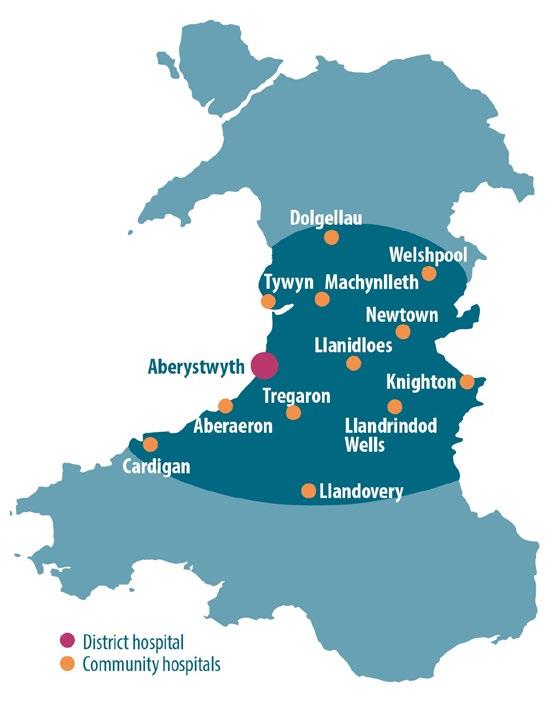
Mid Wales faces increasing levels of dementia (1) due to improved longevity and health and wellbeing amongst its population. Rural Health and Care Wales (RHCW) seeks therefore to identify the level of
support available, at organisational and community level, for people affected by dementia in Mid Wales. Reviews for Ceredigion and Powys are being finalised with work in Gwynedd commencing in
Autumn 2025. The combined findings of all three county reviews will form a Mid Wales scoping report with findings presented to RHCW Stakeholders Group.
This article outlines the circular
Michelle Symes, Research and Development Officer, Rural Health and Care Wales (RHCW)
Research
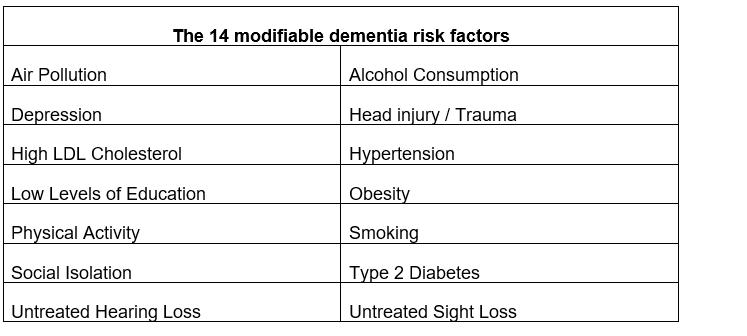
relationship between the 14 modifiable dementia risk factors (2) in Tab.1, and the alignment of these to community led activities like those identified in the scoping work.
RHCW has reviewed to date:
419 locations - Ceredigion (n= 118) and Powys (n=301)
234 venues
100+ community groups
A range of activities were identified including coffee mornings and fitness classes, some of which had age or condition parameters, but all were open to carers. There were also opportunities for volunteering within communities.
Social isolation, through the activities shown below, is the most commonly addressed dementia risk factor identified in Ceredigion and Powys.
Community activities identified through the RHCW scoping review:
Ceredigion and Powys
Afternoon Tea Experience People Affected by Dementia including Carers
Art and Art Therapy Groups
Arthritis Care Group
Bingo
Book and Book Exchange Groups
Bore Coffi / Coffee Mornings
Bracken Trust Information Hub
Carer’s Only Groups
Children’s Play Facilities
Community Café
Community Lunch Club
Craft and Creative Cafes
Dance classes
Dementia Information Hubs, Meeting Centres, Living with Dementia and Community Dementia
Action Groups
Friends Tea Bar
Gardening Groups
Gentle Years Yoga
Tab. 1: The 14 modifiable dementia risk factors (The Lancet Commission, 2024)
Keep fit
Knit and Natter
Leg Club
Local History Group
Men’s Sheds
Older Persons Exercise Classes
Parent and Toddler Groups
Parkinson’s Disease Group
PAVO Welfare Hubs
Read and Remember Group and Reading Clubs
Senior Citizens Club
Short Mat Bowls
Sight Life for the Partially Sighted / Visually Impaired Club
Sound Bath Sessions
Soup Kitchen
Stay and Play Groups for Children
Table Tennis
The Arches Memory Lanes
Social Group
Walking Groups
Warm Spaces
Yoga
Young carers drop-in sessions
Young Onset Dementia Group
Community activities identified through the RHCW scoping review: Ceredigion and Powys (RHCW, 2025)
A circular relationship between social engagement and other modifiable dementia risks is suggested in the literature reviewed as part of this scoping work, with social engagement often cited as a co-combatant for depression, alongside physical activity and reduced alcohol consumption (3).
Physical activity in turn impacts positively on the management of weight, type 2 diabetes, LDL cholesterol levels and hypertension. Physical activity is further reported to reduce cardiovascular disease and stroke risk (4).
Social engagement also enables awareness of, and understanding of how to address, dementia risk factors, thus reducing the risks associated with low levels of education.
A number of groups to support people with visual impairment were also identified addressing the risks associated with untreated sight loss but risks associated with smoking and untreated hearing are less commonly addressed in communities.
Similarly, air pollution and head injury appear difficult for communities to address in isolation in both instances, however, working with sports clubs, or resident groups to affect change enables crossgenerational and social engagement.
Reduced alcohol consumption is generally accepted as an enabler to participation in both social and physical activities.
so far enabled contributions to discussions on establishing an Age Friendly Ceredigion, and health service provision with Powys Teaching Health Board (PTHB) and Powys Association of Voluntary Organisations (PAVO). RHCW has also disseminated organisational dementia support data via Ceredigion Association of Voluntary Organisations (CAVO).
Lessons learnt from this scoping, focus on the: alignment of community activities to modifiable dementia risk factors requirement for sustained funding for community venues and groups reliance on community-based volunteers
The impact of the county and Mid Wales reports is yet to be ascertained, however as movement and selfimprovement, are not only good for the brain but also the heart and general wellbeing, there is more we can all do to address our own modifiable health risks, and support others to do the same.
Glossary of terms
CAVO – Ceredigion Association of Voluntary Organisations
LDL – Low Density
Lipoprotein
PAVO - Powys Association of Voluntary Organisations
The RHCW scoping work has
PTHB – Powys Teaching
Health Board
RHCW – Rural Health and Care Wales
Figures
Fig 1 – Map of Wales with Mid Wales highlighted
Tables
Tab. 1 The 14 modifiable dementia risk factors (The Lancet Commission, 2024)
References
Senedd Research Planning ahead: dementia services in Wales https://research. senedd.wales/researcharticles/planning-aheaddementia-services-in-wales/ Accessed 19.08.2025
The Lancet Commission (2024) Targeting 14 risk factors can cut dementia cases by nearly half - Parsemus Foundation accessible at https://www.parsemus. org/2024/10/targeting14-risk-factors-can-cutdementia-cases-by-nearlyhalf/#:~:text=Their%20 latest%20report%20 emphasizes%20that%20 targeting%2014%20risk,their%20list%2C%20which%20 previously%20included%20 12%20risk%20factors. Accessed 15.08.2025
(3) Buechner H, Toparlak SM, Ostinelli EG, Shokraneh F, Nicholls-Mindlin J, Cipriani A, Geddes JR, Syed Sheriff R. (2023) Community interventions for anxiety and depression in adults and young
people: A systematic review. Aust N Z J Psychiatry. 2023 Sep;57(9):1223-1242. doi: 10.1177/00048674221150362. Epub 2023 Feb 1. PMID: 36722407; PMCID: PMC10466972.
(4) Keijzer, A.R., Kauling, R.M., Jorstad, H., RoosHesselink, J.W., (2024) Physical Activity for Cardiovascular Prevention. https://www.escardio. org/Councils/Council-forCardiology-Practice-(CCP)/ Cardiopractice/physicalactivity-for-cardiovascularprevention. Accessed 19.08.2025
Brain Health and Dementia Risk Reduction – How can we affect change?
Natalie Elliott,
National AHP lead for Dementia. NHS Wales hosted by Cardiff and the Vale. Natalie.Elliott@wales.nhs.uk
Michaela Morris,
National Mental Health Services Improvement Lead and National Dementia programme Lead, Quality Safety & Improvement, NHS Wales Performance and Improvement. Michaela.Morris@wales. nhs.uk
Ian Dovaston, Improvement Manager, National Dementia Care Programme, Quality Safety & Improvement,NHS Wales Performance and Improvement. Ian.Dovaston2@wales.nhs. uk
There is limited public awareness of the risk factors that contribute to dementia, despite growing evidence that around 45% of cases are linked to modifiable factors such as hearing loss, smoking, inactivity, and cardiovascular health.
Prevention is both possible and powerful and targeted outreach is needed while addressing stigma and fear around diagnosis. Although dementia is one of our greatest health challenges, it remains low on the public
agenda—underscoring the need for urgent, equitable, and prevention-focused action across the system.
Building understanding of dementia risk requires not only raising awareness of individual lifestyle factors but also challenging widespread misconceptions about the condition. One of the most pervasive is the belief that dementia is an inevitable part of ageing—when in fact, evidence shows that up to 45% of future dementia cases could be prevented by addressing
14 modifiable risk factors identified in The Lancet report on dementia prevention and care. Some of the risk factors are not modifiable by an individual on their own, despite their best efforts, but come from society and the environment. Dementia risk reduction policies could have huge impacts in terms of dementia costs and population health and wellbeing.
The World Alzheimer Report 2023, published by Alzheimer’s Disease International (ADI), focuses
Commentary
on reducing dementia risk and highlights that it’s “never too early or too late” to take action. The report discusses both modifiable and non-modifiable risk factors and advocates for population-based systemic changes to promote risk reduction.
Tackling dementia risk is both a personal and collective responsibility. While not every case can be prevented, we have the tools, knowledge, and evidence to significantly reduce the number of people affected and to delay onset for many others. This requires sustained commitment— from individuals being aware of the impact of making healthy choices, to communities fostering supportive environments, to policymakers embedding prevention into health, education, and urban planning. Every year we delay action, thousands more lives are touched by a disease. By acting decisively now, we can not only change the future burden of dementia but also improve quality of life and wellbeing across the lifespan. Prevention is not only possible—it is a moral and societal imperative.
Regions across Wales are involved in the Quality, Safety & Improvement (Q,S&I) dementia programme and through their community workstreams they are focussed on highlighting these messages across services and communities. If you would like to learn more or get involved in work in your own region work please contact us at: PHW. ImprovementCymruDementia@wales.nhs.uk and we can provide the appropriate contact details.
Practice
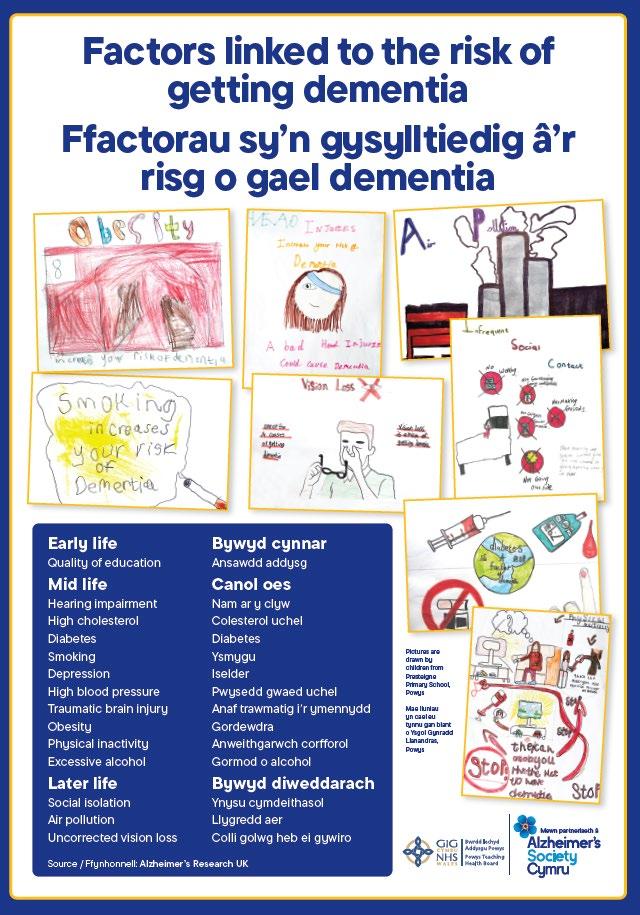
Alzheimer’s Society intergenerational poster for Brain Health messaging
Louise Nicholas, Local Services Manager for Powys and the Welsh Dementia Support Line Team. Alzheimer’s Society Cymru
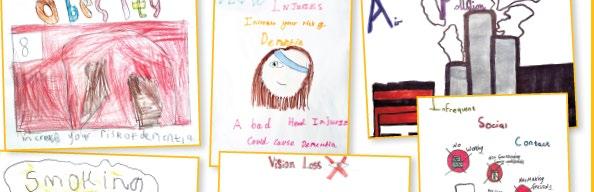
As part of the All-Wales Dementia Care Pathway of Standards the task group in Powys recognised the need to promote the brain health messaging. Schools in Powys were invited to enter a competition to design a poster promoting these messages, which would also raise awareness in local schools. The winners were Presteigne school in Powys. The Alzheimer’s Society and Powys Teaching Health Board jointly funded the printing of the poster, which has been circulated in Powys.
Videos




Brain Health and Dementia Risk Reduction – How can we affect change?
There is limited public awareness of the risk factors that contribute to dementia, despite growing evidence that around 45% of cases are linked to modifiable factors such as hearing loss, smoking, inactivity, and cardiovascular health.
Building Strong Foundations | Cardiff Highlights
The conference aligned with the PHNC objectives of sharing knowledge, facilitating the developments of solutions and approaches and connecting members and building a community.
Explore our video library on our website
Building Strong Foundations | Llandudno Highlights
The conference aligned with the PHNC objectives of sharing knowledge, facilitating the developments of solutions and approaches and connecting members and building a community.

News & Resources

One in five people in Wales are making positive changes to reduce type 2 Diabetes risk
21-08-2025

Consultation on raising minimum alcohol price in Wales
14-08-2025

Creating healthier homes is key to supporting family wellbeing in Wales
05-08-2025
Putting food in the frame
Frameworks UK
Building a Healthier Wales Summary of Activity 2023-25
Building a Healthier Wales
Next Issue
PREVENTING VIOLENCE AGAINST CHILDREN

The World Health Organization’s new 2025 report, Preventing Violence Against Children: A Social Determinants Framework for INSPIRE Implementation, was produced in partnership with Public Health Wales and Bangor University. It draws on a global systematic review of evidence to highlight effective policies and laws that prevent violence against children or positively influence risk factors linked to the Wider Determinants of Health. For our upcoming bulletin we are inviting contributions from projects and initiatives which focus on tackling the root causes of violence against children. These can be national, regional or local initiatives, policies or programmes.
Our article submission form will provide you with further information on word count, layout of your article and guidance for images.
Please send articles to publichealth.network@ wales.nhs.uk by 18 September 2025.