
THE PUBLIC HEALTH POTENTIAL OF HOUSING INTERVENTIONS

Welcome
Homes are an essential building block for a healthy life and should provide warmth, safety, connection and community. But for many people, homes are negatively impacting their physical and mental health and wellbeing.
This bulletin includes contributions from projects and initiatives that address housing related inequalities.
Health and Housing: Could Wales lead the world?
Dr Gareth Morgan, Public Health Directorate, Hywel Dda University Health Board
Healthy Homes, Healthy Lives: Housing as a key building block of health in Wales
Joe Rees,Senior Policy Officer, Polisi Team, Public Health Wales
Hayley Janssen,Public Health Researcher, Specialist Projects Team, Public Health Wales
Menna Thomas,Public Health Policy Officer, Polisi Team, Public Health Wales
A whole systems approach to supporting vulnerable older people in Cwm Taf Morgannwg – winter 2024/25
Beth Underwood, Health Housing Innovation Programme Manager, Cwm Taf Morgannwg University Health Board
Better Homes for Better Health: The Cost of Doing Nothing
Katherine Evans, Policy and Research Officer, Care and Repair Cymru
Housing as a Social Determinant of Health: The Role of Warm Wales and the Impact of Healthy Homes Healthy People
Joanna Seymour, Partnerships Director, Warm Wales
Retrofitting homes is a health intervention
Andy Cameron-Smith, Communications Director, Healthy Homes Hub Warmer Homes as Preventative Medicine
Abigail Williams, Climate Change Team, Environment and Public Protection Department, Newport City Council
Denied By Design: Planning Barriers to Healthy Homes for Gypsy and Traveller Families
Emma Garnett, Communication, Engagement and Policy Officer, Gypsy and Travellers Wales
Measuring the effect of housing on health
Dr Eira Winrow, Programme Lead MSc Public Health & Health Promotion, Bangor University Play for children in temporary accommodation project
Marianne Mannello, Assistant Director: Policy, Support and Advocacy, Play Wales
Beyond the Tech: Why Psychology Shapes Housing and Health Innovation
Dr Nyle Davies & Dr Dan Bowers, Housing and Health Research Network, Department of Psychology, University of South Wales
Secure Homes, Stronger Minds: How Mind in Gwent’s Housing Support Boosts Mental Wellbeing
Jaime Devine, Head of Service Housing and Tenancy Support, Mind in Gwent
Don’t Steal My Future (DSMF): Empowering Young People Across Wales
Gillian Clark, Rape and Sexual Abuse Support Centre North Wales (RASASCNW) Training Manager

Foreword
It is my pleasure to write this foreword to this edition focussing on housing and health.
It is well known that housing is a major factor in health and wellbeing. There is a strong evidence-base that poor housing is often associated with poor health, which then leads to demands on health and social care services. This is most apparent in the winter when poorly heated homes are associated with risks to health, most notably respiratory disease, which are a factor in the high winter pressures that particularly affect hospitals. What is needed now is not further evidence but action where there is a translation of the evidence into practical solutions. More than this, we need an impact.
Thank you to all colleagues providing the articles showcased in this edition as they really show the potential in Wales for partnership solutions. There are some excellent examples in Wales of high quality housing and health projects which have potential to be ‘spread and scaled’.
Yet unfortunately, we also know that there are still too many people living in our communities in poor housing conditions and this is something that we can all seek to address. By boosting the collaboration and strengthening joint working, we can go further forward and ensure that housing, health and social care are integrated.
This is to commend you all for your actions and offer encouragement to do more. Gareth.
Dr Gareth Morgan. FRSPH.
Bevan Exemplar lead on housing and health.
Guest Editor

Practice
Health and Housing: Could Wales lead the world?
Dr Gareth Morgan, Public Health Directorate, Hywel Dda University Health Board
The Welsh labour politician Aneurin (Nye) Bevan is perhaps most famous for his work in developing the National Health Service, which started in 1948. Perhaps a lesser-known fact about Nye was that he jointly held the Ministerial portfolio for both health and housing. Given the fact that health and housing are intimately linked, the combined portfolio seems farsighted.
Housing impacts on health and healthcare in two broad ways. Firstly, poor quality housing is a factor in poor health, which often results in demand on healthcare services. Possibly
the most obvious example is during cold weather where internal conditions, like damp and black mould, are major factors of respiratory disease. Housing is a factor in NHS winter pressures.
As well as front door demand pressures from housing, the other impact is on backdoor pressures relating to discharge from hospital. Many people who are medically optimised are delayed in leaving hospital due to housing related barriers and this carries considerable opportunity cost to the NHS. Clearly therefore, the NHS has a vested interest with the housing agenda.
The Bevan Commission are a leading policy organisation in Wales and are obviously named in honour of Nye. In 2021, Bevan Exemplar status was conferred on a project led by Hywel Dda University Health Board Public Health Directorate. The project ‘Building Bridges Between Housing and Health’ has delivered a successful multiagency partnership since that time.
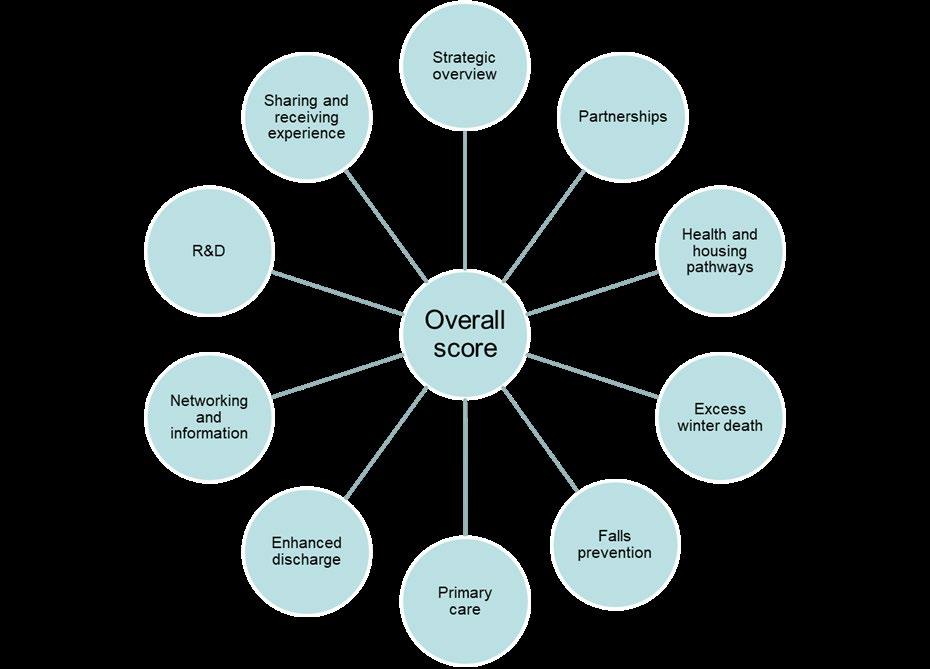
Phase 1 of the project delivered a 10-domain good practice guide – summarised in figure 1 – which offered a distillation of the extant evidence-base
on housing and health. More than this, it provided a framework to benchmark current initiatives through reflective practice and thus identify areas needing further work. Peer-review of partners was crucial in the work.
Phase 2 started last year and really focussed on the practical implementation of the work. The major focus was on tackling cold homes by working with housing partners and fuel poverty organisations. A Community of Practice was convened through the winter months, sharing intelligence, building partnerships and
providing a platform for more work.
Phase 3 has recently been launched, with the intention to ‘spread and scale’ housing and health projects across Wales. An all-Wales forum has been convened involving Welsh Health Boards with a wide range of partners. There is already excellent practice occurring yet there is variation and inconsistency. Phase 3 is looking to take forward work on addressing this.
Phase 4 is planned for 2027. This vision is for a national programme on housing and
health, with obvious links to social care and unpaid carers. Depending on the level of ambition, Wales could lead the world on this and ensure that the public health potential of improved housing is converted into a reality. This really is all to play for and we can all play our part on doing this.
Please do not hesitate to get in contact with Gareth Morgan if you are interested in being involved in phase 3 or want further information about the project: Gareth.P.Morgan@ wales.nhs.uk
Healthy Homes, Healthy Lives: Housing as a key building block of health in Wales
Senior Policy Officer, Polisi
A home is more than just a place to live, it is the foundation for good health.1 The connection between housing and health is well established, and
Projects Team, Public Health Wales
current evidence continues to underline the significant public health impact of poor-quality housing in Wales. According to Public Health Wales (PHW) analysis, approximately 18%
of homes in Wales—around 238,000 dwellings—present serious health hazards, such as excess cold, damp, and risk of falls. The estimated burden on the NHS exceeds £95
Joe Rees,
Team, Public Health Wales
Hayley Janssen, Public Health Researcher, Specialist
Menna Thomas,
Public Health Policy Officer, Polisi Team, Public Health Wales
million per year, with wider costs to society approaching £1 billion.2
The impact of fuel poverty
The issue of unhealthy housing is worsened by fuel poverty. A household is regarded as living “in fuel poverty” if a member of a household is living on a “lower income” in a home which cannot be kept “warm” at “reasonable cost”. 3 Official figures show that 340,000 households in Wales (25%) were living in fuel poverty in October 2024. A further 215,000 households (16%) are estimated to have been at risk of fuel poverty. 4 This makes achieving recommended indoor temperatures a daily struggle for many.
Current Welsh Government advice on indoor temperatures (also known as the ‘satisfactory heating regime’) recommends maintaining 21°C in living rooms and 18°C in other rooms for 9 hours per day on weekdays (and up to 16 hours on weekends). It also recommends 23°C in the living room and 18°C in other rooms achieved for 16 hours in a 24-hour period in households with older or disabled people. 3 A PHW study published in 2024 assessed the appropriateness of the ‘satisfactory heating regime’ in light of the Covid pandemic and the rising cost of living. Findings from the PHW study show that of those that could not keep comfortably warm in their thermal environment
(238 people), 71% cited cost as the main barrier to keeping warm.5 This suggests that for some households, keeping warm at home is unaffordable.
Vulnerabilities to living in fuel poverty are influenced by a complex interplay of personal, household, community, and social factors—from low income, energy prices, energy efficiency and entrenched inequality.6 Conditions are particularly challenging in the private rented sector, where housing quality can be inconsistent. Welsh Government reported in 2022 that 23% of private rented households were living in fuel poverty compared with 13% of owner occupiers or those in social housing. 7 The 2024 PHW study found that private renters were more than twice as likely to report living in a colder home compared to owner-occupiers.5
Towards healthier housing in Wales
PHW has undertaken extensive engagement with stakeholders through interviews and a stakeholder event in November 2024.8 From this, PHW has identified four emerging areas for action related to housing. These include: Support for an integrated policy response through a national housing strategy. This will require coordinated action across sectors including health, housing, education,
and social justice to provide healthier homes for children and families in the short and longer term. Use of health impact assessments during housing design and development. Embedding health and well-being considerations in planning processes will help ensure that new homes actively promote both physical and mental health. Meaningful livedexperience engagement so policies reflect the needs of people facing housing challenges. By fostering partnerships, particularly with families with young children living in poverty, policy development can be informed by real-world experiences. Explore opportunities to better integrate data on housing conditions. Robust collection and integration of housing and public health data is critical for identifying the health consequences of unhealthy housing factors such as cold, damp, and overcrowded living environments. Tackling unhealthy homes requires sustained investment in energy efficiency, sustainable planning and home upgrades across all housing types, with a focus on fuel-poor households. Initiatives such as the Warm Wales’ Healthy Homes, Healthy People Programme show how housing, health, and community services can work together to support those most at risk.9 Scaling up such cross-
sector efforts could turn policy into real, measurable impact.
Retrofitting homes at scale demands sustained and dedicated funding, both for current and future generations. It also requires addressing all sectors of housing, including social housing, private renting, and home ownership, this is essential to achieving real health improvements. By treating housing as a public health intervention, Wales has a powerful opportunity to reduce health inequalities, cut preventable illness, and promote lifelong well-being. Everyone in Wales should have a safe, warm, and healthy place to call home.
To find out more please contact Hayley.Janssen@wales. nhs.uk or Joe.Rees@wales.nhs. uk
References
Roberts M. Homes for health and well-being: Summary briefing. Cardiff, https:// phwwhocc.co.uk/resources/ homes-for-health-and-wellbeing/ (17 July 2023, accessed 12 August 2025).
Watson I, MacKenzie F, Woodfine L, et al. Making A Difference Housing and Health: A Case for Investment Main Report. Cardiff, https://phwwhocc.co.uk/ resources/making-a-differencehousing-and-health-a-casefor-investment-main-report/ (17 June 2019, accessed 15
February 2023).
Welsh Government. Tackling Fuel Poverty 2021 to 2035. Cardiff, https://gov.wales/ tackling-fuel-poverty-2021-2035html (1 March 2021, accessed 12 March 2024).
Welsh Government. Fuel poverty modelled estimates for Wales (headline results): as at October 2024. Statistics, Document, https://www.gov. wales/fuel-poverty-modelledestimates-wales-october-2021 (2025, accessed 12 August 2025).
Hill R, Griffiths D, Janssen H, et al. Cold homes in Wales: Is the satisfactory heating regime appropriate for health and well-being? Cardiff, https:// phwwhocc.co.uk/resources/ cold-homes-in-wales-is-thesatisfactory-heating-regimeappropriate-for-health-and-wellbeing/ (2024, accessed 28 November 2024).
Janssen H, Gascoyne B, Ford K, et al. Cold homes and their association with health and well-being: a systematic literature review. Wrexham, https://phwwhocc.co.uk/wpcontent/uploads/2022/11/PHWCold-homes-lit-review-28_11_22. pdf (2022, accessed 10 July 2023).
Welsh Government. Fuel poverty modelled estimates for Wales: as at October 2021, https://www.gov.wales/fuelpoverty-modelled-estimateswales-october-2021https://www. gov.wales/fuel-poverty-modelledestimates-wales-october-2021 (2022, accessed 24 September 2024).
Rees J, Thomas M. Shaping the future of healthy housing for children and families in Wales: A summary of stakeholder engagement. Cardiff, https://phwwhocc. co.uk/resources/shaping-thefuture-of-healthy-housing-forchildren-and-families-in-walesa-summary-of-stakeholderengagement/ (5 August 2025, accessed 12 August 2025).
Warm Wales. Health Homes, Healthy People, https:// www.warmwales.org.uk/ healthy-homes-healthy-people/ (accessed 12 August 2025).
A whole systems approach to supporting vulnerable older people in Cwm Taf Morgannwg – winter 2024/25
Beth Underwood, Health Housing Innovation Programme Manager, Cwm Taf Morgannwg University Health Board
Context
In 2024, the UK Government announced that winter fuel payments in England and Wales would be meanstested. In addition, data from the Department of Work & Pensions indicated approximately 7,000 older people in Cwm Taf Morgannwg (CTM) were eligible for, but not claiming Pension Credit. This provides extra money to help with living costs for those over State Pension age and on low incomes. Pension Credit is worth an average of £65 a week to those who are eligible and unlocks other entitlements that provide additional financial support. With almost 1 in 5 older people in Wales living in poverty –
contributing to the risk of unaffordable heating costs during the winter months and the inevitable health impacts of living in a cold and/or unsafe home, a collaboration of partners rapidly came together in CTM to take action.
Discovery phase
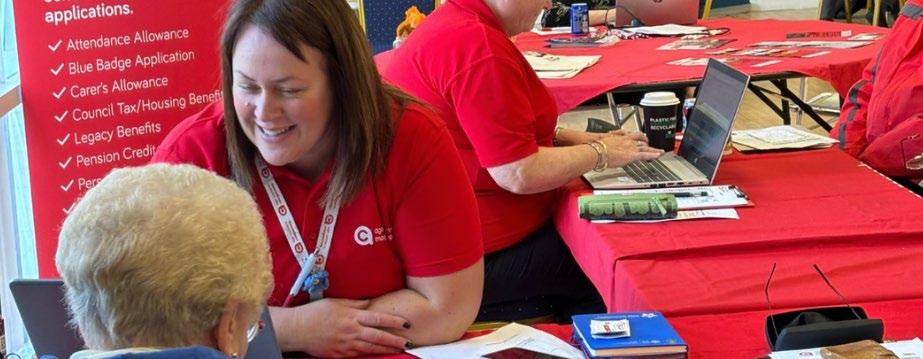
Cwm Taf Morgannwg’s Innovation Hub invited a wide range of regional partners, including CTM’s Public Health team; Local Council’s; Housing Associations and 3rd sector organisations (Age Connects Morgannwg; Care & Repair & Citizen’s Advice agencies, who work as experts in income maximisation and supporting older people.) The aim of bringing the system
together was to understand how each partner intended to take action separately and to look to aggregate our response based on a common purposeto mitigate the risks associated with pensioner poverty and to protect the health of our local older population throughout the winter and beyond. Learning from each other as partners provided an immediate springboard to launch a collaborative campaign from October 2024 to March 2025.
Collaborative Plan of action
Data driven targeting - CTM Public Health team extracted a data set of patients aged 66+ with known respiratory illness and a number of Accident
and Emergency (A&E) attendances in the previous 12 months. Using a robust Data Protection Impact Assessment, the information was shared with a Local Council partner who were commissioned to make direct contact with each patient. A referral to a 3rd sector partner or Housing Association could be made with the consent of the patient for their income to be assessed and a home visit carried out where appropriate.
Awareness raising – Local Authority partners and a local MP had commenced widescale letter drop campaigns. These provided information and signposting for older residents to check their eligibility for Pension Credit. The CTM Regional Partnership provided communications support - building webpages and Frequently Asked Questions for the campaign and connecting 3rd sector partners with a local radio station slot. Each 3rd sector partner contributed their own marketing resource. Housing Associations used their own data to inform officer contact with vulnerable tenants and targeted text messaging.
Face to face support – 3rd sector partners provided strong arguments around high rates of digital exclusion affecting our older population and the limited likelihood of older people making contact with agencies following
receipt of a letter. Therefore, a schedule of community events was developed, promoted and led by 3rd sector partners, where local people could drop-in and have face to face and immediate support from caseworkers who are specifically trained in benefits assessment and support for older people. Additionally, voluntary sector community navigators were brought in as partners to the events to provide holistic well-being support.
Campaign outcomes
The campaign directly contacted 689 high risk patients with respiratory health conditions, referring 13% for direct support & 17% to self-service help. (48% of those contacted were already in receipt of Pension Credit or were over the income threshold) It achieved 6,768 instances of outreach efforts through direct engagement and assessed and supported 1,890 older people. The campaign secured confirmed income increases totalling £1,655,551.83, with further annual income gains of £961,103.19 from pending applications.
For each person assisted with benefit applications, 3rd sector partners offered Healthy Homes Checks to address any housing concerns including –Falls prevention Cold homes
Heating advice
Provision of adaptations and/
or equipment
Fire safety and Carbon Monoxide advice/referrals
Priority registers
Evaluation
We aim to use case management data from our 3rd sector partners to evaluate the on-going journey of people referred to their services over the intervening 12 months. We want to identify what additional support, particularly around home and housing improvements resulted from each referral and how this may have had a positive impact on the persons’ overall well-being. We will also link back each referred person to our health data set to understand if attendances to A & E have been reduced.
Happily, the campaign will not be a one off. We have continued the collaboration throughout 2025 and have already secured funding to repeat the campaign and hopefully expand its reach for winter 2025/26. This will provide us with further rich data to evidence the effectiveness of our mixed method, whole systems approach.
The full report on last winter’s project can be found here. For further information please contact: bethan.underwood2@ wales.nhs.uk
Better Homes for Better Health: The Cost of Doing Nothing
Katherine Evans, Policy and Research Officer, Care and Repair Cymru
Care & Repair improve homes to change lives. They help clients to live independently in warm, safe, accessible homes by delivering housing adaptations and home improvements. Their frontline staff support around 50,000 older households across Wales every year. Care & Repair adaptations have been found to reduce hospital admissions for older people with injurious falls by 17% - this equates to around 35,000 Welsh NHS bed days saved each year.
Housing disrepair threatens lives and puts avoidable strain on health and social care services in Wales. Every day, Care & Repair see older people living in unfit
housing who cannot afford to get repair works done and where there are no funding solutions available. This leaves older people living in poor quality, cold homes with a major detrimental impact on their health, wellbeing, and ability to live safely and independently at home. Disrepair and a lack of accessibility can be devastating to live with and take a toll financially, emotionally and physically.
The last Welsh Housing Conditions Survey published in 2018 showed that 18% of homes in Wales had a health hazard present. These official figures are out of date and do not truly reflect the state of
housing in Wales. From Care & Repair’s experience every day in Welsh homes, they believe this is now much higher for Wales’s older population. Poor quality housing costs the NHS in Wales more than £95 million in treatment costs per year. Older people are amongst those at greatest risk from the health implications of cold, damp, unsafe and unfit homes - from accidents, falls, cancers, and circulatory, respiratory and cardio-vascular diseases. Falls were the largest call to WAST in 2023, and 77% of falls-related calls were from people aged 65+ resulting in 42,000 hospital admissions. Whilst Care & Repair can install adaptations to provide
physical support around the home, disrepair must be addressed first to make a home fit for adaptation and to support independent living; a home with damp plaster walls cannot structurally support some handrails, and poorquality electrics cannot safely power an electric stairlift.
Every older person should live in a home that is in good condition and meets their needs. As well as reducing worry at home, there is a strong health prevention argument to invest in improving housing accessibility and quality. Care & Repair have been calling for a Safety-Net Grant to tackle instances of hazardous disrepair where no other recourse is available to make sure that that every older person in Wales can live in a warm, safe and accessible home and no older person is left living in a home that is hazardous to their health. The cost of doing nothing to rectify the impact of hazardous disrepair is substantial, placing increased strain on our health and social care services and on the lives of older people across Wales.
To find out more about Care & Repair’s services, please visit: How We Can Help | Care & Repair
To learn more about Care & Repair’s work to highlight poor
housing in Wales, please visit: Policy and Research: Housing Conditions | Care & Repair
The call for a Safety-Net Grant is the main feature of Care & Repair Cymru’s 2026 Senedd Election Manifesto which you can view here: CRC-ManifestoSenedd-Election-2026-FINALWEB-2.pdf
For further information please contact Katherine.evans@ careandrepair.org.uk
References
Do Home Adaptation
Interventions Help to Reduce Emergency Falls Admissions, Journal of Age and Ageing (2021). Available at: Do-homeadaptation-interventions-helpto-reduce-emergency-falladmissions.pdf
Welsh Housing Conditions
Survey 2017-18: Headline Report (Updated). Available at: Welsh Housing Conditions Survey 2017-18: headline report (updated)
phw.nhs.wales/files/housingand-health-reports/a-case-forinvestment-report/
Wales Ambulance Service, Falls Training Presentation, 2024
From Wear and Tear to Disrepair: The Causes and Impact of Poor Housing in Wales. Available at: Report: From Wear and Tear to Disrepair | Care & Repair
Housing as a Social Determinant of Health: The Role of Warm Wales and the Impact of Healthy Homes Healthy People
Joanna Seymour, Partnerships Director, Warm Wales
Housing is more than shelter, it is a cornerstone of health and wellbeing. The conditions in which people live can significantly influence their physical and mental health, access to services, and overall life expectancy. In Wales, the public health community is increasingly recognising the importance of housing as a key social determinant of health, particularly in the context of fuel poverty and cold, damp homes.
Organisations like Warm Wales are at the forefront of addressing these challenges through innovative, community-based programmes such as Healthy Homes Healthy People (HHHP). These efforts align closely with the prevention agenda in public health,
aiming to reduce avoidable illness and health inequalities by tackling root causes.
The Health Impact of Cold Homes and Fuel Poverty
Cold and damp housing is strongly associated with a range of adverse health outcomes, including:
Respiratory conditions (e.g. asthma, bronchitis)
Cardiovascular disease
Mental health issues, including anxiety and depression
Increased winter mortality, particularly among older adults
Living in fuel poverty can have a negative effect on children’s health which can also cause lower educational attainment, poor attendance at school, and puts strains on children’s mental health services.
According to the Welsh Government’s Fuel Poverty Modelled Estimates (October 2024):
25% (340,000) of households in Wales were in fuel poverty (spending >10% of income on heating)
5% (63,000) of households were in severe fuel poverty (spending >20% of income on heating)
16% (215,000) households were at risk of falling into fuel poverty (spending 8-10% of income on heating)
Among lower-income households, a staggering 59% (195,000) households were fuel poor, of these 56,000 households were in severe fuel poverty.
The average household energy bill in Wales for 2024–25 was estimated at £1,850, which is 37% higher than in 2021–22
and energy debt is at £3.7 billion. These figures highlight the scale of the challenge and the disproportionate impact on vulnerable populations.
The Cost to the NHS and Wider Society
The consequences of poor housing extend beyond individual health. The NHS spends an estimated £1.4 billion annually treating illnesses directly linked to cold and damp homes. The wider societal cost, including lost productivity, social care, and education impacts, is estimated at £15.4 billion per year. It cost the NHS around £27,000 every day to support children experiencing illhealth due to living in fuel poverty.
Investing in housing improvements is not only a moral imperative but also a cost-effective public health intervention. Every pound spent on improving housing conditions yields significant returns in reduced healthcare demand and improved quality of life.
Warm Wales and the Healthy Homes Healthy People
Warm Wales, a not-for-profit community interest company, delivers the Healthy Homes
Healthy People across Wales, it provides:
Energy efficiency and Affordable warmth advice and support (heating measures, insulation, renewable technologies)
Energy Advice and Support
Fuel debt advice and support
Income maximisation and benefits support
Water and fuel tariff assistance
Home safety checks, including carbon monoxide awareness
The programme is inclusive, supporting households regardless of tenure or income, and is delivered in partnership with local authorities, health boards, and community organisations.
Aligning with the Prevention Agenda
Healthy Homes Healthy People exemplifies the preventative approach championed in public health policy. By addressing the upstream causes of ill health, such as inadequate housing and fuel poverty, Warm Wales is helping to:
Reduce emergency admissions
Improve long-term health outcomes
Alleviate pressure on primary and secondary care
Support population health management
This aligns with the Wellbeing of Future Generations (Wales) Act, which calls for integrated, preventative, and collaborative approaches to improving health and reducing inequalities.
Data-Driven Impact: Using Access Elemental
To ensure accountability and continuous improvement, Warm Wales uses the Access Elemental Social Prescribing platform to:
Enable real-time referrals from health and housing professionals
Track health and wellbeing outcomes
Collect data on demographics, service uptake, and intervention impact
Provide evidence-based reporting to funders and stakeholders
This digital infrastructure supports a whole-system approach, enabling better coordination between housing, health, and social care.
Conclusion
Housing is a public health issue. The work of Warm Wales and Healthy Homes
Healthy People demonstrates how targeted, data-driven interventions can improve lives, reduce health inequalities, and support the NHS. As we continue to embed prevention into the heart of public health strategy, housing must remain a central focus.
References
Fuel Poverty in WalesNational Energy Action (NEA) www.nea.org.uk
Fuel poverty modelled estimates www.gov.wales
Healthy Housing www.phw. nhs.wales
Creating healthier homes is key to supporting family wellbeing www.phw.nhs.wales
For further information please contact joanna.seymour@ warmwales.org.uk
Retrofitting homes is a health intervention
Andy Cameron-Smith, Communications Director, Healthy Homes
We spend an awful lot of time indoors and in our homes. Is the link between the health of our home and our own health given the importance it should have?
One of the key challenges facing the housing sector is our changing climate and how our homes adapt. We have a need to build new homes that are low to zero carbon in both construction and operation to meet climate targets. But perhaps the bigger challenge we face is retrofitting our existing homes.
efficiency and reduce carbon emissions.
With the political consensus fracturing around the question of net zero is it time we looked beyond energy efficiency and carbon reductions as the key outcomes – important though they are – and look at retrofitting as a health intervention with the outcome being warmer, healthier and more comfortable homes to live within.
And could this be the hook to get people more engaged in the process?
to poor housing stock.
We should always target good air quality in the home. Retrofit work to enhance ventilation and remove the prospect of damp lowers the risk and severity of respiratory conditions and should be welcomed.
Estimates vary that there are between 27-29 million homes and buildings that will need retrofitting before 2050. According to the UK Green Building Council we need to be retrofitting 1.8 to 2 homes per minute to improve energy
However, as the weather this summer has shown, we must be equally aware of the threat of overheating in the home and the health impact this Commentary
The interventions that are made into the home such as improving insultation, ventilation and heating if retrofit is done well, can help to tackle preventable health risks which tend to be linked
With a drive to deliver warmer homes, retrofitting can also help to reduce cold-related illnesses associated with the home. This is important because cold homes are linked to increased cardiovascular and respiratory problems, excess winter deaths, and increased hospital admissions.
has. We should use retrofit as a measure to ensure we have homes that work in the best interests 365 days a year ensuring they are warm in the winter but also cool in the summer.
It is not just physical health, retrofit can also improve the mental health of residents through the provision of warmer, drier and more comfortable homes that reduce the stress and anxiety associated with fuel poverty and poor living conditions.
We can’t avoid it; we all need to adapt to a changing climate and what that brings with it. That means that our homes and our relationship with the home needs to change.
Responding to climate change is about creating healthier living environments. The home should be at the heart of this. We have a chance to change the way we live for the better. Let’s position retrofit as an intervention to improve the health of the people that live in homes, by improving the health of the home itself.
For further information please contact andy@ healthyhomeshub.uk
Warmer Homes as Preventative Medicine
It has long been fact that cold living conditions in a home can worsen the health of the resident living there. The ECO4 scheme has been targeting residents who have a respiratory, cardiovascular, immunosuppressed or limited mobility health condition. The scheme is available to those living in cold homes to provide them with fully funded home energy improvements. It is available to owner occupiers and privately renting tenants. Over 100 homes in Newport have applied for the scheme, there are many who are eligible who haven’t.
Aneurin Bevan University Health Board (ABUHB), Newport City Council (NCC) and registered charity Warm Wales have launched a trial collaboration project to offer
more support to residents facing this challenge.
ABUHB have been able to be identify homes across Newport that might have residents that are vulnerable to living in a cold home because of one of the listed health conditions. Matching this with publicly available Energy Performance Certificate data has given a valuable list of homes that are likely to be eligible for the ECO4 scheme.
This iteration of the project has focused on secondary admission data, it includes residents that have been admitted to Accident and Emergency since 2022 with a respiratory or cardiovascular issue, this has been matched with an EPC rating of E, F or G. These addresses have been
passed to the local authority to enrich the data by adding information on housing tenure. Only address data is shared between ABUHB and NCC, no other personal data is included.
All homes identified will receive a letter offering a free telephone appointment with Warm Wales who specialise in providing residents with information around home energy and affordable warmth. The letter is dual branded by the health board and council to show the authenticity of the project. A resident will selfrefer for help either using a specific QR code link on the letter, by email or by returning a slip with their details to NCC office.
The Warm Wales telephone
Abigail Williams,
Climate Change Team, Environment and Public Protection Department, Newport City Council
appointment can be tailored to the needs of the home, whether that’s support with debt, money maximization, understanding tariffs or full advice on the home energy improvement grants a home may be eligible for. All homes that self-refer for the support will receive a full home survey from a local installer, this will help collect data on condition of housing stock across Newport. There is specific funding through this installer for a small number of homes to complete ECO4 measures above and beyond ECO4. This will help form a case study for what future iterations of ECO should look like.
For further information please contact abigailc.williams@ newport.gov.uk
Denied By Design: Planning Barriers to Healthy Homes for Gypsy and Traveller Families
Emma Garnett,
Communication, Engagement and Policy Officer, Gypsy and Travellers Wales

unsafe conditions that harm health [10]. Overcrowding, inadequate sanitation, and insecure tenure directly threaten physical and mental well-being [1, 7]. These barriers are not accidental; they are embedded in the planning system.
This article focuses on planning permission for private, non-commercial sites [3, 10], which is particularly restrictive and contributes to longstanding inequalities. Reforming how these permissions are granted could enable families to live with dignity while reducing health risks linked to poor and insecure housing [1, 7].
Background and Evidence
The Housing (Wales) Act
underestimates actual demand [11]. As a result, provision of authorised private sites is insufficient, pushing many families into unauthorised encampments [10].
Even where families own land, planning frameworks make it difficult to live there. Applications for private Gypsy and Traveller sites are disproportionately refused, around 80% compared with 10% for the wider population [6, 10]. Travelleronly permissions, originally designed to protect scarce authorised sites, now restrict families from selling, adapting, or investing in their homes [2, 8].
Courts are now increasingly granting “personal
recognised, permissions risk overlooking community needs [5, 10]. Combining personal permissions with explicit Gypsy and Traveller protections would provide a fairer, healthier framework for private sites [11].
The Impact of Change
Reforming planning permissions for private sites could directly improve health and well-being. Securing culturally appropriate housing reduces exposure to overcrowding, vermin, and unsafe conditions. Lowering risks of respiratory disease, injuries, and stress-related illness [2, 7, 10]. Families with permission to live on their own land would have stability, helping children attend school and adults access healthcare
consistently. Removing systemic barriers also supports dignity and equality, strengthening trust between communities and local authorities [1, 10]. Embedding health and cultural recognition into planning decisions gives Wales the chance to address entrenched inequality [10].
Key Messages and Call to Action
Planning rules in Wales unintentionally harm Gypsy and Traveller health. Outdated permissions for private sites create insecurity, unsafe conditions, and prevent investment in healthier homes [7, 10].
Public health teams, planners, and policymakers can help by ensuring planning decisions recognise cultural needs and promote safe housing. Reforming planning permissions for private Gypsy and Traveller sites is not just technical, it is a public health necessity [1, 10].
References
Bevan Foundation. (2024). Anti-racist Wales Action Plan: 2024 update. Available at: https://www.gov.wales/ anti-racist-wales-action-plan2024-update-html (Accessed: 13 August 2025).
Friends, Families and Travellers. (2024). July 2024 - Friends, Families and Travellers. Available at: https://www.gypsytraveller.org/wp-content/
uploads/2024/07/CERDSubmission_2024.pdf (Accessed: 22 August 2025).
Housing (Wales) Act 2014, Section 108.
Lisa Smith v Secretary of State for Levelling Up, Housing and Communities, Court of Appeal, 2021.
London City Hall. (2015). Gypsy and Traveller Accommodation Needs Study.
Niner, P. (2002). Local Authority Gypsy/Traveller Sites in England: Policy, Practice and Outcomes. University of Birmingham.
Senedd Research. (2025). A community forgotten –three years on, but little change for Gypsy and Traveller communities. Local Government and Housing Committee. Available at: https://research.senedd. wales/research-articles/acommunity-forgotten-threeyears-on-but-little-changefor-gypsy-and-travellercommunities/ (Accessed: 12 September 2025).
Traveller Movement. (2024). Submission for the seventh periodic report of the United Kingdom of Great Britain and Northern Ireland. Available at: https://wp-main. travellermovement.org.uk/wpcontent/uploads/2024/07/ TTM-CERD-REPORT2024-v.1.pdf (Accessed: 12 September 2025).
Welsh Government. (2024). Updated guidance for managing Gypsy and Traveller sites. Available at: https://www.gov.wales/ updated-guidance-managinggypsy-and-traveller-sites-html (Accessed: 9 September 2025).
Welsh Government. (2025a). Gypsy and Traveller caravan count: January 2025 (official statistics in development). Available at: https://www.gov. wales/gypsy-and-travellercaravan-count-january-2025official-statistics-developmenthtml (Accessed: 9 September 2025).
Welsh Government. (2025b). Draft guidance for managing unauthorised encampments, undertaking accommodation assessments and designing and managing Gypsy and Traveller sites: our response. Available at: https://www. equalityhumanrights. com/our-work/advisingparliament-and-governments/ welsh-government-draftguidance-managingunauthorised (Accessed: 9 September 2025).
For further information please contact Emma.Garnett@ gtwales.org.uk

Research
Measuring the effect of housing on health
Dr Eira Winrow,
Programme Lead MSc Public Health & Health Promotion, Bangor University
Housing is a major driver of health and wellbeing, but current tools for measuring health often fail to reflect this. Most validated healthrelated quality of life (HRQoL) questionnaires focus on illness and physical function while overlooking the vital role housing plays in people’s lives (1). This means that the impact of housing interventions can be underestimated, leading to missed opportunities to improve health and reduce inequalities. My research explored this gap using qualitative and quantitative research methods (including analysis of the results of the tenant-completed EQ-5D-3L) and proposes a new framework and mixed-methodology design to capture how housing influences wellbeing, helping to inform better decisions for
healthier communities.
Good housing is essential for good health. Poor or insecure housing is linked to respiratory illness, stress, falls, and greater use of healthcare services (2, 3). However, the tools currently used to measure health-related quality of life (HRQoL) often fail to capture this relationship.
My PhD research reviewed evidence on how housing affects health and wellbeing, as well as how interventions such as home adaptations and energy efficiency upgrades are evaluated. I found that widely used HRQoL tools may be too generic to reflect the full impact of housing. They do not measure factors such as security of tenure, affordability, or the emotional
benefits of feeling safe at home (1, 4). Qualitative interviews with tenants in North Wales described experiences that aligned with quantitative findings from tenants in the North East of England, illustrating how these factors can negatively impact health (5).
The findings propose a housing-specific framework based on eight domains: safety, environmental quality, space, stability of tenure, accessibility, affordability, connection to community, and emotional attachment to the home. This provides a foundation for developing more sensitive measures that reflect the lived experience of housing. By improving how outcomes are measured, this research supports better
evaluation of housing policies and services, helping decisionmakers to target resources effectively and design interventions that genuinely improve lives.
The thesis poses the importance of including housing in public health measurement. By identifying key housing-related factors that shape wellbeing, it could offer a practical tool for policymakers, practitioners, and researchers. The framework could ensure that the documented benefits of housing interventions, such as improving safety, reducing fuel poverty, or providing accessible homes, are fully captured and valued (6). This supports better decisionmaking, enabling services to target resources where they may have the greatest impact. In the long term, this work could help reduce health inequalities and improve population health by recognising housing as a cornerstone of wellbeing.
Good housing underpins good health, but we cannot improve what we do not measure. Existing health tools miss vital aspects of housing, meaning the true impact of interventions is often underestimated.
Housing must be recognised as a core public health priority, with tools that reflect its full impact on wellbeing (1, 2).
Public Health Wales, housing
providers, researchers, and policymakers should work together to develop and apply housing-specific measures. By doing so, we can design services and policies that make a real difference to health and reduce inequalities.
REFERENCES
(1) Feng, Y. S., Kohlmann, T., Janssen, M. F., Buchholz, I., & others. (2021). Psychometric properties of the EQ-5D-5L: a systematic review. Quality of Life Research, 30(3), 647–673.
(2) World Health Organization (2018). Housing and Health Guidelines. WHO: Geneva.
(3) Public Health Wales (2022). Homes for Health and Wellbeing in Wales.
(4) Janssen, M. F., Pickard, A. S., Golicki, D., et al. (2022). Is EQ-5D-5L Better Than EQ-5D-3L Over Time? A Head-to-Head Comparison of Responsiveness. PharmacoEconomics, 40(7), 675–687.
(5) Winrow, E (2025) Home Sweet Home? Measuring the effect of poor housing on health for the purpose of health economics analysis [Doctoral Thesis, Bangor University, defended and pending final approval]
(6) Thomson, H., Petticrew, M., & Morrison, D. (2001). Health effects of housing improvement: systematic review of intervention studies. BMJ, 323(7306), 187–190.
For further information please contact e.winrow@bangor. ac.uk
Play for children in temporary accommodation project
Marianne Mannello,
Assistant Director: Policy, Support and Advocacy, Play Wales
There is a well-establiashed body of solid evidence that shows the contribution that play, particularly selforganised pla, can make to children’s immediate and long-term wellbeing, to their physical health and to their mental health and resilience. When they play, children contribute to their own wellbeing and development.
Opportunities to play are particularly beneficial during times of uncertainty. Being homeless and living in temporary accommodation or poor housing conditions can cause adversity and uncertainty.
During and immediately following times of uncertainty, playing: helps to give children a feeling
of normality and joy during an experience of loss, isolation and trauma helps children to overcome emotional pain and regain control over their lives helps children make meaning of what is happening to them, and enables them to experience fun and enjoyment offers children an opportunity to explore their own creativity.
Concerned with the growing numbers of children living in temporary accommodation, such as bed and breakfasts and hotels, Play Wales developed a project to identify the opportunities and challenges of providing opportunities to play in these places.
We worked with our network of play officers in four local authorities to understand the
limitations and opportunities in temporary accommodation. We sourced and supplied play packages which included no-cost and simple ideas for families to support play in limited living. We also provided small equipment and ideas to support physical activity in small spaces and supplied boxes of art and craft material to encourage creative play.
These small and simple items were intended to enable play teams to engage with parents to hear more about their lived experience of supporting children’s play in temporary accommodation. The project also enabled us to learn of the challenges for housing officers and providers of temporary accommodation.
Policy Research Commentary
Although this was a smallscale project, we hope that the learning will enable us to work with trusted practitioners and families to co-create a practitioner-facing tool grounded in lived experience. The aim is to improve how services support play in lowincome and displacementaffected contexts.
Our project has highlighted that children living in temporary accommodation often face unsafe or unsuitable environments for play. Children may find themselves with limited space and may be expected to be indoors for long periods of time. Our research identified that these children have limited opportunities to play both in the living environment and in community-based provision.
There is an urgent need to improve the lived experiences of children in Wales who, due to emergency or crisis situations, are living in temporary accommodation. These environments –hotels, B&Bs or repurposed communal housing – are not designed with children in mind and offer few, if any, opportunities for play. When children are facing homelessness, provision for play must be considered as part of this assessment to support children’s immediate and long-term wellbeing.
For further information please contact Play Wales
References: Russell, W., Barclay, M. and Tawil, B. (2024) Playing and being well. A review of recent research into children’s play, social policy and practice, with a focus on Wales, Cardiff: Play Wales.

Research
Beyond the Tech: Why Psychology Shapes Housing and Health Innovation
Dr Nyle Davies & Dr Dan Bowers,
Housing and Health Research Network, Department of Psychology, University of South Wales
Smart home technologies are often presented as a potential silver bullet for the challenges facing social housing, from improving energy efficiency and reducing bills to supporting healthier, more independent living. The assumption tends to be that if the technology is advanced enough, the problems will take care of themselves.
The reality is more complicated. However sophisticated a system may be, it often only works if people use it, trust it, and see value in it day to day. This is why we frequently see a “performance gap” where the benefits promised on paper fail to materialise in practice. Frequently, the missing factor is behaviour. Without tenant engagement, even the most
advanced technology can end up gathering dust.
A recent systematic review we carried out highlights just how important this is. While existing research has shown the technical potential of smart home systems, very few have focused on tenant perspectives. Tenant engagement is too often treated as an add-on, rather than a central driver of success. Yet it is tenants’ behaviours, routines, and confidence that ultimately determine whether technologies are embraced or abandoned. In other words, smart housing is not just about the technology we install, it’s about the people who live with it.
This has direct consequences
for health as well as energy. Poorly used or mistrusted technologies can leave homes colder, bills higher, and opportunities for independence missed, with negative impacts on both physical and mental wellbeing. Conversely, when tenants are confident and supported, smart housing can reduce respiratory illness linked to damp, ease fuel stress, and enable people to remain safely in their homes for longer.
Our next steps focus on embedding this understanding into practice. We are developing a screening tool to identify the psychological and contextual barriers tenants face when using new technologies; these could be issues such as trust, digital literacy, confidence, or
identity. This tool will help frontline housing staff spot potential problems early and respond with tailored support. Alongside it, we are designing a digital intervention that provides tenants with personalised guidance to build confidence and engagement with the technology in their homes.
We are also creating a logic model of the social housing system. This will map how technologies move from policy to design, procurement, and installation through to everyday use, and highlight points where breakdowns occur; whether in communication, coordination, or tenant engagement. By exposing these pathways and obstacles, the model will offer housing providers and health partners a framework for planning and delivering technologies that are not only installed but actively used to improve wellbeing.
The wider point is that tenants’ decisions are rational within the context of their own lives, even if that reasoning is not immediately obvious to policymakers or providers. Effective solutions depend on recognising and working with this lived logic. Smart housing technologies can bring real gains for health, sustainability, and independence, but only if tenants are placed at the centre of design and delivery.
For further information
please contact: Dan.bowers@ southwales.ac.uk
Commentary
Secure Homes, Stronger Minds: How Mind in Gwent’s Housing Support Boosts Mental Wellbeing
Jaime Devine, Head of Service Housing and Tenancy Support, Mind in Gwent
Housing insecurity is more than just a social or economic issue—it’s a serious public health challenge. Across Gwent, unstable housing and homelessness are contributing to a rise in mental health problems and putting pressure on already stretched public services. Mind in Gwent’s supported housing and floating support services offer a vital response. By helping people secure and maintain safe housing, these services also support better mental health, reduce social isolation, and promote financial stability. Funded through the Welsh Government’s Housing Support Grant, the project tackles the root causes of housing distress and helps people move from crisis to recovery.
The relationship between mental health and housing is deeply interconnected. People experiencing homelessness or housing instability often face severe stress, trauma, and exclusion from essential services. Without a stable address, it becomes harder to access medical care, mental health support, benefits, or employment opportunities— worsening isolation and health outcomes.
Mind in Gwent addresses this through two key services: supported housing and floating support. Supported housing provides safe, temporary accommodation for individuals recovering from mental health challenges, giving them the space to plan for long-term stability. Floating support, on the other hand, brings flexible, face-to-
face help into people’s homes, supporting them to manage tenancies, resolve rent issues, connect with services, and build independent living skills. What sets the approach apart is its focus on collaboration and empowerment. Each person works with a support worker to set their own goals—whether that’s better mental health, reconnecting with family, or finding work. The support is not just about meeting immediate needs but enabling sustainable change. By addressing housing, financial stress, and mental health in tandem, the service supports individuals to regain control and rebuild their lives—while also reducing demand on crisis services, hospitals, and local authorities.
Mind in Gwent’s housing
support services have helped hundreds of people across Gwent to find and maintain stable homes, significantly improving their mental wellbeing. Many individuals report better emotional resilience, improved access to healthcare, and reduced debt. Support often leads to re-engagement with family, volunteering, or employment, helping people feel part of their communities again. Crucially, the wider impact is also being felt: by preventing homelessness and promoting stability, the project reduces pressure on emergency services, social care, and housing departments. It delivers not just personal transformation, but real savings and improvements for public health systems.
Stable housing is a foundation for good mental health. Services like Mind in Gwent’s are essential in preventing crisis and building longterm resilience in individuals and communities. The key learning is that housing and mental health support must be integrated, person-led, and focused on long-term outcomes—not just short-term
fixes. We urge commissioners, policy makers, and public health teams to prioritise and fund preventative housing support. Treating housing as healthcare makes economic and ethical sense. To see real change, we must invest in community-based models that promote independence, wellbeing, and inclusion for all.
For more information please contact:
Mind in Gwent (Newport|)- 01633 258741
Mind in Gwent (Monmouthshire)01873858275

Grapevine
Don’t Steal My Future (DSMF):
Empowering Young People Across Wales
Gillian Clark,
Rape and Sexual Abuse Support Centre
North Wales (RASASCNW) Training Manager
The Don’t Steal My Future (DSMF) campaign is a bold, youth-focused initiative that tackles the urgent issues of misogyny, sexual violence, and sexting through education, empathy, and empowerment. Delivered across schools, colleges, and universities throughout Wales, DSMF has already reached over 22,000 children and young people — each one gaining tools to protect their futures and challenge harmful norms. At its core, DSMF is about prevention through understanding. The campaign doesn’t just deliver information; it sparks conversations. Through interactive workshops, ageappropriate resources, and trauma-informed facilitation, DSMF creates safe spaces where young people can
explore complex topics like consent, online safety, gender inequality, and the emotional impact of sexual violence. The sessions are designed to be inclusive, engaging, and reflective — encouraging participants to think critically, speak openly, and support one another.
What makes DSMF stand out is its unapologetic focus on cultural change. Rather than placing responsibility solely on individuals, the campaign challenges systemic misogyny and the social pressures that normalize harmful behaviors. It equips young people with the language and confidence to call out injustice, advocate for respect, and build healthier relationships — both online and offline.
Delivered by experienced facilitators with backgrounds
in counselling, education, and safeguarding, DSMF is rooted in compassion and professionalism. The campaign adapts to different age groups and settings, ensuring that every session is relevant and impactful. Whether in a Year 9 classroom or a university lecture hall, DSMF meets young people where they are — and helps them envision where they could go.
The reach of DSMF is growing, but its impact is already profound. Feedback from students, educators, and parents consistently highlights how the campaign opens eyes, shifts attitudes, and inspires action. For many participants, DSMF is the first time they’ve felt truly heard on these issues — and the first step toward reclaiming their future. In a world where digital Practice
culture and gendered violence intersect daily, DSMF is more than a campaign. It’s a movement. One that says clearly: your future is yours — and no one has the right to steal it.
RASASC North Wales is a vital lifeline for survivors of sexual violence across North Wales, offering compassionate, specialist support to individuals from the age of 3 upwards. Our services are rooted in trauma-informed practice and delivered with warmth, professionalism, and deep respect for each person’s journey.
We provide one-to-one counselling for adults and children, creating safe spaces where survivors can explore their experiences, rebuild trust, and begin healing. Our counsellors are trained to work with complex trauma and tailor their approach to each client’s needs, whether through talking therapy, creative methods, or psychoeducation. For children and young people, we offer age-appropriate therapeutic interventions that help them understand and manage their emotions, build resilience, and feel empowered.
Our Independent Sexual Violence Advisors (ISVAs) offer practical and emotional support to survivors navigating the criminal justice system—or choosing not to. ISVAs help clients understand their rights, make informed decisions, and access services
that support their safety and wellbeing. Whether accompanying someone to a police interview or helping them access housing or benefits, our ISVAs are unwavering advocates. Recognising the ripple effects of sexual violence, we also run group support for parents and carers, offering a space to share, learn, and connect. Our adult group work includes psychoeducational sessions that explore trauma, coping strategies, and recovery, helping participants feel less alone and more equipped to move forward. These groups foster community, reduce isolation, and promote healing through shared understanding. Over the years, RASASC North Wales has grown significantly. We now operate from two head offices—one in Bangor and one in Rhyl—allowing us to reach more communities across Gwynedd, Conwy, Ynys Môn, Denbighshire, Flintshire, and Wrexham. Our expansion reflects both the increasing demand for our services and our commitment to accessibility. We actively engage with the wider community through outreach at universities, eisteddfods, and open days. These events allow us to raise awareness, challenge stigma, and ensure that survivors know where to turn for support. By building strong partnerships with educational institutions and local organisations, we continue to
extend our reach and deepen our impact.
At RASASC North Wales, we believe that healing is possible—and that no one should face it alone. Our work is driven by empathy, expertise, and a fierce commitment to supporting survivors at every stage of their journey
For further information please contact: https://www. rasawales.org.uk/
Stakeholder survey invitation – Training Needs Assessment Health Impact Assessment in Wales
In response to the upcoming Health Impact Assessment (HIA) regulations in Wales the Wales Health Impact Assessment Support Unit (WHIASU) at Public Health Wales are currently undertaking an engagement exercise with key stakeholders across public bodies in Wales regarding Health Impact Assessment (HIA). This is to inform our service development and approach to capacity building and ensure the high quality application of HIA in Wales. A definition of HIA can be found here.
We are emailing to invite you to complete an online survey as a key stakeholder in Wales. The survey results will capture a picture of HIA experience, skills and knowledge in Wales and will be used to shape training opportunities to support public bodies with the upcoming regulations.
The survey will take around 10 minutes and you won’t need to answer any questions that you don’t want to. All information shared will be treated confidentially, and all data will be anonymised.
If you are interested in participating in our survey, please follow this link. The survey will be open until 10.11.2025.
Further information on HIA, including guidance and resources can be found on our website.
The
WHIASU team
Same Day and Urgent Care





Videos



School Food Environments to Shape Healthier Futures: Sharing Learning from Evidence to
Action
This timely webinar coincides with a Welsh Government Consultation ‘Healthy eating and drinking in maintained schools in Wales’.
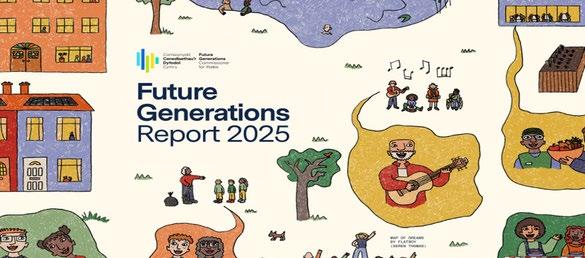
A Healthier Wales for Future Generations: the findings and recommendations of the Future Generations Report 2025
In this webinar Marie Brousseau-Navarro (the Deputy Future Generations Commissioner) presented the findings and recommendations in the Health Chapter of the Future Generations Report 2025.
The public health potential of housing interventions: Could Wales lead the world?
Housing is a major factor in determining health and wellbeing, so by extension impacts on health and social care services. Housing could be considered to be the ‘missing link’ and more needs to be done to build the ‘golden triangle’ of health, social care and housing. By viewing housing as a public health topic, we can bring a broad partnership to this.

News & Resources

Priority actions to protect health and ease service pressures this winter
28-10-2025

New national school programme for literacy announced
10-10-2025
Flu vaccine urged to reduce the risk of serious illness for vulnerable people
07-10-2025
Grow Well Project (SW Primary Care Cluster) Impact Report 2025. Therapeutic nature-based social prescribing for mental health & wellbeing in south-west, central and south Cardiff Grow Cardiff
Walking, wheeling and cycling annual report 2024 to 2025 Welsh Government
Next Issue
WHAT ROLE DOES BIODIVERSITY PLAY IN CREATING HEALTHY, SUSTAINABLE COMMUNITIES

Healthy biodiversity supports clean air and water, helps grow food, and protects us from diseases, but the biodiversity in Wales is in a state of decline. Protecting nature and biodiversity is a shared responsibility—whether through organisational policies, community initiatives, or individual actions. When we look after biodiversity, we are also looking after our health and well-being, creating healthier, more sustainable communities and making sure everyone in Wales has a fair chance at good health.
For our upcoming e-bulletin, we’re welcoming submissions from projects and initiatives that have contributed to protecting and enhancing biodiversity across Wales. These can be
national, regional or local initiatives, policies or programmes.
Our article submission form will provide you with further information on word count, layout of your article and guidance for images.
Please send articles to publichealth.network@ wales.nhs.uk by 20 November 2025.