
A CHRISTMAS STORY: THE PLAY PLAY GUIDE
Your education guide to understanding the show


WELCOME TO PITTSBURGH PUBLIC THEATER!
Did you know that The Public first opened in September 1975? We are entering our 51st season this year! We have not always been at this location The Public Theater spent 24 years on the North Side (in what is now the New Hazlett Theater) before moving to its current home the O’Reilly Theater in the heart of downtown Pittsburgh’s Cultural District. The new performance space, which was built by the Pittsburgh Cultural Trust, opened with the world premiere of August Wilson’sKing Hedley II in December 1999
The ground on which we currently stand, at the confluence of the Allegheny, Monongahela, and Ohio Rivers, is home to the Seneca People More information about our land acknowledgement and why it’s important to honor those who came before us can be found here: PPT.org/Mission
The mission of Pittsburgh Public Theater is to provide artistically diverse theatrical experiences of the highest quality We also strive to challenge and entertain our audiences through unique and captivating storytelling We look forward to continuing to expand and diversify our audience and enrich our Pittsburgh community and beyond. Visit our website to learn more: PPT.org
Our theater is a thrust stage, which means the audience sits on three sides of the stage This creates a really fun and inclusive environment to experience our shows In fact, because of this design, there isn’t a bad seat in the house!
So, whether it’s your first time joining us, or you have visited many times, thank you for being here. We hope you have a wonderful experience!
THEATER ETIQUETTE
Attending a student matinee at Pittsburgh Public Theater is an exciting event Everyone in the audience has been looking forward to seeing the performance just as much as you have, so it’s very important to remember the rules of theater etiquette Live theater, or theater seen in person, is much different from going to the movies or streaming a show at home The one big difference is that the actors are performing for you live onstage, and they can see and hear what goes on in the audience just as you can see and hear them. Because of that, the way people behave at a play is different from when they’re at the movies or at home Here are some things to keep in mind to guarantee that everyone has a fun, safe, and enjoyable time
Please be on time Do your best to arrive on time and with enough wiggle room to use the restroom before the show starts
Stay with your group and wait to be seated - we want to make sure everyone is in the right place. All cellphones and electronics must be turned off or silenced before the show starts. We will usually make an announcement before the show as a reminder
The light and motion of your devices can be distracting to the audience and performers so refrain from texting as well If your phone rings during the performance, turn it off and don’t answer Allow yourself to fully experience the performance without any distractions.
Be polite, attentive, and respectful. Our Student Matinee audience includes teachers and students from all areas of the city and disciplines of study. Remember, your behavior affects the experience for the entire audience as well as the actors
Be mindful of side conversations: don’t talk during the performance, as this can disturb the audience and performers

However, don’t be afraid to react appropriately to the performance:laugh when something is funny, cry when it’s sad, or gasp if it’s shocking This is what makes live theater so much fun!
Use the restroom before the show, after the show, or at intermission If you get out of your seat during the performance, it is distracting to the students around you If you need to use the restroom during the performance, please do your best to wait and exit during a break, such as between musical pieces or scene changes.
Please keep entrance aisles clear for the performers and crew
Don’t chew gum, drink beverages, or eat during the performance
Stay for the curtain call! Not everyone stays to watch movie credits roll, but in theater, applauding for the actors is a way you can show them how much you enjoyed their performance.
Addditional Tips for Educators
Review theater etiquette with your students and chaperones and set definite guidelines before attending any performance
Make sure that your chaperone to student ratio makes it possible for you to enforce your instructions and that your chaperones know what is expected of them Let your students know that improper behavior will not be tolerated and follow through If the show is performed with an intermission, it will generally be just long enough for the audience to use the facilities and stretch their legs.
We do not serve concessions during student matinees.
STUDENTS IN THE SPOTLIGHT
Each year a handful of talented student actors from across Pittsburgh take the O’Reilly Theater stage to perform alongside some of our region’s best adult actors. From learning lines and trying on costumes to performing in front of thousands of audience members, these young actors have an excellent range of reflections and advice.
WhatwasyourfavoritepartofbeinginAChristmas Story?
Myfavoritepartwasthepeople,especiallythecrew Ilovedthecrewsomuch Theyarejustamazing-superniceandrespectfulandsometimestheygive youfood Ialsolikedcoveringmyfacewithoatmeal becauseIamnotallowedtodothat.AndthenI'drun offstageandthecrewwouldhavewipemedown withallofthecrustyoatmealandthrowmeintomy snowsuit WillChambers(2022)
IhavealotofthingsthatIlikeaboutbeingapartofA ChristmasStory Iwouldsaythatmyfavoritepartof beinginAChristmasStoryisbeingabletospendand sharetheholidayseasonwithanamazingcastand crew IfeellikeIhavebuiltahugefamilyandcreated everlastingmemories EamonnMcElfresh(20222025)
MyfavoritepartofAChristmasStorywasthatitwas somuchfuntodo!Everyperformancewasdifferent andexciting TheshowwasfullofjoyandIloved beingapartofit ZoraRose(2022,2023)
Workingwiththeamazingactors!NealWadhwa (2023-2025)
Whatisthehardestpartaboutacting?
Thehardestpartismemorizinglines Whenyou memorizelines,youbasicallyhavetorunitoverand overandoverandthereisnoothergoodwaytodoit WillChambers(2022)
Ithinkthehardestpartaboutactingismakingsure yourchoicesaretruthfulandorganic.ZoraRose (2022,2023)
Takingnotes,memorizinglinesandblockingbutonce yougetit,it’ssuchagoodfeelingandthehardwork paysoff.NealWadhwa(2023-2025)
(above)MattAcheson (left)JamieAgnello
Howhasyourexperienceoftheshowchangedoverthe years?
Onewaymyexperiencehaschangedovertheyears ofbeingintheshowisthatIhavetrulymaturedwith thecast Iwasluckyandthrilledtobeintheoriginal production,andhavinggrownupwithitInowhavea newviewandopiniononalotofthejokeswithinthe showandit’sreallyexcitingtobeabletoexperience thatagainthisyear.EamonnMcElfresh(2022-2025)
Ifyoucouldgiveapieceofadvicetoanewcast member,whatwoulditbe?
Havefun,anddon'tbeafraidtotrynewthings.I knowthat'swhateveryonesays,buthonestly,tryit! WillChambers(2022)
IfIweretogiveanewcastmemberadvice,Iwould tellthemtotakerisksandmakebigchoices.Iwould saynottobescaredofsomeonenotlikinganacting choiceandjustgoforit.ZoraRose(2022,2023)
Justhavefun–Itoldthattomysister NealWadhwa (2023-2025)
Whatisyourfavoriteholidaytradition?
WegotoCapeCodandseemymom'sfamilyevery yearforChristmasandwealwaysmakesugar cookieswhicharedelicious.WillChambers(2022)
Spendingtimewithmyfamily,makinggiftsand sendingcards,goingtochurch,makingcookiesand decoratingthetree. NealWadhwa(2023-2025)
ManyoftheyoungactorsinthecastofAChristmas StoryhavealsoparticipatedinourannualShakespeare MonologueandScenecompetition.Whatisdifferent aboutperformingShakespearecomparedtomodern plays?
SoIlikeShakespeare,it'samazing Youcandoalotof differentthings.OneyearIdidacomedy,beforethat IdidarageywarspeechfromHenryV,andIdidthe speechafterJuliusCaesardies.IgettobecrazyandI amgoodatthat Youhavetolearnwhatthewords meanfirstandIcheckinwithotherpeopletomake sureIknowwhat'sgoingon.Modernplaysyoudon't havetodecodeitfirstwhichisnice,butalsolessfun Ilikeabitofachallenge.WillChambers(2022)
(continued)
WorkingwithShakespearetakesmoretime interpretingthesub-textofthepieces It’seasierto figureoutthesub-textinmodernplays.ZoraRose (2022,2023)
WhatisyourfavoriteShakespeareContestmemory?
ThesecondtimeIdidthecompetitionIdidMark Antony'sspeechfromJuliusCaesarwherehelets youknowheisgoingtogetrevengeonthesenators, andonceIfinished,thejudgeswerelike"wow".And thatwassocool WillChambers(2022)
MyfavoriteShakespearecontestmemoryisfrom 2023,IdidBottom’smonologuefromAMidsummer Night’sDream,andjusthearingthecrowdlaughand applaudattheendwassorewardingandbeingable todoitinthebeautifulO’Reillytheaterwasjust amazing EamonnMcElfresh(2022-2025)
Myfavoritememoryofparticipatinginthe ShakespeareContestisthememoryofwinningfirst placein4thgrade.Ifeltsuperhappyandexcited.I willnotforgetthat,becauseafterthatmoment,I believedIcouldact!ZoraRose(2022,2023)

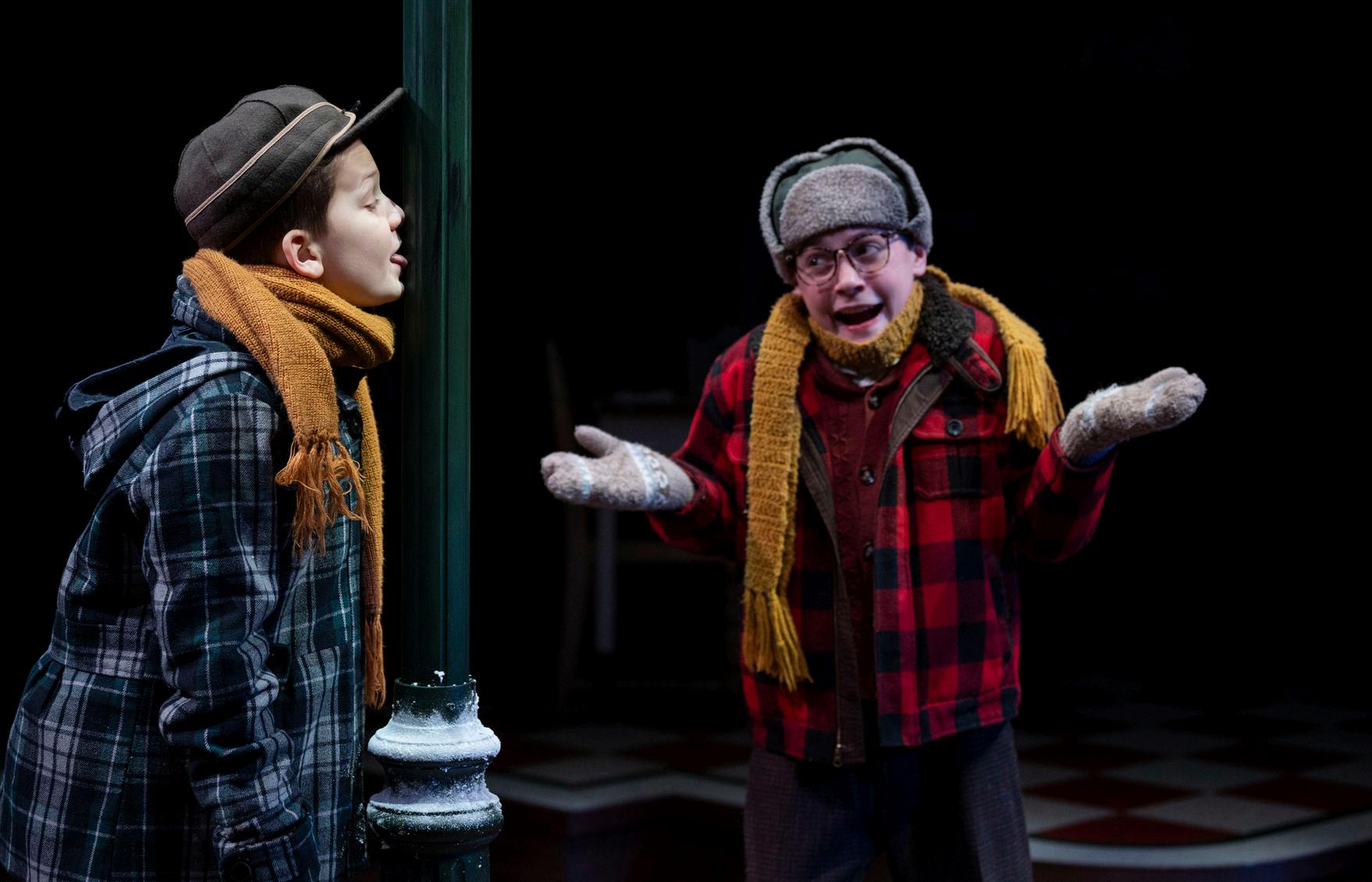
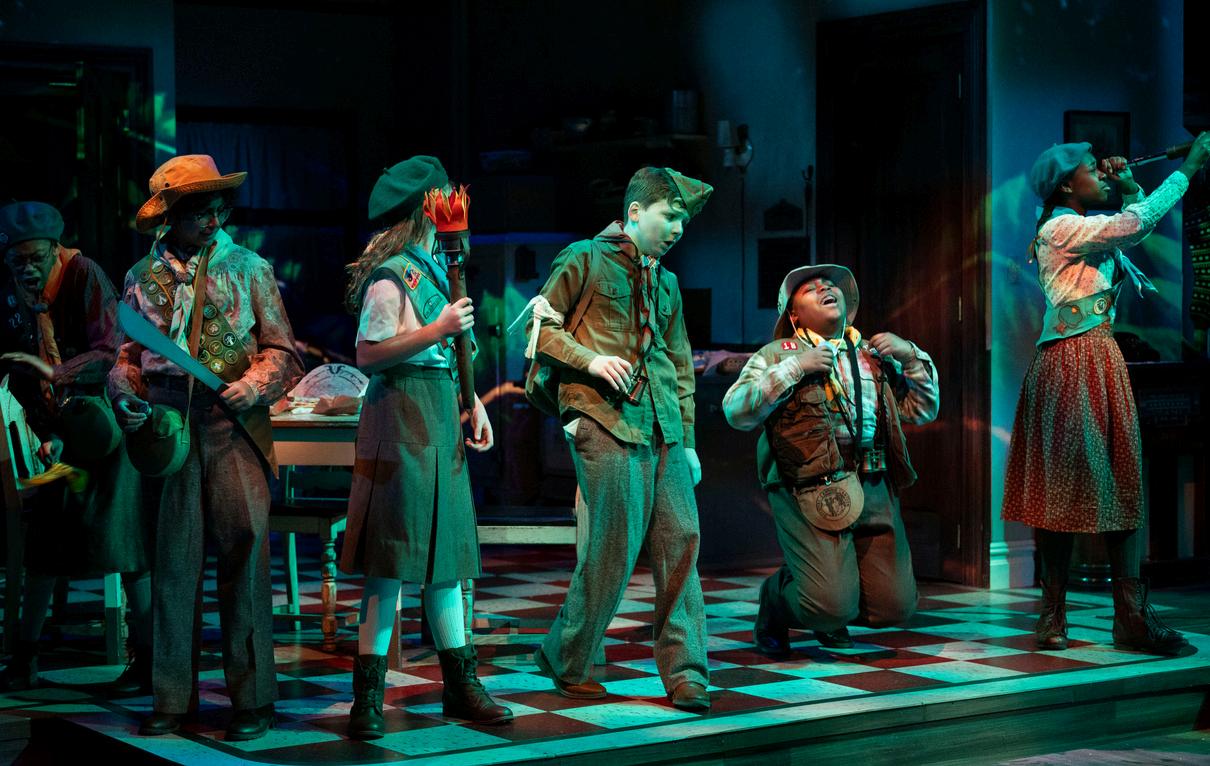
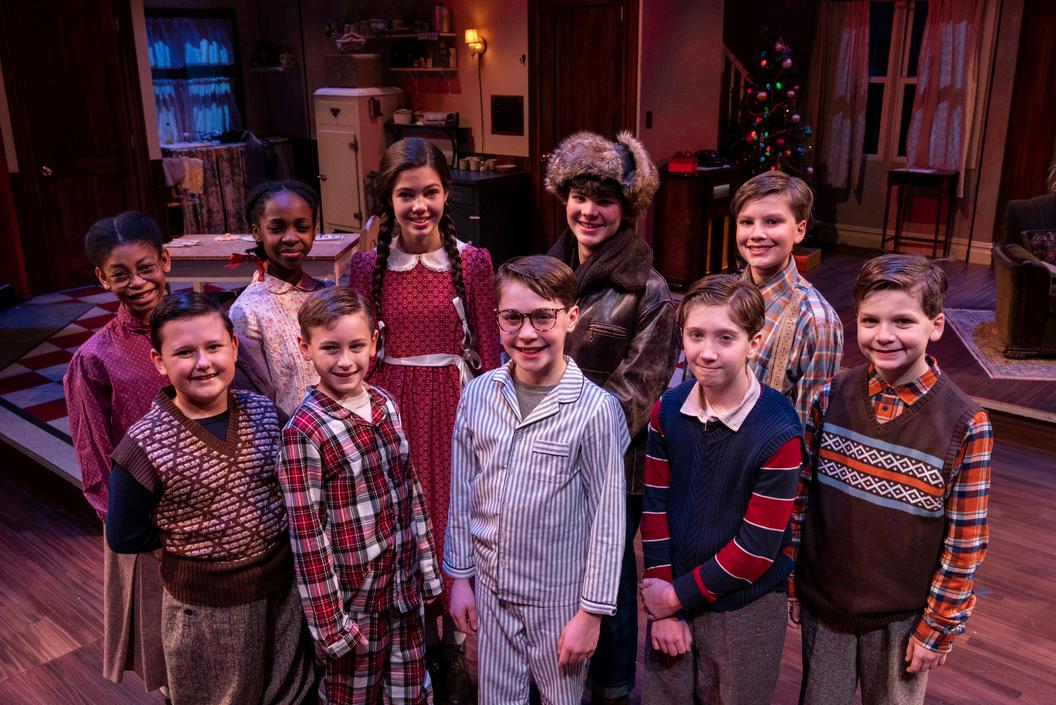
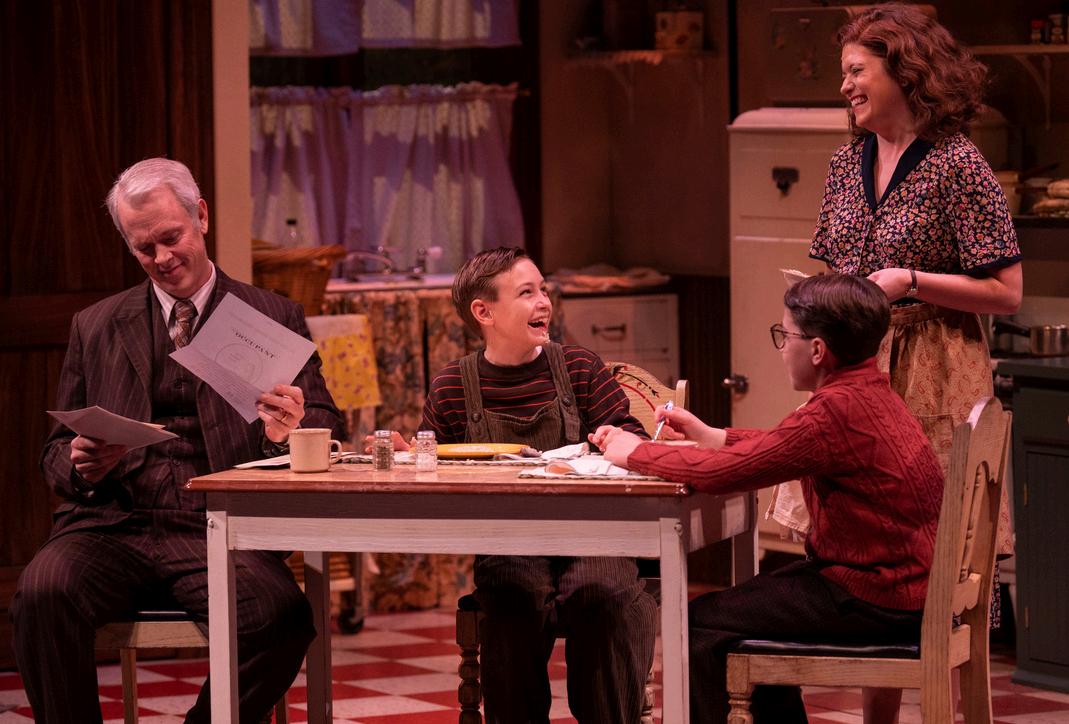
Previous page and above: The cast of A Christmas Story: The Play in 2023 at Pittsburgh Public Theater. Photos by Michael Henninger
ABOUT THE PLAY
SYNOPSIS
Ralph Parker: A storyteller
Based on the movie of the same name, a young boy, Ralphie Parker, attempts to convince his parents, his teacher, and Santa that a Red Ryder B.B. gun is the perfect Christmas gift. We are guided through the memories by Ralphie's adult self, as a satirical tale of a middle-class family negotiating the challenges of Christmas unfolds
Ralphie Parker: Ralph at 9 years old
CONTENT RATING
This show is rated PG and and is suitable for most audiences with guidance urged for pre-teens
Details from the play are below (*warning, may contain spoilers):
Implied profanity: A character uses gibberish words in place of explicit language
Violence: Brief and mild violence on stage and themes of bullying
SETTING
Randy Parker: His little brother
Hohman, Indiana Christmas time both past and present
Mother: His mother
The Old Man: His father
CHARACTERS
Miss Shields: His teacher
Flick: His friend and classmate
Schwartz: His friend and classmate
Esther Jane Alberry: A classmate
Helen Weathers: A classmate
Scut Farkas: A bully
Find the cast and other info about the production in the digital program.
Weapons: Reference to and use of a toy gun
Romance: Brief romantic innuendo
There’smorethanmeetstheeye! charactersKeepaneyeoutforotherincludingcowboys, desperado’s,BlackBart,and SantaClaushimself
A MAJOR AWARD!
A HISTORY OF A CHRISTMAS STORY
c 1950's: Radio performer Jean Shepherd begins sharing humorous stories inspired by his childhood in Hammond, Indiana.
1964: At the encouragement of poet Shel Silverstein, Shepherd begins transcribing his stories and publishing them in magazines
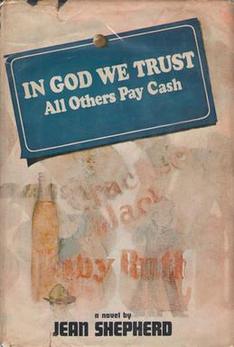
1966: Shepherd publishes a collection of his short stories titled In God We Trust: All Others Pay Cash
1971: Shepherd publishes a second collection titled, Wanda Hickey’s Night of Golden Memories and Other Disasters.
1976: The Phantom of the Open Hearth, marks the first film appearance of the fictionalized Parker Family, as a made for TV movie
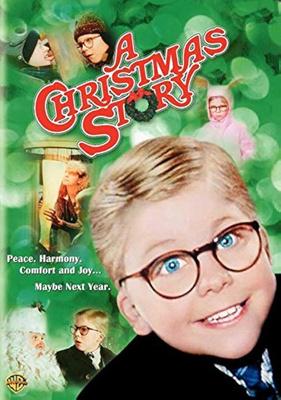
1983: A Christmas Story the movie premieres Jean Shepherd, the original author, features as the voice of adult Ralphie narrating the story.
2000: The stage adaptation A Christmas Story: The Play by Philip Grecian premiers
2012: A musical version, A Christmas Story: The Musical, premiers on Broadway.
2022: A Christmas Story: The Play, opens for the first time at Pittsburgh Public Theater The show would go on also be produced in December 2023 and December 2024
2025: A Christmas Story: The Play returns as a holiday tradition at Pittsburgh Public Theater, directed by Michael Berresse.
AChristmasStorymovieposter Cover
REMEMBER WHEN: THE GENRE OF MEMORY PLAYS
“ I put up my tree last week Had to assemble it first Then I threw an artificial Yule log on the propane-augmented fire and began to reminisce The holidays tend to do that I found myself remembering another Christmas in another time ... another place. ”
*RECORD SCRATCH* *FREEZE FRAME* Yep, that’s me... I bet you’re wondering how I got here...
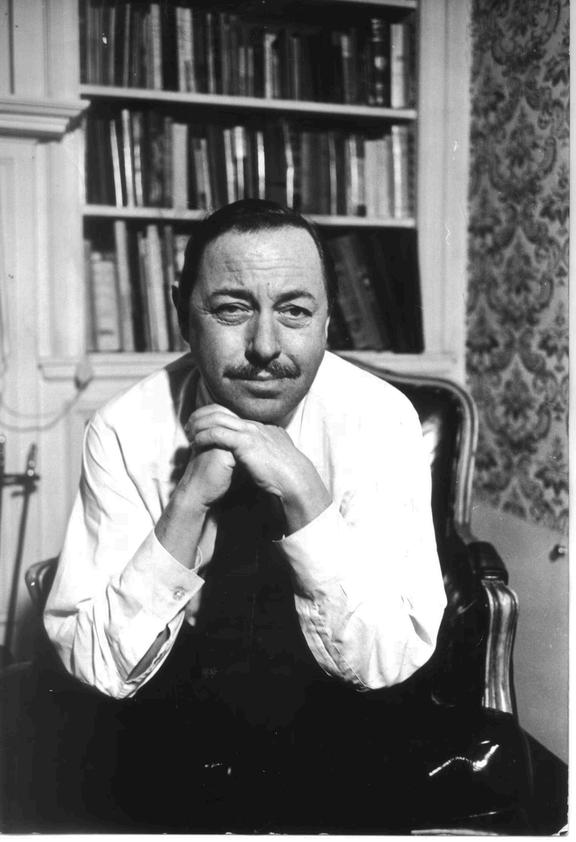
A memory play is a play in where the lead character narrates the events of the story, which they are recalling from memory The term was originally coined by playwright Tennessee Williams when he described his 1944 play The Glass Menagerie In the stage directions, or the description of setting provided by the playwright, Williams says:
“The scene is memory and is therefore non-realistic. Memory takes a lot of poetic license It omits some details; others are exaggerated, according to the emotional value of the articles it touches, for memory is seated predominantly in the heart ”
In A Christmas Story we relive all of the events from Ralphie’s perspective, as an adult remembering his childhood. He retells the story of his childhood Christmases with a lot of nostalgia. Nostalgia describes a longing for the past that includes good or formative
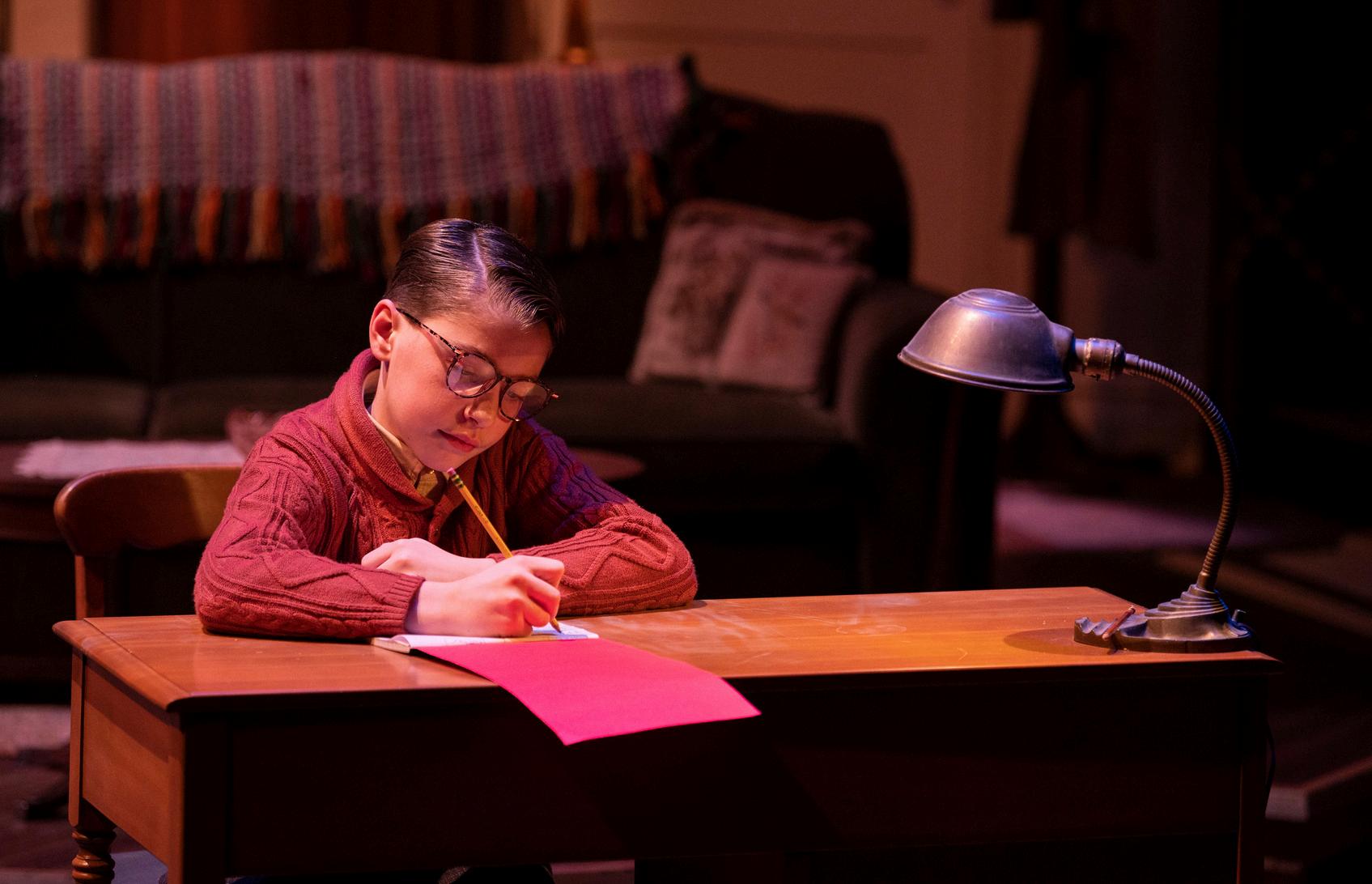
by Michael Henninger
ples of memory stories in film, Some examples include the films: roove, and Ratatouille; the books e, 13 Reasons Why, and To Kill a
nt of the past, we naturally focus on etails. Sometimes that leads us to misremember them. ERATION
Tennessee Williams
Sebastian Madoni portraying young Ralphie in 2023 at Pittsburgh Public Theater.
Photo
ADAPTING MEMORY
“Never let the truth get in the way of a good story ” -Mark Twain
Nostalgia can sometimes cloud our memory, and confuse details, or remember things better or worse than they were Bob Clark, the director of the 1983 movie adaptation of A Christmas Story, stated that both he and the original author Jean Shepherd wished for the film to be seen as "amorphously late-'30s, early-'40s"
The story is never set in a specific year. If you look closely at the details in the film, many props and pop culture references are from different years, or sometimes decades! Some examples include:
The two songs by Bing Crosby and the Andrews Sisters used in the film, "Jingle Bells" and "Santa Claus Is Comin' To Town" were recorded in 1943, but the Crosby version of "It's Beginning To Look A Lot Like Christmas" is from 1951.
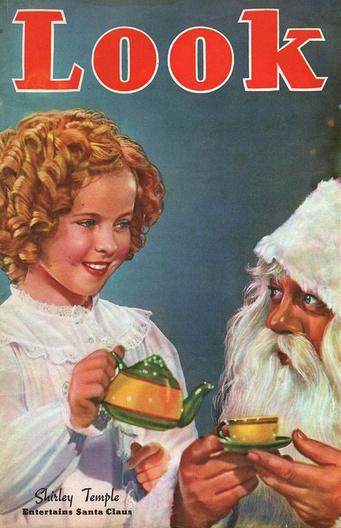
Look magazine that Ralphie hides the Red Ryder ad in, is the December 1937 cover with Shirley Temple and Santa
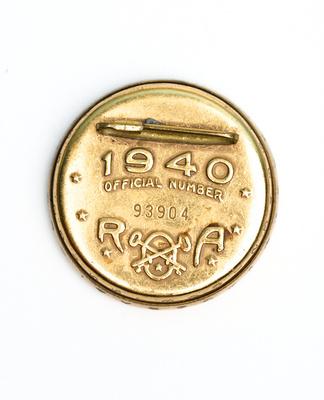
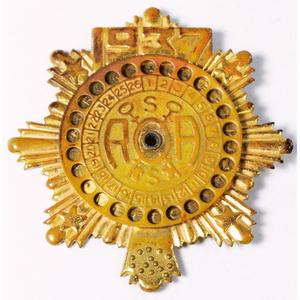
Ralphie's Little Orphan Annie Secret Society Decoder Pin bears the date 1940 (and is the real-life decoder pin released to society members that year, though by that time Ovaltine had ceased its sponsorship and Quaker was the primary sponsor of the series)
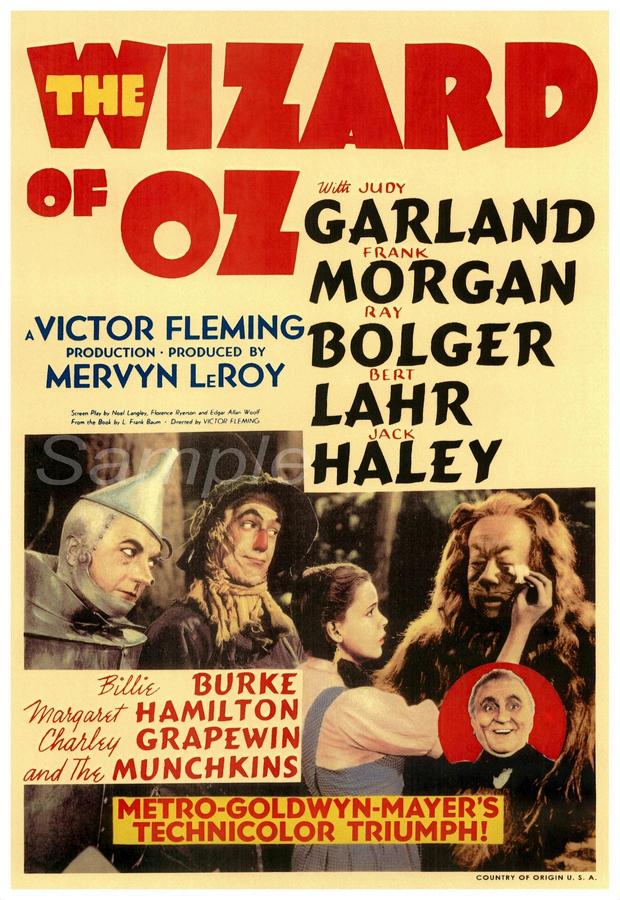
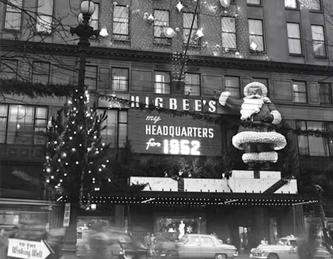
the parade in front of Higbee's features characters from MGM's version of The Wizard of Oz, which was released in 1939.
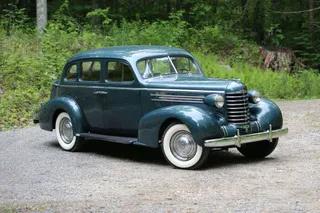
The "Old Man's" treasured Oldsmobile 6 is a 1937 Oldsmobile F-Series Touring Sedan.
ACTIVITIES
Create your own: Decoder Wheel
For ages 7+
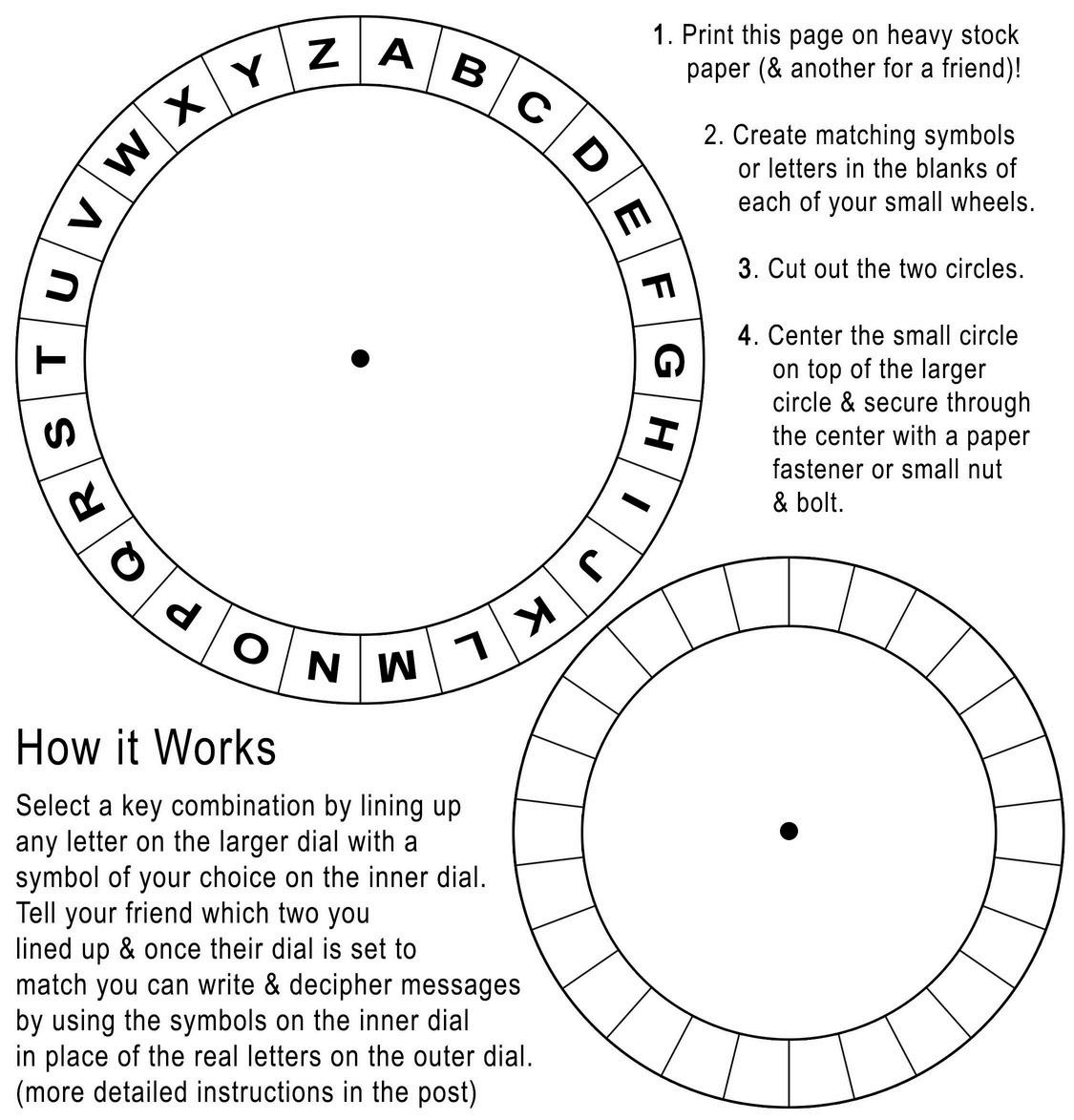
Ready to try your own hand at a spy decoder? Print out the next page, grab a friend, and see if you can crack the code. Happy sleuthing!
MATERIALS
Cardstock
Scissors
Brad Pen
Markers/crayons (optional)

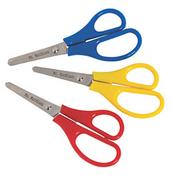
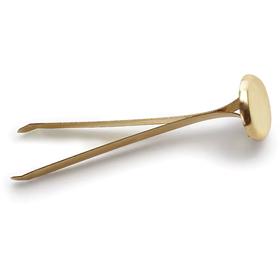
Brad
LEARN MORE ABOUT DECODERS
A secret decoder is a device that allows one to decode or encrypt a message by working in the opposite direction
As inexpensive toys, secret decoders have often been used as promotional items by retailers, as well as radio and television programs, from the 1930s through to the current day. Decoders, whether badges, rings, or pins, are an entertaining way for children to tap into a common fascination with encryption, ciphers, and secret codes, and are used to send hidden messages back and forth to one another
Decoder Wheel Activity: Custom Code Version
Create and decipher secret codes with your friends!


ACTIVITIES
Give acting a try!
For ages 9+
Chooseoneofthescenesonthefollowingpages
First,readitallthewaythrough,thenseeifyou cananswerthefollowingquestions.
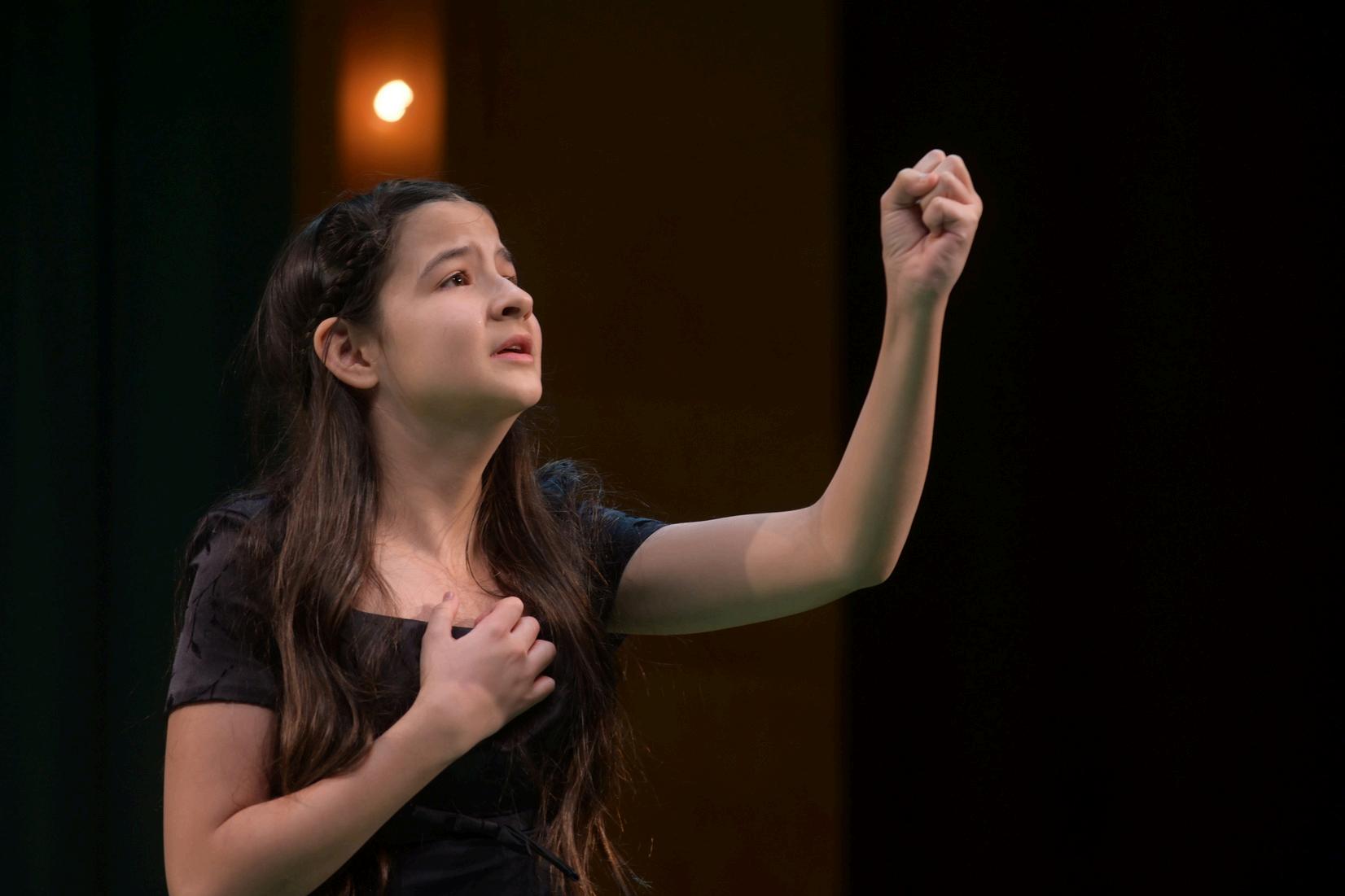
AnActor’sChecklist:
Who: Who is in this scene and what is their relationship to each other? Are they friends, enemies, strangers?
What: What is happening in this scene? What is the main conflict?
When: When does this scene take place? Time of day? Season?
Where: Where does the scene take place? Inside? Outside? In a crowd? Part of a private conversation?
Why: Why is this scene happening?
What does each character want or need?
How: How will the characters try to get what they want or need? What actions do they take to acheive it? Are they successful?
Were there anycontext clues or momentsin the script thatled you to your answers?
Molly Frontz in the 2024 Shakespeare Contest Final
Photo by: Michael Henninger
A CHRISTMAS STORY: THE PLAY
By: Philip Grecian
Sceneoption#1
Characters:
Mother:Thestable,subtlevoiceofreasoninthe endlesslypatient,Motherisalsoasecretfontofknowledgewhoneverstops working.Agreeablebutnopushover.

EsterJane:OneofRalphie’sclassmates.Sweet,friendlyandalittleflirtatious withRalphie,whomshehasacrushon.

Synopsis:Ralphiejustgotinafightwiththeschoolbullyandlosthis glasses.EstherJanebringstheglassestohishouse.
(We are in the home of Mother and Ralphie. There is a knock at the door. MOTHER crosses and opens it. It is ESTHER JANE.)
ESTHER JANE. Mrs. Parker, may I come in?
MOTHER. We're getting ready for dinner, Esther Jane, maybe you could come b ...
ESTHER JANE. It'll just take a minute.
MOTHER. Of course. Come in.
ESTHER JANE (entering, she holds out RALPHIE's glasses). I thought Ralph might need these. He dropped them when he ... when they were ...
MOTHER (accepting glasses). Thank you, Esther Jane. Would you like to speak to him? He ...
ESTHER JANE. No, that's all right. Oh, did you see the spider he gave me? He drew my name for the gift exchange.
MOTHER. It's a very nice spider.
ESTHER JANE. Usually, I don't like spiders. (Pause.) Well, I'd better go. Merry Christmas, Mrs. Parker!
Characters:
Flick:OneofRalphie’sclassmatesandbestbuddies.Good-natured,curiousandgamefor anything.Theclassguineapigintheinfamous“flag-polelicking”experiment,andthetargetof ScutFarkas’bullying.
Schwartz:OneofRalphie’sclassmatesandbestbuddies.Gutsy,unapologetic,aheadoftheirtime.
EsterJane:OneofRalphie’sclassmates.Sweet,friendlyandalittleflirtatiouswithRalphie,whom shehasacrushon.
Helen:OneofRalphie’sclassmates.Exceptionallyintelligentandabitofaknow-it-all.Lightyears aheadofherclassmates(andherteacher)inherworldview.
Ralphie:Bright,energeticandclever.Anall-aroundgoodkidwithanexceptionallyvivid imagination.ThisChristmas,heisconsumedwiththedesireforaRedRyderBBgun.
Synopsis:ThisscenetakesplaceinRalphie’simaginationashedreamsaboutsaving theday.Itisoverthetopandgreatlyexaggerated.
(Thefantasycomestolife Theairistornwiththescreamofababoon Kookaburrascalltooneanotherin thetreetops.FLICK,SCHWARTZ,ESTHERJANEandHELENenterthroughafringeofjungleplants.ALLare dressedintropicalgear.)
ESTHERJANE.Weshouldhavefoundthetradingpostbynow
SCHWARTZ.I'mafraidwe'relost,EstherJane.(Adventuremoviemusicalsting.)
HELEN.Alltheotherclassesgottogototheparkorthesteelmillontheirfieldtrips...buttheysendour classtotheswamps
FLICK.TheIndianaswampsareunforgiving.
SCHWARTZ Where'sMissShields?
FLICK.Gatorgother.Aboutamileback.
SCHWARTZ Oh,man!
FLICK.Indianagatorsareunforgiving.
ESTHERJANE(hysterical).We'llnevergetoutalive!We'regoingtodie!
RALPHIE(enteringonamusicalcue) Iwouldn'tcountonthatifIwasyou,littlemissy (Hewearsan Australianbushhat,abushjacketandknee-highboots)
HELEN It'sRalphieParker,SoldierofFortune!
ESTHERJANE.Saveus,Ralphie!
RALPHIE Nothin'toit,EstherJane thankst'mylegendaryofficialRedRydercarbineaction200-shot RangeModelairriflewithacompassandthisthingwhichtellstimebuiltrightintothestock.Lookout! (Musicalsting.Hecocksandfires.Apythondropsoutofthetrees.SCHWARTZrunstopickitup.)
ESTHERJANE.Yousavedmylife!
SCHWARTZ.Gothimrightbetweentheeyes!
FLICK Goodthing,too;Indianapythonsareunforgiving
RALPHIE.We'dbestgetoutofherebeforetherestoftheherdshowsup.

ACTIVITIES
COLLABORATIVE GAMES
For ages 6+
Inhonorofthewintersettingofthisstory,what’smorefunthang whereyouhavetoFREEZE!Workonselfexpressionandselfcontr divingintothefollowingactivities:EmotionalStatuesandTableau
Whatisatableau?Atableauisafreeze-frameorsnapshotofasce momentinastory Insteadofactorsmoving,theymustfreezeins posestogetherthatdepictwhatishappeninginthatspecificmom
Skillsused:teamwork,collaboration,focus,patience,creative expression,control,physicalexpression,groupwork
Tip:Inorderforatableautobesuccessful,instructstudentsfirst makesanexcitingandengagingtableau.Thenteachstudentshow theirbodiesandfacestoexpressthoughts,feelings,location,season, etc
Whatmakesafrozentableauengaging?
Remainstill/frozen(breathingandblinkingareallowed)
Remainsilent
Stayfocusedandcommitted
Chooseposesthatareatdifferentlevels
Chooseposesthatcontainenergyandexpression
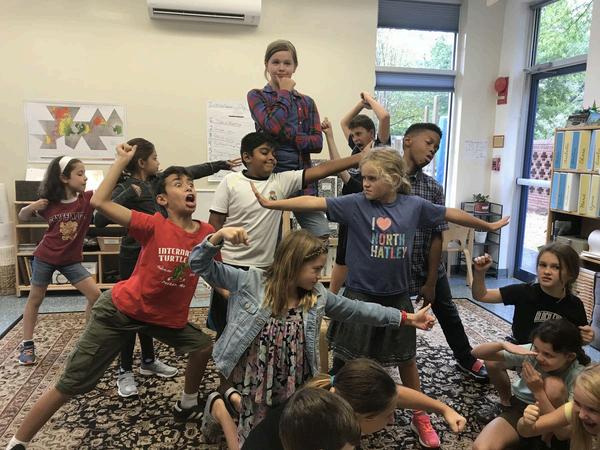
Chooseposesthatarerelevanttothestoryandareinteresting
Let’sGetStarted!Practicesilentexpressionwithagameof:
EMOTIONALSTATUES
(Bestsuitedforages6+)
Instructions:
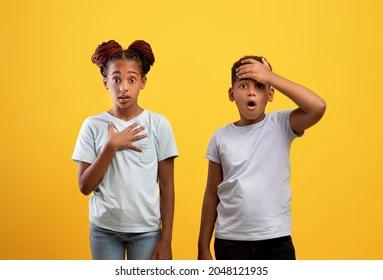
Tips for Emotional Statues
Havetheclassstandinacircle,orstandasagroupfacingyou. Thisisasilentactivitythateachstudentwillbedoingindependently Informyourstudentsthatyouwillshoutoutarandomword,activity, orfeeling Bythetimeyousay“3-2-1FREEZE”studentsmustgetinto afrozenposetheythinkrepresentsthatword,activity,orfeeling.
Examples:
Feelings:Happy,sad,jealous,scared,surprised,angry,tired, embarrassed,nervous,excited
Abstractideas:thecolororange,wind,rain,outerspace
ACHRISTMASSTORYThemed:Youjustopenedapresentyoulove, youjustopenedapresentyoudon’tlike,youjustgotyourtongue stucktoafrozenpole,yourteacherhasgivenyouahugeassignment overbreak,youarebeingchasedbythebumpushounds,youjustput abarofsoapinyourmouth,youseesanta
Have students use their entire body and remember: levels, expression, interesting choices
Keep students frozen in that pose for a moment. Use the word “RELAX” to unfreeze and have them return to their normal stance
If your space does not allow for all students to go at one time, you can break it up into groups and have an “audience” observe the “performers” then flip-flop so everyone gets a chance to participate
ACTIVITIES
COLLABORATIVE GAMES (CONT...)
Tableaus: Frozen Story-telling (Best suited for ages 8+)
Once you and your students have explored creative expression through emotional statues, now you are ready to move onto TABLEAUS
Instructions:
Separate your class into small groups. Best results occur if groups are around 6-8 people.
Instruct that each group will be secretly assigned a theme
They must keep these themes a secret so the other groups can guess at the end
Instruct groups that they will have 5 minutes to work together to create a frozen tableau that represents their specific moment.
Remind students about engaging tableau tips (list can be found on previous page)
If needed, talk through best practices of working as a team, stressing the time limit and how everyone’s idea might not be chosen.
Then go around and secretly assign each group a theme.
Once all groups have their assigned theme, start the clock!
Once time is up, select one group to go first Have the students freeze in their tableau while the other students observe
Have the other groups see if they can guess what moment they are portraying and what role each of them are playing in the moment
Theme ideas:
Level 1
Riding a roller-coaster, attending a wedding, yoga class, trick-or-treating, shopping at a grocery store
Level 2
Have students pick their own theme
Level 3
After seeing A CHRISTMAS STORY: THE PLAY, have students recreate moments from the show

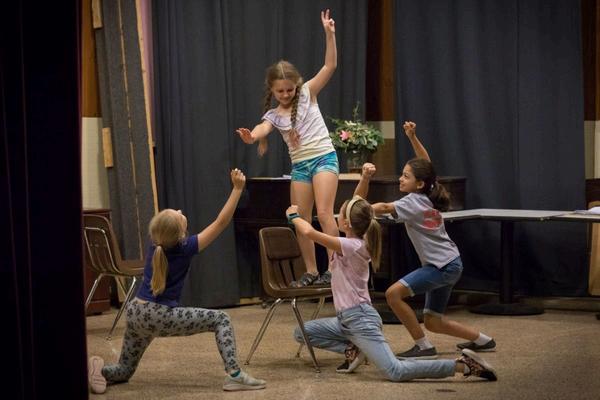
TableauTeachingTips:
Studentsdonotneedtoonly portrayhumans-objectsare oktoo!
Encouragecreativityand thinkingoutsidethebox
Post-activityquestionstoask yourclass:
Whatdoyouthinkmakes agoodteam?
Whatskillsdidyouneed tobesuccessfulatthis activity?
Arethereanylessons learnedorthingsthatyou woulddodifferentlynext time?
Skills Used: Listening skills, teamwork, collaboration, creative expression, comprehension, critical thinking, problem solving, respect, acceptance, tolerance, movement, discipline, empathy
ACTIVITIES
CREATIVE WRITING
For ages 8+
If you could create your very own holiday, what would it be?


What is the name of your holiday?

What date do we celebrate your holiday?

What in particular does your holiday celebrate?

What traditions or festivities do people do during this holiday?

Are there any rules during your holiday?

Are there any special foods prepared during your holiday?

Are there any special decorations used to celebrate your holiday?

Are there any particular outfits that are worn during your holiday?

Draw a picture that represents your holiday.
ACTIVITIES
INTERVIEW SKILLS
For ages 8+
Interview a Grown-Up About Their Holiday Traditions
Invite students to learn more about the people in their lives by interviewing a grown-up about their holiday traditions This activity encourages listening, curiosity, and meaningful conversation while helping kids discover new customs and celebrate what makes each family unique.
What is one of your favorite holiday memories?
What are some of your favorite things to eat during the holidays?
Do you have a favorite holiday?
How have holiday traditions changed since you were my age?
Do you have any favorite holiday traditions?
What is one things you are thankful for this year?

A CHRISTMAS STORY: THE PLAY - GLOSSARY
Adriana Casilotti: was an American actress and singer and was the voice of the title character of the first Walt Disney animated feature, Snow White and the Seven Dwarfs (1937), for which she was named a Disney Legend in 1994, making her the first female voice-over artist to achieve this.
Airlock: a compartment with controlled pressure and parallel sets of doors, to permit movement between areas at different pressures
Allowance: to give (someone) a sum of money regularly as an allowance
American Legion halls: The American Legion was chartered by Congress in 1919 as a patriotic veterans organization that focused on service to veteran’s, servicemembers and communities A legion hall is a building associated with the American Legion.
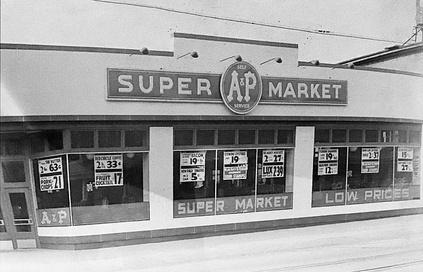
A&P: or the Great Atlantic & Pacific Tea Company, was a chain of grocery stores that operated in the United States and Canada from 1859 to 2015. A&P was the largest grocery retailer in the United States from 1915 to 1975, and the largest retailer of any kind in the country until 1965
Armaments: military weapons and equipment
Balsams: a small to medium-sized evergreen tree native to North America that is a popular Christmas tree.
Baste: to pour juices or melted fat over (meat) during cooking in order to keep it moist.
Benrus: an American watch brand that was founded in 1921 by the Lazrus brothers in New York City
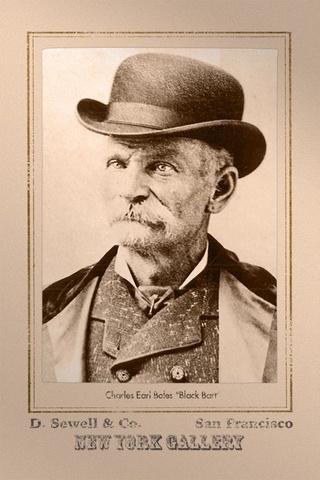
Black Bart: was an English-born American outlaw noted for the poetic messages he left behind after two of his robberies.
Celluloid: a type of plastic used to make many things, especially, in the past like photographic film
Clinker: the stony residue from burned coal or from a furnace
Cloverleaf sight: a hinged sight on a firearm that can be folded down or raised
Compass: an instrument containing a magnetized pointer which shows the direction of magnetic north and bearings from it.
Connoisseurs: an expert judge in matters of taste
Conspiracy: a secret plan by a group to do something unlawful or harmful
Contrived: created or arranged in a way that seems artificial and unrealistic


Adriana Cailotti
A&P
Black Bart
Celluloid
Coup de grace: an action or event that serves as the culmination of a bad or deteriorating situation
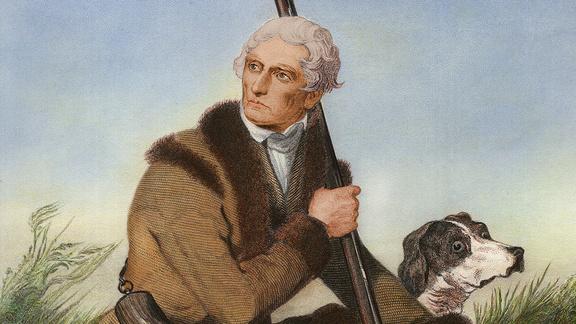
Daniel Boone: was an early American frontiersman and legendary hero who helped blaze a trail through Cumberland Gap, a notch in the Appalachian Mountains near the juncture of Virginia, Tennessee, and Kentucky.
Decoder pin: a small metal device that allows users to decode secret messages or encrypt messages The Orphan Annie decoder pin was a popular decoder pin that was part of the radio series Orphan Annie from 1931 to 1940
Department store: a retail establishment offering a wide range of consumer goods in different areas of the store, each area ("department") specializing in a product category
Desperado: a bold or violent criminal; a bandit of the western U S in the 19th century
Double dog dare: An intensified form of a dare, frequently used after the dared person initially refuses.
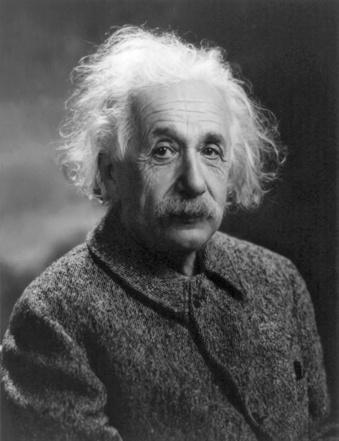
Dr. Einstein: Albert Einstein was a German-born physicist who developed the special and general theories of relativity and won the Nobel Prize for Physics in 1921 for his explanation of the photoelectric effect
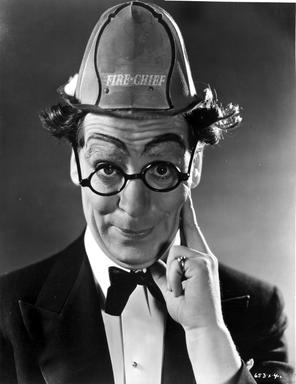
Ed Wynn: American actor and comedian He began his career in vaudeville in 1903 and was known for his Perfect Fool comedy character, his pioneering radio show of the 1930s, and his later career as a dramatic actor, which continued into the 1960s His variety show (1949–1950), The Ed Wynn Show, won a Peabody Award and an Emmy Award
Flit gun: a hand-pumped insecticide sprayer used to dispense FLIT, a brand-name insecticide widely used against flies and mosquitoes between 1928 and the mid-1950s.
Friction motor: a simple mechanism that uses a flywheel to propel toys like cars, trucks, trains, and action figures.
Fuse: a safety device consisting of a strip of wire that melts and breaks an electric circuit if the current exceeds a safe level
Galoshes: a waterproof overshoe, typically made of rubber
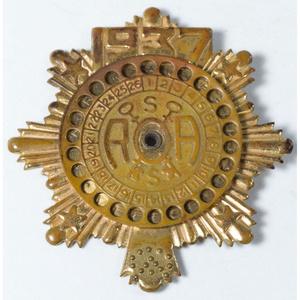
Decoder Pin
Daniel Boone
Dr. Albert Einstein
Ed Wynn
Gilbert chemistry set: a set of equipment for children to learn chemistry through experiments The A C Gilbert Company, founded by Albert Carlton Gilbert, a former Olympic pole vaulter, released their first chemistry set in 1923 The sets were marketed to boys and were designed to teach basic chemistry skills
Higbee’s: a department store chain in Ohio that was founded in 1860 and operated until 1992
Insensate: completely lacking sense or reason; lacking sympathy or compassion; unfeeling
Invective: abusive, or highly critical language.
Inquisition: a period of prolonged and intensive questioning or investigation.
Juju baby, root beer barrel, and licorice pipe: Old fashioned candy.
Lake Michigan: one of the five Great Lakes of North America It is the second largest of the Great Lakes by volume
Lexicon: the vocabulary of a person, language, or branch of knowledge
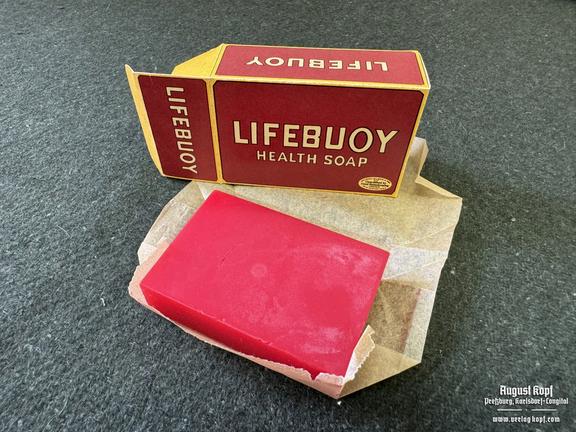
Lifebuoy: a British brand of soap marketed by Unilever Lifebuoy was originally, and for much of its history, a carbolic soap containing phenol (carbolic acid, a compound extracted from coal tar)
Lincoln Logs: a children's construction toy that consists of small, square-notched wooden logs that can be used to build model buildings and forts; The toy was invented by John Lloyd Wright, the son of architect Frank Lloyd Wright, around 1916. The toy is named after Abraham Lincoln, the U.S. president who once lived in a log cabin. Wright received a patent for Lincoln Logs in 1920, and the toy was first introduced in 1924 Lincoln Logs were inducted into the National Toy Hall of Fame in 1999
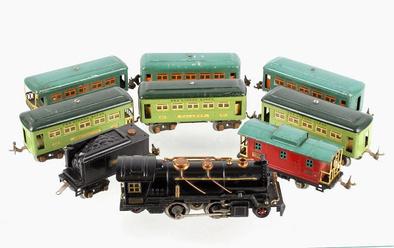
Lionel train set: Lionel Trains is a model train company in New York City, founded and developed by Lionel Cowen in 1900 The company introduced the first train in 1901, known as The Electric Express Lionel Cowen wasn't the first to manufacture toy trains, but his talents as an engineer and salesman soon put Lionel ahead of its competitors
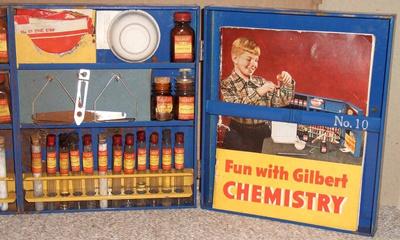
Gilbert Chemistry Set
Highbee’s Department Store
Lifebuoy
Lionel Train Set
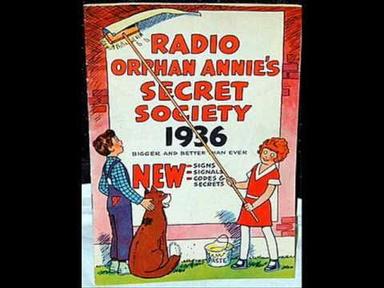
Little Orphan Annie: is a character created by James Whitcomb Riley that represents the American spirit of resilience and hope in the face of hardship The character is known for her plucky and optimistic demeanor Her story also explores themes of poverty, family, and the power of imagination; The Little Orphan Annie radio show, transmitted secret code segments that usually previewed the upcoming episode
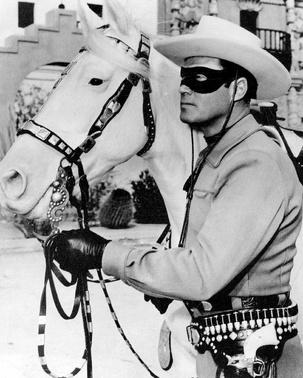
Lone Ranger: is a fictional masked former Texas Ranger who fought outlaws in the American Old West with his Native American friend Tonto. The character has been called an enduring icon of American culture.
Lug nuts: a large, rounded nut that fits over a heavy bolt, used especially to attach the wheel of a vehicle to its axle.
Malevolent: having or showing a wish to do evil to others
Michelson-Morley experiment: The experiment was performed between April and July 1887 by American physicists Albert A Michelson and Edward W Morley at what is now Case Western Reserve University in Cleveland, Ohio The experiment compared the speed of light in perpendicular directions in an attempt to detect the relative motion of matter
Milling: moving around in a confused mass
Monkey Ward catalogue: Montgomery Ward was called “Monkey Wards” by some people because it supposedly once offered exotic monkeys in some of its stores and through its mail-order catalog. Founded in 1872, Montgomery Ward revolutionized retail sales at the turn of the century through its mail-order catalog, which was the only one of its kind back then.
Mount Olympus: In Greek mythology, Olympus is the home of the Greek gods; in A Christmas Story, Ralphie uses it to refer to Santa sitting up high
Mulled: think about (a fact, proposal, or request) deeply and at length
Nuance: a subtle difference in or shade of meaning, expression, or sound
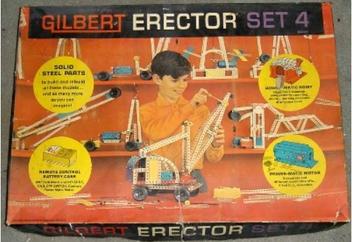
Number three Erector set: A C Gilbert conceived the Erector Set, an educational toy that encouraged kids to create their own miniature buildings; it introduced kids to engineering and the structural principles of modern skyscrapers.
Lone Ranger
Little Orphan Annie Radio Show
Number 3 Erector Set
Oldsmobile: a brand of American automobiles, produced for most of its existence by General Motors
Open Road for Boys: a boys' magazine encouraging the outdoor life, was published from November 1919 to the 1950s
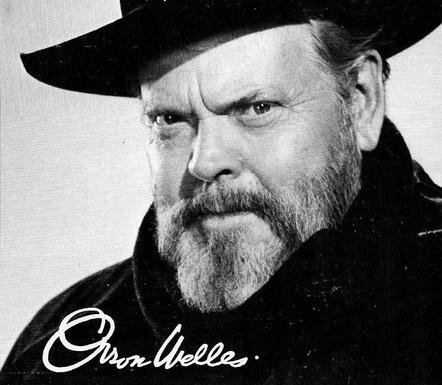
Orson Welles: an American director, actor, writer, producer, and magician who is remembered for his innovative work in film, radio, and theater. He is considered to be among the greatest and most influential filmmakers of all time.
Ovaltine: is a brand of milk flavoring product made with malt extract, sugar, and whey Some flavors also have cocoa The US children's radio series Little Orphan Annie (1931–1940) was sponsored by Ovaltine They had promotions in which listeners could save proofs-of-purchase from Ovaltine jars to obtain radio premiums, such as "secret decoder ring" badges, or pins that could be used to decode messages in the program
Palmolive: an American multinational brand that grew from one product, Palmolive bar soap Made of coconut, palm and olive oils, Palmolive bar soap was introduced in 1898 Originally, the bar soap floated like Procter & Gamble's Ivory bar soap. By the turn of the 20th century, Palmolive bar soap was the world's best-selling soap. The soap became very popular, due to an advertising campaign promoting it as the type of soap that would have been favored in ancient Egypt by the Pharaohs.
Perfume atomizer: small refillable bottles that offer a convenient solution for spraying perfume on the go
Pierre Andre: was an announcer in the era of old-time radio
Piquant: having a pleasantly sharp taste or appetizing flavor
Pulverized: reduce to fine particles
Remorse: deep regret or guilt for a wrong committed
Reveries: a state of being pleasantly lost in one's thoughts; a daydream; a fanciful or impractical idea or theory.
Scheming: the activity or practice of making secret or underhanded plans.


Perfume Atomizer
Ovaltine
Orson Wells
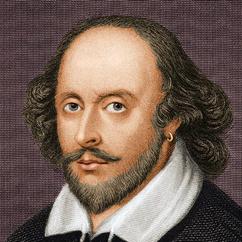
Shakespeare: Full name, William Shakespeare, is an English playwright who wrote many famous plays and poems (sonnets) during the late 16th and early 17th centuries
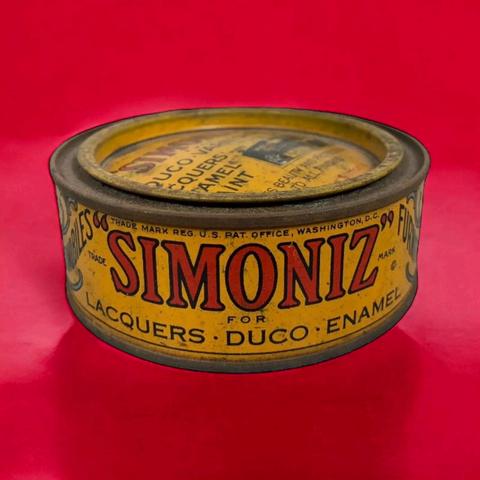
Simoniz: a brand of cleaning and protection products for vehicles, buildings, and other industries
Sneevily, snively: marked by sniveling, tearful, whiny, or weakly sentimental.
Subconscious: of or concerning the part of the mind of which one is not fully aware, but which influences one's actions and feelings.
Sundial: an instrument showing the time by the shadow of a pointer cast by the sun on to a plate marked with the hours of the day.
Terre Haute: A city in Indiana
The Principle of Relativity: developed by Albert Einstein, essentially states that space and time are not absolute, but rather relative to the observer's frame of reference Meaning how fast you are moving affects how you experience time and space The laws of physics are the same for all observers regardless of their motion, as long as they are moving at a constant speed in a straight line; a key concept is that the speed of light is always the same for everyone, no matter how fast they are moving
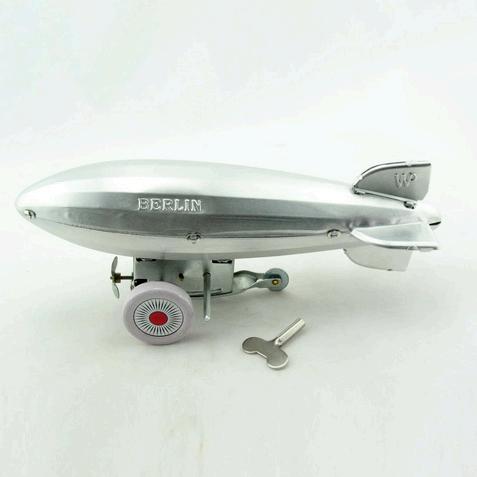
Tin zeppelin: is a toy that's made of tin and has a metal key that you wind up to make the propeller spin and the wheels move Tin zeppelin toys were popular before World War II.
Tinker Toys: in 1913 or 1914, stonemason Charles Pajeau invented the Tinkertoy construction set after watching children play with sticks and spools.
Trough: a long, narrow-open container for animals to eat or drink out of.
Unbridled avarice: an extreme and uncontrolled desire for wealth or possessions
Vamoose: depart hurriedly
Varmints: a troublesome wild animal; a troublesome and mischievous person, especially a child
Vigil: a period of keeping awake during the time usually spent asleep, especially to keep watch or pray
Zenith: the time at which something is most powerful or successful; or in astronomy, the point in the sky or celestial sphere directly above an observer
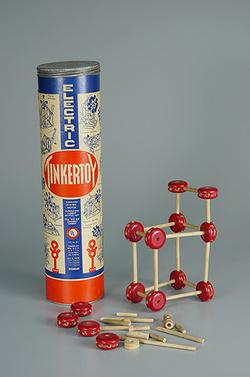
Tinker Toys
Tin Zeppelin
Simoniz
William Shakespeare
PENNSYLVANIA CORE STANDARDS
English Language Arts: Grades 6-12
CC.1.2.8.G: Evaluate the advantages and disadvantages of using different mediums (e g , print or digital text, video, multimedia) to present a particular topic or idea
CC.1.2.9-10.G: Analyze various accounts of a subject told in different mediums (e.g., a person’s life story in both print and multimedia), determining which details are emphasized in each account.
CC.1.2.11-12.G: Integrate and evaluate multiple sources of information presented in different media or formats (e g , visually, quantitatively) as well as in words in order to address a question or solve a problem
CC.1.3.8.A: Determine a theme or central idea of a text and analyze its development over the course of the text, including its relationship to the characters, setting, and plot; provide an objective summery of the text.
CC.1.3.9-10.A: Determine a theme or central idea of a text and analyze in detail its development over the course of the text, including how it emerges and is shaped and refined by specific details; provide an objective summary of the text
CC.1.3.11-12.A: Determine and analyze the relationship between two or more themes or central ideas of a text including the development and interaction of the themes; provide an objective summary of the text.
CC.1.3.8.C: Analyze how particular lines of dialogue or incidents in a story or drama propel the action, reveal aspects of a character, or provoke a decision
CC.1.3.9-10.C: Analyze how complex characters develop over the course of a text, interact with other characters, and advance the plot or develop the theme.
CC.1.3.11-12.C: Analyze the impact of the author’s choices regarding how to develop and relate elements of a story or drama
CC.1.3.8.G: Analyze the extent to which a filmed or live production of a story or drama stays faithful to or departs from the text or script, evaluating the choices made by directors or actors
CC.1.3.9-10.G: Analyze the representation of a subject or a key scene in two different artistic mediums, including what is emphasized or absent in each treatment
CC.1.3.11-12.G: Analyze multiple interpretations of a story, drama, or poem (e g , recorded or live production of a play or recorded novel or poetry), evaluating how each version interprets the source text
CC.1.4.8.H: Introduce and state an opinion on a topic.
CC.1.4.8-12.M: Write narratives to develop real or imagined experiences or events
NATIONAL CORE STANDARDS
GRADE 8
TH:Cr1.1.8
a Imagine and explore multiple perspectives and solutions to staging problems in a drama/ theater work
b Imagine and explore solutions to design challenges of a performance space in a drama/theater work
c. Develop a scripted or improvised character by articulating the character’s inner thoughts, objectives, and motivations in a drama/theater work.
TH:Re7.1.8
a Apply criteria to the evaluation of artistic choices in a drama/theater work
TH:Re8.1.8
a Recognize and share artistic choices when participating in or observing a drama/theater work.
b. Analyze how cultural perspectives influence the evaluation of a drama/theater work.
c. Apply personal aesthetics, preferences, and beliefs to evaluate a drama/theater work
TH:Re9.1.8
a Respond to a drama/theater work using supporting evidence, personal aesthetics, and artistic criteria
b Apply the production elements used in a drama/theater work to assess aesthetic choices.
c. Assess the impact of a drama/theater work on a specific audience.
ADDITIONAL
SOURCES
https://en.wikipedia.org
https://languages.oup.com/google-dictionary-en/ https://www legion org/about/organization/history
https://dictionary cambridge org https://www britannica com webster.com/dictionary
Grade Hs proficient
TH:Cr1.1.HSI
a Apply basic research to construct ideas about the visual composition of a drama/theater work
b Explore the impact of technology on design choices in a drama/theater work
c. Use script analysis to generate ideas about a character that is believable and authentic in a drama/theater work.
TH:Re7.1.HSI
a Respond to what is seen, felt, and heard in a drama/theater work to develop criteria for artistic choices
TH:Re8.1.HSI
a. Analyze and compare artistic choices developed from personal experiences in multiple drama/theater works.
b. Identify and compare cultural perspectives and contexts that may influence the evaluation of a drama/theater work
c Justify personal aesthetics, preferences, and beliefs through participation in and observation of a drama/theater work
TH:Re9.1.HSI
a. Examine a drama/ theater work using supporting evidence and criteria, while considering art forms, history, culture, and other disciplines.
b. Consider the aesthetics of the production elements in a drama/theater work
c Formulate a deeper understanding and appreciation of a drama/theater work by considering its specific purpose or intended audience
https://www.lionel.com/articles/timeline/ "On the Relative Motion of the Earth and the Luminiferous Ether" . American Journal of Science. https://museumofplay org/toys